


Highlights
What are the main findings?
- A 12-week game-based physical literacy intervention significantly improved body composition (BMI, waist circumference, body fat percentage), all metabolic syndrome components (fasting glucose, triglycerides, HDL-C, systolic blood pressure), insulin resistance, and inflammatory markers (hs-CRP, IL-6, TNF-α, leptin) in obese boys aged 8–12 years.
- Physical activity and inflammatory profile both acted as significant partial mediators of the relationship between physical literacy and metabolic health, alongside a direct protective effect of physical literacy itself.
What are the implications of the main findings?
- Physical literacy programs, particularly those delivered through playful, game-based activities, can serve as a practical and effective non-pharmacological strategy to improve metabolic health and reduce inflammation in children with obesity.
- These findings support the integration of structured physical literacy curricula into school and community health policies, with a focus on enhancing both physical activity levels and inflammatory regulation to combat childhood obesity and its long-term metabolic consequences.
Abstract
Background/Objectives: The prevalence of childhood obesity has become a major public health concern, closely linked to metabolic health and inflammatory markers. The aim of the present study was to investigate the effects of a physical literacy intervention on metabolic health in children with obesity, and to examine the mediating roles of physical activity and inflammatory profiles. Methods: In this study with a pretest-posttest design, 70 obese boys aged 8 to 12 years were selected through cluster random sampling and then randomly assigned to two intervention and control groups. The intervention group received a 12-week game-based physical literacy program (three 60 min sessions per week). Results: Data were analyzed using analysis of covariance and structural equation modeling for mediation analysis. Compared with the control group, the intervention group showed significant improvements in total physical literacy scores and in physical activity (p < 0.001). Body composition indicators improved significantly: body mass index (p = 0.003), waist circumference (p = 0.004), and body fat percentage (p = 0.002). Several cardiometabolic risk markers improved: fasting glucose decreased (p = 0.002), triglycerides decreased (p = 0.002), HDL-C increased (p < 0.001), and systolic blood pressure decreased (p < 0.001). Insulin resistance was significantly improved (p < 0.001), and all inflammatory markers were significantly reduced: hs-CRP, IL-6, TNF-α, and leptin (p < 0.001). Exploratory mediation analysis suggested that physical activity and inflammatory profile may partially account for the relationship between physical literacy and metabolic health. Conclusions: Physical literacy, through increased physical activity and reduced inflammation, can be an effective strategy for improving metabolic health in children with obesity.
1. Introduction
In recent decades, obesity has become one of the major public health challenges [1]. Obesity is defined as excessive fat accumulation, and its global prevalence in children and adolescents is predicted to exceed 250 million by 2030 [2]. Obesity is a polyetiological condition affected by several hormonal, genetic, and metabolic mechanisms [3]. obese children and adolescents are about five times more likely to be obese as adults than children and adolescents who maintain a healthy body weight throughout childhood [4]. Children who are obese have an increased risk of developing cardiometabolic abnormalities, such as dyslipidaemia, endothelial dysfunction, insulin resistance, and impaired glucose regulation, when compared with children of normal weight [5]. The World Health Organization guidelines recommend that children and adolescents achieve 60 min of moderate-to-vigorous physical activity (MVPA) per day [6].
With the rising prevalence of obesity, novel strategies for its prevention have been proposed. In this context, the concept of “physical literacy” (PL), defined by a combination of physical competence, motivation, confidence, and understanding and awareness, represents a promising paradigm shift [7]. PL is seen as both the foundation and an outcome of participation in physical activity [8] and is conceptualised as an integrated ability that emerges from synergistic interaction among the emotional, physical, cognitive, and behavioural domains of active living [6]. In line with the physical competence dimension of PL, evidence from children beginning karate training indicates that structured movement-based programs can improve motor development and fundamental motor skill performance [9]. This holistic approach has potential for obese adolescents who are at risk for physical inactivity due to a multitude of factors beyond just physiological, including reduced motor competence and low self-efficacy [10]. Recent evidence from primary school children also suggests that physical activity interventions may enhance sport participation motivation, supporting the motivational pathway through which PL-oriented programs may promote sustained engagement in active behaviors [11].
The findings of existing research indicate that physical literacy–based interventions may improve several health indicators in adolescents with overweight and obesity. The results of a study indicate that higher levels of PL were associated with improvements in body fat percentage and cardiorespiratory fitness in adolescents [12]. Another study reported associations between PL and body mass index, waist circumference, and the risk of overweight and obesity [13]. Similarly, one study demonstrated that body fat percentage was inversely associated with PL in school-aged children [14], whereas cardiorespiratory fitness and quality of life were positively associated with PL [15]. Multidimensional physical activity phenotypes, which encompass more diverse patterns and higher activity levels, have been associated with lower body fat percentage, greater insulin sensitivity, and lower metabolic risk [16]. Recent studies also support a complex, potentially bidirectional relationship among PL, physical activity, and body composition. The results of some studies indicate that body mass index mediated part of the association between MVPA and PL [17]. Obesity is associated with impaired adipose tissue function and increased production of pro-inflammatory mediators, including IL-6, TNF-α, and CRP, which can promote insulin resistance and metabolic disorders. Conversely, regular physical activity may attenuate obesity-related inflammation by modulating immune and metabolic function, reducing fat mass, and improving insulin sensitivity [18]. Available evidence suggests that regular exercise can induce anti-inflammatory responses and reduce levels of certain inflammatory markers, including IL-6 and CRP [19]. Exercise interventions, particularly multidimensional programs, have also been reported to reduce inflammatory markers and improve body composition [20]. Collectively, these findings indirectly support the view that PL, by facilitating sustained participation in physical activity, may be associated with a more favorable inflammatory profile. In this regard, a meta-analysis showed that exercise training improved glucose metabolism in young people with overweight and obesity [21]. These interventions were also associated with reductions in IL-6, CRP, and leptin, and an increase in adiponectin. Thus, the benefits of physical activity in this population may extend beyond reduced body mass and include improvements in glucose regulation, insulin sensitivity, body composition, and inflammatory status [22,23]. In addition, muscular fitness has been independently associated with lower levels of a range of inflammatory markers in adolescents [24,25]. These findings suggest that physical fitness, particularly muscular fitness, may play an important role in the relationship between physical activity and metabolic health. Intervention studies have also highlighted the potential value of multidimensional approaches. [26,27].
However, findings concerning insulin-related biomarkers remain inconsistent. This heterogeneity may be attributable to differences in intervention duration and intensity, exercise modality, assessment methods and baseline obesity severity. Despite evidence supporting the potential role of PL in promoting physical activity and overall health, the mechanisms underlying the relationship between PL and metabolic health, particularly among children with obesity, remain incompletely understood. Specifically, evidence on the biological pathways linking PL to metabolic health is limited, and the potential mediating role of inflammatory markers has received relatively little attention. Overall, the existing literature supports associations among PL, physical activity, obesity, and inflammation; however, these relationships have generally been examined in isolation. Although PL has been associated with obesity-related indicators, including BMI and body fat percentage [13,14] and has more recently been linked to cardiometabolic risk [10], it remains unclear whether the association between PL and metabolic health is primarily mediated by increased physical activity and the subsequent reduction in inflammation, or whether physical activity and inflammatory status operate as independent and parallel mediators. Accordingly, the present study aimed to examine the direct and indirect relationships among PL, physical activity, inflammatory markers, and metabolic health indicators in children with obesity. This approach may contribute to a better understanding of the potential pathways linking PL to metabolic health and to the identification of appropriate targets for designing multidimensional interventions.
2. Materials and Methods
2.1. Study Design
The study used a randomized controlled trial (RCT) with a pretest–posttest design and included a control group, conducted in June 2026. It followed the CONSORT guidelines for reporting randomized clinical trials. Ethical approval for this study was obtained from the İnönü University Ethics Committee (approval date: 5 June 2026; meeting no. 10; decision no. 25). Additionally, the study protocol was registered on the Open Science Framework (OSF) (https://osf.io/xd3fu/overview, accessed on 21 September 2026). Written informed consent was obtained from all parents, with confidentiality maintained and participants able to withdraw at any time without repercussions. Any clinically significant abnormalities in laboratory test results led to referrals for specialist evaluation.
2.2. Study Population and Sampling
The study population comprised all male students aged 8–12 years enrolled in elementary schools. The inclusion criteria were: (1) a body mass index (BMI) above the 95th percentile according to Turkish reference growth charts; (2) age between 8 and 12 years; (3) absence of any specific chronic diseases, including cardiovascular or renal disease, type 1 diabetes, or thyroid disorders; (4) no use of medications known to affect metabolism or inflammatory processes; and (5) written informed consent from the parents and verbal assent from the children [28,29]. The exclusion criteria included absence from more than three intervention sessions during the study period, development of any acute illness or injury, and unwillingness to continue participation (ICH, 2025). Sample size calculation. Based on previous studies, assuming 80% statistical power, a significance level of 0.05, and an effect size of 0.25 for analysis of covariance (ANCOVA) to compare the means between two groups, the required sample size was estimated at 60 participants (30 per group). Considering the possibility of attrition, the target sample size was increased to 70 participants (35 per group). Four primary schools were selected from the study area using a random cluster sampling method. A total of 70 boys with obesity were identified across these four schools. The distribution of participants across the schools was approximately balanced. Randomization of participants was conducted at the individual level within each school; following initial screening and obtaining informed consent, participants were assigned to either the intervention or control group in a 1:1 ratio. This process utilized a computer-generated randomization sequence and was carried out by an independent researcher not involved in the study. The intervention was also implemented at the individual level (i.e., each participant received the program directly), although sessions were conducted in groups of 12 to 15 for practical and motivational reasons. Importantly, participants in both the intervention and control groups were drawn from the same schools, and the control group continued with the standard school physical education program. To account for potential clustering by school, intra-class correlation coefficients (ICCs) were calculated for primary outcomes, and mixed-effects models with school as a random effect were conducted as sensitivity analyses. The sample size calculation was adjusted for the design effect of cluster sampling (ICC = 0.05, average cluster size = 17.5, design effect = 1.83).
2.3. Intervention
Participants in the intervention group received a 12-week, game-based PL program consisting of three 60 min sessions per week. The program was developed based on the PL framework, with an emphasis on its four dimensions: physical, psychological, cognitive, and social. The intervention content incorporated contemporary pedagogical approaches, including the Teaching Games for Understanding (TGfU) model and nonlinear methods, to develop fundamental movement skills through purposeful, structured games.
The intervention sessions were organized into four components: Part 1 (minutes 0–10): Warm-up. Part 2 (minutes 10–45): Main activities. This component incorporated a game-based approach to developing the physical competence dimension, using games that target fundamental movement skills [30,31]. The psychological dimension focused on enhancing social interaction and motivation [32]. The cognitive dimension addressed the development of knowledge, understanding, and awareness of the importance of physical activity for health, as well as knowledge of movement-related principles and rules [32]. The social dimension focused on strengthening positive interactions, cooperation, respect for others, and group responsibility [33]. Part 3 (minutes 45–55): Cool-down. The intensity of the games was gradually reduced, followed by breathing exercises. Part 4 (minutes 55–60): Group feedback and reflection. This component involved group feedback, discussion of participants’ movement experiences, and instruction on health-related concepts. Participants in the control group continued to receive the school’s routine physical education program, which consisted of conventional activities primarily focused on sport-specific skills and a teacher-centred instructional approach. Both groups received the same basic nutritional education, consisting of one nutritional counseling session at the beginning of the study and the provision of educational brochures.
2.4. Measurement Instruments
2.4.1. Physical Literacy
PL was assessed using the Canadian Assessment of PL, version 2 (CAPL-2). The CAPL-2 assesses four domains: physical competence, motivation and confidence, knowledge and understanding, and daily physical activity [34].
2.4.2. Physical Activity
Physical activity levels were assessed using the Physical Activity Questionnaire for Older Children (PAQ-C). This self-report questionnaire assesses physical activity over the preceding 7 days and has demonstrated acceptable validity and reliability [35,36]. In addition, objective assessment was performed using an ActiGraph GT3X+ accelerometer (ActiGraph LLC, Pensacola, FL, USA) to accurately quantify moderate-to-vigorous physical activity (MVPA) over a seven-day period. This device has demonstrated acceptable validity and reliability in assessing physical activity [37,38,39,40].
2.4.3. Body Composition Indices
Height was measured with a stadiometer (Seca 213, Seca GmbH & Co. KG, Hamburg, Germany) to 0.1 cm, and body weight was measured with a digital scale (Seca 813, Seca GmbH & Co. KG, Hamburg, Germany) to 0.1 kg. participants wearing minimal clothing. Body mass index (BMI): BMI was calculated as body weight (kg) divided by height squared (m2), expressed in kg/m2. Waist circumference: Waist circumference was measured at the level of the umbilicus using a non-stretchable measuring tape at the end of normal expiration. Body fat percentage was assessed using a bioelectrical impedance body composition analyzer (InBody 270, InBody Co., Ltd., Seoul, Republic of Korea) [41].
2.4.4. Metabolic and Inflammatory Indices
All blood samples were collected between 7:00 AM and 9:00 AM. Following a 12–14 h overnight fast, a 5 mL venous blood sample was collected from each participant at both the pretest and posttest assessments. Blood samples were transferred to the laboratory, centrifuged, and the separated serum samples were stored at −70 °C until analysis.
Metabolic Indices
Fasting glucose (mg/dL): measured using the enzymatic glucose oxidase method (Sigma-Aldrich, St. Louis, MO, USA; Catalog #GAGO20).Triglycerides (mg/dL): measured using an enzymatic colorimetric method (Roche Diagnostics, Basel, Switzerland; Catalog #11877771). HDL-C (mg/dL): measured using a direct precipitation method (Randox Laboratories, Crumlin, UK; Catalog #CH2652). Fasting insulin was measured using a commercial ELISA kit (Mercodia, Uppsala, Sweden; Catalog #10-1113-01; sensitivity: 1.0 μIU/mL). HOMA-IR (insulin resistance): calculated using the formula: (fasting insulin × fasting glucose)/405. Systolic blood pressure (mmHg): measured using a standard mercury sphygmomanometer (Yamasu 605P, Kenz Medico Co., Ltd., Saitama, Japan) with an appropriately sized cuff (cuff bladder width ≥ 40% of arm circumference and length ≥ 80% of arm circumference).Measurements were taken on the right arm after 15 min of seated rest, with three sequential readings taken at 2 min intervals. The average of the last two readings was used for analysis. All measurements were conducted between 7:00 AM and 9:00 AM. SBP and DBP were converted to age-, sex-, and height-specific percentiles according to clinical guidelines [42,43].
Inflammatory Indices
C-reactive protein (CRP; mg/L): measured using a high-sensitivity ELISA kit (DRG International, Springfield, NJ, USA; Catalog #EIA-3954; sensitivity: 0.1 mg/L). Interleukin-6 (IL-6; ng/L): measured using ELISA (R&D Systems, Minneapolis, MN, USA; Catalog #DLP00; sensitivity: 7.8 pg/mL). Tumor necrosis factor-alpha (TNF-α; ng/L): measured using ELISA (R&D Systems, Minneapolis, MN, USA; Catalog #DTA00D; sensitivity: 1.6 pg/mL). Leptin (ng/mL): measured using ELISA (R&D Systems, Minneapolis, MN, USA; Catalog #DLP00; sensitivity: 7.8 pg/mL).
2.5. Data Analysis
All statistical analyses were conducted using IBM SPSS Statistics (IBM Corp., 2021, Version 26, Armonk, NY, USA) and AMOS 26, with the significance threshold established at p < 0.05. The analytical strategy comprised several sequential procedures. First, descriptive statistics, including means, standard deviations, frequencies, and percentages, were computed to characterize the sample demographics and summarize the principal study variables. The normality of the data distribution was subsequently evaluated using the Kolmogorov–Smirnov test. To verify baseline equivalence between the two groups, independent-samples t tests were applied to continuous variables, whereas chi-square tests were utilized for categorical variables. Within-group changes from pretest to posttest were examined through paired-samples t tests. For between-group comparisons, analysis of covariance (ANCOVA) was employed, with baseline (pretest) scores entered as covariates to adjust posttest differences. Mediation analysis was conducted in two stages: an initial evaluation following the Baron and Kenny framework, followed by bootstrap estimation in AMOS to test whether physical activity and inflammatory markers mediated the relationship between PL and metabolic health. Structural equation modeling (SEM) with maximum likelihood estimation was used for this purpose. The SEM included the following observed variables: physical literacy (CAPL-2 total score, excluding the Daily Behaviour domain), MVPA (accelerometer-derived minutes/day), inflammatory profile (latent construct with hs-CRP, IL-6, TNF-α, and leptin as indicators), and metabolic health (latent construct with BMI, waist circumference, fasting glucose, triglycerides, HDL-C reverse-coded, systolic blood pressure, and HOMA-IR as indicators). All variables were assessed at post-intervention. Baseline values were included as covariates. Factor loadings for the inflammatory profile ranged from 0.62 to 0.78; for metabolic health, loadings ranged from 0.55 to 0.82. Residual covariances were specified between inflammatory markers and between metabolic indicators based on modification indices. Finally, effect sizes were quantified using Cohen’s d and partial eta squared (η2p) to assess the practical significance of the observed results.
3. Results
3.1. Participants
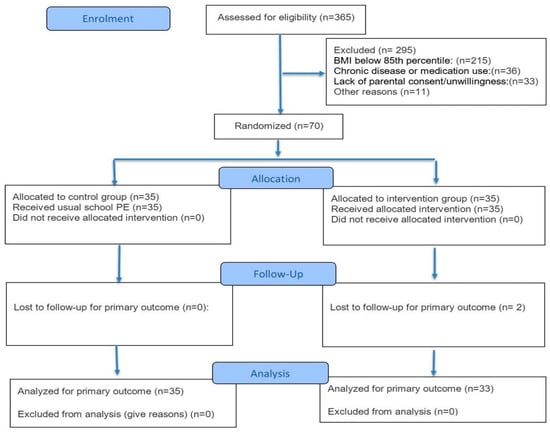
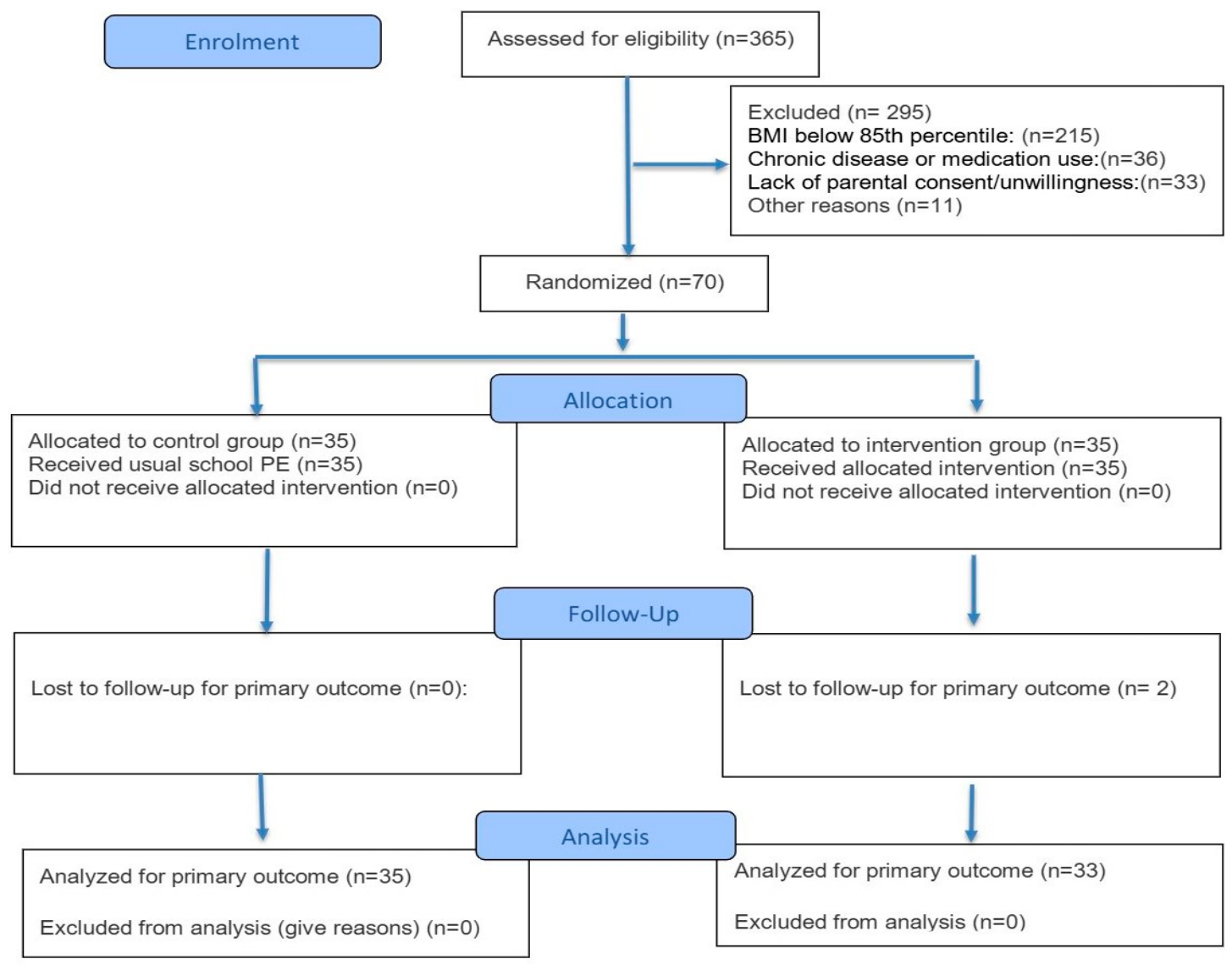
Of the 70 children with obesity initially enrolled in the present study, 68 completed the study and were included in the final analysis, 33 in the experimental group and 35 in the control group. Reasons for dropout included missing more than 3 sessions (1) and transferring to another school (1) (Figure 1).
Figure 1.
CONSORT 2025 flow diagram.
The mean age of children with obesity in the experimental group was 10.14 ± 1.2 years, and in the control group was 10.81 ± 1.1 years. Demographic, anthropometric, metabolic, and inflammatory variables are presented in Table 1. Independent t-tests and chi-square tests were used to examine differences between the two groups, and, as Table 1 shows, there was no statistically significant difference for any of the measured variables (p > 0.05).
Table 1.
Baseline Characteristics of Participants.
3.2. Within-Group and Between-Group Changes
Table 2 presents a consolidated summary of the mean results, along with standard deviations, before and after the intervention for both the intervention and control groups, as well as the results of the between-group ANCOVA.
Table 2.
Summary of All Outcomes by Group and Time.
3.2.1. Physical Literacy and Physical Activity
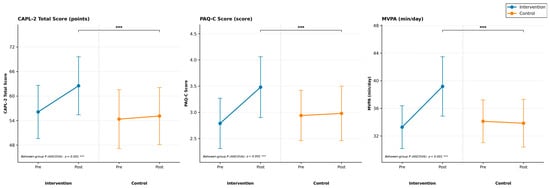
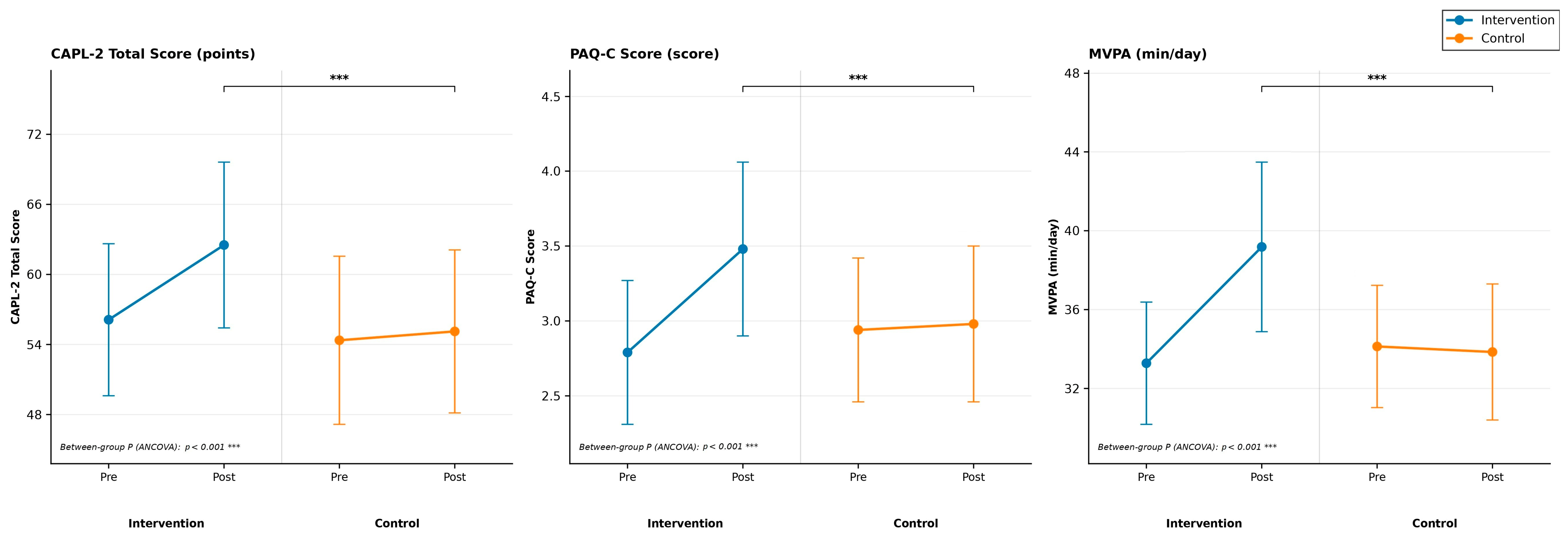
Paired t-tests showed significant improvements in CAPL-2 total scores in the intervention group from pre- to post-intervention (p < 0.001). Analysis of covariance (ANCOVA), controlling for baseline values, confirmed significant between-group differences in CAPL-2 total scores (p < 0.001), with the intervention group showing significantly higher scores (mean difference = 14.28, 95% CI: 10.82–17.74). Regarding physical activity, the intervention group showed significant increases in PAQ-C (p < 0.001) and accelerometer-derived MVPA (p < 0.001) from pretest to posttest. No significant changes were observed in the control group. Analysis of covariance revealed significant between-group differences for PAQ-C scores and MVPA (p < 0.001), indicating that the PL intervention effectively increased physical activity levels in the intervention group. These changes in PL and physical activity indices from pre- to post-intervention are visually summarized in Figure 2.
Figure 2.
Comparison of pre- and post-test PL and Physical Activity indices. Data are presented as mean ± SD. Blue lines represent the intervention group; orange lines represent the control group. Between-group comparisons were performed using ANCOVA with baseline values as covariates. The intervention group demonstrated significant improvement in CAPL-2 total score, PAQ-c score, and MVPA compared with the control group. *** p < 0.001.
3.2.2. Anthropometric and Body Composition Indices
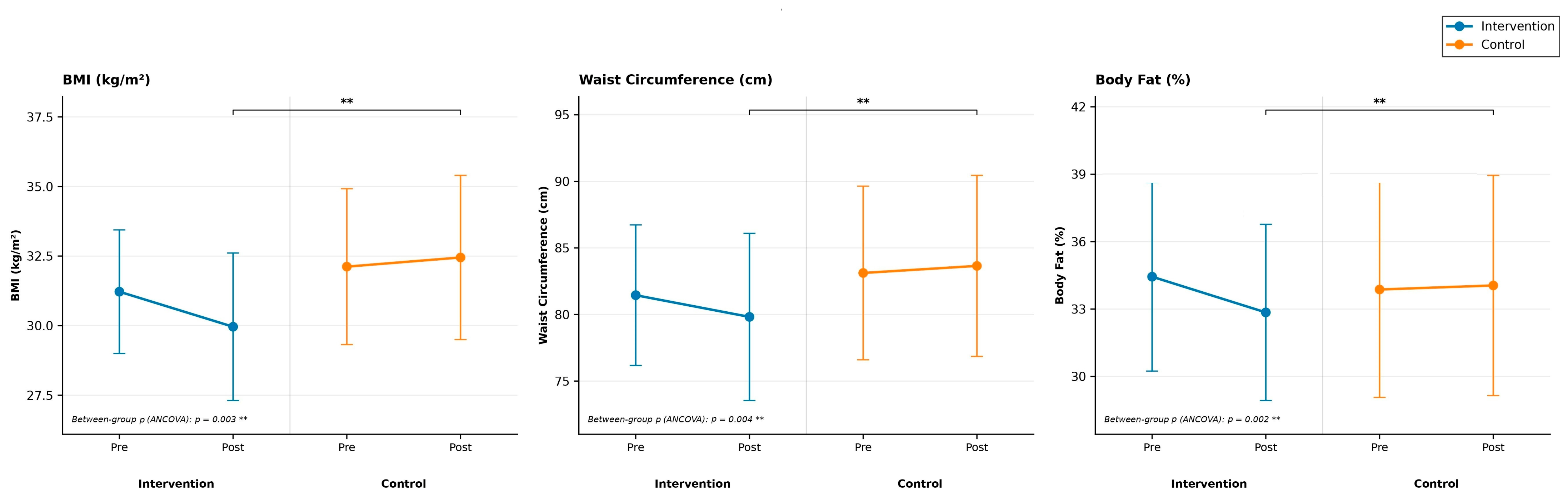
Significant improvements were observed in anthropometric measures within the intervention group. BMI decreased from 30.05 ± 2.1 kg/m2 to 29.96 ± 2.65 kg/m2 (p = 0.003), and waist circumference decreased from 81.45 ± 5.28 cm to 79.82 ± 6.28 cm (p = 0.004). Body fat percentage also decreased significantly from 34.44 ± 4.2% to 32.85 ± 3.92% (p = 0.002). In contrast, the control group showed no significant changes in these parameters (p > 0.05). Between-group comparisons (ANCOVA) confirmed significant differences in BMI (p = 0.003), waist circumference (p = 0.004), and body fat percentage (p = 0.002) after adjusting for baseline values. These changes from pre- to post-intervention are visually summarized in Figure 3.
Figure 3.
Comparison of pre- and post-test anthropometric and body composition indices. Between-group comparisons were performed using ANCOVA with baseline values as covariates. The intervention group demonstrated significant reductions in BMI, waist circumference, and body fat percentage compared with the control group. ** p < 0.01.
3.2.3. Metabolic Syndrome Components
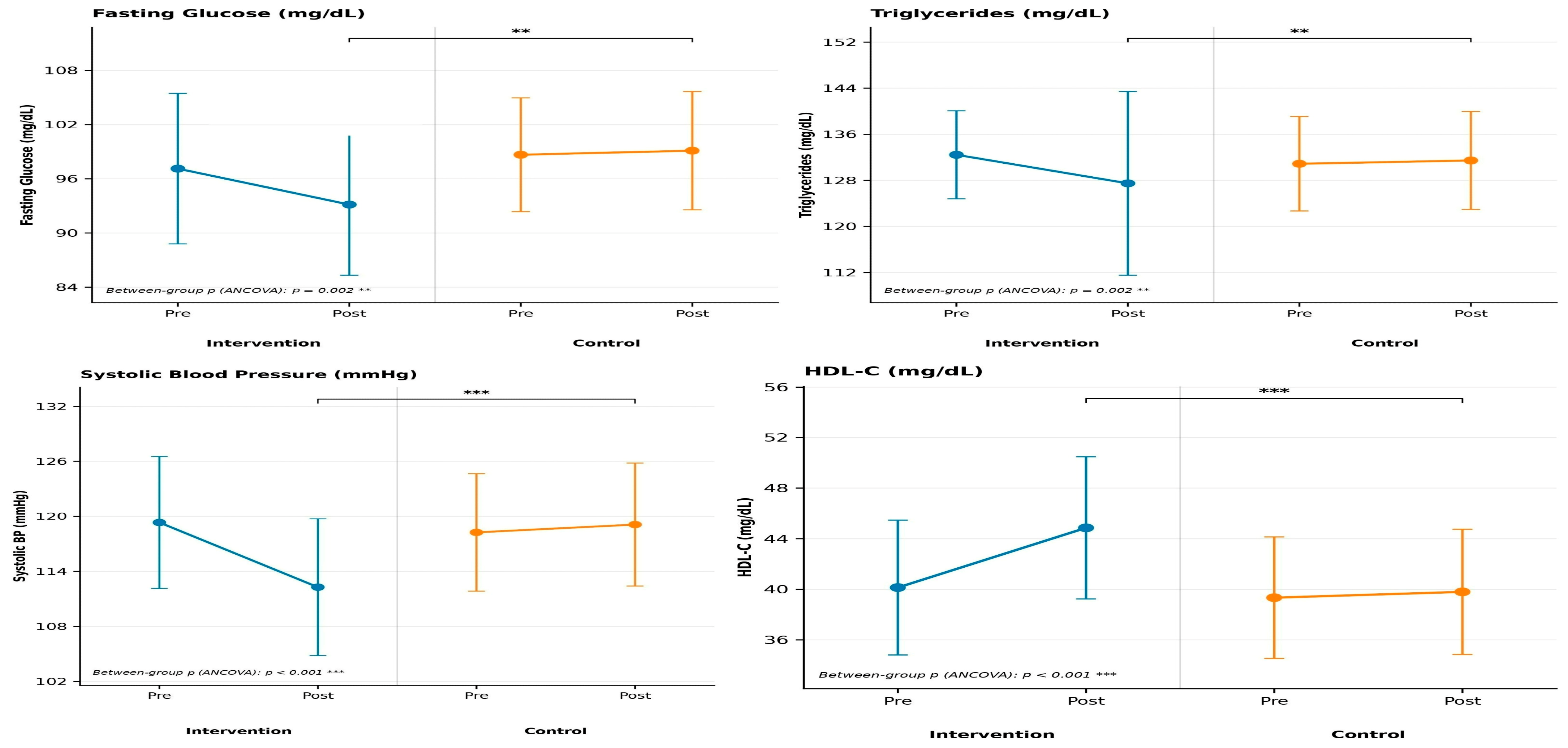
The intervention group demonstrated that several cardiometabolic risk markers improved. Fasting glucose decreased from 97.13 ± 8.33 mg/dL to 93.15 ± 7.82 mg/dL (p = 0.002), and triglycerides decreased from 132.44 ± 7.64 mg/dL to 127.48 ± 15.94 mg/dL (p = 0.001). HDL-C increased significantly from 40.14 ± 5.33 mg/dL to 44.86 ± 5.62 mg/dL (p < 0.001). Systolic blood pressure showed a significant reduction from 119.33 ± 7.18 mmHg to 112.28 ± 7.45 mmHg (p < 0.001). No significant changes were observed in the control group (p > 0.05 for all). ANCOVA results confirmed significant between-group differences for fasting glucose (p = 0.002), triglycerides (p = 0.002), HDL-C (p < 0.001), and systolic blood pressure (p < 0.001). These changes from pre- to post-intervention are visually summarized in Figure 4.
Figure 4.
Comparison of pre- and post-test Metabolic Syndrome Components. Between-group comparisons were performed using ANCOVA with baseline values as covariates. The intervention group demonstrated that several cardiometabolic risk markers improved.
3.2.4. Insulin Resistance
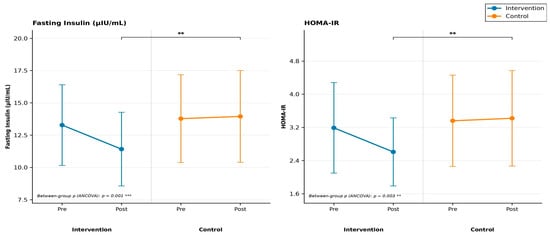
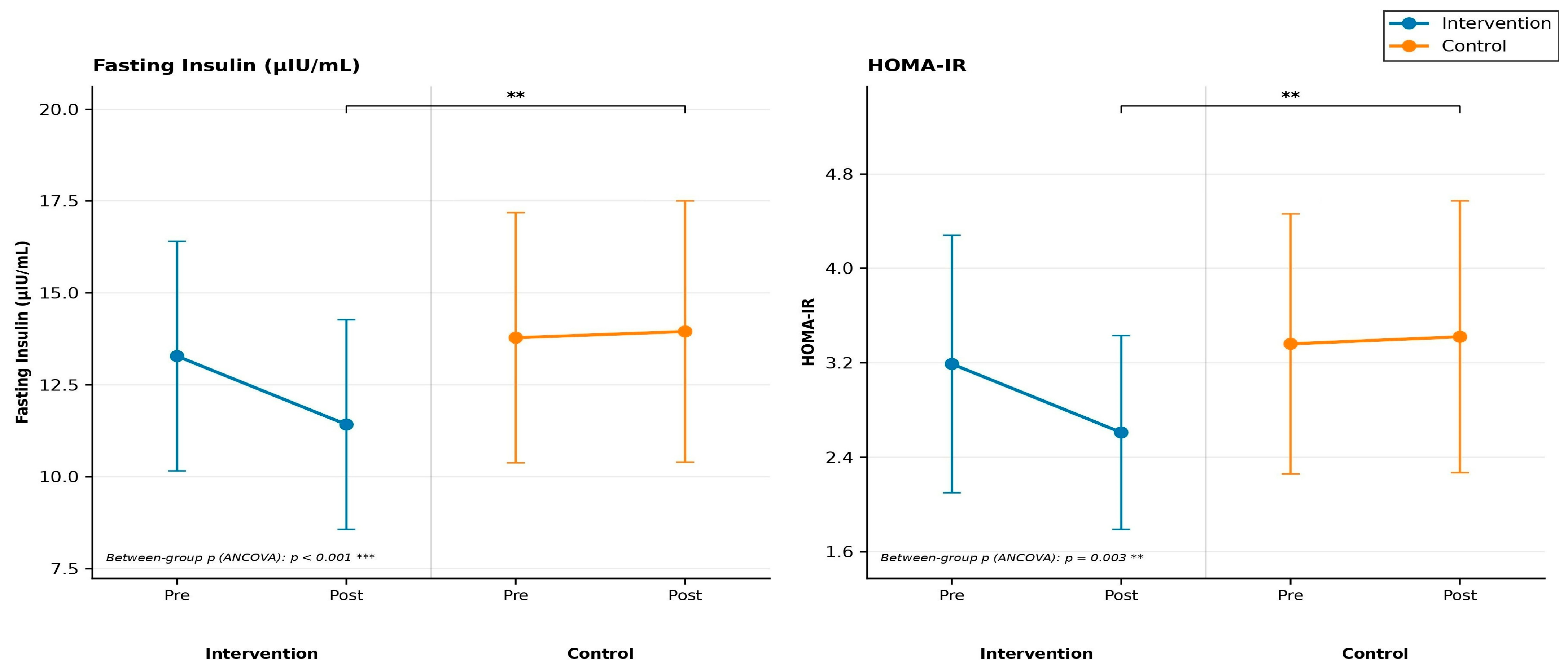
Fasting insulin levels decreased significantly in the intervention group from 13.28 ± 3.12 μIU/mL to 11.42 ± 2.85 μIU/mL (p = 0.001), while HOMA-IR improved from 3.19 ± 1.09 to 2.61 ± 0.82 (p = 0.003). No significant changes were observed in the control group. ANCOVA confirmed significant between-group differences for both fasting insulin (p = 0.001) and HOMA-IR (p = 0.003). Notably, post-intervention HOMA-IR values in the intervention group approached the threshold of 2.6, which has been proposed as a marker of insulin resistance in some prepubertal and early pubertal children, although this threshold varies by pubertal stage and population [44]. These changes from pre- to post-intervention are visually summarized in Figure 5.
Figure 5.
Comparison of pre- and post-test Insulin Resistance. Between-group comparisons were performed using ANCOVA with baseline values as covariates. The intervention group demonstrated significant reductions in fasting insulin and a significant increase in HOMA-IR compared with the control group. ** p < 0.01; *** p < 0.001.
3.2.5. Inflammatory Indices
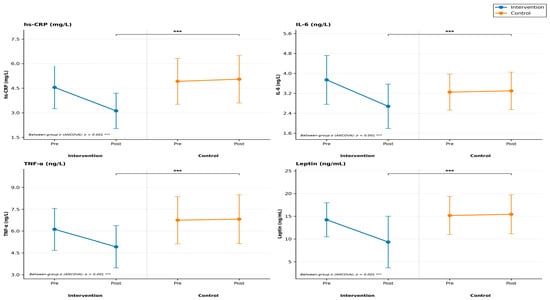
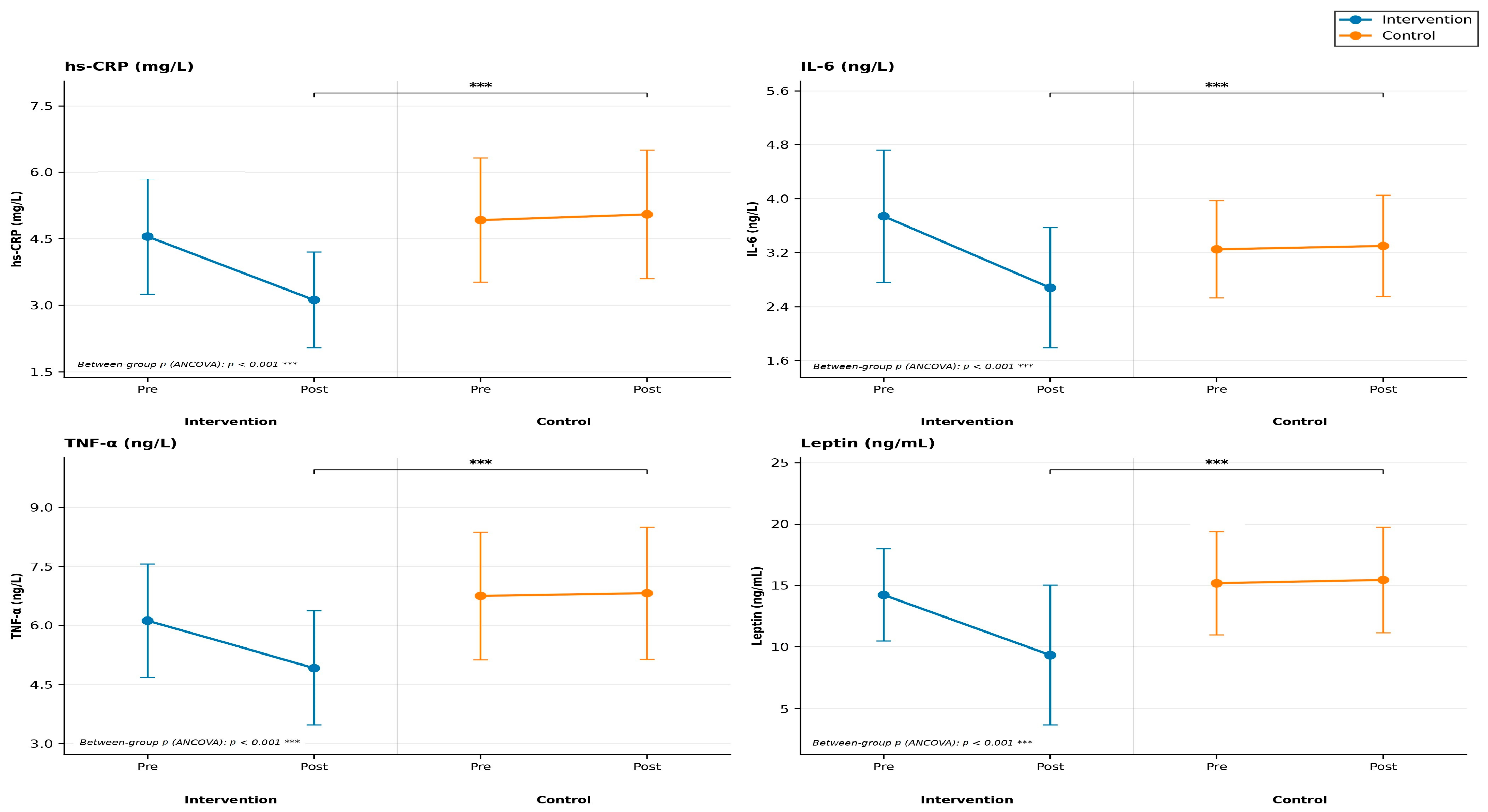
The PL intervention resulted in significant reductions in all measured inflammatory markers. hs-CRP decreased from 4.55 ± 1.30 mg/L to 3.12 ± 1.08 mg/L (p < 0.001), IL-6 decreased from 3.74 ± 0.98 ng/L to 2.68 ± 0.89 ng/L (p < 0.001), TNF-α decreased from 6.12 ± 1.44 ng/L to 4.92 ± 1.45 ng/L (p < 0.001), and leptin decreased from 14.23 ± 3.75 ng/mL to 9.34 ± 5.68 ng/mL (p < 0.001). No significant changes were observed in the control group. ANCOVA confirmed significant between-group differences for hs-CRP (p < 0.001), IL-6 (p < 0.001), TNF-α (p < 0.001), and leptin (p < 0.001). These changes from pre- to post-intervention are visually summarized in Figure 6.
Figure 6.
Comparison of pre- and post-test Inflammatory Indices. Comparison of pre- and post-test Inflammatory Indices. Between-group comparisons were performed using ANCOVA with baseline values as covariates. The intervention group demonstrated significant reductions in hs-CRP, IL-6, TNF-α, and leptin compared with the control group. *** p < 0.001.
3.3. Mediation Analysis
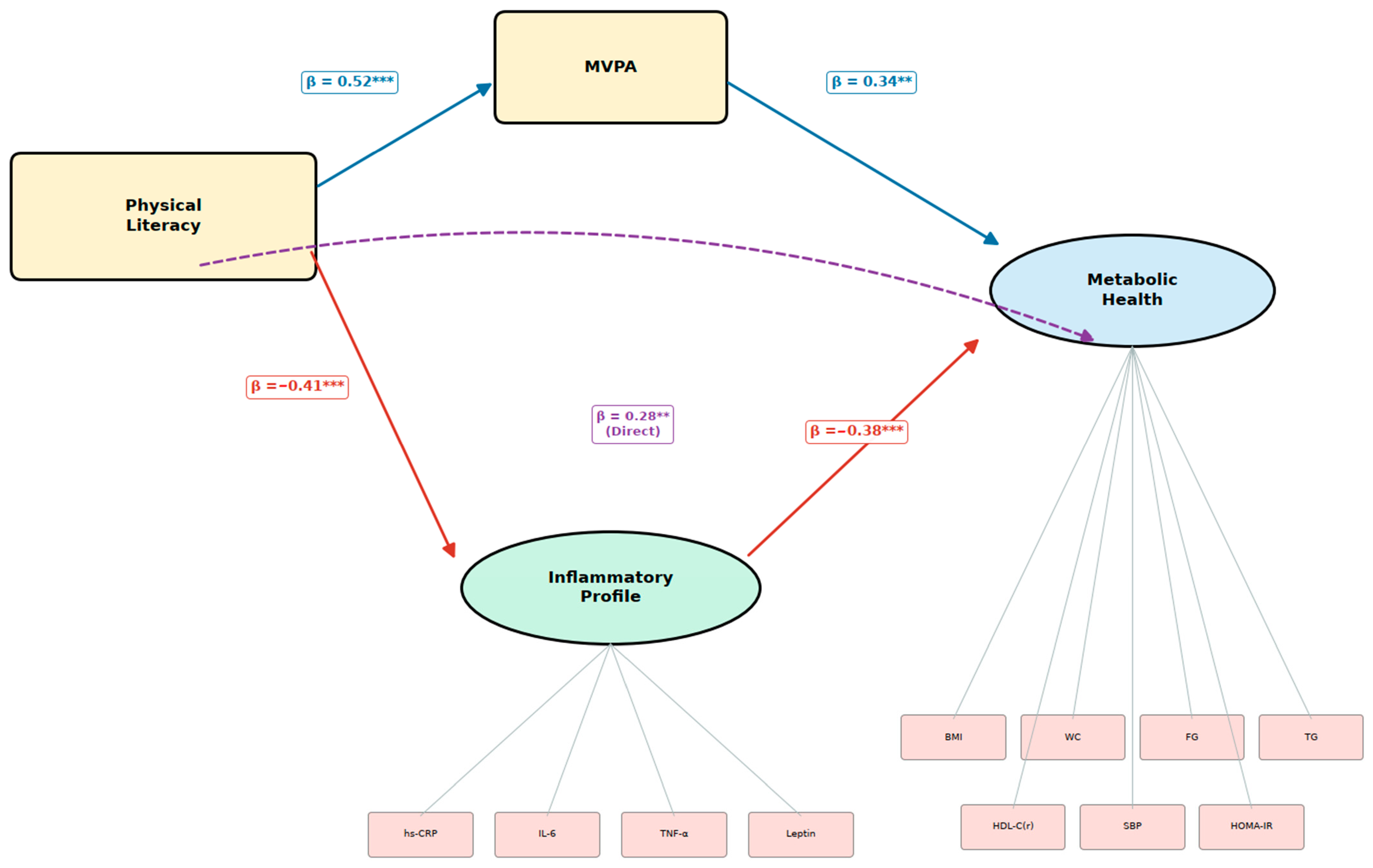
Structural equation modeling (SEM) was utilized to investigate whether moderate-to-vigorous physical activity (MVPA) and inflammatory profiles, a composite index integrating hs-CRP, IL-6, TNF-α, and leptin, served as mediators in the association between PL and metabolic health. A latent composite metabolic health score was constructed from BMI, waist circumference, fasting glucose, triglycerides, HDL-C (reverse-coded), systolic blood pressure, and HOMA-IR. The hypothesized model yielded acceptable goodness-of-fit statistics (χ2/df = 1.84, CFI = 0.952, RMSEA = 0.068, SRMR = 0.052). The model had 24 freely estimated parameters and 86 degrees of freedom. Standardized factor loadings ranged from 0.55 to 0.82 (all p < 0.001). Bootstrapped 95% confidence intervals for the structural paths were as follows: physical literacy → MVPA: β = 0.52 (95% CI: 0.38–0.66); MVPA → metabolic health: β = 0.34 (95% CI: 0.18–0.50); physical literacy → inflammatory profile: β = −0.41 (95% CI: −0.56 to −0.26); inflammatory profile → metabolic health: β = −0.38 (95% CI: −0.54 to −0.22); physical literacy → metabolic health (direct): β = 0.28 (95% CI: 0.10–0.46). Post hoc Monte Carlo power analysis indicated 82% power to detect the observed indirect effects.
The results indicated that PL exerted a significant direct effect on metabolic health (standardized β = 0.28, p = 0.008), suggesting that greater PL was linked to more favorable metabolic outcomes irrespective of the proposed mediators. In the first mediation pathway, PL was a significant positive predictor of MVPA (β = 0.52, p < 0.001), which in turn was positively associated with metabolic health (β = 0.34, p = 0.002); the corresponding indirect effect was statistically significant (β = 0.18, 95% CI: 0.09–0.28, p = 0.004). In the second pathway, PL was inversely associated with the inflammatory profile (β = −0.41, p < 0.001), and the inflammatory profile was inversely related to metabolic health (β = −0.38, p = 0.001), yielding a significant indirect effect (β = 0.16, 95% CI: 0.08–0.25, p = 0.006). Bootstrap resampling with 5000 iterations corroborated the significance of both indirect effects. Collectively, the total indirect effect accounted for approximately 55% of the overall effect of PL on metabolic health. These findings indicate that MVPA and inflammatory profiles partially mediate the relationship between PL and metabolic health, with physical activity showing a marginally stronger mediating role than inflammation. Figure 7 illustrates the mediating roles of physical activity and inflammation in the relationship between PL and metabolic health.
Figure 7.
Structural equation model: mediation analysis. Solid arrows represent statistically significant direct pathways (p < 0.05). The dashed purple arrow represents the direct effect of Physical Literacy on Metabolic Health after controlling for mediators. Thin grey lines represent factor loadings from the latent metabolic health construct to its observed indicators. ** p < 0.01, *** p < 0.001.
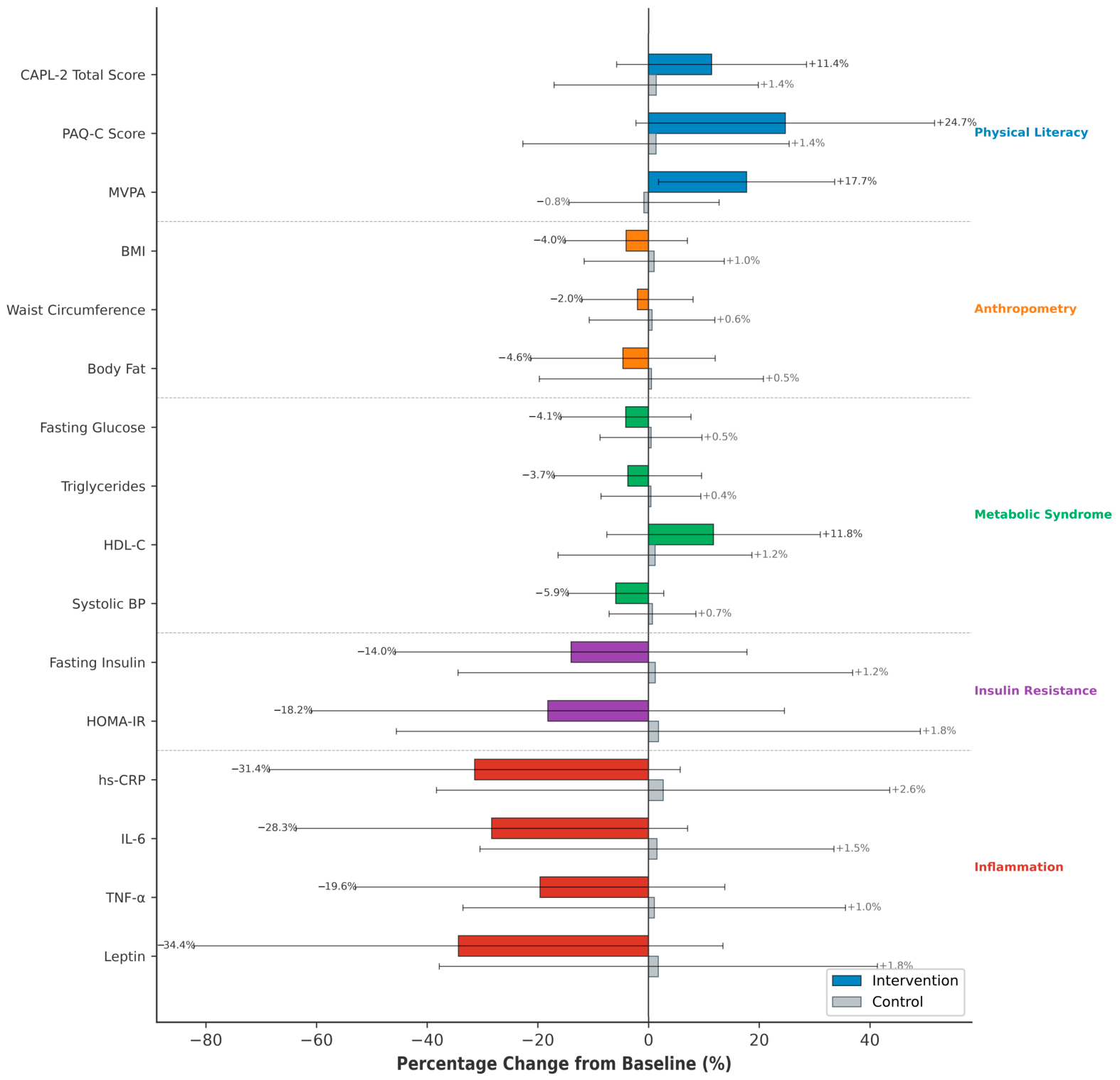
Figure 8 illustrates Relative change from pre-test: intervention vs. control are visually summarized.
Figure 8.
Relative change from pre-test: intervention vs. control (percentage change from baseline).
4. Discussion
The present randomized controlled trial demonstrates that a 12-week game-based PL intervention significantly improves metabolic health in children with obesity, with these improvements being achieved through increased moderate-to-vigorous physical activity (MVPA) and reduced systemic inflammation. These findings address an important gap in the literature by providing empirical evidence for the biological pathways through which PL, a multidimensional construct encompassing physical competence, motivation, knowledge, and social interaction, translates into measurable metabolic benefits in a population of children with obesity.
4.1. Contextualization Within the Existing Literature
Consistent with previous cross-sectional reports demonstrating inverse associations between physical literacy and obesity-related indicators, including BMI and body fat percentage [13,14], we observed significant reductions in these parameters following the intervention. However, whereas prior studies have primarily focused on associations with anthropometric measures, our investigation provides novel mechanistic insights by demonstrating concurrent improvements in insulin sensitivity, lipid profiles, blood pressure, and inflammatory markers, collectively representing a comprehensive metabolic health phenotype. The magnitude of improvement in HOMA-IR observed in our intervention group (from 3.19 to 2.61) is noteworthy, although it should be interpreted with caution given that pediatric HOMA-IR thresholds vary by pubertal stage and assay [44]. This finding aligns with meta-analytic evidence demonstrating that Exercise training is effective for lowering fasting glucose, fasting insulin, HOMA-IR, and BW in children and adolescents with overweight or obesity [45], yet extends these observations by linking these improvements to a holistic PL framework rather than to isolated exercise prescriptions. Our mediation analysis revealed that MVPA and inflammatory markers function as parallel mediators of the PL-metabolic health relationship, together accounting for approximately 55% of the total effect. This finding is novel and conceptually important, as it suggests that PL metabolic benefits operate through both behavioral and biological pathways. The stronger mediating role of MVPA relative to inflammation (β = 0.18 vs. β = 0.16) is consistent with the well-established dose–response relationship between physical activity and metabolic health [46], yet the independent contribution of inflammatory pathways underscores the importance of considering both mechanisms in intervention design. The observed anti-inflammatory effects, including significant reductions in hs-CRP, IL-6, TNF-α, and leptin, are consistent with previous reports demonstrating that regular physical activity attenuates obesity-related inflammatory processes [18,19]. However, our findings are unique in demonstrating that these reductions occur within the context of a PL intervention that emphasizes enjoyment, competence, and sustained engagement rather than exercise prescription alone. This distinction is clinically relevant, as it suggests that interventions that foster intrinsic motivation for physical activity may yield more sustainable inflammatory benefits than structured exercise programs with higher dropout rates. Our results partially contrast with studies reporting inconsistent effects of physical activity interventions on insulin-related biomarkers [22]. This discrepancy may be attributable to several factors, including the multidimensional nature of our intervention, which incorporated cognitive and psychological components alongside physical activity, potentially enhancing adherence and engagement. Additionally, our relatively homogeneous sample of boys aged 8–12 years with confirmed obesity may have reduced inter-individual variability, increasing statistical power to detect metabolic improvements.
4.2. Mechanistic Interpretation
Although tissue biopsies or molecular mediators were not assessed in the present study, we hypothesize that PL influences metabolic health through two primary pathways: (1) behavioral pathway, via increased MVPA, which directly enhances insulin sensitivity through several established mechanisms, including increased GLUT4 translocation, enhanced mitochondrial biogenesis, and improved skeletal muscle oxidative capacity; and (2) biological pathway, via the reduction in chronic low-grade inflammation, a hallmark of obesity that contributes to insulin resistance through the activation of stress-activated kinases (JNK, IKKβ) that impair insulin signaling [47]. The significant inverse association between PL and inflammatory markers (β = −0.41) suggests that individuals with higher PL engage in physical activity patterns sufficient to modulate adipose tissue function and reduce production of pro-inflammatory adipokines. This is consistent with the concept that exercise exerts anti-inflammatory effects through multiple mechanisms, including reductions in visceral adiposity, enhanced adiponectin secretion, and modulation of immune cell function [48]. The observed reduction in leptin, an adipokine that correlates positively with adiposity and contributes to leptin resistance, is particularly noteworthy, as it suggests improvements in adipose tissue endocrine function beyond simple fat mass reduction. Importantly, the observed partial mediation indicates that PL effects are not fully explained by MVPA and inflammation, suggesting additional pathways warranting investigation. A potential candidate mechanism could be favorable changes in gut microbiota composition. The microbiome influences endocrine regulators of appetite and energy expenditure, and enrichment with targeted probiotics and prebiotic fibers improves leptin sensitivity, reduces body weight, and improves metabolic parameters [49]. The residual direct effect (β = 0.28) may also reflect the cognitive and psychological dimensions of PL, which could promote healthier dietary choices, improved stress management, and better sleep quality, factors known to influence metabolic health through independent mechanisms.
4.3. Clinical and Translational Significance
The PL intervention produced clinically meaningful improvements across multiple cardiometabolic risk factors within a 12-week period, including reductions in systolic blood pressure (−7 mmHg), improvements in HDL-C (+4.7 mg/dL), and decreases in fasting glucose (−4 mg/dL) and triglycerides (−5 mg/dL). These changes, if sustained, would translate into significantly reduced cardiovascular risk over the life course, particularly given that obese children are approximately five times more likely to become obese adults with attendant cardiometabolic complications [4]. From a public health perspective, the PL framework offers several advantages over traditional exercise interventions. First, its emphasis on enjoyment, competence, and social engagement addresses the psychological barriers that frequently undermine adherence to structured exercise programs in obese youth, including reduced motor competence, social anxiety, and low self-efficacy [10]. Second, the cognitive dimension, developing knowledge and understanding of the importance of physical activity for health, fosters health literacy that may promote sustained engagement beyond the intervention period. Third, the game-based approach is scalable and can be integrated into school physical education curricula, reaching large populations of children at minimal additional cost. The identification of MVPA and inflammation as mediators provides actionable targets for intervention optimization. Specifically, programs should emphasize vigorous-intensity activities, which have been shown to have stronger associations with metabolic health than moderate-intensity activities [46], while simultaneously incorporating components that address the psychological and cognitive determinants of sustained engagement. The reduction in inflammatory markers also suggests that PL interventions may be relevant to conditions beyond obesity, including asthma, autoimmune disorders, and mental health conditions in which inflammation plays a pathogenic role.
4.4. Limitations and Strengths
While this study provides compelling evidence for the metabolic benefits of PL, several limitations should be considered. First, the relatively short intervention duration (12 weeks) precludes assessment of long-term maintenance of benefits and of whether improvements are sustained following cessation of the intervention. Second, our sample was restricted to boys aged 8–12 years, limiting generalizability to girls and other age groups; given known sex differences in physical activity patterns and metabolic health, replication in diverse populations is warranted. Third, although we employed a comprehensive set of metabolic and inflammatory markers, we did not assess more proximal molecular mediators (e.g., adiponectin, resistin, circulating microRNAs) that could provide mechanistic granularity.
Fourth, pubertal status (Tanner staging) was not assessed. Given that pubertal onset induces profound changes in insulin sensitivity, HOMA-IR, and adipokine secretion, the absence of Tanner staging is a major biological limitation. Future studies should incorporate Tanner staging or other measures of biological maturation to control for this confounding factor. Sixth, participation anxiety was not directly assessed, although it is a known barrier to physical activity in children with obesity. Future studies should incorporate specific measures of social anxiety and self-efficacy to better understand psychological barriers to intervention engagement. Seventh, the study was conducted during the summer months, and ambient heat may have influenced physical activity levels and cognitive engagement. Although all intervention sessions were conducted indoors in climate-controlled facilities, outdoor activity, as measured by accelerometry, may have been affected. Future studies should monitor environmental conditions and assess cognitive outcomes. Eighth, dietary intake was not systematically monitored during the intervention. Although both groups received identical nutritional education at baseline, we cannot rule out the possibility that participants in the intervention group made healthier dietary choices independently of the physical literacy program. Future trials should incorporate dietary logs or food frequency questionnaires to control for this potential confounder. Ninth, liver enzymes (ALT, AST) and kidney function markers were not measured. Given the high prevalence of NAFLD/MASLD in children with obesity, future studies should incorporate these markers to provide a more comprehensive assessment of metabolic health. Tenth, the intervention group received a substantially higher dose of physical activity (three additional 60 min sessions per week) compared with the control group, which continued routine physical education. Therefore, we cannot determine whether the observed benefits are attributable to the physical literacy framework specifically or to the higher physical activity dose. Future studies should include a dose-matched comparison arm to isolate the effects of the physical literacy framework. Finally, the inability to blind participants and instructors to group allocation is inherent to behavioral intervention studies and represents a limitation of the study design.
The major strengths of this study include its randomized controlled design, rigorous outcome assessment using objective measures (accelerometry, bioelectrical impedance, biochemical assays), comprehensive characterization of the PL construct using a validated instrument, and sophisticated mediation analysis that elucidates underlying mechanisms. The high retention rate (97%) and excellent intervention adherence further strengthen confidence in the findings.
4.5. Future Directions
Future research should pursue several high-impact directions. First, long-term follow-up studies are needed to determine whether the observed metabolic improvements are sustained and translate into reduced incidence of type 2 diabetes, cardiovascular disease, and other obesity-related complications in adulthood. Second, mechanistic studies incorporating muscle biopsies, adipose tissue sampling, and advanced metabolomic profiling could elucidate the molecular pathways through which PL influences metabolic health, potentially identifying novel therapeutic targets. Third, comparative effectiveness trials examining PL interventions against standard care, dietary interventions, and combined approaches would inform optimal clinical management strategies. Fourth, implementation science research is needed to identify strategies for scaling PL programs within school systems and community settings, particularly among underserved populations with the highest obesity burden. Fifth, the circadian clock is a fundamental biological system that enables adaptation to time-dependent environmental changes through an endogenous regulatory mechanism. Individuals with disruptions to the central circadian clock, such as those resulting from shift work or jet lag, are at elevated risk for gastrointestinal disorders, immune dysfunction, cardiovascular disease, and endocrine abnormalities, suggesting that central clock disturbances contribute to the pathogenesis of multiple conditions. Given that physical activity acts as a potent zeitgeber for the circadian system, future research should investigate whether physical literacy interventions can improve circadian alignment and thereby confer additional metabolic health benefits.
5. Conclusions
In conclusion, this study establishes that a multidimensional PL intervention produces significant improvements in metabolic health among children with obesity, and that these benefits are mediated through increased physical activity and reduced systemic inflammation. These findings provide preliminary evidence that a physical literacy intervention may be associated with improvements in metabolic health in children with obesity.
Author Contributions
Conceptualization, Y.M. and G.K.; methodology, Y.M.; validation, G.Z.K., V.T. and A.B.K.; formal analysis, Y.M. and V.T.; investigation, G.K. and G.Z.K.; resources, G.K. and G.Z.K.; data curation, Y.M.; writing—original draft preparation, G.K., F.O. and G.Z.K.; writing—review and editing, Y.M.; visualization, V.T.; supervision, Y.M. and A.B.K.; project administration, Y.M. All authors have read and agreed to the published version of the manuscript.
Funding
This research received no external funding.
Institutional Review Board Statement
The study was conducted in accordance with the guidelines of the Helsinki Declaration [50] and Ethical approval for this study was obtained from the Institutional İnönü University Ethics Committee (approval date: 5 June 2026; meeting no. 10; decision no. 25).
Informed Consent Statement
Informed consent was obtained from all study participants.
Data Availability Statement
The data presented in this study are available from the corresponding author upon request. The data are not publicly available due to ethical restrictions, in particular those related to the protection of personal data and the privacy of the study participants.
Conflicts of Interest
The authors declare no conflicts of interest.
References
- Ahmed, S.K.; Mohammed, R.A. Obesity: Prevalence, causes, consequences, management, preventive strategies and future research directions. Metab. Open 2025, 27, 100375. [Google Scholar] [CrossRef] [Scilit] [PubMed]
- Huang, Y.; Sulek, K.; Stinson, S.E.; Holm, L.A.; Kim, M.; Trost, K.; Hooshmand, K.; Lund, M.A.V.; Fonvig, C.E.; Juel, H.B.; et al. Lipid profiling identifies modifiable signatures of cardiometabolic risk in children and adolescents with obesity. Nat. Med. 2025, 31, 294–305. [Google Scholar] [CrossRef] [Scilit] [PubMed]
- Dehghani, A.; Molani-Gol, R.; Mohammadi-Narab, M.; Norouzy, A.; Abolhassani, M.H.; Tabatabaee Jabali, S.M.; Pazouki, A.; Soheilipour, F.; Mohammadi-Nasrabadi, F. The prevalence of obesity and overweight among Iranian population: An umbrella systematic review and meta-analysis. BMC Public Health 2024, 24, 3377. [Google Scholar] [CrossRef] [Scilit] [PubMed]
- Mazaheri-Tehrani, S.; Heidari-Beni, M.; Qorbani, M.; Yazdi, M.; Kelishadi, R. Trend in the prevalence of metabolic phenotypes of obesity in Iranian children and adolescents: The CASPIAN (Childhood and Adolescence Surveillance and Prevention of Adult Non-communicable Disease) studies. Ann. Pediatr. Endocrinol. Metab. 2025, 30, 296–304. [Google Scholar] [CrossRef] [Scilit] [PubMed]
- Ruiz, L.D.; Zuelch, M.L.; Dimitratos, S.M.; Scherr, R.E. Adolescent obesity: Diet quality, psychosocial health, and cardiometabolic risk factors. Nutrients 2019, 12, 43. [Google Scholar] [CrossRef] [Scilit] [PubMed]
- Mayordomo-Pinilla, N.; Sánchez-Miguel, P.A.; Galán-Arroyo, C.; Castillo-Paredes, A.; Rojo-Ramos, J. Physical literacy in school aged children: A preliminary analysis relating health factors. Front. Public Health 2025, 13, 1424027. [Google Scholar] [CrossRef] [Scilit] [PubMed]
- Valle-Muñoz, V.M.; Mendoza-Muñoz, M.; Villa-González, E. Physical literacy as a pedagogical model in physical education. Children 2025, 12, 1008. [Google Scholar] [CrossRef] [Scilit] [PubMed]
- Edwards, L.C.; Bryant, A.S.; Keegan, R.J.; Morgan, K.; Jones, A.M. Definitions, foundations and associations of physical literacy: A systematic review. Sports Med. 2017, 47, 113–126. [Google Scholar] [CrossRef] [Scilit] [PubMed]
- Arslan, Y.; Yavaşoğlu, B.; Beykumül, A.; Pekel, A.Ö.; Suveren, C.; Karabulut, E.O.; Durhan, T.A.; Çakır, V.O.; Sarıakçalı, N.; Küçük, H.; et al. The effect of 10 weeks of karate training on the development of motor skills in children who are new to karate. Front. Physiol. 2024, 15, 1347403. [Google Scholar] [CrossRef] [Scilit] [PubMed]
- Pavez-Adasme, G.; Párraga-Montilla, J.; Martínez-Salazar, C.; Castillo-Retamal, M.; Latorre-Román, P.; Gómez-Álvarez, N. Can recreational soccer improve physical literacy dimensions among adolescents with high cardiometabolic risk? Sports 2025, 13, 423. [Google Scholar] [CrossRef] [Scilit] [PubMed]
- Kargi, G.; Gunel, I.; Celik, A.; Kazakkaya, A. Music-supported aerobic exercise and sports participation motivation: An application based on self-determination theory in primary school children. J. ROL Sport Sci. 2026, 8, 1–9. [Google Scholar] [CrossRef] [Scilit]
- Nezondet, C.; Gandrieau, J.; Nguyen, P.; Zunquin, G. Perceived physical literacy is associated with cardiorespiratory fitness, body composition and physical activity levels in secondary school students. Children 2023, 10, 712. [Google Scholar] [CrossRef] [Scilit] [PubMed]
- Domínguez-Martín, G.; Tárraga-López, P.J.; López-Gil, J.F. Relationship between perceived physical literacy and obesity-related outcomes in adolescents: The EHDLA study. Front. Public Health 2024, 12, 1321361. [Google Scholar] [CrossRef] [Scilit] [PubMed]
- Caldwell, H.A.; Di Cristofaro, N.A.; Cairney, J.; Bray, S.R.; MacDonald, M.J.; Timmons, B.W. Physical literacy, physical activity, and health indicators in school-age children. Int. J. Environ. Res. Public Health 2020, 17, 5367. [Google Scholar] [CrossRef] [Scilit] [PubMed]
- Aadland, E.; Ylvisåker, E. Reliability of the Actigraph GT3X+ accelerometer in adults under free-living conditions. PLoS ONE 2015, 10, e0134606. [Google Scholar] [CrossRef] [Scilit] [PubMed]
- Gatti, A.; Vandoni, M.; Cavallo, C.; Carnevale Pellino Carnevale Pellino, V.; Rossi, V.; Odone, A.; Zuccotti, G.; Calcaterra, V. Beyond MVPA minutes: Physical activity phenotypes are associated with metabolic profiles in children with obesity. Eur. J. Pediatr. 2026, 185, 643. [Google Scholar] [CrossRef] [Scilit] [PubMed]
- Long, L.; Hadier, S.G.; Hamdani, S.D.; Hamdani, S.M.Z.H.; Danish, S.S. Does body composition mediate the association between moderate-to-vigorous physical activity and physical literacy in school-aged children? A cross-sectional mediation analysis. Front. Public Health 2026, 14, 1772818. [Google Scholar] [CrossRef] [Scilit] [PubMed]
- Blaschke, S.; Carl, J.; Ellinger, J.; Birner, U.; Mess, F. The role of physical activity-related health competence and leisure-time physical activity for physical health and metabolic syndrome: A structural equation modeling approach for German office workers. Int. J. Environ. Res. Public Health 2021, 18, 10153. [Google Scholar] [CrossRef] [Scilit] [PubMed]
- Calcaterra, V.; Vandoni, M.; Rossi, V.; Berardo, C.; Grazi, R.; Cordaro, E.; Tranfaglia, V.; Pellino, V.C.; Cereda, C.; Zuccotti, G. Use of physical activity and exercise to reduce inflammation in children and adolescents with obesity. Int. J. Environ. Res. Public Health 2022, 19, 6908. [Google Scholar] [CrossRef] [Scilit] [PubMed]
- Wu, J.; Zhang, Q. A176: Exercise Strategies for Childhood Obesity: A Network Meta-Analysis. Int. J. Phys. Act. Health 2026, 5, 176. [Google Scholar] [CrossRef] [Scilit]
- Li, L.-Y.; Li, S.-M.; Pang, B.-X.; Wei, J.-P.; Wang, Q.-H. Effects of exercise training on glucose metabolism indicators and inflammatory markers in obese children and adolescents: A meta-analysis. World J. Diabetes 2024, 15, 1353–1366. [Google Scholar] [CrossRef] [Scilit] [PubMed]
- Platat, C.; Wagner, A.; Klumpp, T.; Schweitzer, B.; Simon, C. Relationships of physical activity with metabolic syndrome features and low-grade inflammation in adolescents. Diabetologia 2006, 49, 2078–2085. [Google Scholar] [CrossRef] [Scilit] [PubMed]
- Williams, R.A.; Cooper, S.B.; Dring, K.J.; Hatch, L.; Morris, J.G.; Sun, F.-H.; Nevill, M.E. Physical fitness, physical activity and adiposity: Associations with risk factors for cardiometabolic disease and cognitive function across adolescence. BMC Pediatr. 2022, 22, 75. [Google Scholar] [CrossRef] [Scilit] [PubMed]
- Agostinis-Sobrinho, C.A.; Moreira, C.; Abreu, S.; Lopes, L.; Sardinha, L.B.; Oliveira-Santos, J.; Oliveira, A.; Mota, J.; Santos, R. Muscular fitness and metabolic and inflammatory biomarkers in adolescents: Results from LabMed Physical Activity Study. Scand. J. Med. Sci. Sports 2017, 27, 1873–1880. [Google Scholar] [CrossRef] [Scilit] [PubMed]
- Delgado-Alfonso, A.; Pérez-Bey, A.; Conde-Caveda, J.; Izquierdo-Gómez, R.; Esteban-Cornejo, I.; Gómez-Martínez, S.; Marcos, A.; Castro-Piñero, J. Independent and combined associations of physical fitness components with inflammatory biomarkers in children and adolescents. Pediatr. Res. 2018, 84, 704–712. [Google Scholar] [CrossRef] [Scilit] [PubMed]
- Schneiders, L.; Brand, C.; Borfe, L.; Gaya, A.R.; Brazo-Sayavera, J.; Renner, J.D.P.; Reuter, C.P. A multicomponent intervention program with overweight and obese adolescents improves body composition and cardiorespiratory fitness, but not insulin biomarkers. Front. Sports Act. Living 2021, 3, 621055. [Google Scholar] [CrossRef] [Scilit] [PubMed]
- Silveira, D.S.; Lemos, L.F.G.B.F.; Tassitano, R.M.; Cattuzzo, M.T.; Feitoza, A.H.P.; Aires, L.M.S.M.C.; Mota, J.A.P.S.; Martins, C.M.d.L. Effect of a pilot multi-component intervention on motor performance and metabolic risks in overweight/obese youth. J. Sports Sci. 2018, 36, 2317–2326. [Google Scholar] [CrossRef] [Scilit] [PubMed]
- Sciences CfIOoM. International Ethical Guidelines for Health-Related Research Involving Humans: Prepared by the Council for International Organizations of Medical Sciences (CIOMS) in Collaboration with the World Health Organization (WHO); Council for International Organizations of Medical Sciences: Geneva, Switzerland, 2016. [Google Scholar]
- Neyzi, O.; Bundak, R.; Gökçay, G.; Günöz, H.; Furman, A.; Darendeliler, F.; Baş, F. Reference values for weight, height, head circumference, and body mass index in Turkish children. J. Clin. Res. Pediatr. Endocrinol. 2015, 7, 280–293. [Google Scholar] [CrossRef] [Scilit] [PubMed]
- Salters, D.; Chauvin, E.; Woodruff, S.J.; Scharoun Benson, S.M. Promoting Fundamental Movement Skills and Physical Literacy Among 8–12-Year-Old Children: Feasibility Insights from an 8-Week Pilot Program in Southwestern Ontario. Children 2025, 12, 838. [Google Scholar] [CrossRef] [Scilit] [PubMed]
- Van Rossum, T.; Miller, A.; Rudd, J.; Issartel, J.; Goodway, J.D.; O’Connor, D.; Foulkes, J.; Kavanagh, J.; Morley, D. The MOGBA randomized controlled trial: Evaluation of a complex movement skill intervention for 8–12 year old children in primary school Physical Education. PLoS ONE 2025, 20, e0327136. [Google Scholar] [CrossRef] [Scilit] [PubMed]
- Rajkovic Vuletic, P.; Pranjic, T.; Gilic Skugor, B.; Lešnik, B.; Sekulic, D.; Šajber, D. Physical Literacy-Focused Education Improves Fitness Markers in Preadolescents: Implications for School-Based Health Promotion. Healthcare 2026, 14, 695. [Google Scholar] [CrossRef] [Scilit] [PubMed]
- Derigny, T.; Gandrieau, J.; Mekkaoui, L.; Llena, C.; Schnitzler, C.; Potdevin, F. “Take a ride on a lifelong journey!” a physical literacy school-based intervention to safely engage adolescents in active transport. J. Teach. Phys. Educ. 2024, 44, 509–518. [Google Scholar] [CrossRef] [Scilit]
- Longmuir, P.E.; Boyer, C.; Lloyd, M.; Yang, Y.; Boiarskaia, E.; Zhu, W.; Tremblay, M.S. The Canadian assessment of physical literacy: Methods for children in grades 4 to 6 (8 to 12 years). BMC Public Health 2015, 15, 767. [Google Scholar] [CrossRef] [Scilit] [PubMed]
- Moore, J.B.; Hanes, J.C.; Barbeau, P.; Gutin, B.; Treviño, R.P.; Yin, Z. Validation of the Physical Activity Questionnaire for Older Children in children of different races. Pediatr. Exerc. Sci. 2007, 19, 6–19. [Google Scholar] [CrossRef] [Scilit] [PubMed]
- Erdim, L.; Ergün, A.; Kuğuoğlu, S. Reliability and validity of the Turkish version of the Physical Activity Questionnaire for Older Children (PAQ-C). Turk. J. Med. Sci. 2019, 49, 162–169. [Google Scholar] [CrossRef] [Scilit] [PubMed]
- Bammann, K.; Thomson, N.K.; Albrecht, B.M.; Buchan, D.S.; Easton, C. Generation and validation of ActiGraph GT3X+ accelerometer cut-points for assessing physical activity intensity in older adults. The OUTDOOR ACTIVE validation study. PLoS ONE 2021, 16, e0252615. [Google Scholar] [CrossRef] [Scilit] [PubMed]
- Yadollahzadeh, A.; Ranjbari, S.; Aflaton, S.; Rezaei, M. Effect of an Intervention Course on Autonomy on Student Motivation and Engagement: Investigating the Role of Gender. Sport Psychol. Stud. 2024, 13, 77–91. [Google Scholar]
- Evenson, K.R.; Catellier, D.J.; Gill, K.; Ondrak, K.S.; McMurray, R.G. Calibration of two objective measures of physical activity for children. J. Sports Sci. 2008, 26, 1557–1565. [Google Scholar] [CrossRef] [Scilit] [PubMed]
- Trost, S.G.; Fees, B.S.; Haar, S.J.; Murray, A.D.; Crowe, L.K. Identification and validity of accelerometer cut-points for toddlers. Obesity 2012, 20, 2317–2319. [Google Scholar] [CrossRef] [Scilit] [PubMed]
- Larsen, M.N.; Krustrup, P.; Araújo Póvoas, S.C.; Castagna, C. Accuracy and reliability of the InBody 270 multi-frequency body composition analyser in 10–12-year-old children. PLoS ONE 2021, 16, e0247362. [Google Scholar] [CrossRef] [Scilit] [PubMed]
- Muntner, P.; Shimbo, D.; Carey, R.M.; Charleston, J.B.; Gaillard, T.; Misra, S.; Myers, M.G.; Ogedegbe, G.; Schwartz, J.E.; Townsend, R.R.; et al. Measurement of blood pressure in humans: A scientific statement from the American Heart Association. Hypertension 2019, 73, e35–e66. [Google Scholar] [CrossRef] [Scilit] [PubMed]
- Flynn, J.T.; Kaelber, D.C.; Baker-Smith, C.M.; Blowey, D.; Carroll, A.E.; Daniels, S.R.; de Ferranti, S.D.; Dionne, J.M.; Falkner, B.; Flinn, S.K.; et al. Clinical practice guideline for screening and management of high blood pressure in children and adolescents. Pediatrics 2017, 140, e20171904, Correction in Pediatrics 2017, 140, e20173035. [Google Scholar] [CrossRef] [Scilit] [PubMed]
- Snouda, S. The case for broader use of HOMA-IR in pediatric metabolic assessment: A narrative review. Front. Pediatr. 2026, 14, 1883916. [Google Scholar] [CrossRef] [Scilit] [PubMed]
- Kazeminasab, F.; Sharafifard, F.; Miraghajani, M.; Behzadnejad, N.; Rosenkranz, S.K. The effects of exercise training on insulin resistance in children and adolescents with overweight or obesity: A systematic review and meta-analysis. Front. Endocrinol. 2023, 14, 1178376. [Google Scholar] [CrossRef] [Scilit] [PubMed]
- Reichkendler, M.H.; Rosenkilde, M.; Auerbach, P.L.; Agerschou, J.; Nielsen, M.B.; Kjaer, A.; Hoejgaard, L.; Sjödin, A.; Ploug, T.; Stallknecht, B. Only minor additional metabolic health benefits of high as opposed to moderate dose physical exercise in young, moderately overweight men. Obesity 2014, 22, 1220–1232. [Google Scholar] [CrossRef] [Scilit] [PubMed]
- Hotamisligil, G.S. Inflammation, metaflammation and immunometabolic disorders. Nature 2017, 542, 177–185. [Google Scholar] [CrossRef] [Scilit] [PubMed]
- Pedersen, B.K.; Febbraio, M.A. Muscles, exercise and obesity: Skeletal muscle as a secretory organ. Nat. Rev. Endocrinol. 2012, 8, 457–465. [Google Scholar] [CrossRef] [Scilit] [PubMed]
- Li, Z.; Samui, S.; Liu, J.; Yang, Y.; Liu, X.; Chen, Q.; Li, J.; Gopinath, D.; Luo, P.; Shan, D. Gut microbiome and metabolic health: Mechanisms and precision interventions. Gut Microbes 2026, 18, 2644677. [Google Scholar] [CrossRef] [Scilit] [PubMed]
- World Medical Association. World Medical Association Declaration of Helsinki: Ethical principles for medical research involving human participants. JAMA 2025, 333, 71–74. [Google Scholar] [CrossRef] [Scilit] [PubMed]

Disclaimer/Publisher’s Note: The statements, opinions and data contained in all publications are solely those of the individual author(s) and contributor(s) and not of MDPI and/or the editor(s). MDPI and/or the editor(s) disclaim responsibility for any injury to people or property resulting from any ideas, methods, instructions or products referred to in the content. |
© 2026 by the authors. Licensee MDPI, Basel, Switzerland. This article is an open access article distributed under the terms and conditions of the Creative Commons Attribution (CC BY) license.