


Abstract
Drug discovery is a complex and resource-intensive process, with lead identification representing a major bottleneck due to high attrition rates. Natural products have long served as a valuable source of structurally diverse and biologically active compounds, offering advantages such as evolutionary optimization, target specificity, and unique chemical diversity. This review provides a comprehensive and mechanistic overview of natural products as lead compounds, emphasizing their chemical characteristics, biological relevance, sources, mechanisms of action, and integration into modern drug discovery pipelines. A narrative review was conducted using major scientific databases (PubMed, Scopus, Web of Science, and Google Scholar), covering literature from 2000 to 2026. Relevant studies were selected based on scientific rigor and contribution to key themes, including natural product diversity, discovery strategies, and technological advancements. Natural products exhibit superior structural complexity and occupy unique chemical space compared to synthetic compounds, enabling effective interaction with diverse biological targets and supporting polypharmacological activity. Key sources include plants, microorganisms, and marine organisms, which have yielded numerous clinically important drugs. Advances in analytical techniques, genome mining, metabolomics, synthetic biology, and artificial intelligence have significantly improved discovery and optimization processes. Despite challenges related to complexity and scalability, natural products remain indispensable in drug discovery, with emerging technologies enhancing their potential for addressing unmet medical needs.
1. Introduction
Drug discovery is a complex, iterative, and resource-intensive process comprising several interconnected stages, including target identification and validation, hit discovery, lead identification and optimization, preclinical evaluation, and clinical development [1]. Among these, lead identification remains a major bottleneck, requiring the selection of molecules that combine sufficient biological activity with favorable physicochemical, pharmacokinetic, and safety characteristics [2]. The high attrition rates in drug development—often exceeding 90% from discovery to market—highlight the importance of identifying high-quality lead compounds at an early stage [3].
Natural products have historically played a central role in addressing this challenge, serving as a rich source of structurally diverse and biologically active molecules [4]. Their value as lead compounds stems largely from their ability to interact with biological macromolecules, including proteins, nucleic acids, and lipid membranes [5]. Unlike purely synthetic compounds, natural products have been shaped by evolutionary pressures to modulate biological systems, often resulting in high affinity and specificity for molecular targets [6,7]. This evolutionary “pre-validation” provides a distinct advantage in drug discovery, particularly for complex or difficult-to-target biological systems.
Natural products are generally defined as low-molecular-weight organic compounds biosynthesized by living organisms through specialized metabolic pathways, including polyketide synthases (PKS), non-ribosomal peptide synthetases (NRPS), and terpene biosynthetic routes [8]. They are typically classified as secondary metabolites, distinguishing them from primary metabolites required for cellular growth and maintenance, such as amino acids, nucleotides, and carbohydrates [9]. Secondary metabolites often mediate ecological functions, including defense against predators and pathogens, competition for resources, and inter- or intra-species communication [10]. Notably, these ecological functions frequently translate into pharmacological activities relevant to human health, including antimicrobial, anticancer, anti-inflammatory, and antiviral effects [4].
One of the defining characteristics of natural products is their occupation of a biologically relevant and chemically diverse space that is underrepresented in synthetic libraries [11]. Comparative studies have shown that natural product-derived compounds possess greater scaffold diversity, higher stereochemical complexity, increased sp3 character, and more rigid three-dimensional architectures than typical synthetic molecules [12]. These features enhance their ability to form specific, high-affinity interactions with biological targets through mechanisms such as hydrogen bonding, hydrophobic interactions, and π–π stacking [6,7]. Moreover, their structural complexity often reduces conformational flexibility, minimizing entropic penalties upon binding and improving target selectivity [5]. Consequently, natural products frequently exhibit superior hit-to-lead and lead-to-clinic success rates compared with synthetic compounds.
In addition to their structural advantages, natural products are increasingly recognized for their capacity to modulate complex biological networks through polypharmacology, consistent with systems-level network pharmacology frameworks and multi-target activity profiles reported in recent literature [13]. Rather than acting on a single target, many natural products-derived compounds influence multiple pathways simultaneously, which can be particularly beneficial in the treatment of multifactorial diseases such as cancer, neurodegenerative disorders, and metabolic syndromes [6,14]. This multi-target activity contrasts with the traditional “one drug–one target” paradigm and aligns with emerging systems pharmacology approaches.
Despite these advantages, interest in natural products-based drug discovery declined during the late 20th century, primarily due to several practical and technological limitations [15]. These included difficulties in the isolation and purification of active compounds from complex biological matrices, challenges in structural elucidation prior to advances in spectroscopic techniques, limited availability of source materials, and complications associated with large-scale production. Concurrently, the rise of combinatorial chemistry and high-throughput screening (HTS) fostered a shift toward synthetic compound libraries, which promised rapid generation and screening of vast numbers of molecules [16]. However, these libraries often lacked the structural diversity and biological relevance necessary for effective target engagement, leading to diminishing returns in terms of novel drug discovery.
In recent years, interest in natural products has resurged, driven by major advances in enabling technologies [6,8]. Modern analytical platforms, including high-resolution nuclear magnetic resonance (NMR) spectroscopy and mass spectrometry (MS), have substantially improved the speed and accuracy of compound identification and structural characterization [17]. At the same time, next-generation sequencing and genome mining have uncovered numerous previously uncharacterized biosynthetic gene clusters, particularly in microorganisms, facilitating the discovery of cryptic or silent natural products [18]. Computational approaches, including molecular modeling, virtual screening, and artificial intelligence (AI)-based tools, have further enhanced lead identification and optimization [19]. More recently, AI and multi-omics integration have enabled data-driven prediction of bioactive compounds, mechanism elucidation, and rational drug design, shifting natural products research from largely empirical approaches toward predictive and systems-level discovery frameworks [14,20].
Advances in synthetic biology and metabolic engineering have begun to address long-standing supply limitations by enabling the heterologous expression and scalable production of complex natural products [21]. Combined with improved dereplication strategies and metabolomics platforms, these developments have reduced redundancy in discovery efforts and enhanced the identification of novel bioactive compounds [20]. Collectively, these scientific and technological advances have reinforced the role of natural products in modern drug discovery. Their unique combination of chemical diversity, biological relevance, and evolutionary optimization makes them invaluable for the development of new therapeutics, particularly in the face of rising antimicrobial resistance, increasing cancer burden, and other unmet medical needs [7,8].
However, despite substantial advances in experimental and computational methodologies, a critical gap remains in the systematic integration of natural products into modern drug discovery pipelines. Existing literature often addresses individual aspects—such as compound discovery, biosynthesis, biological activity, or computational modeling—in isolation, with limited emphasis on their integration into a unified framework for efficient lead identification and optimization. Furthermore, comprehensive mechanistic evaluations bridging traditional natural products research with emerging technologies, including AI-driven design, multi-omics integration, and advanced lead optimization strategies, remain scarce. This fragmentation continues to hinder the translation of natural products from promising bioactive molecules into clinically viable drug candidates.
This narrative review aims to address this gap by providing a comprehensive and mechanistic understanding of natural products as sources of lead compounds, with a particular emphasis on their integration into modern drug discovery pipelines. It will comprehensively explore their chemical and biological characteristics, sources, and mechanisms of action, as well as current strategies for their identification and optimization. Furthermore, it will critically assess the challenges associated with natural products research and highlight emerging technologies that are shaping the future of this dynamic and rapidly evolving field.
2. Methods
This narrative review was conducted to provide a comprehensive and up-to-date overview of advances, challenges, and emerging technologies in natural products-based drug discovery. A structured literature search was performed across multiple electronic databases, including PubMed, Scopus, Web of Science, and Google Scholar, to identify relevant peer-reviewed articles published primarily between 2000 and 2026. Seminal older studies were also included where necessary to provide historical context. Literature search was conducted between January and March 2026, with the final search update performed on 31 March 2026. Beyond PubMed/MEDLINE, Scopus, and Web of Science databases, additional sources were identified through manual screening of reference lists from key articles, consensus statements, landmark reviews, and policy documents, as well as reports published by international organizations including the Food and Agriculture Organization of the United Nations (FAO), the World Health Organization (WHO), and the EAT–Lancet Commission.
Search terms included combinations of keywords such as “natural products,” “drug discovery,” “lead identification,” “bioassay-guided isolation,” “high-throughput screening,” “metabolomics,” “dereplication,” “synthetic biology,” “genome mining,” “artificial intelligence,” and “machine learning in drug discovery.” Boolean operators (AND, OR) were used to refine search queries and ensure comprehensive coverage of the topic.
Articles were selected based on their relevance to the scope of this review, with emphasis placed on studies addressing (i) sources and chemical diversity of natural products, (ii) modern strategies for lead identification and optimization, (iii) technological advancements in analytical and computational approaches, and (iv) key challenges and limitations in natural products-based drug development. Priority was given to high-impact journal publications, recent review articles, and landmark original research studies.
Inclusion and Exclusion Criteria
Studies were included if they met the following criteria: (i) peer-reviewed articles published in English, (ii) research focusing on natural products-based drug discovery or closely related fields, (iii) studies describing experimental, analytical, or computational methodologies relevant to lead identification or optimization, and (iv) publications providing insights into challenges, limitations, or emerging technologies in natural products research.
Studies were excluded if they: (i) were not available in full-text form, (ii) consisted solely of conference abstracts, editorials, or opinion pieces without substantial data, (iii) focused on unrelated fields with no clear connection to drug discovery, or (iv) were duplicate publications. Non-English articles were also excluded to ensure consistency in interpretation.
Additional sources were identified through manual screening of reference lists from selected articles to ensure inclusion of pertinent literature not captured in the initial database search. Reports from regulatory agencies and authoritative organizations were also considered where relevant.
As a narrative review, this study does not follow a systematic review protocol and therefore does not include formal quality assessment or meta-analysis. However, efforts were made to ensure balanced representation of the literature and to critically evaluate emerging trends and methodologies. The collected information was synthesized thematically to provide an integrated perspective on the evolving landscape of natural products-based drug discovery. This adapted methodology aligns with established guidance for narrative and structured reviews in biomedical research [22,23,24] and incorporates foundational literature in natural products drug discovery and screening methodologies.
During the preparation of this manuscript, the authors used AI-assisted graphic design software ChatGPT (GPT-5.5, Open AI, San Francisco, AC, USA) to facilitate the creation of figure layouts and visual elements. With this regard, the authors reviewed, edited, and validated all generated content and assume full responsibility for the accuracy and integrity of the figures and the manuscript.
The initial search strategy identified 2587 records across all databases. Following removal of duplicate entries (n = 461), 2123 records remained eligible for screening. Title and abstract screening resulted in exclusion of non-relevant studies, yielding 398 full-text articles assessed for eligibility. Of these, 152 studies satisfied the predefined inclusion criteria through database screening. An additional 21 studies were identified via manual searching of reference lists, culminating in a final dataset comprising 167 studies included in the qualitative synthesis [24]. In Figure 1, the flow chart diagram of studies enrollment is depicted.
Figure 1.
Flow chart diagram for the studies enrollment.
3. Natural Products in Drug Discovery: Historical Perspective
The historical development of natural products-based drug discovery closely parallels the evolution of medicinal chemistry, pharmacology, and pharmaceutical sciences. From ancient empirical practices to modern molecular approaches, natural products have consistently served as a major source of therapeutic agents (Figure 2). Early medical systems relied heavily on observational knowledge of natural remedies, as documented in sources such as the Ebers Papyrus (circa 1550 BCE), the Indian Ayurvedic tradition, and traditional Chinese pharmacopeias [4,25]. These systems employed crude preparations derived from plants, minerals, and animal sources, often without knowledge of their active constituents, yet demonstrated considerable therapeutic efficacy across a wide range of diseases [4,25].
Figure 2.
Natural products in drug design and discovery: Historical perspective.
The transition from traditional medicine to modern pharmacology began in the early 19th century with the isolation of pure compounds from natural sources. The isolation of morphine from Papaver somniferum by Friedrich Sertürner in 1806 marked a pivotal milestone, inaugurating the era of alkaloid chemistry and establishing the principle that specific chemical entities are responsible for therapeutic effects [4,6,8]. This breakthrough was followed by the isolation of other key alkaloids, such as quinine from Cinchona bark, which revolutionized the treatment of malaria and played a critical role in global health [26]. Similarly, the identification of salicylic acid from willow bark (Salix alba extracts) ultimately led to the development of acetylsalicylic acid (aspirin), one of the most widely used drugs in history [27].
The late 19th and early 20th centuries witnessed major advances in organic chemistry and pharmacology, enabling the structural elucidation and chemical modification of natural products. The discovery of penicillin by Alexander Fleming in 1928 marked a turning point in modern medicine [28]. Beyond demonstrating the therapeutic potential of microbial metabolites, penicillin initiated the “golden age” of antibiotic discovery (1940s–1960s), during which numerous antibacterial agents—including Streptomycin, Chloramphenicol, Tetracycline, and Erythromycin—were isolated primarily from soil-dwelling actinomycetes [29]. This period highlighted microorganisms as prolific sources of structurally diverse and biologically active compounds and stimulated systematic screening programs that led to the establishment of large-scale natural product libraries derived from microbial fermentation [30]. These efforts greatly expanded the pool of bioactive molecules and firmly established natural products as a cornerstone of drug discovery [30].
Beyond infectious diseases, natural products have made major contributions to other therapeutic areas, particularly oncology. Several highly effective anticancer agents originate from natural sources. For example, paclitaxel, isolated from Taxus brevifolia, stabilizes microtubules by binding to β-tubulin, thereby preventing depolymerization and inhibiting mitosis [31]. In contrast, vinca alkaloids such as vincristine and vinblastine, derived from Catharanthus roseus, inhibit tubulin polymerization and disrupt microtubule assembly [32]. Similarly, anthracyclines such as doxorubicin, produced by Streptomyces species, exert anticancer effects through DNA intercalation and inhibition of topoisomerase II [33].
Natural products have also played a crucial role in the development of drugs for cardiovascular, immunological, and neurological disorders. For instance, statins, originally derived from fungal metabolites, inhibit HMG-CoA reductase and have become the cornerstone of lipid-lowering therapy [34]. Similarly, cyclosporine, a cyclic peptide isolated from fungi, revolutionized organ transplantation by providing effective immunosuppression [35].
Despite these successes, the pharmaceutical industry began moving away from natural products research during the 1980s and 1990s, driven largely by the emergence of combinatorial chemistry and HTS technologies [16]. However, it soon became apparent that many synthetic libraries lacked the structural complexity and biological relevance characteristic of natural products [16]. In contrast, natural products continued to exhibit a higher success rate in yielding first-in-class drugs due to their inherent chemical diversity and evolutionary optimization. Indeed, retrospective analyses have consistently shown that a substantial proportion of approved new chemical entities are natural products, their derivatives, or compounds inspired by natural scaffolds [4,36].
Modern approaches have addressed many of the historical limitations associated with natural products. Innovations in analytical chemistry and structural biology have streamlined compound identification and elucidation, while genome mining has revealed vast reservoirs of cryptic biosynthetic gene clusters [37]. Furthermore, computational methods and AI have increasingly been applied to natural products discovery and optimization [8,20], enabling more efficient prioritization of candidates and rational design of derivatives.
In summary, the historical evolution of natural products-based drug discovery highlights their enduring importance as a source of therapeutic agents. From ancient remedies to modern precision medicine, natural products have consistently contributed to major advances in healthcare. Their continued relevance in the face of emerging challenges—such as antimicrobial resistance, cancer, and chronic diseases—underscores the need to further integrate natural products with contemporary scientific and technological innovations.
4. Chemical Diversity and Structural Complexity of Natural Products
Natural products occupy a distinct and highly valuable region of chemical space characterized by exceptional structural diversity, stereochemical richness, and functional complexity. Unlike synthetic compounds, which are often designed using a limited set of reactions and building blocks, natural products arise from highly evolved biosynthetic pathways that generate intricate molecular architectures. These pathways—including polyketide synthases (PKS), non-ribosomal peptide synthetases (NRPS), the mevalonate and methylerythritol phosphate (MEP) pathways for terpenes, and the shikimate pathway for aromatic compounds—produce a vast array of structurally diverse metabolites with tailored biological functions [18,38]. This biosynthetic diversity enables natural products to populate regions of chemical space that are underrepresented or inaccessible to traditional synthetic chemistry [5,39]. As a result, natural products often exhibit unique scaffolds and frameworks that provide novel starting points for drug discovery, particularly for targets that are difficult to modulate using conventional small molecules [5,39].
4.1. Structural Features
Natural products are distinguished by a range of structural features that contribute to their biological activity and target specificity. These structural features include:
- High stereochemical complexity: Natural products frequently contain multiple chiral centers, often arranged in well-defined three-dimensional configurations. This stereochemical richness enhances molecular recognition and allows for highly specific interactions with chiral biological targets such as enzymes and receptors [12,40].
- Fused and bridged ring systems: Many natural products possess polycyclic architectures, including fused, spirocyclic, and bridged ring systems. These frameworks contribute to conformational rigidity and facilitate precise positioning of functional groups for target binding [41].
- Macrocyclic structures: Macrocycles, commonly found in polyketides and peptides, exhibit reduced conformational flexibility compared to linear molecules. This rigidity can lower the entropic cost of binding and improve affinity and selectivity. Additionally, macrocycles can span large and shallow binding surfaces, making them particularly effective for targeting protein–protein interactions [41,42].
- High sp3 character and three-dimensionality: Natural products tend to have a higher fraction of sp3-hybridized carbons compared to synthetic compounds, resulting in more three-dimensional structures. Increased three-dimensionality has been associated with improved clinical success rates, as it enhances target specificity and reduces promiscuous binding [12,43].
- Diverse functional groups: The presence of hydroxyl, amine, carboxyl, ester, and heterocyclic moieties enables natural products to participate in a wide range of non-covalent interactions, including hydrogen bonding, ionic interactions, and hydrophobic contacts [5,44].
Collectively, these structural features contribute to the ability of natural products to achieve high binding affinity and selectivity, often surpassing that of simpler synthetic molecules. Furthermore, their conformational constraints can reduce off-target interactions, thereby improving safety profiles.
4.2. Privileged Structures and Pharmacophores
Certain molecular frameworks, referred to as privileged structures, are recurrently observed in biologically active compounds due to their ability to bind multiple classes of biological targets. Natural products are a rich source of such scaffolds, many of which have been extensively exploited in medicinal chemistry. Examples of privileged structures include:
- Indole scaffolds, found in compounds such as tryptophan-derived alkaloids, which interact with a variety of receptors and enzymes and are widely represented in approved drugs and bioactive natural products [45].
- Quinoline and isoquinoline frameworks, commonly associated with antimalarial and antimicrobial activity and extensively explored in both natural products derivatives and semi-synthetic drug development [46,47].
- Steroid nuclei, which serve as the basis for hormones and anti-inflammatory drugs and remain among the most clinically important natural products derived scaffolds in medicinal chemistry [48].
- β-lactam rings, central to many antibiotics due to their ability to inhibit bacterial cell wall synthesis and still representing one of the most successful natural products-derived pharmacophores in clinical use [49].
- Macrolide rings, which are key structural elements in antibiotics like erythromycin and continue to inspire new semi-synthetic antibacterial agents [50].
Notably, natural products not only provide these privileged scaffolds but also present them in highly functionalized and stereochemically defined forms, offering multiple points for chemical modification. This makes them ideal starting points for structure–activity relationship (SAR) studies and rational drug design [51]. In addition to privileged scaffolds, natural products often contain pharmacophores—specific arrangements of atoms or functional groups responsible for biological activity. These pharmacophores can be retained or optimized during drug development to enhance potency and selectivity. Importantly, natural products frequently combine multiple pharmacophoric elements within a single molecule, enabling multi-target interactions and complex biological effects [51].
4.3. Chemical Space and Drug-Likeness
Natural products occupy a broader and more biologically relevant chemical space compared to synthetic compounds. This is reflected in their physicochemical properties, which often fall outside the traditional boundaries defined by Lipinski’s “Rule of Five” (Ro5) [52]. While these rules—such as limits on molecular weight, lipophilicity, and hydrogen bond donors (HBDs)/hydrogen bond acceptors (HBAs)—are useful guidelines for oral bioavailability, they do not fully capture the complexity of natural products behavior [52]. Importantly, many natural products violate one or more Ro5 criteria yet remain bioactive and clinically successful. This can be attributed to several factors:
- Active transport mechanisms: Certain natural products are substrates for membrane transporters, enabling efficient cellular uptake despite unfavorable physicochemical properties.
- Intramolecular hydrogen bonding: This can mask polar groups and improve membrane permeability.
- Conformational adaptability: Some natural products can adopt different conformations to facilitate both solubility and membrane passage.
- Target specificity: High affinity for specific biological targets can compensate for suboptimal pharmacokinetic properties.
Moreover, natural products often exhibit “beyond Rule of Five” (bRo5) characteristics, which are increasingly recognized as important for targeting challenging biological interfaces, such as protein–protein interactions. These compounds tend to have higher molecular weights and increased polarity but can still achieve desirable pharmacological profiles [53]. Moreover, advances in cheminformatics have further highlighted that natural products populate regions of chemical space characterized by greater scaffold diversity, higher fraction of sp3 carbons (Fsp3), and increased molecular complexity. These attributes are correlated with improved clinical success rates and have led to a paradigm shift in how drug-likeness is defined [52].
In this context, natural products serve not only as direct sources of lead compounds but also as inspiration for the design of “natural products-like” libraries, which aim to replicate their structural features while maintaining synthetic accessibility. Such approaches bridge the gap between natural and synthetic chemistry, enabling the exploration of novel chemical space with enhanced biological relevance [52,53].
Overall, the chemical diversity and structural complexity of natural products underpin their exceptional value in drug design and discovery. Their unique architectures, functional group diversity, and evolutionary optimization provide a rich foundation for the identification and development of new therapeutic agents, particularly in areas where conventional synthetic approaches have proven insufficient. The most important comparative features of naturally derived compounds vs. synthetic compounds in drug design and discovery are presented in Table 1.
Table 1.
Comparative features of natural compounds vs. synthetic compounds in drug design and discovery.
5. Sources of Natural Products
Natural products originate from a wide range of biological systems spanning terrestrial, microbial, and marine ecosystems (Figure 3). Each source contributes distinct classes of secondary metabolites shaped by ecological pressures and evolutionary adaptation. The diversity of producing organisms is a major determinant of the structural and functional heterogeneity observed in natural products libraries. In recent decades, advances in genomics, metabolomics, and cultivation techniques have significantly expanded the known repertoire of natural products sources, revealing previously inaccessible chemical diversity.
Figure 3.
Multiple sources of natural products.
5.1. Plant-Derived Compounds
Plants represent one of the most important and chemically diverse sources of natural products. They produce a wide range of secondary metabolites, primarily as defense mechanisms against herbivores, pathogens, and environmental stressors such as UV radiation and drought [76]. These compounds are synthesized through well-characterized pathways, including the shikimate pathway, which generates aromatic amino acid-derived metabolites, and the mevalonate and methylerythritol phosphate pathways responsible for terpenoid biosynthesis [76]. Plant secondary metabolites are commonly classified according to their biosynthetic origin into several major groups, including alkaloids, terpenoids (isoprenoids), phenolic compounds (e.g., flavonoids, phenolic acids, tannins, lignans, coumarins, stilbenes, and quinones), sulfur-containing compounds, glycosides, and other specialized metabolites [2,6,25,76]. These compounds contribute to plant defense, signaling, and adaptation and are largely responsible for the biological activities associated with medicinal and edible plants. Plant-derived natural products can be broadly classified into four major chemical classes:
- Alkaloids: Nitrogen-containing compounds such as morphine, codeine, and berberine, which often exhibit potent activity on the central nervous system and pain pathways.
- Flavonoids: Polyphenolic compounds such as quercetin and kaempferol, known for antioxidant, anti-inflammatory, and cardioprotective properties.
- Terpenoids: The largest class of plant metabolites, including monoterpenes, sesquiterpenes, and diterpenes such as artemisinin, which exhibits potent antimalarial activity through the generation of reactive oxygen species (ROS) in parasite-infected cells.
- Phenylpropanoids and tannins: Compounds involved in plant structural integrity and defense, many of which exhibit antimicrobial and anticancer properties.
In addition to their pharmacological diversity, plant natural products often exhibit synergistic effects due to the presence of multiple bioactive constituents within crude extracts. This has historically formed the basis of traditional medicine systems, where whole-plant preparations are used rather than isolated compounds [77].
5.2. Microbial Natural Products
Microorganisms, particularly bacteria and fungi, are among the most prolific producers of bioactive secondary metabolites. Actinomycetes (notably Streptomyces species) alone are responsible for the discovery of a large proportion of clinically used antibiotics. These organisms produce structurally complex molecules through PKS and NRPS pathways, which enable the assembly of highly diverse chemical scaffolds [78,79]. Key microbial-derived compounds include:
- Antibiotics: streptomycin, tetracycline, erythromycin;
- Anticancer agents: doxorubicin, bleomycin;
- Immunosuppressants: rapamycin (sirolimus).
A major paradigm shift in microbial natural product discovery has arisen from genome mining. Sequencing of microbial genomes has revealed that many organisms possess far more biosynthetic gene clusters (BGCs) than the number of compounds detected under standard laboratory conditions [80,81]. These “silent” or “cryptic” BGCs represent a vast, untapped reservoir of chemical diversity [80,81]. Activation strategies for silent gene clusters include:
- Co-cultivation of microbial species: Growing multiple microorganisms together can mimic natural ecological interactions such as competition or symbiosis. These interspecies chemical signals often activate otherwise silent pathways, leading to the production of cryptic secondary metabolites not observed in monoculture.
- Epigenetic modification: In many fungi and eukaryotic microbes, silent gene clusters are suppressed by chromatin structure. Epigenetic modifiers such as histone deacetylase (HDAC) inhibitors can relax chromatin and activate transcription, enabling the expression of previously inaccessible biosynthetic pathways.
- Environmental stress induction: Altering growth conditions such as nutrient limitation, pH changes, temperature shifts, or oxidative stress can stimulate secondary metabolism. These stressors mimic natural survival conditions, prompting microbes to produce defensive or adaptive natural products.
- Heterologous expression in engineered host systems: Silent gene clusters can be transferred into genetically optimized hosts like Escherichia coli, yeast, or engineered Streptomyces species. This bypasses native regulatory controls and enables efficient expression, production, and further pathway engineering for novel compound generation.
These approaches have substantially expanded microbial natural product discovery by unlocking silent or poorly expressed biosynthetic pathways, revealing structurally diverse metabolites that are inaccessible through conventional cultivation methods [80,81]. This has enabled the identification of compounds with novel scaffolds, unusual functional groups, and unique stereochemical features. Many of these metabolites also exhibit previously unrecognized mechanisms of action, including modulation of untargeted biological pathways, disruption of protein–protein interactions, and interference with microbial communication systems such as quorum sensing, thereby enhancing their potential as drug candidates and biological probes [80,81].
Overall, these advances improve access to bioactive chemical space, enhance the discovery of compounds effective against resistant pathogens, and shift microbial natural products research toward a more efficient and discovery-driven field.
5.3. Marine Natural Products
Marine ecosystems constitute one of the most chemically underexplored environments on Earth. Marine organisms live under extreme conditions, including high salinity, variable temperature, low light, and high hydrostatic pressure. These environmental pressures drive the evolution of unique metabolic pathways and structurally unprecedented secondary metabolites [82,83]. Marine natural products often display [82,83]:
- Unusual halogenation patterns (chlorine, bromine incorporation);
- High structural complexity and novelty;
- Potent bioactivity at low concentrations.
Notable examples include [82,83]:
- Trabectedin (ET-743), derived from Ecteinascidia turbinata, which binds to the minor groove of DNA and disrupts transcription processes in cancer cells.
- Bryostatin-1, originally isolated from marine bryozoans, which modulates protein kinase C (PKC) signaling pathways and has been investigated for cancer and neurodegenerative diseases.
- Ziconotide, derived from cone snail venom peptides, acts as a potent calcium channel blocker used in severe pain management.
- Marine microorganisms, particularly marine-derived actinomycetes and cyanobacteria, are now recognized as major contributors to marine chemical diversity. Advances in deep-sea sampling, metagenomics, and synthetic biology have further expanded access to marine-derived metabolites.
5.4. Endophytes and Symbiotic Systems
Endophytes are microorganisms, including bacteria and fungi, that reside within plant tissues without causing apparent harm to the host. These organisms have gained increasing attention as alternative and sustainable sources of natural products. One of the most intriguing aspects of endophytes is their ability to produce the same or structurally similar compounds as their host plants. For example, certain fungal endophytes have been shown to produce paclitaxel (taxol), originally isolated from Taxus species. This phenomenon suggests possible co-evolution or horizontal gene transfer between plants and their associated microbial communities [84,85]. Symbiotic systems extend beyond plant–microbe interactions and include:
- Lichen symbioses (fungus–algae partnerships);
- Marine sponge–microbe associations;
- Insect–microbe symbioses (e.g., ant or beetle microbiomes).
These systems often function as integrated metabolic networks, where biosynthetic responsibilities are distributed across multiple organisms. This metabolic cooperation enhances chemical diversity and ecological adaptability. From a drug discovery perspective, endophytes offer several advantages [84,85]:
- Sustainable production of rare or endangered plant metabolites;
- Reduced environmental impact compared to plant harvesting;
- Easier cultivation and genetic manipulation;
- Access to novel compounds not produced by the host plant itself.
Emerging metagenomic and single-cell sequencing approaches are further revealing the immense diversity of uncultured symbiotic microorganisms, suggesting that a large proportion of natural products diversity remains unexplored [84,85].
Collectively, natural products sources represent a highly diverse and interconnected biosphere-driven chemical production system. Plants contribute structurally rich small molecules, microbes provide highly potent and biosynthetically complex scaffolds, marine organisms offer chemically unique metabolites shaped by extreme environments, and endophytic and symbiotic systems bridge these sources through shared metabolic capabilities. The integration of modern omics technologies is now enabling systematic exploration of these sources, dramatically expanding the chemical space available for drug discovery.
6. Natural Products as Lead Compounds
Natural products are particularly effective as lead compounds due to their inherent structural compatibility with biological macromolecules. Because they are evolutionarily derived from living systems, they often possess high binding specificity and functional group diversity that allow them to interact efficiently with proteins, nucleic acids, and cellular membranes. Their mechanisms of action frequently involve precise modulation of enzymes, receptors, and intracellular signaling networks, making them valuable starting points for therapeutic development.
- Mechanistic Insights:
- Enzyme inhibition (e.g., protease inhibitors): Many naturally derived compounds act by binding to enzyme active sites or allosteric regions, blocking catalytic activity. This includes competitive, non-competitive, and irreversible inhibition mechanisms. Protease inhibitors, for example, are widely used in antiviral therapies and cancer research, as they prevent essential protein processing steps. With this regard, natural products can achieve high selectivity by mimicking endogenous substrates or transition states [86].
- Receptor modulation (e.g., GPCR ligands): Naturally occurring compounds frequently interact with membrane-bound receptors such as G-protein coupled receptors (GPCRs), ion channels, and nuclear receptors. They may function as agonists, antagonists, or partial modulators, fine-tuning physiological responses rather than fully switching pathways on or off. This modulatory behavior often results in improved therapeutic profiles with reduced side effects compared to synthetic compounds [87].
- DNA interaction (e.g., intercalating agents): Some natural compounds exert their activity by directly interacting with DNA through intercalation between base pairs or by binding to the minor groove. This can inhibit replication and transcription processes, making them particularly useful in anticancer and antimicrobial applications. However, due to the potential for genotoxicity, such compounds often require careful structural optimization to balance efficacy and safety [88].
- Signal transduction modulation: Naturally derived compounds can influence intracellular signaling cascades such as kinase pathways, phosphatase activity, and second messenger systems (e.g., cAMP, calcium signaling). By targeting key regulatory nodes, they can alter cell proliferation, apoptosis, immune responses, and metabolic processes. This systems-level modulation often contributes to their broad pharmacological effects and therapeutic versatility [5].
Natural products also exhibit polypharmacology, interacting with multiple targets simultaneously, which can be advantageous in complex diseases such as cancer and neurodegenerative disorders [89]. Table 2 presents the major classes of natural products, representative examples, and mechanisms of action.
Table 2.
Major classes of natural compounds, representative examples, sources, mechanisms of action, and therapeutic applications.
7. Strategies for Lead Compounds Identification
Lead compounds identification is a fundamental stage in natural products–based drug design and discovery, focusing on the discovery of biologically active compounds that can serve as starting points for therapeutic development. Due to the immense chemical diversity and structural complexity of natural products, a combination of experimental and computational strategies is highly required to efficiently identify promising candidates. Traditional methods such as bioassay-guided isolation remain essential but are increasingly complemented by HTS technologies that enable rapid evaluation of large compounds libraries. In parallel, computational approaches have emerged as powerful tools for predicting bioactivity and prioritizing compounds before experimental validation. Advances in metabolomics and dereplication further enhance efficiency by enabling rapid identification of known compounds and reducing redundancy. Together, these integrated strategies form a modern, multidisciplinary framework that accelerates the discovery of novel bioactive leads from natural sources (Figure 4).
Figure 4.
Strategies for lead compounds identification from natural products.
7.1. Bioassay-Guided Isolation
This iterative process involves fractionation of crude natural products extracts followed by systematic biological testing to track activity throughout separation steps. The approach ensures that only fractions containing bioactive constituents are further purified, significantly improving efficiency compared to random isolation [104]. Modern workflows increasingly integrate hyphenated techniques, such as high-performance liquid chromatography (HPLC) or flash chromatography coupled with real-time bioassays, enabling faster identification of active fractions. Additionally, micro-fractionation techniques allow extracts to be separated into highly resolved fractions suitable for screening in microplate formats [105]. Recent advances also include cell-based phenotypic assays, which provide a more holistic understanding of bioactivity compared to single-target enzyme assays [106]. However, challenges remain in distinguishing synergistic effects from single-compound activity, particularly in complex extracts where multiple constituents may contribute to the observed biological response.
7.2. High-Throughput Screening (HTS)
HTS platforms enable the rapid evaluation of thousands to millions of extracts, fractions, or pure compounds against defined biological targets. This approach relies heavily on automation, robotics, and microplate-based assay systems, typically operating in 96-, 384-, or 1536-well formats. Recent improvements in HTS include:
- Ultra-HTS (uHTS) using nanoliter-scale assays: uHTS miniaturizes assay volumes to nanoliter levels, enabling the rapid screening of millions of compounds while reducing reagent use and cost. Microfluidic and droplet-based systems increase throughput and allow efficient exploration of large and diverse chemical spaces [107].
- Integration of fluorescence, luminescence, and label-free detection methods: Modern HTS platforms combine multiple detection techniques to improve reliability and reduce false results. Fluorescence and luminescence assays provide sensitive and high signal-to-noise readouts, while label-free methods (e.g., SPR and biosensors) enable direct measurement of molecular interactions without chemical modification, preserving native activity [11].
- Development of high-content screening (HCS), which captures multiparametric cellular responses using automated imaging systems: HCS uses automated microscopy and image analysis to capture multiparametric cellular responses, including changes in morphology, protein localization, and signaling pathways. This provides a more physiologically relevant assessment of compound activity and is particularly useful for identifying complex or subtle effects of natural products [108].
Importantly, miniaturization has reduced reagent costs and enabled large-scale biodiversity libraries to be screened more efficiently. Furthermore, improvements in data analytics and quality control (e.g., Z’-factor optimization) have significantly enhanced reproducibility [109]. However, despite its strengths, HTS can produce high false-positive or false-negative rates, necessitating rigorous secondary validation and orthogonal assay confirmation.
In addition to conventional HTS platforms, advanced data-integration approaches have emerged to facilitate the identification of bioactive constituents from complex natural product mixtures [110,111,112]. Statistical heterospectroscopy (SHY) enables the correlation of complementary analytical datasets, particularly NMR spectroscopy and MS, thereby improving metabolite annotation and facilitating the identification of compounds associated with specific biological effects [110,111,112]. Originally developed for metabonomic applications, SHY has demonstrated considerable utility in linking spectral features across analytical platforms and reducing ambiguity in compounds’ assignment. More recently, heterocovariance analysis has been applied as an efficient strategy for directly associating biological activity with spectroscopic signals within complex extracts [110,111,112]. NMR–MS-based heterocovariance approaches have enabled the rapid identification of bioactive compounds among structurally related analogues, while integrated NMR-HPTLC heterocovariance methodologies have further expanded the capability for direct bioactivity-guided detection and characterization of active metabolites [110,111,112]. These approaches complement conventional HTS workflows by enhancing dereplication, accelerating lead identification, and improving the efficiency of natural products-based drug discovery.
7.3. Computational Approaches
Computational and data-driven approaches have become central to modern drug design and discovery, enabling faster and more accurate prediction of biologically active compounds, particularly in natural products research where structural complexity is high [113]. Key methodologies include:
- Molecular docking, which predicts binding affinity between compounds and biological targets
Molecular docking simulates the interaction between a ligand (e.g., naturally derived compounds or derivatives) and a target protein by predicting the most favorable binding orientation and estimating binding affinity [114]. It helps identify key interactions such as hydrogen bonds, hydrophobic contacts, and electrostatic forces within the active site. Molecular docking is widely used for virtual screening, allowing large compound libraries to be evaluated before experimental testing, thereby reducing cost and time in early-stage discovery [114]. However, docking predictions should be interpreted with caution, as computational scoring functions often provide only approximate estimates of binding energetics and may generate plausible binding poses even in the absence of biologically relevant interactions. Consequently, docking results are most informative when integrated with experimental evidence that constrains or validates ligand–target interactions. NMR-based methodologies have emerged as particularly valuable complementary approaches in this context. Techniques such as saturation transfer difference (STD)-NMR, transferred NOE (trNOE) experiments, and Interligand NOEs for PHARmacophore Mapping (INPHARMA) can provide atomic-level information regarding ligand binding modes, binding epitopes, and pharmacophore features [114]. Furthermore, advances in biomolecular NMR have enabled the characterization of natural product–biomolecule interactions in increasingly complex systems, including cellular environments. The integration of molecular docking with experimental techniques such as NMR spectroscopy, X-ray crystallography, cryo-electron microscopy, and biophysical binding assays substantially improves the reliability of target identification, binding-mode elucidation, and lead optimization in natural products-based drug discovery [114].
- Pharmacophore modeling, identifying structural features responsible for activity
Pharmacophore modeling defines the essential spatial arrangement of features required for biological activity, such as HBDs, HBAs, hydrophobic regions, aromatic rings, and charged groups [115]. This abstraction allows researchers to identify structurally diverse compounds that share the same biological activity. It is particularly useful in natural products research for scaffold hopping and for guiding the design of analogues with improved potency and selectivity [115]. Pharmacophore models may be generated using either ligand-based approaches, which derive common features from a set of known active compounds, or structure-based approaches, which utilize information from experimentally determined or computationally predicted protein–ligand complexes. In natural products research, pharmacophore modeling is particularly valuable for virtual screening, scaffold hopping, lead optimization, and the discovery of novel bioactive compounds from large natural product libraries [115]. Furthermore, it facilitates the rational design of semi-synthetic derivatives and analogues with improved potency, selectivity, and pharmacokinetic properties [115]. More recently, dynamic pharmacophore models incorporating protein flexibility and conformational ensembles have emerged as powerful tools for capturing the complex interactions characteristic of many natural product–target systems, thereby improving predictive performance and facilitating the identification of novel lead compounds [115].
- Quantitative structure–activity relationship (QSAR) models for predicting bioactivity based on molecular descriptors
QSAR modeling establishes mathematical relationships between chemical structure and biological activity through the use of molecular descriptors that capture physicochemical, electronic, steric, hydrophobic, and topological properties of compounds [116]. By correlating these descriptors with experimentally determined biological responses, QSAR models enable the prediction of activity, selectivity, toxicity, and pharmacokinetic characteristics without the need for extensive biological testing. In natural products research, QSAR methodologies are particularly valuable for prioritizing compounds for experimental evaluation, identifying key structural determinants of activity, and guiding the rational optimization of lead compounds and semi-synthetic derivatives [116]. Traditional QSAR approaches have evolved substantially with the integration of machine learning, artificial intelligence, and large-scale cheminformatics databases, allowing the analysis of highly complex and multidimensional datasets. Modern QSAR frameworks employ advanced algorithms such as random forests, support vector machines, artificial neural networks, and deep learning architectures to improve predictive accuracy and model generalizability [116]. Nevertheless, the predictive performance of QSAR models remains highly dependent on the quality, diversity, and size of the training datasets, emphasizing the importance of rigorous model validation through internal and external validation procedures as well as experimental confirmation of computational predictions [116].
- Machine learning and deep learning models, which can integrate chemical, biological, and omics data for improved prediction accuracy
Machine learning and deep learning approaches have emerged as transformative technologies in contemporary drug discovery, enabling the analysis of large, heterogeneous, and multidimensional datasets that often exceed the capabilities of traditional computational methods. These algorithms can integrate diverse sources of information, including chemical structures, physicochemical descriptors, bioactivity profiles, molecular docking scores, pharmacophore features, QSAR descriptors, as well as genomics, transcriptomics, proteomics, metabolomics, and clinical datasets, thereby facilitating a systems-level understanding of compound behavior in biological systems [19,116]. Unlike conventional statistical approaches, machine learning and deep learning models can identify complex nonlinear relationships and hidden patterns that may underlie biological activity, target selectivity, toxicity, and pharmacokinetic properties.
In natural products research, machine learning and deep learning methodologies increasingly complement established computational tools such as molecular docking, pharmacophore modeling, and QSAR analysis. For example, docking-derived binding energies, interaction fingerprints, and protein–ligand contact maps can be incorporated as predictive features in machine-learning models, improving the prioritization of candidate compounds and reducing false-positive predictions. Similarly, pharmacophore-derived molecular features and QSAR descriptors can be integrated with machine learning algorithms to refine activity predictions and identify previously unrecognized structure–activity relationships. These hybrid approaches frequently outperform individual computational methods by combining mechanistic information derived from structure-based modeling with data-driven predictive capabilities [19,116].
Recent advances in deep learning have further expanded these capabilities through the development of graph neural networks (GNNs), graph convolutional networks (GCNs), message-passing neural networks (MPNNs), and transformer-based architectures capable of learning directly from molecular structures without extensive manual feature engineering. Such models can automatically extract relevant chemical representations, predict biological activity, estimate Absorption, Distribution, Metabolism, Excretion, Toxicity (ADMET) properties, identify potential off-target interactions, and support de novo molecular design [19,116]. Furthermore, multimodal deep-learning frameworks capable of integrating molecular, biological, and omics datasets have shown considerable promise for target identification, mechanism-of-action elucidation, and precision medicine applications.
In addition, ADMET prediction models play a crucial role in early-stage drug discovery by helping to filter and prioritize compounds with favorable pharmacokinetic and safety profiles before costly experimental testing [117]. These models evaluate key properties such as intestinal absorption, blood–brain barrier permeability, plasma protein binding, metabolic stability, and potential toxicity risks (e.g., hepatotoxicity, cardiotoxicity, or mutagenicity [117]. By identifying liabilities early, ADMET modeling reduces late-stage drug failure rates and improves overall development efficiency, particularly for structurally complex natural products that often exhibit suboptimal drug-like properties [117].
More recently, generative AI models have emerged as transformative tools for de novo molecular design, lead optimization, and the exploration of novel chemical space. Unlike conventional virtual screening approaches that evaluate pre-existing compound libraries, generative AI algorithms can design entirely new molecular entities by learning the structural and physicochemical characteristics of known bioactive compounds and subsequently generating novel structures with optimized properties [118]. Advanced architectures, including variational autoencoders (VAEs), generative adversarial networks (GANs), reinforcement learning frameworks, diffusion models, and transformer-based neural networks, have demonstrated remarkable capabilities in generating chemically valid, synthetically accessible, and biologically relevant molecules [118]. These approaches enable the efficient exploration of vast regions of chemical space that would be impractical to investigate experimentally or through traditional computational methods.
In natural products research, generative AI offers unique opportunities to overcome several limitations associated with natural compounds, including poor solubility, limited bioavailability, metabolic instability, and structural complexity. By learning from large databases of natural products and their derivatives, these models can propose bioisosteric replacements, scaffold modifications, stereochemical variations, and entirely novel natural product-inspired frameworks that retain biological activity while exhibiting improved drug-like properties [119]. Furthermore, generative AI can facilitate the design of semi-synthetic analogues that preserve key pharmacophoric elements while enhancing potency, selectivity, safety, and pharmacokinetic performance [119].
Nevertheless, despite the above advances, computational predictions remain inherently limited by the quality and diversity of training data. Biases in available datasets, incomplete biological annotations, and limited representation of complex natural compounds structures can affect model accuracy and generalizability [120,121]. As a result, in silico predictions must be complemented by rigorous experimental validation, including biochemical assays, cell-based testing, and in vivo studies, to confirm biological activity and safety [120,121].
7.4. Metabolomics and Dereplication
Metabolomics-driven approaches, particularly using LC-MS/MS, GC-MS, and NMR spectroscopy, enable comprehensive profiling of complex natural product mixtures. These techniques support rapid identification and characterization of chemical constituents within crude extracts [121,122]. A key component of this strategy is dereplication, which aims to identify known compounds early in the discovery process to avoid redundant isolation efforts. This is achieved through comparison with spectral databases such as GNPS, METLIN, and commercial NMR libraries [121,122]. Current advances in analytical chemistry and computational biology have greatly improved the speed and accuracy of natural product identification, enabling more efficient dereplication and discovery of novel bioactive compounds. Recent developments include:
- Molecular networking: Organizes MS/MS fragmentation data into similarity-based clusters of structurally related compounds [123]. This enables rapid dereplication of known molecules, highlights families of analogues, and helps prioritize previously uncharacterized metabolites. It is especially useful in large-scale screening, where complex mixtures can be visualized as molecular families rather than isolated signals [123].
- Automated spectral annotation tools: Use large reference databases and algorithmic matching to rapidly interpret MS and NMR data. These systems reduce manual workload, improve reproducibility, and increase identification accuracy [124]. Advanced machine learning-based annotation methods can also predict structural subfeatures of unknown compounds, assisting in partial or full structure elucidation of novel natural products [124].
- Metabolomics Integration: Links metabolomic data with genomic and transcriptomic profiles to associate BGCs with their corresponding metabolites. This systems-level approach enables the identification of cryptic or condition-specific metabolites and provides insight into regulatory mechanisms controlling biosynthesis [125]. By correlating gene expression with metabolite production under different environmental conditions, researchers can more effectively prioritize active pathways for drug discovery [125].
By reducing redundancy through metabolomics and dereplication, researchers can focus on genuinely novel compounds with higher therapeutic potential, improving efficiency in natural products discovery [126]. However, challenges remain, particularly in detecting low-abundance metabolites that may fall below instrument sensitivity and in distinguishing structurally similar isomers with identical masses or closely related structures. These limitations often require advanced analytical techniques such as high-resolution MS, NMR, or chiral separation for accurate identification [126].
7.5. Emerging Hybrid Approaches: Integration of Artificial Intelligence (AI), High-Throughput Screening (HTS), and Metabolomics
Recent advancements in lead identification increasingly rely on hybridized, multi-platform strategies that integrate AI, HTS, and metabolomics into unified discovery pipelines [127]. These approaches aim to overcome the limitations of individual methods by combining their complementary strengths—namely, the scale and speed of HTS, the molecular resolution of metabolomics, and the predictive power of AI-driven analytics [127]. Collectively, these technologies are transforming natural products research from a largely sequential process into an interconnected and data-rich discovery ecosystem capable of simultaneously evaluating chemical diversity, biological activity, and mechanistic relevance.
A central development in this area is the creation of closed-loop discovery systems, where experimental outputs continuously inform computational models. In such workflows, HTS generates large-scale bioactivity datasets, which are then processed using machine learning algorithms to identify patterns of structure–activity relationships [128]. These models subsequently guide the selection of the most promising fractions or compounds for further screening, thereby improving hit rates and reducing experimental redundancy [128]. The iterative refinement of predictive models through repeated experimental feedback enables continuous optimization of discovery workflows and enhances the efficiency of lead prioritization.
Parallel integration with metabolomics enables a more chemically informed screening process. LC-MS/MS- and NMR-based metabolomic profiles are computationally linked with bioactivity data, allowing researchers to associate specific spectral features with biological effects [129]. This facilitates early-stage prioritization of bioactive metabolites even within highly complex crude extracts. Techniques such as feature-based molecular networking further enhance this process by organizing metabolomic data into structurally related clusters, which can then be mapped onto HTS-derived activity profiles [129]. Such approaches also improve dereplication efficiency by rapidly distinguishing known metabolites from potentially novel bioactive entities.
AI plays a pivotal role in unifying these datasets. Modern multimodal machine-learning frameworks can integrate heterogeneous data types, including chemical descriptors, MS/MS spectra, genomic information, and phenotypic screening results [130]. Deep learning models, particularly graph neural networks and transformer-based architectures, are increasingly used to predict bioactivity, infer compound structures from spectral data, and propose novel natural product analogues with optimized properties. These models are particularly powerful when trained on integrated datasets derived from both HTS and metabolomics workflows [130]. In addition, explainable AI approaches are beginning to improve model transparency by identifying the molecular features and biological variables that contribute most strongly to prediction outcomes, thereby facilitating mechanistic interpretation and increasing confidence in computational recommendations.
Another emerging trend is the use of active-learning strategies, where AI models identify the most informative compounds or fractions for experimental testing [131]. This iterative process reduces the number of required assays while maximizing information gain, significantly improving the efficiency of discovery pipelines. Coupled with automation, miniaturization technologies, and robotic platforms, this enables near real-time feedback between computational predictions and experimental validation [131]. Such self-optimizing systems are increasingly viewed as a foundation for autonomous or semi-autonomous drug discovery workflows.
Furthermore, multi-omics integration (combining metabolomics with genomics and transcriptomics) strengthens target deconvolution and biosynthetic pathway elucidation [132]. When paired with AI analytics, this allows researchers to link bioactive compounds not only to their chemical structures but also to their genetic origins, enabling genome-guided natural product discovery [132]. Integration with network pharmacology approaches further facilitates the characterization of multitarget mechanisms of action, a particularly important consideration for natural products, which frequently exert pleiotropic biological effects through modulation of multiple signaling pathways and molecular networks.
Emerging systems biology frameworks are extending these capabilities by incorporating proteomic, epigenomic, and phenotypic datasets into comprehensive predictive models of biological responses. Such approaches provide deeper insights into compound mechanisms of action, potential off-target effects, and biological pathway perturbations, thereby improving translational relevance and supporting more informed decision-making during lead optimization [132].
Despite these advances, several challenges remain. Data heterogeneity, limited standardized datasets, and variability in experimental conditions can hinder model generalization [133]. Additionally, integrating high-dimensional datasets requires substantial computational resources and careful feature harmonization to avoid bias. Issues related to data quality, reproducibility, model interpretability, and regulatory acceptance also remain important considerations for the broader implementation of AI-driven discovery platforms [133]. Nevertheless, ongoing improvements in data curation, cloud-based computing, federated learning, and standardized reporting formats are steadily addressing these limitations [133].
Overall, hybrid AI–HTS–metabolomics frameworks represent a significant paradigm shift in natural products-based drug discovery. By creating iterative, data-driven discovery ecosystems that integrate chemical, biological, and computational intelligence, these approaches substantially accelerate the identification of novel bioactive leads, improve mechanistic understanding, enhance prediction accuracy, and expand the exploration of previously inaccessible regions of natural product chemical space. Future developments incorporating autonomous experimentation, digital twins, and advanced multi-omics analytics are expected to further transform the efficiency and success rate of natural products-based drug discovery programs.
8. Optimization of Naturally Derived Lead Compounds
Lead optimization is a critical stage in drug discovery where natural products with confirmed biological activity are chemically or biologically modified to improve their suitability as drug candidates. In Figure 5, the most important key considerations in the optimization of naturally derived leads are depicted. The primary goal is to enhance efficacy, selectivity, pharmacokinetic properties, and safety, while preserving or improving the original biological activity of the lead compounds.
Figure 5.
Key considerations in the optimization of naturally derived lead compounds.
A central component of this process is SARs analysis, which systematically examines how different functional groups and structural features contribute to biological activity [134]. SARs studies help identify pharmacophores, determine essential binding interactions, and reveal positions on the molecule that tolerate modification. This knowledge guides rational design of analogues with improved potency and reduced off-target effects [134].
In modern medicinal chemistry, lead optimization also integrates ADMET profiling early in development [135]. Natural products often face challenges such as poor solubility, low oral bioavailability, rapid metabolic degradation, or toxicity, all of which must be addressed through structural or formulation changes [135].
8.1. Key Considerations During Lead Compounds Optimization
Lead optimization in drug discovery involves the systematic refinement of bioactive compounds to improve their pharmacokinetic and pharmacodynamic profiles while maintaining or enhancing biological activity. At this stage, multiple physicochemical and structural parameters must be carefully balanced to ensure adequate exposure, safety, and target engagement. Key considerations include tuning lipophilicity, improving metabolic stability, enhancing target selectivity, and applying molecular modification strategies such as bioisosteric replacement and scaffold hopping. Together, these approaches enable the rational transformation of early leads into more effective, selective, and drug-like candidates suitable for further development.
- Lipophilicity tuning (logP/logD) to balance membrane permeability and solubility
Lipophilicity, commonly expressed as logP (neutral form) or logD (ionized form at physiological pH), is a major determinant of a compound’s absorption and distribution. Highly lipophilic molecules may cross biological membranes efficiently but often suffer from poor aqueous solubility, high plasma protein binding, and increased metabolic liability [136]. Conversely, overly hydrophilic compounds may have excellent solubility but poor cell membrane permeability. During optimization, medicinal chemists adjust lipophilicity by introducing or modifying functional groups such as alkyl chains, heterocycles, or polar substituents (e.g., hydroxyl, amine, carboxyl groups). The goal is to achieve a balanced physicochemical profile that supports both adequate gastrointestinal absorption and sufficient systemic exposure [136].
- Metabolic stability enhancement to reduce rapid breakdown by liver enzymes (e.g., CYP450 systems)
Many natural products are rapidly metabolized by hepatic enzymes, particularly the cytochrome P450 (CYP450) family, leading to short half-lives and reduced therapeutic efficacy. Optimization strategies aim to reduce metabolic “soft spots,” such as labile ester bonds, exposed aromatic rings, or easily oxidized alkyl chains [137]. Approaches include steric shielding (adding bulky groups to block enzymatic access), deuterium substitution to slow oxidative metabolism, fluorination to block metabolic hotspots, and introduction of metabolically stable heterocycles. Improving metabolic stability often results in enhanced oral bioavailability, longer duration of action, and reduced dosing frequency [137].
- Target selectivity improvement to reduce off-target binding and side effects
Selectivity optimization ensures that a compound interacts preferentially with its intended biological target while minimizing interactions with unrelated proteins, receptors, or enzymes. Poor selectivity often leads to adverse drug reactions and toxicity. Medicinal chemists refine selectivity by exploiting subtle differences in binding pocket shape, charge distribution, and hydrogen bonding patterns between homologous targets [138]. Techniques such as SAR-driven modifications, conformational restriction, and introduction of steric constraints can enhance binding specificity. In addition, structure-based drug design enables the rational optimization of lead compounds through the integration of structural information derived from X-ray crystallography, cryo-electron microscopy, and solution-based NMR methodologies [138]. In contrast to X-ray crystallography, which requires the formation of suitable single crystals, NMR techniques—including transferred NOE experiments, STD-NMR, and INPHARMA—can characterize ligand–target interactions directly in solution and provide valuable information regarding binding epitopes, pharmacophore features, and molecular recognition processes. Together, these complementary approaches substantially enhance the efficiency of lead identification and optimization [138].
- Bioisosteric replacement to improve stability or reduce toxicity while retaining activity
Bioisosterism involves substituting one functional group with another that possesses similar physicochemical or electronic properties while preserving the desired biological activity. This strategy is widely used to enhance metabolic stability, reduce toxicity, improve pharmacokinetic behavior, and optimize target selectivity [139]. For example, replacing a carboxylic acid with a tetrazole ring can maintain acidity while improving lipophilicity and metabolic resistance. Similarly, replacing hydrogen atoms with fluorine can block metabolic oxidation without significantly altering molecular size or target interactions. Bioisosteric replacements can also improve membrane permeability, oral bioavailability, and binding affinity by modulating hydrogen-bonding capacity, electronic distribution, and conformational flexibility [139]. In natural products-based drug discovery, bioisosterism provides an effective means of overcoming limitations associated with complex molecular architectures while retaining key pharmacophoric features required for biological activity.
Furthermore, the integration of bioisosteric design with molecular docking, pharmacophore modeling, QSAR analysis, and AI-driven optimization strategies enables the rational identification of structural modifications that enhance efficacy while minimizing undesirable pharmacological and toxicological effects [139]. Consequently, bioisosterism represents a versatile lead-optimization approach capable of simultaneously improving potency, selectivity, safety, and overall drug-likeness [139].
- Scaffold hopping to explore alternative core structures with similar biological effects
Scaffold hopping involves replacing the core scaffold of a bioactive compound with a structurally distinct framework while preserving the key pharmacophoric features required for biological activity [140]. This strategy is widely used to improve patentability, reduce toxicity, enhance selectivity, and optimize physicochemical and pharmacokinetic properties. Modern scaffold-hopping approaches integrate molecular similarity searching, pharmacophore modeling, molecular docking, QSAR analysis, fragment-based drug design, and network pharmacology to identify novel chemotypes with retained biological activity [140]. Recent advances in machine learning, deep learning, and generative AI have further expanded scaffold hopping by enabling the design of alternative scaffolds optimized for potency, selectivity, solubility, metabolic stability, and synthetic accessibility [140]. Scaffold hopping also expands the accessible chemical space by enabling the discovery of structurally novel compounds that may not be identified through conventional similarity-based screening approaches.
Furthermore, it can facilitate the circumvention of intellectual property barriers and help overcome resistance mechanisms associated with existing drug classes [140]. By preserving critical target interactions while introducing alternative molecular architectures, scaffold hopping contributes to the development of innovative lead compounds with improved therapeutic potential and translational value. Particularly relevant to natural products research, scaffold hopping can generate simplified or alternative frameworks that retain the biological activity of structurally complex natural products while improving drug-likeness and developability [140]. When combined with computational and AI-driven approaches, scaffold hopping represents a powerful lead-optimization strategy capable of accelerating the discovery of safer, more selective, and pharmacokinetically favorable drug candidates [140].
8.2. Additional Key Approaches in Lead Compounds Optimization
Beyond initial SAR studies, advanced lead optimization approaches enable more precise control over molecular architecture, bioavailability, and in vivo performance. These strategies range from structural modification techniques such as semi-synthesis and total synthesis to pharmacokinetic enhancement methods including prodrug design and formulation-based delivery systems. Collectively, these additional approaches provide a robust toolkit for transforming complex bioactive scaffolds into clinically viable drug candidates with improved efficacy and safety profiles.
- Semi-synthesis to modify natural scaffolds
Semi-synthesis involves the chemical modification of naturally isolated compounds to improve drug-like properties while retaining the privileged bioactive core. It bridges natural product isolation and full synthetic chemistry, making it especially valuable when total synthesis is impractical, time-consuming, or low-yielding [141].
In practice, semi-synthetic transformations target selective “handle” functional groups on complex natural scaffolds, enabling fine-tuning of biological and physicochemical properties [141]. Common modifications include oxidation/reduction of alcohols and ketones, acylation and alkylation to adjust lipophilicity, glycosylation to enhance solubility and transport, and ester/amide formation to modulate stability and permeability. More advanced approaches include selective C–H functionalization and late-stage diversification, which allow structural optimization without disrupting sensitive core frameworks [141]. This strategy has been widely applied to improve metabolic stability (e.g., blocking CYP-mediated oxidation sites), receptor selectivity, membrane permeability, and toxicity profiles, often resulting in clinically superior analogues compared to parent natural products [141].
- Total synthesis for complex molecules
Total synthesis enables the complete laboratory construction of natural products and their analogues from simple precursors, providing full control over molecular architecture. This approach is particularly critical for structurally complex molecules with multiple stereocenters, densely functionalized frameworks, or scarce natural abundance [142]. Beyond structural confirmation, total synthesis allows systematic exploration SAR through deliberate modification of stereochemistry, ring systems, and substituent patterns. It also enables access to unnatural analogues and “non-natural natural products” that may exhibit improved potency, selectivity, or pharmacokinetic behavior [142].
Modern total synthesis increasingly integrates strategic bond disconnections, cascade reactions, biocatalysis, and modular synthetic platforms, improving efficiency and scalability [142]. In addition, it supports diversity-oriented synthesis (DOS) and function-oriented synthesis (FOS), where the goal is not only to reproduce the natural product but to optimize biological function. Despite its power, total synthesis remains resource-intensive, but it is indispensable for mechanistic studies, probe development, and lead optimization campaigns where precise structural control is required [142].
- Prodrug strategies to enhance bioavailability
Prodrugs are pharmacologically inactive or weakly active derivatives designed to undergo enzymatic or chemical conversion in vivo into the active drug. This approach is widely used to overcome limitations in solubility, permeability, chemical instability, and site-specific delivery [143].
Prodrug design strategically modifies functional groups to temporarily mask unfavorable properties. For example, esterification of carboxylic acids or alcohols enhances membrane permeability, while phosphate prodrugs dramatically increase aqueous solubility and are rapidly cleaved by phosphatases. Amino acid and peptide conjugates can exploit endogenous transporters (e.g., PEPT1) to improve intestinal absorption and tissue targeting. More advanced prodrug systems include enzyme-activated, redox-sensitive, and pH-responsive prodrugs, enabling selective activation in disease microenvironments such as tumors or inflamed tissues [143].
Overall, prodrug strategies improve oral bioavailability, systemic exposure, therapeutic index, and dosing convenience, and are particularly valuable for natural products with poor intrinsic pharmacokinetic properties [143].
- Formulation approaches to improve solubility
Many natural products and drug candidates suffer from poor aqueous solubility, which limits dissolution rate, oral absorption, and systemic bioavailability. Instead of modifying the chemical structure, pharmaceutical formulation strategies enhance performance by improving drug delivery, dispersion, and stability.
Common approaches include nanoemulsions and self-emulsifying drug delivery systems (SEDDS), which enhance solubilization in gastrointestinal fluids and promote lymphatic uptake. Liposomes and lipid nanoparticles improve membrane fusion, circulation time, and tissue distribution, while reducing systemic toxicity [144]. Solid-state techniques such as solid dispersions and amorphous formulations increase apparent solubility by preventing crystallization and improving dissolution kinetics. Cyclodextrin inclusion complexes enhance solubility by encapsulating hydrophobic molecules within hydrophilic cavities. Additionally, polymeric nanoparticles and micellar systems provide controlled release and targeted delivery [144].
Conclusively, these formulation strategies are especially important for natural products with high lipophilicity, poor dissolution rates, or instability in physiological environments, and often serve as clinically viable alternatives when chemical modification is not feasible [144].
8.3. Complementary Strategies in Lead Compounds Optimization
In addition to core lead optimization strategies, a range of complementary approaches is employed to further refine the pharmacological and safety profiles of bioactive compounds. These methods focus on enhancing molecular recognition, improving physicochemical behavior, and minimizing toxicity through precise structural and computational interventions [72,73,74]. By integrating medicinal chemistry principles with stereochemical control, permeability optimization, toxicity mitigation, and predictive in silico modeling, these strategies provide a multifaceted framework for systematically improving drug candidates. Hence, they support more efficient and rational optimization of compounds toward clinically viable therapeutics [72,73,74].
- Medicinal chemistry-guided derivatization to fine-tune binding affinity and receptor interactions
Medicinal chemistry-guided derivatization involves systematically modifying the chemical structure of a lead compounds to optimize their interaction with a biological target. This process is driven by SAR data and focuses on enhancing key molecular interactions such as hydrogen bonding, hydrophobic interactions, electrostatic attraction, and π–π stacking [145]. Small structural changes—such as substitution of functional groups, extension of side chains, or introduction of ring systems—can significantly influence binding affinity and potency. Derivatization also allows exploration of structure space around the pharmacophore to identify analogues with improved efficacy or reduced off-target effects. Iterative cycles of synthesis and biological testing are typically employed to progressively refine activity [145].
- Stereochemical optimization to ensure the most active enantiomer or diastereomer is used
Stereochemistry plays a crucial role in drug–target interactions because biological systems are inherently chiral. Enantiomers or diastereomers of a compound can exhibit dramatically different pharmacological profiles, including differences in potency, selectivity, metabolism, and toxicity. Stereochemical optimization involves identifying and isolating the most active isomer (often referred to as the eutomer) while minimizing or eliminating the less active or harmful forms (distomers) [146]. Techniques such as chiral chromatography, asymmetric synthesis, and enzymatic resolution are used to obtain enantiomerically pure compounds. In many cases, one stereoisomer may bind effectively to the target receptor, while another may contribute to adverse side effects or rapid metabolic degradation [146].
- Permeability enhancement strategies (e.g., reducing hydrogen bond donors/acceptors where possible)
Cellular permeability is a key determinant of oral bioavailability and intracellular drug concentration. Compounds with excessive HBDs or HBAs often exhibit strong interactions with water molecules, which reduces their ability to cross lipid membranes. Optimization strategies aim to reduce polar surface area (PSA) while maintaining essential pharmacophoric features [147]. This can be achieved by masking polar groups through prodrug formation, introducing intramolecular hydrogen bonding, or replacing highly polar functionalities with more lipophilic bioisosteres. Further approaches include increasing molecular rigidity to reduce conformational flexibility, which can improve passive diffusion across biological membranes [147].
- Toxicophore removal or masking to reduce hepatotoxicity or genotoxicity risks
Toxicophores are structural motifs associated with undesirable biological effects such as hepatotoxicity, mutagenicity, or carcinogenicity. During lead optimization, these substructures are identified through in vitro toxicity assays, computational toxicology models, and historical structural alerts databases [148]. Common toxicophores include anilines, nitro groups, quinones, and reactive alkylating moieties. Strategies to mitigate toxicity include structural modification to eliminate reactive functionality, electronic modulation to reduce reactivity, or steric shielding to prevent metabolic activation into toxic intermediates. In some cases, toxic groups may be masked via prodrug strategies and only revealed at the target site, minimizing systemic exposure [148].
- Computational modeling and docking studies to predict binding improvements before synthesis
Computational approaches have become essential tools in modern lead optimization. Molecular docking simulations predict how a compound fits into a target binding site, estimating binding orientation and interaction strength. These studies help prioritize compounds for synthesis by identifying favorable interactions and predicting binding affinities [149]. Advanced techniques such as molecular dynamics simulations provide insight into protein flexibility and ligand stability over time, while QSAR models correlate chemical features with biological activity. Structure-based drug design enables rational modification of compounds based on high-resolution structural data from X-ray crystallography or cryo-electron microscopy, significantly reducing trial-and-error synthesis and accelerating optimization cycles [149].
9. Challenges in Natural Products Drug Discovery
Natural products drug discovery remains a highly valuable approach in modern pharmacology; however, it is associated with several persistent scientific, technical, and logistical challenges that can limit development efficiency and scalability. These challenges often occur at multiple stages, from compound isolation to clinical translation, and require integrated solutions involving chemistry, biology, and engineering. Table 3 presents the detailed challenges, impacts and solutions in natural products drug discovery.
Table 3.
Detailed challenges, impacts and potential solutions in natural products drug discovery.
It should be noted that although numerous scientific, technical, regulatory, and commercial challenges influence natural products-based drug discovery, not all limitations exert the same impact on successful translation into clinically approved therapeutics. The four challenges discussed in this section were selected because they represent some of the most persistent and broadly recognized bottlenecks across the drug development pipeline. Specifically, issues related to structural complexity and synthetic accessibility, supply and sustainability, pharmacokinetic and bioavailability limitations, and standardization and quality control directly affect lead optimization, scalability, regulatory approval, and clinical translation. These challenges are interconnected and collectively influence the feasibility, efficiency, and long-term success of natural products-derived drug development. Accordingly, they are examined in greater detail due to their central importance in contemporary natural products research and pharmaceutical innovation.
- Supply issues: Limited availability from natural sources
One of the most significant limitations in natural products research is the restricted availability of bioactive compounds from their natural origins, such as plants, marine organisms, fungi, and microorganisms. Many active metabolites are present only in trace amounts, making large-scale extraction impractical or unsustainable [163]. Additionally, overharvesting of rare species can raise ecological and ethical concerns. Seasonal variation, geographical distribution, and environmental conditions further influence yield consistency. To address supply constraints, researchers often rely on alternative production methods such as total synthesis, semi-synthesis, plant tissue culture, microbial fermentation, and heterologous expression systems (e.g., engineered bacteria or yeast platforms) [163].
- Structural complexity: Difficult synthesis and modification
Natural products frequently possess highly complex molecular architectures, including multiple chiral centers, dense functionalization, and rigid ring systems. While this complexity often contributes to strong and selective biological activity, it also makes chemical synthesis challenging, time-consuming, and expensive [164]. Total synthesis routes may require many steps with low overall yield, limiting scalability. Furthermore, structural complexity can hinder systematic modification during lead optimization, restricting SAR exploration. Advances in synthetic methodology, such as catalytic asymmetric synthesis, C–H activation, and biocatalysis, have improved accessibility but many natural products still remain synthetically demanding [164].
- Reproducibility: Variability in natural sources
Natural products composition can vary significantly depending on environmental and biological factors. Differences in soil composition, climate, altitude, microbial symbionts, and harvest timing can lead to fluctuations in metabolite concentration and even chemical profile changes. This variability poses a major challenge for reproducible research, quality control, and regulatory approval [162,165]. Standardization of extraction protocols, development of chemical fingerprinting techniques (such as HPLC, LC-MS, and NMR profiling), and cultivation under controlled conditions are commonly used strategies to ensure consistency. Traditional chemical fingerprinting often relies on chromatographic techniques such as HPLC and LC-MS, which typically require extensive separation procedures. In contrast, recent advances in NMR-based metabolomics, including quantitative NMR (qNMR), metabolomic fingerprinting, and chemometric analysis, enable direct characterization and classification of complex natural product mixtures without prior separation [166,167,168]. These rapid, reproducible, and non-destructive approaches complement conventional methods and enhance quality control, standardization, and batch-to-batch comparability [166,167,168]. Nevertheless, achieving consistent product uniformity remains challenging due to variability in genetic, environmental, cultivation, harvesting, and processing factors [159,162].
- Rediscovery: Identification of known compounds
A frequent inefficiency in natural products screening is the repeated isolation of already known compounds, a problem known as “rediscovery.” This occurs because many organisms produce widely distributed secondary metabolites that have been previously characterized. Rediscovery reduces the efficiency of screening campaigns by consuming time and resources without yielding novel chemical entities [169]. To overcome this issue, researchers employ dereplication techniques, which allow early identification of known compounds using analytical tools such as LC-MS/MS, NMR databases, molecular networking, and computational spectral matching. Despite these advances, the chemical space overlap among species still makes rediscovery a persistent challenge in natural product research [169].
10. Emerging Technologies and Future Perspectives
Emerging technologies are significantly reshaping natural products-based drug discovery by increasing efficiency, expanding accessible chemical diversity, and enabling the production of compounds that were previously difficult or impossible to obtain. These innovations integrate computational biology, genetic engineering, and data-driven approaches, leading to a more rational and accelerated discovery pipeline.
- Genome mining: Identification of biosynthetic gene clusters (BGCs)
Genome mining involves the systematic analysis of microbial, plant, and fungal genomes to identify biosynthetic gene clusters (BGCs) responsible for natural product production. These gene clusters encode enzymes such as polyketide synthases (PKSs) and non-ribosomal peptide synthetases (NRPSs), which generate structurally diverse and biologically active secondary metabolites [11,169]. Many biosynthetic pathways remain “silent” or cryptic under standard laboratory conditions, meaning that their corresponding metabolites are not naturally expressed or are produced only at very low levels. Genome mining enables researchers to predict, prioritize, and activate these hidden pathways, thereby substantially expanding the pool of potentially novel bioactive compounds available for drug discovery [11,169]. Recent advances in next-generation sequencing, comparative genomics, and bioinformatics have significantly enhanced the efficiency of BGC identification and functional annotation. Advanced computational tools such as antiSMASH, PRISM, and genome-scale metabolic modeling facilitate the detection, classification, and prioritization of promising gene clusters for experimental validation [22,169].
Moreover, the integration of genome mining with metabolomics, transcriptomics, synthetic biology, and machine-learning approaches enables more accurate prediction of metabolite structures, biosynthetic functions, and biological activities. These multidisciplinary strategies have accelerated the discovery of previously unknown natural products, improved the characterization of biosynthetic pathways, and provided new opportunities for pathway engineering and heterologous expression of valuable metabolites [11,22,169]. As a result, genome mining has emerged as a cornerstone technology in modern natural products research, bridging genomic information with chemical diversity and therapeutic innovation.
- Synthetic biology: Engineered production of natural compounds
Synthetic biology enables the redesign and reconstruction of biological systems to produce natural compounds in optimized host organisms such as Escherichia coli, Saccharomyces cerevisiae, and other engineered microbial platforms. This approach allows the heterologous expression of entire biosynthetic pathways, bypassing the need for extraction from rare, slow-growing, or environmentally sensitive organisms. Synthetic biology also enables pathway engineering, where genes are rearranged, replaced, optimized, or combined to increase production yields, improve metabolic efficiency, and generate structurally modified derivatives with enhanced biological properties [170,171]. Techniques such as modular cloning, CRISPR-based genome editing, metabolic flux optimization, promoter engineering, and dynamic regulatory circuits are commonly employed to enhance pathway performance and product formation [170,171].
Furthermore, advances in systems biology, genome-scale metabolic modeling, and machine-learning-guided pathway design have improved the ability to predict and optimize biosynthetic networks, accelerating strain development and process optimization [170,171]. Synthetic biology also facilitates the creation of “unnatural natural products” through combinatorial biosynthesis, whereby biosynthetic genes or modules from different organisms are assembled into novel pathways, generating chemical entities that do not occur naturally. These strategies substantially expand accessible chemical diversity and provide opportunities to discover compounds with improved potency, selectivity, stability, and pharmacokinetic properties [170,171]. In addition, synthetic biology supports sustainable and scalable production of high-value natural products, reducing dependence on limited natural resources and enhancing the feasibility of industrial manufacturing. Consequently, it has emerged as a key enabling technology at the interface of biotechnology, metabolic engineering, and natural products-based drug discovery [170,171].
- Artificial intelligence (AI): Prediction of bioactivity and lead optimization
AI and machine learning are increasingly used to analyze large chemical, biological, and multi-omics datasets to predict the bioactivity, toxicity, and pharmacokinetic properties of natural products. AI-driven models can identify complex SARs, suggest rational structural modifications, prioritize compounds for synthesis or experimental testing, and support the identification of novel therapeutic targets [172,173]. Deep-learning approaches, including artificial neural networks, graph neural networks, convolutional neural networks, and transformer-based architectures, enable the prediction of binding affinity, target selectivity, ADMET properties, and overall drug-likeness with high accuracy. These methods are particularly valuable for natural products research, where structural complexity and chemical diversity often challenge traditional computational approaches [172,173].
Beyond predictive modeling, AI facilitates the integration of heterogeneous datasets derived from genomics, transcriptomics, proteomics, metabolomics, phenotypic screening, and clinical studies, enabling a more comprehensive understanding of compound mechanisms of action and biological responses. Machine-learning algorithms can also support virtual screening, molecular docking, pharmacophore modeling, QSAR analysis, and network pharmacology by identifying hidden patterns and prioritizing the most promising lead compounds for further investigation [172,173]. More recently, generative AI models, including variational autoencoders, generative adversarial networks, diffusion models, and large language model-inspired architectures, have enabled de novo drug design through the generation of novel molecular structures with predefined biological and physicochemical characteristics.
AI additionally plays an important role in lead optimization by predicting synthetic feasibility, metabolic stability, formulation characteristics, and potential off-target interactions before experimental validation. The integration of AI with automated high-throughput screening platforms, robotics, and active-learning frameworks has further accelerated iterative design–test–learn cycles, enabling more efficient and data-driven drug discovery workflows [172,173]. By reducing experimental trial-and-error, improving prediction accuracy, and facilitating exploration of vast chemical spaces, AI substantially accelerates lead identification and optimization while lowering development costs and increasing the probability of successful translation into clinically relevant therapeutics [172,173].
- CRISPR technologies: Manipulation of biosynthetic pathways
CRISPR-Cas genome editing has revolutionized the ability to precisely modify biosynthetic pathways in natural product-producing organisms. By selectively knocking out, activating, repressing, or inserting genes, researchers can enhance production yields, redirect metabolic flux, and generate novel analogues of existing compounds [174,175]. CRISPR activation (CRISPRa) can be used to induce the expression of silent or cryptic biosynthetic gene clusters, facilitating the discovery of previously unknown metabolites that remain inaccessible under conventional cultivation conditions. Conversely, CRISPR interference (CRISPRi) enables targeted repression of competing metabolic pathways, thereby improving precursor availability and increasing production efficiency [174,175].
Additionally, multiplex genome editing allows the simultaneous modification of multiple genes within a biosynthetic pathway, enabling fine-tuned control of complex metabolic networks and accelerating strain engineering efforts. The integration of CRISPR technologies with genome mining, synthetic biology, metabolomics, and systems biology has further expanded the capacity to identify, characterize, and optimize biosynthetic gene clusters responsible for natural product biosynthesis. These approaches facilitate pathway refactoring, heterologous expression, and combinatorial biosynthesis, thereby enabling the production of structurally diverse natural products and their derivatives [174,175].
Recent developments, including base editing, prime editing, and programmable transcriptional regulation, have further increased the precision and versatility of CRISPR-based engineering. Such technologies permit targeted nucleotide modifications without introducing double-strand DNA breaks, reducing unintended genomic alterations and improving editing efficiency [174,175]. Furthermore, CRISPR-assisted metabolic engineering supports the development of robust industrial production strains capable of producing high-value natural products at commercially viable scales. Consequently, CRISPR-Cas systems have emerged as indispensable tools for pathway discovery, functional genomics, biosynthetic engineering, and the sustainable industrial production of natural product-derived therapeutics [174,175].
- Integration of technologies and future perspectives
The integration of genome mining, synthetic biology, AI, and CRISPR technologies is creating a highly interconnected and data-driven drug discovery ecosystem [172,176,177]. Genome mining identifies candidate biosynthetic pathways, synthetic biology enables their expression and engineering, CRISPR allows precise genetic control, and AI guides optimization and prediction of biological activity. Together, these technologies dramatically expand the accessible chemical space beyond what is available through traditional extraction methods [172,176,177]. Furthermore, the convergence of these approaches facilitates the rapid discovery, characterization, and optimization of novel natural products by linking genomic information directly to chemical structures and biological functions. AI-driven analyses can prioritize biosynthetic gene clusters for experimental investigation, predict metabolite structures, identify promising therapeutic targets, and guide rational pathway engineering strategies [172,176,177].
The integration of multi-omics datasets, including genomics, transcriptomics, proteomics, and metabolomics, further enhances the ability to uncover previously inaccessible biosynthetic pathways and elucidate complex mechanisms of action. Combined with high-throughput screening, automated laboratory platforms, and advanced computational modeling, these technologies support iterative design–build–test–learn cycles that continuously refine both biological systems and candidate compounds [172,176,177]. Such closed-loop workflows substantially accelerate lead discovery while improving prediction accuracy, resource efficiency, and reproducibility.
Moreover, the synergistic application of these technologies enables the generation of novel or “unnatural” natural products through pathway refactoring, combinatorial biosynthesis, and AI-assisted molecular design. This capability not only increases chemical diversity but also facilitates the development of compounds with enhanced potency, selectivity, pharmacokinetic properties, and safety profiles. As these technologies continue to mature and converge, they are expected to play an increasingly central role in precision drug discovery, sustainable biomanufacturing, and the development of next-generation therapeutics derived from natural products [172,176,177].
Future perspectives in natural products-based drug discovery include the development of fully automated discovery pipelines, where AI-driven systems can predict, design, synthesize, and test compounds with minimal human intervention. Additionally, advances in single-cell genomics, metabolomics, and HTS will further enhance the ability to discover rare or cryptic natural products. Ultimately, these emerging technologies are expected to transform natural product research into a faster, more sustainable, and more predictive discipline for next-generation drug development.
11. Conclusions
Natural products continue to represent one of the most important and productive sources of lead compounds in modern drug design and discovery processes. Their extraordinary structural diversity, stereochemical complexity, and broad range of biological activities reflect millions of years of evolutionary optimization, allowing them to interact effectively with a wide variety of biological targets. This intrinsic biological relevance makes natural products particularly valuable as starting points for therapeutic development, especially for challenging targets that are difficult to modulate with purely synthetic small molecules.
Beyond their chemical richness, naturally derived compounds often exhibit unique mechanisms of action, including enzyme inhibition, receptor modulation, and disruption of protein–protein interactions. These features have contributed to the development of numerous clinically important drugs in areas such as oncology, infectious diseases, immunology, and neurology. As such, natural compounds not only serve as direct drug candidates but also provide essential pharmacophores that inspire the design of novel synthetic and semi-synthetic analogues.
Historically, the field of natural products drug design and discovery has faced limitations such as supply constraints, structural complexity, and difficulties in synthesis and optimization. However, recent advances in analytical chemistry, computational biology, and molecular engineering are progressively overcoming these barriers. Technologies such as high-resolution MS, genome sequencing, and metabolomics have greatly improved the speed and accuracy of compound identification, while modern synthetic methods and biotechnological production platforms have enhanced accessibility and scalability.
Furthermore, the integration of AI, machine learning, and systems biology is transforming how natural products are discovered and optimized. These tools enable rapid prediction of biological activity, toxicity, and pharmacokinetic properties, reducing reliance on time-consuming experimental screening. At the same time, genome mining, synthetic biology, and CRISPR-based genome editing are unlocking previously inaccessible biosynthetic pathways, significantly expanding the available chemical space for drug discovery.
The convergence of these technologies is leading to a paradigm shift in which natural products research is becoming more predictive, efficient, and sustainable. Instead of relying solely on random screening and extraction, modern approaches allow for targeted discovery, rational design, and engineered biosynthesis of novel compounds. This integration bridges traditional natural product chemistry with cutting-edge computational and genetic tools, creating a highly interdisciplinary framework for innovation.
In conclusion, natural products remain indispensable to pharmaceutical research and continue to provide a foundation for both current and future therapeutics. As technological capabilities advance, their role is expected not only to persist but to expand, enabling the discovery of next-generation drugs that address emerging global health challenges such as antimicrobial resistance, cancer complexity, and chronic diseases. Continued interdisciplinary investment in this field will therefore be essential for sustaining innovation and ensuring long-term progress in drug discovery.
Author Contributions
Conceptualization, S.K.P., E.P. and C.G.; methodology, S.K.P., A.T.-K. and C.G.; formal analysis, S.K.P., E.P. and F.T.; investigation, S.K.P., E.P. and F.T.; resources, S.K.P., A.T.-K. and C.G.; writing—original draft preparation, S.K.P., E.P. and C.G.; writing—review and editing, C.G.; visualization, S.K.P., F.T. and C.G.; supervision, C.G.; project administration, C.G. All authors have read and agreed to the published version of the manuscript.
Funding
This research received no external funding.
Institutional Review Board Statement
Not applicable.
Informed Consent Statement
Not applicable.
Data Availability Statement
Data is available upon request to the corresponding author.
Acknowledgments
The authors acknowledge the use of AI-assisted graphic design software ChatGPT (GPT-5.5, Open AI, San Francisco, AC, USA) for the preparation and visualization of selected figures in this manuscript. All scientific content, data interpretation, figure concepts, and final figure verification were performed exclusively by the authors.
Conflicts of Interest
The authors declare no conflicts of interest.
References
- Kenakin, T. Know Your Molecule: Pharmacological Characterization of Drug Candidates to Enhance Efficacy and Reduce Late-Stage Attrition. Nat. Rev. Drug Discov. 2024, 23, 626–644. [Google Scholar] [CrossRef] [Scilit] [PubMed]
- Keserü, G.M.; Makara, G.M. The Influence of Lead Discovery Strategies on the Properties of Drug Candidates. Nat. Rev. Drug Discov. 2009, 8, 203–212. [Google Scholar] [CrossRef] [Scilit] [PubMed]
- Fernald, K.D.S.; Förster, P.C.; Claassen, E.; van de Burgwal, L.H.M. The Pharmaceutical Productivity Gap: Incremental Decline in R&D Efficiency Despite Transient Improvements. Drug Discov. Today 2024, 29, 104160. [Google Scholar] [CrossRef] [Scilit] [PubMed]
- Newman, D.J.; Cragg, G.M. Natural Products as Sources of New Drugs over the Nearly Four Decades from 01/1981 to 09/2019. J. Nat. Prod. 2020, 83, 770–803. [Google Scholar] [CrossRef] [Scilit] [PubMed]
- Harvey, A.L.; Edrada-Ebel, R.; Quinn, R.J. The Re-Emergence of Natural Products for Drug Discovery in the Genomics Era. Nat. Rev. Drug Discov. 2015, 14, 111–129. [Google Scholar] [CrossRef] [Scilit] [PubMed]
- Atanasov, A.G.; Zotchev, S.B.; Dirsch, V.M.; Supuran, C.T. Natural Products in Drug Discovery: Advances and Opportunities. Nat. Rev. Drug Discov. 2021, 20, 200–216. [Google Scholar] [CrossRef] [Scilit] [PubMed]
- Newman, D.J. Natural Products and Drug Discovery. Nat. Sci. Rev. 2022, 9, nwac206. [Google Scholar] [CrossRef] [Scilit] [PubMed]
- Basnet, B.B.; Zhou, Z.-Y.; Basnet, R.; Wei, B.; Wang, H. Advances in Natural Product Discovery: Strategies, Technologies, and Insights. Nat. Prod. Bioprospect. 2026, 16, 3. [Google Scholar] [CrossRef] [Scilit] [PubMed]
- Flores, G.A.; Cusumano, G.; Venanzoni, R.; Angelini, P. Biodiversity-Driven Natural Products and Bioactive Metabolites. Plants 2025, 15, 104. [Google Scholar] [CrossRef] [Scilit] [PubMed]
- Skellam, E.; Rajendran, S.; Li, L. Combinatorial Biosynthesis for the Engineering of Novel Fungal Natural Products. Commun. Chem. 2024, 7, 89. [Google Scholar] [CrossRef] [Scilit] [PubMed]
- Rodrigues, T.; Reker, D.; Schneider, P.; Schneider, G. Counting on Natural Products for Drug Design. Nat. Chem. 2016, 8, 531–541. [Google Scholar] [CrossRef] [Scilit] [PubMed]
- Lovering, F.; Bikker, J.; Humblet, C. Escape from Flatland: Increasing Saturation as an Approach to Improving Clinical Success. J. Med. Chem. 2009, 52, 6752–6756. [Google Scholar] [CrossRef] [Scilit] [PubMed]
- Ho, T.T.; Tran, Q.T.; Chai, C.L.L. The Polypharmacology of Natural Products. Future Med. Chem. 2018, 10, 1361–1368. [Google Scholar] [CrossRef] [Scilit] [PubMed]
- Wang, X.; Chen, Y.; Li, Y.-F.; Wei, C.-Y.; Liu, M.-Y.; Yuan, C.-X.; Zheng, Y.-Y.; Qin, M.-H.; Sheng, Y.-F.; Tong, X.-C.; et al. Advancing Active Compound Discovery for Novel Drug Targets: Insights from AI-Driven Approaches. Acta Pharmacol. Sin. B 2025, 46, 2865–2876. [Google Scholar] [CrossRef] [Scilit] [PubMed]
- Li, J.W.-H.; Vederas, J.C. Drug Discovery and Natural Products: End of an Era or an Endless Frontier? Science 2009, 325, 161–165. [Google Scholar] [CrossRef] [Scilit] [PubMed]
- Macarron, R.; Banks, M.N.; Bojanic, D.; Burns, D.J.; Cirovic, D.A.; Garyantes, T.; Green, D.V.S.; Hertzberg, R.P.; Janzen, W.P.; Paslay, J.W.; et al. Impact of High-Throughput Screening in Biomedical Research. Nat. Rev. Drug Discov. 2011, 10, 188–195. [Google Scholar] [CrossRef] [Scilit] [PubMed]
- Wolfender, J.-L.; Litaudon, M.; Touboul, D.; Queiroz, E.F. Innovative Omics-Based Approaches for Prioritisation and Targeted Isolation of Natural Products—New Strategies for Drug Discovery. Nat. Prod. Rep. 2019, 36, 855–868. [Google Scholar] [CrossRef] [Scilit] [PubMed]
- Rutledge, P.J.; Challis, G.L. Discovery of Microbial Natural Products by Activation of Silent Biosynthetic Gene Clusters. Nat. Rev. Microbiol. 2015, 13, 509–523. [Google Scholar] [CrossRef] [Scilit] [PubMed]
- Vamathevan, J.; Clark, D.; Czodrowski, P.; Dunham, I.; Ferran, E.; Lee, G.; Li, B.; Madabhushi, A.; Shah, P.; Spitzer, M.; et al. Applications of Machine Learning in Drug Discovery and Development. Nat. Rev. Drug Discov. 2019, 18, 463–477. [Google Scholar] [CrossRef] [Scilit] [PubMed]
- Mullowney, M.W.; Duncan, K.R.; Elsayed, S.S.; Garg, N.; van der Hooft, J.J.J.; Martin, N.I.; Meijer, D.; Terlouw, B.R.; Biermann, F.; Blin, K.; et al. Artificial Intelligence for Natural Product Drug Discovery. Nat. Rev. Drug Discov. 2023, 22, 895–916. [Google Scholar] [CrossRef] [Scilit] [PubMed]
- Smanski, M.J.; Zhou, H.; Claesen, J.; Shen, B.; Fischbach, M.A.; Voigt, C.A. Synthetic Biology to Access and Expand Nature’s Chemical Diversity. Nat. Rev. Microbiol. 2016, 14, 135–149. [Google Scholar] [CrossRef] [Scilit] [PubMed]
- Green, B.N.; Johnson, C.D.; Adams, A. Writing Narrative Literature Reviews for Peer-Reviewed Journals: Secrets of the Trade. J. Chiropr. Med. 2006, 5, 101–117. [Google Scholar] [CrossRef] [Scilit] [PubMed]
- Ferrari, R. Writing Narrative Style Literature Reviews. Med. Writ. 2015, 24, 230–235. [Google Scholar] [CrossRef] [Scilit]
- Snyder, H. Literature Review as a Research Methodology: An Overview and Guidelines. J. Bus. Res. 2019, 104, 333–339. [Google Scholar] [CrossRef] [Scilit]
- Dias, D.A.; Urban, S.; Roessner, U. A Historical Overview of Natural Products in Drug Discovery. Metabolites 2012, 2, 303–336. [Google Scholar] [CrossRef] [Scilit] [PubMed]
- Achan, J.; Talisuna, A.O.; Erhart, A.; Yeka, A.; Tibenderana, J.K.; Baliraine, F.N.; Rosenthal, P.J. Quinine, an Old Anti-Malarial Drug in a Modern World: Role in the Treatment of Malaria. Malar. J. 2011, 10, 144. [Google Scholar] [CrossRef] [Scilit] [PubMed]
- Vane, J.R.; Botting, R.M. The Mechanism of Action of Aspirin. Thromb. Res. 2003, 110, 255–258. [Google Scholar] [CrossRef] [Scilit] [PubMed]
- Fleming, A. On the Antibacterial Action of Cultures of a Penicillium, with Special Reference to Their Use in the Isolation of B. influenzae. Br. J. Exp. Pathol. 1929, 10, 226–236. [Google Scholar]
- Clardy, J.; Fischbach, M.A.; Currie, C.R. The Natural History of Antibiotics. Curr. Biol. 2009, 19, R437–R441. [Google Scholar] [CrossRef] [Scilit] [PubMed]
- Baranova, A.A.; Alferova, V.A.; Korshun, V.A.; Tyurin, A.P. Modern Trends in Natural Antibiotic Discovery. Life 2023, 13, 1073. [Google Scholar] [CrossRef] [Scilit] [PubMed]
- Wani, M.C.; Taylor, H.L.; Wall, M.E.; Coggon, P.; McPhail, A.T. Plant Antitumor Agents. VI. The Isolation and Structure of Taxol, a Novel Antileukemic and Antitumor Agent from Taxus brevifolia. J. Am. Chem. Soc. 1971, 93, 2325–2327. [Google Scholar] [CrossRef] [Scilit] [PubMed]
- Kingston, D.G.I. The Shape of Things to Come: Structural and Synthetic Studies of Taxol and Related Compounds. Phytochemistry 2007, 68, 1844–1854. [Google Scholar] [CrossRef] [Scilit] [PubMed]
- Minotti, G.; Menna, P.; Salvatorelli, E.; Cairo, G.; Gianni, L. Anthracyclines: Molecular Advances and Pharmacologic Developments in Antitumor Activity and Cardiotoxicity. Pharmacol. Rev. 2004, 56, 185–229. [Google Scholar] [CrossRef] [Scilit] [PubMed]
- Endo, A. A Historical Perspective on the Discovery of Statins. Proc. Jpn. Acad. Ser. B 2010, 86, 484–493. [Google Scholar] [CrossRef] [Scilit] [PubMed]
- Tedesco, D.; Haragsim, L. Cyclosporine: A Review. J. Transplant. 2012, 2012, 230386. [Google Scholar] [CrossRef] [Scilit] [PubMed]
- Okuyama, R. Chronological Analysis of First-in-Class Drugs Approved from 2011 to 2022: Their Technological Trend and Origin. Pharmaceutics 2023, 15, 1794. [Google Scholar] [CrossRef] [Scilit] [PubMed]
- Yee, D.A.; Niwa, K.; Perlatti, B.; Chen, M.; Li, Y.; Tang, Y. Genome Mining for Unknown–Unknown Natural Products. Nat. Chem. Biol. 2023, 19, 633–640. [Google Scholar] [CrossRef] [Scilit] [PubMed]
- Hemmerling, F.; Piel, J. Strategies to Access Biosynthetic Novelty in Bacterial Genomes for Drug Discovery. Nat. Rev. Drug Discov. 2022, 21, 359–378. [Google Scholar] [CrossRef] [Scilit] [PubMed]
- Nelson, A.; Karageorgis, G. Natural Product-Informed Exploration of Chemical Space to Enable Bioactive Molecular Discovery. RSC Med. Chem. 2021, 12, 353–362. [Google Scholar] [CrossRef] [Scilit] [PubMed]
- Bitchagno, G.T.M.; Nchiozem-Ngnitedem, V.A.; Melchert, D.; Fobofou, S.A. Demystifying Racemic Natural Products in the Homochiral World. Nat. Rev. Chem. 2022, 6, 806–822. [Google Scholar] [CrossRef] [Scilit] [PubMed]
- Chen, Y.; Rosenkranz, C.; Hirte, S.; Kirchmair, J. Ring Systems in Natural Products: Structural Diversity, Physicochemical Properties, and Coverage by Synthetic Compounds. Nat. Prod. Rep. 2022, 39, 1544–1556. [Google Scholar] [CrossRef] [Scilit] [PubMed]
- Cheng, J.; Zhou, J.; Kong, L.; Wang, H.; Zhang, Y.; Wang, X.; Liu, G.; Chu, Q. Stabilized Cyclic Peptides as Modulators of Protein–Protein Interactions: Promising Strategies and Biological Evaluation. RSC Med. Chem. 2023, 14, 2496–2508. [Google Scholar] [CrossRef] [Scilit] [PubMed]
- Shultz, M.D. Two Decades Under the Influence of the Rule of Five and the Changing Properties of Approved Oral Drugs. J. Med. Chem. 2019, 62, 1701–1714. [Google Scholar] [CrossRef] [Scilit] [PubMed]
- Alkorta, I.; Elguero, J.; Frontera, A. Not Only Hydrogen Bonds: Other Noncovalent Interactions in Molecular Recognition. Crystals 2020, 10, 180. [Google Scholar] [CrossRef] [Scilit]
- Duan, S.-F.; Song, L.; Guo, H.-Y.; Deng, H.; Huang, X.; Shen, Q.-K.; Quan, Z.-S.; Yin, X.-M. Research Status of Indole-Modified Natural Products. RSC Med. Chem. 2023, 14, 2535–2563. [Google Scholar] [CrossRef] [Scilit] [PubMed]
- Tuzimski, T.; Petruczynik, A. New Trends in the Practical Use of Isoquinoline Alkaloids as Potential Drugs Applied in Infectious and Non-Infectious Diseases. Biomed. Pharmacother. 2023, 168, 115704. [Google Scholar] [CrossRef] [Scilit] [PubMed]
- Shehab, W.S.; Amer, M.M.K.; Elsayed, D.A.; Yadav, K.K.; Abdellattif, M.H. Current Progress Toward Synthetic Routes and Medicinal Significance of Quinoline. Med. Chem. Res. 2023, 32, 2443–2457. [Google Scholar] [CrossRef] [Scilit]
- Sokolov, M.N.; Rozhkov, V.V.; Trukhan, V.M.; Shimanovskii, N.L. Current Trends in Steroid Chemistry. Pharm. Chem. J. 2023, 57, 336–346. [Google Scholar] [CrossRef] [Scilit]
- Le, H.; Park, H.; Kwak, K.; Lee, C.-e.; Yun, J.; Lee, D.; Lee, J.H.; Lee, S.H.; Kang, L.-W. Structural comparison of substrate-binding pockets of serine β-lactamases in classes A, C, and D. J. Enzym. Inhib. Med. Chem. 2024, 40, 2435365. [Google Scholar] [CrossRef] [Scilit] [PubMed]
- Mori, T.; Abe, I. Lincosamide Antibiotics: Structure, Activity, and Biosynthesis. ChemBioChem 2024, 25, e202300840. [Google Scholar] [CrossRef] [Scilit] [PubMed]
- Ding, Y.; Xue, X. Medicinal Chemistry Strategies for the Modification of Bioactive Natural Products. Molecules 2024, 29, 689. [Google Scholar] [CrossRef] [Scilit] [PubMed]
- Boldini, D.; Ballabio, D.; Consonni, V.; Todeschini, R.; Grisoni, F.; Sieber, S.A. Effectiveness of Molecular Fingerprints for Exploring the Chemical Space of Natural Products. J. Chem. Inf. Model. 2024, 64, 35. [Google Scholar] [CrossRef] [Scilit] [PubMed]
- Price, E.; Weinheimer, M.; Rivkin, A.; Jenkins, G.; Nijsen, M.; Cox, P.B.; DeGoey, D.A. Beyond Rule of Five and PROTACs in Modern Drug Discovery: Polarity Reducers, Chameleonicity, and the Evolving Physicochemical Landscape. J. Med. Chem. 2024, 67, 5683–5698. [Google Scholar] [CrossRef] [Scilit] [PubMed]
- Feher, M.; Schmidt, J.M. Property Distributions: Differences between Drugs, Natural Products, and Molecules from Combinatorial Chemistry. J. Chem. Inf. Comput. Sci. 2003, 43, 218–227. [Google Scholar] [CrossRef] [Scilit] [PubMed]
- Ertl, P.; Schuhmann, T. A Systematic Cheminformatics Analysis of Functional Groups Occurring in Natural Products. J. Nat. Prod. 2019, 82, 1258–1263. [Google Scholar] [CrossRef] [Scilit] [PubMed]
- Choi, Y.; Kim, Y.; Boo, H.J.; Yoon, D.; Cha, J.S.; Yoo, J. Natural Product-Derived Drugs: Structural Insights into Their Biological Mechanisms. Biomolecules 2025, 15, 1303. [Google Scholar] [CrossRef] [Scilit] [PubMed]
- Benardout, M.; Le Gresley, A.; El Shaer, A.; Wren, S.P. Application of fSP3 towards Non-Systemic Drug Discovery. Preprints 2023, 2023081882. [Google Scholar] [CrossRef] [Scilit]
- Oprea, T.I.; Bologa, C.G. Molecular Complexity: You Know It When You See It. J. Med. Chem. 2023, 66, 12710–12714. [Google Scholar] [CrossRef] [Scilit] [PubMed]
- Balaji, R.; Bobby, J.; Bhatt, N.P. Functional Groups are All You Need for Chemically Interpretable Molecular Property Prediction. arXiv 2025, arXiv:2509.09619. [Google Scholar] [CrossRef] [Scilit]
- Shukla, P.K.; Agarwal, S. Biosynthetic Pathways: Unlocking Nature’s Medicinal Potential. Nat. Prod. Chem. Res. 2024, 12, 16272. [Google Scholar] [CrossRef] [Scilit]
- Zheng, S.; Zeng, T.; Li, C.; Chen, B.; Coley, C.W.; Yang, Y.; Wu, R. BioNavi-NP: Biosynthesis Navigator for Natural Products. arXiv 2021, arXiv:2105.13121. [Google Scholar] [CrossRef] [Scilit]
- Pan, S.; Zhang, H.; Wang, C.; Yao, S.C.L.; Yao, S.Q. Target Identification of Natural Products and Bioactive Compounds Using Affinity-Based Probes. Nat. Prod. Rep. 2016, 33, 612–620. [Google Scholar] [CrossRef] [Scilit] [PubMed]
- Li, G.; Peng, X.; Guo, Y.; Gong, S.; Cao, S.; Qiu, F. Currently Available Strategies for Target Identification of Bioactive Natural Products. Front. Chem. 2021, 9, 761609. [Google Scholar] [CrossRef] [Scilit] [PubMed]
- Lipinski, C.A. Drug-Like Properties and the Causes of Poor Solubility and Poor Permeability. J. Pharmacol. Toxicol. Methods 2000, 44, 235–249. [Google Scholar] [CrossRef] [Scilit] [PubMed]
- Lipinski, C.A.; Lombardo, F.; Dominy, B.W.; Feeney, P.J. Experimental and Computational Approaches to Estimate Solubility and Permeability in Drug Discovery and Development Settings. Adv. Drug Deliv. Rev. 1997, 23, 3–25. [Google Scholar] [CrossRef] [Scilit]
- Veber, D.F.; Johnson, S.R.; Cheng, H.-Y.; Smith, B.R.; Ward, K.W.; Kopple, K.D. Molecular Properties That Influence the Oral Bioavailability of Drug Candidates. J. Med. Chem. 2002, 45, 2615–2623. [Google Scholar] [CrossRef] [Scilit] [PubMed]
- Doak, B.C.; Over, B.; Giordanetto, F.; Kihlberg, J. Oral Druggable Space beyond the Rule of 5: Insights from Drugs and Clinical Candidates. Chem. Biol. 2014, 21, 1115–1142. [Google Scholar] [CrossRef] [Scilit] [PubMed]
- Chen, X.-Y.; Wang, J.-Q.; Yang, Y.; Li, J.; Chen, Z.-S. Natural Product as Substrates of ABC Transporters: A Review. Recent Pat. Anti-Cancer Drug Discov. 2021, 16, 222–238. [Google Scholar] [CrossRef] [Scilit] [PubMed]
- Giacomini, K.M.; Huang, S.-M.; Tweedie, D.J.; Benet, L.Z.; Brouwer, K.L.R.; Chu, X.; Dahlin, A.; Evers, R.; Fischer, V.; Hillgren, K.M.; et al. Membrane Transporters in Drug Development. Nat. Rev. Drug Discov. 2010, 9, 215–236. [Google Scholar] [CrossRef] [Scilit] [PubMed]
- Parrot, M.; Tajmouati, H.; Ribeiro da Silva, V.B.; Atwood, B.R.; Fourcade, R.; Gaston-Mathé, Y.; Do Huu, N.; Perron, Q. Integrating Synthetic Accessibility with AI-Based Generative Drug Design. J. Chem. Inf. Model. 2023, 15, 83. [Google Scholar] [CrossRef] [Scilit] [PubMed]
- Ertl, P. Estimation of Synthetic Accessibility Score of Drug-like Molecules Based on Molecular Complexity and Fragment Contributions. J. Cheminform. 2009, 1, 8. [Google Scholar] [CrossRef] [Scilit] [PubMed]
- Xiao, Z.; Morris-Natschke, S.L.; Lee, K.-H. Strategies for the Optimization of Natural Leads to Anticancer Drugs or Drug Candidates. Med. Res. Rev. 2016, 36, 32–91. [Google Scholar] [CrossRef] [Scilit] [PubMed]
- Lahlou, M. The Screening Toolbox of Bioactive Substances from Natural Products. Fitoterapia 2011, 82, 1141–1151. [Google Scholar] [CrossRef] [Scilit] [PubMed]
- Barnes, E.C.; Kumar, R.; Davis, R.A. The Use of Isolated Natural Products as Scaffolds for Screening Libraries in Drug Discovery. Nat. Prod. Rep. 2016, 33, 372–381. [Google Scholar] [CrossRef] [Scilit] [PubMed]
- Domingo-Fernández, D.; Gadiya, Y.; Preto, A.J.; Krettler, C.A.; Mubeen, S.; Allen, A.; Healey, D.; Colluru, V. Natural Products have Increased Rates of Clinical Trial Success throughout the Drug Development Process. J. Nat. Prod. 2024, 87, 1844–1851. [Google Scholar] [CrossRef] [Scilit] [PubMed]
- Al-Khayri, J.M.; Rashmi, R.; Toppo, V.; Chole, P.B.; Banadka, A.; Sudheer, W.N.; Nagella, P.; Shehata, W.F.; Al-Mssallem, M.Q.; Alessa, F.M.; et al. Plant Secondary Metabolites: The Weapons for Biotic Stress Management. Metabolites 2023, 13, 716. [Google Scholar] [CrossRef] [Scilit] [PubMed]
- Williamson, E.M. Synergy and Other Interactions in Phytomedicines. Phytomedicine 2001, 8, 401–409. [Google Scholar] [CrossRef] [Scilit] [PubMed]
- Hug, J.J.; Krug, D.; Müller, R. Bacteria as Genetically Programmable Producers of Bioactive Natural Products. Nat. Rev. Chem. 2020, 4, 172–193. [Google Scholar] [CrossRef] [Scilit] [PubMed]
- Sweeney, D.; Chase, A.B.; Bogdanov, A.; Jensen, P.R. MAR4 Streptomyces: A Unique Resource for Natural Product Discovery. J. Nat. Prod. 2024, 87, 439–452. [Google Scholar] [CrossRef] [Scilit] [PubMed]
- Covington, B.C.; Xu, F.; Seyedsayamdost, M.R. A Natural Product Chemist’s Guide to Unlocking Silent Biosynthetic Gene Clusters. Annu. Rev. Biochem. 2021, 90, 763–788. [Google Scholar] [CrossRef] [Scilit] [PubMed]
- Begani, J.; Lakhani, J.; Harwani, D. Current Strategies to Induce Secondary Metabolites from Microbial Biosynthetic Cryptic Gene Clusters. Ann. Microbiol. 2018, 68, 419–432. [Google Scholar] [CrossRef] [Scilit]
- Carroll, A.R.; Copp, B.R.; Davis, R.A.; Keyzers, R.A.; Prinsep, M.R. Marine Natural Products. Nat. Prod. Rep. 2024, 41, 162–207. [Google Scholar] [CrossRef] [PubMed]
- Li, X.; Li, H.; Zhang, J.; Wang, Y.; Liu, S.; Chen, Z.; Sun, H.; Zhao, Q. Exploring the Potential of Marine Natural Products in Drug Development: A Comprehensive Review. Phytochem. Lett. 2024, 59, 124–135. [Google Scholar] [CrossRef] [Scilit]
- Zotchev, S.B. Unlocking the Potential of Bacterial Endophytes from Medicinal Plants for Drug Discovery. Microb. Biotechnol. 2024, 17, e14382. [Google Scholar] [CrossRef] [Scilit] [PubMed]
- Tsipinana, S.T.; Husseiny, S.; Alayande, K.A.; Raslan, M.R.; Adeleke, R.A. Contribution of Endophytes towards Improving Plant Bioactive Metabolites: A Rescue Option Against Red-Taping of Medicinal Plants. Front. Plant Sci. 2023, 14, 1248319. [Google Scholar] [CrossRef] [Scilit] [PubMed]
- Del Prete, S.; Pagano, M. Enzyme Inhibitors as Multifaceted Tools in Medicine and Agriculture. Molecules 2024, 29, 4314. [Google Scholar] [CrossRef] [Scilit] [PubMed]
- Serrano-Marín, J.; Reyes-Resina, I.; Martínez-Pinilla, E.; Navarro, G. Natural Compounds as Guides for the Discovery of Drugs Targeting G-Protein-Coupled Receptors. Molecules 2020, 25, 5060. [Google Scholar] [CrossRef] [Scilit] [PubMed]
- Mišković, K.; Bujak, M.; Baus Lončar, M.; Glavaš-Obrovac, L. Antineoplastic DNA-Binding Compounds: Intercalating and Minor Groove Binding Drugs. Arch. Ind. Hyg. Toxicol. 2013, 64, 593–602. [Google Scholar] [CrossRef] [Scilit] [PubMed]
- Zhang, W.; Bai, Y.; Wang, Y.; Xiao, W. Polypharmacology in Drug Discovery: A Review from Systems Pharmacology Perspective. Curr. Pharm. Des. 2016, 22, 3171–3181. [Google Scholar] [CrossRef] [Scilit] [PubMed]
- Wink, M. Modes of Action of Herbal Medicines and Plant Secondary Metabolites. Medicines 2015, 2, 251–286. [Google Scholar] [CrossRef] [Scilit] [PubMed]
- White, N.J.; Pukrittayakamee, S.; Hien, T.T.; Faiz, M.A.; Mokuolu, O.A.; Dondorp, A.M. Malaria. Lancet 2014, 383, 723–735. [Google Scholar] [CrossRef] [Scilit] [PubMed]
- Mansuri, M.L.; Parihar, P.; Solanki, I.; Parihar, M.S. Flavonoids in Modulation of Cell Survival Signalling Pathways. Genes Nutr. 2014, 9, 400. [Google Scholar] [CrossRef] [Scilit] [PubMed]
- Tohge, T.; Fernie, A.R. An Overview of Compounds Derived from the Shikimate and Phenylpropanoid Pathways and Their Medicinal Importance. Mini Rev. Med. Chem. 2017, 17, 1013–1027. [Google Scholar] [CrossRef] [Scilit] [PubMed]
- Weissman, K.J.; Leadlay, P.F. Combinatorial Biosynthesis of Reduced Polyketides. Nat. Rev. Microbiol. 2005, 3, 925–936. [Google Scholar] [CrossRef] [Scilit] [PubMed]
- Süssmuth, R.D.; Mainz, A. Nonribosomal Peptide Synthesis—Principles and Prospects. Angew. Chem. Int. Ed. 2017, 56, 3770–3821. [Google Scholar] [CrossRef] [Scilit] [PubMed]
- Zhang, H.; Zou, J.; Yan, X.; Chen, J.; Cao, X.; Wu, J.; Liu, Y.; Wang, T. Marine-Derived Macrolides 1990–2020: An Overview of Chemical and Biological Diversity. Mar. Drugs 2021, 19, 180. [Google Scholar] [CrossRef] [Scilit] [PubMed]
- Butler, M.S.; Hansford, K.A.; Blaskovich, M.A.T.; Halai, R.; Cooper, M.A. Glycopeptide Antibiotics: Back to the Future. J. Antibiot. 2014, 67, 631–644. [Google Scholar] [CrossRef] [Scilit] [PubMed]
- Lewis, R.J.; Garcia, M.L. Therapeutic Potential of Venom Peptides. Nat. Rev. Drug Discov. 2003, 2, 790–802. [Google Scholar] [CrossRef] [Scilit] [PubMed]
- Fernández-Peña, L.; Díez-Poza, C.; González-Andrés, P.; Barbero, A. The Tetrahydrofuran Motif in Polyketide Marine Drugs. Mar. Drugs 2022, 20, 120. [Google Scholar] [CrossRef] [Scilit] [PubMed]
- Wang, Y.; Gui, J. Recent Advances in the Efficient Synthesis of Steroid Natural Products: Emerging Methods and Strategies. Chem. Soc. Rev. 2025, 54, 6807–6831. [Google Scholar] [CrossRef] [Scilit] [PubMed]
- Lenz, K.D.; Klosterman, K.E.; Mukundan, H.; Kubicek-Sutherland, J.Z. Macrolides: From Toxins to Therapeutics. Toxins 2021, 13, 347. [Google Scholar] [CrossRef] [Scilit] [PubMed]
- Moyo, P.; Albert, I.O.; Hlungwani, N.; Sibanda, T.; Lumu, P.; Khorommbi, N.K.; Kaur, G.; Calvopina Tapia, K.; Siegwart, G.; Buabeng, N.K.; et al. β-Lactam Antibiotics and β-Lactamases: Historical Perspectives and a Review of β-Lactamase Inhibitors Derived from Natural Products. Nat. Prod. Rep. 2026; in press. [CrossRef] [Scilit] [PubMed]
- Gao, H.; Li, G.; Lou, H.X. Structural Diversity and Biological Activities of Novel Secondary Metabolites from Endophytes. Molecules 2018, 23, 646. [Google Scholar] [CrossRef] [Scilit] [PubMed]
- Sarker, S.D.; Nahar, L. An Introduction to Natural Products Isolation. In Methods in Molecular Biology; Humana Press: New York, NY, USA, 2012; Volume 864, pp. 1–25. [Google Scholar] [CrossRef] [Scilit] [PubMed]
- Wolfender, J.-L.; Marti, G.; Queiroz, E.F. Advances in Techniques for Profiling Crude Extracts and for the Rapid Identification of Natural Products: Dereplication, Quality Control and Metabolomics. Curr. Org. Chem. 2010, 14, 1808–1832. [Google Scholar] [CrossRef] [Scilit]
- Swinney, D.C.; Anthony, J. How Were New Medicines Discovered? Nat. Rev. Drug Discov. 2011, 10, 507–519. [Google Scholar] [CrossRef] [Scilit] [PubMed]
- Agresti, J.J.; Antipov, E.; Abate, A.R.; Ahn, K.; Rowat, A.C.; Baret, J.-C.; Marquez, M.; Klibanov, A.M.; Griffiths, A.D.; Weitz, D.A. Ultrahigh-Throughput Screening in Drop-Based Microfluidics for Directed Evolution. Proc. Natl. Acad. Sci. USA 2010, 107, 4004–4009. [Google Scholar] [CrossRef] [Scilit] [PubMed]
- Wagner, B.K. The Resurgence of Phenotypic Screening in Drug Discovery and Development. Expert Opin. Drug Discov. 2016, 11, 121–125. [Google Scholar] [CrossRef] [Scilit] [PubMed]
- Zhang, J.-H.; Chung, T.D.Y.; Oldenburg, K.R. A Simple Statistical Parameter for Use in Evaluation and Validation of High Throughput Screening Assays. J. Biomol. Screen. 1999, 4, 67–73. [Google Scholar] [CrossRef] [Scilit] [PubMed]
- Crockford, D.J.; Holmes, E.; Lindon, J.C.; Plumb, R.S.; Zirah, S.; Bruce, S.J.; Rainville, P.; Stumpf, C.L.; Nicholson, J.K. Statistical Heterospectroscopy, an Approach to the Integrated Analysis of NMR and UPLC-MS Data Sets: Application in Metabonomic Toxicology Studies. Anal. Chem. 2006, 78, 363–371. [Google Scholar] [CrossRef] [Scilit] [PubMed]
- Grienke, U.; Foster, P.A.; Zwirchmayr, J.; Tahir, A.; Rollinger, J.M.; Mikros, E. ^1H NMR–MS-Based Heterocovariance as a Drug Discovery Tool for Fishing Bioactive Compounds out of a Complex Mixture of Structural Analogues. Sci. Rep. 2019, 9, 11113. [Google Scholar] [CrossRef] [Scilit] [PubMed]
- Amountzias, V.; Gikas, E.; Aligiannis, N. PLANTA Protocol for the Direct Detection and Identification of Bioactive Compounds in Complex Mixtures via Combined NMR-HPTLC-Based Heterocovariance. Anal. Chem. 2025, 97, 21843–21852. [Google Scholar] [CrossRef] [Scilit] [PubMed]
- Schneider, G. Automating Drug Discovery. Nat. Rev. Drug Discov. 2018, 17, 97–113. [Google Scholar] [CrossRef] [Scilit] [PubMed]
- Torres, P.H.M.; Sodero, A.C.R.; Jofily, P.; Silva, F.P. Key Topics in Molecular Docking for Drug Design. Int. J. Mol. Sci. 2019, 20, 4574. [Google Scholar] [CrossRef] [Scilit] [PubMed]
- Chen, Y.; Kirchmair, J. Cheminformatics in Natural Product-Based Drug Discovery. Mol. Inform. 2020, 39, 2000171. [Google Scholar] [CrossRef] [Scilit] [PubMed]
- Tropsha, A.; Isayev, O.; Varnek, A.; Schneider, G.; Cherkasov, A. Integrating QSAR Modelling and Deep Learning in Drug Discovery: The Emergence of Deep QSAR. Nat. Rev. Drug Discov. 2024, 23, 141–155. [Google Scholar] [CrossRef] [Scilit] [PubMed]
- Daina, A.; Michielin, O.; Zoete, V. SwissADME: A Free Web Tool to Evaluate Pharmacokinetics, Drug-Likeness and Medicinal Chemistry Friendliness. Sci. Rep. 2017, 7, 42717. [Google Scholar] [CrossRef] [Scilit] [PubMed]
- Lavecchia, A. Navigating the Frontier of Drug-Like Chemical Space with Cutting-Edge Generative AI Models. Drug Discov. Today 2024, 29, 104133. [Google Scholar] [CrossRef] [Scilit] [PubMed]
- Liu, C.-S.; Yan, B.-C.; Sun, H.-D.; Lu, J.-C.; Puno, P.-T. Bridging Chemical Space and Biological Efficacy: Advances and Challenges in Applying Generative Models in Structural Modification of Natural Products. Nat. Prod. Bioprospect. 2025, 15, 37. [Google Scholar] [CrossRef] [Scilit] [PubMed]
- von Korff, M.W.; Sander, T. Limits of Prediction for Machine Learning in Drug Discovery. Front. Pharmacol. 2022, 13, 832120. [Google Scholar] [CrossRef] [Scilit] [PubMed]
- Patti, G.J.; Yanes, O.; Siuzdak, G. Metabolomics: The Apogee of the Omics Trilogy. Nat. Rev. Mol. Cell Biol. 2012, 13, 263–269. [Google Scholar] [CrossRef] [Scilit] [PubMed]
- Sarkar, J.; Singh, R.; Chandel, S. Understanding LC/MS-Based Metabolomics: A Detailed Reference for Natural Product Analysis. Proteomes Clin. Appl. 2025, 19, e202400048. [Google Scholar] [CrossRef] [Scilit] [PubMed]
- Qin, G.-F.; Zhang, X.; Zhu, F.; Huo, Z.-Q.; Yao, Q.-Q. MS/MS-Based Molecular Networking: An Efficient Approach for Natural Products Dereplication. Molecules 2023, 28, 157. [Google Scholar] [CrossRef] [Scilit] [PubMed]
- Hong, Y.; Ye, Y.; Tang, H. Machine Learning in Small-Molecule Mass Spectrometry. Annu. Rev. Anal. Chem. 2025, 18, 193–215. [Google Scholar] [CrossRef] [Scilit] [PubMed]
- Yancey, C.E.; Hart, L.; Hefferan, S.; Mohamed, O.G.; Newmister, S.A.; Tripathi, A.; Sherman, D.H.; Dick, G.J. Metabologenomics Reveals Strain-Level Genetic and Chemical Diversity of Microcystis Secondary Metabolism. mSystems 2024, 9, e00334-24. [Google Scholar] [CrossRef] [Scilit] [PubMed]
- Aron, A.T.; Gentry, E.C.; McPhail, K.L.; Nothias, L.-F.; Nothias-Esposito, M.; Bouslimani, A.; Petras, D.; Gauglitz, J.M.; Sikora, N.; Vargas, F.; et al. Reproducible Molecular Networking of Untargeted Mass Spectrometry Data Using GNPS. Nat. Protoc. 2020, 15, 1954–1991. [Google Scholar] [CrossRef] [Scilit] [PubMed]
- Patne, A.Y.; Dhulipala, S.M.; Lawless, W.; Prakash, S.; Mohapatra, S.S.; Mohapatra, S. Drug Discovery in the Age of Artificial Intelligence: Transformative Target-Based Approaches. Int. J. Mol. Sci. 2024, 25, 12233. [Google Scholar] [CrossRef] [Scilit] [PubMed]
- Gómez-Bombarelli, R.; Wei, J.N.; Duvenaud, D.; Hernández-Lobato, J.M.; Sánchez-Lengeling, B.; Sheberla, D.; Aguilera-Iparraguirre, J.; Hirzel, T.D.; Adams, R.P.; Aspuru-Guzik, A. Automatic chemical design using a data-driven continuous representation of molecules. ACS Cent. Sci. 2018, 4, 268–276. [Google Scholar] [CrossRef] [Scilit] [PubMed]
- Vitale, G.A.; Geibel, C.; Minda, V.; Wang, M.; Aron, A.T.; Petras, D. Connecting Metabolome and Phenotype: Recent Advances in Functional Metabolomics Tools for the Identification of Bioactive Natural Products. Nat. Prod. Rep. 2024, 41, 885–904. [Google Scholar] [CrossRef] [Scilit] [PubMed]
- Ballard, J.L.; Wang, Z.; Li, W.; Shen, L.; Long, Q. Deep Learning-Based Approaches for Multi-Omics Data Integration and Analysis. BioData Min. 2024, 17, 38. [Google Scholar] [CrossRef] [Scilit] [PubMed]
- Wang, L.; Zhou, Z.; Yang, X.; Shi, S.H.; Zeng, X.; Cao, D. The Present State and Challenges of Active Learning in Drug Discovery. Drug Discov. Today 2024, 29, 103985. [Google Scholar] [CrossRef] [Scilit] [PubMed]
- Du, P.; Fan, R.; Zhang, N.; Wu, C.; Zhang, Y. Advances in Integrated Multi-Omics Analysis for Drug-Target identification. Biomolecules 2024, 14, 692. [Google Scholar] [CrossRef] [Scilit] [PubMed]
- Ghislat, G.; Hernandez-Hernandez, S.; Piyawajanusorn, C.; Ballester, P.J. Data-Centric Challenges with the Application and Adoption of Artificial Intelligence for Drug Discovery. Expert Opin. Drug Discov. 2024, 19, 1297–1307. [Google Scholar] [CrossRef] [Scilit] [PubMed]
- Saganuwan, A.A. Structure-Activity Relationship of Pharmacophores and Toxicophores: The Need for Clinical Strategy. DARU J. Pharm. Sci. 2024, 32, 781–800. [Google Scholar] [CrossRef] [Scilit] [PubMed]
- Borah, P.; Hazarika, S.; Deka, S.; Venugopala, K.N.; Nair, A.B.; Attimarad, M.; Sreeharsha, N.; Mailavaram, R.P. Application of Advanced Technologies in Natural Product Research: A Review with Special Emphasis on ADMET Profiling. Curr. Drug Metab. 2020, 21, 751–767. [Google Scholar] [CrossRef] [Scilit] [PubMed]
- Young, R.J.; Green, D.V.S.; Luscombe, C.N.; Hill, A.P. Today’s Drug Discovery and the Shadow of the Rule of 5. Expert Opin. Drug Discov. 2023, 18, 893–902. [Google Scholar] [CrossRef] [Scilit] [PubMed]
- Gajula, S.N.R.; Nadimpalli, N.; Sonti, R. Drug Metabolic Stability in Early Drug Discovery to Develop Potential Lead Compounds. Drug Metab. Rev. 2021, 53, 459–477. [Google Scholar] [CrossRef] [Scilit] [PubMed]
- Miljković, F.; Bajorath, J. Data-driven Exploration of Selectivity and Off-Target Activities of Designated Chemical Probes. Molecules 2018, 23, 2434. [Google Scholar] [CrossRef] [Scilit] [PubMed]
- Meanwell, N.A. Applications of Bioisosteres in the Design of Biologically Active Compounds. J. Agric. Food Chem. 2023, 71, 18087–18122. [Google Scholar] [CrossRef] [Scilit] [PubMed]
- Acharya, A.; Yadav, M.; Nagpure, M.; Kumaresan, S.; Guchhait, S.K. Molecular Medicinal Insights into Scaffold Hopping-Based Drug Discovery Success. Drug Discov. Today 2024, 29, 103845. [Google Scholar] [CrossRef] [Scilit] [PubMed]
- Bharate, S.B.; Lindsley, C.W. Natural Products Driven Medicinal Chemistry. J. Med. Chem. 2024, 67, 20723–20730. [Google Scholar] [CrossRef] [Scilit] [PubMed]
- Nicolaou, K.C.; Rigol, S. Perspectives from Nearly Five Decades of Total Synthesis of Natural Products and their Analogues for Biology and Medicine. Nat. Prod. Rep. 2020, 37, 1404–1435. [Google Scholar] [CrossRef] [Scilit] [PubMed]
- Rautio, J.; Meanwell, N.A.; Di, L.; Hageman, M.J. The Expanding Role of Prodrugs in Contemporary Drug Discovery and Development. Nat. Rev. Drug Discov. 2018, 17, 559–587. [Google Scholar] [CrossRef] [Scilit] [PubMed]
- Pinal, R. Enhancing the Bioavailability of Poorly Soluble Drugs: Formulation Strategies and Challenges. Pharmaceutics 2024, 16, 758. [Google Scholar] [CrossRef] [Scilit] [PubMed]
- Temml, V.; Kutil, Z. Structure-Based Molecular Modeling in SAR Analysis and Lead Optimization. Comput. Struct. Biotechnol. J. 2021, 19, 1431–1444. [Google Scholar] [CrossRef] [Scilit] [PubMed]
- Coelho, M.M.; Fernandes, C.; Remião, F.; Tiritan, M.E. Enantioselectivity in Drug Pharmacokinetics and Toxicity: Pharmacological Relevance and Analytical Methods. Molecules 2021, 26, 3113. [Google Scholar] [CrossRef] [Scilit] [PubMed]
- Kenny, P.W. Hydrogen-Bond Donors in Drug Design. J. Med. Chem. 2022, 65, 14261–14275. [Google Scholar] [CrossRef] [Scilit] [PubMed]
- Balaji, S. Metabophore-Mediated Retro-Metabolic (‘MeMeReMe’) Approach in Drug Design. Drug Discov. Today 2023, 28, 103736. [Google Scholar] [CrossRef] [Scilit] [PubMed]
- Sadybekov, A.V.; Katritch, V. Computational Approaches Streamlining Drug Discovery. Nature 2023, 616, 673–685. [Google Scholar] [CrossRef] [Scilit] [PubMed]
- Courdavault, V.; O’Connor, S.E.; Jensen, M.K.; Papon, N. Metabolic Engineering for Plant Natural Products Biosynthesis: New Procedures, Concrete Achievements and Remaining Limits. Nat. Prod. Rep. 2021, 38, 2145–2153. [Google Scholar] [CrossRef] [Scilit] [PubMed]
- Wright, B.A.; Sarpong, R. Molecular Complexity as a Driving Force for the Advancement of Organic Synthesis. Nat. Rev. Chem. 2024, 8, 776–792. [Google Scholar] [CrossRef] [Scilit] [PubMed]
- Pérez-Victoria, I. Natural Products Dereplication: Databases and Analytical Methods. Prog. Chem. Org. Nat. Prod. 2024, 124, 1–56. [Google Scholar] [CrossRef] [Scilit] [PubMed]
- Ansari, M.J. An Overview of Techniques for Multifold Enhancement in Solubility of Poorly Soluble Drugs. Curr. Issues Pharm. Med. Sci. 2019, 32, 67–75. [Google Scholar] [CrossRef] [Scilit]
- Wu, K.; Kwon, S.H.; Zhou, X.; Fuller, C.; Wang, X.; Vadgama, J.; Wu, Y. Overcoming Challenges in Small-Molecule Drug Bioavailability: A Review of Key Factors and Approaches. Int. J. Mol. Sci. 2024, 25, 13121. [Google Scholar] [CrossRef] [Scilit] [PubMed]
- Gould, S.; Templin, M.V. Off-Target Toxicities and Links with Physicochemical Properties of Medicinal Products, Including Antibiotics, Oligonucleotides, Lipid Nanoparticles: Data Review Suggests an Emerging Pattern. Toxicol. Lett. 2023, 384, 14–29. [Google Scholar] [CrossRef] [Scilit] [PubMed]
- Abdelmohsen, U.R.; Sayed, A.M.; Elmaidomy, A.H. Natural Products’ Extraction and Isolation—Between Conventional and Modern Techniques. Front. Nat. Prod. 2022, 1, 873808. [Google Scholar] [CrossRef] [Scilit]
- Cordell, G.A. The Contemporary Nexus of Medicines Security and Bioprospecting: A Future Perspective for Prioritizing the Patient. Nat. Prod. Bioprospect. 2024, 14, 11. [Google Scholar] [CrossRef] [Scilit] [PubMed]
- Gaucherand, A.; Yen-Pon, E.; Domain, A.; Bourhis, A.; Rodriguez, J.; Bonne, D. Enantioselective Synthesis of Molecules with Multiple Stereogenic Elements. Chem. Soc. Rev. 2024, 53, 11165–11206. [Google Scholar] [CrossRef] [Scilit] [PubMed]
- Ancajas, C.M.F.; Oyedele, A.S.; Butt, C.M.; Walker, A.S. Advances, Opportunities, and Challenges in Methods for Interrogating the Structure–Activity Relationships of Natural Products. Nat. Prod. Rep. 2024, 41, 1543–1578. [Google Scholar] [CrossRef] [Scilit] [PubMed]
- Wang, H.; Gao, Y.; Wang, J.; Cheng, M. Computational Strategy Revealing the Structural Determinant of Ligand Selectivity towards Highly Similar Protein Targets. Curr. Drug Targets 2020, 21, 76–88. [Google Scholar] [CrossRef] [Scilit] [PubMed]
- Ziemert, N.; Alanjary, M.; Weber, T. The Evolution of Genome Mining in Microbes—A Review. Nat. Prod. Rep. 2016, 33, 988–1005. [Google Scholar] [CrossRef] [Scilit] [PubMed]
- Blin, K.; Shaw, S.; Augustijn, H.E.; Reitz, Z.L.; Biermann, F.; Alanjary, M.; Fetter, A.; Terlouw, B.R.; Metcalf, W.W.; Helfrich, E.J.N.; et al. antiSMASH 7.0: New and Improved Predictions for Detection, Regulation, Chemical Structures and Visualisation of Biosynthetic Gene Clusters. Nucleic Acids Res. 2023, 51, W46–W50. [Google Scholar] [CrossRef] [Scilit] [PubMed]
- Wang, Y.; Wang, F.; Liu, W.; Geng, Y.; Shi, Y.; Tian, Y.; Zhang, B.; Luo, Y.; Sun, X. New Drug Discovery and Development from Natural Products: Advances and Strategies. Pharmacol. Ther. 2024, 264, 108752. [Google Scholar] [CrossRef] [Scilit] [PubMed]
- Garg, A.; Rendina, D.; Bendale, H.; Akiyama, T.; Ojima, I. Recent Advances in Catalytic Asymmetric Synthesis. Front. Chem. 2024, 12, 1398397. [Google Scholar] [CrossRef] [Scilit] [PubMed]
- Gafner, S. Botanical Ingredient Forensics: Detection of Attempts to Deceive Commonly Used Analytical Methods for Authenticating Herbal Dietary and Food Ingredients and Supplements. J. Nat. Prod. 2023, 86, 460–472. [Google Scholar] [CrossRef] [Scilit] [PubMed]
- Yu, Y.; Pauli, G.F.; Huang, L.; Gan, L.-S.; van Breemen, R.B.; Li, D.; McAlpine, J.B.; Lankin, D.C.; Chen, S.-N. Classification of Flavonoid Metabolomes via Data Mining and Quantification of Hydroxyl NMR Signals. Anal. Chem. 2020, 92, 4954–4962. [Google Scholar] [CrossRef] [Scilit] [PubMed]
- Tsiafoulis, C.G.; Liaggou, C.; Garoufis, A.; Magiatis, P.; Roussis, I.G. Nuclear Magnetic Resonance Analysis of Extra Virgin Olive Oil: Classification through Secoiridoids. J. Sci. Food Agric. 2024, 104, 1992–2005. [Google Scholar] [CrossRef] [Scilit] [PubMed]
- Gerothanassis, I.P. NMR Spectroscopy in Complex Mixture Analysis and Structure Elucidation of Natural Products: Rethinking the Need for Separations. Separations 2026, 13, 184. [Google Scholar] [CrossRef] [Scilit]
- Xie, S.; Zhan, F.; Zhu, J. The Latest Advances with Natural Products in Drug Discovery and Opportunities for the Future: A 2025 Update. Expert Opin. Drug Discov. 2025, 20, 827–843. [Google Scholar] [CrossRef] [Scilit] [PubMed]
- Foldi, J.; Connolly, J.A.; Takano, E.; Breitling, R. Synthetic Biology of Natural Products Engineering: Recent Advances Across the Discover–Design–Build–Test–Learn Cycle. ACS Synth. Biol. 2024, 13, 2684–2692. [Google Scholar] [CrossRef] [Scilit] [PubMed]
- Wei, Y.; Qu, L.; Ji, X. Synthesis of Natural Products Using Engineered Plants and Microorganisms. Molecules 2024, 29, 5054. [Google Scholar] [CrossRef] [Scilit] [PubMed]
- Yuan, Y.; Shi, C.; Zhao, H. Machine Learning-Enabled Genome Mining and Bioactivity Prediction of Natural Products. ACS Synth. Biol. 2023, 12, 2650–2662. [Google Scholar] [CrossRef] [Scilit] [PubMed]
- Xu, T.; Xu, Y.; Zhang, J.; Zhou, Y.; Feng, H.; Zhang, A.; Zhang, Y. Advances in AI for Predicting Pharmacological Properties of Natural Medicines. Life Sci. 2025, 387, 124180. [Google Scholar] [CrossRef] [Scilit] [PubMed]
- Woodcraft, C.; Chooi, Y.-H.; Roux, I. The Expanding CRISPR Toolbox for Natural Product Discovery and Engineering in Filamentous Fungi. Nat. Prod. Rep. 2023, 40, 158–173. [Google Scholar] [CrossRef] [Scilit] [PubMed]
- Wang, D.; Jin, S.; Lu, Q.; Chen, Y. Advances and Challenges in CRISPR/Cas-Based Fungal Genome Engineering for Secondary Metabolite Production. J. Fungi 2023, 9, 362. [Google Scholar] [CrossRef] [Scilit] [PubMed]
- Wang, M.; Chen, L.; Zhang, Z.; Wang, Q. Recent Advances in Genome Mining and Synthetic Biology for Discovery and Biosynthesis of Natural Products. Crit. Rev. Biotechnol. 2025, 45, 236–256. [Google Scholar] [CrossRef] [Scilit] [PubMed]
- Baunach, M.; Guljamow, A.; Miguel-Gordo, M.; Dittmann, E. Harnessing the Potential: Advances in Cyanobacterial Natural Product Research and Biotechnology. Nat. Prod. Rep. 2024, 41, 347–369. [Google Scholar] [CrossRef] [Scilit] [PubMed]
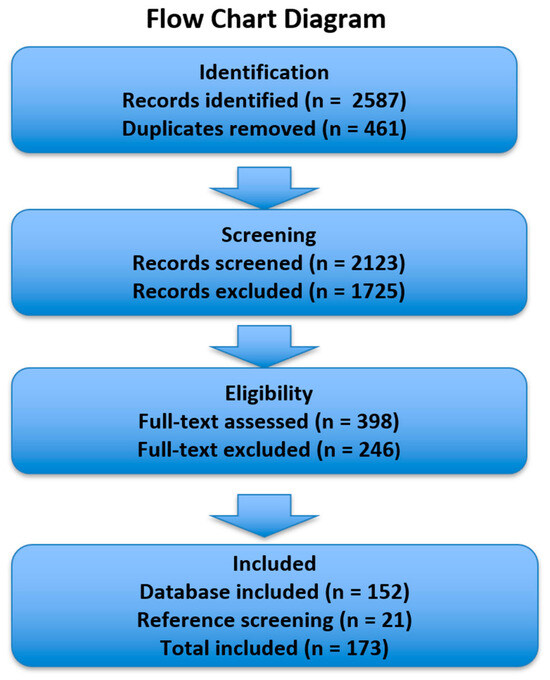
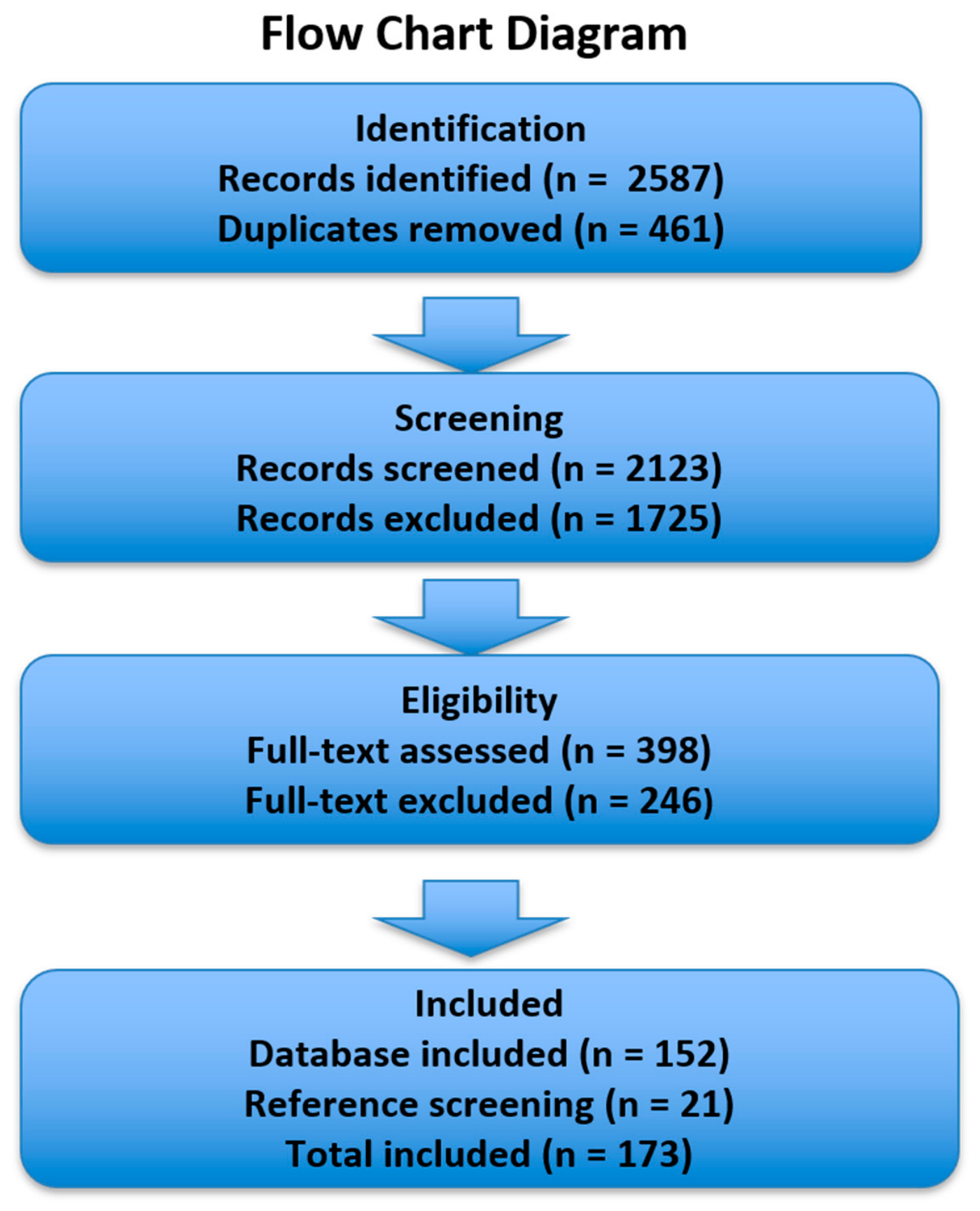
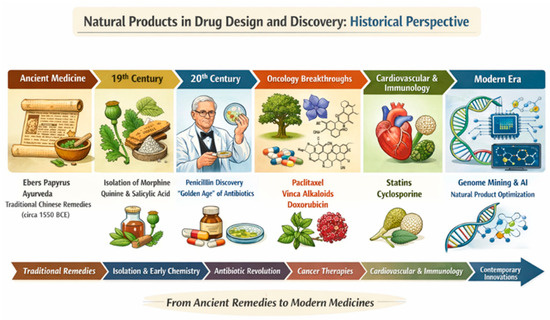
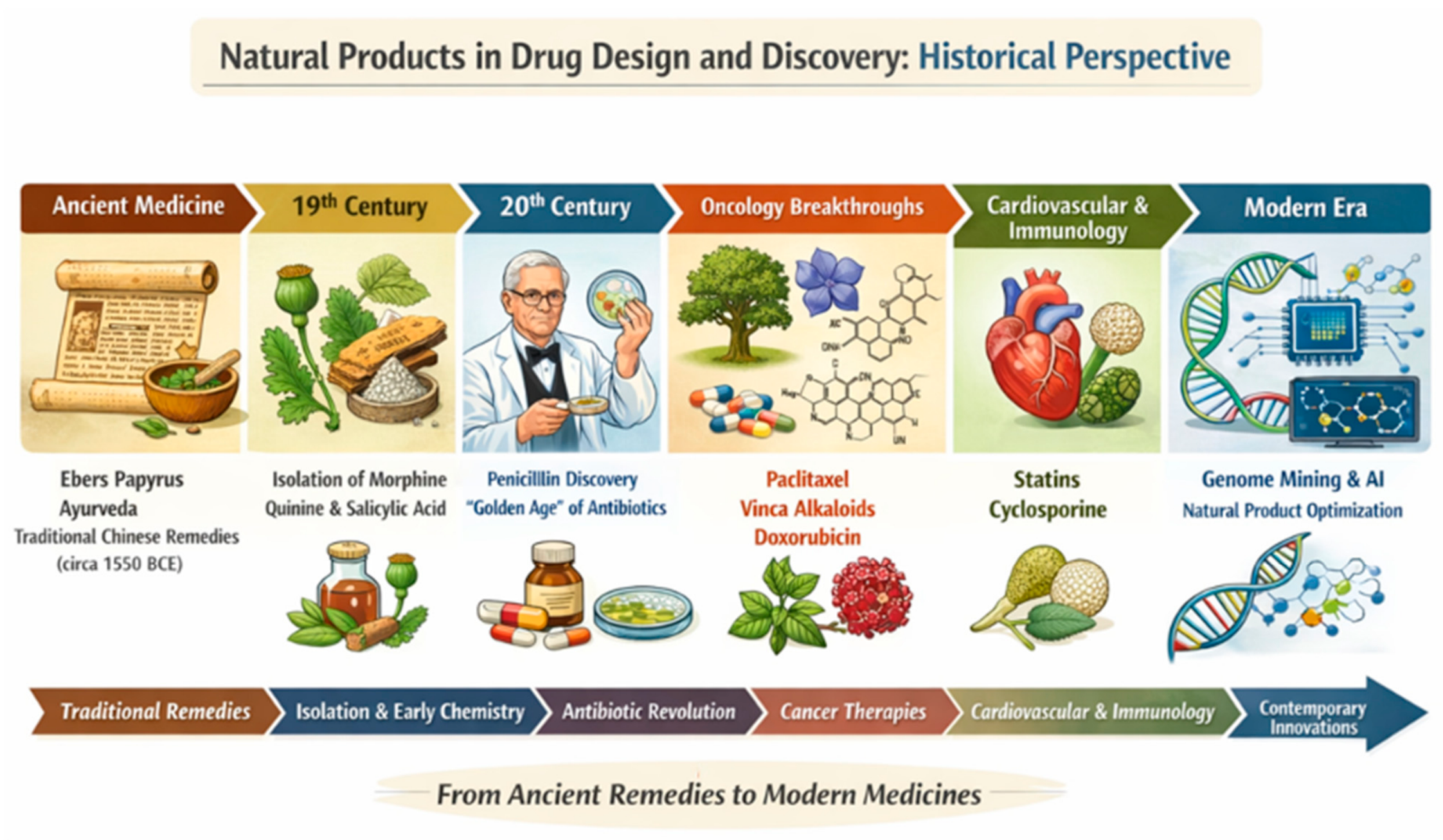
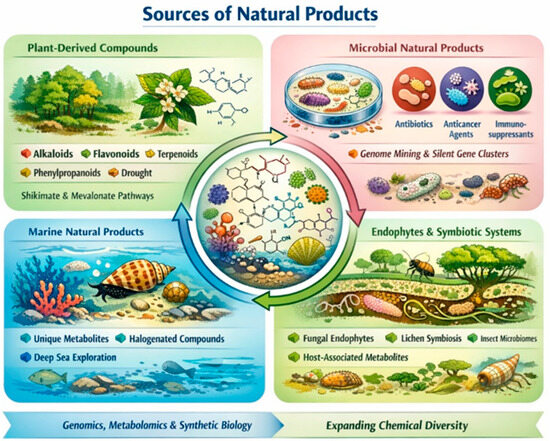
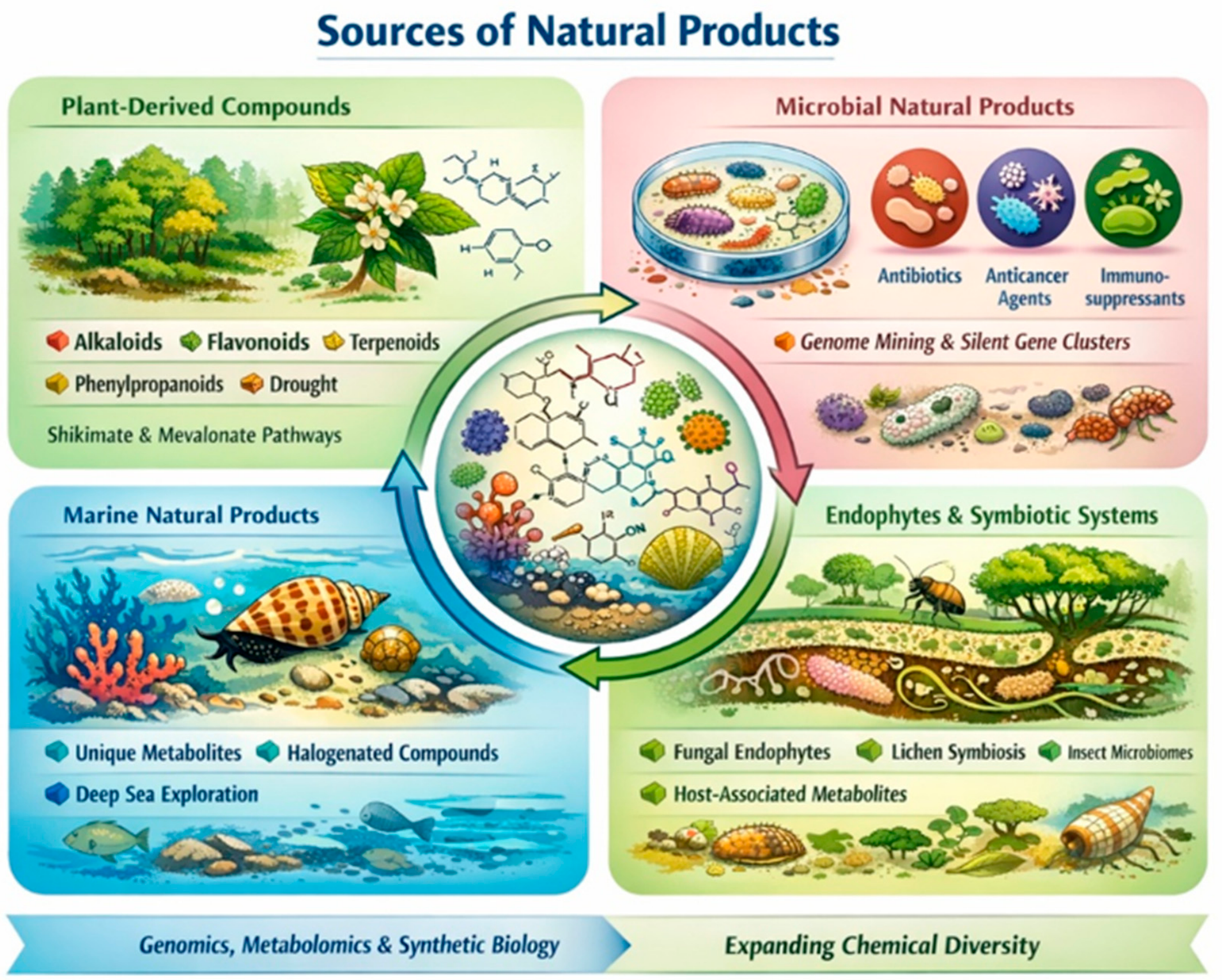
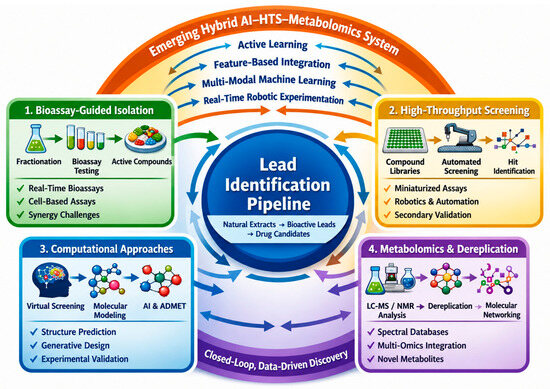
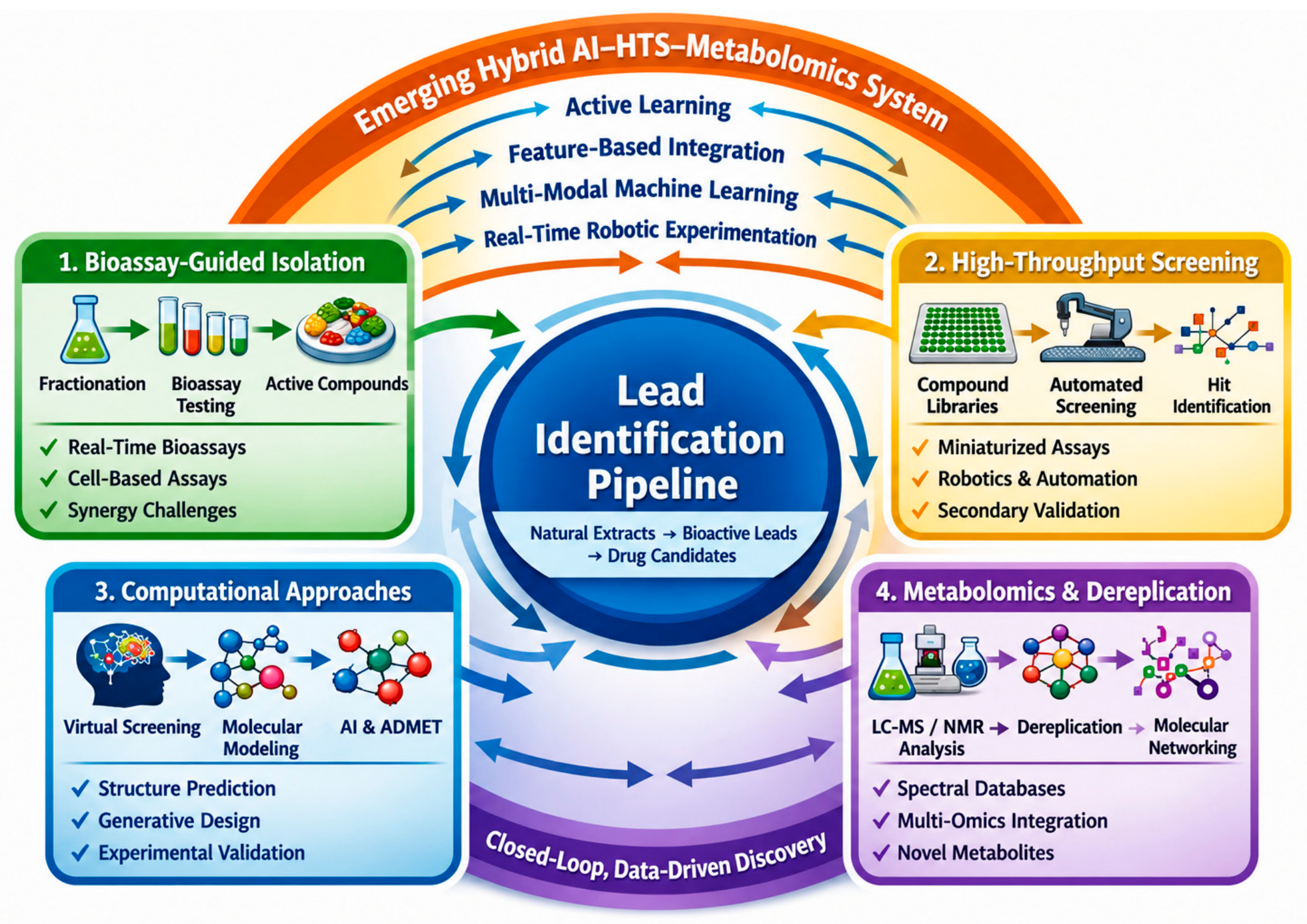
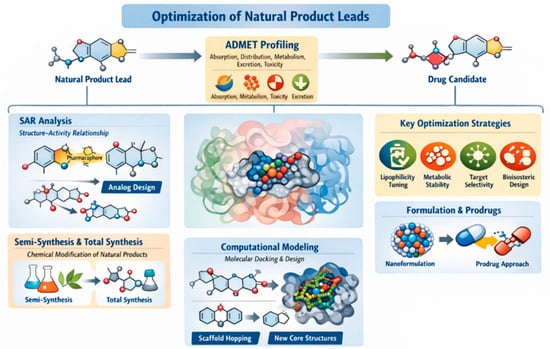
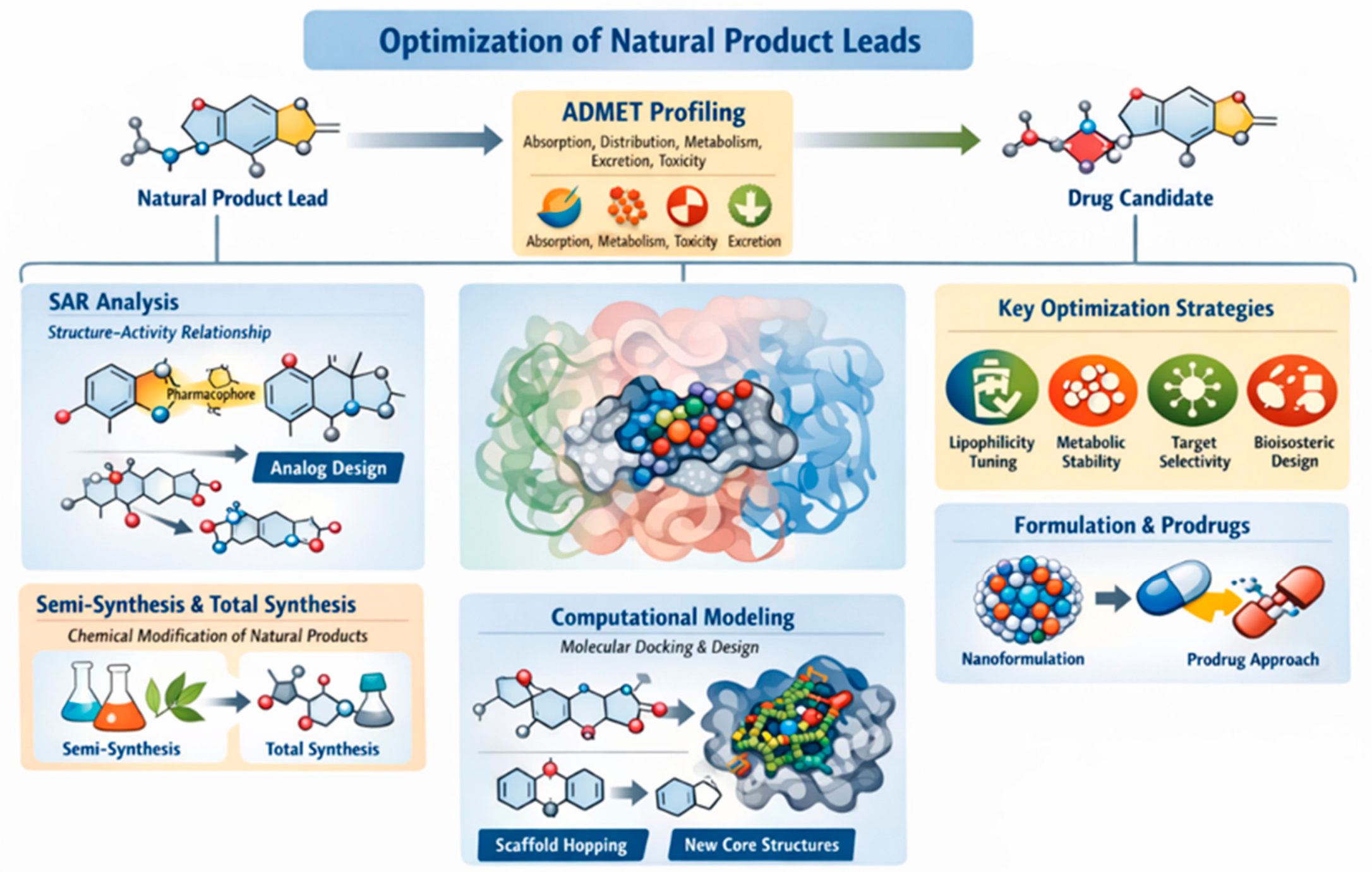

Disclaimer/Publisher’s Note: The statements, opinions and data contained in all publications are solely those of the individual author(s) and contributor(s) and not of MDPI and/or the editor(s). MDPI and/or the editor(s) disclaim responsibility for any injury to people or property resulting from any ideas, methods, instructions or products referred to in the content. |
© 2026 by the authors. Published by MDPI on behalf of the Österreichische Pharmazeutische Gesellschaft. Licensee MDPI, Basel, Switzerland. This article is an open access article distributed under the terms and conditions of the Creative Commons Attribution (CC BY) license.