


Abstract
Background: Healthcare-associated infections (HAIs) remain a major preventable challenge in healthcare systems worldwide. Nursing students play a key role in infection prevention during clinical training; therefore, adequate education in hand hygiene (HH), standard precautions (SPs), and infection prevention and control (IPC) is essential. This systematic review aimed to evaluate nursing students’ knowledge of HAI prevention according to international recommendations and to identify factors associated with higher knowledge levels. Methods: A systematic review was conducted following Joanna Briggs Institute methodology and PRISMA guidelines. Searches were performed in MEDLINE (PubMed), CINAHL, Cochrane Library, Embase, Scopus, and Web of Science. Observational studies assessing nursing students’ knowledge of HH, SPs, or IPC were included. Methodological quality was assessed using the Joanna Briggs Institute critical appraisal checklist for analytical cross-sectional studies. Results: Fifty-two studies involving 13,912 nursing students across five continents were included. Most studies focused on HH, followed by SPs and IPC. The WHO Five Moments for Hand Hygiene (14 of 26 (53.8%)) was the most frequently used instrument for HH assessment, while the Compliance with Standard Precautions Scale (5/11 (45.5%)) was the most used for SPs. Regarding IPC, most studies (5/7 (71.4%)) evaluated it by study-specific questionnaires developed/adapted by the researchers. Higher knowledge and compliance levels were generally associated with advanced academic year, prior training, positive attitudes, and supportive clinical environments. However, substantial heterogeneity was identified across study designs, assessment instruments, outcome measures, and methodological quality. Conclusions: Continued and updated education in HH, SPs, and IPC appears essential for improving nursing students’ knowledge and preventive practices. Greater standardization of assessment methods is needed to improve comparability across studies.
1. Introduction
Healthcare-associated infections (HAIs) are infections acquired while receiving healthcare for another condition in any healthcare setting, including hospitals, outpatient facilities, and home care environments [1,2]. HAIs remain one of the most important preventable patient safety challenges worldwide. In Europe alone, HAIs affect between 4.5 and 5 million patients annually and are associated with prolonged hospitalisation, increased healthcare costs, and the growing global threat of antimicrobial resistance [3]. Both the World Health Organization (WHO) and the European Centre for Disease Prevention and Control (ECDC) estimate that a substantial proportion of HAIs are preventable through appropriate infection prevention measures [1,3]. Consequently, strengthening infection prevention protocols and educational strategies remains a major international healthcare priority [1,3,4].
Infection prevention and control (IPC) constitute a broad organisational, educational, and safety-oriented framework aimed at reducing the risk of healthcare-associated infections (HAIs). Within this framework, standard precautions (SPs) represent the basic set of preventive measures that should be applied to all patients, regardless of infection status, and include hand hygiene (HH), appropriate use of personal protective equipment (PPE), safe handling of sharps, environmental decontamination, respiratory hygiene, waste management, and prevention of cross-transmission [1,5,6]. Among these measures, HH is one of the most widely studied and evidence-based components, given its central role in reducing microorganism transmission in healthcare settings. The WHO defines HH as any action aimed at cleaning the hands to reduce microbial contamination [1,2], and its central role in interrupting microorganism transmission explains why it has been extensively addressed in international recommendations and empirical studies. In this review, HH, SPs, and broader IPC were considered analytically distinct but conceptually interrelated subdomains, reflecting how the available literature and assessment instruments are commonly organised: HH as a key component of SPs, SPs as the basic clinical framework for infection prevention, and IPC as the wider organisational and educational context in which these measures are implemented [7,8,9,10].
Nurses play a central role in the prevention and control of HAIs because of their continuous and direct contact with patients during clinical care [11,12]. Consequently, nursing students (NSs) must acquire adequate knowledge and competencies in HH, SPs, and IPC during their academic and clinical training. Improving knowledge in these areas may contribute to reducing microorganism transmission, minimising healthcare costs and workload, and improving the quality and safety of patient care [13,14,15,16,17,18]. However, most previous studies involving NSs have focused primarily on HH, with comparatively fewer studies addressing SPs or broader IPC concepts [19,20,21,22,23,24,25,26,27,28,29]. In addition, much of the available evidence relies on self-reported questionnaires rather than direct observation of clinical compliance.
To date, few reviews have simultaneously examined HH, SPs, and IPC knowledge among NSs from a comprehensive perspective aligned with international recommendations. While a recent review [30] focused primarily on nursing students’ knowledge of healthcare-associated infections and infection prevention, the present review offers a broader and more comprehensive perspective on infection prevention and control (IPC) competence. Specifically, it examines IPC knowledge as the primary outcome while also synthesising related constructs frequently reported in the literature, including attitudes, perceptions, self-reported practices, adherence, and compliance. In addition, we systematically analysed the assessment instruments used to evaluate these domains and identified the factors associated with higher knowledge levels.
Therefore, the primary objective of this systematic review was to analyse nursing students’ knowledge of infection prevention and control in relation to HH, SPs, and broader IPC recommendations. The secondary objectives were to identify the instruments most commonly used to assess these domains, to examine the factors associated with higher knowledge levels, and to narratively synthesise related outcomes, including attitudes, perceptions, self-reported practices, adherence, and compliance, when reported by the included studies. By synthesising the available evidence, this review may support healthcare educators, academic institutions, and policymakers in the development of more effective infection prevention training strategies and educational policies [31].
2. Materials and Methods
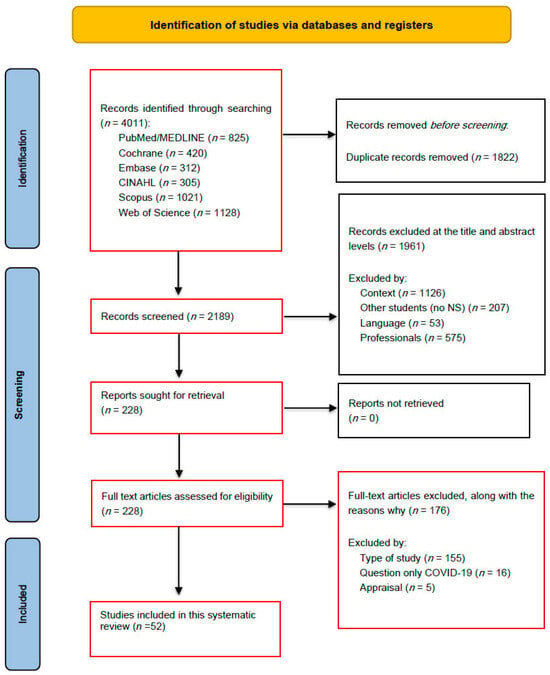
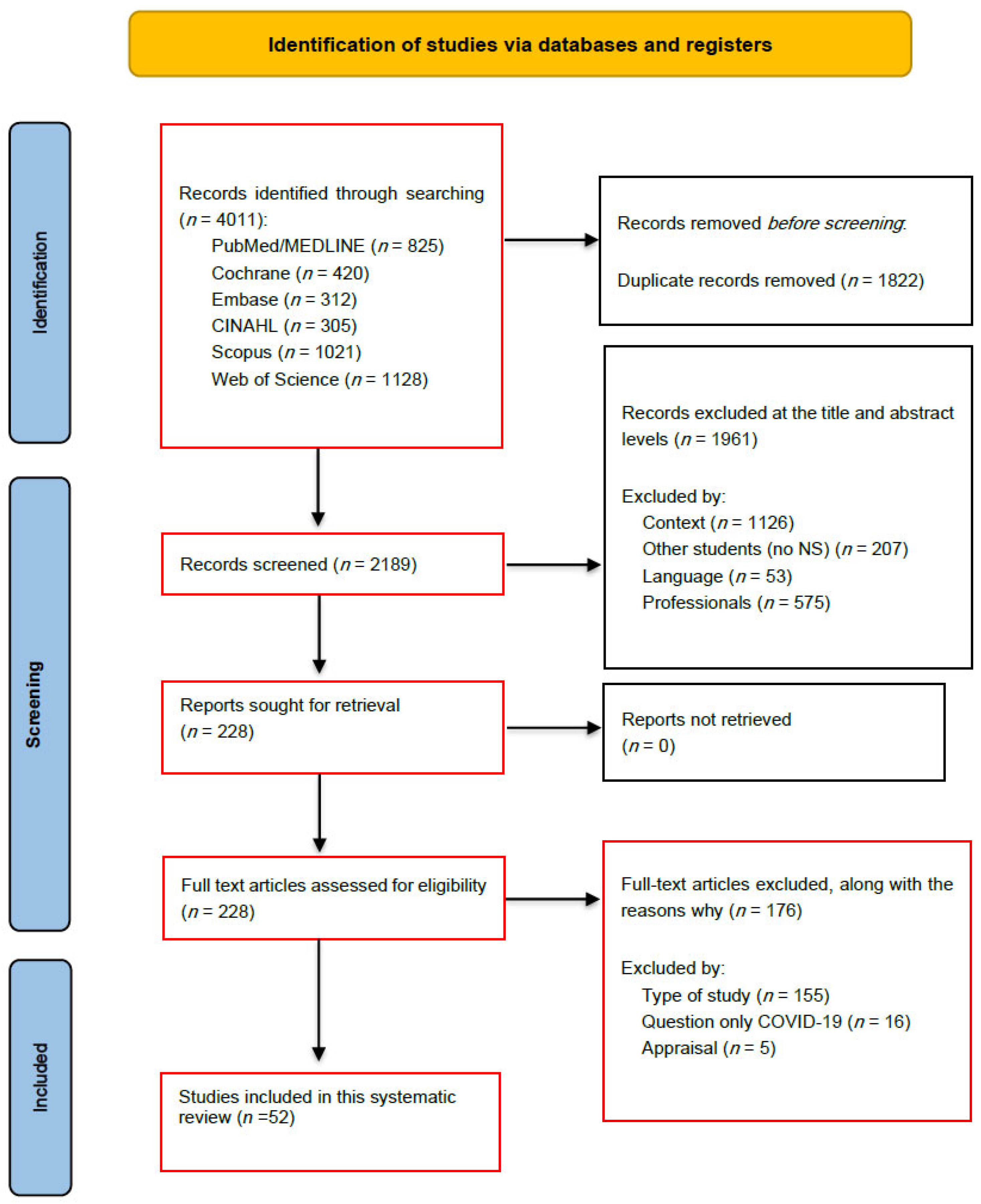
This systematic review included studies assessing nursing students’ (NSs) knowledge of hand hygiene (HH), standard precautions (SPs), and infection prevention and control (IPC), as well as the instruments used to measure these domains and the variables associated with knowledge levels. The review was conducted in accordance with the Joanna Briggs Institute (JBI) methodology for systematic reviews of evidence synthesis [32,33]. Reporting of the review process followed the Preferred Reporting Items for Systematic Reviews and Meta-Analyses (PRISMA) 2020 guidelines, and the study selection process is presented in a PRISMA flow diagram (Figure 1) [34]. The review protocol was not registered in PROSPERO.
Figure 1.
Flow chart. Abbreviations: NS, nursing student; COVID-19, coronavirus disease 2019.
2.1. Search Strategy
The research question was structured according to the PEO framework (Population–Exposure–Outcome), which is appropriate for observational evidence synthesis. The Population was undergraduate nursing students; the Exposure comprised infection prevention-related domains, including hand hygiene (HH), standard precautions (SPs), infection prevention and control (IPC), personal protective equipment (PPE), and related educational or clinical exposure; and the primary Outcome was knowledge of infection prevention. Attitudes, perceptions, self-reported practices, adherence, and compliance were considered related secondary outcomes when reported by the included studies.
The search strategy was designed to identify studies assessing nursing students’ knowledge of HH, SPs, IPC, PPE, and related infection prevention measures. The following core search syntax was applied and adapted to each database: (((nurs* student* OR nursing student*) AND (hand hygiene OR standard precaution* OR infection prevention and control OR infection prevention OR nosocomial infection* OR healthcare-associated infection* OR antisepsis OR personal protective equipment OR PPE OR glove* OR mask* OR gown* OR goggle*) AND (knowledge))).
The literature search was conducted in MEDLINE via PubMed, CINAHL via EBSCOhost, Cochrane Library, Embase, Scopus, and Web of Science. Controlled vocabulary terms, including MeSH and Emtree terms where applicable, were combined with free-text keywords using Boolean operators. The final search was performed on 7 January 2026. Screening, full-text assessment, and selection of eligible studies were subsequently conducted between January and April 2026. The complete database-specific search strategies, including controlled vocabulary terms, free-text terms, field tags, Boolean operators, filters, limits, language restrictions, final search date, and the number of records retrieved from each database, are provided in Appendix A.
Only peer-reviewed full-text articles published in English or Spanish were eligible for inclusion. Grey literature was not searched. Although Spanish-language publications were eligible, the search syntax was applied in English; therefore, potentially relevant studies indexed only with Spanish-language terms may not have been retrieved.
The search yielded 4011 records. After duplicate removal (n = 1822), studies were screened according to the predefined inclusion and exclusion criteria. The study selection process is presented in the PRISMA 2020 flow diagram (Figure 1) [34].
2.2. Inclusion and Exclusion Criteria
To address the objectives of this review, studies were eligible for inclusion if they were original, peer-reviewed, full-text articles published in English or Spanish that assessed nursing students’ (NSs) knowledge, attitudes, or compliance related to hand hygiene (HH), standard precautions (SPs), or infection prevention and control (IPC). Cross-sectional observational studies using questionnaires, validated scales, or structured survey instruments were included.
Studies focusing exclusively on registered nurses, healthcare professionals, or students from disciplines other than nursing were excluded. Reviews, editorials, conference abstracts, protocols, and studies without sufficient methodological information were also excluded.
Studies focusing exclusively on infection prevention knowledge or practices related to SARS-CoV-2 were excluded because the objective of this review was to evaluate general infection prevention competencies among undergraduate nursing students, rather than competencies specific to a single infectious disease.
2.3. Study Selection
The Zotero reference management system (version 6.0.37) was used to organise citations, manage duplicate records, and support the screening process. Potentially relevant studies were retrieved in full text, and citation details were imported into the Joanna Briggs Institute System for the Unified Management, Assessment and Review of Information (JBI SUMARI) for data extraction and methodological appraisal [32].
Data extracted from the included studies comprised study setting, design, participant characteristics (including mean age, sex distribution, and academic year), assessment instruments, and variables associated with knowledge of hand hygiene (HH), standard precautions (SPs), or infection prevention and control (IPC) (Appendix B). The standardised JBI SUMARI extraction template was used throughout the review process. The study selection procedure and reasons for exclusion were documented according to PRISMA 2020 recommendations and are presented in the PRISMA flow diagram (Figure 1) [34].
2.4. Assessment of the Methodological Quality
Methodological quality was independently assessed by two reviewers (A.d.M.M. and C.B.) using the Joanna Briggs Institute (JBI) Critical Appraisal Checklist for Analytical Cross-Sectional Studies. Disagreements during the appraisal process were resolved through discussion with a third reviewer (M.d.C.G.-E.).
The checklist consists of eight items evaluating methodological rigour, including sampling procedures, measurement validity, confounding factors, and statistical analysis. Each item was scored as 1 (“yes”) or 0 (“no”, “unclear”, or “not applicable”). For the purposes of this review, studies scoring > 70% were classified as high quality, scores between 50% and 70% as moderate quality, and scores < 50% as low quality. Only studies classified as high or moderate quality were included in the review. The methodological appraisal results are presented in Appendix C.
To improve methodological consistency, study screening and quality appraisal were conducted independently by the reviewers, and discrepancies were resolved by consensus.
3. Results
Following the study selection process described in the PRISMA 2020 flow diagram (Figure 1), 52 studies were included in the review [31]. The studies represented a broad geographical distribution across Asia (n = 29), Europe (n = 12), Africa (n = 6), Oceania (n = 3), and the Americas (n = 2). Overall, the included studies involved 13,912 nursing students (NSs), most of whom were female (75.20%), with mean ages ranging between 20 and 25 years. Sample sizes varied considerably across studies, ranging from 14 to 829 NS participants. Most studies included students from multiple academic years to improve sample representativeness.
3.1. Characteristics of the Included Studies
The included studies investigated infection prevention from different perspectives, encompassing hand hygiene, standard precautions, infection prevention and control, healthcare-associated infections, personal protective equipment, and occupational exposure. Although all studies addressed infection prevention among nursing students, they evaluated different outcome constructs using a wide variety of assessment instruments.
Given this heterogeneity in both study objectives and outcome measures, the findings were synthesised according to the principal construct evaluated rather than according to the infection prevention topic addressed.
Knowledge was the most frequently investigated construct, followed by attitudes, perceptions, self-reported practices, adherence, and compliance. Several studies evaluated more than one construct simultaneously, whereas others focused exclusively on a single outcome. Accordingly, the findings are presented according to the principal construct assessed in each study: knowledge, attitudes, perceptions, self-reported practices, adherence, compliance, and assessment instruments.
3.2. Knowledge
Knowledge was the most frequently assessed construct across the included studies and was evaluated in relation to hand hygiene (HH), standard precautions (SPs), infection prevention and control (IPC), or broader infection prevention topics. Overall, 33 studies assessed infection prevention knowledge using a wide range of validated and ad hoc instruments. As shown in Table 1, substantial heterogeneity was observed in the assessment instruments, scoring systems, and criteria used to classify and interpret knowledge levels across the included studies. This methodological variability limited direct comparison of findings between studies. Only a small number of studies applied predefined cut-off values to classify knowledge as poor, moderate or good, whilst the majority relied on qualitative interpretations defined by the authors, descriptive statistics or comparisons between groups of participants without explicit classification thresholds. Despite these methodological differences, the quantitative results generally indicated moderate, albeit variable, levels of knowledge amongst nursing students. This overall pattern was also reflected in studies reporting generally sufficient knowledge of standard precautions and infection prevention, despite persistent deficiencies in specific domains such as sharps management and healthcare workers’ care. Likewise, lower infection prevention knowledge scores observed among nursing students compared with medical students further highlight the need to strengthen infection prevention education early in undergraduate curricula [35,36].
Quantitative knowledge outcomes varied considerably across infection prevention domains and assessment instruments. In hand hygiene studies, reported knowledge ranged from 68.1% correct responses on a 21-item questionnaire [15] to a mean score of 4.59 ± 0.72 out of 6 on the WHO Hand Hygiene Questionnaire, with 80% of students scoring above four points [23]. Among studies applying WHO-based cut-off criteria, Thakker and Jadhav reported that only 7.5% of participants achieved good hand hygiene knowledge, whereas 69.1% were classified as having moderate knowledge [37]. Similarly, Nair et al. found that only 9% of participants achieved good hand hygiene knowledge [38]. In studies assessing standard precautions, reported knowledge scores included a mean score of 13.8 ± 3.3 out of 18 [39] and a mean percentage score of 65.0% [40], while Ayele et al. reported that only 32.4% of students demonstrated good knowledge of standard precautions [41]. Broader IPC studies also showed variable results, including a mean knowledge score of 12.49 ± 2.3 out of 18 for nosocomial infection control standards [42] and a mean score of 51.53 ± 0.89 out of 100 on the Infection Control Standardized Questionnaire, with only 15.5% of students achieving a score of ≥70/100 [19]. Comparable findings were also reported, with moderate knowledge scores positively correlated with infection prevention performance [43].
Although female sex was associated with higher knowledge scores in some studies, this finding should be interpreted cautiously, as the included samples were predominantly female, reflecting the sex distribution of undergraduate nursing programmes. Despite these associations, recurrent knowledge deficits were identified across infection prevention domains, particularly in relation to recognising the patient as a primary source of HAI-related pathogens, understanding the role of healthcare workers’ hands in microorganism transmission, identifying the appropriate indications and duration of alcohol-based hand rub use, applying the WHO Five Moments for Hand Hygiene, understanding transmission-based precautions, managing occupational exposure incidents, and selecting appropriate personal protective equipment. Similar deficiencies were also identified, with persistent gaps in students’ understanding of hand hygiene and standard precaution principles despite previous theoretical instruction [44,45]. Conversely, nursing students generally demonstrated better knowledge of glove use, hand hygiene after exposure to body fluids, and the fundamental principles of standard precautions.
Table 1.
Approaches used to interpret knowledge levels across the included studies.
3.3. Attitudes, Perceptions and Self-Reported Practices
Compared with knowledge, attitudes, perceptions, and self-reported practices were evaluated in fewer studies and were commonly assessed using multidimensional questionnaires incorporating several infection prevention constructs simultaneously. These outcomes were investigated in relation to hand hygiene (HH), standard precautions (SPs), and broader infection prevention and control (IPC) topics, with most studies assessing more than one construct within the same instrument rather than evaluating them independently.
Overall, nursing students demonstrated positive attitudes towards infection prevention and recognised the importance of hand hygiene, standard precautions, and the appropriate use of personal protective equipment. More favourable attitudes were consistently associated with higher knowledge levels, previous infection prevention education or training, and greater confidence in infection prevention practices. Likewise, positive perceptions of the clinical learning environment were associated with safer workplace environments, institutional support, and previous IPC training. More positive perceptions of hand hygiene were associated with better self-reported hand hygiene performance, reinforcing the relationship between knowledge, perceptions, and preventive behaviours [43]. Conversely, observing poor infection prevention practices among healthcare professionals, perceived organisational barriers, and unsafe clinical environments negatively influenced students’ perceptions and their intention to comply with recommended infection prevention measures [14,15,24,25,41,46,52,53,54,55,56]. In addition, nursing students generally expressed positive attitudes towards patient participation in hand hygiene promotion, with many considering reminders from patients and relatives about hand hygiene to be acceptable and supportive of safer care [57].
Self-reported infection prevention practices were generally favourable, although considerable variability was observed across specific behaviours. Nursing students consistently reported performing hand hygiene more frequently after exposure to body fluids, following patient contact, and after toilet use than before patient contact, before aseptic procedures, or before glove use. These findings are consistent with evidence showing high overall self-reported hand hygiene practice scores, although lower compliance was observed before glove use than after patient contact [58]. Frequently reported barriers to appropriate infection prevention practices included forgetting to perform hand hygiene, time pressure during clinical placements, inadequate availability of resources, and the influence of healthcare professionals’ behaviour as clinical role models [7,26,27,58,59,60,61].
3.4. Adherence and Compliance
Compliance with infection prevention measures, and less frequently adherence, were evaluated in a smaller number of studies, primarily in relation to standard precautions and hand hygiene during clinical placements. Most studies assessed compliance using validated instruments, particularly the Compliance with Standard Precautions Scale (CSPS), whereas adherence was mainly explored through questionnaires examining factors influencing compliance with standard precautions. One study also assessed hand hygiene practices using the validated Hand Hygiene Practices Inventory (HHPI), providing a more behaviour-focused evaluation of students’ routine hand hygiene practices [58].
Overall, nursing students demonstrated moderate to high levels of compliance, although performance varied according to the specific infection prevention measure assessed. Higher compliance was consistently reported for safe sharps disposal, hand hygiene following exposure to body fluids, appropriate waste management, and the use of gloves and face masks when indicated. In contrast, lower compliance was observed for hand hygiene before patient contact, before aseptic procedures, the use of protective gowns and eye protection, and environmental decontamination practices [7,20,22,41,59]. Similarly, high overall self-reported hand hygiene practice scores were reported, although lower compliance was observed before glove use than after patient contact, supporting the pattern identified across the included studies [58].
Higher compliance was associated with more advanced academic year, previous infection prevention education or training, greater knowledge of infection prevention measures, and supportive clinical learning environments. Conversely, limited availability of resources, inadequate supervision during clinical placements, perceived organisational barriers, and poor role modelling by healthcare professionals were the most frequently reported factors associated with lower compliance [7,52,55,60].
3.5. Assessment Instruments
A wide variety of instruments was used to assess infection prevention competencies among nursing students, reflecting considerable heterogeneity in both the constructs evaluated and the measurement approaches employed (Table 2). Validated questionnaires were predominantly used to assess hand hygiene and standard precautions, whereas studies investigating broader infection prevention and control (IPC) competencies more frequently relied on ad hoc questionnaires developed for individual studies.
Table 2.
Validated and ad hoc assessment instruments used to evaluate infection prevention competencies among nursing students.
Among studies evaluating hand hygiene, the most frequently used instruments were questionnaires based on the World Health Organization (WHO) Five Moments for Hand Hygiene framework, followed by the Hand Hygiene Questionnaire (HHQ), the Hand Hygiene Practices Inventory (HHPI), and the Hand Hygiene Beliefs Scale (HHBS). Together, these instruments assessed a range of constructs, including knowledge, beliefs, attitudes, and self-reported practices [23,56,61,62]. In addition, a modified WHO Hand Hygiene Questionnaire was used to assess knowledge, perceptions, and performance simultaneously, whereas the validated Hand Hygiene Practices Inventory (HHPI) was used to assess self-reported hand hygiene practices among nursing students [43,58].
Studies focusing on standard precautions primarily used validated instruments such as the Compliance with Standard Precautions Scale (CSPS), the Factors Influencing Adherence to Standard Precautions Scale–Student Version (FIASPS-SV), the Questionnaire on Knowledge of Standard Precautions (QKSP), and the Questionnaire for Compliance with Standard Precautions (QCSP), allowing separate assessment of compliance, determinants of adherence, and knowledge of standard precautions [22,41,59,63]. Other studies used adapted questionnaires based on previously published instruments. For example, an adapted 41-item questionnaire assessing five domains of standard precautions and infection prevention knowledge and a questionnaire adapted from the Rouen University infection prevention survey were used to evaluate students’ knowledge of standard precautions [35,36].
In contrast, relatively few validated instruments were available for broader IPC competencies. The Infection Control Standardized Questionnaire (ICSQ) and the Leading a Culture of Quality for Infection Prevention (LCQ-IP) were the only validated IPC-specific instruments identified. Most studies investigating broader IPC competencies relied on ad hoc questionnaires that simultaneously assessed multiple constructs, including knowledge, attitudes, perceptions, self-reported practices, adherence, and compliance [7,19,55]. Similarly, infection prevention knowledge was assessed using investigator-developed questionnaires focusing on hand hygiene and standard precautions, reflecting the continued reliance on study-specific instruments within this field [44,45].
Overall, the variability in assessment instruments, together with the frequent use of study-specific questionnaires assessing multiple constructs simultaneously, highlights the lack of a standardised approach for evaluating infection prevention competencies among nursing students.
4. Discussion
4.1. Overview
The present review extends the existing evidence on infection prevention and control (IPC) education among nursing students [30] by providing a broader and more comprehensive synthesis than previous reviews by analysing related constructs such as students’ attitudes, perceptions, self-reported practices, adherence, and compliance. We also systematically examined the assessment instruments used to evaluate these domains and identified the factors associated with higher knowledge levels. By integrating these complementary dimensions, our review contextualises IPC knowledge within the broader educational and behavioural factors that may influence infection prevention competence among nursing students.
Overall, the findings indicate that nursing students generally demonstrate moderate to satisfactory knowledge, positive attitudes towards infection prevention, and moderate to high levels of self-reported compliance with recommended IPC measures. However, important knowledge gaps persist in several core IPC concepts, and compliance remains inconsistent across specific preventive behaviours. Furthermore, this review identified substantial methodological heterogeneity not only in the assessment instruments used to evaluate infection prevention competencies but also in the approaches adopted to classify and interpret knowledge levels. Together, these methodological differences limit direct comparisons between studies and highlight the need for greater standardisation of both educational assessment and reporting methods.
4.2. Knowledge
Overall, the available evidence suggests that infection prevention and control (IPC) knowledge appears to develop progressively throughout undergraduate nursing education, although important gaps remain in several core IPC concepts. Higher knowledge levels were consistently reported among senior nursing students and those who had received previous IPC education or recent clinical training, suggesting that repeated exposure to theoretical instruction and supervised clinical practice contributes to the progressive development of IPC competencies [15,23,49,61,64]. This interpretation is further supported by evidence highlighting the need to strengthen infection prevention education early in undergraduate nursing curricula to ensure the progressive acquisition of IPC competencies [36].
Despite these improvements, knowledge deficiencies remained remarkably consistent across the included studies and were mainly related to fundamental IPC concepts, including microorganism transmission, the WHO Five Moments for Hand Hygiene, the appropriate use of alcohol-based hand rubs, transmission-based precautions, post-exposure management, and the correct use of personal protective equipment. These persistent gaps suggest that, although knowledge increases with academic progression, important IPC concepts are not consistently consolidated during undergraduate education [15,37,47,56,64]. Comparable deficiencies were also reported, indicating that theoretical instruction alone may be insufficient to ensure the long-term retention and application of core infection prevention principles [44,45].
An important methodological finding of the present review, supported by the comparative analysis presented in Table 1, was the considerable heterogeneity in the approaches used to assess and interpret IPC knowledge across studies. While only a limited number of studies classified knowledge using predefined cut-off values, most relied on author-defined qualitative interpretations or descriptive comparisons without explicit classification criteria. Consequently, direct comparison of reported knowledge levels should be interpreted cautiously. This methodological heterogeneity highlights the need for greater standardisation of both assessment instruments and approaches used to classify IPC knowledge among nursing students.
The findings of this review are consistent with the recent systematic review by Giordano et al. [30], which also reported progressive improvements in nursing students’ IPC knowledge alongside persistent educational gaps across key infection prevention domains. Together, these findings support the view that IPC education should be considered a longitudinal educational process rather than a series of isolated learning activities. Continuous educational reinforcement throughout undergraduate nursing programmes, aligned with the World Health Organization Core Components of Infection Prevention and Control Programmes [65], may facilitate the consolidation of theoretical knowledge and its translation into safe clinical practice. This interpretation is also supported by evidence demonstrating positive associations between infection prevention knowledge, perceptions, and self-reported performance, suggesting that educational interventions should simultaneously address cognitive, behavioural, and contextual dimensions [43]. Future research would also benefit from the adoption of more standardised assessment instruments and explicit knowledge classification criteria, facilitating comparisons across educational settings and strengthening the evidence base for undergraduate IPC education.
4.3. Attitudes, Perceptions and Self-Reported Practices
Although nursing students generally demonstrated positive attitudes towards infection prevention and recognised the importance of infection prevention and control (IPC) measures, the findings of this review suggest that favourable attitudes alone are insufficient to ensure the consistent adoption of safe infection prevention behaviours. Positive attitudes were frequently associated with higher levels of IPC knowledge and previous infection prevention education or training, supporting the view that knowledge provides an important foundation for the development of infection prevention competencies [15,25,46,54,56]. However, several studies demonstrated that adequate knowledge did not consistently translate into appropriate self-reported practices, indicating that infection prevention behaviours are influenced by factors extending beyond knowledge acquisition alone. This interpretation is further supported by evidence showing that, although nursing students generally demonstrated good hand hygiene knowledge, attitudes and self-reported practices remained comparatively less favourable, reinforcing the need for educational approaches that target behavioural as well as cognitive aspects of infection prevention [66].
One of the most consistent findings of this review was the influence of the clinical learning environment on nursing students’ infection prevention behaviours. Positive perceptions of institutional support, effective supervision, and a strong patient safety culture were associated with more favourable self-reported practices, whereas observing poor infection prevention behaviours among healthcare professionals, inadequate supervision, organisational barriers, and limited availability of resources negatively influenced students’ perceptions and reduced their willingness to adopt recommended IPC practices [24,49,52,54,55]. Similarly, the importance of a supportive safety culture was reinforced by findings showing that nursing students generally welcomed patient participation in hand hygiene promotion, suggesting that open communication and shared responsibility may further strengthen infection prevention behaviours during clinical training [57]. These findings reinforce the importance of positive clinical role models and suggest that infection prevention competencies are shaped not only through formal education but also through the clinical learning environment, where students observe, practise, and reinforce recommended IPC behaviours during clinical placements.
Taken together, these findings indicate that the development of infection prevention competencies extends beyond the acquisition of theoretical knowledge. Undergraduate nursing curricula should therefore adopt a longitudinal competency-based approach that integrates knowledge acquisition, positive attitudes, behavioural skills, reflective practice, and supportive clinical learning environments throughout the educational process. This interpretation is consistent with the World Health Organization Core Components of Infection Prevention and Control Programmes [65], which recognise education, training, and institutional safety culture as complementary elements required to promote sustainable infection prevention behaviours. Similar conclusions have also been reported in a recent systematic review [30], supporting the importance of combining theoretical instruction with repeated clinical reinforcement to facilitate the translation of knowledge into safe clinical practice. Furthermore, evidence suggests that even when nursing students demonstrate favourable self-reported hand hygiene practices, adherence may still vary according to specific clinical situations, reinforcing the need for continuous behavioural reinforcement throughout undergraduate education [58].
4.4. Adherence and Compliance
Although nursing students generally demonstrated moderate to high levels of compliance with recommended infection prevention and control (IPC) measures, compliance varied according to the specific preventive behaviour evaluated. Higher compliance was consistently reported for practices related to safe sharps disposal, hand hygiene following exposure to body fluids, and the use of gloves or face masks when indicated, whereas lower compliance was observed before patient contact, before aseptic procedures, and for the use of gowns and eye protection [7,20,22,41,59]. Comparable findings have also been reported, with consistently higher self-reported hand hygiene practices after patient contact than before glove use, suggesting that behaviours associated with more immediate or visible risks are more readily adopted by nursing students [58]. This pattern suggests that preventive behaviours associated with immediate and clearly perceived risks may be adopted more consistently than those primarily intended to prevent cross-transmission between patients.
An important methodological finding of this review was that, unlike knowledge, adherence and compliance were assessed using a relatively small number of well-established and validated instruments. Most studies evaluating standard precautions employed the Compliance with Standard Precautions Scale (CSPS), whereas studies exploring behavioural determinants primarily used the Factors Influencing Adherence to Standard Precautions Scale–Student Version (FIASPS-SV) [22,29,59]. The additional use of the validated Hand Hygiene Practices Inventory (HHPI) further supports the availability of robust instruments for assessing self-reported infection prevention behaviours among nursing students [58]. This greater methodological consistency facilitated comparisons across studies and contrasts with the substantial heterogeneity identified in the assessment and interpretation of IPC knowledge.
Taken together, these findings suggest that improving compliance requires more than increasing theoretical knowledge alone. Consistent implementation of infection prevention measures appears to depend on the interaction between knowledge, repeated supervised clinical practice, constructive feedback, positive clinical role modelling, and supportive learning environments [7,52,55,60]. Future research would benefit from maintaining the use of validated compliance instruments while further investigating the behavioural and organisational factors influencing nursing students’ adherence to IPC measures across different educational and clinical settings.
4.5. Assessment Instruments
An important contribution of this review was the comprehensive analysis of the instruments used to evaluate infection prevention and control (IPC) competencies among nursing students. Although several validated questionnaires were identified, particularly for hand hygiene and standard precautions, the assessment of broader IPC competencies relied predominantly on study-specific instruments developed for individual investigations [7,19,22,23]. In addition, several studies employed questionnaires adapted from previously published instruments rather than fully validated IPC-specific tools, including modified WHO-based questionnaires and other investigator-adapted instruments [35,36,43,49]. This variability reflects the absence of a universally accepted framework for evaluating IPC competencies in undergraduate nursing education and makes direct comparison of findings across studies challenging.
Beyond differences in the instruments themselves, substantial variability was also observed in the constructs assessed. While some questionnaires focused exclusively on knowledge or compliance, others simultaneously evaluated multiple dimensions, including knowledge, attitudes, perceptions, self-reported practices, adherence, and compliance [46,49,52,55]. The use of investigator-developed, adapted, and modified instruments across studies further illustrates the lack of consensus regarding which IPC competencies should be prioritised and how they should be measured. This heterogeneity suggests not only a lack of standardisation in assessment instruments but also the absence of a shared conceptual framework defining the core IPC competencies expected of undergraduate nursing students. Consequently, differences in reported outcomes may reflect variations in measurement approaches as much as true differences in students’ competencies.
These findings highlight the need for greater standardisation of assessment methods in undergraduate nursing education. Future research should prioritise the development and validation of comprehensive IPC assessment instruments with robust psychometric properties and clearly defined conceptual frameworks. Greater methodological consistency would facilitate comparisons across educational settings, strengthen the evidence base for infection prevention education, and support the evaluation of educational interventions aimed at improving nursing students’ IPC competencies, in line with the educational principles underpinning the World Health Organization Core Components of Infection Prevention and Control Programmes [65].
4.6. Strengths and Limitations
This review has several strengths. To our knowledge, it is the first systematic review to synthesise infection prevention and control (IPC) competencies among nursing students using a construct-based approach, integrating evidence across knowledge, attitudes, perceptions, self-reported practices, adherence, compliance, and assessment instruments. In addition, it provides a comprehensive overview of the instruments used to assess IPC competencies, highlighting important methodological heterogeneity in both assessment methods and the interpretation of knowledge.
Several limitations should be acknowledged. The original search strategy was designed to identify studies evaluating knowledge, in line with the primary objective of the review. However, because the review also narratively synthesised related constructs such as attitudes, perceptions, self-reported practices, adherence, and compliance, studies focused exclusively on these outcomes and not indexed with knowledge-related terms may have been missed. Therefore, the findings regarding attitudes, practices, adherence, perceptions, and compliance should be interpreted as complementary rather than exhaustive. In addition, the review protocol was not prospectively registered in PROSPERO, and only studies published in English and Spanish were included, which may have introduced language bias. Furthermore, the methodological heterogeneity of the included studies, together with the predominance of cross-sectional designs and self-reported measures, limited direct comparisons and precluded quantitative synthesis. Nevertheless, the consistency of the main findings across different educational settings supports the robustness of the conclusions.
5. Conclusions
This systematic review provides a comprehensive synthesis of the current evidence on undergraduate nursing students’ knowledge of infection prevention and control (IPC) related to HH, SPs, and broader IPC recommendations. The findings indicate that nursing students generally demonstrate satisfactory levels of IPC knowledge, although important gaps remain in specific areas. Higher knowledge levels were associated with factors such as advanced academic progression, previous IPC training, and greater clinical exposure, although findings were not entirely consistent across studies.
Beyond knowledge, the included studies suggest that attitudes, perceptions, self-reported practices, adherence, and compliance may influence the application of IPC principles in clinical settings. These findings support the importance of educational approaches that combine knowledge acquisition with opportunities for practical application and reinforcement during clinical placements.
Finally, considerable heterogeneity was identified in the instruments used to assess IPC knowledge and related outcomes. The development and adoption of standardised, psychometrically robust assessment tools and greater consensus regarding core IPC domains would enhance comparability across studies, strengthen the evaluation of educational interventions, and support improvements in infection prevention education for future nurses.
Author Contributions
A.D.M.-M.: Conceptualization, Methodology, Data curation, Formal analysis, Writing—original draft preparation. O.C.: Conceptualization, Methodology, Quality appraisal, Writing—review and editing, Supervision. M.d.C.G.-E.: Conceptualization, Methodology, Study selection, Quality appraisal, Writing—review and editing, Supervision. C.B.: Conceptualization, Methodology, Study selection, Quality appraisal, Writing—review and editing. All authors have read and agreed to the published version of the manuscript.
Funding
This research received no external funding.
Institutional Review Board Statement
Not applicable. This study was based on previously published studies and did not involve human or animal participants directly.
Informed Consent Statement
Patient consent was not required for this study because the review was conducted using data from previously published studies, and no new data were collected directly from human participants.
Data Availability Statement
All data related to this systematic review are included in the published article.
Conflicts of Interest
The authors declare no conflicts of interest.
Abbreviations
The following abbreviations are used in this manuscript:
| ABHS | Alcohol-based handrubs |
| CDC | United States Centers for Disease Control and Prevention |
| CINAHL | Cumulative Index to Nursing and Allied Health Literature |
| CSPS | Compliance with Standard Precautions Scale |
| ECDC | European Centre for Disease Prevention and Control |
| COVID-19 | Coronavirus disease 2019 |
| EMBASE | Excerpta Medica Database |
| FIASPS-SV | Factors Influencing Adherence to Standard Precautions Scale–Student Version |
| HAI | healthcare-associated infection |
| HH | hand hygiene |
| HHQ | The Hand Hygiene Questionnaire |
| ICSQ | Infection Control Standardized Questionnaire |
| IPC | Infection Prevention and Control |
| JBI | Joanna Briggs Institute |
| LCQ-IP | Leading a Culture of Quality for Infection Prevention |
| MEDLINE | Medical Literature Analysis and Retrieval System Online |
| NS | Nursing Student |
| PEO | Population/Exposure/Outcome |
| PPE | Personal Protective Equipment |
| PRISMA | Preferred Reporting Items for Systematic Reviews and Meta-Analyses |
| SARS-CoV-2 | Severe Acute Respiratory Syndrome Coronavirus 2 |
| SPs | Standard Precautions |
| WHO | World Health Organization |
| WOS | Web of Science |
| 5MHH | Five Moments for Hand Hygiene |
Appendix A
Table A1.
Database-specific search strategies.
Appendix B
Table A2.
Hand Hygiene (HH).
Table A3.
Standard Precautions (SP).
Table A4.
Infection prevention and control (IPC).
Table A5.
Miscellaneous.
Appendix C
Table A6.
Critical Appraisal of Eligible Analytical Cross-Sectional Study (JBI).
References
- World Health Organization. Global Report on Infection Prevention and Control: Executive Summary, 1st ed.; World Health Organization: Geneva, Switzerland, 2022. [Google Scholar]
- World Health Organization; WHO Patient Safety. WHO Guidelines on Hand Hygiene in Health Care; World Health Organization: Geneva, Switzerland, 2009; p. 262. [Google Scholar]
- European Centre for Disease Prevention and Control. Point Prevalence Survey of Healthcare-Associated Infections and Antimicrobial Use in European Acute Care Hospitals 2016–2017; ECDC: Solna, Switzerland, 2023. Available online: https://www.ecdc.europa.eu/en/publications-data/point-prevalence-survey-healthcare-associated-infections-and-antimicrobial-use-5 (accessed on 4 September 2025).
- Centers for Disease Control and Prevention. About Infection Control. Available online: https://www.cdc.gov/infection-control/about/index.html (accessed on 8 September 2025).
- Ministry of Health, Social Services and Equality. Spanish Patient Safety Strategy 2015–2020. Government of Spain. 2015. Available online: https://seguridaddelpaciente.sanidad.gob.es/en/informacion/publicaciones/2015/esp2015-2020.htm (accessed on 4 September 2025).
- Amavasi, B.; Zimmerman, P.-A. Infection prevention and control continuous education and training in pre-registration nursing programmes. Nurse Educ. Today 2024, 133, 106051. [Google Scholar] [CrossRef] [Scilit] [PubMed]
- Sharma, M.; Bachani, R. Knowledge, Attitude, Practice, and Perceived Barriers for the Compliance of Standard Precautions among Medical and Nursing Students in Central India. Int. J. Environ. Res. Public Health 2023, 20, 5487. [Google Scholar] [CrossRef] [Scilit] [PubMed]
- Ghorbanmovahhed, S.; Shahbazi, S.; Gilani, N.; Ostadi, A.; Shabanloei, R.; Gholizadeh, L. Effectiveness of Implementing of an Infection Control Link Nurse Program to Improve Compliance with Standard Precautions and Hand Hygiene among Nurses: A Quasi-Experimental Study. BMC Med. Educ. 2023, 23, 265. [Google Scholar] [CrossRef] [Scilit] [PubMed]
- Caner, M.; Agay, F.K.; Güven, G.Ö. Development of an Assessment Tool to Measure Hand Hygiene Compliance and Competency in Health Care Services. J. Nurs. Meas. 2025, 34, 148–157. [Google Scholar] [CrossRef] [Scilit] [PubMed]
- Batra, D.P.; Gautam, D.H.; Singh, D.D.; Mehmood, D.K.; Singh, D.A.; Krishna, D.A.; Ranjan, D.P.; Kataria, D.K.; Bhattacharjee, D.H.; Bansal, D.V.; et al. Clean Hands, Safe Care: Role of Hand Hygiene Training Interventions in Improving Knowledge and Hand Hygiene Compliance Rate among Healthcare Workers. Int. J. Infect. Dis. 2025, 152, 107522. [Google Scholar] [CrossRef] [Scilit]
- Mukherjee, T.; Kangsabanik, B.; Ghosh, P.; Bhattacharya, A.; Banerjee, S.; Majumdar, M. A Comparative Study Regarding Knowledge of Hand Hygiene amongst Medical and Nursing Students in a Tertiary Care Hospital of West Bengal. J. Evol. Med. Dent. Sci. 2020, 9, 1272–1275. [Google Scholar] [CrossRef] [Scilit]
- Ul Hua, S.; Ali, K.Q. Hand Hygiene Practices of Nursing Students. Int. J. Nurs. Educ. 2015, 7, 212–214. [Google Scholar] [CrossRef] [Scilit]
- Abusubhiah, M.; Walshe, N.; Creedon, R.; Noonan, B.; Hegarty, J. Self-efficacy in the context of nursing education and transition to practice as a registered practitioner: A systematic review. Nurs. Open 2023, 10, 6650–6667. [Google Scholar] [CrossRef] [Scilit] [PubMed]
- Bounou, L.; Katelani, S.; Panagiotopoulou, K.-I.; Skouloudaki, A.-I.; Spyrou, V.; Orfanos, P.; Lagiou, P. Hand hygiene education of Greek medical and nursing students: A cross-sectional study. Nurse Educ. Pract. 2021, 54, 103130. [Google Scholar] [CrossRef] [Scilit] [PubMed]
- Jeong, S.Y.; Kim, K.M. Influencing factors on hand hygiene behavior of nursing students based on theory of planned behavior: A descriptive survey study. Nurse Educ. Today 2016, 36, 159–164. [Google Scholar] [CrossRef] [Scilit] [PubMed]
- Khan, A.A.; Tariq, H.; Qaiser, S. Knowledge, attitudes and self-reported practices of health sciences students regarding hospital-acquired infection control protocols. Rawal Med. J. 2021, 46, 22–25. [Google Scholar]
- Alavi, N.M. Self-efficacy in nursing students. Nurs. Midwifery Stud. 2014, 3, e25881. [Google Scholar] [CrossRef] [Scilit] [PubMed]
- Maghsoud, F.; Rezaei, M.; Asgarian, F.S.; Rassouli, M. Workload and quality of nursing care: The mediating role of implicit rationing of nursing care, job satisfaction and emotional exhaustion by using structural equations modeling approach. BMC Nurs. 2022, 21, 273. [Google Scholar] [CrossRef] [Scilit] [PubMed]
- Alriyami, M.; Al Omari, O.; Al-Daken, L.; Alriyami, T.; Al Rashdi, R.; Al Shukaili, S.; Al-Alawi, T.; Al Qadire, M. Assessing knowledge of nosocomial infection among Omani student nurses: A cross-sectional study. Br. J. Nurs. 2022, 31, 66–70. [Google Scholar] [CrossRef] [Scilit] [PubMed]
- Alshammari, F.; Cruz, J.P.; Alquwez, N.; Almazan, J.; Alsolami, F.; Tork, H.; Alabdulaziz, H.; Felemban, E.M. Compliance with standard precautions during clinical training of nursing students in saudi arabia: A multi-university study. J. Infect. Dev. Ctries. 2018, 12, 937–945. [Google Scholar] [CrossRef] [Scilit] [PubMed]
- Bargellini, A.; Ferranti, G.; Santangelo, M.; Venturelli, F.; Borella, P.; Marchesi, I. Hand Hygiene Knowledge, Hand Contamination and Practice of Italian Nursing and Medical Students. Epidemiol. Biostat. Public Health 2014, 11. [Google Scholar] [CrossRef] [Scilit] [PubMed]
- Bouchoucha, S.L.; Phillips, N.M.; Lucas, J.; Kilpatrick, M.; Hutchinson, A. An investigation into nursing students’ application of infection prevention and control precautions. Nurse Educ. Today 2021, 104, 104987. [Google Scholar] [CrossRef] [Scilit] [PubMed]
- Cambil-Martin, J.; Fernandez-Prada, M.; Gonzalez-Cabrera, J.; Rodriguez-Lopez, C.; Almaraz-Gomez, A.; Lana-Perez, A.; Bueno-Cavanillas, A. Comparison of knowledge, attitudes and hand hygiene behavioral intention in medical and nursing students. J. Prev. Med. Hyg. 2020, 61, E9–E14. [Google Scholar] [CrossRef] [Scilit] [PubMed]
- Choi, J.S.; Kim, K.M. Factors influencing nursing students’ intention to comply with infection control practices. Am. J. Infect. Control 2018, 46, 717–719. [Google Scholar] [CrossRef] [Scilit] [PubMed]
- Cruz, J.P.; Bashtawi, M.A. Predictors of hand hygiene practice among Saudi nursing students: A cross-sectional self-reported study. J. Infect. Public Health 2016, 9, 485–493. [Google Scholar] [CrossRef] [Scilit] [PubMed]
- Kingston, L.M.; O’Connell, N.H.; Dunne, C.P. Survey of attitudes and practices of Irish nursing students towards hand hygiene, including handrubbing with alcohol-based hand rub. Nurse Educ. Today 2017, 52, 57–62. [Google Scholar] [CrossRef] [Scilit] [PubMed]
- Kingston, L.M.; O’Connell, N.H.; Dunne, C.P. A comparative study of hand hygiene and alcohol-based hand rub use among Irish nursing and medical students. Nurse Educ. Today 2018, 63, 112–118. [Google Scholar] [CrossRef] [Scilit] [PubMed]
- Linnik, L.; Turan, N.; Dünya, C.P.; Lahtinen, K.; Franck, T.; Valta, M.; Ayoğlu, T.; Akyüz, N.; Coutinho, V.; Paiva, L.; et al. Association between Hand Hygiene Knowledge and Self-Efficacy in Nursing Students: A Multicenter Cross-Sectional Study within the Framework of the Erasmus Project. Nurs. Rep. 2024, 14, 1973–1986. [Google Scholar] [CrossRef] [Scilit] [PubMed]
- van Gulik, N.; Bouchoucha, S.; Apivanich, S.; Lucas, J.; Hutchinson, A. Factors influencing self-reported adherence to standard precautions among Thai nursing students: A cross sectional study. Nurse Educ. Pract. 2021, 57, 103232. [Google Scholar] [CrossRef] [Scilit] [PubMed]
- Giordano, V.; Palazzo, C.; Mercuri, C.; Verde, V.; Rea, T.; Doldo, P.; Guillari, A. Nursing Students’ Knowledge Among Healthcare-Associated Infections: A Systematic Review. Int. J. Environ. Res. Public Health 2025, 22, 1609. [Google Scholar] [CrossRef] [Scilit] [PubMed]
- Mohammedi, S.B.; Landelle, C. Review of literature: Knowledge and practice of standard precautions by nursing student and teaching techniques used in training. Am. J. Infect. Control 2023, 51, 574–581. [Google Scholar] [CrossRef] [Scilit] [PubMed]
- Munn, Z.; Aromataris, E.; Tufanaru, C.; Stern, C.; Porritt, K.; Farrow, J.; Lockwood, C.; Stephenson, M.; Moola, S.; Lizarondo, L.; et al. The development of software to support multiple systematic review types: The Joanna Briggs Institute System for the Unified Management, Assessment and Review of Information (JBI SUMARI). Int. J. Evid. Based Healthc. 2019, 17, 36–43. [Google Scholar] [CrossRef] [Scilit] [PubMed]
- Tufunaru, C.; Munn, Z.; Aromataris, E.; Campbell, J.; Hopp, L. Systematic reviews of effectiveness. In JBI Manual for Evidence Synthesis; Aromataris, E., Lockwood, C., Porritt, K., Pilla, B., Jordan, Z., Eds.; JBI: Singapore, 2024. [Google Scholar] [CrossRef] [Scilit]
- PRISMA Group. PRISMA 2020 Flow Diagram. PRISMA Statement. Available online: https://www.prisma-statement.org/prisma-2020-flow-diagram (accessed on 14 February 2026).
- Khubrani, A.; Albesher, M.; Alkahtani, A.; Alamri, F.; Alshamrani, M.; Masuadi, E. Knowledge and information sources on standard precautions and infection control of health sciences students at King Saud bin Abdulaziz University for Health Sciences, Saudi Arabia, Riyadh. J. Infect. Public Health 2018, 11, 546–549. [Google Scholar] [CrossRef] [Scilit] [PubMed]
- Ojulong, J.; Mitonga, K.H.; Iipinge, S.N. Knowledge and attitudes of infection prevention and control among health sciences students at University of Namibia. Afr. Health Sci. 2013, 13, 1071–1078. [Google Scholar] [CrossRef] [Scilit] [PubMed]
- Thakker, V.S.; Jadhav, P.R. Knowledge of hand hygiene in undergraduate medical, dental, and nursing students: A cross-sectional survey. J. Fam. Med. Prim. Care 2015, 4, 582–586. [Google Scholar] [CrossRef] [Scilit] [PubMed]
- Nair, S.S.; Hanumantappa, R.; Hiremath, S.G.; Siraj, M.A.; Raghunath, P. Knowledge, Attitude, and Practice of Hand Hygiene among Medical and Nursing Students at a Tertiary Health Care Centre in Raichur, India. ISRN Prev. Med. 2014, 2014, 608927. [Google Scholar] [CrossRef] [Scilit] [PubMed]
- AL-Rawajfah, O.M.; Tubaishat, A. Nursing students’ knowledge and practices of standard precautions: A Jordanian web-based survey. Nurse Educ. Today 2015, 35, 1175–1180. [Google Scholar] [CrossRef] [Scilit] [PubMed]
- van der Berg, L.S.; Daniels, F.M. Do nursing students know and practise the Universal Precautions to prevent transmission of infectious agents? Curationis 2013, 36, a99. [Google Scholar] [CrossRef] [Scilit] [PubMed]
- Ayele, D.G.; Baye Tezera, Z.; Demissie, N.G.; Woretaw, A.W. Compliance with standard precautions and associated factors among undergraduate nursing students at governmental universities of Amhara region, Northwest Ethiopia. BMC Nurs. 2022, 21, 375. [Google Scholar] [CrossRef] [Scilit] [PubMed]
- Majidipour, P.; Aryan, A.; Janatolmakan, M.; Khatony, A. Knowledge and performance of nursing students of Kermanshah-Iran regarding the standards of nosocomial infections control: A cross-sectional study. BMC Res. Notes 2019, 12, 485. [Google Scholar] [CrossRef] [Scilit] [PubMed]
- Oh, H.S. Knowledge, Perception, and Performance of Hand Hygiene and Their Correlation among Nursing Students in Republic of Korea. Healthcare 2021, 9, 913. [Google Scholar] [CrossRef] [Scilit] [PubMed]
- Skodova, M.; Gimeno Benítez, A.; Jiménez Romano, M.R.; Gimeno Ortiz, A. Evaluación de formación y destreza de la asepsia de manos empleando lámpara ultravioleta. Index. Enferm. 2014, 23, 144–148. [Google Scholar] [CrossRef] [Scilit]
- Hernandez-Garcia, I.; Cardoso, A. Hand hygiene compliance and determining factors among Spanish nursing students. Am. J. Infect. Control 2013, 41, 943–944. [Google Scholar] [CrossRef] [Scilit] [PubMed]
- Baba, M.A.; Kharbach, A.; Achbani, A.; Naciri, A.; Nejmeddine, M. The knowledge and attitudes of nursing students towards nosocomial infections in Morocco. Acad. J. Health Sci. 2023, 38, 66–72. [Google Scholar] [CrossRef]
- Brosio, F.; Kuhdari, P.; Stefanati, A.; Sulcaj, N.; Lupi, S.; Guidi, E.; Bergamini, M.; Gabutti, G. Knowledge and behaviour of nursing students on the prevention of healthcare associated infections. J. Prev. Med. Hyg. 2017, 58, E99–E104. [Google Scholar]
- Yıldız, K.; Altun, T.; Tokpınar, F. Evaluating the Personal Protective Equipment and Surgical Hand-Washing Knowledge Levels of Nursing Students in the Preoperative Period. Cyprus J. Med. Sci. 2024, 9, 131–136. [Google Scholar] [CrossRef] [Scilit]
- Zimmerman, P.-A.P.; Sladdin, I.; Shaban, R.Z.; Gilbert, J.; Brown, L. Factors influencing hand hygiene practice of nursing students: A descriptive, mixed-methods study. Nurse Educ. Pract. 2020, 44, 102746. [Google Scholar] [CrossRef] [Scilit] [PubMed]
- Mitchell, B.G.; Say, R.; Wells, A.; Wilson, F.; Cloete, L.; Matheson, L. Australian graduating nurses’ knowledge, intentions and beliefs on infection prevention and control: A cross-sectional study. BMC Nurs. 2014, 13, 43. [Google Scholar] [CrossRef] [Scilit] [PubMed]
- Erwin Afandi, D.; Tang, U.M.; Gusti, A. Influence of Perceived Behavioural Control and Knowledge on Nursing Students’ Intention to Prevent Nosocomial Infections: A Cross-Sectional Study. Nurs. Rep. 2026, 16, 130. [Google Scholar] [CrossRef] [Scilit] [PubMed]
- Kim, H.; Park, H. Compliance with Infection Prevention and Control Practice among Prospective Graduates of Nursing School in South Korea. Int. J. Environ. Res. Public Health 2021, 18, 2373. [Google Scholar] [CrossRef] [Scilit] [PubMed]
- Oyapero, A.; Oyapero, O. An assessment of hand hygiene perception and practices among undergraduate nursing students in Lagos State: A pilot study. J. Educ. Health Promot. 2018, 7, 150. [Google Scholar] [CrossRef] [Scilit] [PubMed]
- Cheung, K.; Chan, C.K.; Chang, M.Y.; Chu, P.H.; Fung, W.F.; Kwan, K.C.; Lau, N.Y.; Li, W.K.; Mak, H.M. Predictors for compliance of standard precautions among nursing students. Am. J. Infect. Control 2015, 43, 729–734. [Google Scholar] [CrossRef] [Scilit] [PubMed]
- Tumala, R.B.; Almazan, J.; Alabdulaziz, H.; Felemban, E.M.; Alsolami, F.; Alquwez, N.; Alshammari, F.; Tork, H.M.; Cruz, J.P. Assessment of nursing students perceptions of their training hospital’s infection prevention climate: A multi-university study in Saudi Arabia. Nurse Educ. Today 2019, 81, 72–77. [Google Scholar] [CrossRef] [Scilit] [PubMed]
- Ntaote, M.; Tyeshani, L.; Oladimeji, O. Knowledge, Attitudes, and Perceptions towards Hand Hygiene Practice Amongst Students at a Nursing College in Lesotho. Hygiene 2024, 4, 444–457. [Google Scholar] [CrossRef] [Scilit]
- Maras, G.B.; Kocacal, E.; Bahar, A. Healthcare professionals’ hand hygiene: Perspectives of nursing student’s in patients/relatives role. Acta Paul. Enferm. 2024, 37, eAPE003511. [Google Scholar] [CrossRef] [Scilit]
- Kacan, C.Y. Evaluation of Hand Hygiene Practice Status of Nursing Students in Turkey. Int. J. Caring Sci. 2021, 14, 671–678. [Google Scholar]
- Coşkun Palaz, S.; Demir Erbaş, S. The effect of clinical observations on nursing students’ compliance with standard precautions: A cross-sectional study. Am. J. Infect. Control 2025, 53, 565–570. [Google Scholar] [CrossRef] [Scilit] [PubMed]
- Darawad, M.W.; Al-Hussami, M. Jordanian nursing students’ knowledge of, attitudes towards, and compliance with infection control precautions. Nurse Educ. Today 2013, 33, 580–583. [Google Scholar] [CrossRef] [Scilit] [PubMed]
- Hung, S.Y.M.; Wong, Y.Y.I.; Yam, W.S.S.; LIYKA; Ngai, C.Y.C. Knowledge, practices, compliance and beliefs of university nursing students’ toward hand hygiene: A cross-sectional survey. GSTF J. Nurs. Health Care 2017, 5, e3540. [Google Scholar] [CrossRef] [Scilit]
- Ceylan, B.; Gunes, U.; Baran, L.; Ozturk, H.; Sahbudak, G. Examining the hand hygiene beliefs and practices of nursing students and the effectiveness of their handwashing behaviour. J. Clin. Nurs. 2020, 29, 4057–4065. [Google Scholar] [CrossRef] [Scilit] [PubMed]
- de Lourdes Lopes, M.; da Silva Lima, T.; da Silva Oliveira, A.D.; Amorim, F.C.M.; Sousa, K.H.J.F.; Figueiró, R.F.S.; Zeitoune, R.C.G.; Damasceno, C.K.C.S. Nursing Students’ Knowledge and Compliance with Standard Precautions. Acta Paul. Enferm. 2023, 36. [Google Scholar] [CrossRef] [Scilit]
- Blomgren, P.O.; Leo Swenne, C.; Lytsy, B.; Hjelm, K. Hand hygiene knowledge among nurses and nursing students–a descriptive cross-sectional comparative survey using the WHO’s “Hand Hygiene Knowledge Questionnaire”. Infect. Prev. Pract. 2024, 6, 100358. [Google Scholar] [CrossRef] [Scilit] [PubMed]
- Guidelines on Core Components of Infection Prevention and Control Programmes at the National and Acute Health Care Facility Level. Available online: https://www.who.int/publications/i/item/9789241549929 (accessed on 4 July 2026).
- Saurabh, K.; Rajpal, K.; Kumari, N.; Kumar, R.; Sinha, R. Knowledge, Attitude, and Practice of Hand Hygiene among Medical and Nursing Students at a Tertiary Health Care Centre in Nihar, India. Int. J. Pharm. Clin. Res. 2022, 14, 615–621. [Google Scholar] [CrossRef]
- Birgili, F.; Ugurlu, N.B. Evaluation of Nursing Students’ Knowledge, Belief, and Practice of Hand Hygiene. Int. J. Med. Res. Heatlh Sci. 2019, 8, 48–58. [Google Scholar]
- Singh, A.; Barnard, T.G. Health Science Students’ Perceptions of Hand Hygiene Education and Practice in a South African University: Introducing the University Hand Hygiene Improvement Model. Healthcare 2023, 11, 2553. [Google Scholar] [CrossRef] [Scilit] [PubMed]
- Sundal, J.S.; Aune, A.G.; Storvig, E.; Aasland, J.K.; Fjeldsæter, K.L.; Torjuul, K. The hand hygiene compliance of student nurses during clinical placements. J. Clin. Nurs. 2017, 26, 4646–4653. [Google Scholar] [CrossRef] [Scilit] [PubMed]
- Syed, W.; Al-Rawi, M.B.A. Assessment of Hand-Washing Knowledge and Practice among Nursing Undergraduates in Saudi Arabia. Can. J. Infect. Dis. Med. Microbiol. 2024, 2024, 7479845. [Google Scholar] [CrossRef] [Scilit] [PubMed]
- Chan, R.; Molassiotis, A.; Chan, E.; Chan, V.; Ho, B.; Lai, C.Y.; Lam, P.; Shit, F.; Yiu, I. Nurses’ knowledge of and compliance with universal precautions in an acute care hospital. Int. J. Nurs. Stud. 2002, 39, 157–163. [Google Scholar] [CrossRef] [Scilit] [PubMed]
- Ratcliffe, S.; Smith, J. Factors influencing glove use in student nurses. Nurs. Times 2014, 110, 18–21. [Google Scholar] [PubMed]

Disclaimer/Publisher’s Note: The statements, opinions and data contained in all publications are solely those of the individual author(s) and contributor(s) and not of MDPI and/or the editor(s). MDPI and/or the editor(s) disclaim responsibility for any injury to people or property resulting from any ideas, methods, instructions or products referred to in the content. |
© 2026 by the authors. Licensee MDPI, Basel, Switzerland. This article is an open access article distributed under the terms and conditions of the Creative Commons Attribution (CC BY) license.