


Abstract
Power electronic converters are being pushed toward higher power density and switching frequency, turning both design and operation into multi-objective, multi-physics optimization problems. While analytical rules and gradient-based methods remain essential, they often struggle with non-convex, mixed-integer trade-offs that include thermal behavior, Electromagnetic Interference/Electromagnetic Compatibility (EMI/EMC), and reliability constraints. This review surveys intelligent optimization approaches for power electronics across design-time, commissioning-time, and run-time horizons. We propose a deployment-oriented taxonomy of intelligent optimization approaches covering metaheuristics, surrogate-assisted and learning-guided design, constrained optimization via model predictive control, reinforcement learning-based supervisory policies, and hybrid physics-informed methods. For each family, we summarize typical tasks, computational and data requirements, robustness, interpretability, and validation maturity, highlighting where intelligent methods provide clear benefits and where classical approaches remain preferable. Reliability- and diagnostics-oriented optimization is discussed with emphasis on residual-based monitoring, stress-aware operation, and lifetime proxies. Practical adoption barriers—model–reality mismatch, data scarcity, real-time determinism, and certification—are synthesized into recurring design patterns that improve deployability. Finally, a conceptual cognitive design framework is proposed that couples virtual engineering, physics-informed surrogates, human-in-the-loop validation, and knowledge reuse in a closed-loop workflow, offering a structured perspective on how intelligent optimization may be integrated more reliably into industrial design practice.
1. Introduction
1.1. Motivation: Increasing Complexity of Modern Power Electronic Systems
Modern power electronic systems are undergoing a rapid transformation driven by the widespread adoption of wide-bandgap (WBG) semiconductor devices, increasing switching frequencies, higher power density requirements, and tighter efficiency and reliability constraints [1,2]. Applications such as electric vehicles, renewable energy integration, aerospace power systems, and smart grids demand converters and drives that operate closer to physical and thermal limits while maintaining robustness under highly variable operating conditions [3,4].
As a result, power electronic systems are no longer static, single-objective designs. They are multi-physics systems in which electrical performance, thermal behavior, electromagnetic compatibility, reliability, and control dynamics are strongly coupled [5,6]. Design choices that optimize efficiency may exacerbate electromagnetic interference (EMI) or thermal stress, while aggressive control strategies may improve transient response at the expense of device lifetime. This growing complexity significantly expands the design space and makes traditional trial-and-error or sequential optimization approaches increasingly inadequate [5,6].
1.2. Limitations of Classical Optimization Approaches
Classical optimization methods in power electronics—such as analytical design rules, gradient-based optimization, and manually tuned heuristics—have been highly effective for decades. These approaches rely on simplified models, convex assumptions, or separable objectives, which are often sufficient for low-to-medium complexity systems operating under well-defined conditions [5,6,7].
However, modern power electronic systems challenge these assumptions in several ways. Nonlinear device characteristics, saturation effects, temperature-dependent parameters, parasitic interactions, and discrete design variables lead to non-convex, high-dimensional optimization problems. Moreover, the growing need to consider multiple conflicting objectives—efficiency, cost, volume, EMI, thermal margins, and reliability—further complicates the optimization process [8,9]. Classical methods struggle to scale effectively under these conditions, particularly when accurate system evaluation requires computationally expensive simulations or experimental validation.
In addition, classical optimization techniques are typically limited to offline design stages and are poorly suited for adaptive or real-time optimization during operation. This limits their applicability in scenarios where system behavior evolves over time due to aging, environmental changes, or varying load profiles [9,10].
1.3. Rise in Intelligent Optimization Techniques
In response to these challenges, intelligent optimization techniques have gained increasing attention in power electronics research. Methods such as evolutionary algorithms, swarm intelligence, machine learning, reinforcement learning, and hybrid data-driven approaches offer new capabilities for navigating complex, nonlinear design spaces without requiring explicit analytical gradients or convex formulations [10,11].
These techniques enable the exploration of large, multi-objective optimization spaces and can incorporate data from simulations, experiments, or real-time measurements. In particular, learning-based approaches allow optimization frameworks to adapt to changing system conditions, making them attractive for applications such as adaptive control tuning, online loss minimization, fault diagnosis, and lifetime-aware operation [9].
The growing availability of computational resources, coupled with advances in embedded processors, digital signal controllers, and hardware-in-the-loop platforms, has further accelerated the adoption of intelligent optimization methods. As a result, intelligent algorithms are now being investigated not only for offline design optimization but also for real-time and supervisory control in power electronic systems [8,10].
1.4. Scope and Key Contributions of This Article
Despite the rapid growth of research in this area, the literature remains fragmented. Existing papers often focus on isolated algorithmic families—such as metaheuristics, model predictive control, reinforcement learning, or diagnostics-oriented methods—or report performance gains in narrowly defined case studies, frequently under idealized simulation assumptions. Comparatively less attention has been given to how these methods differ in terms of deployment role, engineering time scale, validation maturity, and practical feasibility in real power electronic systems.
This article addresses that gap by providing a deployment-oriented review of intelligent optimization in power electronics. Rather than organizing the field only by algorithm label, the review maps intelligent methods to concrete engineering roles across design-time, commissioning-time, and run-time horizons, and evaluates them against the practical constraints that determine industrial relevance, including model fidelity, data requirements, computational determinism, explainability, hardware validation, and certification compatibility.
In this sense, the contribution of the article is not merely to summarize intelligent optimization techniques, but to synthesize the literature through an engineering operational lens. The review therefore aims to bridge the gap between algorithm-centered survey papers and the practical realities of deploying optimization methods in converter design, control, diagnostics, and lifetime-aware operation.
The key contributions of this article are fourfold:
- A deployment-oriented taxonomy of intelligent optimization methods in power electronics, linking algorithm families to concrete application roles across design-time, commissioning-time, and run-time horizons.
- A comparative practical assessment of the main method families in terms of computational cost, data dependence, robustness, interpretability, and validation maturity, rather than nominal performance claims alone.
- A structured synthesis of reliability- and diagnostics-oriented optimization, emphasizing stress-aware operation, residual-based monitoring, and the uncertainty of lifetime proxies used in optimization workflows.
- A conceptual cognitive design framework that integrates virtual engineering, physics-informed surrogates, human-in-the-loop validation, and knowledge reuse as a structured pathway toward more uncertainty-aware and practically deployable optimization workflows.
By explicitly distinguishing between demonstrated capabilities and unresolved deployment barriers, this review seeks to provide realistic guidance for researchers and practitioners aiming to integrate intelligent optimization into real-world power electronic systems.
To clarify the specific contribution of this article relative to adjacent review themes, Table 1 summarizes the positioning of the present review against representative strands of the literature. The comparison highlights that the novelty of this review lies less in covering a single method family and more in synthesizing how different intelligent optimization approaches align with engineering time scale, validation maturity, and deployment constraints.
Table 1.
Positioning of the present review relative to representative review themes in intelligent optimization for power electronics.
Table 1 highlights that the present review is not centered on a single algorithmic family. Instead, it emphasizes how intelligent optimization methods differ in engineering role, operational time scale, practical maturity, and deployability. This positioning is intended to bridge the gap between algorithm-centered reviews and the practical realities of industrial power electronic design and operation.
2. Optimization Problems in Power Electronics
Power electronic systems are inherently multi-objective, multi-physics, and often constrained by discrete design choices. Even in “classical” converter design, engineers routinely balance efficiency, cost, volume, switching frequency, Electromagnetic Interference/Electromagnetic Compatibility (EMI/EMC), thermal limits, and reliability—objectives that are coupled through device physics, magnetics, parasitics, and control dynamics [11,12]. Foundational design trade-offs, loss mechanisms, and converter modeling practices are well captured in established power electronics texts and classical modeling frameworks, which already frame converter design as an optimization exercise rather than a purely analytical synthesis problem [13,14].
A key reason optimization has become central is that modern systems increasingly operate near practical limits (high power density, high switching frequency, WBG devices, and compact packaging), where parameter interactions become nonlinear and difficult to decouple [15,16]. At these operating points, “best-effort tuning” often fails to guarantee robustness across operating envelopes, motivating systematic optimization methods that can explore trade-offs and enforce constraints.
To structure the landscape, optimization problems in power electronics can be categorized along two dimensions: when optimization occurs (design-time vs. run-time) and what is being optimized (electrical performance, control, thermal/EMI, and reliability). This framing is useful because the practical limits differ sharply between offline design automation (where computationally expensive simulation is acceptable) and online control/monitoring (where latency and safety constraints dominate) [6,11,12,13].
To clarify the scope and practical context of optimization problems in power electronic systems, Figure 1 provides a structured overview of the optimization landscape across different time scales and objective domains. The figure distinguishes between design-time, commissioning-time, and run-time optimization tasks, and maps them against the primary engineering objectives typically encountered in practice, namely electrical/control performance, thermal and Electromagnetic Interference (EMI) behavior, and reliability and diagnostics [17,18]. This representation highlights that the feasibility and effectiveness of intelligent optimization methods strongly depend on when optimization is applied and which system attributes are being targeted. In particular, it emphasizes the transition from computationally intensive but flexible design-time optimization toward increasingly constrained run-time optimization, where latency, safety, and deployment considerations dominate.
Figure 1.
Optimization landscape in power electronics (design-time vs. run-time).
2.1. Design-Time Optimization Problems
2.1.1. Converter Sizing and Component Selection
Design-time optimization commonly targets converter sizing (inductors, capacitors, and semiconductors), switching frequency selection, and topology parameters under efficiency and cost constraints. These problems are frequently mixed-integer and non-convex, because commercial component choices and magnetic core selections are discrete. Multi-objective formulations (e.g., efficiency vs. cost vs. volume) are widely reported, often solved using evolutionary methods such as genetic algorithms (GAs) and Non-dominated Sorting Genetic Algorithm II (NSGA-II) variants, as well as related metaheuristics (Particle Swarm Optimization/Differential Evolution—PSO/DE) for continuous or mixed search spaces [19,20].
A recurring practical issue is that accurate evaluation of losses and constraints requires expensive simulation or iterative modeling—especially when WBG switching, parasitics, and thermal coupling are significant. This makes design-time optimization a natural domain for surrogate models that approximate expensive physics simulations and enable fast multi-objective searches under limited evaluation budgets [21,22,23].
2.1.2. Multi-Physics Co-Design
Modern designs often require co-design across electrical and thermal domains. Converter efficiency, junction temperature, and thermal cycling stress cannot be optimized independently in high-density systems, especially for WBG modules where packaging and interface thermal resistances matter [20]. This motivates optimization formulations that explicitly include thermal constraints and uncertainty-aware margins, rather than treating thermal validation as a post-check. Recent work increasingly uses probabilistic or learning-based surrogates to accelerate such co-design while maintaining constraint awareness and computational tractability [23,24,25].
2.1.3. EMI/EMC-Aware Optimization
EMI filter sizing and layout/EMC-constrained design are classic examples where optimization must handle discrete components and parasitics. Genetic algorithm-based filter optimization and related discrete search methods have been used to address component selection while accounting for high-frequency behavior and Printed Circuit Board (PCB) stray elements [17,18]. In practice, EMI optimization is a strong example of “practical limits”: accurate EMI prediction can require high-frequency models and measurement-informed constraints, making automated optimization sensitive to modeling assumptions, parasitic extraction quality, and data availability [17,18].
2.2. Run-Time and Real-Time Optimization Problems
2.2.1. Control Tuning Under Constraints
Run-time optimization problems include adaptive control tuning, disturbance rejection, and performance optimization under constraints (e.g., current limits, switching loss limits, and thermal limits). This is where intelligent optimization becomes attractive, but also where practicality is hardest: real-time constraints, certification, and safety requirements limit model complexity and computation [26,27].
2.2.2. Model Predictive Control (MPC) and Constrained Control
MPC is widely recognized as a natural framework for constrained optimization in power converters and drives. Surveys and reviews highlight MPC’s ability to handle multi-variable constraints and switching decisions, but also emphasize computational cost and implementation complexity as major barriers—especially at high switching frequencies [11,12,13]. This creates a practical optimization problem: designing MPC implementations that achieve near-optimal control while meeting embedded real-time limits (Digital Signal Processor/Field-Programmable Gate Array—DSP/FPGA), often requiring model simplification, multi-rate strategies, or explicit computational budgeting [11,12,13,14].
2.2.3. Reinforcement Learning (RL) and Learning-Based Control
RL has gained attention as a model-free optimization mechanism for converter control, especially where accurate plant models are difficult or operating conditions change. Recent surveys describe RL applications in power converters and highlight potential benefits such as adaptability and reduced reliance on precise modeling [24,25]. However, the practical limits are substantial: stability guarantees, sample efficiency, safety during learning, and deployment on embedded hardware remain open challenges. These issues are central to whether RL should be viewed as a near-term engineering solution or a longer-term research direction [19,24,25].
2.2.4. Physics-Informed Learning and Hybrid Methods
A rapidly emerging theme is physics-informed learning, which attempts to combine model-based structure with data-driven adaptation to reduce the data requirement and improve robustness. Early work on physics-informed neural network (PINN)-based control and related hybrid formulations suggests promise for handling uncertainty and improving stability in converter-dominated systems [26,27]. This direction is especially relevant to a “practical limits” framing: it explicitly targets the major bottlenecks of purely data-driven methods—data scarcity and model–reality mismatch—by embedding physical constraints into learning or control architectures [26,27,28].
2.3. Reliability-, Lifetime-, and Fault-Oriented Optimization Problems
Reliability is increasingly treated as an optimization objective rather than an afterthought. In high-density systems, thermal cycling, packaging fatigue, and bond-wire or interconnect degradation dominate failure mechanisms, motivating reliability-aware optimization at both design-time and run-time domains [29,30,31]. Reliability-oriented optimization often involves uncertainty and long-horizon effects: decisions that improve short-term efficiency may increase lifetime stress, and vice versa [32,33,34]. Multi-objective formulations that explicitly co-optimize efficiency and reliability have been reported, but depend strongly on the fidelity of lifetime models and the availability of stress/usage profiles [29,30,31]. A key practical challenge is that lifetime estimation models are uncertain and application-dependent. Active-learning and surrogate frameworks have been proposed to reduce the cost of reliability-oriented design space exploration, but these approaches still face validation barriers and data needs [20,23,29,30,31].
2.4. Summary: Why These Problems Demand “Intelligent Optimization”
Across design-time and run-time domains, the common drivers are non-convexity, multi-objective trade-offs, discrete design choices, multi-physics coupling, and real-time constraints [1,2,3]. Classical analytical design remains essential for interpretability and first-order sizing, but modern systems increasingly require optimization frameworks that can handle high-dimensional searches, uncertainty, and constraint enforcement [6,7,8,9]. At the same time, “practical limits” are equally central: intelligent optimization methods often succeed in simulation but face barriers in real deployment due to computation limits, data requirements, explainability, and certification. This paper uses the optimization problem taxonomy above (Figure 1) as a foundation to evaluate intelligent methods not only by reported accuracy or performance gains, but by whether they can be trusted and implemented in real power electronic systems [11,14,31,32,33,34].
3. Taxonomy of Intelligent Optimization Methods
Intelligent optimization methods applied to power electronic systems can be grouped into several methodological families, each characterized by different assumptions regarding model availability, computational cost, data requirements, and deployment feasibility. This section proposes a practical taxonomy that classifies these methods according to their underlying optimization mechanism and typical role within power electronic design and operation. The taxonomy is intentionally deployment-oriented, emphasizing where each method is most effective and where its limitations become critical [35,36].
To provide a structured overview of the intelligent optimization methods discussed in this paper, Table 2 summarizes the main algorithmic families, their primary application domains, typical optimization tasks, and deployment time scales in power electronic systems. In addition to methodological classification, the table explicitly highlights practical advantages and limitations observed in the literature, emphasizing the distinction between design-time feasibility and run-time constraints. Representative references are included for each method category to anchor the taxonomy in established studies and to facilitate comparison across application domains.
Table 2.
Taxonomy of intelligent optimization methods in power electronics.
3.1. Metaheuristic Search Methods
Metaheuristic optimization techniques constitute the most established class of intelligent methods in power electronics, particularly for design-time applications. Their primary advantage lies in robustness to non-convexity, discontinuous objective functions, and mixed discrete–continuous decision variables, which are common in converter sizing and component selection problems [7,8].
3.1.1. Genetic Algorithms and Multi-Objective Evolutionary Methods
Genetic algorithms (GA)s and multi-objective extensions such as Non-dominated Sorting Genetic Algorithm II (NSGA-II) are widely used to explore trade-offs between efficiency, cost, volume, and thermal margins in converter design [8]. These methods are well suited for problems involving discrete component libraries (semiconductors, magnetic cores, and filter elements), where gradient-based optimization is not applicable [7,8,9].
However, GA-based optimization typically requires a large number of objective function evaluations, which becomes problematic when each evaluation involves time-domain simulation, finite-element analysis, or multi-physics modeling. As a result, their applicability is largely confined to design-time optimization and early stage exploration [8,9,10].
3.1.2. Particle Swarm Optimization and Differential Evolution
Particle Swarm Optimization (PSO) and Differential Evolution (DE) are often preferred for continuous or moderately discrete design spaces, such as controller parameter tuning or loss minimization under simplified models [9,10]. These methods generally converge faster than GA variants but remain sensitive to hyperparameter tuning and constraint-handling strategies.
From a practical standpoint, PSO and DE are effective for mid-dimensional problems but scale poorly when combined with high-fidelity simulations unless augmented by surrogate modeling techniques [10,21].
3.2. Surrogate-Assisted Optimization
Surrogate-assisted optimization aims to reduce computational burden by replacing expensive physics-based simulations with fast, approximate models trained on sampled data [20,21,22,23]. This approach is particularly relevant in power electronics, where accurate evaluation of losses, thermal behavior, or EMI performance can dominate optimization time.
3.2.1. Bayesian Optimization and Gaussian Process Models
Bayesian Optimization (BO), often implemented using Gaussian Process (GP) surrogates, has been applied to converter parameter tuning and multi-physics co-design problems where evaluation budgets are limited [22,23]. The probabilistic nature of BO allows explicit handling of uncertainty and exploration–exploitation trade-offs.
Nevertheless, GP-based surrogates suffer from scalability issues in high-dimensional spaces and may struggle with strongly discrete variables unless special encodings are employed [21].
3.2.2. Neural and Multi-Fidelity Surrogates
Neural network-based surrogates and multi-fidelity modeling frameworks extend surrogate optimization to higher-dimensional and more complex design spaces [21,22,23]. By combining low-fidelity simulations with a limited number of high-fidelity or experimental samples, these methods can significantly accelerate design-space exploration.
A key practical concern is surrogate trustworthiness. Without uncertainty quantification or periodic recalibration, neural surrogates may produce confidently incorrect predictions outside the training envelope, limiting their use in safety-critical decisions [20,21].
3.3. Learning-Guided Optimization
Learning-guided optimization uses machine learning models not as direct controllers, but as auxiliary tools that guide classical optimization or design workflows. Examples include learned feasibility classifiers, loss predictors, and warm-start initializations for iterative solvers.
This class of methods is attractive because it improves efficiency without replacing interpretable physics-based cores. In power electronics, learning-guided optimization has been used to prune infeasible regions of the design space, reduce solver iterations, and prioritize promising candidate solutions [21,22,23].
The main limitation lies in distribution shift: models trained on one device family or operating envelope may fail when applied to different technologies or boundary conditions, requiring continuous dataset maintenance [20].
3.4. Reinforcement Learning and Adaptive Policies
Reinforcement learning (RL) has attracted significant attention as a model-free optimization framework capable of adapting control policies through interaction with the environment [24,25]. In power electronics, RL has been investigated for adaptive control tuning, efficiency optimization, and mode selection under varying operating conditions [19,23].
Despite these advantages, RL faces substantial deployment barriers. Learning typically requires extensive interaction, making safe exploration on real hardware difficult. Furthermore, stability guarantees, explainability, and certification remain open challenges, especially for inner-loop control at high switching frequencies [19,24,25].
As a result, RL is most practically positioned as a supervisory optimization layer, operating on slower time scales and providing setpoints or mode selection decisions, while classical controllers ensure fast, deterministic control [35,36].
3.5. Physics-Informed and Hybrid Optimization Methods
Physics-informed optimization methods seek to combine the interpretability and constraint-awareness of analytical models with the flexibility of learning-based approaches. Physics-informed neural networks (PINNs), constrained surrogate models, and hybrid state-estimation frameworks embed known physical relationships—such as circuit equations, switching constraints, thermal balance laws, or reduced-order converter dynamics—directly into the learning or optimization process [26,27,28].
In power electronic applications, this integration is attractive because it addresses two recurring deployment bottlenecks of purely data-driven methods: limited data availability and poor extrapolation outside the training envelope. By embedding physical structure into the optimization loop, hybrid methods can reduce the amount of training data required, improve robustness under sparse sensing, and constrain candidate solutions to remain physically plausible.
Three practical application patterns are emerging. First, in parameter estimation, physics-informed formulations can regularize inverse problems by penalizing parameter sets that violate converter dynamic consistency, thereby improving identification stability under noisy measurements. Second, in thermal and electrothermal modeling, hybrid surrogates can enforce energy balance relationships while learning correction terms for uncertain cooling conditions, packaging effects, or unmodeled parasitics. Third, in state estimation and diagnostics, physics-informed models can combine sparse measurements with reduced-order circuit or converter equations to improve robustness when direct sensing is limited.
A particularly promising deployment pattern is the use of hybrid optimization wrappers, in which physics-based control or design models remain the trusted core, while learning-based modules assist with prediction, parameter adaptation, uncertainty scoring, or feasibility screening. This layered structure aligns well with industrial requirements because it preserves interpretability while selectively leveraging learning where it provides measurable value.
However, practical limitations remain substantial. Training can be sensitive to loss balancing between data terms and physics terms; poorly specified physical constraints can bias the learned solution; and current validation maturity in power electronic hardware remains significantly lower than for more established methods such as MPC, adaptive control, or surrogate-assisted offline optimization. For these reasons, physics-informed methods should presently be viewed as a promising but still emerging class of tools whose main near-term role is to augment, rather than replace, structured model-based optimization workflows [37,38,39].
3.6. Summary of the Taxonomy
The taxonomy presented above reinforces a central conclusion of this paper: no single intelligent optimization method is universally optimal for power electronic systems. Metaheuristics and surrogate-assisted methods dominate design-time optimization, while constrained control techniques such as MPC and adaptive strategies are more suitable for run-time deployment [11,12,13,14]. Learning-based approaches, including RL and physics-informed models, offer promising capabilities but must be carefully scoped to supervisory or assistive roles to ensure safety and reliability [39,40,41].
This structured view provides the foundation for the application-focused discussions in Section 4, Section 5 and Section 6 and directly supports the analysis of practical limits and deployment challenges presented in Section 7.
While Table 1 maps methods to application domains, practitioners often require a more direct comparison of the practical characteristics that determine method selection. Table 3 therefore summarizes the main intelligent optimization families in terms of search or control dimensionality, computational burden, data dependence, real-time feasibility, interpretability, and current validation maturity in power electronic settings.
Table 3.
Practical comparative characteristics of intelligent optimization methods in power electronics.
The comparison in Table 3 suggests that no single method dominates across all engineering contexts. Instead, practical suitability depends on the intended role of optimization: offline design exploration, structured real-time control, supervisory adaptation, diagnostics, or reliability-aware decision support. This reinforces the need for layered and hybrid deployment strategies rather than one-size-fits-all algorithm selection.
Although the preceding sections discuss the major intelligent optimization families individually, their practical roles in engineering workflows differ substantially in terms of deployment time scale and validation maturity.
Figure 2 synthesizes this landscape by positioning the principal method families along two dimensions: engineering time scale (design-time, commissioning-time, and run-time) and validation maturity in power electronic applications.
Figure 2.
Deployment-oriented positioning of intelligent optimization methods in power electronics, organized by engineering time scale and validation maturity.
This deployment-oriented view highlights that methods often grouped together in algorithm-centered surveys occupy fundamentally different roles in practice. While techniques such as MPC, adaptive control, and residual diagnostics have strong hardware validation and deterministic deployment pathways, emerging approaches such as reinforcement learning and physics-informed learning remain primarily experimental or hybrid support tools rather than direct replacements for established control strategies.
The figure also suggests that practical deployment rarely relies on a single method. Instead, layered combinations are increasingly common, where deterministic control methods occupy the inner loop, while intelligent optimization supports design exploration, parameter adaptation, predictive estimation, or supervisory decision layers. Figure 2 highlights that algorithmic maturity in power electronics differs significantly across method families. While MPC and adaptive control are well established in industrial deployments, methods such as reinforcement learning and physics-informed learning remain largely experimental and require further validation.
4. Design-Time Optimization Applications
Design-time optimization addresses decisions made before deployment: topology selection, component sizing, packaging/layout decisions, and the identification of control parameter ranges that guarantee stability and performance across the intended operating envelope. In contrast to run-time optimization, design-time workflows can tolerate higher computational cost, making them the primary domain for metaheuristics, multi-objective optimization, and surrogate-assisted design automation. However, the effectiveness of design-time intelligent optimization depends critically on evaluation fidelity (loss models, parasitics, and thermal/EMI models) and on how well optimization objectives reflect real deployment constraints [42,43].
This section organizes design-time applications into four practical categories: (i) converter topology and component sizing, (ii) magnetics and passive design, (iii) multi-physics co-design (electrical–thermal–mechanical), and (iv) EMI/EMC-aware optimization.
4.1. Topology Selection and Converter Component Sizing
Multi-Objective Sizing: Efficiency–Power and Density–Cost
Sizing is the most common design-time optimization target because it directly impacts efficiency, thermal margins, volume/weight, and cost. Typical decision variables include switching frequency, inductor and capacitor values, semiconductor selection, gate resistance/driver parameters, and filter component sets. Objectives often include combinations such as maximizing peak and weighted efficiency across operating points, minimizing volume/weight (power density), minimizing cost or BOM complexity, and satisfying constraints on ripple, transient response, and thermal limits.
This class of problems is usually non-convex and often mixed-integer, since practical component selection is discrete. Metaheuristics (GA/NSGA-II, PSO, and DE) remain dominant because they can explore discontinuous objective surfaces and handle discrete choices naturally. Surrogate-assisted optimization is increasingly used when high-fidelity evaluation (multi-point loss evaluation, thermal models, and parasitics) becomes computationally expensive.
Practical limits. A recurring issue is that “optimal” solutions under simplified loss models do not remain optimal when parasitics, thermal coupling, and realistic duty-cycle conditions are included. As a result, robust design-time optimization must incorporate multi-operating-point evaluation (not a single load point), parameter uncertainty (e.g., tolerance in L/C, thermal interface variability), and hard constraints reflecting certification-oriented margins (temperature, current, and overvoltage).
Robustness should be treated as an explicit optimization objective rather than a post-check. In practice, candidate designs should be evaluated across operating envelopes and parameter uncertainties, and objective functions should include worst-case or distributional metrics (e.g., efficiency and temperature margins over mission profiles), not only nominal-point optima.
4.2. Magnetics and Passive Component Optimization
4.2.1. Inductor/Transformer Design as a Coupled Optimization Problem
Magnetics dominate converter performance in many high-power and high-frequency designs. Magnetic design optimization typically considers: core geometry and material selection, winding structure and conductor choice, air-gap distribution, loss trade-offs (core vs. copper), saturation margin and thermal constraints.
Magnetics introduce strong nonlinearities (saturation, fringing, and proximity effects) that reduce the value of purely analytical sizing rules for advanced designs. Consequently, design-time optimization often uses a hybrid evaluation strategy: analytical pre-sizing + Finite Element Analysis (FEA) calibration + surrogate models for search acceleration.
Practical limits. Magnetics optimization is sensitive to manufacturing variability (air-gap tolerance and winding placement) and to the fidelity of loss models. This is a key area where physics-informed surrogates are more credible than purely data-driven surrogates, because physical constraints (flux density limits, energy storage, and thermal dissipation) reduce the chance of unrealistic optima.
4.2.2. Passive Networks and Filter Optimization
Filter and passive-network optimization (input/output filters, resonant tanks, and snubbers) is often a discrete multi-objective problem: the design must satisfy frequency-domain constraints while minimizing volume and loss. Here, intelligent optimization is effective because objective functions are often non-smooth (component set changes), constraints are multi-domain (ripple + impedance + resonance), and evaluation requires frequency-domain sweeps and parasitic models.
Practical limits. Filter optimization is only as good as the parasitic models used for high-frequency behavior. Ignoring PCB and packaging parasitics can invalidate “optimal” designs during EMC testing.
4.3. Multi-Physics Co-Design (Electrical–Thermal–Mechanical)
4.3.1. Thermal-Aware Electrical Design
Modern power electronics increasingly operate under thermal limits, where small reductions in thermal resistance or switching loss can have large effects on lifetime and reliability. Thermal-aware design-time optimization typically includes: junction temperature constraints across duty cycles, thermal cycling stress proxies (e.g., ΔTj and cycling frequency), cooling system constraints (heat sink/plate geometry and airflow/flow limits), and packaging constraints (module layout and interface layers).
Surrogate models are particularly valuable here because thermal simulations can be expensive, and multi-operating-point evaluation is essential. A common practical workflow is: electrical optimization at a coarse level, thermal co-design refinement, and iterative re-optimization including thermal feedback.
Practical limits. Thermal co-design requires realistic boundary conditions (cooling capability and ambient profiles). Reviews that do not explicitly discuss boundary assumptions tend to overstate generality. In a “practical limits” review, it is important to emphasize that thermal-aware optimization is strongly application-specific.
4.3.2. Reliability-Aware Design-Time Optimization
Reliability-aware optimization extends thermal-aware design by adding long-horizon constraints (lifetime models and fatigue mechanisms). Examples include: minimizing thermal cycling damage under mission profiles, limiting voltage/current stress margins, and optimizing for degradation-tolerant operation.
This is an area where intelligent optimization can add real value, but also where it is easiest to overclaim because lifetime models are uncertain and dependent on device/package specifics.
Practical limits. Without validated lifetime models and mission profiles, reliability-aware optimization results should be presented as relative comparisons rather than absolute guarantees. In the paper, it is worth explicitly separating “model-based lifetime proxies” vs. “validated lifetime prediction”.
4.4. EMI/EMC-Aware Optimization and Layout/Packaging
EMI/EMC is one of the clearest examples of an optimization problem that is critical in practice but difficult to solve with purely analytical methods. EMI performance depends on switching dv/dt and di/dt, commutation loop inductances, grounding strategy and return paths, filter topology and placement, and packaging parasitics.
Design-time optimization can target: filter component sizing (discrete selection), snubber optimization, layout objectives (minimize loop inductance and minimize coupling), and switching edge shaping under efficiency constraints.
Practical limits. EMI prediction is fragile unless parasitic extraction and measurement-informed constraints are used. In many cases, the most practical intelligent optimization strategy is not to predict EMI perfectly but to reduce the design space using simple physically motivated metrics (loop inductance and stray capacitance), optimize those proxies, and then validate in hardware.
This is an important point for the review: the most successful intelligent optimization in EMI is often proxy-driven rather than “full-fidelity EMI simulation”.
4.5. Recommended Case Study Patterns for Design-Time Optimization
To keep the review practically useful and not merely descriptive, design-time optimization approaches can be summarized as a set of recurring and repeatable patterns observed in the literature. Rather than prescribing specific algorithms, these patterns capture how optimization methods are orchestrated within realistic design workflows.
Pattern A—Metaheuristic multi-objective design is most effective for discrete and mixed-variable sizing problems, such as converter topology selection and component library optimization. In these cases, evolutionary search methods enable exploration of trade-offs among efficiency, power density, cost, and thermal margins. However, successful application requires careful constraint handling and explicit budgeting of evaluation cost, particularly when high-fidelity simulations are involved.
Pattern B—Surrogate-assisted multi-physics co-design is well suited for scenarios where evaluation cost is dominated by thermal, EMI, or finite-element simulations. Surrogate models are employed to approximate expensive physics-based evaluations, enabling rapid design-space exploration while maintaining constraint awareness. Practical deployment of this pattern depends on active dataset management, uncertainty estimation, and periodic validation to prevent over-reliance on surrogate predictions.
Pattern C—Proxy-driven optimization, particularly relevant for EMI/EMC-related problems, prioritizes deployment realism over modeling completeness. Instead of attempting full-fidelity EMI prediction, optimization focuses on physically meaningful proxy metrics such as loop inductance, stray capacitance, or switching edge characteristics. These proxies reduce model complexity and improve robustness, with final validation performed through targeted measurements or hardware testing.
Together, these patterns illustrate that effective design-time optimization in power electronics is defined less by the choice of a single algorithm and more by how multiple optimization stages are combined under realistic modeling and validation constraints. This perspective aligns with the design-time region highlighted in Figure 1 and the method–task mapping summarized in Table 1.
5. Run-Time Optimization in Power Electronics
Run-time optimization refers to optimization and decision-making performed during converter operation, under hard constraints on latency, stability, safety, and computational resources. Unlike design-time optimization—where thousands of candidate designs can be evaluated offline—run-time methods must operate within real-time control loops, often ranging from microseconds (inner current loop) to milliseconds or seconds (supervisory and health management). As a result, run-time optimization is dominated by feasibility considerations: a method is only useful if it can be executed reliably on embedded hardware, within deterministic timing, and without compromising safe operation.
This section covers four families of run-time optimization approaches: (i) constrained optimization via MPC, (ii) adaptive and self-tuning control, (iii) reinforcement learning and learning-based policies, and (iv) game-theoretic coordination for multi-agent or grid-interactive settings. A short critical note is included on fractal-based approaches, which can be meaningful in limited roles but are frequently over-claimed.
5.1. Model Predictive Control: Constrained Optimization in Real Time
5.1.1. Why MPC Fits Power Electronics
MPC is conceptually aligned with power electronics because it naturally handles hard constraints (current limits, voltage limits, and thermal limits), multi-variable coupling (e.g., multi-phase, multi-level, and multi-port converters), and multi-objective costs (tracking performance + switching penalties + loss proxies).
In an MPC framework, the controller solves (explicitly or implicitly) an optimization problem at each step: minimize a cost function over a finite horizon, subject to system dynamics and constraints, and apply the first control action.
This is particularly attractive for converters where classical Proportional–Integral (PI) design must be re-tuned across operating points and where constraint violation can cause immediate device stress or protection trips.
5.1.2. Finite Control Set MPC vs. Continuous Control MPC
Run-time MPC in power electronics is often implemented as follows:
Finite Control Set Model Predictive Control (FCS–MPC): Directly chooses among discrete switching states; highly compatible with power converters but computationally heavy if the switching state space is large.
Continuous Control Model Predictive Control (CC–MPC): Computes a continuous control input (e.g., duty ratio), typically followed by Pulse Width Modulation (PWM); often lighter computationally but may require accurate models and constraints mapping.
Practical trade-off: FCS–MPC is conceptually elegant but scales poorly for high-level counts, multi-phase systems, or long horizons. CC–MPC is easier to scale but can lose the “native” discrete switching advantage.
5.1.3. Real-Time Feasibility and Approximate MPC
The central run-time barrier for MPC is computation. For high switching frequencies and short sampling times, classic optimization solvers may be infeasible. This leads to practical variants:
- Explicit MPC: Pre-compute the control law offline and store a piecewise affine solution.
- Approximate MPC: Reduce model complexity, shorten horizon, and use multi-rate loops or embed heuristics.
- Learning-assisted MPC: Learn fast surrogate predictors or warm-start policies.
Key practical message: MPC is one of the most credible “intelligent optimization” methods in run-time power electronics because it has an interpretable structure and constraint logic, and there exists a clear pathway from theory to embedded implementation. However, its successful deployment requires careful computational budgeting and often simplified models.
5.2. Adaptive and Self-Tuning Control: Optimization via Parameter Adjustment
Adaptive control represents run-time optimization without explicitly solving an optimization problem at each time step. Instead, it adjusts controller parameters (or model parameters) online based on measured error signals, operating point estimation, or identified plant dynamics.
5.2.1. Typical Adaptive Mechanisms in Converters
Common adaptive strategies include: gain scheduling (lookup-based, with interpolation), online identification + parameter update, disturbance observers, adaptive droop control, and extremum-seeking control for efficiency optimization.
Adaptive methods are often more deployable than MPC because they have low computational overhead, they can be implemented incrementally on top of stable baseline control, and they align well with certification requirements (small, interpretable modifications).
5.2.2. Where Adaptive Control Outperforms MPC
Adaptive control tends to be stronger when the system dynamics vary slowly (aging and temperature drift), disturbances are structured (load changes and bus voltage variation), and the control target is robust operation rather than optimality.
Practical trade-off: Adaptive control is easier to deploy but typically provides weaker guarantees for multi-objective optimality, especially under hard constraints. Many adaptive controllers still require protective layers (saturation logic and current limiters), effectively reintroducing constraint handling externally.
5.3. Reinforcement Learning: Policy Optimization Under Uncertainty
RL is frequently proposed as a run-time optimization solution because it can, in principle, learn control policies directly from interaction, adapt to changing conditions, and optimize long-horizon objectives (efficiency, thermal stress, and lifetime) [42,43].
However, power electronics is a domain where naive RL is rarely acceptable due to strict safety and stability requirements [44,45].
5.3.1. RL Strengths (Where It Can Make Sense)
RL is potentially valuable in power electronics primarily at supervisory layers, such as mode switching (e.g., efficiency vs. performance modes), adaptive setpoint selection (e.g., bus voltage level optimization), coordination of multiple converters in microgrids or EV charging hubs, and long-horizon trade-offs (efficiency vs. thermal stress).
In these roles, RL can act as a high-level decision policy while leaving the inner current/voltage loops to robust classical control [46].
5.3.2. Practical Blockers for RL Deployment
Key barriers include the following.
Safety during training: Exploration can damage hardware.
Sample inefficiency: Training may require millions of steps unless simulation is highly accurate.
Model–reality gap: Policies trained in simulation may fail on real hardware.
Stability guarantees: RL policies are difficult to certify compared to classical control.
Latency constraints: Inner-loop control at high switching frequency is typically incompatible with heavy neural policies [47,48].
5.3.3. Realistic Adoption Path: Hybrid RL
The most defensible run-time path is hybrid RL, where RL provides supervisory decisions or setpoints, is constrained by safety shields, and is validated via Hardware-in-the-Loop (HIL) and controlled deployment.
Key message: RL is promising, but most papers claiming “RL control of converters” remain simulation-dominant and under-validated for robust deployment. This should be treated as a “practical limits” issue rather than dismissed—but the paper should clearly separate credible near-term RL roles (supervisory optimization) from high-risk claims (inner-loop switching control) [49,50].
5.4. Game Theory: Run-Time Optimization in Multi-Agent Power Electronics
5.4.1. When Game Theory Is a Good Idea
Game theory becomes relevant when power electronic systems interact in a distributed environment, such as multiple grid-forming inverters sharing a load (microgrids), electric vehicle (EV) chargers competing for power under constraints, distributed voltage control with multiple distributed energy resources (DERs), and market-driven or incentive-based control settings [51].
In these cases, each agent (converter/controller) optimizes its own objective while influencing others. Game-theoretic formulations can provide: equilibrium-based stability concepts, distributed coordination without centralized control, and structured frameworks for negotiation or resource allocation.
5.4.2. Practical Limits of Game-Theoretic Control
Game-theoretic approaches can be mathematically elegant but face deployment constraints: equilibria may be non-unique or slow to converge, information assumptions may be unrealistic (agents rarely have perfect system knowledge), communication latency and cyber-security issues become dominant, and the method can drift into “market models” far from converter physics.
Best practical positioning: Game theory is most useful for coordination and resource allocation layers, not for microsecond-millisecond (µs–ms) switching control. It can be integrated with MPC/adaptive control as a higher-level coordination mechanism.
Fractal and chaos-based analyses, occasionally discussed in the context of converter nonlinear dynamics, should not be interpreted as standalone optimization methods. Instead, fractal and complexity-aware approaches are more appropriately positioned as analytical or diagnostic tools that help characterize switching-induced nonlinear behavior, stability margins, or bifurcation boundaries. In this framework, such methods can inform constraint selection or robustness assessment, but they do not replace structured optimization or control synthesis techniques [52,53].
5.5. Illustrative Example: Reliability-Oriented Design and Operation
To illustrate how design-time and run-time optimization interact when reliability is treated as a primary objective, consider a modular power electronic system designed for long-term operation under variable thermal and load conditions. During the design phase, converter sizing and topology selection are performed using multi-objective optimization that explicitly balances efficiency, power density, and thermal stress proxies such as junction temperature swing and switching loss accumulation. Rather than selecting a single “optimal” configuration, a set of reliability-aware design candidates is retained for further evaluation [54,55].
At run time, a classical control structure ensures stable current and voltage regulation, while constrained optimization techniques such as model predictive control enforce electrical and thermal limits. On a supervisory level, adaptive or learning-assisted policies adjust operating points and derating strategies in response to evolving thermal conditions and aging indicators. In this context, intelligent optimization does not replace deterministic control but modulates system operation to reduce long-term degradation without compromising immediate safety or stability [55].
This example highlights that reliability-oriented optimization emerges from the coordinated application of methods across time scales. Effective reliability management is not achieved by a single algorithm, but by integrating design-time decisions, run-time constraint enforcement, and diagnostic feedback within a structured optimization framework.
5.6. Summary: Choosing the Right Run-Time Optimization Strategy
A practical taxonomy emerges:
MPC: Strongest for constrained control with interpretable structure; practical if computationally simplified or explicitly implemented.
Adaptive control: Strongest for robust deployment with low overhead; less optimal but more certifiable.
RL: Promising mostly for supervisory decisions; inner-loop control claims require extreme scrutiny [56].
Game theory: Valuable for multi-agent coordination, resource allocation, and grid-interactive systems.
Fractal methods: Useful mainly as diagnostic features, not as primary real-time optimization engines.
This framing supports the central thesis of the paper: run-time intelligent optimization is not about the “best algorithm,” but about matching algorithm class to time scale, constraints, and certification realities—an issue further developed in Section 7 (Practical Limits) [56,57].
6. Intelligent Optimization for Reliability and Diagnostics
Reliability and diagnostics represent one of the most practically relevant—and simultaneously most challenging—domains for intelligent optimization in power electronic systems. Unlike efficiency or control performance, reliability is inherently long-horizon, uncertain, and strongly application-dependent. Failures in power electronic systems are rarely caused by single variables; instead, they emerge from the cumulative interaction of thermal stress, electrical overstress, switching behavior, packaging constraints, and operating profiles over time.
Traditional reliability engineering in power electronics has relied on conservative derating, worst-case design margins, and offline lifetime estimation. While these approaches remain indispensable, they are increasingly inadequate for modern systems operating near physical limits, where static margins significantly reduce achievable power density and efficiency. This has motivated the use of intelligent optimization techniques to monitor, predict, and manage degradation dynamically, transforming reliability from a static design constraint into an optimization objective.
6.1. Reliability as an Optimization Objective
From Derating to Lifetime-Aware Optimization
Classical reliability approaches treat lifetime as a post-design validation step. In contrast, intelligent optimization frameworks increasingly incorporate lifetime proxies directly into the optimization problem, such as junction temperature swing (ΔTj), thermal cycling frequency, current and voltage stress margins, and switching energy accumulation.
These proxies enable multi-objective formulations that explicitly trade short-term performance (efficiency and dynamic response) against long-term degradation. In design-time optimization, this leads to reliability-aware sizing and thermal co-design; in run-time optimization, it enables adaptive operation that reduces stress during unfavorable conditions.
Practical limit: Lifetime proxies are only as reliable as the underlying degradation models. Without validated lifetime data for specific device technologies, packaging, and mission profiles, optimization results must be interpreted comparatively rather than absolutely.
A critical practical difficulty is that reliability-oriented optimization often treats lifetime proxies as if they were precise objective functions, whereas the underlying degradation and fatigue models are themselves uncertain and technology-dependent. Widely used thermo-mechanical and cycling-based lifetime formulations are sensitive to mission profile assumptions, packaging structure, operating environment, and parameter-identification quality. Consequently, optimization results based on such models should generally be interpreted as relative risk-reduction strategies rather than as absolute lifetime guarantees. In deployment-oriented workflows, uncertainty should ideally be propagated into the optimization loop through interval estimates, scenario-based stress evaluation, or probabilistic surrogate models, especially when reliability is used to justify design trade-offs or supervisory derating strategies.
6.2. Intelligent Diagnostics and Condition Monitoring
6.2.1. Residual-Based Diagnostics
Residual-based methods are among the most practical intelligent techniques for diagnostics in power electronics. They rely on a baseline model (analytical, data-driven, or hybrid), a comparison between predicted and measured signals, and the extraction of residual features (mean, variance, and spectral content).
Residuals provide a compact representation of abnormal behavior and are particularly effective for detecting: sensor drift, abnormal switching behavior, incipient faults, and power quality degradation.
From an optimization perspective, residual-based diagnostics enable low-complexity monitoring, making them suitable for embedded systems with limited computational resources.
Strengths: Interpretable, lightweight, and deployable.
Limitation: Dependent on baseline model accuracy and operating envelope coverage.
6.2.2. Data-Driven Anomaly Detection
Machine learning techniques such as autoencoders, clustering, and one-class classifiers are increasingly used to identify deviations from normal operating behavior without explicit fault models. These methods can learn complex correlations across multiple signals (voltage, current, temperature, and switching events) and flag anomalies that do not match historical patterns.
Practical limit: Anomaly detection does not inherently identify what is wrong—only that something is unusual. Without physical interpretation or structured post-processing, anomaly flags may be difficult to act upon operationally.
6.3. Predictive Maintenance and Remaining Useful Life (RUL) Estimation
6.3.1. Learning-Based RUL Estimation
Predictive maintenance aims to estimate the remaining useful life of components based on observed stress and degradation indicators. Learning-based approaches attempt to map operational data (thermal cycles, load profiles, and switching behavior) to degradation trajectories.
While promising, these approaches face significant challenges in power electronics: limited availability of labeled failure data, strong dependency on mission profiles, and sensitivity to device technology and packaging.
Practical limit: Many RUL models are trained on accelerated aging or laboratory datasets that do not generalize well to field operation.
6.3.2. Optimization Under Uncertainty
Reliability-aware optimization often operates under severe uncertainty. Intelligent optimization methods are therefore increasingly combined with probabilistic models, uncertainty bounds, and conservative policy constraints.
This shifts the goal from maximizing predicted lifetime to minimizing worst-case risk or maintaining acceptable degradation rates, which aligns better with industrial reliability engineering practices.
6.4. Reliability-Aware Run-Time Optimization
6.4.1. Stress-Aware Adaptive Operation
Run-time optimization can dynamically adjust operating conditions to reduce stress by, for example, reducing switching frequency during high thermal load, limiting current ripple under elevated junction temperature, and adjusting control aggressiveness during aging.
Such strategies are most effective when implemented as supervisory layers above stable baseline control, ensuring that reliability optimization does not compromise immediate safety or stability.
6.4.2. Trade-Off Between Performance and Lifetime
A key insight from reliability-aware optimization is that optimal performance is not always synonymous with optimal operation. Intelligent systems can exploit this distinction by deliberately sacrificing small amounts of efficiency or dynamic response in exchange for disproportionately large gains in lifetime and long-term robustness. Such trade-offs are rarely accessible through static design approaches, which typically optimize for nominal operating points and fixed margins. When deployed conservatively and transparently, intelligent optimization enables adaptive operating strategies that reduce cumulative stress without compromising immediate safety or stability, representing a genuine advantage over purely static design methodologies.
6.5. Explainability and Trust in Diagnostic Optimization
For reliability and diagnostic applications, explainability is not optional. Operators and certification bodies require clear traceability of decisions, an understanding of why alarms are triggered, and confidence that optimization actions do not introduce new failure modes. In this context, methods that combine simple physical models with learning-based residual interpretation are often more trusted than purely black-box predictors, even when the latter offer marginally higher nominal accuracy. This preference reflects a broader requirement for transparency and accountability in safety-relevant systems.
This observation reinforces a central theme of this article: the most deployable intelligent optimization methods are hybrid and interpretable, rather than purely data-driven.
6.6. Summary: Intelligent Optimization Where Reliability Matters
Intelligent optimization has the potential to significantly transform reliability management in power electronic systems by enabling early fault detection, adaptive stress management, and lifetime-aware operational strategies. However, the most successful approaches share several common characteristics. They rely on reliability proxies rather than absolute lifetime predictions, operate primarily at supervisory or monitoring layers, integrate physical understanding with learning-based methods, and explicitly acknowledge uncertainty and model limitations.
These characteristics distinguish deployable reliability-oriented optimization from simulation-driven demonstrations and directly motivate the discussion of practical limits and deployment challenges presented in the following section.
7. Practical Limits and Deployment Challenges
The literature on intelligent optimization in power electronics has grown rapidly, often reporting impressive performance gains in simulation environments or limited laboratory demonstrations. However, the gap between research prototypes and deployable industrial solutions remains substantial. This section synthesizes recurring barriers that constrain real-world adoption and explains why many “successful” approaches do not translate cleanly into operational systems. The goal is not to discourage intelligent methods, but to clarify the conditions under which they are credible and to identify design patterns that improve deployability.
To provide a structured overview of the main barriers that limit the practical deployment of intelligent optimization in power electronic systems, Figure 3 summarizes the key constraint domains identified in the literature and discussed throughout this section. These barriers emerge from the interaction between modeling fidelity, data availability, computational feasibility, and safety or certification requirements. Rather than representing isolated problems, they form an interconnected set of constraints that must be addressed simultaneously when intelligent optimization methods are applied to real engineering systems.
Figure 3.
Major deployment barriers for intelligent optimization in power electronics, highlighting the interaction between modeling fidelity, data availability, computational constraints, and safety requirements in real-world systems.
The interaction between these constraints explains why many intelligent optimization methods that perform well in simulation environments remain difficult to deploy in real power electronic systems. In practice, successful solutions typically combine physics-based modeling with intelligent methods operating at supervisory levels, forming hybrid architectures that preserve deterministic control while enabling adaptive optimization capabilities.
7.1. Model–Reality Gap and Multi-Physics Fidelity
A persistent limitation across intelligent optimization studies is the model–reality gap. Optimization results are only as meaningful as the models used to evaluate candidate solutions. In power electronics, even small modeling errors can invert design decisions because system performance is strongly influenced by parasitics, switching transients, temperature-dependent device behavior, and magnetic nonlinearities.
In practice, model–reality mismatch arises from a combination of factors, including incomplete parasitic extraction (e.g., layout-dependent inductances and capacitances), simplified loss models based on fixed operating conditions, unmodeled thermal boundary assumptions related to cooling and interface variability, neglected EMI coupling paths such as return-current and common-mode mechanisms, and uncertainty in magnetics models associated with saturation, proximity loss, and fringing effects.
From a practical standpoint, design-time intelligent optimization should therefore be framed as candidate generation rather than final truth. Robust workflows rely on staged validation processes in which coarse screening is followed by high-fidelity simulation and ultimately by hardware verification. Claims of “optimal” designs that lack sensitivity analysis or multi-fidelity validation are rarely transferable to real systems.
7.2. Data Scarcity, Labeling Cost, and Domain Shift
Many learning-based optimization and diagnostic methods implicitly assume the availability of large, high-quality datasets. In practice, power electronic systems exhibit the opposite characteristics. Real fault data are rare because well-designed systems fail infrequently, while failure labels are costly to obtain and often ambiguous. Operating conditions vary widely across applications, introducing domain shifts, and proprietary constraints frequently limit data sharing.
Even in non-critical monitoring tasks, datasets are typically biased toward nominal operation, resulting in class imbalance and degraded performance in rare but safety-critical conditions. This limitation is particularly severe for fault detection and reliability assessment, where missing rare events can be significantly more costly than generating false alarms.
As a result, methods that rely on massive, labeled datasets face substantial deployment barriers unless they incorporate mitigation strategies such as transfer learning across platforms, physics-informed constraints that reduce sample requirements, uncertainty estimation combined with conservative decision policies, and continual learning or calibration mechanisms that adapt during operation.
7.3. Computational Constraints and Deterministic Timing
Run-time optimization in power electronics operates under strict latency requirements that span multiple time scales. Inner switching and current-control loops typically require microsecond-level execution, supervisory control functions operate on millisecond time scales, and health monitoring or fleet-level analytics may extend to seconds or minutes.
Intelligent optimization methods often fail in deployment because they implicitly assume “soft” real-time conditions. In embedded power electronic systems, timing must be deterministic; variability arising from memory access, branching behavior, or floating-point computation can lead to missed deadlines and instability.
Consequently, deployable intelligent optimization must align closely with hardware realities. This includes adherence to Digital Signal Processor (DSP) or Microcontroller Unit (MCU) computational budgets, the use of Field-Programmable Gate Array (FPGA) or dedicated accelerators where necessary, bounded inference time with predictable execution paths, and the provision of graceful fallback behavior in the event of computational overload or failure. These constraints explain why many credible industrial deployments restrict intelligent methods to supervisory layers, leaving fast inner loops to certifiable classical control structures.
7.4. Safety, Certification, and Explainability
Power electronics is increasingly embedded in safety-critical domains (automotive, aerospace, medical, and grid infrastructure). In these contexts, deployment depends on: the traceability of decisions, predictable failure modes, the explainability sufficient for engineering audits, and compatibility with certification standards.
Pure black-box optimization policies—especially RL controllers—face major barriers because they provide limited guarantees. Even when they outperform classical methods in simulation, their decision logic may be difficult to validate under rare corner cases.
Practical implication: The most deployable intelligent methods are those that preserve interpretable structure (e.g., MPC and constrained optimization), provide explicit uncertainty bounds, explain decisions using residuals and physically meaningful features, and incorporate “safety shields” that prevent dangerous actions.
7.5. Robustness Across Operating Envelopes and Aging
A common failure mode in research demonstrations is optimization against a narrow operating envelope. Real converters must remain stable and safe across: load steps and transients, temperature extremes, supply variability, component tolerances, and aging and degradation over years.
An optimized design or control law that performs best at one operating point can perform poorly elsewhere. Similarly, learned models may degrade as components age (e.g., thermal impedance changes, parameter drift, and sensor drift).
Practical implication: Optimization objectives should be defined over multi-point or mission-profile-based evaluation, not a single nominal point. For learned components, periodic calibration and drift detection are essential for long-term reliability.
7.6. Validation Standards: From Simulation to Hardware
A major practical limit is validation depth. Many papers report performance using simulation-only studies, which is insufficient for deployment claims. Hardware validation should ideally include hardware-in-the-loop (HIL) or power-hardware-in-the-loop (PHIL), experimental results across multiple operating points, stress testing (temperature, load steps), EMI or thermal validation where relevant.
Practical implication: A robust review should distinguish between simulation-only methods, lab-scale hardware-validated methods, and field-tested or industrially deployed approaches.
This classification prevents the literature from conflating early stage feasibility with deployable maturity.
7.7. Practical Design Patterns for Deployable Intelligent Optimization
Despite the barriers discussed above, several recurring adoption patterns appear consistently credible in practice.
The first pattern is a hybrid model-based core with an intelligent wrapper, where a baseline MPC, Proportional–Integral (PI), or observer-based layer ensures deterministic stability, while intelligent modules assist with parameter tuning, loss prediction, anomaly scoring, or supervisory adaptation. This preserves certifiable inner-loop behavior while still benefiting from data-driven flexibility.
A second pattern is surrogate-assisted design with staged verification, in which intelligent search generates candidate solutions that are subsequently filtered through higher-fidelity simulation, sensitivity analysis, and hardware validation. This pattern is especially effective in multi-physics design problems where direct optimization with high-fidelity models would be prohibitively expensive.
A third pattern is residual-driven diagnostics with conservative decision rules, where physically interpretable residual signals trigger alarms or derating actions according to structured thresholds designed to minimize false negatives in safety-relevant events.
A fourth pattern is supervisory learning rather than inner-loop learning, in which intelligent policies operate at slower time scales to select modes, setpoints, or constraint limits, while fast inner loops remain deterministic and certifiable.
Together, these patterns suggest that intelligent optimization becomes most deployable not when it replaces physically grounded design and control, but when it augments them within a layered architecture that explicitly manages uncertainty, timing constraints, and trust requirements.
7.8. Summary: What “Practical Limits” Actually Mean
The practical limits identified here do not imply that intelligent optimization is unsuitable for power electronics. Rather, they imply that success depends on matching method complexity to time scale, validating under realistic conditions, and explicitly managing uncertainty and trust.
From a deployment perspective, the strongest near-term opportunities are: surrogate-assisted design automation, reliability-aware monitoring and residual-based diagnostics, constrained optimization via MPC with efficient implementations, and hybrid supervisory policies that adapt operation without compromising stability.
These observations also suggest that future work should prioritize physics-informed learning, uncertainty-aware optimization, and standardization of validation protocols—topics addressed in the next section on open research challenges and future directions.
8. Cognitive Design Framework for Power Electronics Optimization
8.1. Motivation for a Cognitive Design Paradigm
The review of intelligent optimization methods highlights a recurring pattern: many approaches demonstrate promising performance in simulation or limited experimental settings, yet fail to translate into robust, deployable design methodologies. This gap is largely driven by uncertainty, model–reality mismatch, data scarcity, and the lack of systematic integration between physics-based engineering knowledge and data-driven intelligence.
Unlike conventional digital twin approaches, the proposed cognitive framework explicitly integrates uncertainty management, human-in-the-loop validation, and staged deployment constraints as core design principles rather than post-validation steps.
To address these challenges, this paper proposes a cognitive design framework for power electronic systems. Rather than introducing a new optimization algorithm, the framework defines a design paradigm in which virtual engineering, physics-informed intelligent methods, and human expertise interact in a closed-loop process. The goal is not to replace classical design or control, but to augment and structure the design process so that optimization decisions remain interpretable, robust, and practically feasible.
8.2. Cognitive Design Concept
In the proposed paradigm, cognition refers to the system’s ability to: learn from virtual and experimental evidence, reason under uncertainty, incorporate expert feedback, and adapt optimization objectives over iterative design cycles.
Cognitive design treats power electronics optimization as an iterative learning process, rather than a one-shot search for a global optimum. Each design iteration refines both the solution and the understanding of the design space, progressively reducing uncertainty and narrowing feasible regions.
Key principles of the framework include the following:
- Physics-first modeling, ensuring that fundamental constraints are always respected;
- Intelligence-assisted exploration, accelerating design-space search through surrogates and learning;
- Human-in-the-loop validation, preserving trust, explainability, and engineering judgment;
- Knowledge accumulation, enabling reuse of successful design patterns and avoidance of known failure modes.
8.3. Architecture of the Cognitive Design Framework
The proposed cognitive design framework consists of five interacting layers, as illustrated in Figure 4.
Figure 4.
Cognitive design loop for power electronic systems, integrating virtual engineering models, physics-informed intelligent optimization, human-in-the-loop validation, and knowledge accumulation to enable robust, uncertainty-aware design under practical constraints.
Layer 1—Virtual Engineering Layer
This layer contains high-fidelity models of the power electronic system, including electrical behavior, thermal dynamics, EMI proxies, and reliability indicators. These models provide a controlled environment for large-scale exploration and stress testing without risking hardware damage.
Layer 2—Physics-Informed Intelligence
Physics-informed surrogate models and constraint-aware learning techniques approximate expensive simulations while embedding known physical relationships. Uncertainty estimation is a core element of this layer, enabling the framework to distinguish between confident and speculative predictions.
Layer 3—Cognitive Optimization Engine
The optimization engine orchestrates multi-objective searches, adaptive objective weighting, and design-space pruning. Unlike static optimizers, it adjusts search priorities based on uncertainty, constraint violations, and feedback from downstream layers.
Layer 4—Human-in-the-Loop Interface
Human expertise is explicitly integrated to refine constraints, validate intermediate designs, and resolve ambiguous trade-offs. This layer ensures interpretability and aligns optimization outcomes with practical engineering intuition and certification requirements.
Layer 5—Knowledge Memory
Design knowledge—successful configurations, failure cases, sensitivity patterns, and trade-offs—is stored and reused across projects. Over time, this transforms optimization from a purely computational task into an accumulating engineering capability.
8.4. Relationship to Practical Limits
The proposed cognitive design framework directly addresses the practical limits identified in Section 7 by embedding them explicitly into the optimization workflow rather than attempting to eliminate them. The model–reality gap is managed through the use of uncertainty-aware surrogate models combined with expert correction, ensuring that optimization decisions remain grounded in physical plausibility. Data scarcity is mitigated by physics-informed learning strategies and systematic reuse of virtual engineering data, reducing dependence on large, labeled datasets.
Computational constraints are addressed through surrogate-driven design-space pruning and staged evaluation, which limit the use of high-fidelity simulations to a manageable subset of candidate solutions. Explainability and trust are preserved by explicitly incorporating human-in-the-loop decision-making, allowing expert judgment to guide constraint refinement and resolve ambiguous trade-offs. Finally, certification barriers are reduced by maintaining a physics-based core for design and control, with intelligent methods operating as advisory or supervisory layers rather than replacing deterministic mechanisms.
Rather than eliminating practical limits, the cognitive design framework makes them explicit, structured, and manageable within the optimization process, providing a realistic pathway for deploying intelligent optimization in real-world power electronic systems.
8.5. Scope and Limitations
It is important to emphasize that the proposed framework is a conceptual and methodological contribution, not a complete algorithmic solution. Its effectiveness depends on the fidelity of virtual engineering models, the quality of uncertainty estimation, and the availability of domain expertise.
Nevertheless, it provides a structured blueprint for integrating intelligent optimization into real-world power electronics design workflows.
8.6. Future Research Problems Enabled by the Cognitive Design Framework
FR-1: Physics-Informed Surrogates for Multi-Physics Power Electronics Design
How can physics-informed surrogate models be systematically constructed to balance accuracy, uncertainty awareness, and computational efficiency for coupled electrical–thermal–EMI optimization problems?
FR-2: Human–AI Co-Optimization and Trust Calibration
How can expert feedback be formally incorporated into optimization loops to calibrate trust, resolve conflicting objectives, and guide search under incomplete or uncertain models?
FR-3: Knowledge Memory and Transfer Across Converter Families
How can design knowledge extracted from one converter family (e.g., Silicon Carbide (SiC) traction DC–AC converters ) be transferred to others (e.g., Gallium Nitride (GaN) DC–DC converters) while respecting technology-specific constraints?
To synthesize the forward-looking implications of the proposed framework, Figure 5 summarizes the main research directions that appear most critical for the next stage of intelligent optimization in power electronics. These directions extend beyond algorithmic improvement alone and emphasize the combined need for physics-informed modeling, uncertainty-aware decision support, hardware-centered validation, and collaborative engineering infrastructures. The roadmap is intended to highlight how progress in these areas can jointly support more dependable industrial deployment.
Figure 5.
Future research roadmap for intelligent optimization in power electronics.
The roadmap reinforces a central conclusion of this review: future progress will depend less on isolated algorithmic advances and more on how intelligent methods are integrated into validated, uncertainty-aware, and engineering-compatible workflows. In particular, the combination of hybrid modeling, standardized experimental validation, and human-centered design platforms appears essential for translating research demonstrations into practically deployable solutions.
8.7. Illustrative Application of the Cognitive Design Framework to Representative Converter Classes
To reduce abstraction and demonstrate the operational meaning of the proposed cognitive design framework, this section maps it onto two representative converter archetypes: a medium-power DC–DC Buck converter and a SiC-based Electric Vehicle (EV) traction DC–AC converter. The objective is not to present new optimization results, but to illustrate how the framework structures engineering decision-making across design-time and run-time horizons under realistic modeling, computational, and reliability constraints. The examples are methodological in nature and serve to clarify how intelligent optimization integrates with physics-based design and deterministic control.
8.7.1. Case A: Reliability-Aware Optimization of a 3 kW Buck DC–DC Converter
Consider a 3 kW non-isolated buck converter operating from a variable DC source and supplying a regulated load across a wide operating envelope. Although topologically simple, the design rapidly becomes multi-objective when realistic constraints are included. Efficiency depends nonlinearly on switching frequency and conduction losses, thermal margins are influenced by packaging and cooling assumptions, EMI behavior is affected by loop inductance and edge rates, and component selection remains inherently discrete.
Within the cognitive design framework, the process begins with physics-based pre-sizing. Analytical steady-state models define feasible regions for switching frequency, inductance, capacitance, semiconductor ratings, and ripple limits. This stage ensures that subsequent optimization operates within physically meaningful and safety-compliant boundaries.
The design problem can be conceptually expressed as a constrained multi-objective formulation:
subject to electrical, thermal, and EMI-related constraints gi(x) ≤ 0, where the decision vector x includes switching frequency, inductance value, semiconductor type, gate resistance, and layout-dependent parasitic descriptors.
Rather than optimizing at a single operating point, evaluation is performed across multiple load conditions to prevent nominal-point bias. Thermal-loss interactions are incorporated using reduced-order models calibrated against higher-fidelity simulations. Surrogate models may accelerate exploration, but their predictions are bounded by uncertainty estimation. Candidate solutions that lie in regions of high predictive uncertainty are flagged for refined simulation before further consideration.
Importantly, the framework does not treat the outcome of optimization as a final “optimal” design. Instead, it generates a set of robust candidates that are evaluated under component tolerances, simplified EMI proxy checks, and thermal boundary variability. Designs that appear optimal under nominal assumptions but exhibit excessive sensitivity to parameter variation are discarded prior to hardware realization.
At run time, the converter operates with a deterministic inner control loop, typically PI- or current mode-based, ensuring microsecond-level timing guarantees. Intelligent optimization is confined to supervisory layers. Junction temperature proxies derived from switching loss estimation and measured current profiles feed a stress-monitoring mechanism. Under sustained thermal stress, the supervisory layer may adjust switching frequency or dead-time parameters to trade marginal efficiency for reduced thermal cycling amplitude. Residual-based diagnostics compare predicted and measured ripple signatures to detect abnormal parasitic drift or incipient degradation.
This example illustrates that in relatively simple converters, intelligent optimization primarily enhances robustness, stress management, and uncertainty handling rather than replacing classical deterministic control.
Workflow trace for Case A
For the buck converter case, the proposed framework can be interpreted as a staged workflow:
- Physics-based feasibility definition, where electrical and safety constraints delimit the admissible design region;
- Surrogate-assisted exploration, where candidate solutions are screened under multi-operating-point objectives;
- Uncertainty-aware filtering, where solutions in extrapolative or low-confidence regions are flagged for refinement;
- Expert validation, where ambiguous trade-offs are resolved using engineering judgment and application-specific constraints;
- Knowledge capture, where accepted design patterns and rejected sensitivity-prone regions are stored for reuse in future iterations.
This staged interpretation clarifies that the framework is intended as a design-organization mechanism rather than as a single optimization algorithm.
8.7.2. Case B: Multi-Physics Optimization of a SiC-Based EV Traction DC–AC Converter
A SiC-based EV traction DC–AC converter represents a substantially more complex multi-physics optimization environment. High switching frequency, aggressive drive cycles, compact packaging, and stringent automotive reliability standards tightly couple electrical performance, thermal behavior, EMI compliance, and dynamic torque response.
In the design-time phase, optimization must reflect mission-profile operation rather than static conditions. The conceptual multi-objective formulation can be expressed as follows:
subject to:
gi(x) ≤ 0 (electrical, thermal, safety constraints);
hj(x) = 0 (topological and modulation constraints).
where the decision vector x includes switching frequency, modulation parameters, semiconductor selection, gate resistance, busbar geometry descriptors, and cooling interface characteristics.
Unlike classical steady-state optimization, efficiency and stress objectives are evaluated over representative drive cycles:
This time-aggregated evaluation reflects the fact that traction inverter performance and reliability are governed by dynamic load profiles rather than nominal operating points.
Full-spectrum EMI simulation at every iteration is computationally prohibitive. Instead, proxy-driven optimization targets physically meaningful quantities such as commutation loop inductance and dv/dt shaping. Surrogate models accelerate exploration across the high-dimensional design space, but candidate solutions relying on extrapolated surrogate behavior are subjected to refined simulation and staged validation.
At run time, the inverter employs a deterministic vector-control or simplified constrained-control core. The control problem at the fast time scale can be expressed as follows:
subject to instantaneous current, voltage, and thermal constraints. Computational determinism remains a strict requirement, limiting horizon length and model complexity.
Intelligent optimization operates at supervisory time scales. Stress-aware policies monitor accumulated thermal cycling indicators and may adjust switching frequency or modulation strategy during aggressive drive events. Slight relaxation of dynamic torque response can be permitted to reduce peak junction temperature swing, effectively trading marginal short-term performance for improved lifetime robustness.
Reinforcement learning, if employed, is confined to high-level mode selection or setpoint adjustment and must be bounded by safety constraints and fallback mechanisms. Certification requirements favor interpretable control structures, reinforcing the layered architecture proposed in this work.
Workflow trace for Case B
For the EV traction inverter, the same framework operates at higher dimensionality and under stricter mission-profile constraints:
- Mission-profile-aware objective formulation;
- Proxy-based multi-physics exploration using surrogate or reduced-order models;
- Constraint-aware candidate refinement under thermal, EMI, and packaging limits;
- Supervisory deployment mapping, where only slow adaptation layers are delegated to intelligent optimization;
- Validation and reuse, where acceptable design/control patterns are retained as knowledge assets.
This interpretation reinforces that practical intelligent optimization in traction systems depends on staged integration across design-time and supervisory run-time levels, not on replacing deterministic control cores.
To make the conceptual framework more operational, Table 4 summarizes how the five-layer cognitive design logic maps onto two representative converter classes. The table is not intended as experimental validation, but as a structured trace showing the type of role each layer plays in practical engineering workflows.
Table 4.
Example mapping of the cognitive design framework to representative power electronic design cases.
Table 4 clarifies that the proposed cognitive framework should be understood as a workflow organization structure rather than as a single algorithm. Its practical value lies in coordinating how different forms of intelligence, validation, and expert judgment interact across design complexity levels.
8.7.3. Cross-Case Synthesis
Across both converter classes, several structural principles emerge. First, optimization must operate across multiple time scales, from computationally intensive design-time exploration to constrained supervisory adaptation during operation. Second, surrogate models accelerate design but require uncertainty awareness and staged validation. Third, reliability objectives are necessarily proxy-based and must acknowledge the limitations of lifetime modeling. Finally, intelligent optimization enhances classical physics-based design rather than replacing it.
These illustrative mappings reinforce the central thesis of this article: intelligent optimization becomes practically viable in power electronic systems when embedded within a structured, uncertainty-aware, and deployment-oriented framework that preserves deterministic control and interpretable engineering logic.
9. Conclusions
This article examined intelligent optimization methods in power electronic systems from a practical, deployment-oriented perspective. As power electronic converters continue to evolve toward higher power density, higher switching frequency, and tighter performance margins, optimization has shifted from a supportive design activity to a central engineering challenge. Classical analytical methods remain indispensable for interpretability and first-order design, yet they increasingly struggle to address the nonlinear, multi-objective, and multi-physics nature of modern systems.
The paper demonstrated that intelligent optimization is not a single technique, but a spectrum of methods whose effectiveness depends strongly on time scale, system constraints, and validation depth. Metaheuristic and surrogate-assisted approaches dominate design-time optimization, where computational cost can be amortized and multi-objective trade-offs can be explored systematically. At run time, constrained optimization via model predictive control and adaptive strategies offer the most credible pathways, while reinforcement learning and game-theoretic methods are best positioned as supervisory or coordination layers rather than inner-loop controllers. Reliability- and diagnostics-oriented optimization further highlight the need for interpretable, uncertainty-aware methods that prioritize robustness over nominal performance gains.
A key conclusion of this article is that many reported optimization successes remain limited by practical constraints, including model–reality mismatch, data scarcity, computational determinism, and certification requirements. These constraints do not invalidate intelligent optimization, but they define clear boundaries within which such methods can be safely and effectively deployed. Approaches that ignore these boundaries risk remaining confined to simulation environments.
To address these challenges, the paper proposed a cognitive design framework that integrates virtual engineering, physics-informed intelligent optimization, human-in-the-loop validation, and knowledge accumulation within a closed-loop design process. Rather than claiming a fully validated engineering methodology, the framework should be understood as a conceptual and structured pathway for organizing more uncertainty-aware and practically grounded optimization workflows. Importantly, the framework does not replace classical design or control principles; instead, it augments them by making uncertainty explicit, preserving interpretability, and supporting iterative refinement across design stages.
Overall, the analysis presented in this article suggests that the integration of intelligent optimization into power electronic systems will not follow a disruptive replacement of classical design and control methodologies. Instead, the most credible pathway is the progressive integration of intelligent techniques into existing engineering workflows. This review suggests that the future development of intelligent optimization in power electronics will likely follow hybrid and layered architectures, where physics-based control remains the deterministic core while intelligent methods operate as supervisory, predictive, or design-support modules.
Rather than replacing classical design approaches, intelligent optimization should therefore be viewed as an enabling technology that expands design-space exploration capabilities and improves adaptability under uncertainty, while preserving the robustness and interpretability required for real-world deployment.
In conclusion, intelligent optimization has the potential to significantly enhance the design, control, and reliability of power electronic systems, but only when applied with a clear understanding of its practical limits. Future progress will depend on hybrid physics-informed approaches, uncertainty-aware learning, standardized validation protocols, and tighter integration between human expertise and computational intelligence. Within these conditions, intelligent optimization may evolve from an experimental research direction into a more dependable engineering support tool for next-generation power electronic systems.
Funding
This research was funded by the Bulgarian National Scientific Fund, grant number KΠ-06-H57/7/16.11.2021, and the APC was funded by KΠ-06-H57/7/16.11.2021.
Data Availability Statement
No new data were created or analyzed in this study.
Acknowledgments
This research was carried out within the framework of the project “Artificial Intelligence-Based modeling, design, control, and operation of power electronic devices and systems”, KΠ-06-H57/7/16.11.2021, Bulgarian National Scientific Fund.
Conflicts of Interest
The author declares no conflicts of interest.
References
- Erickson, R.W.; Maksimović, D. Fundamentals of Power Electronics, 2nd ed.; Springer: Boston, MA, USA, 2001. [Google Scholar]
- Mohan, N.; Undeland, T.M.; Robbins, W.P. Power Electronics: Converters, Applications, and Design, 3rd ed.; Wiley: Hoboken, NJ, USA, 2003. [Google Scholar]
- Rashid, M.H. (Ed.) Power Electronics Handbook, 4th ed.; Elsevier: Oxford, UK, 2018. [Google Scholar]
- Pressman, A.I.; Billings, K.; Morey, T. Switching Power Supply Design, 3rd ed.; McGraw-Hill: New York, NY, USA, 2009. [Google Scholar]
- Hinov, N. DC/AC Converters; MDPI: Basel, Switzerland, 2025. [Google Scholar] [CrossRef] [Scilit]
- Boyd, S.; Vandenberghe, L. Convex Optimization; Cambridge University Press: Cambridge, UK, 2004. [Google Scholar]
- Floudas, C.A. Nonlinear and Mixed-Integer Optimization: Fundamentals and Applications; Oxford University Press: New York, NY, USA, 1995. [Google Scholar]
- Deb, K.; Pratap, A.; Agarwal, S.; Meyarivan, T. A Fast and Elitist Multiobjective Genetic Algorithm: NSGA-II. IEEE Trans. Evol. Comput. 2002, 6, 182–197. [Google Scholar] [CrossRef] [Scilit]
- Wang, D.; Tan, D.; Liu, L. Particle swarm optimization algorithm: An overview. Soft Comput. 2018, 22, 387–408. [Google Scholar] [CrossRef] [Scilit]
- Meng, Z.; Pan, J.S. A simple and accurate global optimizer for continuous spaces optimization. In Genetic and Evolutionary Computing: Proceeding of the Eighth International Conference on Genetic and Evolutionary Computing, Nanchang, China, 18–20 October 2014; Springer International Publishing: Cham, Switzerland, 2015. [Google Scholar]
- Karamanakos, P.; Liegmann, E.; Geyer, T.; Kennel, R. Model Predictive Control of Power Electronic Systems: Methods, Results, and Challenges. IEEE Open J. Ind. Appl. 2020, 1, 95–114. [Google Scholar] [CrossRef] [Scilit]
- Vazquez, S.; Leon, J.I.; Franquelo, L.G.; Rodriguez, J.; Young, H.A.; Marquez, A.; Zanchetta, P. Model Predictive Control: A Review of Its Applications in Power Electronics. IEEE Ind. Electron. Mag. 2014, 8, 16–31. [Google Scholar] [CrossRef] [Scilit]
- Rodríguez, J.; Cortés, P. Predictive Control of Power Converters and Electrical Drives; Wiley-IEEE Press: Hoboken, NJ, USA, 2012. [Google Scholar]
- Aghdam, M.M.; Li, L.; Zhu, J.G. A Comprehensive Study of Finite Control Set Model Predictive Control Algorithms for Power Converter Control in Microgrids. IET Smart Grid 2020, 3, 1–10. [Google Scholar] [CrossRef] [Scilit]
- Han, G.; Kim, J.; Park, S.; Bae, W. Thermal Management of Wide-Bandgap Power Semiconductors: Strategies and Challenges in SiC and GaN Power Devices. Electronics 2025, 14, 4193. [Google Scholar] [CrossRef] [Scilit]
- Buffolo, M.; Favero, D.; Marcuzzi, A.; De Santi, C.; Meneghesso, G.; Zanoni, E.; Meneghini, M. Review and Outlook on GaN and SiC Power Devices: Industrial State-of-the-Art, Applications, and Perspectives. IEEE Trans. Electron. Devices 2024, 71, 1344–1355. [Google Scholar] [CrossRef] [Scilit]
- Giglia, G.; Ala, G.; Di Piazza, M.C.; Giaconia, G.C.; Luna, M.; Vitale, G.; Zanchetta, P. Automatic EMI Filter Design for Power Electronic Converters Oriented to High Power Density. Electronics 2018, 7, 9. [Google Scholar] [CrossRef] [Scilit]
- Ferber, M.; Mrad, R.; Morel, F.; Vollaire, C.; Pillonnet, G.; Nagari, A.; Vasconcelos, J.A. Discrete Optimization of EMI Filter Using a Genetic Algorithm. In Proceedings of the EMC Symposium, Tokyo, Japan, 12–16 May 2014. [Google Scholar]
- Ahmadi, M.; Aly, H. A comprehensive review of reinforcement learning-based voltage control in smart grids. Renew. Sustain. Energy Rev. 2026, 227, 116526. [Google Scholar] [CrossRef] [Scilit]
- Mahajan, A.; Chaturvedi, S. Optimal Parameter Design for Power Electronic Converters Using a Probabilistic Learning-Based Stochastic Surrogate Model. Next Energy 2025, 9, 100464. [Google Scholar] [CrossRef] [Scilit]
- Forrester, A.I.J.; Sobester, A.; Keane, A.J. Engineering Design via Surrogate Modelling; Wiley: Chichester, UK, 2008. [Google Scholar]
- Snoek, J.; Larochelle, H.; Adams, R.P. Practical Bayesian Optimization of Machine Learning Algorithms. In Advances in Neural Information Processing Systems; Curran Associates, Inc.: Red Hook, NY, USA, 2012. [Google Scholar]
- Zhang, Y.; Xu, Y.; Blaabjerg, F. Chapter 11—Surrogate models for power electronic systems applying machine learning techniques. In Control of Power Electronic Converters and Systems; Blaabjerg, F., Ed.; Academic: London, UK, 2024; Volume 4, pp. 333–352. [Google Scholar]
- Sutton, R.S.; Barto, A.G. Reinforcement Learning: An Introduction, 2nd ed.; MIT Press: Cambridge, MA, USA, 2018. [Google Scholar]
- Rajamallaiah, A.; Naresh, S.V.K.; Yarlagadda, R. Deep Reinforcement Learning for Power Converter Control: A Comprehensive Review of Applications and Challenges. IEEE Open J. Power Electron. 2025, 6, 1769–1802. [Google Scholar] [CrossRef] [Scilit]
- Zhao, S.; Peng, Y.; Zhang, Y.; Wang, H. Parameter Estimation of Power Electronic Converters with Physics-Informed Machine Learning. IEEE Trans. Power Electron. 2022, 37, 11567–11578. [Google Scholar] [CrossRef] [Scilit]
- Sahoo, S. Physics-Informed Neural Network-Based Control of Power Electronic Converters. In Advances in Intelligent Control; Springer: Berlin/Heidelberg, Germany, 2024. [Google Scholar]
- Tatkare, K.; Johnson, B. Energy-based Neural Network Controllers for DC-DC Converters. In Proceedings of the 2025 IEEE 26th Workshop on Control and Modeling for Power Electronics (COMPEL), Knoxville, TN, USA, 22–26 June 2025; pp. 1–8. [Google Scholar] [CrossRef] [Scilit]
- Kalay, M.S.; Akpolat, A.N. Reliability and Lifetime Evaluation of Power Converters in Power Generation Systems: A Systematic Review. IET Renew. Power Gener. 2025, 19, e70111. [Google Scholar] [CrossRef] [Scilit]
- Wang, W.; Ren, B.; Pan, M.; Zhou, Y.; Deng, E.; Huang, Y. State-of-the-art of Power Cycling Lifetime Models for Power Electronics. Chin. J. Electr. Eng. 2025, 11, 60–74. [Google Scholar] [CrossRef] [Scilit]
- Rahimpour, S.; Tarzamni, H.; Kurdkandi, N.V.; Husev, O.; Vinnikov, D.; Tahami, F. An Overview of Lifetime Management of Power Electronic Converters. IEEE Access 2022, 10, 109688–109711. [Google Scholar] [CrossRef] [Scilit]
- Liu, H.; Wang, F.; Zhang, X.; Xia, W.; Ren, L. An Online Monitoring Method for Bond Wire Fatigue in IGBT Module. IEEE J. Electron Devices Soc. 2024, 12, 440–449. [Google Scholar] [CrossRef] [Scilit]
- Wang, K.; Zhou, L.; Sun, P.; Du, X. Monitoring Bond Wire Fatigue of Multichip IGBT Module Using Time Duration of the Gate Charge. IEEE Trans. Power Electron. 2021, 36, 888–897. [Google Scholar] [CrossRef] [Scilit]
- Lei, Q.; Luchun, D.; Xiangyu, Z.; Wuyu, Z.; Hong, S. Online Correction Method of IGBT Lifetime Evaluation. IET Power Electron. 2023, 16, 347–356. [Google Scholar] [CrossRef] [Scilit]
- Vazquez, S.; Rodriguez, J.; Rivera, M.; Franquelo, L.G.; Norambuena, M. Model Predictive Control for Power Converters and Drives: Advances and Trends. IEEE Trans. Ind. Electron. 2017, 64, 935–947. [Google Scholar] [CrossRef] [Scilit]
- Yu, Z.; Long, J. Review on Advanced Model Predictive Control Technologies for High-Power Converters and Industrial Drives. Electronics 2024, 13, 4969. [Google Scholar] [CrossRef] [Scilit]
- Silva-Vera, E.D.; Valdez-Resendiz, J.E.; Escobar, G.; Guillen, D.; Rosas-Caro, J.C.; Sosa, J.M. Data-Driven Modeling of DC–DC Power Converters. Electronics 2024, 13, 3890. [Google Scholar] [CrossRef] [Scilit]
- Wu, W.; Qiu, L.; Liu, X.; Guo, F.; Rodriguez, J.; Ma, J.; Fang, Y. Data-Driven Iterative Learning Predictive Control for Power Converters. IEEE Trans. Power Electron. 2022, 37, 14028–14033. [Google Scholar] [CrossRef] [Scilit]
- Scirè, D.; Vitale, G. Advanced Control Techniques for Power Converter and Drives. Electronics 2025, 14, 3710. [Google Scholar] [CrossRef] [Scilit]
- Wan, Y.; Xu, Q.; Dragičević, T. Reinforcement Learning-Based Predictive Control for Power Electronic Converters. IEEE Trans. Ind. Electron. 2025, 72, 5353–5364. [Google Scholar] [CrossRef] [Scilit]
- Wan, Y.; Dragicevic, T.; Mijatovic, N.; Li, C.; Rodriguez, J. Reinforcement Learning Based Weighting Factor Design of Model Predictive Control for Power Electronic Converters. In Proceedings of the 2021 IEEE International Conference on Predictive Control of Electrical Drives and Power Electronics (PRECEDE), Jinan, China, 20–22 November 2021; pp. 738–743. [Google Scholar] [CrossRef] [Scilit]
- Alfred, D.; Czarkowski, D.; Teng, J. Model-Free Reinforcement-Learning-Based Control Methodology for Power Electronic Converters. In Proceedings of the 2021 IEEE Green Technologies Conference (GreenTech), Denver, CO, USA, 7–9 April 2021; pp. 81–88. [Google Scholar] [CrossRef] [Scilit]
- Alfred, D.; Czarkowski, D.; Teng, J. Reinforcement Learning-Based Control of a Power Electronic Converter. Mathematics 2024, 12, 671. [Google Scholar] [CrossRef] [Scilit]
- Mazaheri, N.; Santamargarita, D.; Bueno, E.; Pizarro, D.; Cobreces, S. A Deep Reinforcement Learning Approach to DC-DC Power Electronic Converter Control with Practical Considerations. Energies 2024, 17, 3578. [Google Scholar] [CrossRef] [Scilit]
- Zhang, M.; Gómez, P.I.; Xu, Q.; Dragicevic, T. Review of online learning for control and diagnostics of power converters and drives: Algorithms, implementations and applications. Renew. Sustain. Energy Rev. 2023, 186, 113627. [Google Scholar] [CrossRef] [Scilit]
- Liu, X.; Qiu, L.; Fang, Y.; Wang, K.; Li, Y.; Rodríguez, J. Combining Data-Driven and Event-Driven for Online Learning Predictive Control in Power Converters. IEEE Trans. Power Electron. 2025, 40, 563–573. [Google Scholar] [CrossRef] [Scilit]
- Li, D.; Kakosimos, P.; Peretti, L. Machine-Learning-Based Condition Monitoring of Power Electronics Modules in Modern Electric Drives. IEEE Power Electron. Mag. 2023, 10, 58–66. [Google Scholar] [CrossRef] [Scilit]
- Fassi, Y.; Heiries, V.; Boutet, J.; Boisseau, S. Toward Physics-Informed Machine-Learning-Based Predictive Maintenance for Power Converters—A Review. IEEE Trans. Power Electron. 2024, 39, 2692–2720. [Google Scholar] [CrossRef] [Scilit]
- Schuderer, J.; Liu, C.; Gloor, T.; Rehm, S.; Ruiz, A.; Paques, G.; Hilliard, A.; Naidu, S.M.; Scherwey, R. Health Management of Power Electronics Systems. In Proceedings of the PCIM Europe Digital Days 2021, International Exhibition and Conference for Power Electronics, Intelligent Motion, Renewable Energy and Energy Management, Online, 3–7 May 2021; pp. 1–8. [Google Scholar]
- Liu, K.; Zhou, J.; Jin, C.; Chen, P.; Zhao, J. Artificial Intelligence-Based Open-Circuit Fault Diagnosis for Power Electronic Converters: Recent Advances and Future Prospects. IEEE Trans. Power Electron. 2026, 41, 3775–3798. [Google Scholar] [CrossRef] [Scilit]
- Nasim Syeda, F.; Aziz, S.; Qaiser, A.; Kulsoom, U.; Ahmed, S. Fault Detection and Fault Diagnosis in Power System Using AI: A Review. Sir Syed Univ. Res. J. Eng. Technol. 2024, 14, 27–32. [Google Scholar] [CrossRef] [Scilit]
- Al-Hussein, A.B.A. Chaos phenomenon in power systems: A review. Iraqi J. Electr. Electron. Eng. 2021, 17, 219–225. [Google Scholar] [CrossRef] [Scilit]
- Premnath, B. Nonlinear Dynamics and Chaos with Applications in Power Systems. Doctoral Dissertation, University of West London, London, UK, 2025. [Google Scholar]
- Yadav, J.P.K.; Louis, J.R. A Unified Analytical Framework for Classical DC–DC Converters in Continuous Conduction Mode with PWM-Switch Modeling. IEEE Access 2026, 14, 4627–4641. [Google Scholar] [CrossRef] [Scilit]
- Mahdouri, E.A.; Al-Abri, S.; Yousef, H.; Al-Naimi, I.; Obeid, H. Physics-Informed Neural Networks in Grid-Connected Inverters: A Review. Energies 2025, 18, 5441. [Google Scholar] [CrossRef] [Scilit]
- Alimi, O.A.; Ouahada, K.; Abu-Mahfouz, A.M. A Review of Machine Learning Approaches to Power System Security and Stability. IEEE Access 2020, 8, 113512–113531. [Google Scholar] [CrossRef] [Scilit]
- Islam, R.; Rivin, M.A.H.; Sultana, S.; Asif, M.A.B.; Mohammad, M.; Rahaman, M. Machine Learning for Power System Stability and Control. Results Eng. 2025, 26, 105355. [Google Scholar] [CrossRef] [Scilit]
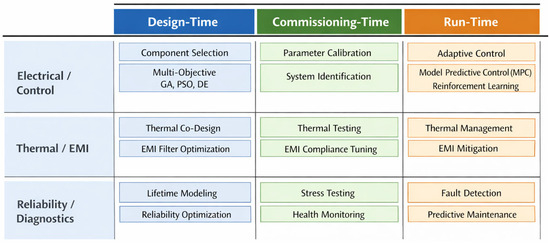
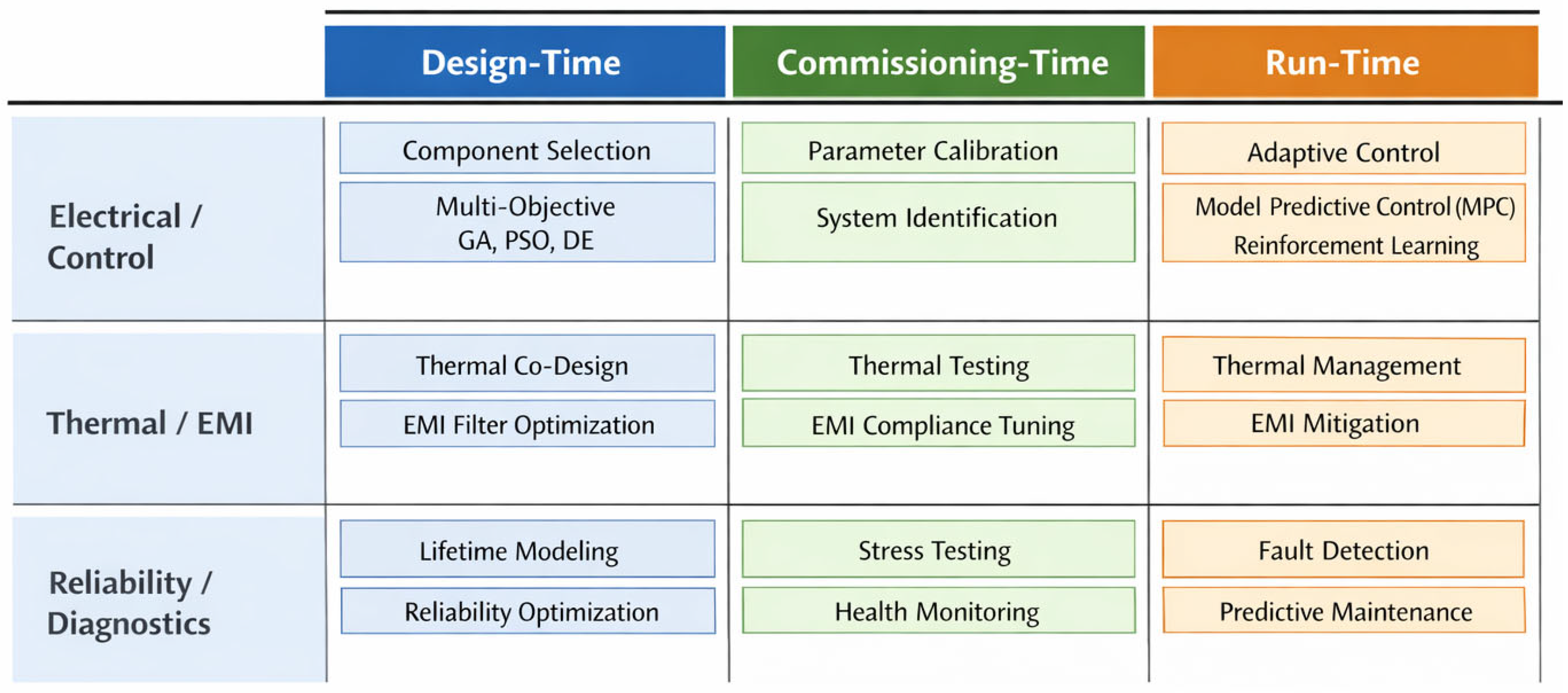
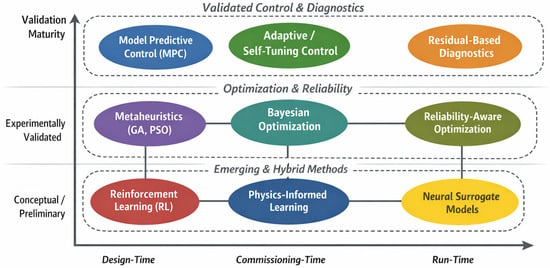
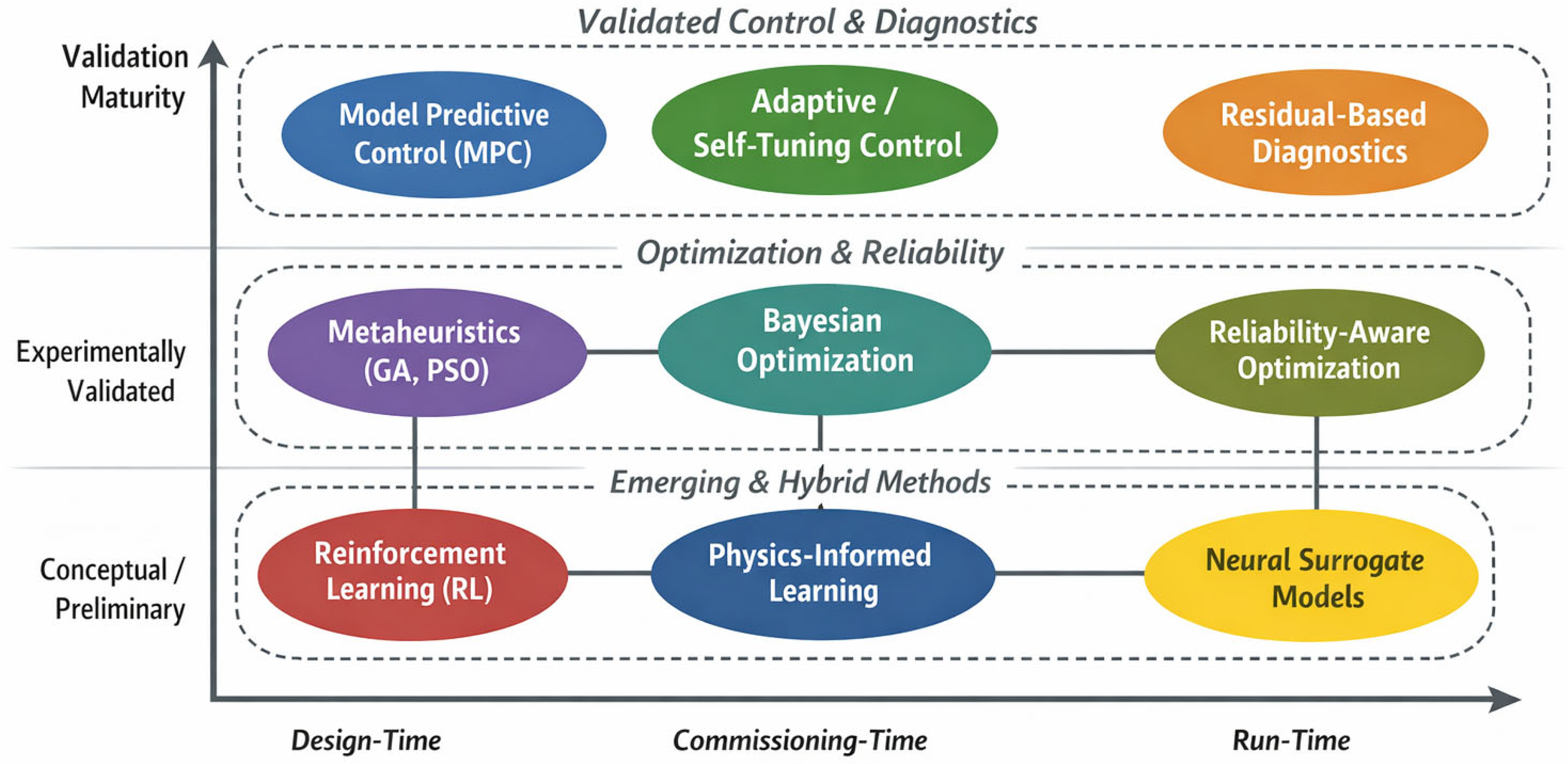
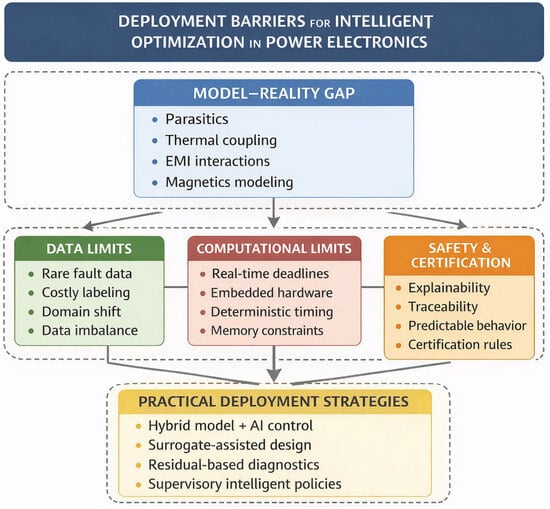
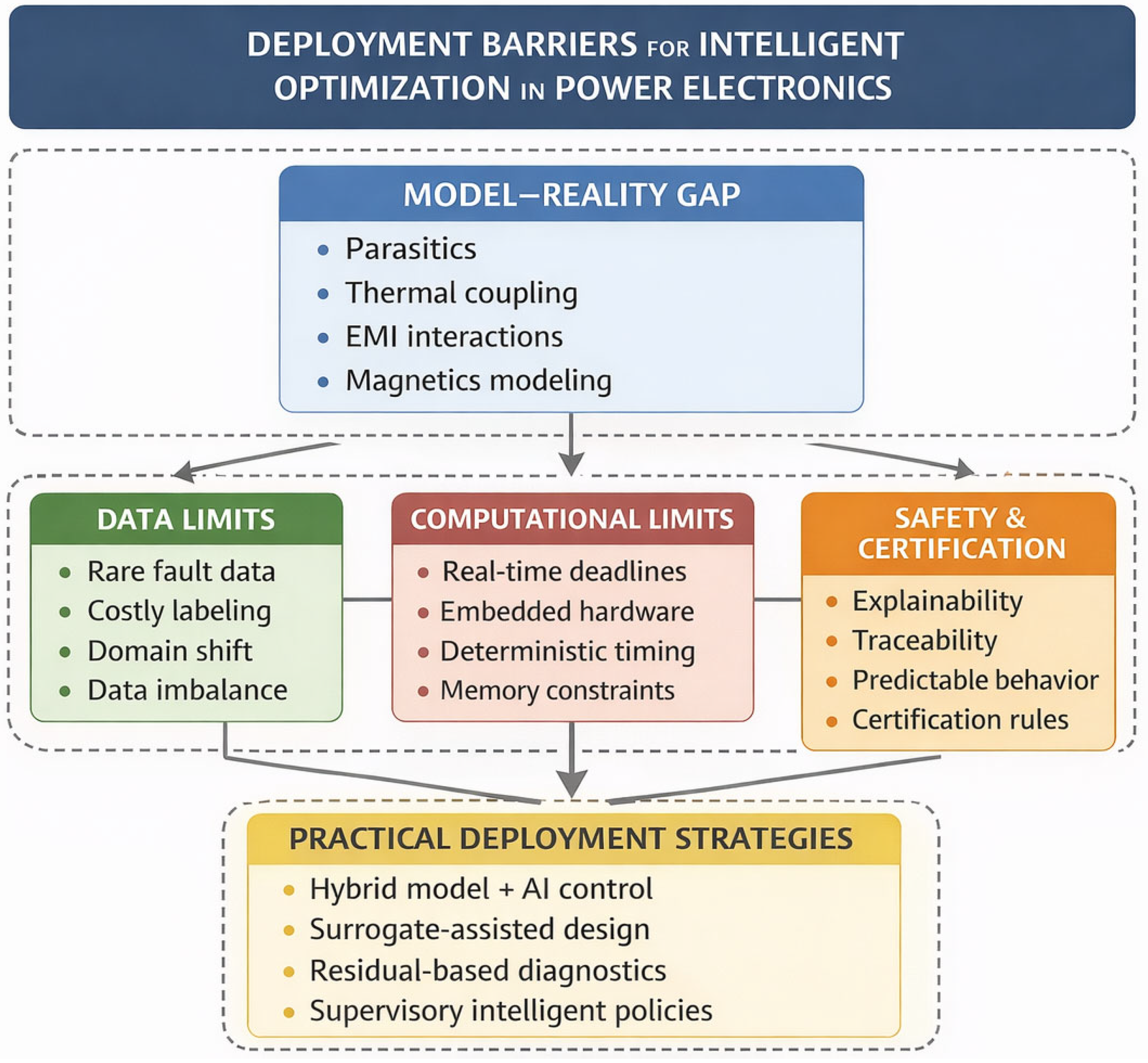
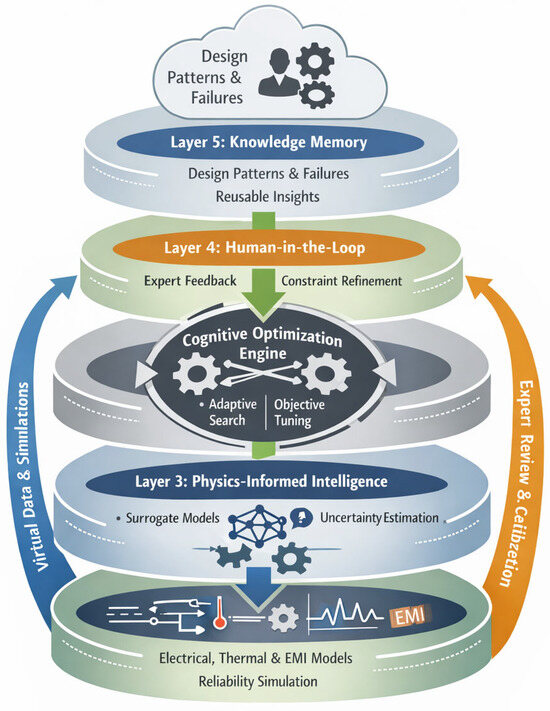
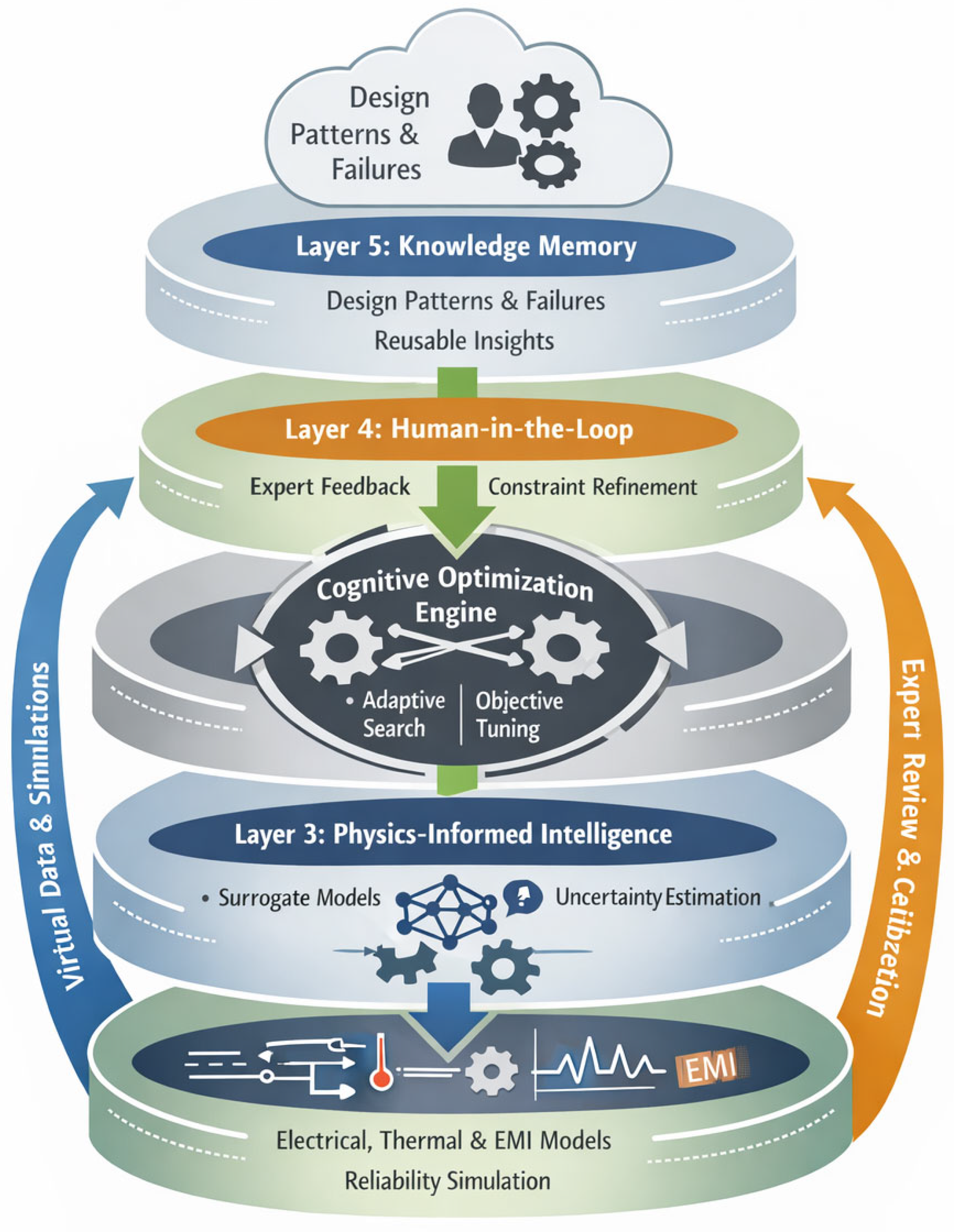
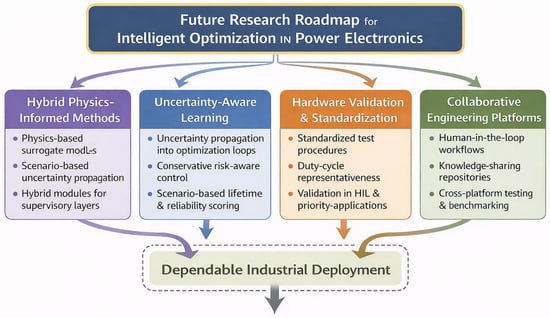
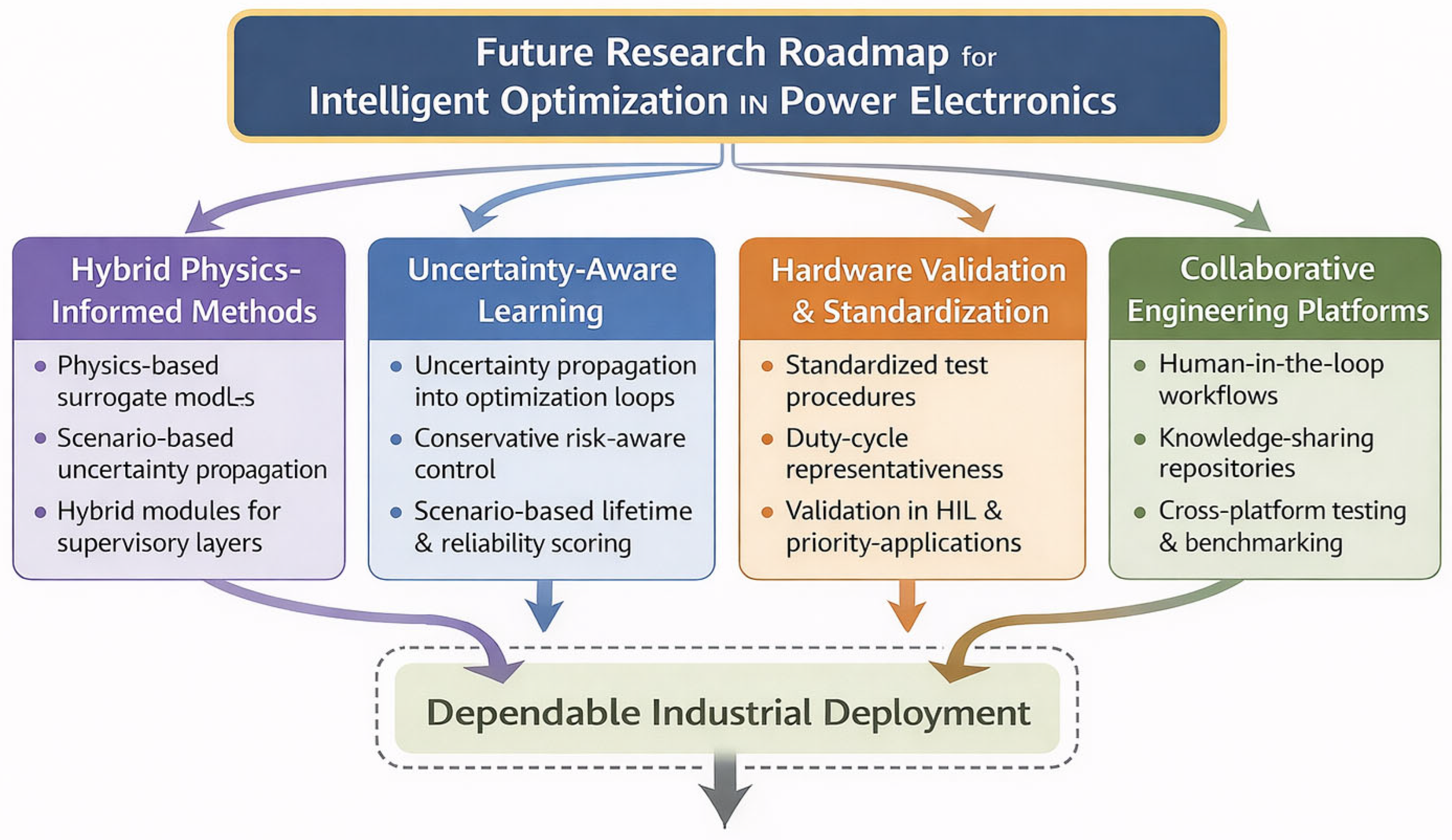

Disclaimer/Publisher’s Note: The statements, opinions and data contained in all publications are solely those of the individual author(s) and contributor(s) and not of MDPI and/or the editor(s). MDPI and/or the editor(s) disclaim responsibility for any injury to people or property resulting from any ideas, methods, instructions or products referred to in the content. |
© 2026 by the author. Licensee MDPI, Basel, Switzerland. This article is an open access article distributed under the terms and conditions of the Creative Commons Attribution (CC BY) license.