Article

Physics-Informed Neural Network for Denoising Images Using Nonlinear PDE
by
Carlos Osorio Quero
1,*,† and
Maria Liz Crespo
2,*,†
1
Instituto Nacional de Astrofísica, Óptica y Electrónica (INAOE), Puebla 72840, Mexico
2
Multidisciplinary Laboratory (MLab), Science, Technology and Innovation Unit, Abdus Salam International Centre for Theoretical Physics (ICTP), 34151 Trieste, Italy
*
Authors to whom correspondence should be addressed.
These authors contributed equally to this work.
Electronics 2026, 15(3), 560; https://doi.org/10.3390/electronics15030560

Submission received: 31 December 2025 / Revised: 21 January 2026 / Accepted: 23 January 2026 / Published: 28 January 2026
(This article belongs to the Special Issue Image Processing Based on Convolution Neural Network: 2nd Edition)

Abstract

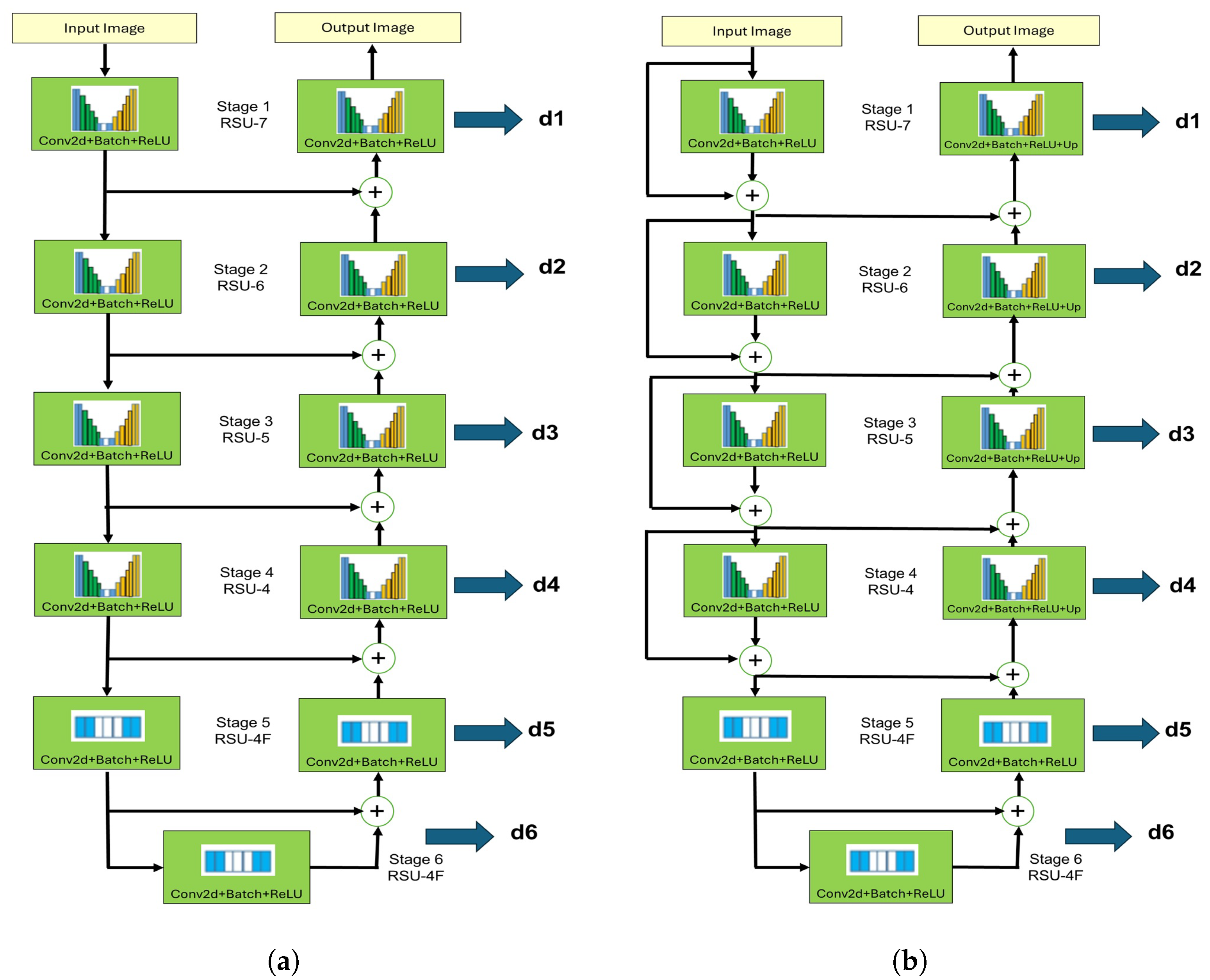
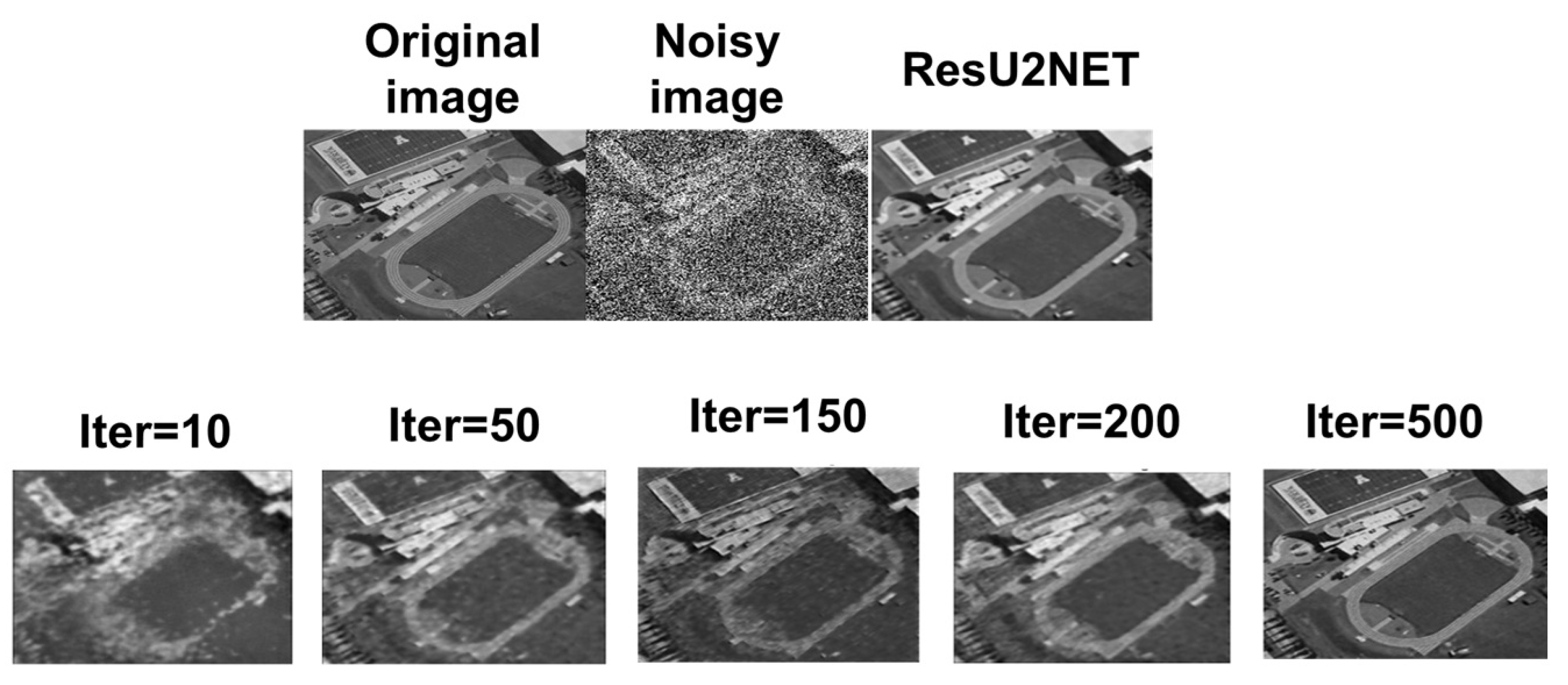
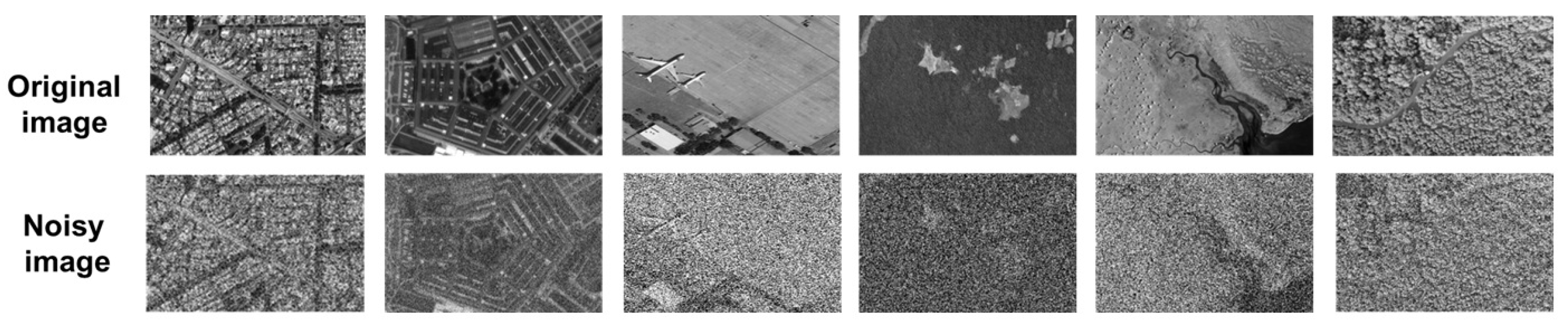
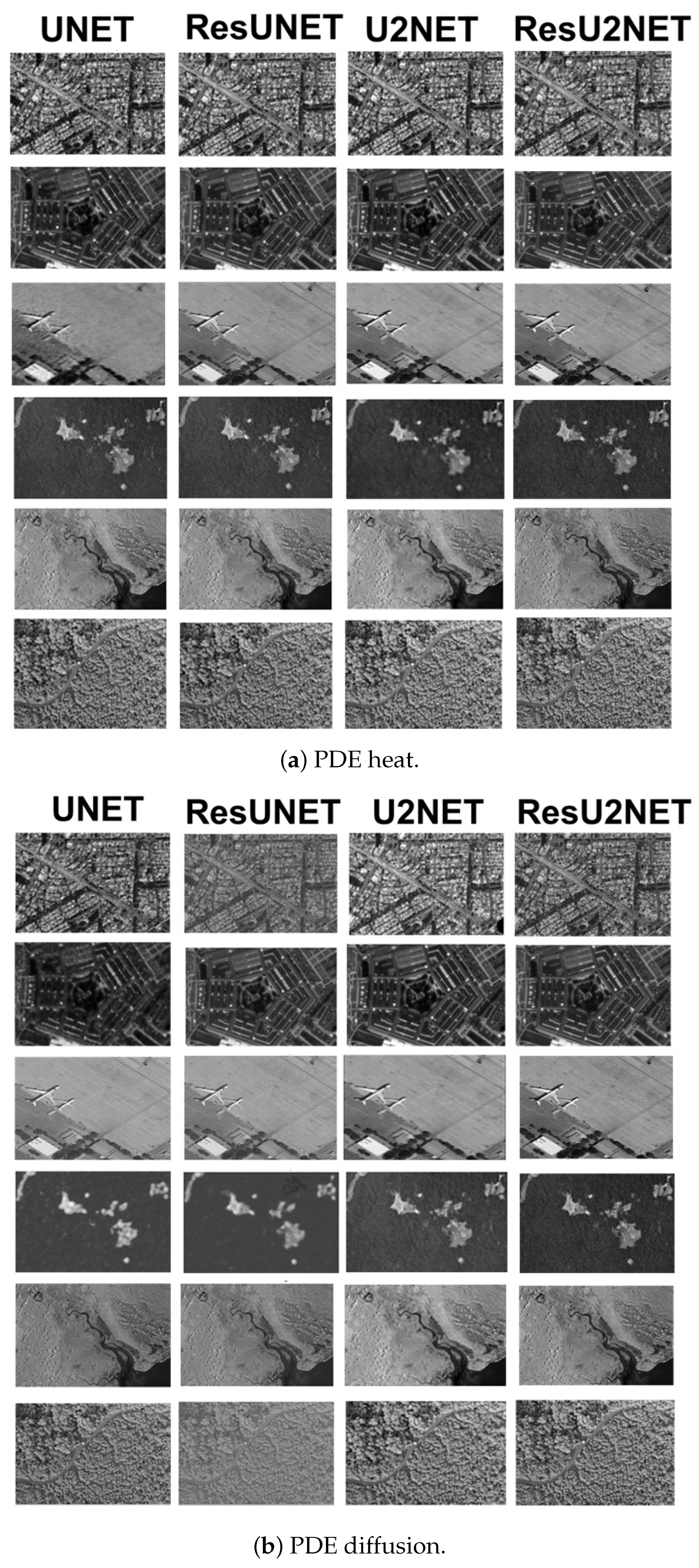
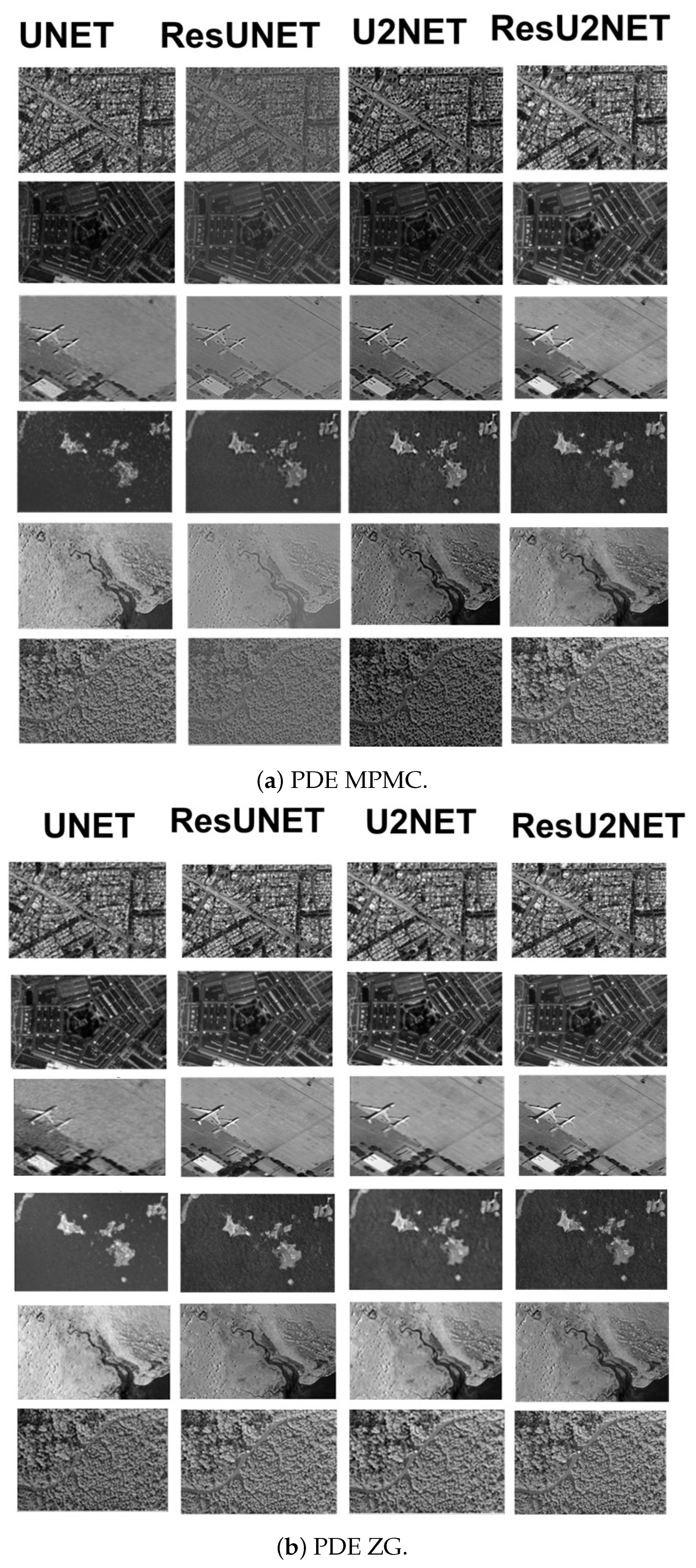
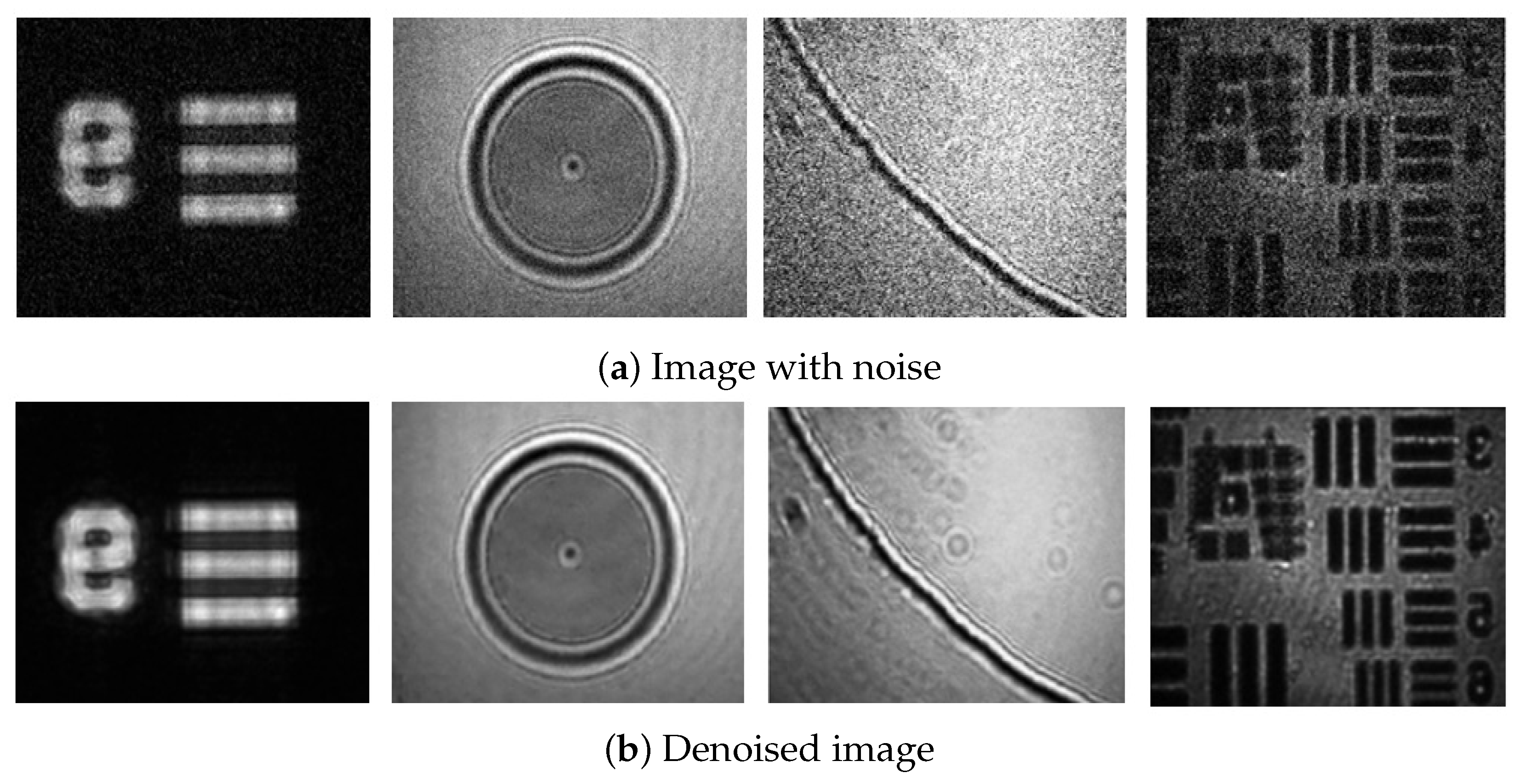
Noise remains a persistent limitation in coherent imaging systems, degrading image quality and hindering accurate interpretation in critical applications such as remote sensing, medical imaging, and non-destructive testing. This paper presents a physics-informed deep learning framework for effective image denoising under complex noise conditions. The proposed approach integrates nonlinear partial differential equations (PDEs), including the heat equation, diffusion models, MPMC, and the Zhichang Guo (ZG) method, into advanced neural network architectures such as ResUNet, UNet, U2Net, and Res2UNet. By embedding physical constraints directly into the training process, the framework couples data-driven learning with physics-based priors to enhance noise suppression and preserve structural details. Experimental evaluations across multiple datasets demonstrate that the proposed method consistently outperforms conventional denoising techniques, achieving higher PSNR, SSIM, ENL, and CNR values. These results confirm the effectiveness of combining physics-informed neural networks with deep architectures and highlight their potential for advanced image restoration in real-world, high-noise imaging scenarios.
Keywords: physics-informed neural networks (PINNs); image denoise; deep learning; PDE; encoder–decoder; image processing physics-informed neural networks (PINNs); image denoise; deep learning; PDE; encoder–decoder; image processing