


Abstract
The development of multifunctional cosmetic creams requires balancing functional performance with consumer acceptability. This study aimed to develop cream formulations containing aloe vera gel, eucalyptus essential oil, and vitamin E. Their relative proportions were optimized using mixture-design methodology. Ten formulations were prepared, and antioxidant activity was evaluated using the DPPH radical scavenging assay. A special cubic mixture model was fitted to the experimental data, followed by numerical optimization. The formulations were further characterized in terms of pH, microstructure, sensory attributes, and microbiological quality during refrigerated storage. Antioxidant activity varied among creams, with significant aloe vera × eucalyptus essential oil and aloe vera × vitamin E interactions. The model showed high explanatory capacity (R2 = 93.14%) and predicted an optimum mixture of 30.3% aloe vera gel, 29.3% eucalyptus essential oil, and 40.4% vitamin E. The pH of the creams remained within 4.74–5.18, while most sensory attributes were comparable among formulations. Odor and cooling sensation were formulation-dependent, while willingness to use exceeded 60% for several formulations and reached approximately 71% for BIO8. Microbial counts remained below the applicable quantitative acceptance criterion during the 60-day refrigerated storage assessment, while the specified target microorganisms were not detected under the microbiological methods employed. The findings support further investigation of ternary formulations under formulation and stability conditions relevant to cosmetic use.
1. Introduction
The growing demand for cosmetic products offering multiple skincare benefits has encouraged the development of multifunctional formulations [1]. Among the ingredients used in cosmetic products, naturally derived compounds and antioxidants have attracted considerable attention because of their antioxidant properties and potential relevance to cosmetic formulation development [2,3]. However, combining multiple active ingredients requires careful optimization, as their relative proportions may influence both functional performance and sensory characteristics.
Mixture design methodology provides a suitable statistical approach for formulation problems in which the experimental factors represent the proportions of components that collectively constitute the final product. Unlike conventional one-factor-at-a-time approaches, mixture designs allow the effects of individual components and their interactions to be investigated systematically while accounting for the inherent dependence among mixture components. This approach can therefore facilitate the identification of an optimized composition using a limited number of experimental formulations [4,5]. Such methodology is particularly relevant to cosmetic formulations containing multiple functional ingredients, where the relative amounts of the components must be balanced to achieve desirable overall characteristics.
Within this formulation framework, aloe vera, eucalyptus, and vitamin E were selected as bioactive ingredients with complementary functional properties [6,7]. Aloe vera (Aloe barbadensis Miller) is widely used in cosmetic applications. Its composition includes polysaccharides, phenolic compounds, vitamins, minerals, along with other bioactive constituents associated with antioxidant and anti-inflammatory activities [8,9,10]. Eucalyptus species contain diverse bioactive phytochemicals, and studies of their leaf extracts and essential oils have reported antioxidant and antimicrobial activities, with their composition and biological properties varying based on the plant material and sample preparation procedure [11,12,13]. Vitamin E, particularly α-tocopherol, is widely used in topical and cosmetic applications and is recognized for its antioxidant activity, including its ability to inhibit lipid peroxidation [14,15,16]. The inclusion of these ingredients in a single formulation provides an opportunity to investigate their combined effects, while their relative proportions require systematic optimization.
Antioxidant activity can provide an objective measure of the antioxidant potential of cosmetic formulations [17,18]. Nevertheless, analytical performance alone may not fully determine their suitability. Sensory characteristics and overall perception are also important considerations in product evaluation [19,20]. The assessment of both antioxidant activity and consumer acceptability can therefore provide a more comprehensive characterization of the developed formulations. In this context, sensory evaluation complements analytical measurements by providing information on how the cream is perceived by potential users.
To the best of our knowledge, the combined use of aloe vera, eucalyptus, and vitamin E as the primary functional constituents in a single formulation has not been specifically assessed in the literature. One identified study incorporated all three into a herbal anti-acne face wash, in which Bael Patra (Aegle marmelos) was the main active ingredient and the formulation contained several additional components [21]. Pairwise combinations have also been reported. Aloe vera and vitamin E have been incorporated into non-cream formulations such as polymeric films, shampoos, and microparticle-based preparations [22,23,24]. In addition, aloe vera and eucalyptus have been combined in shampoos, face serums, herbal creams, and emulgels [25,26,27,28], with the reported work focusing on formulation development and evaluation rather than systematic optimization of their relative proportions. In contrast, no cosmetic formulation combining eucalyptus and vitamin E was identified among the literature reviewed.
Although these ingredients and some of their pairwise combinations are already present in commercial cosmetic formulations, the available literature provides limited information on their simultaneous use in a single cream, particularly regarding the selection and optimization of their relative proportions. Therefore, the aim of the present study was to develop and optimize cream formulations containing aloe vera gel, eucalyptus essential oil, and vitamin E using mixture-design methodology, with optimization based on antioxidant activity. Consumer acceptability was subsequently evaluated to assess the sensory characteristics of the formulations and identify a formulation offering a favorable balance between antioxidant performance and consumer perception. The research was designed as a preliminary formulation and optimization investigation rather than as a formal cosmetic stability or shelf-life study.
2. Materials and Methods
2.1. Materials and Reagents
A commercial aloe vera gel, purchased from UMake Cosmetics (Athens, Greece), had an International Nomenclature of Cosmetic Ingredients (INCI) composition of Aloe barbadensis leaf juice, carbomer, dimethylol-dimethyl hydantoin, diazolidinyl urea, and triethanolamine. The product was a pre-formulated gel containing Aloe barbadensis leaf juice together with a gelling agent and other formulation components. Vitamin E, in the form of tocopheryl acetate, was obtained from the same company (UMake Cosmetics, Athens, Greece). Eucalyptus essential oil, identified by the INCI name Eucalyptus globulus leaf oil, was sourced from Chemco (Athens, Greece) and complied with the European Pharmacopoeia and Good Manufacturing Practice requirements. Refined glycerine (≥99.8%) was also supplied by Chemco (Athens, Greece). Stearic acid (90%) and anhydrous gallic acid (≥99%) were obtained from Glentham Life Sciences (Corsham, UK). SP Polawax GP-200 was provided by Croda International Plc. (Goole, UK), and sunflower (Helianthus annuus L.) seed oil was a product of Minerva (Athens, Greece). 2,2-Diphenyl-1-picrylhydrazyl (DPPH; >97%) was received from TCI Europe N.V. (Zwijndrecht, Belgium). Absolute ethanol (≥99.8%) was purchased from Fisher Scientific (Loughborough, UK), while methanol (≥99.8%) was supplied by Chem-Lab N.V. (Zedelgem, Belgium). Buffered Peptone Water Broth ISO, Nutrient Agar and Violet Red Bile Glucose Agar (VRBGA) were obtained from Neogen (Lansing, MI, USA). CHROMagar Orientation, CHROMagar Salmonella Plus, and Sabouraud Dextrose Agar supplemented with chloramphenicol were provided by Bioprepare (Athens, Greece). Baird–Parker Agar supplemented with egg yolk tellurite emulsion, Food System 24-well panel (catalogue no. 71680) and Integral System YEASTS Plus 24-well panel (catalogue no. 71822) were received from Liofilchem (Teramo, Italy). Sodium chloride (NaCl) was a product of Lach-Ner (Neratovice, Czech Republic). Deionized water was generated using a Zalion 600 ion-exchange water purification system (Ionel S.A., Athens, Greece).
2.2. Instrumentation
The instruments used in the experimental procedures included a UV–Vis spectrophotometer (UV-1600PC, VWR, Radnor, PA, USA), an analytical balance (ACN220G, Axis Sp. z o.o., Gdańsk, Poland), a pH/ORP/temperature meter (MW151 MAX, Milwaukee Instruments, Szeged, Hungary), an ultrasonic bath (JPS10A, Vevor, Frankfurt, Germany; 2 L capacity, 40 kHz frequency, 60 W ultrasonic power, and 100 W heating power), a magnetic hot plate stirrer (MSH-300, Biosan, Riga, Latvia), a digital centrifuge (RS-0506, Auxilab S.L., Beriáin, Spain), a vortex mixer (V-1 Plus, Biosan, Riga, Latvia), an optical microscope (TFM 201/301 + Infinity, Bresser, Rhede, Germany) equipped with a MikrOkular Full HD digital eyepiece camera and CamLabLite software (version 2.1.29083.20250729), a UV-C sterilizer (Natural Care Professional, Athens, Greece), and a natural-convection incubator (JeioTech, Daejeon, Republic of Korea).
2.3. Experimental Design
The effects of the relative proportions of aloe vera gel (X1), eucalyptus essential oil (X2), and vitamin E (X3) on the antioxidant activity of the cream were investigated using a mixture-design methodology. The three components were constrained to a total mixture proportion of 100% (ΣXi = 100). Each component was assigned coded values of 0 or +1, corresponding to its minimum and maximum proportion, respectively (Table 1).
Table 1.
Levels of the independent variables used in the mixture experimental design for the development of cream formulations containing aloe vera gel, eucalyptus essential oil, and vitamin E.
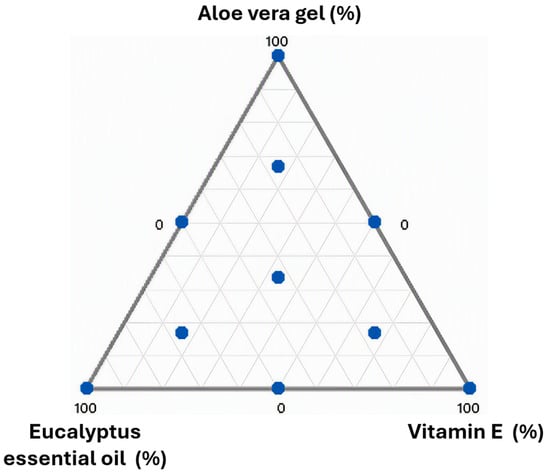
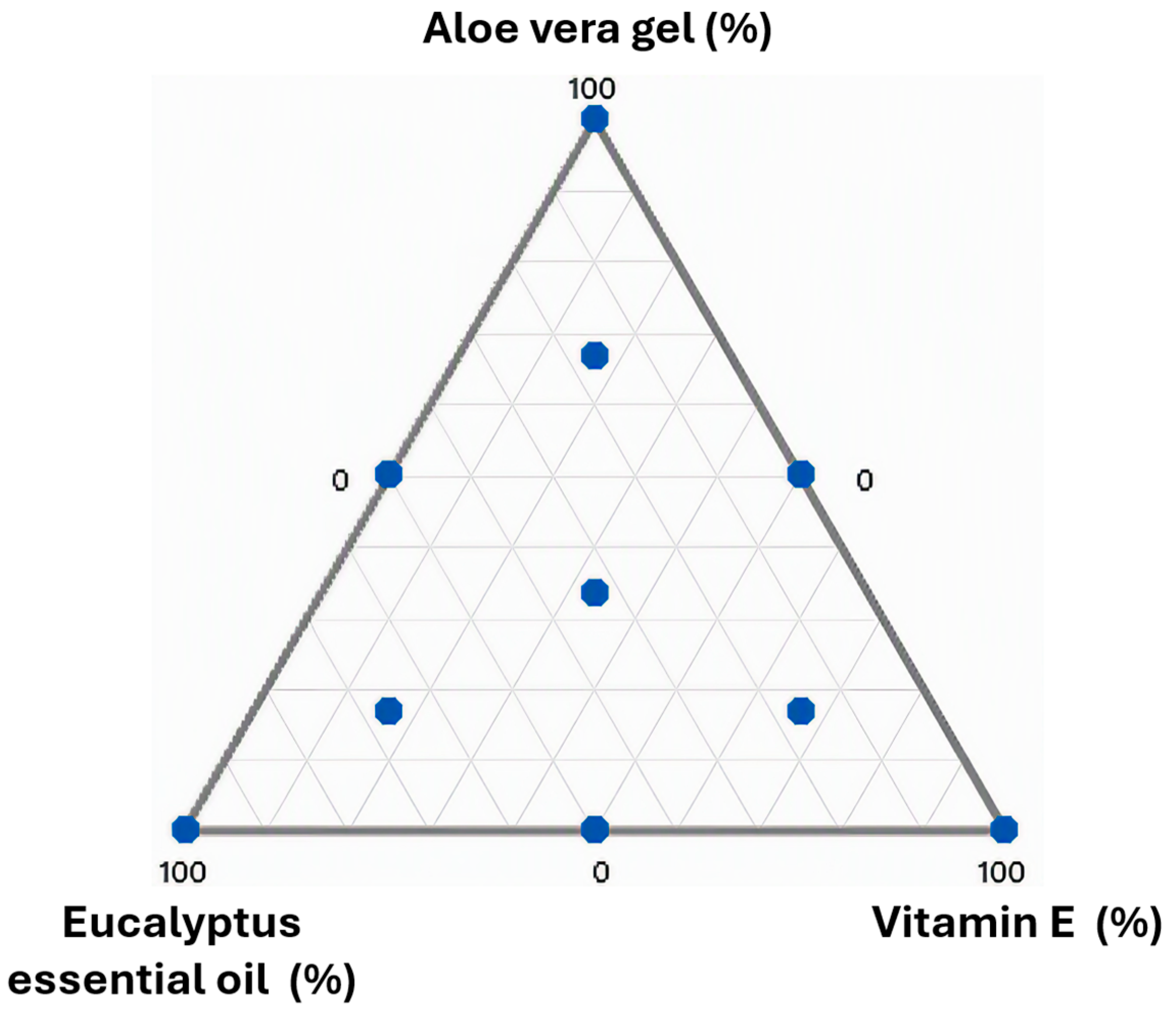
A simplex-centroid design generated 10 experimental points, with each point prepared in duplicate, resulting in 20 experimental runs. The experimental runs were randomized to minimize potential systematic effects associated with the preparation and measurement sequence. The design included single-component, binary, and ternary formulations, allowing the effects of the individual components and their interactions on antioxidant activity to be evaluated (Figure 1). No additional process factor was included. Design generation and statistical analysis were performed using Minitab software (version 22.4, State College, PA, USA).
Figure 1.
Simplex-centroid mixture design of aloe vera gel (X1), eucalyptus essential oil (X2), and vitamin E (X3), comprising 10 experimental points, each prepared in duplicate (20 experimental runs in total).
The mixture proportions from the experimental design were converted into the corresponding quantities of each bioactive ingredient used in the formulations. Since the three components had different permitted use levels, the percentages in Table 2 refer exclusively to their relative proportions within the three-component mixture and not to their concentrations in the final cream. For the conversion to weighed quantities, the respective upper formulation levels were set at 19.4% (w/w) for aloe vera gel (Aloe barbadensis leaf juice), 0.4% (w/w) for eucalyptus essential oil (Eucalyptus globulus leaf oil), and 3.0% (w/w) for vitamin E (tocopheryl acetate). The aloe vera level was kept below the reported topical-use limit of 20% [29], while the eucalyptus essential oil level corresponded to the maximum proposed concentration for safe cosmetic use [30]. Vitamin E was included within the manufacturer’s recommended dosage range of 1–3%. The resulting mixture proportions and weighed quantities are presented in Table 2.
Table 2.
Mixture proportions and weighed quantities of aloe vera gel, eucalyptus essential oil, and vitamin E used in the cream formulations 1.
Each of the 10 experimental points was represented by two separately prepared formulation batches, resulting in 20 runs. For each batch, three independent extracts were prepared, and two measurements were performed on each extract, yielding six measurements per batch. The six measurements were averaged to obtain a mean antioxidant activity value for each batch. These mean values served as the response variables in the model fitting. The two batches for each formulation were treated as independent observations and were not averaged together before Minitab analysis. The experimental run order was randomized during preparation and measurement to minimize potential systematic effects.
The antioxidant activity was used as the response variable. The experimental data were fitted to a special cubic mixture regression model (Equation (1)):
where Y denotes the antioxidant activity; X1, X2, and X3 represent the mixture proportions of aloe vera gel, eucalyptus essential oil, and vitamin E, respectively; and β terms denote the estimated regression coefficients.
To validate the model prediction, the proposed composition was independently prepared using the procedure described in Section 2.4. Antioxidant activity was then determined using the DPPH assay described in Section 2.5 and compared with the predicted value to assess prediction accuracy.
2.4. Preparation of Cream Formulations
A cream base was developed through formulation trials to obtain a homogeneous semisolid preparation suitable for the incorporation of the selected bioactive ingredients. The composition was guided by conventional principles of topical cream formulation, using an aqueous phase containing water and glycerol and a lipid phase containing sunflower seed oil, stearic acid, and emulsifying wax. Sunflower seed oil was selected as the oil phase because of its favorable emollient and skin-conditioning properties and its established suitability for topical formulations. Although it has reported antioxidant and antimicrobial properties, these intrinsic activities were not independently evaluated in the present study and were not considered separate experimental factors. Its amount was kept constant across all formulations to maintain a consistent cream-base composition while evaluating the effects of the varying proportions of aloe vera gel, eucalyptus essential oil, and vitamin E. The final base composition was selected according to its physical appearance, consistency, and homogeneity.
The aqueous phase consisted of 10 mL of sterile deionized water, 1.0 g glycerol, and the corresponding amount of aloe vera gel listed in Table 2. The lipid phase contained 1.0 g sunflower seed oil, 0.5 g stearic acid, and 2.5 g SP Polawax GP-200. After emulsification, eucalyptus essential oil and vitamin E were incorporated during cooling, as indicated in Table 2.
The aqueous and lipid phases were prepared separately and heated to 70 °C. The aqueous phase was then gradually added to the lipid phase with continuous stirring using a glass rod until a homogeneous emulsion was obtained. Following emulsification, the mixture was allowed to cool, and eucalyptus essential oil and vitamin E were incorporated by gentle stirring with a glass rod to ensure uniform distribution. The formulations were subsequently cooled to room temperature, transferred into airtight containers, and stored at 4 ± 2 °C until analysis. This refrigerated condition was selected solely for the planned microbiological monitoring and was not considered representative of normal storage conditions for marketed cosmetic products. Accordingly, the 4 ± 2 °C storage assessment was not intended to establish the physicochemical or microbiological stability, shelf life, or commercial suitability of the formulations. No antimicrobial preservative was incorporated. Preparation was conducted under controlled hygienic conditions. Laboratory tools were cleaned and disinfected before use, while aseptic handling was maintained throughout preparation and packaging to minimize external microbial contamination.
The fixed cream-base components were combined with the quantities of aloe vera gel, eucalyptus essential oil, and vitamin E specified in the experimental design, resulting in different final masses among formulations, ranging from approximately 15.1 g to 18.6 g (Table 3). To accurately reflect the intended mixture proportions, the final batch mass was not kept constant across formulations. Each cream was prepared independently in duplicate, totaling 20 experimental runs.
Table 3.
Total cream mass for each formulation 1.
2.5. Determination of Antioxidant Activity
Cream analytical samples were prepared by ultrasound-assisted methanolic extraction followed by centrifugation [31]. Briefly, 1 g of each cream formulation was accurately weighed and treated with 10 mL of methanol. The samples were homogenized by vortexing for 3 min and subsequently sonicated for 10 min at room temperature using an ultrasonic bath. Following this step, the samples were centrifuged at 4000 rpm for 10 min, and the resulting supernatants were collected for the DPPH assay. For each formulation batch, three independent extractions were performed from separately weighed portions of cream. Each preparation was analyzed in duplicate, resulting in six analytical measurements per batch. The repeatability of the extraction procedure was assessed using three independent preparations of the same cream sample, each analyzed in duplicate, yielding a relative standard deviation of 4.4%.
The antioxidant activity of the cream analytical samples was evaluated using the DPPH radical-scavenging assay [32]. For this purpose, 2 mL of each cream extract was mixed with 2 mL of freshly prepared 0.1 mM DPPH solution in methanol. The mixtures were incubated in the dark at room temperature for 30 min, after which absorbance was measured at 517 nm using a spectrophotometer. A DPPH control containing 2 mL methanol and 2 mL DPPH solution was measured under the same conditions. A sample blank containing 2 mL cream extract and 2 mL methanol was used to zero the spectrophotometer and account for the intrinsic absorbance of the sample matrix.
Radical-scavenging activity was calculated according to Equation (2):
where AControl is the absorbance of the DPPH control and ASample is the absorbance of the cream extract after reaction with DPPH. The sample blank was used to correct for the intrinsic absorbance of the cream extract and was not included as a separate term in Equation (2).
A calibration curve was prepared using gallic acid standard solutions at 10, 25, 50, 100, 150, and 200 mg/L. The calibration curve was constructed by plotting radical-scavenging activity (%) against gallic acid concentration. Linear regression yielded the equation y = 0.2841x + 6.2572 with R2 = 0.9945, over the concentration range of 10–200 mg/L. The radical-scavenging activity was converted to the corresponding gallic acid-equivalent response using the calibration equation. This response was then corrected for the extraction volume and sample mass and expressed as milligrams of gallic acid equivalents per kilogram of cream (mg/kg). The resulting values represent a relative assay response based on the gallic acid calibration curve and should not be interpreted as the actual concentration of antioxidant compounds present in the cream.
2.6. Determination of pH
The pH of the cream formulations was measured at room temperature with a calibrated digital pH meter, following a method previously reported for topical cream formulations [33]. Prior to measurement, the instrument was calibrated against standard buffer solutions at pH 4.0, 7.0, and 10.0. For analysis, approximately 1.0 g of cream was dispersed in 10 mL of deionized water (1:10, w/v) and gently mixed until a uniform dispersion was obtained. The pH was recorded after immersing the electrode in the dispersion and allowing the reading to stabilize.
2.7. Microscopic Evaluation
The microstructure of BIO5 and BIO8 was examined by optical microscopy at 40× and 100× magnification. These two formulations were selected as representative samples because they differed substantially in composition and macroscopic appearance. A portion of each cream sample was placed on a slide and examined under the microscope. Representative fields were imaged at each magnification using a MikrOkular Full HD digital eyepiece camera and processed using CamLabLite software (version 2.1.29083.20250729; Bresser, Rhede, Germany). The microscopic assessment was qualitative, and droplet size was not quantitatively measured.
2.8. Microbiological Analysis
The microbiological quality of the cream formulations was evaluated immediately after preparation (day 0) and after 10, 30, and 60 days of refrigerated storage at 4 ± 2 °C. This assessment was intended to monitor microbiological quality under the specified refrigerated laboratory condition and did not constitute a conventional cosmetic stability or shelf-life study. Quantitative microbiological analysis was performed at each sampling time using direct culture-based enumeration. Nutrient Agar was used for total aerobic mesophilic flora, VRBGA for Enterobacteriaceae, Baird–Parker Agar supplemented with egg yolk tellurite emulsion for Staphylococcus spp., CHROMagar Orientation for differential bacterial screening, CHROMagar Salmonella Plus for Salmonella spp., and Sabouraud Dextrose Agar supplemented with chloramphenicol for yeasts and molds.
At each time point, 1 g of each cream formulation was aseptically transferred into 9 mL of sterile physiological saline (0.90% NaCl) and thoroughly homogenized. The resulting suspension was inoculated directly or subjected to further tenfold dilution when required. For surface plating, 0.1 mL of the selected dilution was evenly distributed over the agar surface using a sterile spreader. For pour plating, 1 mL was transferred to a sterile Petri dish and mixed with approximately 15–20 mL of the corresponding molten agar at 45 °C. Following inoculation, Nutrient Agar, VRBGA, and Baird–Parker Agar plates were incubated at 35–37 °C for 24–48 h, whereas CHROMagar Orientation and CHROMagar Salmonella Plus plates were maintained at 35–37 °C for 18–24 h. Sabouraud Dextrose Agar supplemented with chloramphenicol was cultured at 25 °C for 3–5 days. After incubation, colonies were counted on plates with countable growth, and microbial populations were expressed as CFU/g. As an additional recovery step at days 0 and 10, separate cream samples were transferred to Buffered Peptone Water and incubated for 24 h. The resulting cultures were subsequently examined on the appropriate agar media.
For direct surface plating, 0.1 mL of the 10−1 sample suspension corresponded to a theoretical reporting limit of <100 CFU/g, whereas plating 1 mL of the 10−1 suspension corresponded to a theoretical reporting limit of <10 CFU/g. When further dilutions were used, the corresponding dilution factor was incorporated into the CFU/g calculation. Results below the applicable reporting limit were recorded as ND.
Representative colonies recovered at any sampling time were further examined, where appropriate, using the Food System and Integral System YEASTS Plus, according to the manufacturers’ instructions. The systems were used to assess the presence of the target bacterial and yeast groups covered by the respective panels.
All microbiological procedures were performed under aseptic laboratory conditions. To minimize contamination, equipment and work surfaces were disinfected before use, while laboratory tools underwent UV-C sterilization.
2.9. Sensory Evaluation
The sensory evaluation study was reviewed and approved by the Ethics Committee of New York College (Greece) as a low-risk study. The study was conducted in accordance with the ethical principles of the World Medical Association Declaration of Helsinki [34], applicable data protection requirements, and the institutional research ethics standards of New York College. Human participation involved supervised, non-invasive topical evaluation and completion of an anonymous questionnaire following informed consent.
The sensory characteristics and consumer acceptability of the ten cream formulations (BIO1–BIO10) were assessed by a panel of 31 adult volunteers 1–2 days after preparation, using samples specifically reserved for sensory assessment. Samples were presented using blind-coded identifiers to minimize potential bias during evaluation and evaluated in randomized order. The questionnaire covered 11 attributes: color, appearance/homogeneity, density, perceived spreadability, absorption, moisturization, cooling sensation, lipid feeling, smell intensity, smell liking, and overall liking. Each attribute was evaluated on a five-point scale ranging from 1 (dislike extremely) to 5 (like extremely).
Before the assessment, participants were informed about the purpose and procedures of the study, and written informed consent was obtained. Eligibility screening was conducted before participation, with individuals reporting relevant allergies or hypersensitivity to the formulation ingredients, active skin conditions or lesions, or other specified exclusion criteria not included in the evaluation. Approximately 0.1 g of each cream was applied to a small area of intact skin on the participant’s hand or inner forearm under supervised conditions, and the applied area was monitored for 10–15 min before the sensory evaluation was completed.
To minimize cross-contamination between samples, sterile applicator sticks were used during application, and participants washed and dried their hands between evaluations. The assessment was conducted in the supervised laboratory setting under standardized lighting and temperature conditions. Questionnaire responses were recorded using participant codes to maintain anonymity.
2.10. Statistical Analysis
Mixture-design analysis of antioxidant activity was carried out using Minitab software (version 22.4, State College, PA, USA). For the mixture-model analysis, the antioxidant activity values obtained from the two independently prepared batches at each experimental point were entered as individual observations (n = 20); the two independently prepared batches were not averaged prior to model fitting. Regression analysis and analysis of variance (ANOVA) were performed to evaluate the special cubic mixture model and the effects of mixture composition on the response. Model adequacy was assessed using the coefficient of determination (R2), adjusted R2, predicted R2, and the lack-of-fit test. Mixture contour plots and numerical optimization were used to visualize the predicted response and identify the formulation composition predicted to maximize antioxidant activity. A p-value < 0.05 was considered statistically significant. For model validation, the experimentally determined antioxidant activity of the independently prepared formulation was compared with the value predicted by the mixture model.
JASP software (version 0.98.1, Amsterdam, The Netherlands) was used for the statistical analysis of pH and sensory evaluation data. pH results were expressed as mean ± standard deviation (n = 3), and differences among formulations were assessed by one-way ANOVA followed by Tukey’s honestly significant difference (HSD) test (p < 0.05). For sensory data, differences among formulations were assessed using the Friedman test, with Kendall’s W reported as a measure of effect size. Significant Friedman tests were followed by pairwise Conover comparisons with Holm correction. Willingness-to-use responses were recorded as three ordered categories (Yes, Maybe, and No), coded as 1, 2, and 3, respectively. Because the same participants evaluated all formulations and the responses were ordinal, differences among formulations were assessed using the Friedman test, with Kendall’s W reported as a measure of effect size. Statistical significance was set at p < 0.05.
3. Results
3.1. Antioxidant Activity and Mixture Design Analysis
The 20 experimental runs yielded relative DPPH assay responses ranging from 323.5 mg/kg to 734.0 mg/kg (Table 4). The lowest response was observed for the formulation containing 100% aloe vera gel, whereas the highest value was recorded for the equal ternary mixture of aloe vera gel, eucalyptus essential oil, and vitamin E. The two runs representing the latter balanced mixture yielded relative DPPH assay responses of 675.5 mg/kg and 734.0 mg/kg, respectively. These values represent gallic-acid-equivalent responses derived from the DPPH calibration curve and should not be interpreted as the actual concentrations of antioxidant compounds in the cream formulations.
Table 4.
Antioxidant activity values obtained for the 20 experimental runs.
3.1.1. Mixture-Model and Statistical Analysis
Regression analysis and ANOVA were used to examine the effect of mixture composition on the DPPH antioxidant response. A special cubic mixture model was fitted to the experimental data. The analysis comprised 20 runs from 10 experimental points, each tested in duplicate. The duplicate batches were treated as distinct observations and were not averaged before model fitting. Thus, each batch contributed one DPPH response value to the Minitab analysis. The run order was randomized during preparation and measurement to minimize potential systematic effects associated with experimental sequence.
The model was significant (F = 29.42, p < 0.001), with an R2 of 93.14%. The linear mixture contribution was also significant (F = 46.85, p < 0.001). The adjusted R2 and predicted R2 were 89.97% and 82.69%, respectively, showing that the model retained a high explanatory capacity after adjustment for model complexity and provided good predictive performance within the experimental region.
The lack-of-fit test was non-significant (F = 0.59, p = 0.634), suggesting that the deviations between the model predictions and the experimental observations were comparable with the experimental error. The ANOVA results for the special cubic model are presented in Table 5, including the statistical significance of the individual model terms. The estimated coefficients of the full special cubic model are presented in Table 6. Among the binary interactions, X1X2 (aloe vera gel × eucalyptus essential oil) showed a significant effect (p < 0.001), followed by X1X3 (aloe vera gel × vitamin E; p = 0.002). Neither X2X3 (eucalyptus essential oil × vitamin E; p = 0.470) nor the ternary interaction X1X2X3 (p = 0.123) reached statistical significance.
Table 5.
ANOVA for the special cubic mixture model describing antioxidant activity 1.
Table 6.
Estimated coefficients of the full special cubic mixture model 1.
The special cubic model was subsequently reduced by removing the non-significant X2X3 binary interaction and the X1X2X3 ternary interaction, while retaining all linear mixture terms and the significant X1X2 and X1X3 interactions. Given the non-significance of these terms, their removal reduced model complexity while preserving the hierarchical structure of the mixture model. The resulting reduced model was used to interpret the mixture effects and perform numerical optimization.
The reduced mixture model was expressed as Equation (3):
where Y denotes the predicted antioxidant activity, while X1, X2, and X3 represent the mixture proportions of aloe vera gel, eucalyptus essential oil, and vitamin E, respectively. The non-significant X2X3 and X1X2X3 terms were excluded from the model. The resulting equation was used to interpret the mixture effects and perform numerical optimization.
3.1.2. Mixture Contour and Optimization Analysis
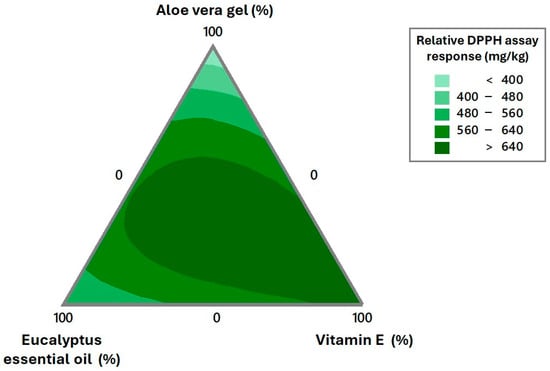
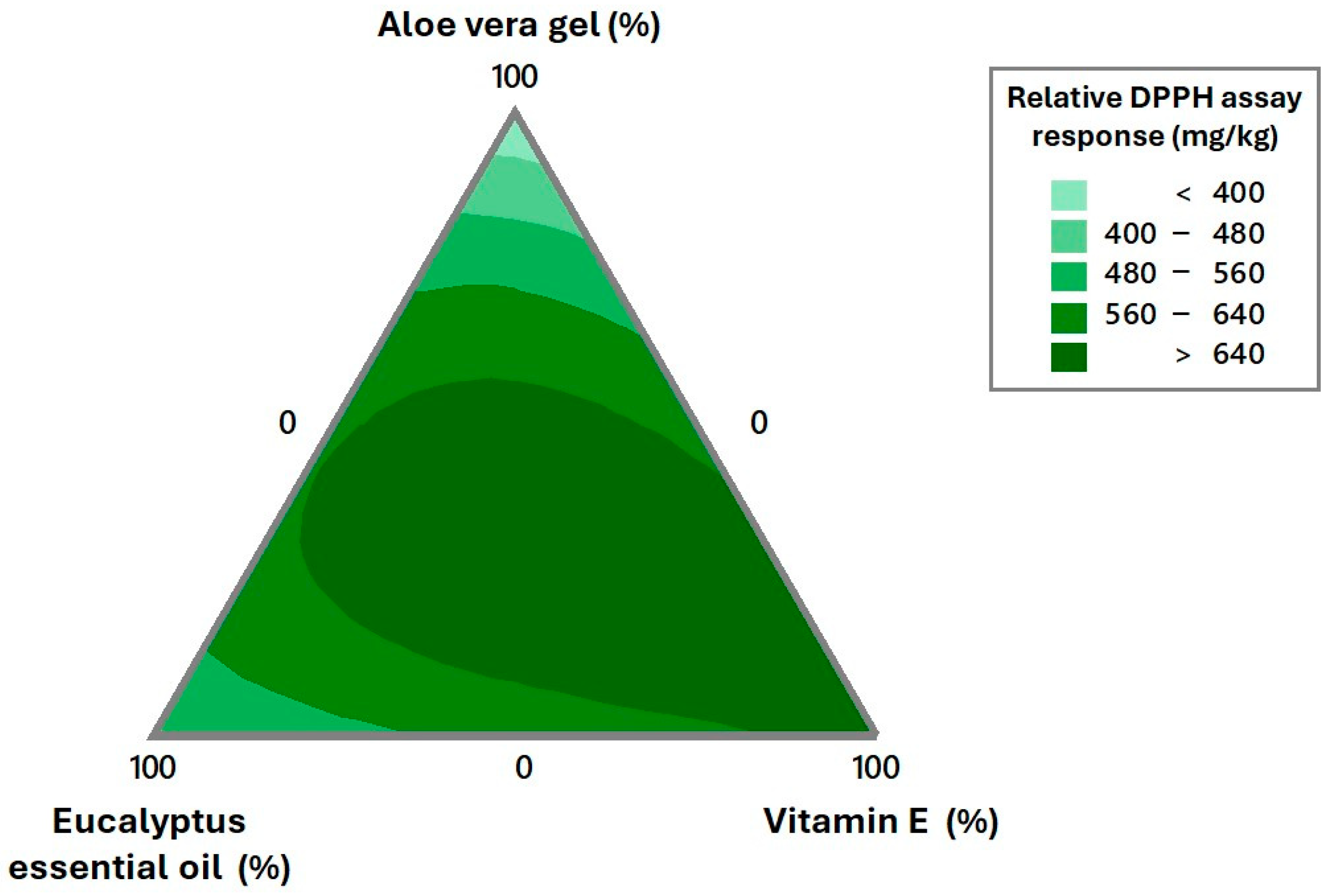
The fitted model was visualized using a mixture contour plot to illustrate the predicted DPPH antioxidant response throughout the experimental formulation space (Figure 2). Higher predicted DPPH responses were concentrated in the central-to-upper region of the ternary diagram, corresponding to mixtures containing substantial proportions of all three components. The distribution of the predicted response was consistent with the significant interaction terms involving aloe vera gel identified by the ANOVA.
Figure 2.
Mixture contour plot showing the predicted antioxidant activity across the experimental formulation space as a function of aloe vera gel, eucalyptus essential oil, and vitamin E proportions.
Numerical optimization initially provided a model-derived composition, which was subsequently prepared independently for experimental validation. The model predicted an optimum mixture containing 30.3% aloe vera gel, 29.3% eucalyptus essential oil, and 40.4% vitamin E. At this composition, the predicted DPPH response was 700.0 mg/kg, with an overall desirability of 0.9333. The predicted optimum was located within the experimental formulation region rather than at a single-component boundary.
The model-derived optimum was subsequently prepared independently for experimental validation. All ten experimental formulations were retained for subsequent sensory evaluation, allowing antioxidant performance to be considered alongside sensory characteristics and consumer willingness to use the products.
3.1.3. Model Diagnostic Evaluation
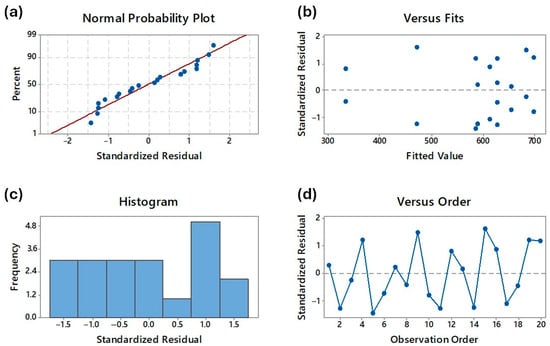
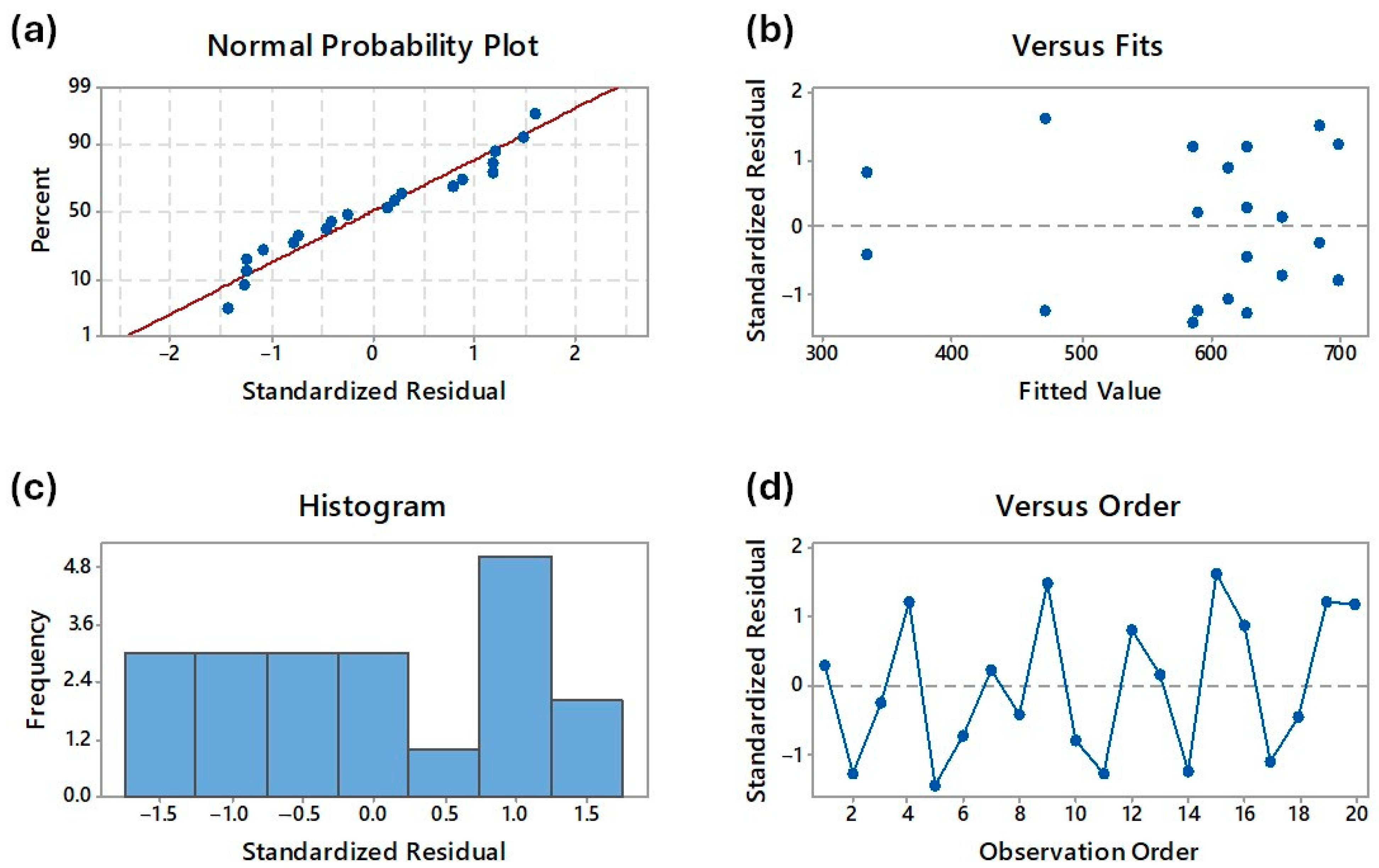
The adequacy of the fitted model was further examined using residual diagnostic plots (Figure 3). The normal probability plot (Figure 3a) indicated that the residuals followed the reference line reasonably well, with no pronounced departure from the expected pattern. The residuals-versus-fitted-values plot (Figure 3b) showed observations scattered around zero without an evident systematic trend or funnel-shaped pattern. Standardized residuals ranged from approximately −1.5 to +1.6, with no apparent extreme observations. The histogram (Figure 3c) displayed a broad distribution of residuals, with the greatest frequency occurring around positive values of approximately 0.8–1.2. Some asymmetry was present, but there was no pronounced concentration at either extreme. The residuals-versus-order plot (Figure 3d) revealed alternating positive and negative values throughout the experimental sequence, without a sustained increase, decrease, or progressive change in variability. Overall, the diagnostics provided no clear evidence of major departures that would compromise the fitted mixture model.
Figure 3.
Residual diagnostic plots for the fitted special cubic mixture model: (a) normal probability plot, (b) standardized residuals versus fitted values, (c) histogram of standardized residuals, and (d) standardized residuals versus observation order. Blue circles represent the observed data points, the red solid line represents the fitted/reference line, and the dotted lines indicate the corresponding confidence limits.
3.1.4. Model Validation
To validate the predictive performance of the mixture model, the formulation corresponding to the model-derived composition of 30.3% aloe vera gel, 29.3% eucalyptus essential oil, and 40.4% vitamin E was prepared independently using the same cream-base composition and preparation procedure described in Section 2.4. The DPPH antioxidant response of the independently prepared formulation was determined using the DPPH assay. The experimentally obtained value was 707.4 ± 39.0 mg/kg, compared with the model-predicted value of 700.0 mg/kg. The absolute relative prediction error, calculated using the experimentally determined mean, was 1.06%. Thus, the experimental mean was in close agreement with the model prediction, providing empirical support for the predictive performance of the fitted mixture model within the investigated formulation region. The observed variability of the validation measurements should nevertheless be considered when interpreting the agreement between predicted and experimental responses.
3.2. Physical Characteristics and Microstructure
3.2.1. General Physical Characteristics
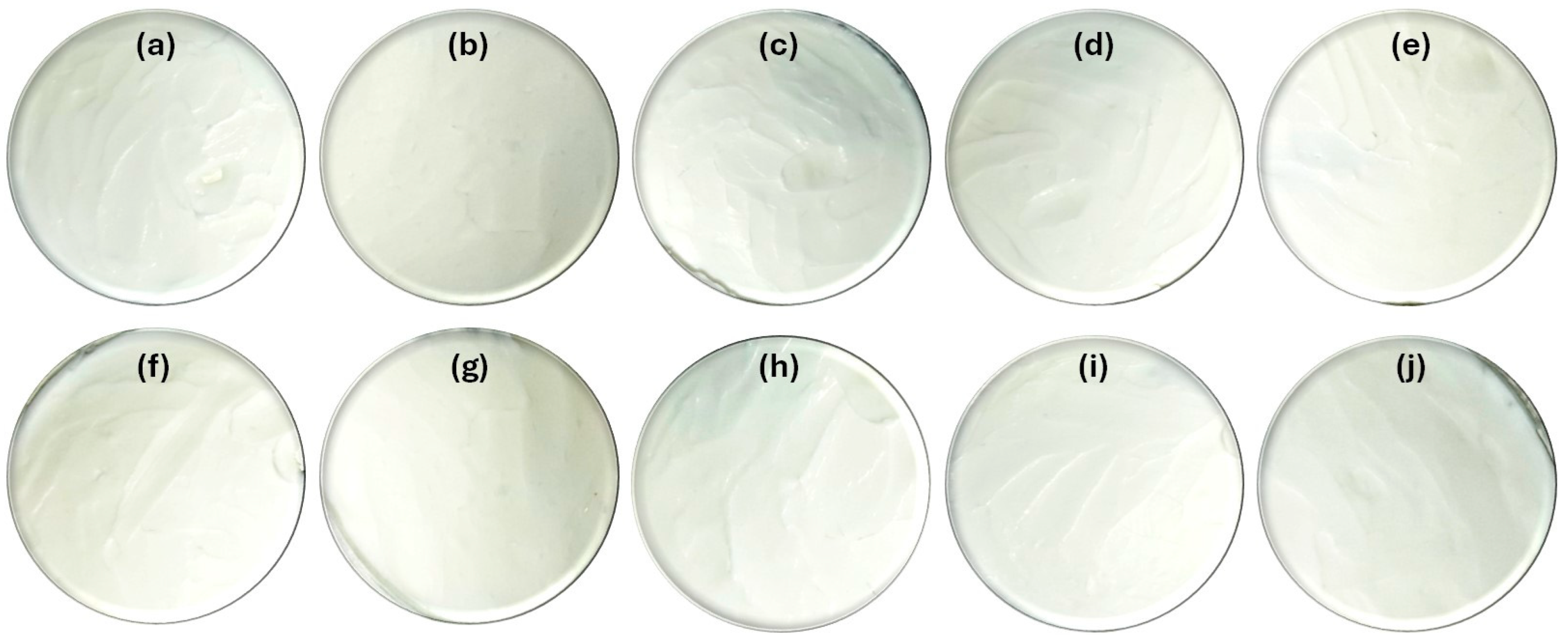
The macroscopic appearance of the ten formulations is presented in Figure 4. All samples were white to off-white semisolid creams, differing mainly in their degree of gloss, apparent smoothness, and visual texture.
Figure 4.
Macroscopic appearance of the ten formulations: (a) BIO1, (b) BIO2, (c) BIO3, (d) BIO4, (e) BIO5, (f) BIO6, (g) BIO7, (h) BIO8, (i) BIO9, and (j) BIO10.
BIO1 had a white, slightly glossy aspect and a relatively smooth finish (Figure 4a). BIO2 appeared opaque and softened, with an even cream body (Figure 4b). BIO3 and BIO4 were white to off-white and exhibited a more pronounced cream texture (Figure 4c,d). BIO5 was smooth and distinctly glossy, with a regular finish (Figure 4e). BIO6 had a white, opaque appearance and a continuous cream body (Figure 4f). BIO7 was comparatively matte and even in appearance (Figure 4g). BIO8 had a moderately glossy finish with a less even visual texture (Figure 4h). BIO9 was white and opaque, with a generally smooth appearance (Figure 4i), while BIO10 had a faint shine and a relatively even texture (Figure 4j).
BIO5 and BIO8 were selected for comparative microscopic examination because they represented distinct formulation compositions and macroscopic characteristics. BIO5 (Figure 4e) contained vitamin E as the sole mixture component and exhibited a smooth, glossy finish, whereas BIO8 (Figure 4h) incorporated aloe vera gel, eucalyptus essential oil, and vitamin E at approximately equal mixture proportions and had a less even visual texture.
The pH values ranged from 4.740 ± 0.020 to 5.183 ± 0.025 (Table 7). The lowest value was recorded for BIO7, containing aloe vera gel as the sole mixture component, whereas BIO5, containing vitamin E as the sole component, exhibited the highest pH. The remaining formulations fell within this range, with intermediate values depending on their mixture composition.
Table 7.
Variation in pH among the formulations 1.
3.2.2. Microscopic Structure
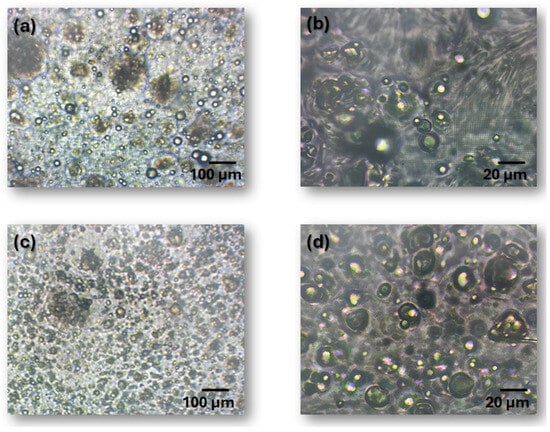
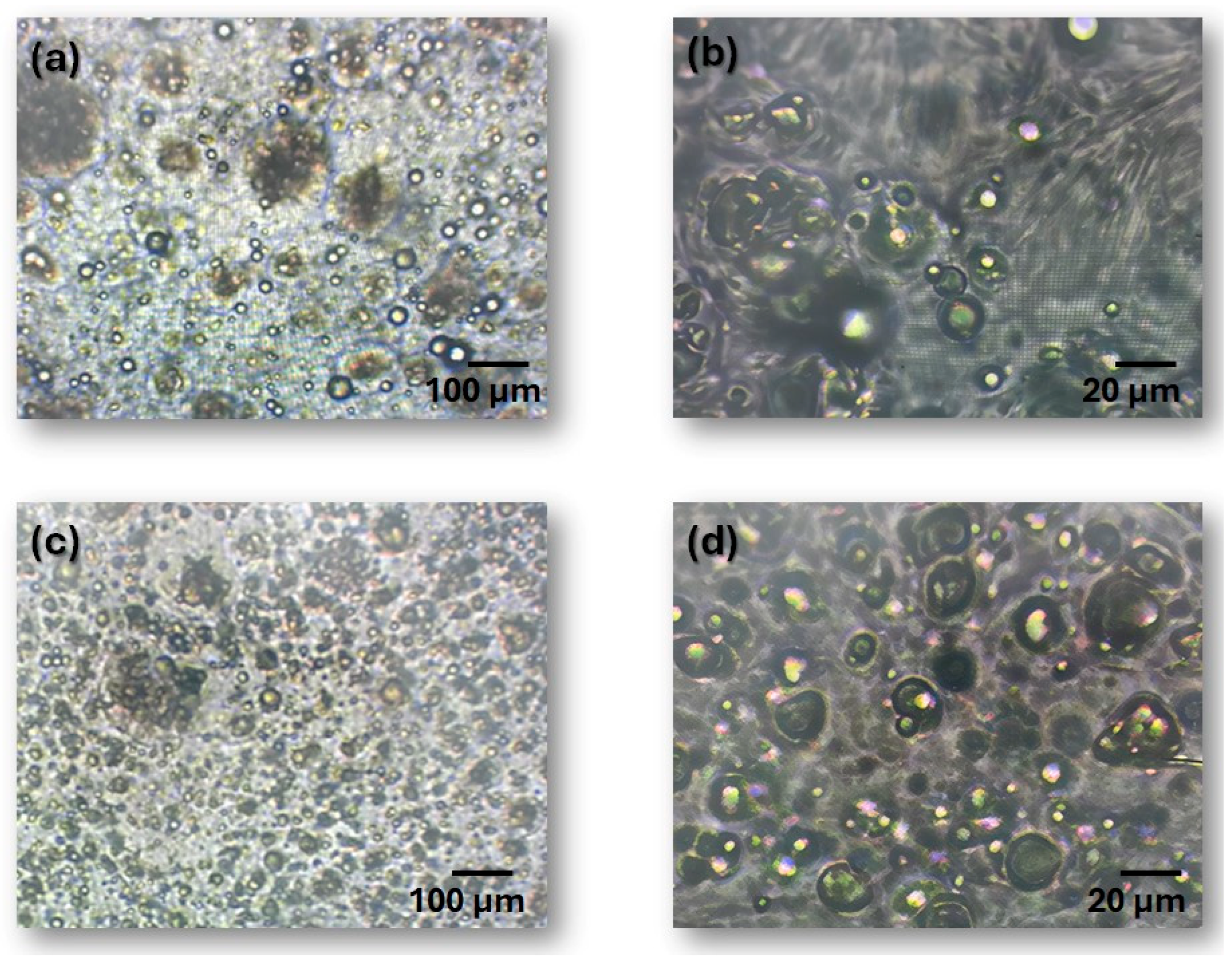
Representative optical micrographs of BIO5 and BIO8 were obtained at 40× and 100× magnification (Figure 5). These formulations were selected for comparative examination because they differed substantially in composition, with BIO5 containing vitamin E as the sole mixture component and BIO8 incorporating aloe vera gel, eucalyptus essential oil, and vitamin E at approximately equal proportions. Their contrasting macroscopic appearance provided an additional basis for this comparison.
Figure 5.
Representative optical micrographs of BIO5 and BIO8 formulations at 40× and 100× magnification: (a) BIO5 at 40×; (b) BIO5 at 100×; (c) BIO8 at 40×; and (d) BIO8 at 100×. Scale bars represent 100 μm in (a,c), whereas 20 μm in (b,d).
At 40× magnification, BIO5 exhibited a densely populated field containing predominantly small, rounded dispersed structures, together with several darker and irregular regions (Figure 5a). BIO8 also contained numerous rounded structures throughout the field, although individual structures were more readily distinguished within the surrounding phase (Figure 5c).
At 100× magnification, the dispersed phase was more clearly resolved. BIO5 contained numerous small structures with variation in apparent size and optical appearance, together with localized regions in which they appeared clustered or less distinctly resolved (Figure 5b). BIO8 displayed clearly delineated rounded structures of different apparent sizes, including several larger structures distributed among smaller ones (Figure 5d).
The two formulations consequently exhibited different microscopic patterns. BIO5 had a finer, densely populated appearance with greater apparent heterogeneity, whereas BIO8 showed more clearly delineated rounded structures, including several larger ones.
3.3. Sensory Characteristics and Consumer Acceptability
Sensory evaluation was conducted among 31 participants who assessed the ten cream formulations (BIO1–BIO10) via a series of ordinal sensory descriptors. Differences among formulations were examined using the Friedman test, while Kendall’s W was used to quantify the magnitude of the observed effects (Table 8). No statistically significant differences were detected for color, homogeneity/appearance, density, perceived spreadability, absorption, moisturization, or lipid feeling (p > 0.05). In contrast, considerable differences were identified for cooling sensation, smell intensity, smell liking, and overall liking.
Table 8.
Friedman test results and Kendall’s W effect sizes for sensory attributes across the cream formulations 1.
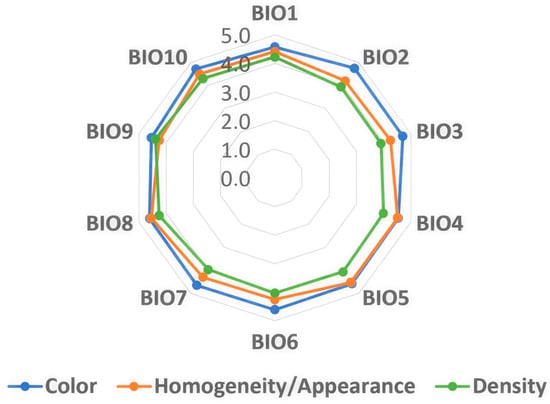
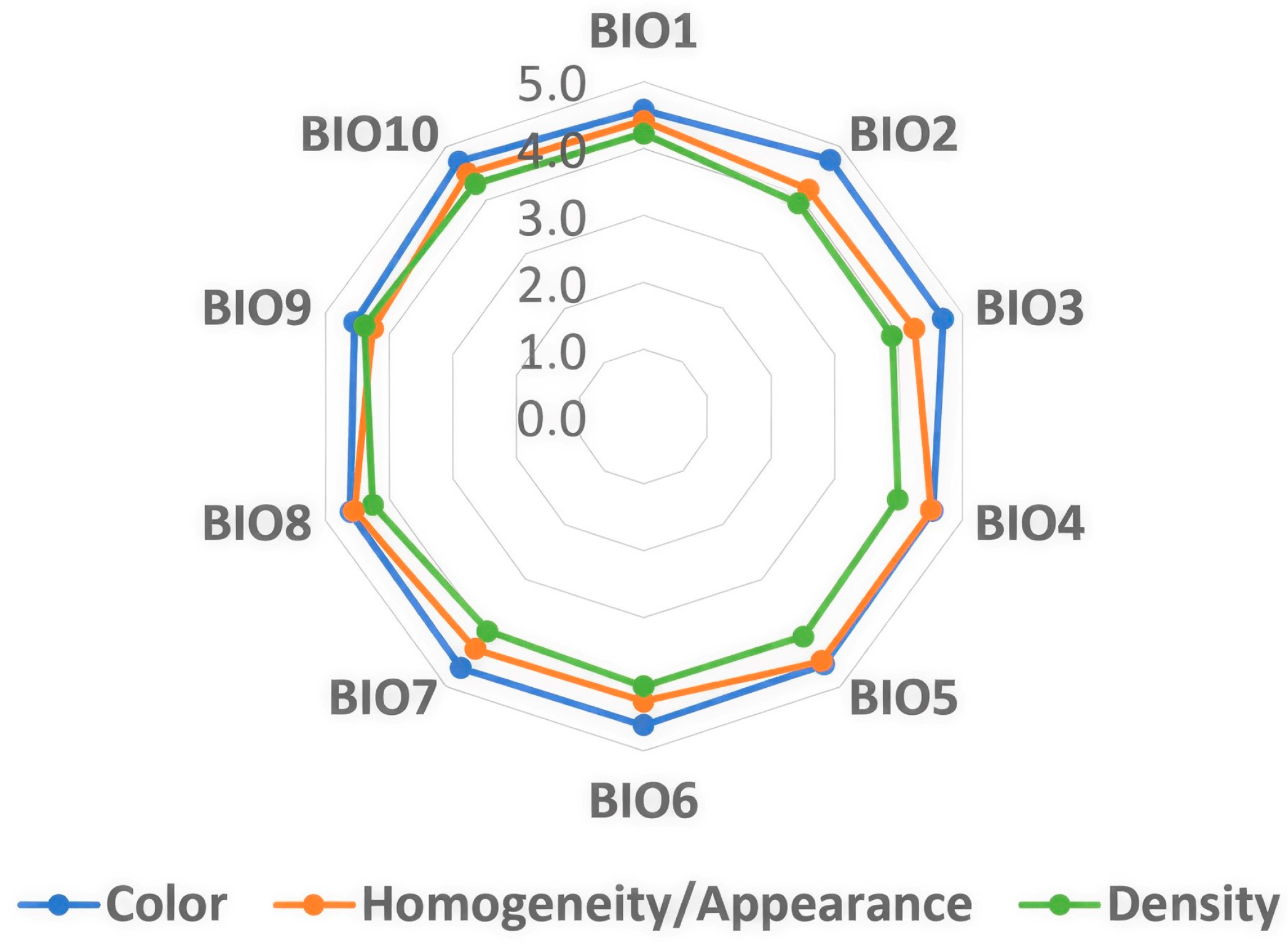
The visual characteristics are presented in Figure 6. Color showed only minor variation among BIO1–BIO10, with the profiles remaining relatively close across the ten samples. A similar pattern was observed for homogeneity/appearance, for which the individual scores followed comparable trajectories. Density exhibited slightly greater visual variation, particularly for formulations receiving lower ratings, although this did not correspond to a statistically significant difference. Consistent with these observations, the Friedman tests gave χ2 = 14.18 (p = 0.116, W = 0.0508) for color, χ2 = 14.03 (p = 0.121, W = 0.0503) for homogeneity/appearance, and χ2 = 14.61 (p = 0.102, W = 0.0524) for density. The small W values indicate that only a limited proportion of the variability in these visual characteristics was associated with the formulation.
Figure 6.
Sensory profile of the formulations in terms of color, homogeneity/appearance, and density.
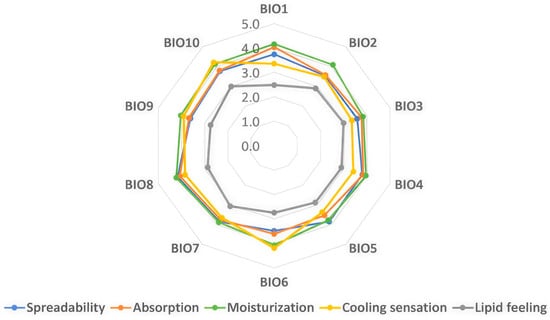
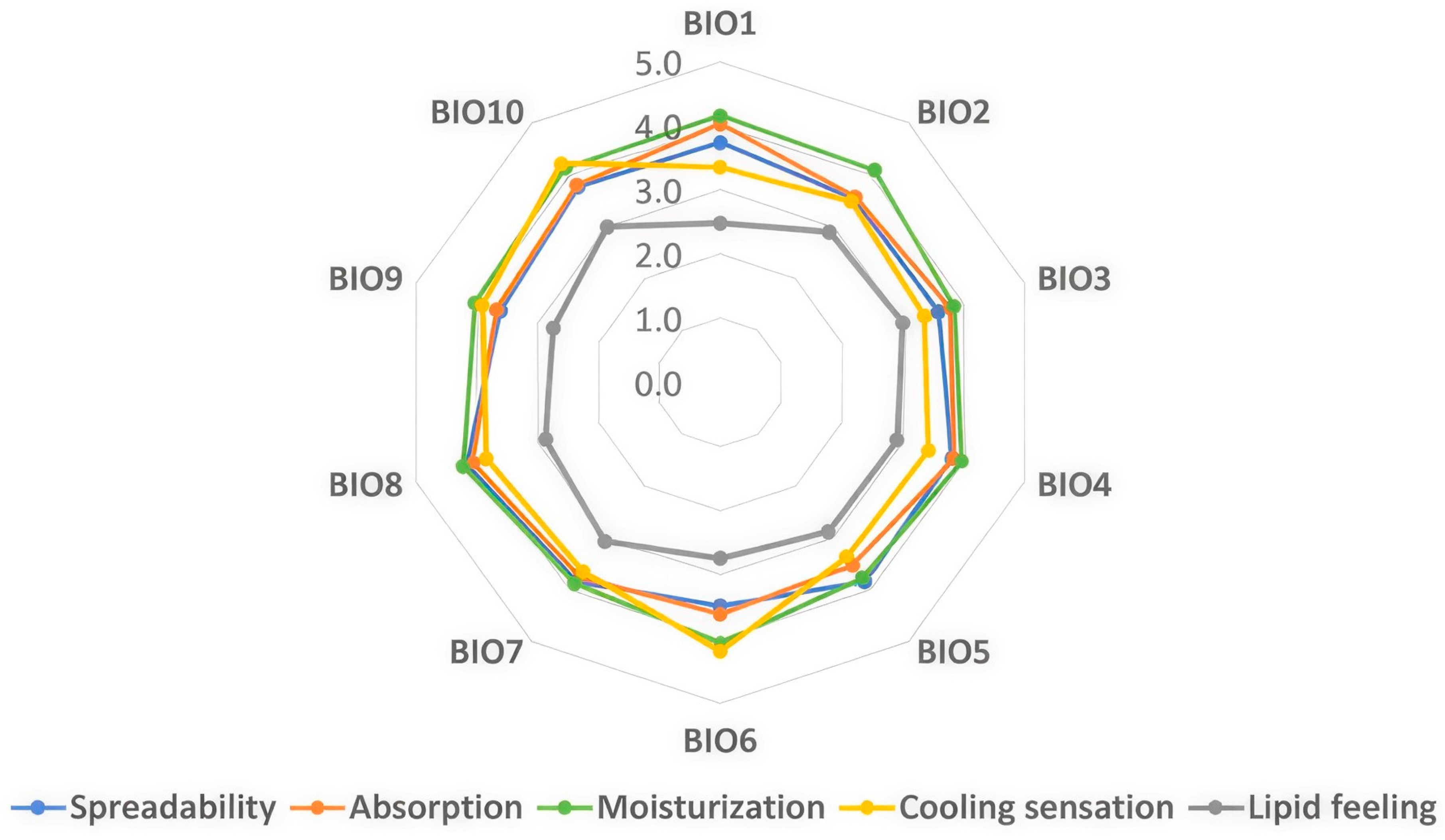
Figure 7 illustrates the attributes associated with product application and after-feel. Perceived spreadability, absorption, moisturization, and lipid feeling followed relatively similar patterns across the samples, with no statistically significant differences detected by the Friedman test. The corresponding results were χ2 = 7.618 (p = 0.573, W = 0.0273), χ2 = 12.41 (p = 0.191, W = 0.0445), χ2 = 12.70 (p = 0.177, W = 0.0455), and χ2 = 9.398 (p = 0.401, W = 0.0337), respectively. The very small effect sizes, particularly for perceived spreadability and lipid feeling, denote little differentiation in these properties. In contrast, cooling sensation differed significantly among the formulations (χ2 = 34.21, p < 0.001, W = 0.1226). Specifically, Holm-adjusted Conover comparisons showed significant differences between BIO1 and BIO6 (p = 0.030), BIO1 and BIO10 (p = 0.022), BIO3 and BIO6 (p = 0.014), BIO3 and BIO10 (p = 0.010), BIO4 and BIO6 (p = 0.020), as well as BIO4 and BIO10 (p = 0.015).
Figure 7.
Sensory profile of the formulations in terms of perceived spreadability, absorption, moisturization, cooling sensation, and lipid feeling.
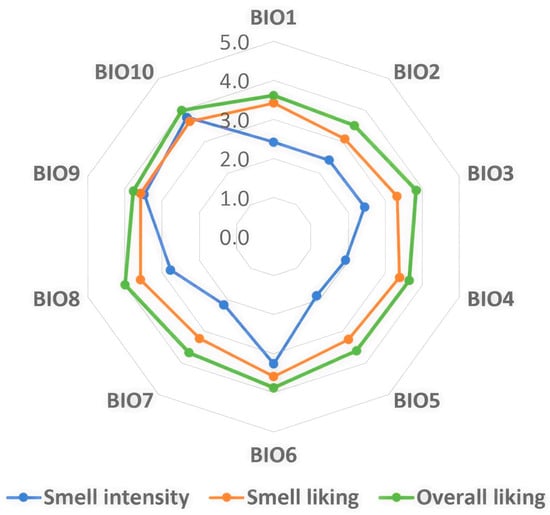
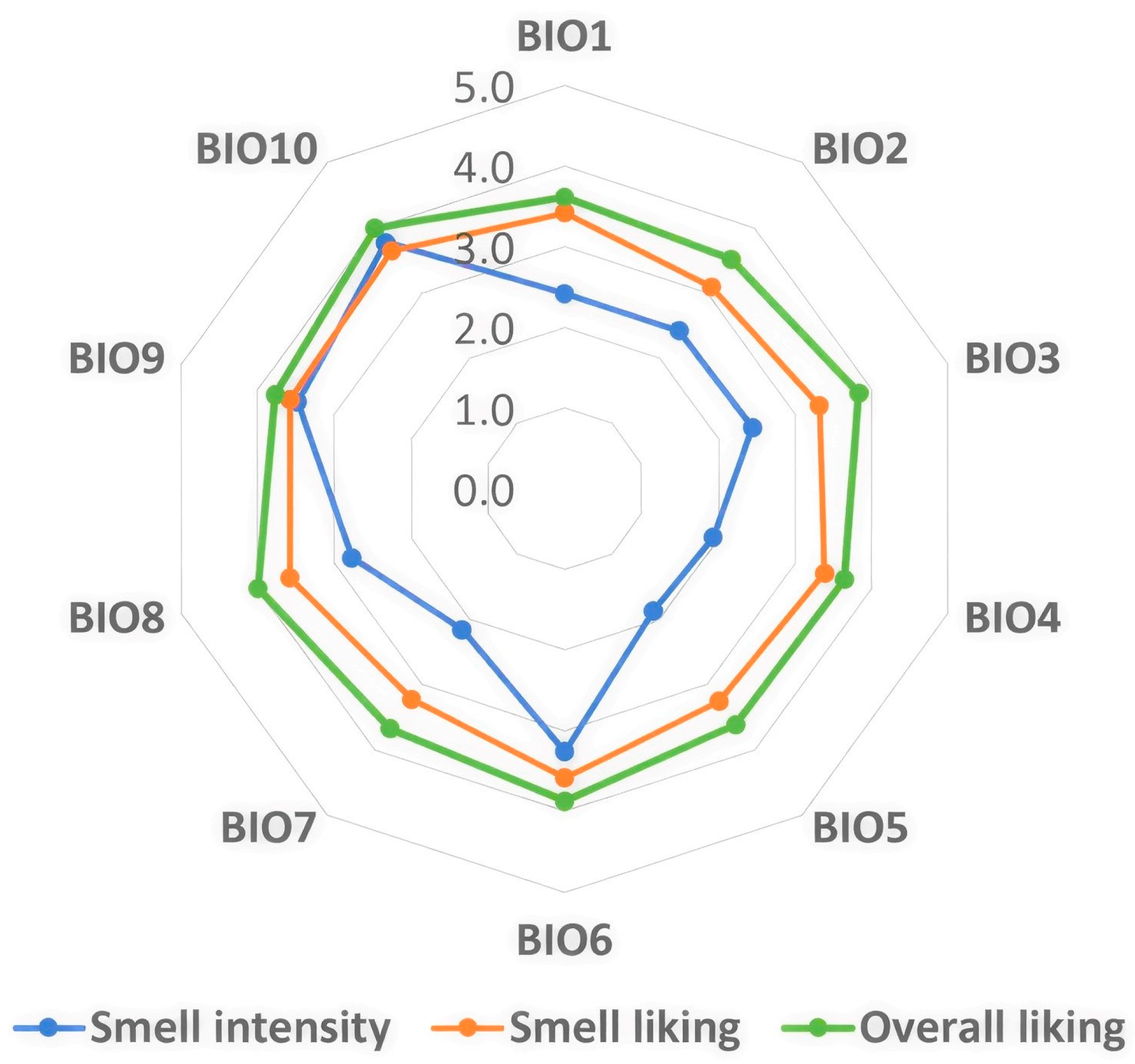
The clearest differentiation was observed in the olfactory responses shown in Figure 8. Smell intensity produced the largest effect among all assessed sensory attributes (χ2 = 105.0, p < 0.001, W = 0.3764). The radar profiles showed pronounced differences between samples, particularly for BIO9 and BIO10, which differed significantly from several other formulations in the Holm-adjusted Conover analysis. Significant contrasts also involved BIO4 and BIO5 in relation to BIO6 and BIO8, while BIO6 and BIO7 differed significantly from each other. The comparatively high Kendall’s W indicates that smell intensity was more strongly differentiated by formulation than any of the other sensory attributes examined.
Figure 8.
Sensory profile of the formulations in terms of smell intensity, smell liking, and overall liking.
Smell liking also differed significantly among the samples (χ2 = 33.80, p < 0.001, W = 0.1212). The profiles in Figure 8 show variation in the acceptability of the perceived odor, although the magnitude of this effect was substantially lower than that observed for smell intensity. The Holm-adjusted Conover analysis identified significant differences between BIO2 and BIO6 (pHolm = 0.006), BIO8 (0.013), BIO9 (0.019), and BIO10 (0.001), as well as between BIO5 and BIO10 (0.040), highlighting that odor liking differed between these specific formulation pairs.
For overall liking, the Friedman test yielded χ2 = 19.02 (p = 0.025, W = 0.0682), demonstrating a statistically significant difference among the ten samples. However, the effect size was small, and none of the individual pairwise comparisons remained significant after Holm correction. The profiles in Figure 8 consequently show less pronounced separation than that observed for smell intensity. Thus, although the Friedman test suggested an overall difference among the samples, no specific pair of formulations could be distinguished after adjustment for multiple comparisons.
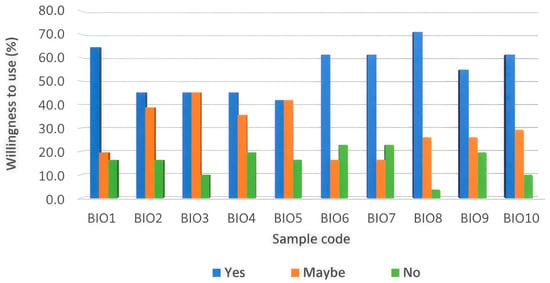
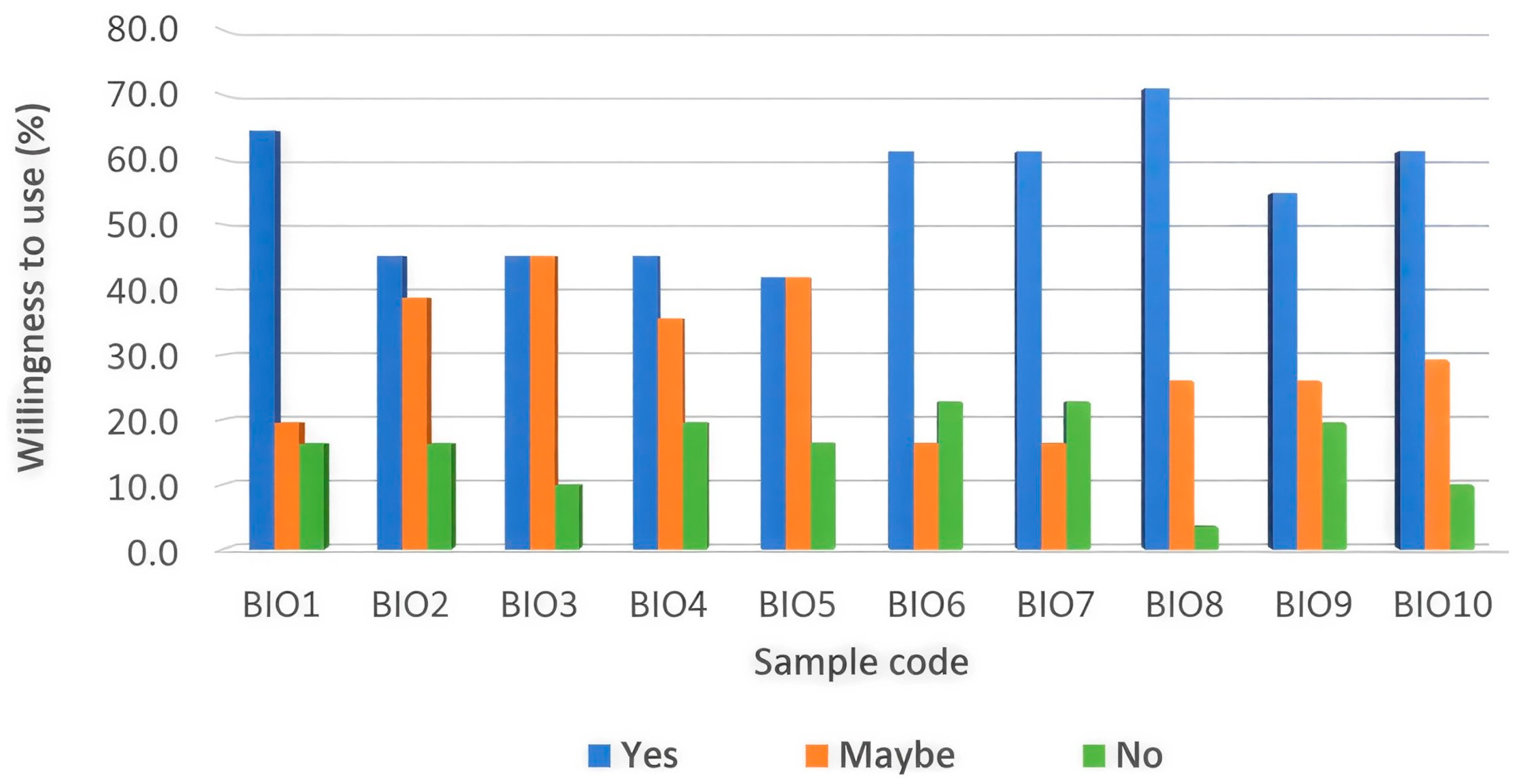
Willingness to use is shown separately in Figure 9. The “Yes” response was the most frequent response for most formulations, although it varied across samples. BIO8 had the highest proportion of “Yes” responses (approximately 71%), whereas BIO5 had the lowest (approximately 42%). BIO1, BIO6, BIO7, and BIO10 also received “Yes” as an answer from more than 60% of participants. The “Maybe” response accounted for a substantial proportion for several formulations, while “No” responses were generally less frequent. The Friedman test did not indicate a significant difference among formulations in willingness to use (χ2 = 13.53, p = 0.140, W = 0.0485). Accordingly, the higher “Yes” proportion observed for BIO8 should be interpreted as a descriptive finding rather than a statistically significant difference among formulations. No significant pairwise differences were identified in the Conover comparisons after Holm correction.
Figure 9.
Willingness to use the different formulations, expressed as the percentage of participants responding “Yes,” “Maybe,” or “No” (n = 31).
3.4. Microbiological Quality During Refrigerated Storage
The microbiological characteristics of the cream formulations during refrigerated storage are presented in Table 9. No total aerobic mesophilic flora was detected above the applicable reporting limit in any formulation immediately after preparation (day 0). Following 10 days of storage, microbial counts became detectable in most formulations, ranging from 17.8 ± 1.2 CFU/g in BIO9 to 63.2 ± 2.9 CFU/g in BIO6 among formulations with detectable counts, while BIO2 remained below the reporting limit. Counts generally increased during further storage, reaching 14.7–72.6 CFU/g at day 30 and 24.7–81.0 CFU/g at day 60. The highest counts throughout storage were observed in BIO6, whereas BIO4, BIO5, and BIO7 maintained comparatively low levels.
Table 9.
Microbiological quality of the cream formulations during storage 1.
Enterobacteriaceae, Staphylococcus spp., and Salmonella spp. were not detected in any formulation at any sampling time. CHROMagar Orientation likewise showed no growth above the applied reporting limit. Representative colonies recovered from Nutrient Agar were further tested using the Food System, with all corresponding reactions in the identification panel being negative for the bacterial groups assessed.
Yeasts and molds were not detected in any formulation at day 0. At day 10, fungal growth was detected only in BIO3 (10.7 ± 0.6 CFU/g). At day 30, detectable yeast/mold counts were observed in BIO2, BIO3, and BIO8, with values of 14.2 ± 2.7, 12.8 ± 1.0, and 13.0 ± 1.3 CFU/g, respectively. These formulations remained positive at day 60, with corresponding values of 18.5 ± 2.8, 15.5 ± 3.1, and 20.1 ± 3.2 CFU/g. Among the recovered yeast isolates, Rhodotorula spp. and Geotrichum spp. were identified using the Integral System YEASTS Plus. The identification panel did not indicate any other yeast groups.
As an additional recovery assessment, separate samples from days 0 and 10 were subjected to 24 h enrichment in Buffered Peptone Water to facilitate the recovery of potentially stressed or sublethally injured microorganisms that might not have been detected by direct enumeration. The resulting cultures were subsequently examined on the appropriate culture media. No additional bacterial or yeast groups were detected following this procedure.
4. Discussion
The DPPH antioxidant response varied substantially among the cream formulations, indicating that the relative proportions of aloe vera gel, eucalyptus essential oil, and vitamin E influenced the measured radical-scavenging capacity. The results are expressed as gallic acid equivalents and represent a relative in vitro assay response rather than the actual concentration of antioxidant compounds in the formulations. This may be related to differences in the antioxidant constituents contributed by the three ingredients. Aloe vera contains phenolic and other bioactive compounds associated with antioxidant activity [8,9,10]. However, as the commercial gel also contained components other than Aloe barbadensis leaf juice, their potential contribution to the observed antioxidant, physicochemical, and sensory properties cannot be excluded. Eucalyptus species contain diverse bioactive phytochemicals, and studies of their leaf extracts and essential oils have reported antioxidant and antimicrobial activities, with their composition and biological properties varying according to the plant material and sample preparation procedure [11,12,13]. Vitamin E also contributes to antioxidant protection, particularly through its role in limiting lipid oxidation [14,15,16]. Sunflower seed oil, used as the oil phase of the cream base, may also possess intrinsic antioxidant activity due to its unsaturated fatty acids and minor bioactive constituents. Nevertheless, because the same amount was used in all formulations, its contribution would be expected to represent a relatively consistent background effect and would not, by itself, explain the differences among formulations. The significant aloe vera × eucalyptus essential oil and aloe vera × vitamin E interactions indicate that the measured antioxidant response was associated with the combination of ingredients within the investigated formulation space. These statistical interactions do not by themselves establish a biochemical mechanism or synergistic interaction. The observed composition-dependent antioxidant activity is consistent with previous mixture-design studies showing that changes in the relative proportions of plant-derived components can influence antioxidant capacity and identify combinations associated with enhanced responses [35,36].
The highest experimental antioxidant activity was observed in the ternary formulation, while the mixture model predicted an optimum containing 30.3% aloe vera gel, 29.3% eucalyptus essential oil, and 40.4% vitamin E. The location of the predicted optimum within the mixture region suggests that a balanced combination of the three components was more favorable than maximizing a single component. The significant mixture interactions describe statistical relationships within the formulation space and do not, by themselves, establish biochemical synergy. The predicted optimum was subsequently prepared independently to evaluate the predictive performance of the model. The experimentally obtained DPPH response of 707.4 ± 39.0 mg/kg was in close agreement with the predicted value of 700.0 mg/kg, corresponding to an absolute relative prediction error of 1.06%. This agreement supports the practical predictive value of the mixture model for identifying promising formulations within the design space investigated. The validation was limited to the DPPH response and therefore does not establish formulation stability, skin-protective effects, clinical efficacy, or superiority under practical storage or use conditions.
In this study, total batch masses ranged from approximately 15.1 g to 18.6 g across formulations, mainly due to fixed amounts of base ingredients combined with different proportions of bioactive components. While the relative amounts of aloe vera gel, eucalyptus essential oil, and vitamin E were systematically adjusted, the variation in total batch mass and formulation composition should be considered when interpreting differences in properties such as antioxidant activity, pH, and sensory attributes. This represents a methodological limitation that may affect the comparability and reproducibility of the formulations. Future research should maintain a standardized total batch mass and appropriately adjust the formulation components to ensure more uniform samples. Additionally, assessing scaled-up production and long-term stability under typical storage conditions will be important for evaluating the potential translation of these formulations into commercial products.
Differences in formulation composition were also reflected in the microscopic appearance and pH. Although the cream base and processing conditions were maintained, variation in the proportions of the bioactive constituents may have contributed to the observed changes in emulsion microstructure. This is consistent with the reported influence of emulsion composition on droplet characteristics and distribution [37]. The pH values remained within a relatively narrow acidic range (4.74–5.18), consistent with the mildly acidic environment of the skin and the pH range commonly recommended for topical formulations [38]. Thus, the compositional changes affected pH significantly without producing a pronounced shift in the overall acidity of the creams.
Most sensory attributes, including appearance/homogeneity, density, perceived spreadability, absorption, moisturization, and lipid feeling, were not significantly affected by formulation, indicating that the different combinations of bioactive ingredients generally maintained favorable and comparable application characteristics. The assessment of spreadability in the present study was sensory-based and therefore provides information on perceived application rather than instrumental rheological behavior. Accordingly, the effects of the relative proportions of aloe vera gel, eucalyptus essential oil, and vitamin E on viscosity and instrumental spreadability remain to be established. These measurements would provide complementary information on the technological properties of the emulsions and should be included in subsequent formulation and stability studies. In contrast, cooling sensation and odor-related attributes differed among samples. The particularly strong effect on smell intensity is plausible given the different proportions of eucalyptus essential oil, whose volatile compounds contribute to its characteristic aromatic odor [39]. Despite these differences, overall liking showed only a small effect, and no significant pairwise differences remained after correction. Importantly, the descriptive responses were generally favorable, with a “Yes” willingness-to-use response reported by more than 60% of participants for BIO1, BIO6, BIO7, and BIO10, and reaching approximately 71% for BIO8. BIO8, which contained aloe vera gel, eucalyptus essential oil, and vitamin E at approximately equal proportions, showed the highest proportion of “Yes” responses. Yet, willingness to use did not differ significantly among formulations, and the higher “Yes” response observed for BIO8 should not be interpreted as evidence of superior acceptance.
The microbiological results showed a gradual increase in total aerobic mesophilic flora during refrigerated storage, reaching a maximum of 81.0 ± 3.1 CFU/g in BIO6 at day 60. The recorded values were well below the ≤103 CFU/g limit specified by ISO 17516 for topical cosmetic products [40]. Furthermore, Enterobacteriaceae, Staphylococcus spp., and Salmonella spp. were not detected at any sampling time. Representative colonies recovered on the culture media were additionally examined using the Food System. All reactions were negative for the bacterial groups covered by the panel, including E. coli, Pseudomonas spp., and S. aureus. These findings are consistent with the ISO 17516 criteria regarding the absence of specified microorganisms in 1 g or 1 mL of cosmetic product [40]. CHROMagar Orientation also showed no detectable growth at any sampling time, providing additional screening evidence against the bacterial groups differentiated by the medium. Yeast and mold growth was limited to BIO2, BIO3, and BIO8 at later storage times, with Rhodotorula spp. and Geotrichum spp. identified among recovered isolates. The above fungi have been previously reported among environmental contaminants of cosmetic products [41,42]. In addition, Candida albicans was not indicated by the Integral System YEASTS Plus identification panel, while the detection of yeasts and molds in some formulations indicates that refrigerated storage did not prevent fungal growth. Therefore, these findings should not be interpreted as evidence of preservative efficacy or microbiological shelf stability.
The microbiological findings could be partly related to the antimicrobial properties reported for the bioactive ingredients used in the formulations. Eucalyptus essential oil has demonstrated activity against several microorganisms relevant to cosmetic microbiological quality, including E. coli, S. aureus, and C. albicans [43]. Aloe vera has likewise been reported to exhibit antimicrobial activity against bacterial and fungal microorganisms [44]. As the sunflower seed oil content was kept constant across all formulations, its contribution would be expected to be relatively consistent and is therefore unlikely to explain differences associated with formulation composition. These reported properties may have contributed to the microbiological profile observed in the present formulations, although their contribution cannot be established from the present experimental design because the ingredient proportions varied simultaneously. The additional 24 h enrichment performed at days 0 and 10 also did not reveal any additional bacterial or yeast groups.
An important limitation of the present study is that the storage assessment was performed under refrigerated conditions (4 ± 2 °C), which does not represent the typical storage conditions of marketed cosmetic products. Therefore, the data obtained during refrigerated storage should be interpreted as an assessment of microbiological quality under the specified experimental condition rather than as evidence of physicochemical stability or shelf life under normal storage conditions. The detection of yeasts and molds in BIO2, BIO3, and BIO8 during later storage also indicates that microbiological behavior differed among formulations and reinforces the need for dedicated preservative efficacy and stability studies. No formal preservative efficacy or challenge test was performed, so the microbiological findings cannot be used to establish preservative effectiveness. The present work did not include room-temperature or accelerated stability testing, and changes in viscosity, instrumental spreadability, emulsion structure, phase separation, color, odor, and other physicochemical properties during storage were consequently not assessed. In addition, the spreadability evaluated in the sensory study represents perceived spreadability and should not be interpreted as an instrumental measurement of the technological property. The study also relied on two independently prepared batches per experimental formulation, a single DPPH-based antioxidant assay, and a sensory panel of 31 participants, which limit the generalizability of the findings. Furthermore, the microscopic assessment was qualitative and limited to two representative formulations, without quantitative droplet-size analysis. Accordingly, the present results do not support conclusions regarding shelf stability or commercial suitability, and BIO8 and the other ternary formulations should be regarded as preliminary formulation candidates warranting further investigation. Although the model-predicted optimum was independently validated for the DPPH response and showed good agreement with the experimentally determined response, this validation was limited to a single optimized composition and a single antioxidant assay. Future studies should include controlled room-temperature and, where appropriate, accelerated stability testing over an appropriate period, together with systematic monitoring of viscosity, instrumental spreadability, pH, emulsion microstructure, phase separation, color, odor, microbiological quality, and preservative efficacy. Such studies would be necessary to determine whether the favorable antioxidant and sensory characteristics observed in the present work are maintained under conditions relevant to the storage and use of cosmetic products.
5. Conclusions
The present study demonstrates that mixture-design methodology can support preliminary formulation development of creams containing aloe vera gel, eucalyptus essential oil, and vitamin E. The relative proportions of these ingredients significantly influenced antioxidant activity, and the model identified a ternary composition a high predicted antioxidant response, which was subsequently independently validated using the DPPH assay. The formulations also showed a mildly acidic pH and generally favorable sensory characteristics. Measured microbial counts remained below the applicable quantitative acceptance criterion during the 60-day refrigerated storage assessment, while the specified target microorganisms were not detected under the microbiological methods employed. Among the tested creams, BIO8 combined a balanced ternary composition with high antioxidant activity and the highest proportion of “Yes” responses, although this difference was not statistically significant. The present study did not establish the physicochemical or microbiological stability of the formulations under normal room-temperature storage conditions. Furthermore, instrumental viscosity and spreadability were not determined, as the spreadability assessed in the present study was based on sensory perception. Therefore, the developed creams should be regarded as preliminary formulation candidates rather than validated optimized products or products with demonstrated shelf stability or commercial suitability. BIO8 and the other formulations may be considered candidates for further formulation, stability, safety, and acceptability studies. Room-temperature and, where appropriate, accelerated stability studies, together with instrumental evaluation of viscosity and spreadability, are required before conclusions regarding shelf life, practical application, or commercialization can be drawn.
Author Contributions
Conceptualization, E.P.; methodology, N.B. and E.P.; software, N.B. and E.P.; formal analysis, N.B.; investigation, N.B. and E.P.; data curation, N.B. and E.P.; writing—original draft preparation, N.B. and E.P.; writing—review and editing, E.P.; visualization, N.B. and E.P.; supervision, E.P. All authors have read and agreed to the published version of the manuscript.
Funding
This research received no external funding.
Institutional Review Board Statement
The study was conducted in accordance with the Declaration of Helsinki and was approved by the Ethics Committee of New York College, Greece (NYC23.07.26.A; approved on 23 July 2026).
Informed Consent Statement
Informed consent for participation was obtained from all participants involved in the study.
Data Availability Statement
The raw data supporting the conclusions of this article will be made available by the authors on request.
Conflicts of Interest
The authors declare no conflicts of interest.
References
- Rischard, F.; Gore, E.; Flourat, A.; Savary, G. The Challenges Faced by Multifunctional Ingredients: A Critical Review from Sourcing to Cosmetic Applications. Adv. Colloid Interface Sci. 2025, 340, 103463. [Google Scholar] [CrossRef] [Scilit] [PubMed]
- Budzianowska, A.; Banaś, K.; Budzianowski, J.; Kikowska, M. Antioxidants to Defend Healthy and Youthful Skin—Current Trends and Future Directions in Cosmetology. Appl. Sci. 2025, 15, 2571. [Google Scholar] [CrossRef] [Scilit]
- Deng, K.; Liu, Y.; Li, D.; Liu, C. Applications of Traditional Herbal Ingredients in Skincare: Mapping the Research Landscape and Innovation Trajectories Over Four Decades. J. Cosmet. Dermatol. 2025, 24, e70363. [Google Scholar] [CrossRef] [Scilit] [PubMed]
- Anderson-Cook, C.M.; Goldfarb, H.B.; Borror, C.M.; Montgomery, D.C.; Canter, K.G.; Twist, J.N. Mixture and Mixture–Process Variable Experiments for Pharmaceutical Applications. Pharm. Stat. 2004, 3, 247–260. [Google Scholar] [CrossRef] [Scilit]
- Türkdoğan, A.; Alloush, T.; Demiralp, B. Experimental Design in Pharmaceutical Formulation Development: Achievements, Limitations and the Transition Toward Intelligent Optimization. Sci. Pharm. 2026, 94, 38. [Google Scholar] [CrossRef] [Scilit]
- Mirzaalizadeh, B.; Sharif, M.; Daryani, A.; Ebrahimzadeh, M.A.; Zargari, M.; Sarvi, S.; Mehrzadi, S.; Rahimi, M.T.; Mirabediny, Z.; Golpour, M.; et al. Effects of Aloe Vera and Eucalyptus Methanolic Extracts on Experimental Toxoplasmosis In Vitro and In Vivo. Exp. Parasitol. 2018, 192, 6–11. [Google Scholar] [CrossRef] [Scilit] [PubMed]
- Diwakar, G.; Barnes, L.; Riggs, M.; Knaggs, H.; Draelos, Z.D. Plant-Derived Extracts Plus Vitamin E and/or Aloe Vera Protect Against Intrinsic/Extrinsic Stressor in Human Skin: In Vitro and Clinical Evidence. Front. Biosci.-Landmark 2023, 28, 366. [Google Scholar] [CrossRef] [Scilit] [PubMed]
- Surjushe, A.; Vasani, R.; Saple, D. Aloe Vera: A Short Review. Indian J. Dermatol. 2008, 53, 163. [Google Scholar] [CrossRef] [Scilit] [PubMed]
- Zhu, J.; Zheng, Y.; Ge, Y. Study on the Application of Aloe Vera in Cosmetology and Clinical Treatment of Skin Diseases. J. Holist. Integr. Pharm. 2024, 5, 299–304. [Google Scholar] [CrossRef] [Scilit]
- Nagrik, S.U.; Shivshankar, M.; Chharre, V.S.; Dhage, S.M.; Borey, V.S. Role of Aloe Vera in Skincare: Exploring Its Therapeutic Benefits, Formulations, and Future Innovations. Yemen J. Med. 2024, 3, 197–206. [Google Scholar] [CrossRef] [Scilit]
- Naidoo, D.S.; More, G.K.; Chokwe, R.C. Elemental, Phytochemical Analysis and Determination of Antibacterial, Antioxidant, and Cytotoxic Activities of Leaves Extracts of Eleven Eucalyptus Species. S. Afr. J. Bot. 2024, 171, 1–9. [Google Scholar] [CrossRef] [Scilit]
- Kirouani, A.; Boukhalfoun, L.; Behidj, N. Bioactive Compounds and Biological Activities of Eucalyptus Cladocalyx Muell. Leaves Grown in Bainem Forest of Algiers. Bol. Latinoam. Caribe Plan. Med. Aromat. 2025, 24, 526–535. [Google Scholar] [CrossRef] [Scilit]
- Lad, D.; Khalate, M.; Bhavikatti, S.K.; Abullais, S.S.; Albariqi, A.A.; Fareed, M.; Venkataiah, V.S.; Karobari, M.I. Phytochemical Characterisation, Antioxidant, Anti-Inflammatory, Antibacterial, Antibiofilm, Anticancer Properties and Therapeutic Potentials of Eucalyptus Globulus Essential Oil. Sci. Rep. 2026, 16, 17109. [Google Scholar] [CrossRef] [Scilit] [PubMed]
- Rizvi, S.; Raza, S.T.; Ahmed, F.; Ahmad, A.; Abbas, S.; Mahdi, F. The Role of Vitamin E in Human Health and Some Diseases. Sultan Qaboos Univ. Med. J. 2014, 14, e157–e165. [Google Scholar] [CrossRef] [Scilit]
- Aparecida Sales de Oliveira Pinto, C.; Elyan Azevedo Martins, T.; Miliani Martinez, R.; Batello Freire, T.; Valéria Robles Velasco, M.; Rolim Baby, A. Vitamin E in Human Skin: Functionality and Topical Products. In Vitamin E in Health and Disease-Interactions, Diseases and Health Aspects; Erkekoglu, P., Santos, J.S., Eds.; IntechOpen: London, UK, 2021. [Google Scholar]
- Al Abadie, M.; Mahfoudh, M.; Al-Rawi, A.-H. Topical Vitamin E in Modern Skin Therapy: A Comprehensive Review. Int. J. Clin. Exp. Dermatol. 2024, 9, 01–08. [Google Scholar] [CrossRef] [Scilit]
- Tungadi, R.; Putri, F.D. Formulation and Evaluation of Herba Glow Skincare Cream. Univers. J. Pharm. Res. 2025, 10, 45–48. [Google Scholar] [CrossRef] [Scilit]
- Victoria-Tinoco, L.; La Fuente-Carmelino, L.D.; Lozada, P.; Muñoz, A.M. In Vitro Antioxidant Stability and Infrared Characterization of a Cosmetic Formulation with Peruvian Bioactive Compounds. Cosmetics 2026, 13, 57. [Google Scholar] [CrossRef] [Scilit]
- Giuffrè, M.R.; Pierguidi, L.; Coubart, A.; Dinnella, C.; Charbonneau, A.; Monteleone, E.; Morizet, D.; Spinelli, S. Capturing the Sensory and Emotional Dynamics of Cosmetic Creams During Usage: A Temporal Dominance Approach. Food Qual. Prefer. 2025, 131, 105556. [Google Scholar] [CrossRef] [Scilit]
- Andrei, F. Sensory Science in Cosmetics. In Cosmetic Industry-Trends, Products and Quality Control; Kartal, S.P., Ed.; IntechOpen: London, UK, 2025. [Google Scholar]
- Dnyaneshwari, P.; Nivedita, S.; Amar, P.; Korde, S.G. Formulation And Evaluation of Anti-Acne Bael Facewash. Int. J. Pharm. Sci. 2025, 3, 3671–3689. [Google Scholar] [CrossRef]
- Pereira, G.G.; Guterres, S.S.; Balducci, A.G.; Colombo, P.; Sonvico, F. Polymeric Films Loaded with Vitamin E and Aloe Vera for Topical Application in the Treatment of Burn Wounds. BioMed Res. Int. 2014, 2014, 641590. [Google Scholar] [CrossRef] [Scilit] [PubMed]
- Pereira, G.G.; Santos-Oliveira, R.; Albernaz, M.S.; Canema, D.; Weismüller, G.; Barros, E.B.; Magalhães, L.; Lima-Ribeiro, M.H.M.; Pohlmann, A.R.; Guterres, S.S. Microparticles of Aloe Vera/Vitamin E/Chitosan: Microscopic, A Nuclear Imaging and An In Vivo Test Analysis for Burn Treatment. Eur. J. Pharm. Biopharm. 2014, 86, 292–300. [Google Scholar] [CrossRef] [Scilit] [PubMed]
- Sbhatu, D.B.; Berhe, G.G.; Hndeya, A.G.; Abraha, H.B.; Abdu, A.; Gebru, H.A.; Taye, M.G.; Mulugeta, A.; Weldemichael, M.Y.; Tekle, H.T.; et al. Formulation and Physicochemical Evaluation of Lab-Based Aloe adigratana Reynolds Shampoos. Int. J. Anal. Chem. 2020, 2020, 6290617. [Google Scholar] [CrossRef] [Scilit] [PubMed]
- Manohar Babu, S.; Lakshmisavithri, S.; Veda Sravanth, A.; Shakeena, D.; Selophy, R.; Pushpalatha, M.; Hepsiba, J. Formulation and Evaluation of Aloe Vera Gel Shampoo. Int. J. Pharm. Drug Anal. 2021, 9, 172–179. [Google Scholar] [CrossRef] [Scilit]
- Saini, S. Formulation and Evaluation of Face Serum by Using Eucalyptus Oil. J. Emerg. Technol. Innov. Res. 2023, 10, e921–e931. [Google Scholar]
- Akki, R.; Ramya, M.G.; Vardhani; Kathirvel, S. Formulation and Evaluation of Herbal Cream of Eucalyptus Globulus and Aloe barbidense Leaves Extract for Anti-Acne Activity. Indo Am. J. Pharm. Res. 2022, 12, 3061–3070. [Google Scholar] [CrossRef]
- Pandey, J.; Lakshmi, B.S.; Verma, P.; Kanika, M.; Prashar, D.; Devi, P.; Jadhav, S.P. Formulation and Evaluation of Emulgel of Eucalyptus and Aloe Vera for Treatment of Inflammation and Microbial Infection. Cuest. Fisioter. 2025, 54, 4378–4387. [Google Scholar]
- Government of Canada Defined Organism Substance-Aloe Barbadensis Leaf Juice. Available online: https://webprod.hc-sc.gc.ca/nhpid-bdipsn/ingredReq?id=4309&wbdisable=true (accessed on 17 August 2026).
- Becker, L.C.; Akinsulie, A.; Bergfeld, W.F.; Belsito, D.V.; Hill, R.A.; Klaassen, C.D.; Liebler, D.C.; Marks, J.G.; Shank, R.C.; Slaga, T.J.; et al. Safety Assessment of Eucalyptus Globulus (Eucalyptus)-Derived Ingredients as Used in Cosmetics. Int. J. Toxicol. 2023, 42, 57S–92S. [Google Scholar] [CrossRef] [Scilit] [PubMed]
- Harmita, H.; Iskandarsyah, I.; Afifah, S.F. Effect of Transfersome Formulation on the Stability and Antioxidant Activity of N-Acetylcysteine in Anti-Aging Cream. Int. J. Appl. Pharm. 2020, 12, 156–162. [Google Scholar] [CrossRef] [Scilit]
- Suli, A.; Papadaki, E. Antioxidant Activity of the Medicinal Plant Urtica dioica L.: Extraction Optimization Using Response Surface Methodology and Protective Role in Red Blood Cells. Sci. Pharm. 2024, 92, 45. [Google Scholar] [CrossRef] [Scilit]
- Simões, A.; Veiga, F.; Vitorino, C. Progressing Towards the Sustainable Development of Cream Formulations. Pharmaceutics 2020, 12, 647. [Google Scholar] [CrossRef] [Scilit] [PubMed]
- World Medical Association WMA Declaration of Helsinki–Ethical Principles for Medical Research Involving Human Participants. Available online: https://www.wma.net/policies-post/wma-declaration-of-helsinki/ (accessed on 27 April 2026).
- Mapeka, T.M.; Sandasi, M.; Viljoen, A.M.; van Vuuren, S.F. Optimization of Antioxidant Synergy in a Polyherbal Combination by Experimental Design. Molecules 2022, 27, 4196. [Google Scholar] [CrossRef] [Scilit] [PubMed]
- Nouioura, G.; Tourabi, M.; El Ghouizi, A.; Kara, M.; Assouguem, A.; Saleh, A.; Al Kamaly, O.; El Ouadrhiri, F.; Lyoussi, B.; Derwich, E.H. Optimization of a New Antioxidant Formulation Using a Simplex Lattice Mixture Design of Apium graveolens L., Coriandrum sativum L., and Petroselinum crispum M. Grown in Northern Morocco. Plants 2023, 12, 1175. [Google Scholar] [CrossRef] [Scilit] [PubMed]
- Hu, Y.-T.; Ting, Y.; Hu, J.-Y.; Hsieh, S.-C. Techniques and Methods to Study Functional Characteristics of Emulsion Systems. J. Food Drug Anal. 2017, 25, 16–26. [Google Scholar] [CrossRef] [Scilit] [PubMed]
- Lukić, M.; Pantelić, I.; Savić, S.D. Towards Optimal PH of the Skin and Topical Formulations: From the Current State of the Art to Tailored Products. Cosmetics 2021, 8, 69. [Google Scholar] [CrossRef] [Scilit]
- Yip, S.C.; Ho, L.Y.; Wu, T.-Y.; Sit, N.W. Chemical Composition and Bioactivities of Eucalyptus Essential Oils From Selected Pure and Hybrid Species: A Review. Ind. Crops Prod. 2024, 222, 120118. [Google Scholar] [CrossRef] [Scilit]
- ISO 17516:2014; Cosmetics—Microbiology—Microbiological Limits. International Organization for Standardization: Geneva, Switzerland, 2014. Available online: https://www.iso.org/standard/59938.html (accessed on 22 August 2026).
- Dadashi, L.; Dehghanzadeh, R. Investigating Incidence of Bacterial and Fungal Contamination in Shared Cosmetic Kits Available in the Women Beauty Salons. Health Promot. Perspect. 2016, 6, 159–163. [Google Scholar] [CrossRef] [Scilit] [PubMed]
- Fellenberg, B.; Muller, L.-A. Microorganisms in Cosmetics and Raw Materials: An Evaluation by the BAV Institute from 2019 and 2020. EURO Cosmet. 2021, 14–17. [Google Scholar]
- Salvatori, E.S.; Morgan, L.V.; Ferrarini, S.; Zilli, G.A.L.; Rosina, A.; Almeida, M.O.P.; Hackbart, H.C.S.; Rezende, R.S.; Albeny-Simões, D.; Oliveira, J.V.; et al. Anti-Inflammatory and Antimicrobial Effects of Eucalyptus spp. Essential Oils: A Potential Valuable Use for an Industry Byproduct. Evid.-Based Complement. Altern. Med. 2023, 2023, 2582698. [Google Scholar] [CrossRef] [Scilit] [PubMed]
- Oni, O.O.; Olalemi, A.O.; Balogun, O.B. The Effect of Aloe Vera Gel on Microorganisms Associated with the Deterioration of Sweet Orange Fruits (Citrus sinensis). J. Adv. Microbiol. 2018, 12, 1–12. [Google Scholar] [CrossRef] [Scilit]

Disclaimer/Publisher’s Note: The statements, opinions and data contained in all publications are solely those of the individual author(s) and contributor(s) and not of MDPI and/or the editor(s). MDPI and/or the editor(s) disclaim responsibility for any injury to people or property resulting from any ideas, methods, instructions or products referred to in the content. |
© 2026 by the authors. Licensee MDPI, Basel, Switzerland. This article is an open access article distributed under the terms and conditions of the Creative Commons Attribution (CC BY) license.