


Abstract
The vitamin D receptor (VDR) plays a pivotal role in maintaining epidermal barrier homeostasis and regulating cutaneous inflammatory responses. However, the cosmetic application of vitamin D and its active metabolites is limited by photoinstability, formulation challenges, and regulatory considerations. In this study, we evaluated a synthetic VDR-activating peptide (VDR-Pep) as a potential functional cosmetic ingredient capable of modulating VDR-associated signaling pathways in human keratinocytes. In situ proximity ligation assays (PLAs) demonstrated that VDR-Pep enhanced the heterodimerization of VDR and retinoid X receptor (RXR), indicating activation of canonical VDR signaling. Treatment with VDR-Pep significantly increased the expression of S100A3 and key terminal differentiation markers, including filaggrin, involucrin, and loricrin, in a dose-dependent manner. In addition, VDR-Pep stimulated intracellular calcium mobilization at levels comparable to or exceeding those induced by 1,25-dihydroxyvitamin D3. Under UVB-induced stress conditions, the peptide attenuated the expression of the pro-inflammatory cytokine interleukin-6 (IL-6) and enhanced NRF2-associated transcriptional engagement, as evidenced by increased interaction between NRF2 and RNA polymerase II. Collectively, these findings suggest that VDR-Pep supports epidermal homeostasis through coordinated modulation of VDR/RXR signaling, calcium-mediated differentiation, barrier-related protein expression, inflammatory responses, and antioxidant-associated pathways. The results indicate that VDR-targeting peptides may represent a promising non-hormonal strategy for cosmetic formulations aimed at reinforcing skin barrier function and improving resilience to environmental stress. Future studies should focus on validating these effects in in vivo human skin models, assessing long-term safety and efficacy, and optimizing formulation stability for practical cosmetic applications.
1. Introduction
The epidermis serves as the primary protective barrier of the skin, regulating transepidermal water loss, shielding against environmental stressors, and maintaining cutaneous homeostasis [1]. These functions are governed by keratinocyte differentiation programs, calcium-dependent signaling, and transcriptional networks that coordinate barrier formation, inflammatory responses, and oxidative stress defense [2,3].
Vitamin D receptor (VDR), a ligand-activated nuclear receptor, is a central regulator of epidermal biology. In keratinocytes, VDR signaling modulates proliferation–differentiation balance, establishes the epidermal calcium gradient, and induces the expression of key barrier-associated proteins such as filaggrin, involucrin, and loricrin [4]. Upon activation, VDR heterodimerizes with retinoid X receptor (RXR) and binds vitamin D response elements (VDREs) in target gene promoters to initiate transcriptional programs essential for epidermal maturation [5,6,7]. Beyond differentiation, VDR signaling suppresses pro-inflammatory cytokine production and enhances keratinocyte resilience against ultraviolet (UV)-induced damage [8,9,10].
Despite these advantages, the cosmetic application of vitamin D and its active metabolites, such as 1,25-dihydroxyvitamin D3, remains limited by factors such as photoinstability, potential systemic activity, and regulatory constraints [11,12,13]. In response to these limitations, various strategies have been explored to modulate VDR signaling, including the development of synthetic vitamin D analogues and non-calcemic derivatives. However, these approaches still largely rely on steroidal structures and may retain concerns related to biological activity and formulation stability.
In this context, peptide-based VDR agonists represent an alternative approach: designed to engage the ligand-binding domain of VDR without relying on hormonally active compounds, such peptides offer improved photostability, formulation compatibility, and a more favorable regulatory profile.
Epidermal homeostasis also depends on nuclear factor erythroid 2-related factor 2 (NRF2), a master regulator of antioxidant and cytoprotective gene expression that defends keratinocytes against UV- and pollutant-induced oxidative stress [14,15,16]. Emerging evidence suggests functional crosstalk between VDR and NRF2 pathways through shared co-regulators and redox-sensitive mechanisms, yet whether VDR activation by peptide agonists influences NRF2-associated transcription in keratinocytes remains largely unexplored.
In this study, we investigated a VDR-activating peptide (VDR-Pep) as a functional cosmetic ingredient in human keratinocytes. Using HaCaT cells as an in vitro model, we evaluated the safety profile of the peptide and examined its ability to activate canonical VDR signaling through VDR/RXR heterodimerization. Furthermore, we assessed downstream functional outcomes, including keratinocyte differentiation, calcium mobilization, barrier protein expression, UVB-induced inflammatory responses, and NRF2-associated transcriptional engagement. By integrating molecular, cellular, and functional analyses, this study aims to provide mechanistic insight into how VDR-activating peptides may enhance epidermal homeostasis and offer a novel, non-hormonal strategy for cosmetic skin barrier and stress-defense applications.
2. Materials and Methods
2.1. Materials
The VDR-activating peptide (VDR-Pep) was synthesized using the Fmoc solid-phase peptide synthesis method and purified to >95% purity, as confirmed by high-performance liquid chromatography (HPLC) analysis (WellPep, Incheon, Republic of Korea). Subsequently, it was mass-produced by Supadelixir Co., Ltd. (Chuncheon, Republic of Korea). The mass-produced product of VDR-Pep is the key active ingredient in a product named VITADIN™, and its amino acid sequence is recognized as Acetyl-D-glutaminyl-D-valyl-D-phenylalanyl-D-glycine. The International Nomenclature of Cosmetic Ingredients (INCI) name of VDR-Pep can be verified through the certificates of Supadelixir Co., Ltd. The peptide was dissolved in sterile distilled water to prepare a stock solution and diluted in culture medium immediately before use. The concentrations of VDR-Pep (1–200 ppm) used in this study are within the range commonly employed for cosmetic peptides in in vitro assays. These concentrations were selected to ensure detectable biological responses while remaining within a physiologically relevant range for topical applications. 1,25-Dihydroxyvitamin D3 (1,25(OH)2D3) (Sigma-Aldrich, St. Louis, MO, USA) and 7-dehydrocholesterol (7-DHC) (Activon, Chungju, Republic of Korea) were used. Fluo-4 AM calcium indicator dye was obtained from Thermo Fisher Scientific (Waltham, MA, USA). Primary antibodies against VDR (Santa Cruz Biotechnology, Dallas, TX, USA), RXR (Santa Cruz Biotechnology, Dallas, TX, USA), S100A3 (Santa Cruz Biotechnology, Dallas, TX, USA), filaggrin (FLG; Santa Cruz Biotechnology, Dallas, TX, USA), involucrin (Santa Cruz Biotechnology, Dallas, TX, USA), loricrin (LOR; Santa Cruz Biotechnology, Dallas, TX, USA), IL-6 (Santa Cruz Biotechnology, Dallas, TX, USA), NRF2 (Thermo Fisher Scientific, Waltham, MA, USA), and RNA polymerase II (POL II; Santa Cruz Biotechnology, Dallas, TX, USA) were used in this study. Horseradish peroxidase (HRP)-conjugated secondary antibodies were purchased from (Cell Signaling Technology, Danvers, MA, USA). The in situ proximity ligation assay (PLA) kit was obtained from (Navinci, Upsala, Sweden). All other reagents were of analytical grade and purchased from standard commercial suppliers.
2.2. Cell Culture
HaCaT human keratinocyte cells were obtained from DKFZ (Heidelberg, Germany). Cells were cultured in Dulbecco’s Modified Eagle’s Medium (DMEM; Thermo Fisher Scientific, Waltham, MA, USA) supplemented with 10% fetal bovine serum (FBS; Atlas Biologicals, Fort Collins, CO, USA) and 1% penicillin–streptomycin (Thermo Fisher Scientific, Waltham, MA, USA) at 37 °C in a humidified incubator with 5% CO2. Cells were subcultured at 70–80% confluence and used for experiments.
2.3. Cell Viability Assay (CCK-8)
Cell viability was assessed using a Cell Counting Kit-8 (CCK-8; DOJINDO Laboratories, Kumamoto, Japan) assay [17]. HaCaT cells were seeded in 96-well plates at a density of 5 × 10³ cells/well and allowed to attach overnight. Cells were treated with VDR-Pep at concentrations of 1, 10, 100, and 200 ppm for 24 h. The concentration range used for the cell viability assay was determined based on previously reported peptide treatment conditions in HaCaT keratinocytes and preliminary optimization experiments. After treatment, CCK-8 reagent was added according to the manufacturer’s instructions and incubated for 2 h at 37 °C. Absorbance was measured at 450 nm using a microplate reader (EL808, BioTek Instruments, Winooski, VT, USA). Cell viability was expressed as a percentage relative to untreated control cells.
2.4. In Situ Proximity Ligation Assay (PLA) for VDR/RXR and NRF2/POL II Interactions
Protein–protein interactions were evaluated using an in situ proximity ligation assay (PLA) kit (Navinci, Upsala, Sweden) according to the manufacturer’s protocol [18]. HaCaT cells were seeded on glass coverslips and treated with VDR-Pep for the indicated times (VDR/RXR: 24 h; NRF2/POL II: 2 h). Cells were fixed with 4% paraformaldehyde, permeabilized with 0.1% Triton X-100, and blocked in blocking solution. Cells were incubated with primary antibodies against VDR and RXR (for heterodimer detection) or NRF2 and RNA polymerase II (for transcriptional engagement) overnight at 4 °C. PLA probes (PLUS and MINUS) were then applied, followed by ligation and rolling circle amplification according to the kit instructions. Signals were visualized using a fluorescence microscope (CelenaS; logosbiosystem, Anyang, Republic of Korea). Nuclei were counterstained with DAPI. The number of fluorescent puncta per cell was quantified using NIS Elements 3.1 software (Nikon microscope, Minatoku, Japan) from at least three independent experiments.
2.5. Western Blot Analysis
Protein expression levels of S100A3, filaggrin, involucrin, loricrin, and IL-6 were analyzed by Western blotting. Protein expression levels of S100A3, filaggrin, involucrin, loricrin, and IL-6 were determined by Western blotting, as previously described [19]. Cells were lysed in RIPA buffer supplemented with protease inhibitors. Protein concentrations were determined using a BCA protein assay kit (Bio RAD, Hercules, CA, USA). Equal amounts of protein were separated by SDS-PAGE and transferred to PVDF membranes. Membranes were blocked with 5% BSA in TBST and incubated overnight at 4 °C with primary antibodies against the indicated proteins. After washing, membranes were incubated with HRP-conjugated secondary antibodies for 1 h at room temperature. Protein bands were visualized using enhanced chemiluminescence (ECL; Cyanagen, Bologna, Italy) and imaged using a chemiluminescence detection system (CAS400SM; Davich-K, Seoul, Republic of Korea). Band intensities were quantified using ImageJ 1.54K and normalized to β-Actin.
2.6. Intracellular Calcium Measurement
Intracellular calcium levels were measured using Fluo-4 AM dye [20]. HaCaT cells were seeded in 96-well plates and treated with VDR-Pep, 7-DHC, or 1,25(OH)2D3 for 24 h. Cells were then incubated with Fluo-4 AM (5 μM) in serum-free medium for 30 min at 37 °C. After washing with PBS, fluorescence intensity was measured using a fluorescence microscope (CelenaS; logosbiosystem, Anyang, Republic of Korea). Data were normalized to control group fluorescence intensity.
2.7. UVB Irradiation and IL-6 Expression Analysis
For UVB-induced inflammation experiments, HaCaT cells were seeded and pretreated with VDR-Pep for 24 h prior to UVB exposure. Cells were washed with PBS and exposed to UVB radiation at a dose of 10 mJ/cm2 using a UVB lamp (SVL-30; Vilber, Lamirault, Collégien, France). After irradiation, fresh medium containing VDR-Pep was added, and cells were incubated for an additional 24 h. IL-6 protein expression was analyzed by Western blotting as described above.
2.8. Statistical Analysis
All experiments were performed with at least three independent biological replicates. Data are presented as mean ± standard deviation (SD). Statistical analysis was conducted using GraphPad Prism (version 4.0; GraphPad, San Diego, CA, USA). Differences between groups were analyzed using one-way analysis of variance (ANOVA) followed by Tukey’s post hoc test for multiple comparisons. A p-value < 0.05 was considered statistically significant.
3. Results
3.1. Cytotoxicity Assessment of VDR-Pep in HaCaT Keratinocytes
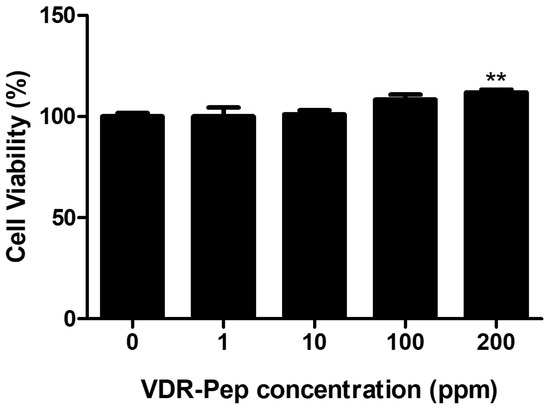
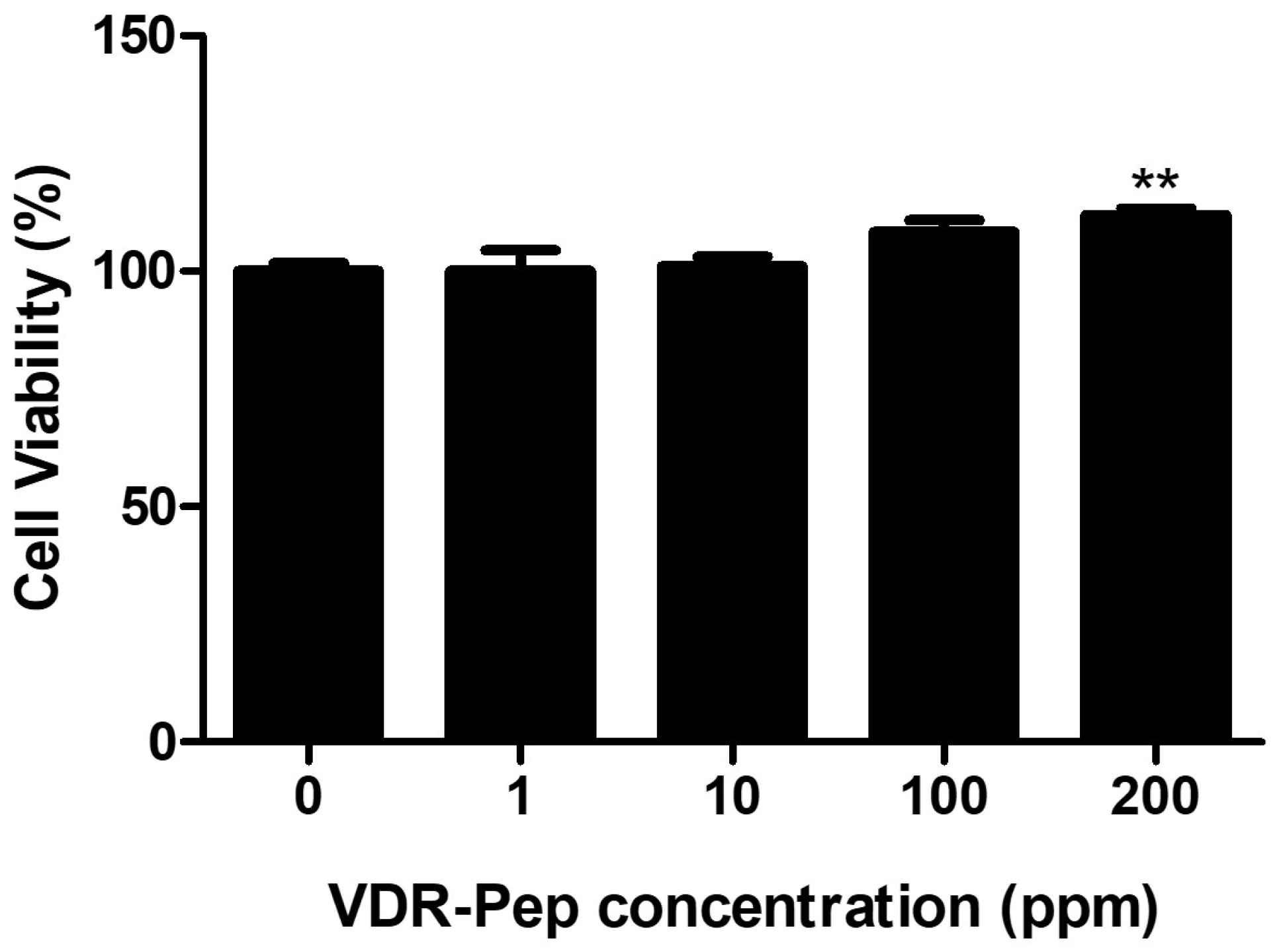
The cytotoxic potential of VDR-Pep was first evaluated in HaCaT keratinocytes using a CCK-8 assay. Cells were treated with the peptide at concentrations of 1, 10, 100, and 200 ppm for 24 h. As shown in Figure 1, no significant cytotoxic effects were observed across the tested concentration range. This cell viability result indicates that the VDR-Pep is non-cytotoxic under the experimental conditions and suitable for subsequent functional assays.
Figure 1.
Cytotoxicity evaluation of VDR-Pep in HaCaT keratinocytes. HaCaT cells were treated with VDR-Pep at concentrations of 1, 10, 100, and 200 ppm for 24 h. Cell viability was assessed using a CCK-8 assay and expressed as a percentage of the untreated control. Data are presented as mean ± SD (n = 3 three independent experiments). Statistical analysis was performed using one-way ANOVA followed by Tukey’s post hoc test. ** p < 0.01 vs. control.
3.2. VDR-Pep Enhances VDR/RXR Heterodimerization
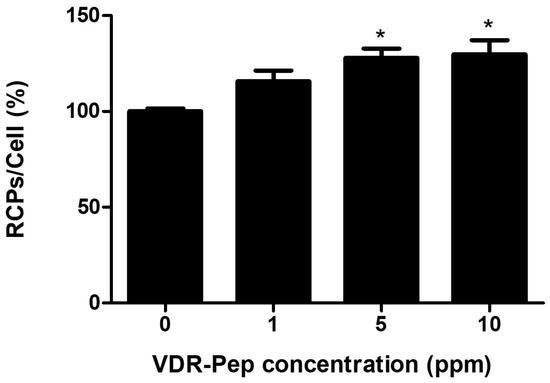
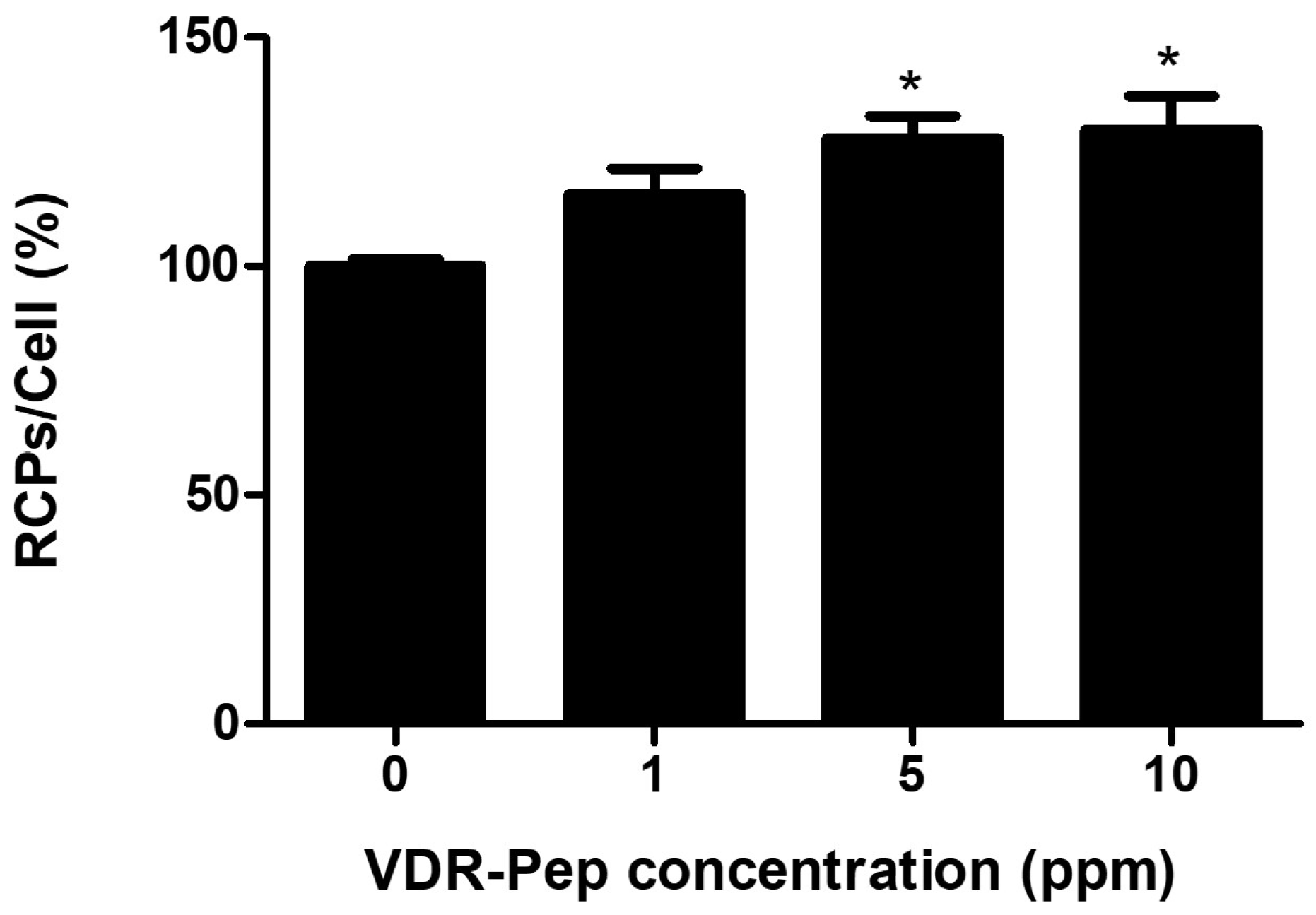
To investigate whether VDR-Pep directly modulates VDR signaling, we performed an in situ proximity ligation assay (PLA) to visualize the physical interaction between VDR and its obligatory heterodimeric partner, the retinoid X receptor (RXR). As shown in Figure 2, treatment with VDR-Pep significantly increased PLA signal intensity in a concentration-dependent manner compared with the control, which shows enhanced fluorescent puncta confirm that VDR-Pep promotes formation and stabilization of VDR/RXR complex within the cellular environment. Quantitatively, the signal enhancement suggests that the peptide effectively facilitates the initial stages of receptor activation. Consequently, these findings indicate that VDR-Pep exerts its biological effects by directly enhancing receptor-level interactions, thereby priming the VDR signaling pathway for downstream gene expression.
Figure 2.
Enhancement of VDR/RXR interaction by VDR-Pep in HaCaT. HaCaT cells were treated with the VDR-Pep at concentrations of 1, 5, and 10 ppm for 30 min. The interaction between VDR and RXR was evaluated using an in situ proximity ligation assay (PLA). PLA signals were quantified and expressed as rolling circle products per cell (RCPs/cell) as a percentage of the control. Data are presented as mean ± SD (n = 3 independent experiments). Statistical analysis was performed using one-way ANOVA followed by Tukey’s post hoc test. * p < 0.05 vs. control.
3.3. Upregulation of VDR Target Protein S100A3
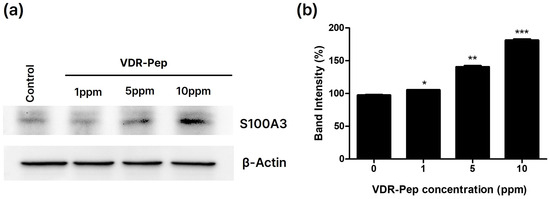
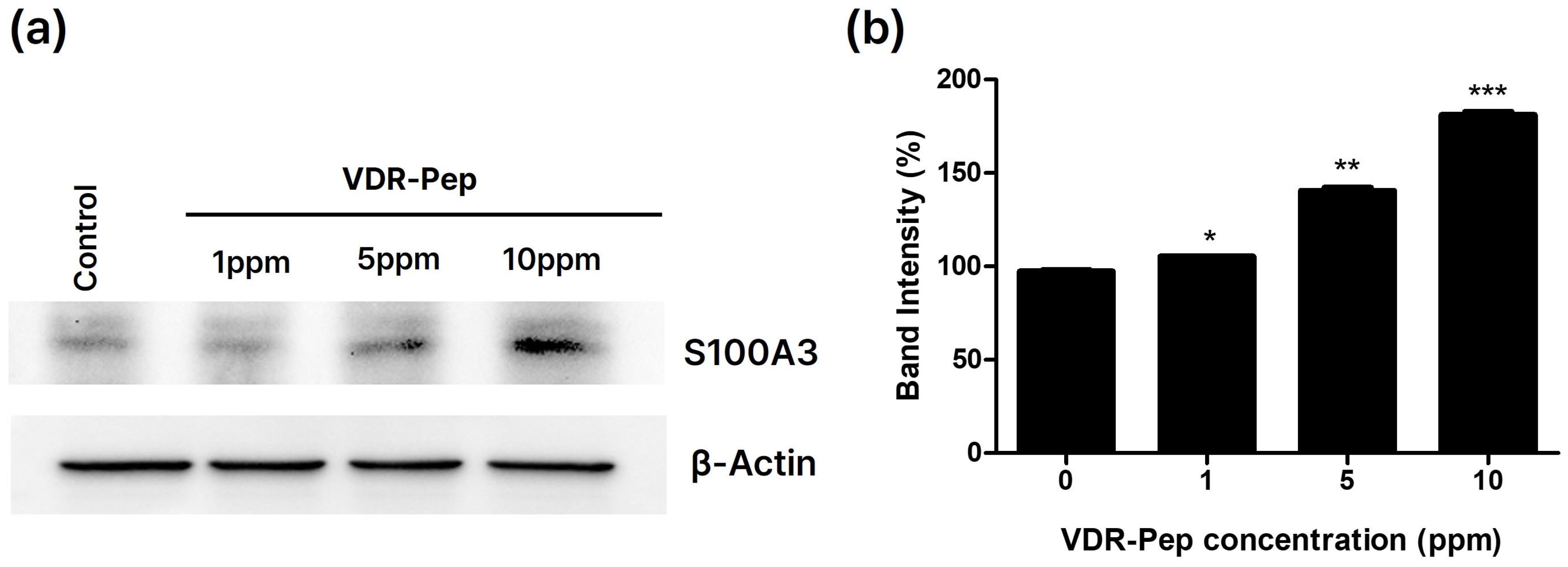
To evaluate the functional consequences of VDR-Pep on downstream signaling, we investigated the expression levels of S100A3, a keratinocyte differentiation-associated protein [21,22]. HaCaT cells were treated with varying concentrations of the peptide for 24 h, and S100A3 expression was analyzed via Western blotting. As shown in Figure 3a, S100A3 protein levels increased following peptide treatment in a dose-dependent manner. Densitometric analysis confirmed a significant upregulation of S100A3 expression compared with the control (Figure 3b). These results demonstrate that the enhancement of the VDR/RXR interaction by VDR-Pep effectively triggers the functional activation of VDR downstream signaling pathways.
Figure 3.
Upregulation of the VDR target protein S100A3 by VDR-Pep in HaCaT keratinocytes. (a) HaCaT cells were treated with VDR-Pep at concentrations of 1, 5, and 10 ppm for 24 h. Protein expression levels of S100A3 were analyzed by Western blotting, with β-actin used as a loading control. (b) Densitometric analysis of S100A3 protein levels normalized to β-actin and expressed as a percentage of the control. Data are presented as mean ± SD (n = 3 independent experiments). Statistical analysis was performed using one-way ANOVA followed by Tukey’s post hoc test. * p < 0.05, ** p < 0.01, *** p < 0.001 vs. control.
3.4. Stimulation of Intracellular Calcium Production in HaCaT Cells
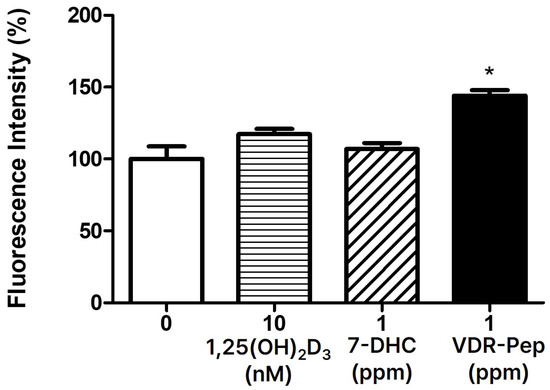
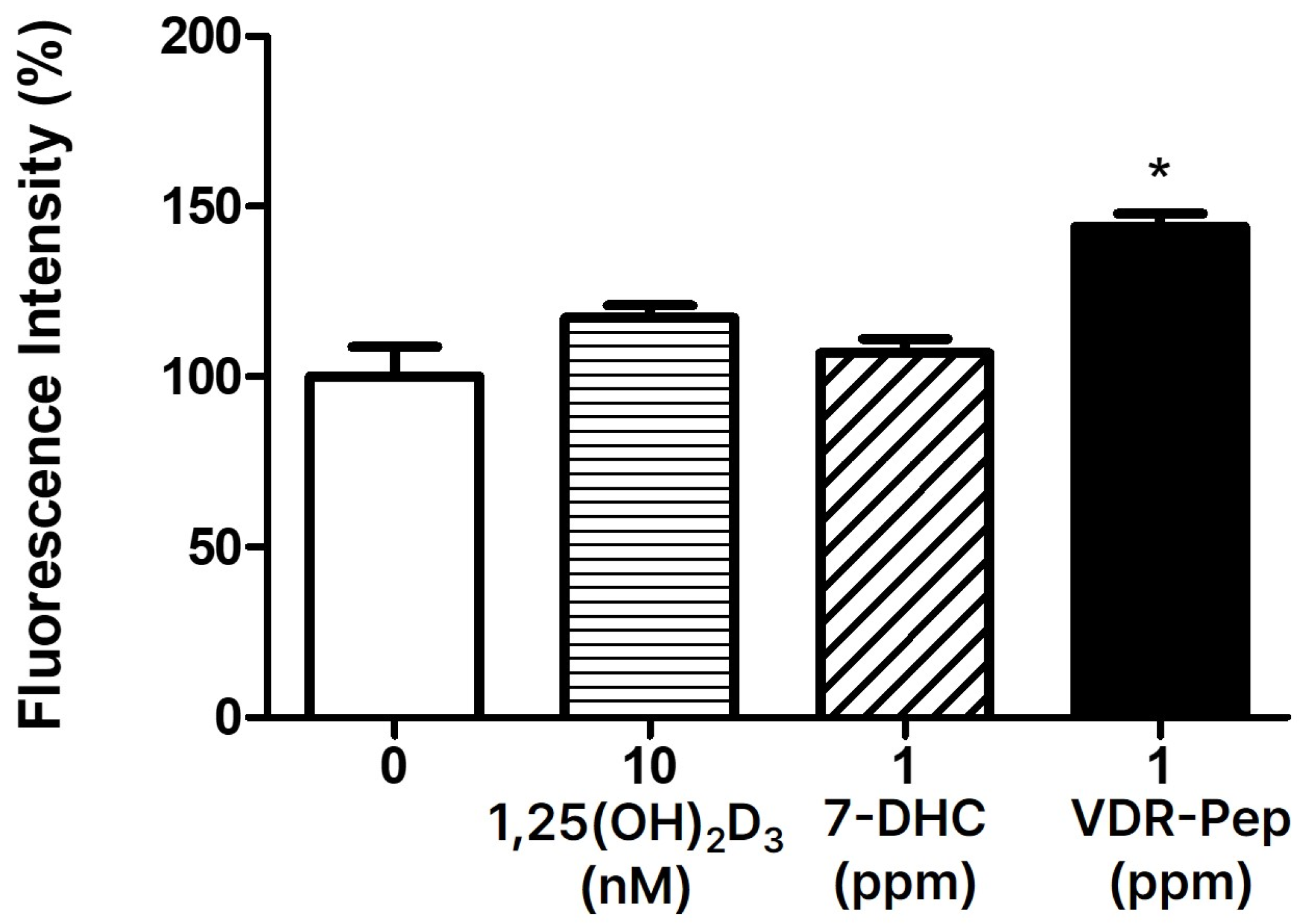
Given the critical role of VDR signaling in maintaining epidermal calcium homeostasis—a fundamental process for skin barrier integrity—we evaluated the effect of VDR-Pep on intracellular calcium levels using Fluo-4 AM staining. In this study, 7-dehydrocholesterol (7-DHC), the immediate biosynthetic precursor of vitamin D3 in the skin [23,24], and 1,25-dihydroxyvitamin D3 (1,25(OH)2D3), the most biologically active hormonal form of vitamin D, were employed as comparative controls to assess the potency of the peptide. As shown in Figure 4, VDR-Pep treatment for 24 h significantly increased intracellular calcium levels in HaCaT cells compared to the untreated control. Notably, the peptide elicited a more robust calcium response than 7-DHC, which requires photochemical and thermal conversion to become active. Furthermore, VDR-Pep exhibited comparable or even enhanced activity relative to 1,25(OH)2D3, which is known to directly trigger calcium mobilization through both genomic and non-genomic VDR pathways [6]. These results suggest that VDR-Pep effectively mimics or surpasses the stimulatory effects of active vitamin D3, supporting the calcium signaling pathways essential for keratinocyte differentiation.
Figure 4.
Stimulation of intracellular calcium production by the VDR-activating peptide in HaCaT keratinocytes. HaCaT cells were treated for 24 h with the VDR –Pep (1 ppm), 1,25-dihydroxyvitamin D3 (1,25(OH)2D3)(10 nM), or 7-dehydrocholesterol (7-DHC, 1 ppm). Intracellular calcium levels were assessed by Fluo-4 AM staining, and fluorescence intensity was quantified and expressed as a percentage of the control. Data are presented as mean ± SD (n = 3 independent experiments). Statistical analysis was performed using one-way ANOVA followed by Tukey’s post hoc test. * p < 0.05, vs. control.
3.5. Promotion of Epidermal Barrier-Related Protein Expression
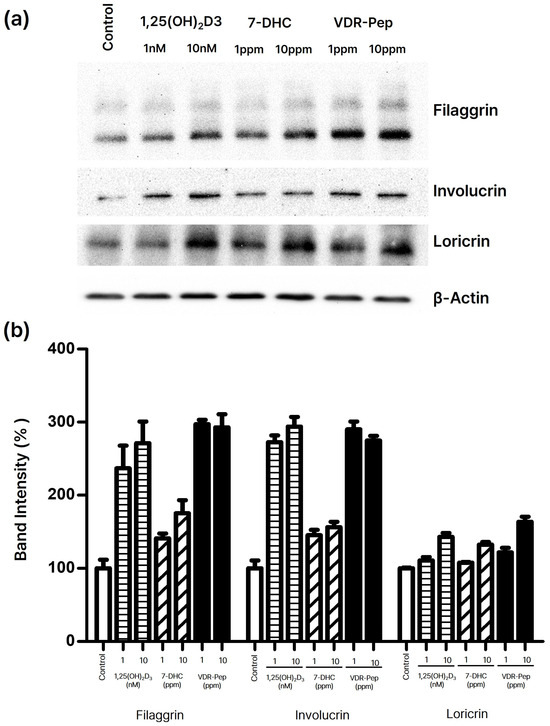
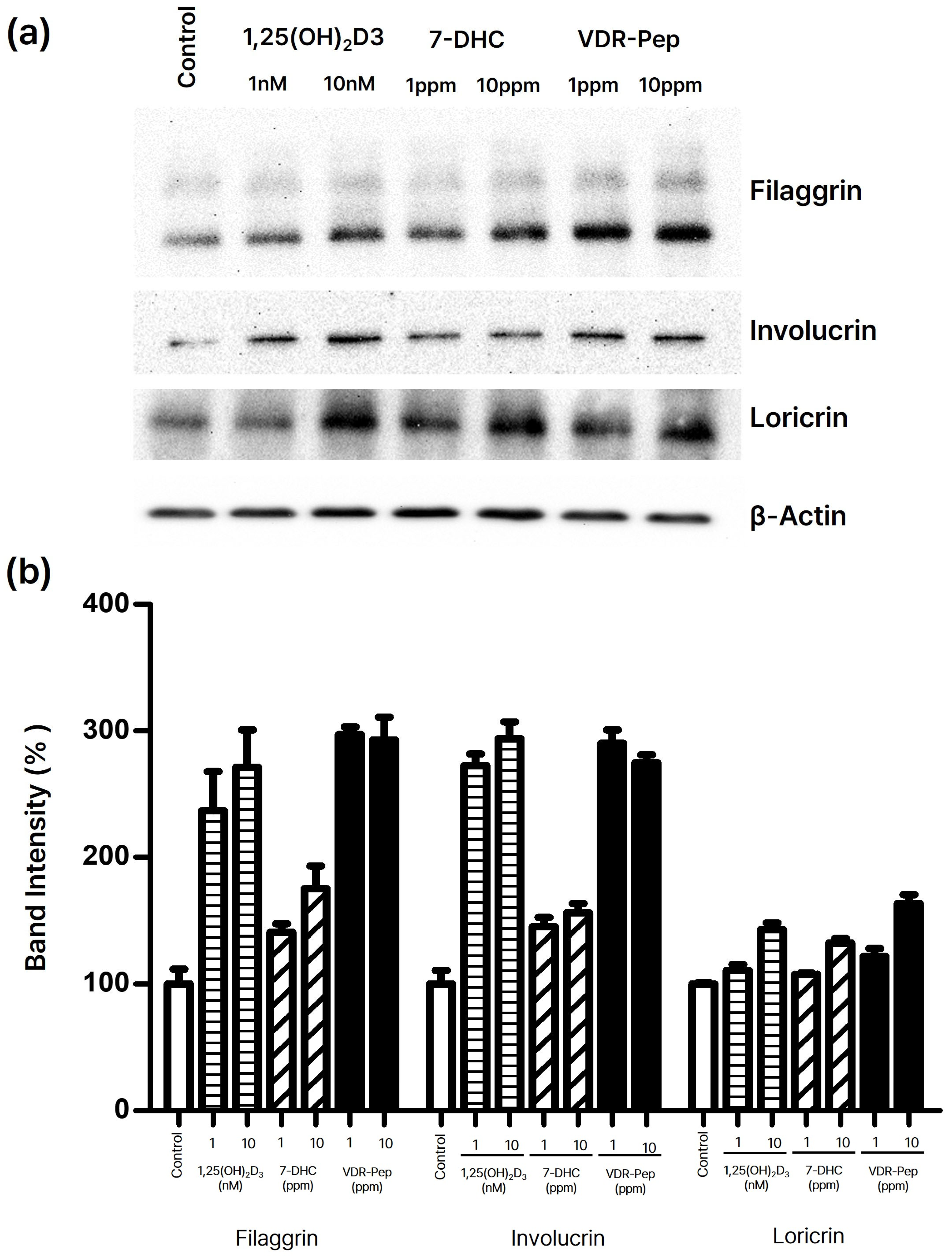
To assess the impact of VDR-Pep on the formation and integrity of the epidermal barrier, we examined the expression of key terminal differentiation markers—filaggrin (FLG), involucrin (IVL), and loricrin (LOR)—following 24 h of treatment. These proteins are essential components of the cornified envelope, providing mechanical strength and regulating hydration within the skin barrier. As shown in Figure 5a, VDR-Pep treatment markedly increased the expression levels of all three barrier-related proteins in HaCaT cells. Quantitative densitometric analysis demonstrated a concentration-dependent upregulation of filaggrin, involucrin, and loricrin compared to the untreated control (Figure 5b). Interestingly, 7-DHC also induced a moderate increase in these markers despite the absence of UV irradiation. This observation is consistent with previous studies suggesting that 7-DHC may possess intrinsic biological activity or can be enzymatically converted into active metabolites within keratinocytes through UV-independent pathways [24]. Notably, however, the stimulatory effects of VDR-Pep were comparable to or significantly exceeded those of both 7-DHC and the active hormone 1,25(OH)2D3. These findings indicate that VDR-Pep effectively promotes the differentiation processes required to reinforce the epidermal barrier, demonstrating its potential as a potent functional ingredient for enhancing skin barrier health.
Figure 5.
Promotion of epidermal barrier-related protein expression by the VDR-activating peptide in HaCaT keratinocytes. (a) HaCaT cells were treated for 24 h with 1,25-dihydroxyvitamin D3 (1,25(OH)2D3; 1 and 10 nM), 7-dehydrocholesterol (7-DHC; 1 and 10 ppm), or the VDR-activating peptide (VDR-Pep; 1 and 10 ppm). Protein expression levels of filaggrin, involucrin, and loricrin were analyzed by Western blotting, with β-actin used as a loading control. (b) Densitometric analysis of filaggrin, involucrin, and loricrin protein levels normalized to β-actin and expressed as a percentage of the control. Data are presented as mean ± SD (n = 3 independent experiments). Statistical analysis was performed using one-way ANOVA followed by Tukey’s post hoc test. Error bars are not displayed in the graph for clarity; however, variability is reflected in the reported standard deviation values.
3.6. Suppression of UVB-Induced IL-6 Expression
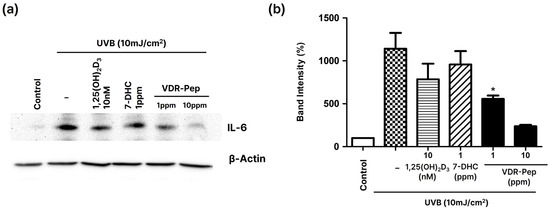
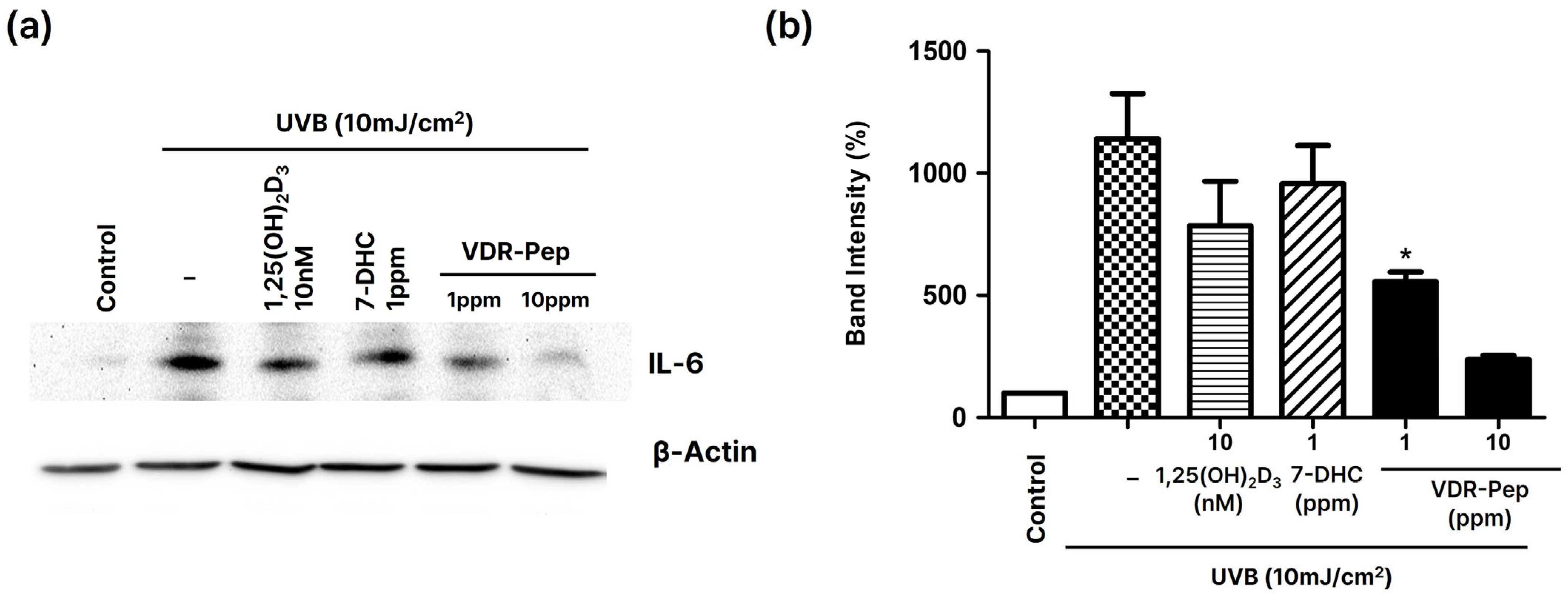
To evaluate the anti-inflammatory potential of VDR-Pep under photo-induced oxidative stress, we utilized a UVB-irradiated HaCaT cell model. Keratinocytes are the primary targets of ultraviolet radiation, which triggers the secretion of pro-inflammatory cytokines such as interleukin-6 (IL-6), a key mediator of skin inflammation and photoaging [25,26]. UVB irradiation markedly increased IL-6 expression; however, treatment with the VDR-Pep significantly reduced UVB-induced IL-6 protein levels in a concentration-dependent manner (Figure 6a,b). These results indicate that VDR-Pep possesses potent anti-inflammatory properties, effectively mitigating the inflammatory cascade in keratinocytes triggered by UV exposure.
Figure 6.
Suppression of UVB-induced IL-6 expression by the VDR-activating peptide in HaCaT keratinocytes. (a) HaCaT cells were exposed to UVB irradiation (10 mJ/cm2) and subsequently treated for 24 h with 1,25-dihydroxyvitamin D3 (1,25(OH)2D3; 10 nM), 7-dehydrocholesterol (7-DHC; 1 ppm), or the VDR-activating peptide (VDR-Pep; 1 and 10 ppm). Protein expression levels of IL-6 were analyzed by Western blotting, with β-actin used as a loading control. (b) Densitometric analysis of IL-6 protein levels normalized to β-actin and expressed as a percentage of the control. Data are presented as mean ± SD (n = 3 independent experiments). Statistical analysis was performed using one-way ANOVA followed by Tukey’s post hoc test. * p < 0.05, vs. control.
3.7. Activation of NRF2-Mediated Transcription via Enhanced NRF2/POL II Interaction
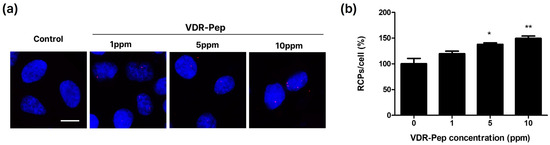
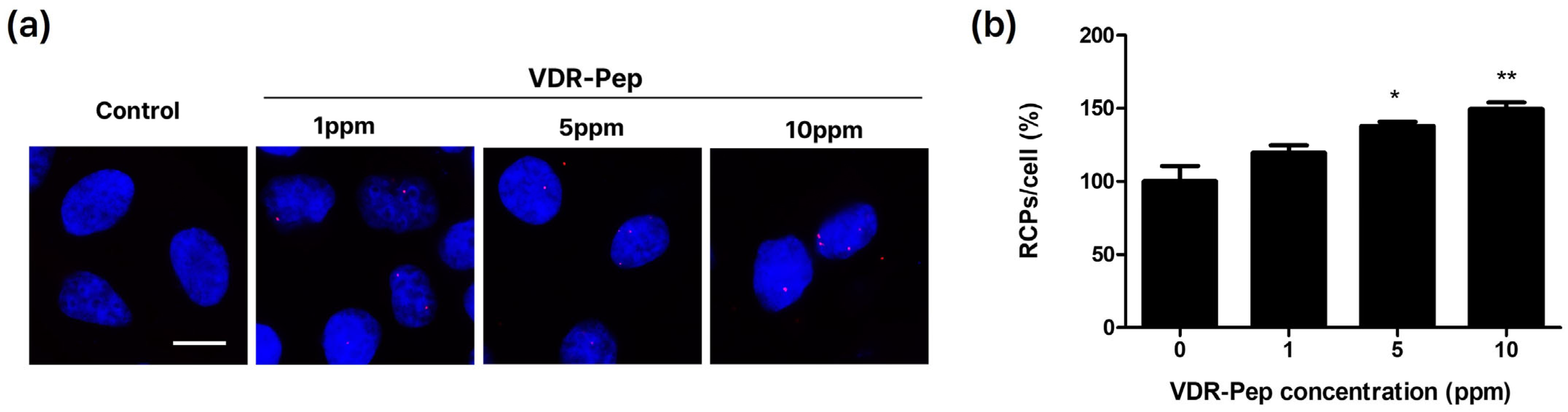
Finally, to investigate whether VDR-Pep induces the production of antioxidant molecules, we assessed the recruitment of NRF2 to the transcriptional machinery. The interaction between NRF2, a master regulator of antioxidant genes [14,16], and RNA polymerase II (POL II) was evaluated using an in situ proximity ligation assay (PLA) following 2 h of treatment. This assay allows for the precise visualization of protein–protein interactions at the single-molecule level within the nucleus, serving as a marker for active transcription. As shown in Figure 7a, treatment with VDR-Pep for 2 h led to a marked increase in the density of red fluorescent puncta, representing rolling circle products (RCPs) from the NRF2/POL II interaction, within the DAPI-stained nuclei of HaCaT cells. Quantitative analysis confirmed that VDR-Pep significantly increased the number of RCPs per cell in a dose-dependent manner, reaching approximately 150% of the control at 10 ppm (Figure 7b). VDR-Pep treatment significantly enhanced the interaction between NRF2 and RNA polymerase II, suggesting increased activation of NRF2-mediated antioxidant transcriptional responses.
Figure 7.
Enhancement of NRF2 transcriptional activation through increased NRF2/RNA polymerase II interaction in HaCaT keratinocytes. (a) HaCaT cells were treated with the VDR-activating peptide for 2 h. The interaction between NRF2 and RNA polymerase II (POL II) was evaluated using an in situ proximity ligation assay (PLA). Red fluorescent puncta (rolling circle products, RCPs) indicate individual NRF2/POL II complexes, and nuclei were counterstained with DAPI (blue). Magnification, ×600. Scale bars = 10 μm (b) PLA signals were quantified and expressed as rolling circle product per cell (RCP/cell) as a percentage of the control. Data are presented as mean ± SD (n = 3 independent experiments). Statistical analysis was performed using one-way ANOVA followed by Tukey’s post hoc test. * p < 0.05, ** p < 0.01 vs. control.
4. Discussion
Vitamin D receptor (VDR) signaling is a central regulatory axis in epidermal biology, integrating keratinocyte differentiation, calcium homeostasis, barrier formation, and stress-responsive pathways [4]. In this study, we investigated a synthetic VDR-activating peptide (VDR-Pep) as a potential cosmetic ingredient capable of modulating VDR-dependent signaling in human keratinocytes. Our findings provide mechanistic and functional evidence demonstrating the ability of this peptide to activate canonical VDR signaling and to promote multiple processes associated with epidermal homeostasis.
The absence of cytotoxic effects across the tested concentration range confirms the suitability of VDR-Pep for in vitro functional studies and supports its potential utility in cosmetic formulations requiring repeated topical application. Establishing this safety profile is essential, as bioactive ingredients targeting nuclear receptors must avoid unintended cytostatic or cytotoxic effects.
A major mechanistic observation in this study is the enhancement of VDR/retinoid X receptor (RXR) heterodimerization following peptide treatment. Since heterodimer formation is a prerequisite for binding to vitamin D response elements (VDREs) and initiating genomic transcription of target genes, the increased VDR/RXR interaction detected by proximity ligation assay suggests that VDR-Pep activates the canonical VDR signaling cascade at the receptor level. This receptor-level modulation distinguishes the peptide from indirect pathway regulators, supporting its classification as a functional VDR activator.
Consistent with previous reports demonstrating that VDR activation promotes keratinocyte differentiation, VDR-Pep induced a dose-dependent upregulation of S100A3, a differentiation-associated protein expressed during the late stages of keratinocyte maturation [21,22]. This finding demonstrates that receptor-level engagement is translated into downstream transcriptional outcomes relevant to epidermal differentiation. Moreover, the peptide stimulated intracellular calcium mobilization at levels comparable to those induced by 1,25-dihydroxyvitamin D3. Because calcium signaling is a critical secondary messenger system controlling keratinocyte differentiation and cornified envelope formation, this response further supports the functional activation of VDR-dependent pathways. Although VDR-Pep enhanced VDR/RXR heterodimerization and downstream signaling markers, direct evidence of receptor dependency was not established in this study. Future studies employing VDR knockdown or pharmacological inhibition will be required to confirm whether the observed effects are strictly mediated through VDR.
The enhancement of calcium signaling was accompanied by increased expression of key barrier-related proteins, including filaggrin, involucrin, and loricrin [2,3]. Reduced expression of filaggrin, involucrin, and loricrin has been closely associated with impaired epidermal barrier function and inflammatory skin disorders such as atopic dermatitis. Therefore, the upregulation of these proteins by VDR-Pep suggests potential relevance for barrier-restorative cosmetic applications. Together, these data suggest that VDR-Pep promotes coordinated activation of differentiation and barrier reinforcement programs in keratinocytes. Although 7-dehydrocholesterol exhibited limited activity under UV-independent conditions, the comparatively stronger effects of VDR-Pep indicate that the peptide may bypass the need for metabolic or photochemical conversion required for endogenous vitamin D activation.
Beyond differentiation and barrier formation, VDR signaling has been implicated in the modulation of inflammatory responses [10]. In the present study, VDR-Pep significantly attenuated UVB-induced interleukin-6 (IL-6) expression in keratinocytes. Given that IL-6 is a key mediator of UV-triggered inflammation and photoaging, its suppression suggests that activation of VDR signaling may contribute to the regulation of stress-induced inflammatory cascades.
Oxidative stress is closely interconnected with inflammation and barrier dysfunction. Several studies have suggested functional crosstalk between VDR signaling and NRF2-mediated antioxidant pathways in maintaining cutaneous redox homeostasis. Emerging evidence indicates that VDR signaling may functionally intersect with antioxidant defense pathways, particularly those governed by nuclear factor erythroid 2-related factor 2 (NRF2) [14,15,16]. Although VDR and NRF2 do not engage in a direct ligand–receptor interaction, crosstalk between nuclear receptor signaling and NRF2-mediated transcription has been proposed through shared transcriptional co-regulators, modulation of intracellular calcium dynamics, and redox-sensitive mechanisms. In this study, VDR-Pep enhanced the interaction between NRF2 and RNA polymerase II within the nucleus, indicating increased transcriptional engagement of NRF2-associated pathways. These findings suggest that activation of VDR signaling may create a cellular environment permissive for antioxidant gene regulation, thereby indirectly supporting oxidative stress defense. However, the absence of downstream antioxidant gene expression analysis (e.g., HO-1, NQO1, GCLC) represents a limitation. Therefore, the current results should be interpreted as indicative of NRF2-associated transcriptional engagement rather than definitive activation of the NRF2 pathway.
Collectively, the present data support a model in which VDR-Pep enhances epidermal homeostasis through coordinated modulation of receptor activation, calcium-mediated differentiation, barrier protein expression, inflammatory regulation, and NRF2-associated transcriptional responses. Unlike conventional vitamin D derivatives, which are often limited by photoinstability and formulation constraints, peptide-based VDR modulators may provide a more stable and cosmetically adaptable approach for regulating epidermal homeostasis. This integrated mechanism aligns with the multifactorial nature of skin barrier maintenance and environmental stress adaptation.
5. Conclusions
This study demonstrates that a synthetic VDR-activating peptide enhances canonical VDR/RXR signaling in human keratinocytes and promotes downstream processes associated with epidermal differentiation and barrier formation. The peptide increased S100A3 expression, stimulated intracellular calcium mobilization, and upregulated key structural proteins of the cornified envelope. In addition, it attenuated UVB-induced IL-6 expression and stimulated NRF2-related transcription, highlighting its protective role in modulating inflammatory and antioxidant pathways.
Although these findings are based on in vitro experiments using HaCaT keratinocytes, they provide mechanistic insight into how VDR-targeting peptides may contribute to epidermal homeostasis. Further studies employing reconstructed human skin models or clinical evaluation will be necessary to confirm efficacy under physiologically relevant conditions.
Overall, VDR-Pep represents a promising non-hormonal strategy for cosmetic formulations designed to reinforce skin barrier integrity and augment resilience against environmental stressors.
6. Patents
The VDR-Pep described in this study is the subject of patent applications filed in the Republic of Korea and the United States (Patent Application Nos. KR 10-2023-0121127 and US 18/834,596). According to a preliminary freedom-to-operate review, no active patent claims have been identified to date that overlap with VDR-Pep.
Author Contributions
Conceptualization, J.-H.H. and M.-S.K.; methodology, M.-S.K.; software, M.-S.K.; validation, M.-S.K.; formal analysis, M.-S.K.; investigation, M.-S.K.; resources, J.-H.H.; data curation, M.-S.K.; writing—original draft preparation, M.-S.K.; writing—review and editing, J.-H.H.; visualization, M.-S.K.; supervision, J.-H.H.; project administration, J.-H.H.; funding acquisition, J.-H.H. All authors have read and agreed to the published version of the manuscript.
Funding
This research received no external funding.
Institutional Review Board Statement
Not applicable.
Informed Consent Statement
Not applicable.
Data Availability Statement
Data are contained within the article.
Acknowledgments
During the preparation of this manuscript, the authors used ChatGPT-5 and Gemini 1.5 Pro (Google) for the purpose of language editing and clarifying academic expressions. The authors have reviewed and edited the output and take full responsibility for the content of this publication.
Conflicts of Interest
Author Min Seo Kim and Jang Hee Hahn were employed by the company Supadelixir Co., Ltd. The company had no role in the design of the study; in the collection, analyses or interpretation of data; in the writing of the manuscript; or in the decision to publish the results.
References
- Kim, H.J.; Yang, D.; Hong, J.H. Various Cellular Components and Its Signaling Cascades Through the Involvement of Signaling Messengers in Keratinocyte Differentiation. Antioxidants 2025, 14, 426. [Google Scholar] [CrossRef]
- Lee, S.E.; Lee, S.H. Skin Barrier and Calcium. Ann. Dermatol. 2018, 30, 265–275. [Google Scholar] [CrossRef]
- Michaletti, A.; Mancini, M.; Smirnov, A.; Candi, E.; Melino, G.; Zolla, L. Multi-Omics Profiling of Calcium-Induced Human Keratinocytes Differentiation Reveals Modulation of Unfolded Protein Response Signaling Pathways. Cell Cycle 2019, 18, 2124–2140. [Google Scholar] [CrossRef]
- Kise, S.; Morita, S.; Sakaki, T.; Kimura, H.; Kinuya, S.; Yasuda, K. Ligand-Independent Vitamin D Receptor Actions Essential for Keratinocyte Homeostasis in the Skin. Int. J. Mol. Sci. 2025, 26, 422. [Google Scholar] [CrossRef] [PubMed]
- Nguyen, T.T.-N.; Kurokawa, T.; Kanemoto, Y.; Sawada, T.; Kato, S. Synthetic Modulators of the Vitamin D Receptor: From Structural Innovation to Disease-Specific Applications. Biomolecules 2026, 16, 396. [Google Scholar] [CrossRef] [PubMed]
- Oda, Y.; Wong, C.T.; Oh, D.H.; Meyer, M.B.; Pike, J.W.; Bikle, D.D. Vitamin D Receptor Cross-Talk with P63 Signaling Promotes Epidermal Cell Fate. J. Steroid Biochem. Mol. Biol. 2023, 232, 106352. [Google Scholar] [CrossRef] [PubMed]
- Christakos, S.; Dhawan, P.; Verstuyf, A.; Verlinden, L.; Carmeliet, G. Vitamin D: Metabolism, Molecular Mechanism of Action, and Pleiotropic Effects. Physiol. Rev. 2016, 96, 365–408. [Google Scholar] [CrossRef]
- Chaiprasongsuk, A.; Janjetovic, Z.; Kim, T.-K.; Tuckey, R.C.; Li, W.; Raman, C.; Panich, U.; Slominski, A.T. CYP11A1-Derived Vitamin D3 Products Protect against UVB-Induced Inflammation and Promote Keratinocytes Differentiation. Free Radic. Biol. Med. 2020, 155, 87–98. [Google Scholar] [CrossRef]
- Bukvić Mokos, Z.; Tomić Krsnik, L.; Harak, K.; Marojević Tomić, D.; Tešanović Perković, D.; Vukojević, M. Vitamin D in the Prevention and Treatment of Inflammatory Skin Diseases. Int. J. Mol. Sci. 2025, 26, 5005. [Google Scholar] [CrossRef]
- Gao, H.; Xie, T.; Zhang, Y.; Zhao, S.; Su, L.; Chen, Z.; Wang, G. Vitamin D and the Aging Skin: Insights into Oxidative Stress, Inflammation, and Barrier Function. Immun. Ageing A 2025, 22, 49. [Google Scholar] [CrossRef]
- Al-Smadi, K.; Ali, M.; Alavi, S.E.; Jin, X.; Imran, M.; Leite-Silva, V.R.; Mohammed, Y. Using a Topical Formulation of Vitamin D for the Treatment of Vitiligo: A Systematic Review. Cells 2023, 12, 2387. [Google Scholar] [CrossRef] [PubMed]
- Janjetovic, Z.; Slominski, A.T. Promising Functions of Novel Vitamin D Derivatives as Cosmetics: A New Fountain of Youth in Skin Aging and Skin Protection. Cosmetics 2024, 11, 37. [Google Scholar] [CrossRef]
- Papadopoulou, S.N.A.; Anastasiou, E.A.; Adamantidi, T.; Ofrydopoulou, A.; Letsiou, S.; Tsoupras, A. A Comprehensive Review on the Beneficial Roles of Vitamin D in Skin Health as a Bio-Functional Ingredient in Nutricosmetic, Cosmeceutical, and Cosmetic Applications. Appl. Sci. 2025, 15, 796. [Google Scholar] [CrossRef]
- Kahremany, S.; Hofmann, L.; Gruzman, A.; Dinkova-Kostova, A.T.; Cohen, G. NRF2 in Dermatological Disorders: Pharmacological Activation for Protection against Cutaneous Photodamage and Photodermatosis. Free Radic. Biol. Med. 2022, 188, 262–276. [Google Scholar] [CrossRef] [PubMed]
- Kim, H.J.; Hong, J.H. Emerging Therapeutic Strategies for Nrf2-Associated Skin Disorders: From Photoaging to Autoimmunity. Antioxidants 2026, 15, 69. [Google Scholar] [CrossRef]
- Ngo, V.; Duennwald, M.L. Nrf2 and Oxidative Stress: A General Overview of Mechanisms and Implications in Human Disease. Antioxidants 2022, 11, 2345. [Google Scholar] [CrossRef] [PubMed]
- Ishiyama, M.; Miyazono, Y.; Sasamoto, K.; Ohkura, Y.; Ueno, K. A Highly Water-Soluble Disulfonated Tetrazolium Salt as a Chromogenic Indicator for NADH as Well as Cell Viability. Talanta 1997, 44, 1299–1305. [Google Scholar] [CrossRef]
- Söderberg, O.; Gullberg, M.; Jarvius, M.; Ridderstråle, K.; Leuchowius, K.-J.; Jarvius, J.; Wester, K.; Hydbring, P.; Bahram, F.; Larsson, L.-G.; et al. Direct Observation of Individual Endogenous Protein Complexes in Situ by Proximity Ligation. Nat. Methods 2006, 3, 995–1000. [Google Scholar] [CrossRef]
- Lee, K.-J.; Kim, Y.; Yoo, Y.H.; Kim, M.-S.; Lee, S.-H.; Kim, C.-G.; Park, K.; Jeoung, D.; Lee, H.; Ko, I.Y.; et al. CD99-Derived Agonist Ligands Inhibit Fibronectin-Induced Activation of Β1 Integrin through the Protein Kinase A/SHP2/Extracellular Signal-Regulated Kinase/PTPN12/Focal Adhesion Kinase Signaling Pathway. Mol. Cell. Biol. 2017, 37, e00675-16. [Google Scholar] [CrossRef]
- Gee, K.R.; Brown, K.A.; Chen, W.-N.U.; Bishop-Stewart, J.; Gray, D.; Johnson, I. Chemical and Physiological Characterization of Fluo-4 Ca2+-Indicator Dyes. Cell Calcium 2000, 27, 97–106. [Google Scholar] [CrossRef]
- Kizawa, K.; Takahara, H.; Unno, M.; Heizmann, C.W. S100 and S100 Fused-Type Protein Families in Epidermal Maturation with Special Focus on S100A3 in Mammalian Hair Cuticles. Biochimie 2011, 93, 2038–2047. [Google Scholar] [CrossRef]
- Minato, T.; Unno, M.; Kitano, T. Evolution of S100A3 and PAD3, Two Important Genes for Mammalian Hair. Gene 2019, 713, 143975. [Google Scholar] [CrossRef]
- Slominski, A.T.; Tuckey, R.C.; Jenkinson, C.; Li, W.; Jetten, A.M. Alternative Pathways for Vitamin D Metabolism. In Feldman and Pike’s Vitamin D; Academic Press: Cambridge, MA, USA, 2024; pp. 85–109. [Google Scholar]
- Prabhu, A.V.; Luu, W.; Sharpe, L.J.; Brown, A.J. Cholesterol-Mediated Degradation of 7-Dehydrocholesterol Reductase Switches the Balance from Cholesterol to Vitamin D Synthesis. J. Biol. Chem. 2016, 291, 8363–8373. [Google Scholar] [CrossRef]
- Ansary, T.M.; Hossain, M.R.; Kamiya, K.; Komine, M.; Ohtsuki, M. Inflammatory Molecules Associated with Ultraviolet Radiation-Mediated Skin Aging. Int. J. Mol. Sci. 2021, 22, 3974. [Google Scholar] [CrossRef]
- Salminen, A.; Kaarniranta, K.; Kauppinen, A. Photoaging: UV Radiation-Induced Inflammation and Immunosuppression Accelerate the Aging Process in the Skin. Inflamm. Res. 2022, 71, 817–831. [Google Scholar] [CrossRef] [PubMed]
Disclaimer/Publisher’s Note: The statements, opinions and data contained in all publications are solely those of the individual author(s) and contributor(s) and not of MDPI and/or the editor(s). MDPI and/or the editor(s) disclaim responsibility for any injury to people or property resulting from any ideas, methods, instructions or products referred to in the content. |
© 2026 by the authors. Licensee MDPI, Basel, Switzerland. This article is an open access article distributed under the terms and conditions of the Creative Commons Attribution (CC BY) license.