


Abstract
Drought poses a major challenge for global agriculture, demanding strategies that improve crop resilience while safeguarding water and nutrient resources. Plant growth-promoting rhizobacteria (PGPR)-based biostimulants offer a sustainable approach to enhance resource-use efficiency under water-limited conditions. This study evaluated two commercial PGPR biostimulants applied to maize (Zea mays L.) and tomato (Solanum lycopersicum L.) seedlings grown under well-watered (80% field capacity) and water-stressed (40% field capacity) conditions. Both products improved plant growth and physiological performance, although responses were crop-specific. Inoculated tomato seedlings accumulated up to 35% more shoot biomass under optimal watering (1.6 g in non-inoculated seedlings compared with 2.5 g in inoculated seedlings), whereas maize maintained biomass production under drought, consistent with its higher intrinsic water-use efficiency, showing increases of approximately 50% (well-watered: 0.5 g versus 0.8 g; water-stressed: 0.3 g versus 0.7 g in non-inoculated and inoculated seedlings, respectively). Biostimulant application enhanced the acquisition and internal utilization of essential mineral resources, increasing leaf concentrations of (i) the macronutrients P (up to 300%), K (up to 70%), Mg (up to 220%), and Ca (up to 85%), and (ii) the micronutrients B (up to 400%), Fe (up to 260%), Mn (up to 240%), and Zn (up to 180%). Maximum nutrient increases were consistently observed in water-stressed maize seedlings inoculated with biostimulant 2. Antioxidant activities, particularly ascorbate peroxidase and catalase, increased by 20–40%, indicating more effective mitigation of oxidative stress. Principal component analysis revealed coordinated adjustments among growth, nutrient-use efficiency, and physiological traits in inoculated plants. Overall, PGPR-based biostimulants improved early drought tolerance and resource-use efficiency, supporting their potential as sustainable tools for climate-resilient agriculture. Field-scale studies remain necessary to confirm long-term agronomic benefits.
1. Introduction
Water stress is a main abiotic constraint of plant growth and productivity in natural and agricultural systems, and it represents a major threat to the sustainable use of global water resources [1,2]. Water deficiency directly affects plant metabolism, reducing the efficiency of essential physiological processes such as leaf gas exchange and photosynthesis. Stomatal closure, although an adaptive strategy to conserve water, restricts carbon dioxide (CO2) diffusion into the leaf, leading to lower photosynthetic rates, reduced tissue growth, and diminished fresh and dry biomass accumulation [3,4]. These physiological limitations ultimately translate into reduced crop yields, particularly under prolonged drought conditions.
As climate change is increasing the frequency and severity of drought events, it is placing further pressure on already limited freshwater resources and threatening yield stability worldwide [5]. For example, projected water shortages may reduce agricultural production by up to 60% by 2050 in parts of the Middle East and North Africa [6]. Such scenarios underscore the urgent need for strategies that enhance drought tolerance while optimizing water and nutrient use, maintaining productivity without compromising environmental sustainability [5,7].
Under drought conditions, plants activate a complex network of physiological and morphological responses mediated by biochemical and molecular mechanisms to limit damage and maintain internal homeostasis [8,9]. These responses include osmotic adjustment, increased antioxidant enzyme activity, elevated secondary metabolite production, and altered phytohormone dynamics, particularly abscisic acid, which regulates stomatal conductance [10]. However, these mechanisms often fail to compensate for severe or persistent stress, particularly in economically important but drought-sensitive crops such as tomato and maize [11], highlighting the need for external strategies that can support plant resilience and optimize resource use.
Biostimulants have emerged as promising tools to support more sustainable resource use in agriculture. According to European Regulation 2019/1009, plant biostimulants stimulate plant nutritional processes independently of the nutrients they contain, with the aim of improving nutrient-use efficiency, abiotic stress tolerance, product quality, or nutrient availability in the soil or rhizosphere [12]. Among them, biostimulants based on plant growth-promoting rhizobacteria (PGPR) offer a particularly sustainable option for improving crop performance under water scarcity.
PGPR are beneficial microorganisms that interact with plant roots and can improve plant nutrient acquisition and produce growth-promoting substances, as well as certain substances and enzymes that mitigate the high oxidative stress under drought stress [13]. Plant growth can be improved through several mechanisms, including biological nitrogen fixation, phosphate and potassium solubilization, siderophore-mediated iron acquisition, and the synthesis of phytohormones (e.g., auxins and gibberellins) [14,15,16,17,18]. PGPR can also enhance resource-use efficiency by improving nutrient uptake, optimizing root architecture, and reducing oxidative damage through elevated antioxidant enzyme activity under stress conditions [10,19]. Thus, PGPR-based biostimulants can improve both crop productivity and the sustainable management of soil nutrient resources under favorable and adverse conditions [20,21]. Nevertheless, their adoption is still limited by inconsistent performance across environments, crops, and formulations [22]. Identifying the factors that modulate biostimulant efficacy and standardizing testing protocols remains essential to maximize their contribution to sustainable agricultural resource management.
We hypothesize that, despite variation in crop species and environmental conditions, PGPR-based biostimulants induce an integrated plant response involving physiological and growth traits that enhance water and nutrient resource use, which broadly encompasses both the acquisition of resources and their effective utilization to sustain growth and physiological function under stress conditions. Previous studies have often focused on single crops or individual traits, so that there is limited information on how biostimulants simultaneously influence nutrient uptake, resource-use efficiency, and physiological resilience, particularly during the critical seedling stage. Seedlings are especially sensitive to water limitations due to their shallow roots, high water demand, and limited reserve capacity [23,24]. To address these gaps, we evaluated the effects of two commercial PGPR biostimulants on maize (Zea mays L.) and tomato (Solanum lycopersicum L.) seedlings under well-watered and water-stressed conditions, assessing growth, physiological performance, nutrient acquisition, and antioxidant activity. This comparative, integrative approach provides novel insights into species-specific responses and the potential of PGPR to improve early-stage drought tolerance and resource-use efficiency, offering a foundation for sustainable crop management under water-limited conditions.
2. Materials and Methods
2.1. Experimental Design
The experiment followed a factorial design with the following three factors.
- (i)
- Crop: Zea mays L. var. Pioneer (maize), and Solanum lycopersicum L. var. cerasiforme (tomato).
- (ii)
- Biostimulant inoculation: control without any biostimulant inoculated (no inoculation); inoculated with the commercial product Bacnifos (Fertiberia, Madrid, Spain) containing Pseudomonas putida and P. fluorescens (biostimulant A); and inoculated with the commercial product Vibacter (Fertiberia, Madrid, Spain) containing Azospirilum brasilense, Azotobacter chroococcum, Bacillus megaterium and Rhizobium loti (biostimulant B). The different strains composing each biostimulant are in equal proportions in each consortium and correspond to 108 CFU mL−1.
- (iii)
- Water stress: well-watered plants were maintained at 80% field capacity, and water-stressed plants were maintained at 40% field capacity, reflecting moderate-to-severe water limitation without reaching the permanent wilting point.
The fully factorial design resulted in six treatment combinations per crop. Each combination was replicated nine times for each crop (54 pots for each crop, 108 pots in total). Each pot was 20 cm height × 15 cm top diameter × 12 cm bottom diameter.
Maize and tomato seedlings with two pairs of true leaves were transplanted individually into 2 L pots filled with a nutrient-rich commercial substrate (SIRO, Mira, Portugal). The substrate consisted of forest humus, sphagnum peat, pine bark, matured horse manure, and wood fiber, supplemented with a controlled and slow-release mineral fertilizer with a nutrient release period of up to 3 months, which corresponded to NPK 18-9-18. Each biostimulant was applied twice: at transplanting (day 0) and seven days later (day 7). Each biostimulant’s applications followed the manufacturer’s instructions (Fertiberia, Madrid, Spain), at a dose equivalent to 5 L ha−1.
Water stress was controlled daily by monitoring soil water content using a frequency domain reflectometry sensor (Theta Probe; UMS, Munich, Germany). Previously, soil field capacity was calibrated against soil water content measurements. To prevent seedling mortality during transplantation, the experiment began with soil water content at 80% field capacity for all plants. Then, pots assigned to the well-watered group were watered to maintain soil field capacity at approximately 80% throughout the experiment, while pots assigned to the water-stressed group were allowed to dry to 40–50% field capacity and maintained at this level until the end of the experiment. Water stress was imposed gradually by reducing soil moisture from 80% to 40% of field capacity over 3–4 days through controlled irrigation. Soil water content was monitored daily using gravimetric measurements to avoid acute drought shock. After reaching the target water levels, plants were maintained at 80% or 40% field capacity for over three weeks, ensuring that plant tissues experienced sustained drought conditions and physiological acclimation rather than short-term stress responses.
Plants were grown for 27 days during March 2025 in a controlled-environment chamber (model 5000 EH, Aralab, Rio de Mouro, Portugal) with fluorescent lighting (Osram Lumilux L 58W/840 cool white, Munich, Germany), an average photosynthetic photon flux density (PPFD) of 180 μmol m−2 s−1, a 16 h photoperiod, day/night temperatures of 25/18 °C, and 60% relative humidity.
2.2. Harvest and Analyses
At the end of the experiment (day 27), three replicates (out of the nine replicates per combination of factors—crop, biostimulant inoculation and water stress) were randomly selected and fresh samples of the fully expanded youngest leaves (samples of 250 mg) were collected and stored at −80 °C until analysis of antioxidant enzymatic activities. For all replicates, shoots were harvested and dried at 60 °C to a constant weight to determine biomass. The same three replicates per combination of factors previously selected were further analyzed for natural abundances of 13C and 15N and nutrient concentrations using the dried plant material that was ground into powder using a ball mill (Retsch MM 400, RETSCH GmbH, Haan, Germany).
Stable isotope analyses provide additional insight into plant resource-use strategies so that the natural abundances of 13C and 15N in maize and tomato seedlings’ shoots were determined as described by Dias et al. [25]. Mass spectrometry (IRMS, Micromass GV Instruments, Manchester, UK) and the following expressions were used: δ13C = (R sample/R standard − 1) × 1000, where R is the ratio 13C/12C, in the sample and in the standard, and δ15N = (R sample/R standard − 1) × 1000, where R is the ratio 15N/14N, in the sample and in the standard.
The analyzed macronutrients included nitrogen, N; phosphorus, P; potassium, K; magnesium, Mg: and calcium, Ca. The analyzed micronutrients included boron, B; copper, Cu; iron, Fe; manganese, Mn; and zinc, Zn. Nitrogen concentration was determined using an elemental analyser (EuroVector, Pavia, Italy) coupled to a mass spectrometer. The concentrations of the other nutrients were determined by inductively coupled plasma–optical emission spectroscopy (ICP-OES; Spectro Ciros CCD, Spectro, Kleve, Germany) following acid digestion [25].
Antioxidant enzyme extraction followed Aroca et al. [26]. The frozen leaf samples (kept at −80 °C) were ground using liquid nitrogen and homogenized in 5 mL of phosphate buffer (pH 7.0) containing 0.1 mM EDTA and 1% (w/v) poly-vinylpyrrolidone (PVP). The homogenates were centrifuged at 15,000× g for 20 min at 4 °C. The supernatant was separated and used to determine the activity of the following antioxidant enzymes:
- (i)
- Ascorbate peroxidase (APX, EC 1.11.1.11) activity was determined as described by Nakano and Asada [27]. The reaction mixture (1.0 mL) contained 50 mM potassium phosphate buffer (pH 7.0), 0.5 mM ascorbate, 0.1 mM H2O2, and 0.1 mM EDTA. Following the addition of 100 μL of enzymatic extract, the enzymatic reaction began, decreasing the absorbance at 290 nm which was recorded for 1 min to determine the oxidation rate of ascorbate. The activity of ascorbate peroxidase was calculated using the extinction coefficient 2.8 mM−1 cm−1.
- (ii)
- Catalase (CAT, EC1.11.1.6) activity was assayed as described by Lokhande et al. [28]. The reaction mixture (1 mL) contained 15 mM H2O2, 50 μL of the enzymatic extract, and 50 mM potassium phosphate buffer (pH 7.0). Catalase activity was calculated by measuring the absorbance at 240 nm for 1 min using the extinction coefficient of 39.4 mM−1 cm−1.
- (iii)
- Guaiacol-dependent peroxidase (GPX, EC 1.11.1.7) activity was measured using guaiacol oxidation in the reaction mixture (3 mL) containing 100 mM potassium phosphate buffer (pH = 6.5), 16 mM guaiacol, 10 μL of 10% H2O2, and 50 μL of the enzymatic extract. The activity of this enzyme was determined by the increase in absorbance at 470 nm due to guaiacol oxidation for 1 min at intervals of 10 s using an extinction coefficient of 26.6 mM−1 cm−1 [29].
- (iv)
- Superoxide dismutase (SOD, EC 1.15.1.1) activity was determined according to Moran et al. [30]. The reaction mixture (3 mL) contained 50 mM phosphate buffer (pH 7.8) and 0.1 mM EDTA to which an oxygen-generating solution containing 82.5 μM nitroblue tetrazolium (NBT), 14.3 mM methionine and 2.2 μM riboflavin. The reaction was initiated by adding 50 μL of the enzymatic extract. The entire solution was kept 30 cm below the light source (six 15 W fluorescent tubes) for 30 min and the reaction was terminated by switching off the light. Controls without the enzymatic extract or without light were included. The reduction in NBT was quantified at 560 nm. One unit of SOD was defined as the enzyme amount that inhibited 50% of NBT reduction under assay conditions and expressed as U min−1 g−1 fresh weight.
2.3. Statistics
Prior to analysis, data were checked for normality and homogeneity of variances, using the Shapiro–Wilk test and the Levene’s test, respectively. Shapiro–Wilk tests indicated no significant deviation from normality (p > 0.05), and Levene’s tests confirmed homogeneity of variances across treatments (p > 0.05). Therefore, all variables met the assumptions required for parametric analysis and no data transformation was applied.
The effects on each plant parameter were tested separately using a three-way analysis of variance with crop, biostimulant inoculation and water stress as fixed factors. Except for the activity of superoxide dismutase, crop significantly influenced all plant parameters (Table S1), so, additional analyses were conducted separately for each crop using two-way analysis of variance with biostimulant inoculation and water stress as fixed factors. When the interaction between the two factors (i.e., biostimulant inoculation and water stress) was significant (Table S2), one-way analysis of variance for each crop and for each water stress level was performed with biostimulant inoculation as the fixed factor. Post hoc comparisons were performed using Least Significant Difference (LSD) tests to assess differences between biostimulant inocula (p < 0.05). Furthermore, summary statistics of plant parameters under the two water stress levels were compared (two-sided t-test, p < 0.05) for each combination of crop and biostimulant inocula. Finally, linear correlations between all the plant parameters studied were examined using Pearson’s correlations.
To relate plant responses to biostimulant inoculation and water stress, we used a principal component analysis (PCA), where we pooled all samples for which we had analyzed shoot biomass, isotopic signatures, nutrient concentrations and antioxidant enzymatic activities across the six treatment combinations per crop (n = 36 in total). Before running the PCA, all variables were standardized by dividing each value by the maximum observed value for that variable across both crops and all treatments, thereby constraining standardized values between 0 and 1. The Kaiser–Meyer–Olkin (KMO) Measure of Sampling Adequacy and Bartlett’s test of sphericity were used to determine if data was suitable for factor analysis. All statistical analyses were carried out using SPSS Statistics software (version 30.0.0.0, IBM Corp., Chicago, IL, USA).
3. Results
3.1. Shoot Biomass
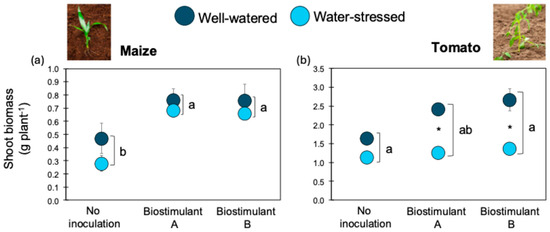
In maize, shoot biomass was influenced by biostimulant inoculation (Table S2), with both biostimulants resulting in approximately 50% higher biomass compared with non-inoculated seedlings. Water stress had no significant effect on maize shoot biomass (Table S2). Consequently, within each biostimulants inocula, there were no differences between the biomass of well-watered and water-stressed maize seedlings (Figure 1a).
Figure 1.
Effect of water stress and biostimulant inoculation on shoot biomass of maize (a) and tomato (b) seedlings. Different lowercase letters show significant differences among biostimulant treatments (p < 0.05), while * shows significant differences among water stress levels within each biostimulant inocula. Symbols represent the mean ± SE (n = 9). Maize and tomato seedling images were obtained from Freepik and are used under a royalty-free license.
In tomato, shoot biomass was influenced by both water stress and biostimulant inoculation (Table S2). Inoculation with biostimulant B increased tomato shoot biomass by 30% relative to non-inoculated seedlings, while inoculation with biostimulant A showed a non-significant positive trend, especially under well-watered conditions. Well-watered seedlings accumulated about 40% more biomass than water-stressed ones. Furthermore, water-stressed tomato seedlings inoculated with both biostimulants accumulated less biomass than well-watered ones (Figure 1b).
Overall, the positive effects of both biostimulants on maize seedlings’ shoot biomass was observed in well-watered and water-stressed conditions (with no differences between water-stressed and well-watered seedlings), while in tomato, this positive effect was only significant in well-watered seedlings, highlighting the greater sensitivity to drought of tomato seedlings than maize seedlings.
3.2. Shoot Stable Isotopic Discrimination
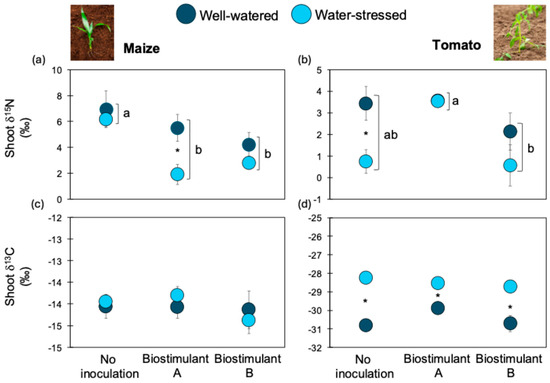
In maize, shoot δ15N was influenced by both water stress and biostimulant inoculation (Table S2). Well-watered seedlings exhibited higher δ15N values than water-stressed ones, particularly when inoculated with biostimulant A. Inoculation with either biostimulant decreased δ15N values relative to the control (Figure 2a).
Figure 2.
Effect of water stress and biostimulant inoculation on shoot isotopic discrimination of N (δ15N—(a,b)) and C (δ13C—(c,d)) in maize (a,c) and tomato (b,d) seedlings. Different lowercase letters show significant differences among biostimulant treatments (p < 0.05), while * shows significant differences among water stress levels within each biostimulant inocula. Symbols represent the mean ± SE (n = 3). Maize and tomato seedling images were obtained from Freepik and are used under a royalty-free license.
In tomato, δ15N was also affected by both factors (Table S2). Well-watered seedlings displayed higher δ15N values than water-stressed ones, especially in non-inoculated plants. Biostimulant A produced higher δ15N values than biostimulant B, while the control showed intermediate values (Figure 2b).
In maize, δ13C values remained stable (around −14‰), unaffected by water stress, biostimulant inoculation, or their interaction (Table S2 and Figure 2c). In contrast, δ13C in tomato was influenced by water stress but not by biostimulant inoculation (Table S2): water-stressed seedlings showed less negative δ13C values than well-watered ones, indicating reduced stomatal conductance and increased water-use efficiency (Figure 2d).
3.3. Macronutrients
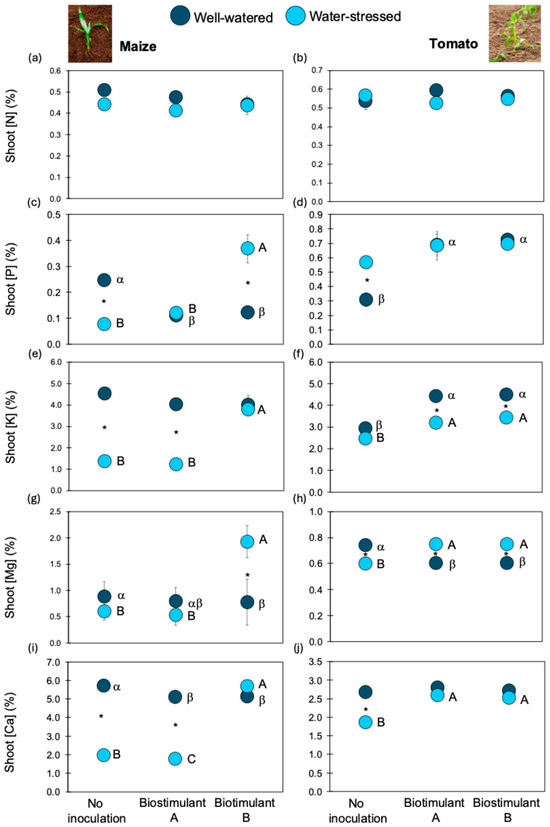
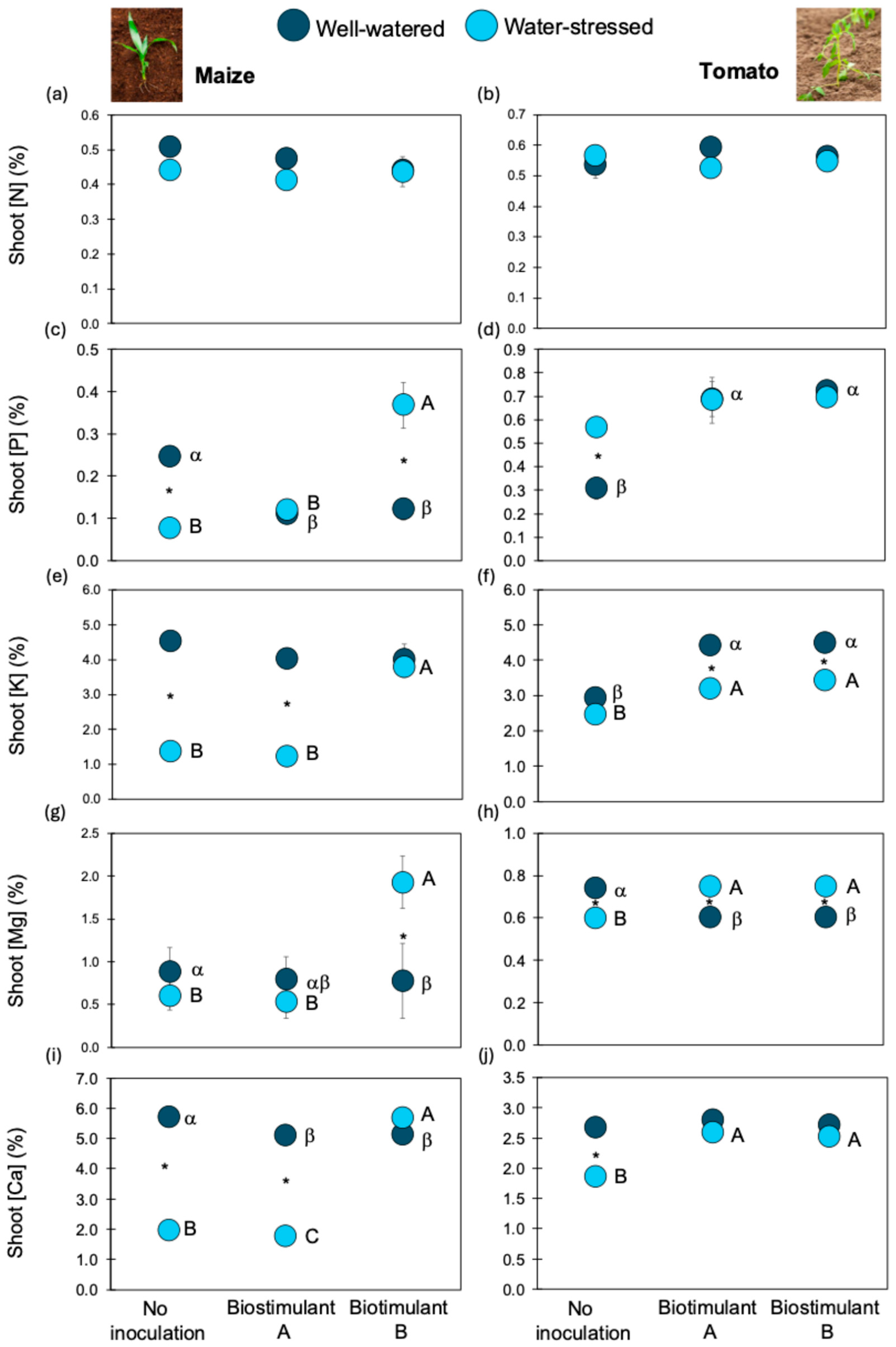
Shoot nitrogen (N) concentration was not influenced by biostimulant inoculation in either crop. Only maize showed a response to water stress (Table S2). Therefore, shoot N concentrations remained relatively stable across treatments (Figure 3a,b).
Figure 3.
Effect of water stress and biostimulant inoculation on maize (a,c,e,g,i) and tomato (b,d,f,h,j) seedlings’ shoot concentrations of the following macronutrients: N (a,b), P (c,d), K (e,f), Mg (g,h) and Ca (i,j). Different uppercase letters show significant differences between biostimulant inocula within water-stressed plants (p < 0.05), different Greek letters show significant differences between biostimulants within well-watered plants (p < 0.05), and * shows significant differences among water stress levels within each biostimulant inocula. Symbols represent the mean ± SE (n = 3). Maize and tomato seedling images were obtained from Freepik and are used under a royalty-free license.
Shoot phosphorus (P) concentration was influenced by both factors and their interaction (Table S2). In maize, biostimulant B increased P concentration, particularly under water stress. In tomato, both biostimulants increased P concentration relative to the control, with a significant effect under well-watered conditions. Additionally, non-inoculated water-stressed tomato seedlings showed higher P concentration than well-watered ones (Figure 3c,d).
Shoot potassium (K) concentration was influenced by biostimulant inoculation, water stress, and their interaction (Table S2). In maize, biostimulant B enhanced K concentration under water stress, while in tomato, both biostimulants had a positive effect under both water stress levels. Well-watered seedlings of both crops showed higher K concentrations than water-stressed ones (Figure 3e,f).
Shoot magnesium (Mg) concentration was influenced by water stress and by its interaction with biostimulant inoculation in both crops (Table S2). In maize, inoculation with biostimulant B increased Mg concentration under water stress, whereas tomato Mg concentrations remained relatively stable despite differences between water stress levels within each biostimulant inocula (Figure 3g,h).
Shoot calcium (Ca) concentration was also influenced by both factors and their interaction (Table S2). In maize, biostimulant B significantly increased Ca concentration under water stress, whereas in tomato, both biostimulants enhanced Ca concentration relative to non-inoculated seedlings under water-stress conditions. In general, well-watered seedlings exhibited higher Ca concentrations, although the biostimulant effect was more pronounced under stress (Figure 3i,j).
Overall, the positive effects of biostimulant inoculation on macronutrient concentrations were mainly observed with biostimulant B in maize and with both inoculants in tomato, particularly under water-stressed conditions.
3.4. Micronutrients
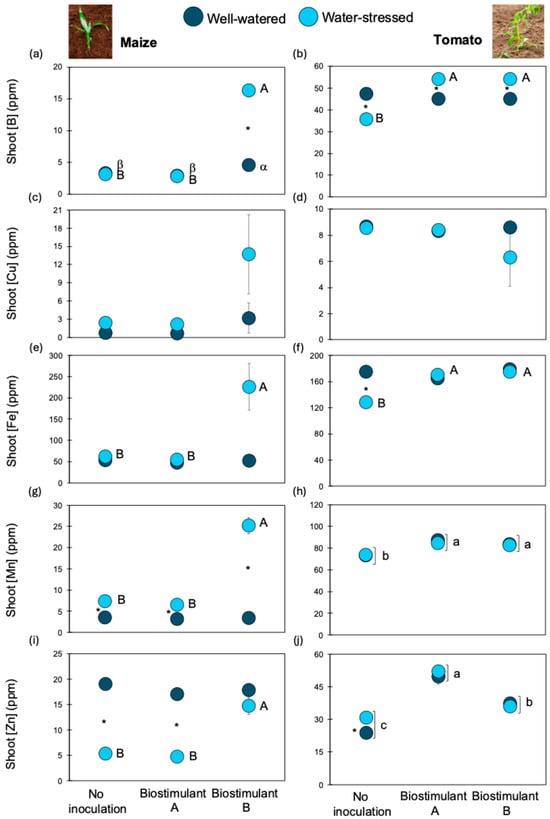
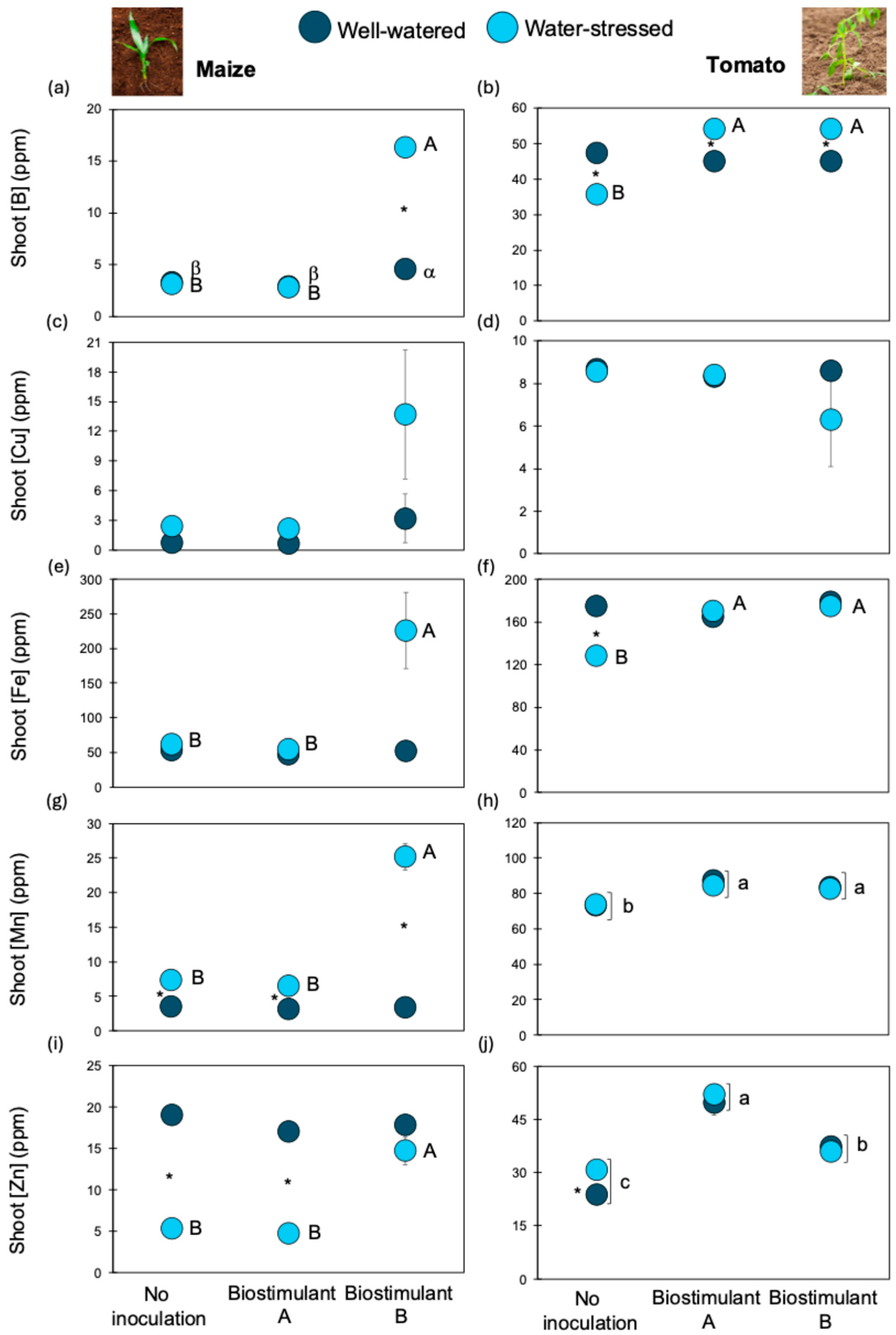
Shoot boron (B) concentration was influenced by biostimulant inoculation and its interaction with water stress in both crops (Table S2). Biostimulant B increased B concentration in maize under water stress, while both biostimulants enhanced B concentration in tomato, with a greater effect under water stress conditions (Figure 4a,b).
Figure 4.
Effect of water stress and biostimulant inoculation on maize (a,c,e,g,i) and tomato (b,d,f,h,j) seedlings’ shoot concentrations of the following micronutrients: B (a,b), Cu (c,d), Fe (e,f), Mn (g,h) and Zn (i,j). Different lowercase letters show significant differences between biostimulants inoculation across both water stress levels (p < 0.05), different uppercase letters show significant differences between biostimulant inocula within water-stressed plants (p < 0.05), different Greek letters show significant differences between biostimulants within well-watered plants (p < 0.05), and * shows significant differences among water stress levels within each biostimulant inocula. Symbols represent the mean ± SE (n = 3). Maize and tomato seedling images were obtained from Freepik and are used under a royalty-free license.
Shoot copper (Cu) concentration was not significantly influenced by any factor (Table S2), though a trend was observed with biostimulant B in both crops (Figure 4c,d).
Shoot iron (Fe) concentration was influenced by both factors and their interaction (Table S2). Biostimulant B increased Fe concentration in maize under water stress, while both inoculants enhanced Fe concentration in tomato (Figure 4e,f).
Shoot manganese (Mn) concentration in maize seedlings was influenced by biostimulant inoculation and its interaction with water stress, while that in tomato seedlings was only influenced by biostimulant inoculation (Table S2). Biostimulant B increased Mn concentration in water-stressed maize seedlings, while both biostimulants enhanced Mn in tomato. Water-stressed maize seedlings showed higher Mn concentrations irrespective of the biostimulant inocula (Figure 4g,h).
Shoot zinc (Zn) concentration was influenced by biostimulant inoculation in both crops (Table S2). In maize, biostimulant B increased Zn concentration under water stress. In tomato, both biostimulants enhanced Zn concentration, with a greater effect for biostimulant A (Figure 4i,j).
Overall, positive effects of biostimulant inoculation on micronutrient concentrations were observed mainly with biostimulant B in maize and with both biostimulants in tomato, particularly under water-stressed conditions.
3.5. Antioxidant Enzymatic Activities
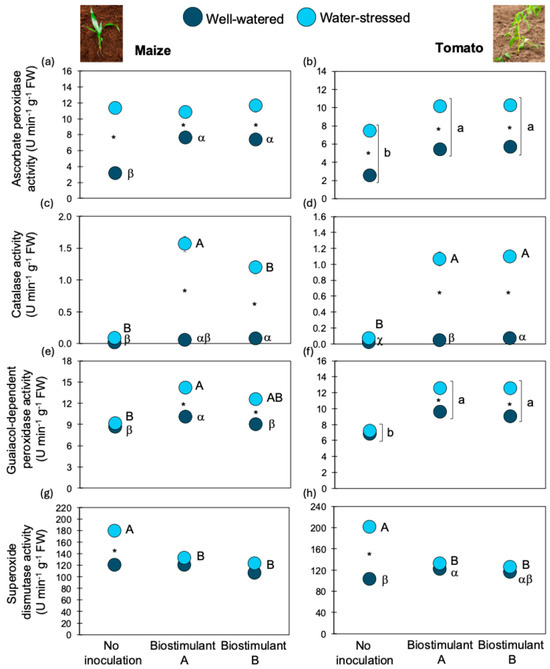
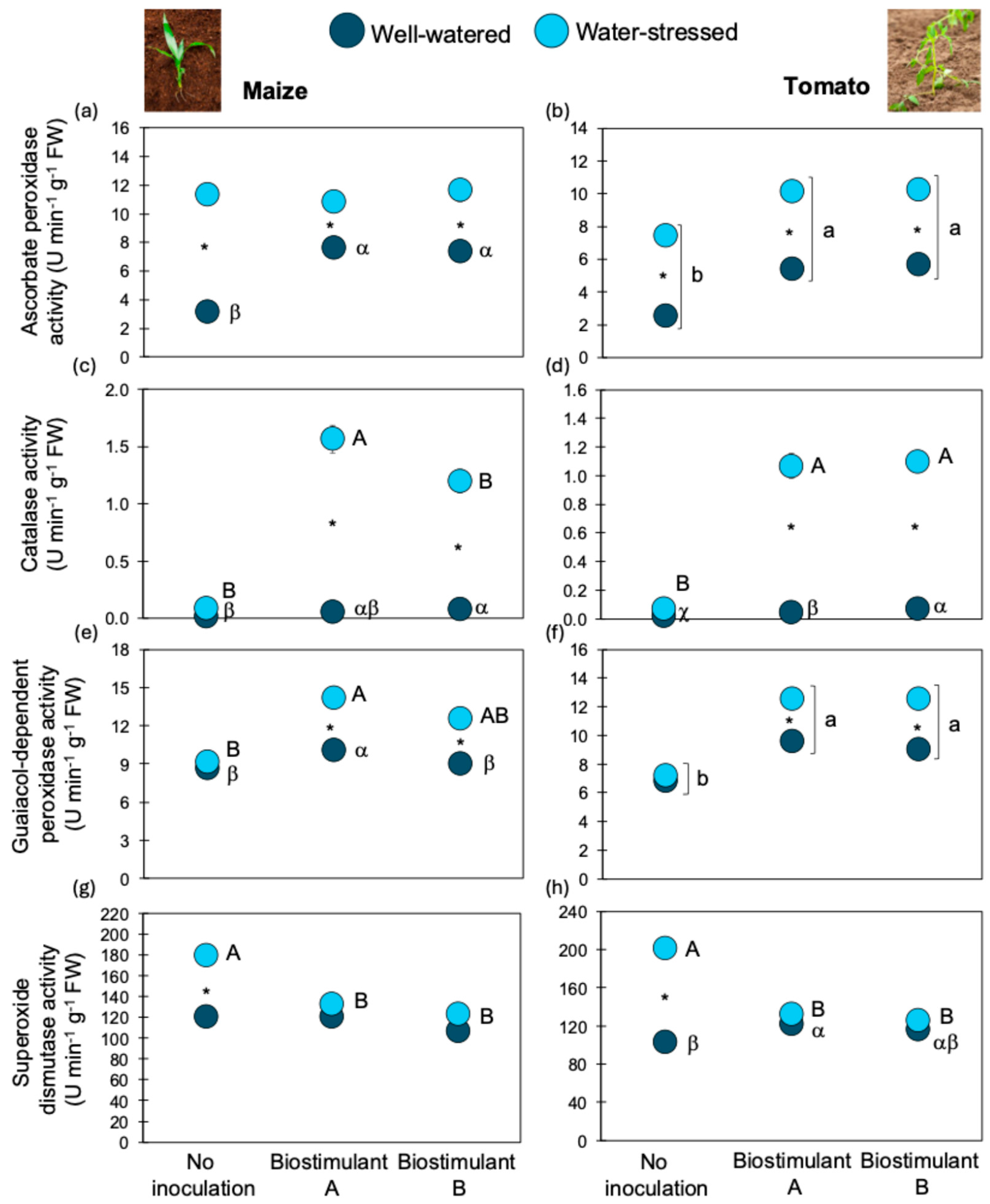
Among the antioxidant enzymes, superoxide dismutase (SOD) showed the highest activity, followed by ascorbate peroxidase (APX) and guaiacol peroxidase (GPX), while catalase (CAT) exhibited the lowest activity. In general, inoculated seedlings displayed higher antioxidant enzyme activities than non-inoculated ones, except for SOD under water stress, where the control showed higher activity (Figure 5).
Figure 5.
Effect of water stress and biostimulant inoculation on maize (a,c,e,g) and tomato (b,d,f,h) seedlings’ shoot antioxidant enzymatic activities: ascorbate peroxidase (a,b), catalase (c,d), guaiacol peroxidase (e,f), and superoxide dismutase (g,h). Different lowercase letters show significant differences between biostimulants inoculation across both water stress levels (p < 0.05), different uppercase letters show significant differences between biostimulant inocula within water-stressed plants (p < 0.05), different Greek letters show significant differences between biostimulants within well-watered plants (p < 0.05), and * shows significant differences among water stress levels within each biostimulant inocula. Symbols represent the mean ± SE (n = 3). Maize and tomato seedling images were obtained from Freepik and are used under a royalty-free license.
APX activity was influenced by water stress and its interaction with biostimulant inocula in maize, and by biostimulant inoculation and water stress in tomato (Table S2). In maize, both biostimulants increased APX activity under well-watered conditions, whereas in tomato, this effect was observed under both water regimes. Water-stressed seedlings of both crops displayed higher APX activities than well-watered ones, across all biostimulant inocula (Figure 5a,b).
CAT activity was influenced by biostimulant inoculation, water stress, and their interaction in both crops (Table S2). In both crops, inoculated seedlings showed higher CAT activity, particularly under water stress conditions. Only non-inoculated seedlings of both crops showed similar CAT activities under both water stress levels (Figure 5c,d).
GPX activity followed a pattern similar to that described for CAT activity (Table S2), with higher activities in inoculated seedlings, and a more pronounced difference under water stress conditions (Figure 5e,f).
SOD activity was influenced by both factors and their interaction (Table S2) in both crops; water-stressed, non-inoculated seedlings showed the highest SOD activities (Figure 5g,h).
Overall, biostimulant inoculation enhanced antioxidant enzyme activity in both crops, mainly under water-stressed conditions.
3.6. Integrated Plant Response
Correlation analysis identified a set of strong relationships (r > 0.60) among growth, nutrient status, isotopic signatures, and antioxidant activities (Table S3). Shoot biomass showed strong positive correlations with key macro- (N and P) and micronutrients (B, Mn and Zn), indicating tight coupling between nutrient accumulation and growth performance. These variables were also positively intercorrelated, forming a coherent group of traits associated with improved resource acquisition and utilization. δ13C values exhibited strong negative correlation with shoot biomass and nutrient concentrations, consistent with reduced carbon assimilation and water-use efficiency under increasing water stress. In contrast, δ15N showed strong associations with shoot N concentration and biomass-related traits, suggesting shifts in nitrogen acquisition and assimilation pathways among treatments. Among antioxidant enzymes, only ascorbate peroxidase (APX) was negatively correlated with shoot biomass.
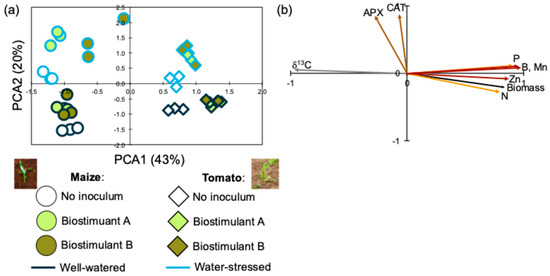
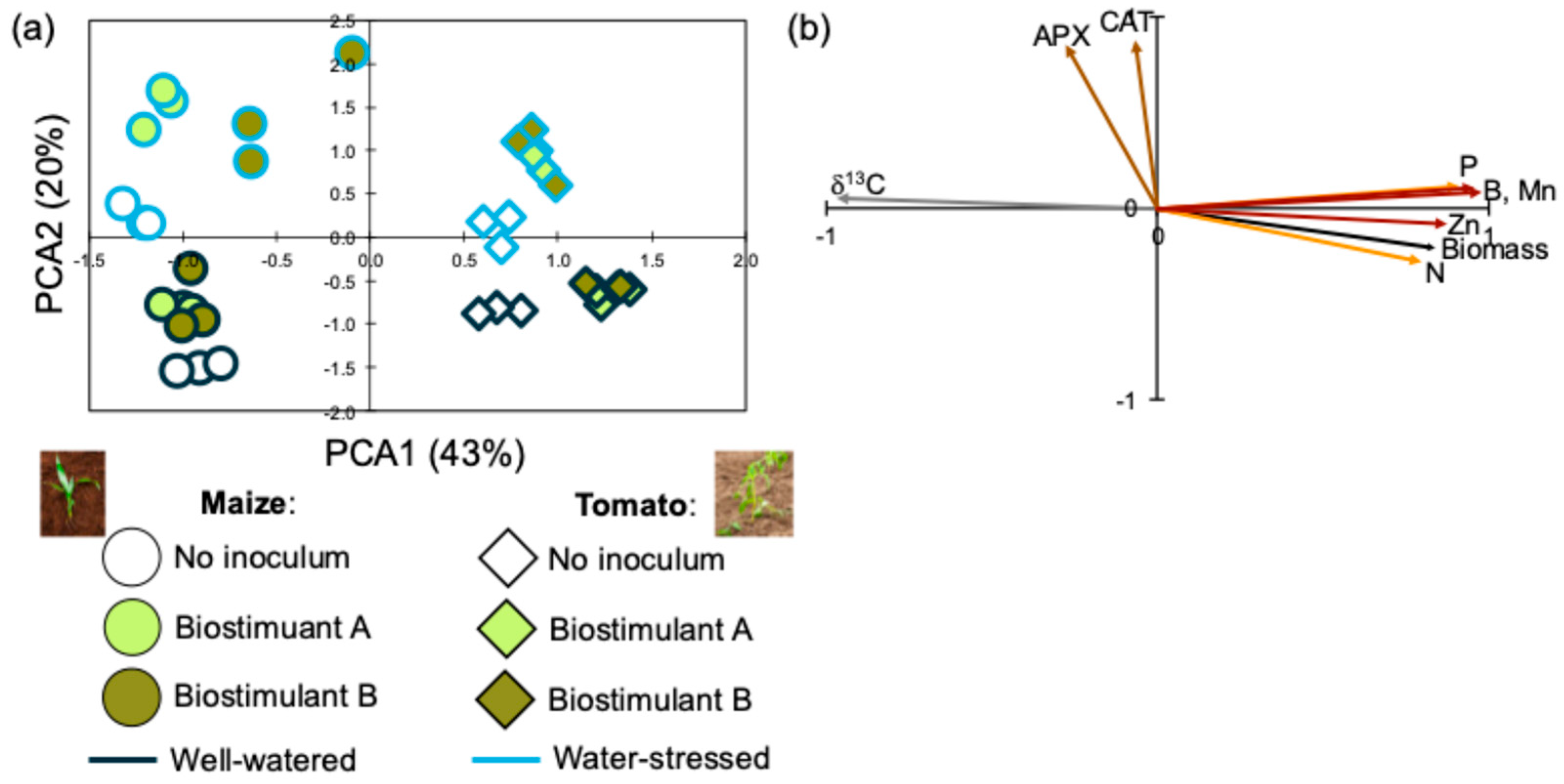
These correlation patterns (Table S3) are consistent with the PCA results, where Axis 1 was primarily driven by growth- and nutrient-related variables, while Axis 2 was associated with antioxidant activity and stress-related traits (Figure 6). The four extracted PCA components explained 86% of the total variance (Table S4), with the first two components accounting for 63% (Table S4 and Figure 6a).
Figure 6.
Principal component analysis (PCA) integrating all analyzed plant parameters (a). Symbols represent each replicate that was analyzed for all parameters (n = 3 for each combination). (b) Loading plot for the most important plant parameters (loading ≥ 0.8), which are represented by vectors. Different vector colors show different types of plant parameters: gray for shoot isotopic signatures, brown for antioxidant enzymatic activities, orange for macronutrient concentrations, red for micronutrient concentrations and black for biomass. Maize and tomato seedling images were obtained from Freepik and are used under a royalty-free license.
Axis 1, which explained 43% of variance, clearly separated the two crops (Figure 6a), primarily due to shoot biomass, δ13C, and concentrations of B, Mn, Zn, N, and P (Figure 6b). Tomato seedlings were associated with higher nutrient concentrations and biomass, whereas maize showed higher δ13C values. Axis 2, which explained 20% of variance, distinguished water-stressed from well-watered seedlings, a separation that was mainly driven by APX and CAT activities, both higher under stress. Finally, within each crop and water regime, non-inoculated samples clustered separately from inoculated ones, indicating distinct physiological responses to biostimulant inoculation.
4. Discussion
4.1. Integrated Plant Responses and Resource-Use Efficiency
Our results support the hypothesis that PGPR-based biostimulants trigger integrated physiological and growth responses, enhancing the efficiency of water and nutrient resource use across species and watering regimes (Figure 6). This integration is further supported by correlation analysis, which revealed strong positive relationships between shoot biomass and key macro- and micronutrients (Table S3). These traits collectively contributed to PCA Axis 1, confirming that improved growth under biostimulant inoculation is closely linked to enhanced nutrient resource availability and utilization.
Both maize and tomato seedlings benefited from inoculation (Figure 1), though with species-specific patterns. Tomato responded more strongly under well-watered conditions, while maize maintained biomass under water stress, reflecting its inherent C4 physiology and superior water- and carbon-use efficiency [31]. These patterns align with prior studies showing that PGPR can improve root architecture and osmotic adjustment, thereby enabling plants to access limited water and nutrient resources more efficiently [32]. The weaker drought response in tomato is consistent with observations that biostimulants often have greater effects under non-limiting conditions, when plant metabolism is less constrained [20,33,34].
Because water stress was imposed gradually and maintained over time, the observed physiological, nutritional, and biochemical responses reflect plant acclimation to sustained soil water limitation rather than transient aboveground stress signaling. This supports the interpretation that PGPR-based biostimulants enhanced integrated water and nutrient resource-use efficiency under drought conditions. Additionally, antioxidant enzymes associated with stress mitigation, particularly ascorbate peroxidase and catalase, were strongly correlated with nutrient concentrations and biomass (Table S3) and contributed primarily to PCA Axis 2 (Table S4 and Figure 6). This indicates that enhanced antioxidant capacity reduced the metabolic costs of oxidative stress, allowing more efficient allocation of limited resources toward growth and maintenance. Collectively, these coordinated responses suggest that targeted application of PGPR-based biostimulants at critical early growth stages could maximize resource-use efficiency, particularly under water-limited conditions, while emphasizing the importance of species-specific management strategies.
4.2. Stable Isotope Evidence for Enhanced Nitrogen Resource Acquisition
Stable isotope analyses (Figure 2) provided mechanistic evidence of improved N resource use. Inoculated maize seedlings exhibited more negative δ15N values across watering regimes, indicative of enhanced N assimilation and potential contributions from N-fixing or N-transforming rhizosphere microorganisms [35,36]. Similar shifts have been observed in crops inoculated with Pseudomonas fluorescens, Rhizobium tropici, and Azospirillum brasilense, demonstrating a consistent increase in microbial-mediated N acquisition and cycling [37,38,39,40]. Our results suggest that PGPR inoculation can modulate plant–microbe interactions to improve N use, particularly under water stress, supporting a practical approach to reduce synthetic N inputs while maintaining productivity.
4.3. Nutrient Resource Availability and Utilization
Increases in leaf nutrient concentrations (the macronutrients P, K, Mg and Ca, and the micronutrients B, Fe, Mn and Zn—Figure 3 and Figure 4, respectively) indicate improved nutrient resource availability and internal use. Increased K likely facilitated stomatal regulation and osmotic balance, key for maintaining water status under drought [41] while improved P acquisition supports energy metabolism and carbon-use efficiency, particularly under limited water resources [42]. Higher concentrations of micronutrients (B, Fe, Mn, Zn) further underline the role of PGPR in improving nutrient bioavailability and translocation. Enhanced Fe availability contributes to chlorophyll formation and electron transport, while Mn and Zn increases reinforce stress-response pathways [43,44]. Altogether, our results indicate that biostimulants enhance both nutrient acquisition and internal utilization, reflecting improved resource-use efficiency. Practically, this suggests that PGPR inoculation can help crops maximize soil nutrient exploitation, potentially reducing fertilizer requirements and environmental impacts.
4.4. Antioxidant Responses and Metabolic Resource Allocation
Antioxidant enzyme activity patterns (Figure 5) revealed another dimension of biostimulant-mediated resource optimization. Elevated activities of APX and CAT in inoculated, water-stressed seedlings, key contributors to PCA axis 2 (Table S4, Figure 6), indicate enhanced capacity to detoxify reactive oxygen species, reducing the metabolic cost of stress defense. This allows limited resources to be redirected toward growth and maintenance. In contrast, superoxide dismutase (SOD) activity appeared constitutive, suggesting its role as a baseline defense rather than a stress-responsive mechanism. These findings highlight that PGPR can optimize metabolic resource allocation under drought, improving physiological resilience while maintaining productivity.
4.5. Functional Differences Between Biostimulants and Implications for Resource Management
The two commercial biostimulants we tested differed in their effects, reflecting differences in microbial composition and functional traits. Biostimulant A (Pseudomonas spp.) likely enhanced N assimilation, antioxidant activity, and water balance [45,46,47]. Biostimulant B, a multifunctional consortium (Azospirillum brasilense, Azotobacter chroococcum, Bacillus megaterium, and Rhizobium loti) appears to act through multiple pathways, such as biological N fixation, P solubilization, phytohormone synthesis, and improved root development [15,48]. These functional differences suggest that biostimulant composition strongly influences crop responses and highlight the importance of selecting strains or consortia tailored to specific crops, soil conditions, and stress scenarios to optimize resource use and crop performance.
4.6. Relevance of the Seedling Stage and Need for Field Validation
Evaluating biostimulant performance at the seedling stage is essential since this phase is highly dependent on efficient acquisition of limited water and nutrient resources. Early-stage improvements in resource-use efficiency can influence establishment, root architecture, and long-term productivity. Our study demonstrates that PGPR inoculation can enhance seedling resilience and nutrient acquisition, laying the foundation for improved field performance. However, field trials are essential to validate these findings under complex, variable environmental conditions. Such trials would capture interactions between biostimulants, soil microbiota, crop development, and environmental fluctuations, providing a robust assessment of PGPR contributions to sustainable water and nutrient management.
5. Conclusions
Inoculation with PGPR-based biostimulants enhanced growth, nutrient uptake, and physiological resilience in maize and tomato seedlings, supporting our hypothesis of an integrated plant response driven by improved resource acquisition and use. Although maize maintained biostimulant-derived benefits under water stress, tomato responded more strongly under well-watered conditions, highlighting species-specific strategies in managing water and nutrient resources. Stable isotope and nutrient analyses indicated that biostimulants promoted more efficient N assimilation, improved access to limiting soil nutrients, and better osmotic regulation, thereby enabling plants to utilize scarce water resources more effectively. The enhanced micronutrient balance further suggests that PGPR increased nutrient availability in the rhizosphere, reinforcing overall nutrient-use efficiency. Additionally, increased antioxidant enzyme activities point to more effective metabolic resource allocation toward protection against oxidative stress.
From a practical perspective, these findings indicate that PGPR-based biostimulants can help farmers improve early seedling establishment and growth while enhancing water and nutrient-use efficiency, thereby supporting more resilient crop production under variable water availability. Although our study did not assess economic aspects, improved resource-use efficiency has the potential to contribute to more optimized input management when integrated with appropriate agronomic practices. By enhancing the efficient use of limited resources, PGPR-based inoculants offer a sustainable strategy to maintain productivity under water-limited conditions. While seedling-stage testing provides critical insights into early vigor and stress tolerance, field-based studies across the full crop life cycle are necessary to fine-tune application strategies, assess economic feasibility, and validate long-term agronomic and sustainability benefits.
Supplementary Materials
The following supporting information can be downloaded at https://www.mdpi.com/article/10.3390/resources15020020/s1, Table S1: Results of three-way ANOVA with factors crop, biostimulant inoculation and water stress on the different plant parameters; Table S2: Results of two-way ANOVA with factors biostimulant inoculation and water stress on the different plant parameters, for each crop; Table S3: Pearson’s correlations between all analyzed plant parameters; Table S4: Component Matrix for the 4 components extracted using Principal Component Analysis (PCA) and the percentage of variation explained by each component.
Author Contributions
Conceptualization, C.C. and K.A.; software, A.M.S.; formal analysis, T.D., S.K. and S.C.; investigation, J.M.; writing—original draft preparation, T.D. and C.C. writing—review and editing, all authors. All authors have read and agreed to the published version of the manuscript.
Funding
This study was financially supported by Portuguese funds through Fundacão para a Ciência e a Tecnologia through (i) project UID/00329/2025 (https://doi.org/10.54499/UID/00329/2025); (ii) contract to Teresa Dias (https://doi.org/10.54499/2023.07156.CEECIND/CP2831/CT0013); and (iii) PhD grant to Ana M. Santos (2024.03052.BDANA).
Data Availability Statement
The data that support the findings of this study will be made available by the corresponding author upon request. Data are located in controlled access data storage at Faculdade de Ciências da Universidade de Lisboa.
Acknowledgments
We thank the editor and the three anonymous reviewers for taking the time to assess our manuscript, for their analysis, and for the positive comments that helped improve this manuscript.
Conflicts of Interest
Author Juliana Melo was employed by the company Soilvitae Lda. Author Ana M. Santos was a PhD student at the company Soilvitae Lda. Authors Sanaa Kamah, Silvia Castillo, and Khalid Akdi were employed by the company TRICHODEX, S.L.U. All the authors declare that the research was conducted in the absence of any commercial or financial relationships that could be construed as a potential conflict of interest.
Abbreviations
The following abbreviations are used in this manuscript:
| APX | Ascorbate peroxidase |
| B | Boron |
| Ca | Calcium |
| CAT | Catalase |
| Cu | Copper |
| Fe | Iron |
| GPX | Guaiacol-dependent peroxidase |
| K | Potassium |
| Mg | Magnesium |
| Mn | Manganese |
| N | Nitrogen |
| P | Phosphorus |
| PGPR | Plant-Growth Promoting Rhizobacteria |
| SOD | Superoxide dismutase |
| Zn | Zinc |
References
- Falkenmark, M. Growing water scarcity in agriculture: Future challenge to global water security. Philos. Trans. A Math. Phys. Eng. Sci. 2013, 371, 20120410. [Google Scholar] [CrossRef] [Scilit] [PubMed]
- Franco-Navarro, J.; Padilla, Y.; Alvarez, S.; Calatayud, A.; Colmenero-Flores, J.; Gómez-Bellot, M.; Hernández, J.; Martínez-Alcalá, I.; Penella, C.; Pérez-Pérez, J.; et al. Advancements in Water-Saving Strategies and Crop Adaptation to Drought: A Comprehensive Review. Physiol. Plant. 2025, 177, e70332. [Google Scholar] [CrossRef] [Scilit] [PubMed]
- Farooq, M.; Wahid, A.; Kobayashi, N.; Fujita, D.; Basra, S. Plant drought stress: Effects, mechanisms and management. Agron. Sustain. Dev. 2009, 29, 185–212. [Google Scholar] [CrossRef] [Scilit]
- Dubey, A.; Kumar, A.; Malla, M.A.; Chowdhary, K.; Singh, G.; Gudasalamani Ravikanth, H.; Sharma, S.; Saati-Santamaria, Z.; Menéndez, E.; Dames, J.F. Approaches for the amelioration of adverse effects of drought stress on crop plants. Front. Biosci. Landmark 2021, 26, 928–947. [Google Scholar] [CrossRef] [Scilit] [PubMed]
- Benitez-Alfonso, Y.; Soanes, B.; Zimba, S.; Sinanaj, B.; German, L.; Sharma, V.; Bohra, A.; Kolesnikova, A.; Dunn, J.; Martin, A.; et al. Enhancing climate change resilience in agricultural crops. Curr. Biol. 2023, 33, R1246–R1261. [Google Scholar] [CrossRef] [Scilit]
- Hejazi, M.; Da Silva, S.; Miralles-Wilhelm, F.; Kim, S.; Kyle, P.; Liu, Y.; Vernon, C.; Delgado, A.; Edmonds, J.; Clarke, L. Impacts of water scarcity on agricultural production and electricity generation in the Middle East and North Africa. Front. Environ. Sci. 2023, 11, 1082930. [Google Scholar] [CrossRef] [Scilit]
- Futa, B.; Gmitrowicz-Iwan, J.; Skersiene, A.; Slepetiene, A.; Parasotas, I. Innovative soil management strategies for sustainable agriculture. Sustainability 2024, 16, 9481. [Google Scholar] [CrossRef] [Scilit]
- Oguz, M.; Aycan, M.; Oguz, E.; Poyraz, I.; Yildiz, M. Drought Stress Tolerance in plants: Interplay of molecular, biochemical and physiological responses in important development stages. Physiologia 2022, 2, 180–197. [Google Scholar] [CrossRef] [Scilit]
- Haghpanah, M.; Hashemipetroudi, S.; Arzani, A.; Araniti, F. Drought tolerance in plants: Physiological and molecular responses. Plants 2024, 13, 2962. [Google Scholar] [CrossRef] [Scilit]
- Shaffique, S.; Hussain, S.; Kang, S.; Imran, M.; Injamum-Ul-Hoque, M.; Khan, M.; Lee, I. Phytohormonal modulation of the drought stress in soybean: Outlook, research progress, and cross-talk. Front. Plant Sci. 2023, 14, 1237295. [Google Scholar] [CrossRef] [Scilit]
- Ahluwalia, O.; Singh, P.; Bhatia, R. A review on drought stress in plants: Implications, mitigation and the role of plant growth promoting rhizobacteria. Resour. Environ. Sustain. 2021, 5, 100032. [Google Scholar] [CrossRef] [Scilit]
- European Union. EU 2019. Regulation of The European Parliament and of the Council Laying Down Rules on the Making Available on the Market of EU Fertilising Products and Amending Regulations (EC) No 1069/2009 and (EC) No1107/2009 and Repealing Regulation (EC) No 2003/2003; European Union: Brussels, Belgium, 2019.
- Nader, A.; Hauka, F.; Afify, A.; El-Sawah, A. Drought-tolerant bacteria and arbuscular mycorrhizal fungi mitigate the detrimental effects of drought stress induced by withholding irrigation at critical growth stages of soybean (Glycine max, L.). Microorganisms 2024, 12, 1123. [Google Scholar] [CrossRef] [Scilit]
- Igiehon, B.; Babalola, O.; Hassen, A. Rhizosphere competence and applications of plant growth-promoting rhizobacteria in food production—A review. Sci. Afr. 2024, 23, e02081. [Google Scholar] [CrossRef] [Scilit]
- Basilio, F.; Dias, T.; Santana, M.M.; Melo, J.; Carvalho, L.; Correia, P.; Cruz, C. Multiple modes of action are needed to unlock soil phosphorus fractions unavailable for plants: The example of bacteria- and fungi-based biofertilizers. Appl. Soil Ecol. 2022, 178, 104550. [Google Scholar] [CrossRef] [Scilit]
- Backer, R.; Rokem, J.; Ilangumaran, G.; Lamont, J.; Praslickova, D.; Ricci, E.; Subramanian, S.; Smith, D. Plant Growth-Promoting Rhizobacteria: Context, mechanisms of action, and roadmap to commercialization of biostimulants for sustainable agriculture. Front. Plant Sci. 2018, 9, 1473. [Google Scholar] [CrossRef] [Scilit] [PubMed]
- Ait Bessai, S.; Cruz, J.; Carril, P.; Melo, J.; Santana, M.M.; Mouazen, A.M.; Cruz, C.; Yadav, A.N.; Dias, T.; Nabti, E.-H. The Plant-Growth Promoting potential of halotolerant bacteria is not phylogenetically determined: Evidence from two Bacillus megaterium strains isolated from saline soils used to grow wheat. Microorganisms 2023, 11, 1687. [Google Scholar] [CrossRef] [Scilit]
- Melo, J.; Carolino, M.; Carvalho, L.; Correia, P.; Tenreiro, R.; Chaves, S.; Meleiro, A.I.; de Souza, S.B.; Dias, T.; Cruz, C.; et al. Crop management as a driving force of plant growth promoting rhizobacteria physiology. Springerplus 2016, 5, 1574. [Google Scholar] [CrossRef] [Scilit]
- Vurukonda, S.; Vardharajula, S.; Shrivastava, M.; SkZ, A. Enhancement of drought stress tolerance in crops by plant growth promoting rhizobacteria. Microbiol. Res. 2016, 184, 13–24. [Google Scholar] [CrossRef] [Scilit]
- Boutahiri, S.; Benrkia, R.; Tembeni, B.; Idowu, O.; Olatunji, O. Effect of biostimulants on the chemical profile of food crops under normal and abiotic stress conditions. Curr. Plant Biol. 2024, 40, 100410. [Google Scholar] [CrossRef] [Scilit]
- Di Sario, L.; Boeri, P.; Matus, J.; Pizzio, G. Plant biostimulants to enhance abiotic stress resilience in crops. Int. J. Mol. Sci. 2025, 26, 1129. [Google Scholar] [CrossRef] [Scilit] [PubMed]
- Buss, W.; Belt, K.; Hein, Z.; Putri, A.; Zhu, S.; Suwandari, H.; Bentley, A. Hurdles to overcome to achieve biostimulant-driven, low chemical input crop production. Plants People Planet 2025. [Google Scholar] [CrossRef] [Scilit]
- Tiebel, K.; Karge, A. Influence of drought stress on the seed germination and seedling survival of Pinus sylvestris and Larix decidua. For. Ecol. Manag. 2025, 591, 122852. [Google Scholar] [CrossRef] [Scilit]
- Santamarina, S.; Montesinos, D.; Alfaro-Saiz, E.; Acedo, C. Drought affects the performance of native oak seedlings more strongly than competition with invasive crested wattle seedlings. Plant Biol. 2022, 24, 1297–1305. [Google Scholar] [CrossRef] [Scilit] [PubMed]
- Dias, T.; Correia, P.; Carvalho, L.; Melo, J.; de Varennes, A.; Cruz, C. Arbuscular mycorrhizal fungal species differ in their capacity to overrule the soil’s legacy from maize monocropping. Appl. Soil Ecol. 2018, 125, 177–183. [Google Scholar] [CrossRef] [Scilit]
- Aroca, R.; Irigoyen, J.; Sánchez-Diaz, M. Photosynthetic characteristics and protective mechanisms against oxidative stress during chilling and subsequent recovery in two maize varieties differing in chilling sensitivity. Plant Sci. 2001, 161, 719–726. [Google Scholar] [CrossRef] [Scilit]
- Nakano, Y.; Asada, K. Hydrogen-peroxide is scavenged by ascorbate-specific peroxidase in spinach-chloroplasts. Plant Cell Physiol. 1981, 22, 867–880. [Google Scholar] [CrossRef] [Scilit]
- Lokhande, V.; Nikam, T.; Penna, S. Biochemical, physiological and growth changes in response to salinity in callus cultures of Sesuvium portulacastrum L. Plant Cell Tissue Organ Cult. 2010, 102, 17–25. [Google Scholar] [CrossRef] [Scilit]
- Erofeeva, E. Dependence of guaiacol peroxidase activity and lipid peroxidation rate in drooping birch (Betula pendula Roth) and tillet (Tilia cordata Mill) leaf on motor traffic pollution intensity. Dose Response 2015, 13, 1559325815588510. [Google Scholar] [CrossRef] [Scilit]
- Moran, J.; Becana, M.; Iturbeormaetxe, I.; Frechilla, S.; Klucas, R.; Aparício-Tejo, P. Drought induces oxidative stress in pea plants. Planta 1994, 194, 346–352. [Google Scholar] [CrossRef] [Scilit]
- Opoku, E.; Sahu, P.; Findurová, H.; Holub, P.; Urban, O.; Klem, K. Differential physiological and production responses of C3 and C4 crops to climate factor interactions. Front. Plant Sci. 2024, 15, 1345462. [Google Scholar] [CrossRef] [Scilit] [PubMed]
- Carillo, P. Can biostimulants enhance plant resilience to heat and water stress in the Mediterranean hotspot? Plant Stress 2025, 16, 100802. [Google Scholar] [CrossRef] [Scilit]
- Fusco, G.; Burato, A.; Pentangelo, A.; Carillo, P.; Parisi, M. Processing tomato responses to plant-based biostimulants are modulated by environmental conditions. Physiol. Plant. 2025, 177, e70450. [Google Scholar] [CrossRef] [Scilit]
- Franzoni, G.; Cocetta, G.; Prinsi, B.; Ferrante, A.; Espen, L. Biostimulants on crops: Their impact under abiotic stress conditions. Horticulturae 2022, 8, 189. [Google Scholar] [CrossRef] [Scilit]
- Barbosa, J.; Roberto, L.; Hungria, M.; Corrêa, R.; Magri, E.; Correia, T. Meta-analysis of maize responses to Azospirillum brasilense inoculation in Brazil: Benefits and lessons to improve inoculation efficiency. Appi. Soil Ecol. 2022, 170, 104276. [Google Scholar] [CrossRef] [Scilit]
- Galindo, F.; Pagliari, P.; da Silva, E.; de Lima, B.; Fernandes, G.; Thiengo, C.; Jalal, A.; Oliveira, C.; Santos, G.; Longato, P.; et al. Unveiling contribution and fate of nitrogen with 15N techniques affected by microbial co-inoculation on field-grown maize: A novel approach to optimize N-fertilizer use efficiency. Plant Physiol. Biochem. 2024, 217, 109261. [Google Scholar] [CrossRef] [Scilit]
- Zarei, T.; Moradi, A.; Kazemeini, S.; Farajee, H.; Yadavi, A. Improving sweet corn (Zea mays L. var saccharata) growth and yield using Pseudomonas fluorescens inoculation under varied watering regimes. Agric. Water Manag. 2019, 226, 105757. [Google Scholar] [CrossRef] [Scilit]
- Püschel, D.; Bitterlich, M.; Rydlová, J.; Bukovská, P.; Sudová, R.; Jansa, J. Benefits in plant N uptake via the mycorrhizal pathway in ample soil moisture persist under severe drought. Soil Biol. Biochem. 2023, 187, 109220. [Google Scholar] [CrossRef] [Scilit]
- Steiner, F.; Ferreira, H.; Zuffo, A. Can co-inoculation of Rhizobium tropici and Azospirillum brasilense increase common bean nodulation and grain yield? Semin. Cienc. Agrar. 2019, 40, 81–97. [Google Scholar] [CrossRef] [Scilit]
- Kuan, K.; Othman, R.; Rahim, K.; Shamsuddin, Z. Plant Growth-Promoting Rhizobacteria inoculation to enhance vegetative growth, nitrogen fixation and nitrogen remobilisation of maize under greenhouse conditions. PLoS ONE 2016, 11, e0152478. [Google Scholar] [CrossRef] [Scilit]
- Nour, M.; Aljabi, H.; AL-Huqail, A.; Horneburg, B.; Mohammed, A.; Alotaibi, M. Drought responses and adaptation in plants differing in life-form. Front. Ecol. Evol. 2024, 12, 1452427. [Google Scholar] [CrossRef] [Scilit]
- Asif, A.; Ali, M.; Qadir, M.; Karthikeyan, R.; Singh, Z.; Khangura, R.; Di Gioia, F.; Ahmed, Z. Enhancing crop resilience by harnessing the synergistic effects of biostimulants against abiotic stress. Front. Plant Sci. 2023, 14, 1276117. [Google Scholar] [CrossRef] [Scilit]
- Rai, S.; Singh, P.; Mankotia, S.; Swain, J.; Satbhai, S. Iron homeostasis in plants and its crosstalk with copper, zinc, and manganese. Plant Stress 2021, 1, 100008. [Google Scholar] [CrossRef] [Scilit]
- Krohling, C.A.; Eutropio, F.J.; Bertolazi, A.A.; Dobbss, L.B.; Campostrini, E.; Dias, T.; Ramos, A.C. Ecophysiology of iron homeostasis in plants. Soil Sci. Plant Nutr. 2016, 62, 39–47. [Google Scholar] [CrossRef] [Scilit]
- Yan, Y.; Guo, C.; Glick, B.; Tian, J. Pseudomonas sp. UW4 enhances drought resistance in garlic by modulating growth and physiological parameters. Horticulturae 2025, 11, 1170. [Google Scholar] [CrossRef] [Scilit]
- Neshat, M.; Chavan, D.; Shirmohammadi, E.; Pourbabaee, A.; Zamani, F.; Torkaman, Z. Canola inoculation with Pseudomonas baetica R27N3 under salt stress condition improved antioxidant defense and increased expression of salt resistance elements. Ind. Crops Prod. 2023, 206, 117648. [Google Scholar] [CrossRef] [Scilit]
- Mehmood, N.; Saeed, M.; Zafarullah, S.; Hyder, S.; Rizvi, Z.; Gondal, A.; Jamil, N.; Iqbal, R.; Ali, B.; Ercisli, S.; et al. Multifaceted impacts of plant-beneficial Pseudomonas spp. in managing various plant diseases and crop yield improvement. ACS Omega 2023, 8, 22296–22315. [Google Scholar] [CrossRef] [Scilit]
- Dias, T.; Azmaliyev, K.; Melo, J.; Santos, A.; Correia, P.; Cruz, C. The diazotrophic bacteria Azospirillum baldaniorum and A. brasilense improve wheat seedlings’ nitrogen budget through ammonia scavenging. Appl. Soil Ecol. 2024, 204, 105737. [Google Scholar] [CrossRef] [Scilit]
Disclaimer/Publisher’s Note: The statements, opinions and data contained in all publications are solely those of the individual author(s) and contributor(s) and not of MDPI and/or the editor(s). MDPI and/or the editor(s) disclaim responsibility for any injury to people or property resulting from any ideas, methods, instructions or products referred to in the content. |
© 2026 by the authors. Licensee MDPI, Basel, Switzerland. This article is an open access article distributed under the terms and conditions of the Creative Commons Attribution (CC BY) license.