


Highlights
Please indicate how your work links to systems science via your contributions to systems practice, theory, and or methodology.
- •
- This study develops a systematic analytical framework that integrates the peer effect of digital transformation, financing constraints, and breakthrough innovation within strategic ecosystem perspective, thereby extending the system-based understanding of industrial digital interactive governance and innovative evolution.
- •
- The framework explicitly incorporates both mediating mechanisms and contingent boundary conditions to systematically elucidate how interfirm digital peer interactions reshape firm high-risk innovation behavior under conditions of information asymmetry and resource frictions.
What are the main findings and/or the implications of the main findings?
- •
- The peer effect of digital transformation significantly enhances breakthrough innovation by alleviating firms’ financing constraints.
- •
- Organizational slack and market competition function as critical systemic boundary conditions: organizational slack negatively moderates, whereas market competition positively moderates, the relationship between the peer effect of digital transformation and breakthrough innovation.
- •
- The positive impact of the peer effect of digital transformation on breakthrough innovation is significantly stronger for firms located in China’s midwestern regions and for non-state-owned enterprises (non-SOEs).
Abstract
As the digital age advances, digital transformation has emerged as a pivotal driver enabling enterprises to strengthen their competitive advantage. Although scholarly attention to the role of digital transformation in corporate innovation has grown markedly in recent years, the peer effect of digital transformation—i.e., how firms’ digital transformation efforts influence one another—and its implications for breakthrough innovation remain underexplored. Drawing on quantitative data from Chinese A-share listed manufacturing firms over the period 2008–2023, this study empirically examines the impact of the peer effect of digital transformation on breakthrough innovation, the underlying mechanisms, and its boundary conditions. Our findings indicate that the peer effect of digital transformation significantly promotes breakthrough innovation. This positive effect is attenuated when organizational slack is high but amplified under conditions of intense market competition. Mechanism analysis reveals that the peer effect of digital transformation alleviates financing constraints, thereby facilitating breakthrough innovation. Heterogeneity analysis further shows that the peer effect of digital transformation has a more significant impact in promoting breakthrough innovation among non-state-owned enterprises (non-SOEs) and among firms headquartered in China’s midwestern regions.
1. Introduction
In the context of rapid global economic integration and accelerating technological advancement, innovation capability has emerged as a pivotal determinant of firms’ ability to sustain and strengthen their competitive advantage in intense markets [1]. Grounded in dual innovation theory, breakthrough innovation, a core element of the innovation ecosystem, differs fundamentally from incremental innovation which involves only marginal refinements to existing knowledge or practices. In contrast, breakthrough innovation is widely conceptualized as transcending the boundaries of established knowledge domains to enter entirely new technological fields; it thus necessitates paradigm-shifting knowledge recombination and a high tolerance for uncertainty and risk [2,3,4]. As a result, breakthrough innovation is inherently characterized by high levels of uncertainty, complexity, inter-firm competition, and strategic risk, yet it simultaneously offers exceptional strategic importance and superior long-term business value. Moreover, breakthrough innovation is indispensable for firms pursuing sustainable competitive advantage [5]. Consequently, identifying and understanding the antecedents that foster firm breakthrough innovation holds substantial theoretical and practical implications for enhancing innovation quality, cultivating strategic resilience, and securing enduring market leadership.
Amid the ongoing information revolution, digital transformation has become a central strategic imperative for firms seeking to adapt to evolving market dynamics, restructure operation models, and cultivate novel sources of competitive advantage [6]. Digital transformation denotes an ongoing and dynamic process through which advanced digital technologies, such as big data, cloud computing, blockchain, and artificial intelligence, are systematically integrated to reconfigure production systems, operational workflows, and management systems within enterprises [7]. Within the context of China’s “Made in China 2025” initiative, manufacturing firms are increasingly harnessing digital transformation to overcome persistent technological bottlenecks and catalyze breakthrough innovation. Nevertheless, digital transformation constitutes a capital- and talent-intensive strategy that demands substantial resource commitments [8]. Given that firms typically operate under significant resource constraints, a fundamental tension arises between the extensive resource requirements of digital transformation and the limited internal endowments available to individual organizations. Moreover, firms do not operate in isolation; rather, they are embedded within dense interorganizational networks. Through routine operations, such as supply chain collaboration, technology licensing, joint R&D, and industry benchmarking, firms inevitably form relational ties with peers, thereby generating peer effects [9]. In a complex and dynamic economic environment, digital transformation is not an isolated endeavor pursued by a single firm but a collective, ecosystem-level phenomenon deeply embedded in industrial networks. Information about peers’ digital transformation initiatives plays a pivotal role in focal firms’ strategic decision-making. Focal firms actively learn from, emulate, and sometimes even co-shape their peers’ digital transformation choices, thus giving rise to the peer effect of digital transformation [10].
In recent years, scholarly attention to the impact of digital transformation on firm-level innovation has grown substantially. Nevertheless, the extant literature remains inconclusive regarding the precise nature and direction of this relationship. A prevailing view holds that digital transformation enhances firm innovation by improving internal control quality, alleviating financial constraints, and strengthening knowledge management capabilities [11,12,13]. In contrast, some scholars argue that digital transformation exerts an inverted U-shaped effect on firm innovation—initially stimulating, but eventually constraining it—due to its crowding-out effect on other R&D investments [7] and the emergence of a “free-rider” phenomenon that erodes firm’s intrinsic incentives to innovate [14]. Meanwhile, an expanding body of research has begun to explore more nuanced dimensions of how digital transformation shapes innovation outcomes, including continuous innovation [15], substantive innovation [16], business model innovation [17], innovation ambidexterity [18], innovation efficiency [19], innovation quality [20], green innovation [21,22], and breakthrough innovation [23,24]. However, relatively few studies have investigated the relationship between the peer effect of digital transformation and firm breakthrough innovation, particularly within the context of Chinese manufacturing.
Thus, this study addresses the following research question: Does the peer effect of digital transformation enhance firm breakthrough innovation? If so, what are the underlying mediating mechanisms and contextual boundary conditions that shape this relationship?
Drawing on unbalanced panel data from Chinese A-share listed manufacturing firms over the period 2008–2023, we find that the peer effect of digital transformation significantly enhances firm breakthrough innovation. Mediation analysis further reveals that this effect operates primarily through the alleviation of financing constraints. Moderation analysis indicates that organizational slack negatively moderates, whereas market competition positively moderates the positive association between the peer effect of digital transformation and breakthrough innovation. Finally, heterogeneity analysis confirms that the promotional effect is significantly stronger for non-state-owned enterprises (non-SOEs) and for firms headquartered in China’s central and western regions.
This study makes the following contributions to the extant literature. First, this study complements the convergence perspective in peer-effect research and refines the digital transformation–innovation framework through a relative digital positioning lens. Whereas prior studies emphasize that inter-firm influence fosters convergent and mimetic behavior, we demonstrate that peer-driven digital transformation catalyzes breakthrough innovation, thereby extending peer-effect theory beyond its traditional emphasis on conformity. Furthermore, while existing research focuses primarily on how a firm’s own digital transformation shapes its innovation outcomes, we show that the relative digital positioning of counterpart peers is equally consequential as a firm’s absolute digital capability. This insight yields a more nuanced understanding of how digital transformation diffuses and generates value across industrial ecosystems.
Second, this study extends signaling theory and refines the micro-foundations of peer effects by explicating the financing-constraint mechanism. Although prior research has documented digital transformation spillovers across firms, it has largely overlooked how such spillovers translate into tangible innovation outcomes. We advance signaling theory by demonstrating that peer firms’ digital transformation functions as a credible external market signal that mitigates the focal firm’s financing constraints and thereby facilitates the reallocation of resources toward breakthrough innovation. In this way, our analysis bridges macro-level inter-firm diffusion with micro-level managerial resource-allocation decisions, particularly commitments to high-risk, high-return breakthrough projects, offering a complementary explanation of how external digital spillovers shape internal strategic resource allocation.
Third, this study refines the contingency perspective on peer effects by identifying organizational slack and market competition as critical boundary conditions. While existing studies often portray peer effects as uniformly beneficial, we qualify that assumption by showing that the impact of peer-driven digital transformation is jointly contingent on firms’ internal resource endowments (organizational slack) and external market environment (competitive intensity). This context-sensitive mechanism responds to scholarly calls for more grounded investigations of digital spillovers and extends our understanding of the conditions under which such spillovers are most likely to catalyze breakthrough innovation.
Lastly, this study complements the homogeneity perspective in peer-effect research and extends digital-spillover theory to emerging economies. Existing literature often treats peer effects as uniform, neglecting how institutional and geographic contexts shape digital spillovers. We find that non-state-owned enterprises (non-SOEs) and firms in China’s central and western regions gain significantly stronger innovation benefits from peer-driven digital transformation. These findings extend digital-spillover theory beyond developed economies, suggesting that in emerging markets with institutional imperfections and regional disparities, peer effects may serve as a compensatory mechanism for resource-constrained firms, which offers targeted insights into the heterogeneous impacts of digital transformation.
The remainder of this study is organized as follows. Section 2 reviews the relevant literature and outlines the research hypotheses. Section 3 describes the data sources, defines the key variables, and details the empirical methodology employed. Section 4 presents the main empirical results. Section 5 summarizes the main conclusions, discusses the practical and policy implications, and identifies the research limitations.
2. Literature Review and Hypothesis Development
2.1. The Peer Effect of Digital Transformation
The peer effect originated from the fields of sociology and education, where it was initially conceptualized at the individual level. It refers to the phenomenon whereby an individual’s choices and behaviors are influenced by those of their peers [25]. As interdisciplinary research has progressed, scholars in economics, management, and related disciplines have extended the concept beyond individuals to the corporate domain. This extension captures how firms learn from and imitate one another, resulting in convergent strategic decisions among peer firms [26]. Extant literature documents the prevalence of the peer effect across a wide range of corporate activities, including corporate social responsibility [27], trade credit [28], cash holdings [29], innovation or green innovation [30,31], R&D expenditure [32], information disclosure [33,34], mergers and acquisitions [35], and other strategic financial decisions.
With growing scholarly attention to digital transformation, researchers have increasingly incorporated the peer effect into the exploration of firm digital transformation, with a primary focus on its existence, antecedents, and economic outcomes. For example, Pan, Xu and Zhu [36] employ a spatial autoregressive model (SAR) to empirically identify the spatial peer effect of firm digital transformation. Ren, Zeng and Sun [37] examine the impact of the peer effect of digital transformation on firm environmental performance. Chang, Li and Xiao [10] investigate whether digital transformation and its peer effect shape firms’ long-term firm investment decisions. Hu, Li, Ma, Lan, Geng and Li [38] analyze the antecedents and underlying mechanisms driving the peer effect of digital transformation within supply chain networks. Moreover, Li, Zhang, Zheng and Qi [39] and Zhang, Guo, Zhang and Liu [40] explore the influence of the peer effect of digital transformation on firm innovation.
Overall, the existing literature has established both the conceptual depth and broad applicability of peer effects across a wide range of corporate behaviors. Recent studies have extended peer effect theory to the domain of digital transformation, empirically validating the existence of the peer effect of digital transformation and demonstrating its influences on firm environmental performance, investment decisions, supply chain operations, and general innovation. However, existing studies predominantly focus on the general innovation outcomes of the peer effect of digital transformation without distinguishing breakthrough innovation and incremental innovation, Consequently, the underlying mechanisms through which the peer effect of digital transformation drive breakthrough innovation remain insufficiently understood.
2.2. The Peer Effect of Digital Transformation and Breakthrough Innovation
Strategic ecology theory provides a theoretical framework for examining the relationship between the peer effect of digital transformation and breakthrough innovation [41]. Specifically, drawing on the perspectives of competitive learning and institutional isomorphism inherent in the strategic ecological framework, we propose that the peer effect of digital transformation can foster breakthrough innovation by enhancing production and operational efficiency and by cultivating collective awareness of disruptive changes.
First, the peer effect of digital transformation enables focal firms to enhance production and operational efficiency [37]. As an integral component of focal firms’ strategic ecological system, peer firms generate both competitive pressure and opportunities for mutual learning, prompting focal firms to refine internal operational processes and thereby improve productivity and operational effectiveness. When peer firms embed digital technologies into core business functions, such as production, marketing, and supply chain management, they foster the integration and interconnection of diverse knowledge elements and innovative resources across the enterprise cluster. Through cross-firm data integration, such digitally advanced peers help dismantle existing data silos within the cluster and accelerate information diffusion. Consequently, focal firms can harness the collective momentum of peer-level digital adoption to improve resource allocation efficiency and strengthen their information-processing capabilities [39]. Furthermore, this peer-driven collaborative ecosystem enables focal firms to institutionalize mechanisms for resource sharing and jointly cultivate talent pools. These mechanisms significantly enhance information transparency, reduce transaction costs, and improve decision-making efficiency [10], thereby freeing up organizational resources for high-value-added innovation initiatives and ultimately supporting breakthrough innovation outcomes.
Second, the peer effect of digital transformation strengthens the collective perception and timely responses of enterprise groups to external disruptive changes [39]. Within the strategic ecosystem, institutional isomorphism prompts focal firms to align their digital transformation initiatives with those of their peers. In such enterprise groups, digitally advanced firms employ big data analytics and artificial intelligence to identify emerging market trends and competitive dynamics [42], thereby mitigating the risk of strategic misjudgment arising from exogenous volatility. Furthermore, drawing on the diffusion of innovation theory, the peer effect of digital transformation embeds focal firms within more open innovation ecosystems, facilitating data and technology sharing with upstream and downstream partners and generating knowledge spillovers [43]. These spillovers accelerate the focal firms’ own digitalization while reducing associated trial-and-error costs. Upon completing their digital transformation, focal firms develop distinctive capabilities, including data-driven decision-making and integrated resource orchestration, that help alleviate supply-demand mismatches and redirect resources toward breakthrough innovation rather than low-impact incremental improvements. Collectively, this peer-induced momentum enables focal firms to enhance breakthrough innovation by optimizing resource allocation and proactively confronting disruptive challenges. Therefore, we propose the following hypothesis:
Hypothesis 1.
The peer effect of digital transformation can promote breakthrough innovation.
2.3. The Mediating Effect of Financing Constraints
Breakthrough innovation is inherently high-risk and highly uncertain, which in turn exacerbates information asymmetry between firms and their external creditors. Concurrently, principal-agent problems further incentivize external creditors to demand higher risk premiums on their investments [44]. Existing research has established a close nexus among financing constraints, digital transformation, and breakthrough innovation. Notably, even in the absence of strong institutional support, firms can foster breakthrough innovation by alleviating financing constraints and strategically aligning with the evolving demands of the digital era [45,46]. Accordingly, this study investigates how the mitigation of financing constraints mediates the relationship between the peer effect of digital transformation and breakthrough innovation.
On the one hand, grounded in information asymmetry theory, reducing information asymmetry serves as a foundational mechanism for alleviating communication frictions between firms and external stakeholders. The peer effect of digital transformation facilitates effective mitigation of the information disparity between focal firms and external capital providers (e.g., governments, financial institutions, and other stakeholders) by fostering peer-induced standardization of information disclosure and enhancing the credibility of disclosed information. This reduction in information asymmetry strengthens external funders’ recognition of focal firms’ institutional legitimacy and investment worth, thereby significantly improving their access to external financing [47]. Consequently, it eases financing constraints faced by focal firms and provides critical financial support for their high-risk breakthrough innovation activities.
On the other hand, drawing on signaling theory, peer-driven digital transformation enables focal firms to enhance the transparency of their accounting information and convey credible market signals regarding their promising growth prospects. Such positive signals not only attract the attention of external investors but also strengthen their willingness to increase capital commitments to focal firms [48]. More importantly, the adoption of digital technologies facilitates enhanced oversight and deeper investment engagement by external stakeholders. Collectively, these mechanisms help focal firms alleviate financing constraints and broaden their access to capital, thereby establishing a robust financial foundation for breakthrough innovation. Accordingly, we propose the following hypothesis:
Hypothesis 2.
Financing constraints mediate the positive relationship between the peer effect of digital transformation and breakthrough innovation.
2.4. The Moderating Effects of Organizational Slack
Organizational slack refers to a buffer stock of actual or potential resources that exceeds a firm’s requirements for routine operations, thereby enhancing flexibility in future resource allocation and utilization [49]. Drawing on the dimensions of redeployability and liquidity, organizational slack is commonly classified into two distinct categories: absorbed slack and unabsorbed slack [50]. Absorbed slack comprises restricted resources designated for specific use, such as excess production equipment or idle plants, that are rarely redeployed due to their rigid integration into ongoing operational processes [51]. In contrast, unabsorbed slack consists of excess, uncommitted, and highly liquid resources, such as readily available cash or cash equivalents, that lack specific earmarking, remain untethered from current operations, and afford managers considerable discretion in their deployment [52]. Accordingly, this study focuses on the moderating role of unabsorbed slack and posits that it attenuates the positive influence of the peer effect of digital transformation on breakthrough innovation for three key reasons.
First, although unabsorbed slack typically functions as a buffer against external environmental uncertainty, an excessive accumulation of such slack may foster a managerial perception of “resource abundance” [53]. This perception can attenuate firms’ motivation to proactively leverage the peer effect of digital transformation, particularly in accessing external knowledge (e.g., industry best practices and technological insights) and establishing collaborative partnerships via digital platforms. As a result, the inflow of external knowledge, a critical input for breakthrough innovation driven by peer-induced digital spillovers, is diminished. Second, excessive unabsorbed slack may erode managerial control over resource allocation and utilization. Such slack-induced control deficiencies not only inflate ineffective R&D expenditures (e.g., redundant equipment acquisitions or unfocused research projects) but also cause managers to deviate from core-oriented resource allocation logics [54,55]. Under these conditions, managers may fail to fully capitalize on external resources acquired through the peer effect of digital transformation, thereby weakening the firm’s capacity to convert those resources into high-value R&D activities and ultimately impeding breakthrough innovation. Third, due to principal–agent problems, agents (i.e., managers) may divert unabsorbed slack toward non-innovative endeavors, such as excessive diversification or empire-building, rather than channeling it toward breakthrough innovation [6]. Consequently, although the peer effect of digital transformation enables firms to access external resources or strengthen their digital infrastructure, these advantages are not effectively translated into breakthrough innovation. Instead, slack resources are misallocated to activities peripheral to core R&D, further diluting the peer effect’s contribution to breakthrough innovation. Accordingly, we propose the following hypothesis:
Hypothesis 3.
Organizational slack negatively moderates the positive relationship between the peer effect of digital transformation and breakthrough innovation.
2.5. The Moderating Effects of Market Competition
In addition to internal organizational resource factors, environmental conditions particularly market competition can shape firms’ decisions regarding breakthrough innovation in the context of the peer effect of digital transformation. Specifically, market competition amplifies the positive impact of the peer effect of digital transformation on breakthrough innovation. This amplification operates primarily through the following two reasons.
On the one hand, market competition fosters an institutional environment conducive to inter-organizational information exchange and resource mobilization [39]. In highly competitive markets, firms exhibit heightened sensitivity to shifts in the external business environment. To proactively capture emerging market opportunities and mitigate competitive threats, firms actively strengthen interactive engagement with industry peers. This increased frequency and depth of interaction not only facilitate cross-organizational integration and sharing of resource, but also accelerate the diffusion of peers’ digital transformation knowledge, strategies, and best practices. Such an efficient information and resource transfer mechanism substantially alleviates information asymmetry and eases resource constraints substantially reduces information asymmetry and resource constraints that would otherwise hinder firms’ adoption of peers’ digital transformation initiatives, thereby enabling the seamless integration of digital capabilities into breakthrough innovation activities, including core technology research and development (R&D) and product functionality redesign [56].
On the other hand, market competition enhances firms’ incentives for breakthrough innovation [57]. In highly competitive markets, firms face intense pressure to achieve continuous technological breakthroughs and product innovations to sustain competitive advantages, safeguard market share, and improve profitability [58]. This innovation imperative not only drives firms to increase R&D investment and enhance technological innovation efficiency but also strengthens their motivation to capture innovation dividends by learning from peers’ effective digital transformation strategies. Notably, market competition simultaneously exerts innovation pressure and generates innovation opportunities [59]. Unlike the passive imitation commonly observed in low-competition settings, intense rivalry compels firms to proactively decode the core logic underpinning peers’ digital transformation strategies. By integrating digital capabilities acquired through peer learning with intensified R&D investments, firms circumvent homogeneous competition and transform generic digital transformation practices into disruptive technological and product innovations, thereby reinforcing the catalytic role of the peer effect of digital transformation in fostering breakthrough innovation. Therefore, the following hypothesis is proposed:
Hypothesis 4.
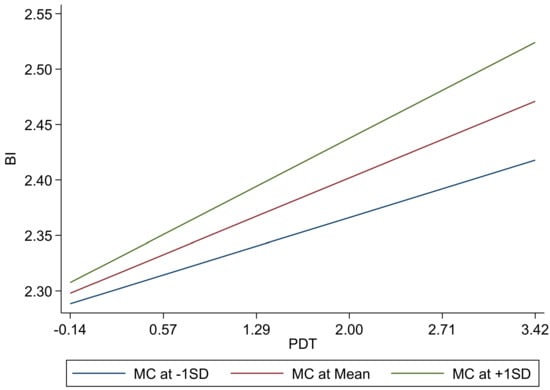
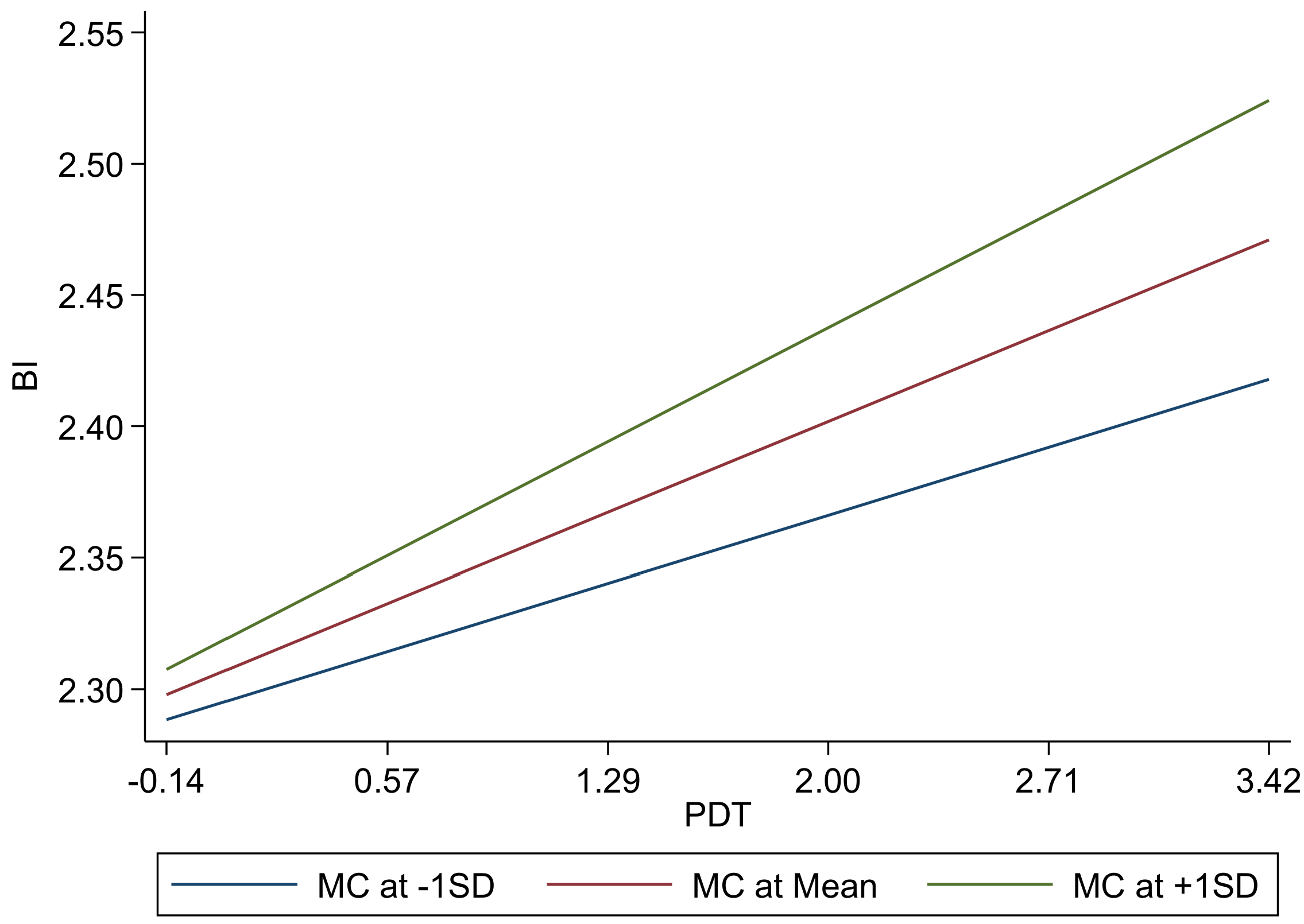
Market competition positively moderates the positive relationship between the peer effect of digital transformation and breakthrough innovation.
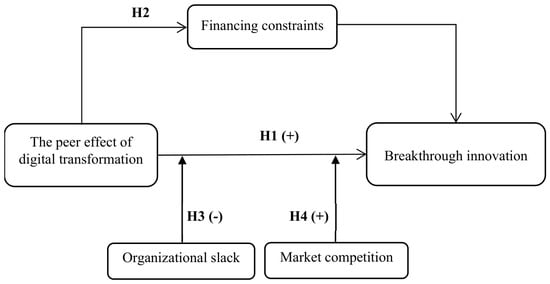
Figure 1 presents the conceptual research framework and relationships posited in the hypotheses. The framework depicts that the peer effect exerts both a direct positive influence on breakthrough innovation and an indirect effect—mediated by financing constraints. Moreover, the framework incorporates two boundary conditions: organizational slack negatively moderates the primary relationship, whereas market competition intensity positively moderates it.
Figure 1.
The research framework of the study.
3. Data and Methods
3.1. Data and Sample
This study employs Chinese A-share listed manufacturing firms from 2008 to 2023 as the research sample. We focus on the manufacturing sector for two principal reasons. First, manufacturing forms a cornerstone of China’s real economy and is among the primary targets of digital transformation [60]. Relative to service and other sectors, manufacturing firms feature more standardized production and business processes, facilitating the quantification and rigorous assessment of digital transformation outcomes. Second, breakthrough innovation holds strategic importance for manufacturing firms. It serves as a core driver enabling enterprises to overcome technological bottlenecks, enhance product value, and sustain competitive advantages in global markets [24]. As the “hard core” of industrial upgrading, breakthrough innovation in manufacturing not only shapes the strategic positioning of individual firms but also underpins the high-quality development of the entire industry.
To ensure sample validity, we apply the following screening criteria to the initial sample: (1) exclusion of firms under special treatment (i.e., T, *ST) and those that are have been delisted; (2) exclusion of firms with missing values or extreme outliers in key variables; and (3) exclusion of newly listed firms (i.e., those listed for less than one year). The final sample comprises 17,436 firm-year observations drawn from 1527 unique enterprises. All continuous variables are winsorized at the 1% level to mitigate the influence of outliers. Patent and financial data are obtained from the China Stock Market & Accounting Research (CSMAR) Database and the Wind Financial Database. Data on digital transformation are constructed through textual analysis and word-frequency statistics applied to firms’ annual reports, which are retrieved from three official and authoritative platform: China Securities Information Service (CNINFO, http://www.cninfo.com.cn/new/index (accessed on January 12, 2026)), Shanghai Stock Exchange (SSE, http://www. sse.com.cn/), and Shenzhen Stock Exchange (SZSE, http://www.szse.cn/). Table 1 and Table 2 present the industry-wise and year-wise distribution of the sample.
Table 1.
Industry-wise distribution of the sample.
Table 2.
Year-wise distribution of the sample.
3.2. Variable Selection
3.2.1. Explained Variable
Breakthrough innovation (BI). Following the prior innovation research [45,61], we operationalize breakthrough innovation as the natural logarithm of one plus the number of invention patents granted to a firm. This measure captures the cumulative scale of a firm’s foundational technological advances while mitigating distributional skewness and appropriately accommodating cases with zero patent grants.
3.2.2. Explanatory Variable
The peer effect of digital transformation (PDT). To construct this variable, we first define peer firms as those operating within the same secondary manufacturing sub-industry, as classified under the China Securities Regulatory Commission’s Industry Classification Guidelines for Listed Companies (2001 and 2012 editions). The peer effect of digital transformation is then calculated as the industry-level average digital transformation intensity across all peer firms, excluding the focal firm itself [39]. Consistent with Akhtar, Tian, Alsedrah, Anwar and Bashir [62], we measure digital transformation intensity using the frequency of digital-related keywords appearing in firms’ annual financial reports.
3.2.3. Mediating Variable
Financing constraints (FCs). Following the widely adopted methodology of Whited and Wu [63], we utilize the WW index to quantify the severity of external financing constraints confronting firms1. A higher WW index value indicates greater difficulty in accessing external capital, thereby reflecting more severe financing constraints.
3.2.4. Moderating Variables
Organizational slack (OS). Following Zhou, Xu, Liu and Feng [6], we measure unabsorbed slack using the current ratio, defined as the ratio of current assets to current liabilities. A higher current ratio indicates a larger stock of unabsorbed slack resources.
Market competition (MC). Adapting the approach of Yu, Cheng and Zhang [64], we quantify market competition using the Herfindahl–Hirschman Index (HHI), calculated from firms’ operating revenue data. Because a higher HHI value reflects less intense market competition, we multiply the HHI index by −1 to construct a positive scaled market competition indicator [20].
3.2.5. Control Variables
To mitigate the potential confounding effects of extraneous factors on breakthrough innovation, we select the following control variables based on prior literature [6,65,66]: firm size (Size), board size (Boa), CEO duality (Dua), return on assets (Roa), cash holdings (Cash), ownership concentration (Top), and Tobin’s Q value (Tobin Q). Table 3 provides an overview of the definitions for the primary variables, while Table 4 displays the descriptive statistics.
Table 3.
Variable description.
Table 4.
Descriptive statistics.
3.3. Model Specification
3.3.1. Baseline Regression Model
To assess the influence of the peer effect of digital transformation on breakthrough innovation, we first establish the existence of this peer effect. The baseline regression model is specified as follows:
To examine the impact of the peer effect of digital transformation on breakthrough innovation, we estimate the following regression model:
where and denote the firm and year, respectively; stands for digital transformation. represents the peer effect of digital transformation. denotes breakthrough innovation. includes a set of control variables. and capture firm and time fixed effects, respectively. is the random disturbance terms.
3.3.2. Mediation Model
To investigate the mediating role of financing constraints in the relationship between the peer effect of digital transformation and breakthrough innovation, we establish the conventional mediation framework, specified as follows:
where denotes the mediating variable (financing constraints). Equation (3) evaluates the impact of the peer effect of digital transformation on financing constraints, and Equation (4) examines the mediating role of financing constraints.
3.3.3. Moderation Model
To test the moderating effects of organizational slack and market competition on the relationship between the peer effect of digital transformation and breakthrough innovation, we specify the following moderated regression model:
where represents the moderator variables (organizational slack and market competition), and the interaction term captures the moderating effect.
4. Empirical Analysis
4.1. Benchmark Regression Analysis
The benchmark regression analysis results are reported in Table 5. Columns (1) and (2) test for the existence of the peer effect of digital transformation. The key distinction between these specifications is that Column (2) incorporates a comprehensive set of control variables, whereas Column (1) omits them. In both columns, the coefficients of PDT are positive and statistically significant at the 1% level, offering robust evidence of a peer effect driven by digital transformation.
Table 5.
Benchmark regression results.
Columns (3) and (4) examine how this peer effect influences breakthrough innovation. As shown in Column (3), the coefficient of PDT is 0.0586 and statistically significant at the 1% level, even in the absence of control variables. In Column (4), after controlling for the full set of control variables, the PDT coefficient remains positive and continues to be significant at the 1% level. Taken together, these results indicate that the peer effect of digital transformation significantly enhances breakthrough innovation, thereby providing empirical support for Hypothesis 1.
4.2. Endogeneity Test
4.2.1. Instrumental Variable Test
To address potential endogeneity concerns, this study adopts the instrumental variable (IV) approach, using IV_Baritik as the instrument variable. IV_Baritik is a shift-share instrument variable constructed by multiplying the one-period lag of digital transformation (DT) for the focal firm by the number of fixed telephone lines in 1984, following the methodology established in previous studies [67,68]. Using this instrument variable, we estimate the model via two-stage least squares (2SLS). The results are presented in Table 6. The tests confirm that the instrumental variable is valid: the Kleibergen–Paap rk LM statistic is significant at the 1% level, rejecting the null hypothesis of underidentification, while the Kleibergen–Paap Wald rk F statistic is 340.833, which is greater than Stock and Yogo’s 10% critical value of 16.4, indicating no weak instrument problem. Thus, IV_Baritik is both appropriate and theoretically justified. As shown in columns (1) and (2) of Table 6, the peer effect of digital transformation significantly promotes breakthrough innovation, thereby reinforcing the robustness of the baseline regression results.
Table 6.
Instrumental variable two-stage regression results.
4.2.2. Lagged the Explanatory Variable
The inclusion of the lagged explanatory variable helps mitigate potential endogeneity concerns and strengthens causal identification. This approach enhances causal inference by attenuating reciprocal causality and eliminating simultaneity bias. Consistent with prior literature [69], we test for endogeneity using the peer effect of digital transformation lagged by one and two periods. As shown in Column (1) and (2) of Table 7, the estimated coefficients of L1.PDT and L2.PDT are 0.559 and 0.482, respectively, and both are significantly positive at 1% level. These results confirm the robustness of our main findings and indicate that they are not influenced by contemporaneous causality.
Table 7.
Lagged the explanatory variable test.
4.3. Additional Robustness Tests
4.3.1. Replacing the Explanatory Variable
In line with prior research [39], we construct an alternative measure of the peer effect of digital transformation as the median digital transformation intensity among peer firms within the same sub-industry (excluding the focal firm). As shown in Column (1) of Table 8, the coefficient of PDT remains statistically significant and positive, reinforcing the robustness of our baseline findings.
Table 8.
Robustness test results.
4.3.2. Replacing the Explained Variable
We further employ the method of replacing the measurement of the explained variable with an alternative proxy for breakthrough innovation. Following established practice in the literature [70], this study adopts the degree of patent dispersion (PD)2 as a proxy variable for breakthrough innovation. The degree of patent dispersion is computed based on the distribution of a firm’s patents across secondary-level International Patent Classification (IPC) codes, capturing the breadth of the firm’s technological scope. The results in column (2) of Table 8 show that the main results of this study do not change.
4.3.3. Adjusting the Sample Period
To mitigate potential confounding effects associated with major macroeconomic shocks, including the 2008 global financial crisis and the COVID-19 pandemic, we follow the work of Wu, Zhang, Ji and Dou [71] and restrict the sample to the period 2009–2019. The regression results reported in Column (2) of Table 8 continue to yield a statistically significant and positive coefficient of PDT, further corroborating the robustness of our baseline results.
4.3.4. Alternative Estimation Method
In the baseline regression model, we incorporate both time and individual fixed effects. However, this specification may fail to account for unobserved heterogeneity at the industry and regional levels. To mitigate this concern, we conduct a robustness check by augmenting the model with industry fixed effects (Industry FE) and region fixed effects (Region FE). The results are reported in column (3) of Table 8. In column (3) of Table 8, the estimated coefficient on PDT is 0.0467, which is statistically significant at the 1% level.
4.4. Mediating Effect Analysis
As shown in Table 9, Column (2) reveals that the peer effect of digital transformation (PDT) is negatively correlated with financing constraints at the 1% significance level, indicating that the peer effect of digital transformation alleviates financing constraints. Column (3) extends the baseline specification by jointly including both PDT and financing constraints (FC) to examine their combined influence on breakthrough innovation. The estimated coefficient on FC is −2.9795 and statistically significant at the 1% level, confirming that financing constraints exert a direct, inhibitory effect on breakthrough innovation. Concurrently, the coefficient on PDT remains positive and highly significant. However, this estimate is slightly attenuated relative to the coefficient in Column (1) (0.0576 → 0.0548), suggesting that financing constraints partially mediate the relationship between PDT and breakthrough innovation. This result provides empirical support for Hypothesis 2.
Table 9.
Mediating effect results.
To further validate the mediating role of financing constraints, we re-estimate the mediation model using the robust Bootstrap Test [72]. The results are presented in Table 10. The indirect effect of PDT on breakthrough innovation operating through financing constraints is estimated at 0.0028, with a 95% bias-corrected confidence interval of [0.0007, 0.0048], which excludes zero. The corresponding direct effect is 0.0548, with a 95% confidence interval of [0.0375, 0.0722]. These findings indicate that while the direct effect of PDT on breakthrough innovation is substantial and robust, the indirect pathway via financing constraints is also statistically significant. Collectively, they confirm the partial mediating role of financing constraints in the relationship between the peer effect of digital transformation and breakthrough innovation.
Table 10.
Bootstrap test results.
4.5. Moderating Effect Analysis
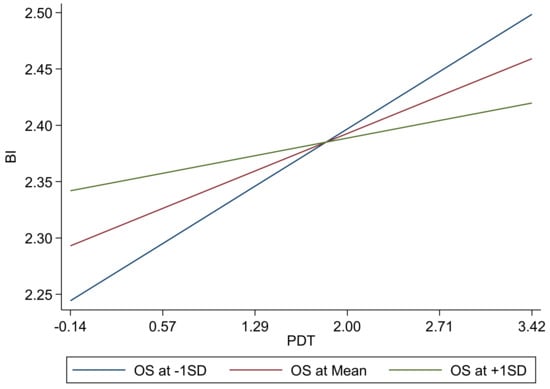
Table 11 presents the moderating effects of organizational slack and market competition. Column (1) of Table 11 shows that the interaction term PDT × OS has a coefficient of −0.0013 and is statistically significant at the 1% level, indicating that organizational slack significantly weakens the positive relationship between the peer effect of digital transformation and breakthrough innovation. This finding provides empirical support for Hypothesis 3. To enhance interpretability, we visualize the moderating effect of organizational slack in Figure 2. The outcome portrayed in Figure 2 further supports Hypothesis 3.
Table 11.
Moderating effect results.
Figure 2.
Moderating effect of organizational slack.
Column (2) of Table 11 reports that the interaction term PDT * MC is 0.0964 and significant at the 10% level, suggesting that heightened market competition strengthens the positive association between the peer effect of digital transformation and breakthrough innovation, thereby lending support to Hypothesis 4. Consistent with this result, Figure 3 graphically illustrates the moderating role of market competition, reinforcing the validity of Hypothesis 4.
Figure 3.
Moderating effect of market competition.
4.6. Heterogeneity Analysis
4.6.1. Regional Heterogeneity Analysis
China exhibits pronounced regional disparities in economic development, macro policies, and digital infrastructure, which critically influence firms’ breakthrough innovation activities [23]. To investigate regional heterogeneity in the relationship between the peer effect of digital transformation and breakthrough innovation, we divide our sample into eastern and midwestern regions according to firms’ registered locations. As shown in Columns (1) and (2) of Table 12, the peer effect of digital transformation exerts a statistically significant positive impact on breakthrough innovation in both regions, yet this effect is significantly stronger among firms located in the midwestern region. This differential result can be attributed to the catch-up effect and technology diffusion dividend. Firms in the midwestern regions, with relatively underdeveloped digital foundations, can directly adopt replicable digital practices, proven technical pathways, and validated application scenarios from their peers. Such knowledge spillovers substantially reduce trial-and-error costs and lower learning barriers associated with digital transformation, thereby generating higher marginal returns and facilitating the resolution of innovation bottlenecks. Moreover, following Cleary (1999) [73], we employ Fisher’s permutation test with 1000 bootstrap replications to rigorously assess the statistical significance of the coefficient difference across regions. The test results confirm that the coefficient of PDT differs significantly between the eastern and midwestern regions at the 5% level.
Table 12.
Heterogeneity analysis results.
4.6.2. Ownership Heterogeneity Analysis
State-owned enterprises (SOEs) and non-SOEs exhibit substantial disparities in their access to fiscal subsidies, eligibility for policy preferences, and exposure to government intervention [74], which may give rise to heterogeneous peer effects of digital transformation on breakthrough innovation. Columns (3)–(4) of Table 12 show that, relative to SOEs, the peer effects of digital transformation exert a significantly stronger positive influence on breakthrough innovation among non-SOEs. This disparity stems primarily from differences in governance structures and operational flexibility [75]. Unencumbered by rigid bureaucratic procedures, non-SOEs demonstrate greater operational agility and faster decision-making capabilities than SOEs. Their heightened market responsiveness and entrepreneurial orientation better align organizational incentives with innovation outcomes, enabling them to more effectively assimilate peer-driven digital practices and rapidly convert them into tangible breakthrough innovations. In contrast, SOEs must balance multiple non-market objectives, including social stability, employment maintenance, and strategic control, whereas non-SOEs prioritize leveraging digital transformation to enhance competitive advantage. Consequently, non-SOEs are better positioned to capitalize on peer effects, thereby amplifying the facilitative role of such effects in advancing breakthrough innovation.
5. Conclusions and Discussion
5.1. Conclusions
Drawing on empirical data from Chinese A-share listed manufacturing firms over the period 2008–2023, this study examines how the peer effect of digital transformation influences breakthrough innovation, along with its underlying mechanisms and boundary conditions. The benchmark regression results reveal a statistically significant positive association between the peer effect of digital transformation on breakthrough innovation. This finding proves robust across multiple robustness tests, including alternative measures of the key independent variable, adjustments to the sample period, and modifications to model specifications. Furthermore, the mediation analysis confirms that financing constraints exert a statistically significant mediating role in the relationship between the peer effect of digital transformation and breakthrough innovation. This insight helps unpack the “black box” mechanism by which the peer effect of digital transformation significantly affects breakthrough innovation. In addition, the moderation analysis identifies two distinct boundary conditions: organizational slack negatively moderates, whereas market competition positively moderates, the relationship between the peer effect of digital transformation and breakthrough innovation. Finally, the heterogeneity analyses indicate that the positive impact of the peer effect of digital transformation on breakthrough innovation is significantly more pronounced for firms located in China’s midwestern regions and for non-state-owned enterprises (non-SOEs).
5.2. Managerial and Policy Implications
This study yields important managerial implications for firms seeking to leverage the peer effect arising from digital transformation to drive breakthrough innovation. First, firms should establish proactive mechanisms for peer learning and knowledge absorption, such as systematic benchmarking against industry leaders’ mature digital transformation practices and empirically validated technological pathways. These initiatives help reduce trial-and-error costs inherent in digital transformation and convert peer-induced spillovers into tangible breakthrough innovations. Concurrently, active participation in industry-wide digital communication platforms and collaborative innovation initiatives fosters inter-firm experience sharing, cultivates a robust ecosystem for industrial digital upgrading, and amplifies the positive innovation spillovers generated by the peer effect of digital transformation. Second, firms should prioritize alleviating financing constraints, which represent the core mediating mechanism empirically validated in this study. Strategic actions, such as participation in peer-cluster financing arrangements, adoption of digitization-specific financial instruments, and deepened collaboration with financial institutions can effectively unblock the transmission channel linking the peer effect to breakthrough innovation. Third, firms should dynamically manage organizational slack in response to evolving market competition. Streamlining redundant resources mitigates operational inefficiencies associated with excess slack, and calibrating digital transformation strategies to align with competitive market dynamics helps prevent attenuation of the peer effect’s positive impact due to insufficient competitive pressure or underutilized resources.
This study also provides important policy implications for policymakers aiming to amplify the spillover effects of digital transformation and optimize the broader innovation ecosystem. First, policymakers should adopt differentiated support policies calibrated to regional and ownership characteristics. Given the stronger peer effects observed in the midwestern regions, expanding investment in digital infrastructure and establishing regional platforms to share best practices in digital transformation can position pioneering firms as benchmarks and catalyze cross-firm collaborative innovation. For non-SOEs, strengthening financing guarantee systems can enhance their operational agility and entrepreneurial dynamism. For SOEs, reforming corporate governance structures to better align policy mandates with market-oriented strategies will improve their absorptive capacity for peer knowledge and strengthen the conversion of such knowledge into tangible innovation outcomes. Second, policymakers should shape contextual conditions through targeted institutional design. Such interventions can foster healthy, rational market competition while mitigating zero-sum rivalry that erodes firms’ innovation incentives. Moreover, policymakers may introduce well-calibrated incentive mechanisms to reallocate organizational slack toward innovation-oriented activities. Collectively, these measures help cultivate an institutional environment that enables peer effects to operate effectively and sustainably. Third, policymakers should nurture industry-level coordination mechanisms. This includes encouraging industry associations to develop curated repositories of digital transformation case studies, organizing thematic exchange forums to facilitate experiential learning and peer dialogue, and promoting finance-industry integration to co-design tailored financing instruments. These initiatives collectively address critical bottlenecks in the transmission and amplification of peer effects across firms.
5.3. Limitations and Discussion
This study has several limitations that should be taken into consideration in future research. First, the definition of “peers” rests exclusively on sub-industry affiliation, thereby oversimplifying the multifaceted and dynamic nature of real-world peer interactions. Informal relational ties such as inter-firm strategic alliances, executive-level social networks, or supply chain partnerships may substantially amplify or attenuate peer-driven learning effects. These dimensions are not fully incorporated into the construction of the peer network. Future studies could therefore leverage social network analysis or text-mining techniques to identify empirically grounded peer relationships with greater precision, conceptual fidelity and methodological rigor.
Second, in addition to financing constraints, other mechanisms may mediate the peer effect of digital transformation on breakthrough innovation, such as knowledge spillovers, alleviation of information asymmetry, or organizational learning. A systematic investigation of these alternative pathways would yield a more comprehensive and theoretically nuanced understanding of the underlying mechanisms.
Third, this study focuses exclusively on the average linear impact of the peer effect of digital transformation on breakthrough innovation, overlooking potential nonlinearities and dynamic evolutionary patterns in such spillover effects. In practice, the innovation spillovers stemming from the peer effect of digital transformation may exhibit threshold behavior, contingent upon firms’ resource endowments and digital maturity. Future research may thus adopt threshold regression models or dynamic panel data estimation techniques to better capture the nonlinear and time-varying properties of the peer effect of digital transformation.
Author Contributions
Conceptualization: N.Y., Q.L. and Z.X.; methodology: N.Y., Q.L. and Z.X.; software: N.Y., Q.L. and Z.X.; validation: N.Y., Q.L. and Z.Z.; formal analysis: Q.L. and Z.Z.; investigation: N.Y. and Z.X.; resources: N.Y. and Q.L.; data curation: N.Y. and Z.Z.; writing—original draft preparation: N.Y., Q.L. and Z.X.; visualization: Z.X. and Z.Z.; supervision: Q.L. and Z.Z.; project administration: Q.L. and Z.X.; funding acquisition: N.Y. All authors have read and agreed to the published version of the manuscript.
Funding
This research was funded by the the National Social Science Fund of China [Grant number: 25CKX034).
Institutional Review Board Statement
Not Applicable.
Informed Consent Statement
Not Applicable.
Data Availability Statement
The data used in this study are available upon request. Please contact the corresponding author for access.
Conflicts of Interest
The authors declare no conflicts of interest.
Notes
| 1 | The calculation formula for WW index is as follows:
WW = − 0.091 ∗ CF − 0.062 ∗ Divpos + 0.021 ∗ Lev − 0.044 ∗ Size + 0.102 ∗ ISG − 0.035 ∗ SG
|
| 2 | The calculation formula for patent dispersion is as follows:
|
References
- Chen, W.M.; Luo, Y.L.; Rao, M.; Zhang, P.D. Too much teamwork? The effect of corporate collaboration culture on breakthrough innovation. Financ. Res. Lett. 2025, 78, 106913. [Google Scholar] [CrossRef] [Scilit]
- Byun, S.K.; Oh, J.-M.; Xia, H. Incremental vs. breakthrough innovation: The role of technology spillovers. Manag. Sci. 2021, 67, 1779–1802. [Google Scholar] [CrossRef] [Scilit]
- Capponi, G.; Martinelli, A.; Nuvolari, A. Breakthrough innovations and where to find them. Res. Policy 2022, 51, 104376. [Google Scholar] [CrossRef] [Scilit]
- Ahuja, G.; Lampert, C.M. Entrepreneurship in the large corporation: A longitudinal study of how established firms create breakthrough inventions. Strateg. Manag. J. 2010, 22, 521–543. [Google Scholar] [CrossRef] [Scilit]
- Alrowwad, A.; Abualooush, S.H.; Masa’Deh, R.E. Innovation and Intellectual Capital as Intermediary Variables among Transformational Leadership, Transactional Leadership, and Organizational Performance. J. Manag. Dev. 2020. [Google Scholar] [CrossRef] [Scilit]
- Zhou, Y.; Xu, J.J.; Liu, Z.Y.; Feng, J.H. Digital Transformation and Innovation Strategy Selection: The Contingent Impact of Organizational and Environmental Factors. IEEE Trans. Eng. Manag. 2024, 71, 9744–9763. [Google Scholar] [CrossRef] [Scilit]
- Liu, B. How does digital transformation enhance enterprise technological innovation? Evidence from Chinese manufacturing listed companies. Technol. Soc. 2025, 82, 102884. [Google Scholar] [CrossRef] [Scilit]
- Wu, Y.; Li, H.H.; Luo, R.Y.; Yu, Y.B. How digital transformation helps enterprises achieve high-quality development? Empirical evidence from Chinese listed companies. Eur. J. Innov. Manag 2024, 27, 2753–2779. [Google Scholar] [CrossRef] [Scilit]
- Li, B.; Pan, A.; Xu, L.; Liu, X.; Qin, S. Imprinting and peer effects in acquiring state ownership: Evidence from private firms in China. Pac.-Basin Financ. J. 2020, 61, 101337. [Google Scholar] [CrossRef] [Scilit]
- Chang, K.; Li, J.; Xiao, L.J. Hear all parties: Peer effect of digital transformation on long-term firm investment in China. Manag. Decis. Econ. 2024, 45, 1242–1258. [Google Scholar] [CrossRef] [Scilit]
- Hu, X.Q.; Weng, X.L.; He, Z.W. Does enterprise digital transformation promote technological innovation? Empirical evidence from China. Chin. Manag. Stud. 2024, 18, 1164–1193. [Google Scholar] [CrossRef] [Scilit]
- Du, J.; Shen, Z.; Song, M.; Zhang, L. Nexus between digital transformation and energy technology innovation: An empirical test of A-share listed enterprises. Energy Econ. 2023, 120, 106572. [Google Scholar] [CrossRef] [Scilit]
- Li, X.; Qing, L.; Wei, H.; Wei, J. Artificial intelligence and innovation ambidexterity in advanced manufacturing firms: A knowledge-management perspective. J. Manuf. Technol. Manag. 2026. [Google Scholar] [CrossRef] [Scilit]
- Zhang, G.; Xia, Y.; Wang, C.; Dong, Y. The inverted-U relationship between innovation performance feedback and digital transformation: Evidence from China. Technol. Anal. Strateg. Manag. 2025, 37, 4016–4031. [Google Scholar] [CrossRef] [Scilit]
- Zhen, G.; Jinjin, L.; Zhiping, R.; Manli, S. Manufacturing breakthrough: Analysing the differential effect of digital transformation on continuous innovation capability in enterprises. Technol. Anal. Strateg. Manag. 2025, 37, 171–186. [Google Scholar] [CrossRef] [Scilit]
- Mu, R.Y.; Xu, Y.; Zhang, J.S. Digital Transformation, Enterprise Niche Resilience, and Substantive Innovation in Manufacturing Single Champion Enterprises. Systems 2025, 13, 235. [Google Scholar] [CrossRef] [Scilit]
- Vaska, S.; Massaro, M.; Bagarotto, E.M.; Dal Mas, F. The Digital Transformation of Business Model Innovation: A Structured Literature Review. Front. Psychol. 2021, 11, 539363.1–539363.18. [Google Scholar] [CrossRef] [Scilit] [PubMed]
- Li, X.; Li, X.; Ding, S. Digital transformation and innovation ambidexterity: Perspectives on accumulation and resilience effects. Eur. J. Innov. Manag 2024, 28, 1601–1624. [Google Scholar] [CrossRef] [Scilit]
- Wang, Y.Z.; He, P.Z. Enterprise digital transformation, financial information disclosure and innovation efficiency. Financ. Res. Lett. 2024, 59, 104707. [Google Scholar] [CrossRef] [Scilit]
- Meng, M.M.; Fan, S.Y.; Lei, J.S.; Feng, Y.B. Breaking Down the Barriers to Innovation Quality: The Impact of Digital Transformation. Systems 2025, 13, 295. [Google Scholar] [CrossRef] [Scilit]
- He, K.; Chen, W.Y. Can digital transformation improve corporate green innovation? Technol. Anal. Strateg. Manag. 2025, 37, 1509–1525. [Google Scholar] [CrossRef] [Scilit]
- Dou, Z.X.; Jia, S.S. The Synergistic Empowerment of Digital Transformation and ESG on Enterprise Green Innovation. Systems 2025, 13, 740. [Google Scholar] [CrossRef] [Scilit]
- Wang, Z.Y.; Fang, C.; Liu, X.X. Does Digital Transformation Stimulate Breakthrough Innovation? Evidence From Chinese Firms. Ieee Trans. Eng. Manag. 2024, 71, 11599–11614. [Google Scholar] [CrossRef] [Scilit]
- Xu, L.; Zhou, Y.S.; Chen, L. Digital Transformation and Breakthrough Innovation in Chinese Manufacturing Firms: Based on Ability-Motivation-Opportunity (AMO) Framework of Human Capital. Sage Open 2024, 14, 1–18. [Google Scholar] [CrossRef] [Scilit]
- Henderson, V.; Mieszkowski, P.; Sauvageau, Y. Peer group effects and educational production functions. J. Public Econ. 1978, 10, 97–106. [Google Scholar] [CrossRef] [Scilit]
- Lieberman, M.B.; Asaba, S. Why Do Firms Imitate Each Other? Acad. Manag. Rev. 2006, 31, 366–385. [Google Scholar] [CrossRef] [Scilit]
- Cao, J.; Liang, H.; Zhan, X.T. Peer Effects of Corporate Social Responsibility. Manag. Sci. 2019, 65, 5487–5503. [Google Scholar] [CrossRef] [Scilit]
- Gyimah, D.; Machokoto, M.; Sikochi, A.S. Peer Influence on Trade Credit. J. Corp. Financ. 2020, 64, 101685. [Google Scholar] [CrossRef] [Scilit]
- Machokoto, M.; Chipeta, C.; Ibeji, N. The institutional determinants of peer effects on corporate cash holdings. J. Int. Financ. Mark. Inst. Money 2021, 73, 101378. [Google Scholar] [CrossRef] [Scilit]
- Liu, F.; Liang, C. Exploring the peer effect of green innovation within manufacturing enterprises. Manag. Decis. Econ. 2024, 45, 1104–1118. [Google Scholar] [CrossRef] [Scilit]
- Liu, L.; Yang, J.G.; Zheng, M.N.; Jin, L.L. Peer effect of enterprise innovation: Empirical evidence from China. Front. Psychol. 2022, 13, 921127. [Google Scholar] [CrossRef] [Scilit] [PubMed]
- Liu, H.; Cui, C.X.; Chen, X.H.; Xiu, P.S. How can regional integration promote corporate innovation? A peer effect study of R&D expenditure. J. Innov. Knowl. 2023, 8, 100444. [Google Scholar] [CrossRef] [Scilit]
- Liang, Z.D.; Yang, X. The impact of green finance on the peer effect of corporate ESG information disclosure. Financ. Res. Lett. 2024, 62, 105080. [Google Scholar] [CrossRef] [Scilit]
- Li, Y.X.; Wang, D.; Meng, D.L.; Hu, Y.E. Peer effect on climate risk information disclosure. China J. Account. Res. 2024, 17, 168–197. [Google Scholar] [CrossRef] [Scilit]
- Gu, Y.; Xie, W.W.; Qian, X.X.; Lv, J.M. Peer effect in mergers and acquisitions for green innovation. J. Innov. Knowl. 2025, 10, 100734. [Google Scholar] [CrossRef] [Scilit]
- Pan, X.Z.; Xu, G.X.; Zhu, N.N. Spatial Peer Effect of Enterprises’ Digital Transformation: Empirical Evidence from Spatial Autoregressive Models. Sustainability 2022, 14, 12576. [Google Scholar] [CrossRef] [Scilit]
- Ren, X.H.; Zeng, G.D.; Sun, X.M. The peer effect of digital transformation and corporate environmental performance: Empirical evidence from listed companies in China. Econ. Model. 2023, 128, 106515. [Google Scholar] [CrossRef] [Scilit]
- Hu, Y.C.; Li, Q.Y.; Ma, B.Y.; Lan, T.; Geng, W.; Li, B.H. Peer Effects in Corporate Digital Transformation within Supply Chain Networks. Teh. Vjesn. Tech. Gaz. 2024, 31, 1464–1477. [Google Scholar] [CrossRef] [Scilit]
- Li, X.; Zhang, G.Y.; Zheng, F.Y.; Qi, Y. Can Peer Effect of Digital Transformation Promote Enterprise Innovation: Evidence and Mechanism Interpretation. Manag. Decis. Econ. 2026, 47, 126–142. [Google Scholar] [CrossRef] [Scilit]
- Zhang, A.Q.; Guo, X.Q.; Zhang, W.J.; Liu, Z.L. Research on the mechanism by which digital transformation peer effects influence innovation performance in emerging industries: A case study of China’s photovoltaic industry. PLoS ONE 2025, 20, e0313615. [Google Scholar] [CrossRef] [Scilit] [PubMed]
- Schmitt, A.; Iii, V.L.B.; Raisch, S.; Whetten, D. Strategic Renewal in Times of Environmental Scarcity. Long. Range Plan. 2016, 49, 361–376. [Google Scholar] [CrossRef] [Scilit]
- Chatterjee, S.; Mariani, M. Exploring the Influence of Exploitative and Explorative Digital Transformation on Organization Flexibility and Competitiveness. IEEE Trans. Eng. Manag. 2024, 71, 13616–13626. [Google Scholar] [CrossRef] [Scilit]
- Wu, L.; Shi, J. From peer influence to green cognition: How digital transformation fosters renewable energy innovation in manufacturing. Energy Econ. 2025, 148, 108691. [Google Scholar] [CrossRef] [Scilit]
- Yang, Y.; Zhang, C.; Liu, B.; Huang, Y.; Tai, Y. Mystery of special government subsidies: How does digital transformation promote enterprise innovation and development? Econ. Anal. Policy 2024, 83, 1–16. [Google Scholar] [CrossRef] [Scilit]
- Li, X.L.; Zhang, Y.T.; Yan, J.; Zhang, M.H. The impact of digital transformation on dual innovation: An investigation from the financing constraint perspective. Technol. Anal. Strateg. Manag. 2025, 37, 4300–4315. [Google Scholar] [CrossRef] [Scilit]
- Wang, X.; Deng, Y.; Mao, X. The impact of bank digital transformation on enterprises digital technology innovation in China. Int. Rev. Financ. Anal. 2025, 102, 104068. [Google Scholar] [CrossRef] [Scilit]
- Chen, L.; Tu, R.; Huang, B.; Zhou, H.; Wu, Y. Digital transformation’s impact on innovation in private enterprises: Evidence from China. J. Innov. Knowl. 2024, 9, 100491. [Google Scholar] [CrossRef] [Scilit]
- Wang, Z. Enterprise digital transformation and accounting information transparency. Highlights Bus. Econ. Manag. 2023, 9, 683–697. [Google Scholar] [CrossRef] [Scilit]
- Bourgeois, L.J.; Singh, J.V. Organizational Slack and Political Behavior Among Top Management Teams. Acad. Manag. Proc. 1983, 1983, 43–47. [Google Scholar] [CrossRef] [Scilit]
- Singh, J.V. Performance, slack, and risk taking in organizational decision making. Acad. Manag. J. 1986, 29, 562–585. [Google Scholar] [CrossRef] [Scilit]
- Tan, J.; Peng, M.W. Organizational slack and firm performance during economic transitions: Two studies from an emerging economy. Strateg. Manag. J. 2003, 24, 1249–1263. [Google Scholar] [CrossRef] [Scilit]
- Tabesh, P.; Vera, D.; Keller, R.T. Unabsorbed slack resource deployment and exploratory and exploitative innovation: How much does CEO expertise matter? J. Bus. Res. 2019, 94, 65–80. [Google Scholar] [CrossRef] [Scilit]
- Geiger, S.W.; Makri, M. Exploration and exploitation innovation processes: The role of organizational slack in R & D intensive firms. J. High Technol. Manag. Res. 2006, 17, 97–108. [Google Scholar] [CrossRef] [Scilit]
- Zhao, X.; Su, J.; Roh, T.; Lee, J.Y.; Zhan, X. Technological diversification and innovation performance: The moderating effects of organizational slack and ownership in Chinese listed firms. Cross Cult. Strateg. Manag. 2024, 31, 356–378. [Google Scholar] [CrossRef] [Scilit]
- Duan, Y.; Wang, W.; Zhou, W. The multiple mediation effect of absorptive capacity on the organizational slack and innovation performance of high-tech manufacturing firms: Evidence from Chinese firms. Int. J. Prod. Econ. 2020, 229, 107754. [Google Scholar] [CrossRef] [Scilit]
- Kim, K.; Kim, B. Decision-Making Model for Reinforcing Digital Transformation Strategies Based on Artificial Intelligence Technology. Information 2022, 13, 253. [Google Scholar] [CrossRef] [Scilit]
- Zhang, H.; Zhang, X.; Tan, H.; Tu, Y. Government subsidies, market competition and firms’ technological innovation efficiency. Int. Rev. Econ. Financ. 2024, 96, 103567. [Google Scholar] [CrossRef] [Scilit]
- Guo, D.; Guo, Y.; Jiang, K. Government R&D support and firms’ access to external financing: Funding effects, certification effects, or both? Technovation 2022, 115, 102469. [Google Scholar] [CrossRef] [Scilit]
- Liu, Y.Y.; Wang, A.G.; Wu, Y.Q. Environmental regulation and green innovation: Evidence from China’s new environmental protection law. J. Clean. Prod. 2021, 297, 126698. [Google Scholar] [CrossRef] [Scilit]
- Zheng, H.; Ye, A.Z. Digital transformation and technology innovation: Evidence from Chinese manufacturing listed enterprises. Technol. Anal. Strateg. Manag. 2025, 37, 3345–3362. [Google Scholar] [CrossRef] [Scilit]
- Liu, J.L.; Chen, Y.Y.; Liang, F.H. The effects of digital economy on breakthrough innovations: Evidence from Chinese listed companies. Technol. Forecast. Soc. Change 2023, 196, 122866. [Google Scholar] [CrossRef] [Scilit]
- Akhtar, S.; Tian, H.; Alsedrah, I.T.; Anwar, A.; Bashir, S. Green mining in China: Fintech’s contribution to enhancing innovation performance aimed at sustainable and digital transformation in the mining sector. Resour. Policy 2024, 92, 104968. [Google Scholar] [CrossRef] [Scilit]
- Whited, T.M.; Wu, G. Financial constraints risk. Rev. Financ. Stud. 2006, 19, 531–559. [Google Scholar] [CrossRef] [Scilit]
- Yu, Y.; Cheng, L.; Zhang, D. How does market competition affect enterprise cooperative innovation? The moderating role of intellectual property protection and government subsidies. Technovation 2024, 137, 103102. [Google Scholar] [CrossRef] [Scilit]
- Shang, J.; Guo, T.; Ding, X.Z. Pinpoint the Golden Point: A Moderated Inverted-U Relationship Between Digital Transformation and Business Model Innovation. Manag. Decis. Econ. 2025, 46, 3250–3265. [Google Scholar] [CrossRef] [Scilit]
- Zhao, Y.D.; Feiya, S. Digital transformation, entrepreneurs’ risk perception, and enterprise innovation: Moderating effect of market dynamism. Appl. Econ. 2026, 58, 4274–4291. [Google Scholar] [CrossRef] [Scilit]
- Cen, T.; Lin, S. Digital Transformation and Corporate Innovation in SMEs. Systems 2025, 13, 551. [Google Scholar] [CrossRef]
- Goldsmith-Pinkham, P.; Sorkin, I.; Swift, H. Bartik instruments: What, when, why, and how. Am. Econ. Rev. 2020, 110, 2586–2624. [Google Scholar] [CrossRef] [Scilit]
- Xue, X.; Li, L.; Chen, J.; Luo, T. How Does Digital Technology Innovation Quality Empower Corporate ESG Performance? The Roles of Digital Transformation and Digital Technology Diffusion. Systems 2025, 13, 929. [Google Scholar] [CrossRef] [Scilit]
- Makri, M.; Hitt, M.A.; Lane, P.J. Complementary technologies, knowledge relatedness, and invention outcomes in high technology mergers and acquisitions. Strateg. Manag. J. 2010, 31, 602–628. [Google Scholar] [CrossRef] [Scilit]
- Wu, Z.H.; Zhang, M.Y.; Ji, R.B.; Dou, W. How does enterprise digital transformation promote green innovation? Evidence from listed companies in China. Appl. Econ. 2025, 57, 9807–9822. [Google Scholar] [CrossRef] [Scilit]
- Alfons, A.; Ateş, N.Y.; Groenen, P.J.F. A Robust Bootstrap Test for Mediation Analysis. Organ. Res. Methods 2022, 25, 591–617. [Google Scholar] [CrossRef] [Scilit]
- Cleary, S. The Relationship Between Firm Investment and Financial Status. J. Financ. 1999, 54, 673–692. [Google Scholar] [CrossRef] [Scilit]
- Xu, Y.; Ji, J.Z.; Qiao, Y.; Huang, J.L. How and when does digital transformation promote technological innovation performance? A study of Chinese high-tech firms. Technovation 2025, 146, 103294. [Google Scholar] [CrossRef] [Scilit]
- Qin, T.; Qin, C.; Wang, J.X.; Xing, H.Y. Can the digital economy enhance enterprises’ breakthrough innovation? Int. Rev. Financ. Anal. 2025, 104, 104269. [Google Scholar] [CrossRef] [Scilit]

Disclaimer/Publisher’s Note: The statements, opinions and data contained in all publications are solely those of the individual author(s) and contributor(s) and not of MDPI and/or the editor(s). MDPI and/or the editor(s) disclaim responsibility for any injury to people or property resulting from any ideas, methods, instructions or products referred to in the content. |
© 2026 by the authors. Licensee MDPI, Basel, Switzerland. This article is an open access article distributed under the terms and conditions of the Creative Commons Attribution (CC BY) license.