


Abstract
As robotaxis transition from technological validation to commercial operation, converting first-time tryers into long-term users becomes pivotal for achieving sustainable development. Existing research mainly examines factors affecting initial adoption intention for robotaxis from a net-effect perspective, yet little is known about the factors affecting continuance intention and their nonlinear causal mechanisms. This study integrates the Expectation–Confirmation Model (ECM) and the Unified Theory of Acceptance and Use of Technology (UTAUT) to construct a systematic analytical framework and employs fuzzy-set Qualitative Comparative Analysis (fsQCA) for configurational analysis. Using survey data from 327 users in China with actual robotaxi experiences, the findings unveil four factor configurations driving high continuance intention and two causing non-high continuance intention. Regarding the interplay of factors driving high continuance intention, post-usage usefulness, satisfaction, and perceived safety constitute a complementary mechanism, whereas expectation confirmation and personal innovativeness form a substitutive mechanism that depends on the specific patterns of factor configurations. This study contributes to the robotaxi adoption literature by extending the research context to the post-adoption phase, developing a tailored theoretical framework, and applying a configurational approach rooted in complex systems analysis paradigms. The findings offer implications for governments to formulate synergistic policy mixes and for robotaxi companies to design user retention strategies.
1. Introduction
Autonomous driving, as a disruptive technological innovation of the 21st century, is profoundly reshaping human mobility patterns [1]. Robotaxis represent a typical application scenario of autonomous driving technology, enabling automated route planning and passenger mobility services without human driver intervention [2]. This model is not only viewed as a potential solution for enhancing traffic efficiency, promoting low-carbon mobility, and reducing human-caused accident rates [3], but also carries the strategic vision of accelerating the digitization of transportation ecosystems and the construction of smart cities [4].
Technology companies such as Waymo, Cruise, and Baidu are advancing the development of robotaxis in many countries, gradually transitioning from the technology validation phase to the commercial operation phase [5]. China stands out in this field. By the end of 2025, over 10 Chinese cities had established robotaxi operation areas, with Baidu’s Apollo Go, WeRide, and Pony.ai each operating a fleet exceeding 1000 robotaxis [6]. Among them, Apollo Go had accumulated over 17 million user orders, surpassing Waymo to become the world’s largest robotaxi service platform [7]. It is estimated that the Chinese market size for robotaxis will reach 51.5 billion yuan by 2030, accounting for 10% of the mobility service market [8]. These figures mark China’s leading role in the initial accumulation of robotaxi user scale.
However, the commercial success of robotaxis depends not only on the initial user scale but more critically on whether users develop a continuance intention after first experiences [9]. Continuance intention reflects users’ long-term recognition of a service’s value, serving as a key metric for assessing market retention and commercial potential [10]. If users abandon repeat usage, not only will the company’s prior investments turn into sunk costs, but it may also trigger negative word-of-mouth that hinders market expansion [11]. In Chinese cities having launched robotaxi projects, over 36% of users refuse to use robotaxis again due to safety concerns, unmet expectations, or insufficient convenience [12]. A survey from Beijing’s Yizhuang pilot zone indicates that the retention rate for six-month active users stands at just 30%, significantly lower than the 60–70% retention rate of traditional ride-hailing services [5]. This phenomenon underscores the urgency and significance of investigating robotaxi users’ continuance intention. Such research will not only facilitate a deeper understanding of the dynamic evolution of user behaviors but also provide evidence for robotaxi companies to develop systematic strategies that simultaneously attract new users and retain existing users.
We identify three research gaps that warrant further exploration. The first lies in the limitations of research perspectives and samples. Previous studies have extensively examined potential users’ initial adoption intention toward robotaxis [2,13,14], while paying insufficient attention to existing users’ continuance intention. Compared to the pre-adoption phase, where user decisions are primarily driven by curiosity, media, and performance expectancy, the decision-making mechanism in the post-adoption phase is more complex. It is influenced not only by the consistency between prior expectations and actual experiences, but also by factors like service satisfaction, facilitating conditions, and emotional value during the ride [15,16]. This suggests a phased difference in the robotaxi adoption mechanisms. Furthermore, prior studies have mostly relied on simulation experiments or surveys of non-experiencers [17], lacking data collection and analysis of experienced users in real-world robotaxi operations [18]. These limitations result in a poor understanding within both academia and industry regarding “why robotaxi users stay or leave”.
The second gap lies in the inadequate fit of theoretical models. While a few studies have examined the continuance mechanisms of autonomous vehicles and robotaxis [19,20,21], they typically rely on classical models such as the Technology Acceptance Model (TAM) [22] and the Unified Theory of Acceptance and Use of Technology (UTAUT) model [23]. The factors and pathways within these models are primarily designed for the pre-adoption phase, struggling to capture the unique psychological and behavioral dynamics in the post-adoption phase [10]. For instance, some studies have identified factors beyond the classical model constructs—such as post-usage usefulness, personal innovativeness, perceived safety, and psychological ownership—that may play a significant role in users’ decision to reuse robotaxis [5,9,24]. Therefore, it is necessary to develop a theoretical framework specific to robotaxi users’ continuance intention and empirically test its applicability. This would provide a robust theoretical foundation for subsequent research, enabling findings on key factors and causal mechanisms to better inform policymaking and business practices for robotaxi sustainable development.
The third gap lies in the insufficient examination of the joint effects of factors and complex causal mechanisms. Existing studies predominantly employ methods grounded in net-effect thinking, such as structural equation modeling and regression analysis, which focus on the independent influence of factors or predefined mediating and moderating mechanisms [25,26]. However, whether an individual adopts robotaxis is a holistic judgment shaped by the interplay of personal and environmental factors [3,27]. Particularly for existing users, subjective perceptions, firsthand experiences, and emotional gains all contribute to their judgments [15], resulting in causal complexity and user heterogeneity in continuance decisions [28]. In this context, examining only the net effects of factors and predefined causal pathways may limit the interpretability of findings. A recent trend shows a growing number of causal mechanism studies employing the configurational approach [29,30], aiming to capture the joint effects of factors as a holistic configuration and identify multiple equivalent configurations [31]. Furthermore, by comparing equivalent configurations yielding the same outcome, researchers can identify complementary and substitutive mechanisms among factors to deepen insights [32]. Overall, given the causal complexity inherent in robotaxi users’ continuance intention, the configurational approach may yield findings closer to real-world decision-making contexts, thereby providing systematic and nuanced guidance for policy and practice.
Given the aforementioned research gaps, this study proposes three research questions: (1) What are the key factors influencing robotaxi users’ continuance intention? (2) For users who have experienced robotaxis, what configurations of factors drive their intention to continue using or to abandon this service? (3) Are there complementary or substitutive mechanisms among factors that can explain the synergistic forces and diverse pathways shaping user decisions?
To address these questions, this study constructs a systematic analytical framework by integrating the Expectation Confirmation Model (ECM) and the UTAUT, encompassing robotaxi users’ continuance intention and nine antecedent factors. ECM is tailored for analyzing consumer behavioral intentions in the post-adoption phase [10]. Although proven to possess strong explanatory power and cross-context applicability [33], the ECM framework is relatively simple (comprising only three antecedent constructs: expectation confirmation, perceived usefulness, and satisfaction), with limited consideration for environmental-level and context-specific factors [34]. Integrating it with the UTAUT model can enrich the framework by incorporating environmental-level perceptual factors like social influence and facilitating conditions [23]. We further enhance the framework by introducing three factors specific to smart mobility scenarios: personal innovativeness, perceived safety, and perceived enjoyment. Then, using Beijing, Wuhan, and Guangzhou—three Chinese cities with active robotaxi operations—as the research setting, we employ fuzzy-set Qualitative Comparative Analysis (fsQCA) to analyze survey data from 327 residents with robotaxi experiences. The results identify four factor configurations driving high continuance intention and another two causing non-high continuance intention. Based on this, we discuss causal complexity and complementary and substitutive mechanisms among factors and derive implications for governments and robotaxi companies.
This study offers three theoretical contributions. First, it expands the research context for robotaxi adoption by focusing on the post-adoption phase and conducting empirical examinations in cities with actual robotaxi operations. This not only facilitates academic research in tracking and reviewing the latest robotaxi practices [9] but also provides real-world evidence on the mechanisms underlying users’ propensity for sustained adoption or abandonment. Second, this study promotes the theoretical extension of ECM and UTAUT in the robotaxi post-adoption context [10,23]. The established framework not only addresses the respective limitations of ECM and UTAUT but also enhances the explanatory power of both in smart mobility scenarios by introducing new constructs. Third, this study offers methodological implications for technology adoption research from a complex systems perspective. Employing fsQCA as a configurational approach [31] reveals multiple factor configurations influencing continuance intention, yielding system-level insights into why users tend to persist with or abandon robotaxis. Practically, governments can optimize policy mixes based on our configurational findings to enhance synergistic effects among factors and address users’ common concerns. Robotaxi companies can refer to different configurations to refine market strategies tailored to various user groups. They can also identify user churn risks and develop preventive measures, thereby facilitating the smooth transition from first-time tryers to loyal users.
In the remainder of this paper, Section 2 introduces the theoretical background and establishes the analytical framework. Section 3 details the sample, data, variable measurements, and the configurational approach employed. Section 4 demonstrates the analytical process and results. Section 5 summarizes the main findings, discusses their theoretical and practical implications, and clarifies this study’s limitations and future directions.
2. Theoretical Background and Analytical Framework
2.1. Expectation–Confirmation Model (ECM)
Building upon the Expectation–Confirmation Theory in consumer behavior research [35], ECM was proposed by Bhattacherjee (2001) to explain the decision-making mechanisms of whether users continue using an information system after initial adoption [10]. This model emphasizes that users tend to compare their actual experiences with prior expectations after usage. Such comparison forms a certain degree of expectation confirmation, which influences user satisfaction and subsequent behavioral intentions.
ECM comprises four core constructs: expectation confirmation, perceived usefulness, satisfaction, and continuance intention [10]. Thanks to its concise structure and clear focus on the post-adoption phase, ECM has been widely applied in fields such as bicycle sharing [36], mobile payment [37], and tourist services [38]. In particular, as artificial intelligence (AI) and its applications rapidly advance, ECM is increasingly being applied in AI-based intelligent systems and human–computer interaction scenarios, such as smart voice assistants [39], AI news anchors [40], and autonomous delivery robots [41]. Relevant studies indicate that ECM effectively captures the cognitive and affective shifts users experience during repeated interactions with intelligent systems, thereby providing robust theoretical explanations for the mechanisms underlying continuance or abandonment [34,42]. Given that robotaxi is also an AI-based intelligent system with limited research on its continuance mechanisms [15], this study aims to demonstrate the applicability of ECM in this rapidly growing field.
Furthermore, the inherent limitations of ECM should not be overlooked. It primarily emphasizes individual-level cognitive and affective evaluations while insufficiently examining environmental and context-specific elements [11]. To address this, researchers commonly conduct multi-theory integration and model expansion. For instance, some studies integrate ECM with the task-technology fit model [38], coolness theory [15], and service quality theory [36]. There are also studies introducing new constructs to the existing ECM framework, such as government support [42], environmental awareness [43], perceived intelligence [40], and brand credibility [39].
Based on the above, we believe that ECM provides a suitable framework for understanding robotaxi users’ continuance intentions. To overcome the structural limitations of ECM and enhance model interpretability, this study intends to integrate ECM with UTAUT and incorporate robotaxi-specific variables.
2.2. Unified Theory of Acceptance and Use of Technology (UTAUT)
UTAUT, proposed by Venkatesh et al. (2003) [23], is a comprehensive theoretical framework built upon the integration of eight classic models, including the Theory of Reasoned Action (TRA) [44], the Theory of Planned Behavior (TPB) [45], and TAM [22]. The core aim of UTAUT is to systematically explain individuals’ adoption intentions and usage behaviors toward new technologies. UTAUT comprises four key constructs: performance expectancy, effort expectancy, social influence, and facilitating conditions [23]. The first two reflect individuals’ perceptions of the usefulness and ease of use of a new technology; social influence emphasizes the impact of significant others’ opinions on individual decision-making; and facilitating conditions refer to the extent to which individuals perceive that external resources, institutional support, and infrastructure are favorable for using the technology [46].
Compared to models like TAM that focus merely on individual cognitions and attitudes [22], UTAUT’s additional consideration of social influence and facilitating conditions makes it particularly suitable for explaining the interplay of personal and environmental factors in technology adoption processes [47]. For this reason, UTAUT has been applied to diverse fields, such as mobile payment [48], shared electric scooters [49], and autonomous driving systems [21,50]. However, UTAUT was originally designed for the pre-adoption phase, without explicit consideration of how evaluations after usage influence subsequent behavioral intentions [11]. Consequently, some studies have attempted to integrate UTAUT with ECM to better explain continuance intentions and behaviors [34,37].
Specifically for robotaxi research, UTAUT and its extended version, UTAUT2 [46], have been extensively employed to explain people’s initial adoption intention, incorporating both hypothesis-testing, net-effect analyses [2,3,14,51] and configurational, system-oriented examinations [15]. Nevertheless, the applicability of UTAUT in the post-adoption phase of robotaxis remains unclear. Furthermore, UTAUT is a utility-oriented and rationality-driven model, providing limited coverage of affective forces such as personal interests and emotional value [34]. Therefore, it exhibits limitations when explaining the decision-making mechanisms for highly innovative, human–machine interactive services such as robotaxis [52].
2.3. Factors Influencing Users’ Continuance Intention Toward Robotaxis
This study employs ECM and UTAUT as the benchmark frameworks for factor selection. The integration of ECM and UTAUT helps overcome their respective limitations: ECM excels at capturing the cognitive-affective feedback mechanisms in the post-adoption phase [10], while UTAUT supplements explanatory power regarding social environments and support conditions [11]. Thus, their combination can simultaneously reflect users’ subjective evaluations based on actual experiences and the institutional and environmental constraints they face.
First, we select all three antecedent factors from the ECM constructs: expectation confirmation, post-usage usefulness, and satisfaction. Post-usage usefulness is a revised version of perceived usefulness in the original ECM constructs, emphasizing that users’ post-adoption usefulness evaluations rely more on accumulated experience than initial intuition [53]. In line with this view, we adopt post-usage usefulness to distinguish it from users’ subjective speculation about usefulness prior to actual usage.
Second, we select three factors from UTAUT: effort expectancy, social influence, and facilitating conditions [23]. We do not select performance expectancy because its influence has already been absorbed and reflected in expectation confirmation and satisfaction [10]. We also exclude the three added factors in UTAUT2: habit, price value, and hedonic motivation [46]. Existing research indicates that the current robotaxi market remains in its nascent stage, insufficient for users to form stable habits and assess price value accurately [15,54]. Hedonic motivation is more relevant to the pre-adoption phase, as users’ experiences and emotions gained from their first ride will replace original motivations (e.g., curiosity and exploratory desire) as the basis for subsequent decisions [42,55].
Third, we introduce three factors specific to smart mobility scenarios: personal innovativeness, perceived safety, and perceived enjoyment. As robotaxis exemplify an integrated application of cutting-edge, intelligent technologies, personal innovativeness reflects users’ openness to novel functions and tolerance for current technical flaws [54]. In the robotaxi context, it may act as a key antecedent or catalyst influencing other factors [27]. Perceived safety reflects users’ comprehensive assessment of driving safety, privacy security, and system reliability in emergencies [15,50]. These aspects mirror the unique attributes of robotaxis such as autonomous driving and AI decision-making [56], which cannot be captured by traditional ECM and UTAUT frameworks. Perceived enjoyment reflects the emotional value users derive from interacting with robotaxis, such as anthropomorphic chat and personalized music recommendations. It helps capture the role of affective factors, supplementing traditional utility-centered adoption models [34]. In summary, these three constructs possess unique value in explaining robotaxi users’ continuance intention, complementing ECM and UTAUT to form a more comprehensive theoretical framework.
Besides the above, constructs such as perceived risk [26], privacy concerns [57], trust [56], and service quality [20] are also frequently discussed in studies on autonomous vehicle adoption. We do not select them as they are either more relevant to the pre-adoption phase or absorbed by the identified factors. Specifically, for users with robotaxi experiences, their primary concern is “whether safety is reliably assured”, rather than anticipated worries like “whether potential risks or privacy breaches exist” [15]. The role of trust is decomposed into AI trust orientation and trust in safety: the former is absorbed by personal innovativeness, reflecting users’ support for AI technologies and confidence in their ongoing improvement [5], while the latter reflects users’ assessment of perceived safety [56]. For instance, positive assessment results help users build trust in safety and thereby strengthen continuance intention. Similarly, some aspects of service quality (e.g., service availability, efficiency, and intelligence) are already captured by post-usage usefulness and satisfaction [10]. Consequently, we exclude these constructs to strike a balance between theoretical coverage and framework simplicity.
Notably, for users who have experienced robotaxis, their intentions to continue using or abandon this service are based on a holistic weighing of multiple factors. Also, different users may develop distinct decision-making logic due to individual and environmental differences [30]. Given this, this study adopts the concept of “configuration” [31]: it is the configuration of factors rather than any individual factor that leads to an outcome, and multiple equivalent configurations may lead to the same outcome. Under the configurational analysis paradigm, we shall not formulate formal hypotheses about the net effects of individual factors [58]. Instead, we sequentially analyze the causal relationships between the nine factors and robotaxi users’ continuance intention in Section 2.3.1, Section 2.3.2 and Section 2.3.3, laying the groundwork for identifying factor configurations that drive sustained adoption or may foster abandonment tendency.
2.3.1. ECM Constructs
- Expectation confirmation
As a foundational construct of ECM, expectation confirmation refers to users’ evaluation of the consistency between their initial expectations and the actual performance of robotaxis [10]. In the pre-adoption phase, individuals’ initial expectations are often shaped by media publicity, peer recommendations, and personal imagination [59]. After experiencing a robotaxi firsthand, if they find that aspects like travel time, route selection, riding comfort, and human–machine interactions meet or exceed their expectations, positive expectation confirmation will be developed to strengthen their continuance intention [9]. Conversely, if robotaxi performance falls below the expected threshold, users will develop negative confirmation that increases the likelihood of discontinuance [5]. From a configurational perspective, expectation confirmation also interacts with other factors to influence continuance intention. For instance, positive expectation confirmation has been found to significantly enhance users’ perceived usefulness of electric vehicles and further increase satisfaction [42]. Expectation confirmation also affects users’ evaluations of technological reliability and market prospects, which in turn shape user trust and continuance beliefs [60]. Based on the above, it is expected that positive expectation confirmation enhances robotaxi users’ continuance intention, and that expectation confirmation interacts with other factors to jointly influence continuance intention.
- 2.
- Post-usage usefulness
Post-usage usefulness reflects users’ reassessment of the utility of robotaxis based on actual experiences. Contrary to expectation confirmation, which measures the relative discrepancy between expectations and reality, post-usage usefulness assesses the absolute level of actual performance and focuses on the “usefulness” dimension most concerned to users in their daily usage [53]. Relevant assessments encompass not only efficiency-related aspects such as time savings and route optimization, but also the comparative advantages of robotaxis over traditional taxi services in terms of service availability, reliability, and intelligence [61]. Although robotaxis represent an emerging mobility service with technological appeal and novelty, users’ continuance intention may significantly diminish if they find that the efficiency and service of robotaxis fail to outperform traditional taxis [5]. Furthermore, the assessment of post-usage usefulness exhibits contextual dependence. For instance, during peak hours and nighttime when taxi drivers are in short supply, robotaxis’ advantages become more pronounced, which positively influences users’ satisfaction and adoption intention [59,62]. This indicates that post-usage usefulness does not operate in isolation but interacts with factors within specific contexts. Accordingly, it is expected that post-usage usefulness is closely related to robotaxi users’ continuance intention, and that its influencing mechanisms are better understood when evaluated in conjunction with other factors.
- 3.
- Satisfaction
Satisfaction represents users’ comprehensive emotional expression regarding their robotaxi experiences, reflecting cumulative perceptions across all stages of the service (i.e., before, during, and after the ride). It is shaped by multiple factors, including user-friendly interface design, capability in handling unexpected situations, perceived safety during travel, and the sense of technological advancement delivered to users [21,63]. Unlike post-usage usefulness, which involves a rational evaluation of the actual utility of robotaxis, satisfaction focuses more on users’ multi-faceted emotional gains (e.g., surprise, enjoyment, and anger) throughout the entire usage process and the overall psychological state thereby formed [15,53]. The role of satisfaction in robotaxi users’ continuance intention should be examined through a systematic lens. Prior research suggests that even if users express minor dissatisfaction in certain aspects (e.g., perceived safety and perceived enjoyment), they may still choose to continue using robotaxis as long as their overall satisfaction remains high [15]. Conversely, low satisfaction may lead users to abandon adoption even if robotaxis demonstrate clear advantages in usefulness, innovativeness, efficiency or other aspects [9,26]. Given the above, it is expected that satisfaction is closely linked to robotaxi users’ continuance intention, and its influence should be investigated from a configurational perspective.
2.3.2. UTAUT Constructs
- 1.
- Effort expectancy
Effort expectancy pertains to how individuals perceive the ease of using robotaxis [2]. It manifests in multiple aspects, including the ease of using ride-hailing apps (e.g., booking steps and location recognition and tracking), the ease of in-vehicle operations (e.g., boarding confirmation and destination modification), and the simplicity of payment (e.g., password-free payment and automatic payment) [64]. The role of effort expectancy in the post-usage phase may be less significant than in the pre-adoption phase [10], as users have already acquired relevant knowledge and skills through firsthand experiences, leading to reduced focus on learning costs and effort investment. However, other studies indicate that its influence is persistent and may intensify or weaken among specific user groups [5,11]. For instance, among users with higher risk sensitivity or technology anxiety, any complexity or uncertainty during usage may weaken their perception of safety and usefulness, thereby lowering continuance intention [20]. Conversely, operational complexity may not pose a significant barrier for users with stronger personal innovativeness [65]. Thus, it is expected that the role of effort expectancy is neither isolated nor absolute; it may influence robotaxi users’ continuance intention when combined with other factors.
- 2.
- Social influence
Social influence describes users’ perceptions of how significant others (e.g., family, friends, and colleagues) or broader social groups (e.g., media and online opinion leaders) view their use of robotaxis [3]. In the pre-adoption phase, social influence often drives individuals’ initial trials through normative pressure and demonstration effects [27]. In the post-adoption phase, however, its influencing mechanisms become more complex. On the one hand, as users have developed personal experience and opinions, external evaluations from others and media may exert a weaker influence on their own decision-making [11,18]. On the other hand, accident reports and negative online discussions regarding robotaxis may undermine users’ perceived legitimacy and confidence in sustained adoption, even if they have not personally encountered such issues [59,66]. This suggests that the role of social influence is not uniform; rather, it must be assessed in conjunction with users’ evolving perceptions and their social contexts. Thus, it is expected that social influence, when combined with other factors, exerts an indirect and systematic effect on robotaxi users’ continuance intention.
- 3.
- Facilitating conditions
Facilitating conditions refer to users’ perceptions of whether external resources and support aid their sustained adoption of robotaxis [53]. These conditions encompass the coverage and scale of robotaxi services, supporting infrastructure and applications, and the institutional environment, including policies, regulations, and standards [67]. For instance, China has issued multiple national policies and standards (e.g., Trial Guidelines for Autonomous Vehicle Transportation Safety Services and General Technical Requirements for Autonomous Driving Systems of Intelligent Connected Vehicles), which contribute to users’ positive perception of facilitating conditions [27]. In the post-adoption phase, if users perceive access to more resources and support than initially expected, facilitating conditions can transform into a robust guarantee for long-term usage, and synergize with individual perception factors (e.g., post-usage usefulness and expectation confirmation) to jointly promote continuance [11]. Conversely, if users find that robotaxi services fail to cover their primary living areas, the wait time is excessively long, or policies and regulations lack clarity regarding accident liability and user rights, their continuance intention may remain low even with overall high satisfaction [15]. Taken together, it is expected that the role of facilitating conditions in shaping robotaxi users’ continuance intention is dual-faceted: insufficient facilitating conditions may become critical bottlenecks constraining continuance intention, while favorable ones can amplify the positive effects of other factors.
2.3.3. Newly Added Constructs
- 1.
- Personal innovativeness
Personal innovativeness refers to an individual’s propensity to try and accept new technologies. Given that robotaxis are an integrated application of new technologies such as autonomous driving algorithms and deep-learning decision systems, and that these technologies exhibit highly complex and “black box” characteristics, personal innovativeness not only influences users’ curiosity and initial adoption intention [27], but also interacts with AI trust orientation to shape users’ continuance intention [3,5]. According to the Diffusion of Innovations Theory [68], users’ transition from the implementation stage to the confirmation stage is significantly influenced by perception of technological performance. In the robotaxi context, highly innovative users are more inclined to regard technical imperfections exhibited during robotaxi rides (e.g., conservative lane-changing strategies and occasional decision-making delays) as normal phenomena in the learning and evolution process of the “AI driver”, rather than as unchangeable technical flaws [26,64]. That is, such a tolerant mindset fosters a more positive AI trust orientation in the post-adoption phase, enabling users to build confidence in the ongoing improvement of technological performance and thereby strengthen their continuance intention. Personal innovativeness may also mitigate the negative impacts of risk perception, conventional norms, and environmental concerns on adoption decisions [27,69,70]. Collectively, it is expected that personal innovativeness serves a trust catalyst or compensator within the factor configuration, influencing robotaxi users’ continuance intention in a complex and interactive manner.
- 2.
- Perceived safety
Perceived safety denotes users’ subjective assessment of potential risks to personal safety and privacy associated with using robotaxis [71]. In the context of autonomous vehicles and robotaxis, since decisions are primarily made by algorithms rather than humans and user data is automatically collected, safety is widely recognized as a key predictor and contextual assurance for both initial and sustained adoption [20,56]. In the post-adoption phase, users’ perceived safety level tends to be higher than in the pre-adoption phase, as firsthand experiences help alleviate concerns about the “unknown” and build trust [72]. However, a high level of perceived safety alone is insufficient to predict high adoption intention; instead, it needs to synergize with other factors such as facilitating conditions and social influence [15,61]. For instance, for users who have established trust in safety, if colleagues and friends persistently insist that riding in a robotaxi is risky and eccentric, their continuance intention may gradually be eroded by such negative social evaluations [59]. Consistent with the above, it is expected that the role of perceived safety should not be overlooked or examined in isolation; it may interact with other factors within the given context to influence robotaxi users’ continuance intention.
- 3.
- Perceived enjoyment
Perceived enjoyment refers to the sensory delight and psychological pleasure gained by users from using robotaxis, transcending purely utilitarian calculations [73]. Unlike satisfaction which represents an overall, comprehensive emotional summary [10], perceived enjoyment focuses on the unique emotional values users derive from interacting with robotaxis. These include the novelty and futuristic appeal of riding in a self-driving vehicle, the freedom to engage in preferred activities within a private space, and the various joys brought by in-vehicle smart functions and entertainment systems [74,75]. Since these emotional values emerge only after actual experiences, perceived enjoyment is regarded as a crucial supplementary driver propelling users from “first-time trial” to “sustained usage” [60]. Nevertheless, its role in the post-adoption phase is not constant. On the one hand, once users’ basic mobility needs are met, perceived enjoyment expands the positioning of robotaxis from “useful” to “fun” and “stylish”, helping to foster emotional connections and usage loyalty [15]. On the other hand, users’ perceived enjoyment may decline as the sense of novelty diminishes over repeated use, requiring additional stimuli or benefits to compensate for this gap [72]. Overall, it is expected that perceived enjoyment does not independently influence robotaxi users’ continuance intention; rather, it is essential to examine its joint effects with other factors.
We develop an analytical framework comprising the nine identified factors and users’ continuance intention toward robotaxis, as illustrated in Figure 1. This framework emphasizes that these factors do not operate independently or linearly; rather, they collectively form a complex factor system influencing continuance intention. Within the system, nine factors interact nonlinearly to constitute configurations, where the role of a specific factor may vary depending on the presence or absence of others. Moreover, there may exist multiple, equivalent configurations that lead to high or non-high continuance intention, reflecting the “equifinality” feature of configurations [76].
Figure 1.
Analytical framework.
To unpack this causal complexity thoroughly, this study employs the configurational approach grounded in complex systems analysis paradigms [31], rather than traditional statistical methods that excel at testing net effects and predefined relationships. Our core purpose is to provide system-level insights into the decision-making logic of robotaxi users in the post-adoption phase.
3. Data and Methods
3.1. Sample and Data
This study examines robotaxi users’ continuance intention within the Chinese context. China is currently one of the few countries where robotaxis have achieved large-scale operations rather than road testing and pilot demonstrations [15]. This enables us to conduct empirical investigation based on sufficient real-world users instead of hypothetical scenarios. To ensure the representativeness and diversity of sample, Beijing, Wuhan, and Guangzhou were selected as survey locations. These three are national-level pilot cities for intelligent and connected vehicles, with each having established a well-developed robotaxi operation system and service network [5,19]. Moreover, these three cities represent the economic hubs of northern, central, and southern China, respectively. Their geographic distribution, urban environments, and user demographics collectively provide a comprehensive snapshot of the overall landscape of China’s current robotaxi market.
Data were collected via a questionnaire survey. The questionnaire consisted of three parts: survey introduction and informed consent, respondent personal information, and measurement items for research variables. All measurement items were adapted from classic, validated scales in the fields of technology adoption, autonomous driving, and consumer behavior, and were contextualized to align with the characteristics of robotaxis. To ensure content validity and cross-cultural adaptability, this study followed a rigorous scale development process. First, all scales underwent a back-translation procedure [46]. Two bilingual researchers were invited to independently complete the English-to-Chinese and Chinese-to-English translations, followed by multiple rounds of semantic comparison to ensure conceptual equivalence and expressive accuracy. Subsequently, two experts in autonomous driving and one expert in psychology were invited to assess the appropriateness and clarity of the items, with further revisions made based on their feedback. In September 2025, a small-scale pilot survey (N = 56) was conducted in Wuhan. Based on an Exploratory Factor Analysis (EFA) of the collected data, items with low factor loadings (<0.5) or cross-loadings were deleted [77], resulting in a final questionnaire comprising 30 measurement items.
Regarding the survey format, we adopted face-to-face offline surveys rather than distributing questionnaires online for two reasons. First, online surveys struggle to effectively identify users with actual experiences, posing a high risk of impersonation. In contrast, offline surveys enable us to “wait for users” in actual operation areas [3], thereby enhancing data reliability. Second, offline surveys allow us to collect user evaluations immediately after their ride, helping to minimize recall bias and cognitive distortion [78].
The formal survey was conducted simultaneously in the three cities from October to November 2025. To minimize sample bias, we implemented the following measures: (1) Three robotaxi operation areas were selected in each city (see Appendix A, Table A1 for details), ensuring sample coverage across diverse urban functional zones (high-tech zones, commercial hubs, residential districts) and mobility scenarios (business, commuting, leisure) [3]. (2) Three trained researchers (three per city) were assigned to each city (one for each operation area), following the “select one in every three” principle to invite users just completing a ride to participate in the survey [15]. (3) Researchers were required to explain to each user the anonymity, confidentiality, and short duration (approximately 3 min) of the survey, and provide small gifts (facial tissues or keychains) to encourage participation from a broader range of users, not just those who were more friendly, less busy, or had extreme experiences. Small gifts (tissues or keychains) were provided to encourage participation from a broader range of users, rather than just those who were more friendly, less busy, or had extreme experiences. (4) The survey was required to cover different time periods, including daytime and nighttime on both weekdays and weekends [62], aiming to encompass users with diverse mobility purposes and habits. (5) During the survey, researchers were required to dynamically review the sample structure and adjust sampling strategies based on each city’s demographic characteristics, attempting to maintain consistency between the final sample’s demographic structure and each city’s overall structure [3,5]. These measures helped reduce sample bias arising from specific locations and time windows, user subjective willingness, and sampling finiteness. The entire survey process strictly adhered to academic ethical standards and informed consent principles.
Ultimately, 379 users completed the survey. After checks for logical consistency, answer regularity, and content completeness, 327 valid responses were retained, yielding an effective sample rate of 86.3%. The sample-to-item ratio was 10.9:1 (over tenfold), confirming the adequacy of the sample size [79]. The sample size was relatively evenly distributed across the three cities (Beijing: 104, Wuhan: 114, Guangzhou: 109), indicating a certain degree of research comparability between these cities [32].
The descriptive statistics, as shown in Table 1, reflect the user profile of the sample in terms of gender (51.7% male), age (64.8% under 40), education level (54.5% holding a bachelor’s degree or higher), occupation (company employees and service industry workers being the largest groups), and robotaxi experiences (76.1% having ridden 1–5 times). We also conducted a comprehensive comparison between these data and the urban user profiles of robotaxis published by leading operators (e.g., Pony.ai and WeRide) and research institutions (e.g., iResearch and Yicai Data Technology Institute), resulting in a high degree of alignment. Overall, the sample is well-structured and representative of city-level robotaxi market, providing a robust data foundation for configurational analysis.
Table 1.
Descriptive statistics of the sample (327 in total).
Regarding Common Method Bias (CMB), we employed two testing methods. First, Harman’s Single-factor Test was performed using SPSS Statistics 28. The Principal Component Analysis showed that the first unrotated factor explained only 21.7% of the total variance (below the 50% threshold), indicating that no single factor accounted for the majority of covariance among variables [77]. Second, the Single-Common-Method-Factor Test was conducted using SPSS Amos 28 [78]. As shown in Table 2, the results confirm the robustness of the 10-factor model [77,79]. After introducing a latent method factor, the model fit indices did not improve substantially, as increases in GFI, NFI, AGFI, and CFI, along with decreases in RMSEA and SRMR, were all minimal. Collectively, these findings indicate that CMB is not a significant concern in the sample.
Table 2.
Results of the Single-Common-Method-Factor Test.
3.2. Variable Measures
The variables in this study comprise nine antecedent variables and one outcome variable. Table 3 presents the measurement items for each variable, all of which are derived from previously validated scales and adapted for the robotaxi post-adoption context. The 5-point Likert scale was employed for item scoring, where 1 indicates strongly disagree and 5 indicates strongly agree. For reverse-scored items (e.g., PS3 and CI3), we performed reverse coding by subtracting the raw scores from 6 (e.g., coding 5 to 1). Based on this, the mean scores of all items within each variable were calculated as a composite score for subsequent calibration and analysis.
Table 3.
Measurement items.
We employed SPSS Statistics 28 and SPSS Amos 28 for reliability and validity test. Table 4 shows that the Cronbach’s α values for each variable surpassed 0.70, and the Corrected Item-Total Correlations (CITC) for each item surpassed 0.50, indicating high reliability of the scale. Scale validity [80], encompassing convergent and discriminant validity, was assessed through Confirmatory Factor Analysis (CFA). The favorable fit indices presented in Table 2 demonstrate the model’s acceptability [79]. Moreover, for each variable (and its specific items), the factor loadings surpassed 0.60, the Square Multiple Correlation (SMC) value surpassed 0.40, the Composite Reliability (CR) value surpassed 0.70, and the Average Variance Extracted (AVE) value surpassed 0.50. These indices demonstrate strong convergent validity of the scale [77].
Table 4.
Results of reliability and convergent validity tests.
Regarding the discriminant validity test, Table 5 shows that the correlation coefficients among all 10 variables were below 0.80 and statistically significant. The square root of the AVE value for each variable exceeded its Pearson Correlation Coefficients (PCC) with other variables, demonstrating strong discriminant validity of the scale [80]. Taken together, the measurement scale employed in this study is both reliable and valid.
Table 5.
Results of discriminant validity test.
3.3. Configurational Approach: fsQCA
Qualitative Comparative Analysis (QCA), first proposed by Charles Ragin (1987) [81], is a systematic analysis approach grounded in set theory and Boolean algebra [31]. It emphasizes that complex social phenomena are driven by interactive, diverse causal relationships among factors [82]. Compared to traditional methods based on variance or covariance structures (e.g., multiple regression and structural equation modeling) and small-N case studies, QCA offers unique insights in three aspects. (1) Joint effects of factors. QCA focuses on the configurational effects of multiple factors rather than the marginal effect of any individual factor, better aligning with the mechanisms underlying complex phenomena [83]. (2) Equifinality. By comprehensively comparing diverse cases, QCA is capable of identifying multiple factor configurations that lead to identical outcomes. (3) Causal asymmetry. QCA posits that factors leading to failure may not simply be the absence of factors leading to success [58], facilitating multifaceted understanding of why a phenomenon (e.g., sustained adoption) occurs or not.
By integrating QCA with fuzzy-set theory, fsQCA overcomes the limitations of traditional crisp-set (0/1) dichotomization, allowing the use of specific numerical values between 0 and 1 to represent the membership degree of each case [76]. This facilitates the precise measurement of continuous variables exhibiting varying degrees of change. The fsQCA analytical procedure comprises four main steps. (1) Data calibration. Establish calibration anchors for each variable to convert raw data into fuzzy set membership scores. (2) Necessity analysis. Test whether any single variable (denoted as “condition” in set-theoretic analysis) is necessary for the outcome to occur. (3) Sufficiency analysis. Identify configurations of conditions that are both sufficient and empirically relevant for the outcome, then conduct counterfactual analysis to simplify and output results. (4) Robustness checks. Validate the reliability and validity of results by adjusting calibration anchors or threshold parameters in the sufficiency analysis [58].
We believe that fsQCA can provide systematic insights into the complex mechanisms underlying robotaxi users’ continuance intention, as it helps uncover the joint effects of the nine factors in Figure 1, identify multiple configurations equally contributing to high and non-high continuance intention, and uncover complementary and substitutive mechanisms among factors through inter-configuration comparisons. In this study, the fsQCA 4.1 software (https://sites.socsci.uci.edu/~cragin/fsQCA/software.shtml, accessed on 1 December 2025) was employed to conduct specific analyses and computations, including data calibration, necessity and sufficiency analysis, and robustness checks.
3.4. Data Calibration
Prior to formal analysis, fsQCA requires calibrating data for each variable into a fuzzy-set score between 0 and 1. The 5-point Likert scale inherently provides a theory-driven anchor scheme (e.g., 5, 3, and 1 representing full membership, crossover point, and non-membership, respectively). However, when data exhibit skewed distributions, directly applying these fixed anchors may result in the calibrated scores being highly concentrated within a narrow range, thereby weakening the ability to distinguish varying degrees of membership across cases [31]. Under such circumstances, calibration schemes based on data structure can more accurately reflect relative differences within the sample [58]. As shown in Table 6, it is evident that the mean of each variable is either above or below its median, indicating right- or left-skewed distributions. Therefore, considering the data structure and referring to the approaches in existing research [32,76], we selected the upper quartile, median, and lower quartile as the three calibration thresholds.
Table 6.
Descriptive statistics and calibration criteria.
4. Analysis and Results
4.1. Necessity Analysis
This step aims to determine whether any individual condition is necessary and indispensable for the outcome to arise. This is judged by two indicators: consistency and coverage. Consistency measures the degree to which a condition (or a condition configuration) is necessary or sufficient for the outcome to occur, while coverage measures the proportion of real-world cases that a condition (or a condition configuration) can explain [31]. For a condition to be deemed necessary, it should exhibit a consistency level exceeding 0.90 and a non-trivial coverage level [58]. Both indicators were automatically calculated by the fsQCA 4.1 software to avoid potential errors arising from manual calculations (also applicable in sufficiency analysis) [15].
As shown in Table 7, all nine conditions and their negations (“~”) yielded consistency levels below 0.90 for both high and non-high CI. This indicates that no individual condition alone can explain robotaxi users’ continuance intention; instead, a configurational analysis of these conditions is warranted.
Table 7.
Necessary analysis results.
4.2. Sufficiency Analysis
To identify configurations of conditions that are sufficient for the outcome, we constructed an initial truth table based on fuzzy-set scores. Given the inclusion of nine antecedent conditions, the initial truth table contains 512 rows (i.e., 29), comprising 103 rows of observed condition configurations and 409 rows of logical remainders [31]. To simplify the truth table, we set the case frequency threshold at 3 (retaining 76.5% of the sample, higher than the recommended 75%), the consistency threshold at 0.80, and the Proportional Reduction in Inconsistency (PRI) threshold at 0.70 [84]. This step helped eliminate rows with low case coverage (i.e., insufficient actual cases matching the configuration pattern) or causal inconsistency (i.e., identical configurations leading to different outcomes). Next, we used the Quine-McCluskey algorithm and counterfactual analysis to transform the truth table into parsimonious, intermediate, and complex solutions [83]. The three solutions differ in how they treat logical remainders: the parsimonious solution incorporates them entirely, the complex solution excludes them completely, while the intermediate solution incorporates them selectively based on theoretical and empirical grounds [85]. To balance solution simplicity and interpretability, we opted to report the intermediate solution [76], where the status of each condition in logical remainders was set according to the theoretical relationships described in Section 2.3 (e.g., setting expectation confirmation as “present” and effort expectancy as “present or absent”). We further referred to the parsimonious solution to distinguish core conditions (present in both intermediate and parsimonious solutions) from peripheral conditions (present only in the intermediate solution).
As shown in Table 8, the fsQCA results identified four condition configurations yielding high CI and two configurations yielding non-high CI. The consistency of each configuration and the overall solution (all above 0.80) confirms the validity of the results, while the overall solution coverage (all above 0.50) demonstrates its ability to capture most real-world cases [31]. Individual configurations exhibit raw coverage of at least 0.202 and unique coverage of at least 0.129. This indicates that none of the identified configurations is negligible, thereby demonstrating the existence of multiple, functionally equivalent configurations. We also reported the urban distribution of cases. Given that sample bias has been mitigated via multiple approaches [3,15], and that the sample is evenly distributed across three cities and is representative of city-level robotaxi market, the urban distribution of cases holds certain informational and analytical value: although unable to directly and precisely reflect city-level capability differences and policy performance, it offers a unique perspective and small-sample evidence for examining these aspects.
Table 8.
Configurations of conditions for high and non-high CI.
4.2.1. High CI Configurations
In terms of similarities, high CI configurations share three core conditions: PU, SA, and PS. This indicates that post-usage usefulness, satisfaction, and perceived safety collectively form a complementary mechanism that fosters robotaxi users’ continuance intention, which we will further discuss in Section 5.
Besides the shared cores and their complementary mechanism, configuration C1 is characterized by core EC and FC, along with the absence of peripheral PI. This suggests that if users find their expectations regarding robotaxi efficiency, comfort, and convenience positively confirmed (core EC), and perceive the facilitating conditions for robotaxi operation as complete and favorable the city they live in (core FC), they may exhibit a strong continuance intention even with weak personal innovativeness (peripheral PI absent). From a behavioral perspective, such users can be characterized as “service–reliability-dependent” users: their high continuance intention depends mainly on perceptions of service reliability—encompassing both the confirmation that “the service meets personal expectations” and the confidence that “external system support is already in place”—rather than the pursuit of technological innovation and the novel experiences it brings. Cases matching this configuration were predominantly from Wuhan (60.4%). This suggests to some extent that Wuhan may have been more effective than the other two cities in cultivating the facilitating conditions for robotaxi operation, including urban transportation infrastructure, relevant policies and regulations, and the scale and coverage of robotaxi deployment [3,5].
Configuration C2 is highly similar to C1, differing only in the inclusion of core EE and the removal of core FC. This indicates that if users exhibit positive expectation confirmation (core EC) and hold a highly positive attitude toward the effort required to use robotaxis (core EE), they may continue using robotaxis despite weak personal innovativeness (peripheral PI absent). From a behavioral perspective, such users can be characterized as “effort–expectancy-concerned” users: the key driver of high continuance intention is users’ own recognition of the service’s ease of use, rather than external system support. Once they find that the robotaxi service is “simple and smooth to use” and meets their expectations, they will develop a behavioral propensity toward sustained usage. Cases matching this configuration were more prevalent in Guangzhou (53.8%), suggesting to some extent that Guangzhou likely has been more effective than the other two cities in public education and user services related to robotaxi operation. This enables Guangzhou residents to generally exert less effort in acquiring the knowledge and skills necessary for using robotaxis, thereby promoting widespread and sustained adoption.
Configuration C3 is characterized by the presence of core PI and PE, coupled with the absence of core EC. This indicates that if users demonstrate strong personal innovativeness toward the intelligent technologies and devices applied in robotaxis (core PI), and perceive high levels of enjoyment from using robotaxis (core PE), they tend to continue using robotaxis even if the prior expectations regarding robotaxi efficiency and performance are not sufficiently confirmed (core EC absent). From a behavioral perspective, such users can be characterized as “innovation–enjoyment-driven” users: their continuance intention is primarily driven by intrinsic curiosity, a desire for novelty, and the pursuit of emotional value, rather than being constrained by rational judgments about the inconsistency between initial expectations and actual performance. This “emotional compensation mechanism” renders the lack of expectation confirmation less significant. Cases matching this configuration fail to show a distinct urban distribution pattern (each city accounting for between 20% and 40%). This is because the three core conditions characterizing this configuration are all individual-level factors [59], primarily explaining user heterogeneity in terms of psychological expectations, attitudes toward innovation, and pursuit of emotional value.
Configuration C4 resembles a hybrid of the above three, as it simultaneously includes core FC (emphasized in C1), core EE (emphasized in C2), and core PI while lacking EC (emphasized in C3). From a behavioral perspective, such users can be characterized as “hybrid-driven” users: their continuance intention is influenced by complex, interactive interactions between individual-level factors (e.g., effort expectancy and personal innovativeness) and operational-level factors (e.g., facilitating conditions). Given the cross-level nature of the factor interactions, cases matching this configuration also exhibit no clear urban distribution patterns. In this scenario, users’ high continuance intention toward robotaxis is driven by a combination of external conditions and personal traits [27], rather than being constrained solely by the high or low level of any individual factor.
4.2.2. Non-High CI Configurations
Compared to high CI configurations, non-high CI configurations exhibit less diversity (only two configurations) and a more stable pattern (sharing the absence of five factors). By comparing configurations within and across groups, we observe three interesting phenomena.
First, the three core conditions shared by high CI configurations—PU, SA, and PS—are all absent in non-high CI configurations. This finding, through a reverse lens, reinforces our argument that these three conditions constitute a complementary mechanism enhancing users’ continuance intention. From a behavioral perspective, this implies that regardless of how users perceive other aspects, once there is a collective absence of the “utility–emotion–safety” triple assurance in robotaxis, they will struggle to establish a “basic trust framework” for this service. This fundamentally undermines the foundation for their sustained usage.
Second, although FC once served as a core condition present for high CI, it shifts to an absent core condition shared by non-high CI configurations. This indicates that unfavorable facilitating conditions may be a key environmental barrier preventing users from reusing robotaxis, reflecting a behavioral logic of unwillingness to try again due to “wanting to use but being unable to use it well”. Regarding urban distribution, cases matching both non-high CI configurations were predominantly from Beijing (over 60%). This suggests to some extent that Beijing fell short in cultivating the facilitating conditions for robotaxi operations compared to Wuhan and Guangzhou. This finding aligns with configurations C1 and C4 (prioritizing facilitating conditions) and their case distributions (most in Wuhan, fewest in Beijing), thus providing additional evidence for the necessity and urgency of improving robotaxi facilitating conditions.
Third, the core absence of SI indicates that, although social influence is not essential for high CI, it may be a critical determinant in users’ resistance to reusing robotaxis. Previous studies have shown that social influence significantly predicts users’ initial adoption of robotaxis [2,14], but little is known about whether its effect extends to the continuance context. Our findings offer nuanced insights into this issue: for users willing to continue using robotaxis, the standalone effect of social influence—whether positive or negative—appears insignificant compared to their own usage experiences and emotional gains; for users with low continuance intention or even abandonment inclinations, however, the negative effect of social influence may be amplified, and such “amplification effect” is likely more pronounced in metropolitan areas like Beijing, where people place greater emphasis on interpersonal relationships, personal image, and social security [32]. From a behavioral perspective, such users can be characterized as “social- influence-sensitive” users: their abandonment tendency does not necessarily stem from personal negative experiences, but may be shaped by the perception that “others deem this unsafe/unreliable/odd” [11,59]. This normative pressure leads them toward a conformist abandonment mindset: “Although it works fine for me, it’s still better to stop using it”.
Taken together, given the simultaneous absence of the above five factors, users are unwilling to continue using robotaxis even if they experience some emotional enjoyment (PE in configuration NC1) or demonstrate personal innovativeness and tolerance toward current technical flaws (PI in configuration NC2). Overall, since non-high CI configurations are not inversely mirror images of high CI configurations (i.e., factors absent/present for non-high CI are not always absent/present for high CI), these findings expand our understanding of the causal complexity and asymmetry underlying robotaxi users’ continuance intention, enabling us to provide systematic answers to the question of “why robotaxi users stay or leave”.
4.3. Robustness Checks
We conducted two robustness checks. First, we raised the consistency threshold in the truth table reduction process from 0.80 to 0.85 [76]. Second, we employed a theory-driven anchor (i.e., 5/3/1) to replace the median anchor scheme for data calibration [31,58]. The results show that both the pattern and number of high and non-high CI configurations remained unchanged regardless of increased consistency thresholds or calibration anchor adjustments. While slight fluctuations occurred in the consistency and coverage levels of configurations, they had no meaningful impact on the main findings [32]. Both robustness checks were therefore passed successfully, confirming the robustness of our configurational findings.
5. Discussion and Conclusions
5.1. Discussion of Findings
This study develops a systematic analytical framework to investigate the key factors and mechanisms affecting robotaxi users’ continuance intention. Unlike prior research focusing on initial adoption intention and net-effect rankings of factors, we surveyed 327 users with firsthand robotaxi experiences in China and employed fsQCA for empirical research. The applied new perspective and methodology enable us to unveil the factor configurations leading to users’ high and non-high continuance intention, yielding main findings in four aspects for further discussion.
First, no individual factor is solely necessary for robotaxi users’ continuance intention. Instead, four configurations drive high continuance intention while two others cause non-high continuance intention, demonstrating the joint effects of factors and the existence of multiple equivalent configurations [82]. Furthermore, high and non-high configurations are not simply mirror images of each other, reflecting causal asymmetry in robotaxi continuance mechanisms [31,76]. Based on these findings, this study proposes that the importance of any individual factor for robotaxi continuance depends on its interaction pattern with other factors, specific contexts (urban conditions and user attributes), and evaluation criteria (for high or non-high continuance intention). In other words, there is no absolute factor importance or “one-size-fits-all” patterns. This provides a configurational and asymmetric perspective for understanding the behavioral logic of users in the robotaxi post-adoption phase. It not only advances beyond prior studies that generally employ traditional statistical methods to examine linear factor relationships, preset finite solutions, and unidirectional causal mechanisms in robotaxi adoption [1,2,3,4], but also complements the configurational studies in the robotaxi pre-adoption phase to facilitate a systematic understanding [15,27].
Second, within the sample of this study, robotaxi users exhibiting high continuance intention were predominantly from Wuhan and Guangzhou, whereas those inclined to discontinue usage were more likely to be from Beijing. By comparing these phenomena with policy documents and official reports related to robotaxi development in each city, we find that the composition and urban distribution of configurations to some extent reflect each city’s unique strategies in supporting robotaxi sustainable development. Specifically, Wuhan has placed great emphasis on fostering relevant facilitating conditions, such as “vehicle–road–cloud” integrated transportation networks, docking and charging stations, and technical standards and operational regulations for autonomous vehicles [5]. Such favorable infrastructure and policy support help enhance users’ perceived usefulness and safety and consequent continuance intention. Configuration C1 provides small-sample yet clear evidence for this, as a higher proportion of Wuhan users viewed facilitating conditions as a core driver in their continuance decisions. Unlike Wuhan, Guangzhou seems to prioritize strategies centered on improving public effort expectancy (as evidenced by configuration C2). This is primarily achieved through intensified public education and user services, such as media campaigns, app usage tutorials, and specific-group services [9].
In contrast, Beijing’s efforts to improve the facilitating conditions, social support, and safety assurances required for robotaxis’ sustained adoption seem insufficient and uncoordinated. Configurations NC1 and NC2 provide sample-level evidence for this. Although this contradicts Beijing’s reality as a technology hub and policy high ground and requires verification on a larger sample scale, such “insufficiency” and “discoordination” offer a plausible explanation for the current counterintuitive phenomenon of non-high continuance intention among Beijing robotaxi users [5]. This suggests the necessity of adopting a systematic perspective to design city-specific continuance strategies.
Third, post-usage usefulness, satisfaction, and perceived safety form an effective complementary mechanism in enhancing robotaxi users’ continuance intention, as they are consistently present in high CI configurations and invariably absent in non-high CI ones [32]. From a behavioral perspective, this complementary mechanism reveals a decision-making logic demanding a “utility–emotion–safety” triple assurance: users need to rationally acknowledge the actual utility of robotaxis, emotionally derive overall satisfaction, and simultaneously build trust in robotaxis’ ability to safeguard personal safety and privacy. These three layers of assurance mutually supplement and reinforce each other, together forming the “psychological baseline” for users’ sustained usage. Conversely, if this triple assurance is collectively absent, users will have difficulty forming high continuance intention due to uncertainties surrounding utility, emotional resonance, and safety guarantees, regardless of how other conditions are combined.
Interestingly, when this mechanism works, the role of expectation confirmation in driving continuance intention is not always necessary and critical. Given that expectation confirmation is a core construct in ECM [10] and has always demonstrated significant effects in prior net-effect studies [15,41,42,43], we propose that its role in providing psychological assurance can be equally substituted by other factor combinations, just as the three complementary factors did in the present study context. This counterintuitive finding offers inspiration for future research: it is imperative to employ the configurational approach to re-examine how classical factors interact nonlinearly, thus breaking through traditional research paradigms and challenging established understandings.
Fourth, two factors—expectation confirmation and personal innovativeness—constitute a substitutive mechanism in enhancing robotaxi users’ continuance intention, as they never co-occur but alternately appear in high CI configurations [32]. This indicates that promoting robotaxis’ sustained adoption does not necessarily require both positive expectation confirmation and strong personal innovativeness; instead, the focus should be on which combinations of factors generate synergistic and compensatory effects [27].
Taking configurations C3 and C4 as examples, where personal innovativeness presents as a core condition while expectation confirmation is absent, we find that the combination of personal innovativeness and perceived enjoyment (configuration C3) can fulfill users’ desire to experience new technologies and functions of robotaxis and establish an emotional connection [26,55]. This thereby compensates for their unmet expectations regarding usefulness and safety. Similarly, the combination of personal innovativeness with effort expectancy and facilitating conditions (configuration C4) helps increase users’ tolerance for unfamiliar operational procedures and their belief in receiving institutional support and assistance in unexpected situations [14,59]. These additions help compensate for their lack of expectation confirmation regarding ease of use and service support. Overall, the revealed substitutive mechanism once again highlights the complex interactions among factors and the potential of the configurational approach for refining research insights [82].
5.2. Theoretical Contributions
First, this study expands the research context of robotaxi adoption and offers credible evidence from experienced users. While prior research has extensively explored people’s initial adoption intention during the conceptualization and pilot phases of robotaxis [1,2,3,4,27], little attention has been paid to the emerging issues when robotaxis enter routine operation [26], i.e., why users choose to stay or leave after actual experiences. By shifting the focus from “willing to try” to “willing to continue using”, this study targets the pain point in the current robotaxi market of “high first-ride rate but low reusage rate” [5], revealing users’ perceptual updates and behavioral intentions in the post-adoption phase. More importantly, all data were collected from users with firsthand experiences rather than simulated experiments or hypothetical scenarios, significantly enhancing the credibility and external validity of our findings [3,19]. By doing so, this study lays a solid foundation for establishing a new research field of robotaxis centered on “user retention and sustainable expansion”.
Second, this study advances the theoretical extension of ECM [10] and UTAUT [23] by establishing a theoretical framework for robotaxi users’ continuance intention that integrates classic and new constructs, and by revealing the nonlinear interactions among these constructs. By incorporating both the cognition-update constructs of ECM and the multi-level perception constructs of UTAUT, the established framework enhances ECM’s applicability in complex socio-technical systems represented by robotaxis [15,42], while also extending UTAUT’s research context from pre-adoption to post-adoption phases [11,47]. The introduction of three new constructs—personal innovativeness, perceived safety, and perceived enjoyment—further enhances the explanatory power of ECM and UTAUT in smart mobility scenarios characterized by intensive new technologies, opaque AI decision-making, and data usage, and intelligent human–machine interactions [14,27,56]. Empirical research validates the framework’s ability to comprehensively capture robotaxi users’ cognitive, perceptual, and emotional states in the post-adoption context. In particular, it reveals how classic and new constructs can be diversely configured, mutually reinforced, or substituted. This challenges the linear assumptions of ECM and UTAUT, advancing the development of technology adoption and continuance intention theories from a configurational perspective.
Third, by applying fsQCA to empirical research and demonstrating its strength in unveiling the nonlinear causal mechanisms underlying continuance intention, this study offers methodological insights grounded in complex systems analysis paradigms for subsequent research [31,76]. Whether users continue to use robotaxis is a typical complex-decision problem involving the nonlinear interplay of multiple personal and environmental factors. By employing fsQCA—a configurational approach centered on multi-factor effects and combination diversity—rather than traditional methods addressing net-effect rankings and finite solutions [30], this study advances a systematic understanding of the synergistic drivers and diverse pathways underlying robotaxis’ sustained adoption. We advocate that future technology adoption research shift from “independent variable paradigm” to “complex system paradigm”, and from “linear–causal thinking” to “configurational–causal thinking” [82], in order to yield deeper insights aligned with real-world decision-making logic.
5.3. Practical Implications
5.3.1. Implications for Local Governments
This study provides crucial evidence for local governments to formulate effective, tailored policy mixes.
On the one hand, governments should adopt a systematic policy logic, shifting focus from “which single policy is important” to “which combination of policies can produce synergistic effects”. The “utility–emotion–safety” complementary mechanism indicates that the institutional basis for robotaxi users’ sustained adoption stems not only from technological compliance but more crucially from the synergy among post-usage usefulness, satisfaction, and perceived safety. Therefore, policy mixes should improve all three aspects in parallel.
On the other hand, policymaking requires tailoring to specific contexts. A key finding of this study is that the configurations driving high continuance exhibit different patterns across cities (e.g., Wuhan primarily benefits from facilitating conditions, and Guangzhou mainly derives advantages from effort expectancy). Accordingly, governments should conduct localized diagnostics [32], aligning policy mixes with the critical bottlenecks and urgent needs of local robotaxi development.
Table 9 summarizes the policy focuses, a list of recommendations, as well as the supporting evidence or applicable contexts for these recommendations. This table can provide clear, focused and specific policy guidance for local governments.
Table 9.
Summary of recommendations for local governments.
5.3.2. Implications for Robotaxi Companies
This study provides robotaxi companies with detailed recommendations for strategic expansion from “attracting new users” to “retaining existing users”. The core insight of this study is that the long-term sustainability of the robotaxi business model does not depend on the scale of first-time tryer, but rather on the accumulation of a stable user base. According to the configuration findings, we recommend that robotaxi companies improve their business strategies in three aspects.
First, robotaxi companies can refer to the high CI configurations to develop market segmentation strategies targeting “service–reliability-dependent”, “effort–expectancy-concerned”, and “innovation–enjoyment-driven” users. Second, companies should position upgrading core technologies, improving in-vehicle services, and building user trust as long-term strategic pillars, as post-usage usefulness, satisfaction, and perceived safety are indispensable foundations for all high CI configurations. Finally, companies should strengthen user churn risk management. Non-high CI configurations indicate that negative social influence and imperfect facilitating conditions are the two most significant risk factors causing user churn, which must be addressed and mitigated as early as possible.
Similar to Table 9, we provide Table 10 to summarize the strategic focuses, a list of recommendations and their supporting evidence. This table can provide companies with systematic strategic guidance to promote the long-term sustainability of robotaxi development.
Table 10.
Summary of recommendations for robotaxi companies.
5.4. Limitations and Prospects
This study acknowledges several limitations in terms of the analytical framework, research context, sample structure, and data and methodology.
First, although we constructed an analytical framework suitable for robotaxi post-adoption context by integrating ECM, UTAUT, and additional factors, some other potentially relevant factors were not included, such as institutional factors (e.g., policy support and platform governance), social factors (e.g., media publicity and development of supporting industries), and human–AI interaction factors (e.g., perceived autonomy and trust in AI systems). Future research is recommended to incorporate additional relevant theories, such as institutional theory [86], socio-technical systems theory [87], and human–computer interaction theory [88], to expand the hierarchy of the analytical framework, thereby facilitating a more comprehensive understanding of robotaxi continuance mechanisms.
Second, we confined our research context to China, acknowledging a certain degree of context-specificity in research findings. Chinese government support, technological culture, and general attitudes toward AI may all influence research findings. For instance, the Chinese government strongly supports emerging industries through R&D subsidies, tax incentives, and pilot demonstrations [32], likely strengthening the role of facilitating conditions in robotaxi users’ decision-making. Also, the Chinese public generally holds high trust in government-led projects (e.g., pilot operation and legislation for autonomous vehicles in specific regions) and maintains a positive attitude toward technological progress, particularly AI-related advancements [15,27]. This may amplify the positive effects of perceived safety and personal innovativeness while mitigating the inhibition of negative information in social influence. Future research should conduct cross-country comparative studies to systematically examine how different institutional logics (government-led vs. market-led), cultural orientations (encouraging innovation vs. avoiding risk and uncertainty), and attitudes toward AI (pro-AI vs. anti-AI) influence robotaxi continuance mechanisms. Such research would help test the boundary conditions of our findings and summarize commonalities and differences in mechanisms, thereby advancing both context-specific theories and theories with general applicability [47].
Third, the sample of this study was collected from Beijing, Wuhan, and Guangzhou, all first-tier cities in China. This cannot represent the behavior patterns of users in small and medium-sized cities or rural areas, limiting the generalizability of the conclusions. Sampling from first-tier cities may also cause the user profile (e.g., age structure, education level, and usage frequency) to deviate from the typical robotaxi user base. Future research should incorporate more diverse geographic and socio-economic contexts and broader user groups to enhance the external validity and generalizability of the findings. In addition, this study did not categorize user groups, precluding an examination of how demographic characteristics might contribute to heterogeneity in continuance intention. Future research should conduct subgroup analyses of different user groups to refine insights. Furthermore, our approach of inferring city-level capability and policy performance through the lens of “urban distribution of cases” is not entirely rigorous, despite the sample-level evidence showing some alignment with the robotaxi development characteristics of the three cities. Future research should expand the sample size and conduct city-level empirical studies and comparative analyses, thus providing detailed references for developing multi-scale, customized market strategies.
Lastly, the definition of continuance intention is inherently dynamic and longitudinal [10], and the key factors influencing intention and their configurations are not immutable [76]. The cross-sectional data and fsQCA method employed in this study only revealed the intention levels and factor “recipes” at a specific time point, failing to capture the dynamic evolution of users’ continuance intention and the phased differences in factor interactions [58]. Also, intention cannot directly translate into behavior [46]. This study only investigated whether users intend to continue using robotaxis in the future, without tracking their subsequent actual behavior. This results in the revealed intention-level causal mechanisms lacking empirical support from the behavioral level. Future research should collect users’ perception, intention, and behavior data at multiple time points. Longitudinal process tracing and dynamic QCA (e.g., multi-phase QCA and time-series QCA) can be employed to explore the intention-to-behavior conversion mechanism and the factor configurations stable in predicting long-term retention [89]. This would facilitate a methodological leap from “pattern identification and prediction” to “evolutionary mechanism revelation”, providing more robust evidence for understanding the complete journey of robotaxi users from initial trial to long-term loyalty.
Author Contributions
Conceptualization, T.Z. and Y.W.; methodology, T.Z.; software, Q.D.; validation, T.Z. and Q.D.; formal analysis, T.Z., Q.D. and Y.W.; data curation, Q.D. and Y.W.; writing—original draft preparation, T.Z. and Q.D.; writing—review and editing, Y.W.; funding acquisition, T.Z. and Y.W. All authors have read and agreed to the published version of the manuscript.
Funding
This research was funded by the National Social Science Fund of China (Grant No. 25CZZ041), the Provincial Social Science Fund of Jiangsu (Grant No. 24ZZC001), and the Postdoctoral Fellowship Program of CPSF (Grant No. GZC20250497).
Institutional Review Board Statement
The study was conducted in accordance with the Declaration of Helsinki, and the protocol was approved by the Ethics Committee of the School of Public Policy & Management, China University of Mining and Technology (Approval No. CUMTSPPM2025101501) on [15 October 2025].
Informed Consent Statement
Informed consent for participation was obtained from all respondents in the study (i.e., residents with robotaxi experiences), and no minors were involved.
Data Availability Statement
Due to confidentiality commitments, the data presented in this study will be available on reasonable request from the corresponding author.
Acknowledgments
We extend our sincere gratitude to the lecturers and graduate students participated in the survey. We are grateful to the editors and four anonymous reviewers who provided valuable comments on the manuscript.
Conflicts of Interest
The authors declare no conflicts of interest.
Abbreviations
The following abbreviations are used in this manuscript:
| ECM | Expectation–Confirmation Model |
| TAM | Technology Acceptance Model |
| UTAUT | Unified Theory of Acceptance and Use of Technology |
| fsQCA | fuzzy-set Qualitative Comparative Analysis |
| EC | Expectation Confirmation |
| PU | Post-usage Usefulness |
| SA | Satisfaction |
| EE | Effort Expectancy |
| SI | Social Influence |
| FC | Facilitating Conditions |
| PI | Personal Innovativeness |
| PS | Perceived Safety |
| PE | Perceived Enjoyment |
| CI | Continuance Intention to Use Robotaxis |
Appendix A
Table A1.
Survey area and response count.
References
- Duan, X.; Si, H.Y.; Xia, X. Understanding the Non-Users’ Acceptability of Autonomous Vehicle Hailing Services Using SEM-ANN-NCA Approach. Transp. Res. Part F Traffic Psychol. Behav. 2025, 110, 211–229. [Google Scholar] [CrossRef] [Scilit]
- Wei, W.; Sun, J.; Miao, W.; Chen, T.; Sun, H.C.; Lin, S.Y.; Gu, C. Using the Extended Unified Theory of Acceptance and Use of Technology to Explore How to Increase Users’ Intention to Take a Robotaxi. Hum. Soc. Sci. Commun. 2024, 11, 746. [Google Scholar] [CrossRef] [Scilit]
- Liu, Y.X.; Li, H.X.; Pan, Y.H. Why Do Users Trust Robotaxi? Analyzing User Differences and Adoption Behavior from a Socio-Technical Perspective. J. Retail. Consum. Serv. 2025, 87, 104393. [Google Scholar] [CrossRef] [Scilit]
- Li, D.; Huang, Y.L.; Qian, L.X. Potential Adoption of Robotaxi Service: The Roles of Perceived Benefits to Multiple Stakeholders and Environmental Awareness. Transp. Policy 2022, 126, 120–135. [Google Scholar] [CrossRef] [Scilit]
- Zuo, C.; Zhang, X.; Zhang, Q.; Jin, Y. Exploring Continuance Usage Behavior of Autonomous Ride-Hailing Vehicles: An Integrated SEM and fsQCA Approach from Wuhan, China. Sustainability 2025, 17, 10040. [Google Scholar] [CrossRef] [Scilit]
- Liu, X. China’s Robotaxi Reaches a Turning Point for Scalable Profitability: Pony.ai Achieves Profitability in Two Cities First, While WeRide and Apollo Go Accelerate Pursuit. Available online: http://www.nbd.com.cn/articles/2026-03-03/4276740.html (accessed on 4 March 2026). (In Chinese)
- Chuxingfaner. Apollo Go Receives an Order Every Two Seconds! A Global Breakthrough for China’s Autonomous Driving Vehicles. Available online: https://www.dongchedi.com/article/7572395853140886026 (accessed on 10 January 2026). (In Chinese)
- Liu, Y.M.; Shi, J.Y. Intelligent Driving Industry: A Key Battleground for AI Applications, with China Leading the Way in ROBOTAXI. Available online: http://stock.finance.sina.com.cn/stock/go.php/vReport_Show/kind/lastest/rptid/823937860816/index.phtml (accessed on 4 March 2026). (In Chinese)
- Dong, Y.; Sun, Y.; Wang, D.; Waygood, E.O.D. From First Ride to Regular User: Understanding the Factors Influencing Continuous Use Intention of Autonomous Taxis. Transp. Res. Part F Traffic Psychol. Behav. 2025, 113, 106–123. [Google Scholar] [CrossRef] [Scilit]
- Bhattacherjee, A. Understanding Information Systems Continuance: An Expectation-Confirmation Model. MIS Q. 2001, 25, 351–370. [Google Scholar] [CrossRef] [Scilit]
- Venkatesh, V.; Thong, J.Y.L.; Chan, F.K.Y.; Hu, P.J.H.; Brown, S.A. Extending the Two-Stage Information Systems Continuance Model: Incorporating UTAUT Predictors and the Role of Context. Inf. Syst. J. 2011, 21, 527–555. [Google Scholar] [CrossRef] [Scilit]
- Sina Tech. “No Human Driver in the Vehicle” Now Permitted for Paid Services! How Difficult is it for Robotaxis to Achieve Profitability? Available online: https://mp.weixin.qq.com/s?__biz=MzkyMjQxMzk3NA==&mid=2247553954&idx=1&sn=71e82b9fa127e2c994f63cad1ea33060&chksm=c1f6ed5bf681644d909979aba45be4b5c0b8c30e8018f0d16766f793394ff5f7779eb736e4c6&poc_token=HAmrgmmjRIG7RQi9uHxei47u-2zqY9u22FdPL3GH (accessed on 10 January 2026). (In Chinese)
- Aasvik, O.; Ulleberg, P.; Hagenzieker, M. Simplifying Acceptance: A General Acceptance Factor Predicting Intentions to Use Shared Autonomous Vehicles. Transp. Res. Part F Traffic Psychol. Behav. 2024, 107, 1125–1143. [Google Scholar] [CrossRef] [Scilit]
- Greifenstein, M.; Nordhoff, S.; Wang, X.; Atluri, B. Riding into the Future: What Drives the Use of Robotaxis in San Francisco? Transp. Res. A Policy Pract. 2026, 203, 104763. [Google Scholar] [CrossRef] [Scilit]
- Wu, L.; Mvondo, G.F.N. From Sci-fi to Reality: Exploring User Satisfaction and Loyalty toward Autonomous Vehicle Services through an Extended Expectation-Confirmation Model. Transp. Res. Part F Traffic Psychol. Behav. 2025, 113, 409–425. [Google Scholar] [CrossRef] [Scilit]
- Cruz-Jesus, F.; Figueira-Alves, H.; Tam, C.; Pinto, D.C.; Oliveira, T.; Venkatesh, V. Pragmatic and Idealistic Reasons: What Drives Electric Vehicle Drivers’ Satisfaction and Continuance Intention? Transp. Res. Part A Policy Pract. 2023, 170, 103626. [Google Scholar] [CrossRef] [Scilit]
- Derakhshan, S.; Nosrat Nezami, F.; Wächter, M.A.; Stephan, A.; Pipa, G.; König, P. A Situated Inspection of Autonomous Vehicle Acceptance—A Population Study in Virtual Reality. Int. J. Hum.-Comput. Interact. 2024, 41, 5225–5244. [Google Scholar] [CrossRef] [Scilit]
- Lee, S.; Yoo, S.; Kim, S.; Kim, E.; Kang, N. Effect of Robo-taxi User Experience on User Acceptance: Field Test Data Analysis. Transp. Res. Rec. 2022, 2676, 350–366. [Google Scholar] [CrossRef] [Scilit]
- Dai, J.; Li, R.; Liu, Z.; Lin, S. Impacts of the Introduction of Autonomous Taxi on Travel Behaviors of the Experienced User: Evidence from a One-Year Paid Taxi Service in Guangzhou, China. Transp. Res. Part C Emerg. Technol. 2021, 130, 103311. [Google Scholar] [CrossRef] [Scilit]
- Yan, Y.; Zhong, S.; Tian, J.; Li, T. Continuance Intention of Autonomous Buses: An Empirical Analysis Based on Passenger Experience. Transp. Policy 2022, 126, 85–95. [Google Scholar] [CrossRef] [Scilit]
- Yucel, H.; Ergün, M.; Bakioglu, G. Will Conventional Public Transport Users Adopt Autonomous Public Transport? A Model Integrating UTAUT Model and Satisfaction-Loyalty Model. Sustainability 2025, 17, 9087. [Google Scholar] [CrossRef] [Scilit]
- Davis, F.D. Perceived Usefulness, Perceived Ease of Use, and User Acceptance of Information Technology. MIS Q. 1989, 13, 319–340. [Google Scholar] [CrossRef] [Scilit]
- Venkatesh, V.; Morris, M.G.; Davis, G.B.; Davis, F.D. User Acceptance of Information Technology: Toward a Unified View. MIS Q. 2003, 27, 425–478. [Google Scholar] [CrossRef] [Scilit]
- Yang, R.; Lee, W.J.; Choi, H.C.; Bricker, K. Psychological Ownership and Anonymity in Robotaxi Use: Pathways to Long-Term Engagement in Smart Tourism. J. Travel Tour. Mark. 2025, 42, 1220–1239. [Google Scholar] [CrossRef] [Scilit]
- Jiang, L.; Yan, J.; Xie, Y.; Dong, J. Customers’ Reuse Intention to Autonomous Delivery Vehicles in Terminal Delivery Service: A Valence Theory Perspective. J. Retail. Consum. Serv. 2025, 82, 104150. [Google Scholar] [CrossRef] [Scilit]
- Du, K.; Ryu, M.H. Use of Robotaxi Services for Sustainable Transportation: Focusing on Their Perceived Benefits and Sacrifices as Well as Consumers’ Technology Readiness. Sustainability 2025, 17, 8020. [Google Scholar] [CrossRef] [Scilit]
- Si, H.Y.; Duan, X.; Cheng, L.; De Vos, J. Adoption of Shared Autonomous Vehicles: Combined Effects of the External Environment and Personal Attributes. Travel Behav. Soc. 2024, 34, 100688. [Google Scholar] [CrossRef] [Scilit]
- Abbasi, G.A.; Sandran, T.; Ganesan, Y.; Iranmanesh, M. Go Cashless! Determinants of Continuance Intention to Use E-Wallet Apps: A Hybrid Approach Using PLS-SEM and fsQCA. Technol. Soc. 2022, 68, 101937. [Google Scholar] [CrossRef] [Scilit]
- Mvondo, G.F.N. Why Immersive Experiences Fall Short: Exploring Public Resistance to Metaverse Adoption. Technol. Soc. 2025, 83, 102961. [Google Scholar] [CrossRef] [Scilit]
- Liao, C.H.; Wang, S.Q.; Guo, R.G.; Lin, S. Why Consumers Resist Urban Air Mobility: A Hybrid SEM-fsQCA Approach. IEEE Access 2025, 13, 60374–60386. [Google Scholar] [CrossRef] [Scilit]
- Ragin, C.C. Redesigning Social Inquiry: Fuzzy Sets and Beyond; University of Chicago Press: Chicago, IL, USA, 2008. [Google Scholar]
- Wang, H.Q.; Zhao, T.Y.; Cooper, S.Y.; Wang, S.S.; Harrison, R.T.; Yang, Z.J. Effective Policy Mixes in Entrepreneurial Ecosystems: A Configurational Analysis in China. Small Bus. Econ. 2023, 60, 1509–1542. [Google Scholar] [CrossRef] [Scilit]
- Ambalov, I.A. A Meta-Analysis of IT Continuance: An Evaluation of the Expectation-Confirmation Model. Telemat. Inform. 2018, 35, 1561–1571. [Google Scholar] [CrossRef] [Scilit]
- Huang, X.; Wang, Z.; Hao, J.; Zheng, H.; Cui, R. Fashioning the Future with AI: Technology Acceptance and Expectation Confirmation of Integrated Design Platforms in Chinese Fashion Design Education. Systems 2025, 13, 1058. [Google Scholar] [CrossRef] [Scilit]
- Oliver, R.L. A Cognitive Model for the Antecedents and Consequences of Satisfaction. J. Mark. Res. 1980, 17, 460–469. [Google Scholar] [CrossRef] [Scilit]
- Shao, Z.; Li, X.; Guo, Y.; Zhang, L. Influence of Service Quality in Sharing Economy: Understanding Customers’ Continuance Intention of Bicycle Sharing. Electron. Commer. Res. Appl. 2020, 40, 100944. [Google Scholar] [CrossRef] [Scilit]
- Singh, S. An Integrated Model Combining ECM and UTAUT to Explain Users’ Post-Adoption Behaviour towards Mobile Payment Systems. Australas. J. Inf. Syst. 2020, 24, 1–27. [Google Scholar] [CrossRef] [Scilit]
- Dhiman, N.; Jamwal, M. Tourists’ Post-Adoption Continuance Intentions of Chatbots: Integrating Task-Technology Fit Model and Expectation-Confirmation Theory. Foresight 2022, 25, 209–224. [Google Scholar] [CrossRef] [Scilit]
- Ghazali, E.; Mutum, D.S.; Lun, N.K. Expectations and Beyond: The Nexus of AI Instrumentality and Brand Credibility in Voice Assistant Retention Using Extended Expectation-Confirmation Model. J. Consum. Behav. 2023, 23, 655–675. [Google Scholar] [CrossRef] [Scilit]
- Huang, Y.; Yu, Z. Understanding the Continuance Intention for Artificial Intelligence News Anchor: Based on the Expectation Confirmation Theory. Systems 2023, 11, 438. [Google Scholar] [CrossRef] [Scilit]
- Koh, L.Y.; Yuen, K.F. Individual-, Task-, and Technology-Fit Perspective of Autonomous Delivery Robots Confirmation and Adoption in Smart Cities. Int. J. Hosp. Manag. 2025, 128, 104182. [Google Scholar] [CrossRef] [Scilit]
- Yu, T.; Teoh, A.P.; Bian, Q.; Wang, C. What Drives Continuance Intention to Use Electric Vehicles: An Extension of Expectation-Confirmation Model. Transportation 2025, 1–35. [Google Scholar] [CrossRef] [Scilit]
- Si, H.; Duan, X.; Cheng, L.; Zhang, Z. Determinants of Consumers’ Continuance Intention to Use Dynamic Ride-Sharing Services. Transp. Res. Part D Transp. Environ. 2022, 104, 103201. [Google Scholar] [CrossRef] [Scilit]
- Fishbein, M.; Ajzen, I. Belief, Attitude, Intention, and Behavior: An Introduction to Theory and Research. Contemp. Sociol. 1975, 6, 244–245. [Google Scholar] [CrossRef] [Scilit]
- Ajzen, I. The Theory of Planned Behavior. Organ. Behav. Hum. Decis. Process. 1991, 50, 179–211. [Google Scholar] [CrossRef] [Scilit]
- Venkatesh, V.; Thong, J.Y.L.; Xu, X. Consumer Acceptance and Use of Information Technology: Extending the Unified Theory of Acceptance and Use of Technology. MIS Q. 2012, 36, 157–178. [Google Scholar] [CrossRef] [Scilit]
- Venkatesh, V.; Thong, J.Y.L.; Xu, X. Unified Theory of Acceptance and Use of Technology: A Synthesis and the Road Ahead. J. Assoc. Inf. Syst. 2016, 17, 328–376. [Google Scholar] [CrossRef] [Scilit]
- Migliore, G.; Wagner, R.; Cechella, F.S.; Liebana-Cabanillas, F. Antecedents to the Adoption of Mobile Payment in China and Italy: An Integration of UTAUT2 and Innovation Resistance Theory. Inf. Syst. Front. 2022, 24, 2099–2122. [Google Scholar] [CrossRef] [Scilit] [PubMed]
- Chien, Y.S.; Lu, C.C. Investigating Users’ Intention to Re-Use Shared Electric Scooters through a Combined Behavioral Model. Transp. Policy 2025, 162, 533–544. [Google Scholar] [CrossRef] [Scilit]
- Gu, H.; Liu, Y. Public Acceptance of Autonomous Vehicles: Fresh Evidence from China. Res. Transp. Bus. Manag. 2026, 64, 101568. [Google Scholar] [CrossRef] [Scilit]
- Zhou, M.; Yi, H. Interdisciplinary Analysis of Robo-Taxi Adoption: Integrating Economic, Sociological, and Psychological Perspectives within an Extended UTAUT2 Framework. Res. Transp. Bus. Manag. 2025, 60, 101352. [Google Scholar] [CrossRef] [Scilit]
- Siyal, A.W.; Chen, H.; Chen, G.; Memon, M.M.; Binte, Z. Structural Equation Modeling and Artificial Neural Networks Approach to Predict Continued Use of Mobile Taxi Booking Apps: The Mediating Role of Hedonic Motivation. Data Technol. Appl. 2020, 55, 372–399. [Google Scholar] [CrossRef] [Scilit]
- Bhattacherjee, A.; Perols, J.; Sanford, C. Information Technology Continuance: A Theoretic Extension and Empirical Test. J. Comput. Inf. Syst. 2008, 49, 17–26. [Google Scholar] [CrossRef] [Scilit]
- Mir, F.A. An Integrated Autonomous Vehicles Acceptance Model: Theoretical Development and Results Based on the UTAUT2 Model. Transp. Res. Part F Traffic Psychol. Behav. 2025, 112, 290–304. [Google Scholar] [CrossRef] [Scilit]
- Liu, Y.K.; Rau, P.L.P. Driving Emotional Well-Being: Exploring Public Acceptance and Design Guidelines for Emotional Engagement Robotaxis (EERs). Int. J. Soc. Robot. 2025, 17, 2547–2557. [Google Scholar] [CrossRef] [Scilit]
- Xu, Z.; Zhang, K.; Min, H.; Wang, Z.; Zhao, X.; Liu, P. What Drives People to Accept Automated Vehicles? Findings from a Field Experiment. Transp. Res. Part C Emerg. Technol. 2018, 95, 320–334. [Google Scholar] [CrossRef] [Scilit]
- Khan, S.K.; Shiwakoti, N.; Stasinopoulos, P.; Chen, Y.; Warren, M. The Impact of Perceived Cyber-Risks on Automated Vehicle Acceptance: Insights from a Survey of Participants from the United States, the United Kingdom, New Zealand, and Australia. Transp. Policy 2024, 152, 87–101. [Google Scholar] [CrossRef] [Scilit]
- Douglas, E.J.; Shepherd, D.A.; Prentice, C. Using Fuzzy-Set Qualitative Comparative Analysis for a Finer-Grained Understanding of Entrepreneurship. J. Bus. Ventur. 2020, 35, 105970. [Google Scholar] [CrossRef] [Scilit]
- Mara, M.; Meyer, K. Acceptance of Autonomous Vehicles: An Overview of User-Specific, Car-Specific and Contextual Determinants. In User Experience Design in the Era of Automated Driving; Riener, A., Jeon, M., Alvarez, I., Eds.; Springer: Cham, Switzerland, 2022; Volume 3, pp. 51–83. [Google Scholar] [CrossRef] [Scilit]
- Franque, F.B.; Oliveira, T.; Tam, C.; Santini, F.D. A Meta-Analysis of the Quantitative Studies in Continuance Intention to Use an Information System. Internet Res. 2020, 31, 123–158. [Google Scholar] [CrossRef] [Scilit]
- Yao, X.Y.; Liu, J.; Wang, X.Q.; Xiao, Y.; Qi, G.Q. Transition toward Driverless Robotaxi: Role of Social Anxiety, Perceived Safety, and Travel Habit. Transp. Res. Part F Traffic Psychol. Behav. 2025, 109, 1402–1418. [Google Scholar] [CrossRef] [Scilit]
- Liu, Y.X.; Li, H.X.; Pan, Y.H. Understanding Perceived Ride Safety and Trust Formation in Robotaxi Services Under Day and Night Conditions. Sci. Rep. 2025, 15, 41798. [Google Scholar] [CrossRef] [Scilit]
- Ferriès, E.; Caroux, L.; Rousseau, A.; Valenti, C.; Pujol, M.; Lemercier, C. Effects of Vehicle-Related and Contextual Factors on Passengers’ Intentions to Reuse an Autonomous Shuttle: A Scenario-Based Study. Transp. Res. Part F Traffic Psychol. Behav. 2025, 114, 1161–1178. [Google Scholar] [CrossRef] [Scilit]
- Yuen, K.F.; Cai, L.; Qi, G.; Wang, X. Factors Influencing Autonomous Vehicle Adoption: An Application of the Technology Acceptance Model and Innovation Diffusion Theory. Technol. Anal. Strateg. Manag. 2021, 33, 505–519. [Google Scholar] [CrossRef] [Scilit]
- Jo, H. Understanding the Key Antecedents of Users’ Continuance Intention in the Context of Smart Factory. Technol. Anal. Strateg. Manag. 2021, 35, 153–166. [Google Scholar] [CrossRef] [Scilit]
- Teychenié, T.; Cloarec, J.; Meyer-Waarden, L. Trust in Moral Machines: How Automation, Morality, and Media Framing Drive Cross-Cultural Adoption of Autonomous Vehicles. Technovation 2026, 152, 103428. [Google Scholar] [CrossRef] [Scilit]
- Tang, T.; Chen, J.; Guo, Y.; Sheng, D.; Li, X.; Anastasopoulos, P.C. Intention to Adopt Autonomous Vehicles in China: A Comparative Study among Residents in Different-Sized Cities. Transp. Lett. 2025, 17, 910–929. [Google Scholar] [CrossRef] [Scilit]
- Rogers, E.M. Diffusion of Innovations, 5th ed.; Free Press: New York, NY, USA, 2014. [Google Scholar]
- Neves, C.; Oliveira, T.; Cruz-Jesus, F.; Venkatesh, V. Extending the Unified Theory of Acceptance and Use of Technology for Sustainable Technologies Context. Int. J. Inf. Manag. 2025, 80, 102838. [Google Scholar] [CrossRef] [Scilit]
- Liao, C.H.; Shen, Y.M.; Guo, R.G.; Yu, Z.P. Exploring the Impact of Innovation Resistance on Public Adoption of Urban Air Mobility: Environmental Concern and Innovativeness as Moderators. J. Adv. Transp. 2025, 2025, 4424886. [Google Scholar] [CrossRef] [Scilit]
- Hwang, J.; Kim, H.M.; Park, J.; Sahito, N.; Choe, J.Y.J. Tourist Perceptions of Robotaxis through Perceived Risk Theory and Technology Acceptance Model: Focusing on the ICT Development Index. Res. Transp. Bus. Manag. 2026, 64, 101526. [Google Scholar] [CrossRef] [Scilit]
- Sheykhfard, A.; Azmoodeh, M.; Das, S.; Ye, X.; Koppel, S. Exploring Factors Influencing User Re-Ride Intentions in Shared Autonomous Shuttle Vehicles. Transp. Policy 2026, 175, 103894. [Google Scholar] [CrossRef] [Scilit]
- Zhang, N.; Liu, R.; Zhang, X.Y.; Pang, Z.L. The Impact of Consumer Perceived Value on Repeat Purchase Intention Based on Online Reviews: By the Method of Text Mining. Data Sci. Manag. 2021, 3, 22–32. [Google Scholar] [CrossRef] [Scilit]
- Farmer, D.; Kim, H.; Lee, J. The Relationship Between Exposure to and Trust in Automated Transport Technologies and Intention to Use a Shared Autonomous Vehicle. Int. J. Hum.-Comput. Interact. 2023, 40, 5897–5909. [Google Scholar] [CrossRef] [Scilit]
- Kutela, B.; Novat, N.; Kalambay, P.; Oviedo-Trespalacios, O.; Kitali, A.E. What Drives the Change in Safety Perception and Willingness to Re-Ride Shared Automated Passenger Shuttles? Transp. Res. Part F Traffic Psychol. Behav. 2024, 106, 1–13. [Google Scholar] [CrossRef] [Scilit]
- Fiss, P.C. Building Better Causal Theories: A Fuzzy Set Approach to Typologies in Organization Research. Acad. Manag. J. 2011, 54, 393–420. [Google Scholar] [CrossRef] [Scilit]
- Hair, J.F.; Black, W.C.; Babin, B.J.; Anderson, R.E.; Tatham, R.L. Multivariate Data Analysis, 6th ed.; Prentice Hall: Hoboken, NJ, USA, 2006. [Google Scholar]
- Podsakoff, P.M.; MacKenzie, S.B.; Lee, J.Y.; Podsakoff, N.P. Common Method Biases in Behavioral Research: A Critical Review of the Literature and Recommended Remedies. J. Appl. Psychol. 2003, 88, 879–903. [Google Scholar] [CrossRef] [Scilit]
- Kline, R.B. Principles and Practice of Structural Equation Modeling, 2nd ed.; Guilford Press: New York, NY, USA, 2005. [Google Scholar]
- Fornell, C.; Larcker, D.F. Structural Equation Models with Unobservable Variables and Measurement Error: Algebra and Statistics. J. Mark. Res. 1981, 18, 382–388. [Google Scholar] [CrossRef] [Scilit]
- Ragin, C.C. The Comparative Method: Moving Beyond Qualitative and Quantitative Strategies; University of Chicago Press: Chicago, IL, USA, 1987. [Google Scholar]
- Furnari, S.; Crilly, D.; Misangyi, V.F.; Greckhamer, T.; Fiss, P.C.; Aguilera, R. Capturing Causal Complexity: Heuristics for Configurational Theorizing. Acad. Manag. Rev. 2021, 46, 778–799. [Google Scholar] [CrossRef] [Scilit]
- Rihoux, B.; Ragin, C.C. Configurational Comparative Methods: Qualitative Comparative Analysis (QCA) and Related Techniques; Sage Publications: Thousand Oaks, CA, USA, 2008. [Google Scholar]
- Greckhamer, T.; Furnari, S.; Fiss, P.C.; Aguilera, R.V. Studying Configurations with Qualitative Comparative Analysis: Best Practices in Strategy and Organization Research. Strateg. Organ. 2018, 16, 482–495. [Google Scholar] [CrossRef] [Scilit]
- Pappas, I.O.; Woodside, A.G. Fuzzy-Set Qualitative Comparative Analysis (fsQCA): Guidelines for Research Practice in Information Systems and Marketing. Int. J. Inf. Manag. 2021, 58, 102310. [Google Scholar] [CrossRef] [Scilit]
- North, D.C. Institutions, Institutional Change, and Economic Performance; Cambridge University Press: Cambridge, UK, 1990. [Google Scholar]
- Bostrom, R.P.; Heinen, J.S. MIS Problems and Failures: A Socio-Technical Perspective. Part I: The Causes. MIS Q. 1977, 1, 17–32. [Google Scholar] [CrossRef] [Scilit]
- Card, S.K.; Moran, T.P.; Newell, A. The Psychology of Human-Computer Interaction; Lawrence Erlbaum Associates: Hillsdale, NJ, USA, 1983. [Google Scholar]
- Song, Y.; Xu, H.; Zheng, Y. An Exploration of the Path to Enhance the Operational Efficiency of State-Owned Toll Roads in China: A Dynamic QCA Approach. Res. Transp. Bus. Manag. 2025, 62, 101422. [Google Scholar] [CrossRef] [Scilit]
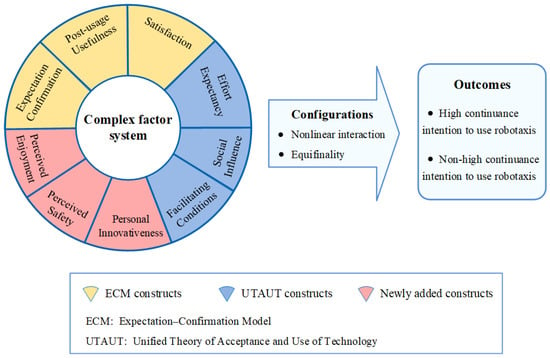
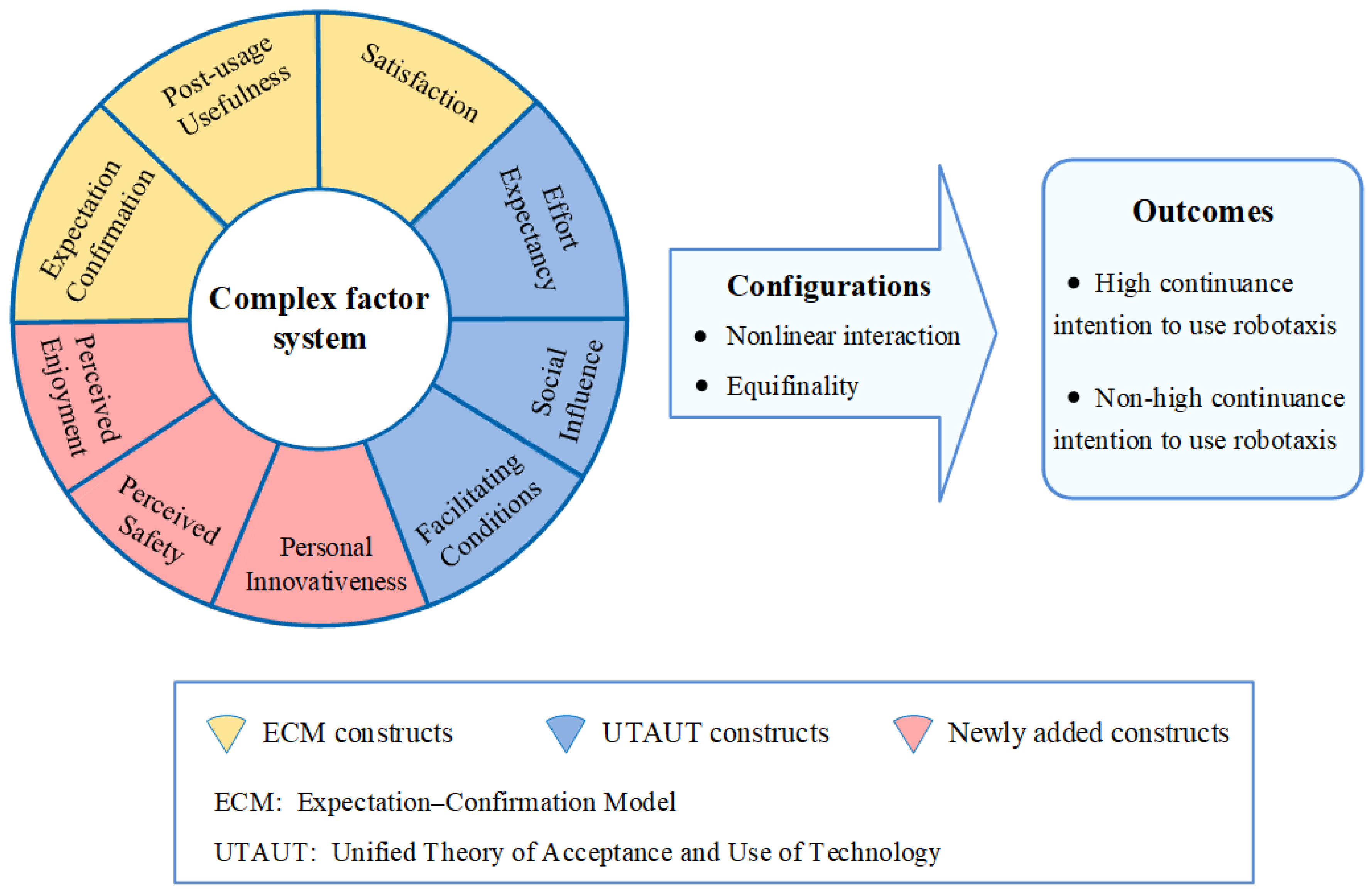

Disclaimer/Publisher’s Note: The statements, opinions and data contained in all publications are solely those of the individual author(s) and contributor(s) and not of MDPI and/or the editor(s). MDPI and/or the editor(s) disclaim responsibility for any injury to people or property resulting from any ideas, methods, instructions or products referred to in the content. |
© 2026 by the authors. Licensee MDPI, Basel, Switzerland. This article is an open access article distributed under the terms and conditions of the Creative Commons Attribution (CC BY) license.