


Abstract
This work explores the application of a Category Theory model, advocating a paradigm for comprehending human experience and the communication process of a complex system from the perspective of a living Anticipatory System. Following the principles created by Robert Rosen for the anticipatory system and associated models—models that respect the principles of impredicativity, anticipation, and closure to efficient cause (CLEF)—we propose the Performance–Resilience–Sustainability (PRS) model. This new model introduces a new way to explain how anticipatory systems can elucidate the portions of variability observed in practice and research. Anticipatory system theory suggests that models such as PRS have significant potential to complement and explain dynamic phenomena observed in communication and experience development research, as well as in practical applications, underscoring the transformative potential for both fields. This class of models for complex systems may introduce a new dimension of emergent causality and its impact on current behavior, which was not previously considered.
1. Introduction
In recent years, Dynamical Systems Research (DSR) has been increasingly applied to specific cases of human interaction within frameworks that capture the nature of the human being as a complex system structure and its dynamics over time, studied through Dynamic System Theory (DST). The communication process addressed by that framework aims to gain a better understanding of how the interaction, in conjunction with the individual’s experience, works and attempts to propose models of structure and change. These endeavors have mainly focused on investigating the oscillations of intrapersonal [1] and interpersonal synchronization (H-L Sync) and the stability–flexibility of process variables (S-F oscillations) [1,2].
Time-varying parameters characterize the human interaction process. Therefore, we can use a nonlinear dynamic systems perspective to interpret the individual’s behavior during communication in personal development processes [3]. Dynamical Systems Theory (DST) addresses the researcher’s need to explain the self-organization of states characterized by stability through attractors, and the dynamic, changing states of these attractors through control and order parameters [3].
The literature often operationalizes the system’s variability employing the Shannon entropy; its increase would determine a period of high variability in the system at hand [4,5]. Another widely used method is Dynamic Complexity, which incorporates the amplitude, frequency, and distribution of values across the scale range. The measure is calculated within a gliding window, indicating peaks of signal instability [3]. Authors also emphasize the non-deterministic aspect of psychotherapy as a specific process of communication dynamics, with a directed, purposeful aim of change, along with the idea of self-organization and emergence [6,7]. They sometimes do not present an explicit model they follow but use that terminology vaguely.
The review by Kolcek and colleagues reveals that modeling is an understudied area [8]. Only three models were proposed before 2019 [2,9], and subsequent developments have employed combinations of formal theories or a selection of variables. As Klocek suggests, not all the evidence we collect for human change is needed to show a nonlinear dynamic [10]. In another review, de Felice (2024) [1] highlights three main areas of Dynamic System Research, including the study of oscillations in synchronization, and investigating fluctuations between the stability and flexibility of process variables (S–F oscillations) with the use of mathematical modeling, to analyze the development process over time—and we note that mathematical modeling studies often rely on differential equations [1,2,9,11]. Recently, the Pattern Transition Detection Algorithm (PTDA) was created to detect transitions between dynamic patterns in human change processes. It integrates measures like Dynamic Complexity [3], Recurrence Plots, and Recurrence Quantification Analysis [12], or amplitude and frequency measures in Time Frequency Dynamics [3].
The approach of using DSR to interpret the variation and change in the communication process helped us to gain a process-oriented view rather than a static one. While the DSR’s focus is mainly on a system’s evolution over time, we must underline that the system’s complex characteristics come from the interactions of the multiple components [13]. However, complexity, as a concept, comes in different “flavors” and meanings, and the distinction between simple and complex systems currently used in the DSR does not differentiate between living and non-living systems.
A system’s parameter variation is explained by a mathematical formula that shows changes in the state parameters using differential equations. Therefore, when we study the dynamics of the human communication variables, we are implicitly dependent on interpretations of a mathematical apparatus that describes the system structure and dynamics [14]. Such mathematical language and description originate in a tradition in physics that deals with the universe of non-living entities. Moreover, because this is sometimes extended to the process of variation, we will presuppose a system that has a causal mechanism. These mechanical systems exhibit a behavior that can be simulated and modeled by a computable algorithm.
This leads to an implicit selection of the types of systems and their consequent variable dynamics that we consider in communication processes and experience change research. In fact, the current explanations of behavioral variable dynamics are predominantly focused on past determinism.
Therefore, instead of relying on mechanistic models that fail to capture the complexity inherent in living organisms, an implicit need can be identified for DSR, which will need to identify and use systems-based models that effectively account for this complexity, particularly by including future states in the model, as is the case for living organisms. To address these limitations, we propose analyzing communication dynamics and experience variation through the lens of Robert Rosen’s (1979) anticipatory system model [15].
Such a system adequately describes the complexity of living organisms and has three main characteristics: impredicativity, anticipation, and closed-to-efficient-causation (CLEF) [16]. Anticipatory systems allow us to introduce new categories of models for use in behavioral and linguistic research and practice. Such models can be described using the universal language of mathematics, known as Category Theory (CT). This will enable us to distinguish between simple and complex systems, as required by the dynamics of communication variables and reported experiences, which presuppose interactions among living systems (as opposed to mechanical, non-living systems). Furthermore, new models, including those from the past and the future, can explain the variability we empirically observe in behavioral, neurological, and linguistic research. These models, in addition to their contributions to overall variability, make it possible to incorporate a different kind of causal emergence into the picture of communication and experience change via anticipatory systems’ properties.
Robert Rosen’s relational biology framework challenges reductionist approaches by demonstrating that living systems possess organizational closure that cannot be captured by purely mechanistic models. His central concept, the (M,R)-system (Metabolism–Repair), describes organisms through closure to efficient causation: metabolic processes (M) produce components, while repair mechanisms (R) maintain metabolism itself, creating circular causality where components are simultaneously causes and effects. This impredicative organization—where functions are defined in terms of what they produce—means organisms are complex in Rosen’s technical sense: no single formal model can fully represent them. Consequently, living systems are non-fractionable; decomposition destroys essential relational properties. Rosen further characterized organisms as anticipatory systems containing internal predictive models that guide current behavior based on expected future states, fundamentally distinguishing them from reactive machines and revealing inherent limits to the computational simulation of biological organization [15].
Building on Rosen’s concept of closure, our theoretical work proposes a novel approach that uses impredicative models to explain dynamics that lead the system’s future states, and then extends these relational principles to predict human communication and changing of the experience.
To achieve this, the following section summarizes current system theories and the models applied in the field of human change and development. Section 3 proposes and describes the new anticipatory system in detail. Section 4 describes a specific anticipatory system model, Performance–Resilience–Sustainability (PRS), and its realizations. Section 5 concludes with possible applications to research and practice. The conclusions highlight the limitations and potential of this new perspective.
2. Systems: A Theoretical Framework for Communication and Human Change
A scientific account of human behavior, behavioral change, and lived experience inevitably depends on theory building. Early work in the natural sciences—shaped by the assumptions of classical physics—tended to adopt reductionist, linear models that aimed to isolate variables in experimental settings and relied on the premise of unidirectional causality. However, this view collapsed when faced with complex phenomena, leading to the introduction of General Systems Theory (GST) as a new perspective on nature, emphasizing organizing principles that emerge from the whole rather than isolated parts [17]. From the GST perspective, organisms are open systems. They exchange energy, matter, and information with their environments. Thus, we cannot fully describe their organization using closed-system mechanisms alone [18]. Cybernetics was built on this idea. It formalized concepts like feedback and control. This shows that regulation in complex systems can happen through negative (stabilizing) feedback and positive (amplifying) feedback [19]. Information theory gave us tools for measuring uncertainty, redundancy, and channel capacity in communication [20]. Together, these developments fostered a systems view in which communication and behavior are emergent properties of interacting components spread across different levels and timescales.
These new theories offer a fresh look at human interaction. The Palo Alto interactional approach changes how we view communication. It sees it as a circular, back-and-forth process. This approach breaks away from the old model in which one person sends and the other receives. Instead, behavior becomes both cause and effect. Change reshapes interactions in a network. It is not just a quick reaction to one trigger [21,22]. This approach laid the groundwork for later developments—autopoiesis, complex adaptive systems, and synergetics—that explore how organization is maintained, transformed, and sometimes self-generated in living and social systems [13,23,24,25].
The following are core principles of systems theory that direct communication and change:
- Interdependence and wholeness are fundamental principles of systems theory. A system’s behavior emerges from relationships among its parts. In communication, meanings grow from interactional contexts. This includes metacommunication and punctuation, not just content [21,22,26]. Traits such as trust, roles, and culture result from reciprocal exchanges; they are not confined within any single component.
- Open systems and boundaries. Human systems (individuals, dyads, teams) are open to their environments; boundaries (roles, identities, norms) regulate exchanges and change over time [18]. Therapeutic settings intentionally create semi-permeable boundaries to focus communication while staying connected to the client’s broader ecology.
- Feedback and circular causality. Negative feedback maintains homeostasis (e.g., turn-taking rules, etiquette); positive feedback can trigger cascades (e.g., rumor amplification, conflict spirals) [19]. Systemic communication theories emphasize circular rather than linear causality—each person’s move is also a response to the other’s move [21,22].
- Nonlinearity and emergence suggest that outputs do not scale directly with inputs. Minor adjustments, like changes in timing or tone, can suddenly shift results. Also, new patterns, such as alliances or shared narratives, form through coordination. In psychotherapy, significant changes usually occur after key shifts instead of steady progress [1,13].
- The emergence and integration of new patterns are produced in the moments of alternation between the phases of relative stability (shared expectations) and exploration (new responses) observed through stability–flexibility oscillations. Increased variability (critical fluctuations) may signal an approaching pattern transition, during which the system can reorganize and stabilize around a new attractor [1,11].
- Coordination and alignment occur naturally in communication, as people synchronize across various levels—physiology, movement, prosody, and semantics—facilitating mutual understanding and cooperation [27,28,29,30]. Adaptive systems adjust coupling strength: insufficient synchronization causes fragmentation, while excessive synchronization leads to rigidity.
- Information theory frames communications in terms of uncertainty and redundancy [20]. We use meta-messages in everyday interactions, such as tone, framing, and even punctuation. These are meaning-making contexts within social systems [21,22,26]. Change frequently occurs by reframing information flows—altering who knows what, with what credibility, and at what time.
Many of the fundamental insights of systems theory into people and society are conceptual, such as representing the family as a system or considering the therapist as participant–observer [21,22,23,26]. However, some approaches go a step further and incorporate mathematical formalism. Feedback dynamics are represented mathematically in cybernetics or control theory [18]. Algorithms for quantifying uncertainty and redundancy are used in information theory [19]. Synergetics is built on ideas about order parameters, phase transitions, and pattern formation in complex systems [3]; fractal structures as outputs of complex systems for describing personality, self, and resilience [31]. Organizational closure in living systems is a tool used in explaining autopoiesis [23,24]. Moreover, time-series analysis, entropy, and attractors are used to monitor real-time changes in psychotherapy [1,3,12].
These tools help connect experience-specific phenomena (narratives, alliances, ruptures) with process-level patterns (variability, synchronization, transitions), enabling a science appropriate for addressing human change [1].
The communication landscape involves multiple levels. Information is communicated as restrictions in the variability that shape behavior across neural, bodily, interpersonal, and institutional levels. Research on brain-to-brain coupling indicates that effective communication occurs when there is synchronized activity between speakers and listeners; this coupling predicts the experience of being understood and rapport [27,28]. In everyday human interaction, nonverbal synchrony (such as patterns of posture, gestures, and facial expressions) reflects the quality of the alliance and is a predictor of outcome related to a good experience [29,30]. From a systems perspective, these are measurable feedback processes: alignment maintains shared meaning, while misalignment signals disruption and potential reorganization.
Tools such as recurrence quantification analysis (RQA), cross-recurrence, and dynamic complexity are methodologies that detect critical fluctuations, coupling/decoupling, and phase transitions in naturalistic interaction [3,12]. These approaches quantify when a system is about to change (rising variability) and how new patterns form (increasing coherence), connecting communication micro-dynamics to macro-level adaptation.
A particular example of communication is psychotherapy [6,32]. The psychotherapeutic process is a deliberately designed communication system—a semi-defined context where interaction patterns are observed, disturbed, and reorganized to promote adaptive change. The interactional view considers symptoms as relational communications embedded in circular patterns [33]; therefore, lasting change requires re-patterning communication (punctuation, metacommunication, reframing) rather than just adding inputs to individuals [21,22,26]. Studies on the process of psychotherapy have shown critical instability before breakthroughs, oscillations between stability and flexibility during progress, and synchrony as a marker linked to alliance and outcome [1,29,30]. In practice, clinicians modify information flows (clarity, pace), rules (who speaks or makes decisions), and feedback timing (check-in cadence) to shift the system toward healthier attractors—approaches that align with systems leverage points and can be measured with modern time-series methods [12,29,30].
3. Anticipatory Systems: Models for Living Systems
This part of the article will use the mathematical metalanguage of relational biology and Category Theory without defining terms like category, functor, and natural transformation. Brief definitions of these terms can be found in Appendix A. For more detailed explanations, it is possible to read Robert Rosen and Aloisius Louie’s work in Relational Biology and Relational Modeling. The modeling relation and the arrow diagrams may be explained without the category-theoretic details.
As noted in the previous section, the development of the DSR has been toward models that view complexity as a suitable framework for communication and experience dynamics. In this section, we introduce an alternative definition of complex systems for application in communication and human change science, alongside an impredicative class of models representing future states of the self, experience, and communication patterns [34]. This will make it possible to align the common experience of a person about the self, the imagined future that is elicited from normal communication to psychotherapeutic interventions, and the variability we encounter in empirical research with a theoretical framework that is backed up by the rigor of Category Theory language.
There is no single universally accepted definition of a complex system. Several definitions appear in the literature. The main characteristic stressed by each definition underlines that a Complex System is composed of many interacting units showing emerging properties that cannot be understood in terms of the properties of the individual isolated components. In these terms, complexity is the triumph of emergence over reductionism [35,36].
As Rosen proposes [15], a science suitable for living organisms requires three interconnected elements—impredicative complexity, an anticipatory model, and a hierarchical cycles model that is closed to efficient causation—and these are the key aspects of a complex system definition we adopt in this paper. Because having a human experience depends on life, we will extend the science of life to explain how the mind and human interactions might function. Without delving into the full proof that Rosen and Louie have extensively developed to explain the life system, we will briefly outline the necessary details to establish the foundation for a proposed model of the mind for the processes and transformations encountered in human communication and the experiences revealed.
3.1. Impredicative Complex Systems
A chess board with 32 individual pieces and 64 squares has more possible moves than there are atoms in the universe, a number known as the Shannon number [37]. That could provide an experience that aligns with at least the first part of the definition from the Cambridge Dictionary, which refers to “the state of having many parts and being difficult to understand or find an answer to.” [38]. A complex system is contrasted with a simple system [16].
In relational modeling, a simple system is one in which all its models are simulable. In other words, a system is considered simple if it can be fully simulated or represented by a model. The concept of a simple system is closely related to the world of mechanisms, which is the primary focus of contemporary classical physics. It is a closed, orderly world in which all degeneracies or non-genericities of mechanisms are well understood.
A simple system is defined by its predictability and can be described entirely using a single mode of representation. It represents a world where the components, variables, and their interconnections are straightforwardly quantifiable or computable from measurements.
A simple system can be understood and analyzed within a specific framework or set of rules without requiring multiple, non-equivalent encodings or representations. It only exhibits predicative loops and can be broken down into simpler, context-independent subsystems. In logic and the philosophy of mathematics, the concept of predicativity is defined in contrast to impredicativity. While predicative systems avoid self-reference, impredicative systems permit definitions or properties that refer to the entire system, including themselves. As Louie notes, impredicativity is the property of a self-referencing definition.
Bayesian inference in Rosen’s terms would be classified as an example of simple systems, because they are good examples of algorithmic simulations [39], even if they do not capture the relational closure needed for the complexity as considered in the article. Both models involve prediction, updating, and feedback, and address how the systems anticipate future states, but for different reasons. Specifically, M is not a prior probability but an internal relational model, and E effector is not a likelihood weighting but a component in the causal closure.
Dissipative structures and Chemical AI demonstrate self-organization in inanimate matter far from thermodynamic equilibrium. These systems remain fully simulable and thus would be classified as simple systems in Rosen’s relational framework, lacking the impredicative closure that characterizes living complexity [40].
A complex system cannot be completely described or simulated by a finite number of simple models or mechanisms. This is because the properties or behaviors of such a system cannot be reduced to or completely captured by simpler models. For a system to be complex, it needs the interactions and relationships between its components to give rise to emergent properties or behaviors that are not found in the parts we consider separately.
Because a complex system is rich in interactions, dependencies, and emergent properties, it will be extremely difficult to understand or predict its behavior using traditional reductionist approaches. The concept of complexity in systems theory extends beyond simply being complicated. It has to have a holistic nature of systems and the interconnectedness of their components.
Complexity does not appear as a simple attribute in a living system. But it is a fundamental characteristic that actively shapes the system’s behavior. Thus, complexity is not just a derivative of the number of components or interactions within the system. We use complex systems to describe how organisms encapsulate the system’s inherent nonsimulability, a term Rosen coined to describe the inability to fully replicate the system’s behavior through a computational model [41]. This distinctive nonsimulability feature sets complex systems apart from mechanical or simple systems, as Rosen would call them; it is the first property of a system to describe a living one [42,43].
3.2. Anticipatory Systems
The second property of a system to be able to describe a living organism is related to the concept of anticipation. A complex system with an impredicative property can also be an anticipatory system if it contains a model of itself and an external environment, based on which it creates predictions and takes antecedent actions.
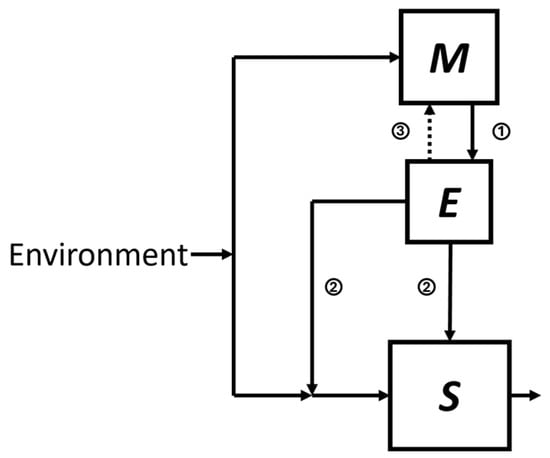
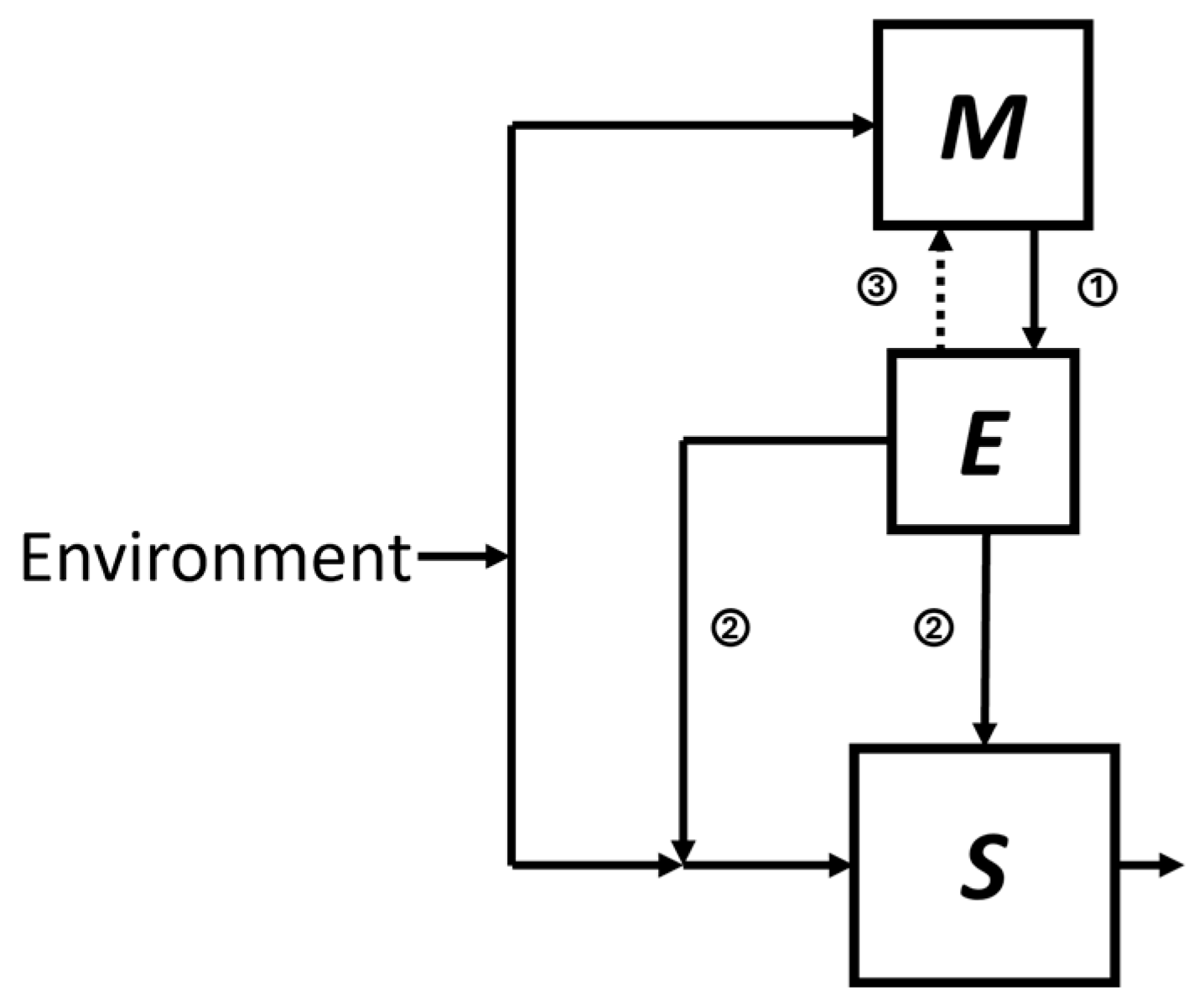
A diagram proposed by Rosen in 1972 contains a system S, an effector E, and the predictive model M (Figure 1) [15].
Figure 1.
Rosen’s Anticipatory System Diagram [44]. The diagram illustrates a system (S) that includes an internal predictive model (M) and an effector (E). In step (1), the model (M) provides an input to the effector (E), and subsequently, in step (2), the effector alters the state of the system (S). At the same time, the effector sends inputs to the model (M) in step (3). The overall system will impact the environment through its output. The system uses this model to predict future states and take appropriate action. This anticipatory nature allows the system to adapt and respond proactively rather than merely react to past events. (Adapted with permission from A. H. Louie).
An anticipatory system can be contrasted with a reactive system. It is a system (S) that includes an internal predictive model (M) and an effector (E). In step (1), the model (M) provides an input to the effector (E), and subsequently, in step (2), the effector alters the state of the system (S). At the same time, the effector sends inputs to the model (M) in step (3). In an anticipatory system, the present states are informed by both past models and models to be used as predictors of the future, whereas in a reactive system, the current states depend only on the past.
Two important conditions must be met for a system to anticipate: first, it must have an internal predictive model, and second, it must change behavior in accordance with the model’s prediction. We must note that the model is not an exact copy of the system, but rather a representation of it.
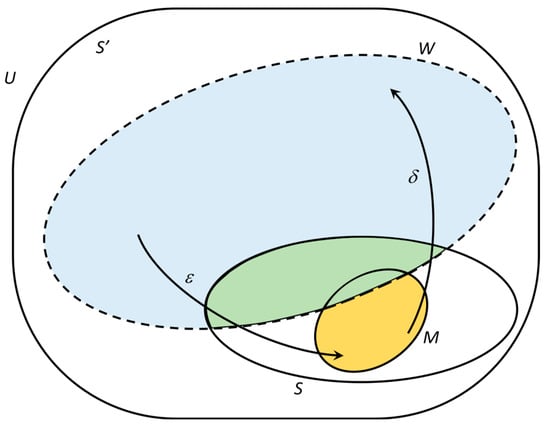
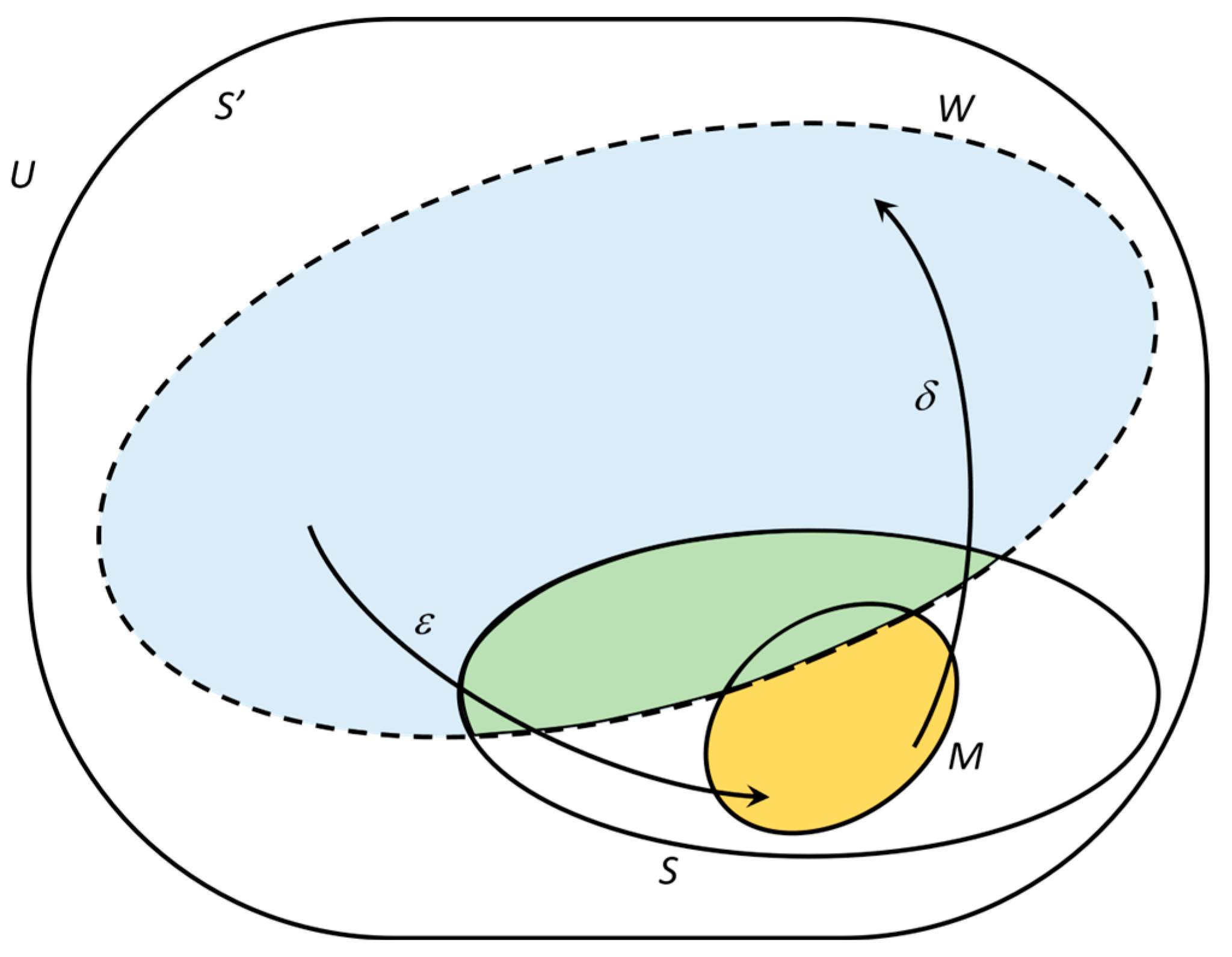
In the universe U, we have a system S that contains a model M, which creates a model of subsystem W. Model M reflects the realization of world W via encoding “ε” and realizes the model’s prediction via decision entailment “δ”. Louie presents the graphics of such a model (Figure 2):
Figure 2.
The embodiment of anticipation, the internal predictive model [44]. System S divides universe U into self (S) and nonself (environment, Sc = U ~ S). W is part of both; it may cross the self-nonself boundary. (Adapted with permission from A. H. Louie).
We must note that, in the context of anticipatory systems, complexity is not merely a measure of the system’s adaptability. From the perspective of relational modeling, a complex system is not simple, though it is not definable by a computable predicative algorithm. A complex system, in the view of relational modeling, incorporates models containing impredicative elements, including hierarchical cycles.
The complexity of anticipatory systems, however, is not a static property. It is a dynamic attribute that evolves in tandem with the system. Rosen astutely notes that system complexity extends beyond the mere number of elements and their interactions. Adaptive constraints derived from a changing environment enhance the anticipatory system’s ability to adapt.
Feedforward regulation is a concept used to describe the behavior of physiological systems, such as the endocrine and immune systems. It is a testament to life’s anticipatory processes and the complex nature of the world. Governed predominantly by feedforward, model-based regulators, these systems are a testament to the adaptability and complexity inherent in biological systems.
Consider the endocrine system, a marvel of feedforward regulation. Tasked with producing and regulating hormones, it operates not merely in response to the body’s current state but in anticipation of future needs. It is akin to a master conductor, anticipating the crescendos and decrescendos in a symphony and adjusting the orchestra’s tempo accordingly. The endocrine system, thus, does not merely react to the body’s current hormonal needs but proactively adjusts hormone production and release based on predicted future requirements [45,46].
Another example of feedforward regulation is found in the immune system, which demonstrates a high capacity for foresight. The immune system, in addition to reacting to known invaders, prepares for potential pathogens that may arise and with which it has not yet had contact. It creates these patterns and, along with recognition patterns, stores them in memory cells via specific antigenic signatures. Therefore, it can respond quickly to both known and new agents. This ability to “remember” and “anticipate” is evidence of the system’s anticipatory nature. The chances of survival and evolution of an organism are intrinsically associated with the immune system’s anticipatory capacities.
3.3. Closed to Efficient Causation (CLEF) Systems
System theory is a science focused on organization and function, which must be studied separately in relation to the structural properties of natural systems. Nicolas Rashevsky, a pioneer of the development of mathematical biology and Robert Rosen’s PhD supervisor, proposed that organisms’ organizational and functional relations could be mathematically modeled. They created models by representing them as topological spaces, specifically as one-dimensional directed graphs [16]. Furthermore, Rosen used the mathematical language of Category Theory to develop its Anticipatory Systems theory.
Category Theory was introduced in 1945 by Samuel Eilenberg and Saunders Mac Lane [47]. It emerged from work in algebraic topology and homological algebra as a way to formalize “natural” constructions—especially functors and natural transformations. It provides a unifying language that foregrounds objects and the morphisms between them. Category Theory is enabling comparisons and transfers of structures and results across different mathematical domains (including algebra, geometry, and topology). By shifting attention from elements to structure-preserving relationships, Category Theory has become a foundational framework for abstraction in modern mathematics, supporting notions such as equivalence, duality, limits, and colimits. Some of the basic concepts of Category Theory are objects, morphisms, and diagrams [16]. A category is, by definition, made up of objects and morphisms that represent the relationships or associations between objects. Objects can be considered mathematical entities, while morphisms are the associations or functions between these entities. The visualization of relationships and compositions is achieved through diagrams and ensures the structural integrity of the mathematical constructions they represent [48].
Considering two categories of sets, A and B, we establish an entailment between the elements of these two categories:
f: a ↦ b,
Because
b = f(a),
We can rewrite
f: a ↦ f(a),
While lowercase letters denote individual elements within sets, uppercase letters denote the sets (or categories) themselves, following standard category-theoretic convention.
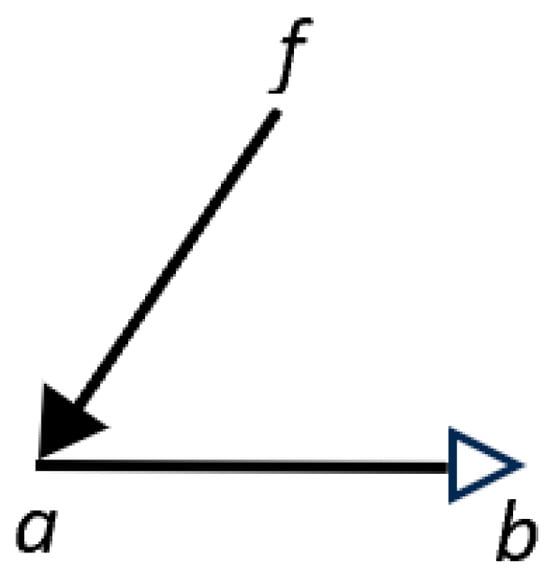
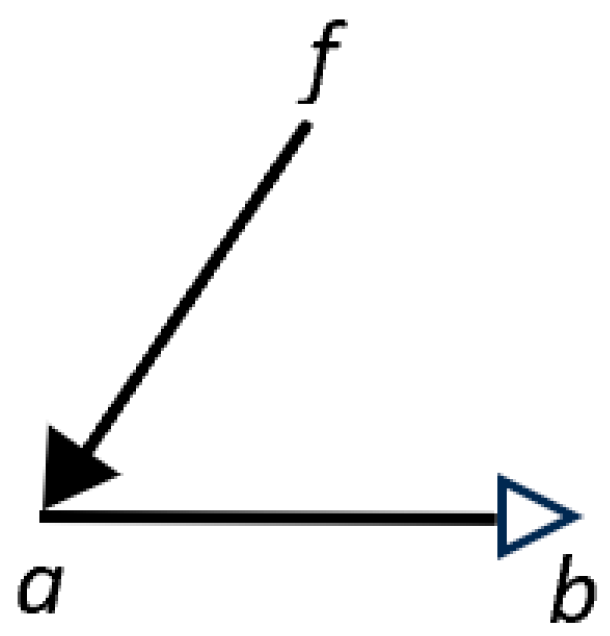
This can be represented in a relational diagram (Figure 3):
Figure 3.
A relational diagram where an element a of the set A as input is processed by the function f into the output b.
According to Rosen, the functional components of a natural system can create different kinds of entailments that relational models explicitly acknowledge. These entailments originate from an unexpected source, the old Aristotelian doctrine of the categories of causation.
Louie discusses the evolution of the term “cause” from its origins in Aristotle’s Greek term “αίτιον” (aition), which was initially translated into Latin as “causa”. He points out that, over time, “causa” has evolved into the contemporary English “cause”, commonly understood as “that which produces an effect”. Louie suggests that this interpretation might lead to semantic misunderstandings. He argues that Aristotle’s original concept was broader, encompassing “grounds or forms of explanation” rather than merely the production of effects. Therefore, he proposes that a more accurate translation of Aristotle’s intent would have been “explanatio” in Latin, aligning more closely with the idea of explaining rather than causing [16].
In Relational Theory, a material cause can be represented as the objects or entities that serve as inputs and substrates for a system, constituting the essential physical components of a relational composition. In the above diagram, if ‘a’ were a cause and ‘b’ an effect, we would ask in the Aristotelian framework, ‘Why b?’ The element ‘a’ would represent the material cause of the element ‘b’, which is a final cause. In Relational terms, the final cause could be represented as the goal or function of a system, guiding interactions and organization of the other causes. This might be modeled as a global constraint or goal state in an anticipatory system. The solid-headed arrow depicts the transformation and represents the functional component. In relational terms, this corresponds to the Aristotelian Efficient Cause, which refers to the functional dynamics within the system, possibly depicted as the process represented by arrows between objects. These solid-headed arrows can be seen as functions or operations that produce changes and results. The composition of solid (as a representation of Efficient Cause) and hollow-headed (as a representation of Material Cause) arrows, in relational theory, stands for the Formal Cause, which can be viewed as an organizational pattern a system assumes. In Category Theory, this might be represented by specific arrangements of arrows (morphisms) that depict the relationships between material components.
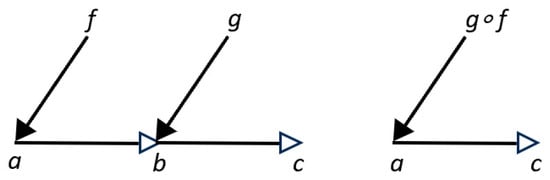
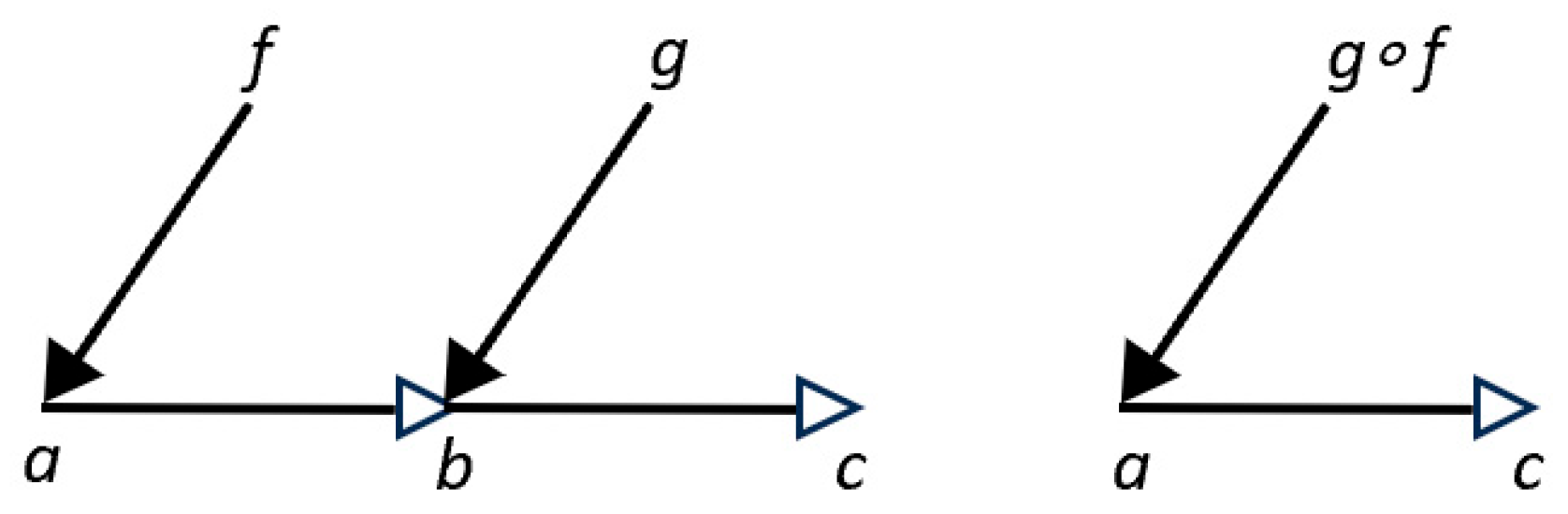
The arrangement described above outlines the composition rules for integrating multiple diagrams into a new organizational framework. By employing a sequential composition, it is possible to link two mappings. If we have two mappings, we can use a sequential chain of composition (Figure 4):
Figure 4.
Relational diagram with sequential composition rules. The left side Final Cause output becomes the Material Cause input for g. In short form, this can be displayed as a right-side diagram where g ∘ f.
As shown in Figure 4, the left-side Final Cause output becomes the Material Cause input for g. In short form, this can be displayed as a right-side diagram where g ∘ f is the new mapping:
g ∘ f: a ↦ c,
We can also use hierarchical mapping because, according to the definitions of Category Theory, there is no distinction between objects and arrows (Figure 5).
Figure 5.
Relational diagram with hierarchical mapping. Here, the Final Cause output of g is identified with the Efficient Cause f.
In Figure 5, the mapping g sends elements of X into the set of mappings H(A, B), meaning that g’s output is itself a functional process—specifically, the efficient cause f. This is hierarchical because the output of one mapping is not merely an element but a mapping at a different level of organization.
In Figure 5, the Final Cause output of g is identified with the Efficient Cause f:
It is a hom-set (the composition of two arrows) where the mapping f is entailed. The ‘why f?’ question will get the answer ‘because of x’ and ‘because of g’.
The hierarchical composition of hom-sets of three mappings is as follows:
Equation (6) extends this principle to three mappings: f, g, and h. Each mapping’s output serves as the efficient cause (the ‘processor’) for the next. The critical step is recognizing that, if the output of h—which belongs to D—can be placed in correspondence with elements of B (the output of f), then the chain does not terminate but closes upon itself. This isomorphic identification means that what h produces is functionally equivalent to what f produces, creating a self-referential loop of efficient causation. The result is Figure 6: a cycle where no component’s efficient cause originates from outside the system.
Figure 6.
Hierarchical cycle with the closed path of efficient causation. By isomorphically identifying b and h via the mapping (6), when there is a correspondence between sets B and H, we obtain a cycle of hierarchical composition.
Here, a ∈ A, b ∈ B, c ∈ C, and d ∈ D can have an isomorphic identification of b and h, and we obtain a cycle of hierarchical composition (Figure 6).
By isomorphically identifying b and h via the mapping (6), when a correspondence exists between sets B and H, we obtain a cycle of hierarchical composition. When a system contains a composition containing two or more solid-headed arrows, we can describe it, using the terminology mentioned above of the Aristotelian causes, as a closed-to-efficient-causation system, in short, a CLEF system, as Louie and Poli proposed in 2011 [49]. The clef systems are a proper subclass of the impredicative systems.
As Robert Rosen proposed in the 1950s, CLEF systems are the cornerstone of life in a class of relational models called metabolism–repair systems [50,51]. An organism is a system that is materially entailed within its environment as an open system. An abstract description of a living system was proposed by Robert Rosen in 1958 [52]. In such an (M, R) framework, metabolism (M) sustains the production and transformation of components. At the same time, repair (R) maintains and regenerates the system’s organization, thereby closing the causal loop of efficient cause. It adds the metabolic apparatus from an (M, R) system. This hierarchical function generates another action to correct the previous action, ensuring that the repair function is achieved using the same metabolic elements. For instance, in feedback inhibition of enzymatic pathways, the product of an enzyme-catalyzed reaction can regulate its own enzyme’s activity, thereby generating a corrective response and maintaining the system’s self-repair using the same metabolic components. For a system to be alive, it must have an entailment network of CLEF processes. An organism is an anticipatory system that is an (M, R)-network and consequently closed-to-efficient-causation, thus CLEF. As Louie proposes, the “Postulate of Life: A natural system is an organism if and only if it realizes an (M, R)—system” (Louie, 2009, p. 283) [16]. Life meets the criteria of impredicativity, anticipation, and CLEF, while the non-living system does not.
In Section 2, we show that some complexity-based research, while offering a process-oriented view of communication and human change, relies predominantly on mathematical tools derived from physics that do not formally distinguish living from non-living systems—and consequently default to past determinism. The theoretical aspects of the current section open new perspectives for developing a theoretical framework and a model for living communicative systems that include anticipatory causation. Category theory provides the formal language necessary to construct and evaluate such models.
4. A Model for Human Communication and Experience: The Performance Resilience Sustainability (PRS) Model
In human life, the external world is brought into the person’s internal world through communication dynamics and the sensory organs, specialized structural and functional networks of the nervous system, ultimately reaching the brain. People have internal sensory experiences, such as correlational visualizations, body sensations, odors, tastes, and inner thoughts, that correspond to external and internal sensorial triggers. Because the communicator’s actions are performed in the external environment of the other individual, they will be presented as observable to the person. Based on the person’s internally correlated experience representations, the person will react and create responses that ensure organic and psychological adaptation and, at the same time, ensure successful persistence.
The communicator’s behaviors and interactions with the person act as effective inputs that must take into consideration the individual’s mind as a complex system. At the same time, the communicator itself will become a correlated distinction of the person’s internal world. This transformation of an object into a subject can be modeled via a Natural Transformation, obtaining a model of models. In Category Theory terms, it is a way to retain the relational/entailment structure between the system and its model through the functors. Both parties in a communication dynamic will hold models of themselves and of the other person, in a correlated distinction that constitutes an emergent representation.
The issue of how observables are transformed into a qualitative phenomenon was addressed in a proposed mathematical theory for a science of qualities as directly perceived by living organisms based on morphological patterns. The qualitative phenomena, as observables of a psychological system in this framework, are an impredicative system, and they become an alternative to probabilistic and inferentialistic theories. In such cases, perceptual phenomena are projections of underlying invariants—objects that remain unchanged under certain transformations. Instead of relying solely on an external observer’s perspective, it is considered equally valid to incorporate a self-generated model based on the individual’s first-person view of the phenomenon [53].
From that perspective, the communication dyad is considered as two anticipatory systems interacting with each other, each with a predictive model of the external environment (the communicator in the case of the receiver as the examined system) and of its own internal environment (the receiver’s model of themselves). An emergent representation has to contain the elements and the relations established, and that is properly conducted using phenomenological calculus, which is a categorical case of the modeling relation [54].
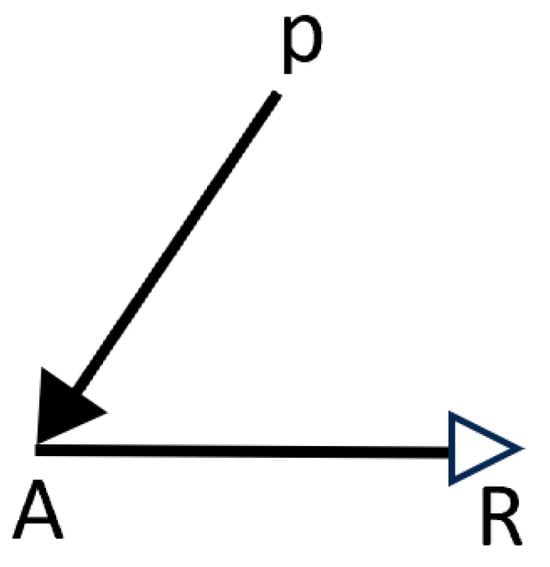
In communication dynamics, the relationship between a person and a natural system is facilitated through an encoding entailment (perception) and a decoding entailment (comprehension). In this type of performance, we can also consider how an external process can be integrated into the self as a Natural Transformation; therefore, this process is not only a model for this object–subject transformation but also for performance in general. To depict how a person represents elements from their observed universe, we will use a relational diagram in which the input is elements from the Ambient, and the output is the emergent representation mediated by the effective cause of the perception (Figure 7).
Figure 7.
The performance process is symbolized in a relational diagram. Perception p is the function that mediates the set of ambient elements A into an emergent representation element R.
In the relational terms described algebraically by the Performance linear equation,
Persons’ low-performance models—correlated with maladaptive or outdated emergent representations—limit their ability to make accurate predictions about themselves and their environment. The communicator acts as a facilitator, introducing opportunities for new observations to lead the receiver into new emergent representations. For example, a complex or conflictual situation might sustain a stable attractor as an emergent representation, with the interpretation of the world as an unsafe place. In practice, this internal experience, which correlates with the emergent representation, can be reframed and transformed to align with a higher-performance model in which safety is recognized as situational and dynamic.
A person’s subjective life is influenced not only by interactions with actual states but also by models of the past and future. In that sense, we may have a set of rules or criteria that act on the precepts to adapt our responses in a resilient way. The greater the fear of the future and the pain of the past, the more rigid a person becomes in the present. The more a person tends toward positive experiences of the past and toward hope for the future, the more they acquire flexibility in the present. Empirically, the gain in flexibility of brain connectivity (Functional Connectivity Dynamics) was demonstrated in a study that utilized repeated fMRI scans. In the previous section (Figure 5), we saw that a new organization can be achieved through the composition of two mappings.
An organism can be resilient because it adjusts its motor actions and perceptions not only in response to external stimuli but also in response to internal meta-rules extracted from memory, as in Equation (8). In Category Theory, we can identify this dynamic as the Representation R as input and the output construct with the hom-set H(A, R) by an invert mapping, which in the algebraic form is as follows:
where A denotes the set of Ambient observables of the system, and R represents the set (or class) of transformations that act on A into a representation. H(A, R) is shorthand for the hom-set (or set of all mappings), which is the set of all possible mappings from A to R. Writing m ∈ H(R, H(A, R)) means “m is an element of the hom-set of all transformations from R to H(A, R)”. The function m acts on the set R of transformations and further generates new or corrected transformations—elements of H(A, R)—that themselves act on the set of material components A. In doing so, the system maintains and regenerates the very means that keep it alive, achieving closure in efficient causation. This is the same as the formal essence of the (M, R)-system in Rosen’s relational biology.
These representations are not static but a dynamic emergence; they are subject to disruption by both internal and external influences. Strong perturbations—such as trauma, loss, or significant life changes—can destabilize the existing representation, thereby reducing its performance. Resilience is the adaptive process that anchors representations back to an optimal level of functioning.
Therefore, in the performance cycle p: A -> R, the function p will enter in an adjusted manner due to its identification with the output of the Resilience cycle, where m is the efficient cause, and R is the material cause. In such a situation, the perception is the final cause of the Representation identified as input, as the material cause. The relational diagram of Performance Resilience is as follows (Figure 8):
Figure 8.
Composition for Performance–Resilience process with an invert mapping, where A represents the ambient environment observables, R is the representation, p is the perception, and m is the meta-function derived from the stored performance rules of the organism’s previous experiences.
The Performance–Resilience process from Figure 8 diagram uses an invert mapping. A is the ambient of the environment observables, R is the representation, p is the perception, and m is the meta-function that comes from the stored performance rules of the organism’s previous experiences.
In human dynamics, we can identify that models inform Resilience, which is correlated with beliefs—generalized rules derived from past experiences—that guide the recovery process. However, not all beliefs are adaptive. The directed change process identifies and reframes maladaptive beliefs, enabling the client to re-establish cognitive and emotional balance. When a person faces disruption, resilience enables them to adjust their internal representations, thereby maintaining functionality. For instance, a person who loses a resource must adjust their representation of life, integrating the experience into a new narrative that restores their psychological balance.
With the new configurations enabled by this function of p, which acts as a filter or selector based on previously stored rules, we will have an interplay between m and p. p is the direct-doing function, and m is the meta-forming function. Therefore, we now have a Performance Function and a resilience meta function.
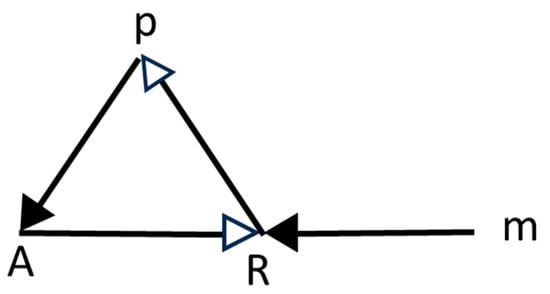
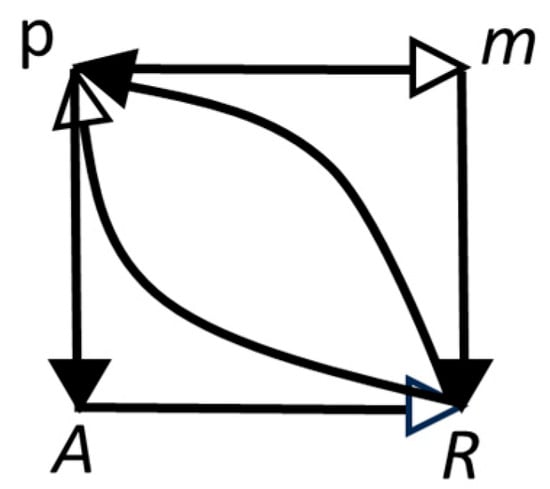
Now, we can introduce a new function, considering that Representation has an active role in relation to Perception. This second meta-level role is necessary to explain the mediation between Performance demands, which can be reactive, and Resilience adaptations, which can constrain the system’s flexibility within existing models, thereby enabling a creative dynamic. This can be seen as a model for sustaining the production of new information, ensuring the long-term persistence of the entire system. Because it closes the cycles, the new function introduces an impredicative property to the full model. Due to the impredicativity, the information processed in such a cycle is not referenced to external input; thus, we can consider it to be a creator of a new kind of organization, independent of external efficient causation. We will name it sustainability, and with p and m, the composition becomes o: p→m. As Rosen already proposes in the composition of an (M, R) network, this is an inverse evaluation mapping that will give the entire model written in algebraic form:
The diagram form of (9) is depicted below in Figure 9:
Figure 9.
Relational diagram for Performance–Resilience–Sustainability processes, where A is the ambient of the environment, R is the representation, p is the perception, and m stands for meta.
Figure 9 shows the Performance–Resilience–Sustainability cycle, where A represents the environment’s ambient, R the dynamic representation, p the perception, and m the meta. As we can see, this composition satisfies all the criteria of impredicativity and CLEF loops as in an anticipatory system. Because it has a CLEF property, we can justify why the mind and a co-creative communication interaction can create new information or organization in the experience. When it corresponds with external reality in a Natural Transformation via a decoding entailment (e.g., the organism observes and experiences a congruence between the model and empirical external reality; a belief is supported by empirical evidence), it can be considered new knowledge.
We can see that, in one’s mind, the representation may include models of subjective experience that are essentially impredicative, and we have proposed a possible one that integrates components not only of the sensorial aspects of the mind but also of higher cognition.
The realization of such a model in the train of thought and then in the responses someone gives to a questionnaire means that the observed variation in the questionnaire or a linear narrative may come not only from a model of the past but also from a model of the future.
In the practical realm of professions that change the dynamics of communication and human experience, both verbal and non-verbal interactions serve as triggers for an emergent process that leads to the formation of a mental representation. At the same time, the person guiding the process must bear in mind that the transformation of the model, correlated with a specific representation, is also linked to the activity of a component of an anticipatory system. Therefore, it will be helpful to observe linguistic and non-verbal signals as phenomena associated with anticipation. At the same time, the addition of a PRS model allows the client to inject new qualia into its own subjective reality, which then will be realized and manifest in behaviors. These new decoded models are determined not only by past models but also by newly created models that may better fit future predictions.
In the neuro-linguistic psychotherapy (NLPt) goal-oriented methodology, the client comes with a narrative, which is a realization of a current representation. The psychotherapist’s observations relate to the client’s behaviors and verbalizations, reflecting the client’s current state, as evidenced by the client’s past-oriented narrative. Based on that, the psychotherapist forms a representation, where the first step would be to adjust it toward an intentional future state, a possible representation of the client, and formulate questions and non-verbal cues leading toward that state. The client can also initiate self-reflection on their own representation patterns and make internal environment adjustments to foster the future desired internal dialog, visualizations, or body sensations.
These three functions are related to phenomenological layers in terms of categories and morphisms. They are the human mind and organism functions that orient perception, create resilient responses, and persist adaptively over time by incorporating their predictions into present behaviors.
The implications of considering only research models and their corresponding methodologies for human communication and experience science that are derived from simple systems are laid down by Rosen’s words: “Insofar as finality involves the effects of future inputs, or future state, upon present change of state, the idea of anticipation has been expunged from serious science without further thought” [55].
5. Discussion
Applying Dynamic System Theory to understand human dynamics and communication marks a significant shift from traditional reductionist methods to a complexity paradigm that more accurately captures the intricate nature of human beings and their interactions. This model development emphasizes the transformative potential of a model, described using Category Theory, to account for changes in human communication and experience through the proposed Performance–Resilience–Sustainability (PRS) model. This approach aims to guide future research on processes through better explained variability and to improve practices in areas associated with professional communication.
The PRS model, grounded in DSR principles, provides a new framework for understanding the variability observed in communication and experience dynamics research. By emphasizing impredicativity, anticipation, and closed-to-efficient causation (CLEF), the model offers a holistic way to analyze human dynamics, complementing the simple systems approach. This aligns with earlier studies that highlight the significance of nonlinear dynamics, self-organization, and critical phase transitions in understanding therapeutic processes from both mechanistic and organic life viewpoints.
As Rosen proposed, the anticipatory system model in biology, the corresponding PRS model for an anticipatory system to explain human dynamics, will enable a more nuanced understanding by incorporating the past and future correlated states into the analysis. This marks a departure from traditional models that mainly focus on past determinism. The ability of anticipatory systems to predict and adapt to future states provides a more comprehensive view of human interaction, which is essential for effective intervention and planning.
The representation proposed within PRS differs fundamentally from static, stored representations. Classic communication models treat representations as fixed encodings whose meaning comes from an external interpreter, but they do not explain how the content turns into that something. In an emergent framework, representations develop within the system’s ongoing activity; models support them and indicate possible interactions and their expected outcomes. Because these models can succeed or fail, the system develops a normative sense of truth and falsity and can adjust its behavior accordingly [56]. A static representation can be retrieved unchanged, but it cannot be updated; an emergent PRS representation is continually re-enacted and modified as new information and predictions are integrated. This process aligns with Rosen’s insistence that anticipation involves integrating future possibilities into present dynamics and cannot be captured by models that only reference past inputs [57].
Evidence from human communication science supports the idea that representations are dynamic and co-constructed. Garrod and Pickering’s interactive alignment model shows that conversational partners automatically align their linguistic representations through priming across words, sounds, and grammar; this alignment operates across multiple levels so that convergence at one level promotes alignment at higher levels. Humans appear to be “designed for dialogue”, and interactive alignment makes conversation effortless by creating a shared situation model [58]. Neuroimaging studies further indicate that interacting individuals exhibit brain-to-brain coupling: perceiving another’s actions triggers similar neural patterns in the observer, constraining actions and allowing complex joint behaviors. Communication is therefore a multi-brain process in which meaning emerges through coupling, rather than being stored and retrieved from a single brain [28].
Synchrony and network flexibility provide additional markers of dynamic representation. Experiments have shown that rhythmic synchrony increases perceived similarity and closeness between partners and fosters prosocial behaviors such as cooperation and helping. Being in synchrony often involves a temporary merging of self and other, suggesting that shared representations are fluid and interpersonal [59]. At the neural level, dynamic reconfiguration of brain networks—particularly in frontal regions—supports executive flexibility; individuals with greater network flexibility perform better on working-memory tasks and adapt more readily to changing demands [60]. These findings support the PRS claim that performance, resilience, and sustainability are intertwined processes: moment-to-moment performance (p) shapes and is shaped by resilient updates (m) and sustainable long-term patterns (o).
The organizational closure to efficient causation in complex systems, which admits impredicative models and implies a final cause within the relational structure, does not by itself imply the purposefulness observed in living systems. Such organizational closure alone does not fully account for goal-directed behavior. In Rosen’s terms, it is the presence of impredicative models within the organism that enables the generation of models of the future. The behavioral expressions of these internal models account for changes in the external environment that can be regarded as purposeful, and that correlate with the organism’s subjective representations.
Future empirical validation of the PRS model can be achieved using longitudinal single-case designs employing personalized questionnaires in which clients rate items corresponding to two dimensions: past-oriented reflective experiences and future-oriented intentional experiences. In doing so, daily diary entries would grasp the temporal evolution of these two dimensions across therapeutic sessions, and their impact on change processes and outcomes.
The PRS approach thus reframes communication and experience as emergent, anticipatory processes. Rather than treating narratives as static stories to be decoded, it views them as dynamic constructions that combine past experiences with imagined future models. Interventions aimed at facilitating change should therefore focus on perturbing the coupled system—through language, gesture, or synchrony—to open space for new representations to emerge. Measuring these dynamics will require multilevel time-series designs that track behavioral, physiological, and neural signals over specific timescales. By grounding these analyses in Category Theory and relational biology, PRS provides a systematic way to connect observed variability with a model for variation. It implies that, during critical fluctuations and periods of instability, the parties involved in communication can tailor their interventions to align with the client’s readiness for change while simultaneously relying on an intentional process initiated by the mind. From this perspective, we can define the mind as a functor of the relationships between models, including PRS-type models, that map the organic and subjective functions expressed in human life.
This personalized approach adds active model components that can be considered to intentionally improve communication and promote sustainable outcomes for all participants in an interaction, an idea aligned with the fact that humans are organisms with activity, according to Popper’s concept [61].
Author Contributions
Conceptualization, C.Z.; writing—original draft preparation, C.Z. and G.d.F.; writing—review and editing, C.Z., G.d.F., G.S. and O.C.G.G.; visualization, C.Z.; supervision, G.d.F. All authors have read and agreed to the published version of the manuscript.
Funding
This research received no external funding.
Institutional Review Board Statement
Not applicable.
Data Availability Statement
There are no additional data.
Acknowledgments
I thank Aloisius Louie for insights into Category Theory mathematics and Anticipatory Systems concepts and meanings, along with clarifications in response to many inquiries. I am grateful to Alexandru Caragea, with whom I made strides in exploring new perspectives of systems and physics in the human mind.
Conflicts of Interest
The authors declare no conflicts of interest.
Abbreviations
The following abbreviations are used in this manuscript:
| DSR | Dynamical Systems Research |
| DST | Dynamic Systems Theory |
| PRS | Performance Resilience Sustainability |
| CT | Category Theory |
| NLPt | Neuro-Linguistic Psychotherapy |
Appendix A
Category Theory (CT): A branch of mathematics that provides a unifying framework for understanding mathematical structures and their relationships. It was developed in the 1940s by Samuel Eilenberg and Saunders Mac Lane as a way to formalize and generalize concepts across different areas of mathematics, particularly algebra and topology.
Categories: A category consists of Objects (e.g., sets, spaces, groups, types in programming) and Morphisms (arrows) between objects, representing functions, transformations, or relationships.
Functors: In Category Theory, a functor is a mathematical concept that acts as a bridge between two categories. Specifically, a functor assigns to every object in one category a corresponding object in another category, and to every morphism (arrow) in the first category a corresponding morphism in the second category. The key property of a functor is that it preserves the structure of the categories: it maps identity morphisms to identity morphisms and maintains the composition of morphisms. This means that, if we have two composable morphisms in the first category, their images under the functor will also be composable in the second category, and the result of composing them will be the same as the image of their composition. Functors are fundamental in Category Theory because they enable us to compare different mathematical structures consistently, translating concepts and relationships from one setting to another while keeping their essential properties intact.
Natural Transformations: Ways to transform one functor into another while respecting structure.
Relational Biology: A branch of theoretical biology that studies living systems primarily in terms of their organizational and functional relationships rather than their material composition. It was pioneered by Nicolas Rashevsky, who argued that biological phenomena cannot be fully explained by reductionist methods alone, which focus solely on physical and chemical components. The subject was further developed by Rashevsky’s student Robert Rosen and Rosen’s student Aloisius Louie.
Relational Modeling: A formal approach to representing systems based on relationships rather than just objects or components.
Diagram: In Category Theory, it is a structured way of representing objects and morphisms (arrows) within a category. Formally, a diagram is a functor from an indexing category to a target category.
Arrow diagram: A graphical way of illustrating morphisms between objects in a category. It is a special case of a commutative diagram, where the arrows (morphisms) represent functions, transformations, or structural mappings.
Impredicative: In logic and the foundations of mathematics, an impredicative definition is one that defines an object by referring to a totality that includes the object itself. This concept was first critically analyzed by Henri Poincaré and later formalized by Bertrand Russell, who saw it as a source of paradoxes (e.g., Russell’s Paradox). In anticipatory systems, impredicativity arises when a system’s present state is influenced by its future states—meaning that the system defines itself through a loop that includes future information.
Ambient: Denotes the external context or environment in which a relational system (e.g., an (M, R)-system) is embedded. It is the “outside world” that provides the material and energetic resources the system draws upon (for metabolism, growth, etc.) and receives the system’s outputs (e.g., waste products).
Shannon Number: An estimate of the game-tree complexity of chess, calculated by Claude Shannon in his 1950 paper “Programming a Computer for Playing Chess”. It represents the approximate number of possible chess game variations and highlights the immense complexity of chess, making brute-force computation impractical.
References
- Felice, G.D. Dynamical Systems Research (DSR) in Psychotherapy: A Comprehensive Review of Empirical Results and Their Clinical Implications. Systems 2024, 12, 54. [Google Scholar] [CrossRef] [Scilit]
- Salvatore, S.; Lauro-Grotto, R.; Gennaro, A.; Gelo, O. Grasping the Dynamic Nature of Intersubjectivity. In Dynamic Process Methodology in the Social and Developmental Sciences; Valsiner, J., Molenaar, P.C.M., Lyra, M.C.D.P., Chaudhary, N., Eds.; Springer: New York, NY, USA, 2009; pp. 171–190. [Google Scholar]
- Schiepek, G.K.; Viol, K.; Aichhorn, W.; Hütt, M.-T.; Sungler, K.; Pincus, D.; Schöller, H.J. Psychotherapy Is Chaotic—(Not Only) in a Computational World. Front. Psychol. 2017, 8, 379. [Google Scholar] [CrossRef] [Scilit]
- Tschacher, W.; Haken, H. Causation and Chance: Detection of Deterministic and Stochastic Ingredients in Psychotherapy Processes. Psychother. Res. 2020, 30, 1075–1087. [Google Scholar] [CrossRef] [Scilit]
- Gennaro, A.; Carola, V.; Ottaviani, C.; Pesca, C.; Palmieri, A.; Salvatore, S. Affective Saturation Index: A Lexical Measure of Affect. Entropy 2021, 23, 1421. [Google Scholar] [CrossRef] [Scilit]
- Salvatore, S. Psychotherapy Research Needs Theory. Outline for an Epistemology of the Clinical Exchange. Integr. Psychol. Behav. Sci. 2011, 45, 366–388. [Google Scholar] [CrossRef] [Scilit]
- Tschacher, W.; Scheier, C.; Grawe, K. Order and Pattern Formation in Psychotherapy. Nonlinear Dyn. Psychol. Life Sci. 1998, 2, 195–215. [Google Scholar] [CrossRef] [Scilit]
- Bassett, D.S.; Sporns, O. Network Neuroscience. Nat. Neurosci. 2017, 20, 353–364. [Google Scholar] [CrossRef] [Scilit]
- Haken, H.; Tschacher, W. How to Modify Psychopathological States? Hypotheses Based on Complex Systems Theory. Nonlinear Dyn. Psychol. Life Sci. 2017, 21, 19–34. [Google Scholar]
- Klocek, A.; Premus, J.; Řiháček, T. Applying Dynamic Systems Theory and Complexity Theory Methods in Psychotherapy Research: A Systematic Literature Review. Psychother. Res. 2024, 34, 828–844. [Google Scholar] [CrossRef] [Scilit]
- De Felice, G.; Sciaraffa, N.; Antonacci, Y.; Giuliani, A.; Schöller, H.; Aichhorn, W.; Kratzer, L.; Schiepek, G. The S-F Oscillations in Psychotherapy. J. Contemp. Psychother. 2026, 56, 99–106. [Google Scholar] [CrossRef] [Scilit]
- Webber, C.L.; Marwan, N. (Eds.) Recurrence Quantification Analysis: Theory and Best Practices; Understanding Complex Systems; Springer International Publishing: Cham, Switzerland, 2015. [Google Scholar]
- Haken, H. Information and Self-Organization: A Macroscopic Approach to Complex Systems, 3rd ed.; Springer: Berlin/Heidelberg, Germany; New York, NY, USA, 2006. [Google Scholar]
- Liebovitch, L.S.; Peluso, P.R.; Norman, M.D.; Su, J.; Gottman, J.M. Mathematical Model of the Dynamics of Psychotherapy. Cogn. Neurodyn. 2011, 5, 265–275. [Google Scholar] [CrossRef] [Scilit]
- Rosen, R. Anticipatory Systems: Philosophical, Mathematical, and Methodological Foundations; IFSR International Series in Systems Science and Systems Engineering; Springer: New York, NY, USA, 2012; Volume 1. [Google Scholar]
- Louie, A.H. More Than Life Itself: A Synthetic Continuation in Relational Biology; De Gruyter: Berlin, Germany, 2009. [Google Scholar]
- Weaver, W. Science and Complexity. In Facets of Systems Science; Springer: Boston, MA, USA, 1991; pp. 449–456. [Google Scholar]
- von Bertalanffy, L. General System Theory: Foundations, Development, Applications; Braziller: New York, NY, USA, 1968. [Google Scholar]
- Wiener, N. Cybernetics, or Control and Communication in the Animal and the Machine, 2nd ed.; MIT Press: Cambridge, UK, 1961. [Google Scholar]
- Shannon, C.E. A Mathematical Theory of Communication. Bell Syst. Tech. J. 1948, 27, 379–423. [Google Scholar] [CrossRef] [Scilit]
- Watzlawick, P.; Bavelas, J.B.; Jackson, D.D. Pragmatics of Human Communication: A Study of Interactional Patterns, Pathologies, and Paradoxes; Norton: New York, NY, USA, 1980. [Google Scholar]
- Watzlawick, P.; Weakland, J.H.; Fisch, R.; Erickson, M.H. Change: Principles of Problem Formation and Problem Resolution; W. W. Norton: New York, NY, USA; London, UK, 1974. [Google Scholar]
- Von Foerster, H. Understanding Understanding; Springer: New York, NY, USA, 2003. [Google Scholar]
- Maturana, H.R.; Varela, F.J. Autopoiesis and Cognition: The Realization of the Living; Boston Studies in the Philosophy and History of Science; Springer: Dordrecht, The Netherlands, 1980; Volume 42. [Google Scholar]
- Varela, F.G.; Maturana, H.R.; Uribe, R. Autopoiesis: The Organization of Living Systems, Its Characterization and a Model. Biosystems 1974, 5, 187–196. [Google Scholar] [CrossRef] [Scilit]
- Bateson, G. Steps to an Ecology of Mind: Collected Essays in Anthropology, Psychiatry, Evolution, and Epistemology; Aronson: Northvale, NJ, USA, 1987. [Google Scholar]
- Stephens, G.J.; Silbert, L.J.; Hasson, U. Speaker–Listener Neural Coupling Underlies Successful Communication. Proc. Natl. Acad. Sci. USA 2010, 107, 14425–14430. [Google Scholar] [CrossRef] [Scilit]
- Hasson, U.; Ghazanfar, A.A.; Galantucci, B.; Garrod, S.; Keysers, C. Brain-to-Brain Coupling: A Mechanism for Creating and Sharing a Social World. Trends Cogn. Sci. 2012, 16, 114–121. [Google Scholar] [CrossRef] [Scilit]
- Koole, S.L.; Tschacher, W. Synchrony in Psychotherapy: A Review and an Integrative Framework for the Therapeutic Alliance. Front. Psychol. 2016, 7, 862. [Google Scholar] [CrossRef] [Scilit]
- Ramseyer, F.; Tschacher, W. Nonverbal Synchrony in Psychotherapy: Coordinated Body Movement Reflects Relationship Quality and Outcome. J. Consult. Clin. Psychol. 2011, 79, 284–295. [Google Scholar] [CrossRef] [Scilit]
- Pincus, D.; Cadsky, O.; Berardi, V.; Asuncion, C.M.; Wann, K. Fractal Self-Structure and Psychological Resilience. Nonlinear Dyn. Psychol. Life Sci. 2019, 23, 57–78. [Google Scholar]
- Gelo, O.C.G.; Ziglio, R.; Armenio, S.; Fattori, F.; Pozzi, M. Social Representation of Therapeutic Relationship among Cognitive-Behavioral Psychotherapists. J. Couns. Psychol. 2016, 63, 42–56. [Google Scholar] [CrossRef] [Scilit]
- Fuchs, T. The Circularity of the Embodied Mind. Front. Psychol. 2020, 11, 1707. [Google Scholar] [CrossRef] [Scilit]
- Zacks, J.M. Event Perception and Memory. Annu. Rev. Psychol. 2020, 71, 165–191. [Google Scholar] [CrossRef] [Scilit]
- Thurner, S.; Klimek, P.; Hanel, R.A. Introduction to the Theory of Complex Systems, 1st ed.; Oxford University Press: Oxford, UK; New York, NY, USA, 2018; ISBN 978-0-19-186106-2. [Google Scholar]
- San Miguel, M. Frontiers in Complex Systems. Front. Complex Syst. 2023, 1, 1080801. [Google Scholar] [CrossRef] [Scilit]
- Shannon, C.E., XXII. Programming a Computer for Playing Chess. Lond. Edinb. Dublin Philos. Mag. J. Sci. 1950, 41, 256–275. [Google Scholar] [CrossRef] [Scilit]
- Cambridge Dictionary Complexity. Available online: https://dictionary.cambridge.org/dictionary/english/complexity (accessed on 13 December 2025).
- Campbell, J.O. Universal Darwinism as a Process of Bayesian Inference. Front. Syst. Neurosci. 2016, 10, 49. [Google Scholar] [CrossRef] [Scilit]
- Gentili, P.L. Chemical AI in the Limelight: The Contribution of Photochromic Materials and Oscillatory Chemical Reactions. Adv. Opt. Mater. 2025, 13, 2500016. [Google Scholar] [CrossRef] [Scilit]
- Rosen, R. Essays on Life Itself; Complexity in Ecological Systems; Columbia University Press: New York, NY, USA, 2012. [Google Scholar]
- Bich, L.; Mossio, M.; Ruiz-Mirazo, K.; Moreno, A. Biological Regulation: Controlling the System from Within. Biol. Philos. 2016, 31, 237–265. [Google Scholar] [CrossRef] [Scilit]
- Kauffman, S.A.; Roli, A. What Is Consciousness? Artificial Intelligence, Real Intelligence, Quantum Mind and Qualia. Biol. J. Linn. Soc. 2023, 139, 530–538. [Google Scholar] [CrossRef] [Scilit]
- Louie, A.H. Mathematical Foundations of Anticipatory Systems. In Handbook of Anticipation; Poli, R., Ed.; Springer International Publishing: Cham, Switzerland, 2017; pp. 1–29. [Google Scholar]
- Nadin, M. (Ed.) Medicine: The Decisive Test of Anticipation. In Anticipation and Medicine; Nadin, M. (Ed.) Springer International Publishing: Cham, Switzerland, 2017; pp. 1–27. [Google Scholar]
- Poli, R. (Ed.) Introducing Anticipation. In Handbook of Anticipation; Poli, R. (Ed.) Springer International Publishing: Cham, Switzerland, 2019; pp. 3–16. [Google Scholar]
- Mac Lane, S. Categories for the Working Mathematician; Graduate Texts in Mathematics; Springer: New York, NY, USA, 1978; Volume 5. [Google Scholar]
- Aru, J.; Rutiku, R.; Wibral, M.; Singer, W.; Melloni, L. Early Effects of Previous Experience on Conscious Perception. Neurosci. Conscious. 2016, 2016, niw004. [Google Scholar] [CrossRef] [Scilit]
- Louie, A.H.; Poli, R. The Spread of Hierarchical Cycles. Int. J. Gen. Syst. 2011, 40, 237–261. [Google Scholar] [CrossRef] [Scilit]
- Rosen, R. A Relational Theory of Biological Systems II. Bull. Math. Biophys. 1959, 21, 109–128. [Google Scholar] [CrossRef] [Scilit]
- Rosen, R. On a Logical Paradox Implicit in the Notion of a Self-Reproducing Automation. Bull. Math. Biophys. 1959, 21, 387–394. [Google Scholar] [CrossRef] [Scilit]
- Rosen, R. The Representation of Biological Systems from the Standpoint of the Theory of Categories. Bull. Math. Biophys. 1958, 20, 317–341. [Google Scholar] [CrossRef] [Scilit]
- Albertazzi, L.; Louie, A.H. A Mathematical Science of Qualities: A Sequel. Biol. Theory 2016, 11, 192–206. [Google Scholar] [CrossRef] [Scilit]
- Louie, A.H. A Relational Theory of the Visible. Axiomathes 2022, 32, 793–816. [Google Scholar] [CrossRef] [Scilit]
- Richardson, I.W.; Louie, A.H.-Y.; Rosen, R. (Eds.) Theoretical Biology and Complexity: Three Essays on the Natural Philosophy of Complex Systems; Academic Press: Orlando, FL, USA, 1985. [Google Scholar]
- Bickhard, M.H. A Process Model of the Emergence of Representation. In Emergence, Complexity, Hierarchy, Organization, Selected and Edited Papers from the ECHO III Conference; Farre, G.L., Oksala, T., Eds.; Acta Polytechnica Scandinavica; The Finnish Academy of Technology: Espoo, Finland, 1998; pp. 3–7. [Google Scholar]
- Allen, J.W.P.; Mirski, R.; Bickhard, M.H. Beyond the Mirror: An Action-Based Model of Knowing through Reflection. Front. Dev. Psychol. 2024, 2, 1449705. [Google Scholar] [CrossRef] [Scilit]
- Garrod, S.; Pickering, M.J. Why Is Conversation so Easy? Trends Cogn. Sci. 2004, 8, 8–11. [Google Scholar] [CrossRef] [Scilit]
- Rabinowitch, T.-C.; Knafo-Noam, A. Synchronous Rhythmic Interaction Enhances Children’s Perceived Similarity and Closeness towards Each Other. PLoS ONE 2015, 10, e0120878. [Google Scholar] [CrossRef] [Scilit]
- Braun, U.; Schäfer, A.; Walter, H.; Erk, S.; Romanczuk-Seiferth, N.; Haddad, L.; Schweiger, J.I.; Grimm, O.; Heinz, A.; Tost, H.; et al. Dynamic Reconfiguration of Frontal Brain Networks during Executive Cognition in Humans. Proc. Natl. Acad. Sci. USA 2015, 112, 11678–11683. [Google Scholar] [CrossRef] [Scilit]
- Niemann, H.-J. Karl Popper and the Two New Secrets of Life; Mohr Siebeck: Tübingen, Germany, 2014. [Google Scholar]
Disclaimer/Publisher’s Note: The statements, opinions and data contained in all publications are solely those of the individual author(s) and contributor(s) and not of MDPI and/or the editor(s). MDPI and/or the editor(s) disclaim responsibility for any injury to people or property resulting from any ideas, methods, instructions or products referred to in the content. |
© 2026 by the authors. Licensee MDPI, Basel, Switzerland. This article is an open access article distributed under the terms and conditions of the Creative Commons Attribution (CC BY) license.