


Abstract
The technological attributes of urban digital infrastructure (UDI) are transforming labor skill structures in the market, thereby altering changes in skill premiums. This study investigates the relationship between UDI and skill premiums by developing a theoretical model that incorporates both digital and material capital. Using data from the China Labor Force Dynamic Survey and urban statistics, we examine the underlying mechanisms. The findings indicate that UDI exhibits skill-biased technological attributes, thereby increasing the skill premium. UDI development raises the demand for high-skilled labor across both skill-intensive and non-skill-intensive industries, altering the labor skill structure and consequently elevating the skill premium. This effect stems from the complementarity between UDI-related digital capital and high-skilled labor. Compared to material capital, deepening digital capital enables high-skilled labor to contribute more significantly to output.
1. Introduction
Infrastructure functions as public capital, stimulating economic growth and significantly redistribution social income and wealth [1]. In light of the gradual decline in the benefits derived from traditional infrastructure, the intrinsic correlation between digital infrastructure and economic growth [2], resource allocation optimization [3] and reduced energy consumption [4] are increasingly recognized. Concurrently, the technological revolution permeating society is also altering the labor skill structure [5], which may result in an increase in the skill premium. The skill premium has emerged as a pivotal factor in the analysis of social income inequality. Since 1980, the real income of low-skilled laborers in the US has declined or stagnated, while that of high-skilled laborers has increased [6]. As a significant developing country, China is experiencing an increase in demand for high-skilled labor in line with the skill premium [7].
Numerous countries are actively promoting the development of digital infrastructure, focusing on its economic advantages. An example of this is the UK’s Digital Development Strategy 2024–3030. China’s National Development and Reform Commission has also embraced this new technological revolution by promoting the coordinated development of urban digital infrastructure (UDI). It is important to acknowledge the potential of digital infrastructure to influence income distribution, which could offset its positive economic impact [1]. Consequently, it is essential to investigate the implications of digital infrastructure for income distribution from the perspective of the skill premium. This will help China regulate income distribution and provide other developing countries with insights into how to achieve balance, efficiency and fairness.
There are two categories of literature closely related to this study. The first category examines the impact of emerging technologies on the skill premium. It is often found that the skill premium is closely correlated with changes in the labor skills required [8]. This phenomenon can be explained by skill-biased technological progress and capital–skill complementarity [9]. Most correlated research seeks to elucidate the relationship between particular technologies and the skill premium. However, two contradictory conclusions have emerged regarding the correlation between artificial intelligence and the skill premium. Artificial intelligence facilitates the transformation of production methods towards automation and intelligence, enabling those without professional skills to perform tasks that require such abilities [10,11]. Consequently, demand for this type of worker is increasing in production settings that have not yet been automated. This phenomenon has a suppressive effect on the skill premium. Additionally, applying artificial intelligence to specific tasks can replace unskilled labor with machines, thereby creating roles that better align with the requirements of skilled labor [12,13]. Ultimately, this results in increased remuneration for those with the requisite skills and reduced remuneration for those without. Furthermore, the relationship between internet technology and skill premium has been the subject of considerable scrutiny. Some scholars posit that internet technology has conferred greater benefits on some individuals than on others [14,15]. Others posit that the advent of the internet has transcended geographical boundaries, generated digital dividends and reduced the income gap [16].
Another category of the literature addresses the connection between infrastructure and wage inequality. It is widely accepted among scholars that the externality of infrastructure investment can influence distribution decisions, thereby contributing to income inequality [17]. Notable instances include investments in transportation and energy infrastructure. Transport infrastructure has been associated with the decline of the most productive workers in areas where commuting time has not been reduced [18,19]. These workers have relocated to areas that directly benefit from improved transportation infrastructure. The provision of electricity often serves to narrow the regional income gap. However, the quality of the electricity supply has the opposite effect as wealthier populations benefit more from improvements in it [20,21]. The incorporation of data elements into the industrial chain has reinforced UDI’s emerging prominence [22]. UDI helps narrow the digital divide and increase workers’ income. This situation is particularly prevalent in rural areas, thus contributing to a reduction in the income disparity between urban and rural regions [23,24]. This type of the literature directs analytical focus to the technological attribute of UDI, which facilitates the even distribution of key resources in urban areas, rather than on the income gap between skilled labor groups.
The existing literature provides valuable insights for our research, yet critical limitations remain. Firstly, there is a systematic research gap in empirically examining the impact of UDI on skill premium from the perspectives of skill-biased technological progress and the capital–skill complementarity hypothesis. Secondly, the quasi-public good nature of UDI with strong externalities complicates its causal relationship with the skill premium. While extant studies have separately investigated these mechanisms, no comprehensive framework integrates both theoretical perspectives to analyze how digital infrastructure development affects wage differentials between high- and low-skilled workers. Finally, UDI comprises both material capital and digital capital [25,26], but extant research has paid limited attention to the complementarity between digital capital accumulation and high-skilled labor.
The core contributions of this paper manifest across three dimensions: theory, measurement and mechanism. Firstly, we construct a dual-layered nested CES model incorporating both physical capital and digital intangible capital. This breaks from the conventional assumption that treats infrastructure as homogeneous capital, revealing differentiated complementary relationships between these two forms and high- and low-skilled labor, thereby deepening the theoretical understanding of “capital–skill complementarity” in the digital era. Secondly, based on China’s definition of “new infrastructure” [27], we developed a multidimensional UDI comprehensive evaluation index system, moving beyond previous approaches that relied solely on policy dummy variables or sectoral capital stocks [28,29]. The application of an accelerated genetic algorithm projection pursuit model for measurement provides a more systematic and scientific analytical tool. Furthermore, this study not only validates the mediating role of the labor force’s skill structure but also reveals that UDI’s enhancement of demand for highly skilled labor is prevalent across both skill-intensive and non-skill-intensive industries, deepening our understanding of the heterogeneity of impact channels.
2. Theoretical Analysis
2.1. Theoretical Model
In a perfect competition labor market, as postulated by Card and Lemieux [30], Acemoglu [31] and Duan et al. [7], enterprise production is contingent on two input factors: low-skilled and high-skilled workers. UDI is used to describe digital products or services introduced into the production function as technical parameters. CES production function is defined as follows without initial capital investment:
In Equation (1), Yt, Lt and Ht represent the total output and the low-skilled and high-skilled worker input, respectively. The parameter ρ represents the substitution elasticity between two types of worker, assuming that there is a substitution relationship between the two. , 1 − represent the proportion of two types of worker, respectively, satisfying . and represent the technical level of the two, respectively. A signifies the technological attribute of UDI, where α and β represent the effect of UDI on the marginal output of the two, respectively.
The wage levels of two types of labor are determined by their respective marginal output values at equilibrium. By taking partial derivatives of H and L using Equation (1), the equilibrium wage levels can be obtained.
After simplification, the ratio of wages between two types of labor can be expressed as follows:
By linearizing Equation (4) logarithmically, the logarithmic expression for the skill wage gap can be obtained:
According to Equation (5), the partial derivative of skill premium on UDI is as follows:
According to Equation (6), the partial derivative of skill premium on skill-biased technological progress is as follows:
The application of advanced production technologies to production practices through material capital can enhance the marginal product value of high-skilled workers [32,33]. UDI includes both material capital, such as machinery, equipment and buildings, as well as digital capital, such as digital technology products or services, although material capital accounts for a relatively small proportion [25,26]. In view of this, digital capital is introduced into the CES function to interpret the complementary relationship between the two types of capital and high-skilled workers.
In Equation (8), KIt and θIt represent digital capital and its technological level, respectively, and KPt and θPt represent material capital and its technological level, respectively. μ, , , and represent the input ratios of the corresponding elements, respectively. The substitution elasticity between the two types of capital or high-skilled worker and low-skilled worker is , and the substitution elasticity between the two types of capital and high-skilled worker is . Similarly, the ratio of wages between the two types of labor can be expressed as follows:
By linearizing Equation (9) logarithmically, the logarithmic expression for skill premium can be obtained:
Therefore, the partial derivatives of skill premium on and are as follows:
where > 0, > 0.
2.2. Theoretical Foundations and Research Hypotheses
In Equation (6), the closer connection between digital services facilitated by UDI and skilled talents has led to a notable rise in the proportion of high-skilled professionals contributing to overall output, satisfying β > α. It also satisfies ρ > 1, which means there is a substitution relationship between two types of workers; therefore > 0. This suggests that, as UDI advances, its contribution to the marginal output of high-skilled workers intensifies, thereby exacerbating the wage gap. Those engaged in high-skilled labor can adapt to the use of advanced production technologies [34,35]. In the context of a shortage of high-level composite digital economy talents, those with high levels of skill are better situated to contribute to the development of UDI with technological attributes [36,37].
Hypothesis 1.
The technological attribute of UDI is skill-biased, which engenders an upward trajectory in skill premium.
In Equation (7), ρ > 1, therefore > 0. This implies that, under a specific labor supply, the phenomenon of skill-biased technological progress is correlated with an observed elevation in the skill premium. It has the additional benefit of boosting the productivity of high-skilled workers, making manufacturers more inclined to expand their demand for such workers, which precipitates a transformation in the labor skill structure [38,39]. There is heterogeneous labor mobility, whereby the expansion of demand is accompanied by an increase in wage levels [40], which leads to wage polarization.
The existing research also furnishes us with evidence to engage in discourse on the correlation between UDI and the labor skill structure shaped by skill-biased technological progress. The intensification of intelligence and digitalization in production equipment has accentuated the extent of substitution for low-skilled labor [41,42], thereby underscoring the phenomenon of single polarization in employment. The rapid adaptation of high-skilled labor to the technology inherent to intelligent positions exerts pressure on enterprises to enhance the average skill level [43]. The technological features triggered by new-generation information technologies have precipitated a shift in the employment structure towards high-tech and high-skilled industries [44], thereby affecting the wage levels. Therefore, we propose Hypothesis 2.
Hypothesis 2.
UDI can increase manufacturers’ demand for high-skilled labor and change the labor skill structure, thereby increasing the skill premium.
In Equations (11) and (12), the fundamental premise is that there is a complementary interrelationship between the two types of capital and skill. This implies that 0 < ρ, e < 1 and ρ > e are satisfied. This indicates that, when other conditions remain constant, an increase in the ratio of digital capital to effective high-skilled labor, that is, when the growth rate of digital capital exceeds that of high-skilled labor, > 0, the skill premium will also expand accordingly. Similarly, an enhancement in the ratio of material capital to effective skill, that is, the growth rate of material capital exceeding that of skill, will yield an enhancement in skill premium.
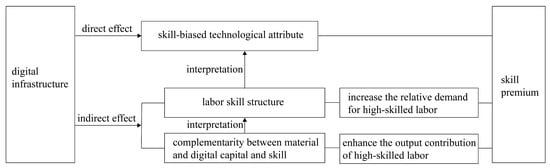
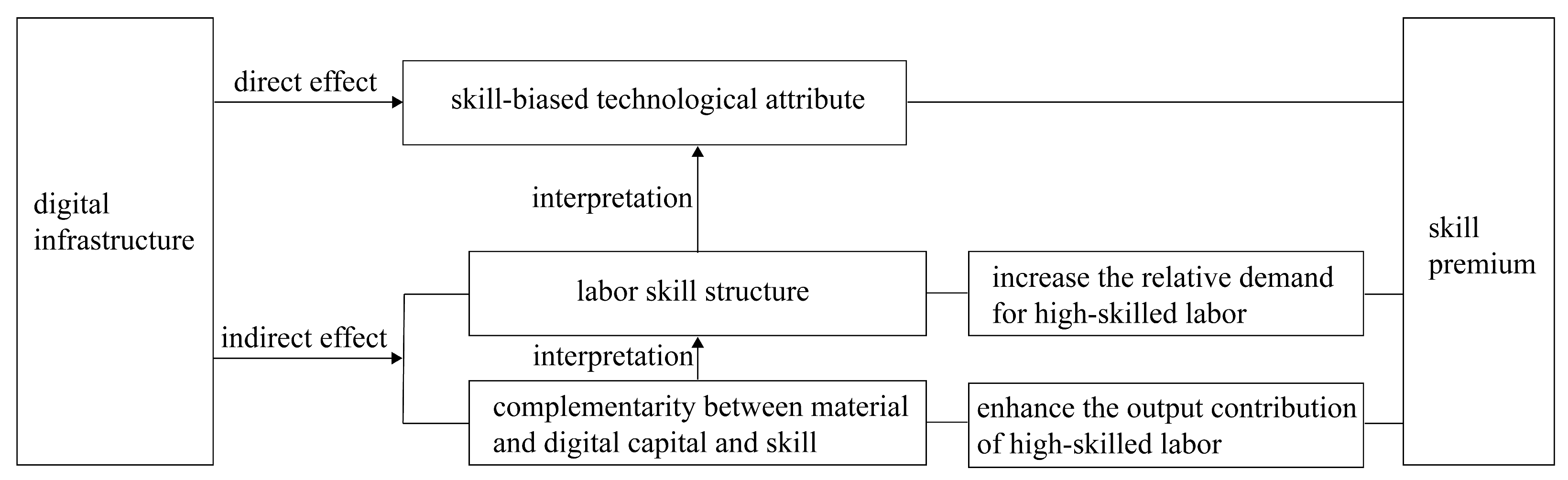
The substitutability between high-skilled labor and material capital is stronger than its substitutability elasticity with digital capital [7]. This differential complementarity stems from the distinct nature of the two capital forms within UDI’s socio-technical system. Digital capital—encompassing software, data platforms and algorithms—constitutes the “cognitive core” of this system. Its value lies in processing information, optimizing decision-making and enabling innovation, all of which fundamentally augment the capabilities of high-skilled labor. This complementarity is deepened because digital capital exhibits network effects and increasing returns to scale, and its effective deployment requires abstract reasoning, problem-solving and adaptive learning skills [45]. In contrast, material capital (e.g., servers, fiber-optic cables, smart devices) primarily provides the physical substrate and connectivity. Its operation and maintenance often involve more routine or codifiable tasks, leading to comparatively stronger complementarity with lower- or medium-skilled labor, or even to its substitution through automation. Compared with traditional production elements, data elements demonstrate increasing marginal returns [45], which are more conducive to enhancing productivity, promoting enterprise innovation and improving resource allocation efficiency. Enterprises will progressively extend the digitization of digital capital on a larger scale [46]. As a consequence of the complementarity between high-skilled labor and technology, the deepening of digital capital has occasioned an upsurge in demand for high-skilled workers, accompanied by a corresponding augmentation in the wages of high-skilled workers. Thus, we propose Hypothesis 3. The theoretical mechanism diagram is shown in Figure 1.
Figure 1.
Theoretical analysis diagram.
Hypothesis 3.
The simultaneous presence of material and digital capital serves to heighten the output contribution of high-skilled labor, thereby engendering an increase in the skill premium. The complementary correlation between digital capital related to UDI and high-skilled labor plays a more pronounced role.
2.3. Testable Predictions
To bridge our theoretical framework with subsequent empirical analysis, we derive the following testable predictions from the hypotheses above:
Prediction 1.
The development of UDI will have a positive and significant effect on the skill premium. This corresponds to the test of Hypothesis 1 in our baseline regression model (Equation (13)).
Prediction 2.
UDI will increase the relative demand for high-skilled labor, thereby altering the labor skill structure. This structural change serves as a key mechanism through which UDI affects the skill premium. We will test Hypothesis 2 using an instrumental variable approach within a mediation framework (Equations (14)–(16)).
Prediction 3.
The complementary effect on output between digital capital and high-skilled labor will be stronger than that between material capital and high-skilled labor. This forms the core test of Hypothesis 3. We will examine this by comparing the growth rates of capital relative to skilled labor (PC/HIGH vs. DC/HIGH) and by estimating production functions that include interaction terms between each capital type and skilled labor (Equations (15) and (16)).
3. Materials and Methods
3.1. Data Setting
The microdata is selected from the CLDS in 2012, 2014 and 2016. We retain only employee samples and limit the sample range of workers to males aged 16–60 and females aged 16–55. All labor individuals involved in the sample are classified according to city codes to obtain relevant data for each city. Macro data is sourced from the China Torch Statistical Yearbook and the official website of the Ministry of Science and Technology. The list of major national scientific and technological infrastructure is sourced from the Eleventh Five-Year Plan, Twelfth Five-Year Plan and Thirteenth Five-Year Plan reports in China and is matched with cities based on the establishment date and location of the facilities. Through sorting, we obtain a total of 325 samples, including 101 city samples in 2012, 105 city samples in 2014 and 119 city samples in 2016. We convert currency data to comparable prices in 2005; due to the lack of price indices for prefecture-level cities, provincial price indices are used instead.
3.2. Empirical Method
3.2.1. Benchmark Model
Through theoretical analysis, UDI will change the labor skill structure and generate skill premium. To elucidate the correlation between the technological attribute of UDI and skill premium, we draw on the insights of Xiong and Sui [47] to establish the following model:
In Equation (13), represents skill premium. means UDI. is a specific set of urban characteristic variables. denotes the city fixed effect, denotes the time fixed effect and denotes the random disturbance term. We mainly focus on the coefficient before . Prior to estimating this model, we examine multicollinearity issues. The variance inflation factor (VIF) values for all explanatory variables are below 10, indicating that the model specification is reliable.
3.2.2. Mechanism Model
- UDI and labor skill structure
The traditional mediation-effect model makes it difficult to address endogeneity between digital infrastructure and mediation variables. We use the interaction term of the distance from Hangzhou sphere and the number of urban internet users in the previous year (IV1) and the interaction term of the number of post offices in 1984 and the number of urban mobile users in the last year (IV2) as instrumental variables for mechanism testing [48,49]. In regard to the methodology proposed by Chen et al. [50], we apply an endogenous mediation-effect model to assess the mechanism.
In Equation (14), represents the mechanism variables.
- 2.
- The complementarity between two types of capital and high-skilled labor
To better understand capital–skill complementarity, we first examine whether UDI leads to higher growth rates of material and digital capital than high-skilled labor. We replace the dependent variables of Equation (14) with material capital (PC), digital capital (DC), the ratio of material capital to high-skilled labor (PC/HIGH) and the ratio of digital capital to high-skilled labor (DC/HIGH) in sequence [51]. Then, we examine the complementarity by establishing the following model according to Chen and Guo [52]:
Among them, OUTCit represents the actual GDP, HIGHit represents the quantity of high-skilled labor and LOWit represents quantity of low-skilled labor. If there is complementary correlation between material capital and high-skilled workers, the coefficient is expected to be positive. If there is complementary correlation between digital capital and high-skilled workers, the coefficient is expected to be positive.
3.3. Variable Selection
3.3.1. Skill Premium
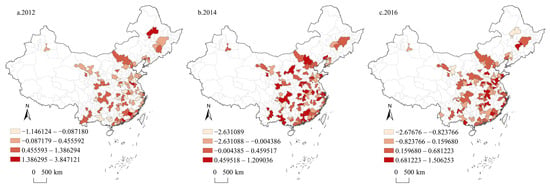
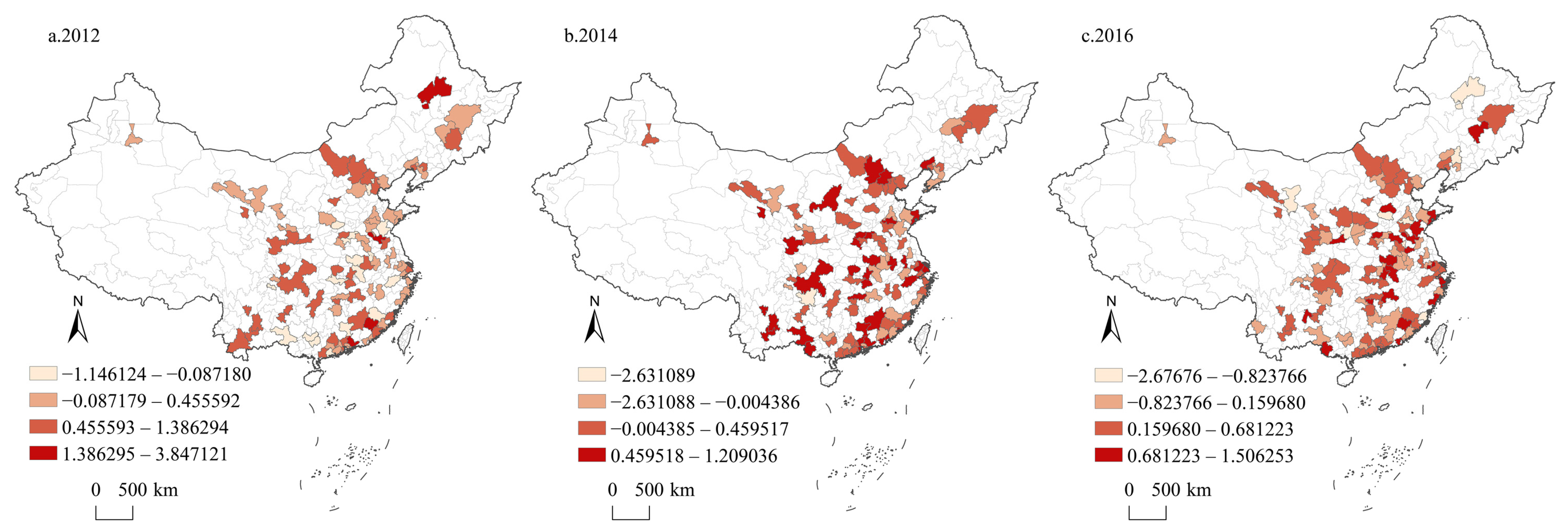
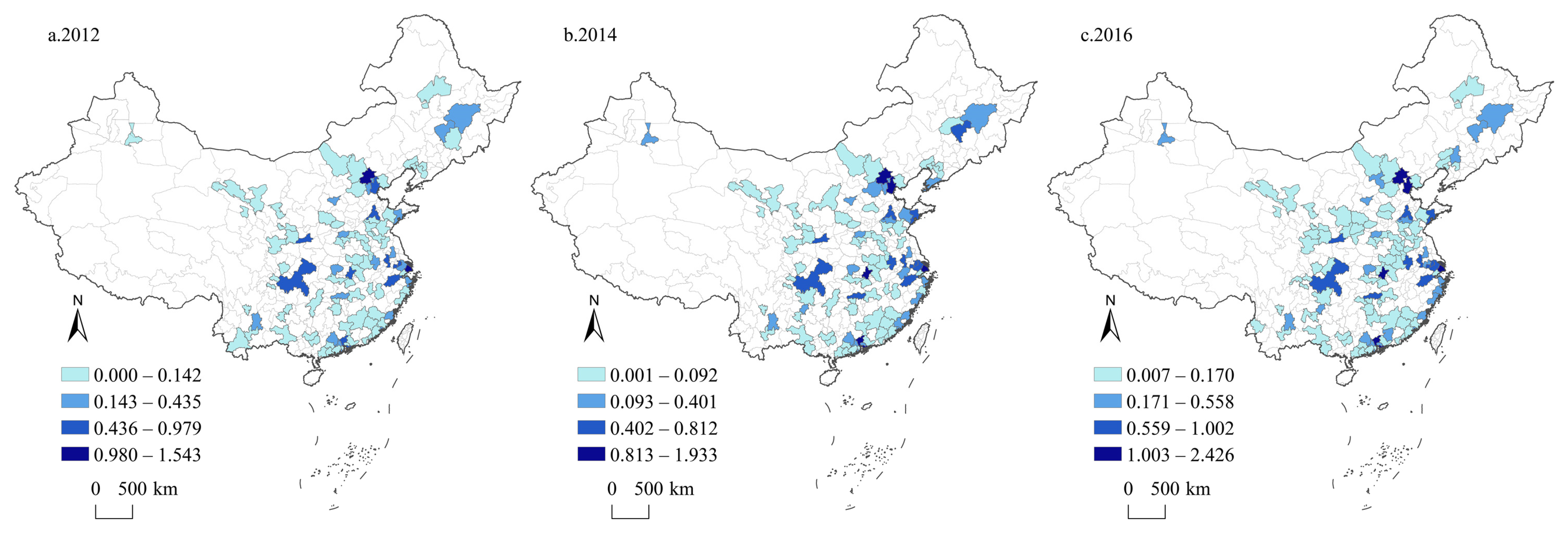
The ratio of average wages between high-skilled and low-skilled workers at the city level is employed to gauge the level of the skill premium. The primary method of categorizing workers’ skill level is based on their level of education [53,54]. Those with a college degree or above are considered to be part of the high-skilled labor, those with an ordinary high school diploma, a vocational high school diploma, a technical school diploma or a secondary vocational school diploma are considered to be part of the medium-skilled workers and those with a junior high school diploma or below are considered to be part of the low-skilled workers. The first two categories are considered high-skilled labor, whereas the final category is considered low-skilled labor. This approach is primarily based on the following considerations: Firstly, against the backdrop of China’s labor market transformation and the penetration of digital technologies, many occupations that were previously classified as medium-skilled are undergoing automation or digital transformation. Their skill requirements and job nature are increasingly aligning with those of high-skilled positions. Secondly, the application of urban digital infrastructure, particularly integrated and intelligent systems such as enterprise resource planning (ERP) and industrial internet platforms, frequently requires operators to possess a certain level of system comprehension and information processing capabilities—skills typically cultivated through college-level education or higher. Finally, the extensive existing literature on skill-biased technological progress often employs a similar dichotomy to highlight divergent trends between high- and low-skilled groups. Figure 2 shows the skill premium situation during the sample period. The natural discontinuity grading method is used to divide regions into different levels. We can conclude that, although the maximum value of the skill premium has decreased, the overall level of the skill premium has increased.
Figure 2.
Skill premium situation in 2012, 2014 and 2016.
3.3.2. Urban Digital Infrastructure
Scholars frequently measure the level of digital infrastructure by utilizing “Broadband China” pilot policies and the fixed capital stock in the information industry [28,29]. The former emphasizes urban research samples, with policy implementation treated as infrastructure construction, while the latter reflects the flow of investment in digital infrastructure. The shortcomings of both are the lack of comprehensiveness. To provide a comprehensive assessment of UDI, this article is based on China’s definition of new digital infrastructure, which is a facilities-based material engineering entity responsible for the provision of foundational and socially beneficial services [27]. Integration infrastructure refers to a facility system that deeply applies technologies such as the internet, big data and artificial intelligence to support the transformation and upgrading of traditional infrastructure through intelligent renovation, thereby achieving system interconnection, data sharing and business coordination, which encompasses key areas such as smart transportation and smart energy infrastructure [55]. To distinguish it from traditional infrastructure, this paper employs smart transport, smart energy infrastructure, industrial internet of things, smart logistics and smart home infrastructure to measure integration infrastructure. The definition above encapsulates the relevant connotations of UDI. Based on this, we construct a three-dimensional perspective to assess the level of UDI. Detailed indicators are shown in Table 1.
Table 1.
Indicator system for UDI.
To avoid information loss caused by high-dimensional, nonnormal and nonlinear indicators, following the approach of Shi et al. [56], the accelerated genetic algorithm projection pursuit model is applied to assess the level of UDI. Figure 3 illustrates the UDI situation during the sample period. We can clearly see that UDI construction in China is advancing steadily.
Figure 3.
The situation of UDI in 2012, 2014 and 2016.
3.3.3. Material and Digital Capital
Investment in UDI includes both material capital primarily consisting of machinery, equipment and buildings, as well as digital capital, primarily consisting of digital technology products or services [25,26].
Following the methodology proposed by Liang et al. [28] for calculating the fixed capital stock of digital infrastructure and in alignment with the approach put forth by Han and Zhuang [57], the provincial-level fixed capital stock of digital infrastructure is distributed to the city level. The weight assigned is the proportion of urban information transmission and health and social work practitioners to the total number of practitioners in the two industries in the province.
In Equation (17), j represents the province, PPCjt is the fixed capital stock of digital infrastructure at the provincial level and PCit is the fixed capital stock of UDI. Lit is the number of employees in this industry in the city and Ljt is the number of employees in this industry in the province j to which city i belongs.
The intangible assets associated with digital technology in listed companies are employed as raw data, classified by city as panel data, for the purpose of measuring urban digital capital (DC) related to UDI.
3.3.4. Mechanism Variables
The ratio of high-skilled labor to low-skilled labor in city i can be used to represent the labor skill structure (SKI). To further analyze the channels through which the structure of labor skills operates, we also consider the number of high-skilled labor (HIGH) and low-skilled labor (LOW) as mechanism variables.
In general, skill-intensive departments hire more skilled labor, while non-skill-intensive departments hire more unskilled labor [58]. It is necessary to further analyze the changes in labor skill structure between skill-intensive and non-skill-intensive industries brought by digital infrastructure. The classification of two types of industries is undertaken in accordance with the approach proposed by Chen et al. [54] and in alignment with the Chinese national economic classification system.
The number of high-skilled labor (SHIGH) and low-skilled labor (SLOW) in skill-intensive industries, and the number of high-skilled labor (NHIGH) and low-skilled labor (NLOW) in non-skill-intensive industries, are to be employed as mechanism variables.
3.3.5. Control Variables
To circumvent any potential bias in the correlation between UDI and skill premium due to omitted variables, we refer to Li et al. [59]; the following urban characteristic variables are introduced.
(1) Enterprise size (ES). Use the logarithm of the average fixed assets of the enterprise to represent ln(asset). (2) Technology expenditure (TE). Use the ratio of fiscal technology expenditure to total fiscal expenditure to represent technology. (3) Government intervention (GI). Use the ratio of fiscal expenditure to regional GDP to measure intervention. (4) Human capital (HC). Use the logarithm of every hundred college students to measure human capital. (5) Information level (II). Measure information using per capita telecommunications revenue. (6) Transportation accessibility (TA). Use the logarithm of urban road freight volume to represent ln(transportation). (7) Environmental governance (EG). Use the industrial wastewater discharge per 10,000 yuan of GDP to measure greenness. Descriptive statistics of variables are shown in Table 2.
Table 2.
Descriptive statistics of variables.
4. Results
4.1. Benchmark Estimation
Prior to conducting benchmark regression analysis, skill-biased technological progress (LNSBTC) and the interaction term between UDI and skill-biased technological progress (UDI × LNSBTC) are incorporated into the model to test the skill-biased attribute of UDI [52]. In line with Acemoglu [60] and a common practice in the literature on SBTC [61], we set the elasticity of substitution between high-skilled and low-skilled labor (ρ) to 2. This parameter value falls within the empirically plausible range (often between 1.4 and 2.0) estimated in prior studies and serves as a benchmark for calibrating the direction and intensity of skill-biased technical change.
Table 2 presents the results of the test of skill-biased attributes in UDI, together with benchmark regression results on its effect on the skill premium. Column (1) demonstrates that the coefficient of UDI × LNSBTC is 0.504, which is significant at the 1% level. This suggests that the interaction term between skill-biased technological progress and UDI has a positive effect on skill premium, indicating that UDI is associated with higher average remuneration for high-skilled labor and is skill-biased under conditions of skill-biased technological progress.
In column (2), the benchmark regression reveals that the coefficient of UDI is 0.618, which is significant at the 5% level. This signifies that, holding other factors constant, a one-unit increase in a city’s digital infrastructure level corresponds to an average rise of approximately 0.618 units in the skill premium. This finding reflects the strong correlation between UDI advancement in China and the skill premium. Subsequently, we shall employ instrumental variables methods to further identify their causal relationship. This indicates that the continued advancement of UDI in China has led to an overall increase in the skill premium. This is because high-skilled labor can adapt to advanced production technology more quickly [34,35], which makes the advanced production technology UDI-skilled-biased. UDI can improve the marginal output and relative wage level of high-skilled labor, thereby increasing the skill premium. Overall, Hypothesis 1 has been confirmed, but the mechanism of this effect still needs further verification.
4.2. Robustness Test
Changing the sample range. In light of the concentration of resources in the four directly governed municipalities and the provincial capitals [62], it is necessary to exclude the data from these cities to avoid the influence of their resource distribution characteristics on the benchmark conclusion. We estimate data after removing these samples and the results are shown in column (1) of Table 3. According to the results, the estimated sign and significance are consistent with the baseline findings, thereby substantiating the conclusion as robust.
Table 3.
Baseline results.
Removing some outliers. The presence of extreme outliers can readily bias the correlation between UDI and skill premium, thereby affecting the reliability of the baseline findings. Therefore, we truncate the top and bottom 1% of the sample and estimate the truncated sample. According to the regression results of column (2), even after removing sample outliers, UDI still significantly increases the skill premium.
Excluding interference from other policies. The policy of “Broadband China” constitutes a government initiative to enhance UDI. Many scholars have employed this quasi-natural experiment as a proxy variable to analyze the correlation between UDI and entrepreneurship [29]. To prevent the policy from affecting the skill premium and biasing the benchmark results, we add a dummy variable for this pilot policy (i.policy) to control for its effect on UDI. According to column (3), the sign and significance of the UDI coefficient have not changed, confirming the reliability of the benchmark conclusion.
4.3. Endogeneity Test
The distinctive attribute of UDI is its capacity to facilitate technological innovation. Its advancement is predominantly driven by the high-quality supply of highly skilled workers in cities. There may be a reverse causal correlation between UDI and labor skill premium. Consequently, we refer to the approach of Chen et al. [50] and select instrumental variables IV1 and IV2 to address potential endogeneity issues [48,49]. Hangzhou exhibits a relatively high degree of digital economic activity. The extent to which the spillover effect of Hangzhou’s digital economy is accepted depends on the geographical distance from Hangzhou. The number of post offices in 1984, as well as the number of internet users and mobile users in the previous year, laid a solid foundation for digital infrastructure in the current period, meeting the requirements of relevance. On the other hand, geographical distance is a previously determined variable. The number of post offices in 1984 and the number of internet users and mobile users in the previous year do not correlate with the original residual item, which meets the exogenous requirements. These two variables influence the construction and application of UDI but theoretically do not directly affect the current skill premium, thereby meeting the instrumental variable criteria. Nevertheless, scenarios where exclusion constraints may be violated must still be considered. Cities historically endowed with advanced postal systems or favorable early conditions for information dissemination may inherently possess superior traditions of human capital accumulation or industrial structures. The aforementioned instrumental variables may influence contemporary labor market structures and consequently skill premiums through other historical economic conditions or geographical endowments. Therefore, to address potential violations, we first controlled for city fixed effects in all regressions. This absorbs all city characteristics that do not change over time, such as historical endowments, geographical conditions and cultural traditions. Secondly, we incorporated a series of time-varying city-level control variables, including firm size, government intervention, human capital and level of informatization. This aims to capture socio-economic factors that may evolve over time and simultaneously influence both the instrumental variable and the skill premium. Finally, from an economic logic perspective, historical communication conditions (post offices) or distance from specific digital hubs (Hangzhou) exert negligible direct influence on firms’ current relative demand for high- and low-skilled labor and wage setting. Their impact is primarily indirect, shaped through the current level of digital infrastructure. We therefore consider it reasonable to conclude that the instrumental variables satisfy the exclusion restriction. The results are presented in Table 4.
Table 4.
Robustness test.
This evidence supports the conclusion that the instrumental variables pass both the identifiable and weak instrumental variable tests. Once the potential endogeneity issues have been accounted for, the coefficient of UDI on the skill premium is found to be significantly positive. This evidence suggests that UDI has a positive effect on the skill premium.
4.4. Mechanism Test
Further empirical investigation is required to elucidate the underlying mechanism. Previous theoretical analysis has identified that the advanced production technology brought by UDI and high-skilled labor have relative complementarity, which can serve to augment the demand for high-skilled labor and enhance the skill premium. The mechanism by which UDI enhances skill premium can be elucidated through an analysis of labor skill structure.
4.4.1. Labor Skill Structure
The results in column (1) of Table 5 demonstrate a significant positive correlation between UDI and labor skill structure. This suggests that the expansion of UDI leads to an increased demand for skills from manufacturing firms. In a heterogeneous labor market, the rise in demand has led to a corresponding increase in remuneration, thereby raising the skill premium [40]. This finding provides evidence that the effect of UDI can be attributed to changes in labor skill structure.
Table 5.
Instrumental variable method.
To gain further insight into the mechanisms through which labor skill structure operates, we examine the effect of digital infrastructure on the number of high-skilled and low-skilled labor. In columns (2) and (3) of Table 6, the effect of UDI on the number of high-skilled workers is significantly positive, while its effect on the number of low-skilled workers is negative but insignificant. This further corroborates the hypothesis that UDI is more inclined to generate an increased demand for high-skilled workers rather than low-skilled workers.
Table 6.
Mechanism effect of labor skill structure.
4.4.2. Labor Skill Structure in Different Industries
Industries with disparate skill intensities also exhibit varying demands for labor skill structure. Skill-intensive departments typically hire more skilled labor, while non-skill-intensive departments typically hire more unskilled labor [58]. Further analysis is imperative to elucidate the alterations in the labor skill structure in these two industries. We use the number of high-skilled labor (SHIGH) and low-skilled labor (SLOW) in skill-intensive industries, as well as the number of high-skilled labor (NHIGH) and low-skilled labor (NLOW) in non-skill-intensive industries as mechanism variables. Table 7 reports the results.
Table 7.
Mechanism effects of labor skill demand in skill-intensive and non-skill-intensive industries.
It is observed that UDI has significantly increased the number of high-skilled workers in these two industries. Nevertheless, the coefficient of UDI on the number of low-skilled labor in these two industries did not meet the criteria for statistical significance. This further indicates that, while the specific demand characteristics of different industries may vary, UDI tends to replace low-skilled labor and to be compatible with high-skilled labor.
4.5. The Test of Complementarity Between Capital and Skill
4.5.1. The Complementary Correlation Between Material Capital and Skill
Column (1) of Table 8 reports whether material capital will increase accompanied by the progress of UDI. The coefficient of UDI is positive at the 1% level, revealing that UDI has increased material capital. Column (2) employs PC/HIGH as the dependent variable; the findings demonstrate that the coefficient UDI is negative but insignificant. This indicates that, although material capital has increased due to continuous UDI improvement, its growth rate is not faster than that of high-skilled workers.
Table 8.
The test of complementarity between material capital and skilled labor.
Column (3) examines the complementary correlation between material capital and two distinct types of workers. The coefficient of PC × HIGH is positive, signifying that the deepening of material capital increases the contribution of high-skilled labor to output. Meanwhile, the coefficient of PC × LOW is positive, demonstrating that the accumulation of material capital can also increase the output contribution of low-skilled labor. The coefficient of the latter is greater than that of the former, indicating that, compared with high-skilled labor, there is a relative complementarity between low-skilled labor and material capital. Forming advanced production equipment based on material capital can complement low-skilled labor. This is because the spillover effect of skill enhances the skill level of low-skilled labor, thereby complementing material capital, which is primarily composed of buildings and machinery [43,63].
4.5.2. The Complementary Correlation Between Digital Capital and Skill
Table 9 provides empirical evidence supporting the complementary relationship between digital capital and skill. In column (1), the coefficient of UDI on digital capital is positive at the 1% level, suggesting that UDI also drives the accumulation of digital capital. In column (2), the coefficient of UDI on the ratio of digital capital to high-skilled labor is positive at the 10% level, revealing that UDI promotes the growth rate of digital capital beyond that of high-skilled labor, thus precipitating a notable enhancement in skill premium.
Table 9.
The test of complementarity between digital capital and skilled labor.
In column (3), the coefficient of DC × HIGH is also significantly positive, indicating a complementary correlation between digital capital and high-skilled workers. The coefficient for PC × LOW is significantly positive, while that for DC × LOW is positive but insignificant. This verifies the relative complementarity between material capital and low-skilled workers, thereby indirectly confirming the relative complementarity between digital capital and high-skilled workers. This is because digital capital contains more technology. Due to the more obvious effects of productivity improvement and technological progress induced by digital technology [64], enterprises will continue to deepen their digital intangible capital, necessitating an increase in the demand for skills [46].
5. Discussion
We examine the effect of UDI on the skill premium using a theoretical model that includes both digital and material capital, along with the matching data from the CLDS and urban data. The principal findings can be summarized as follows:
Firstly, the technological attribute of UDI is skill-biased, which will increase the skill premium. Secondly, mechanism analysis shows that the development of UDI has precipitated an expansion in demand for high-skilled labor, with evidence pointing to both skill-intensive and non-skill-intensive industries. This has given rise to a transformation in the labor skill structure and an accompanying increase in the skill premium. Thirdly, the mechanism by which labor skill structure affects outcomes arises from the complementarity between digital capital facilitated by UDI and high-skilled labor. Compared to material capital, the deepening of digital capital can facilitate a more considerable contribution of high-skilled labor to output.
Our findings offer critical insights for policymakers aiming to navigate the labor market impacts of modern infrastructure transformation.
Firstly, our findings confirm that UDI development is inherently skill-biased, as validated by Hypotheses 1 and 2 (see Table 3 and Table 6); it will increase the relative demand for highly skilled labor. Consequently, policymakers should prioritize the strategic deployment of UDIs and promote skill-biased technological progress, integrating UDI implementation with proactive human capital development policies. This entails providing targeted subsidies or tax incentives to enterprises that concurrently invest in digital infrastructure and offer upskilling/reskilling programs for employees, ensuring the workforce complements new technologies. The formation of China’s new growth drivers currently requires support from skill-biased technological progress. Secondly, given that UDI enhances demand for highly skilled labor across both skill-intensive and non-skill-intensive industries (see Table 7), though certain sectors may benefit disproportionately, policymakers should adopt differentiated regional and sectoral strategies. For regions/industries lagging in digitalization, public sector investment in UDI should be accompanied by vocational training programs in intermediate digital skills to mitigate displacement risks for low-skilled workers. Concurrently, strengthening social safety nets and portable benefit schemes can mitigate transition costs for affected workers. While widening pay gaps driven by technological progress are inevitable under conditions of equal opportunity, efforts should be made to strike a balance between economic expansion and income equality. Thirdly, based on the confirmed Hypothesis 3—that the complementarity between intangible capital and highly skilled labor is stronger than that with physical capital (see Table 9)—policies should not only incentivize the construction of physical infrastructure such as 5G base stations but also promote the accumulation of digital capital at the enterprise level, including software, data and platforms. We recommend implementing a coordinated policy framework to advance UDI development and facilitate corporate digital transformation. Concurrently, establishing public innovation platforms or digital sandboxes would reduce the costs for SMEs to experiment with and adopt digital technologies. Furthermore, revising intellectual property and data governance frameworks could encourage investment in intangible digital assets that enhance productivity when combined with highly skilled labor. Continued exploration of application scenarios should promote the synchronous evolution of UDI and deepen the digital intangible capital generated by it.
While this study provides theoretical and empirical evidence of UDI’s role in elevating the skill premium, several limitations warrant acknowledgment and suggest directions for future research. Firstly, the data comes from CLDS. Although these datasets can reflect labor wages and employment at a micro level, our ability to obtain the latest annual data is limited. Future research can be conducted by obtaining continuous and the latest data to obtain more universally applicable conclusions. In addition, this article focuses on the overall skill premium at the societal level, whereas the correlation between UDI and the skill premium will give rise to heterogeneity across industries. As China is a manufacturing powerhouse, future research may also focus on an analysis of the skill premium in China’s manufacturing industry. Finally, this article analyzes the mechanism by which labor skill structure affects the UDI’s effect on the skill premium. However, it is not the only channel through which UDI interacts with skill premium. Future research can validate the potential channels involved.
Author Contributions
Conceptualization and Methodology, M.S., L.S. and X.L.; data curation, L.S. and X.L.; writing—review and editing, L.S. and X.L. All authors have read and agreed to the published version of the manuscript.
Funding
This work was supported by the National Social Science Foundation of China (23BJY099), Fundamental Research Funds for Central Universities (B220207036) and the Postgraduate Research Practice Innovation Program of Jiangsu Province (KYCX25_0889).
Data Availability Statement
Data will be made available on request.
Conflicts of Interest
The authors declare no conflicts of interest.
Abbreviation
The following abbreviation is used in this manuscript:
| UDI | Urban Digital Infrastructure |
References
- Chatterjee, S.; Turnovsky, S.J. Infrastructure and inequality. Eur. Econ. Rev. 2012, 56, 1730–1745. [Google Scholar] [CrossRef] [Scilit]
- Wen, H.; Liu, Y.; Zhou, F. New-type infrastructure and urban economic resilience: Evidence from China. Int. Rev. Econ. Financ. 2024, 96, 103560. [Google Scholar] [CrossRef] [Scilit]
- Gong, M.; Zeng, Y.; Zhang, F. New infrastructure, optimization of resource allocation and upgrading of industrial structure. Financ. Res. Lett. 2023, 54, 103754. [Google Scholar] [CrossRef] [Scilit]
- Tang, K.; Yang, G. Does digital infrastructure cut carbon emissions in Chinese cities? Sustain. Prod. Consum. 2023, 35, 431–443. [Google Scholar] [CrossRef] [Scilit]
- Zhang, S.; Xia, Y.; Wang, H.; Pan, J.; Lv, G. Repel or attract? Effects of urban digital infrastructure on labor migration: Evidence from urban China. Cities 2024, 154, 105386. [Google Scholar] [CrossRef] [Scilit]
- Acemoglu, D.; Restrepo, P. Tasks, automation, and the rise in U.S. wage inequality. Econometrica 2022, 90, 1973–2016. [Google Scholar] [CrossRef] [Scilit]
- Duan, W.; Shu, X.; Wu, F.; Liu, T. Intangible capital, capital-skill complementarity and skill premium. Econ. Res. J. 2023, 58, 16–134. (In Chinese) [Google Scholar]
- Parro, F. Understanding the supply and demand forces behind the fall and rise in the US skill premium. Macroecon. Dyn. 2019, 23, 2191–2220. [Google Scholar] [CrossRef] [Scilit]
- Lecca, P.; Persyn, D.; Sakkas, S. Capital-skill complementarity and regional inequality: A spatial general equilibrium analysis. Reg. Sci. Urban. Econ. 2023, 102, 103937. [Google Scholar] [CrossRef] [Scilit]
- Acemoglu, D.; Restrepo, P. Robots and jobs: Evidence from US labor markets. J. Polit. Econ. 2020, 128, 2188–2244. [Google Scholar] [CrossRef] [Scilit]
- Afonso, O.; Sequeira, T.; Almeida, D. Technological knowledge and wages: From skill premium to wage polarization. J. Econ. 2023, 140, 93–119. [Google Scholar] [CrossRef] [Scilit]
- Acemoglu, D.; Restrepo, P. The race between man and machine: Implications of technology for growth, factor shares and employment. Am. Econ. Rev. 2018, 108, 1488–1542. [Google Scholar] [CrossRef] [Scilit]
- Hu, S.; Wang, L.; Dong, Z. The application of industrial robots and the labor skill premium: Theoretical hypothesis and industrial evidence. Ind. Econ. Res. 2021, 4, 69–84. (In Chinese) [Google Scholar]
- Bauer, J.M. The internet and income inequality: Socio-economic challenges in a hyperconnected society. Telecommun. Policy 2017, 42, 333–343. [Google Scholar] [CrossRef] [Scilit]
- Liwinski, J. Wage premium from Computer and Internet skills in Poland. In Proceedings of the 18th International Scientific Conference on Globalization and Its Socio-Economic Consequences, Rajecke Teplice, Slovakia, 10–11 October 2018; pp. 2199–2205. [Google Scholar]
- Khan, N.; Ray, R.L.; Zhang, S.; Osabuohien, E.; Ihtisham, M. Influence of mobile phone and internet technology on income of rural farmers: Evidence from Khyber Pakhtunkhwa Province, Pakistan. Technol. Soc. 2022, 68, 101866. [Google Scholar] [CrossRef] [Scilit]
- Zolfaghari, M.; Kabiri, M.; Saadatmanesh, H. Impact of socio-economic infrastructure investments on income inequality in Iran. J. Policy Model. 2020, 42, 1146–1168. [Google Scholar] [CrossRef] [Scilit]
- Fingleton, B.; Szumilo, N. Simulating the impact of transport infrastructure investment on wages: A dynamic spatial panel model approach. Reg. Sci. Urban. Econ. 2019, 75, 148–164. [Google Scholar] [CrossRef] [Scilit]
- Lee, S.; Im, J.; Cho, K. Understanding spatial inequalities and stratification in transportation accessibility to social infrastructures in South Korea: Multi-dimensional planning insights. Sci. Rep. 2024, 14, 18445. [Google Scholar] [CrossRef] [Scilit]
- Medeiros, V.; Ribeiro, R.S.M. Power infrastructure and income inequality: Evidence from Brazilian state-level data using dynamic panel data models. Energ. Policy 2020, 146, 111734. [Google Scholar] [CrossRef] [Scilit]
- Yang, F.; Zhang, S.; Sun, C. Energy infrastructure investment and regional inequality: Evidence from China’s power grid. Sci. Total Environ. 2020, 749, 142384. [Google Scholar] [CrossRef] [Scilit]
- Tang, J.; Zhao, X. Does the new digital infrastructure improve total factor productivity? B Econ. Res. 2023, 75, 95–916. [Google Scholar] [CrossRef] [Scilit]
- Jiang, C.; Jin, B. Does the development of digital economy infrastructure reduce the urban-rural income gap? Theoretical experience and empirical data from China. Kybernetes 2023, 53, 600–619. [Google Scholar] [CrossRef] [Scilit]
- Wang, Q.; Xia, X.; Lan, S.; Li, M. Rural digital infrastructure and labor market: Eevidence from universal telecommunication service. Asian Econ. J. 2023, 37, 293–325. [Google Scholar] [CrossRef] [Scilit]
- Li, X. New infrastructure construction and policy orientation for a smart society. Reform 2020, 5, 34–48. (In Chinese) [Google Scholar]
- Meng, J.; Zhu, Y.; Han, Y. Can ‘new’ infrastructure become an engine of growth for the Chinese economy? J. Chin. Econ. Bus. Stud. 2022, 21, 341–362. [Google Scholar] [CrossRef] [Scilit]
- Zhang, C.; Zhang, M.; Xiao, C. From traditional infrastructure to new infrastructure: A new focus of China’s Belt and Road Initiative diplomacy? Eurasian Geogr. Econ. 2022, 63, 424–443. [Google Scholar] [CrossRef] [Scilit]
- Liang, D.; Liu, J.; Liu, M.; Sun, J. Does information infrastructure and technological infrastructure reduce carbon dioxide emissions in the context of sustainable development? Examining spatial spillover effect. Sustain. Dev. 2023, 32, 1599–1615. [Google Scholar] [CrossRef] [Scilit]
- Zhang, H.; Zhang, K.; Yan, T.; Cao, X. The impact of digital infrastructure on regional green innovation efficiency through industrial agglomeration and diversification. Hum. Soc. Sci. Commun. 2025, 12, 220. [Google Scholar] [CrossRef] [Scilit]
- Card, D.; Lemieux, T. Can falling supply explain the rising return to college for younger men? A cohort-based analysis. Q. J. Econ. 2001, 116, 705–746. [Google Scholar] [CrossRef] [Scilit]
- Acemoglu, D. Patterns of skill premia. Rev. Econ. Stud. 2003, 70, 199–230. [Google Scholar] [CrossRef] [Scilit]
- Krusell, P.; Ohanian, L.E.; Ríos-Rull, J.V.; Violante, G.L. Capital-skill complementarity and inequality: A macroeconomic analysis. Econometrica 2000, 68, 1029–1053. [Google Scholar] [CrossRef] [Scilit]
- Perez-Laborda, A.; Perez-Sebastian, F. Capital-skill complementarity and biased technical change across US sectors. J. Macroecon. 2020, 66, 103255. [Google Scholar] [CrossRef] [Scilit]
- Sandulli, F.D. Solving the Paradoxes of the Information Technology Revolution; Information Resources Management Association: Hershey, PA, USA, 2010. [Google Scholar]
- Mokyr, J.; Vickers, C.; Ziebarth, N.L. The history of technological anxiety and the future of economic growth: Is this time different? J. Econ. Perspect. 2015, 29, 31–50. [Google Scholar] [CrossRef] [Scilit]
- Balsmeier, B.; Woerter, M. Is this time different? How digitalization influences job creation and destruction. Res. Policy 2019, 48, 103765. [Google Scholar] [CrossRef] [Scilit]
- Jarrahi, M.H.; Newlands, G.; Butler, B.; Savage, S.; Lutz, C.; Dunn, M.; Sawyer, S. Flexible work and personal digital infrastructures. Commun. Acm 2021, 64, 72–79. [Google Scholar] [CrossRef] [Scilit]
- Buera, F.J.; Kaboski, J.P.; Rogerson, R.; Vizcaino, J.I. Skill-biased structural change. Rev. Econ. Stud. 2022, 89, 592–625. [Google Scholar] [CrossRef] [Scilit]
- Aziz, I. Skill-biased technological change and intergenerational education mobility. Econ. Educ. Rev. 2024, 103, 102596. [Google Scholar] [CrossRef] [Scilit]
- Bowlus, A.; Lochner, L.; Robinson, C.; Suleymanoglu, E. Wages, skills, and skill-biased technical change. J. Hum. Resour. 2023, 58, 1783–1819. [Google Scholar] [CrossRef] [Scilit]
- Huo, Q.; Ruan, J.; Cui, Y. “Machine replacement” or “job creation”: How does artificial intelligence impact employment patterns in China’s manufacturing industry? Front. Artif. Intell. 2024, 7, 1337264. [Google Scholar] [CrossRef] [Scilit] [PubMed]
- Tschang, F.T.; Mezquita, E.A. Artificial intelligence as augmenting automation: Implications for employment. Acad. Manag. Perspect. 2020, 35, 642–659. [Google Scholar] [CrossRef] [Scilit]
- Wang, H.; Zhou, Y. Staged pain or systemic crisis? Research on the employment effect of enterprise green transformation. Environ. Sci. Pollut. R. 2023, 30, 99948–99964. [Google Scholar] [CrossRef] [Scilit]
- Lv, K.; Zhao, Y.; Zhu, S.; Zhu, L. Enterprise digital transformation and labor structure evolution: Evidence from China. Chin. Manag. Stud. 2024, 19, 702–733. [Google Scholar] [CrossRef] [Scilit]
- Goldfarb, A.; Tucker, C. Digital economics. J. Econ. Lit. 2019, 57, 3–43. [Google Scholar] [CrossRef] [Scilit]
- Bai, F.; Shang, M.; Huang, Y.; Liu, D. Digital investment, intellectual capital and enterprise value: Evidence from China. J. Intellect. Cap. 2023, 25, 210–232. (In Chinese) [Google Scholar] [CrossRef] [Scilit]
- Xiong, B.; Sui, Q. The effect of digital economy on rural workforce occupation transformation ability: Evidence from China. Hum. Soc. Sci. Commun. 2025, 12, 13. [Google Scholar] [CrossRef] [Scilit]
- Lin, B.; Xu, C. The effects of industrial robots on firm energy intensity: From the perspective of technological innovation and electrification. Technol. Forecast. Soc. 2024, 203, 123373. [Google Scholar] [CrossRef] [Scilit]
- Liu, X.; Song, M.; Wang, S.; Xu, X.; Li, H. On innovation infrastructure and industrial carbon emissions: Nonlinear correlation and effect mechanism. Appl. Energ. 2024, 375, 124079. [Google Scholar] [CrossRef] [Scilit]
- Chen, Y.; Fan, Z.; Gu, X.; Zhou, L. Arrival of young talent: The send-down movement and rural education in China. Am. Econ. Rev. 2020, 110, 3393–3430. [Google Scholar] [CrossRef] [Scilit]
- Liu, Q.R.; Zhao, C. Tax policy incentives and enterprise human capital upgrading. Econ. Res. J. 2020, 55, 70–85. [Google Scholar]
- Chen, D.; Guo, W. How does digital transformation affect labor skill premium: An empirical study on a-share listed enterprises. J. Quant. Technol. Econ. 2024, 41, 173–192. (In Chinese) [Google Scholar]
- Ciccone, A.; Peri, G. Long-run substitutability between more and less educated workers: Evidence from U.S. States 1950–1990. Rev. Econ. Stat. 2004, 87, 652–663. [Google Scholar] [CrossRef] [Scilit]
- Chen, G.; Han, J.; Han, K. Urban Digital Economy Development, Skill-Biased Technological Change and Underemployment. China Ind. Econ. 2022, 8, 118–136. (In Chinese) [Google Scholar]
- Zhang, Z.R.; Ma, Y.; Yang, Y.L. Measurement and analysis of China’s new infrastructure in the context of new quality productive forces. Res. Econ. Manag. 2024, 45, 17–39. (In Chinese) [Google Scholar]
- Shi, J.; Duan, K.; Wu, G. Measurement of Urban-Rural Integration Development Level and Analysis of Its Spatiotemporal Characteristics in the Yangtze River Delta. Tongji Daxue Xuebao (Shehui Kexue Ban) 2022, 33, 78–89. (In Chinese) [Google Scholar]
- Han, F.; Zhuang, Z. Large domestic market, artificial intelligence application and manufacturing domestic value-added in export. World Econ. Stud. 2022, 5, 33–47+135. (In Chinese) [Google Scholar]
- Leonardi, M. The effect of product demand on inequality: Evidence from the United States and the United Kingdom. Am. Econ. J. Appl. Econ. 2015, 7, 221–247. [Google Scholar] [CrossRef] [Scilit]
- Li, C.; Wen, M.; Jiang, S.; Wang, H. Assessing the effect of urban digital infrastructure on green innovation: Mechanism identification and spatial-temporal characteristics. Hum. Soc. Sci. 2024, 11, 320. [Google Scholar] [CrossRef] [Scilit]
- Acemoglu, D. Directed technical change. Rev. Econ. Stud. 2002, 69, 781–809. [Google Scholar] [CrossRef] [Scilit]
- Autor, D.; Levy, F.; Murnane, R.J. The skill content of recent technological change: An empirical exploration. Q. J. Econ. 2003, 118, 1279–1333. [Google Scholar] [CrossRef] [Scilit]
- Wei, G.; Yang, Y.; Li, R.; Liu, Y.; He, B. Digital economy exhibits varying degrees of mitigation of air pollution in China: Total cities-economic subdivisions-urban agglomerations. iScience 2024, 27, 102596. [Google Scholar] [CrossRef] [Scilit]
- Bennett, J. Skill-specific unemployment risks: Employment protection and technological progress—A cross-national comparison. J. Eur. Soc. Policy 2016, 26, 402–416. [Google Scholar] [CrossRef] [Scilit]
- Verwiebe, R.; Hagemann, S. Bourdieu revisited: New forms of digital capital—Emergence, reproduction, inequality of distribution. Inform. Commun. Soc. 2024, 28, 1861–1883. [Google Scholar] [CrossRef] [Scilit]

Disclaimer/Publisher’s Note: The statements, opinions and data contained in all publications are solely those of the individual author(s) and contributor(s) and not of MDPI and/or the editor(s). MDPI and/or the editor(s) disclaim responsibility for any injury to people or property resulting from any ideas, methods, instructions or products referred to in the content. |
© 2026 by the authors. Licensee MDPI, Basel, Switzerland. This article is an open access article distributed under the terms and conditions of the Creative Commons Attribution (CC BY) license.