


Abstract
Concrete is a very popular material in the construction industry—it is, however, susceptible to quasi-brittle failure and restricted energy absorption after yielding. The incorporation of short discrete fibers has shown great promise in addressing these shortfalls. A natural fiber such as sisal is renewable, cheap, and easily available. It has also exhibited good tensile strength and can significantly improve the performance of concrete. In this study, the physical and mechanical properties of sisal fiber-reinforced concrete were reported. Sisal fibers were added in the mix at percentages of 0.5%, 1.0%, 1.5%, and 2.0% by weight of cement. Physical properties measured are workability, water absorption, and density while mechanical properties reported are compression strength, split tensile strength, and static modulus of elasticity. The computed modulus of elasticity of sisal fiber-reinforced concrete was compared with predicted values in some common design codes. From the study, it was concluded that sisal fiber can enhance the split tensile strength and Young’s modulus of concrete but cannot improve its workability, water absorption, and compressive strength.
1. Introduction
The increase in global population is putting rising demand on the construction industry, now more than ever [1]. The industry heavily relies on concrete that happens to be the most widely used construction material because of its unique inherent properties, such as high compressive strength, good durability, fire resistivity, and low permeability [2]. Aside from these positive properties are adverse characteristics, such as low tension strength, brittleness, low resistance to cracking, and low impact resistance [3]. These defects made it necessary to find out ways to improve the properties of concrete; some of these deficiencies, such as low tensile strength, can be improved by using conventional reinforcement steel bars and, to a reasonable extent, by incorporating optimum amount of certain fibers in concrete: Fiber-reinforced concrete (FRC) [4].
Fibers are a small-short discrete reinforcing material produced from various materials, like steel, plastic, glass, carbon, and natural materials in various shapes and sizes [5]. Sisal is one of the numerous natural fibers that have shown great promise over the years; it possesses many advantageous properties, which include sustainability, high tensile modulus, and low cost [6]. It is locally available in Kenya, Tanzania, and Brazil. It can be incorporated into the cementitious matrix to improve its mechanical strength, resulting in concrete known as sisal fiber-reinforced concrete (SFRC). Fiber also improves the post-yield behaviour of concrete as it inhibits crack propagation.
Two important parameters employed in describing fiber are aspect ratio and volume fraction. Aspect ratio is the ratio of fiber length to its diameter (l/d). Typical aspect ratio (A.R) ranges from 30 to 150 [4] and it plays a crucial role in improving the properties of concrete [7]. Low A.R ranging between 2.5 and 7.5 had a significantly positive effect on the compressive strength of concrete in comparison to higher A.R values [8]. Volume fraction, on the other hand, is the volume of fiber in the concrete matrix. Recent research, however, adopts the method of adding fibers by percentage weight of cement. Optimum fiber content by weight of cement has reportedly been 1%, with further addition resulting in a decrease in both compressive and split tensile strength of concrete, especially for low modulus fibers [7,9].
The risk associated with the inclusion of fibers in a concrete matrix is its tendency to reduce the workability and ease of compaction of fresh concrete, which will negatively impact on the compressive strength of concrete [9,10]. Reference [11] reported a small decrease in the compressive strength of FRC at all levels of incorporation by weight of cement. Although most studies showed an improvement in split tensile strength due to the high tensile modulus of the fiber used in comparison to that of concrete [12]. Dadapheer et al. [13] in his recent study reported an increase in the tensile strength of FRC up to 2% by weight of cement with an improvement in flexural strength as well, showing that sisal fiber can tremendously improve the properties of concrete.
2. Materials and Mix Design
2.1. Materials
The materials used in this study were sisal fibers, coarse aggregates, fine aggregates, Ordinary Portland Cement (OPC), silica fume, and water.
2.1.1. Sisal Fiber
Sisal fibers were obtained from Juja, Kenya. They were brushed, dried, and cut into small lengths of 3 cm. The fibers were characterized as summarized in Table 1. The tensile strength of the sisal fiber was obtained using the Hounsfield tensometer. The fibers were treated by immersing in a silica fume slurry before incorporating them into the concrete and allowing them to dry for 13 min to ensure durability [14].

Table 1.
Properties of sisal fibers.
2.1.2. Cement
Ordinary Portland Cement (grade 42.5 N) conforming to the specifications of ASTM C150 [15] was used in this study. Table 2 and Table 3, respectively, show the physical properties and chemical composition of the cement used in the study as compared to the requirements of ASTM C150 [15].
Table 2.
Physical properties of cement.
Table 3.
Chemical composition of cement.
2.1.3. Fine Aggregate
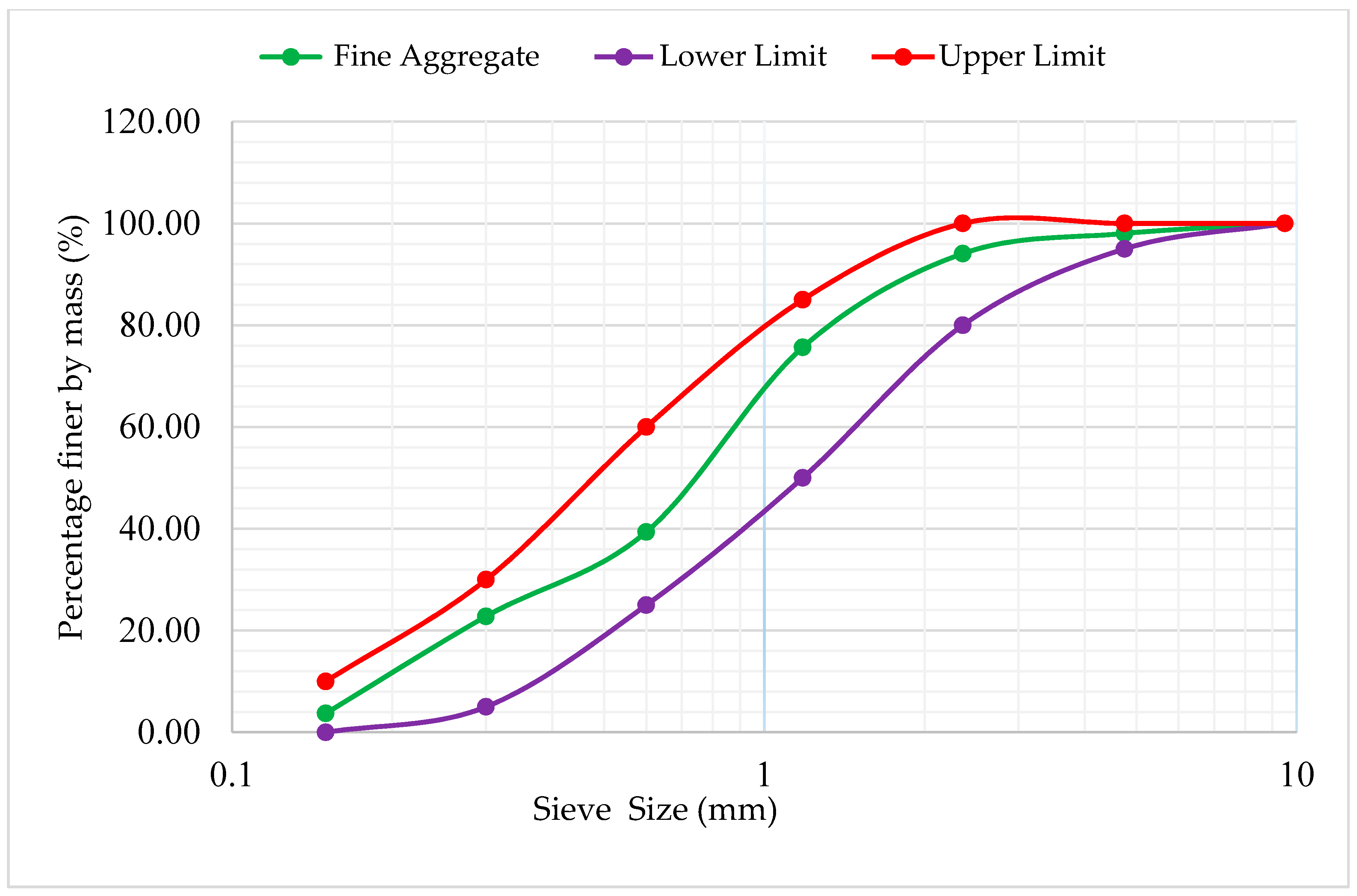
River sand, passing a 4.75 mm standard sieve, constitutes the fine aggregate. The sand conforms to ASTM C33 [16] requirements. Its properties are summarized in Table 4 and gradation captured in Figure 1.
Table 4.
Properties of fine aggregates.
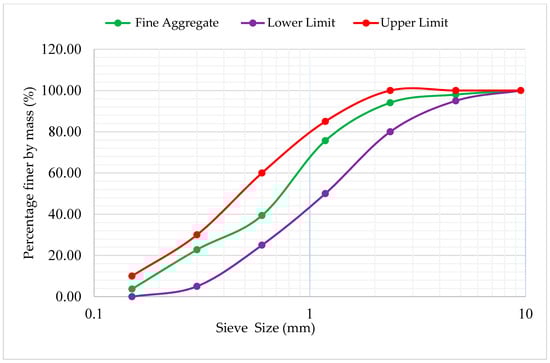
Figure 1.
Particle size distribution of fine aggregate.
2.1.4. Coarse Aggregate
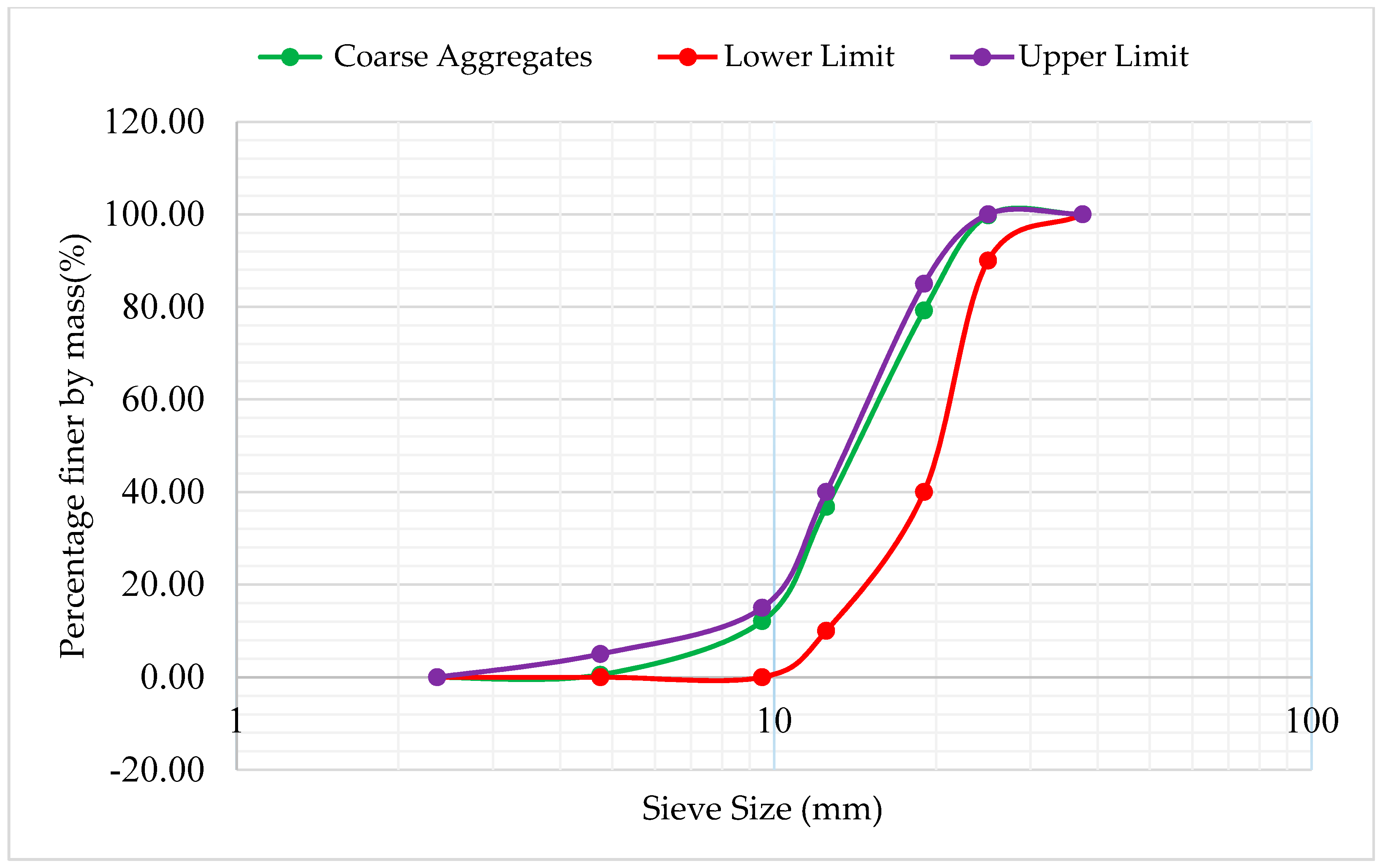
Crushed granite of a nominal size of 9.5–25 mm supplied from Ruiru, Kenya was used. The grading limits for coarse aggregate were found to be within the limits of ASTM C33 [16], as shown in Figure 2. Its properties are presented in Table 5.
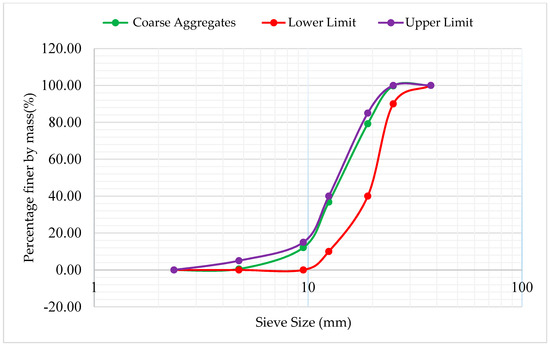
Figure 2.
Particle size distribution of coarse aggregate.
Table 5.
Physical properties of coarse aggregates.
2.1.5. Water
Ordinary portable water available in the laboratory conforming to ASTM C1602 [17] requirements with a pH of 8.1 was used in the study for the mixing and curing of concrete mixes.
2.2. Mix Proportions
2.2.1. Control Mix
Each mixture consists of 730 kg/m3 sand, 1400 kg/m3 granite, 380 kg/m3 cement, water–cement ratio of 0.47, and 0.5% superplasticiser by weight of cement for a target strength of 30 MPa ACI 211-1, 2002 [18]. These control mixes had 0% sisal fiber (SF0) and were cured for 7 and 28 days.
2.2.2. Sisal Fiber Concrete Mix
Other mixes are SF1, SF2, SF3, and SF4, corresponding to the 0.5%, 1.0%, 1.5%, and 2.0% addition of sisal fiber by weight of cement, respectively. Batching by weight was adopted for all the mixes.
2.3. Specimen
Forty-five concrete cubes of 150 mm × 150 mm × 150 mm size were molded for compressive strength, water absorption, and dry density tests. Forty-five cylinders of 100 mm diameter and 200 mm height were cast for the split tensile test and Young’s Modulus measurement.
2.3.1. Specimen Preparation
The concrete mix was cast into lubricated cube molds and cylinders and then compacted using a poker vibrator, after which they were left undisturbed for 24 h before being demolded and placed in curing tanks for 7 and 28 days of curing. Casting, compaction, and curing were achieved according to ASTM C192 [19].
2.3.2. Specimen Testing
- Workability: On each fresh mix of concrete, workability was determined using the slump cone in accordance with the requirements of ASTM C143 [20] and compaction factor according to the terms of BS 1881-103:1983 [21]. The reported slump and compaction factor values are an average of 3 measurements.
- Water absorption: Accomplished using ASTM C642 [22]. The water absorption values reported are the average obtained from 3 cubes.
- Density: Measured for the cubes taken from curing water tank in accordance to ASTM C642 [22]. The density represents the mean of 3 cubes after 28 days water curing.
- Compression strength test: Concrete cubes were tested according to BS EN 12390-03 [23] and BS 1881-116 [24] using a load-controlled universal testing machine. The average of the compression strength of 3 cubes was reported for each curing age.
- Split tensile test: Cylinders were tested according to ASTM C496 [25] using a load-controlled universal testing machine. The mean of 3 measurements was recorded as the tensile strength of each mix for each curing age.
- Static modulus of elasticity: The static modulus of elasticity was measured by using 2 bonded strain gage (PL-60-11-3LT series) series circumferentially at diametrically opposite points at the midheight of the cylinder specimen and connected to a data logger. A load cell connected to the same data logger was also placed above the specimen to obtain the stress. The test was carried out in accordance with the requirements of ASTM C469 [26].
3. Results and Discussion
3.1. Physical Properties of SFRC
3.1.1. Effect of Sisal Fiber on the Workability of Concrete
The ease with which fresh concrete can be transported, molded, and compacted without segregation is regarded as its workability. It is a property of freshly mixed concrete that depicts the amount of internal work needed to overcome the internal friction between the individual constituents of the concrete. It is influenced by a number of factors, which include the water/cement ratio, the aggregate/cement ratio, the particle size distribution, and shape of the constituent aggregates, as well as the fineness and consistencies of the binder. High workability is required in congested areas, such as beam–column joins, while low workability is adopted in large sections and concrete pavements [27]. In this study, the design approach undertaken entails keeping all factors constant while the sisal fibers were added in increments of 0.5% by weight of cement. Results of the slump test and compaction factor are presented in Table 6. It shows the average slump and compaction factor values for each mix versus the percentage of sisal fiber added.
Table 6.
Slump and compaction factor value of SFRC.
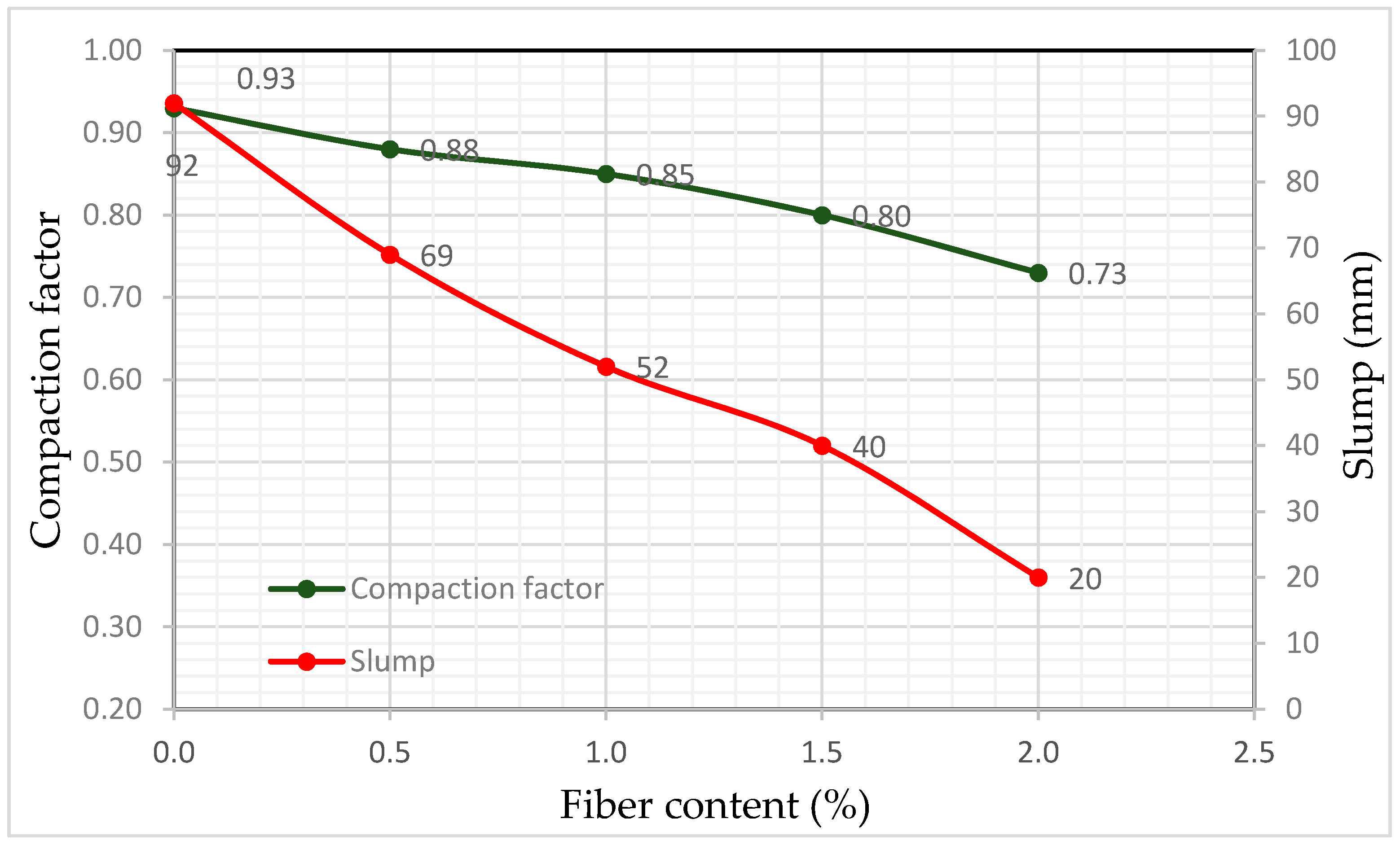
For a constant w/c of 0.47 that was used in the mix design, there was a general decrease in the workability of fresh SFRC as reported by reduction in the slump and compaction factor values as the percentages of sisal fibers were increased in the mix, as seen in Figure 3. The slump and compaction factor value, respectively, reduced from 92 mm and 0.93 for the control mix without sisal fiber to 20 mm and 0.73 for a 2% addition. The lowest workability recorded falls in the very low range (0–25 mm) and the highest workability observed (92 mm) is classified as medium workability (50–100 mm). The decrease in workability of fresh SFRC can be seen to be linear and proportional to the percentages of sisal fibers added to the mix. Although the mix remained workable in nature, additional efforts will be required for proper compaction, especially when the fiber content exceeds 1%. A similar result was reported by [6,28,29,30]. Incremental sisal fiber addition of 0.5%, 1.0%, 1.5%, and 2.0% resulted in a slump percentage reduction of 25%, 43.48%, 56.25%, and 78.26% while the compaction factor reduced by 5.38%, 8.60%, 13.98%, and 21.51%, respectively. This reduction in the workability of concrete was ascribed to the presence of fibers in the mix tending to lump on each other, ball, and absorb some of the free water required for lubrication and paste formation [30]. There is also the occurrence of poor adhesion between fibers and the matrix, resulting in the inhibition of concrete flow as fiber content increases [28,31]. Therefore, the mix required more efforts to compact.
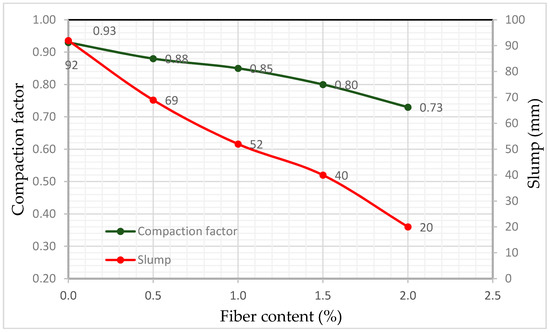
Figure 3.
Effect of sisal fibers on the workability of concrete.
3.1.2. Effect of Sisal Fiber on the Water Absorption of Concrete
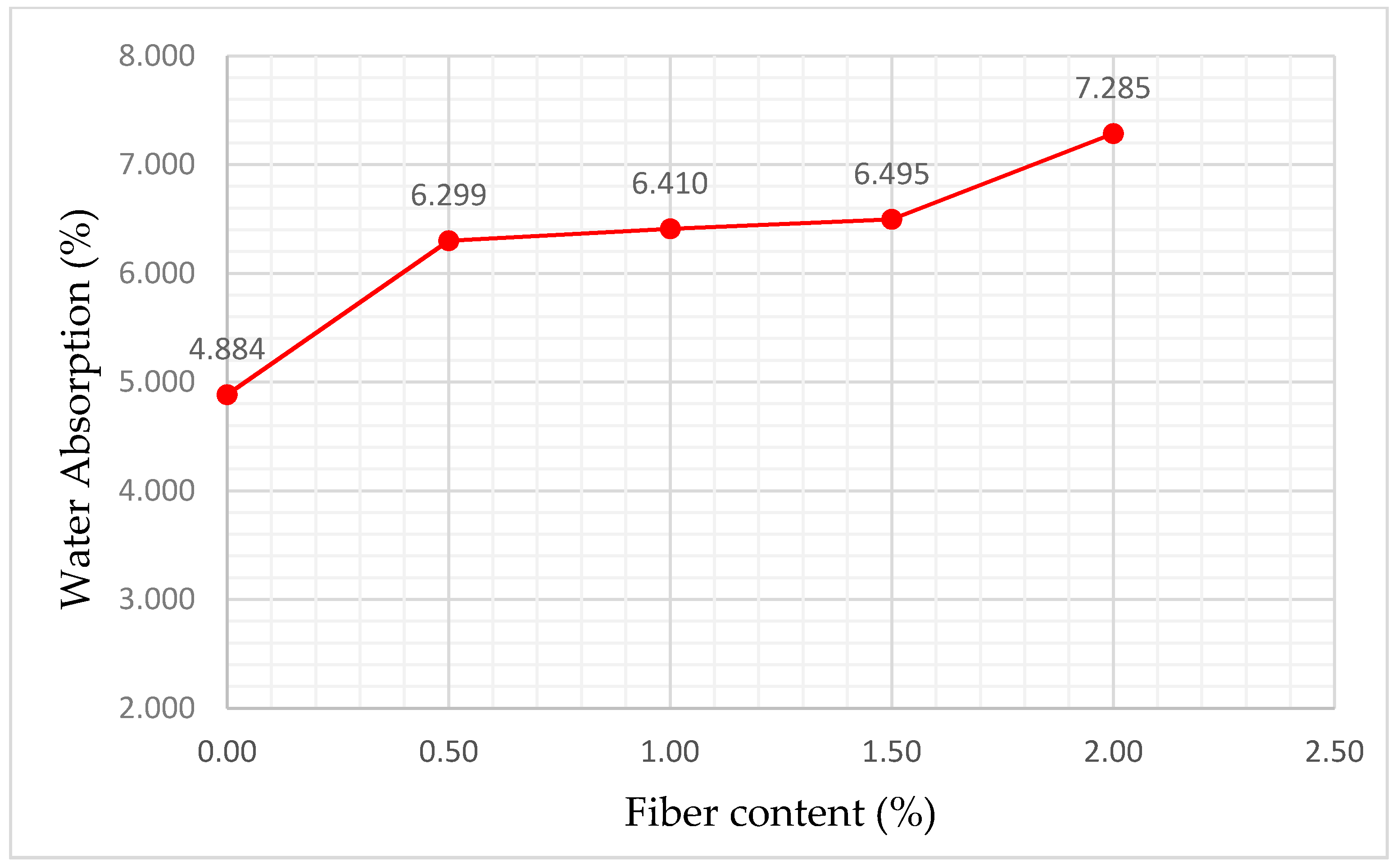
The water absorption of concrete by immersion is an important property that gives an indirect indication of the pore structure of the concrete and durability performance in a corrosive environment [32]. The water absorption of SFRC in the present study is depicted in Figure 4. The result indicates that reinforcing concrete with sisal fibers causes a significant increase in the water absorption of concrete. As recorded, there was a sudden rise of 28.99% in the absorption of concrete by adding 0.5% sisal fiber at 28 days. Subsequent incremental of 0.5% sisal fiber resulted in little rise until 2% sisal was incorporated in the mix, resulting in a 49.176% increase in water absorption compared to the control concrete. In summary, the water absorption of concrete cubes was observed to increase with a rising percentage of sisal fiber addition in the mix. A similar result was reported by [1,33,34], although Afroughsabet and Ozbakkaloglu [35] reported that including additives like silica fume in concrete can help in reducing the water absorption of FRC.
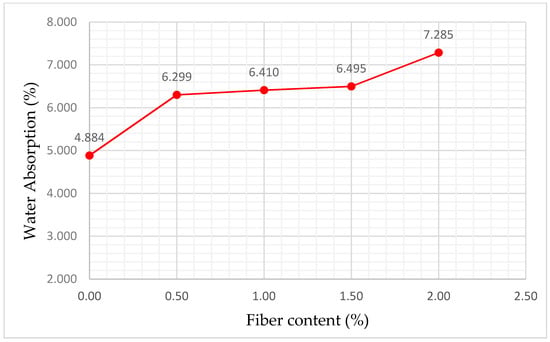
Figure 4.
Effect of sisal fibers on the water absorption of concrete.
The direct relationship between water absorption and sisal fiber percentage is a result of reduced workability, which resulted in poor compaction and increased pores. Fibers bridge the concrete pores, serving as a connector for the pores and increasing permeability and porosity causing the concrete to absorb more water [35]. In addition, the incorporation of fibers results in increased capillary action. Fibers can act as a water-conducting channel, increasing the water absorption of concrete [33]. As a result, concrete becomes more susceptible to damage when exposed to a corrosive environment and hence making the concrete less durable. It is to be noted that, according to CEB-FIP [36], water absorption of concrete lower than 3% is classified as good, between 3% and 5% is considered average, and above 5% is poor. Hence, the control mix falls in the average range, while concrete with sisal fiber can be said to be of poor quality.
3.1.3. Effect of Fiber on the Density of Concrete
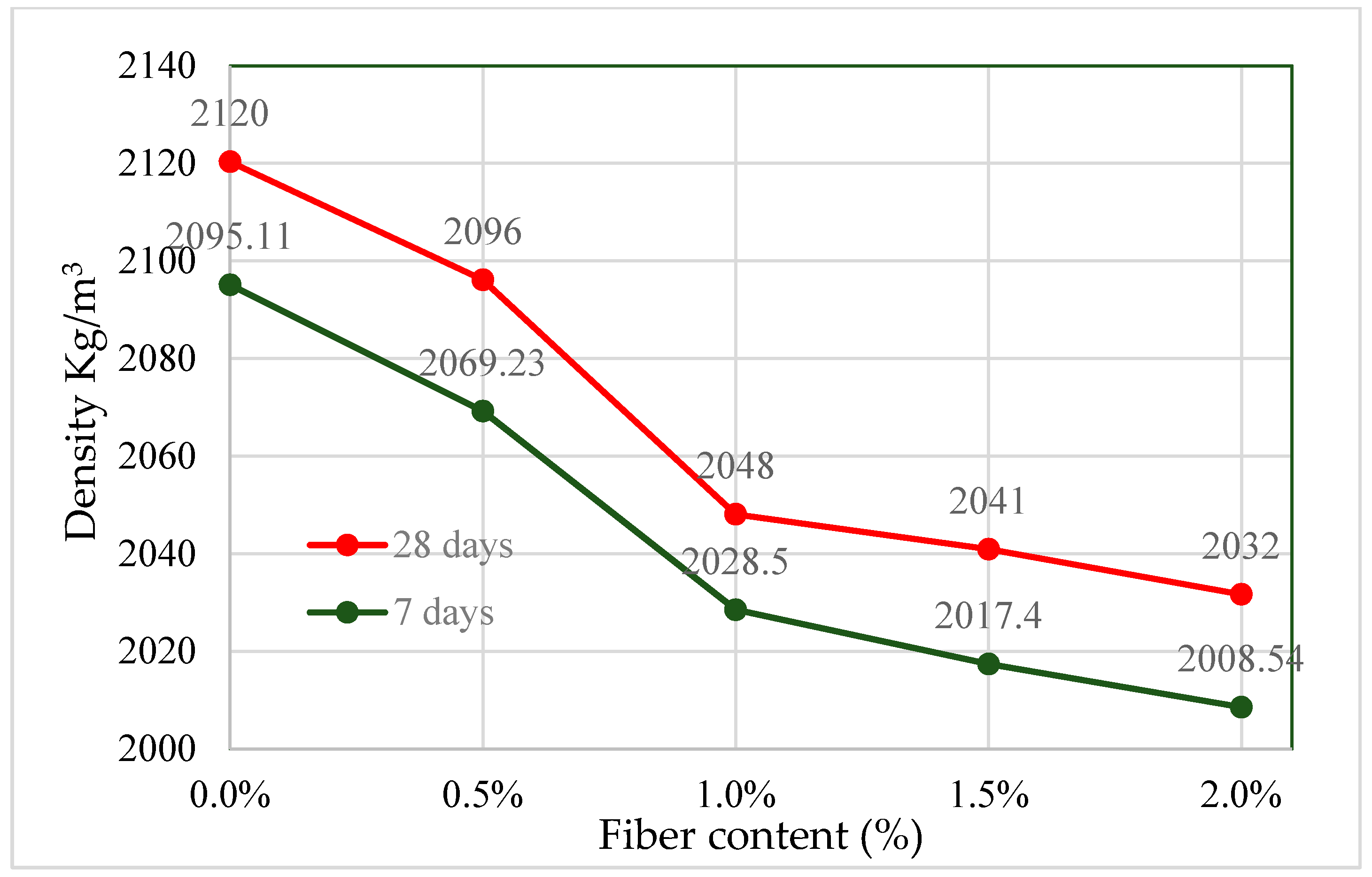
The density of concrete varies as it depends on its unit weight. It is largely dependent on the properties of its constituent materials, such as the amount, density, and specific gravity of the aggregates, the amount of entrapped air and water, as well as its cement content. Most standards recommend a conservative value of 2400 kg/m3; it is, however, prudent to measure the value experimentally for accurate analysis and design purposes. In this study, it was observed that the density of concrete was less than 2400 kg/m3. For all SFRC, the density increased from 7 days to 28 days due to further hydration, but the densities at each curing age tend to decrease with an increase in sisal fiber, as shown in Figure 5.
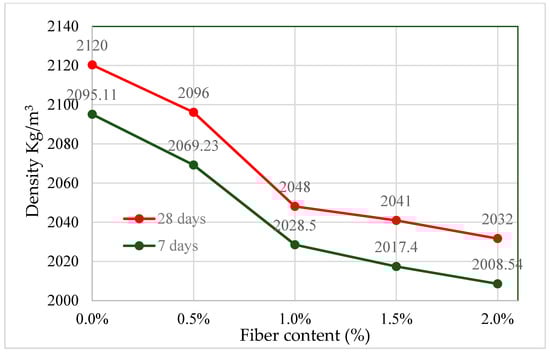
Figure 5.
Effect of sisal fibers on the density of concrete.
The result shows that SF0 has the highest density (2120 kg/m3), while SF4 has the lowest density (2032 kg/m3), which is outside the range of structural light weight concrete, hence can be classified as normal weight concrete. The density of concrete was reduced at percentages of 1.14%, 3.41%, 3.74%, and 4.18% for SF1, SF2, SF3, and SF4 as compared with SF0 at 7 days of curing. At 28 days of curing, the percentage reductions in the density were 1.24%, 3.18%, 3.71%, and 4.13% at 0.5% 1.0%, 1.5%, and 2.0% sisal fiber addition, respectively. The inverse relationship between the density and percentage of sisal fibers is a result of the lower bulk density of the sisal, which is taking the place of denser constituents, like coarse and fine aggregates [1,27].
3.2. Mechanical Properties of SFRC
3.2.1. Compressive Strength of SFRC
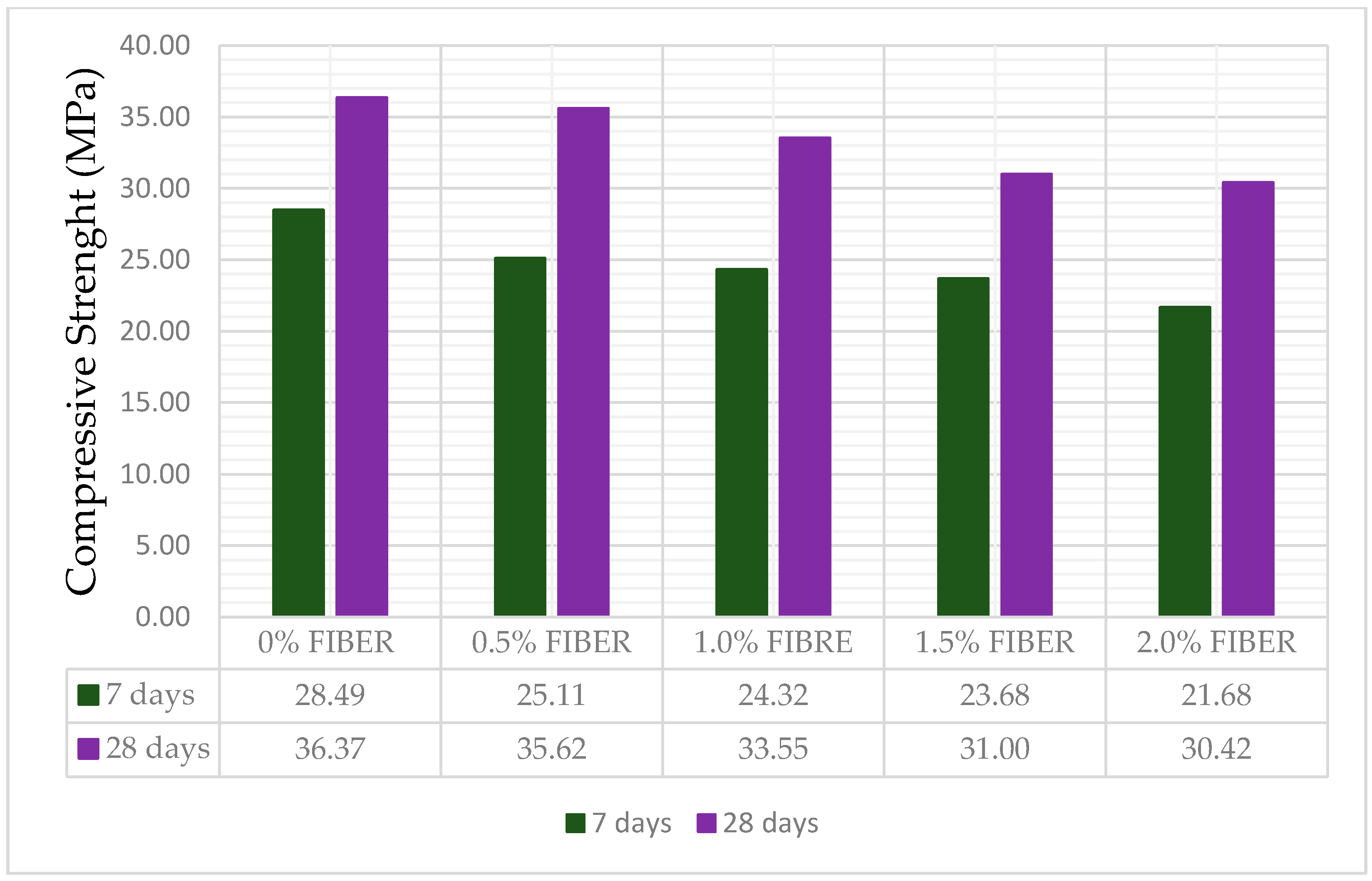
The results of the compressive strength test of SFRC at both 7 and 28 days for concrete cubes are presented in Figure 6. For each curing age and increasing sisal fiber content in the concrete mix, the result shows decreasing compressive strength value below that of the control. The reduction can be attributed to the reduction in adhesive properties between the surface of the fiber and cement paste, resulting in the need for higher compacting energy and the required compressive strength [37]. Furthermore, sisal is classified as a hydrophobic material, implying there is the tendency of it leaving behind freer water–cement, impeding strength gain.
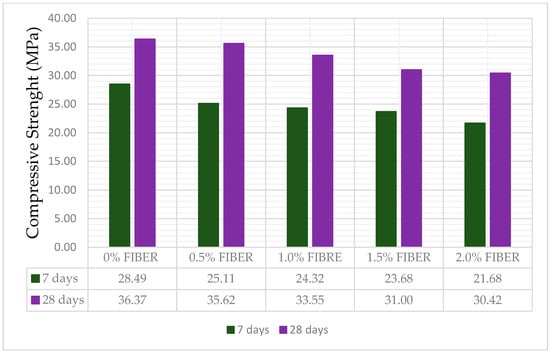
Figure 6.
Compressive strength of sisal fiber-reinforced concrete.
From these results, it can be seen that SF1 gave the least percentage reduction in compressive strength. The smallest recorded compressive strength at 28 days (30.42 MPa) was higher than the target design compressive strength (30 MPa), thus meeting the requirement for structural use [38]. These findings are in a good agreement with the findings of [1,27], who showed that once the workability of fiber reinforced concrete is reduced, the compressive strength of the mix tends to decrease when compared with the reference plain concrete. A one-way ANOVA test was carried out at a 0.05 significance level and indicated that varying the percentage content of sisal has a significant impact on the compressive strength of concrete both at 7 days (F = 19.667, F crit = 3.478) and 28 days (F = 5.201, F crit = 3.478).
3.2.2. Split Tensile Strength of SFRC
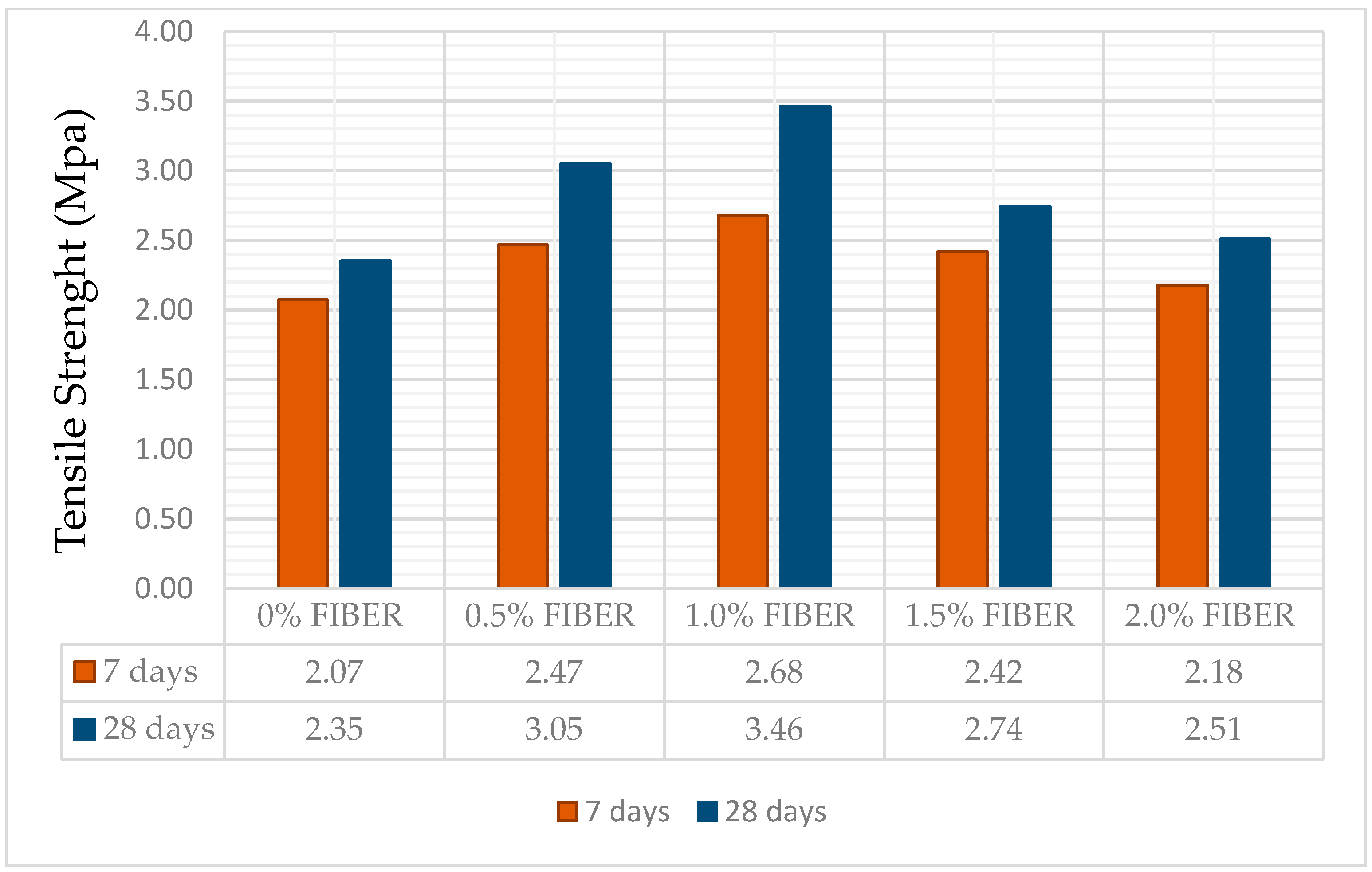
This is an indirect tension test method on a concrete cylinder to obtain its tensile strength. The results of the split tensile strength are illustrated in Figure 7. The data show that sisal fibers can enhance the splitting tensile strength of concrete, but up to a limit. The split tensile strength of SFRC at each curing age increases up to 1% before declining. The 28-day split tensile strength value was higher than that at 7 days of curing. However, the least tensile strength of SFRC at 7 and 28 days was still higher than that of the control, implying that incorporation of sisal increases the tensile strength of concrete for all percentages of addition.
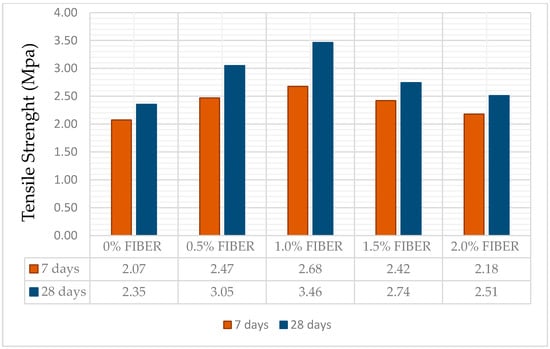
Figure 7.
Split tensile strength of sisal fiber reinforced-concrete.
A percentage increment of 19.07% and 29.14% as compared to the control was obtained for SF1 and SF2, respectively, while on further addition of sisal fibers, SF3 and SF4 showed a declining percentage increase of 16.76% and 5.18% at 7 days. Further improvement in the splitting tensile strength at 0.5%, 1.0%, 1.5%, and 2.0% fiber incorporation was noticed at 28 days of curing with a percentage increment of 29.68%, 47.17%, 16.57% and 6.63%, respectively, showing that sisal fibers can improve the split tensile strength of concrete. The observed trend in split tensile strengths of the SFRC compared favorably with those of previous works [9,13,39]. The improvement in splitting tensile strength is the ability of fibers to bridge across possible cracks and impact more ductility in the concrete as the specimens with sisal fibers didn’t break into pieces, as seen in normal concrete without fiber specimens. A one-way ANOVA test at a 0.05 significance level portrayed that sisal fibers did have a significant impact on the split tensile strength of concrete at 7 days (F = 42.854, sig = 3.478), while at 28 days the sisal fibers had a lesser impact on the split tensile strength of SFRC (F = 12.872, sig = 3.478).
3.2.3. Axial Strain Ductility of SFRC
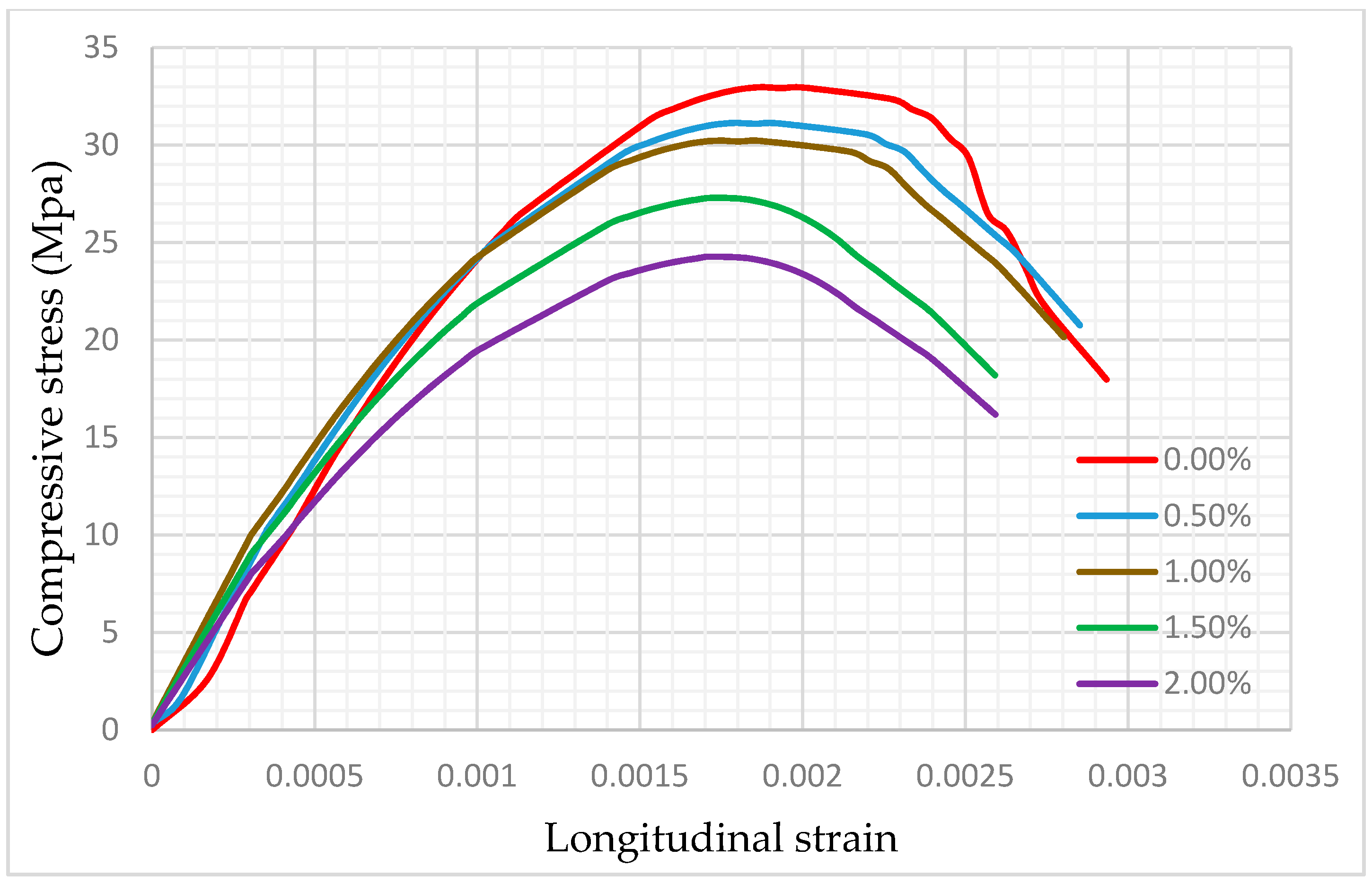
The axial strain gives an indication of the ductility properties of SFRC. An axial strain of 0.00120, 0.00112, 0.00106, 0.00105, and 0.00104 was recorded for SF0, SF1, SF2, SF3, SF4, respectively, at 85% of the maximum stress of the concrete samples. The recorded strains represent a percentage decrease of 7.17%, 11.55%, 12.59%, and 13.55% compared to that of plain concrete. This implies that sisal fiber reduces the axial strain of concrete.
3.2.4. Modulus of Elasticity of SFRC
The modulus of elasticity of concrete (Ec) is a material property that describes the deformation parameters and geometric response of a structure when loaded [40]. It is a function of the stress-strain behavior of its constituent material and represents an essential property in the analysis and design of structural elements [41]. Most design standards and studies propose empirical relations relying on compressive strength and concrete density to compute the modulus of elasticity of normal-weight concrete [42]. A typical example is presented in Table 7. However, this is not always accurate for all types of concrete, as it implies that the elastic modulus is a function of curing age, aggregate type, and water–cement ratio, which all influence compressive strength [43]. Furthermore, concrete and FRC are anisotropic materials and thus possess different properties in different directions. Thus, it is imperative to conduct experimental studies on SFRCs to develop more reliable equations for determination of its modulus of elasticity.
Table 7.
Some empirical relations for predicting concrete modulus elasticity.
The measured Ec showed significant variation with compressive strength and sisal fiber content. As seen in Table 8, the Ec increases for decreasing compressive strength up to a limit, beyond which it drops. The lowest mean value of Ec was 25086.77 MPa for SF0, while the maximum was seen in SF2 (31654.19 MPa). A percentage increase in Ec of 16.15% and 26.18% could be seen for SF1 and SF2.
Table 8.
Modulus of elasticity concrete.
Furthermore, the addition of sisal fibers resulted in lower strains at ultimate compressive stress in comparison with the control. The longitudinal strain at maximum compressive stress was generally lower than 0.0019 for SFRC, with the maximum strain being observed in the control (0.00187). Figure 8 shows that SFRC had better post-yield behavior, unlike the control that exhibited quasi-brittle failure.
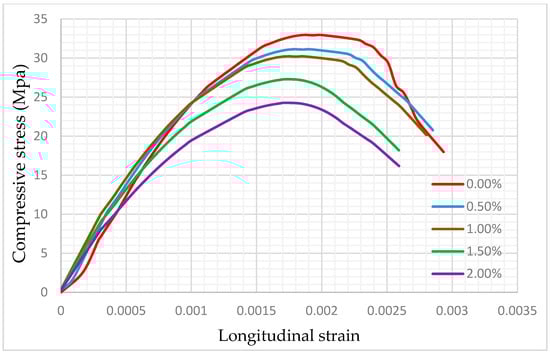
Figure 8.
Compressive stress and longitudinal strain of concrete.
3.2.5. Relationship between Modulus of Elasticity and Compressive Strength
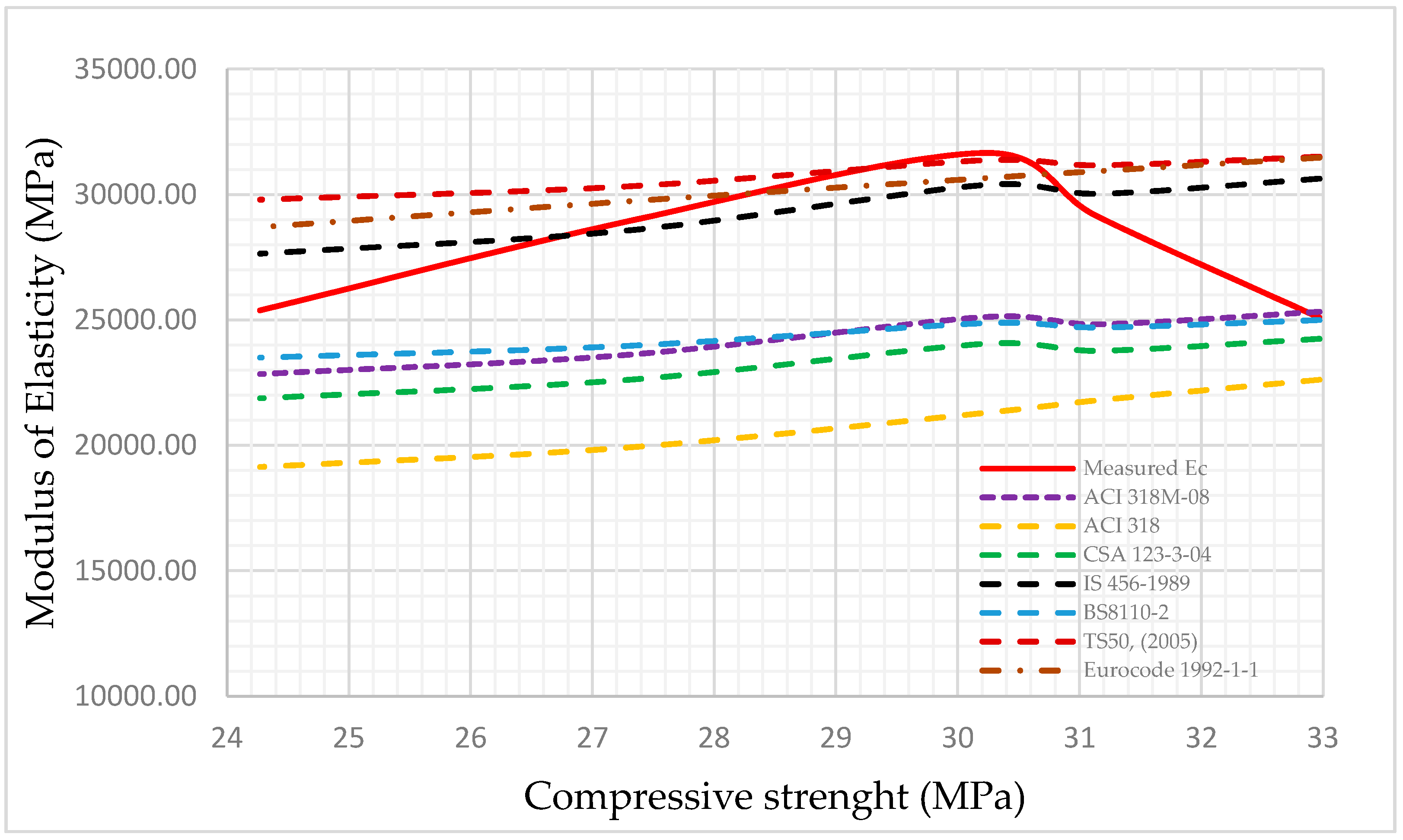
In comparing the measured Ec for SFRC with the expressions given in the codes, the measured Ec and the predicted values from the codes are plotted in Figure 9. While BS 8110-2 [44], ACI 318M-08 [45], ACI 318 [46], and CSA 123-3-04 [47] all underestimated the value of Ec for SFRC, IS 456-1989 [48], Eurocode-2 [49] and TS 50 [50] better predict the Ec of SFRC. The ratio of the measured Ec of SFRC to that obtained from the equations in the three aforementioned codes that gave values close to Ec obtained during the test was computed to establish the degree of variation in the codes and computed Ec. The calculated average ratios are 0.986, 0.958, and 0.937 for IS 456-1989 [48], Eurocode-2 [49], and TS 50 [50], respectively. From these ratios, the determination of Ec of SFRC from these equations may give a near realistic value.
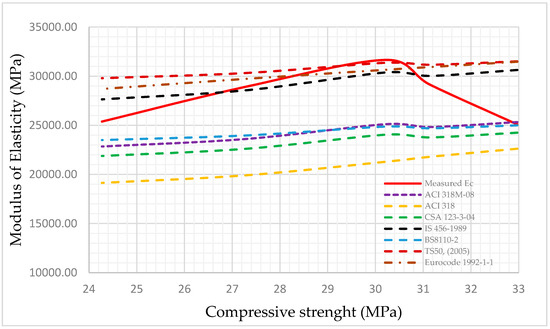
Figure 9.
Comparison of the measured and predicted Ec values.
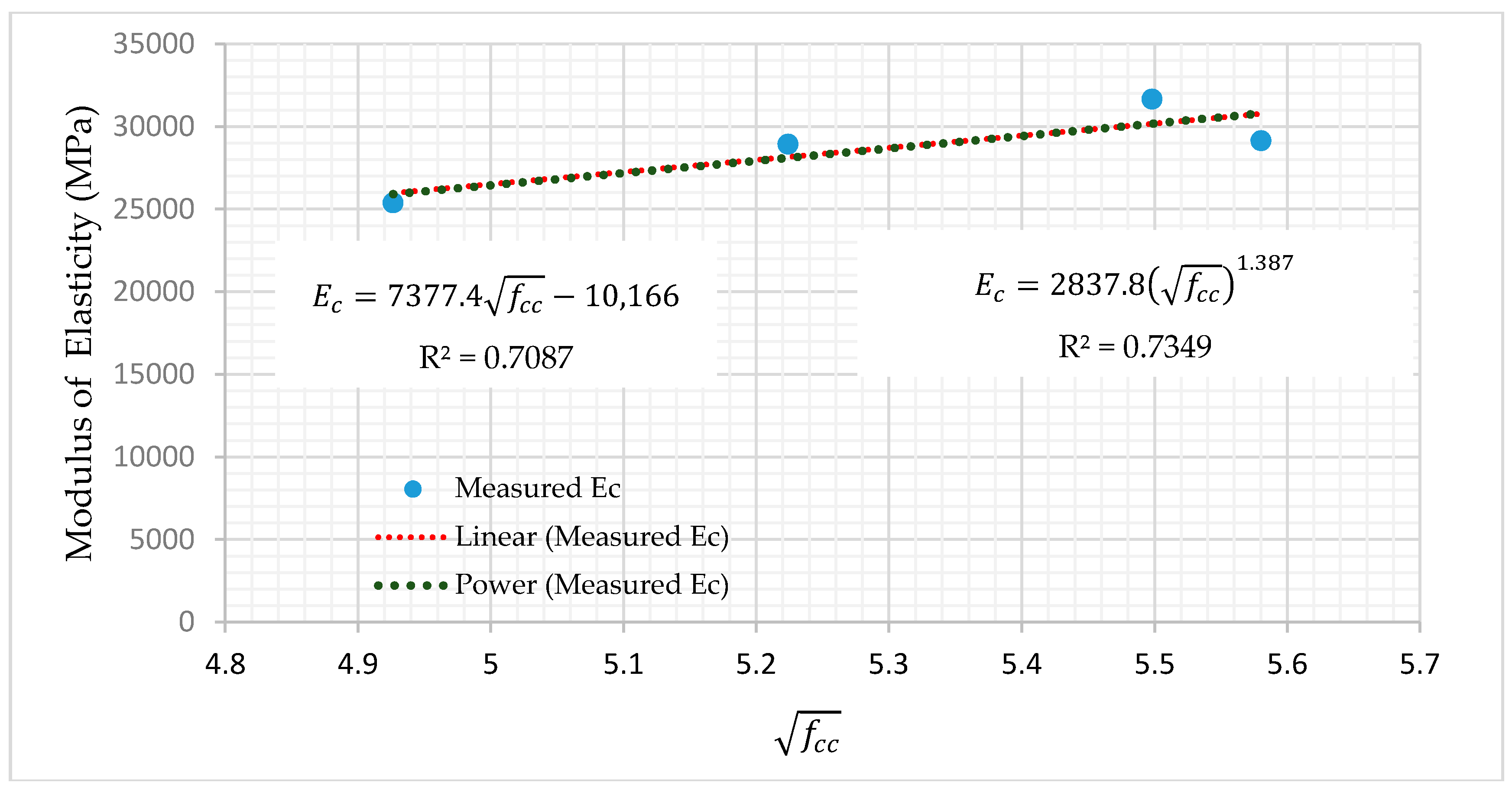
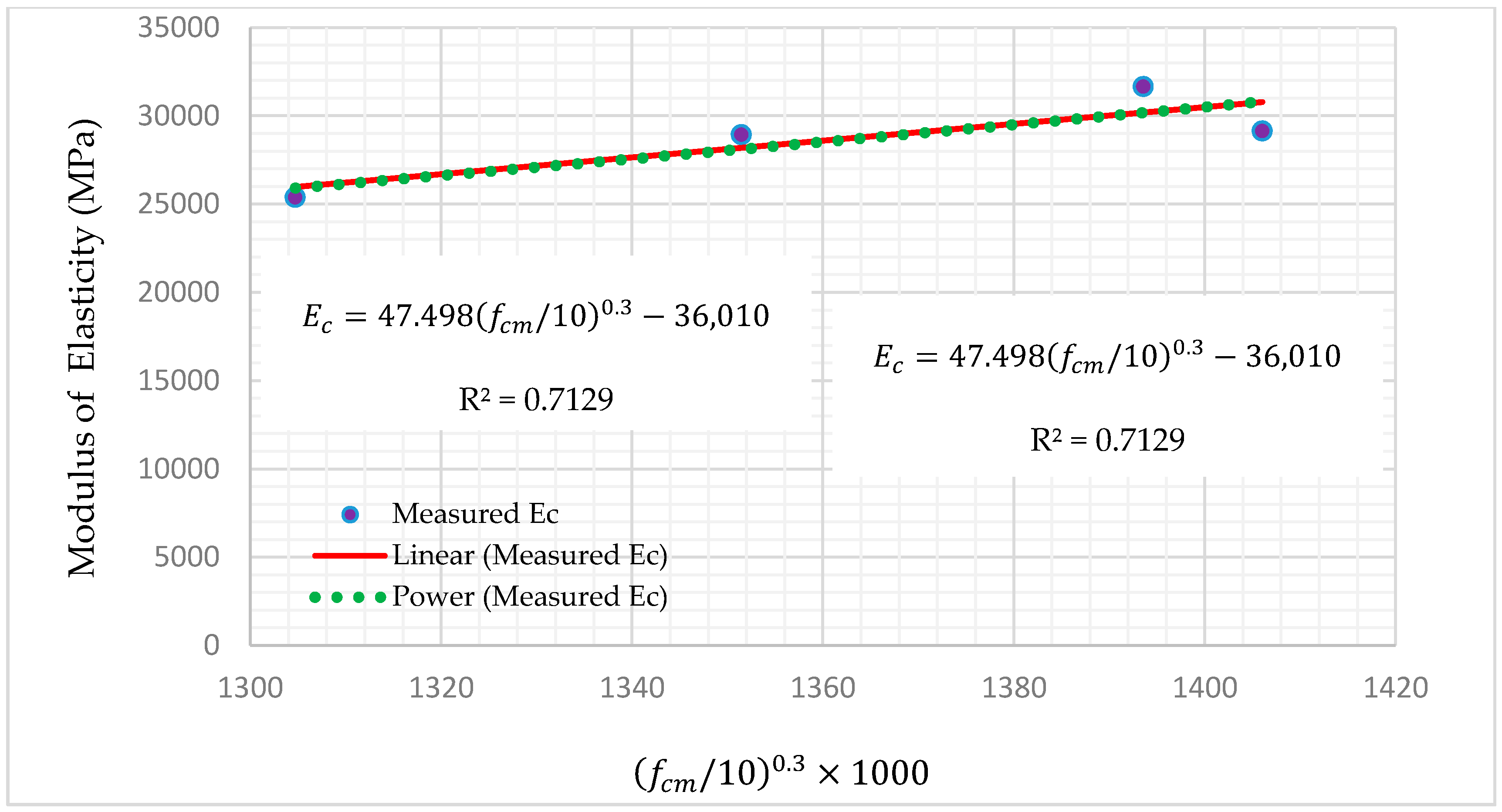
For comparing the constants given by Eurocode-2 [49] and IS 465-1989 [48], a simple regression analysis was done on the measured Ec using the equation forms recommended by the codes as shown in Figure 10 and Figure 11. The constants obtained from the regression analysis are (7377.4 and 47.498) respectively which deviates from those given by the codes (5688 and 22). Considering the coefficient of determination obtained, the function, which best represents the measure Ec, is that from Eurocode-2 [49]. A power trend line was fitted for both predicted values to improve the coefficient of determination. The power equations gave a higher coefficient of determination of 0.7349 for both codes.
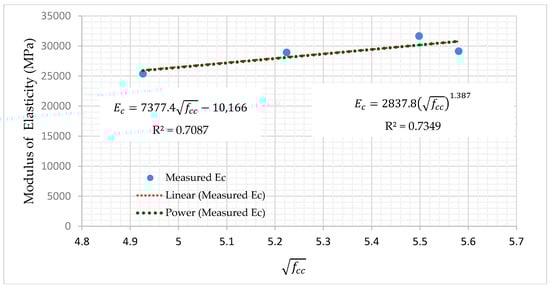
Figure 10.
The relationships between Ec and fcc in the form of IS 456-1989 equations.
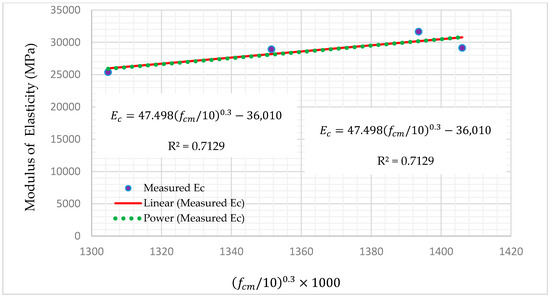
Figure 11.
The relationships between Ec and fcc in the form of Eurocode equations.
4. Conclusions
Based on the results of our investigation, the following conclusions can be made on SFRC. The workability of fresh concrete reduces once sisal fiber is added to the mix due to the hygroscopic properties of the sisal, reducing the free-water cement needed for paste formation. This must have resulted in increased pore spaces, which were observed in the higher water absorption of SFRC. The compressive strength of concrete was observed to reduce due to the presence of sisal fiber in the mix, hence sisal fiber cannot improve the compressive strength of concrete, although it significantly improves the split tensile strength of concrete and makes it lighter by reducing its density. However, computing the modulus of elasticity of SFRC is somewhat difficult and cannot be predicted accurately with empirical relations, as its static modulus of elasticity is not linearly related to its compressive strength and density as stated in most design codes. The recommended optimum mix based on the physical and mechanical parameters in this study is 1.0% sisal fiber addition, which gave 33.55 MPa compressive strength and 3.463 MPa split tensile strength at 28 days of curing, therefore 1.0% sisal fibers can be used in production of SFRC. Therefore, the utilization of sisal fibers up to 1.0% can potentially enhance concrete ductility properties.
Author Contributions
A.A.O. and J.M. designed the experiments; A.A.O. performed all the experiments; A.A.O., S.O.A. and J.M. analyzed the experimental results; A.A.O. wrote the Paper; A.A.O., S.O.A. and J.M. reviewed and edited the final paper.
Funding
This research was funded by Pan African University and AFRICA-ai-JAPAN project.
Acknowledgments
The authors will like to thank the African Union Commission, under the flagship program of Pan African University, Institute for Basic Science, Technology and Innovation (PAUISTI) as well as the AFICA-ai-JAPAN project for funding this research.
Conflicts of Interest
The authors declare no conflict of interest.
References
- Hidaya, N.; Mutuku, R.N.; Mwero, J.N. Physical and Mechanical Experimental Investigation of Concrete incorporated with Polyethylene Terephthalate (PET) Fibers. Eur. Int. J. Sci. Technol. 2017, 6, 31–41. [Google Scholar]
- Mishra, S.; Deodhar, S.V. Effect of Rice Husk Ash on Concrete. Int. J. Eng. Res. Appl. 2013, 3, 1718–1723. [Google Scholar]
- Chavan, S.; Rao, P. Utilization of Waste PET Bottle Fibers in Concrete as an Innovation in Building Materials. Int. J. Eng. Res. 2016, 5, 304–307. [Google Scholar]
- Rai, A.; Joshi, Y.P. Applications and Properties of Fibre Reinforced Concrete. Int. J. Eng. Res. Appl. 2014, 4, 123–131. [Google Scholar]
- ACI Committee 318. Building Code Requirements for Structural Concrete and Commentary; American Concrete Institute: Farmington Hills, MI, USA, 2008. [Google Scholar]
- Aruna, M. Mechanical Behaviour of Sisal Fibre Reinforced Cement Composites. World Acad. Sci. Eng. Technol. 2014. [Google Scholar] [CrossRef]
- Dalvi, J.D.; Kalwane, U.B. Pallavi Pasnur Effect of Fibre Length and Percentage of Sisal on Strength of Concrete. Multidiscip. J. Res. Eng. Technol. 2016, 3, 923–932. [Google Scholar]
- Chanko, B.; Sunilaa, G. Performance of Concrete with PET fibers. Int. J. Eng. Sci. Invetion Res. Dev. 2017, 3, 725–728. [Google Scholar]
- Balasubramanian, M.; Senthilselvan, S.; Sabarish, K.V. Experimental Investigation on Strength and Durability Properties of Sisal Fiber Reinforced Concrete. Int. J. Chem. Sci. 2016, 14, 241–246. [Google Scholar]
- Ghaffar, A.; Tatwawadi, R.S.; Darda, J. Steel Fibre Reinforced Concrete. Int. J. Eng. Trends Technol. 2014, 9, 791–797. [Google Scholar] [CrossRef]
- Shamskia, N. The influence of pet fibers on the properties of fresh and hardened concrete. J. Struct. Eng. Geotech. 2012, 2, 13–17. [Google Scholar]
- Ali, M.; Liu, A.; Sou, H.; Chouw, N. Mechanical and dynamic properties of coconut fibre reinforced concrete. Constr. Build. Mater. 2012, 30, 814–825. [Google Scholar] [CrossRef]
- Sumithra, K.T.R.; Dadapheer, A.S. Experimental Investigation on the Propreties of Sisal Fibre Reinforced Concrete. Int. Res. J. Eng. Technol. 2017, 4, 2774–2777. [Google Scholar]
- Pacheco-Torgal, F.; Jalali, S. Cementitious building materials reinforced with vegetable fibres: A review. Constr. Build. Mater. 2011, 25, 575–581. [Google Scholar] [CrossRef]
- ASTM C150. Standard Specification for Portland Cement; ASTM International: West Conshohocken, PA, USA, 2004. [Google Scholar]
- ASTM C33. Standard Specification for Concrete Aggregates; ASTM International: West Conshohocken, PA, USA, 2003. [Google Scholar]
- ASTM C1602. Standard Specification for Mixing Water Used in the Production of Hydraulic Cement Concrete; ASTM International: West Conshohocken, PA, USA, 2012. [Google Scholar]
- ACI 211-2. Standard Practice for Selecting Proportions for Normal, Heavyweight, and Mass Concrete; American Concrete Institute: Farmington Hills, MI, USA, 2002. [Google Scholar]
- ASTM C192. Standard Practice for Making and Curing Concrete Test Specimens in the Laboratory; ASTM International: West Conshohocken, PA, USA, 2002. [Google Scholar]
- ASTM C143. Standard Test Method for Slump of Hydraulic-Cement Concrete; ASTM International: West Conshohocken, PA, USA, 2003. [Google Scholar]
- BS 1881-103. Testing Concrete: Method for Determination of Compacting Factor; British Standards Institution: London, UK, 1993. [Google Scholar]
- ASTM C642. Standard Test Method for Density, Absorption, and Voids in Hardened Concrete; ASTM International: West Conshohocken, PA, USA, 2006. [Google Scholar]
- BS EN 12390-03. Testing Concrete: Compressive Strength of Test Specimens; British Standards Institution: London, UK, 2009. [Google Scholar]
- BS 1881-116. Testing Concrete: Method for Determination of Compressive Strength of Concrete Cubes; British Standards Institution: London, UK, 1983. [Google Scholar]
- ASTM C496. Standard Test Method for Splitting Tensile Strength of Cylindrical Concrete Specimens; ASTM International: West Conshohocken, PA, USA, 2004. [Google Scholar]
- ASTM C469. Standard Test Method for Static Modulus of Elasticity and Poisson’s Ratio of Concrete in Compression; ASTM International: West Conshohocken, PA, USA, 2002. [Google Scholar]
- Ismail, Z.Z.; Al-Hashmi, E.A. Use of waste plastic in concrete mixture as aggregate replacement. Waste Manag. 2008, 28, 2041–2047. [Google Scholar] [CrossRef] [PubMed]
- Prahallada, M.C.; Shanthappa, B.C.; Prakash, K. Effect of Redmud on the Properties of Waste Plastic Fibre Reinforced Concrete, an Experimental Investigation. Int. J. Civ. Eng. 2011, 2, 25–34. [Google Scholar]
- Sabarinathan, S. A Study on Mechanical Properties of Sisal Fiber Reinforced Concrete. SSRG Int. J. Civ. Eng. 2017, 2, 16–20. [Google Scholar]
- Tolêdo Filho, R.D.; Joseph, K.; Ghavami, K.; England, G.L. The Use of Sisal Fibre As Reinforcement in Cement Based Composites. Rev. Bras. Eng. Agríc. Ambient. 1999, 3, 245–256. [Google Scholar] [CrossRef]
- Malhotra, S.; Chand, J. Experimental investigation on high strength concrete with the addition of steel fiber. Int. J. Civ. Eng. Technol. 2017, 8, 1130–1140. [Google Scholar]
- De Schutter, G.; Audenaert, K. Evaluation of water absorption of concrete as a measure for resistance against carbonation and chloride migration. Mater. Struct. 2004, 37, 591–596. [Google Scholar] [CrossRef]
- Rahmani, T.; Kiani, B.; Sami, F.; Fard, B.N.; Farnam, Y.; Shekarchizadeh, M. Durability of Glass, Polypropylene and Steel Fiber Reinforced Concrete. In Proceedings of the International Conference on Durability of Building Materials and Components, Porto, Portugal, 12–15 April 2011. [Google Scholar]
- Regina, C.; Stephany, S.; Henrique, B.; Ferreira, M.; Fonseca, S.; Souza Oliveira, C.A.; Teixeira, R.; Araújo Gouveia, L.L. Comparative Study About Mechanical Properties of Strutural Standard Concrete and Concrete with Addition of Vegetable Fibers. Mater. Res. 2017, 20, 102–107. [Google Scholar]
- Afroughsabet, V.; Ozbakkaloglu, T. Mechanical and durability properties of high-strength concrete containing steel and polypropylene fibers. Constr. Build. Mater. 2015, 94, 73–82. [Google Scholar] [CrossRef]
- Euro-International Committee for Concrete. Diagnosis and Assessment of Concrete Structures-State of Art Report; CEB-FIP: Lausanne, Switzerland, 1989. [Google Scholar]
- Ilya, J.; Chea, C.C. Mechanical behaviour of fibre reinforced concrete using soft–drink. In Proceedings of the Global Congress on Construction, Material and Structural Engineering, Johor Bahru, Malaysia, 28–29 August 2017; IOP Conference Series: Washington, DC, USA, 2017. [Google Scholar]
- ACI Committee 113. Manual of Concrete Inspection; American Concrete Institute: Farmington Hills, MI, USA, 2009. [Google Scholar]
- Sasikumar, P.; Thivya, J. An Investigation of Sisal Fibre Concrete Using Quarry Dust. Int. J. Innov. Res. Sci. Eng. Technol. 2017, 6. [Google Scholar] [CrossRef]
- Tipka, M.; Vašková, J. Modulus of Elasticity in Tension for Concrete and Fibre Reinforced Concrete. Solid State Phenom. 2017, 259, 35–40. [Google Scholar] [CrossRef]
- Jurowski, K.; Grzeszczyk, S. Influence of Selected Factors on the Relationship between the Dynamic Elastic Modulus and Compressive Strength of Concrete. Materails 2018, 11, 477. [Google Scholar] [CrossRef] [PubMed]
- Ispir, M.; Dalgic, K.D.; Sengul, C.; Kuran, F.; Tasdemir, M.A.; Ilki, A. Modulus of Elasticity of Low Strength Concrete. In Proceedings of the 9th International Congress on Advances in Civil Engineering, Trabzon, Turkey, 27–30 September 2010. [Google Scholar]
- Krizova, K.; Hela, R. Evaluation of static modulus of elasticity depending on concrete compressive strength. World Acad. Sci. Eng. Technol. Int. J. Civ. Environ. Eng. 2015, 9, 654–657. [Google Scholar]
- BS 8110-02. Structural Use of Concrete. Code of Practice for Special Circumstances; British Standards Institution: London, UK, 1985. [Google Scholar]
- ACI Committee 318. Building Code Requirements for Reinforced Concrete; American Concrete Institute: Farmington Hills, MI, USA, 1995. [Google Scholar]
- Pauw, A. Static Modulus of Elasticity of Concrete as Affected by Density; American Concrete Institute: Farmington Hills, MI, USA, 1960. [Google Scholar]
- Design of Concrete Structures. A23.3-04. Available online: http://sfotoohi.ir/wp-content/uploads/2015/06/CSA-A23.3-04.pdf (accessed on 30 May 2018).
- IS 456-1979. Plain and Reinforced Concrete-Code of Practice; Bureau of Indian Standards: New Delhi, India, 1989.
- European Committee for Standardization. Eurocode 2: Design of Concrete Structures-Part1: General Rules and Rules for Buildings; National Standards Authority of Ireland: Dublin, Ireland, 2005. [Google Scholar]
- Requirements for Design and Construction of Reinforced Concrete Structures; Turkish Standardization Institute: Ankara, Turkey, 2003.
© 2018 by the authors. Licensee MDPI, Basel, Switzerland. This article is an open access article distributed under the terms and conditions of the Creative Commons Attribution (CC BY) license (http://creativecommons.org/licenses/by/4.0/).