


Highlights
What are the main findings?
- Ballistic resistance of FRC is governed by the interaction of matrix strength, tensile toughness, fiber efficiency, aggregate characteristics, target configuration, and projectile conditions—not by compressive strength alone.
- Properly calibrated numerical models can reproduce penetration and major damage patterns with useful engineering agreement, although their predictive reliability remains case-specific.
What are the implications of these findings?
- Design of FRC protective systems should move beyond strength-based optimization toward damage management, integrating penetration resistance, scabbing and fragment control, residual integrity, and multi-hit performance.
- Numerical models require rigorous experimental calibration and validation, with future development targeting multi-hit damage, fiber-scale mechanisms, fragmentation, and interface failure.
Abstract
This review examines the ballistic resistance of fiber-reinforced cement composites (FRCs) and related cementitious systems for protective structures, with emphasis on projectile–target interaction, penetration and scabbing mechanisms, and the governing roles of material and structural parameters. The synthesis indicates that ballistic resistance is controlled not only by compressive strength but also by the combined effects of dynamic tensile behavior, fracture energy, crack-bridging efficiency, aggregate characteristics, target thickness, projectile characteristics, and structural configuration. Steel and hybrid fiber systems generally provide the most consistent improvements in scabbing suppression and residual integrity, while hard aggregates and multilayer hard–soft–tough arrangements enhance penetration resistance, stress-wave attenuation, and staged energy dissipation. The review also evaluates current numerical approaches, including rate-sensitive constitutive models, cohesive and continuum damage formulations, smoothed particle hydrodynamics, and data-driven methods. Several calibrated and experimentally validated simulations reproduced penetration depth and major damage trends with useful engineering agreement; however, significant challenges remain in representing multi-hit degradation, fiber-scale pull-out, fragment ejection, and interface debonding. In addition, the review highlights the limited suitability of existing ballistic standards for quasi-brittle cementitious systems and emphasizes the need for FRC-specific testing, large-scale validation, and more sustainable protective material design.
1. Introduction
Concrete remains a primary material for protective walls, barriers, and shelters because of its availability, economy, and mass efficiency. However, its brittleness and low tensile capacity create substantial weaknesses under extreme dynamic loading, such as ballistic or blast impact. When subjected to high-velocity projectiles, conventional concrete tends to experience severe failure modes, including cracking, spalling, and fragmentation, which can compromise structural integrity and protective function in critical structures such as bunkers, security barriers, and protective shelters [1,2].
To address these limitations, the incorporation of short fibers into concrete has emerged as an effective approach for enhancing toughness, ductility, and post-cracking energy absorption. Fiber reinforcement redistributes stress through crack bridging, fiber–matrix bond-slip and pull-out, frictional resistance, and mechanical anchorage, thereby transforming the brittle fracture response of plain concrete into a more ductile and energy-dissipative response [3,4,5]. Various fiber types, including steel, synthetic, carbon, glass, and natural fibers, have been incorporated into concrete to improve resistance to projectile impact and explosive loading. Among these, steel fibers remain the most widely studied reinforcement for ballistic protective concrete because of their high tensile strength, stiffness, and favorable bond characteristics [6,7]. As a result, fiber-reinforced concrete (FRC) has increasingly been recognized as a promising material for security- and defense-related structures.
The effectiveness of FRC under impact or ballistic loading is governed by the coupled interaction between loading characteristics and material properties. On the loading side, projectile mass, impact velocity, nose geometry, and deformability determine the kinetic energy transfer and influence stress-wave generation, attenuation, and reflection within the target. These factors affect whether failure is dominated by front-face crushing, penetration, tensile-wave-induced spalling, or rear-face scabbing. Deformable projectiles tend to dissipate more energy through plastic deformation, often producing wider but shallower craters, whereas non-deformable projectiles concentrate stress along the penetration axis and may produce deeper penetration or perforation. On the material side, matrix strength, density, target thickness, aggregate characteristics, fiber type, and fiber dosage control the ability of the system to resist local crushing, redistribute tensile stresses, and maintain post-impact integrity [8,9,10]. Understanding projectile–material interaction is therefore essential for evaluating the ballistic performance of FRC.
Despite the increasing volume of FRC impact research, the literature remains fragmented in both scope and interpretation. Many studies focus on individual parameters such as compressive strength, fiber dosage, or target thickness without clearly identifying the factors that primarily govern front-face penetration, rear-face scabbing, fragment ejection, and residual integrity. Moreover, direct comparisons among studies are often complicated by differences in projectile type, impact velocity, support conditions, specimen geometry, and evaluation criteria. Consequently, conclusions based only on compressive strength or nominal material class are often incomplete. The broader evidence increasingly suggests that ballistic resistance depends on dynamic tensile behavior, fracture energy, crack-bridging efficiency, and stress-wave management, not only on compressive strength [1,11].
Previous reviews [2,12,13,14] have mainly focused on the impact response of FRC or on the ballistic performance of UHPC/UHPFRC. However, comparatively limited synthesis has integrated conventional FRC, UHPFRC, fiber geometry and dosage, aggregate effects, multilayer protective systems, multi-hit degradation, numerical modeling, and ballistic testing standards within a single mechanism-based framework. The present review broadens the scope beyond material-level ballistic resistance by relating projectile–target interaction, damage mechanisms, fiber and aggregate effects, multilayer design, multi-hit degradation, numerical prediction, and standardized performance assessment.
This review provides a critical synthesis of the ballistic response and damage mechanisms of FRC and related cementitious protective systems under projectile impact. Particular emphasis is placed on stress-wave propagation, penetration, spalling, scabbing, perforation, crack propagation, fracture-energy dissipation, and the roles of material design and structural configuration. The review also discusses experimental performance indicators, multi-hit resistance, multilayer protective concepts, current numerical modeling approaches, and key research gaps. This review aims to establish a mechanism-based understanding of FRC ballistic performance and to identify design implications for more effective protective concrete systems.
2. Review Methodology
The literature search was conducted using web-based sources, including ScienceDirect, Google Scholar, ResearchGate, SpringerLink, SAGE Journals, Taylor & Francis Online, Wiley Online Library, and other publisher websites, covering publications available up to May 2026. Search terms were developed by combining material-related terms, including “fiber-reinforced concrete”, “fiber-reinforced cementitious composite”, “UHPC”, and “UHPFRC”, with impact-related terms such as “ballistic impact”, “projectile impact”, “bullet resistance”, “high-velocity impact”, “penetration”, “perforation”, “scabbing”, and “multi-hit”. Additional terms, including “numerical simulation”, “multilayer”, “protective panel”, and “ballistic standard”, were used to identify studies related to modeling, layered protective systems, and testing frameworks.
Primary ballistic evidence consisted of experimental studies involving direct projectile or bullet impact on concrete, FRC, UHPC, UHPFRC, or related cementitious protective systems. These studies were required to report at least one ballistic-response parameter, such as depth of penetration, perforation, crater geometry, residual projectile velocity, rear-face scabbing, fragment ejection, damage pattern, multi-hit resistance, or post-impact integrity. Numerical studies were included when they specifically addressed projectile–cementitious-target interaction and provided relevant information on model formulation, calibration, validation, penetration, damage evolution, or ballistic failure.
Studies related to blast loading, low-velocity or drop-weight impact, split Hopkinson pressure bar (SHPB) testing, dynamic material characterization, fiber pull-out, bond-slip behavior, or static mechanical properties were not treated as direct evidence of ballistic resistance. Instead, these publications were used as supporting mechanistic evidence to interpret strain-rate sensitivity, dynamic tensile behavior, fracture energy, fiber–matrix interaction, crack bridging, and other material mechanisms relevant to projectile impact. Therefore, the conclusions regarding penetration resistance, scabbing, perforation, and multi-hit performance in this manuscript were derived mainly from direct ballistic-impact studies rather than extrapolated from non-ballistic loading conditions.
Due to differences among the reviewed ballistic studies in projectile type and velocity, target thickness, support conditions, fiber type and dosage, material composition, and reported performance indicators, study results were synthesized in terms of mechanistic trends and performance tendencies rather than direct quantitative ranking to minimize inappropriate comparisons between experiments conducted under dissimilar ballistic conditions.
3. Damage Mechanisms of FRC Under Projectile Impact
Projectile impact on fiber-reinforced concrete (FRC) produces a highly localized and transient damage process governed by stress-wave propagation, material crushing, tensile cracking, fiber–matrix interaction, and progressive energy dissipation. Unlike plain concrete, in which cracking and fragment ejection can develop rapidly after impact, FRC provides post-cracking resistance through fiber bridging, interfacial debonding, frictional pull-out, and, in some cases, fiber rupture. These mechanisms do not necessarily prevent local penetration, but they can substantially reduce crack opening, rear-face scabbing, fragment ejection, and loss of residual integrity.
Figure 1 illustrates the typical sequence of impact-induced damage in an FRC target. The process may be divided into three overlapping stages: (i) initial contact and stress-wave generation, (ii) local crushing and penetration, and (iii) damage evolution, including spalling, scabbing, perforation, or mixed-mode failure when the projectile energy exceeds the energy-absorption capacity of the target.
Figure 1.
Mechanisms of FRC under projectile impact (Source: Original illustration prepared by the authors).
3.1. Initial Contact and Stress-Wave Propagation
At the initial moment of projectile contact with the concrete target, the projectile nose produces a highly localized compressive loading zone. The contact duration is extremely short, and the impact energy cannot be redistributed throughout the target immediately. Instead, part of the projectile kinetic energy is rapidly converted into compressive stress waves that propagate from the impact point into the cementitious matrix [1,15]. The magnitude and direction of these compressive waves depend mainly on projectile velocity, mass, nose geometry, contact area, and the local resistance of the target material [8,16].
As the compressive wave travels through the target, the material near the impact zone experiences very high compressive stress and strain rates. When the local stress exceeds the resistance of the matrix and aggregates, localized crushing, crater initiation, and microcrack formation occur beneath the projectile nose [1,15,17]. Meanwhile, the propagating stress waves interact with inhomogeneities in the concrete, such as aggregates, pores, pre-existing microcracks, and fiber–matrix interfaces, resulting in local stress concentrations [6,16].
When the stress wave reaches a free boundary, particularly the rear face of the target, the compressive wave is reflected as a tensile wave [2,6,8]. This reflected tensile wave is critical because concrete has much lower tensile resistance than compressive resistance. Once the tensile stress exceeds the tensile capacity of the matrix, cracks initiate and propagate toward the rear surface, leading to rear-face cracking and scabbing [8,16,18]. Therefore, the initial stress-wave process governs not only front-face crushing but also the development of tensile damage.
In FRC, fibers do not prevent the generation of the initial compressive stress wave but become effective after tensile cracking begins. Fibers crossing developing cracks provide crack-bridging resistance and delay crack opening through fiber debonding, slip, pull-out, and frictional energy dissipation [5,19,20]. As a result, fiber reinforcement can reduce crack propagation, improve fragment retention, and suppress rear-face scabbing compared with plain concrete [8,12,21]. Thus, the initial contact and stress-wave stage should be interpreted as the trigger for a coupled damage process involving compressive wave propagation, tensile-wave reflection and crack initiation.
3.2. Penetration and Cavity Formation
After initial contact and stress-wave generation, the projectile continues to penetrate the target if its kinetic energy is sufficient to overcome the local resistance of the material. During this stage, the material directly ahead of the projectile nose is subjected to intense compressive and shear stresses, leading to matrix crushing, aggregate fracture, and the formation of a highly damaged crushed zone [1,6,17]. The crushed material is progressively displaced laterally and compacted along the projectile path, producing an elongated penetration channel or cavity surrounded by radial cracks [2,22].
In FRC, fibers become important in limiting the expansion of the damaged zone around the cavity by intersecting radial cracks, providing bridging resistance, and dissipating energy [5,6,12]. This mechanism delays crack coalescence, reduces radial-crack opening, and helps maintain the integrity of the surrounding matrix. As a result, FRC generally exhibits smaller damaged areas, improved fragment retention, and better residual integrity than plain concrete under comparable impact conditions [12,21].
3.3. Damage Evolution
After the penetration cavity is formed, damage in the concrete target continues to evolve through the interaction of stress-wave reflection, radial crack propagation, tensile cracking, and progressive material fragmentation. The damage process is not limited to the region directly beneath the projectile nose but gradually extends from the impact face toward the rear surface of the target [1,2,6]. As the projectile penetrates, radial cracks develop around the penetration channel, while crushed concrete and fractured aggregates are displaced along the projectile path [17,22]. The extent of this damage depends on projectile energy, target thickness, matrix strength, aggregate characteristics, and fiber-reinforcement efficiency [2,6,23].
Figure 2 shows the damage evolution in FRC. Spalling generally develops at the front surface of the target as a result of localized crushing and tensile cracking around the impact crater. This failure mode is promoted by high stress concentrations generated by wave reflection at material discontinuities such as aggregates, pores, and pre-existing microcracks [1,15,16]. In plain concrete, these cracks can rapidly coalesce and cause the ejection of front-face fragments. In FRC, fibers crossing the developing cracks provide crack-bridging resistance, reduce crack opening, and limit the detachment of surface fragments [5,19,20].
Figure 2.
Damage evolution of FRC (Photographs were taken by the authors).
When the reflected tensile stress exceeds the tensile capacity of the matrix, rear-face cracking and scabbing can occur [2,6,8]. Scabbing develops through the formation of tensile cracks parallel or inclined to the rear surface, followed by crack coalescence into a localized damaged layer. As the tensile wave continues to load the rear surface, this damaged layer separates from the target and may be ejected as scab fragments [18]. This failure mode is critical in protective structures because the ejected fragments may act as secondary projectiles behind the barrier. In FRC, fibers crossing rear-face cracks provide crack-bridging and pull-out resistance, thereby reducing fragment ejection and suppressing the severity of scabbing [8,12,21].
If the remaining kinetic energy of the projectile exceeds the energy-absorption capacity of the target, damage progresses from penetration and scabbing to complete perforation. Perforation is characterized by the formation of a continuous penetration channel and the exit of the projectile from the rear face, often accompanied by severe rear-face cracking and fragment ejection [1,8,18]. Although fibers cannot always prevent perforation under high-energy impact, they can reduce fragmentation by bridging cracks, dissipating energy through pull-out and interfacial friction, and holding damaged concrete fragments together [5,12,24].
In practice, ballistic damage in FRC rarely occurs as a single failure mode. Instead, spalling, penetration, scabbing, perforation, and radial cracking often occur simultaneously or sequentially as mixed-mode damage [1,19,25]. Compared with plain concrete, FRC tends to transform sudden brittle fragmentation into a more distributed damage pattern. This improvement is mainly attributed to fiber bridging, fiber debonding, pull-out resistance, and post-cracking tensile capacity. Therefore, the damage evolution of FRC should be evaluated not only by depth of penetration, but also by crater size, crack distribution, rear-face scabbing, fragment mass, and residual structural integrity.
4. Governing Parameters for Ballistic Resistance of FRC
The ballistic resistance of FRC is governed by the coupled effects of target properties and projectile characteristics, including fiber-reinforcement parameters, matrix and aggregate properties, target geometry, and projectile conditions. Figure 3 summarizes the governing parameters for the ballistic resistance of FRC. Matrix strength, density, and aggregate hardness mainly control local crushing and penetration depth, whereas fiber bridging, pull-out resistance, and post-cracking tensile capacity are more closely associated with crack control, rear-face scabbing suppression, fragment retention, and residual integrity. Therefore, the performance of FRC under projectile impact should not be evaluated solely by compressive strength or depth of penetration, but also by tensile-damage evolution, crack distribution, scabbing area, fragment ejection, and post-impact structural integrity.
Figure 3.
Governing parameters for the ballistic resistance of FRC (Source: Original illustration prepared by the authors).
4.1. Target Properties
4.1.1. Strength and Density
Matrix strength and density are fundamental material parameters governing the ballistic response of FRC targets. Compressive strength mainly contributes to resistance against local crushing beneath the projectile nose and is therefore important for reducing crater formation and penetration depth [8,15]. A denser matrix also increases the inertial resistance of the target, requiring greater projectile energy to displace and crush the material along the penetration path [2,6]. Consequently, high-strength and high-density cementitious matrices generally provide better front-face resistance than normal-strength concrete [8,23].
However, ballistic resistance does not increase linearly with compressive strength. Very high matrix strength may reduce local penetration, but increase brittleness and promote tensile damage such as rear-face cracking and scabbing when the target has insufficient post-cracking energy absorption [18]. This is particularly important for FRC and UHPFRC systems, where an excessive emphasis on compressive strength may produce only slight reductions in depth of penetration while increasing material brittleness. For example, Li et al. [23] reported that an intermediate UHPFRC compressive strength of approximately 150 MPa provided a balance between penetration resistance and practical efficiency, whereas further increases in strength produced limited additional improvement.
Figure 4 presents Strength–DoP data collected from different experimental studies. The results show that a general tendency toward lower DoP with increasing compressive strength can be observed, but the datasets were obtained under different projectile types and velocities, impact-energy levels, target thicknesses, fiber systems, and material compositions. Therefore, the plotted data points are not directly comparable, and the figure is intended only as a qualitative illustration of the general tendency. It should not be interpreted as a quantitative correlation or predictive relationship between compressive strength and DoP.
Figure 4.
Qualitative comparison of reported compressive strength and depth of penetration (DoP) from different experimental studies (Data compiled by the authors from Refs. [26,27,28,29]).
In plain concrete, tensile cracks can propagate rapidly because of stress-wave reflection or local stress concentrations and the material’s limited post-cracking resistance. In FRC, fibers crossing crack surfaces provide bridging stress and resist crack opening. As a result, fracture resistance provided by fibers is as important as compressive strength in explaining the ballistic performance of FRC [11,30]. The effectiveness of this fracture resistance depends strongly on fiber type, geometry, volume fraction, and bond characteristics. Direct tensile studies on UHP-FRC have shown that fracture energy is influenced by both fiber geometry and fiber volume fraction, with deformed or hooked fibers generally providing higher pull-out resistance and greater energy dissipation than smooth fibers [31]. Dynamic tests have also shown that fiber addition substantially increases dynamic tensile resistance and fracture energy; for example, steel fibers can provide much higher fracture energy than unreinforced concrete under spalling-type high-rate loading [32].
For ballistic loading, fracture resistance is particularly important after the initial penetration channel has formed. Although high compressive strength and density can reduce local crushing and penetration depth, they do not necessarily prevent rear-face tensile damage. Rear-face scabbing is governed by tensile-crack initiation and coalescence. Therefore, mixtures with higher fracture energy and stronger post-cracking tensile capacity can delay scab formation, reduce fragment ejection, and improve residual integrity [33,34].
4.1.2. Fiber Type, Volume Fraction, Geometry, and Orientation
Under projectile impact, reinforcing fibers transfer tensile stress across crack surfaces and dissipate energy through interfacial debonding, slip, pull-out, frictional resistance, mechanical anchorage, and fiber rupture [3,4,12]. These mechanisms transform the failure behavior of concrete from brittle fragmentation to a more ductile and energy-dissipative damage process.
Different fiber types contribute to ballistic resistance through different mechanisms:
- Steel fibers are the most widely used reinforcement in bullet-resistant FRC because of their high tensile strength, stiffness, bond capacity, and ability to bridge macrocracks, thereby reducing rear-face scabbing, limiting crack opening, and improving post-impact integrity [12,21].
- Synthetic fibers, such as polyethylene, polypropylene, aramid, PVA, and UHMWPE fibers, generally provide lower stiffness than steel fibers but can improve ductility, energy absorption, and fragment retention because of high deformability and pull-out capacity [35,36,37,38].
- Basalt, glass, and carbon fibers improve crack control and tensile resistance, although their effectiveness depends strongly on fiber durability, bond behavior, and compatibility with the cementitious matrix [36,39].
- Hybrid fiber systems can be especially effective because different fibers contribute at different damage scales: short fibers control microcrack initiation and distribution, whereas longer or deformed fibers bridge macrocracks and restrict crack widening [21,38].
Fiber volume fraction strongly influences the number of crack-bridging elements available within the matrix. Increasing fiber volume generally improves tensile toughness, energy absorption, and resistance to scabbing and perforation because more fibers are available to intersect cracks and transfer stress across fractured surfaces [12,21]. However, excessive fiber contents can reduce workability, increase air voids, promote fiber clustering, and produce non-uniform local resistance, potentially reducing ballistic performance [40]. Therefore, an appropriate fiber volume fraction must balance mechanical performance with workability and fiber dispersion.
Fiber geometry and aspect ratio also play critical roles in ballistic resistance. Straight fibers can improve crack control when they are well dispersed but generally provide lower pull-out resistance than deformed fibers. Hooked-end, double-hooked, crimped, twisted, or other mechanically deformed fibers develop stronger anchorage within the matrix and require greater energy for debonding and pull-out. This enhanced anchorage is important during rear-face cracking and scabbing, where fibers must resist rapid crack opening and fragment separation. Single- and double-hooked fibers can provide longer debonding paths and greater mechanical resistance, resulting in improved impact-energy absorption and reduced back-face scabbing in FRC panels [7,41,42]. Figure 5 presents steel-fiber geometries commonly used in FRC, including straight, single-hooked, double-hooked, crimped, and twisted types.
Figure 5.
Typical steel-fiber geometries used in FRC (Source: Original illustration prepared by the authors).
The fiber aspect ratio (L/D) is a key parameter controlling bond efficiency and pull-out energy in ballistic FRC. Fibers with a low aspect ratio can be pulled out before fully mobilizing their bridging capacity, whereas excessively long fibers can impair workability, promote clustering, and create non-uniform reinforcement within the target [43]. For impact-resistant FRC, aspect ratios of approximately 50–80 are commonly considered effective because they provide a practical balance between dispersion and mechanical anchorage [44]. The simplified single-fiber pull-out energy can be expressed conceptually by Equation (1):
where Ep is the pull-out energy of a single fiber (J), d is the fiber diameter (m), Le is the effective embedded length (m), τi is the average fiber–matrix interfacial shear stress (N/m2), and δ is the characteristic interfacial slip associated with debonding or pull-out (m). This equation is a simplified conceptual representation of the work dissipated through interfacial shear during single-fiber pull-out. This representation assumes cylindrical fiber, an average uniform interfacial shear stress acting over the embedded surface, and pull-out dominated by interfacial debonding and sliding. This equation does not explicitly account for fiber inclination, mechanical anchorage of hooked or deformed fibers, matrix cracking around the fiber, or fiber rupture. Therefore, the equation is intended to illustrate the governing pull-out mechanism rather than to provide a direct quantitative prediction of ballistic energy absorption [44,45].
Although the aspect ratio does not directly appear in Equation (1), its influence is reflected through the effective embedded length. For fibers of comparable diameter, increasing the fiber length and hence the aspect ratio generally increases the potential embedded length and bonded surface area. This relationship indicates that increasing embedded length and interfacial resistance enhances the friction required for fiber pull-out. As a result, a larger aspect ratio can improve energy dissipation by converting part of the projectile impact energy into interfacial shear. However, if the fiber–matrix bond becomes stronger than the tensile capacity of the fiber, fiber rupture occurs instead of pull-out, reducing the energy-dissipation efficiency [45].
Fiber orientation and distribution determine whether fibers are effectively positioned to resist impact cracking. Randomly distributed fibers provide multidirectional crack control and are suitable for general FRC targets. However, ballistic damage is highly localized and directional; therefore, fibers oriented perpendicular or inclined to expected crack planes may provide more effective crack bridging and scabbing suppression [39]. Poor fiber distribution, clustering, or segregation can create zones with insufficient bridging capacity, allowing cracks to propagate rapidly and reducing ballistic performance.
Table 1 summarizes the expected contribution of different fiber types and geometries to ballistic resistance. The effectiveness of each fiber system depends on matrix strength, aggregate size, target thickness, projectile type, and fiber dispersion quality.
Table 1.
Comparative influence of fiber type and geometry on ballistic performance of FRC.
4.1.3. Aggregate Characteristics
Aggregate characteristics, including hardness, size, shape, gradation, and interfacial bond, strongly influence the ballistic response of FRC targets. During projectile penetration, aggregates interact directly with the projectile and the surrounding cementitious matrix. Hard and dense aggregates increase local resistance by promoting projectile abrasion, increasing friction along the penetration channel, and forcing cracks to follow a more tortuous path [5,6,23]. As a result, aggregate selection can affect both penetration depth and the extent of damage around the impact zone.
Aggregate hardness is important when the target is subjected to rigid or hard-core projectiles. Softer aggregates are more easily crushed and contribute less to projectile deceleration, whereas harder aggregates such as basalt or corundum can increase penetration resistance by resisting localized crushing and promoting abrasion or damage of the projectile nose [23,55,56]. In UHPFRC and UHPC systems, the use of basalt or corundum aggregates has been reported to reduce penetration depth and improve multi-hit resistance because these aggregates provide higher local hardness and better resistance against projectile fragmentation [23,55,57]. This effect is significant under repeated impacts, where hard aggregates can maintain local resistance even after the first impact has produced cracks and fragmented debris.
Larger aggregates can increase crack-path tortuosity, enhance aggregate interlock, and enlarge the fracture-process zone, thereby increasing the energy required for crack propagation. Under high-rate loading, the crack path may shift from aggregate–matrix interfacial debonding to aggregate fracture because there is insufficient time for cracks to propagate along weaker interfaces. This behavior increases the total energy consumed during fracture and can reduce the brittleness of the target [30].
The aggregate–matrix interfacial transition zone (ITZ) is another critical factor. Under projectile impact, stress waves and local crushing generate high tensile and shear stresses around aggregates. A weak ITZ promotes microcrack initiation and crack coalescence, whereas a stronger bond can transfer stress more effectively and improve resistance to crack growth [6,30]. However, a very strong matrix–aggregate bond can also cause cracks to pass through the aggregates at high strain rates, increasing aggregate fracture and local fragmentation. Figure 6 conceptually illustrates these ITZ-controlled damage responses, showing that weak interfaces promote crack coalescence along aggregate boundaries, stronger interfaces delay crack growth through improved stress transfer, and very strong bonding under high-rate loading shifts the failure path toward aggregate fracture.
Figure 6.
Aggregate–matrix ITZ behavior under projectile impact (Source: Original illustration prepared by the authors).
Aggregate gradation and packing density further influence ballistic performance by affecting porosity, matrix continuity, density, and stress-wave transmission. Well-graded aggregates can improve compactness and reduce voids, thereby increasing inertial resistance and lowering the tendency for localized crushing [2,6]. In contrast, poorly graded or highly porous aggregate systems facilitate crack initiation and reduce penetration resistance.
4.1.4. Target Conditions
Target thickness, boundary conditions, and structural configuration are important parameters governing the ballistic response of FRC protective systems. Unlike matrix strength, fiber type, or aggregate hardness, which mainly describe material resistance, these parameters control the structural response of the target, including stress-wave attenuation, impact-energy distribution, rear-face tensile damage, and resistance to complete perforation [1,2,6]. Therefore, the ballistic performance of FRC panels should be interpreted not only in terms of material properties but also in relation to target geometry and support conditions.
Target thickness strongly affects the transition from local penetration to rear-face scabbing and perforation. Thicker panels provide a longer penetration path, a larger volume of material for energy dissipation, and greater opportunity for stress-wave attenuation before the wave reaches the rear surface [2,15,18]. As a result, increasing thickness generally reduces the probability of perforation and rear-face scabbing. In contrast, thin FRC panels are more sensitive to tensile-wave reflection, bending deformation, and plug-type failure because the compressive wave reaches the rear free surface more quickly. When the reflected tensile stress exceeds the rear-face tensile capacity, scabbing or fragment ejection may occur even if the projectile does not fully perforate the target [2,6,8]. Although increasing target thickness can improve ballistic resistance, it also increases self-weight, material consumption, cost, and construction difficulty. For high-performance FRC and UHPFRC systems, a properly optimized thin panel with sufficient fiber reinforcement may achieve effective projectile containment by combining high matrix resistance with post-cracking tensile capacity [23,58].
Boundary conditions also influence the impact response of FRC targets. Clamped or restrained edges limit global deflection and enhance confinement, which can improve resistance to bending-induced cracking and rear-face scabbing [59]. In contrast, simply supported or free-edge panels allow larger displacement and flexural deformation, increasing the likelihood of radial cracking, tensile splitting, and mixed-mode failure. The degree of restraint can also alter the dominant failure mechanism from localized penetration to flexural cracking or shear plugging, depending on the panel size, thickness, impact location, and projectile energy [59,60]. Consequently, comparisons between ballistic test results should consider support conditions because panels with different boundary restraints exhibit different damage modes even when material properties and projectile conditions are similar.
4.2. Projectile Characteristics
Projectile characteristics strongly influence the severity and mode of damage in FRC targets because they determine the kinetic energy, momentum, contact pressure, and stress-wave intensity transferred to the target during impact. The most important projectile-related parameters include mass, impact velocity, nose shape, hardness, and deformability. These parameters control whether the damage response is dominated by surface cratering, deep penetration, shear plugging, rear-face scabbing, or complete perforation [8,15,61]. Therefore, the ballistic performance of FRC should always be interpreted in relation to projectile characteristics rather than evaluated solely from material properties.
4.2.1. Mass and Velocity
Projectile mass and velocity are the primary parameters governing impact severity. They directly determine the kinetic energy and momentum transferred to the FRC target, commonly expressed as () and (), where m is the projectile mass and v is the impact velocity [8,61,62]. Because velocity is squared in the kinetic-energy term, a small increase in velocity can produce a larger increase in impact energy and penetration potential than the same proportional increase in mass. Therefore, velocity is often the dominant factor controlling the transition from surface cratering to penetration, rear-face scabbing, and perforation [8,61].
A heavier projectile generally delivers higher impact energy and momentum, which can increase the volume of crushed material and produce wider damage zones. In contrast, a lighter but faster projectile can generate very high localized stress and strain rates, producing narrower but deeper penetration channels. At similar impact energy, high-velocity projectiles can generate more localized penetration and perforation, whereas heavier projectiles produce broader cratering and greater global deformation [61,62].
4.2.2. Nose Shape and Geometry
Projectile nose shape controls the contact area, local pressure distribution, penetration stability, and stress-wave pattern during impact. Blunt or flat-nosed projectiles generate a relatively large contact area and high near-surface compressive stress, which commonly produces wider craters, severe front-face crushing, and more extensive radial cracking [16,18]. This type of projectile tends to promote localized plug formation and surface damage because the impact force is distributed over a broader frontal area.
In contrast, conical and ogival projectiles concentrate the contact force along the penetration axis and generally penetrate FRC targets more efficiently. These nose shapes tend to produce narrower penetration channels, smaller front-face craters, and deeper penetration, particularly when the projectile remains rigid during impact [16,18]. Geometric parameters of ogival projectiles, such as nose length, caliber-radius-head (CRH), and slenderness ratio, influence the contact area developed during the entrance stage and the projectile deceleration within the target [63,64]. A more streamlined ogival nose can reduce resistance at the front surface and promote deeper penetration, whereas blunt geometries tend to generate stronger stress-wave disturbances and greater surface fragmentation. Figure 7 presents blunt, conical, and ogival projectile nose geometries and their conceptual influence on FRC damage.
Figure 7.
Projectile nose geometries and conceptual effect on damage development in concrete (Source: Original illustration prepared by the authors).
For FRC targets, the influence of nose geometry is closely related to the balance between local crushing and tensile damage. Fibers are particularly important in limiting radial crack growth and rear-face scabbing after the penetration process begins. However, the initial contact pressure and penetration efficiency are still mainly controlled by projectile geometry, matrix strength, aggregate hardness, and target thickness [8,16,18].
4.2.3. Projectile Hardness and Deformation
Projectile hardness and deformability determine how impact energy is partitioned between projectile deformation and energy transferred to the target. Rigid or hard-core projectiles, such as steel-core or tungsten-core projectiles (armor-piercing cores), tend to maintain their shape during penetration and transfer a large portion of their kinetic energy to the target. As a result, rigid or hard-core projectiles usually produce deeper penetration, more severe shear plugging, and a higher probability of perforation [8,9,10].
Deformable projectiles, such as lead-core bullets or soft-point bullets, can undergo plastic deformation, mushrooming, flattening, or fragmentation during impact. Part of the kinetic energy is dissipated through projectile deformation, which can reduce penetration depth and residual velocity. However, deformable projectiles may produce wider craters and more distributed front-face damage because the contact area increases during impact [65]. Therefore, the apparent ballistic resistance of an FRC target can differ significantly depending on whether the projectile is deformable or non-deformable.
5. Experimental Evidence on the Ballistic Performance of FRC
The experimental evidence reviewed in this section is interpreted in terms of the main mechanisms controlling ballistic performance, including fiber characteristics, matrix strength, aggregate hardness, target thickness, and multilayer configuration. Rather than evaluating performance only by depth of penetration, this section also considers crater size, crack distribution, scabbing damage, fragment retention, and post-impact integrity. This mechanism-based interpretation provides a basis for designing FRC protective systems with improved penetration resistance and scabbing suppression.
5.1. Experimental Performance Metrics
Experimental evaluation of the ballistic performance of FRC requires multiple damage indicators rather than a single parameter. Although depth of penetration (DoP) is commonly used to assess a target’s resistance to projectile intrusion, it does not fully represent the protective performance of concrete-based systems. A target may exhibit limited penetration while still experiencing severe rear-face scabbing, fragment ejection, or loss of residual integrity. Therefore, experimental comparisons should consider both penetration-controlled and tensile-damage-controlled responses [1,2,6]. For structural-scale applications, residual integrity should preferably be supplemented by measurements of post-impact residual load-bearing capacity or stiffness because visual damage alone does not fully indicate whether the protective component remains structurally functional after impact.
The main experimental metrics used in ballistic impact studies include depth of penetration, crater diameter or crater volume, rear-face scabbing area, fragment mass, residual projectile velocity, crack distribution, and post-impact integrity [2,8,12,23]. DoP and crater size mainly reflect the resistance of the matrix to local crushing and projectile penetration. In contrast, scabbing area, fragment ejection, and residual integrity are more closely related to tensile-wave reflection, crack propagation, fiber bridging, and post-cracking energy absorption [8,12,21]. Table 2 summarizes the main experimental indicators commonly used to evaluate the ballistic performance of FRC protective systems.
Table 2.
Main experimental indicators.
5.2. Comparison Between Plain Concrete, FRC, and UHPFRC
Experimental studies show clear differences in the ballistic response of plain concrete, FRC, and UHPFRC. Plain concrete generally exhibits brittle damage under projectile impact, including localized crushing, radial cracking, spalling, scabbing, and fragment ejection [1,2]. Because of its low tensile capacity and limited post-cracking resistance, cracks can propagate rapidly once tensile stresses are generated by stress-wave reflection. As a result, plain concrete may lose structural integrity even when complete perforation does not occur.
The addition of fibers can change the failure response from brittle to pseudo-ductile while enhancing energy dissipation. In FRC, fibers bridge developing cracks, transfer tensile stresses, and dissipate energy through debonding, slip, pull-out, and frictional resistance [3,4,5,12]. These mechanisms do not always eliminate local penetration, but they reduce crack opening, suppress rear-face scabbing, limit fragment ejection, and improve residual integrity after impact [12,21]. Therefore, the benefit of FRC is often more evident in rear-face damage control and post-impact integrity than in penetration depth alone.
UHPFRC generally provides high ballistic resistance by combining a dense, high-strength matrix with fiber-reinforced toughness. The dense matrix improves resistance to local crushing and penetration, while the fibers help control tensile cracking and scabbing [23,58]. Compared with conventional FRC, UHPFRC generally exhibits smaller penetration depth, reduced crater damage, and improved structural integrity under high-velocity projectile impact. However, very high matrix strength without sufficient tensile toughness can increase brittleness and rear-face cracking. Thus, the superior performance of UHPFRC depends on a balanced combination of matrix strength, fiber-bridging capacity, fracture energy, and target configuration.
The comparison indicates that plain concrete mainly resists impact through mass and compressive strength, FRC improves damage tolerance through crack bridging and energy dissipation, and UHPFRC provides the highest potential resistance when high matrix strength is combined with fiber reinforcement.
5.3. Effect of Fiber Reinforcement on Penetration and Scabbing
Experimental observations show that FRC generally exhibits smaller crack openings, less fragment ejection, and improved post-impact integrity compared with plain concrete [12,21]. The main benefit of fibers is associated with tensile damage control rather than only local crushing resistance. When tensile waves reflected from the rear surface initiate cracking, fibers crossing these cracks provide post-cracking tensile resistance and delay crack merging. This mechanism reduces the size and severity of scabbing, limits the ejection of rear-face fragments, and improves the residual integrity of the target [8,12,21].
Fiber volume fraction directly affects the number of fibers available to bridge cracks. At low fiber contents, the number of fibers intersecting radial and rear-face cracks may be insufficient to provide continuous crack-bridging resistance, allowing rear-face cracking and scabbing to develop. Increasing the fiber volume fraction generally improves post-cracking tensile capacity, energy absorption, crack control, and fragment retention, leading to reduced scabbing area and improved residual integrity [12,21,33]. However, fiber addition has practical limits. Excessive fiber contents can reduce workability, increase porosity, promote fiber clustering, and produce non-uniform resistance, which may reduce the expected improvement in penetration and scabbing resistance [16,40]. Several studies on UHPFRC suggest that fiber contents of 2.0–3.0 vol.% can provide an effective balance between ballistic resistance, crack control, and workability under the investigated conditions [23,26,58]. Similarly, Le et al. [28] investigated UHPC slabs with steel-fiber contents of 0%, 1%, 2%, and 3% under high-velocity projectile loading. The results showed that UHPC without fibers exhibited brittle failure, particularly in thinner slabs, whereas the inclusion of steel fibers improved impact resistance and reduced damage severity. The best performance was observed when a higher fiber content of 3 vol.% was combined with increased slab thickness, indicating a synergistic effect between fiber reinforcement and target geometry.
Short straight fibers can be effective in reducing penetration depth when they are well dispersed, because a larger number of fibers can be distributed around the penetration channel and contribute to microcrack control. Li et al. [23] reported that 13 mm straight steel fibers produced smaller penetration depths than 30 mm hooked fibers, which was attributed to better dispersion and more homogeneous crack inhibition. However, straight fibers generally provide lower pull-out resistance and than deformed fibers and are less effective in resisting rapid crack opening at the rear face.
Fibers with stronger anchorage can bridge these cracks more effectively, delay crack merging, reduce scab-fragment separation, and improve residual integrity. Maho et al. [41,42] reported that double-hooked-end steel fibers provided better ballistic performance than single-hooked-end fibers under 9 mm FMJ projectile impact. The improvement was attributed to the stronger mechanical anchorage and higher pull-out resistance of double-hooked-end fibers, which enhanced impact-energy absorption and reduced back-scabbing damage.
Hybrid fiber systems can further improve ballistic performance because different fibers contribute at different damage scales. Short fibers help control microcrack initiation and distribution around the penetration path, while longer or deformed fibers bridge macrocracks and resist fragment separation at the rear face [47]. Yu et al. [33] showed that hybrid fiber UHPFRC exhibited better energy absorption in resisting rear-face scabbing under high-velocity projectile impact than UHPFRC with only hooked fibers. Almusallam et al. [53] found that the incorporation of hybrid fibers reduced crater volume, spalling, and rear-face scabbing compared with concrete without fibers. The improvement was attributed to the ability of hybrid fibers to arrest crack development and limit the expansion of the damaged zone. The results also indicated that hybrid fibers reduced back-face damage by approximately 40%, demonstrating effectiveness in controlling fragment ejection and scabbing-related failure. Zhang et al. [50] developed a hybrid fiber-reinforced cementitious composite using steel fibers and polyvinyl-alcohol (PVA) fibers and tested panels under high-velocity impact from 7.62 mm bullets. Compared with plain concrete and steel-fiber-only concrete panels, the hybrid fiber composite exhibited enhanced impact and shatter resistance, reduced spalling and fragmentation, more localized damage, and improved cracking resistance.
5.4. Multilayer and Hybrid Protective Configurations
The multilayer concept is widely used in protective materials because different layers can be designed to perform different functions during impact. In ceramic-based armor, a hard strike face such as alumina, silicon carbide, or boron carbide is commonly combined with a compliant polymeric or metallic backing, such as UHMWPE or aluminum alloy. The ceramic layer erodes or blunts the projectile, while the backing absorbs residual energy through plastic deformation, fiber stretching, or delamination [66]. Similar principles are used in polyurea-coated ceramic systems and polymer–fiber laminates, where viscoelastic or textile layers delay fracture, spread shock waves, and improve energy dissipation [51,67,68]. Architected sandwich and bioinspired systems further demonstrate that stiffness contrast, damping, crack deflection, and progressive crushing can improve specific energy absorption and localize impact damage [69,70].
Multilayer and hybrid protective configurations have been developed to overcome the limitations of monolithic concrete and single-layer FRC panels. In a monolithic target, the material must simultaneously resist local crushing, penetration, stress-wave transmission, tensile cracking, scabbing, and fragment ejection. This requirement is difficult to satisfy because high compressive strength and density are beneficial for reducing penetration, whereas toughness, ductility, and stress-wave damping are important for suppressing rear-face scabbing and retaining fragments. Multilayer systems can address these competing requirements by assigning different protective functions to different layers [7,22,41,42,71].
A typical multilayer protective concept consists of a hard front layer, a soft or compliant interlayer, and a tough backing layer. The hard front layer can be made of high-strength concrete, FRC, UHPFRC, ceramic material, or steel plate and is intended to resist initial penetration, blunt or deform the projectile, and reduce projectile kinetic energy. The soft interlayer, such as rubber, polymer, foam, or an air gap, acts as a stress-wave attenuator. This layer reduces the intensity of transmitted stress waves and delays the development of rear-face tensile damage. The rear layer is commonly made of FRC or UHPFRC to provide post-cracking resistance through fiber bridging, pull-out, and fragment-retention mechanisms [7,41,42]. Figure 8 conceptually illustrates the multilayer FRC system.
Figure 8.
Conceptual multilayer FRC system (Source: Original illustration prepared by the authors).
The effectiveness of multilayer systems is closely related to changes in the density and staged energy dissipation. When a stress wave travels from a stiff layer to a softer layer, part of the wave is reflected and part is transmitted with reduced intensity. This wave reflection can reduce tensile stresses reaching the rear face of the panel. In addition, soft layers can absorb energy through deformation, while fiber-reinforced backing layers dissipate energy through crack bridging and fiber pull-out. Therefore, multilayer panels can reduce not only depth of penetration, but also rear-face scabbing, fragment ejection, and residual damage [7,71,72].
In FRC systems, Sukontasukkul et al. [48] examined double-layer CRC/SFRC panels subjected to 11 mm bullets, using a 12.5 mm crumb-rubber concrete (CRC) layer as the front layer. The CRC layer acted as a cushion, absorbing part of the impact energy and reducing surface damage compared with single-layer SFRC or CRC panels. Sukontasukkul et al. [7] later extended this concept to rubberized concrete (RC–SFRC panels) under 9 mm handgun impact, showing that the RC front layer reduced projectile acceleration and delayed stress-wave transmission, while the SFRC backing provided crack-bridging resistance and prevented perforation.
Maho et al. [41] further developed multilayer FRC panels incorporating para-rubber and Styrofoam sheets to make a soft interlayer. The FRC layers absorbed up to approximately 513 J, whereas the soft layers absorbed less than 100 J, confirming the role of staged energy dissipation. Subsequent optimization using an FRC–rubber–FRC configuration achieved full bullet resistance when the total impact-energy absorption (IEA) reached approximately 607 J, corresponding to the kinetic energy of a 9 mm FMJ projectile, and complete back-face integrity when IEA exceeded 672 J [42]. These findings demonstrate that multilayer FRC panels function through a hard–soft–tough mechanism: the front FRC layer resists projectile penetration, the soft interlayer attenuates impact energy and stress waves, and the rear FRC layer suppresses scabbing and absorbs residual energy through crack bridging and fiber pull-out.
5.5. Multi-Hit Resistance and Residual Integrity
Multi-hit resistance is an important requirement for FRC-based protective systems because protective barriers may be subjected to repeated projectile impacts. In plain concrete or fiber-free cementitious targets, the first impact can create local crushing, radial cracking, front-face spalling, and rear-face tensile damage. These defects reduce the residual resistance of the impacted region, allowing subsequent projectiles to penetrate more deeply or cause scabbing and perforation. Gomez and Shukla [73] showed that repeated impacts on semi-infinite plain concrete caused progressive crater growth, deeper penetration, and local strength degradation. Similarly, Leppänen [74] reported that plain concrete subjected to multiple fragment impacts mainly exhibited localized spalling, internal cracking, and possible scabbing or perforation.
Lai et al. [29] reported that a fiber-free UHPCC target without coarse aggregate was perforated under repeated 7.62 mm bullet impacts, whereas a fiber-free UHPCC target with basalt coarse aggregate resisted three impacts but was perforated after the third shot. In contrast, UHPCC mixtures containing steel fibers and coarse aggregates showed better residual integrity because the fibers limited crack propagation and delayed damage coalescence. Techaphatthanakon et al. [75] also demonstrated that a multilayer FRC panel with a 70 mm SFRM layer and 20 mm air gaps resisted three successive 7.62 × 51 mm bullet impacts without back-face damage, indicating that fiber bridging combined with air-gap-induced stress-wave attenuation can improve residual performance. Table 3 summarizes the repeated-impact behavior of concrete and FRC.
Table 3.
Repeated-impact behavior of concrete and FRC.
The comparison in Table 3 should be interpreted qualitatively because the reported multi-hit results differ substantially among studies. In particular, impacts directed at the same location progressively interact with an already damaged penetration zone, whereas impacts separated spatially may engage relatively undamaged material. Shot spacing, impact location, shot-by-shot velocity, and the number of replicate targets were not consistently reported in the available publications. These differences limit direct quantitative comparison of multi-hit resistance among the cited studies and highlight the need for standardized reporting of repeated-impact test conditions.
Therefore, the multi-hit resistance should not be assessed only by single-shot penetration depth. Important indicators include the number of resisted impacts, impact spacing, damage overlap, rear-face scabbing, residual projectile velocity, fragment retention, and post-impact integrity. For practical protective structures, an effective FRC system should localize damage, prevent crack merging, suppress back-face scabbing, and maintain residual capacity after repeated impacts. Where the FRC component also performs a structural function, residual load-bearing capacity or stiffness after the prescribed impact sequence should be considered an additional performance indicator.
5.6. Design Implications from Experimental Evidence
The comparative experimental evidence indicates that FRC-based protective systems should be designed using a mechanism-based approach rather than by maximizing compressive strength. A dense and high-strength matrix is beneficial for reducing local crushing and penetration depth, but strength enhancement alone cannot prevent tensile cracking, rear-face scabbing, fragmentation, or perforation. Therefore, effective ballistic design should balance penetration resistance with post-cracking toughness, stress-wave attenuation, crack control, and residual integrity.
The reviewed studies show that each design component contributes to a different protective function. Matrix strength, density, and hard aggregates mainly improve front-face resistance and projectile deceleration. Fiber reinforcement improves tensile-damage control by bridging cracks, limiting fragment ejection, and suppressing scabbing. Target thickness and boundary conditions influence stress-wave reflection, global deformation, and perforation risk. Multilayer systems can further improve performance by distributing impact energy through staged mechanisms, in which a hard front layer resists penetration, an interlayer attenuates stress waves, and a tough rear layer retains fragments and preserves back-face integrity.
These findings also suggest that no single indicator is sufficient for evaluating ballistic performance. Depth of penetration is important but should be considered together with crater size, rear-face scabbing, fragment mass, residual velocity, crack distribution, multi-hit resistance, and post-impact integrity. Table 4 summarizes representative experimental studies, observed ballistic responses, and practical design implications. Because projectile type, velocity, target thickness, support conditions, and reported response parameters vary among studies, the comparison should be interpreted in terms of performance trends and damage mechanisms rather than direct numerical ranking.
Table 4.
Representative experimental evidence and design implications for FRC-based ballistic protective systems.
Therefore, the design objective of FRC protective systems should shift from strength maximization to damage management. An optimized system should localize impact damage, reduce penetration, suppress rear-face scabbing, prevent fragment release, and retain sufficient residual capacity after single or repeated impacts. Table 4 shows design implications for FRC based on experimental evidence.
6. Numerical Studies on Bulletproof FRC
Numerical studies on bulletproof FRC are primarily used to interpret internal damage evolution, extend the experimentally tested parameter range, and support performance-based design optimization. Figure 9 summarizes a typical numerical workflow for ballistic FRC. Geometry, projectile definition, mesh strategy, constitutive laws, strain-rate dependence, contact/friction, erosion criteria, and interface behavior are first specified; the model is then calibrated against penetration depth, crater geometry, residual velocity, and damage pattern from controlled tests. The usefulness of any simulation, however, depends less on solver choice alone than on the quality of material calibration and the extent to which the model represents rate effects, projectile deformability, and rear-face tensile failure.
Figure 9.
Numerical modeling workflow for bulletproof FRC (Source: Original illustration prepared by the authors).
6.1. Constitutive Representation of Concrete and Fiber Effects
The numerical simulation of ballistic impact on FRC mainly involves rate-sensitive constitutive models that describe pressure-dependent yielding, damage evolution, and strain softening under extreme loading. Widely used formulations include the Riedel–Hiermaier–Thoma (RHT) model, the Holmquist–Johnson–Cook (HJC) model, Karagozian & Case (K&C), and the Continuous Surface Cap Model (CSCM) in hydrocodes such as LS-DYNA and AUTODYN, while the Concrete Damaged Plasticity (CDP) model is more common in ABAQUS-based explicit analyses [1,6]. The physical basis for these constitutive approaches can be traced back to earlier analytical and experimental studies on impact-damaged reinforced concrete, particularly the work of Fujikake et al. [76], which highlighted the importance of rate-dependent material response, localized damage evolution, and the interaction between inertia and cracking under impact loading. These concepts remain fundamental to current ballistic simulations of concrete and FRC.
For FRC and UHPFRC, the main challenge is to represent the contribution of fibers. In most structural-scale simulations, fiber effects are incorporated indirectly by increasing dynamic tensile strength, fracture energy, and post-peak ductility, or by introducing cohesive or crack-band laws that reflect pull-out resistance [3,4]. These approaches are practical for large-scale analysis, but they do not fully resolve local fiber pull-out, orientation effects, fiber clustering, or interfacial debonding. More detailed mesoscale approaches, including discrete-fiber or embedded-truss representations, can capture local bridging more realistically, but they are computationally expensive and less suitable for broad parametric studies. Accordingly, constitutive selection in ballistic FRC modeling should be viewed as a trade-off between physical resolution and computational practicality.
6.2. Strain-Rate Effects and Dynamic Increase Factors
Under ballistic loading, strain rates in concrete and FRC can rise by several orders of magnitude above those observed in static tests. As a result, both materials exhibit apparent increases in strength and stiffness due to inertia, delayed crack propagation, and stress-wave confinement. These effects are usually incorporated through Dynamic Increase Factors (DIFs), which scale tensile strength, compressive strength, fracture energy, and elastic modulus as functions of strain rate.
In practical simulations, tensile DIFs for UHPC/FRC are typically larger than compressive DIFs, because tensile cracking is more sensitive to loading rate and more directly related to scabbing and fragmentation. The magnitude of the DIF depends strongly on strain rate, material composition, fiber type and content, specimen geometry, and testing method. Therefore, DIF values should not be interpreted as universal constants for FRC or UHPC. Experimental studies cover a wide range of loading rates; for example, direct tensile tests on high-performance fiber-reinforced cementitious composites have been conducted at approximately 10–40 s−1, while SHPB-based tensile spalling tests on UHPCC have covered approximately 14–215 s−1. Dynamic compression tests on UHPCC have reported strain rates of approximately 18–328 s−1. Table 5 summarizes representative strain-rate regimes and the basis used to determine rate-dependent parameters rather than prescribing universal DIF values.
Table 5.
DIF ranges and strain-rate for UHPC/FRC under dynamic loading.
Although DIF-based scaling is essential, it must be applied carefully. Excessive rate amplification may produce unrealistically shallow penetration, an over-stiff target response, or delayed scabbing that does not match physical observations. Conversely, insufficient rate sensitivity can underpredict local resistance and overpredict damage spread. For this reason, DIFs should be treated as calibration parameters linked to relevant ballistic-test data rather than as fixed constants transferred from unrelated loading systems. In practice, tensile DIF and fracture-energy scaling are usually among the most sensitive parameters controlling crater growth and rear-face damage.
Among these parameters, tensile DIF and fracture-energy scaling are generally the most influential for rear-face scabbing and crack propagation, whereas elastic modulus is usually minor. Therefore, reliable ballistic simulation depends more on calibrated tensile-softening behavior than on compressive-strength scaling.
6.3. Erosion, Contact, Interface Modeling, and Meshing
In ballistic simulations of FRC, damage prediction is influenced not only by the constitutive law but also by erosion, contact, and interfacial behavior. These numerical settings govern material failure, projectile–target interaction, and stress-wave transfer during impact.
In LS-DYNA and AUTODYN, erosion defines the point at which elements are deleted once excessive plastic strain or damage occurs. Improper criteria may either over-predict scabbing or trap energy unrealistically (too late deletion). Gradual stiffness degradation before element removal helps maintain mass and energy balance. Recent “erosion-without-deletion” options or adaptive remeshing further improve accuracy for large deformations [1,2].
Accurate ballistic simulation requires appropriate representation of both the rate-dependent material response and projectile–target interaction. High-strain-rate studies of UHPFRC have demonstrated significant effects on fracture energy and tensile behavior [80,81,82]. Contact treatment is also critical because projectile–target friction influences projectile deceleration, penetration behavior, and local damage development. The assumed friction and contact parameters should therefore be selected and validated consistently with the projectile and target materials and the experimental configuration [83].
These friction parameters strongly influence projectile deceleration, residual velocity, and tunnel morphology. In some cases [84], eroding-surface contact improves numerical stability and avoids unrealistic projectile rebound. In ABAQUS/Explicit, general contact with appropriate damping or pressure–overclosure treatment can provide similar benefits.
For multilayer protective systems, interface modeling becomes a separate source of uncertainty. Tied interfaces are convenient, but they often over-restrict relative motion and may suppress realistic delamination or stress-wave attenuation. More advanced approaches, such as cohesive-zone formulations or viscoelastic interlayers, are better suited to layered FRC–rubber–backer configurations because they can capture progressive debonding, damping, and delayed tensile-wave transmission [7]. These interface formulations are particularly important when the goal is to predict rear-face integrity rather than only front-face penetration. Overall, erosion, contact, and interface definitions should be understood as core physical assumptions of the model, not only numerical settings.
Mesh size should be fine enough to resolve the shear-plug zone but not so small that erosion becomes mesh-dependent. Energy-balance checks are essential to ensure that erosion and contact processes do not introduce artificial gains or losses. With properly tuned erosion limits, contact friction, and interlayer properties, simulations can reproduce the experimental sequence of failure—spalling, tunneling, and scabbing—observed in bulletproof FRC targets.
Controlled erosion criteria (plastic-strain + damage thresholds) prevent mesh-driven material loss. Contact algorithms use friction coefficients calibrated from projectile sleeve marks. Layered FRC–rubber–backer systems are modeled using cohesive or viscoelastic interfaces that absorb stress-wave reflections [7,84].
6.4. Advanced Numerical Approaches: SPH and Data-Driven Models
Smoothed Particle Hydrodynamics (SPH) is particularly attractive for high-strain-rate problems involving severe deformation, fragmentation, and material separation and has become an increasingly important mesh-free method for simulating high-rate behavior in concrete and composite materials. Unlike traditional finite elements, SPH avoids mesh distortion and element entanglement, enabling it to represent cracking, debris evolution, crater formation, and interface failure. These features make SPH well suited to penetration, spalling, scabbing, and multilayer interaction in protective concrete systems under ballistic and blast loading. Prior studies have shown that SPH can reproduce fragmentation patterns, front-face erosion, and interfacial debonding with good physical realism, particularly in cases where large deformation causes conventional mesh-based methods to lose robustness [11,85,86]. Hybrid FE–SPH strategies can further improve computational efficiency by using finite elements in less damaged regions and SPH particles in zones of extreme deformation [87].
SPH has also been successfully applied to layered composites and fiber-reinforced laminates, systems that share many failure characteristics with multilayer FRC. Giannaros et al. [88] validated an SPH framework for predicting the hypervelocity impact response of CFRP laminates, accurately reproducing ballistic limits, crater shapes, laminate fragmentation, and secondary debris clouds. These results suggest that SPH is particularly valuable when the objective is not only to predict penetration depth, but also to capture the progressive evolution of damage across multiple layers.
Data-driven approaches are emerging as rapid tools for parametric exploration and surrogate prediction. Artificial neural networks (ANNs), for example, have been trained to estimate ballistic performance metrics using input variables such as impact energy, projectile geometry, compressive strength, fiber volume fraction, aspect ratio, and target thickness. The usefulness of ANN-based prediction in penetration mechanics was demonstrated by Hosseini and Dalvand [89], who used 70 literature-based data points to estimate the penetration depth of ogive-nose steel projectiles in concrete targets and showed that neural networks outperformed conventional regression-based empirical formulations. Das and Nanthagopalan [46] developed an ANN trained on 135 datasets, including impact energy, projectile geometry, compressive strength, fiber volume fraction, aspect ratio, and thickness. Their optimized network achieved a MAPE of 7.7% and an RMSE of 12 mm, indicating that data-driven tools can serve as efficient surrogates for rapid parametric screening. However, predictive performance remains highly dependent on dataset quality and is generally weaker outside the training domain. Therefore, data-driven models should be treated as complementary tools that assist, rather than replace, calibrated mechanics-based simulations.
6.5. Correlation with Experiments and Predictive Reliability
The accuracy of numerical predictions for bullet-resistant FRC depends on how well computational models capture the complex failure processes observed in laboratory impact tests. In several properly calibrated and experimentally validated cases, modern FE and hydrocode models have reproduced penetration depth, crater geometry, residual velocity, and major failure modes with useful engineering agreement. However, this level of agreement is case-specific and should not be generalized to all numerical models or impact configurations.
Several representative studies present this progress. Sauer et al. [90] employed an RHT-based calibrated damage simulation to reproduce key ballistic responses of UHPC targets and to quantify impact-induced damage beyond only penetration depth. Lai et al. [25] combined empirical and finite-element modeling for UHPC subjected to multiple bullet impacts and reported close agreement between predicted and experimental penetration depths. Sovják et al. [58] employed numerical simulations to examine penetration and damage development in thin UHPFRC slabs under deformable and non-deformable projectile impact. Similarly, Pavlović and Fragassa [71] used explicit finite-element simulations with the RHT concrete model and compared the predicted ballistic response with experimental observations for reinforced concrete barriers. These studies demonstrate that numerical simulation can be applied not only to monolithic targets but also to reinforced and layered protective systems, although the level of agreement remains dependent on model calibration and the specific impact configuration.
Despite these promising results, correlation with experiments remains conditional and problem-dependent. In addition, several factors strongly influence model agreement:
- Strain-rate calibration: If DIFs are not calibrated to the relevant impact conditions, the target model may become overly stiff and suppress scabbing, or it may underpredict local resistance and overpredict damage spread.
- Erosion and contact: These factors directly affect crater formation, projectile deceleration, and fragment release [91].
- Boundary conditions and support constraints: Boundary conditions significantly affect reflected stress waves and rear-face failure; therefore, a model calibrated for one support condition may not be transferable to another. Realistic edge restraints, steel meshes, or backer supports can significantly affect reflected stress waves and scabbing [91,92].
- Material calibration: Tensile strength and fracture energy are essential for realistic crack propagation and post-peak behavior [93,94].
- Projectile representation: Deformable projectiles generally require separation of core and jacket materials, whereas simple rigid projectiles may misrepresent penetration resistance.
- Interfacial behavior: This behavior must be represented with sufficient realism in multilayer systems.
In ballistic FRC, the physical outputs are multidimensional: penetration depth describes local resistance, crater geometry reflects near-surface crushing and crack extension, residual velocity indicates the remaining projectile energy, and rear-face damage reflects the protective integrity of the target. A model that matches only one of these outputs may still be unreliable for design use. Therefore, validation should consider multiple outputs and, where possible, compare them with high-speed imaging, post-impact sectioning, or damage mapping to verify whether the simulated failure sequence corresponds to the experimental response.
A practical calibration and validation workflow may proceed as follows. At the material scale, static and dynamic material tests are used to define tensile strength, fracture energy, softening behavior, and strain-rate sensitivity. At the ballistic-panel scale, the model is checked against controlled single-hit impact tests by comparing DoP, crater size, residual velocity, and rear-face damage. At the system scale, the validated formulation is extended to reinforced, layered, or repeated-impact configurations to assess ballistic limit, multi-hit capacity, and structural integrity. Data-driven tools such as ANN models may be used as complementary screening methods to identify parameter sensitivity and guide additional simulations, but they should not replace mechanics-based validation.
6.6. Practical Implications and Limitations
The numerical literature shows that ballistic simulation of FRC has progressed from approximate penetration estimates toward more reliable prediction of damage evolution and design-level performance. However, several important limitations remain, including the following:
- Most structural-scale models still treat fiber effects through a homogenized cementitious matrix. This approach is computationally efficient in some cases, but it limits the ability of the model to capture local pull-out mechanics, orientation effects, and fiber–matrix interactions in detail.
- The predicted response is often highly sensitive to calibration parameters, especially strain-rate scaling, erosion thresholds, and contact parameters.
- Advanced problems such as repeated impacts, multilayer configurations, fragmentation prediction, and temperature-dependent behavior remain more difficult to simulate reliably than single-hit penetration.
From a design perspective, numerical models are most valuable when used as calibrated interpretive tools rather than stand-alone predictors. Their main advantages include explaining internal stress-wave interactions, identifying sensitive parameters, comparing alternative structural configurations, and extending the design space beyond the range feasible for direct testing. Accordingly, well-validated numerical simulations can support the optimization of target thickness, fiber content, multilayer arrangement, interface properties, and protective performance criteria. Representative numerical and modeling studies are summarized in Table 6, which highlights the solver type, constitutive approach, and limitations of each modeling framework.
Table 6.
Numerical/modeling studies on ballistic impact of FRC/UHPC and related protective cementitious systems.
7. Ballistic Standards and Performance Criteria for Bullet-Resistant FRC
The implementation of bullet-resistant fiber-reinforced concrete (FRC) in real infrastructure requires compliance with established international ballistic standards. These standards define projectile types, impact velocities, test procedures, and acceptance limits for penetration, residual velocity, scabbing, and spall.
Although many ballistic standards were originally developed for body armor, transparent materials, metallic barriers, or armored vehicles, they remain useful for FRC research in two important ways. First, some standards can be applied directly as test procedures for architectural barriers and protective assemblies. Second, others provide useful reference frameworks for defining projectile threats and ballistic performance metrics. Accordingly, the standards discussed in this section are divided into those directly applicable to architectural and FRC barrier systems and those used primarily for threat classification and performance benchmarking.
7.1. Major Standards Relevant to FRC Panels and Building Protective Structures
For protective-structure and barrier applications of bullet-resistant FRC, the most relevant standards are those developed for rigid barriers, building components, and security assemblies rather than for body armor or vehicle protection. In this context, UL 752 [100], which specifies projectile types and velocities for bullet-resistant barriers in civil and architectural applications, is one of the most widely recognized benchmark standards for bullet-resisting equipment used to form protective barriers. It evaluates resistance to complete penetration, projectile fragments, and material spalling. This standard is useful for interpreting the performance of FRC panels, walls, counters, and protective enclosures intended for civil or public-security infrastructure.
Within the ASTM system, the standards most applicable to FRC barriers are those written specifically for ballistic-resistant barriers and security assemblies. ASTM E3236/E3236M [101] defines basic performance requirements for ballistic-resistant barriers used in homeland-security or public-safety applications and covers rigid or flexible barriers with a uniform ballistic layup that may be installed temporarily or permanently. This standard requires both Resistance to Penetration (RTP) testing and Ballistic Limit (V50) testing. For architectural systems involving transparent or security glazing materials, ASTM F1233 [102] is also relevant to bullet-resistant glazing materials and systems under ballistic and related attack conditions. Although ASTM F1233 is not a concrete-panel standard, it may be relevant when FRC is used as a frame or companion material within composite façade and barrier systems.
With in the European standard framework, EN 1522 [103] and EN 1523 [104] were developed for complete building components such as windows, doors, shutters, blinds, partitions, and similar protective elements. EN 1522 provides the testing and classification for bullet resistance, while EN 1523 specifies the standardized test method to classify bullet resistance. This pair of standards is highly relevant to FRC when the concrete is used as part of a complete protective assembly rather than an isolated material specimen.
These standards provide the most practical benchmarks for FRC barrier systems but should still be applied with caution. Even the most relevant standards were not developed specifically for quasi-brittle cementitious panels and do not always capture concrete-specific damage measures such as penetration depth, rear-face scabbing mass, crater geometry, or post-impact residual integrity. Therefore, UL 752, ASTM E3236/E3236M, ASTM F1233, and EN 1522/1523 should be regarded as the closest available frameworks for FRC barriers, while concrete-specific damage metrics remain necessary for research and design evaluation.
7.2. Minor Standards Used as Reference Frameworks for Threat Level and Ballistic Metrics
Several ballistic standards are more appropriately used as reference frameworks for defining projectile threats, impact level, and evaluation metrics rather than as direct standards for FRC panels. For bullet-resistant FRC research, these standards are useful for laboratory tests with internationally recognized threat conditions, even though the target material and failure modes are very different from body armor, military vehicles, or personal protective equipment.
The NIJ standards are important threat-definition references. NIJ Standard 0101.07 [105] is an active U.S. performance standard for the ballistic resistance of body armor, while NIJ Standard 0123.00 [106] separately defines ballistic protection levels and associated test threats for use across NIJ standards, including impact velocities, multi-shot patterns, and back-face deformation limits. This separation is useful for FRC research because handgun and rifle threats can be referenced without applying body-armor-specific acceptance criteria such as back-face deformation limits.
One influential framework is the V50 ballistic-limit concept associated with MIL-STD-662F [107]. Although this document is no longer active, the V50 methodology remains widely used in ballistic research because it provides a convenient statistical measure of ballistic limit, defined as the velocity at which a projectile has a 50% probability of penetrating the target. It is primarily used for testing body armor, armored-vehicle components, helmets, and transparent armor. For FRC studies, this concept is useful when comparing mix proportions, target thicknesses, or multilayer arrangements under controlled test conditions. However, V50 alone should not be interpreted as a complete performance criterion for protective concrete because it does not directly capture concrete-specific failure modes, fragmentation, or residual structural strength after impact.
In the ballistic field, STANAG 4569/2920 [108,109] and AEP-55 [110] are most relevant when FRC is discussed in the context of military shelters, vehicle-adjacent structures, or high-severity battlefield threats. Their main contribution to FRC research is not direct testing of concrete panels, but rather the provision of graded threat environments and military ballistic threat levels that can be used to position the severity of a test program relative to defense applications.
UFS 4-023-07 [111] provides engineering guidance for protecting fixed facilities against direct-fire weapons effects, including small arms and shoulder-fired anti-tank weapons, while UFC 4-010-01 [112] establishes minimum antiterrorism standards for buildings. These criteria documents provide useful design-level reference frameworks for incorporating bullet-resistant FRC into protective facilities, particularly where the design objective extends beyond projectile resistance to maintaining building function and occupant protection. Similarly, UFGS 08 34 02 [113] is a specification-oriented reference for bullet-resistant components in defense structures. However, these documents are intended primarily as planning, design, and procurement guidance rather than as complete material-level test standards for evaluating the ballistic resistance of FRC panels.
Overall, these reference frameworks remain useful for defining recognized threat levels, test procedures, and performance metrics in bullet-resistant FRC research. They are therefore best regarded as frameworks for defining the external threat environment and reporting basis rather than as FRC-specific material standards.
7.3. Limitations of Existing Standards and Proposed FRC-Specific Ballistic Evaluation Framework
A major limitation of existing ballistic standards is that most were not originally developed for quasi-brittle cementitious panels. Although standards such as UL 752, ASTM E3236/E3236M, EN 1522/1523, and NIJ/NATO threat classifications provide valuable benchmarks for defining projectile threats, impact conditions, and penetration-based performance, they are not specifically designed to characterize the damage mechanisms of FRC. In particular, conventional pass/fail criteria do not fully describe penetration depth, crater development, rear-face scabbing, fragment ejection, progressive damage under repeated impacts, or post-impact residual structural performance.
A second limitation is that existing standards generally emphasize ballistic classification or protection against complete penetration, whereas the engineering performance of FRC requires a broader assessment of damage. An FRC panel may successfully stop a projectile but still experience severe rear-face scabbing, fragment release, extensive cracking, or loss of structural capacity. These responses are particularly important for protective walls, security barriers, and bunker components, where preventing secondary fragments and maintaining post-impact integrity may be as important as preventing projectile perforation.
Based on the experimental evidence synthesized in Section 5.1 and Section 5.5, this review proposes an FRC-specific ballistic evaluation and reporting framework that complements, rather than replaces, existing ballistic standards. Existing UL, EN, NIJ, or NATO criteria can continue to define the external threat level and basic projectile conditions, while additional FRC-specific parameters are used to characterize target damage and residual performance. The proposed framework consists of four principal elements: (1) threat and target configuration; (2) single-hit ballistic response; (3) multi-hit damage accumulation; and (4) post-impact residual integrity. These elements and their recommended reporting parameters are summarized in Table 7.
Table 7.
Proposed FRC-specific ballistic evaluation and reporting framework.
For single-hit evaluation, penetration or perforation should remain the primary ballistic outcome, but it should be supplemented by depth of penetration, crater geometry, residual projectile velocity, crack distribution, rear-face scabbing, fragment mass, and post-impact integrity. These additional indicators distinguish resistance to local penetration from the ability of the FRC system to control tensile cracking and retain damaged material. This distinction is important because fiber reinforcement may provide substantial improvement in scabbing suppression and fragment retention even when its influence on penetration depth is comparatively modest.
For multi-hit evaluation, the number of impacts alone is insufficient to characterize performance. Shot spacing, impact sequence, individual impact locations, and projectile velocity should be reported because a subsequent projectile striking a previously damaged region represents a substantially different condition from an impact on relatively undamaged material. Damage should therefore be documented after each impact where feasible, including penetration progression, crack interaction, rear-face scabbing, fragment release, and the development of overlapping damaged zones. For FRC components that also perform a structural function, residual load-bearing capacity or stiffness after the prescribed impact sequence should be considered an additional performance indicator.
For full-scale protective components, target dimensions, boundary restraints, reinforcement arrangement, joints, anchors, and connections should also be explicitly reported because these parameters can influence stress-wave propagation, global deformation, and damage localization. This is particularly important when laboratory panel results are used to assess protective walls, security barriers, modular panels, or bunker components. Full-scale or structural-scale validation should therefore consider impacts both within the panel field and near joints or other structural discontinuities.
At present, the available experimental literature is not sufficiently consistent to establish universal numerical acceptance limits for the proposed indicators. Projectile characteristics, specimen dimensions, target thicknesses, boundary conditions, shot configurations, and reported damage parameters vary substantially among studies. Consequently, assigning universal limits for allowable scabbing area, fragment mass, residual stiffness, or multi-hit damage from the existing database would not be scientifically justified. The framework proposed in Table 7 should therefore be regarded as a standardized testing, reporting, and evaluation basis rather than a universal pass/fail criterion. Future large-scale and systematically controlled ballistic studies can provide the database required to establish quantitative acceptance thresholds for different FRC protective applications.
8. Research Gaps, Emerging Directions, and Implementation Pathways
Despite substantial research on bullet-resistant FRC, several unresolved engineering challenges still limit the translation of laboratory findings into design practice. These challenges include an incomplete understanding of high-rate micromechanics, a lack of standardized testing, and limited full-scale validation. Accordingly, future research should move beyond descriptive performance reporting toward integrated experimental–computational frameworks that can explain damage mechanisms, support model validation, and guide material and structural optimization.
- (a)
- Insufficient understanding of fiber–matrix micromechanics under ballistic loading
Although numerous studies have confirmed that fibers enhance the post-impact toughness of cementitious composites, the fundamental micromechanical mechanisms governing ballistic performance remain inadequately characterized. A major unresolved issue is the lack of direct evidence on how ballistic energy is partitioned among matrix crushing, crack propagation, fiber pull-out, interfacial debonding, projectile deformation, and fragment ejection. Most investigations report macroscopic parameters such as residual velocity, penetration depth, and crater diameter, yet few quantify the energy distribution between cracking, fiber pull-out, and matrix crushing. The interaction at the fiber–matrix interface—affected by fiber stiffness, surface treatment, and embedment length—plays a crucial role in stress wave dispersion and crack deflection under high strain rates.
Future research should employ multiscale diagnostics and rate-dependent material testing. High-speed digital image correlation, X-ray computed tomography, scanning electron microscopy, and post-impact sectioning should be combined with dynamic pull-out, bond-slip, and tensile tests to quantify crack opening, fiber engagement, and interfacial failure under ballistic loading. At the modeling level, these data should be converted into rate-sensitive bridging laws and fracture-energy relations for use in mesoscale finite-element or cohesive-zone simulations. For multi-hit problems, state-variable formulations should be introduced to represent local damage, stiffness reduction, and residual crack networks and to relate these states to observed ballistic responses, thereby bridging the gap between empirical and predictive design approaches.
- (b)
- Limited standardization in ballistic testing and reporting of FRC panels
Another major limitation is the absence of a unified ballistic testing methodology specifically developed for concrete and FRC panels. Although standards such as NIJ, UL, STANAG, and military V50 procedures provide useful reference points, they were not originally developed to represent the quasi-brittle fracture, rear-face scabbing, and thickness-dependent damage mechanisms of cementitious targets.
FRC-specific ballistic testing protocols should define target dimensions, boundary fixity, projectile type, impact-velocity range, number of shots, shot spacing, impact locations, and failure classification. Moreover, standardizing data-reporting formats, for example, energy absorption per unit thickness, would facilitate meta-analyses and the creation of design databases for engineering applications.
- (c)
- Scale effect and structural integration
Most published ballistic studies have been conducted on relatively small laboratory specimens, whereas practical protective walls, barriers, and modular panels operate at larger scales and under more complex support conditions. Scaling from laboratory specimens to full-scale components may alter stress-wave travel and reflection, global flexural deformation, fiber distribution, reinforcement continuity, and the relative influence of edge restraints. Consequently, ballistic performance observed in small specimens cannot be transferred directly to full-scale panels or bunker components without additional validation. Boundary restraints are also important because clamped, fixed, simply supported, and partially restrained panels may develop different combinations of local penetration and global deformation. In prefabricated or modular protective systems, panel-to-panel joints, anchors, and connections introduce stiffness and geometric discontinuities that may modify stress-wave transmission and local damage development. However, direct experimental evidence quantifying these effects in full-scale FRC ballistic components remains limited.
Future studies should include large-scale wall or barrier specimens with realistic reinforcement, boundary restraints, anchorage, and assembly joints. Both single- and multi-hit tests should consider impacts within the panel field and near joints or connections. These experiments should report penetration, rear-face scabbing, fragment release, joint damage, and post-impact residual capacity and should be used to validate structural-scale numerical models. Such data are required before reliable scale factors or joint-specific design penalties can be established for practical bunker and security-barrier applications.
- (d)
- Hybrid, bioinspired, and sustainability
Although steel fibers remain the benchmark reinforcement for ballistic resistance, the design space of hybrid and architected cementitious systems is still far from fully explored. Hybrid fiber combinations can provide complementary mechanisms across different length scales: macro-fibers can suppress shear plugging and rear-face cracking, while micro-fibers can stabilize distributed cracking and delay fragmentation. Combinations such as steel–polypropylene, basalt–carbon, or micro–macro steel fibers may optimize crack control across multiple scales, but systematic parametric studies of their ballistic performance remain limited. Geometric architectures or staggered configurations provide an additional design dimension by controlling stress-wave reflection, crack deflection, and progressive energy dissipation through geometry rather than material strength alone.
Future development should focus on design-driven material architectures rather than isolated mixture optimization. Parametric studies should compare steel–polymer, steel–basalt, and micro–macro steel combinations under consistent ballistic conditions and quantify not only mechanical gains but also workability, density, thermal stability, and embodied carbon. Bioinspired and layered systems should be evaluated on panels to clarify when geometric energy dissipation provides greater benefit than simply increasing compressive strength. Sustainability should be incorporated explicitly through low-carbon binders, recycled aggregates, waste natural fibers, or geopolymer matrices, supported by life-cycle assessment and cost–performance analysis.
- (e)
- Advanced numerical modeling and AI frameworks
Despite major improvements in numerical modeling, the simulation of ballistic FRC remains constrained by unresolved issues, including strain-rate calibration, erosion criteria, fragment prediction, interface debonding, and explicit representation of fiber–matrix interaction. Conventional models can often predict penetration depth reasonably well after calibration but are less reliable for capturing rear-face scabbing, debris characteristics, progressive multi-hit degradation, and local bridging effects.
Future modeling should adopt a multi-framework approach rather than relying on a single solver. Continuum damage models in LS-DYNA, AUTODYN, or ABAQUS can remain the primary tools for structural-scale prediction but should be informed by mesoscale simulations, cohesive-zone formulations, SPH-based fragmentation analyses, or discrete element methods (DEM). AI should be introduced not as a substitute for mechanics but as an accelerator for calibration and design exploration. For example, explicit-dynamics simulations can generate training data for surrogate models that predict penetration depth, scabbing, or ballistic limit; machine-learning tools can also support inverse estimation of rate-sensitive fracture parameters from experimental impact data. For practical implementation, the field needs benchmark datasets containing multiple measurements of projectile kinematics, crater geometry, fragment mass, and post-impact internal damage. In this way, AI can be integrated with established numerical tools rather than treated as a detached modeling approach.
- (f)
- Smart and Functional FRC for Ballistic Resistance
Emerging multifunctional concepts such as self-sensing, self-healing, and other functional FRC systems offer promising directions but remain largely conceptual. Conductive fibers or carbon-based networks may enable real-time damage monitoring, while self-healing agents may recover part of the post-impact damage and extend service life.
Accordingly, future research should define implementation pathways for these advanced systems. For self-sensing FRC, electrical resistance change, acoustic emission, or embedded sensor outputs should be correlated with penetration depth, crack distribution, and residual capacity after impact. In addition, future research could explore 3D printing, prefabrication, lightweight panels, and repairable ballistic barriers.
- (g)
- Real-World Applications
Despite extensive laboratory research, field-scale deployment of bullet-resistant FRC remains limited. Real-world conditions involve cyclic temperature, moisture, UV exposure, and mechanical vibration, which may degrade the material differently from short-term impact tests. Furthermore, installation logistics, joint detailing, and maintenance under field conditions are rarely reported.
Future work should emphasize pilot-scale field demonstrations of FRC panels in protective barriers, guardhouses, and critical facilities. Long-term monitoring of structural condition, durability, and maintenance requirements is needed to verify whether laboratory gains are retained in service. Collaboration among academia, defense agencies, standards bodies, and industry will be essential to develop standardized qualification pathways for practical deployment.
9. Conclusions
This review provides a mechanism-based understanding of the ballistic performance of fiber-reinforced concrete (FRC) and identifies the governing mechanisms and design parameters that determine resistance to high-velocity projectile impact. The response of concrete under ballistic loading is controlled by a complex interaction among stress-wave propagation, material crushing, tensile-wave reflection, shear plugging, and rear-face scabbing. Fiber reinforcement improves this response by bridging cracks, increasing post-cracking tensile resistance, redistributing tensile stresses, and dissipating energy through debonding, pull-out, frictional resistance, and mechanical anchorage.
Current experimental evidence confirms that the ballistic resistance of FRC is governed not only by compressive strength, but also by the combined effects of dynamic tensile behavior, fracture energy, fiber efficiency, and structural configuration. Several FRC and UHPFRC studies reviewed in this work indicate that fiber contents of approximately 2.0–3.0 vol.% can provide an effective balance between ballistic resistance, crack control, and workability under the specific material and impact conditions investigated. However, this range should not be regarded as a universal optimum because the appropriate fiber content depends on fiber type and geometry, matrix composition, target thickness, and projectile characteristics. The review also shows that multilayer and hybrid configurations are promising strategies for improving protective efficiency. Hard–soft–tough systems can distribute impact energy through sequential mechanisms: the front layer reduces projectile energy and controls penetration, the compliant interlayer reduces stress waves, and the rear fiber-reinforced layer bridges cracks, suppresses scabbing, and retains fragments. This design concept is particularly useful when lightweight, modular, multi-hit-resistant, or sustainable protective systems are required.
Numerical models reproduced penetration depth and major damage trends with useful engineering agreement. However, this level of agreement is case-specific and should not be generalized to all numerical models or impact configurations. Predictive reliability depends strongly on the constitutive model, material calibration, strain-rate formulation, erosion and contact criteria, interface representation, projectile modeling, boundary conditions, and the experimental data used for validation. Further refinement is needed to represent multi-hit damage, high-rate fiber pull-out behavior, fragment ejection, and interface debonding in layered systems.
Despite substantial progress, several research gaps remain. Existing ballistic standards are not fully tailored to quasi-brittle cementitious systems, and more FRC-specific testing and evaluation methods are needed. Future research should focus on standardized testing, large-scale validation, improved multi-hit modeling, and the development of more efficient and sustainable protective concrete systems.
Author Contributions
P.S.: Conceptualization, Writing—original draft, Writing—review & editing, Supervision, Project administration, Resources, Funding. B.M.: Writing—review & editing, Data curation, Visualization, Writing—original draft, Writing—review & editing. C.H.: Writing—review & editing, Validation. W.S.-L.: Writing—review & editing, Validation. P.P.: Writing—review & editing, Validation. T.I.: Writing—review & editing, Validation. A.P.: Writing—review & editing, Validation. S.L.: Writing—review & editing, Validation. S.H.: Writing—review & editing, Validation. P.C.: Writing—review & editing, Validation. All authors have read and agreed to the published version of the manuscript.
Funding
This research is supported by the National Research Council of Thailand (NRCT) and King Mongkut’s University of Technology North Bangkok under the Senior Research Scholar program (contract no. N42A690479).
Data Availability Statement
No new data were created or analyzed in this study. Data sharing is not applicable to this article.
Acknowledgments
AI-assisted suggestions were used to refine sentence structure and phrasing to enhance the overall flow of the text. The authors reviewed and edited all AI-assisted revisions and take full responsibility for the final content of the manuscript.
Conflicts of Interest
The authors declare no conflict of interest.
References
- Wu, H.; Peng, Y.; Kong, X. Rigid projectile impact on concrete target. In Notes on Projectile Impact Analyses; Springer: Singapore, 2020; pp. 1–56. [Google Scholar] [CrossRef] [Scilit]
- Esaker, M.; Thermou, G.E.; Neves, L.A.C. Impact resistance of concrete and fibre-reinforced concrete: A review. Int. J. Impact Eng. 2023, 180, 104722. [Google Scholar] [CrossRef] [Scilit]
- Brandt, A.M. Fibre reinforced cement-based (FRC) composites after over 40 years of development in building and civil engineering. Compos. Struct. 2008, 86, 3–9. [Google Scholar] [CrossRef] [Scilit]
- Banthia, N.; Mindess, S.; Trottier, J.-F. Impact resistance of steel fiber reinforced concrete. ACI Mater. J. 1996, 93, 472–479. [Google Scholar] [CrossRef] [Scilit] [PubMed]
- Guo, Y.B.; Gao, G.F.; Jing, L.; Shim, V.P.W. Response of high-strength concrete to dynamic compressive loading. Int. J. Impact Eng. 2017, 108, 114–135. [Google Scholar] [CrossRef] [Scilit]
- Riedel, W.; Forquin, P. Modelling the response of concrete structures to dynamic loading. In Understanding the Tensile Properties of Concrete; Weerheijm, J., Ed.; Woodhead Publishing: Oxford, UK, 2013; pp. 125–142. [Google Scholar] [CrossRef] [Scilit]
- Sukontasukkul, P.; Jamnam, S.; Rodsin, K.; Banthia, N. Use of rubberized concrete as a cushion layer in bulletproof fiber reinforced concrete panels. Constr. Build. Mater. 2013, 41, 801–811. [Google Scholar] [CrossRef] [Scilit]
- Zhang, M.H.; Shim, V.P.W.; Lu, G.; Chew, C.W. Resistance of high-strength concrete to projectile impact. Int. J. Impact Eng. 2005, 31, 825–841. [Google Scholar] [CrossRef] [Scilit]
- Sauer, C.; Burtsche, J.; Bagusat, F.; Roller, C.; Heine, A.; Riedel, W. Experimental and numerical high-velocity impact studies of high-performance fiber reinforced concrete. Int. J. Prot. Struct. 2026, 17, 45–70. [Google Scholar] [CrossRef] [Scilit]
- Mindess, S.; Young, J.F.; Darwin, D. Concrete, 2nd ed.; Prentice Hall: Upper Saddle River, NJ, USA, 2003. [Google Scholar]
- Xu, S.; Zhou, F.; Li, Q.; Chen, B.; Jiang, X.; Yin, X.; Wu, P. Comparative study on performance of UHTCC and RPC thick panels under hard projectile impact loading. Cem. Concr. Compos. 2021, 122, 104134. [Google Scholar] [CrossRef] [Scilit]
- Yoo, D.-Y.; Banthia, N. Impact resistance of fibre-reinforced concrete: A review. Cem. Concr. Compos. 2019, 104, 103389. [Google Scholar] [CrossRef] [Scilit]
- Das, N.; Nanthagopalan, P. State-of-the-art review on ultra high performance concrete—Ballistic and blast perspective. Cem. Concr. Compos. 2022, 127, 104383. [Google Scholar] [CrossRef] [Scilit]
- Liu, J.; Li, J.; Fang, J.; Su, Y.; Wu, C. Ultra-high performance concrete targets against high velocity projectile impact—A state-of-the-art review. Int. J. Impact Eng. 2022, 160, 104080. [Google Scholar] [CrossRef] [Scilit]
- Corbett, G.G.; Reid, S.R.; Johnson, W. Impact loading of plates and shells by free-flying projectiles: A review. Int. J. Impact Eng. 1996, 18, 141–230. [Google Scholar] [CrossRef] [Scilit]
- Lee, S.; Kim, G.; Kim, H.; Son, M.; Choe, G.; Nam, J. Strain behavior of concrete panels subjected to different nose shapes of projectile impact. Materials 2018, 11, 409. [Google Scholar] [CrossRef] [Scilit] [PubMed]
- Forrestal, M.J.; Okajima, K.; Luk, V.K. Penetration of 6061-T651 aluminum targets with rigid long rods. J. Appl. Mech. 1988, 55, 755–760. [Google Scholar] [CrossRef] [Scilit]
- Hanchak, S.J.; Forrestal, M.J.; Young, E.R.; Ehrgott, J.Q. Perforation of concrete slabs with 48 MPa (7 ksi) and 140 MPa (20 ksi) unconfined compressive strengths. Int. J. Impact Eng. 1992, 12, 1–7. [Google Scholar] [CrossRef] [Scilit]
- Chindaprasirt, P.; Sukontasukkul, P.; Techaphatthanakon, A.; Kongtun, S.; Ruttanapun, C.; Yoo, D.-Y.; Tangchirapat, W.; Limkatanyu, S.; Banthia, N. Effect of graphene oxide on single fiber pullout behavior. Constr. Build. Mater. 2021, 280, 122539. [Google Scholar] [CrossRef] [Scilit]
- Intarabut, D.; Sukontasukkul, P.; Phoo-ngernkham, T.; Zhang, H.; Yoo, D.-Y.; Limkatanyu, S.; Chindaprasirt, P. Influence of graphene oxide nanoparticles on bond-slip reponses between fiber and geopolymer mortar. Nanomaterials 2022, 12, 943. [Google Scholar] [CrossRef] [Scilit] [PubMed]
- Wang, S.; Le, H.T.N.; Poh, L.H.; Feng, H.; Zhang, M.H. Resistance of high-performance fibre-reinforced cement composites against high-velocity projectile impact. Int. J. Impact Eng. 2016, 95, 89–104. [Google Scholar] [CrossRef] [Scilit]
- Alekseevskii, V.P. Penetration of a rod into a target at high velocity. Combust. Explos. Shock Waves 1966, 2, 63–66. [Google Scholar] [CrossRef] [Scilit]
- Li, P.P.; Brouwers, H.J.H.; Yu, Q. Influence of key design parameters of ultra-high-performance fibre reinforced concrete on in-service bullet resistance. Int. J. Impact Eng. 2020, 136, 103434. [Google Scholar] [CrossRef] [Scilit]
- Wei, J.; Li, J.; Wu, C.; Liu, Z.-X.; Li, J. Hybrid fibre-reinforced ultra-high-performance concrete beams under static and impact loads. Eng. Struct. 2021, 245, 112921. [Google Scholar] [CrossRef] [Scilit]
- Lai, J.; Yang, H.; Wang, H.; Zheng, X.; Wang, Q. Properties and modeling of ultra-high-performance concrete subjected to multiple bullet impacts. J. Mater. Civ. Eng. 2018, 30, 04018256. [Google Scholar] [CrossRef] [Scilit]
- Mina, A.L.; Petrou, M.F.; Trezos, K.G. Resistance of an optimized ultra-high performance fiber reinforced concrete to projectile impact. Buildings 2021, 11, 63. [Google Scholar] [CrossRef] [Scilit]
- Dapper, P.R.; Ehrendring, H.Z.; Pacheco, F.; Christ, R.; Menegussi, G.C.; de Oliveira, M.F.; Tutikian, B.F. Ballistic impact resistance of UHPC plates made with hybrid fibers and low binder content. Sustainability 2021, 13, 13410. [Google Scholar] [CrossRef] [Scilit]
- Le, B.D.; Pham, D.H.; Tran, V.H.; Nguyen, T.L.; Ngo, D.L.; Nguyen, T.N.H. An experimental study on the impact performance of ultra-high performance concrete (UHPC) slabs with and without steel fibers under projectile loading. Eng. Technol. Appl. Sci. Res. 2025, 15, 25061–25067. [Google Scholar] [CrossRef] [Scilit]
- Lai, J.; Zhu, Y.; Xu, S.; Guo, X. Multiple impact penetration of ultra high performance cementitious composites. In Proceedings of the RILEM-fib-AFGC International Symposium on Ultra-High Performance Fibre-Reinforced Concrete, Marseille, France, 1–3 October 2013; pp. 637–646. [Google Scholar]
- Rezaei, M.; Issa, M.A. Specimen and aggregate size effect on the dynamic fracture parameters of concrete under high loading rates. Eng. Fract. Mech. 2022, 260, 108184. [Google Scholar] [CrossRef] [Scilit]
- Xu, M.; Wille, K. Fracture energy of UHP-FRC under direct tensile loading applied at low strain rates. Compos. Part B Eng. 2015, 80, 116–125. [Google Scholar] [CrossRef] [Scilit]
- Mosig, O.; Zohrabyan, V.; Curbach, M.; Braml, T. The fracture energy of fibre reinforced concrete under high strain rates. In Proceedings of the 26th International Conference on Structural Mechanics in Reactor Technology (SMiRT 26), Berlin/Potsdam, Germany, 10–15 July 2022; pp. 18–25. [Google Scholar]
- Yu, R.; Spiesz, P.; Brouwers, H.J.H. Energy absorption capacity of a sustainable ultra-high performance fibre reinforced concrete (UHPFRC) in quasi-static mode and under high velocity projectile impact. Cem. Concr. Compos. 2016, 68, 109–122. [Google Scholar] [CrossRef] [Scilit]
- Shrira, O.; Dancygier, A.N. A model to predict the rear face damage caused by non-deforming projectile impact on plain and steel fiber reinforced concrete barriers. Struct. Concr. 2023, 24, 6102–6122. [Google Scholar] [CrossRef] [Scilit]
- Gao, Z.; Chen, Y.; Wang, Z.; Li, S.; Wei, W.; Huang, C. Study on the failure effect of aramid reinforced concrete slab under localized blast loading. Structures 2024, 63, 106292. [Google Scholar] [CrossRef] [Scilit]
- Sim, J.; Park, C.; Moon, D. Characteristics of basalt fibre as a strengthening material for concrete structures. Compos. Part B Eng. 2005, 36, 504–512. [Google Scholar] [CrossRef] [Scilit]
- Wang, S.; Zhang, M.-H.; Quek, S.T. Mechanical behavior of fiber-reinforced high-strength concrete subjected to high strain-rate compressive loading. Constr. Build. Mater. 2012, 31, 1–11. [Google Scholar] [CrossRef] [Scilit]
- Ali, M.A.E.M.; Soliman, A.M.; Nehdi, M.L. Hybrid-fiber reinforced engineered cementitious composite under tensile and impact loading. Mater. Des. 2017, 117, 139–149. [Google Scholar] [CrossRef] [Scilit]
- Medeghini, F.; Tiberti, G.; Guhathakurta, J.; Simon, S.; Plizzari, G.A.; Mark, P. Fiber orientation and orientation factors in steel fiber-reinforced concrete beams with hybrid fibers: A critical review. Struct. Concr. 2025, 26, 481–500. [Google Scholar] [CrossRef] [Scilit]
- Banthia, N.; Nandakumar, N. Crack growth resistance of hybrid fibre-reinforced cement composites. Cem. Concr. Compos. 2003, 25, 3–9. [Google Scholar] [CrossRef] [Scilit]
- Maho, B.; Sukontasukkul, P.; Jamnam, S.; Fujikake, K.; Banthia, N. Preliminary study on multilayer bulletproof concrete panel. Procedia Eng. 2017, 210, 369–376. [Google Scholar] [CrossRef] [Scilit]
- Maho, B.; Sukontasukkul, P.; Jamnam, S.; Yamaguchi, E.; Fujikake, K.; Banthia, N. Effect of rubber insertion on impact behavior of multilayer SFRC bulletproof panel. Constr. Build. Mater. 2019, 216, 476–484. [Google Scholar] [CrossRef] [Scilit]
- Biswas, R.K.; Ahmed, F.B.; Haque, M.E.; Provasha, A.A.; Hasan, Z.; Hayat, F.; Sen, D. Effects of steel fiber percentage and aspect ratios on fresh and harden properties of ultra-high performance fiber reinforced concrete. Appl. Mech. 2021, 2, 501–515. [Google Scholar] [CrossRef] [Scilit]
- Deng, Y.; Zhang, M.; Yin, S. Steel fiber–matrix interfacial bond in ultra-high performance concrete: A review. Engineering 2022, 17, 117–133. [Google Scholar] [CrossRef] [Scilit]
- Isla, F.; Ruano, G.; Luccioni, B. Analysis of steel fibers pull-out: Experimental study. Constr. Build. Mater. 2015, 100, 183–193. [Google Scholar] [CrossRef] [Scilit]
- Das, N.; Nanthagopalan, P. Ballistic impact resistance of ultra-high-performance concrete (UHPC): A comprehensive experimental investigation and parametric analysis. Int. J. Impact Eng. 2024, 187, 104912. [Google Scholar] [CrossRef] [Scilit]
- Li, P.P.; Cao, Y.Y.Y.; Sluijsmans, M.J.C.; Brouwers, H.J.H.; Yu, Q.L. Synergistic effect of steel fibres and coarse aggregates on impact properties of ultra-high performance fibre reinforced concrete. Cem. Concr. Compos. 2021, 115, 103866. [Google Scholar] [CrossRef] [Scilit]
- Sukontasukkul, P.; Jamnam, S.; Sappakittipakorn, M.; Banthia, N. Preliminary study on bullet resistance of double-layer concrete panel made of rubberized and steel fibre reinforced concrete. Mater. Struct. 2014, 47, 117–125. [Google Scholar] [CrossRef] [Scilit]
- Maalej, M.; Zhang, J.; Quek, S.T.; Lee, S.C. High-velocity impact resistance of hybrid-fiber engineered cementitious composites. In Proceedings of the 5th International Conference on Fracture Mechanics of Concrete and Concrete Structures (FraMCoS-5), Vail, CO, USA, 12–16 April 2004; pp. 1051–1058. [Google Scholar]
- Zhang, Y.X.; Kerr, Z.; Jarvis, B.; Volant, R.J. High-velocity impact behaviour of a new hybrid fibre-reinforced cementitious composite. Adv. Struct. Eng. 2018, 21, 589–597. [Google Scholar] [CrossRef] [Scilit]
- Chang, C.-P.; Shih, C.-H.; You, J.-L.; Youh, M.-J.; Liu, Y.-M.; Ger, M.-D. Preparation and ballistic performance of a multi-layer armor system composed of Kevlar/polyurea composites and shear thickening fluid-filled paper honeycomb panels. Polymers 2021, 13, 3080. [Google Scholar] [CrossRef] [Scilit] [PubMed]
- Tawk, I.; Semaani, E.; Aouad, G. Experimental study of bulletproof concrete. J. Adhes. Sci. Technol. 2022, 36, 1528–1540. [Google Scholar] [CrossRef] [Scilit]
- Almusallam, T.H.; Siddiqui, N.A.; Iqbal, R.A.; Abbas, H. Response of hybrid-fiber reinforced concrete slabs to hard projectile impact. Int. J. Impact Eng. 2013, 58, 17–30. [Google Scholar] [CrossRef] [Scilit]
- Kim, G.-Y.; Choi, J.-I.; Park, S.-E.; Kim, H.; Lee, Y.; Lee, B.Y. Response of UHPFRC and HDFRC under static and high-velocity projectile impact loads. Constr. Build. Mater. 2018, 188, 399–408. [Google Scholar] [CrossRef] [Scilit]
- Peng, Y.; Wu, H.; Fang, Q.; Liu, J.Z.; Gong, Z.M. Impact resistance of basalt-aggregated UHP-SFRC/fabric composite panel against small-calibre arm. Int. J. Impact Eng. 2016, 88, 201–213. [Google Scholar] [CrossRef] [Scilit]
- Wu, H.; Fang, Q.; Gong, J.; Liu, J.Z.; Zhang, J.H. Projectile impact resistance of corundum-aggregated UHP-SFRC. Int. J. Impact Eng. 2015, 84, 38–53. [Google Scholar] [CrossRef] [Scilit]
- Soe, K.T.; Zhang, Y.X.; Zhang, L.C. Impact resistance of hybrid-fibre engineered cementitious composite panels. Compos. Struct. 2013, 104, 320–330. [Google Scholar] [CrossRef] [Scilit]
- Sovják, R.; Vavřiník, T.; Zatloukal, J.; Máca, P.; Mičunek, T. Resistance of slim UHPFRC targets to projectile impact using in-service bullets. Int. J. Impact Eng. 2015, 76, 166–177. [Google Scholar] [CrossRef] [Scilit]
- Dancygier, A.N.; Yankelevsky, D.Z. High strength concrete response to hard projectile impact. Int. J. Impact Eng. 1996, 18, 583–599. [Google Scholar] [CrossRef] [Scilit]
- Sukontasukkul, P.; Mindess, S. The shear fracture of concrete under impact loading using end-confined beams. Mater. Struct. 2003, 36, 372–378. [Google Scholar] [CrossRef] [Scilit]
- Forrestal, M.J.; Altman, B.S.; Cargile, J.D.; Hanchak, S.J. An empirical equation for penetration depth of ogive-nose projectiles into concrete targets. Int. J. Impact Eng. 1994, 15, 395–405. [Google Scholar] [CrossRef] [Scilit]
- Backman, M.E.; Goldsmith, W. The mechanics of penetration of projectiles into targets. Int. J. Eng. Sci. 1978, 16, 1–99. [Google Scholar] [CrossRef] [Scilit]
- Yankelevsky, D.Z.; Feldgun, V.R. The embedment of a high velocity rigid ogive nose projectile into a concrete target. Int. J. Impact Eng. 2020, 144, 103631. [Google Scholar] [CrossRef] [Scilit]
- Chen, X.; Lu, F.; Zhang, D. Penetration trajectory of concrete targets by ogived steel projectiles: Experiments and simulations. Int. J. Impact Eng. 2018, 120, 202–213. [Google Scholar] [CrossRef] [Scilit]
- Khan, M.M.; Iqbal, M.A. Strain rate and size effects on dynamic tensile behaviour of standard and high-strength concrete: An experimental study. Structures 2024, 63, 106325. [Google Scholar] [CrossRef] [Scilit]
- Chen, Z.; Hou, J.; Gao, F.; Deng, S.; Xu, Y.; Qin, J.; Cui, S.; Kim, J.-H. Analysis of bulletproof performance of structurally optimized ceramic composite armor through numerical simulation and live fire test. Sci. Rep. 2024, 14, 31685. [Google Scholar] [CrossRef] [Scilit] [PubMed]
- Si, P.; Liu, Y.; Yan, J.; Bai, F.; Shi, Z.; Huang, F. Effect of polyurea layer on ballistic behavior of ceramic/metal armor. Structures 2023, 48, 1856–1867. [Google Scholar] [CrossRef] [Scilit]
- Grujicic, M.; Pandurangan, B.; d’Entremont, B. The role of adhesive in the ballistic/structural performance of ceramic/polymer-matrix composite hybrid armor. Mater. Des. 2012, 41, 380–393. [Google Scholar] [CrossRef] [Scilit]
- Sadikbasha, S.; Pandurangan, V. High velocity impact response of sandwich structures with auxetic tetrachiral cores: Analytical model, finite element simulations and experiments. Compos. Struct. 2023, 317, 117064. [Google Scholar] [CrossRef] [Scilit]
- Wang, S.; Wang, Z.; Kong, X.; Sun, Y.; Yang, S. Ballistic behavior of bioinspired layered-and-staggered concrete. Int. J. Impact Eng. 2024, 191, 104995. [Google Scholar] [CrossRef] [Scilit]
- Pavlović, A.; Fragassa, C. Investigating the resistance of reinforced barriers to high-velocity projectiles. Eng. Struct. 2018, 174, 384–395. [Google Scholar] [CrossRef] [Scilit]
- Richardson, A.; Littlemore, M.; Toase, H. Impact protection using novel fibre reinforced concrete. J. Build. Surv. Apprais. Valuat. 2024, 13, 66–82. [Google Scholar] [CrossRef] [Scilit]
- Gomez, J.T.; Shukla, A. Multiple impact penetration of semi-infinite concrete. Int. J. Impact Eng. 2001, 25, 965–979. [Google Scholar] [CrossRef] [Scilit]
- Leppänen, J. Concrete Structures Subjected to Fragment Impacts: Dynamic Behaviour and Material Modelling. Ph.D. Thesis, Chalmers University of Technology, Göteborg, Sweden, 2004. [Google Scholar]
- Techaphatthanakon, A.; Maho, B.; Jamnam, S.; Kruavit, P.; Sappakittipakorn, M.; Pongsopha, P.; Sua-iam, G.; Sukontasukkul, P. Performance of multi-layer steel fiber-reinforced mortar panels with air gaps against high-velocity bullets and successive firing. Def. Technol. 2025, 49, 290–306. [Google Scholar] [CrossRef] [Scilit]
- Fujikake, K.; Li, B.; Soeun, S. Impact response of reinforced concrete beam and its analytical evaluation. J. Struct. Eng. 2009, 135, 938–946. [Google Scholar] [CrossRef] [Scilit]
- Tran, T.K.; Kim, D.J. Investigating direct tensile behavior of high performance fiber reinforced cementitious composites at high strain rates. Cem. Concr. Res. 2013, 50, 62–73. [Google Scholar] [CrossRef] [Scilit]
- Wu, H.; Ren, G.M.; Fang, Q.; Liu, J.Z. Effects of steel fiber content and type on dynamic tensile mechanical properties of UHPCC. Constr. Build. Mater. 2018, 173, 251–261. [Google Scholar] [CrossRef] [Scilit]
- Ren, G.M.; Wu, H.; Fang, Q.; Liu, J.Z. Effects of steel fiber content and type on dynamic compressive mechanical properties of UHPCC. Constr. Build. Mater. 2018, 164, 29–43. [Google Scholar] [CrossRef] [Scilit]
- Sovják, R.; Rašínová, J.; Máca, P. Effective fracture energy of ultra-high-performance fibre-reinforced concrete under increased strain rates. Acta Polytech. 2014, 54, 358–362. [Google Scholar] [CrossRef] [Scilit]
- Pyo, S.; Wille, K.; El-Tawil, S.; Naaman, A.E. Strain rate dependent properties of ultra high performance fiber reinforced concrete (UHP-FRC) under tension. Cem. Concr. Compos. 2015, 56, 15–24. [Google Scholar] [CrossRef] [Scilit]
- Tran, N.T.; Tran, T.K.; Jeon, J.K.; Park, J.K.; Kim, D.J. Fracture energy of ultra-high-performance fiber-reinforced concrete at high strain rates. Cem. Concr. Res. 2016, 79, 169–184. [Google Scholar] [CrossRef] [Scilit]
- Blasone, M.; Saletti, D.; Baroth, J.; Forquin, P.; Bonnet, E.; Delaplace, A. Ultra-high performance fibre-reinforced concrete under impact of an AP projectile: Parameter identification and numerical modelling using the DFHcoh-KST coupled model. Int. J. Impact Eng. 2021, 152, 103838. [Google Scholar] [CrossRef] [Scilit]
- Cao, Y.Y.Y.; Li, P.P.; Brouwers, H.J.H.; Yu, Q.L. Resistance of multi-layered UHPFRC against in-service projectile: Experimental investigation and modelling prediction. Compos. Struct. 2020, 244, 112295. [Google Scholar] [CrossRef] [Scilit]
- Rabczuk, T.; Eibl, J. Simulation of high velocity concrete fragmentation using SPH/MLSPH. Int. J. Numer. Methods Eng. 2003, 56, 1877–1898. [Google Scholar] [CrossRef] [Scilit]
- Dong, X.W.; Liu, G.R.; Li, Z.; Zeng, W. A smoothed particle hydrodynamics (SPH) model for simulating surface erosion by impacts of foreign particles. Tribol. Int. 2016, 95, 267–278. [Google Scholar] [CrossRef] [Scilit]
- Karmakar, S.; Shaw, A. Response of R.C. plates under blast loading using FEM-SPH coupled method. Eng. Fail. Anal. 2021, 125, 105409. [Google Scholar] [CrossRef] [Scilit]
- Giannaros, A.; Kotzakolios, A.; Kostopoulos, V.; Campoli, G. Hypervelocity impact response of CFRP laminates using smoothed particle hydrodynamics method: Implementation and validation. Int. J. Impact Eng. 2019, 123, 56–69. [Google Scholar] [CrossRef] [Scilit]
- Hosseini, M.; Dalvand, A. Neural-network approach for estimation of penetration depth in concrete targets by ogive-nose steel projectiles. Lat. Am. J. Solids Struct. 2015, 12, 492–506. [Google Scholar] [CrossRef] [Scilit]
- Sauer, C.; Burtsche, J.; Heine, A.; Riedel, W. A simulation approach for quantifying ballistic impact damage in ultra-high-performance concrete. Int. J. Impact Eng. 2024, 193, 105055. [Google Scholar] [CrossRef] [Scilit]
- Oucif, C.; Mauludin, L.M.; Abed, F. Ballistic behavior of plain and reinforced concrete slabs under high-velocity impact. Front. Struct. Civ. Eng. 2020, 14, 299–310. [Google Scholar] [CrossRef] [Scilit]
- Lee, S.; Kim, C.; Yu, Y.; Cho, J.Y. Effect of reinforcing steel on the impact resistance of reinforced-concrete panels subjected to hard-projectile impact. Int. J. Impact Eng. 2021, 148, 103762. [Google Scholar] [CrossRef] [Scilit]
- Das, N.; Ramagiri, B.; Nanthagopalan, P. Elucidation of static fracture energy and dynamic tensile performance of hybrid steel-fiber-based UHPC. J. Mater. Civ. Eng. 2023, 35, 04023124. [Google Scholar] [CrossRef] [Scilit]
- Zhang, F.; Poh, L.H.; Zhang, M.H. Critical parameters for the penetration depth in cement-based materials subjected to small-calibre non-deformable projectile impact. Int. J. Impact Eng. 2020, 137, 103471. [Google Scholar] [CrossRef] [Scilit]
- Song, X.; Wang, W.; Deng, Y.; Su, Y.; Jia, F.; Zaheer, Q.; Long, X. Data-driven modeling for residual velocity of projectile penetrating reinforced concrete slabs. Eng. Struct. 2024, 306, 117761. [Google Scholar] [CrossRef] [Scilit]
- Zhou, F.; Su, Q.; Cheng, Y.; Wu, H. A novel dynamic constitutive model for UHPC under projectile impact. Eng. Struct. 2023, 280, 115711. [Google Scholar] [CrossRef] [Scilit]
- Li, M.; Cheng, Y.H.; Wu, H. Effects of steel fiber content and type on projectile impacting resistance of UHPC: Mesoscale analysis. Int. J. Impact Eng. 2025, 198, 105228. [Google Scholar] [CrossRef] [Scilit]
- Tang, R.-Y.; Ding, R.; Sun, Y.-L.; Fan, J.-S.; Nie, J.-G. Ballistic impact tests and penetration simulations on the single steel-plate UHPC composite structures considering various local structural forms. Eng. Struct. 2025, 328, 119785. [Google Scholar] [CrossRef] [Scilit]
- Barkhordari, M.S.; Thai, D.-K.; Khoshnazar, S.; Doan, Q.H. Ensemble deep neural network model for failure mode prediction of reinforced concrete panels under impact loads. Multiscale Multidiscip. Model. Exp. Des. 2026, 9, 129. [Google Scholar] [CrossRef] [Scilit]
- Standard for Bullet-Resisting Equipment, 12th ed.; Underwriters Laboratories: Northbrook, IL, USA, 2023.
- ASTM E3236/E3236M-21; Standard Specification for Ballistic-Resistant Barriers Used in Homeland Security or Public Safety Applications. ASTM International: West Conshohocken, PA, USA, 2021.
- ASTM F1233-21; Standard Test Method for Security Glazing Materials and Systems. ASTM International: West Conshohocken, PA, USA, 2021.
- EN 1522:1998; Windows, Doors, Shutters and Blinds—Bullet Resistance—Requirements and Classification. European Committee for Standardization: Brussels, Belgium, 1998.
- EN 1523:1998; Windows, Doors, Shutters and Blinds—Bullet Resistance—Test Method. European Committee for Standardization: Brussels, Belgium, 1998.
- NIJ Standard 0101.07; Ballistic Resistance of Body Armor. U.S. Department of Justice: Washington, DC, USA, 2023.
- NIJ Standard 0123.00; Specification for NIJ Ballistic Protection Levels and Associated Test Threats. U.S. Department of Justice: Washington, DC, USA, 2023.
- MIL-STD-662F; V50 Ballistic Test for Armor. Department of Defense: Washington, DC, USA, 1997.
- STANAG 4569; Edition 3: Protection Levels for Occupants of Armoured Vehicles. NATO Standardization Agency: Brussels, Belgium, 2014.
- STANAG 2920; Edition 3: Classification of Personal Armour. NATO Standardization Office: Brussels, Belgium, 2015.
- AEP-55; Volume 1, Edition C, Version 1: Procedures for Evaluating the Protection Level of Armoured Vehicles—Kinetic Energy and Artillery Threat. NATO Standardization Agency: Brussels, Belgium, 2014.
- UFS 4-023-07; Design to Resist Direct Fire Weapons Effects. Unified Facilities Supplement: Washington, DC, USA, 2026.
- UFC 4-010-01; DoD Minimum Antiterrorism Standards for Buildings. Unified Facilities Criteria: Washington, DC, USA, 2018.
- UFGS 08 34 02; Bullet-Resistant Components. Unified Facilities Guide Specifications: Washington, DC, USA, 2009.
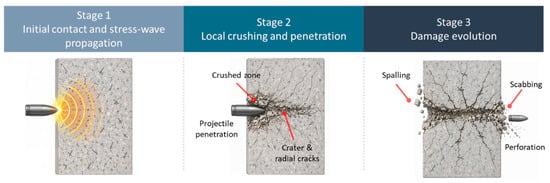
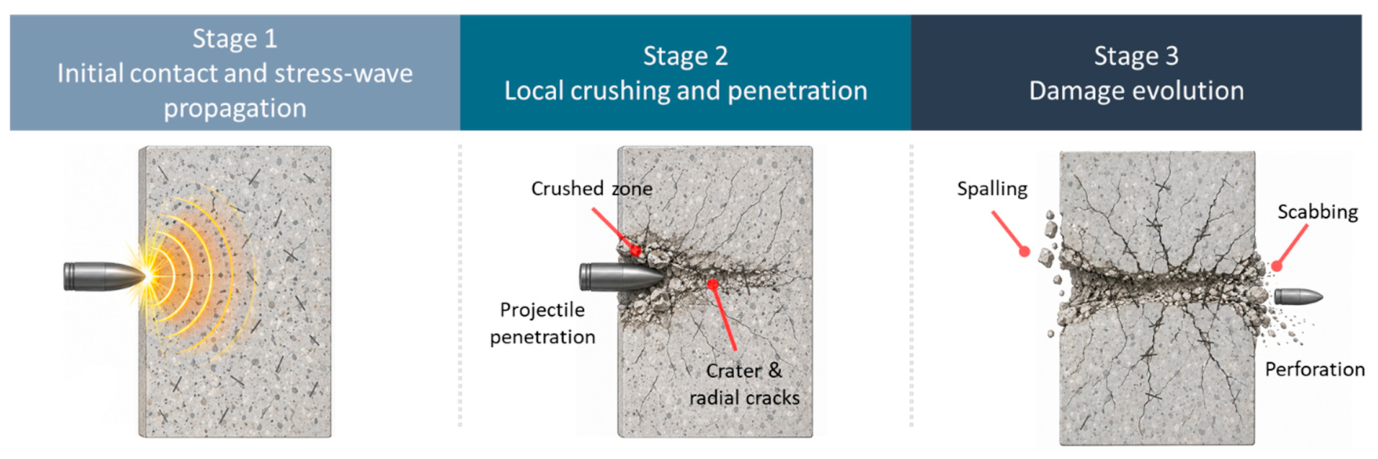
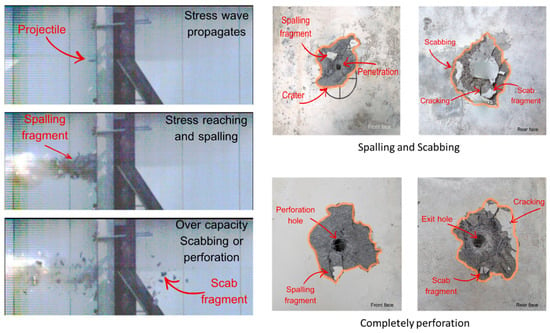
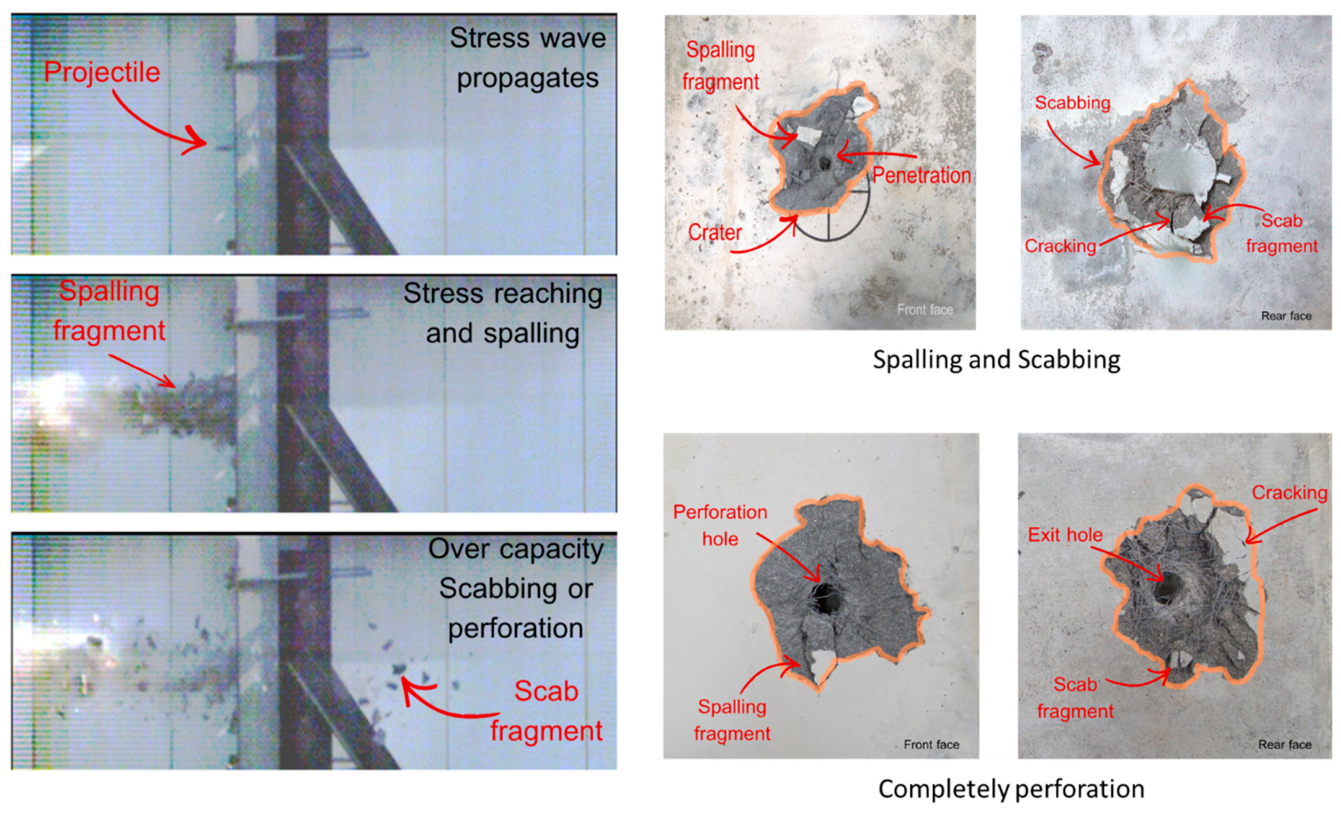
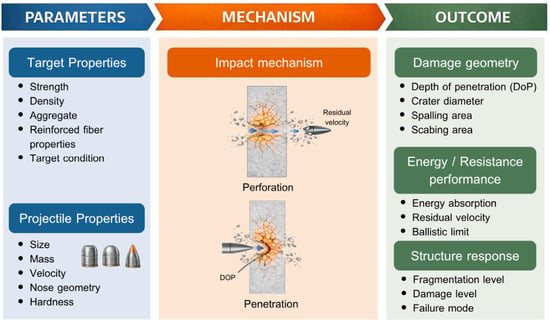
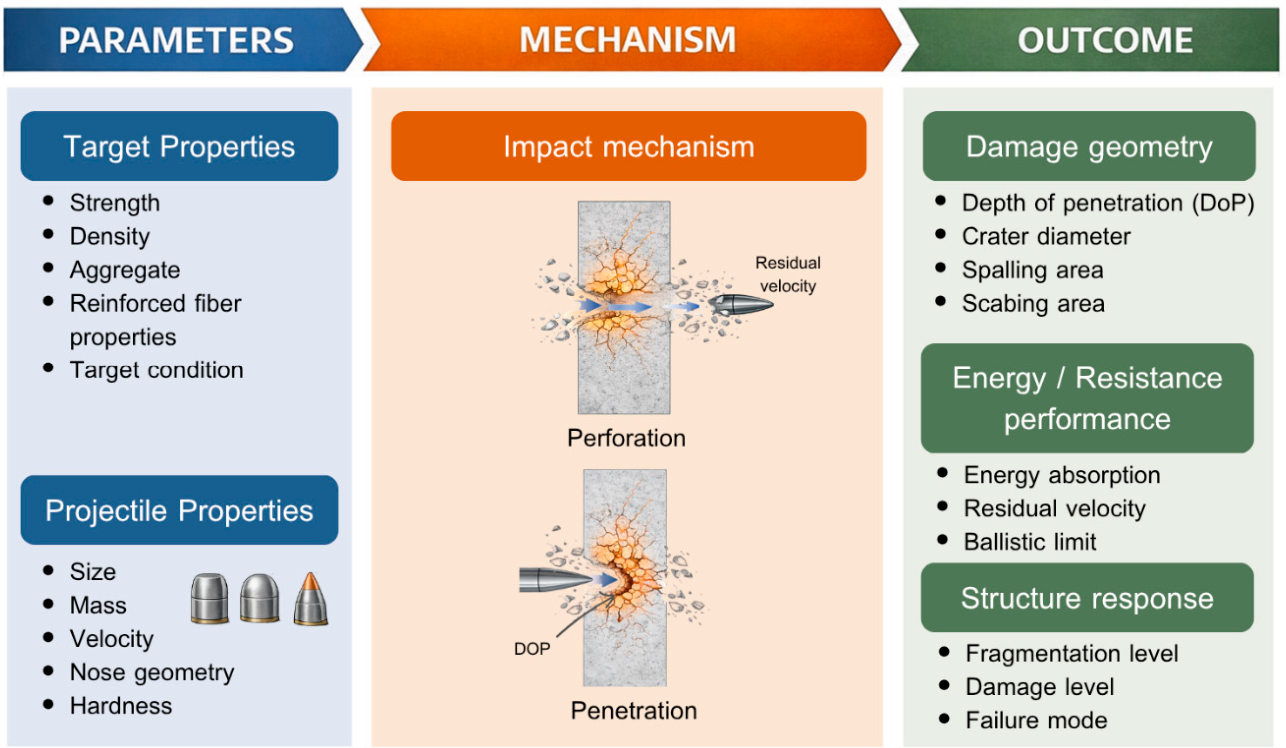
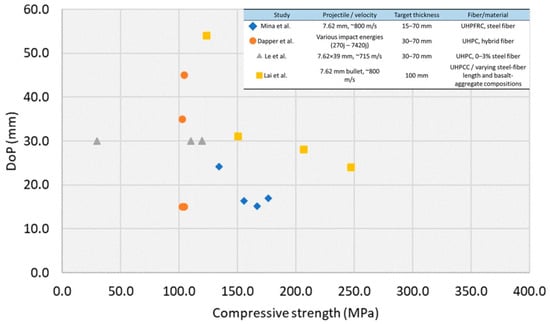
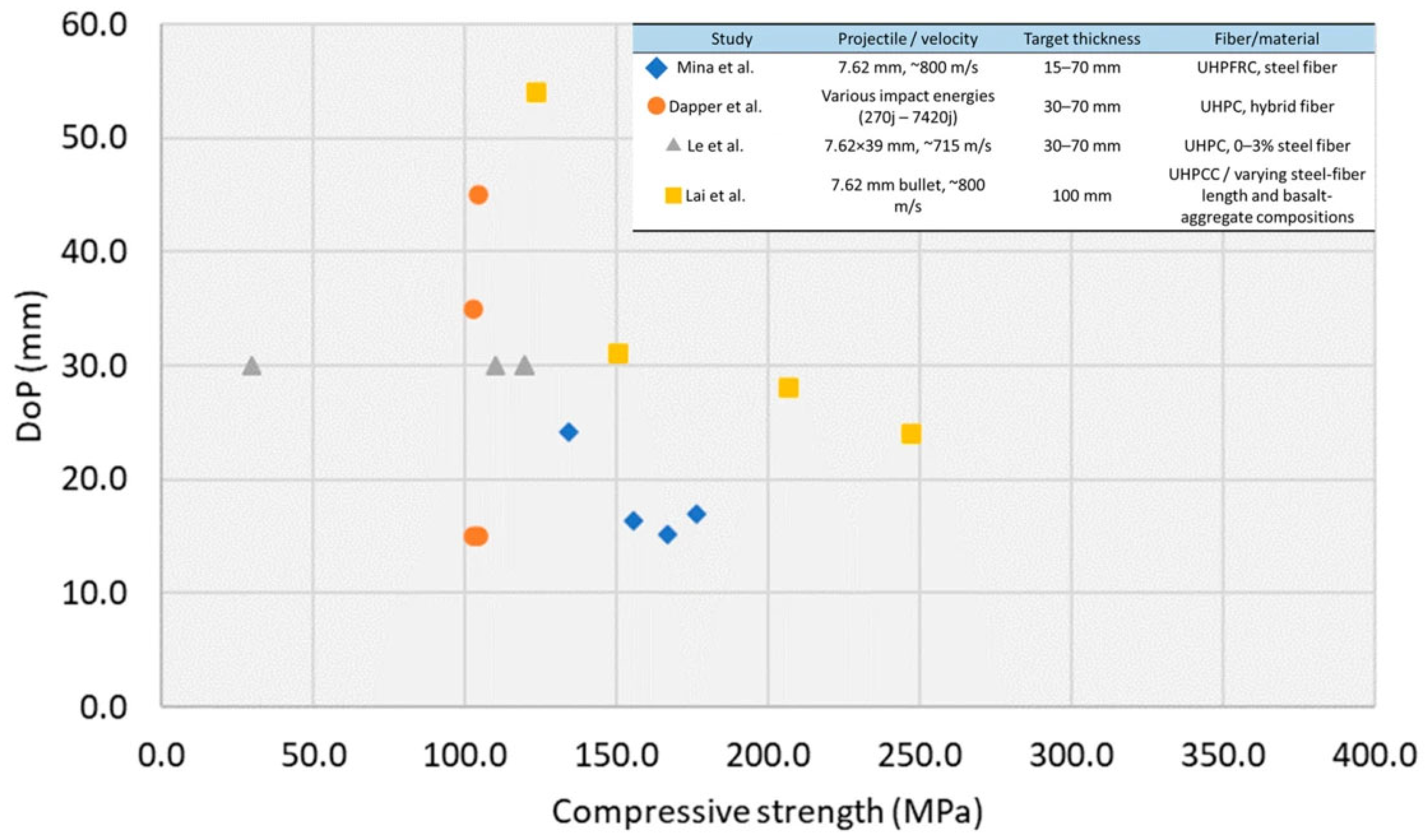
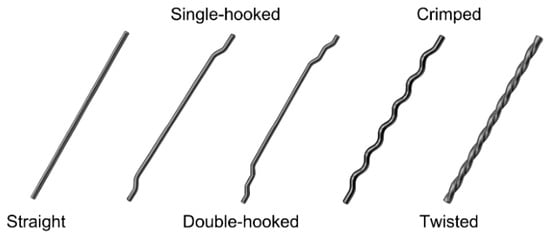
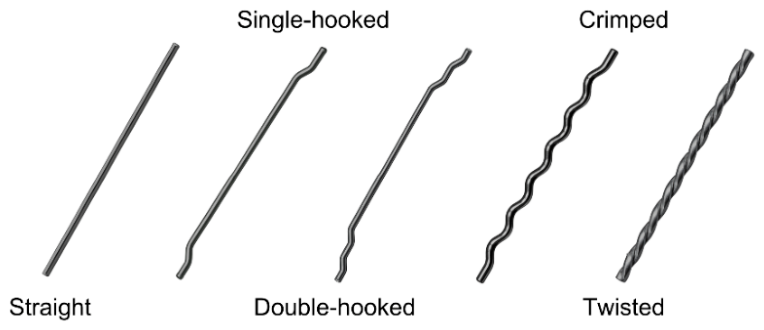
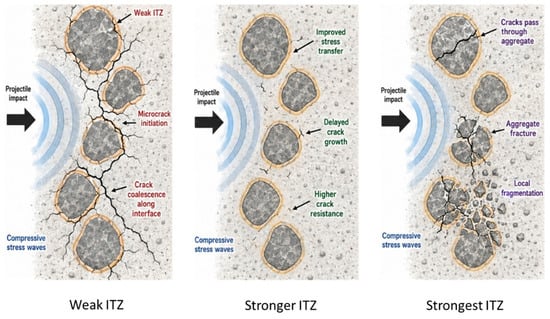
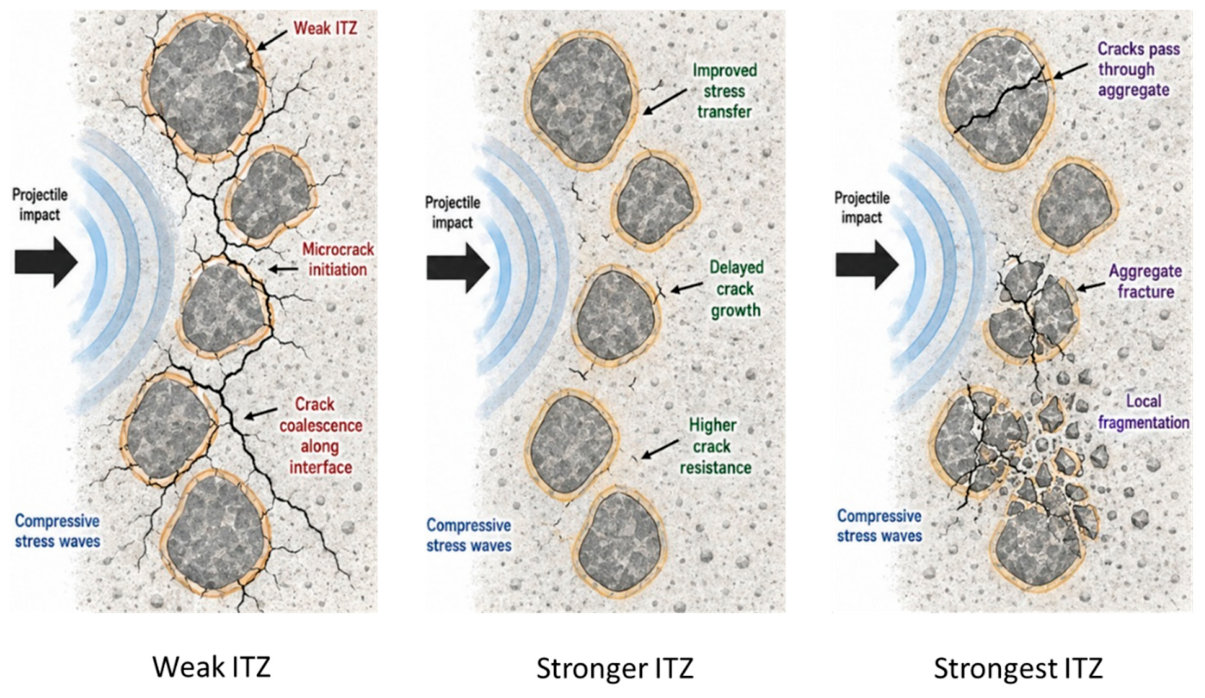
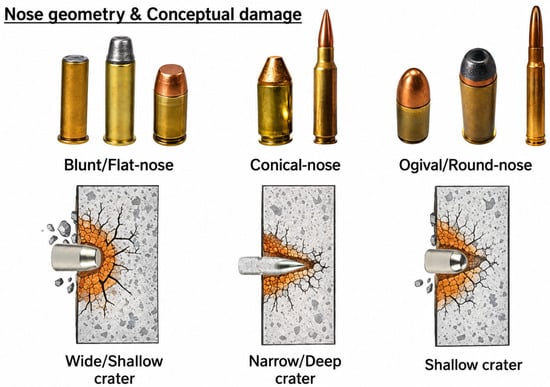
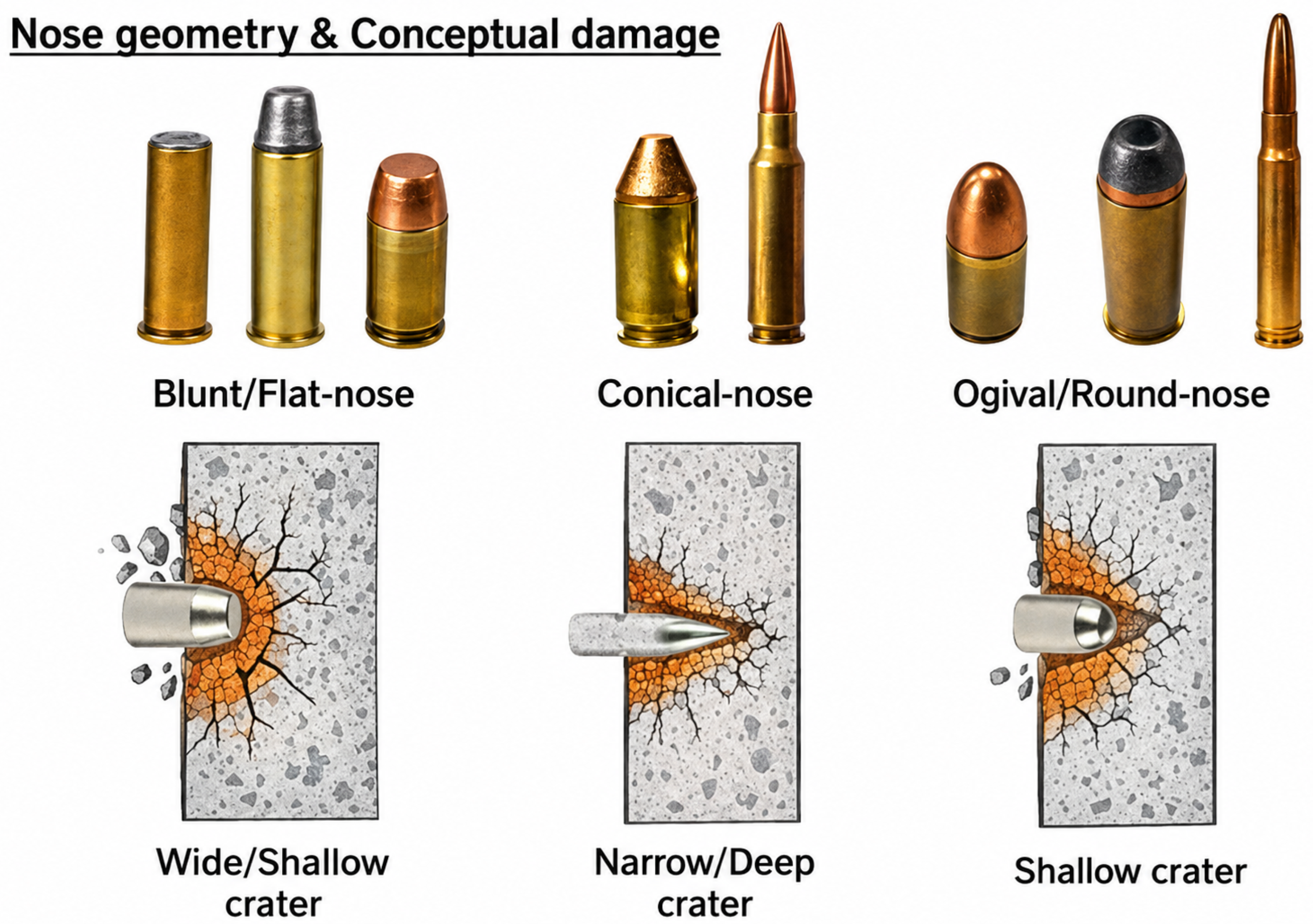
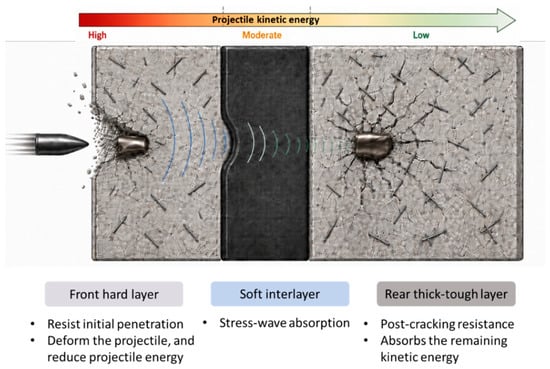
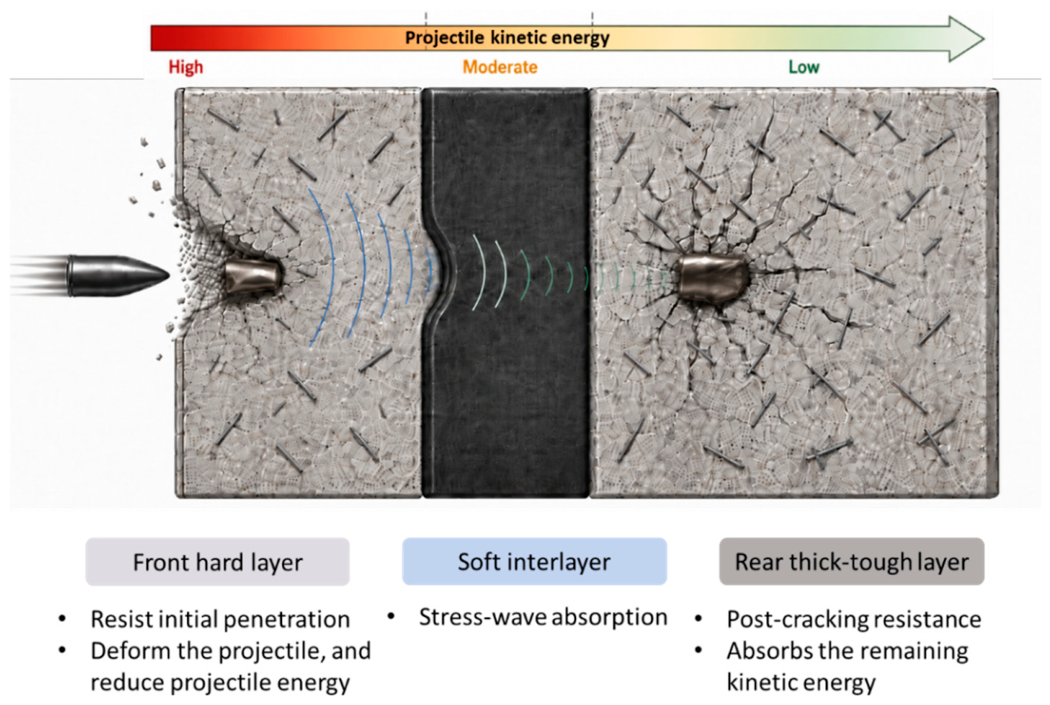
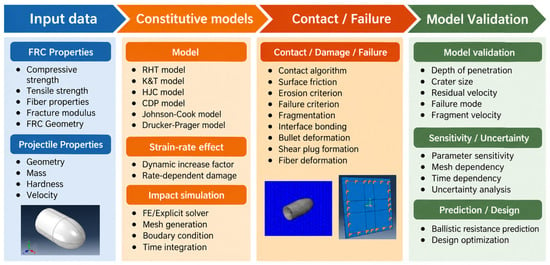
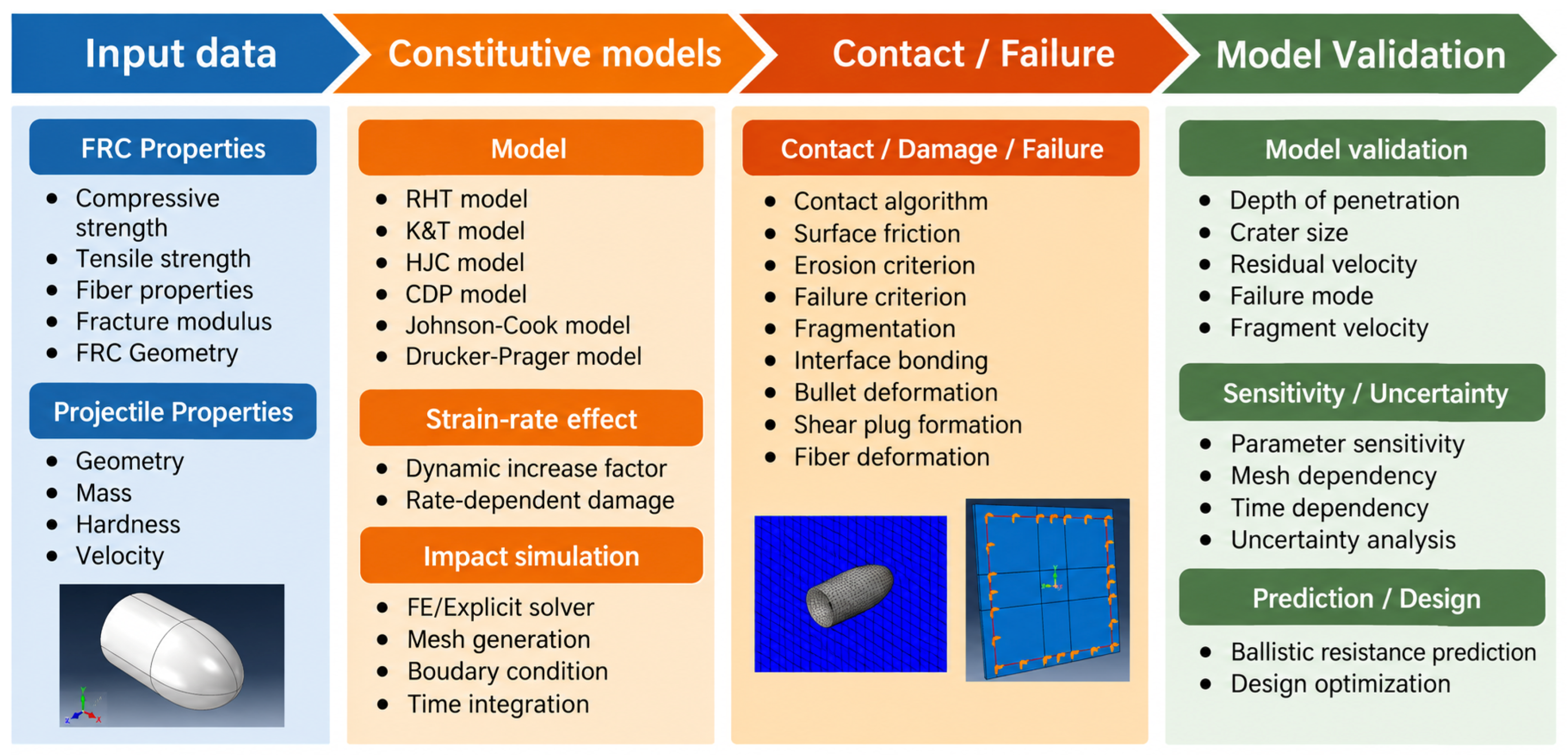

Disclaimer/Publisher’s Note: The statements, opinions and data contained in all publications are solely those of the individual author(s) and contributor(s) and not of MDPI and/or the editor(s). MDPI and/or the editor(s) disclaim responsibility for any injury to people or property resulting from any ideas, methods, instructions or products referred to in the content. |
© 2026 by the authors. Licensee MDPI, Basel, Switzerland. This article is an open access article distributed under the terms and conditions of the Creative Commons Attribution (CC BY) license.