


Highlights
What are the main findings?
- •
- Steel fibers improved the flexural performance of reinforced concrete beams, with the highest ultimate load obtained for the specimen containing 2.0% steel fibers.
- •
- Polypropylene fibers were more efficient in controlling shrinkage and crack formation, reducing the shrinkage strain up to 50% and the maximum crack width up to 93% in comparison with the reference concrete.
What is the implication of the main finding?
- •
- The results suggest that steel and polypropylene fibers are not equivalent reinforcement systems as they provide different performance benefits under the same experimental conditions.
- •
- Steel fibers are more suitable when improved load-bearing capacity and displacement ductility are required, while polypropylene fibers are more suitable when shrinkage reduction and crack-control performance are the main design objectives.
Abstract
Fiber-reinforced concrete is increasingly used to improve the mechanical and structural performance of reinforced concrete elements. This study presents a comparative experimental investigation of reinforced concrete beams incorporating steel and polypropylene fibers. Seven beams were examined, including a reference concrete and fiber-reinforced concrete mixtures containing 1.0%, 1.5%, and 2.0% fiber volume fractions. The experimental program included compressive strength tests on 21 cube specimens, shrinkage measurements on 21 prism specimens, and bending tests on reinforced concrete beams. The properties studied included compressive strength, shrinkage strain, ultimate load capacity, load–deflection response, crack initiation, crack width, and post-cracking behavior. Polypropylene fibers provided the greatest crack-control benefit, reducing shrinkage strain and maximum crack width by up to 50% and 93%, respectively, compared with the reference concrete. Steel-fiber-reinforced beams achieved the highest ultimate load, with an increase of up to 22% relative to the reference beam, and showed higher calculated displacement ductility indices. The results indicate that, under the tested conditions, steel fibers were more effective in improving load-carrying capacity and displacement ductility, whereas polypropylene fibers were more effective in controlling shrinkage and crack development. These findings support fiber selection according to the required balance between load capacity, deformation response, crack control, and serviceability.
1. Introduction
Reinforced concrete is one of the most used construction materials in civil engineering as it is accessible, durable and resistant to different types of actions on structures. In reinforced concrete members, concrete mainly resists compressive stresses, while steel reinforcement carries tensile stresses and contributes to resistance against bending and shear forces [1]. Despite these advantages, conventional reinforced concrete has several limitations, especially low tensile strength, cracking under service loads, shrinkage deformation, and brittle behavior after crack formation. These weaknesses affect serviceability, durability, and long-term structural performance.
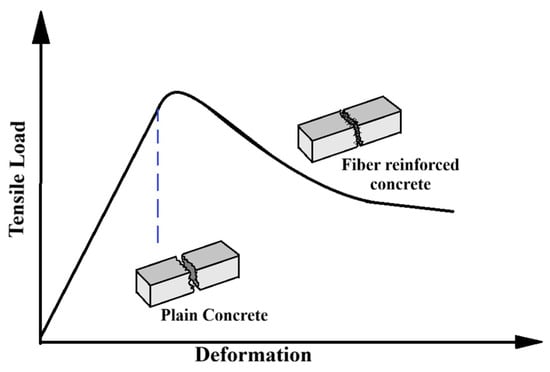
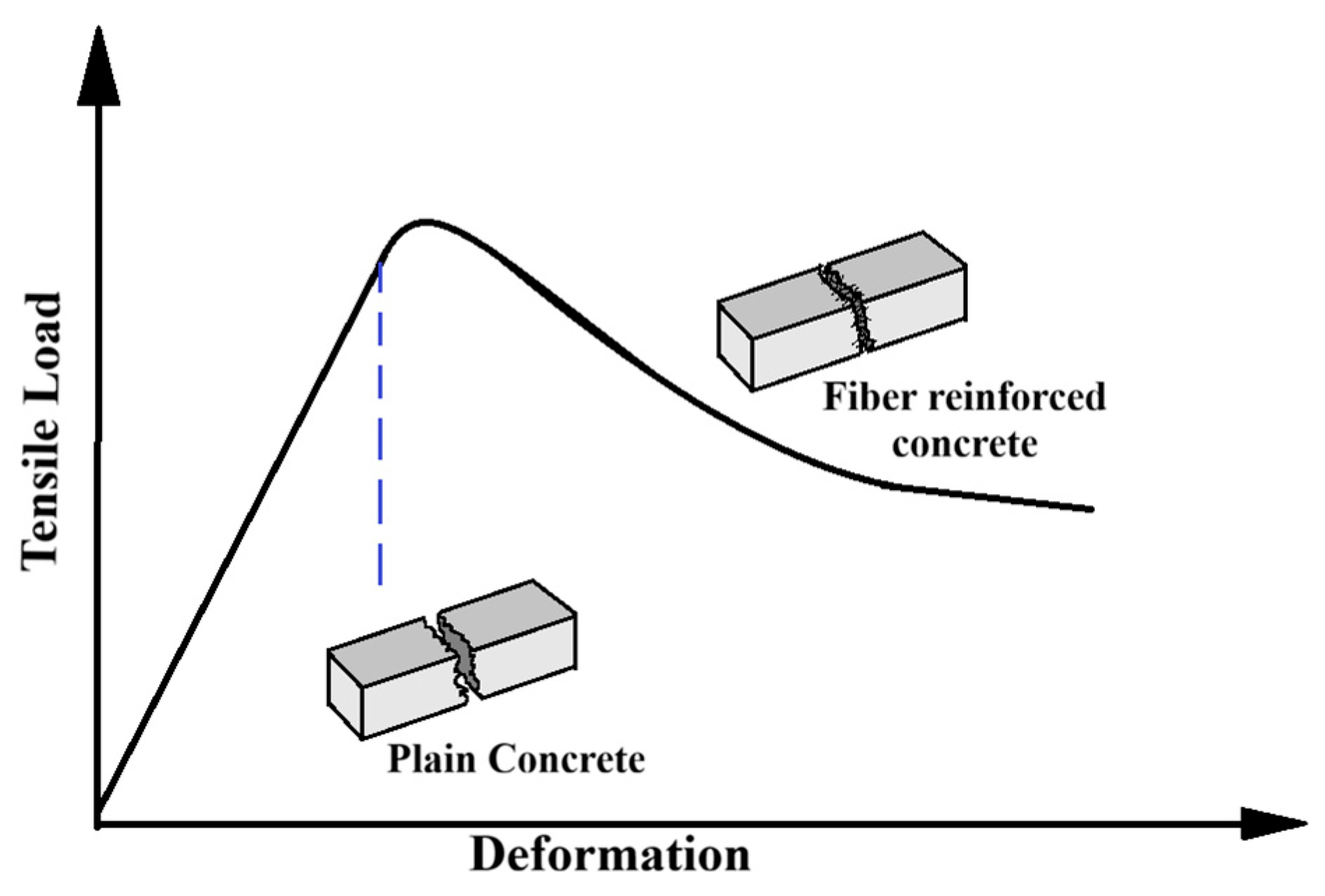
The development of fiber-reinforced concrete has become one of the practical approaches for improving the behavior of cementitious composites. The addition of randomly distributed fibers improves tensile response, fracture resistance, toughness, ductility, and energy absorption capacity while reducing crack sensitivity in the concrete matrix [2,3,4,5,6,7]. As shown in Figure 1, the addition of fibers into the concrete matrix restrains crack initiation and propagation by bridging developing cracks and increasing the post-cracking tensile strength of the material. Plain concrete tends to fail in a brittle manner, usually after reaching its peak load. Meanwhile, fiber-reinforced concrete can sustain additional deformation prior to failure as the fibers act to bridge cracks [8,9].
Figure 1.
Behavior of fiber-reinforced concrete and plain concrete under structural loads.
The effectiveness of fiber reinforcement depends on fiber material, geometry, dosage, orientation, bond behavior, and distribution within the concrete matrix [2,10,11,12,13]. This flexibility allows concrete mixtures to be designed for specific performance requirements. At the same time, it also makes general design rules more difficult because each fiber type influences workability, microstructure, cracking behavior, and load transfer mechanisms differently [14,15,16]. Therefore, the behavior of fiber-reinforced concrete must be evaluated not only through strength results but also through load vs. deflection response, crack development, post-cracking behavior, and failure mechanism. Steel fibers are widely used when the main objective is to improve structural resistance, toughness, and post-cracking behavior. Their high elastic modulus and tensile strength allow effective stress transfer across cracks. After crack formation, steel fibers bridge the crack surfaces, delay crack propagation, and improve residual load-bearing capacity [4,17,18]. Previous research indicated that steel fibers enhance tensile strength, flexural performance, fracture energy, shear resistance and structural toughness [7,10,19]. The geometry of the steel fibers is also significant. Research conducted on hooked, straight, crimped, and other steel fiber shapes has shown that the fiber shape and the anchorage conditions strongly affect crack-bridging efficiency, fracture energy, and flexural behavior [10,11,20].
Polypropylene fibers are among the most common synthetic fibers used in concrete. They have low density, low cost, corrosion resistance, chemical stability in alkaline cementitious environments, and good dispersion ability [21]. Polypropylene fibers are especially effective in reducing plastic and drying shrinkage cracking, limiting crack width, and improving the durability-related performance of concrete [21,22]. They have also been reported to improve fire-related behavior and spalling resistance of concrete [23]. Polypropylene fibers usually have a lower elastic modulus than steel fibers, and, therefore, their contribution to the strength of the structure is lower, but they are more effective in the control of microcracking and shrinkage-related deformation.
In previous studies, steel and polypropylene fibers have been investigated from various viewpoints. Some studies [10,11,20] looked into the effect of steel fiber shape and geometry, while others examined different dosages of polypropylene fibers and their effect on mechanical properties [22,24,25,26]. Investigations have also been conducted with hybrid fiber systems incorporating steel fibers together with polypropylene or other synthetic fibers [15,27,28,29,30,31]. For example, hybrid fiber systems have been shown to improve shear strength, flexural toughness, crack distribution and post-yield behavior [15,27,29]. Other studies investigated the behavior of slabs, beams or high-strength concrete reinforced with steel, polypropylene or macrosynthetic fibers [13,32,33]. These studies confirm that fiber type and dosage strongly affect compressive strength, flexural behavior, deformation capacity, crack propagation, and residual load-bearing capacity.
Recent studies also indicate that the effect of polypropylene fibers depends strongly on dosage and concrete type. Moderate polypropylene fiber contents improve mechanical behavior in some cases, whereas high fiber contents reduce workability, flowability and compressive strength [22,25,27]. Steel fibers have similar higher improvements in load-bearing capacity and fracture energy. However, high steel fiber contents may lead to lower workability and difficulty in mixing and compaction, especially for fiber volume fractions beyond 2% [10,34]. These findings show that the optimum fiber dosage depends on the required performance criterion.
The preliminary results obtained from the experimental program investigated in the present study were previously reported in a conference paper [35]. However, the earlier publication was limited to a brief presentation of selected beam test results. The present work significantly extends the scope of the investigation by incorporating material characterization, shrinkage analysis, crack development assessment, load–deflection behavior, and a comprehensive comparative evaluation of steel and polypropylene fiber reinforcement systems.
Although steel and polypropylene fibers are normally used for different engineering purposes, they are the most widely used fiber reinforcement materials in cementitious composites. Steel fibers are mainly employed for post-cracking strength, toughness and load-carrying capacity. Polypropylene fibers are most often utilized for shrinkage cracking control and crack distribution. Their reinforcing mechanisms are different, but a direct experimental comparison under similar testing conditions is helpful to understand the effect of each type of fiber on the overall mechanical and structural performance of reinforced concrete members.
Studies have been performed on the use of steel, polypropylene, synthetic and hybrid fibers in cementitious composites and reinforced concrete members under different material compositions, fiber arrangements and loading conditions. These studies have been related to single fiber systems, hybrid reinforcement, high-strength and ultra-high-performance concrete, and shear behavior, corrosion resistance and elevated-temperature performance [15,20,25,27,29,30,33,34,36]. Furthermore, it has been found that the flexural and post-cracking behavior of fiber-reinforced concrete members depends on the fiber volume fraction, fiber geometry and specimen size [37]. Therefore, the response of different fiber systems should be explained in the context of their material properties and experimental conditions instead of generalizing to different beam configurations.
However, the reported results are generally confined to a limited set of material or structural indicators. To select practical reinforcement fibers for normal-strength reinforced concrete beams, it is useful to evaluate the correlation of material-level properties and beam-level response in a consistent experimental program. Further assessment of the balance between shrinkage resistance and crack control and flexural load-carrying capacity, post-cracking response and displacement ductility for different fiber types and dosages is recommended.
Therefore, in this study, the behavior of normal-strength reinforced concrete beams reinforced with hook-ended steel fibers and polypropylene fibers at three volume fractions is compared under four-point bending. The analysis investigates compressive strength, shrinkage strain, crack initiation, maximum crack opening, ultimate load capacity, load–deflection response, post-cracking behavior and displacement ductility under the same matrix composition, beam geometry, reinforcement setup and testing conditions. The aim is not to determine the general advantages of steel or polypropylene fibers but to distinguish their different contributions to performance under the test conditions. The comparison made in this study should not be interpreted as treating steel and polypropylene fibers as equivalent reinforcement systems. Rather, it is intended to evaluate the different performance contributions of two widely used fiber types and the effect of fiber volume fraction under the same experimental conditions.
2. Materials and Methods
2.1. Materials
The experimental mixtures were prepared as fine-grained concrete using Portland cement CEM I 32.5R(Grupa Ożarów S.A., Ożarów, Poland). The aggregate composition consisted of six fine aggregate fractions with particle sizes ranging from 0 mm to 4 mm. The quantities of aggregate fractions were equal to 20 kg/m3 for the 0–0.125 mm fraction, 206 kg/m3 for the 0.125–0.250 mm fraction, 514 kg/m3 for the 0.250–0.500 mm fraction, 622 kg/m3 for the 0.500–1.000 mm fraction, 333 kg/m3 for the 1.000–2.000 mm fraction, and 78 kg/m3 for the 2.000–4.000 mm fraction. Although the maximum aggregate size was limited to 4 mm, the mixture was designed and used as concrete in accordance with the laboratory experimental program. The smaller aggregate size was intentionally selected to improve workability, facilitate uniform dispersion of the fibers and enable proper casting and compaction of the relatively small reinforced concrete beam specimens. The cement content was maintained at 400 kg/m3, while the water content was equal to 220 kg/m3. A superplasticizer dosage of 2 kg/m3 was used to improve the workability and homogeneity of the concrete mixture.
Two experimental series were prepared depending on the fiber type. Series I consisted of steel fiber-reinforced concrete mixtures with fiber volume fractions of = 1.0% (ST1), 1.5% (ST1.5), and 2.0% (ST2), corresponding to fiber contents of 79, 118, and 157 kg/m3, respectively. Series II consisted of polypropylene fiber-reinforced concrete mixtures with fiber volume fractions of , 1.0% (PF1), 1.5% (PF1.5), and 2.0% (PF2), corresponding to fiber contents of 9, 14, and 18 kg/m3, respectively. Mass dosages were significantly higher for steel fibers because of their higher density. Also, the smaller diameter of polypropylene fibers resulted in a much larger theoretical number of fibers per unit volume and closer nominal fiber spacing. These differences are important for crack-control performance, post-cracking response, and practical mixture design. In addition, a control sample, designated as RefCon, was prepared without fibers. Similar fiber volume fractions were adopted to have a common volumetric basis for comparison of the investigated fiber systems. This method controls the physical quantity of fibers added to the concrete matrix. However, the equal volume fraction will not mean the same mass dosage, fiber number, spacing, surface area, workability or crack-bridging capacity due to the large differences in density and geometry between steel and polypropylene fibers. Therefore, the present results should be considered as a comparison of the effects of the investigated fiber types at matched volume fractions but not as a comparison of practically equivalent or interchangeable fiber dosages.
Hook-ended steel fibers, which are commonly used in the domestic construction market, were used. The fibers had a length of 50 mm, diameter of 1.0 mm, slenderness ratio equal to 50, and minimum tensile strength of about 800 MPa. They were produced from cold-drawn round low-carbon steel wire (carbon content less than 0.1%).
The polypropylene fibers were Texa-Fib synthetic fibers (UAB Betono apsaugos sistemos, Vilnius, Lithuania) characterized by a length of 19 mm, a diameter of 30.5 μm, a density of 0.91 g/cm3, Young’s modulus of 3.5 GPa, and tensile strength ranging from 320 to 420 MPa. Such fibers were primarily intended for shrinkage crack control and crack distribution.
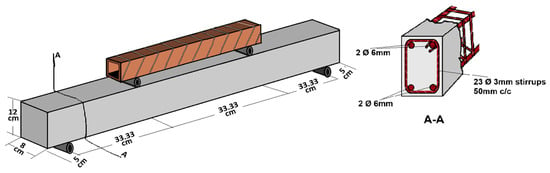
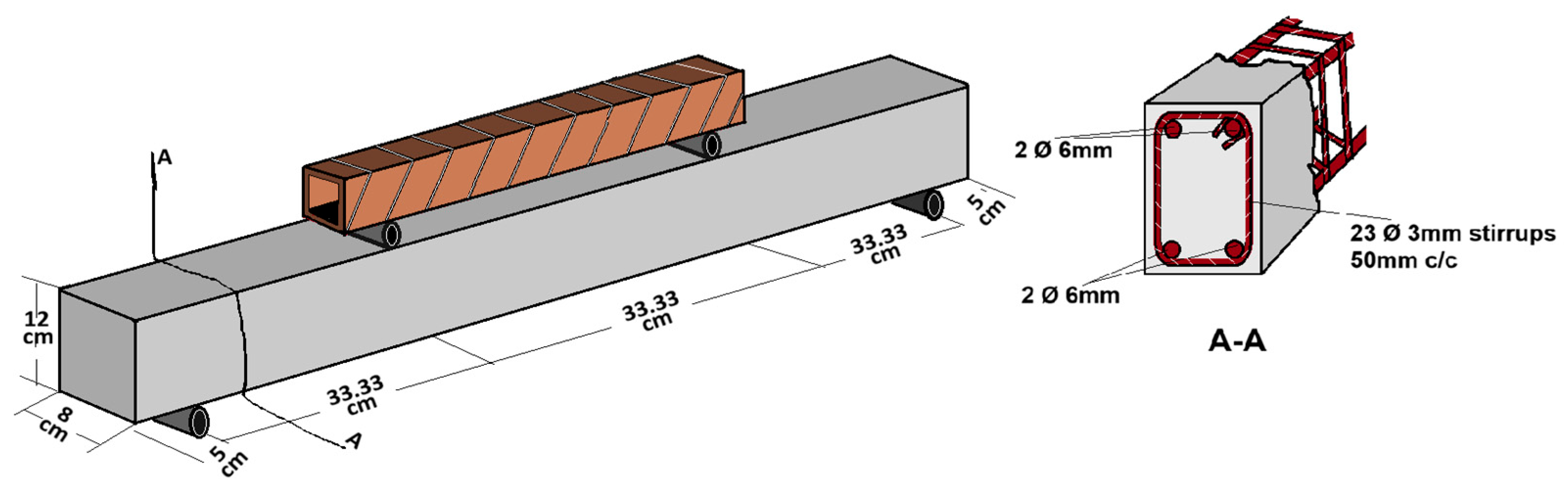
The reinforced concrete beams were reinforced using longitudinal BSt 500S steel bars consisting of 2Ø6 mm bottom reinforcement, 2Ø6 mm top reinforcement, and Ø3 stirrups spaced every 50 mm. The reinforcement ratio was equal to 1.18%.
2.2. Experimental Program
The experimental program was designed to compare the influence of steel fibers and polypropylene fibers on the structural behavior of reinforced concrete beams. Two independent experimental series were analyzed together with a reference concrete series without dispersed fibers. Both programs used comparable beam geometry, reinforcement arrangement, material composition, and testing methodology, enabling a direct comparison of the influence of fiber type and fiber content on the mechanical and structural performance of reinforced concrete elements. The study examined the compressive strength, shrinkage deformation, load-bearing capacity, deflection behavior, crack development, post-cracking behavior, ductility, and failure mechanism.
The experimental program included cubic specimens of size 100 × 100 × 100 mm for compressive strength testing, shrinkage specimens of size 100 × 100 × 520 mm and small-scale reinforced concrete beams of size 80 × 120 × 1100 mm for structural testing. For the compressive strength tests, the specimen dimensions are relatively small with respect to the length of the steel fibers. However, the same specimen size was used for all of the mixtures to provide consistent testing conditions and to enable a direct comparison between the studied fiber types and volume fractions. The beam program comprised seven individual reinforced concrete beams, one reference beam without fibers, three beams containing steel fibers at volume fractions of 1.0%, 1.5% and 2.0% and three beams containing polypropylene fibers at the same volume fractions. One beam was tested for each configuration. Thus, the beam analysis results are interpreted as comparative observations under the conditions investigated and are not a statistical measure of specimen-to-specimen variability. The beam tests were done on a four-point loading system. Figure 2 includes the assessment of the bending load capacity, beam deflection and crack opening development under increasing external load.
Figure 2.
Experimental setup and cross-sectional details of the tested beam specimens.
The fine-grained concrete mixture was prepared by a conventional laboratory mixing technique. The cement and aggregates were first mixed together for about 2 min. The fibers were then added gradually to the mixture and mixed for an additional 3 min to ensure homogeneous distribution in the concrete matrix. Then water and superplasticizer were added in three equal portions at an interval of around 0.5 min. Total mixing time was about 8 min. After mixing, the concrete was cast in molds in three layers to improve the fiber distribution and the homogeneity of the specimens. The fresh concrete was compacted using a vibrating table. All specimens were cured under standard laboratory conditions until the testing date.
Following the curing period, the mechanical properties of the concrete specimens were experimentally measured using standard laboratory procedures. Compressive strength tests were performed on 100 × 100 × 100 mm cubic specimens based on EN 12390-3:2009 [38] using a D-250 hydraulic press. The load was gradually increased at a loading rate of 0.2 MPa/s until specimen failure. Shrinkage strains were measured according to EN 12390 16:2019 [39] using an Amsler apparatus (Amsler, Schaffhausen, Switzerland) on specimens measuring 100 × 100 × 520 mm. The strain measurements were recorded over a period of 44 days. The shrinkage investigation included concrete specimens reinforced with two different fiber types and three fiber volume fractions for each fiber type, together with a reference specimen without fibers.
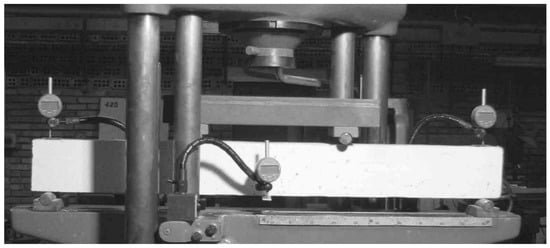
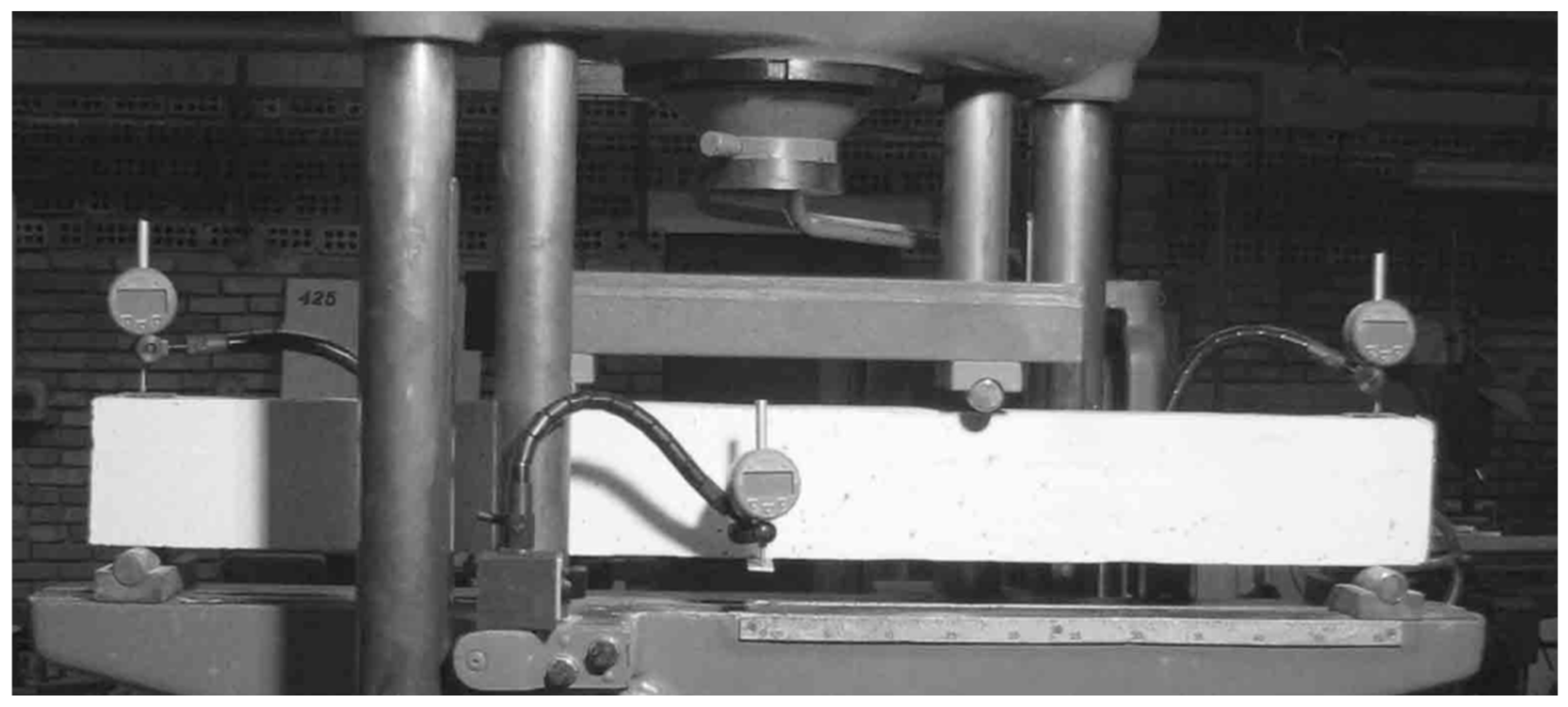
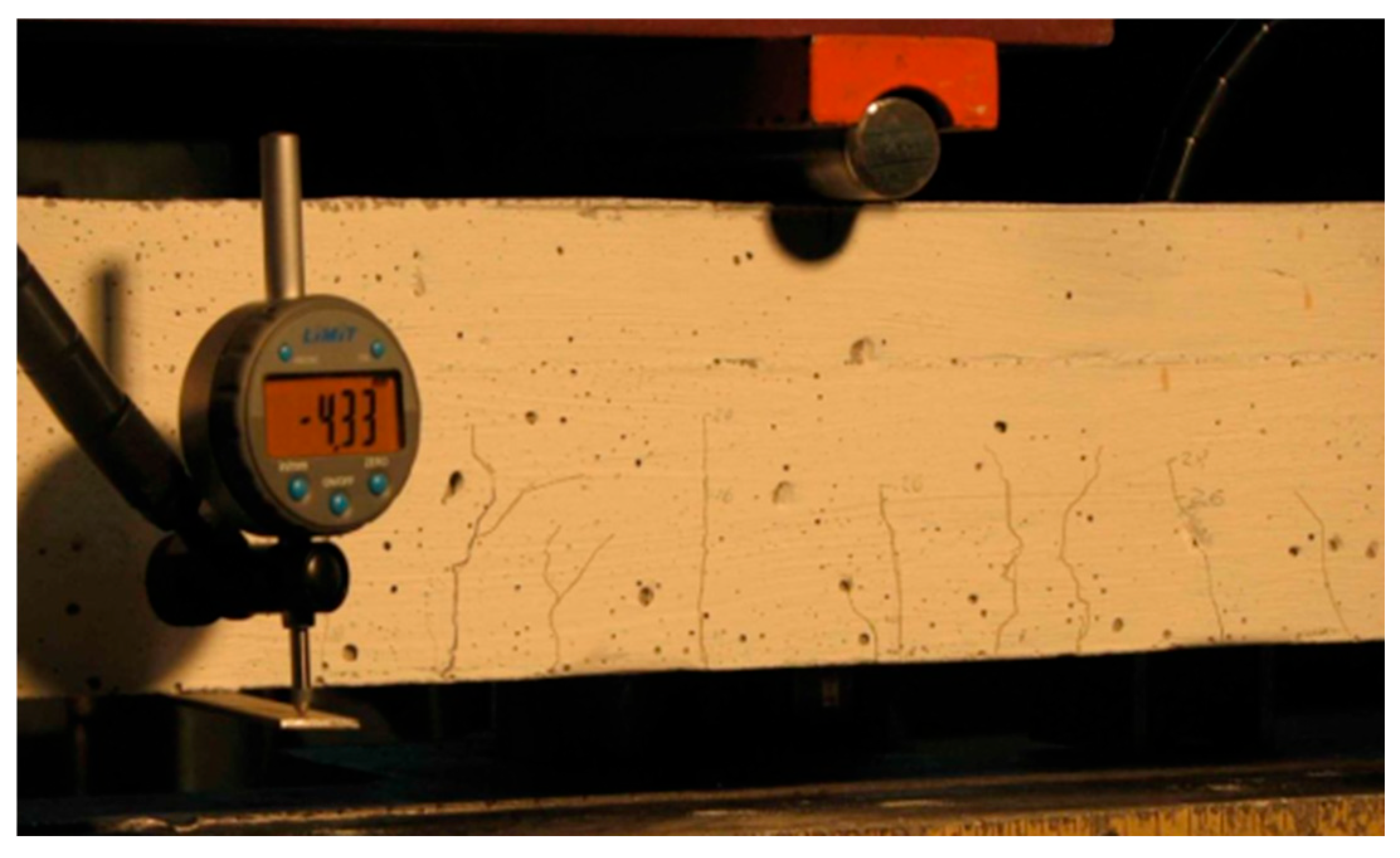
The reinforced concrete beams were tested under four-point loading conditions using a symmetrical point load scheme (Figure 3). The load was applied gradually in increments of 2 kN until failure. In the case of specimens that failed abruptly, the load–deflection curve was stopped at the last stable recorded reading (since a reliable post-peak reading could not be obtained).
Figure 3.
Sample beam specimen under four-point bending test.
Deflection measurements were recorded at the midspan and support regions using electronic displacement gauges (Limit, Alingsås, Sweden) with an accuracy of 0.001 mm. Crack width development was monitored using an M1754 microscope (Carton Optical Industries, Ltd, Saitama, Japan). Crack width measurements were initiated immediately after the appearance of the first visible crack. The ultimate load-bearing capacity of the beam was defined as the load corresponding to the onset of a reduction in beam capacity.
3. Results and Discussion
3.1. Compressive Strength
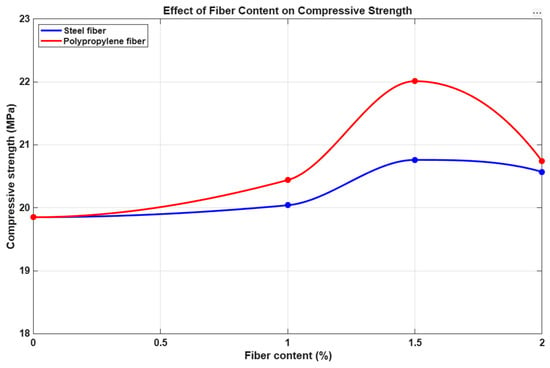
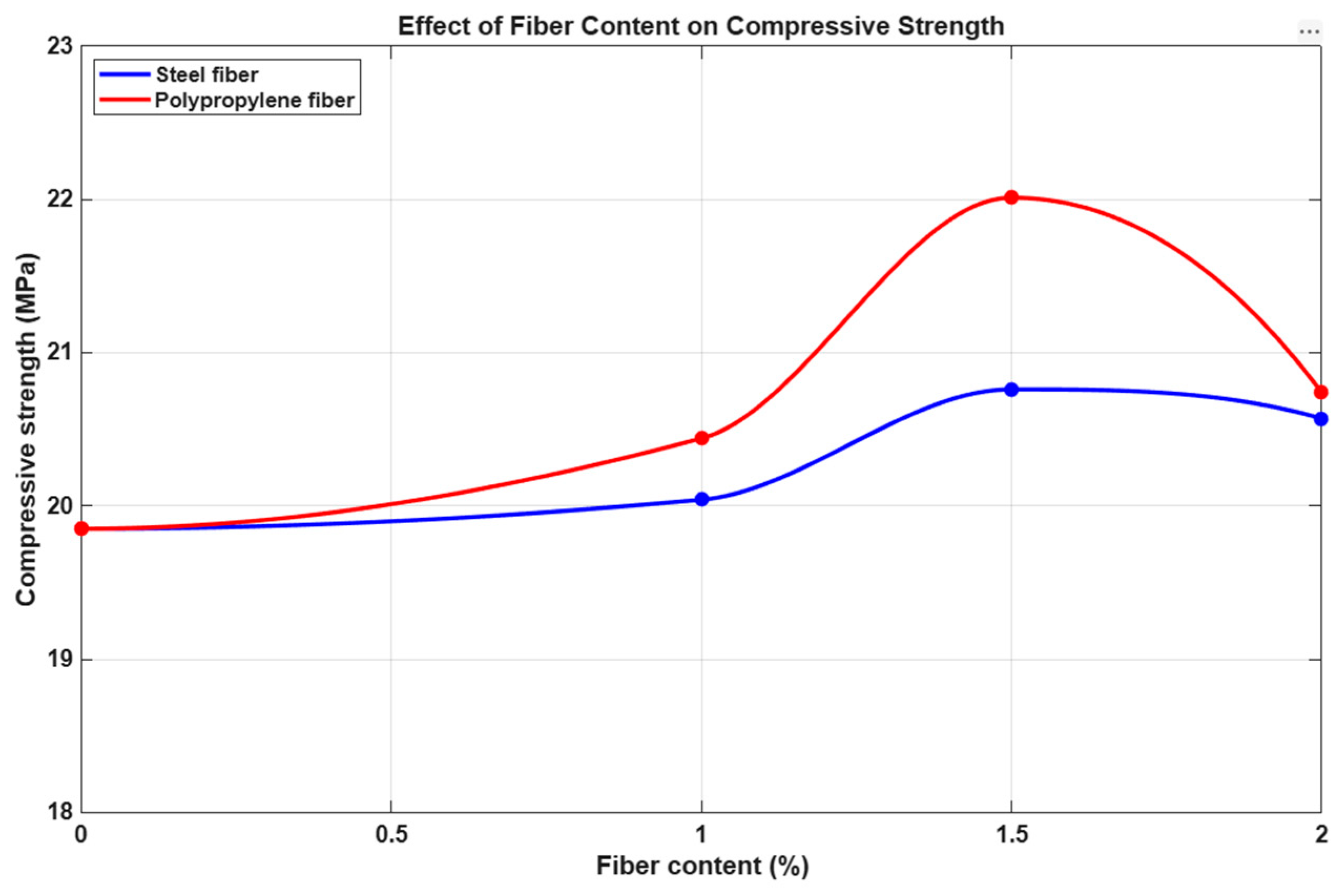
The compressive strength results for the tested concrete specimens are presented in Figure 4. Both steel fiber-reinforced concrete and polypropylene fiber-reinforced concrete exhibited higher compressive strength values compared with the reference concrete without fibers.
Figure 4.
Compressive strength vs. fiber volume fraction for steel fiber- and polypropylene fiber-reinforced concrete.
The reference concrete achieved an average compressive strength of 19.85 ± 0.77 MPa. The incorporation of steel fibers resulted in moderate increases in compressive strength for all the investigated fiber contents. The SF1 series achieved a compressive strength of 20.04 ± 1.42 MPa, corresponding to an increase of approximately 0.96% compared with the reference concrete. Increasing the steel fiber content to 1.5% resulted in the highest compressive strength within the steel fiber series, reaching 20.76 ± 0.47 MPa, which corresponds to an increase of approximately 4.58% relative to the reference concrete. A further increase in the content of steel fiber to 2.0% resulted in a compressive strength of 20.57 ± 2.06 MPa, which is an increase of about 3.63% compared with the reference mixture. The results indicate that moderate steel fiber contents improve the compressive behavior of concrete due to better crack-bridging mechanisms and improved internal stress distribution within the cementitious matrix. However, no further increase in compressive strength was identified with the increase in steel fiber content from 1.5% to 2.0%. The present study did not directly examine the underlying cause of this trend. Changes in fresh concrete behavior and fiber distribution may be potential contributing factors, but further workability and microstructural investigations would be needed to confirm these effects. The random orientation and distribution of steel fibers in the relatively small cube specimens may have affected the measured compressive strengths to some extent. However, the use of the same specimen dimensions and testing procedures for all the mixtures allows for the observed trends to be used for comparative evaluation.
The polypropylene fiber-reinforced concrete series also performed better in compressive strength than the reference concrete. The PF1 series showed a compressive strength of 20.44 ± 0.26 MPa, approximately 2.97% higher than the reference concrete. The highest total compressive strength was obtained for the PF1.5 series, which was 22.01 ± 0.31 MPa, an increase of about 10.88% compared to the reference specimen. Compressive strength was achieved at 20.74 ± 0.49 MPa for the PF2 series, which represents an increase of about 4.48%.
The results show that the polypropylene fiber series had higher mean compressive strength values than the steel fiber series in all the tested mixtures, where PF1.5 had the highest mean value. The observed differences are possibly due to the variations in the interaction between the fibers and the concrete matrix.
The highest mean compressive strength was obtained for the polypropylene fiber series, PF1.5, but the differences between the studied mixtures were not significant. The one-way analysis of variance indicated that the overall differences were not statistically significant at the 5% level (F (6,14) = 1.37, p = 0.292). Therefore, the compressive strength results should be viewed as comparative trends among the tested mixtures and not as statistically confirmed improvements due to fiber addition.
3.2. Shrinkage Behavior
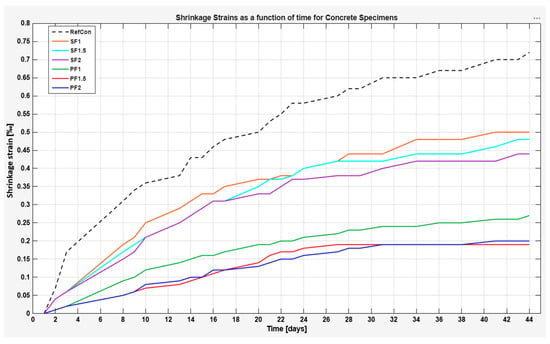
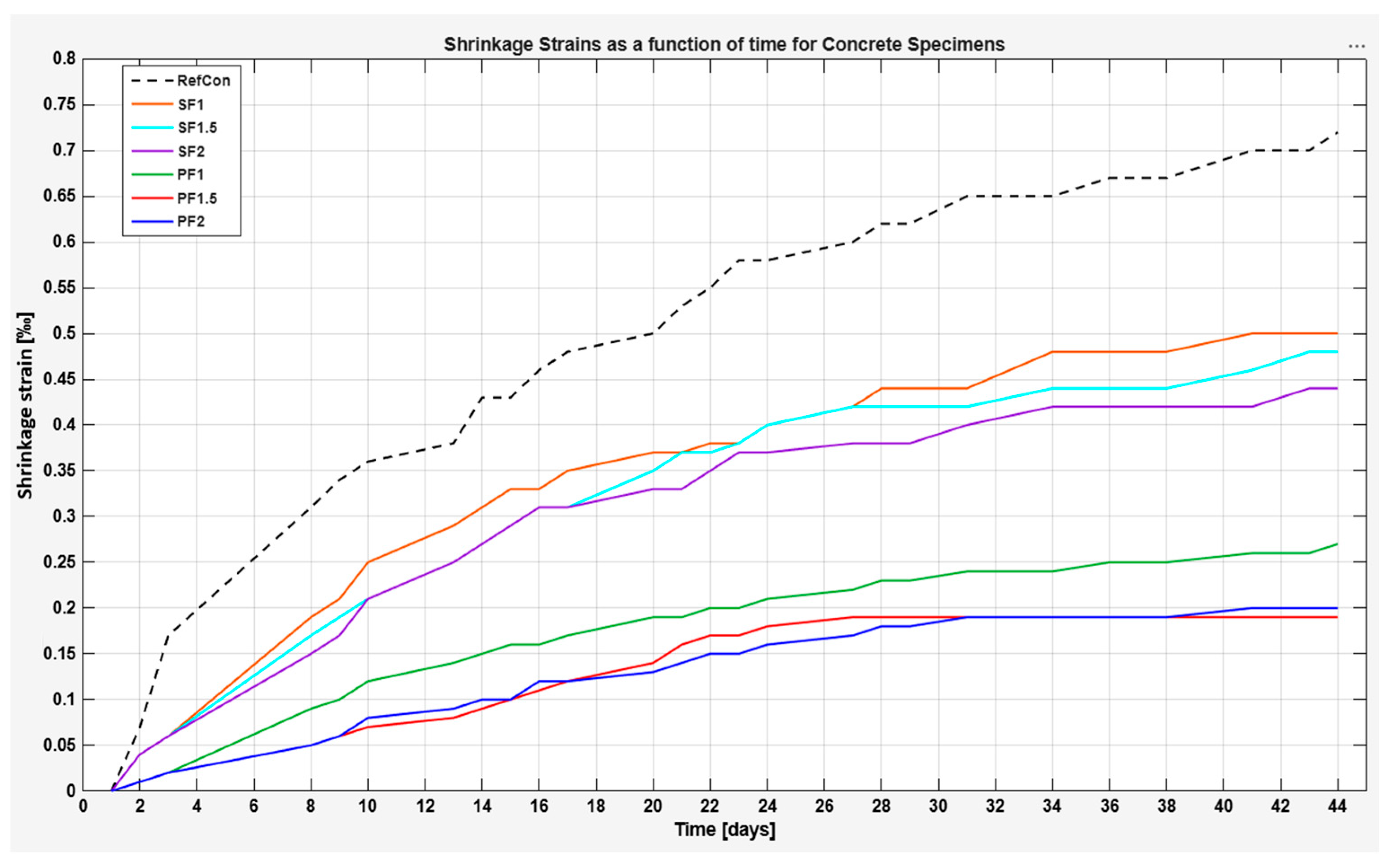
The shrinkage behavior of the investigated fine-grained concrete mixture was evaluated over a period of 44 days. Figure 5 presents the development of shrinkage strains for the reference concrete and fiber-reinforced concrete specimens containing steel fibers and polypropylene fibers with different fiber volume fractions.
Figure 5.
Shrinkage strains vs. time for the investigated concrete series.
The obtained results demonstrate that all the fiber-reinforced concrete mixtures exhibited lower shrinkage strains compared with the reference concrete specimen without fibers. The reference concrete reached the highest final shrinkage value after 44 days, equal to approximately 0.72‰. The addition of the fibers greatly minimized shrinkage deformation, thus demonstrating the effectiveness of fibers in reducing the internal tensile stresses caused by moisture loss and cement hydration.
For the series of steel fiber-reinforced concrete, the final shrinkage reduction compared to the reference concrete was around 31.6% for SF1, 34.0% for SF1.5 and 37.0% for SF2. The results show that the shrinkage deformation was reduced gradually with the increase in steel fiber content. For steel fiber specimens, the SF2 series had the lowest shrinkage strain after 44 days, which means it was the most effective steel fiber specimen in terms of volumetric deformation control.
The reduction in shrinkage in the steel fiber mixtures is due to the crack-bridging mechanism of the fibers. Steel fibers redistribute the tensile stresses during drying and hydration shrinkage and limit the formation and propagation of microcracks in the cement matrix. Furthermore, the steel fibers themselves do not produce shrinkage deformation, which can reduce the strain of the composite material.
Overall, there was decreasing shrinkage with increasing steel fiber content, although the shrinkage curves were not perfectly proportional within the testing period. Local intersections between the shrinkage curves occurred at intermediate curing stages, showing that the influence of fiber dosage on shrinkage evolution is time-dependent and influenced by the internal moisture flow as well as the interaction between the concrete matrix and fibers.
The concrete series with polypropylene fibers also had significantly lower shrinkage strains compared to the reference concrete. At the final analysis, the shrinkage reduction compared to the reference specimen was about 29.0%, 50.0%, and 47.0% for PF1, PF1.5, and PF2, respectively. The PF1.5 series showed the lowest overall shrinkage strain of all the specimens examined, indicating the highest effectiveness in shrinkage control.
The polypropylene fiber specimens achieved a significantly higher shrinkage reduction efficiency than the steel fiber series. The PF1.5 specimen had a final shrinkage strain about 24.2% lower than that of the SF1.5 specimen at the same fiber volume fraction of 1.5%. The shrinkage strain of the PF2 mixture was about 13.6% lower than that of the SF2 specimen. The results indicate that polypropylene fibers are more efficient in controlling shrinkage deformation than steel fibers in the conditions tested.
The improved shrinkage performance of polypropylene fibers is due to finer geometry and more uniform dispersion within the cement matrix. Polypropylene fibers effectively control microcrack formation at early stages by limiting stress concentration zones and reducing crack propagation during moisture loss. Due to their large number of fibers per unit volume and their ability to form a dense multidirectional reinforcement formation, polypropylene fibers provide more efficient restraint against shrinkage-induced tensile stresses.
The shrinkage development curves presented in Figure 5 show that the greatest rate of shrinkage growth occurred during the early curing period for all the mixtures. After approximately 20 to 25 days, the rate of shrinkage development gradually decreased and the curves approached stabilization. This behavior is considered to be the result of the gradual reduction in internal moisture flow and hydration-related deformation in the concrete matrix.
Among all the investigated specimens, the sample PF1.5 showed the best shrinkage performance. The reference concrete was the most prone to shrinkage deformation and possible microcracking. The results show that the incorporation of fiber reinforcement greatly improves the structural stability of concrete and that polypropylene fibers are more effective than steel fibers in reducing deformation due to shrinkage.
3.3. Ultimate Load Capacity
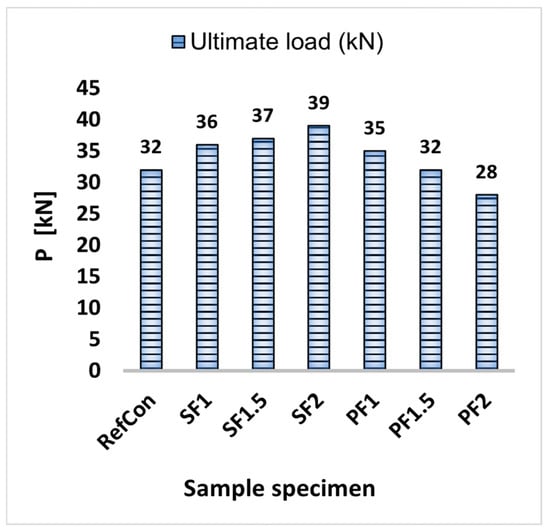
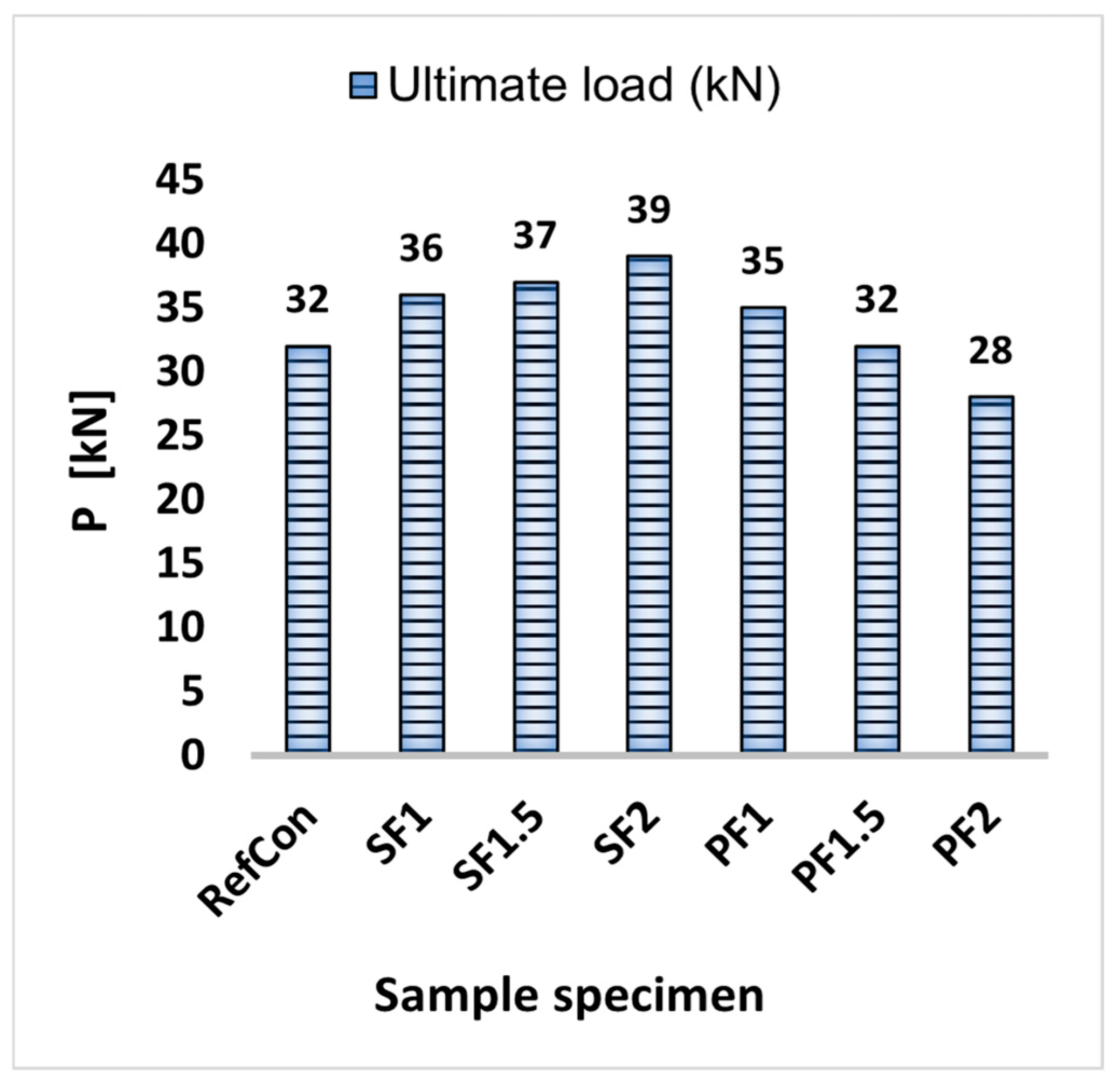
The ultimate load capacities of the tested reinforced concrete beams are presented in Figure 6. The corresponding values of the maximum bending moments were calculated using the four-point loading configuration and are discussed together with the ultimate load results. The results show that the load-carrying capacity of the beams had a considerable effect on the fiber type and fiber content.
Figure 6.
Ultimate load capacity of the investigated reinforced concrete beams.
The ultimate load of the reference beam without fibers (RefCon) was 32 kN, with a maximum bending moment of 5.33 kNm. The addition of steel fibers resulted in an increase in both parameters. The ultimate load of the SF1 beam was 36 kN, an increase of 12.5% over the reference beam. Upon further increasing the steel fiber content, the performance improved, where SF1.5 reached 37 kN and SF2 reached the highest recorded load capacity of 39 kN. These values are 15.6% and 21.9% higher than the RefCon, respectively.
A similar pattern was observed for the maximum bending moment. The bending moment increased from 5.33 kNm for RefCon to 6.00 kNm, 6.17 kNm and 6.50 kNm for SF1, SF1.5 and SF2, respectively. The maximum increase was obtained for SF2, which improved the bending resistance by approximately 21.9% in comparison to the reference beam.
The strength of the steel fiber-reinforced concrete beams is increased due to the crack-bridging effect of the fibers. The steel fibers transferred tensile stresses to the developing cracks and slowed down the propagation of cracks and helped in the redistribution of stresses in the concrete matrix. With an increase in fiber content, the effective bridging points increased, which caused an increase in resistance to crack growth and an increase in structural capacity.
The polypropylene fiber-reinforced concrete series shows a different response. PF1 achieved the maximum ultimate load of 35 kN, which corresponds to an increase of about 9.4% with respect to the reference beam. However, as the fiber content increased, the load-bearing capacity decreased. The PF1.5 beam achieved the same ultimate load as RefCon, while PF2 achieved only 28 kN, a 12.5% reduction compared to the reference specimen.
A similar pattern was observed for the maximum bending moment. PF1 got a bending moment of 5.83 kNm, which was about 9.4% larger than RefCon. On the other hand, PF1.5 achieved the same bending moment as the reference beam. PF2 exhibited the lowest bending resistance of all the tested specimens with a value of 4.66 kNm.
The results show that, for the tested polypropylene fiber specimens, structural performance improved at relatively low fiber contents. The ultimate load decreased at fiber contents above 1.0%. This behavior could potentially be related to the decrease in workability, compaction problems and an increase in the clustering of fibers, resulting in a less homogeneous concrete matrix.
Compared with the tested fiber types, the steel fiber-reinforced beams showed higher ultimate load capacities and corresponding bending moments than the polypropylene fiber-reinforced beams. In the steel fiber series tested, the ultimate load recorded increased with fiber volume fraction. The highest ultimate load was recorded for PF1 in the polypropylene fiber series tested, beyond which there was a decrease in load-carrying capacity. Among the tested samples, the SF2 beam exhibited the highest overall load capacity, confirming better strengthening efficiency of steel fibers in reinforced concrete beams under bending. The performed test demonstrates that the structural efficiency of fiber reinforcement depends not only on its influence on material properties but also on its ability to transfer stresses across macrocracks. Although polypropylene fibers provided a greater increase in compressive strength, this improvement did not translate directly into increased load-bearing capacity of reinforced concrete beams. The structural response of the beams was governed primarily by crack propagation and post-cracking stress transfer mechanisms. Due to their considerably higher elastic modulus and tensile strength, steel fibers were more effective in bridging developing cracks and maintaining load transfer after cracking. Consequently, steel fibers produced higher improvements in ultimate load capacity, whereas polypropylene fibers mainly enhanced serviceability-related performance, such as shrinkage resistance and crack control.
3.4. Load–Deflection Response, Ductility and Energy Absorption
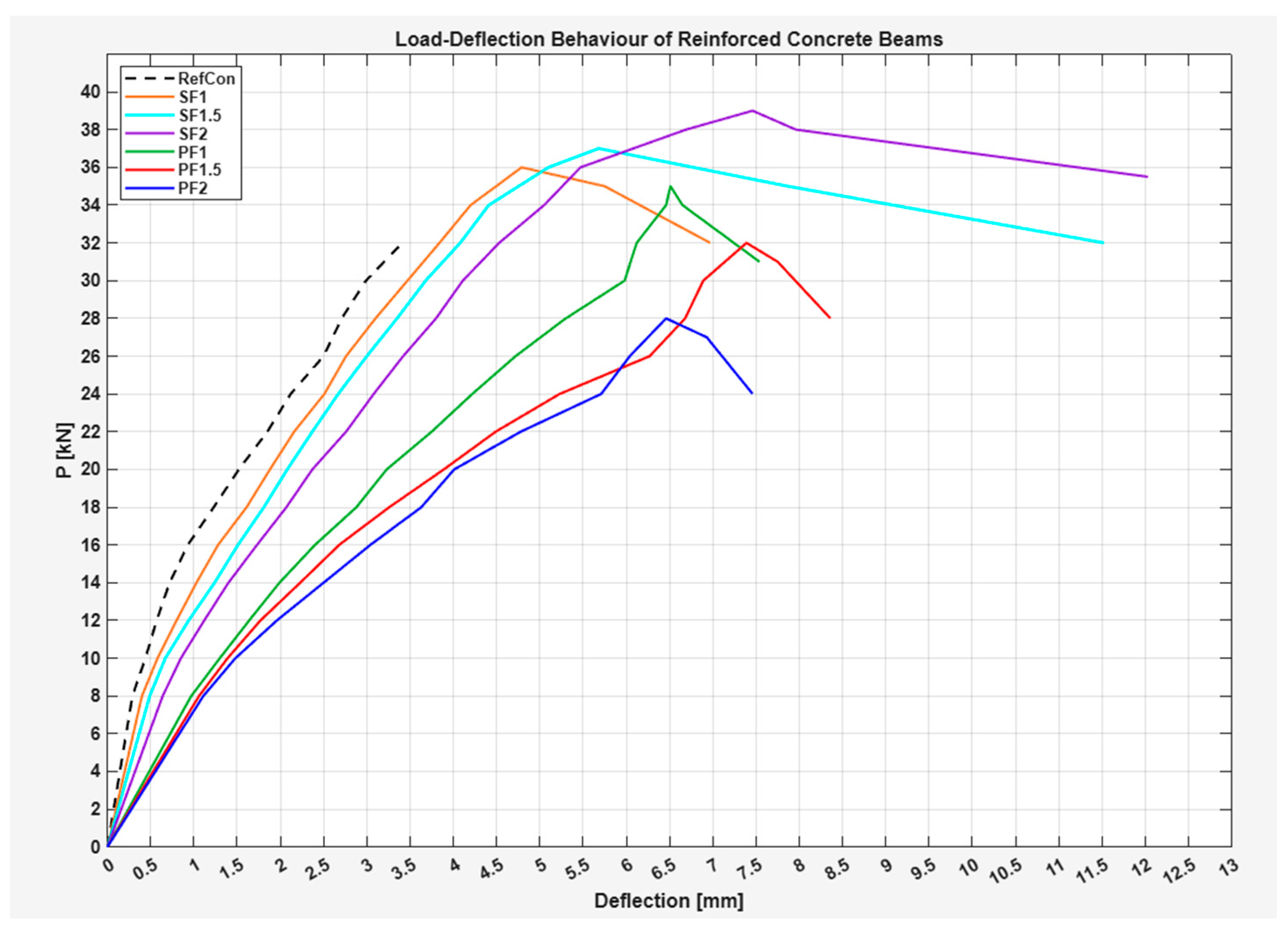
The load–deflection curves from the four-point bending tests are shown in Figure 7. The results provide valuable data regarding the stiffness, deformation capacity, ductility and post-cracking behavior of the investigated reinforced concrete beams.
Figure 7.
Load–deflection curves of the investigated reinforced concrete beam specimens.
The reference beam reached a maximum measured load of 32 kN at a deflection of 3.41 mm. The specimen failed abruptly after this point, and no stable post-peak measurement could be obtained under the applied incremental loading procedure. Therefore, the curve ends at the last reliable recorded point. The small deformation capacity and sudden loss of structural integrity indicate a brittle response.
The addition of steel fibers significantly changed the performance of the beams. The ultimate loads increased with an increase in steel fiber content. The midspan deflection at peak load increased from 4.79 mm for SF1 to 5.68 mm for SF1.5 and 7.46 mm for SF2. These values correspond to increases of 40.46%, 66.57% and 118.77% over the reference beam, respectively.
The steel fiber-reinforced concrete beams showed a more progressive post-peak response. The load-bearing capacity declined gradually, not suddenly, after the maximum load was attained. This behavior is a characteristic of efficient stress transfer across cracks through a fiber bridging mechanism.
The load-bearing capacities of the polypropylene fiber-reinforced concrete beams were lower than those of the steel fiber-reinforced concrete beams, but the post-cracking behavior was much more stable than the reference beam. After reaching the peak load, the load-bearing capacity decreased gradually with continuous deformation. This result shows that the polypropylene fibers were effective in delaying the total structural failure and improving the deformation behavior of the composite.
The load–deflection curves of the fiber-reinforced beams showed lower apparent global stiffness than the reference beam. This observation should not be considered as a reduction in the elastic modulus of concrete since the elastic modulus was not measured in this study. All the beams had the same typical steel reinforcement details, so the observed differences in stiffness cannot be attributed to differences in longitudinal bar reinforcement. Although steel fibers have a high Young’s modulus, they are short, discontinuous, and randomly oriented within the concrete matrix, and they do not contribute to flexural stiffness in the same manner as continuous longitudinal steel bars placed near the extreme fibers of the beam section. Only a small portion of the steel fiber population is positively oriented and active prior to cracking. Their main contribution becomes more apparent after crack formation due to crack bridging, post-cracking stress transfer and residual load-bearing capacity. The reduction in apparent stiffness with increasing steel fiber content should therefore be considered as part of the global measured load–deflection response of the tested beams, while the positive effect of steel fibers was mainly observed in higher ultimate load, larger deformation capacity and improved post-peak response.
The area under the load–deflection curve in Figure 7 is commonly considered to be an indicator of energy absorption capacity and structural toughness. Visual examination of the curves shows that all the fiber-reinforced beams exhibited significantly larger areas under the load–deflection curves than the reference beam. The increase was noticeable for the steel fiber-reinforced concrete beams, especially SF1.5 and SF2, which had high ultimate loads together with considerable deformation capacity.
The overall structural response of SF2 was the best of all the specimens tested. Despite the highest midspan deflection at peak load, the beam achieved the highest ultimate load and the best apparent energy absorption capacity. In contrast, the reference beam displayed the smallest area under the load–deflection curve and the most brittle failure mode.
The results show that both fibers significantly enhance the ductility and toughness of reinforced concrete beams. The steel fibers were especially effective in improving both the load-bearing capacity and the energy absorption, while the polypropylene fibers mainly increased the deformation capacity and promoted a more gradual failure process.
Displacement Ductility Assessment
The deformation behavior of the beams tested was compared quantitatively by computing the displacement ductility index from the experimental load–deflection curves. The displacement ductility index was defined as the ratio between the midspan deflection corresponding to the peak load and the equivalent yield deflection, following the general approach commonly used for reinforced concrete members [40,41], mathematically described as
where is the midspan deflection corresponding to the peak load, and is the deflection at the point of yielding. Since the yielding of the longitudinal reinforcement was not measured directly, was obtained based on a 75% secant idealization of the ascending branch of each load–deflection curve. The deflection at 75% of the peak load was obtained by interpolation, and the equivalent yield deflection was calculated as
The displacement ductility indices obtained from the calculations are shown in Table 1.
Table 1.
Equivalent yield deflection and displacement ductility indices of the tested reinforced concrete beams.
The displacement ductility index of the reference beam was 1.20. The ductility indices of the steel fiber-reinforced beams were higher than the reference beam and varied from 1.23 to 1.40. The highest value was obtained for SF2, which also had the highest ultimate load and the largest deflection at peak load among the tested specimens. This shows that the steel fibers not only enhanced the load-bearing capacity of the beams but also improved the deformation response at the peak load.
The displacement ductility indices of the polypropylene fiber-reinforced beams were in the range of 1.02–1.10, close to or slightly lower than that of the reference beam. Hence, polypropylene fibers are not considered to provide a significant increase in displacement ductility under the peak-load definition adopted. Their main contribution was found in terms of delayed crack initiation, reduced crack opening, improved crack distribution and retention of specimen integrity during the post-cracking stage.
3.5. Crack Development and Failure Mechanism
The development of cracks and the failure mechanisms of the tested reinforced concrete beams were significantly influenced by both the type and content of dispersed fibers. Table 2 summarizes the deflection at peak load, first crack load, and maximum crack opening at peak load obtained for all the tested specimens. To ensure a consistent comparison among all the specimens, the deflection used in Table 2 was defined as the midspan deflection corresponding to the peak load. A post-peak residual load criterion, e.g., the displacement at 20% reduction from the peak load, was not used because this load reduction was not achieved consistently for all the specimens. Therefore, using the deflection at peak load avoids extrapolation and provides a uniform basis for comparison. The maximum crack opening was defined as the largest opening of an individual visible flexural crack measured at the same peak-load stage using the crack-width microscope.
Table 2.
Summary of cracking and deformation parameters of the tested beam specimens.
The response of all the beams at the first loading stage was approximately linear–elastic. The first visible crack occurred in the reference beam at a load of 8 kN. More cracks were formed in the tensile zone with increasing applied load. Upon exceeding a load of 14 kN, several concentrated flexural cracks were observed along the span of the beam. Further loading did not cause a significant increase in the number of cracks but did cause a progressive increase in the width of cracking. The maximum crack width was found to be 0.14 mm at 30 kN load and increased to 0.56 mm at the peak load of 32 kN.
The incorporation of steel fibers delayed crack initiation and improved crack control. For all the steel fiber-reinforced specimens, the first visible crack appeared at approximately 10 kN, corresponding to a 25% increase compared with the reference beam. Following crack initiation, numerous fine microcracks developed over a larger area of the beam surface rather than forming a limited number of concentrated cracks (Figure 8). This behavior indicates that steel fibers promoted a more uniform distribution of tensile stresses within the concrete matrix.
Figure 8.
Crack pattern in steel fiber-reinforced concrete sample.
Concrete beams with polypropylene fiber had the maximum resistance to crack initiation. The first crack occurred at 14 kN for PF1 and PF1.5 and at 12 kN for PF2. Compared with the reference beam, these values represent increases of 75%, 75%, and 50%, respectively. The results show that, in delaying the formation of cracks, the polypropylene fibers were more effective than steel fibers.
The effect of the fibers on crack width development was even more significant. The maximum crack width in the reference beam at peak load was 0.56 mm. On the other hand, the maximum crack widths at peak load for polypropylene fiber-reinforced specimens were only 0.06 mm, 0.10 mm and 0.04 mm for PF1, PF1.5 and PF2, respectively. The highest reduction in crack width was observed in the PF2 specimen, which corresponds to around a 92.9% reduction in crack width compared to the reference beam. From these results it is evident that the polypropylene fibers are more effective in the control of crack opening and limiting crack propagation.
The maximum crack widths of concrete beams with steel fibers at their corresponding peak load were 0.10 mm, 0.15 mm, and 0.20 mm for SF1, SF1.5 and SF2, respectively. However, the values obtained were much lower than the reference beam values. In general, the polypropylene fiber specimens showed better crack control. The improved ability of polypropylene fibers to restrain microcrack formation and propagation is likely due to the finer geometry and more uniform distribution of polypropylene fibers.
The smaller maximum crack openings measured for the fiber-reinforced beams should not be taken as evidence of lower ductility. Crack opening is a local measure of crack control, while ductility is a measure of the total deformation capacity and post-cracking behavior of the beam. The reference beam developed a large localized crack and failed abruptly, while the fiber-reinforced beams developed more distributed cracks with smaller individual openings and sustained greater midspan deflections before failure.
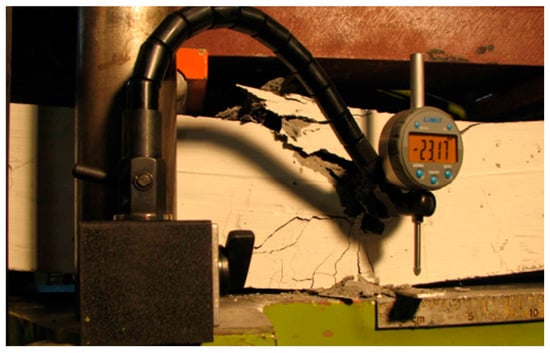
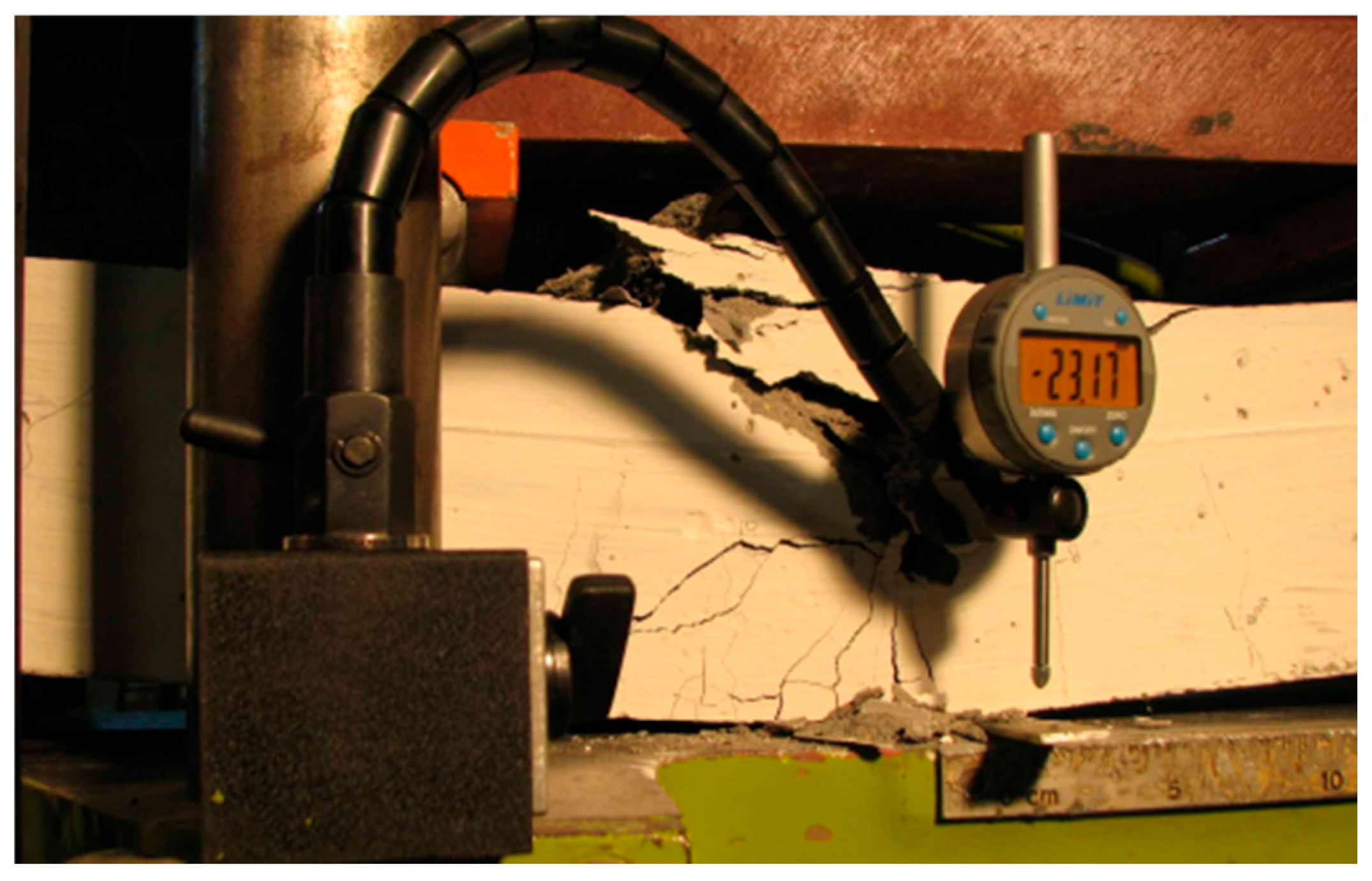
The failure mechanisms also differed considerably between the tested specimens. The reference beam failed in a brittle manner immediately after reaching its ultimate load. Failure was characterized by extensive cracking across the entire beam depth, crushing of concrete within the compression zone, and the formation of concentrated cracks within the tension zone (Figure 9). No significant increase in deflection was observed after the peak load was reached.
Figure 9.
Reference reinforced concrete beam specimen at failure.
In contrast, all the fiber-reinforced beams exhibited a more gradual failure process. The beams continued to deform after maximum load and still had some load-bearing capacity. This behavior is due to the crack-bridging effect of the fibers and the progressive pull-out of fibers from the surrounding concrete matrix. The fiber-reinforced concrete beams kept their structural integrity throughout the failure process instead of sudden fracture.
The concrete crushing in the compression zone occurred in the steel fiber-reinforced concrete beams similar to the reference beam. However, in contrast to the reference specimen, the presence of steel fibers favored crack bridging and progressive fiber debonding and pull-out in the tension zone, resulting in a more gradual post-peak response, increased deformation capacity and slower reduction in load-bearing capacity. The SF2 beam showed the steadiest post-peak behavior of the specimens with steel fiber.
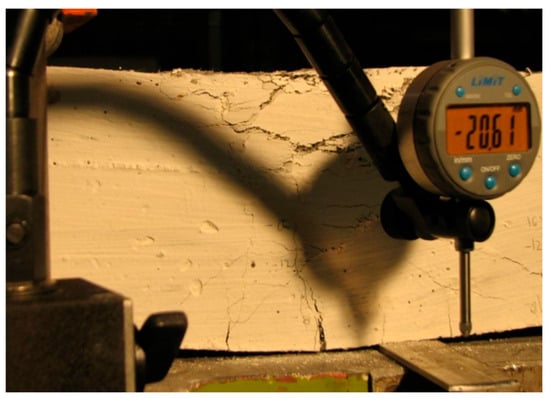
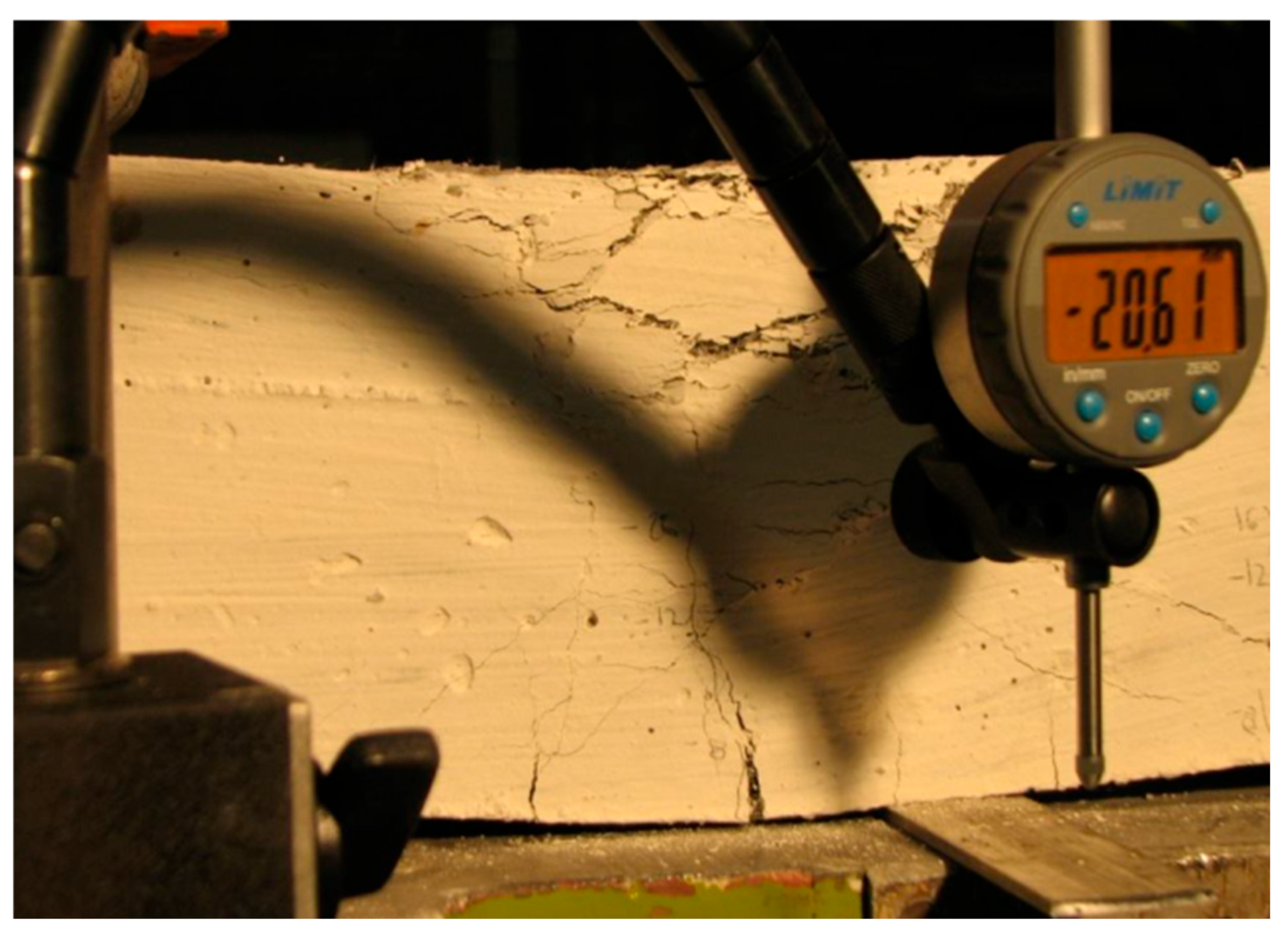
The concrete beams with polypropylene fiber showed gradual failure and retained their geometric integrity after cracking (Figure 10). The beams also failed by concrete crushing in the compression zone, but the polypropylene fibers effectively controlled the crack propagation and maintained the integrity of the cracked concrete and delayed the loss of load-carrying capacity after peak load. The polypropylene fibers interacted with the surrounding cement matrix to produce quasi-plastic behavior in the composite material. Although the ultimate load capacities of some of the polypropylene fiber specimens were lower than those of the concrete beams with steel fiber, their ability to control crack development and prevent sudden failure remained very effective.
Figure 10.
Reinforced concrete beam specimen with polypropylene fiber at failure.
The overall results indicate that both types of fibers significantly improved the cracking behavior and failure characteristics of reinforced concrete beams. The steel fibers were more effective in improving the structural resistance and maintaining the load-bearing capacity after cracking. The polypropylene fibers were more effective in controlling cracking and delaying the initiation of cracks.
The limitation of the present study is that only a single beam was tested for each fiber type and dosage. The observed trends of this study provide a controlled comparative indication of the influence of fiber type and volume fraction, but repetitions of the beam tests are needed to quantify the variability and statistically determine the significance of the effects on ultimate load, deflection, crack development, displacement ductility and failure response. Additionally, a workability test on fresh concrete was not measured. Therefore, it was not possible to quantify the potential influence of fiber type and dosage on slump, compaction and fiber dispersion. Also, an equal volume fraction did not produce an equal mass dosage or equivalent fiber population for the two fiber types. Future studies should include fresh concrete tests, fiber distribution assessment, beam specimen verification, and practical dosage analysis to establish the relation between fiber content, workability, crack control, and structural response.
4. Conclusions
The study investigated the effect of steel fibers and polypropylene fibers on the mechanical and structural response of reinforced concrete beams. Based on the experimental results, the following conclusions are drawn:
- •
- The addition of steel and polypropylene fibers improved the performance of concrete in comparison to the reference concrete without dispersed fibers. The properties observed were compressive strength, shrinkage resistance, crack control, deformation capacity, post-cracking response and load-carrying capacity under four-point loading.
- •
- PF1.5 achieved the highest average compressive strength of 22.01 MPa among the tested samples, which was 10.9% higher than the reference concrete. The maximum mean value was obtained in the steel fiber series for SF1.5, which showed an increase of 4.6%. However, the overall differences in compressive strength between the investigated mixtures were not statistically significant at the 5% level according to the one-way ANOVA.
- •
- The specimens with both fiber types showed a substantial decrease in shrinkage deformation. The maximum reduction in shrinkage was reached with PF1.5, which had approximately 50% lower shrinkage strain than the reference concrete. In the steel fiber series, SF2 showed the highest reduction of 37%. These results suggest that polypropylene fibers provide better restraint to shrinkage-induced deformation.
- •
- Among the tested specimens, the SF2 beam showed the maximum ultimate load and bending moment of 39 kN and 6.50 kNm, respectively, which is an increase of about 21.9% compared to the reference beam. The results demonstrate the better strengthening efficiency of steel fibers in reinforced concrete beams.
- •
- Within the tested polypropylene fiber series, PF1 showed the highest ultimate load, with a 9.4% increase compared with the reference beam. The load-bearing capacity decreased with the increase in polypropylene fiber content. This behavior is likely related to changes in the concrete matrix and fiber interaction at higher fiber contents, but further workability and microstructural investigations are required to confirm the underlying mechanism.
- •
- Concrete beams with polypropylene fibers were particularly efficient in controlling the development of cracks. The first crack load was increased up to 75% with respect to the reference concrete beam, and the maximum crack width was decreased by about 92.9%. These results show the better crack control behavior of the polypropylene fibers than the steel fibers.
- •
- The displacement ductility indices based on the peak-load deflection criterion were found to be greater for the steel fiber-reinforced beams as compared to the reference beam, and the maximum value was obtained for SF2. The polypropylene fiber-reinforced beams had slightly lower displacement ductility indices than the reference beam.
- •
- The results suggest that the selection of fiber type should be determined by the intended structural performance. Steel fibers are more suitable for strength enhancement and load-bearing-capacity requirements, while polypropylene fibers are more advantageous for shrinkage reduction, crack control and durability-related performance requirements.
- •
- The comparative evaluation demonstrated that compressive strength alone is not sufficient for assessing the structural efficiency of fiber-reinforced concrete. The load-bearing capacity of reinforced concrete beams was governed primarily by crack-bridging efficiency and post-cracking stress transfer mechanisms, which were significantly more pronounced in steel fiber-reinforced concrete.
Author Contributions
Conceptualization: A.A.B. and R.G.; methodology and experiment: A.A.B. and R.G.; formal analysis and investigation: A.A.B.; resources: R.G.; writing—original draft preparation: A.A.B.; writing—review and editing: R.G.; supervision: R.G. All authors have read and agreed to the published version of the manuscript.
Funding
This research received no external funding.
Data Availability Statement
The original contributions presented in this study are included in the article. Further inquiries can be directed to the corresponding author.
Acknowledgments
The authors acknowledge that portions of the experimental work presented in this study were originally conducted within MSc theses prepared by Aleksandr Smoktunović and Dawid Smoktunović at Bialystok University of Technology. The authors gratefully acknowledge their contribution to the experimental investigations.
Conflicts of Interest
The authors declare no conflicts of interest.
References
- Chahar, A.S.; Pal, P. Study on various properties of reinforced concrete—A review. Mater. Today Proc. 2022, 65, 597–602. [Google Scholar] [CrossRef] [Scilit]
- Zhou, H.; Jia, B.; Huang, H.; Mou, Y. Experimental study on basic mechanical properties of basalt fiber reinforced concrete. Materials 2020, 13, 1362. [Google Scholar] [CrossRef] [Scilit] [PubMed]
- Sucharda, O.; Lehner, P.; Konečný, P.; Ponikiewski, T. Investigation of fracture properties by inverse analysis on selected SCC concrete beams with different amount of fibres. Procedia Struct. Integr. 2018, 13, 1533–1538. [Google Scholar] [CrossRef] [Scilit]
- Singh, S.; Shukla, A.; Brown, R. Pullout behavior of polypropylene fibers from cementitious matrix. Cem. Concr. Res. 2004, 34, 1919–1925. [Google Scholar] [CrossRef] [Scilit]
- Kasagani, H.; Rao, C.B.K. Effect of graded fibers on stress strain behaviour of Glass Fiber Reinforced Concrete in tension. Constr. Build. Mater. 2018, 183, 592–604. [Google Scholar] [CrossRef] [Scilit]
- Dehghanpour, H.; Yilmaz, K.; Ipek, M. Evaluation of recycled nano carbon black and waste erosion wires in electrically conductive concretes. Constr. Build. Mater. 2019, 221, 109–121. [Google Scholar] [CrossRef] [Scilit]
- Shi, X.; Park, P.; Rew, Y.; Huang, K.; Sim, C. Constitutive behaviors of steel fiber reinforced concrete under uniaxial compression and tension. Constr. Build. Mater. 2020, 233, 117316. [Google Scholar] [CrossRef] [Scilit]
- Adhikari, S.; Patnaik, A. Potential applications of steel fibre reinforced concrete to improve seismic response of frame structures. NED Univ. J. Res. 2012, 113–128. Available online: https://www.researchgate.net/profile/Anil-Patnaik/publication/275893737_Potential_Applications_of_Steel_Fiber_Reinforced_Concrete_to_Improve_Seismic_Response_of_Frame_Structures/links/554974610cf205bce7ac2fff/Potential-Applications-of-Steel-Fiber-Reinforced-Concrete-to-Improve-Seismic-Response-of-Frame-Structures.pdf (accessed on 13 May 2026).
- Al-Hadithi, A.I.; Abbas, M.A. Innovative technique of using carbon fibre reinforced polymer strips for shear reinforcement of reinforced concrete beams with waste plastic fibres. Eur. J. Environ. Civ. Eng. 2021, 25, 516–537. [Google Scholar] [CrossRef] [Scilit]
- Marcalikova, Z.; Cajka, R.; Bilek, V.; Bujdos, D.; Sucharda, O. Determination of Mechanical Characteristics for Fiber-Reinforced Concrete with Straight and Hooked Fibers. Crystals 2020, 10, 545. [Google Scholar] [CrossRef] [Scilit]
- Katzer, J.; Domski, J. Quality and mechanical properties of engineered steel fibres used as reinforcement for concrete. Constr. Build. Mater. 2012, 34, 243–248. [Google Scholar] [CrossRef] [Scilit]
- Dehghanpour, H.; Subasi, S.; Guntepe, S.; Emiroglu, M.; Marasli, M. Investigation of fracture mechanics, physical and dynamic properties of UHPCs containing PVA, glass and steel fibers. Constr. Build. Mater. 2022, 328, 127079. [Google Scholar] [CrossRef] [Scilit]
- Ding, Y.; Wang, Q.; Pacheco-Torgal, F.; Zhang, Y. Hybrid effect of basalt fiber textile and macro polypropylene fiber on flexural load-bearing capacity and toughness of two-way concrete slabs. Constr. Build. Mater. 2020, 261, 119881. [Google Scholar] [CrossRef] [Scilit]
- Sucharda, O.; Marcalikova, Z.; Gandel, R. Microstructure, shrinkage, and mechanical properties of concrete with fibers and experiments of reinforced concrete beams without shear reinforcement. Materials 2022, 15, 5707. [Google Scholar] [CrossRef] [Scilit] [PubMed]
- Sahoo, D.R.; Maran, K.; Kumar, A. Effect of steel and synthetic fibers on shear strength of RC beams without shear stirrups. Constr. Build. Mater. 2015, 83, 150–158. [Google Scholar] [CrossRef] [Scilit]
- Holschemacher, K.; Mueller, T.; Ribakov, Y. Effect of steel fibres on mechanical properties of high-strength concrete. Mater. Des. 2010, 31, 2604–2615. [Google Scholar] [CrossRef] [Scilit]
- Yoo, D.Y.; Yoon, Y.S. A review on structural behavior, design, and application of ultra-high-performance fiber-reinforced concrete. Int. J. Concr. Struct. Mater. 2016, 10, 125–142. [Google Scholar] [CrossRef] [Scilit]
- Abbass, A.A.; Abid, S.R.; Abed, A.I.; Ali, S.H. Experimental and statistical study of the effect of steel fibers and design strength on the variability in repeated impact test results. Fibers 2022, 11, 4. [Google Scholar] [CrossRef] [Scilit]
- Domski, J.; Laskowska-Bury, J.; Dudzińska, A. Cracking behavior of fiber-reinforced concrete beams made of waste sand. Appl. Sci. 2025, 15, 4790. [Google Scholar] [CrossRef] [Scilit]
- Antarvedi, B.; Banjara, N.K.; Singh, S. Optimisation of polypropylene and steel fibres for the enhancement of mechanical properties of fibre-reinforced concrete. Asian J. Civ. Eng. 2023, 24, 1055–1075. [Google Scholar] [CrossRef] [Scilit]
- Banthia, N.; Gupta, R. Influence of polypropylene fiber geometry on plastic shrinkage cracking in concrete. Cem. Concr. Res. 2006, 36, 1263–1267. [Google Scholar] [CrossRef] [Scilit]
- Kakooei, S.; Akil, H.M.; Jamshidi, M.; Rouhi, J. The effects of polypropylene fibers on the properties of reinforced concrete structures. Constr. Build. Mater. 2012, 27, 73–77. [Google Scholar] [CrossRef] [Scilit]
- Zeiml, M.; Leithner, D.; Lackner, R.; Mang, H.A. How do polypropylene fibers improve the spalling behavior of in-situ concrete? Cem. Concr. Res. 2006, 36, 929–942. [Google Scholar] [CrossRef] [Scilit]
- Adhikari, S. Mechanical and Structural Characterization of Mini-Bar Reinforced Concrete Beams. Ph.D. Thesis, Akron University, Akron, OH, USA, 2013. [Google Scholar]
- Wang, Y.; Nejati, F.; Edalatpanah, S.A.; Goudarzi Karim, R. Experimental study to compare the strength of concrete with different amounts of polypropylene fibers at high temperatures. Sci. Rep. 2024, 14, 8566. [Google Scholar] [CrossRef] [Scilit] [PubMed]
- Ortiz-Navas, F.; Navarro-Gregori, J.; Serna, P. The Effects of Polypropylene Fibres on the Shear Behaviour of a Concrete Crack: An Experimental Study. Fibers 2025, 13, 96. [Google Scholar] [CrossRef] [Scilit]
- Zhao, S.; Liu, R.; Liu, J.; Yang, L. Comparative study on the effect of steel and plastic synthetic fibers on the dynamic compression properties and microstructure of ultra-high-performance concrete (UHPC). Compos. Struct. 2023, 324, 117570. [Google Scholar] [CrossRef] [Scilit]
- Fallah, S.; Nematzadeh, M. Mechanical properties and durability of high-strength concrete containing macro-polymeric and polypropylene fibers with nano-silica and silica fume. Constr. Build. Mater. 2017, 132, 170–187. [Google Scholar] [CrossRef] [Scilit]
- Chen, M.; Feng, J.; Cao, Y.; Zhang, T. Synergetic effects of hybrid steel and recycled tyre polymer fibres on workability, mechanical strengths and toughness of concrete. Constr. Build. Mater. 2023, 368, 130421. [Google Scholar] [CrossRef] [Scilit]
- Hadeed, M.; Humad, A.M.; Al-Gburi, M. Utilization of hybrid fibers in different types of concrete and their activity. J. Mech. Behav. Mater. 2023, 32, 20220262. [Google Scholar] [CrossRef] [Scilit]
- Tawfik, M.; El-said, A.; Deifalla, A.; Awad, A. Mechanical properties of hybrid steel-polypropylene fiber reinforced high strength concrete exposed to various temperatures. Fibers 2022, 10, 53. [Google Scholar] [CrossRef] [Scilit]
- Shi, F.; Pham, T.M.; Tuladhar, R.; Deng, Z.; Yin, S.; Hao, H. Comparative performance analysis of ground slabs and beams reinforced with macro polypropylene fibre, steel fibre, and steel mesh. Structures 2023, 56, 104920. [Google Scholar] [CrossRef] [Scilit]
- Hosseinzadeh, H.; Salehi, A.M.; Mehraein, M.; Asadollahfardi, G. The effects of steel, polypropylene, and high-performance macro polypropylene fibers on mechanical properties and durability of high-strength concrete. Constr. Build. Mater. 2023, 386, 131589. [Google Scholar] [CrossRef] [Scilit]
- Kroviakov, S.; Kryzhanovskyi, V.; Hedulian, D. Comparison of the corrosion resistance of fiber-reinforced concrete with steel and polypropylene fibers in an acidic environment. Constr. Mater. 2025, 5, 6. [Google Scholar] [CrossRef] [Scilit]
- Smoktunović, A.; Smoktunović, D.; Grygo, R.; Łapko, A. Effectiveness of Reinforcement Consisting of Bars and Fibers in Reinforced Concrete Beams. In Proceedings of the Krynica Conference, Krynica, Poland, 19–24 September 2010. [Google Scholar]
- Shao, Y.; Tich, K.L.; Boaro, S.B.; Billington, S.L. Impact of fiber distribution and cyclic loading on the bond behavior of steel-reinforced UHPC. Cem. Concr. Compos. 2022, 126, 104338. [Google Scholar] [CrossRef] [Scilit]
- Cucuzza, R.; Aloisio, A.; Accornero, F.; Marinelli, A.; Bassoli, E.; Marano, G.C. Size-scale effects and modelling issues of fibre-reinforced concrete beams. Constr. Build. Mater. 2023, 392, 131727. [Google Scholar] [CrossRef] [Scilit]
- EN 12390-3:2009; Testing Hardened Concrete—Part 3: Compressive Strength of Test Specimens. European Committee for Standardization: Brussels, Belgium, 2009.
- BS EN 12390-16:2019; Testing Hardened Concrete—Part 16: Determination of the Shrinkage of Concrete. European Committee for Standardization: Brussels, Belgium, 2019.
- Park, R. Evaluation of ductility of structures and structural assemblages from laboratory testing. Bull. N. Z. Soc. Earthq. Eng. 1989, 22, 155–166. [Google Scholar] [CrossRef] [Scilit]
- Priestley, M.N.; Seible, F.; Calvi, G.M. Seismic Design and Retrofit of Bridges; John Wiley & Sons: Hoboken, NJ, USA, 1996. [Google Scholar]

Disclaimer/Publisher’s Note: The statements, opinions and data contained in all publications are solely those of the individual author(s) and contributor(s) and not of MDPI and/or the editor(s). MDPI and/or the editor(s) disclaim responsibility for any injury to people or property resulting from any ideas, methods, instructions or products referred to in the content. |
© 2026 by the authors. Licensee MDPI, Basel, Switzerland. This article is an open access article distributed under the terms and conditions of the Creative Commons Attribution (CC BY) license.