


Highlights
What are the main findings?
- The topology of the cellular structure produced by 3D printing was shown to significantly affect the thermal properties of PCM-containing partitions. The Kelvin structure containing 30% paraffin achieved the lowest thermal conductivity (λ = 0.0289 W/(m·K)) and the highest thermal resistance (R = 0.697 m2·K/W).
- An increase in PCM content caused a non-linear increase in temperature difference (ΔT), with maximum values of 29.55 K (30% PCM) and 28.61 K (honeycomb, 30% PCM).
- The method of PCM integration is crucial: direct introduction of PCM into the resin improves steady-state parameters, while gel filling increases the temperature stabilisation effect under transient conditions.
What is the implication of the main finding?
- The geometry of the structure enhances the effectiveness of the PCM, meaning that the design of the topology is as important as the selection of the phase change material itself.
- The right combination of cellular architecture and PCM content enables the design of lightweight partitions with optimised insulation and heat storage functions.
- The results confirm that additive technologies enable heat flow paths to be consciously shaped, forming the basis for the development of a new generation of energy-efficient thermal barriers for use in construction and refrigeration systems.
Abstract
Construction technologies and materials engineering are collaborating to develop new solutions that enhance energy efficiency. One such solution is thermal barriers filled with phase change material. Thanks to their thermal properties, these innovative barriers are being used in an increasing number of construction projects. Additive manufacturing enables the production of architected thermal barriers with controlled cellular topologies and customized heat transfer pathways. This study investigates the thermal performance of lightweight partitions produced using masked stereolithography (m-SLA) 3D printing, focusing on two geometries: open-cell Kelvin structures and closed-cell honeycomb structures. Two strategies for incorporating phase change material were evaluated: direct addition of 10% and 30% paraffin oil by weight to the photopolymer resin and post-print filling of cellular voids with a PCM-based gel. The aim was to establish the effect of topology and PCM distribution on steady-state thermal parameters and transient temperature stabilization. Experimental testing under cyclic heating–cooling conditions revealed that increasing paraffin oil content significantly improves thermal performance. The open-cell Kelvin structure with 30% PCM exhibited the lowest thermal conductivity (λ = 0.0289 W/(m·K)) and the highest thermal resistance (R = 0.697 m2·K/W). Honeycomb structures achieved λ = 0.0360 W/(m·K) and R = 0.590 m2·K/W at the same PCM content. Transient analysis demonstrated enhanced temperature stabilization, with maximum ΔT values of 29.55 K (30% PCM) and 28.61 K (honeycomb 30%). These results confirm that the geometry produced by additive manufacturing plays a decisive role in governing heat transfer and latent heat utilization in PCM-based thermal barriers.
1. Introduction
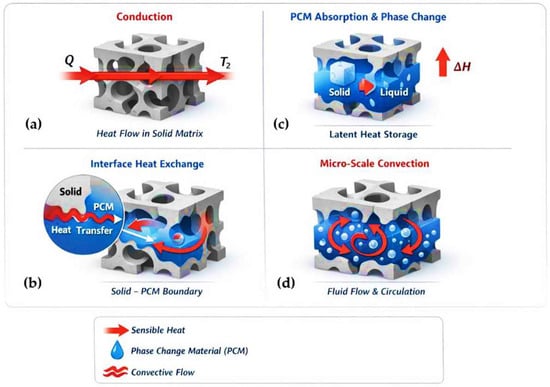
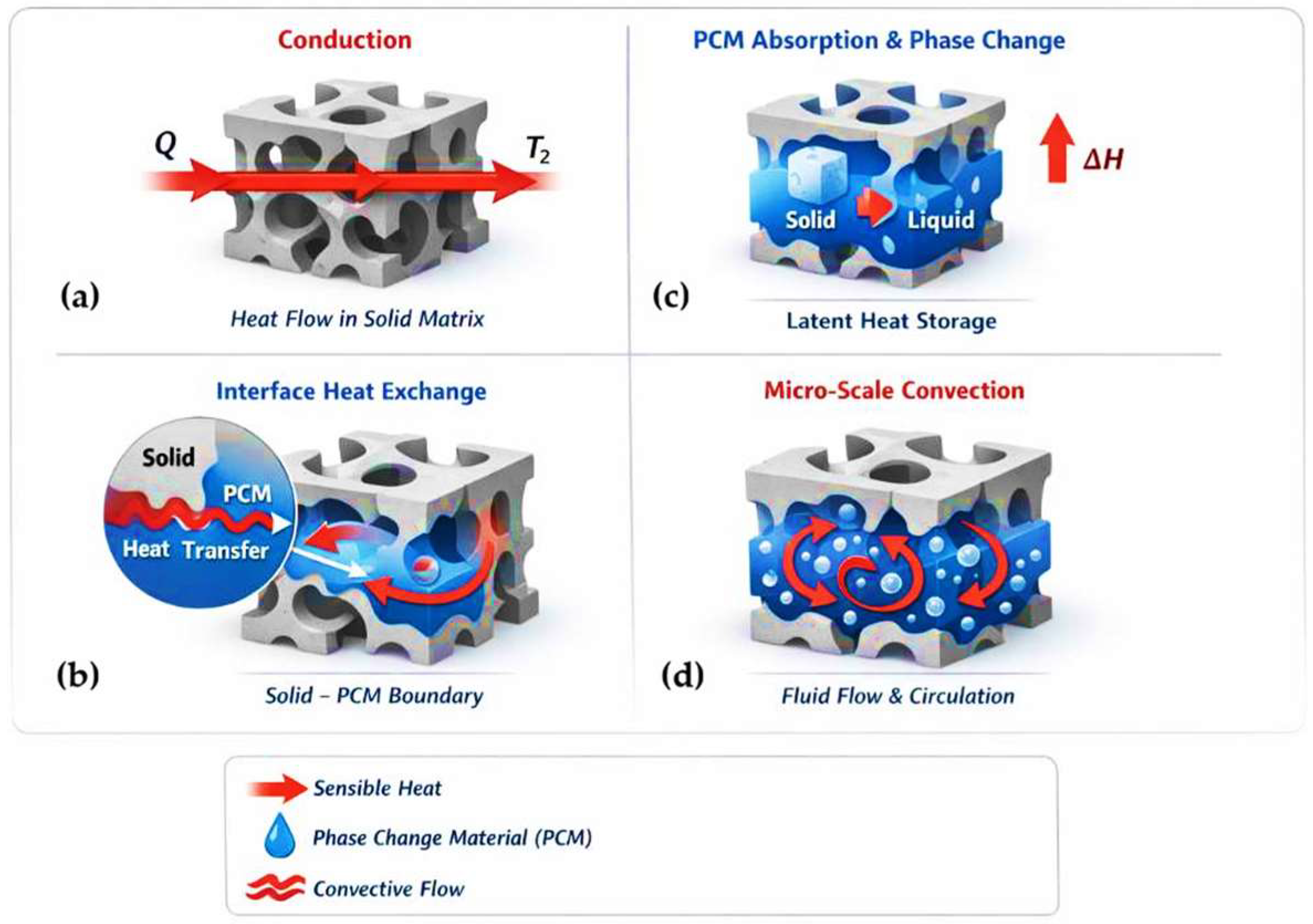
Improving the thermal properties of building partitions and cold stores is one of the key engineering challenges in terms of enhancing energy efficiency and reducing the carbon footprint of the construction and refrigeration sectors. Thermal energy storage (TES) systems, particularly those based on phase change materials (PCMs), are increasingly being analyzed as passive solutions for reducing peak heat loads and stabilizing indoor temperatures [1,2,3]. PCMs can store and release significant amounts of energy within a narrow temperature range thanks to their reversible solid–liquid phase transition, which is characterized by a high enthalpy of transition (see Figure 1) [1,4]. When incorporated into the components or walls of a refrigeration facility, they can minimize temperature fluctuations and redistribute thermal loads over time. This reduces the amount of energy required for heating and cooling [2,5,6].
Figure 1.
Mechanisms of heat transfer in porous structures with PCM: (a) sensible heat is conducted through the solid skeleton (i.e., conduction), (b) sensible heat is transferred to the PCM via interface heat exchange, (c) during melting, the PCM absorbs latent heat (ΔH), (d) after transitioning to a liquid state, the PCM undergoes additional energy transport through micro-scale convection, which depends on the pore geometry [created with Stable Diffusion].
Despite these advantages, wider use of PCM in construction is hindered by two significant technical limitations: the risk of leakage in the liquid phase and the low thermal conductivity of many phase change materials. The latter restricts the rate at which heat is exchanged and reduces the efficiency with which latent heat is utilized in dynamic conditions [1,3,7]. To improve heat transfer, the use of conductive additives such as graphite and carbon fillers, as well as metallic foams and hybrid composites, was proposed [3,8,9]. However, improving thermal conductivity usually means reducing the proportion of the active phase of the PCM, which reduces energy storage capacity.
Meanwhile, advances in additive manufacturing technology have enabled the design of materials with specific geometric structures, porosity levels, and heat conduction paths [10,11,12,13,14]. Research indicates that the geometry of 3D-printed cellular structures significantly impacts thermal resistance and heat flux distribution within partitions [12,13,14]. This means that both the material composition and the structure topology are key design parameters in PCM systems. Previous research on integrating PCMs with additive technologies can be divided into three main strategies. The first strategy involves introducing microencapsulated phase-change material (MEPCM) directly into printable mineral mixtures, such as mortars or concretes [15,16,17]. Studies have shown that this solution reduces thermal conductivity and enables materials to accumulate latent heat [15,16]. However, increased PCM content significantly impacts the rheology of the fresh mixture, which may hinder printability [17]. The second strategy is to activate the PCM selectively by placing it in a specific zone of the element. This optimizes the thermal response without changing the entire cross-section of the partition [18]. The third approach uses macroencapsulation, which involves using a 3D printer to design internal cavities or channels and then filling them with PCM [19,20,21]. Studies have shown that cavity geometry affects phase transition dynamics, extreme temperature attenuation, and energy efficiency [20,21]. Despite numerous studies confirming the validity of integrating PCM with additive technologies, a significant research gap remains in the literature. Most studies focus on either modifying the material (reducing λ in MEPCM composites) or analyzing the dynamic response of macroencapsulated panels.
Table 1 provides an overview of PCM integration strategies in additive manufacturing. However, comparative studies that systematically analyze the influence of cell structure topology and PCM integration methods on steady-state parameters (λ, R) and transient response (ΔT) under identical boundary conditions are rarely conducted. Table 2, on the other hand, provides an overview of experimental studies on different types of PCM oils in various applications, not just additive manufacturing. The collected works demonstrate that selecting different types of PCM oils (e.g., paraffin, fatty acids, esters, and bio-oils) and considering their rheological state (e.g., liquid versus solidified) can alter the “effective” activation temperature and modify the heat transfer dynamics observed in q(t) and q(T), even when the nominal Tm is similar.
Table 1.
Overview of PCM integration strategies in additive manufacturing based on the literature review.
Table 2.
Comparative overview of experimental studies on different PCM oil types, including thermophysical ranges and application domains.
However, more research is needed to better understand the influence of architectural geometry on heat exchange at the solid-PCM phase boundary and the role of PCM distribution within printed cellular structures on the macroscopic thermal resistance of partitions. Therefore, future research must develop design tools that consider the following three factors simultaneously: (1) PCM selection (Tm, ΔH, and cycle stability); (2) carrier material properties (k, strength, and compatibility); and (3) geometry (PCM fraction, cavity shape, PCM-matrix contact area, and conduction lengths). It is particularly important to standardize the methods of assessing the “insulation-accumulation” function of the partition, as many publications report conductivity (k) and dynamic parameters (ΔT, time lag, and DF), but less often provide the U-value. The U-value requires full characterization of the partition under boundary conditions.
This paper analyzes the thermal behavior of PCM-containing partitions manufactured using additive manufacturing in two different cell geometries: Kelvin cell structures and honeycomb structures. Two PCM integration strategies were considered: directly introducing PCM into a photopolymerizable resin and filling the cell volume with a PCM-based gel after printing. This study aimed to explain how the structure’s topology and PCM introduction method affect its thermal response, including heat transfer, temperature stabilization, and overall energy storage and release efficiency during heating. These results may contribute to the rational design of PCM-based architectural heat management elements for construction and engineering applications. Due to their thermal properties, thermal partitions containing PCM are an innovative construction solution. Using them can reduce electricity consumption and increase the energy efficiency of buildings.
2. Materials and Methods
2.1. Materials
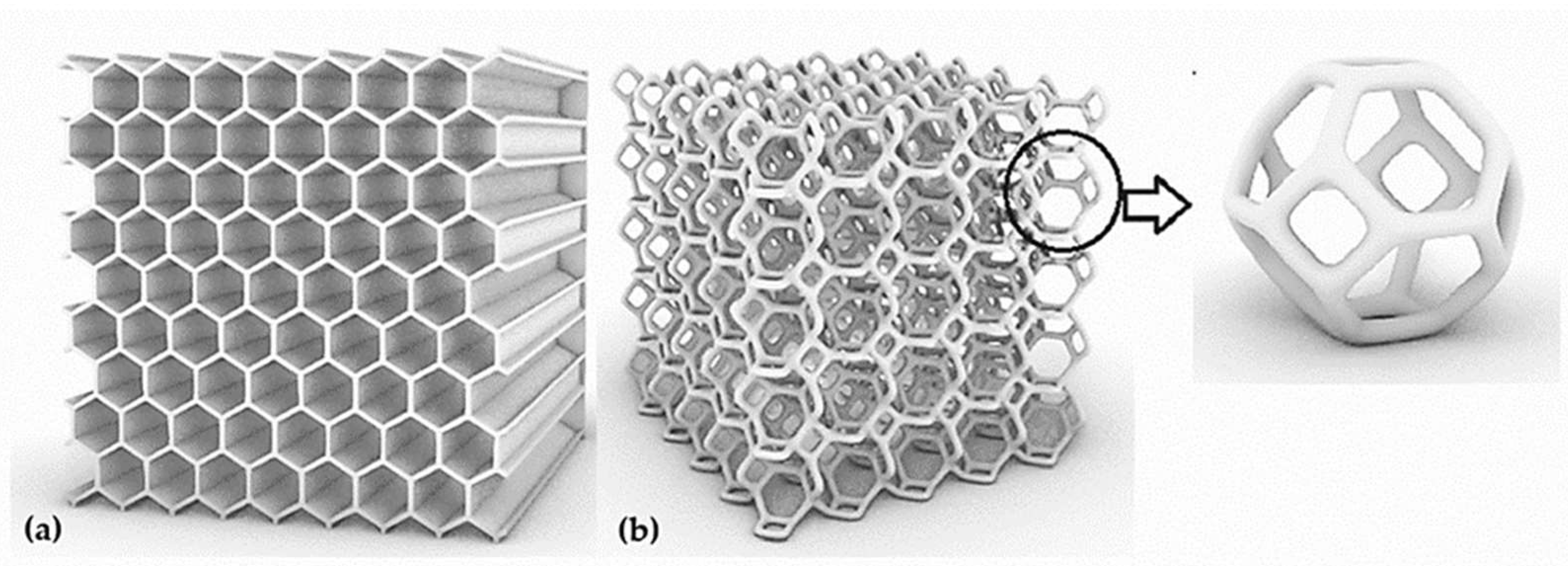
Two types of structure were used in the research: open-cell and closed-cell. These were created using Rhino 8 software. The closed-cell structure was created using a honeycomb pattern (see Figure 2a), while the open-cell structure was based on the Kelvin cell (see Figure 2b). The geometry and parameters chosen were dictated by the authors’ previous research [14,15,16]. The structures with the most favorable thermal properties were designed. For example, the cell diameter of the Kelvin cell was 6 mm, whereas that of the honeycomb structure was the same.
Figure 2.
Structure designs: (a) Sample with a closed-cell inner core (honeycomb); (b) sample with an open-cell inner core (Kelvin cell).
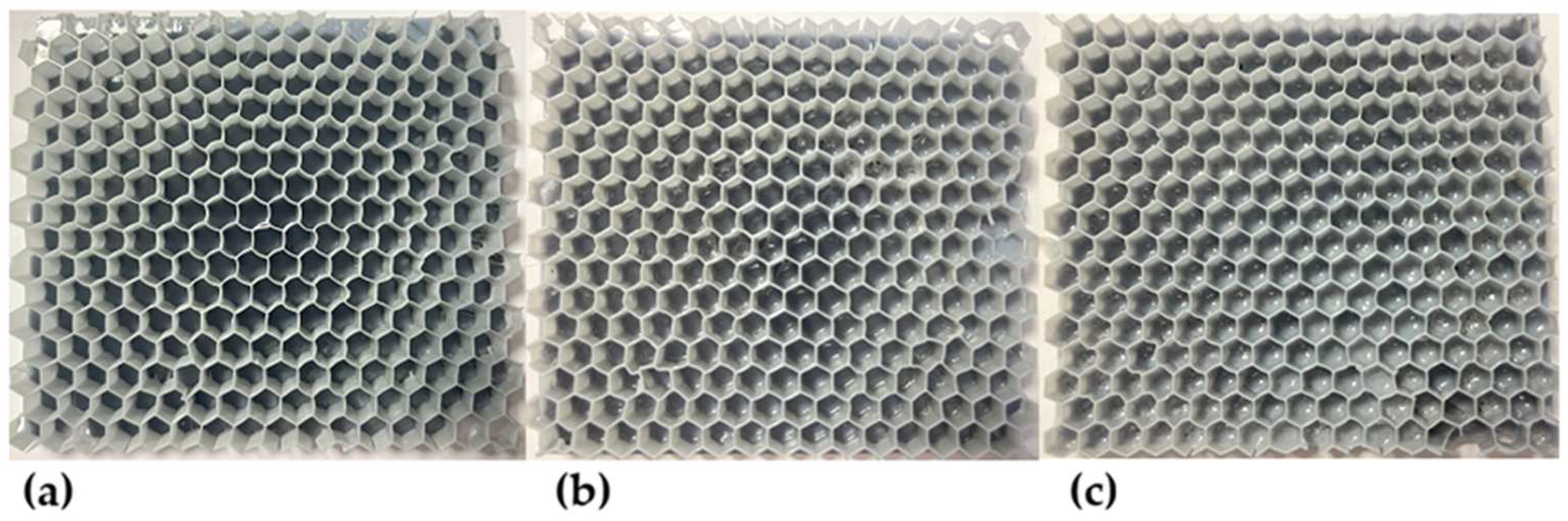
These structures were produced using an Elegoo Mars 5 printer (Shenzhen Elegoo Technology Co., Ltd., Shenzhen, China) with m-SLA technology (Masked Stereo Lithography), which is designed for precise and efficient resin model printing. The material used to make the structures was vegetable resin, i.e., soybean oil-based resin. Vegetable resin is characterized by its ecological production and biodegradability. For the tests, 12 samples were produced in triplicate: single-layer structures; three closed-cell hexagonal structures; and three open-cell Kelvin structures containing 0%, 10% and 30% paraffin oil, which was added directly to the printing resin (see Figure 3 and Figure 4). The paraffin oil (commercial PT8) used undergoes a solid–liquid phase transition at approximately 8 °C (melting point: 8 °C; heat storage capacity: 178 J/g). Thus, the 3D printing process was carried out within the temperature range of 25–40 °C. The material remained completely liquid during production. Therefore, during production, it acted as a liquid thermal additive rather than a classic solid PCM. The phase transition only occurred during the subsequent thermal cycle when the sample temperature passed through the 8 °C range. This type of paraffin is relevant at an average temperature of 0–10 °C, i.e., the temperature at which the thermal properties of insulating materials are determined in refrigeration facilities, for example. The second method involved adding a gel mixture consisting of PCM (paraffin oil) and Tylose (hydroxypropyl methylcellulose) (see Figure 5).
Figure 3.
Examples of samples with closed-cell cores: (a) a sample without a paraffin oil additive; (b) a sample with a 10% paraffin oil additive; and (c) a sample with a 30% paraffin oil additive.
Figure 4.
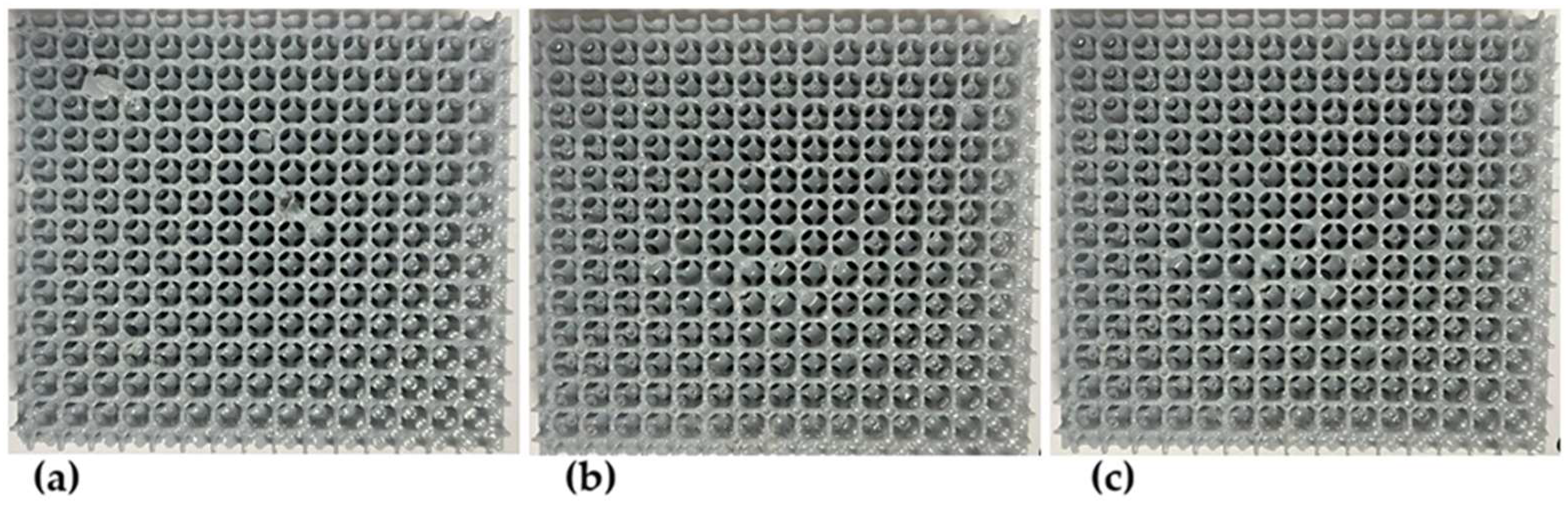
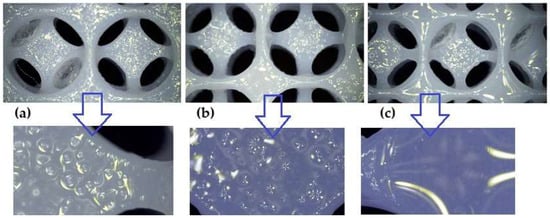
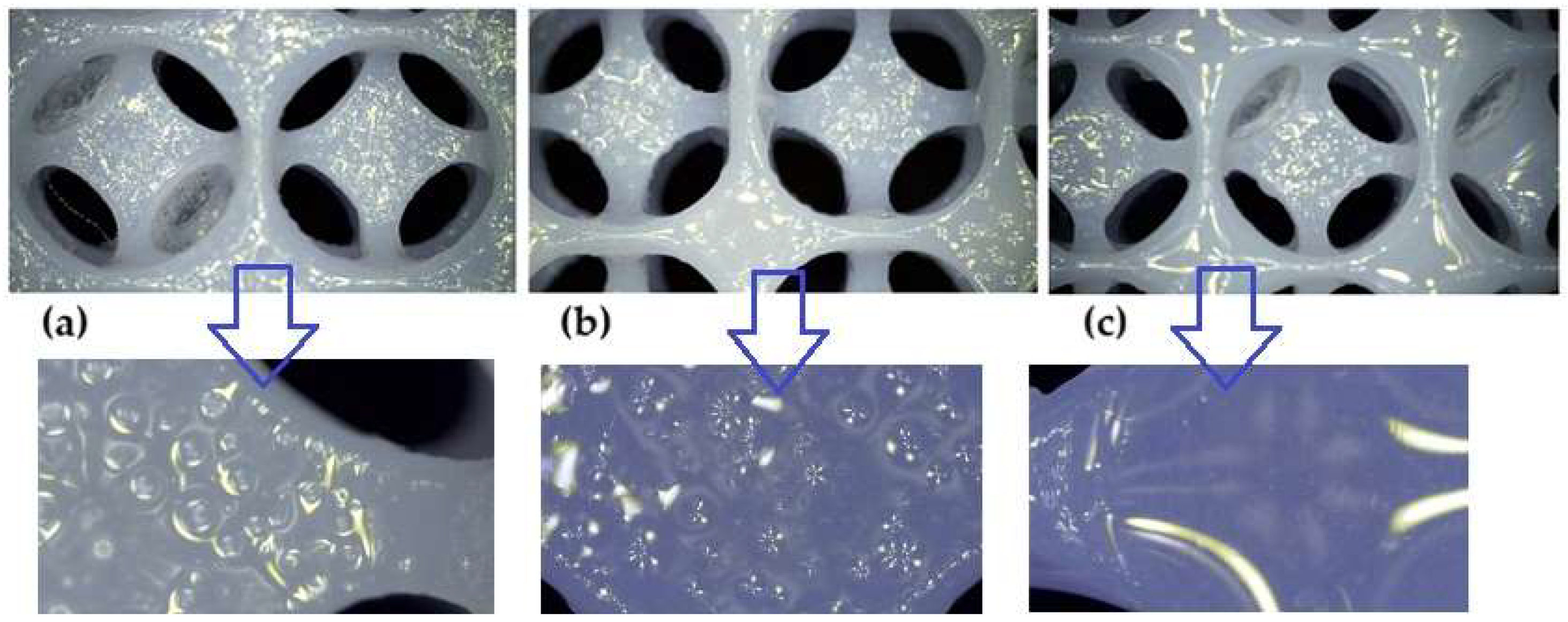
Examples of samples with open-cell cores: (a) a sample without a paraffin oil additive; (b) a sample with a 10% paraffin oil additive; (c) a sample with a 30% paraffin oil additive.
Figure 5.
Open-cell structure samples (Kelvin cell): (a) without paraffin oil additive; (b) with 10% additive; (c) with 30% additive.
Analysis of Figure 4 and Figure 5 reveals that all samples exhibit an open-cell Kelvin cell architecture, confirming the successful formation of a three-dimensional pore network. However, differences between samples (a–c) are clearly visible at the microstructural level of the skeleton’s material and depend heavily on the paraffin oil content. For the sample without a paraffin oil additive, the structure indicates the single-phase nature of the skeleton’s material and stable foaming conditions. The surface energy and viscosity of the system favored the uniform formation of ribs without morphological defects. Next is the sample with 10% paraffin oil added. The Kelvin cell geometry is preserved, but there is slightly greater variability in pore shape. The ribs are more substantial in places. There are no clear signs of phase separation or liquid inclusions. The paraffin oil acts as a plasticizer and an immiscible phase, leading to controlled phase separation. If the oil acts as a PCM, this can primarily increase the capacity for heat energy accumulation.
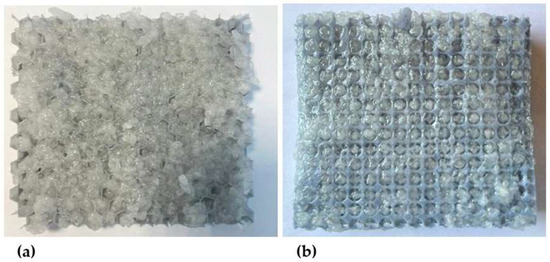
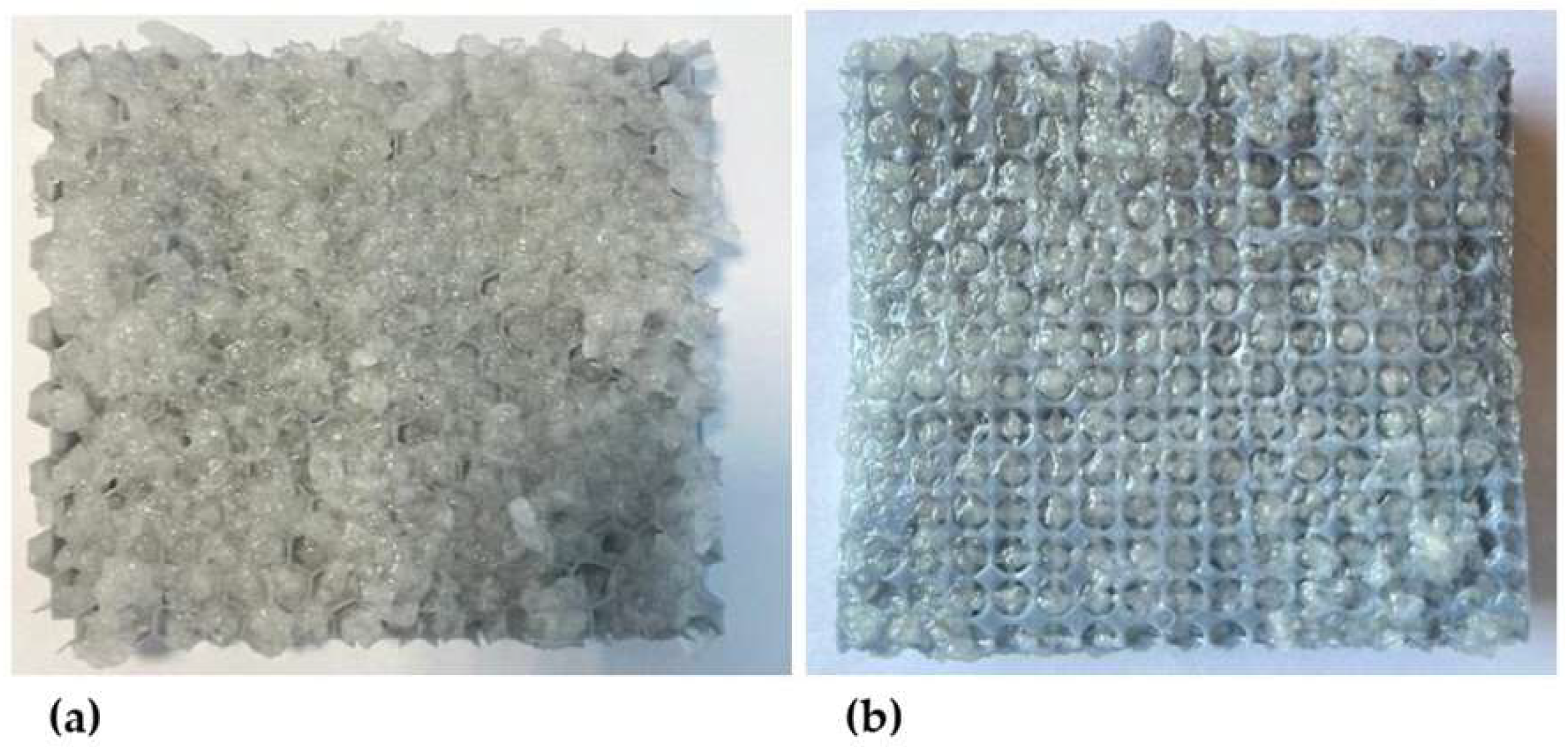
The next stage of the study involved filling the intercellular spaces of the thermal barrier samples with a mixture of phase-change material gel. This gel contained closed-cell structures featuring hexagonal cells, as well as open-cell structures based on Kelvin cells (see Figure 6).
Figure 6.
Examples of samples filled with PCM gel: (a) closed-cell structure sample; (b) open-cell structure sample.
2.1.1. Production of Samples Involving the Direct Addition of PCM
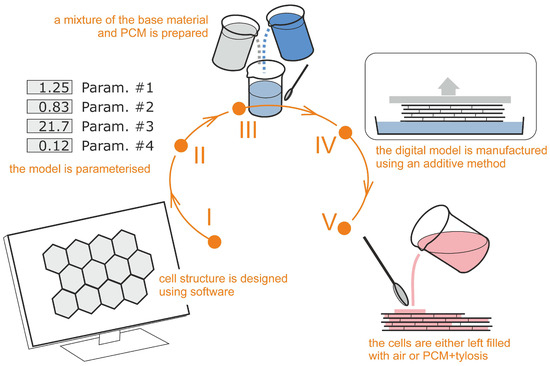
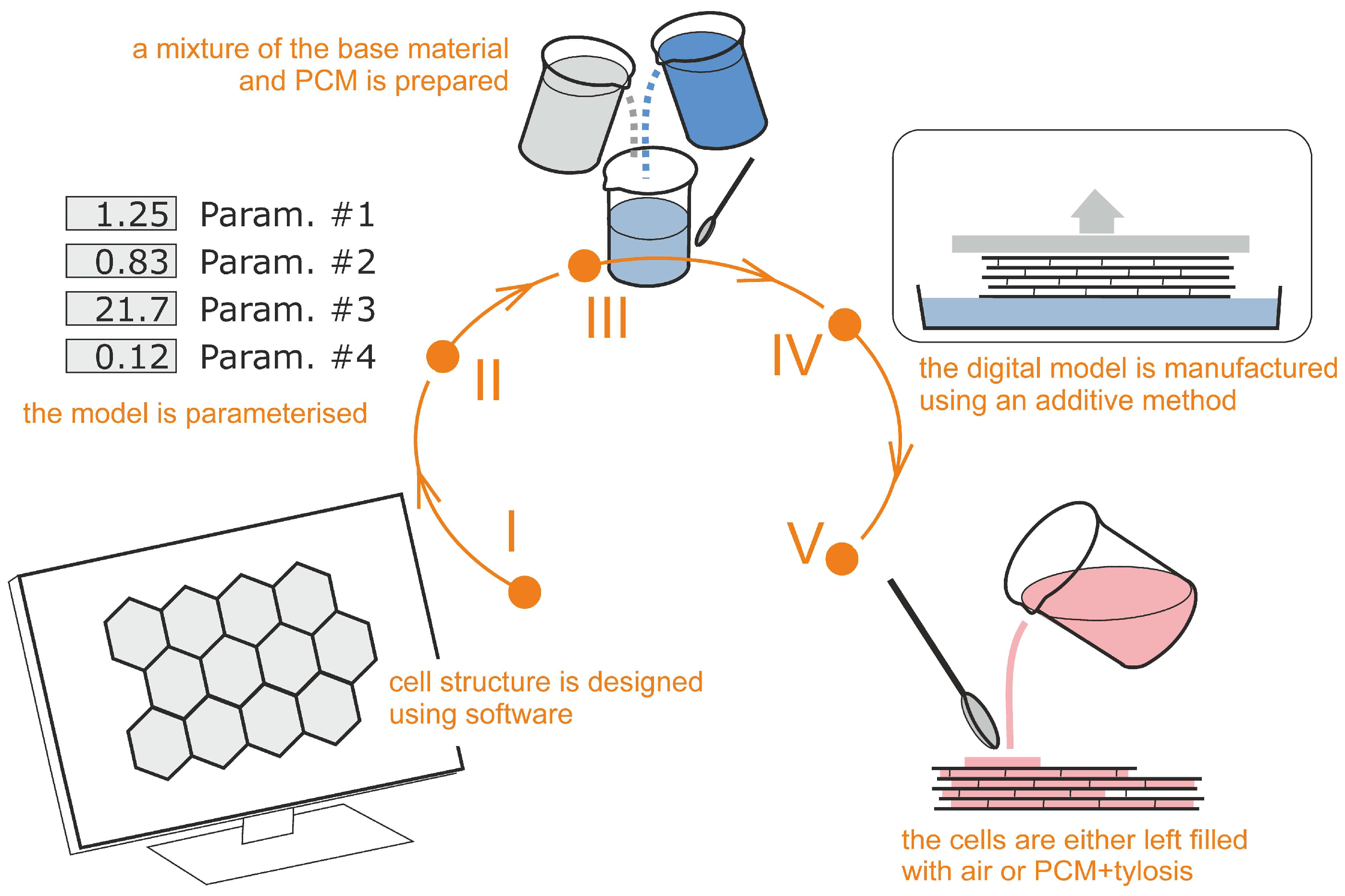
The manufacturing process for a thermal barrier incorporating a phase change material and an open- and closed-cell internal core involves the following stages (Figure 7): (I) thermal barrier model with a honeycomb or Kelvin cell structure is designed using software, (II) the model is parameterized by adjusting its geometry to create a digital model of the thermal barier, (III) a mixture of the base material and PCM is prepared, (IV) the digital model of the thermal barrier is manufactured using an additive method from the prepared mixture to create the physical form of the thermal barrier, and (V) the cells are either left filled with air (no mechanical injection of air is required inside the material structure) or filled with paraffin oil + Tylose material.
Figure 7.
The manufacturing process for a thermal barrier incorporating a phase change material (PCM) and an open- and closed-cell.
2.1.2. Production of Samples Containing PCM Added to the Cellular Structure
The paraffin oil was filled as follows (see Figure 7): First, a mixture of paraffin oil and powdered Tyloza (a gelling polysaccharide) was prepared. The proportions of the ingredients were adjusted to achieve the desired viscosity. A gel was formed by placing a concentrated aqueous solution of Tyloza and paraffin oil in a heating vessel equipped with a mechanical stirrer. The vessel was then heated to 60 °C and stirred at 300–500 rpm. Two-stage homogenization was then carried out: first, high-speed mixing at 800–1200 rpm for 5–8 min, followed by slow mixing at 200–300 rpm for 10 min. The mixture was kept at approximately 50 °C for 20–30 min to stabilize the viscosity and distribute the gel evenly. Finally, the gel was introduced into the cellular panels under gravity. The panels were then left to stabilize at room temperature for 12–24 h. This method produces a homogeneous, stable mixture of paraffin oil and Tyloza with gel-like properties, ideal for filling cellular structures in insulation panels.
2.2. Experimental Analysis
The study was comparative in nature. Materials produced using 3D printing technology without phase change materials were used as the reference point, and the advantages of using them were assessed.
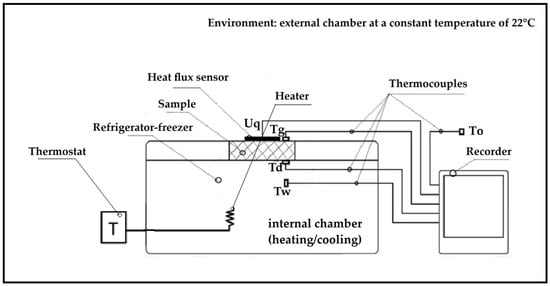
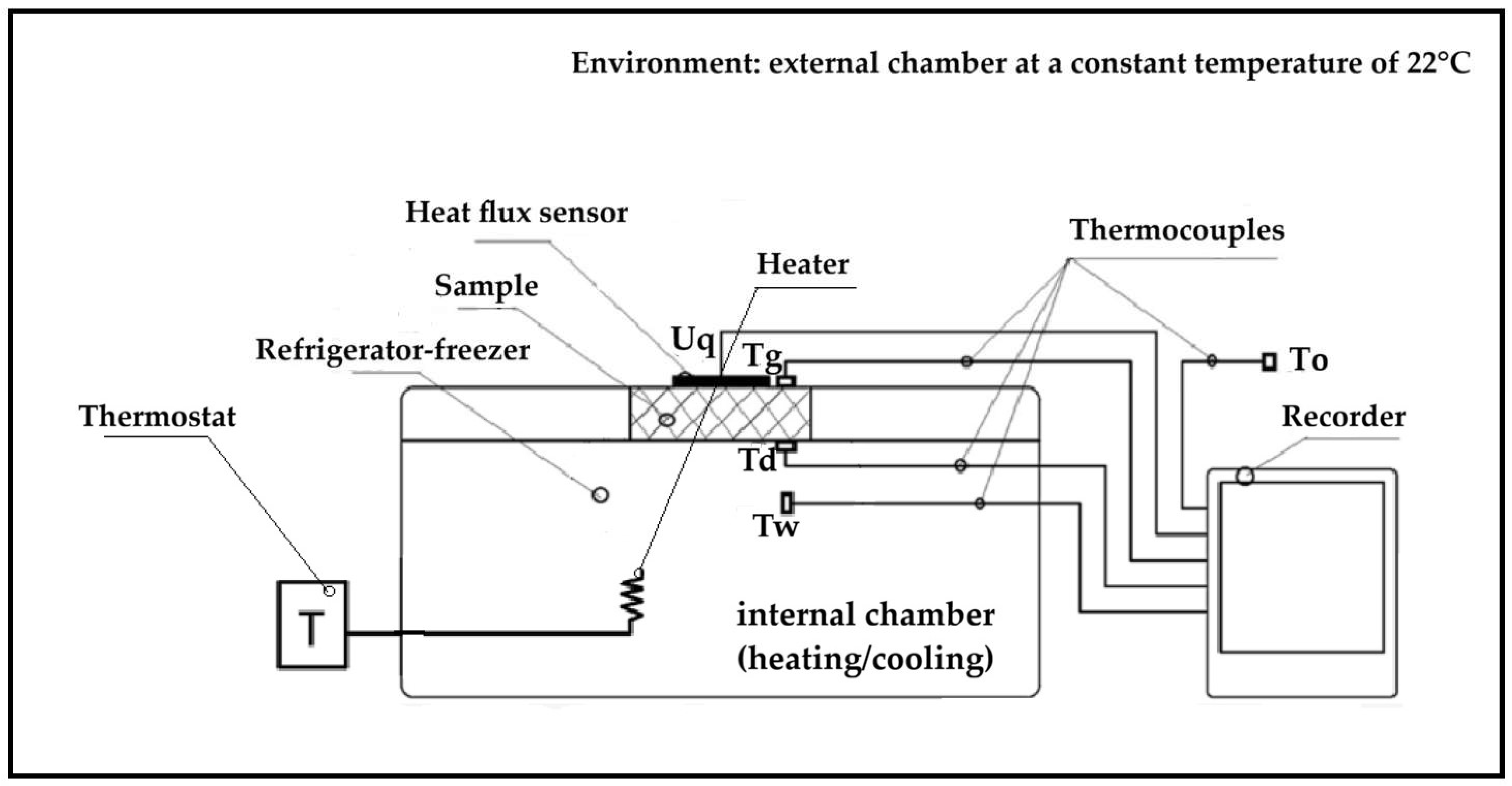
The samples were tested at a test station within the Department of Energy Conversion Engineering at Wroclaw University of Science and Technology. This station comprises the following components (see Figure 8): an Aisberg LP15 C15 refrigerator-freezer (MELIS, Poznań, Poland); an FHF04SC heat flux sensor (Hukseflux Thermal Sensors B.V., Delft, The Netherlands); the samples to be tested; samples; four thermocouples positioned on the outer layers of the samples, in the center of the cooling chamber, and in the external environment of the refrigerator-freezer; a recorder; and a heater with a thermostat.
Figure 8.
Diagram of the measurement station.
The entire setup consisted of two chambers. The first chamber was external (i.e., the environment) and the temperature was maintained at 22 °C. The second chamber was an internal heating and cooling chamber with a temperature range of −10 to 60 °C. During the cooling phase, heat flowed through the samples from top to bottom, and during the heating phase, this flow reversed.
The research focused on a lightweight partition element containing an organic material undergoing a phase transition. As the temperature of the air inside the inner chamber changed, the heat flux and temperature distribution on the outer layers of the component were recorded. The temperature change cycle was selected to model typical indoor conditions in Poland. The results allowed us to evaluate the impact of incorporating phase-change materials into partitions in terms of enhancing their heat accumulation capacity and thermal performance.
The main objective of the measurements was to evaluate the practical effectiveness of the materials in improving the energy storage capacity of the partitions. The cycle duration and hot-cold chamber temperatures were chosen to reflect summer and transitional winter conditions in Polish offices, while ensuring thermal comfort.
All 12 samples were measured under the same initial conditions. One sample measuring 100 × 100 × 20 mm was placed on the inside of the upper wall of the refrigerator-freezer, with an initial temperature of −0 °C set. A heater was then placed in the middle of the chamber, which was switched on to gradually increase the temperature to a maximum of 60 °C. The chamber temperature was also regulated by a thermostat set to a maximum of 60 °C. The experiment consisted of one cycle, which was repeated three times for each sample type. The temperature inside the chamber changed dynamically according to a set pattern. The air inside the chamber was heated to a maximum temperature of 60 °C for 12 h, after which it was held at this level for a further 12 h. After this time, the temperature was lowered to −20 °C for a further 12 h, after which it was maintained at this level for a further 12 h. To analyze the effectiveness of the tested materials under environmental conditions involving temperature increases and decreases, as well as stabilization periods, the surface temperatures of the samples were compared. The greatest differences occurred as a result of rapid heating or cooling. However, during temperature stabilization, the difference between the surfaces decreased dramatically, reaching a value below 1 °C for all materials.
3. Results and Discussions
Approximately sufficient numerical values for scientific interpretation of trends were obtained. Statistical analyses were carried out using the tools available in the STATISTICA 13 software (TIBCO Statistical, Palo Alto, CA, USA). A significance level of p ≤ 0.05 (this value is usually used in thermal insulation investigations) was assumed in all the analyses. Afterwards, it was determined whether the influence of the input quantities on the output quantity is significant. Four-factor ANOVA analysis of variance (which includes interactions of up to the fourth-order) was used to determine this impact. In both geometries, the content and type of the phase change material (PCM) were found to have a statistically significant effect on the distribution of ΔT values (p < 0.001). Following correction for multiple comparisons, it was found that each PCM variant produced a ΔT distribution that differed significantly from those of the others (p < 0.001).
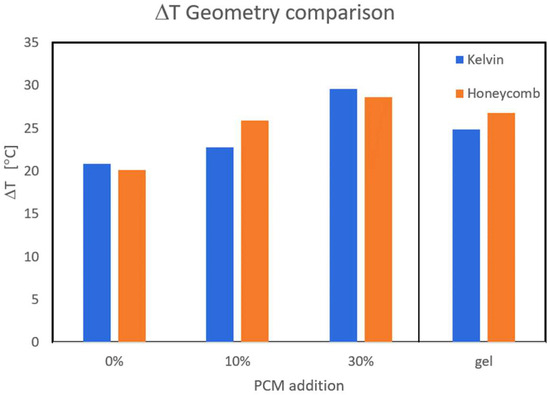
As shown in Table 3 and Figure 9, the analyzed ΔT values indicate the thermal accumulation and stabilization efficiency of the tested material system.
Table 3.
Descriptive statistics.
Figure 9.
The temperature change (ΔT) depends on the geometry of the sample (e.g., a Kelvin cell, a beam structure or a hexagonal honeycomb structure) and the amount of PCM present (PCM gel at 0%, 10% or 30%).
Analysis of the data in Table 1 and Figure 9 shows that the geometry of the structure and the proportion and form of the paraffin oil significantly impact the average temperature obtained. For both studied geometries, an increasing trend in average values with increasing PCM content is evident, and this increase is non-linear. For the Kelvin geometry, the average temperature rises from ΔT = 20.85 K (0% paraffin oil) to ΔT = 29.55 K (30% paraffin oil), representing an increase of around 41.7%. For the honeycomb geometry, the corresponding increase is approximately 42.3% (from ΔT = 20.10 K to ΔT = 28.61 K). This suggests that, at a high paraffin oil content of 30%, both geometries demonstrate comparable abilities to raise the temperature level, despite their topological differences. At the same time, significant differences become apparent at lower PCM contents. With 10% paraffin oil, the honeycomb geometry has a significantly higher average temperature (ΔT = 25.85 K) than the Kelvin geometry (ΔT = 22.74 K). This suggests that the thermal efficiency of paraffin oil at low contents depends heavily on the geometry of the carrier. The gel form of PCM produces intermediate values between 10% and 30% PCM in both geometries, suggesting a compromise between homogenous material distribution and effective heat capacity.
In the case of the Kelvin geometry, the variant containing 10% phase change material is of particular interest, as it produced an almost perfectly uniform temperature field. In the context of biomaterials, this result can be interpreted as a consequence of the high degree of connectivity and topological isotropy of this structure. Kelvin structures, which are often used as models for foams or cellular materials, are characterised by: (i) uniform node distribution, (ii) an absence of long, uninterrupted channels, and (iii) similar heat conduction path lengths. Consequently, even a small amount of paraffin oil can be distributed effectively throughout the volume, leading to temperature stabilisation without increasing the functional phase content. From a biomaterials engineering perspective, this is important because lower PCM content improves mechanical properties, biocompatibility, and printability.
The gel form of PCM exhibits behavior intermediate between 10% and 30% PCM in both geometries. In the context of additive technologies, this can be interpreted as the effect of better paraffin oil phase continuity on a local scale, but at the same time, limited control over its exact distribution within the structure. For materials printed using additive (3D) technology, these results suggest that gel PCMs can improve heat accumulation but do not always ensure optimal temperature field homogeneity. Thus, the paraffin oil form should be selected not only for its thermal properties but also for its integration strategy with the printed architecture.
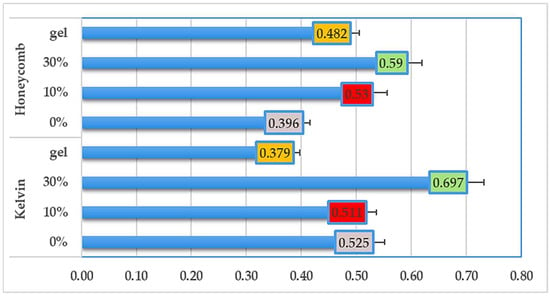
The results of the thermal property tests (i.e., thermal conductivity and thermal resistance) for the samples that were tested are shown in Figure 10 and Figure 11.
Figure 10.
The thermal resistance coefficient is shown for honeycomb and Kelvin cell geometries, both with and without a paraffin oil additive. The colors indicate the percentage of paraffin oil added: gray for 0%, red for 10%, green for 30%, and yellow for a gel filling.
Figure 11.
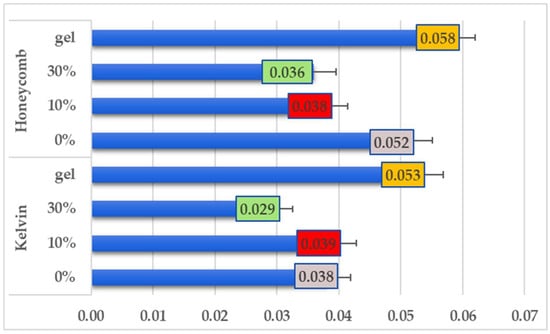
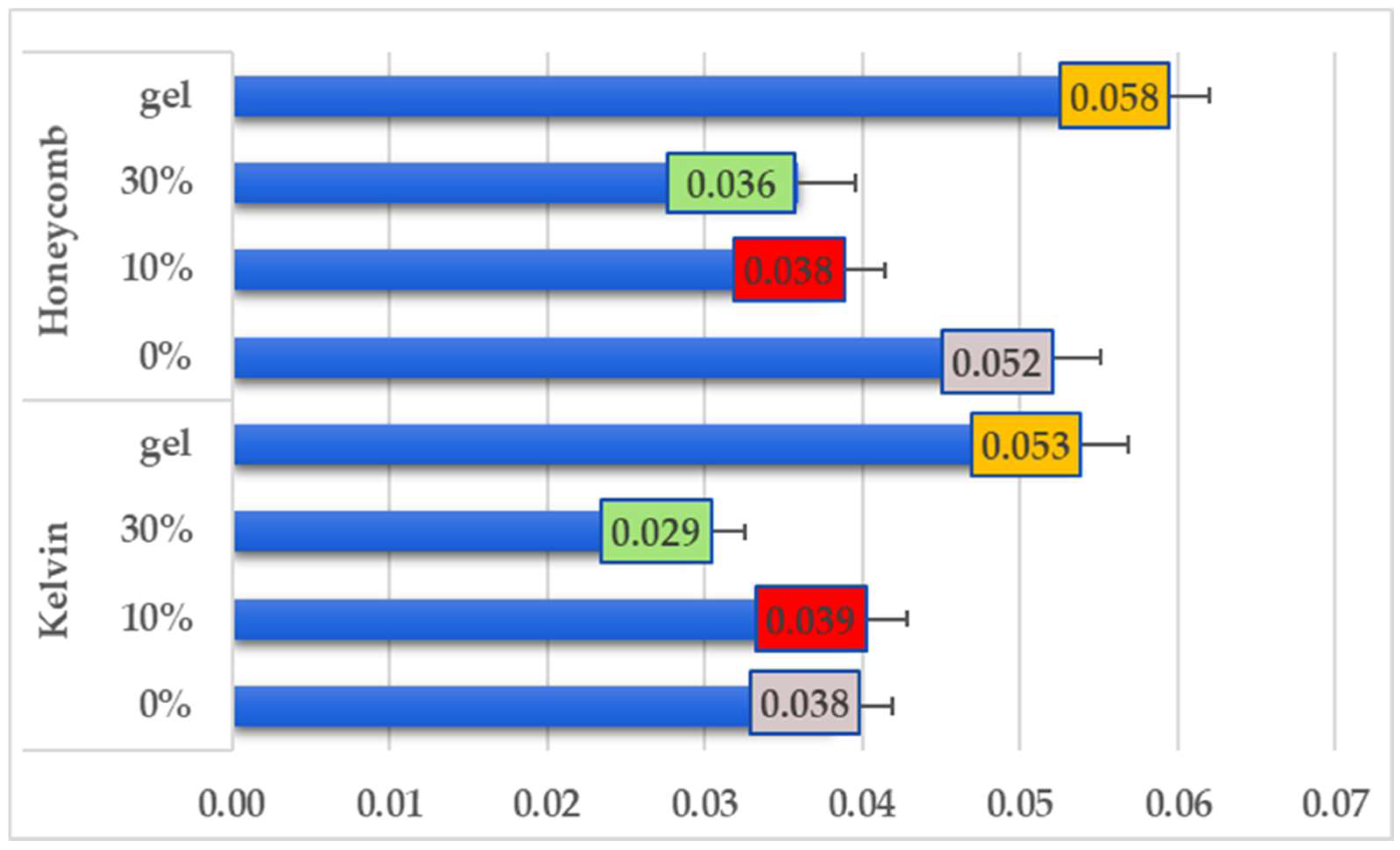
The thermal conductivity coefficient is shown for honeycomb and Kelvin cell geometries, both with and without a paraffin oil additive. The colors indicate the percentage of paraffin oil added: gray for 0%, red for 10%, green for 30%, and yellow for a gel filling.
Analysis of the data in Figure 10 and Figure 11 revealed that the geometry of the sample and the type of phase change material additive both clearly influence heat transfer for thermal resistance (R), as determined in a quasi-steady state for an average temperature (Tavg) of 0 °C. Samples with Kelvin and honeycomb geometries exhibited relatively small variations in R values, as evidenced by the low standard deviation, particularly for samples containing 10% and 30% paraffin oil. The sample containing 30% paraffin oil exhibited the highest thermal resistance, indicating an effective reduction in heat conduction in a steady state with high process stability. Samples containing PCM in gel form exhibited significantly lower R values and greater variability, suggesting the presence of additional heat transport mechanisms absent in samples with paraffin added directly to the 3D print.
This indicates that the thermal effect of PCM incorporation becomes significant only beyond a certain concentration threshold. At lower content (10%), the contribution of paraffin oil does not dominate the overall heat transfer behavior of the composite structure. In contrast, at 30% PCM, the effective thermal resistance increases (R = 0.697 m2·K/W), demonstrating a measurable modification of bulk thermal properties.
The thermal conductivity coefficient (λ) data corroborate the observed trends in thermal resistance. The lowest thermal conductivity values were obtained for samples containing 30% PCM. However, the high λ value observed for samples containing PCM in gel form suggests that, despite favorable transient effects, this material does not provide effective thermal insulation in a steady state.
Taking uncertainty bands into account makes it clear that the thermal properties of materials should not be assessed based solely on average values. Samples with Kelvin geometry, particularly those containing 30% phase change material, exhibit favorable R and λ values and high stability of these parameters. This makes them the most promising for practical applications. Conversely, despite achieving high average values, honeycomb samples demonstrate significantly greater variability, which could restrict their suitability for applications requiring stable thermal conditions.
The ΔT analysis demonstrates a clear dependence on both cellular topology and PCM content. For Kelvin structures, ΔT increased from 20.85 K (0% PCM) to 29.55 K (30% PCM), representing an increase of approximately 41.7%. A similar trend was observed for honeycomb structures, where ΔT increased from 20.10 K to 28.61 K (42.3%). Although the PCM exhibits a phase transition at approximately 8 °C, its latent heat contribution is confined to a narrow temperature interval within the applied thermal cycle (−20 to 60 °C). Therefore, the overall ΔT increase across the full temperature span cannot be attributed solely to latent heat effects. The results indicate that structural topology and overall thermal inertia play a dominant role, while the phase transition provides a localized buffering effect in the lower temperature range. Notably, the Kelvin 10% configuration exhibited exceptionally low variability (CV = 0.26%), indicating high thermal response uniformity and effective heat distribution within the isotropic open-cell topology. The relationship between PCM content and thermal conductivity is non-linear. For Kelvin structures, the 10% PCM sample showed λ = 0.0392 W/(m·K), slightly higher than the reference (0.0383 W/(m·K)), whereas the 30% PCM sample demonstrated a significant reduction to 0.0289 W/(m·K). Considering the reported standard deviations, the difference between 0% and 10% PCM remains within measurement variability, while the reduction observed at 30% PCM exceeds experimental uncertainty. A similar trend was observed for honeycomb structures, where λ decreased to 0.036 W/(m·K) at 30% PCM, with R increasing to 0.590 m2·K/W. However, at identical PCM content and thickness (20 mm), Kelvin structures consistently exhibited lower λ and higher R than honeycomb structures, confirming the superior heat distribution capability of the open-cell topology.
The present 20 mm specimens can be directly compared with previously published additively manufactured partitions modified with glycerin [29], where the thermal conductivity coefficient for single-layer samples with a thickness of 20 mm and a 5% glycerin additive was 0.059 W/(m·K), and the thermal resistance was 0.315 (m2·K)/W. In the earlier study, improvements in thermal resistance were attributed primarily to increased heat capacity and modified conduction pathways within the cellular structure. For the current Kelvin 20 mm structure with 30% paraffin PCM, R reached 0.697 m2·K/W, demonstrating comparable or improved steady-state insulation performance relative to glycerin-modified systems of identical thickness. For honeycomb structures, R = 0.590 m2·K/W, remaining within a similar performance range.
The key distinction lies in the thermophysical mechanism: glycerin primarily enhances sensible heat storage, whereas paraffin additionally provides latent heat storage near 8 °C. Nevertheless, under steady-state conditions, the structural topology and geometric configuration remain the dominant factors governing λ and R.
4. Conclusions
Analysis of the temperature change (ΔT) revealed that the geometry of the porous structure and the proportion of PCM have a significant influence on the thermal response of the tested samples. The results clearly demonstrate that the Kelvin geometry is more thermally efficient than the classic cubic structure in the presence of PCM, particularly at higher PCM contents (30% PCM in gel form).
This can be explained by analyzing the dominant heat transport mechanisms: heat conduction in the solid matrix; sensible and latent heat accumulation in the PCM; and heat exchange at the solid–PCM phase boundaries. Limited or suppressed microscale convective effects also play a role.
The Kelvin structure is characterized by an isotropic pore network, a higher surface-to-volume ratio, and a more uniform distribution of heat conduction paths. These features promote intensified heat exchange between the matrix and PCM. This results in the phase change enthalpy being utilized more efficiently, as evidenced by higher ΔT values. In contrast, the honeycomb structure exhibits greater thermal anisotropy, whereby local concentrations of solid material can lead to faster temperature increases without effective thermal stabilization.
Thus, structural and geometric analysis is a valuable addition to traditional thermoanalytical methods, providing more comprehensive insights into the behavior of functional materials. The analysis revealed that Kelvin-type porous geometry can greatly enhance the thermal efficiency of PCM-containing materials and that the topology of the structure has a significant impact on heat transfer mechanisms. Furthermore, the analysis showed that 3D printing allows for the deliberate design of structures with optimized thermal properties.
This research confirms that selecting the appropriate geometry and material composition is crucial for designing next-generation thermal barriers.
Author Contributions
Conceptualization, B.A.; methodology, B.A.; software, B.A. and J.K.; validation, K.G. and P.L.; investigation, B.A.; writing—original draft preparation, B.A., K.G. and P.L.; writing—review and editing, M.N., T.d.R. and J.K.; visualization, B.A., M.N. and J.K.; supervision, B.A., T.d.R. and J.K.; funding acquisition, B.A. All authors have read and agreed to the published version of the manuscript.
Funding
This research received no external funding.
Data Availability Statement
The original contributions presented in this study are included in the article. Further inquiries can be directed to the corresponding author.
Acknowledgments
The authors have reviewed and edited the output and take full responsibility for the content of this publication.
Conflicts of Interest
The authors declare no conflicts of interest.
References
- Melcer, A.; Klugmann-Radziemska, E.; Lewandowski, W.M. Phase change materials. Properties, classification, advantages and disadvantages. Przem. Chem. 2012, 91, 1335–1346. [Google Scholar]
- Kenisarin, M.; Mahkamov, K. Passive thermal control in residential buildings using phase change materials. Renew. Sustain. Energy Rev. 2016, 55, 371–398. [Google Scholar] [CrossRef] [Scilit]
- Sharma, A.; Tyagi, V.V.; Chen, C.R.; Buddhi, D. Review on thermal energy storage with phase change materials and applications. Renew. Sustain. Energy Rev. 2009, 13, 318–345. [Google Scholar] [CrossRef] [Scilit]
- Sharma, A.; Shukla, A.; Chen, C.R.; Dwivedi, S. Development of phase change materials for building applications. Energy Build 2013, 64, 403–407. [Google Scholar] [CrossRef] [Scilit]
- Jha, S.K.; Sankar, A.; Zhou, Y.; Ghosh, A. Incorporation of Phase Change Materials in Buildings. Constr. Mater. 2024, 4, 676–703. [Google Scholar] [CrossRef] [Scilit]
- Shohan, A.A.A.; Ganesan, H.; Alsulamy, S.; Kumar, A.; Almujibah, H.R.; Petrounias, P.; Jeyan, J.V.M.L. Developments on energy-efficient buildings using phase change materials: A sustainable building solution. Clean Technol. Environ. Policy 2024, 26, 263–289. [Google Scholar] [CrossRef] [Scilit]
- Laasri, I.A.; Es-sakali, N.; Outzourhit, A.; Mghazli, M.O. Evaluation of phase change materials for a light-weight building in Morocco: Effect of building’s volume, window orientation & infiltration. Energy Built Environ. 2024, 5, 863–877. [Google Scholar] [CrossRef] [Scilit]
- Zheng, Y.; Zhu, Y.; Yu, Z.; Zhu, J.; Zhang, Y.; Ye, Y.; Zheng, D.; Jiang, F. Passive thermal regulation with 3D printed phase change material/cellulose nanofibrils composites. Compos. Part B Eng. 2022, 247, 110332. [Google Scholar] [CrossRef] [Scilit]
- Shen, S. Numerical simulation and ANN prediction of phase change material embedded within 3D printing lattice structures. Case Stud. Therm. Eng. 2024, 53, 103818. [Google Scholar] [CrossRef] [Scilit]
- Adesina, A.; Awoyera, P.O.; Sivakrishna, A.; Kumar, K.R.; Gobinath, R. Phase change materials in concrete: An overview of properties. Mater. Today Proc. 2020, 27, 391–395. [Google Scholar] [CrossRef] [Scilit]
- Zhou, S.; Song, M.; Shan, K.; Razaqpur, A.G.; Huang, J.J.; Zhu, X.; Yu, S. Passive application of phase change materials (PCMs) for the Trombe wall: A review. Energy Storage Sav. 2025, 4, 195–227. [Google Scholar] [CrossRef] [Scilit]
- Anwajler, B.; Szołomicki, J.; Noszczyk, P.; Baryś, M. The Potential of 3D Printing in Thermal Insulating Composite Materials—Experimental Determination of the Impact of the Geometry on Thermal Resistance. Materials 2024, 17, 1202. [Google Scholar] [CrossRef] [Scilit]
- Grabowska, B.; Kasperski, J. The Thermal Conductivity of 3D Printed Plastic Insulation Materials—The Effect of Optimizing the Regular Structure of Closures. Materials 2020, 13, 4400. [Google Scholar] [CrossRef] [Scilit]
- Anwajler, B.; Wieleżew, A.; Grabowski, K.; de Rubeis, T.; Ambrosini, D.; Zdybel, E.; Tomaszewska-Ciosk, E. Investigating the Thermal Properties of Structural Partitions Produced Using Additive Technology (3D Printing) from Biodegradable Materials for Use in Construction. Materials 2025, 18, 4379. [Google Scholar] [CrossRef] [Scilit]
- Rahemipoor, A.; Mehrali, M.; Ahmadi, Z.; Khodabandeh, E.; Akbari, M.; Eftekhari Yazdi, A.; Acharya, Y.; Kalra, R.; Pishvaei, M.R.; Rezaei, M. Microencapsulated phase change material in 3D-printable mortars: Printability, thermal properties, and thermal cycling. Energy Convers. Manag. 2024, 312, 118434. [Google Scholar]
- Cui, C.; Zhang, D.; Zeng, W.; Zhang, J.; Xu, J.; Chen, C.; Li, Z. Evaluation of Printability and Thermal Properties of 3D Printed Concrete Mixed with Phase Change Material. Energies 2022, 15, 2115. [Google Scholar] [CrossRef] [Scilit]
- Márquez, Á.; Ramallo, L.; Varela, H.; Barluenga, G.; Puentes, J. 3D Printing Architectural Applications of Ce-Ment-Lime Mortars with Microencapsulated Phase Change Materials (PCM). Digital Concrete 2024-Supplementary Proceedings. Braunschweig. 2024. Available online: https://ebuah.uah.es/dspace/handle/10017/62848 (accessed on 27 February 2026).
- El Yassi, R.; Arman, J.; Paterakis, N.G.; Waller, E.; Rognin, E.; Salvo, L.; Lasvaux, S.; Lataillade, J.-L.; Delmas, Y. Three-Dimensionally Printed Gypsum Located Within Micro-Encapsulated Phase Change Materials for Selective Activation: Thermal Conductivity and Microstructure. Appl. Sci. 2025, 15, 1929. [Google Scholar] [CrossRef] [Scilit]
- Maier, F.; Santos, T.; Iqbal, M.; Case, M.; Davidson, J.; Choi, W. Thermal and mechanical performance of a novel 3D printed macro-encapsulation method for phase change materials. J. Build. Eng. 2021, 43, 103124. [Google Scholar] [CrossRef] [Scilit]
- Yeşilata, B.; Bayram, M.; Ustaoğlu, A.; Kurşuncu, B.; Hekimoğlu, G.; Sarı, A.; Çıkman, İ.Ü.; Gencel, O.; Ozbakkaloglu, T. Effects of cavity-shapes in 3D printed PCM encapsulation plates on sustainable thermal energy efficiency in buildings. Therm. Sci. Eng. Prog. 2025, 62, 103570. [Google Scholar] [CrossRef] [Scilit]
- Bayram, M.; Ustaoglu, A.; Kursuncu, B.; Hekimoglu, G.; Sari, A.; Ugur, L.O.; Subasi, S.; Gencel, O.; Ozbakkaloglu, T. 3D-printed polylactic acid-microencapsulated phase change material composites for building thermal management. Renew. Sustain. Energy Rev. 2024, 191, 114150. [Google Scholar] [CrossRef] [Scilit]
- Kraiem, M.; Karkri, M.; Fois, M.; Sobolciak, P. Thermophysical Characterization of Paraffins versus Temperature for Thermal Energy Storage. Building 2023, 13, 877. [Google Scholar] [CrossRef] [Scilit]
- Hasan, A.; Hejase, H.; Abdelbaqi, S.; Assi, A.; Hamdan, M. Comparative Effectiveness of Different Phase Change Mate-rials to Improve Cooling Performance of Heat Sinks for Electronic Devices. Appl. Sci. 2016, 6, 226. [Google Scholar] [CrossRef] [Scilit]
- Sharma, A.; Shukla, A. Thermal Cycle Test of Binary Mixtures of Some Fatty Acids as Phase Change Materials for Building Applications. Energy Build. 2015, 99, 196–203. [Google Scholar] [CrossRef] [Scilit]
- Fan, Z.; Zhao, Y.; Liu, X.; Shi, Y.; Jiang, D. Thermal Properties and Reliabilities of Myristic Acid–Paraffin Wax Binary Eutectic Mixture as a Phase Change Material for Solar Energy Storage. RSC Adv. 2022, 12, 12303–12309. [Google Scholar] [CrossRef] [Scilit]
- Fan, Z.; Zhao, Y.; Liu, X.; Shi, Y.; Jiang, D. Thermal Properties and Reliabilities of Lauric Acid-Based Binary Eutectic Fatty Acid as a Phase Change Material for Building Energy Conservation. ACS Omega 2022, 7, 16097–16108. [Google Scholar] [CrossRef] [Scilit] [PubMed]
- Sarı, A.; Karaipekli, A. Fatty Acid Esters-Based Composite Phase Change Materials for Thermal Energy Storage in Buildings. Appl. Therm. Eng. 2012, 37, 208–216. [Google Scholar] [CrossRef] [Scilit]
- Cong, L.; Zou, B.; Palacios, A.; Navarro, M.E.; Qiao, G.; Ding, Y. Thickening and Gelling Agents for Formulation of Thermal Energy Storage Materials—A Critical Review. Renew. Sustain. Energy Rev. 2022, 155, 111906. [Google Scholar] [CrossRef] [Scilit]
- Anwajler, B. Modern Insulation Materials for Sustainability Based on Natural Fibers: Experimental Characterization of Thermal Properties. Fibers 2024, 12, 76. [Google Scholar] [CrossRef] [Scilit]

Disclaimer/Publisher’s Note: The statements, opinions and data contained in all publications are solely those of the individual author(s) and contributor(s) and not of MDPI and/or the editor(s). MDPI and/or the editor(s) disclaim responsibility for any injury to people or property resulting from any ideas, methods, instructions or products referred to in the content. |
© 2026 by the authors. Licensee MDPI, Basel, Switzerland. This article is an open access article distributed under the terms and conditions of the Creative Commons Attribution (CC BY) license.