1. Introduction
Our previously published work [
1] focused on the preparation of biodegradable fibers based on masterbatch formulations, which were subsequently processed into different types of oriented systems, including fibers and films. In the present study, we report and discuss results obtained from oriented systems prepared in the form of films. This approach was adopted because, for a comprehensive comparison of inorganic, organic, and food/nature pigments, fiber preparation was not feasible in all cases. Specifically, food/nature pigments did not exhibit suitable rheological properties required for fiber spinning; therefore, an alternative oriented system in the form of films was prepared and used for further investigation. Researchers have been finding ways to replace synthetic polymers with more environmentally friendly versions for some time. Biodegradable polymers represent a rapidly growing group of materials with significant potential in medicine, environmental technologies, and sustainable materials engineering. Several review papers have focused on biodegradable polymers and their potential applications. Therefore, many of them highlight various possible applications rather than focusing on a single specific use [
2,
3,
4,
5,
6,
7,
8]. Their ability to undergo degradation into non-toxic byproducts makes them highly attractive alternatives to conventional, non-degradable polymers [
9]. These polymers are defined by their ability to degrade through natural processes—enzymatic or hydrolytic—into smaller, non-toxic compounds such as water, carbon dioxide, or natural metabolites [
10,
11]. An overview of the most widely used biodegradable polymers is discussed, along with their processing and functional properties. It highlights the advantages of employing polymer blends for their newly acquired properties. Biodegradable plastics made from renewable resources are being extensively investigated, and the results indicate that they can serve as a full replacement and competitor to traditional synthetic polymers in certain fields. Many research studies focus particularly on the medical applications of biodegradable materials, such as the development of 3D-printed scaffolds [
12], and others utilize them in orthopedic applications [
13]. Some studies, on the other hand, point to the potential use of biodegradable materials for packaging applications [
14]. The increasing demand for sustainable materials has stimulated intensive research into biodegradable polymers. Applications range [
15] from packaging films, electrochemical applications [
16,
17], to biomedical devices and controlled drug delivery [
18]. Understanding the behavior of individual polymers, as well as the opportunities offered by polymer blends, is essential for optimizing their performance in specific contexts.
We often encounter polylactic acid (PLA), which, however, has its limitations not only in terms of the possibility of obtaining properties for various applications but also in terms of biodegradability [
19]. Lactic acid can be produced from renewable resources, such as corn starch and sugarcane, so it is considered a green material. It offers good mechanical strength and processability by conventional methods, such as extrusion and injection molding. However, its brittleness and relatively slow degradation under physiological conditions limit its use in various applications, such as packaging materials, scaffolds for tissue engineering, and biodegradable fibers. Nevertheless, polylactic acid is biodegradable under specific conditions, such as industrial compost [
20].
PLA is one of the most widely studied biodegradable polymers, but there are others that have an important place in research. Polyglycolic acid (PGA) exhibits high crystallinity and excellent mechanical strength, with a significantly faster degradation rate than PLA. Its hydrolytic degradation yields glycolic acid, which is naturally metabolized by the body. Polycaprolactone (PCL) is a semi-crystalline polymer with excellent flexibility and slower degradation rates compared to PLA and PGA. It is highly miscible with other polymers, making it suitable for blending systems. Its applications include long-term drug release systems and tissue engineering scaffolds. A single biodegradable polymer rarely fulfills all mechanical, thermal, and biological requirements. Therefore, blending strategies are often applied. PLA/PCL blends combine the rigidity of PLA with the flexibility of PCL, yielding materials with improved toughness and adjustable degradation. As already mentioned, PLA is rigid but brittle, while polycaprolactone (PCL) is flexible and ductile. Their blends provide a compromise between strength and toughness. Ostafinska et al. in their study reported strong synergistic effects in PLA/PCL blends with finely dispersed PCL particles, which led to a 16-fold increase in toughness compared to neat PLA, particularly when a high-viscosity PLA matrix was used [
21]. A comprehensive review highlighted that PLA/PCL blends are most effective at ratios around 80/20, and that both PCL particle size and PLA crystallinity are decisive factors for toughness [
22,
23]. PLA/PHB blends could improve thermal stability and processability. Blending also allows tuning hydrophilicity, crystallinity, and degradation kinetics, making such systems attractive for highly specific applications. Polyhydroxybutyrate (PHB) is highly biodegradable but suffers from brittleness and poor thermal stability. When blended with PLA or reinforced with fillers, improved performance can be achieved. A study on PLA/PHB/cellulose nanocomposites showed that the materials exhibited improved thermal stability and mechanical strength and were stable during extrusion and 3D printing at ~200 °C [
24]. Composites of PHB with PLA and natural fillers such as lignin, polyethylene glycol (PEG), or microcrystalline cellulose (MCC) improved tensile strength and processability compared to pure PHB [
25]. Since it is an available polymer, several research papers deal with the applications and achieved properties of polylactic acid or mixtures of polylactic acid with additives or other polymers. Scientific work devoted by Hussain M. et al., a review on PLA-based biodegradable materials for biomedical applications, PLA, from its synthesis, through properties to biodegradation, is also a reflection of the interest in finding new possibilities for using biodegradable polymers in different applications [
26]. Review by Trivedi et al. about the PLA-based biocomposites says that PLA biocomposites could be considered as the best source of sustainable products. PLA’s mechanical and thermal properties can be enhanced by reinforcing the nano- and micro-sized natural fibers and cellulose [
27]. A group of scientists modified PLA masterbatches with montmorillonite, which they had previously modified, to observe the effect of this modification on the photooxidation of PLA [
28]. Byrne F. et al. published the effect of masterbatch additions on various properties of PLA [
29]. They point to the addition of another polymer to achieve the desired property improvement, citing many other works that deal with this very topic. Environmental, economic, and safety challenges have forced scientists and industrial producers to partially substitute petrochemical-based polymers. The interest in PLA and PLA composites is attested by a large number of scientific papers and reviews.
In several scientific publications, NONOILEN
® is mentioned as a commercial material prepared from a blend of PLA and PHB; however, the number of studies specifically devoted to this material remains limited. Since our work is based on experimental research using this commercial polymer blend, we also include available references in this area to provide context and support for the discussion of our results. Scientific studies focused on the polymer blend NONOILEN
® address its processability, properties, and application in 3D printing technology. One study investigated the effect of repeated thermomechanical processing on the thermal, mechanical, and molecular properties of a PLA/PHB blend, confirming its sufficient stability and suitability for reprocessing. Another study focuses on the composition and processing of this polymer blend derived from renewable resources and confirms its suitability for additive manufacturing. Both studies clearly declare that NONOILEN
® is a biodegradable polymer material based on PLA and PHB, which degrades without the formation of microplastics and represents a promising material for environmentally sustainable applications [
30,
31].
The largest application of thermoplastics is the packaging market, because in 2022, they accounted for approximately 40% of global plastic production, reflecting the need to find new materials that are acceptable for the ecological sustainability of the planet [
32]. Packaging is a highly important feature for increasing the shelf life of perishable food products because it decreases contamination and provides food safety assurance [
33].
The coloration of biodegradable polymers represents an emerging field at the interface of materials science, polymer chemistry, and sustainability. Different classes of colorants—including inorganic pigments, synthetic organic dyes, and natural pigments—offer distinct advantages and challenges when incorporated into biodegradable matrices such as PLA, PCL, or polyhydroxyalkanoates (PHAs). Inorganic pigments, such as TiO
2, ZnO, iron oxides, and carbon black, are widely applied through masterbatch techniques and provide high color stability, UV protection, and, in some cases, antibacterial functionality, although they may alter crystallinity and rheological behavior of the native polymer [
34,
35]. Synthetic organic dyes, including disperse and reactive azo dyes, provide a broad color spectrum and high chromatic intensity; however, their degradation products may compromise environmental safety [
36,
37]. Benetti et al. focused on describing the difference in the impact of the choice of inorganic and organic pigments in the preparation of masterbatches [
38]. Dyeing and spectroscopic properties of natural dyes on PLA and PET fabrics are described by a group of authors in the article “Dyeing and Spectroscopic Properties of Natural Dyes on Poly (Lactic Acid) and Poly (Ethylene Terephthalate) Fabrics” by Sriumaoum et al. [
39]. Also, other scientific work describes natural dyes [
40].
We can observe the rise in scientific works that deal with the topic of the coloring of PLA or other biodegradable materials. As is known, the properties and ecology of the material are important for all of us, but for sales marketing, color is important, especially for packaging materials.
However, we focused on coloring with different groups of pigments—inorganic, organic, and natural—so that it is the least harmful material. Natural pigments are very important to prevent health risks during the storage and protection of food; there should be no contact with chemicals. Inorganic pigments are not available in a wide color range, but they have an irreplaceable presence in pigments, adding value through the properties they possess. Organic pigments are associated with a wide range of colors, but their underlying chemistries are frequently linked to non-benign environmental profiles. However, this myth is no longer valid, as there are suppliers of polymer pigments that declare that the pigments are suitable for biocompatible polymer matrices.
3. Results and Discussion
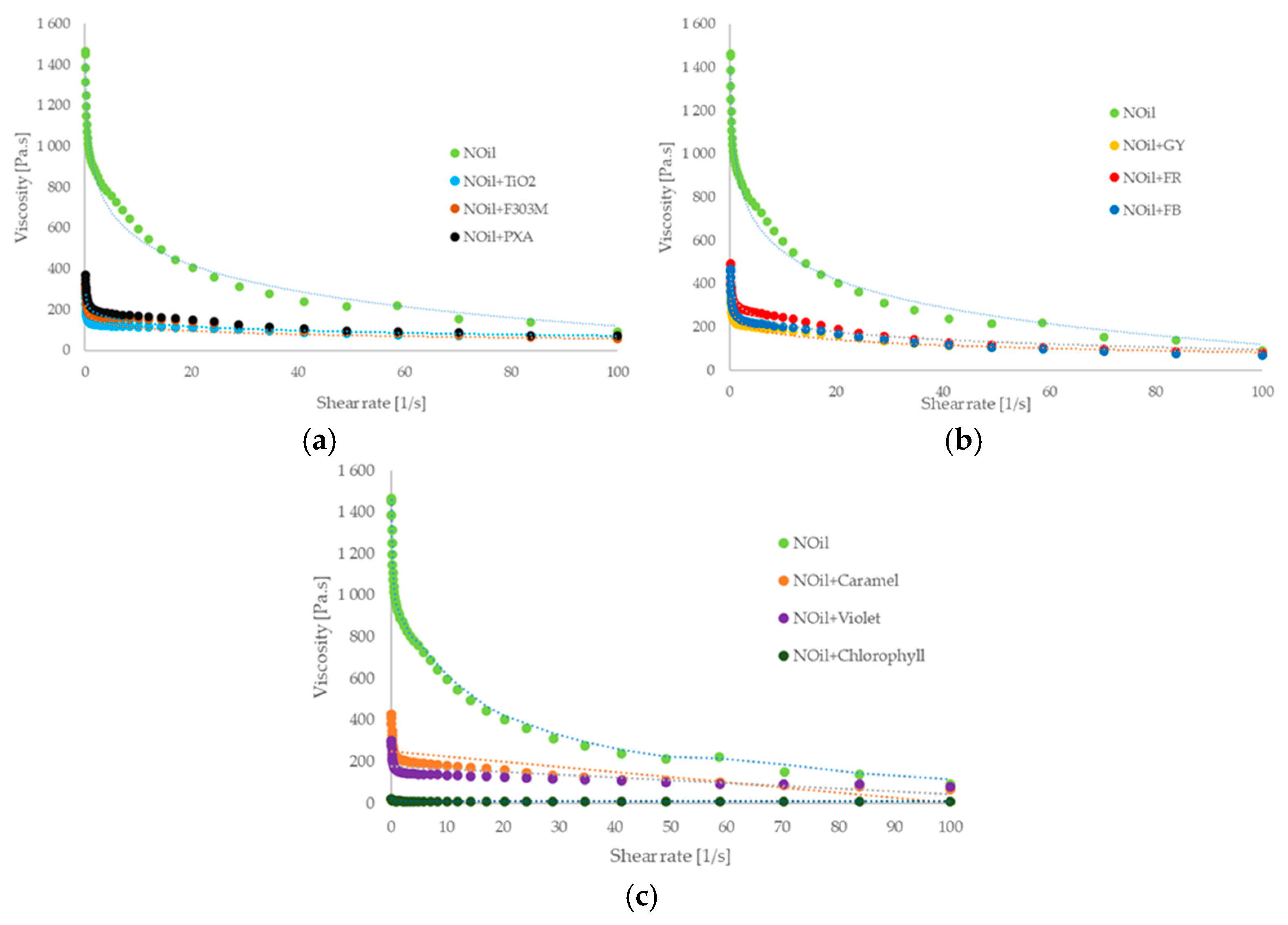
A rotational viscometer equipped with a plate–plate geometry was employed to characterize the rheological behavior of the investigated systems, specifically the relationship between viscosity and shear rate. The impact of different classes of pigments—inorganic (
Figure 1a), organic (
Figure 1b), and food-natural pigments (
Figure 1c)—on the rheological properties of pure and color NOil masterbatches was evaluated. This evaluation was carried out through the analysis of flow curves, which were constructed based on the dependence of viscosity on shear rate.
For all masterbatches, as well as for pure Nonoilen, the viscosity exhibited a decreasing trend with increasing shear rate, demonstrating the typical behavior of polymer melts. The reduction in viscosity observed in the masterbatches containing pigments was more pronounced compared to pure Nonoilen, indicating a notable influence of the pigment particles on the flow properties of the matrix. Particularly in the case of natural pigments (
Figure 1c)—such as caramel, chlorophyll, and violet pigments—the effect was even stronger, which could suggest enhanced particle–polymer interactions or morphological changes in the melt that amplify the change in viscosity as a function of increasing shear rate.
The course of viscosity dependence on shear rate for the evaluated masterbatches with all types of pigments obtained from rheological measurements confirmed the experience and conclusions from the evaluation of technological stability, where it was stated that masterbatches with pigments can be used in dyeing Nonoilen masterbatch. Masterbatches with pigments have rheological behavior similar, with some decrease, to pure Nonoilen, but despite this, their use in dyeing Nonoilen matrix can complicate the technological process of preparing masterbatches or subsequently products manufactured from them. Therefore, it is necessary to consider the processing options for these masterbatches for individual technologies.
For all prepared NOil cast films, the mechanical performance was evaluated in terms of tenacity and elongation at break (
Table 2). The experimental results clearly demonstrate that the incorporation of pigments reduces the overall mechanical performance, as the colored films do not attain the tenacity at break observed in the pure NOil film. In most cases, the elongation at break of the cast NOil films follows a similar trend to their tenacity at break; that is, film from pure NOil exhibits higher strength, and also achieves a higher elongation value. The NOil films containing pigments achieve lower elongation at break, but on the other hand, a much higher measurement of mistakes.
Mechanical properties of films containing inorganic and organic pigments revealed that cast films with inorganic pigments exhibited more uniform and slightly higher values of tenacity and elongation at break compared to films containing organic pigments. Among all the tested cast-colored films, higher tenacity at break was achieved in films incorporating the inorganic pigment TiO2, whereas the lowest values were observed in films containing the organic red pigment. Despite these observed differences, the mechanical properties of all pigmented cast films remained inferior to those of the film prepared from pure NOil.
The better properties of TiO2-filled films can be attributed to the fine particle size, high thermal stability, and relatively good interfacial compatibility of this inorganic pigment with the polymer matrix, which collectively promote better stress transfer under load. In contrast, organic pigments tend to exhibit lower compatibility with the hydrophobic polymer matrix, which can result in less homogeneous dispersion and the formation of micro-defects acting as stress concentrators. These structural irregularities likely explain the diminished tenacity and elongation at break in films containing organic pigments, particularly in the case of the red pigment.
Data are reported as mean ± SD (n = 5). Differences in mechanical properties among formulations were evaluated using one-way Welch ANOVA to account for unequal variances, followed by Games–Howell post hoc multiple comparisons. Statistical significance was set at p < 0.05. Pigment addition significantly affected tenacity at break (Welch ANOVA: F(9, 15.90) = 153.75, p = 9.67 × 10⁻¹⁴) and elongation at break (Welch ANOVA: F(9, 16.00) = 12.30, p = 1.24 × 10⁻⁵).
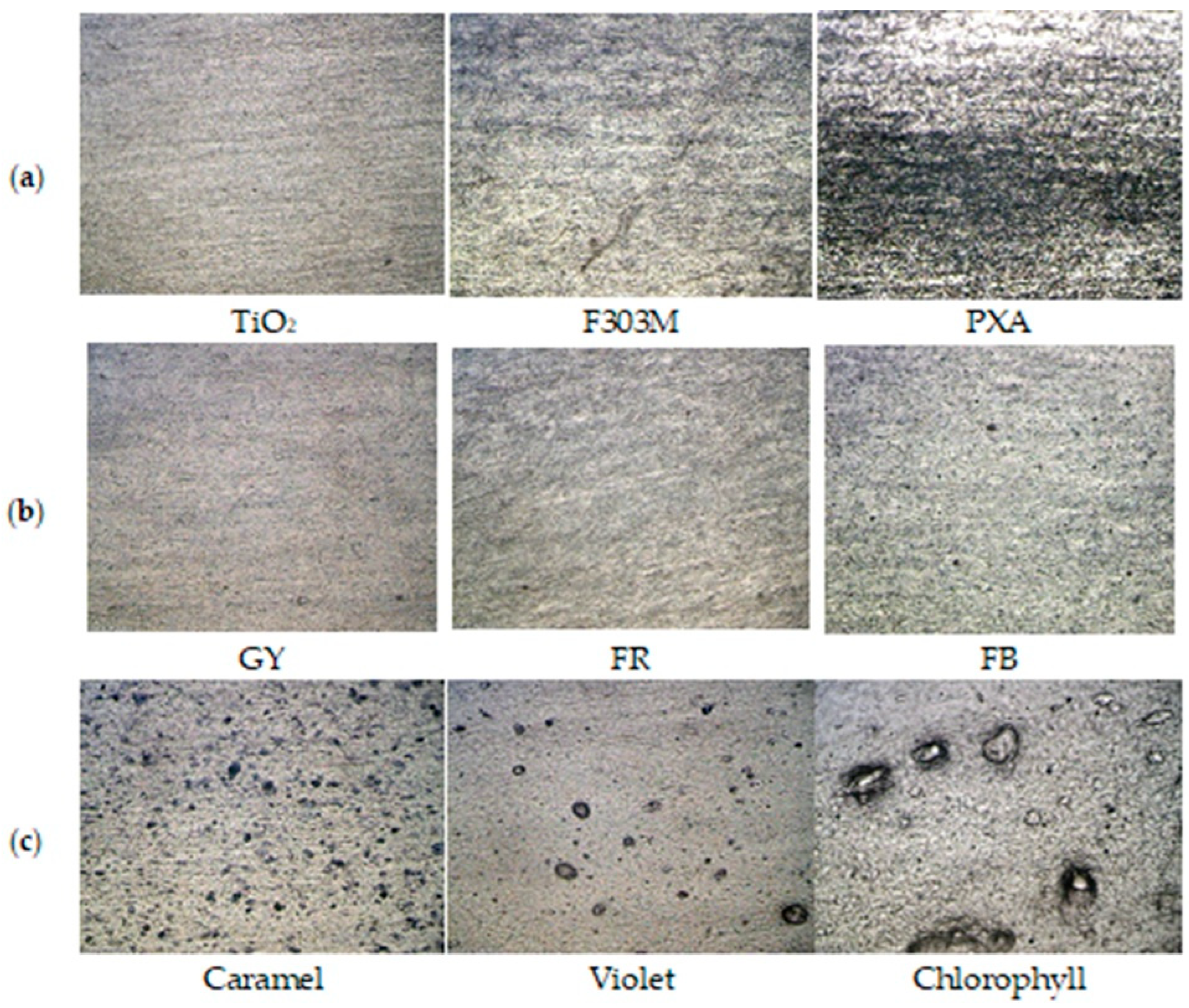
This behavior can be attributed to the effect of pigment loading on the structural homogeneity of the polymer matrix. At some point, pigments’ agglomeration and non-uniform dispersion within the polymer phase increase. Such inhomogeneities act as stress concentrators, thereby weakening the matrix continuity and reducing both tenacity and elongation at break. This interpretation is further supported by microscopic image analyses, which confirmed the presence of local irregularities in the pigment distribution. Consequently, the deterioration of mechanical parameters in highly pigmented films can be directly associated with the reduced structural integrity of the polymer network caused by poor pigment dispersion.
Microscopic evaluations of NOil films containing different types of pigments revealed a distinct distribution of pigment (
Figure 2), which exerted a direct influence on all evaluated properties of the prepared films. Inorganic and organic pigments, in comparison to natural pigments, generally formed fewer and less pronounced agglomerates. Nevertheless, a fully homogeneous dispersion of these pigments within the polymer matrix was not consistently achieved, as minor irregularities in their distribution could still be detected.
However, films containing natural pigments exhibited more evident and larger pigment agglomerates, particularly in the case of chlorophyll. This poor dispersion was closely associated with the most pronounced decrease in viscosity observed in the rheological measurements, indicating strong particle–particle interactions rather than with the polymer matrix, resulting in disrupted flow behavior. Similarly, the mechanical properties confirmed that films with natural pigments displayed reduced tenacity and elongation at break. Moreover, a higher experimental error was recorded in these measurements, which also presents a situation of worse dispersion and greater agglomeration.
The tendency of natural pigments to form larger agglomerates can be attributed to their inherent chemical structure. Many natural pigments, such as chlorophylls, possess polar functional groups and limited thermal stability, which reduce their compatibility with the relatively hydrophobic biopolymer matrix. This mismatch in polarity promotes poor interfacial adhesion and aggregation of pigment particles, ultimately impairing their dispersion. Additionally, natural pigments often contain molecules with varying solubility and stability, further contributing to structural inhomogeneity within the polymer films. These factors collectively explain the stronger deterioration in both rheological and mechanical performance observed for films containing natural pigments.
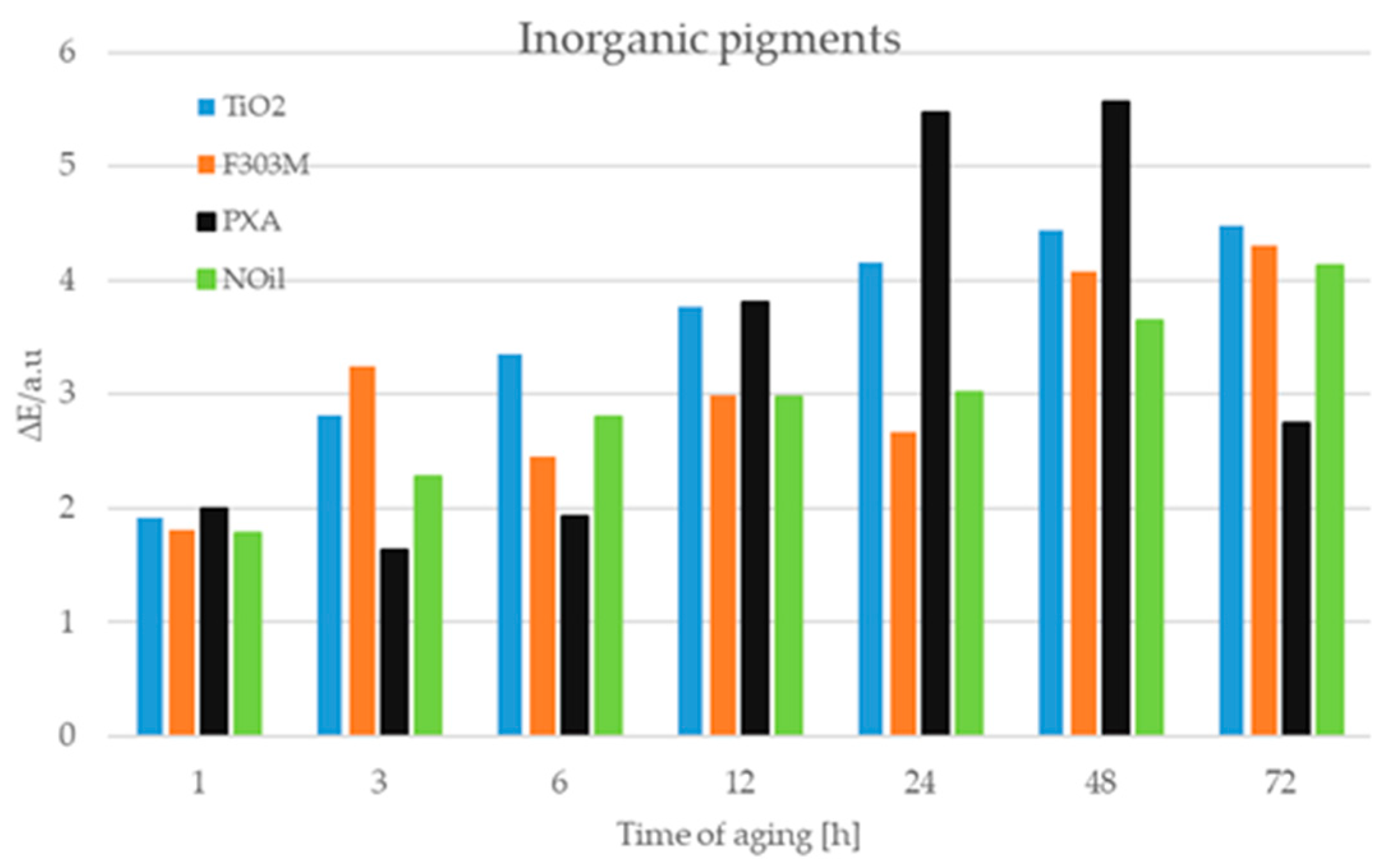
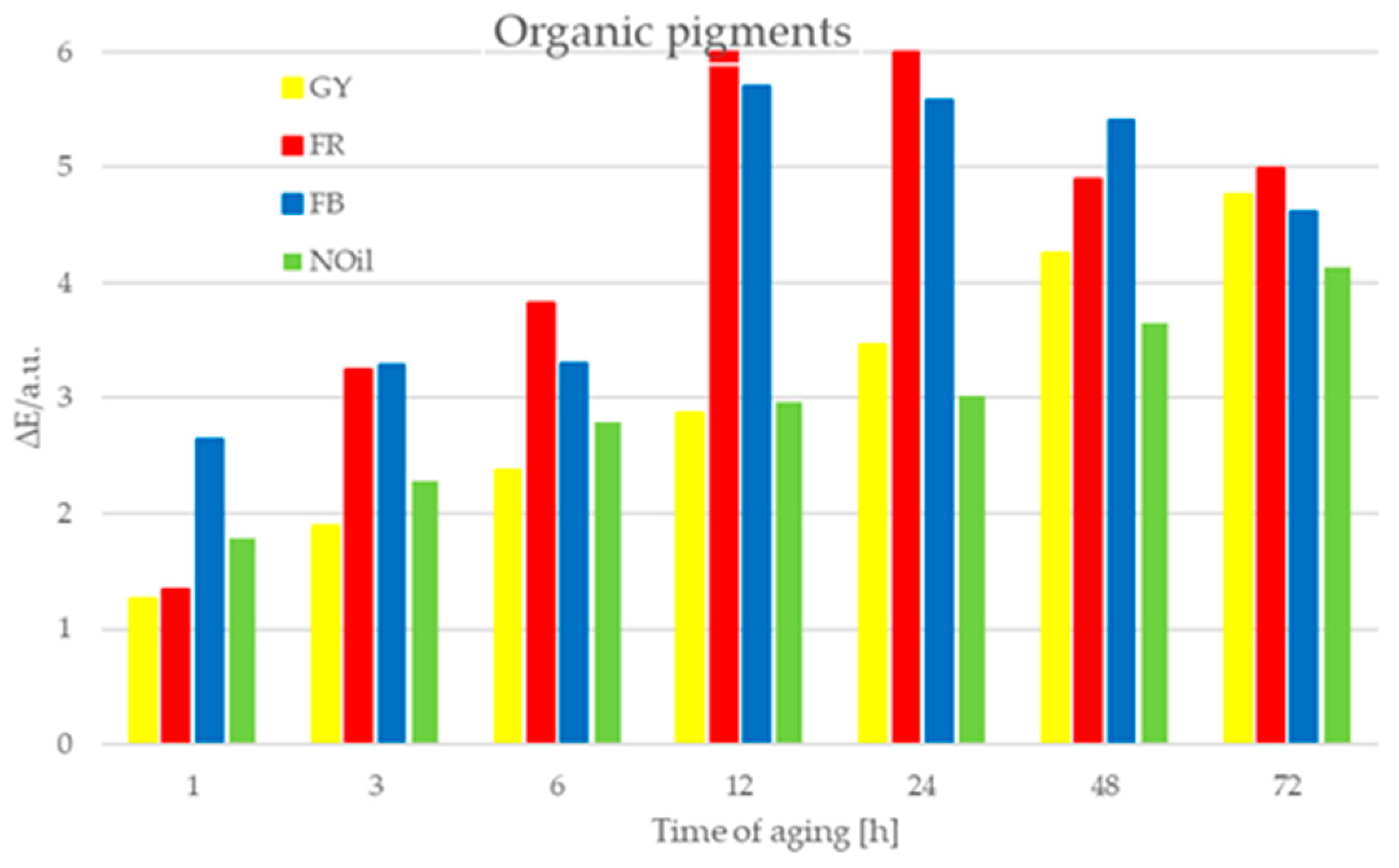
One of the objectives of our research was to investigate the stability of the coloristic properties of cast films prepared from pigmented masterbatches. For this reason, attention was focused on assessing the effect of thermo-light aging on cast films containing inorganic (
Figure 3), organic (
Figure 4), and natural (
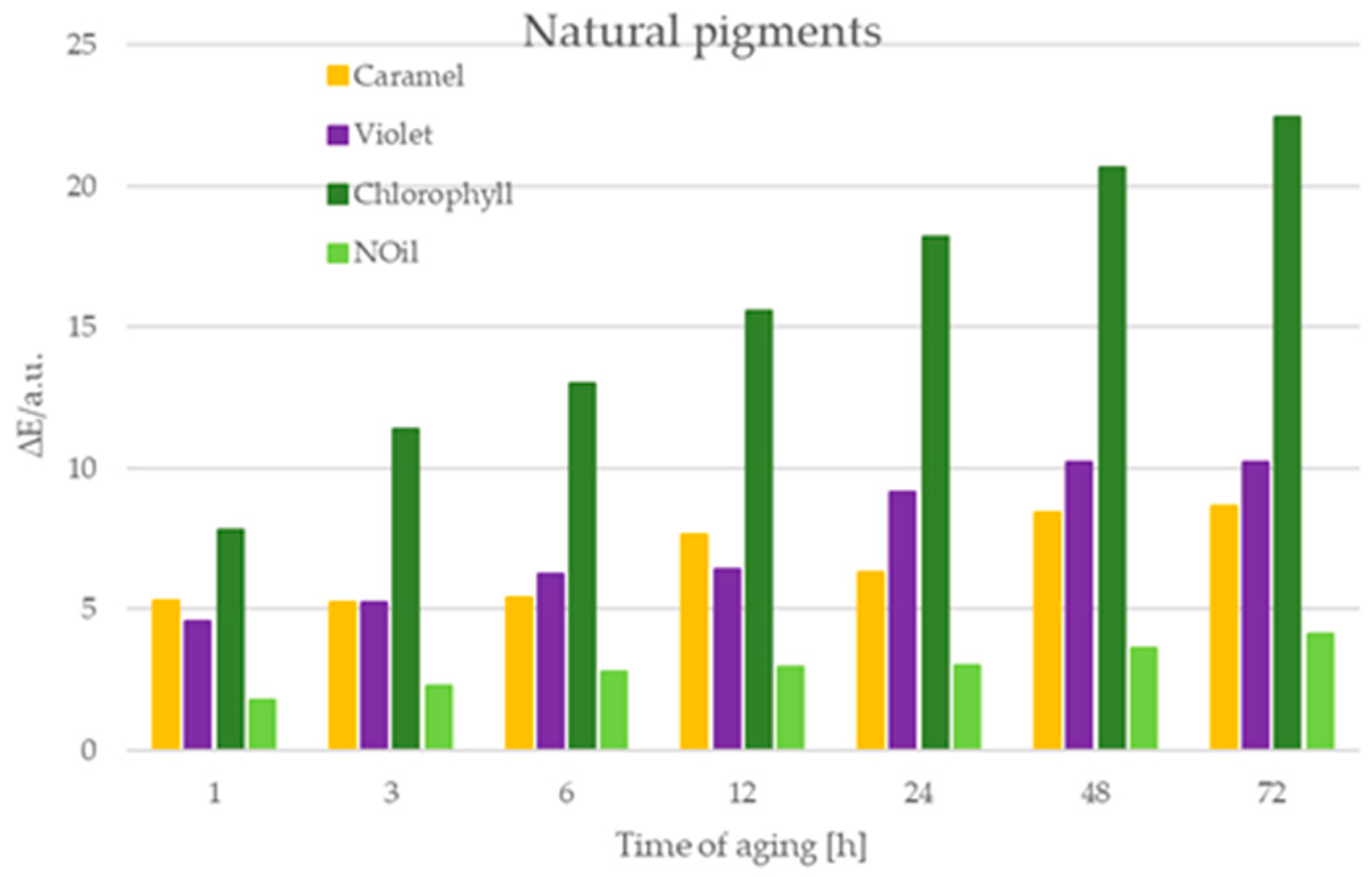
Figure 5) pigments. The coloristic properties of the prepared NOil-based cast films were evaluated by determining the CIE Lab parameters, where L, a, and b are said about color characterization in colorimetric trichromatic coordinates (
Table 3). In
Table 3, there are L, a, and b parameters and a calculated standard deviation for showing only pigment TiO
2. Other pigments are characterized in the attachment (
Table A1,
Table A2,
Table A3,
Table A4,
Table A5,
Table A6,
Table A7 and
Table A8). Subsequently, the total color difference (ΔE) was calculated before and after thermo-light aging at different aging times (1, 3, 6, 12, 24, 48, and 72 h). The calculation quantifies the change in film color as a function of accelerated aging duration compared to the as-prepared film (before accelerated aging). The pre-aging sample is taken as the reference standard for computing the total color difference (ΔE).
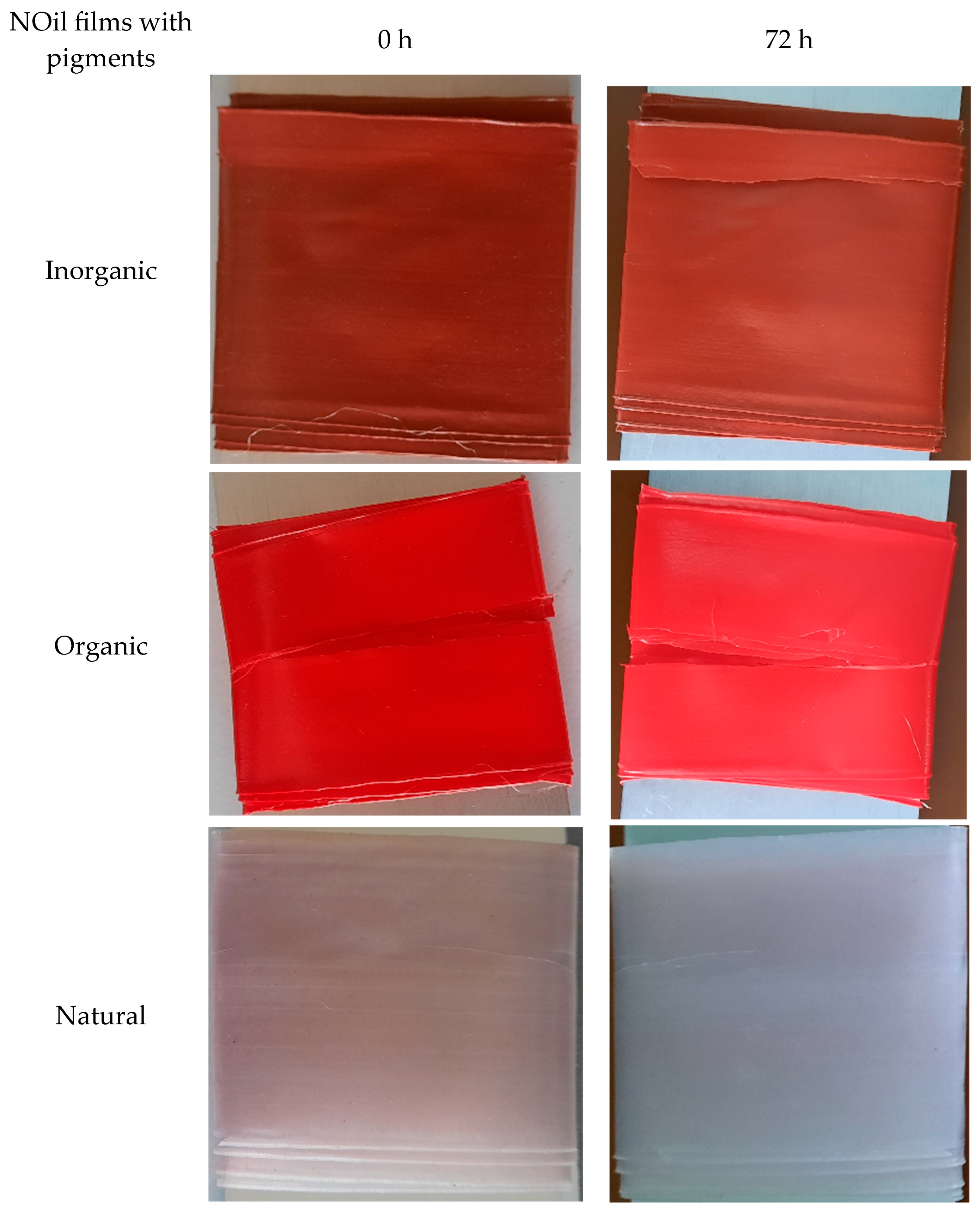
The total color difference (ΔE) incorporates all three parameters—L, a, and b—and their changes during the aging process. Since accelerated aging is being applied, these results are intended to simulate the effects of prolonged real-time aging and to demonstrate how each pigment behaves over time. To support this demonstration, we provide actual photographs of the prepared films.
For the inorganic and organic pigments, visible changes are not as pronounced as with natural pigments; in contrast, the changes for natural pigments are more visible. Therefore, images before and after aging are presented. These real photographs (
Figure 6) point out the visible color changes that are quantified by the total color difference (ΔE), which is calculated based on the measured L, a, and b parameters and their mutual relationships, as defined by Equation (1), yielding the resulting ΔE value.
The obtained results indicate that all prepared films exhibited an increasing color change, expressed as an increase in ΔE values, with increasing aging time. The most pronounced color differences were observed in films containing natural pigments. For films with inorganic pigments, the color change with aging time was comparable to the natural color shift in the polymer itself. Films with organic pigments showed a more distinct deviation in color stability after some hours of aging, while films with natural pigments exhibited immediate changes, visible already after the first hour of accelerated aging, associated with the degradation of the natural colorants and a subsequent significant loss of coloration intensity.
Overall, the results confirm that thermo-light aging leads to an increase in color deviation (ΔE) in all films, reflecting a measurable color change. Among inorganic pigments, the highest ΔE was observed in films pigmented with TiO2, whereas smaller changes were detected for films containing F303M and PXA pigments, consistent with the high thermal and light stability of inorganic pigments. For films containing organic pigments—yellow, red, and blue—the largest color deviation was observed for the blue and red pigments, after 12 h of aging, whereas the yellow pigment showed the greatest stability. The change in its color corresponded to the change in the color of the polymer matrix itself due to thermal-light aging. Films pigmented with organic pigments exhibited relatively high stability (low ΔE values), comparable to inorganic pigments, while films containing the natural pigment showed significantly higher deviations in color.
The monitoring of accelerated aging has been addressed in our previous publications [
1], where we investigated the material properties of fibers containing only a single group of pigments. As stated at the beginning of this manuscript, the viscosity limitations of the pigment-filled materials prevented us from processing and directly comparing all pigment types in fibrous form.