


Highlights
What are the main findings?
- Fabric-scale heat of wetting was quantified for wool, cotton, viscose, and polyester fabrics using isothermal microcalorimetry, revealing distinct exothermic responses during moisture absorption for hygroscopic materials.
- Wool fabrics exhibited the highest heat of wetting, while polyester showed negligible sorption heat, confirming the dominant role of fiber chemistry in moisture-induced heat generation.
What is the implication of the main finding?
- Fabric structure and air permeability influence wetting kinetics and heat-flow profiles but do not override intrinsic fiber-level sorption thermodynamics.
- Isothermal microcalorimetry provides a sensitive, complementary approach for evaluating moisture–thermal interactions in clothing fabrics, supporting its use in transient comfort and material performance assessment.
Abstract
The interaction between moisture and textile materials plays a critical role in transient thermal comfort, particularly through the exothermic heat released during wetting. While the heat of wetting has been extensively characterized at the fiber level, its behavior in finished fabrics, where structure, porosity, and air gaps influence moisture uptake, remains poorly understood. This study quantifies the heat of wetting of clothing fabrics using a TAM Air isothermal microcalorimeter under controlled isothermal conditions (23 °C). Five fabric types representing different fiber chemistries (Merino wool, cotton, viscose, and polyester) were evaluated in both folded and dissected forms to assess the influence of sampling methods. Wool fabrics exhibited the highest heat release, followed by viscose and cotton, whereas polyester showed negligible exothermic response due to its non-hygroscopic nature. Overall, fabric-level heat of wetting values were lower and more variable than the corresponding fiber-level values reported in the literature, reflecting the combined effects of fabric structure, air permeability, surface hydrophilicity, and sampling uniformity. These findings demonstrate the feasibility and limitations of isothermal microcalorimetry for characterizing moisture–fabric interactions and highlight the need for improved sampling and measurement protocols to more accurately capture fabric-level sorption heat relevant to clothing comfort.
1. Introduction
The potential of hygroscopic textile materials for use in functional clothing has attracted academic interest in studying their physical properties beyond their traditional uses in textiles. Due to their hygroscopicity, these fibershave not only the potential to act as a passive insulation material but also to buffer rapid changes in humidity in the environment. Understanding the sorption behavior of hygroscopic fibers in the presence of various ambient humidity conditions is essential for their use in functional clothing [1]. We showed that hygroscopic fibers developed exothermic heat while absorbing moisture, which can buffer the post-exercise chill [2]. This exothermic response arises from the interaction of water with textile materials during moisture absorption. Different fiber types exhibit distinct interactions with water molecules, resulting in variations in sorption heat primarily governed by their chemical composition and molecular structure. Although the heat of sorption of individual textile fibers is well established, the sorption behavior of materials in clothing form needs to be investigated. Hygroscopic natural fibers, e.g., cotton and wool, exhibit exothermic effects while absorbing moisture from the human skin or the environment, and fibers with higher heats of wetting, such as wool, are often used for winter clothing. The heat of wetting is considered one of the parameters influencing clothing comfort under specific environmental conditions [3,4]. In practical clothing systems, however, fabrics may consist of natural, regenerated cellulosic, or synthetic fibers, each contributing differently to moisture uptake and associated heat release. Including materials with contrasting hygroscopic behavior enables comparison across a realistic range of textile constituents commonly used in apparel.
Thermodynamically, the heat released during vapor or liquid water absorption can be described as the differential heat of sorption and the integral heat of sorption (also known as the heat of wetting). The differential heat of sorption is defined as the heat released during absorption of one gram of water by an infinite mass of textile material. In comparison, the heat released during the complete wetting of fabric at a given regain, whose dry mass is one gram, is known as the heat of wetting. The units of measure for both are joules per gram [5]. In general, the heat of wetting is greatest for the most absorbent fibers and minimal for non-hygroscopic fibers, with the amount of heat generated being proportional to the amount of moisture absorbed [6].
As a vital fabric and comfort parameter, it should be well defined how to determine the heat that evolves during moisture absorption. Several methods can be found for the thermal analysis of textile material, including conventional differential scanning calorimetry (DSC), temperature-modulated DSC (TMDSC), and simultaneous DSC–TGA. DSC measures heat absorption, TMDSC measures heat capacity, and simultaneous DSC–TGA measures heat evolved in Joules per gram [4]. Furthermore, many researchers have tried to measure the heat of wetting for various kinds of textile fibers [7,8,9,10]. However, comparatively few studies have quantified the heat of wetting at the clothing-fabric level, where fabric architecture, porosity, thickness, and surface characteristics may influence moisture transport and apparent heat release [11,12]; most calorimetry studies to date have focused on individual fibers rather than fabrics [13]. While fabric-scale measurements do not capture full garment-level phenomena such as air gap or dynamic microclimate formation [14], they represent a necessary intermediate step between fiber-level thermodynamics and complete clothing-system moisture management [15]. In this work, fabric swatches rather than complete garments are investigated to examine whether isothermal microcalorimetry can capture heat release associated with moisture absorption at the fabric level. By evaluating fabrics composed of fibers with differing hygroscopic characteristics and by examining the influence of sample preparation on the measured response, this study aims to assess the applicability and limitations of isothermal calorimetry for fabric-scale heat-of-wetting measurements.
2. Materials and Methods
Five different materials with the same thickness were employed to measure the heat of wetting by TAM Air isothermal calorimetry (New Castle, DE, USA). Two different sample preparation approaches were used to assess the influence of sample geometry and preparation within the constraints of the ampoule-based calorimeter on the measured heat of wetting: (i) testing intact folded fabric specimens to accommodate fabric continuity within the ampoule volume, and (ii) testing samples dissected into smaller pieces to examine the sensitivity of the measurement to increased exposed surface area. The experiments were carried out at 23 °C and under isothermal conditions. By dividing the heat evolved (J) by the sample weight (g), the heat of wetting (J/g) was calculated.
2.1. Materials
Table 1 shows the summarized results of the tests on the basic physical properties of wool, cotton, viscose, and polyester. With the exception of the polyester fabric, which exhibited a rib knit structure, all materials were single-jersey knits; fabric thickness was prioritized over identical knit architecture, as thickness is known to exert a dominant influence on thermal insulation behavior. All fabrics were commercially produced knitted materials supplied by Australian Wool Innovation and were not custom-manufactured for the purposes of this study. ASTM D1777 was used to determine the thickness. Five specimens (15 cm × 15 cm) were measured at a pressure of 0.6 psi (pounds per square inch) with a thickness gauge [16]. The small swatch option of ASTM D3776 was also used to determine the weight of the fabric [17]. A total of three samples (15 cm × 15 cm) were weighed on an analytical balance, and their weight was calculated as mass per unit area (g/m2). Air permeability was measured according to ASTM D737 using a Frazier Air Permeability tester (Hagerstown, MD, USA) [18].
Table 1.
Physical properties of fabric samples.
2.2. Sample Preparation
After weighing fabric specimens of approximately 0.5 g, cut to dimensions of 5 cm × 5 cm, oven drying was performed at 105 °C for 2 h. This drying was performed to establish a consistent dry reference state prior to calorimetric testing. The samples were sealed when leaving the oven and kept in a plastic bag. The plastic bag was always kept in a desiccator to maintain a stable surrounding condition. In this experiment, two different methods of sample preparation were followed. Keeping the sample at the dimensions mentioned above was one approach. The second approach involved slicing the sample into smaller pieces to expose more surface area of the fabric.
2.3. Determination of Heat of Wetting by TAM Air Isothermal Calorimeter
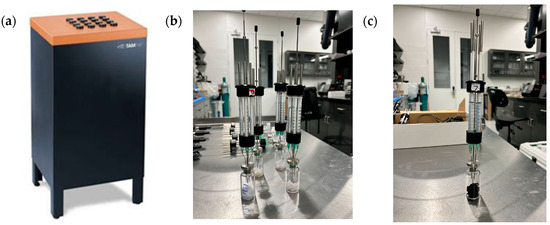
The heat of wetting of five different samples was measured using a TAM Air isothermal calorimeter from TA instruments (New Castle, DE, USA). TAM air is an 8-channel calorimeter that works according to the heat flow principle and is designed as a twin or differential instrument (Figure 1). An inert material with the same thermal properties as the sample is used on the reference side to cancel out thermal fluctuation and strengthen the signal. Thermoelectric modules are typically placed between a sample ampoule holder and the heat sink to measure heat flow. Each ampoule holder consists of an injected system and manual stirring that can inject 4 mL of liquid for optimization. The thermoelectric module produces a voltage proportional to the heat flow due to a temperature differential. Once the samples had been in the calorimeter for 45 min, the heat flow measurements could begin to ensure that the samples had reached thermodynamic equilibrium with the calorimetric temperature, as time counting starts when the samples are placed in the calorimeter. The procedure followed manufacturer guidelines to reduce the impact of the temperature difference between the sample and the calorimeter on the precision of the heat flow measurements [19,20].
Figure 1.
(a) TAM Air isothermal calorimeter by TA instruments. (b) Fabric samples are folded and loaded into the ampoules with 0.5 mL, 1 mL, 2 mL, and 4 mL with syringe adjustments. (c) Fabric samples are cut into pieces and loaded into the ampoules with the syringe adjustments.
Two methods (Figure 1) were used to measure the heat of wetting of the samples, as previously mentioned. The samples were folded and inserted into the ampoule in the first method. Water was injected into the fabric sample after 45 min in amounts of 0.5 mL, 1 mL, 2 mL, and 4 mL from four different channels. The quantity was chosen to test the effects of various amounts of water on the sorption characteristics of the textile fibers. Each of the samples was tested three times for a specific amount of water, and the results are plotted as an average.
The second method involved dissecting two representative fabric samples, namely WBT and VB, prior to loading them into ampoules and carrying out the same experimental steps as in the first method. These two materials were selected to represent fibers with high moisture regain but distinct chemical structures (protein-based wool and regenerated cellulosic viscose), allowing the influence of increased exposed surface area on sorption heat to be evaluated without introducing additional structural variability. Each sample was tested three times, and the heat of wetting was reported as an average value.
3. Results and Discussion
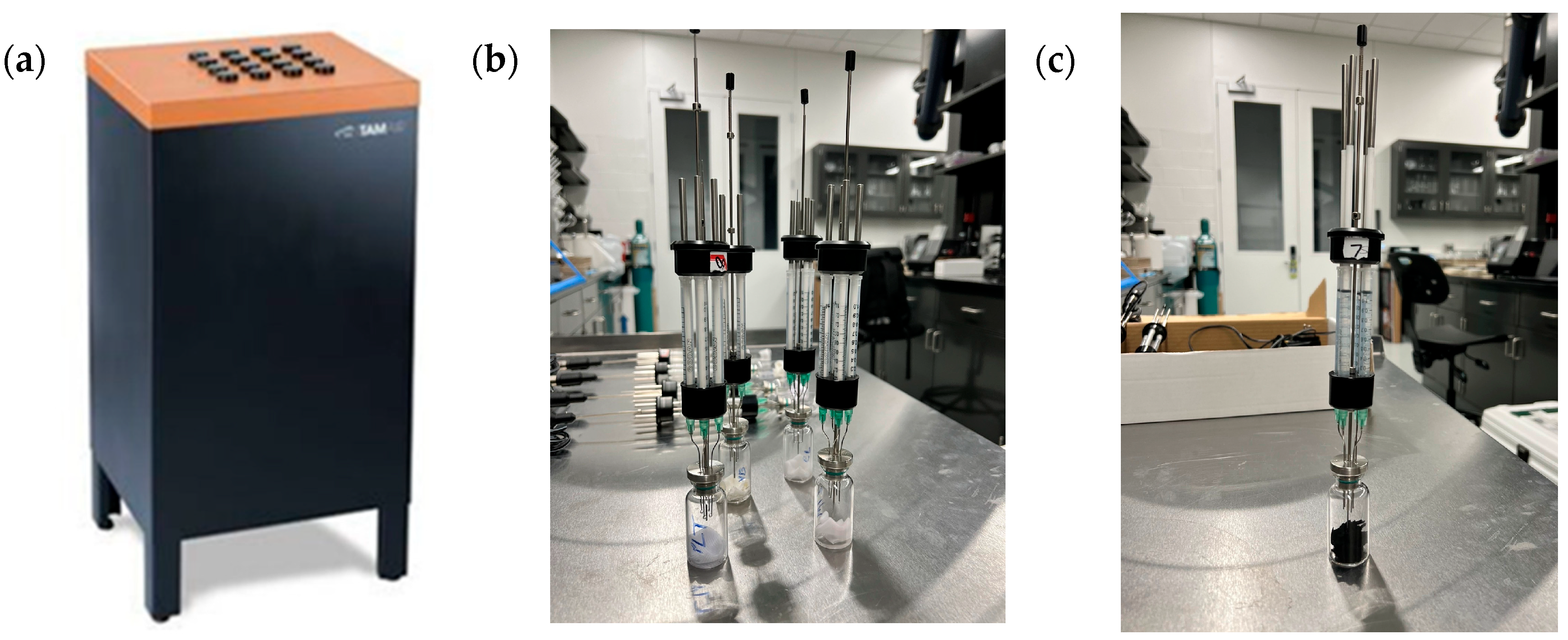
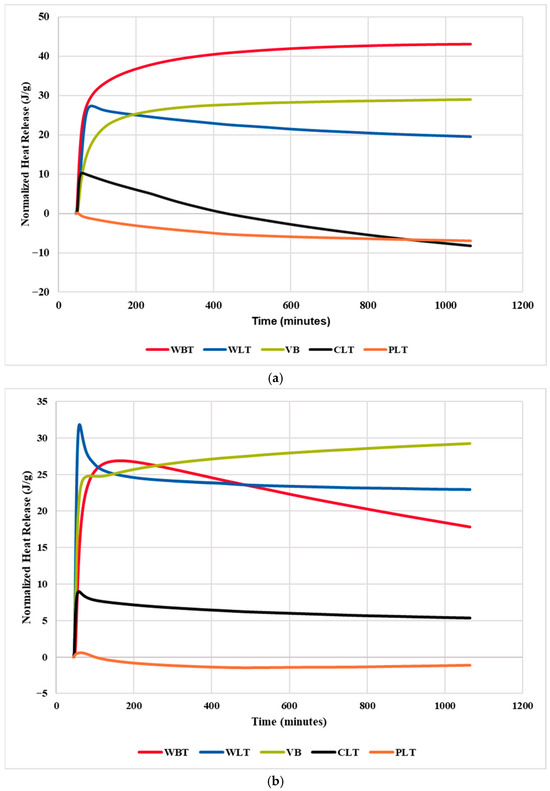
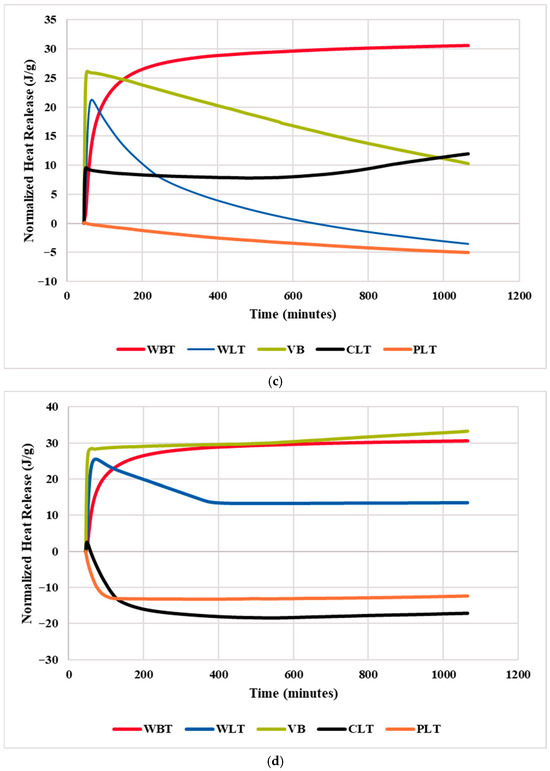
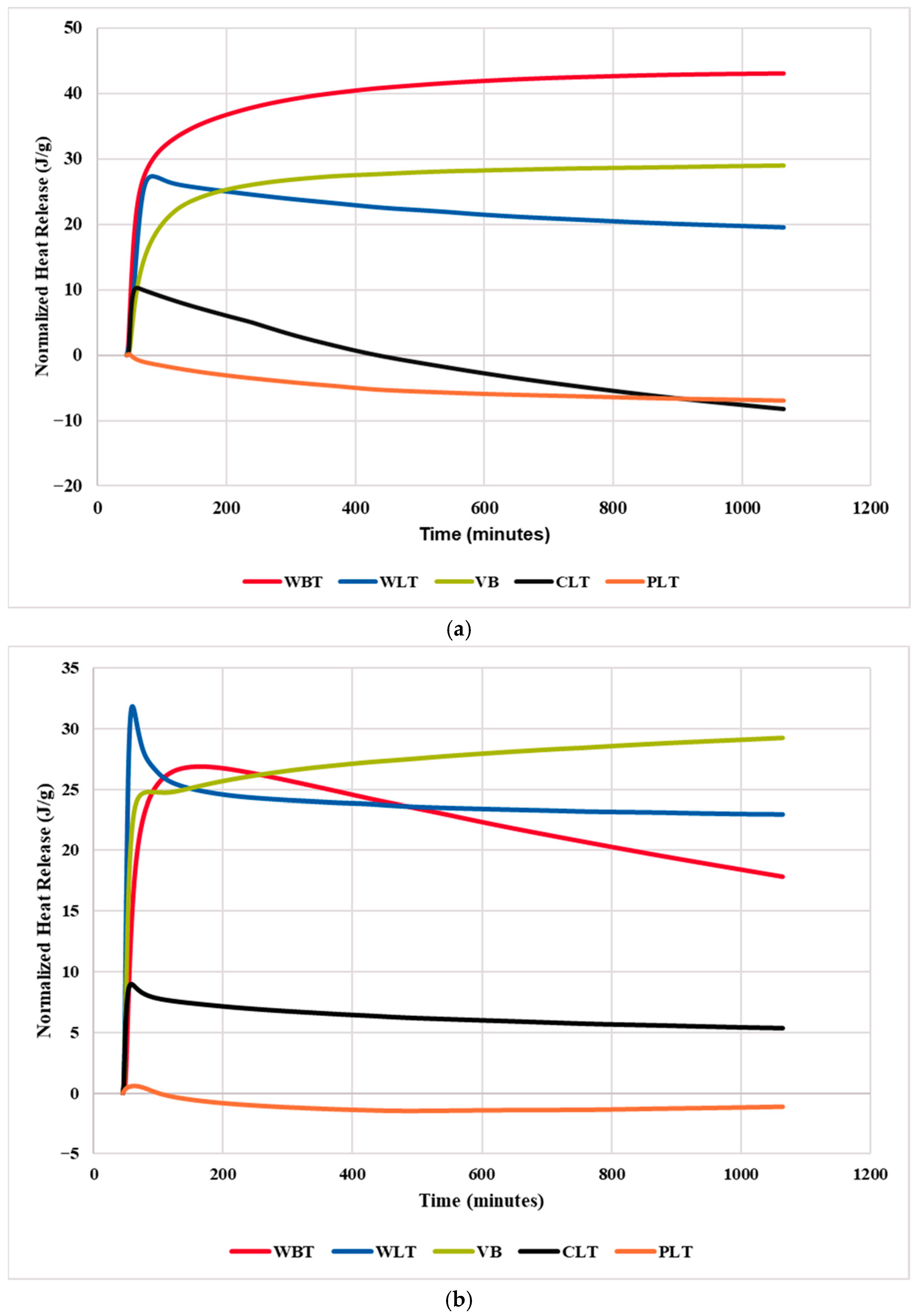
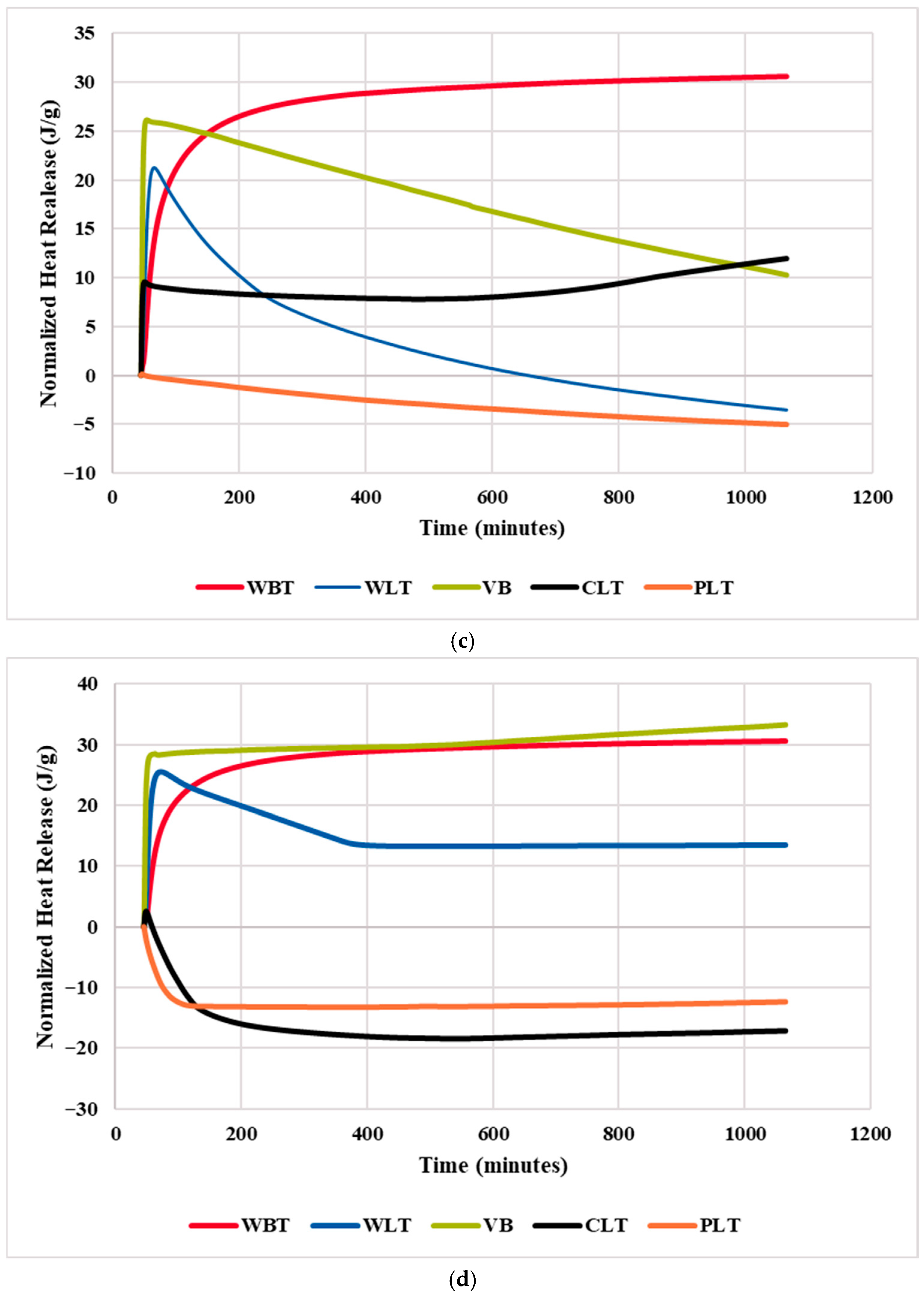
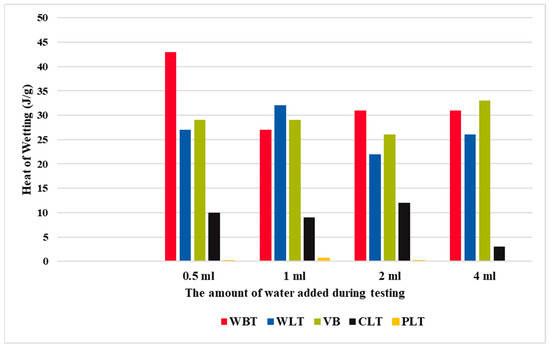
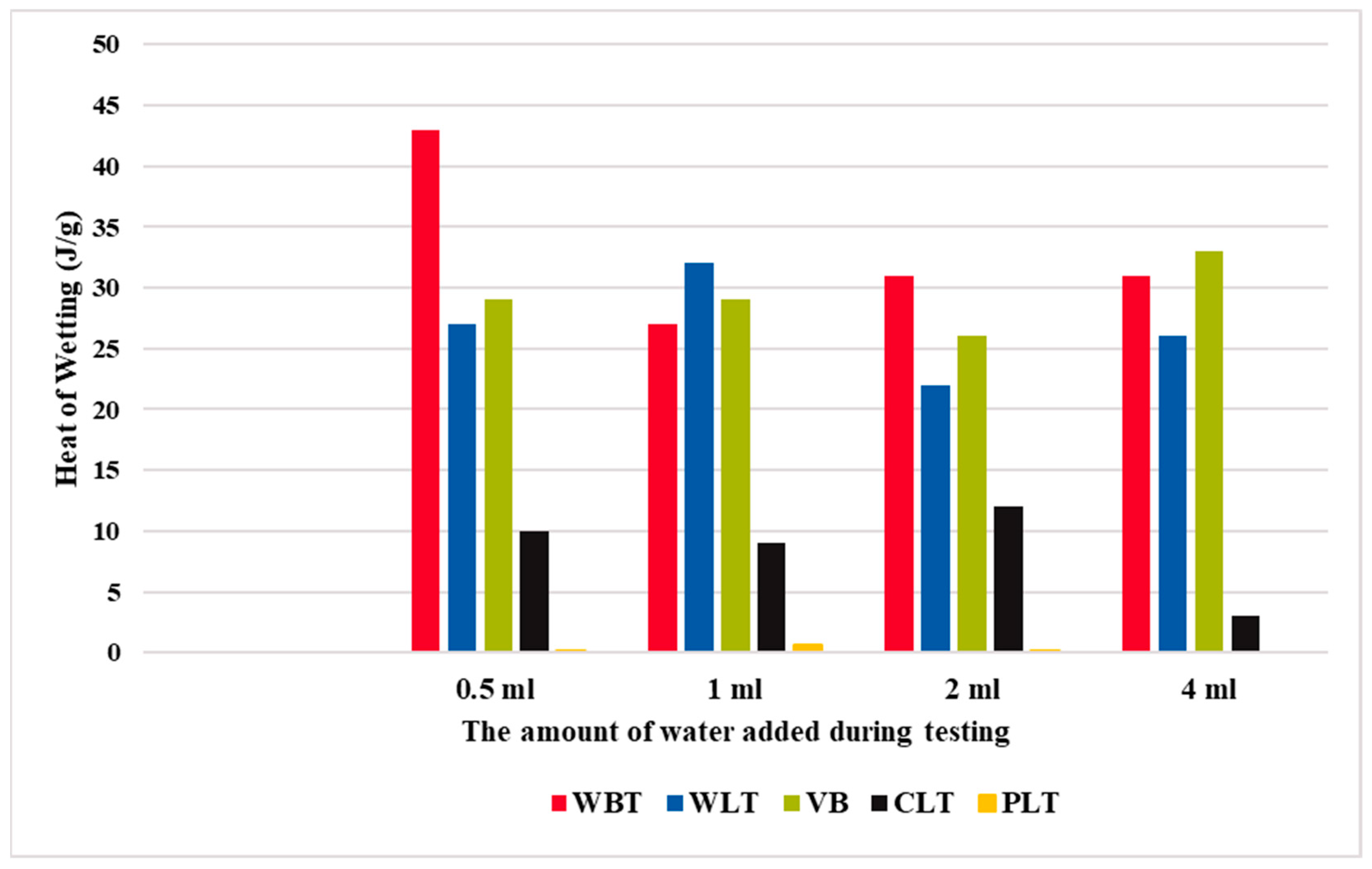
The results of measuring the heat of wetting with the TAM Air isothermal calorimeter for different amounts of water using folded samples are illustrated in Figure 2, while the corresponding maximum heat-of-wetting values are summarized in Figure 3.
Figure 2.
Heat of wetting measured in J/g for folded fabric samples (WBT, WLT, VB, CLT, and PLT) at (a) 0.5 mL, (b) 1 mL, (c) 2 mL, (d) 4 mL water.
Figure 3.
Summary of the maximum heat of wetting measured (J/g) during the different amounts of water absorption by wool, cotton, viscose, and polyester fibers when folded samples were used.
With the exception of polyester, heat evolution was noticed for the fiber types. WBT showed the highest increase in heat when 0.5 mL of water was used. Additionally, it showed a decreasing tendency of heat-release as the amount of water increased; however, this was not consistent. On the other hand, in hydrophilic wool, WLT showed a lower heat release than WBT. However, viscose showed a moderate heat release, although the data seemed inconsistent when adding different amounts of water during experimentation. Cotton showed a lower amount of heat release despite being hygroscopic; for 4 mL of water, it did not seem to release heat. Furthermore, from the graphs shown in Figure 2, it can be shown that the sorption behavior was a two-stage process for the moisture-absorbing fibers. WLT and CLT reacted to exothermic heat release almost immediately. In contrast, WBT and VB showed a more extended period for exothermic heat release (almost 200 min) until equilibrium was reached. Despite the inconsistency in the exothermic trend shown in the graphs, it can be said that WBT and VB showed more significant sorption heat while absorbing water.
The observed variability and inconsistency in the heat-release trends can be partially attributed to experimental constraints associated with testing soft textile materials in an ampoule-based calorimetric system. Factors such as sample geometry, fabric density, limited contact between the fabric and the ampoule surface, and non-uniform wetting may influence the measured response, particularly for porous knit fabrics. It should be noted that the isothermal microcalorimetry approach employed here is intended as an exploratory method for fabric-scale heat-of-wetting assessment and is complementary to flat-fabric thermal techniques, such as guarded hot plate or heat-flux-based measurements, which quantify heat and moisture transport rather than intrinsic sorption heat generation. Despite these limitations, the measurements provide useful comparative insight into relative sorption heat behavior among fabrics with differing hygroscopic characteristics.
The fabric samples exhibited a wide range of air permeability values, from 51 cm3/s/cm2 for cotton to 397 cm3/s/cm2 for polyester. Air permeability reflects fabric porosity and openness, which directly influence liquid water transport pathways and wetting uniformity during calorimetric testing. Fabrics with higher air permeability allow more rapid liquid penetration and drainage, potentially reducing the residence time of water at hygroscopic binding sites. Conversely, lower air permeability fabrics restrict liquid movement, promoting localized retention and prolonged interaction between water and fiber polar groups. This effect is particularly evident when comparing polyester and wool fabrics. Although polyester exhibited the highest air permeability, its negligible heat of wetting confirms that air permeability alone does not generate sorption heat in the absence of hygroscopic functional groups. In contrast, wool fabrics, with moderate air permeability, demonstrated pronounced exothermic responses due to the presence of polar peptide groups capable of binding water. Therefore, air permeability acts as a secondary modifier by influencing wetting kinetics and water–fiber contact efficiency, while the primary driver of sorption heat remains fiber chemistry.
The variations observed in the heat-flow curves (Figure 2) can be attributed to differences in fiber chemistry, fabric structure, and wetting kinetics. Hygroscopic fibers such as wool, viscose, and cotton typically produce an initial exothermic peak followed by a gradual decline. This behavior reflects a two-stage sorption process: rapid surface wetting as water interacts with accessible polar groups, followed by slower diffusion of water into the amorphous regions of the fiber. The magnitude and duration of this peak depended on both fiber composition and water volume, with larger injections reducing the sharpness of the initial response due to faster saturation. Hydrophilic-treated wool (WLT) exhibited smoother curves with lower peak intensity, consistent with more uniform wetting and reduced contrast between surface sorption and internal diffusion. In contrast, polyester produced only weak or slightly negative signals, which is expected for a non-hygroscopic fiber with negligible moisture regain. The negative values likely arise from endothermic thermal equilibration or evaporative cooling rather than true sorption heat.
Differences in curve shape were also influenced by sample geometry and contact behavior within the calorimeter. Folded samples, which expose less surface area to the injected water, displayed slower and more gradual heat-release profiles, whereas cut or shredded samples showed faster and sharper responses due to increased accessible surface area. At higher water volumes (≥2 mL), temporary floating or delayed penetration of liquid into the fabric layers resulted in broader or less distinct peaks, reflecting transient reductions in thermal contact with the ampoule base. These behaviors highlight inherent challenges in applying solution calorimetry to low-density textile materials but also demonstrate that the qualitative differences in curves are consistent with established sorption thermodynamics and accurately reflect the underlying moisture-binding characteristics of each fiber type.
The summary shown in Figure 3 explains that WBT has the highest heat release among the fiber types. The values of the heat of wetting of the different fabrics are lower than the literature values of these fibers reported by Varga et al. [4]. The paper mentioned that values for cotton, viscose, and polyester fibers are 45 J/g, 90 J/g, and 10 J/g, respectively. However, they did not measure the value of wool fibers. The TAM Air isothermal calorimetry measures sorption heat using the solution calorimetry principle. In solution calorimetry, the heat evolved is measured when unbound water is attached to the primary and secondary bond water in the fiber molecules. When water bonds directly with hydroxyl groups during absorption, the sorption heat is at its maximum. Heat dissipation is diminished when water molecules are arranged in multiple layers. Also, in this case, all the fabrics were dried at 105 °C; this high temperature causes the closure of the hydroxyl pores, which undoubtedly reduces the heat release, which can be observed in the case of CLT [21]. The hydrophobic nature of PLT did not allow it to absorb moisture and did not show sorption heat.
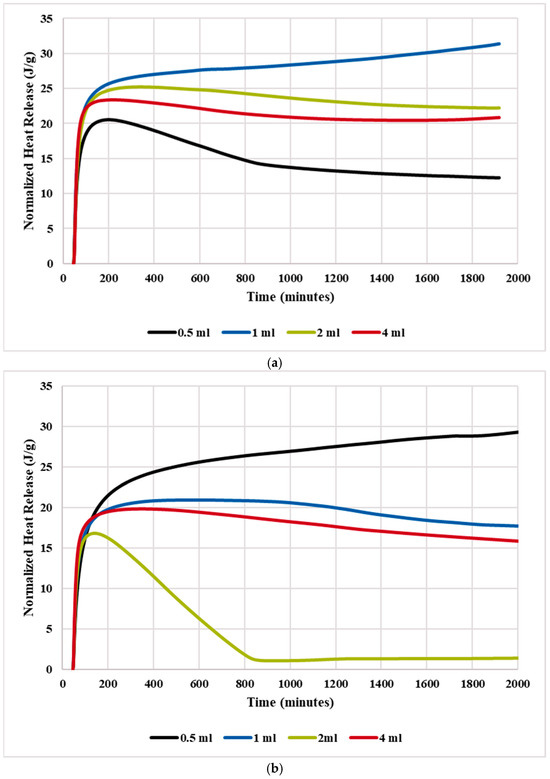
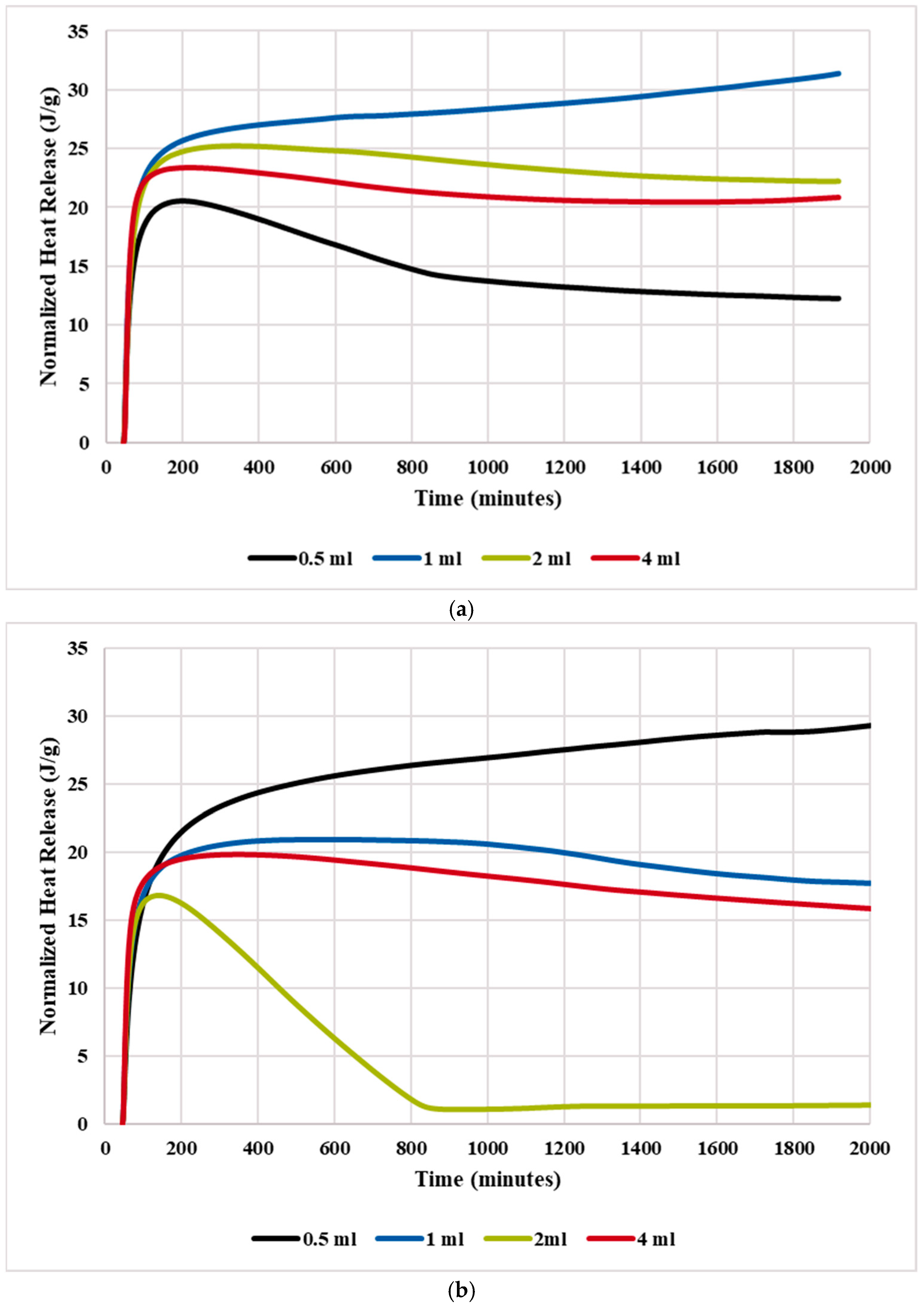
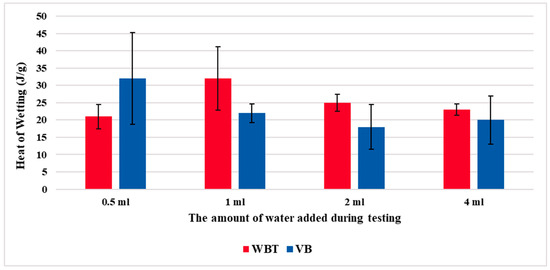
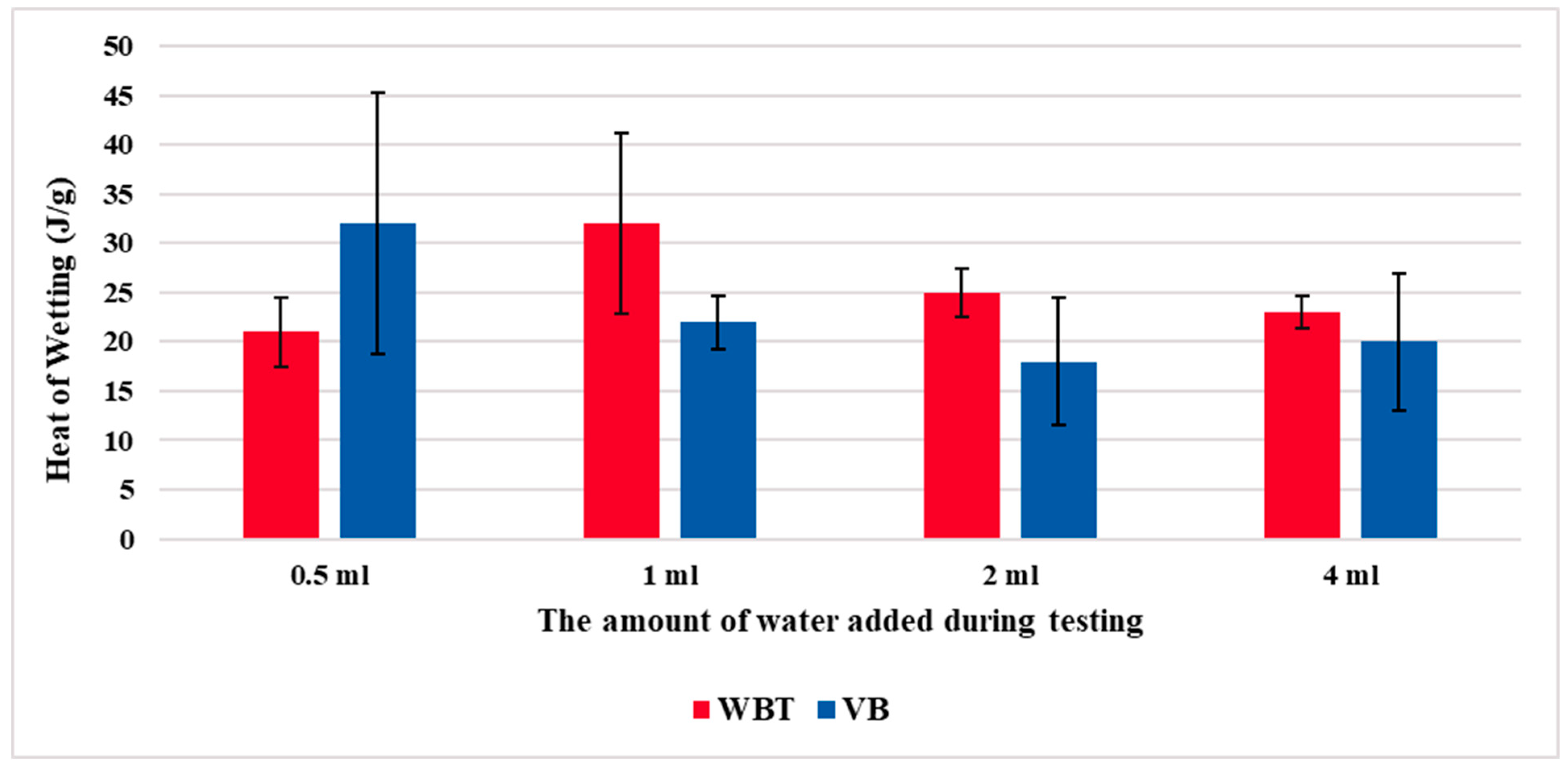
The heat released when grinding samples were used is shown in Figure 4. A summary of the measured heat release for different amounts of absorbed water is also shown in Figure 5. Only WBT and VB fabrics were evaluated using the second sample preparation approach (cut samples); therefore, Figure 4 and Figure 5 present results exclusively for these two hygroscopic materials. WBT showed a higher amount of wetting heat than viscose in all cases, except for with 0.5 mL of water. The reason might be that the WBT samples did not wet uniformly and did not show exothermic heat as expected. The higher value of heat released for wool may be due to its greater amorphous region (70–75%) than that of viscose (60–65%), which enables the WBT structure to have more binding with water [3]. Moreover, wool’s unique interior and exterior structure may contribute to its greater sorption heat. The wool surface has overlapping scales called cuticle cells with a waxy coating, which helps protect the fiber from exterior damage and makes the fiber hydrophobic at the surface. The interior of wool is composed of the cortical cell surrounded by the cell membrane complex, which can absorb water moisture [22]. Generally, wool repels liquid water at the surface but can absorb or desorb water vapor and appears to be hygroscopic. Because of the greater sorption heat of wool fiber, it may serve as a temperature regulator in apparel to protect and keep warmth in the human body. Its three-dimensional hierarchical structure causes water to react exothermically with the polar groups of polypeptide chains during moisture absorption, breaking down their hydrogen bonds and releasing heat, which is trapped between the air pockets [23].
Figure 4.
Heat of wetting measured in J/g for WBT and VB when samples were cut into pieces (a) WBT (b) VB.
Figure 5.
Summary of the maximum heat of wetting measured (J/g) during the different amounts of water absorption by wool and viscose when samples were cut into pieces.
In this experiment, the fabric samples were prepared at almost the same thickness; however, the samples were not uniform in terms of structure, weight, and air permeability. Although the fiber structure has an influence, the above properties might influence the lower heat of wetting value of the fibers as well. Also, the sample density was low, and it caused the floating of samples above the water’s surface. The current setup that was used did not allow fabric materials to be in close contact with the calorimeter surface, which may have lowered the obtained values for sorption heat. However, this may still be a relevant example of mimicking the human clothing environment. An air gap exists between the skin and fabric in regular clothing. So, the literature value of the heat of wetting might not work in the actual scenarios.
The calorimetry method utilized to calculate the heat of wetting presents inherent limitations when applied to soft textile materials. Instead of soft materials like textile fibers, the TAM air isothermal calorimeter is typically employed to evaluate the heat of wetting for cement materials. Nevertheless, it offered some useful information to get things started, and more research might be performed on sampling and precisely quantifying the heat emitted during water vapor absorption. Samples were subdivided manually using scissors, resulting in minor variability in piece size, which highlighted the sensitivity of calorimetric measurements to sample uniformity. On the other hand, we observed that improved sampling uniformity significantly influenced calorimetric repeatability and heat-flow profiles for the fibers examined using both sampling approaches. As this comparison was conducted only for selected hygroscopic fabrics, the effect cannot be generalized to all fiber types tested. Nevertheless, the results indicate that controlled and uniform sample preparation, such as the use of templates or fabric grinding methods, can improve measurement consistency in fabric-level calorimetry experiments.
4. Effect of Fiber Chemical Composition on Moisture Regain and Sorption Heat
The heat of wetting of textile fibers originates from thermodynamically favorable interactions between water molecules and polar functional groups within the fiber polymer. These interactions are governed by the chemical structure of the polymer backbone, the density and accessibility of hydrophilic sites, and the distribution of amorphous and crystalline regions that control moisture diffusion and binding energetics. Moisture regain and sorption heat are therefore intrinsically linked properties reflecting the same molecular mechanisms of water–fiber interaction [24,25]. Protein-based fibers such as wool consist primarily of keratin, a polypeptide polymer rich in amide, amino, and carboxyl functional groups. These groups provide multiple sites for hydrogen bonding and ionic interactions with water molecules, resulting in high moisture regain and substantial exothermic heat release during wetting. In addition, wool fibers possess a heterogeneous internal structure with a high proportion of amorphous regions and a complex cell membrane network, which enhances water accessibility and promotes multilayer sorption within the fiber interior. This combination of chemical polarity and structural heterogeneity leads to high sorption enthalpy in wool compared to other textile fibers [22,26]. Cellulosic fibers such as cotton and viscose are composed of cellulose chains containing hydroxyl groups capable of hydrogen bonding with water. However, the magnitude of moisture regain and sorption heat depends strongly on supramolecular organization. Cotton fibers exhibit a relatively high degree of crystallinity, which restricts the accessibility of hydroxyl groups and limits water penetration into tightly packed regions. Regenerated viscose fibers, in contrast, contain a higher fraction of amorphous domains, allowing increased water uptake and stronger overall sorption interactions. Consequently, viscose typically exhibits higher moisture regain and greater heat of wetting than cotton, despite similar chemical repeat units [27,28]. Synthetic polyester fibers, primarily composed of polyethylene terephthalate, contain ester linkages but lack sufficient polar functional groups for strong hydrogen bonding with water. As a result, polyester exhibits very low moisture regain, and any thermal response observed during wetting is dominated by physical processes such as heat exchange with liquid water rather than true chemical sorption. The absence of significant sorption enthalpy in polyester is consistent with its hydrophobic polymer chemistry and limited water–polymer interaction energy [29]. Overall, differences in fiber chemical composition explain the observed hierarchy of sorption heat among textile materials, with protein fibers exhibiting the highest heat of wetting, followed by regenerated cellulosic, natural cellulosic, and synthetic hydrophobic polymers. While fabric structure and air permeability influence wetting kinetics and heat-flow profiles at the fabric scale, the intrinsic magnitude of sorption heat is fundamentally controlled by fiber-level chemical interactions with water.
5. Conclusions
This study evaluated the heat of wetting of wool, viscose, cotton, and polyester fabrics using TAM Air isothermal microcalorimetry, demonstrating the capability of this technique to quantify exothermic sorption behavior at the fabric level. The measured heat release values for wool and viscose were consistently higher than those of cotton and polyester, reflecting their greater hygroscopicity; however, all fabric-level values were lower than the corresponding fiber-level data reported in the literature. This discrepancy underscores the influence of fabric structure, specifically thickness, mass per unit area, air permeability, and internal porosity, on moisture uptake and the resultant heat evolution. While TAM Air calorimetry proved sensitive enough to detect low-level heat flows characteristic of textile materials, further methodological refinement is needed to optimize sample preparation, improve contact between the fabric and calorimetric surfaces, and minimize the variability associated with nonuniform wetting.
Author Contributions
Conceptualization, F.A. and E.D.; Methodology, F.A.; Formal analysis, F.A.; Investigation, F.A.; Writing—original draft, F.A.; Writing—review and editing, E.D.; Supervision, E.D.; Project administration, E.D.; Funding acquisition, E.D. All authors have read and agreed to the published version of the manuscript.
Funding
This research received no external funding.
Data Availability Statement
The original contributions presented in this study are included in the article. Further inquiries can be directed to the corresponding author.
Conflicts of Interest
The authors declare no conflicts of interest.
References
- Hill, C.A.; Norton, A.; Newman, G. The water vapor sorption behavior of natural fibers. J. Appl. Polym. Sci. 2009, 112, 1524–1537. [Google Scholar] [CrossRef] [Scilit]
- Abedin, F.; DenHartog, E. Clothing impact on post-exercise comfort: Skin–clothing physiology in a transient environment. Ergonomics 2024, 67, 1080–1096. [Google Scholar] [CrossRef] [Scilit] [PubMed]
- Mizutani, C.; Tsuji, Y.; Bertoniere, N. Effect of fiber structure on heat of wetting of cotton and regenerated cellulosic fibers. Text. Res. J. 1999, 69, 559–564. [Google Scholar] [CrossRef] [Scilit]
- Varga, K.; Schädel, U.; Nilsson, H.; Persson, O.; Schuster, K.C. Measuring the heat of wetting of textile fibres by reaction calorimetry. Fibres Text. East. Eur. 2007, 15, 59–63. [Google Scholar]
- Kondo, T. Heat of wetting and related structure of wool fiber. J. Text. Mach. Soc. Jpn. 1985, 38, P32–P34. [Google Scholar] [CrossRef] [Scilit]
- Hearle, J.W.; Morton, W.E. Physical Properties of Textile Fibres; Elsevier: Oxford, UK, 2008. [Google Scholar]
- Guthrie, J.C. The integral and differential heats of sorption of water by cellulose. J. Text. Inst. Trans. 1949, 40, T489–T504. [Google Scholar] [CrossRef] [Scilit]
- Rees, W.H. The heat of absorption of water by cellulose. J. Text. Inst. Trans. 1948, 39, T351–T367. [Google Scholar] [CrossRef] [Scilit]
- Shorter, S.A. The thermodynamics of water absorption by textile materials. J. Text. Inst. Trans. 1924, 15, T328–T336. [Google Scholar] [CrossRef] [Scilit]
- Toy, F.C.; Speakman, J.B.; Saville, A.K. Some physical properties of nylon. J. Text. Inst. Proc. 1946, 37, P271–P294. [Google Scholar] [CrossRef] [Scilit]
- Majumdar, A.; Mukhopadhyay, S.; Yadav, R. Thermal properties of knitted fabrics made from cotton and regenerated bamboo cellulosic fibers. Int. J. Therm. Sci. 2010, 49, 2042–2048. [Google Scholar] [CrossRef] [Scilit]
- Yang, Y.; Chen, L.; Naveed, T.; Zhang, P.; Farooq, A. Influence of fabric structure and finishing pattern on the thermal and moisture management properties of unidirectional water transport knitted polyester fabrics. Text. Res. J. 2019, 89, 1983–1996. [Google Scholar]
- Célino, A.; Fréour, S.; Jacquemin, F.; Casari, P. Characterization and modeling of the moisture diffusion behavior of natural fibers. J. Appl. Polym. Sci. 2013, 130, 297–306. [Google Scholar] [CrossRef] [Scilit]
- Mert, E.; Psikuta, A.; Bueno, M.-A.; Rossi, R.M. Effect of heterogeneous and homogeneous air gaps on dry heat loss through the garment. Int. J. Biometeorol. 2015, 59, 1701–1710. [Google Scholar] [CrossRef] [Scilit] [PubMed]
- Lotens, W.A.; Havenith, G. Effects of moisture absorption in clothing on the human heat balance. Ergonomics 1995, 38, 1092–1113. [Google Scholar] [CrossRef] [Scilit] [PubMed]
- ASTM D1777-96(2019); Standard Test Method for Thickness of Textile Materials. ASTM International: West Conshohocken, PA, USA, 2019.
- ASTM D3776/D3776M-20; Standard Test Methods for Mass per Unit Area (Weight) of Fabric. ASTM International: West Conshohocken, PA, USA, 2020.
- ASTM D737-18(2023); Standard Test Method for Air Permeability of Textile Fabrics. ASTM International: West Conshohocken, PA, USA, 2023.
- Pushp, M.; Lönnermark, A.; Hedenqvist, M.; Vikegard, P. Heat production in municipal and industrial waste as revealed by isothermal microcalorimetry. J. Therm. Anal. Calorim. 2022, 147, 8271–8278. [Google Scholar] [CrossRef] [Scilit]
- TA Instruments. TAM AIR Isothermal Calorimetry; TA Instruments: New Castle, DE, USA, 2022; Available online: https://www.tainstruments.com/new-tam-air/ (accessed on 15 November 2022).
- Fernandes Diniz, J.; Gil, M.H.; Castro, J. Hornification—Its origin and interpretation in wood pulps. Wood Sci. Technol. 2004, 37, 489–494. [Google Scholar] [CrossRef] [Scilit]
- Popescu, C.; Wortmann, F.-J. Wool—Structure, mechanical properties and technical products based on animal fibres. In Industrial Applications of Natural Fibres: Structure, Properties and Technical Applications; Pickering, K.L., Ed.; Wiley: Chichester, UK, 2010; pp. 255–270. [Google Scholar]
- Cook, J.G. Handbook of Textile Fibres: Man-Made Fibres; Elsevier: Amsterdam, The Netherlands, 1984. [Google Scholar]
- Zimm, B.H.; Lundberg, J.L. Sorption of vapors by high polymers. J. Phys. Chem. 1956, 60, 425–428. [Google Scholar] [CrossRef] [Scilit]
- Mortimer, R.G. Physical Chemistry; Academic Press: San Diego, CA, USA, 1996. [Google Scholar]
- Feughelman, M. Mechanical Properties and Structure of Alpha-Keratin Fibres; University of New South Wales Press: Sydney, Australia, 1997. [Google Scholar]
- Skaar, C. Wood–Water Relations; Springer: Berlin, Germany, 1988. [Google Scholar]
- Ganster, J.; Fink, H.-P. Novel cellulose fibre materials. Cellulose 2006, 13, 271–280. [Google Scholar] [CrossRef] [Scilit]
- Ward, I.M.; Sweeney, J. Mechanical Properties of Solid Polymers, 3rd ed.; Wiley: Chichester, UK, 2012. [Google Scholar]

Disclaimer/Publisher’s Note: The statements, opinions and data contained in all publications are solely those of the individual author(s) and contributor(s) and not of MDPI and/or the editor(s). MDPI and/or the editor(s) disclaim responsibility for any injury to people or property resulting from any ideas, methods, instructions or products referred to in the content. |
© 2026 by the authors. Licensee MDPI, Basel, Switzerland. This article is an open access article distributed under the terms and conditions of the Creative Commons Attribution (CC BY) license.