


Abstract
The surface of nodular cast iron is susceptible to wear failure under high-load conditions. In this study, Fe-Cr-Ni wear-resistant coatings were developed on the surface of nodular cast iron using laser cladding technology. The influence of laser power (P), powder feeding rate (F), scanning speed (V), and overlapping rate (φ) on the microhardness and dilution rate of the coatings was analyzed by response surface methodology, while the model’s accuracy was evaluated through analysis of variance. Subsequently, the multi-objective particle swarm optimization algorithm was utilized to identify the optimal process parameters (P = 1350 W, V = 12.5 mm/s, F = 9 g/min, and φ = 45%) based on non-destructive testing results. The predictive model values closely matched the experimental results. The average microhardness of the Fe-Cr-Ni cladding layer was 620.3 HV, which was 2.8 times that of the nodular cast iron substrate. Importantly, the laser cladding layer demonstrated a significant improvement in wear resistance compared to the substrate. The wear mechanisms for the coating predominantly involved mild abrasive wear and adhesive wear, while the substrate primarily experienced severe adhesive wear. This study offers valuable insights for optimizing laser cladding process parameters for nodular cast iron.
1. Introduction
Nodular cast iron is widely utilized in various sectors, including automotive, machinery, pipelines, and mining, due to its low cost and excellent vibration-damping properties [1,2]. However, the presence of spherical graphite phases renders the surface of nodular cast iron susceptible to fatigue cracks, excessive wear, and porosity, ultimately leading to component failure over time [3,4]. The damaged surface of nodular cast iron significantly limits its applicability in industrial components. Consequently, surface repair and remanufacturing strategies for nodular cast iron hold both theoretical and practical significance in extending service life while minimizing production costs.
As an emerging surface modification technique, laser cladding utilizes a high-energy laser beam to rapidly melt and solidify cladding materials onto metallic substrates, facilitating the formation of metallurgically bonded cladding coatings [5,6]. This process significantly enhances the wear and corrosion resistance of the substrates. In comparison to conventional surface modification methods such as arc welding [7], electron beam welding [8], and arc spraying [9], laser cladding presents distinct technical advantages, including higher energy density, a narrower heat-affected zone (HAZ), and superior interfacial bonding strength. It has been applied to various materials, including Fe-based [10], Ni-based [11], and Co-based [12] alloys. Su et al. [13] reported that a CuCrZr coating was successfully deposited on nodular cast iron (QT500-7), which exhibited a low friction coefficient ranging from 0.053 to 0.303 and a reduction in wear depth. Ouyang et al. [14] reported that the hardness of a laser-cladded austenitic stainless steel coating on the surface of nodular cast iron reached 40.6 HRC. Additionally, Li et al. [15] performed laser cladding experiments utilizing Ni-Cu alloy powders to facilitate the remanufacturing of nodular cast iron surfaces. However, inappropriate process parameters can lead to the formation of micro-cracks in cladding coatings, primarily due to the mismatch in thermal expansion coefficients between the graphite and the pearlite matrix. Moreover, processing parameters significantly affect the morphologies of the melt pool and the distribution of crack-susceptible phases. Therefore, it is crucial to investigate the impact of laser cladding parameters on coating quality to mitigate the formation of interfacial cracks and brittle secondary phases.
Response surface methodology (RSM) is a robust experimental design and data analysis approach that aims to determine the optimal combination of design variables and response targets through systematic data regression [16,17]. Recent research has extensively utilized RSM to establish correlations between critical processing parameters (such as laser power, scanning speed, and feeding speed) and the macro-quality of cladding layers, including microhardness and dilution ratio. Huang et al. [18] applied RSM to optimize cladding parameters for B4C-reinforced Ti64 coatings efficiently, achieving a prediction error of less than 8% between predicted and measured values. Furthermore, Yan et al. [19] integrated RSM with experiments to optimize dilution rate and hardness for single-track Fe60 alloy coatings. In recent years, intelligent optimization algorithms have attracted significant attention from academic researchers due to their highly effective global search capabilities in high-dimensional parameter spaces. When integrated with RSM, these algorithms can overcome the limitations of localized process parameter intervals, thereby identifying the optimal combinations of parameters. Luo et al. [20] employed an RSM enhanced by NSGA-II–MOPSO to effectively predict the morphology and performance of coatings. Similarly, Ji et al. [21] utilized RSM in conjunction with NSGA-II to develop a nonlinear model that correlates cladding parameters with cladding performance, achieving the optimal laser cladding parameters of 1253 W power, 15.4 mm/s scanning speed, and 1.8 r/min powder feeding rate. To date, most studies involving RSM and intelligent optimization have concentrated on single-track cladding, while literature addressing the optimization of multi-track laser cladding processes remains scarce.
Due to its low cost, environmental friendliness and broad processing window, Fe-Cr-Ni alloy becomes a promising candidate material for the laser cladding reinforcement of nodular cast iron components. In this study, high-performance Fe-Cr-Ni alloy coatings were successfully fabricated on a nodular cast iron substrate via laser cladding. First, a rRSM was established to systematically investigate the effects of processing parameters (laser power, powder feed rate, scanning speed and overlap rate) on the microhardness and dilution rate of the cladding layers. Subsequently, a multi-objective particle swarm optimization (MOPSO) algorithm was empolyed to obtain the combination of optimal parameters. Finally, the microhardness distribution was evaluated and the wear mechanisms for the coatings were elucidated through friction and wear tests.
2. Materials and Methods
2.1. Materials Preparation
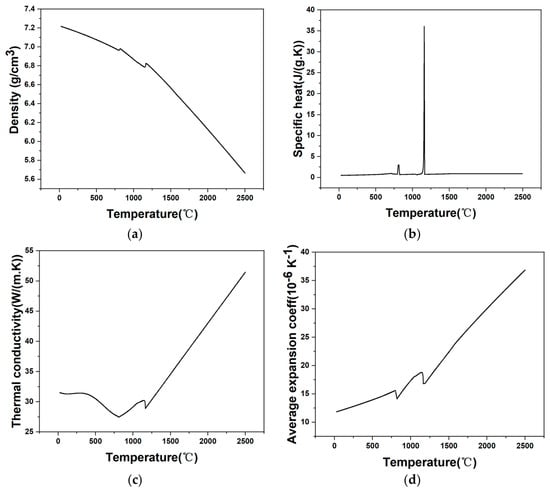
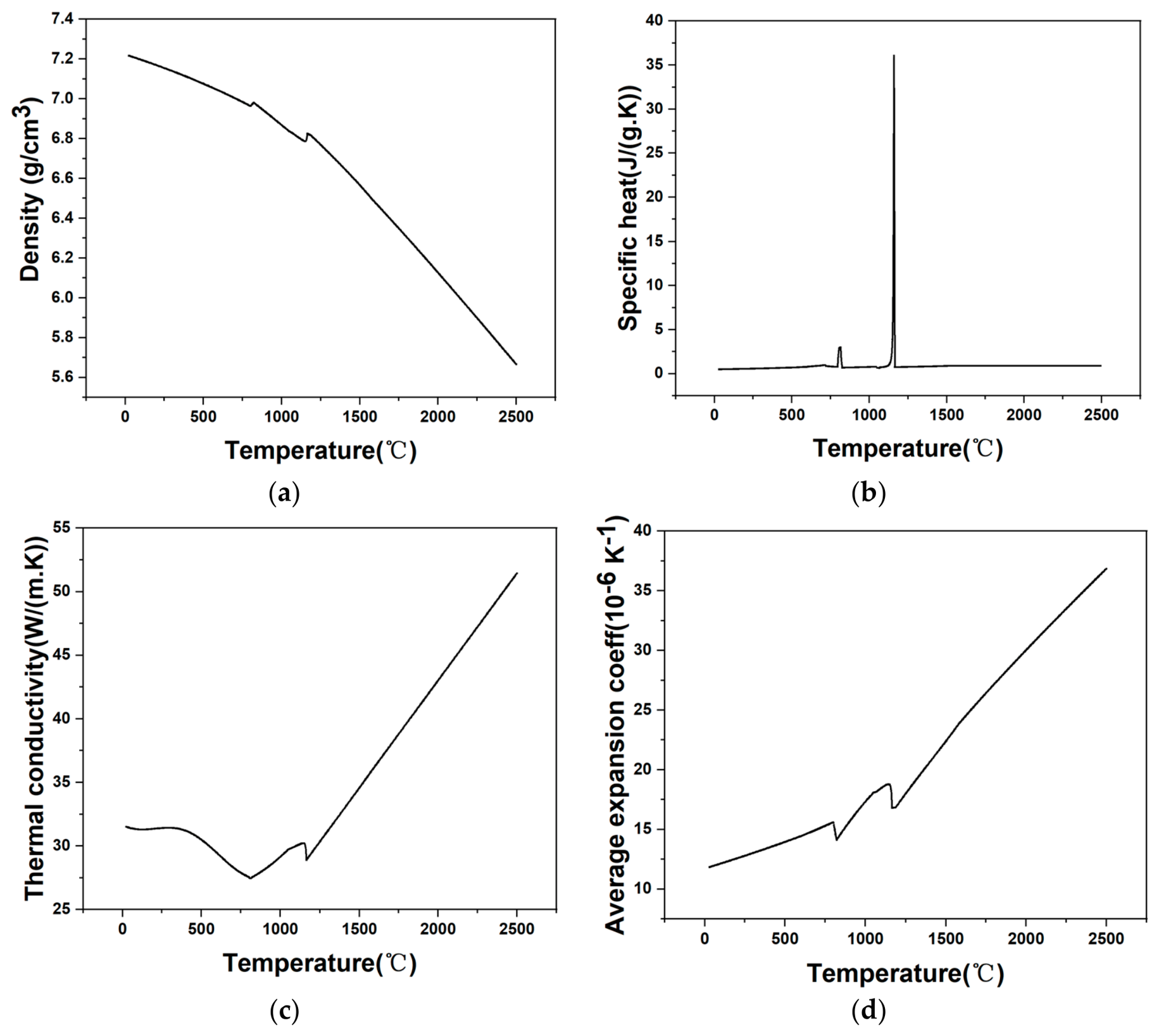
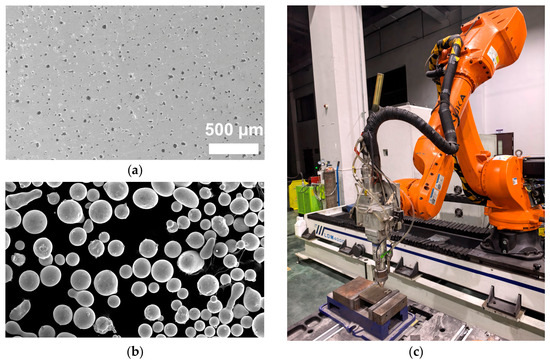
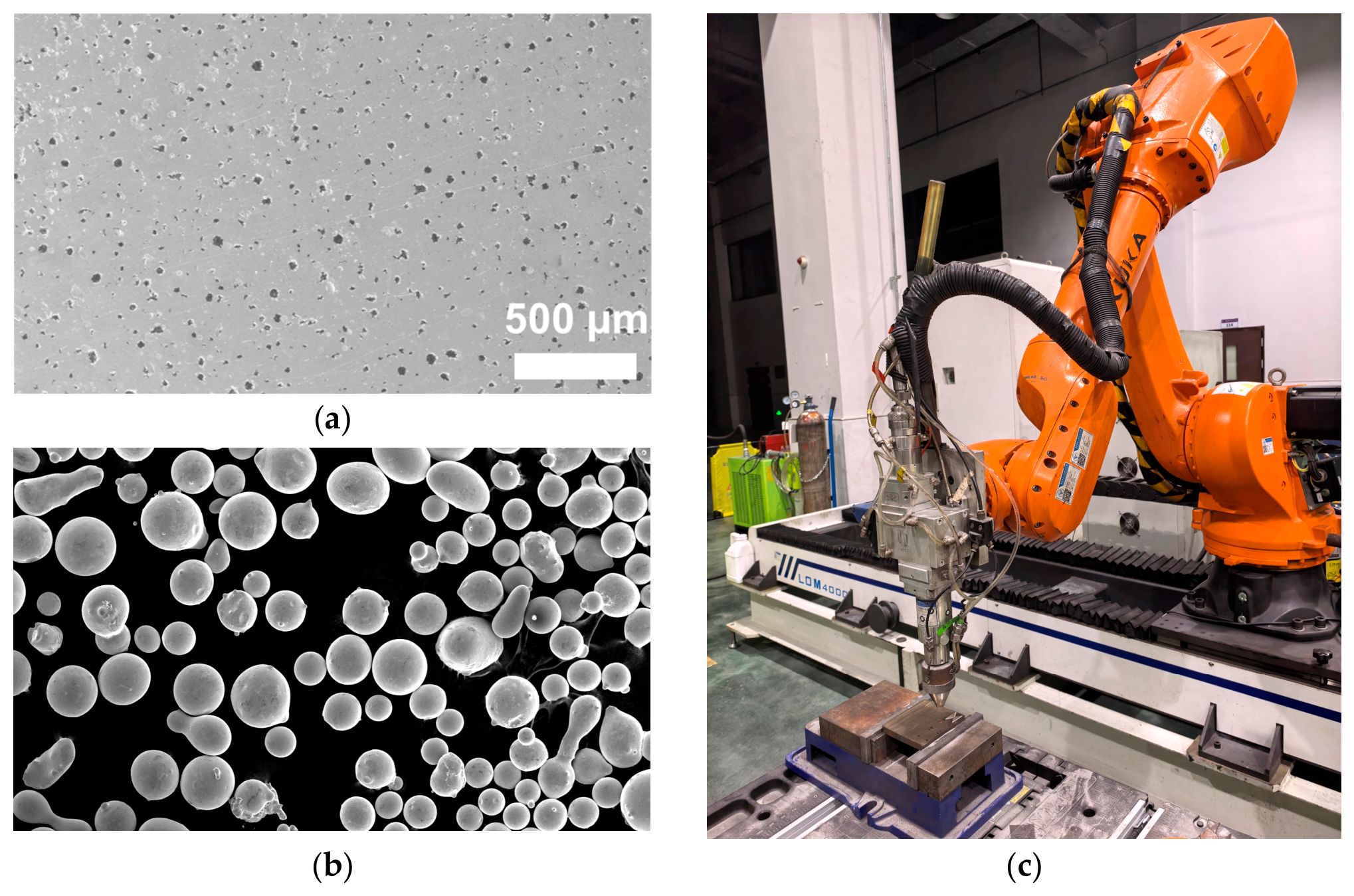
In this experiment, nodular cast iron QT450 was selected as the substrate material, with the size of 100 mm × 100 mm × 10 mm. According to JMatPro 7.0 software, the thermophysical properties of QT450 are obtained, which is shown in Figure 1. Fe-Cr-Ni alloy powder (JG-8, supplied by Tianjin Zhujin Technology Development Co., Ltd., 6 Xinghe Road, Beichen District, Tianjin, China) was utilized as the coating material. The SEM image of QT450 substrate and Fe-Cr-Ni cladding powder are displayed in Figure 2a,b, respectively. The chemical composition of the Fe-Cr-Ni alloy powder is detailed in Table 1. Prior to the cladding process, the substrate surface was mechanically ground to remove oxide layers and impurities, and was then cleaned with anhydrous ethanol to eliminate grease. The cladding powder was dried in a vacuum oven at 100 °C for 1 h to remove residual moisture.
Figure 1.
Thermo-physical properties of QT450: (a) density; (b) specific heat capacity; (c) thermal conductivity; (d) thermal expansion coefficient.
Figure 2.
SEM image of (a) nodular cast iron (QT450) substrate and (b) Fe-Cr-Ni cladding powders, (c) laser cladding equipment system.
Table 1.
Chemical composition of Fe-Cr-Ni laser cladding powders.
2.2. Experimental Setup
The multi-track cladding layer of Fe-Cr-Ni on the surface of nodular cast iron (QT450) was fabricated using a coaxial powder-fed laser cladding system (LOM4000, Shandong Leishi Intelligent Manufacturing Co., Ltd., No. 1777, Chunhui Road, High-tech Zone, Jinan, Shandong Province, China), as depicted in Figure 2c. This system features a high-precision KUKA robot and a 6000 W fiber laser head, which together ensure efficient and uniform cladding during the experiment. Argon gas, with a purity of 99.99%, served as the shielding gas for laser cladding, preventing contamination of the molten pool and maintaining a stable environment conducive to high-quality cladding. A laser spot diameter of 3 mm was selected to achieve optimal energy density for an efficient laser cladding process. Following the laser cladding procedure, the specimens were annealed in a vacuum oven at 200 °C for 1 h and subsequently cooled in a furnace to mitigate residual thermal stress.
Laser cladding is a complex process characterized by the coupling of multiple fields, including heat transfer, thermal stress, and melt pool dynamics. The primary process parameters for multitrack laser cladding include laser power (LP), scanning speed (SS), powder feeding rate (PFR), and overlapping rate (OR), as detailed in Table 2. The intricate nonlinear interactions among these parameters significantly affect the quality of the resulting cladding. To clarify the quantitative relationships between these parameters, a four-factor, five-level Central Composite Design (CCD) matrix was developed and analyzed using Response Surface Methodology (RSM) in DesignExpert 12 software, with dilution ratio and microhardness serving as the response variables. The matrix and corresponding results from a total of 30 CCD-based experiments are presented in Table 3.
Table 2.
Center composite design experimental program.
Table 3.
Experimental results from the CCD experimental program.
2.3. Characterization
Dye penetrant inspection (DPI) was utilized for the non-destructive evaluation of microcracks on the surface of laser cladding, followed by the measurement and statistical analysis of their lengths. Specimens were wire-cut in the transverse direction of the cladding layer using an electrical discharge machine to obtain various samples for subsequent testing. The cross-sections of the samples intended for metallographic observation were sequentially ground with 800, 1000, 1500, and 2000# SiC abrasive papers and polished with an automatic polisher to achieve a mirror finish. The cross-sections were rinsed with anhydrous ethanol and subsequently etched with aqua regia (HNO3: HCl = 1:3 by volume) for 10–15 s. The cross-sectional areas of the cladding layer and the remelted substrate were measured using ImageJ 1.x software to calculate dilution ratio of cladding layer according to Equation (1):
The cross-section microhardness was measured at five evenly distributed points using a Vickers microhardness tester (Model: HV-1000), with a test load of 100 g and a dwell time of 10 s. The average value was calculated to represent the microhardness.
Prior to the friction and wear tests, the surface of the cladding layer was mechanically ground to reduce the running-in period. The tribological performance was assessed using a wear test machine (reciprocating friction test, UMT-3) under dry sliding conditions at room temperature. Reciprocating friction pairs consisted of a Si3N4 ceramic ball with a 3 mm diameter. The tests were carried out with a 20 N normal load, a 5 mm reciprocating stroke, and a 5 Hz frequency over 30 min. The worn cladding surface was examined using an ultra-depth three-dimensional microscope (KS-X5000A, KathMatic, Nanjing, China) and a scanning electron microscope (TESCAN MIRA LMS, Brno, Czechia) with an energy-dispersive spectrometer (BRUKER Quanta ×400, Karlsruhe, Germany).
3. Results
3.1. Establishment of Polynomial Response Surface Model
The regression coefficients for dilution rate and microhardness in the prediction models were derived from the experimental results (Table 3) using Design-Expert 13 software. The mathematical expressions for the established response surface models are provided in Equations (2) and (3):
Based on the experimental data, an analysis of variance (ANOVA) was conducted to assess the goodness-of-fit of the response surface methodology (RSM) models, as presented in Table 4. In the ANOVA, the F-value indicates the relative influence of the experimental factors on the response objective. For dilution rate, the significance order of the parameters is V > P > F > φ, while for microhardness, the order is P > F > φ > V. Moreover, an R2 value approaching 1 signifies a strong correlation with the regression model. The R2 values for the two RSM models are 0.9766 and 0.9728, respectively, underscoring the robust fitting and predictive capabilities of the models. Additionally, the adequate precision (signal-to-noise ratio) for both models exceeds 4, demonstrating the accuracy and effectiveness of the established models.
Table 4.
Variance analysis of multiple regression prediction model.
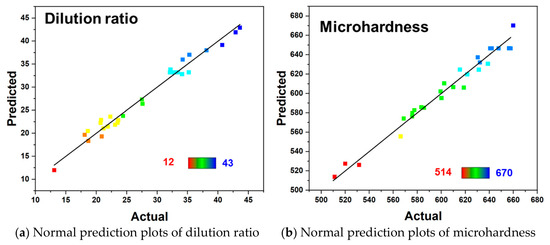
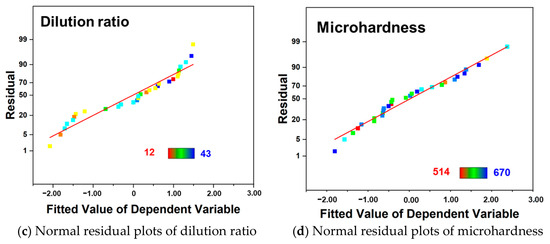
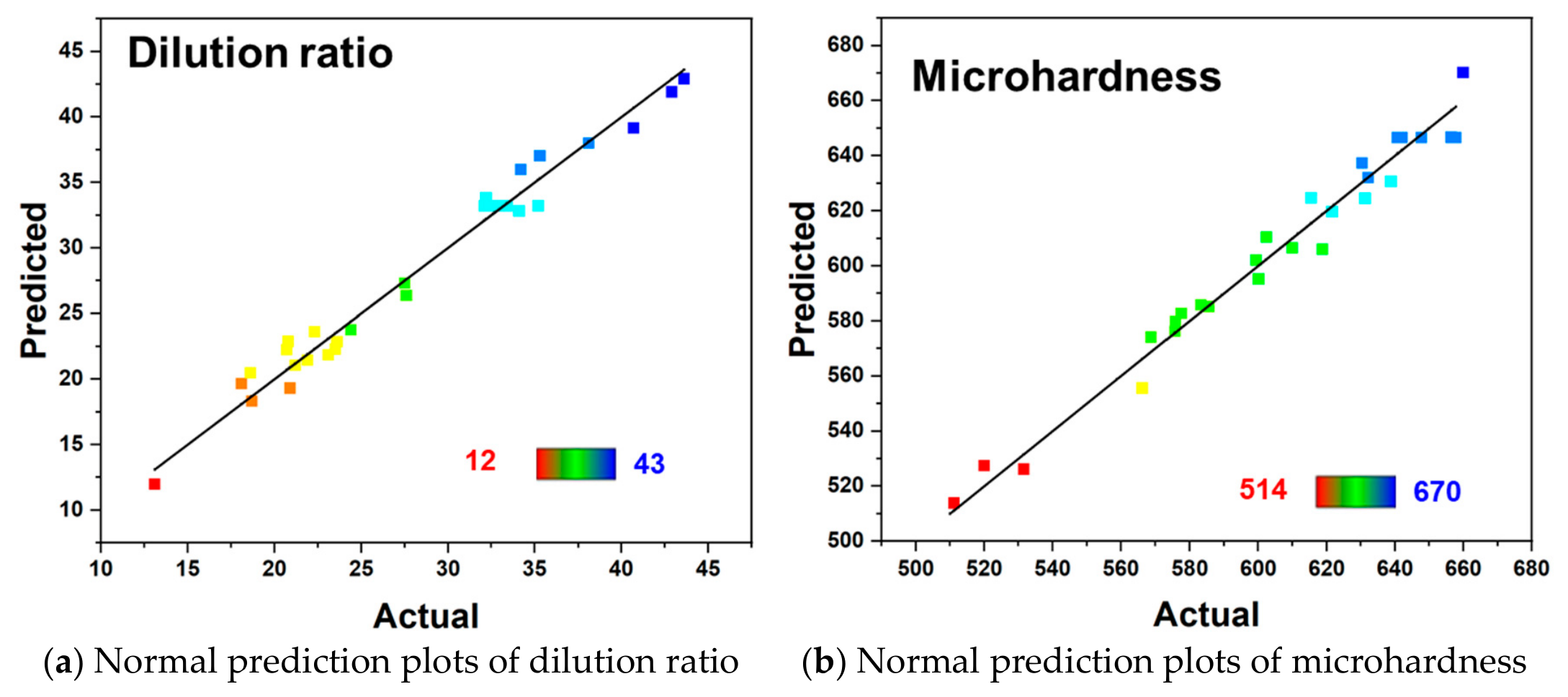
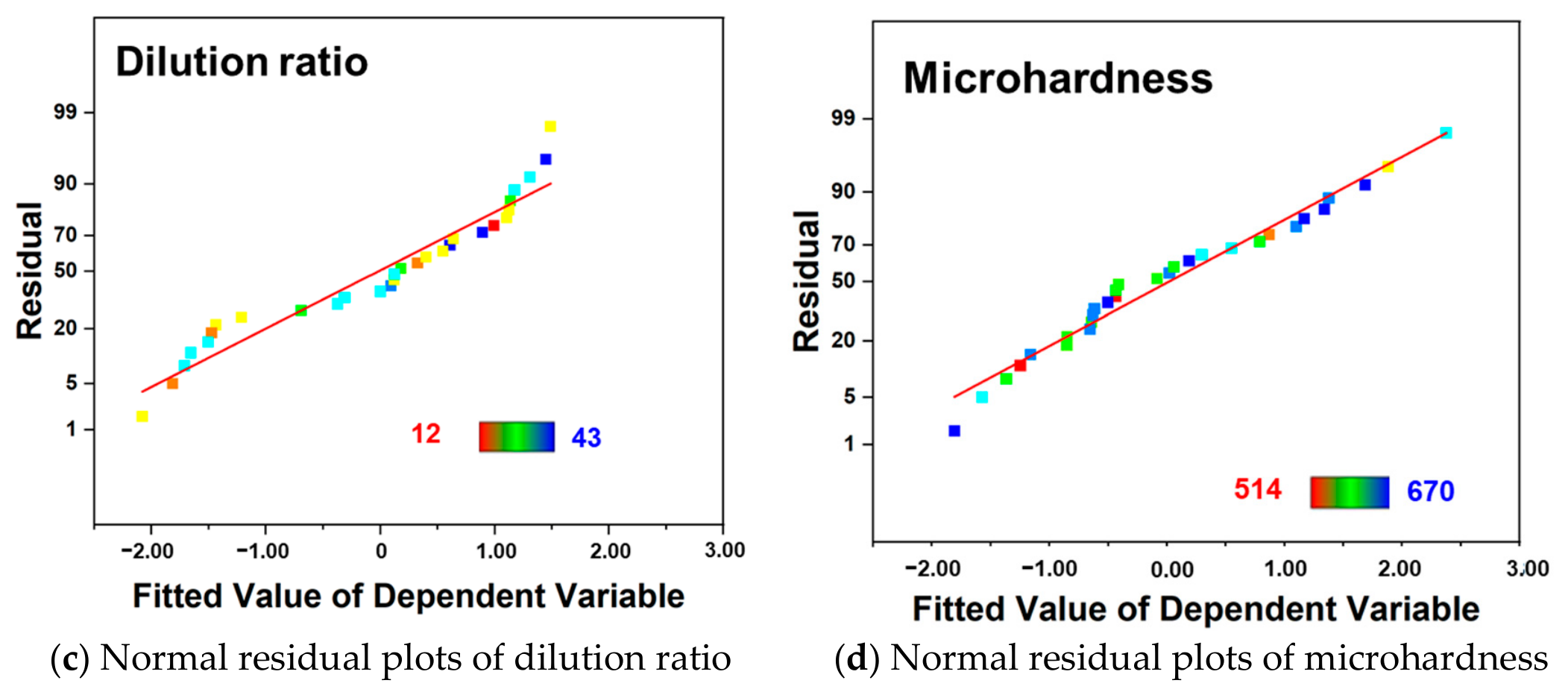
Figure 3a,b compare the predicted and experimental values for the response targets, specifically dilution rate and microhardness. The data points are uniformly distributed along the ideal fitting line (Y = X), with no significant deviations noted. This observation indicates that the established RSM demonstrates excellent goodness-of-fit and high predictive accuracy, effectively capturing the relationship between response targets and process parameters. Additionally, the normal probability plots of residuals for η and HV are shown in Figure 3c,d. The residuals closely align with the red theoretical line, and no evident systematic deviations or outliers are identified, suggesting minimal fitting errors characterized by a high degree of randomness. The approximately normal distribution of the residuals satisfies the fundamental assumptions of regression analysis, thereby affirming the reliability and effectiveness of the developed models. In summary, the established RSM models accurately elucidate the non-linear response relationships between the experimental factors and the response targets.
Figure 3.
Reliability analysis plots of various parameters.
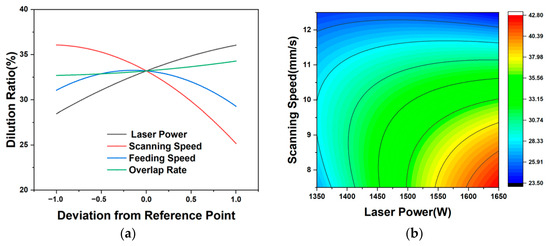
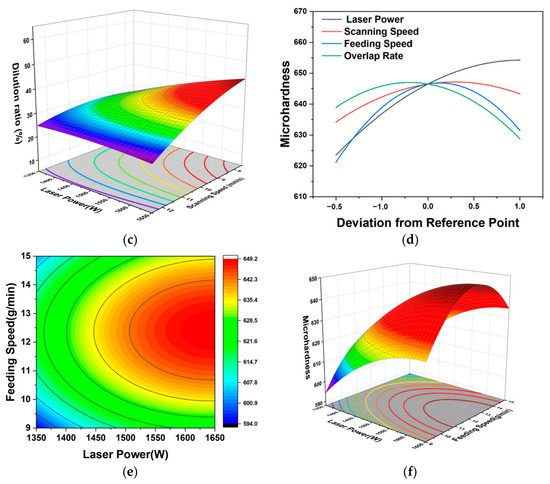
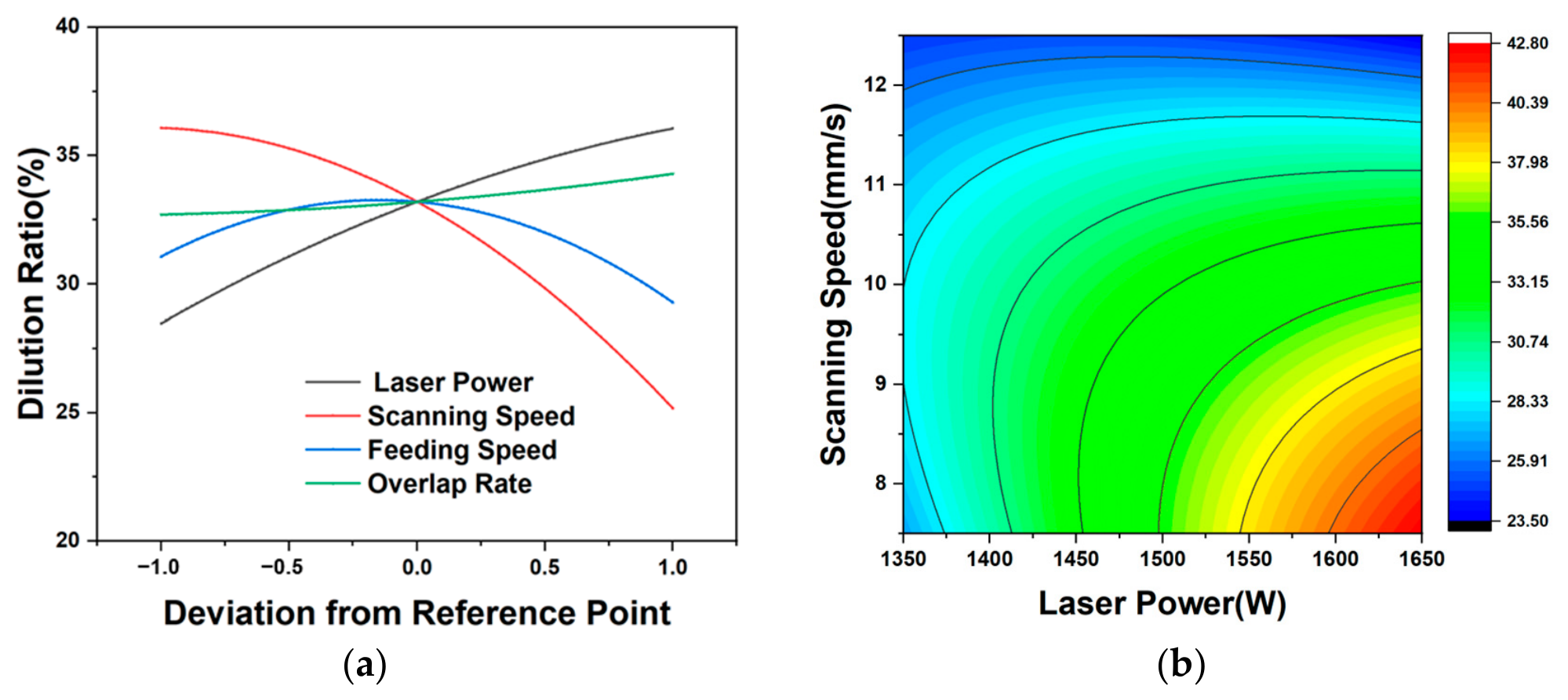
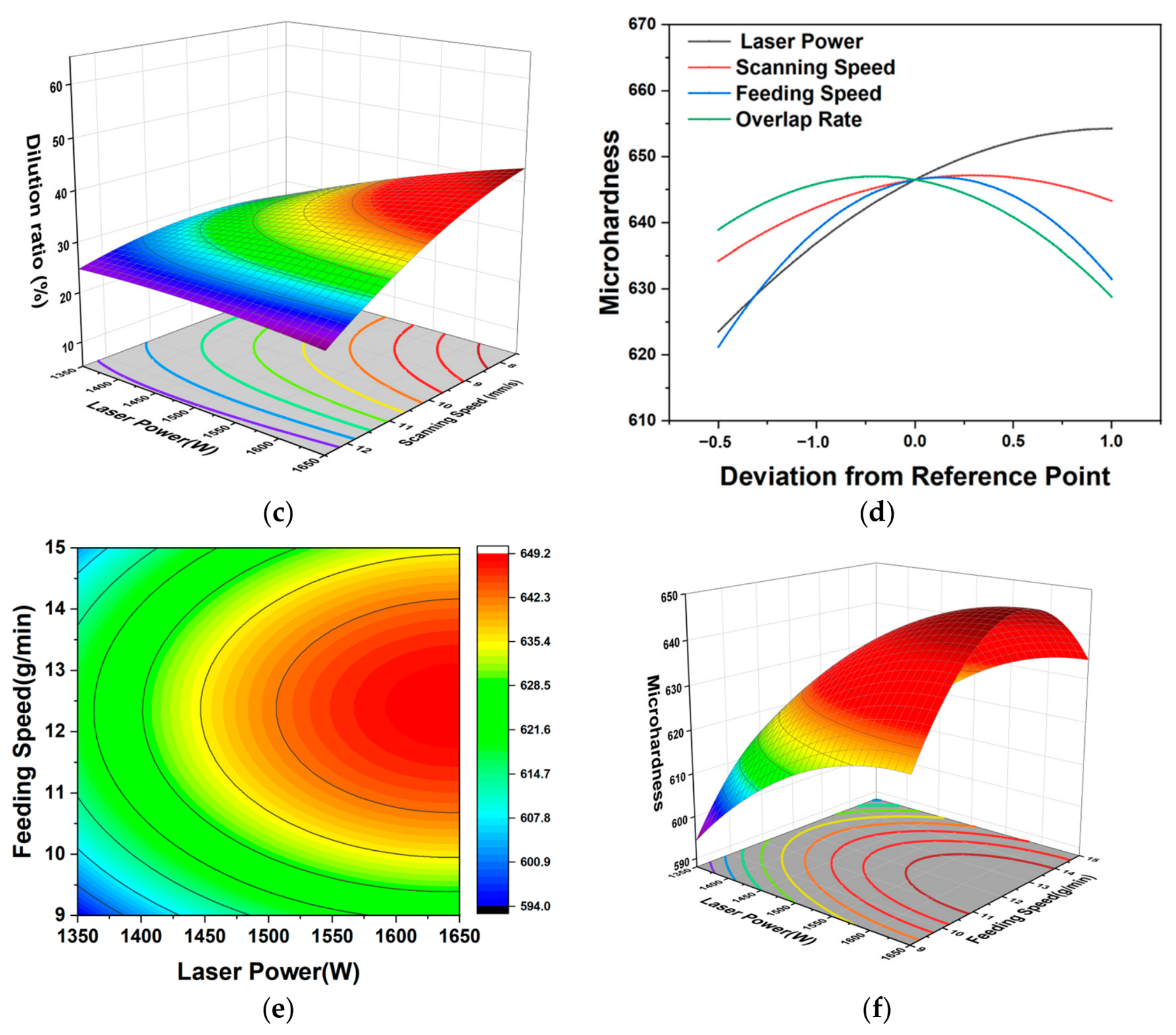
The influence of laser cladding process parameters on the dilution rate of the coatings is illustrated in Figure 4a–c. According to Table 4, laser power and scanning speed are the two most significant parameters affecting the dilution rate. Overall, the dilution rate exhibits a positive correlation with laser power and a negative correlation with scanning speed. Specifically, an increase in laser power enhances the energy absorption of the Fe-Cr-Ni powder and the nodular cast iron substrate, resulting in deeper and wider molten pools that elevate the dilution rate of the cladding coatings. In contrast, a higher scanning speed reduces the specific heat input, leading to a lower dilution rate. Figure 4d–f depicts the relationship between the process parameters and microhardness. The general trend indicates that microhardness is positively correlated with laser power and negatively correlated with feeding speed beyond the central point. Elevated laser power provides sufficient heat to ensure complete melting of the powder, significantly reducing internal porosity and enhancing the microhardness of the coating [22]. Meanwhile, an increased powder feed rate after the central point can result in the accumulation of unmelted cladding powder, introducing defects into the coatings and consequently decreasing microhardness [23].
Figure 4.
Relationship between the process parameters and dilution ratio: (a) perturbation; (b) contour diagram; (c) response surface diagram; relationship between the process parameters and microhardness; (d) perturbation; (e) contour diagram; (f) response surface diagram.
3.2. Multi-Objective Optimization of the Process Parameters Using MOPSO
The multi-objective particle swarm optimization (MOPSO) algorithm, derived from the classical particle swarm optimization (PSO) paradigm, aims to identify the optimal trade-offs among multiple conflicting objectives [24]. This algorithm is inspired by systematic observations of the foraging behavior of birds in nature. During their random search for food, individuals dynamically adjust their flight paths based on personal experiences and the perceived positions of their peers, ultimately converging in areas with the most abundant food resources. Drawing from this intelligent biological behavior, researchers conceptualize individual birds as “particles” and associate target food positions with optimal solutions to specific problems, thereby establishing a swarm-intelligence-based framework grounded in group collaboration. In the MOPSO algorithm, each particle represents a candidate solution that iteratively explores a D-dimensional search space. The position and velocity updates of the particles are influenced by both their historical optimal position (pbest) and the global optimal position (gbest). Through the sharing of information among individuals and group co-evolution, the algorithm progressively approaches and converges to the global optimal solution of the optimization problem. Velocity and position update formulation are expressed as Equations (4) and (5):
which is the number of iterations, is the inertia factor at the th iteration, denotes the position of the particle at the th iteration, represents the velocity of the particle at the th iteration, is the best position of individual particles at the th iteration, is the best position of all particles at the th iteration, and are accelerating factors and are random number between 0 and 1.
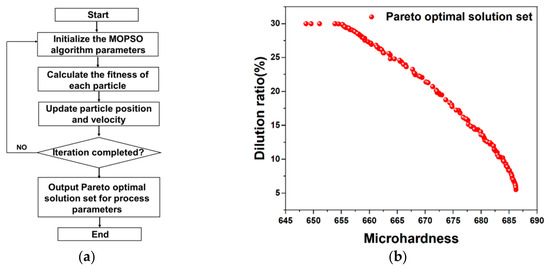
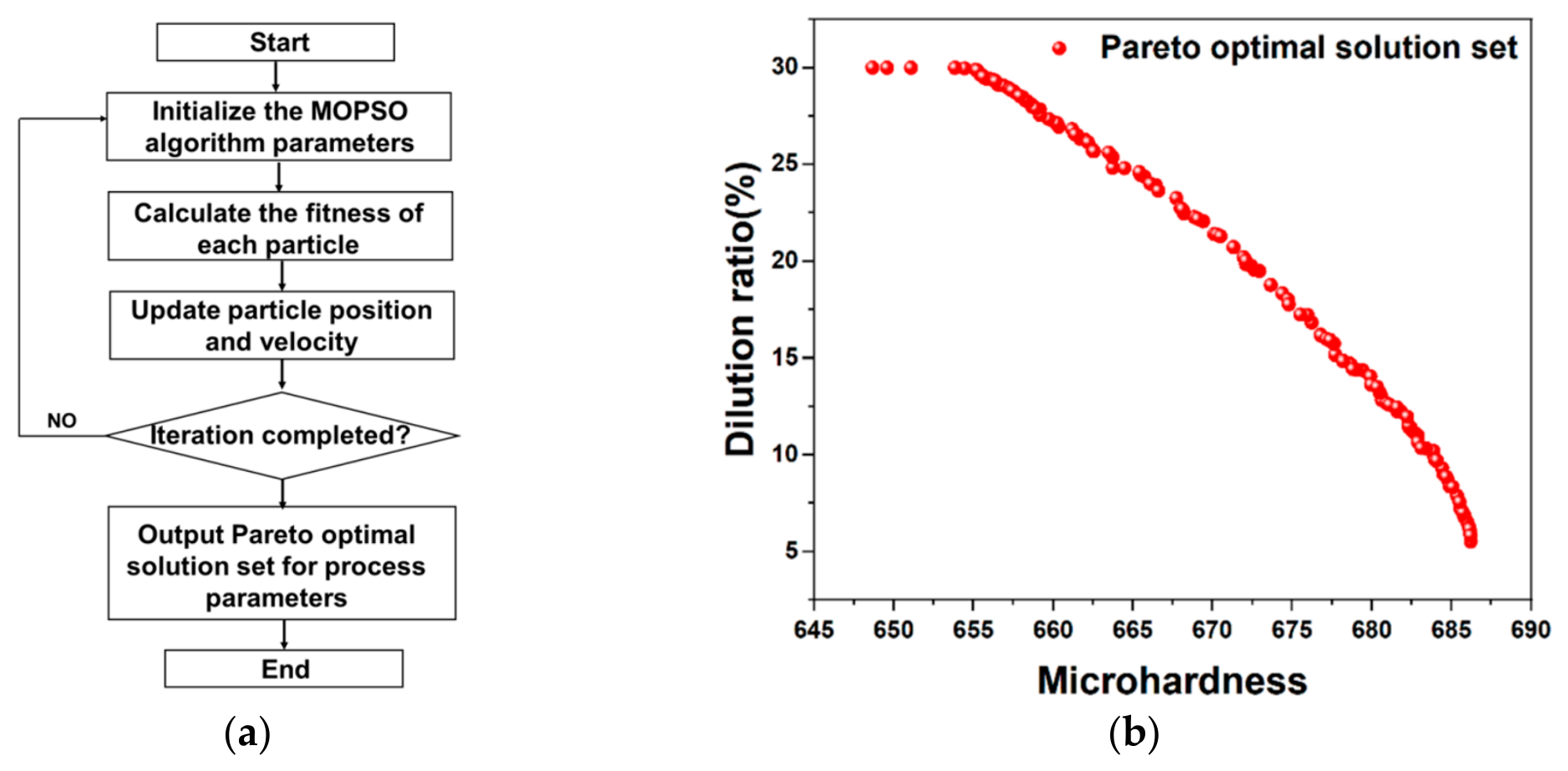
The specific implementation process of the MOPSO algorithm is depicted in Figure 5 and is detailed as follows. The key parameters, including population size, maximum number of iterations, Pareto archive capacity, learning factor, and inertia weight, are initialized. Subsequently, an external archive structure is established to store non-dominated solutions. The fitness of each particle is then calculated based on the objective functions and constraint conditions. A particle is randomly selected from the external archive to serve as the gbest guide. The velocity and position of each particle are updated according to Equations (4) and (5), respectively. The fitness values are subsequently re-evaluated to update the individual pbest positions and the external archive. Ultimately, the solution set for the Pareto front is derived based on dominance relations and crowding distance, reflecting the distribution of optimal solutions for the multi-objective optimization problem.
Figure 5.
(a) MOPSO algorithm operation process; (b) Pareto optimal solution set for laser cladding process.
The results presented in Figure 5 demonstrate that the response surface methodology (RSM) reveals conflicting effects of laser cladding process parameters on both the dilution rate (η) and microhardness (HV). Consequently, it is imperative to utilize the multi-objective particle swarm optimization (MOPSO) algorithm to determine the Pareto front for η and HV. Previous studies have indicated that the dilution rate is a critical metric for assessing the quality of the cladding layer [25]. An inadequate dilution rate hampers the formation of a robust metallurgical bond between the coating and the substrate, leading to diminished interfacial strength. In contrast, an excessively high dilution rate can result in substantial migration of alloying elements into the substrate material, thereby increasing the susceptibility of the cladding coating to cracking. Based on the RSM analysis, a dilution rate of 30% is identified as optimal [26]. Microhardness (HV) is a primary indicator for evaluating the wear resistance of the coating, as an increase in microhardness generally enhances wear resistance. Therefore, improving microhardness is essential for ensuring the durability of the cladding layer. The objective functions and constraints for optimization, as derived from the RSM analysis in the present study, are formulated as shown in Equations (6) and (7), respectively.
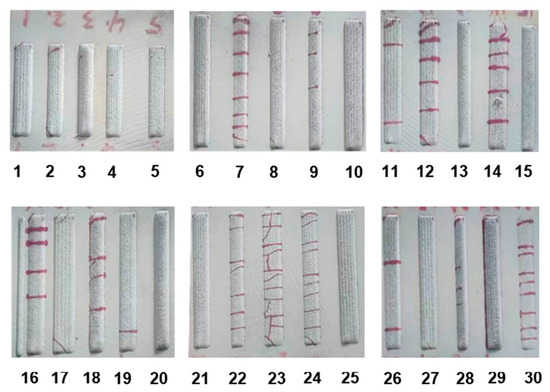
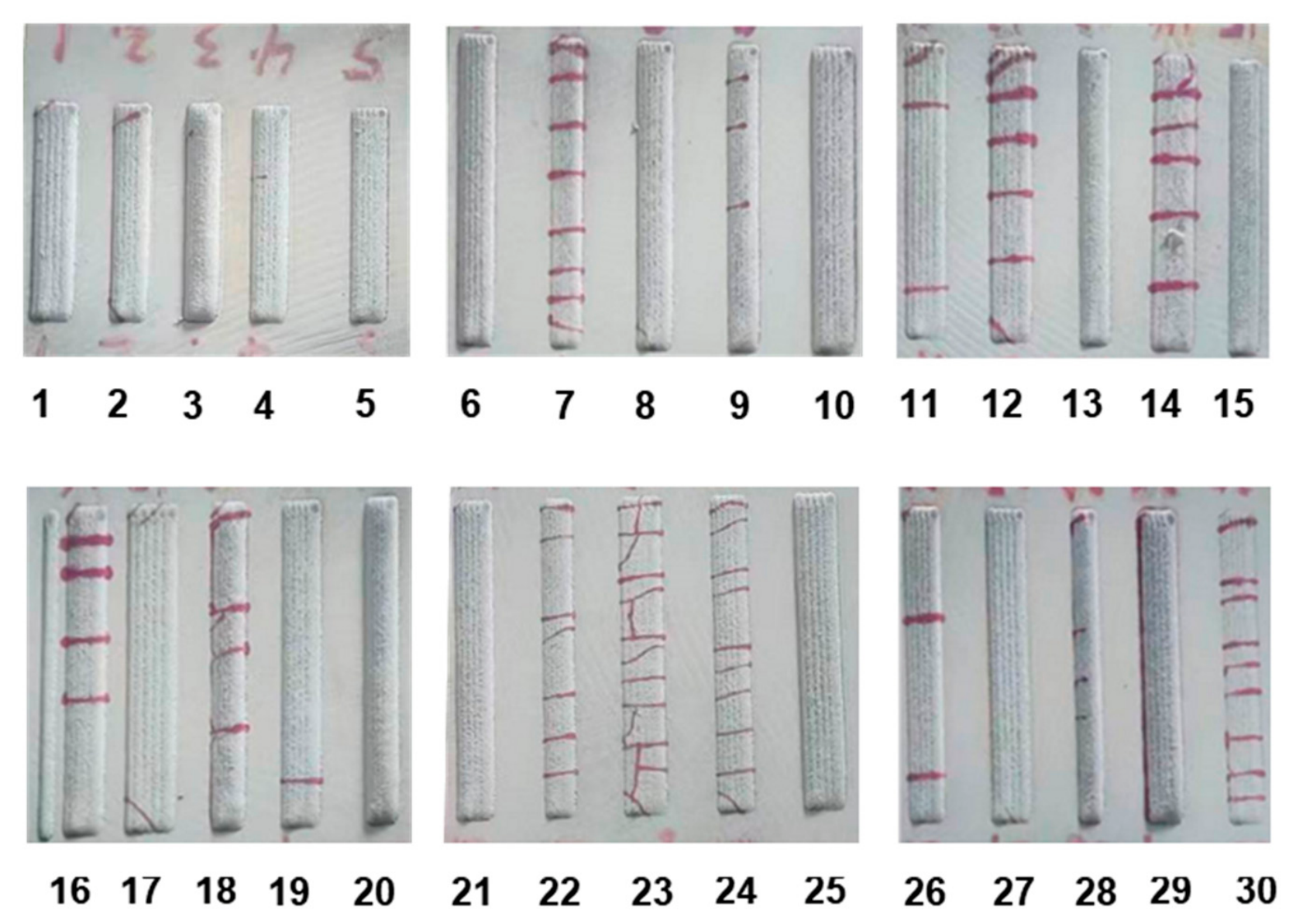
The Pareto-optimal front, derived from the MOPSO algorithm, is illustrated in Figure 4b. To further refine the optimal process parameters, dye penetrant testing was utilized to assess the microcracks within the cladding layers, as shown in Figure 6. Notably, no significant microcracks were detected on the surfaces of specimens from groups 1, 3, 6, 8, 15, 20, 21, 25, and 27. The top-ranked optimized process parameters are as follows: P = 1350 W, V = 12.5 mm/s, F = 9 g/min, and φ = 45%. The relative errors between the actual and predicted values of dilution rate and microhardness are 1.7% and 2%, respectively, which confirms the predictive capacity and reliability of the RSM model.
Figure 6.
Dye penetrant inspection results (E1–E30) of surface micro-cracks in laser cladding.
3.3. Microstructure
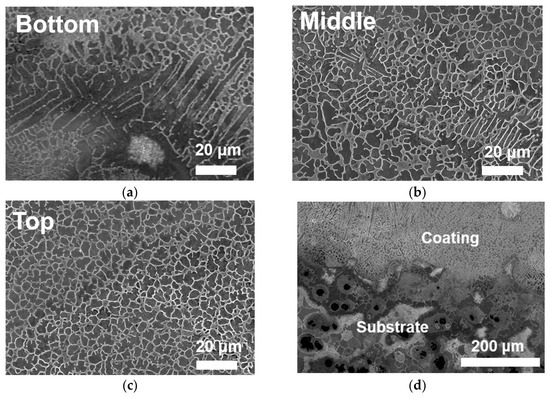
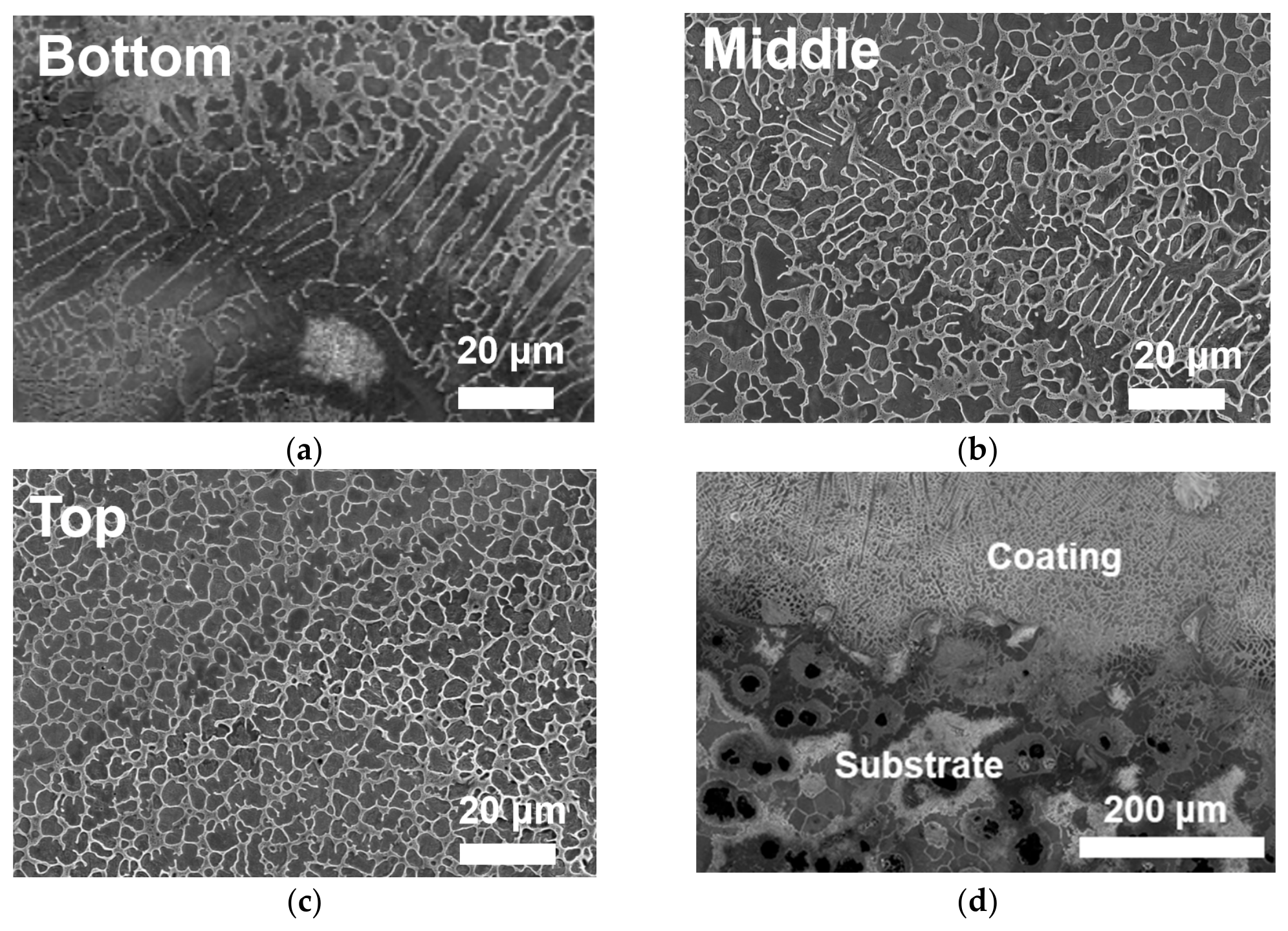
Figure 7 presents SEM images of the cladding coating produced using optimal process parameters (laser power: 1350 W, scanning speed: 12.5 mm/s, powder feeding speed: 9 g/min, overlap rate: 45%) along the thickness direction. The results indicate that no significant defects, such as pores, inclusions, or microcracks, are present. Notably, the cladding coating demonstrate a robust metallurgical bond with the substrate, affirming the high overall quality of the coatings prepared under the optimized conditions. Furthermore, the microstructure of the cladding coating reveals a distinct gradient distribution. In the upper region, the microstructure predominantly consists of fine equiaxed crystals. The rapid solidification results in a high cooling rate of the molten pool, which promotes grain refinement. The middle region exhibits a mixed zone of columnar and equiaxed crystals. In contrast, the microstructure at the bottom of the coating features a typical dendritic structure aligned with the heat flow direction, driven by the significant thermal gradient during the cladding process [27].
Figure 7.
SEM results of laser cladding layers with optimal process parameter: (a) bottom; (b) middle; (c) upper; (d) substrate/coating interface.
3.4. Microhardness and Wear Resistance of Fe-Cr-Ni Cladding Coatings
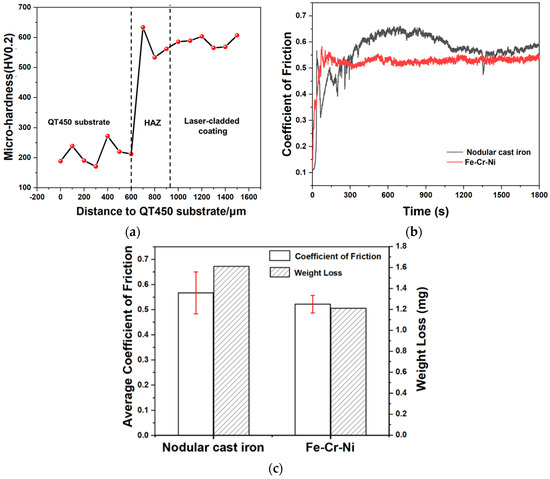
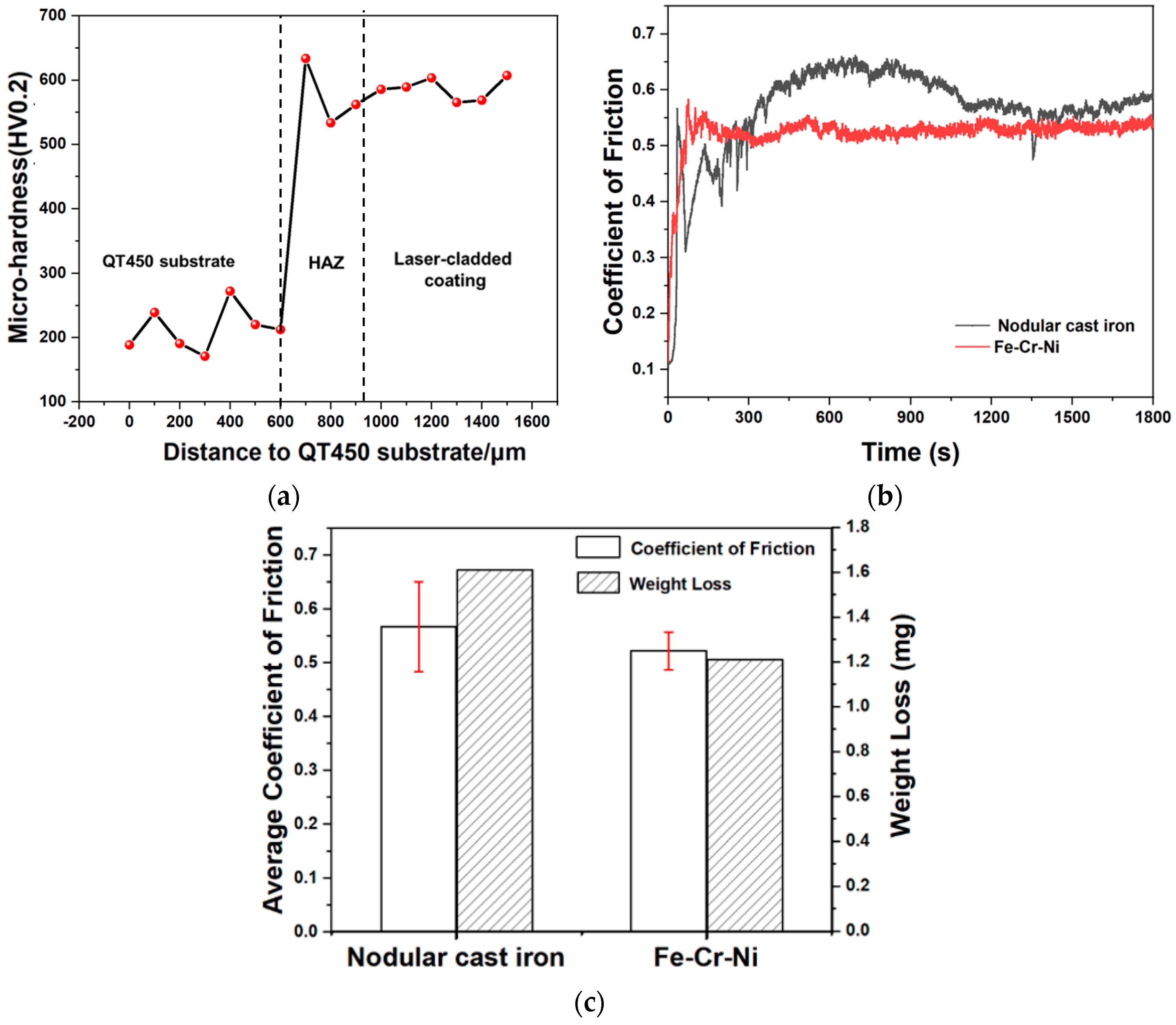
Microhardness serves as a crucial indicator for characterizing tribological performance according to the Archard model. The longitudinal microhardness distribution of the multi-track Fe-Cr-Ni cladding coating is illustrated in Figure 8a. A gradual decrease in microhardness is evident from the cladding layer to the substrate, with a pronounced transition at the interface between the coating and the heat-affected zone (HAZ). The average microhardness of the cladding layer measures 620.3 HV, approximately 2.8 times that of the nodular cast iron substrate. During the laser cladding process, both the powder and substrate experience rapid melting and non-equilibrium solidification due to high-energy beam irradiation, leading to significant grain refinement within the cladding layer. Furthermore, the rapid heating and cooling associated with the Fe-Cr-Ni cladding coating process contribute to solution strengthening, thereby improving the microhardness gradient.
Figure 8.
(a) Hardness distribution of the laser cladding coating; (b) friction coefficients curves of nodular cast iron substrate and Fe-Cr-Ni coating; (c) average friction coefficient and weight loss of nodular cast iron and Fe-Cr-Ni during friction wear tests.
The tribological properties of the Fe-Cr-Ni coating and the nodular cast iron substrate were evaluated through wear testing. The variations in the coefficient of friction (COF) for both the substrate and coating under dry conditions are illustrated in Figure 8b. Notably, the COFs of both the substrate and coating exhibit a rapid increase during the initial running-in period, attributed to the elevated shear force required to fracture the welded junctions. During the wear stages, the COF curve for the Fe-Cr-Ni coating reaches a relatively steady state with an average value of approximately 0.5. In contrast, the COF curve for the nodular cast iron substrate displays significant fluctuations before ultimately reaching equilibrium with an average value of approximately 0.6. The lower COF observed in the Fe-Cr-Ni/Si3N4 friction system can be attributed to the higher hardness of the Fe-Cr-Ni coating compared to the nodular cast iron, which results in reduced debris generation during the wear test. This finding indicates that the Fe-Cr-Ni cladding coating possesses superior friction properties relative to the nodular cast iron substrate. Furthermore, as shown in Figure 8c, the Fe-Cr-Ni cladding coating demonstrates a reduced wear rate compared to the nodular cast iron substrate under dry friction conditions, indicating a significant enhancement in wear resistance.
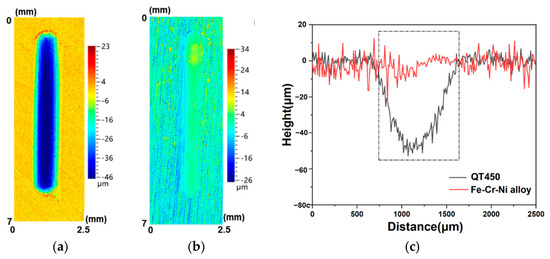
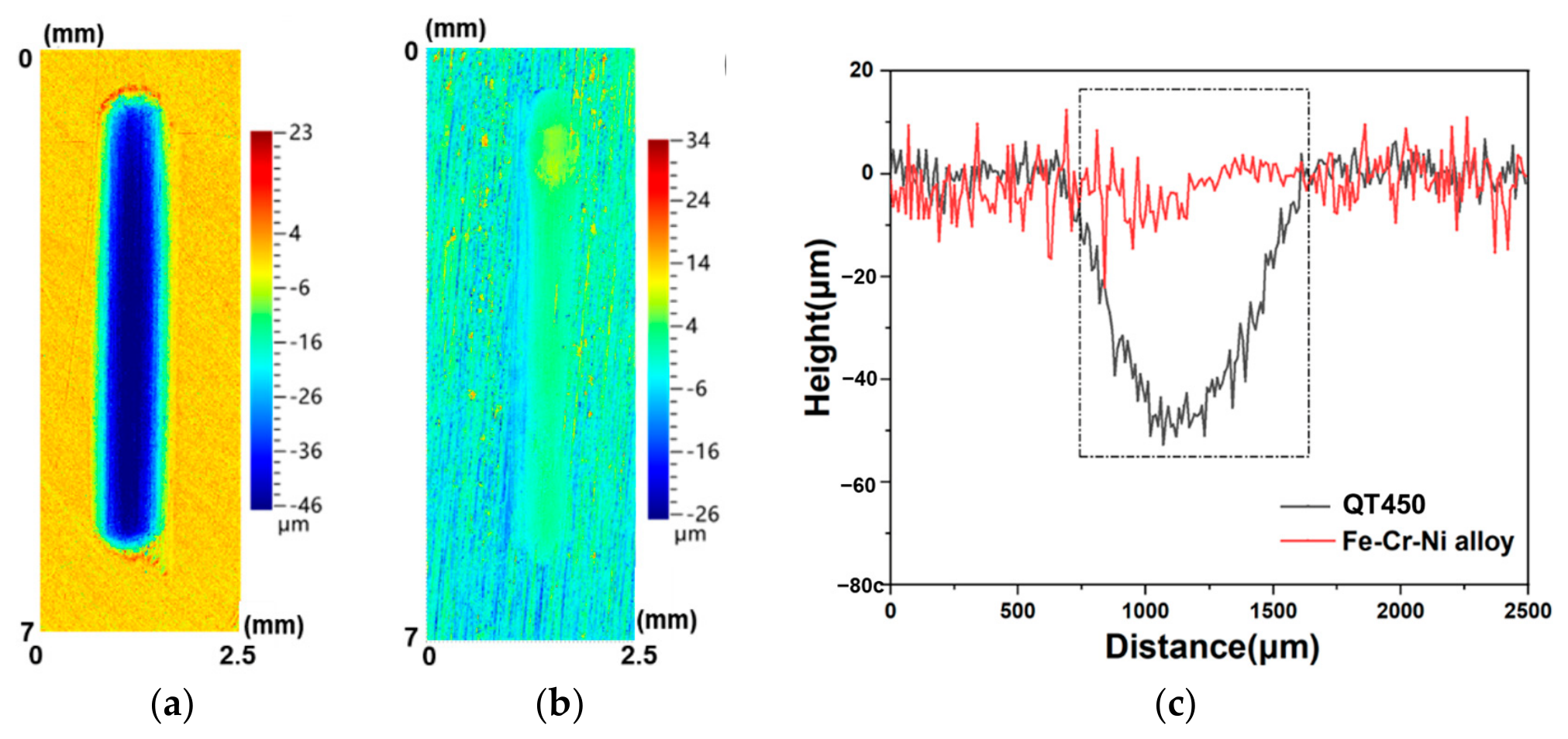
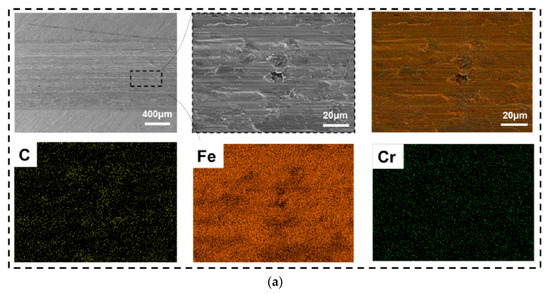
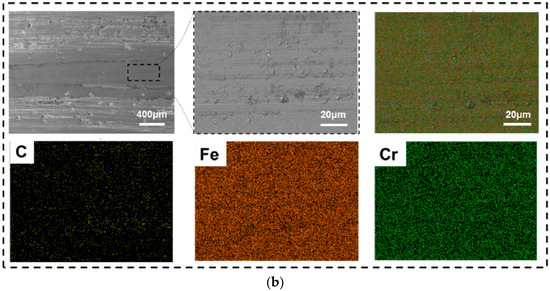
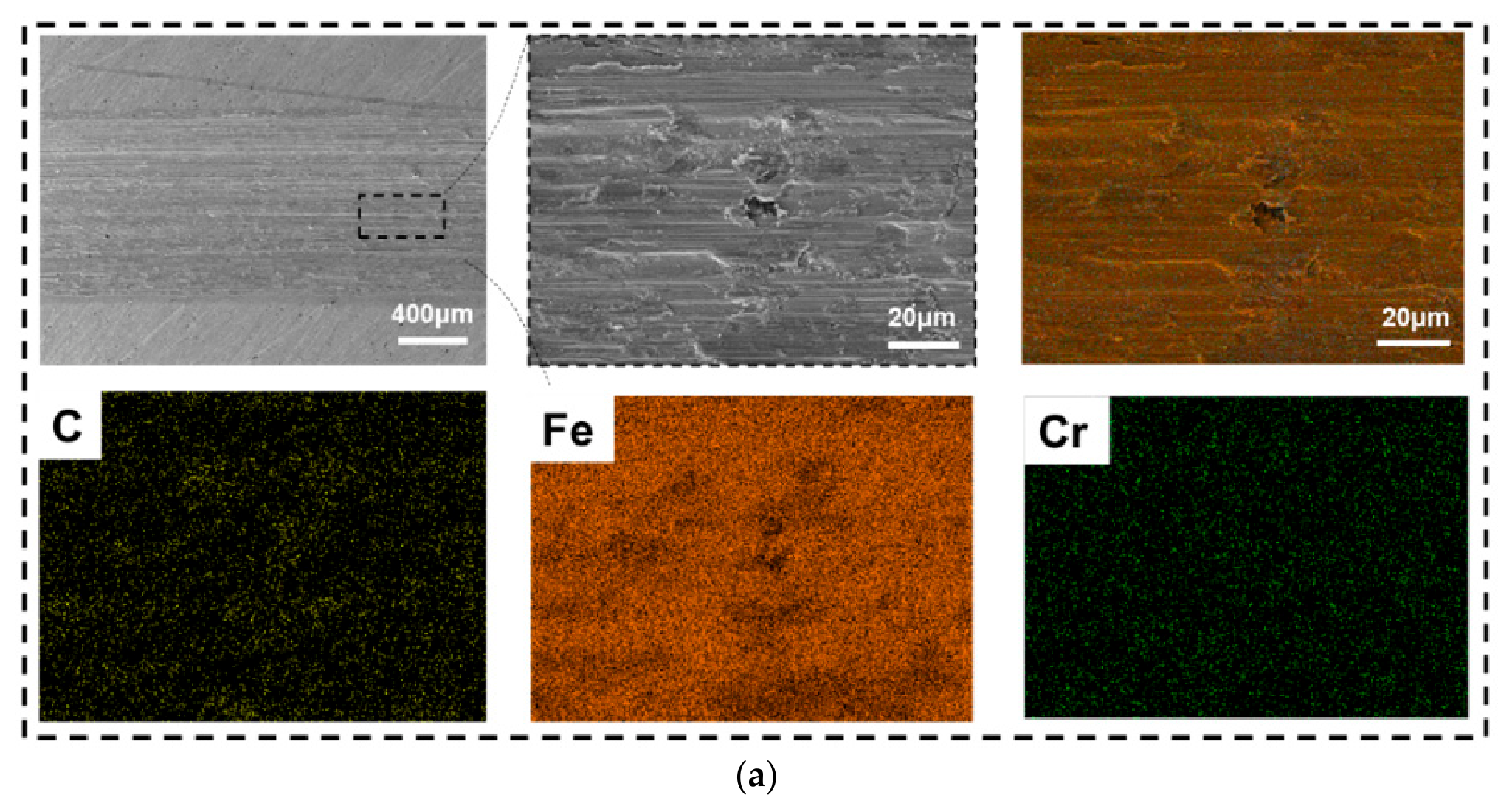
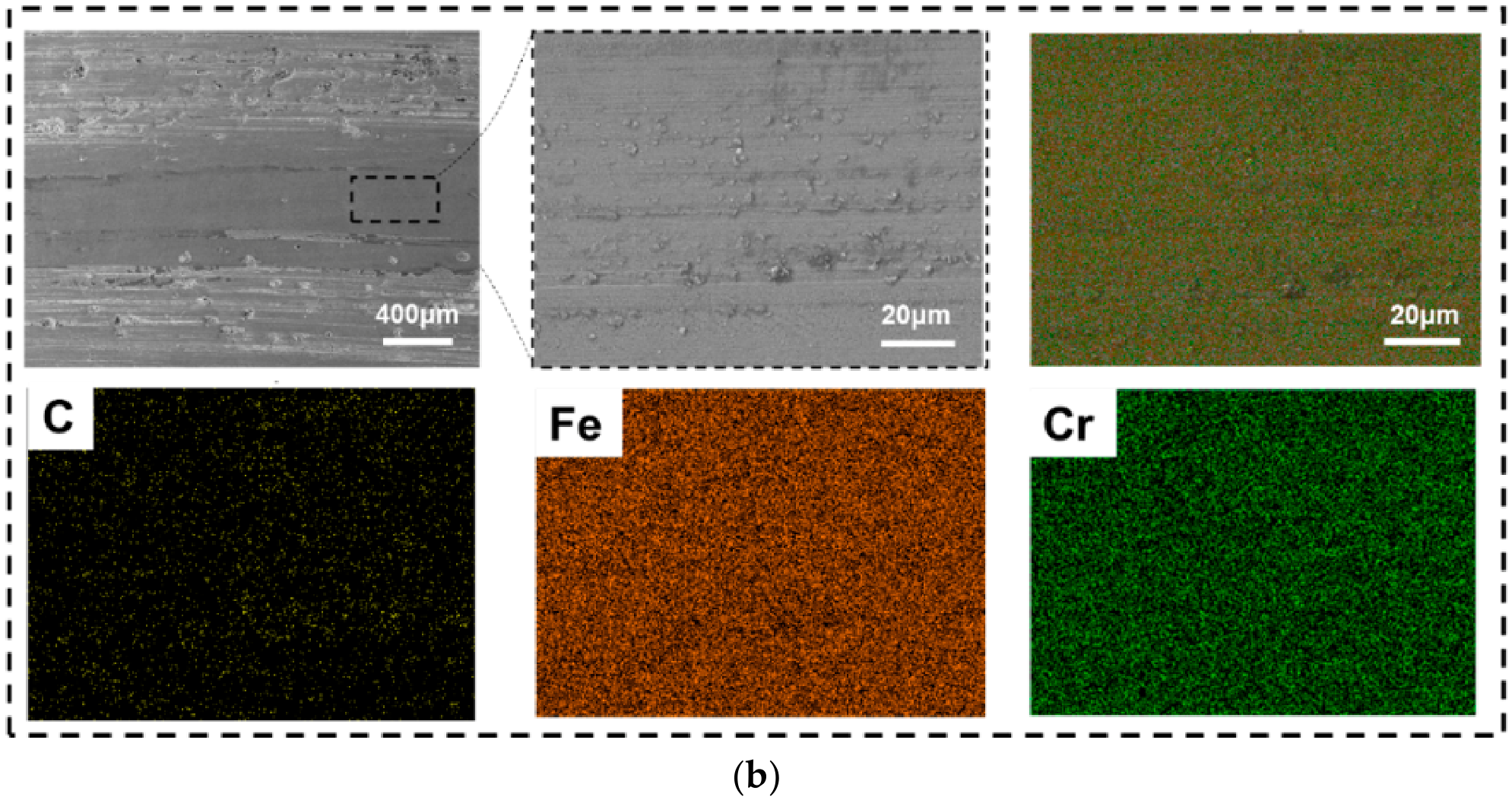
The three-dimensional wear scar and corresponding worn surfaces of the nodular cast iron substrate and the Fe-Cr-Ni cladding coating are presented in Figure 9 and Figure 10, respectively. Notably, the nodular cast iron substrate and the Fe-Cr-Ni cladding coating exhibit marked differences in their wear scar morphologies, as shown in Figure 9a,b. The wear scar depth of the nodular cast iron substrate measures 50 μm, which is greater than that of the Fe-Cr-Ni cladding coating, as presented in Figure 9c. As shown in Figure 10a, the worn surface of the substrate displays extensive ploughing grooves and delamination, accompanied by significant spalling, indicating pronounced plastic deformation during the wear test. The lower hardness of the nodular cast iron, attributed to the uneven distribution of graphite particles, contributes to this plastic deformation under the influence of frictional shear forces. The detachment of a substantial amount of debris results in grooves that align parallel to the wear direction. Thus, the predominant wear mechanism for the nodular cast iron is adhesive wear. In contrast, as illustrated in Figure 10b, only a few abrasive particles, resulting from mild ploughing wear, are present on the worn surface of the coating. The formation of a dense chromium oxide film and grain refinement reduces plastic deformation and brittle spalling, leading to a significant decrease in adhesive wear. The shear stresses induced by friction cause the adhesive bonds at surface irregularities to rupture, leading to the progressive removal of the superficial material and the exposure of metal surfaces. These newly exposed surfaces display chemical reactivity, promptly engaging with atmospheric oxygen to form oxide layers [28,29,30]. Furthermore, as reported in ref. [31], during dry sliding or reciprocating friction, the contact zone undergoes significant shear and contact stresses, leading to severe plastic deformation in the surface of the Fe-Cr-Ni coating. This results in the formation of a high density of dislocations that nucleate, glide, and interact within the surface layer, giving rise to dislocation walls and tangles. With continued strain accumulation, these dislocation walls transform into low-angle grain boundaries and then into high-angle grain boundaries, dividing the initial coarse grains into smaller equiaxed grains. Consequently, the primary wear mechanism for the Fe-Cr-Ni cladding coating is mild abrasive wear and adhesive wear.
Figure 9.
Reciprocating friction wear scars: (a) nodular cast iron; (b) Fe-Cr-Ni cladding layer; (c) depth of wear scars.
Figure 10.
SEM image of worn surface morphologies: (a) nodular cast iron; (b) Fe-Cr-Ni cladding layer.
During this process, the extremely high cooling rates, typically ranging from 103 to 106 K/s, induce highly non-equilibrium solidification conditions [32]. As a result, the coating primarily solidifies as an austenitic matrix, while competitive precipitation of martensite/ferrite and retained austenite occurs simultaneously. The rapid cooling rate hinders diffusional phase transformations, facilitating the formation of metastable phases, which enhances the hardness and wear resistance of the cladding coating [33]. During the laser cladding process, carbon element is dissolved from the graphite and accumulates between dendrites. Chromium reacts with diffused carbon to generate carbides like Cr23C6 and Cr7C3, which then precipitate along the grain boundaries, contributing to the improvement of the hardness and wear resistance of the cladding coating [34].
4. Conclusions
In this study, Fe-Cr-Ni coatings were successfully fabricated on nodular cast iron substrates via laser cladding. A central composite design (CCD) was employed to establish quantitative correlations between the cladding process parameters and the response variables. The optimal process parameters were determined using a multi-objective particle swarm optimization (MOPSO) algorithm. Additionally, the microstructure, microhardness distribution, and wear resistance of the multi-track coatings were systematically characterized, offering valuable insights into the wear mechanisms of the Fe-Cr-Ni coating system. The conclusions are presented as follows:
- Based on the results of the central composite design (CCD), response surface models were effectively developed to correlate process parameters—namely, laser power, powder feed rate, scanning speed, and overlap rate—with coating performance indices, including dilution ratio and microhardness. Statistical analysis of variance (ANOVA) and residual analysis indicated that the models exhibited high reliability, as evidenced by significant model terms (p < 0.05) and non-significant lack-of-fit (p > 0.05). This confirms the strong predictive accuracy of the established models.
- The optimal laser cladding parameters for Fe-Cr-Ni alloy were determined using the multi-objective particle swarm optimization algorithm as follows: a laser powder of 1350 W, a scanning speed of 12.5 mm/s, a power feed rate of 9 g/min, and an overlap rate of 45%. Experimental validation demonstrated relative errors of only 1.7% for the dilution ratio and 2% for microhardness when comparing the experimental and predicted values, thus affirming the reliability of the optimization outcomes.
- The Fe-Cr-Ni coating exhibited enhanced tribological performance compared to the nodular cast iron substrate. This improvement is mainly ascribed to grain refinement resulting from the rapid solidification process in laser cladding, leading to reduced friction coefficient and wear rate. Additionally, the wear mechanism transitioned from severe adhesive wear in the nodular cast iron to a blend of mild abrasive wear and adhesive wear in the Fe-Cr-Ni coating.
This research primarily focuses on the optimization of cladding process parameters, while research on the influence of working conditions on the friction and wear properties of the cladding layer remains relatively limited. To further expand the application of Fe-Cr-Ni alloy reinforced coatings in the automotive and mining industries, future work will investigate the friction and wear performance of Fe-Cr-Ni cladding layers subjected to heavy loads.
Author Contributions
Data curation, Formal analysis, Investigation, Methodology, Writing—original draft, Writing—review and editing, Funding acquisition, Project administration, Z.S. and J.Y.; Data curation, J.C.; Software, Validation, Visualization, J.X.; Software, Validation, Visualization, B.D.; Resource, Funding acquisition, Project administration, Supervision, Y.Y. and Y.W. All authors have read and agreed to the published version of the manuscript.
Funding
This research was financially supported by Science and Technology Program of Chongqing Municipal Education Commission grant number KJQN202403125, KJQN202403122, KJZD-M202503102, the Natural Science Foundation of Chongqing, China grant number CSTB2024NSCQ-MSX0892, and the National Natural Science Foundation of China grant number 12502155.
Institutional Review Board Statement
Not applicable.
Informed Consent Statement
Not applicable.
Data Availability Statement
Data are contained within the article.
Conflicts of Interest
The authors declare no conflicts of interest.
References
- Zhang, H.; Sui, M.; Liu, Y.; Zhao, W.; Xiao, G.; Liu, S.; Fu, C.; Rao, W. Laser cladding high wear and tribo-corrosion resistant Fe-based defect-free layers on nodular cast iron. Ceram. Int. 2026, 52, 4517–4526. [Google Scholar] [CrossRef] [Scilit]
- Valehi, M.; Mosallaee, M.; Saboori, A. Predictive modeling and optimization of geometrical characteristics in coaxial laser cladding of Fe-based powder on nodular cast iron. J. Mater. Res. Technol. 2026, 41, 138–147. [Google Scholar] [CrossRef] [Scilit]
- Wang, Y.; Yu, T.; Zhang, Y.; Sun, J.; Sun, Z. Process parameter optimization of Fe-based coating on ductile iron using laser cladding with grey related analysis. Opt. Laser Technol. 2025, 181, 111906. [Google Scholar] [CrossRef] [Scilit]
- Han, M.; Zhang, X.; Lin, H.; Fu, X.; Liu, J.; Xu, W.; Zhang, J.; Xu, B.; Zhang, C. A multi-objective cross-scale optimization approach for high-performance Inconel 625 laser cladding on ductile iron. J. Mater. Res. Technol. 2025, 37, 102–121. [Google Scholar] [CrossRef] [Scilit]
- Shu, L.; Huang, T.; Song, R.; Qiu, Y.; Mao, S.; Ming, Z. Predicting Yield Strength of Laser Cladding Specimens Using Random Forest Regression with SHAP-Based Explainability. J. Alloys Compd. 2026, 1069, 188638. [Google Scholar] [CrossRef] [Scilit]
- Liang, Z.; Liu, S.; Chen, S.; Wang, H. Corrosion characteristics of Inconel 625 laser cladding layer in molten NaCl with laser shock peening and heat treatment. Mater. Sci. Eng. A 2026, 968, 150393. [Google Scholar] [CrossRef] [Scilit]
- Cárcel-Carrasco, F.J.; Pascual-Guillamón, M.; Salas-Vicente, F.; Donderis-Quiles, V. Influence of heat treatment in the microstructure of a joint of nodular graphite cast iron when using the tungsten inert gas welding process with perlitic grey cast iron rods as filler material. Metals 2019, 9, 48. [Google Scholar] [CrossRef] [Scilit]
- Holst, A.; Biermann, H.; Buchwalder, A. Effect of a surface treatment consisting of electron beam remelting and gas nitriding on the corrosion resistance of cast iron. Mater. Corros. 2024, 75, 386–397. [Google Scholar] [CrossRef] [Scilit]
- Bonabi, S.F.; Ashrafizadeh, F.; Sanati, A.; Nahvi, S.M. Structure and Corrosion Behavior of Arc-Sprayed Zn-Al Coatings on Ductile Iron Substrate. J. Therm. Spray Technol. 2018, 27, 524–537. [Google Scholar] [CrossRef] [Scilit]
- Wang, X.; Liu, X.; Liu, Y.; Wang, W.; Wang, G.; Jin, Y.; Wei, Z.; Zhang, Y. High-Temperature corrosion behavior of Fe-based alloys and silicon-modified laser-cladded Inconel 625 in waste incineration environments. Surf. Interfaces 2026, 83, 108543. [Google Scholar] [CrossRef] [Scilit]
- Liu, K.; Wang, L.; Huang, L.; Jing, L.; Li, J. Effect of laser power on microstructure and properties of laser cladding Ni-based composite coating on nickel aluminum bronze alloy. J. Alloys Compd. 2026, 1057, 186952. [Google Scholar] [CrossRef] [Scilit]
- Tang, Y.; Qin, L.; Pan, W.; Yang, Z.; Li, X. Threshold effect and synergistic enhancement of wear resistance in CeO2-modified Co-based coatings fabricated via low-power laser cladding. Surf. Coat. Technol. 2026, 524, 133274. [Google Scholar] [CrossRef] [Scilit]
- Su, J.; Liang, J.; Ruan, Y.; Guan, M.; Luo, C.; Chen, G.; Qiu, X. The study of interface microstructure and friction properties of single and multiple pass CuCrZr laser cladding on QT500-7 ductile cast iron. Opt. Laser Technol. 2025, 190, 113206. [Google Scholar] [CrossRef] [Scilit]
- Ouyang, C.; Wang, R.; Zhao, C.; Wei, R.; Li, H.; Deng, R.; Bai, Q.; Liu, Y. Study on ductile iron surface laser cladding austenitic stainless steel coating heat treatment to enhance wear resistance. Tribol. Int. 2024, 191, 109202. [Google Scholar] [CrossRef] [Scilit]
- Li, Y.; Dong, S.; Yan, S.; Liu, X.; He, P.; Xu, B. Surface remanufacturing of ductile cast iron by laser cladding Ni-Cu alloy coatings. Surf. Coat. Technol. 2018, 347, 20–28. [Google Scholar] [CrossRef] [Scilit]
- Duan, B.; Zhao, H.; Lin, N.; Zhou, L.; Wang, X.; Ma, G.; Wang, H.; Wu, Y. Predictive modelling and process optimisation of high-speed laser cladding FeCrNiMo0.75 alloy coating on 45# steel. Mater. Today Commun. 2025, 44, 112107. [Google Scholar] [CrossRef] [Scilit]
- Feng, R.; Tang, Z.; Quach, W.; Yao, J.; Yan, M.; Lau, H. Experimental study on laser cladding forming of 316 L stainless steels based on Response Surface Methodology. Structures 2025, 79, 109495. [Google Scholar] [CrossRef] [Scilit]
- Huang, G.; Liu, Y. Laser cladding of B4C-Ti64 composite coating: Multi-objective process optimization, and investigation on microstructure, microhardness, and wear behavior. Surf. Coat. Technol. 2026, 520, 133001. [Google Scholar] [CrossRef] [Scilit]
- Zhang, Y.; Zhan, H.; Wan, Q.; Wang, R.; Zhang, X.; Wang, W. Multi-objective optimization of process parameters for rectangular laser cladding of Fe-based alloy wear-resistant coatings. Surf. Coat. Technol. 2025, 503, 131990. [Google Scholar] [CrossRef] [Scilit]
- Luo, D.; Liu, C.; Wang, C.; Wang, Y.; Wang, X.; Zhao, J.; Jiang, S. Optimization of multilayer laser cladding process parameters based on NSGA-II-MOPSO algorithm. Opt. Laser Technol. 2024, 176, 111025. [Google Scholar] [CrossRef] [Scilit]
- Ji, X.; Lu, C.; Chen, R.; Huang, R.; Zhang, W.; Zhou, J.; Zhang, M.; Yin, Y.; Yu, H. Multi-objective optimization of laser cladding parameters for CoCrW coatings using RSM-NSGA-II hybrid methodology. Surf. Interfaces 2026, 94, 109399. [Google Scholar] [CrossRef] [Scilit]
- Li, Z.; Du, Y.; He, G.; Liang, Q. Parameters optimization for single-track laser cladding based on MPA-SVR and A-NSGA-III. Opt. Laser Technol. 2024, 169, 110069. [Google Scholar] [CrossRef] [Scilit]
- Yu, J.; Wu, B.; Zhang, C.; Zhao, J. Multi-objective process optimization and strengthening mechanism analysis of U-groove-assisted laser cladding Ni-based composite coatings. Appl. Surf. Sci. 2026, 716, 164676. [Google Scholar] [CrossRef] [Scilit]
- Mandal, I.; Kumar, V.; Saha, P. Magnetic-field-assisted laser cladding of SDSS 2507 on SS 420: An experimental investigation and multi-objective optimization. Opt. Laser Technol. 2025, 192, 113603. [Google Scholar] [CrossRef] [Scilit]
- Yu, J.; Zhang, C.; Wu, B.; Xie, T.; Zhao, J. Microstructure evolution and tribological behavior of groove-assisted laser cladding in-situ ceramic-reinforced composite coatings. Surf. Coat. Technol. 2026, 528, 133434. [Google Scholar] [CrossRef] [Scilit]
- Du, Y.; Mao, K.; Lei, X.; Ma, W.; Liang, Q.; Tu, J. Multi-objective optimization of process parameters for laser cladding of Cr3C2/15-5PH composite coatings on 20CrMnTi using RSM-CMOPSO-EWM-CV. J. Mater. Res. Technol. 2025, 36, 5632–5645. [Google Scholar] [CrossRef] [Scilit]
- Yao, Z.; Chen, J.; Zhang, X.; Wang, F.; Qian, H.; Chi, Y.; Meng, X.; Ma, X.; Yao, J. Effect of ultrasonic vibration on solidification characteristics and grain growth in laser cladding. Opt. Laser Technol. 2026, 196, 114593. [Google Scholar] [CrossRef] [Scilit]
- Shao, R.; Feng, Z.; Wang, Y.; Lu, W.; Qing, G.; Chen, M.; Liu, X.; Zhang, X. Synergistic effect of trace Ti-induced NbC morphology modification and Cr high-temperature oxidation on wear resistance and oxide film lubrication behavior of Fe-Cr-C-Nb alloys. Tribol. Int. 2027, 226, 112517. [Google Scholar] [CrossRef] [Scilit]
- Zhu, W.; Liu, X.; Dong, H.; Li, Y.; Wang, Y. Hybrid subtractive-laser cladding of Fe-Cr-Ni alloy for repair and dry wear resistance enhancement in 16Mn steel. Opt. Laser Technol. 2026, 201, 115277. [Google Scholar] [CrossRef] [Scilit]
- Zheng, X.; Zhang, X.; Yang, H.; Qian, Y.; Yuan, Q.; Xie, W. A novel strategy for Fe-Cr-Ni coatings with superior wear and corrosion resistance at room and high temperatures: Laser cladding-assisted modified cold metal transfer additive manufacturing. Tribol. Int. 2027, 225, 112371. [Google Scholar] [CrossRef] [Scilit]
- Rojacz, H.; Premauer, M.; Varga, M. Alloying and strain hardening effects in abrasive contacts on iron based alloys. Wear 2018, 410, 173–180. [Google Scholar] [CrossRef] [Scilit]
- Xie, L.; Wang, Y.M. Microstructure and Mechanical Properties of Fe-Based Alloy Coatings Fabricated by Laser Cladding. Mater. Sci.-Medzg. 2023, 29, 456–462. [Google Scholar] [CrossRef] [Scilit]
- Yan, J.; Dong, P.; Zhang, H.; Niu, X.; Liang, C.; Li, K. Research on the Microstructure and Properties of QT400-18 Laser Cladding Remanufacturing. Metals 2025, 15, 312. [Google Scholar] [CrossRef] [Scilit]
- Sun, F.; Cai, K.; Li, X.; Pang, M. Research on Laser Cladding Co-Based Alloy on the Surface of Vermicular Graphite Cast Iron. Coatings 2021, 11, 1241. [Google Scholar] [CrossRef] [Scilit]

Disclaimer/Publisher’s Note: The statements, opinions and data contained in all publications are solely those of the individual author(s) and contributor(s) and not of MDPI and/or the editor(s). MDPI and/or the editor(s) disclaim responsibility for any injury to people or property resulting from any ideas, methods, instructions or products referred to in the content. |
© 2026 by the authors. Licensee MDPI, Basel, Switzerland. This article is an open access article distributed under the terms and conditions of the Creative Commons Attribution (CC BY) license.