


Abstract
This study investigates the efficacy of Reserpine (RZ), a natural indole alkaloid, that serves as a sustainable inhibitor of corrosion for OLC52 and aluminum in a 0.5/0.25 mol L−1 acetic acid/potassium acetate solution, relevant to de-icing applications. The electrochemical methods used in this study included cyclic (CV) and linear sweep voltammetry (LSV), chronoamperometry (CA) and electrochemical impedance spectroscopy analysis (EIS), and allowed for the determination of the necessary parameters for the evaluation of the adsorption behavior. In addition to electrochemical studies, theoretical molecular modeling calculations were also carried out. The results indicate that RZ reduces the corrosion rate at the highest tested concentration of 10−3 M RZ, reaching inhibitory efficiencies of 90% for OLC52 and 94% for Al. The adsorption aspects have been described by the Langmuir and Freundlich isotherms, whose resulting values suggest a physicochemical adsorption by forming a compact and protective layer. Molecular modeling demonstrates RZ’s ability to interact with metal surfaces taken into action through both donor–acceptor and electrostatic interactions, highlighting the potential of RZ as a green corrosion inhibitor in similar environments, usable in de-icing solution formulations.
1. Introduction
One of the most crucial causes of premature degradation of equipment and structures used in industry, transport infrastructure, construction and aeronautics is metal corrosion. Initially associated with effects on the loss of mechanical properties and functionality of metals, it also manifests effects from the perspective of high maintenance costs, stopping production lines and maintenance of machinery associated with technological processes [1]. An initiated study, IMPACT—International Measures of Prevention, Application and Economics of Corrosion Technology, conducted by NACE International, mentioned an approximation of the global costs of corrosion of approximately USD 2.5 trillion [2]. Taking the above into account, an essential research direction is represented by anti-corrosion protection through methods such as cathodic protection, electrodeposition, chemical deposition, design of the corrosive environment and most significantly, the usage of organic-based corrosion inhibitors, the latter being of high interest, since organic compounds function through adsorption on the metal surface and prevent the subsequent attack of the aggressive species constituting the corrosive environment [3].
In recent years, taking into account the orientation towards more sustainable methods, corrosion inhibitors from natural sources have taken precedence over toxic organic inhibitors [4]. The category of inhibitors from natural sources includes plant extracts and metabolites isolated from plants containing polyphenols, tannins, terpenoids and alkaloids. They contain functional groups or conjugated electron systems π [4,5].
A category of natural compounds capable of providing anti-corrosion protection is represented by alkaloids. These are nitrogen-containing organic compounds, most often included in the aromatic heterocyclic ring, which can bind to the metallic substrate due to the non-participating electrons and vacant orbitals of the metal [6]. Studies conducted on alkaloids show that these or natural extracts containing alkaloids can function as effective inhibitors on steel in acidic environments by forming an adsorbed layer at the interface metal/aggressive solution [6,7].
Reserpine, hereinafter denoted with the abbreviation RZ, is a natural alkaloid containing an indole ring isolated from the Indian snakeroot plant (Rauwolfia serpentina). Its molecular formula is C33H40N2O9, and from the point of view of functional groups, it contains methoxy, esteric and indole nucleus groups [7,8,9]. In the literature investigating anti-corrosion protection by green inhibitors, high inhibition efficiencies have been reported for extracts of Rauwolfia serpentina, which, in addition to RZ, also contain ajmalicine or ajmaline, in acidic HCl and H2SO4 media [10]. However, the evaluation of RZ as an individual molecule in an acetic acetate medium remains a useful guideline to elucidate the role of its structure in the anti-corrosion protection mechanism. The acetic medium/acetate has applicability due to the existence of potassium acetate salts in the formulas of de-icing solutions in aeronautical/airport infrastructure as a less corrosive alternative than chlorinated salts, this type of formulation often including corrosion inhibitors, which justifies the need to investigate electrochemical processes in this type of media [11]. In addition to those mentioned, some recent advances in the field of anti/de-icing include superhydrophobic membranes, which are capable of damage detection and rapid self-repair [12], but also robust and scalable solar–thermal surfaces to reduce ice formation and adhesion [13], these two alternative solutions highlighting the development of ice control technologies, but the use of acetate-based liquid formulations remains important in practical applications [14].
The elucidation of the mechanism underlying the inhibition of corrosion in the mentioned working environment consists of correlating the electrochemical data with the molecular modeling method. The use of electrochemical methods, for example, cyclic voltammetry, potentiodynamic polarization, chronoamperometry and EIS, allows us to obtain results that radically evaluate the anodic and cathodic processes, and the resistance of the film created at the level of the metal. Complementarily, the DFT calculations provide important descriptors such as EHOMO—the energy value of the higher occupied molecular orbital—ELUMO—the energy of the molecular orbital not occupied at the lowest level—the absolute electronegativity and the softness of the molecule; the descriptors mentioned provide information on the donor or acceptor character of the molecule’s functionalities and, overall, its adsorption ability to the metal [15,16].
The aim of this paper is to evaluate the inhibitory effect of RZ on the corrosion of carbon-based steel OLC52 and aluminum in an acetic/acetate solution by combining electrochemical methods and molecular modeling to establish the relationship between the RZ structure and the adsorption capacity at the level of the studied metals in order to extend the application of plant-based alkaloids as corrosion inhibitors and to identify compounds that are applied in the protection of metallic materials subjected to corrosion in the aeronautical and industrial fields.
2. Materials and Methods
2.1. Materials
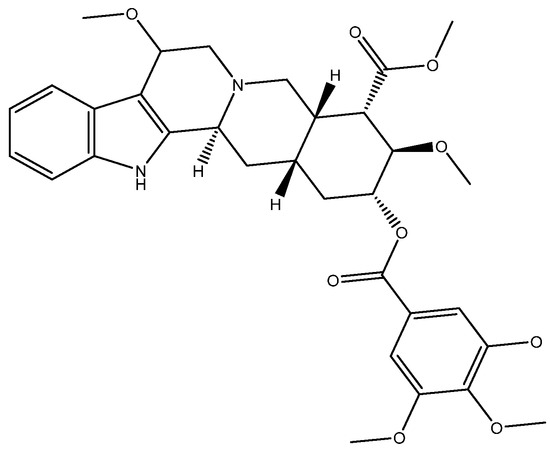
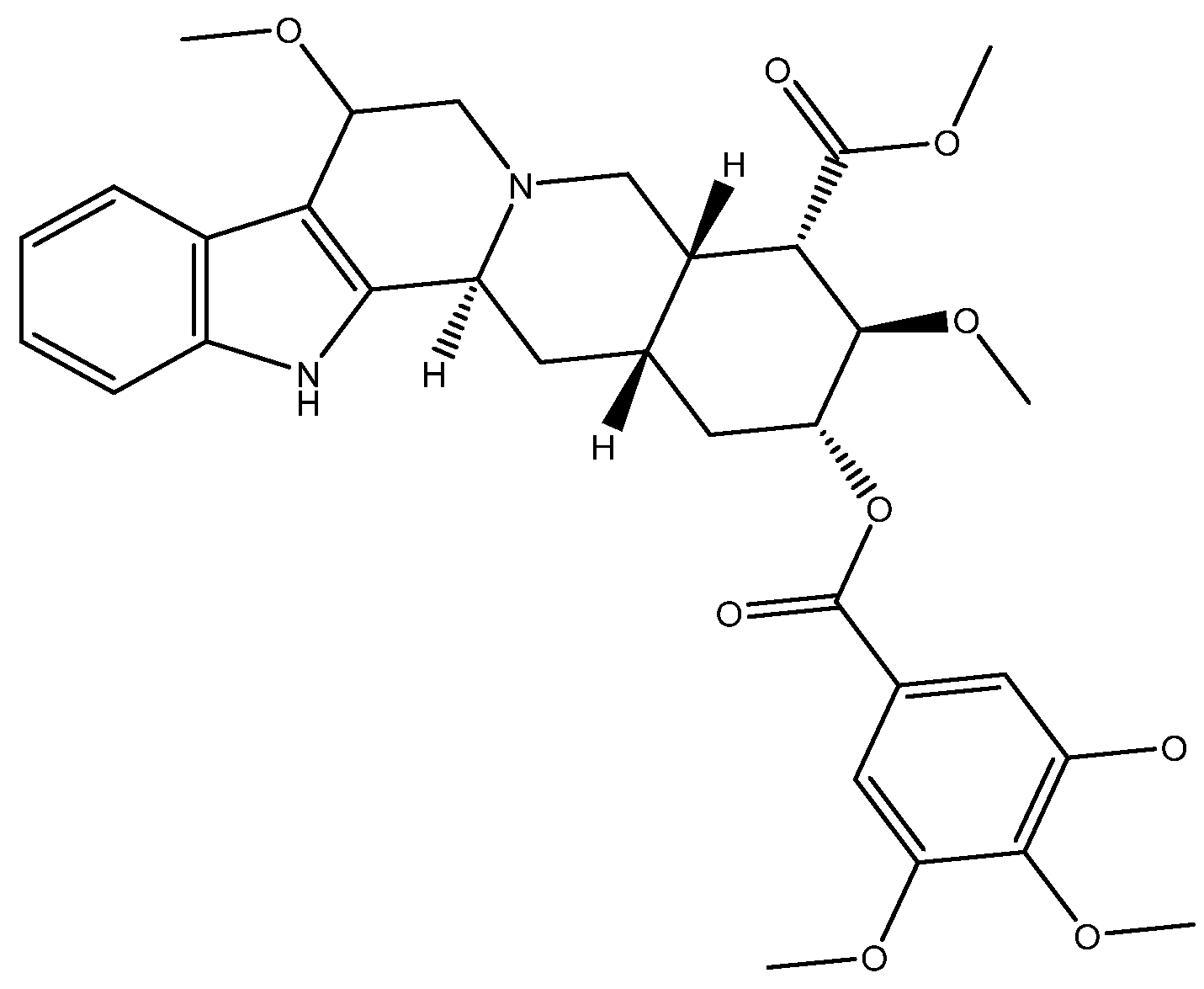
Reserpine, hereinafter referred to as RZ, has C33H40N2O9 as its molecular formula and a molar mass equal to 608.68 g mol−1. From the point of view of IUPAC nomenclature, its name is methyl (1R,15S,17R,18R,19S,20S)-6,18-dimethoxy-17-(3,4,5-trimethoxybenzoyl)oxy-1,3,11,12,14,15,16,17,18,19,20,21-dodecahydroyohimban-19-carboxylate [17]. Compared with Yohimbine, RZ retains the yohimban-type skeleton with a higher degree of substitution; however, it structurally differs due to the presence of several methoxy groups and the 3,4,5–trimethoxybenzoyloxy fragment, which gives it a larger molecular volume and the existence of a higher number of oxygen atoms in the structure, which favor the organic compound’s adsorption on metal. Figure 1 illustrates the chemical structure of RZ.
Figure 1.
Chemical structure of RZ.
RZ is known in pharmacology for its antihypertensive action and is available, under solid powder, in commercial form, supplied by Sigma Aldrich (St. Louis, MO, USA), with a purity of 98%–99%. From the perspective of solubility in organic solvents, RZ manifests free solubility in glacial acetic acid [18], which allowed for the preparation of corrosion media solutions consisting of acetic acid 0.5 mol L−1 Suprapure® (Merck, Rahway, NJ, USA) and 0.25 mol L−1 potassium acetate, ACS reagent, ≥99.0% (Sigma-Aldrich), to which concentrations of RZ of 10−6, 10−5, 10−4, 2.5 × 10⁻⁴, 5 × 10⁻⁴, 7.5 × 10⁻⁴ and 10−3 mol L−1 were added. Their preparation consisted of dissolving the corresponding amount of RZ in a volume of glacial acetic acid, required to obtain the target concentration, followed by addition of potassium acetate and distilled water. The working concentrations of RZ were selected to cover three orders of magnitude, with the upper limit chosen from a range comparable to the low concentrations of anti-corrosion additives used in some commercial acetate-based de-icing formulations.
The electrochemical tests, namely cyclic voltammetry, linear voltammetry, chronoamperometry and EIS, were performed on a BioLogic SP150 potentiostat/galvanostat (BioLogic Science Instruments, Seyssinet-Pariset, France), connected to a thermostatic cell consisting of 3 electrodes, namely the working electrode of OLC52, with the composition presented in Table 1, and Al (99% purity), with active surfaces of 0.65 cm2 and 0.785 cm2, respectively, two counter electrodes made of graphite, and the measurements of the WE potential were conducted using as reference an electrode of Ag/AgCl in saturated KCl, with a potential of 0.197 V.
Table 1.
Percentage composition of the alloying elements in OLC52 steel [19].
For the preliminary cyclic voltammetry experiments, a platinum electrode, model M241Pt, manufactured by Radiometer Analytical, with an active surface of 0.5 cm2, was used, which was connected to the above-mentioned cell as a working electrode. Also, for the investigation of the behavior of RZ on studied materials in the range of potential between oxygen and hydrogen evolution, cyclic voltammograms were recorded by using a scan rate of 100 mV s−1 on OLC52 and aluminum electrodes at RZ concentrations of 10−6, 10−5, 10−4 and 10−3 mol L−1.
2.2. Electrochemical Methods
For surface preparation for electrochemical measurements, corrosion tests conducted on OLC52 and Al electrodes involved rinsing the active surface, ground with Si-C sandpaper of grits 200, 400, 800, 1200, and 2400, for approximately 2 min per grit under wet conditions, cleaning with ethanol, ultrasonication in distilled water for 5 min and drying with nitrogen stream. Surface reproducibility was verified visually, and electrodes with visible defects were repolished before use. Before starting each determination, in order to eliminate the dissolved oxygen, the 100 mL capacity cell was purged with nitrogen for 10 min. All electrochemical measurements were repeated three times under the same experimental conditions, and the values presented in the tables represent the arithmetic mean of the three measurements ± standard deviation.
To stabilize the system, in the beginning, the working electrode was subjected to 1 h measurement of the open-circuit voltage EOCP, after which potentiodynamic polarization measurements were set in the voltage range of ±250 mV measured relative to EOCP, at a 1 mV s−1 scan rate. The obtained linear voltammograms were then converted into logarithmic current-density scale and corrosion parameters were determined using the BioLogic potentiostat software, EC-Lab v.10.23 (BioLogic Science Instruments, Seyssinet-Pariset, France). From the intersection of the anodic and cathodic slopes, electrochemical data, such as icorr, the value of corrosion current density, Ecorr, the value of corrosion potential, and the anodic ba and cathodic bc slopes, were obtained. These data were used to assess the way in which RZ inhibits the corrosion of the studied metallic materials and to calculate the inhibition efficiency, denoted with IE, using Equation (1).
For which:
IE—inhibitory efficacy of RZ [%];
, —corrosion current density for the solution without inhibitor and for the solution with the specific concentration of inhibitor RZ [A m−2], respectively.
The polarization rates at which the cyclic voltammetry experiments were conducted were 100, 50 and 10 mV s−1, whereas the separate anodic and cathodic curves were obtained at a scan rate of 10 mV s−1 for all working electrodes.
The mechanism of the electrode reaction and the evaluation of the resistance of the organic film adsorbed on metal were studied using electrochemical impedance spectroscopy, at EOCP, over a frequency range from 100,000 to 0.01 Hz, comprising 60 points, logarithmically distributed, 10 per decade, at a sinusoidal perturbation amplitude of 10 mV rms. For the interpretation of the spectra, the EIS points were fitted to an equivalent electrical circuit, using the Levenberg–Marquardt nonlinear least squares method, within the ZView 4.0 program (Scribner Associates Inc., Southern Pines, NC, USA).
2.3. Molecular Modeling
The RZ molecule was analyzed using a molecular modeling approach using DFT within the Hyperchem v.8.0 software. The molecular structure of RZ was optimized in both aqueous and vacuum environments using the B3LYP functional and the 6-31G* basis set. Geometry optimization was followed by calculation of the HOMO and LUMO frontier molecular orbitals, as well as the descriptors of RZ molecules: EHOMO, ELUMO, energy gap ∆E, hardness and softness of RZ molecule (η and σ), absolute electronegativity (χ) and dipole moment (μ). Also, the spatial distributions of Frontier orbitals were visualized, enabling the observation of electron-donor and electron-acceptor regions that contribute to the inhibitory effect of RZ on the studied metal surfaces.
The values of ionization energy and electron affinity were calculated from the values of the Frontier orbitals’ energy levels by negativizing the values of the EHOMO and ELUMO energies, respectively. Finally, the ability of the RZ molecule to inhibit subsequent corrosive attacks is also attributed to the properties of the molecule such as volume V, computed surface S and V/S ratio, which were calculated using the QSAR module integrated in the mentioned software.
3. Results
3.1. Cyclic Voltammetry
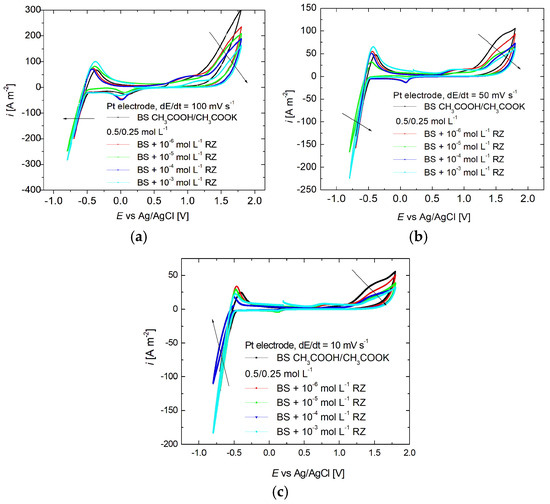
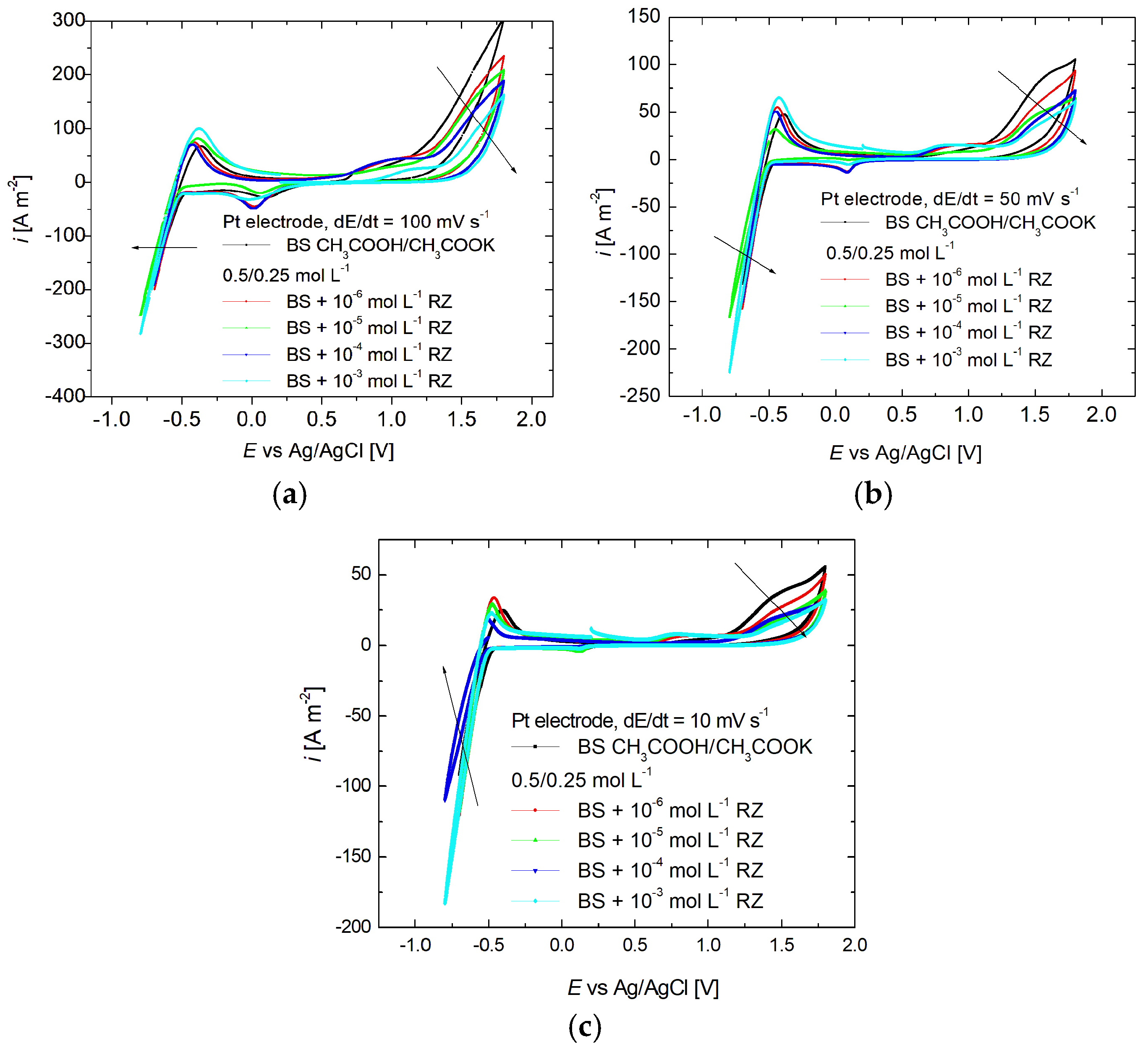
In order to acquire information about the electrochemical properties associated with RZ and its influence on anodic and cathodic processes, cyclic voltammetry measurements were conducted on a Pt electrode, OLC52 carbon steel and aluminum in a BS solution (CH3COOH/CH3COOK at concentration of 0.5/0.25 mol L−1), containing RZ of concentrations 10−6, 10−5, 10−4, and 10−3 mol L−1. Figure 2a–c shows the CVs in the presence and absence of RZ at polarization rates of (a) 100; (b) 50; and (c) 10 mV s−1.
Figure 2.
Cyclic voltammograms recorded on a platinum electrode in the absence and presence of different RZ concentrations at scan rates of 100 mV s−1 (a), 50 mV s−1 (b), and 10 mV s−1 (c). Arrows indicate the trend with the increasing RZ concentration.
From the analysis of Figure 2a–c, it is observed that the traced voltammograms exhibit the characteristic shape of cyclic voltammograms on the Pt electrode in acetic solutions [20]. Upon the addition of RZ, compared with the corresponding BS curve, we observe a decrease in the current density value associated with the oxygen evolution in the anodic branch. During the reverse scan toward the cathodic branch, we observe the corresponding response to the reduction of oxide species formed at the level of the platinum surface, polarizing negatively, and shifting the potential towards more negative values, we observe the peaks corresponding to the reduction of protons and the evolution of hydrogen [21]. In the presence of RZ, compared with the corresponding BS curves, we observe that the shape of the voltammograms is maintained, which indicates that the addition of RZ does not lead to additional electrochemical processes, thus confirming its stability in the investigated corrosive medium.
Regarding the effect of the scan rate, at 100 mV s−1, the voltammograms show higher current densities compared to those using scan rates of 50 and 10 mV s−1. In the case of the lower polarization rates, it is observed that the voltammograms exhibit lower current responses, which indicates the proximity to quasi-stationary conditions and a greater contribution of the adsorption and diffusion processes. Overall, for the platinum electrode, increasing the concentration of RZ has the effect of reducing the currents in both the anodic and cathodic branches, which is due to the adsorption of the RZ through the nitrogen atoms, oxygen, and the structurally aromatic characteristics (the presence of the benzene ring), which are responsible for the formation of an adsorbed layer that hinders both anodic and cathodic reactions [22].
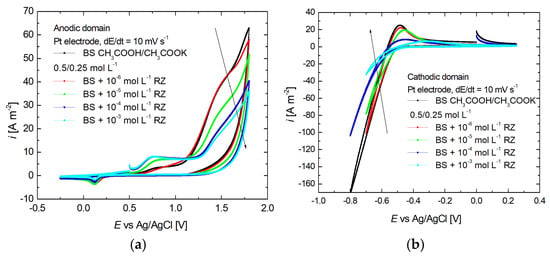
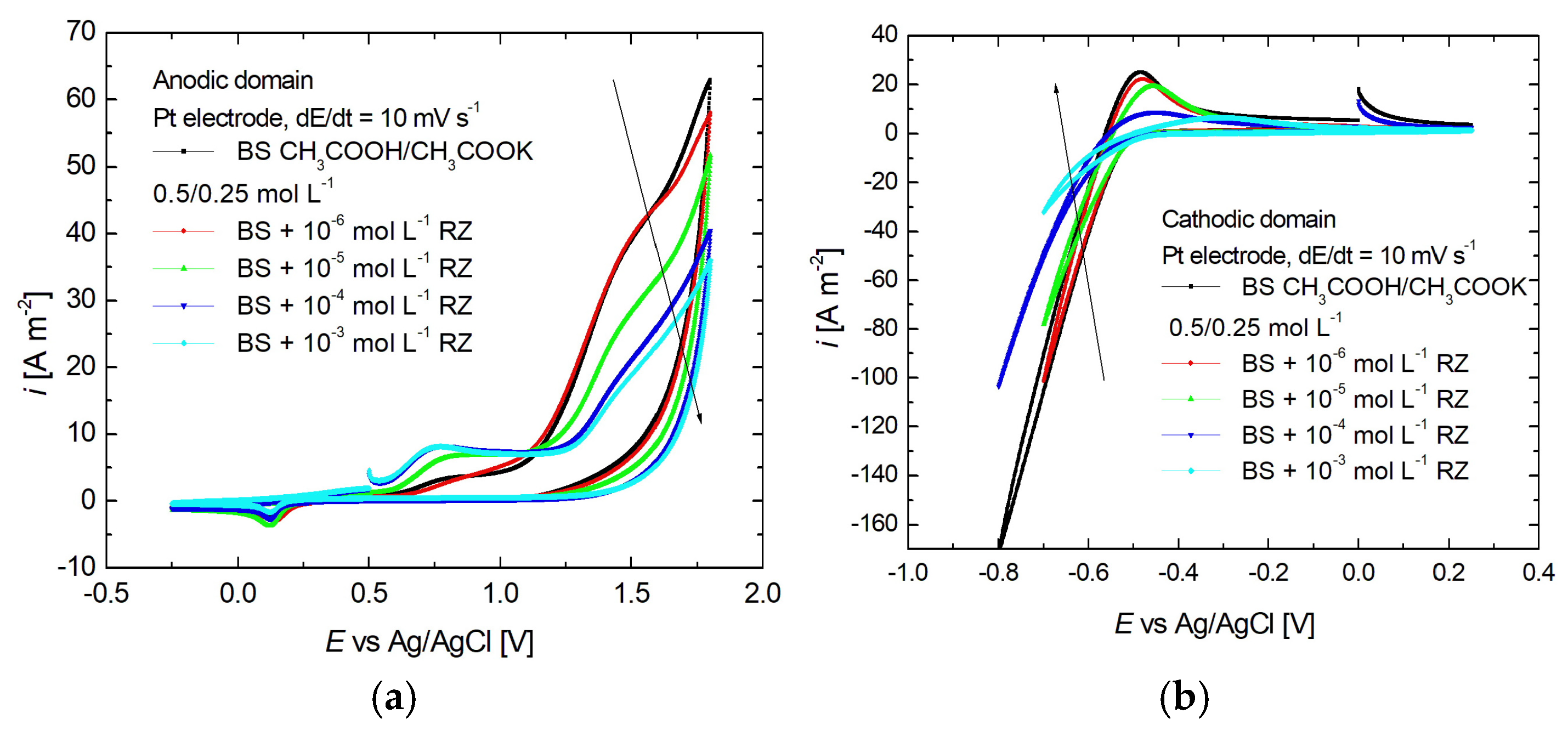
The influence of RZ on the two studied branches was more clearly evidenced by separately plotting the cyclic voltammograms in the anodic and cathodic potential ranges at a polarization rate of 10 mV s−1, illustrated in Figure 3a,b. In the anodic domain (Figure 3a), we observe the reduction in the current density and the shift in the potential towards more positive values in the presence of RZ, most visible at higher concentrations, which indicates that RZ hinders the oxidation of the existing species at the level of the electrode surface and hinders the release of oxygen.
Figure 3.
Anodic (a) and cathodic (b) representations on platinum electrode; scan rate of 10 mV s−1. Arrows indicate the trend with the increasing RZ concentration.
In the separately plotted cathodic domain (Figure 3b), we observe, from the decrease in the magnitude of the current specific to the hydrogen evolution process, the shift towards more negative values of the hydrogen release potential, which indicates that RZ is electrochemically stable and manifests an inhibitory effect on the cathodic and anodic processes, by delaying them due to adsorption and hindering charge transfer.
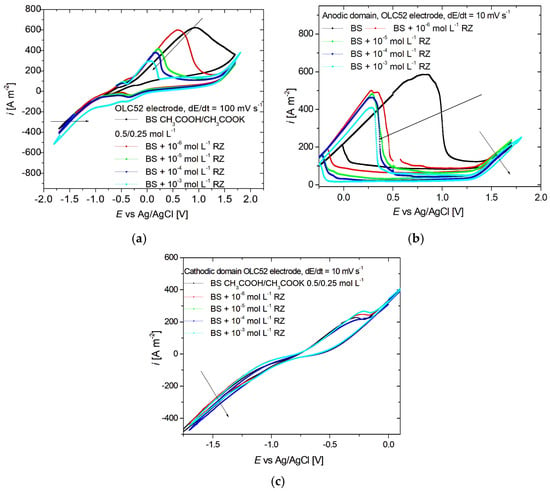
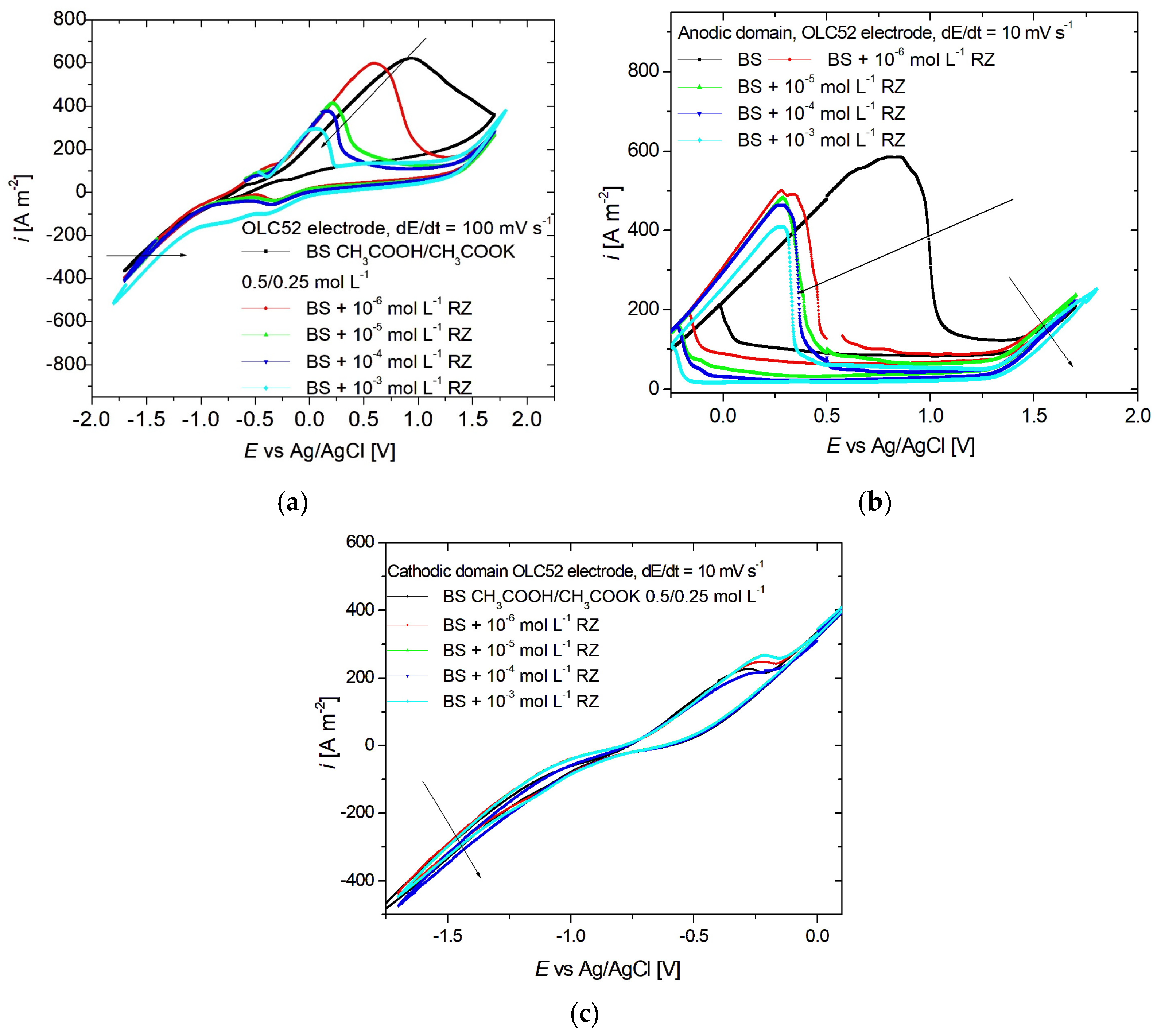
Figure 4a–c presents the cyclic voltammograms for OLC52 steel in the absence but also with the addition of RZ over a concentration range from 10−6 to 10−3 mol L−1. Analysis of voltammograms indicates that, compared to the Pt electrode, the current densities are considerably higher because the main component of the steel electrode participates directly in the corrosion process; in the anodic branch, the peak associated with iron oxidation is observed [20]. In the presence of RZ, these currents decrease significantly; the adsorbed RZ layer adsorbed results in the formation of a passivation film and a decrease in the current, corresponding to dissolution (Figure 4a,b).
Figure 4.
CVs measured on OLC52 in CH3COOH/CH3COOK 0.5/0.25 mol L−1 at working concentrations of RZ (a) whole representation, (b) anodic representation, and (c) cathodic representation; scan rate of 10 mV s−1. Arrows indicate the trend with the increasing RZ concentration.
Figure 4c, which represents the cathodic domain associated with cyclic voltammetry recorded on OLC52, shows that the currents associated with the hydrogen evolution process are not significantly influenced, remaining close to a maximum of 400 A m−2. However, we observe an influence on the potential value, which shifts towards positive values, with the addition of RZ.
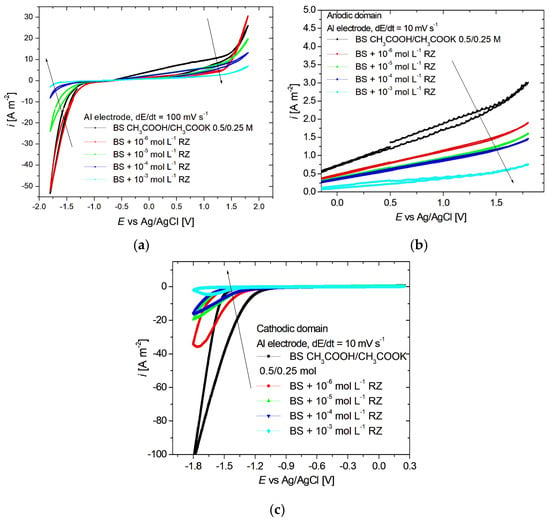
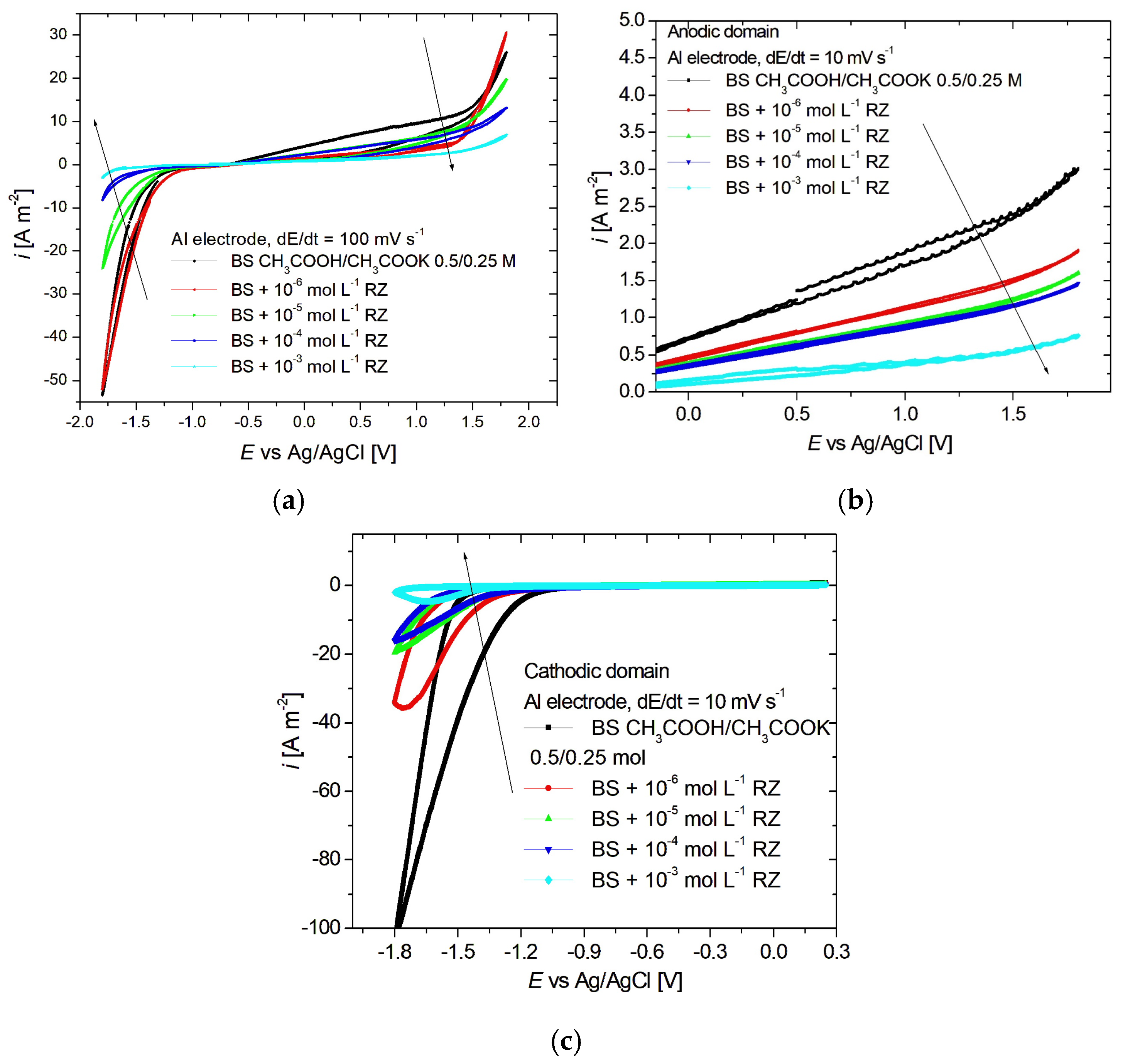
Figure 5a–c presents the CVs traced at a 100 mV s−1 a scan rate, together with the anodic and cathodic domains. Aluminum behaves differently from carbon steel as its surface is naturally covered with an oxide layer; in an acidic environment, this layer can be partially dissolved or destabilized, leading to localized corrosion processes.
Figure 5.
CVs on aluminum electrode in CH3COOH/CH3COOK 0.5/0.25 mol L−1 at working concentrations of RZ, (a) whole representation (100 mV s−1), (b) anodic representation (10 mV s−1), and (c) cathodic representation (10 mV s−1). Arrows indicate the trend with the increasing RZ concentration.
In the case of BS, the anodic current is higher at positive potentials, which indicates the partial destruction of the surface film, indicating the dissolution of the aluminum. Figure 5b, which illustrates the anodic domain, indicates a stabilization of the aggressive aluminum/solution interface resulting from the RZ molecules’ adsorption on the surface aluminum-oxide layer, with RZ promoting the formation of a more compact film at the interface, reducing the reach of corrosive agents from the acetic/acetate system [23]. In the cathodic domain shown in Figure 5c, we observe the decrease in the currents related to the reduction of hydrogen ions and their subsequent release, which indicates the reduction in the rate of the hydrogen release reaction at higher RZ concentrations, with the curves becoming closer to the zero-current axis, which can be described by the formation of an adsorbed organic film that limits the transfer of electrons and reduces the permeability of the native oxide layer to the species present in the system, acetate ions and H+. Comparing the three electrode materials investigated by CV, we observe that the RZ effect depends on the nature of the substrate studied: in the case of Pt, it modifies the gas-evolution processes associated with electrochemical decomposition of water, which indicates a good electrochemical stability of the organic compound; in the case of OLC52, it shows a considerable reduction in iron dissolution and oxygen release reaction; and on Al, the organic substance studied, it contributes to the stabilization of the oxidic layer at the interface, but also to the processes of oxygen and hydrogen release.
3.2. Potentiodynamic Polarization Experiments
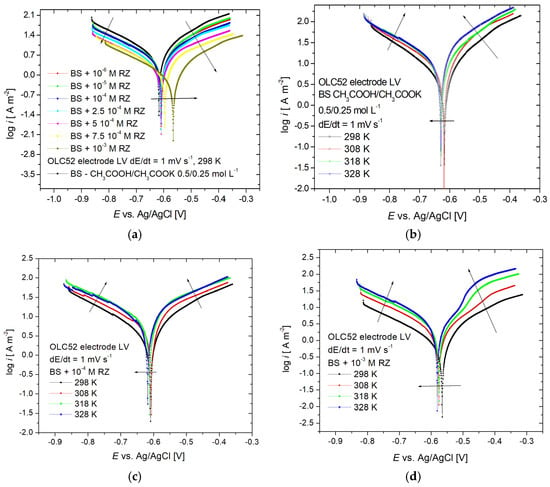
The PDP curves were represented in logarithmic form as Tafel plots, after purging the solution with N2 for 10 min, to eliminate dissolved oxygen from the system. These were preceded by monitoring the EOCP for 1 h, until a stable value was reached, at various working RZ concentrations. Figure 6 illustrates the Tafel curves plotted at 298 K (a), and separately, for the analysis of the temperature influence, between 298 and 328 K, at RZ concentrations of 0 M (b), 10−4 M and 10−3 M (d), in the range ± 0.25 V relative to EOCP. All linear PDP experiments were conducted at a scan rate of 1 mV s−1.
Figure 6.
PDP diagrams on the OLC52 in working solutions (polarization rate 1 mV s−1), (a) effect of RZ concentration at 298 K, (b) temperature influence at 0 M RZ, (c) BS + 10−4 M RZ, and (d) BS + 10−3 M RZ. Arrows indicate the slope and the Ecorr changes with RZ concentration and temperature.
As shown in Figure 6a, we can see that with the progressive increase in the RZ concentration, a reduction is observed in the values of both the anodic and cathodic slopes, which results in decreased corrosion currents. The rise in inhibitor concentration is accompanied by an increase in the corrosion potential value, shifting towards higher positive values. As the temperature increases (Figure 6b–d), the slopes corresponding to both anodic and cathodic processes ascend, and the corrosion potential shifts to more negative values. This behavior is associated with the increase in molecular agitation and electrode-reaction kinetics at higher temperature. The results obtained from the fitting of the Tafel slopes, investigating the impact of varying concentrations of RZ and temperature on the corrosion process of OLC52, are presented in Table 2.
Table 2.
Tafel slope fitting parameters for OLC52 corrosion in test electrolyte solutions, at temperatures between 298 and 328 K.
Table 2 indicates that at 298 K, the current density diminishes from 666.8 to 63.7 μA cm−2 at the highest concentration of RZ, 10−3 M, corresponding to a reduction in the corrosion rate from 7.75 mm y−1 to 0.74 mm y−1. The inhibition efficiency at 298, associated with the highest working concentration, reaches 90.5%. The Ecorr values shift towards increasing values, from −625 mV for BS to −571 mV at the maximum working concentration with increasing RZ concentration. This displacement, corroborated by the reduction in corrosion currents, along with the diminished anodic slopes (ba) and cathodic slopes (bc), indicates that RZ functions by inhibiting both anodic iron dissolution and cathodic hydrogen evolution, thereby classifying RZ as a mixed inhibitor in OLC52 corrosion, with a predominantly anodic effect.
From the point of view of the effect of temperature, specifically regarding BS, as the temperature increases from 298 to 328 K, icorr rises from 666.8 to 1396 μA cm−2, which indicates the intensification of the kinetics of the electrode reactions. However, in the presence of RZ, although the icorr increases with temperatures, the values remain lower than in the uninhibited solution, from 1396.4 in BS to 248.2 μA cm−2 at 10−3 M, the inhibitory efficiency reaching 82.2%. Therefore, in the solution of CH3COOH/CH3COOK concentration 0.5/0.25 mol L−1, RZ produces a notable decrease in the corrosion rate and the inhibitory effect becomes increasingly evident as the concentration rises. Thus, RZ promotes the growth of an adsorbed coating on the iron surface capable of limiting the anodic electron transfer associated with iron oxidation, along with the cathodic reactions linked to the overall corrosion process.
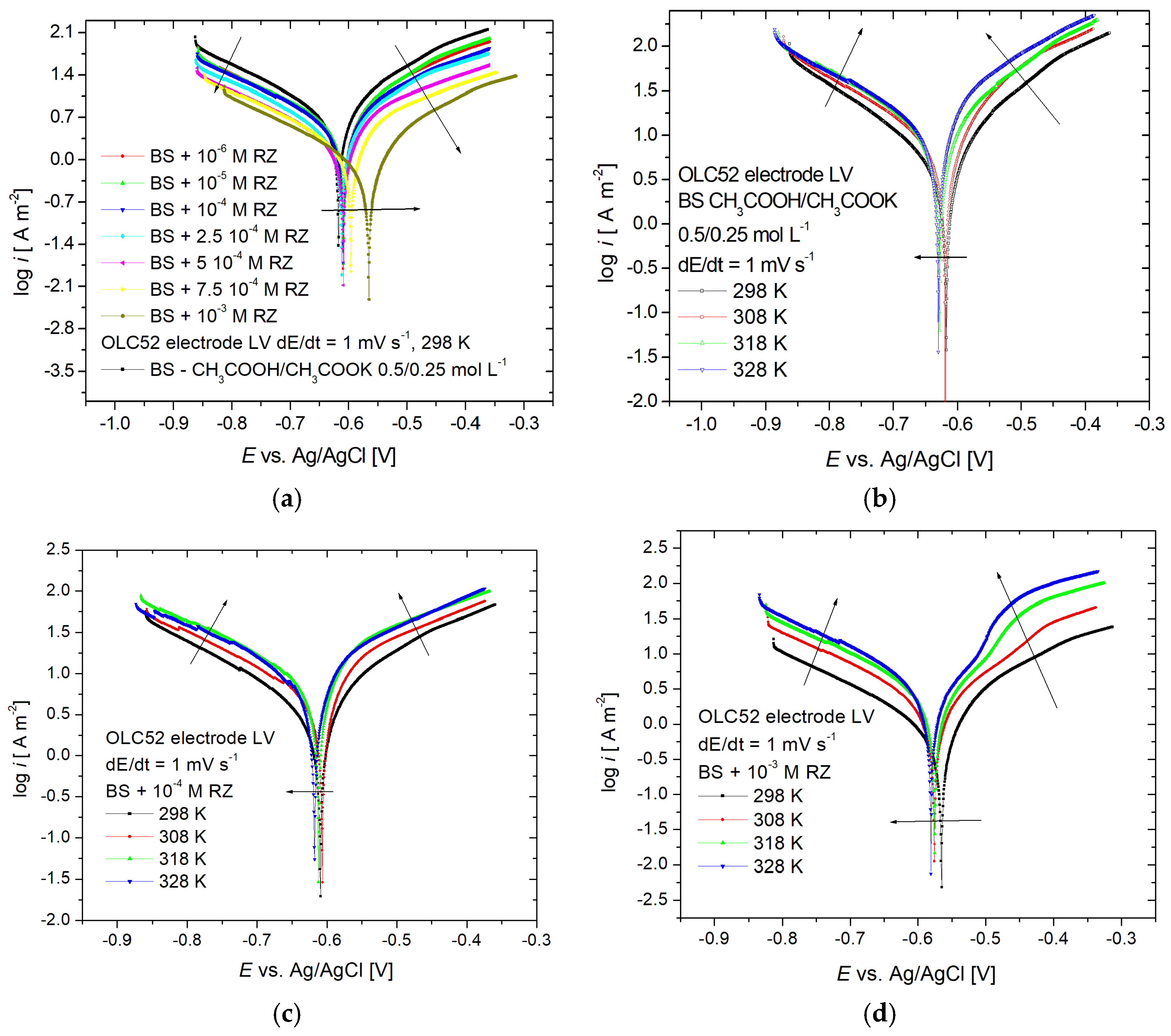
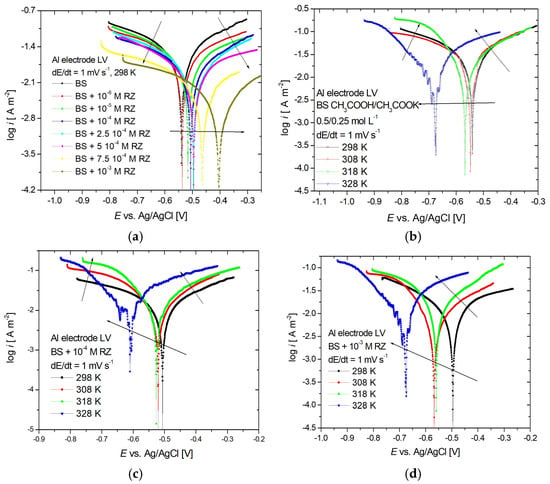
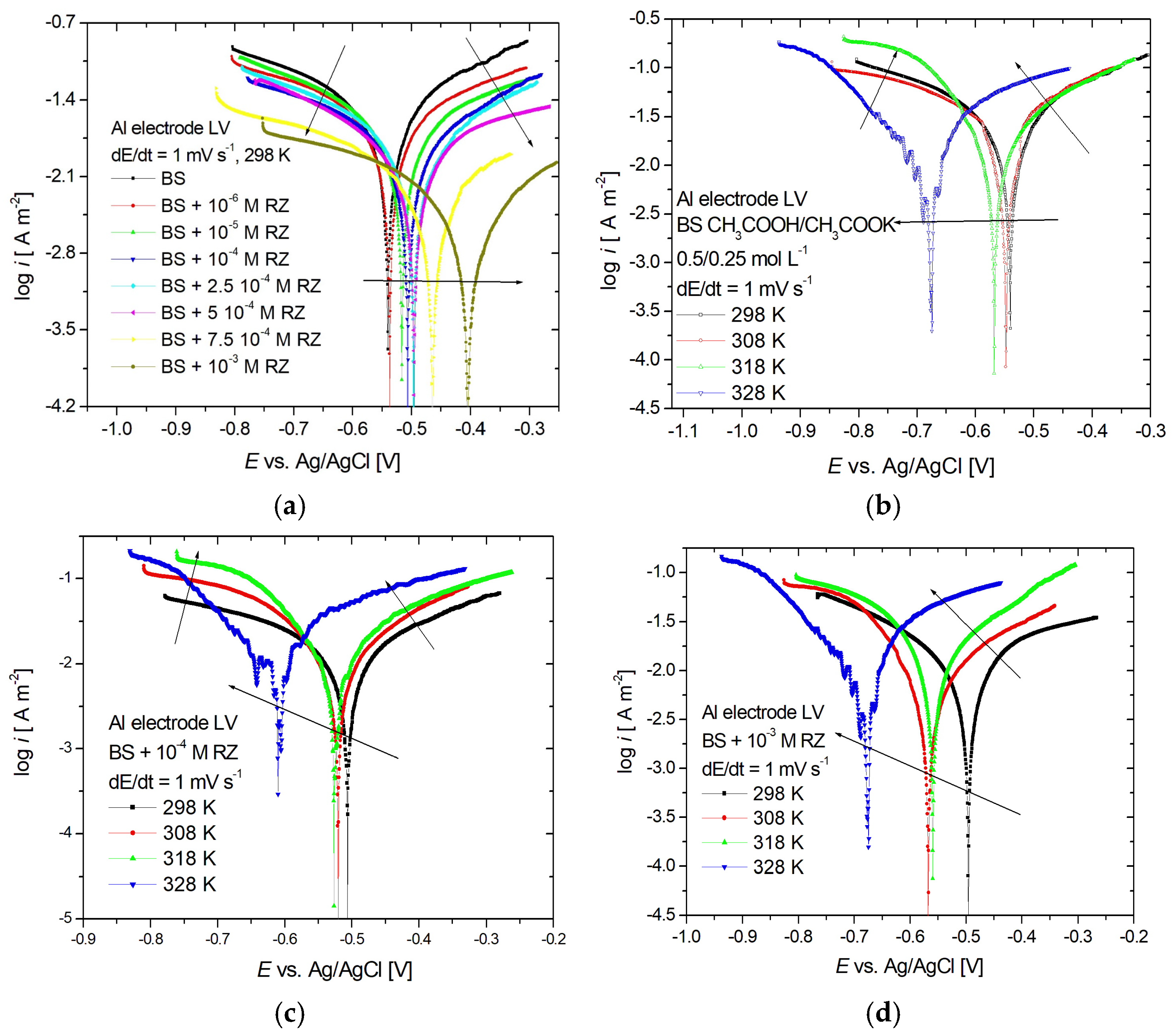
Figure 7a–d shows the Tafel plots recorded for the aluminum electrode in BS along with those corresponding to various concentrations of RZ. In Figure 7a, at 298 K, aluminum shows a decrease in corrosion currents, corroborated with a decrease in anodic and cathodic slopes, leading to the displacement of the corrosion potential. Figure 7b–d, recorded at different temperatures, for concentrations of 0, 10−4 and 10−3 M, shows an increase in the slopes of the corrosion-related currents in the working temperature range 298–of 328 K, which indicates the partial destruction of the passive layer of aluminum oxide and the initiation of localized oxidation of the metal surface.
Figure 7.
Logarithmic PDP on the Al electrode in the investigation solutions at a scan rate of 1 mV s−1, (a) effect of RZ concentration, temperature dependence in (b) BS, (c) BS containing 10−4 mol L−1 RZ, and (d) BS containing 10−3 mol L−1 RZ.
The data derived from the Tafel diagrams for the aluminum samples are presented in Table 3, over the temperature range between 298 and 328 K, at the specified concentrations.
Table 3.
Tafel parameters for aluminum corrosion process in the investigated solutions, at temperatures between 298 and 328 K.
The data presented in Table 3 indicate that the presence of RZ confirms the inhibitory effect. Specifically, at 298 K, Al in BS exhibits a corrosion current of 49.2 μA cm−2 and a corrosion potential of −539 mV. The addition of RZ decreases icorr to 2.6 μA cm−2, the inhibitory efficiency at 298 K increasing from 34.7% corresponding to 10−6 M RZ to 94.8%, corresponding to 10−3 RZ, indicating a greater coverage of aluminum surface with a layer of RZ molecules.
At 298 K, the corrosion rate at the highest tested concentration diminishes to 0.03 mm y−1, signifying the development of a compact coating that partially stabilizes the protective aluminum oxide layer. The cathodic and anodic Tafel slopes decrease, which diminishes with increasing RZ concentration, indicating that the overall kinetics of electrode reactions are slowed. For aluminum, RZ acts as an anodic and cathodic inhibitor, with a predominantly anodic effect.
The temperature-dependent results demonstrate that despite the enhanced reaction kinetics at higher temperature, RZ has notable inhibitory efficiency, attaining 86.2% at 328 K. The figures obtained from the determination of Tafel slopes on aluminum substantiate the efficacy of RZ adsorption at the examined metal surface, at 328 K, with icorr decreasing from 56.2 to 7.4 μA cm−2 at 10−3 M RZ. Nonetheless, sustaining high efficiency verifies that the RZ adsorbed layer restricts the access of corrosive species in the acetic acid/acetate medium on the protective passive oxide layer.
3.3. Arrhenius and Eyring Plots
In order to assess the effect of temperature on the corrosion behavior of the OLC52 and aluminum electrodes in the investigated solutions, the Arrhenius and Eyring plots were represented, using the data corresponding to the corrosion current densities, from potentiodynamic polarization plots. Ea was determined from the slope of the linearized form of Equation (2) [24].
where:
denotes the corrosion current density (A m−2), is the pre-exponential factor, Ea represents the apparent activation energy (J mol−1), R is the universal gas constant (8.314 J mol−1 K−1), and T corresponds to the absolute temperature (K).
To determine the activation parameters and the graphic representation of the dependence as a function of 103/T was plotted according to Equation (3) [25]:
For which:
N represents the Avogadro number (6.022 × 10²³ mol−1), h is the value of the Planck’s constant (6.626 × 10⁻³⁴ J·s), ΔHa denotes the apparent activation enthalpy (J mol−1), and ΔSa is the apparent activation entropy (J mol−1 K−1).
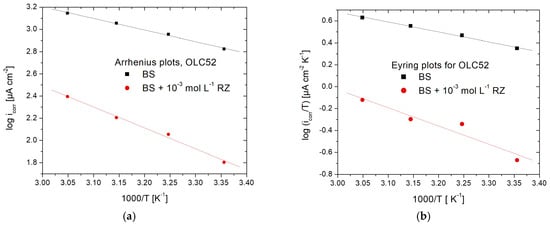
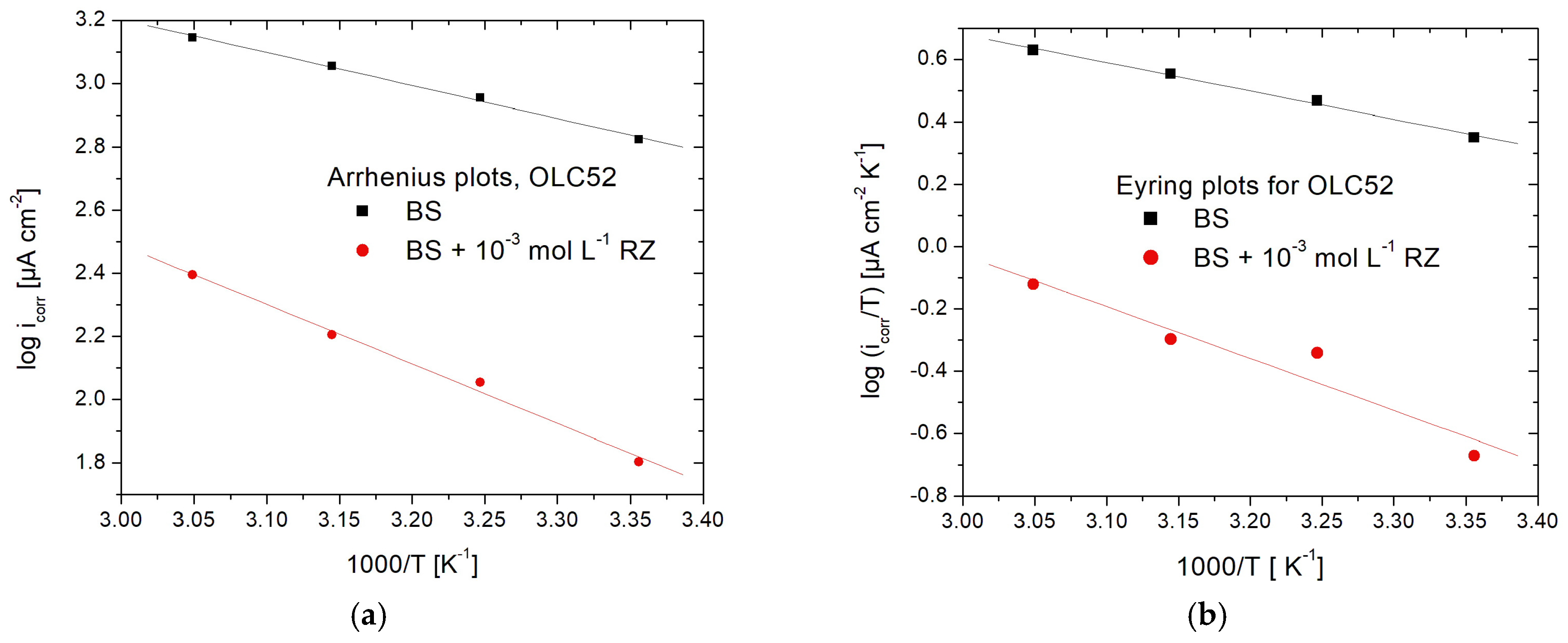
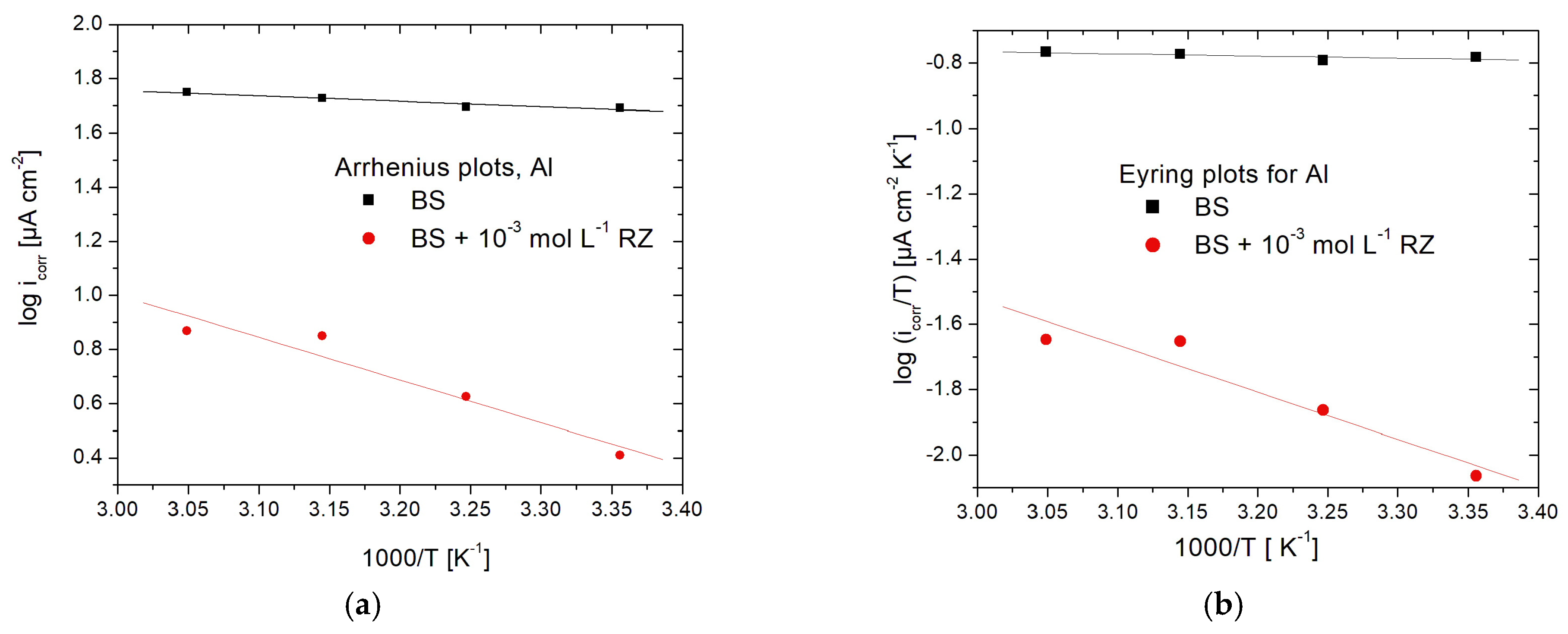
The figures obtained by representing the Arrhenius and Eyring plots are presented for the concentrations of 0 M RZ (BS) and 10−3 M RZ, for OLC52 (Figure 8) and Al (Figure 9), respectively. The activation parameters calculated from these plots, namely, Ea, ΔHa and ΔSa, are presented in Table 4 for OLC52 and Table 5 for Al.
Figure 8.
Arrhenius and Eyring graphical representation for OLC52 carbon steel in 0.5 mol L−1 CH3COOH + 0.25 mol L−1 CH3COOK solutions, without and with 10−3 mol·L−1 RZ: (a) log icorr versus 103/T and (b) log (icorr/T) versus 103/T.
Figure 9.
Arrhenius and Eyring graphical representation for aluminum in 0.5 mol L−1 CH3COOH + 0.25 mol L−1 CH3COOK solutions, without and with 10−3 mol·L−1 RZ: (a) log icorr versus 103/T and (b) log (icorr/T) versus 103/T.
Table 4.
Activation parameters for the OLC52 electrode, in BS and BS + 10−3 mol L−1 RZ.
Table 5.
Activation parameters for the Al electrode, in BS electrolyte support solutions and with 10−3 mol addition L−1 RZ.
For the first investigated electrode, OLC52, the values obtained by linearized activation plots indicate an increase in the apparent activation energy from 19.93 kJ mol−1 to 34.87 kJ mol−1 upon the addition of 10−3 mol L−1 RZ, which indicates that RZ increases the energy barrier related to the dissolution process, thereby decreasing the access of corrosive agents to the electrode, attributed to the formation of a protective layer made up of RZ molecules. The activation enthalpy ΔHa indicates an upward trend, the higher values at the addition of 10−3 M RZ suggesting the need for higher energy consumption for the anodic process of iron oxidation in OLC52 steel. The shift in activation entropy towards more positive values indicates a reorganization of the metal/aggressive/solution interface, which confirms the formation of an ordered adsorbed layer of RZ molecules.
Analyzing the results from Table 5, for the Al electrode, a more pronounced activation effect than for OLC52 is observed, from 3.83 kJ mol−1 in the supporting electrolyte support (BS) to 30.06 kJ mol−1 in the solution that contains an addition of 10−3 mol L−1 of the inhibitor. In the last case presented, when RZ is introduced into the system, the energy barrier increases, which indicates the development of an organic or organic-oxide protective layer on the aluminum surface. The activation enthalpy shows an increase in value, which may be associated with the consolidation of the passive layer, while the activation entropy shifts towards more positive values, indicating the rise from the point of view of activation state ordering specific to the processes controlled by a passive metal-oxide–electrolyte interface.
3.4. Adsorption Isotherms
The adsorption behavior of RZ on the metal surfaces was examined using adsorption isotherms. In many cases, the interaction of organic inhibitors with metallic substrates is governed by their adsorption behavior at the metal surface. This was assessed through the following adsorption isotherms: Langmuir, Frumkin, Freundlich, Temkin, El-Awady, Flory–Huggins, Volmer and Dubinin–Radushkevich. Finally, the optimal model was selected both on the basis of the correlation coefficient and considering the assumption of each model and their relevance to the investigated system [26]. The parameter used to construct the isotherms was the degree of coverage , obtained from icorr values, calculated based on the logarithmic fits of the potentiodynamic polarization curves, using Equation (1). Among the eight models analyzed, in the thermodynamic temperature range between 298 and 328, the Langmuir isotherm shows a good correlation with the adsorption behavior, which describes the formation of an adsorbed monolayer, assuming no lateral interactions between the adsorbed species, as meeting the criteria for matching the adsorption phenomenon. Its linearized form is given by Equation (4) [27].
The meaning of the quantities in Equation (4) is as follows: represents the value of the constant corresponding to the adsorption, and denotes the concentration of RZ in mol L−1.
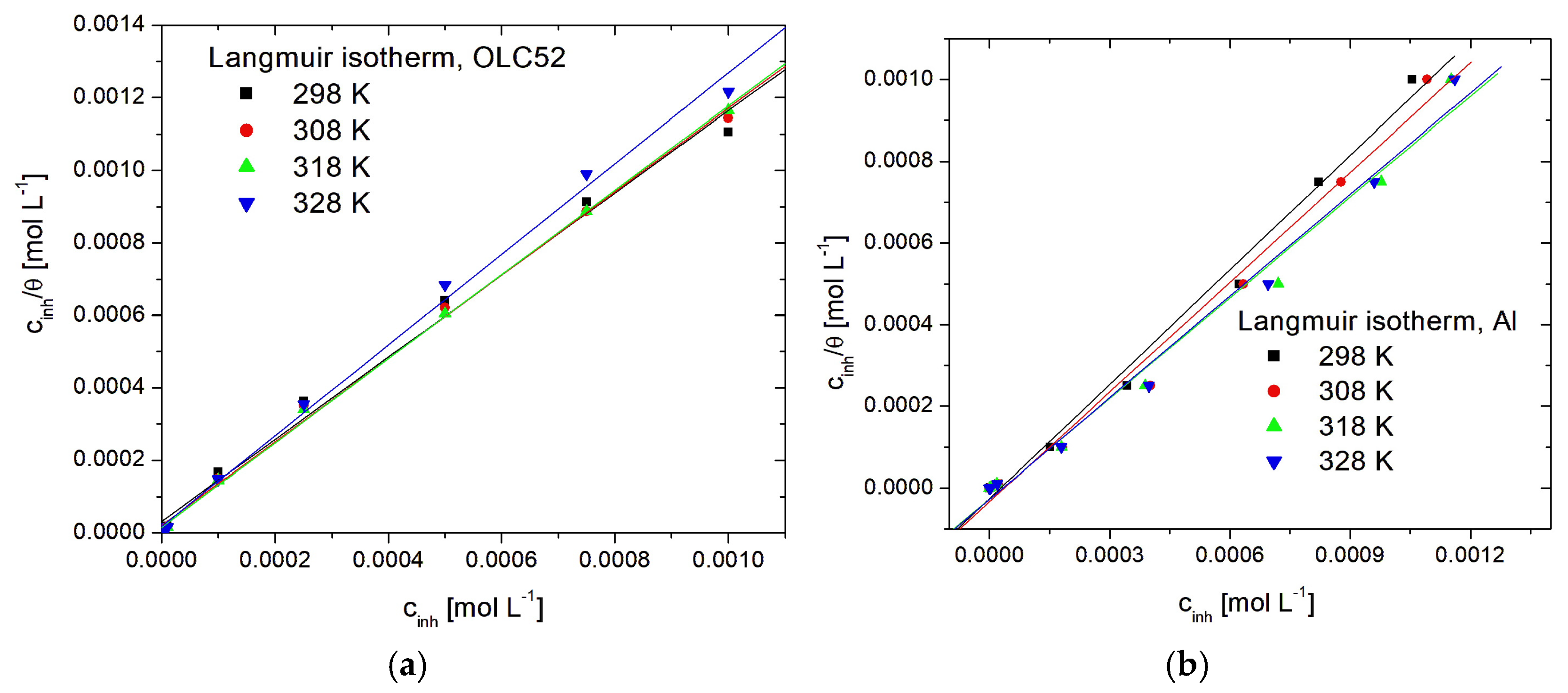
Figure 10a,b illustrates the Langmuir isotherms for the OLC52 electrode and for Al, respectively, plotted for concentrations of 10−6, 10−5, 10−4, 2.5∙10−4, 5∙10−4, 7.5∙10−4, and 10−3 mol L−1.
Figure 10.
Langmuir isotherms traced for RZ on (a) OLC52 and (b) aluminum in 0.5 mol·L−1 CH3COOH + CH3COOK 0.25 mol·L−1 over the temperature range of 298–328 K.
The values obtained from the Langmuir linear representations are presented in Table 6.
Table 6.
Parameters of Langmuir adsorption isotherm.
From the Langmuir representations and Table 6, a strong linear correlation between the ratio of cinh/ and cinh is indicated, with values ranging between 0.991 and 0.999 for OLC52 and 0.985 and 0.992 for Al. From the increase in the value of the Kads adsorption constants, for OLC52, it is identified that the adsorbed layer stabilizes with the increase in temperature. With Al, the value remains invariant, suggesting relatively stable adsorption on the naturally oxide-covered aluminum surface.
The standard adsorption Gibbs energy of adsorption was determined using Equation (5) [28]:
The significance of the component quantities of the equation is as follows: R is the universal gas constant, Kads represents the adsorption constant, and T is the working temperature.
Analyzing the values, it appears that the process is spontaneous under the investigated conditions. In the case of OLC52, it takes values between −35.86 and −40.46, respectively, for aluminum between −35.75 and −38.57 kJ mol−1, specific within the domain of physicochemical adsorption, with a significant contribution from chemisorption.
Another remarkable result was also provided by the Freundlich isotherm. This model describes adsorption on energetically heterogeneous surface sites and is expressed by Equation (6) [29].
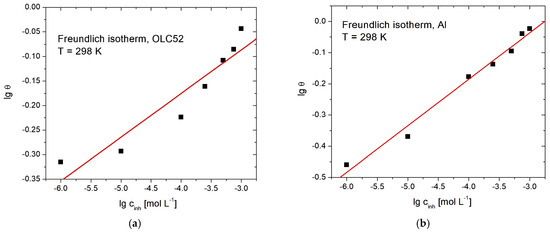
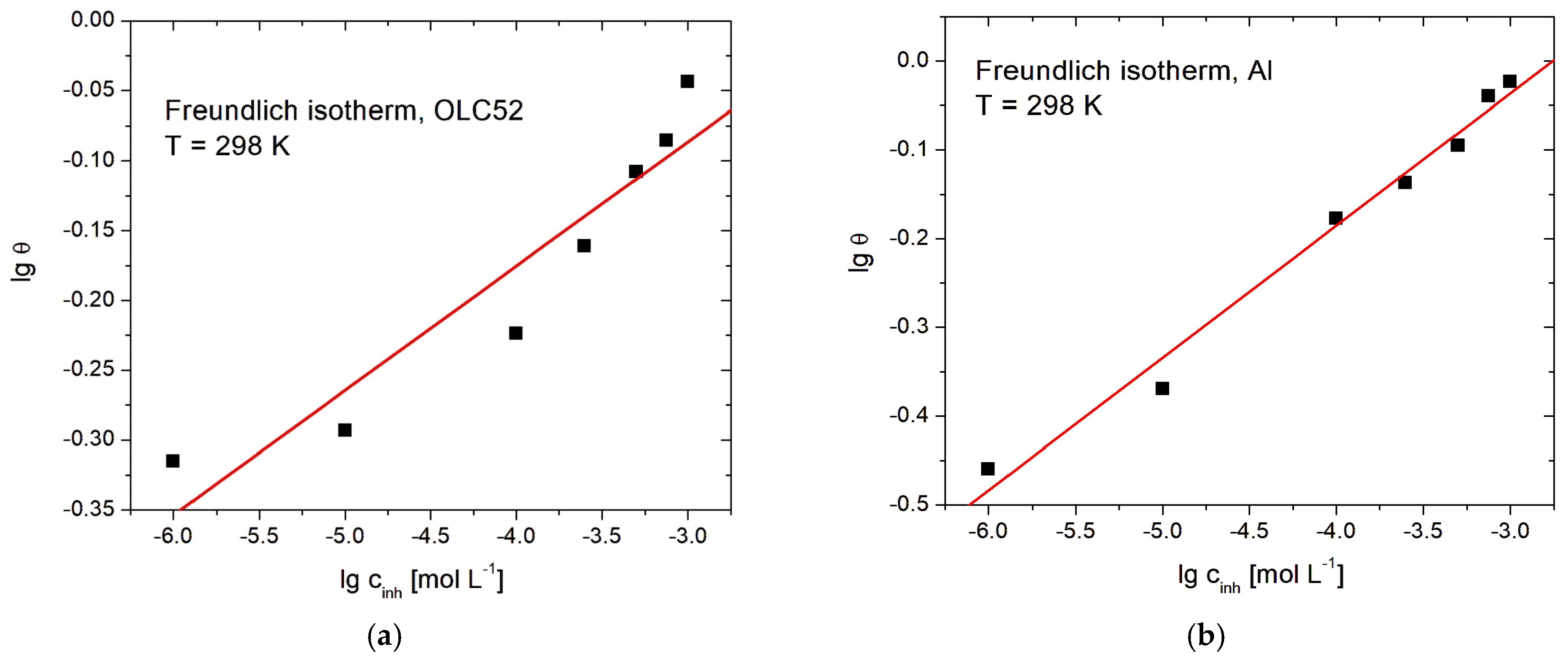
The graphical representation of the Freundlich isotherms, for the OLC52 and Al electrodes, at 298 K, is illustrated in Figure 11a and Figure 11b, respectively.
Figure 11.
Freundlich plots describing RZ adsorption onto (a) OLC52 and (b) aluminum in an electrolyte blank solution containing 0.5 mol L−1 CH3COOH and 0.25 mol L−1 CH3COOK at 298 K. Black squares represent the experimental data and red lines represent the linear fits.
The data obtained by linear fitting of Freundlich isotherms are presented in Table 7.
Table 7.
Parameters of Freundlich adsorption isotherm.
For OLC52, the correlation coefficient R2 is 0.90, indicating a satisfactory correlation lower than that of the Al electrode. The Freundlich isotherm parameters suggest that RZ adsorption occurring on inhomogeneous sites is favorable, indicating a contribution from adsorption on heterogeneous sites [29]. For aluminum, the Freundlich isotherm has a better correlation, indicating that the surface of the aluminum has a more pronounced heterogeneous nature, most likely due to the natural oxide layer [29]. The n > 1 values for both tested materials indicate that the adsorption at the level of the two metals is favorable, but the less-negative values obtained by the Freundlich model, compared to Langmuir, most likely describe the physical component of the adsorption at the level of heterogeneous sites, while Langmuir most accurately describes the formation of the main protective monolayer [30].
From isotherm analysis, the adsorption of RZ on OLC52 and Al occurs largely according to the Langmuir model. However, the Freundlich model complements it by highlighting the heterogeneous character of the surfaces.
3.5. Adsorption Enthalpy and Entropy Calculations
The RZ adsorption process on the surfaces of OLC52 and Al was examined in terms of thermodynamic parameters, namely ΔHads and ΔSads, respectively, utilizing Van’t Hoff-type representations. These parameters were obtained by plotting as a function of 1000/T. The degrees of coverage were calculated from the corrosion currents obtained from the potentiodynamic polarization measurements. The equation that was the basis of the Van’t Hoff-type representation is provided by Relation (7) [31,32]:
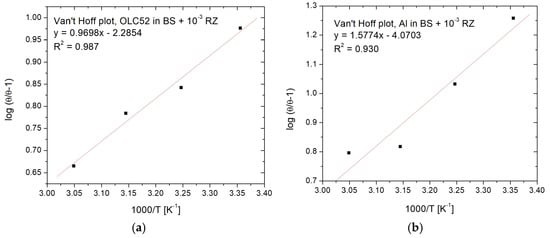
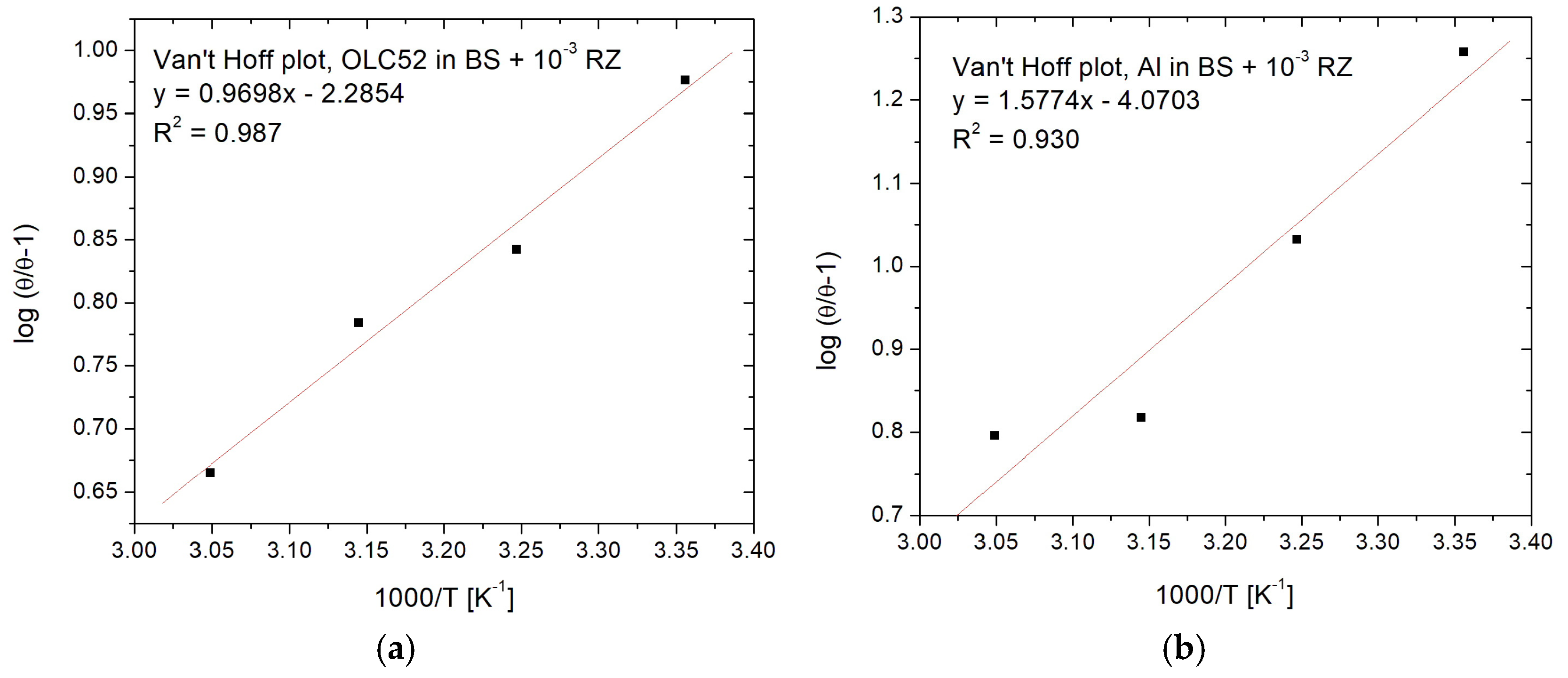
where denotes the adsorption enthalpy, and denotes the adsorption entropy, R denotes the universal gas constant, and T represents the working temperature. The graphical representations are illustrated by Figure 12, and the parameters of the Van’t Hoff plots are shown in Table 8.
Figure 12.
Van’t Hoff-type plots for RZ on (a) OLC52 and (b) Al in CH3COOH/CH3COOK 0.5/0.25 + 10−3 mol·L−1 RZ at different temperatures. Black squares represent the experimental data and red lines represent the linear fits.
Table 8.
Van’t Hoff-type plots parameters with the calculated values of the ΔHads and ΔSads.
From the results presented in Table 8 and considering the values of the adsorption enthalpy, it is indicated that RZ adsorbs on both surfaces, namely OLC52 and Al, through an exothermic adsorption process. For aluminum, the more negative value indicates a stronger interaction than that observed for carbon steel [33], which also results from the inhibitory efficiency values obtained by PDP and EIS measurements.
The negative values of the adsorption entropy values indicate a decrease in the degree of disorder at the metal/aggressive solution interface during the adsorption process, which can be attributed to the specific orientation of the RZ molecules on the metal surface within an ordered adsorbed layer. Notably, the decrease in entropy is more pronounced in the case of aluminum, compared to OLC52. The correlation coefficients obtained for both metals indicate a good fit between the experimental data obtained and the Van’t Hoff-type model. The results suggest that RZ adsorption is favored at lower temperatures, promoting the formation of an organized adsorbed layer on the metal surface, which is also consistent with the adsorption isotherms and the selection of the Langmuir model [31,32].
3.6. Chronoamperometric and Chronopotentiometric Studies
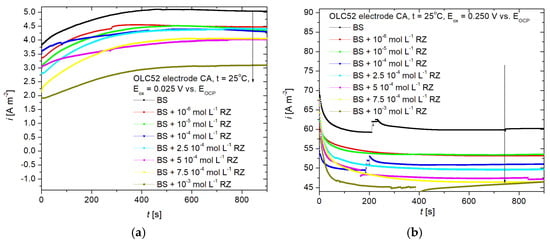
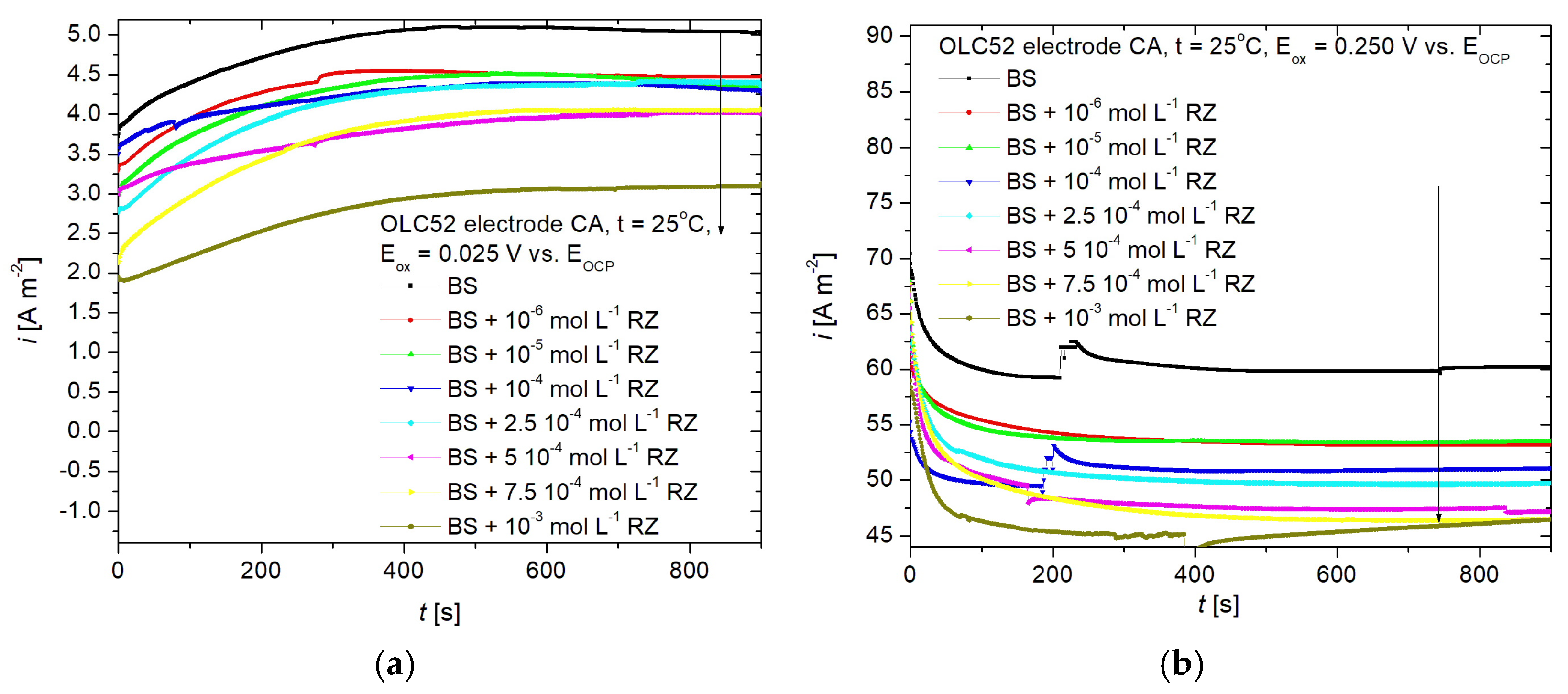
The evaluation of the stability of the RZ molecular layer, formed for inhibiting corrosion on the OLC52 and Al metal surfaces, was performed using the technique of chronoamperometry at constant potentials of 25 and 250 mV vs. EOCP. Each chronoamperometric determination was preceded by the measurement of the EOCP for 1 h in the test solutions. Figure 13a,b illustrates the chronoamperograms recorded for OLC52.
Figure 13.
Chronoamperometric graphics traced on the OLC52 electrode in 0.5 mol L−1 CH3COOH + 0.25 mol L−1 CH3COOK in the presence of different RZ concentrations at overpotentials of 25 mV (a) and 250 mV (b). Arrows indicate the trend with increasing RZ concentration.
In the case of OLC52, at 25 mV vs. EOCP, an initial increase in current density is observed, followed by its stabilization. The corresponding BS curve lies above those obtained for various concentrations of RZ, which suggests that the anodic dissolution is more pronounced in the absence of the organic compound studied. At +250 mV vs. EOCP (Figure 13b), compared to Figure 13a, the currents are higher, which indicates the intensification of the anodic oxidation of iron at higher overpotentials, and the lower position of the chronoamperometric curves on the current intensity scale below BS indicates the development of the organic protective layer. The chronoamperograms on aluminum are illustrated in Figure 14.
Figure 14.
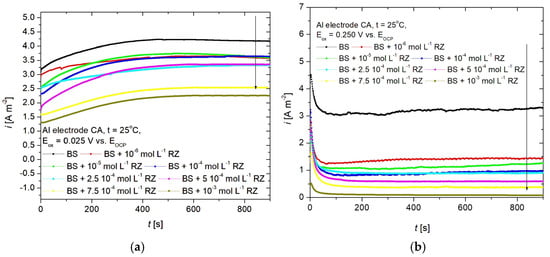
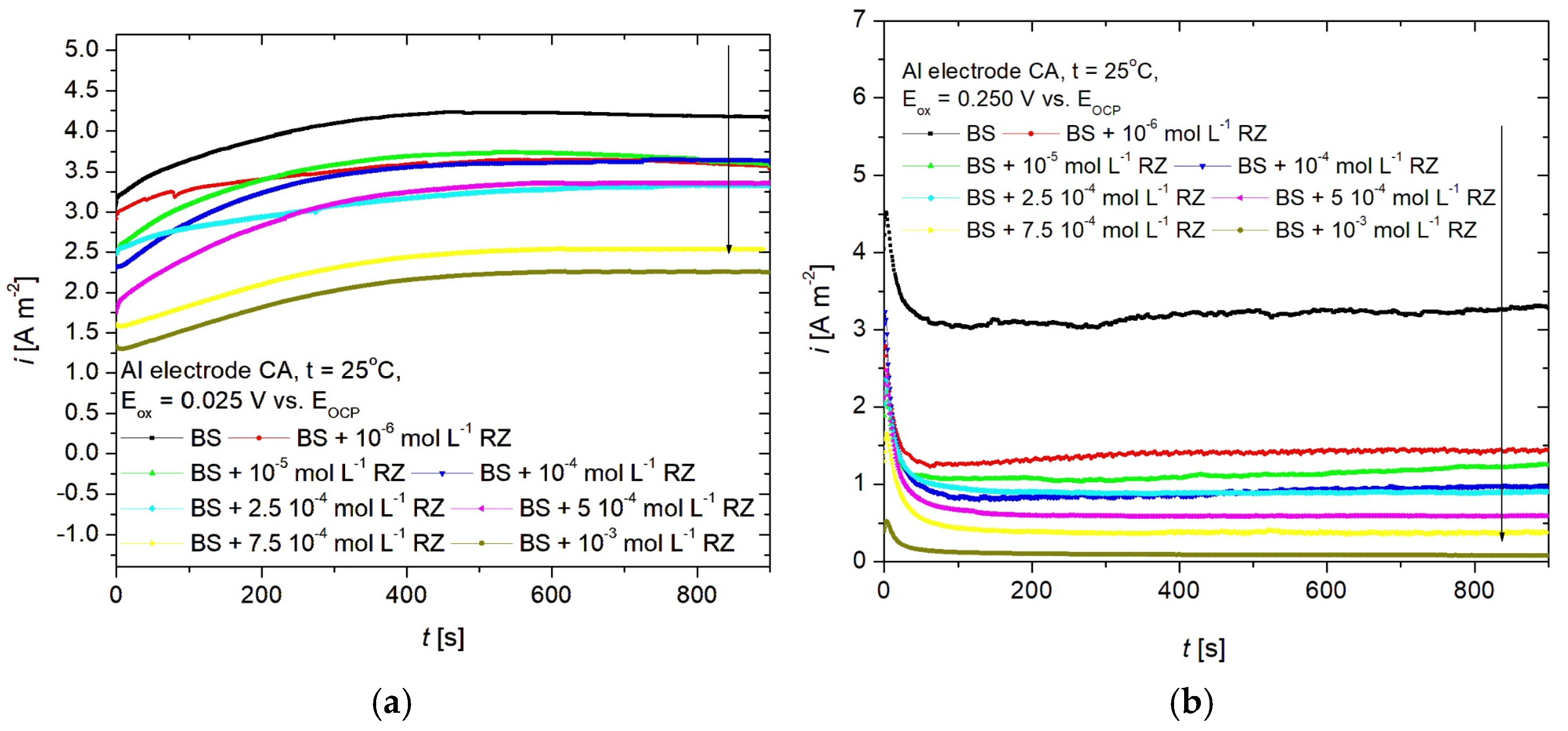
Chronoamperometric graphics traced on the aluminum electrode in 0.5 mol L−1 CH3COOH + 0.25 mol L−1 CH3COOK in the presence of different RZ concentrations at overpotentials of 25 mV (a) and 250 mV (b). Arrows indicate the trend with increasing RZ concentration.
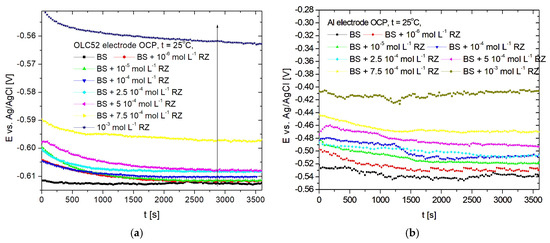
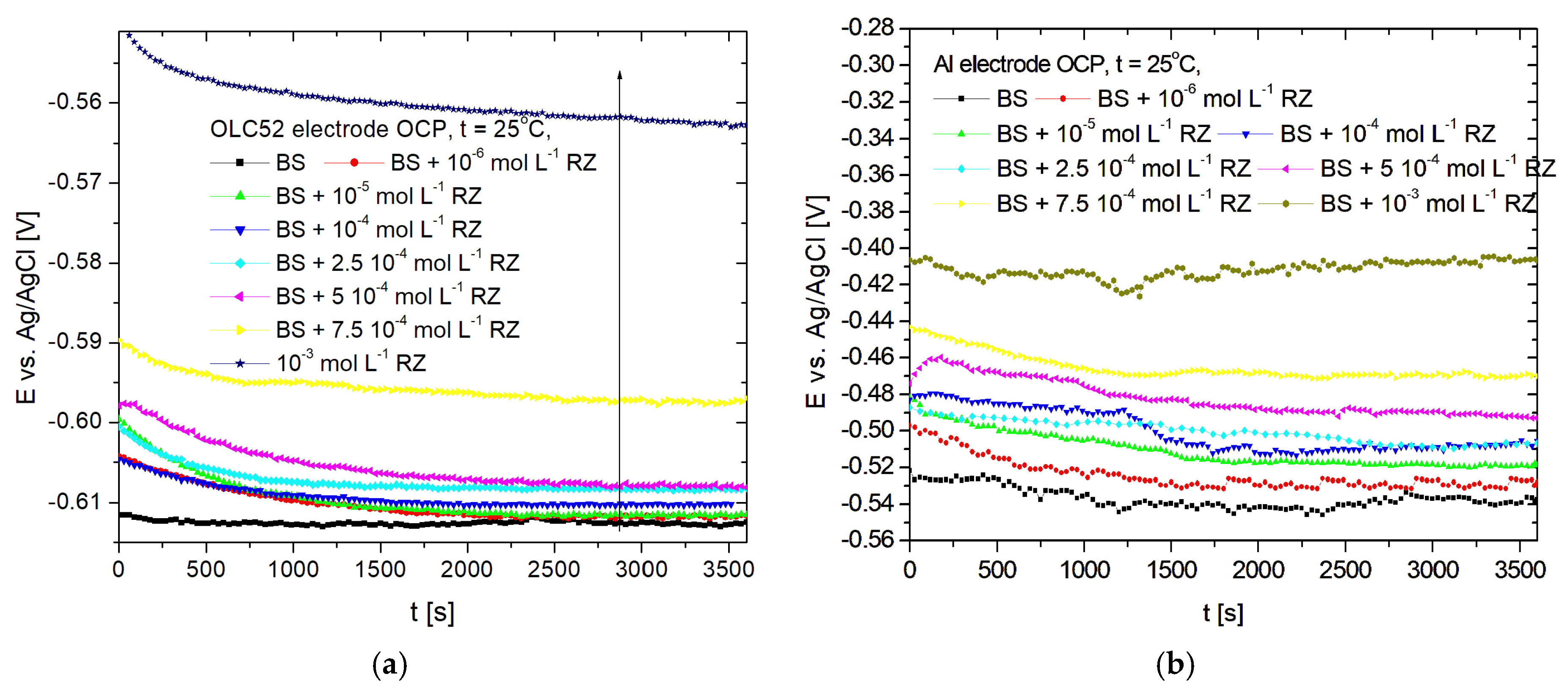
For aluminum, the chronoamperograms exhibit a similar general profile. At +25 mV vs. EOCP, an initial increase in current density is observed, whereas at +250 mV, the current density decreases before reaching a stable value. In the first presented case, compared to the related BS curve, the iox value decreases to 2.25 A m−2 at the highest concentration of RZ. In the second case, the current density stabilizes at 0.15 A m−2, thereby supporting the contribution of RZ in the stabilization of the oxide film at the Al–acetic solution–acetate solution interface. The evolution of the open-circuit potentials, EOCP with and without RZ, is illustrated in Figure 15 for both OLC52 (a) and Al (b).
Figure 15.
Time-dependent evolution of OCP for (a) OLC52 and (b) Al electrodes in a solution containing 0.5 mol L−1 CH3COOH + 0.25 mol L−1 CH3COOK with and without RZ. Arrows indicate the trend with increasing RZ concentration.
For OLC52, the presence of RZ causes a shift in EOCP towards more positive values. Thus, compared with the BS solution corresponding to the value of −611 mV, the value increases to −562 mV at the highest inhibitor concentration. For aluminum, the potential shifts from −540 mV, corresponding to the BS support electrolyte solution, to more positive values, −405 mV, in the presence of 10−3 mol L−1 RZ.
Table 9 presents the values of iox oxidation currents and the EOCP open-circuit potentials related to the working concentrations at 298 K.
Table 9.
Parameters obtained from chronoamperometric and chronopotentiometric measurements describing the corrosion behavior of OLC52 and aluminum in the investigated solutions at different concentrations of RZ.
The chronoamperometry and chronopotentiometry results shown in Table 9 suggest that for OLC52, at both applied overpotentials, iox decreased from 4.95 to 2.65 A m−2 (Eox = 25 mV), and at +250 mV/EOCP, it decreases from 59 to 25 A m−2.
These decreases, together with the positive shifting of the EOCP, highlight the development of a corrosion-inhibiting film. In aluminum, the increasing values of EOCP, together with the decrease in iox from 4.2 to 2.25 A m−2 at 25 mV overpotential, and from 3.25 to 0.15 A m−2 at 250 mV, indicate the stabilization of the oxide layer. Consequently, RZ exhibits a moderate inhibitory effect for OLC52 and a more pronounced effect for Al.
3.7. Impedance Spectroscopy Investigation
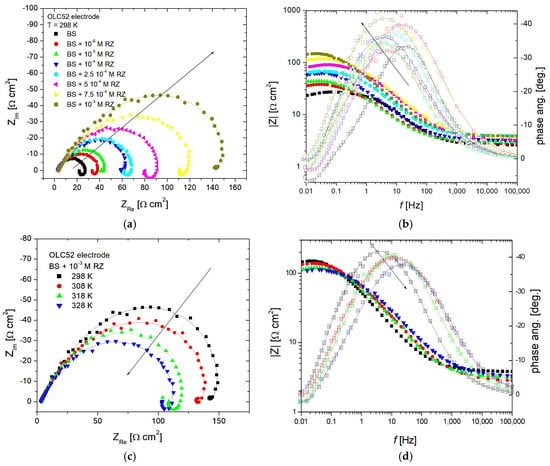
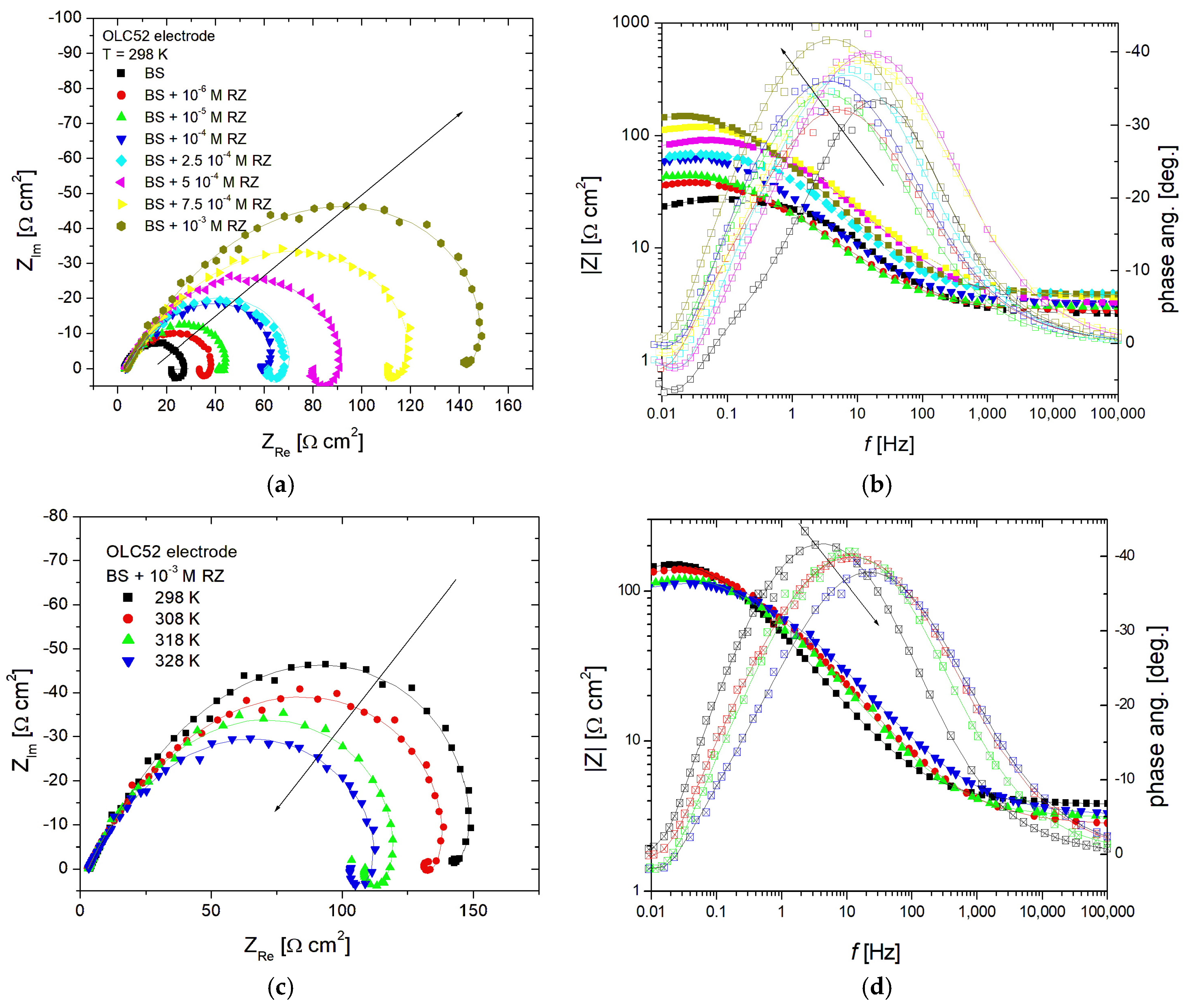
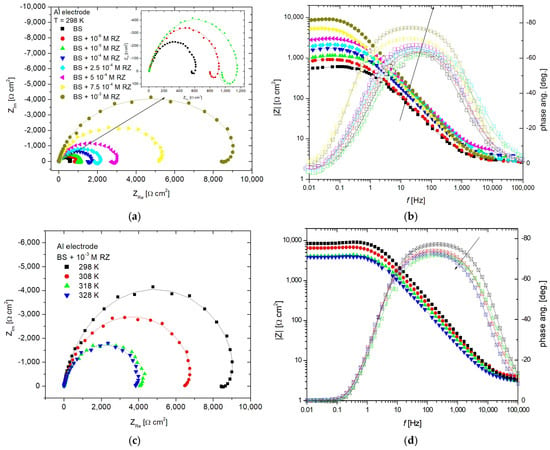
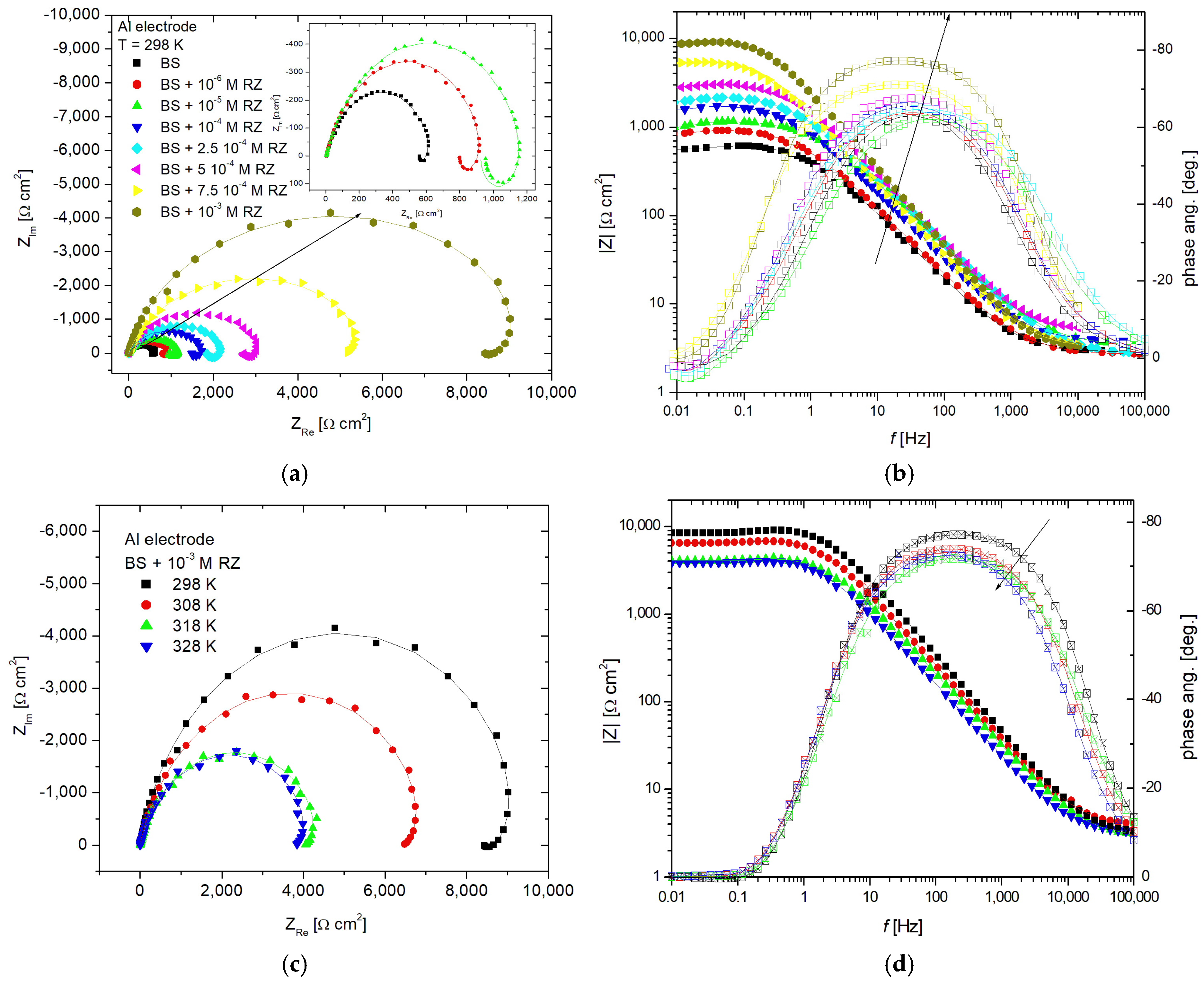
The EIS results are presented in the form of Nyquist and Bode diagrams, where the open symbols represent the experimental data, and the solid line represents the EEC equivalent circuit fitting. Figure 16 shows the spectra of Nyquist (a) and Bode (b) plotted on OLC52 for BS at different RZ concentrations, at 298 K and the effect of temperature on the shape of the impedance plots, at a fixed RZ concentration of 10−3 M (Figure 16c,d). The corresponding results for the aluminum electrode are presented in Figure 17.
Figure 16.
Electrochemical impedance spectra, Nyquist and Bode for OLC52 in acetic/acetate test solutions, (a,b) effect of RZ concentration at 298 K, and (c,d) effect of temperature in the presence of 10−3 M RZ. Arrows indicate the trend with increasing RZ concentration or temperature.
Figure 17.
Electrochemical impedance spectra, Nyquist and Bode for aluminum in acetic/acetate test solutions, (a,b) effect of RZ concentration at 298 K and (c,d) effect of temperature in the presence of 10−3 M RZ. Arrows indicate the trend with increasing RZ concentration or temperature.
Figure 16a and Figure 17a present our investigation of the influence of concentration. In the case of Nyquist spectra, we observe slightly flattened semicircles associated with an non-ideal charge transfer, their diameter increasing with increasing RZ concentration, which indicates an increase in the Rct charge-transfer resistance, thereby indicating a reduction in the corrosion rate [34,35]. At lower frequencies, in the case of all Nyquist diagrams, an inductive loop occurs, associated with the relaxation of the adsorbed species and the formation of the inhibitory adsorbent layer [36]. The Bode diagrams related to the study of the influence of concentration at 298 K, depicted in Figure 16b and Figure 17b, show that the impedance modulus increases and the phase maximum becomes more pronounced for both studied materials [37]. Regarding the influence of temperature, when the temperature rises in the case of both materials, the charge-transfer resistance decreases, in conjunction with the impedance modulus and the phase angle values, which is due to the increase in the molecular agitation and in the corrosion rate, the effect being similar to the one obtained with the Tafel diagrams.
Equation (8) characterizes the impedance of the constant phase element CPE [34].
The component parameters of the equation are as follows: T corresponds to the capacitance of the double layer, and n is an exponent describing the deviation from ideal capacitive behavior.
The effective double layer capacitance is described by Equation (9) [38].
The charge-transfer resistance was used to calculate the inhibitory efficiency IE of RZ, using Equation (10). The components and represent the charge-transfer resistance for BS solution and for BS with the corresponding concentration of RZ, respectively [38].
The results of fitting the electrochemical impedance spectra in an equivalent electrical circuit are presented in Table 10, Table 11, Table 12 and Table 13.
Table 10.
The impedance parameters obtained by fitting for the OLC52 electrode at 298 K, in the absence of RZ and at various RZ concentrations.
Table 11.
Impedance parameters obtained by fitting, for the OLC52 electrode for the concentration of 10−3 M RZ, at temperatures of 298–328 K.
Table 12.
The impedance parameters obtained by fitting, for the Al electrode at 298 K, in the absence of RZ and at various RZ concentrations.
Table 13.
Impedance parameters obtained by fitting for the Al electrode for the concentration of 10−3 M RZ at temperatures of 298–328 K.
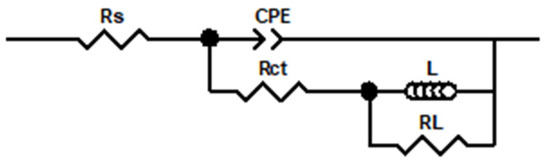
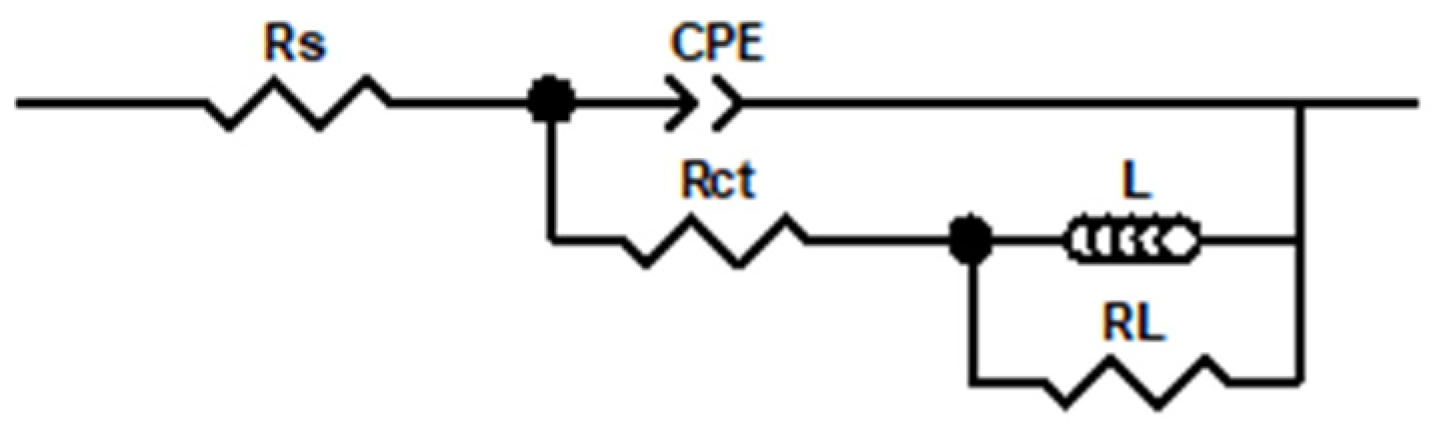
Figure 18 shows the equivalent electrical circuit (EEC), characterized by solution resistance Rs, connected in series with a parallel network containing a constant phase element CPE, a substitute for the capacitance of the double layer for an ideal semicircle, in parallel with the charge-transfer resistance Rct and an inductive element L [35]. The circuit shown is specific to the processes in which RZ molecules adsorb at the electrode/electrolyte interface.
Figure 18.
EEC for modeling OLC52 an aluminum corrosion behavior in acetic/acetate working solutions [19].
From the results presented in Table 10, Table 11, Table 12 and Table 13, the inhibitory effect of RZ obtained within the electrochemical techniques is confirmed by the increase in Rct and the decrease in Cdl, which are accompanied by an increase in IE with increasing concentration. The Rs values remain in a close range and no systematic variation is observed with RZ concentration or temperature, which indicates that the impedance changes are associated with the electrode/electrolyte interface. The values of n range from 0.54 to 0.88 and confirm the non-ideal capacitive response for both metals studied. Higher n values are observed in aluminum, which suggests, compared to OLC52, a more capacitive interface due to the native oxide on the surface. Furthermore, the values of the inductor L and the resistance RL increase with the concentration and decrease with temperature, and indicate the stabilization of the adsorbed species with increasing concentration and the partial weakening of the adsorbed layer as the temperature increases. In the case of OLC52, at the impedance spectra traced at 298 K, Rct increases from 19.23 Ω cm2 in BS to 148.1 Ω cm2 at 10−3 M RZ, the inhibitory efficiency reaching 87.02%, which characterizes the corrosion resistance due to the protective adsorbed layer of RZ. Cdl decreases from 13.51 × 10⁻⁴ to 1.83 10−4 μF cm−2, indicating the displacement of interfacial water molecules by adsorbed RZ molecules and changes in the local dielectric properties of the interfacial layer. For the Al electrode, we observe a more pronounced effect by increasing Rct from 543.2 to 8436 Ω cm2 at 10−3 M RZ, corroborated an inhibitory efficiency of 93.56%, indicating a strong interaction between RZ and the passivating aluminum oxide layer. The impact of temperature is evident in both metals as IE decreases from 87.02% to 80.99% for OLC52 and from 93.56% to 85.91% for Al, indicating a slight degradation of the film at higher temperatures. From the values χ2 of ordinal 10−3 results a good fitting of the experimental impedance results with the equivalent electrical circuits. The appropriate values of the inhibitory efficiencies obtained by EIS are consistent with those obtained by the potentiodynamic polarization measurements.
3.8. FTIR Analysis of Inhibitor Films
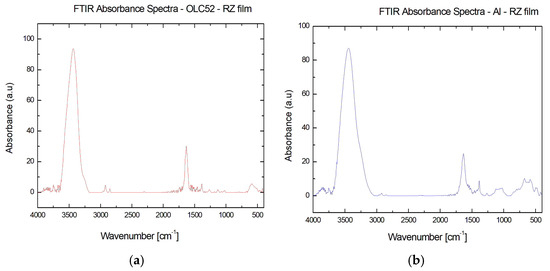
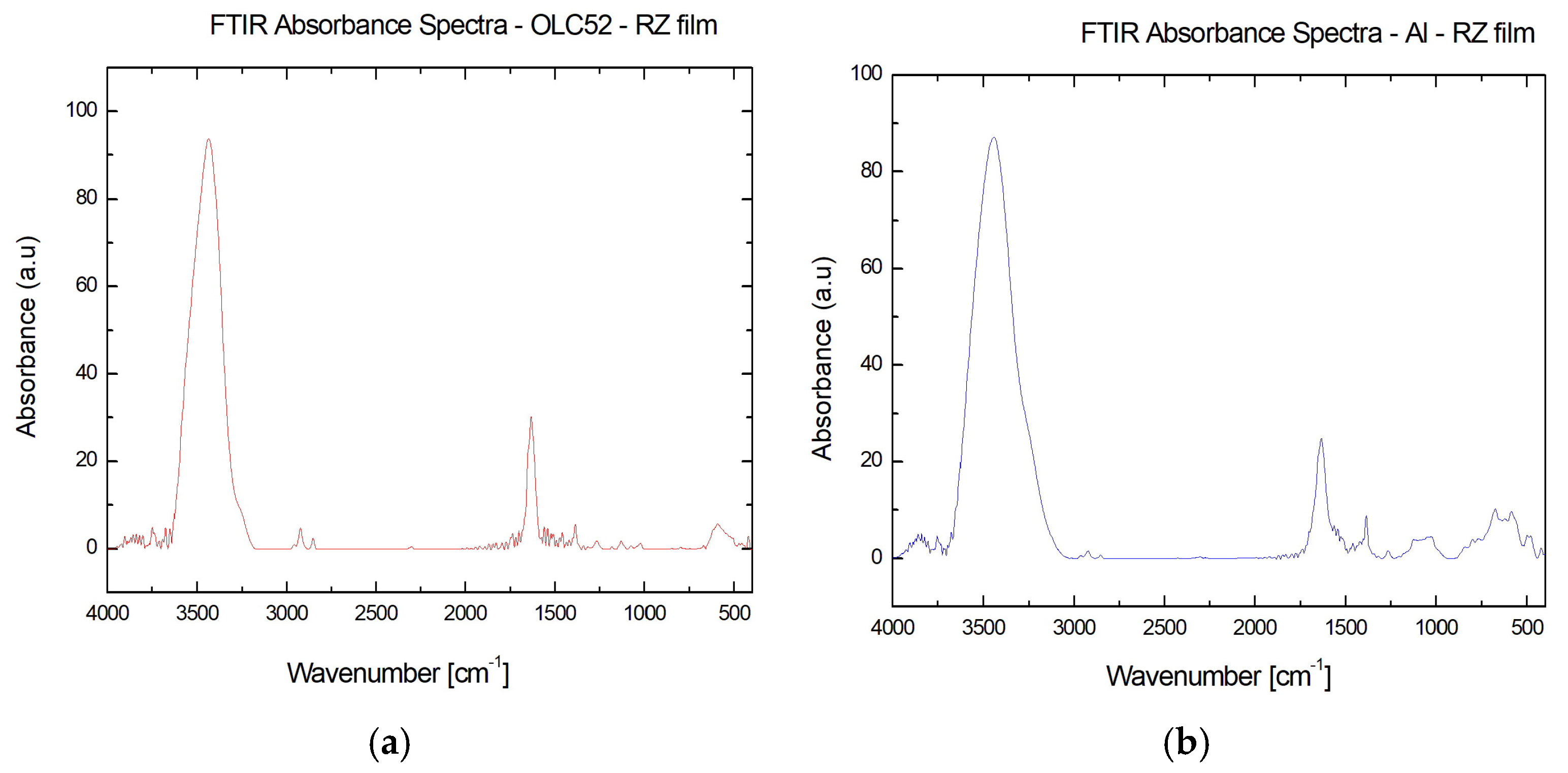
In order to investigate the formation of adsorbed layers of RZ on the studied surfaces, OLC52 and aluminum samples were immersed for 240 h in the corrosive acetic acid/acetate medium, containing 10−3 M RZ. Figure 19 illustrates the FTIR spectrum for the RZ adsorbed surface films on (a) OLC52 and (b) aluminum.
Figure 19.
FTIR absorbance spectra for surface films, collected from OLC52 (a) and aluminum (b).
After exposure to the corrosive environment with inhibitor, the samples were rinsed and dried, and the adherent material was mechanically removed. The collected material was mixed with KBr of spectroscopic purity and pressed into pellets. FTIR spectra were recorded in the range of 4000–400 cm−1 using a Bruker Vertex 70 spectrometer, controlled by OPUS software, version 8.0.
Pure RZ shows characteristic bands at wavenumber values of 3437 cm−1, characteristic of the indole N-H vibration, and around 1730 and 1700 cm−1 for the ester carbonyl groups [39,40]. Both OLC52-RZ and Al-RZ films have broad bands around 3440 cm−1, bands associated with a possible contribution of the N-H group of RZ. The weak signals in the regions of 2922–2853 cm−1, 1736–1738 cm−1 and 1265–1205 cm−1 are compatible with the aliphatic C-H vibrations, carbonyl group and ether groups of RZ. Around the values 1632–1634 cm−1, the overlapping contributions of the aromatic C=C groups can be observed, while the low-wavenumber peaks are associated with iron and aluminum oxides and hydroxides. In accordance with the electrochemical results, the persistence of the mentioned organic bands after rinsing supports the formation of adherent organic–inorganic films containing RZ on both metal surfaces investigated.
3.9. Comparison with Other Alkaloid-Based Corrosion Inhibitors
In order to contextualize the RZ inhibition performance, the IE values obtained in this study were compared with those reported in the literature for other alkaloid-based inhibitors for different metal/aggressive solution systems. The comparative data are presented in Table 14.
Table 14.
Comparison data for inhibitory efficiencies of RZ with other alkaloid inhibitors for different metallic materials and corrosive media.
As illustrated in Table 14, RZ exhibits IE values comparable to or higher than those reported for most of the alkaloids presented. At the maximum investigated concentration of 10−3 M, RZ achieved IE values of 90.5% and 87% (depending on the electrochemical method used) for OLC52, and 94.8% and 93.6% for aluminum. The differences between the values presented are influenced by the composition of the metallic substrates, the range of inhibitor concentrations and the experimental methods used, and confirm the competitive performance of RZ as a corrosion inhibitor for both carbon steel and aluminum, in an acetic/acetate medium.
3.10. Molecular Modeling
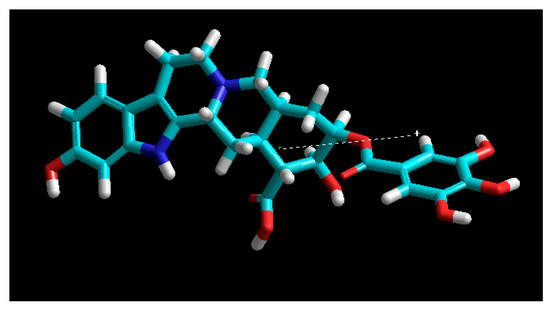
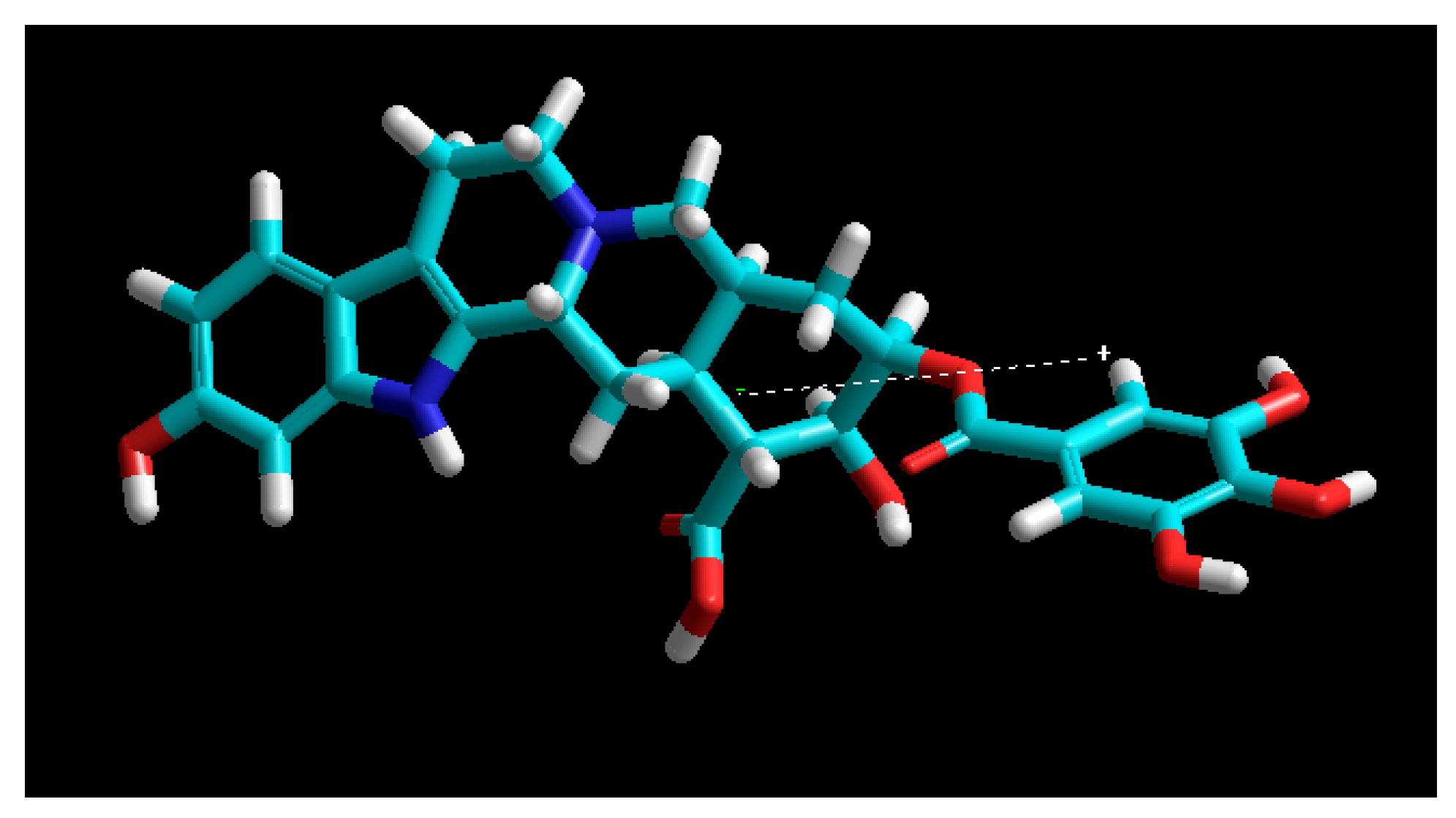
The electrochemical results were completed by molecular modeling of the inhibitor structure. This approach correlated the electronic structure of the inhibitor with its efficiency in inhibiting corrosion reactions. The RZ structure was optimized in its neutral form, with total charge per molecule 0 and multiplicity of spin 1, by the DFT method with B3LYP functional and the 6-31G* basis set available in the Hyperchem 8.0 program. Figure 20 presents the optimized structure of the RZ molecule used in the experimental studies as a corrosion inhibitor, the component atoms being represented in color codes as follows: red corresponds to oxygen, white to hydrogen, cyan to carbon, and nitrogen to blue. Table 15 shows the values of the molecular descriptors calculated for the optimized molecule.
Figure 20.
Structure of RZ obtained by geometry optimization.
Table 15.
Calculated molecular descriptors and their corresponding values for the RZ molecule.
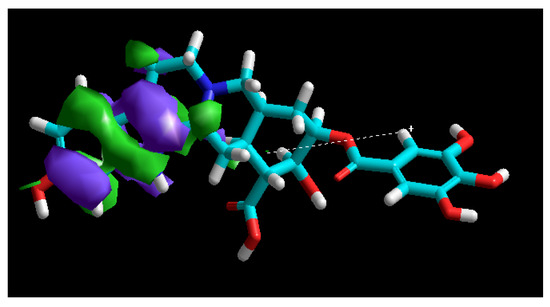
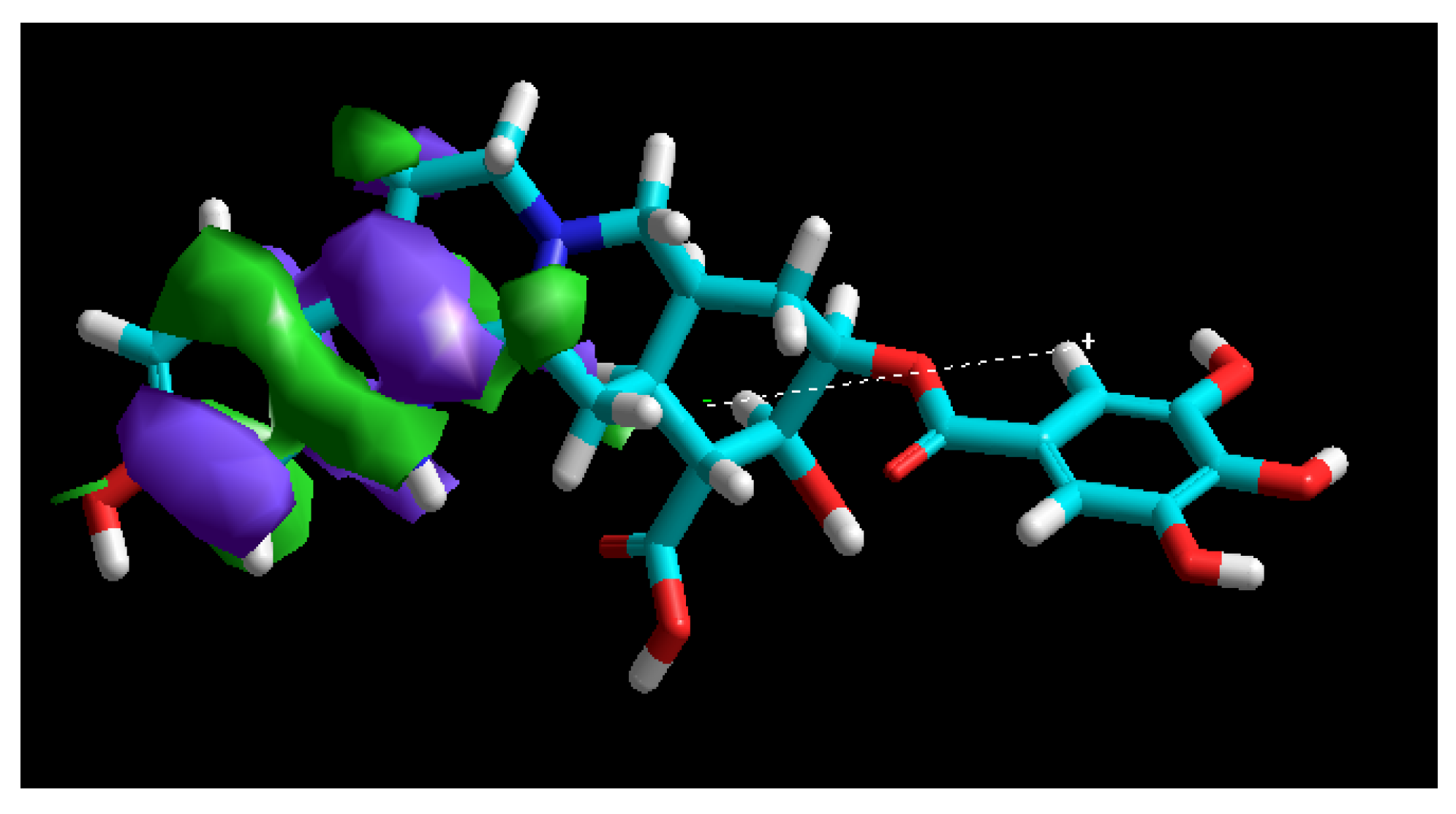
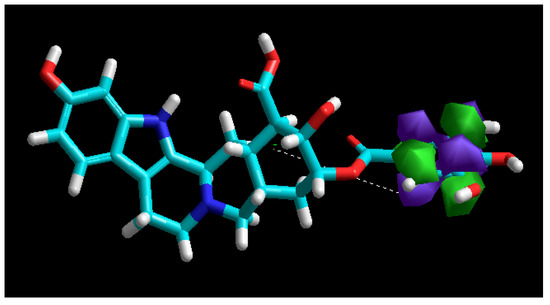
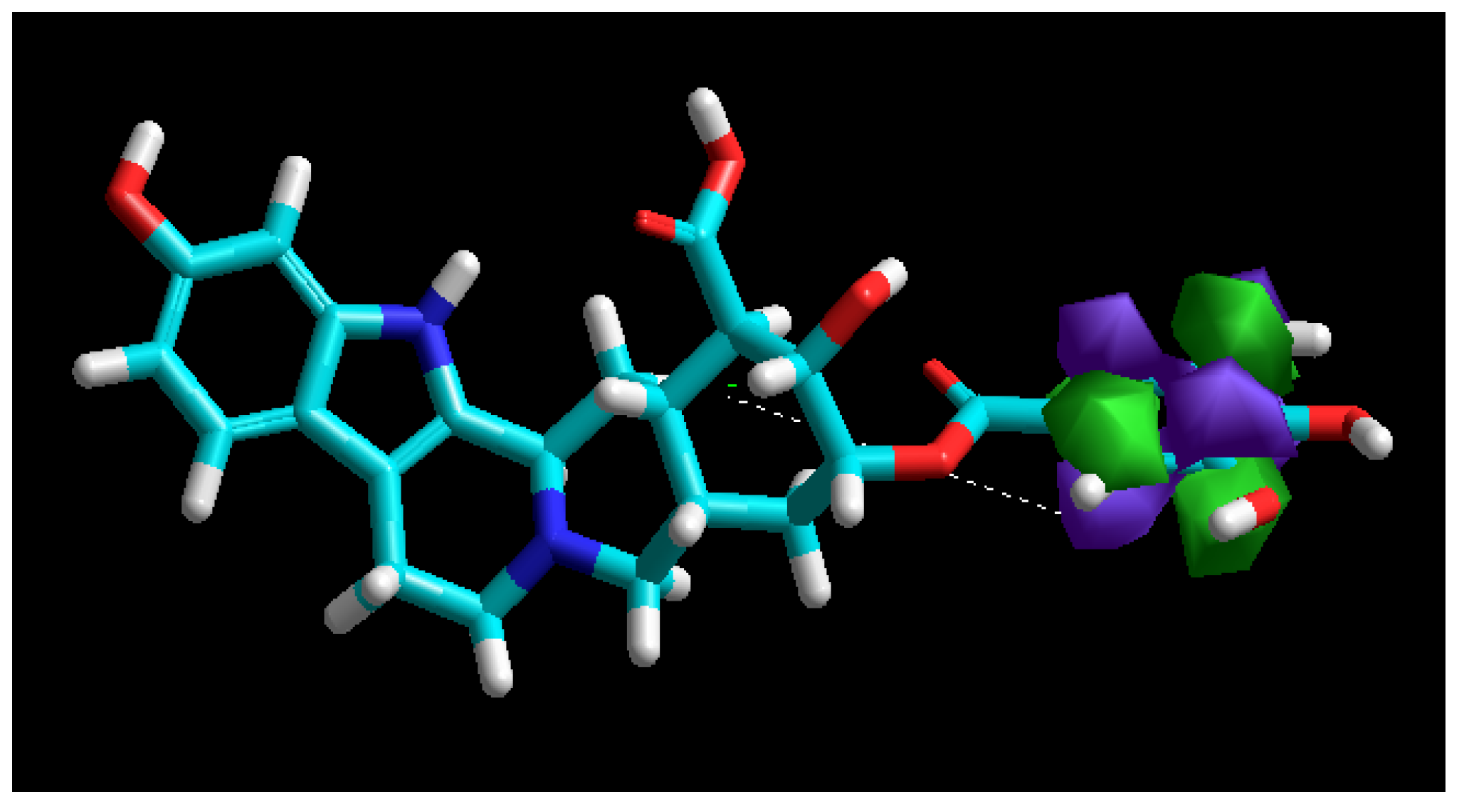
Figure 21 and Figure 22 show the distribution of the Frontier molecular orbitals, namely the HOMO orbital and LUMO.
Figure 21.
Spatial distribution of the highest occupied molecular orbital of the RZ molecule.
Figure 22.
Spatial distribution of the lowest unoccupied molecular orbital of the RZ molecule.
Analysis of the two frontier orbitals indicates that the HOMO is mainly localized over the indole nucleus, particularly around the nitrogen atoms, which confirms the ability of the molecular zone to donate electrons to metal [48]. The LUMO is localized on the aromatic fragment containing the etheric functionalities, suggesting the potential of this area for electron acceptance, nitrogen and oxygen heteroatoms, together with the aromatic systems contributing largely to the inhibitory effect of RZ [49].
The values shown in Table 15, namely ΔE = 8.40 eV, indicate the good stability of the molecule, which may contribute to the stability of the adsorbed inhibitor layer. The dipole moment of 5.05 D indicates the significant polarity of RZ, which favors electrostatic interactions with the metallic surface [50]. The hardness and softness of 4.07 eV and 0.25 eV−1, respectively, in conjunction with the electronegativity of 4.20 eV, indicate the ability of RZ to interact with metallic surfaces both physically and chemically, which is also supported by the study of adsorption isotherms. The supraunitary ratio between the V and S descriptors suggests the possibility of forming a compact film that acts as a physical protection that restricts the access of the corrosive agents, reducing the charge transfer of the studied metals.
4. Conclusions
This study indicates that RZ can act as a potential green corrosion inhibitor for OLC52 carbon steel and aluminum in an acetic acid/acetate medium. The novelty of this study lies in the investigation of RZ on two metallic materials with different corrosion behaviors, and in correlating the electrochemical methods with thermodynamic data and molecular modeling calculations. The inhibition efficiency results show that RZ reduces both anodic and cathodic processes, with a pronounced effect on the anodic branch. At 298 K, the inhibitory efficiencies reached 90.5% for OLC52 and 94.8% for aluminum, respectively. At higher temperatures, the studied inhibitor maintained good efficiency, which suggests that the layer formed on the surface of the metals remains partially stable. From the PDP, EIS and CA data, the formation of a molecular layer adsorbed by RZ is supported, which limits charge transfer, hindering the access of the corrosive species to the metal surfaces. The adsorption behavior is described by the Langmuir isotherm, and the thermodynamic parameters indicate a spontaneous and exothermic process, involving both physical and chemical adsorption. The molecular modeling results for RZ complement the data obtained by voltametric and impedance measurements and show that the aromatic systems, together with the nitrogen and oxygen atoms, contribute to the interaction of the studied molecule with the metal surface. RZ is a promising compound for reducing the corrosion of carbon steel and aluminum in the studied environment. This study can represent a starting point for the development of anti-corrosion formulations for de-icing applications, and further research should validate the proposed adsorption mechanism through surface analysis and evaluate RZ under conditions closer to practical use or more complex. Optimizing the inhibitor concentration or assessing compatibility with other components of commercial de-icing solutions could help establish the practical applicability of RZ in the future.
Author Contributions
Conceptualization, M.L.D., N.V. and G.-D.D.; methodology, M.L.D., N.R. and G.-D.D.; validation, M.L.D. and N.V.; formal analysis, G.-D.D., M.L.D. and N.R.; investigation G.-D.D., M.L.D. and N.R.; writing—original draft preparation, G.-D.D., M.L.D. and N.R.; writing—review and editing, M.L.D. and N.V.; visualization, M.L.D. and N.R.; supervision, M.L.D. and N.V.; funding acquisition, M.L.D. and N.V. All authors have read and agreed to the published version of the manuscript.
Funding
This work was supported by University Politehnica Timisoara.
Institutional Review Board Statement
Not applicable.
Informed Consent Statement
Not applicable.
Data Availability Statement
Data will be available by request.
Conflicts of Interest
The authors declare no conflicts of interest.
References
- Kumari, P.; Lavanya, M. Optimization Strategies for Corrosion Management in Industries with Artificial Neural Network and Response Surface Technology: A Comprehensive Review. J. Bio Tribo Corros. 2024, 10, 59. [Google Scholar] [CrossRef] [Scilit]
- NACE International. IMPACT Study: International Measures of Prevention, Application, and Economics of Corrosion Technologies Study; NACE International: Houston, TX, USA, 2016. [Google Scholar]
- Obot, I.B.; Macdonald, D.D.; Gasem, Z.M. Density functional theory (DFT) as a powerful tool for designing new organic corrosion inhibitors. Part 1: An overview. Corros. Sci. 2015, 99, 1–30. [Google Scholar] [CrossRef] [Scilit]
- Barbu, C.A.; Fierascu, I.; Semenescu, A.; Cotrut, C.M. Critical review regarding the application of plant extracts as eco-friendly corrosion inhibitors—A sustainable interdisciplinary approach. Molecules 2025, 30, 3722. [Google Scholar] [CrossRef] [Scilit] [PubMed]
- Bandeira, R.M.; Lima, F.P.; Nunes, M.S.; dos Santos, E.C.; Júnior, J.R.d.S.; de Matos, J.M.E.; Feitosa, C.M.; Rai, M.; Bhattarai, S.; Das Mulmi, D. The green plant-based corrosion inhibitors—A sustainable strategy for corrosion protection. Surf. Sci. Technol. 2025, 3, 19. [Google Scholar] [CrossRef] [Scilit]
- Verma, C.; Ebenso, E.E.; Quraishi, M.A. Alkaloids as green and environmental benign corrosion inhibitors: An overview. Int. J. Corros. Scale Inhib. 2019, 8, 512–528. [Google Scholar] [CrossRef] [Scilit]
- Said-Ahmed, M.; Lebrini, M. Alkaloid extract from Chimarrhis cymosa as a corrosion inhibitor for C38 steel in 1 M hydrochloric acid: Electrochemical and XPS studies. Metals 2025, 15, 523. [Google Scholar] [CrossRef] [Scilit]
- Abdelfatah, S.A.A.; Efferth, T. Cytotoxicity of the indole alkaloid reserpine from Rauwolfia serpentina against drug-resistant tumor cells. Phytomedicine 2015, 22, 308–318. [Google Scholar] [CrossRef] [Scilit] [PubMed]
- NIST Chemistry WebBook. Reserpine—Formula C33H40N2O9, Molecular Weight 608.6787. Available online: https://webbook.nist.gov/chemistry/ (accessed on 12 May 2026).
- Singh, A.; Ebenso, E.E.; Quraishi, M.A. Corrosion inhibition of carbon steel in HCl solution by some plant extracts. Int. J. Corros. 2012, 2012, 897430. [Google Scholar] [CrossRef] [Scilit]
- National Academies of Sciences, Engineering, and Medicine. Impact of Airport Pavement Deicing Products on Aircraft and Airfield Infrastructure; The National Academies Press: Washington, DC, USA, 2008; ISBN 0-309-09799-1. [Google Scholar]
- Liu, L.; Chen, S.; Hu, Y.; Pan, W.; Dong, T.; Chen, Y.; Lin, L.; Wang, L. Anti-/Deicing Membranes with Damage Detection and Fast Healing. Adv. Funct. Mater. 2024, 34, 2404760. [Google Scholar] [CrossRef] [Scilit]
- Zhang, K.; Huang, J.; Lu, S.; Hu, Y.; Pan, W.; Liu, L. Multi-Scale Biomimetic Strategy: Robust Woven Wires with Photo-Thermal De-Icing and Spontaneous De-Wetting. Adv. Funct. Mater. 2025, 35, 2423043. [Google Scholar] [CrossRef] [Scilit]
- Proviron. Provifrost® KA ECO—Potassium Acetate Runway De-Icer Containing Corrosion Inhibitors. Available online: https://proviron.com/ (accessed on 12 May 2026).
- Lin, X.; Zhao, W.; Yang, F.; Yang, H.; Peng, Q.; Mei, Y.; Wang, Y.; Dou, B. Corrosion electrochemical behavior of 2024 aluminum alloy in potassium acetate deicing fluid. J. Braz. Chem. Soc. 2023, 34, 1109–1118. [Google Scholar] [CrossRef] [Scilit]
- Castillo-Robles, J.M.; Martins, E.d.F.; Ordejón, P.; Cole, I. Molecular modeling applied to corrosion inhibition: A critical review. npj Mater. Degrad. 2024, 8, 72. [Google Scholar] [CrossRef] [Scilit]
- National Center for Biotechnology Information. PubChem Compound Summary for CID 5052, Isoreserpin. PubChem. Available online: https://pubchem.ncbi.nlm.nih.gov/compound/Isoreserpin#section=Literature (accessed on 17 June 2026).
- Merck/Sigma-Aldrich. Reserpine R0875—Solubility Information. Available online: https://www.sigmaaldrich.com/RO/en/product/sigma/r0875?srsltid=AfmBOoqZAapNm4QpRxJs3a0NDPrzaGp5elEQm7HCiGPqwrfIAnJZ75Ns (accessed on 25 April 2026).
- Dima, G.-D.; Dan, M.L.; Rudenko, N.; Vaszilcsin, N. Evaluation of the Inhibitory Efficiency of Yohimbine on Corrosion of OLC52 Carbon Steel and Aluminum in Acidic Acetic/Acetate Media. Coatings 2025, 15, 1458. [Google Scholar] [CrossRef] [Scilit]
- Bobina, M.; Ordodi, V.; Kellenberger, A.; Vaszilcsin, N. Expired Streptomycin as Corrosion Inhibitor for Carbon Steel in Acetic Acid–Sodium Acetate Buffer Solution. J. Eng. Sci. Innov. 2021, 6, 399–418. [Google Scholar] [CrossRef] [Scilit]
- Pletcher, D.; Sotiropoulos, S. Hydrogen Adsorption–Desorption and Oxide Formation–Reduction on Polycrystalline Platinum in Unbuffered Aqueous Solutions. J. Chem. Soc. Faraday Trans. 1994, 90, 3663–3668. [Google Scholar] [CrossRef] [Scilit]
- Brycki, B.E.; Kowalczyk, I.H.; Szulc, A.; Kaczerewska, O.; Pakiet, M. Organic Corrosion Inhibitors. In Corrosion Inhibitors, Principles and Recent Applications; IntechOpen: London, UK, 2017. [Google Scholar]
- Xhanari, K.; Finšgar, M. Organic corrosion inhibitors for aluminum and its alloys in chloride and alkaline solutions: A review. Arab. J. Chem. 2019, 12, 4646–4663. [Google Scholar] [CrossRef] [Scilit]
- Rbaa, M.; Galai, M.; El Faydy, M.; El Kacimi, Y.; Ebn Touhami, M.; Zarrouk, A.; Lakhrissi, B. Synthesis, inhibition effects and thermodynamic studies of corrosion inhibitors. J. Mater. Environ. Sci. 2017, 8, 3528–3542. [Google Scholar]
- Chami, R.; Boudalia, M.; Echihi, S.; El Fal, M.; Bellaouchou, A.; Guenbour, A.; Tabyaoui, M.; Essassi, E.M.; Zarrouk, A.; Ramli, Y. Pyrazolo[3,4-d]pyrimidine as a corrosion inhibitor for mild steel in acidic medium. J. Mater. Environ. Sci. 2017, 8, 4182–4192. [Google Scholar]
- Ituen, E.; Akaranta, O.; James, A. Evaluation of Performance of Corrosion Inhibitors Using Adsorption Isotherm Models: An Overview. Chem. Sci. Int. J. 2017, 18, 1–34. [Google Scholar] [CrossRef] [Scilit]
- Kokalj, A. On the use of the Langmuir and other adsorption isotherms in corrosion inhibition. Corros. Sci. 2023, 217, 111112. [Google Scholar] [CrossRef] [Scilit]
- El Maksoud, S.A.; Fouda, A.E.A.; Badawy, H. Furosemide drug as a corrosion inhibitor for carbon steel in 1.0 M hydrochloric acid. Sci. Rep. 2024, 14, 1–20. [Google Scholar] [CrossRef] [Scilit] [PubMed]
- Chaudhary, S.; Tak, R.K. Natural Corrosion Inhibition and Adsorption Characteristics of Tribulus terrestris Plant Extract on Aluminium in Hydrochloric Acid Environment. Biointerface Res. Appl. Chem. 2022, 12, 2603–2617. [Google Scholar] [CrossRef] [Scilit]
- Vaszilcsin, C.G.; Putz, M.V.; Kellenberger, A.; Dan, M.L. On the Evaluation of Metal-Corrosion Inhibitor Interactions by Adsorption Isotherms. J. Mol. Struct. 2023, 1286, 135643. [Google Scholar] [CrossRef] [Scilit]
- Olawale, O.; Bello, O.S.; Adeoye, J.B.; Ajani, D.O.; Adesina, O.; Oshin, T.A. Thermodynamic and Adsorption Studies of Corrosion Inhibition Efficiency of Sweet Potato Leaves Extract on Mild Steel in H3PO4. NIPES J. Sci. Technol. Res. 2025, 7, 100–107. [Google Scholar] [CrossRef] [Scilit]
- Bobină, M. Utilizarea Produșilor Naturali ca Inhibitori de Coroziune Pentru Metale și Aliaje. Ph.D. Thesis, Universitatea Politehnica Timișoara, Timișoara, Romania, 2014. [Google Scholar]
- Toghan, A.; Gadow, H.S.; Fawzy, A.; Alhussain, H.; Salah, H. Adsorption Mechanism, Kinetics, Thermodynamics, and Anticorrosion Performance of a New Thiophene Derivative for C-Steel in a 1.0 M HCl: Experimental and Computational Approaches. Metals 2023, 13, 1565. [Google Scholar] [CrossRef] [Scilit]
- Kellenberger, A.; Duca, D.A.; Dan, M.L.; Medeleanu, M. Recycling Unused Midazolam Drug as Efficient Corrosion Inhibitor for Copper in Nitric Acid Solution. Materials 2022, 15, 2918. [Google Scholar] [CrossRef] [Scilit] [PubMed]
- Singh, A.; Ansari, K.R.; Xu, X.; Sun, Z.; Kumar, A.; Lin, Y. An Impending Inhibitor Useful for the Oil and Gas Production Industry: Weight Loss, Electrochemical, Surface and Quantum Chemical Calculation. Sci. Rep. 2017, 7, 14904. [Google Scholar] [CrossRef] [Scilit] [PubMed]
- Al-Amiery, A.A.; Mohamad, A.B.; Kadhum, A.A.H.; Shaker, L.M.; Wan Isahak, W.N.R.; Takriff, M.S. Experimental and Theoretical Study on the Corrosion Inhibition of Mild Steel by Nonanedioic Acid Derivative in Hydrochloric Acid Solution. Sci. Rep. 2022, 12, 4705. [Google Scholar] [CrossRef] [Scilit] [PubMed]
- Tan, J.; Guo, L.; Yang, H.; Zhang, F.; El Bakri, Y. Synergistic Effect of Potassium Iodide and Sodium Dodecyl Sulfonate on the Corrosion Inhibition of Carbon Steel in HCl Medium: A Combined Experimental and Theoretical Investigation. RSC Adv. 2020, 10, 15163–15170. [Google Scholar] [CrossRef] [Scilit] [PubMed]
- Carmona-Hernandez, A.; Barreda-Serrano, M.C.; Saldarriaga-Noreña, H.A.; López-Sesenes, R.; González-Rodríguez, J.G.; Mejía-Sánchez, E.; Ramírez-Cano, J.A.; Orozco-Cruz, R.; Galván-Martínez, R. Insight into the Corrosion Inhibition Performance of Pistia stratiotes Leaf Extract as a Novel Eco-Friendly Corrosion Inhibitor for Mild Steel in 1 M HCl Solution. Molecules 2024, 29, 5243. [Google Scholar] [CrossRef] [Scilit] [PubMed]
- Guo, Z.; Liu, X.; Huang, H. Kinetics and Thermodynamics of Reserpine Adsorption onto Strong Acidic Cationic Exchange Fiber. PLoS ONE 2015, 10, e0138619. [Google Scholar] [CrossRef] [Scilit] [PubMed]
- ChemicalBook. Reserpine IR Spectrum, CAS 50-55-5. Available online: https://m.chemicalbook.com/SpectrumEN_50-55-5_IR1.htm (accessed on 6 August 2026).
- Karki, N.; Neupane, S.; Gupta, D.K.; Das, A.K.; Singh, S.; Koju, G.M.; Chaudhary, Y.; Yadav, A.P. Berberine Isolated from Mahonia nepalensis as an Eco-Friendly and Thermally Stable Corrosion Inhibitor for Mild Steel in Acid Medium. Arab. J. Chem. 2021, 14, 103423. [Google Scholar] [CrossRef] [Scilit]
- Guruprasad, A.M.; Sachin, H.P. Corrosion Inhibition Ability of Caffeine on Low Carbon Steel in Corrosive Acid Media: An Experimental and Quantum Chemical Study. J. Jnana Eng. Manag. 2023, 7, 27–34. [Google Scholar]
- Faiz, M.; Zahari, A.; Awang, K.; Hussin, H. Corrosion Inhibition on Mild Steel in 1 M HCl Solution by Cryptocarya nigra Extracts and Three of Its Constituents (Alkaloids). RSC Adv. 2020, 10, 6547–6562. [Google Scholar] [CrossRef] [Scilit] [PubMed]
- Raja, P.B.; Fadaeinasab, M.; Qureshi, A.K.; Rahim, A.A.; Osman, H.; Litaudon, M.; Awang, K. Evaluation of Green Corrosion Inhibition by Alkaloid Extracts of Ochrosia oppositifolia and Isoreserpiline against Mild Steel in 1 M HCl Medium. Ind. Eng. Chem. Res. 2013, 52, 10582–10593. [Google Scholar] [CrossRef] [Scilit]
- Samide, A.; Tutunaru, B. Quinine Sulfate: A Pharmaceutical Product as Effective Corrosion Inhibitor for Carbon Steel in Hydrochloric Acid Solution. Cent. Eur. J. Chem. 2014, 12, 901–908. [Google Scholar] [CrossRef] [Scilit]
- Kamal, C.; Sethuraman, M.G. Caulerpin—A Bis-Indole Alkaloid as a Green Inhibitor for the Corrosion of Mild Steel in 1 M HCl Solution from the Marine Alga Caulerpa racemosa. Ind. Eng. Chem. Res. 2012, 51, 10399–10407. [Google Scholar] [CrossRef] [Scilit]
- Espinoza-Vázquez, A.; Rodríguez-Gómez, F.J. Caffeine and Nicotine in 3% NaCl Solution with CO2 as Corrosion Inhibitors for Low Carbon Steel. RSC Adv. 2016, 6, 70226–70236. [Google Scholar] [CrossRef] [Scilit]
- Zarrouk, A.; El Ouali, I.; Bouachrine, M.; Hammouti, B.; Ramli, Y.; Essassi, E.M.; Warad, I.; Aouniti, A.; Salghi, R. Theoretical Approach to the Corrosion Inhibition Efficiency of Some Quinoxaline Derivatives of Steel in Acid Media Using the DFT Method. Int. J. Electrochem. Sci. 2010, 5, 46–55. [Google Scholar]
- Guo, L.; Kaya, S.; Obot, I.B.; Zheng, X.; Qiang, Y. Toward Understanding the Anticorrosive Mechanism of Some Thiourea Derivatives for Carbon Steel Corrosion: A Combined DFT and Molecular Dynamics Investigation. J. Colloid Interface Sci. 2017, 506, 478–485. [Google Scholar] [CrossRef] [Scilit] [PubMed]
- Costa, D.; Ribeiro, T.; Cornette, P.; Marcus, P. DFT Modeling of Corrosion Inhibition by Organic Molecules: Carboxylates as Inhibitors of Aluminum Corrosion. J. Phys. Chem. C 2016, 120, 28607–28616. [Google Scholar] [CrossRef] [Scilit]

Disclaimer/Publisher’s Note: The statements, opinions and data contained in all publications are solely those of the individual author(s) and contributor(s) and not of MDPI and/or the editor(s). MDPI and/or the editor(s) disclaim responsibility for any injury to people or property resulting from any ideas, methods, instructions or products referred to in the content. |
© 2026 by the authors. Licensee MDPI, Basel, Switzerland. This article is an open access article distributed under the terms and conditions of the Creative Commons Attribution (CC BY) license.