


Abstract
Synthetic dyes from textile effluents represent a major environmental concern due to their persistence and toxicity. Reactive Black 5 (RB5) is widely used in the textile industry and is commonly applied as a model azo compound in sorption studies. This study comparatively evaluates the sorption performance of raw and carbonized sorbents derived from industrial hemp (Cannabis sativa L.) biowaste using an integrated experimental and theoretical approach. The sorbents were prepared through washing, drying, and phosphoric acid-assisted carbonization followed by pyrolysis. Structural and physicochemical properties were characterized using elemental analysis, FTIR spectroscopy, and SEM microscopy. Sorption performance toward RB5 was investigated through batch kinetic and equilibrium experiments, supported by kinetic (pseudo-first-order, pseudo-second-order, Elovich, and intraparticle diffusion models) and isotherm (Langmuir, Freundlich, and Temkin) modeling. Molecular docking simulations were performed to provide mechanistic insight into dye–sorbent interactions. Both materials exhibited rapid sorption kinetics, reaching equilibrium within approximately 45 min, with the pseudo-second-order model suggesting that surface-controlled interactions dominate the sorption rate. Molecular modeling, based on extensive conformational sampling, indicated a strong binding affinity between RB5 and cellulose-based structures, primarily associated with hydrogen bonding and other favorable noncovalent interactions. In contrast, graphene-based models revealed sorption governed by π–π interactions and confinement effects, supporting the experimentally observed differences between raw and carbonized sorbents.
1. Introduction
The synthetic dyes used in the textile industry represent a growing environmental concern due to their contribution to water contamination. Because of weak fixation to textile fibers, a substantial fraction of applied dyes is discharged into wastewater streams, with annual global releases estimated at approximately 280,000 tons [1,2]. The continuous discharge of insufficiently treated textile effluents poses serious risks to aquatic ecosystems and human health [3]. Based on the molecular structure, textile dyes are classified into azo, indigoid, anthraquinone, triarylmethane and nitro and nitroso dyes. Among these groups, azo dyes are the largest and most versatile group comprising around 80% of all dyes in textile industry [2], but are also used in processes such as paper printing, production of food or cosmetics. Their complex aromatic structures and stable azo (–N=N–) bonds make them highly resistant to biodegradation, photodegradation, and chemical oxidation, resulting in long-term environmental persistence [4]. In aquatic systems, azo dyes reduce light penetration and disrupt photosynthesis in algae and aquatic plants, while simultaneously increasing biochemical and chemical oxygen demand (BOD and COD), thereby decreasing dissolved oxygen availability [5]. In addition to environmental impacts, azo dyes and their degradation products, particularly aromatic amines, are associated with skin sensitization, allergic reactions, and genotoxic, mutagenic, and carcinogenic effects [6,7,8,9].
Among azo dyes, Reactive Black 5 (RB5) is considered one of the most widely used and environmentally persistent due to its high chemical stability and strong resistance to degradation. During textile dyeing processes, approximately 15–50% of RB5 remains unfixed and is released into wastewater [10], where shows important ecotoxicological effects on aquatic flora and fauna, and consequently on humans [11,12]. Previous studies have demonstrated its interaction with human serum albumin and dose-dependent cytotoxic effects in human cell lines, further emphasizing its environmental and health relevance [10,13]. Therefore, effective removal of RB5 from wastewater has significant environmental importance.
Various physical, chemical, and biological methods have been developed for dye removal from wastewater, including membrane filtration, ion exchange, coagulation, advanced oxidation processes, and biological treatment [14,15]. However, many of these techniques suffer from high operational costs, limited efficiency, or secondary pollution issues [16]. Among available approaches, sorption remains one of the most effective and widely applied methods due to its high removal efficiency, operational simplicity, cost-effectiveness, and reusability of sorbents [17]. In this context, biosorbents—natural materials derived from biological sources such as agricultural wastes, microbial biomass, algae, chitosan, and plant residues—offer an eco-friendly alternative for pollutant removal from wastewater. Numerous studies on agricultural by-products (including rice husk, sugarcane bagasse, banana peel and leaf, orange and pomegranate peel, sawdust, corn cob and leaves, almond and coconut shell, Luffa acutangula peels and more) have demonstrated their high sorption capacities for both cationic and anionic dyes [18,19,20,21]. Activated carbon, in particular, is an effective adsorbent due to its high surface area, well-developed porosity, and broad sorption capability [22]. Although traditionally produced from coal, wood, or coconut shells, increasing attention has been directed toward the production of activated carbon from renewable biomass and industrial biowaste, driven by sustainability and circular economy principles [23,24,25]. Physical and chemical activation methods, including carbonization under inert atmosphere and chemical impregnation with activating agents, are widely used to tailor pore structure and surface chemistry of biomass-derived carbons [26,27]. Molecular-level simulations provide a powerful tool for theoretical modeling of sorbents, with their performance optimized for specific target contaminants. This approach enables the prediction of sorption affinity and interaction mechanisms prior to experimental validation and supports rational sorbent design, as demonstrated in previous sorption studies on polymeric and nanocomposite systems [28,29,30,31,32].
Industrial hemp (Cannabis sativa L., subsp. sativa) is a fast-growing, renewable biomass resource with low production cost and broad industrial applications [33]. Hemp processing generates large amounts of agricultural and textile waste which is rich in cellulose, hemicellulose, lignin, and pectin, making it an attractive precursor for biosorbent and activated carbon production [23]. Numerous studies have reported successful application of hemp-derived materials for sorption of various dyes, including Reactive Blue, methylene blue, methyl orange, malachite green, and other reactive dyes [15,34,35,36,37,38,39,40,41]. However, systematic comparison of raw and carbonized hemp biosorbents combined with molecular-level interpretation of sorption mechanisms remains limited. Therefore, this study aims to evaluate and compare the sorption performance of non-carbonized and carbonized hemp-based biosorbents toward Reactive Black 5. Experimental kinetic and equilibrium analyses are combined with molecular modeling to provide mechanistic insight into dye–sorbent interactions and to assess the potential of hemp-derived materials for sustainable wastewater treatment applications.
2. Materials and Methods
2.1. Biosorbent Preparation
In this study, two types of samples were used: a raw (unmodified) sample and a carbonized sample of industrial hemp (Cannabis sativa L.). The plant material was cultivated on plantations in the Republic of Srpska, near Banja Luka (Bosnia and Herzegovina). The biomass (stalks) was first air-dried for four weeks, then milled and thoroughly washed to remove surface impurities. The washing procedure, as previously reported [32], involved soaking 10 g of material in an aqueous solution containing 25 g of natural soap (sodium salts of fatty acids) and 5 g of Na2CO3 (Merck KGaA, Darmstadt, Germany) at 80 °C for 4 h, followed by repeated rinsing with distilled water until neutral pH was reached. The material was subsequently dried at 36 °C. The obtained sample was denoted as the unmodified sample.
For the preparation of the carbonized sample, 15 g of the raw biomaterial was impregnated with 30 mL of concentrated phosphoric acid (H3PO4, 85%, ρ = 1.71 g cm−3) and allowed to stand for 24 h. The impregnated material was then subjected to pyrolysis under a nitrogen atmosphere. The temperature was increased at a heating rate of 6 °C min−1 to 170 °C and maintained for 30 min, followed by further heating at 8 °C min−1 to 650 °C and holding at this temperature for 1 h. After natural cooling under an inert atmosphere, the obtained carbonized product was dispersed in 1 L of hot deionized water and left overnight. Following decantation, the sediment was resuspended in fresh hot deionized water (1 L), filtered using a Büchner funnel, and thoroughly washed with deionized water. The solid residue was then dried at 110 °C and ground in an agate mortar. Finally, 2.45 g of the carbonized material was obtained and stored in a PVC container for further use and labeled as carbonized sample. Reactive Black 5 (C26H21N5Na4O19S6; dye content ≥50%; Merck KGaA, Darmstadt, Germany) was used as the model adsorbate in all sorption experiments without further purification.
2.2. Biosorbent Characterization
Both samples were characterized in terms of chemical composition and morphological structure. Elemental composition (CHNS/O) was determined using an elemental analyzer (Vario EL III, Elementar Analysensysteme GmbH, Langenselbold, Germany). The chemical structure and surface functional groups were analyzed by Fourier transform infrared (FTIR) spectroscopy using a Nicolet SUMMIT spectrometer (Thermo Fisher Scientific, Waltham, MA, USA) operating in transmission mode over the spectral range of 4000–400 cm−1. Surface morphology and porosity were examined by scanning electron microscopy (SEM) using a JEOL JSM-IT200 microscope (JEOL Ltd., Tokyo, Japan). Micrographs were recorded at magnifications of 200×, 750×, 1000×, and 2000×.
2.3. Sorption Experiments
Batch sorption experiments were conducted using aqueous solutions of Reactive Black 5 (RB5) at initial dye concentrations ranging from 50 to 1100 mg L−1. All experiments were performed at the natural (unadjusted) pH of the dye solutions (pH ≈ 5) under static conditions with continuous magnetic stirring at 300 rpm. Each experiment was carried out in triplicate, and the obtained data were statistically analyzed. The standard error of the mean (SEM) was calculated using Microsoft Excel (Microsoft Corporation, Redmond, WA, USA).
Kinetic experiments were performed by contacting 1 mg of sorbent with 5 mL of dye solution (C0 = 50 mg/L) at pH 5 and 298 K. Aliquots were collected at predefined time intervals (1, 2, 5, 10, 20, 45, 90, and 180 min). Equilibrium isotherm experiments were conducted using 1 mg of sorbent and 5 mL of dye solutions with initial concentrations ranging from 50 to 1100 mg/L at pH 5 and 298 K, with a contact time of 60 min. Dye concentrations before and after sorption were determined using UV–Vis colorimetric analysis. Absorbance measurements were performed using a Multiskan SkyHigh microplate spectrophotometer (Thermo Fisher Scientific, Singapore, Singapore). Calibration curves were constructed using ten standard dye solutions (25–1000 ppm). Full spectral scans (200–800 nm) were initially recorded to confirm characteristic absorption maxima, followed by quantitative measurements at λmax = 597 ± 2 nm for RB5. All measurements were performed in triplicate. Calibration curves exhibited excellent linearity (R2 > 0.998).
The equilibrium sorption capacity (Qe, mg g−1) was calculated using the mass balance equation:
where ci (mg L−1) is the initial dye concentration, ce (mg L−1) is the equilibrium dye concentration, V (L) is the solution volume, and m (g) is the sorbent mass.
2.4. Sorption Modeling
The sorption mechanism was investigated using kinetic and equilibrium modeling, complemented by molecular modeling analysis [32].
2.4.1. Sorption Kinetic Models
The sorption rate and mechanism are essential for understanding the overall process, kinetic analysis provides insight into the rate-controlling steps and the nature of interactions between the adsorbate and sorbent. Adsorption kinetics describe the relationship between the amount of adsorbed substance and time under given conditions, while kinetic models are obtained by fitting experimental data. In this study, the pseudo-first-order, pseudo-second-order, Elovich, and intraparticle diffusion models were applied (Equations (2)–(5)). Model parameters were obtained by fitting experimental data, and the goodness of fit was evaluated using correlation coefficients (R2); Qe (mg g−1) is the equilibrium sorption capacity, Qt (mg g−1) is the sorption capacity at time t, k1 (min−1) and k2 (g mg−1 min−1) are the rate constants, and t (min) is the contact time.
Based on this model, the half-sorption time (t1/2), defined as the time required to reach 50% of the equilibrium sorption capacity, can be calculated using Equation (4), providing valuable insights into the initial sorption rate.
The Elovich model describes sorption on heterogeneous surfaces. The sorption rate is described by Equation (4).
where ae (mg g−1 min−1) represents the initial sorption rate and be (g mg−1) is related to surface coverage and activation energy.
Intraparticle diffusion in porous sorbents is described by Equation (5), where Kid is the rate constant and Cid relates to boundary layer thickness.
where Kid (mg g−1 min−1/2) is the intraparticle diffusion rate constant and Cid (mg g−1) is associated with the boundary layer thickness.
In practice, multiple linear regions are often observed, corresponding to successive sorption stages, including external mass transfer, diffusion through macropores, and slower diffusion within micropores leading to equilibrium.
2.4.2. Equilibrium Sorption Analysis
Since the equilibrium state represents a key aspect of the sorption process, as it defines the final distribution of the adsorbate between the solid phase (sorbent) and the solution, its understanding enables a quantitative assessment of sorbent capacity and binding mechanisms. Adsorption isotherms describe the relationship between the amount of adsorbed substance and its equilibrium concentration at constant temperature, and their models are obtained by fitting experimental data. In this study, the Langmuir, Freundlich, and Temkin models were applied (Equations (7)–(9)).
Langmuir model:
Freundlich model:
Temkin model:
In Equation (6), Qe (mg g−1) represents the equilibrium amount of adsorbed oxyanions, Ce (mg dm−3) is the equilibrium concentration, and Qmax (mg g−1) denotes the maximum sorption capacity. KL (dm3 mg−1) is the Langmuir isotherm constant related to the affinity of binding toward active sorption sites.
In Equation (7), KF (dm3 mg−1) is the Freundlich constant, while n is the isotherm exponent obtained from the slope of the linear plot of log Qe versus logCe, reflecting the sorption intensity and surface heterogeneity.
In Equation (8), bt (J mol−1) is the Temkin adsorption constant associated with the heat of sorption, K (dm3 mg−1 or dm3 mmol−1) is the Temkin equilibrium binding constant, and R is the universal gas constant (8.314 J mol−1 K−1).
2.5. Computational Sorption Analysis
Kinetic and equilibrium models provide insight into the mechanisms governing binding, but they do not offer direct information about the nature of interactions between the sorbed substance and the sorbent. For this type of analysis, a molecular-level understanding is required, involving consideration of the structure and flexibility of the formed complexes. To this end, conformational analysis was performed to investigate the accessible configurations and interactions between RB5 and the substrates. Conformational sampling of the RB5-substrate complexes was carried out with the CREST [42] program using the GFN-FF force field [43]. The total charge of each system was set to −4, corresponding to the anionic form of RB5 under the studied conditions. Solvent effects were included implicitly using the GBSA [44] water model. Conformational sampling in CREST was performed using metadynamics-based geometry propagation with an integration time step of 1 fs, providing stable exploration of the conformational landscape for the flexible host–guest assemblies. The conformational search was performed for four supramolecular model systems: (1) RB5@Iα-cellulose-2—RB5 adsorbed on the surface of two cellulose Iα strands; (2) RB5@Iα-cellulose-3—RB5 wrapped by three cellulose Iα strands; (3) RB5@graphene—sorption of RB5 on a single functionalized graphene sheet; (4) RB5@bigraphene—RB5 confined between two graphene sheets. For the RB5@bigraphene conformers, interaction energies were evaluated using two reference schemes: (a) self-assembly mode, where the complex was referenced to initially separated RB5 and two graphene sheets, corresponding to sorption-driven association of the components, and (b) intercalation mode, which represents RB5 insertion into pre-associated optimized graphitic slit-like domains rather than a rigid cavity with fixed interlayer spacing. The graphene sheets used in the calculations consisted of finite graphene-like aromatic fragments containing edge oxygen and nitrogen-containing functional groups (methoxy, carbonyl, carboxyl, amino groups) introduced to mimic partially oxidized defect sites that may remain after carbonization. The functional groups were positioned primarily at the sheet edges to maintain the aromatic character of the basal graphene-like plane while enabling possible hydrogen-bonding interactions with RB5 sulfonate groups.
Only the lowest-energy conformers were retained for further study, while rotamer structures were excluded from the search. A total of 89, 126, 675, and 422 unique conformers were generated for the RB5@Iα-cellulose-2, RB5@Iα-cellulose-3, RB5@graphene, and RB5@bigraphene systems, respectively. After removal of duplicate structures and energy ranking, conformers lying within an energy window of 100 kcal/mol (≈4.4 eV) relative to the lowest-energy conformer were retained for further analysis for each system. The five lowest-lying conformers obtained for each system were subsequently reoptimized at the semiempirical quantum mechanical level using GFN2-xTB [45]. Solvent effects were again described using the GBSA water model, and analytical Hessians were calculated after geometry optimization to confirm the stationary points obtained and evaluate the thermochemical corrections. Small residual imaginary frequencies up to −5 cm−1 were accepted and attributed to numerical noise or very shallow potential energy surface modes. Interaction energies were evaluated using the standard super-molecular scheme, where the energy of the optimized complex was compared with the sum of the energies of the separated fragments (Equation (9)):
Previous studies demonstrated that GFN2-xTB can be successfully applied for reliable estimation of interaction energies in large noncovalently bound systems, while GFN-FF is suitable for routine conformational exploration of supramolecular assemblies [46,47,48]. Nevertheless, benchmark studies indicate that interaction energies for π–π stacked complexes may in some cases deviate from higher-level reference methods; therefore, the present results are interpreted primarily in a comparative manner.
3. Results and Discussion
3.1. Elemental Analysis
Elemental analysis of the raw plant biomass revealed a predominance of oxygen (52.03%), followed by carbon (41.02%) and hydrogen (6.05%), with trace amounts of nitrogen (0.47%) and sulfur (0.43%). This elemental composition is consistent with the typical structure of lignocellulosic biomass, which is primarily composed of cellulose, hemicellulose, and lignin polymers [49].
In contrast, the elemental analysis of the pyrolyzed material (C: 62.51%, N: 5.14%, H: 2.93%, S: not detected) quantitatively confirms the substantial compositional changes induced by the carbonization process. Pyrolysis under inert conditions led to pronounced structural transformations, including the removal of moisture and volatile components, a significant reduction in oxygen-containing functional groups (–OH, –COOH), and the formation of a carbon-rich porous matrix with enhanced surface area, favorable for sorption applications.
3.2. FTIR Analysis
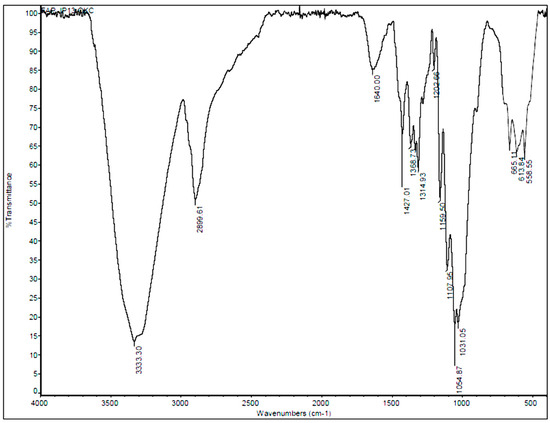
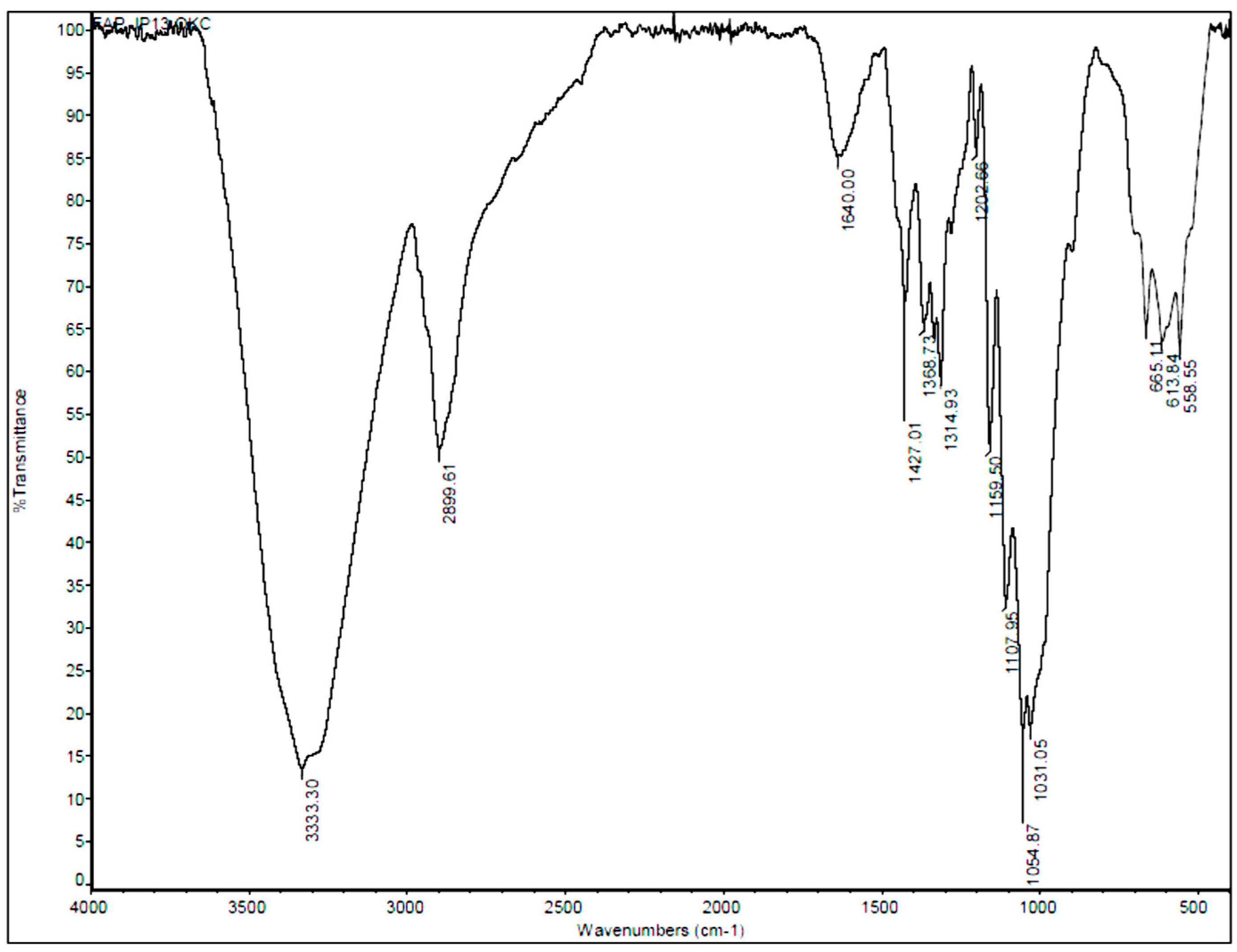
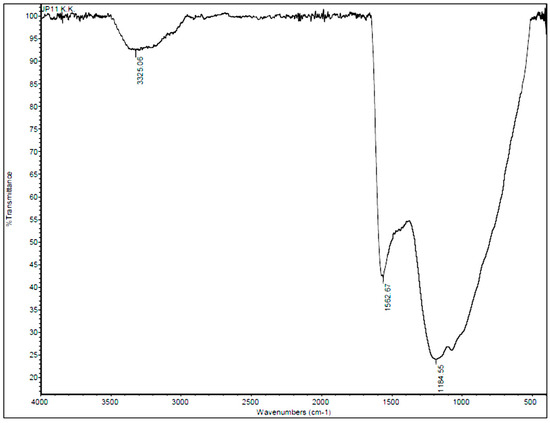
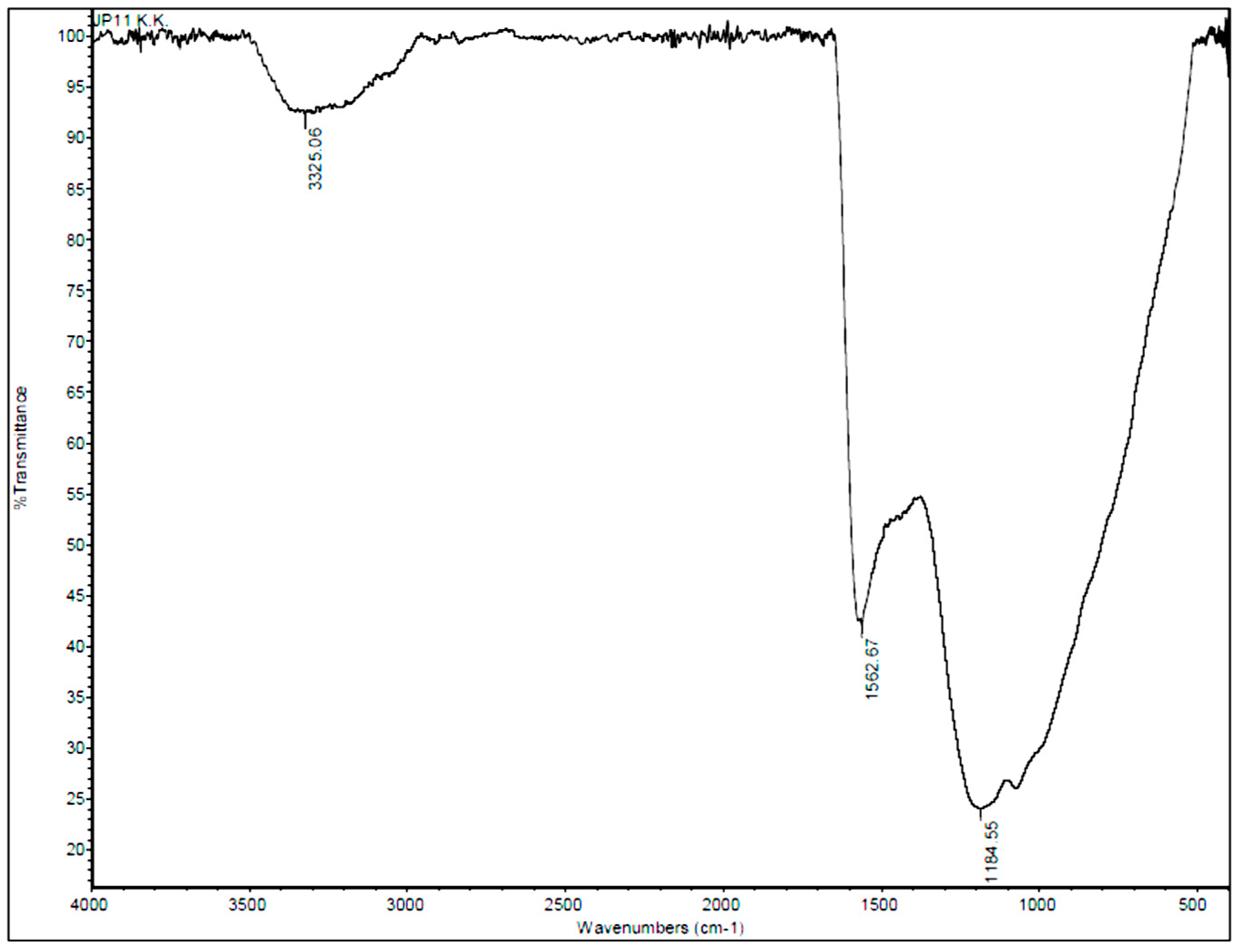
The FTIR spectra (Figure 1) clearly indicate that the raw plant material possesses a typical lignocellulosic character, with dominant hydroxyl, aliphatic, and polysaccharide functional groups. During the carbonization process, dehydration, depolymerization, dehydroxylation, and aromatization occur, whereby the organic biomass is transformed into a carbon-rich, aromatic, and chemically stable matrix with a smaller number of functionally active surface groups. The pronounced band at approximately 2899 cm−1, present in the spectrum of the raw sample, is attributed to the stretching of aliphatic C–H bonds (–CH2 and –CH3) from cellulose and hemicellulose structures. In the carbonized sample (Figure 2), this region is almost entirely lost, which directly confirms the thermal degradation of aliphatic chains and their transformation into aromatic carbon structures. In the raw material, the peak around 1640 cm−1 is mainly associated with vibrations of adsorbed water and carbonyl (C=O) groups present in lignin and hemicellulose. After carbonization, a distinct signal appears at approximately 1562 cm−1, which corresponds to the C=C vibrations of the aromatic rings, clearly indicating the development of condensed aromatic domains and the formation of a stable carbonized matrix. The intensive bands in the 1200–1000 cm−1 region of the raw sample (1202, 1159, 1107, 1054, and 1031 cm−1), characteristic of C–O and C–O–C vibrations of glycosidic bonds in the polysaccharide structure, are transformed after carbonization into a simpler and broader band around 1184 cm−1. This change indicates the degradation of the polysaccharide matrix and the formation of residual oxygen-containing functional groups on the surface of the carbon material, which represent active sites important for sorption processes.
Figure 1.
FTIR spectrum of hemp biosorbent showing characteristic functional groups involved in dye sorption.
Figure 2.
FTIR spectrum of carbonized hemp biosorbent showing characteristic functional groups involved in dye sorption.
3.3. SEM Analysis
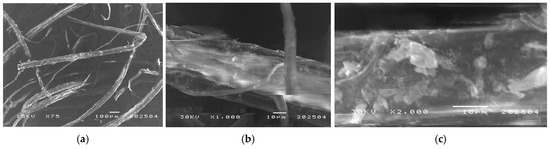
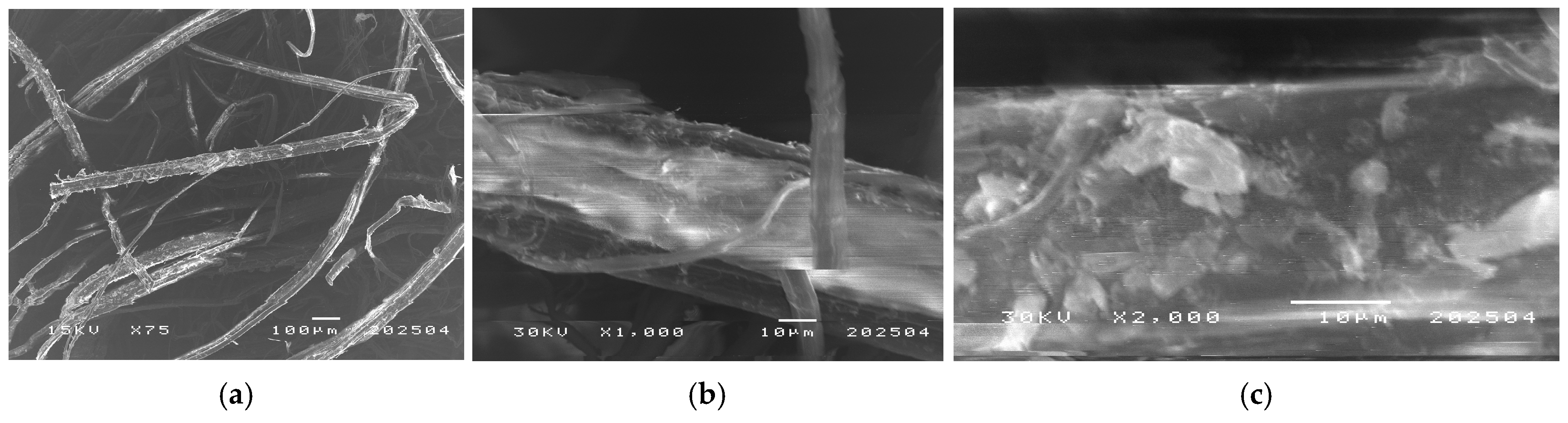
SEM micrographs (Figure 3) of the raw biomass revealed a well-preserved fibrous morphology with randomly oriented microfibrils and a compact surface structure. The intact lignocellulosic framework is characterized by smooth fiber surfaces and limited pore development, indicating minimal structural degradation. Consequently, the raw material exhibits low surface roughness and reduced accessibility of active sites, which explains its relatively lower sorption capacity.
Figure 3.
SEM micrograph of the unmodified sample’s surface at magnifications of (a) 75×, (b) 1000×, and (c) 2000×.
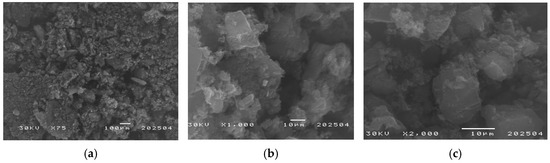
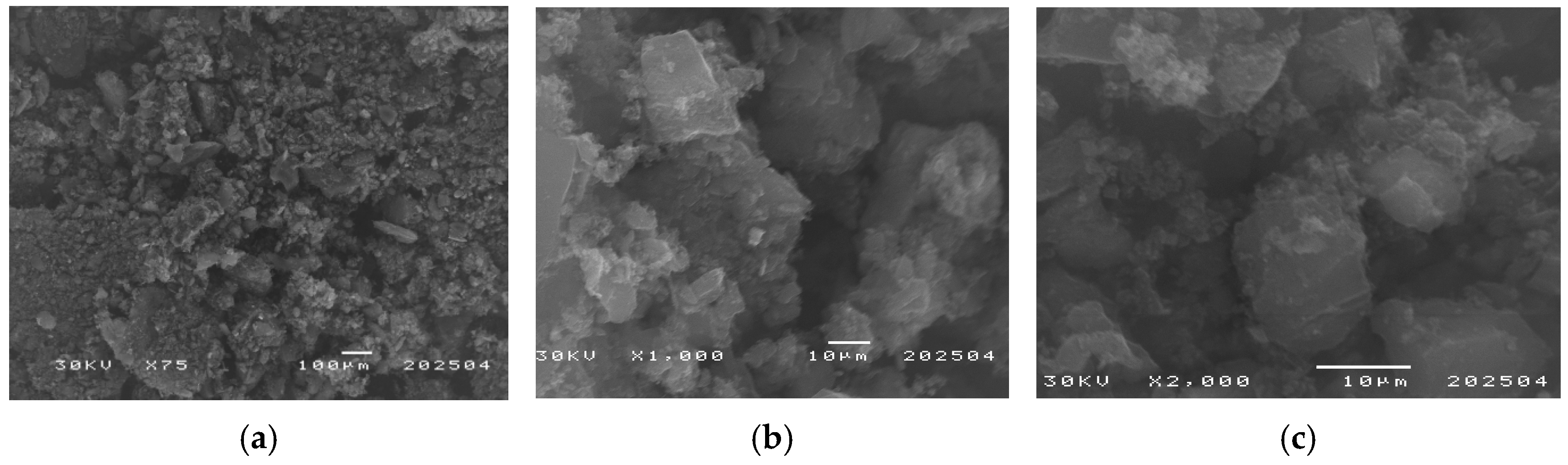
In contrast, the SEM analysis of the carbonized biomass (Figure 4) showed a markedly different morphology, characterized by irregular and fragmented particles with rough surfaces and well-developed interparticle voids. The formation of porous carbonaceous structures is attributed to the thermal decomposition of lignocellulosic components and the release of volatile matter during the pyrolysis process. This structural transformation results in increased surface heterogeneity and the development of a porous architecture, which is highly favorable for sorption applications, as it enhances mass transfer and provides a large number of accessible active sites.
Figure 4.
SEM micrograph of the carbonized sample’s surface at magnifications of (a) 75×, (b) 1000×, and (c) 2000×.
The SEM analysis revealed that the carbonized biomass exhibits an irregular, fragmented morphology with rough surfaces and well-developed interparticle voids. The formation of porous carbonaceous structures is attributed to the thermal decomposition of lignocellulosic components and the release of volatile matter during pyrolysis. The observed surface heterogeneity and porous architecture are favorable for sorption applications, as they enhance mass transfer and provide a large number of accessible active sites.
3.4. Kinetic Analysis
By comparing the sorption rate of RB5 on non-carbonized and carbonized samples, differences in sorption behavior, uptake rates, and dominant rate-controlling steps can be assessed. In both cases, the kinetics were rapid, indicating fast sorption rates.
3.4.1. Non-Carbonized Sample
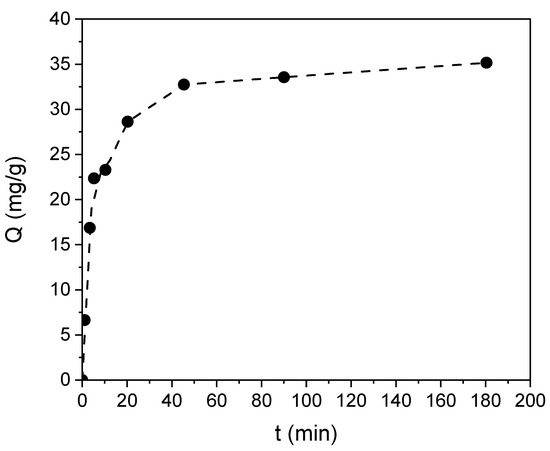
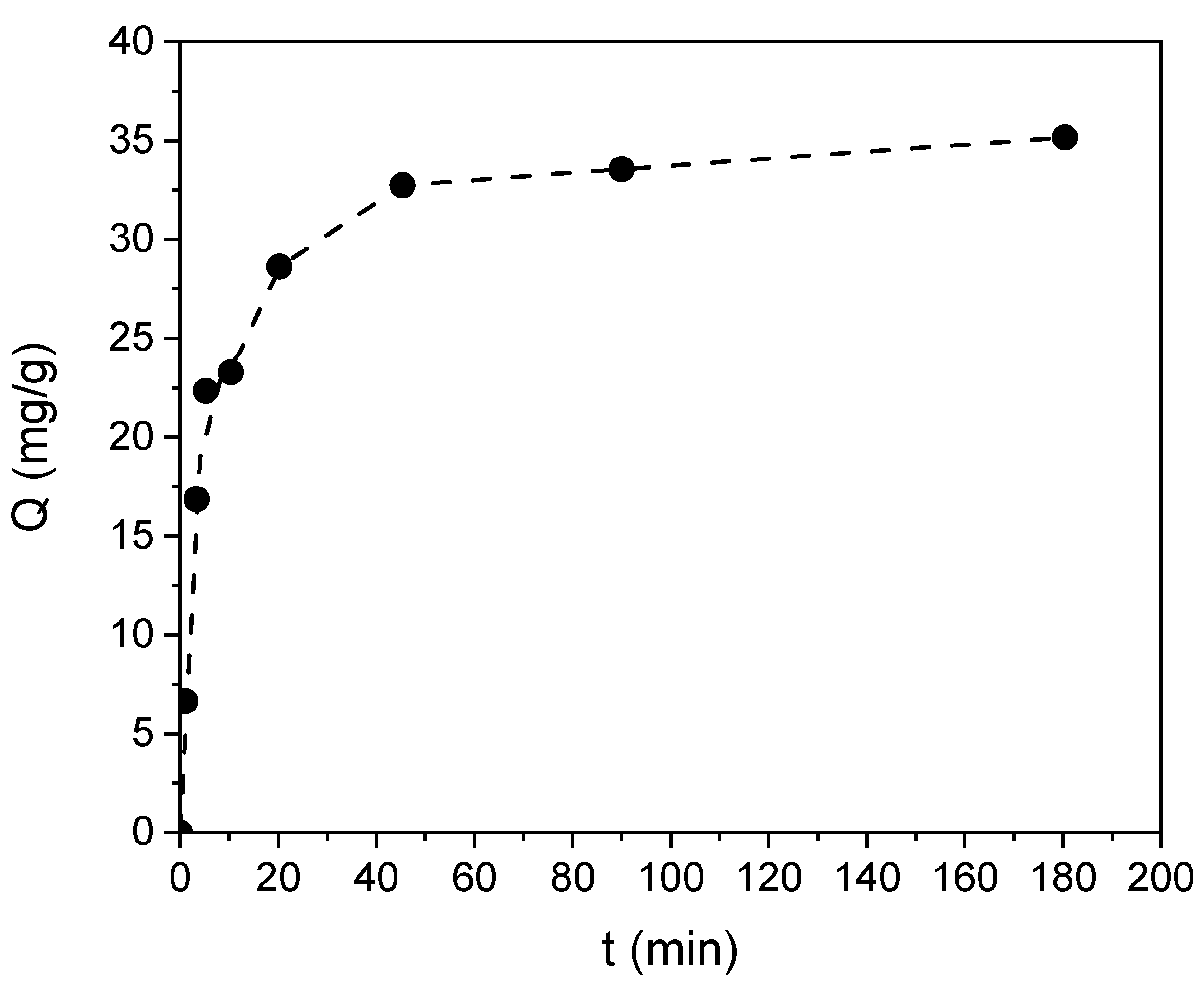
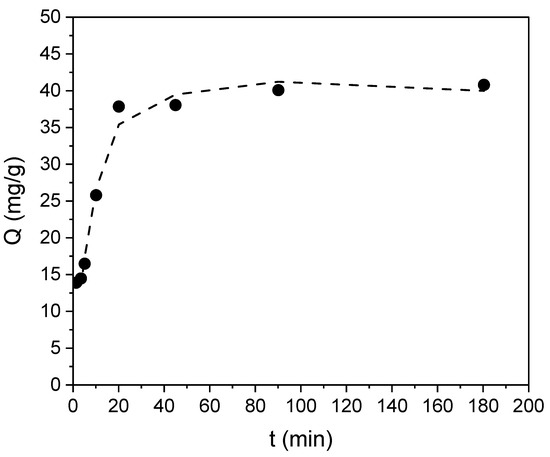
The effect of contact time on the sorption capacity of the non-carbonized hemp biosorbent is shown in Figure 5. The sorption process was rapid, with a half-sorption time (t1/2) slightly longer than 3 min. The maximum sorption capacity reached 36.73 mg g−1, while the saturation plateau was achieved after approximately 45 min, indicating fast uptake kinetics.
Figure 5.
Time-dependent sorption capacity (Q, mg/g) of RB5 on hemp biosorbent (pH = 5, biosorbent mass = 0.005 g, initial concentration: 50 mg/L, T = 298 K).
The experimental kinetic data were analyzed using the pseudo-first-order (PFO), pseudo-second-order (PSO), Elovich, and intraparticle diffusion (IPD) kinetic models.
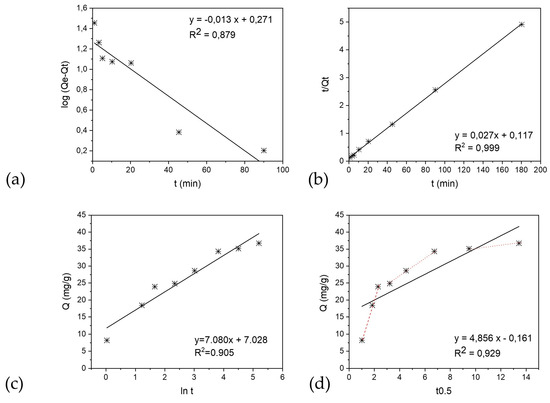
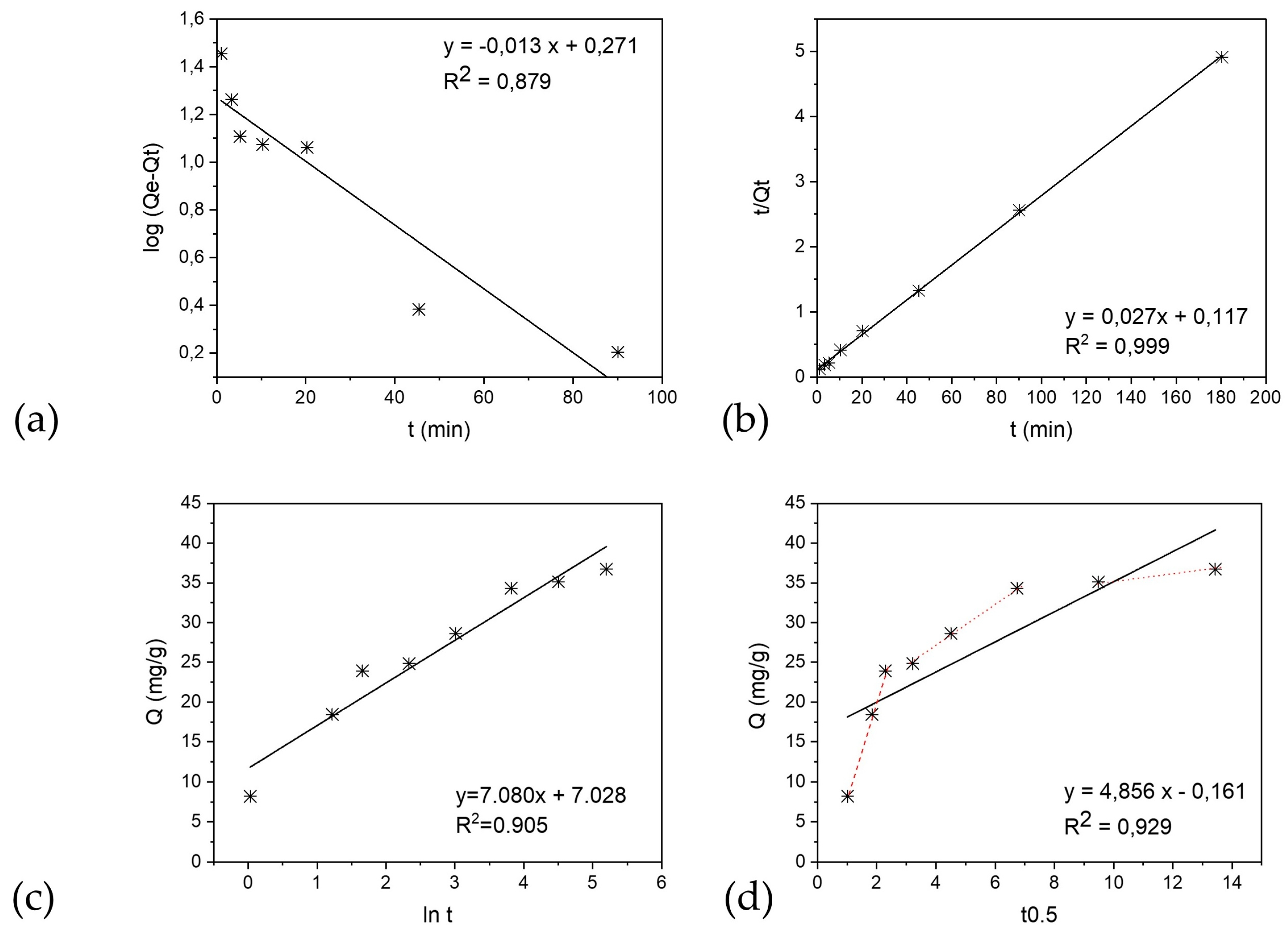
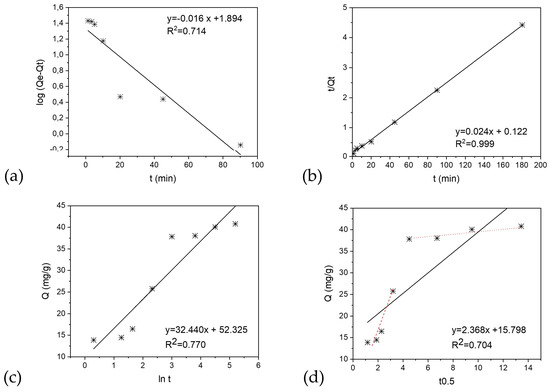
The results of sorption kinetics modeling are presented in Figure 6. The pseudo-second-order (PSO) model best describes the sorption process in the non-carbonized sample, indicating that surface-controlled interactions dominate the sorption rate.
Figure 6.
Kinetic models for sorption of Reactive Black dye on a non-carbonized sample: (a) pseudo-first order, (b) pseudo-second order, (c) Elovich, and (d) IPD.
However, a more detailed insight into the sorption mechanism can be obtained from the intraparticle diffusion (Weber–Morris) model, which suggests that the sorption process proceeds through multiple consecutive diffusion stages rather than a single rate-controlling step. Three distinct linear regions can be identified. The first region, characterized by the steepest slope, corresponds to the rapid diffusion of dye molecules from the bulk solution to the external surface of the sorbent (film diffusion). The second region, exhibiting a lower slope, is attributed to surface diffusion accompanied by the progressive occupation of available sorption sites. The third region, characterized by the smallest slope, represents the slow diffusion of dye molecules into the internal pore structure of the sorbent, where sorption gradually approaches equilibrium. Moreover, the regression line did not pass through the origin (C ≠ 0), indicating that intraparticle diffusion was not the sole rate-controlling mechanism. This observation suggests that external mass transfer (boundary layer diffusion), surface sorption, and intraparticle diffusion all contributed to the overall sorption process.
3.4.2. Carbonized Sample
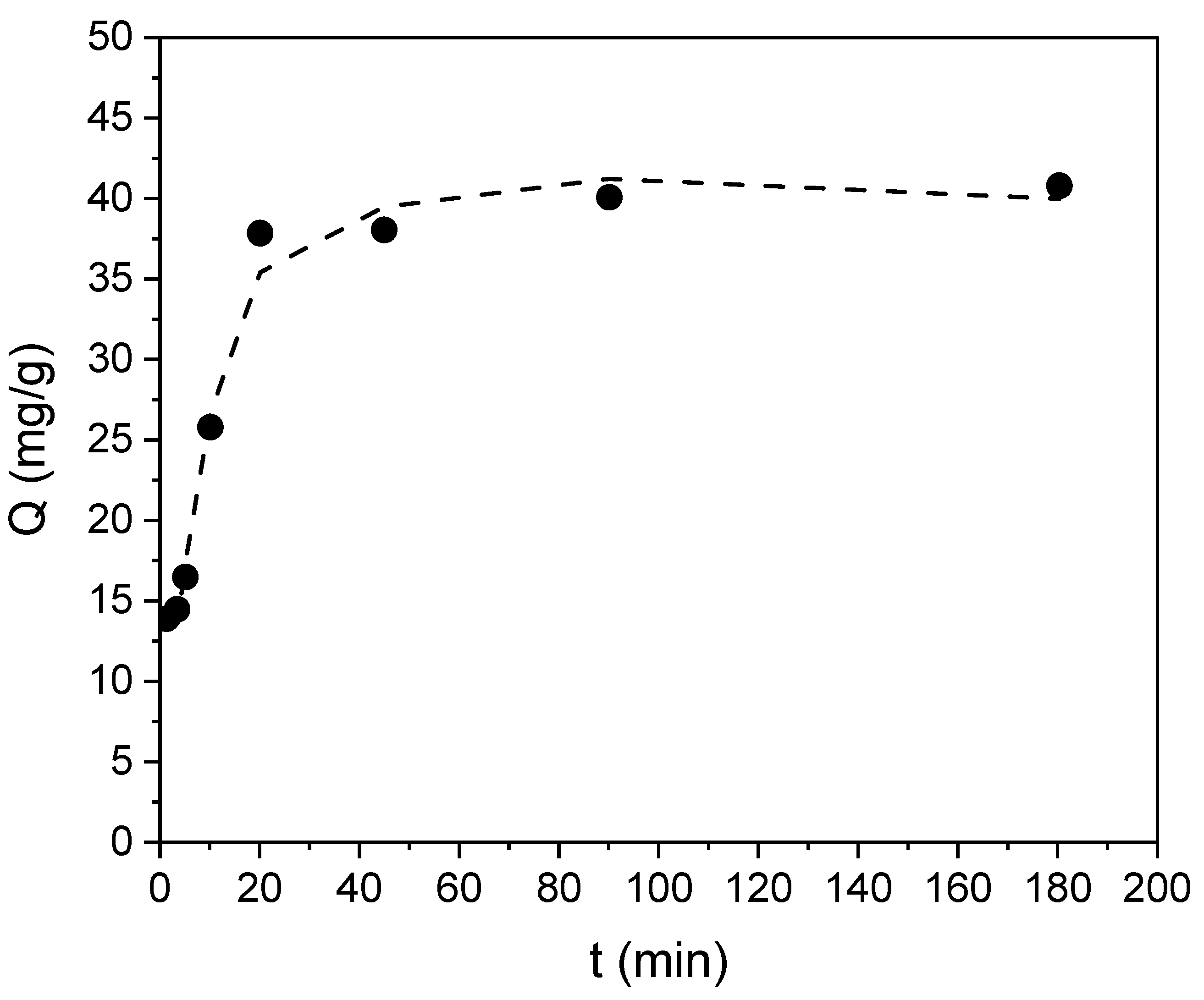
For the carbonized sample, a similarly rapid sorption behavior was observed (Figure 7). The half-sorption time (t1/2) was shorter than 10 min. The maximum sorption capacity reached 40.79 mg/g, which was higher than that of the non-carbonized material. The saturation plateau was also achieved after approximately 45 min, indicating fast equilibrium attainment.
Figure 7.
Time-dependent sorption capacity (Q, mg/g) of RB5 on carbonized hemp biosorbent (pH = 5, biosorbent mass = 0.005 g, initial concentration: 50 mg/L, T = 298 K).
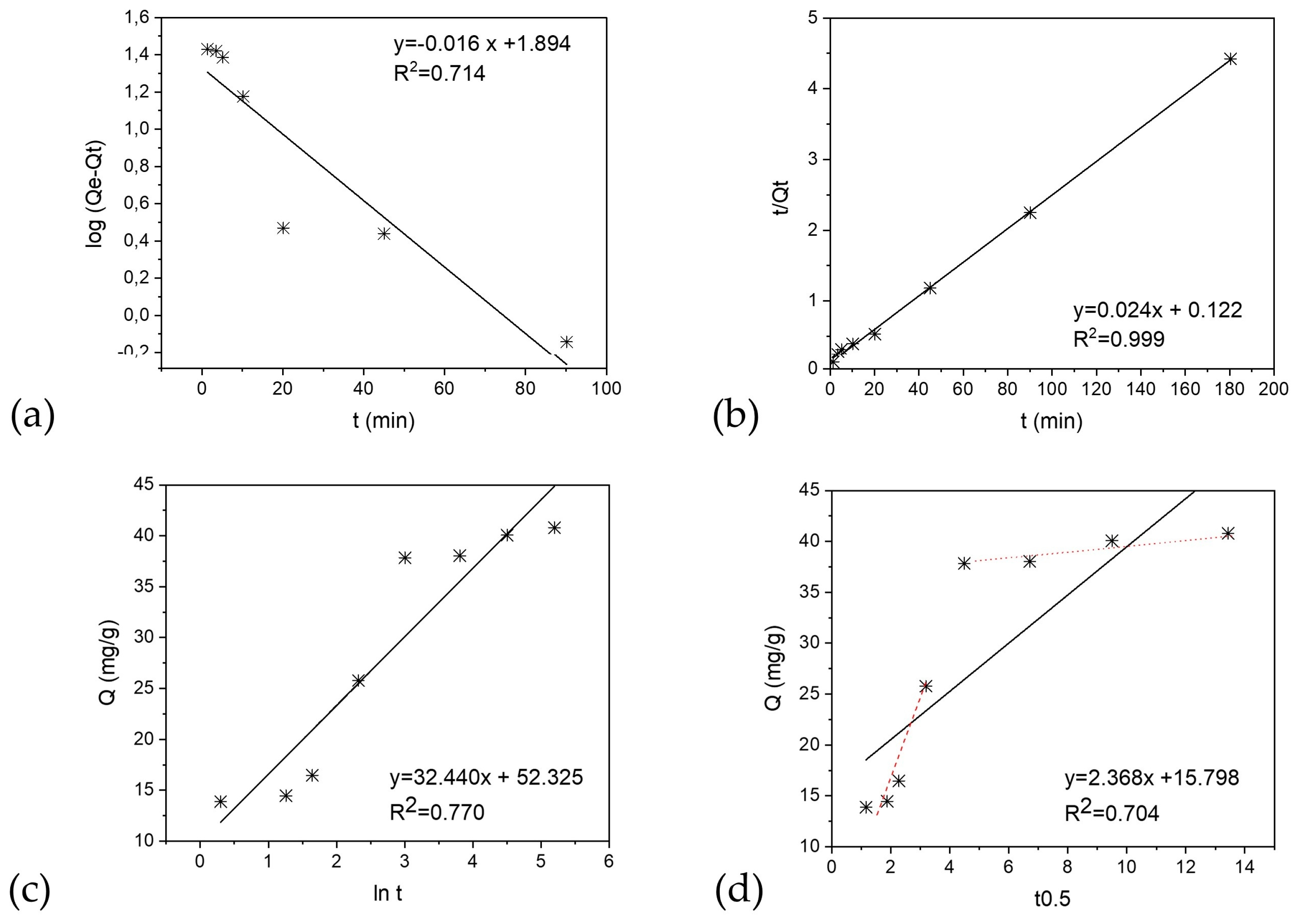
For the carbonized sorbent, the pseudo-second-order (PSO) model (Figure 8) also provided the best fit to the experimental kinetic data, as evidenced by the highest coefficient of determination (R2) and the lowest error values among the tested models.
Figure 8.
Kinetic models for sorption of Reactive Black dye on a carbonized sample: (a) pseudo-first order, (b) pseudo-secondorder, (c) Elovich, and (d) IPD.
Further insight into the sorption mechanism was obtained from the intraparticle diffusion (IPD) model, which revealed a clear difference between the two sorbents. While the non-carbonized sample exhibited three distinct diffusion regions, the carbonized sorbent showed only two linear regions, indicating a different mass-transfer mechanism. The initial stage, characterized by a higher diffusion rate, is attributed to the rapid transport of dye molecules from the bulk solution to the external surface of the sorbent and their diffusion into readily accessible pores. The second stage corresponds to slower diffusion within the internal pore structure as equilibrium is gradually approached. The absence of the third diffusion region suggests that carbonization modified the pore structure and mass-transfer characteristics of the material. The increased accessibility of sorption sites and the enhanced pore network generated during carbonization likely reduced diffusion limitations associated with less accessible sorption sites. These structural modifications are consistent with the slightly higher maximum sorption capacity of the carbonized sample (40.79 mg/g) compared with the non-carbonized material (36.73 mg/g).
3.5. Sorption Equilibrium and Isotherm Analysis
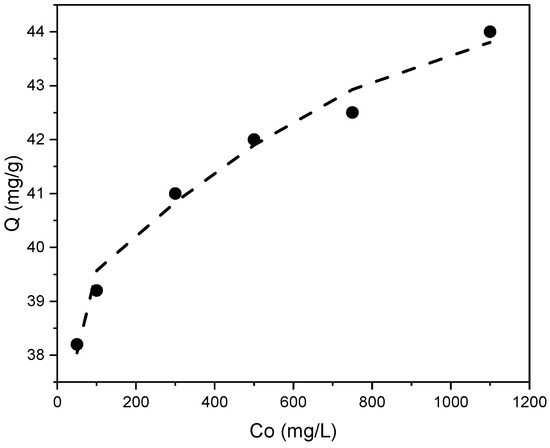
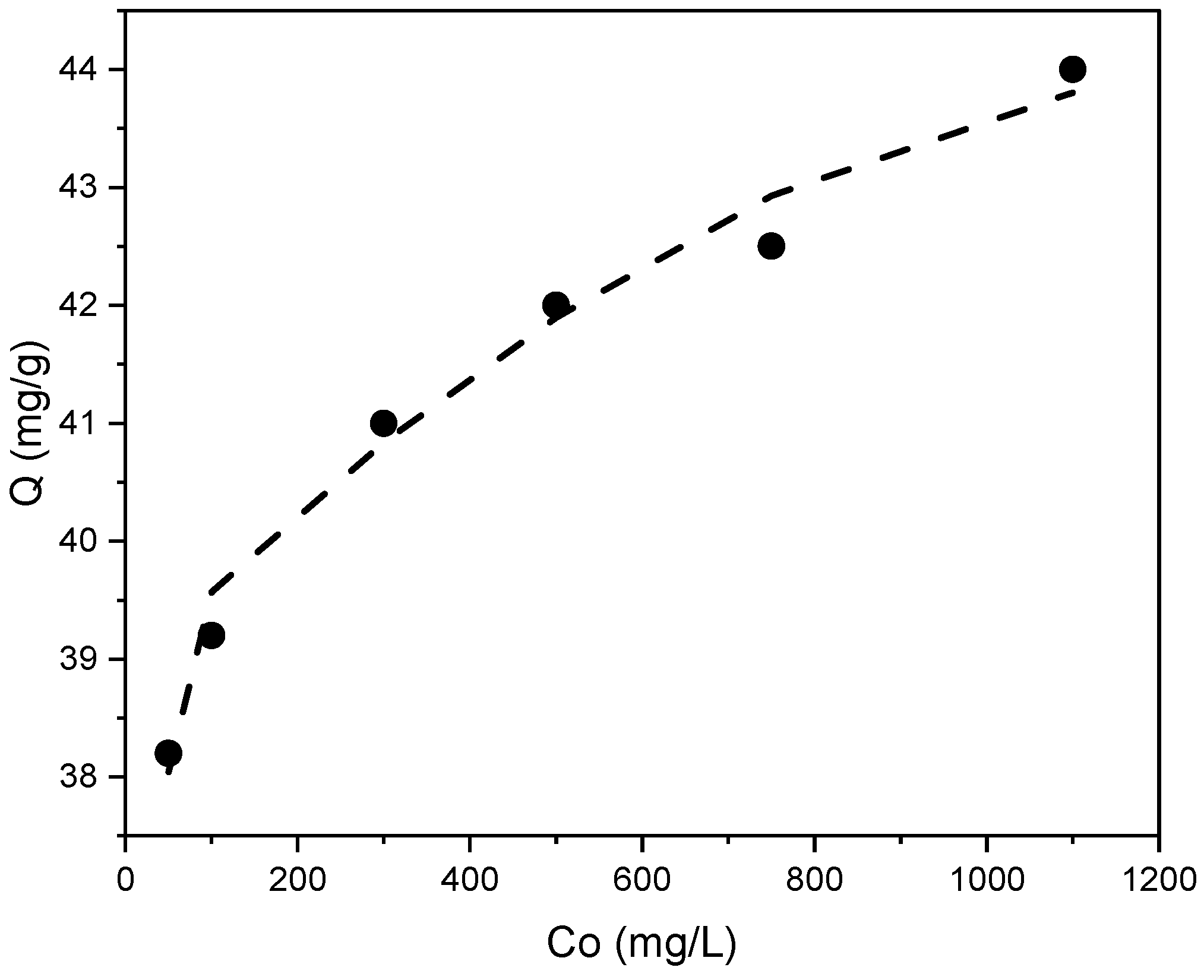
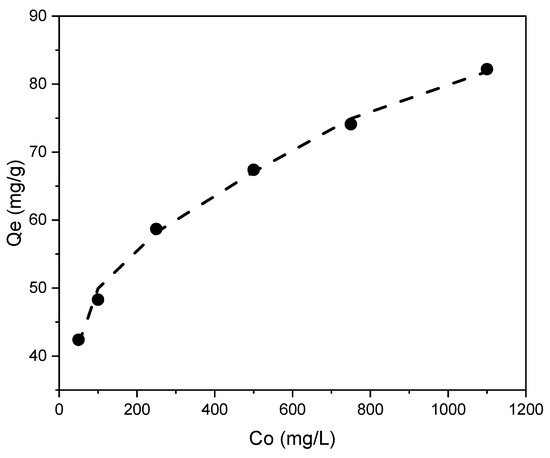
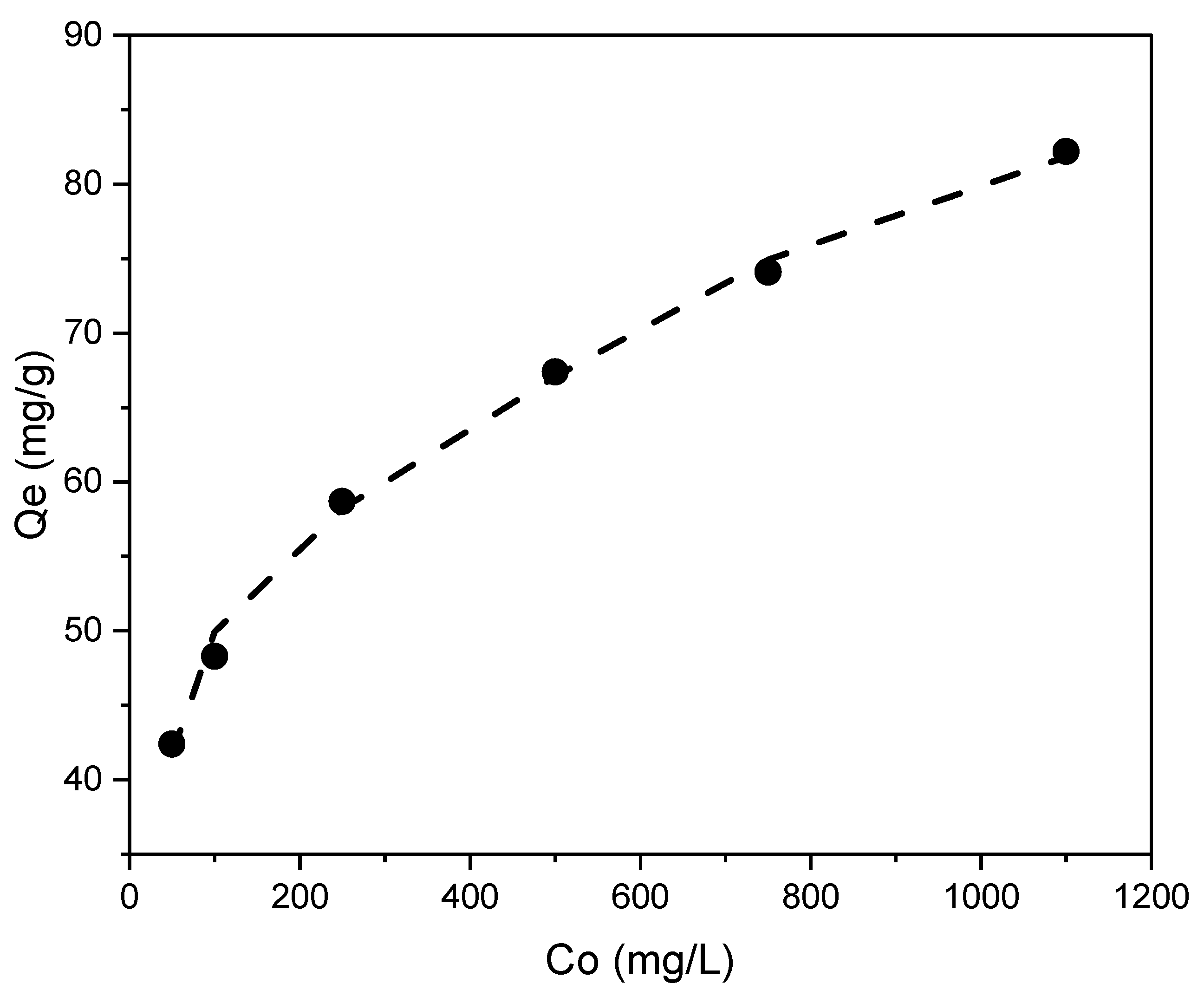
The attainment of equilibrium is a key indicator of the sorption mechanism, as it reflects the balance between sorption and desorption processes and the saturation of available active sites on the sorbent surface. The sorption isotherm analysis revealed a clear dependence of the sorption capacity (Qe) on the initial dye concentration, with higher concentrations leading to increased uptake due to the enhanced driving force for mass transfer. The experimental results are graphically presented in Figure 9 and Figure 10 for both samples.
Figure 9.
Equilibrium sorption capacity of the non-carbonized sample as a function of initial RB5 concentration (pH = 5, biosorbent mass = 0.001 g, T = 298 K, t = 60 min).
Figure 10.
Equilibrium sorption capacity of the carbonized sample as a function of initial RB5 concentration (pH = 5, biosorbent mass = 0.001 g, T = 298 K, t = 60 min).
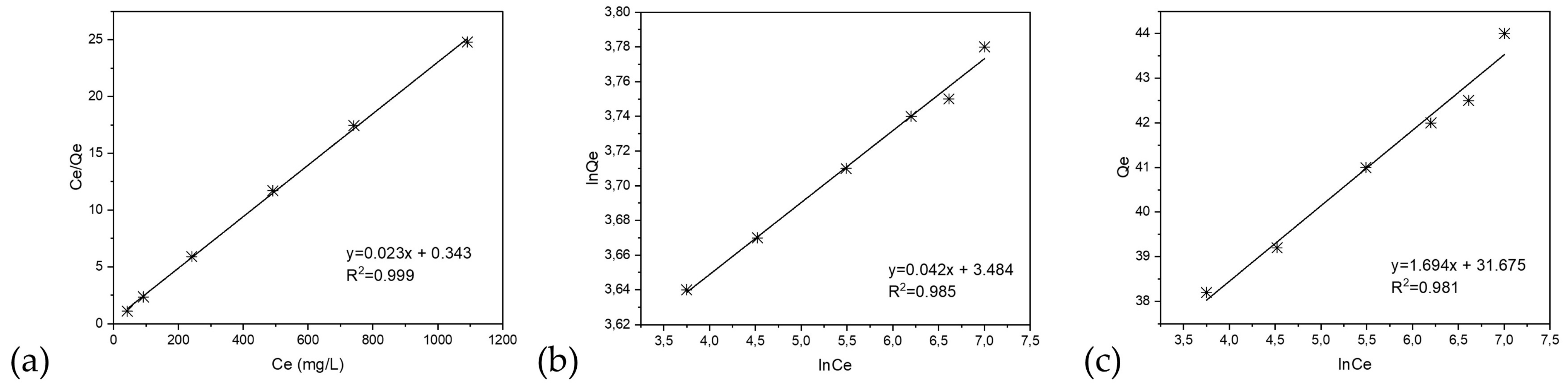
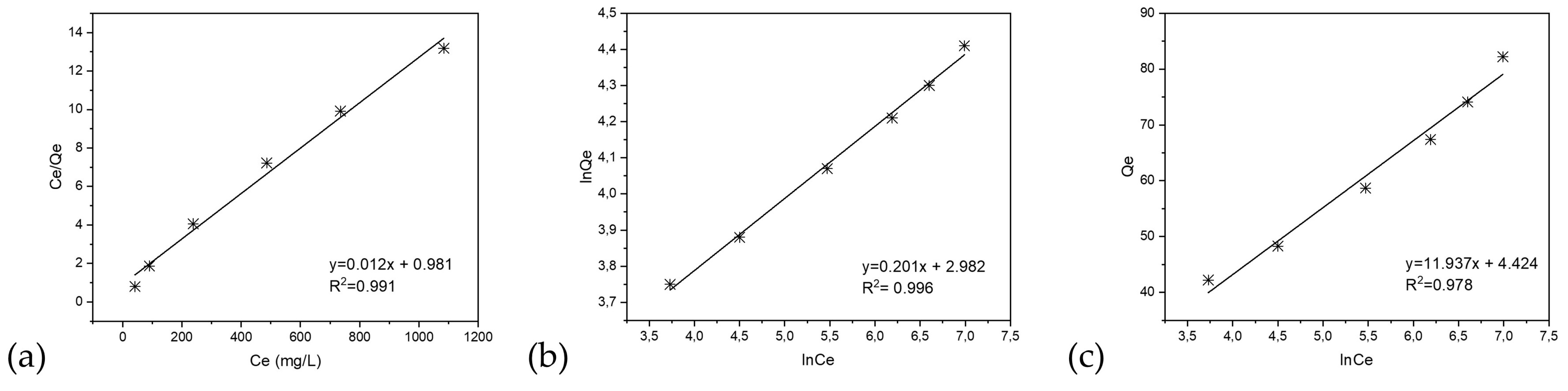
To further interpret the equilibrium behavior, the experimental data were fitted using three isotherm models: the Langmuir model, which assumes monolayer sorption on homogeneous surfaces; the Freundlich model, which describes multilayer sorption on heterogeneous surfaces; and the Temkin model, which accounts for adsorbate–adsorbate interactions.
The corresponding linearized plots for RB5 sorption are shown in Figure 11 for non-carbonized sample and Figure 12 for carbonized. experimental data.
Figure 11.
Isotherm models of sorption of Reactive Black dye on a non-carbonized sample: (a) Langmuir, (b) Freundlich, and (c) Temkin.
Figure 12.
Isotherm models of sorption of Reactive Black dye on a carbonized sample: (a) Langmuir, (b) Freundlich, and (c) Temkin.
Both the Langmuir and Freundlich models provided a satisfactory description of the experimental data. The slightly better agreement with the Langmuir model may be attributed to and surface complexation mediated by abundant hydroxyl and other oxygen-containing functional groups. These polar interactions may facilitate the relatively uniform binding of dye molecules on the sorbent surface, which is consistent with the monolayer sorption behavior described by the Langmuir isotherm.
The sorption equilibrium of the carbonized sample was adequately described by all three isotherm models, with the Freundlich model providing a slightly better fit (R2 = 0.996). In contrast to the non-carbonized sorbent, the sorption capacity of the carbonized material increased markedly with increasing dye concentration throughout the investigated concentration range. This behavior is characteristic of sorption on a heterogeneous surface with active sites of different energies and is therefore consistent with the Freundlich isotherm. Carbonization induces significant structural and chemical transformations, including matrix aromatization, pore development, and increased surface heterogeneity, which may promote sorption at energetically diverse sites through a combination of π–π interactions, pore filling, and surface complexation. Consequently, although all three isotherm models adequately described the experimental data, the Freundlich model provided a slightly more appropriate representation of the sorption process.
3.6. Computational Analysis of Sorption Mechanisms
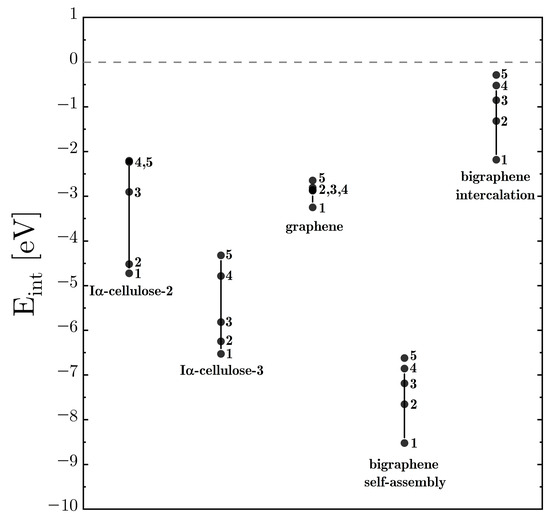
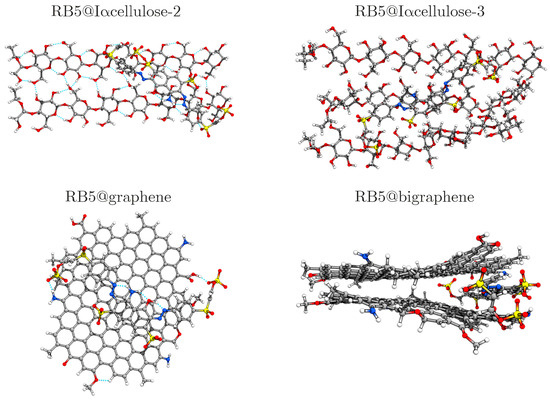
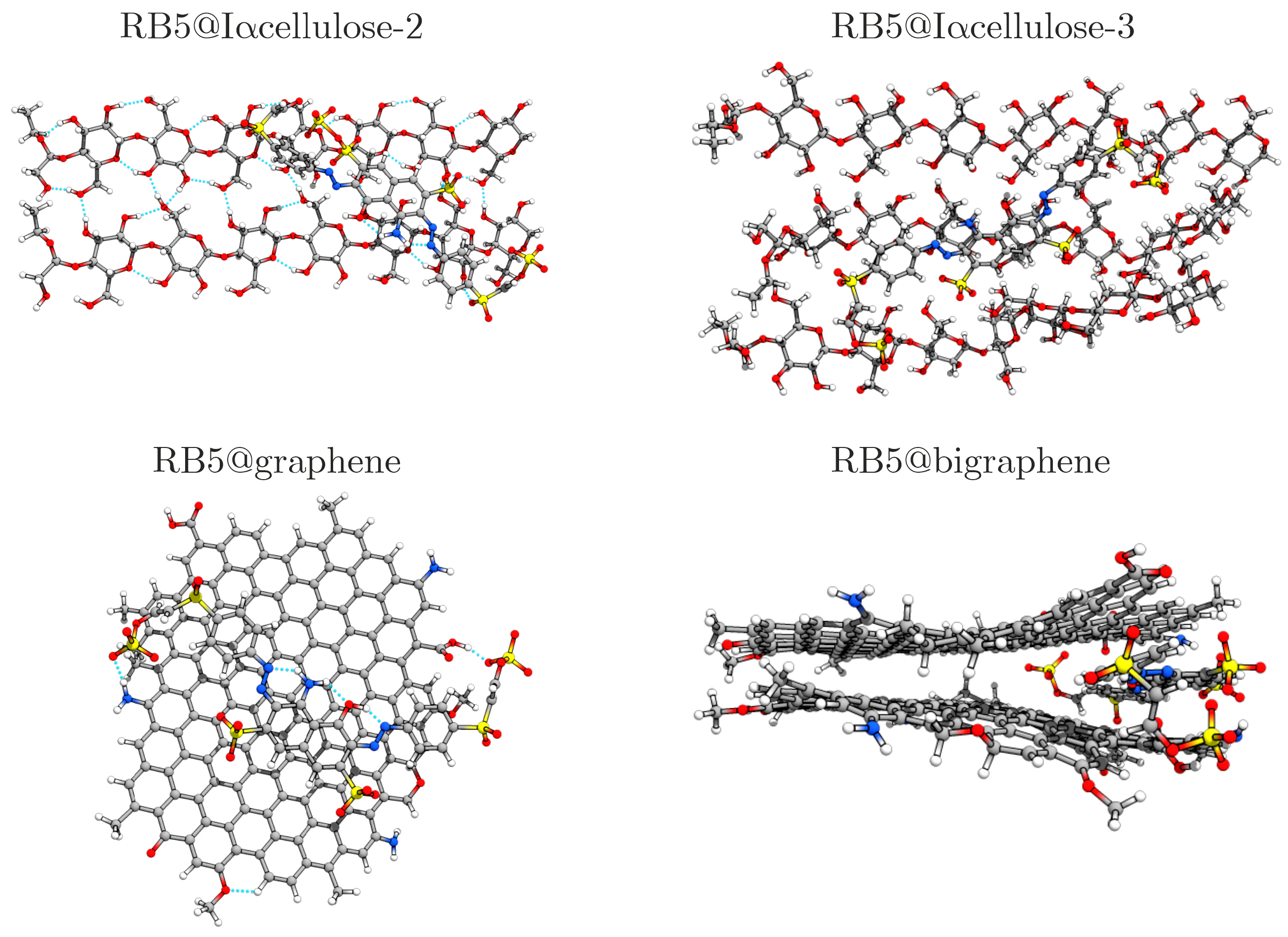
However, despite these differences in sorption mechanisms, the experimentally observed maximum sorption capacity of the carbonized material (40.79 mg g−1) is only slightly higher than that of the non-carbonized sample (36.73 mg g−1), suggesting that carbonization does not significantly increase the total number of sorption sites, but rather alters their nature and energetic distribution. This interpretation is consistent with the calculated interaction energies summarized in Figure 13 and Figure 14. The calculated interaction energies reveal clear differences in the affinity of RB5 toward the modeled lignocellulosic and carbonized surfaces. For the five lowest-energy conformers, the overall binding strength follows the trend: RB5@bigraphene (self-assembly) > RB5@Iα-cellulose-3 > RB5@Iα-cellulose-2 ≈ RB5@graphene > RB5@bigraphene (intercalation). For the non-carbonized lignocellulosic models, sorption on two cellulose strands (RB5@Iα-cellulose-2, −4.72 to −2.21 eV) is, on average, weaker than the three-strand wrapped arrangement (RB5@Iα-cellulose-3, −6.53 to −4.32 eV). This indicates that increasing the number of cellulose chains significantly enhances stabilization of RB5 through a larger number of simultaneous contacts, particularly hydrogen bonding between hydroxyl groups of cellulose and sulfonate/azo functional groups of RB5, together with dispersion interactions. Sorption on a single graphene sheet (RB5@graphene, −3.25 to −2.65 eV) gives moderate stabilization, comparable to the weaker cellulose complexes. In this case, binding is primarily governed by π–π interactions between the aromatic framework of RB5 and the graphitic surface, supplemented by hydrogen bonding between the sulfonate groups of RB5 and oxygen-containing functional groups at the graphene edge or defect sites. However, since only a single sorption surface is available, the overall stabilization is limited compared to cavity-like or multi-surface environments that enable more extensive contact and cooperative interactions. The RB5@bigraphene self-assembly structures exhibit the strongest interactions of all systems (−8.52 to −6.62 eV). These highly favorable energies arise when two opposing graphene-like domains adapt around RB5 and simultaneously interact with both faces of the dye molecule. Such cooperative confinement creates a sorption pocket with extensive π–surface contact and enhanced dispersion stabilization. Furthermore, depending on the conformer, RB5 can also establish hydrogen-bonding interactions with functional groups located at the graphene edge. In contrast, the RB5@bigraphene intercalation structures represent the weakest complexes (−2.18 to −0.29 eV). In this configuration, RB5 is constrained between two pre-stacked rigid graphene sheets, where steric hindrance and reduced effective contact between the sheets limit the possible interaction energies. Both bigraphene models are particularly relevant for carbonized materials, where partially separated, aromatic domains may form slit-shaped pores, cavities, or heterogeneous internal sorption sites capable of accommodating large dye molecules. This comparison highlights that sorption strength is not determined solely by surface chemistry, but is also strongly influenced by pore architecture, structural flexibility, and the accessibility and rearrangement capability of graphitic domains. Although carbonization creates very strong sorption sites (as represented by the self-assembly bigraphene model), these sites are likely limited in number and distributed heterogeneously. Therefore, the average uptake increases only moderately, even though some sites bind RB5 much more strongly than the cellulose surface. By contrast, the non-carbonized lignocellulosic material provides more uniform sorption environments dominated by hydroxyl-rich cellulose domains, giving moderate but widespread binding. All reported interaction energies were derived from reoptimized low-energy structures. Relative trends rather than absolute values were emphasized, as the investigated systems are large and highly flexible, and their stabilization is governed by a combination of weak noncovalent interactions. It should be noted that explicit solvation and the associated desolvation effects were not included in the present model, i.e., solvent effects were treated only implicitly via the GBSA approach. In addition to interaction energies, Gibbs free energies were also computed at the GFN2-xTB level and are provided in the Supporting Information. These values include thermal and entropic corrections and are therefore not directly comparable to purely electronic interaction energies, as they are shifted to higher energies to varying extents depending on the system due to entropy and thermal contributions. Nevertheless, the overall energetic trends remain consistent for both ∆Eint and ∆Gint. Additionally, graphene models represent simplified aromatic carbon domains with limited edge oxygen functionalities and were intended primarily for qualitative comparison of sorption motifs and relative energetic trends rather than quantitatively exact sorption energies.
Figure 13.
Calculated interaction energies (eV) for the five lowest-energy conformers of RB5 adsorbed on lignocellulosic and carbonized model systems: RB5@Iα-cellulose-2, RB5@Iα-cellulose-3, RB5@graphene and RB5@bigraphene. For theRB5@bigraphene conformers, interaction energies were evaluated using two reference schemes: self-assembly (complex formation from initially separated RB5 and two graphene sheets) and intercalation (RB5 inserted between pre-stacked graphene sheets).
Figure 14.
Most stable optimized structures of RB5 adsorbed on the investigated lignocellulosic and carbonized model systems: RB5@Iα-cellulose-2, RB5@Iα-cellulose-3, RB5@graphene and RB5@bigraphene. All optimized geometries and corresponding Cartesian coordinates are provided in the Supplementary Information.
3.7. Comparison of Hemp Sorption Capacities for RB5 with Other Biosorbents
Comparison of the maximum sorption capacityvalues obtained in this study with other biosorbents and activated carbons is presented in Table 1. Some recent studies demonstrate that engineered bio-derived activated carbons exhibit significantly enhanced RB5 sorption capacities compared with untreated agricultural biosorbents, primarily due to increased surface area, pore volume, and functional group availability.
Table 1.
Comparative analysis of maximum sorption capacity (Qmax) obtained for various adsorbents.
As shown in Table 1, the sorption capacities of the hemp-derived biosorbents developed in the present study are comparable to those reported for several low-cost lignocellulosic adsorbents, although lower than those of highly engineered activated carbons.
4. Conclusions
This study demonstrated that carbonization substantially modifies the sorption mechanism and the nature of adsorption domains of hemp-derived biosorbents toward Reactive Black 5, while resulting in only a moderate increase in the overall maximum sorption capacity. Elemental analysis and FTIR spectroscopy confirmed the transformation of the raw lignocellulosic biomass into a carbon-rich aromatic matrix, accompanied by a reduction in oxygen-containing functional groups and the formation of stable graphitic domains. SEM analysis further revealed pronounced morphological changes after carbonization, including increased surface roughness and the development of a porous structure with enhanced accessibility of adsorption sites. Both non-carbonized and carbonized samples exhibited very rapid sorption kinetics, reaching equilibrium within approximately 45 min. Although carbonization resulted in only a modest increase in the maximum sorption capacity (40.79 mg g−1 vs. 36.73 mg g−1), its positive effect became considerably more pronounced at higher dye concentrations, indicating improved performance under conditions of elevated adsorbate loading. Kinetic analysis showed that the pseudo-second-order model provided the best description of the sorption process for both materials, indicating that surface-controlled interactions govern the overall sorption rate. However, intraparticle diffusion analysis revealed distinct diffusion mechanisms. The non-carbonized biosorbent exhibited three consecutive diffusion stages corresponding to external mass transfer, surface diffusion, and intraparticle diffusion, whereas only two diffusion stages were observed for the carbonized material. This difference indicates that carbonization modifies the pore architecture and mass-transfer pathways, facilitating access to internal adsorption domains and reducing diffusion limitations. Equilibrium analysis further demonstrated distinct adsorption behavior for the two biosorbents. The sorption equilibrium of the non-carbonized sample was slightly better described by the Langmuir isotherm, suggesting predominantly monolayer adsorption on relatively homogeneous sites. In contrast, the carbonized biosorbent exhibited a stronger concentration-dependent adsorption behavior, and the Freundlich model provided the best fit to the experimental data, indicating a heterogeneous surface with energetically diverse adsorption sites. Computational modeling strongly supported the experimental observations. The lignocellulosic models representing the non-carbonized biosorbent revealed that adsorption is mainly governed by hydrogen bonding and dispersion interactions. In contrast, graphene-based models representing the carbonized material highlighted the dominant contribution of π–π interactions, pore confinement, and surface complexation, with the strongest stabilization occurring within confined graphitic domains. These findings demonstrate that adsorption performance is governed not only by the number of available sites but also by their accessibility, energetic heterogeneity, and pore architecture. Thus, carbonization primarily alters the nature and accessibility of adsorption domains rather than merely increasing their abundance. Overall, the combined experimental and computational approach provided complementary insights into the adsorption mechanism of hemp-derived biosorbents and demonstrated that carbonization is particularly advantageous for the treatment of more concentrated dye solutions, where the developed porous structure and heterogeneous adsorption domains enable superior performance. Future studies should focus on the following: evaluating the regeneration and reusability of the developed biosorbents; investigating the effect of solution pH and other operational parameters on adsorption performance; assessing their effectiveness in real textile wastewater containing competing ions, dissolved organic matter, and surfactants; optimizing carbonization and activation conditions; employing more advanced molecular simulations including explicit solvent effects. Such research avenues would further elucidate the sorption mechanism and guide the rational design of highly efficient hemp-based biosorbents for wastewater treatment.
Supplementary Materials
The following supporting information can be downloaded at: https://www.mdpi.com/article/10.3390/coatings16070808/s1. Figure S1: Five most stable optimized conformers of RB5 adsorbed on the investigated lignocellulosic and carbonized model systems: RB5@Iα-cellulose-2, RB5@Iα-cellulose-3, RB5@graphene and RB5@bigraphene. Figure S2: Calculated Gibbs free energies (eV) for the five lowest-energy conformers of RB5 adsorbed on lignocellulosic and carbonized model systems: RB5@Iα-cellulose-2, RB5@Iα-cellulose-3, RB5@graphene and RB5@bigraphene. See main text for explanation. Table S1: nteraction energies (∆Eint, eV) and Gibbs free energies (∆Gint, eV) calculated at the GFN2-xTB level for the five lowest-energy conformers of RB5 adsorbed on lignocellulosic and carbonized model systems. Gibbs free energies include thermal and entropic corrections obtained within the RRHO approximation and implicit GBSA solvation model. Values are reported to illustrate relative stability trends across the different adsorption motifs.
Author Contributions
Conceptualization, L.S.; methodology, R.S. and J.P.; software, B.M.; validation, R.S., J.P. and D.A.; formal analysis, N.J., J.P., D.A. and M.K.; investigation, N.J., J.P., D.A., M.K. and M.M.; date curation, R.S. and M.K.; writing—original draft preparation, N.J.; writing—review and editing, R.S., J.P., D.A., M.K., M.M. and L.S.; visualization, B.M. and L.S.; supervision, L.S. All authors have read and agreed to the published version of the manuscript.
Funding
This work was supported by the Central European Initiative (CEI) Know-how Exchange Programme (KEP) through the project EuroSciComp-Bridge–Capacity Building in Computational Approaches for Young Scientists in the Western Balkans.
Data Availability Statement
Data presented in this article are available at request from the corresponding author.
Acknowledgments
This work contributes to Goal 12 of the 2030 Agenda for Sustainable Development, promoting the prevention and minimization of hazardous waste generation within an integrated cleaner production approach. This research was supported by the Environmental Protection and Energy Efficiency Fund of the Republic of Srpska through Project No. 2.01.1-2926-1/25. The Ministry of Science, Technological Development and Innovation of the Republic of Serbia supported this work (Grant Nos. 451-03-33/2026-03/200168 to D.B. Andrić and 451-03-136/2025-03/200026 to J.Z. Penjišević and M.J. Krunić).
Conflicts of Interest
The authors declare no conflict of interest.
References
- Ağtaş, M.; Yılmaz, Ö.; Dilaver, M.; Alp, K.; Koyuncu, İ. Hot water recovery and reuse in textile sector with pilot scale ceramic ultrafiltration/nanofiltration membrane system. J. Clean. Prod. 2020, 256, 120359. [Google Scholar] [CrossRef] [Scilit]
- Kishor, R.; Purchase, D.; Saratale, G.D.; Saratale, R.G.; Ferreira, L.F.R.; Bilal, M.; Chandra, R.; Bharagava, R.N. Ecotoxicological and health concerns of persistent coloring pollutants of textile industry wastewater and treatment approaches for environmental safety. J. Environ. Chem. Eng. 2021, 9, 105012. [Google Scholar] [CrossRef] [Scilit]
- Al-Tohamy, R.; Ali, S.S.; Li, F.; Okasha, K.M.; Mahmoud, Y.A.; Elsamahy, T.; Jiao, H.; Fu, Y.; Sun, J. A critical review on the treatment of dye-containing wastewater: Ecotoxicological and health concerns of textile dyes and possible remediation approaches for environmental safety. Ecotoxicol. Environ. Saf. 2022, 231, 113160. [Google Scholar] [CrossRef] [Scilit] [PubMed]
- Strebel, A.; Behringer, M.; Hilbig, H.; Machner, A.; Helmreich, B. Anionic azo dyes and their removal from textile wastewater through adsorption by various adsorbents: A critical review. Front. Environ. Eng. 2024, 3, 1347981. [Google Scholar] [CrossRef] [Scilit]
- Ali, A.E.; Chowdhury, Z.Z.; Devnath, R.; Ahmed, M.M.; Rahman, M.M.; Khalid, K.; Wahab, Y.A.; Badruddin, I.A.; Kamangar, S.; Hussien, M.; et al. Removal of Azo Dyes from Aqueous Effluent Using Bio-Based Activated Carbons: Toxicity Aspects and Environmental Impact. Separations 2023, 10, 506. [Google Scholar] [CrossRef] [Scilit]
- Ramamurthy, K.; Priya, P.S.; Murugan, R.; Arockiaraj, J. Hues of risk: Investigating genotoxicity and environmental impacts of azo textile dyes. Environ. Sci. Pollut. Res. 2024, 31, 33190–33211. [Google Scholar] [CrossRef] [Scilit] [PubMed]
- Alzain, H.; Kalimugogo, V.; Hussein, K.; Karkadan, M. A review of environmental impact of azo dyes. Int. J. Res. Rev. 2023, 10, 673–689. [Google Scholar] [CrossRef] [Scilit]
- Siddiqui, S.I.; Allehyani, E.S.; Al-Harbi, S.A.; Hasan, Z.; Abomuti, M.A.; Rajor, H.K.; Oh, S. Investigation of Congo Red toxicity towards different living organisms: A review. Processes 2023, 11, 807. [Google Scholar] [CrossRef] [Scilit]
- Lellis, B.; Fávaro-Polonio, C.Z.; Pamphile, J.A.; Polonio, J.C. Effects of textile dyes on health and the environment and bioremediation potential of living organisms. Biotechnol. Res. Innov. 2019, 3, 275–290. [Google Scholar] [CrossRef] [Scilit]
- Farajzadeh-Dehkordi, N.; Zahraei, Z.; Farhadian, S.; Gholamian-Dehkordi, N. The interactions between Reactive Black 5 and human serum albumin: Combined spectroscopic and molecular dynamics simulation approaches. Environ. Sci. Pollut. Res. 2022, 29, 70114–70124. [Google Scholar] [CrossRef] [Scilit] [PubMed]
- Cuervo Lumbaque, E.; Gomes, M.F.; Da Silva Carvalho, V.; de Freitas, A.M.; Tiburtius, E.R.L. Degradation and ecotoxicity of dye Reactive Black 5 after reductive–oxidative process. Environ. Sci. Pollut. Res. 2017, 24, 6126–6134. [Google Scholar] [CrossRef] [Scilit] [PubMed]
- De Luna, L.A.V.; da Silva, T.H.G.; Pupo Nogueira, R.F.; Kummrow, F.; Umbuzeiro, G.A. Aquatic toxicity of dyes before and after photo-Fenton treatment. J. Hazard. Mater. 2014, 276, 332–338. [Google Scholar] [CrossRef] [Scilit] [PubMed]
- Elnabi, M.K.A.; Ghazy, M.A.; Ali, S.S.; Eltarahony, M.; Nassrallah, A. Efficient biodegradation and detoxification of Reactive Black 5 using a newly constructed bacterial consortium. Microb. Cell Fact. 2025, 24, 154. [Google Scholar] [CrossRef] [Scilit] [PubMed]
- Kato, S.; Kansha, Y. Comprehensive review of industrial wastewater treatment techniques. Environ. Sci. Pollut. Res. 2024, 31, 51064–51097. [Google Scholar] [CrossRef] [Scilit] [PubMed]
- Toptaş, Y.; Yavuz, B.; Korkmaz, A.A.; Önal, Y. Sustainable approach to dye adsorption: Hemp-based activated carbon as an effective adsorbent. Int. J. Environ. Anal. Chem. 2024, 105, 3372–3397. [Google Scholar] [CrossRef] [Scilit]
- Albroomi, H.I.; Elsayed, M.; Baraka, A.; Abdelmaged, M.A. Removal of a basic and azo dye from aqueous solution by adsorption using activated carbon. Int. Conf. Chem. Environ. Eng. 2014, 7, 1–13. [Google Scholar] [CrossRef] [Scilit]
- Dutta, S.; Gupta, B.; Srivastava, S.K.; Gupta, A.K. Recent advances on the removal of dyes from wastewater using various adsorbents: A critical review. Mater. Adv. 2021, 2, 4497–4531. [Google Scholar] [CrossRef] [Scilit]
- Tsoutsa, E.K.; Tolkou, A.K.; Kyzas, G.Z.; Katsoyiannis, I.A. An update on agricultural wastes used as natural adsorbents or coagulants in single or combined systems for the removal of dyes from wastewater. Water Air Soil Pollut. 2024, 235, 178. [Google Scholar] [CrossRef] [Scilit]
- Bushra, R.; Mohamad, S.; Alias, Y.; Jin, Y.; Ahmad, M. Current approaches and methodologies to explore the perceptive adsorption mechanism of dyes on low-cost agricultural waste: A review. Microporous Mesoporous Mater. 2021, 319, 111040. [Google Scholar] [CrossRef] [Scilit]
- Bharathi, K.S.; Ramesh, S.T. Removal of dyes using agricultural waste as low-cost adsorbents: A review. Appl. Water Sci. 2013, 3, 773–790. [Google Scholar] [CrossRef] [Scilit]
- Khatoon, A.; Siddiqui, S.; Khan, S.H.; Alfaiz, F.A.; Uddin, M.K. Removal of methylene blue, crystal violet, and diclofenac sodium using cellulose derived from Luffa acutangula peels: Adsorption, reusability, and cost evaluation. Biomass Convers. Biorefin. 2025, 15, 30995–31008. [Google Scholar] [CrossRef] [Scilit]
- De Gisi, S.; Lofrano, G.; Grassi, M.; Notarnicola, M. Characteristics and adsorption capacities of low-cost sorbents for wastewater treatment: A review. Sustain. Mater. Technol. 2016, 9, 10–40. [Google Scholar] [CrossRef] [Scilit]
- Rosas, J.M.; Bedia, J.; Rodríguez-Mirasol, J.; Cordero, T. Hemp-derived activated carbon fibers by chemical activation with phosphoric acid. Fuel 2009, 88, 19–26. [Google Scholar] [CrossRef] [Scilit]
- Umar, I.A.; Abdulraheem, G.; Bala, S.; Muhammad, S.; Abdullahi, M. Kinetics, equilibrium and thermodynamics studies of C.I. Reactive Blue 19 dye adsorption on coconut shell based activated carbon. Int. Biodeterior. Biodegrad. 2015, 102, 265–273. [Google Scholar] [CrossRef] [Scilit]
- Oumam, M.; Abourriche, A.; Mansouri, S.; Mouiya, M.; Benhammou, A.; Abouliatim, Y.; Hafiane, Y.E.; Hannache, H.; Birot, M.; Pailler, R.; et al. Comparison of chemical and physical activation processes at obtaining adsorbents from Moroccan oil shale. Oil Shale 2020, 37, 139–157. [Google Scholar] [CrossRef] [Scilit]
- Coker, E.N.; Lujan-Flores, X.; Donaldson, B.; Yilmaz, N.; Atmanli, A. An assessment of the conversion of biomass and industrial waste products to activated carbon. Energies 2023, 16, 1606. [Google Scholar] [CrossRef] [Scilit]
- Ukanwa, K.S.; Patchigolla, K.; Sakrabani, R.; Anthony, E.; Mandavgane, S. A review of chemicals to produce activated carbon from agricultural waste biomass. Sustainability 2019, 11, 6204. [Google Scholar] [CrossRef] [Scilit]
- Suručić, L.T.; Janjić, G.V.; Rakić, A.A.; Nastasović, A.B.; Popović, A.R.; Milčić, M.K. Theoretical modeling of sorption of metal ions on amino-functionalized macroporous copolymer in aqueous solution. J. Mol. Model. 2019, 25, 177. [Google Scholar] [CrossRef] [Scilit] [PubMed]
- Suručić, L.T.; Nastasović, A.; Onjia, A.; Janjić, G.; Rakić, A. Design of an amino-functionalized chelating macroporous copolymer poly (GMA-co-EGDMA) for the sorption of Cu (II) ions. J. Serbian Chem. Soc. 2019, 84, 1391–1404. [Google Scholar] [CrossRef] [Scilit]
- Suručić, L.; Tadić, T.; Janjić, G.; Marković, B.; Nastasović, A.; Onjia, A. Recovery of vanadium (V) oxyanions by a magnetic macroporous copolymer nanocomposite sorbent. Metals 2021, 11, 1777. [Google Scholar] [CrossRef] [Scilit]
- Suručić, L.; Janjić, G.; Marković, B.; Tadić, T.; Vuković, Z.; Nastasović, A.; Onjia, A. Speciation of hexavalent chromium in aqueous solutions using a magnetic silica-coated amino-modified glycidyl methacrylate polymer nanocomposite. Materials 2023, 16, 2233. [Google Scholar] [CrossRef] [Scilit] [PubMed]
- Suručić, L.; Andrić, D.; Jevtić, I.; Momčilović, M.; Suručić, R.; Penjišević, J. Unmodified Hemp Biowaste as a Sustainable Biosorbentfor Congo Red and Remazol Brilliant Blue R. Coatings 2025, 15, 519. [Google Scholar] [CrossRef] [Scilit]
- Rehman, M.; Fahad, S.; Du, G.; Cheng, X.; Yang, Y.; Tang, K.; Liu, L.; Liu, F.H.; Deng, G. Evaluation of hemp (Cannabis sativa L.) as an industrial crop: A review. Environ. Sci. Pollut. Res. 2021, 28, 52832–52843. [Google Scholar] [CrossRef] [Scilit] [PubMed]
- Kaya, H. A green approach for dye decontamination: Activated carbon from hemp waste. Cellul. Chem. Technol. 2025, 59, 441–450. [Google Scholar] [CrossRef] [Scilit]
- Konstantinovic, S.S.; Kodric, M.G.; Nicic, R.; Djordjevic, D.M. Decolorization of model wastewater by adsorbent obtained from waste hemp fibers. Chem. Ind. Chem. Eng. Q. 2019, 25, 11–19. [Google Scholar] [CrossRef] [Scilit]
- Viscusi, G.; Gorrasi, G. Fabrication of novel multifunctional copper-functionalized hemp fibers to remove anionic dye and non-steroidal anti-inflammatory drugs from wastewaters. Chemosphere 2025, 372, 144039. [Google Scholar] [CrossRef] [Scilit] [PubMed]
- Viscusi, G.; Lamberti, E.; Gorrasi, G. Hemp fibers modified with graphite oxide as green and efficient solution for water remediation: Application to methylene blue. Chemosphere 2021, 288, 132614. [Google Scholar] [CrossRef] [Scilit] [PubMed]
- Viscusi, G.; Napolitano, F.; Gorrasi, G. Modified hemp fibers as a novel and green adsorbent for organic dye adsorption: Adsorption, kinetic studies and modeling. Euro-Mediterr. J. Environ. Integr. 2024, 9, 591–604. [Google Scholar] [CrossRef] [Scilit]
- Akköz, Y.; Coşkun, R. Preparation of highly effective bio-adsorbent from hemp fiber for removal of malachite green oxalate (MGO). Cellulose 2023, 30, 4511–4525. [Google Scholar] [CrossRef] [Scilit]
- El Mansouri, F.; Pelaz, G.; Morán, A.; Da Silva, J.C.G.E.; Cacciola, F.; El Farissi, H.; Tayeq, H.; Zerrouk, M.H.; Brigui, J. Efficient removal of Eriochrome Black T dye using activated carbon of waste hemp (Cannabis sativa L.) grown in Northern Morocco enhanced by new mathematical models. Separations 2022, 9, 283. [Google Scholar] [CrossRef] [Scilit]
- Akköz, Y.; Coşkun, R. Cellulose-supported bioadsorbent from natural hemp fiber for removal of anionic dyes from aqueous solution. Int. J. Biol. Macromol. 2023, 252, 126447. [Google Scholar] [CrossRef] [Scilit] [PubMed]
- Pracht, P.; Bohle, F.; Grimme, S. Automated exploration of the low-energy chemical space with fast quantum chemical methods. Phys. Chem. Chem. Phys. 2020, 22, 7169–7192. [Google Scholar] [CrossRef] [Scilit] [PubMed]
- Spicher, S.; Grimme, S. Robust atomistic modeling of materials, organometallic, and biochemical systems. Angew. Chem. Int. Ed. 2020, 59, 15665–15673. [Google Scholar] [CrossRef] [Scilit] [PubMed]
- Ehlert, S.; Stahn, M.; Spicher, S.; Grimme, S. Robust and efficient implicit solvation model for fast semiempirical methods. J. Chem. Theory Comput. 2021, 17, 4250–4261. [Google Scholar] [CrossRef] [Scilit] [PubMed]
- Bannwarth, C.; Ehlert, S.; Grimme, S. GFN2-xTB—An accurate and broadly parametrized self-consistent tight-binding quantum chemical method with multipole electrostatics and density-dependent dispersion contributions. J. Chem. Theory Comput. 2019, 15, 1652–1671. [Google Scholar] [CrossRef] [Scilit] [PubMed]
- Gorges, J.; Bädorf, B.; Grimme, S.; Hansen, A. Efficient Computation of the Interaction Energies of Very Large Non-Covalently Bound Complexes. Synlett 2023, 34, 1439–1446. [Google Scholar] [CrossRef] [Scilit]
- Spicher, S.; Caldeweyher, E.; Hansen, A.; Grimme, S. Benchmarking London Dispersion Corrected Density Functional Theory for Noncovalent Ion–π Interactions. Phys. Chem. Chem. Phys. 2021, 23, 11635–11648. [Google Scholar] [CrossRef] [Scilit] [PubMed]
- Cabaleiro-Lago, E.M.; Fernández, B.; Rodríguez-Fernández, R.; Rodríguez-Otero, J.; Vázquez, S.A. Functional-Group Corrections to the GFN2-xTB and PM6 Semiempirical Methods for Noncovalent Interactions in Alkanes and Alkenes. J. Chem. Phys. 2023, 158, 124105. [Google Scholar] [CrossRef] [Scilit] [PubMed]
- Kamdem Tamo, A.; Doench, I.; Deffo, G.; Zambou Jiokeng, S.L.; Doungmo, G.; Fotsop, C.G.; Temgoua, R.C.T.; Montembault, A.; Serghei, A.; Njanja, E.; et al. Lignocellulosic biomass and its main structural polymers as sustainable materials for (bio)sensing applications. J. Mater. Chem. A 2025, 13, 24185–24253. [Google Scholar] [CrossRef] [Scilit]
- Ye, X.; Wu, L.; Zhu, M.; Wang, Z.; Huang, Z.-H.; Wang, M.-X. Lotus Pollen-derived Hierarchically Porous Carbons with Exceptional Adsorption Performance toward Reactive Black 5: Isotherms, Kinetics and Thermodynamics Investigations. Sep. Purif. Technol. 2022, 300, 121899. [Google Scholar] [CrossRef] [Scilit]
- Ip, A.W.M.; Barford, J.P.; McKay, G. A comparative study on the kinetics and mechanisms of removal of Reactive Black 5 by adsorption onto activated carbons and bone char. Chem. Eng. J. 2010, 157, 434–442. [Google Scholar] [CrossRef] [Scilit]
- Hoa, N.T.H.; Quynh, N.T.; Nguyen, V.D.; Nguyen, T.N.; Huy, B.Q.; Thanh, N.T.; Loan, H.T.; Hoa, N.T.Q.; Nghia, N.T. Adsorptive removal of Reactive Black 5 by longan peel-derived activated carbon: Kinetics, isotherms, thermodynamics, and modeling. Water 2025, 17, 1678. [Google Scholar] [CrossRef] [Scilit]
- Pansuwan, N.; Umpuch, C. Optimization of Reactive Black 5 biosorption using TTAB-modified montmorillonite clay encapsulated in pectin/alginate composite membrane: A response surface methodology approach. Results Eng. 2025, 28, 107383. [Google Scholar] [CrossRef] [Scilit]
- Al-Hawash, A.B. Biosorption of anionic azo dyes (DR5B, DB71, and RB5) onto Aspergillus sp. RFC-1: Kinetics, isotherms, and chemisorption thermodynamics studies. J. Water Process Eng. 2026, 85, 109830. [Google Scholar] [CrossRef] [Scilit]
- Güzel, F.; Sayğılı, H.; Akkaya Sayğılı, G.; Koyuncu, F. New low-cost nanoporous carbonaceous adsorbent developed from carob (Ceratonia siliqua) processing industry waste for the adsorption of anionic textile dye: Characterization, equilibrium and kinetic modeling. J. Mol. Liq. 2015, 206, 244–255. [Google Scholar] [CrossRef] [Scilit]
- Mook, W.T.; Aroua, M.K.; Szlachta, M. Palm shell-based activated carbon for removing Reactive Black 5 dye: Equilibrium and kinetics studies. BioResources 2016, 11, 1432–1447. [Google Scholar] [CrossRef] [Scilit]
- Heibati, B.; Rodriguez-Couto, S.; Amrane, A.; Rafatullah, M.; Hawari, A.; Al-Ghouti, M.A. Uptake of Reactive Black 5 by pumice and walnut activated carbon: Chemistry and adsorption mechanisms. J. Ind. Eng. Chem. 2014, 20, 2939–2947. [Google Scholar] [CrossRef] [Scilit]
- Cavalcante, L.C.; de Carvalho, K.Q.; Bassetti, F.J.; Coral, L.A.A. Kinetic, isothermal and thermodynamic studies of Reactive Black 5 removal using rice husk ashes and powdered activated carbon. Desalin. Water Treat. 2024, 320, 100606. [Google Scholar] [CrossRef] [Scilit]

Disclaimer/Publisher’s Note: The statements, opinions and data contained in all publications are solely those of the individual author(s) and contributor(s) and not of MDPI and/or the editor(s). MDPI and/or the editor(s) disclaim responsibility for any injury to people or property resulting from any ideas, methods, instructions or products referred to in the content. |
© 2026 by the authors. Licensee MDPI, Basel, Switzerland. This article is an open access article distributed under the terms and conditions of the Creative Commons Attribution (CC BY) license.