1. Introduction
Lime stabilisation technology has been widely adopted in road construction and ground improvement works due to its ability to enhance soil strength and water stability [
1]. A large body of research indicates that lime amendment can effectively improve the mechanical properties and durability of soil [
2,
3,
4]; however, the issue of long-term stability under complex service conditions requires further investigation [
5,
6,
7].
Existing research indicates that the engineering properties of modified soil are significantly influenced by factors, such as the dosage of binding agents, moisture content, degree of compaction and curing duration. Consoli [
8] further demonstrated that water content, porosity and binder content jointly control the strength development of artificially stabilised soils, highlighting the coupled role of moisture condition and pore structure in governing the long-term mechanical performance of treated soils. Yu [
9], Fu [
10] and Wang [
11] point out that confining pressure, degree of compaction and moisture content not only affect the strength and deformation characteristics of modified soil, but also alter its internal pore structure and long-term stability. Ai X [
12] argues that, under complex loading conditions, the internal structure of soil continues to evolve, leading to a deterioration in its performance; Dalalbashi A [
13] and Fang Z [
14] further point out that the long-term stability of modified soil is governed by a combination of factors, including the proportion of added materials, pore structure and the hydrological environment. Relevant studies [
15,
16,
17,
18,
19] indicate that lime treatment can improve soil stability by enhancing particle bonding and optimising pore structure; however, its long-term performance remains significantly influenced by the service environment. As research progresses, the fatigue behaviour of treated soils under cyclic loading has gradually attracted increasing attention. Zhang [
20] analysed the influence of material parameters on fatigue failure cycles based on S–N curves; Meng [
21] pointed out that loading conditions and material composition play a significant role in the evolution of fatigue damage; Liu [
22] argued that composite stress states provide a more accurate reflection of the actual stress characteristics encountered in engineering applications. However, compared with asphalt mixtures and concrete materials, research into the fatigue behaviour of modified soil remains relatively limited, and there is as yet no consensus on the mechanisms governing fatigue damage evolution or methods for predicting service life. Existing studies suggest that fatigue degradation may be associated with crack propagation, pore structure evolution and inter-particle bonding failure under cyclic loading. As internal damage accumulates, seepage pathways within the soil gradually widen, thereby exacerbating structural degradation.
With regard to permeability, Alaa A [
23] prepared low-permeability retaining walls by blending materials, such as dust, sand and clay, and found that the effect of lime content on the permeability coefficient was significantly greater than that of other materials; Yu [
24] pointed out that the permeability of modified soil is closely related to its pore structure, and that increasing the lime content can alter the micro-porosity characteristics of the soil, thereby effectively reducing the permeability coefficient; Wahab [
25] explains, from the perspective of chemical reaction mechanisms, that the cementitious products formed during the hydration of lime are able to fill the pores in the soil and enhance inter-particle bonding, which is a key factor in improving the impermeability of the treated soil. However, under the combined effects of long-term hydrological conditions and cyclic loading, the pore structure and seepage pathways within the soil continue to evolve, leading to a deterioration in permeability and the accumulation of structural damage, which ultimately results in a decline in long-term stability. At present, systematic research into the impermeability and fatigue weakening behaviour of modified soil under complex service conditions remains relatively limited.
Although previous studies have shown that lime treatment can improve the strength, impermeability and durability of soil, most of them mainly focus on individual mechanical properties or permeability behaviour under static conditions. In practical waterfront and embankment engineering, lime-modified soil is often used as backfill material and is frequently subjected to the coupled effects of seepage, long-term high-moisture exposure and repeated dynamic loading. These service conditions may progressively deteriorate both its hydraulic and mechanical performance, thereby affecting the long-term stability and safety of embankment structures. However, systematic investigations on the coupled impermeability and fatigue degradation behaviour of modified soil under such complex service conditions remain limited.
Therefore, the purpose of this study is to systematically investigate the effects of lime content, compaction degree, moisture content and curing age on the impermeability and fatigue degradation behaviour of modified soil through laboratory permeability tests and cyclic loading tests. In addition, an empirical stress–cycle relationship under step-loading conditions is established to evaluate the fatigue response of the tested material. The findings of this study provide experimental support for the selection of material parameters, durability evaluation and long-term stability assessment in embankment and waterfront engineering design.
2. Testing the Impermeability of Modified Soil
2.1. Test Materials
The constituent materials of modified soil include in situ soil, lime and water; tests were carried out on the raw materials used in the experiment.
- (1)
In situ soil
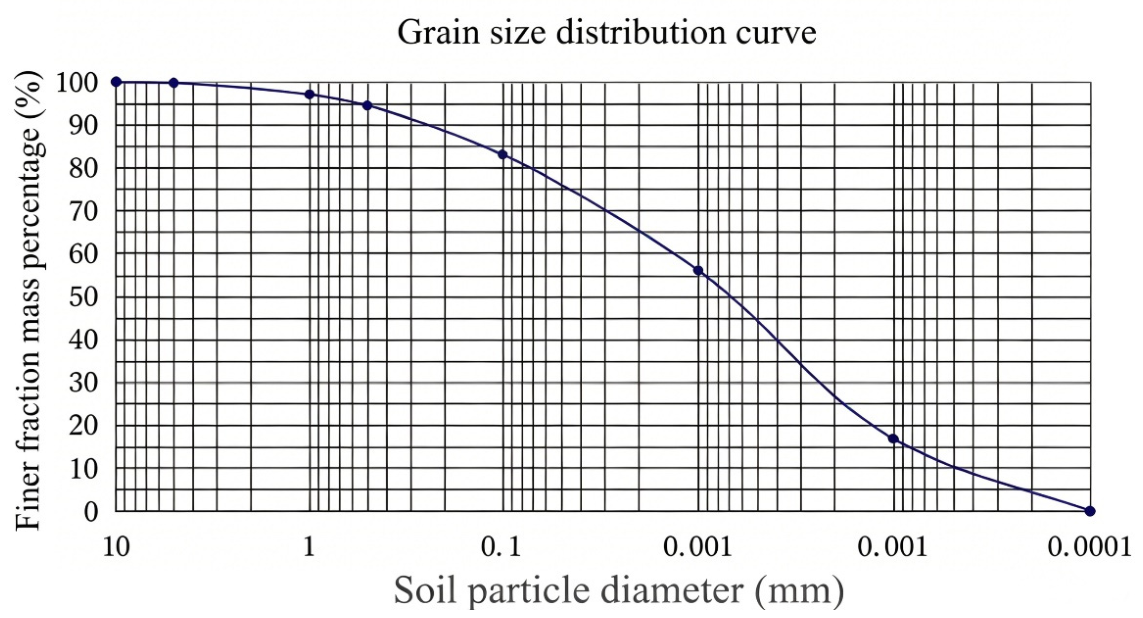
The soil used in this study was obtained from a waterfront engineering site in Shandong Province, China. After sampling, the soil was air-dried, crushed and passed through a 5 mm sieve for subsequent testing. In accordance with the Specifications for Geotechnical Testing of Roads [
26], which are broadly comparable to ASTM D4318 and ASTM D698, particle size analysis, specific gravity, liquid limit and plastic limit tests were conducted on the soil samples. The particle-size distribution curve of the tested clay is shown in
Figure 1, while the physical properties are summarized in
Table 1. The plasticity index was calculated based on the measured liquid and plastic limits.
- (2)
Lime
The slaked lime used in this study was produced in Nanjing, Jiangsu Province, China. Its main active components were calcium oxide (CaO) and magnesium oxide (MgO), the contents of which are important indicators for evaluating the activity and quality of slaked lime. The lime was tested in accordance with the Test Procedures for Inorganic Binder-Stabilised Materials in Highway Engineering [
27], which are broadly comparable to ASTM D1633 for the preparation and evaluation of stabilised soils. Based on the test results, the lime was classified as Grade II calcareous slaked lime. The detailed results are presented in
Table 2.
- (3)
Water for testing
The water used in the tests was ordinary tap water, which complies with the Standard for Water Used in Concrete [
28] and is consistent with the requirements of ASTM C1602 for mixing water quality.
2.2. Test for Boundary Moisture Content
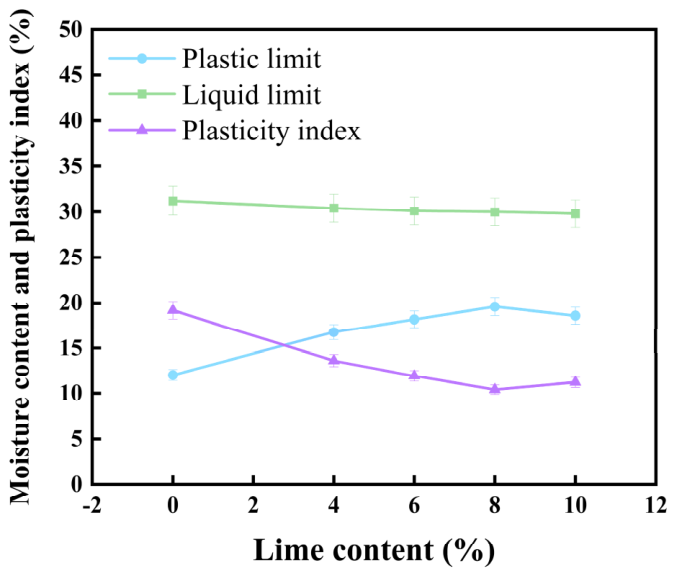
To determine the limit moisture contents of soil amended with different proportions of lime, tests were conducted on undisturbed clay and amended soil containing 4%, 6%, 8% and 10% lime. The results of the liquid limit, plastic limit and plasticity index tests for each group of samples are shown in
Figure 2.
The test results indicate that, as the lime content increases, the liquid limit of the modified soil changes only slightly, whilst the plastic limit gradually rises. The most significant changes in the physical properties were observed when the lime content reached 8%; thereafter, the rate of change slowed as the lime content was further increased. This suggests that the addition of lime can effectively improve the basic physical properties of the soil, providing fundamental parameters for subsequent analyses of unconfined compressive strength and mechanical properties.
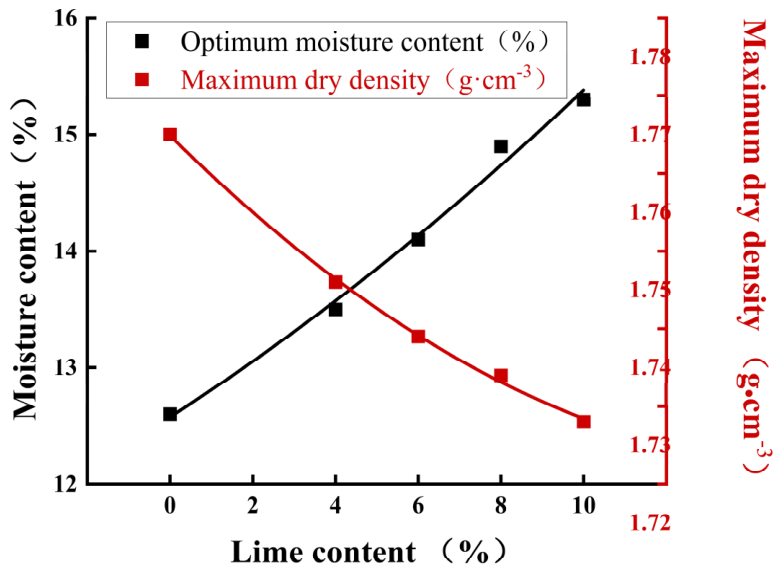
2.3. Testing for Optimum Moisture Content and Maximum Dry Density
Figure 3 shows the optimum moisture content and maximum dry density of undisturbed clay and modified soil with lime contents of 4%, 6%, 8% and 10%, as determined by standard compaction tests.
2.4. Preparation of Test Specimens
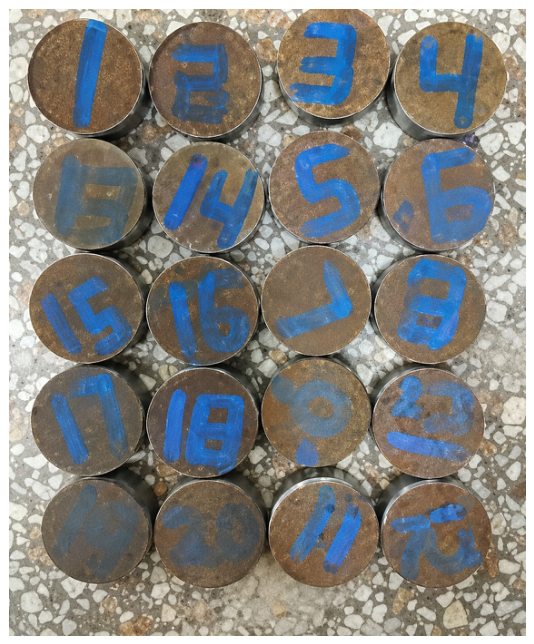
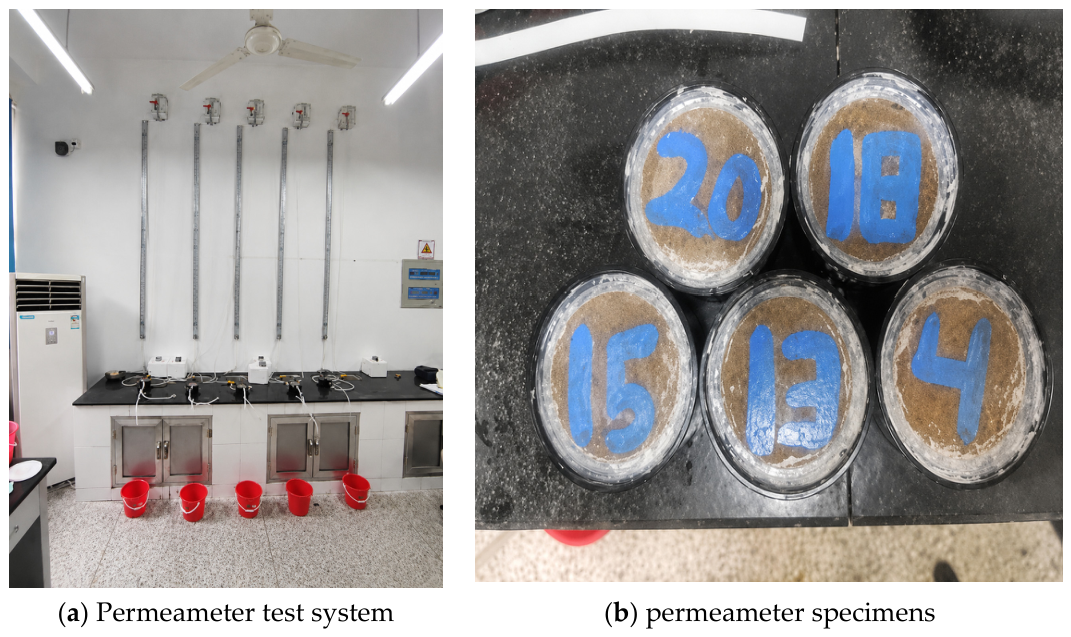
In accordance with the Test Procedures for Inorganic-Bound Stabilised Materials in Highway Engineering (JTG E51-2009) and the test plan of this study, the quantities of air-dried soil, lime and mixing water required for specimen preparation were determined based on the initial moisture content of the air-dried soil, together with the optimum moisture content and maximum dry density obtained from the compaction tests. Specifically, the water required to achieve the target moisture content was first calculated according to the dry mass of the soil, and additional water equivalent to 50% of the lime mass was added to satisfy the hydration requirement of lime. Therefore, the total mixing water was taken as the sum of these two components. The air-dried soil was weighed according to the calculated mass, sprayed with the predetermined amount of water, and mixed thoroughly to achieve the target moisture content. The mixture was then sealed and allowed to stand for 24 h to ensure uniform moisture distribution. Subsequently, lime was added and thoroughly mixed to ensure consistency in specimen preparation. The permeability test specimens were formed using the compaction method, with a diameter of Φ61.8 mm and a height of 40 mm, and were retained in ring cutters during curing. The prepared specimens are shown in
Figure 4.
After specimen preparation, all samples were subjected to standard curing for 7 d, 28 d, 60 d and 120 d in a curing chamber maintained at 20 ± 2 °C and a relative humidity of not less than 95%. To ensure sufficient moisture for hydration, the specimens were immersed in water for the final 24 h before testing, with the water level maintained at least 3 cm above the specimen surface.
To provide a clearer and more systematic description of the permeability test programme, the main experimental variables and corresponding test conditions are summarised in
Table 3. The table includes the lime content, target moisture content, compaction degree, curing period, number of specimens and the applicable test standards for each test group.
For the unconfined compressive strength, triaxial shear and fatigue tests, three independent specimens were prepared and tested for each condition, and the reported values represent the average results. In contrast, for the permeability tests, one specimen was prepared for each test condition, and four repeated hydraulic-head measurements were conducted on the same specimen. Therefore, the error bars presented for permeability results represent measurement variability rather than specimen-to-specimen variability.
2.5. Tests on the Permeability of Modified Soil
2.5.1. Test Procedure
As the permeability coefficient of the modified soil is relatively low, the permeability tests were conducted using a variable-head permeameter in accordance with the Specifications for Geotechnical Testing of Roads, which is broadly comparable to ASTM D5084 for low-permeability fine-grained soils. The difference in height of the water column in the storage tank was recorded at each time interval, and the permeability coefficient of the modified soil was calculated using Equations (1) and (2). Equation (1) is derived based on Darcy’s law. During the variable-head permeability test, the hydraulic gradient was calculated from the average hydraulic-head difference acting across the specimen height. A schematic illustration of the variable-head test arrangement is shown in
Figure 5 to clarify the definitions of hydraulic head, specimen height and seepage direction.
where:
K20 is the standard permeability coefficient of the specimen at a water temperature of 20 °C(cm/s);
Q is the volume of water permeated through the specimen over time t (cm3);
F is the cross-sectional area of the specimen (cm2);
J is the hydraulic gradient;
t is the measurement duration (s).
where:
h1 and
h2 are the initial and final water heads (cm);
hi is the specimen height (cm);
In the present test setup, F = 30 cm2 and hi = 4 cm. The hydraulic gradient J was calculated as the ratio of the water head difference to the specimen height.
The specific test procedure is described as follows:
- (1)
Place the test specimen with the ring cutter in the stack-type saturation apparatus and transfer it into the vacuum saturation chamber for rapid saturation. Leave it undisturbed for 12 h, then remove it and carry out the test immediately;
- (2)
Place the permeable stone and sealing ring into the base. Apply Vaseline to the inner wall of the sleeve to ensure a tight seal at the edges where the specimen contacts the mould. Insert the specimen ring cutter, then place the upper permeable stone, sealing ring and top cover in sequence. Tighten the screw and connect the inlet and outlet pipes. Vent the lower outlet pipe until the water flow is free of bubbles, then close it;
- (3)
Allow the water level to rise to the 180 cm mark on the water-level gauge and leave it to stabilise before commencing the test. When water begins to flow out of the specimen through the upper outlet pipe, record the start time and the initial head; after a specified period, record the end time and the final head of the specimen;
- (4)
During the test, four readings of hydraulic head and seepage time were recorded on the same specimen. The permeability coefficient was calculated according to Equation (1), and the average value of the four measurements was taken as the final test result.
For each test condition, one specimen was prepared and tested according to the standard test procedure. To reduce random measurement error, four repeated hydraulic-head measurements were conducted on the same specimen, and the average value was used to determine the final permeability coefficient. It should be noted that these repeated measurements do not represent independent replicate specimens, but repeated observations under the same test condition. Accordingly, the reported variability reflects measurement uncertainty associated with repeated measurements on the same specimen rather than specimen-to-specimen variability.
2.5.2. Analysis of Experimental Data
- (1)
Effect of binder dosage on the permeability of modified soil
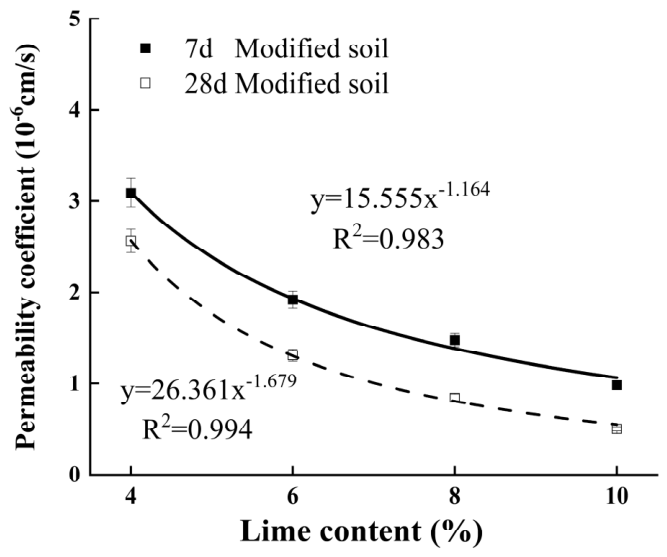
Four test groups were established with lime contents of 4%, 6%, 8% and 10%. The test specimens were moulded under conditions of maximum dry density and optimum moisture content, with compaction uniformly controlled at 96%, and were subjected to standard curing for 7 and 28 days respectively. Based on the test results, a relationship between the permeability coefficient and lime content was established, as shown in
Figure 6.
The test results indicate that the permeability coefficient of modified soil decreases significantly as the dosage of cementitious material increases, with the two exhibiting a good power-law relationship. At admixture levels of 4%, 6%, 8% and 10%, the permeability coefficients of 7-day-old specimens were reduced by 37.9%, 52.2% and 68.2%, respectively, compared to the 4% admixture level, whilst those of 28-day-old specimens were reduced by 49.0%, 67.2% and 80.4%, respectively. Overall, the rate of decline was steep during the low-blending-ratio stage, but levelled off once the blending ratio reached 8%. This suggests that the reaction products formed after lime addition may contribute to pore filling and structural densification, which is consistent with previous studies [
23,
25].
- (2)
Effect of dry density on the permeability of modified soil
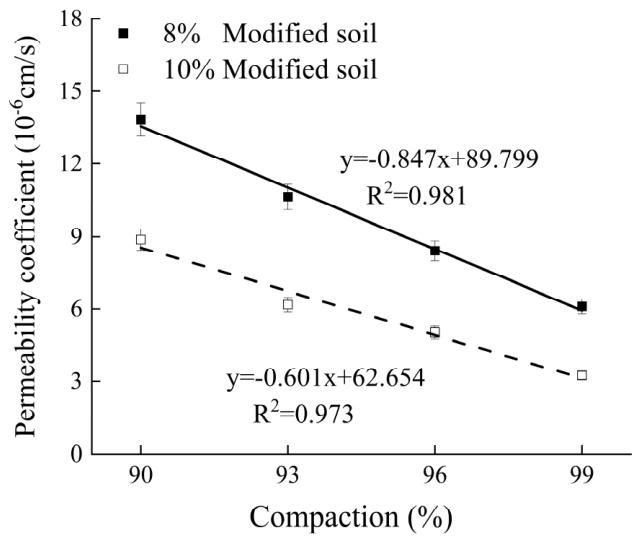
Four sets of tests were conducted with dry densities of 90%ρdmax, 93%ρdmax, 96%ρdmax and 99%ρdmax; the target dry densities were achieved by controlling the degree of compaction. Lime contents of 8% and 10% were selected; the specimens were moulded at the optimum moisture content and subjected to standard curing for 28 days. The curve showing the variation in the permeability coefficient with dry density is shown in
Figure 7.
The test results indicate that, for different lime content levels, the permeability coefficient of modified soil decreases linearly with increasing compaction degree. For every 1% increase in compaction degree, the permeability coefficients of specimens with 8% and 10% lime content decreased by 6.2% and 7.1%, respectively, indicating that specimens with higher lime content are more sensitive to changes in compaction degree. The reduction in permeability with increasing compaction degree may be attributed to the decrease in pore volume and the restriction of seepage pathways, which is consistent with previous studies [
24].
- (3)
Effect of moisture content on the permeability of modified soil
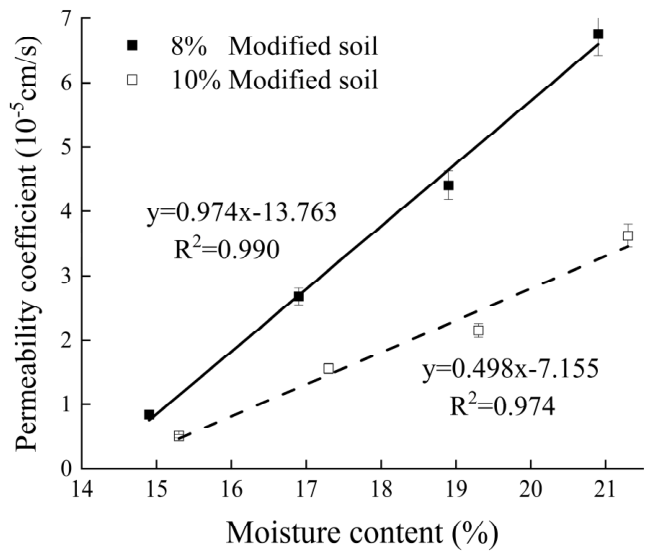
Four sets of test conditions were established with moisture contents of ωopt, ωopt + 2, ωopt + 4 and ωopt + 6. Lime contents of 8% and 10% were selected, with compaction uniformly controlled at 96%; the test specimens were cured for 28 days under standard conditions. The test results are shown in
Figure 8.
The test results indicate that moisture content has a significant effect on the permeability of the modified soil, with the permeability coefficient showing a strong linear correlation with moisture content. When the moisture content is increased by 1% from the optimum level, the permeability coefficients of the 8% and 10% modified soils increase by 117.3% and 103.4%, respectively. The results indicate that, as the moisture content increases, the cementitious structure formed by hydration products may gradually loosen, leading to wider seepage pathways and a continuous increase in the permeability coefficient. This suggests that excessively high moisture content is detrimental to the formation of an impermeable structure in the treated soil.
- (4)
Effect of curing period on the permeability of modified soil
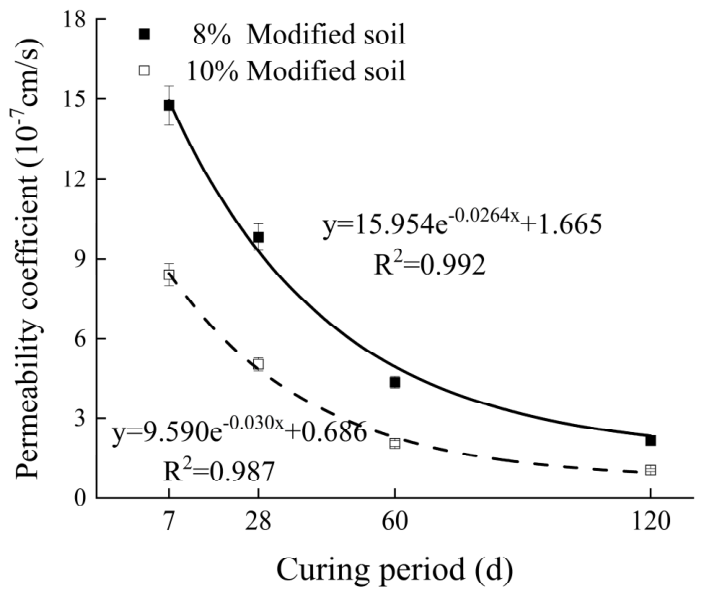
Four test groups were established with curing ages of 7 days, 28 days, 60 days and 120 days. Lime contents of 8% and 10% were selected, with a uniform compaction degree of 96% and the moisture content controlled at the optimum level. The variation in permeability coefficient with curing age is shown in
Figure 9.
The test results indicate that the permeability coefficient of modified soil decreases continuously with increasing curing age, exhibiting an overall exponential trend, with the most significant reduction occurring within the first 60 days. Under the same curing conditions, the permeability coefficient of the 10% lime-content specimens was 43.0% to 59.1% lower than that of the 8% specimens, and the permeability coefficient could be reduced by nearly one order of magnitude after 60 days of curing. These results suggest that continued hydration reactions during the curing process may enhance internal bonding, promote structural densification and reduce pore volume over time, thereby improving the impermeability of the modified soil, which is consistent with previous findings [
25].
The permeability test results indicate that the impermeability of modified soil is influenced by multiple factors, including lime content, compaction degree, moisture content and curing period. Increasing the lime content and compaction degree leads to a reduction in the permeability coefficient, whereas increasing the moisture content above the optimum level causes it to increase. In contrast, extending the curing period results in an overall exponential decline in permeability. These results suggest that the combined effects of lime content, compaction degree, moisture condition and curing duration may influence the internal pore structure and seepage pathways of modified soil. In practical applications, appropriately increasing the lime content and compaction degree, controlling the moisture content, and extending the curing period are beneficial for enhancing its impermeability. It should be noted, however, that the reported percentage reductions are based on repeated hydraulic-head measurements conducted on the same specimen under each test condition. Accordingly, these results should be interpreted as indicative trends under the present testing conditions rather than statistically independent specimen-to-specimen comparisons.
3. Experimental Testing of the Weakening Behaviour of Modified Soil
Impermeability tests on the modified soil have revealed the factors influencing its permeability and the resulting effects; however, during its service life, modified soil is subjected not only to long-term seepage but also to dynamic and static loads. The combined effect of these factors leads to the continuous evolution of its internal structure and the development of fatigue damage, resulting in a gradual deterioration of its mechanical properties. To elucidate the fatigue damage behaviour of modified soil under cyclic loading, this study draws upon fatigue damage theory and experimental results on the impermeability of modified soil. It conducts a comprehensive analysis of the effects of binder content, curing duration and stress level on fatigue strength and accumulated fatigue failure cycles, and establishes a predictive relationship for the accumulated fatigue failure cycles of modified soil.
3.1. Theoretical Basis of Fatigue Damage in Modified Soil
Modified soil is formed by mixing native soil, water and lime, resulting in a heterogeneous material with inherent pores and structural imperfections. Under cyclic loading, fatigue damage is generally considered to accumulate progressively as internal defects propagate and interconnect, leading to the continuous deterioration of macroscopic mechanical properties and ultimately fatigue failure. In this study, a step-loading protocol was adopted to evaluate the fatigue degradation characteristics of modified soil under increasing stress levels. The fatigue response and failure behaviour were analysed based on the loading history and the corresponding accumulated fatigue failure cycles. Although cumulative damage theory provides a useful conceptual framework for understanding fatigue damage evolution, the present study does not directly apply Miner’s rule for quantitative life prediction, because the fatigue life corresponding to each individual stress level was not determined independently under constant-amplitude loading.
On this basis, the relationship between stress level and fatigue response is characterised using stress–cycle curves. These curves describe the variation in the number of cycles to failure under different stress conditions and provide a basis for evaluating the fatigue resistance of the material under step-loading conditions. This experimental approach provides a practical means to characterise fatigue degradation under variable loading histories and has been adopted in studies of geotechnical and pavement materials. For each fatigue test condition, three independent specimens were prepared and tested, and the reported fatigue failure cycles represent the average values of the three specimens. The corresponding standard deviation values are presented in the relevant figures to reflect the variability of the experimental results.
3.2. Testing of the Fatigue Properties of Modified Soil
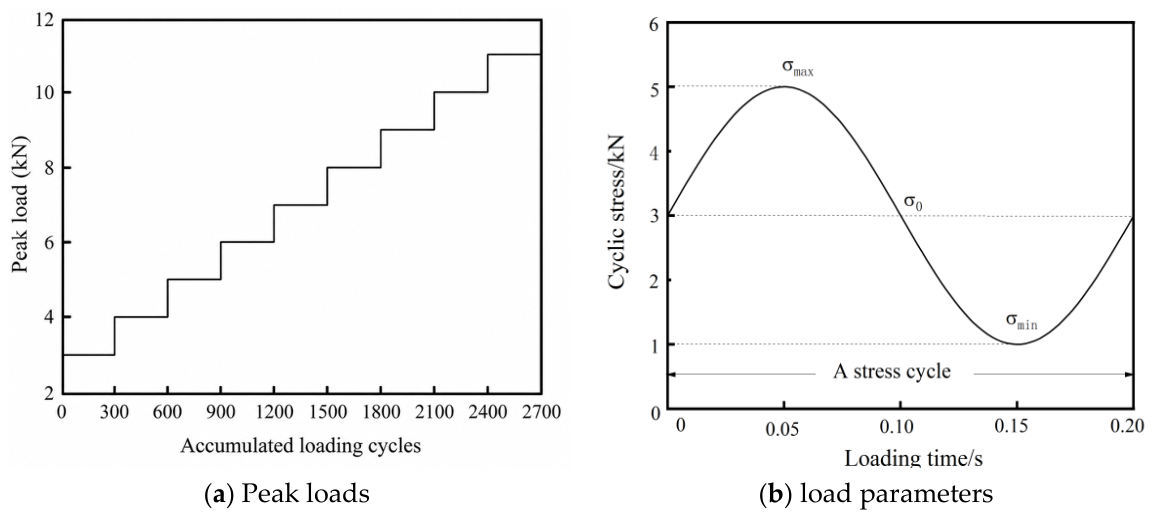
The fatigue tests were conducted using the high-precision electro-hydraulic servo testing system MTS810. To simulate the dynamic loading conditions encountered by modified soil in practical engineering applications, a step-loading protocol with asymmetric sinusoidal cyclic loading was adopted to investigate its fatigue degradation behaviour.
During the test, the specimen was positioned centrally between the upper and lower loading platens, and a preload of approximately 50 N was applied to ensure full contact and to zero the displacement transducer. The minimum load was fixed at 1 kN, and the initial peak load was set at 3 kN. After every 300 loading cycles, the peak load was increased in increments of 1 kN. Under this step-loading protocol, the total accumulated fatigue failure cycles were defined as the accumulated number of loading cycles from all stress levels until specimen failure, rather than the fatigue life at a single constant stress amplitude. The loading frequency was maintained at 5 Hz. This frequency was selected with reference to previous studies on cyclic loading of geotechnical and pavement materials, where loading frequencies in the range of 1–10 Hz are commonly adopted to simulate repeated traffic and engineering dynamic loads. Considering both the efficiency of laboratory testing and the need to avoid excessive inertial effects, 5 Hz was considered an appropriate loading frequency for evaluating the fatigue degradation behaviour of lime-modified soil in this study.
The axial stress was calculated by dividing the applied load by the cross-sectional area of the specimen, while the axial strain was determined from the displacement recorded by the MTS loading system based on the initial specimen height. The loading process continued until the axial strain reached 10% or specimen failure occurred, and the corresponding total accumulated cycles were recorded. The loading history and test parameters are shown in
Figure 10.
For each test condition, three independent specimens were prepared and tested, and the accumulated fatigue failure cycles represent the average values of the three specimens for comparative analysis.
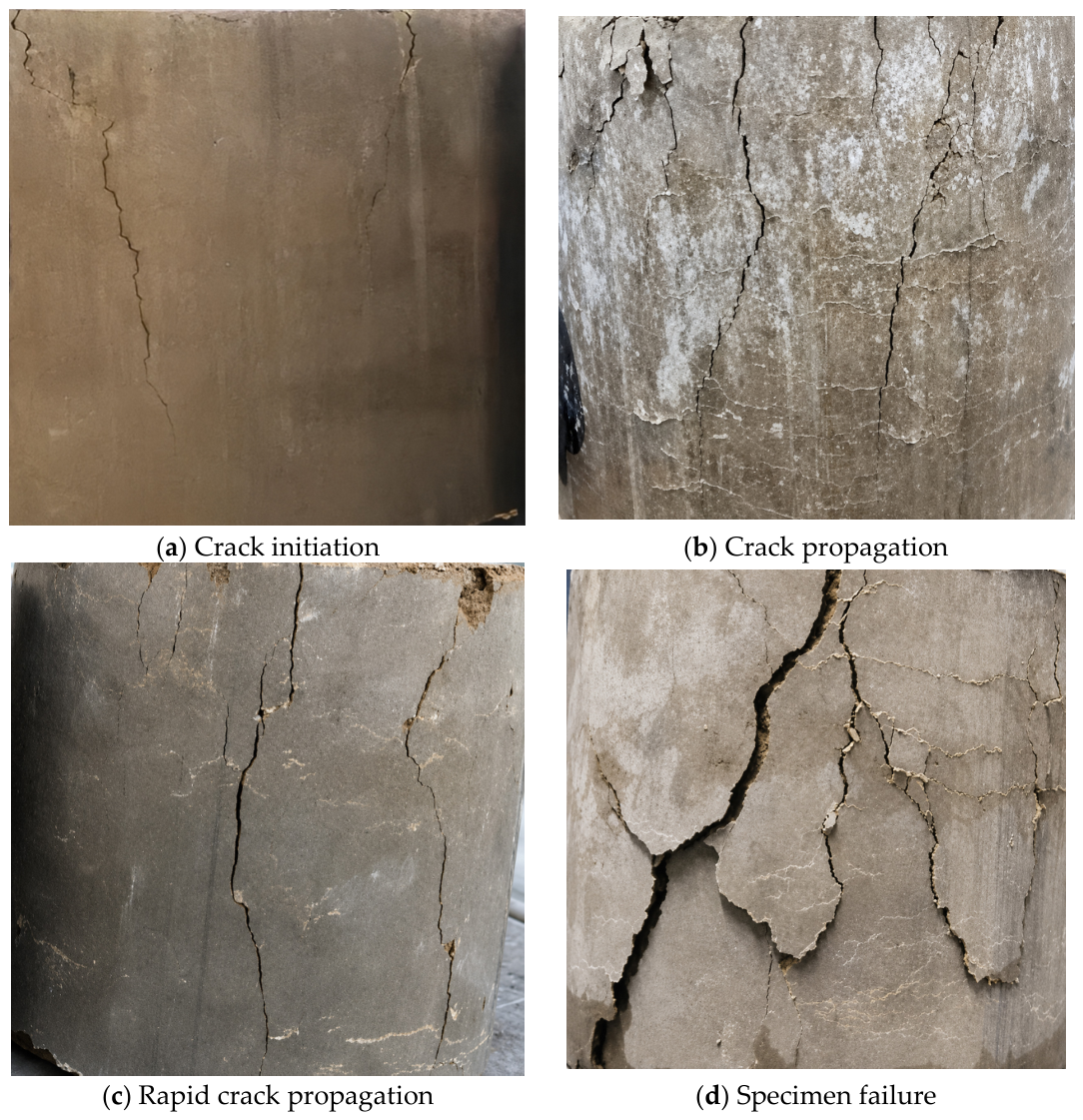
Taking the fatigue failure behaviour of the modified soil with 8% lime content cured for 120 days as an example, the specimen exhibited a fatigue failure load of 24.9 kN, a fatigue failure strength of 3.17 MPa, and an accumulated fatigue failure cycles of 7298. Based on the observed crack development and surface damage evolution, the fatigue damage process can be qualitatively characterised into four representative stages.
Stage 1: Crack initiation stage. During the early loading period (approximately 0–1850 cycles), corresponding to about 25.3% of the total accumulated fatigue failure cycles and a stress amplitude of 7 kN (28.1% of the failure load), microcracks began to appear on the specimen surface.
Stage 2: Stable crack propagation stage. As the loading cycles increased (approximately 1850–4512 cycles), corresponding to about 61.8% of the accumulated fatigue failure cycles and a stress amplitude of 16 kN (64.2% of the failure load), both the number and length of cracks increased gradually.
Stage 3: Accelerated crack propagation stage. During the later loading stage (approximately 4512–5499 cycles), corresponding to about 75.3% of the accumulated fatigue failure cycles and a stress amplitude of 19 kN (76.3% of the failure load), cracks began to interconnect and some propagated through the specimen.
Stage 4: Final failure stage. As the loading continued to the accumulated fatigue failure cycles, macroscopic failure occurred, accompanied by the rapid development and coalescence of cracks. The morphological characteristics of the modified soil specimen during these representative stages are shown in
Figure 11.
3.3. Analysis of the Results of the Modified Soil Fatigue Test
3.3.1. Effect of Lime Content on Fatigue Failure Strength and Accumulated Loading Cycles
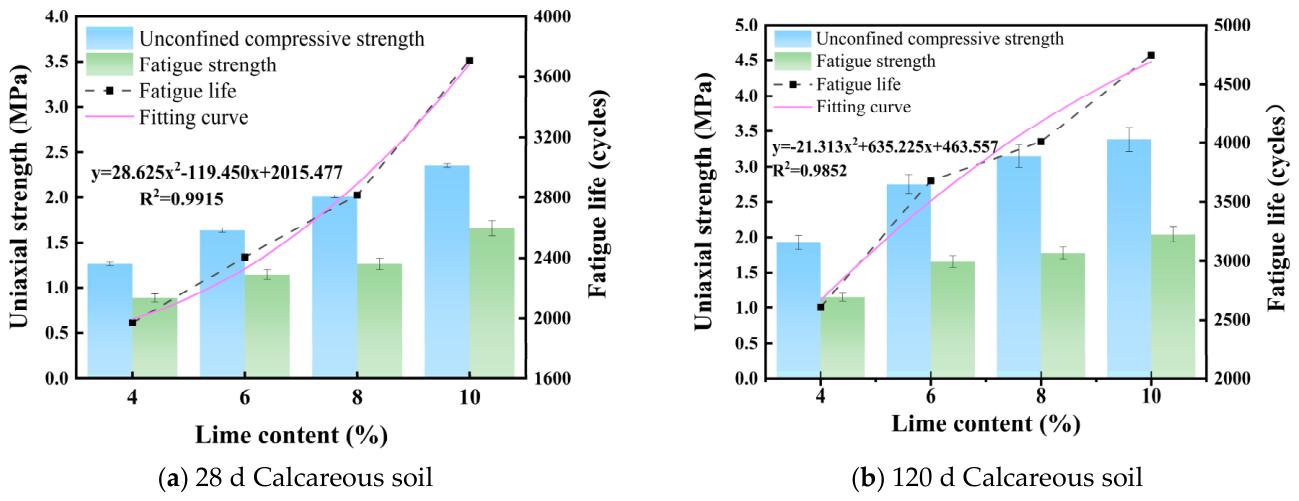
To systematically investigate the influence of cementitious material content on the fatigue behaviour of modified soil, four test groups were designed with cementitious material contents of 4%, 6%, 8% and 10%. All test specimens were prepared at the optimum moisture content and 96% compaction, and were subjected to standard curing for 28 days and 120 days, respectively. Based on the test results, a comparative analysis was conducted between the initial unconfined compressive strength (measured on independent specimens without fatigue loading) and the fatigue failure strength of the modified soil. The relationship between accumulated fatigue failure cycles and dosage, along with the relevant parameters, is shown in
Figure 12.
The initial unconfined compressive strength shown in
Figure 12 refers to the strength obtained from separate unconfined compression tests under the same curing and material conditions prior to fatigue loading. The test results indicate that lime content has a significant effect on the fatigue performance of the modified soil. As the lime content increased from 4% to 10%, both the fatigue failure strength and accumulated fatigue failure cycles of the modified soil showed a continuous increase. Compared with the 4% lime content, the fatigue failure cycles increased by 1.22-fold, 1.43-fold and 1.89-fold at 28 days, and by 1.42-fold, 1.54-fold and 1.82-fold at 120 days, respectively. The corresponding critical cyclic fatigue stress ratio (σ
−1/σ) showed only minor variation under both curing conditions. The increase in lime content enhanced inter-particle bonding and structural stability, thereby improving the ability of the modified soil to resist cyclic loading.
3.3.2. Effect of Curing Duration on Fatigue Failure Strength and Accumulated Loading Cycles
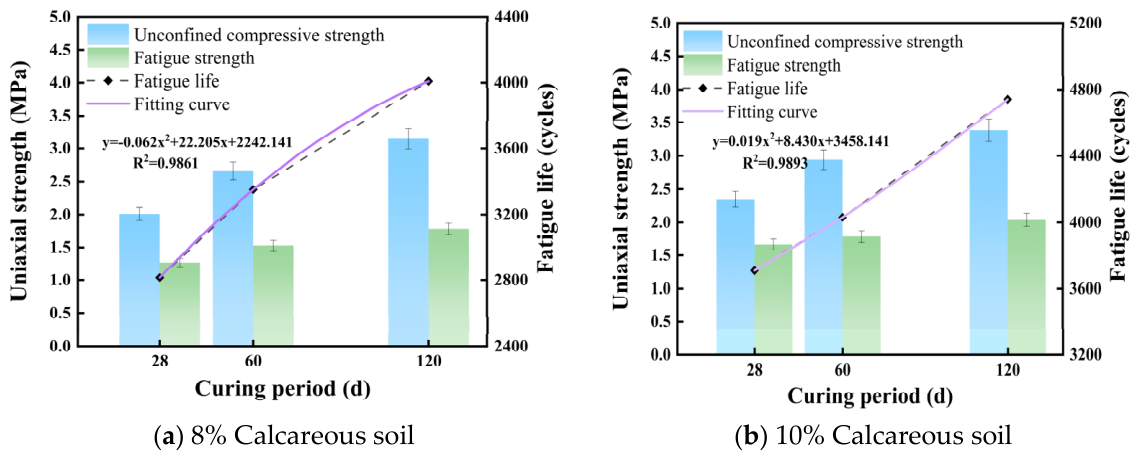
Having established the relationship between the dosage of cementitious materials and the fatigue properties of modified soil, we further investigated the mechanism by which curing duration influences the evolution of these fatigue properties. Three curing durations were set—28 days, 60 days and 120 days—with specimen preparation procedures and test conditions remaining consistent with those of the previous experiments.
Figure 13 illustrates the evolution of unconfined compressive strength, fatigue failure strength and accumulated fatigue failure cycles of modified soil with increasing curing duration.
The test results indicate that the fatigue strength and accumulated fatigue failure cycles of the modified soil increase with the extension of the curing period, although the rate of increase gradually slows down, showing an overall quadratic trend. Under the same admixture content, when the curing period is extended from 28 days to 120 days, both parameters increase significantly, whilst the rate of increase gradually decreases. The critical cyclic fatigue stress ratio σ−1/σ shows that for 8% modified soil, the value increased from 0.632 and 0.575 to 0.665, whilst for 10% modified soil, it decreased from 0.706 to 0.604. This suggests that as the curing age increases, fatigue damage may occur under relatively lower peak load levels.
3.3.3. Effect of Stress Amplitude and Stress Ratio on Accumulated Fatigue Failure Cycles
The stress ratio (R) is defined as the ratio of the minimum stress to the maximum stress during cyclic loading, i.e., R = σmin/σmax. The stress amplitude (σa) is defined as half of the difference between the maximum and minimum stress, i.e., σa = (σmax − σmin)/2, while the mean stress (σm) is defined as the average of the maximum and minimum stress, i.e., σm = (σmax + σmin)/2.
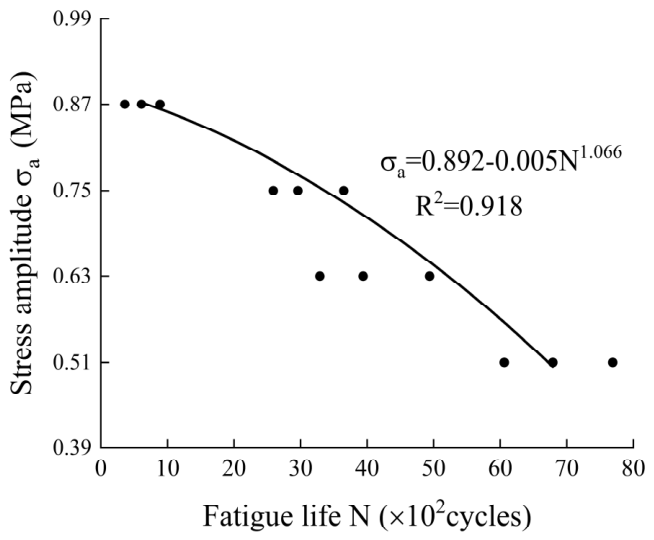
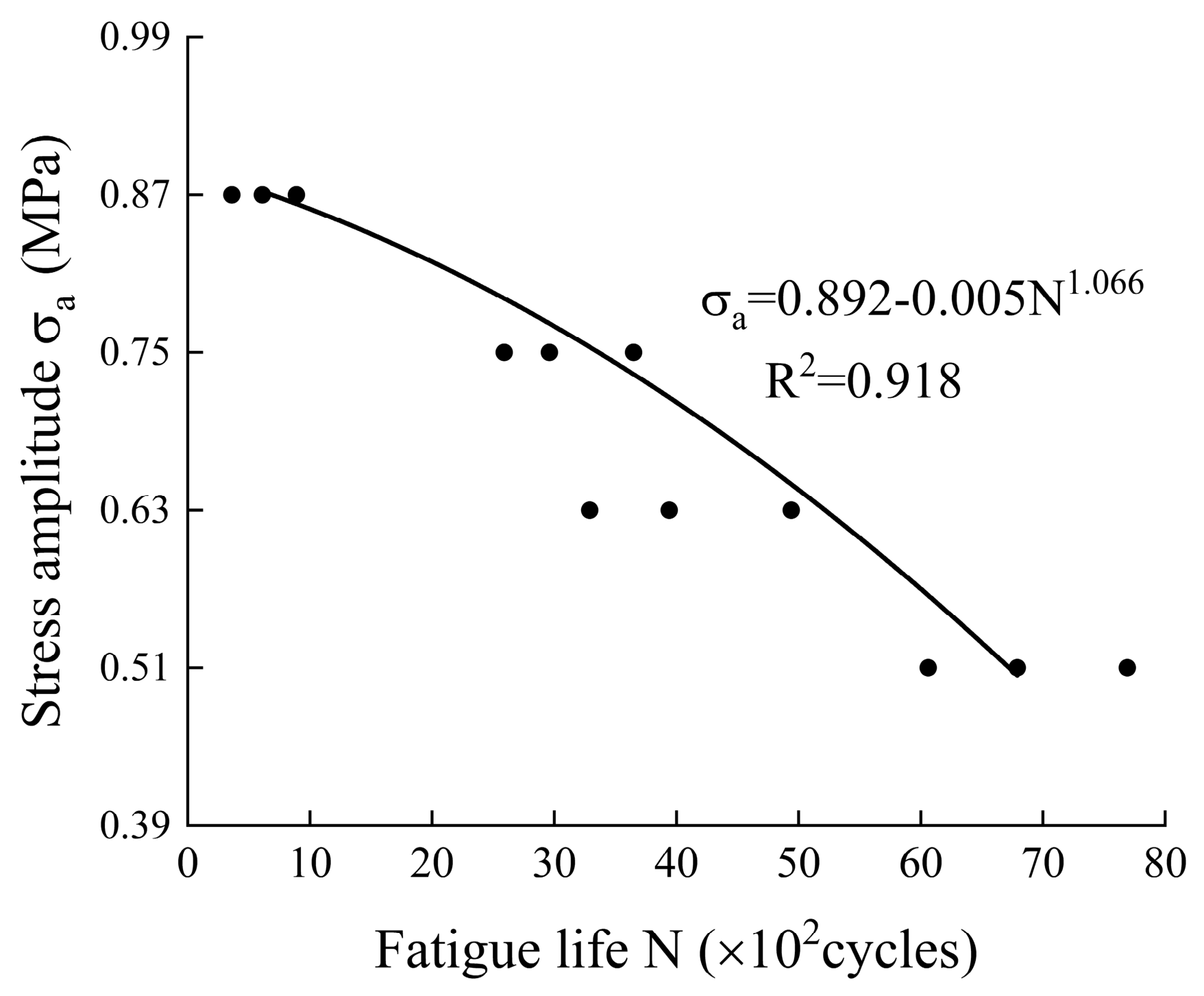
Fatigue tests were conducted on modified soil with 8% lime content cured for 120 days under the step-loading protocol adopted in this study and under different stress-ratio conditions. The relationship curves, with the number of cycles N (×10
2) at which fatigue failure occurs in the modified soil plotted on the x-axis and the corresponding stress amplitude and stress ratio on the y-axis, are shown in
Figure 14 and
Figure 15.
The test results indicate that, under identical lime content and curing duration, the accumulated fatigue failure cycles of the tested modified soil were strongly influenced by the cyclic stress state. As the stress amplitude and mean stress decrease, the accumulated fatigue failure cycles gradually increase, with the curve exhibiting a concave distribution; when the stress ratio increases, the accumulated fatigue failure cycles are markedly reduced. The test data exhibit considerable dispersion under low stress-amplitude conditions, reflecting the influence of the material’s internal structural heterogeneity on the fatigue failure process. For the tested modified soil cured for 120 days under the present step-loading protocol, the three-parameter power-law model provided an empirical fit to describe the relationship between accumulated fatigue failure cycles and stress parameters. The results suggest that stress amplitude and mean stress are important factors influencing the accumulated fatigue failure cycles of the tested modified soil under the present experimental conditions.
3.4. Empirical Stress–Cycle Relationship of Modified Soil Under Step-Loading Conditions
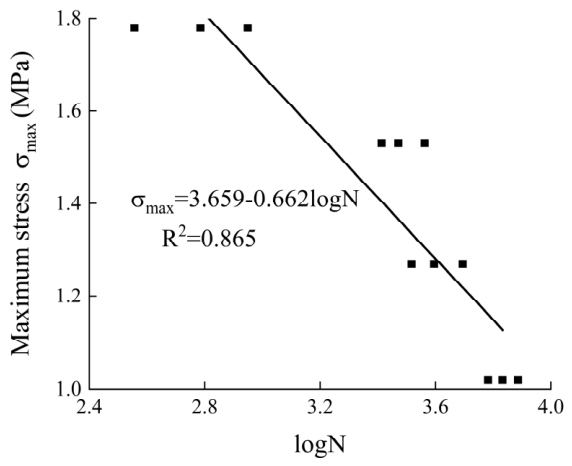
An empirical stress–cycle relationship was obtained for the modified soil specimen with 8% lime content cured for 120 days under the step-loading protocol adopted in this study.
Figure 16 illustrates the fitted relationship between the maximum stress (σ
max, MPa) and the logarithm of accumulated fatigue failure cycles (logN). The fitted results indicate a negative correlation between the applied maximum stress and the fatigue failure cycles of the tested modified soil.
The results indicate that, under the tested conditions, the accumulated fatigue failure cycles decreased with increasing peak load. Although a certain degree of scatter was observed in the experimental data (R2 = 0.865), the fitted relationship reasonably describes the peak load–cycle response of the tested modified soil within the investigated loading range. It should be noted that this empirical relationship is only applicable to the tested modified soil with 8% lime content under a 120-day curing period and the adopted step-loading protocol. It should not be interpreted as a general fatigue-life prediction model for lime-modified soils.
4. Conclusions
This study investigated the effects of lime content, compaction degree, moisture content and curing age on the impermeability and fatigue degradation behaviour of modified soil through permeability tests and cyclic loading tests. The following conclusions can be drawn:
- (1)
Lime amendment can effectively improve the impermeability of the soil. Under 28-day curing conditions, increasing the lime content from 4% to 10% reduced the permeability coefficient by 80.4%. As the lime content, compaction degree and curing period increased, the permeability coefficient continuously decreased; however, once the moisture content exceeded the optimum level, the permeability coefficient increased significantly. The results suggest that the hydration products generated by lime addition may contribute to pore filling and enhanced inter-particle bonding, thereby improving the compactness of the soil structure.
- (2)
Under cyclic loading, modified soil exhibited distinct fatigue degradation characteristics. As the lime content increased, the accumulated fatigue failure cycles increased significantly, with increases of 1.89-fold and 1.82-fold under 28-day and 120-day curing conditions, respectively. Extending the curing period also contributed to improved fatigue resistance, although the rate of improvement gradually decreased at later stages. As the peak load increased under the adopted step-loading protocol, fatigue damage accumulated more rapidly, resulting in a marked reduction in accumulated fatigue failure cycles.
- (3)
Based on the experimental results, an empirical peak load–cycle relationship was obtained for the tested modified soil with 8% lime content under a 120-day curing period and the adopted step-loading conditions. A negative correlation between peak load and accumulated fatigue failure cycles was identified, and the corresponding correlation coefficient was determined. These results provide an experimental reference for evaluating the fatigue response of the tested modified soil under the specified loading conditions.
Overall, the impermeability and fatigue degradation behaviour of modified soil may be associated with changes in its internal structure and bonding conditions during curing. Increasing the lime content and compaction degree appropriately, controlling the moisture content, and extending the curing period can effectively enhance its long-term service stability.
It should be noted that the interpretations regarding pore filling, cementitious bonding and seepage path evolution in this study are inferred from macroscopic permeability and fatigue test results. Direct microstructural verification, such as SEM, XRD, MIP or CT analysis, was not conducted in the present work and will be considered in future studies.