


Abstract
Dye-sensitized solar cells (DSSCs) remain promising low-cost photovoltaic technologies because of their simple fabrication, tunable optical properties, and effective operation under low-light conditions. Titanium dioxide (TiO2) is the most widely used photoanode material in DSSCs owing to its chemical stability, suitable band alignment, low toxicity, and excellent transparency. However, the photovoltaic performance and long-term stability of TiO2-based DSSCs are still limited by charge recombination, slow electron transport, interfacial losses, and structural degradation. This review summarizes recent advances in defect engineering, morphology engineering, and interface engineering of TiO2 photoanodes for high-performance DSSCs. Attention is given to the role of oxygen vacancies, Ti3+ states, metal/non-metal doping, and heterostructure formation in tailoring the electronic structure and charge transport behavior of TiO2. The influence of various TiO2 nanostructures, including nanoparticles, nanotubes, nanorods, nanosheets, and hierarchical architectures, on dye adsorption, light scattering, electron mobility, and recombination dynamics is critically discussed. Furthermore, recent progress in interface engineering strategies such as passivation layers, blocking layers, MXene incorporation, composite photoanodes, and atomic layer deposition are examined in relation to interfacial charge transfer and device stability. Current challenges involving defect-induced recombination, morphology-related transport trade-offs, and long-term degradation are also analyzed. Finally, future perspectives on hierarchical nanoarchitectures, multifunctional interfaces, flexible DSSCs, and hybrid TiO2 systems are presented. This review provides an integrated understanding of how defect, morphology, and interface engineering collectively govern the performance of TiO2 photoanodes and offers design guidelines for next-generation high-efficiency and stable DSSCs.
1. Introduction
In dye-sensitized solar cells (DSSCs), the photoanode semiconductor is the primary functional element that controls the processes of charge transfer, electron injection, and light harvesting, all of which eventually affect the device’s performance [1]. Michael Grätzel and Brian O’Regan’s 1991 research on photoinduced electron injection from dye molecules into a mesoporous TiO2 network established titanium dioxide (TiO2) as the primary semiconductor in dye-sensitized solar cells (DSSCs) [2,3]. TiO2 is found in the following three phases: anatase, rutile, and brookite. Its anatase phase is favored in DSSCs because of its greater surface area, optimal band alignment, and improved electron transport capabilities [4,5]. Since the pioneering work of Yang et al. and Yu et al. on exposed {001} anatase facets, recent studies have focused on facet-stabilization strategies, fluorine-free synthesis, facet-dependent charge transport, and heterointerface engineering for DSSCs and related photoelectrochemical systems [6,7].
The semiconductor produces a nanocrystalline, mesoporous structure, allowing for high dye loading while also promoting electron percolation through linked particles. The broad bandgap (~3.2 eV for anatase) enables transparency in the visible area, allowing light absorption to be controlled by sensitizing dyes rather than the semiconductor itself. TiO2 has significantly impacted DSSCs, enabling the creation of cost-effective, scalable, and efficient photovoltaic devices for indoor- and low-light applications [6,7,8,9,10,11,12].
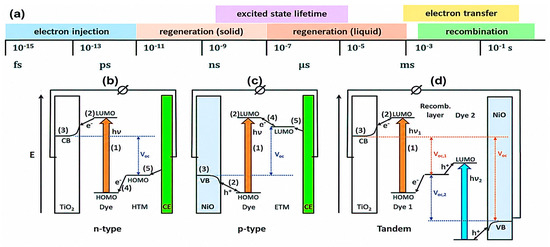
Titanium dioxide (TiO2) has continued to be the most popular photoanode material among the other semiconductor materials investigated because of its good conduction band alignment with the majority of sensitizing dyes, excellent chemical and photochemical stability, cheap cost, and environmental friendliness [13,14,15]. Recent research according to Salim et al. (2023) [16] has shown that alterations to TiO2, including defect engineering, heteroatom doping, and nanostructure design, may greatly improve charge transfer and inhibit recombination processes [4]. As illustrated in Figure 1, upon light absorption, electrons are excited from the highest occupied molecular orbital (HOMO) to the lowest unoccupied molecular orbital (LUMO) of the dye molecule [16,17,18]. For efficient electron injection, the LUMO energy level of the excited dye must be positioned above the conduction band edge of TiO2, enabling spontaneous transfer of electrons into the semiconductor [19]. The injected electrons are subsequently transported through the TiO2 network and collected by the transparent conducting substrate before flowing through the external circuit [20].
Figure 1.
Schematic illustration of the operating principle of dye-sensitized solar cells, showing (a) an illustration of the charge transfer kinetics in ss-DSSCs regarding time, (b) charge transfer occurring in an n-type ss-DSSC, (c) charge transfer occurring in a p-type ss-DSSC and (d) charge transfer occurring in a tandem p-n-DSSC [21].
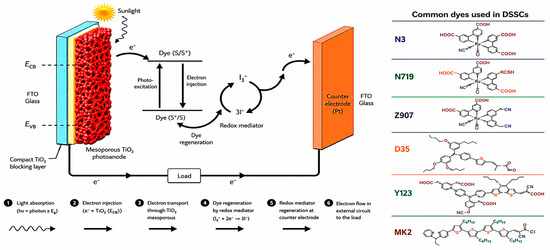
Given that it functions as the interface for electron injection, the dye adsorption scaffold, and the electron transport medium all at once in a typical DSSC setup, the TiO2 photoanode is crucial to determining the photovoltaic performance [22]. As a result, charge production, transport kinetics, and recombination processes inside the cell are impacted by the structural and electrical characteristics of TiO2. Fluorine-doped tin oxide (FTO) and other conductive substrates are coated with nanocrystalline mesoporous TiO2 films in conventional DSSCs [23]. Mesoporous TiO2’s wide surface area allows for high dye loading, which enables effective electron injection and light harvesting; this is illustratively shown in Figure 2 [24]. But the high density of grain boundaries and defect states created by the nanoparticulate structure can also serve as recombination hotspots, decreasing electron lifespan and overall device efficiency. Consequently, a significant amount of research has been focused on altering the physicochemical characteristics of TiO2 by means of defect engineering, morphological optimization, and interface modification techniques [25].
Figure 2.
Overview of the DSSC device architecture and photovoltaic operation, showing energy conversion from incident sunlight to electrical output through coordinated interfacial electron-transfer, redox-regeneration processes and common organic and inorganic dyes used in DSSCs [original drawing].
In this review, defect engineering refers to intentional modification of the TiO2 electronic defect landscape through oxygen vacancy control, Ti3+ generation, elemental doping, and lattice disorder manipulation to regulate carrier concentration, trap-state density, and band structure [23].
Morphology engineering refers to the structural tailoring of TiO2 across multiple dimensionalities (0D, 1D, 2D, and hierarchical architectures) to optimize surface area, electron transport pathways, electrolyte diffusion, and light scattering [26,27].
Interface engineering refers specifically to modification of charge-transfer interfaces in DSSCs, including TiO2/dye, TiO2/electrolyte, and TiO2/FTO interfaces, using passivation layers, heterostructures, ultrathin coatings, and interfacial compositing strategies to suppress recombination and improve carrier extraction [28].
Although research articles have discussed individual aspects of TiO2 modification in DSSCs, most studies primarily focus on either defect engineering, morphology control, or interfacial modification independently. However, these approaches are strongly interconnected because defect states influence charge transport kinetics, morphology determines electron diffusion pathways and dye adsorption, while interfacial properties govern recombination dynamics and long-term device stability. A comprehensive understanding of the synergistic relationship among these engineering strategies is, therefore, necessary for the rational design of next-generation TiO2 photoanodes [29,30,31].
2. Recent Progress in Defect, Morphology, and Interface Engineering of TiO2 Photoanodes
2.1. Defect Engineering of Titanium Dioxide Semiconductor
In dye-sensitized solar cells (DSSCs), defect engineering has become a crucial tactic for improving the electrical structure and charge transport characteristics of titanium dioxide (TiO2) photoanodes [32]. Charge carrier dynamics can be impacted by intrinsic flaws within TiO2’s crystal structure, despite the material’s advantageous properties, including chemical stability, high transparency, and appropriate band alignment with several sensitizing dyes. These defects, which are mostly oxygen vacancies, Ti3+ states, and impurity dopants, can either increase electron mobility and conductivity or function as recombination sites that lower device efficiency [33]. As a result, contemporary DSSC research has placed a strong emphasis on precisely controlling defect generation. Enhancing electron transport in TiO2 has been extensively studied by intrinsic defect management, namely, the control of oxygen vacancies. Within the bandgap, oxygen vacancies provide localized energy states that can boost conductivity and carrier concentration.
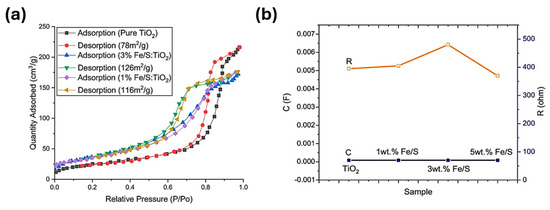
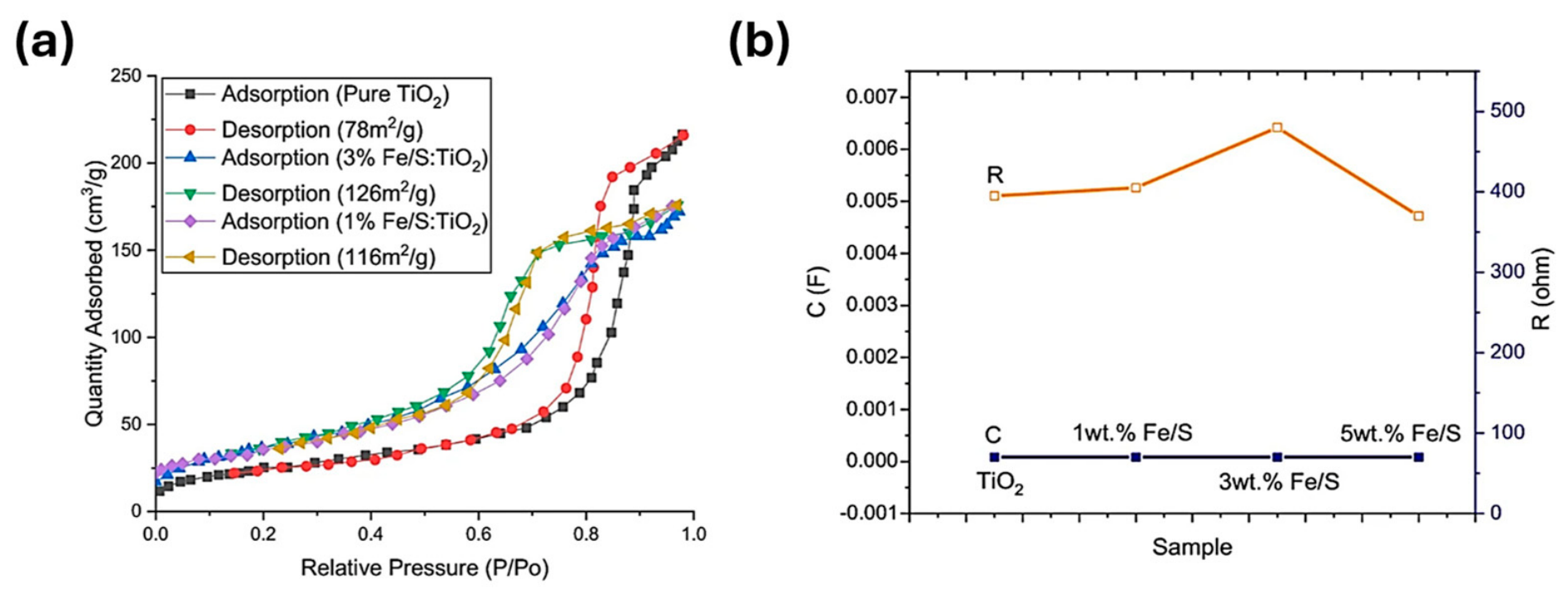
Enhancing electron transport in TiO2 has been extensively studied by intrinsic defect management, namely, the control of oxygen vacancies. Within the bandgap, oxygen vacancies provide localized energy states that can boost conductivity and carrier concentration. However, trap states that encourage electron-hole recombination may also be produced by high vacancy concentrations [34]. Therefore, to balance increased conductivity with reduced recombination losses, recent research has focused on controlled defect creation using thermal treatments, chemical reduction, or surface passivation techniques. For example, it has been demonstrated that surface passivation layers like MgO or WO3 minimize recombination at defect locations while preserving effective electron injection from the dye to the TiO2 conduction band, resulting in increased carrier lifetime and decreased charge transfer resistance in DSSCs [20]. Doping TiO2 with metal and non-metal elements is another common defect engineering technique. TiO2’s electronic structure may be altered by substitutional dopants, which can also produce shallow donor states and enhance visible light absorption. By enhancing electron transport and reducing recombination processes at the photoanode interface, Fe/S co-doped TiO2 nanoparticles have been shown to dramatically improve photovoltaic performance. The enhanced performance was ascribed to the synergistic effects of sulphur and iron dopants, which modify the TiO2 band structure and promote charge separation in the photoanode material [35]. Figure 3 shows the improved BET and charge transfer capacitance of such doping.
Figure 3.
(a) BET of pure and wt.% Fe/S–TiO2 (b) variation in charge transfer capacitance and polarization capacitance with Fe/S content. Adapted from [35].
In a comparable manner, co-doping techniques using rare-earth and alkaline metals have gained popularity. When compared to undoped TiO2 systems, magnesium and lanthanum co-doping in TiO2–ZrO2 composite photoanodes has been shown to improve crystallinity, optical absorption, and charge transport properties, leading to increased DSSC efficiency. The grain size increased with a 1.2% La dopant. This implies that more La incorporation causes the TZ to crystallize, giving the doped materials larger crystallite sizes. The crystallite size (D) was determined using Scherrer’s equation, Equations (1) and (3):
The dislocation density (δ) and the d-space are computed as follows to obtain more information on the structural properties of the suggested PA samples, Equation (2):
where D is the crystalline size, β is the XRD peak FWHM appearing at the diffraction angle (θ), and λ is the X-ray wavelength (=1.54056 Å).
For the TZ, TZM4, TZM8, and TZM12 samples, the computed D values are, respectively, 21.16 nm, 59.04 nm, 52.57 nm, and 55.80 nm. The addition of magnesium causes these readings to rise. One explanation for the increase in grain size with Mg inclusion is a decrease in dislocation density, which results in fewer crystal lattice defects. A large D and tiny δ show that the films have more crystallization. Reduced trap-mediated recombination inside the TiO2 lattice and changes in the electronic density of states are the causes of these improvements [8,15].
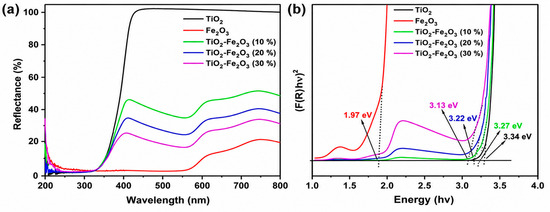
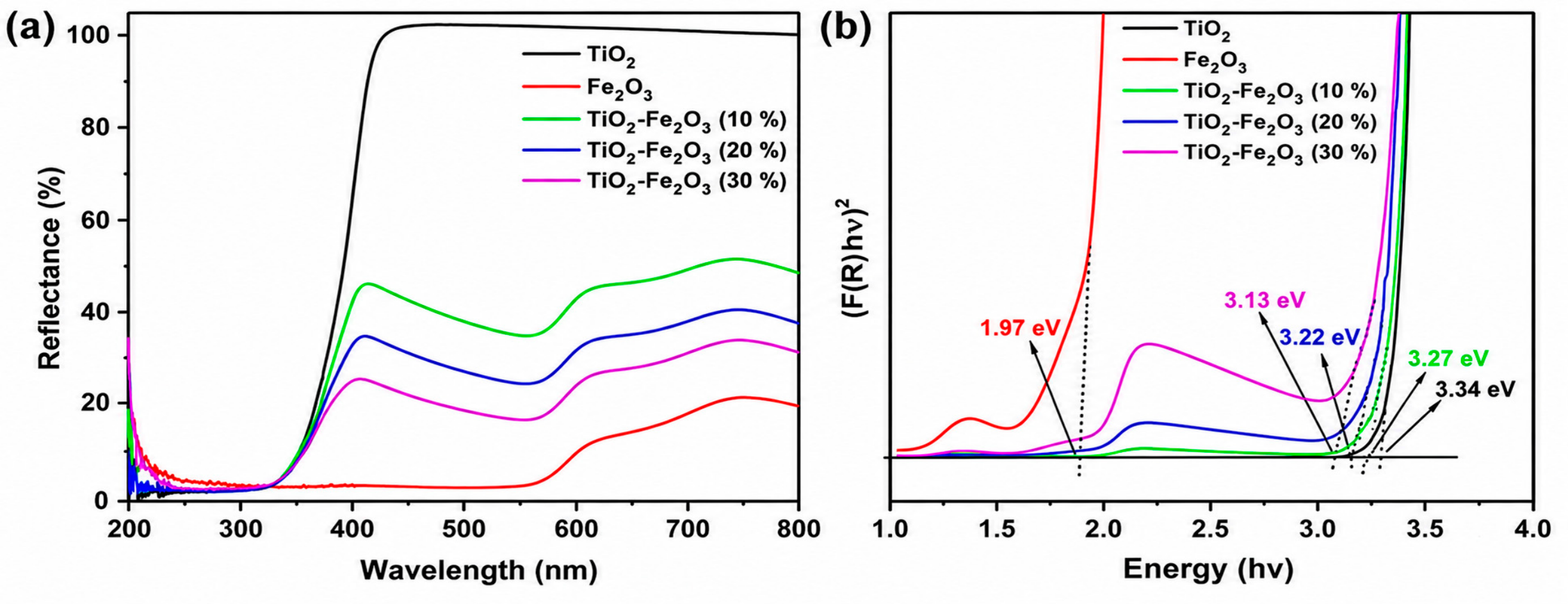
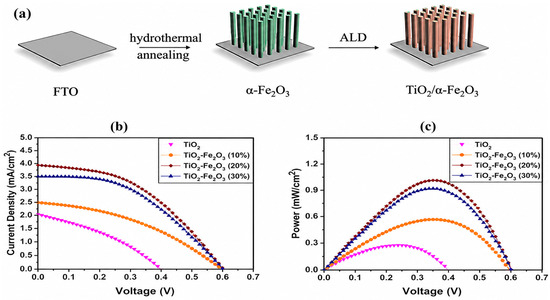
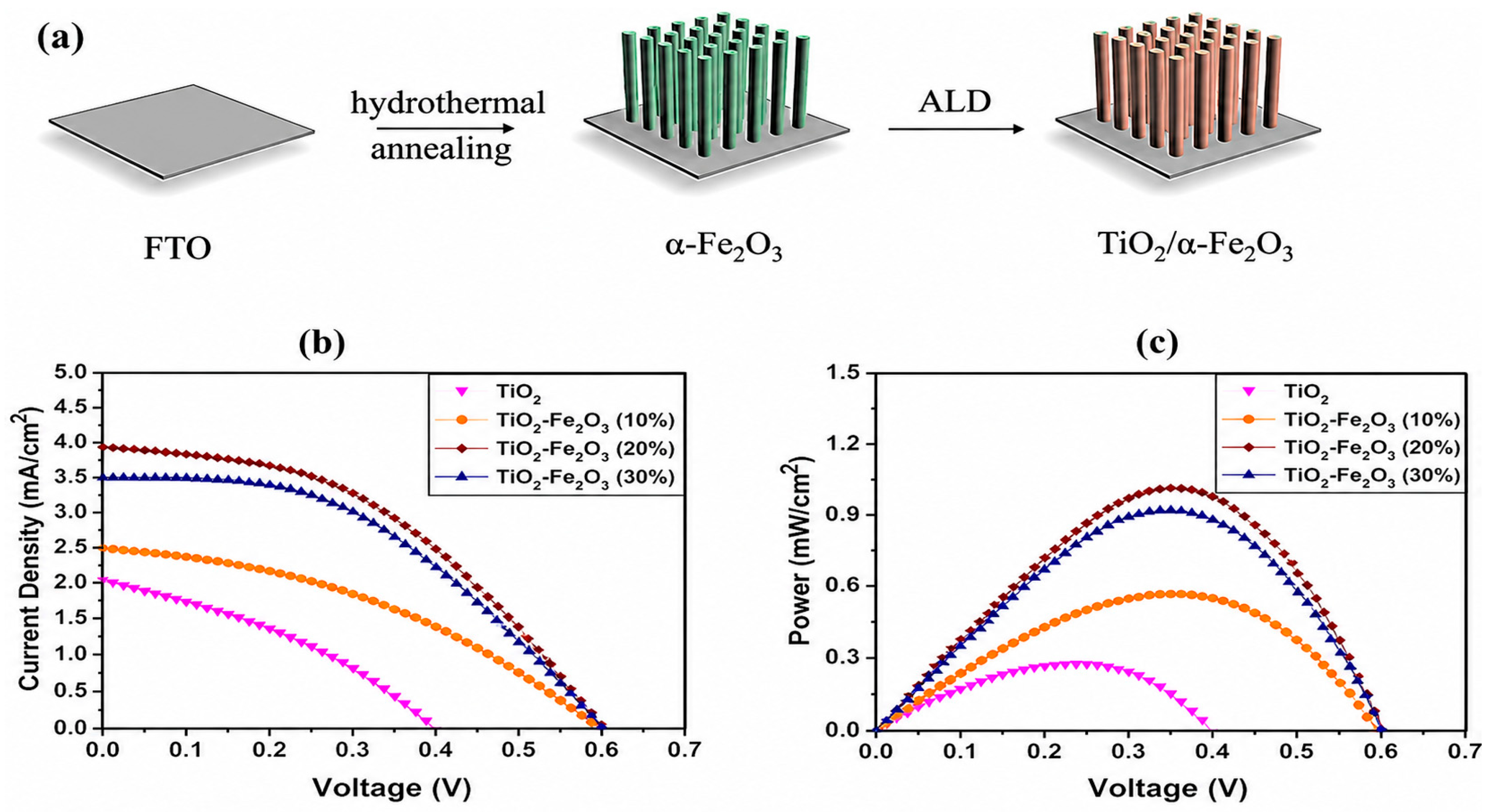
Defect engineering through semiconductor composite synthesis has also been studied recently. By adding advantageous defect states and changing band orientation, secondary oxides can enhance interfacial charge-transfer mechanisms in TiO2. Fe2O3-modified TiO2 photoanodes, for instance, have shown increased electron transport and higher light absorption because of Fermi-level tuning and lower recombination rates. Figure 4 and Figure 5 clearly prove that defect engineering with Fe2O3 reflectance, absorbance, and current density. These compositional changes increase the range of spectrum absorption and facilitate effective charge separation, improving DSSC photovoltaic performance [36,37].
Figure 4.
(a) UV-Vis diffuse reflectance spectra (DRS) of pristine TiO2, pristine Fe2O3, and TiO2-Fe2O3 (10, 20, and 30% wt %); (b) corresponding Tauc plot used to estimate the optical band gaps. The progressive redshift and bandgap narrowing with increasing Fe2O3 content are highlighted. Adapted from [37].
Figure 5.
(a) Schematic illustration of the growth evolution of Fe2O3/TiO2 nanorod films on FTO substrates [38]; (b) current density of pristine TiO2, pristine Fe2O3, and TiO2-Fe2O3 (10, 20, and 30% wt %); (c) power voltage of pristine TiO2, pristine Fe2O3, and TiO2-Fe2O3 (10, 20, and 30% wt %) [37].
Surface defect passivation has emerged as a successful tactic for reducing recombination losses at the semiconductor–electrolyte interface in addition to compositional changes. Recombination with oxidized redox species in the electrolyte is typically facilitated by surface states and structural flaws acting as electron trapping sites. By forming energy barriers that stop reverse electron transfer while maintaining effective electron injection from the dye molecules, thin passivation layers or chemical surface treatments can reduce these recombination routes. According to recent research, by lowering charge transfer resistance and stabilizing the photoanode surface, improved passivation layers can dramatically extend electron lifespan and improve overall DSSC efficiency [5,18].
2.2. Morphology Engineering of Titanium Dioxide Photoanodes
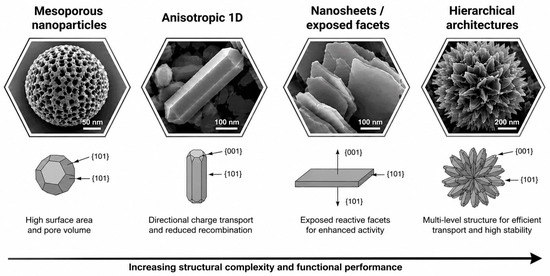
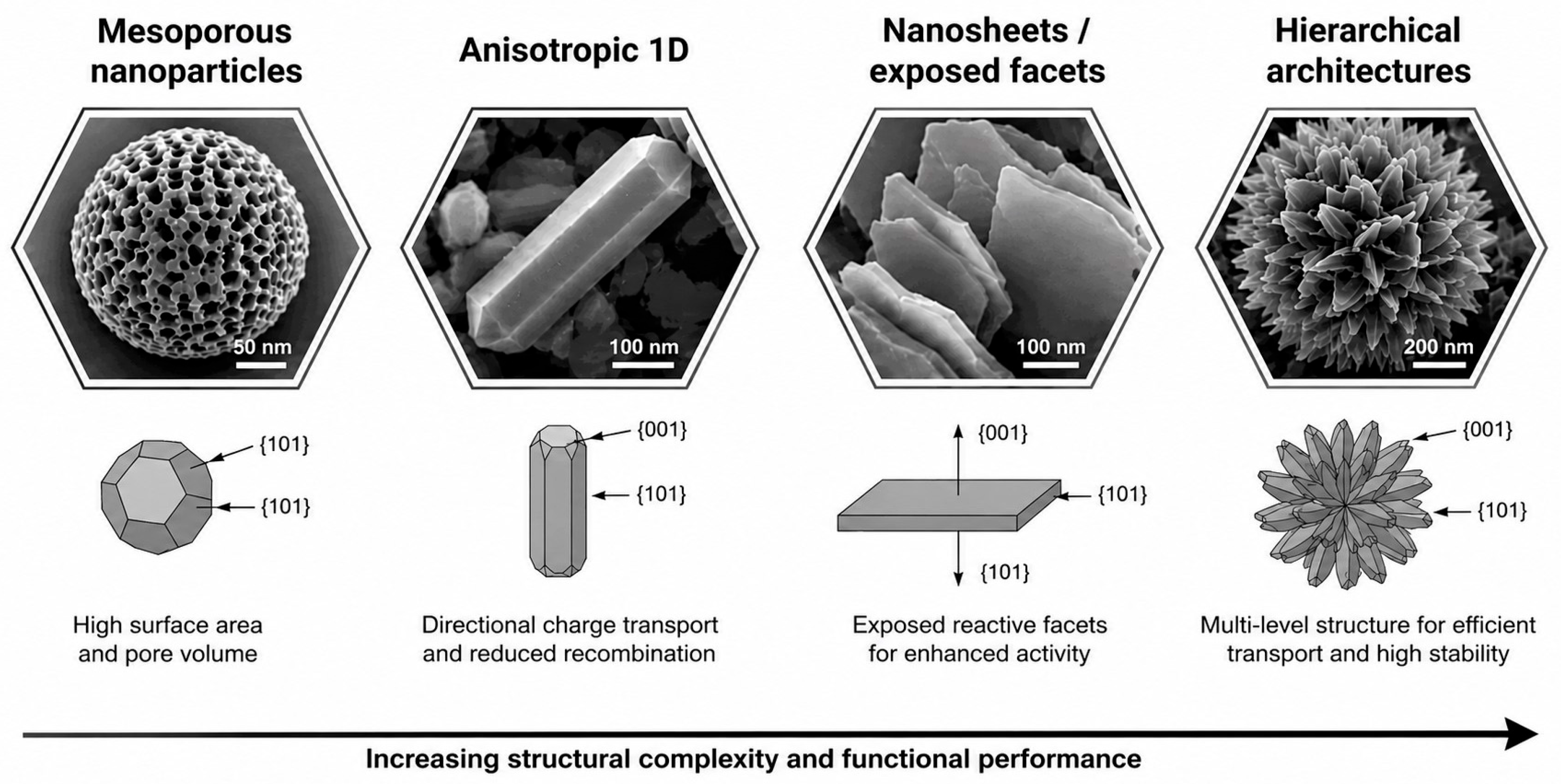
One of the best methods for enhancing the efficiency of dye-sensitized solar cells (DSSCs) is morphology engineering of TiO2 photoanodes. Dye adsorption, light scattering, electron transport, and recombination dynamics are among the crucial activities in DSSCs that are controlled by the morphology of TiO2. This review focuses primarily on representative TiO2 nanostructures that have demonstrated the greatest relevance to DSSC performance enhancement, including nanoparticles, one-dimensional nanostructures, nanosheets, and hierarchical architectures, because these morphologies dominate current DSSC research and provide the most effective balance between dye loading, electron transport, light scattering, and recombination suppression [39,40]. The morphology categories of various used TiO2 semiconducting materials are displayed in Figure 6 [41].
Figure 6.
Schematic illustration of the most used TiO2 morphologies (0D: NPs and nanocrystals; 1D: nanotubes and nanowires; 2D: nanosheets and exposed facets; 3D: hierarchical architectures) [original drawing].
2.2.1. Nanoparticle-Based Mesoporous Films
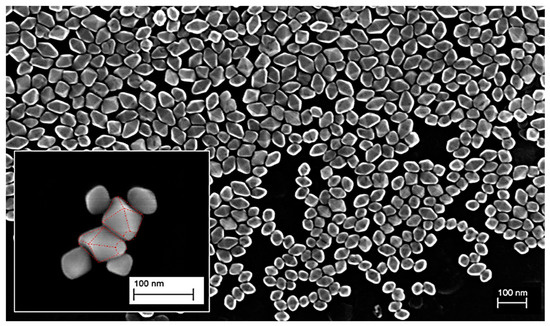
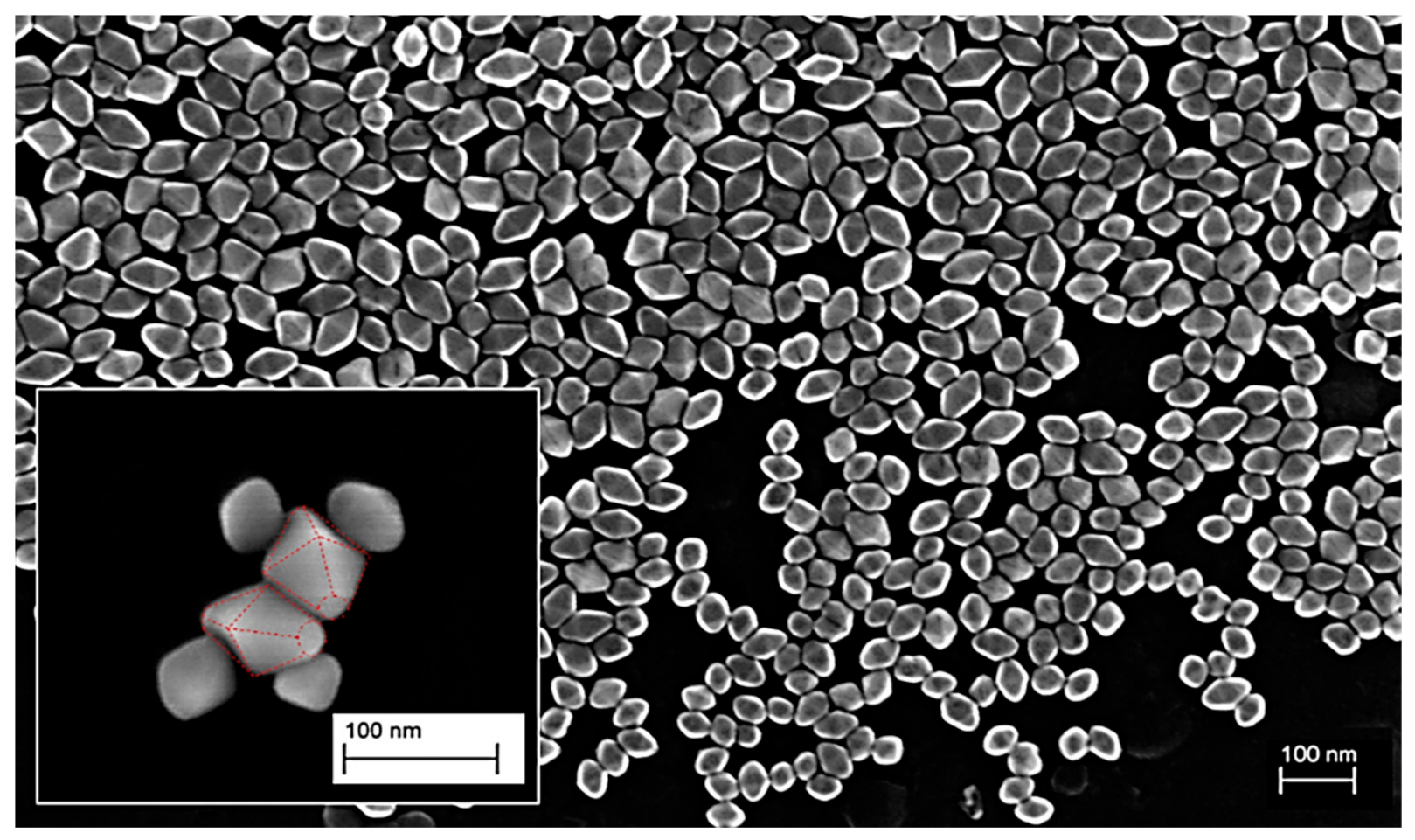
The most popular photoanode material in DSSCs is still zero-dimensional (0D) TiO2 nanoparticles because of their great dye-adsorption capacity and large specific surface area. Mesoporous nanoparticle films provide strong photocurrent production and effective photon absorption by giving dye molecules plenty of active sites [41]. Figure 7 shows a typical SEM image of a 0D TiO2 electrode.
Figure 7.
SEM images of TiO2 NPs deposited on a carbon TEM grid. Insert: representation of bipyramid geometry on particles imaged by a 3 kV In Lens SEM on a silicon substrate. Adapted from [42].
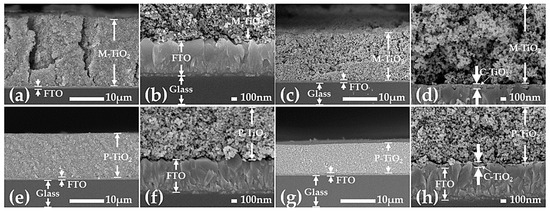
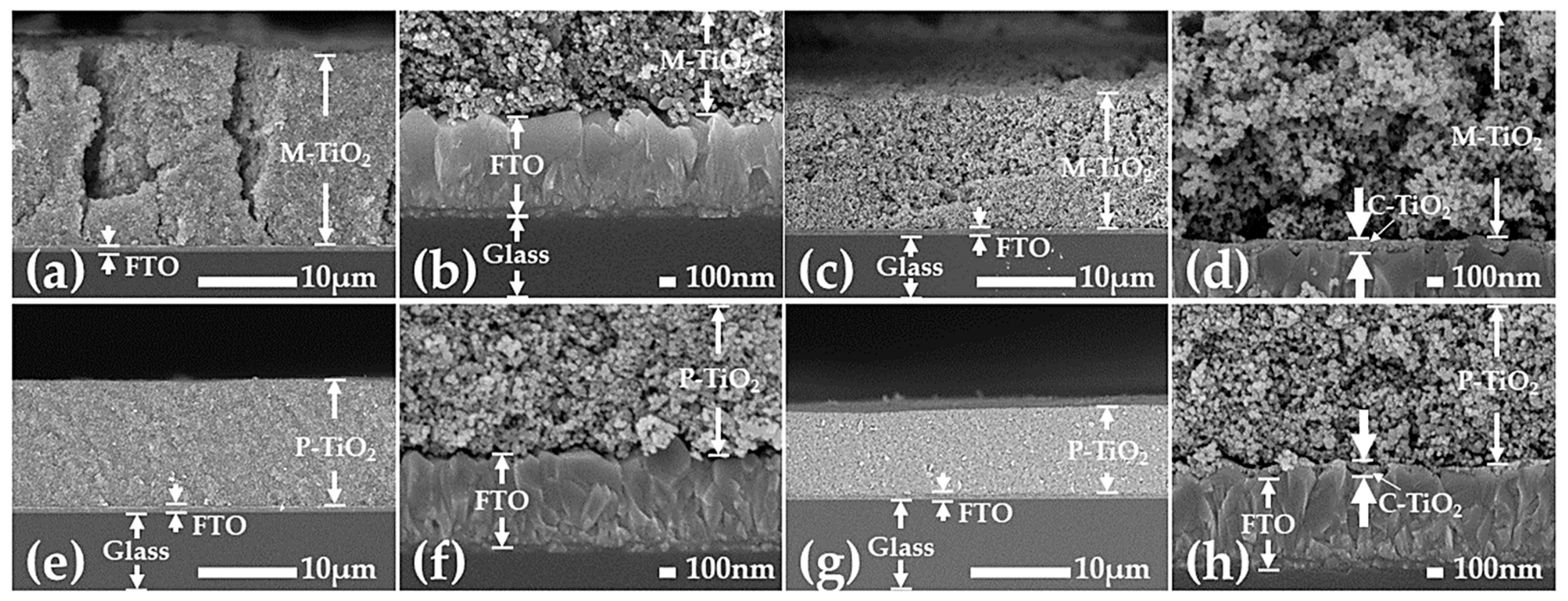
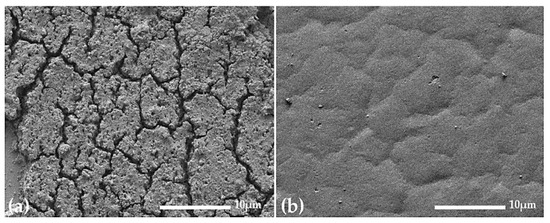
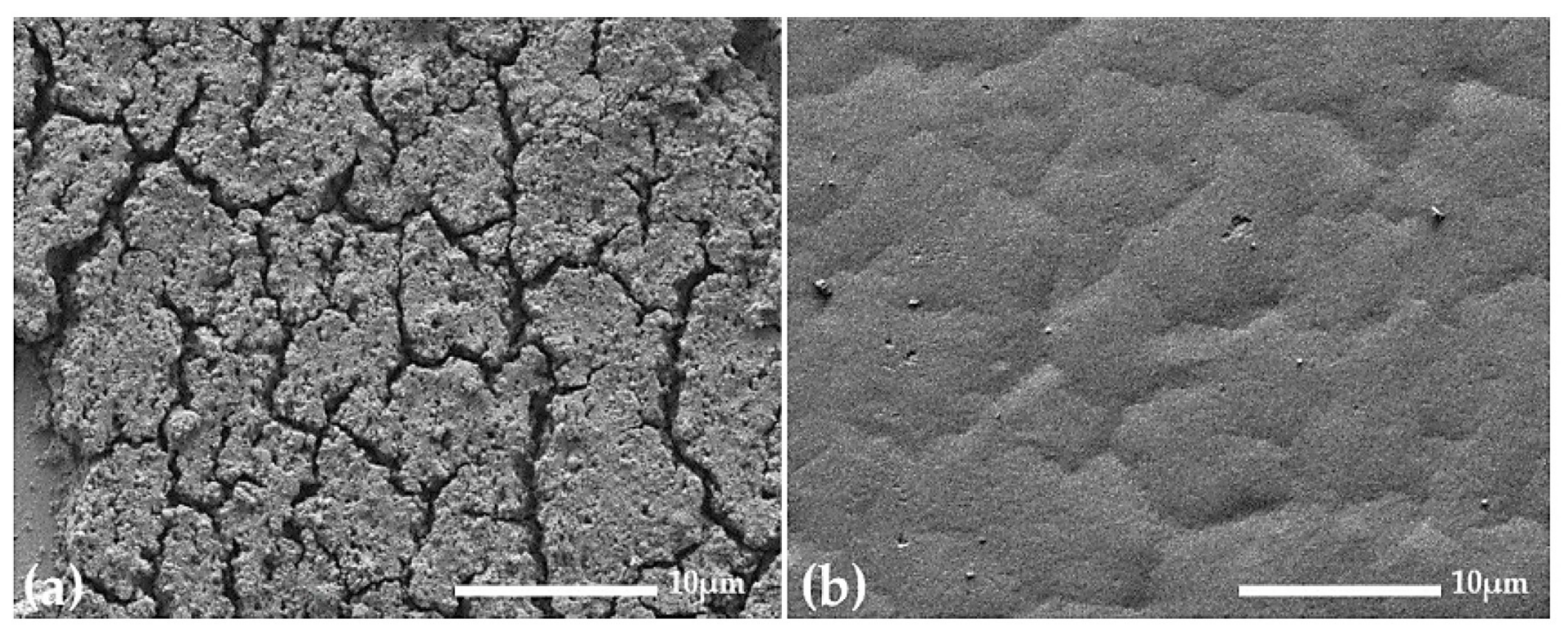
However, near grain boundaries, the haphazard organization of nanoparticles frequently results in complex electron-transport paths and large recombination losses. Optimizing nanoparticle size distribution, crystallinity, and film packing density to enhance charge transfer and interparticle connection has been the focus of recent research. For instance, increased electron diffusion coefficients and improved photovoltaic performance have been shown in optimized mesoporous TiO2 nanoparticle films made using controlled sol–gel synthesis and post-treatment procedures [27]. Figure 8 and Figure 9 illustrate the SEM images of mesoporous nanoparticles (NPs) and compact/pressed nanoparticle layers.
Figure 8.
Cross-sectional SEM images of four different structures of photoanode: (a,b) mesoporous TiO2 layers, (c,d) mesoporous TiO2 NPs layer stacked on compact TiO2 thin film, (e,f) pressed TiO2 NPs layer, and (g,h) pressed TiO2 stacked on compact TiO2 thin film. Adapted from [27].
Figure 9.
Top view of SEM images of (a) mesoporous TiO2 NPs layer and (b) pressed TiO2 NPs layer surfaces. Adapted from [27].
The flat film surface has greater power conversion efficiency because of the compression’s role in preventing electrolyte penetration into the FTO substrate’s surface. Other investigations also show the fractures on the surface of the mesoporous TiO2 NPs’ layer (Figure 8a). The fast evaporation of water or tert-butanol in the TiO2 paste caused the fissures. Charge recombination is facilitated by these fissures, which allow the electrolyte to come into contact with the FTO substrate [43]. This study implies that depending on which results are more crucial or desired, TiO2 fabricated as a pressed/compact layer or its naturally occurring mesoporous layer.
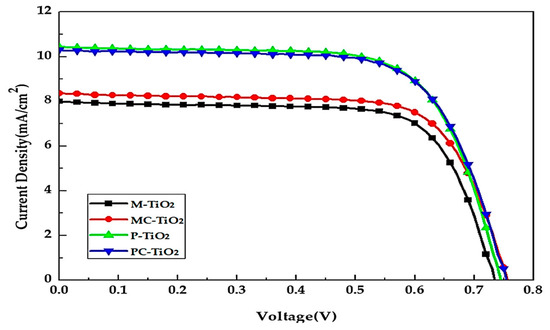
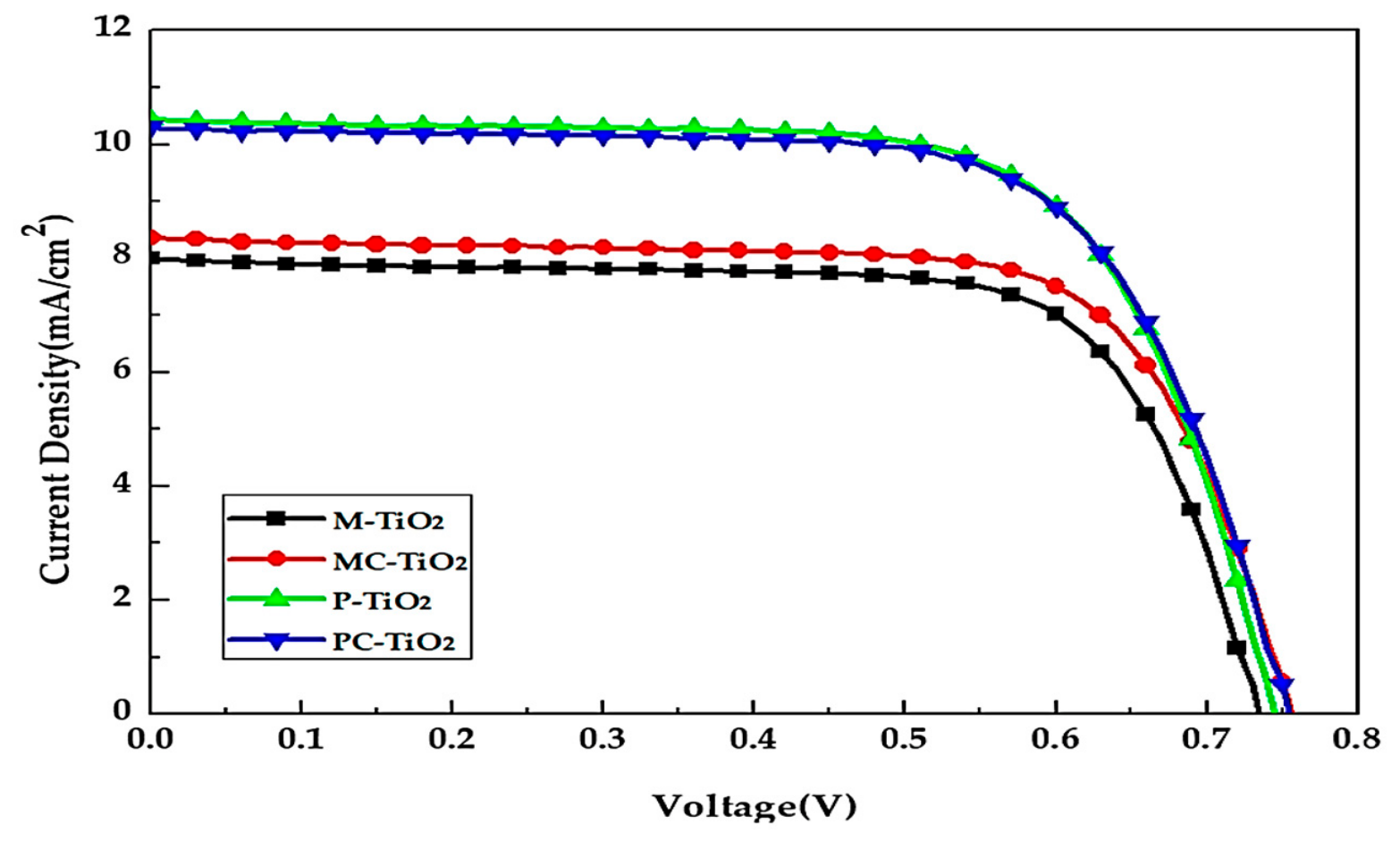
However pressed TiO2 NPs layer showed the maximum PCE, indicating that the compact and pressed layers successfully increased PCE by avoiding electrolyte contact with the FTO. Because the compact structure of the pressed TiO2 NPs layer helps electron transmission, the DSSC with photoanode based on the layer has a higher Jsc than that based on the mesoporous TiO2 NPs layer, as shown in Figure 10.
Figure 10.
JV characteristics curve of the DSSC with photoanodes based on four different TiO2 layers. Adapted from [27].
2.2.2. 1D Architectures (Nanorods, Nanotubes, Nanowires)
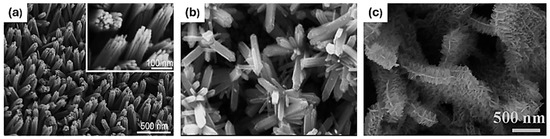
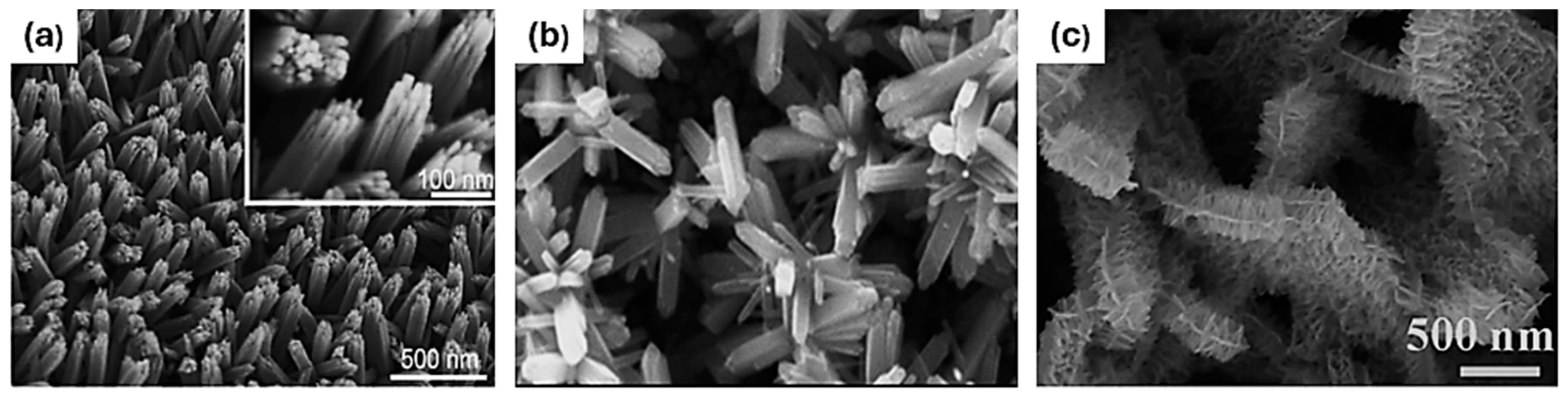
Because they provide direct routes for electron transport along the structure’s axial direction, one-dimensional (1D) TiO2 nanostructures, such as nanorods, nanowires, and nanotubes, have garnered a lot of interest. One-dimensional topologies allow for quicker electron mobility and less recombination than nanoparticle networks, which need electrons to hop across many grain boundaries [44]. TiO2-nanotube arrays made by hydrothermal or anodization techniques have shown better carrier lifetimes and longer electron diffusion lengths in DSSCs. Additionally, by giving the dye molecules a direct conduction channel to the conductive substrate, vertically-oriented nanorod arrays promote effective charge collection. In order to improve dye loading while preserving effective electron transport, recent studies have also looked at composite designs that combine nanoparticles with nanorods or nanotubes [45]. Figure 11 shows typical SEM images of nanorods, nanowires, and nanobelts/nanotubes.
Figure 11.
SEM images of (a) synthesized TiO2 nanowires [46], (b) synthesized TiO2 nanorods [47], and (c) synthesized TiO2 nanobelts [48].
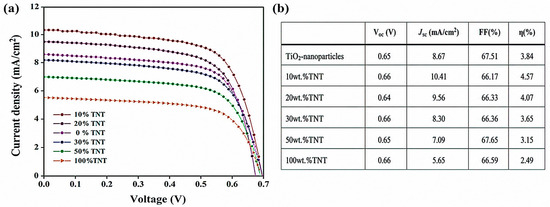
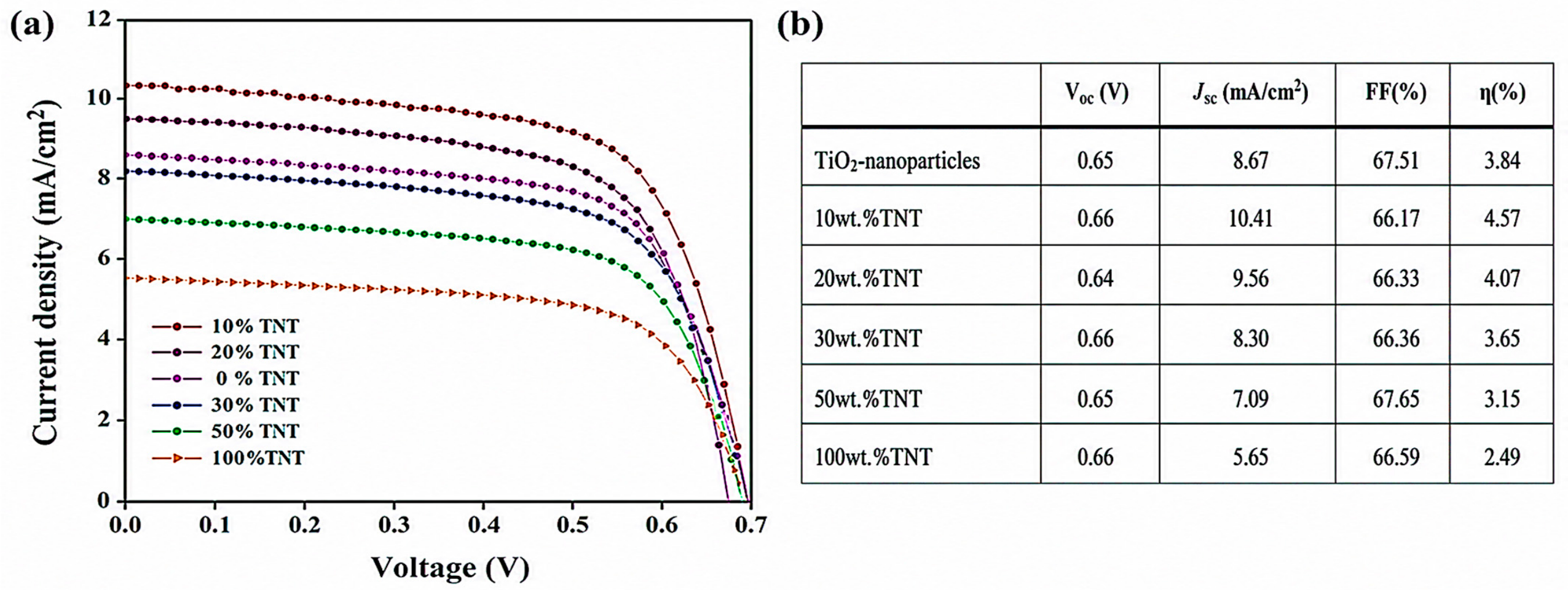
The increased density of titania nanoparticles in the nanorods compared to the nanotubules and sintered nanostructures may be the cause of the high values of Voc seen in the nanorod systems. The titania molecules that make up the nanorods are bound and closely packed in homogeneous structural configurations that are perpendicular to the substrate’s surface [49]. Compared to the other two architectures, this arrangement guarantees more particles per unit volume. Additionally, the rate of recombination at open-circuit in these structures is lowered because the outside titania particles protect the inner ones from the back reaction with the oxidized species in the redox electrolyte; this improvement has been proved by the results displayed in Figure 12 [50]. The shorter distance (thin walls) between the trapped electrons in the TiO2 trap states, and the holes in the redox electrolyte enhances this process, because all of the injected electrons must eventually recombine with the holes in the redox electrolyte at open-circuit; un-trapped electrons rapidly recombine with the holes before they can be trapped again by nearby TiO2 molecules. By sheltering the electrons caught in the trap states of the inner TiO2 particles from the holes in the electrolyte, thicker and longer nanotubules can be used to overcome this restriction and reduce recombination at open-circuit [51].
Figure 12.
(a) I-V characteristic of the DSSC using hybrid TiO2/TNT films; (b) Voc, open-circuit voltage; Jsc, integral photocurrent density; FF, fill factor; η, energy conversion of the TiO2 nanotube (TNT) and TiO2 nanoparticles. Adapted from [50].
2.2.3. 2D Nanosheets and Exposed-Facet TiO2
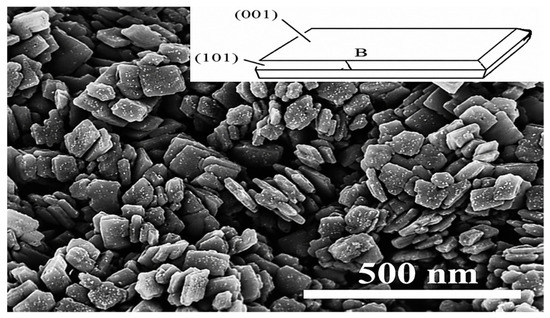
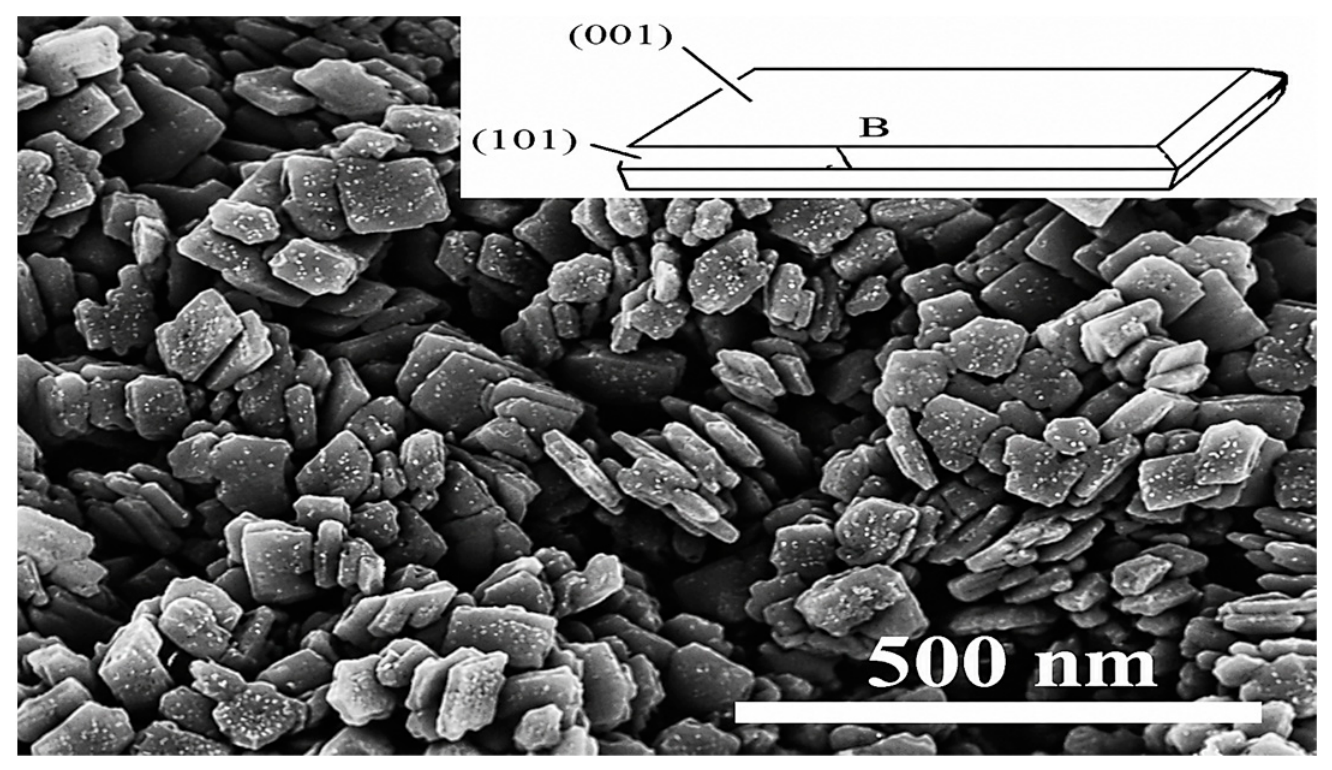
Two-dimensional (2D) TiO2 nanosheets have shown great promise as photoanode materials because of their exposed crystal facets and strong surface reactivity. Because these high-energy surfaces show improved dye adsorption and quicker electron injection from dye molecules, anatase TiO2 nanosheets with dominating {001} facets, in particular, have been extensively researched [4], as shown in Figure 13.
Figure 13.
SEM image of images of TiO2-NSs (titanium-dioxide nanosheets). Adapted from [4] (Copyright 2010 Royal Society of Chemistry).
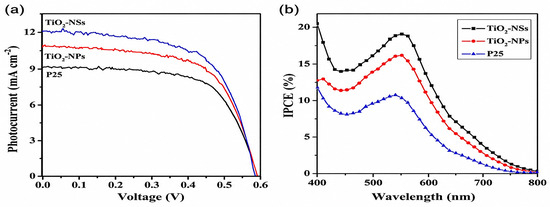
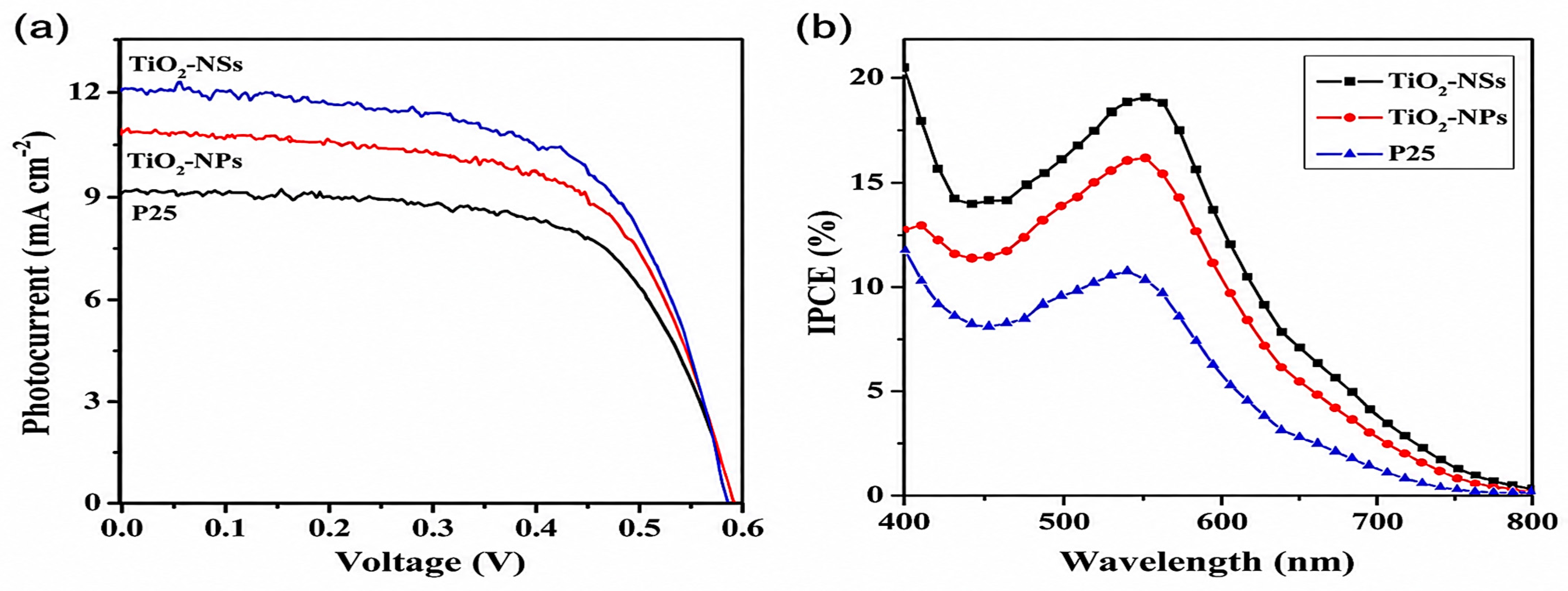
In contrast to traditional nanoparticles, nanosheets preserve relatively short electron-transport channels while offering a greater interfacial contact area with dye molecules. Additionally, nanosheets’ planar shape may promote better electrolyte diffusion in the photoanode layer. According to recent studies, TiO2-nanosheet-based photoanodes perform better in DSSCs due to their increased light harvesting and charge-separation efficiency, as seen in Figure 14 [52].
Figure 14.
(a) Comparison of the I-V characteristics of DSSCs made from TiO2-NSs, TiO2-NPs, and P25 films calcined at 450 °C (b) IPCE of DSSCs made from TiO2-NSs and TiO2-NPs and P25 films calcined at 450 °C. Adapted from [4]; copyright permission to reuse (Copyright 2010 Royal Society of Chemistry).
The enhanced performance of TiO2 nanosheets arises from their high crystallinity, porous structure, and strong light-scattering ability, which improve light harvesting, electron transport, and charge collection. Although TiO2-NSs exhibit lower dye loading than nanoparticle films, their exposed (001) facets and sheet-like morphology facilitate more efficient charge transfer, electrolyte penetration, and reduced recombination. These findings demonstrate that optimized charge transport and interfacial kinetics can be more important than dye loading alone in determining DSSC efficiency [5].
2.2.4. Hierarchical 3D TiO2 Architectures
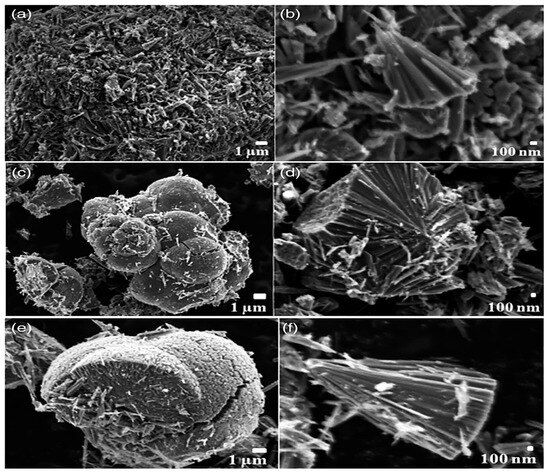
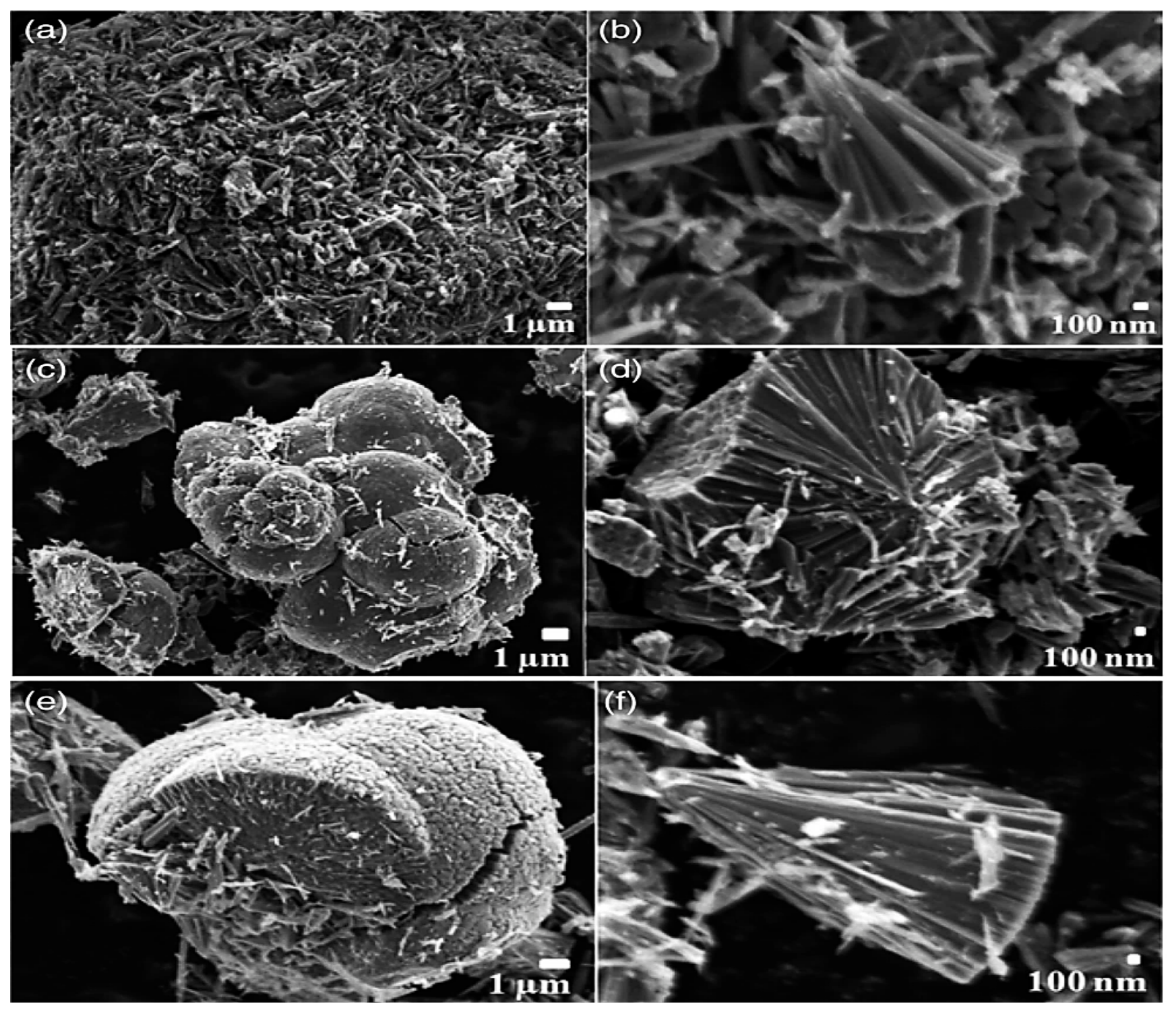
By combining many nanoscale elements into intricate designs that concurrently improve surface area, light scattering, and charge transport, hierarchical three-dimensional (3D) TiO2 architectures are an advanced method of morphology engineering [53]. Usually, secondary structures, like nanorods, nanosheets, or nanoparticles, are integrated into microscale frameworks, such as spheres, flowers, or porous networks, to create these designs, as can be seen in Figure 15.
Figure 15.
SEM images of the samples prepared at 100 °C (a,b), 130 °C (c,d), and 160 °C (e,f) for 12 h. Growth along the {001} direction, resulting in a crystal morphology, is dominated by the (110) faces. Adapted from [53].
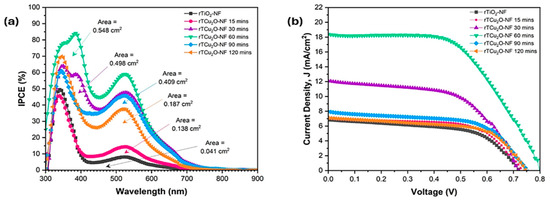
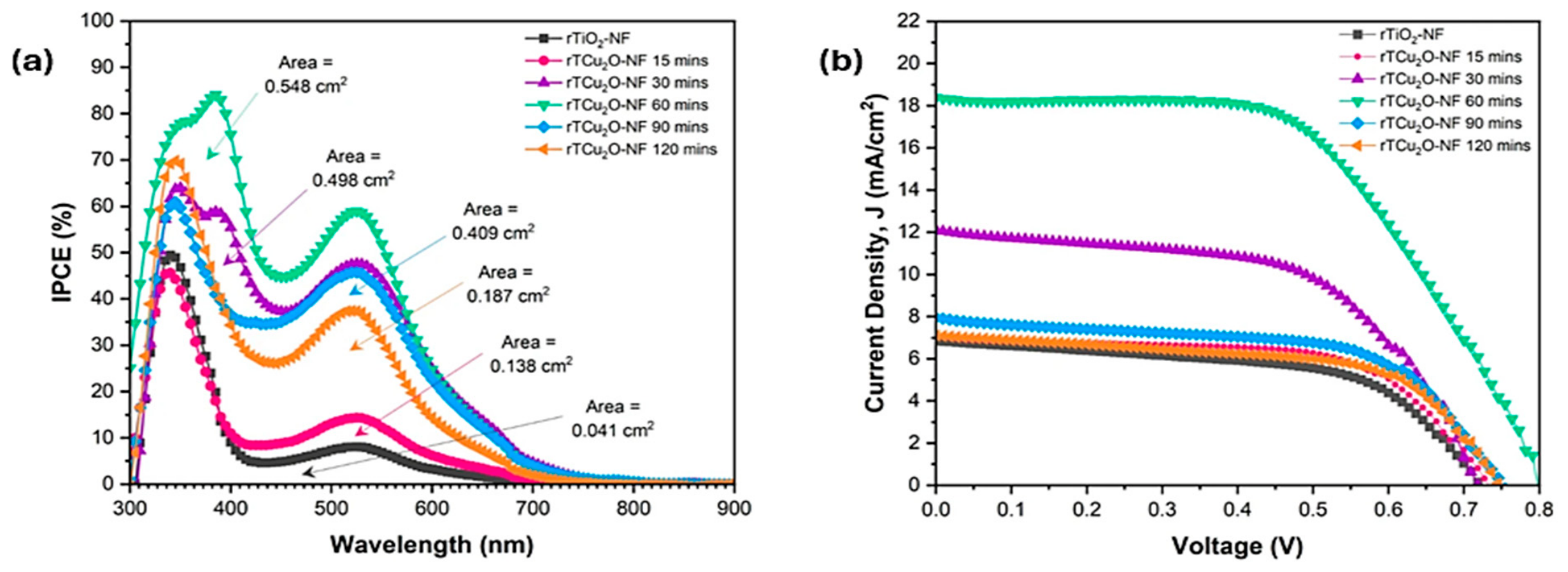
By greatly extending the optical path length inside the photoanode, such hierarchical arrangements might enhance light scattering and photon harvesting. Furthermore, because of their optimized pore geometries and linked electron channels, hierarchical TiO2 designs frequently show enhanced electrolyte penetration and decreased recombination [54,55,56]. Recent research has shown that by combining the benefits of several dimensionalities, hierarchical TiO2 photoanodes may reach greater power conversion efficiencies than traditional nanoparticle films. For next-generation DSSC photoanodes, hierarchical morphology engineering is, therefore, increasingly considered a crucial tactic [39,40,41]. This theory is further supported by the high efficiency rate recorded by hierarchical TiO2, as shown in Figure 16.
Figure 16.
(a) The IPCE spectral response of different hierarchical modified photoanodes: rTiO2-NF and rTCu2O-NF 15 min; rTCu2O-NF 30 min; rTCu2O-NF 60 min; rTCu2O-NF 90 min; and rTCu2O-NF 120 min. (b) The J-V characteristics of different hierarchical modified DSSCs: rTiO2-NF and rTCu2O-NF 15 min; rTCu2O-NF 30 min; rTCu2O-NF 60 min; rTCu2O-NF 90 min; and rTCu2O-NF 120 min. Adapted from [56].
The hierarchical cactus-like TiO2 nano-thorn architecture significantly improved DSSC performance by enhancing light harvesting and charge collection. The optimized photoanode (60 min growth) exhibited a maximum IPCE exceeding 80%, an integrated IPCE area of 0.548 cm2, and a Jsc of approximately 18.0 mA cm−2, markedly higher than those of the pristine TiO2-nanofiber electrode. The improved performance with an efficiency of 8.3% was attributed to the hierarchical morphology, which promoted light scattering, increased photoactive surface area, and facilitated directional electron transport, thereby enhancing photon utilization while suppressing recombination losses [56]. This study demonstrates the advantages of hierarchical TiO2 nanoarchitectures for simultaneously optimizing optical absorption and charge transport in DSSCs [57,58].
2.3. Interface Engineering of Titanium Dioxide Semiconductor
One important tactic to enhance the stability and performance of dye-sensitized solar cells (DSSCs) is interface engineering of TiO2 photoanodes. In DSSCs, electron injection, charge transport, and recombination dynamics are controlled by the interface between TiO2, dye molecules, and the electrolyte [59]. Device efficiency is decreased by poorly designed interfaces because they frequently produce surface flaws and trap states that speed up electron recombination with oxidized dyes or electrolyte species. In order to maximize charge transfer and inhibit recombination, current research has concentrated on passivation layers, heterostructure interfaces, and interfacial compositional adjustment [60,61].
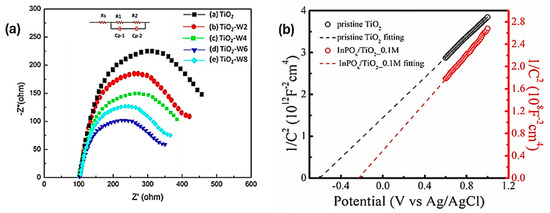
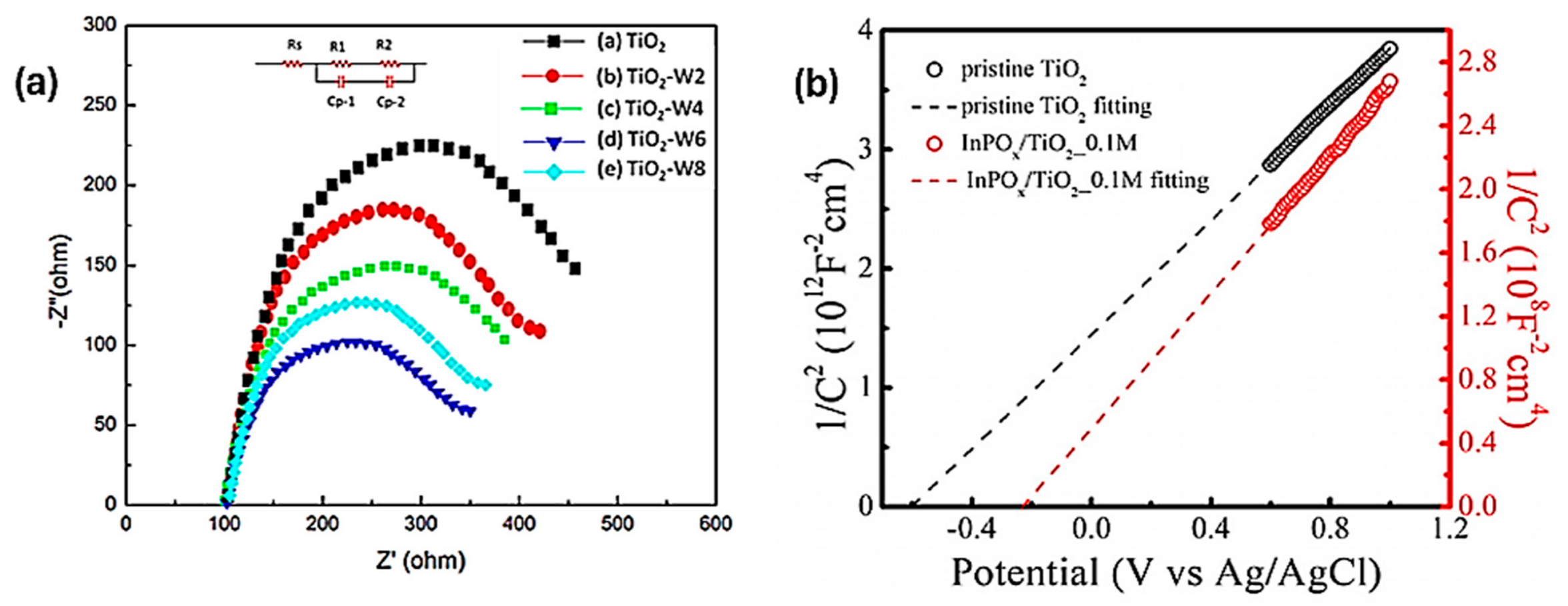
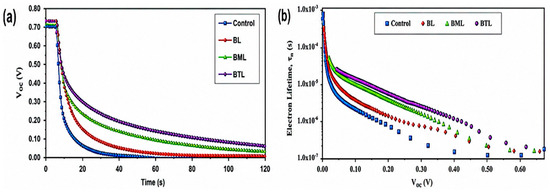
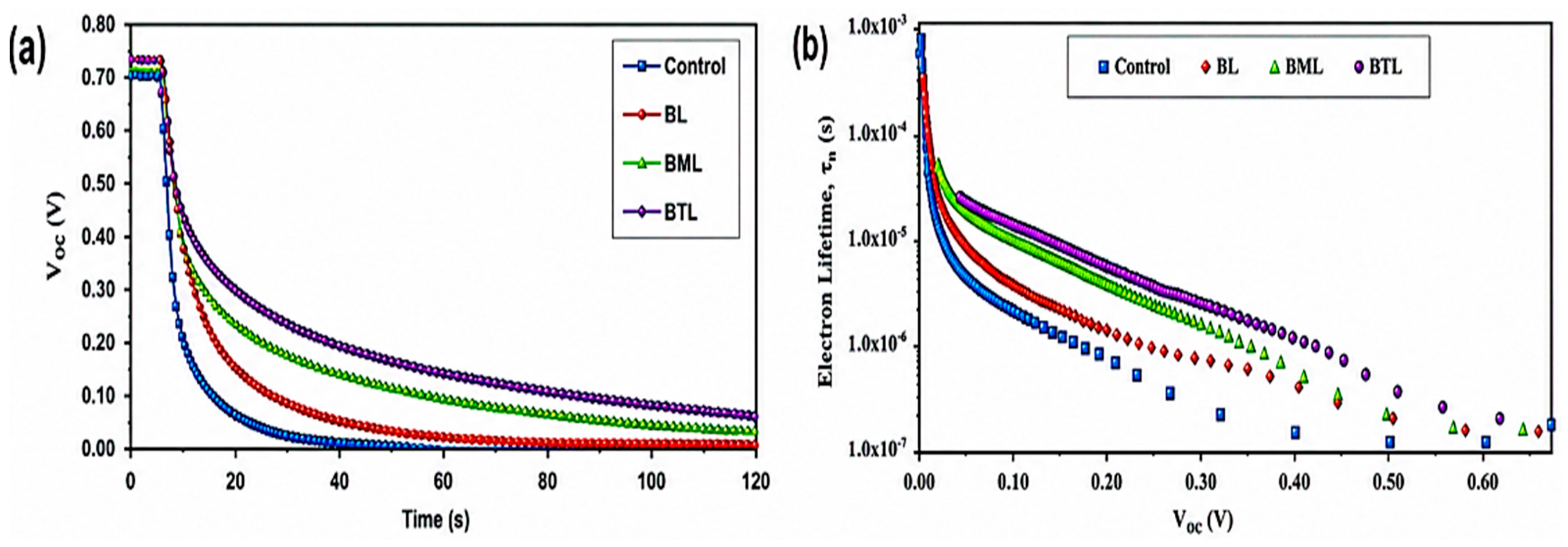
Further evidence of the effectiveness of interface engineering has been demonstrated using indium (In)-doped and tungsten (W) TiO2 photoanodes. EIS, Mott–Schottky, electron lifetime, and OCVD analyses revealed enhanced interfacial charge-transfer properties and reduced electron recombination after indium (In) and tungsten (W) incorporation. The optimized Ti photoanode exhibited the lowest charge-transfer resistance, longest electron lifetime, and slowest photovoltage decay, indicating more efficient charge separation and electron transport. Mott–Schottky measurements confirmed the n-type nature of all samples and showed that indium doping modified the interfacial electronic properties. These results highlight the potential of doping as an effective strategy for improving charge collection and overall DSSC performance through interface engineering. Figure 17a shows the Nyquist curves and Figure 17b shows the Mott–Schottky analysis. Likewise, Figure 18a depicts the open-circuit voltage decay (OCVD) measurement, and Figure 18b shows the electron lifetime measurements [19,62].
Figure 17.
(a) Nyquist plots of W-doped TiO2 DSSC (adapted from [62]); (b) Mott–Schottky analyses for the photoanodes fabricated by different interfacial In-doped concentrations (adapted from [63]).
Figure 18.
(a) OCVD and (b) electron lifetime for fabricated solar cells with different interfacial photoanodes. Adapted from [64].
The improved photovoltaic performance can be attributed to the beneficial influence of indium incorporation on the electronic and electrochemical properties of TiO2 [61]. Indium doping increases the carrier concentration and electrical conductivity of the photoanode, thereby facilitating electron transport and reducing charge-transfer limitations within the semiconductor network. Mott–Schottky analysis revealed that the carrier density increased to the order of 1012 F−2 cm4 after in incorporation, indicating enhanced charge-carrying capability and improved electronic conductivity. These modifications promote more efficient electron injection from the dye molecules and accelerate charge transport through the TiO2 framework. However, excessive indium content adversely affects device performance because high dopant concentrations introduce additional electron-scattering centers that hinder charge transport and increase recombination losses.
Consequently, according to Ayaz et al. (2024) [19], photoanodes containing more than 4% In exhibit a gradual decline in photovoltaic performance. At the optimal doping concentration, the combined improvements in conductivity, interfacial charge-transfer kinetics, and electrochemical properties resulted in a power conversion efficiency of 8.11%. Furthermore, the introduction of a compact TiO2 blocking layer further suppressed interfacial recombination at the FTO/photoanode interface, leading to an additional enhancement in efficiency to 8.62% [19]. These findings demonstrate that controlled indium doping, combined with appropriate interfacial engineering strategies, provides an effective route for optimizing charge transport and maximizing DSSC performance [39,62].
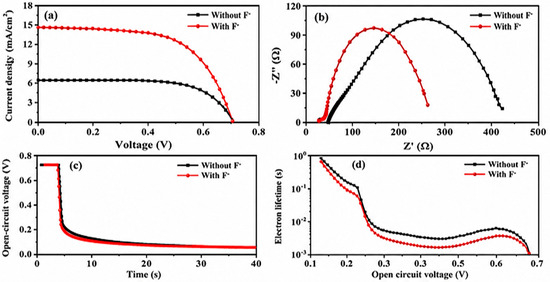
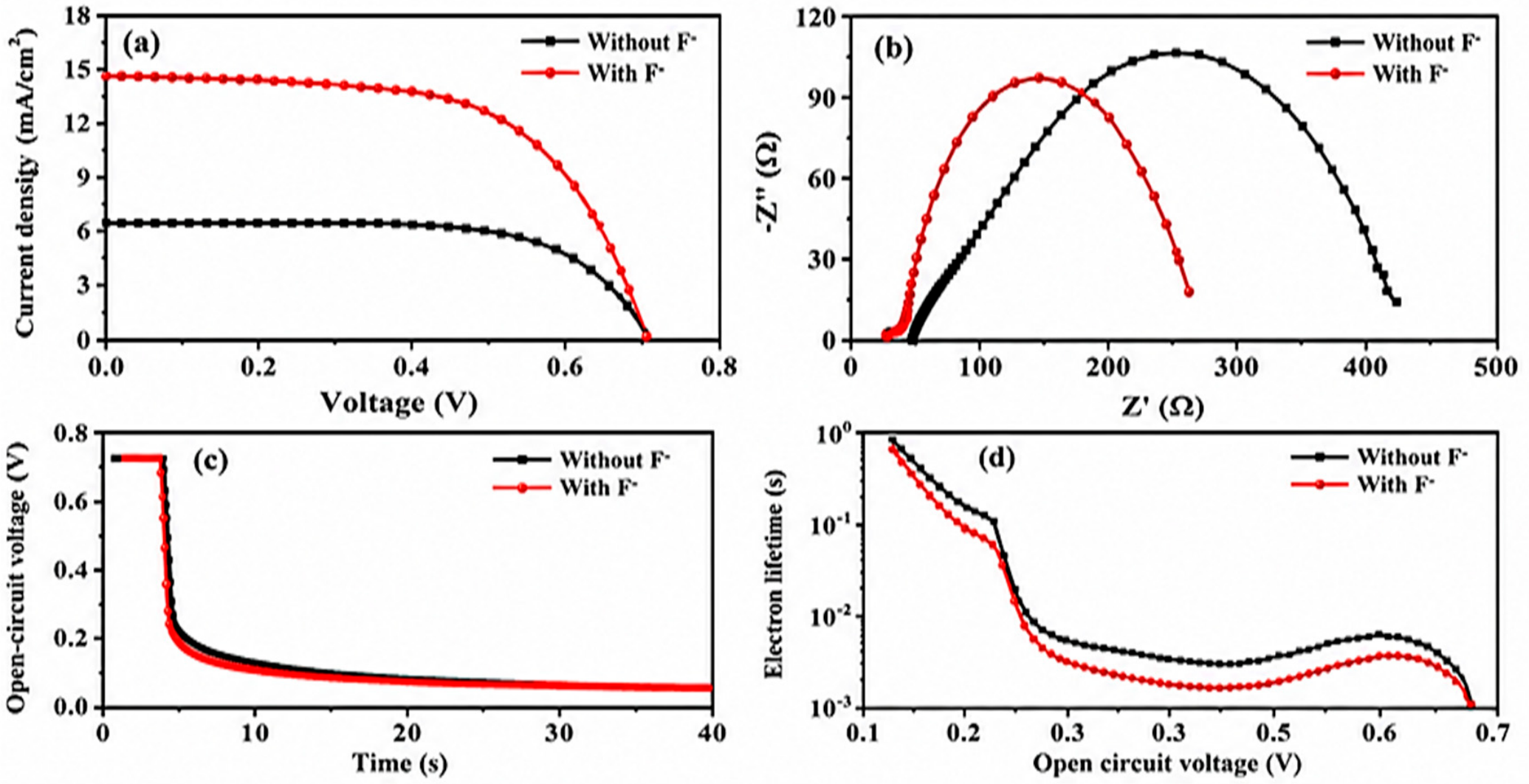
In interface engineering, surface passivation using wide-bandgap or insulating coatings has also shown promise. In order to provide energy barriers that prevent electron back-transfer to the electrolyte while preserving effective electron injection from the dye, materials like MgO, ZrO2, and SnO2 are often placed on TiO2 surfaces [65,66]. Figure 19 depicts that TiO2 nanoparticles with exposed {001} facets achieved markedly higher DSSC efficiency (7.06%) than randomly shaped TiO2 nanostructures (3.47%), mainly due to enhanced dye adsorption and improved light harvesting, which significantly increased photocurrent generation.
Figure 19.
Photovoltaic characteristics of the DSSCs based on random-shape TiO2 nanostructures (noted “Without F−”) and truncated-octahedron TiO2 nanoparticles with exposed {001} facets (noted “With F−”): (a) I-V curves; (b) Nyquist plots by EIS measurements; (c) open-voltage decay measurement upon turning off the illumination; (d) electron lifetime determined from the data of (c). Adapted from [67].
EIS analysis indicated only minor changes in charge-transfer resistance, suggesting that improved optical properties were the dominant factor governing performance enhancement [67]. This suggests that electron transport and recombination were not the main reasons for the improved efficiency. Open-circuit voltage decay measurements showed that the random TiO2 structures exhibited slightly longer electron lifetimes. However, the difference in electron lifetime was too small to account for the large increase in photocurrent observed for the {001}-facet nanoparticles. Overall, the study concluded that exposing the high-energy {001} facets of anatase TiO2 enhances DSSC performance primarily by increasing dye adsorption and light absorption efficiency [68], as shown in Figure 19. The passivation layer lowers the density of surface trap states that promote recombination, which results in this improvement. It has been demonstrated that these tactics increase photocurrent and total DSSC efficiency [20].
Apart from solid-state passivation layers, electrolyte additives such as 4-tert-butylpyridine (TBP), N-methylbenzimidazole (NMB), and imidazolium derivatives provide molecular-level passivation of the TiO2 surface and play important roles in regulating interfacial charge-transfer processes in DSSCs [69]. Their effectiveness, however, depends strongly on the redox electrolyte employed. In conventional iodide/triiodide electrolytes, TBP is widely used to suppress electron recombination by adsorbing onto TiO2 surface sites and shifting the TiO2 conduction-band edge toward more negative potentials, thereby increasing Voc. NMB exhibits similar behavior and often produces stronger conduction-band shifts due to its higher basicity [64,65]. In cobalt-based DSSCs, TBP and related nitrogen-containing additives are frequently employed to mitigate the faster recombination kinetics associated with cobalt redox mediators [70,71]. However, excessive additive concentrations may influence cobalt-complex diffusion and mass transport, requiring careful optimization [72]. In quasi-solid-state and gel-polymer electrolytes, TBP and NMB remain beneficial for interfacial passivation, although their influence on charge transport can differ from that observed in liquid electrolytes because ionic mobility is partially governed by the polymer matrix [73]. Therefore, the selection and concentration of these additives must be tailored to the specific electrolyte chemistry and device architecture [69,74,75].
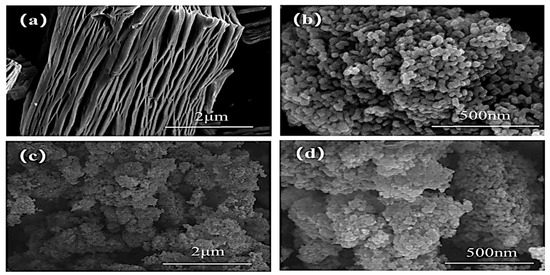
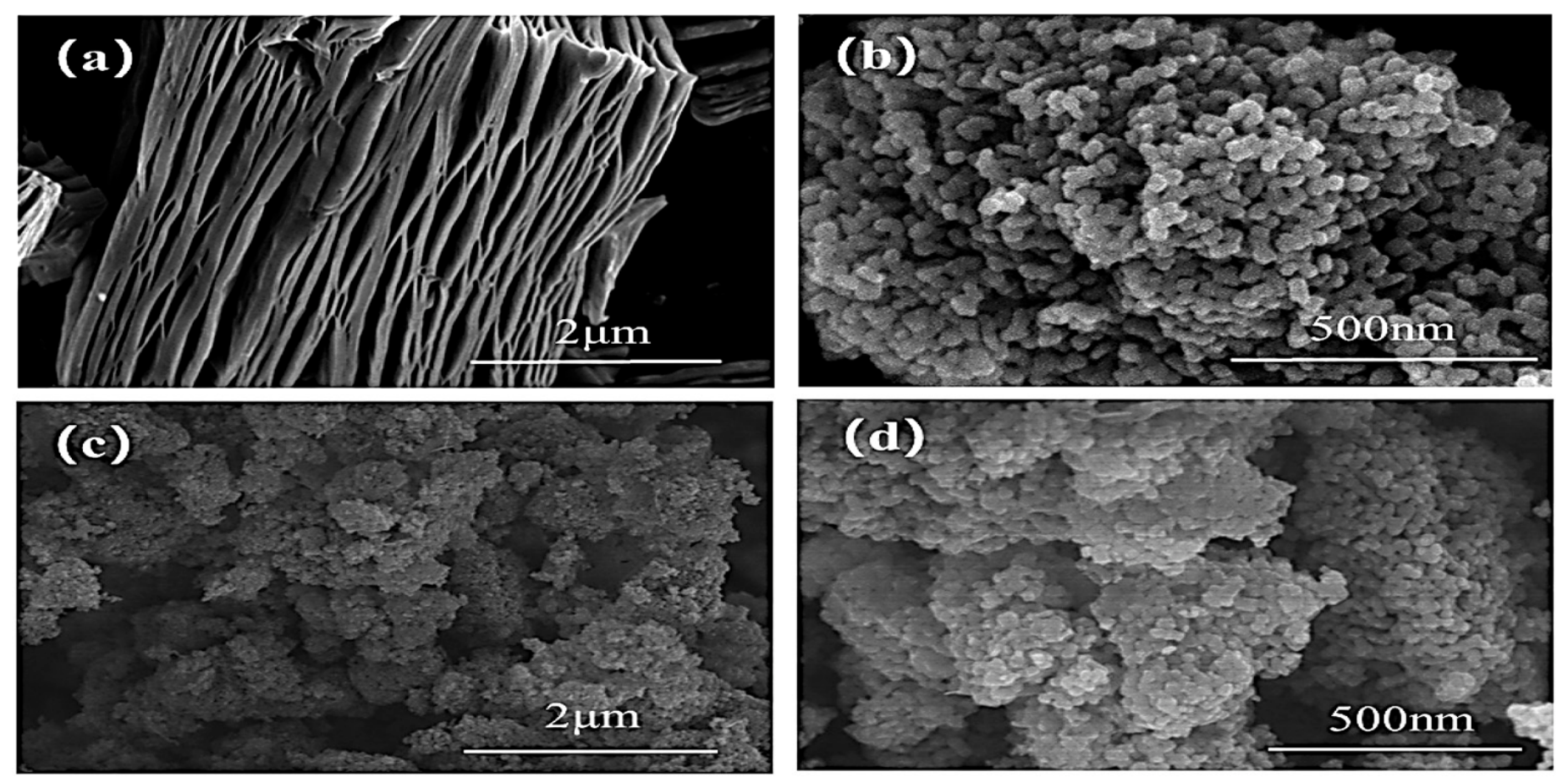
Engineering heterointerfaces using hybrid or composite photoanodes, as shown in Figure 20, is another significant avenue. Electronic conductivity and interfacial charge transfer can be improved by combining TiO2 with conductive materials such as MXenes, conductive polymers, or transition-metal oxides. For example, the incorporation of Ti3C2Tx MXene into TiO2 photoanodes creates a conductive interface that decreases recombination losses and promotes electron transport.
Figure 20.
Field-emission SEM images of (a) MXene, (b) TiO2 and (c,d) TiO2/MXene (4:1) composites. Adapted from [76].
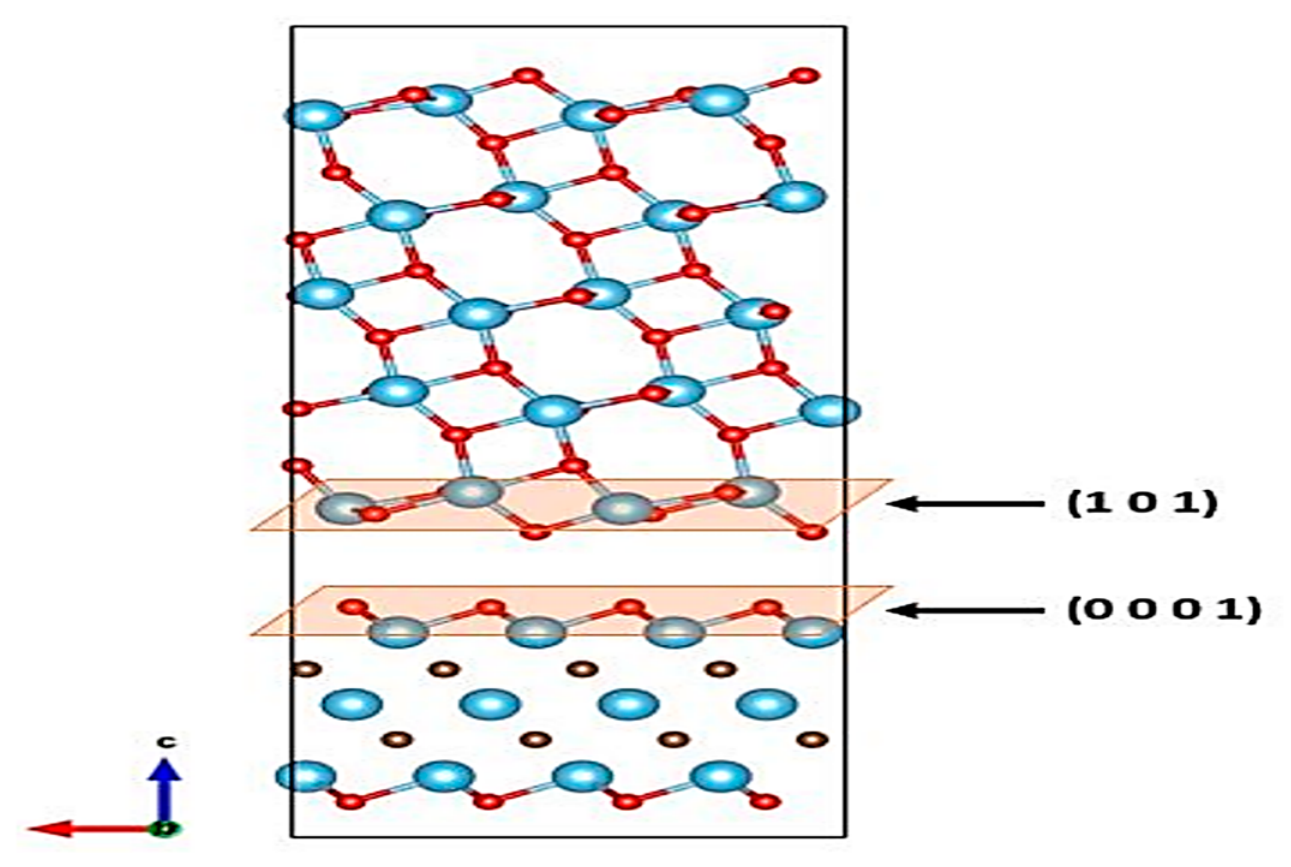
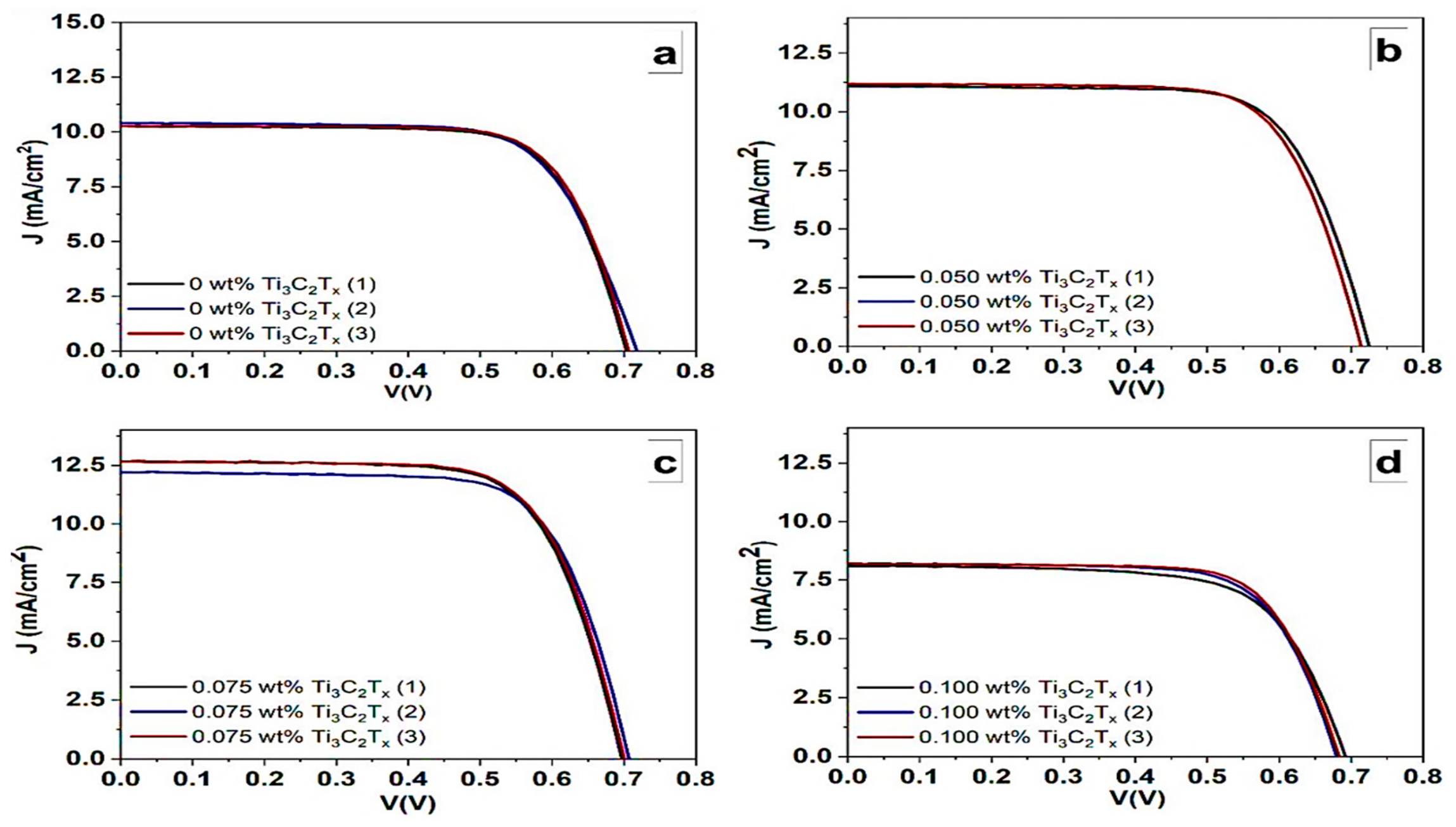
According to studies using density functional theory, these hybrid interfaces alter TiO2’s conduction-band alignment, encouraging more effective electron injection from dye molecules as seen in Figure 21. Because of enhanced carrier separation and longer electron lifetimes, experimental systems employing MXene-modified TiO2 photoanodes have shown significant gains in power conversion efficiency [5,20,77]. This is observed in Figure 21, while Figure 22 proves the electrical improvement of said hybrid interfaces.
Figure 21.
Structure used for DFT simulation (side view). The interaction planes are schematically shown (orange): (101)-TiO2 material and (0 0 0 1)-Ti3C2Tx. Adapted from [77]; copyright permission to reproduce (Copyright 2022 American Chemical Society).
Figure 22.
J-V curves of DSSCs using photoanodes based on bare TiO2 (a) and with addition of 0.05 wt% (b), 0.075 wt% (c), and 0.10 wt% (d) of Ti3C2Tx. Adapted from [78]; copyright permission to reproduce (Copyright 2022 American Chemical Society).
Other methods for modifying interfaces include chemical doping and defect engineering. TiO2’s electronic structure may be adjusted, surface states can be changed, and charge mobility can be enhanced by adding heteroatoms or dopants [78,79]. For instance, it has been reported that Fe/S-modified TiO2 nanoparticles improve photoinduced charge separation and facilitate electron transport at the TiO2/dye interface, increasing DSSC performance. These changes increase the efficiency of light-to-electricity conversion and decrease recombination pathways, as shown above in Figure 3 [35]. Three samples of each Fe/S wt% samples analyzed and annotated with (1), (2) and (3) as seen in Figure 22.
In addition to chemical modification, interface engineering via structural design is becoming more popular. One-dimensional TiO2 nanorods or nanotubes combined with mesoporous TiO2 matrices are examples of hierarchical nanostructures that offer better dye loading and electron-transport channels. These designs preserve effective electron collecting routes while increasing the effective interfacial area for dye adsorption. Multidimensional TiO2 nanoarchitectures are attractive candidates for next-generation DSSC photoanodes because they greatly improve light harvesting and charge transfer, according to recent evaluations [80].
2.4. Influence of Fabrication and Coating Techniques on TiO2 Interface and Morphology Quality
The fabrication method used for TiO2 photoanodes plays a critical role in determining film morphology, porosity, interface quality, defect density, adhesion, and scalability. Conventional techniques such as doctor blading and screen-printing produce highly porous films with excellent dye-loading capability and remain attractive for large-scale DSSC manufacturing; however, they may suffer from thickness non-uniformity and crack formation during drying [81,82]. Spin coating provides smoother and more uniform films with lower defect densities but generally produces thinner photoanodes with limited porosity. Spray pyrolysis offers uniform large-area coatings, good adhesion, and controllable crystallinity, making it suitable for scalable production. Advanced techniques such as atomic layer deposition (ALD) and sputtering provide superior interface control, dense compact layers, and effective defect passivation, thereby reducing interfacial recombination [79]. Meanwhile, hydrothermal growth enables the synthesis of highly crystalline one-dimensional and hierarchical TiO2 nanostructures that facilitate directional electron transport and improved charge collection. Overall, the choice of deposition technique directly influences charge transport, recombination kinetics, and device reproducibility, highlighting the importance of process optimization alongside material design [26,76]. Table 1 summarizes the influence of TiO2 fabrication techniques on photoanode quality and DSSC performance, highlighting the trade-off between scalability, morphology control, and interface engineering [83].
Table 1.
Relationship between TiO2 fabrication methods and key photoanode characteristics in DSSCs.
3. Common Misinterpretations in the TiO2 DSSC Literature
Several commonly reported correlations in TiO2-based DSSC research are often oversimplified and may lead to misleading conclusions. First, a higher TiO2 surface area does not necessarily lead to higher power conversion efficiency, as excessive surface area can increase trap-state density and electron recombination despite improved dye adsorption [20]. Similarly, oxygen vacancies are often considered beneficial because they enhance conductivity and electron transport; however, excessive vacancy concentrations can create recombination centers that shorten electron lifetimes and reduce device performance. Higher dye loading is also not always advantageous, as thicker or highly porous films may hinder electron collection and increase transport losses. Likewise, exposed anatase {001} facets have been reported to improve dye adsorption and photocurrent [14]. Still, their benefits depend strongly on crystal quality, surface chemistry, and recombination kinetics rather than facet exposure alone. Another frequent misconception concerns electrochemical impedance spectroscopy (EIS), in which reduced charge-transfer resistance is often interpreted as evidence of improved charge transport without adequately accounting for concurrent changes in recombination dynamics [19]. Finally, increases in short-circuit current density (Jsc) may occur at the expense of higher recombination rates and lower open-circuit voltage (Voc), highlighting the need to evaluate all photovoltaic parameters simultaneously. Recent reviews emphasize that DSSC performance should be assessed through a comprehensive analysis of charge transport, recombination resistance, electron lifetime, and energy-level alignment rather than isolated metrics [88].
3.1. Challenges and Future Perspectives
Despite decades of improvement, TiO2-based DSSCs continue to encounter difficulties that hamper their efficiency, stability, and large-scale commercialization. Recent investigations have shown that defect states, morphological complexity, and interfacial recombination processes all have a significant impact on charge transport and device stability. Addressing these issues through rational materials engineering is a critical research focus for the next generation of DSSCs [23,24,89,90].
3.1.1. Challenges in TiO2 Engineering for DSSCs
Charge Recombination Induced by Surface and Bulk Defects
TiO2 defect states have two functions in DSSCs. On the one hand, electron transport and electrical conductivity can be improved by oxygen vacancies and Ti3+ centers. Conversely, high defect density creates trap states that encourage charge recombination between oxidized species in the electrolyte and photoinjected electrons in TiO2. Overall power conversion efficiency and open-circuit voltage are greatly decreased by this recombination [91]. One of the main loss mechanisms in DSSCs is the existence of interfacial trap states, according to recent research. To prevent electron recombination at the FTO/TiO2 interface, blocking layers and interface engineering techniques are frequently needed [67,68]. Sputtered TiO2 blocking layers, for instance, have been demonstrated to enhance device performance and decrease reverse electron transport [81]. Controlling defect concentration precisely is another new problem. Non-radiative recombination centers result from uncontrolled defect development during synthesis or thermal processing, while modest defect concentrations can increase electron mobility. Therefore, reduced recombination losses and increased conductivity must be balanced in defect engineering.
Morphological Trade-Off Between Surface Area and Electron Transport
Light scattering, electron transport routes, and dye loading are all significantly influenced by the shape of TiO2 nanostructures. Mesoporous TiO2 nanoparticle films that offer a large surface area for dye adsorption are used in conventional DSSCs. However, in these networks of nanoparticles, electron transport happens via a random hopping process that raises the likelihood of recombination [80]. To enhance charge transmission, alternative morphologies such nanotubes, nanorods, and hierarchical structures have been investigated. By offering direct electron routes, these designs lessen trap-limited diffusion. However, compared to networks of nanoparticles, they usually provide less surface area for dye adsorption, which results in less light harvesting [92,93,94]. According to recent experimental research, hybrid architectures that combine nanoparticles with hierarchical scattering layers can boost electron transport and dye adsorption at the same time, improving photovoltaic efficiency [10,26]. Achieving the ideal balance between large surface area and effective electron transport is still difficult despite these developments. The development of fabrication methods that allow for exact control over particle connectivity and pore structure is currently ongoing.
Interfacial Energy Alignment and Charge Transfer Limitations
Rapid electron injection from the excited dye into the TiO2 conduction band and low recombination at the dye/TiO2 and TiO2/electrolyte interfaces are necessary for effective DSSC functioning. However, this process is frequently hampered by interfacial imperfections and improper energy alignment. To enhance interfacial charge transfer, composite photoanodes have been investigated [95,96]. For instance, depending on their composition and crystallinity, TiO2/ZnO hybrid structures have been demonstrated to affect electron transport and recombination kinetics. On the other hand, excessive secondary oxide incorporation may result in increased recombination pathways or undesirable band alignment. Additionally, a crucial concern is the durability of dye–TiO2 bonding during prolonged light and electrolyte exposure. Interface deterioration can hasten device breakdown and progressively lower electron injection efficiency [62,66].
Stability and Long-Term Degradation
DSSCs frequently experience long-term deterioration because of interactions between the photoanode, dye molecules, and electrolyte, despite TiO2’s chemical stability. Dye desorption, electrolyte leakage, and structural alterations in the porous TiO2 network are examples of degradation processes. Recent experimental and computational research has shown that factors including dye content, porosity, and TiO2 film thickness have a major impact on long-term degradation rates. The intricate connections between structural factors and DSSC stability have even been examined using machine learning algorithms. Therefore, improved control over material microstructure and a deeper comprehension of degradation processes are necessary to increase the longevity of TiO2 photoanodes [97]. The morphology and interfacial properties of TiO2 photoanodes strongly influence both the efficiency and long-term stability of DSSCs [33]. Although mesoporous nanoparticle films provide high dye-loading capacity, their abundant grain boundaries and defect sites can accelerate charge recombination and structural degradation. In contrast, one-dimensional TiO2 nanostructures and hierarchical architectures offer improved electron transport, reduced recombination, and enhanced structural stability [93]. Furthermore, interface engineering through passivation layers, blocking layers, and surface coatings suppresses electron back-transfer and mitigates electrolyte-induced degradation. Therefore, the simultaneous optimization of TiO2 morphology, defect chemistry, and interfacial characteristics is essential for developing durable high-performance DSSCs [23].
3.2. Future Perspectives for Advanced TiO2 Photoanodes
3.2.1. Hierarchical and Multiscale Morphology Design
It is expected that the upcoming generation of DSSC photoanodes will use hierarchical TiO2 structures that incorporate several length scales. These architectures combine effective electron-transport channels with a high capacity for dye adsorption. For instance, hydrothermally produced hierarchical TiO2 aggregates can function as scattering layers that improve light harvesting while preserving meso-porosity for dye loading. To maximize electron transport across the photoanode, future studies may use nanostructured scaffolds like nanotubes, nanosheets, or three-dimensional networks.
3.2.2. Advanced Interface Engineering
The improvement of DSSC performance will continue to depend heavily on interface engineering. Heterostructure creation, ultrathin blocking layers, and surface treatments can all greatly lower recombination losses. The use of metal–organic frameworks (MOFs) or other porous materials with TiO2 to improve electron transport and charge separation is an emerging strategy. Improved electron transport characteristics and compatibility with flexible substrates have already been shown by MOF/TiO2 composite photoanodes made at low temperatures. Furthermore, molecular surface modification and atomic layer deposition (ALD) methods may allow for exact control of interfacial characteristics [29,30].
3.2.3. Integration with Emerging Materials and Flexible Devices
Additionally, flexible, and wearable solar systems are the focus of future DSSC research. Improved mechanical stability and low-temperature processing of TiO2 photoanodes are necessary to accomplish this aim [77]. Effective charge transfer in flexible devices may be made possible by hybrid materials that combine TiO2 with conductive frameworks or organic–inorganic composites. Moreover, combining TiO2 DSSCs with hybrid perovskite systems or tandem solar designs may create new possibilities for high-efficiency photovoltaic solutions [97].
4. Conclusions
Recent advances in TiO2 photoanode engineering have significantly enhanced DSSC performance by improving defect chemistry, morphology, and interfacial properties. Strategies such as defect engineering, elemental doping, and composite formation have improved charge transport, light harvesting, and recombination suppression. Simultaneously, the development of nanostructured and hierarchical TiO2 architectures has enabled improved dye adsorption, light scattering, and electron transport. Interface engineering approaches, including passivation layers, heterostructures, MXene-based composites, and atomic layer deposition, have further reduced interfacial recombination and enhanced charge separation.
Despite these advances, challenges remain in balancing defect concentration, electron transport, dye loading, and long-term stability. Future progress will depend on integrating morphology, defect, and interface engineering with scalable fabrication methods and emerging materials, such as MOFs, MXenes, conductive polymers, and hybrid photovoltaic architectures. Together with advances in computational modeling and in situ characterization, these developments are expected to accelerate the realization of efficient, stable, and commercially practical TiO2-based DSSCs.
Author Contributions
Conceptualization, E.A.A. and M.S.; methodology, E.A.A. and W.S.; validation, E.A.A. and M.S.; formal analysis, E.A.; investigation, E.A.A.; resources, M.S.; data curation, E.A.A.; writing—original draft preparation, E.A.A.; writing—review and editing, M.S. and E.A.; supervision, W.S. All authors have read and agreed to the published version of the manuscript.
Funding
This research received no external funding.
Institutional Review Board Statement
Not applicable.
Informed Consent Statement
Not applicable.
Data Availability Statement
Data are contained within this article.
Conflicts of Interest
The authors declare no conflicts of interest.
Abbreviations
The following abbreviations are used in this manuscript:
| TiO2 | Titanium Dioxide |
| 0D | Zero-Dimensional |
| 1D | One-Dimensional |
| 2D | Two-Dimensional |
| ALD | Atomic Layer Deposition |
| DSSC | Dye-Sensitized Solar Cell |
| DRS | Diffuse Reflectance Spectra |
| DC-DSSC | Direct Contact Dye-Sensitized Solar Cell |
| Fe2O3 | Iron Oxide |
| SW-DSSC | Sandwich Structure Dye-Sensitized Solar Cell |
| NP | Nanoparticle |
| NW | Nanowire |
| NR | Nanorod |
| MOF | Metal–Organic Framework |
| MgO | Magnesium Oxide |
| FTO | Fluorine-Doped Tin Oxide |
| I-V | Current-Voltage |
| J-V | Current-Voltage |
| SnO2 | Tin Oxide |
| T–Z | TiO2–ZrO2 |
| ZrO2 | Zirconia |
| ZnO | Zinc Oxide |
References
- Kumar, P.R.; Raj, T.A.B.; Shajan, S. A comparison of investigations into the photovoltaic and electronic properties of the zinc-containing photoanodes for DSC applications. Mater. Today Commun. 2022, 33, 104818. [Google Scholar] [CrossRef] [Scilit]
- Vallejo, W.; Lerma, M.; Díaz-Uribe, C. Dye sensitized solar cells: Meta-analysis of effect sensitizer-type on photovoltaic efficiency. Heliyon 2025, 11, e41092. [Google Scholar] [CrossRef] [Scilit] [PubMed]
- Devi, R.P.; Vijayakumary, P.; Murugananthi, D.; Sangeetha, M.; Karthikeyan, S.; Ramesh, D. A review on renewable energy sources for production of bioethanol. Plant Sci. Today 2025, 12, 6053. [Google Scholar] [CrossRef] [Scilit]
- Yu, J.; Fan, J.; Lv, K. Anatase TiO2 nanosheets with exposed (001) facets: Improved photoelectric conversion efficiency in dye-sensitized solar cells. Nanoscale 2010, 2, 2144–2149. [Google Scholar] [CrossRef] [Scilit] [PubMed]
- Yang, H.G.; Sun, C.H.; Qiao, S.Z.; Zou, J.; Liu, G.; Smith, S.C.; Cheng, H.M.; Lu, G.Q. Anatase TiO2 single crystals with a large percentage of reactive facets. Nature 2008, 453, 638–641. [Google Scholar] [CrossRef] [Scilit] [PubMed]
- Zhao, C.; Ren, L.; Shi, Y.; Wang, X.; Huang, W.; Xie, H. Advances and recent applications in high-energy {001} facets of anatase TiO2: A review. J. Environ. Chem. Eng. 2025, 13, 115764. [Google Scholar] [CrossRef] [Scilit]
- Pantaleone, S.; Pellegrino, F.; Maurino, V.; Corno, M.; Ugliengo, P.; Mino, L. Disclosing the true atomic structure of {001} facets in shape-engineered TiO2 anatase nanoparticles. J. Mater. Chem. A 2024, 12, 4325–4332. [Google Scholar] [CrossRef] [Scilit]
- Dorić, B. Economic Perspective of Renewable Energy Sources: Security of Supply, Innovations, and Challenges. Croat. Reg. Dev. J. 2024, 5, 59–74. [Google Scholar] [CrossRef] [Scilit]
- Venkatesan, S.; Chang, Y.-C.; Teng, H.; Lee, Y.-L. Enhance the performance of dye-sensitized solar cells with effective compact layers and direct contact cell structure. J. Power Sources 2025, 628, 235889. [Google Scholar] [CrossRef] [Scilit]
- Hara, M.; Ejima, R. Fabrication and Characterization of Co-Sensitized Dye Solar Cells Using Energy Transfer from Spiropyran Derivatives to SQ2 Dye. Molecules 2024, 29, 4896. [Google Scholar] [CrossRef] [Scilit] [PubMed]
- Saptakee, S. Global Clean Energy Growth Surpasses Demand: Is Net-Zero 2050 Closer Than Ever? Carbon Credits. Available online: https://carboncredits.com/global-clean-energy-growth-surpasses-demand-is-net-zero-2050-closer-than-ever/ (accessed on 12 November 2025).
- Rabbani, M.R.; Kiran, M.; Shaikh, Z.H. Financing the future: Insights into sustainable energy investments through scientific mapping and meta-analysis. Discov. Sustain. 2025, 6, 34. [Google Scholar] [CrossRef] [Scilit]
- Al-Baitai, A.Y.; Mahmood, M.; Abdulhussein, S.F.; Abdalhadi, S.M. Metals Doped TiO2 Nanoparticle as an Efficient Photoelectrode in Dye-Sensitized Solar Cells: A Review. Nanochem. Res. 2024, 9, 207–215. [Google Scholar] [CrossRef]
- Ishak, N.N.; Mohamed Ali, M.S.; Bsoul, A. Nanostructured Materials for Highly Efficient Dye-Sensitized Solar Cells: A Review. Adv. Mater. Technol. 2025, 10, 2401519. [Google Scholar] [CrossRef] [Scilit]
- Parasuraman, D. A Review on Dye-Sensitized Solar Cells (DSSCs), Materials and Applications. Iran. J. Mater. Sci. Eng. 2023, 20, 1–23. [Google Scholar] [CrossRef]
- Salim, L.O.A.; Muzakkar, M.Z.; Zaeni, A.; Maulidiyah, M.; Nurdin, M.; Sadikin, S.N.; Ridwan, J.; Umar, A.A. Improved photoactivity of TiO2 photoanode of dye-sensitized solar cells by sulfur doping. J. Phys. Chem. Solids 2023, 175, 111224. [Google Scholar] [CrossRef] [Scilit]
- Herrmann, J.-M. Heterogeneous photocatalysis: Fundamentals and applications to the removal of various types of aqueous pollutants. Catal. Today 1999, 53, 115–129. [Google Scholar] [CrossRef] [Scilit]
- Racovita, A.D. Titanium Dioxide: Structure, Impact, and Toxicity. Int. J. Environ. Res. Public Health 2022, 19, 5681. [Google Scholar] [CrossRef] [Scilit] [PubMed]
- Ayaz, M.; Hijji, M.; Alatawi, A.S.; Namazi, M.A.; Ershath, M.I.M. Improving charge transfer properties and solar cell performance by In-doped TiO2 as an efficient photoanode for dye-sensitized solar cells (DSSCs). J. Phys. Chem. Solids 2024, 188, 111913. [Google Scholar] [CrossRef] [Scilit]
- Srivastava, K.V.; Srivastava, P.; Srivastava, A.; Maurya, R.K.; Singh, Y.P.; Srivastava, A. 1D TiO2 photoanodes: A game-changer for high-efficiency dye-sensitized solar cells. RSC Adv. 2025, 15, 4789–4819. [Google Scholar] [CrossRef] [Scilit] [PubMed]
- Benesperi, I.; Michaels, H.; Freitag, M. The researcher’s guide to solid-state dye-sensitized solar cells. J. Mater. Chem. C 2018, 6, 11903–11942. [Google Scholar] [CrossRef] [Scilit]
- Al-Attafi, K.; Dwech, M.H.; Mezher, H.A.; Nattestad, A.; Kim, J.H. A Comparative Study of Organic Dye-Sensitized Solar Cells Based on Anatase TiO2 and Amorphous Free Mixed Phase’s Anatase/Rutile P25 TiO2 Photoanodes. Coatings 2023, 13, 121. [Google Scholar] [CrossRef] [Scilit]
- Arthi, G.; Selvam, R.; Muthamizhchelvan, C.; Hayakawa, Y.; Ramaraj, S.G. Thorn-like morphology of TiO2 hierarchical structures for efficient dye-sensitized solar cell application. Mater. Lett. 2023, 347, 134654. [Google Scholar] [CrossRef] [Scilit]
- Adaikalam, K.; Rhee, J.; Han, S.-H. Effects of graphene counter electrode and CdSe quantum dots in TiO2 and ZnO on dye-sensitized solar cell performance. Int. J. Energy Res. 2014, 38, 674–682. [Google Scholar] [CrossRef] [Scilit]
- Nyembe, S.; Chindeka, F.; Ndlovu, G.; Mkhohlakali, A.; Nyokong, T.; Sikhwivhilu, L. Enhanced Solar Efficiency via Incorporation of Plasmonic Gold Nanostructures in a Titanium Oxide/Eosin Y Dye-Sensitized Solar Cell. Nanomaterials 2022, 12, 1715. [Google Scholar] [CrossRef] [Scilit] [PubMed]
- Atia, D.M.; Ahmed, N.M.; Abou Hammad, A.A.; Toraya, M.M.; El Nahrawy, A.M. Enhanced performance of Mg and La co-doped TiO2(98%)−ZrO2(2%) photoanode for dye-sensitized solar cells. Clean Energy 2024, 8, 225–236. [Google Scholar] [CrossRef] [Scilit]
- Jahir Khan, M.; Ahirwar, A.; Sirotiya, V.; Rai, A.; Varjani, S.; Vinayak, V. Nanoengineering TiO2 for evaluating performance in dye sensitized solar cells with natural dyes. RSC Adv. 2023, 13, 22630–22638. [Google Scholar] [CrossRef] [Scilit] [PubMed]
- Kao, M.-C.; Chen, K.-H.; Hsiao, C.-S. Enhanced Photovoltaic Performance of TiO2 Thin Films Dye-Sensitized Solar Cells by Incorporating TiO2 Nanoparticles. Eng. Proc. 2025, 108, 21. [Google Scholar] [CrossRef] [Scilit]
- Wu, T.-C.; Huang, W.-M.; Meen, T.-H.; Tsai, J.-K. Performance Improvement of Dye-Sensitized Solar Cells with Pressed TiO2 Nanoparticles Layer. Coatings 2023, 13, 907. [Google Scholar] [CrossRef] [Scilit]
- Elmorsy, M.R.; Abdelhamed, F.H.; Badawy, S.A.; Abdel-Latif, E.; Abdel-Shafi, A.A.; Ismail, M.A. Design, synthesis, and performance evaluation of TiO2-dye sensitized solar cells using 2,2′-bithiophene-based co-sensitizers. Sci. Rep. 2023, 13, 13825. [Google Scholar] [CrossRef] [Scilit] [PubMed]
- Roy, A.; Bhandari, S.; Sen, T. Room-Temperature Processable TiO2 Solar Paint for Dye-Sensitized Solar Cells. Sustainability 2023, 15, 16610. [Google Scholar] [CrossRef] [Scilit]
- Ho, Y.-R.; Chen, C.-N.; Chen, J.-Z.; Huang, J.-J. Electrochemically deposited SnO2–TiO2 compact layers for enhanced carrier transport and defect passivation in dye-sensitized solar cells. Mater. Sci. Eng. B 2026, 328, 119357. [Google Scholar] [CrossRef] [Scilit]
- Afzalina, B.; Nurhafizah, M.D. A strategy in reduction of oxygen content in reduced graphene oxide for doping with biopolymer as effective photoanode application: A review. Polymer 2025, 340, 129211. [Google Scholar] [CrossRef] [Scilit]
- Hsu, C.-Y.; Al-Salman, H.N.K.; Mahmoud, Z.H.; Ahmed, R.M.; Dawood, A.F. Improvement of the photoelectric dye sensitized solar cell performance using Fe/S–TiO2 nanoparticles as photoanode electrode. Sci. Rep. 2024, 14, 4931. [Google Scholar] [CrossRef] [Scilit] [PubMed]
- Mohammadi, M.R.; Khamehchi, M.; Mohammadi, A. Modeling the photovoltaic characteristics of Zr-doped TiO2 dye-sensitized solar cells by incorporating CNT@TiO2. Energy Adv. 2026, 5, 110–118. [Google Scholar] [CrossRef] [Scilit]
- da Cunha, H.O.; Leite, A.M.B.; Sivasankaran, P.; Babu, R.S.; Kosiha, A.; de Barros, A.L.F. Enhancing solar energy harvesting through TiO2-Fe2O3 composite photoanodes sensitized with natural dyes in photovoltaic cells. Appl. Phys. A 2026, 132, 148. [Google Scholar] [CrossRef] [Scilit]
- Wang, J.; Liccardo, L.; Habibimarkani, H.; Wierzbicka, E.; Schultz, T.; Koch, N.; Moretti, E.; Pinna, N. Precise control of TiO2 overlayer on hematite nanorod arrays by ALD for the photoelectrochemical water splitting. Sustain. Energy Fuels 2024, 8, 3753–3763. [Google Scholar] [CrossRef] [Scilit]
- Castillo-Seoane, J.; Contreras-Bernal, L.; Riquelme, A.J.; Fauvel, S.; Kervella, Y.; Gil-Rostra, J.; Lozano, G.; Barranco, A.; Demadrille, R.; Sánchez-Valencia, J.R.; et al. Multidimensional nanoarchitectures for improved indoor light harvesting in dye-sensitized solar cells. Mater. Today Energy 2025, 49, 101851. [Google Scholar] [CrossRef] [Scilit]
- Asghar, H.; Mannan, H.A.; Butt, O.M.; Riaz, S.; Khan, S.M.; Riaz, T. Tuning polythiophene/titanium dioxide (PTh/TiO2) hybrid nanocomposite photoanodes for DSSCs: Linking composition, morphology, and enhanced efficiency. J. Mater. Sci. 2026, 61, 3820–3837. [Google Scholar] [CrossRef] [Scilit]
- Veziroglu, S.; Shondo, J.; Tjardts, T.; Sarwar, T.B.; Sünbül, A.; Mishra, Y.K.; Faupel, F.; Aktas, O.C. Photocatalytic deposition of noble metals on 0D, 1D, and 2D TiO2 structures: A review. Nanoscale Adv. 2024, 6, 6096–6108. [Google Scholar] [CrossRef] [Scilit] [PubMed]
- Crouzier, L.; Feltin, N.; Delvallée, A.; Pellegrino, F.; Maurino, V.; Cios, G.; Tokarski, T.; Salzmann, C.; Deumer, J.; Gollwitzer, C.; et al. Correlative Analysis of the Dimensional Properties of Bipyramidal Titania Nanoparticles by Complementing Electron Microscopy with Other Methods. Nanomaterials 2021, 11, 3359. [Google Scholar] [CrossRef] [Scilit] [PubMed]
- Chang, H.; Su, H.-T.; Chen, W.-A.; Huang, K.D.; Chien, S.-H.; Chen, S.-L.; Chen, C.-C. Fabrication of multilayer TiO2 thin films for dye-sensitized solar cells with high conversion efficiency by electrophoresis deposition. Sol. Energy 2010, 84, 130–136. [Google Scholar] [CrossRef] [Scilit]
- Qin, M.; Ai, J.; Kuklin, A.V.; Zhang, R.; Hou, J.; Zhao, Y.; Zhang, H.; Zhang, J.; Ågren, H.; Gao, L.; et al. Surface Modification of Ti3CN MXene and Their Enhanced Performance in Photodetection. Small 2025, 21, 2412637. [Google Scholar] [CrossRef] [Scilit] [PubMed]
- Qu, J.; Lai, C. One-Dimensional TiO2 Nanostructures as Photoanodes for Dye-Sensitized Solar Cells. J. Nanomater. 2013, 2013, 762730. [Google Scholar] [CrossRef] [Scilit]
- Wang, X.; Wang, H.; Zhou, Y.; Liu, Y.; Li, B.; Zhou, X.; Shen, H. Confined-space synthesis of single crystal TiO2 nanowires in atmospheric vessel at low temperature: A generalized approach. Sci. Rep. 2015, 5, 8129. [Google Scholar] [CrossRef] [Scilit] [PubMed]
- Bade, B.R.; Rondiya, S.; Bhopale, S.R.; Dzade, N.Y.; Kamble, M.M.; Rokade, A.; Nasane, M.P.; More, M.A.; Jadkar, S.R.; Funde, A.M. Investigation of growth mechanism for highly oriented TiO2 nanorods: The role of reaction time and annealing temperature. SN Appl. Sci. 2019, 1, 1073. [Google Scholar] [CrossRef] [Scilit]
- Wen, W.; Wu, J.-M.; Jiang, Y.-Z.; Yu, S.-L.; Bai, J.-Q.; Cao, M.-H.; Cui, J. Anatase TiO2 ultrathin nanobelts derived from room-temperature-synthesized titanates for fast and safe lithium storage. Sci. Rep. 2015, 5, 11804. [Google Scholar] [CrossRef] [Scilit] [PubMed]
- Bwana, N.N. Comparison of the performances of dye-sensitized solar cells based on different TiO2 electrode nanostructures. J. Nanopart Res. 2009, 11, 1917–1923. [Google Scholar] [CrossRef] [Scilit]
- Lee, C.H.; Rhee, S.W.; Choi, H.W. Preparation of TiO2 nanotube/nanoparticle composite particles and their applications in dye-sensitized solar cells. Nanoscale Res. Lett. 2012, 7, 48. [Google Scholar] [CrossRef] [Scilit] [PubMed]
- Hayat, A.; Baranwal, A.K.; Nakamura, M.; Shigeki, F.; Pandey, S.S.; Hayase, S. Cylindrical transparent conductive oxide-free dye-sensitized solar cells with treated flat titanium sheet. J. Photonics Energy 2022, 12, 045502. [Google Scholar] [CrossRef] [Scilit]
- Xiang, Q.; Lv, K.; Yu, J. Pivotal role of fluorine in enhanced photocatalytic activity of anatase TiO2 nanosheets with dominant (001) facets for the photocatalytic degradation of acetone in air. Appl. Catal. B Environ. 2010, 96, 557–564. [Google Scholar] [CrossRef] [Scilit]
- Arthi, G.; Selvam, R.; Hayakawa, Y.; Archana, J.; Navaneethan, M.; Ponnusamy, S.; Muthamizhchelvan, C.; Ramaraj, S.G. Cost-effective dye-sensitized solar cells based on rutile-phase three-dimensional TiO2 hierarchical nanostructures. Microsc. Res. Tech. 2023, 86, 813–822. [Google Scholar] [CrossRef] [Scilit] [PubMed]
- Alizadeh, A.; Shariatinia, Z. Auspicious energy conversion performance of dye-sensitized solar cells based on Gd2O3-impregnated SmTiO3 perovskite/TiO2 nanocomposite photoelectrodes. Electrochimica Acta 2023, 450, 142280. [Google Scholar] [CrossRef] [Scilit]
- Hossain, R.; Apblett, A. Cr3+-Doped Anatase-Phase TiO2 Nanocrystals with (101) and (004) Dominant Facets: Synthesis and Characterization. Catalysts 2025, 15, 33. [Google Scholar] [CrossRef] [Scilit]
- Vinodhini, J.; Sasirekha, V.; Karthikeyani, R.; Ragavendran, V.; Mayandi, J.; Balakumar, V. Efficient dye-sensitized solar cells using TiO2/g-C3N5 composite photoanodes under indoor ambient light. Ceram. Int. 2025, 51, 60045–60053. [Google Scholar] [CrossRef] [Scilit]
- Ishak, N.N.; Ali, M.S.M.; Yunos, Y.M.; Bsoul, A.; Chowdhury, M.E.H.; Nayan, N.; Hasnan, M.M.I.M.; Noor, I.S.M. Cactus-like nanothorn photoanodes for enhancing dye-sensitized solar cell efficiency. J. Mater. Sci. Mater. Electron. 2025, 36, 1700. [Google Scholar] [CrossRef] [Scilit]
- Mahmood, K.; Khalid, A. Facile synthesis of hierarchical structured TiO2 spheres for high-efficiency mesostructured perovskite solar cells. RSC Adv. 2025, 15, 20446–20452. [Google Scholar] [CrossRef] [Scilit] [PubMed]
- Kumar, P.R.; Alwin, S.; Shajan, X.S. Oxygenated carbon functionalized TiO2 aerogel surface: Facile synthesis, surface, structural and photovoltaic investigations. Surf. Interfaces 2023, 37, 102727. [Google Scholar] [CrossRef] [Scilit]
- Lu, H.; Tian, W.; Guo, J.; Li, L. Interface Engineering through Atomic Layer Deposition towards Highly Improved Performance of Dye-Sensitized Solar Cells. Sci. Rep. 2015, 5, 12765. [Google Scholar] [CrossRef] [Scilit] [PubMed]
- Swathi, S.P.; Angappane, S. Low power multilevel resistive switching in titanium oxide-based RRAM devices by interface engineering. J. Sci. Adv. Mater. Devices 2021, 6, 601–610. [Google Scholar] [CrossRef] [Scilit]
- Choudhury, B.D.; Lin, C.; Shawon, S.M.A.Z.; Soliz-Martinez, J.; Huq, H.; Uddin, M.J. A photoanode with hierarchical nanoforest TiO2 structure and silver plasmonic nanoparticles for flexible dye sensitized solar cell. Sci. Rep. 2021, 11, 7552. [Google Scholar] [CrossRef] [Scilit] [PubMed]
- Kao, M.-C.; Weng, J.-H.; Chiang, C.-H.; Chen, K.-H.; Lin, D.-Y.; Kang, T.-K. Effect of Tungsten Doping on the Properties of Titanium Dioxide Dye-Sensitized Solar Cells. Energies 2024, 17, 5118. [Google Scholar] [CrossRef] [Scilit]
- Chen, Y.-C.; Lin, H.-Y.; Hsu, Y.-K. Boosting Photoelectrochemical Water Splitting via InPOx-Coated TiO2 Nanowire Photoanodes. Molecules 2025, 30, 3482. [Google Scholar] [CrossRef] [Scilit] [PubMed]
- Zaine, S.N.A.; Mohamed, N.M.; Khatani, M.; Samsudin, A.E.; Shahid, M.U. Trap State and Charge Recombination in Nanocrystalline Passivized Conductive and Photoelectrode Interface of Dye-Sensitized Solar Cell. Coatings 2020, 10, 284. [Google Scholar] [CrossRef] [Scilit]
- Abrari, M.; Ahmadi, M.; Chenari, H.M.; Ghanaatshoar, M. Investigating the effect of ZrO2 nanofibers in ZnO-based photoanodes to increase dye-sensitized solar cells (DSSC) efficiency: Inspecting the porosity and charge transfer properties in ZnO/ZrO2 nanocomposite photoanode. Opt. Mater. 2024, 147, 114690. [Google Scholar] [CrossRef] [Scilit]
- Chu, L.; Qin, Z.; Yang, J.; Li, X. Anatase TiO2 Nanoparticles with Exposed {001} Facets for Efficient Dye-Sensitized Solar Cells. Sci. Rep. 2015, 5, 12143. [Google Scholar] [CrossRef] [Scilit] [PubMed]
- Tehare, K.K.; Navale, S.T.; Stadler, F.J.; He, Z.; Yang, H.; Xiong, X.; Liu, X.; Mane, R.S. Enhanced DSSCs performance of TiO2 nanostructure by surface passivation layers. Mater. Res. Bull. 2018, 99, 491–495. [Google Scholar] [CrossRef] [Scilit]
- Kavan, L.; Graetzel, M. Effect of imidazole-based additives on the voltage of dye sensitized solar cells with Cu(II/I) redox mediators. Electrochimica Acta 2025, 517, 145758. [Google Scholar] [CrossRef] [Scilit]
- Bousrez, G.; Renier, O.; Adranno, B.; Smetana, V.; Mudring, A.-V. Ionic Liquid-Based Dye-Sensitized Solar Cells—Insights into Electrolyte and Redox Mediator Design. ACS Sustain. Chem. Eng. 2021, 9, 8107–8114. [Google Scholar] [CrossRef] [Scilit]
- Freitag, M.; Giordano, F.; Yang, W.; Pazoki, M.; Hao, Y.; Zietz, B.; Grätzel, M.; Hagfeldt, A.; Boschloo, G. Copper Phenanthroline as a Fast and High-Performance Redox Mediator for Dye-Sensitized Solar Cells. J. Phys. Chem. C 2016, 120, 9595–9603. [Google Scholar] [CrossRef] [Scilit]
- Islam, D.; Hasan, M.M.; Akhtaruzzaman; Rashid, M.J. Electrospun Nanofiber-Based Electrolytes for Next-Generation Quasi-Solid Dye-Sensitized Solar Cells: A Review. Energy Fuels 2024, 38, 14797–14838. [Google Scholar] [CrossRef] [Scilit]
- Bella, F.; Galliano, S.; Gerbaldi, C.; Viscardi, G. Cobalt-Based Electrolytes for Dye-Sensitized Solar Cells: Recent Advances towards Stable Devices. Energies 2016, 9, 384. [Google Scholar] [CrossRef] [Scilit]
- Boghrabad, M.M.; Kowsari, E.; Ramakrishna, S.; Tafreshi, S.S.; Gholambargani, M.; Chirani, M.R.; Orangi, S.; Gheibi, M.; Abdouss, M.; Chinnappan, A.; et al. A novel smart framework for sustainable nanocomposite electrolytes based on ionic liquids of dye-sensitized solar cells by a covalently multifunctional graphene oxide-vinyl imidazole/4-tert-butylpyridine cobalt complex. J. Alloys Compd. 2023, 945, 169241. [Google Scholar] [CrossRef] [Scilit]
- Sarrato, J.; Pinto, A.L.; Cruz, H.; Jordão, N.; Malta, G.; Branco, P.S.; Lima, J.C.; Branco, L.C. Effect of Iodide-Based Organic Salts and Ionic Liquid Additives in Dye-Sensitized Solar Cell Performance. Nanomaterials 2022, 12, 2988. [Google Scholar] [CrossRef] [Scilit] [PubMed]
- Zhang, S.; Cai, M.; Wu, J.; Wang, Z.; Lu, X.; Li, K.; Lee, J.-M.; Min, Y. photocatalytic degradation of TiO2 via incorporating Ti3C2 MXene for methylene blue removal from water. Catal. Commun. 2023, 174, 106594. [Google Scholar] [CrossRef] [Scilit]
- Jin, J. Low-temperature fabrication of metal-organic-frameworks/TiO2 photoanode for flexible dye-sensitized solar cells. Mater. Sci. Eng. B 2024, 310, 117755. [Google Scholar] [CrossRef] [Scilit]
- Lemos, H.G.; Ronchi, R.M.; Portugal, G.R.; Rossato, J.H.H.; Selopal, G.S.; Barba, D.; Venancio, E.C.; Rosei, F.; Arantes, J.T.; Santos, S.F. Efficient Ti3C2Tx MXene/TiO2 Hybrid Photoanodes for Dye-Sensitized Solar Cells. ACS Appl. Energy Mater. 2022, 5, 15928–15938. [Google Scholar] [CrossRef] [Scilit]
- Demir, A.; Aslan, F.; Esen, H. TiO2/ZnO-based composite thin films coated on FTO surface by screen printing method: Increasing dye-sensitized solar cell performance. J. Mater. Sci. Mater. Electron. 2024, 35, 1481. [Google Scholar] [CrossRef] [Scilit]
- Lin, Y.-S.; Chen, W.-H. Dye-Sensitized Solar Cells with Modified TiO2 Scattering Layer Produced by Hydrothermal Method. Materials 2025, 18, 278. [Google Scholar] [CrossRef] [Scilit] [PubMed]
- Sibiński, M.; Sawicka-Chudy, P.; Wisz, G.; Gnida, P.; Schab-Balcerzak, E.; Wal, A.; Yavorskyi, R.; Cholewa, M. Impact of blocking layers based on TiO2 and ZnO prepared via direct current reactive magnetron sputtering on DSSC solar cells. Sci. Rep. 2024, 14, 10676. [Google Scholar] [CrossRef] [Scilit] [PubMed]
- Amini, S.; Mohammadi, M.R.; Li, Y. Enhancing photovoltaic performance of dye-sensitized solar cells through TiO2/g-C3N4 nanocomposite photoanodes for improved charge carrier management. Electrochimica Acta 2025, 509, 145331. [Google Scholar] [CrossRef] [Scilit]
- Tran, H.H.; Nguyen, C.T.; Tendero, C.; Battiato, S.; Vo, D.C.T.; Carlos, E.; Pham-Truong, T.N.; Sekkat, A. Precision nanoengineering of photoelectrochemical devices via atomic layer deposition. Mater. Sci. Eng. R Rep. 2026, 168, 101153. [Google Scholar] [CrossRef] [Scilit]
- Kang, H.C.; Yoo, K.; Kim, J.C.; Asiam, F.K.; Kaliamurthy, A.K.; Park, J.; Lee, J.-J. Scalable Fabrication of RGB-Color, Semi-Transparent DSSC Modules Enabled by a Printable Compact TiO2 Blocking Layer. Mater. Today Energy 2025, 53, 101987. [Google Scholar] [CrossRef] [Scilit]
- Beedri, N.I.; Dani, G.; Gaikwad, M.; Pathan, H.M.; Salunke-Gawali, S. Comparative Study of TiO2, ZnO, and Nb2O5 Photoanodes for Nitro-Substituted Naphthoquinone Photosensitizer-Based Solar Cells. ACS Omega 2023, 8, 38748–38765. [Google Scholar] [CrossRef] [Scilit] [PubMed]
- Cisse, S.; Covei, M.; Domingo, J.J.; Duta, A. Thin-Film FTO-ZnO-CZTS Solar Cells Fully Deposited by Spray Pyrolysis. Am. J. Mater. Synth. Process. 2019, 4, 1–8. [Google Scholar] [CrossRef] [Scilit]
- Szindler, M.; Szindler, M.M. The optical parameters of TiO2 antireflection coating prepared by atomic layer deposition method for photovoltaic application. Opt. Appl. 2020, 50, 663–670. [Google Scholar] [CrossRef] [Scilit]
- Kavan, L. Electrochemistry and band structure of semiconductors (TiO2, SnO2, ZnO): Avoiding pitfalls and textbook errors. J. Solid State Electrochem. 2024, 28, 829–845. [Google Scholar] [CrossRef] [Scilit]
- Abdulsalami, I.O.; Omobhude, I.A.; Abdulsalami, B.A.; Younas, M.; Semire, B.; Bello, I.A. Dye-sensitized solar cells: A systematic review of progress, challenges, and future perspectives. Discov. Chem. 2026, 3, 87. [Google Scholar] [CrossRef] [Scilit]
- Alali, A.S.; Ashraf, M.; Muhammad, A.; Abdellatif, S.O. Unveiling degradation patterns in dye-sensitized solar cells: A machine learning perspective. Sci. Rep. 2025, 15, 23820. [Google Scholar] [CrossRef] [Scilit] [PubMed]
- Borbon, S.; Lugo, S.; Pineda, N.; Lopez, I. ZnTiO3 nanoparticles for application as photoanode in dye-sensitized solar cells (DSSC). Phys. B-Condens. Matter 2022, 630, 413704. [Google Scholar] [CrossRef] [Scilit]
- Liu, B.; Shao, X.; Kang, Z.; Cheng, H.; Hu, D. Sustainable lignin-driven homogenization of microarchitecture in improving TiO2 dye-sensitized photoanode. J. Power Sources 2025, 644, 237142. [Google Scholar] [CrossRef] [Scilit]
- Troiano, J.L.; Crabtree, R.H.; Brudvig, G.W. Optimization of Surface Loading of the Silatrane Anchoring Group on TiO2. ACS Appl. Mater. Interfaces 2022, 14, 6582–6589. [Google Scholar] [CrossRef] [Scilit] [PubMed]
- Kumar, A.; Chaudhari, A.; Kumar, S.; Kushwaha, S. Biosynthesis of TiO2 nanostructures using Camellia sinensis extract (polyphenols) and investigation of their execution as photoanodes in photovoltaic device. Surf. Interfaces 2024, 47, 104154. [Google Scholar] [CrossRef] [Scilit]
- Senthilselvan, J.; Pillai, R.R.; Kannan, R.; Baskar, B.; Valleti, K.; Manonmani, J. Cathodic arc deposition of nanocrystalline titanium nitride thin film on fluorine doped tin oxide coated glass substrate: Crystal structural, microstructural, mechanical, optical and electrical properties. Ceram. Int. 2023, 49, 37072–37088. [Google Scholar] [CrossRef] [Scilit]
- Roudgar-Amoli, M.; Shariatinia, Z. Synergistic influence of plasmonic Ag nanoparticles/La0.6Sr0.4CoO3/TiO2 heterostructured photoanodes boosted solar energy harvesting by dye-sensitized photovoltaics. Sol. Energy 2023, 252, 101–126. [Google Scholar] [CrossRef] [Scilit]
- Ramasubbu, V.; Kumar, P.R.; Mothi, E.M.; Karuppasamy, K.; Kim, H.S.; Maiyalagan, T.; Shajan, X.S. Highly interconnected porous TiO2-Ni-MOF composite aerogel photoanodes for high power conversion efficiency in quasi-solid dye-sensitized solar cells. Appl. Surf. Sci. 2019, 496, 143646. [Google Scholar] [CrossRef] [Scilit]
- Yildiz, Z.K.; Erel, S. Dye-Sensitized Solar Cells Based on Hybrid Photoanodes Consisting of ZnO Nanorods Embedded in TiO2 Nanoparticles. J. Electron. Mater. 2022, 51, 6188–6195. [Google Scholar] [CrossRef] [Scilit]

Disclaimer/Publisher’s Note: The statements, opinions and data contained in all publications are solely those of the individual author(s) and contributor(s) and not of MDPI and/or the editor(s). MDPI and/or the editor(s) disclaim responsibility for any injury to people or property resulting from any ideas, methods, instructions or products referred to in the content. |
© 2026 by the authors. Licensee MDPI, Basel, Switzerland. This article is an open access article distributed under the terms and conditions of the Creative Commons Attribution (CC BY) license.