1. Introduction
Biodegradable and biocompatible polymer thin films attract considerable interest for biomedical engineering, tissue regeneration, drug delivery systems, biointerfaces, and transient electronic or sensing platforms [
1,
2,
3]. Their ability to combine controlled degradation, mechanical compliance, and biological functionality makes them attractive candidates for temporary implants, tissue scaffolds, wound-healing systems, and advanced bioactive coatings. Among the numerous biodegradable polymer systems currently under investigation, block and triblock copolymers based on poly(lactic acid) (PLA), poly(caprolactone) (PCL), and poly(ethylene glycol) (PEG) have received particular attention because their physicochemical properties can be tailored through molecular design, composition, and architecture. Poly(lactide-co-caprolactone)-block-poly(ethyleneglycol)-block-poly(lactide-co-caprolactone), or simply PLCL-PEG-PLCL (
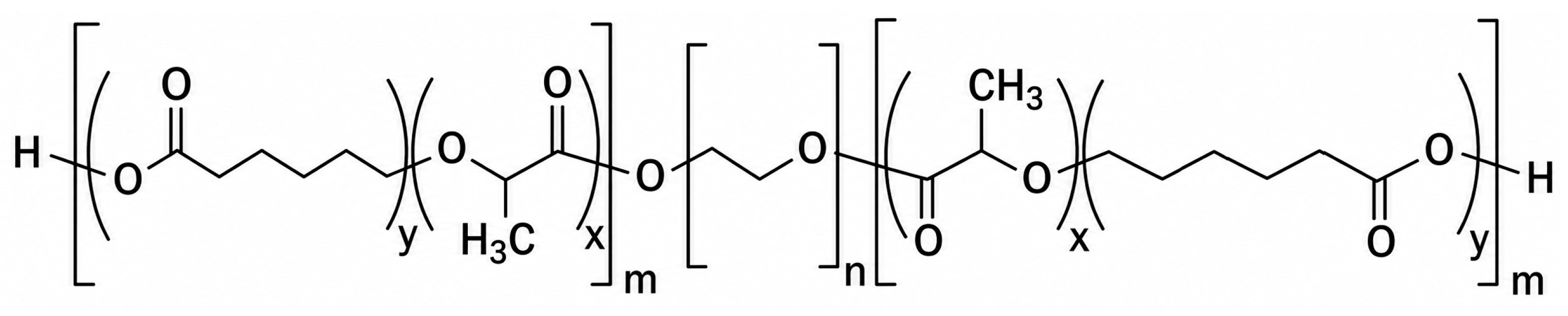
Figure 1), represents a particularly promising triblock copolymer system, combining the elasticity and biodegradability of PLCL with the hydrophilicity, antifouling properties, and chain mobility provided by PEG [
4,
5,
6,
7]. The resulting amphiphilic architecture offers an attractive balance between mechanical performance, degradation behaviour, wettability, and biological compatibility, making this material suitable for biomedical coatings, tissue engineering scaffolds, controlled drug delivery systems, and functional biointerfaces [
4,
5,
6,
7]. The fabrication of homogeneous and chemically stable PLCL-PEG-PLCL thin films therefore remains an important technological objective.
The deposition of multifunctional polymer coatings, however, remains challenging. Many biodegradable polymers exhibit limited thermal stability, high molecular weight, and complex chain architectures that restrict the use of conventional thin-film fabrication methods [
8]. Solution-based techniques such as spin coating, drop casting, and spray coating often suffer from limitations related to thickness control, surface homogeneity, solvent retention, adhesion, and post-deposition dewetting phenomena [
8,
9,
10]. Among laser-assisted approaches, matrix-assisted pulsed laser evaporation (MAPLE) has emerged as a versatile technique for the deposition of delicate organic and polymeric materials while minimizing thermal degradation [
11,
12,
13,
14,
15]. In MAPLE, the material of interest is dissolved in a volatile solvent, frozen to form a cryogenic target, and subsequently irradiated by pulsed laser radiation. Since most of the laser energy is absorbed by the solvent matrix, the transfer process generally preserves the chemical integrity of the solute while enabling excellent control over film thickness, composition, morphology, and multilayer architectures [
11,
12,
13,
14,
15]. Previous studies have demonstrated that PLCL-PEG-PLCL coatings can be successfully deposited by MAPLE while largely preserving the characteristic chemical signatures of the copolymer within suitable laser fluence ranges [
7,
15]. Furthermore, systematic variations in surface morphology have been reported as a function of deposition parameters, ranging from droplet-rich morphologies to wrinkled and carpet-like surface organizations. These morphological modifications have also been shown to influence the biological response of the resulting coatings, highlighting the importance of carefully controlling MAPLE processing conditions for biomedical applications [
7,
15,
16].
Despite these advances, several important aspects of UV-MAPLE processing remain insufficiently understood. Most studies focus on the immediate characteristics of the deposited films, whereas significantly less attention is devoted to their long-term physicochemical evolution after deposition. In particular, ultraviolet irradiation of frozen polymer–solvent systems may promote not only material transfer but also photochemical reactions involving the solvent, polymer matrix, or both. Such processes may generate metastable species capable of undergoing slow diffusion, recombination, structural rearrangement, or crystallization during subsequent storage. These effects become especially relevant when halogenated solvents are employed, as they are known to undergo photochemical and plasma-assisted decomposition under ultraviolet irradiation, producing reactive chlorine-containing fragments and secondary reaction products [
14,
15,
16,
17]. During the present investigation, unusual faceted crystalline structures are observed on PLCL-PEG-PLCL coatings deposited from chloroform solutions under specific UV-MAPLE conditions. These structures appear preferentially at elevated laser fluence and, in many cases, only after prolonged aging under ambient conditions. Their delayed emergence suggests the presence of metastable species generated during deposition that progressively reorganize and crystallize over time. The phenomenon raises important questions regarding the interplay between laser-induced photochemistry, solvent-derived species, polymer evolution, and long-term coating stability. In addition, the coexistence of different crystal habits, including cubic, cuboctahedral, and twinned morphologies, suggests the occurrence of non-equilibrium crystallization pathways governed by kinetically controlled growth mechanisms [
18].
In this work, we investigate the influence of UV-MAPLE processing conditions on the morphological, structural, and chemical evolution of PLCL-PEG-PLCL thin films deposited from chloroform solutions. Particular attention is dedicated to the relationship between laser fluence, surface restructuring, chlorine enrichment, aging behaviour, and delayed recrystallization phenomena. The coatings are characterized by atomic force microscopy (AFM) scanning electron microscopy (SEM, Fourier-transform infrared spectroscopy (FTIR), energy-dispersive X-ray spectroscopy (EDS), focused ion beam scanning electron microscopy (FIB-SEM) and X-ray diffraction (XRD). Based on the experimental observations, a phenomenological model describing the successive stages of surface evolution, decomposition, recombination, aging, and recrystallization is proposed. The results provide new insight into the long-term stability of laser-deposited biodegradable polymer coatings and highlight the importance of solvent selection and processing conditions in determining their evolution over time.
2. Materials and Methods
The influence of UV-MAPLE processing conditions on the morphology, structure, and chemical composition of PLCL-PEG-PLCL thin films was investigated through a systematic variation in the deposition parameters. Thin films were deposited from chloroform-based frozen targets under different laser fluence conditions and subsequently characterized using complementary morphological, structural, and compositional analysis techniques. The experimental procedures and characterization methods employed in this study are described in the following subsections.
2.1. PLCL-PEG-PLCL Triblock Copolymer: Composition and Chemical Structure
The material investigated in this study is a biodegradable triblock copolymer based on poly(lactide-co-caprolactone)-block-poly(ethylene glycol)-block-poly(lactide-co-caprolactone) (PLCL-PEG-PLCL), purchased from Sigma-Aldrich (Sigma-Aldrich, Spruce Street, 3050, Saint Louis, MO 63103, USA). The copolymer consists of two terminal poly(lactide-co-caprolactone) (PLCL) blocks connected through a central poly(ethylene glycol) (PEG) segment, forming an amphiphilic triblock architecture.
The general chemical structure of the copolymer is presented in
Figure 1. The PLCL segments provide biodegradability and mechanical flexibility, while the PEG block contributes hydrophilicity and enhanced interaction with biological environments. Owing to this combination of properties, PLCL-PEG-PLCL has attracted interest for biomedical coatings, drug delivery systems, and tissue engineering applications [
4,
5,
6,
7]. For MAPLE deposition, the copolymer was dissolved in chloroform (Sigma-Aldrich, Spruce Street, 3050, Saint Louis, MO 63103, USA) at a concentration of 4 wt.% to prepare homogeneous frozen targets suitable for laser-assisted transfer.
2.2. MAPLE Processing and Thin Film Deposition Conditions
PLCL-PEG-PLCL thin films were deposited by ultraviolet matrix-assisted pulsed laser evaporation (UV-MAPLE). Prior to deposition, the triblock copolymer was dissolved in chloroform (Sigma-Aldrich) at a concentration of 4 wt.% under magnetic stirring until complete dissolution was achieved. The resulting homogeneous solution was poured into a copper target holder and frozen using liquid nitrogen to form the MAPLE target. The deposition experiments were carried out in a stainless-steel vacuum chamber evacuated to a base pressure of approximately 1 × 10⁻⁵ mbar. Silicon (100) substrates were used as collectors and were positioned parallel to the target surface at a target-to-substrate distance of approximately 4 cm. The frozen targets were irradiated using the fourth harmonic (266 nm) of a Q-switched Nd:YAG laser (Surelite II, Continuum Company, San Jose, CA, USA), operating at a repetition rate of 10 Hz. The laser fluence was systematically varied between 0.25 and 0.9 J/cm2 by adjusting both the pulse energy and the laser spot size on the target surface. Depending on the selected deposition conditions, the pulse energy ranged from approximately 2 to 8 mJ, while the irradiated spot area varied between approximately 0.5 and 1 mm2.
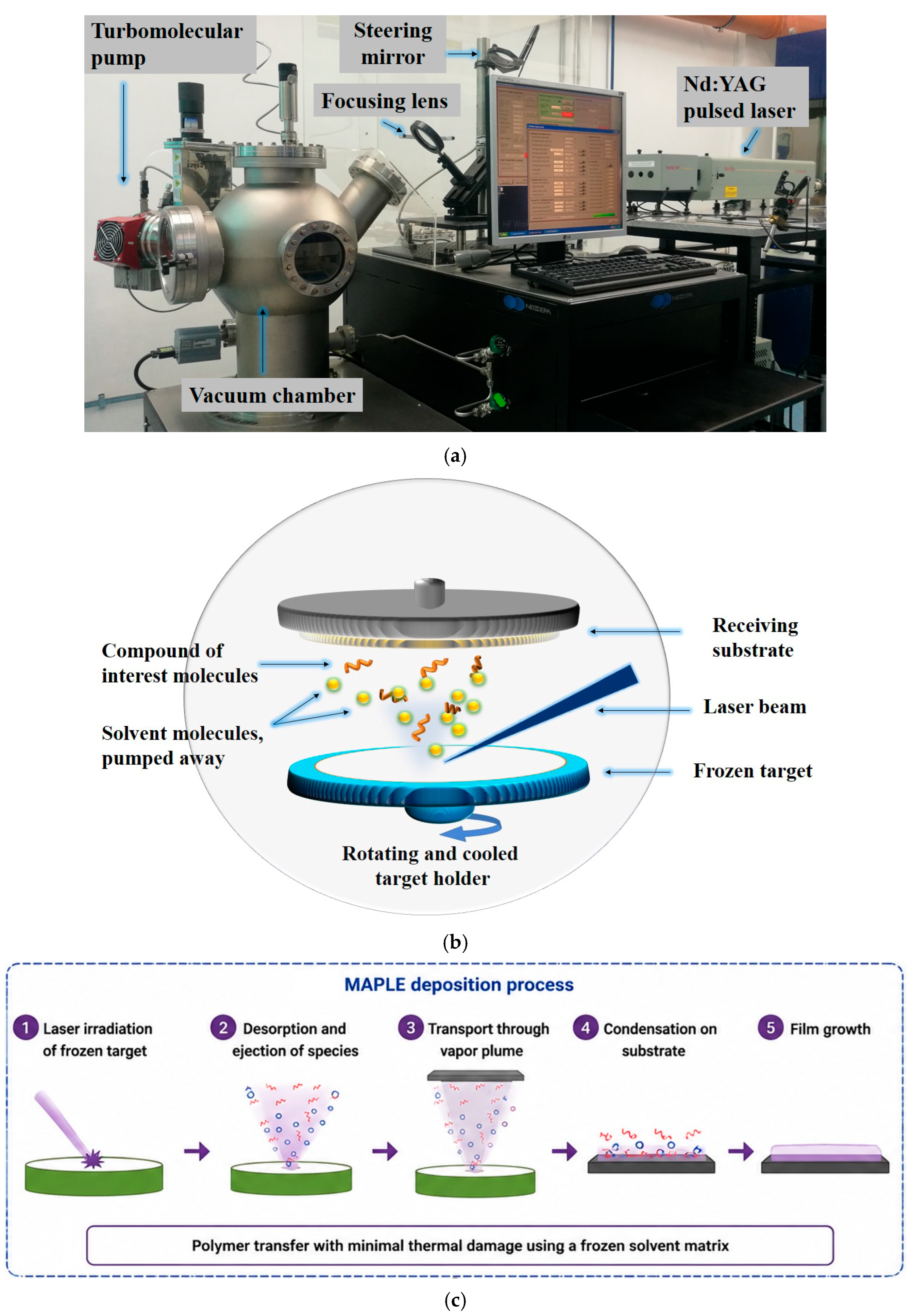
During deposition, the target was continuously rotated to minimize local overheating and ensure uniform irradiation of the frozen surface. A series of samples was prepared over the investigated fluence range in order to evaluate the influence of laser processing conditions on the morphology, structure, and chemical composition of the deposited films. Particular attention was dedicated to identifying possible fluence-dependent modifications of the polymer matrix and to monitoring the appearance of aging-induced surface structures during subsequent storage under ambient laboratory conditions. A schematic representation of the UV-MAPLE process and the experimental workflow employed in the present study is shown in
Figure 2.
MAPLE is frequently regarded as a transfer process that preserves the chemical integrity of sensitive polymers. However, under ultraviolet irradiation, material transfer, solvent photochemistry, plume evolution, and thin-film growth occur simultaneously and may generate metastable species capable of evolving long after deposition. Understanding these coupled phenomena is essential for assessing the stability and functionality of laser-deposited biodegradable coatings. The following sections therefore investigate how UV-MAPLE processing conditions influence the morphology, chemistry, aging behaviour, and delayed recrystallization of PLCL-PEG-PLCL thin films.
2.3. Surface Morphology and Topographical Characterization (AFM and SEM)
The surface morphology and topographical characteristics of the PLCL-PEG-PLCL thin films deposited by UV-MAPLE were investigated by scanning electron microscopy (SEM) (SEM-JSM-531 Inspect S Microscope from FEI Company, Hillsboro, OR, USA)and atomic force microscopy (AFM, XE 100, Park Systems, Suwon, Republic of Korea). SEM observations were performed in order to evaluate the surface morphology, coating homogeneity, and spatial distribution of morphological features generated under different deposition conditions. Images were acquired over a broad range of magnifications, allowing both the assessment of the overall surface organization and the detailed examination of localized structures appearing on the coating surface. Selected samples were coated with a thin conductive layer prior to analysis in order to minimize charging effects during electron-beam irradiation. AFM measurements were carried out to investigate the nanoscale surface topography and roughness of the deposited coatings. Topographical images were acquired over representative scan areas and subsequently analyzed using the instrument software package. The measurements provided quantitative information regarding surface roughness, height distribution, and the evolution of surface morphology as a function of the UV-MAPLE processing parameters. The complementary use of SEM and AFM enables a multiscale characterization of the deposited thin films, providing information on both microscale morphological organization and nanoscale surface topography. These observations are further correlated with the structural and compositional analyses performed by FTIR, EDS, FIB-SEM, and XRD.
2.4. Structural and Chemical Characterization by FTIR Spectroscopy
Fourier-transform infrared spectroscopy (FTIR, JASCO Inc. 28600, Mary’s Court, Easton, MD 21601, USA) was employed to investigate the structural integrity and chemical composition of the PLCL-PEG-PLCL thin films deposited by UV-MAPLE. The measurements were performed using silicon substrates, which are transparent over a large portion of the infrared spectral range and therefore suitable for transmission-mode analysis of thin polymer coatings. FTIR spectra were acquired in the 400–4000 cm−1 spectral range with a spectral resolution of 4 cm−1. The spectra obtained from the deposited films were compared with those of the reference PLCL-PEG-PLCL material in order to evaluate possible modifications induced by the deposition process and by the applied laser fluence. Particular attention was dedicated to the characteristic vibrational bands associated with the PLCL and PEG segments of the triblock copolymer. The FTIR investigations were used to assess the preservation of the polymer structure after deposition and to identify possible chemical modifications occurring under different UV-MAPLE processing conditions. The FTIR results were subsequently correlated with the morphological, compositional, and structural analyses performed by AFM, SEM, EDS, FIB-SEM, and XRD in order to obtain a comprehensive understanding of the evolution of the deposited coatings.
2.5. Chemical Composition Analysis, Crystallization and Aging Behaviour (EDS and FIB-SEM)
The chemical composition of the deposited PLCL-PEG-PLCL thin films and of selected surface features was investigated by energy-dispersive X-ray spectroscopy (EDS) (Oxford Instruments, Abingdon, UK) coupled with scanning electron microscopy (SEM). EDS analyses were performed at representative locations across the coating surface in order to evaluate the elemental composition of the polymer matrix and to identify possible compositional variations associated with localized morphological structures. To further investigate the internal morphology and microstructural organization of selected surface features, focused ion beam scanning electron microscopy (FIB-SEM, Carl Zeiss Microscopy GmbH, Jena, Germany) was employed. Site-specific cross-sections were prepared by ion milling, enabling the direct observation of the internal structure of individual micrometric entities present on the coating surface. The combined FIB-SEM approach provided complementary information regarding morphology, internal architecture, and spatial organization that could not be obtained from conventional surface observations alone. The SEM, EDS, and FIB-SEM investigations were performed with the support of the CARMALIM platform (IRCER UMR 7315, CNRS–Université de Limoges), which provides advanced facilities for microstructural, chemical, and correlative materials characterization. To evaluate the long-term evolution of the deposited films, selected samples were periodically re-examined after storage under ambient laboratory conditions. These observations enabled the monitoring of aging-related morphological changes and the identification of delayed surface evolution phenomena occurring after deposition. The information obtained from EDS and FIB-SEM analyses was subsequently correlated with the AFM, SEM, FTIR, and XRD investigations in order to establish relationships between morphology, composition, aging behaviour, and structural evolution of the deposited coatings.
3. Results and Discussion
The morphology, structure, chemical composition, and long-term evolution of the UV-MAPLE-deposited PLCL-PEG-PLCL thin films are strongly influenced by the applied laser fluence and the associated energy transfer processes occurring during deposition. While MAPLE is generally recognized for its ability to preserve the chemical integrity of sensitive organic and polymeric materials, ultraviolet irradiation may simultaneously induce photochemical reactions involving the solvent matrix, the polymer chains, or both.
As a result, the final coating characteristics reflect a complex interplay between material transfer, laser-induced modification processes, and subsequent aging phenomena. The deposited films exhibit a broad range of surface morphologies depending on the processing conditions. At lower laser fluences, relatively homogeneous coatings are obtained, whereas increasing the fluence progressively promotes surface restructuring phenomena, including droplet formation, wrinkling, and the emergence of highly symmetric faceted entities. In addition, some of these structures appear only after prolonged storage under ambient laboratory conditions, suggesting that delayed physicochemical transformations continue to occur long after the deposition process has been completed. To elucidate the origin of these phenomena, the coatings are investigated using complementary AFM, SEM, FTIR, EDS, FIB-SEM, and XRD analyses. The combined results provide insight into the relationships between laser processing conditions, surface morphology, chemical evolution, aging behaviour, and delayed recrystallization processes. Particular attention is devoted to the formation and evolution of chlorine-rich faceted structures observed on selected samples deposited at elevated laser fluences, as these entities provide valuable information regarding the long-term stability of the deposited coatings and the possible role of photochemical reactions occurring during UV-MAPLE processing.
3.1. Surface Morphology Evolution and Crystallization Behaviour (AFM and SEM)
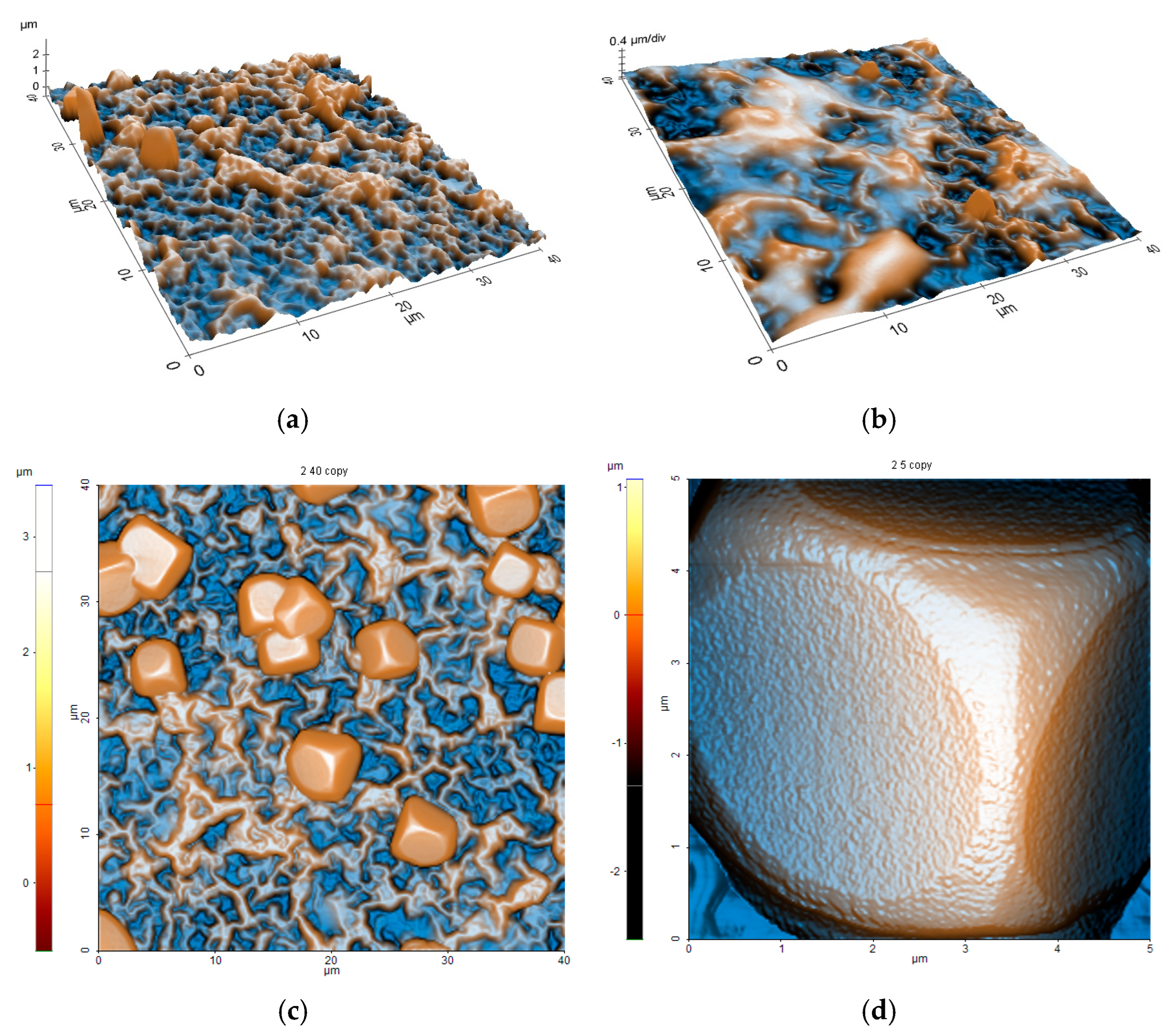
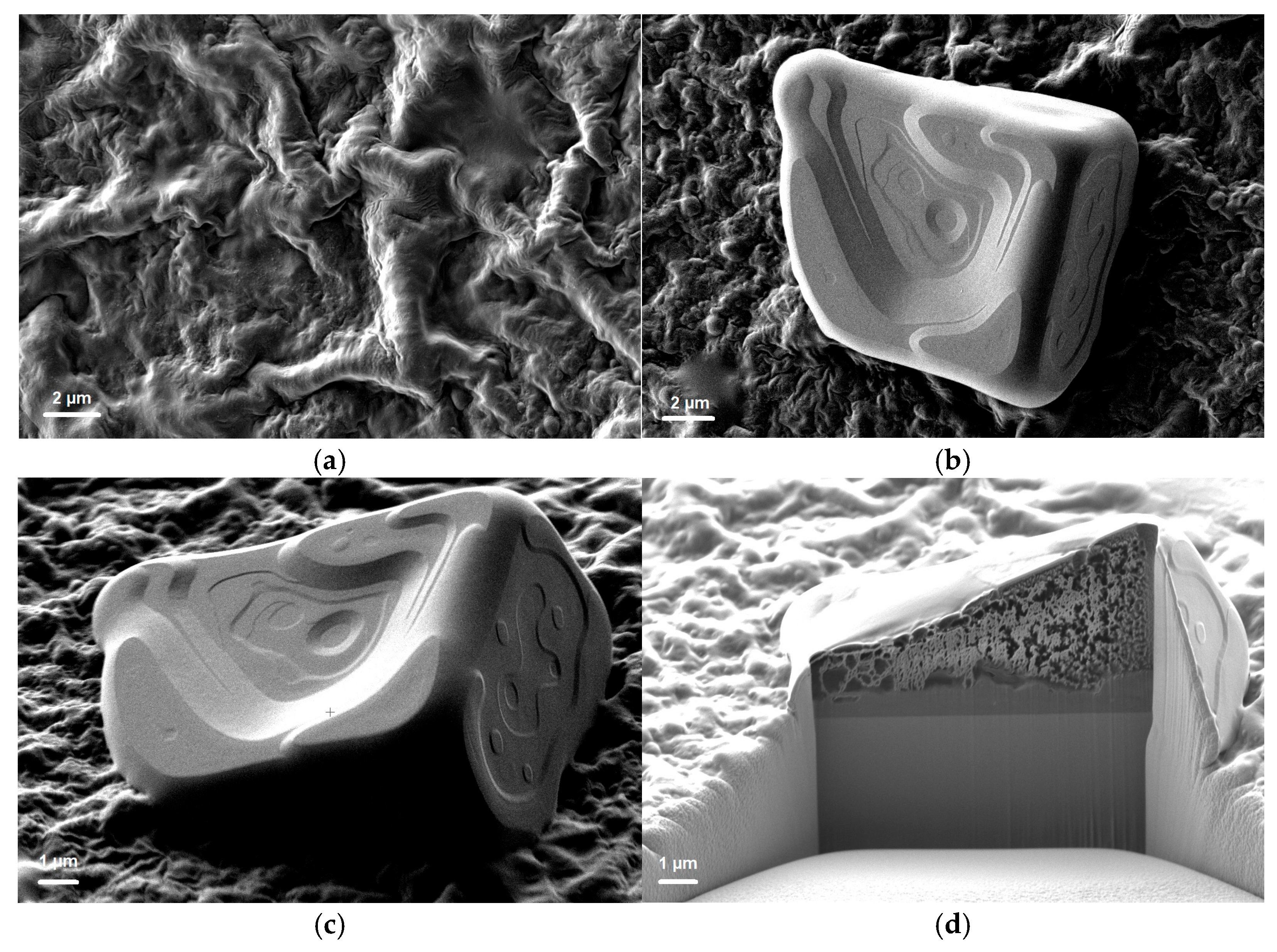
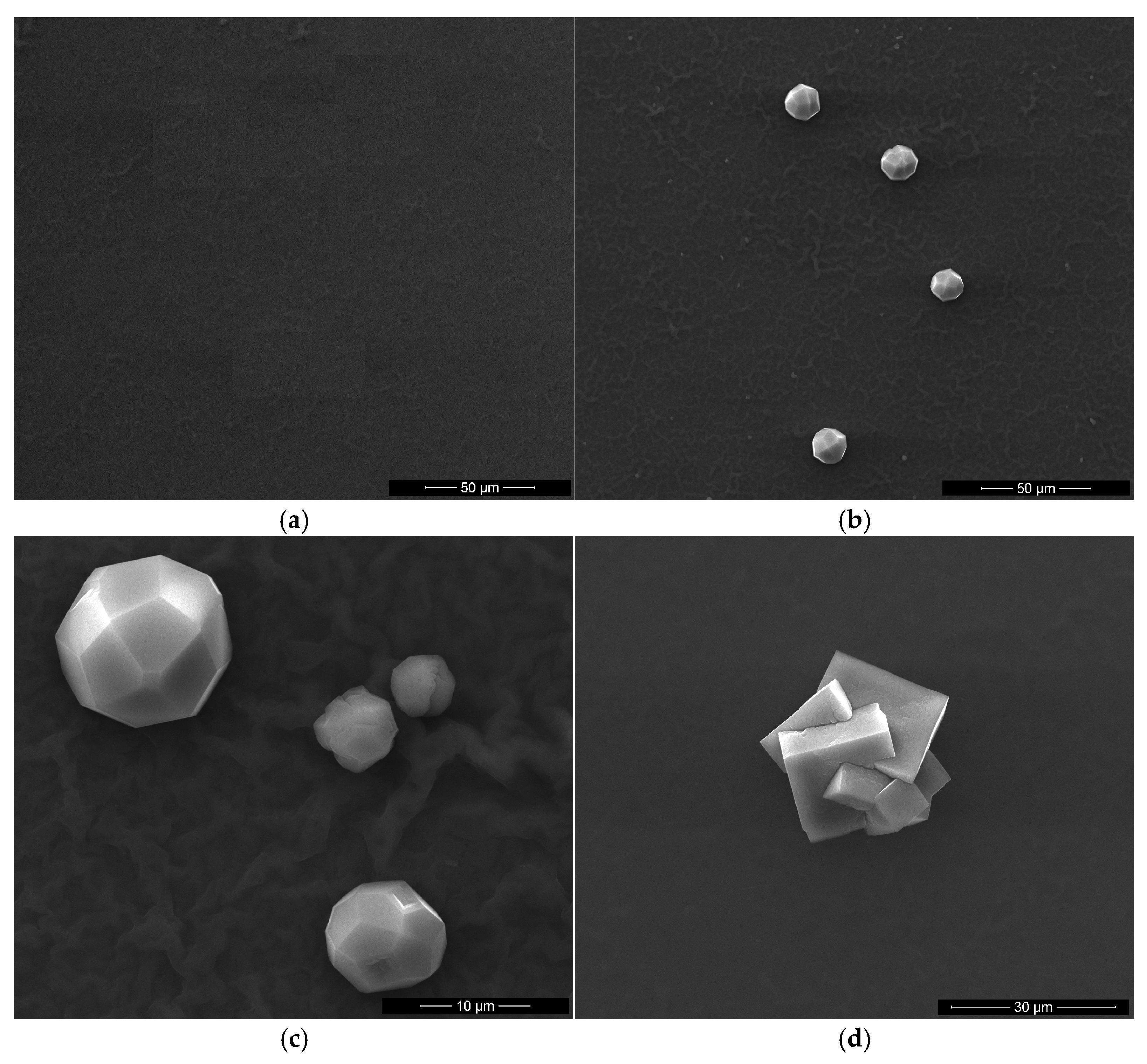
The surface morphology of the UV-MAPLE-deposited PLCL-PEG-PLCL thin films exhibits a pronounced dependence on the applied laser fluence. AFM and SEM investigations reveal a progressive transition from relatively homogeneous coatings obtained at low fluence to increasingly complex surface architectures at higher irradiation levels. These observations indicate that laser fluence not only controls the amount of transferred material but also strongly influences the physicochemical processes occurring during deposition and the subsequent evolution of the deposited films. At the lowest investigated fluences, the coatings display a comparatively uniform morphology characterized by a continuous polymer layer with limited surface roughness and a relatively low density of morphological defects. Under these conditions, the deposited material largely preserves the characteristic appearance expected for MAPLE-grown polymer coatings, suggesting that material transfer occurs with limited perturbation of the polymer matrix. As the laser fluence increases, the surface progressively develops more pronounced topographical features, including droplets, aggregates, and localized restructuring phenomena. Such features are commonly observed in MAPLE-deposited polymer systems and are generally associated with changes in the balance between solvent evaporation, polymer transfer, plume dynamics, and laser–matter interactions occurring at the frozen target surface. The increasing complexity of the morphology suggests that higher energy densities promote additional physical and chemical processes during deposition. For fluences exceeding approximately 0.6–0.7 J/cm
2, AFM and SEM observations reveal the appearance of highly symmetric faceted entities exhibiting cubic, cuboctahedral, twinned, and other polyhedral morphologies. The density and size of these structures generally increase with laser fluence, indicating a strong correlation between processing conditions and the formation of these localized crystalline features. Their well-defined geometries contrast sharply with the surrounding polymer matrix and suggest the presence of a distinct phase formed during or after the deposition process. A particularly noteworthy observation concerns the temporal evolution of the coatings. While some faceted structures are already present shortly after deposition, many appear only after prolonged storage under ambient laboratory conditions, with their population increasing over periods ranging from several weeks to months. This delayed emergence strongly suggests that the deposited films contain metastable species generated during UV-MAPLE processing that progressively reorganize through diffusion, recombination, and crystallization processes during aging. The coexistence of multiple crystal habits further indicates that the system evolves under non-equilibrium conditions, where kinetic factors may play an important role in determining the final morphology. The representative AFM and SEM images presented in
Figure 3 and
Figure 4 illustrate these morphological transitions and provide the basis for understanding the subsequent structural and chemical analyses discussed in the following sections.
3.2. Structural and Chemical Evolution of the Thin Films (FTIR)
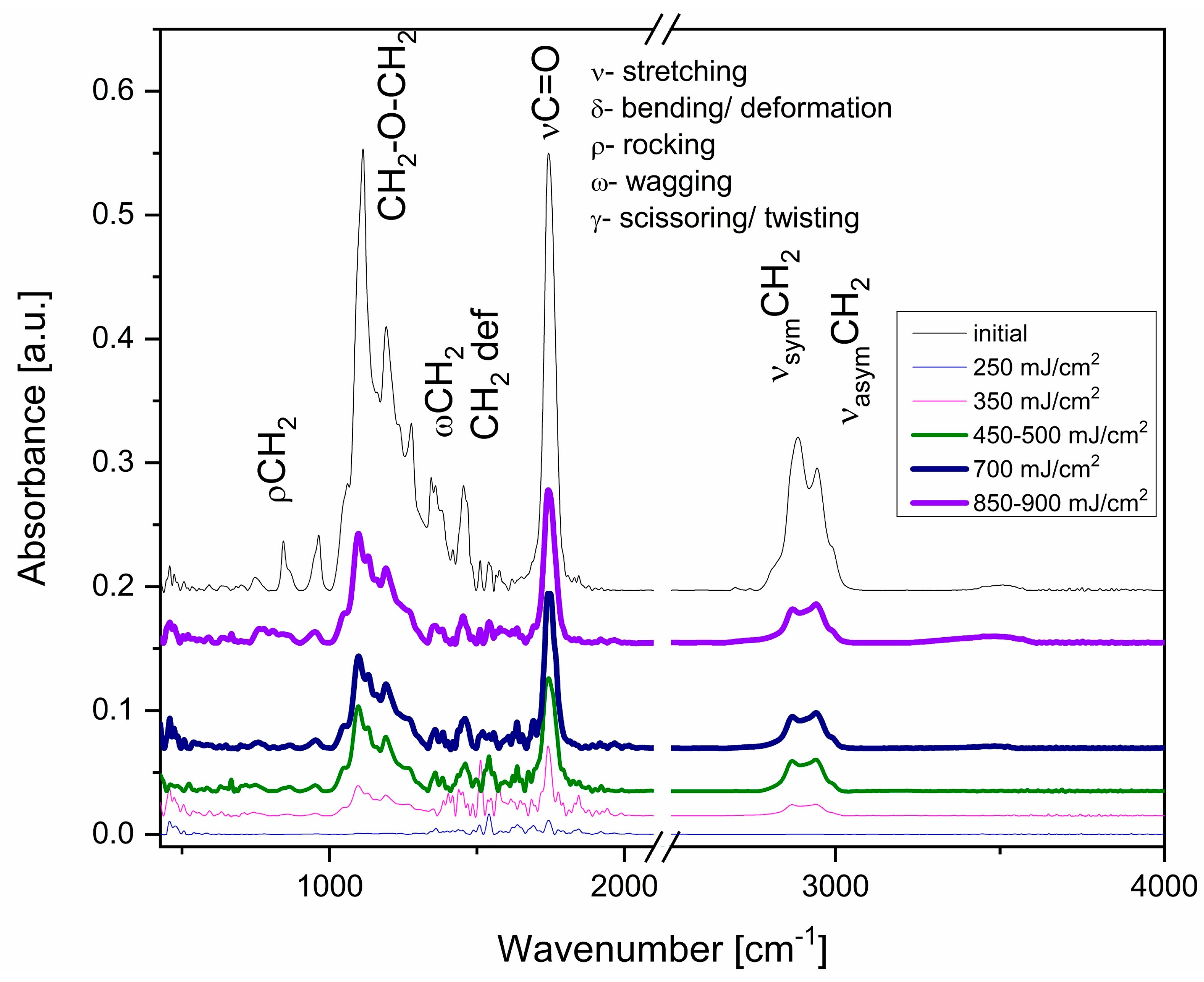
The FTIR spectra recorded for the UV-MAPLE-deposited PLCL-PEG-PLCL thin films provide insight into the chemical integrity of the polymer matrix and its evolution as a function of laser fluence. Representative spectra acquired from coatings deposited under different irradiation conditions are presented in
Figure 5 and compared with the reference PLCL-PEG-PLCL material. The spectra are dominated by the characteristic vibrational bands of the triblock copolymer. The ester carbonyl stretching vibration (C=O) is observed in the 1735–1750 cm
−1 region, while the CH
2 and CH
3 stretching modes appear between 2850 and 3000 cm
−1. Additional absorption features associated with the PEG segment, including the C–O–C and CH
2–O–CH
2 vibrations, are visible in the 1060–1115 cm
−1 range. The persistence of these characteristic bands across all investigated samples confirms that the PLCL-PEG-PLCL copolymer remains the dominant constituent of the deposited coatings and that its fundamental chemical architecture is largely preserved during UV-MAPLE processing. For films deposited at low and intermediate laser fluences, the spectra remain very similar to that of the reference material. The absence of major spectral changes indicates that the MAPLE process effectively transfers the polymer while maintaining its characteristic chemical structure. This behaviour is consistent with the established deposition mechanism, where the frozen solvent matrix absorbs a substantial fraction of the incident laser energy, thereby limiting direct interaction between the laser radiation and the dissolved polymer chains. As the laser fluence increases, subtle but systematic modifications become apparent. These include peak broadening, variations in relative band intensities, and slight changes in the shape of selected absorption features, particularly within the CH
2-rich and PEG-related spectral regions. Although these changes do not indicate a complete alteration of the polymer chemistry, they suggest that higher irradiation levels progressively affect the local molecular environment of the deposited material. Such modifications may result from partial chain scission, local rearrangement of polymer segments, changes in intermolecular interactions, or secondary reactions occurring during the laser-assisted transfer process. A noteworthy aspect of the FTIR analysis is the absence of distinct absorption bands that could be unequivocally assigned to chlorine- or nitrogen-containing compounds. This observation does not contradict the elemental analyses presented later in this work. The faceted structures detected by AFM and SEM represent only a very small fraction of the total analyzed surface area and are therefore expected to contribute only weakly to the global infrared signal. Moreover, simple inorganic salt-like phases present in trace amounts may remain below the detection limit of conventional thin-film FTIR measurements. Consequently, while FTIR is highly effective for monitoring the evolution of the polymer matrix, it does not provide direct evidence regarding the precise chemical nature of the localized crystalline entities. The spectroscopic observations reveal that UV-MAPLE deposition preserves the characteristic chemical signature of the PLCL-PEG-PLCL triblock copolymer over a broad fluence range, while progressively inducing subtle structural and chemical modifications as the irradiation level increases. When considered together with the AFM and SEM investigations, these results suggest that elevated laser fluences promote increasingly complex physicochemical processes within the deposited coatings, extending beyond simple material transfer and contributing to their subsequent evolution during aging.
3.3. Chemical Composition Analysis, Crystallization and Aging Behaviour (FIB-SEM and EDS)
The chemical composition and internal morphology of the faceted structures observed on the PLCL-PEG-PLCL coatings were investigated by combining energy-dispersive X-ray spectroscopy (EDS) with focused ion beam scanning electron microscopy (FIB-SEM). These complementary techniques provide valuable information regarding both the elemental distribution and the microstructural organization of the entities appearing on the coating surface after deposition and aging. EDS analyses performed on homogeneous coating regions reveal the expected predominance of carbon and oxygen associated with the PLCL-PEG-PLCL polymer matrix. Silicon signals originate from the substrate and are consistently detected due to the limited thickness of the deposited films. No significant elemental heterogeneities are observed in these regions, indicating that the coatings remain compositionally uniform over large areas. In contrast, EDS investigations conducted directly on the faceted structures reveal a markedly different chemical signature. The most notable feature is the systematic presence of chlorine, whose concentration is significantly higher within the crystalline entities than in the surrounding polymer matrix. Elemental mapping confirms that chlorine is preferentially localized within these structures, indicating a direct relationship between chlorine-containing species and the observed crystallization phenomena. The reproducibility of this observation across multiple samples and crystal morphologies strongly suggests that chlorine plays an important role in the formation and evolution of these faceted entities. To further investigate their internal architecture, selected structures were sectioned using focused ion beam milling.
The resulting FIB-SEM cross-sections (
Figure 6) reveal that many of the faceted entities are not fully dense but instead exhibit porous or sponge-like internal morphologies. In some cases, partial structural modification is observed during ion milling, indicating a relatively low internal cohesion compared to dense inorganic crystals. However, it should be emphasized that the present observations do not constitute a direct measurement of mechanical stability, and therefore no quantitative conclusions regarding the mechanical properties of the structures can be drawn. A particularly interesting aspect concerns the temporal evolution of the coatings. While some faceted structures are already visible shortly after deposition, their abundance increases significantly after prolonged storage under ambient laboratory conditions. New entities continue to appear over periods extending from several weeks to several months, indicating that the crystallization process is not completed during deposition but instead continues throughout aging. This delayed behaviour suggests the presence of metastable species generated during UV-MAPLE processing that progressively diffuse, reorganize, and nucleate over time. The combination of chlorine enrichment, highly symmetric crystal morphologies, delayed appearance during aging, and porous internal structure points toward a complex crystallization mechanism involving secondary reaction products generated during deposition. One plausible interpretation involves the formation of chlorine-containing species through photochemical decomposition of chloroform under ultraviolet irradiation, followed by subsequent recombination and crystallization processes occurring during storage. The cubic and twinned morphologies observed by SEM are consistent with this hypothesis and are compatible with NH
4Cl-like crystallization pathways reported in the literature. Nevertheless, the present data do not provide definitive proof of the exact chemical identity of the faceted structures. The EDS analyses demonstrate localized chlorine enrichment, while the morphological observations reveal highly ordered crystalline growth. However, neither EDS nor FIB-SEM can independently establish the crystallographic structure of the observed entities. Consequently, the NH
4Cl-like assignment should be regarded as a plausible interpretation supported by the available compositional and morphological evidence rather than as an unequivocally demonstrated phase identification. Taken together, the EDS and FIB-SEM investigations reveal that UV-MAPLE processing at elevated laser fluence generates localized chlorine-rich structures that continue to evolve during aging. These observations provide strong evidence that the deposited coatings undergo long-term physicochemical transformations extending well beyond the initial deposition stage and highlight the important role of solvent-derived species in governing the stability and evolution of laser-deposited biodegradable polymer films.
3.4. Structural and Crystallographic Investigations by XRD
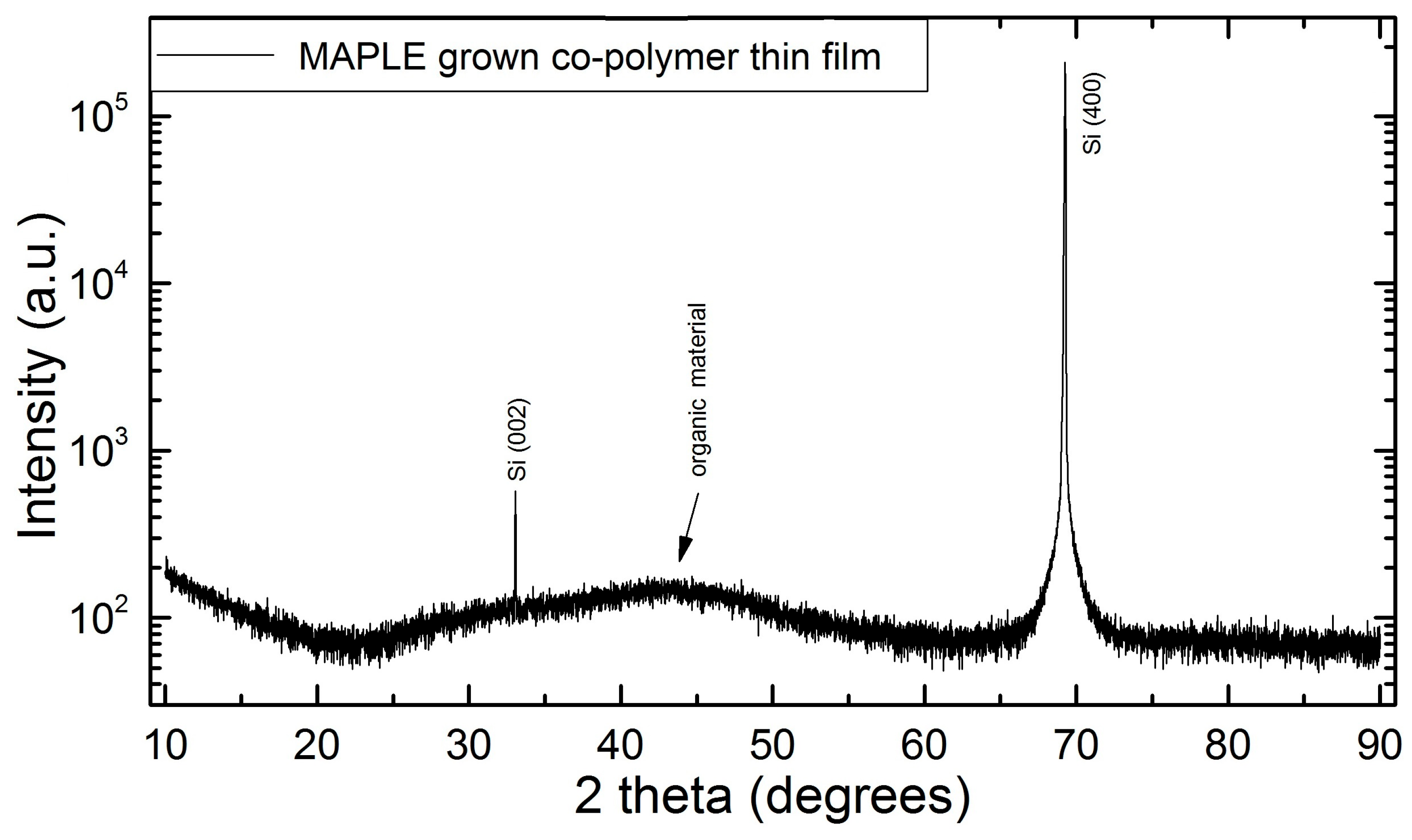
X-ray diffraction (XRD) measurements were performed in order to evaluate the structural state of the deposited PLCL-PEG-PLCL coatings and to investigate the possible presence of crystalline phases associated with the faceted structures observed by AFM and SEM. Representative diffraction patterns obtained from samples deposited under different UV-MAPLE conditions are presented in
Figure 7. The recorded diffractograms are dominated by the characteristic diffraction peaks of the crystalline silicon substrate. Apart from these substrate-related reflections, no additional well-defined diffraction peaks are detected within the investigated angular range. This observation indicates that the deposited PLCL-PEG-PLCL films remain predominantly amorphous, which is consistent with the behaviour generally expected for thin biodegradable polymer coatings deposited under non-equilibrium processing conditions. The absence of distinct diffraction peaks associated with the polymer matrix is not unexpected. PLCL-PEG-PLCL is known to exhibit a largely amorphous character, and the relatively limited film thickness further reduces the diffraction signal originating from the coating. Consequently, the XRD results suggest that no significant long-range crystallographic ordering develops within the polymer matrix during UV-MAPLE deposition. Particular attention was devoted to the possible detection of diffraction peaks associated with the faceted structures observed on the coating surface. Based on their morphology and chemical composition, these entities were considered potential candidates for localized crystallization phenomena. However, no additional diffraction peaks attributable to these structures are observed. This result suggests that the total quantity of crystalline material present on the surface remains extremely small and lies below the detection limit of the XRD measurement. The absence of detectable diffraction peaks does not contradict the observations obtained by AFM, SEM, EDS, and FIB-SEM. These techniques reveal the presence of localized faceted entities occupying only a very limited fraction of the analyzed surface area. Consequently, even if these structures are crystalline, their volume fraction is likely insufficient to generate a measurable diffraction signal in conventional laboratory XRD experiments. From a broader perspective, the XRD results reinforce the conclusion that the deposited coatings remain predominantly amorphous and that any crystallization phenomenon occurring during aging is highly localized rather than representative of the entire film. The combined evidence obtained from morphological, compositional, and structural investigations therefore supports a scenario in which a small population of chlorine-rich faceted entities progressively develops within an otherwise amorphous polymer matrix. Although the present measurements do not provide direct crystallographic identification of the faceted structures, they establish important constraints on their abundance and distribution within the coating. More localized techniques, such as micro-XRD, micro-Raman spectroscopy, or TEM-based diffraction analyses, would be required to determine their crystallographic nature unambiguously and represent promising directions for future investigations.
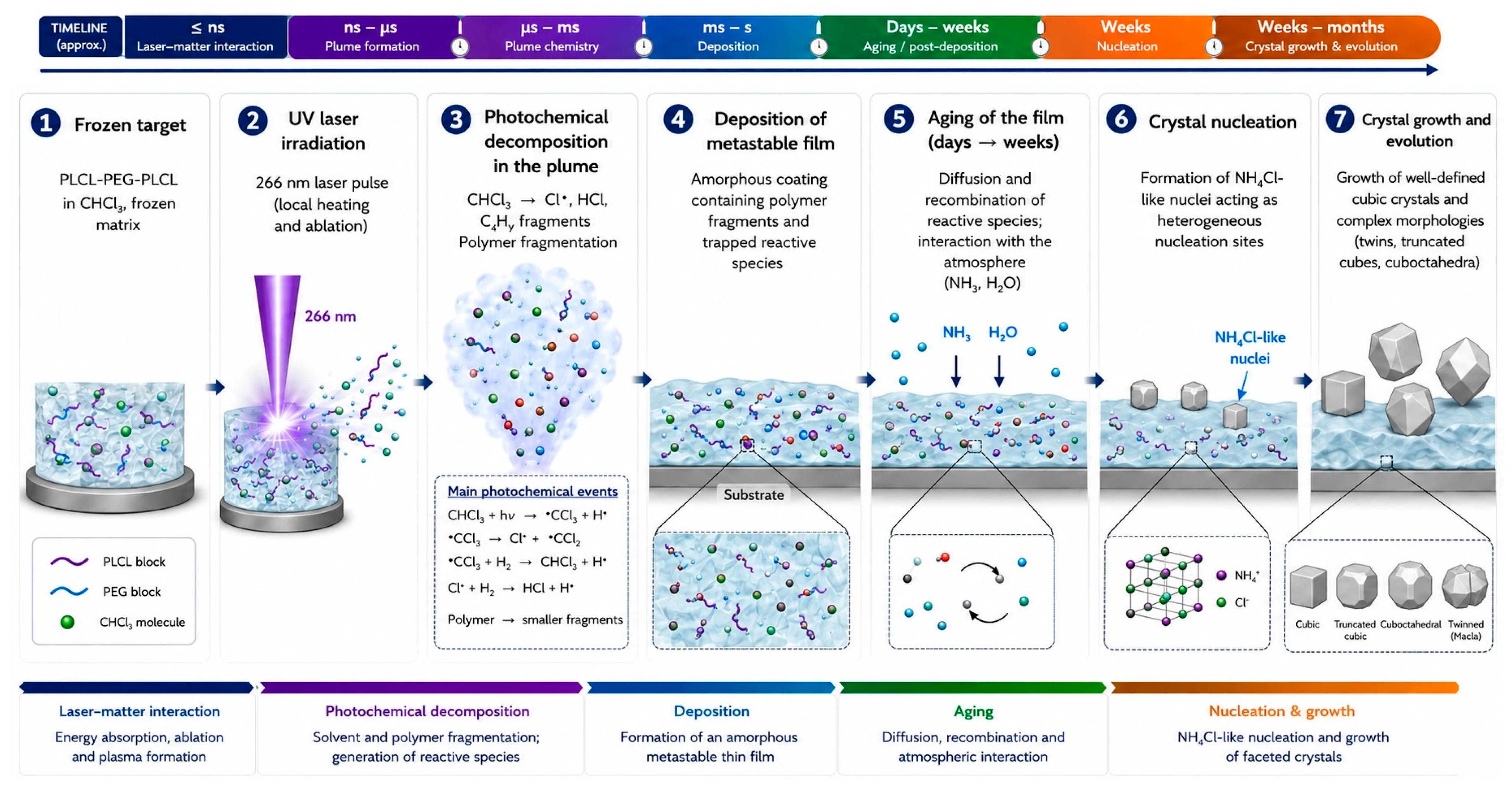
3.5. Proposed Mechanism for Crystal Formation and Aging-Induced Recrystallization on the Thin Film Surface
The combined AFM, SEM, FTIR, EDS, FIB-SEM, and XRD investigations reveal a complex sequence of morphological and chemical transformations occurring during and after UV-MAPLE deposition of PLCL-PEG-PLCL thin films. Although the precise chemical identity of the faceted structures cannot be established unequivocally on the basis of the present dataset, the experimental observations allow the formulation of a phenomenological model describing the most probable stages leading to their formation. A schematic representation of the proposed mechanism is presented in
Figure 8. The model is based on the correlation between laser fluence, surface morphology, elemental composition, and aging behaviour, together with the known photochemical reactivity of chloroform under ultraviolet irradiation [
14,
15,
16,
17]. The first stage corresponds to the UV-MAPLE deposition process itself. During laser irradiation of the frozen PLCL-PEG-PLCL/chloroform target, most of the absorbed energy promotes solvent-mediated material transfer, leading to the formation of a polymer coating on the substrate. Simultaneously, however, the high local energy densities associated with ultraviolet irradiation may induce secondary photochemical reactions involving the solvent, the polymer matrix, or both. These processes become increasingly significant as the laser fluence increases and may generate reactive intermediate species that remain trapped within the growing film.
In the second stage, these metastable species become incorporated into the deposited coating together with the transferred polymer material. The FTIR results indicate that the overall chemical architecture of the PLCL-PEG-PLCL triblock copolymer is largely preserved, while subtle spectral modifications suggest the occurrence of localized chemical transformations at elevated fluences. The EDS analyses further reveal that chlorine-containing species become concentrated within the faceted structures appearing on the coating surface, indicating a direct relationship between solvent-derived products and the subsequent crystallization process. Following deposition, the films continue to evolve during storage under ambient laboratory conditions. The delayed appearance of the faceted entities, frequently observed only after several weeks or months, suggests that diffusion, recombination, and structural reorganization processes continue long after completion of the laser transfer stage. The progressive increase in the number and size of these structures indicates that the deposited coatings remain chemically active and capable of undergoing slow aging-induced transformations. As these processes proceed, localized nucleation events occur within regions enriched in reactive species. Subsequent crystal growth leads to the development of highly symmetric morphologies, including cubic, cuboctahedral, and twinned structures. The coexistence of multiple crystal habits suggests that the system evolves under non-equilibrium conditions, where local concentration gradients, diffusion kinetics, and surface-energy minimization collectively influence the final morphology [
18]. The progressive increase in the number and size of these structures indicates, as presented in
Table 1, that the deposited coatings remain chemically active and capable of undergoing slow aging-induced transformations. These findings emphasize the importance of solvent selection, laser processing conditions, and post-deposition aging when evaluating the long-term stability of MAPLE-grown polymer coatings [
19,
20,
21,
22,
23,
24,
25,
26,
27,
28,
29,
30,
31,
32].
One plausible interpretation of the observed phenomenon involves the photochemical decomposition of chloroform during UV irradiation, followed by secondary recombination reactions leading to the formation of chlorine-containing crystalline products. The strong chlorine enrichment detected by EDS, together with the characteristic faceted morphologies and delayed aging-induced appearance of the structures, is consistent with this hypothesis. In this context, NH
4Cl-like crystallization represents a reasonable interpretation of the available evidence. Nevertheless, alternative pathways involving polymer-derived degradation products or more complex solvent–polymer interactions cannot be excluded. The XRD results indicate that the amount of crystalline material remains extremely limited and that the polymer matrix itself retains a predominantly amorphous character. Consequently, the crystallization process appears to be highly localized rather than representative of the coating as a whole. This observation explains why the faceted structures are readily detected by AFM, SEM, EDS, and FIB-SEM while remaining below the detection limit of conventional laboratory XRD measurements. To conclude, the experimental evidence supports a scenario in which UV-MAPLE deposition from chloroform generates metastable species that remain trapped within the deposited coating and progressively evolve during aging, as illustrated in
Figure 9.
To conclude, the experimental evidence supports a scenario in which UV-MAPLE deposition from chloroform generates metastable species that remain trapped within the deposited coating and progressively evolve during aging. The resulting delayed nucleation and growth of chlorine-rich faceted structures illustrate that laser-deposited biodegradable polymer films may undergo significant physicochemical evolution long after deposition. These findings emphasize the importance of solvent selection, laser processing conditions, and post-deposition aging when evaluating the long-term stability of MAPLE-grown polymer coatings.
4. Conclusions
UV-MAPLE deposition of PLCL-PEG-PLCL triblock copolymer thin films from chloroform solutions produces coatings whose morphology, structure, and long-term evolution are strongly influenced by the applied laser fluence. At low irradiation levels, relatively homogeneous coatings are obtained while largely preserving the characteristic chemical structure of the polymer. Increasing the laser fluence progressively promotes surface restructuring phenomena, including droplets, wrinkles, and the appearance of highly symmetric faceted entities exhibiting cubic, polyhedral, and twinned morphologies. A notable finding of this study is the delayed emergence of these structures during storage under ambient laboratory conditions. AFM, SEM, EDS, FIB-SEM, FTIR, and XRD investigations collectively indicate that UV-MAPLE processing involves not only material transfer but also secondary physicochemical processes that continue to influence the deposited coatings long after deposition. The faceted entities are characterized by localized chlorine enrichment and porous internal architectures, while the polymer matrix remains predominantly amorphous. The experimental observations support a scenario in which ultraviolet irradiation of the frozen chloroform-based target generates metastable chlorine-containing species that progressively evolve through diffusion, recombination, and localized crystallization processes during aging. Although the exact chemical identity of the faceted structures cannot be established unequivocally from the present dataset, their morphology, composition, and temporal evolution are consistent with NH4Cl-like crystallization pathways reported in the literature. These results demonstrate that the long-term stability of MAPLE-deposited polymer coatings depends not only on the transferred material itself but also on solvent-related photochemical processes occurring during deposition. The findings highlight the importance of solvent selection, laser processing conditions, and post-deposition aging when designing biodegradable polymer coatings for advanced biomedical and functional applications. Future investigations employing localized structural and chemical characterization techniques, such as micro-Raman spectroscopy, micro-XRD, or TEM-based diffraction analyses, could provide further insight into the nature and formation mechanisms of the observed crystalline entities.



 ,
,