


Abstract
To lower the water absorption capacity and enhance the anti-corrosion performance of geopolymer coatings, methyltrimethoxysilane (MTOS) was adopted as a hydrophobic modifier to synthesize hydrophobic geopolymer coatings, and their anti-corrosion behaviors were systematically investigated. The results reveal that increasing MTOS content gradually improves the fluidity and setting time of fresh coatings while reducing their bonding strength. MTOS effectively strengthens the surface hydrophobicity of the coatings, decreases the water absorption of coated concrete substrates, and remarkably boosts chloride ion penetration resistance. The modified coatings achieve the optimal anti-corrosion performance at an MTOS dosage of 8 wt.%. Under this optimal condition, the surface water contact angle reaches 135.1°. After 28 days of chloride ion erosion, the chloride ion concentration is 45.0% lower than that of the unmodified counterpart. Meanwhile, the coating exhibits the minimum water absorption rate of 2.06% and the lowest average chloride penetration rate of 0.41 × 10⁻³ mg/(cm2·d), which accounts for only 41% of the standard threshold value. This study demonstrates that MTOS-based hydrophobic modification can significantly upgrade the anti-corrosion capability of geopolymer coatings, which provides a valuable theoretical basis and practical guidance for improving the durability of concrete structures.
1. Introduction
Concrete has been widely applied in large-scale infrastructure construction owing to its outstanding mechanical performance and cost-effectiveness. Nevertheless, concrete is inherently porous and hydrophilic, making it vulnerable to the invasion of various corrosive substances in service environments. Such corrosive ingress inevitably causes the performance degradation of concrete matrices and corrosion of embedded steel reinforcements, thereby bringing severe hidden safety risks to engineering structures [1,2]. Accordingly, it is highly necessary to block the penetration of corrosive media and further improve the service durability of concrete structures.
Surface protective coatings serve as an effective physical barrier attached to structural surfaces to hinder the inward transport of moisture and corrosive ions, which is regarded as one of the most facile and cost-efficient strategies for structural durability enhancement. Traditional organic coatings including epoxy resin, polyurethane and acrylic resin possess favorable water resistance and anti-corrosion characteristics [3,4]. However, they still suffer from several inherent drawbacks such as high raw material cost, poor aging resistance, environmental incompatibility and weak interfacial compatibility with concrete substrates, which greatly restrict their long-term service application in structural protection engineering [5,6]. Hence, developing eco-friendly and high-durability novel coating materials is of great practical significance.
In recent years, geopolymer coatings have gained widespread research attention due to their superior chemical and thermal stability as well as satisfactory interfacial bonding compatibility with concrete. As a class of low-carbon and environmentally friendly inorganic protective coatings, geopolymers are synthesized via an alkali-activated reaction using industrial solid wastes such as fly ash, blast furnace slag and metakaolin as primary precursors [7]. Aguirre Guerrero et al. [8] prepared geopolymer coatings suitable for marine concrete protection with metakaolin and fly ash separately and verified that metakaolin-based geopolymer coatings possessed higher compressive strength and better chloride resistance through accelerated electrochemical corrosion tests. Akshay et al. [9] incorporated TiO2 nanoparticles into geopolymer systems to simultaneously enhance the anti-corrosion and antibacterial properties of the resultant coatings. Jiang et al. [10] explored the strength evolution law of geopolymer coatings immersed in artificial seawater and confirmed their satisfactory resistance against chloride-induced structural deterioration. Zhou et al. [11] incorporated nano-TiO2 and polyvinyl alcohol powder for synergistic modification, which effectively refined internal microcracks and reduced matrix porosity, thus significantly promoting the anti-corrosion performance of geopolymer coatings. Zuo et al. [12] utilized epoxy emulsion modification to mitigate the drying shrinkage defect of geopolymer coatings. Yu and Li et al. [7,13] introduced graphene oxide to reinforce the anti-corrosion performance of geopolymer coatings and further clarified the underlying reinforcement mechanisms by combining molecular dynamic simulation and experimental characterization.
Despite the great application potential of geopolymer coatings in structural anti-corrosion fields, their intrinsic hydrophilic nature allows for rapid moisture penetration into internal matrices, which inevitably impairs their long-term protective durability.
Hydrophobic modification is an efficient route to reduce the surface hydrophilicity of geopolymer coatings and optimize their protective efficiency and service lifespan. Dong et al. [14] fabricated superhydrophobic fly ash-based geopolymers with a maximum water contact angle up to 170° via polymethylhydrosiloxane (PMHS) modification. Zhang et al. [15] adopted hydroxyl-terminated polydimethylsiloxane (PDMS) as a hydrophobic modifier, which prominently improved the hydrophobicity and reduced the water absorption of geopolymers by 76.87%. She et al. [16] modified fly ash–slag composite geopolymers using isooctyltriethoxysilane, revealed its intrinsic hydrophobic modification mechanism, and clarified the dynamic evolution rule of the surface contact angle of modified coatings.
Existing studies have fully proven that hydrophobic modifier incorporation can effectively improve the hydrophobicity and reduce the water absorption of geopolymer materials. Nevertheless, these hydrophobically modified polymers are mostly applied as substitutes for concrete, with limited utilization in anti-corrosion coatings. The two application scenarios differ fundamentally in performance priorities: concrete applications require a balanced performance between compressive strength and hydrophobicity, while anti-corrosion coatings focus on improving overall anti-corrosion properties, including hydrophobicity, ion penetration resistance and adhesion. At present, relevant investigations focusing on the application of hydrophobic geopolymers as anti-corrosion protective coatings remain insufficient, and systematic research concerning the influence mechanism of hydrophobic modification on the anti-corrosion behaviors of geopolymer coatings is still lacking. In addition, most current studies prefer to adopt PDMS as the hydrophobic modifier [15,17,18,19], which is limited by high raw material cost and narrow application scope. Compared with conventional siloxane hydrophobic modifiers such as PDMS, methyltrimethoxysilane (MTOS) contains one methyl group (-CH3) and three methoxy groups (-OCH3). Owing to this structural feature, it presents higher reactivity and can form a stable hydrophobic layer with other active groups. In addition, MTOS is environmentally friendly and low-cost. However, the improvement effect of MTOS on the anti-corrosion performance of geopolymer coatings remains unclear.
Therefore, this study adopts MTOS, a greener and more cost-effective alternative, as a hydrophobic modifier to fabricate hydrophobic modified geopolymer coatings (HGCs). This work systematically characterizes the fluidity, setting time, bonding strength, water contact angle, water absorption, and chloride ion penetration resistance of the prepared HGCs and further conducts Fourier transform infrared (FTIR) spectroscopy analysis to validate its satisfactory anti-corrosion potential.
2. Experimental Procedure
2.1. Raw Materials
Fly ash and slag powder produced by Zhengzhou Hengyuan New Material Co., Ltd., Zhengzhou, China as well as metakaolin supplied by Henan Runbo New Material Co., Ltd., Henan, China were used as precursors. Their chemical compositions are listed in Table 1. The alkaline activator was prepared by mixing sodium silicate solution with sodium hydroxide to achieve a modulus of 1.5. Sodium silicate was provided by Jiashan Yourui Refractory Material Co., Ltd., Jiashan, China with an initial modulus of 3.3, Na2O content of 8.54 wt.% and SiO2 content of 27.3 wt.%. Solid granular sodium hydroxide with purity higher than 97 wt.% was purchased from Shanghai Aladdin Biochemical Technology Co., Ltd., Shanghai, China, Trimethoxymethylsilane (MTOS, purity > 98 wt.%) manufactured by Shanghai Aladdin Biochemical Technology Co., Ltd., Shanghai, China was adopted as the hydrophobic modifier. Water-soluble white powdered polyvinyl alcohol was obtained from Shandong Yushuo Chemical Co., Ltd., Jinan, China, and titanium dioxide was supplied by Qingdao Yushuo Chemical Technology Co., Ltd., Qingdao, China.
Table 1.
Chemical composition of fly ash, slag powder, and metakaolin.
2.2. Mix Proportions and Preparation
Solid sodium hydroxide was first dissolved in deionized water to prepare 60 wt.% NaOH solution, which was further mixed with sodium silicate solution to obtain the target alkaline activator. Predetermined amounts of MTOS were added into the prepared alkaline activator, followed by magnetic stirring at 1200 rpm for 10 min to acquire homogeneous modified activator solutions. Fly ash, slag powder and metakaolin were dry-blended manually for 2 min and then poured into the modified activator solution. The mixed slurry was continuously stirred at 1200 rpm for 15 min to complete the preparation of hydrophobic geopolymer coatings. Fresh geopolymer slurry was poured into a spray gun and uniformly sprayed onto each sample surface for 10 s with a nozzle distance of 60 mm. The coated samples were cured for 28 days at 20 ± 2 °C and RH (95 ± 3)%. To determine the coating thickness achieved by this process, 9 steel plates were treated with the coating technique. The coating thickness was measured using a coating thickness gauge, and the measured value was 165 ± 15 μm. The detailed mix proportions of all groups are displayed in Table 2. To clarify the modification effect of MTOS, five different MTOS dosages were designed in this experiment. The mass ratios of MTOS to the binder were 0%, 2%, 4%, 6%, 8% and 10%, respectively.
Table 2.
Mix proportion of hydrophobic geopolymer coatings.
2.3. Fluidity and Setting Time Test
The fluidity of fresh geopolymer slurry was measured in accordance with the Chinese standard GB/T 8077-2023 (State Administration for Market Regulation and National Standardization Administration, Beijing, China), which was characterized by the spreading diameter of slurry flowing freely from a standard funnel. The initial and final setting times were determined using a Vicat apparatus referring to GB/T 1346-2024 (State Administration for Market Regulation and National Standardization Administration, Beijing, China).
2.4. Bonding Strength Test
The pull-off test method was adopted to evaluate the interfacial bonding strength between coatings and concrete substrates following the Chinese standard GB/T 5210-2006 (State Administration for Market Regulation and National Standardization Administration, Beijing, China).
2.5. Contact Angle Measurement
The static water contact angle of coating surfaces was measured via the sessile drop method using a JC2000D contact angle goniometer (Shanghai Zhongchen Digital Technical Equipment Co., Ltd., Shanghai, China), and the volume of the distilled water droplet was fixed at 3 μL. Five random testing positions were selected on each sample surface, and the average value was taken as the final contact angle to ensure test reliability.
2.6. Water Absorption Test
According to Chinese standard JG/T 337-2011 (Ministry of Housing and Urban-Rural Development of the People’s Republic of China, Beijing, China), the prepared coating was uniformly painted on a single surface of cubic concrete specimens, and all other surfaces were fully sealed with epoxy resin. The coated surface was immersed in deionized water for 28 consecutive days. The water absorption rate was calculated by recording the mass variation in specimens before and after water immersion.
2.7. Chloride Ion Penetration Resistance Test
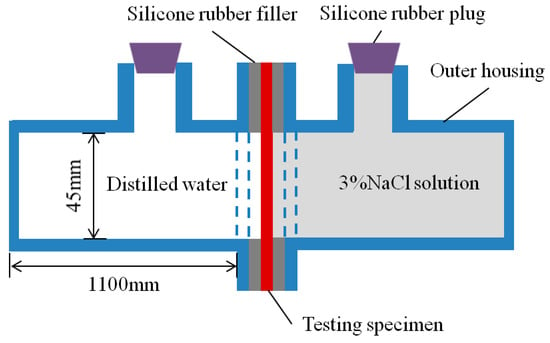
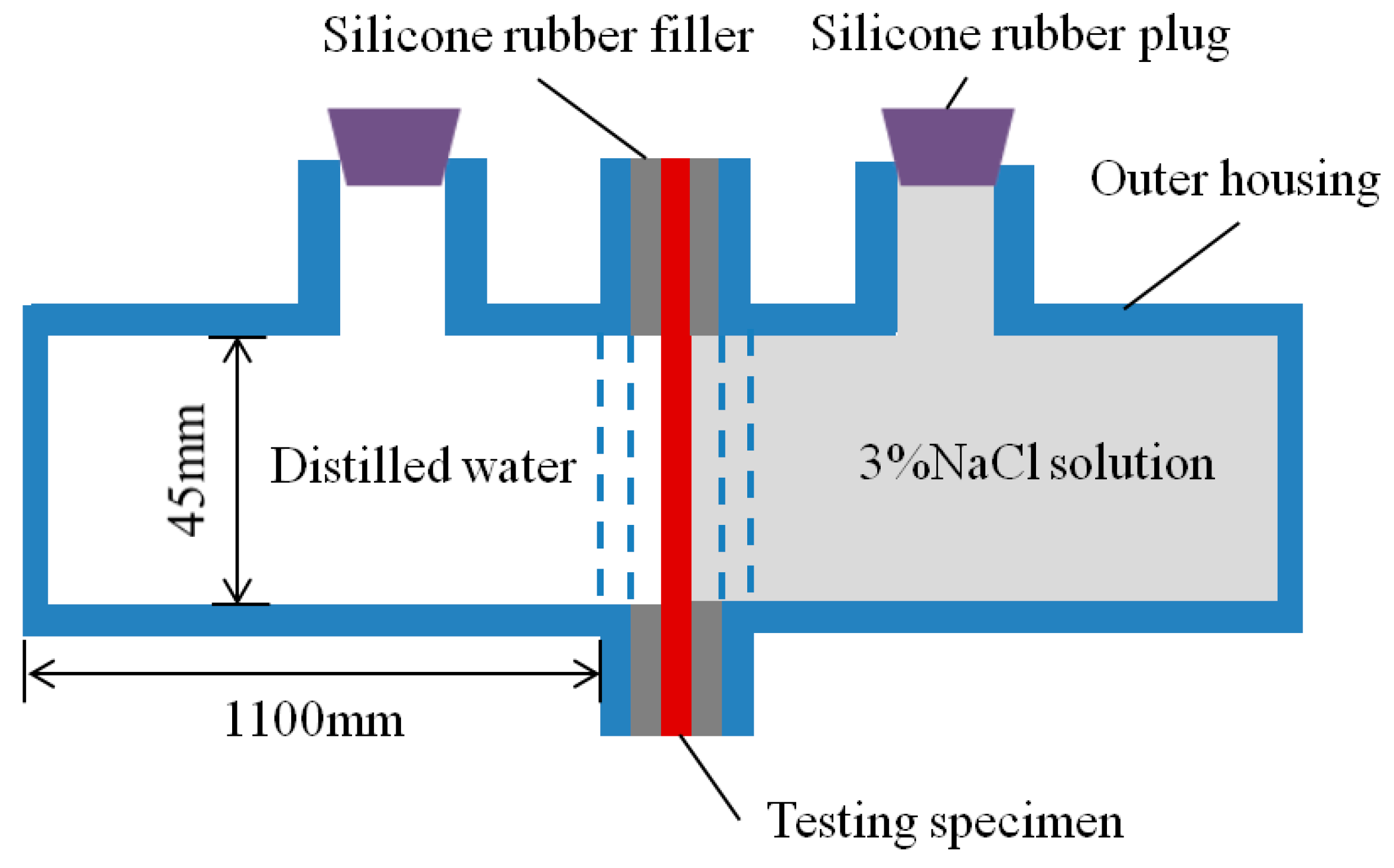
In accordance with Chinese standard JT/T 695-2026 (Ministry of Transport of the People’s Republic of China, Beijing, China), the device shown in Figure 1 was adopted to test the chloride penetration resistance of coatings. Chloride ions in the sodium chloride solution on the right side penetrated through the coating into distilled water on the left side. The chloride ion content in the left distilled water was detected to characterize the chloride penetration resistance of coatings.
Figure 1.
Test device for chloride penetration resistance.
2.8. Fourier Transform Infrared (FTIR) Spectral Characterization
The FTIR spectra of powdered coating samples were recorded on a Bruker ALPHA spectrometer (Bruker Corporation, Billerica, MA, USA) within the wavenumber range of 4000–400 cm−1. All original spectral data were processed via baseline correction and normalization for subsequent comparative analysis.
3. Results and Discussion
3.1. Fluidity and Setting Time
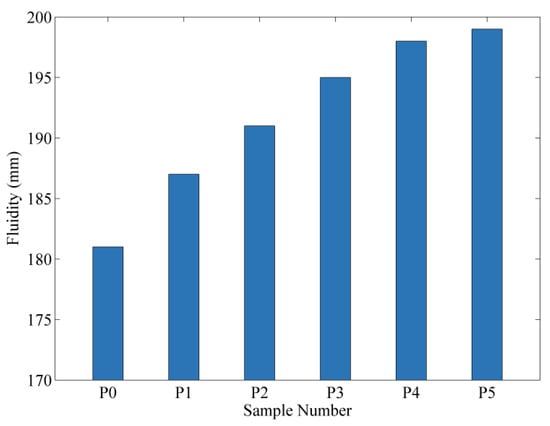
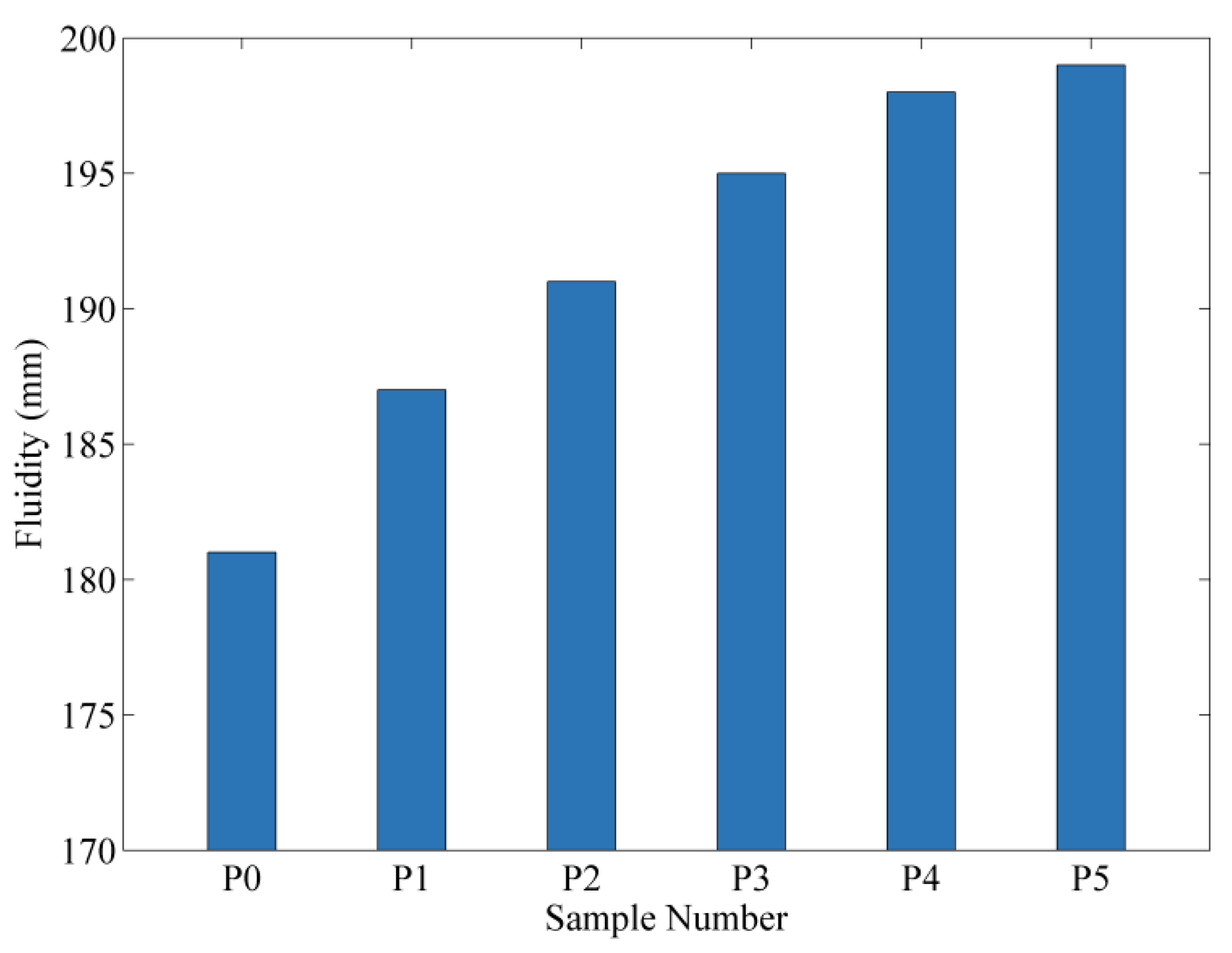
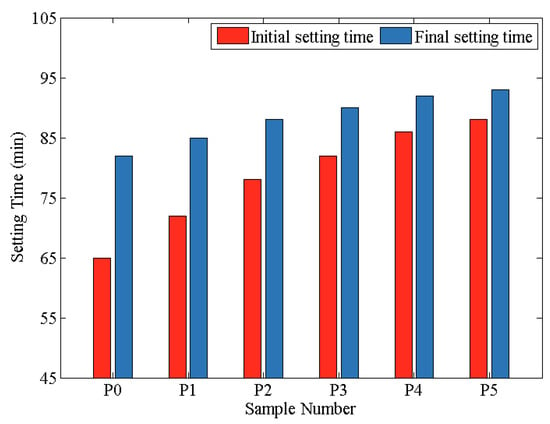
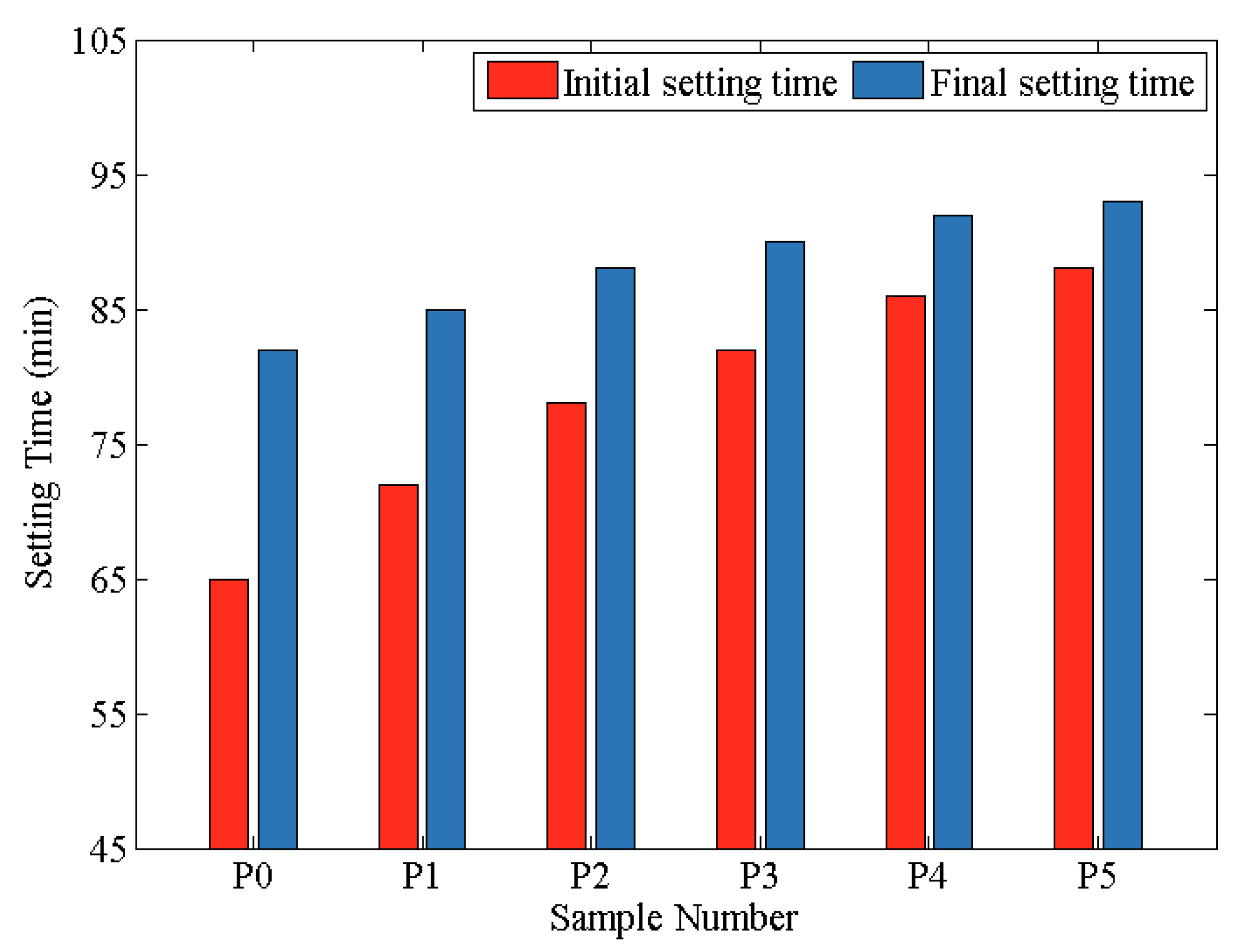
The effects of hydrophobic modifier MTOS dosage on the fluidity and setting time of coatings are illustrated in Figure 2 and Figure 3.
Figure 2.
Effects of MTOS dosage on coating fluidity.
Figure 3.
Effects of MTOS dosage on coating setting time.
As shown in Figure 2 and Figure 3, both fluidity and setting time show a continuous increasing trend with elevated MTOS dosage. Compared with the unmodified blank group, when the MTOS dosage reaches 10 wt.%, the fluidity, initial setting time and final setting time of modified coatings increase by 9.0%, 35.4% and 13.4%, respectively. On the one hand, MTOS possesses a good lubricating effect, which reduces the internal friction between solid particles in fresh slurry and thus improves slurry flowability. On the other hand, MTOS can form dense hydrophobic films covering the surface of aluminosilicate mineral particles, which weakens the interaction between raw particles and water molecules and retards the alkali-activated geopolymerization reaction, consequently prolonging the overall setting time of the coating system [20].
3.2. Bonding Strength
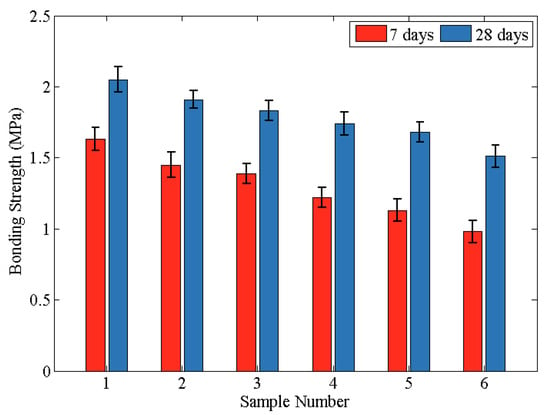
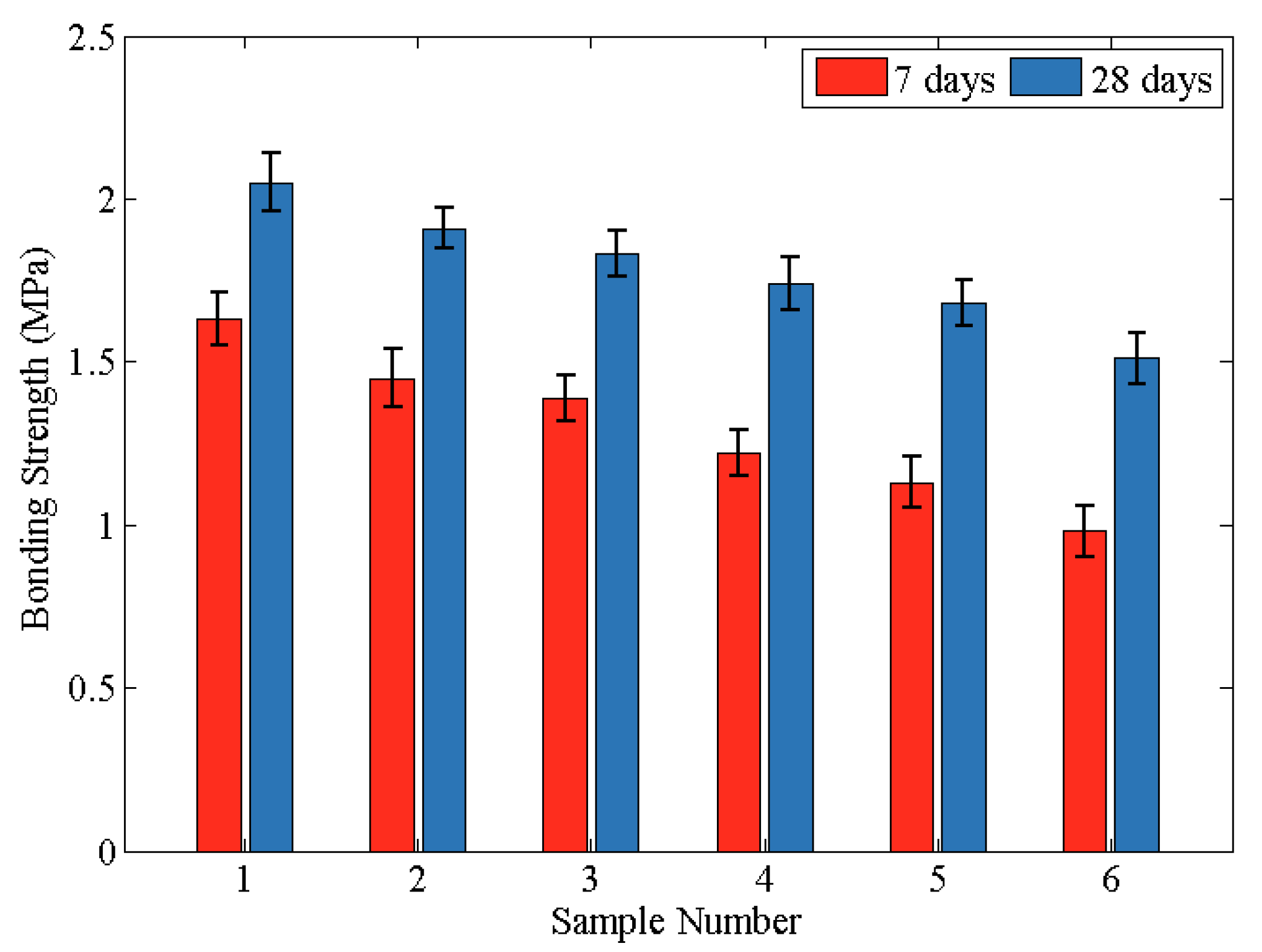
The influence of MTOS dosage on the bonding strength of coatings is presented in Figure 4.
Figure 4.
Effects of MTOS dosage on coating bonding strength.
As shown in Figure 4, it is obvious that the interfacial bonding strength gradually declines with an increase in MTOS content. Relative to the blank group, the 7-day and 28-day bonding strengths decrease by 39.9% and 26.3% respectively at an MTOS dosage of 10 wt.%. The incorporation of excessive MTOS reduces the surface energy of the coating matrix and increases internal microscopic porosity [18], which weakens the physical interfacial adsorption force between the coating and concrete substrate, leading to a reduction in macroscopic bonding strength. Furthermore, MTOS retards the hydration reaction between the geopolymer and cement matrix, leading to a slower development rate of bonding strength with increasing MTOS dosage. At a dosage of 10 wt.%, the 7-day bonding strength is only 64.9% of its 28-day value, which is 18.4% lower than that of unmodified coatings.
3.3. Surface Contact Angle
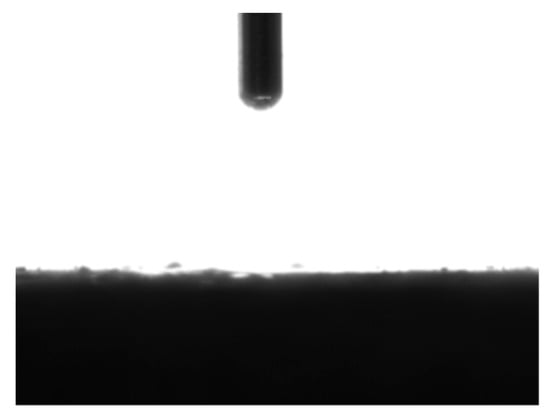
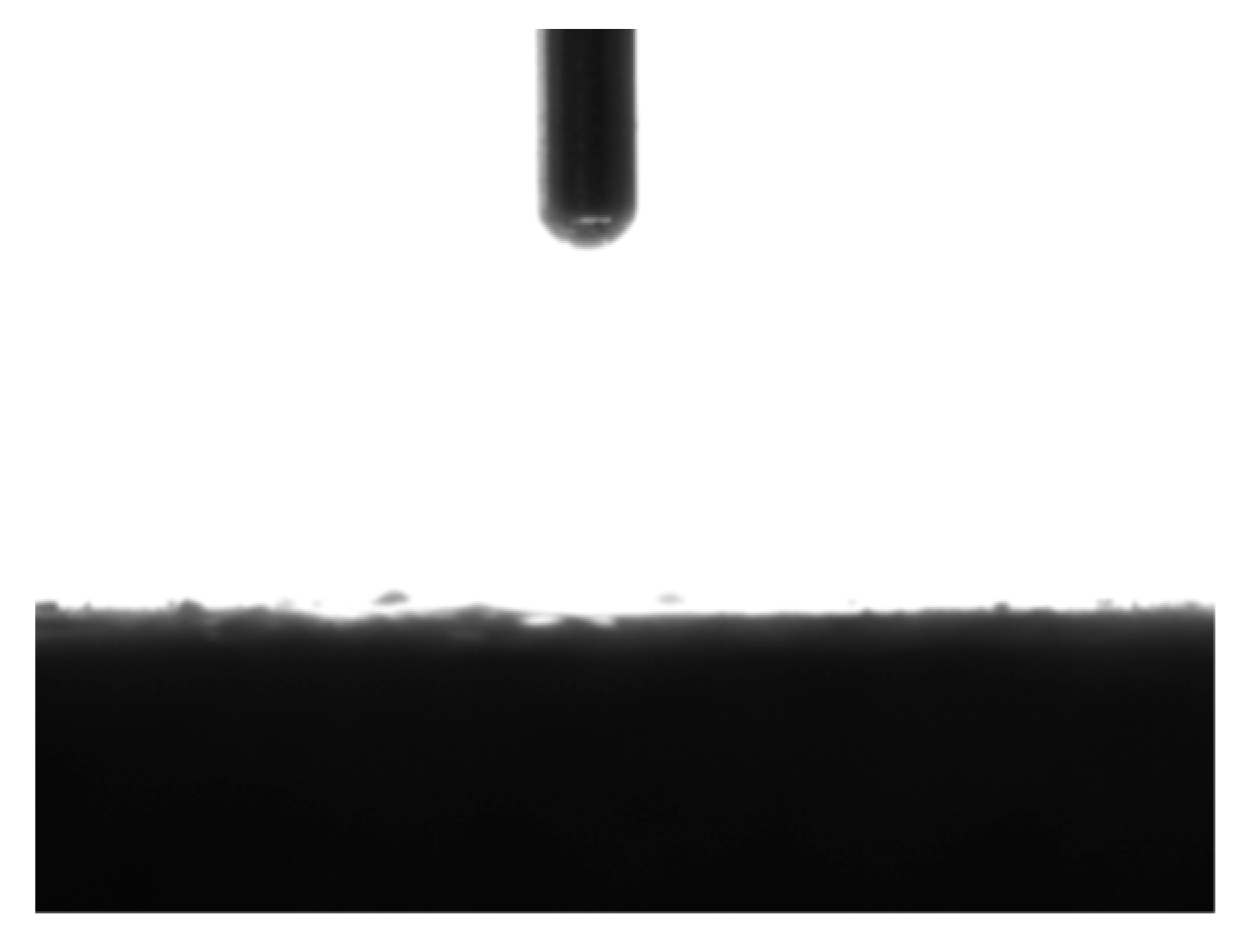
The surface contact angle of the coating without MTOS is displayed in Figure 5. The coating without MTOS exhibits hydrophilic characteristics. Water droplets rapidly infiltrate into the coating interior rather than remaining on the surface, showing an extremely fast water absorption rate.
Figure 5.
Surface contact angle of coating without MTOS.
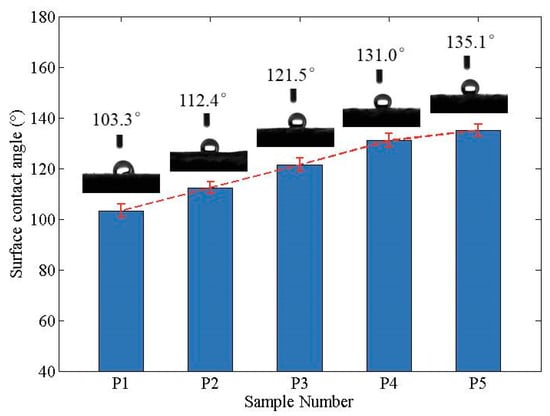
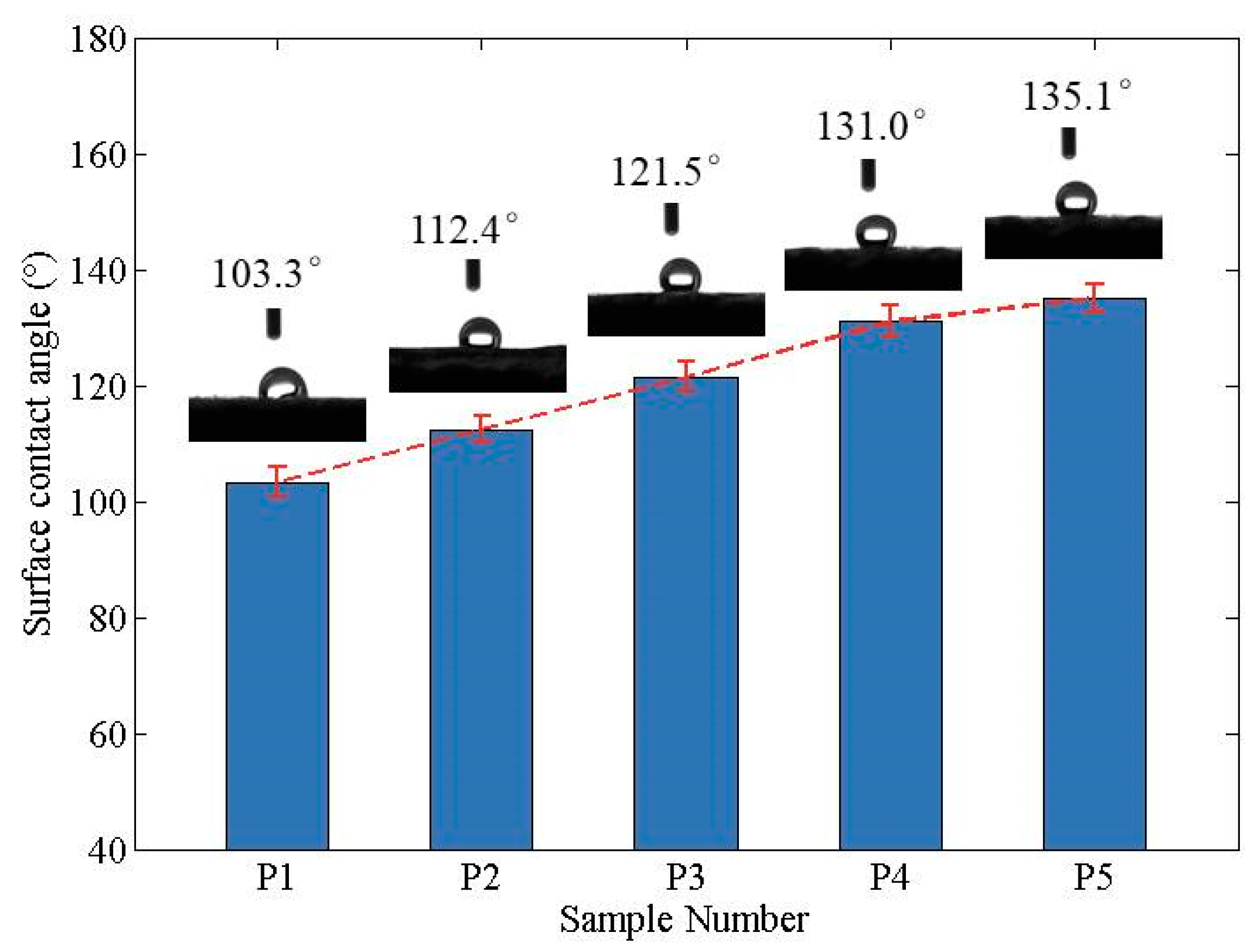
Figure 6 shows the variation in the surface contact angle with different MTOS dosages. The surface contact angle rises continuously with an increase in MTOS content. The coating transforms from hydrophilic to hydrophobic when 2 wt.% MTOS is added, with the contact angle reaching 103.3°. When the MTOS dosage increases to 4 wt.%, 6 wt.%, 8 wt.% and 10 wt.%, the corresponding contact angles are 112.4°, 121.5°, 131.0° and 135.1°, respectively, demonstrating that MTOS significantly enhances surface hydrophobicity. As a typical hydrophobic substance, MTOS contains abundant methyl groups (-CH3). These groups arrange orderly on the HGC surface to construct a low-surface-energy hydrophobic layer, which greatly elevates the surface contact angle [21].
Figure 6.
Effects of MTOS dosage on coating surface contact angle.
Nevertheless, further increasing MTOS content above 8 wt.% exerts a negligible effect on contact angle improvement, and surface hydrophobicity reaches a stable state. On the one hand, the coating surface is almost fully covered by MTOS at this dosage, leaving few unmodified regions. On the other hand, the surface energy approaches the minimum value, and the hydrophobic performance is close to the physical and chemical limit.
3.4. Water Absorption Rate
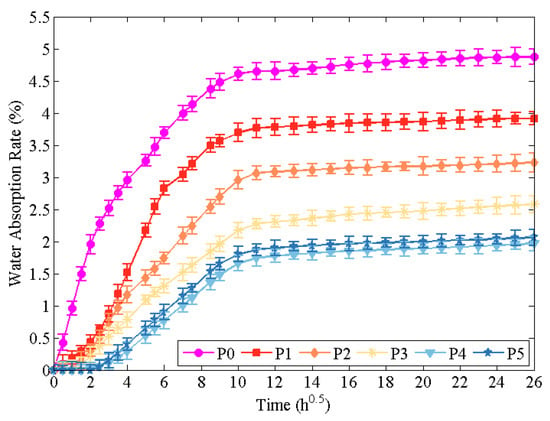
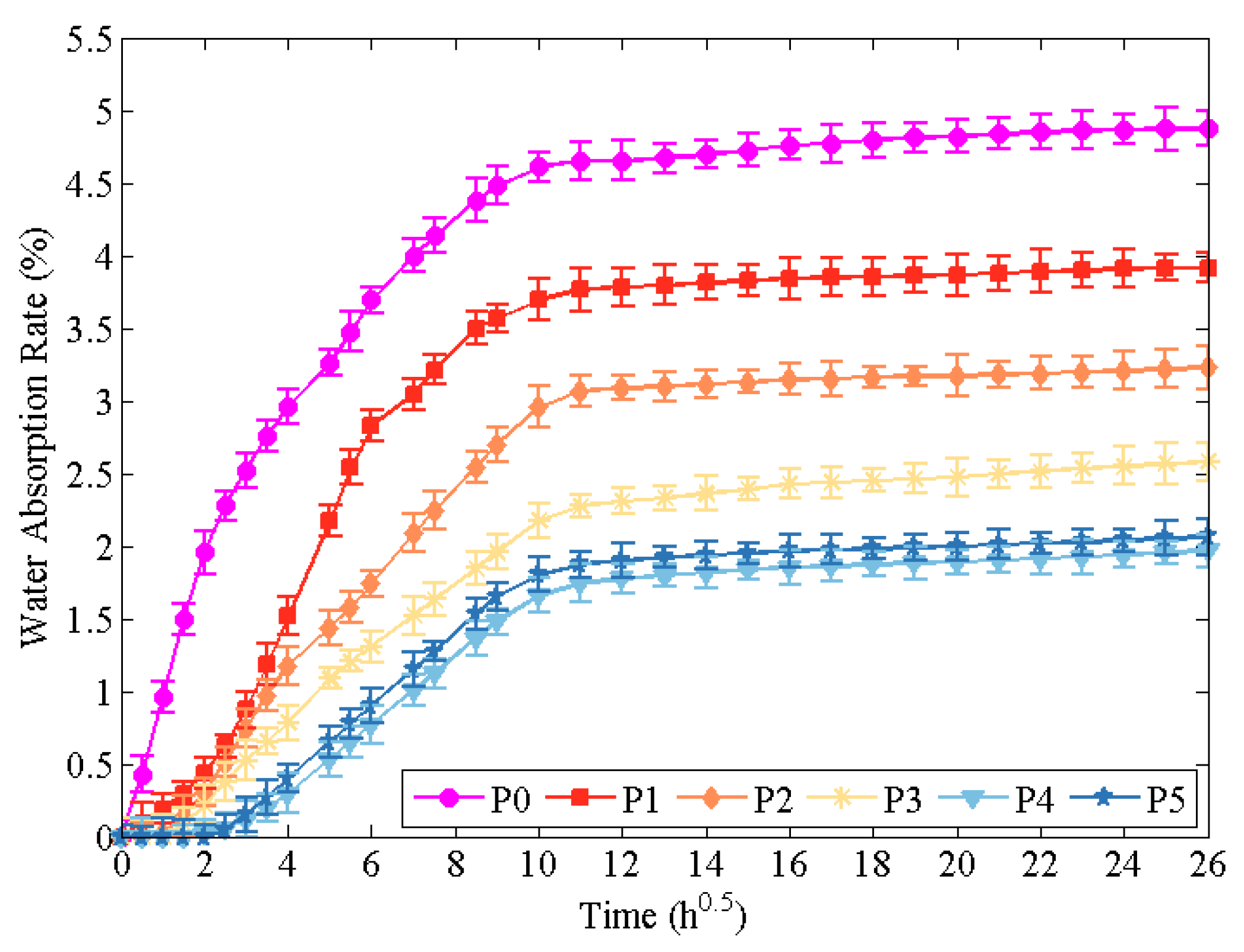
The water absorption behaviors of all coating groups within 28 days are summarized in Figure 7, where the horizontal axis represents the square root of time, and the vertical axis denotes the water absorption rate. The blank sample P0 shows the highest water absorption rate throughout the whole immersion period, with a final value of 4.87% after 28 days of immersion, confirming the strong intrinsic water absorption capacity of pristine geopolymer materials. The coating modified with 8 wt.% MTOS achieves the minimum water absorption rate of 2.06%, which is 57.7% lower than that of the blank group. The hydrophobic network constructed by MTOS inside the coating matrix can effectively block the capillary water transport channels and suppress moisture ingress.
Figure 7.
Effects of MTOS dosage on sample water absorption rate.
3.5. Chloride Ion Penetration Resistance
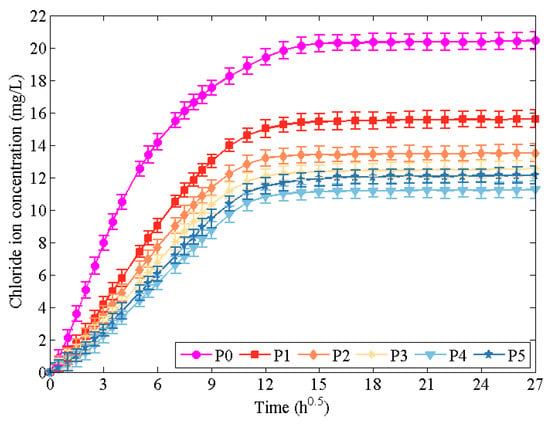
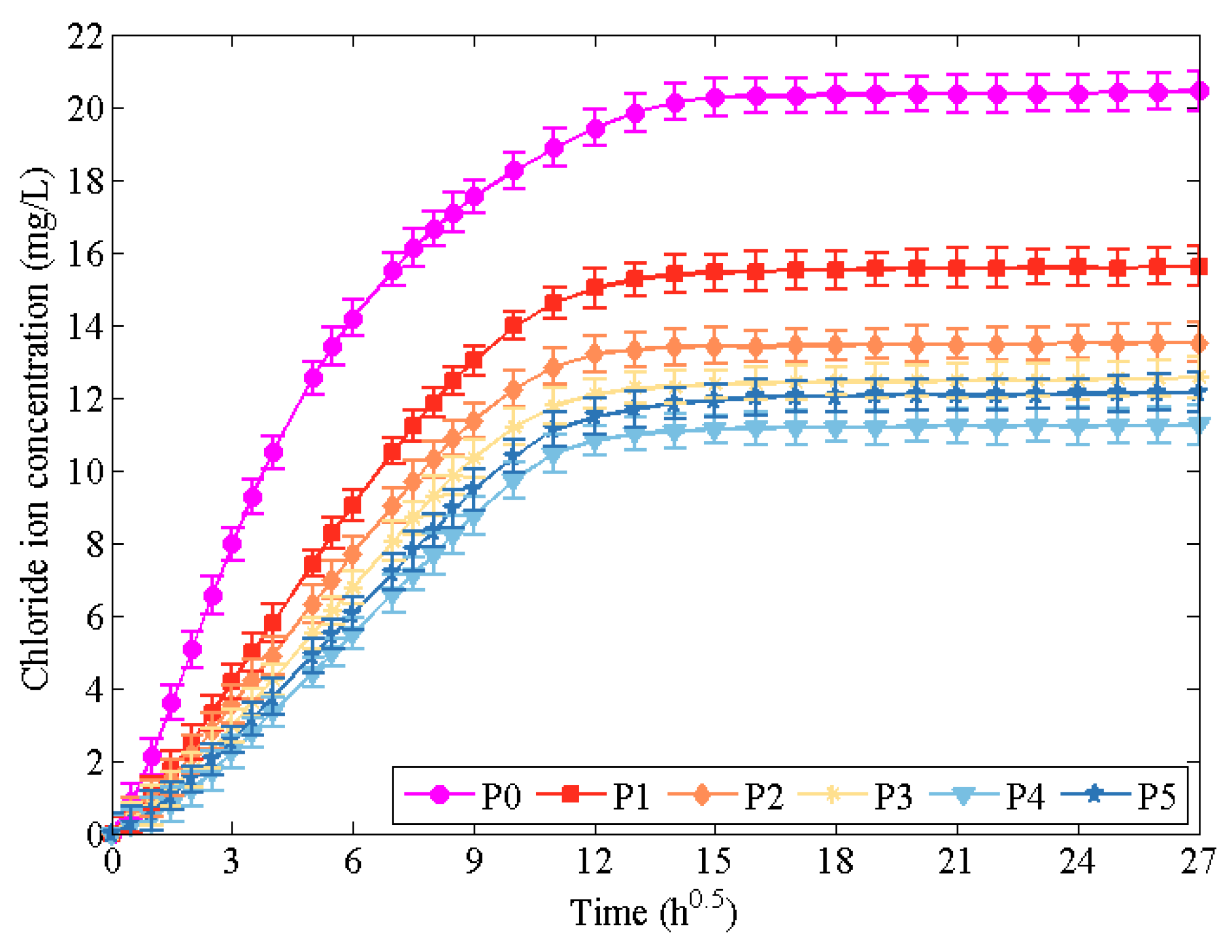
Figure 8 illustrates the chloride penetration resistance of coatings with various MTOS dosages, with time as the horizontal axis and chloride ion concentration as the vertical axis. The chloride barrier capacity is first improved and then deteriorated with the continuous rise in MTOS dosage, and the optimal anti-chloride penetration performance is achieved at 8 wt.% MTOS. After 30 days of continuous chloride erosion, the chloride ion concentration of the modified coating is 45.0% lower than that of the unmodified sample, which verifies that the internal hydrophobic barrier derived from MTOS can effectively hinder the inward migration of chloride ions and endow coatings with satisfactory anti-corrosion potential.
Figure 8.
Effects of MTOS dosage on chloride penetration resistance of coatings.
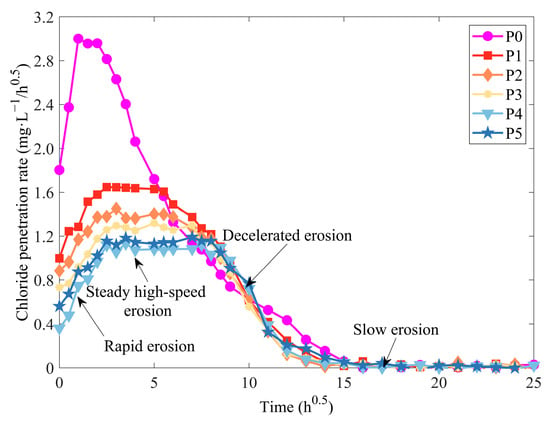
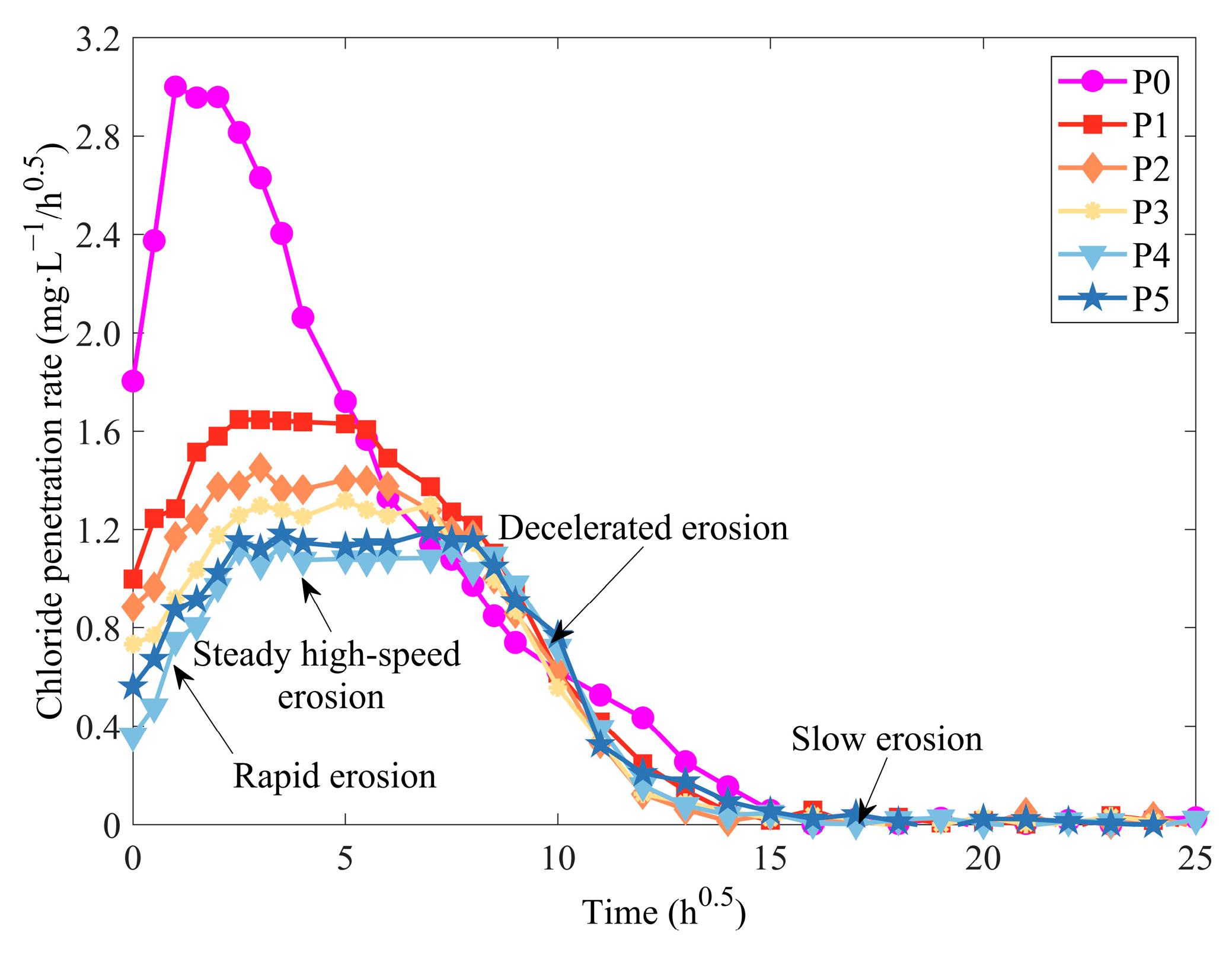
To further analyze the chloride penetration behavior in different stages, chloride penetration rate curves are obtained by differentiating concentration–time curves, as shown in Figure 9.
Figure 9.
Variation rule of chloride ion penetration rate.
According to the magnitude and variation rate of the chloride penetration rate, the whole chloride erosion process is divided into four stages: rapid erosion, steady high-speed erosion, decelerated erosion and slow erosion.
In the rapid erosion stage, chloride ions migrate rapidly, driven by water carrier. Owing to abundant interconnected micropores and inherent hydrophilicity, the blank sample P0 presents the maximum penetration rate and the shortest duration of this stage. MTOS introduces -CH3 and Si-CH3 groups into the geopolymer, which reduces the exposure of polar hydrophilic groups and markedly decreases its surface free energy. This weakens the water–coating interaction, lowers the peak chloride penetration rate, and extends the duration of the rapid erosion stage. At 8 wt.% MTOS, the peak penetration rate is reduced by 62.2% compared with the blank group.
In the steady high-speed erosion stage, chloride erosion tends to be stable. Driven by capillary action, chloride ions spread inward along the hydrophobic layer. Sample P0 has the highest penetration rate and only lasts for 3 h in this stage, implying numerous interconnected capillary pores in unmodified coatings that allow for the rapid diffusion of chloride ions. Increasing MTOS content markedly extends the duration of steady erosion. The coating with 8 wt.% MTOS has the lowest peak penetration rate and the longest steady-stage duration, with the peak rate reduced by 62.2% and the duration prolonged by 23 times relative to the blank sample. The hydrophobic layer derived from MTOS not only inhibits rapid chloride invasion but also restricts continuous diffusion in capillary pores. When MTOS dosage exceeds 10 wt.%, the local aggregation of excessive MTOS generates new pores and interfacial defects, which provide extra penetration channels and consequently increase the chloride penetration rate in the steady stage.
The decelerated erosion stage corresponds to the gradual attenuation of chloride diffusion into deep pores. As capillary pores are gradually filled with water, diffusion resistance increases, and the penetration rate decreases. Sample P0 enters this stage the earliest with the longest duration of 252 h, owing to the interconnected internal pores without effective diffusion restriction. The duration of decelerated erosion is obviously shortened with the addition of MTOS and reaches the minimum value at 8 wt.% MTOS with a reduction of 28.1%. The good hydrophobicity of MTOS improves the sealing of internal pores and reduces the number of interconnected pores. This restricts water diffusion pathways and allows the samples to reach water saturation within a shorter time.
In the slow erosion stage, the penetration rate tends to be stable and finally approaches zero as the capillary pores are fully saturated. The MTOS dosage shows limited influence on this stage, and all groups exhibit similar slow steady erosion characteristics.
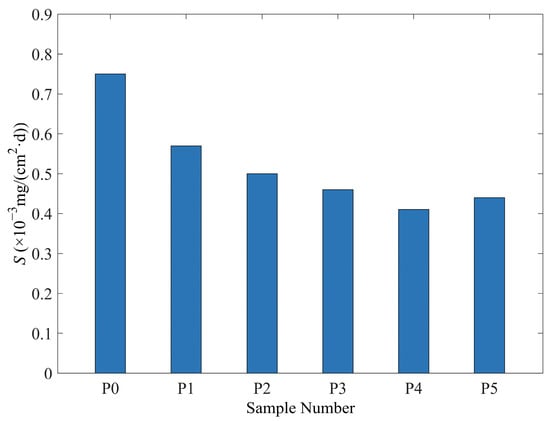
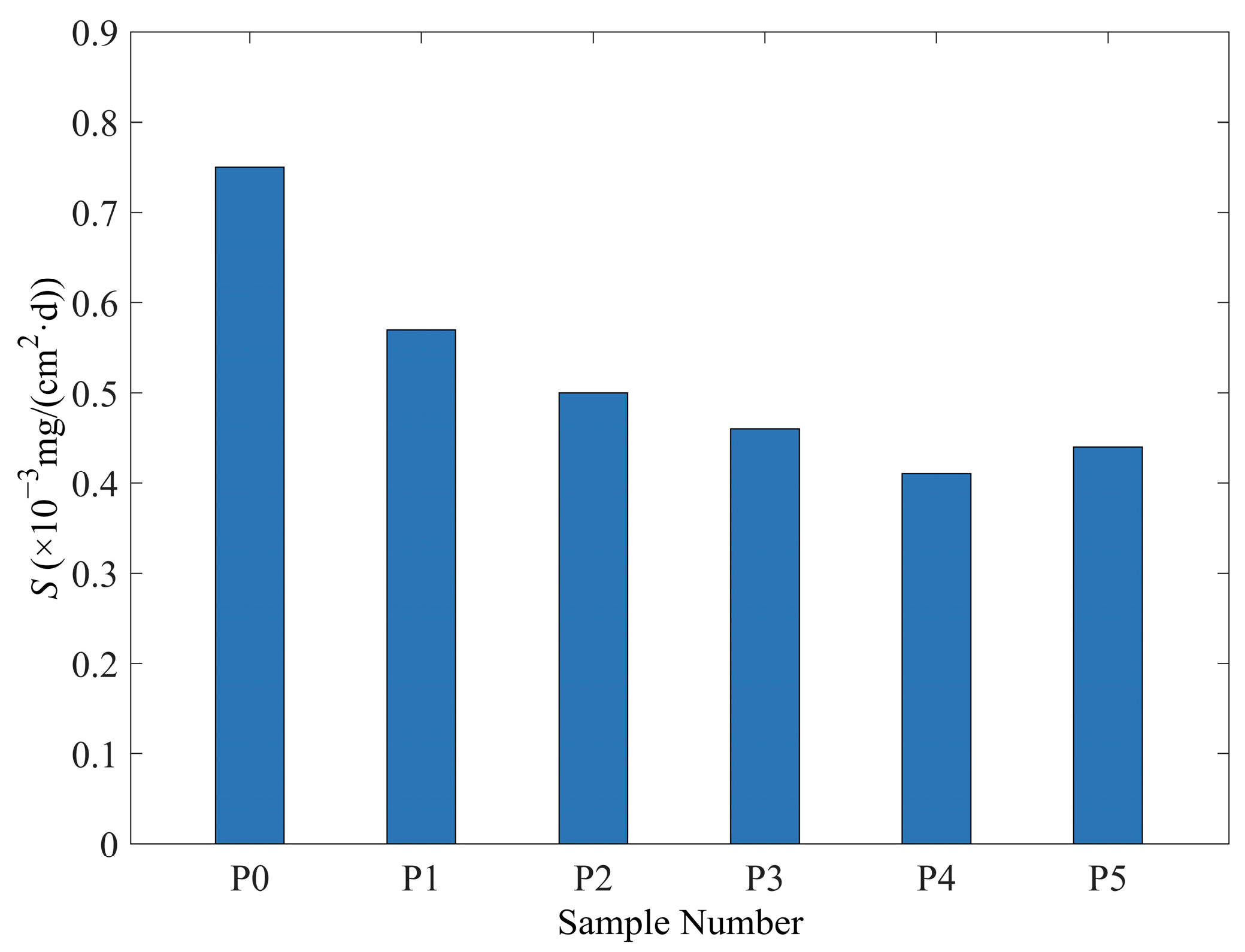
The average chloride penetration rate after 30-day erosion is calculated according to Equation (1), and the results are shown in Figure 10.
where is the average chloride penetration rate, and are the initial and final chloride ion concentrations of distilled water, is the volume of distilled water, is the contact area between coating and solution, and is the number of test days.
Figure 10.
Effects of MTOS dosage on average chloride ion penetration rate.
As shown in Figure 10, the average chloride penetration rate decreases with the increase in MTOS content below 8 wt.%, while it rises at 10 wt.% MTOS, proving that excessive MTOS introduces internal defects and deteriorates anti-corrosion performance. The minimum average penetration rate of 0.41 × 10⁻³ mg/(cm2⋅d) is achieved at 8 wt.% MTOS, which is only 41% of the limit value specified in Chinese standard JT/T 695-2007 (1 × 10⁻³ mg/(cm2⋅d)).
3.6. FTIR Analysis
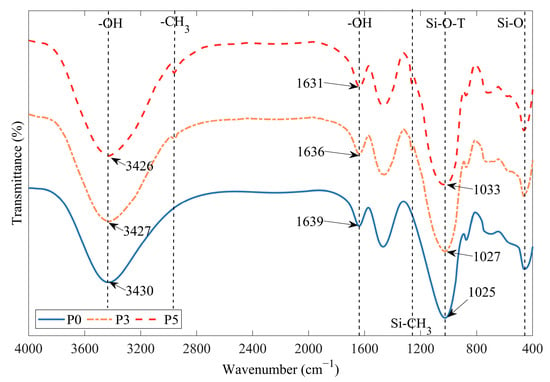
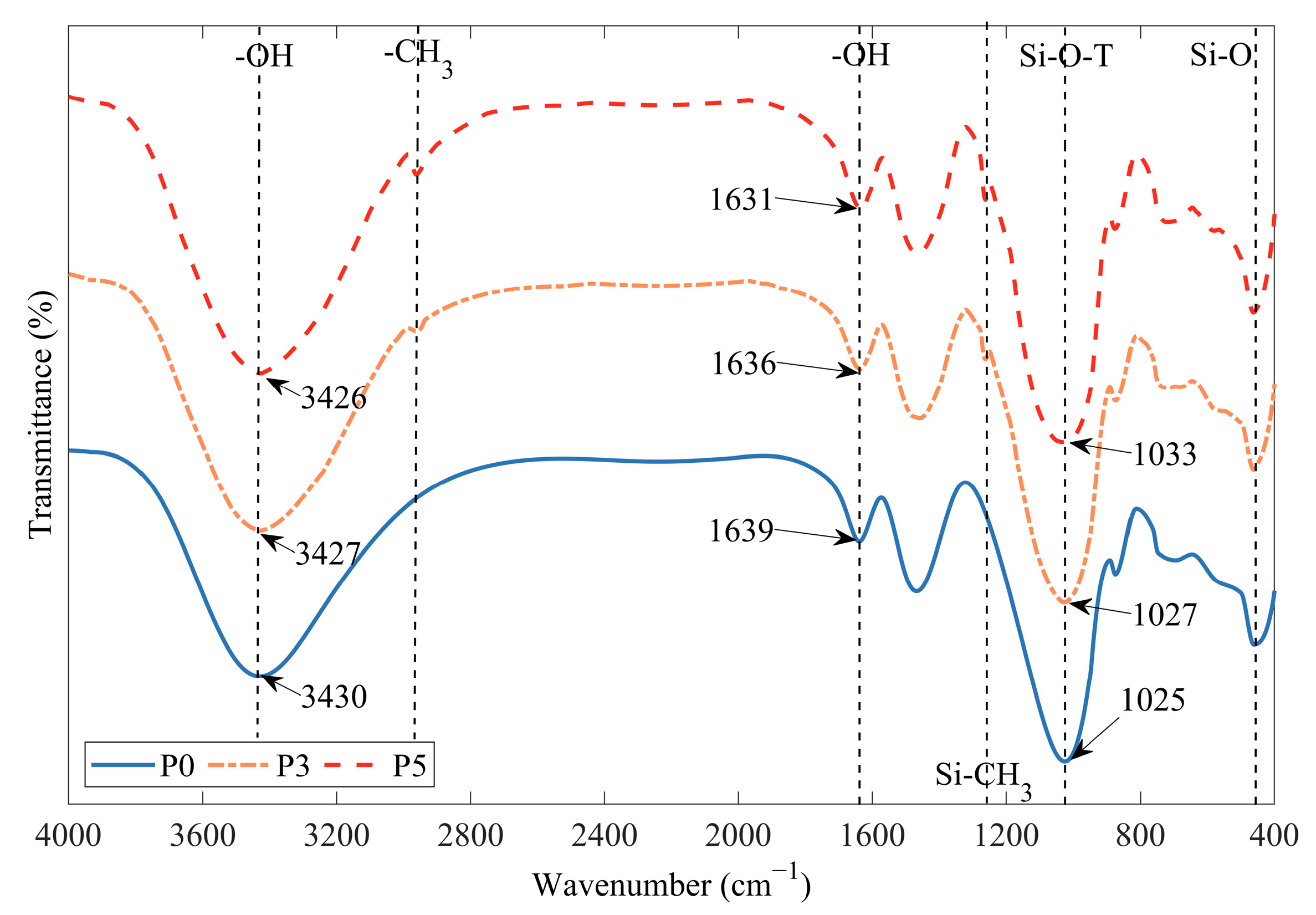
The FTIR spectra of geopolymer coatings with different MTOS dosages are presented in Figure 11.
Figure 11.
FTIR spectra of geopolymer coatings with different MTOS contents.
The absorption peak near 460 cm−1 is assigned to the asymmetric stretching vibration of Si-O bonds, which corresponds to the silica tetrahedral structure inside geopolymers. Its intensity and position are critical indicators for evaluating the polymerization degree and formation of an aluminosilicate skeleton [22]. The characteristic peaks at 3430 cm−1 and 1639 cm−1 belong to the stretching vibration of -OH groups, which are related to free water and adsorbed water in materials. These peaks shift towards lower wavenumbers with increasing MTOS dosage, demonstrating that MTOS reduces the content of hydrophilic -OH groups [18].
The band around 1025 cm−1 is attributed to Si-O-T asymmetric stretching vibration, which shifts to 1033 cm−1 after MTOS modification. The Si-OH groups produced by MTOS hydrolysis easily react with silicate species in geopolymers to form stable Si-O-Si bonds, leading to a blue shift in Si-O-T absorption peaks [23].
Distinct vibration peaks of -CH3 and Si-CH3 groups are detected at 2962 cm−1 and 1262 cm−1 in samples P3 and P5, and the peak intensity of P5 is much higher than that of P3. No such characteristic peaks are observed in blank sample P0. This confirms that MTOS is successfully incorporated into the geopolymer matrix and interacts with the matrix via physical and chemical reactions. The methyl groups from MTOS construct low-surface-energy hydrophobic layers, reduce the exposure of polar hydrophilic groups, lower water adsorption capacity and greatly improve surface hydrophobicity.
4. Conclusions
In this study, hydrophobic geopolymer coatings were fabricated using MTOS as a hydrophobic modifier, and their comprehensive anti-corrosion performances were systematically tested. The main conclusions are summarized as follows:
Increasing MTOS dosage effectively improves the fluidity and setting time of fresh geopolymer coatings, which is beneficial to on-site construction operation. However, excessive MTOS addition causes a significant decline in interfacial bonding strength; the 7-day and 28-day bonding strengths drop by 39.9% and 26.3% at 10 wt.% MTOS; hence excessive modifier addition should be avoided in practical applications.
MTOS can effectively enhance the surface hydrophobicity and reduce the water absorption of concrete substrates. The maximum contact angle of 135.1° and the minimum water absorption rate of 2.06% are obtained at 8 wt.% MTOS. Further increasing MTOS dosage above 8 wt.% brings little improvement in hydrophobicity and even causes a rise in the water absorption rate.
The chloride ion concentration first decreases and then increases with the growth of MTOS content, and the optimal dosage is 8 wt.%. After 30 days of chloride erosion, the chloride ion concentration is reduced by 45.0% compared with unmodified coatings.
The chloride erosion process is divided into four typical stages. MTOS modification can reduce the peak chloride penetration rate and adjust the duration of each erosion stage. The coating with 8 wt.% MTOS exhibits the lowest average chloride penetration rate of 0.41 × 10⁻³ mg/(cm2⋅d), satisfying the standard requirement and showing satisfactory practical application potential.
MTOS forms a stable crosslinked network with the geopolymer matrix via chemical bonding. The grafted Si-CH3 and -CH3 functional groups reduce the surface energy of HGCs. Consequently, MTOS modification significantly improves the corrosion resistance of HGCs.
Due to the limited microscale testing methods adopted in this study, the pore structure evolution and more microstructural variations in MTOS-modified geopolymer coatings remain unclarified. Future work will supplement comprehensive microscopic tests and multiscale characterization to clarify the intrinsic correlation between microstructural evolution and macroscopic anti-corrosion performance, thereby refining the theoretical framework of MTOS-modified geopolymer coatings.
Author Contributions
Conceptualization, methodology, investigation, Y.K.; writing—original draft preparation, Z.Z.; writing—review and editing, A.Y. and M.W.; supervision, data curation, X.C. All authors have read and agreed to the published version of the manuscript.
Funding
This research was supported by the Guizhou Expressway Group Co., Ltd. Technology Project (Grants 2024-GS006 and TRZX[2025]175).
Institutional Review Board Statement
Not applicable.
Informed Consent Statement
Not applicable.
Data Availability Statement
The original contributions presented in this study are included in the article material. Further inquiries can be directed to the corresponding author.
Conflicts of Interest
The authors declare no conflicts of interest. Authors Yuanxu Kuang, Zhu Zhang, Ai Yang and Mao Wang were employed by Tongren Operation Management Center of Guizhou Expressway Group Co., Ltd., Tongren, China. Authors Xin Chen was employed by Guizhou Expressway Industry Co., Ltd., Guiyang, China during the conduct of this study. The funders had no role in the design of the study, the collection, analysis, or interpretation of data, the writing of the manuscript, or the decision to publish the results.
References
- Tennakoon, C.; Shayan, A.; Sanjayan, J.G.; Xu, A. Chloride ingress and steel corrosion in geopolymer concrete based on long term tests. Mater. Des. 2017, 116, 287–299. [Google Scholar] [CrossRef] [Scilit]
- Albitar, M.; Ali, M.M.; Visintin, P.; Drechsler, M. Durability evaluation of geopolymer and conventional concretes. Constr. Build. Mater. 2017, 136, 374–385. [Google Scholar] [CrossRef] [Scilit]
- Berndt, M. Evaluation of coatings, mortars and mix design for protection of concrete against sulphur oxidising bacteria. Constr. Build. Mater. 2011, 25, 3893–3902. [Google Scholar] [CrossRef] [Scilit]
- Sadati, S.; Arezoumandi, M.; Shekarchi, M. Long-term performance of concrete surface coatings in soil exposure of marine environments. Constr. Build. Mater. 2015, 94, 656–663. [Google Scholar] [CrossRef] [Scilit]
- Zha, Z.; Guo, L.; Feng, L.; Lu, H.; Zou, X. Polydopamine functionalized graphene oxide nanocomposites reinforced the corrosion protection and adhesion properties of waterborne polyurethane coatings. Eur. Polym. J. 2019, 120, 109249. [Google Scholar] [CrossRef] [Scilit]
- Moradllo, K.M.; Shekarchi, M.; Hoseini, M. Time-dependent performance of concrete surface coatings in tidal zone of marine environment. Constr. Build. Mater. 2012, 30, 198–205. [Google Scholar] [CrossRef] [Scilit]
- Li, B.; Li, Z.C.; Zhou, Y.W.; Zhao, C.H.; Liu, L.Y.; Yu, Y.; Ma, Q.Q. Comprehensive research on high performance graphene oxide-geopolymer anticorrosive coating: Material design and corrosion resistance. Constr. Build. Mater. 2025, 491, 142749. [Google Scholar] [CrossRef] [Scilit]
- Aguirre-Guerrero, M.A.; Robayo-Salazar, A.R.; Gutiérrez, D.M.R. A novel geopolymer application: Coatings to protect reinforced concrete against corrosion. Appl. Clay Sci. 2017, 135, 437–446. [Google Scholar] [CrossRef] [Scilit]
- Akshay, T.S.; Rainy, G.; Abhijit, B.; Tanwar, D.; Singh, A.; Salammal, S.T.; Dhand, C.; Mishra, D. TiO2—Geopolymer based novel corrosion protective micro-coatings to emaciate mild steel oxidation in severe environments. Constr. Build. Mater. 2023, 395, 132252. [Google Scholar] [CrossRef] [Scilit]
- Jiang, C.; Wang, A.; Bao, X.; Chen, Z.; Wang, Z. Protective Geopolymer Coatings Containing Multi-Componential Precursors: Preparation and Basic Properties Characterization. Materials 2020, 13, 3448. [Google Scholar] [CrossRef] [Scilit] [PubMed]
- Zhou, Y.; Yu, Y.; Guo, W.; Xing, F.; Guo, M. Development of inorganic anticorrosive coatings for steel bars: Corrosion resistance testing and design. Cem. Concr. Compos. 2024, 152, 105612. [Google Scholar] [CrossRef] [Scilit]
- Zuo, J.; Luo, S.; Dong, B.; Wei, G.; Wang, Y. Epoxy emulsion modified geopolymer coating for long-term corrosion protection of steel. Case Stud. Constr. Mater. 2025, 22, e04252. [Google Scholar] [CrossRef] [Scilit]
- Yu, Y.; Zhou, Y.; Guo, M.; Jin, S.; Li, B.; Huang, T. Unveiling the mechanism of graphene oxide in reinforcing geopolymer coatings for superior corrosion protection: Multiscale insights from experiments and molecular dynamics. J. Build. Eng. 2026, 117, 114887. [Google Scholar] [CrossRef] [Scilit]
- Dong, C.; Shao, N.; Yan, F.; Ji, R.; Wei, X.K.; Zhang, Z.T. A novel integration strategy for the foaming and hydrophobization of geopolymer foams. Cem. Concr. Res. 2022, 160, 106919. [Google Scholar] [CrossRef] [Scilit]
- Zhang, D.; Zhu, H.; Wu, Q.; Yang, T.; Yin, Z.F.; Tian, L. Investigation of the hydrophobicity and microstructure of fly ash-slag geopolymer modified by polydimethylsiloxane. Constr. Build. Mater. 2023, 369, 130540. [Google Scholar] [CrossRef] [Scilit]
- She, Y.; Chen, Y.; Li, L.; Xue, L.J.; Yu, Q.L. Understanding the generation and evolution of hydrophobicity of silane modified fly ash/slag based geopolymers. Cem. Concr. Compos. 2023, 142, 105206. [Google Scholar] [CrossRef] [Scilit]
- Sidhu, J.; Kumar, P. Experimental investigation on the effect of integral hydrophobic modification on the properties of fly ash-slag based geopolymer concrete. Constr. Build. Mater. 2024, 452, 138818. [Google Scholar] [CrossRef] [Scilit]
- Ruan, S.; Chen, S.; Lu, J.; Zeng, Q.; Liu, Y.; Yan, D.M. Waterproof geopolymer composites modified by hydrophobic particles and polydimethylsiloxane. Compos. Part B 2022, 237, 109865. [Google Scholar] [CrossRef] [Scilit]
- Zhang, Y.; Liu, W.; Liu, M. Setting time and mechanical properties of chemical admixtures modified FA/GGBS-based engineered geopolymer composites. Constr. Build. Mater. 2024, 431, 136473. [Google Scholar] [CrossRef] [Scilit]
- Ruan, S.; Yan, D.; Chen, S.; Liu, Y.; Zhang, Y.J. Process and mechanisms of multi-stage water sorptivity in hydrophobic geopolymers incorporating polydimethylsiloxane. Cem. Concr. Compos. 2022, 128, 104460. [Google Scholar] [CrossRef] [Scilit]
- Mao, Y.; Huang, Q.; Meng, B.; Zhou, K.; Liu, G.P.; Gugliuzza, A.; Drioli, E.; Jin, W.Q. Roughness-enhanced hydrophobic graphene oxide membrane for water desalination via membrane distillation. J. Membr. Sci. 2020, 611, 118364. [Google Scholar] [CrossRef] [Scilit]
- Ismail, I.; Bernal, A.S.; Provis, L.J.; Rackel, S.N.; Hamdan, S.; van Deventer, J.S.J. Modification of phase evolution in alkali-activated blast furnace slag by the incorporation of fly ash. Cem. Concr. Compos. 2014, 45, 125–135. [Google Scholar] [CrossRef] [Scilit]
- Aiken, T.A.; Kwasny, J.; Sha, W.; Soutsos, M.N. Effect of slag content and activator dosage on the resistance of fly ash geopolymer binders to sulfuric acid attack. Cem. Concr. Res. 2018, 111, 23–40. [Google Scholar] [CrossRef] [Scilit]

Disclaimer/Publisher’s Note: The statements, opinions and data contained in all publications are solely those of the individual author(s) and contributor(s) and not of MDPI and/or the editor(s). MDPI and/or the editor(s) disclaim responsibility for any injury to people or property resulting from any ideas, methods, instructions or products referred to in the content. |
© 2026 by the authors. Licensee MDPI, Basel, Switzerland. This article is an open access article distributed under the terms and conditions of the Creative Commons Attribution (CC BY) license.