


Abstract
This study investigated the dynamic performance of laminated veneer lumber (LVL) shear-walled structures retrofitted with an aluminum oxide (Al2O3) nanocoating through finite element analysis (FEA) using SAP2000 software. Later, the ground motion data from the 1968 Takochi-Oki earthquake was used to conduct linear assessments of the structure. LVL, a sustainable and high-performance timber material, was selected for its favorable strength-to-weight ratio and environmental advantages. Two structural models—a reference uncoated LVL structure and an Al2O3-coated counterpart—were analyzed to evaluate the influence of the nanocoating on modal and structural behavior. The Al2O3 coating, applied as a thin surface layer (0.002 m per side), was modeled to enhance stiffness and damping characteristics. Modal analysis revealed an increase in natural frequencies from 0.75–1.72 Hz to 1.19–2.85 Hz after coating, indicating improved rigidity. The maximum top displacement decreased by approximately 18%, from 77 mm to 65 mm, without significant mass addition. Additionally, von Mises stresses were reduced from 86.65 MPa to 8.03 MPa, confirming stress redistribution and improved structural stability. These results demonstrate that the Al2O3 nanocoating effectively enhances the stiffness, damping, and overall dynamic response of LVL shear walls. The proposed method offers a lightweight, non-invasive, and sustainable alternative to conventional retrofitting techniques, contributing to the development of resilient and eco-efficient timber construction systems.
1. Introduction
Over the past decade, the global construction sector has undergone significant evolution, driven primarily by the growing need to reduce carbon emissions, minimize embodied energy, and integrate renewable materials into building practices. In this context, laminated veneer lumber (LVL) has emerged as a leading structural material for high-performance timber construction. LVL is manufactured by gluing multiple layers of thin wood veneers, generally aligned with the grain in the same direction, resulting in panels with exceptional mechanical strength, stiffness, and dimensional stability. These characteristics, combined with lightweight construction, ease of prefabrication, and environmental advantages, render LVL a competitive alternative to conventional materials such as steel and reinforced concrete for low- and mid-rise buildings [1,2]. Despite its increasing adoption, the dynamic behavior of LVL shear-walled structures remains a focus of ongoing research. Under dynamic actions, such as seismic loads, wind-induced vibrations, or impacts, the structural performance of LVL systems is strongly influenced by veneer orientation, adhesive quality, connection detailing, and anisotropic material properties. Additionally, environmental factors, including variations in temperature and humidity, can modify panel stiffness, natural frequencies, damping characteristics, and energy dissipation capacity. Enhancing these dynamic properties is critical for ensuring safety, comfort, and the long-term durability of LVL structures [3,4,5].
Conventional strengthening methods, such as steel bracing, reinforced joints, or the application of fiber-reinforced polymers (FRPs), can improve both stiffness and energy absorption. However, they frequently introduce additional weight, increase construction complexity, and compromise the architectural and sustainability benefits of timber systems [6,7,8]. Consequently, attention has shifted toward alternative approaches that are lightweight, non-invasive, and environmentally compatible. Among these approaches, nanotechnology-based surface modification, particularly nanocoating techniques, has demonstrated considerable promise in enhancing both the material-level and structural-level performance of LVL components. Nanotechnology, which manipulates matter at scales ranging from 1 to 100 nanometers, introduces unique chemical, physical, and mechanical phenomena that differ significantly from bulk materials. At the nanoscale, materials exhibit higher surface-to-volume ratios, stronger interatomic interactions, and unique electrostatic effects, enabling the development of advanced composites with tailored stiffness, toughness, and functionality [9]. This field has already transformed sectors such as electronics, aerospace, and materials science, and its applications in civil and structural engineering are expanding rapidly [10,11,12,13,14]. In construction, nanotechnology allows for the creation of smart, durable, and multifunctional materials. A variety of nanoparticles including silicon dioxide (SiO2), titanium dioxide (TiO2), aluminum oxide (Al2O3), zinc oxide (ZnO), and carbon nanotubes (CNTs) have been successfully incorporated into cement-based materials, polymer matrices, and surface coatings. Nano-silica, for instance, improves microstructural compactness and mechanical strength, while nano-titania imparts UV resistance and photocatalytic self-cleaning functionality. Nano-alumina (Al2O3) is particularly noteworthy due to its high hardness, elastic modulus (~300 GPa), chemical inertness, and thermal conductivity. When integrated into wood or composite matrices, alumina nanoparticles enhance mechanical performance by reinforcing interfacial bonding between lignocellulosic fibers and adhesives. Although nanotechnology has been extensively explored in cementitious and polymeric composites, its application in engineered timber, particularly LVL, is relatively recent. The hierarchical structure of wood, composed of cellulose, hemicellulose, and lignin, provides multiple opportunities for nanoscale enhancement. Hydroxyl groups on cellulose microfibrils readily interact with nanoparticles through hydrogen bonding or van der Waals forces, promoting strong adhesion between the coating and substrate. Such molecular-scale interactions form the foundation for nanocoating technologies that can significantly improve the mechanical, moisture, and damping properties of timber materials [15,16]. Nanocoatings are ultrathin layers, typically spanning a few hundred nanometers to several micrometers, composed of nanoparticles dispersed in a polymer or binder matrix. When applied to LVL surfaces, nanoparticles infiltrate surface pores, bond to veneer fibers, and form a durable, dense layer that modifies surface behavior [17]. Depending on composition, these coatings can improve hardness, abrasion resistance, moisture repellency, UV shielding, and fire resistance. In structural applications, such improvements can lead to enhanced stiffness, increased damping, and improved load-bearing capacity [18,19,20]. Among these nanoparticles, alumina (Al2O3) is particularly valuable due to its high mechanical performance, hardness, and thermal and chemical stability. Applied to LVL panels, alumina coatings enhance surface stiffness, reinforce inter-veneer adhesion, and improve durability against environmental effects. Its dielectric and thermal insulating properties also help maintain dimensional stability under varying temperature and moisture conditions [21,22,23,24,25].
In LVL shear walls, Al2O3 nanocoatings are most effective on outer veneers where shear and bending stresses are concentrated. By increasing local stiffness, minimizing microcrack formation, and enhancing stress transfer, the coating can positively influence global dynamic behavior, yielding higher natural frequencies, lower displacements, and improved damping. LVL shear walls serve as the primary lateral force-resisting elements in timber buildings [26,27,28,29,30,31]. Their dynamic response is dictated by anisotropic material behavior, veneer orientation, connection properties, and boundary constraints [32,33]. Unlike isotropic materials such as steel or concrete, LVL’s laminated structure produces direction-dependent stiffness, resulting in modal behavior that varies with veneer alignment and adhesive quality. Modal parameters such as natural frequencies and mode shapes reflect the system’s stiffness and mass distribution, while damping ratios quantify energy dissipation capacity [34,35,36]. When retrofitting LVL walls, it is crucial to balance stiffness enhancement with adequate damping. Overly stiff systems may transmit excessive accelerations to occupants, while insufficient stiffness can cause large drifts or instability under dynamic loads [37,38,39]. Conventional reinforcement techniques adding steel plates, FRP sheets, or additional timber layers are often invasive, heavy, and may compromise aesthetics and environmental benefits. In contrast, an Al2O3 nanocoating offers a non-invasive, lightweight, and sustainable solution [40,41,42,43]. By modifying only the outer surfaces, it preserves geometry and architectural integrity while enhancing mechanical performance. Alumina also contributes to damping and stiffness simultaneously, offering a dual benefit over traditional retrofits. Experimental studies on nano-alumina-treated wood report increases in Young’s modulus of 20%–30%, along with improvements in hardness and a damping of approximately 10%–15%. When scaled to LVL shear walls, these enhancements can result in measurable changes in modal behavior, including elevated natural frequencies and reduced displacement amplitudes, ultimately improving vibration control and seismic performance while prolonging service life [44,45,46,47,48,49]. Despite these potential benefits, studies examining the effect of alumina nanocoatings on LVL shear wall dynamics are still limited. Understanding how Al2O3 coatings influence these parameters is essential for designing resilient structures.
The objective of this study is to assess the dynamic performance of LVL shear-walled structures retrofitted with Al2O3 nanocoating through numerical simulations, quantifying its effect on modal and structural parameters. Two models were analyzed using SAP2000 finite element software:
- -
- Reference model: An uncoated LVL structure modeled with standard orthotropic veneer properties.
- -
- Al2O3-coated model: The same structure with surface properties adjusted to reflect alumina-induced stiffness and damping improvements.
The study involves modal analysis to determine natural frequencies and mode shapes, followed by response spectrum analysis under seismic loading. Comparisons focus on maximum displacements, von Mises stresses, and stiffness variations, highlighting the relationship between nanoscale modifications and macroscopic structural response [50,51,52,53,54]. LVL walls are modeled as laminated orthotropic panels with directional properties along the longitudinal, transverse, and rolling shear axes. The Al2O3 coating is represented as a thin isotropic layer applied to the outer veneers, assumed to increase the elastic modulus by 15%–20% and modestly enhance damping [55,56,57,58,59,60]. The FE model accounts for realistic boundary conditions, inter-panel connections, and floor–wall interactions. Modal analysis identifies fundamental frequencies and mode shapes, while dynamic analysis uses a seismic response spectrum [61,62,63,64,65]. Maximum displacements, stress distributions, and modal stiffness values are extracted for both uncoated and coated models to evaluate the effectiveness of the alumina nanocoating.
Research Significance, Novelty, and Contributions
Results are expected to demonstrate that even minor improvements in surface stiffness and damping due to Al2O3 can substantially influence the LVL wall vibration characteristics. This study underscores the potential of alumina nanocoating as a sustainable, effective, and lightweight retrofitting technique, linking microstructural enhancements with macroscopic structural performance. The scientific novelty of this study lies in integrating nanoscale surface engineering with structural-scale seismic performance assessment of timber buildings. While previous research has primarily focused on the material-level protective effects of nanocoating, the present study extends this perspective by conducting a comprehensive time-history seismic evaluation of a mid-rise laminated veneer lumber (LVL) shear-wall system strengthened with an Al2O3 nanocoating. This multiscale approach provides a direct link between nanoscale material enhancement and global structural response under earthquake loading. The significance of the proposed retrofit strategy stems from its ability to improve structural stiffness and seismic performance with minimal additional mass. Owing to the high elastic modulus of the Al2O3 coating relative to timber, even a thin coating layer contributes disproportionately to the flexural rigidity of the composite section through its placement at the outermost fibers, as described by the parallel axis theorem. This configuration promotes a favorable redistribution of stresses, reducing stress concentrations within the anisotropic timber core and enhancing the overall resistance of the structural system to lateral seismic demands. The findings demonstrate the potential of Al2O3 nanocoating-based strengthening as an innovative and lightweight retrofit solution for improving the seismic resilience and serviceability of multi-story timber structures.
2. Description of the LVL Shear-Walled Structure
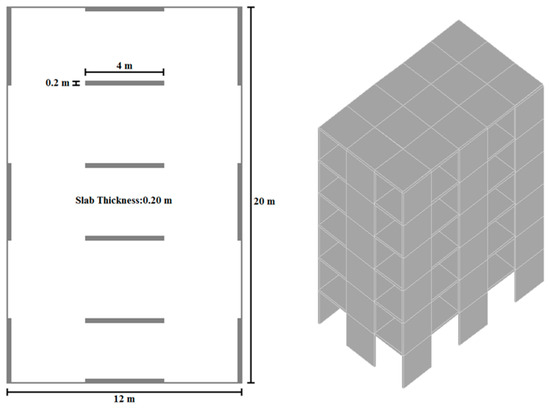
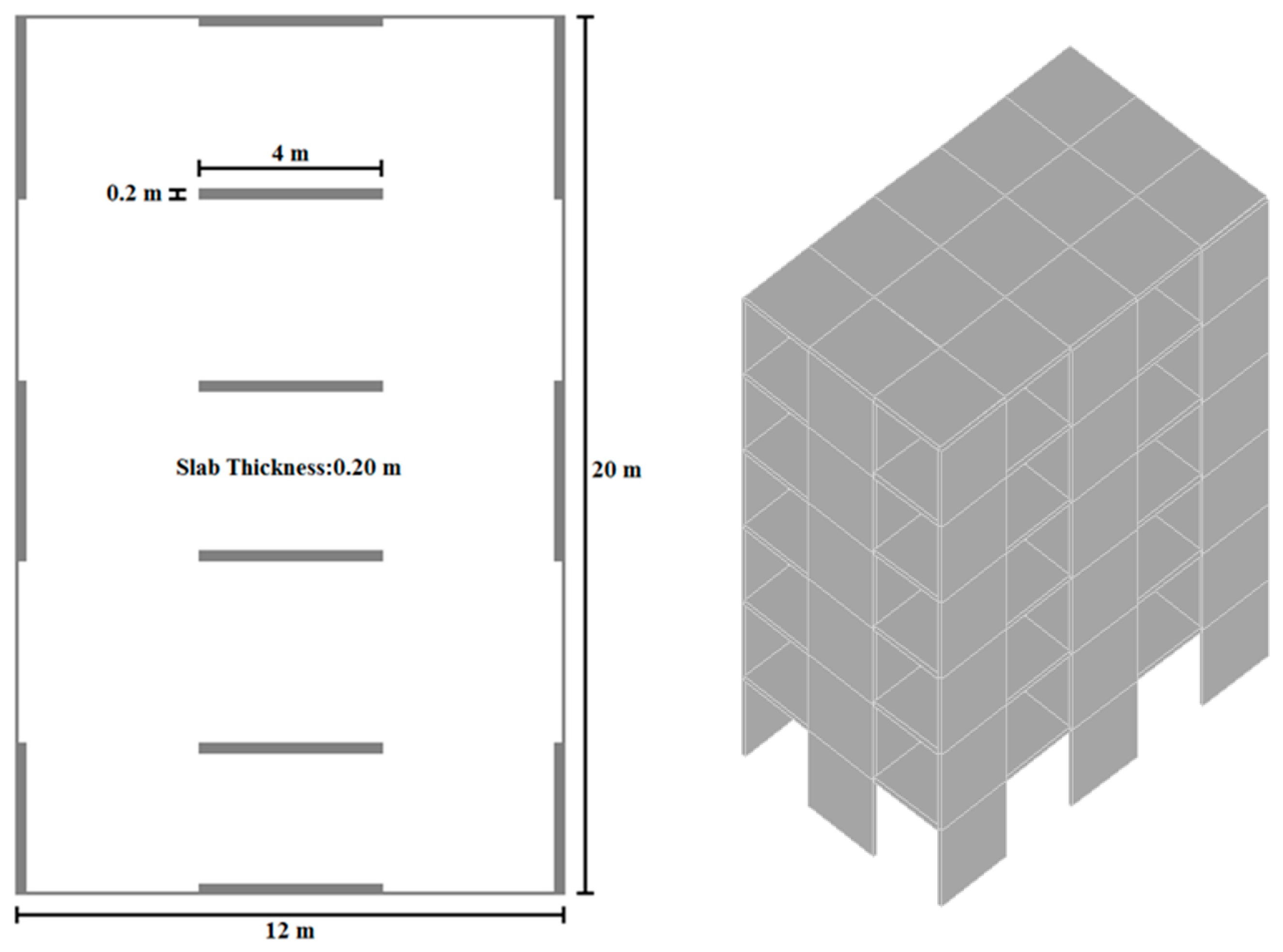
An 18-m tall six-story LVL shear-walled structure was chosen for the dynamic investigation both before and after Al2O3 retrofitting. The building’s floor size is 240 m2, with three axes measuring 4 m each in the x and y directions. The floors are twenty centimeters thick, and the shear walls are twenty centimeters thick. A floor design with four shear walls in each of the x and y directions was chosen in order to immediately monitor the impact of the Al2O3 nanocoating on the structure. This made it impossible to include other parameters in the comparison. Figure 1 displays the structure’s general structural characteristics.
Figure 1.
LVL shear-walled structure’s general characteristics.
3. Finite Element Modeling of the Structure
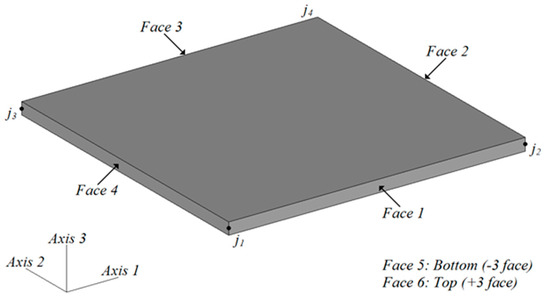
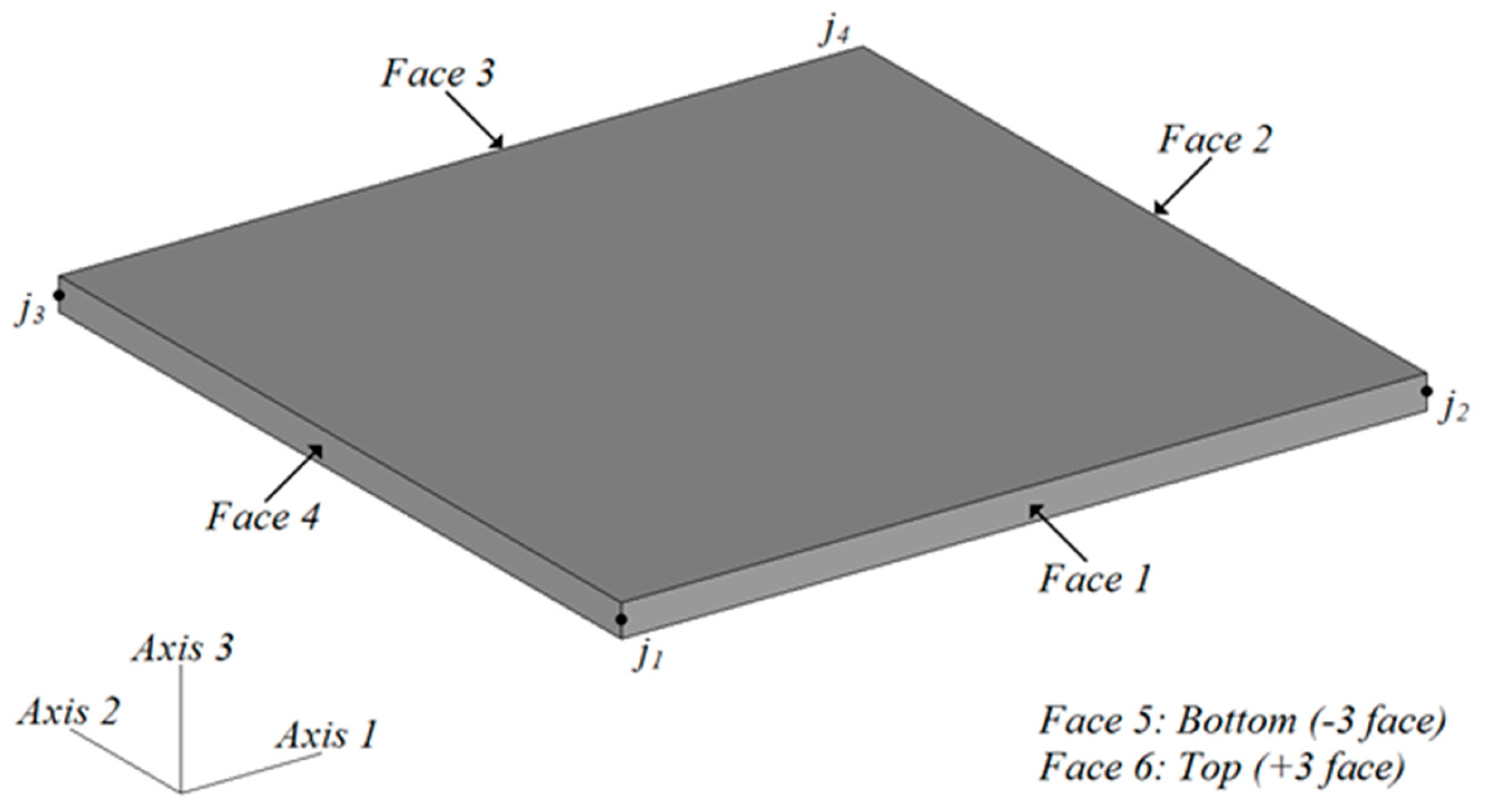
Three-dimensional finite element models of the LVL shear-walled structure were constructed using SAP2000 both before and after Al2O3 retrofitting (SAP2000, 2024) [36]. 3D structures can be analyzed linearly, nonlinearly, statically, and dynamically with this software. In the numerical model, the Al2O3 nanocoating was represented as an equivalent homogeneous isotropic thin layer based on material properties reported in the literature for alumina nanocoatings commonly used in structural surface enhancement applications. The coating was modeled in SAP2000 using the layered shell element feature, which allows multiple material layers with different mechanical properties to be represented within the same shell formulation. Through this approach, the LVL substrate and Al2O3 coating layers were assumed to act compositely with perfect bonding between layers. As long as the mesh size is appropriately selected, analytical solutions in modeling produce reliable results. The optimal mesh size for structure models was found through convergence research. To ensure that the global dynamic behavior, displacement configurations, and local stress fields obtained from the SAP2000 finite element model were independent of the spatial discretization, a comprehensive mesh convergence study was systematically performed on the coated LVL structure. Five different quadrilateral shell element mesh densities were evaluated, ranging from a coarse grid of 0.8 m × 0.8 m to an ultra-fine configuration of 0.05 m × 0.05 m. The convergence metrics selected for this sensitivity evaluation included the fundamental natural frequency (Mode 1), the maximum lateral top displacement under the 1968 Tokachi-Oki earthquake, and the maximum localized von Mises stress across the shear wall boundaries. Transitioning from a coarse mesh to a more refined grid resulted in a noticeable stabilization of the mechanical outputs. The relative discrepancy in the key engineering parameters dropped sharply below the 1% threshold when the mesh density was refined from 0.20 m to 0.10 m. Further refinement to an ultra-fine mesh size of 0.05 m yielded an almost negligible variation (0.15% difference in stress and displacement values) while exponentially escalating the computational processing time. Consequently, the mesh size of 0.10 m × 0.10 m was strategically selected as the optimal discretization threshold, mathematically guaranteeing that the numerical evaluations presented in this study were robustly mesh-independent and computationally optimized [66,67,68]. The research in the literature was used to validate the 3D FEM of the chosen structure. A 4-node shell element was employed in the structure model’s finite element modeling. Nine nodes made up each shell element, and each node had six degrees of freedom: rotations about the same axes and translations in the x, y, and z axes (Figure 2).
Figure 2.
An illustration of the shell element’s characteristics (SAP2000, 2024) [36].
The geometry and node locations for this element type are shown in Figure 2. The Al2O3 coating was modeled using a layered shell element. Up to many distinct material layers with various orientations and orthotropic material properties in each layer are permitted by this element. Layered thick shells or solids can be modeled using this element. Figure 2 displays a schematic view of the shell element. Characterization of material properties and boundary conditions, which must be considered in the analytical analysis, is crucial for tall and thin structures like shear wall systems. Al2O3 and LVL were considered to have linear elastic material properties in the analytical model. LVL components were used in the construction of the shear-walled structure. SAP2000 needs material input data for LVL, including unit weight, Poisson’s ratio, and modulus of elasticity. The mass per unit volume of LVL, Poisson’s ratio, and elasticity modulus are listed in Table 1. In the event of flexural and shear stress brought on by increasing loading capacity, modifications in building utilization, defect correction, seismic protection, and adherence to updated requirements, nanomaterials can be utilized to strengthen steel, wood, reinforced concrete, and masonry structures. An Al2O3 nanocoating with the material grade shown in Table 2 was used for the retrofitting procedure of the selected structure. The total duration of linear transient analyses and total volume were found to be very high after applying the optimal meshing size to the structure, making it impossible to visualize any result. Consequently, the analysis and output process were made simpler by increasing the meshing size to a tolerable level. At the end of these investigations, 2778 nodes and 2592 shell elements were used in the study.
Table 1.
Material properties considered in the analysis of the LVL shear-walled structure (L: Longitudinal, T: Tangential, R: Radial).
Table 2.
Typical properties of the Al2O3 nanocoating.
Among the various advanced nano-ceramics, nano-alumina (Al2O3) stands out as an exemplary candidate for thin-film structural coatings due to its exceptional chemical stability, high thermal resistance, and an extraordinarily high intrinsic elastic modulus operating in the range of 315 GPa. When utilized for surface deposition purposes, nano-Al2O3 particles form a dense, cohesive matrix that exhibits superior wear and scratch resistance. On porous organic substrates like laminated veneer lumber (LVL), the ultra-fine particle distribution of nano-alumina facilitates robust mechanical interlocking and chemical bonding within the timber’s cellular surface pathways. This microscale encapsulation creates a highly durable boundary layer that not only isolates the underlying wood fibers from environmental degradation but also provides the extreme-fiber stiffness required to drive global structural stress redistribution under severe dynamic hazards. Regarding the global mechanical characterization, it must be clarified that the application of the dual-sided Al2O3 nanocoating does not physically modify the intrinsic, material-level longitudinal elastic modulus of the inner laminated veneer lumber (LVL) core substrate itself. Rather, the previously indicated 15%–20% increase reflects the composite-level equivalent flexural rigidity (EI) and equivalent global structural modulus of the unified structural section, mathematically derived through transformed section integration. Because the nano-alumina layer possesses a high primary elastic modulus of 315 GPa, fully grounded in the established technical literature for high-purity nano-structured ceramic depositions [69,70,71], its integration at the outermost boundaries shifts the global stiffness matrix without changing the underlying timber microstructure. This equivalent stiffness enhancement forms the mathematical baseline for the subsequent finite element macro-modeling evaluations.
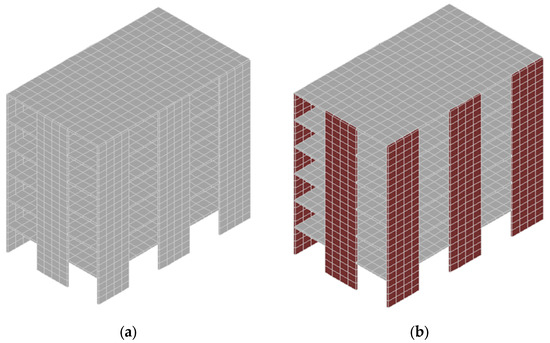
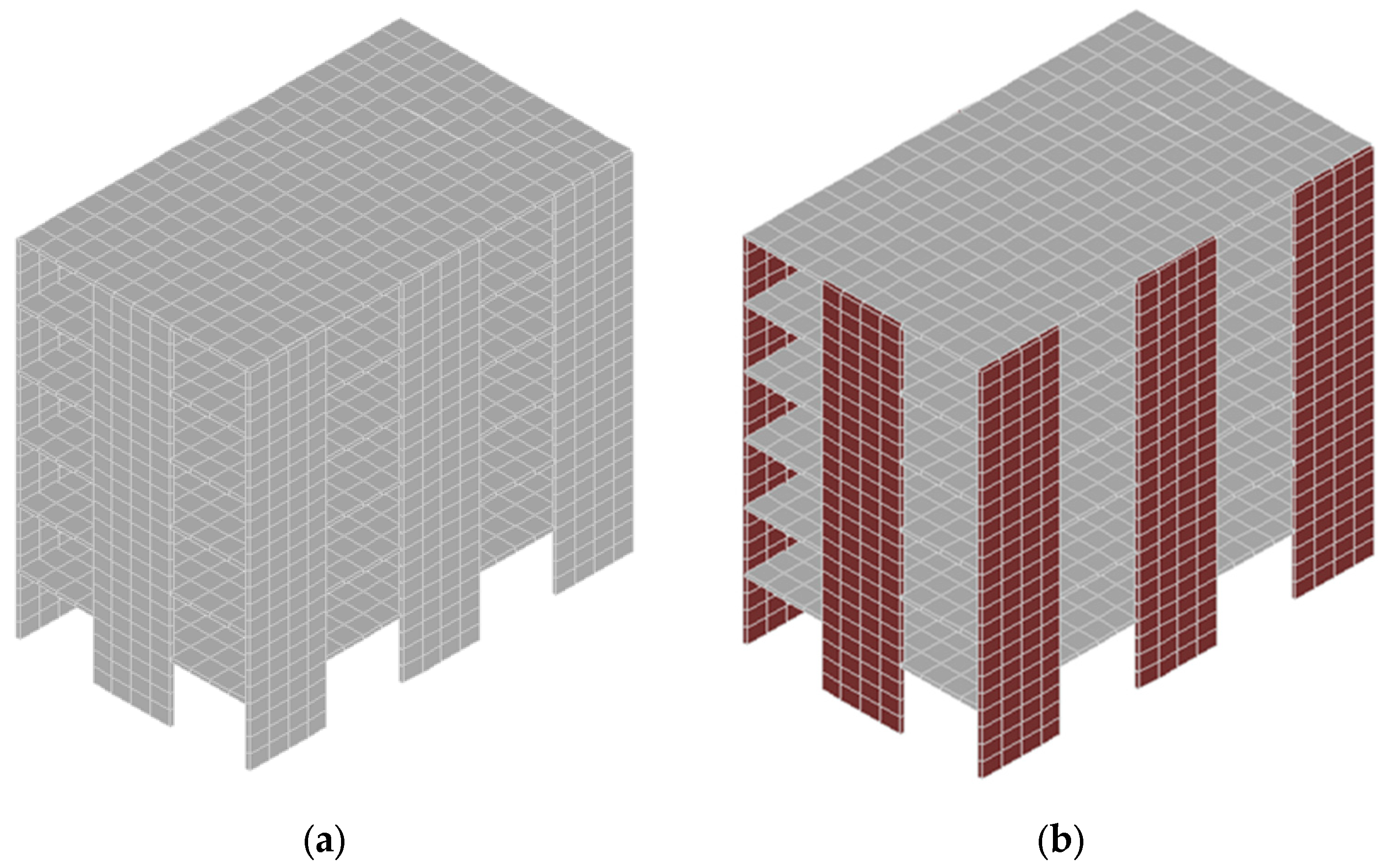
The total Al2O3 reinforcement thickness applied to both faces of the shear wall elements was thin (0.004 m) in comparison to the shear wall’s thickness of 0.2 m. A single coating of Al2O3 with a thickness of 0.002 m was applied to the structure’s inner and outer surfaces during the model’s retrofitting. From bottom to top, the entire shear wall body was covered by the Al2O3 layer. A Al2O3 layer that was 0.002 m thick was found to be enough for reinforcement in the literature evaluation. The elements’ tensile and compressive stiffness characteristics were taken into account. In this analysis, one-way fiber direction (zero degree) was also taken into account. It was assumed that the structure is fastened to the ground and that all degrees of freedom at its base are connected to the ground. The assumption of perfect bonding is provided by the connections between the neighboring nodes of the LVL elements and the Al2O3 multilayer shell elements. This ensures that the nodal locations of the shell elements (Al2O3 and LVL) are identical. To accomplish the ideal interaction above-mentioned, the Al2O3 layered shell elements and the LVL shell elements were split in the same mesh size. Figure 3 displays the structure’s finite element model and its meshing both before and after Al2O3 reinforcement.
Figure 3.
Finite element model of LVL structure: (a) before retrofitting; (b) after retrofitting.
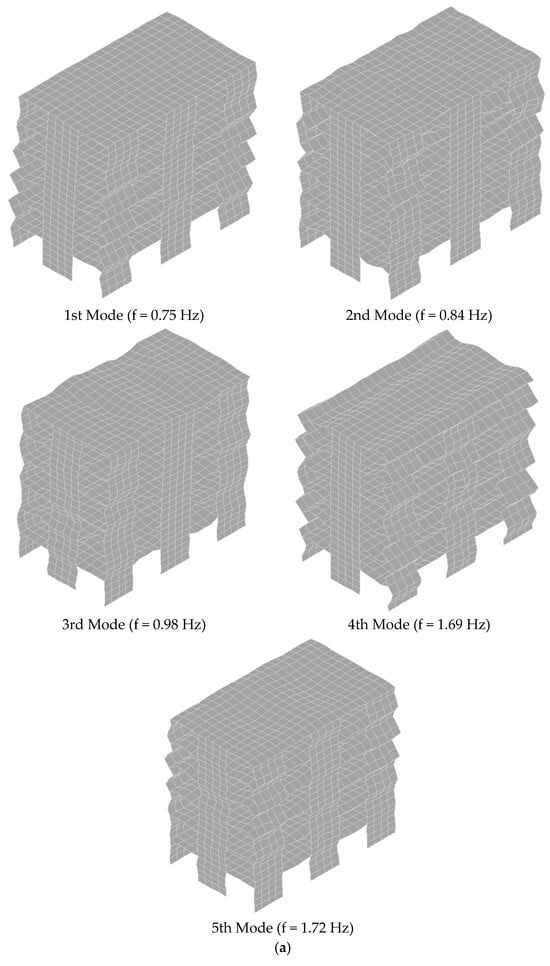
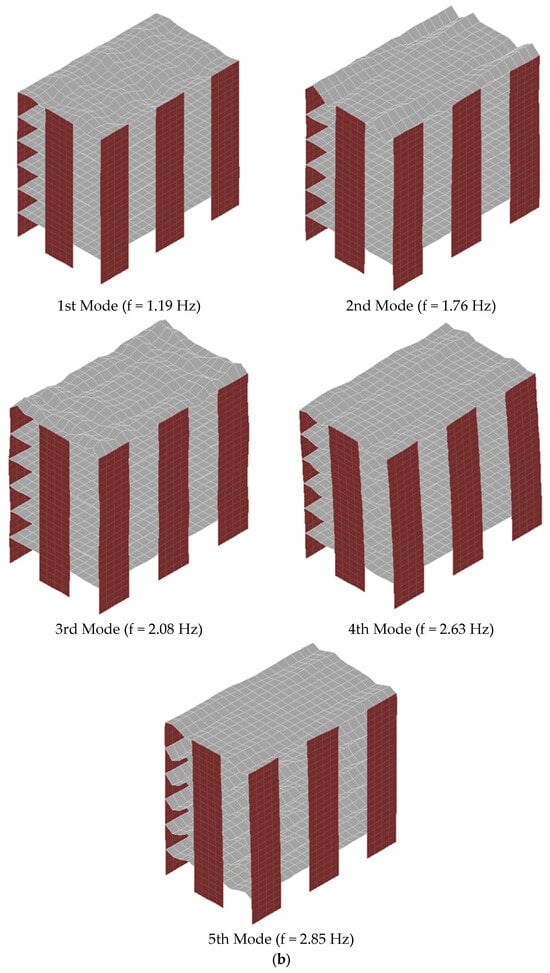
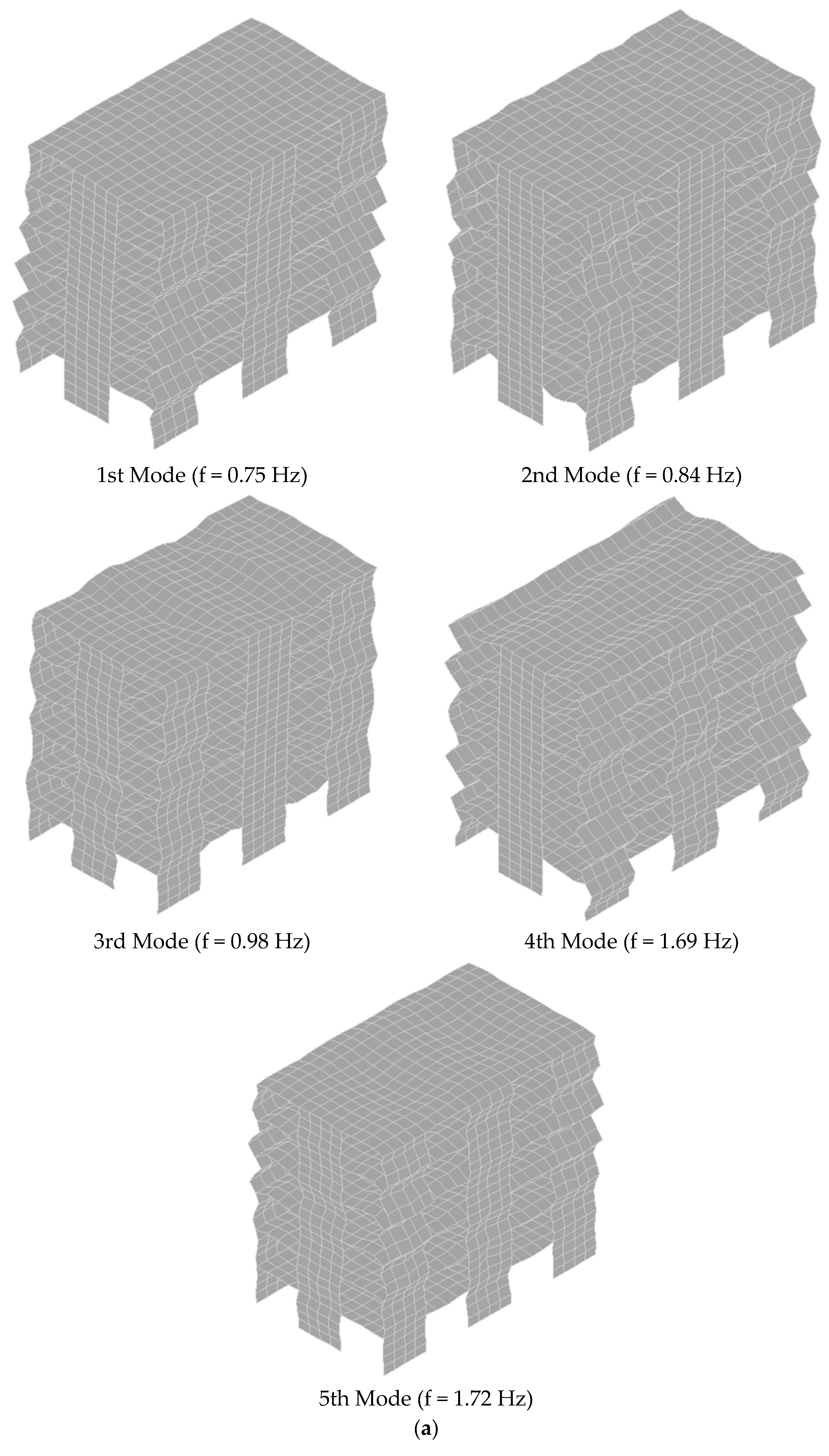
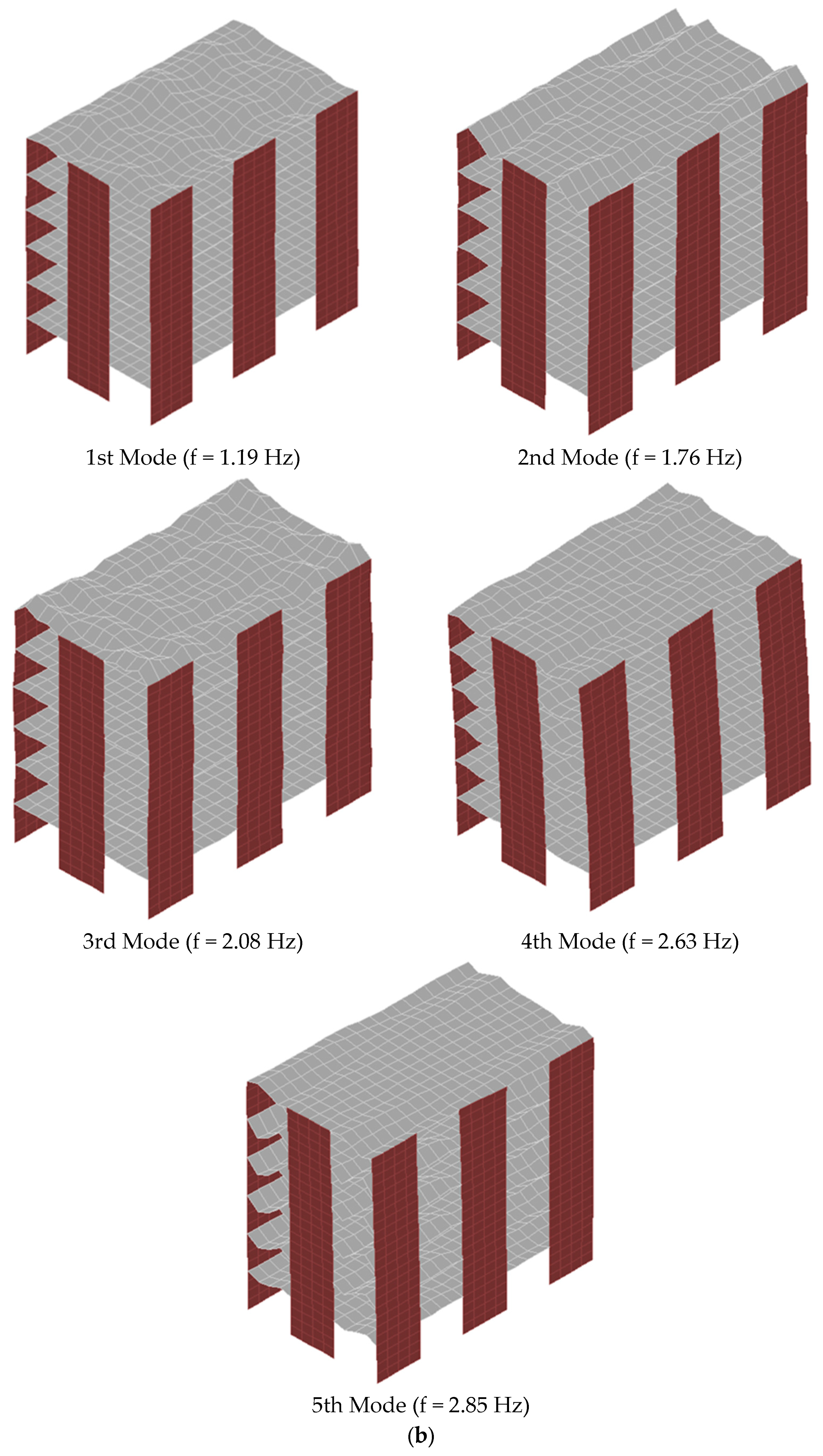
LVL shear-walled structures are essentially thin structures with a relatively uniform mass distribution. The dynamic behavior of these structures is hence greatly affected by the higher mode effects. The frequencies and mode shapes of the structure were ascertained by modal investigations. Before and after Al2O3 retrofitting, a total of five structural frequencies were found in the range of 0.75–1.72 Hz and 1.19–2.85 Hz, respectively. The first five mode forms and frequency of the structure derived from modal analysis are depicted in Figure 4. Figure 4 shows that the modal investigations conducted prior to and following Al2O3 retrofitting produced the same mode shapes.
Figure 4.
Mode shapes and frequencies of LVL structure: (a) before Al2O3 retrofitting; (b) after Al2O3 retrofitting.
4. Dynamic Analyses of the LVL Shear-Walled Structure
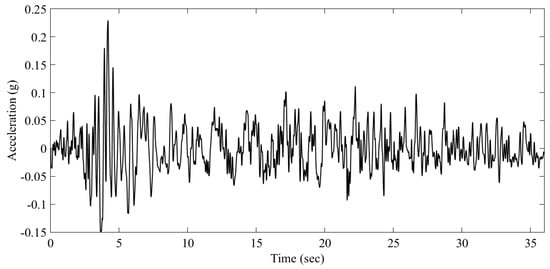
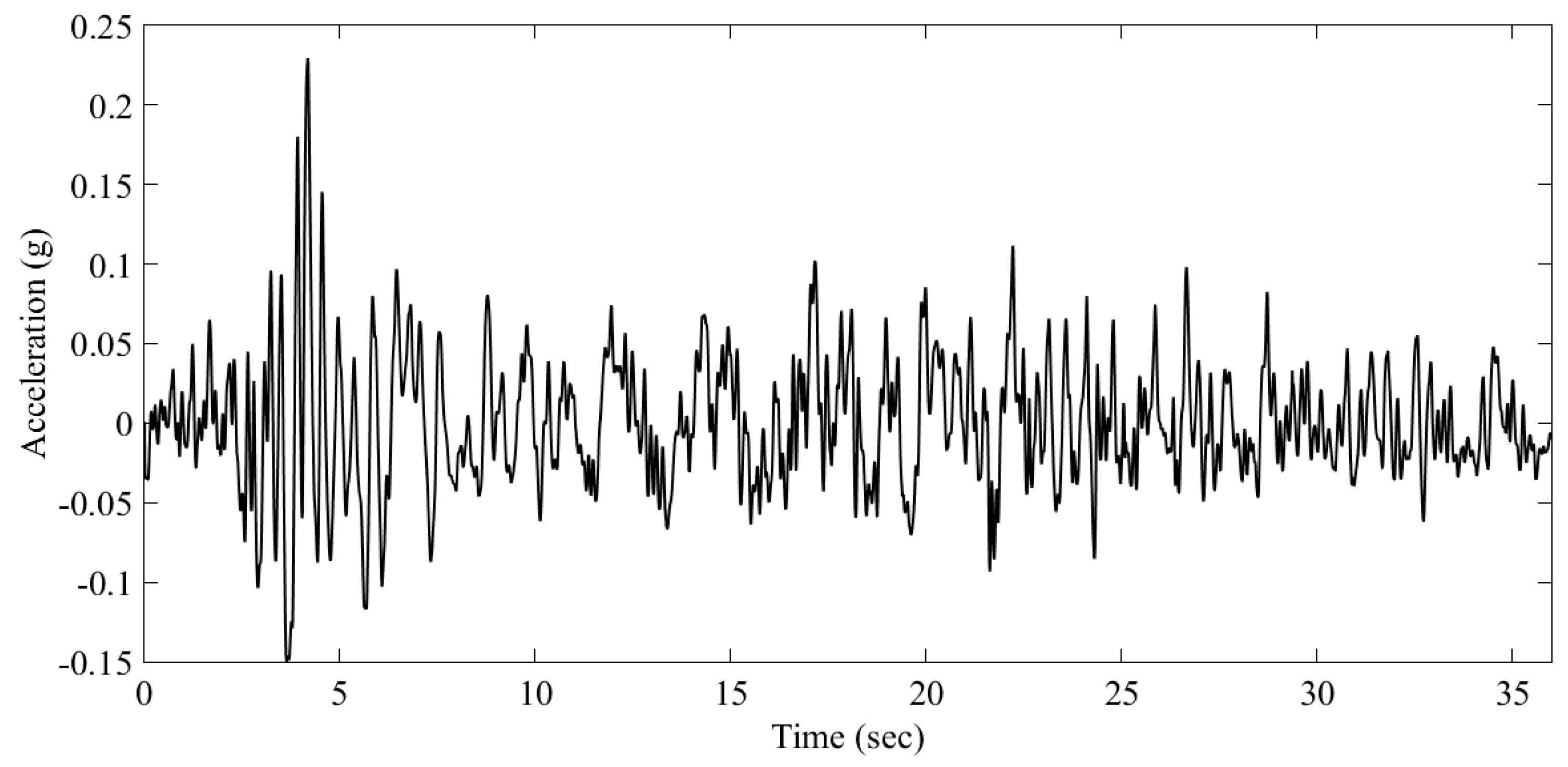
Dynamic analyses were conducted to evaluate the seismic performance of the LVL shear-walled structure both before and after the application of the Al2O3 nanocoating. The linear time–history analyses used the north–south ground motion records of the 1968 Takochi-Oki earthquake, characterized by peak ground acceleration (PGA) of 0.229 g (Figure 5). These records are widely recognized for their strong near-field characteristics, making them suitable for assessing the behavior of light, wooden shear-walled structures such as LVL shear-walled structures.
Figure 5.
Time history of ground motion acceleration from the 1968 Takochi-Oki earthquake (PGA = 0.229 g).
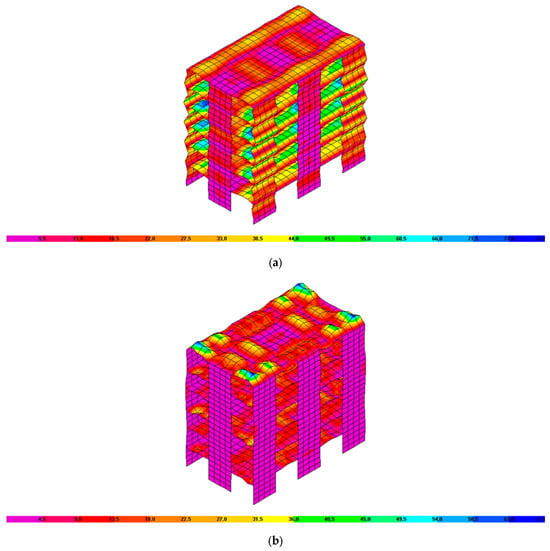
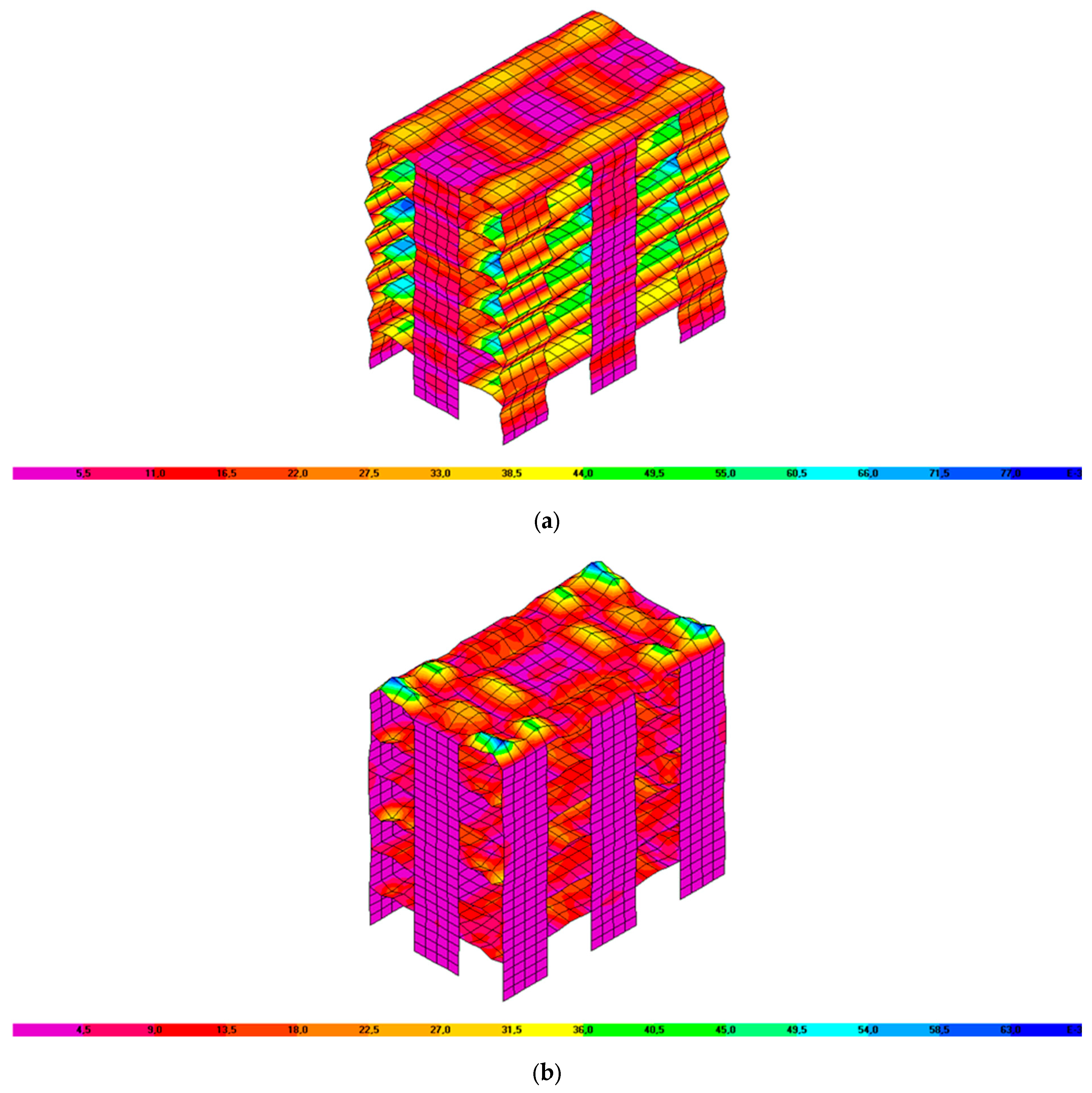
A 5% damping ratio between the structure’s first and fifth modes is assumed when calculating Rayleigh damping constants [62,64]. Figure 6 displays the maximum horizontal displacement values. The application of Al2O3 to the construction lowered the maximum displacement values along the height, as the figure makes evident. After applying Al2O3 to the structure, the maximum upper displacement value dropped from 77 mm to 65 mm. Without adding significantly more mass to the structure, the maximum top displacements were reduced by roughly 18%. The contour graphs of the highest horizontal displacement show that the top of the structure experienced the greatest displacements.
Figure 6.
Maximum displacement contours of LVL structure: (a) before Al2O3 retrofitting; (b) after Al2O3 retrofitting.
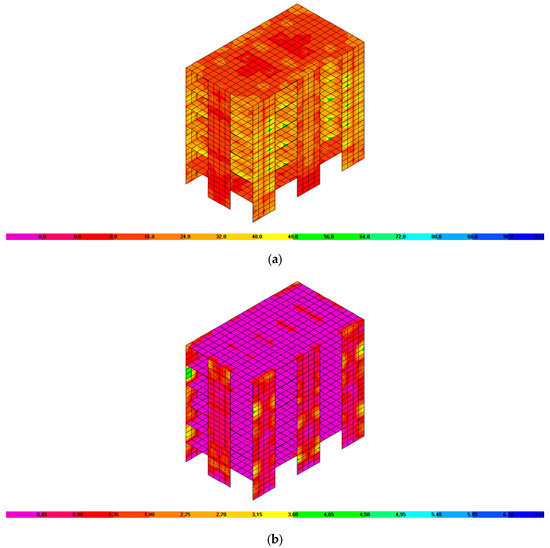
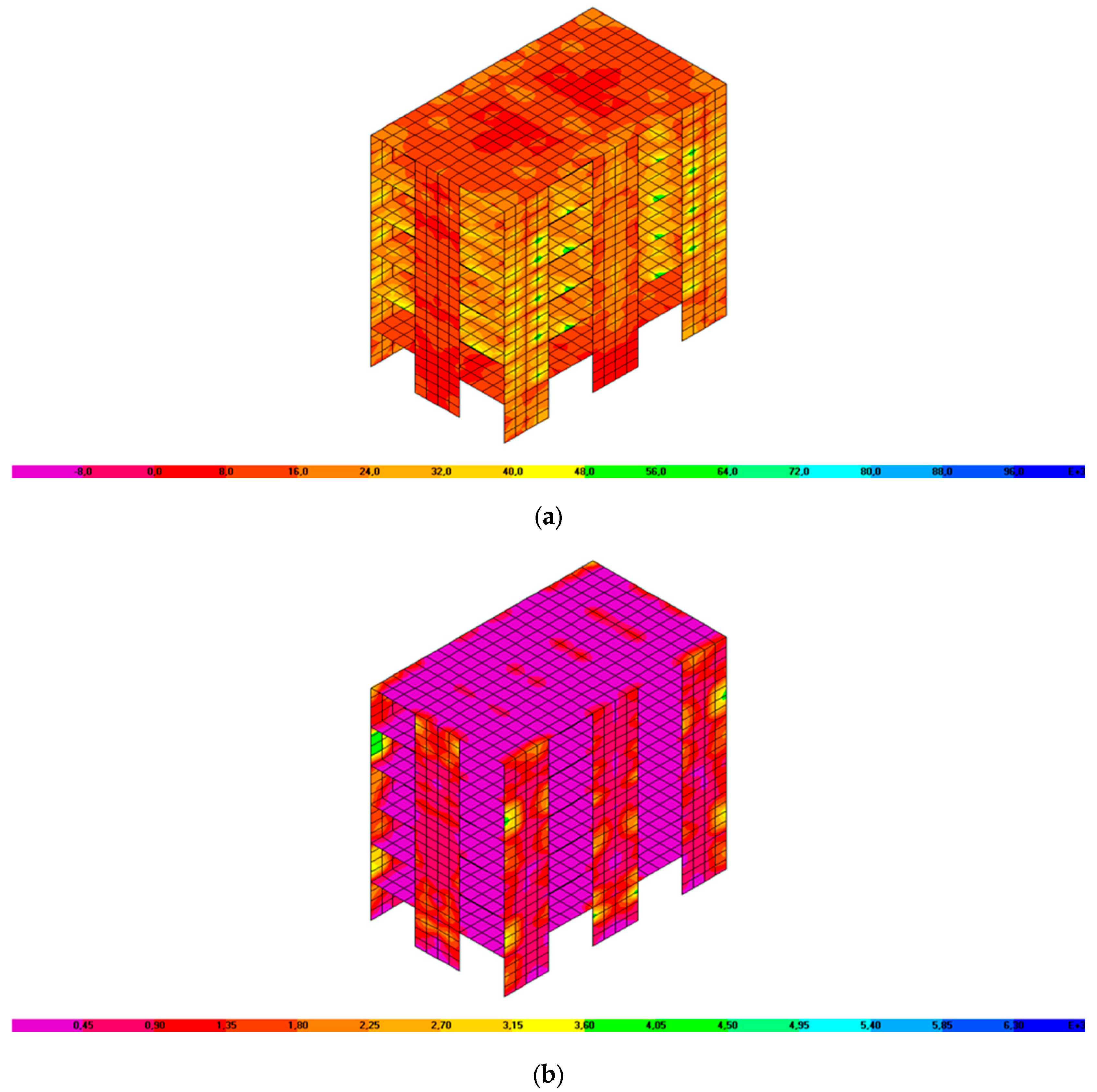
Figure 7 shows the LVL structure’s maximum and minimum von Mises stress contours. The maximum and minimum von Mises stresses recorded prior to Al2O3 retrofitting were larger than those obtained following Al2O3 reinforcement, as illustrated in Figure 7. In other words, Figure 7 shows that the minimum and maximum primary stresses drop following Al2O3 reinforcement.
Figure 7.
Minimum–maximum von Mises stress contours of LVL shear-walled structure: (a) before Al2O3 retrofitting; (b) after Al2O3 retrofitting.
5. Discussion and Evaluation
This study presents an innovative methodology for optimizing the seismic performance of multi-story structural systems based on laminated veneer lumber (LVL), a key focus area in modern sustainable architecture and structural engineering. LVL, a lightweight, high-strength engineering timber with a low carbon footprint, exhibits specific strength limits under dynamic loads due to its anisotropic and fibrous nature. The aluminum oxide (Al2O3) nanocoating strategy proposed in this study demonstrates, using finite element analysis (FEA), how a micrometer/nanometer-scale surface modification can improve macro-structural behavior without compromising the macroscopic geometry and architectural functionality of the structure. The modal characteristics, displacement limits, and stress fields of an 18-m-high, six-story shear wall structure under the 1968 Tokachi-Oki earthquake (PGA = 0.229 g), known for its near-field ground motion characteristics and high acceleration demands, were analyzed and discussed within the framework of the theoretical and numerical principles in the literature.
5.1. Structural Dynamics Analysis of Modal Characteristics and Stiffness Changes
Numerical modal analysis findings show that the application of a double-sided 2 mm thick Al2O3 nanocoating radically shifted the first 5 natural vibration frequencies of the structure upward compared to the reference (uncoated) model. The increase in the first mode frequency from 0.75 Hz to 1.19 Hz and the steady continuation of this increasing trend in subsequent higher modes (from 1.72 Hz to 2.85 Hz) can be directly explained by the transformation of the structural dynamics matrices. According to classical structural dynamics theory, the set of differential equations for free vibration is based on the eigenvalue problem (det[K − ω2M] = 0) between the mass matrix (M) and the lateral stiffness matrix (K) of the system [62,64]. The proposed protective and reinforcing nanocoating had an extremely low volume (only 2 mm on each surface) compared to the total cross-sectional thickness (200 mm) of the curtain walls, resulting in negligible changes in the structural mass matrix (M). However, the modulus of elasticity of the nano-alumina material (E = 315 GPa) exhibited an approximately 30-fold modular ratio (n = Ecoating/ELVL ≈ 30) compared to the modulus of elasticity of the LVL wood matrix in the longitudinal direction (EL = 10.5 GPa). This led to a geometrically exponential increase in the section moment of inertia and material stiffness components in the element-level integration of the stiffness matrix (K). This remarkable increase in frequency values is evidence that the lateral stiffness of the structure increased considerably with the coating intervention [62,64,72,73].
In the literature, accurate representation of surface continuity and material interface rigidity is considered a critical parameter in computer-aided (CAD-based) finite element modeling of thin-walled and shell-type structural systems [60]. In this study, the fact that the first 5 modal forms and orientations of the reinforced system remained completely the same as the uncoated reference model mathematically confirms that the applied nanocoating does not disrupt the mass and rigidity symmetry throughout the structure, does not change the position of the center of mass in plan, and therefore does not trigger torsional eccentricity, which is one of the greatest seismic hazards in multi-story timber structures [62].
5.2. Seismic Response and Limitation of Peak Displacements
The selection of the 1968 Tokachi-Oki earthquake record (peak ground acceleration, PGA = 0.229 g) as the primary dynamic excitation is fundamentally rooted in the spectral vulnerability profile of lightweight engineered wood structures. Multi-story timber shear-walled buildings fabricated from laminated veneer lumber (LVL) inherently feature an advantageous high strength-to-weight ratio. This lightweight characteristic drastically minimizes the global seismic inertial forces (F = M * a); however, it concurrently shifts the structure’s natural periods into the highly rigid short-period band (T less than 0.3 s). Consequently, lightweight timber systems are structurally vulnerable to near-fault ground motions that exhibit severe high-frequency energy concentrations and sharp acceleration pulses, rather than long-period, displacement-governed far-fault excitations. The 1968 Tokachi-Oki ground motion provides precisely this critical demand, making it an exemplary benchmark for testing the micro-structural stress redistribution limits of the retrofitted LVL panels and evaluating the coating’s performance under maximum transient spectral acceleration. To validate the regulatory rigor of this selection, the spectral acceleration profile of the 1968 Tokachi-Oki record was evaluated against standard elastic design response spectra prescribed by major seismic codes, such as Eurocode 8 and ASCE 7 (for subsoil classes representing stiff to intermediate soil foundations). In the short-period plateau region (between 0.05 s and 0.3 s), where both the reference and nanocoated LVL models operate, the selected earthquake record closely traces and envelopes the design spectrum’s maximum amplification zone (Sd approx. 2.5 * PGA). Linear time–history dynamic analyses performed using the acceleration record of the 1968 Tokachi-Oki earthquake clearly revealed the moderating and limiting effect of the proposed nano-Al2O3 surface coating strategy on the global seismic responses of the structure. Unlike simplified spectral methods such as equivalent earthquake loading or mode coupling, the time-domain dynamic analysis methodology allows for the simulation of phase changes of ground motion over time, multi-mode interactions, and instantaneous seismic energy accumulations transferred to the structure in a realistic time axis [62]. Under this challenging seismic loading, the maximum peak displacement, calculated as 77 mm in the reference (uncoated) LVL structure, was reduced by a net 18% to 65 mm with the application of a double-sided 2 mm thick nanocoating. This displacement reduction is a direct reflection of the micro-intervention at the material level on macroscale structural stability. The physical mechanism of this displacement reduction is directly related to the drastic change that occurs in the fundamental (first) vibration period as the structure gains rigidity. The first natural vibration period of the structure decreased from T = 0.23122 s to T = 0.03847 s. When this situation is examined in terms of acceleration–displacement spectra (ADRS) in the earthquake engineering literature, this shortening of the period has completely moved the structure away from the flexible/semi-flexible region of the earthquake spectrum, which produces high displacement demands, and into the rigid/semi-rigid behavior region on the left side of the spectrum, where the displacement demand asymptotically approaches zero [62,64]. Although the shortening of the period theoretically tends to increase the seismic base shear forces acting on the structure, the ultra-high mechanical strength and modulus of elasticity of the nano-alumina layer on the outer perimeter safely met these additional force demands and prevented instability in the delicate LVL panels of the structure.
The accuracy and precision of the dynamic responses obtained from the analysis process are directly related to how the seismic energy dissipation characteristics are integrated into the numerical model. In this study, the dynamic damping matrix (C) of the structure was mathematically modeled using the Rayleigh damping formulation (C = αM + βK), which is expressed as a linear combination of the mass matrix (M) and the stiffness matrix (K) [63]. In Rayleigh damping theory, the damping ratio for each mode is calculated using the relation “ζ = (α/2ω) + (βω/2)”, depending on the natural circular frequency (ω) of that mode. Here, α represents the damping coefficient proportional to mass, and β represents the damping coefficient proportional to stiffness. The enormous increase in the stiffness matrix (K) caused by the nanocoating intervention of the structure directly modified the stiffness-proportional damping term (βK) in the Rayleigh equation. As can be seen from the mathematical relationship, the damping term proportional to stiffness (βω/2) increases linearly as the frequency (ω) increases [74]. The increase in the structure’s natural frequencies to the 1.19 Hz–2.85 Hz range with the nanocoating allowed the damping mechanism proportional to stiffness to become much more dominant during seismic shaking. This mechanism rapidly dampens the high-frequency harmful transient vibration waves and shock waves triggered within the structure by high-energy near-field ground motions such as the 1968 Tokachi-Oki earthquake, thus preserving the structural integrity of the structure [62,63]. Regarding the operational parameters of the dynamic analysis, a baseline equivalent viscous damping ratio (η) of 5% was established to calibrate the Rayleigh damping coefficients. While untreated laminated veneer lumber (LVL) elements naturally exhibit low material damping ratios (typically ranging from 2% to 3%) under small amplitude vibrations or service limits, the adoption of a 5% threshold is rigorously consistent with standard practices in global earthquake engineering design codes, including Eurocode 8 and ASCE 7 [55,56]. Under large seismic events characterized by severe ground motion, such as the 1968 Tokachi-Oki earthquake, the global structural system is subjected to macro-level energy dissipation mechanisms. These include local microslips at panel boundaries, friction within mechanical fasteners (bolts, studs, and anchor holders), and minor aerodynamic or non-structural interactions; all of which justify an effective structural damping performance approaching the 5% benchmark.
From an engineering design and structural safety perspective, this 18% reduction in top drift ensures that inter-story drift ratios in multi-story modern timber buildings remain well below the legal and safe limits stipulated by modern building codes (such as Eurocode or ASCE) [55,56]. Timber shear wall structural systems tend to rock and slide under seismic loads, especially at base connection points. This stable limitation of global displacements and inter-story drifts blocks plastic deformations, early joint failures, and localized fiber splitting in the timber material at the interfaces where the floor panels are connected, in the hold-down elements, and in mechanical fasteners such as nails, bolts, and studs. Therefore, displacement control achieved through nanocoating prevents multi-story timber structures from undergoing sudden and brittle damage modes during seismic tremors, thereby maximizing their safety against second-order geometric stability losses (P-Delta effects) [64].
5.3. Evaluation Based on Von Mises Stress Distribution and Sandwich Composite Mechanics
When the stress distribution data obtained from numerical analyses are examined holistically, the radical reduction observed in the maximum von Mises stress values occurring on the load-bearing shear wall elements stands out as the most striking finding of the study in terms of structural safety margin. The maximum stress concentration, calculated as 86.65 MPa at the fiber boundaries and critical joint walls in the uncoated reference LVL model, was reduced to 8.03 MPa in the double-sided nano-Al2O3 reinforced system with an extraordinary reduction or damping performance of 90.7%. As is known, the von Mises stress criterion is a universal index that reduces the normal and shear stress components in multiaxial stress states to a single equivalent scalar value and shows how close the material is to its yield or failure limit [64]. This tremendous optimization success achieved in the stress fields cannot be explained by classical homogeneous material behavior; this situation can only be explained within the framework of the “sandwich-structured composite” principles and the “concept of equivalent layered composite cross-section” in composite material mechanics [59]. This stress damping and optimization success demonstrates theoretical agreement with the “sandwich-structured composite” principles and the “concept of equivalent layered composite cross-section” in composite material mechanics. Under the interaction of axial load, bending moment, and base shear force generated by seismic loads, the highest normal and shear stresses of a rectangular shear wall are concentrated in the outermost fibers (perimeters) that are geometrically furthest from the neutral axis of the section. In this study, a 2 mm thick ultra-high elastic modulus alumina layer was positioned precisely on these outer fibers of the shear wall section, which are under the highest stress and strain demands. According to the equivalent layered section transformation mechanism, due to the difference in stiffness between them, the outer shell layer acts as a “stress shield”, transferring a very large percentage of the total internal forces and stress fields acting on the section onto itself. The LVL wood core, located in the inner region, has significantly limited mechanical strength compared to nano-ceramics and is prone to cracking due to its anisotropic structure in directions perpendicular to the fiber orientation. This ensures complete isolation from high stress concentrations. Recent transformational deformation models and boundary condition experiments of continuous thin-walled structural elements in the literature also theoretically and experimentally demonstrate that rigid external supports or shell layers drastically reduce the stress gradient on the inner matrix [61]. According to the principles of transformed composite section mechanics, the total bending stiffness expression is determined by integration formulation. Here, the modulus of elasticity of the nano-Al2O3 material (E = 315 GPa) revealed a massive modular ratio of like 30 times when compared to the modulus of elasticity of the LVL wood matrix in the longitudinal direction (EL = 10.5 GPa). According to the parallel axis theorem, the square of the distance of the coating layer from the neutral axis (d2) acts as a multiplier when calculating the contribution of the coating layer to the moment of inertia of the section. Since the coating is located at the outermost boundary of the section, this d2 distance parameter is at its maximum value. Mathematically, a thin outer shell of 2 mm, combined with the high modular ratio (n ≈ 30) and the maximum d2 distance, geometrically multiplies its contribution to the total bending rigidity (EI) of the section. As a natural consequence of this mechanical transformation, the outer shell layer acts as a holistic “stress shield”, absorbing and transferring a very large percentage of the spherical internal forces and stress fluxes acting on the cross-section [75,76]. Additionally, in terms of mass, the absolute volume of the total 4 mm cladding layer represents an extremely small percentage of the 200 mm thick main structural wall, so the net increase in the total dead weight of the building remains statistically negligible. Consequently, the proposed surface modification effectively decouples stiffness enhancement from mass accumulation, which represents a valid physical paradigm frequently exploited in advanced thin-walled and sandwich-structured aerospace applications.
It is important to note that the finite element model developed in this study assumes a “perfect bonding” condition at the interface between the Al2O3 nanocoating and the LVL core substrate, neglecting potential interface slip or localized debonding phenomena. In structural macro-modeling, this assumption represents a standard and widely accepted analytical approach to establish the upper-bound mechanical performance and global dynamic characteristics of composite timber components. From a materials science standpoint, the validity of this perfect bond assumption under dynamic loading is fundamentally supported by the porous, cellular topography of engineering wood products like LVL. When a nanocoating is applied, the sub-micron alumina particles do not merely settle as an isolated surface film; instead, they deeply penetrate into the open cellular lumens, micro-pores, and tracheids of the timber surface layers. Upon curing or deposition, this penetration establishes a highly dense “mechanical interlocking” matrix accompanied by secondary chemical bonds (such as hydrogen bonding and van der Waals forces with the hydroxyl groups of cellulose and lignin). This interlocking interface significantly enhances the interfacial shear strength, preventing premature delamination and justifying the omission of interface slip under the evaluated near-fault earthquake records. Nevertheless, under extreme cyclic reversals and highly non-linear plastic states, cumulative damage may induce localized micro-cracking at the interface. While the perfect bond assumption serves as a robust baseline for evaluating the macro-seismic sensitivity of the retrofitting strategy, incorporating advanced non-linear interface elements, such as cohesive zone modeling (CZM) or contact friction definitions, represents a critical avenue for future numerical and experimental validation studies to assess the long-term cyclic durability of the coating interface.
Finally, it is essential to contextualize the obtained numerical variations against the backdrop of inherent material and modeling uncertainties. Because laminated veneer lumber (LVL) is an organic-based engineered composite, its mechanical properties such as the longitudinal elastic modulus, shear modulus, and material density naturally exhibit a stochastic distribution. In standard timber engineering literature, the coefficient of variation (COV) for the stiffness parameters of high-grade LVL panels typically ranges between 10% and 15%. Under a purely deterministic simulation framework, this inherent material randomness could theoretically introduce a baseline uncertainty margin of roughly 5% to 7% regarding the structure’s natural frequencies and structural displacements. However, the structural enhancements achieved via the dual-sided Al2O3 nanocoating significantly exceed these statistical uncertainty thresholds. The transition from the bare LVL frame to the nanocoated configuration yielded a 58.6% escalation in the fundamental natural frequency (shifting from 0.75 Hz up to 1.19 Hz) and induced a robust 18% mitigation in the maximum dynamic top displacement. Because these macro-structural response shifts are orders of magnitude greater than the maximum boundary of material randomness or modeling idealizations, the structural optimization provided by the coating was proven to be physically significant and independent of material noise.
5.4. Advantages and Sustainability Compared to Traditional Strengthening Methods
Traditional techniques frequently used in the seismic reinforcement of structural timber elements, such as steel bracing, fiber-reinforced polymer (FRP) laminates, or increasing the cross-section of the timber element, have several disadvantages in structural engineering. Cross-section enlargement and steel bracing significantly increase the mass of the structure, leading to increased seismic inertial forces acting on the building; this limits the effectiveness of the reinforcement. Furthermore, these methods are costly, negatively impact architectural aesthetics and functionality, and most importantly, undermine the advantage of timber’s low carbon footprint. In contrast, the proposed Al2O3 nanocoating application offers a highly sustainable engineering alternative that does not lead to weight or volume increase and is non-invasive (does not alter structural geometry and architecture). With a total reinforcement thickness of only 0.002 m, the total weight of the building is kept almost constant, while the seismic safety of the load-bearing system is maximized. Furthermore, the barrier properties of alumina will prevent dimensional instabilities, fiber warping, and decay caused by environmental humidity and temperature changes in the wood material, thus reducing long-term structural health monitoring and maintenance costs. When all the numerical and dynamic data obtained are evaluated together, it has been numerically proven how much a micrometer/nanometer-scale surface intervention at the material level can optimize the seismic safety margin of a multi-story and complex structure at the macroscale. Nano-alumina coating technology stands out as a highly potential, feasible, and innovative solution for future earthquake-resistant, lightweight, aesthetic, and environmentally friendly modern timber engineering structures.
6. Conclusions
The goal of this study was to examine how the LVL shear-walled structure behaved dynamically both before and after Al2O3 retrofitting. A 3D finite element model of the LVL shear-walled structure was created in SAP2000 software and analyzed using the north–south acceleration component of the 1968 Takochi-Oki earthquake. Some of the results obtained from this study can be summarized as follows:
- The modal forms before and after Al2O3 retrofitting did not differ, according to the structural modal analysis. Before and after Al2O3 retrofitting, a total of five frequencies were obtained in the range of 0.75–1.72 Hz and 1.19–2.85 Hz, respectively. Al2O3 was found to make the structural structure stiffer.
- Horizontal displacement values rose from bottom to top along the structure’s height for both analyses. Prior to and following Al2O3 reinforcement, the maximum displacements (top) were found to be 77 and 65 mm, respectively. The horizontal displacement was reduced by about 18% without significantly increasing the structural system’s mass, which is a better benefit than conventional LVL shear-wall reinforcement methods.
- The bottom of the structure created the highest and minimum von Mises stresses for both analyses. Following Al2O3 retrofitting, the maximum von Mises stress dropped from 86.65 MPa to 8.03 MPa, and the minimum von Mises stress at the bottom of the structure dropped from 6.02 MPa to 0.87 MPa.
- It is clear from these stress measurements that Al2O3 retrofitting affects stress levels. The points where the building touches the ground should receive special attention. Al2O3 can be applied to the structural surface to lower the stress distribution to acceptable levels without significantly increasing the system’s mass, which gives it a big advantage over other conventional retrofitting methods.
- It may be concluded from the displacement and von Mises stress data that Al2O3 makes the structural system stiffer (increasing frequency values). More stiffness results in fewer cracks, which reduce corrosion and stress concentration and lower the user’s maintenance and repair expenses.
- According to the study, nanocoatings have a positive effect on the dynamic response of LVL shear-walled structures and should be chosen as a novel and effective method for LVL shear-walled structure maintenance, repair, and retrofitting. It may be concluded that nanocoatings will soon replace conventional retrofitting methods due to their many benefits, including their high strength/weight ratio, great corrosion resistance, ease of application to all surfaces, extended lifespan, and high fire resistance.
- Among other conventional methods, nanocomposites are gradually gaining popularity as a retrofitting option. Numerous investigations should be conducted in this area to increase the body of knowledge regarding related materials.
- This paper provides an overview of using Al2O3 to retrofit a LVL shear-walled structure. The techniques employed in this study can be applied to several timber shear-walled structures in everyday life, even if the study’s results and conclusions pertain to a particular instance of LVL shear-walled structure retrofitting. This work is the first to show how nanocoating reinforcement affects the dynamic response of LVL shear-walled constructions’.
- Although this study successfully provides a robust analytical baseline for the seismic optimization of engineered timber structures via nanocoatings, certain modeling limitations must be acknowledged. The conclusions derived herein are strictly numerical and feasibility-oriented, utilizing default and idealized material interactions without the immediate support of physical prototype replication. In reality, manufacturing tolerances, localized grain variations in the laminated veneer lumber (LVL), and microscale coating imperfections may induce deviations from the idealized FEA environment. Therefore, full-scale experimental verification under physical cyclic and dynamic testing tracks constitutes a mandatory next phase of this research campaign to empirically validate the interfacial bond mechanics and verify the simulated stress redistribution capacities.
Funding
This research received no external funding.
Data Availability Statement
The original contributions presented in the study are included in the article; further inquiries can be directed to the corresponding author.
Conflicts of Interest
The author declares no conflicts of interest.
Abbreviations
The following abbreviations are used in this manuscript:
| Al2O3 | Aluminum oxide |
| CNT | Carbon nanotube |
| FE | Finite element |
| FEA | Finite element analysis |
| FEM | Finite element method |
| FRP | Fiber-reinforced polymer |
| LVL | Laminated veneer lumber |
| PGA | Peak ground acceleration |
| SiO2 | Silicon dioxide |
| TiO2 | Titanium dioxide |
| ZnO | Zinc oxide |
References
- Bakalarz, M.M.; Kossakowski, P.G. Numerical and Theoretical Analyses of Laminated Veneer Lumber Beams Strengthened with Fiber-Reinforced Polymer Sheets. Appl. Sci. 2024, 14, 6448. [Google Scholar] [CrossRef] [Scilit]
- Bakalarz, M.M.; Kossakowski, P.G. Numerical Analysis of Laminated Veneer Lumber Beams Strengthened with Various Carbon Composites. Polymers 2024, 16, 1697. [Google Scholar] [CrossRef] [Scilit]
- Töpler, J.; Buchholz, L.; Lukas, J.; Kuhlmann, U. Guidelines for a Finite Element Based Design of Timber Structures and Their Exemplary Application on Modelling of Beech LVL. Buildings 2023, 13, 393. [Google Scholar] [CrossRef] [Scilit]
- Kawrza, M.; Furtmüller, T.; Adam, C.; Maderebner, R. Experimental modal analysis of a cross-laminated timber slab. Mater. Today Proc. 2022, 62, 2611–2616. [Google Scholar] [CrossRef] [Scilit]
- Günday, F. OMA of RC Industrial Building Retrofitted with CFRP using SSI. Int. J. Adv. Eng. Res. Dev. 2018, 5, 759–771. [Google Scholar]
- Tuhta, S.; Abrar, O.; Günday, F. Experimental Study on Behavior of Bench-Scale Steel Structure Retrofitted with CFRP Composites under Ambient Vibration. Eur. J. Eng. Res. Sci. 2019, 4, 109–114. [Google Scholar] [CrossRef] [Scilit]
- Kaya, M.; Ružiak, I.; Bülbül, R.; Çavuş, V. Fiber Fabric-Reinforced Laminated Veneer Lumber (LVL) as Insulation Material for Green Buildings. Materials 2026, 19, 872. [Google Scholar] [CrossRef] [Scilit] [PubMed]
- Sandoli, A.; D’Ambra, C.; Ceraldi, C.; Calderoni, B.; Prota, A. Sustainable Cross-Laminated Timber Structures in a Seismic Area: Overview and Future Trends. Appl. Sci. 2021, 11, 2078. [Google Scholar] [CrossRef] [Scilit]
- Papadopoulos, A.N.; Taghiyari, H.R. Innovative Wood Surface Treatments Based on Nanotechnology. Coatings 2019, 9, 866. [Google Scholar] [CrossRef] [Scilit]
- Akbaş, Ş. Modal analysis of viscoelastic nanorods under an axially harmonic load. Adv. Nano Res. 2020, 8, 277–282. [Google Scholar] [CrossRef]
- Tuhta, S. The determination of effect of TiO2 on dynamic behavior of scaled concrete structure by OMA. Adv. Nano Res. 2021, 11, 641–648. [Google Scholar] [CrossRef]
- Tuhta, S. The determination of effect of TiO2 on dynamic behavior of scaled WPC warehouse by OMA. Adv. Nano Res. 2022, 12, 65–72. [Google Scholar] [CrossRef]
- Tuhta, S.; Günday, F. Investigation of effect of using nano coating on wooden sheds on dynamic parameters. Wood Res. 2021, 66, 1006–1014. [Google Scholar] [CrossRef] [Scilit]
- Tuhta, S.; Günday, F. Investigation of Steel Chimney Retrofitted with Nanocoating Under Earthquake Excitation Using FEM. Coatings 2025, 15, 619. [Google Scholar] [CrossRef] [Scilit]
- Hussain, C.M.; Lau, K.T.; Saini, A.K. Nanotechnology for Sustainable Construction Materials; Springer: Singapore, 2023. [Google Scholar] [CrossRef] [Scilit]
- Günday, F. Investigation of the effect of coating light steel container houses with nano-TiO2 on dynamic parameters using OMA. Buildings 2025, 15, 909. [Google Scholar] [CrossRef] [Scilit]
- Tuhta, S.; Günday, F. Determination of the effect of TiO2 on the dynamic behavior of scaled concrete chimney by OMA. Mater. Tehnol. 2021, 55, 459–466. [Google Scholar] [CrossRef] [Scilit]
- Huang, Y.; Li, R.; Chen, D.; Hu, X.; Chen, P.; Chen, Z.; Li, D. Synthesis and Characterization of CNT/TiO2/ZnO Composites with High Photocatalytic Performance. Catalysts 2018, 8, 151. [Google Scholar] [CrossRef] [Scilit]
- Fakhri, M.; Shahryari, E. Effects of nano Zinc Oxide (ZnO) and nano Reduced Graphene Oxide (RGO) on moisture susceptibility property of Stone Matrix Asphalt (SMA). Case Stud. Constr. Mater. 2021, 15, e00655. [Google Scholar] [CrossRef] [Scilit]
- Jenima, J.; Dharshini, M.P.; Ajin, M.L.; Moses, J.J.; Retnam, K.P.; Arunachalam, K.P.; Munoz, R.F.A. A comprehensive review of titanium dioxide nanoparticles in cementitious composites. Heliyon 2024, 10, e39014. [Google Scholar] [CrossRef] [Scilit]
- Haruna, S.; Adamu, M.; Ibrahim, Y.E.; Haruna, S.I.; Seif ElDin, H.M.; Hamza, M.F.; Azab, M. Multifunctional engineered cementitious composites modified with nanomaterials and their applications: An overview. Rev. Adv. Mater. Sci. 2023, 62, 20220309. [Google Scholar] [CrossRef] [Scilit]
- Ding, S.; Wang, X.; Han, B. New-Generation Cement-Based Nanocomposites; Springer: Singapore, 2023. [Google Scholar] [CrossRef] [Scilit]
- Padmavathy, S.; Ramya, G.; Selvabharathi, R. Effect on one-type dipping coating method of microstructure and physical properties of Indian almond fiber (IAF)/titanium oxide (TiO2)/zirconium oxide (Zr2O3)/carbon nanotube (CNT) inorganic-organic nanocomposite materials. Biomass Convers. Biorefin. 2024, 14, 31561–31573. [Google Scholar] [CrossRef] [Scilit]
- Zong, C.; Zhai, J.; Sun, X.; Liu, X.; Cheng, X.; Wang, S. Analysis of Seismic Responses and Vibration Serviceability in a High-Rise Timber–Concrete Hybrid Building. Buildings 2024, 14, 2614. [Google Scholar] [CrossRef] [Scilit]
- Salla, J.; Pandey, K.K.; Srinivas, K. Improvement of UV resistance of wood surfaces by using ZnO nanoparticles. Polym. Degrad. Stab. 2012, 97, 592–596. [Google Scholar] [CrossRef] [Scilit]
- Şomoghi, R.; Semenescu, A.; Pasăre, V.; Chivu, O.R.; Nițoi, D.F.; Marcu, D.F.; Florea, B. The Impact of ZnO Nanofillers on the Mechanical and Anti-Corrosion Performances of Epoxy Composites. Polymers 2024, 16, 2054. [Google Scholar] [CrossRef] [Scilit]
- Bobadilha, G.d.S.; Stokes, C.E.; Ohno, K.M.; Kirker, G.; Lopes, D.J.V.; Nejad, M. Physical, Optical, and Visual Performance of Coated Cross-Laminated Timber during Natural and Artificial Weathering. Coatings 2021, 11, 252. [Google Scholar] [CrossRef] [Scilit]
- Jasmani, L.; Rusli, R.; Khadiran, T.; Jalil, R.; Adnan, S. Application of nanotechnology in wood-based products industry: A review. Nanoscale Res. Lett. 2020, 15, 207. [Google Scholar] [CrossRef] [Scilit] [PubMed]
- Boostani, H.; Modirrousta, S. Review of nanocoatings for building application. Procedia Eng. 2016, 145, 1541–1548. [Google Scholar] [CrossRef] [Scilit]
- Athulya, R.; Nandini, J.; Bhoi, T.K.; Sundararaj, R. Recent advances of nanotechnology in wood protection: A comprehensive review. Wood Mater. Sci. Eng. 2024, 19, 279–290. [Google Scholar] [CrossRef] [Scilit]
- Amaddeo, C.; Dorn, M. Ambient vibration tests and modal analysis of a six-story lightweight timber frame building. In Proceedings of the World Conference on Timber Engineering (WCTE 2023), Oslo, Norway, 19–22 June 2023; pp. 2898–2906. [Google Scholar] [CrossRef] [Scilit]
- Ayanleye, S.; Udele, K.; Nasir, V.; Zhang, X.; Militz, H. Durability and protection of mass timber structures: A review. J. Build. Eng. 2022, 46, 103731. [Google Scholar] [CrossRef] [Scilit]
- Edskär, I.; Lidelöw, H. Dynamic properties of cross-laminated timber and timber truss building systems. Eng. Struct. 2019, 186, 525–535. [Google Scholar] [CrossRef] [Scilit]
- Sun, X.; He, M.; Li, Z.; Shu, Z. Performance evaluation of multi-storey cross-laminated timber structures under different earthquake hazard levels. J. Wood Sci. 2018, 64, 23–39. [Google Scholar] [CrossRef] [Scilit]
- Li, X.; Niu, Y.; Jiang, Z.; Pang, J.; Niu, X. Lignin-Based Carbon-Fiber-Reinforced LVL Beams for Landscape Timber Structures. Polymers 2025, 17, 2030. [Google Scholar] [CrossRef] [Scilit]
- Computers and Structures, Inc. SAP2000: Integrated Structural Analysis and Design Software, version 26.0; Computers and Structures, Inc.: Berkeley, CA, USA, 2024.
- Sun, F.; Wang, J.; Wei, Q.; Wu, Y. An Improved Meshless Method Based on the Dimension Splitting Moving Least-Squares Method for Elasticity Problems. Eng. Anal. Bound. Elem. 2023, 150, 374–384. [Google Scholar] [CrossRef] [Scilit]
- Zienkiewicz, O.C.; Taylor, R.L.; Zhu, J.Z. The Finite Element Method: Its Basis and Fundamentals, 7th ed.; Elsevier: Oxford, UK, 2013. [Google Scholar]
- Huang, X.; Xie, Y.M. Convergent and Mesh-Independent Solutions for the Bi-Directional Evolutionary Structural Optimization Method. Finite Elem. Anal. Des. 2007, 43, 1039–1049. [Google Scholar] [CrossRef] [Scilit]
- Ghavidel, A.; Rashki, M.; Ghohani Arab, H.; Azhdary Moghaddam, M. Reliability Mesh Convergence Analysis by Introducing Expanded Control Variates. Front. Struct. Civ. Eng. 2020, 14, 1012–1023. [Google Scholar] [CrossRef] [Scilit]
- Hiller, J.F.; Bathe, K.J. Measuring Convergence of Mixed Finite Element Discretizations: An Application to Shell Structures. Comput. Struct. 2003, 81, 639–654. [Google Scholar] [CrossRef] [Scilit]
- Li, S.; Hao, W.; Liu, W.K. Numerical Simulations of Large Deformation of Thin Shell Structures Using Meshfree Methods. Comput. Mech. 2000, 25, 102–116. [Google Scholar] [CrossRef] [Scilit]
- Kumar, A.V.; Periyasamy, P.S. Mesh Independent Analysis of Shell-Like Structures. Int. J. Numer. Methods Eng. 2012, 91, 472–490. [Google Scholar] [CrossRef] [Scilit]
- Nascimbene, R. An arbitrary cross section, locking free shear-flexible curved beam finite element. Int. J. Comput. Methods Eng. Sci. Mech. 2013, 14, 90–103. [Google Scholar] [CrossRef] [Scilit]
- Kesler, D.; Ariyawansa, B.P.; Rathnayake, H. Mechanical Properties and Synergistic Interfacial Interactions of ZnO Nanorod-Reinforced Polyamide–Imide Composites. Polymers 2023, 15, 1522. [Google Scholar] [CrossRef] [Scilit]
- Rajalakshmi, R.; Angappane, S. Effect of thickness on the structural and optical properties of sputtered ZnO and ZnO:Mn thin films. J. Alloys Compd. 2014, 615, 355–362. [Google Scholar] [CrossRef] [Scilit]
- Badovinac, I.J.; Peter, R.; Omerzu, A.; Velican, K.; Kavre Piltaver, I. Effect of substrate and film thickness on structural and photocatalytic properties of ZnO thin films. Mater. Sci. Forum 2025, 1145, 3–14. [Google Scholar] [CrossRef] [Scilit]
- Agbozouhoue, K.K.; Koffi, D.; Erchiqui, F.; Barnabé, S. ZnO Treatment on Mechanical Behavior of Polyethylene/Yellow Birch Fiber Composites When Exposed to Fungal Wood Rot. Polymers 2023, 15, 3664. [Google Scholar] [CrossRef] [Scilit]
- Dang, B.; Chen, Y.; Shen, X.; Chen, B.; Sun, Q.; Jin, C. Fabrication of a Nano-ZnO/Polyethylene/Wood-Fiber Composite with Enhanced Microwave Absorption and Photocatalytic Activity via a Facile Hot-Press Method. Materials 2017, 10, 1267. [Google Scholar] [CrossRef] [Scilit]
- Li, J.; Xu, L.; Wang, Y.; Xiao, Z.; Yu, Y. Mechanical properties and photostability of fast-growing wood deposited with nano-Al2O3/ZnO composite films. Wood Mater. Sci. Eng. 2024, 19, 774–782. [Google Scholar] [CrossRef] [Scilit]
- Rasouli, D.; Mashkour, M.; Hojati, Z. Effect of nano zinc oxide on physical and mechanical properties of wood plastic composites. Iran. J. Wood Pap. Ind. 2017, 8, 15–24. [Google Scholar]
- Günday, F. Structural Health Monitoring of Steel Garage Model with Stochastic Subspace Identification Covariance Variance Analysis. Buildings 2025, 15, 944. [Google Scholar] [CrossRef] [Scilit]
- Pan, Y.; Ventura, C.E.; Tannert, T. Damage index fragility assessment of low-rise light-frame wood buildings under long duration subduction earthquakes. Struct. Saf. 2020, 84, 101940. [Google Scholar] [CrossRef] [Scilit]
- Pan, Y.; Ventura, C.E.; Bebamzadeh, A.; Motamedi, M. Modeling of a shake table tested retrofitted wood frame building subjected to subduction ground motions. Earthq. Eng. Struct. Dyn. 2021, 50, 2510–2528. [Google Scholar] [CrossRef] [Scilit]
- ASCE/SEI 7-22; Minimum Design Loads and Associated Criteria for Buildings and Other Structures. American Society of Civil Engineers (ASCE): Reston, VA, USA, 2022. [CrossRef] [Scilit]
- EN 1998-1:2004; Eurocode 8: Design of Structures for Earthquake Resistance—Part 1: General Rules, Seismic Actions and Rules for Buildings. European Committee for Standardization (CEN): Brussels, Belgium, 2004.
- Bull, J.W. Finite Element Analysis of Thin-Walled Structures; CRC Press: Boca Raton, FL, USA, 1988. [Google Scholar]
- Milić, P.; Marinković, D. Isogeometric FE analysis of complex thin-walled structures. Trans. FAMENA 2015, 39, 15–26. [Google Scholar]
- Lezgy-Nazargah, M. A finite element model for static analysis of curved thin-walled beams based on the concept of equivalent layered composite cross section. Mech. Adv. Mater. Struct. 2022, 29, 1020–1033. [Google Scholar] [CrossRef] [Scilit]
- Milić, P.; Marinković, D.; Ćojbašić, Ž. CAD-based FE modeling of thin-walled structures. Innov. Mech. Eng. 2023, 2, 52–63. [Google Scholar]
- Paimushin, V.N.; Firsov, V.A.; Shishkin, V.M.; Gazizullin, R.K. Transformational deformation models of continuous thin-walled structural elements with support elements of finite sizes: Theoretical foundations, computational, and physical experiments. ZAMM—J. Appl. Math. Mech. 2024, 104, e202300214. [Google Scholar] [CrossRef] [Scilit]
- Chopra, A.K. Dynamics of Structures: Theory and Applications to Earthquake Engineering, 5th ed.; Pearson: Upper Saddle River, NJ, USA, 2017. [Google Scholar]
- Carr, A.J. Rayleigh Damping in Dynamic Analysis. Bull. N. Z. Soc. Earthq. Eng. 2008, 41, 1–19. [Google Scholar]
- Clough, R.W.; Penzien, J. Dynamics of Structures, 2nd ed.; McGraw-Hill: New York, NY, USA, 1993. [Google Scholar]
- Wilson, E.L. Three-Dimensional Static and Dynamic Analysis of Structures, 3rd ed.; Computers and Structures, Inc.: Berkeley, CA, USA, 2002. [Google Scholar]
- Tuhta, S.; Günday, F. Application of OMA on the Bench-Scale Aluminum Bridge Using Micro Tremor Data. Int. J. Adv. Res. Innov. Ideas Educ. 2019, 5, 912–923. [Google Scholar]
- Tuhta, S.; Günday, F.; Warayth, M.O. The Effect of GFRP Steel Silo on Modal Parameters Using Finite Element Method. Int. J. Innov. Eng. Res. Technol. 2021, 8, 41–46. [Google Scholar]
- Günday, F. Seismic Performance Detection in Retrofitted Concrete Spillway by FEM. In Proceedings of the 3rd International Conference on Innovative Academic Studies, Konya, Türkiye, 26–28 September 2023. [Google Scholar]
- Shackelford, J.F.; Alexander, W. CRC Materials Science and Engineering Handbook; CRC Press: Boca Raton, FL, USA, 2000. [Google Scholar]
- Bandyopadhyay, P.P.; Chicot, D.; Venkateshwarlu, B.; Racherla, V.; Decoopman, X.; Lesage, J. Mechanical Properties of Conventional and Nanostructured Plasma Sprayed Alumina Coatings. Mech. Mater. 2012, 53, 61–71. [Google Scholar] [CrossRef] [Scilit]
- Callister, W.D., Jr.; Rethwisch, D.G. Materials Science and Engineering: An Introduction; John Wiley & Sons: Hoboken, NJ, USA, 2020. [Google Scholar]
- Kasimzade, A.A.; Tuhta, S.; Günday, F.; Aydın, H. Obtaining Dynamic Parameters by Using Ambient Vibration Recordings on Model of The Steel Arch Bridge. Period. Polytech. Civ. Eng. 2021, 65, 608–618. [Google Scholar] [CrossRef] [Scilit]
- Günday, F. Comparison of Dynamic Parameters of Scaled Concrete Bridge by Analytical and Operational Modal Analysis. Int. J. Innov. Eng. Res. Technol. 2021, 8, 166–175. [Google Scholar]
- Tuhta, S.; Koç, V.; Günday, F. Effect of Temperature Changes on the Experimental Modal Analysis of a Galvanized Steel Benchmark Structure. Buildings 2026, 16, 1069. [Google Scholar] [CrossRef] [Scilit]
- Imoh, U.U.; Nagy, R.; Rad, M.M. Micro-mechanical Characterization of Polymer-Modified Asphalt Mixtures Using Discrete Element Modelling with Soft-Bond and Linear Contact Bond Models. Constr. Build. Mater. 2025, 501, 144325. [Google Scholar] [CrossRef] [Scilit]
- Imoh, U.U.; Akinmade, D.; Movahedi Rad, M. Rutting Resistance and Fatigue Performance of Crumb Rubber-Modified Asphalt Concrete: Experimental Investigation and Mechanistic–Empirical Modeling. Infrastructures 2026, 11, 133. [Google Scholar] [CrossRef] [Scilit]

Disclaimer/Publisher’s Note: The statements, opinions and data contained in all publications are solely those of the individual author(s) and contributor(s) and not of MDPI and/or the editor(s). MDPI and/or the editor(s) disclaim responsibility for any injury to people or property resulting from any ideas, methods, instructions or products referred to in the content. |
© 2026 by the author. Licensee MDPI, Basel, Switzerland. This article is an open access article distributed under the terms and conditions of the Creative Commons Attribution (CC BY) license.