Article

Research on Corrosion Behavior of 20 Steel in Simulated High Chloride Desulfurization Wastewater

1
State Key Laboratory of Chemistry and Utilization of Carbon Based Energy Resources, Xinjiang Key Laboratory of Coal Clean Conversion & Chemical Engineering Process, Xinjiang University, Urumqi 830017, China
2
School of Chemical Engineering, Xinjiang University, Urumqi 830017, China
3
Institute of Metal Research, Chinese Academy of Sciences, Shenyang 110016, China
4
School of Electrical Engineering, Xinjiang University, Urumqi 830017, China
*
Author to whom correspondence should be addressed.
Coatings 2026, 16(6), 696; https://doi.org/10.3390/coatings16060696
Submission received: 29 April 2026 / Revised: 2 June 2026 / Accepted: 8 June 2026 / Published: 11 June 2026
(This article belongs to the Special Issue Recent Progress on Electrochemical Corrosion of Metallic Materials)

Highlights

High Cl concentrations reduce the uniform corrosion rate of 20 steel in desulfurization wastewater.
Chloride promotes formation of corrosion product films with partial protective properties.
Increasing Cl concentration shifts corrosion from uniform attack to localized pitting.
Maximum pitting depth increases dramatically, reaching ~153 μm at 100,000 mg·L−1 Cl.

Abstract

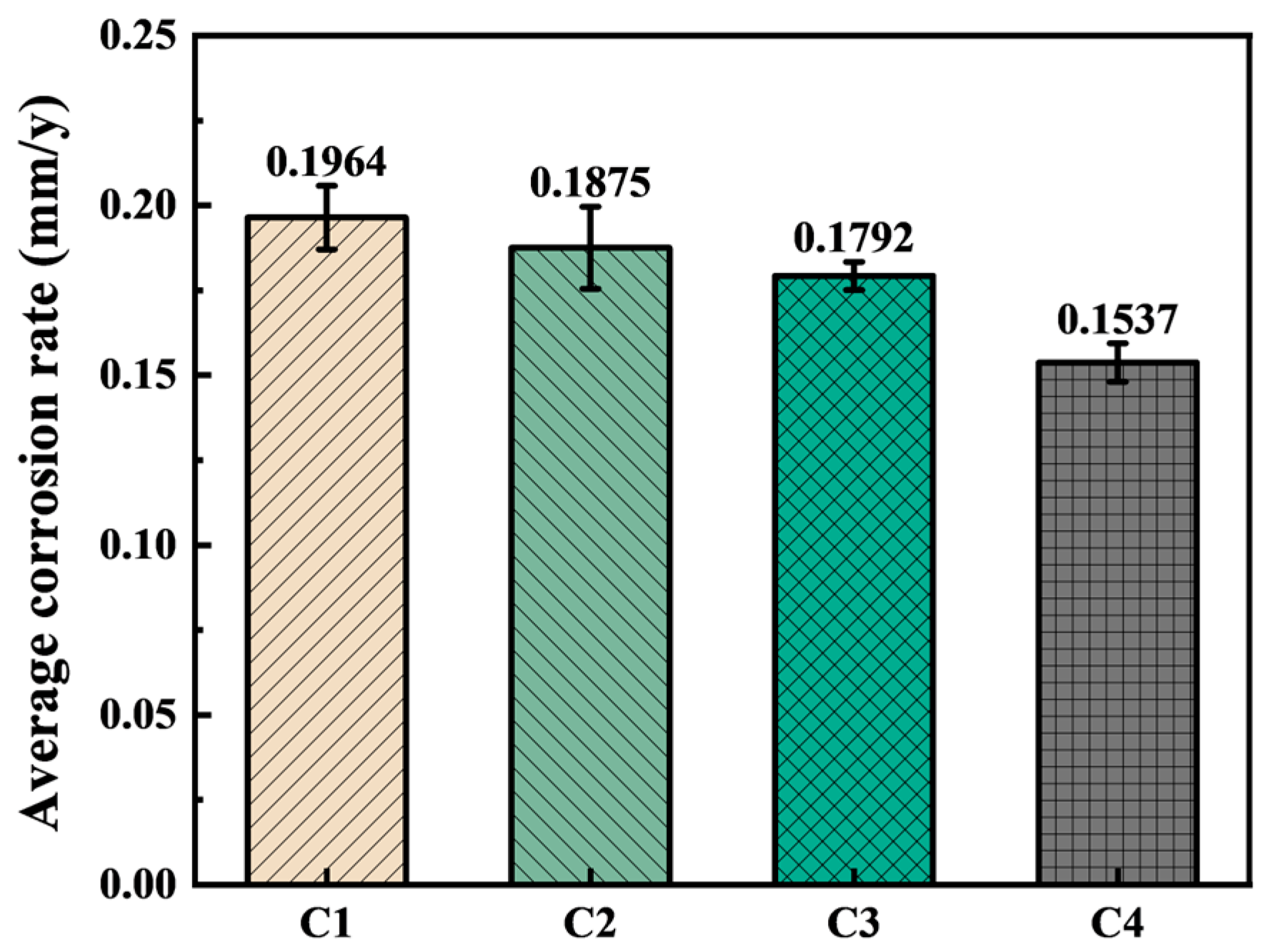
Corrosion of pipelines by flue gas desulfurization (FGD) wastewater compromises the normal operation of the desulfurization tower, and corrosion under high-chloride conditions in particular severely damages the tower’s internal structure. To further elucidate the corrosion mechanism at elevated Cl concentrations, the corrosion behavior of 20 steel exposed to high-chloride FGD wastewater at different Cl concentrations was investigated through weight-loss measurements, electrochemical tests, immersion corrosion experiments, composition analysis, and microscopic morphology characterization. The results revealed that higher Cl concentrations corresponded to lower corrosion rates: the corrosion rate reached 0.1964 mm/y in the absence of Cl, but decreased to 0.1537 mm/y at a Cl concentration of 100,000 mg/L. XPS analysis showed that as the Cl concentration increased, the corrosion film gradually transformed from porous FeOOH into dense Fe3O4. Localized pitting analysis indicated a positive correlation between Cl concentration and pitting susceptibility. At Cl concentrations of 0 and 100,000 mg/L, the corrosion current density decreased from 32.44 μA/cm2 to 6.43 μA/cm2 after 72 h, decreasing by a factor of approximately 5.05. This behavior is attributed to the fact that Cl increases solution conductivity in high-chloride environments, thereby promoting the formation rate of the corrosion film. Additionally, high Cl levels reduce dissolved oxygen in the solution, causing the corrosion film to progressively react and form denser Fe3O4. Nevertheless, the high penetrability of Cl continues to aggravate pitting corrosion of 20 steel.

1. Introduction

Coal-fired power generation remains one of the mainstream power generation methods worldwide [1,2]. Abundant coal resources have been proven in the TuSan–Hami (hereinafter referred to as Turpan–Hami) region of Xinjiang, China, with predicted reserves reaching the trillion-ton level. However, the coal species in this region are characterized by high chlorine content, with an average chlorine content of approximately 0.5% and a maximum of 1% [3,4,5]. Large amounts of chlorine-containing and sulfur-containing flue gases released during the combustion of high-chlorine coal cause severe corrosion problems to key internal components of boilers and downstream desulfurization systems [6,7]. Among existing desulfurization technologies, wet flue gas desulfurization (WFGD) is one of the most widely used methods [8]. The desulfurization wastewater generated by this method is usually weakly acidic with a temperature of about 55 °C, and 68.88%–77.31% of the chlorine in coal needs to be discharged through desulfurization wastewater [9]. Therefore, the Cl concentration in general desulfurization wastewater ranges from 1000 to 10,000 mg/L [10,11,12,13], while the Cl concentration in desulfurization wastewater generated by the combustion of high-chlorine coal in the Turpan–Hami region can be as high as 80,000–100,000 mg/L. Currently, 20 steel is widely used for desulfurization wastewater pipelines. On-site investigations at power plants have found that high-chloride desulfurization wastewater causes severe corrosion to 20 steel, leading to frequent pipeline replacements.
Researchers have conducted corresponding studies on the corrosion behavior of pipelines caused by desulfurization wastewater. Cl has a small ionic radius, excellent diffusion performance, is an acidic anion with erosiveness [14,15,16,17], and is easy to adsorb on metal surfaces, inducing pitting corrosion [18,19]. Dastgheib et al. [20] tested the corrosion resistance of carbon steel and stainless steel under different conditions in lime sludge flue gas desulfurization. The results showed that the corrosion resistance of stainless steel in limestone slurry is significantly better than that of carbon steel. Adding 5000 ppm of Cl to the slurry significantly increased the corrosion rates of both carbon steel and stainless steel. This study only examined the effect of a single Cl concentration. Fan et al. [21] conducted a study on the effect of different Cl concentrations on metal corrosion and found that when the chloride concentration increased from 20,000 mg·L−1 to 50,000 mg·L−1, the mass loss rates of 316L (AISI 316L/UNS S31603) and 2205 stainless steels (UNS S32205) increased by 32% and 93% respectively. Smith et al. [22] studied the effect of high concentrations of Cl on metal corrosion and found that the effect of Cl on the corrosion rate of carbon steel varies in different concentration ranges: when the Cl content increases from 0.05% to 3.5%, the corrosion rate increases significantly; while in the range of 3.5% to 10%, the effect of Cl on the corrosion rate is not obvious.
Regarding corrosion in a mixed SO42− and Cl environment, Deng et al. [23] conducted immersion tests on 316 stainless steel (AISI 316/UNS S31600). In a solution containing 0.5% Cl, the SO42− concentration was adjusted by adding Na2SO4 within the range of 0 to 0.8%. When the SO42− concentration was lower than 0.42%, the Critical Pitting Temperature (CPT) of 316 stainless steel (AISI 316/UNS S31600) was lower than that without SO42−, indicating that SO42− accelerates the initiation of pitting corrosion. When the SO42− concentration exceeded 0.42%, its CPT was higher than that in the SO42−-free system, demonstrating the inhibitory effect of SO42− on pitting initiation. Huttunen-Saarivirta et al. [24] carried out experiments on various austenitic stainless steels including 1.4539 (EN 1.4539/AISI 904L/UNS N08904). The results showed that the corrosion rate was 0.04 mm/y or lower in sulfuric acid solutions with mass fractions. This reduction arises from the salting-out effect of high NaCl concentrations, with significant decreases of 5%, 10%, 20%, and 50% at 50 °C. When 3000 ppm of Cl was added to the 20% mass fraction sulfuric acid solution, the corrosion rate reached a maximum of 0.17 mm/y. Zhao et al. [25] analyzed the effect of varying Cl content on the corrosion behavior of 316L (AISI 316L/UNS S31603) stainless steel. Their study revealed that with a constant SO42− content, the increase in Cl concentration led to decreases in the radius of the capacitive arc, polarization resistance (Rp), and pitting potential (Eb). When the Cl content increased from 0 to 50 g/L, significant corrosion occurred on the surface of 316L (AISI 316L/UNS S31603) stainless steel. Many scholars have focused on the corrosion behavior of stainless steel, mostly under conditions of low chloride ion concentration [26,27,28,29]. There are relatively few studies on the corrosion of 20 steel, which is more commonly used in desulfurization wastewater pipelines, especially the corrosion mechanism in high-chloride environments remains unclear.
Based on this, this study aims to investigate the effect of high-chloride desulfurization wastewater on the corrosion behavior of 20 steel: the corrosion rate under different corrosion environments was calculated by the weight loss method; electrochemical methods were used to analyze the effect of the components of desulfurization wastewater on the corrosion process and calculate the corresponding film thickness; combined with characterization techniques such as XRD, SEM, and white light interferometry, the corrosion products and surface morphology of 20 steel in high-chloride environments were clarified, thereby revealing the corrosion mechanism of high-chloride desulfurization wastewater on 20 steel under certain temperature and low oxygen conditions.

2. Samples and Methods

2.1. Preparation of Samples and Solutions

All experimental samples were made of 20 steel (GB/T 699, China; equivalent to AISI 1020/SAE 1020/UNS G10200/ASTM A29 1020/DIN 1.1151 (C22E)/EN 10083-2 C22E), a commonly used low-carbon steel in desulfurization towers. Its specific chemical composition is detailed in Table 1. Specimens with dimensions of 10 mm × 10 mm × 3 mm were welded to wires, then embedded and encapsulated with epoxy resin, with only a single metal surface exposed as the working surface. Subsequently, the encapsulated specimens were ground sequentially with 240-mesh, 400-mesh, 600-mesh, 800-mesh, 1000-mesh, 1500-mesh, and 2000-mesh silicon carbide sandpapers, followed by mechanical polishing using diamond polishing paste with a particle size of 2.5 μm. After polishing, the samples were subjected to ultrasonic degreasing with acetone and rinsing with ethanol in sequence to remove surface grease. After thorough drying, the samples were stored in a desiccator for later use.
The solution prepared for the experiment was a simplified simulated wastewater of high-chloride desulfurization wastewater, in which the SO42− and Cl concentrations were controlled by adding MgSO4 (Sinopharm Chemical Reagent Co., Ltd., Shanghai, China) and NaCl (Tianjin Zhiyuan Chemical Reagent Co., Ltd., Tianjin, China), respectively. For the Cl-containing corrosive solution, the pH was adjusted to 4 using HCl (Sinopharm Chemical Reagent Co., Ltd., Shanghai, China), while for the Cl-free corrosive solution, the pH was adjusted to 4 using H2SO4 (Sinopharm Chemical Reagent Co., Ltd., Shanghai, China). A total of four solution systems with different ion concentrations were set up in this experiment. The SO42- concentration in all corrosive media was fixed at 10,000 mg/L, while the Cl concentrations were set to 0, 60,000, 80,000 and 100,000 mg/L respectively. The specific compositions are shown in Table 2. The immersion corrosion tests were conducted in strict accordance with ASTM G31-21 “Standard Guide for Laboratory Immersion Corrosion Testing of Metals” and NACE TM0169-2016 “Laboratory Corrosion Testing of Metals”, with appropriate adaptations made for the simulated high-chloride desulfurization wastewater environment. Three parallel specimens were tested in each solution system. The test duration was 100 h, the temperature was precisely maintained at 55.0 ± 0.5 °C, and the solution volume-to-specimen surface area ratio was 300 mL/cm2, which fully meets the requirements specified in the ASTM G31 standard. The flow chart is shown in Figure 1.

2.2. Electrochemical Measurements

The tests were conducted using a CORRTEST CS350M (Wuhan Corrtest Instruments Corp., Ltd., Wuhan, China) electrochemical workstation, with the samples immersed in four different solution systems for 100 h. The electrochemical test specimens had an exposed working surface area of 1.0 cm2. A standard three-electrode system was adopted: 20 steel served as the working electrode (WE), a saturated calomel electrode (SCE) as the reference electrode (RE), and a platinum (Pt) electrode as the counter electrode (CE). Thirty minutes after connecting the electrodes, the open circuit potential (OCP) tended to stabilize. For electrochemical impedance spectroscopy (EIS), a sinusoidal excitation signal of 10 mV was applied within the frequency range of 105 Hz to 10−2 Hz. Potentiodynamic polarization measurements were conducted across a potential window of −1.25 V to −0.15 V (vs. SCE) with a constant scan rate of 0.5 mV/s.

2.3. Weight Loss and Morphology Characterization

Prior to the experiment, the initial mass of all specimens was measured using an analytical balance (Sartorius BSA224S-CW, Sartorius AG, Goettingen, Germany). This balance features a resolution of 0.1 mg and a maximum weighing capacity of 220 g. Calibration was performed with standard weights before each measurement to ensure measurement accuracy. Three parallel specimens, each with an effective exposed area of 1.0 cm2, were tested in each solution system. After 100 h of corrosion exposure, the specimens were taken out, rinsed with deionized water, dehydrated with ethanol, dried with cold air, and then stored in a desiccator for subsequent characterization.
Three of the samples were ultrasonically cleaned in a mixed solution of 5 wt.% HCl and 0.5% C6H12N4 to remove corrosion products, then rinsed with deionized water and ethanol, dried, and reweighed. After being rinsed with deionized water and ethanol, and then dried, it was reweighed. The average corrosion rate of 20 steel was calculated using the following formula:
v c o o r = 8.76 × 10 4 × W 0 W 1 ρ × A × t
where vcorr is the average corrosion rate of the sample (mm/y), W0 is the initial mass of the sample (g), W1 is the mass of the sample after removing corrosion products (g), ρ is the density of the sample (g·cm−3), A is the area of the sample (cm2), and t is the immersion time (h).
After the immersion test, the samples with retained corrosion products were gently rinsed with deionized water and dried under a nitrogen stream. These samples were directly characterized using the following techniques. X-ray diffraction (XRD) was performed on a Rigaku Smart Lab 9 kW diffractometer (Rigaku Corporation, Tokyo, Japan) with Cu Kα radiation (λ = 1.5406 Å) at an operating voltage of 45 kV and a current of 200 mA. Diffractograms were recorded over a 2θ range of 5–90° with a step size of 0.02° and a scan rate of 2°/min. Surface and cross-sectional morphologies were examined using scanning electron microscopy (SEM) coupled with energy-dispersive X-ray spectroscopy (EDS) on a Phenom Pure Plus integrated system (Thermo Fisher Scientific, Eindhoven, The Netherlands) at an accelerating voltage of 15 kV and a working distance of approximately 10 mm. Cross-sectional samples were prepared by cold-mounting in epoxy resin, followed by sequential grinding with SiC papers and polishing. X-ray photoelectron spectroscopy (XPS) analysis was conducted on a Thermo Scientific K-Alpha spectrometer (Thermo Fisher Scientific, Waltham, MA, USA) using monochromatic Al Kα radiation with an X-ray spot size of 400 μm. Pass energies of 50 eV for survey spectra and 20 eV for high-resolution core-level spectra were employed, with a step size of 0.1 eV. For samples requiring removal of corrosion products, they were first ultrasonically cleaned in ethanol and then immersed in an acid pickling solution containing 5 wt.% HCl and 0.5% C6H12N4 to remove the corrosion products, followed by rinsing with deionized water and drying. The distribution and depth of corrosion pits were measured using a white light interferometer (MicroXAM-3D, KLA Corporation, Milpitas, CA, USA) with a vertical scanning resolution of 0.01 nm, a lateral resolution of 0.11–8.8 μm, and an adjustable field of view.

3. Results and Discussion

3.1. Corrosion Rate and Corrosion Products Analysis

The corrosion rates of 20 steel in solutions with different ion concentrations were calculated using the average corrosion rate formula, where the density of 20 steel is ρ = 7.85 g·cm−3, the exposed area A = 1 × 10⁻⁴ m2, and the immersion time t = 100 h. The corrosion rate results are shown in Figure 2. In the four different solutions, C1, C2, C3, and C4, the corrosion rates were 0.1964 mm/y, 0.1875 mm/y, 0.1792 mm/y, and 0.1537 mm/y, respectively. As can be seen from Figure 2, adding Cl to the solution containing 10,000 mg/L SO42− inhibits the corrosion rate of 20 steel, and the corrosion rate decreases with increasing Cl concentration. The corrosion rate of 0.1964 mm/a measured under Cl-free conditions is close to the value of 0.22 mm/y reported by Gong et al. [30] for Q235B steel after 7 days of immersion in desulfurization wastewater (pH 6.95, SO42− 15,300 mg/L). The corrosion rates obtained in this study also fall within the range of 0.13–0.89 mm/y reported by Smith et al. [22] for carbon steel in aqueous salt solutions containing 0.05%–10% Cl. Furthermore, the trend of decreasing corrosion rate with increasing Cl concentration is consistent with the “threshold effect” reported by Cáceres et al. [31] and Ahmed et al. [32].

3.2. Macro-Image Analysis

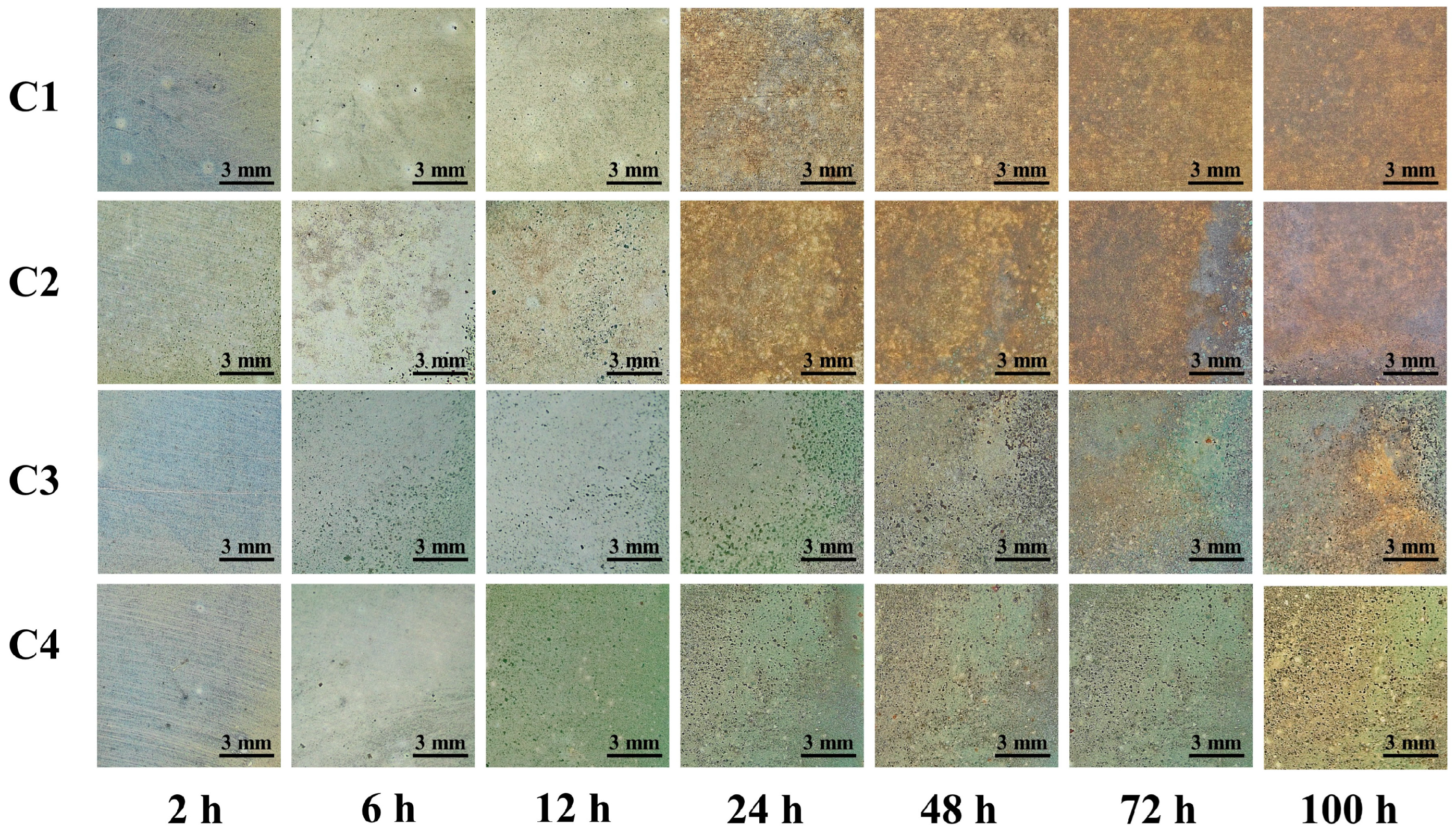
The macroscopic morphological evolution of the four specimen groups C1, C2, C3, and C4 over different immersion times is presented in Figure 3.
The C1 group exhibited a pronounced color change after 6 h of immersion, with the surface turning light gray accompanied by the progressive accumulation and spreading of corrosion products. By 24 h, a large portion of the surface was uniformly covered with yellowish-brown corrosion products, and after 100 h, the surface was almost entirely enveloped by a compact, dark brown corrosion product layer. The C2 group remained relatively stable within the first 24 h, presenting a light gray product layer on the surface; after 24 h, localized yellowish-brown corrosion stains began to nucleate and spread rapidly. In contrast, the C3 group maintained outstanding surface integrity throughout the entire immersion period. From 2 h to 72 h, the surface sustained an overall grayish-green tone, with only a small number of discrete dark pitting spots distributed across it; even after 100 h of immersion, no obvious large-scale color change was observed macroscopically. The C4 group likewise displayed good surface stability during the first 72 h, exhibiting a light grayish-green appearance, and slight yellowing began to emerge locally at 100 h.

3.3. Analysis of pH Value and Dissolved Oxygen Content

To elucidate the role of dissolved oxygen in the corrosion mechanism, the DO concentration and bulk solution pH were monitored at 0, 24, 48, 72, and 100 h using a portable dissolved oxygen meter (Hach HQ40d, accuracy ±0.1 mg/L) and a calibrated glass-electrode pH meter (Mettler Toledo FE28, accuracy ±0.01), respectively. Both instruments were calibrated before each measurement session. All reported values are the mean of three parallel specimens ± standard deviation.
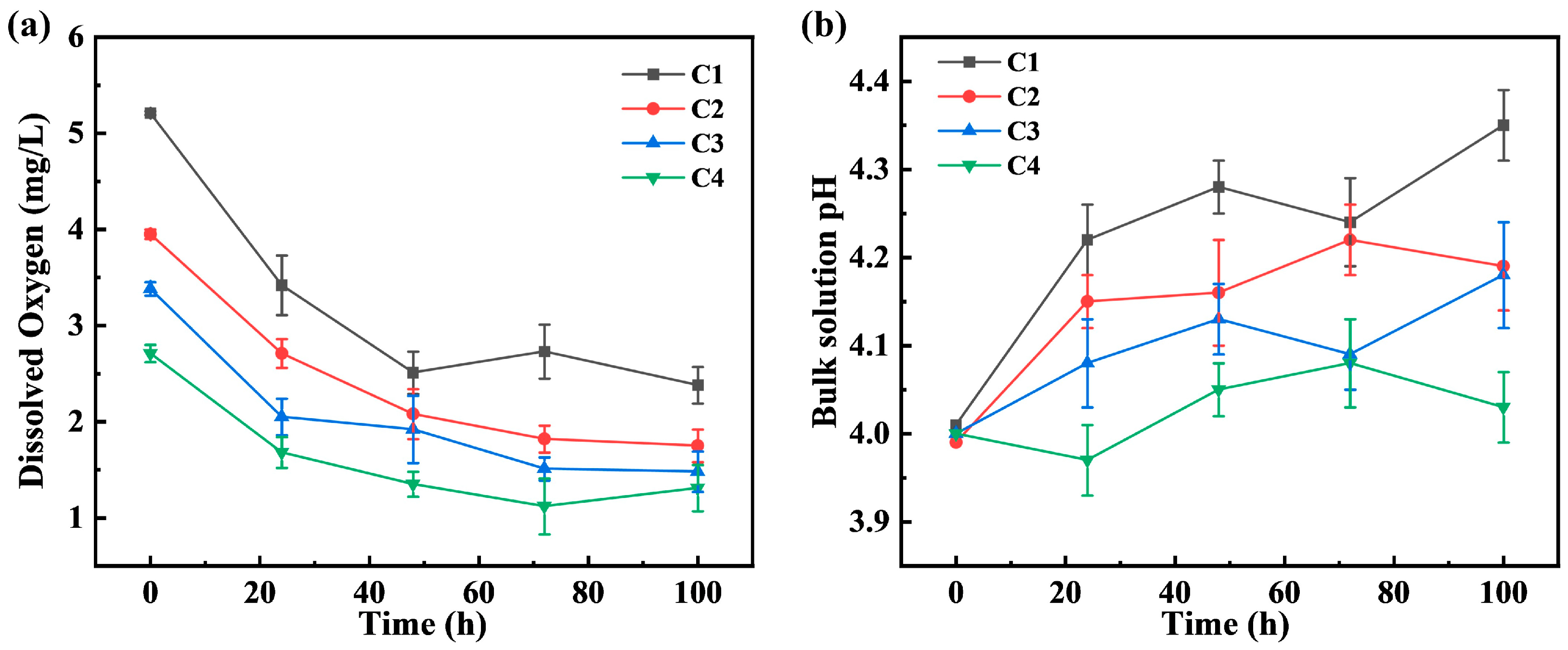
The evolution of dissolved oxygen (DO) is presented in Figure 4a. At 55 °C, the initial DO concentration decreased progressively with increasing Cl concentration: 5.22 mg/L for C1, 3.98 mg/L for C2, 3.38 mg/L for C3, and 2.72 mg/L for C4. This reduction arises from the salting-out effect of high NaCl concentrations, which significantly decreases the solubility of molecular oxygen in aqueous solutions [18]. Over the 100 h immersion period, the DO in all four systems decreased as oxygen was consumed by the cathodic oxygen reduction reaction (ORR). Throughout the entire immersion period, the DO in the C4 system remained consistently at the lowest level, reaching 1.22 mg/L at 100 h, compared to 2.41 mg/L for C1. The decline rate was most rapid during the first 24 h, after which the DO approached a quasi-steady state as the corrosion product film formed and partially suppressed further oxygen diffusion toward the metal surface. The overall trend is unambiguous: higher Cl concentrations maintain the DO at consistently lower levels, directly weakening the cathodic driving force of ORR.
The evolution of the bulk solution pH is shown in Figure 4b. The initial pH of all four systems was 4.00. After 100 h of immersion, the pH of all systems exhibited a slight increase, but the magnitude decreased markedly with increasing Cl concentration: C1 rose to 4.35, C2 to 4.18, C3 to 4.18, and C4 to 4.03. The pH increase in the weakly acidic environment is primarily attributed to H+ consumption via the cathodic ORR. The progressively smaller pH shift at higher Cl concentrations reflects two synergistic effects: (i) the lower overall corrosion rate reduces the rate of H+ consumption, and (ii) the autocatalytic acidification inside active corrosion pits (HCl generation via FeCl2 hydrolysis) produces a diffusive flux of H+ toward the bulk solution, which partially counteracts the pH-raising effect of ORR. The near-constant bulk pH in the C4 system suggests that these opposing processes approach a dynamic equilibrium in high-chloride environments. Several non-monotonic fluctuations were observed, which are attributed to minor temperature fluctuations, localized film detachment, and transient outward diffusion of HCl from active pits during pitting outbreaks—all physically reasonable in this corrosion system.
These results quantitatively confirm that high Cl concentrations substantially reduce the available dissolved oxygen via the salting-out effect, which in turn weakens the cathodic ORR rate and contributes to the observed decrease in the macroscopic uniform corrosion rate. Meanwhile, the minimal bulk pH change in high-Cl systems does not contradict the locally aggressive environment within active pits, where the autocatalytic mechanism sustains highly acidic conditions independent of the bulk solution chemistry.

3.4. Corrosion Product Analysis

As aggressive ions, Cl increase the effective reactive area between the steel substrate and the corrosive medium, which leads to the formation of more corrosion products on the surface of 20 carbon steel and accelerates the corrosion process. The integrity and compactness of these corrosion product films directly determine the corrosion susceptibility of 20 carbon steel.
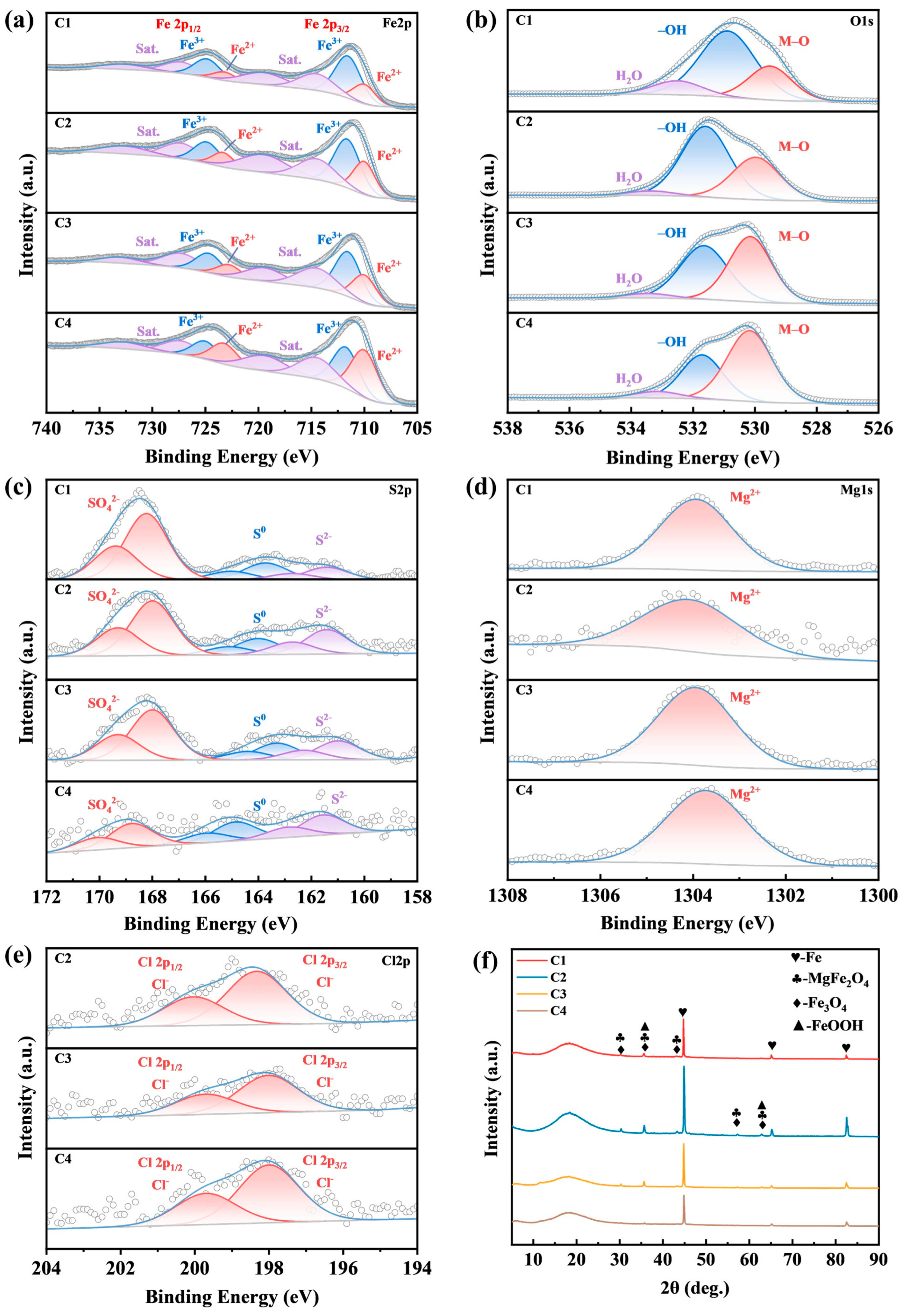
The high-resolution XPS spectra of Fe 2p, O 1s, S 2p, Mg 1s and Cl 2p for the corrosion products on 20 carbon steel are shown in Figure 5. Iron in the corrosion products exists in two valence states, i.e., Fe2+ and Fe3+, with Fe3+ as the dominant valence state. As the Cl concentration increases, the Fe2+/Fe3+ ratio rises, indicating an increased formation of low-valence iron compounds. The O 1s spectra confirm that the increase in Cl concentration leads to an elevated proportion of M-O and a reduced proportion of -OH in the corrosion products, which demonstrates that the formation of dense crystalline oxides is promoted while the generation of porous iron oxyhydroxides is inhibited, this is because the decrease in oxygen content gradually reduces FeOOH to lower-valence Fe3O4. The S 2p spectra reveal that Cl facilitates the reduction process of sulfate, and the contents of S0 and S2− increase significantly with the elevation of Cl concentration. Meanwhile, Cl can adsorb on and penetrate through the corrosion product film, while Mg2+ in the solution can participate in the formation of magnesium–iron spinel phase, which improves the chemical stability of the corrosion product film.
XRD results show that the main crystalline phases of the corrosion products are spinel-type Fe3O4 (PDF#19-0629, ICDD) and MgFe2O4 (PDF#73-1960, ICDD), accompanied by a small amount of FeOOH (goethite, PDF#29-0713, ICDD) oxyhydroxide. With the increase in Cl concentration, the intensity of the characteristic peaks of FeOOH decreases, and the relative content of the spinel phases increases significantly.

3.5. Electrochemical Measurement Results

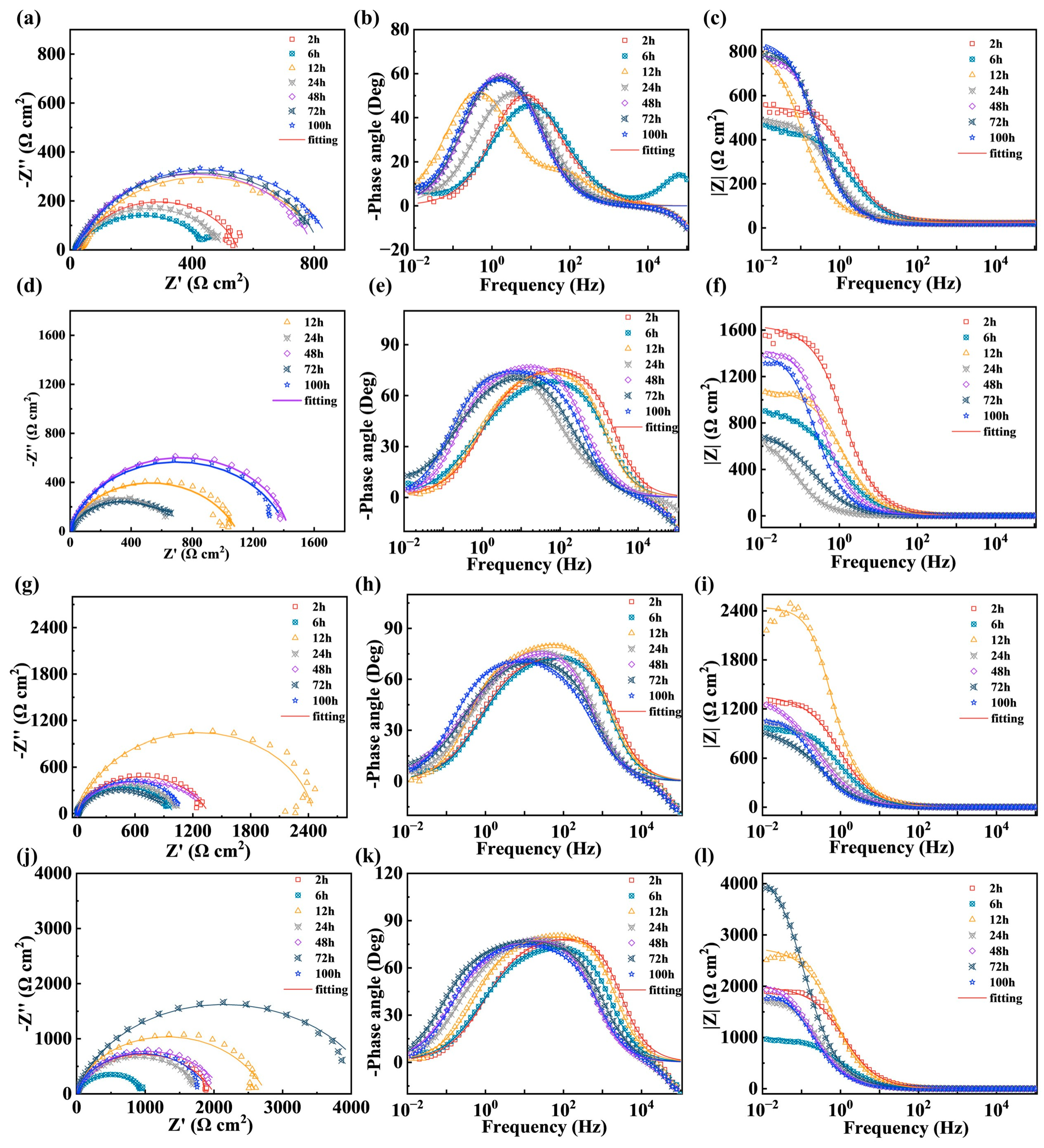
EIS results measured on 20 steel after immersion in four different solutions for varying durations are presented in Figure 6. Among them, Figure 6a,d,g,j are Nyquist plots, Figure 6b,e,h,k are Bode phase angle plots, and Figure 6c,f,i,l are Bode impedance modulus plots.
In the four different media, the diameter of the Nyquist semicircles increases progressively from C1 to C4 in tandem with rising Cl concentration; concurrently, the low-frequency impedance modulus |Z| exhibits a similar upward trend. These apparent changes in the electrochemical response reflect the increased coverage of corrosion products on the metal surface and the altered interfacial state under high-Cl conditions. At high Cl concentrations, Cl induces pitting that disrupts the original oxide film; simultaneously, however, it promotes the deposition and accumulation of corrosion products in the extra-pit regions, forming a thicker product layer with greater surface coverage [33]. This layer presents a physical barrier to charge transfer, which macroscopically manifests as increased Rct and |Z| in the EIS measurements. The Bode phase angle plots reveal that the addition of Cl yields a higher phase angle peak and a broader peak width. This indicates the formation of a relatively compact surface film and an increase in interfacial heterogeneity. The enhanced interfacial non-uniformity is closely associated with the Cl-induced localized corrosion process; the underlying mechanism likely involves promoting pitting initiation and propagation, thereby causing the substrate surface microstructure to become increasingly porous and rough.
In the C1 solution, as shown in Figure 6b,c, the impedance modulus at high frequencies remains approximately 20 Ω·cm2. At 2 h, the |Z| value is about 558.81 Ω·cm2, with a peak value of approximately 49.80°. By 6 h, the |Z| value decreases to 467.33 Ω·cm2, and the peak value drops to 45.67°—this decrease indicates that active anions in the solution attacked the initial oxide film on the metal during the early corrosion stage. Subsequently, due to the formation of new corrosion products, the |Z| value rises to 799.15 Ω·cm2, with the corresponding phase angle peak shifting to lower frequencies; in addition, the Nyquist plot exhibits a larger capacitive loop. At 24 h, the |Z| value decreases to 487.14 Ω·cm2, which can be attributed to the initiation of dissolution and detachment of the film layer. From 48 h to 100 h, the |Z| value increases from 773.87 Ω·cm2 to 817.06 Ω·cm2, the phase angle peak decreases slightly from 59.12° to 57.31° and shifts marginally toward lower frequencies, and the corresponding capacitive loop in the Nyquist plot becomes larger. This indicates an increase in Rp and suggests that the corrosion rate of the steel decreases with prolonged immersion.
In the other Cl-containing solutions, the metal specimens exhibit the same variation trend as those in the C1 solution within the first 48 h. At 72 h, the impedance values of C2 and C3 show a decreasing trend, with |Z| values of 636.64 Ω·cm2 and 901.05 Ω·cm2, respectively. This is attributed to the instability of the corrosion film layer, which readily dissolves in the solution, leading to a decrease in impedance. For C4, the surface roughness is significantly higher than that of the other two groups; despite partial dissolution of the film layer, the impedance value increases to 4000.25 Ω·cm2 due to the influence of surface corrosion pits.
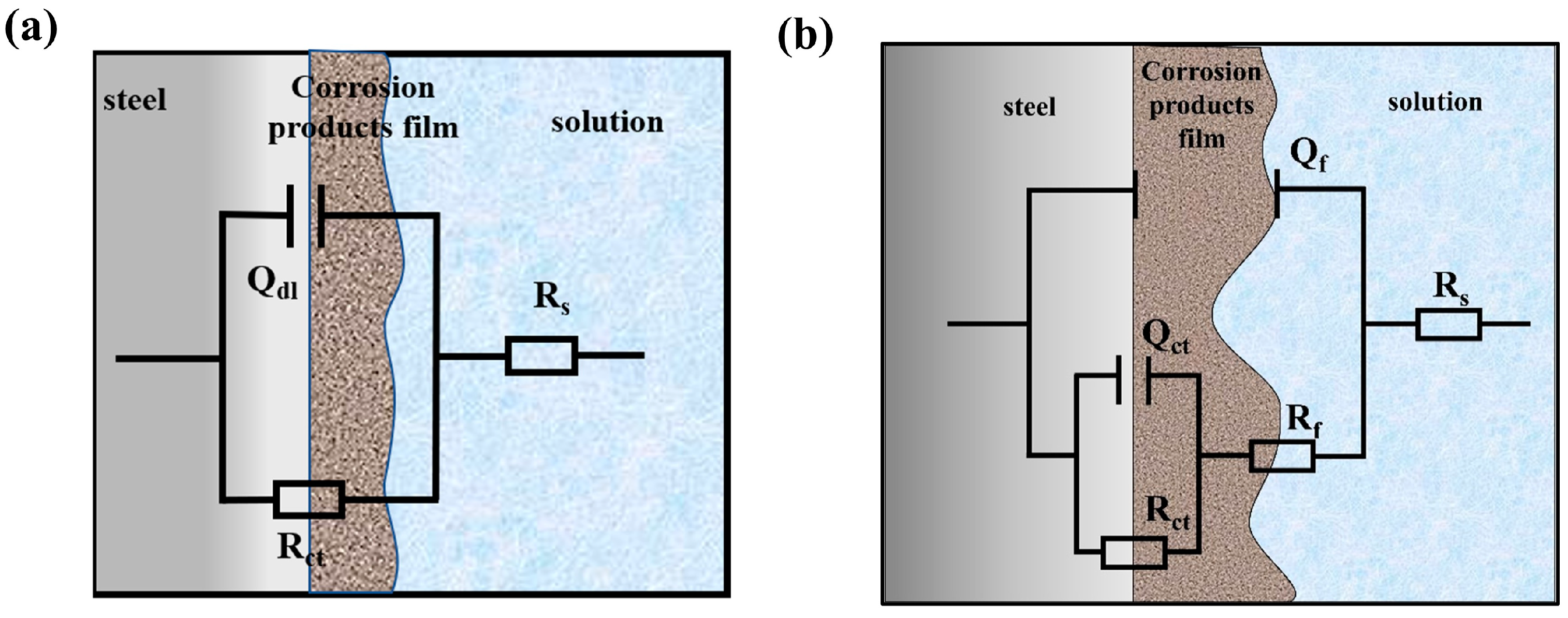
To further clarify the interface reaction mechanism of 20 steel in the solutions, an equivalent circuit was used to fit the EIS data. As shown in Figure 7a,b, two equivalent circuit models, R(QR) and R(Q(R(QR))), were employed to fit the EIS data acquired at various times during the 100 h immersion. The R(QR) model was used for C1 during the early corrosion stage (2–6 h) and for all measured time points of C2, C3, and C4, whereas the R(Q(R(QR))) model was applied to C1 for the period of 12–100 h. Herein, Rs is the solution resistance, Rct is the charge transfer resistance, Qf is the film capacitance, and Qdl is the double-layer capacitance. Qdl is a constant phase element (CPE) related to the double-layer capacitance. Considering the roughness and inhomogeneity of the material surface, the constant phase element Qdl was used instead of the ideal capacitance C. The impedance of the CPE (ZQ) can be expressed as follows:
Z Q = Y 0 1 j ω n
where Y0 and n are characteristic parameters of Qdl: Y0 represents the magnitude parameter of Qdl, with dimensions of Ω−1 cm−2 sn; n is the dispersion exponent; j denotes the imaginary unit; ω is the angular frequency of the sinusoidal perturbation, which is equivalent to 2πf, where f is the frequency of the voltage signal.
Table 3 summarizes the corresponding electrochemical parameters derived from fitting the EIS data. EIS measurements indicate that the introduction of Cl decreases the Rs. Analysis of Table 3 reveals that the charge Rct values in the four solutions exhibit a negative correlation with the corrosion rate: specifically, a higher Rct value corresponds to a lower corrosion rate. Notably, the introduction of Cl results in an increase in Rct and a concomitant reduction in corrosion rate, with this effect becoming more significant as the Cl concentration increases. EIS data fitting was performed using ZSimpWin software 3.21. Two equivalent-circuit models, R(QR) and R(Q(R(QR))), were employed according to the number of time constants resolved in the Bode phase-angle plots. The quality of each fit was assessed by the chi-squared value and the relative error of each fitted parameter. All spectra yielded chi-squared values below 10−3.
The increase in Rct with rising Cl concentration can be physically attributed to two factors: (1) enhanced ion-transport resistance caused by the thickening of the corrosion-product film, and (2) a reduction in the effective cathodic area as active sites become covered by corrosion products, leading to an overall decrease in the charge-transfer rate. However, the increase in Rct represents only an apparent enhancement of electrochemical inertness at the macroscopic scale; it does not counteract the locally accelerated corrosion within pits driven by the Cl enrichment effect and the HCl autocatalytic mechanism.
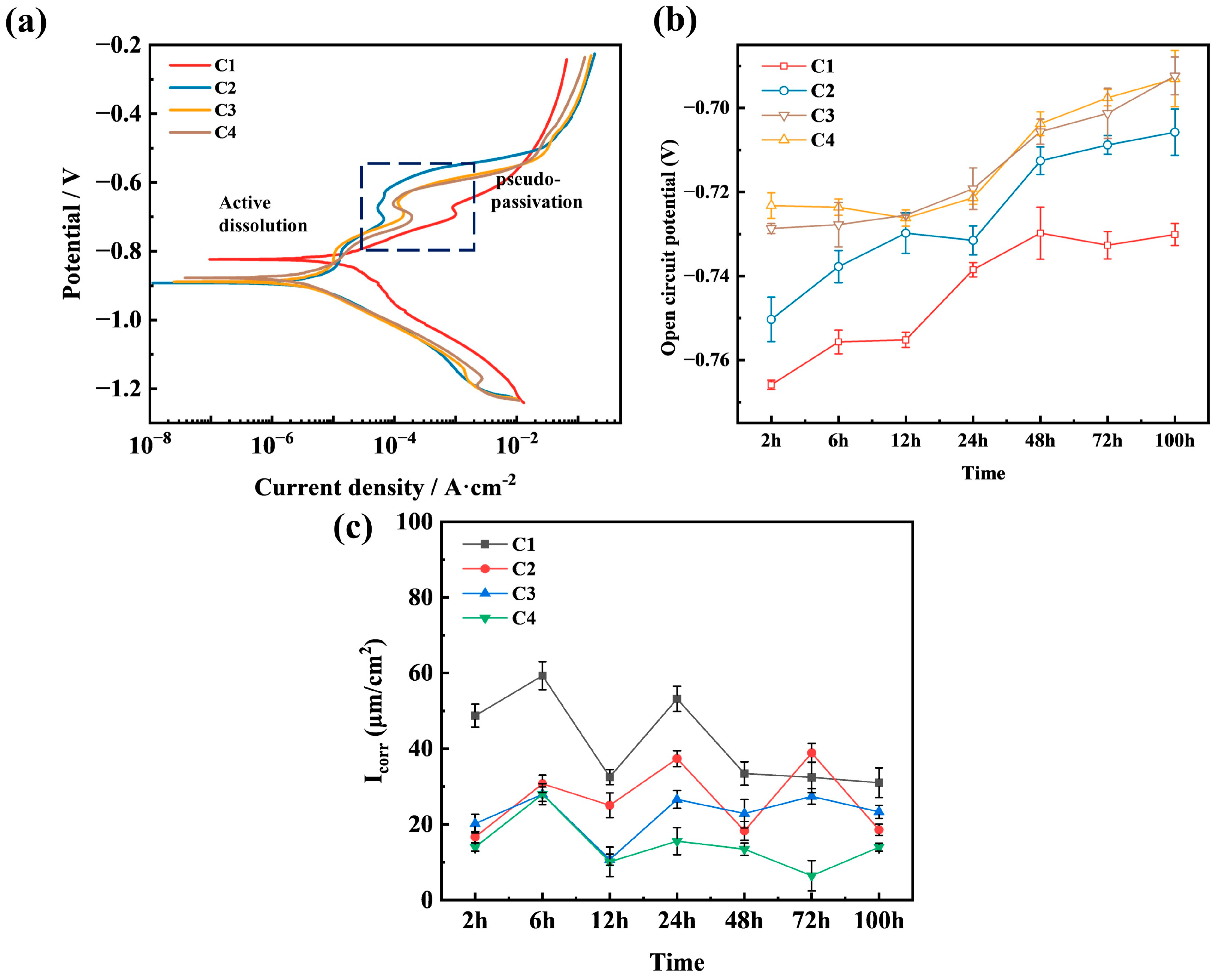
Figure 8a presents the potentiodynamic polarization curves of 20 steel after 100 h of immersion in the four corrosion media (C1–C4). Compared with the Cl-free C1 medium, increasing Cl concentration shifts the Ecorr in the positive direction and reduces the overall polarization current density. This trend indicates a decreased thermodynamic tendency for corrosion that becomes more pronounced at higher Cl concentrations.
The corrosion current density was derived from the polarization resistance using the Stern–Geary equation [34]:
i c o r r = B R p
where B is the Stern–Geary constant. For carbon steel under active corrosion conditions, a value of B = 26 mV was adopted [35], and Rp is the polarization resistance in Ω·cm2. The obtained results are shown in Figure 8c. The presence of Cl reduces the icorr of 20 steel. When the Cl concentration reaches 100,000 mg/L, the icorr is significantly lower than that of the groups with other Cl concentrations. In Cl-containing systems, the cathodic region of the potentiodynamic polarization curve exhibits the characteristic of oxygen-limited diffusion. In the high Cl concentration range, the solubility of dissolved oxygen in the medium decreases significantly with the increase in Cl concentration. Whereas the corrosion process of carbon steel in weak acidic desulfurization wastewater is controlled by the cathodic oxygen depolarization reaction, the reduction in dissolved oxygen content greatly weakens the cathodic driving force of the corrosion reaction. This inhibition effect outweighs the corrosive attack effect of Cl itself on the metal matrix, ultimately resulting in a continuous decrease in corrosion rate with increasing Cl concentration.
Figure 8b shows the OCP of 20 steel as a function of immersion time. The OCP shifts in the positive direction over time for all media, and the OCP values for Cl-containing samples are consistently higher than those for the Cl-free C1 sample. This trend is consistent with the noble shift in Ecorr observed in the potentiodynamic polarization curves. Pseudo-passivation behavior—characterized by a reduced rate of current increase in the anodic region—is observed in the Cl-containing media. The pseudo-passivation region widens with increasing Cl concentration, reaching its maximum extent at the highest Cl concentration. This phenomenon arises from the geometric coverage of active dissolution sites and the diffusion barrier effect of the porous corrosion product film rather than from true thermodynamic passivation.
The electrochemical parameters obtained in this study are consistent with literature values reported for carbon steels in similar environments. For instance, the Rct of 20 steel measured in this work ranges from 549.7 to 1863 Ω·cm2, which falls within the range reported by Xue et al. [36] for low-carbon steel in bicarbonate solutions containing chloride ions (500–3000 Ω·cm2). The icorr decreased from 32.44 μA/cm2 to 6.43 μA/cm2, representing a reduction by a factor of approximately 5.05. This trend is analogous to the observations of You et al. [37], who reported that the introduction of chloride ions into pore solutions of alkali-activated slag pastes leads to an increase in Rct and a decrease in the overall corrosion rate of low-carbon steel due to the formation of a surface corrosion product layer. The positive shift in Ecorr and the broadening of the pseudo-passive region observed in this study further corroborate the general electrochemical behavior of carbon steel in high-chloride systems, where chloride-induced film formation kinetically inhibits anodic dissolution despite promoting localized pitting.
In summary, high concentrations of Cl suppress the uniform corrosion rate of 20 steel by weakening cathodic oxygen reduction and promoting the formation of a corrosion product film, as evidenced by the decrease in icorr and the noble shift in Ecorr. However, Cl can penetrate the product film locally, increasing the risk of pitting. Consequently, the reduction in icorr does not necessarily indicate an overall improvement in corrosion resistance, and localized corrosion must be evaluated in conjunction with surface morphology analysis.

3.6. Electron Microscopy Cross-Sectional Analysis

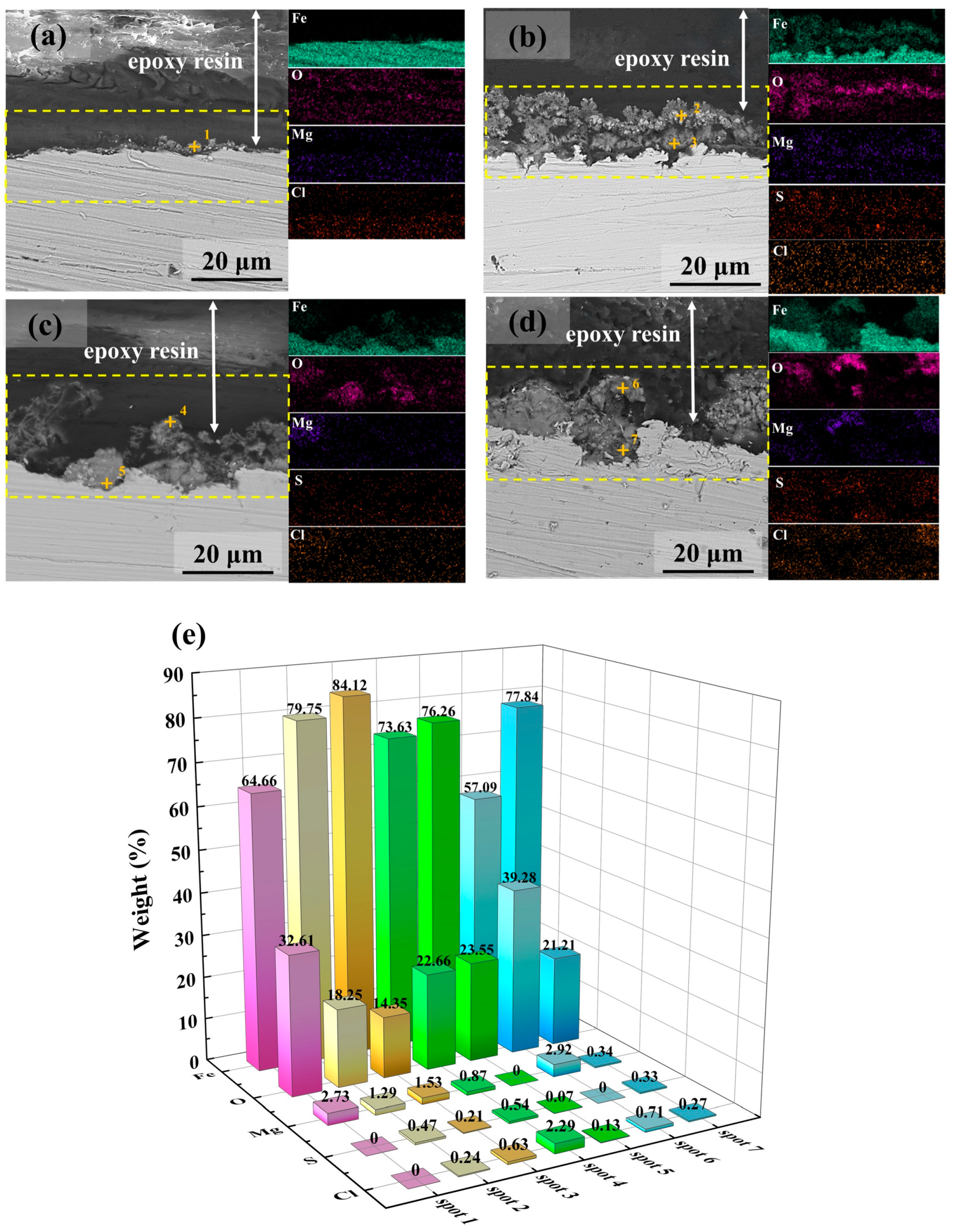
Figure 9 presents the cross-sectional morphologies of 20 steel under different Cl concentrations after the immersion test, where Figure 9a–d correspond to cross-sectional images with Cl concentrations of 0, 60,000 mg/L, 80,000 mg/L, and 100,000 mg/L, respectively, and Figure 9e is the EDS elemental composition map obtained by point analysis on the cross-section.
In the solution with 0 Cl concentration, the cross-sectional morphology exhibits characteristics of general corrosion, as shown in Figure 9a. For the sample immersed in the 60,000 mg/L solution (Figure 9b), some shallow pits appear on the steel surface, and the corrosion film shows distinct stratification: the outer layer is a film formed by uniform corrosion, while the inner layer consists of corrosion products accumulated from pitting corrosion of the metal matrix induced by Cl. With increasing Cl concentration, the corrosion film is dominated by products from pitting corrosion, and the outer corrosion products peel off as the film thickens. In Figure 9c,d, the corrosion pits are significantly enlarged, accompanied by a thicker corrosion product film.
Figure 9e demonstrates a distinct variation in iron content between the inner and outer regions of the corrosion layer, with a higher iron content in the inner layer adjacent to the base metal. This phenomenon arises because, under low-oxygen conditions, cathodic reduction reactions involve not only the reduction of hydrogen and oxygen but also the reduction of iron corrosion products. Within the corrosion layer, the oxide film imposes a certain barrier to oxygen diffusion, resulting in the predominance of iron corrosion product reduction—with the primary reaction being the reduction of FeOOH to Fe3O4. This observation is consistent with the findings of Xue et al. [36] on corrosion behavior in low-oxygen environments, thereby validating the reduction in corrosion products.
When the Cl adsorbed on the specimen surface reaches a certain concentration threshold, a corrosion cell with a small anode and a large cathode is formed. Under the catalytic action of chloride ions, the metallic bonding forces between the iron atoms in the surface layer are weakened, accelerating the dissolution of iron and the formation of vacancy defects [38]. The dissolved Fe2+ combines with Cl to form FeCl2, which rapidly diffuses away from the reaction interface, thereby preventing the inhibition of the anodic reaction by product accumulation. Since the affinity of OH for iron atoms is higher than that of Cl and thus favors the formation of stable hydroxides, FeCl2 is subsequently converted into Fe(OH)2, accompanied by the generation of HCl that acidifies the local solution. In this process, H+ participates in the reduction reaction while Cl is simultaneously released again, allowing chloride ions to cyclically participate in the corrosion process. The depolarization reaction equations are as follows:
F e 2 + + 2 C l + 2 H 2 O F e C l 2 · 2 H 2 O
F e C l 2 · 2 H 2 O F e O H 2 + 2 H C l
2 H C l + 2 e H 2 + 2 C l

3.7. Corrosion Pit Analysis

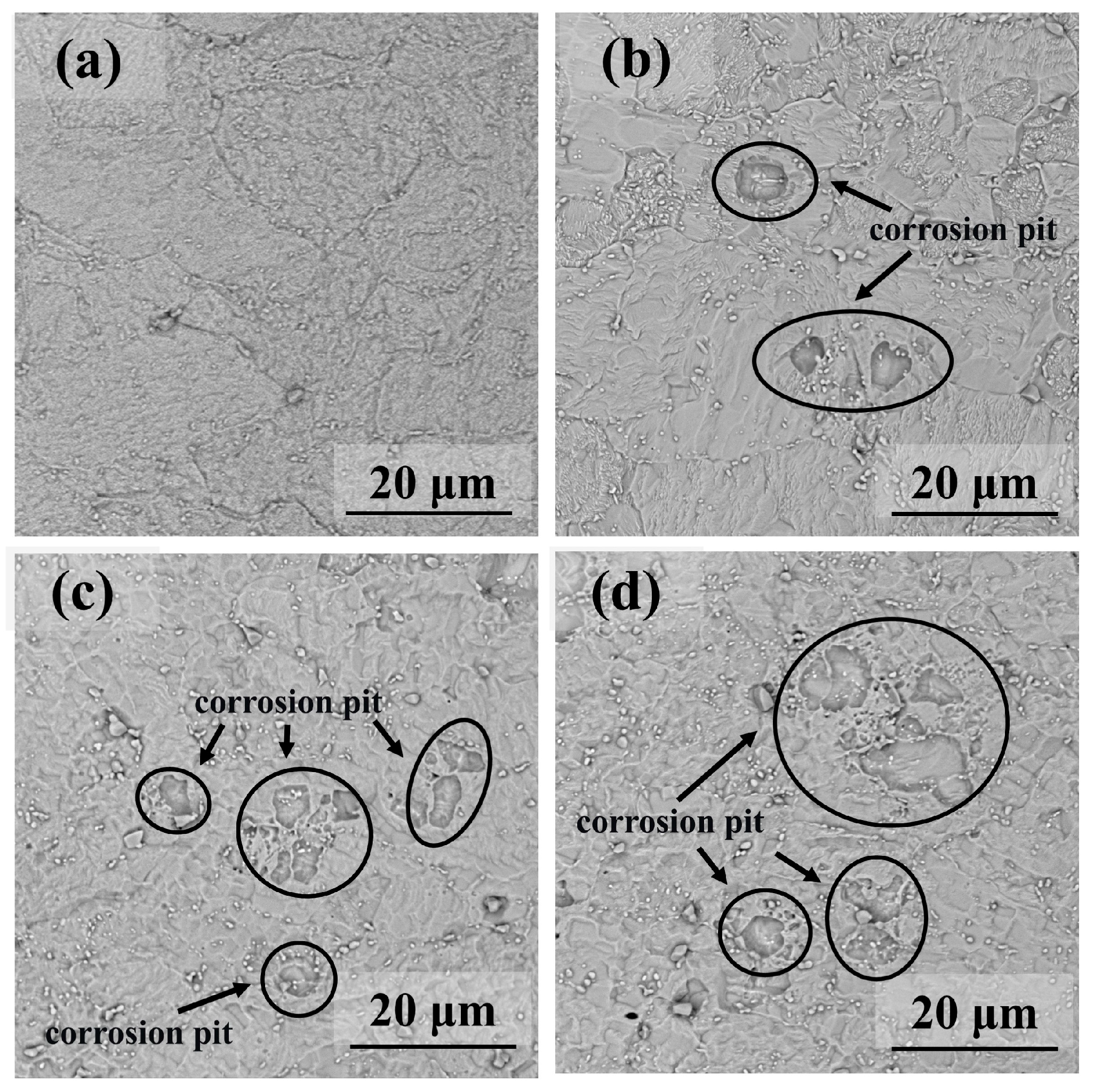
The results of corrosion of 20 steel after 100 h in solutions without Cl and with different concentrations of Cl are shown in Figure 10. Among them, Figure 10a corresponds to the solution system containing only SO42− without Cl, revealing that 20 steel undergoes only uniform corrosion. Figure 10b–d are SEM images of metal corrosion in solutions with Cl concentrations increasing in sequence. The introduction of Cl into the solution induces pitting corrosion; as the Cl concentration increases, the corrosion pits on the surface become denser and deeper. When the concentration reaches 100,000 mg/L, the corrosion pits are the deepest. Even at high Cl concentrations, Cl still exhibits a strong pitting ability.
The equilibrium microstructure of 20 steel consists of a ferrite (α-Fe) matrix with a small amount of dispersed pearlite (lamellar α-Fe + Fe3C eutectoid). Given its carbon content of 0.19 wt.%, the pearlite volume fraction is approximately 20%–25% after annealing. A significant electrochemical potential difference exists between ferrite and cementite (Fe3C): cementite is more noble (approximately −0.4 V vs. SHE) and serves as the cathodic phase, whereas ferrite is more active (approximately −0.6 V vs. SHE) and acts as the anodic phase. These two phases form numerous microscopic galvanic couples in the corrosive medium, which theoretically accelerate the preferential dissolution of ferrite and render the pearlite/ferrite interfaces susceptible sites for pit initiation.
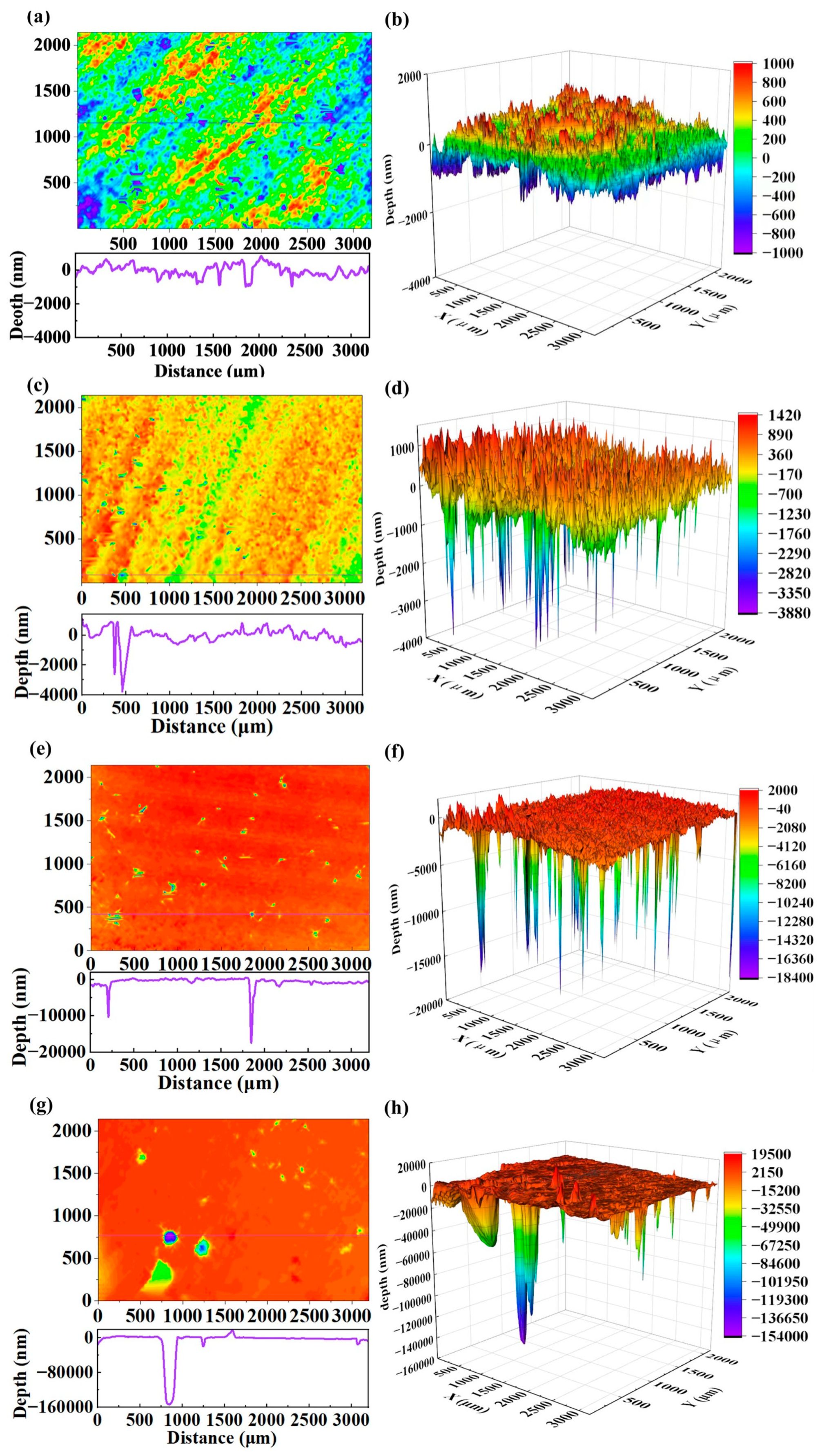
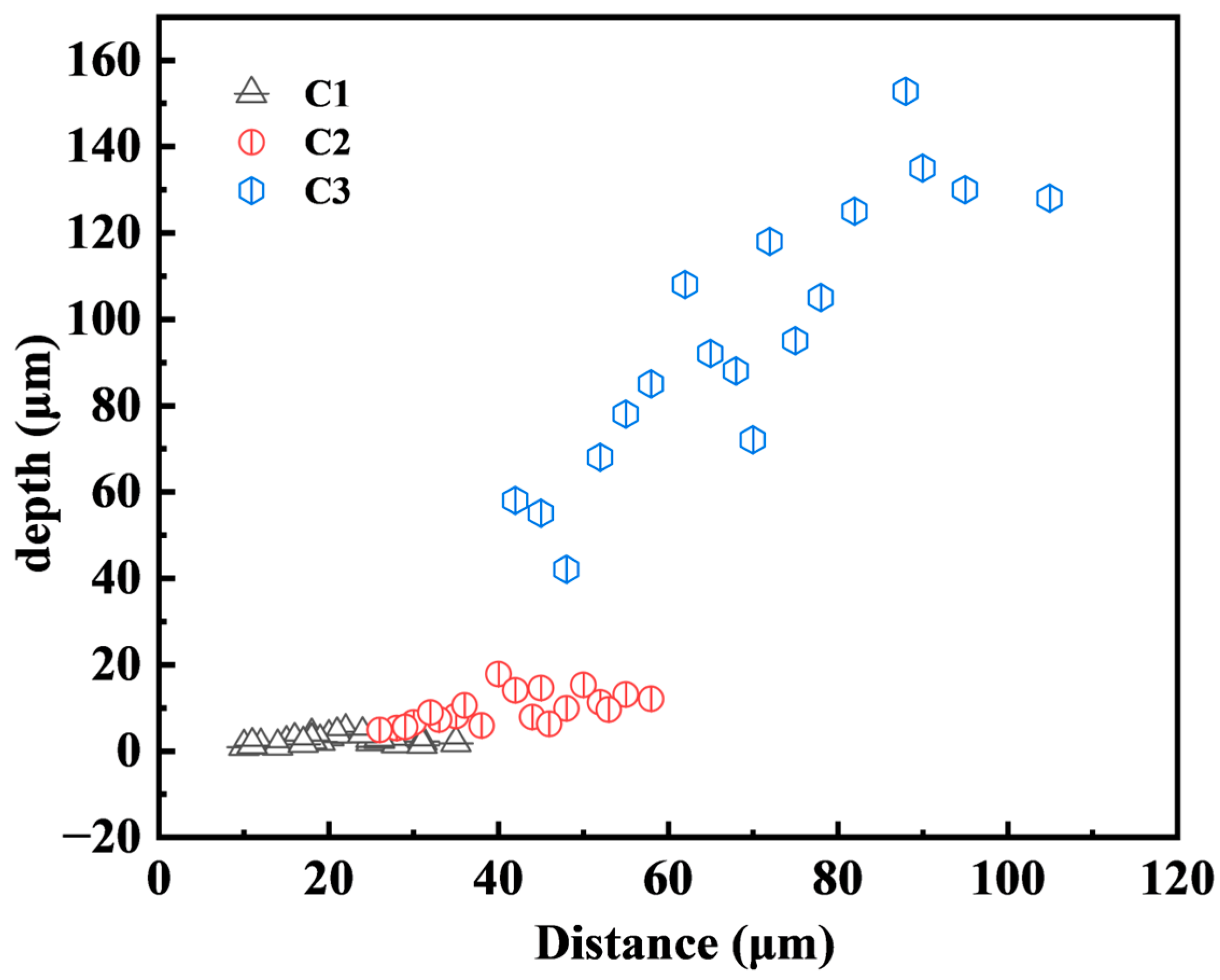
Figure 11 presents the white light interferometry images and corresponding depth profiles of 20 steel after 100 h immersion. For quantitative evaluation, all discernible pits within a scanned area of 3.5 mm × 2.5 mm per specimen were analyzed using a depth threshold of 1 μm. The C1 specimen (0 mg/L Cl) exhibited uniform corrosion without identifiable pits, with a maximum surface roughness below 1 μm. In contrast, 22, 20, and 18 pits were detected on the C2, C3, and C4 specimens, respectively, corresponding to pit densities of 2.51, 2.29, and 2.06 pits/mm2. The gradual decrease in pit density with increasing Cl concentration indicates that high chloride levels do not nucleate more pits but instead intensify the propagation of individual pits. The maximum pitting depth increased from 3.78 μm (C2) to 17.74 μm (C3) and 152.77 μm (C4), far exceeding the average uniform corrosion penetration of 2.14, 2.05, and 1.76 μm calculated from weight-loss data. Consequently, the pitting factor—defined as the ratio of maximum pit depth to average uniform corrosion depth—increased sharply from 1.8 (C2) to 8.7 (C3) and 87.1 (C4). The depth distribution histograms (Figure 12) reveal that 86% of C2 pits were shallower than 3.5 μm, 65% of C3 pits fell within 6–14 μm, and 78% of C4 pits exceeded 60 μm.
Figure 12 further presents the relationship between pit mouth diameter and pit depth. The C2 pits (red circles) cluster in the lower-left region with diameters of 10–42 μm and depths below 4.5 μm, exhibiting a broad, dish-like morphology. The C3 pits (green triangles) occupy an intermediate zone with diameters of 26–58 μm and depths of 4.8–17.74 μm, corresponding to bowl-shaped geometry. The C4 pits (blue diamonds) populate the upper-right region with diameters of 42–105 μm and depths of 42–152.77 μm; notably, all C4 pits exceed a depth-to-diameter ratio of 1.0, indicating a tunnel-like morphology that is deeper than it is wide. The progressive transition from dish-like (C2) to bowl-like (C3) to tunnel-like (C4) pits reflects the intensification of the Cl autocatalytic mechanism, wherein occluded-cell acidification preferentially drives downward dissolution. The tunnel-like C4 pits achieve depths nearly 90 times greater than the uniform corrosion depth, underscoring that the localized penetration risk posed by high-chloride desulfurization wastewater far outweighs the modest reduction in average wall thickness.

3.8. High-Chloride Corrosion Mechanism

During the corrosion experiment, the cathodic reaction mainly involves the reduction of oxygen, with the side reaction being the reduction of H+. The cathodic reactions can be expressed by the following equations:
O 2 + 4 H + + 4 e 2 H 2 O
2 H + + 2 e H 2
Anodic reactions are as follows:
F e F e 2 + + 2 e
The main reactions of 20 steel in high-chloride desulfurization wastewater are as follows:
F e 2 + + 2 H 2 O F e ( O H ) 2 + 2 H +
F e 2 + + S O 4 2 F e S O 4
4 F e ( O H ) 2 + O 2 + 2 H 2 O 4 F e ( O H ) 3
F e ( O H ) 2 + 2 F e ( O H ) 3 F e 3 O 4 + 4 H 2 O
F e ( O H ) 3 F e O O H + H 2 O
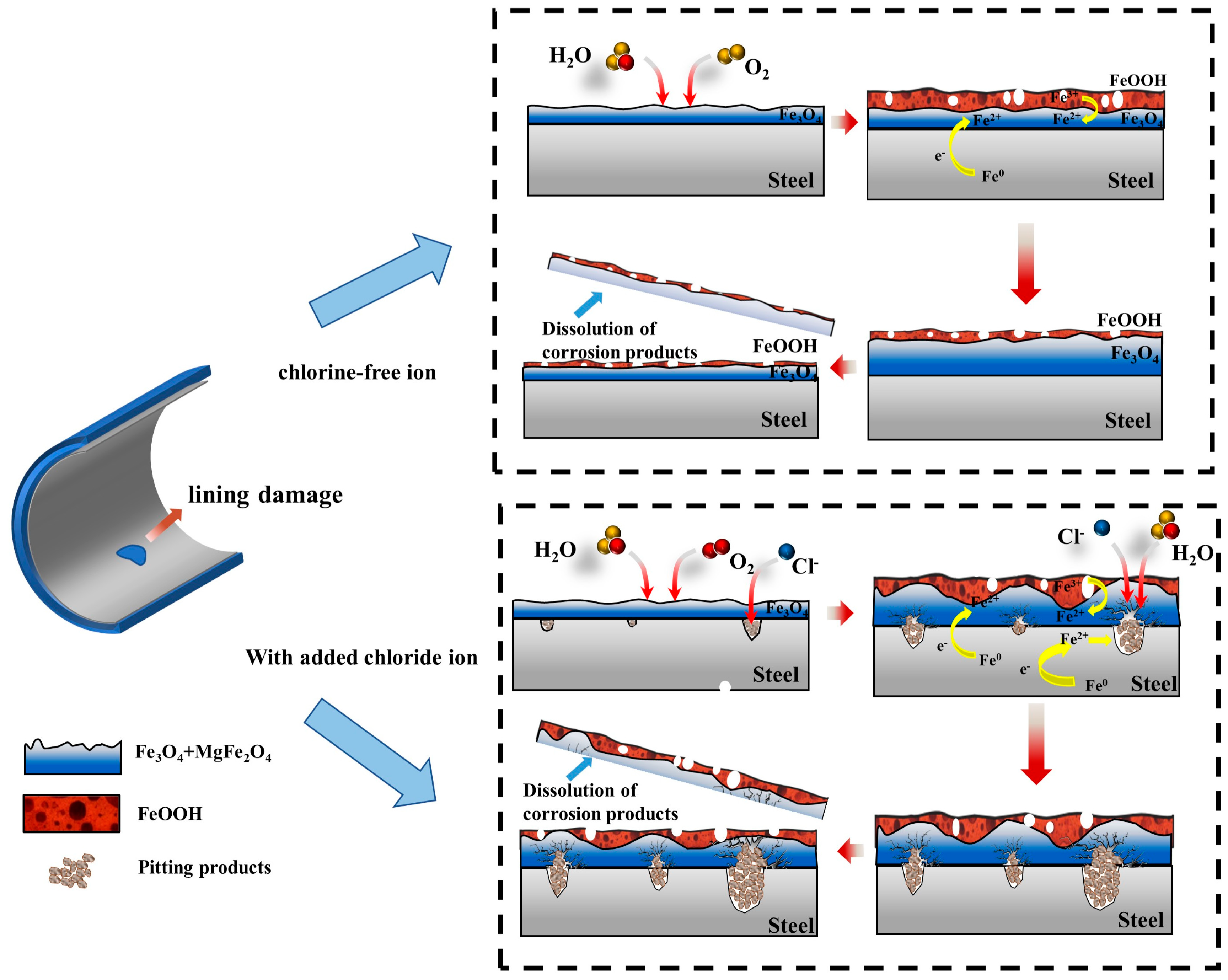
The main corrosion products of 20 steel in high-chloride desulfurization wastewater are Fe3O4, with a small amount of FeSO4. Under low-oxygen conditions, FeOOH is slowly formed, but the resulting FeOOH is unstable and is reduced back to Fe3O4 in subsequent reactions, as shown in Figure 13. Due to the instability of the film layer, some products dissolve and detach during the corrosion process. The addition of Cl increases the charge transfer resistance of 20 steel and reduces the self-corrosion current density by up to a factor of 11.36. The corrosion product film formed on the outer surface outside the pits (mainly composed of Fe3O4, FeOOH, and MgFe2O4) provides a physical barrier to the substrate, increasing the diffusion resistance of H+ and O2 toward the substrate surface, thereby lowering the overall uniform corrosion rate.
Specifically, the Cl-induced pitting corrosion follows a classical autocatalytic mechanism. In the regions at the pit mouth and outside the pit, a corrosion product layer is deposited. Under high Cl concentrations, loose FeOOH is reduced to dense Fe3O4. On the one hand, this film suppresses uniform corrosion outside the pit; on the other hand, it precisely indicates the presence of an active dissolution process inside the pit. The higher the Cl concentration, the more severe the pitting corrosion, the greater the outward diffusion of corrosion products, and the thicker the deposited film outside the pit. In the absence of Cl, 20 steel undergoes only uniform corrosion, with a maximum corrosion depth not exceeding 1 μm. In the presence of Cl, both the pit density and pit depth increase with rising Cl concentration. At a Cl concentration of 100,000 mg/L, the maximum pitting depth reaches 152.77 μm, and the corrosion pits become progressively denser.
It is worth noting that in addition to Fe, 20 steel also contains trace alloying elements, including C (0.19%), Si (0.22%), Mn (0.55%), Cr (0.03%) and Ni (0.02%). Although these elements are present in low concentrations, they exert certain potential effects on the corrosion behavior. Hyun and Kim [39] investigated the effects of Cr and Mn on the corrosion performance of carbon steel in simulated seawater. The results showed that Cr can effectively improve the corrosion resistance by forming a stable oxide film, while Mn accelerates corrosion due to the formation of galvanic coupling with the iron matrix. Given that the overall concentrations of these alloying elements are low, the dominant corrosion processes—iron dissolution, oxide/hydroxide formation, and Cl-induced pitting corrosion—are still governed by the electrochemical behavior of Fe, as illustrated in Figure 11.

4. Conclusions

This study investigates the corrosive effect of high Cl concentrations on 20 steel and clearly demonstrates that a high Cl concentration reduces dissolved oxygen via the salting-out effect, weakens the cathodic oxygen reduction reaction, and causes film transformation, thereby suppressing the macroscopic uniform corrosion rate; meanwhile, it induces deep, narrow, tubular pitting through an autocatalytic mechanism, resulting in a localized penetration depth that reaches nearly 90 times the uniform corrosion thinning. The following specific conclusions are drawn:
(1) High-concentration Cl significantly reduces the uniform corrosion rate of 20 steel in simulated desulfurization wastewater containing 10,000 mg/L SO42−. As Cl concentration increases from 0 to 100,000 mg/L, the corrosion rate decreases from 0.1964 mm/y to 0.1537 mm/y, due to lower dissolved oxygen and enhanced formation of a protective corrosion product film. While high Cl suppresses general corrosion, it drastically aggravates localized pitting. Without Cl, only uniform corrosion occurs with a maximum depth below 1 μm; at 100,000 mg/L Cl, the maximum pitting depth reaches 152.77 μm.
(2) The corrosion product film undergoes a distinct compositional and structural transformation with increasing Cl concentration. XPS and XRD analyses reveal a phase evolution from porous FeOOH to dense spinel-type Fe3O4 and MgFe2O4, accompanied by an elevated Fe2+/Fe3+ ratio. This transition enhances the physical barrier effect against charge transfer, as evidenced by the increased charge transfer resistance and low-frequency impedance modulus.
(3) Electrochemical measurements demonstrate that Cl reduces the free corrosion current density of 20 steel and induces pseudo-passivation behavior. The anodic polarization curves exhibit a broadened pseudo-passive region with increasing Cl concentration, indicating that the corrosion product film imposes a kinetic inhibition on the anodic dissolution process, even though it does not provide true thermodynamic passivation.
(4) The dual role of Cl in high-chloride desulfurization wastewater is elucidated: while it promotes the formation of a thicker, denser corrosion product film that suppresses uniform corrosion macroscopically, its high penetrability simultaneously initiates and propagates localized pitting through the classical autocatalytic mechanism. Consequently, the apparent reduction in corrosion current density does not indicate an overall improvement in corrosion resistance, and localized corrosion must be critically evaluated in the integrity assessment of 20 steel pipelines.

Author Contributions

Methodology, L.C., J.M., B.W. (Boxin Wei), F.G. and J.L.; Software, L.C. and B.W. (Boxin Wei); Investigation, J.M., F.G., J.L. and J.S.; Data curation, J.M. and J.S.; Writing—original draft, L.C. and J.M.; Writing—review & editing, B.W. (Boxin Wei), B.W. (Bo Wei), R.M. and J.W.; Visualization, J.W.; Supervision, L.C., B.W. (Boxin Wei), B.W. (Bo Wei) and R.M.; Project administration, B.W. (Bo Wei); Funding acquisition, L.C. All authors have read and agreed to the published version of the manuscript.

Funding

This research was funded by the Scientific Research Innovation Capability Support Project for Young Faculty (SRICSPYF-BS2025042), Major Science and Technology Special Project of Xinjiang Uygur Autonomous Region (2024A01005-2-1) and National Natural Science Foundation of China (52261022).

Institutional Review Board Statement

Not applicable.

Informed Consent Statement

Not applicable.

Data Availability Statement

Data are contained within the article.

Conflicts of Interest

The authors declare no conflict of interest.

References

  1. Xue, Y.; Ge, Z.; Yang, L.; Du, X. Peak Shaving Performance of Coal-Fired Power Generating Unit Integrated with Multi-Effect Distillation Seawater Desalination. Appl. Energy 2019, 250, 175–184. [Google Scholar] [CrossRef]
  2. Wu, C.; Wang, C.; Hou, Z.; Wang, Z. Flexible Peak Shaving in Coal-Fired Power Plants: A Comprehensive Review of Current Challenges, Recent Advances, and Future Perspectives. Energy 2025, 327, 136446. [Google Scholar] [CrossRef]
  3. Wang, Z.; Huang, P.; Xie, Y.; Ning, J.; Tu, Y.; Liu, H.; Yu, D. Performance of Elemental Mercury Removal by Activated Char Prepared from High-Chlorine Turpan-Hami Coal. Fuel 2022, 307, 121817. [Google Scholar] [CrossRef]
  4. Ma, D.; Li, R.; Wang, X.; Hu, Z.; Tan, H.; ur Rahman, Z.; Vujanović, M. Chlorine Evolution and Char Characteristics during Pyrolysis Upgrading of Xinjiang High Chlorine Coal. Fuel 2025, 379, 133120. [Google Scholar] [CrossRef]
  5. Liu, Y.; Fan, W.; Wu, X.; Zhang, X. Chlorine-Induced High-Temperature Corrosion of Boiler Steels Combusting Sha Erhu Coal Compared to Biomass. Energy Fuels 2018, 32, 4237–4247. [Google Scholar] [CrossRef]
  6. Pan, P.; Chen, H.; Liang, Z.; Zhao, Q. Desulfurized Flue Gas Corrosion Coupled with Deposits in a Heating Boiler. Corros. Sci. 2018, 131, 126–136. [Google Scholar] [CrossRef]
  7. Uusitalo, M.A.; Vuoristo, P.M.J.; Mäntylä, T.A. High Temperature Corrosion of Coatings and Boiler Steels in Oxidizing Chlorine-Containing Atmosphere. Mater. Sci. Eng. A 2003, 346, 168–177. [Google Scholar] [CrossRef]
  8. Shuangchen, M.; Jin, C.; Kunling, J.; Lan, M.; Sijie, Z.; Kai, W. Environmental Influence and Countermeasures for High Humidity Flue Gas Discharging from Power Plants. Renew. Sustain. Energy Rev. 2017, 73, 225–235. [Google Scholar] [CrossRef]
  9. Li, X.; Han, J.; Liu, Y.; Dou, Z.; Zhang, T. Summary of Research Progress on Industrial Flue Gas Desulfurization Technology. Sep. Purif. Technol. 2022, 281, 119849. [Google Scholar] [CrossRef]
  10. Shuangchen, M.; Jin, C.; Gongda, C.; Weijing, Y.; Sijie, Z. Research on Desulfurization Wastewater Evaporation: Present and Future Perspectives. Renew. Sustain. Energy Rev. 2016, 58, 1143–1151. [Google Scholar] [CrossRef]
  11. Zuo, J.; Dong, G.; Wang, X.; Li, J.; Xie, Q.; Liu, C.; He, Y.; Hao, Y.; Xu, H.; Yin, J.; et al. Experimental Study on Pollutants Treatment in Desulfurization Wastewater by Oxidation Using Electrodialysis–Electrolysis Method. Water Environ. J. 2025, 39, 489–501. [Google Scholar] [CrossRef]
  12. Tian, X.; Yue, D.; Hou, T.; Xiao, F.; Wang, Z.; Cai, W. Separation of Chloride and Sulfate Ions from Desulfurization Wastewater Using Monovalent Anions Selective Electrodialysis. Membranes 2024, 14, 73. [Google Scholar] [CrossRef]
  13. Hu, X.; Ji, Z.; Gu, S.; Ma, Z.; Yan, Z.; Liang, Y.; Chang, H.; Liang, H. Mapping the Research on Desulfurization Wastewater: Insights from a Bibliometric Review (1991–2021). Chemosphere 2023, 314, 137678. [Google Scholar] [CrossRef]
  14. Cui, Y.; Qin, Y.; Dilimulati, D.; Wang, Y. The Effect of Chlorine Ion on Metal Corrosion Behavior under the Scratch Defect of Coating. Int. J. Corros. 2019, 2019, 1–11. [Google Scholar] [CrossRef]
  15. Lytle, D.A.; Liggett, J. Impact of Water Quality on Chlorine Demand of Corroding Copper. Water Res. 2016, 92, 11–21. [Google Scholar] [CrossRef] [PubMed]
  16. Zekri, A.; Liu, Q.; Hassan, O.A.; Shetty, A.R.; Samara, A.; Aissa, B.; Mansour, S. Mechanisms and Evidence of Chloride-Accelerated Pitting in Gas Pipeline Steel. Eng. Fail. Anal. 2025, 181, 109944. [Google Scholar] [CrossRef]
  17. Peng, H.; Lyu, W.; Wu, C.; Wang, J.; Su, X.; Zhao, Y.; Xu, S.; Li, Z. Study on the Corrosion Failure Mechanism of X80 Pipeline Steel by Chloride Ion at Different Concentrations. Eng. Fail. Anal. 2025, 179, 109784. [Google Scholar] [CrossRef]
  18. Li, P.; Du, M. Effect of Chloride Ion Content on Pitting Corrosion of Dispersion-Strengthened-High-Strength Steel. Corros. Commun. 2022, 7, 23–34. [Google Scholar] [CrossRef]
  19. Gao, M.; Wang, H.; Han, E.-H. Effect of Chloride and Bicarbonate Ions on Corrosion Behavior of Carbon Steel in Anaerobic Environment. Mater. Today Commun. 2023, 36, 106873. [Google Scholar] [CrossRef]
  20. Dastgheib, S.A.; Mock, J.; Salih, H.H.; Patterson, C. Utilization of Water Utility Lime Sludge for Flue Gas Desulfurization in Coal-Fired Power Plants: Part III. Testing at a Higher Scale and Assessment of Selected Potential Operational Issues. Energy Fuels 2019, 33, 11536–11543. [Google Scholar] [CrossRef]
  21. Fan, G.; Zhang, J.; Yuan, T.; Wang, C.; Hou, Y.; Gao, X.; Xu, J.; Che, D. Experimental Study on the Erosion–Corrosion Characteristics of Desulfurization Slurry on Stainless Steel Pipe Materials. ACS Omega 2024, 9, 7132–7142. [Google Scholar] [CrossRef]
  22. Smith, F.; Brownlie, F.; Hodgkiess, T.; Toumpis, A.; Pearson, A.; Galloway, A.M. Effect of Salinity on the Corrosive Wear Behaviour of Engineering Steels in Aqueous Solutions. Wear 2020, 462–463, 203515. [Google Scholar] [CrossRef]
  23. Deng, B.; Jiang, Y.; Liao, J.; Hao, Y.; Zhong, C.; Li, J. Dependence of Critical Pitting Temperature on the Concentration of Sulphate Ion in Chloride-Containing Solutions. Appl. Surf. Sci. 2007, 253, 7369–7375. [Google Scholar] [CrossRef]
  24. Huttunen-Saarivirta, E.; Isotahdon, E.; Que, Z.; Lindgren, M.; Mardoukhi, A.; Jorcin, J.-B.; Mocnik, P.; Kosec, T.; Ouazari, Y.E.; Mameng, S.H.; et al. Pitting Corrosion on Highly Alloyed Stainless Steels in Dilute Sulphuric Acid Containing Sodium Chloride. Electrochim. Acta 2023, 457, 142404. [Google Scholar] [CrossRef]
  25. Lai, X.; Yin, H.; Yang, Z.; Tang, Z. Synergistic Effect of Cl and F on the Corrosion Behavior and Mechanism of 316 Stainless Steel in NaNO3-Based Molten Salts and Vapor. J. Energy Storage 2023, 65, 107243. [Google Scholar] [CrossRef]
  26. Anselmo, N.; May, J.E.; Mariano, N.A.; Nascente, P.A.P.; Kuri, S.E. Corrosion Behavior of Supermartensitic Stainless Steel in Aerated and CO2-Saturated Synthetic Seawater. Mater. Sci. Eng. A 2006, 428, 73–79. [Google Scholar] [CrossRef]
  27. Sun, Y.; Wei, X.; Dong, J.; Chen, N.; Zhao, H.; Ren, Q.; Ke, W. Understanding the Role of Alloyed Ni and Cu on Improving Corrosion Resistance of Low Alloy Steel in the Simulated Beishan Groundwater. J. Mater. Sci. Technol. 2022, 130, 124–135. [Google Scholar] [CrossRef]
  28. Abdelfatah, A.; Raslan, A.M.; Mohamed, L.Z. Corrosion Characteristics of 304 Stainless Steel in Sodium Chloride and Sulfuric Acid Solutions. Int. J. Electrochem. Sci. 2022, 17, 220417. [Google Scholar] [CrossRef]
  29. Wang, Z.; Seyeux, A.; Zanna, S.; Maurice, V.; Marcus, P. Chloride-Induced Alterations of the Passive Film on 316L Stainless Steel and Blocking Effect of Pre-Passivation. Electrochim. Acta 2020, 329, 135159. [Google Scholar] [CrossRef]
  30. Gong, P.; Zhang, G.; Chen, J. The Corrosion Features of Q235B Steel under Immersion Test and Electrochemical Measurements in Desulfurization Solution. Materials 2020, 13, 3783. [Google Scholar] [CrossRef]
  31. Cáceres, L.; Vargas, T.; Herrera, L. Influence of Pitting and Iron Oxide Formation during Corrosion of Carbon Steel in Unbuffered NaCl Solutions. Corros. Sci. 2009, 51, 971–978. [Google Scholar] [CrossRef]
  32. Ahmed, S.A.; Makki, H.F. Corrosion Behavior of Mild-Steel in Cooling Towers Using High Salinity Solution. AIP Conf. Proc. 2020, 2213, 020178. [Google Scholar] [CrossRef]
  33. Bordbar-Khiabani, A.; Gasik, M. Electrochemical and Biological Characterization of Ti–Nb–Zr–Si Alloy for Orthopedic Applications. Sci. Rep. 2023, 13, 2312. [Google Scholar] [CrossRef]
  34. Stern, M.; Geaby, A.L. Electrochemical Polarization. J. Electrochem. Soc. 1957, 104, 56. [Google Scholar] [CrossRef]
  35. Andrade, C.; González, J.A. Quantitative Measurements of Corrosion Rate of Reinforcing Steels Embedded in Concrete Using Polarization Resistance Measurements. Mater. Corros. 1978, 29, 515–519. [Google Scholar] [CrossRef]
  36. Xue, F.; Wei, X.; Dong, J.; Wang, C.; Ke, W. Effect of Chloride Ion on Corrosion Behavior of Low Carbon Steel in 0.1 M NaHCO3 Solution with Different Dissolved Oxygen Concentrations. J. Mater. Sci. Technol. 2019, 35, 596–603. [Google Scholar] [CrossRef]
  37. You, N.; Shi, J.; Zhang, Y. Electrochemical Performance of Low-Alloy Steel and Low-Carbon Steel Immersed in the Simulated Pore Solutions of Alkali-Activated Slag/Steel Slag Pastes in the Presence of Chlorides. Corros. Sci. 2022, 205, 110438. [Google Scholar] [CrossRef]
  38. Podobaev, A.N. Effect of Chloride Ions on the Rate of Iron Dissolution in Weakly Acid Sulfate Solution. Prot. Met. Phys. Chem. Surf. 2005, 41, 548–552. [Google Scholar] [CrossRef]
  39. Kim, B.; Kim, S.; Kim, H. Effects of Alloying Elements (Cr, Mn) on Corrosion Properties of the High-Strength Steel in 3.5% NaCl Solution. Adv. Mater. Sci. Eng. 2018, 2018, 7638274. [Google Scholar] [CrossRef]
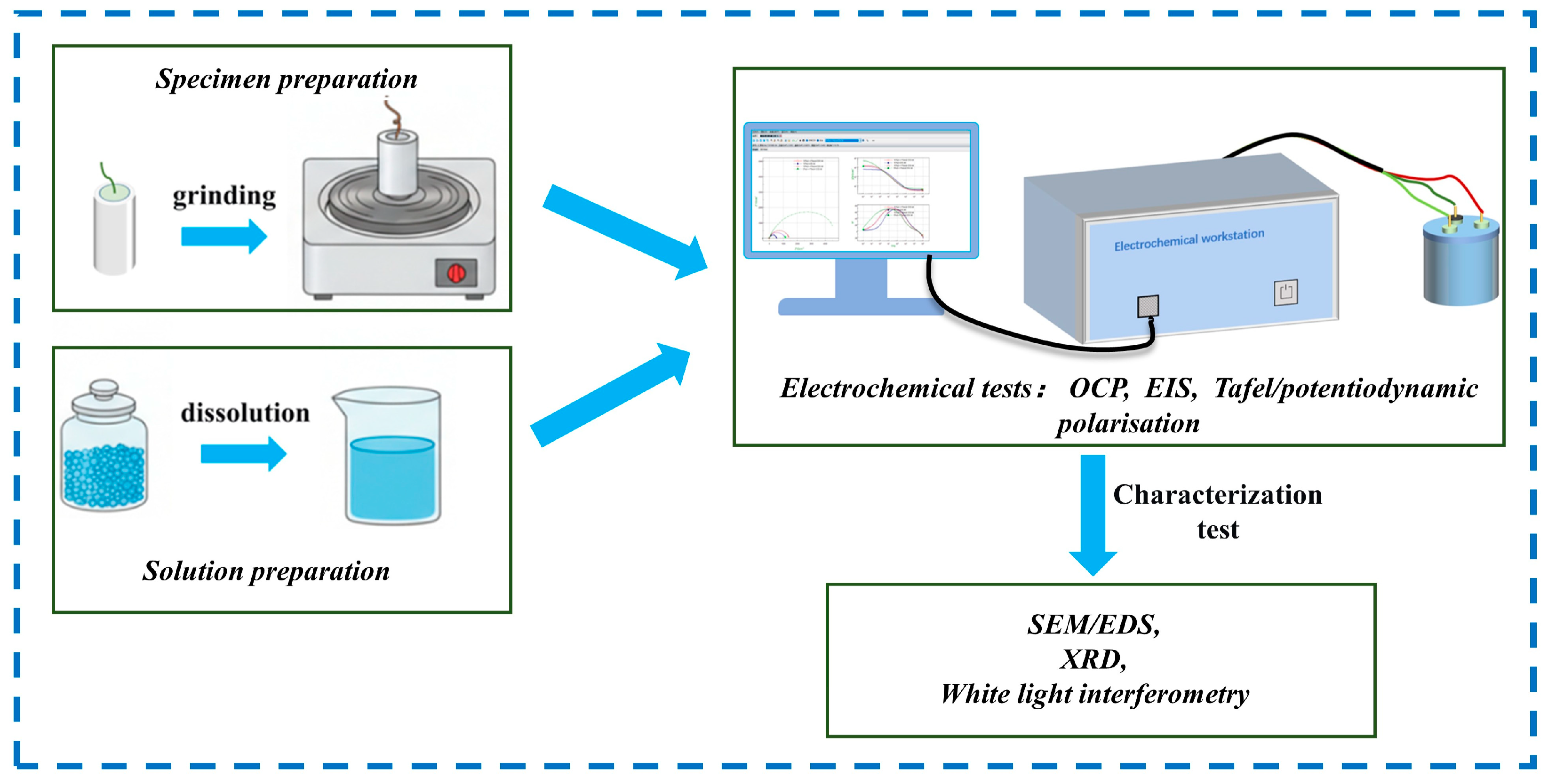
Figure 1. Experimental flow chart.
Coatings 16 00696 g001
Figure 2. Average corrosion rate patterns of 20 steel in different solution systems.
Coatings 16 00696 g002
Figure 3. Macroscopic morphology of 20 steel in different corrosive media.
Coatings 16 00696 g003
Figure 4. Variation in dissolved oxygen concentration and solution pH with immersion time for 20 steel in different corrosive media over 100 h: (a) dissolved oxygen concentration; (b) bulk solution pH.
Coatings 16 00696 g004
Figure 5. High-resolution XPS spectra and XRD patterns of 20 steel after 100 h immersion in different corrosive solutions: (a) Fe 2p, (b) O 1s, (c) S 2p, (d) Mg 1s, (e) Cl 2p, (f) XRD patterns of corroded samples.
Coatings 16 00696 g005
Figure 6. EIS plots of 20 steel under different corrosive environments; (ac) C1, (df) C2, (gi) C3, (jl) C4.
Coatings 16 00696 g006
Figure 7. Equivalent circuit diagrams under different corrosion conditions and immersion times. (a) R(QR); (b) R(Q(R(QR))).
Coatings 16 00696 g007
Figure 8. Potentiodynamic polarization curves and open circuit potentials of 20 steel under different chloride ion concentrations: (a) potentiodynamic polarization curves, (b) OCP, (c) icorr.
Coatings 16 00696 g008
Figure 9. Corrosion cross-sectional images and EDS images of 20 steel after 100 h of corrosion under different corrosive environments; (a) C1, (b) C2, (c) C3, (d) C4, (e) elemental weight loss map. The yellow dashed frame marks the EDS mapping area.
Coatings 16 00696 g009
Figure 10. SEM images of 20 steel with corrosion products removed after 100 h of corrosion; (a) C1, (b) C2, (c) C3, (d) C4.
Coatings 16 00696 g010
Figure 11. White light interferometry images of 20 steel with corrosion products removed after 100 h of corrosion; (a,b) C1, (c,d) C2, (e,f) C3, (g,h) C4. Different colors correspond to the depth of corrosion pits.
Coatings 16 00696 g011
Figure 12. Pit depth distribution.
Coatings 16 00696 g012
Figure 13. Diagram of corrosion mechanism of 20 steel in high-chloride desulfurization wastewater.
Coatings 16 00696 g013
Table 1. The chemical composition of 20 steel (wt.%).
CSiMnPSCrNiCuFe
0.190.220.550.0120.0020.030.020.01Bal.
Table 2. Ion concentrations in different solutions.
C1C2C3C4
SO42− (mg/L)10,00010,00010,00010,000
Cl (mg/L)060,00080,000100,000
Mg2+ (mg/L)2500250025002500
Table 3. Fitting parameters of impedance spectroscopy plots for 20 steel in different solutions.
SamplesTime
(h)
Rs
(Ω cm2)
QfRf
(Ω cm2)
QdlRct
(Ω cm2)
χ2 (×10−4)
Y0
−1 cm−2 sn)
nfY0
−1 cm−2 sn)
ndl
C1226.05---3.85 × 10−40.7906533.44.5
 621.5---5.33 × 10−40.7311438.43.8
 1222.74.62 × 10−40.800626.921.97 × 10−30.8346772.34.1
 2420.542.58 × 10−40.985420.748.17 × 10−40.6906468.23.5
 4819.878.46 × 10−40.8780195.43.31 × 10−40.7987581.83.7
 7219.618.45 × 10−40.8746255.84.86 × 10−40.8036545.63.2
 10020.159.66 × 10−40.8664288.45.85 × 10−40.8265549.73.6
C221.75---1.31 × 10−40.868515603.9
 61.82---3.41 × 10−40.8084845.93.1
 121.79---2.14 × 10−40.867910384.2
 241.71---4.23 × 10−30.6228695.82.9
 481.80---4.38 × 10−40.896014223.3
 721.68---1.36 × 10−30.8288668.52.7
 1001.84---7.06 × 10−40.874214003
C321.53---2.11 × 10−40.847512883.4
 61.48---2.57 × 10−40.8890929.94.5
 121.41---1.57 × 10−40.910124298.6
 241.50---4.34 × 10−40.8765977.36.4
 481.49---5.39 × 10−40.859311382.9
 721.41---7.68 × 10−40.8292949.55.4
 1001.40---9.33 × 10−40.826211155.6
C421.27---1.05 × 10−40.778218582.8
 61.48---2.57 × 10−40.8537929.96.7
 121.27---1.29 × 10−40.910725722.6
 241.33---4.04 × 10−40.892316705.8
 481.27---5.01 × 10−40.883419344.6
 721.30---3.85 × 10−40.870240426.9
 1001.32---5.63 × 10−40.861818634.5
Disclaimer/Publisher’s Note: The statements, opinions and data contained in all publications are solely those of the individual author(s) and contributor(s) and not of MDPI and/or the editor(s). MDPI and/or the editor(s) disclaim responsibility for any injury to people or property resulting from any ideas, methods, instructions or products referred to in the content.