


Abstract
This study investigated the anti-corrosion performance of multilayer polymeric coatings applied on 6005A and 6082 aluminum alloys under the influence of the monsoon tropical climate of Thailand. The coated samples, which represented the material used for the vehicle body of high-speed trains, were exposed to real atmospheric conditions of urban (Bangkok City) and marine (Songkhla City) environments. The maximum duration of the continuous exposure test was 18 months. After the exposure test, the physical deterioration characteristics of the coatings were examined with the aid of scanning electron microscopy (SEM) and a pull-off adhesion test. Electrochemical impedance spectroscopy (EIS) was performed in 3.5 wt% NaCl solution at 25 °C to evaluate the coatings’ anti-corrosion performance after various atmospheric exposure periods. Based on the EIS results, the low-frequency impedance of the exposed coatings remained above 109 Ω·cm2, indicating that the anti-corrosion coatings provided sufficient protection against atmospheric corrosion for the alloy. However, gradual degradation of the anti-corrosion coatings was observed, particularly in the marine-coastal environment. Quantitative estimation results suggested that the anti-corrosion coatings used in this study could provide service lives of approximately 8 and 11 years in marine-coastal and urban environments, respectively.
1. Introduction
Recently, light-weight materials have been playing an essential role in the manufacture of various commercial transport vehicles, especially high-speed rail (HSR) vehicles, which require strict engineering design optimization to achieve maximum operating speeds with reduced axle loads [1]. Due to their techno-economic advantages over other light-weight materials, aluminum alloys, e.g., 5000-, 6000-, and 7000-series, have been widely adopted in various engineering components of HSR vehicles, such as frame structures and body skins [2,3,4]. In addition to their excellent formability, these aluminum alloys exhibit superior corrosion resistance compared to carbon and alloy steels.
Under typical service conditions, engineering components and structures of HSR vehicles are subjected to wet–dry-cycle atmospheric corrosion, which can lead to unexpected premature failure [5,6,7]. In general, the severity of atmospheric corrosion is significantly dependent on the number and duration of wet–dry cycles during atmospheric exposure [8]. Climate contaminants such as chloride (Cl−) and sulfur dioxide (SO2) also accelerate atmospheric corrosion of aluminum alloys by forming porous–soluble corrosion products, as well as by attacking anodic intermetallic phases (IMPs) or the matrix surrounding cathodic IMPs [9,10].
Previous atmospheric corrosion studies on bare aluminum alloys highlighted the critical roles of alloy composition and IMPs in tropical marine environments. In Hainan, China, Cui et al. [11] observed metastable pitting on 1050A, 5A02, and 6A02 alloys, noting that pits in 5A02 were initiated primarily near Al-Fe-Mn particles. Similarly, in Bangkok, Thailand, Wang et al. [12] ranked corrosion resistance in the order 6063 > 5083 > 7020, identifying cathodic IMPs such as Al-Fe-Si(Mn) or Al-Fe-Si as the main drivers of pitting. For the 6005A alloy, the cathodic Al-Fe-Si IMP induced pitting initiation at 6 months, which progressed to intergranular corrosion at 12 months in Songkhla, Thailand [13]. In the same study, pitting corrosion around the cathodic Al-Fe-Si(Mn) IMP of 6082 alloy evolved into interconnected pits [13].
Therefore, corrosion protection is critical to extending the service life of aluminum alloys used in transport vehicles. In aerospace, protective coatings for aluminum alloys exposed to harsh environments typically use a three-layer system consisting of a conversion coating, a primer, and a topcoat [14]. In automotive manufacturing, a three-layer coating system including e-coat, a primer, and a topcoat with a total dry film thickness exceeding 120 μm is commonly recommended for aluminum alloys [15]. Epoxy-based primers are well-known for corrosion protection because their soluble pigments leach into material defects and inhibit corrosion progression. The topcoat layer enhances UV resistance and slows the penetration of moisture and corrosive ions toward the substrate. Nevertheless, the gradual migration of corrosion-accelerating agents through the coating still degrades the coating properties over time, eventually causing blistering or delamination.
Degradation of multilayer coating systems can be assessed using electrochemical impedance spectroscopy (EIS) [16,17,18,19]. The degradation stages are divided into (1) protective barrier, (2) water uptake, (3) initiation of corrosion and (4) active corrosion and delamination, as distinguished by the equivalent electrical circuit (EEC) fitted to the EIS spectra. These aging stages can be represented by the low-frequency impedance modulus (|Z|0.1Hz or 0.01Hz), which describes the coating/substrate interface condition and is sensitive to moisture uptake and micro-pore pathways related to the physical state of the coating [19,20,21]. This coating health evaluation should be combined with systematic characterization methods [16,22]. A 20-year durability study on epoxy-primer-coated 7075-T6 aluminum alloy in the marine environment of Wanning in Hainan, China, has been reported [23]. The |Z|0.1Hz value fell below 106 Ω·cm2 between 7 and 12 years, while the surface morphology, glass transition temperature, gloss loss, contact angles, and cross-sectional elemental analysis supported the degradation stages. According to a recent comprehensive review [24], long-term field tests and large-scale datasets remain prerequisites for coating lifetime prediction from an industrial perspective.
Despite the widespread use of aluminum-based mass transit systems in Thailand, field data on the long-term durability of their protective polymer coatings have not been extensively reported or validated. Quantifying this degradation is essential for developing reliable predictive maintenance frameworks tailored to the unique challenges of tropical climates in Southeast Asia. This study aimed to investigate the performance of anti-corrosion coatings applied to 6005A and 6082 aluminum alloys used for HRS vehicle bodies. Field exposure tests in urban and marine-coastal environments were compared with a 1000 h salt spray test via EIS assessment. Changes in adhesion strength, surface morphology, EIS parameters, and |Z|0.1Hz values were incorporated into coating lifetime projections.
2. Materials and Experimental Methods
2.1. Material and Test Samples
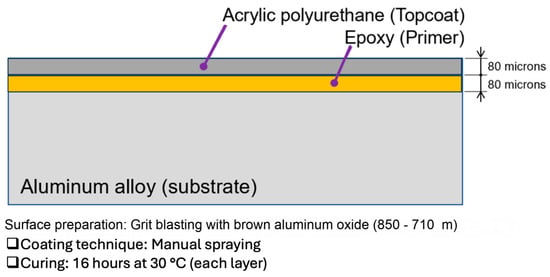
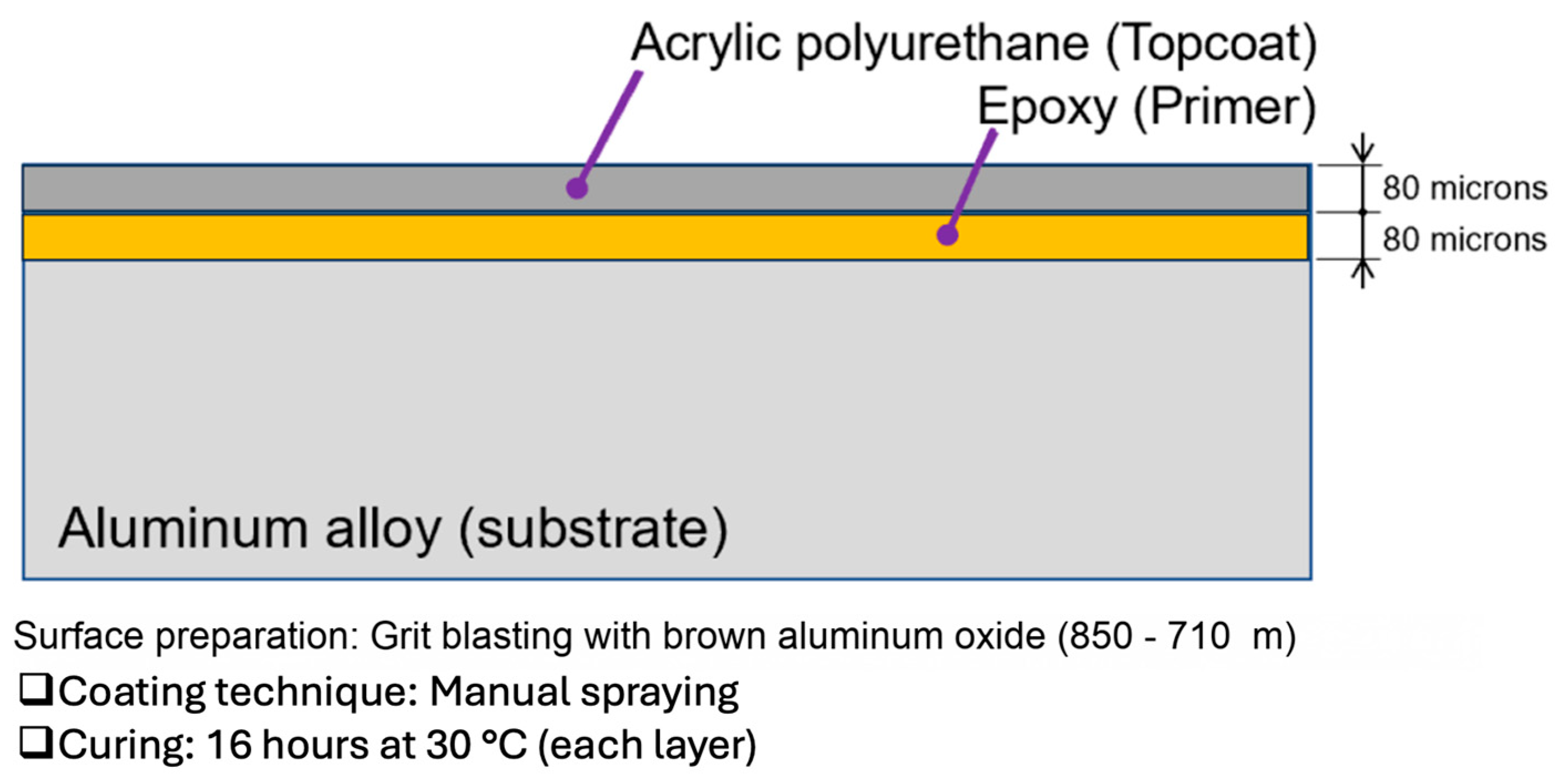
Anti-corrosion polymeric coatings (AkzoNobel Paints (China) Co., Ltd., Suzhou, China) consisting of an epoxy primer and an acrylic polyurethane topcoat were applied to rectangular coupons (70 mm × 150 mm × 6 mm) of 6005A and 6082 aluminum alloys via manual air spraying to prepare specimens for atmospheric corrosion exposure tests. The total dry film thickness of the coating was approximately 160 μm (80 μm for each layer) after curing at 30 °C for 16 h. Detailed information, including the number of layers, thickness of each layer, and composition, is shown in Figure 1.
Figure 1.
Configuration and technical details of the anti-corrosion coating for aluminum alloys.
2.2. Atmospheric Exposure Test and Environmental Data Acquisition
The atmospheric exposure test sites were located in Bangkok and Songkhla, representing urban and marine-coastal environments, respectively, as listed in Table 1. Key environmental factors governing atmospheric corrosion were monitored and recorded using commercial sensors throughout the exposure period at each site. Ambient temperature (T), relative humidity (RH), and cumulative rainfall (RF) were evaluated as the main climatic factors influencing the degradation characteristics of exposed samples. In addition, chloride (Cl−) and sulfur dioxide (SO2) deposition rates were measured using the dry gauze and PbO2 cylinder methods, respectively, in accordance with JIS Z 2382 [25], to determine the effects of climatic contaminants on polymeric coating degradation and the corrosion behavior of aluminum alloy substrates. Average values are summarized in Table 1.
Table 1.
Exposure test sites for the atmospheric corrosion study of aluminum alloys.
The corrosivity level of the urban environment is classified as C2 based on carbon steel according to ISO 9223 [26]. Due to its geographical location on the southern Gulf of Thailand, the corrosivity level of the marine-coastal test site is categorized as CX based on carbon steel. Bangkok features higher temperatures, lower relative humidity, a relatively short time of wetness (TOW), and higher SO2 than Cl− deposition rates. Songkhla is cooler, significantly more humid, and has a high Cl− deposition rate, a longer TOW, and a more extreme year-round UV index.
Prior to the exposure test, polymer-coated samples were rinsed with deionized water to remove surface contaminants, followed by rapid dry-off using compressed air. Samples were installed on-site in accordance with ASTM G50 [27]. Exposure tests began in July 2020 and ended in December 2021. After completion of the designated exposure periods (6, 12, and 18 months), the exposed samples were carefully retrieved from the test sites for subsequent material characterization and testing. Samples exposed to the marine atmosphere environment for 18 months were lost due to external interference at the exposure site. Consequently, the long-term evaluation for this environment is based on the 6- and 12-month datasets.
2.3. Evaluation of Anti-Corrosion Coating Performance
The surface morphologies of the coatings were observed using scanning electron microscopy (SEM) to compare the surface appearances before and after the 12-month exposure test. Moreover, the adhesion strength of unexposed and exposed samples was assessed via a dry pull-off test according to ASTM D4541 [28]. The test was conducted using a 20 mm pull stub on a digital pull-off adhesion tester (BGD500 Biuged Instrument, Solvica B.V., Dronten, The Netherlands).
Electrochemical impedance spectroscopy (EIS) measurements were conducted using a Gamry 1010E potentiostat/galvanostat (Gamry Instruments, Warminster, PA, USA) to evaluate the anti-corrosion performance of polymeric coatings after degradation under various exposure conditions. A sinusoidal potential perturbation with an amplitude of 10 mV was applied from the open circuit potential (OCP) within a frequency range of 100 kHz to 10 mHz. EIS measurements were carried out in naturally aerated 3.5 wt% NaCl solution at 25 °C using a conventional three-electrode corrosion cell setup (Gamry Instruments, Warminster, PA, USA). The test sample, with an exposed area of 12.56 cm2, was connected as the working electrode. Ag/AgCl and graphite were used as the reference and counter electrodes, respectively. EIS data were collected every 24 h during a 7-day immersion test. EIS impedance spectra were analyzed and simulated using pyZwx V. 1.03 software (Japan) [29].
2.4. Polymeric Coating Degradation Simulation by Salt Spray Test
To compare the anti-corrosion coating performance with that in real exposure testing, a 1000 h salt spray test (Q-fog CTT from QLAB in Westlake, OH, USA) was carried out using a Q-fog CTT chamber (QLAB, Westlake, OH, USA) following ISO 9227 [30]. The sprayed solution was 50 g/L (±5 g/L) sodium chloride in deionized water. After completion of the salt spray test, the anti-corrosion coating performance of 1000 h salt-sprayed samples was evaluated using EIS measurement following the same protocol described in Section 2.3.
3. Results and Discussion
3.1. Anti-Corrosion Coating Performance in Actual Climatic Atmosphere
3.1.1. SEM
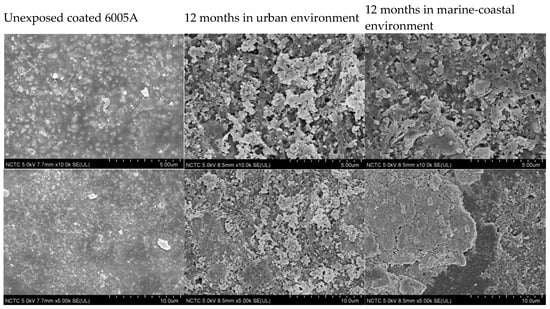
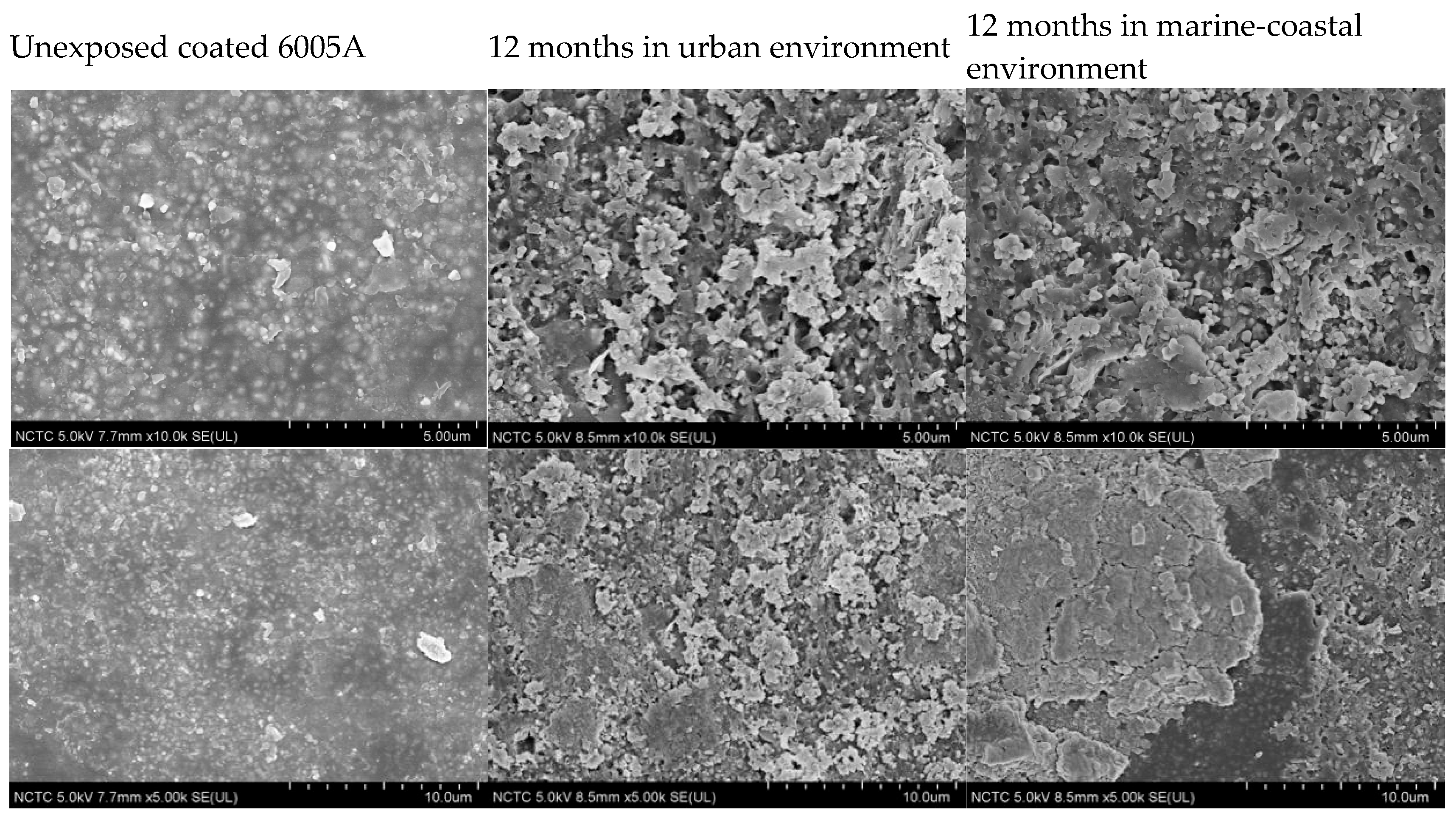
The microscopic surface morphologies of unexposed and 12-month exposed polymer-coated 6005A samples are presented in Figure 2. The initial topcoat surface appeared as a dense layer without pores or cracks, and pigment particles were uniformly distributed, indicating a homogenous microstructure. After 12 months of exposure in the urban environment, the coating decomposed into particles with voids and several pores formed beneath the attached pigmented particles. Similarly, coatings on 12-month samples exposed to the marine-coastal environment were degraded and cracked, showing voids and uneven textures. These pores and cracks increased the surface area and facilitated electrolyte permeation into the coating [31]. Compared with polyurethane-coated steel exposed for the same duration in Wanning, South China Sea [32], samples exposed in Thailand showed more severe surface degradation. Based on weather data from the marine test sites (Table 1 and Liu et al. [32]), the Gulf of Thailand exhibits higher average temperatures and Cl− deposition rates than the South China Sea.
Figure 2.
SEM images of polymer-coated 6005A before exposure testing and after 12 months of exposure in urban and marine-coastal environments.
3.1.2. Adhesion Test
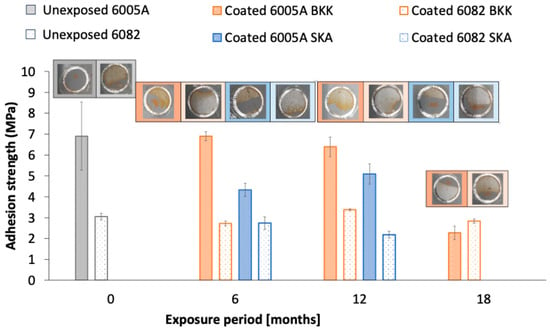
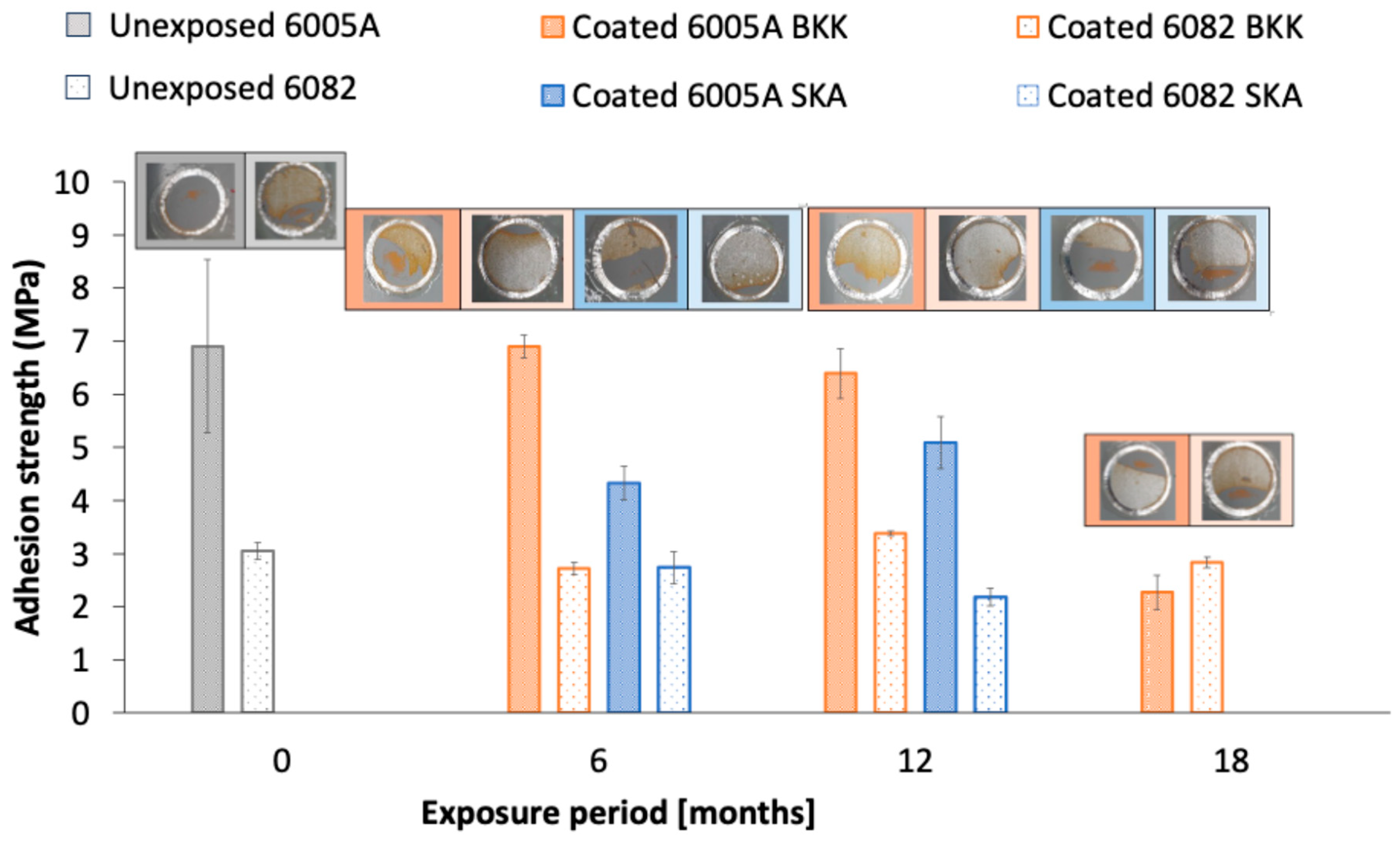
Adhesion strength results are illustrated in Figure 3, along with corresponding post-test surfaces. The initial adhesion strength of polymer-coated 6005A was 7 MPa, which remained stable up to 12 months of exposure in the urban environment, before dropping sharply to 2 MPa at 18 months. In the marine-coastal environment, adhesion strength decreased to 4–5 MPa after 6 months and remained stable through to 12 months. This rapid decline may be attributed to the longer TOW in the marine environment. In contrast, polymer-coated 6082 had an initial adhesion strength of 3 MPa. Although this value was significantly lower than that of 6005A, no adhesion degradation was observed over 18 months in the urban environment. The adhesion strength of polymer-coated 6082 also decreased slightly from 3 MPa to 2 MPa after 12 months of marine-coastal exposure. The reported adhesion strength values for epoxy/aluminum systems range within 2–4 MPa [33]. Thus, the initial adhesion strength of the 6005A alloy was outstanding.
Figure 3.
Adhesion strength of polymer-coated 6005A and 6082 alloys exposed to urban and marine-coastal environments for 0, 6, 12 and 18 months.
Most pull-test failure modes were a mixture of topcoat cohesion and primer/substrate interface adhesion. Higher adhesion strength consistently corresponded to a larger cohesive failure area as shown in Figure 3. Excellent adhesion between the topcoat and primer was confirmed by minimal yellow-colored topcoat/primer interface fracture.
3.1.3. EIS
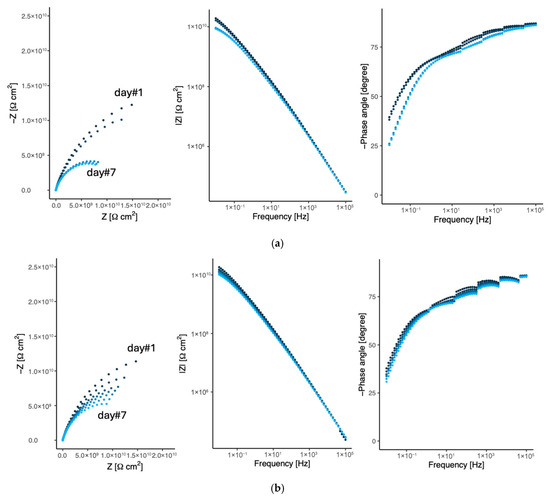
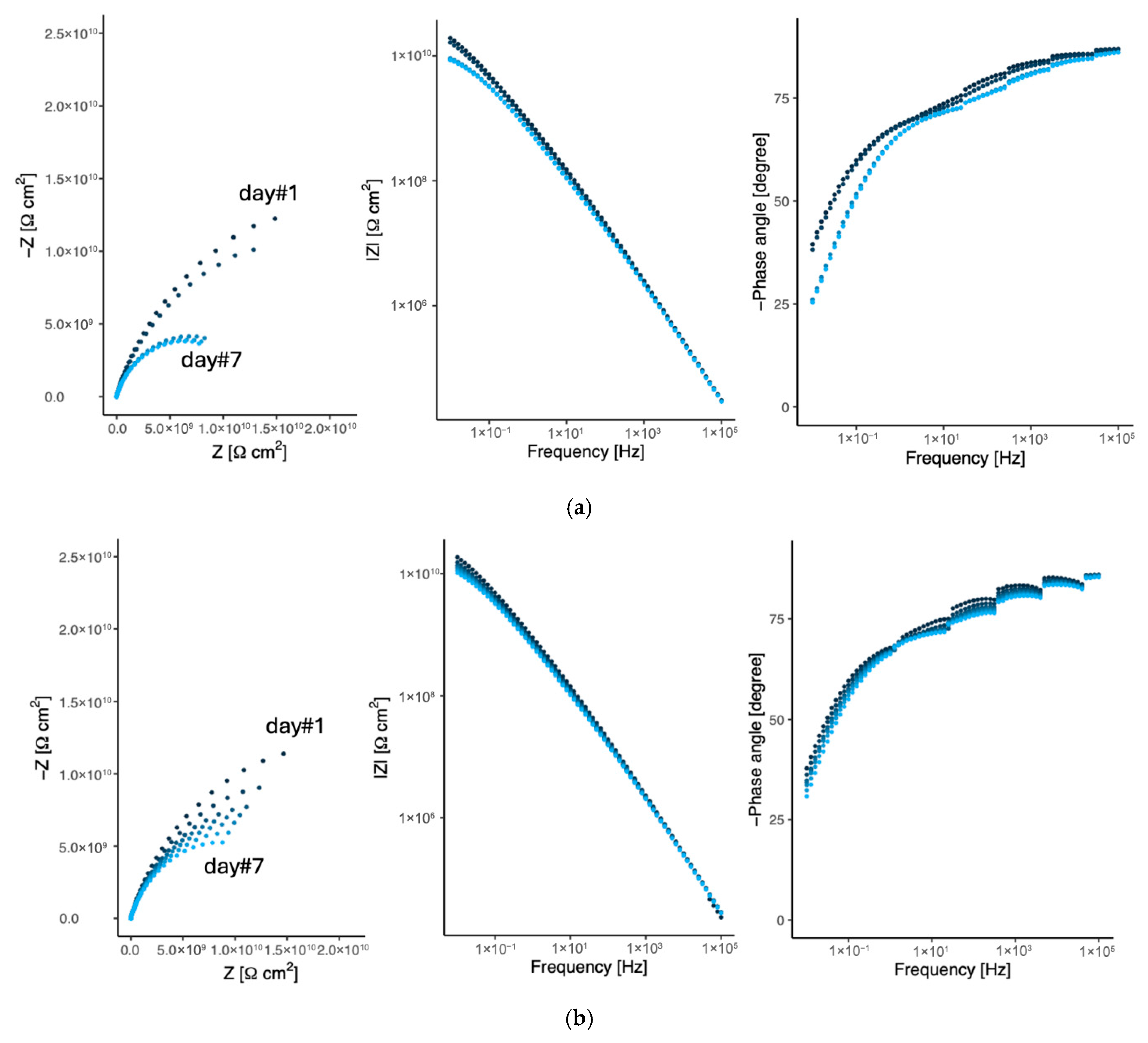
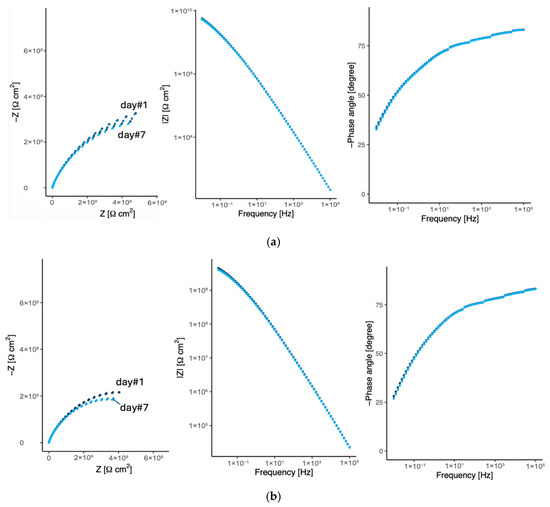
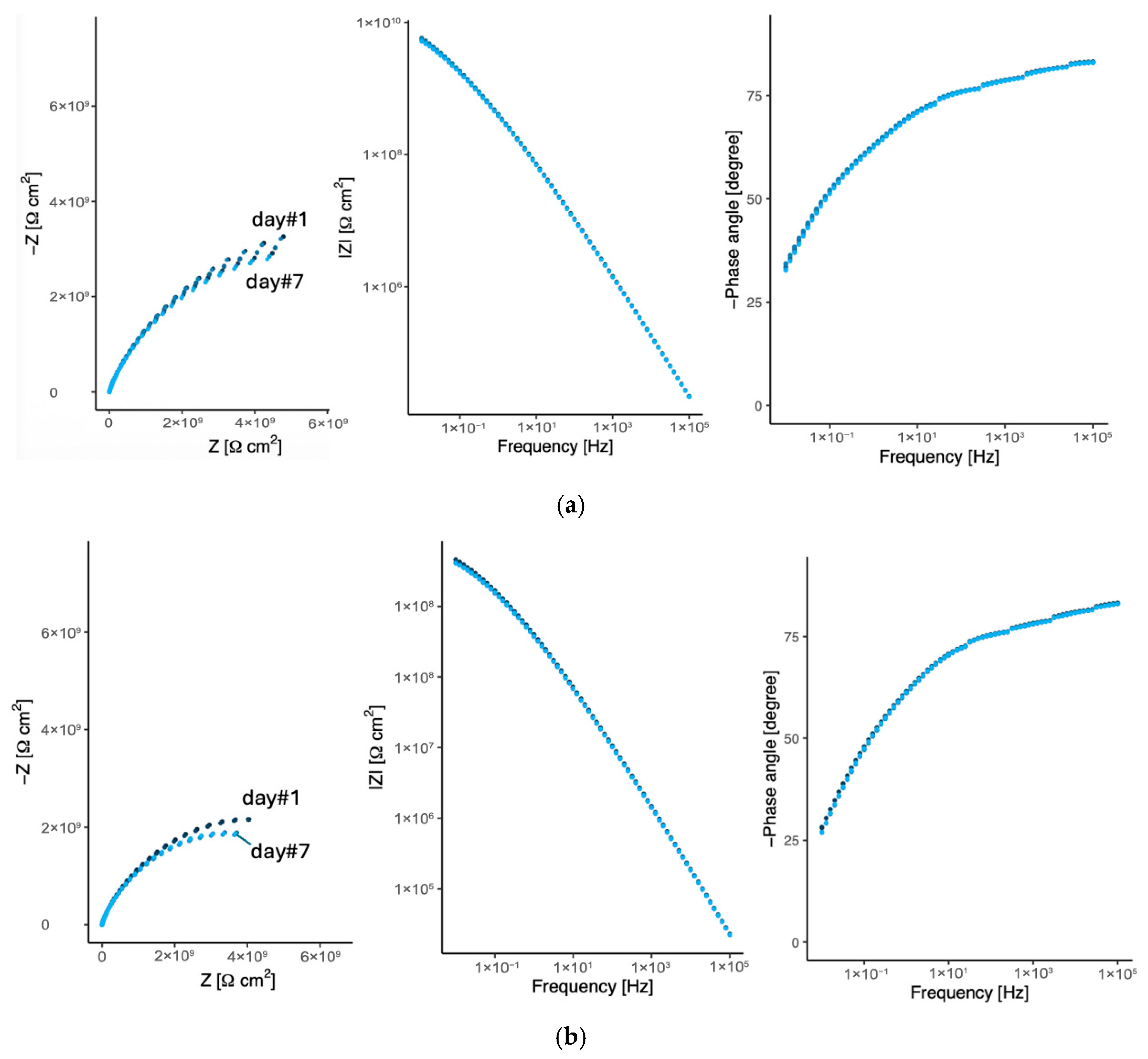
To evaluate the performance of anti-corrosion coatings on 6005A and 6082 alloys, systematic EIS measurements were performed. Nyquist and Bode plots of the unexposed samples are shown in Figure 4. The Nyquist plots displayed incomplete semi-circles due to the capacitive behavior of the coating system. The size of these incomplete semi-circles tended to decrease with increasing immersion time, indicating gradual electrolyte penetration into the highly protective coatings. The Bode plots showed that the impedance modulus decreased continuously with a slope of −1 as the frequency increased. However, the impedance modulus at 100 mHz (|Z|0.1Hz) for all test conditions was significantly greater than 106 Ω·cm2 (the general threshold of a damaged coating [19]), indicating that the coatings remained protective.
Figure 4.
Nyquist and Bode plots obtained from EIS measurements of unexposed polymer-coated (a) 6005A and (b) 6082 aluminum alloys.
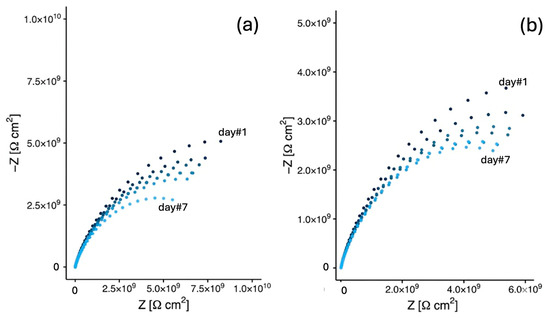
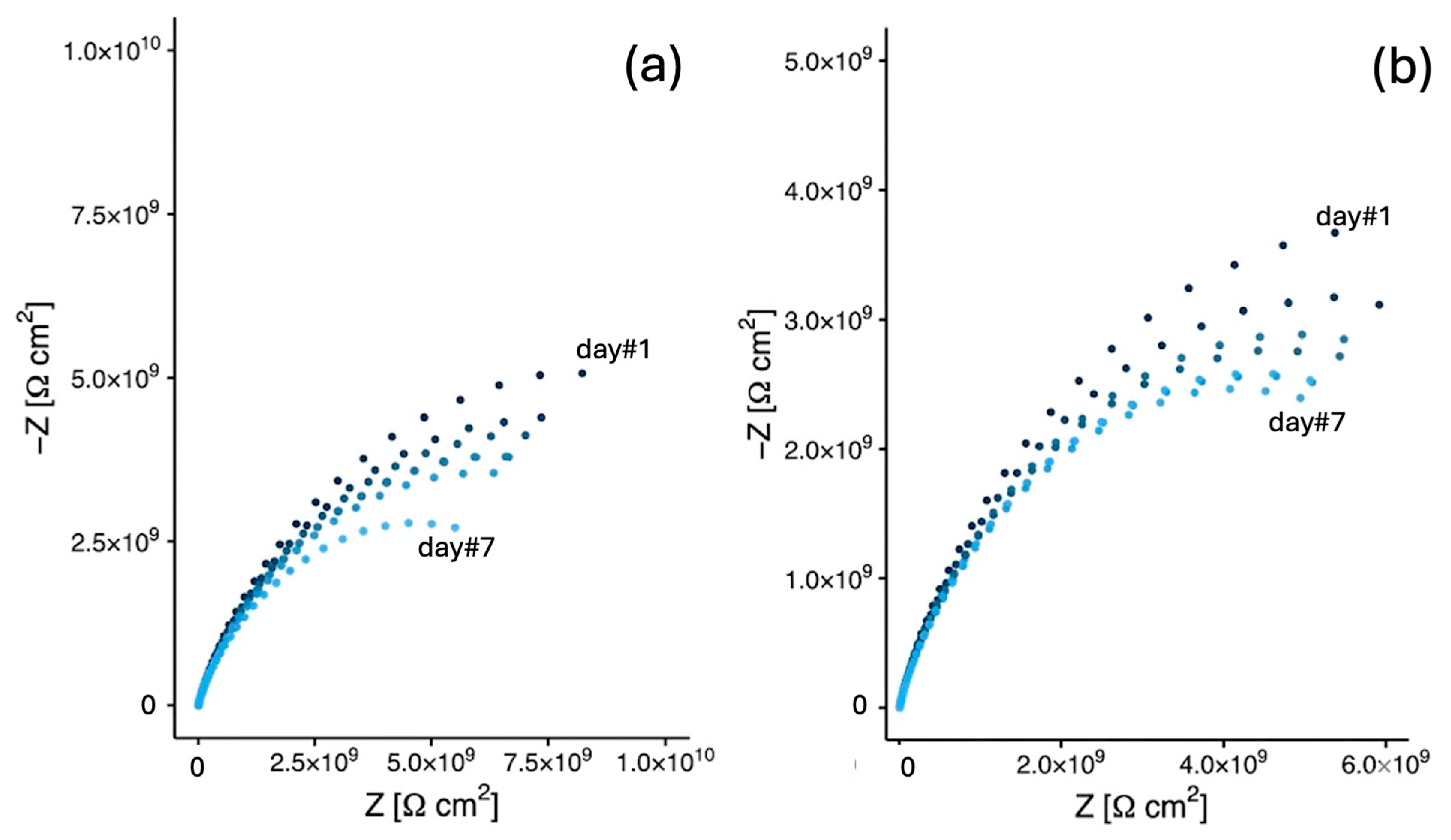
Figure 5 and Figure 6 show Nyquist plots obtained from EIS tests on polymer-coated 6005A and 6082 alloys exposed to real urban and marine-coastal environments for 6 months. All 6-month exposed samples showed incomplete semi-circle arcs, implying that the protective performance was not significantly degraded during this period. The reduced semi-circle size clearly demonstrated that the protective properties of the anti-corrosion coatings were significantly affected by the marine-coastal climate, especially for polymer-coated 6005A alloy.
Figure 5.
Nyquist plots from EIS tests on 6-month exposed polymer-coated 6005A alloy in (a) urban and (b) marine-coastal environments.
Figure 6.
Nyquist plots from EIS tests on 6-month exposed polymer-coated 6082 alloy in (a) urban and (b) marine-coastal environments.
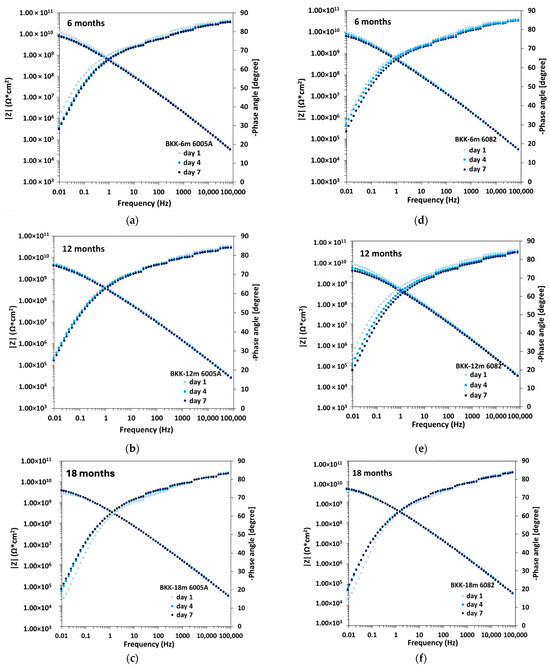
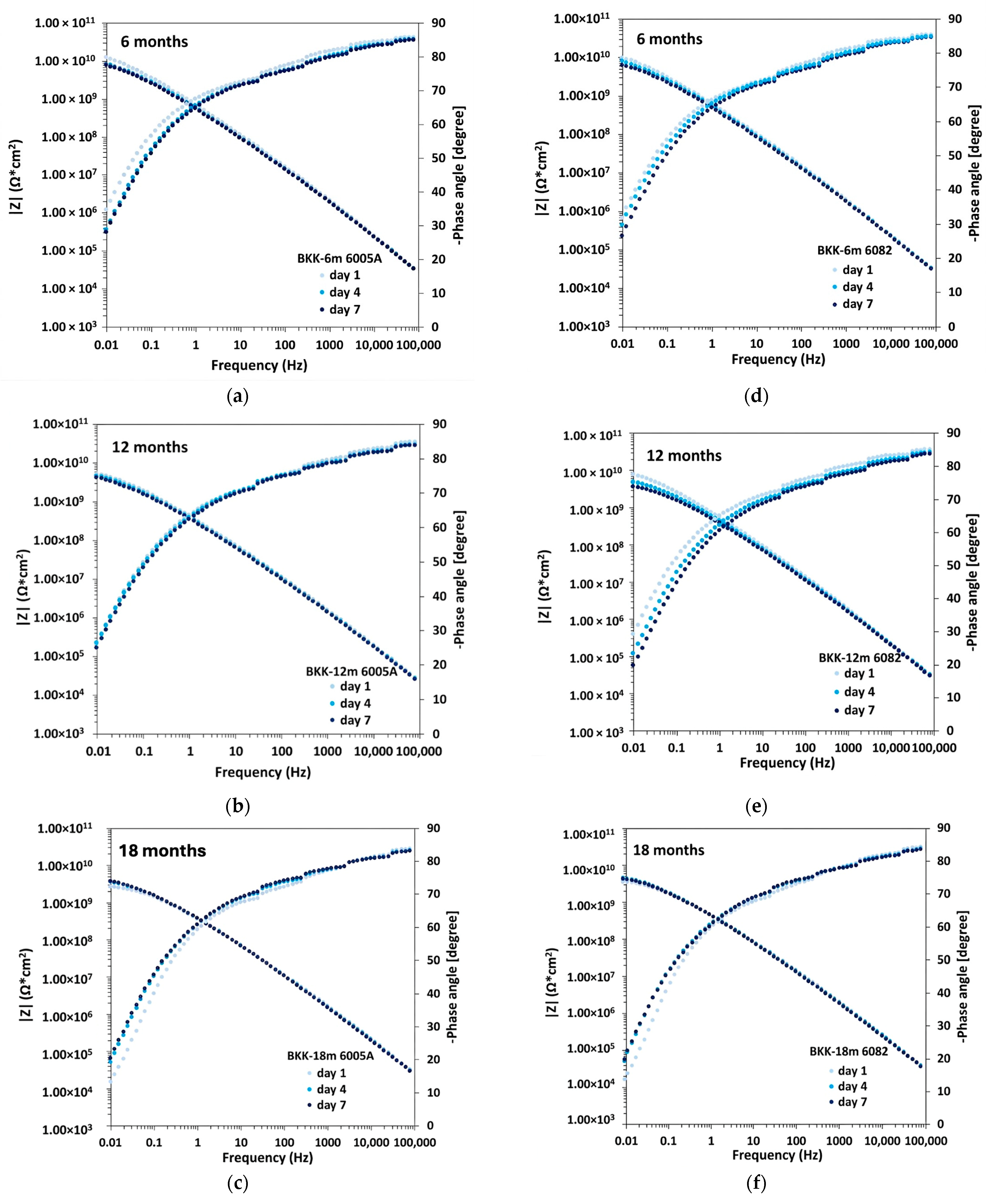
To provide insight into the protective properties of the anti-corrosion coatings up to 18 months of exposure, representative Bode plots for the urban environment are shown in Figure 7. In principle, a 0° phase shift indicates a resistive response, while a 90° phase shift indicates a capacitive response of the anti-corrosion coatings. All spectra showed similar trends: As the frequency increased, the impedance modulus decreased and the phase angle shifted from low to high. At low frequency (10 mHz), an impedance modulus of approximately 1010 Ω·cm2 with a phase angle of 20–30° was obtained. At high frequency (100 kHz), the impedance modulus dropped to 105 Ω·cm2, with a phase angle of 80–90°. Changes in the impedance modulus and phase angle were minimal as the immersion time increased. Polymer-coated 6082 alloy exposed to the urban environment for 12 months showed the largest impedance decrease compared with 6005A during the 7-day immersion test. Notably, polymer-coated aluminum alloys exposed to the urban environment for 18 months showed increased impedance modulus values and a more capacitive phase shift at low frequencies as the immersion time increased from day 1 to 7, reflecting a resistive-dominant barrier with limited dielectric properties of the primer.
Figure 7.
Bode (impedance and phase angle) plots from 7-day EIS measurements for 6-, 12-, and 18-month exposure periods in the urban environment for polymer-coated (a–c) 6005A and (d–f) 6082 aluminum alloys.
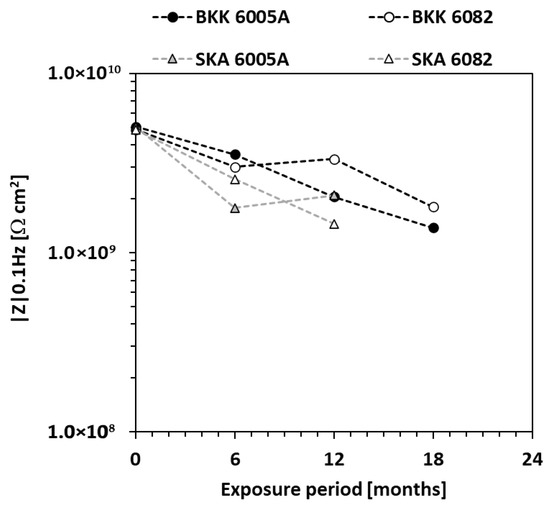
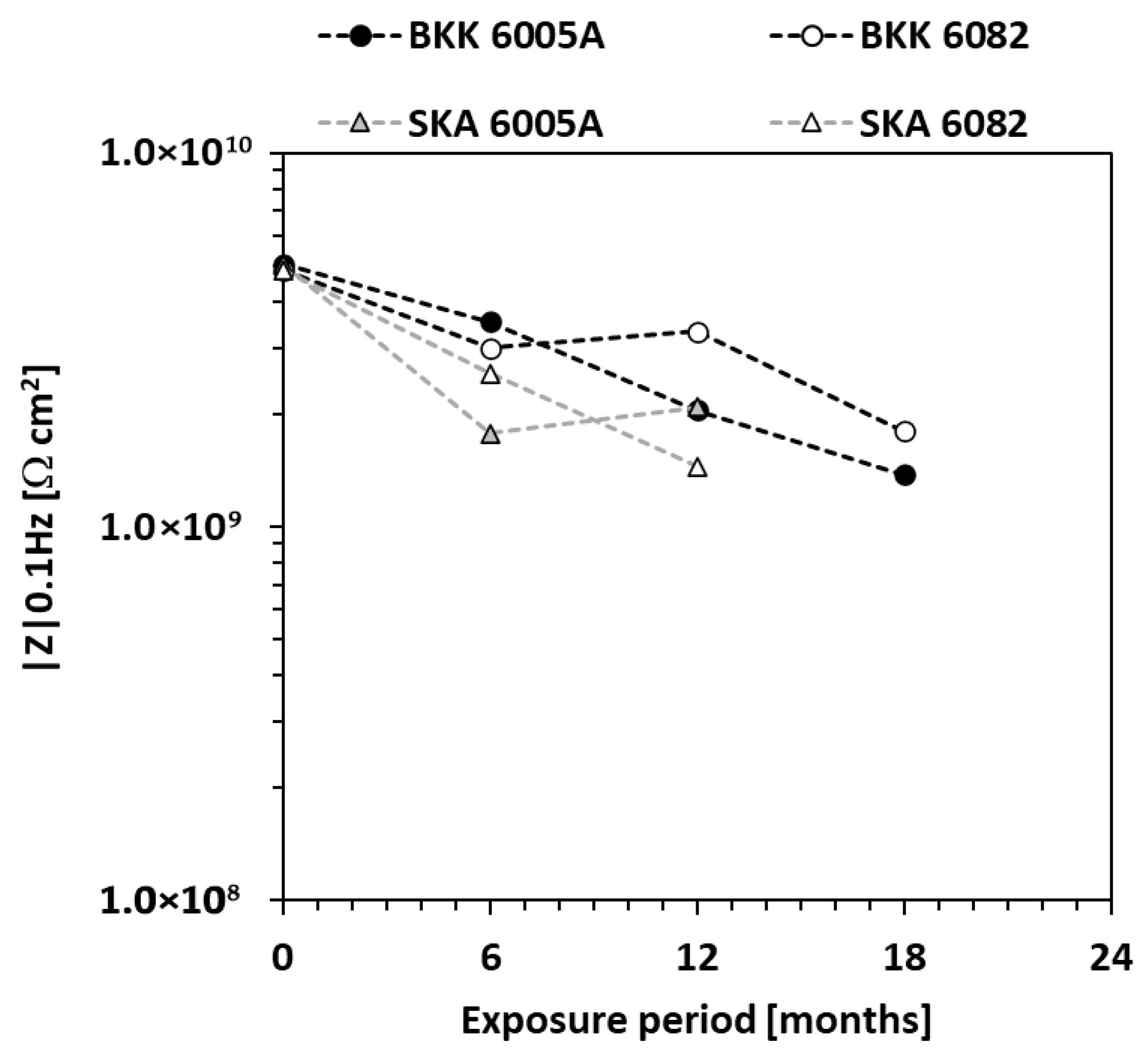
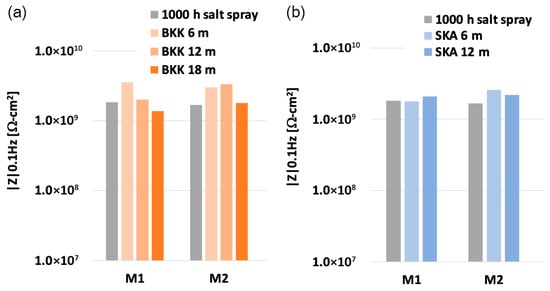
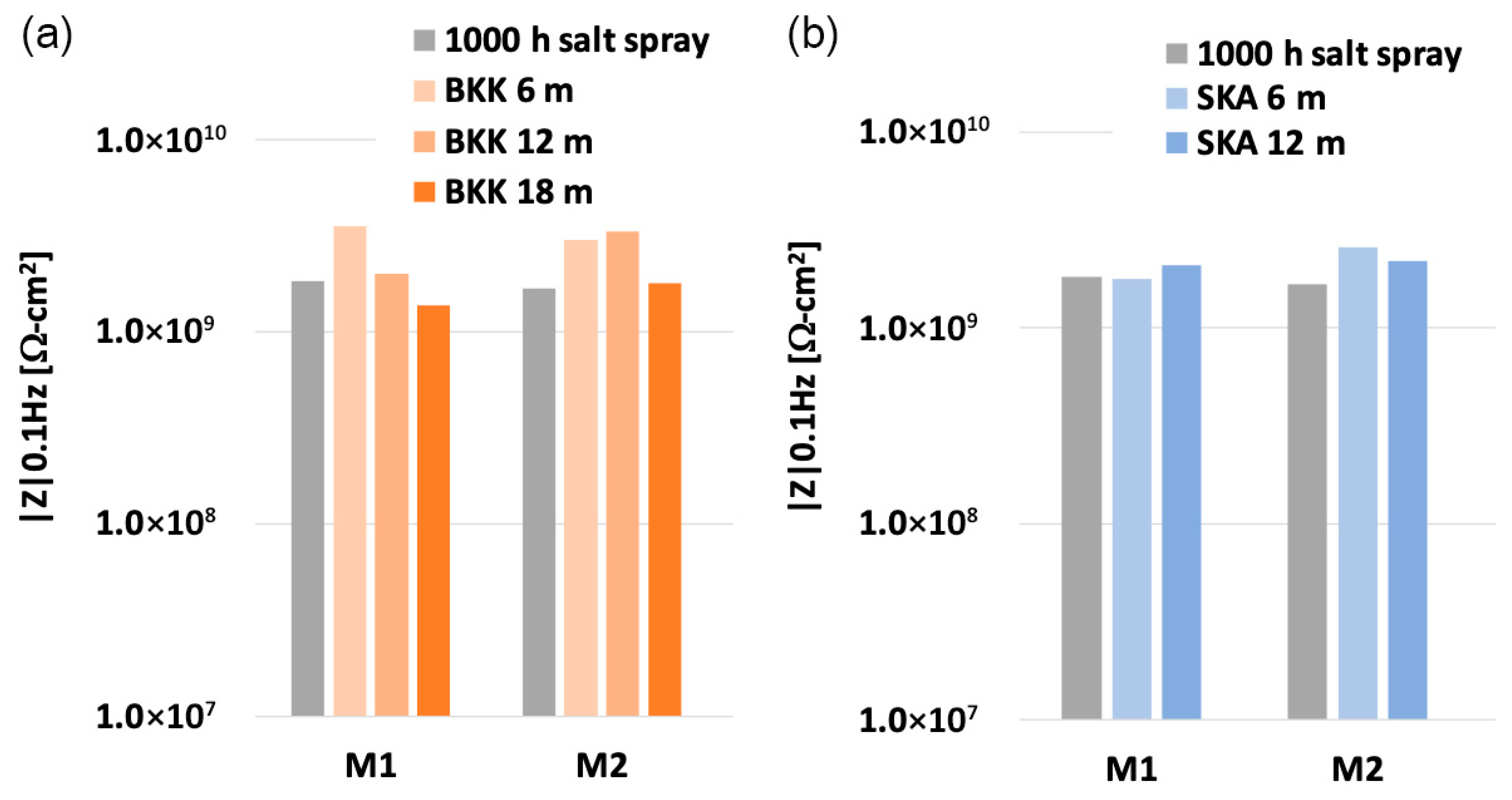
The degradation behavior of the anti-corrosion coatings with respect to the exposure duration and climatic environment was evaluated using the low-frequency EIS response during 7-day immersion in 3.5 wt% NaCl solution at 25 °C. The low-frequency impedance response (|Z|0.1Hz) typically reflects coating corrosion resistance and gradually decreased with the field exposure time for all polymer-coated alloys. As shown in Figure 8, prolonged climatic exposure resulted in less capacitive behavior, indicating increased electrolyte migration through anti-corrosion coatings degraded by atmospheric exposure [31]. This degradation of the coating barrier properties can be attributed to the penetration of corrosive species as well as thermal–UV radiation [34]. Regarding climate factors, the marine-coastal environment caused relatively greater degradation of the anti-corrosion coating properties than the urban environment. As shown in Table 1, the marine-coastal environment featured high relative humidity, high Cl− deposition rates, long TOW, and continuous extreme UV radiation. These factors exerted synergic thermal and chemical degradation effects on the acrylic polyurethane topcoat [32]. In terms of durability, the |Z|0.1Hz value of all coating systems remained above 106 Ω·cm2 after 12–18 months, indicating excellent barrier protection for 6005A and 6082 alloys against atmospheric corrosion at both test sites in Thailand’s tropical climate.
Figure 8.
Low-frequency impedance, |Z|0.1Hz, obtained from EIS tests on polymer-coated samples under unexposed and exposed conditions for 6, 12 and 18 months in urban (BKK) and marine-coastal (SKA) environments (7-day immersion).
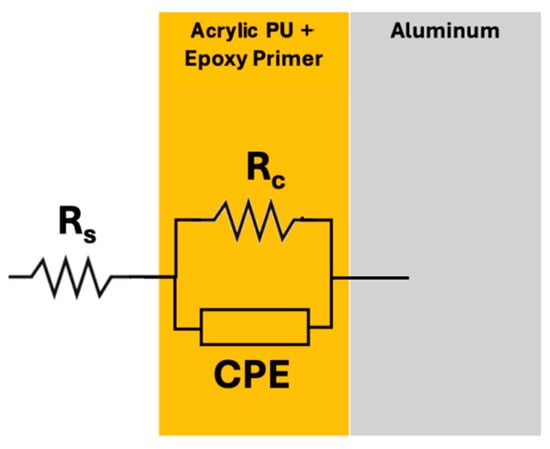
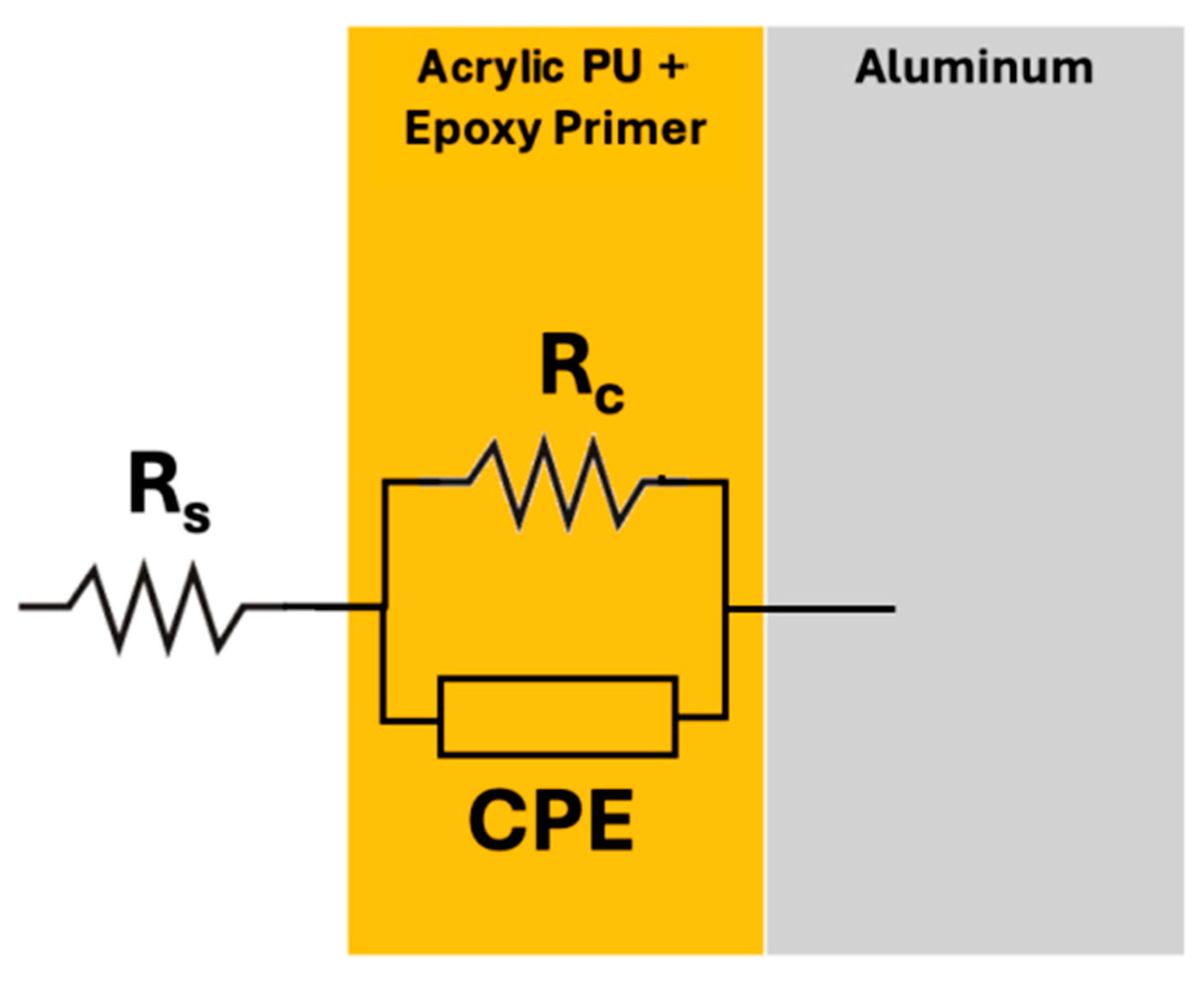
An equivalent electrical circuit (EEC) was used to simulate day-1 EIS spectra in relation to the physical behavior of polymer-coated 6005A and 6082 alloys. A generic EEC model with one time constant, R(RC), was selected to fit the EIS impedance spectra as shown in Figure 9, corresponding to the early-stage excellent protective performance of the coatings [19,22,31,34,35]. In the circuit, Rs represents the electrolyte solution resistance. Rc and CPE represent the coating resistance and constant phase element, respectively. The constant phase element (CPE) describes non-ideal capacitive behavior [31,35], which is typically influenced by surface roughness, defects and porosity in the coatings. Based on the CPE impedance equation, the CPE power exponent n varies between 0 and 1 (0 ≤ n ≤ 1) when the coating is heterogenous due to roughness, porosity, void, or cracks. The CPE behaves as a pure capacitor when n = 1 and as a resistor when n = 0. Fitted parameters from the simulation are summarized in Table 2.
Figure 9.
Equivalent electrical circuit model proposed to describe physical characteristics of anti-corrosion coatings on aluminum alloys.
Table 2.
Equivalent electrical circuit parameters (M1: polymer-coated 6005A alloy; M2: polymer-coated 6082 alloy).
A gradual decline in Rc accompanied by increasing CPE values was observed over the exposure period, implying a continuous reduction in barrier resistance due to coating degradation. The CPE exponent (n) values, ranging from 0.68 to 0.74, indicated significant deviation from ideal capacitive behavior due to heterogeneity [36]. This capacitive response can be attributed to frequency dispersion caused by the high surface roughness of grit-blasted aluminum substrates, the heterogeneous nature of the interfacial oxide layer formed prior to coating application, and porosity/cracks formed during coating degradation. After the first 6 months, the reduction in coating resistance (Rc) and the increase in the CPE for both polymer-coated aluminum alloys were greater in the marine-coastal environment than in the urban environment. This finding is supported by the rapid drop in adhesion strength after 6 months of marine-coastal exposure for 6005A, caused by the longer TOW and increased coating wetting. After 12 months of exposure, the coating resistance (Rc) for polymer-coated 6005A decreased to 109 Ω·cm2 at both the urban and marine-coastal sites, and CPE values increased to 6 × 10⁻¹⁰ S·sn·cm−2. These characteristics indicate further degradation due to moisture and corrosive ion penetration through pores and cracks, consistent with the SEM images (Figure 2). Given the relatively high coating resistance (Rc) and CPE values in the 10−10 S·sn·cm−2 range, the coating degradation occurred only in the surface region, and corrosion had not affected the primer/substrate interface. Finally, after 18 months of urban exposure, the polymer-coated samples continued to degrade, resulting in lower corrosion resistance (Rc), consistent with the sharp drop in adhesion strength. The more degraded PU topcoat morphology observed via SEM (Figure 2) implies that Thailand’s marine-coastal environment is more aggressive than that of Hainan, China [32]. When the 12-month results are compared with those from a single-layer polyurethane (PU) coating [32] study, the duplex epoxy/PU system in this study exhibits significantly higher corrosion resistance (Rc) and a slower CPE increase, suggesting that the epoxy primer provides a critical secondary barrier against electrolyte ingress.
3.2. Degradation Simulation of Polymer-Coated Alloys Using Salt Spray Test
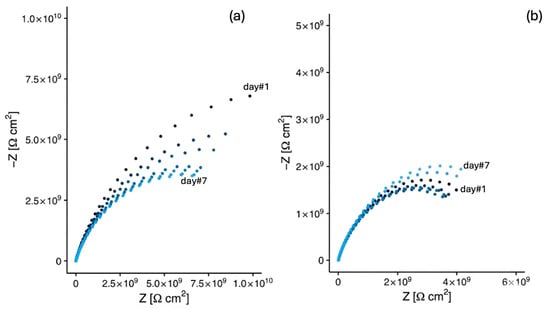
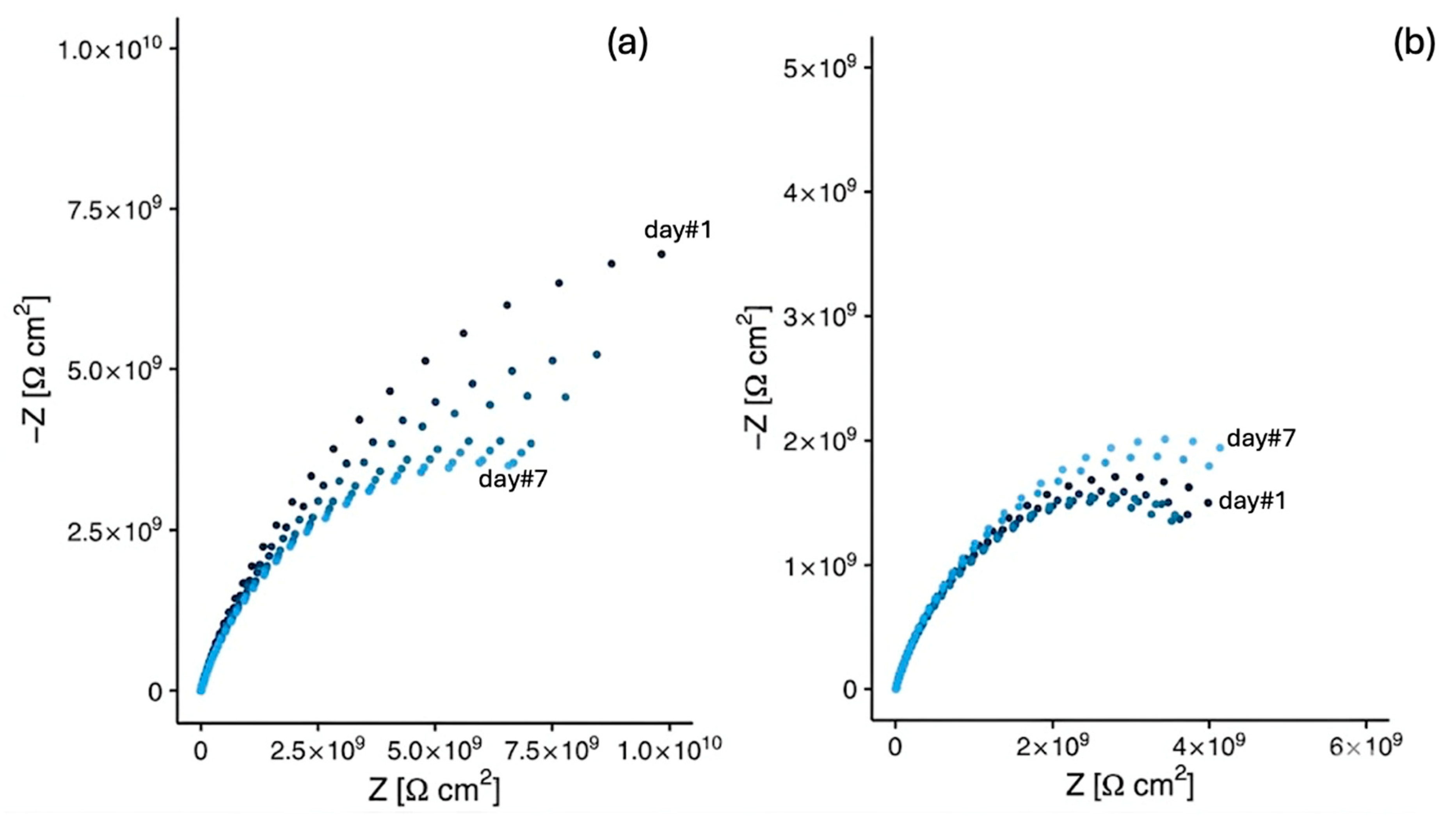
EIS measurements were performed on 1000 h salt-sprayed samples. Nyquist and Bode plots of polymer-coated 6005A and 6082 alloys immersed in electrolyte solution for varying durations are shown in Figure 10. Incomplete semi-circle arcs were observed for both polymer-coated samples, similar to the EIS spectra from field-test samples. The radius of the semi-circles tended to decrease with increasing immersion time due to gradual electrolyte penetration through the anti-corrosion coatings. The performance of the anti-corrosion coatings on 6005A alloy was slightly better than that on 6082 alloy. Comparing the real exposure test with the accelerated salt spray test, the |Z|0.1Hz values of polymer-coated samples after the 1000 h salt spray test and 6, 12, and 18 months of exposure in urban and marine-coastal environments are shown in Figure 11. It can be seen that the salt spray test can effectively simulate the atmospheric corrosion behavior of polymer-coated aluminum alloys. Based on the |Z|0.1Hz values, 1000 h of salt spray testing corresponds to approximately 18 months of degradation in urban environments and 12 months in marine-coastal environments. The calculated acceleration factors are 12.96 and 8.64, respectively.
Figure 10.
Nyquist plots from EIS tests on polymer-coated (a) 6005A and (b) 6082 alloy samples after 1000 h salt spray test.
Figure 11.
Low-frequency impedance (|Z|0.1Hz) obtained during 7-day EIS tests on polymer-coated 6005A and 6082 alloys after exposure tests in (a) urban and (b) marine-coastal environments, compared with 1000 h salt spray test results.
3.3. Service Life Prediction of Anti-Corrosion Coatings
According to the technical requirements for predictive maintenance scheduling of HSR vehicle structures and bodies, the service life of polymer-coated aluminum alloys was estimated from time-dependent plots of low-frequency impedance at 100 mHz (|Z|0.1Hz). |Z|0.1Hz represents the total impedance of the solution, coating, and coating/substrate interface and determines the protective performance of anti-corrosion coatings [19,21]. Martinez et al. [21] proposed three time-resolved coating degradation models for offshore coating systems constructed from low-frequency impedance over exposure time. The impedance levels in this study fall within the early-stage coating degradation zone. Possible long-term degradation scenarios include (1) progressive chemical and physical damage until |Z|0.1Hz < 106 Ω·cm2, (2) sustained hydrophilic coating performance (|Z|0.1Hz remains stable above 106 Ω·cm2), and (3) fatigue crack leading to a sudden drop in |Z|0.1Hz < 106 Ω·cm2 [21].
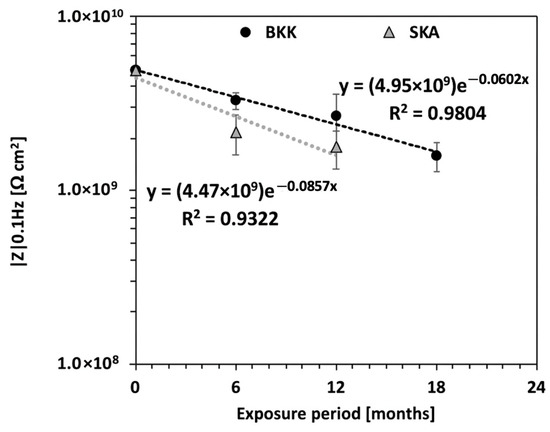
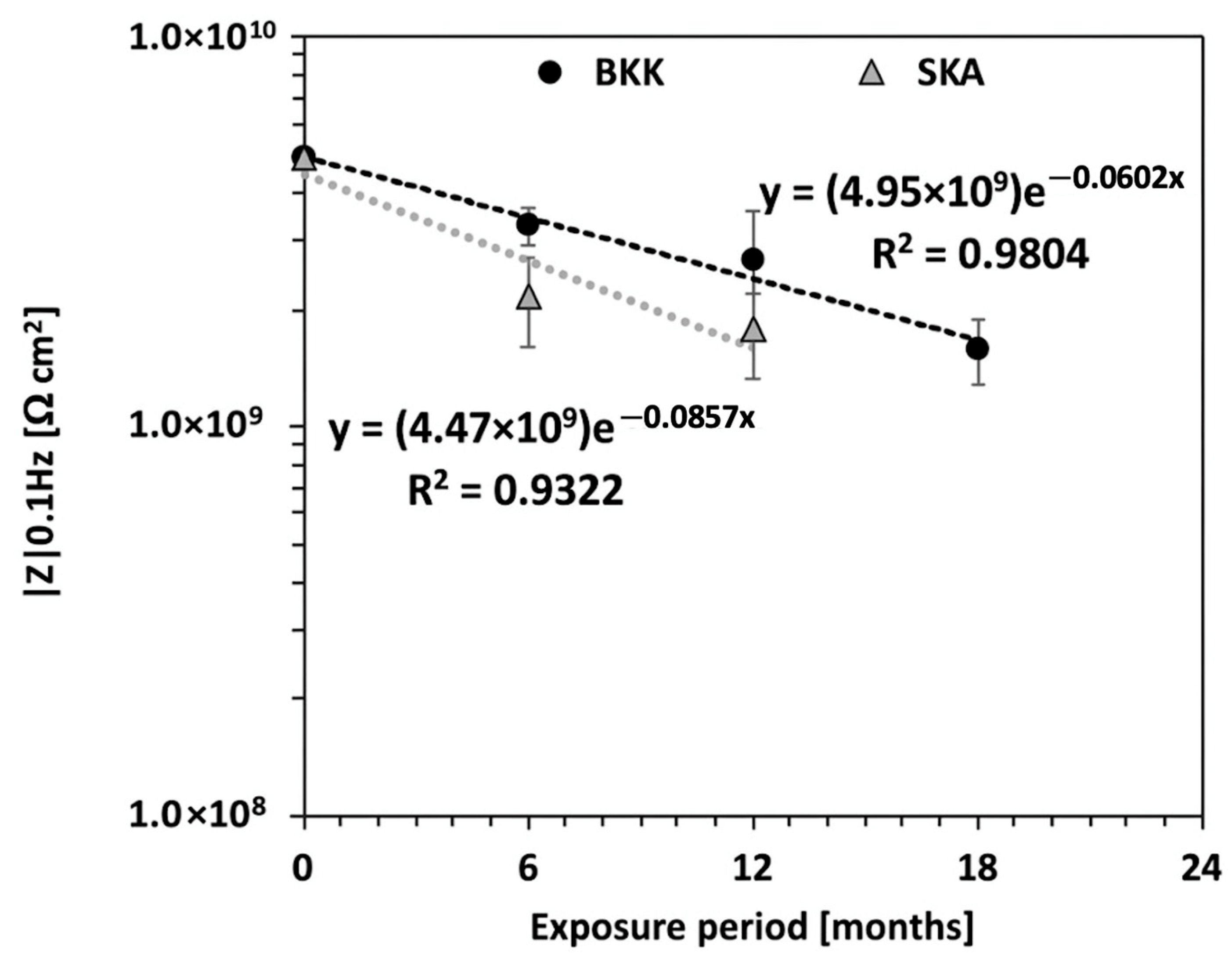
Based on general criteria, the failure of an anti-corrosion coating is defined when |Z|0.1Hz falls below 106 Ω·cm2 [19]. Average |Z|0.1Hz values of polymer-coated 6005A and 6082 alloys exposed to urban and marine-coastal climates were calculated and plotted against exposure times (Figure 12). Average values were used because the |Z|0.1Hz values were of the same order of magnitude. It was found that |Z|0.1Hz decreased exponentially with time. Assuming that the degradation function remains consistent throughout the service life (scenario 1), the projected time to reach |Z|0.1Hz = 106 Ω·cm2 is 11 years for polymer-coated aluminum alloys in urban climates and 8 years in coastal-marine climates. This estimated lifetime is also consistent with the lower primer/substrate adhesion strength of marine-coastal samples. Scenarios (2) and (3) depend on long-term behavior that cannot be predicted from the current datasets.
Figure 12.
Average low-frequency impedance of coatings as function of time under unexposed and exposed conditions for 6, 12 and 18 months in urban (BKK) and marine-coastal (SKA) environments (7-day immersion).
This systematic investigation confirms that the marine-coastal environment is more severe than the urban environment, causing more aggressive degradation of anti-corrosion coatings on 6000-series aluminum alloys. From a corrosion protection perspective, the commercial coating system consisting of an 80 μm epoxy primer and an 80 μm acrylic polyurethane topcoat provides excellent barrier protection for aluminum alloys against atmospheric corrosion. The EIS results showed that the low-frequency impedance was approximately 1010 Ω·cm2, indicating good/excellent corrosion resistance. Slight coating degradation, indicated by reduced impedance, was observed with increasing atmospheric exposure time, suggesting that coating degradation/aging should be considered for long-term tropical climate exposure. Based on the service life prediction, the anti-corrosion coating on aluminum alloys can provide approximately 11 years of service before repainting in urban environments and 8 years in marine-coastal environments. To reduce the resources required for long-term real-environment exposure tests, the salt spray test can be used to simulate the degradation characteristics of an anti-corrosion coating. The results from this study can serve as a guideline for short-term durability testing according to ISO 12944 [37] for lifetime estimation in C2 and CX environments.
4. Conclusions
The anti-corrosion performance of polymer-coated aluminum alloys was evaluated via long-term real-environment exposure testing in Thailand’s tropical climate, with a maximum exposure duration of 18 months. EIS measurements of the exposed samples confirmed that the anti-corrosion polymer coatings provided sufficient protection for 6000-series aluminum alloys against atmospheric corrosion under tropical climate conditions. However, gradual coating degradation was observed with increasing atmospheric exposure time. The polymer coatings were predicted to provide approximately 11 years of service life in urban environments and 8 years in marine-coastal environments. The salt spray test can serve as an alternative to long-term real-environment exposure testing for evaluating the anti-corrosion performance of polymer coatings applied to 6000-series aluminum alloys.
Author Contributions
Methodology, C.L.; Investigation, P.W. and P.K.; Formal analysis, W.P.; Writing—original draft, W.P. and E.V.; Writing—review and editing, W.P. and C.L.; Supervision, X.S. and E.V.; Project administration, J.W.; Resources, P.W.; Funding acquisition, X.S. All authors have read and agreed to the published version of the manuscript.
Funding
This research and the APC were supported by the Key R&D Program of Shandong Province (2025KJHZ030), China. The authors are also grateful for in-kind support provided by National Science and Technology Development Agency (NSTDA), Thailand.
Institutional Review Board Statement
Not applicable.
Informed Consent Statement
Not applicable.
Data Availability Statement
The datasets presented in this article are not readily available because the data are part of an ongoing study. Requests to access the datasets should be directed to the corresponding authors.
Conflicts of Interest
W.P., P.K., P.W. and E.V. declare no conflicts of interest. C.L. and X.S. are employed by CRRC Qingdao Sifang Co., Ltd., and Qingdao Aokang Quality Inspection Technology Co., Ltd., and J.W. is employed by Qingdao Aokang Quality Inspection Technology Co., Ltd. Their contributions to this work and manuscript were made independently without any requirement, guidance or input by their employers. They received no financial compensation from any source for the contributions they made to this scientific work and manuscript.
References
- Thai-Chinese High Speed Rail, State Railway of Thailand. Available online: https://www.highspeedrail-thai-china.com (accessed on 8 March 2026).
- Sun, X.; Han, X.; Dong, C.; Li, X. Applications of Aluminum Alloys in Rail Transportation. In Advanced Aluminium Composites and Alloys; IntechOpen: London, UK, 2021; ISBN 978-1-83880-451-0. [Google Scholar]
- Hatch, J.E. Aluminum: Properties and Physical Metallurgy; ASM International: Materials Park, OH, USA, 1984; ISBN 978-1-61503-169-6. [Google Scholar]
- Davis, J.R. Alloying: Understanding the Basics; ASM International: Materials Park, OH, USA, 2001; ISBN 978-1-61503-063-7. [Google Scholar]
- Dan, Z.; Takigawa, S.; Muto, I.; Hara, N. Applicability of Constant Dew Point Corrosion Tests for Evaluating Atmospheric Corrosion of Aluminium Alloys. Corros. Sci. 2011, 53, 2006–2014. [Google Scholar] [CrossRef] [Scilit]
- Wang, B.B.; Wang, Z.Y.; Han, W.; Ke, W. Atmospheric Corrosion of Aluminium Alloy 2024-T3 Exposed to Salt Lake Environment in Western China. Corros. Sci. 2012, 59, 63–70. [Google Scholar] [CrossRef] [Scilit]
- Dan, Z.; Muto, I.; Hara, N. Effects of Environmental Factors on Atmospheric Corrosion of Aluminium and Its Alloys under Constant Dew Point Conditions. Corros. Sci. 2012, 57, 22–29. [Google Scholar] [CrossRef] [Scilit]
- Alcántara, J.; de la Fuente, D.; Chico, B.; Simancas, J.; Díaz, I.; Morcillo, M. Marine Atmospheric Corrosion of Carbon Steel: A Review. Materials 2017, 10, 406. [Google Scholar] [CrossRef] [Scilit]
- Leygraf, C.; Wallinder, I.O.; Tidblad, J.; Graedel, T. Atmospheric Corrosion; John Wiley & Sons, Ltd.: Hoboken, NJ, USA, 2016; ISBN 978-1-118-76213-4. [Google Scholar]
- Vera, R.; Delgado, D.; Rosales, B.M. Effect of Atmospheric Pollutants on the Corrosion of High Power Electrical Conductors: Part 1. Aluminium and AA6201 Alloy. Corros. Sci. 2006, 48, 2882–2900. [Google Scholar] [CrossRef] [Scilit]
- Cui, Z.; Ge, F.; Li, X.; Zhu, M.; Xiao, K.; Dong, C.; Wang, X. Mechanistic Studies of Atmospheric Corrosion Behavior of Al and Al-Based Alloys in a Tropical Marine Environment. J. Wuhan Univ. Technol.-Mater. Sci. Ed. 2017, 32, 633–639. [Google Scholar] [CrossRef] [Scilit]
- Wang, L.; Dong, C.; Zhang, D.; Sun, X.; Chowwanonthapunya, T.; Man, C.; Xiao, K.; Li, X. Effect of Alloying Elements on Initial Corrosion Behavior of Aluminum Alloy in Bangkok, Thailand. Acta Metall. Sin. 2019, 56, 119–128. [Google Scholar] [CrossRef]
- Pongsaksawad, W.; He, J.; Li, C.; Klomjit, P.; Khamsuk, P.; Wang, R.; Wangjina, P.; Sun, X.; Viyanit, E. Atmospheric Corrosion Behaviors of 6000-Series Aluminum Alloy under Tropical Climate Influences of Thailand. Mater. Test. 2023, 65, 924–933. [Google Scholar] [CrossRef] [Scilit]
- Jingyi Yue, Y.C. Corrosion Prevention by Applied Coatings on Aluminum Alloys in Corrosive Environments. Int. J. Electrochem. Sci. 2015, 10, 15. [Google Scholar] [CrossRef] [Scilit]
- Xu, Z.; Anyasodor, G.; Qin, Y. Painting of Aluminium Panels—State of the Art and Development Issues. MATEC Web Conf. 2015, 21, 05012. [Google Scholar] [CrossRef] [Scilit]
- Amirudin, A.; Thieny, D. Application of Electrochemical Impedance Spectroscopy to Study the Degradation of Polymer-Coated Metals. Prog. Org. Coat. 1995, 26, 1–28. [Google Scholar] [CrossRef] [Scilit]
- Bierwagen, G.; Li, J.; He, L.; Tallman, D. Fundamentals of the Measurement of Corrosion Protection and the Prediction of Its Lifetime in Organic Coatings. In Service Life Prediction; ACS Symposium Series; American Chemical Society: Washington, DC, USA, 2001; Volume 805, pp. 316–350. ISBN 978-0-8412-3693-6. [Google Scholar]
- Bierwagen, G.; Tallman, D.; Li, J.; He, L.; Jeffcoate, C. EIS Studies of Coated Metals in Accelerated Exposure. Prog. Org. Coat. 2003, 46, 149–158. [Google Scholar] [CrossRef] [Scilit]
- Sanchez-Amaya, J.M.; Osuna, R.M.; Bethencourt, M.; Botana, F.J. Monitoring the Degradation of a High Solids Epoxy Coating by Means of EIS and EN. Prog. Org. Coat. 2007, 60, 248–254. [Google Scholar] [CrossRef] [Scilit]
- Mansfeld, F.; Kendig, M.W. Evaluation of Anodized Aluminum Surfaces with Electrochemical Impedance Spectroscopy. J. Electrochem. Soc. 1988, 135, 828. [Google Scholar] [CrossRef] [Scilit]
- Martinez, S.; Hudec, B.; Šoić, I. Low-Frequency EIS Interpretation with the Potential to Predict the Durability of Protective Coatings. Prog. Org. Coat. 2024, 197, 108811. [Google Scholar] [CrossRef] [Scilit]
- Yuan, X.; Yue, Z.F.; Liu, Z.Q.; Wen, S.F.; Li, L.; Feng, T. Comparison of the Failure Mechanisms of Silicone-Epoxy Hybrid Coatings on Type A3 Mild Steel and 2024 Al-Alloy. Prog. Org. Coat. 2016, 90, 101–113. [Google Scholar] [CrossRef] [Scilit]
- Zhang, T.; Zhang, T.; He, Y.; Zhang, S.; Ma, B.; Gao, Z. Long-Term Atmospheric Aging and Corrosion of Epoxy Primer-Coated Aluminum Alloy in Coastal Environments. Coatings 2021, 11, 237. [Google Scholar] [CrossRef] [Scilit]
- Best, T.; Gelling, V.J. An Industrial Perspective on Challenges in the Lifetime Prediction of Organic Coatings: A Century Retrospective Review. Corrosion 2022, 79, 304–327. [Google Scholar] [CrossRef] [Scilit]
- JIS Z 2382:1998; Determination of Pollution for Evaluation of Corrosivity of Atmospheres. Japanese Standards Association: Tokyo, Japan, 1998.
- ISO 9223:2012; Corrosion of Metals and Alloys—Corrosivity of Atmospheres—Classification, Determination and Estimation. ISO: Geneva, Switzerland, 2018.
- ASTM G50-76; Practice for Conducting Atmospheric Corrosion Tests on Metals. ASTM International: West Conshohocken, PA, USA, 2003. [CrossRef] [Scilit]
- ASTM D4541-22; Standard Test Method for Pull-Off Strength of Coatings Using Portable Adhesion Testers. ASTM International: West Conshohocken, PA, USA, 2022.
- Kobayashi, K.; Suzuki, T.S. Free Analysis and Visualization Programs for Electrochemical Impedance Spectroscopy Coded in Python. Electrochemistry 2021, 89, 218–222. [Google Scholar] [CrossRef] [Scilit]
- ISO 9227:2017; Corrosion Tests in Artificial Atmospheres—Salt Spray Tests. ISO: Geneva, Switzerland, 2017.
- Hu, J.M.; Zhang, J.Q.; Cao, C.N. Determination of Water Uptake and Diffusion of Cl−Ion in Epoxy Primer on Aluminum Alloys in NaCl Solution by Electrochemical Impedance Spectroscopy. Prog. Org. Coat. 2003, 46, 273–279. [Google Scholar] [CrossRef] [Scilit]
- Liu, J.; Li, Z.; Zhang, L.; Hou, J.; Lu, Z.; Zhang, P.; Wang, B.; Jin, N. Degradation Behavior and Mechanism of Polyurethane Coating for Aerospace Application under Atmospheric Conditions in South China Sea. Prog. Org. Coat. 2019, 136, 105310. [Google Scholar] [CrossRef] [Scilit]
- Mayer, P.; Dmitruk, A.; Kaczmar, J.W. Adhesion of Functional Layers Based on Epoxy and Polyurethane Resins for Aluminum Substrate. Int. J. Adhes. Adhes. 2021, 109, 102899. [Google Scholar] [CrossRef] [Scilit]
- Zhang, T.; Zhang, T.; He, Y.; Du, X.; Zhang, S. Aging and Corrosion Behavior of Epoxy Primer Coated Aluminum Alloys in UVA, UVA-Neutral and UVA-Acidic Alternating-Immersion Environments. Eng. Fail. Anal. 2021, 130, 105759. [Google Scholar] [CrossRef] [Scilit]
- Bajat, J.B.; Mišković-Stanković, V.B.; Kačarević-Popović, Z. Corrosion Stability of Epoxy Coatings on Aluminum Pretreated by Vinyltriethoxysilane. Corros. Sci. 2008, 50, 2078–2084. [Google Scholar] [CrossRef] [Scilit]
- Lasia, A. The Origin of the Constant Phase Element. J. Phys. Chem. Lett. 2022, 13, 580–589. [Google Scholar] [CrossRef] [Scilit] [PubMed]
- ISO 12944-5:2018; Paints and Varnishes—Corrosion Protection of Steel Structures by Protective Paint Systems—Part 5: Protective Paint Systems. ISO: Geneva, Switzerland, 2018.

Disclaimer/Publisher’s Note: The statements, opinions and data contained in all publications are solely those of the individual author(s) and contributor(s) and not of MDPI and/or the editor(s). MDPI and/or the editor(s) disclaim responsibility for any injury to people or property resulting from any ideas, methods, instructions or products referred to in the content. |
© 2026 by the authors. Licensee MDPI, Basel, Switzerland. This article is an open access article distributed under the terms and conditions of the Creative Commons Attribution (CC BY) license.