


Abstract
Bamboo is widely available and renewable. Using bamboo blocks to partially replace coarse aggregates in the production of concrete solid bricks shows promising application prospects in areas such as nonload-bearing wall materials. However, as a natural biomass material, bamboo squares have disadvantages such as susceptibility to decay, water absorption, swelling, and drying shrinkage, necessitating modification when used as concrete coarse aggregate. This study subjected raw bamboo squares to high-temperature carbonization. The compressive performance of concrete made with these carbonized bamboo squares was first tested and compared with concrete containing raw bamboo squares. Subsequently, both raw and carbonized bamboo squares were modified using conventional methods: polyvinyl alcohol (PVA) treatment, epoxy mortar (EM) treatment, epoxy resin (EPR) treatment, water glass (WG) treatment, and glutinous rice glue treatment. Modified bamboo block concrete specimens were prepared, and their compressive strengths were tested and compared. The results indicated that the compressive mechanical performance of carbonized bamboo block concrete consistently outperformed that of raw bamboo block concrete across all substitution rates. Specifically, the optimal modification method—using epoxy mortar (EM) encapsulation—significantly enhanced the mechanical properties. At a high volumetric replacement rate of 30%, the EM-modified carbonized bamboo concrete achieved a compressive strength of 27.79 MPa, which is 15.1% higher than that of identically treated raw bamboo concrete and far exceeds the standard MU7.5 grade requirements. These quantitative findings provide a solid experimental and theoretical basis for the high-value application of bamboo squares in sustainable concrete solid bricks.
1. Introduction
Driven by the urgent need to mitigate carbon dioxide emissions and address the rapid depletion of natural coarse aggregates in the global construction sector, the development of sustainable, low-carbon building materials has become imperative [1]. Among various renewable biomass alternatives, bamboo has garnered significant attention due to its exceptionally rapid growth cycle, high strength-to-weight ratio, and robust carbon sequestration capabilities [2]. Processing raw bamboo into aggregate blocks to partially or fully replace conventional crushed stone in concrete not only alleviates the ecological burden of aggregate mining but also promotes the high-value utilization of biobased materials in eco-friendly wall structures. However, as a natural organic material, raw bamboo exhibits inherent hydrophilic characteristics, leading to excessively high water absorption and severe dimensional swelling when exposed to a wet cementitious environment. These volumetric instabilities profoundly disrupt the local hydration process of the surrounding cement, resulting in a highly porous and weakened interfacial transition zone (ITZ) [3]. Consequently, this inferior interfacial bonding acts as the primary failure mechanism, significantly degrading the macroscopic mechanical properties of the bamboo aggregate concrete and posing profound risks to its long-term durability [3].
To address the bottlenecks associated with bamboo aggregates, high-temperature carbonization and surface modification technologies have emerged as critical research directions. Studies demonstrate that controlled thermal treatments can effectively decompose the highly hydrophilic hemicelluloses and cellulose in bamboo, thereby improving dimensional stability and reducing moisture uptake [4]. Furthermore, applying polymeric coatings—such as epoxy resins or acrylic emulsions—can substantially fortify the ITZ through physical pore-filling and chemical bonding mechanisms [5,6]. Recent studies have also emphasized that the mechanical performance of concrete can be significantly improved through microstructural tailoring and advanced material design strategies aimed at enhancing dissipation capacity and structural performance, highlighting the importance of optimizing internal material composition and aggregate interactions within cementitious systems [7]. Consequently, investigating the synergistic effect of combined thermal carbonization and chemical modification on the compressive performance of bamboo–concrete composites is of immense practical value for advancing the engineering application of bamboo in green wall materials. Furthermore, recent investigations have highlighted that the incorporation of biobased additives or modified bioaggregates can significantly alter the morphology and performance of cementitious and lime-based composites [8].
Historically, the utilization of bamboo in concrete has evolved structurally from macroscopic structural reinforcements to microscale fibres and eventually to coarse block aggregates [9]. Early research predominantly focused on utilizing bamboo as a direct substitute for steel reinforcement [10,11]; for instance, Ghavami [12] evaluated the use of bamboo strips, finding that the flexural capacity of bamboo-reinforced beams was substantial, although limited by significant interfacial slip. To improve mechanical interlocking, Mansur and Aziz [13] explored the incorporation of woven bamboo mesh into cement composites, which effectively enhanced the postcracking ductility. Further structural explorations by Adom-Asamoah et al. [14] confirmed the feasibility of bamboo-reinforced self-compacting concrete beams for sustainable low-cost construction. As research progressed, the focus shifted towards microscale and mesoscale enhancements. Incorporating bamboo fibres into cementitious matrices was extensively studied to control early-age shrinkage cracks and refine the pore structure [15]. Advanced structural applications have even explored the compressive behavior of engineered bamboo combined with ultrahigh-performance concrete (UHPC) and steel tubes, highlighting the material’s vast structural potential under extreme loading [16,17].
It is worth distinguishing the design philosophy of using bamboo blocks from traditional fibre reinforcement. While bamboo fibres have been extensively researched for their exceptional tensile strength to restrain matrix cracking, the utilization of bamboo as coarse aggregates serves a fundamentally different strategic target. By volumetrically replacing traditional heavy crushed stones with lightweight bamboo blocks, this approach aims not primarily at tensile enhancement but at significantly reducing the self-weight of the concrete. Furthermore, it provides a practical pathway for recycling solid bamboo processing residues and enhancing the overall carbon sequestration capacity of the structural material.
Despite these advances, the majority of literature remains constrained to untreated or solely surface-coated raw bamboo. There remains a critical research gap regarding the systematic evaluation of how carbonized bamboo aggregates respond to combined chemical modification methods. The fundamentally high water absorption of natural bamboo inevitably induces a localized spike in the water-cement ratio near the ITZ, which remains a primary bottleneck. Therefore, to bridge this gap and meet the stringent compressive strength thresholds required for concrete solid bricks (such as MU7.5, as specified in GB/T 50081-2019) [18], the primary objective of this study is to systematically investigate the synergistic effects of thermal carbonization and five distinct chemical surface modifications on the compressive behavior of bamboo aggregate concrete. We hypothesize that thermal carbonization will fundamentally resolve the dimensional instability of raw bamboo, while high-performance polymer coatings will act as a robust physical barrier. By comparing the unmodified conditions and chemically modified conditions across multiple substitution rates [19], the macroscopic mechanical enhancements and microscopic interfacial strengthening mechanisms are comprehensively elucidated.
2. Materials and Methods
2.1. Specimen Parameters
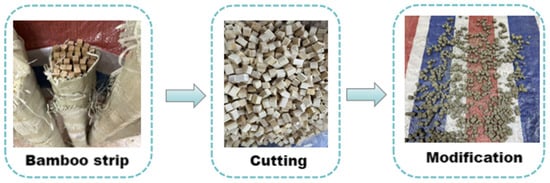
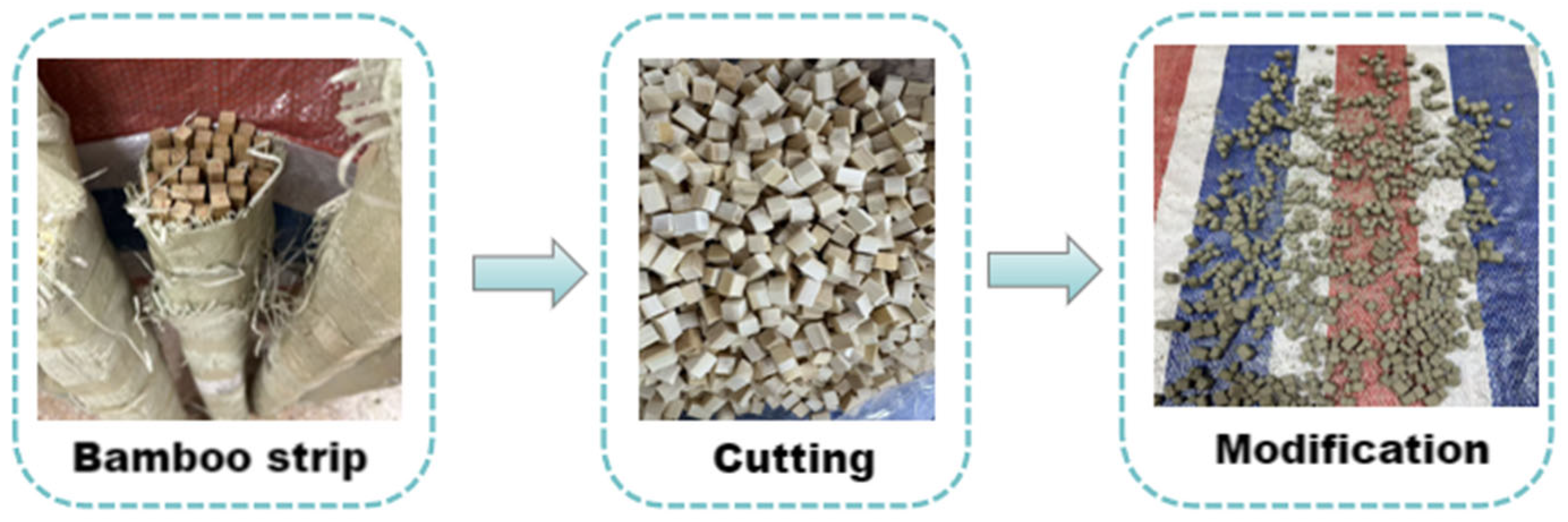
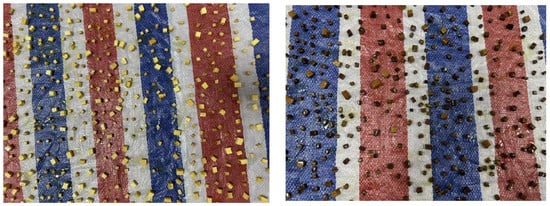
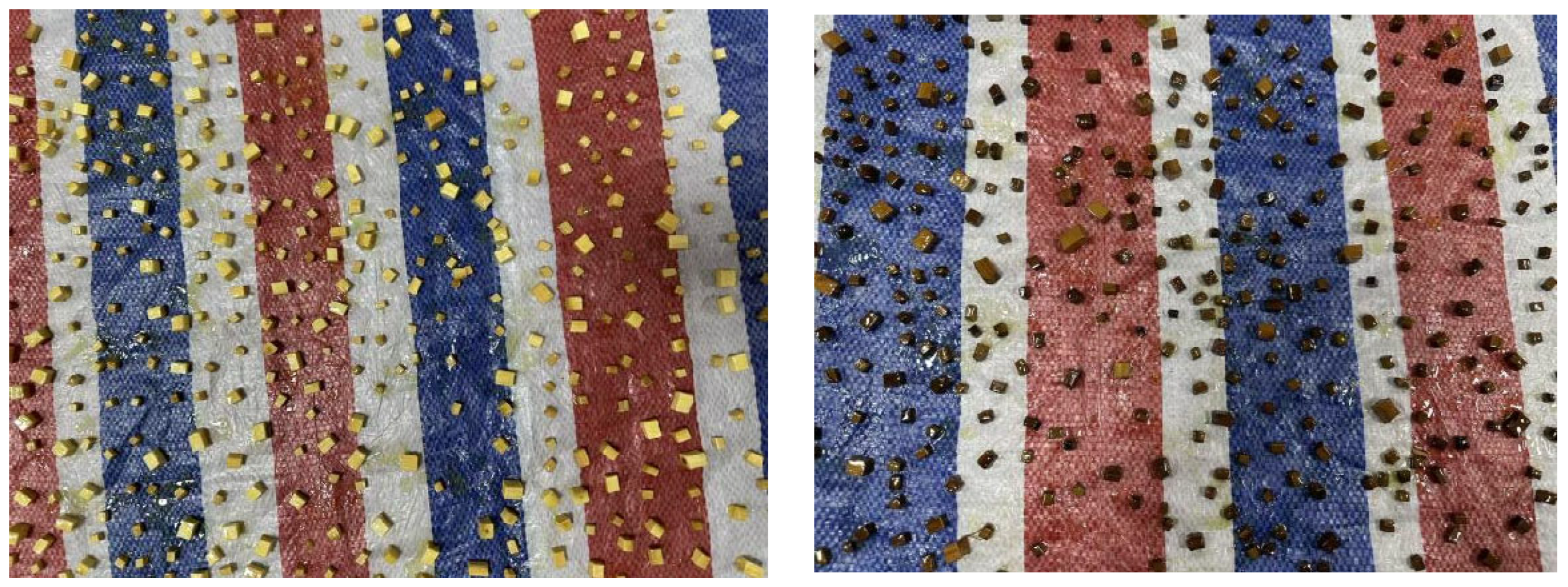
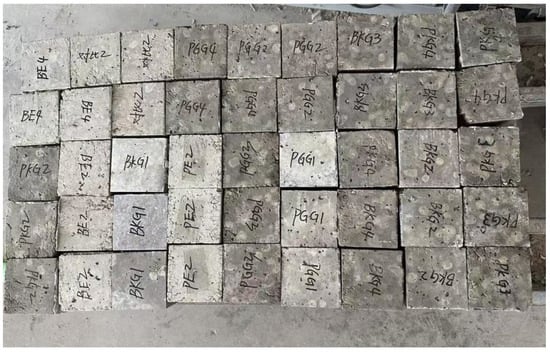
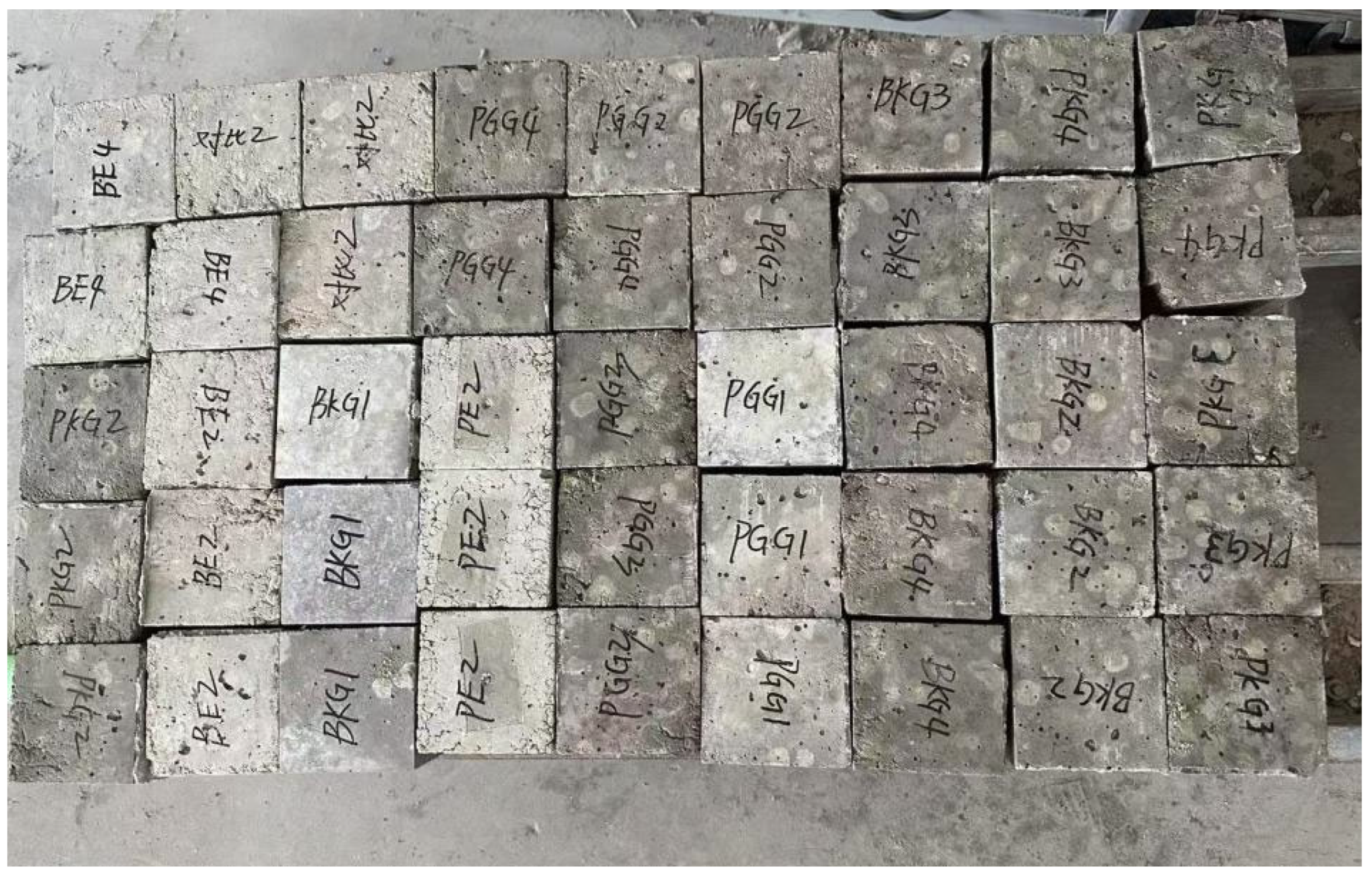
As illustrated in Figure 1, the standard raw bamboo strips were directly procured from a specialized bamboo processing factory, which effectively guaranteed their uniform initial geometric properties and quality. Subsequently, these prefabricated strips were precisely chopped in the laboratory into standardized cubic blocks to serve as coarse aggregates. Figure 2 displays the macromorphology of the modified bamboo squares, where the visual differences in surface gloss and coating thickness intuitively reflect the varied film-forming capabilities of the different modifying agents. Furthermore, the fundamental characteristics of raw and carbonized bamboo squares are listed in Table 1 and Table 2, respectively. These parameters are crucial, as the density and water absorption directly govern the workability and initial water-to-cement ratio of the concrete mixture.
Figure 1.
Preparation process of modified bamboo squares.
Figure 2.
Modified bamboo squares.
Table 1.
Characteristics of raw bamboo squares.
Table 2.
Characteristics of carbonized bamboo squares.
2.2. Materials
This study utilizes various materials, such as bamboo squares, carbonized bamboo squares, polyvinyl alcohol (PVA), epoxy resin (EPR), epoxy mortar (EM), water glass (WG), glutinous rice glue, cement, fine aggregates, and water. The bamboo squares used are made from moso bamboo grown in Anji County for 3–4 years [20]. After being peeled and cut into 1 cm square bamboo strips [21], they are cut into cubes of three specifications: 6 mm, 8 mm, and 10 mm. Carbonized bamboo squares [22] are obtained by placing the aforementioned bamboo strips, which have an initial moisture content of approximately 10%–12%, into carbonization equipment. The thermal treatment was conducted under a continuous nitrogen atmosphere to prevent uncontrolled oxidation. The temperature is increased at a constant heating rate of 5 °C/min, undergoing two stages of heat treatment at 100 °C for 2 h and 150 °C for 5 h. After cooling naturally to room temperature, the strips are cut to the corresponding sizes. Modifying agents include industrial-grade polyvinyl alcohol (PVA, Jiangyin Desai Chemical Trading Co., Ltd.), epoxy resin (EPR, Shanghai Mijiazhang Adhesive Products Co., Ltd.), construction-grade epoxy mortar (EM, Nanjing Sujianke Structural Adhesive Technology Co., Ltd.), water glass with a modulus of 3.32 (WG, Henan Borun Foundry Materials Co., Ltd.), and glutinous rice glue (Kunshan Laijielai Environmental Protection Technology Co., Ltd.). Other components of the concrete include P.O 42.5 cement (Jiyue Building Materials Factory, Jiangning District, Nanjing, China), river sand with a particle size of 0.35–0.5 mm (from the same factory), and purified water; the cement meets the GB 175-2023 standard [23], and the fine aggregates meet the requirements of JGJ 52–2006 [24]. It is worth noting that while JGJ 52-2006 is the standard specification for ordinary concrete aggregates widely adopted in China, its fundamental testing protocols and evaluation criteria for aggregate physical properties are highly consistent with international frameworks, such as the ASTM C33 standard [25]. The adoption of this localized standard ensures the practical relevance of our bamboo concrete for regional engineering applications without compromising the scientific generalizability and reliability of the experimental results. Furthermore, the specific physical and mechanical properties of the five modifying agents are detailed in Table 3. These properties are highly significant for predicting the interfacial bonding performance. For instance, the viscosity of the agents determines their ability to penetrate and seal the inherent pores of the bamboo. Epoxy mortar (EM) exhibits a high compressive strength of 91.4 MPa and low linear shrinkage of 0.1%. This indicates that, compared to water-sensitive agents such as glutinous rice glue, epoxy-based modifiers are theoretically more capable of forming a high-strength, low-shrinkage protective shell to restrict moisture-induced swelling.
Table 3.
Characteristics of the Modifying Reagent.
The detailed application procedures for the various chemical modifying agents are described as follows. To ensure the reproducibility of the modification process, tailored application procedures were employed based on the distinct rheological properties of each modifying agent. For single-component, low-viscosity solutions (PVA, WG, and glutinous rice glue), the bamboo squares were completely immersed in the respective liquids for 30 min to facilitate adequate surface wetting and pore penetration, followed by draining of excess liquid. Conversely, for two-component, high-viscosity agents (EPR and EM), components A and B were first precisely weighed and mixed at mass ratios of 3:1 and 4:1, respectively. After mechanical stirring for 3 min to ensure uniform cross-linking, the bamboo squares were thoroughly coated with these epoxy compounds using a mechanical tumbling method. Subsequently, all treated bamboo squares were spread evenly on nonstick polyethylene films and cured in an environmental chamber at a controlled temperature of 25 ± 2 °C and a relative humidity of 60% ± 5% for 24 h until fully solidified. This tailored process yielded an average coating thickness of approximately 0.05–0.1 mm for the immersion group and 0.2–0.5 mm for the epoxy group. Once fully cured, these diverse polymer films act as physical barriers that prevent the highly hydrophilic bamboo from absorbing the mixing water, effectively mitigating adverse interactions with the initial cement hydration process and ensuring the development of a dense and robust interfacial transition zone (ITZ) (Figure 3).
Figure 3.
Modified bamboo block concrete was prepared.
2.3. Mix Proportion Design and Specimen Preparation
In this experiment, the water-cement ratio [27] of all concrete samples was set at 0.49. The experimental variables included whether the bamboo square underwent carbonization treatment and the substitution rate of concrete coarse aggregate. Plain concrete was tested as the control group (NC). According to preliminary tests conducted before the formal experiment, changes in the substitution rate of concrete coarse aggregate below 5% had minimal impact on concrete strength, while the strength of concrete with more than 30% bamboo aggregate significantly decreased. Therefore, to investigate the impact of different substitution rates and whether they affect the performance of modified bamboo aggregate concrete, the substitution rates of concrete coarse aggregate were set as follows: 5% modified, 10% modified, 20% modified, and 30% modified. Modified and unmodified refer to whether the bamboo aggregate has undergone pretreatment with modifying materials. The concrete coarse aggregate was replaced with bamboo aggregate using the volumetric method, and the densities of the stones and bamboo aggregates were measured in advance. The density of bamboo aggregate was calculated as 1/3.6 of the density of pebbles. The specific mix proportions are detailed in Table 4.
Table 4.
Mixing ratio of different concretes.
The sample preparation process for this experiment can be summarized as follows: First, the water reducer [28] is evenly mixed with water to keep the mixing tank of the concrete mixer moist. Next, materials such as cement, sand, and stones are poured into the tank according to the specific proportions and stirred for 3 min. Then, half of the premixed water is added, and stirring continues for another 2 min. Finally, the mixer is turned off to allow the materials to fully react for 1 min, after which the power is turned back on, the remaining water is added, and stirring continues for 3 min, with bamboo aggregates added evenly during this process. After the concrete is fully mixed, it is placed into the corresponding test molds. To prevent moisture loss, a waterproof film is applied to the surface of the concrete. The concrete pouring process is divided into three steps, with a vibrator used to vibrate the concrete in each step. Subsequently, the test molds are placed on a vibrating table to continue vibrating to ensure the compactness of the concrete. After 24 h of curing, the molds are removed, and the concrete is naturally cured for 28 days, which is the specified testing age according to the specifications. During the unconfined compressive strength test, the load and displacement data were continuously recorded to generate complete stress–strain curves. Based on these curves, five key characteristic indicators were extracted to quantitatively evaluate the mechanical behavior of the concrete specimens. Specifically, σ indicates stress; σc means peak stress; ε means strain; εc indicates peak strain; and Ec indicates modulus of elasticity.
2.4. Experimental Methods
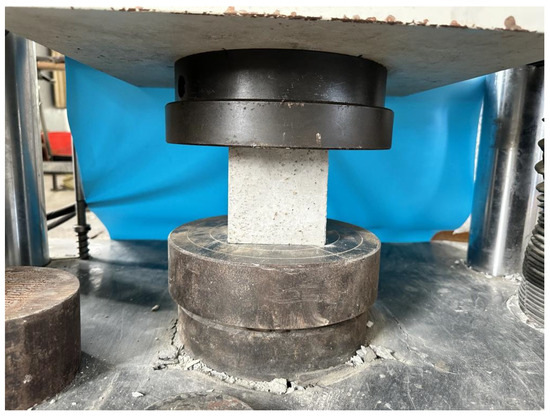
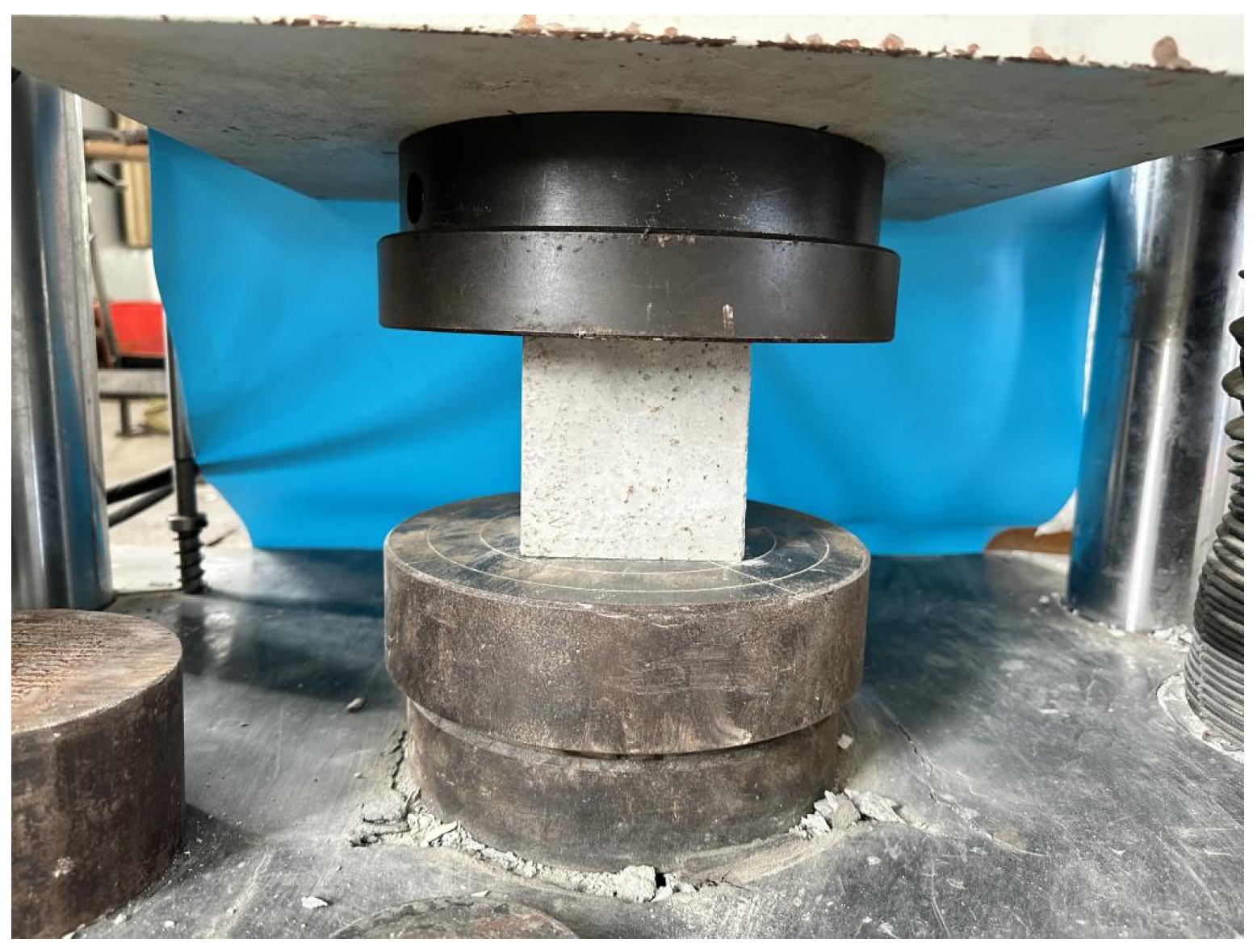
This experiment was conducted using cube specimens with a side length of 100 mm, in accordance with standards [29]. To measure the compressive strength of concrete with four different replacement rates of coarse aggregates, 5%, 10%, 20%, and 30%, three specimens were made for each mix ratio, resulting in a total of 147 specimens. This sample size per group was adopted in strict compliance with the Chinese National Standard GB/T 50081-2019 [18]. Although bioaggregate concrete inherently exhibits high physical variability, the comprehensive experimental matrix of 147 specimens was designed to capture macroscopic mechanical trends across multiple modification methods and replacement rates. The highly consistent monotonic trends observed across all test groups corroborate the reliability of the results despite using the standard minimum sample size per group. The loading rate for the experiment was controlled at 0.2 mm/min. For each mixture group, at least three replicate specimens were tested to ensure the repeatability of the experimental results. The mechanical properties, including compressive strength and elastic modulus, are reported as the mean ± standard deviation (SD). The statistical reliability was monitored via the coefficient of variation (COV), and the error bars in the subsequent figures represent the calculated SD to reflect the data dispersion (Figure 4).
Figure 4.
Compressive strength test.
3. Results and Discussion
3.1. Compressive Strength
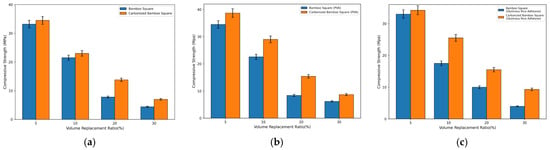
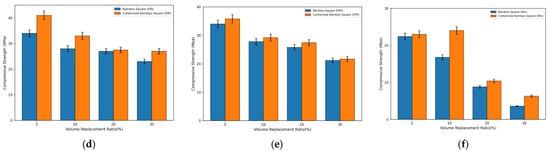
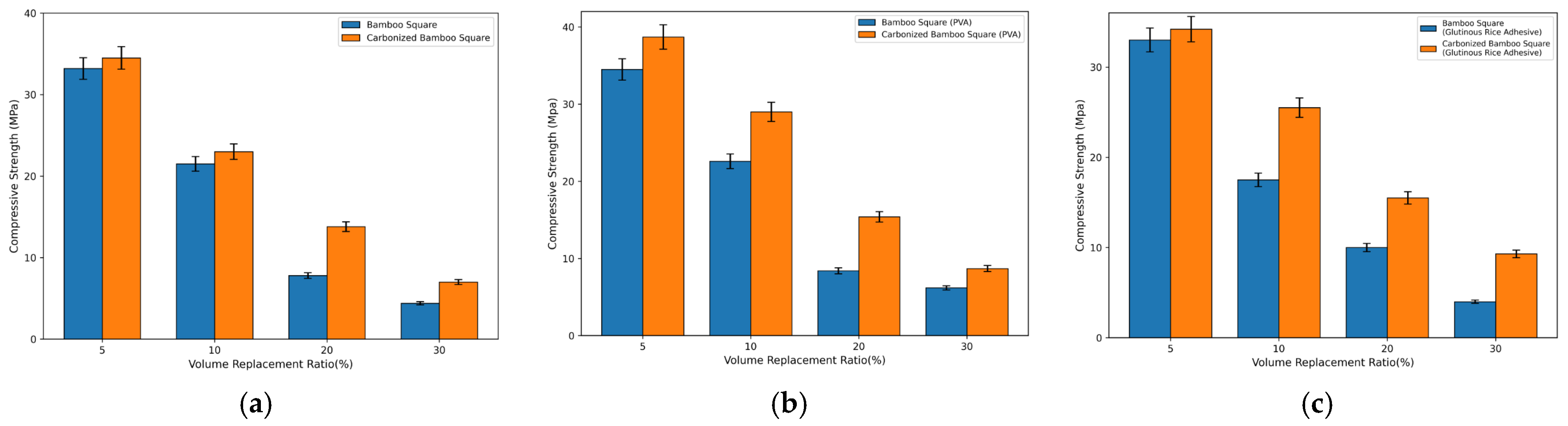
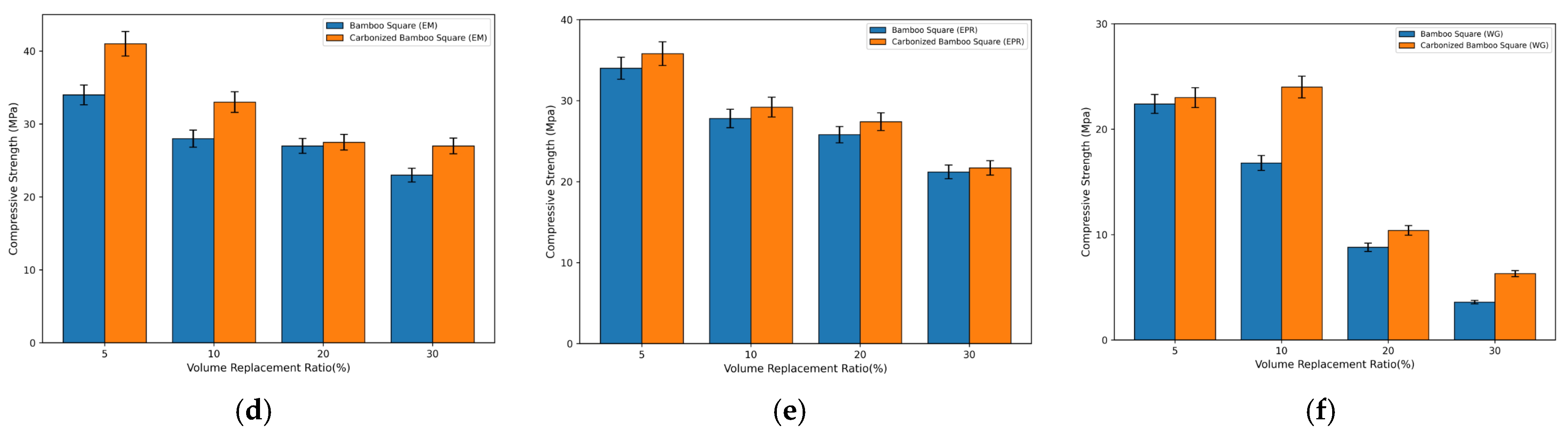
This study systematically elucidates the synergistic enhancement effect of carbonization pretreatment and modification on the compressive performance of bamboo–concrete composites. Figure 5 illustrates the comprehensive compressive strength test results for various unmodified and modified bamboo block concrete specimens at different replacement ratios. As shown in Figure 5, the experimental results reveal that as the volumetric replacement rate of coarse aggregates increases from 5% to 30%, the compressive strength of both untreated bamboo block concrete (B-5–B-30) and carbonized bamboo block concrete (P-5–P-30) exhibits a monotonic decline. However, the untreated bamboo block concrete experiences a significantly more pronounced reduction, with its average strength decreasing from 33.93 MPa to 4.37 MPa, representing a mere 12.9% retention rate. In contrast, the carbonized bamboo block concrete shows a reduction from 35.18 MPa to 7.93 MPa, achieving a higher retention rate of 22.5%. Across all replacement rates, the compressive strength of carbonized bamboo block concrete consistently surpasses that of its untreated counterpart, with the performance gap widening as the replacement rate increases (Δ ≈ 1.2 MPa at 5% replacement, expanding to Δ ≈ 3.6 MPa at 30% replacement). This performance difference can be attributed to two aspects: first, carbonization treatment significantly reduces the water absorption and volume shrinkage and reduces the microcracks in the interface transition zone (ITZ). Second, during the high-temperature carbonization process, hemicelluloses [30] and part of the cellulose degrade, and the surface roughness increases, providing more mechanical occlusion points, thereby improving the interfacial bond strength between the cement matrix and the bamboo aggregate. It was observed that bamboo–concrete composites modified with epoxy mortar or epoxy resin exhibited a more gradual decline in compressive strength, with the extent of reduction diminishing as the replacement volume increased. Taking epoxy mortar modification as an example, even at a high replacement rate of 30%, the compressive strength of carbonized bamboo block concrete (PEM-30) remained as high as 27.79 MPa, significantly exceeding the requirement for the MU7.5 grade (7.5 MPa). Similarly, the untreated bamboo block concrete (BEM-30) achieved a strength of 24.15 MPa, far surpassing the minimum grade standard. These findings indicate that bamboo–concrete composites modified with epoxy mortar can meet the strength requirements for concrete solid bricks even at higher replacement rates, demonstrating excellent mechanical stability and improved interfacial bonding with the cement matrix. This highlights that epoxy-based modifications enhance the overall stability of bamboo–concrete composites and promote superior interfacial adhesion with the cementitious material.
Figure 5.
Compressive Strength of Various Bamboo Specimens. (a) Unmodified; (b) Modification of polyvinyl alcohol; (c) Modification of glutinous rice glue; (d) Modification of epoxy mortar; (e) Epoxy resin modification; (f) Modification of water glass.
In this experiment, the compressive strength of carbonized bamboo concrete under the same modification is systematically higher than that of original bamboo concrete under the same modification in the range of 5%–30% substitution rate, and this advantage expands with the increase in substitution rate. Under various modification methods, the compressive strength of carbonized bamboo block concrete consistently outperformed that of untreated bamboo block concrete. Specifically, with epoxy mortar modification, the PEM4 specimen achieved 27.79 MPa, reflecting a 15.1% increase over the BEM4 specimen (24.15 MPa). When modified with epoxy resin, the PE4 specimen reached 22.02 MPa, surpassing the BE4 specimen (21.16 MPa) by 4.1%. For adhesive modification, the PG4 specimen exhibited a strength of 14.49 MPa, marking an 82.6% improvement compared to the BG4 specimen (7.93 MPa). Under glutinous rice adhesive modification, the PGG4 specimen attained 9.45 MPa, which is 129.4% higher than that of the BGG4 specimen (4.12 MPa). With water glass modification, the PKG4 specimen reached 6.75 MPa, still exceeding the BKG4 specimen (3.43 MPa) by 96.8%. This systematic difference stems from the fact that carbonization treatment significantly reduces the water absorption of bamboo [31] and increases the surface roughness, making polymers such as resin more likely to infiltrate and form a dense interface transition zone (ITZ), while the original bamboo is rich in hydroxyl groups and hemicelluloses, which absorb and expand to increase the number of ITZ microcracks. Furthermore, whether in untreated bamboo–concrete or carbonized bamboo–concrete, the effectiveness of modification consistently followed a descending order: epoxy mortar > epoxy resin > adhesive > glutinous rice adhesive > water glass. From the perspective of meeting concrete solid brick standards, all groups modified with epoxy mortar or epoxy resin (even at 20%–30% replacement rates) exhibited compressive strengths far exceeding the minimum common requirement of the MU7.5 grade (7.5 MPa). In contrast, some unmodified groups or those modified with water glass or glutinous rice adhesive at high replacement rates (e.g., B-30, BKG-30, BGG-30) showed strengths below the lower limit of the MU7.5 grade. This indicates that to effectively utilize bamboo blocks in concrete solid bricks, particularly at higher replacement rates, high-performance modification methods such as epoxy mortar or epoxy resin must be prioritized. The reason lies in the superior properties of epoxy mortar, which offers low shrinkage, high bonding strength, and optimal microcrack self-healing capabilities, followed by epoxy resin. Adhesives primarily provide physical bonding, while water glass and glutinous rice adhesive produce brittle, water-sensitive cured products with limited strength compensation.
3.2. Stress–Strain Curve
3.2.1. Concrete Failure Mode
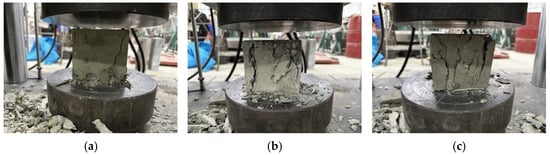
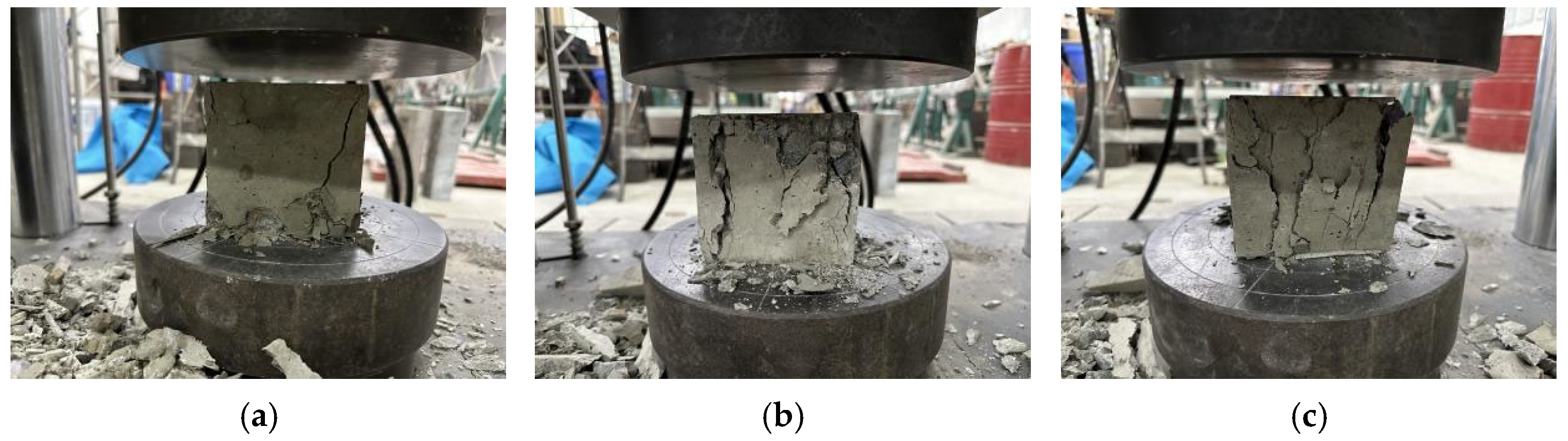
Figure 6 illustrates the typical failure modes of bamboo block concrete under uniaxial compression at different proportions [32]. During the experiment, both types of concrete underwent a process of crack initiation, propagation, and eventual coalescence but exhibited significant differences in failure modes. The original bamboo block concrete first developed irregular longitudinal cracks on its surface during loading. As the load increased, the number of cracks increased, and their width expanded, ultimately leading to the formation of several main cracks and subsequent failure, accompanied by significant concrete spalling. The carbonated bamboo block concrete exhibited a superior failure mode, with cracks developing more uniformly and densely. During loading, a uniformly distributed network of microcracks appeared on the surface, and the crack propagation rate was relatively slow. The specimen maintained good integrity during failure, and the degree of concrete spalling was significantly reduced. Especially under high substitution rates, the carbonated bamboo block concrete maintained good integrity and exhibited more ideal ductile failure characteristics. Experiments have shown that carbonation treatment significantly improves the interfacial properties between bamboo squares and the cement matrix, enhancing the bond strength in the interfacial transition zone.
Figure 6.
Failure modes of bamboo aggregate concrete under different replacement ratios. (a) 5% substitute material; (b) 10% substitution rate; (c) 20% substitution rate.
3.2.2. Concrete Stress–Strain Curve
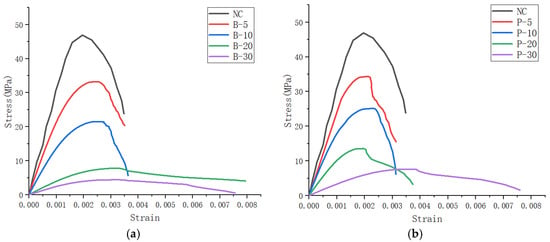
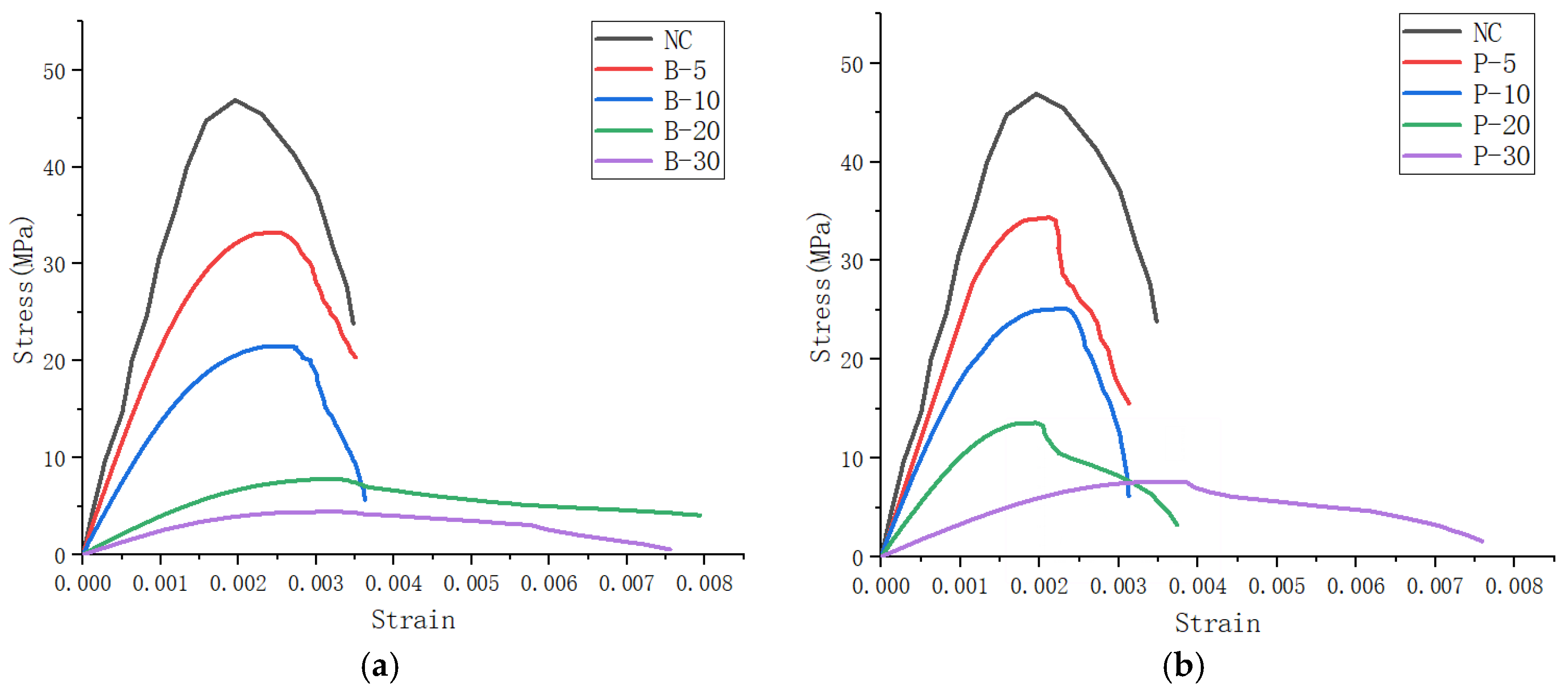
Figure 7 and Figure 8 present the complete stress–strain curves of NC and concrete with different substitution rates of raw bamboo squares and carbonized bamboo squares, respectively [33]. Through comparison, it can be found that carbonized bamboo block concrete exhibits significant advantages in mechanical properties. In the ascending phase of the curve, the slope of carbonized bamboo block concrete is generally greater than that of raw bamboo block concrete with the same substitution rate, indicating its superior stiffness characteristics [34]. As the substitution rate increases, the stiffness decay of carbonized bamboo block concrete is significantly less pronounced than that of raw bamboo block concrete, demonstrating the improvement effect of carbonization on the stiffness performance of concrete. In terms of peak characteristics, the peak stress of carbonized bamboo block concrete [35] is consistently higher than that of raw bamboo block concrete with the same substitution rate, especially at higher substitution rates, where this advantage becomes more pronounced, proving that carbonization effectively enhances the load-bearing capacity of bamboo block concrete. In the descending phase, carbonized bamboo block concrete exhibits a smoother and fuller curve characteristic, with a significantly slower rate of decline compared to raw bamboo block concrete with the same substitution rate, indicating superior ductility and toughness. Simultaneously, both the peak strain and ultimate strain of carbonized bamboo block concrete are greater than those of raw bamboo block concrete with the same substitution rate, indicating its superior deformation capacity. These characteristics fully demonstrate that carbonization significantly improves the strength, stiffness, and ductility of carbonized bamboo block concrete by enhancing the interfacial properties between bamboo squares and the cement matrix.
Figure 7.
Stress–strain curves under different replacement ratios of bamboo squares. (a) Different replacement rates of original bamboo squares. (b) Different replacement rates of carbonized bamboo squares.
Figure 8.
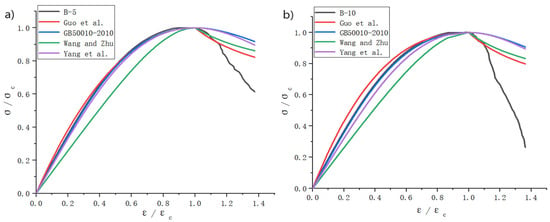
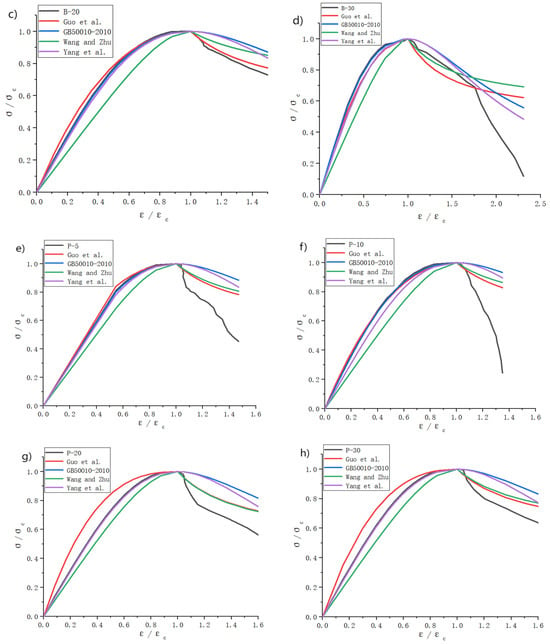
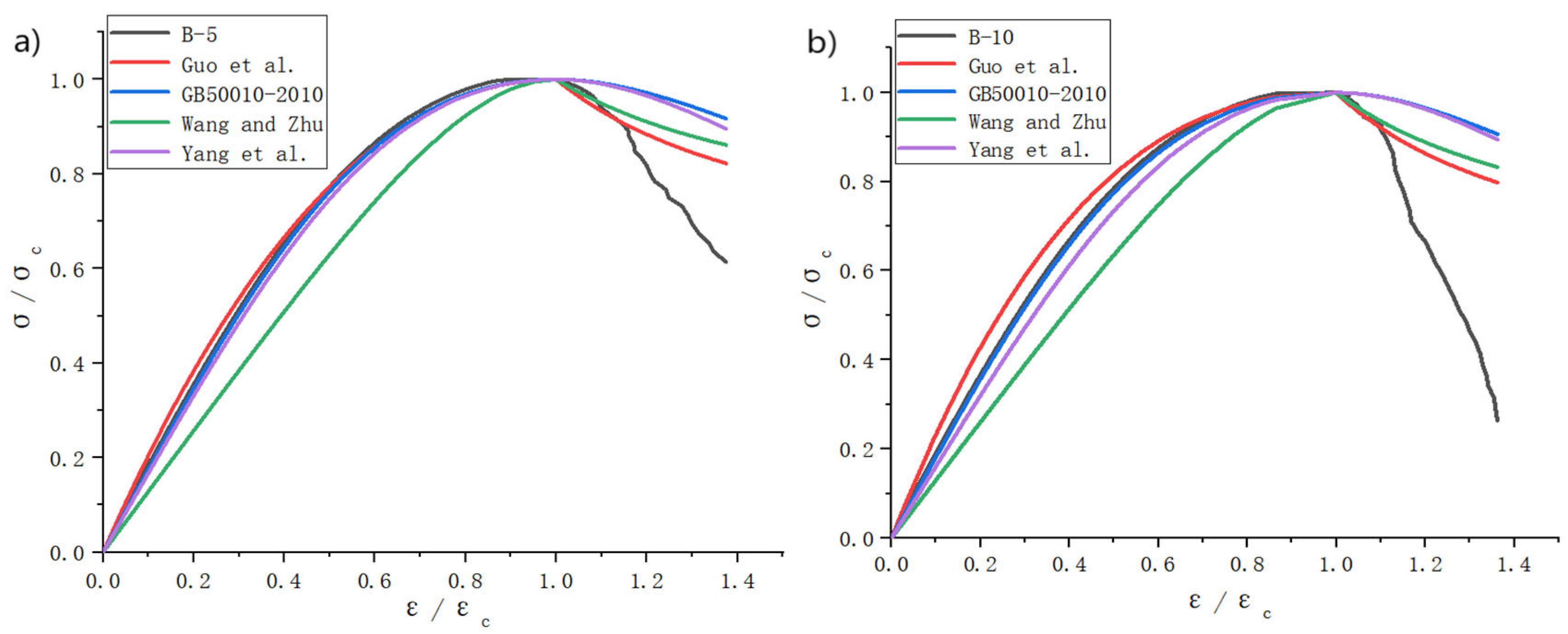
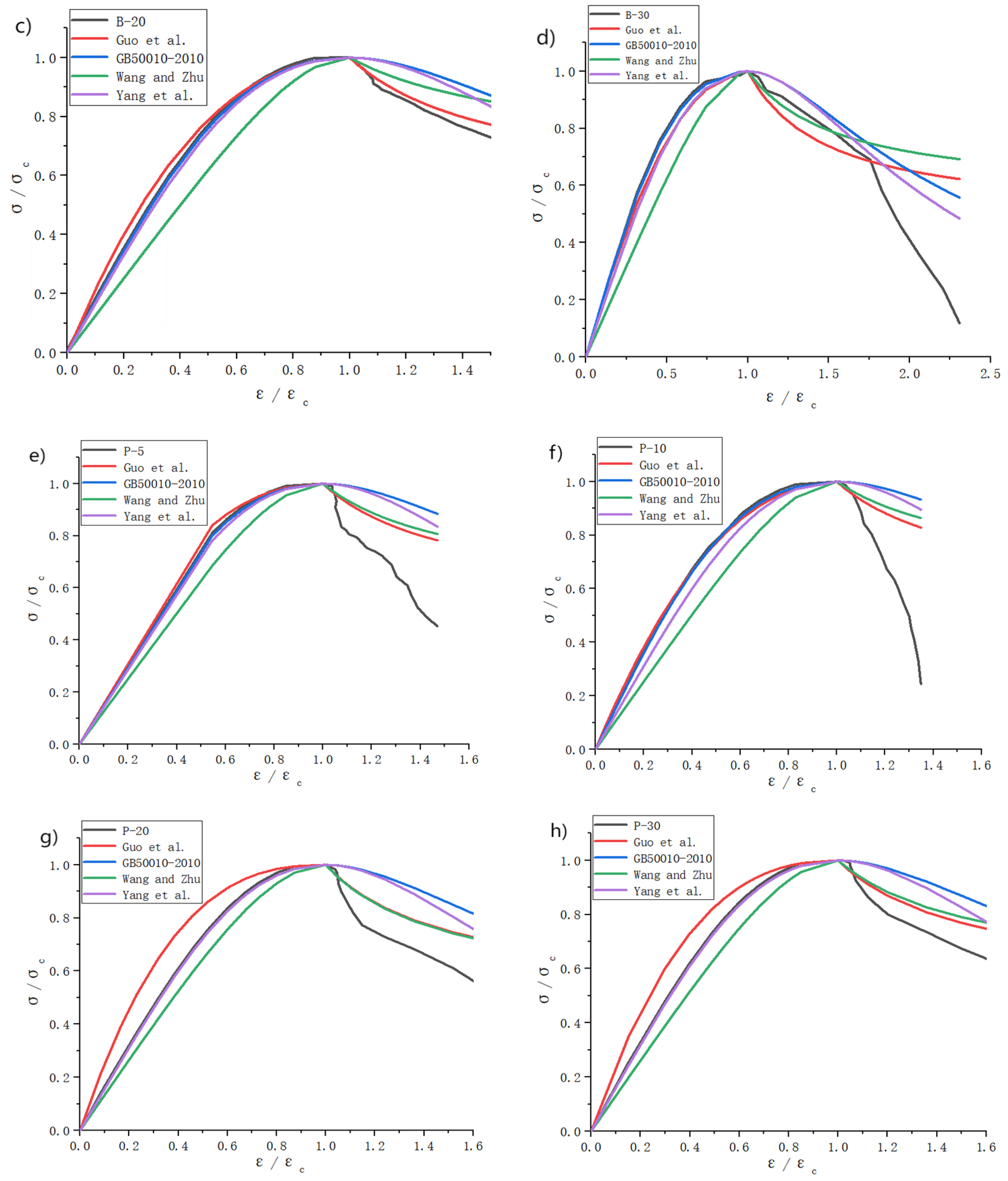
Comparison of the measured and predicted curves [36,37,38,39]: (a) B-5; (b) B-10; (c) B-20; (d) B-30; (e) P-5; (f) P-10; (g) P-20; (h) P-30.
3.2.3. Characteristics of Concrete
As detailed in the methodology section, the key characteristic indicators were extracted from the stress–strain curves to evaluate the compressive performance. The characteristic indicators of various types of concrete are listed in Table 5. The peak strain εc [40] corresponds to the strain at the peak stress σc [41], the ultimate strain ε0.85 [42] corresponds to the strain at the point where the stress is 0.85σc in the descending segment of the curve, the initial elastic modulus E0 [43] corresponds to the secant slope at the point where the stress is 0.4σc in the ascending segment of the curve, and the secant elastic modulus Ec corresponds to the secant slope at the peak stress. According to the experimental data in the characteristic value table, when the substitution rate of the original bamboo block concrete in the concrete sample is 5%, 10%, 20%, and 30%, the initial elastic modulus decreases by 24%, 62%, 89%, and 94%, respectively, compared to NC, which is consistent with the trend that the slope of the ascending segment of the stress–strain curve of the original bamboo block concrete decreases significantly with increasing substitution rate. At the same time, carbonized bamboo block concrete exhibits relatively superior performance, with decreases in the elastic modulus of 25%, 50%, 68%, and 91%, respectively. Although it still shows a downwards trend, it is superior to the original bamboo block concrete with the same substitution rate at all substitution rates. The experimental data show that whether the bamboo squares are carbonized has a significant impact on their concrete properties. The peak stress of concrete with 10% original bamboo squares (B-10) is 21.5 MPa, which is approximately 17% lower than that of carbonized bamboo block concrete with the same content (P-10, 25.18 MPa). In terms of the initial elastic modulus, the B-10 specimen is 8090 MPa, which is approximately 25% lower than that of the P-10 specimen (10,854 MPa). This difference is more significant at a substitution rate of 20%. The peak stress of the original bamboo block concrete (B-20) is approximately 75% lower than that of carbonized bamboo block concrete (P-20), further confirming the effectiveness of carbonization in improving the mechanical properties of bamboo block concrete.
Table 5.
Characteristic indicators of concrete.
3.2.4. Evaluation of the Concrete Stress–Strain Model
In addition to empirical constitutive models commonly used in concrete engineering, advanced structural modelling approaches have been proposed to describe the mechanical behavior of reinforced concrete systems through refined kinematic descriptions and higher-order modelling frameworks. This study evaluated the applicability of four uniaxial compressive stress–strain models of concrete in bamboo aggregate concrete, namely, the model proposed by Guo et al. [36], the model specified in the Chinese code GB 50010–2010 [37], the model proposed by Wang and Zhu [38], and the model proposed by Yang et al. [39]. The specific calculation formulas for each model are presented in Table 6. Table 7 lists the fitting parameters and correlation coefficients (R2) for the aforementioned four models. The Yang et al. model bears similarity to the GB50010-2010 model, with the primary difference being that the ascending and descending segments of the Yang et al. model adopt the same formula form, albeit with different parameter values and physical definitions for the two segments. For the Guo et al. model and the Wang and Zhu model, the fitting parameter values for the modified bamboo aggregate concrete in the ascending segment are all greater than those for ordinary concrete, and these parameter values continue to increase with an increase in the substitution rate of modified bamboo aggregate, primarily due to their correlation with the elastic modulus of concrete. However, this pattern exhibits different characteristics in the GB50010-2010 model [37] and the Yang et al. model [39].
Table 6.
Typical stress–strain model of concrete.
Table 7.
Summary of fitting parameters for different models.
Based on the data analysis of Figure 8 and Table 7, the GB50010-2010 standard model exhibits the best fitting effect among the four models. In comparison, the Wang and Zhu model shows systematic deviations in the prediction of the descending segment, with its prediction curve entering the steep descending segment too early, unable to accurately characterize the ductility properties of bamboo concrete. The Guo et al. model has decent prediction accuracy in the ascending segment, but its descending segment formula deviates significantly from the experimental data when the stress level is below 0.6σc. Although the Yang et al. model adopts a unified mathematical form, its prediction error significantly increases in the high substitution rate group (B-30, P-30). Considering the goodness of fit, parameter stability, and clarity of physical significance, the GB50010-2010 model is determined to be the most suitable constitutive model for describing the stress–strain relationship of bamboo concrete.
When compared with similar studies on conventional lightweight or bioaggregate concrete, the carbonized bamboo concrete in this study exhibits comparable peak strain values but a distinctly gentler postpeak descending branch, indicating superior ductility. Regarding the constitutive modelling, while the empirical models originally designed for standard concrete (especially the GB 50010–2010 model) capture the ascending branch accurately, minor deviations are observed in the steepness of the descending branch at high substitution rates (e.g., 30%). However, these deviations are relatively small and systematic. Therefore, rather than developing an entirely new constitutive model, recalibrating the descending parameter (α) within the existing GB 50010–2010 framework is sufficient and highly recommended to accurately describe the unique ductile postpeak behavior of modified bamboo aggregate concrete.
3.3. Microstructure Analysis
3.3.1. Surface Morphology of Bamboo Aggregates
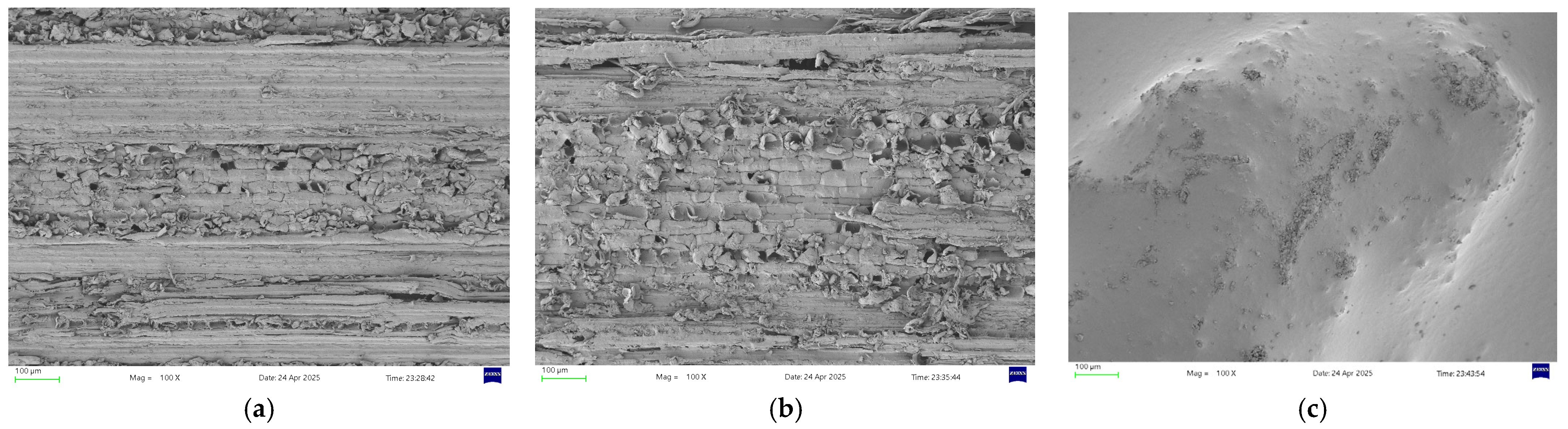
Figure 9 shows the surface morphologies of unmodified raw bamboo squares, carbonized bamboo squares, and epoxy mortar (EM)-modified bamboo squares at different magnifications [44]. As observed in Figure 9a, the surface of the unmodified raw bamboo squares is relatively rough and highly porous, characterized by exposed cellulose fibres and numerous inherent cellular cavities. These pores and fibre structures make the raw bamboo squares prone to excessive water absorption and expansion, leading to weak bonding with the cement matrix interface and negatively affecting the mechanical properties of concrete. However, as seen in Figure 9b, a distinct thermally modified layer forms on the surface of the carbonized bamboo. The pore structure is significantly reduced, resulting in a denser surface morphology. This densification is primarily attributed to the thermal degradation of hydrophilic hemicelluloses during the carbonization process, which effectively improves the structural and dimensional stability of the bamboo. Furthermore, Figure 9c displays the bamboo square modified with highly viscous epoxy mortar. The image clearly reveals that the polymer has effectively penetrated and sealed the surface pores of the bamboo, forming a dense and robust physical protective film.
Figure 9.
ESEM images of different bamboo square surfaces. (a) Raw bamboos; (b) Carbonized bamboo; (c) EM modified bamboo.
3.3.2. ESEM Analysis of the Interfacial Transition Zone (ITZ)
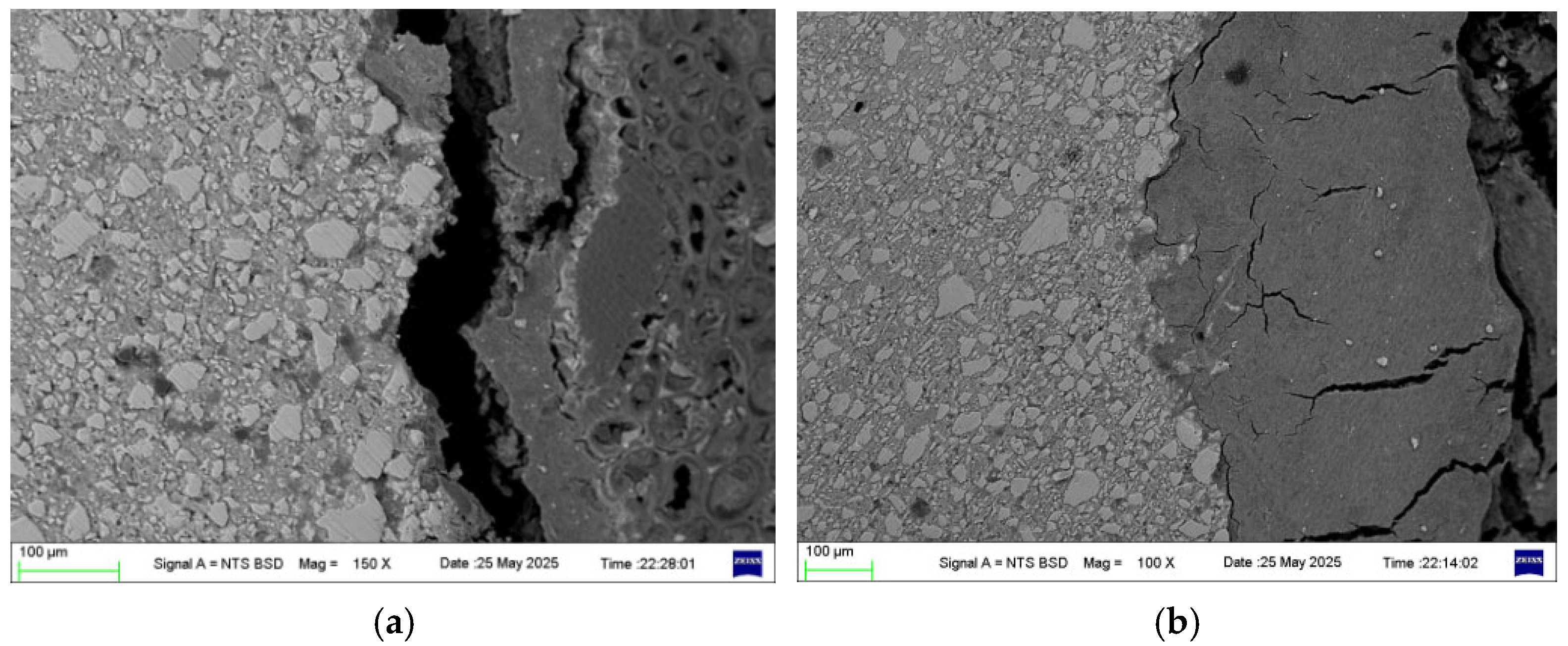
The macromechanical properties of bamboo aggregate concrete are heavily dependent on the quality of the interfacial transition zone (ITZ). Figure 10 illustrates the ITZ between different bamboo aggregates and the cement matrix. For the original bamboo block concrete (Figure 10a), the highly porous raw bamboo is susceptible to severe water absorption and volumetric expansion during concrete mixing. This dimensional instability leads to a weakened and microcracked bond at the interface, exhibiting obvious structural gaps between the bamboo and the cement paste. In contrast, for carbonized and modified bamboo concrete (Figure 10b), the dimensional stability is significantly enhanced, and the surface pores are effectively sealed. The polymer layer acts as a robust physical bridge, eliminating interfacial microcracks and ensuring a highly compact, seamless, and mechanically interlocked transition zone.
Figure 10.
ESEM images of the ITZ between the bamboo aggregates and the cement matrix. (a) Raw bamboo concrete; (b) Modified carbonized bamboo concrete.
3.3.3. EDS Chemical Element Analysis of the ITZ
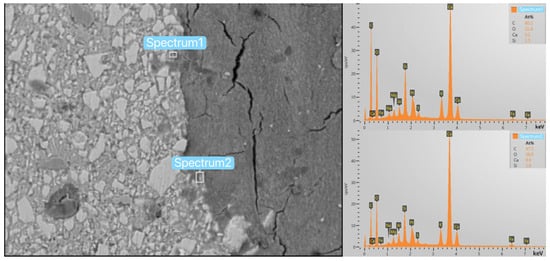
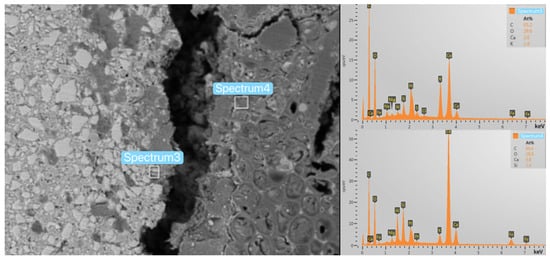
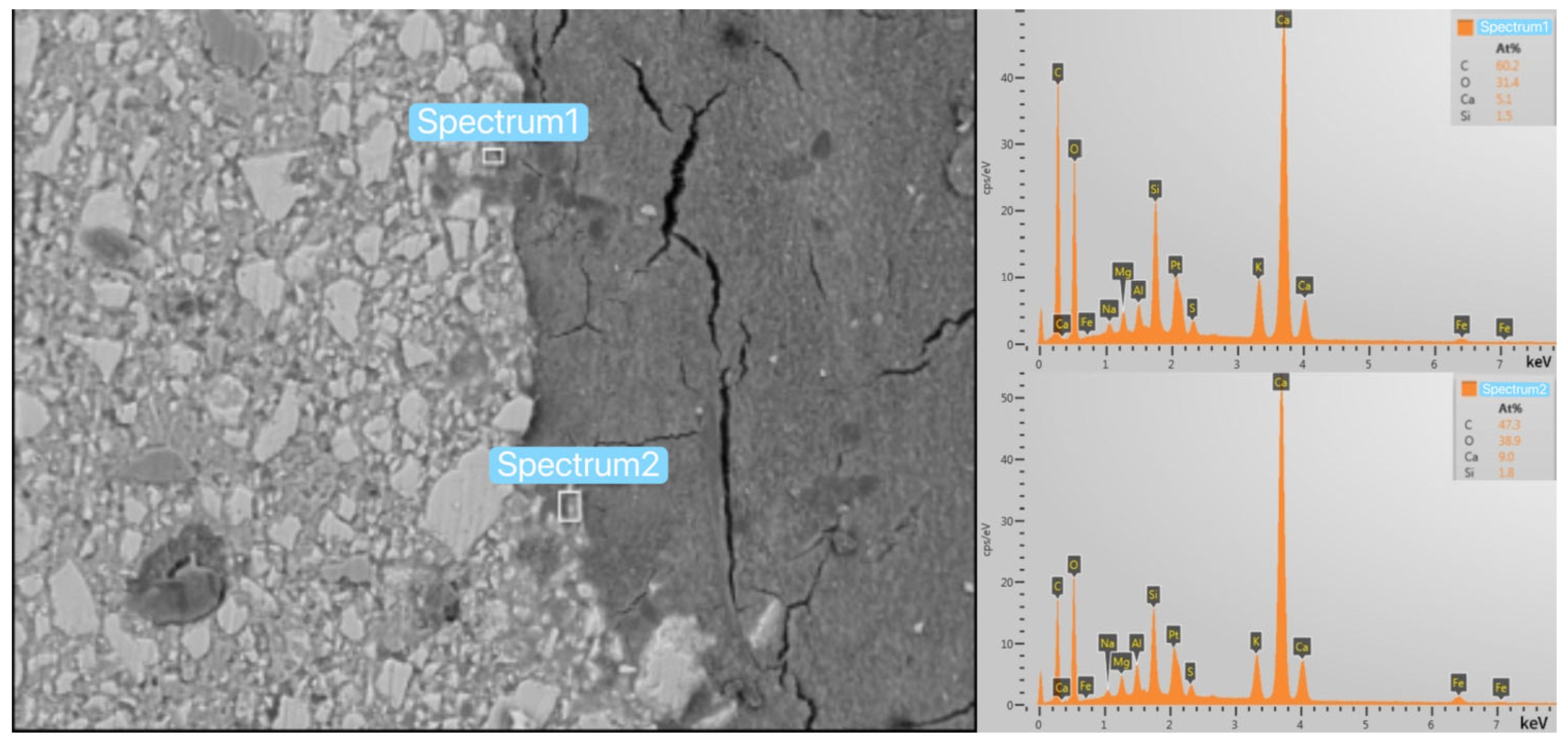
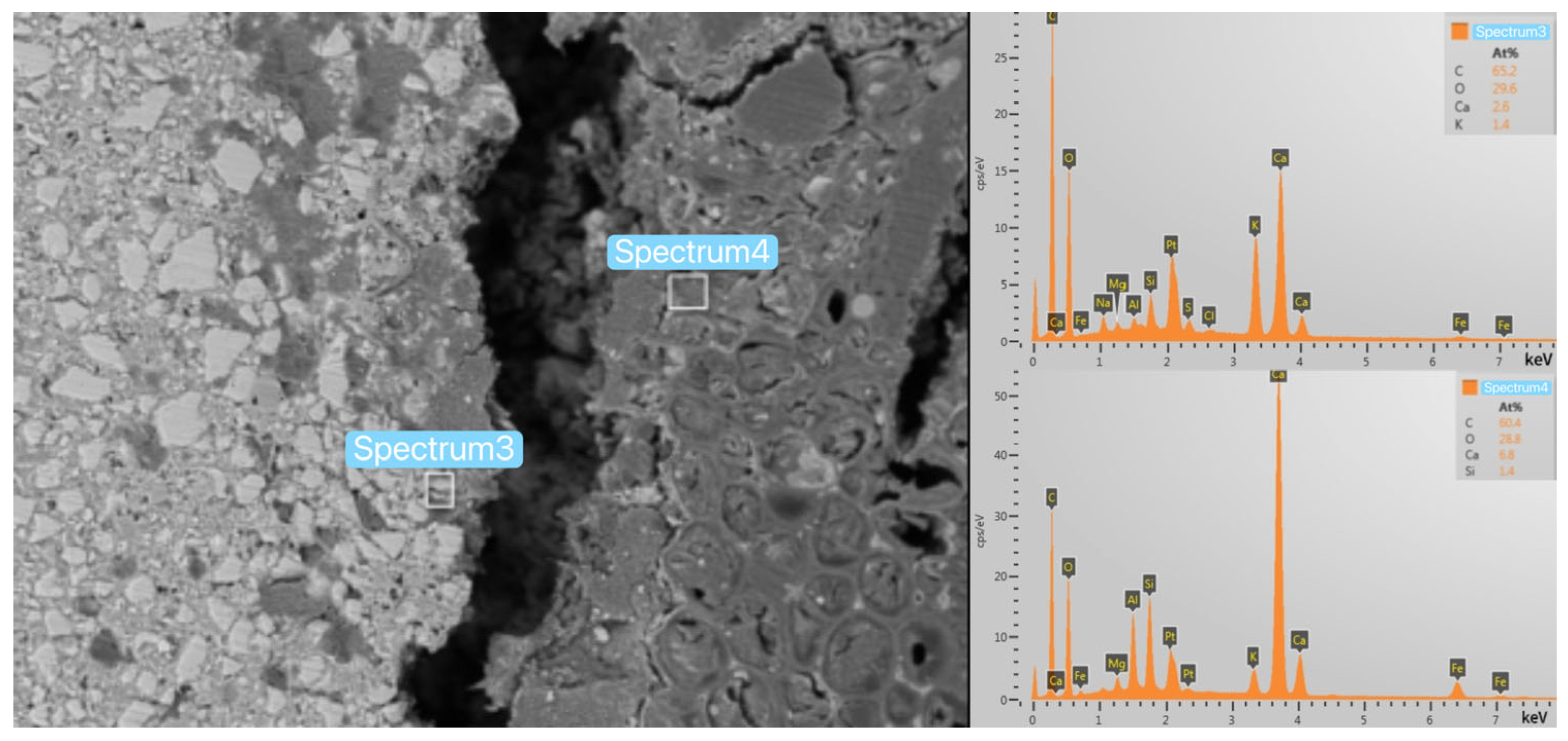
To further investigate the chemical mechanisms governing interfacial bonding, representative areas near the ITZ of the raw and carbonized bamboo concrete were selected for energy dispersive spectroscopy (EDS) analysis, as shown in Figure 11 [45]. The EDS spectra indicate that the primary hydration products in the ITZ are composed of Ca, O, Al, and Si, corresponding to calcium silicate hydrate (C-S-H) gel [46], calcium aluminate hydrate (C-A-H) [47], and calcium hydroxide (CH) crystals. Significant differences in elemental ratios were observed. In the ITZ of the carbonized bamboo-cement matrix, the Ca/Si ratio decreased to a normal range of 2.1–2.3. This is because carbonized bamboo has a significantly lower water absorption rate, preventing the localized extraction of mixing water from the surrounding cement paste. Consequently, the stable local water-to-cement (w/c) ratio promotes the robust hydration of cement, generating a dense spatial network of C-S-H gels and enhancing interfacial chemical bonding. In stark contrast, the Si and Al relative content in the ITZ of the original raw bamboo block concrete is considerably lower, with the Ca/Si ratio abnormally surging to 3.4–3.7 [48]. The excessive water absorption of raw bamboo disrupts the local w/c ratio, severely impeding normal cement hydration. As a result, the hydration products in this weakened ITZ are dominated by coarse, directionally arranged, and porous Ca(OH)2(CH) plate-like crystals rather than dense C-S-H gels. This loosely packed microstructure inevitably leads to increased interfacial porosity and microcrack propagation, which perfectly corroborates the significant reduction in its macroscopic compressive strength.
Figure 11.
EDS analysis of the ITZ in concrete with different bamboo aggregates.
4. Conclusions
This study evaluated the synergistic effects of thermal carbonization and chemical modifications on the compressive behavior of bamboo aggregate concrete. Based on macroscopic mechanical testing and microstructural analyses, the following main conclusions are drawn:
(1) Superiority of carbonization: Carbonized bamboo aggregates consistently outperform unmodified raw bamboo across all volumetric replacement ratios (5%–30%). The thermal degradation of hydrophilic hemicelluloses significantly reduces water absorption and mitigates volume shrinkage, thereby preserving the structural integrity of the surrounding cement matrix.
(2) Optimal Modification Strategy: Among the evaluated treatments, epoxy mortar (EM) provides the most substantial enhancement in compressive performance. At a 30% replacement rate, EM-modified carbonized bamboo concrete achieved a compressive strength of 27.79 MPa. This represents a 15.1% increase over identically treated raw bamboo concrete and significantly exceeds the standard MU7.5 grade requirement for concrete solid bricks.
(3) Microstructural Enhancement Mechanism: ESEM and EDS analyses demonstrate that the synergy of carbonization and EM encapsulation effectively restricts interfacial moisture migration. This maintains a stable local water-to-cement (w/c) ratio at the interfacial transition zone (ITZ), suppressing the formation of highly porous Ca(OH)2 crystals and promoting a dense, mechanically interlocked network of C-S-H gels.
Future Work Directions: To further validate the engineering application of bamboo aggregate concrete, future research should focus on its long-term durability, including freeze–thaw resistance, shrinkage, and creep behavior over extended periods. Additionally, conducting life-cycle assessments (LCA) and full-scale structural testing of non-load-bearing wall elements will be essential to comprehensively evaluate its environmental sustainability and economic viability.
Author Contributions
Conceptualization, Y.Z. and M.D.; Data curation, J.J.; Formal analysis, N.G.; Funding acquisition, Y.W.; Investigation, M.D. and Y.W.; Methodology, M.Z.; Project administration, Y.W.; Resources, M.D.; Software, Y.Z. and J.J.; Supervision, M.D. and Y.W.; Validation, J.J.; Visualization, M.Z.; Writing—original draft, Y.Z. and M.D.; Writing—review and editing, Y.Z. All authors have read and agreed to the published version of the manuscript.
Funding
This research was funded by the National Natural Science Foundation of China, grant number 52408268; the Natural Science Foundation of Jiangsu Province, grant number BK20230399; the China Postdoctoral Science Foundation, grant number 2023M741729. The APC was funded by the China Postdoctoral Science Foundation, grant number 2023M741729.
Institutional Review Board Statement
Not applicable.
Informed Consent Statement
Not applicable.
Data Availability Statement
The data presented in this study are available on request from the corresponding authors.
Conflicts of Interest
The authors declare no conflicts of interest.
References
- Adesina, A. Recent advances in the concrete industry to reduce its carbon dioxide emissions. Environ. Chall. 2020, 1, 100004. [Google Scholar] [CrossRef] [Scilit]
- Bala, A.; Gupta, S. Engineered bamboo and bamboo-reinforced concrete elements as sustainable building materials: A review. Constr. Build. Mater. 2023, 394, 132116. [Google Scholar] [CrossRef] [Scilit]
- Chen, X.; Zhu, H.; Zhu, J.; Yang, X. Analysis of mechanical properties and failure mechanism of bamboo aggregate concrete. Constr. Build. Mater. 2024, 422, 135835. [Google Scholar] [CrossRef] [Scilit]
- Yang, T.; Lee, C.; Lee, C.; Huang, H. Effects of different thermal modification media on physical and mechanical properties of moso bamboo. Constr. Build. Mater. 2016, 119, 251–259. [Google Scholar] [CrossRef] [Scilit]
- Liu, Z.; Yang, S.L.; Wang, Z.W.; Zhou, J. Preparation of bamboo-epoxy resin materials with microwave assistance. J. Mater. Res. Technol. 2022, 18, 3266–3272. [Google Scholar] [CrossRef] [Scilit]
- Akinyemi, B.A.; Omoniyi, T.E. Engineering properties of acrylic emulsion polymer modified bamboo reinforced cement bonded composites. Eng. Struct. Technol. 2017, 9, 126–132. [Google Scholar] [CrossRef] [Scilit]
- Scerrato, D.; Giorgio, I.; Madeo, A.; Limam, A.; Darve, F. A simple non-linear model for internal friction in modified concrete. Int. J. Eng. Sci. 2016, 106, 47–65. [Google Scholar] [CrossRef] [Scilit]
- Kampragkou, P.; Dabekaussen, M.; Kamperidou, V.; Stefanidou, M. Bio-additives in lime-based mortars: An investigation of the morphology performance. Constr. Build. Mater. 2025, 474, 141177. [Google Scholar] [CrossRef] [Scilit]
- Wu, F.; Wei, Y.; Lin, Y.; Zhao, K.; Huang, L. Experimental study of bamboo scrimber-filled steel tube columns under axial compression. Eng. Struct. 2023, 280, 115669. [Google Scholar] [CrossRef] [Scilit]
- Lu, J.; Wei, Y.; Du, H.; Zhao, K.; Huang, S.; Chen, J. Experimental evaluation on the shear performance of grouted bolt connections in steel-CLT and steel-CLBT composite structures. Thin-Walled Struct. 2026, 222, 114573. [Google Scholar] [CrossRef] [Scilit]
- Zhang, Z.; Wei, Y.; Chen, J.; Ding, Y.; Huang, L.; Lin, Y. Seismic performance of steel tubes restrained laminated bamboo columns with different cross-sections. Eng. Struct. 2026, 349, 121920. [Google Scholar] [CrossRef] [Scilit]
- Ghavami, K. Bamboo as reinforcement in structural concrete elements. Cem. Concr. Compos. 2005, 27, 637–649. [Google Scholar] [CrossRef] [Scilit]
- Mansur, M.A.; Aziz, M.A. Study of bamboo-mesh reinforced cement composites. Int. J. Cem. Compos. Lightweight Concr. 1983, 5, 165–171. [Google Scholar] [CrossRef] [Scilit]
- Adom-Asamoah, M.; Banahene, J.O.; Obeng, J.; Boasiako, E.A. Bamboo-reinforced self-compacting concrete beams for sustainable construction in rural areas. Struct. Concr. 2017, 18, 1000–1010. [Google Scholar] [CrossRef] [Scilit]
- Ede, A.; Olofinnade, O.; Joshua, O.; Nduka, D.O.; Oshogbunu, O.A. Influence of bamboo fiber and limestone powder on the properties of self-compacting concrete. Cogent Eng. 2020, 7, 1721410. [Google Scholar] [CrossRef] [Scilit]
- Wei, B.X.; Wei, Y.; Chen, J.; Lin, Y.; Zhu, B.; Huang, S. Axial compressive behavior of circular bamboo scrimber and UHPC-filled square steel tube columns. Eng. Struct. 2026, 350, 121976. [Google Scholar] [CrossRef] [Scilit]
- Chen, Y.; Wei, Y.; Zhao, Z.; Chen, J.; Ding, Y.; Yi, J. Eccentric compression behavior of laminated bamboo-filled steel tube columns with different slenderness ratios. Eng. Struct. 2026, 353, 122297. [Google Scholar] [CrossRef] [Scilit]
- GB/T 50081-2019; Standard for Test Methods of Concrete Physical and Mechanical Properties. China Standard Press: Beijing, China, 2019.
- Wang, Y.F.; Wei, Y.; Wei, B.; Li, Q.; Zhu, B.; Ding, M. Mechanical and microstructural properties of bamboo fiber-reinforced bamboo aggregate ceramsite concrete. Constr. Build. Mater. 2026, 514, 145556. [Google Scholar] [CrossRef] [Scilit]
- Fu, W.; Jiang, P.; Zhao, K.; Zhou, G.; Li, Y.; Wu, J.; Du, H. The carbon storage in moso bamboo plantation and its spatial variation in Anji County of southeastern China. J. Soils Sediments 2014, 14, 320–329. [Google Scholar] [CrossRef] [Scilit]
- Pébère, C.; Mangeret, G.; Dantras, E.; Lacabanne, C.; Dandurand, J.; Moussiegt, T.; Sherwood, E.; Hochstetter, G. Mechanical Properties of Surface-Treated Bamboo Strip-Reinforced Biobased Polyamide Composites. Polymers 2025, 17, 1379. [Google Scholar] [CrossRef] [Scilit]
- Zhao, W.; Zhang, W.; Zhang, J.; Yuan, S. Effect of bamboo particle blending system on the properties of its composites. Polym. Compos. 2023, 44, 3301–3312. [Google Scholar] [CrossRef] [Scilit]
- GB 175-2023; General Portland Cement. China Standards Press: Beijing, China, 2023.
- JGJ 52-2006; Standard for Technical Requirements and Test Method of Sand and Crushed Stone (or Gravel) for Ordinary Concrete. China Architecture & Building Press: Beijing, China, 2006.
- C33/C33M-24a; Standard Specification for Concrete Aggregates. ASTM: West Conshohocken, PA, USA, 2003.
- Altınbay, A. Effect of concentration on PVA solutions and its usage in recycling carbon fiber/polyamide 12 prepregs. Mater. Test. 2024, 66, 1693–1699. [Google Scholar] [CrossRef] [Scilit]
- Meng, T.; Wei, H.; Yang, X.; Zhang, B.; Zhang, Y.; Zhang, C. Effect of Mixed Recycled Aggregate on the Mechanical Strength and Microstructure of Concrete under Different Water Cement Ratios. Materials 2021, 14, 2631. [Google Scholar] [CrossRef] [Scilit]
- Schmidt, W.; Brouwers, H.; Kühne, H.; Meng, B. Influences of superplasticizer modification and mixture composition on the performance of self-compacting concrete at varied ambient temperatures. Cem. Concr. Compos. 2014, 49, 111–126. [Google Scholar] [CrossRef] [Scilit]
- Zhou, Z.C.; Zhao, B.; Lone, U.A.; Lin, Q.; Chen, Z.; Qiu, R.; Zheng, X. Experimental study on the mechanical properties of concrete reinforced with waste carbon fabric fibers. J. Clean. Prod. 2024, 436, 140456. [Google Scholar] [CrossRef] [Scilit]
- Lu, H.; Wang, Y.; Zhang, P.; Lin, Q.; Chen, Z.; Qiu, R.; Zheng, X. Nano-SiO2 coating and silane modified bamboo cellulose nanofibers for alkali-activated slag mortar with recycled aggregate: Performance enhancement and mechanism. Constr. Build. Mater. 2025, 458, 139703. [Google Scholar] [CrossRef] [Scilit]
- Roszyk, E.; Kropaczewski, R.; Mania, P.; Broda, M. Swelling Behaviour of Bamboo (Phyllostachys pubescens). Forests 2024, 15, 118. [Google Scholar] [CrossRef] [Scilit]
- Tan, X.; Hu, Z.; Li, W.; Zhou, S.; Li, T. Failure Process of Modeled Recycled Aggregate Concrete under Uniaxial Compression. Materials 2020, 13, 4329. [Google Scholar] [CrossRef] [Scilit]
- Chen, B.X.; Liang, F.J.; Li, W. Compression stress-strain curve of lithium slag recycled fine aggregate concrete. PLoS ONE 2024, 19, e0302176. [Google Scholar] [CrossRef] [Scilit] [PubMed]
- Damrongwiriyanupap, N.; Srikhamma, T.; Plongkrathok, C.; Phoo-Ngernkham, T.; Sae-Long, W.; Hanjitsuwan, S.; Sukontasukkul, P.; Li, L.-Y.; Chindaprasirt, P. Assessment of Equivalent Substrate Stiffness and Mechanical Properties of Sustainable Alkali-Activated Concrete Containing Recycled Concrete Aggregate. Case Stud. Constr. Mater. 2022, 16, e00982. [Google Scholar] [CrossRef] [Scilit]
- Chen, P.; Liu, C.; Wang, Y. Size effect on peak axial strain and stress-strain behavior of concrete subjected to axial compression. Constr. Build. Mater. 2018, 188, 645–655. [Google Scholar] [CrossRef] [Scilit]
- Guo, Z.H.; Zhang, X.Q.; Zhang, D.C.; Wang, R.Q. Experimental study on the full stress-strain curve of concrete. J. Build. Struct. 1982, 1, 1–12. [Google Scholar] [CrossRef]
- GB 50010-2010; Chinese Code for Design of Concrete Structures. China Architecture & Building Press: Beijing, China, 2010.
- Wang, H.L.; Zhu, J.W. Study on compressive constitutive relationship of high performance lightweight aggregate concrete after high temperature. J. Build. Struct. 2019, 40, 200–209. [Google Scholar] [CrossRef]
- Yang, K.H.; Mun, J.H.; Cho, M.S.; Benmokrane, B. Stress-strain model for various unconfined concretes in compression. ACI Struct. J. 2014, 111, 819–826. [Google Scholar] [CrossRef] [Scilit]
- Yu, F.; Wang, D.; Fang, Y.; Wang, H.; Wang, Z.; Xu, B.; Yang, Z.; Xu, L. Basic mechanical properties of ultra-fine iron tailings sand concrete. Case Stud. Constr. Mater. 2025, 23, e05213. [Google Scholar] [CrossRef] [Scilit]
- Pu, G.; Xiong, H.; Li, N.; Liu, B. Investigation of Uniaxial Compression Stress–Strain Relationship of Early Age Manufactured Sand Concrete and Its Application. Buildings 2023, 13, 2187. [Google Scholar] [CrossRef] [Scilit]
- Singh, B.; Singh, B.S.; Barai, V.S.; Ojha, P.; Kumar, R. Experimental investigation for the determination of stress-strain relationship for sintered flyash lightweight aggregate concrete. Constr. Build. Mater. 2025, 489, 142339. [Google Scholar] [CrossRef] [Scilit]
- Du, W.; Yang, C.; Li, C.; Ming, K.; Zhang, H.; Pan, Y. Investigation on Dynamic Mechanical Properties of Recycled Concrete Aggregate under Split-Hopkinson Pressure Bar Impact Test. Buildings 2022, 12, 1055. [Google Scholar] [CrossRef] [Scilit]
- Wang, S.; Baxter, L.; Fonseca, F. Biomass fly ash in concrete: SEM, EDX and ESEM analysis. Fuel 2007, 87, 372–379. [Google Scholar] [CrossRef] [Scilit]
- Shamila, S.; Richard, W.; Georgius, A.; Bijan, S. Characterisation of Acid Resistant Concrete Exposed to Sulphuric Acid Using SEM, EDS and X-Ray Mapping. Microsc. Microanal. 2017, 23, 1076–1077. [Google Scholar] [CrossRef] [Scilit]
- Liu, X.; Feng, P.; Chen, J.; Liu, Q.; Yu, X.; Cai, Y.; Zhu, H.; Qing, L.; Hong, J. A critical review on the interaction between calcium silicate hydrate (C-S-H) and different ions. Constr. Build. Mater. 2024, 413, 134931. [Google Scholar] [CrossRef] [Scilit]
- Nie, S.; Skibsted, J. Aluminum distribution in C-(A)-S-H and calcium aluminate hydrate phases of Portland cement–metakaolin–limestone blends studied by 27Al and 29Si NMR spectroscopy. Cem. Concr. Res. 2024, 186, 107664. [Google Scholar] [CrossRef] [Scilit]
- Lu, C.; Yu, Q.; Wei, J.; Niu, Y.; Zhang, Y.; Lin, C.; Chen, P.; Shi, C.; Yang, P. Influence of interface transition zones (ITZ) and pore structure on the compressive strength of recycled aggregate concrete. Constr. Build. Mater. 2024, 456, 139299. [Google Scholar] [CrossRef] [Scilit]

Disclaimer/Publisher’s Note: The statements, opinions and data contained in all publications are solely those of the individual author(s) and contributor(s) and not of MDPI and/or the editor(s). MDPI and/or the editor(s) disclaim responsibility for any injury to people or property resulting from any ideas, methods, instructions or products referred to in the content. |
© 2026 by the authors. Licensee MDPI, Basel, Switzerland. This article is an open access article distributed under the terms and conditions of the Creative Commons Attribution (CC BY) license.