


Abstract
A simple, fluorine-free strategy is proposed for engineering rose petal effect superhydrophobic aluminum surfaces through controlled electrochemical surface evolution. Unlike conventional fabrication methods based on aggressive chemical etching or low-surface-energy coatings, the proposed approach exploits electrochemically assisted corrosion within a carefully selected potential–current density window to generate a hierarchical micro/nanostructure while avoiding localized pitting. The textured surface is subsequently functionalized through a hot aqueous household sodium soap treatment, providing a low-cost and environmentally benign alternative to conventional fluorinated modifiers. Under the optimum processing conditions (0.5 A, 6.494 A dm−2, 2.5–2.4 V), the resulting surface exhibits a water contact angle of 155° ± 2° together with the characteristic high-adhesion rose petal effect. Microstructural observations indicate that the combination of electrochemically assisted etching and soap-assisted surface modification produces a hierarchical architecture capable of stabilizing the Cassie-impregnation wetting state responsible for simultaneous high-water repellency and strong droplet adhesion. The proposed protocol provides an energy-efficient, scalable, and environmentally friendly route for tailoring functional aluminum surfaces, offering promising opportunities for droplet manipulation, digital microfluidics, lab-on-chip devices, controlled condensation, and surface-energy engineering.
1. Introduction
Nature has nurtured many amazing organisms that live in extremely diverse environments. To survive all sorts of dangerous conditions, such as being submerged in pools of water, being infected by fungal spores in the air, or being exposed to torrential rains that could kill them, many animals and plants have evolved super-hydrophobic surfaces that are water-repellent and self-cleaning [1]. An example of such a surface is rose petals, which have a contact angle of up to 152.4°, preventing water droplets from rolling off and causing them to stick to the surface. This phenomenon was first reported by Feng et al. and is called the petal effect [2].
This unique water-repellent property is not limited to plants; animals also have various ways of avoiding wetting. The extremely hydrophobic surface of a springtail enables it to avoid being submerged when water droplets fall on it. Water insects can walk on water surfaces thanks to their unique structure, while a butterfly’s wing is able to repel water at a specific angle due to its uneven wettability and the scales on it [1].
Many models can be produced by simulating these different structures to mimic the hydrophobic and self-cleaning properties of the surface. These properties can be applied to military, domestic, agricultural, and many other nature-inspired industries, such as applications in water resistance, fog resistance, snow resistance, corrosion resistance, and pollution resistance, and in other fields such as lossless transport of liquid droplets in microfluidic devices and single-droplet spectroscopy for molecular detection [1,2].
The Cassie impregnation model was considered a theoretical model and a typical measure for some plant leaves with surface roughness on the order of 30 micrometers, where air pockets were observed directly through the droplet, which acts as a magnifying lens. The droplet eventually rests on an interfacial surface of solid and air, allowing us to calculate the apparent contact angle. Note also that the presence of these interfacial surfaces below the droplet is due to its ability to be fixed at the angles of the zigzags [3,4].
In other words, in the Cassie model of impregnation, the droplet fully or partially penetrates the gaps between microstructures, but it does not penetrate the nanostructures or only partially penetrates them. This increases the droplet’s adhesion to the surface, as water droplets adhere to the sub-micrometric microstructure above those micrometric protrusions. Thus, the function of the microstructure on a rose petal is contrasted with the function of the lotus surface or similar surfaces [2,5].
Hydrophobic and super-hydrophobic coatings can be manufactured using the traditional two-step method, which involves creating a graded surface roughness at the micro and Nano levels, as well as modifying the surface using low-energy materials such as fatty acids and fluoropolymers. However, the use of low-energy materials is unsuitable due to their poor chemical bonding to the surface, as well as the toxicity of some of the materials used [6].
Kosmas Ellinas et al. mentioned, in a review, that some researchers used subtraction methods by immersing aluminum surfaces in solutions of iron, copper, and aluminum chlorides, while others used wet synthesis methods to obtain the boehmite layer on aluminum foil through boiling water treatment; still others combined both methods in a single treatment process [7].
The following are some reference studies that used immersion etching, synthesis, or both to produce super-hydrophobic metallic surfaces.
Talesh Bahrami et al. [8] developed an easy chemical etching process to manufacture super-hydrophobic copper surfaces by immersing the surfaces in ferric chloride (FeCl3) solutions of specific concentrations for different time periods; the etched surfaces showed a maximum contact angle of 140° and a large slip angle, and water droplets stuck to the surface even when turned upside down, which is known as the rose petal effect. Chen et al. [9] proposed a simple, green methodology for fabricating a super-hydrophobic surface on aluminum, with a high contact angle (150°) and a low sliding angle (8°) by immersing the sheet in an aqueous solution of hydrochloric acid and stearic acid.
In other works, Oriol Rius-Ayra and Nuria Llorca-Isern introduced a new application for a highly abrasion-resistant, water-repellent surface in the removal of fine particles by fabrication a super-hydrophobic surface obtained by combining anodizing and liquid-phase precipitation of lauric acid and they found that aluminum laurate reduces free surface energy [10], while Zhexin Lva et al. developed a PTFE/CuO coating on a 6061 aluminum substrate through two steps to manufacture a super-hydrophobic and oil-repellent layer with a pyramidal, leaf-like structure [11].
Jing Sun et al. fabricated a super-hydrophobic zone of various metal surfaces by chemical immersion in a suitable solution, followed by modification using a 0.1 mol/L fluoroalkylsilane ethanol solution for 40 min to reduce surface energy, and then heating at 120 °C for 20 min [12], and Libang Feng et al. developed a super-hydrophobic aluminum alloy (6063) surface with improved frost and ice resistance and self-cleaning performance using a simple one-step immersion method in a DMF-H2O solution (1:3 by volume ratio) containing 10 mmol/L Stearic acid (STA) at 70 °C for 35 h [13].
In other papers, Van-Huy Nguyen generated a pyramidal structure on raw aluminum sheets using the wet etching method, then coated with a layer of a low-energy chemical compound the surfaces after treatment showed excellent water-repellent properties with a high contact angle and a very low slip angle [14], while R. Jafari and M. Farzaneh prepared a super-hydrophobic surface by successive immersion in boiling water and spray deposition of polytetrafluoroethylene (PTFE or Teflon) on an aluminum alloy substrate where the boiling water immersion was used to create a nano-scale microstructure on the alloy substrate, then the surface was coated with a thin layer of Teflon deposited using radio frequency spray deposition [15], Lijun Liu et al. achieved pyramidal growth of boehmite film on aluminum foil via a simple synthesis pathway by first immersing an aluminum sample in an aqueous solution (20 mL) by dissolving aluminum chloride (50 mM) and triethanolamine (0.75 M) in deionized water inside a 30 mL Teflon-lined sterilizer, the film then modified by immersing the substrate in an ethanol solution of stearic acid (5 mM) for 10 h [16], and Binbin Zhang et al. fabricated a highly water- and oil-repellent 5083 aluminum alloy surface using a simple strategy involved ultrasonic-assisted knurling with hydrochloric acid, boiling water curing, and POTS grafting [17].
Sumit Barthwal et al. developed a simple manufacturing technique to prepare a highly water- and oil-repellent surface with high mechanical durability on an aluminum (Al) sheet consisting of three stages: (1) etching with an acidic solution of deionized water and hydrochloric acid (volume ratio: 2:1), (2) anodic oxidation in a 1 M sulfuric acid solution under a constant potential of 25 V at a temperature of 10 °C for 10 min to form the nanostructure, and (3) fluorination by immersing the sample in a 0.5% 1H,1H,2H,2H-perfluorooctyl trichlorosilane (PFOTS) solution in ordinary hexane for 8 min [18]. Riccardo Parin et al. modified the aluminum surfaces using chemical methods to enhance radial condensation as a result of their super-hydrophobic property by etching the metal substrates to impart nano-roughness, and then depositing a layer of fluorosilane on them to reduce surface energy [19]. Anna Rudawska and Jakub Szabelski et al. studied the effect of etching time on the wettability of the tested surfaces using hydrochloric and sulfuric acid, and they found that extending the etching time caused an increase in the surface wettability [20].
Previous studies have demonstrated the fabrication of water-repellent aluminum surfaces through chemical or electrochemical etching followed by surface modification. For example, Lv et al. [21] investigated a cyclic chemical etching process for producing superhydrophobic aluminum surfaces with corrosion-resistant properties, while Cui et al. [22] reported an electrochemical etching-assisted fabrication method accompanied by molecular dynamics analysis. These studies establish the effectiveness of combining surface texturing with chemical modification. The present work investigates a related but distinct processing route involving electrochemical etching in an ammonium chloride electrolyte followed by sodium oleate treatment, with particular emphasis on the high apparent water contact angle and strong droplet retention characteristic of rose petal-like wettability. Thus, the contribution of this study is the experimental characterization of this specific fabrication route and its resulting wetting behavior, rather than the introduction of the general two-step surface-modification concept.
Reviewing the aforementioned studies, it is noteworthy that none of the researchers attempted to fabricate a super-hydrophobic surface using the Controlled Corrosion-Driven Electrochemical Engineering method within a window of controlled corrosion apart from pitting corrosion or passivity.
In other words, the novelty of this research lies in the fact that this paper is the first to present a method leveraging the window of controlled corrosion parameters to engineer superhydrophobic surfaces using a low-acidity solution, in contrast to reference studies that employed strongly acidic solutions, which retained adverse chemical effects on the surface. The electrochemical treatment of aluminum in an aqueous ammonium chloride electrolyte, in this paper, produced changes in surface morphology and wettability. These changes may involve competing processes of oxide-film formation, dissolution, and chloride-assisted surface attack. However, the electrochemical measurements and surface characterization performed in this study do not establish whether the dissolution process was spatially uniform or involved localized corrosion. Therefore, the treatment is described as electrochemical etching, without assigning a definitive corrosion mechanism. Further investigations using localized electrochemical measurements and higher-resolution morphological characterization would be required to distinguish uniform dissolution from localized corrosion processes.
On the other hand, driven corrosion offers the ability to reproducibly obtain a superhydrophobic surface with consistent specifications, whereas dip etching is uncontrolled and does not yield reproducible surface topography.
Furthermore, previous studies utilizing the electrochemical principle relied on the formation of a passive aluminum oxide layer but did not address corrosion without surface passivation or anodizing (forming Al2O3)—unlike our study, which replaced passivation by forming aluminum oxide with passivation via immersion in an aqueous soap solution.
Regarding environmental toxicity and human health, the method presented in this paper is considered harmless to the environment and human health, as it neither emits harmful gases nor utilizes toxic substances such as fluoride or chlorine gas, which was a point of criticism for previous studies.
Table 1 outlines the methodology used in the reference studies and the adverse effects of each on the environment and human health.
Table 1.
Methodology used in the reference studies and the adverse effects of each on the environment and human health.
In other words, the principal distinction of the approach used in this paper lies in combining controlled electrochemical etching in a mildly acidic ammonium chloride electrolyte with a subsequent hot aqueous sodium oleate treatment, without employing fluorinated surface modifiers. Unlike conventional chemical immersion etching, the proposed electrochemical process allows the applied current and treatment duration to be controlled directly.
2. Fabrication Method
2.1. Surface Preparation
The chemical composition of an aluminum sample is shown in Table 2.
Table 2.
The chemical composition of an aluminum sample.
The sample surface was prepared by polishing with silicon carbide sandpaper, and then the surface was cleaned with methanol and acetone for 10 min.
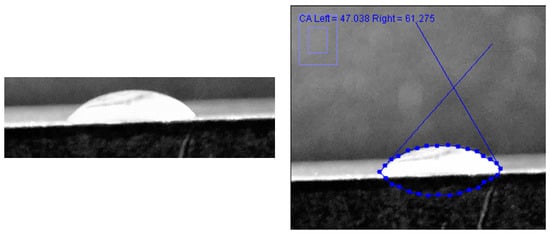
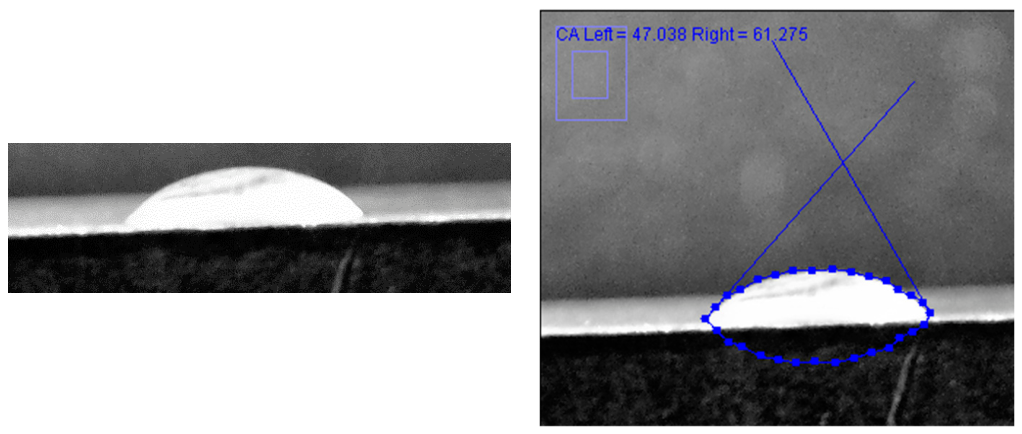
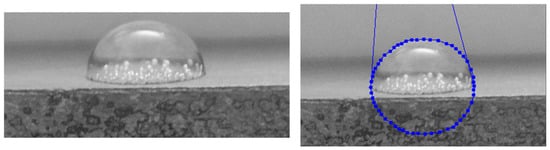
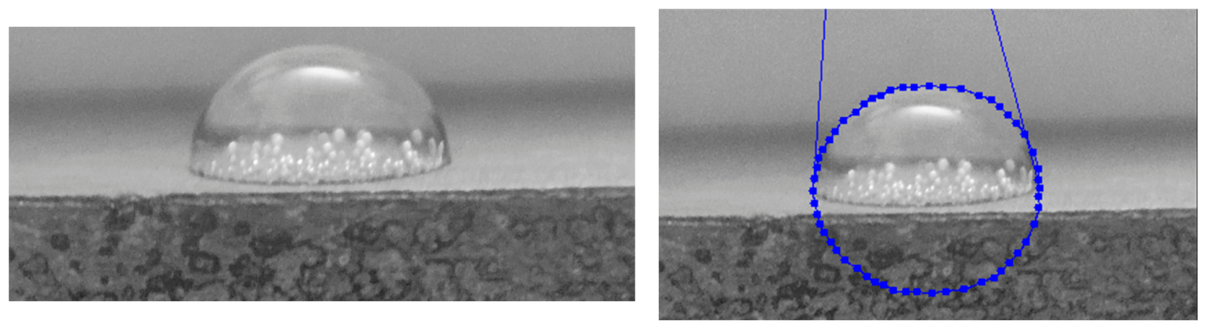
Surface roughness was measured in different areas of the sample surface, and the average value of several readings was (Rz = 6.61, Ra = 1.01) µm. The polished and cleaned aluminum specimen exhibited an initial water contact angle of approximately 54°, measured before electrochemical etching and sodium oleate treatment (Figure 1) using a special camera (Super Macro). This measurement served as the reference for evaluating the changes in apparent wettability induced by the subsequent surface treatments. The angle was measured using the utility tool (Drop analysis—DropSnake) in ImageJ (version 1.54g).
Figure 1.
Droplet analysis of the sample surface before experiments using (DropSnake).
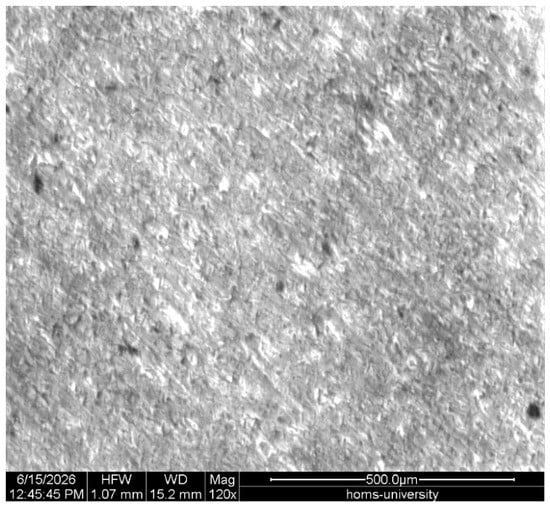
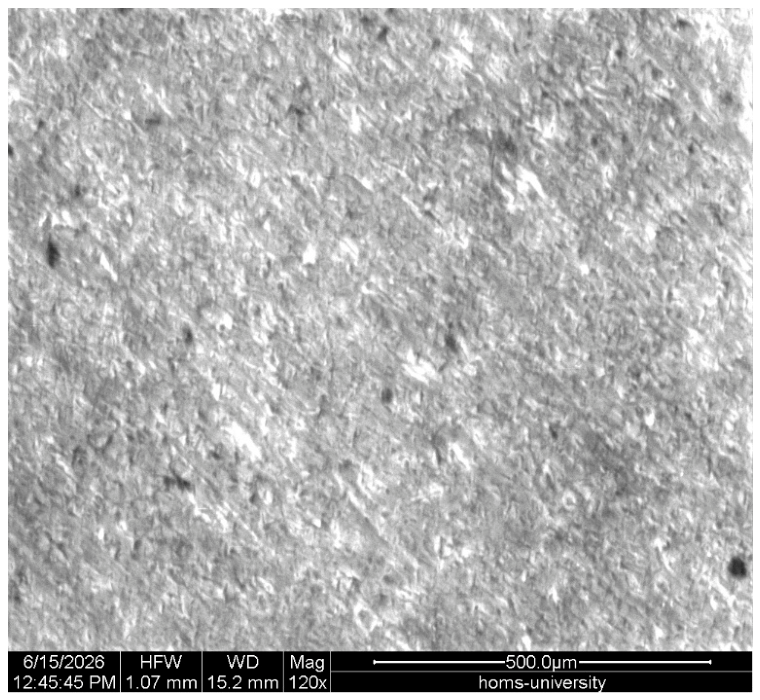
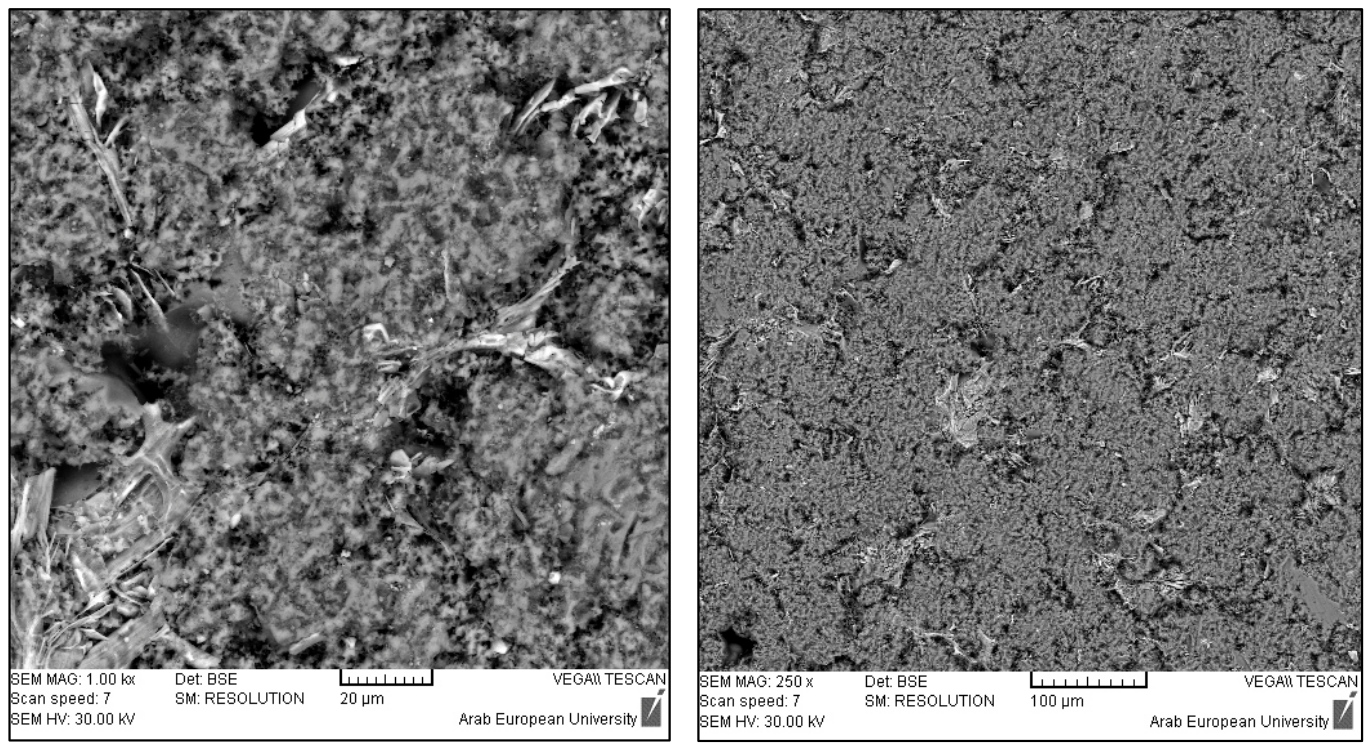
Figure 2 presents the SEM image of the untreated aluminum control specimen after polishing and cleaning, prior to electrochemical etching and sodium oleate treatment. This image provides a reference for evaluating the morphological changes associated with the subsequent surface modification process. Comparison with the SEM images of the treated specimens enables a qualitative assessment of the changes in surface topography induced by the electrochemical treatment.
Figure 2.
SEM image of the untreated aluminum control specimen after polishing and cleaning, prior to electrochemical etching and sodium oleate treatment.
2.2. Preparation of the Electrochemical Stimulated Etching Cell
The electrolyte was a solution of ammonium chloride NH4CL (53.5 g in a liter of water) with a concentration of (1) molar and a pH of (5.6).
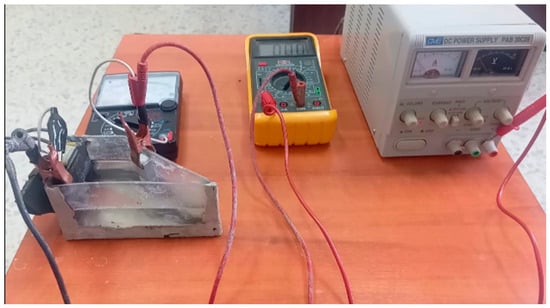
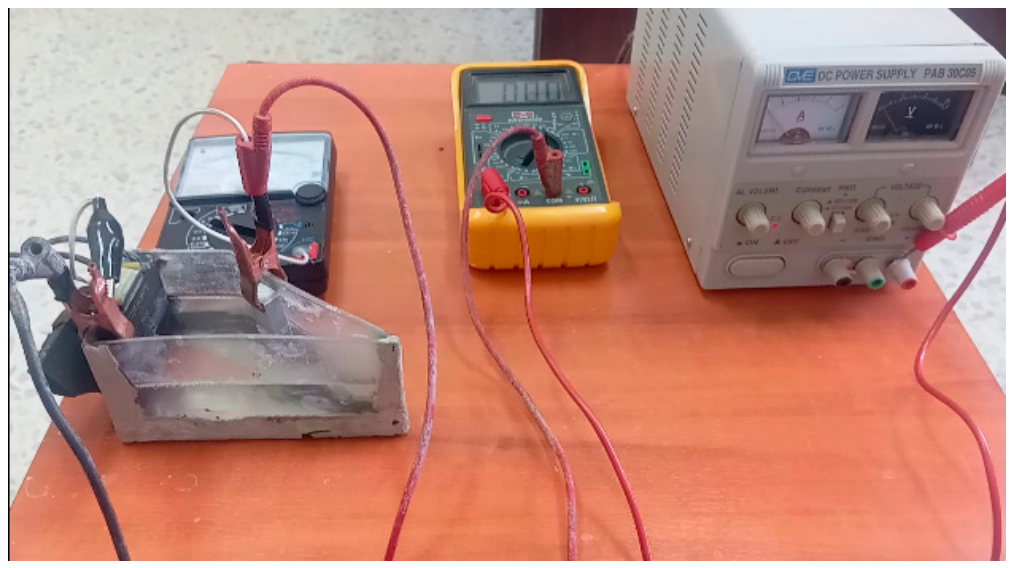
Electrochemical surface treatment was performed galvanostatically in a Hull cell containing 233 mL of aqueous electrolyte. The reported electrolyte temperature was 25 °C, and the experiments were conducted without mechanical stirring or forced circulation. The cell consisted of an aluminum anode and a graphite cathode separated by 5 cm. The reported immersed cathode surface area was 45.5 cm2, while the reported exposed aluminum anode area was 7.7 cm2. The treatment was conducted using a GVE DC PAB 30C05 power supply (maximum output: 30 V and 5 A). The voltage across the two-electrode cell was monitored using a voltmeter, and the recorded values were plotted using MATLAB 2023a. No reference electrode was employed; consequently, the recorded voltage represents the overall cell voltage rather than the aluminum anode potential.
Electrochemical surface treatment was performed galvanostatically in a two-electrode cell comprising an aluminum anode and a graphite cathode. The voltage between the two electrodes was monitored during treatment using a digital voltmeter. Because no reference electrode was employed, the recorded voltage represents the overall cell voltage rather than the aluminum anode potential relative to a reference electrode. Potentiodynamic polarization measurements were not performed in the 1 M NH4Cl electrolyte. Consequently, the present electrochemical data do not allow a definitive identification of passivation or breakdown potentials, nor do they establish whether the aluminum dissolution mechanism was uniform or localized.
The distance between the anode and the cathode was (5 cm), and the area of the cathode surface was (45.5 cm2).
A portion of the sample surface, with an area of (7.7 cm2), was immersed in the electrolyte in order to keep the sample-holding forceps outside the electrolyte and to compare the modified surface with the surface before modification.
Figure 3 illustrates an electrochemical etching cell and the setup of the experiments.
Figure 3.
Experimental setup used for the electrochemical etching of aluminum specimens, illustrating the electrode arrangement and electrical connections employed during the surface treatment process.
2.3. The Proposed Protocol of Electrochemically Stimulated Subtraction Method
The proposed protocol includes two main steps:
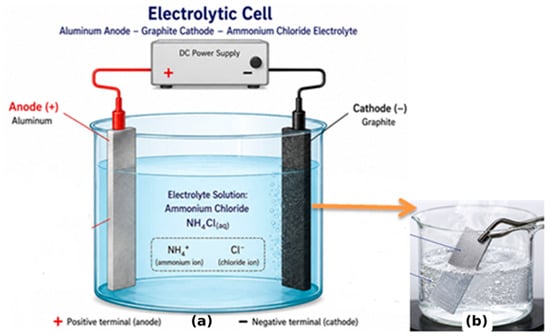
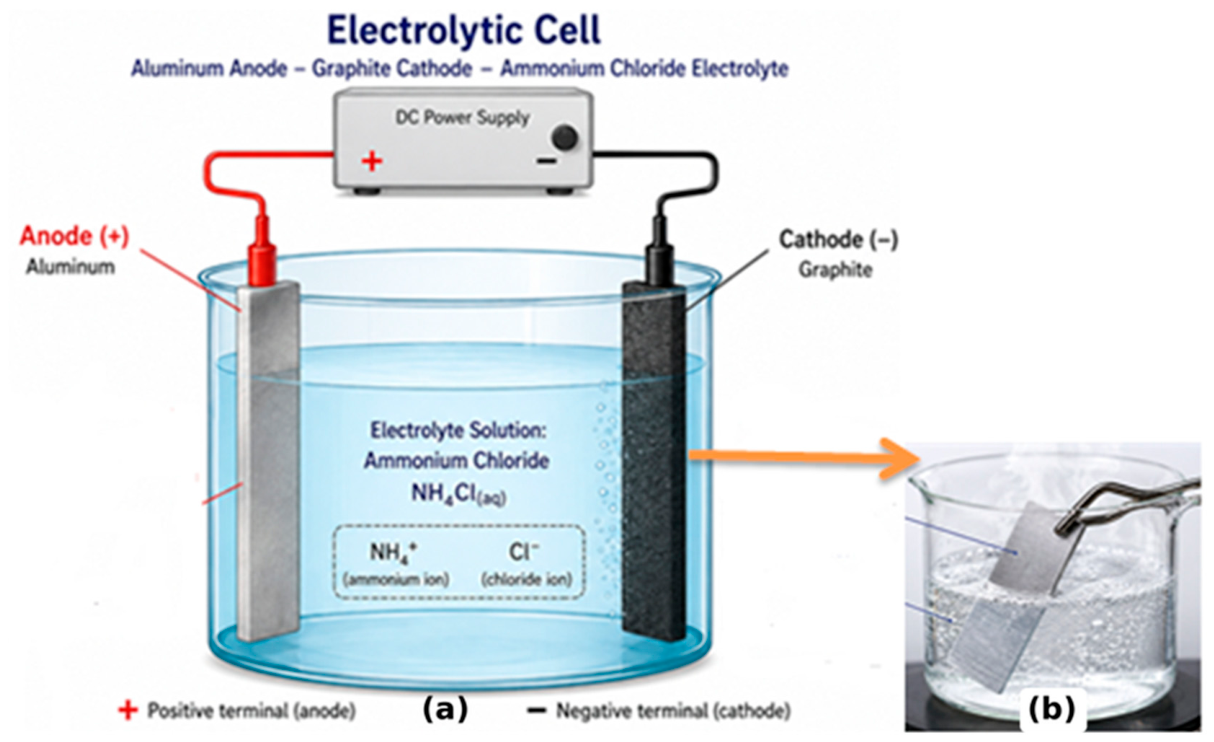
regular electrochemical etching using an electrolyte of ammonium chloride (1) molar, a cathode of graphite, and an anode of the aluminum sample whose surface is to be modified, for only (10) min.
a bath with a solution of water and household sodium soap (21) g of sodium oleate soap in a liter of water at a temperature between (70 and 80 °C) for (10) min only, for two purposes: to remove chlorine contamination and to lead to the growth of boehmite film [7,16].
Following treatment with the aqueous sodium oleate solution, the aluminum specimen was rinsed with water to remove excess and loosely retained soap, and subsequently dried. This rinsing procedure was not intended to remove all organic species associated with the modified surface.
Finally, the sample was dried with a tissue and left at room temperature (25–30 °C).
Figure 4 shows a schematic illustration of the two-step surface treatment protocol used to modify the aluminum specimens.
Figure 4.
Schematic illustration of the two-step surface treatment protocol used to modify the aluminum specimens: (a) electrochemical etching and (b) subsequent treatment with an aqueous sodium oleate solution. The inset photograph shows the aluminum specimen used in the experimental procedure.
2.4. The Experimental Parameters for the Electrochemical Etching Experiments
Two sets of experiments were carried out:
Constant voltage experiments
Constant current experiments
2.4.1. Constant Voltage Experiments
A series of constant voltage experiments were performed at values of (10, 7, 5, 4) V sequentially, and the initial current values for each experiment are shown in Table 3.
Table 3.
The parameters of the constant voltage experiments, the resulting contact angle values, and the measured roughness of the treated surfaces.
The previous voltage values were guided by a previous study, which illustrated the corrosion mode of AA508 in the presence of 0.5 M sodium chloride [23], where the Voltage values were chosen to be greater than (1.6) V, which is the voltage corresponding to pitting, taking into account the increase in the transformer’s pH during the etching process, and smaller than the high voltage values that cause an anodizing process.
In other words, published electrochemical data for aluminum alloys, including those reported in the ASM Handbook, were consulted as background information when considering the electrochemical treatment conditions. However, polarization measurements were not performed in the current electrolyte used in the present study. Consequently, the selected treatment parameters cannot be regarded as independently validated by polarization data specific to the investigated aluminum specimens.
All constant voltage experiments caused a water-absorbing surface due to the drilling of channels and cutting of the surface layer, which caused a decrease in the contact angle and an increase in the surface’s absorption of water.
Table 3 shows the parameters of the constant voltage experiments, the resulting contact angle values, and the measured roughness of the treated surfaces. Surface roughness was characterized using the arithmetic mean height of the roughness profile (Ra) and the maximum height of the roughness profile (Rz). Both parameters are expressed in micrometers (µm).
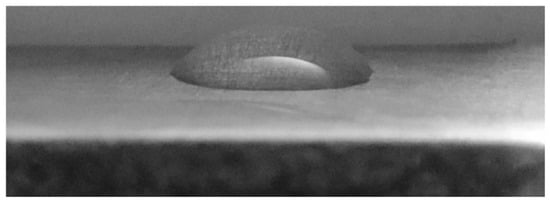
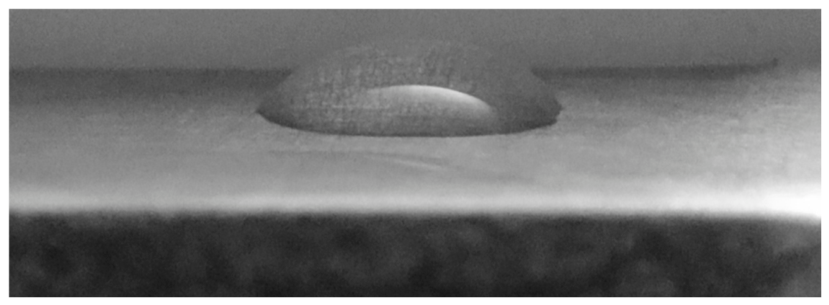
Figure 5 sets forth the contact angles of some droplets with the surface after constant voltage experiments.
Figure 5.
Droplet with a small contact angle with the surface after constant voltage experiments.
The pH of the electrolyte was measured after the experiments, and it was found to have turned into an alkaline solution (pH = 8.13).
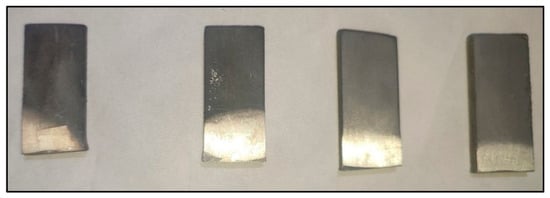
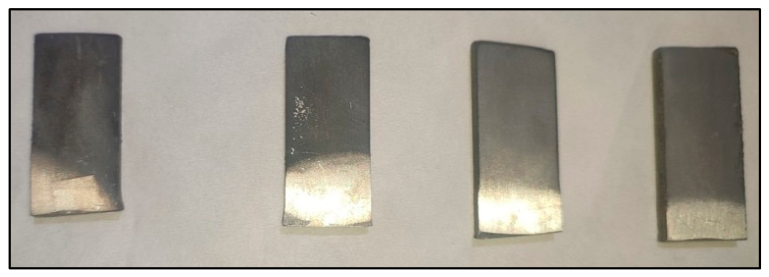
The samples’ surfaces after constant voltage experiments are displayed in Figure 6 with a black colored appearance.
Figure 6.
Sample surfaces after constant voltage experiments.
2.4.2. Constant Current Experiments
After the failure of the constant voltage experiments, it was proposed to try electrochemical etching using a constant current to achieve regular etching instead of etching at constant voltage, in order to avoid the sudden rise in current density as a result of the drop in resistance during the etching process, which causes irregular etching of the surface.
The value of the current that achieved the lowest current density in the constant voltage experiments was chosen, which is (1) A; in addition, two experiments at a constant current at two values of the current lower than the previous value, which are (0.25 and 0.5) A respectively. Then, a test and evaluation of the angle of contact between the droplet and the surface after etching were conducted at the previous constant current values.
Constant Current Experiment with (1) A Value
A constant current of (1) A and a density of/12.987/A/dcm2 was applied from a DC power supply unit. The voltage produced at the beginning was (6) V and at the end of the experiment, after ten minutes, was (5.6) V.
Bubbles were observed at the cathode, the electrolyte turned grayish, and white foam (Al(OH)3) appeared on the surface of the electrolyte.
The pH of the electrolyte after the experiment was measured, and its value was (pH = 7.3).
The surface was tested, and the result was a significant increase in the droplet’s contact angle with the modified surface, approaching the limit value between hydrophilic and hydrophobic surfaces. The average contact angle was (90 ± 5°), as shown in Figure 7, but no surface damage or increased absorption occurred, unlike results from constant voltage experiments.
Figure 7.
The contact angle after the constant current experiment at (1) A value.
The droplet image in Figure 7 contains features that may be associated with air entrapment. However, the available photographic evidence does not establish whether these features correspond to internal air bubbles or air pockets retained within the textured surface. Since air entrapment may influence the apparent droplet geometry and wetting behaviors, its possible contribution should be considered when interpreting the contact-angle measurements. The microscopic distribution of air beneath the droplets was not directly characterized in this study.
The water contact-angle measurements were conducted under ambient laboratory conditions at a temperature of 28 °C and a relative humidity of 37%.
Constant Current Experiment with (0.5) A Value
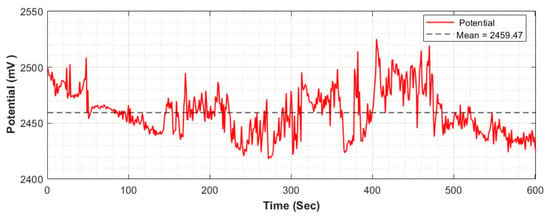
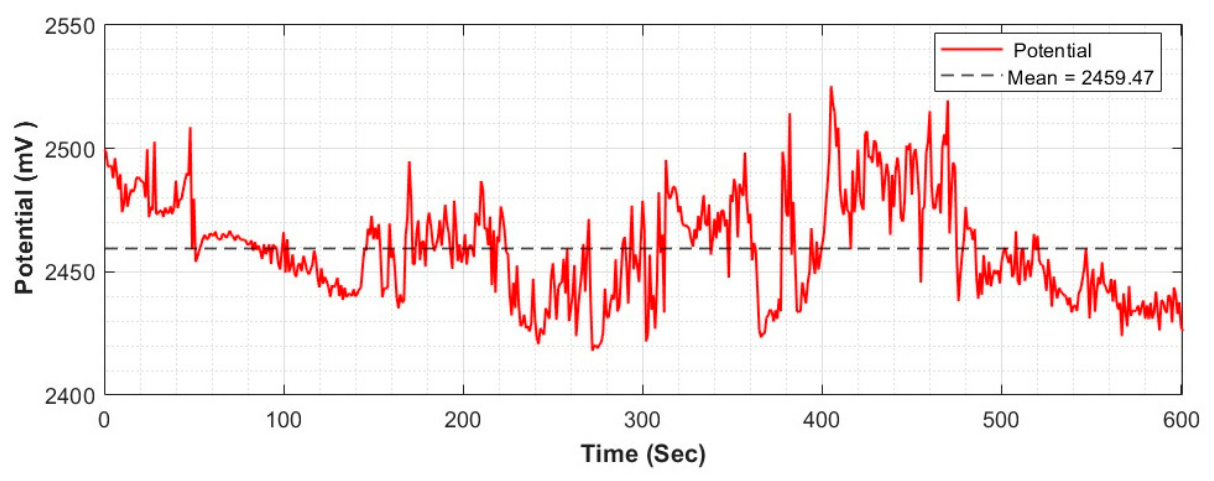
A constant current of (0.5) A was applied from a DC power supply with a density of (6.494) A/dcm2, which decreased gradually over time. The resulting constant voltage was initially (2.5) V and at the end of the experiment, after ten minutes, was (2.4) V.
Figure 8 shows variations in the cell voltage recorded during galvanostatic electrochemical treatment of the aluminum specimen in the NH4Cl electrolyte. These fluctuations indicate changes in the overall electrochemical response of the two-electrode system. Possible contributing processes include changes in surface-film formation or dissolution, electrode polarization, and electrolyte resistance. Localized passive-film breakdown and repassivation cannot be excluded. Because no reference electrode was used and no dedicated investigation of localized corrosion was performed, the voltage oscillations cannot be assigned conclusively to a particular mechanism or used to demonstrate spatially uniform aluminum dissolution. Accordingly, the process is described as electrochemical etching rather than experimentally confirmed uniform corrosion.
Figure 8.
Variations in the cell voltage recorded during galvanostatic electrochemical treatment of the aluminum specimen in the NH4Cl electrolyte.
Bubbles were observed at the cathode, and white foam appeared on the surface.
The pH of the electrolyte was measured after the experiment and was found to be (pH = 6.7).
On the other hand, the aluminum specimen was weighed before and after galvanostatic electrochemical treatment at 0.5 A for 600 s. The recorded mass decreased from 18.25 g to 18.22 g, corresponding to a nominal mass loss of 0.03 g (30 mg). For a total charge of 300 C, Faraday’s law predicts a theoretical aluminum dissolution mass of approximately 28 mg, assuming Al → Al3+ + 3e− and 100% current efficiency. The measured mass loss is close to this theoretical estimate, giving a nominal apparent current efficiency of approximately 107%. However, because the reported masses have limited precision and the possible contributions of nonfaradaic material loss were not independently assessed, this value should not be interpreted as a reliable determination of the faradaic current efficiency. Furthermore, the mass-loss measurement does not establish the spatial uniformity of aluminum dissolution.
The polished and cleaned aluminum specimen exhibited an initial water contact angle of approximately 54.15°. After electrochemical etching at 0.5 A for 10 min, the contact angle increased to 151° ± 2°. Subsequent treatment with sodium oleate resulted in a further increase to 155° ± 2°. These observations indicate that the electrochemical treatment substantially altered the surface wettability, while sodium oleate treatment produced an additional, smaller change. However, because electrochemical etching can affect both surface topography and surface chemistry, the individual contributions of these factors cannot be fully distinguished from the present measurements. Furthermore, the observed contact-angle increase following sodium oleate treatment does not, by itself, establish surface passivation or improved corrosion resistance.
Ten contact angle measurements were performed in an ambient atmosphere at a temperature of 28 °C and a humidity of 37%.
As shown in Table 4, the statistical analysis values (after chemical modification by the soap) were calculated as shown in Table 5.
Table 4.
CA measurements.
Table 5.
Values of the statistical analysis.
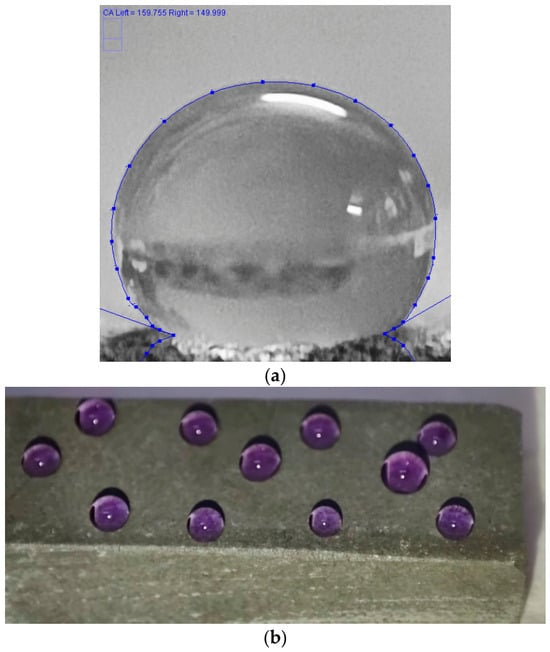
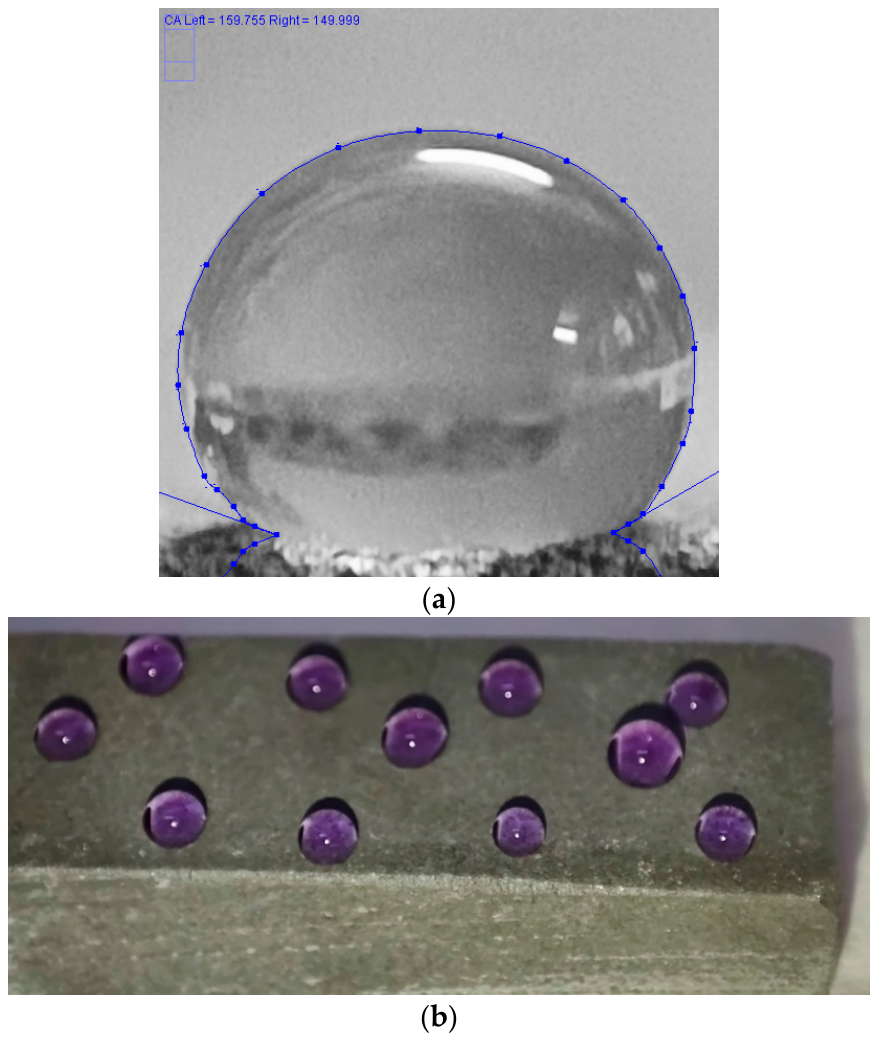
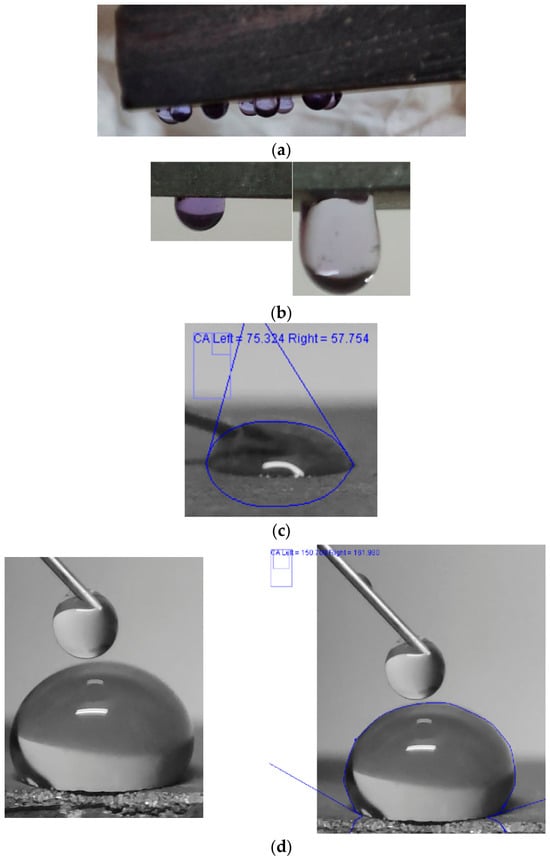
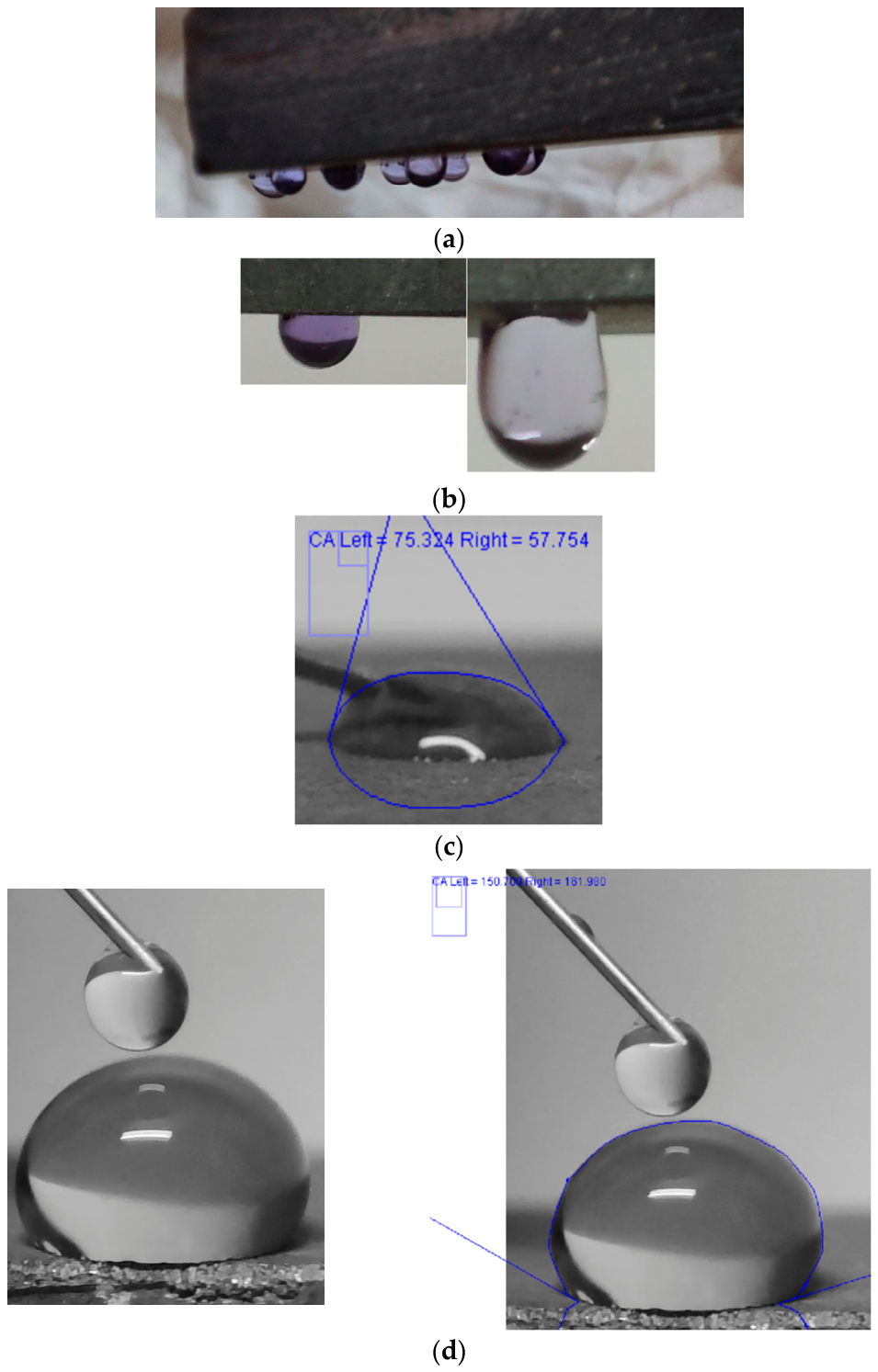
Figure 9a shows the contact angle after a constant current experiment at (0.5) A value, for ten minutes, measured using (DropSnake) and a droplet (5 µL). Figure 9b shows the droplets distributed on various areas of the surface.
Figure 9.
(a) Contact angle after a constant current experiment at (0.5) A value, for ten minutes, measured using (DropSnake). (b) Droplets distributed on various areas of the surface (a real photo).
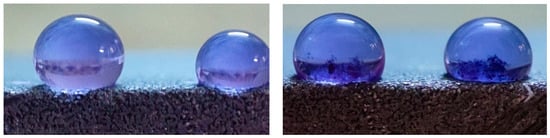
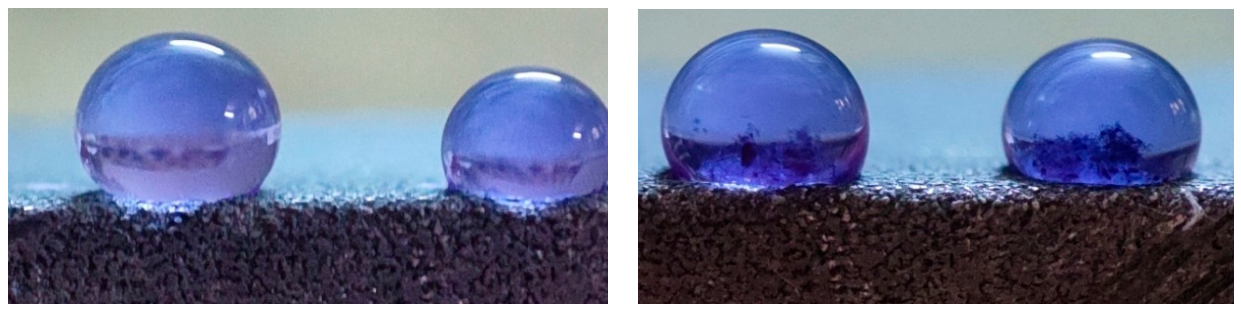
Figure 10 shows a real photo of the droplets after different time intervals of contact with the surface at a room temperature of 30 °C where the water was colored with litmus indicator powder.
Figure 10.
A real photo of the droplets, taken by a super macro camera, after different time intervals of contact with the surface (after 5 min and 15 min from left to right).
The modified aluminum surface exhibited strong water-droplet retention, as demonstrated by the persistence of a droplet on the surface following 180° inversion of the specimen, as shown in Figure 11a. This behavior is characteristic of high-adhesion, rose petal-like wettability.
Figure 11.
(a) High adhesion property between the water droplets and the surface when it was inverted (180°). (b) A comparison (left to right) between the adhesion of the droplet (5 µL) and the largest size capable of adhering of the droplet (6.6 µL) after feeding by (8) droplets with size (0.2 µL). (c) receding angle (66.5°). (d) the advancing angle (156°).
Droplet retention was evaluated using an inverted-specimen test as shown in Figure 11b. A 5 µL water droplet was initially deposited on the modified aluminum surface, after which the specimen was inverted by 180°. Water was subsequently added in increments of 0.2 µL until detachment occurred. In the reported experiment, detachment was observed after eight increments, corresponding to a nominal droplet volume of 6.6 µL. This result provides a preliminary indication of the droplet-retention capacity of the modified surface. However, the procedure does not directly measure the interfacial adhesion force, and an equivalent quantitative comparison with untreated aluminum was not performed.
This behavior is consistent with rose petal-like wettability and may be associated with partial liquid penetration into the hierarchical surface texture. However, the microscopic wetting configuration was not directly characterized, and the proposed Cassie-impregnating state remains a mechanistic interpretation.
The surface showed a high hysteresis (Figure 11c,d), where the advancing angle, receding angle, and hysteresis angle were calculated:
ƟA = 156°, ƟR = 66°, ƟHysteresis = 89.5°
The modified aluminum surface exhibited a high apparent water contact angle of approximately 155° ± 2°, together with a receding contact angle of approximately 66° and a contact-angle hysteresis of approximately 90°. These results indicate substantial contact-line pinning and strong water-droplet adhesion. Therefore, the observed wetting behavior differs from the low-hysteresis lotus effect and is more appropriately described as high-adhesion, rose petal-like superhydrophobicity. This interpretation is also consistent with the retention of a water droplet when the specimen was inverted by 180°. The large hysteresis indicates that the surface should not be characterized as low-adhesion or self-cleaning on the basis of the present measurements.
The modified aluminum surface exhibited a high apparent water contact angle of approximately 155° ± 2°, together with substantial contact-angle hysteresis and strong droplet retention. These characteristics are consistent with high-adhesion, rose petal-like wetting behavior and may be associated with a partially impregnated wetting configuration. However, the microscopic liquid–solid–air interface was not directly characterized. Furthermore, the Young contact angle of a smooth surface with equivalent chemical modification was not determined. Therefore, a quantitative estimate of the solid–liquid contact fraction using the conventional Cassie–Baxter equation would require assumptions that cannot be verified from the present experimental data. The proposed wetting configuration is consequently discussed as a possible interpretation rather than a confirmed mechanism.
During the wettability measurements, occasional movement and coalescence of neighboring water droplets were observed when the droplets were placed close to one another. However, the mechanism responsible for this behavior was not investigated, and no conclusions regarding inter-droplet attractive forces can be drawn from these observations.
Constant Current Experiment with (0.25) A Value
A constant current of (0.25) A was applied from a DC power supply with a density of (3.2467) A/dcm2. The resulting constant voltage was initially (1.8) V and, at the end of the experiment, after ten minutes, was (1.7) V.
A smaller number of bubbles was observed at the cathode, and a smaller amount of white foam appeared on the surface of the electrolyte, compared to the two previous experiments.
The angle of contact was examined, and it decreased to (130 ± 2°).
The surface-modification procedure consisted of two successive stages: electrochemical treatment in the NH4Cl electrolyte, followed by sodium oleate treatment. Unless explicitly stated otherwise, the specimens prepared under constant-voltage conditions and those treated galvanostatically at 0.25 A, 0.5 A, and 1 A were subsequently subjected to the sodium oleate bath. Accordingly, the reported water contact angles for these specimens correspond to the surfaces after completion of both treatment stages.
Although the surface exhibited a high contact angle, it possessed a high adhesion property to the water droplet even when the sample was inverted (180), indicating that it had the petal effect.
To preliminarily assess the temporal stability of the modified surface, water contact-angle measurements were performed daily over approximately one month, between May and June. No appreciable variation in the measured contact angle was observed during this period. These observations suggest that the surface retained its high apparent water contact angle under the investigated conditions. However, systematic tests involving prolonged water immersion, repeated droplet-contact cycles, and independent fabrication batches were not conducted. Therefore, long-term durability, droplet-adhesion stability, and process reproducibility under practical operating conditions remain to be established.
3. Characterization of the Super-Hydrophobic Modified Resulted Surface
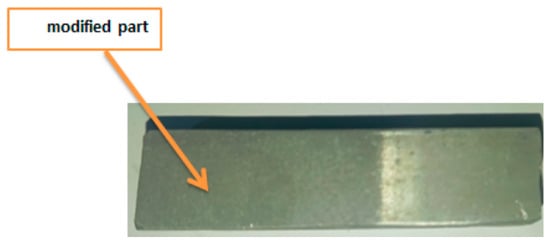
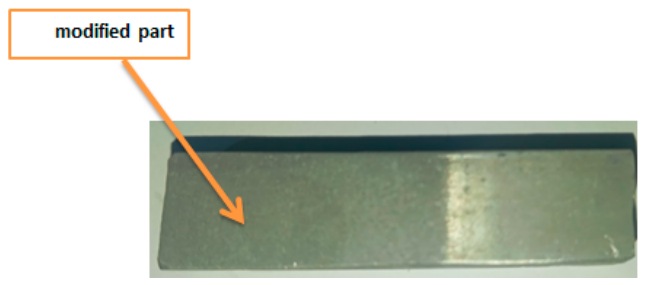
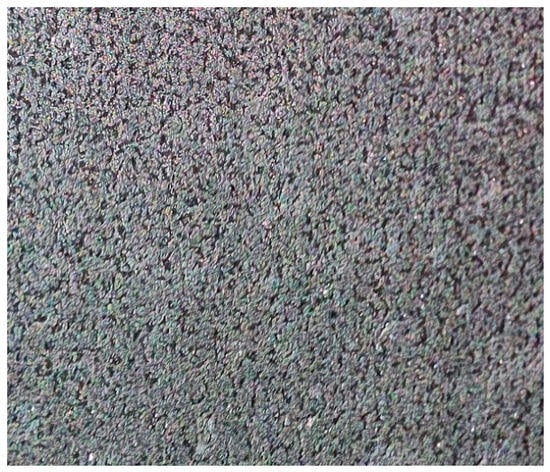
The surface, fabricated at a current density of (0.5) A, was examined with the eye, where a gray color was observed, as shown in Figure 12. The average surface roughness Rz was measured before etching at (0.73) µm and after the final step of the processing at (9.14) µm; also, the average surface roughness Ra was measured before etching at (0.102) µm, and after the final step of the processing at (1.55) µm.
Figure 12.
Fabricated surface of the sample with a gray color.
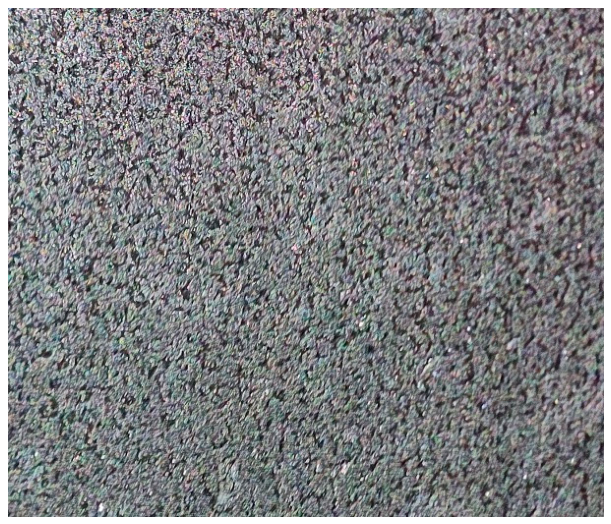
A photo of the super-hydrophobic surface was also taken using a super macro camera, as shown in Figure 13.
Figure 13.
Macroscopic photograph of the aluminum specimen following electrochemical etching and subsequent sodium oleate treatment. The image was acquired using a digital camera in macro mode and illustrates the appearance of the treated surface.
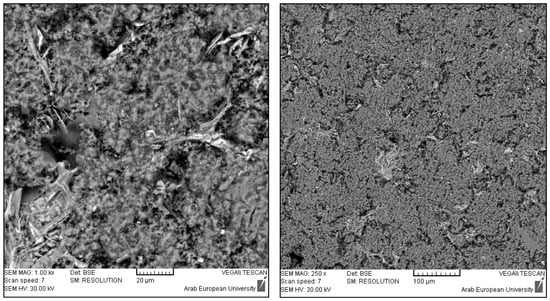
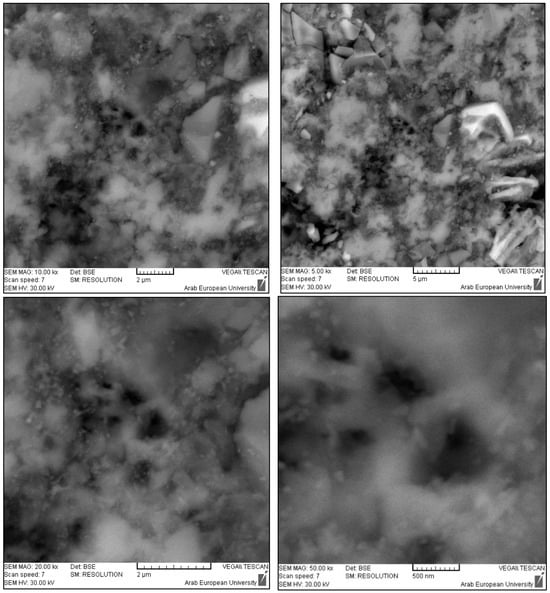
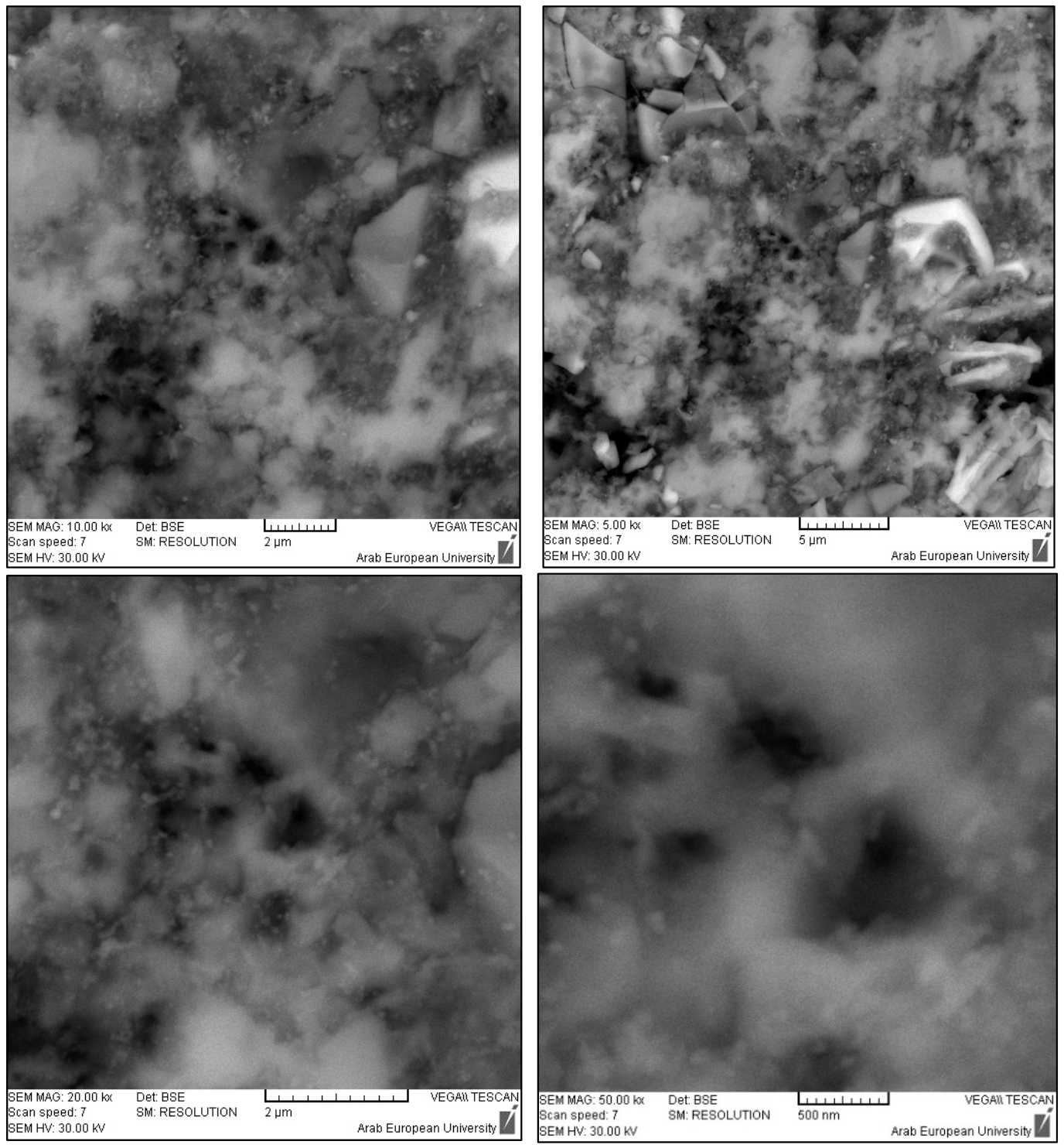
The resulting super-hydrophobic surface was examined using SEM imaging at different magnification ratios at different points on the surface, as shown in Figure 14.
Figure 14.
SEM micrographs of the aluminum surface prepared using the two-step treatment protocol, consisting of electrochemical etching at a constant current of 0.5 A for 10 min, followed by sodium oleate treatment. The images illustrate the resulting surface morphology at the indicated magnifications. Scale bars are provided in the individual micrographs.
SEM observations were performed using a backscattered-electron detector at an accelerating voltage of 30 kV. The available micrographs provide qualitative information about the surface features of the investigated aluminum specimens. However, the imaging conditions and the limited quality of the high-magnification images do not permit reliable quantitative determination of nanoscale pore or particle dimensions. Consequently, specific feature-size ranges are not assigned based on these images. An SEM image of the polished and cleaned untreated aluminum specimen is included as a morphological reference. Because corresponding SEM observations were not obtained for specimens treated at 0.25 A and 1 A, the relationship between treatment current and detailed surface morphology cannot be established conclusively from the present dataset.
From the 1000× magnification image, we observe multi-level surface roughness, including roughness at the micro-scale and a fine granular texture, where the dark regions appear as pits resulting from electrochemical etching, with diameters in the range of 2–10 micrometers. In addition, acicular lamellar structures representing intermetallic particles are visible.
The images at 5000× and 10,000× magnification reveal a cauliflower-like morphology with minute voids between the components; these voids are responsible for trapping air and raising the water drop, and hierarchical roughness at the micro-scale is clearly evident, along with finer aggregates indicating nano-scale roughness in the 100–500 µm range, in addition to the previously mentioned pores responsible for air entrapment.
In the images at 20,000× and 50,000× magnification, nanoscale aggregates appear superimposed on one another, with particle sizes estimated at approximately 50 to 150 nm, alongside dark regions representing nanopores ranging in diameter from 100 to 300 nm, in addition to a hierarchical micro/nanostructure.
In addition to the foregoing, it is evident that the surface is covered with a fine granular layer resulting from sodium oleate, the result of washing the sample with a soap solution and hot water.
Everything mentioned above could help as a plausible interpretation explaining the surface petal effect phenomenon, which was interpreted using the Cassie model of impregnation.
In other words, electrochemical etching produced an irregular textured aluminum surface containing morphological features at different length scales. The resulting surface wettability varied with the applied processing conditions, indicating that the electrochemical parameters influence the final surface properties. However, the present morphological characterization does not establish precise control over feature dimensions or spatial distributions, and further quantitative analysis is required to evaluate the uniformity and tunability of the resulting surface texture.
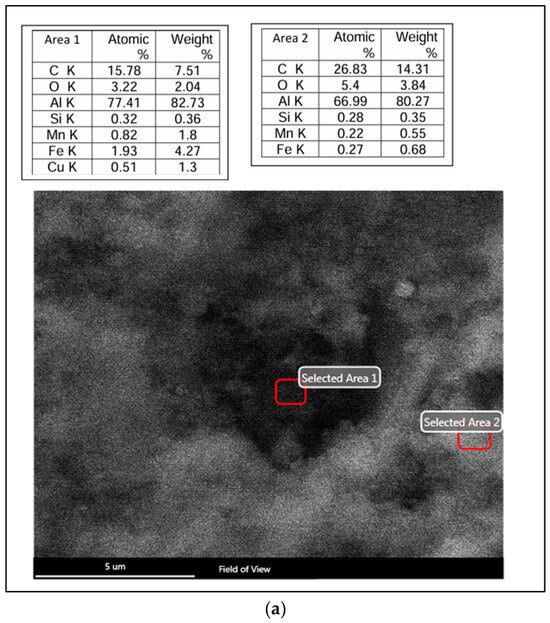
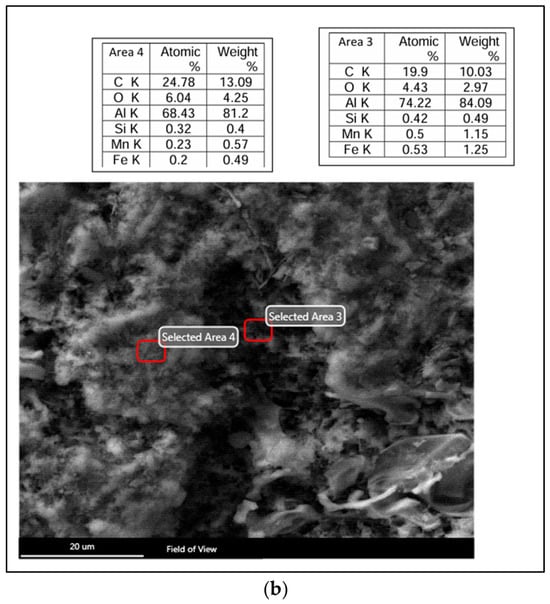
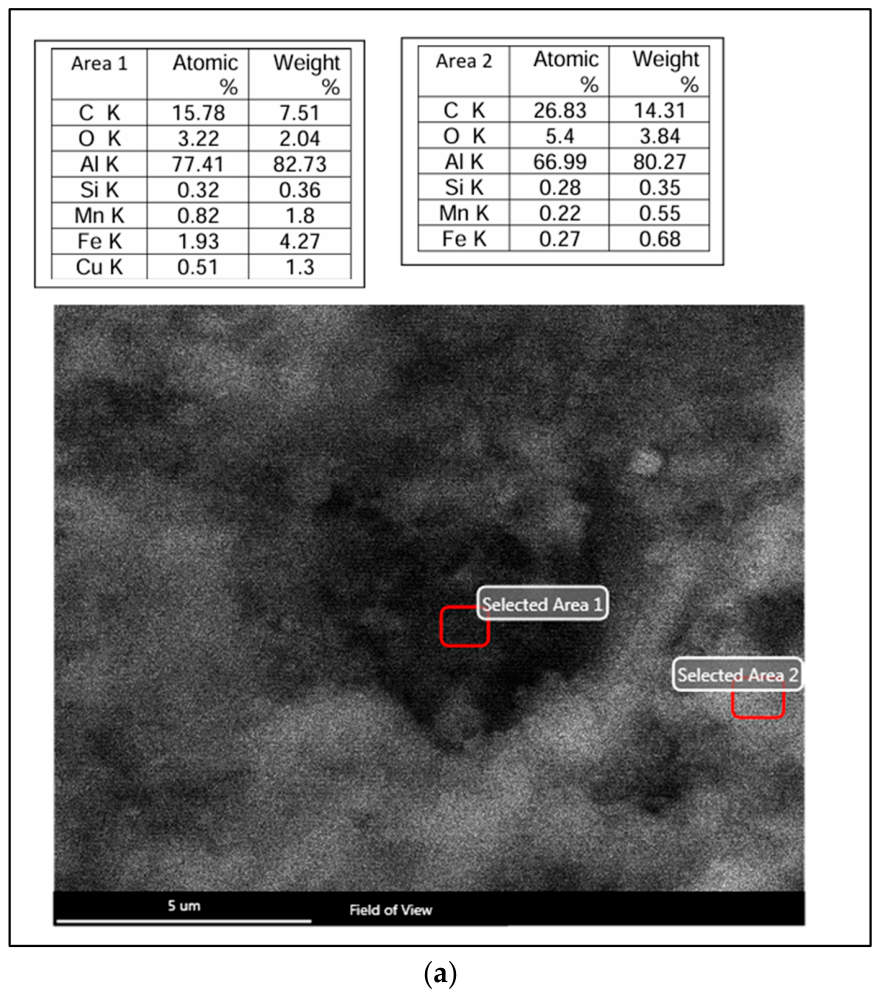
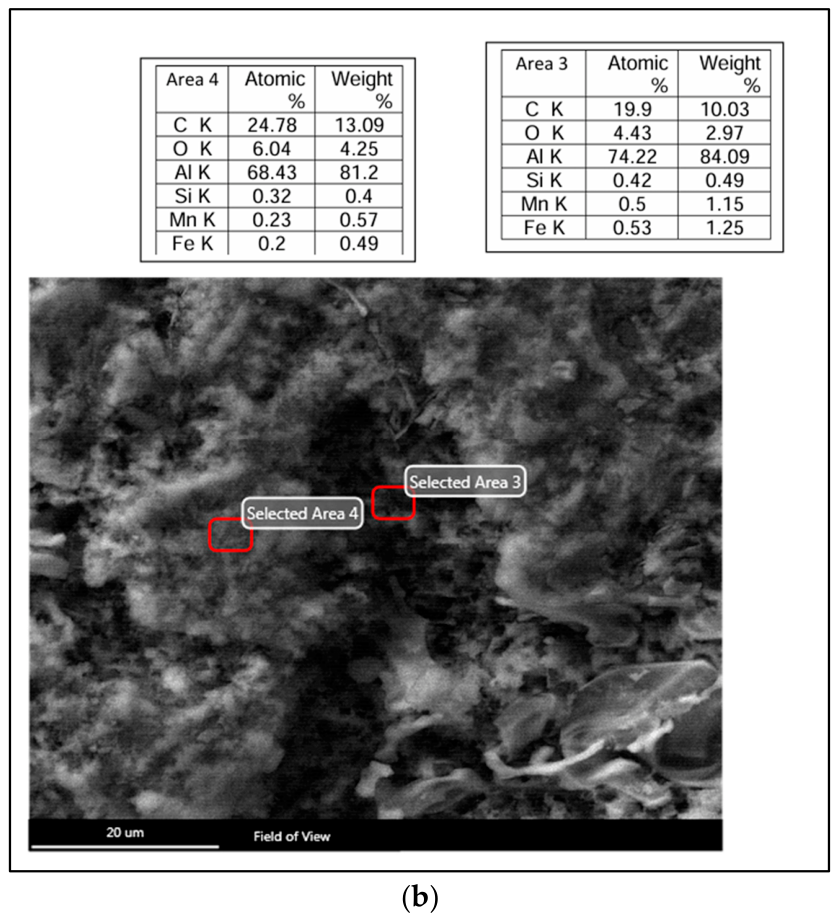
EDX (Energy-Dispersive X-ray Spectroscopy) analysis was performed at an accelerating voltage of 30 kV to obtain elemental information from the investigated aluminum surface region, as shown in Figure 15a,b. Because the electron interaction volume extends substantially beneath the outermost surface, the measured elemental composition includes contributions from the aluminum substrate. Consequently, the relatively low oxygen content detected by EDX should not be interpreted as evidence for the absence of a thin oxide or hydroxide layer. The EDX results do not allow the thickness or chemical state of such surface layers to be determined. Surface-sensitive techniques, such as X-ray photoelectron spectroscopy, would be required for a more definitive assessment of the surface-film composition.
Figure 15.
(a) EDX (Energy-Dispersive X-ray Spectroscopy) analysis of a micronub and a microvalley. (b) EDX analysis of a micronub and a microvalley.
4. RAMAN Spectra Results
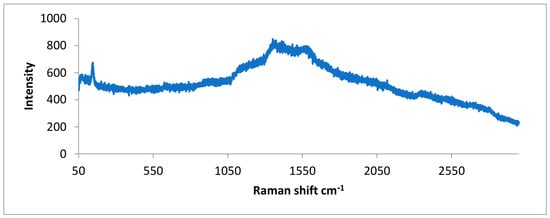
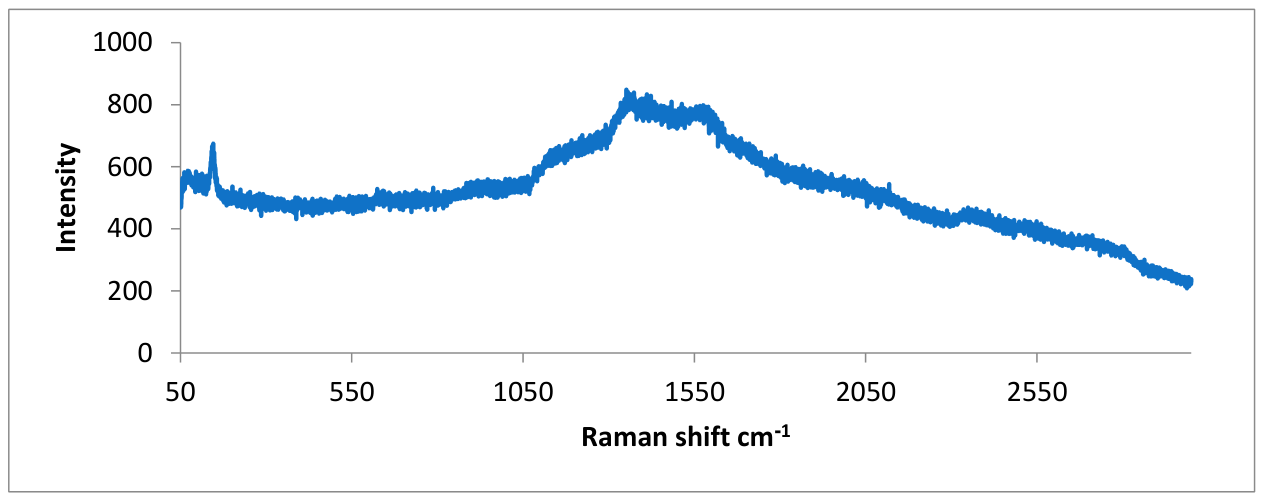
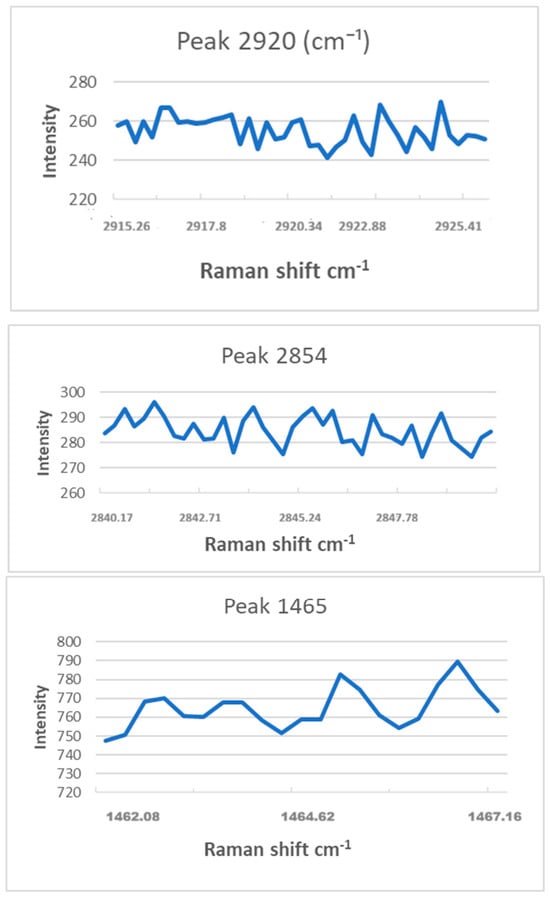
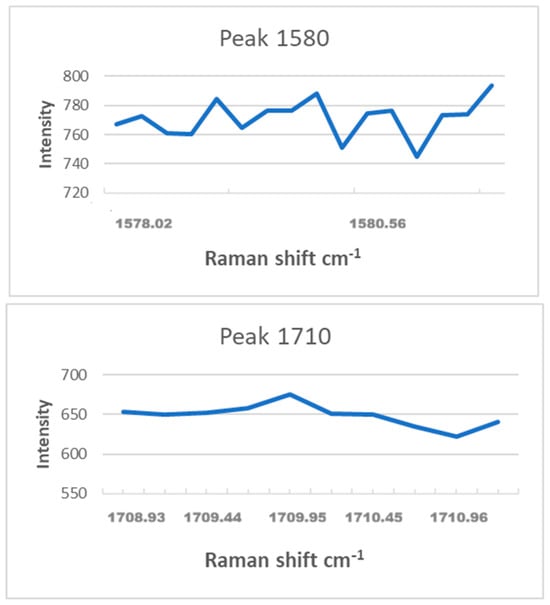
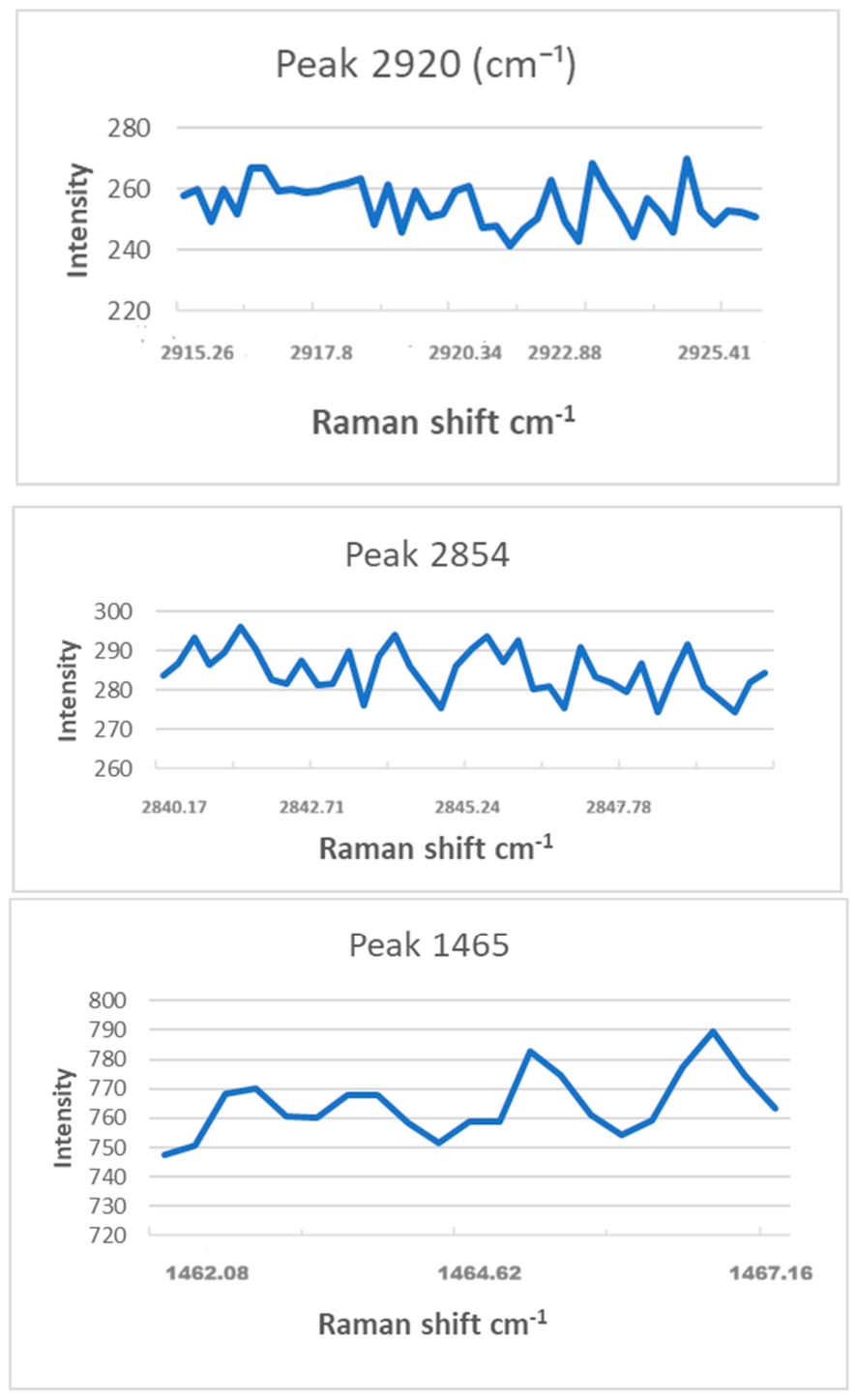
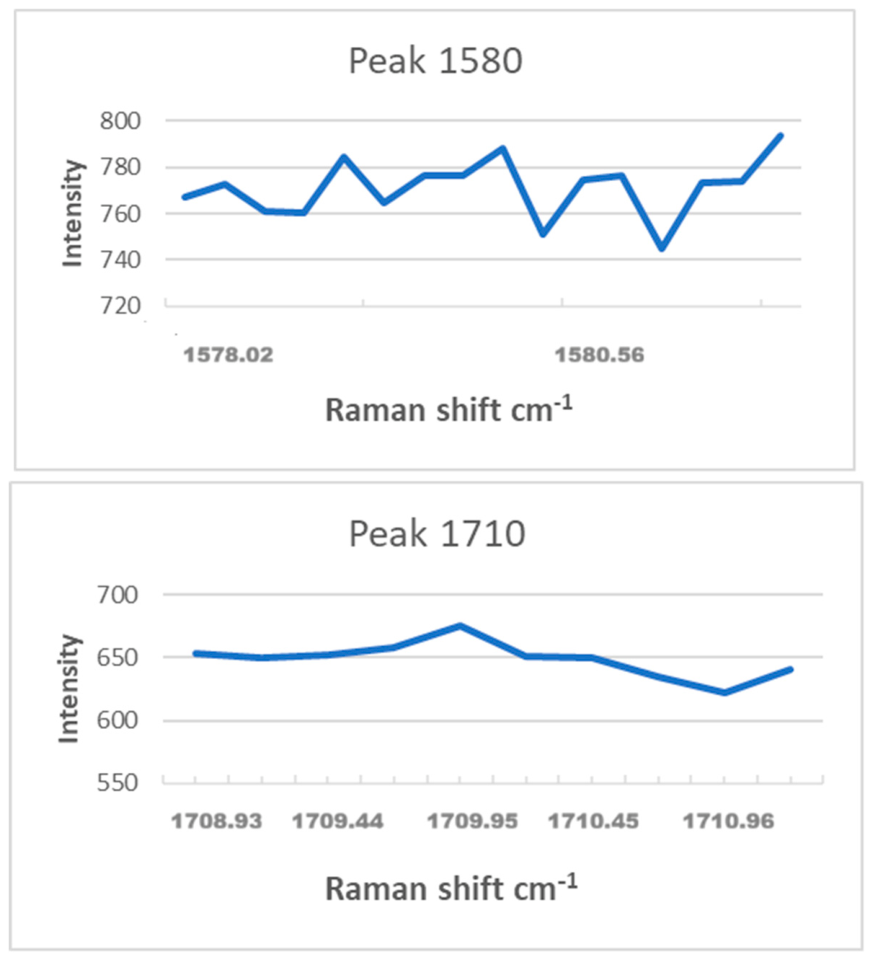
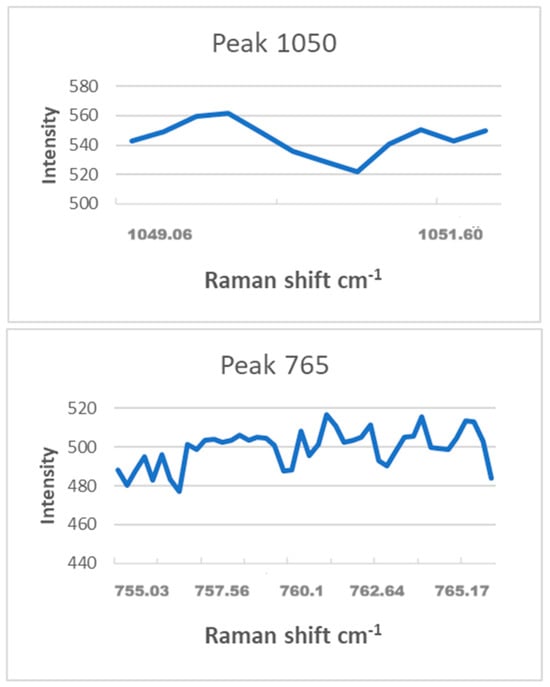
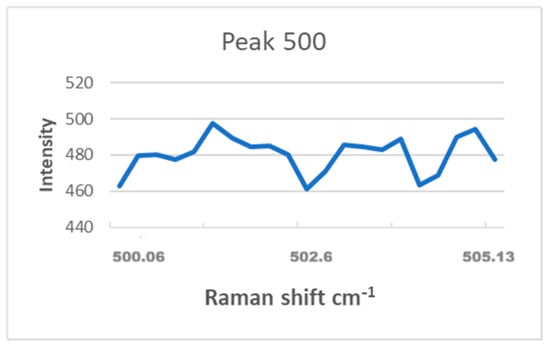
The Raman spectrum of the modified aluminum surface was examined to investigate possible changes in surface chemistry following electrochemical etching and sodium oleate treatment. The observed spectral features were compared with vibrational bands reported in the literature, as summarized in the corresponding Table 6 and Table 7. However, the assignment of these bands to specific surface compounds remains tentative because several species may exhibit overlapping vibrational features. Consequently, the Raman results are considered supporting evidence for possible surface chemical modifications rather than definitive confirmation of particular chemical bonding states.
Table 6.
Organic peaks corresponding to oleates and oleic acid.
Table 7.
Boehmite peaks.
The results of the Raman spectrum analysis are shown in Figure 16, Figure 17 and Figure 18 as follows:
Figure 16.
RAMAN spectra results.
Figure 17.
RAMAN spectra results (the organic peaks corresponding to oleates and oleic acid).
Figure 18.
RAMAN spectra results (Boehmite peaks).
4.1. Organic Peaks (Oleates/Oleic Acid)
Table 6 shows evidence of the organic peaks corresponding to oleates and oleic acid.
The Raman spectrum analysis of organic peaks is shown in Figure 17.
4.2. Boehmite Peaks
Table 7 shows evidence of Boehmite peaks.
The Raman spectrum analysis of boehmite peaks is shown in Figure 18.
5. Corrosion Behavior
5.1. Potentiodynamic Polarization Test
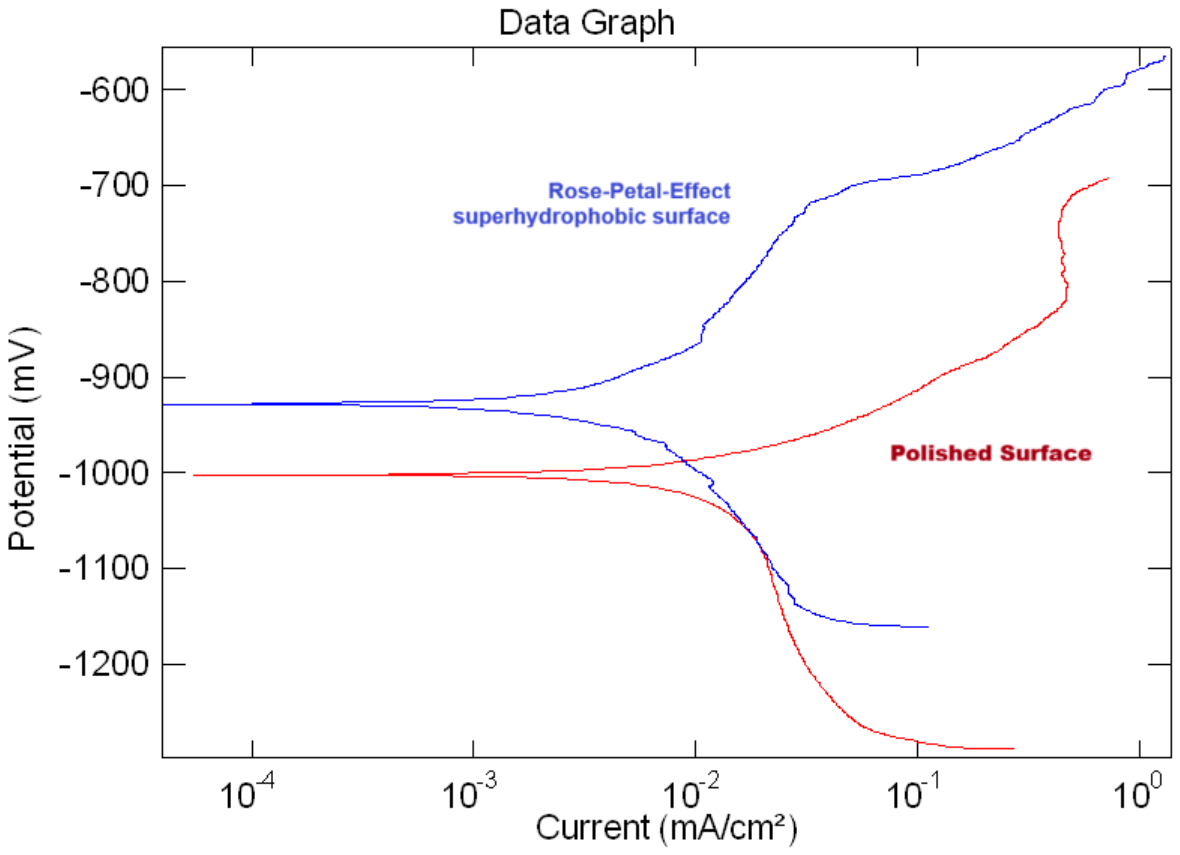
To further evaluate the properties of the superhydrophobic surface obtained in this study, particularly its anticorrosion property, polarization curves were obtained in 3.5 wt% NaCl aqueous solution for (30) minutes.
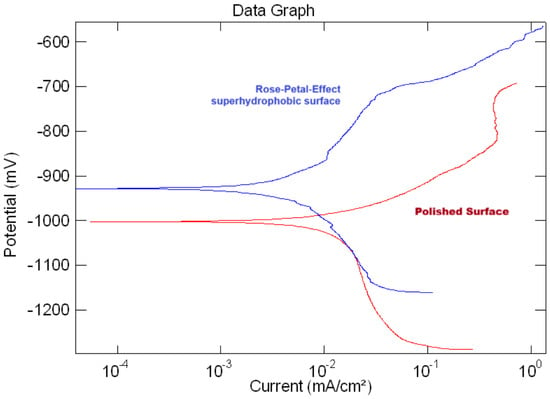
The polarization curves of the aluminum substrate as well as of the petal rose effect superhydrophobic surface are shown in Figure 19.
Figure 19.
Potentiodynamic curves of the aluminum substrate as well as of the petal rose effect superhydrophobic surface.
The corrosion current density (Icorr = 0.06279 A/cm−2) of the aluminum substrate (control sample) was approximately equal to the corrosion current density (Icorr = 0.06217 A/cm−2) of the petal rose effect superhydrophobic surface.
Table 8 illustrates the results related to both surfaces.
Table 8.
Results of the electrochemical test (Potentiodynamic curves).
Electrochemical analysis indicates that both samples (treated and untreated) underwent corrosion, with similar current density values for both; this suggests that the protocol proposed in this study did not provide a sufficient protective layer to shield the surface from corrosion in a saline environment.
Changes in polarization corrosion constants indicate that the superhydrophobic surface accelerates cathodic reactions and slows down anodic reactions (compared to an untreated surface); however, the total effect on the corrosion rate is very slight.
On the other hand, the porous structure of the petal rose effect surface did not lead to a deterioration in corrosion resistance within a saline environment compared to the untreated surface; furthermore, its resistance performance might even be superior in less aggressive media, such as municipal tap water or environments associated with certain functional surface applications.
5.2. Weight Changes Test
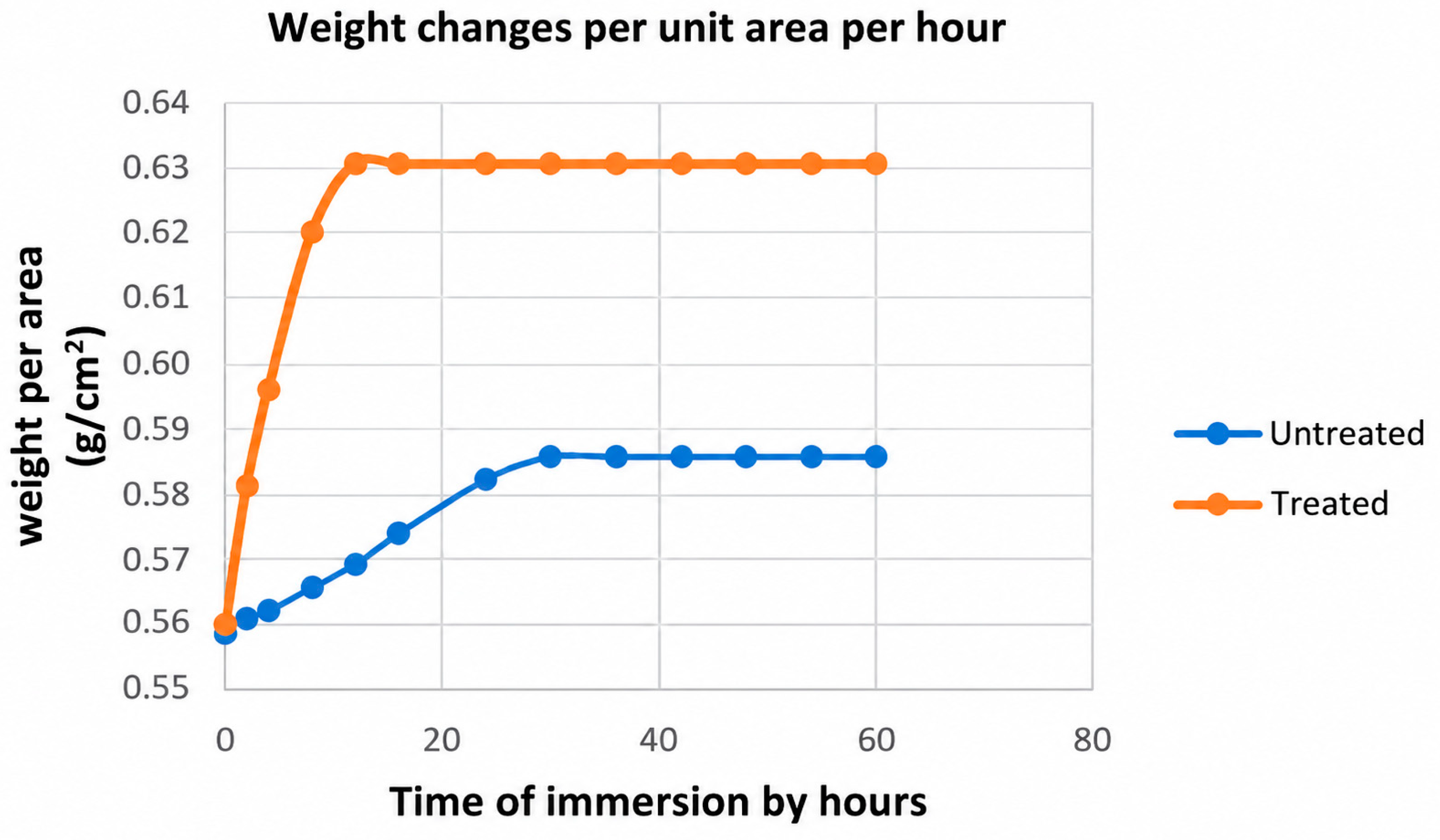
The corrosion behavior of the sample was studied before and after treatment by immersing (12) untreated samples and (12) treated samples in a sodium chloride solution (concentration: 35 g/L) for different periods of time ranging from (2) hours to (60) hours and monitoring their weight.
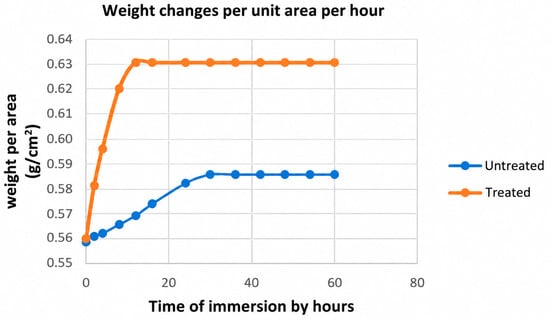
Figure 20 shows that the superhydrophobic surface achieved stability in corrosion behavior more rapidly than the untreated surface.
Figure 20.
Mass change per unit exposed surface area (g/cm2) of the investigated aluminum specimens under the specified experimental conditions.
The more rapid stabilization of the superhydrophobic surface—in terms of weight—can be attributed to the acceleration of cathodic reactions, which resulted in an apparent passivation of the surface.
The apparently passivated surface layer results from the formation of an impermeable film of corrosion products, which has sealed the surface against the penetration of the saline solution toward the underlying substrate. However, this passivation is only apparent, and the possibility of pitting corrosion remains, based on the results of the polarization test.
6. Results Explanation
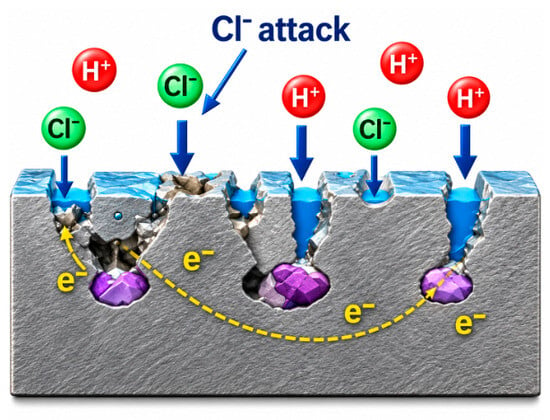
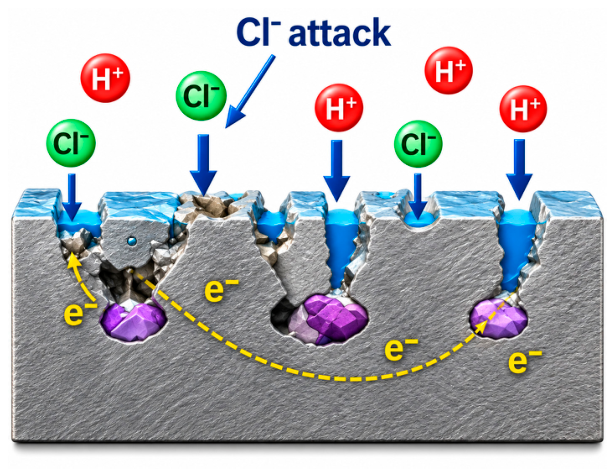
Because of the alloy content of the aluminum sample (Fe, Si, Mg) and the chloride attack, chloride ions penetrated the AL2O3 film, resulting in the formation of micro-galvanic cells around intermetallics [26,27]. In addition, a localized dissolution (Figure 21) occurred without the initiation of pitting corrosion because the potential window, which was selected within the uniform corrosion region, was outside the scope of the pitting corrosion potential corresponding to the pH (5.5) of the used electrolyte as mentioned previously [23,28].
Figure 21.
Schematic illustration of possible morphological changes occurring at the aluminum surface during electrochemical etching. The illustration is conceptual and does not represent experimentally verified elemental enrichment or spatial distributions of alloying constituents.
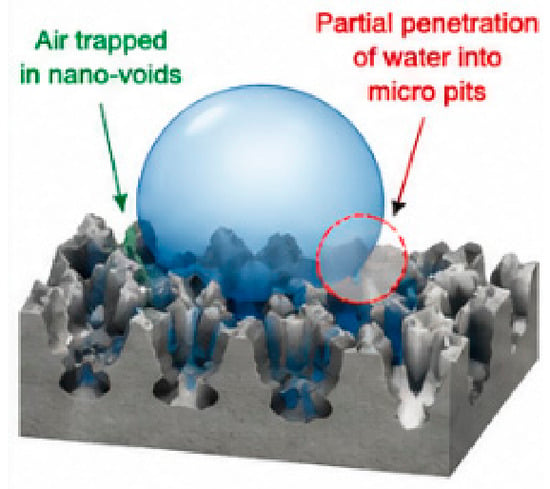
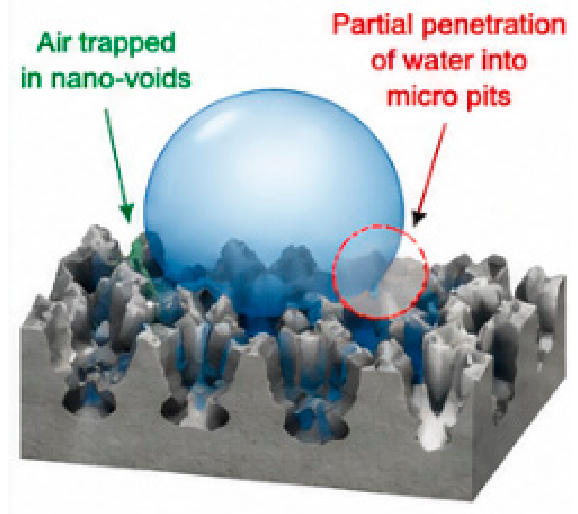
The SEM observations indicate that electrochemical etching produces an irregular surface texture comprising pits and other morphological features at different length scales. The modified surface also exhibits strong droplet retention, as demonstrated by the inverted-droplet experiment. One possible explanation is partial liquid penetration into the surface texture, which may contribute to the observed adhesion. This proposed mechanism is illustrated schematically in Figure 22. However, the actual liquid–solid–air configuration was not directly characterized, and the schematic should therefore be regarded as a conceptual interpretation rather than a representation of the experimentally measured surface geometry [5].
Figure 22.
Conceptual schematic illustrating a possible mechanism of water-droplet retention on the electrochemically textured aluminum surface. The illustration is intended to explain the observed high-adhesion wetting behavior and does not represent the exact surface morphology or an experimentally verified microscopic wetting configuration.
7. Conclusions
This study presented a simple, novel protocol for fabricating a super-hydrophobic surface with a rose petal effect on an Al 8xxx alloy sample.
The parameters selected for the electrochemical-assisted etching caused micro/nano roughness and hierarchical texture, giving the rose petal effect (high contact angle and high adhesion between the droplet and the metal surface).
The present investigation focused on the fabrication and initial wetting characterization of high-adhesion, rose petal-like aluminum surfaces. Although water contact-angle observations were conducted over approximately one month, these measurements were limited to the investigated storage conditions and do not establish long-term durability. Mechanical abrasion resistance, repeated wetting–drying cycles, prolonged liquid immersion, and accelerated environmental aging were not evaluated. Therefore, the mechanical robustness and long-term service performance of the modified surfaces remain undetermined. Systematic durability testing will be necessary to assess their suitability for practical applications.
This work gives a promising step, via a simple setup, towards future works like designing functional surfaces such as lab-on-chip systems, digital microfluidics, energy landscape surfaces for droplets, droplet capture, controlled condensation surfaces, and a dynamic system that controls droplets via surface energy.
Author Contributions
Conceptualization, R.A.; methodology, R.A.; validation, H.H.; formal analysis, R.A. and J.R.; investigation, M.A.W.; writing—original draft preparation, R.A.; writing—review and editing, H.H., J.R. and M.A.W.; supervision, M.A.W.; funding acquisition, M.A.W. All authors have read and agreed to the published version of the manuscript.
Funding
This research received no external funding.
Institutional Review Board Statement
Not applicable.
Informed Consent Statement
Not applicable.
Data Availability Statement
The original contributions presented in this study are included in the article. Further inquiries can be directed to the corresponding authors.
Conflicts of Interest
The authors declare no conflict of interest.
References
- Shen, Y.; Tang, M.; Liu, Y.; Li, X.; Li, Z. Natural superhydrophobic surfaces and recent advances in synthetic superhydrophobic surfaces: A review. In Proceedings of the 3rd International Conference on Materials Chemistry and Environmental Engineering; EWA Publishing: Oxford, UK, 2023. [Google Scholar] [CrossRef] [Scilit]
- Shadmani, S.; Khodaei, M.; Chen, X.; Li, H. Superhydrophobicity Through Coatings Prepared by Chemical Methods; IntechOpen: London, UK, 2020; Available online: http://creativecommons.org/licenses/by/3.0 (accessed on 1 January 2025).
- Huang, G.; Guo, Y.; Lee, B.; Chen, H.; Mao, A. Research Advances and Future Perspectives of Superhydrophobic Coatings in Sports Equipment Applications. Molecules 2025, 30, 644. [Google Scholar] [CrossRef] [Scilit]
- Bico, J.; Thiele, U.; Que’re, D. Wetting of textured surfaces. Colloids Surf. A Physicochem. Eng. Asp. 2002, 206, 41–46. [Google Scholar] [CrossRef] [Scilit]
- Teisala, H.; Tuominen, M.; Kuusipalo, J. Adhesion Mechanism of Water Droplets on Hierarchically Rough Superhydrophobic Rose Petal Surface. J. Nanomater. 2011, 6, 818707. [Google Scholar] [CrossRef] [Scilit]
- Shadmani, S.; Khodaei, M. Toward hydrophobicity without surface functionalization through organosilane sol gel coatings on nano-roughed aluminum substrate. J. Ultrafine Grained Nanostruct. Mater. 2020, 53, 117–126. [Google Scholar] [CrossRef] [Scilit]
- Ellinas, K.; Dimitrakellis, P.; Sarkiris, P.; Gogolides, E. A Review of Fabrication Methods, Properties and Applications of Superhydrophobic Metals. Processes 2021, 9, 666. [Google Scholar] [CrossRef] [Scilit]
- Bahrami, H.R.T.; Ahmadi, B.; Saffari, H. Preparing superhydrophobic copper surfaces with rose petal or lotus leaf property using a simple etching approach. Mater. Res. Express 2017, 4, 055014. [Google Scholar] [CrossRef] [Scilit]
- Chen, C.; Yang, S.; Liu, L.; Xie, H.; Liu, H.; Zhu, L.; Xu, X. A green one-step fabrication of superhydrophobic metallic surfaces of aluminum and zinc. J. Alloys Compd. 2017, 711, 506e513. [Google Scholar] [CrossRef] [Scilit]
- Rius-Ayra, O.; Llorca-Isern, N. A robust and anticorrosion non-fluorinated superhydrophobic aluminium surface for microplastic removal. Sci. Total Environ. 2021, 760, 144090. [Google Scholar] [CrossRef] [Scilit]
- Lv, Z.; Yu, S.; Song, K.; Zhou, X.; Yin, X. A two-step method fabricating a hierarchical leaf-like superamphiphobic PTFE/CuO coating on 6061Al. Prog. Org. Coat. 2020, 147, 105723. [Google Scholar] [CrossRef] [Scilit]
- Sun, J.; Chen, C.; Song, J.; Liu, J.; Yang, X.; Liu, J.; Liu, X.; Lu, Y. A universal method to create surface patterns with extreme wettability on metal substrates. J. Colloid Interface Sci. 2019, 535, 100–110. [Google Scholar] [CrossRef] [Scilit]
- Feng, L.; Yan, Z.; Shi, X.; Sultonzoda, F. Anti-icing/frosting and self-cleaning performance of superhydrophobic aluminum alloys. Appl. Phys. A 2018, 124, 142. [Google Scholar] [CrossRef] [Scilit]
- Nguyen, V.-H.; Nguyen, B.D.; Pham, H.T.; Lam, S.S.; Vo, D.-V.N.; Shokouhimehr, M.; Vu, T.H.H.; Nguyen, T.-B.; Kim, S.Y.; Van Le, Q. Anti-icing performance on aluminum surfaces and proposed model for freezing time calculation. Sci. Rep. 2021, 11, 3641, Correction in Sci. Rep. 2021, 11, 9349. https://doi.org/10.1038/s41598-021-88230-7. [Google Scholar] [CrossRef] [Scilit]
- Jafari, R.; Farzaneh, M. Fabrication of superhydrophobic nanostructured surface on aluminum alloy. Appl. Phys. A 2011, 102, 195–199. [Google Scholar] [CrossRef] [Scilit]
- Liu, L.; Zhao, J.; Zhang, Y.; Zhao, F.; Zhang, Y. Fabrication of superhydrophobic surface by hierarchical growth of lotus-leaf-like boehmite on aluminum foil. J. Colloid Interface Sci. 2011, 358, 277–283. [Google Scholar] [CrossRef] [Scilit]
- Zhang, B.; Zeng, Y.; Wang, J.; Sun, Y.; Zhang, J.; Li, Y. Superamphiphobic aluminum alloy with low sliding angles and acid-alkali liquids repellency. Mater. Des. 2020, 188, 108479. [Google Scholar] [CrossRef] [Scilit]
- Barthwal, S.; Kim, Y.S.; Lim, S.-H. Mechanically Robust Superamphiphobic Aluminum Surface with Nanopore-Embedded Microtexture. Langmuir 2013, 29, 11966–11974. [Google Scholar] [CrossRef] [Scilit]
- Parin, R.; Martucci, A.; Sturaro, M.; Bortolin, S.; Bersani, M.; Carraro, F.; Del Col, D. Nano-structured aluminum surfaces for dropwise condensation. Surf. Coat. Technol. 2018, 348, 1–12. [Google Scholar] [CrossRef] [Scilit]
- Rudawska, A.; Miturska-Barańska, I.; Szabelski, J.; Podulka, P.; Olewnik-Kruszkowska, E.; da Silva, L.F.M.; Wahab, M.A. The effect of chemical treatment on contact angle and surface roughness parameters. J. Adhes. 2026, 102, 1528–1564. [Google Scholar] [CrossRef] [Scilit]
- Lv, S.; Zhang, X.; Yang, X.; Liu, X.; Yang, Z.; Zhai, Y. Fabrication of superhydrophobic surface with corrosion resistance via cyclic chemical etching process on aluminum substrate. Mater. Res. Express 2022, 9, 026520. [Google Scholar] [CrossRef] [Scilit]
- Cui, J.; Wang, M.; Huang, Y.; Cai, G. Electrochemical etching-assisted fabrication of superhydrophobic aluminum coating and molecular dynamics simulation study. Phys. Met. Metallogr. 2025, 126, 915–924. [Google Scholar] [CrossRef] [Scilit]
- Sukiman, L.N.; Zhou, X.; Birbilis, N.; Hughes, A.; Mol, J.M.C.; Garcia, S.J.; Thompson, G.E. Durability and Corrosion of Aluminium and Its Alloys: Overview, Property Space, Techniques and Developments. In Aluminium Alloys—New Trends in Fabrication and Applications; InTech: London, UK, 2012. [Google Scholar] [CrossRef] [Scilit]
- Tandon, P.; Raudenkolb, S.; Neubert, R.H.; Rettig, W.; Wartewig, S. X-ray diffraction and spectroscopic studies of oleic acid-sodium oleate. Chem. Phys. Lipids. 2001, 109, 37–45. [Google Scholar] [CrossRef] [Scilit]
- Kiss, A.; Keresztury, G.; Farkas, L. Raman and IR spectra and structure of boehmite (γ-AlOOH). Evidence for the recently discarded D172h space group. Spectrochim. Acta Part A Mol. Spectrosc. 1980, 36, 653–658. [Google Scholar] [CrossRef] [Scilit]
- Zhou, W.; Xue, F.; Li, M. Corrosion Behavior of Al-Mg Alloys with Different Alloying Element Contents in 3.5% NaCl Solution. Metals 2025, 15, 327. [Google Scholar] [CrossRef] [Scilit]
- Ahmed, S.; Anwar, S.; Islam, S.; Arifuzzaman, M. Experimental study on the effects of three alloying elements on the mechanical, corrosion and microstructural properties of aluminum alloys. Results Mater. 2023, 20, 100485. [Google Scholar] [CrossRef] [Scilit]
- Cramer, S.D.; Covino, B.S. (Eds.) Covino Corrosion: Fundamentals, Testing, and Protection; ASM INTERNATIONAL: Almere, The Netherlands, 2003; Volume 13. [Google Scholar]

Disclaimer/Publisher’s Note: The statements, opinions and data contained in all publications are solely those of the individual author(s) and contributor(s) and not of MDPI and/or the editor(s). MDPI and/or the editor(s) disclaim responsibility for any injury to people or property resulting from any ideas, methods, instructions or products referred to in the content. |
© 2026 by the authors. Licensee MDPI, Basel, Switzerland. This article is an open access article distributed under the terms and conditions of the Creative Commons Attribution (CC BY) license.