


Abstract
Longan is highly susceptible to moisture loss and quality deterioration during postharvest storage. In the present study, a sodium alginate (SA)/TiO2 nanocomposite edible coating was developed and evaluated for its effects on the physicochemical and antioxidant properties of Edor longan during refrigerated storage. TiO2 nanoparticles with particle sizes of approximately 10.8 ± 2.6 nm were incorporated into the SA matrix using ultrasonic homogenization to prepare composite films. The physicochemical, mechanical, barrier, and optical properties of the films were characterized, and the effects of the coatings on longan quality were evaluated during storage at 4 °C for 63 days. Incorporation of TiO2 significantly increased the tensile strength and Young’s modulus of the SA film, while improving its water vapor barrier performance. Compared with uncoated fruit, the SA/TiO2 coating significantly reduced weight loss and slowed the decline in total soluble solids, ascorbic acid, total phenolic content, and DPPH radical-scavenging activity during storage. At day 63, SA/TiO2-coated fruit exhibited lower weight loss and retained higher levels of ascorbic acid, total phenolic content, and antioxidant activity than both SA-coated and uncoated fruit. SEM observations further showed less pronounced deterioration of the pericarp microstructure in SA/TiO2-coated fruit after storage. These results demonstrate that the SA/TiO2 coating was effective in delaying selected physicochemical and antioxidant changes in Edor longan during refrigerated storage.
1. Introduction
Longan (Dimocarpus longan Lour., Sapindaceae family) is an important tropical fruit predominantly cultivated across China, Thailand, India, Malaysia and Vietnam [1]. Particularly, the Edor cultivar has become increasingly popular in Vietnam, owing to its high yield and favorable consumer acceptance [2]. Longan has characteristic sweetness and numerous health-promoting effects due to a high content of carbohydrate, protein, fiber, vitamins B and C and phenolic compounds [3]. However, fresh longan with high moisture content is susceptible to pericarp browning, mechanical damage and microbial spoilage, which result in tremendous wastage and economic loss. Although refrigeration can delay quality deterioration, prolonged cold storage alone is often insufficient to effectively suppress water loss and oxidative degradation while avoiding chilling-related physiological disorders [4,5]. Consequently, developing postharvest preservation technologies for maintaining longan quality during long-term storage has required considerable attention.
Recently, biopolymers derived from plant, animal, and microbial sources such as alginate, chitosan, carrageenan, and starch have attracted increasing attention for edible coatings and active packaging films [6]. Unlike conventional food packaging, which relies predominantly on petroleum-derived synthetic polymers, active packaging incorporates antioxidants or antimicrobials that have been reported to maintain fruits’ quality over long storage times [7].
Sodium alginate (SA), derived from brown seaweed, has film-forming capacity, biodegradability, low toxicity, biocompatibility and favorable oxygen and moisture barrier properties [8]. Hence, it has been widely utilized as a gel-like edible coating for several fruits such as banana [9], strawberries [10], mango [11], and grapes [12]. However, SA-based films have limited resistance to water vapor transmission, hence restricting their practical application in long-term postharvest preservation [13,14]. Recent studies have shown that combination strategies can increase the mechanical strength, water vapor permeability, thermal stability, aqueous solubility and functionality of single SA films [15,16]. SA-based films can be incorporated with metal nanoparticles (e.g., silver, silver nitroprusside, selenium, zinc oxide, phosphate-stabilized amorphous calcium carbonate) to develop effective food packaging systems that can enhance antioxidant and antimicrobial activities, maintaining the nutritional value and delaying ripening, thus enhancing fruit shelf-life [17,18,19,20,21,22].
Titanium dioxide nanoparticles (TiO2 NPs) have received considerable attention in edible coating and active packaging technology for tropical fruit preservation due to high oxidation capacity, antimicrobial activity and good chemical stability [23]. Previous studies have already reported SA-based film/coating incorporating TiO2 NPs for postharvest preservation of fruits. For example, application of a 2% w/v SA-based film incorporated with 0.5% TiO2 NPs and mousami peel extract onto peach fruits has successfully extended the storage life to 7 days at room temperature [24]. Likewise, Elnur et al. (2026) confirmed that SA coating containing TiO2 NPs, pomegranate peel phenolics and ginger essential oil delayed rotting and reduced nutritional loss during grape storage [25]. Furthermore, chitosan/SA films reinforced with 0.3% TiO2 NPs effectively maintained tomato shelf-life for 8 storage days [26]. SA and TiO2 were also incorporated with chitosan and cinnamon essential oil to preserve the mango quality over 10 storage days [27]. The underlying mechanism of TiO2 in fruit preservation is known as antimicrobial and photocatalytic degradation of ethylene through production of reactive oxygen species and hydroxyl radicals under UV light exposure, thereby extending the fruit shelf-life [28,29].
In the present study, SA/nano-TiO2.composite film was applied for the preservation of Edor longan over 63 days of cold storage. The effects of treatment coating and storage time on longan coated with SA and SA/nano-TiO2 composite films were compared with the uncoated ones in terms of total soluble solids (TSS), fruit weight loss, total phenolic content (TPC), titratable acidity, and antioxidant activity over 63 days of cold storage. These findings suggest that SA/nano-TiO2 composite film can be utilized in the packaging industry for improving the nutritional quality and storage life of post-harvested longan.
2. Materials and Methods
2.1. Plant Material, Chemicals and Reagents
Fresh longan fruits were harvested from a local market in Cai Be District, Dong Thap Province, Vietnam. The fruits were uniformly selected according to Codex Alimentarius standards for longan (CODEX-STAN 220-1999), with a diameter of approximately 28.02 ± 2.042 mm and weight of 12 ± 2 g [30]. They were transported to the laboratory at the Ho Chi Minh City University of Industry and Trade, washed with distilled water and allowed to air-dry completely on a grill prior to each experiment.
Sodium alginate (≥99%), glycerol (≥99%), sodium hydroxide (96%), sodium carbonate (99%), ethanol (C2H5OH, 96%), 3,5-Dinitrosalicylic acid (DNS), 2,4-dinitrophenylhydrazine, thiourea 10%, sodium carbonate (Na2CO3), and sulfuric acid (H2SO4, 85% were obtained from Xilong, China. Titanium(IV) butoxide (Ti(OBu)4, 97%), Folin–Ciocalteu reagent (1 N), and 2,2-diphenyl-1-picrylhydrazyl (DPPH, 99%) were obtained from Sigma-Aldrich (St. Louis, MA, USA). All chemicals and reagents were of analytical grade.
2.2. Synthesis of Nano-TiO2 by Solvothermal Method
Nano-TiO2 was synthesized by adding 0.5 mL of titanium(IV) butoxide dropwise in 20 mL of C2H5OH solution under magnetic stirring for 30 min until a homogeneous milky-white suspension was obtained [31]. Briefly, the suspension was ultrasonically sonicated using an ultrasonic bath (Branson 5800 model, Branson Ultrasonics, Danbury, CT, USA) for 20 min and transferred to a drying oven (Memmert GmbH, Schwabach, Germany) for solvothermal reaction at 110 °C for 3 h. After naturally cooling to room temperature, the white precipitate was centrifuged and washed several times with absolute C2H5OH followed by deionized water. The resulting nano-TiO2 was stored in sealed containers at ambient temperature for subsequent experiments.
2.3. Preparation of SA/Nano-TiO2 Composite Film
The SA/nano-TiO2 composite films were prepared using the solution casting method [24]. Briefly, SA (1% w/v) and glycerol 9% w/w based on SA content) were dissolved in deionized water under magnetic stirring at 60 °C for 1 h to obtain a clear and homogeneous solution. In parallel, a nano-TiO2 suspension was prepared by dispersing TiO2 1% (w/w based on SA content) in 5 mL of absolute C2H5OH, then added dropwise to the SA/glycerol mixture and homogenized by ultrasonication at 300 W for 15 min. The SA/nano-TiO2 solution was cast onto a 20 × 20 cm2 glass mold and dried at 40 °C until the moisture content was <5%. The SA/nano-TiO2 films were removed from the molds and stored at 50% relative humidity and 25 °C for 48 h prior to subsequent experiments.
2.4. Characterization of TiO2 NPs
The TiO2 NPs morphology and particle size were examined using transmission electron microscopy (TEM) (S-4800 i-model, Hitachi High-Technologies, Tokyo, Japan) operated at an accelerating voltage of 200 kV. For sample preparation, the NPs were suspended in absolute C2H5OH (0.01% w/v) and ultrasonicated for 15 min. Then, a small volume of the prepared suspension was placed onto a carbon-coated copper grid and allowed to dry at room temperature prior to TEM observation. Particle size analysis was performed by measuring approximately 100 randomly selected nanoparticles from different TEM micrographs using ImageJ software (Version 1.53, National Institutes of Health, Bethesda, MD, USA), and results were reported as mean ± standard deviation (S.D).
The functionalities of TiO2 NPs were identified by using Fourier transform infrared spectroscopy (FT-IR) analysis [32]. Briefly, dried film samples were ground into a fine powder and mixed with spectroscopic grade KBr at a sample-to-KBr mass ratio of 1:40, then tightly compressed into a translucent pellet. Each pellet was scanned over the range 400 to 4000 cm−1 using a PerkinElmer spectrophotometer (PerkinElmer Ltd., Waltham, MA, USA).
2.5. SA/Nano-TiO2 Composite Film Characterization
2.5.1. Thickness and Mechanical Properties
The thickness of the SA/nano-TiO2 composite film was measured by averaging measurements from five random points using a digital micrometer (543–450B model, Mitutoyo Mexicana S.A. de C.V., Naucalpan de Juárez, Estado de México, México) (±0.01 mm).
Tensile strength (TS) and elongation at break (EB) of SA/nano-TiO2 film were measured using a TA.XT.plus texture analyzer (Stable Micro Systems, London, UK) according to American Society for Testing and Materials (ASTM) D882 standard [33]. Rectangular specimens measuring 25 × 100 mm2 were prepared, and tensile tests were conducted using a crosshead speed of 30 mm min−1. Five independent specimens were analyzed for each formulation, and the average values were reported.
2.5.2. Water Vapor Permeability
The water vapor permeability (WVP) and water vapor transmission rate (WVTR) of the SA/nano-TiO2 composite film were calculated as described previously [34]. A glass cup (100 mL in volume) was filled with 10 mL of distilled water and sealed with a lid containing a circular opening (3 cm diameter), across which the test film was mounted and secured. The sealed jars were placed in a desiccator maintained at 25 °C and 0% relative humidity. Changes in jar weight were recorded after 24 h, then WVP (gm−1s−1Pa−1) and WVTR (g/m2/h) were calculated using the equations below:
where Δm is the difference in cup weights (g); A is the film area (m2); d is the film thickness (m); t is the test period (24 h); ∆p is the difference in partial vapor pressure (Pa).
2.5.3. Opacity
The optical properties were determined using a UV–Vis spectrophotometer (UV-11 model, Spectro-UV, Farmingdale, NY, USA). Film specimens with dimensions of 1 × 4 cm2 were directly placed inside quartz cuvettes, and light transmittance was recorded at wavelengths from 200 to 400 nm [35].
2.6. Application of SA/Nano-TiO2 Film on Longan Fruit
Whole longan fruits were divided into nine batches, 500 g per batch (approximately 17–20 fruits), assigned to three treatment groups (1) uncoated control, (2) SA-coated (1% SA), and (3) SA/nano-TiO2-coated (1% SA and 1% nano-TiO2) with three independent batches (biological replicates) per treatment. Treatment groups were immersed in their respective treatment solutions previously prepared in Section 2.3 for 2 min, while the uncoated group was dipped in distilled water. All batches were placed on a grill to drain the excess treatment and air-dried for approximately 30 min at room temperature. Each batch was packed in 30 cm mesh bags and stored at 4 °C for 63 days, and the quality index was analyzed every two weeks.
2.6.1. Weight Loss
Weight loss was measured by weighing the fruits before storage and at each sampling interval using an analytical balance [36]. The percentage of weight loss was the difference between the weight at each sampling time and the initial weight. Each measurement was done in triplicate.
2.6.2. Total Soluble Solids (TSS)
TSS (%) was determined by crushing the longan peel and pulp and centrifuging at 10,000 rpm for 15 min to obtain the juice. Then, measurements were conducted on the juice using a PAL-1 digital refractometer (ATAGO Co., Ltd., Tokyo, Japan) [37]. Each measurement was made three times.
2.6.3. Titratable Acidity (TA)
TA (g/100 g fresh weight (FW)) was quantified by homogenizing 10 g of longan pulp with 150 mL of distilled water to form a filtrate, which was then titrated against 0.1 M NaOH with phenolphthalein until a stable pink color appeared [38]. Each measurement was made three times.
2.6.4. Ascorbic Acid Content
After homogenizing and centrifuging 30 g of fresh longan pulp at 4000 rpm for 15 min, a 4.0 mL aliquot of the extract was treated with 3% bromine water, while the excess bromine was neutralized with 10% thiourea solution, followed by the addition of 2,4-dinitrophenylhydrazine reagent [39]. The reaction mixture was incubated at 37 °C for 3 h, cooled in an ice bath for 30 min, and mixed with 85% sulfuric acid. Absorbance measurement was conducted at 521 nm using a UV–11 spectrophotometer (Spectro-UV, Farmingdale, NY, USA). Ascorbic acid at concentrations ranging from 0 to 500 ppm was used as the calibration standard.
2.6.5. Total Phenolic Content (TPC)
Fresh longan pulp was homogenized with 80% methanol at a sample-to-solvent ratio of 1:5 (w/v), stirred for 5 min using a magnetic stirrer, and centrifuged at 6000 rpm for 10 min; then the supernatant was collected for analysis [40].
An aliquot of 0.1 mL of the extract and 0.1 mL of Folin–Ciocalteu reagent were mixed and allowed to react for 5 min. Then, 20% (w/v) Na2CO3 solution and distilled water were added. The reaction mixture was incubated at room temperature for 60 min, followed by absorbance measurement at 765 nm using a UV-11 spectrophotometer (Spectro-UV, Farmingdale, NY, USA). Gallic acid was used as the calibration standard, and the results were expressed as milligrams of gallic acid equivalents per 100 g of fresh weight (mg GAE/100 g FW).
2.6.6. DPPH Scavenging Activity
A stock DPPH solution was prepared by dissolving 0.024 g DPPH in 100 mL methanol and stored at 4 °C for 24 h [41]. Prior to analysis, the solution was diluted with methanol to obtain an absorbance of 1.10 ± 0.02 at 517 nm. Briefly, 2.85 mL of the DPPH working solution was mixed with 0.15 mL of sample extract, followed by incubation at room temperature for 30 min in darkness. The absorbance measurement was at 517 nm using a UV–11 spectrophotometer (Spectro-UV, Farmingdale, NY, USA). The % inhibition was calculated as:
2.7. Statistical Analysis
Statistical analyses were performed using JMP Pro software (Version 17, SAS Institute Inc., Cary, NC, USA). For the postharvest storage experiment, physicochemical quality parameters were determined using three independent biological replicates (batches) per treatment at each sampling interval (n = 3), and each analytical measurement was performed in technical triplicate within each replicate. Two-way ANOVA was used to evaluate the effects of coating treatment and storage time on each quality parameter at each sampling interval. Tukey’s HSD test was applied for multiple comparisons among treatment means, and differences were considered statistically significant at p < 0.05. To compare the effect of SA and SA/TiO2 formulations on film thickness, mechanical properties, WVTR, WVP and opacity, a two-tailed independent samples t-test was performed using five independent film specimens per formulation (n = 5), with p < 0.05 considered statistically significant.
3. Results and Discussion
3.1. TEM Analysis of Nano-TiO2
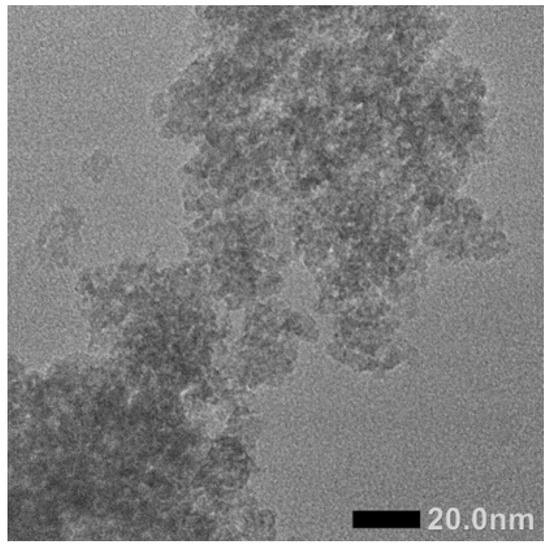
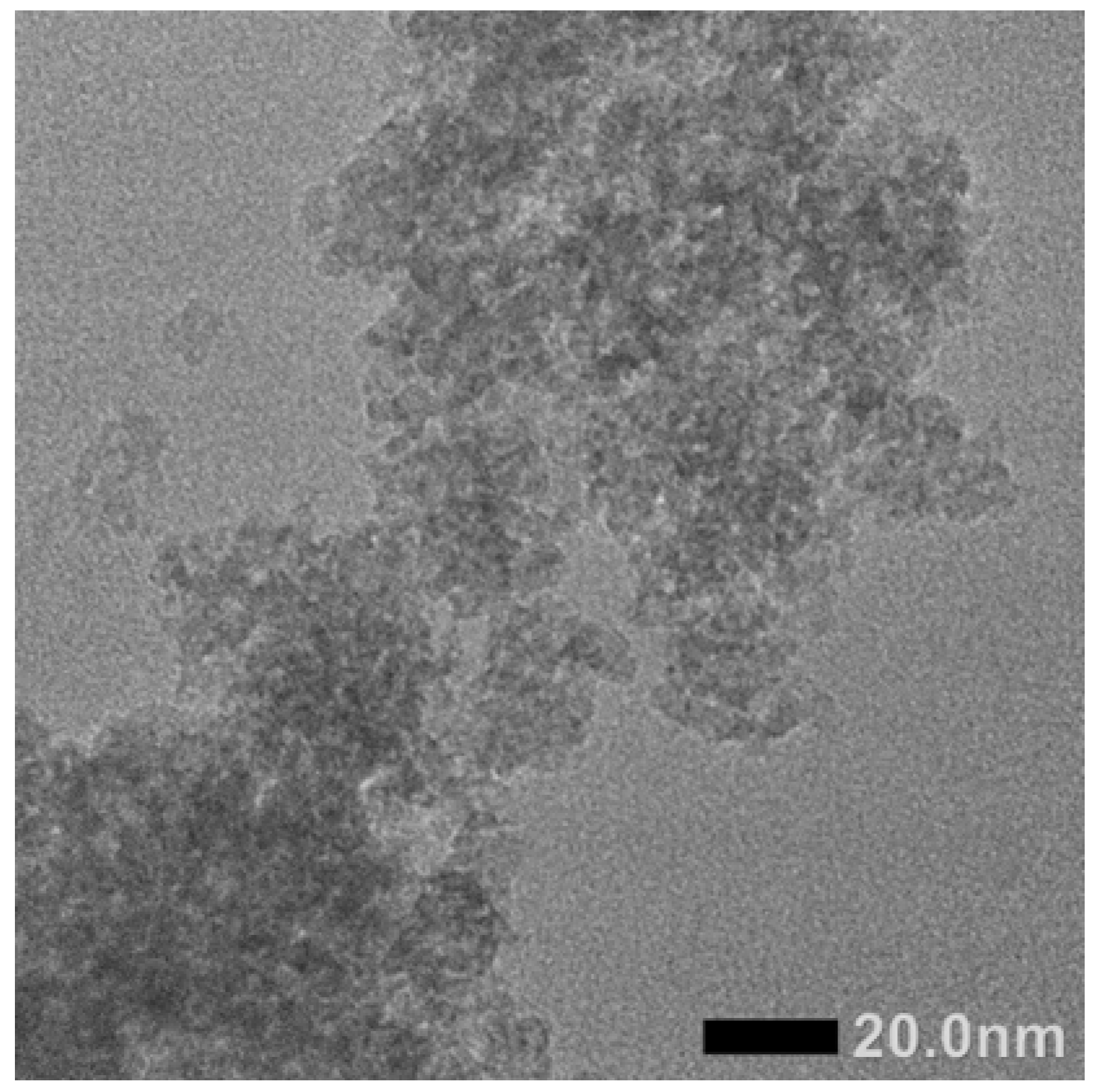
The morphology and particle size of nano-TiO2 were examined using TEM (Figure 1).
Figure 1.
TEM image of nano-TiO2.
TEM analysis showed that the synthesized TiO2 nanoparticles were predominantly quasi-spherical to spherical, with an average particle diameter of 10.8 ± 2.6 nm (Figure 1). This particle size is within the nanoscale range reported for TiO2 prepared by solution-based synthesis routes. For comparison, Alothoum [42] summarized HRTEM observations of approximately spherical TiO2 NPs with sizes of around 12 nm, which is close to the mean diameter obtained in the present study. Ogeleka et al. (2025) also obtained spherical-shaped TiONPs with particle size 11.25 nm [43]. In contrast, Aravind et al. [31] reported larger TiO2 particles of approximately 32–48 nm by SEM and crystallite sizes of 31–42 nm by XRD following hydrothermal synthesis and subsequent thermal treatment. The differences among these studies may arise from variations in precursor chemistry, reaction temperature, post-synthesis thermal treatment, and the characterization method used. In particular, crystallite sizes derived from XRD are not necessarily directly equivalent to particle diameters measured by TEM. Partial clustering of the NPs was also observed in the TEM micrographs, which may reflect a combination of intrinsic interparticle attraction, including van der Waals interactions, and aggregation generated or enhanced during drying of the TEM specimen.
3.2. Characterization of SA/Nano-TiO2 Composite Film
3.2.1. Thickness and Mechanical Properties
The incorporation of TiO2 NPs slightly reduced the average thickness of the SA films from 0.022 ± 0.007 mm to 0.0197 ± 0.0017 mm (Table 1). Although the reduction was relatively small, the lower standard deviation observed for the SA/TiO2 film indicates improved thickness uniformity. The more homogeneous thickness distribution may be attributed to the enhanced dispersion of TiO2 NPs achieved through ultrasonic homogenization, which promoted a more stable film-forming suspension and minimized local sedimentation during solvent evaporation [44].
Table 1.
Thickness, mechanical, barrier, and optical properties of SA and SA/nano-TiO2 composite films.
The mechanical properties of the SA films were markedly influenced by the incorporation of TiO2 NPs (Table 1). Compared with the single SA film, the SA/TiO2 composite exhibited higher stiffness and tensile strength but lower flexibility, indicating that TiO2 NPs effectively reinforced the polymer matrix. The Young’s modulus increased from 874.50 ± 122.32 MPa for the SA film to 1046.68 ± 265.32 MPa for the SA/TiO2 composite, corresponding to an increase of approximately 19.7%. Similarly, the tensile strength increased by approximately 32.3%, from 30.55 ± 6.31 MPa to 40.42 ± 10.33 MPa. In contrast, the elongation at break decreased markedly from 27.73 ± 7.24% to 12.52 ± 3.74%, representing a reduction of approximately 54.8%.
The simultaneous increase in Young’s modulus and tensile strength, together with the decrease in elongation at break, demonstrates the reinforcing effect of TiO2 NPs within the SA matrix. Due to their high specific surface area and abundant surface hydroxyl groups, TiO2 NPs can establish hydrogen-bonding interactions with the hydroxyl and carboxyl groups of SA [45,46]. These interfacial interactions enhance the compatibility between the inorganic nanofiller and the polymer matrix and facilitate efficient stress transfer during tensile deformation [47]. Consequently, the composite films exhibited greater rigidity and mechanical resistance than the single SA films. The reduction in elongation at break is consistent with the increased rigidity of the composite network. The incorporation of rigid inorganic nanoparticles limits the ability of polymer chains to undergo molecular rearrangement during stretching, thereby reducing film extensibility before fracture. From an application perspective, the improved tensile strength and stiffness suggest that the SA/TiO2 composite films possess greater structural integrity and resistance to mechanical damage during coating application, handling, packaging, and refrigerated storage. Although the reduced flexibility may slightly decrease the deformability of the films, the mechanical performance achieved in the present study remains suitable for edible coating applications, where sufficient strength is generally more critical than high extensibility.
3.2.2. WVTR and WVP
The incorporation of nano-TiO2 significantly reduced both the WVTR and WVP of the SA films (Table 1). Specifically, WVTR decreased from 16.32 ± 0.68 to 13.76 ± 0.34 gm−2h−1, while WVP decreased from (9.02 ± 0.37) × 10−12 to (6.82 ± 0.17) × 10−12 gm−1s−1Pa−1 (p < 0.05). This corresponds to an approximately 24.4% reduction in WVP after incorporation of nano-TiO2.
The lower WVP observed in the present study may be associated with increased diffusion-path tortuosity after incorporation of the inorganic phase and with interactions between TiO2 and hydrophilic groups in the SA matrix [44,47]. Secondly, the FTIR results showed that TiO2 NPs form hydrogen bonds with the hydroxyl (–OH) and carboxylate (–COO−) groups of SA. This interfacial interaction was expected to partially occupy hydrophilic sites that would otherwise adsorb and transport water molecules. This interpretation agrees with reports on other SA/TiO2 and chitosan-SA/TiO2 systems, where barrier or preservation improvements have similarly been linked to the composite’s overall structural and mechanical integrity rather than to a single mechanism.
3.2.3. FTIR Spectroscopy
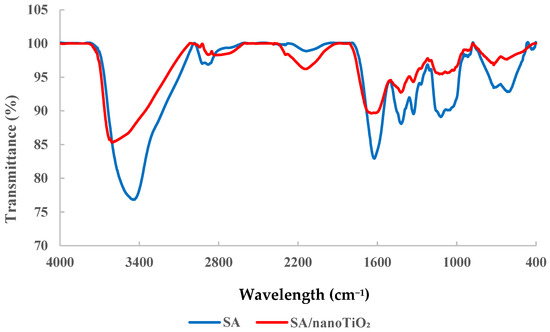
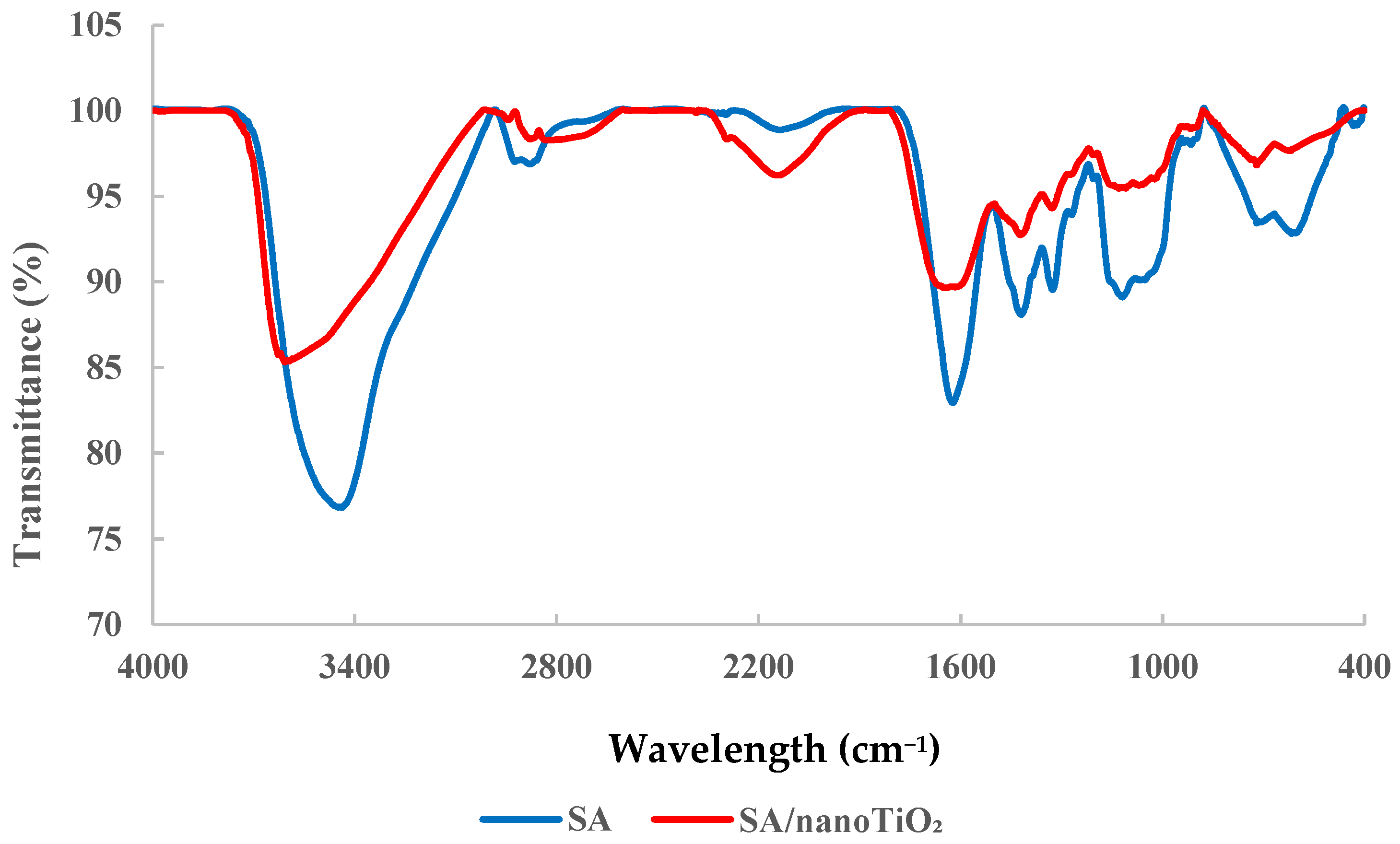
The FTIR spectra of both SA and SA/nano-TiO2 films exhibited the characteristic absorption bands of SA, indicating that nano-TiO2 incorporation did not alter the polymeric structure (Figure 2).
Figure 2.
FTIR spectrum of SA and SA/TiO2 composite films.
A broad absorption band centered at approximately 3300–3400 cm−1 was assigned to the stretching vibration of hydroxyl (–OH) groups originating from SA, glycerol, and adsorbed water molecules. Compared with the SA film, the –OH band of the SA/TiO2 film became slightly broader and shifted toward a lower wavenumber, suggesting the formation of stronger hydrogen-bonding interactions between the surface (–OH) groups of TiO2 NPs and the (–OH) and carboxyl groups (–COO−) of SA. The weak absorption bands observed at approximately 2920–2850 cm−1 correspond to the asymmetric and symmetric stretching vibrations of aliphatic C–H groups associated with glycerol and the polysaccharide backbone. The characteristic bands at approximately 1600 cm−1 and 1410 cm−1 were attributed to the asymmetric and symmetric stretching vibrations of (–COO−) groups of SA, respectively. In the SA/TiO2 film, these bands exhibited a slight reduction in intensity together with a minor shift in band position, indicating interactions between TiO2 NPs and the carboxylate groups of SA. These interactions are generally attributed to hydrogen bonding and electrostatic attraction at the organic–inorganic interface, which improve NPs dispersion within the polymer matrix. The strong absorption band located at approximately 1020–1090 cm−1 corresponds to C–O and C–O–C stretching vibrations of the polysaccharide backbone. The position of this band remained essentially unchanged after TiO2 incorporation, although a slight decrease in intensity was observed, suggesting that the primary glycosidic structure of SA was preserved.
The FTIR results indicate that TiO2 NPs were physically incorporated into the SA matrix through hydrogen-bonding and interfacial interactions. These molecular interactions are expected to restrict polymer chain mobility and strengthen the interfacial adhesion between the organic matrix and the inorganic NPs, which is consistent with the significant improvement in Young’s modulus and tensile strength observed for SA/TiO2 films.
3.3. Effect of SA/TiO2 Coatings on Physicochemical Attributes of Longan
3.3.1. Weight Loss Percentage
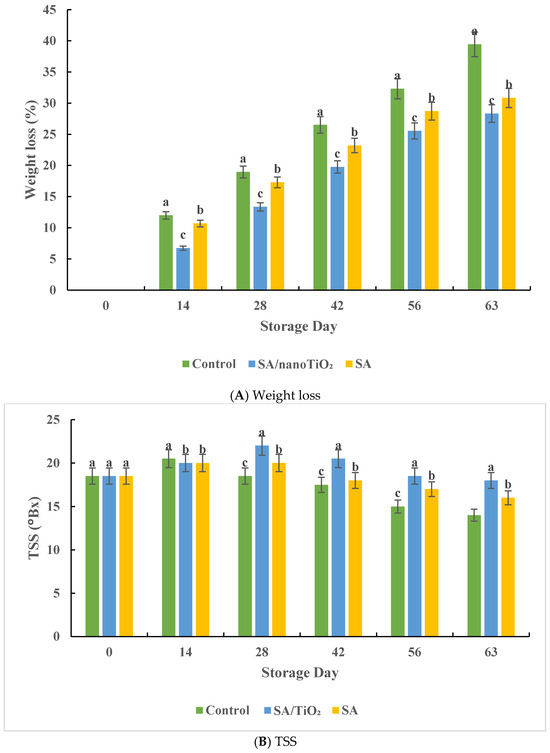
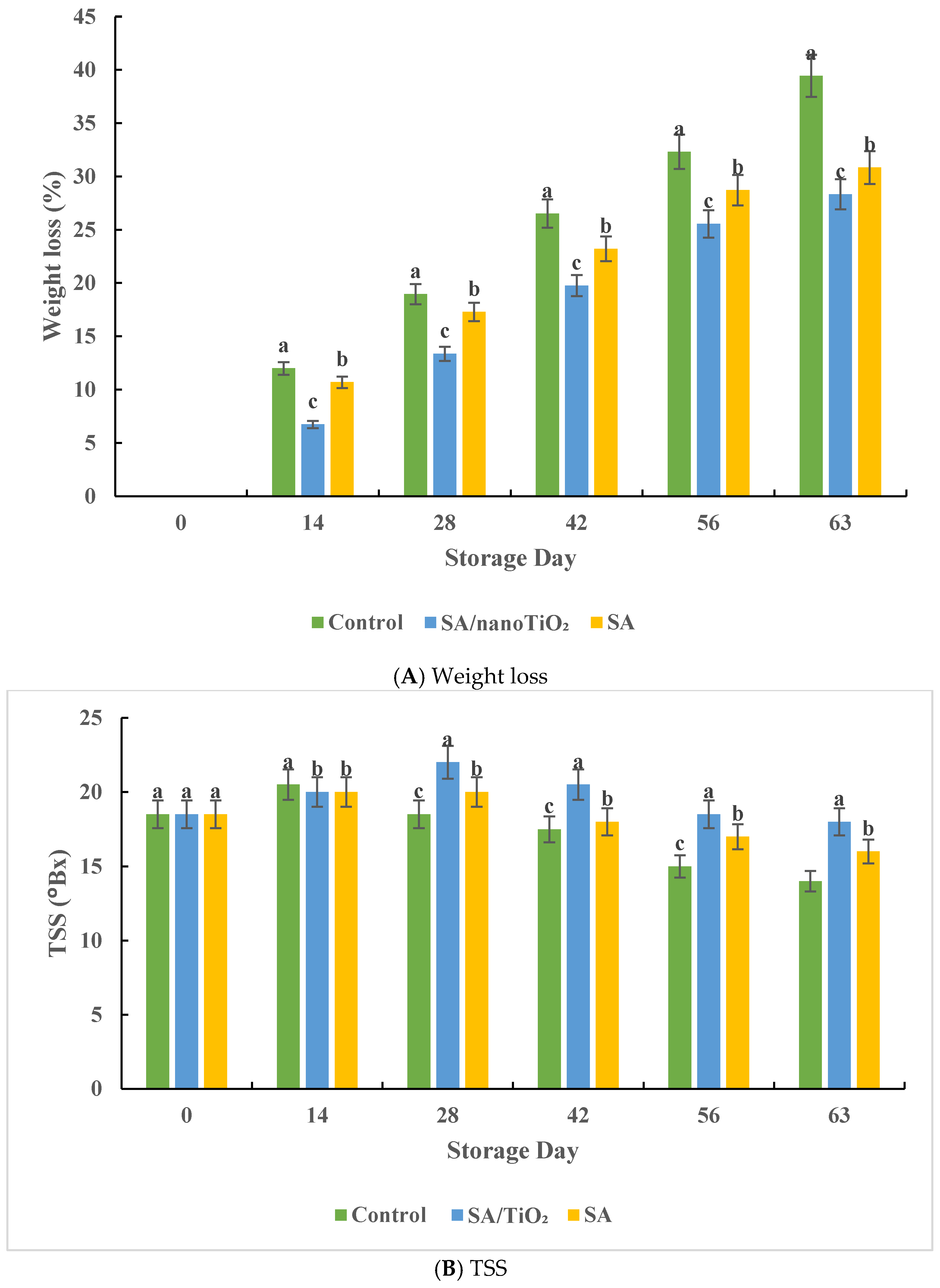
As shown in Figure 3A, weight loss increased progressively in all treatments throughout the 63-day storage period. However, coated fruits exhibited significantly lower weight loss than the uncoated control, particularly during the later stages of storage (p < 0.05). At day 63, the control fruit showed the highest weight loss (around 39%), whereas the SA/TiO2-coated fruit exhibited the lowest value (around 28%), representing a reduction of nearly 28% compared with the control. The SA coating showed an intermediate effect.
Figure 3.
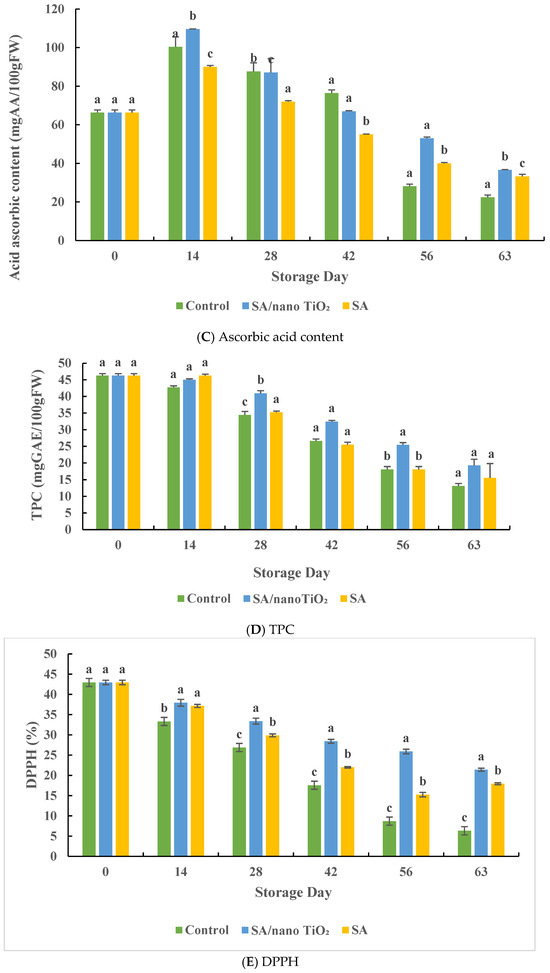
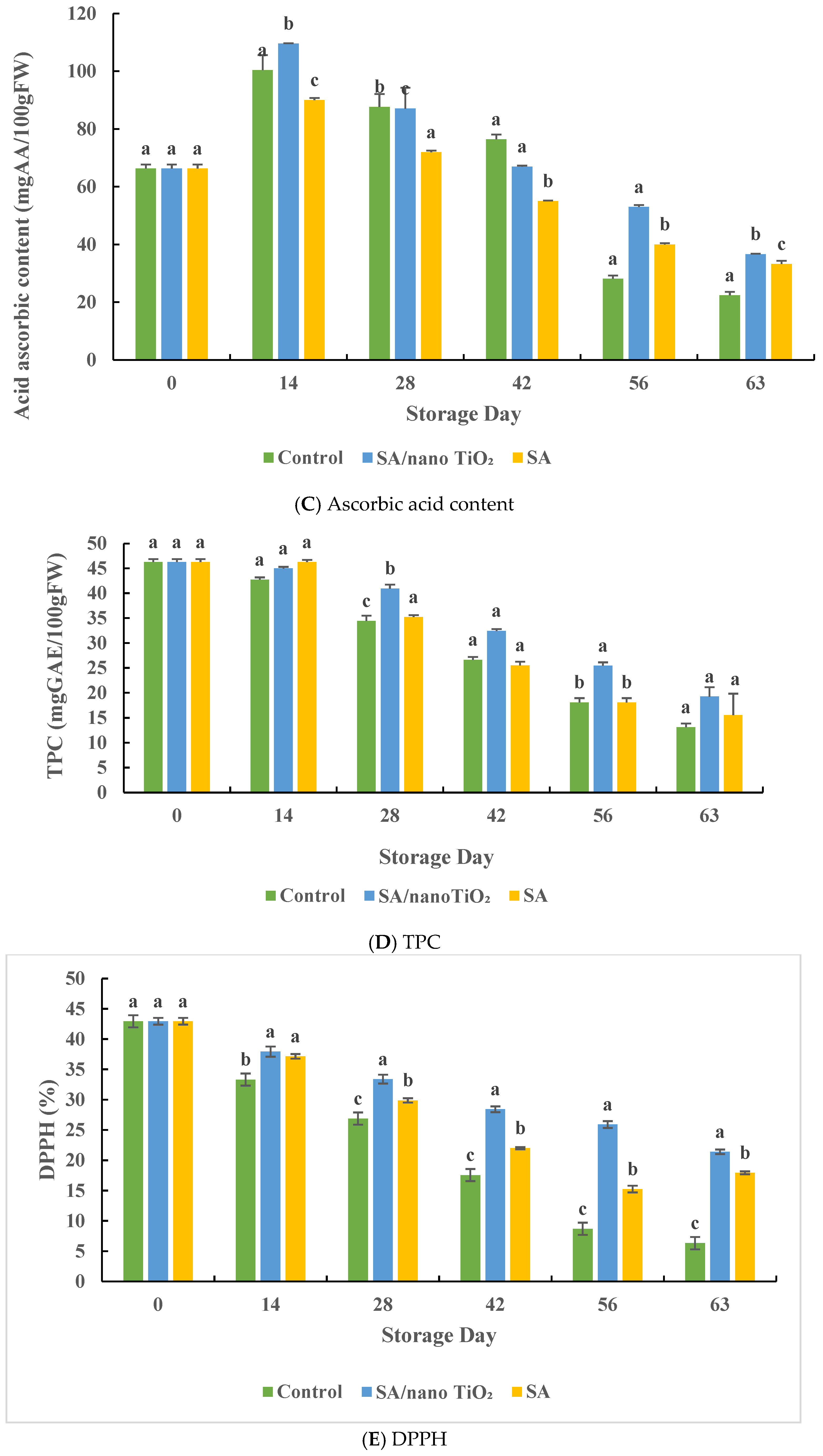
Quality changes in longan with different treatments during a 63-day storage period. (A) Weight loss, (B) TSS, (C) Ascorbic acid, (D) TPC and (E) DPPH scavenging activity. Different lowercase letters (a, b, c) indicate significant differences among treatments at the same storage day (p < 0.05).
These findings agree with previous work on coated longan. Lin et al. reported that chitosan- and carrageenan-based coatings reduced water loss and weight loss in postharvest longan, with the magnitude of the effect depending strongly on coating composition and concentration [5]. More recently, Lv et al. also observed lower weight loss in chitosan-treated longan together with improved retention of several quality attributes [36]. Similar reductions in weight loss have been reported for other fruits treated with TiO2-containing coatings. SA/TiO2-based coatings reduced weight loss and maintained quality in peaches during ambient storage, while a starch/chitosan coating containing 1% TiO2 reduced weight loss and delayed ripening of papaya during refrigerated storage [24,48]. Direct comparison of the absolute values among these studies is difficult because fruit species, surface morphology, coating formulation, storage temperature, relative humidity, and storage duration differed substantially. In particular, the 63-day refrigerated period evaluated here is considerably longer than the 7-day peach and 24-day papaya experiments.
The reduced weight loss in the present study is supported directly by the lower WVTR/WVP of the SA/TiO2 film and may therefore be partly associated with reduced moisture transfer. Although edible coatings can also influence fruit respiration and gas exchange, respiration rate and internal O2/CO2 concentrations were not measured in this study. Consequently, modified respiration or gas exchange cannot be confirmed as mechanisms responsible for the observed weight-loss response.
3.3.2. TSS
The TSS content initially increased in all treatments, reached a maximum on day 28, then gradually declined (Figure 3B). During storage, the SA/TiO2-coated fruit consistently maintained higher TSS values than the SA-coated and uncoated fruits. At the end of storage, the TSS of the SA/TiO2-coated fruit remained at approximately 18 °Brix, whereas the control decreased to approximately 14 °Brix, indicating a slower depletion of soluble solids.
Changes in soluble solids during postharvest storage reflect the combined effects of ripening, conversion of reserve carbohydrates, water loss, and metabolic utilization of sugars. The slower decrease in TSS observed in coated fruits suggests that the edible coatings may have reduced respiratory metabolism and delayed carbohydrate consumption. For example, Meng et al. have shown that SA/TiO2 composite films improved the preservation performance of coated fruit owing to enhanced coating stability and mechanical reinforcement of the polymer matrix [46]. Schenk et al. further concluded that the incorporation of TiO2 primarily improved the durability of alginate coatings, thereby extending their protective function rather than dramatically altering their intrinsic water vapor permeability [49]. Similarly, Vallejo-Ureña et al. (2024) emphasized that the effectiveness of alginate coatings is governed by their structural integrity and ability to regulate physiological metabolism during storage [50]. Thus, the SA/TiO2 nanocomposite coating effectively delayed the depletion of soluble solids during refrigerated storage, thereby maintaining carbohydrate reserves and contributing to the preservation of the postharvest quality of Edor longan fruit.
3.3.3. Ascorbic Acid Content
The initial vitamin C content was approximately 66 mg AA/100 g FW for all treatments, with no significant differences among groups (Figure 3C). During storage, the ascorbic acid content reached a maximum on day 14, then gradually declined. The SA/TiO2-coated fruit consistently retained higher vitamin C levels than the SA-coated and uncoated fruits during the later storage period. At day 63, the SA/TiO2 treatment maintained approximately 36 mg AA/100 g FW, compared with 33 mg AA/100 g FW for the SA coating and only 22 mg AA/100 g FW for the control (p < 0.05).
Initially, ascorbic acid increased as metabolic activity and biosynthesis continued during the early postharvest stage, yet subsequently declined due to oxidative degradation associated with respiration and senescence. The slower reduction observed in coated fruits indicates that the edible coatings effectively delayed oxidative deterioration by moderating gas exchange and reducing metabolic activity [51]. The SA/TiO2 nanocomposite coating effectively preserved ascorbic acid during refrigerated storage, thereby contributing to the maintenance of the nutritional quality of Edor longan fruit.
The initial increase in ascorbic acid may be associated with continued metabolic activity during the early postharvest period, whereas the subsequent decline is consistent with oxidative degradation during fruit senescence. The slower decrease in coated fruits suggests that the coatings delayed postharvest oxidative deterioration, potentially by modifying gas exchange and reducing metabolic activity [52]. The greater retention observed with SA/TiO2 may also be related to the barrier and optical characteristics of the composite film, which could limit the exposure of fruit tissues to environmental factors that promote oxidation. The higher ascorbic acid content in SA/TiO2-coated fruit demonstrated lowered loss of ascorbic acid during refrigerated storage.
3.3.4. TPC
The initial TPC was approximately 47 mgGAE/100 gFW with no significant differences among all treatments (Figure 3D). Then, TPC gradually decreased throughout storage, reflecting the progressive degradation of phenolic compounds during postharvest senescence. However, the decline was significantly slower in coated fruit, particularly in the SA/TiO2 treatment (p < 0.05). At day 28, the SA/TiO2-coated fruit retained the highest TPC (approximately 41 mgGAE/100 gFW), compared with 35 and 34 mgGAE/100 gFW for the SA-coated and control fruits, respectively. By day 63, the TPC of the SA/TiO2-coated fruit remained approximately 19 mgGAE/100 gFW, whereas the control retained only 13 mgGAE/100 gFW.
The continuous decrease in TPC during storage can be associated with oxidative reactions and enzymatic degradation of phenolic compounds, including reactions involving polyphenol oxidase and peroxidase [53]. The slower decline observed in coated fruit indicates that the coatings were effective in delaying the loss of phenolic constituents. This effect may be related to the ability of alginate-based coatings to modify gas exchange and reduce exposure of fruit tissues to oxygen, thereby slowing oxidative processes and senescence [54].
3.3.5. DPPH Scavenging Activity
As shown in Figure 3E, the initial antioxidant activity was approximately 43% for all treatments, then decreased progressively throughout refrigerated storage, indicating a gradual loss of antioxidant capacity. However, coated fruits retained significantly higher antioxidant activity than the uncoated control (p < 0.05). The SA/TiO2-coated fruit consistently exhibited the highest DPPH values during storage. At day 63, the antioxidant activity of the SA/TiO2-coated fruit remained approximately 22%, compared with 18% for the SA-coated fruit and only 6% for the control.
The progressive reduction in DPPH scavenging activity is consistent with the depletion and degradation of endogenous antioxidant compounds during postharvest senescence. The higher antioxidant activity retained by coated fruit is consistent with the greater preservation of ascorbic acid and phenolic compounds observed in the present study, because these constituents contribute substantially to the antioxidant capacity of fruit tissues. Among the treatments, the SA/TiO2 coating provided the highest retention of antioxidant activity, suggesting that this formulation was more effective in delaying the deterioration of antioxidant constituents during storage. Previous research has similarly reported improved retention of antioxidant compounds in TiO2-containing edible-film systems, which has been associated with reduced oxidative deterioration during storage [55,56]. The preservation of DPPH scavenging activity, together with the higher retention of ascorbic acid and TPC, demonstrates the potential of the SA/TiO2 coating to delay the loss of antioxidant capacity in Edor longan during refrigerated storage.
Although photocatalytic ethylene degradation and reactive oxygen species generation have been reported for photoactivated TiO2-based materials, these processes were not evaluated in the present study. The fruits were stored under refrigerated conditions without a controlled photocatalytic-light treatment, and neither ethylene degradation nor photocatalytic activity was measured. Therefore, photocatalysis cannot be invoked as a demonstrated preservation mechanism in the present system.
3.3.6. SEM Analysis
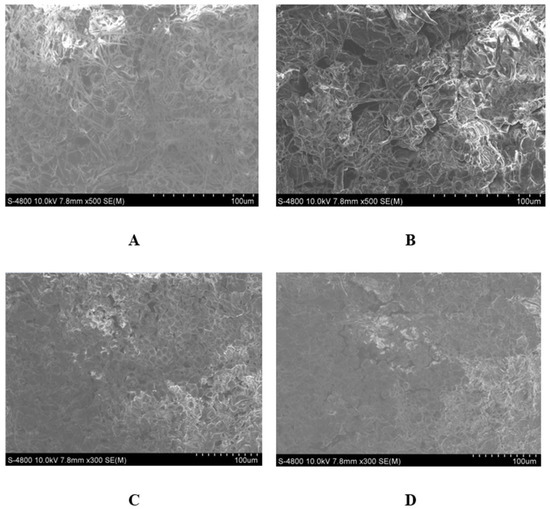
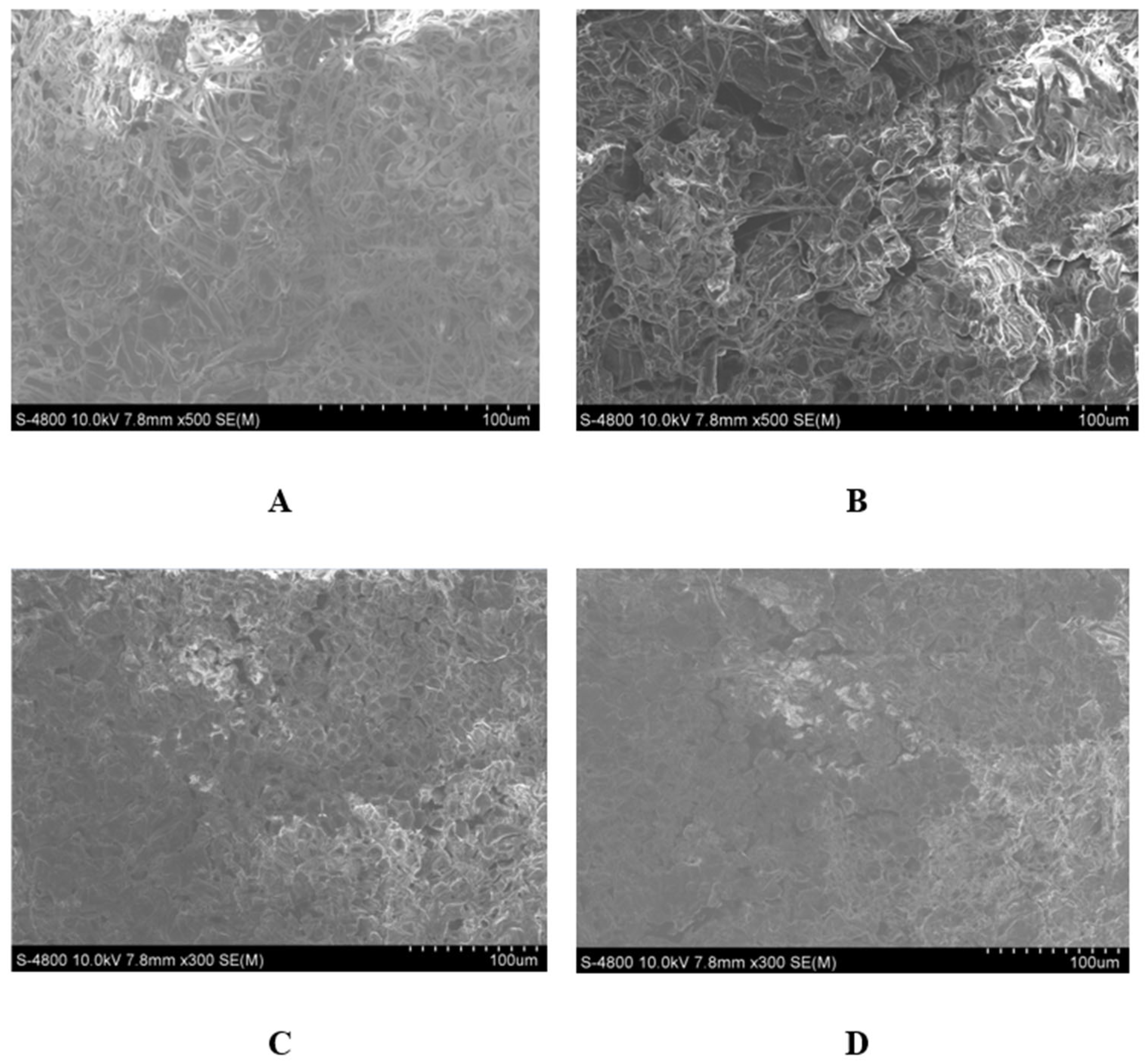
SEM was employed to investigate the changes in the pericarp microstructure of Edor longan during refrigerated storage (Figure 4). At harvest (day 0), the uncoated fruit exhibited a relatively intact epidermal structure with compact and well-organized cells (Figure 4A). Following coating application, the SA/TiO2-coated fruit showed a continuous and homogeneous surface layer that uniformly covered the epidermis (Figure 4B), indicating coverage of the nanocomposite coating on the fruit surface.
Figure 4.
SEM images of the pericarp surface of Edor longan fruit. (A) Uncoated fruit at day 0; (B) SA/TiO2-coated fruit at day 0; (C) Uncoated fruit after 63 days of storage at 4 °C; and (D) SA/TiO2-coated fruit after 63 days of refrigerated storage at 4 °C. Scale bar = 100 μm.
After 63 days of storage, pronounced structural deterioration was observed in the uncoated fruit (Figure 4C). The epidermal tissues became collapsed and irregular, accompanied by numerous voids and surface cracks, indicating severe moisture loss and tissue shrinkage during storage. In contrast, the SA/TiO2-coated fruit retained a considerably more compact and continuous surface morphology (Figure 4D), with fewer structural defects and reduced cell collapse. The SEM observations agree well with the physicochemical results presented in Section 3.3.1, Section 3.3.2, Section 3.3.3, Section 3.3.4 and Section 3.3.5. The improved surface integrity of the coated fruit explains its lower weight loss and superior retention of soluble solids, vitamin C, phenolic compounds, and antioxidant activity throughout storage [57].
The specific contribution of the present study lies in the combined evaluation of film-level properties and long-term postharvest responses of Edor longan. Unlike previous studies that mainly evaluated TiO2-containing coatings on peach, tomato, mango, banana, or papaya over shorter storage periods, the present work examined an SA/TiO2 formulation during 63 days of refrigerated storage and linked changes in film mechanical and water-vapor barrier properties with weight loss, TSS, antioxidant-related quality attributes, and pericarp morphology of longan. Nevertheless, the study was designed primarily to evaluate preservation performance rather than to establish the physiological or molecular mechanisms responsible for these effects. Respiration rate, ethylene production, internal gas composition, oxidative-stress biomarkers, activities of browning-related enzymes, antimicrobial activity, and photocatalytic activity were not determined. Therefore, mechanisms involving modified gas exchange, reduced respiration, suppression of oxidative stress, enzymatic inhibition, or TiO2 photocatalysis remain hypotheses that require direct experimental verification. Differences between the present findings and previous reports should also be interpreted in light of variations in fruit species, coating composition, nanoparticle concentration, coating thickness, storage temperature and humidity, light exposure, and storage duration. Future mechanistic studies incorporating these measurements will be required to determine how the SA/TiO2 coating produces the preservation effects observed here.
4. Conclusions
In this study, an SA-based nanocomposite edible coating containing TiO2 nanoparticles was developed and evaluated for preserving the quality of Edor longan during refrigerated storage. Incorporation of TiO2 significantly improved the tensile strength and Young’s modulus of the SA film and enhanced its water vapor barrier performance. SA/TiO2-coated fruit showed approximately 28% weight loss, compared with approximately 39% for uncoated fruit, and retained higher levels of ascorbic acid, TPC, and DPPH radical-scavenging activity than the uncoated control during 63 days of storage at 4 °C. SEM observations also showed less pronounced deterioration of the pericarp microstructure in the coated fruit after storage. These results indicate that SA/TiO2 composite coating can effectively delay selected physicochemical and antioxidant changes in Edor longan under cold storage conditions.
An important limitation of the present study concerns the food-safety and regulatory status of TiO2 NPs when considering the proposed coating for edible food applications. In 2021, the European Food Safety Authority (EFSA) concluded that titanium dioxide (E171) could no longer be considered safe when used as a food additive because a concern regarding genotoxicity could not be ruled out [57]. Subsequently, the European Commission removed the authorization for the use of E171 in foods through Commission Regulation (EU) 2022/63 [58]. In the present study, the SA/TiO2 coating was applied to the longan pericarp, which is normally removed before consumption of the edible pulp. Therefore, direct dietary exposure to TiO2 NPs may be limited under normal consumption conditions. However, this assumption was not experimentally verified because migration of TiO2 NPs from the coating into the edible pulp and the resulting dietary exposure were not assessed. Accordingly, the potential migration, consumer exposure, toxicological safety, and applicable regulatory requirements should be specifically evaluated before this coating system is considered for practical application to edible food products.
Author Contributions
Conceptualization, T.T.L. and L.G.B.; methodology, V.T.P. and T.P.M.N. software, M.K.N., T.P.M.N. and T.C.Q.N.; validation, T.C.Q.N. and V.M.N.; formal analysis, T.T.L. and L.G.B.; investigation, L.G.B. and V.M.N.; resources, V.T.P.; data curation, T.T.L. and D.T.N.P.; writing—original draft preparation, T.P.M.N., M.K.N. and T.T.L.; writing—review and editing, D.T.N.P.; supervision, L.G.B.; project administration, V.T.P. and V.M.N. All authors have read and agreed to the published version of the manuscript.
Funding
This research is funded by Nguyen Tat Thanh University, Ho Chi Minh City, Vietnam under grant number (2026.01.76/HĐ-KHCN).
Institutional Review Board Statement
Not applicable.
Informed Consent Statement
Not applicable.
Data Availability Statement
The data presented in this study are available from the corresponding author upon reasonable request.
Acknowledgments
The authors gratefully acknowledge Nguyen Tat Thanh University for providing laboratory facilities and support for this study.
Conflicts of Interest
The authors declare no conflicts of interest.
References
- Chen, Y.; Xu, X.; Chen, X.; Zhang, S.; Chen, Y.; Lai, Z.; Lin, Y. The longan (Dimocarpus longan) genome. In Underutilised Crop Genomes; Chapman, M.A., Ed.; Springer International Publishing: Cham, Switzerland, 2022; pp. 87–109. [Google Scholar] [CrossRef] [Scilit]
- Tran Van, H.; Tran Sy, H. Longan and rambutan in the Mekong Delta, Vietnam: A review of technologies to improve flowering and fruit setting. CTU J. Innov. Sustain. Dev. 2019, 11, 7–23. [Google Scholar] [CrossRef] [Scilit]
- Van, C.K.; Hoang, Q.B.; Nguyen, T.V. Nutrition, phytochemical compounds and biological activities of longan (Dimocarpus longan L.) fruit: A review. AIP Conf. Proc. 2023, 2907, 020003. [Google Scholar] [CrossRef] [Scilit]
- Li, J.; Luo, T.; Xu, J.; Zhu, D.; Han, D.; Wu, Z. Comprehensive evaluation of the ‘shixia’ longan quality under postharvest ambient storage: The volatile compounds played a critical part. Horticulturae 2024, 10, 585. [Google Scholar] [CrossRef] [Scilit]
- Lin, M.G.; Lasekan, O.; Saari, N.; Khairunniza-Bejo, S. Effect of chitosan and carrageenan-based edible coatings on post-harvested longan (Dimocarpus longan) fruits. CyTA—J. Food 2018, 16, 490–497. [Google Scholar] [CrossRef] [Scilit]
- Karnwal, A.; Kumar, G.; Singh, R.; Selvaraj, M.; Malik, T.; Al Tawaha, A.R.M. Natural biopolymers in edible coatings: Applications in food preservation. Food Chem. X 2025, 25, 102171. [Google Scholar] [CrossRef] [Scilit] [PubMed]
- Pham, D.T.N.; Nguyen, T.T.; Nguyen, N.H.K.; Truc, T.T. Biopolymer application for preservation of tropical fruits and vegetables. J. Food Process. Preserv. 2025, 2025, 7808544. [Google Scholar] [CrossRef] [Scilit]
- Li, S.; Yang, J.; Fei, T.; Khan, M.R.; Ahmad, N.; Yang, T.; Zhang, W. Application of metal phenol-functionalized alginate packaging film in passion fruit preservation. LWT 2025, 234, 118603. [Google Scholar] [CrossRef] [Scilit]
- Yu, K.; Yang, L.; Zhang, S.; Zhang, N.; Liu, H. Strong, tough self-healing multi-functional sodium alginate-based edible composite coating for banana preservation. Int. J. Biol. Macromol. 2024, 281, 136191. [Google Scholar] [CrossRef] [Scilit] [PubMed]
- He, J.; Zhang, W.; Goksen, G.; Khan, M.R.; Ahmad, N.; Cong, X. Functionalized sodium alginate composite films based on double-encapsulated essential oil of wampee nanoparticles: A green preservation material. Food Chem. X 2024, 24, 101842. [Google Scholar] [CrossRef] [Scilit] [PubMed]
- Wang, W.; Yu, J.; Huang, Y.; Li, B.-J.; Shen, W.; Zhang, W.; Xia, Y.; Lin, Q. Preparation of sodium alginate/sodium carboxymethyl cellulose composite coating film and evaluation of its effects on mango preservation. Food Chem. 2025, 495, 146611. [Google Scholar] [CrossRef] [Scilit] [PubMed]
- Liu, Y.; Weng, L.; Dai, S.; Liu, M.; Guo, X.; Meng, F. Alginate-based edible coating with magnoliae essential oil/β-cyclodextrin inclusion complex for Kyoho grape preservation. LWT 2024, 210, 116874. [Google Scholar] [CrossRef] [Scilit]
- Luan, Q.; Wang, Y.; Chen, Y.; Chen, H. Review on improvement of physicochemical properties of sodium alginate-based edible films. J. Food Sci. 2025, 90, e70016. [Google Scholar] [CrossRef] [Scilit] [PubMed]
- Mbonambi, N.P.; Adeyemi, J.O.; Seke, F.; Fawole, O.A. Fabrication and application of bio-based natural polymer coating/film for food preservation: A review. Processes 2025, 13, 2436. [Google Scholar] [CrossRef] [Scilit]
- Marangoni Júnior, L.; da Silva, R.G.; Vieira, R.P.; Alves, R.M.V. Water vapor sorption and permeability of sustainable alginate/collagen/SiO2 composite films. LWT 2021, 152, 112261. [Google Scholar] [CrossRef] [Scilit]
- Wang, W.; Huang, Y.; Pan, Y.; Dabbour, M.; Dai, C.; Zhou, M.; He, R. Sodium alginate modifications: A critical review of current strategies and emerging applications. Foods 2025, 14, 3931. [Google Scholar] [CrossRef] [Scilit] [PubMed]
- Tran, T.H.; Le, X.C.; Tran, T.N.M.; Nguyen, N.T.T.; Pham, B.N.; Vu, D. Nano selenium–alginate edible coating extends hydroponic strawberry shelf life and provides selenium fortification as a micro-nutrient. Food Biosci. 2023, 53, 102597. [Google Scholar] [CrossRef] [Scilit]
- Sharma, A.; Singh, A.K. Sodium alginate: A green biopolymer resource-based antimicrobial edible coating to enhance fruit shelf-life: A review. Colloids Interfaces 2025, 9, 32. [Google Scholar] [CrossRef] [Scilit]
- Ziyazadeh, M.; Ghayour, I.; Chundory, P.; Ehtesabi, H. Active nanocomposite film for sustainable packaging: A study on sodium alginate, polyvinyl alcohol, honey, and zinc oxide nanoparticles. Next Mater. 2025, 9, 101216. [Google Scholar] [CrossRef] [Scilit]
- Nie, B.; Wang, H.; Zhang, Y.; Rao, C.; Wang, H.; Gao, X.; Li, W.; Niu, B. Effect of sodium alginate/phosphate-stabilized amorphous calcium carbonate nanoparticles on chitosan membranes. Food Biosci. 2022, 46, 101570. [Google Scholar] [CrossRef] [Scilit]
- Li, H.; Li, W.; Zhang, J.; Xie, G.; Xiong, T.; Xu, H. Preparation and characterization of sodium alginate/gelatin/Ag nanocomposite antibacterial film and its application in the preservation of tangerine. Food Packag. Shelf Life 2022, 33, 100928. [Google Scholar] [CrossRef] [Scilit]
- Metha, C.; Pawar, S.; Suvarna, V. Recent advancements in alginate-based films for active food packaging applications. Sustain. Food Technol. 2024, 2, 1246–1265. [Google Scholar] [CrossRef] [Scilit]
- Zhang, L.; Sathiyaseelan, A.; Zhang, X.; Lu, Y.; Wang, M.-H. Development and analysis of silver nitroprusside nanoparticle-incorporated sodium alginate films for banana browning prevention. Nanomaterials 2024, 14, 292. [Google Scholar] [CrossRef] [Scilit] [PubMed]
- Khan, O.A.; Zaidi, S.; Islam, R.U.; Naseem, S.; Junaid, P.M. Enhanced shelf-life of peach fruit in alginate based edible coating loaded with TiO2 nanoparticles. Prog. Org. Coat. 2023, 182, 107688. [Google Scholar] [CrossRef] [Scilit]
- Elnur, E.; Wang, W.; Thakur, K.; Ma, W.-P.; Ni, Z.-J.; Wei, Z.-J. Preparation of composite film incorporating pomegranate peel polyphenols/ginger essential oil/sodium alginate/Nano TiO2 and its application in post-harvest grapes preservation. Food Chem. 2026, 513, 148953. [Google Scholar] [CrossRef] [Scilit] [PubMed]
- Perera, K.Y.; Sharma, S.; Duffy, B.; Pathania, S.; Jaiswal, A.K.; Jaiswal, S. An active biodegradable layer-by-layer film based on chitosan-alginate-TiO2 for the enhanced shelf life of tomatoes. Food Packag. Shelf Life 2022, 34, 100971. [Google Scholar] [CrossRef] [Scilit]
- Wang, T.; Yang, Z.; Zhang, C.; Zhai, X.; Zhang, X.; Huang, X.; Li, Z.; Zhang, X.; Zou, X.; Shi, J. Chitosan-cinnamon essential oil/sodium alginate-TiO2 bilayer films with enhanced bioactive retention property: Application for mango preservation. Int. J. Biol. Macromol. 2022, 222, 2843–2854. [Google Scholar] [CrossRef] [Scilit] [PubMed]
- Nugroho, F.G.; Suendo, V.; Dwivany, F.M.; Cho, S.; Ahmed, A.T.A.; Ansari, A.S. Advances in active food packaging: Utilizing TiO2 photocatalyst as an ethylene scavenger to extend the shelf life of fruits. ACS Food Sci. Technol. 2025, 5, 3662–3676. [Google Scholar] [CrossRef] [Scilit]
- Du, H.; Said, N.S.; Lee, W.Y. Development of pH-sensitive intelligent films incorporating betacyanin from dragon fruit peel and TiO2 nanoparticles for monitoring fish fillet freshness. Sustain. Chem. Pharm. 2024, 42, 101839. [Google Scholar] [CrossRef] [Scilit]
- CXS 220-1999; Standard for Longans. Codex Alimentarius Commission, Food and Agriculture Organization of the United Nations & World Health Organization: Geneva, Switzerland, 2011.
- Aravind, M.; Amalanathan, M.; Mary, M.S.M. Synthesis of TiO2 nanoparticles by chemical and green synthesis methods and their multifaceted properties. SN Appl. Sci. 2021, 3, 409. [Google Scholar] [CrossRef] [Scilit]
- Hoang, B.N.; Vo, C.N.T.; Ngo, T.C.Q.; Bach, L.G. Green synthesis of Fe2O3 from seedless lemon peel extract for anionic dye adsorption. Discov. Nano 2026, 21, 117. [Google Scholar] [CrossRef] [Scilit] [PubMed]
- Naik, S.V.C.S.; Dutta, R.K.; Vellanki, B.P. Enhanced mechanical properties of pectin–alginate biodegradable mulching film reinforced with halloysite nanotubes and biochar nanoparticles. Int. J. Biol. Macromol. 2026, 363, 152218. [Google Scholar] [CrossRef] [Scilit] [PubMed]
- Lavrič, G.; Oberlintner, A.; Filipova, I.; Novak, U.; Likozar, B.; Vrabič-Brodnjak, U. Functional nanocellulose, alginate and chitosan nanocomposites designed as active film packaging materials. Polymers 2021, 13, 2523. [Google Scholar] [CrossRef] [Scilit] [PubMed]
- Soltani, Z.; Tavakolipour, H.; Tabari, M. The influence of chitosan and titanium dioxide nanoparticles incorporated with polylactic acid on prolonging rye bread shelf life. J. Food Meas. Charact. 2023, 17, 1806–1816. [Google Scholar] [CrossRef] [Scilit]
- Lv, X.; Li, Y.; Chen, J.; Huang, S.; Wei, J.; Xu, S.; Guo, D.; Zhou, Y. Enhancement of postharvest longan fruit quality through chitosan (CTS)-induced modulation of energy and proline metabolism. Sci. Rep. 2025, 15, 33408. [Google Scholar] [CrossRef] [Scilit] [PubMed]
- Nguyen, T.T.; Quach, T.C.V.; Ho, T.C.; Le, V.T. Sodium alginate–carboxymethyl cellulose composite coating incorporating natamycin improves disease resistance and preserves postharvest attributes of ‘cat chu’ mango fruit. Coatings 2026, 16, 549. [Google Scholar] [CrossRef] [Scilit]
- Du, H.; He, L.; Zhang, J.; Lu, H.-X. Improving mango shelf-life using PVA composite films prepared with Zn-doped carbon quantum dots derived from crayfish shells. LWT 2024, 208, 116746. [Google Scholar] [CrossRef] [Scilit]
- Vu, N.D.; Hang, N.T.T.N.; Mi, K.D.Q.; Anh, N.H.T.; Pham, B.A. Exploring the nutritional composition, physicochemical properties, and biological characteristics of mature banana varieties (Musaceae). Food Chem. X 2025, 28, 102594. [Google Scholar] [CrossRef] [Scilit] [PubMed]
- Do, Y.V.; Le, Q.N.T.; Nghia, N.H.; Vu, N.D.; Tran, N.T.Y.; Bay, N.T.; Tran, T.T.; Bach, L.G.; Dao, T.P. Assessment of the changes in product characteristics, total ascorbic acid, total flavonoid content, total polyphenol content and antioxidant activity of dried soursop fruit tea (Annona muricata L.) during product storage. Food Sci. Nutr. 2024, 12, 2679–2691. [Google Scholar] [CrossRef] [Scilit] [PubMed]
- Pham, V.T.; Le, T.K.L.; Vu, D.N.; Tran, T.Y.N.; Bach, L.G.; Dao, T.P. Changes of physicochemical, bioactive compounds and antioxidant activity of nutritional beverages products from VD20 broken Rice in the pasteurization process. Food Chem. X 2024, 24, 102018. [Google Scholar] [CrossRef] [Scilit] [PubMed]
- Alothoum, M.A.S. A review of the synthesis, structural, and optical properties of TiO2 nanoparticles: Current state of the art and potential applications. Crystals 2025, 15, 944. [Google Scholar] [CrossRef] [Scilit]
- Ogeleka, D.F.; Oyohwose, U.A.; Elemike, E.E.; Onwudiwe, D.C. Carbon dots-titanium oxide nanocomposite for effective treatment of crude oil-contaminated water. J. Hazard. Mater. Adv. 2025, 19, 100808. [Google Scholar] [CrossRef] [Scilit]
- Chen, X.; Ding, X.; Huang, Y.; Zhao, Y.; Chen, G.; Xu, X.; Xu, D.; Jiao, B.; Zhao, X.; Liu, G. Recent advances in polysaccharide-based nanocomposite films for fruit preservation: Construction, applications, and challenges. Foods 2025, 14, 1012. [Google Scholar] [CrossRef] [Scilit] [PubMed]
- Hajareh Haghighi, F.; Mercurio, M.; Cerra, S.; Salamone, T.A.; Bianymotlagh, R.; Palocci, C.; Romano Spica, V.; Fratoddi, I. Surface modification of TiO2 nanoparticles with organic molecules and their biological applications. J. Mat. Chem. B 2023, 11, 2334–2366. [Google Scholar] [CrossRef] [Scilit] [PubMed]
- Meng, F.; Yan, X.; Zeng, J.; Tanaka, F.; Tanaka, F. Development of sodium alginate-titanium dioxide films incorporating anthocyanin for antibacterial and freshness sensing applications. LWT 2025, 229, 118198. [Google Scholar] [CrossRef] [Scilit]
- Tammina, S.K.; Priyadarshi, R.; Khan, A.; Manzoor, A.; Rahman, R.S.H.A.; Banat, F. Recent developments in alginate-based nanocomposite coatings and films for biodegradable food packaging applications. Int. J. Biol. Macromol. 2025, 295, 139480. [Google Scholar] [CrossRef] [Scilit] [PubMed]
- De Menezes, F.L.G.; De Lima Leite, R.H.; Dos Santos, F.K.G.; Aria, A.I.; Mendes Aroucha, E.M. TiO2 incorporated into a blend of biopolymeric matrices improves film properties and affects the postharvest conservation of papaya fruits under UV light. Food Chem. 2024, 433, 137387. [Google Scholar] [CrossRef] [Scilit] [PubMed]
- Schenk, S.; Bucher, M.; Herrenbauer, M.; Schmid, D.; Schmid, M. Challenges of alginate-based cast films in plastic-free food packaging applications: An overview. Polymers 2025, 17, 3061. [Google Scholar] [CrossRef] [Scilit] [PubMed]
- Ureña, M.; Carullo, D.; Phùng, T.T.-T.; Fournier, P.; Farris, S.; Lagorce, A.; Karbowiak, T. Effect of polymer structure on the functional properties of alginate for film or coating applications. Food Hydrocoll. 2024, 149, 109557. [Google Scholar] [CrossRef] [Scilit]
- Moradinezhad, F.; Adiba, A.; Ranjbar, A.; Dorostkar, M. Edible coatings to prolong the shelf life and improve the quality of subtropical fresh/fresh-cut fruits: A review. Horticulturae 2025, 11, 577. [Google Scholar] [CrossRef] [Scilit]
- Tasnim, M.; Islam, M.N. Active edible coatings for smart food preservation and sustainability: A review. Carbohydr. Polym. Technol. Appl. 2026, 13, 101061. [Google Scholar] [CrossRef] [Scilit]
- Charoenphun, N.; Lekjing, S.; Venkatachalam, K. Prevention and inhibition of post-harvest browning in longkong pericarp using Prunus Persica resin coating during ambient storage. PLoS ONE 2025, 20, e0323416. [Google Scholar] [CrossRef] [Scilit] [PubMed]
- Cofelice, M.; De Leonardis, A.; Letizia, F.; Iorizzo, M.; Cuomo, F.; Lopez, F. Alginate-based edible coating to preserve the quality and extend the shelf life of fresh-cut salad. Colloids Interfaces 2025, 9, 87. [Google Scholar] [CrossRef] [Scilit]
- Yang, Z.; Li, M.; Zhai, X.; Zhao, L.; Tahir, H.E.; Shi, J.; Zou, X.; Huang, X.; Li, Z.; Xiao, J. Development and characterization of sodium alginate/tea tree essential oil nanoemulsion active film containing TiO2 nanoparticles for banana packaging. Int. J. Biol. Macromol. 2022, 213, 145–154. [Google Scholar] [CrossRef] [Scilit] [PubMed]
- Farooq, N.; Kallem, P.; Ur Rehman, Z.; Imran Khan, M.; Kumar Gupta, R.; Tahseen, T.; Mushtaq, Z.; Ejaz, N.; Shanableh, A. Recent trends of titania (TiO2) based materials: A review on synthetic approaches and potential applications. J. King Saud Univ. Sci. 2024, 36, 103210. [Google Scholar] [CrossRef] [Scilit]
- EFSA Panel on Food Additives and Flavourings (FAF). Safety assessment of titanium dioxide (E171) as a food additive. EFSA J. 2021, 19, e06585. [Google Scholar] [CrossRef] [Scilit] [PubMed]
- European Commission. Commission Regulation (EU) 2022/63 of 14 January 2022 Amending Annexes II and III to Regulation (EC) No 1333/2008 as Regards the Food Additive Titanium Dioxide (E171); Official Journal of the European Union; European Commission: Brussels, Belgium, 2022; Volume L11, pp. 1–5. [Google Scholar]

Disclaimer/Publisher’s Note: The statements, opinions and data contained in all publications are solely those of the individual author(s) and contributor(s) and not of MDPI and/or the editor(s). MDPI and/or the editor(s) disclaim responsibility for any injury to people or property resulting from any ideas, methods, instructions or products referred to in the content. |
© 2026 by the authors. Licensee MDPI, Basel, Switzerland. This article is an open access article distributed under the terms and conditions of the Creative Commons Attribution (CC BY) license.