

Article

Proposal for Zeolite Waste from Fluid Catalytic Cracking as a Pozzolanic Addition for Earth Mortars: Initial Characterisation

by
María Barros Magdalena
1,
Lidia García-Soriano
2,
Alicia Hueto-Escobar
2,*,
Camilla Mileto
2 and
Fernando Vegas
2
1
Doctoral School, Universitat Politècnica de València, 46022 València, Spain
2
Architecture, Heritage and Management for Sustainable Development Research Centre (PEGASO), Universitat Politècnica de València, 46022 València, Spain
*
Author to whom correspondence should be addressed.
Coatings 2025, 15(12), 1408; https://doi.org/10.3390/coatings15121408 (registering DOI)
Submission received: 30 October 2025 / Revised: 28 November 2025 / Accepted: 29 November 2025 / Published: 2 December 2025

Abstract

This article presents the programme for the characterisation of earth mortars stabilised with experimental pozzolanic material from fluid catalytic cracking (FCC). This study aims to establish the optimal ratio for adding pozzolan to stabilise earth mortars. Ash may be used in conservation processes, as it presents suitable pozzolanic properties. Based on the starting premise that its application does not cause chromatic variations in the final mortar and displays resistance to damage from chlorides and extreme temperatures, it can be considered ideal for this purpose. The process of transformation into ash is linked to the production of naphthas and refined petroleum products, where the mineral is a catalyst for the reaction. With use, the mineral tends to shrink, losing the necessary properties for this process. Over the last decade, this process, which is widely used in the petrochemical industry, has generated a volume of waste of up to 3000 tons per day. The amount of waste generated is of interest for its reuse, and a rise is observed in preliminary studies, which confirm that this material is pozzolanic and non-toxic. This offers the possibility of studying this addition to stabilise materials and constructions manufactured with earth.

1. Introduction

Catalytic cracking is a crude oil-refining process that modifies and reduces the molecular structure of hydrocarbons to obtain naphthas. These are subsequently used to produce high-quality fuel such as gasolines, olefins and isobutanes. Given the constant high temperatures required for this process, a mineral catalyst such as zeolite is used during the separation stage. This process is known as fluid catalytic cracking (FCC). Each individual separation process reduces the average size of the catalyst particle, lessening its properties, so that it must be periodically replaced. The constant replacement results in large amounts of waste on a global scale, accounting for approximately 400,000 tons per year in 2000. The last twenty years have seen this waste production triple, going from 1000 tons per day to 3000 tons per day [1]. This type of waste, which has no second useful life cycle, is then stored.
These particles present a Y-type zeolite mineral structure, composed mainly of modified hydrated aluminosilicates [1], similar in molecular structure and mineralogical composition to metakaolin. These can be considered a highly pozzolanic material, as they actively react with lime hydroxide [2]. The calcium aluminate products obtained after the lime–pozzolan reaction are similar to those formed when Portland cement is hydrated [3]. In recent years, further research has highlighted properties such as fire resistance and the contribution to mechanical strength in lime and gypsum mortars. Pozzolanic reactivity with calcium hydroxide systems can be of interest in reducing setting time from 28 to 7 days so that strength can be achieved in shorter periods [4].
J. Payá et al. (2009) conducted a chemical characterisation of five fluid catalytic cracking (FCC) catalysts of different origins, concluding that no substantial differences were observed among them [5]. Pacewska et al. (2000) reported that the zeolite phase involved in FCC processes exhibits a chemical composition dominated by SiO2 and Al2O3 [6] (75–90%) [7], thus indicating its close affinity to a Y-type zeolite [8], typically represented by the composition Na9(AlO2)9(SiO2)15·27H2O, and is amorphous in nature. The overall chemical composition is consistent with a zeolitic material based on modified hydrated aluminosilicate frameworks [1]. This research project aims to assess the viability of proposing earth mortars stabilised with very low lime contents and incorporating zeolite derived from FCC processes. This study is framed within heritage conservation, where unstabilised earthen mortars are common despite their known physical limitations, particularly in the case of plasticity. The objective is to evaluate the final properties of earth lime zeolite mortars and ascertain whether adding zeolite enhances their resistance to mechanical and moisture-related degradation.
Elert’s doctoral research (2014) [9], building on Doehne and Price (2010), emphasises strategies for consolidating clay that reduce water-induced deterioration by transforming expansive clays into non-expansive, cementitious phases such as calcium silicates or aluminosilicates, including amorphous phases and zeolites. This study examines property variations obtained through incorporating zeolite directly as a mortar additive, rather than through alkaline activation.

2. State of the Art

Particle size has a bearing on pozzolanic reactivity, as setting with a smaller particle size yields a greater reaction and in turn increases the percentage of lime set [10]. Several studies have sought to confirm this conclusion, experimenting with different prior treatments of ash, studying different crushing methods and studying the relation between time and the contribution or reduction of mechanical properties [11]. After establishing an optimal crushing time of 20 min, it was ascertained that these mechanical resistance values did not increase with longer time spans [11]. Other research focuses on the optimal percentage for the replacement of bonding agents in lime or gypsum systems, which it establishes as 15%–20% on dry weight replacement, obtaining high mechanical properties [11]. A subsequent study identified the optimal lime–FCC ratio as between 1:1 and 1:2 [12]. Durability was studied within the experimental field of lime-ash systems, establishing that adding these to lime mortar increased resistance to freeze–thaw cycles, as well as to Na2 SO4 attacks, improving compression strength during these attacks [13]. Consequently, this was recommended for use in conservation mortars. As this is industrial waste, linked to the chemical separation processes of crude oil, tests have been carried out to establish possible toxicity. Nan et al. [14] and Al-Jabri et al. [15] conducted leaching studies on mortar, establishing that this industrial waste was neither dangerous nor polluting. It was also concluded that the concentration of potentially harmful heavy metals did not exceed the legal limits permitted by different EPA, WHO and EU legislations [16]. The Giquima research group characterised the chemical reactivity at curing ages below 28 days and determined that the material displays high reactivity. This reactivity is so pronounced that even low substitution ratios show a strong pozzolanic reaction [12]. The authors concluded that a 2% addition by weight is sufficient to achieve complete lime fixation. This characterisation shows a clear parallel with metakaolin, as evidenced by the high degree of free-lime fixation in the early curing stages [5].

3. Objectives

Over time the use of unsuitable materials has been observed in intervention processes on historic architecture, causing damage and alterations to the original material, ones that did not exist prior to the intervention. Therefore, modern materials should be included with full awareness of the original material and how it can chemically react to these new materials. In this regard, and as dictated by the conservation work, lime and lime–earth mortars are the most recommendable materials for conservation processes. As different properties will be required depending on the function of the mortar, there is a tendency in this process to use predosed natural hydraulic mortars, mixing them with earth as needed. The starting point for this study was to further research the improvement in earth–lime mortars through the addition of FCC waste zeolite. Piles et al. [13] concluded that adding FCC waste to lime mortars improves the mortar resistance and durability in relation to freeze–thaw cycles and aggressive agents. This study aims to ascertain the feasibility of adding this to earth mortars stabilised with low lime percentages, classifying their final properties. It was therefore necessary to develop a testing plan to identify the properties of the individual mortars. A secondary objective was to draw up a test programme that successfully identified the physical properties of the mortars and their behaviour in contact with water.

4. Methodology

4.1. Material and Test Times

The test programme proposed aimed to closely examine and quantify the contribution made to physical–mechanical properties and resistance to water action brought about by adding this FCC waste to earth mortars. Different samples were tested for this (Table 1), varying the lime–zeolite ratios to determine the extent to which this addition influences the final properties of the mortar. An earth mortar was prepared, and sand was added to adjust its plasticity, while its particle size distribution was used to develop the test material.
In order to determine plasticity, the soil used for the development of the material was analysed according to the Unified Soil Classification System (USCS). The test evaluates the moisture range in which the material transitions from a brittle solid to a plastic and malleable state, indicating its ability to deform without fracturing. According to the results, the soil can be classified as a low-plasticity silty clay (CL–ML).
For the development of the test material, preliminary trials were conducted to characterise the properties of the soil and sand used to produce the test mixture. A granulometric analysis of both materials was carried out in order to adjust the particle-size distribution curve of the soil, adding a controlled amount of sand to make any necessary corrections.
The granulometric distribution of the soil and sand, as well as the resulting adjusted mixture, is presented in the corresponding Section 6. Following the recommendations of Houben and Guillaud for the ideal granulometric distribution for rammed earth [17], the sample was corrected by adding approximately 35% aggregate to the volume. This particle size study is included in Section 6.2.
An industrial mixer was used for 40 min to obtain a dry mix to guarantee a homogeneous material that could be used for the production of all earth mortars. A 3:1 sand-to-soil ratio (by volume) was mixed dry in an industrial mixer to prepare the material. The mixture was then stored in 15 L containers, to be used as needed. A particle size study was initially carried out on the earth to be used as a base material. This was chemically conducted through scanning electron microscopy and physically with a granulometric analysis according to specific European norms [18,19].
The percentage of lime to be added was calculated based on studies on tapia real, which recommend a maximum stabilisation of 10% [20]. In this case, the discrete or poor stabilisations chosen were 5%, while the maximum stabilisation was 10%, based on previous research [12]. The lime proportion was calculated based on the dry weight of the aggregate, and the optimum humidity context was set at 22% s.p.s. and applied through spraying [21]. After adding the proportion of lime and humidity, the mass was mixed again until it was homogeneous. Normalised moulds of 40 × 40 × 160 mm were used for the mortar tests. Lime selection was based on two key criteria: the availability of technical documentation enabling reliable assessment of material performance and its established use in restoration practice, ensuring proven durability in conservation works. The technical datasheet provides free-lime content, physical–mechanical parameters and a stable chemical composition. In turn, a natural hydraulic lime (NHL 3.5) was therefore selected to ensure compatibility with real architectural intervention conditions.
The FCC material was processed in accordance with the protocol described by J. Payá et al. [12]. The treatment consisted of a controlled grinding stage performed in a ball mill for 20 min, resulting in a substantial reduction in particle size, with an average diameter of approximately 6.37 µm.

4.2. Execution Methodology

To prepare the test specimens, the total capacity of the available moulds was first determined. Accordingly, 1.5 kg of a soil–sand mixture was established as the base mass, then the lime was incorporated at 5% and 10% by dry weight, corresponding to samples D1 and D2. The zeolite was then calculated relative to these lime contents, corresponding to 10% and 15% substitution levels based on the dry weight of lime. The dry constituents were blended using an industrial mixer to ensure complete homogenisation. This test established a behaviour pattern for lime–earth mortar for use when studying the variation in the properties of earth–lime–zeolite systems.
The mortar proposal for the four experimental samples with different lime–zeolite ratios was developed based on samples D1 and D2. This enabled further study of the behaviour of the basic and the modified or experimental materials, establishing the contribution of pozzolanic material to properties. Table 1 presents the test samples and the lime–zeolite ratios used.
Moisture was introduced by spraying the predetermined amount of water onto the mixture. While Schroeder (2011) [21] identifies an optimal moisture content of 15% for earthen construction, mortar formulation requires greater malleability and plasticity. Preliminary trials with varying moisture levels indicated that a 20% moisture content provided the most suitable consistency for mortar preparation, yielding a slightly plastic and cohesive mix.
Test material was produced manually, with a total of 50 specimens manufactured for each type of material, 150 in total. The test samples for earth mortars with 5% and 10% lime were tested with two percentages for addition, 10% and 15% zeolite (Table 2). Two groups of mortar, one with a high percentage and another with a low percentage of zeolite, were proposed. Thus, D3 and D4 displayed low values, 0.5 and 0.75%, respectively, while the percentages for D5 and D6 were higher, 1 and 1.5%, respectively.
The test programme includes four testing stages with varying curing periods, aiming to characterise the evolution of the properties of the experimental mortar combining lime with spent catalyst. This approach was adopted due to the presence of calcium hydroxide in the formulation, whose carbonation process is slow, with significant mechanical strength typically developing after 28–30 days of curing.
In order to observe the evolution of material properties, the test was divided into four timeframes: early (7 days), intermediate (28 days) and mature (63 days) stages and two months after testing in the accelerated ageing chamber. These timespans are in keeping with the lime carbonation process. After 7 days, lime hydroxide is completely carbonated, and after 28 days, it begins to acquire strength. After 63 days, data were collected to study long-term behaviour.
The accelerated ageing procedure is designed to induce abrupt fluctuations in temperature and humidity. The climatic chamber conditions consist of two-week cycles in which temperature and humidity vary every 24 h. The conditions are described in the corresponding section and are shown in Table 3. Additionally, two specimens of each mortar type will be exposed to constant ultraviolet radiation.

5. Test Plan

5.1. Test Programme

The test plan is composed of three groups of tests examining the types of properties analysed and the potential conclusions, considering relevant European regulations and other international recommendations for testing this type of element [18,19,22,23,24,25,26,27,28,29,30,31].
The first group focuses on prior characterisation, analysing visual appearance. A colorimetric test is proposed to study possible chromatic variations depending on the ratio used. The second group, focusing on the characterisation of mechanical properties, examines stress compression tests, Shore C hardness tests, and wetting–freezing and drying cycles. The third group of tests aims to understand behaviour upon contact with water, using Swinburne accelerated erosion tests (SAETs) to establish water absorption by capillarity and tests to establish water vapour permeability.

5.2. Prior Characterisation Tests

Colorimetry test. This test was made possible thanks to the help of Professor Ana Torres Barchino, from the research group on colour in architecture at the Instituto Universitario de Restauración del Patrimonio (UPV). The aim of this test was to establish whether the addition of zeolite modifies the colour compared to the original reference samples.
The test is also considered relevant to determine whether the ageing of the material leads to visual distortions from colour changes. Two colour ordering systems, NCS (Natural Colour System) and Munsell, were used in these tests.

5.3. Physical–Mechanical Tests

Stress compression tests. In order to ensure identical conditions for all tests [26], the test samples were previously exposed to a temperature of 100 °C for 24 h. Following this process, the test samples were stabilised under laboratory conditions prior to the actual tests, where continuous compression force was applied perpendicular to the transversal face. A loading rate of 0.03 MPa/s was applied, selected due to the brittleness of the test material (Ibertest compression machine, Madrid, Spain), obtaining maximum compression strength when the 0.03 Mpa/s test sample reaches failure.
Calculation of Shore C hardness. This test was proposed to establish an approximate surface hardness value [24]. In total, 10 measurements were carried out, designating one of the faces of the mould as a test face. The minimum separation between indentations was 2 cm, aiming to prevent pressure and the durometer indentation from altering the measurement. The test results correspond to the arithmetic mean of the measurements carried out, expressed in whole Shore C units.

5.4. Tests on Behaviour upon Contact with Water

Swinburne accelerated erosion test (SAET). This test classifies precipitation as moderate. The test executed established the level of erosion of test mortars when exposed to the erosive and kinetic action of water [27]. The test involves applying a continuous water stream for a duration of 10 min onto the surface of the specimen, at a 27° incline in relation to the horizontal. Water is supplied from a constant-level reservoir at a hydraulic head of 1 m and discharged through an outlet tube with a 5 mm internal diameter. Under these boundary conditions, the system delivers a flow rate of 5.217 L/min, corresponding to an exit velocity of 4.4287 m/s.
Cyclical wetting–freezing and drying test. The accelerated ageing test was carried out on the samples under extreme conditions, varying temperature and humidity parameters, seeking to create contrasting cycles. Despite the lack of relation between artificial cycles and real conditions, the test aims to subject the material to possible adverse conditions in order to subsequently establish a classification. The test studied partial exposure of the material to UV radiation. The experiments were conducted in a CCM 25/480 climatic chamber (Dycometal, Barcelona, Spain), fitted with an external ultraviolet irradiation module. The UV source operated within the UVA-340 spectral range, characterised by a peak emission at 340 nm. Cycles were programmed at two-week intervals for a two-month period (Table 3).
Test for establishing water absorption by capillarity. This test takes UNE-EN 15801 [29] as a reference norm, modifying exposure times and taking measurements in short exposure times. This variation is prompted by earth’s sensitivity to contact with water, and the objective was to study behaviour during the initial phase of contact with water. Thus, weighing was carried out at 30 s; 1, 3, 5, 10, 20, 30 and 45 min; and 1, 2, 3 and 48 h, yielding more precise results.
Test for determining water vapour permeability. This test takes UNE-EN 15803 [30] as a reference norm, but with modifications due to the limitations in testing means. A saturation chamber (Kesternich corrosion chamber) was used to achieve constant temperature and humidity conditions in order to determine the degree of permeability and penetration of water vapour. This test aimed to determine the absorption capacity of water vapour for the test samples under saturation conditions. The results show the percentage of vapour absorption for each sample in different curing times in order to study possible behaviour variations. This is reflected in the mass water absorption and the absorption percentage of each case.

6. Results

6.1. SEM Analytical Results

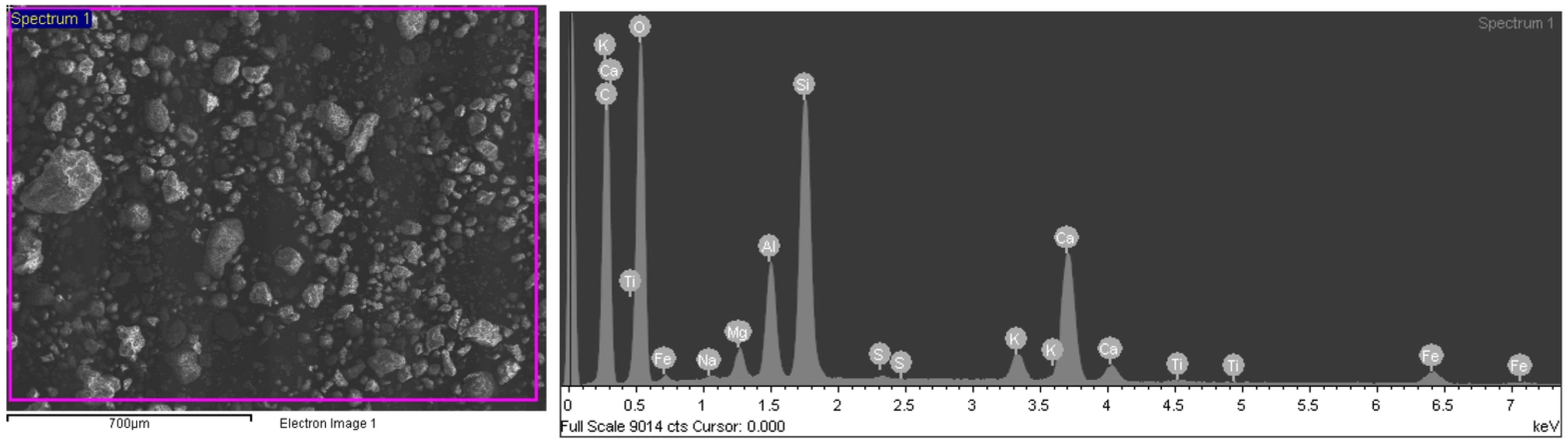
The SEM analysis results of the corrected soil sample indicate a composition characteristic of a silty–clayey soil matrix (Figure 1), dominated by carbon (40–42 wt%) and oxygen (42–45 wt%), with moderate amounts of silicon and aluminium (Si = 5.8–6.2 wt%, Al = 2.2–2.3 wt%), consistent with aluminosilicate minerals such as phyllosilicates and feldspar-type phases.
The presence of calcium (=3.4–4.4 wt%) suggests minor contributions from carbonate phases or residual lime, while K, Mg, Fe, Ti and Mn appear only in trace concentrations. Overall, the elemental distribution shows no evidence of advanced pozzolanic reaction products, indicating that the material largely preserves the chemical signature of the base soil with limited interaction between the clay–silicate fraction and the calcium-bearing phases.

6.2. Particle Size Distribution

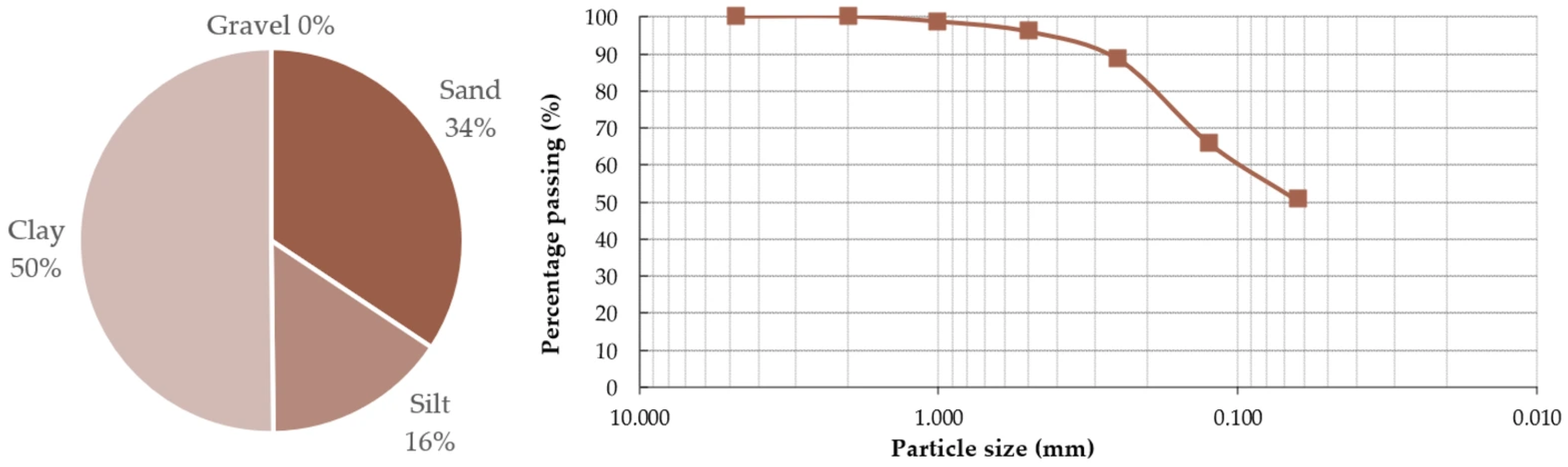
The initial earth sample is clayey, containing 50% clay and a low percentage of sand (Figure 2). The particle-size distribution exhibits a behaviour typical of a fine sand with a significant fraction of material passing through the N°200 sieve. After correcting the cumulative passing percentage, a P80 value of 0.204 mm was obtained, indicating that 80% of the particles are smaller than this size. The statistical mode corresponds to the 0.125 mm fraction, which represents the highest retained percentage after the fines (pan) fraction.
The weighted standard deviation of particle size is 0.151 mm, indicating a moderate degree of dispersion within the sample. The granulometric classification parameters yield a uniformity coefficient Cu = 8.61 and a curvature coefficient Cc = 1.15, classifying the material as poorly graded, characteristic of sands dominated by fine fractions.
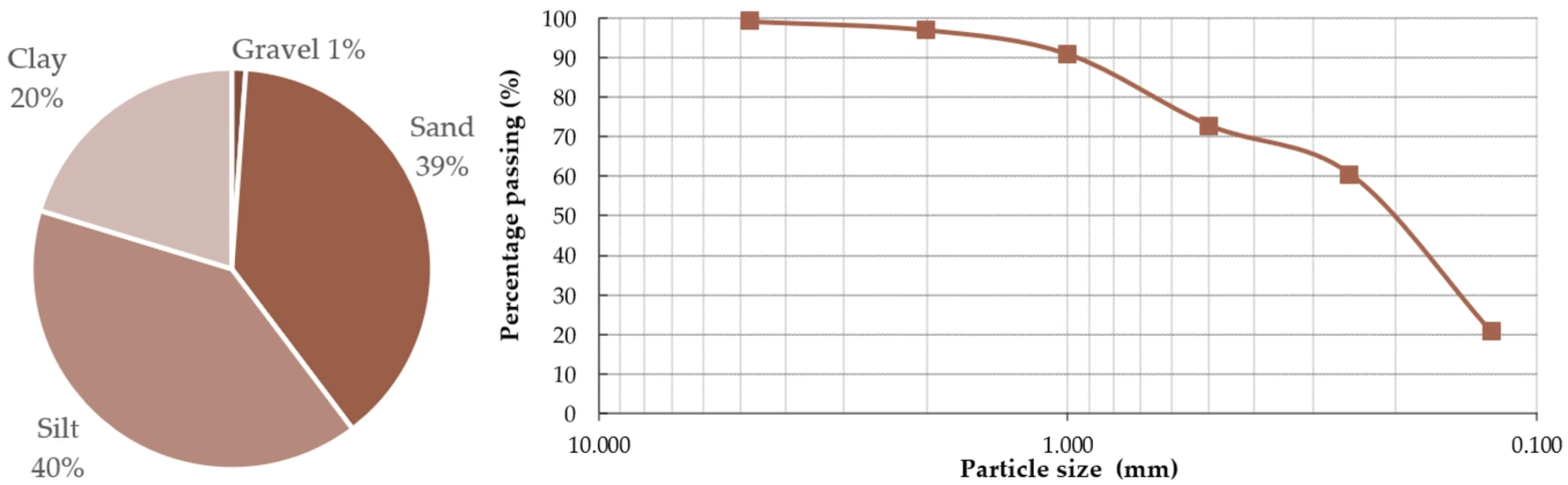
A suitable distribution with different aggregate sizes was obtained thanks to the corrected mix to which sand was added in fractions of between 2.00 mm and 0.125 mm. The particle size distribution of the second sample corresponds to a fine sand with a notable proportion of material retained on the N°200 sieve. The corrected cumulative passing curve yields a P80 of 0.353 mm. The characteristic diameters (D10 = 0.031 mm, D30 = 0.078 mm, D60 = 0.125 mm) result in Cu = 4.01 and Cc = 1.58, classifying the material as poorly graded sand (SP) under ASTM standards.
The modal fraction corresponds to the N°200 sieve (0.063 mm), confirming the predominance of very fine particles. The weighted mean grain size (0.160 mm) and high standard deviation (0.267 mm) indicate a dispersed distribution dominated by fine fractions that condition the material’s physical behaviour. This is reflected in a particle size curve following Houben and Guillaud (1994) [17] (Figure 3).

6.3. Colorimetry Results

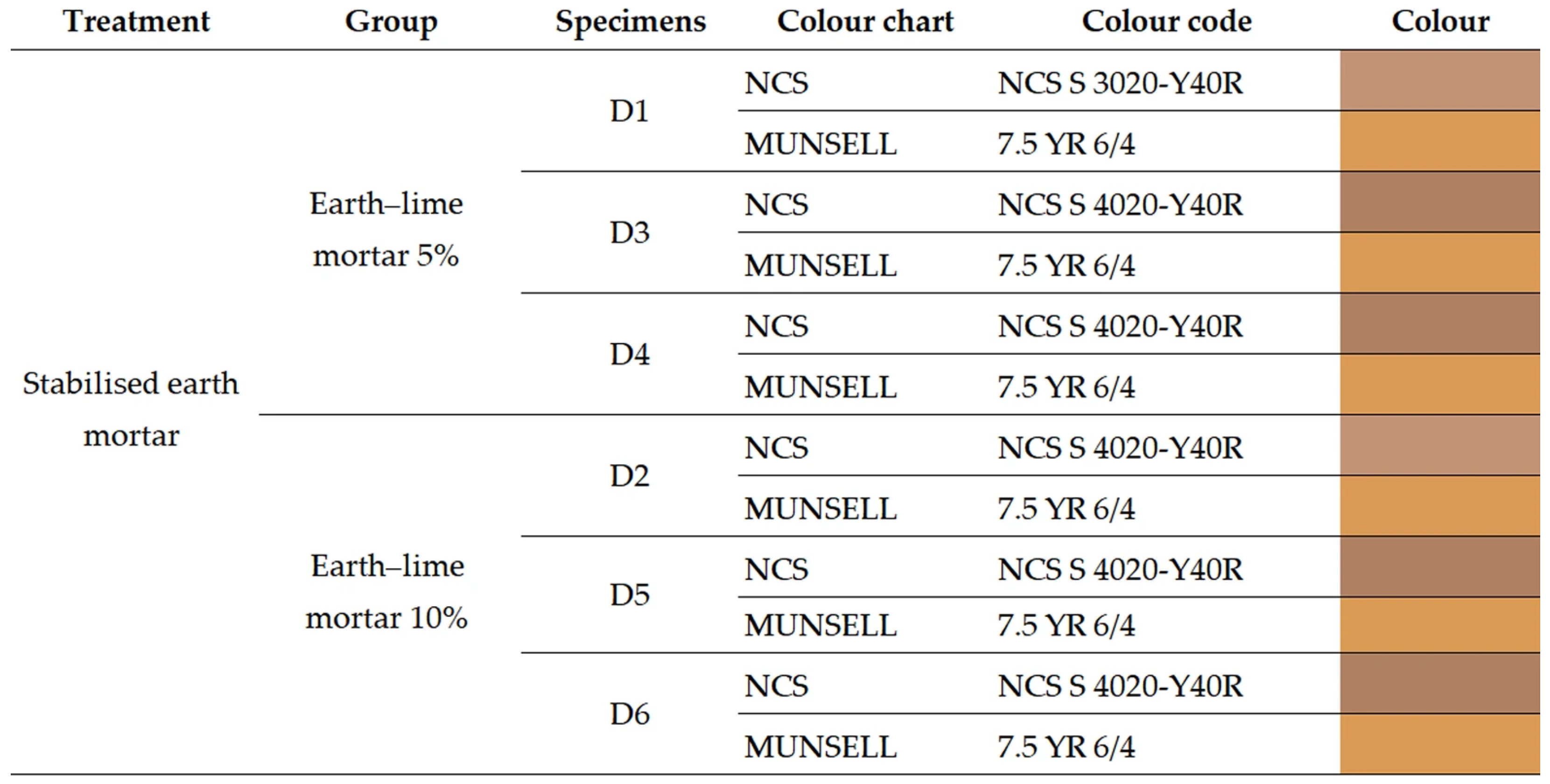
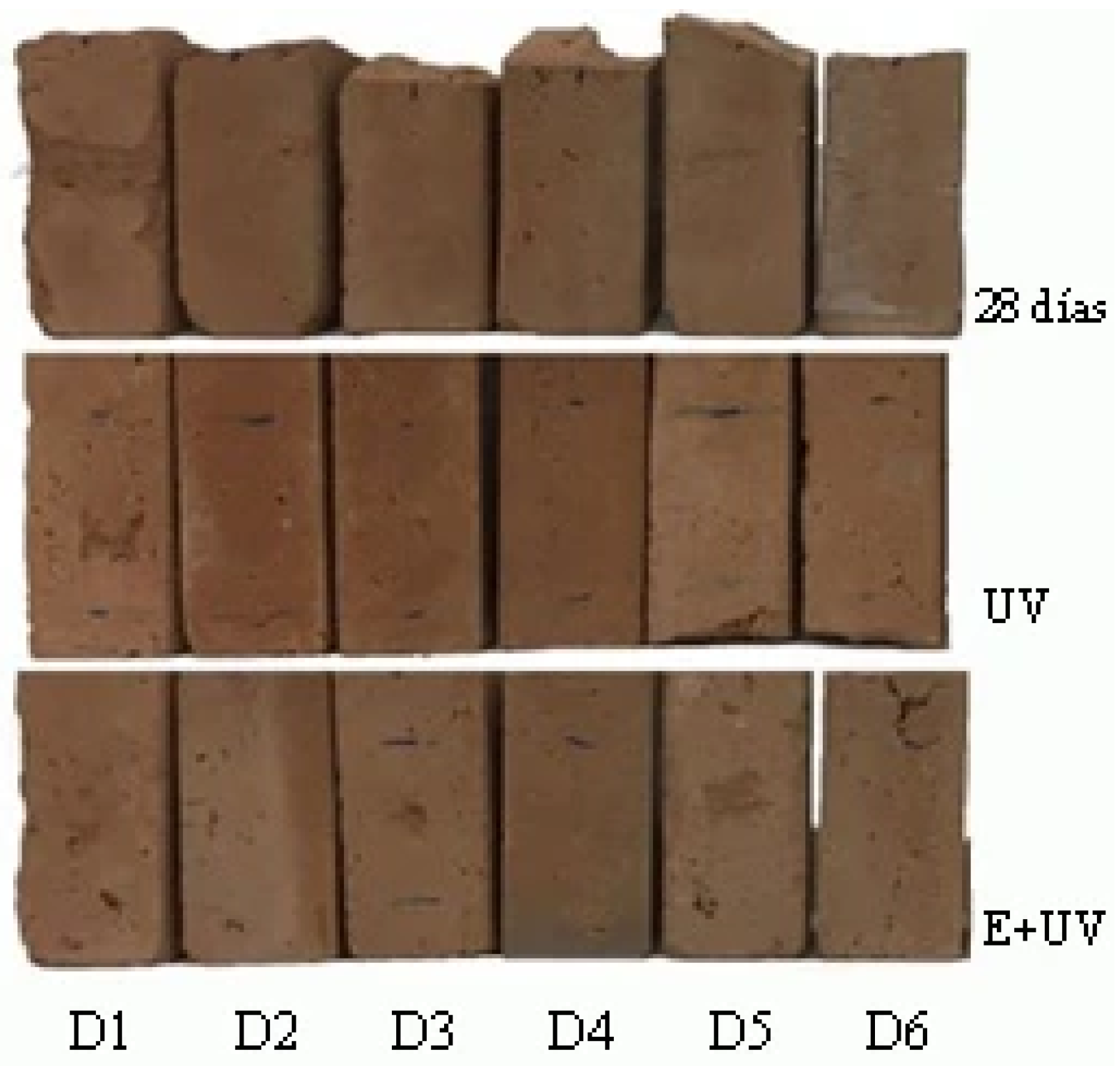
The table below shows the colour codes for each of the test samples at a natural curing age of 63 days (Figure 4), according to reference standard UNE-EN 15886 [28]. This representation presents the results obtained following analysis with two colour order systems, NCS and Munsell.
This representation presents the results obtained following analysis with two colour order systems, NCS and Munsell.
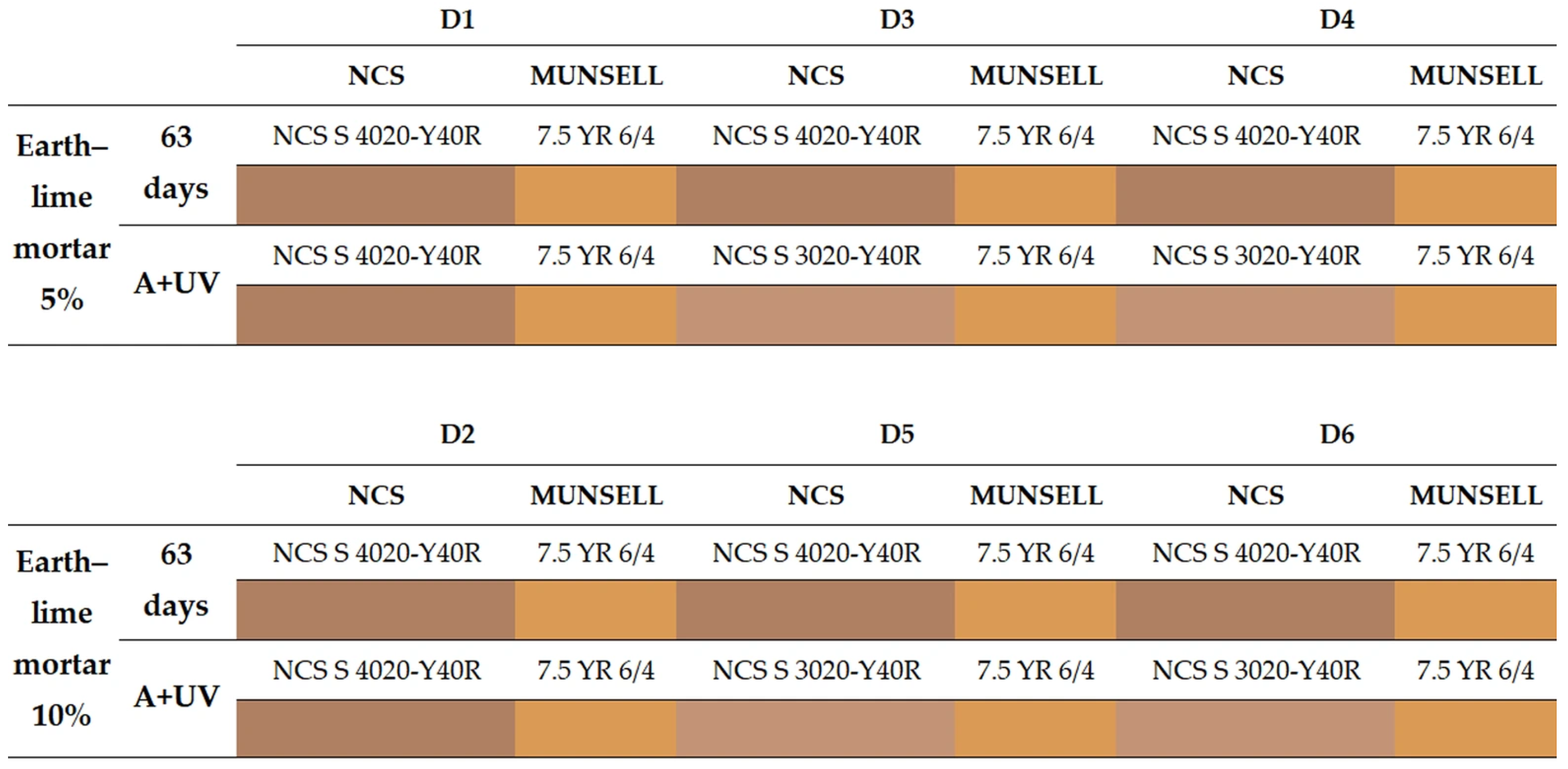
Irrespective of the lime content, in the NCS analysis for the group of stabilised earth mortars, the samples with zeolite appeared more reddish than the reference samples with no addition. When analysed with the Munsell system, the same family presents barely any differences in tone. In terms of the evolution based on curing time, slight variations in colour are observed for the samples which include zeolite in the mix. The situation is stable after the 63 days of natural curing, although in the samples subjected to accelerated ageing, more notable variations are observed (Figure 5).

6.4. Results of Physical–Mechanical Tests

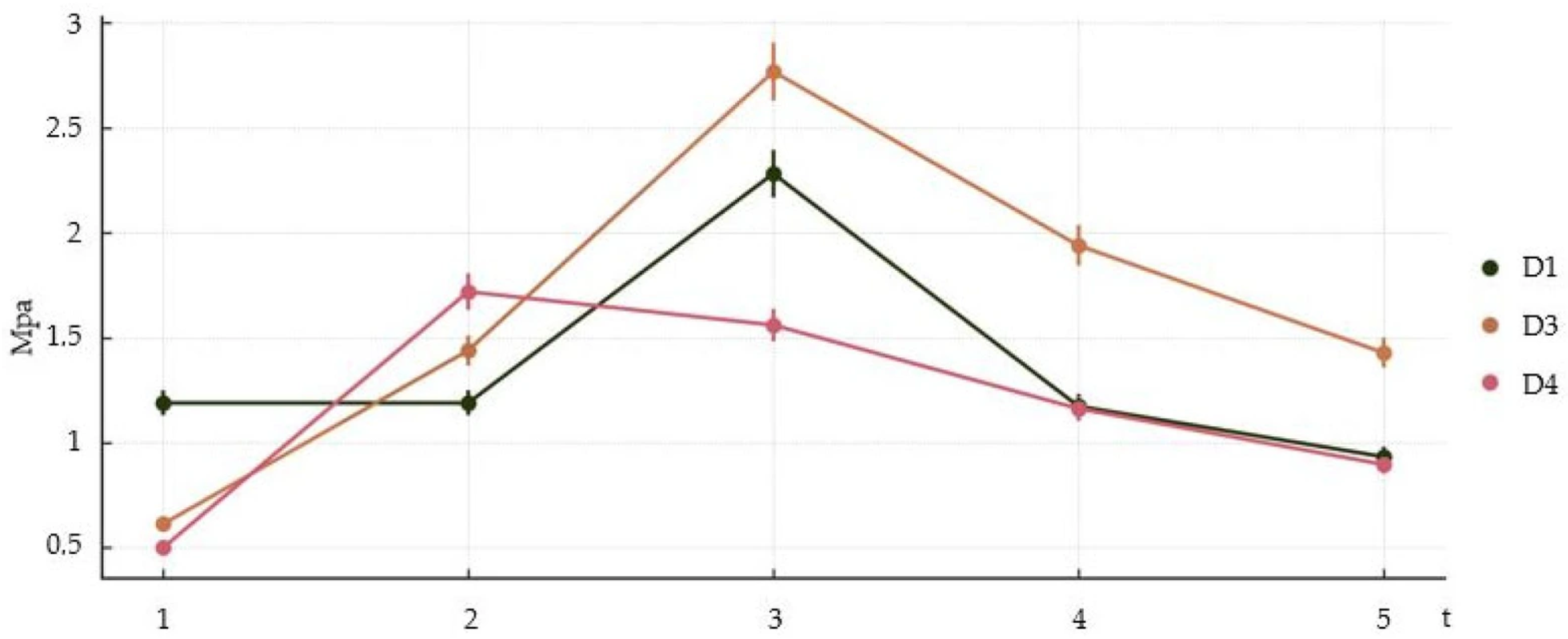
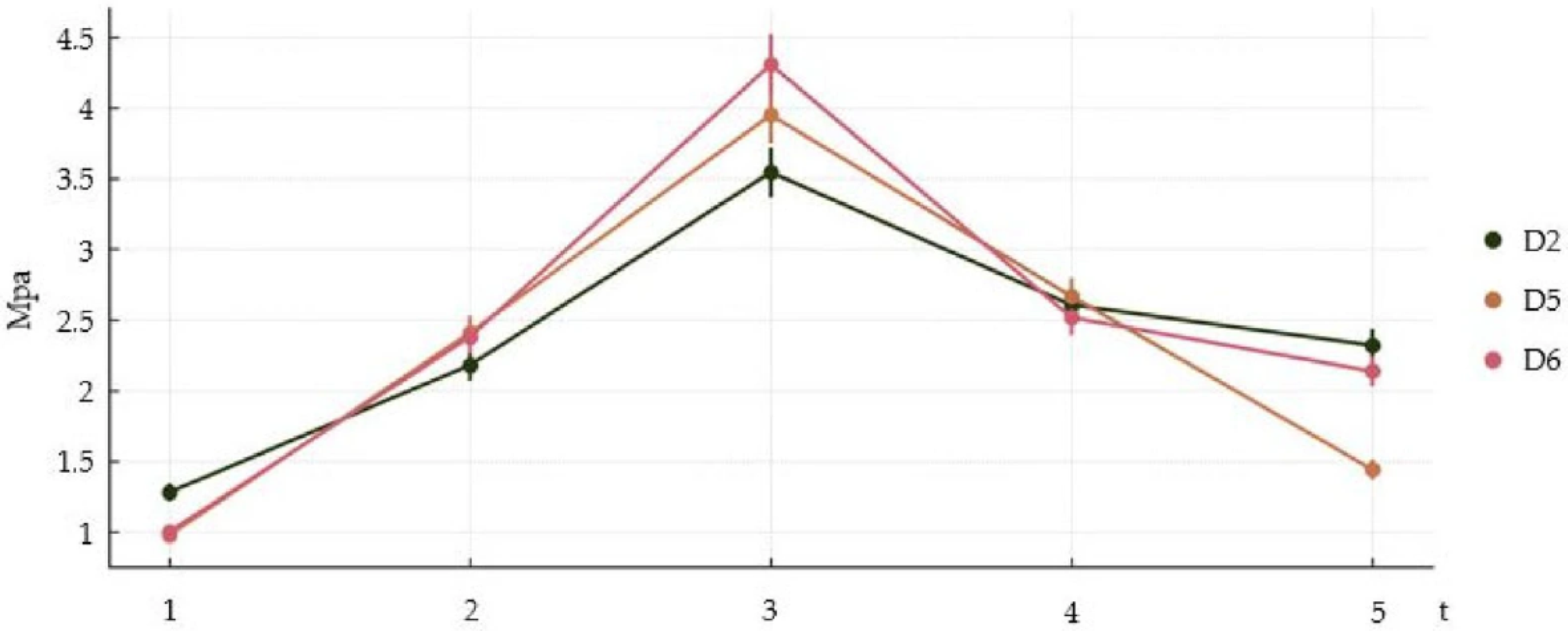
Mechanical resistance. The samples tested follow the samples of earth mortar and lime mortar. Furthermore, this was the only sample where tests were carried out at five curing ages: 7 days (1), 28 days (2), 63 days (3), accelerated ageing (4) and ageing with UV radiation (5) (Figure 6 and Figure 7).
The samples with an addition of 0.5 and 0.75% zeolite began to outperform the properties of the reference samples after 28 days. The more stable properties were observed in D3, with the lowest proportion of zeolite, which at 63 days exceeded the reference values (D1) by 21.2%. After subjecting the samples to accelerated ageing conditions, strength dropped by 30% compared to natural ageing values.
After the 28 days of natural ageing, experimental samples exceed the reference values and display similar ageing values during accelerated ageing. Mortars with 1% and 1.5% zeolite display very similar properties to those of the reference values.
The increase in mechanical strength is directly related to the pozzolanic activity of the zeolite. Owing to its high SiO2 and Al2O3 content, it is capable of reacting with the calcium hydroxide (Ca(OH)2) released during hydration processes. Garcia de Lomas further explores the evolution of the chemical composition and proves that, through the pozzolanic reaction, the zeolite promotes the formation and growth of calcium silicate and calcium aluminate hydrate phases [3]. This leads to a denser hydration process, effectively filling pores and refining the microstructure, which ultimately results in a significant improvement in mechanical performance.
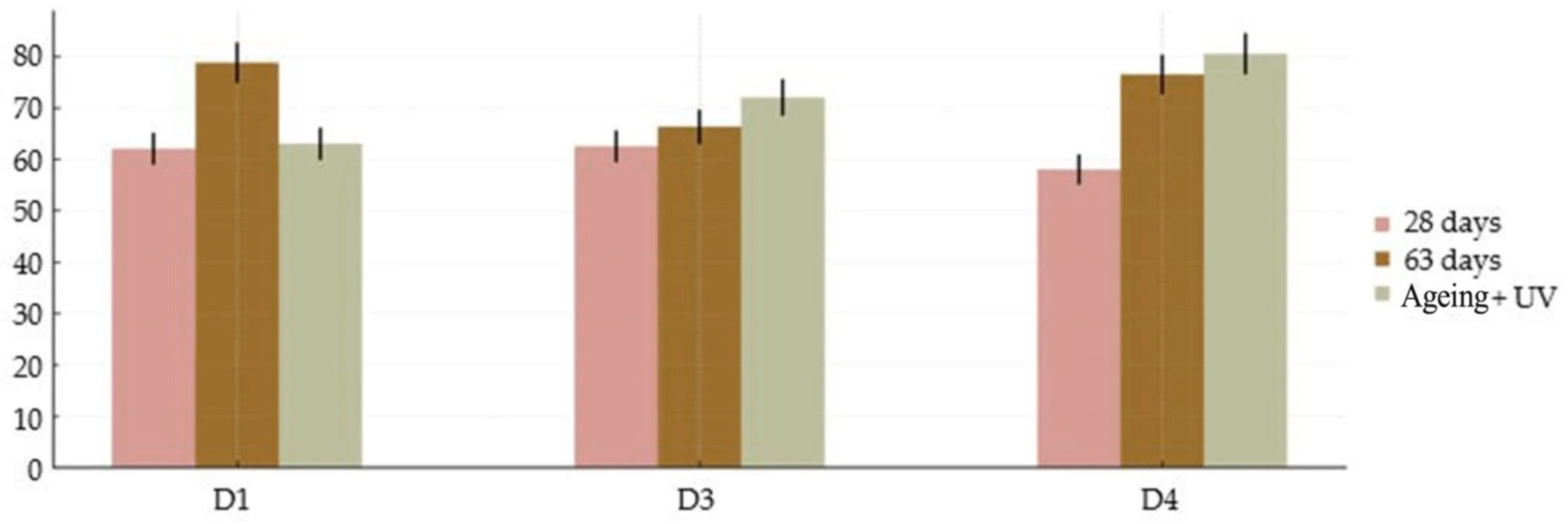
Establishing Shore C hardness. In earth mortars stabilised with 5% lime, it was observed that after the 63 days of natural curing, the surface resistance properties increased compared to the reference samples (Figure 8). In this case, the ageing test did not result in a reduction of the properties at surface level (Table 4). D3, with 0.5% zeolite, maintained stable properties following the accelerated ageing process with UV radiation.
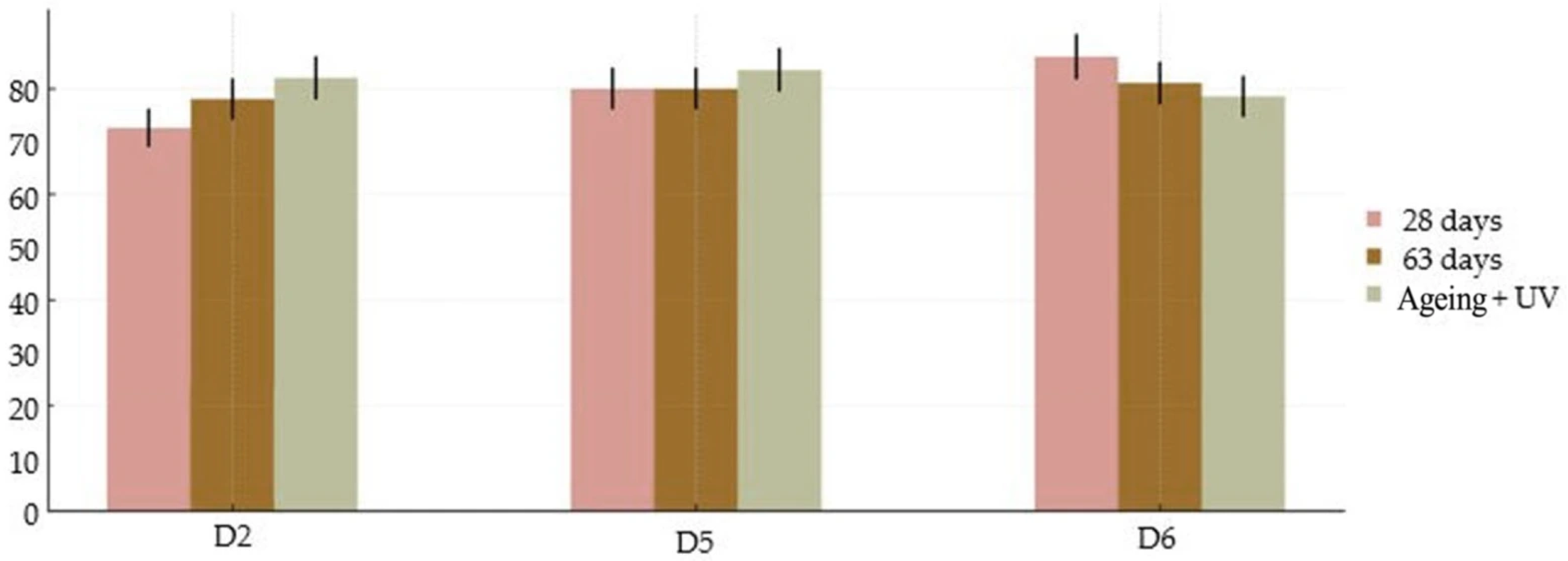
Within the group of mortars stabilised with 10% lime, it was observed that at an early stage of curing, the properties of the experimental material outperformed the reference samples (Figure 9). The most stable formulation among these was D5 (1:1).
The results exhibit a trend consistent with the compression test, showing a progressive increase in strength as curing advances. It should be noted that mix D6—the formulation with the highest FCC-to-lime ratio—displays distinct behaviour: it presents markedly high early-age surface hardness that gradually diminishes with prolonged curing and exposure to radiation.

6.5. Results of Behaviour in Contact with Water

Swinburne accelerated erosion test (SAET): The results show that the higher the zeolite content, as in the cases of D5 with 1% or D6 with 0.66%, the greater the resistance to water erosion displayed by test samples (Figure 10). In these cases, no damage by erosion was observed for any of the test times (Table 5).
Among the test samples with a lower percentage of zeolite, D3 with 0.5% and D4 with 0.75% were more sensitive to water after natural curing than the samples subjected to the artificial ageing process. However, they still display greater resistance to erosive action than the reference samples with no addition. D4 showed increased resistance at 63 days and after accelerated ageing, reducing the erosion footprint in relation to initial values and obtaining the best results.
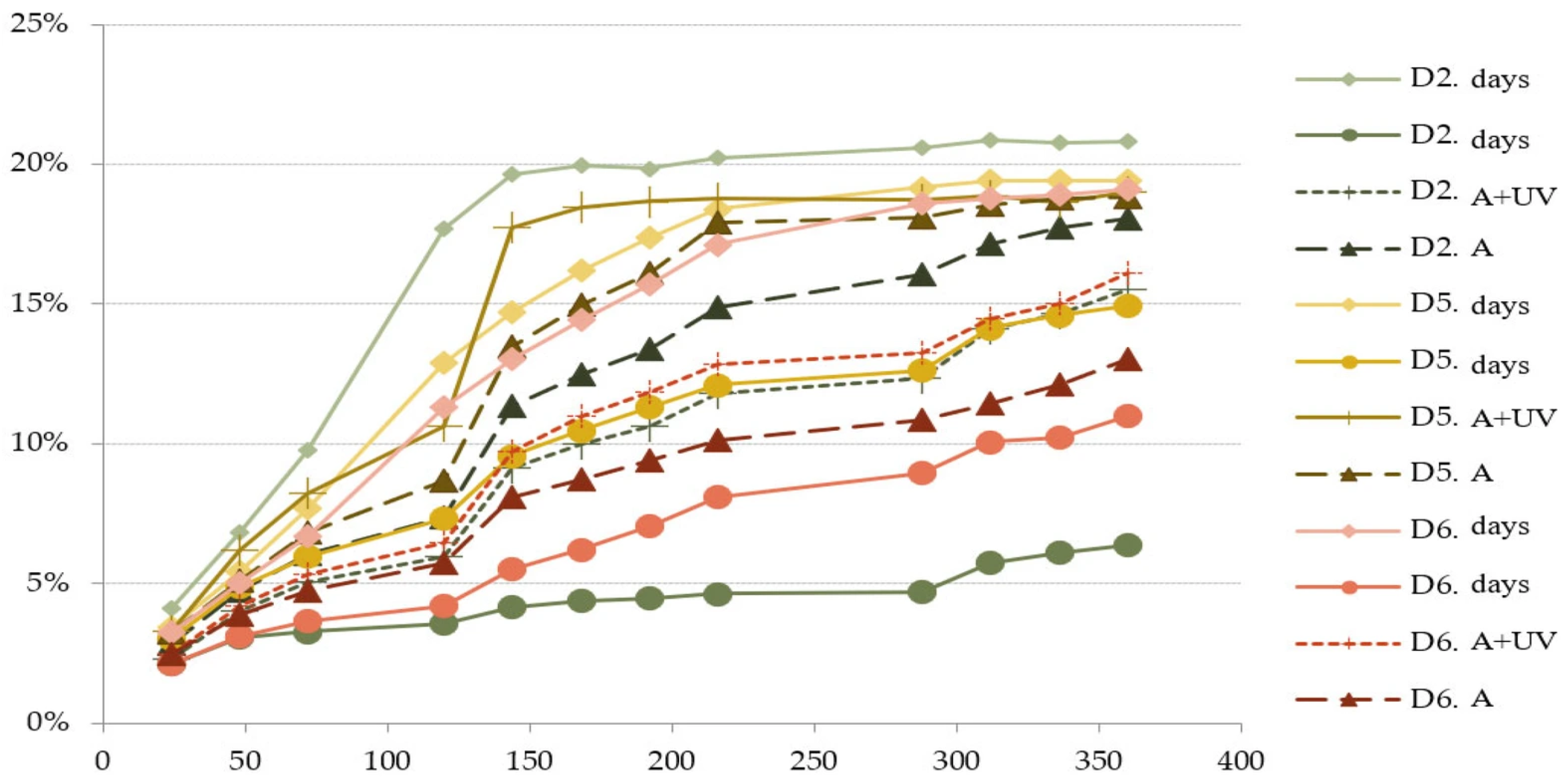
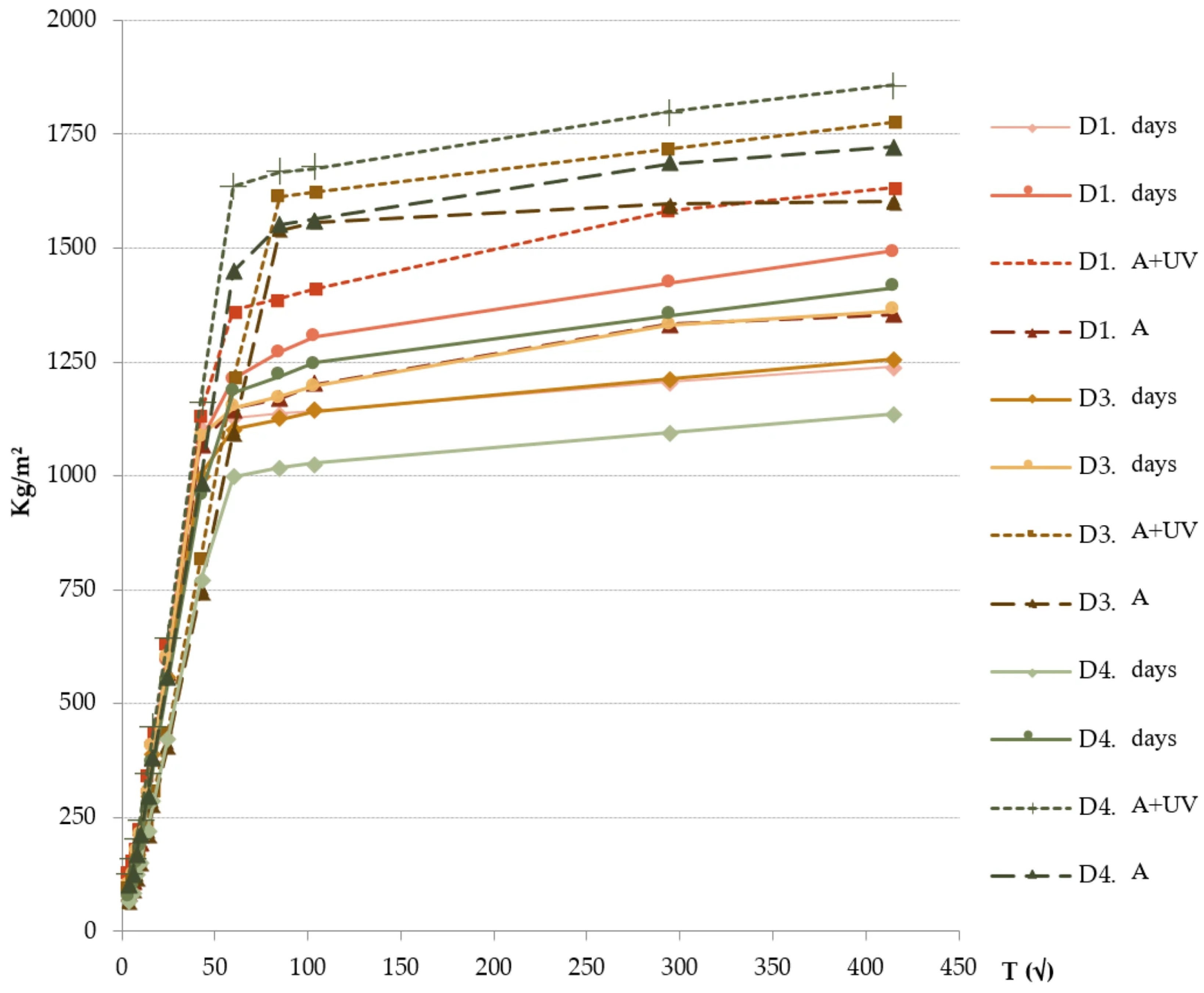
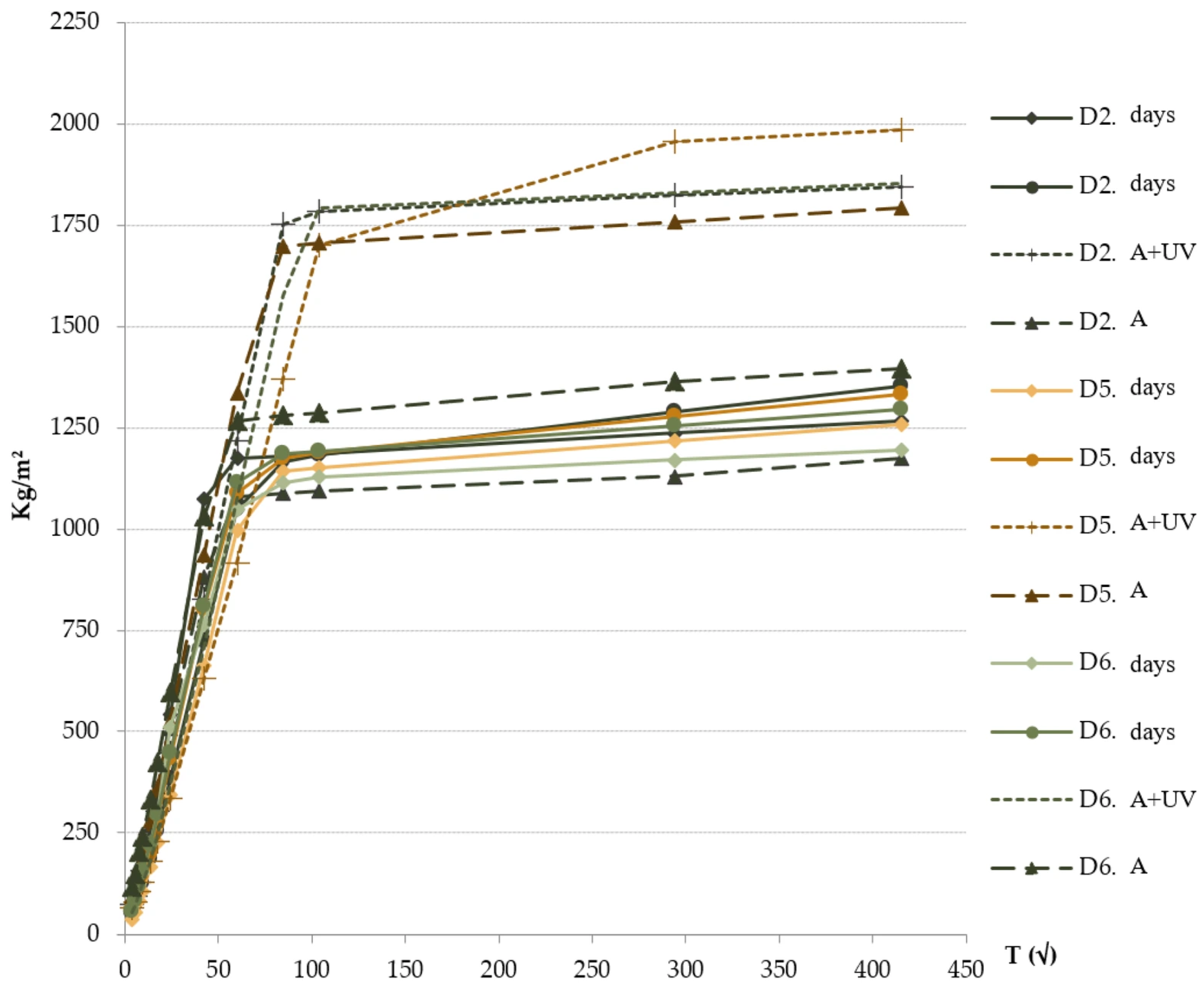
Test for determining water absorption by capillarity. In the group with a low percentage of zeolite (Figure 11), it is worth noting that during the natural curing process absorption in the test samples was similar to that in reference values. After the ageing process, the entire group absorbs a greater volume of water, with the greatest difference in absorption found in aged samples exposed to radiation. The samples with 10% lime displayed similar capillary absorption characteristics after the natural curing period of 63 days (Figure 12). After being subjected to artificial ageing conditions, D5 (1:1) tended to display a greater absorption capacity for water volume.
The incorporation of FCC significantly reduces the mortars’ sorptivity and capillary absorption, reflecting a denser and less permeable microstructure. These improvements persist at 28 and 63 days and are retained following ageing and UV ageing. Although degradation cycles increase absorption across all formulations, mortars with higher FCC content display lower efficiency loss and exhibit greater stability under water ageing. Further research should deepen the analysis of capillary absorption to confirm FCC’s contribution to enhanced water-suction resistance and overall mortar durability.
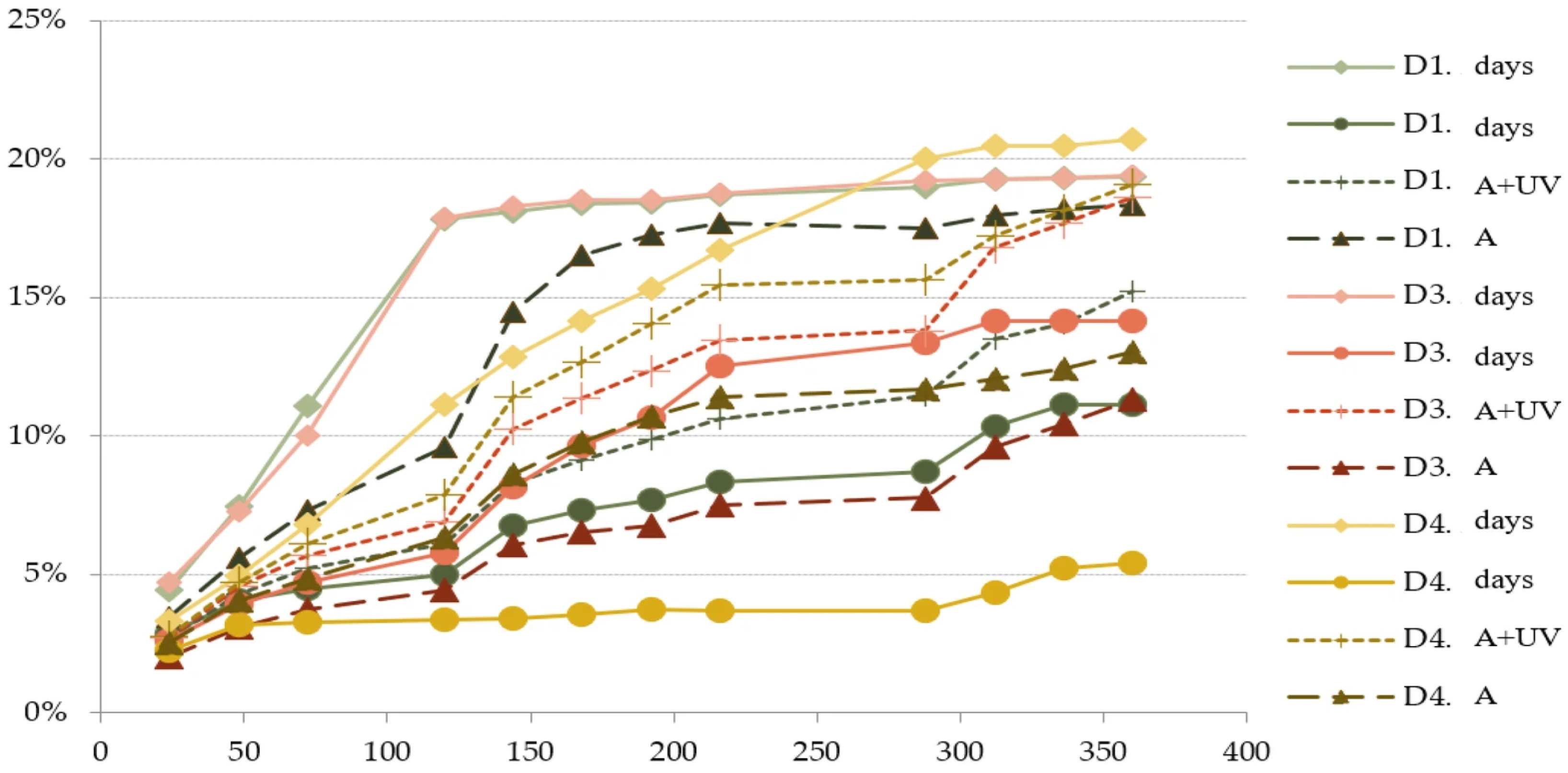
Water vapour permeability. The group of lime mortars stabilised with 5% lime showed a higher water absorption capacity during the early stages of curing (Figure 13). The more advanced the curing age, the lower the capacity for vapour capture. At 63 days of natural curing, the absorption percentage decreased. D4, with 0.75% zeolite, displayed less permeability.
Following the ageing cycles, all the samples tended to recover vapour transmission properties, displaying similar absorption behaviour to reference samples.
Among the group stabilised at 10% (Figure 14), after the natural curing of 63 days, all the samples showed less permeability to water. D5 (1:1) showed more stable conditions throughout the evolution. All samples showed an increase in the percentage of water absorption after the ageing test.

7. Conclusions

Based on the results obtained, the initial contributions regarding the properties of earth mortar with pozzolanic addition can be concluded, along with calculations for the optimal lime/zeolite ratio. D3 (0.33%) and D4 (0.5%) displayed the best properties and highest stability of the mortars tested.
Thanks to the test plan, it has been possible to quantify basic properties of the material. On a mechanical level higher compressive strength was observed, increasing by 21.2% compared to the reference values of the material, while surface hardness increased by 8% compared to initial values. As regards physical properties linked to porosity, the addition did not modify the permeability properties of the material, which meant it could be used without risk of damage due to incompatibility.
A difference in behaviour was also observed between artificial ageing with and without UV radiation. It was established that the material which undergoes radiation tends to show a slight deterioration of mechanical properties as well as chromatic variations with a tendency towards whiter tones, while capillary absorption is also increased, possibly due to modifications in porosity or loss of density in the material. It can thus be assumed that this material is sensitive to radiation exposure.
The material displays good properties in terms of mechanical resistance as well as in terms of permeability to water and presents stable characteristics except in the case of UV exposure. Accordingly, a second phase of this study is advised, continuing exposure to real conditions and enabling further research of the evolution with the simultaneous intervention of various factors.

Author Contributions

Conceptualisation, C.M. and M.B.M.; methodology, M.B.M. and L.G.-S.; analysis, M.B.M. and A.H.-E.; investigation, M.B.M., L.G.-S. and A.H.-E.; resources, M.B.M. and A.H.-E.; data curation, L.G.-S.; writing—original draft preparation, M.B.M.; writing—review and editing, L.G.-S., A.H.-E. and F.V.; visualisation, M.B.M. and A.H.-E.; supervision, F.V. and C.M.; project administration, F.V. and C.M.; funding acquisition, F.V. and C.M. All authors have read and agreed to the published version of the manuscript.

Funding

This research is included in the research project “Earth4Future: Sustainable reuse of earthen architecture and its lessons for contemporary architecture” (ref. PID2022-139154OB-I00; main researchers: Camilla Mileto and Fernando Vegas), funded by the Spanish Ministry of Science, Innovation and University. It is also included in the research project “Risk-Terra: Earthen architecture in the Iberian Peninsula: study of natural, social and anthropic risks and strategies to improve resilience” (ref. RTI2018-095302-B-I00; main researchers: Camilla Mileto and Fernando Vegas), funded by the Spanish Ministry of Science, Innovation and University.

Institutional Review Board Statement

Not applicable.

Informed Consent Statement

Not applicable.

Data Availability Statement

The original contributions presented in this study are included in the article. Further enquiries can be directed to the corresponding author.

Acknowledgments

This research would not have been possible without the guidance on pozzolanic materials and attention offered by José Mª Monzó Balbuena; the collaboration of D. Rafael Calabuig Pastor, a technician at the Materials Laboratory at the Higher Technical School of Building Engineering (ETSIE); D. Rafael Molina Nieto, a technician at the Architectural Constructions Laboratory at the Higher Technical School of Architecture (ETSA); and D. Joan Romero at the Geotechnics laboratory of the Ground Engineering department. The ash used in this project was provided by Lourdes Soriano Martínez from the Department of Building Engineering and Civil Engineering Projects.

Conflicts of Interest

The authors declare no conflicts of interest. The funders had no role in the design of the study; in the collection, analyses or interpretation of data; in the writing of the manuscript; or in the decision to publish the results.

References

  1. Soriano Martínez, L. Nuevas Aportaciones en el Desarrollo de Materiales Cementantes con Residuo de Catalizador de Craqueo Catalítico (FCC). Ph.D. Thesis, Universitat Politècnica de València, Valencia, Spain, 2007. Available online: https://riunet.upv.es/handle/10251/2542 (accessed on 15 July 2024).
  2. Escandino, A.; Amorós, J.L.; Moreno, A.; Sánchez, E. Utilizing the used catalyst from refinery FCC units as a substitute for kaolin in formulating ceramic frits. Waste Manag. Res. 1995, 13, 569–578. [Google Scholar] [CrossRef]
  3. García de Lomas Gómez, M. Viabilidad Científica, Técnica y Medioambiental del Catalizador Gastado de Craqueo Catalítico (FCC) como Material Puzolánico. Ph.D. Thesis, Universidad Autónoma de Madrid, Madrid, Spain, 2016. Available online: http://hdl.handle.net/10486/671799 (accessed on 15 July 2024).
  4. Pacewska, B.; Wilinska, I.; Bukowska, M. Use of spent catalyst from catalytic cracking in fluidized bed as a new concrete additive. Thermochim. Acta 1988, 322, 175–181. [Google Scholar] [CrossRef]
  5. Payá, J.; Borrachero, M.V.; Monzó, J.; Soriano, L. Estudio del comportamiento de diversos residuos de catalizadores de craqueo catalítico (FCC) en cemento Portland. Mater. Construcción 2009, 59, 37–52. [Google Scholar] [CrossRef]
  6. Pacewska, B.; Wilinska, I.; Bukowska, M. Hydration of cement slurry in the presence of spent cracking catalyst. J. Therm. Anal. Calorim. 2000, 60, 71–78. [Google Scholar] [CrossRef]
  7. Su, N.; Chen, Z.H.; Fang, H.Y. Reuse of spent catalyst as fine aggregate in cement mortar. Cem. Concr. Compos. 2001, 23, 111–118. [Google Scholar] [CrossRef]
  8. Omoniyi Odjo, A. Reciclado de Polímeros por Craqueo Catalítico; Estudio de la Viabilidad de Utilización de Reactores Convencionales de Craqueo Catalítico en Lecho Fluidificado. Ph.D. Thesis, Universidad de Alicante, San Vicente del Raspeig, Spain, 2016. Available online: http://hdl.handle.net/10045/68368 (accessed on 1 December 2024).
  9. Elert, K. Alkaline Activation of Clays for the Consolidation of Earthen Architecture. Ph.D. Thesis, Universidad de Granada, Granada, Spain, 2014; p. 317. Available online: http://hdl.handle.net/10481/34114 (accessed on 1 March 2024).
  10. Chen, H.L.; Tseng, Y.S.; Hsu, K.C. Spent FCC catalyst as a pozzolanic material for high-performance mortars. Cem. Concr. Compos. 2005, 26, 657–664. [Google Scholar] [CrossRef]
  11. Payá, J.; Borrachero, M.V.; Monzó, J.; Gonzalez Lopez, E. Propiedades de morteros y hormigones fabricados con cementos tipo CEM II/A-Q a base de catalizador gastado de craqueo catalítico (FCC). In Proceedings of the III Congreso Nacional de Materiales Compuestos (MATCOMP99) (AEMAC), Gijón, Spain, 5–7 May 1999; pp. 493–500, ISBN 84-607-0078-X. [Google Scholar]
  12. Payá, J.; Monzó, J.; Borrachero, M.V.; Velázquez, S. The chemical activation of pozzolanic reaction of fluid cracking catalyst residue (FC3R) in lime pastes. Adv. Cem. Res. 2007, 19, 9–16. [Google Scholar] [CrossRef]
  13. Piles, V.; Borrachero, M.V.; Payá, J.; Monzó, J.; García-Codoñer, Á. Ensayos de envejecimiento acelerado sobre materiales compuestos con base de cal o con base mixta de cal y yeso. In Proceedings of the Actas del VI Congreso Nacional de Materiales Compuestos (MATCOMP05) (AEMAC), Zaragoza, Spain, 28–30 June 2005; pp. 947–954, ISBN 84-9705-821-6. [Google Scholar]
  14. Nan, S.; Hung-Yuan, F.; Zong-Huei, C.; Fu-Sung, L. Reuse of waste catalysts from petrochemical industries for cement substitution. Cem. Concr. Res. 2000, 30, 1773–1783. [Google Scholar] [CrossRef]
  15. Al-Jabri, K.; Baawain, M.; Taha, R.; Al-Kamyani, Z.S.; Al-Shamsi, K.; Ishtieh, A. Potential use of FCC spent catalyst as partial replacement of cement or sand in cement mortars. Constr. Build. Mater. 2013, 39, 77–81. [Google Scholar] [CrossRef]
  16. Martínez-López, C.; Torres-Agredo, J.; Mejía- De Gutiéerrez, R.; Mellado-Romero, A.M.; PayáBernabeu, J.; Monzó-Balbuena, J.M. Uso de test de lixiviación para determinar la migración de contaminantes en morteros de sustitución con residuos de Catalizador de craqueo catalítico (FCC). Rev. Fac. Minas Univ. Nac. Colomb. 2013, 80, 163–170. [Google Scholar]
  17. Houben, H.; Guillaud, H. Earth Construction: A Comprehensive Guide; Practical Action Publishing: London, UK, 1994. [Google Scholar]
  18. UNE 103101:1995; Particle Size Analysis of a Soil by Screening. AENOR: Madrid, Spain, 1995.
  19. UNE-EN ISO 17892-4:2019; Geotechnical Investigation and Testing—Laboratory Testing of Soil—Part 4: Determination of Particle Size Distribution. AENOR: Madrid, Spain, 2019.
  20. Mileto, C.; Vegas, F.; López, J.M. Criterios y técnicas de intervención en tapia. La restauración de la torre Bofilla de Bétera (Valencia). Inf. Construcción 2011, 63, 81–96. [Google Scholar] [CrossRef]
  21. Schroeder, H. Transferencia de humedad y el cambio en la resistencia durante la construcción de edificios de tierra. Inf. Construcción 2011, 63, 107–116. [Google Scholar] [CrossRef]
  22. UNE-EN 772-1:2011; Methods of Test for Masonry Units—Part 1: Determination of Compressive Strength. AENOR: Madrid, Spain, 2011.
  23. UNE-EN 1097-3:1999; Tests for Mechanical and Physical Properties of Aggregates—Part 3: Determination of Loose Bulk Density and Voids. AENOR: Madrid, Spain, 1999.
  24. UNE 102042:2023; Gypsum Plasters. Other Test Methods. AENOR: Madrid, Spain, 2023.
  25. UNE-EN 13286-2:2010; Unbound and Hydraulically Bound Mixtures—Part 2: Test Methods for Laboratory Reference Density and Water Content—Proctor Compaction. AENOR: Madrid, Spain, 2010.
  26. UNE-EN 13279-2:2014; Gypsum Binders and Gypsum Plasters—Part 2: Test Methods. AENOR: Madrid, Spain, 2014.
  27. UNE-EN 41410:2023; Compressed Earth Blocs for Walls and Partitions. Definitions, Specifications and Test Methods. AENOR: Madrid, Spain, 2023.
  28. UNE-EN 15886:2011; Conservation of Cultural Property—Test Methods—Colour Measurement of Surfaces. AENOR: Madrid, Spain, 2011.
  29. UNE-EN 15801:2010; Conservation of Cultural Property—Test Methods—Determination of Water Absorption by Capillarity. AENOR: Madrid, Spain, 2010.
  30. UNE-EN 15803:2010; Conservation of Cultural Property—Test Methods—Determination of Water Vapour Permeability (dp). AENOR: Madrid, Spain, 2010.
  31. UNE-EN 17036:2019; Conservation of Cultural Heritage—Artificial Ageing by Simulated Solar Radiation of the Surface of Untreated or Treated Porous Inorganic Materials. AENOR: Madrid, Spain, 2019.
Figure 1. Macroscopic image and SEM micrograph of the sample.
Coatings 15 01408 g001
Figure 2. Particle size distribution of original earth.
Coatings 15 01408 g002
Figure 3. Particle size distribution of corrected earth.
Coatings 15 01408 g003
Figure 4. Colorimetric references with natural curing at 63 days.
Coatings 15 01408 g004
Figure 5. Comparative table. Colorimetric references with natural curing and UV ageing.
Coatings 15 01408 g005
Figure 6. Compression strength at different curing ages. Samples with 0.5% zeolite (D3) and 0.75% zeolite (D4).
Coatings 15 01408 g006
Figure 7. Compression strength at different curing ages. Samples with 1% zeolite (D5) and 1.5% zeolite (D6).
Coatings 15 01408 g007
Figure 8. Surface hardness in earth mortars stabilised with 5% lime.
Coatings 15 01408 g008
Figure 9. Surface hardness in earth mortars stabilised with 10% lime.
Coatings 15 01408 g009
Figure 10. Erosion results for SAET.
Coatings 15 01408 g010
Figure 11. Water absorption by capillarity D3 and D4.
Coatings 15 01408 g011
Figure 12. Water absorption by capillarity D5 and D6.
Coatings 15 01408 g012
Figure 13. Water permeability by capillarity D3 and D4.
Coatings 15 01408 g013
Figure 14. Water permeability by capillarity D5 and D6.
Coatings 15 01408 g014
Table 1. Base weight for all percentage samples.
Reference GroupReference Samples
D11500 g soil + sand, 75 g lime, 316.5 mL water
D21500 g soil + sand, 150 g lime, 7.5 g FCC, 316.5 mL water
Test GroupTest SamplesReference
D31500 g soil + sand, 75 g lime, 7.5 g FCC, 316.5 mL wD1
D41500 g soil + sand, 75 g lime, 11.25 g FCC, 316.5 mL wD1
D51500 g soil + sand, 150 g lime, 15 g FCC, 316.5 mL wD2
D61500 g soil + sand, 150 g lime, 22.5 g FCC, 316.5 mL wD2
Table 2. Reference and test samples.
Reference GroupReference Samples 
D1Earth–Lime 5%9:0.5
D2Earth–Lime 10%9:1
Test GroupTest Samples% ZeoliteReference Test Sample
D3Lime 5% + Zeolite 10%9:0.5:10.5%D1
D4Lime 5% + Zeolite 15%9:0.33:10.75%D1
D5Lime 10% + Zeolite 10%9:1:11%D2
D6Lime 10% + Zeolite 15%9:0.66:11.5%D2
Table 3. Environmental conditions during accelerated ageing.
DurationTemperatureHumidity
Cycle 124 h20 °C85%
24 h60 °C85%
Cycle 224 h5 °C40%–45%
24 h−20 °C55%
Table 4. Percentage of increase or reduction in surface resistance in relation to reference values.
63 DaysAgeing
D3−6.54%14.46%
D48.07%28.77%
Table 5. SAET results. Depth measurements and size of droplet footprint.
28 Days63 DaysUV Ageing
DimensionsFootprintDimensionsFootprintDimensionsFootprint
D13.9 cm1.9 cm 3 mm1.6 cm1.2 cm2 mm1.3 cm1 cm1.5 mm
D2---------
D3---7 mm5 mm<1 mm0.9 mm0.7 mm1.5 mm
D4---------
D52.3 cm1.2 cm1 mm---1.6 cm1.4 cm2 mm
D6---------
Disclaimer/Publisher’s Note: The statements, opinions and data contained in all publications are solely those of the individual author(s) and contributor(s) and not of MDPI and/or the editor(s). MDPI and/or the editor(s) disclaim responsibility for any injury to people or property resulting from any ideas, methods, instructions or products referred to in the content.