


Abstract
Lutein belongs to the diverse group of pigments known as oxygenated carotenoids, also known as phytochrome and macular pigment, demonstrating excellent biological activity. However, its application is limited due to the difficulty of dissolution, poor stability, and low bioavailability. To solve these problems, delivery systems are considered to be one of the most promising choices. These delivery systems can improve the physical, chemical, and biological properties of lutein to a certain extent. Moreover, the system can also be adapted to the needs of production in our daily life. In this paper, the construction of lutein-loaded nano delivery systems and their influences on the bioactivity of lutein were reviewed based on previous researchers. The main materials were classified, and assistant substances, basic parameters, and properties were collected. The mechanisms were analyzed in terms of enhancing cellular uptake, improving bioavailability, and achieving targeted delivery. These results show that different materials have their own characteristics. This review aims to provide references for the production and application of lutein in the food industry.
1. Introduction
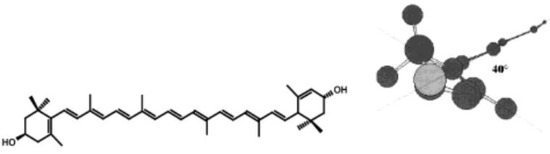
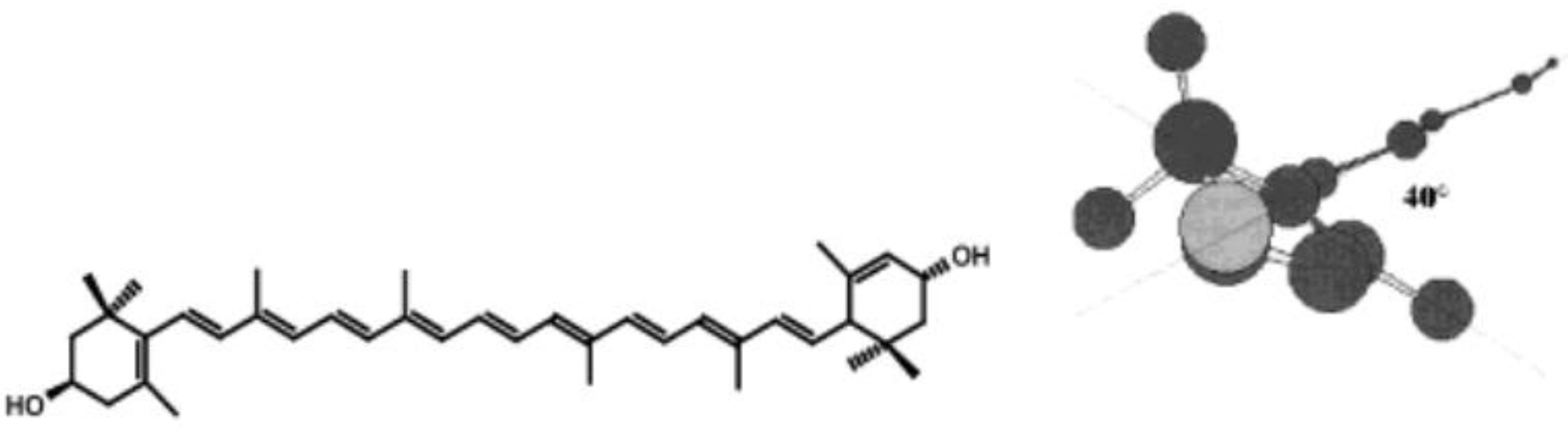
Lutein is a kind of fat-soluble pigment, belongs to oxygenated carotenoids, also known as phytochrome and macular pigment [1]. The structural formula and the 3D configuration of lutein can be seen in Figure 1 [2]. It is widely recognized by consumers due to its unique golden color used as a coloring agent. Meanwhile, the excellent bioactivity and safety of lutein have attracted many companies to use it as one of the preferred raw materials for “clean label” series products [3].
Figure 1.
The structural formula of lutein [2]. Copyright 2003, Journal of Agricultural and Food Chemistry. All rights reserved.
With the changes in modern lifestyle, life rhythm, and population composition, there has been an increase in the prevalence of central neurodegenerative diseases, geriatric diseases, mental disease [4,5,6], and so on. Despite the rapid development of related diagnostic and therapeutic technologies in recent years, the pathogenesis and cure of these diseases have not been fully revealed. In 2008, Tan et al. [7] suggested that a daily intake of about 6 mg of lutein could reduce the risk of cataracts and macular degeneration, which provides ideas from the perspective of nutritional intervention of lutein for chronic diseases. In addition, a large number of studies have shown that lutein has strong antioxidant and anti-inflammatory properties [8], which give lutein rich bioactivity. Several experiments in vivo and in vitro, as illustrated in Table 1, demonstrated that lutein has the function of neuroprotection, retina protection, hypolipidemic, and so on. However, the difficult dissolution, poor stability, and low bioavailability have limited the application of lutein. At present, a large number of experiments have shown that a delivery system may be an excellent measure.
Table 1.
Researches on the biological activity of lutein.
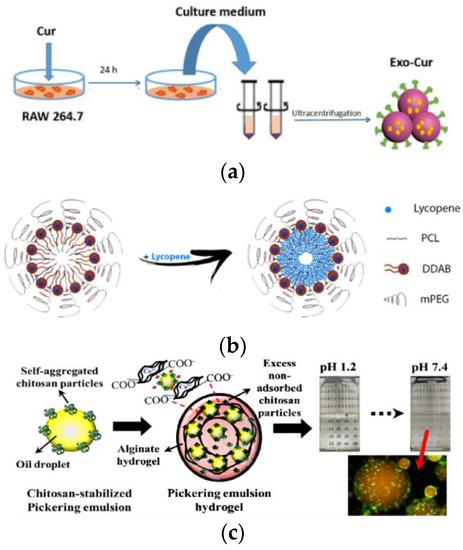
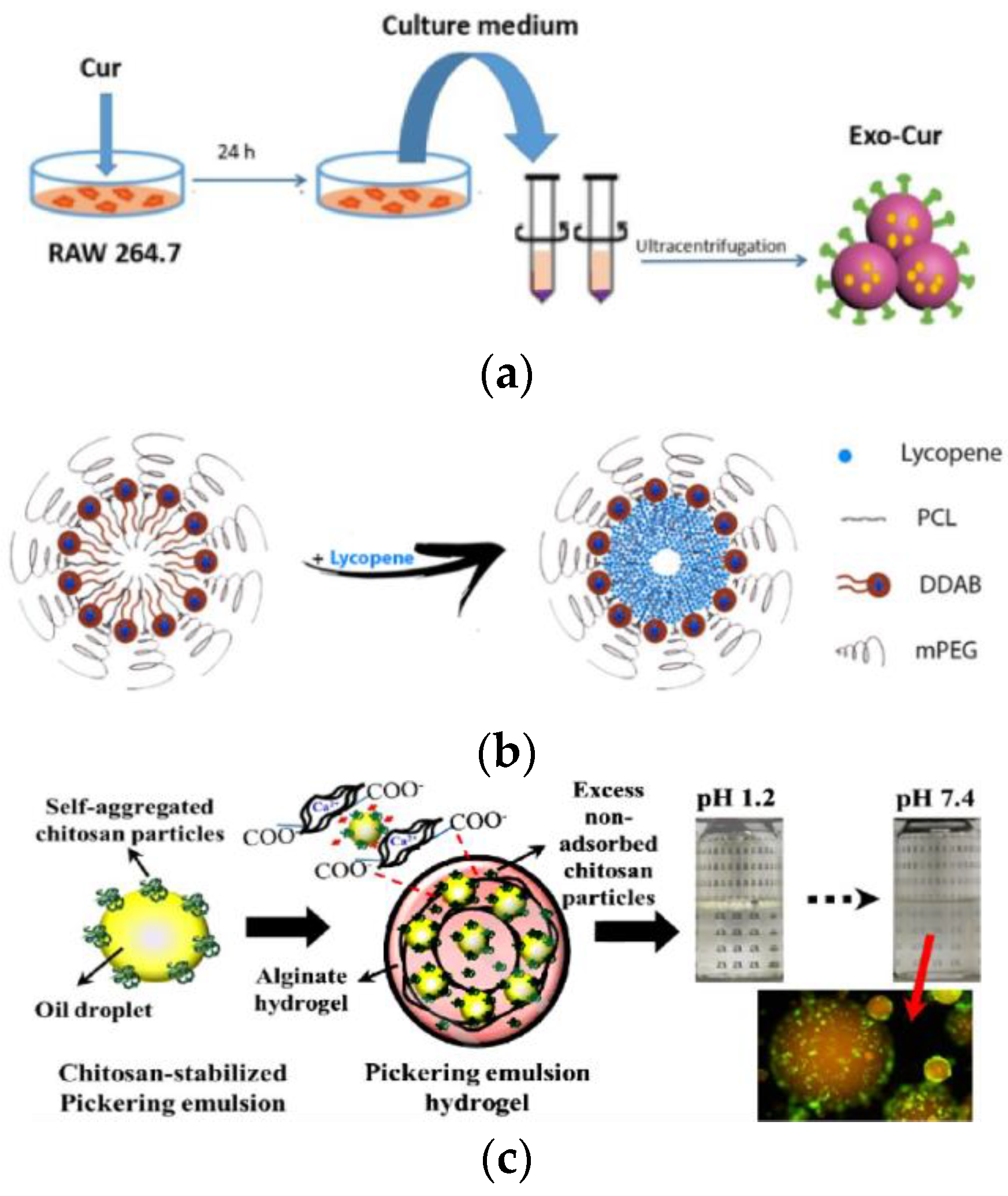
Delivery systems are often used in the field of pharmaceutical research [18,19] to improve the stability of drugs [20], reduce toxic side effects [21], and achieve targeted drug delivery [22]. In recent years, the concept of a “novel nano delivery system” has been proposed in the food industry and widely used in the development and production of special medical foods [23], health foods [24], and functional foods [25]. Delivery systems usually consist of substances and bioactive compounds. Polymers [26], natural products [27,28,29,30], bionic biomaterials [31,32,33], metallic materials [34,35], magnetic materials [36,37], silicon-based materials [38,39,40], etc. are commonly used as substances. To choose proper substances, one should consider their structures, physicochemical properties, and suitability for bioactive components. Special attention should be paid to the substances that present cytotoxicity when used in the food industry [41]. Currently, main bioactive components delivered are polyphenols [42], natural pigments [43,44], alkaloids [45], radiopharmaceuticals [46], mineral drugs [47], etc. Common properties of these substances are poor water solubility, easy degradation, or high toxic side effects. On the one hand, delivery systems protect bioactive components from production and application environment. On the other hand, their aim is to reduce metabolic burden or organic damage caused from the toxic side effects of bioactive compounds. For example, Figure 2a shows the delivery system for curcumin-loaded with exosomes as main substances, which is a kind of bionic biomaterial that more easily penetrates the blood–brain barrier to act on the brain [48]. Figure 2b shows the delivery system for lycopene-loaded with polycaprolactone and dimethyldioctadecylammonium bromide as main substances which can enhance cellular uptake and may be an effective tool for anti-cancer therapy [49]; Figure 2c shows the delivery system for palm oil-loaded with chitosan, picolin emulsion, and sodium alginate as main substances, which provides a method for the immobilization of bioactive compounds [50]. In this paper, the construction of lutein-loaded nano delivery systems and the mechanism of their effects on the bioactivity of lutein were reviewed based on the previous researchers. We explored the main substances, assistant substances, basic parameters and properties of the lutein-loaded nano delivery system. The influences were analyzed in terms of enhancing cellular uptake, improving bioavailability, and achieving targeted delivery. This review aims to provide references for the production and application of lutein in the food industry.
Figure 2.
Process of delivery system for bioactive compounds loaded. (a) Delivery system of curcumin-loaded [48] Copyright 2019, Nanoscale. All rights reserved; (b). Delivery system of lycopene-loaded [49] Copyright 2021, Journal of Drug Delivery Science and Technology. All rights reserved; (c) Delivery system of palm olein-loaded [50] Copyright 2020, Food Hydrocolloids. All rights reserved.
2. Construction of Lutein-Loaded Nano Delivery Systems
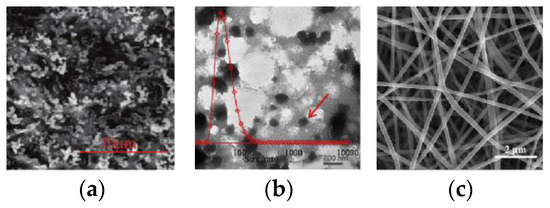
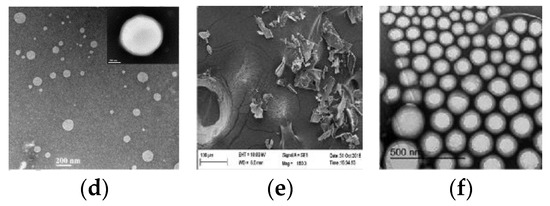
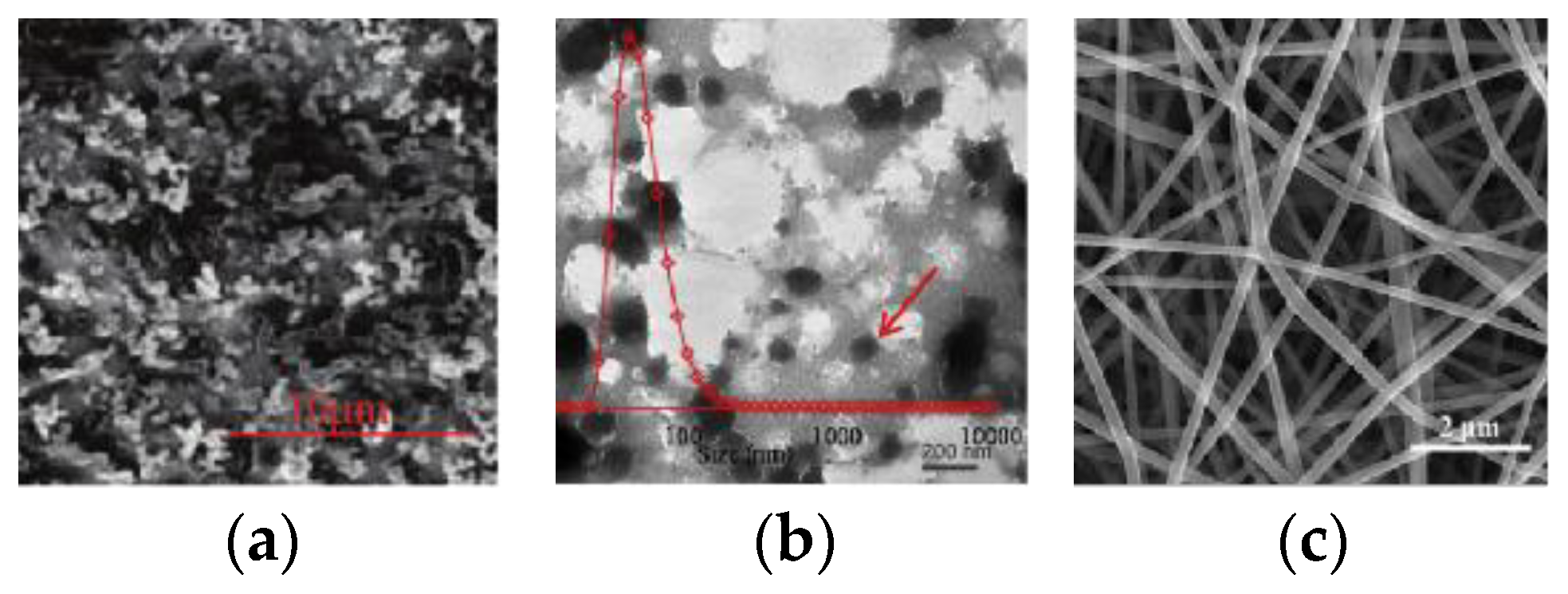
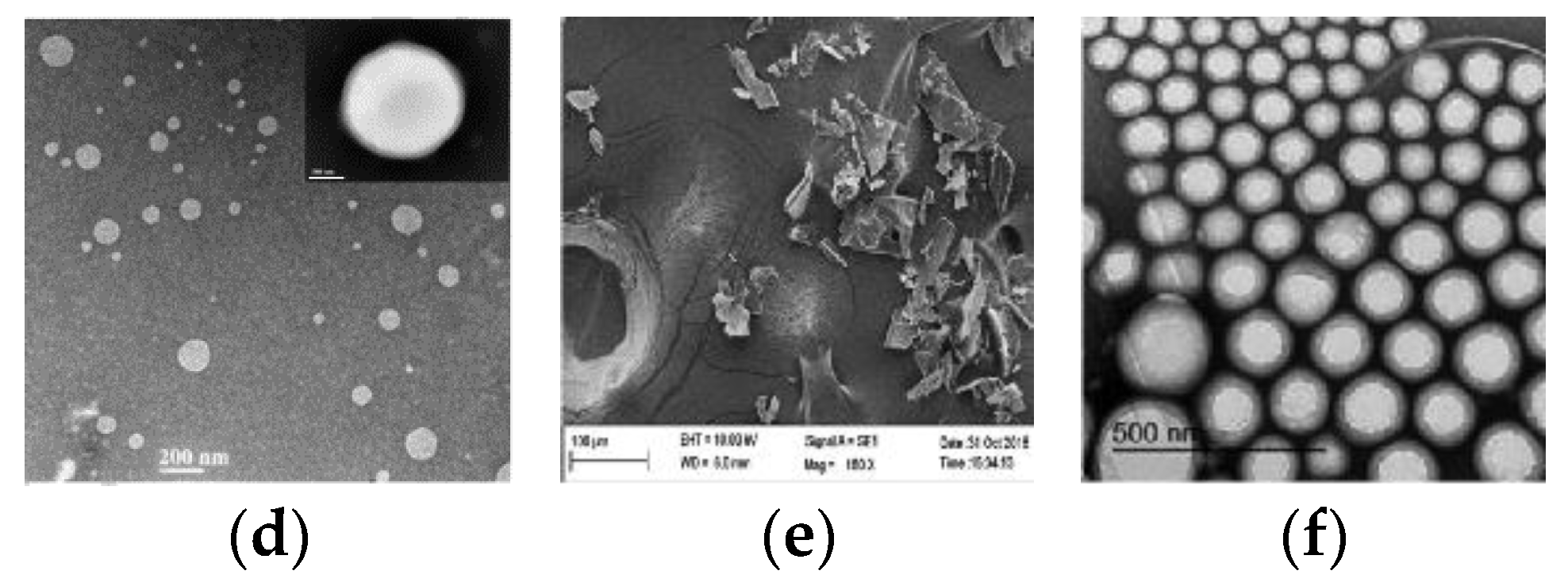
Currently, lutein-loaded nano delivery systems are classified into nano emulsion, nano particle, nano capsule, nano fiber, nano crystal, etc. They can be observed by scanning electron microscopy (SEM) or transmission electron microscopy (TEM) in the shape of spheres, flakes, vesicles, fibers, or capsules, as shown in Figure 3. Lutein was loaded by bonding interaction or physical distribution. In this section, basic parameters and properties of the systems were classified according to categories of main materials (base). Moreover, the “substances” mentioned in the text refer to main materials other than lutein or related bioactive compounds.
Figure 3.
Morphology of lutein-loaded nano delivery system observed by SEM or TEM. (a) Nano emulsion photographed by cryo-SEM [51] Copyright 2018, Food & Function. (b) Nano chitosomes photographed by TEM, like spherality-shape [52] Copyright 2016, Food Hydrocolloids. (c) Nano fiber photographed by SEM [53] Copyright 2019, Pharmaceutics. (d) Bulk vesicular photographed by TEM, like spherality-shape [54] Copyright 2017, Food Research International. (e) Irregular flaky nanoparticles photographed by SEM, like elongated rod-shape [55] Copyright 2021, Food Chemistry. (f) Nano particles photographed by TEM, like spherality-shape [56] Copyright 2019 Nanomedicine.
2.1. Polymers
Polymers were used as main materials to construct lutein-loaded nano delivery system as shown in Table 2, mainly including PLGA, PEG, PVP, etc.
The systems have shown that the diameter of average particle (D) was from dozens to hundreds nanometer, the Z-potential (Z) were all negative and the absolute values were more than 20 mV mostly, λ and the polydispersity index (PDI) were all about 0.2. As we all know, these parameters play a decisive role on stability of the systems. For example, a higher negative electrical transition from the carboxyl terminus makes the absolute value of Z larger which presented better optical and thermal stability [57]. Meanwhile, the assistant technology could be one of the methods to make the values of D smaller and the systems more uniform so as to achieve better properties, such as semi-continuous high-throughput electrofluidic-mediated mixing technique (EM-NP), small batch interfacial instability ultrasonication (II-S) [58].
Encapsulation efficiencies (EE) of lutein were about 70% in the systems. The factors affecting the EEs include preparation method, distribution, or solubility mainly. The precipitation method was effective in promoting the EEs, e.g., the system prepared by PCL has the EE of 99.51% [59]. Moreover, lycopene-loaded systems prepared by the methods have higher EEs [60]. Nevertheless, the EEs of the systems prepared by PS-PEO and PCL-PEG were extremely low [48] with the value about 4%, which was predicted to correlate with compatibility and molecular interactions through Hansen solubility parameters (HSPs) δ, HSPs distance Ra, and Flory–Higgins parameters Χsp, etc.
Table 2.
Study on polymers as main materials for lutein-loaded nano delivery system construction.
In general, polymers as main substances showed good stability when stored at low temperatures. Moreover, most systems can realize the release, which could be important in enhancing bioavailability. However, polymer-based substances may be toxic [53]. Hence, the safe dose should be paid more attention to.
2.2. Natural Products
Natural products are the ingredients extracted from plants, animals, microorganisms or their metabolites, etc. They are very popular because of their varieties, wide sources, and high safety. Natural products are greatly different in structure, physicochemical property, and composition, such that the systems exhibit their own characteristics (Table 3).
Table 3.
Study on natural products as main materials for lutein-loaded nano delivery system construction.
2.2.1. Protein-Based Substances
Zein is often used as a kind of common substance to construct delivery systems for various bioactive components, such as lycopene, β-carotene, and curcumin [99,104,105]. It has been often used in the lutein-loaded nano delivery systems. Besides, other proteins have been also applied in the systems, such as Camellia seed cake albumin [74], Stauntonia brachyanthera seed albumin [75], rice protein [76], goat/bovine casein [77], soybean ferritin [78], bovine serum albumin [79], pea protein [80], lactoferrin [51,84], whey protein isolate, polymeric whey protein isolate [85], etc.
In the systems, high concentration of salt solution may trigger particle aggregation to form large particle size and destabilize the system. Due to the isoelectric point of protein, the stability of the systems was also influenced greatly by pH values. For example, ZP shows instability at pH 5~6, CP tends to aggregate particles at pH 4.6, and LF tends to produce precipitation at pH 6.0. Currently, there are three methods which may be valid to avoid the isoelectric point:
- The first is the enzymic method, such as GlcN, Try, Pep, Fla, or ZPDP, etc. A study [76] reported the molecular binding mechanism of RP prepared by enzyme decomposition. It was found that DHRP with higher enzymatic hydrolysis degree have stronger activity and stability. This may be related to protein denaturation or structural changes.
- In the second method, other substances could be paired with protein to prepare composite substances, such as ZP with SSPS [70] or TS [71], CP with A-Gal [77], and CSCA with CS [74]. These composites substances utilize charge interactions to stabilize the protein over a wider pH range.
- The third method involves the addition of DEX to prepare a Maillard reactive substance (MRPS) [79,80,81,82,83], which is more effective in inhibiting aggregation and producing a spatial site barrier effect. For example, Yong et al. prepared the BSA-CA-DEX for lutein-loaded, which formed spherical nanoemulsion with uniform distribution and an average particle size of about 220 nm with good stability. Thereby, the stability of the systems was improved by the above factors.
2.2.2. Starch-Based Substances
Starch is renewable, environmentally friendly, and offers low-pollution as a kind of biomass material. Exploring the high utilization of starch is one of the hot research topics in the context of carbon peaking and carbon neutrality. Currently, starch-based substances for the systems are amphiphilic polymers with OSA modified SGC [88], CD [86], OMS [87], etc. The systems have good stability, but the stability mechanism is different from that of polymers. Mostly, the charge number, acid-base environment, or particle size produced little effect on the stability. They were determined due to the formation of inclusion complexes with CD, the competition under multi-component conditions, and the spatial site resistance induced by the starch moiety.
2.2.3. Chitosan-Based Substances
Chitosan belongs to the groups known as alkaline polysaccharides and constructs the systems with positive charge. The absolute values are all greater than 30 mV. Properties of positive potential and good adhesion make chitosan-based substances stand out under the conditions of SGF and SIF. Various forms of release can be achieved, such as controlled release, sudden (initial) release, sustained release, continuous stable release, and so on. The addition of lipids, such as oleic acid (OA), Tw80 [89,90,91], and PC [93] can reduce the D values to further improve the stability of the systems. It is particularly worthwhile to mention that the chitosan-based substance used for the systems is almost non-cytotoxic. In conclusion, chitosan is a kind of ideal substance for food delivery.
2.2.4. Other Natural Products-Based Substances
Stevia [55], a natural sweetener, was extracted from Asteraceae, and often used as a sugar substitute. STE has a six-membered ring π system, a central ring structure, etc., which interacts with lutein to produce hydrogen bonds. The combined effect of C-H-π interaction forces, van der Waals forces, and intermolecular forces ensures the stability of the system. Oleic acid and linoleic acid [96] are unsaturated fatty acids presented in animal and plant oils fatty acids. The solubility of OA-LOA for lutein-loaded was increased by 726 times compared to that of free lutein, which provides solutions of difficult solubility. Caseinate exits usually with the form of sodium salt. The SC for the system [97] has good thermal stability, but it is more sensitive to the pH values. Corn fiber gum [98], corn oil, fish oil [102], and beet pectin [103] were also used as materials for the systems. To some extent, all of these could improve the stability of lutein. In addition, some natural products also play an important role in the systems. For example, VE and GSO can enhance chemical stability and resveratrol can reduce fading.
In summary, natural products-based substances were used for lutein-loaded nano delivery systems have been widely applied. However, the systems are more complex, and the formation mechanism is often difficult to discern. It is recommended that raw materials should be of high purity. When you need a match, the materials may be no more than two as far as possible.
2.3. Lipids
Lipid-based substances for a lutein-loaded nano delivery system construction are shown in Table 4 with a wide range of particle size distribution. The smallest particle size among the lipid-based substances is 12.7 ± 0.7 nm, which is prepared by isopropyl myristate, triethyl triacetate and Tween 80 with ultrasound assistance [106]. Cosby et al. [58] prepared the systems by II-S and EM-NP methods with particle sizes of 22.6 ± 0.178 nm and 23.0 ± 0.204 nm, respectively. Nano emulsion prepared by egg yolk phospholipids [52] as main substances had particle sizes not exceeding 100 nm with a core-shell structure. The formation of such small D values was analyzed to be possibly related to the lipid, most of which have particle sizes between 100 nm and 500 nm. However, few systems have large particle sizes. For example, the emulsion prepared by tea polyphenol palmitate and xanthan gum have D values of tens of microns [107].
At the same time, they have better stability to be applied in the case of a wide temperature range. One study about the systems prepared by LAE-Tw80 [101] showed stable systems under the temperature of 4 °C, 25 °C, and 37 °C. Moreover, the system prepared by EGCG-β-lg [108] shows the better degradation rate of lutein of only 12.8% when stored at 4 °C for 30 days. Advance technology can also be useful to the stability of lutein-loaded systems. The nano liposome was prepared by PC with the supercritical CO2 extraction technology, which improved the stability of the system under the temperature of 308 K, 313 K, 318 K and the pressure of 10~15 MPa [109]. Based on the experimental phenomena above, some researchers have discussed the mechanism, which may be related to the values of emulsification activity index (EAI), emulsion stability index (ESI) [110], the concentration of lipids, or the properties of lipids [111,112].
It is worth noting that most lutein-loaded nano delivery systems prepared by lipid-based substances tend to have good release effects. This phenomenon was analyzed to be most likely related to their lipophilic structures [113].
Table 4.
Study on lipids as main materials for lutein-loaded nano delivery system construction.
In summary, polymers, natural products, lipids, etc. can be used as materials for the construction of lutein-loaded nano delivery systems and have their own characteristics, which are summarized as follows:
- D values of nano delivery systems are greatly affected by the preparation techniques, such as EM-NP, II-S, SFE-CO2, HPH, UT-assisted, etc.
- The materials, such as CS, LAE, PC, MCT, and some proteins (ZP, CP, etc. when in a specific pH environment), can be used to prepare nano delivery systems with positive charges.
- The stability of nano delivery systems includes physical stability, chemical stability, storage stability, digestive stability, etc. The determination mainly examines the D values, potentials, color values, isomerization and degradation rates, retention rates and release rates of lutein, etc.
- The concentration and ratio of main materials, the pH value, the temperature, and the duration of the systems located in the environments will have an impact on their stabilities.
- Compounds can improve the stability of the systems, but they can also lead to unexplained phenomena and uncertainty. Therefore, three substances or more are not to be recommended to use simultaneously.
3. Improvements on the Bioactivity of Lutein Using Nano Delivery System
3.1. Enhanced the Cell Uptake
The amount of cellular uptake of bioactive components determines the magnitude of the function. Several studies have shown that the cellular uptake of bioactive components occurred mainly through the form of endocytosis, internalization degree, or transfer. For example, the systems prepared by stevia realized the cellular uptake of lutein via lipid raft-mediated endocytosis. In another study, the systems were prepared by the PLGA-PEG-F [62] and showed enhanced cellular uptake in neuroblastoma cells. It was found that the addition of folic acid as receptor-mediated endocytosis occurred during cellular uptake. Similar results were also verified in the experiment of the PLGA-PEG-B [57]. Except for the receptor action, polymer-based materials for the systems were well absorbed when passing through lipid bilayer of the cells into cytoplasm and nucleus with better internalization efficiency. Meanwhile chitosan-based materials presented with higher internalization degree. This is due to its hydrophilic surface and the electrostatic action that occurs between the surface and cell membrane.
3.2. Improved the Bioavailability
Bioavailability describes the ratio of remaining content of drug after digestion to the initial content, which is using maximum concentration (Cmax), area under the drug-time curve (AUC) as evaluation indexes. The causes of low bioavailability include materials interference (i.e., unstable physicochemical properties, poor water solubility and imbalanced ratio of complex), processing conditions, unknown biotransformation effects, and so on.
One of the factors affecting the bioavailability of lutein is the degree of free fatty acid release. Hao et al. [119] prepared the NaCAS-ALG nano particle with lutein using electrostatic complexation. The large proportion of digested lipid phase led to the formation of more mixed micelles. The amount of free fatty acid release and bile salt binding in the mixed micelle phase directly determined the ability to dissolve lutein. Thus, the bioavailability was increased to 51.27%, which was higher than that of NaCAS nano emulsion with lutein and free lutein.
Secondly, different natural products as materials for the systems also have an effect on the bioavailability of lutein. STE can effectively prevent lutein accumulation and make it evenly dispersed in the brush border of intestinal epithelial cells to promote absorption [55]. Alginate can reduce particle aggregation and increase the contact surface area of oil droplets to dissolve lutein in micelles [90]. Then, the lutein was absorbed by the small intestine. Polysaccharide can protect lutein from pepsin and achieve controlled release under the condition of SGF, while it is dissociated into SIF; zein with TS can increase bioavailability of lutein by 67.17% compared to free lutein [71].
Thirdly, the addition of phospholipids may improve the bioavailability of lutein due to hydrolysis of phospholipids under the action of intestinal phospholipase. A study compared the bioavailability of PLGA-PL/PLGA with lutein and free lutein. The results of SGF digestion assay after 4 h in vitro showed that the system prepared by PLGA-PL with lutein had the intestinal mucosa absorptivity greater than 80%, significantly higher than PLGA with lutein and free lutein.
Except for the degree of free fatty acid release, the special properties of natural products and the action of phospholipids have better solubility. Moreover, it was found that lutein in the systems exhibited amorphous form. Thus, lutein is more easily dispersed in the digestive solution, which improves the bioavailability.
3.3. Realized the Targeting Delivery
3.3.1. Eye Targeting
Several studies have shown that lutein is preferentially absorbed by the liver and fat, whereas we expect higher ocular levels. Chitosan-based material has shown a dose-dependent increase in the eyes of mice [91]. In another cell permeability test on rabbit cornea, it was observed that lutein nano liposome gradually entered the cornea and reached a steady state within 90 min. The release rate was maintained balance from 90 min to 240 min to realize eye targeting. A more detailed study was about distribution of lutein in 11 tissues throughout the eyes [57]. Thus, it is to be concluded that the pathway of lutein into the eyes is probably through conjunctiva, sclera, choroid, and then retina. The results clearly demonstrate that nano delivery system can deliver lutein to the eyes. However, the duration of action is very short, and the effect is not good. Thus, the materials used need to be optimized in terms of adhesion, dispersibility, and release to apply for long duration.
3.3.2. Brain Targeting
Research on brain targeting constitutes one of hot topics in the scientific field. Solutions for delivering bioactive compounds into brain are still not well constructed due to the blood–brain barrier mainly. Lutein has neuroprotective effects, i.e., can prevent degenerative diseases (AD, PD, FM, etc.) that may be caused by neurological damage. Therefore, lutein could be a medium used for constructing the systems into brain, then to be applied for other nutrients. At present, several materials have been found to be useful in brain targeting:
- The first is polymer-based material, using a nano delivery system to enhance cognitive performance in mice [66].
- The second is a kind of cationic liposomes capable to restore monoamine content in cortical tissue and cortical electroencephalogram signals [17].
- Besides, transnasal administration is also a means of brain targeting which could deliver bioactive compounds more efficiently. By this method, an approximately 4.4-fold increase compared to free lutein was observed in a test [92].
Although the above systems have led to changes of indicators in the brain, the pity is that the mechanism of lutein crossing the BBB, the pathway into the brain, and the duration of action have not been fully revealed.
3.3.3. Others
Lutein in liver and plasma is also studied by researchers. The system prepared by CS-SA with lutein was prepared to increase lutein content in plasma and liver of normal mice and diabetic mice by 3.1-fold, 7.3-fold and 2.7-fold, 3.4-fold [89]. Compared to lutein micelles, a kind of polymer material added to phospholipids in the systems leads to an increase of 3.91-fold and 2.89-fold in plasma and liver [63]. Low molecular weight chitosan mainly as material for the system also can enhance lutein content in plasma and liver [95].
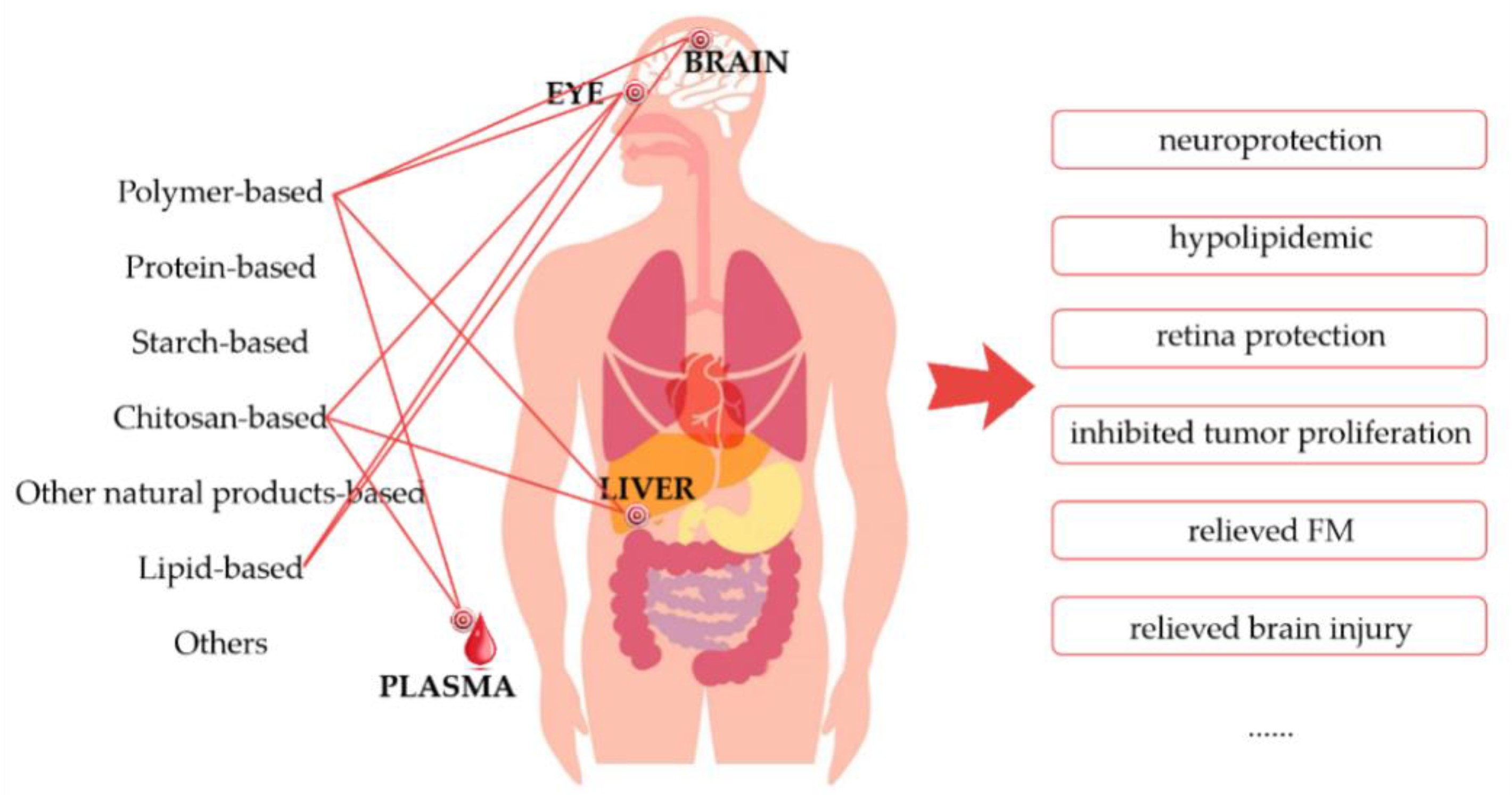
In summary, polymers, chitosan, and lipids as main materials can be applied to construct the systems for realizing targeted delivery of lutein. The applications of materials for targeted delivery to brain, eye, liver and plasma to exert biological activity have been shown in Figure 4. Smaller particle size, biocompatible materials, and stable systems contribute to lutein crossing the blood–retina barrier and blood–brain barrier to some extent. Moreover, contact time and duration in the eye and the brain can be prolonged, while absorption and utilization are also promoted.
Figure 4.
Application of materials for targeted delivery to brain, eye, liver and plasma to exert biological activity.
4. Conclusions
Novel nano delivery systems are promising and significant for applications in the fields of food and medicine. In this paper, research progress of lutein-loaded nano delivery systems was reviewed in two major aspects. Firstly, main materials of lutein-loaded nano delivery systems construction were classified into four parts, including polymers, natural products, lipids, and others. The systems were concluded from basic substances (base), assistant substances (others), essential parameters (D, Z, PDI, EE and morphology), and properties (stability, adhesion, toxicity or release). The second is that improvements in the bioactivity of lutein by using the systems above are analyzed. This section explained important roles of the systems in terms of enhancing cellular uptake, improving bioavailability, and achieving targeted delivery. Considering the need for further optimization of the process and in-depth investigation on the mechanism of action, future research may be carried out as follows:
- (1)
- Regarding theory, there were already rich research bases. However, theoretical research still needs to be further developed, such as optimization patterns of formation environment, which are necessary to provide cost-effective preparation solutions in order to be more competitive, and analysis of the mechanism, especially on BRB and BBB.
- (2)
- Regarding production, most of the relevant research is still in the laboratory stage and few pilot studies and industrialization are available. This will be a great challenge because the system is influenced by the environment.
- (3)
- Finally, regarding application, currently, marketed products with lutein are mainly in eye protection and the active ingredients are mostly lutein only. Meanwhile, there are even fewer commercial applications for improving immunity and promoting neuroprotection. This will be a commercial opportunity in the future.
In conclusion, we should refer to the research methods and experiences from the field of medicine so as to construct lutein-loaded nano delivery systems with excellent characteristics. More systematic research protocols, accurate detection methods, and advanced technology will be necessary to explore the mystery of lutein in human metabolism.
Author Contributions
Conceptualization, Y.M., Y.J. and T.Y.; validation, T.Y. and J.W.; resources, T.Y.; data curation, T.Y.; writing—original draft preparation, T.Y. and Y.J.; writing—review and editing, T.Y., J.W. and J.N.; supervision, Y.M. and J.W.; funding acquisition, Y.M., J.W. and T.Y. All authors have read and agreed to the published version of the manuscript.
Funding
This research work was supported by the Heilongjiang Province Applied technology research and development project (GA20B301), the project of the National Natural Science Foundation of China (52002099) and the Harbin Science and Technology Bureau project (CY2020JH020105).
Institutional Review Board Statement
Not applicable.
Informed Consent Statement
Not applicable.
Data Availability Statement
The authors confirm that the data supporting the findings of this study are available within the article.
Acknowledgments
The authors would like to thank the support of the project of the National Natural Science Foundation of China, the Heilongjiang Province Applied technology research and development project and the Harbin Science and Technology Bureau project for the supports on the paper.
Conflicts of Interest
The authors declare no conflict of interest.
References
- Bone, R.A.; Landrum, J.T.; Guerra, L.H.; Ruiz, C.A. Lutein and zeaxanthin dietary supplements raise macular pigment density and serum concentrations of these carotenoids in humans. J. Nutr. 2003, 133, 992–998. [Google Scholar] [CrossRef] [Scilit] [PubMed]
- Amar, I.; Aserin, A.; Garti, N. Solubilization patterns of lutein and lutein esters in food grade nonionic microemulsions. J. Agric. Food Chem. 2003, 51, 4775–4781. [Google Scholar] [CrossRef] [Scilit] [PubMed]
- Steiner, B.M.; McClements, D.J.; Davidov-Pardo, G. Encapsulation systems for lutein: A review. Trends Food Sci. Technol. 2018, 82, 71–81. [Google Scholar] [CrossRef] [Scilit]
- Brandl, C.; Gunther, F.; Zimmermann, M.E.; Hartmann, K.I.; Eberlein, G.; Barth, T.; Winkler, T.W.; Linkohr, B.; Heier, M.; Peters, A.; et al. Incidence, progression and risk factors of age-related macular degeneration in 35-95-year-old individuals from three jointly designed German cohort studies. BMJ Open Ophthalmol. 2022, 7, e000912. [Google Scholar] [CrossRef] [Scilit]
- Gaugler, J.; James, B.; Johnson, T.; Reimer, J.; Solis, M.; Weuve, J.; Buckley, R.F.; Hohman, T.J. 2022 Alzheimer’s disease facts and figures. Alzheimers Dement 2022, 18, 700–789. [Google Scholar] [CrossRef] [Scilit]
- Song, C.; Wang, L.; Zhao, Y.; He, W. Effects of lutein on serum uric acid and renal function in high-fat-diet induced hyperlipidemia rats. Sci. Technol. Food Ind. 2016, 37, 344–347. [Google Scholar]
- Tan, J.S.L.; Wang, J.J.; Flood, V.; Rochtchina, E.; Smith, W.; Mitchell, P. Dietary antioxidants and the long-term incidence of age-related macular degeneration—The Blue Mountains Eye Study. Ophthalmology 2008, 115, 334–341. [Google Scholar] [CrossRef] [Scilit]
- Zhang, Y.; Ding, H.; Xu, L.; Zhao, S.; Hu, S.; Ma, A.; Ma, Y. Lutein Can Alleviate Oxidative Stress, Inflammation, and Apoptosis Induced by Excessive Alcohol to Ameliorate Reproductive Damage in Male Rats. Nutrients 2022, 14, 2385. [Google Scholar] [CrossRef] [Scilit]
- Yang, J.; Li, D.; Zhang, Y.; Zhang, L.; Liao, Z.; Aihemaitijiang, S.; Hou, Y.; Zhan, Z.; Xie, K.; Zhang, Z. Lutein protected the retina from light induced retinal damage by inhibiting increasing oxidative stress and inflammation. J. Funct. Foods 2020, 73, 104107. [Google Scholar] [CrossRef] [Scilit]
- Wilson, L.M.; Tharmarajah, S.; Jia, Y.; Semba, R.D.; Schaumberg, D.A.; Robinson, K.A. The Effect of Lutein/Zeaxanthin Intake on Human Macular Pigment Optical Density: A Systematic Review and Meta-Analysis. Adv. Nutr. 2021, 12, 2244–2254. [Google Scholar] [CrossRef] [Scilit]
- Li, Y.; Zhang, Y.; Liu, X.; Wang, M.; Wang, P.; Yang, J.; Zhang, S. Lutein inhibits proliferation, invasion and migration of hypoxic breast cancer cells via downregulation of HES1. Int. J. Oncol. 2018, 52, 2119–2129. [Google Scholar] [CrossRef] [Scilit] [PubMed]
- Gansukh, E.; Mya, K.K.; Jung, M.; Keum, Y.-S.; Kim, D.H.; Saini, R.K. Lutein derived from marigold (Tagetes erecta) petals triggers ROS generation and activates Bax and caspase-3 mediated apoptosis of human cervical carcinoma (HeLa) cells. Food Chem. Toxicol. 2019, 127, 11–18. [Google Scholar] [CrossRef] [Scilit]
- Maradagi, T.; Kumar, R.; Ponesakki, G. Hyperglycaemia-induced human hepatocellular carcinoma (HepG2) cell proliferation through ROS-mediated P38 activation is effectively inhibited by a xanthophyll carotenoid, lutein. Diabet. Med. 2022, 39, e14713. [Google Scholar] [CrossRef] [Scilit] [PubMed]
- Cheng, J.; Liu, D.; Zhao, J.; Li, X.; Yan, Y.; Wu, Z.; Wang, H.; Wang, C. Lutein attenuates oxidative stress and inhibits lipid accumulation in free fatty acids-induced HepG2 cells by activating the AMPK pathway. J. Funct. Foods 2019, 60, 103445. [Google Scholar] [CrossRef] [Scilit]
- Liu, B.; Teng, Z.; Wang, J.; Lu, G.; Deng, X.; Li, L. Inhibition of listeriolysin O oligomerization by lutein prevents Listeria monocytogenes infection. Fitoterapia 2017, 116, 45–50. [Google Scholar] [CrossRef] [Scilit]
- Fernandes, E.J.; Poetini, M.R.; Barrientos, M.S.; Bortolotto, V.C.; Araujo, S.M.; Santos Musachio, E.A.; De Carvalho, A.S.; Leimann, F.V.; Goncalves, O.H.; Ramborger, B.P.; et al. Exposure to lutein-loaded nanoparticles attenuates Parkinson’s model-induced damage in Drosophila melanogaster: Restoration of dopaminergic and cholinergic system and oxidative stress indicators. Chem. Biol. Interact. 2021, 340, 109431. [Google Scholar] [CrossRef] [Scilit] [PubMed]
- Elkholy, N.S.; Shafaa, M.W.; Mohammed, H.S. Cationic liposome-encapsulated carotenoids as a potential treatment for fibromyalgia in an animal model. Biochim. Biophys. Acta Mol. Basis Dis. 2021, 1867, 166150. [Google Scholar] [CrossRef] [Scilit]
- Zheng, Y.; Wang, Y.; Xia, M.; Gao, Y.; Zhang, L.; Song, Y.; Zhang, C. The combination of nanotechnology and traditional Chinese medicine (TCM) inspires the modernization of TCM: Review on nanotechnology in TCM-based drug delivery systems. Drug Delivery Transl. Res. 2022, 12, 1306–1325. [Google Scholar] [CrossRef] [Scilit]
- Filipczak, N.; Yalamarty, S.S.K.; Li, X.; Khan, M.M.; Parveen, F.; Torchilin, V. Lipid-Based Drug Delivery Systems in Regenerative Medicine. Materials 2021, 14, 5371. [Google Scholar] [CrossRef] [Scilit]
- Aldawsari, H.M.; Alhakamy, N.A.; Padder, R.; Husain, M.; Shadab, M. Preparation and Characterization of Chitosan Coated PLGA Nanoparticles of Resveratrol: Improved Stability, Antioxidant and Apoptotic Activities in H1299 Lung Cancer Cells. Coatings 2020, 10, 439. [Google Scholar] [CrossRef] [Scilit]
- Marin, M.M.; Albu Kaya, M.G.; Iovu, H.; Stavarache, C.E.; Chelaru, C.; Constantinescu, R.R.; Dinu-Pirvu, C.-E.; Ghica, M.V. Obtaining, Evaluation, and Optimization of Doxycycline-Loaded Microparticles Intended for the Local Treatment of Infectious Arthritis. Coatings 2020, 10, 990. [Google Scholar] [CrossRef] [Scilit]
- Yu, H.; Ning, N.; Meng, X.; Chittasupho, C.; Jiang, L.; Zhao, Y. Sequential Drug Delivery in Targeted Cancer Therapy. Pharmaceutics 2022, 14, 573. [Google Scholar] [CrossRef] [Scilit] [PubMed]
- Jampilek, J.; Kos, J.; Kralova, K. Potential of Nanomaterial Applications in Dietary Supplements and Foods for Special Medical Purposes. Nanomaterials 2019, 9, 296. [Google Scholar] [CrossRef] [Scilit] [PubMed]
- Aditya, N.P.; Espinosa, Y.G.; Norton, I.T. Encapsulation systems for the delivery of hydrophilic nutraceuticals: Food application. Biotechnol. Adv. 2017, 35, 450–457. [Google Scholar] [CrossRef] [Scilit]
- Zhu, J.; Huang, Q. Nanoencapsulation of functional food ingredients. Adv. Food Nutr. Res. 2019, 88, 129–165. [Google Scholar] [CrossRef] [Scilit]
- Ferreira Soares, D.C.; Poletto, F.; Eberhardt, M.J.; Domingues, S.C.; De Sousa, F.B.; Tebaldi, M.L. Polymer-hybrid nanosystems for antiviral applications: Current advances. Biomed. Pharmacother. 2022, 146, 112249. [Google Scholar] [CrossRef] [Scilit]
- Aslam, S.; Akhtar, A.; Nirmal, N.; Khalid, N.; Maqsood, S. Recent Developments in Starch-Based Delivery Systems of Bioactive Compounds: Formulations and Applications. Food Eng. Rev. 2022, 14, 271–291. [Google Scholar] [CrossRef] [Scilit]
- Noreen, S.; Ma, J.-X.; Saeed, M.; Pervaiz, F.; Hanif, M.F.; Ahmed, B.; Farooq, M.I.; Akram, F.; Safdar, M.; Madni, A.; et al. Natural polysaccharide-based biodegradable polymeric platforms for transdermal drug delivery system: A critical analysis. Drug Delivery Transl. Res. 2022, 12, 2649–2666. [Google Scholar] [CrossRef] [Scilit]
- Gomes, A.; Sobral, P.J.d.A. Plant Protein-Based Delivery Systems: An Emerging Approach for Increasing the Efficacy of Lipophilic Bioactive Compounds. Molecules 2022, 27, 60. [Google Scholar] [CrossRef] [Scilit]
- Yu, H.; Palazzolo, J.S.; Zhou, J.; Hu, Y.; Niego, B.e.; Pan, S.; Ju, Y.; Wang, T.-Y.; Lin, Z.; Hagemeyer, C.E.; et al. Bioresponsive Polyphenol-Based Nanoparticles as Thrombolytic Drug Carriers. ACS Appl. Mater. Interfaces 2022, 14, 3740–3751. [Google Scholar] [CrossRef] [Scilit]
- Li, B.; Vachali, P.; Chang, F.-Y.; Gorusupudi, A.; Arunkumar, R.; Shi, L.; Rognon, G.T.; Frederick, J.M.; Bernstein, P.S. HDL is the primary transporter for carotenoids from liver to retinal pigment epithelium in transgenic ApoA-I-/-/Bco2(-/-) mice. Arch Biochem. Biophys 2022, 716, 109111. [Google Scholar] [CrossRef] [Scilit] [PubMed]
- Naberhuis, J.K.; Lai, C.S. Enhanced delivery of lipophilic nutrients to the infant brain via high density lipoprotein. Med. Hypotheses 2015, 85, 680–685. [Google Scholar] [CrossRef] [Scilit] [PubMed]
- Tiwari, R.; Sethiya, N.K.; Gulbake, A.S.; Mehra, N.K.; Murty, U.S.N.; Gulbake, A. A review on albumin as a biomaterial for ocular drug delivery. Int. J. Biol. Macromol. 2021, 191, 591–599. [Google Scholar] [CrossRef] [Scilit] [PubMed]
- Motelica, L.; Ficai, D.; Oprea, O.C.; Ficai, A.; Andronescu, E. Smart Food Packaging Designed by Nanotechnological and Drug Delivery Approaches. Coatings 2020, 10, 806. [Google Scholar] [CrossRef] [Scilit]
- Cueva, C.; Gil-Sanchez, I.; Tamargo, A.; Miralles, B.; Crespo, J.; Bartolome, B.; Victoria Moreno-Arribas, M. Gastrointestinal digestion of food-use silver nanoparticles in the dynamic SIMulator of the GastroIntestinal tract (simgi (R)). Impact on human gut microbiota. Food Chem. Toxicol. 2019, 132, 110657. [Google Scholar] [CrossRef] [Scilit]
- Stueber, D.D.; Villanova, J.; Aponte, I.; Xiao, Z.; Colvin, V.L. Magnetic Nanoparticles in Biology and Medicine: Past, Present, and Future Trends. Pharmaceutics 2021, 13, 943. [Google Scholar] [CrossRef] [Scilit]
- Tomitaka, A.; Takemura, Y.; Huang, Z.; Roy, U.; Nair, M. Magnetoliposomes in Controlled-Release Drug Delivery Systems. Crit. Rev. Biomed. Eng. 2019, 47, 495–505. [Google Scholar] [CrossRef] [Scilit]
- Kazemzadeh, P.; Sayadi, K.; Toolabi, A.; Sayadi, J.; Zeraati, M.; Chauhan, N.P.S.; Sargazi, G. Structure-Property Relationship for Different Mesoporous Silica Nanoparticles and its Drug Delivery Applications: A Review. Front. Chem. 2022, 10, 823785. [Google Scholar] [CrossRef] [Scilit]
- Yang, T.-S.; Liu, T.-T.; Liu, H.-I. Nanostructured lipid carriers complexed with mesoporous silica nanoparticles in encapsulating lipid-insoluble functional substances or volatile compounds. LWT—Food Sci. Technol. 2020, 120, 108947. [Google Scholar] [CrossRef] [Scilit]
- Li, W.; Liu, D.; Song, L.; Li, H.; Dai, S.; Su, Y.; Li, Q.; Li, J.; Zheng, T. Surface modified porous silicon with chitosan coating as a pH-responsive controlled delivery system for lutein. Food Funct. 2022, 13, 6129–6138. [Google Scholar] [CrossRef] [Scilit]
- Zhang, Y.; Kong, L.; Tan, L. Effectiveness of nanoscale delivery systems on improving the bioavailability of lutein in rodent models: A systematic review. Crit. Rev. Food Sci. Nutr. 2022, 62, 2375–2390. [Google Scholar] [CrossRef] [Scilit] [PubMed]
- Khatoon, S.; Kalam, N.; Shaikh, M.F.; Hasnain, M.S.; Hafiz, A.K.; Ansari, M.T. Nanoencapsulation of Polyphenols as Drugs and Supplements for Enhanc-ing Therapeutic Profile-A Review. Curr. Mol. Pharmacol. 2022, 15, 77–107. [Google Scholar] [CrossRef] [Scilit] [PubMed]
- Luiza Koop, B.; Nascimento da Silva, M.; Diniz da Silva, F.; Thayres Dos Santos Lima, K.; Santos Soares, L.; Jose de Andrade, C.; Ayala Valencia, G.; Rodrigues Monteiro, A. Flavonoids, anthocyanins, betalains, curcumin, and carotenoids: Sources, classification and enhanced stabilization by encapsulation and adsorption. Food Res. Int. 2022, 153, 110929. [Google Scholar] [CrossRef] [Scilit] [PubMed]
- Bouyahya, A.; El Omari, N.; Hakkur, M.; El Hachlafi, N.; Charfi, S.; Balahbib, A.; Guaouguaou, F.-E.; Rebezov, M.; Maksimiuk, N.; Shariati, M.A.; et al. Sources, health benefits, and biological properties of zeaxanthin. Trends Food Sci. Technol. 2021, 118, 519–538. [Google Scholar] [CrossRef] [Scilit]
- Baldim, I.; Oliveira, W.P.; Kadian, V.; Rao, R.; Yadav, N.; Mahant, S.; Lucarini, M.; Durazzo, A.; Da Ana, R.; Capasso, R.; et al. Natural Ergot Alkaloids in Ocular Pharmacotherapy: Known Molecules for Novel Nanoparticle-Based Delivery Systems. Biomolecules 2020, 10, 980. [Google Scholar] [CrossRef] [Scilit]
- Siafaka, P.I.; Okur, N.U.; Karantas, I.D.; Okur, M.E.; Gundogdu, E.A. Current update on nanoplatforms as therapeutic and diagnostic tools: A review for the materials used as nanotheranostics and imaging modalities. Asian J. Pharm. Sci. 2021, 16, 24–46. [Google Scholar] [CrossRef] [Scilit]
- Zhong, X.; Di, Z.; Xu, Y.; Liang, Q.; Feng, K.; Zhang, Y.; Di, L.; Wang, R. Mineral medicine: From traditional drugs to multifunctional delivery systems. Chin. Med. 2022, 17, 21. [Google Scholar] [CrossRef] [Scilit]
- Wang, H.; Sui, H.; Zheng, Y.; Jiang, Y.; Shi, Y.; Liang, J.; Zhao, L. Curcumin-primed exosomes potently ameliorate cognitive function in AD mice by inhibiting hyperphosphorylation of the Tau protein through the AKT/GSK-3 beta pathway. Nanoscale 2019, 11, 7481–7496. [Google Scholar] [CrossRef] [Scilit]
- Mennati, A.; Rostamizadeh, K.; Manjili, H.K.; Mousavi, M.A.; Zhiani, M.; Sabouri, I.; Attari, E.; Fathi, M.; Danafar, H. Synthesis of methoxy poly(ethylene glycol)-poly(epsilon-caprolactone) diblock copolymers hybridized with DDAB cationic lipid as the efficient nanocarriers for in vitro delivery of lycopene into MCF-7 breast cancer cells. J. Drug Deliv. Sci. Technol. 2021, 66, 102806. [Google Scholar] [CrossRef] [Scilit]
- Lim, H.-P.; Ho, K.-W.; Singh, C.K.S.; Ooi, C.-W.; Tey, B.-T.; Chan, E.-S. Pickering emulsion hydrogel as a promising food delivery system: Synergistic effects of chitosan Pickering emulsifier and alginate matrix on hydrogel stability and emulsion delivery. Food Hydrocolloids 2020, 103, 105659. [Google Scholar] [CrossRef] [Scilit]
- Li, X.; Wang, X.; Liu, J.; Xu, D.; Cao, Y.; Sun, B. The effect of unadsorbed proteins on the physiochemical properties of the heteroaggregates of oppositely charged lactoferrin coated lutein droplets and whey protein isolate coated DHA droplets. Food Funct. 2018, 9, 3956–3964. [Google Scholar] [CrossRef] [Scilit] [PubMed]
- Tan, C.; Feng, B.; Zhang, X.; Xia, W.; Xia, S. Biopolymer-coated liposomes by electrostatic adsorption of chitosan (chitosomes) as novel delivery systems for carotenoids. Food Hydrocolloids 2016, 52, 774–784. [Google Scholar] [CrossRef] [Scilit]
- Han, X.; Huo, P.; Ding, Z.; Kumar, P.; Liu, B. Preparation of Lutein-Loaded PVA/Sodium Alginate Nanofibers and Investigation of Its Release Behavior. Pharmaceutics 2019, 11, 449. [Google Scholar] [CrossRef] [Scilit] [PubMed]
- Zhao, L.; Temelli, F.; Curtis, J.M.; Chen, L. Encapsulation of lutein in liposomes using supercritical carbon dioxide. Food Res. Int. 2017, 100, 168–179. [Google Scholar] [CrossRef] [Scilit]
- Dai, Z.; Song, J.; Chen, Y.; Feng, L.; Xu, Y.; Li, D.; Wu, C.; Zhang, Z.; Liu, J. Study on the bioavailability of stevioside-encapsulized lutein and its mechanism. Food Chem. 2021, 354, 129528. [Google Scholar] [CrossRef] [Scilit]
- Bodoki, E.; Vostinaru, O.; Samoila, O.; Dinte, E.; Bodoki, A.E.; Swetledge, S.; Astete, C.E.; Sabliov, C.M. Topical nanodelivery system of lutein for the prevention of selenite-induced cataract. Nanomedicine 2019, 15, 188–197. [Google Scholar] [CrossRef] [Scilit]
- Bolla, P.K.; Gote, V.; Singh, M.; Patel, M.; Clark, B.A.; Renukuntla, J. Lutein-Loaded, Biotin-Decorated Polymeric Nanoparticles Enhance Lutein Uptake in Retinal Cells. Pharmaceutics 2020, 12, 798. [Google Scholar] [CrossRef] [Scilit]
- Cosby, L.E.; Lee, K.H.; Knobloch, T.J.; Weghorst, C.M.; Winter, J.O. Comparative Encapsulation Efficiency of Lutein Micelles Synthesized via Batch and High Throughput Methods. Int. J. Nanomed. 2020, 15, 8217–8230. [Google Scholar] [CrossRef] [Scilit]
- Santana Brum, A.A.; dos Santos, P.P.; da Silva, M.M.; Paese, K.; Guterres, S.S.; Haas Costa, T.M.; Pohlmann, A.R.; Jablonski, A.; Flores, S.H.; Rios, A.d.O. Lutein-loaded lipid-core nanocapsules: Physicochemical characterization and stability evaluation. Colloids Surf. A 2017, 522, 477–484. [Google Scholar] [CrossRef] [Scilit]
- Goswami, A.; Patel, N.; Bhatt, V.; Raval, M.; Kundariya, M.; Sheth, N. Lycopene loaded polymeric nanoparticles for prostate cancer treatment: Formulation, optimization using Box-behnken design and cytotoxicity studies. J. Drug Deliv. Sci. Technol. 2022, 67, 102930. [Google Scholar] [CrossRef] [Scilit]
- Swetledge, S.; Carter, R.; Stout, R.; Astete, C.E.; Jung, J.P.; Sabliov, C.M. Stability and ocular biodistribution of topically administered PLGA nanoparticles. Sci. Rep. 2021, 11, 12270. [Google Scholar] [CrossRef] [Scilit] [PubMed]
- Bolla, P.K.; Gote, V.; Singh, M.; Yellepeddi, V.K.; Patel, M.; Pal, D.; Gong, X.; Sambalingam, D.; Renukuntla, J. Preparation and characterization of lutein loaded folate conjugated polymeric nanoparticles. J. Microencapsul. 2020, 37, 502–516. [Google Scholar] [CrossRef] [Scilit] [PubMed]
- Ranganathan, A.; Manabe, Y.; Sugawara, T.; Hirata, T.; Shivanna, N.; Baskaran, V. Poly (d, l-lactide-co-glycolide)-phospholipid nanocarrier for efficient delivery of macular pigment lutein: Absorption pharmacokinetics in mice and antiproliferative effect in Hep G2 cells. Drug Delivery Transl. Res. 2019, 9, 178–191. [Google Scholar] [CrossRef] [Scilit] [PubMed]
- Seto, Y.; Ueno, K.; Suzuki, H.; Sato, H.; Onoue, S. Development of novel lutein nanocrystal formulation with improved oral bioavailability and ocular distribution. J. Funct. Foods 2019, 61, 103499. [Google Scholar] [CrossRef] [Scilit]
- Jiao, Y.; Li, D.; Liu, C.; Chang, Y.; Song, J.; Xiao, Y. Polypeptide—Decorated nanoliposomes as novel delivery systems for lutein. RSC Adv. 2018, 8, 31372–31381. [Google Scholar] [CrossRef] [Scilit]
- do Prado Silva, J.T.; Tonin Geiss, J.M.; Oliveira, S.M.; Brum, E.d.S.; Sagae, S.C.; Becker, D.; Leimann, F.V.; Ineu, R.P.; Guerra, G.P.; Goncalves, O.H. Nanoencapsulation of lutein and its effect on mice’s declarative memory. Mater. Sci. Eng. C 2017, 76, 1005–1011. [Google Scholar] [CrossRef] [Scilit] [PubMed]
- Chang, Y.; Jiao, Y.; Li, D.-J.; Liu, X.-L.; Han, H. Glycosylated zein as a novel nanodelivery vehicle for lutein. Food Chem. 2022, 376, 131927. [Google Scholar] [CrossRef] [Scilit]
- Liu, M.; Wang, F.; Pu, C.; Tang, W.; Sun, Q. Nanoencapsulation of lutein within lipid-based delivery systems: Characterization and comparison of zein peptide stabilized nano-emulsion, solid lipid nanoparticle, and nano-structured lipid carrier. Food Chem. 2021, 358, 129840. [Google Scholar] [CrossRef] [Scilit]
- Jiao, Y.; Han, H.; Chang, Y.; Li, D.; Riaz, A. Improvement in Entrapment Efficiency and In Vitro Digestion Stability of Lutein by Zein Nanocarriers with Pepsin Hydrolysis. J. Food Qual. 2020, 2020, 4696587. [Google Scholar] [CrossRef] [Scilit]
- Li, H.; Yuan, Y.; Zhu, J.; Wang, T.; Wang, D.; Xu, Y. Zein/soluble soybean polysaccharide composite nanoparticles for encapsulation and oral delivery of lutein. Food Hydrocolloids 2020, 103, 105715. [Google Scholar] [CrossRef] [Scilit]
- Ma, M.; Yuan, Y.; Yang, S.; Wang, Y.; Lv, Z. Fabrication and characterization of zein/tea saponin composite nanoparticles as delivery vehicles of lutein. LWT—Food Sci. Technol. 2020, 125, 109270. [Google Scholar] [CrossRef] [Scilit]
- Jiao, Y.; Zheng, X.; Chang, Y.; Li, D.; Sun, X.; Liu, X. Zein-derived peptides as nanocarriers to increase the water solubility and stability of lutein. Food Funct. 2018, 9, 117–123. [Google Scholar] [CrossRef] [Scilit] [PubMed]
- Chuacharoen, T.; Sabliov, C.M. Stability and controlled release of lutein loaded in zein nanoparticles with and without lecithin and pluronic F127 surfactants. Colloids Surf. A 2016, 503, 11–18. [Google Scholar] [CrossRef] [Scilit]
- Yu, N.; Shao, S.; Huan, W.; Ye, Q.; Nie, X.; Lu, Y.; Meng, X. Preparation of novel self-assembled albumin nanoparticles from Camellia seed cake waste for lutein delivery. Food Chem. 2022, 389, 133032. [Google Scholar] [CrossRef] [Scilit] [PubMed]
- Yu, N.; Wang, J.; Jiang, C.; Nie, X.; Hu, Z.; Ye, Q.; Meng, X.; Xiong, H. Development of composite nanoparticles from gum Arabic and carboxymethylcellulose-modified Stauntonia brachyanthera seed albumin for lutein delivery. Food Chem. 2022, 372, 131269. [Google Scholar] [CrossRef] [Scilit] [PubMed]
- Ma, X.-Y.; Chen, X.-X.; Ma, M.-Y.; Xu, Y.; Wu, X.-M.; Mu, G.-Q.; Zhu, X.-M. Lutein transport systems loaded with rice protein-based self-assembled nanoparticles. Food Biosci. 2021, 42, 101061. [Google Scholar] [CrossRef] [Scilit]
- Mora-Gutierrez, A.; Attaie, R.; de Gonzalez, M.T.N.; Jung, Y.; Woldesenbet, S.; Marquez, S.A. Complexes of lutein with bovine and caprine caseins and their impact on lutein chemical stability in emulsion systems: Effect of arabinogalactan. J. Dairy Sci. 2018, 101, 18–27. [Google Scholar] [CrossRef] [Scilit]
- Yang, R.; Gao, Y.; Zhou, Z.; Strappe, P.; Blanchard, C. Fabrication and characterization of ferritin-chitosan-lutein shell-core nanocomposites and lutein stability and release evaluation in vitro. RSC Adv. 2016, 6, 35267–35279. [Google Scholar] [CrossRef] [Scilit]
- Yan, Y.; Zhu, Q.; Diao, C.; Wang, J.; Wu, Z.; Wang, H. Enhanced physicochemical stability of lutein-enriched emulsions by polyphenol-protein-polysaccharide conjugates and fat-soluble antioxidant. Food Hydrocolloids 2020, 101, 105447. [Google Scholar] [CrossRef] [Scilit]
- Kim, S.; Shin, W.-S. Formation of a novel coating material containing lutein and zeaxanthin via a Maillard reaction between bovine serum albumin and fucoidan. Food Chem. 2021, 343, 128437. [Google Scholar] [CrossRef] [Scilit]
- Caballero, S.; Davidov-Pardo, G. Comparison of legume and dairy proteins for the impact of Maillard conjugation on nanoemulsion formation, stability, and lutein color retention. Food Chem. 2021, 338, 128083. [Google Scholar] [CrossRef] [Scilit] [PubMed]
- Steiner, B.M.; Shukla, V.; McClements, D.J.; Li, Y.O.; Sancho-Madriz, M.; Davidov-Pardo, G. Encapsulation of Lutein in Nanoemulsions Stabilized by Resveratrol and Maillard Conjugates. J. Food Sci. 2019, 84, 2421–2431. [Google Scholar] [CrossRef] [Scilit] [PubMed]
- Muhoza, B.; Zhang, Y.; Xia, S.; Cai, J.; Zhang, X.; Su, J. Improved stability and controlled release of lutein-loaded micelles based on glycosylated casein via Maillard reaction. J. Funct. Foods 2018, 45, 1–9. [Google Scholar] [CrossRef] [Scilit]
- Li, X.; Wang, X.; Xu, D.; Cao, Y.; Wang, S.; Wang, B.; Wang, C.; Sun, B. Influence of calcium-induced droplet heteroaggregation on the physicochemical properties of oppositely charged lactoferrin coated lutein droplets and whey protein isolate-coated DHA droplets. Food Funct. 2017, 8, 2748–2759. [Google Scholar] [CrossRef] [Scilit]
- Zhao, C.; Shen, X.; Guo, M. Stability of lutein encapsulated whey protein nano-emulsion during storage. PLoS ONE 2018, 13, e0192511. [Google Scholar] [CrossRef] [Scilit] [PubMed]
- Liu, C.-H.; Lai, K.-Y.; Wu, W.-C.; Chen, Y.-J.; Lee, W.-S.; Hsu, C.-Y. In Vitro Scleral Lutein Distribution by Cyclodextrin Containing Nanoemulsions. Chem. Pharm. Bull. 2015, 63, 59–67. [Google Scholar] [CrossRef] [Scilit]
- Doost, A.S.; Afghari, N.; Abbasi, H.; Nasrabadi, M.N.; Dewettinck, K.; Van der Meeren, P. Nano-lipid carriers stabilized by hydrophobically modified starch or sucrose stearate for the delivery of lutein as a nutraceutical beverage model. Colloids Surf. A 2020, 605, 125349. [Google Scholar] [CrossRef] [Scilit]
- Chang, R.; Yang, J.; Ge, S.; Zhao, M.; Liang, C.; Xiong, L.; Sun, Q. Synthesis and self-assembly of octenyl succinic anhydride modified short glucan chains based amphiphilic biopolymer: Micelles, ultrasmall micelles, vesicles, and lutein encapsulation/release. Food Hydrocolloids 2017, 67, 14–26. [Google Scholar] [CrossRef] [Scilit]
- Toragall, V.; Baskaran, V. Chitosan-sodium alginate-fatty acid nanocarrier system: Lutein bioavailability, absorption pharmacokinetics in diabetic rat and protection of retinal cells against H2O2 induced oxidative stress in vitro. Carbohydr. Polym. 2021, 254, 117409. [Google Scholar] [CrossRef] [Scilit]
- Toragall, V.; Jayapala, N.; Vallikannan, B. Chitosan-oleic acid-sodium alginate a hybrid nanocarrier as an efficient delivery system for enhancement of lutein stability and bioavailability. Int. J. Biol. Macromol. 2020, 150, 578–594. [Google Scholar] [CrossRef] [Scilit]
- Toragall, V.; Jayapala, N.; Muthukumar, S.P.; Vallikanan, B. Biodegradable chitosan-sodium alginate-oleic acid nanocarrier promotes bioavailability and target delivery of lutein in rat model with no toxicity. Food Chem. 2020, 330, 127195. [Google Scholar] [CrossRef] [Scilit] [PubMed]
- Dhas, N.; Mehta, T. Cationic biopolymer functionalized nanoparticles encapsulating lutein to attenuate oxidative stress in effective treatment of Alzheimer’s disease: A non-invasive approach. Int. J. Pharm. 2020, 586, 119553. [Google Scholar] [CrossRef] [Scilit] [PubMed]
- Shwetha, H.J.; Shilpa, S.; Mukherjee, M.B.; Ambedkar, R.; Raichur, A.M.; Lakshminarayana, R. Fabrication of chitosan nanoparticles with phosphatidylcholine for improved sustain release, basolateral secretion, and transport of lutein in Caco-2 cells. Int. J. Biol. Macromol. 2020, 163, 2224–2235. [Google Scholar] [CrossRef] [Scilit] [PubMed]
- Chaiyasan, W.; Srinivas, S.P.; Tiyaboonchai, W. Crosslinked chitosan-dextran sulfate nanoparticle for improved topical ocular drug delivery. Mol. Vis. 2015, 21, 1224–1234. [Google Scholar] [PubMed]
- Arunkumar, R.; Prashanth, K.V.H.; Baskaran, V. Promising interaction between nanoencapsulated lutein with low molecular weight chitosan: Characterization and bioavailability of lutein in vitro and in vivo. Food Chem. 2013, 141, 327–337. [Google Scholar] [CrossRef] [Scilit]
- Toragall, V.; Srirangam, P.; Jayapala, N.; Vallikanan, B. Lutein encapsulated oleic-linoleic acid nanoemulsion boosts oral bioavailability of the eye protective carotenoid lutein in rat model. Mater. Today Commun. 2021, 28, 102522. [Google Scholar] [CrossRef] [Scilit]
- Li, J.; Guo, R.; Hu, H.; Wu, X.; Ai, L.; Wu, Y. Preparation optimisation and storage stability of nanoemulsion-based lutein delivery systems. J. Microencapsul. 2018, 35, 570–583. [Google Scholar] [CrossRef] [Scilit]
- Feng, H.; Li, C.; Tan, C.P.; Fu, X.; Zhang, B.; Huang, Q. Physicochemical properties and in vitro bioaccessibility of lutein loaded emulsions stabilized by corn fiber gums. RSC Adv. 2017, 7, 38243–38250. [Google Scholar] [CrossRef] [Scilit]
- Komijani, M.; Mohebbi, M.; Ghorani, B. Assembly of electrospun tri-layered nanofibrous structure of zein/basil seed gum/zein for increasing the bioaccessibility of lycopene. LWT—Food Sci. Technol. 2022, 161, 113328. [Google Scholar] [CrossRef] [Scilit]
- Weigel, F.; Weiss, J.; Decker, E.A.; McClements, D.J. Lutein-enriched emulsion-based delivery systems: Influence of emulsifiers and antioxidants on physical and chemical stability. Food Chem. 2018, 242, 395–403. [Google Scholar] [CrossRef] [Scilit]
- Gumus, C.E.; Davidov-Pardo, G.; McClements, D.J. Lutein-enriched emulsion-based delivery systems: Impact of Maillard conjugation on physicochemical stability and gastrointestinal fate. Food Hydrocolloids 2016, 60, 38–49. [Google Scholar] [CrossRef] [Scilit]
- Lacatusu, I.; Mitrea, E.; Badea, N.; Stan, R.; Oprea, O.; Meghea, A. Lipid nanoparticles based on omega-3 fatty acids as effective carriers for lutein delivery. Preparation and in vitro characterization studies. J. Funct. Foods 2013, 5, 1260–1269. [Google Scholar] [CrossRef] [Scilit]
- Beicht, J.; Zeeb, B.; Gibis, M.; Fischer, L.; Weiss, J. Influence of layer thickness and composition of cross-linked multilayered oil-in-water emulsions on the release behavior of lutein. Food Funct. 2013, 4, 1457–1467. [Google Scholar] [CrossRef] [Scilit]
- Liu, C.; Xu, B.; McClements, D.J.; Xu, X.; Cui, S.; Gao, L.; Zhou, L.; Xiong, L.; Sun, Q.; Dai, L. Properties of curcumin-loaded zein-tea saponin nanoparticles prepared by antisolvent co-precipitation and precipitation. Food Chem. 2022, 391, 133224. [Google Scholar] [CrossRef] [Scilit] [PubMed]
- Lu, Y.; Ma, Y.; Zhang, Y.; Gao, Y.; Mao, L. Facile synthesis of zein-based emulsion gels with adjustable texture, rheology and stability by adding beta-carotene in different phases. Food Hydrocolloids 2022, 124, 107178. [Google Scholar] [CrossRef] [Scilit]
- Lim, C.; Kim, D.-w.; Sim, T.; Ngoc Ha, H.; Lee, J.W.; Lee, E.S.; Youn, Y.S.; Oh, K.T. Preparation and characterization of a lutein loading nanoemulsion system for ophthalmic eye drops. J. Drug Deliv. Sci. Technol. 2016, 36, 168–174. [Google Scholar] [CrossRef] [Scilit]
- Pan, L.-H.; Wu, C.-L.; Luo, S.-Z.; Luo, J.-P.; Zheng, Z.; Jiang, S.-T.; Zhao, Y.-Y.; Zhong, X.-Y. Preparation and characteristics of sucrose-resistant emulsions and their application in soft candies with low sugar and high lutein contents and strong antioxidant activity. Food Hydrocolloids 2022, 129, 107619. [Google Scholar] [CrossRef] [Scilit]
- Su, J.; Guo, Q.; Chen, Y.; Mao, L.; Gao, Y.; Yuan, F. Utilization of beta-lactoglobulin- (-)-Epigallocatechin-3-gallate(EGCG) composite colloidal nanoparticles as stabilizers for lutein pickering emulsion. Food Hydrocolloids 2020, 98, 105293. [Google Scholar] [CrossRef] [Scilit]
- Trucillo, P.; Martino, M.; Reverchon, E. Supercritical Assisted Production of Lutein-Loaded Liposomes and Modelling of Drug Release. Processes 2021, 9, 1162. [Google Scholar] [CrossRef] [Scilit]
- Jeong, S.-J.; Kim, S.; Echeverria-Jaramillo, E.; Shin, W.-S. Effect of the emulsifier type on the physicochemical stability and in vitro digestibility of a lutein/zeaxanthin-enriched emulsion. Food Sci. Biotechnol. 2021, 30, 1509–1518. [Google Scholar] [CrossRef] [Scilit]
- Cui, F.; Zhao, S.; Guan, X.; McClements, D.J.; Liu, X.; Liu, F.; Ngai, T. Polysaccharide-based Pickering emulsions: Formation, stabilization and applications. Food Hydrocolloids 2021, 119, 106812. [Google Scholar] [CrossRef] [Scilit]
- Tai, K.; Rappolt, M.; Mao, L.; Gao, Y.; Li, X.; Yuan, F. The stabilization and release performances of curcumin-loaded liposomes coated by high and low molecular weight chitosan. Food Hydrocolloids 2020, 99, 105355. [Google Scholar] [CrossRef] [Scilit]
- Katouzian, I.; Jafari, S.M. Nano-encapsulation as a promising approach for targeted delivery and controlled release of vitamins. Trends Food Sci. Technol. 2016, 53, 34–48. [Google Scholar] [CrossRef] [Scilit]
- Tan, F.; Cui, H.; Bai, C.; Qin, C.; Xu, L.; Han, J. Preparation, optimization, and transcorneal permeability study of lutein-loaded solid lipid nanoparticles. J. Drug Deliv. Sci. Technol. 2021, 62, 102362. [Google Scholar] [CrossRef] [Scilit]
- Surh, J.; Decker, E.A.; McClements, D.J. Utilisation of spontaneous emulsification to fabricate lutein-loaded nanoemulsion-based delivery systems: Factors influencing particle size and colour. Int. J. Food Sci. Technol. 2017, 52, 1408–1416. [Google Scholar] [CrossRef] [Scilit]
- Tan, T.B.; Yussof, N.S.; Abas, F.; Mirhosseini, H.; Nehdi, I.A.; Tan, C.P. Comparing the formation of lutein nanodispersion prepared by using solvent displacement method and high-pressure valve homogenization: Effects of formulation parameters. J. Food Eng. 2016, 177, 65–71. [Google Scholar] [CrossRef] [Scilit]
- Murillo, A.G.; Aguilar, D.; Norris, G.H.; DiMarco, D.M.; Missimer, A.; Hu, S.; Smyth, J.A.; Gannon, S.; Blesso, C.N.; Luo, Y.; et al. Compared with Powdered Lutein, a Lutein Nanoemulsion Increases Plasma and Liver Lutein, Protects against Hepatic Steatosis, and Affects Lipoprotein Metabolism in Guinea Pigs. J. Nutr. 2016, 146, 1961–1969. [Google Scholar] [CrossRef] [Scilit]
- Liu, C.-H.; Wu, C.-T. Optimization of nanostructured lipid carriers for lutein delivery. Colloids Surf. A 2010, 353, 149–156. [Google Scholar] [CrossRef] [Scilit]
- Hao, J.; Xu, J.; Zhang, W.; Li, X.; Liang, D.; Xu, D.; Cao, Y.; Sun, B. The improvement of the physicochemical properties and bioaccessibility of lutein microparticles by electrostatic complexation. Food Hydrocolloids 2022, 125, 107381. [Google Scholar] [CrossRef] [Scilit]

Publisher’s Note: MDPI stays neutral with regard to jurisdictional claims in published maps and institutional affiliations. |
© 2022 by the authors. Licensee MDPI, Basel, Switzerland. This article is an open access article distributed under the terms and conditions of the Creative Commons Attribution (CC BY) license (https://creativecommons.org/licenses/by/4.0/).