Review

From Static to Dynamic: The Convergence of Nanomaterials and 3D/4D Bioprinting for Adaptive Wearable Sports Biosensors


by
Haya Akkad
1,
Fatih Ciftci
2,3,4,
Esma Ahlatcıoğlu Özerol
1 and
Ahmet Akif Kizilkurtlu
5,*
1
Department of Bioengineering, Faculty of Chemical and Metallurgical Engineering, Yildiz Technical University, Istanbul 34220, Turkey
2
Faculty of Engineering, Department of Biomedical Engineering, Fatih Sultan Mehmet Vakıf University, Zeytinburnu, Istanbul 34015, Turkey
3
BioriginAI Research Group, Department of Biomedical Engineering, Fatih Sultan Mehmet Vakıf University, Zeytinburnu, Istanbul 34015, Turkey
4
Biomedical Electronic Design Application and Research Center (BETAM), Fatih Sultan Mehmet Vakıf University, Istanbul 34220, Turkey
5
Faculty of Engineering and Natural Sciences, Department of Biomedical Engineering, Atlas University, Istanbul 34220, Turkey
*
Author to whom correspondence should be addressed.
Biosensors 2026, 16(7), 392; https://doi.org/10.3390/bios16070392
Submission received: 14 May 2026 / Revised: 2 July 2026 / Accepted: 7 July 2026 / Published: 20 July 2026
(This article belongs to the Section Wearable Biosensors)

Abstract

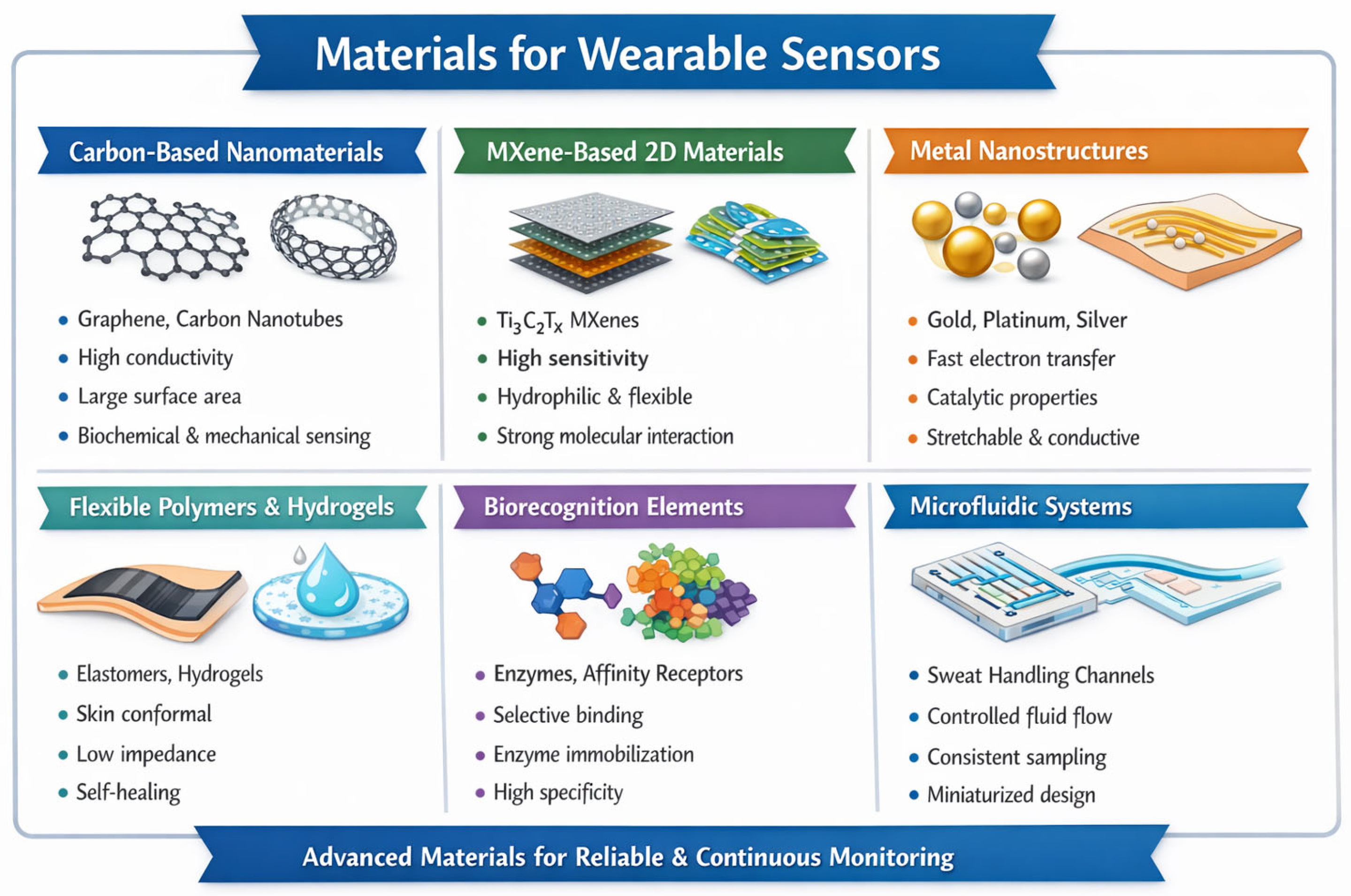
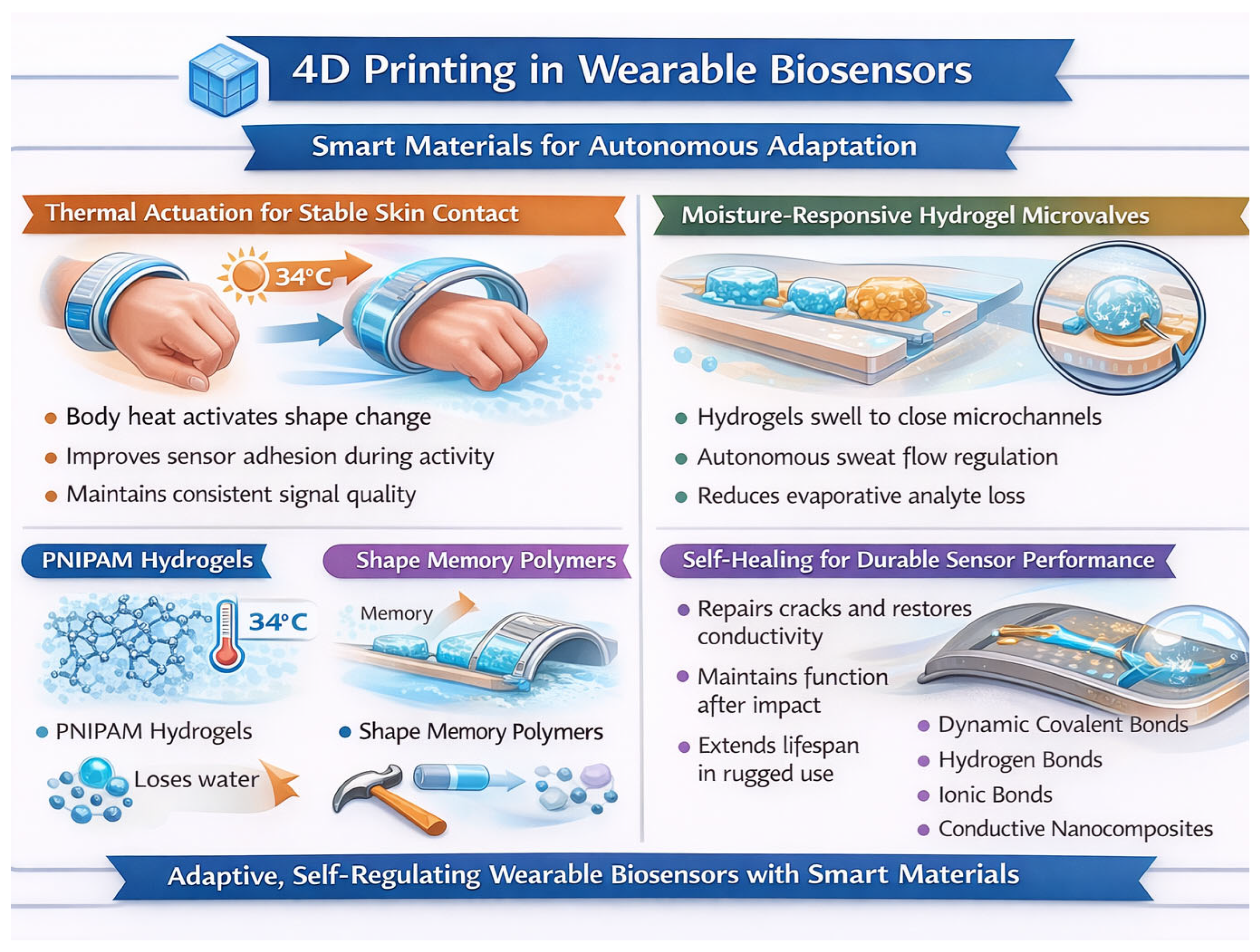
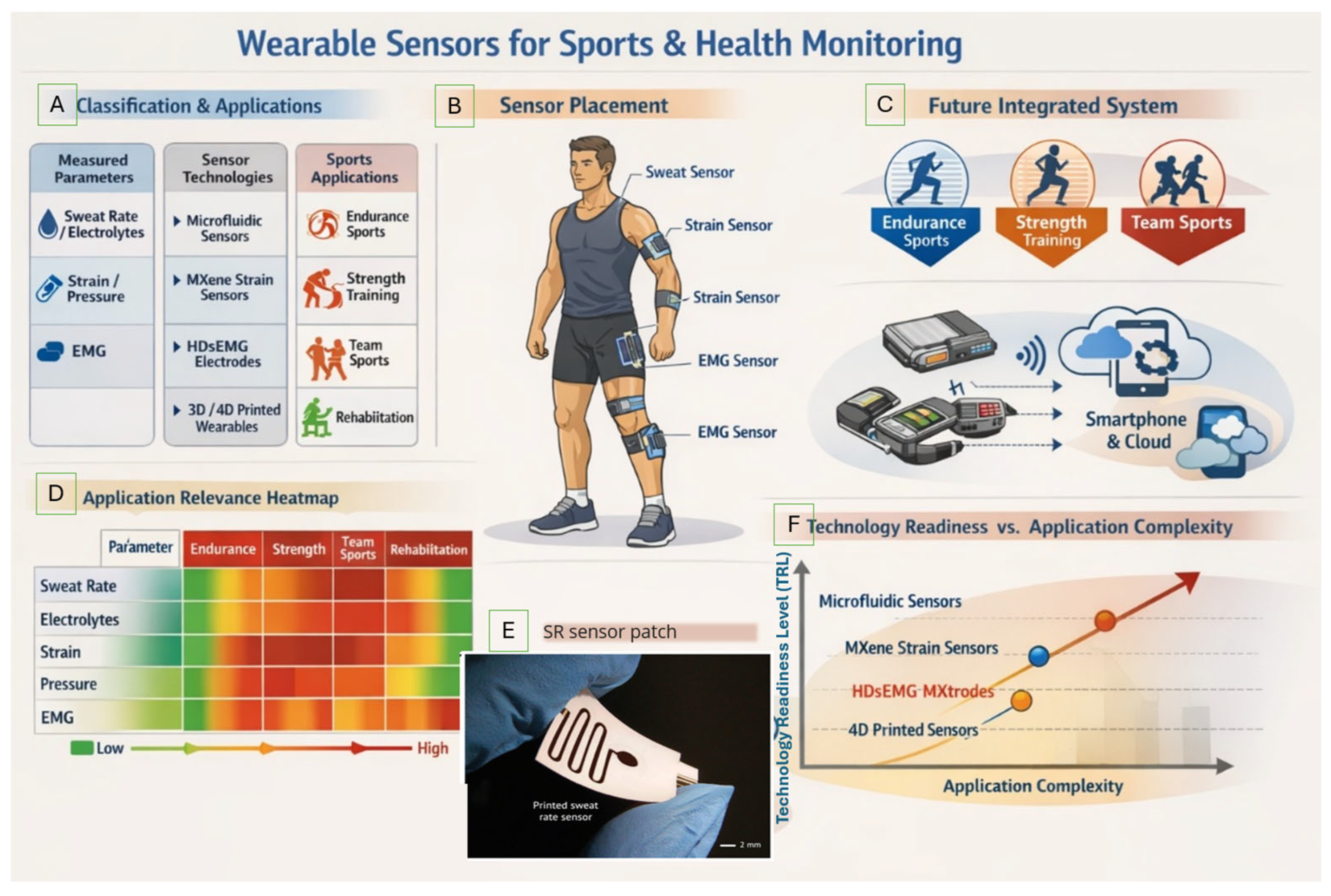
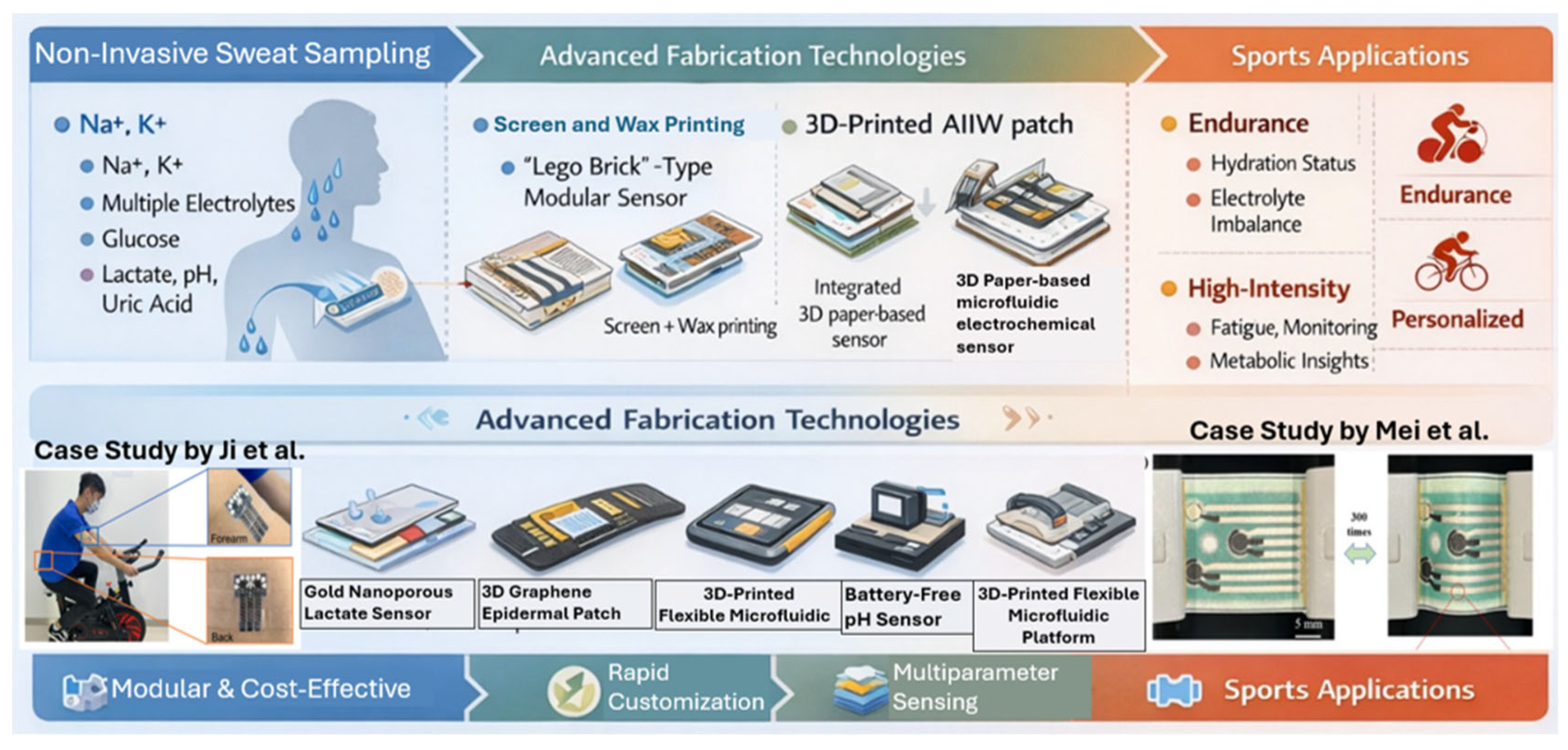
Wearable biosensors have swiftly progressed from stiff laboratory prototypes to flexible, skin-like systems capable of ongoing physiological monitoring. Yet, the active and mechanically intense nature of athletic performance reveals the limits of static device designs made solely through traditional 3D printing. This review offers a thorough analysis of the shift from custom 3D-printed platforms to adaptive 4D-printed wearable biosensors that include time-sensitive, stimuli-responsive materials. We carefully investigate how nanomaterial-engineered transducers, including carbon nanomaterials, MXenes, and metallic nanostructures, improve electrochemical sensitivity, signal stability, and mechanical durability in sweat-based and electrophysiological sensing. Additionally, we examine the integration of thermoresponsive polymers, moisture-activated hydrogels, shape-memory materials, and self-healing networks that support autonomous control of skin–sensor contact, microfluidic sweat management, and structural stability under high mechanical strain. Case studies focused on sports monitoring demonstrate how these innovations enable multimodal measurement of mechanical, chemical, and molecular biomarkers in real time. Lastly, we address manufacturing scalability, regulatory issues, and translational challenges necessary to move from proof-of-concept to clinical deployment. By combining nanomaterial-driven electrochemical precision with 4D-printed mechanical adaptability, this review maps a path toward adaptive, self-regulating wearable platforms that sustain analytical accuracy even under extreme physiological demands.
Keywords: 4D printing; stimuli-responsive materials; MXene; self-healing biosensors; microfluidics; sports physiology; shape memory polymers 4D printing; stimuli-responsive materials; MXene; self-healing biosensors; microfluidics; sports physiology; shape memory polymers