


Abstract
Free vibrations of axially moving beam-like nanostructures have been investigated in recent years; however, vibrations of moving nanochassis traveling over a surface with arbitrarily small irregularities have not been displayed yet due to some complexities in modeling. To address this challenge, a nonlinear, nonlocal surface energy-based composite beam-like model is established to fairly accurately capture the nanochassis’ vibrations. The nanocar consists of a composite-like nanochassis and the ends’ wheels, where the nanochassis is modeled by an appropriate beam model and the wheels are simulated as rigid solid elements that are attached to the beam’s ends. Both differential- and integral-based formulations are presented, and their nonlinear stiffness, as well as the procedure for capturing the nonlocal elastic field, is carefully explained using the assumed mode approach. For several particular cases, the predicted results by the suggested models are verified with those of several analytical solutions, and reasonably good agreements are achieved. Beyond the aforementioned comparison studies, the possible instabilities of the nanochassis that travels over a straight route were also identified and explained under a small deformation regime. Through conducting a fairly comprehensive parametric study, the roles of amplitude and frequencies of the harmonic route, axial velocity, length, diameter, nonlocality, surface energy, and geometrical nonlinearity on maximum deformations and internal forces are examined comprehensively. This study could be considered as basic scrutiny for the nonlinear analysis of more complex traveling nanostructures over arbitrarily shaped surfaces.
1. Introduction
In recent years, the design of mechanically controlled machines at the atomic scale has led to the fabrication of various molecular-based motors [1,2], rotors [3,4,5], and elevators [6,7], nanocars and nanovehicles [8,9,10,11]. The latter one presents a novel class of nanomachines consisting of molecular chassis, axles, and wheels that can even pass over the surface of solids with specific directions. These nanovehicles convert the electrical field, applied thermal field, or light energy into the mechanical and controlled movement to transport special information or materials from one place to another. The above-mentioned crucial capability of these tiny moving cars (i.e., structurally specified motion) has gained the attention of scientists from various disciplines including chemists, surface engineers, applied physics, and mechanics. On the other hand, vibration analysis of a moving nanochassis over microscopically irregular routes requires a framework that can simultaneously capture size dependence, surface energy, and instability-sensitive dynamics. Related developments in flexible structural dynamics, instability theory, and vibration-sensitive mechanical response could provide useful methodological context [12,13,14,15]. On the other hand, periodic resonant cavities can effectively tailor low-frequency vibrations [16], while droplet deformation under airflow reveals flow-induced mechanical instabilities [17], which, in a combination of these phenomena (i.e., resonance due to the excitations of ends’ nanochassis as well as reduction in flexural stiffness due to its moving nature), occur in moving nanochassis problems. In addition, biomechanical investigations of footwear effects on impact forces and soft-tissue vibrations [18,19] can also provide valuable information on possible dynamic instabilities in a moving nanochassis under route irregularities. Until now, free transverse vibrations of nanoscaled beam-like structures with axial motion have been widely examined; however, nonlinear vibrations of beam-like nanochassis with potential movement over a surface with very tiny irregularities have not been methodically researched yet. This issue encouraged the authors to focus on the mechanical aspects of moving nanochassis through developing and analyzing appropriate models to display both longitudinal and transverse vibrations and instabilities in some detail. For this, previous works on nonlinear forced vibrations of beam-like structures, from macro to nano [20,21,22,23], should be carefully examined to ensure the reliability and convergence of the employed approach.
At the atomic level, the induced stress at a point would no longer be local since vibrations of each atom rely on the vibrations of its adjacent atoms. The so-called nonlocality be captured by the classical elasticity theory (CET) since it displays that the stress field at each point of the continuum only depends on the state of the stress on that point. To overcome this disadvantage of the CET, nonlocal elasticity theory (NET) was wisely developed by Eringen [24,25,26,27] in the last decades of the previous century. After application of the NET to statics and buckling analyses of beam-like nanostructures by Peddieson et al. [28] and Sudak [29], many researchers commenced exploiting the nonlocal rod, beam, plate, and shell models for examining buckling [30,31,32,33], postbuckling [34,35,36], linear vibration [37,38,39,40,41,42], and nonlinear vibrations [43,44,45,46] of nanostructures. The employed models can be classified into two major groups: (i) nonlocal differential-based models, (ii) nonlocal integro-based models. In the first group, the nonlocal stresses can be simply related to the local stresses in the Cartesian coordinate system by: , where denotes the small-scale factor, ∇ is the nabla symbol, and in order are the local and the nonlocal stress components. Such a constitutive relation was initiated by Eringen [27] to reduce the complexities arising from the nonlocal integro-based modeling of continuum fields, particularly those whose spatial domains are infinite. So far, this special form of the nonlocality has been extensively employed by various investigators for examining free vibrations of nanobeams and nanoplates [47,48,49,50,51,52,53,54]. For the models of the second group, the constitutive relations are generally stated by [27]: , where signifies the small-scale parameter, represents the norm symbol of the vector , K is an appropriate kernel function (1D, 2D, or 3D depends on the size of the computational domain of the continuum of our concern, ), denotes the volume of an infinitesimal element from the spatial domain, and t is the time parameter. In recent years, the nonlocal integro-based models have been widely applied to the vibrational problems of nanostructures [55,56,57,58,59]. In nanobeams, the paradoxical behavior of differential nonlocal models refers to counterintuitive predictions where increasing the nonlocal parameter produces apparent hardening instead of the expected softening. This mainly arises because the differential formulation requires additional constitutive boundary conditions for bounded domains. When these are omitted or inconsistently applied, anomalous size effects and contradictory responses occur. Integral and stress-driven nonlocal models generally eliminate these inconsistencies and recover physically consistent softening behavior. Such great achievements have been a powerful motivation for investigators who are applying the nonlocal integro-based models to unresolved problems of nanomechanics.
Concerning nonlocal vibrations of moving nanostructures, Lim et al. [60] investigated transverse free vibration of axially moving nanoscaled beams by application of the nonlocal continuum theory of Eringen to Euler–Bernoulli beam theory. Using the variational principle, novel higher-order differential equations of motion were derived accounting for higher-order as well as non-classical boundary conditions. Kiani [61] examined axial and lateral vibrations of nanobeams made from functionally graded materials with axial movement using the nonlocal Rayleigh beam theory. By application of the Galerkin method to the nonlocal governing equations, the longitudinal and transverse natural frequencies were evaluated, and the flutter and divergence instabilities with their pertinent influential factors were displayed and discussed. Li [62] studied free transverse vibrations of axially moving piezoelectric Euler–Bernoulli-based nanobeams accounting for nonlocal thermoelectro–mechanical coupling. Using eigenvalue approach, the natural frequencies for both simple–simple and clamped–clamped ends were evaluated and their influential parameters were displayed and discussed in the presence of the applied thermal, mechanical, and electrical fields. Wang et al. [63] explored free vibration of transverse motion of axially moving nanobeams by exploiting the nonlocal strain gradient theory. The roles of instability conditions and size effect on frequencies and critical velocities of various vibration modes were explained by employing the Euler beam model. Mokhtari et al. [64] examined free transverse vibration of nanobeams moving in axial direction by implementing the nonlocal Euler-based beam theory. The constitutive equations of motion were analyzed for natural frequencies by employing wavelet-based spectral element method. The effects of the axial velocity, pre-stressing load, and nonlocality on the free vibration trends of the moving nanostructures were displayed in some details. Guo et al. [65] investigated dynamic deflection and its potential instability for nanobeams with both axial movement and rotatory motion using the nonlocal strain gradient-based continuum mechanics. The roles of nonlocality, strain gradient effect, rotary motion, and axial velocity on the lateral stiffness of the rotating-moving nanostructure were revealed and discussed. This brief literature review indicates that all carried out explorations on axially moving nonlocal-based nanostructures were limited to the linear and free vibrations. For the most general form of the translational motion, Kiani [66,67] examined three-dimensional vibrations of moving nanocables with three components for the velocity and acceleration vector fields. The roles of nonlocality, surface energy, and speeds in various directions on the divergence instability, vibrations, and static deflections of the traveling nanocable were studied in some detail.
For nanoscale structures like nanowires, nanochassis, nanorods, nanoplates, and nanoshells, the ratio of the surface’s area to the bulk’s volume is much higher than their corresponding macro-scaled ones. On the other hand, conducted research works by Gurtin and Murdoch [68,69] revealed that the mechanical behaviors of the surface layer are entirely different from those of the bulk. To include this in the formulations of motion of tiny structures, they established a novel surface elasticity-based theory based on a new description of strain–stress relations for surface layers. For instance, they proposed three material constants (i.e., residual stress within the very thin surface layer, , and two mechanical constants, , and ) to display the constitutive relations of isotropic layers. These constants are commonly determined by adjusting the dispersion curves from the surface energy-based model for tiny bars and plates and those predicted by a suitable atomic-based methodology [70,71]. Up until now, the continuum-based model of Gurtin–Murdoch has been implemented for many nanomechanical problems raised in the field of nanotechnology including free vibration [72,73,74,75], forced vibration [76,77,78], nonlinear vibrations [79,80] of both nanobeams and nanoplates. Because the present work emphasizes a nonlinear nonlocal surface-energy-based beam-like model, it is also reasonable to position the study alongside recent advances in memory-dependent constitutive modeling, surface-governed nanoscale behavior, and mechanics-informed numerical formulations [81,82,83,84]. In doing so, applications of these more inclusive models to the present problem can lead to more inclusive models and can be considered for upcoming research work. Regarding vibrations of moving nanostructures accounting for the surface energy effect, Kiani [85] studied flutter and divergence instabilities of axially moving nanobeams by exploiting surface energy-based Rayleigh, Timoshenko, and higher-order beam theories. The natural frequencies were computed for elastically embedded moving nanobeams by employing Galerkin-based admissible modes methodology. Recently, Aichun and Kiani [86] examined free vibrations of axially moving piezoelectric nanowires with the surface effect based on the Rayleigh and Timoshenko beam models. The explicit terms of the divergence velocity as well as the critical applied voltage were introduced, and the impacts of crucially displayed factors on their free vibrations and potential instabilities were revealed in some details. As it is clearly recognized, surface energy-based vibrations of moving beam-like nanochassis with excited ends have not been cultivated yet, and all the previous studies were limited to the linear case.
In the present work, nonlinear axial and transverse vibrations of movable beam-like nanochassis over a surface with arbitrary irregularity are of particular concern. The problem analyzed in such generality could also elucidate the vibrational mechanism underlying nanoscale chassis motion on a surface with arbitrary irregularities. To this end, the nanomechanical problem is described in Section 2 for the first time. A nonlocal differential surface energy-based model and a nonlocal integro-based model (NDS and NIS) are, respectively, established in Section 3 and Section 4. It should be highlighted herein that the proposed approaches based on the NDS or NIS are essentially related to the Cauchy tensor because they utilize the classical local Cauchy stress tensor as the base field, then transform it into a nonlocal stress tensor through differential-based or integral-based operators, respectively, and combine it with surface elasticity effects; these stress measures are what generate the model’s effective stiffness. For the proposed models, the nonlinear governing equations are derived carefully, and then, these are solved for the unknown dynamical axial displacement, deflection, axial force, and flexural moment. In Section 5, several analytical solutions for both free vibrations of axially moving nanochassis and forced vibrations of immovable nanochassis acted upon by ends’ excitation are developed, and the obtained results by the numerical models mentioned above are appropriately checked with these analytical ones. In continuing, an inclusive parametric study is presented and the crucial roles of the nanochassis geometry, characteristics of ends’ excitations, speed, nonlocality, geometrical nonlinearity, and surface energy on the axial and lateral vibrations of such moving nanostructures are displayed and discussed. Section 6 displays the prospects of the present research work and several hot topics for future works. Finally, the notable results obtained are presented in Section 7.
2. A Brief Outline of the Nanoengineering Problem
Consider a continuum-based beam-like nanochassis of length and height moves horizontally at a constant velocity over an arbitrarily shaped surface as demonstrated in Figure 1. Without loss of generality, it is assumed that the surface along the horizontal would be sinusoidal with the following form: , where is the amplitude of the harmonic route and L denotes its wavelength (see Figure 1). Since only nonlinear longitudinal and transverse vibrations of the moving nanochassis over a rough route are of our concern in this study, we considered the ends’ wheels as attached massless rigid objects that only transfer the induced transverse vibrations to the main nanochassis. However, for a more systematic modeling of the problem, particularly when the roles of the mechanical properties of the attached wheels (mass, stiffness, and damping as the crucial factors) on the vibrations of the moving nanochassis is of interest, one can model the motion of the nanochassis, wheels, and nanosystems traversing a rough route with more details through developing a more systematic mathematical model.
Figure 1.
A beam-like nanochassis moves over an arbitrarily shaped route with small irregularities (() imaginary horizontal-flat surface, (—) uneven surface).
Under the premise of the assumption mentioned above, when and , it can be easily proved that the problem of moving nanostructures on a harmonic surface can be reduced to a moving nanoscaled beam under excitation and at its ends such that: and , where = , represents the horizontal component of the velocity (please see Appendix A). Since , it can be rationally concluded that . Additionally, the last term inside the bracket of could be omitted since . In such a case, the excitations at both ends of the moving nanochassis would be identical. From an application viewpoint, traveling nanostructures subjected to tiny geometric irregularities may experience route-induced amplification, bifurcation-like responses, and safety-critical dynamic transitions. Comparable concerns appear in studies of transport safety, flow-controlled systems, and deformation-sensitive solid media, which together help motivate broader engineering relevance [87,88,89,90]. By these virtues, we are also eagerly interested in responding this critical question: how combinational characteristics of surfaces with harmonic irregularity and moving nanochassis could endanger its lateral vibration?
In the following parts, we examine the nonlinear axial and lateral vibrations of a nanochassis travels over a surface with arbitrarily small irregularities. To this end, the nonlinear equations of motion of the moving nanostructure are carefully derived using both nonlocal Rayleigh-based beam theory by considering the surface effect. The nonlocality is incorporated into the formulations of the problem by establishing two novel models: nonlocal differential and nonlocal integro-type.Then, these coupled equations are solved for axial and lateral dynamic deformations by employing the Galerkin approach based on admissible modes. The details of nonlinear calculations for each model based on the Newton’s method are then displayed, and the obtained results will be then presented and discussed in some detail.
3. Nonlocal Differential-Based Modeling of Moving Excited Nanochassis
3.1. Nonlinear Equations of Motion
Through deploying the nonlocal differential-based elasticity model of Eringen [24,25,26], the most important nonlocal normal stresses of the bulk and the surface layer (i.e., and ) are linked to their corresponding local values (i.e., and ) by:
where is the nonlocal factor of the bulk or that of the surface layer. On the other hand, the nonlinear Lagrangian strain of the surface layer () and that of the bulk () from the moving beam-like nanochassis can be stated by:
Using the main hypothesis of the Rayleigh beam theory for the elastically deformable nanochassis (i.e., and ), where represents the axial deformation at the neutral axis, y denotes the distance from the neutral axis, and is the lateral deformation. Since the surface layer has been stiffly attached to the bulk, they have identical axial and lateral deformations (i.e., = = and = = ). By introducing these forms of deformation fields to Equation (2), assuming that the transverse deflection field would not vary across the thickness (i.e., = = , where = ), the nonlinear axial strains take the following form:
By employing Hooke’s law,
where is the bulk’s Poisson ratio, is the bulk’s elastic modulus, represents the normal stresses within the bulk or the surface layer along the direction ( = s or y). The requirement of satisfaction of equilibrium of the surface layer along the y direction leads to:
in these relations, is the first material derivative operator (for example, for a body moves axially with the constant axial velocity of , it would be ), represents the residual stress of the surface, is the density of the surface layer. The elastic fields specified by the superscripts − and + in order correspond to the furthest axis at the bottom and top of the surface layer.
By accepting linear variation in the local normal stress (i.e., ) across the thickness of the bulk and using Equation (5), it is derivable:
By introducing Equations (5) and (6) to Equation (4), the local axial stress within the bulk as a function of deformation fields takes the following form:
Within the framework of the Gurtin–Murdoch surface continuum-based theory, we can express the constitutive relations of the surface layer by [68,69]:
in which is the local stresses of the surface, represents the Kronecker delta tensor, and are the constants of Lam of the surface layer such that = is its elastic modulus. By virtue of Equations (1) and (3), the local axial stress field of the surface layer accounting for large deflections can be displayed by:
where, in the case of small deflection-small rotation, Equation (9) can be reduced to that provided in previous studies [91,92,93,94,95]. The local axial forces within the constituent parts of the moving nanochassis ( and ) can be readily evaluated by the integration of the local axial stresses over their corresponding cross-sectional domains:
By premultiplying Equations (7) and (9) by y, and taking the integral from the resulting expressions over their relevant cross-sectional domains, the local flexural moments within the major constituents of the moving nanochassis, denoted by and , are calculated by:
where and . By taking the integral from Equation (10) over the nanochassis’s cross-section area, the relationship between the local axial force and the nonlocal one for the constituting parts of the continuum-based nanochassis are derived as follows:
additionally, by using of Equation (11), the nonlocal flexural moments within the consisting parts of the beam-like nanochassis take the following form:
To construct the nonlocal nonlinear equations of motion, we exploit Hamilton’s principle. For this purpose, the kinetic energy of the axially moving nanochassis, , as well as its strain energy by considering the nonlocality and the surface energy effect, , can be represented by:
or in a more detailed form as follows:
By exploiting the Hamilton’s principle, = 0, the equations of axial and lateral motions of the moving nanochassis with large deformations are obtained as follows:
Through mixing Equations (12) and (13) with Equations (16a) and (16b) in view of Equations (10) and (11) and assuming = = , the total nonlocal axial force (i.e., ) and the total nonlocal flexural moment (i.e., ) in the moving nanochassis as a function of the deformation fields are obtained:
where the total local axial force and the total local bending moment are as follows:
where = is defined as the elastic modulus of the surface layer. By substituting Equations (17a) and (17b) in order into Equations (16a) and (16b), the governing equations of the moving nanochassis for large deflections in terms of the total local forces by considering the surface energy and nonlocality are obtained:
To state Equations (19a) and (19b) in terms of axial and lateral displacements, Equations (18a) and (18b) are introduced to these relations. Additionally, we assume that the following relationship would be reliable for small rotations:
Finally, the continuum-based governing equations associated with the nonlinear axial and lateral vibrations of the moving nanochassis accounting for both nonlocality and surface effects in terms of deformations would be:
Regardingthe initial conditions, it is supposed that the moving nanochassis would be at rest just before initiation of its forced vibrations due to the existing irregularities on the surface. Thereby,
For a moving beam-like nanochassis, its ends are assumed to be simple in the lateral direction and fixed-movable in the axial direction. It implies that the following conditions should be enforced:
To examine nonlinear vibrations of the excited moving nanochassis more systematically, we consider the following dimensionless factors:
where and are the dimensionless operators. By substituting Equation (24) into Equations (21a) and (21b), the dimensionless nonlinear governing equations of an excited moving nanochassis using the nonlocal surface energy-based continuum mechanics are obtainable in the following compacted form:
and by virtue of Equations (22) and (23), the dimensionless form of the initial and boundary conditions reads:
where
and the dimensionless total axial force (excluding the initially residual one) and the total flexural moments in terms of deformations take the following form:
This broader nanoscale perspective can be reinforced by studies on substrate effects, thin-film growth, ultraviolet emitters, nanoporous optical structures, and free-standing device platforms, all of which underline the importance of boundary, surface, and architecture effects in small-scale systems [96,97,98,99]. High-quality film growth via annealing and MOCVD [100] and non-polar ZnO deposition on templates [101] underline the importance of surface/interface engineering in nanoscale dynamics. In addition, self-assembled tungsten oxide nanofibers [102] and flexible TeSeO hybrid photodetectors [103] demonstrate how nanoscale morphology and surface properties govern mechanical and optoelectronic responses. Further, recent works on deep-ultraviolet photonic structures and plasmonic or extraction-enhancement mechanisms further illustrate how structural configuration and surface/interface engineering can decisively modify system behavior at small scales [104,105,106,107]. Such observations are complemented by cooperative scattering designs, biologically relevant nanoparticle–surface interactions, and surface-sensitive functional materials, which collectively strengthen the case for explicitly accounting for surface-related mechanisms in advanced nanoscale modeling [108,109,110].
3.2. Development of an Efficient Numerical Approach for Spatial Discretization
Let us decompose the dimensionless displacements of the neutral axis of the excited moving nanochassis modeled by the Rayleigh beam as follows:
where, herein, and represent the purely dynamic displacements of the neutral axis of the moving beam-like nanochassis along the axial and lateral directions, can be rationally set equal to zero since it is assumed that the moving nanostructure is free from any longitudinal excitation, and is an auxiliary dimensionless deflection that includes rigid-like transverse displacement of the moving nanostructure due to its supports’ excitation. In the following, we should try to reconstruct the nonlinear equations of motion of the moving nanostructure with excited supports in terms of such auxiliary deformation fields. To this end, let us express the dimensionless auxiliary deflection in the following form:
By substituting Equation (29) into Equations (25) and (26) in view of Equation (30), the boundary value problem associated with the nanomechanical problem reduces to the following governing equations:
whose initial and boundary conditions read:
and the dimensionless total axial force and flexural moment in terms of the pure dynamic deformations by consideration of both nonlocality and surface effect take the following form:
To proceed in solving the nonlinear nonlocal differential-surface energy-based Equations (31a) and (31b) with the given conditions in Equations (32a) and (32b), we employ the Galerkin approach based on the admissible modes. To this end, the dimensionless displacements of the excited moving nanochassis are discretized as a function of admissible mode shapes:
where and denote the time-dependent factors of the ith mode of the axial and lateral displacements, respectively, and in order are the jth modes pertinent to the axial and lateral deformations of the nanochassis’s neutral axis, and finally, and are the total numbers of modes considered for the nonlinear axial and lateral vibrations, respectively. Now, Equations (31a) and (31b) in order are premultiplied by and ( is the variational sign), then the resulting statements are integrated across the length of the moving nanochassis and the integration by parts technique is implemented whenever is required. As a result, the set of ordinary differential equations (ODEs) associated with the nonlinear vibrations of the excited moving nanochassis are extractable as:
or in a more expanded form:
in which the values of and are provided in Appendix B.1. Now, through employing Equation (32a), the initial conditions of the time-dependent vectors of deformation fields are calculated by:
where
3.3. Application of the Newton’s Approach to the Nonlinear Equations
To calculate the time-dependent vector in Equation (36), let us write down: . Therefore, Equation (35) can also be modified to:
where
in which I represents the identity matrix. Using finite difference approach, Equation (39) can be discretized in the time domain. To this end, let us approximate the first derivative of by: , where , , and . Through introducing the recent approximate relation to Equation (39), it is obtainable:
where denotes the weight parameter of the time discretization. By utilizing the Newton approach, the value of can be computed from the nonlinear set of equations in Equation (41) as follows:
where and denote the new and old values of during the iteration process, and the details of the calculation of have been presented in the Supplementary Materials, Section S.1. By carrying out the iteration trend given in Equation (42), fairly accurate values for can be achieved at each time.
4. Nonlinear Nonlocal Integro-Based Modeling of Moving Excited Nanochassis
4.1. Nonlinear Equations of Motion
Based on the nonlocal integro-based version of the continuum mechanics of Eringen [24], the longitudinal stresses within the surface layer and the bulk can be linked to their corresponding local stresses by:
where denotes the surface layer’s domain, is the spatial domain of the bulk, and are their corresponding infinitesimal elements, and represent suitable one-dimensional kernel functions for the constituting parts of the continuum-based nanochassis, and is the small-scale factor (i.e., = ), which is assumed to be the same in the constituents of the moving nanochassis. The requirement of the completeness condition for the kernel function leads to: = 1 and = 1. Now by considering the following relations:
where is an appropriate attenuation function, and the above-mentioned constants pertinent to these kernel functions are defined by:
and commonly used one-dimensional attenuation functions are as [24]:
where is the Heaviside step function. By introducing Equation (44) to Equation (43) by virtue of Equation (45), the nonlocal main normal stresses within the consisting parts of the moving nanochassis are expressed in terms of their pertinent local values as follows:
By introducing the local stresses, as given in Equations (7) and (9), to Equations (47a) and (47b), the nonlocal integral-based stresses within the constituent parts of the moving nanochassis in terms of displacements are displayed by:
Therefore, the total nonlocal axial force field in the consisting parts of the beam-like nanochassis are expressed by:
and the total nonlocal flexural moments in the constituting parts of the movingly excited nanostructure are readily stated by:
Using the principle of Hamilton, in view of Equations (15a) and (15b), the nonlocal integro-surface energy-based equations associated with the axial and lateral vibrations of the moving nanochassis take the following form:
with the given initial and boundary conditions in Equations (22) and (23).
Now, the provided dimensionless parameters in Equation (24) are introduced to Equations (51a) and (51b). As a result, the dimensionless nonlinear equations of axial and lateral vibrations of the beam-like excited moving nanochassis are obtained:
with the dimensionless conditions provided in Equations (26a) and (26b), and
4.2. Development of an Efficient Numerical Approach for Spatial Discretization
Assuming the decomposed form of the dimensionless deformation fields of the neutral axis of the continuum-based moving nanochassis as per Equations (29) through using Equation (30), Equations (52a) and (52b) can be rewritten in terms of and as follows:
with the given initial and boundary conditions in Equations (32a) and (32b). Since for most of the cases the kernel functions have anti-symmetric slope w.r.t. its symmetric plane, the last term on the right-hand side of Equation (54b) could be simplified to:
Further, the dimensionless axial force and flexural moment based on the nonlocal integral model take the following form:
By following the displayed procedure in Section 3.2 for discretizing the unknown fields and transferring from PDEs to ODEs, one can arrive at the ODEs given in Equations (35) and (36), where the elements of its consisting submatrices and force vectors are given in Appendix B.2.
4.3. Application of the Newton’s Approach to the Nonlinear Equations
By exploiting the given numerical procedure in Section 3.3 and using Newton’s approach, the unknown time-dependent vectors of the dimensionless deformation fields could be readily evaluated. The details of calculations of the elements of for this model are also given in Section S.2 of the Supplementary Materials.
5. Results and Discussion
5.1. Several Comparison Studies
Since the explored problem herein has not been cultivated with such a generality described in the present work, the provided verification studies are restricted to several particular cases based on the established analytical-based approaches in the present work. As the first comparison study, the predicted nonlocal elastic fields by the proposed numerical-based models in the linear condition are verified with those of analytical-based solution for the case of a stationary nanochassis acted upon by end excitation. In the second verification scrutiny, the predicted linear frequencies of the axially moving nanochassis are compared with those of analytical solutions.
5.1.1. Verification of the Elastic Fields Within the Excited Nanochassis
To verify some parts of the performed calculations, we also establish an analytically linear model for predicting nonlocal surface energy-based elastic fields within the nanochassis due to ends’ excitations. Consider a simply supported nanochassis in the stationary state (i.e., = 0) which is subjected to arbitrary harmonic excitations at its ends. In Section S.3 of the Supplementary Materials, based on the connection of admissible modes and Fourier sine series properties, an exact methodology has been established to display the deflection and flexural moment of the arbitrarily excited nanochassis. Subsequently, for the special case of the nanochassis subjected to harmonically excited ends (i.e., ), the explicit-exact expressions of the purely dynamic deflection and the flexural moment are derived carefully in Sections S.3.1 and S.3.2 of the Supplementary Materials. Further, the resonance state of the excited nanochassis is discussed in Section S.3.3 of the Supplementary Materials. In Figure 2, the predicted linear dynamic deflection by the proposed NDS-based model (dashed line) and those of the presented exact solution (solid line) are provided for various excited frequencies of the ends such that:
where is the normalized deflection, is the maximum static deflection due to the mass-weight of the nanochassis with simple ends, is the dimensionless fundamental frequency of the nanochassis, and denotes the dimensionless divergence velocity of the first mode [85]. As it is observable in Figure 2, there exists a reasonably good agreement between the predicted results by the suggested numerical model and those of the exact solution most of the time.
Figure 2.
The obtained time history plots of the linear-normalized deflection at the midspan point of the excited nanochassis by the exact solution (solid line) and the suggested numerical NDS-based model (dashed line) ( = 30, = 2.24 nm, = 0.01, = 0.3, = 0).
In order to suppress the induced vibrations within the moving nanochassis, its vibrations can be suitably controlled by an appropriate active or passive approach. For this purpose, the utilized methodologies for large-scale structures acted upon by forced vibrations [111,112,113] can be employed. In the present investigation, no internal damping nor an active or a passive control solution is adopted to suppress the induced vibrations, and this crucial issue can be considered as a hot topic for future work.
5.1.2. Verification of the Natural Frequencies of the Surface Energy-Based Moving Nanochassis
To show the accuracy of the NDS-based model for beam-like moving nanostructure of our concern, we perform another comparison study. In the Supplementary Materials, Section S.4, we develop novel analytical solutions (AS) for capturing both axial and lateral vibrations of a moving nanochassis with moderate and high slenderness ratios. Through developing an efficient variation of the variable technique, the explicit expressions of both natural frequencies and divergence velocities of various vibration modes for a very lengthy moving nanochassis are presented and discussed in Section S.4.1 of the Supplementary Materials. Through generalizing the developed technique for lengthy nanochassis to those with moderate slenderness ratio, the nonlinear coupled relations of the characteristic equations are obtained and solved for the unknown parameters, particularly the flexural frequencies, as displayed in Section S.4.2 of the Supplementary Materials. In Figure 3a,b, the plots of the first three flexural frequencies as a function of the axial velocity for the moving nanochassis with the high and moderate slenderness ratios (i.e., = 40 and 200) have been depicted. The plotted results are based on the developed analytical approach in Section S.4 and those of the NDS-based model for two cases with surface energy effect and without consideration of the surface effect. As it is seen, the NDS-based model can reproduce the results of the analytical approach with a fairly good accuracy for most velocity levels. For higher vibration modes, the discrepancies between the predicted results by the NDS and those of the analytical solution become highlighted, particularly at velocities close to the critical ones and stockier nanochassis. This fact is mainly related to the incorporation of the shear effect to the transverse vibrations of moving nanochassis as well as the existing high interactions of shear and flexural modes of the moving nanochassis with lower slenderness ratios.
Figure 3.
Comparison between the predicted first three dimensionless flexural frequencies by the proposed linear NDS-based model and those of the AS as a function of the axial velocity: (a) = 200, (b) = 40; ((∘) AS-, (□) AS-, (△) AS-; (−−) without surface effect, (—) with surface effect).
The proposed models herein may further be framed as part of a wider effort to understand multiscale structural performance under coupled physical effects, where stiffness tailoring, flexible-body control, and anisotropy-sensitive response are central themes [114,115,116]. Although many investigations come from optoelectronic and nanomaterial systems, they still support the manuscript’s broader nanoscale motivation by highlighting how geometry, interfaces, fabrication-dependent morphology, and surface-mediated behavior strongly affect functional response [117,118,119,120]. Finally, the diversity of the literature—from obstacle-avoidance control and geomechanics to instability analysis—suggests that the paper can be presented as a foundational mechanics study whose nonlinear nonlocal formulation may later inform more complex traveling nanostructures and multifunctional engineered systems [14,89,121].
5.2. Parametric Studies
In this part, inclusive numerical studies are carried out to explain the roles of various factors on the deformation fields and the resulting nonlocal forces within the moving excited nanochassis. According to the existing literature [8,122,123,124,125], the materials of the nanochassis are best understood as precisely synthesized molecular components, primarily from organic and carbon-rich molecules, rather than conventional engineering materials like steel, rubber, or silicon. Here, the nanochassis is assumed to be made from Ag molecules with circular cylindrical configuration and therefore its material properties were taken from the former published works; however, we can also take into account the above materials (aromatic/conjugated organic scaffolds, carbon-rich molecules, and so on) as well in our modeling for future works and then proceed with comparing their mechanical/dynamical behaviors with those provided in this research work.
Now, let us consider a circular cylindrical silver nanochassis with the following properties for the bulk and the surface layer [126,127]: = 10,500 kg/m3, = kg/m2, = 0.26, = 76 GPa, = 1 N/m, = 0.11 N/m, = 0.89 N/m, and = 4 nm. To investigate the problem more conveniently, we define the following normalized deformations and nonlocal forces:
In these relations, and denote the dimensionless maximum static longitudinal displacement and the dimensionless maximum static nonlocal axial force within the fully pinned nanochassis due to its own weight when it is placed in the vertical position. Additionally, and represent the dimensionless maximum deflection and the dimensionless maximum nonlocal flexural moment of the excited moving nanochassis due to its own bulk weight. For a given nanochassis whose properties are specified by an extra zero sub-index, these are given by:
where , , and represent the cross-sectional area, inertia, and the length of the specified nanochassis with the slenderness ratio = , respectively, and g is the gravitational acceleration. Additionally, the normalized velocity is defined by: , where denotes the critical divergence velocity (see Equation (57)) in which is a function of the nanochassis geometry (i.e., mainly slenderness ratio), bulk properties (i.e., mass per unit length and bending rigidity), and surface factors (i.e., residual surface stress, surface layer geometry, density and bending rigidity).
Herein, we have used the first 9 modes for spatial discretization of both axial and transverse vibrations of the moving nanochassis (i.e., = = 9). In addition, we have used an exponential kernel function in evaluating the nonlocal stresses and forces. To this end, each influence domain of the kernel function is divided into 10 subdomains and 6 Gaussian points are inserted in each one for calculating the integrals associated with both linear and nonlinear stiffness matrices. All numerical calculations of the mass and stiffness matrices associated with the nonlinear behavior of moving nanochassis have been run in MATLAB R2017b.
Regarding further details of the approach used for time discretization, we define and as the dimensionless fundamental period of the moving nanochassis and the dimensionless critical velocity, respectively. These are expressed as follows: = and = 1/, where represents the dimensionless frequency and the dimensionless critical velocity, as described in Section 5. Based on this, we establish two time factors, and , defined as: = / and = 4 max(, ), where is the critical time factor associated with . For the time discretization of the problem, we utilized 200 time steps in the interval [0,] and 300 time steps in the interval [, ]. In addition, concerning Newton’s method convergence check, we apply the following convergence criterion at each time step: /, where denotes the maximum deflection of the moving nanochassis at the i-th iteration.
5.2.1. Effect of the Nonlocality
In the lack of theoretical works and virtual experiments on the small-scale parameter of silver-based nanostructures, we try to rationally estimate it in the following. Martinez [128] performed a density functional analysis to clusters from ammonia metal to determine their bond length, binding energy, Mulliken atomic charges, and M-N stretching of vibration modes. By using Gaussian 98 and the hybrid B3LYP functional, her study shows that the Ag-Ag bond in Ag2, Ag3, and Ag4-based molecules in order are 2.611, 2.69, 2.811 °A. In another investigation, Dubiel et al. [129] scrutinized Ag-Ag bonds length subjected to various temperatures. It was revealed that the nearest Ag-Ag distance would be dissimilar to that of polycrystalline Ag baffle lower than 400 °K. Such a fact can be interpreted by a thermo-elastic model that deals with the discrepancy between the thermal expansion coefficient of Ag particles and that of the glass ground substance. The obtained results by the XRD at the room temperature indicated that the Ag-Ag bond length would be approximately equal to 2.89 °A. Further calculations displayed that how the bond length of Ag-Ag would vary in terms of the temperature. On the other hand, recent investigations show that the aspect ratio, boundary conditions, and chirality are among the crucial factors affecting the small-scale parameter of carbon nanotubes [130,131]. In most of the suggested nonlocal continuum-based models for these tiny structures, the value of is considered in the range of 0–16. By taking into account of the mean value of 8 for and the bond length of Ag-Ag atoms as 0.28 nm, the value of the small-scale parameter for the silver-based nanochassis would be = 2.24 nm. With regard to the uncertainties on the value of the nonlocal parameter, we perform a sensitivity study to disclose the dependency of the obtained results by the proposed models to the nonlocal parameter.
Figure 4a–d display the role of the small-scale parameter on the predicted elastic fields of the moving excited nanochassis for four levels of the velocity (i.e., = 0.1, 0.2, 0.3, and 0.4). The results are provided for a moving nanochassis over a harmonic surface with the following properties: = 0.001, = , where represents the fundamental frequency of the moving nanochassis of velocity = 0.4. The dashed and solid lines present the plotted results based on the LM (linear model) and NM (nonlinear model), respectively. As it is seen, the maximum nonlinear axial and lateral displacements slightly reduce by growing the small-scale parameter while the predicted axial force within the moving nanochassis would slightly increase by increasing the nonlocality. Additionally, the rate of reduction is more apparent for the plots of maximum flexural moment, particularly for higher levels of speed. For all considered levels of the speed as well as the small-scale factor, the predicted linear longitudinal displacement is equal to zero. For a given small-scale factor, the nonlinear longitudinal displacement as well as the nonlocal flexural moment would commonly increase by increasing the speed whereas the nonlinear nonlocal axial force would grow with speed up to = 0.3. A tightly mindful investigation of the demonstrated results show that the discrepancies between the LM-based axial force and the NM-based axial force generally reduce by increasing the small-scale factor. For very low speeds (i.e., = 0.1 and 0.2), the predicted NM-based bending moment is lower than the LM-based one and their differences increase by growing the nonlocality; however, for higher levels of speed (i.e., = 0.3 and 0.4) and , the predicted NM-based results are higher than those obtained by the LM and their differences would lessen by increasing the small-scale parameter.
Figure 4.
Effect of the nonlocality on the maximum nonlocal elastic fields for different velocities: (a) = 0.1, (b) = 0.2, (c) = 0.3, (d) = 0.4; (() LM, (—) NM; , = 2.24 nm, , = 0.8, = 0.001).
5.2.2. Effect of the Nanochassis’ Diameter
For four levels of the speed (i.e., = 0.1, 0.3, 0.5, and 0.7), the plots of the nonlocal elastic fields based on the proposed nonlinear NIS-based model are depicted in Figure 5. The provided results are for a nanochassis with = 30 moves over a harmonic surface with the following properties: = 0.001 and = 0.5. The presented results based on the LM and NM are demonstrated by the dashed and solid lines, respectively. As it is observed from the depicted results, both maximum axial and lateral displacements plots take their peak points at a particular level of ; however, these particular levels are not the same for these components of displacements. After the peak point, the predicted nonlinear maximum longitudinal displacements would commonly fluctuate as a function of nanochassis’s diameter while the maximum deflections based on both LM and NM would reduce as the diameter enlarges. It should be noticed that the exerted harmonic force on the moving nanochassis over a harmonic surface (i.e., ) magnifies fairly in a parabolic manner as a function of its diameter, however, the bending rigidity of the moving nanochassis is a fourth-order polynomial in terms of the diameter. This issue interprets the descending branch of the plots of the maximum deflection. For most of the cases, the predicted NM-based maximum longitudinal displacements and deflections are greater than those predicted by the LM. Regarding the maximum nonlocal axial force, its plots present some fluctuations and the general trend of the demonstrated plots are ascending in terms of the diameter. Generally, the maximum nonlocal flexural moment increases by growing the nanochassis’s diameter. In most of the cases, the predicted maximum longitudinal displacement and flexural moment by the NM are lower than those predicted by the LM. More scrutiny reveals that the relative discrepancies between the maximum nonlocal flexural moments of these two models would reduce by increasing the nanochassis’s diameter; however, the relative differences between the NM-based maximum deflections and the LM-based maximum deflections would increase by increasing the nanochassis’s diameter.
Figure 5.
Effect of the nanochassis’s diameter on the maximum nonlocal elastic fields for different velocities: ((∘) = 0.1, (△) = 0.3, (▽) = 0.5, (□) = 0.7; ((−−) LM, (—) NM; = 2.24 nm, , = 0.5, = 0.001).
Another scrutiny is going to be conducted to disclose the surface energy effect on the nonlinear dynamic response of the moving excited nanochassis. In Figure 6, the plots of the maximum displacement components as well as the maximum axial force and flexural moment of the beam-like nanochassis as a function of its diameter have been presented for four levels of the velocity (i.e., = 0.1, 0.3, 0.5, and 0.7), and other surface irregularities and geometry parameters are the same as those given in the previous part. For all considered levels of the nanochassis’s diameter, the predicted surface energy-based displacements as well as nonlocal flexural moment are lower than their corresponding values without considering the surface energy; however, such a fact does not hold true for the plots of the maximum nonlocal axial force for all considered velocities and nanochassis diameters. Moreover, the relative discrepancies between the maximum values of axial and lateral displacements as well as nonlocal bending moment accounting for the surface energy and their counterparts without considering the surface energy effect would reduce as the nanochassis’s diameter grows. This fact is mainly related to the reduction in the ratio of the surface area to the bulk volume by increasing the diameter, leading to the lessening of the ratio of the total surface energy to the bulk’s total energy. As a result, the predicted results by consideration of the surface energy would approach to those obtained without its considering.
Figure 6.
Effect of the nanochassis’s diameter on the maximum nonlocal elastic fields for different velocities: ((∘) = 0.1, (△) = 0.3, (▽) = 0.5, (□) = 0.7; () without surface effect, (—) with surface effect; = 2.24 nm, , = 0.5, = 0.001).
5.2.3. Effect of the Nanochassis’ Length
An important study is carried out to reveal the influence of the length of the excited moving nanochassis on the maximum axial and lateral displacements as well as maximum nonlocal axial force and flexural moment. In Figure 7, the plots of the maximum nonlocal surface energy-based elastic fields associated with axial and lateral vibrations of the moving excited nanochassis have been presented for four levels of its velocity (i.e., = 0.1, 0.3, 0.5, and 0.7). The plotted results on the basis of the LM and the NM are, respectively, demonstrated by the dashed and solid lines. Because of the dependency of the dimensionless amplitudes and the excitation frequency to the nanochassis length, we define the following dimensionless quantities: = and , where herein = , = 0.001, and = 40. Concerning the maximum nonlinear longitudinal displacement, its value increases by growing of the nanochassis’s length such that the rate of increase is more apparent for higher levels of the velocity. For each value of the slenderness ratio, there exists a relative discrepancy of about 100 percent between the LM-based results and those of the NM since the LM cannot capture any longitudinal displacement within the moving excited nanochassis. For each level of the slenderness ratio, the nonlocal axial force increases with the increase in the nanochassis velocity. This fact is confirmed by both the LM and the NM. According to the LM, the values of the nonlocal axial force would generally lessen by increasing the slenderness ratio; however, the plots of the maximum nonlocal axial force based on the NM take their relative minimum and maximum at particular levels of slenderness ratios. For slenderness ratios higher than those pertinent to the relative peak points, the demonstrated plots indicate that the value of the maximum nonlocal force lessens as the slenderness ratio magnifies. The depicted results manifestly show that the predicted maximum deflections grow linearly as a function of the slenderness ratio for all considered levels of the velocity. However, the predicted nonlinear deflections are commonly lower than those predicted by the LM. Furthermore, the predicted maximum nonlocal bending moment within the moving excited nanochassis would reduce by increasing the slenderness ratio. Generally, the NM-based flexural moments are lower than those of the LM, and their discrepancies would considerably reduce by enlarging the slenderness ratio.
Figure 7.
Effect of the nanochassis’s length on the maximum nonlocal elastic fields for different velocities: ((∘) = 0.1, (△) = 0.3, (▽) = 0.5, (□) = 0.7; () LM, (—) NM; = 2.24 nm, = 0.5, = 0.001, = 40).
5.2.4. Effect of the Nanochassis’ Velocity
The influence of the velocity of the nanochassis on the nonlinear axial and lateral vibrations of the moving excited nanochassis is of particular interest. For this purpose, the plots of the maximum axial and lateral deformations as well as those of the maximum nonlocal axial force and flexural moment as a function of nanochassis’ velocity are demonstrated in Figure 8a–d for four levels of the excitation frequency (i.e., / = 0.1, 0.2, 0.3, and 0.4) in the case of = 30 and = 0.001. The nonlinear surface energy-based results and those without consideration of the surface energy have been presented by the solid and dashed lines, respectively. As it is observed, for low levels of the excitation frequency, the predicted nonlinear longitudinal displacement grows as the velocity of the excited nanochassis increases. Further, for all considered levels of the velocity, the nonlinear surface energy-based longitudinal displacement is greater than that obtained without considering the surface energy effect, and the discrepancies between these two values would commonly grow by increasing the velocity of the moving nanochassis. As the excitation frequency increases, the trend of the plots of the maximum surface energy-based longitudinal displacement as a function of the velocity changes. For = 0.3 and 0.4, the aforementioned plots consist of two distinct branches: a descending branch and an ascending one. Such a specific trend for these plots leads to the fact that the maximum surface energy-based longitudinal displacements for some levels of the velocity (i.e., velocities close to that associated with the minimum point) would be lower than those without considering the surface effect. Regarding the trend of the nonlinear deflection, the predicted surface energy-based deflection reduces as the velocity grows while that obtained without consideration of the surface effect grows with the velocity. For all considered levels of the velocity, the nonlinear deflection by consideration of the surface effect is lower than that obtained without consideration of the surface effect. This issue results from two facts; firstly, the positive value of the residual surface stress results in the axial residual tensile force within the moving nanochassis, and thereby, its flexural stiffness increases due to the appearance of the geometrical stiffness term in the transverse equations of motion (i.e., in both NDS-based and NIS-based governing equations, see Equations (31b) and (54)); secondly, positive incorporation of the surface energy effect into the whole bending rigidity of the moving nanochassis (for instance, the appearance of the term in the NDS-based governing equations, see Equation (31b)).
Figure 8.
Effect of the velocity on the maximum nonlocal elastic fields for different frequencies of the harmonic route: (a) = 0.1, (b) = 0.2, (c) = 0.3, (d) = 0.4; (() LM, (—) NM; = 2.24 nm, = , , = 0.001).
For all considered values of the excitation frequency, the predicted nonlinear surface energy-based axial force within the moving excited nanochassis increases as its velocity increases. For most values of velocities, the nonlinear axial force by considering the surface effect is higher than that obtained through excluding the surface energy. Concerning the nonlinear nonlocal flexural moment, for velocities lower than a particular value, those obtained by considering the surface effect are higher than those predicted without consideration of the surface effect. For such a range of the velocity, the relative discrepancies between these two results lessen by increasing the velocity up to that particular level; however, for velocities higher than that particular level, those calculated based on the surface effect are lower than those without considering the surface effect. Further scrutiny shows that the relative discrepancies between the obtained results with and without consideration of the surface effect commonly grow by increasing the velocity. This conclusion is valid for all considered levels of the excitation frequency.
5.2.5. Effect of the Amplitude of the Harmonic Route
In Figure 9a–d, the plots of the nonlocal surface energy-based elastic fields of the moving excited nanochassis in terms of the harmonic surface amplitude are presented. The results are given for four velocity levels (i.e., = 0.1, 0.2, 0.3, and 0.4), = 50, and = 0.4. Without loss of generality, it is assumed that the excitation amplitudes of both ends are the same (i.e., = ). The dashed lines and the solid lines in order are pertinent to the predicted results by the LM and NM. Generally, the maximum nonlinear axial and lateral displacements as well as the maximum nonlinear axial force and flexural moment magnify as the surface amplitude increases. As it is observed that the predicted maximum linear longitudinal frequency is zero for all levels of the surface amplitude, the nonlinear maximum longitudinal displacement varies in a hyperbolic manner as a function of the surface amplitude. Concerning the maximum dynamic deflection, both linear and nonlinear values vary linearly in terms of the surface amplitude, and the predicted nonlinear ones are somewhat lower than those of the linear ones, and their relative differences generally reduce by increasing the surface amplitude. The predicted values of the maximum axial force within the moving excited nanochassis, both linear and nonlinear ones, would vary hyperbolically as a function of the amplitude. For low levels of the velocity (i.e., = 0.1 and 0.2), the nonlinear maximum deflections are lower than the maximum linear deflections for all considered values of the surface amplitude; however, for fairly high levels of velocities (i.e., = 0.3 and 0.4), the predicted nonlinear maximum deflections are higher than those obtained by the LM. Additionally, their relative differences would also magnify by growing the amplitude of the harmonic route. Regarding the maximum value of the nonlocal surface energy-based bending moment, both the linear and nonlinear values increase linearly in terms of the surface amplitude, and the predicted results by the NM are commonly greater than those of the LM. Further scrutinizes reveal that the relative differences between these values would increase by growing the surface amplitude, and such a fact is more obvious for higher levels of the velocity.
Figure 9.
Effect of the amplitude of the harmonic route on the maximum nonlocal elastic fields for different route’s frequencies: (a) = 0.1, (b) = 0.2, (c) = 0.3, (d) = 0.4; (() LM, (—) NM; = 2.24 nm, , = 50, = 0.4).
5.2.6. Effect of the Wavelength of the Harmonic Route
Another interesting parametric study is performed to show the role of the wavelength of the harmonic surface on the nonlinear nonlocal surface energy-based elastic fields of the moving excited nanochassis. In Figure 10, the plots of the maximum axial and lateral displacements as well as the maximum axial force and flexural moment have been demonstrated for four levels of the nanochassis’s velocity (i.e., = 0.1, 0.2, 0.3, and 0.4) in the case of = 0.0001 and = 50. The obtained results clearly display that the maximum values of elastic fields, particularly those of deflection and flexural moment, would grow by increasing the surface frequency up to the fundamental frequency of the moving nanochassis such that the rate of growth is more apparent at the surface frequencies close to the fundamental one. For route frequencies between the fundamental frequency and the second natural frequency, two distinct branches are detectable for all considered levels of the velocity: a descending branch and an ascending branch. In the descending branch, the maximum deflection as well as the maximum flexural moment would smoothly decrease up to a particular level of frequency, and after that (i.e., for the ascending branch), by increasing the route frequency, these values would sharply increase with the surface frequency. According to the demonstrated results, such a scenario for variation of the maximum elastic fields is repeated for all considered velocity levels when the surface frequency varies between the third and the fourth natural frequencies. These obtained results also display that at the surface frequencies close to the natural frequencies, variation of the velocity of the moving nanochassis has the most impact on the variation in the nonlocal surface energy-based elastic fields.
Figure 10.
Effect of the harmonic route’s wavelength on the maximum nonlocal elastic fields for different velocities: ((∘) = 0.1, (△) = 0.2, (▽) = 0.3, (□) = 0.4; = 2.24 nm, = 0.0001, = 40).
6. Several Avenues for Future Research Work
Although the present manuscript is focused on the theoretical formulation and numerical investigation of nonlinear vibrations of a moving beam-like nanochassis, several important avenues for future research can be identified based on the current framework:
- Experimental validation of the model can be followed as a hot topic for future work. Since the manuscript validates its results against analytical solutions rather than experiments, a key next step is to test fabricated nanoscale beam/chassis systems and compare measured vibrations and deflections with the model predictions, especially for nonlocal and surface effects.
- This work can be extended to multiphysics loading. The paper references nanosystems driven by electrical and thermal fields, but the present study mainly focuses on mechanical vibration; therefore, thermomechanical and electromechanical coupling would be a significant extension to explore the problem in a more general context.
- Another crucial issue is the inclusion of damping and energy dissipation in the dynamical analysis of the problem. Because damping is not emphasized in the retrieved discussion, incorporating viscous, structural, or nanoscale dissipation mechanisms would improve realism for practical dynamic response analysis.
- The existing wheels at the ends of the moving nanochassis are assumed to be rigid and massless. This assumption indicates that the disturbances experienced under the rotating wheels, caused by the roughness of the route, will be transmitted directly to the ends of the flexible nanochassis due to its movement. However, it is important to note that the wheels are actually flexible. Therefore, their linear and nonlinear stiffness, damping, and mass—collectively referred to as the dynamical factors of the wheels—should be properly considered, especially when more precise dynamic predictions of the wheel-nanochassis-nanosystems are required.
- Broader instability and control studies can be followed by upcoming investigations. The present study examines potential instabilities, so future work could investigate instability suppression, active/passive control strategies, and safe operating regimes for moving nanochassis systems.
- The current geometry and boundary conditions can be generalized to cover a more extensive range of problems. Since beam-like assumptions and boundary condition formulations are important in the current model, future research could address more complex geometries, support conditions, route irregularities, and heterogeneous material systems.
- The study of more realistic nanoscale environments can be considered as a hot topic for future work. The effects of manufacturing imperfections, stronger surface irregularities, and additional environmental factors could be included to better approximate real operating conditions for nano-transport systems.
- The shear effect has largely been overlooked in both linear and nonlinear models, primarily because the aspect ratio of the nanochassis (/) is quite high. This high aspect ratio supports the main hypothesis of Rayleigh beam theory, which states that planes perpendicular to the neutral axis remain perpendicular to the deformed neutral axis after deformation. However, this critical effect is expected to have a significant impact on the deformation of moving nanochassis that navigate rough surfaces, particularly when the aspect ratios are lower. Under such circumstances, we should use suitable shear-deformable beam theories to appropriately capture the linear and nonlinear vibrations of moving nanochassis.
- One important aspect to consider for future studies is the examination of various numerical methods, such as the spectral element method, finite element method, and meshless methods, for solving the nonlinear coupled partial differential equations (PDEs) related to the longitudinal and transverse vibrations of moving nanochassis traveling over a rough path. It may also be beneficial to evaluate their convergence to determine the most effective approach for this type of problem, ensuring the highest possible accuracy in predicting dynamic behavior.
7. Conclusions
This paper was devoted to nonlinear axial and lateral vibrations of moving beam-like nanochassis over an arbitrarily shaped surface. Using an appropriate beam theory, the nonlinear surface energy-based governing equations for the moving nanochassis were presented based on the NDS and NIS models. By implementing the Galerkin methodology through exploiting assumed modes and variable of variations approach, the resulting nonlinear governing equations of each model were reduced to their corresponding ordinary differential equations. Then, these were solved for the unknown time-dependent factors using the finite-difference method and Newton’s approach, and the axial and lateral displacements as well as the axial force and flexural moment were calculated. In the lack of experimentally observed data or virtual experiments based on atomistic-based approaches, the obtained results by the suggested models were compared with those of newly developed analytical solutions for particular cases and reasonably remarkable results were reported. Subsequently, an inclusive parametric study was conducted and the roles of crucial factors, including surface energy, nonlinearity, length and height of the beam-like nanochassis, amplitude and surface frequency of the nanochassis ends, and nanochassis velocity, on the extreme nonlinear dynamic response of the excited moving nanochassis were revealed carefully. The potential dynamic instability of the excited moving nanostructure was also discussed briefly. The main obtained results can be summarized by the following points:
- The NDS-based numerical model shows strong agreement with exact analytical solutions for nonlocal elastic fields and the natural frequencies of moving nanochassis. Small deviations mainly appear in higher vibration modes or near critical speeds, where coupled bending–shear interactions become more pronounced.
- Increasing the small-scale (nonlocal) parameter generally reduces the maximum nonlinear axial and lateral displacements, while slightly increasing the axial force. The reduction is especially noticeable for the maximum bending moment, particularly when the nanochassis moves at higher speeds.
- The maximum axial and lateral displacements reach peak values at certain diameters, but overall deflections tend to decrease as the diameter increases. This behavior is largely attributed to the strong dependence of bending stiffness on diameter, especially through its fourth-power relationship.
- Including surface energy leads to smaller nonlocal displacements and bending moments compared with models that neglect it. However, this difference becomes less significant as the nanochassis diameter increases, which is consistent with the decreasing surface-area-to-volume ratio in larger structures.
- The maximum nonlinear longitudinal displacement increases with nanochassis length, especially at higher speeds. The results also reveal a complex speed-dependent response: at low excitation frequencies displacement rises with speed, while at higher frequencies the trend becomes nonlinear and less predictable.
- The results indicate that linear and nonlinear analyses can differ substantially, especially for axial response and at higher transport speeds. Nonlinear calculations capture stronger coupling and larger response variations, showing that linear models may underestimate or misrepresent the actual mechanical behavior of the moving nanochassis.
- The results suggest that the moving nanochassis may approach unstable behavior as its speed nears critical values, where response amplitudes and modal interactions become more sensitive. This indicates a heightened risk of dynamic instability, particularly when higher vibration modes and coupled axial–bending effects are significant.
Although the manuscript itself is limited to theoretical modeling and numerical analysis, the reported study could in principle motivate future experimental work. Such validation would require fabrication of representative nanostructures, such as beam-like nanochassis systems, with controlled geometry and material properties. Their dynamic responses—especially natural frequencies, vibration amplitudes, and deflections—could then be measured under varying axial velocities and diameters, and compared with the model predictions. Because the paper emphasizes nonlocal and surface-energy effects, any practical validation would also need sufficiently precise nanoscale fabrication and metrology to detect those size-dependent behaviors. However, the manuscript does not itself present an experimental setup or experimental validation; its validation is analytical/numerical rather than physical.
To reveal the influence of the shear strain energy on vibrations of excited moving nanochassis, application of shear deformable continuum-based beams to their nonlinear dynamical analysis and potential instability is highly recommended to interested scholars and nanoengineers. Additionally, both linear and nonlinear mechanical analysis of transporting nanosystems with double or multiple nanochassis could be considered as hot topics for future works.
Supplementary Materials
The following supporting information can be downloaded at: https://www.mdpi.com/article/10.3390/nano16120768/s1, Section S.1. Evaluation of for the NDS-based model. Section S.2. Evaluation of for the NIS-based model. Section S.3. Analytical dynamic analysis of stationary nanochassis under arbitrarily excited ends via NDS. Section S.4. Exact linear free vibration of moving nanochassis accounting for surface effect.
Author Contributions
Methodology: B.X., K.W. and A.N.; Formal analysis: B.X. and K.W.; Investigation: B.X., K.W. and A.N.; Conceptualization: A.N.; Resources: B.X. and A.N.; Software: B.X., K.W. and A.N.; Simulation and figure preparation, B.X. and K.W.; Visulaizations, B.X. and K.W.; Writing—original draft: B.X. and A.N.; Writing—review and editing: B.X., K.W. and A.N.; Supervision, B.X. and A.N.; Validation: B.X. and A.N.; and project administration, B.X. and A.N. All authors have read and agreed to the published version of the manuscript.
Funding
This research work was financially supported by the Project of Natural Science Foundation of Jiangxi Province (Nos. 20244BAA10089, 20244BAA10057).
Data Availability Statement
Data are available upon request.
Conflicts of Interest
The authors declare no conflicts of interest.
Appendix A. Some Insights Behind the Time-Forced Problem’s Assumptions
Under the assumptions stated in Section 2 and also explained with more details in the following, the problem of a nanochassis moving at constant speed over a sinusoidal route can be rationally replaced by an equivalent problem of a fixed nanochassis with time-dependent base excitations applied at its two ends. This replacement is valid because the chassis only “feels” the surface through the prescribed vertical displacements at its contact/support points. If the chassis moves with constant horizontal speed over a known surface profile , then the vertical motion seen at each end is just that same spatial profile sampled in time.
A moving-structure problem can be rationally reduced to a fixed-structure, time-forced problem. In a more detail, such an equivalence holds when: (1) The speed is constant; (2) The surface profile is prescribed and unaffected by the chassis; (3) The contact can be modeled as imposed support motion; (4) The slope is small, so horizontal speed component satisfies , (5) The beam length is much smaller than the wavelength, , yielding further approximation of .
Based on the geometric description of the route, it can be mathematically provided by:
where represents the amplitude of the surface waviness, L denotes the wavelength, and s stands for the horizontal coordinate along the route. In addition, the nanochassis’s length is , and has a constant forward speed approximately horizontal. Let the left and right ends of the chassis be located at horizontal coordinates and , respectively. If the chassis moves rigidly along the route with constant horizontal speed , then and , with . Then, the surface elevations beneath the two ends are stated by: and . By substituting , one can arrive at
or equivalently,
Based on the above assumptions, it can be rationally concluded that these are exactly the given excitations. In the following, some further technical explanations on this are also provided.
A moving beam over a stationary surface and a stationary beam over a moving surface are kinematically equivalent if the only relevant input is the relative vertical displacement at the supports/contacts. In general, the beam equations mainly depend on the beam inertia, internal elasticity, and support motion. If the support motions imposed on the beam are the same functions of time in both descriptions, then the beam response is the same. So instead of saying “the beam moves through a spatially varying profile”, we can say: “the beam is fixed in space, and the profile passes underneath it, producing time-varying support displacements”. These two viewpoints generate the same end inputs and .
Suppose the route is given in space by . A point moving over the route with coordinate experiences vertical input ; this is simply a spatial-to-temporal mapping. For the sinusoidal route, , we define the excitation frequency , then . So, the moving-over-wavy-route problem becomes a fixed-beam problem with harmonic base excitation of frequency as follows: , representing the standard traveling-profile-to-time-excitation conversion. In order to find the relationship between the two end excitations, using , . Hence, . Therefore, the right-end excitation is identical to the left-end excitation with phase lag: . Therefore, the exact relation reads: , where . If , then . Thus, , indicating that under , the two ends essentially undergo the same vertical base motion.
In continuing, we would like to prove under condition, as well as under condition. To this end, let’s start with the surface equation: , where its slope is evaluated by: . Hence, the maximum slope is, . If , then , so the route is gently sloped. Therefore, the motion is nearly horizontal, and the horizontal component of velocity satisfies . More precisely, if is the local route angle, then . For a small slope, is small, and . Thus, .
On the other hand, we want to use the small-beam-length approximation and its obtained results. For this, let us quantify the difference between and . Using Taylor expansion:
therefore,
Since
the maximum difference can be approximately given by:
Therefore, if ,
which confirms that the end excitations are nearly identical.
As the final conclusion, the mechanical problem of a moving nanochassis over a harmonic route can be replaced by that of a fixed nanochassis subjected to a moving route beneath it, represented by the end excitations:
This relation is valid because the moving-over-profile problem can be converted into time-dependent support displacements by sampling the spatial profile along the moving contact points. If in addition
then , and the phase difference would be very small; therefore,
As a result, under these conditions, the moving nanochassis problem can be very well approximated by a fixed beam with nearly identical harmonic base excitations at both ends.
Appendix B. The Values of and
Appendix B.1. According to the NDS-Based Model
Appendix B.2. According to the NIS-Based Model
References
- Schliwa, M.; Woehlke, G. Molecular motors. Nature 2003, 422, 759–765. [Google Scholar] [CrossRef] [Scilit] [PubMed]
- Kay, E.R.; Leigh, D.A.; Zerbetto, F. Synthetic molecular motors and mechanical machines. Angew. Chem. Int. Ed. 2007, 46, 72–191. [Google Scholar] [CrossRef] [Scilit]
- Kottas, G.S.; Clarke, L.I.; Horinek, D.; Michl, J. Artificial molecular rotors. Chem. Rev. 2005, 105, 1281–1376. [Google Scholar] [CrossRef] [Scilit] [PubMed]
- Michl, J.; Sykes, E.C.H. Molecular rotors and motors: Recent advances and future challenges. ACS Nano 2009, 3, 1042–1048. [Google Scholar] [CrossRef] [Scilit] [PubMed]
- Balzani, V.; Credi, A.; Venturi, M. Molecular devices and machines. Nano Today 2007, 2, 18–25. [Google Scholar] [CrossRef] [Scilit]
- Badjic, J.D.; Balzani, V.; Credi, A.; Silvi, S.; Stoddart, J.F. A molecular elevator. Science 2004, 303, 1845–1849. [Google Scholar] [CrossRef] [Scilit] [PubMed]
- Badjic, J.D.; Ronconi, C.M.; Stoddart, J.F.; Balzani, V.; Silvi, S.; Credi, A. Operating molecular elevators. J. Am. Chem. Soc. 2006, 128, 1489–1499. [Google Scholar] [CrossRef] [Scilit] [PubMed]
- Shirai, Y.; Osgood, A.J.; Zhao, Y.; Kelly, K.F.; Tour, J.M. Directional control in thermally driven single-molecule nanocars. Nano Lett. 2005, 5, 2330–2334. [Google Scholar] [CrossRef] [Scilit] [PubMed]
- Morin, J.F.; Shirai, Y.; Tour, J.M. En route to a motorized nanocar. Org. Lett. 2006, 8, 1713–1716. [Google Scholar] [CrossRef] [Scilit] [PubMed]
- Morin, J.F.; Sasaki, T.; Shirai, Y.; Guerrero, J.M.; Tour, J.M. Synthetic routes toward carborane-wheeled nanocars. J. Org. Chem. 2007, 72, 9481–9490. [Google Scholar] [CrossRef] [Scilit] [PubMed]
- Vives, G.; Tour, J.M. Synthesis of a nanocar with organometallic wheels. Tetrahedron Lett. 2009, 50, 1427–1430. [Google Scholar] [CrossRef] [Scilit]
- Zhao, Z.; Sun, L.; Zhao, X.; Liu, Y. Modeling and dynamics analysis of a rigid-flexible coupled satellite. Appl. Math. Model. 2026, 156, 116808. [Google Scholar] [CrossRef] [Scilit]
- Rojas, A.; Sun, L.; Zhao, X.; Liu, Y. Quasi-symplectic ADRC hybridization to stabilize a flexible truss for a space telescope. Aerosp. Sci. Technol. 2026, 176, 112085. [Google Scholar] [CrossRef] [Scilit]
- Yue, T.; Wang, T. New Datko-type results for the uniform exponential instability in mean of cocycles. Dyn. Syst. 2025, 41, 128–134. [Google Scholar] [CrossRef] [Scilit]
- Fu, W.; Wang, X.; Liu, Y. Impact-induced soft-tissue vibrations associate with muscle activation in human landing movements: An accelerometry and EMG evaluation. Technol. Health Care 2015, 23, S179–S187. [Google Scholar] [CrossRef] [Scilit] [PubMed]
- Qin, X.; Zhao, P.; Yang, W.; Cai, Y.; Tang, H.; Cheng, N. Noise barriers with periodic arrays of non-uniform resonant cavities: Tailored design for low-frequency noise from heavy-duty highway traffic. Transp. Res. Part D Transp. Environ. 2026, 156, 105357. [Google Scholar] [CrossRef] [Scilit]
- Lv, C.; Ji, Z.; Yang, T.; Zhao, H.; Zhang, H. Numerical simulation of deformation and breakage of compound droplet in air flow. Phys. Fluids 2025, 36, 023306. [Google Scholar] [CrossRef] [Scilit]
- Fu, W.J.; Ruan, M.F. The role of footwear on impact forces and soft tissue vibrations during active and passive landings. In Proceedings of the 6th World Congress of Biomechanics (WCB 2010), Singapore, 1–6 August 2010. [Google Scholar] [CrossRef] [Scilit]
- Fu, W.; Liu, Y.; Zhang, S. Effects of footwear on impact forces and soft tissue vibrations during drop jumps and unanticipated drop landings. Int. J. Sport. Med. 2013, 34, 477–483. [Google Scholar] [CrossRef] [Scilit]
- Rofooei, F.R.; Enshaeian, A.; Nikkhoo, A. Dynamic response of geometrically nonlinear, elastic rectangular plates under a moving mass loading by inclusion of all inertial components. J. Sound Vib. 2017, 394, 497–514. [Google Scholar] [CrossRef] [Scilit]
- Jahangiri, A.; Attari, N.K.; Nikkhoo, A.; Waezi, Z. Nonlinear dynamic response of an Euler–Bernoulli beam under a moving mass–spring with large oscillations. Arch. Appl. Mech. 2020, 90, 1135–1156. [Google Scholar] [CrossRef] [Scilit]
- Alibakhshi, A.; Dastjerdi, S.; Malikan, M.; Eremeyev, V.A. Nonlinear free and forced vibrations of a hyperelastic micro/nanobeam considering strain stiffening effect. Nanomaterials 2021, 11, 3066. [Google Scholar] [CrossRef] [Scilit] [PubMed]
- Mirjavadi, S.S.; Forsat, M.; Nikookar, M.; Barati, M.R.; Hamouda, A.M. Nonlinear forced vibrations of sandwich smart nanobeams with two-phase piezo-magnetic face sheets. Eur. Phys. J. Plus 2019, 134, 508. [Google Scholar] [CrossRef] [Scilit]
- Eringen, A.C. Nonlocal polar elastic continua. Int. J. Eng. Sci. 1972, 10, 1–16. [Google Scholar] [CrossRef] [Scilit]
- Eringen, A.C.; Edelen, D.G.B. On nonlocal elasticity. Int. J. Eng. Sci. 1972, 10, 233–248. [Google Scholar] [CrossRef] [Scilit]
- Eringen, A.C. Linear theory of nonlocal elasticity and dispersion of plane waves. Int. J. Eng. Sci. 1972, 10, 425–435. [Google Scholar] [CrossRef] [Scilit]
- Eringen, A.C. Nonlocal Continuum Field Theories; Springer Science & Business Media: New York, NY, USA, 2002. [Google Scholar] [CrossRef] [Scilit]
- Peddieson, J.; Buchanan, G.R.; McNitt, R.P. Application of nonlocal continuum models to nanotechnology. Int. J. Eng. Sci. 2003, 41, 305–312. [Google Scholar] [CrossRef] [Scilit]
- Sudak, L.J. Column buckling of multiwalled carbon nanotubes using nonlocal continuum mechanics. J. Appl. Phys. 2003, 94, 7281–7287. [Google Scholar] [CrossRef] [Scilit]
- Thai, H.T. A nonlocal beam theory for bending, buckling, and vibration of nanobeams. Int. J. Eng. Sci. 2012, 52, 56–64. [Google Scholar] [CrossRef] [Scilit]
- Liu, C.; Ke, L.L.; Wang, Y.S.; Yang, J.; Kitipornchai, S. Buckling and post-buckling of size-dependent piezoelectric Timoshenko nanobeams subject to thermo-electro-mechanical loadings. Int. J. Struct. Stab. Dyn. 2014, 14, 1350067. [Google Scholar] [CrossRef] [Scilit]
- Kiani, K. Nonlocal and shear effects on column buckling of single-layered membranes from stocky single-walled carbon nanotubes. Compos. Part B Eng. 2015, 79, 535–552. [Google Scholar] [CrossRef] [Scilit]
- Mercan, K.; Civalek, O. DSC method for buckling analysis of boron nitride nanotube (BNNT) surrounded by an elastic matrix. Compos. Struct. 2016, 143, 300–309. [Google Scholar] [CrossRef] [Scilit]
- Shen, H.S. Nonlocal shear deformable shell model for postbuckling of axially compressed microtubules embedded in an elastic medium. Biomech. Model. Mechanobiol. 2010, 9, 345–357. [Google Scholar] [CrossRef] [Scilit] [PubMed]
- Kiani, K. Postbuckling scrutiny of highly deformable nanobeams: A novel exact nonlocal-surface energy-based model. J. Phys. Chem. Solids 2017, 110, 327–343. [Google Scholar] [CrossRef] [Scilit]
- Dai, H.L.; Ceballes, S.; Abdelkefi, A.; Hong, Y.Z.; Wang, L. Exact modes for post-buckling characteristics of nonlocal nanobeams in a longitudinal magnetic field. Appl. Math. Model. 2018, 55, 758–775. [Google Scholar] [CrossRef] [Scilit]
- Murmu, T.; Adhikari, S. Nonlocal vibration of bonded double-nanoplate-systems. Compos. Part B Eng. 2011, 42, 1901–1911. [Google Scholar] [CrossRef] [Scilit]
- Wang, Q. Wave propagation in carbon nanotubes via nonlocal continuum mechanics. J. Appl. Phys. 2005, 98, 124301. [Google Scholar] [CrossRef] [Scilit]
- Wang, C.M.; Zhang, Y.Y.; He, X.Q. Vibration of nonlocal Timoshenko beams. Nanotechnology 2007, 18, 105401. [Google Scholar] [CrossRef] [Scilit]
- Nikkhoo, A.; Zolfaghari, S.; Kiani, K. A simplified-nonlocal model for transverse vibration of nanotubes acted upon by a moving nanoparticle. J. Braz. Soc. Mech. Sci. Eng. 2017, 39, 4929–4941. [Google Scholar] [CrossRef] [Scilit]
- Ma, X.; Roshan, M.; Kiani, K.; Nikkhoo, A. Dynamic response of an elastic tube-like nanostructure embedded in a vibrating medium and under the action of moving nano-objects. Symmetry 2023, 15, 1827. [Google Scholar] [CrossRef] [Scilit]
- Xie, B.; Kiani, K. Elasto-dynamics of doubly mislocated stocky beam-like nanostructures immersed in inclined magnetic fields using nonlocal continuum mechanics. Eur. Phys. J. Plus 2021, 136, 631. [Google Scholar] [CrossRef] [Scilit]
- Shen, L.E.; Shen, H.S.; Zhang, C.L. Nonlocal plate model for nonlinear vibration of single layer graphene sheets in thermal environments. Comput. Mater. Sci. 2010, 48, 680–685. [Google Scholar] [CrossRef] [Scilit]
- Ke, L.L.; Wang, Y.S.; Wang, Z.D. Nonlinear vibration of the piezoelectric nanobeams based on the nonlocal theory. Compos. Struct. 2012, 94, 2038–2047. [Google Scholar] [CrossRef] [Scilit]
- Arani, A.G.; Vossough, H.; Kolahchi, R.; Barzoki, A.M. Electro-thermo nonlocal nonlinear vibration in an embedded polymeric piezoelectric micro plate reinforced by DWBNNTs using DQM. J. Mech. Sci. Technol. 2012, 26, 3047–3057. [Google Scholar] [CrossRef] [Scilit]
- Ebrahimi, F.; Hosseini, S.H.S. Thermal effects on nonlinear vibration behavior of viscoelastic nanosize plates. J. Therm. Stress. 2016, 39, 606–625. [Google Scholar] [CrossRef] [Scilit]
- Eringen, A.C.; Wegner, J.L. Nonlocal continuum field theories. Appl. Mech. Rev. 2003, 56, B20-2. [Google Scholar] [CrossRef] [Scilit]
- Emmrich, E.; Weckner, O. Analysis and numerical approximation of an integro-differential equation modeling non-local effects in linear elasticity. Math. Mech. Solids 2007, 12, 363–384. [Google Scholar] [CrossRef] [Scilit]
- Yu, Y.J.; Tian, X.G.; Liu, X.R. Size-dependent generalized thermoelasticity using Eringen’s nonlocal model. Eur. J. Mech.-A/Solids 2015, 51, 96–106. [Google Scholar] [CrossRef] [Scilit]
- Kiani, K. Free vibration of in-plane-aligned membranes of single-walled carbon nanotubes in the presence of in-plane-unidirectional magnetic fields. J. Vib. Control 2016, 22, 3736–3766. [Google Scholar] [CrossRef] [Scilit]
- Bian, P.L.; Qing, H. On bending consistency of Timoshenko beam using differential and integral nonlocal strain gradient models. Zamm-J. Appl. Math. Mech. Angew. Math. Mech. 2021, 101, e202000132. [Google Scholar] [CrossRef] [Scilit]
- Wang, X.; Chen, Y.; Yu, J. Wave propagation in viscoelastic functionally graded nanoplates: Comparison of the integral and differential nonlocal models. Acta Mech. Solida Sin. 2023, 36, 724–733. [Google Scholar] [CrossRef] [Scilit]
- Kiani, K. Nonlocal continuum-based modeling of a nanoplate subjected to a moving nanoparticle. Part II: Parametric studies. Phys. E Low.-Dimens. Syst. Nanostructures 2011, 44, 249–269. [Google Scholar] [CrossRef] [Scilit]
- Wu, C.P.; Hu, H.X. A review of dynamic analyses of single-and multi-layered graphene sheets/nanoplates using various nonlocal continuum mechanics-based plate theories. Acta Mech. 2021, 232, 4497–4531. [Google Scholar] [CrossRef] [Scilit]
- Eptaimeros, K.G.; Koutsoumaris, C.C.; Tsamasphyros, G.J. Nonlocal integral approach to the dynamical response of nanobeams. Int. J. Mech. Sci. 2016, 115, 68–80. [Google Scholar] [CrossRef] [Scilit]
- Kiani, K. Nonlocal-integro-differential modeling of vibration of elastically supported nanorods. Phys. E Low-Dimens. Syst. Nanostructures 2016, 83, 151–163. [Google Scholar] [CrossRef] [Scilit]
- Fernandez-Saez, J.; Zaera, R.; Loya, J.A.; Reddy, J.N. Bending of Euler–Bernoulli beams using Eringen’s integral formulation: A paradox resolved. Int. J. Eng. Sci. 2016, 99, 107–116. [Google Scholar] [CrossRef] [Scilit]
- Romano, G.; Barretta, R.; Diaco, M.; de Sciarra, F.M. Constitutive boundary conditions and paradoxes in nonlocal elastic nanobeams. Int. J. Mech. Sci. 2017, 121, 151–156. [Google Scholar] [CrossRef] [Scilit]
- Apuzzo, A.; Barretta, R.; Luciano, R.; de Sciarra, F.M.; Penna, R. Free vibrations of Bernoulli-Euler nano-beams by the stress-driven nonlocal integral model. Compos. Part B Eng. 2017, 123, 105–111. [Google Scholar] [CrossRef] [Scilit]
- Lim, C.Y.; Li, C.; Yu, J.L. Dynamic behaviour of axially moving nanobeams based on nonlocal elasticity approach. Acta Mech. Sin. 2010, 26, 755–765. [Google Scholar] [CrossRef] [Scilit]
- Kiani, K. Longitudinal and transverse instabilities of moving nanoscale beam-like structures made of functionally graded materials. Compos. Struct. 2014, 107, 610–619. [Google Scholar] [CrossRef] [Scilit]
- Li, C. Nonlocal thermo-electro-mechanical coupling vibrations of axially moving piezoelectric nanobeams. Mech. Based Des. Struct. Mach. 2017, 45, 463–478. [Google Scholar] [CrossRef] [Scilit]
- Wang, J.; Shen, H.; Zhang, B.; Liu, J.; Zhang, Y. Complex modal analysis of transverse free vibrations for axially moving nanobeams based on the nonlocal strain gradient theory. Phys. E Low-Dimens. Syst. Nanostructures 2018, 101, 85–93. [Google Scholar] [CrossRef] [Scilit]
- Mokhtari, A.; Mirdamadi, H.R.; Ghayour, M.; Sarvestan, V. Time/wave domain analysis for axially moving pre-stressed nanobeam by wavelet-based spectral element method. Int. J. Mech. Sci. 2016, 105, 58–69. [Google Scholar] [CrossRef] [Scilit]
- Guo, S.; He, Y.; Liu, D.; Lei, J.; Li, Z. Dynamic transverse vibration characteristics and vibro-buckling analyses of axially moving and rotating nanobeams based on nonlocal strain gradient theory. Microsyst. Technol. 2018, 24, 963–977. [Google Scholar] [CrossRef] [Scilit]
- Kiani, K.; Efazati, M. Nonlocal vibrations and instability of three-dimensionally accelerated moving nanocables. Phys. Scr. 2020, 95, 105005. [Google Scholar] [CrossRef] [Scilit]
- Kiani, K.; Efazati, M. Three-dimensional nonlocal-surface energy-based statics, dynamics, and divergence instability of movable cable-like nanostructures with arbitrary translational motion. Arch. Appl. Mech. 2021, 91, 3095–3123. [Google Scholar] [CrossRef] [Scilit]
- Gurtin, M.E.; Murdoch, A.I. Effect of surface stress on wave propagation in solids. J. Appl. Phys. 1976, 47, 4414–4421. [Google Scholar] [CrossRef] [Scilit]
- Gurtin, M.E.; Murdoch, A.I. Surface stress in solids. Int. J. Solids Struct. 1978, 14, 431–440. [Google Scholar] [CrossRef] [Scilit]
- Miller, R.E.; Shenoy, V.B. Size-dependent elastic properties of nanosized structural elements. Nanotechnology 2000, 11, 139–147. [Google Scholar] [CrossRef] [Scilit]
- Shenoy, V.B. Atomistic calculations of elastic properties of metallic fcc crystal surfaces. Phys. Rev. B 2005, 71, 094104. [Google Scholar] [CrossRef] [Scilit]
- Yan, Z.; Jiang, L.Y. The vibrational and buckling behaviors of piezoelectric nanobeams with surface effects. Nanotechnology 2011, 22, 245703. [Google Scholar] [CrossRef] [Scilit] [PubMed]
- Yan, Z.; Jiang, L.Y. Surface effects on the vibration and buckling of piezoelectric nanoplates. Europhys. Lett. 2012, 99, 27007. [Google Scholar] [CrossRef] [Scilit]
- Hosseini-Hashemi, S.; Nahas, I.; Fakher, M.; Nazemnezhad, R. Surface effects on free vibration of piezoelectric functionally graded nanobeams using nonlocal elasticity. Acta Mech. 2014, 225, 1555–1564. [Google Scholar] [CrossRef] [Scilit]
- Kiani, K. Surface effect on free transverse vibrations and dynamic instability of current-carrying nanowires in the presence of a longitudinal magnetic field. Phys. Lett. A 2014, 378, 1834–1840. [Google Scholar] [CrossRef] [Scilit]
- Ansari, R.; Gholami, R. Surface effect on the large amplitude periodic forced vibration of first-order shear deformable rectangular nanoplates with various edge supports. Acta Astronaut. 2016, 118, 72–89. [Google Scholar] [CrossRef] [Scilit]
- Dai, H.L.; Zhao, D.M.; Zou, J.J.; Wang, L. Surface effect on the nonlinear forced vibration of cantilevered nanobeams. Phys. E Low.-Dimens. Syst. Nanostructures 2016, 80, 25–30. [Google Scholar] [CrossRef] [Scilit]
- Askari, H.; Esmailzadeh, E. Forced vibration of fluid conveying carbon nanotubes considering thermal effect and nonlinear foundations. Compos. Part B Eng. 2017, 113, 31–43. [Google Scholar] [CrossRef] [Scilit]
- Sharabiani, P.A.; Yazdi, M.R.H. Nonlinear free vibrations of functionally graded nanobeams with surface effects. Compos. Part B Eng. 2013, 45, 581–586. [Google Scholar] [CrossRef] [Scilit]
- Fu, Y.; Zhang, J.; Jiang, Y. Influences of the surface energies on the nonlinear static and dynamic behaviors of nanobeams. Phys. E Low.-Dimens. Syst. Nanostructures 2010, 42, 2268–2273. [Google Scholar] [CrossRef] [Scilit]
- Ding, P.; Xu, R.; Wang, L.; Gao, Z.; Ge, X.; Wen, M. Fractional derivative viscoelastic models based on L2−1σ formula: Modelling and numerical application. Comput. Geotech. 2026, 189, 107633. [Google Scholar] [CrossRef] [Scilit]
- Zhao, J.; Zhu, H.; Zhang, Z.; Feng, M.; Yu, H.; Li, Y. A fractional-order SSIM-based gaussian loss with long-range memory for dense VSLAM. Fractal Fract. 2025, 9, 744. [Google Scholar] [CrossRef] [Scilit]
- Zhang, H.; Zhao, S.; Zhang, Q.; Deng, C.; Zhao, C.; Wang, X.; Malashicheva, A.; Wang, Y.; Qiu, J.; Wang, G. Surface charge-determined protein coronas of nanoparticles control endothelial cells uptake under low magnitude shear stress. Exploration 2026, 6, 20240248. [Google Scholar] [CrossRef] [Scilit] [PubMed]
- Li, X.; Lv, J.; Ni, W.; Chen, C.; Zhao, M.; Wang, X.; Li, M.; Lei, G. Hydrogen ion-induced surface damage of copper grids in RF ion sources for fusion NBI. Nucl. Mater. Energy 2025, 45, 102013. [Google Scholar] [CrossRef] [Scilit]
- Kiani, K. Divergence and flutter instabilities of nanobeams in moving state accounting for surface and shear effects. Comput. Math. Appl. 2019, 77, 2764–2785. [Google Scholar] [CrossRef] [Scilit]
- Aichun, L.; Kiani, K. Bilaterally flexural vibrations and instabilities of moving piezoelectric nanowires with surface effect. Eur. Phys. J. Plus 2020, 135, 191. [Google Scholar] [CrossRef] [Scilit]
- Chen, Z.; Wang, F.; Zhang, H.; Chen, Z.; He, Q. Performance and safety evaluation of rack vehicle in mountainous regions under pulsating wind load. Mech. Based Des. Struct. Mach. 2025, 54, 2553887. [Google Scholar] [CrossRef] [Scilit]
- Wu, Y.; Fan, L.; Li, B.; Wei, Y.; Gu, Y.; Wang, J. Establishment of a Modelica model for flow metering valve controlled pump and analysis on delivery and leakage characteristics. Energy 2025, 339, 139034. [Google Scholar] [CrossRef] [Scilit]
- Zhao, Z.; Wang, J.; Shiau, J.; Luo, H.; Yu, D. Probabilistic analysis of pile-reinforced slopes considering anisotropic spatial soil properties. Int. J. Numer. Anal. Methods Geomech. 2025, 50, 1309–1327. [Google Scholar] [CrossRef] [Scilit]
- Wu, M.; Liu, Z.; Wang, H.; Zhou, H.; Wang, X. Cyclic fatigue effect on mechanical property change of hot dry rock rocks in wellbores of enhanced geothermal systems. Int. J. Rock Mech. Min. Sci. 2025, 195, 106303. [Google Scholar] [CrossRef] [Scilit]
- Ghadiri, M.; Shafiei, N.; Akbarshahi, A. Influence of thermal and surface effects on vibration behavior of nonlocal rotating Timoshenko nanobeam. Appl. Phys. A 2016, 122, 673. [Google Scholar] [CrossRef] [Scilit]
- Pourkiaee, S.M.; Khadem, S.E.; Shahgholi, M. Nonlinear vibration and stability analysis of an electrically actuated piezoelectric nanobeam considering surface effects and intermolecular interactions. J. Vib. Control 2017, 23, 1873–1889. [Google Scholar] [CrossRef] [Scilit]
- Wang, D.H.; Wang, G.F. Surface effects on the vibration and buckling of double-nanobeam-systems. J. Nanomater. 2011, 2011, 518706. [Google Scholar] [CrossRef] [Scilit]
- On, B.B.; Altus, E. Effects of local surface residual stresses on the near resonance vibrations of nano-beams. J. Sound Vib. 2011, 330, 652–663. [Google Scholar] [CrossRef] [Scilit]
- Tunvir, K.; Ru, C.Q.; Mioduchowski, A. Effect of cross-sectional shape on thermoelastic dissipation of micro/nano elastic beams. Int. J. Mech. Sci. 2012, 62, 77–88. [Google Scholar] [CrossRef] [Scilit]
- Dai, J.; Liu, H.; Fang, W.; Wang, L.; Pu, Y.; Jiang, F. Comparisons of structural and optical properties of ZnO films grown on (0 0 0 1) sapphire and GaN/(0 0 0 1) sapphire template by atmospheric-pressure MOCVD. Mater. Sci. Eng. B 2005, 127, 280–284. [Google Scholar] [CrossRef] [Scilit]
- Dai, J.N.; Han, X.Y.; Wu, Z.H.; Fang, Y.Y.; Xiong, H.; Tian, Y.; Yu, C.H.; He, Q.H.; Chen, C.Q. Effects of growth temperature on properties of nonpolar a-plane ZnO films on GaN templates by pulsed laser deposition. J. Electron. Mater. 2011, 40, 446–452. [Google Scholar] [CrossRef] [Scilit]
- Zhao, Y.; Miranda Cortez, P.A.; Zou, Z.; Mei, Y.; Jian, P.; Liu, W.; Wei, Y.; Zhang, B.; Wu, F.; Chen, C.; et al. AlGaN-based deep ultraviolet vertical-cavity surface-emitting lasers on a flexible substrate. Opt. Lett. 2021, 42, 375–378. [Google Scholar] [CrossRef] [Scilit]
- Tan, S.; Jian, P.; Shan, M.; Zhao, Y.; Zheng, Z.; Yang, Y.; Zeng, Y.; Xu, D.; Chen, Z.; Chen, C.; et al. Tunable structured AlGaN-based nanoporous distributed Bragg reflectors for light-coupling enhancement in monolayer MoS2. Opt. Laser Technol. 2024, 172, 110508. [Google Scholar] [CrossRef] [Scilit]
- Gao, Z.; Wei, Y.; Liu, W.; Zhao, Y.; Li, Z.; Liang, Z.; Zeng, Z.L.; Wu, F.; Peng, Y.; Dai, J. High-temperature annealing-assisted high-quality sp2-BN film by MOCVD for vacuum ultraviolet detectors. Cryst. Growth Des. 2026, 26, 1262–1270. [Google Scholar] [CrossRef] [Scilit]
- Dai, J.N.; Han, X.Y.; Wu, Z.H.; Yu, C.H.; Xiang, R.F.; He, Q.H.; Gao, Y.H.; Chen, C.Q.; Xiao, X.H.; Peng, T.C. Growth of non-polar ZnO films on a-GaN/r-Al2O3 templates by radio-frequency magnetron sputtering. J. Alloys Compd. 2010, 489, 519–522. [Google Scholar] [CrossRef] [Scilit]
- Xu, J.; Ding, T.; Wang, J.; Zhang, J.; Wang, S.; Chen, C.; Fang, Y.; Wu, Z.; Huo, K.; Dai, J. Tungsten oxide nanofibers self-assembled mesoscopic microspheres as high-performance electrodes for supercapacitor. Electrochim. Acta 2015, 174, 728–734. [Google Scholar] [CrossRef] [Scilit]
- Zeng, Y.; Peng, M.; Xing, Y.; Zeng, X.; Liu, Z.; Liu, W.; Zhao, Y.; Li, Z.; Luo, Y.; Wei, Y.; et al. Flexible self-powered photodetector enabled by TeSeO amorphous-crystalline hybrid. Laser Photonics Rev. 2026, 20, 02681. [Google Scholar] [CrossRef] [Scilit]
- Tian, K.; Chen, Q.; Chu, C.; Fang, M.; Li, L.; Zhang, Y.; Bi, W.; Chen, C.; Zhang, Z.H.; Dai, J. Investigations on AlGaN-based deep-ultraviolet light-emitting diodes with Si-doped quantum barriers of different doping concentrations. Phys. Status Solidi 2018, 12, 1700346. [Google Scholar] [CrossRef] [Scilit]
- Zhao, Y.; Deng, L.; Wu, F.; Zheng, Z.; Jian, P.; Liu, W.; Chen, Z.; Tan, S.; Peng, M.; Guo, W.; et al. Low-threshold AlGaN-based deep ultraviolet laser enabled by a nanoporous cladding layer. Opt. Lett. 2024, 49, 1061–1064. [Google Scholar] [CrossRef] [Scilit] [PubMed]
- Wei, Y.; Shan, M.; Gao, Z.; Zhao, Y.; Li, Z.; Chen, Z.; Zeng, Y.; Liang, Z.; Tian, X.; Peng, Y.; et al. Light extraction efficiency enhancement of deep ultraviolet light-emitting diodes using wafer-scale SiO2-based patterned dielectric nanostructures. Opt. Lett. 2025, 50, 6133–6136. [Google Scholar] [CrossRef] [Scilit] [PubMed]
- Zhang, Y.; Wang, Q.; Sun, H. Effect of sapphire substrate on the localized surface plasmon resonance of aluminum triangular nanoparticles. Opt. Commun. 2016, 366, 278–283. [Google Scholar] [CrossRef] [Scilit]
- Chen, Z.; Zhang, S.; Zhao, Y.; Wu, Z.; Chen, M.; Zeng, Y.; Gao, Z.; Wei, Y.; Li, Z.; Liang, Z.; et al. Enhancement of light extraction efficiency in algan-based deep ultraviolet light-emitting diodes using cooperative scattering structures on the n-AlGaN layer. Laser Photonics Rev. 2025, 19, 2401926. [Google Scholar] [CrossRef] [Scilit]
- Zhang, J.; Dai, J.; Zhu, L.; Chen, C.; Wan, Q. Laterally coupled IZO-based transistors on free-standing proton conducting chitosan membranes. IEEE Electron Device Lett. 2014, 35, 838–840. [Google Scholar] [CrossRef] [Scilit]
- Tian, Y.; Li, J.; Xiong, H.; Dai, J. Controlled synthesis of ZnO hollow microspheres via precursor-template method and its gas sensing property. Appl. Surf. Sci. 2012, 258, 8431–8438. [Google Scholar] [CrossRef] [Scilit]
- Nikkhoo, A.; Rofooei, F.R.; Shadnam, M.R. Dynamic behavior and modal control of beams under moving mass. J. Sound Vib. 2007, 306, 712–724. [Google Scholar] [CrossRef] [Scilit]
- Homaeinezhad, M.R.; Abbasi Gavari, M. Feedback control of actuation-constrained moving structure carrying Timoshenko beam. Int. J. Robust Nonlinear Control 2023, 33, 1785–1806. [Google Scholar] [CrossRef] [Scilit]
- Nikkhoo, A. Investigating the behavior of smart thin beams with piezoelectric actuators under dynamic loads. Mech. Syst. Signal Process. 2014, 45, 513–530. [Google Scholar] [CrossRef] [Scilit]
- Sun, L.; Zhao, Z.; Zhao, X.; Liu, Y. Adaptive attitude maneuver control of a rigid-flexible satellite based on deep reinforcement learning. IEEE Trans. Aerosp. Electron. Syst. 2026, 3672419, 1–18. [Google Scholar] [CrossRef] [Scilit]
- Yu, D.; Wen, M.; Ge, X.; Zhang, Y.; Wan, J.; Lou, S. Semianalytical solution for one-dimensional consolidation of unsaturated–saturated soil foundations based on the interfacial flow contact resistance model. Int. J. Numer. Anal. Methods Geomech. 2026, 50, 2446–2469. [Google Scholar] [CrossRef] [Scilit]
- Zhou, H.; Liu, Z.; Shao, J.; Shen, W.; Hamdi, E. Effects of stress direction and magnitude on strength and failure of weakly anisotropic sandstone under true triaxial compression. Rock Mech. Rock Eng. 2026, 59, 3213–3234. [Google Scholar] [CrossRef] [Scilit]
- Li, Z.; Zhao, J.; Ding, Y.; Zhang, H.; Chen, Z.; Wu, Z.; Wei, Y.; Wu, F.; Chen, C.; Peng, Y.; et al. Unique multilayer gradient design of Al2O3 doping phosphor-in-glass film enabling high-luminance laser lighting. Laser Photonics Rev. 2025, 19, 2401991. [Google Scholar] [CrossRef] [Scilit]
- Ding, T.; Tian, Y.; Dai, J.; Chen, C. Building one-dimensional Bi2S3 nanorods as enhanced photoresponding materials for photodetectors. Front. Optoelectron. 2015, 8, 301–307. [Google Scholar] [CrossRef] [Scilit]
- Tian, Y.; Chen, H.; Zhu, X.; Zheng, G.; Dai, J. Selective growth and characterization of ZnO nanorods assembled a hexagonal pattern on H2-decomposed GaN epilayer. Front. Optoelectron. 2013, 6, 440–447. [Google Scholar] [CrossRef] [Scilit]
- Dai, J.; Su, H.; Wang, L.; Pu, Y.; Fang, W.; Jiang, F. Properties of ZnO films grown on (0 0 0 1) sapphire substrate using H2O and N2O as O precursors by atmospheric pressure MOCVD. J. Cryst. Growth 2006, 289, 558–562. [Google Scholar] [CrossRef] [Scilit]
- Wang, Z.; Zhang, X.; Li, W.; Feng, Z. Real-time UUV obstacle avoidance through flexible steering technology based on improved soft actor-critic framework. IEEE Trans. Instrum. Meas. 2025, 74, 3612643. [Google Scholar] [CrossRef] [Scilit]
- Vives, G.; Tour, J.M. Synthesis of single-molecule nanocars. Acc. Chem. Res. 2009, 42, 473–487. [Google Scholar] [CrossRef] [Scilit] [PubMed]
- Kudernac, T.; Ruangsupapichat, N.; Parschau, M.; Maciá, B.; Katsonis, N.; Harutyunyan, S.R.; Ernst, K.H.; Feringa, B.L. Electrically driven directional motion of a four-wheeled molecule on a metal surface. Nature 2011, 479, 208–211. [Google Scholar] [CrossRef] [Scilit] [PubMed]
- Rapenne, G.; Joachim, C. The first nanocar race. Nat. Rev. Mater. 2017, 2, 17040. [Google Scholar] [CrossRef] [Scilit]
- Kassem, S.; van Leeuwen, T.; Lubbe, A.S.; Wilson, M.R.; Feringa, B.L.; Leigh, D.A. Artificial molecular motors. Chem. Soc. Rev. 2017, 46, 2592–2621. [Google Scholar] [CrossRef] [Scilit] [PubMed]
- Wang, G.F.; Feng, X.Q. Timoshenko beam model for buckling and vibration of nanowires with surface effects. J. Phys. D Appl. Phys. 2009, 42, 155411. [Google Scholar] [CrossRef] [Scilit]
- He, J.; Lilley, C.M. Surface effect on the elastic behavior of static bending nanowires. Nano Lett. 2008, 8, 1798–1802. [Google Scholar] [CrossRef] [Scilit] [PubMed]
- Martinez, A. Bonding interactions of metal clusters [Mn (M = Cu, Ag, Au; n = 1–4)] with ammonia. Are the metal clusters adequate as a model of surfaces? J. Braz. Chem. Soc. 2005, 16, 337–344. [Google Scholar] [CrossRef] [Scilit]
- Dubiel, M.; Haug, J.; Kruth, H.; Hofmeister, H.; Seifert, Y. Temperature dependence of EXAFS cumulants of Ag nanoparticles in glass. J. Phys. Conf. Ser. 2009, 190, 012123. [Google Scholar] [CrossRef] [Scilit]
- Duan, Y.H.; Wang, C.M.; Zhang, Y.Y. Calibration of nonlocal scaling effect parameter for free vibration of carbon nanotubes by molecular dynamics. J. Appl. Phys. 2007, 101, 024305. [Google Scholar] [CrossRef] [Scilit]
- Ghavanloo, E.; Fazelzadeh, S.A. Evaluation of nonlocal parameter for single-walled carbon nanotubes with arbitrary chirality. Meccanica 2016, 51, 41–54. [Google Scholar] [CrossRef] [Scilit]
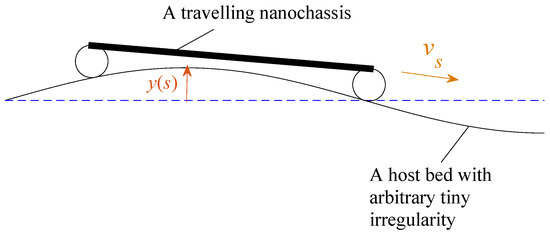
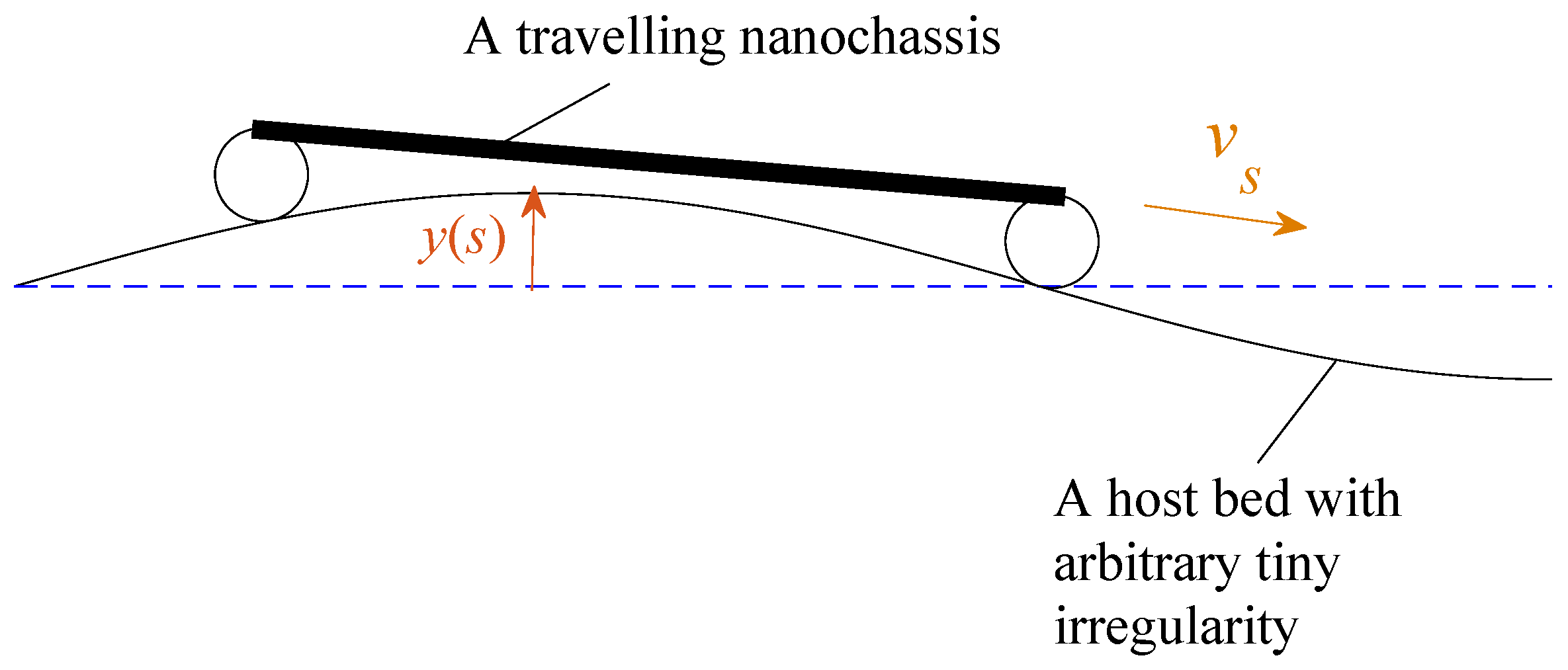
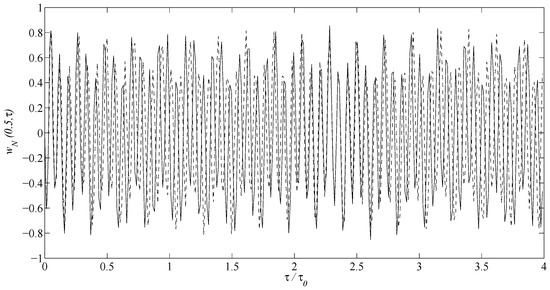
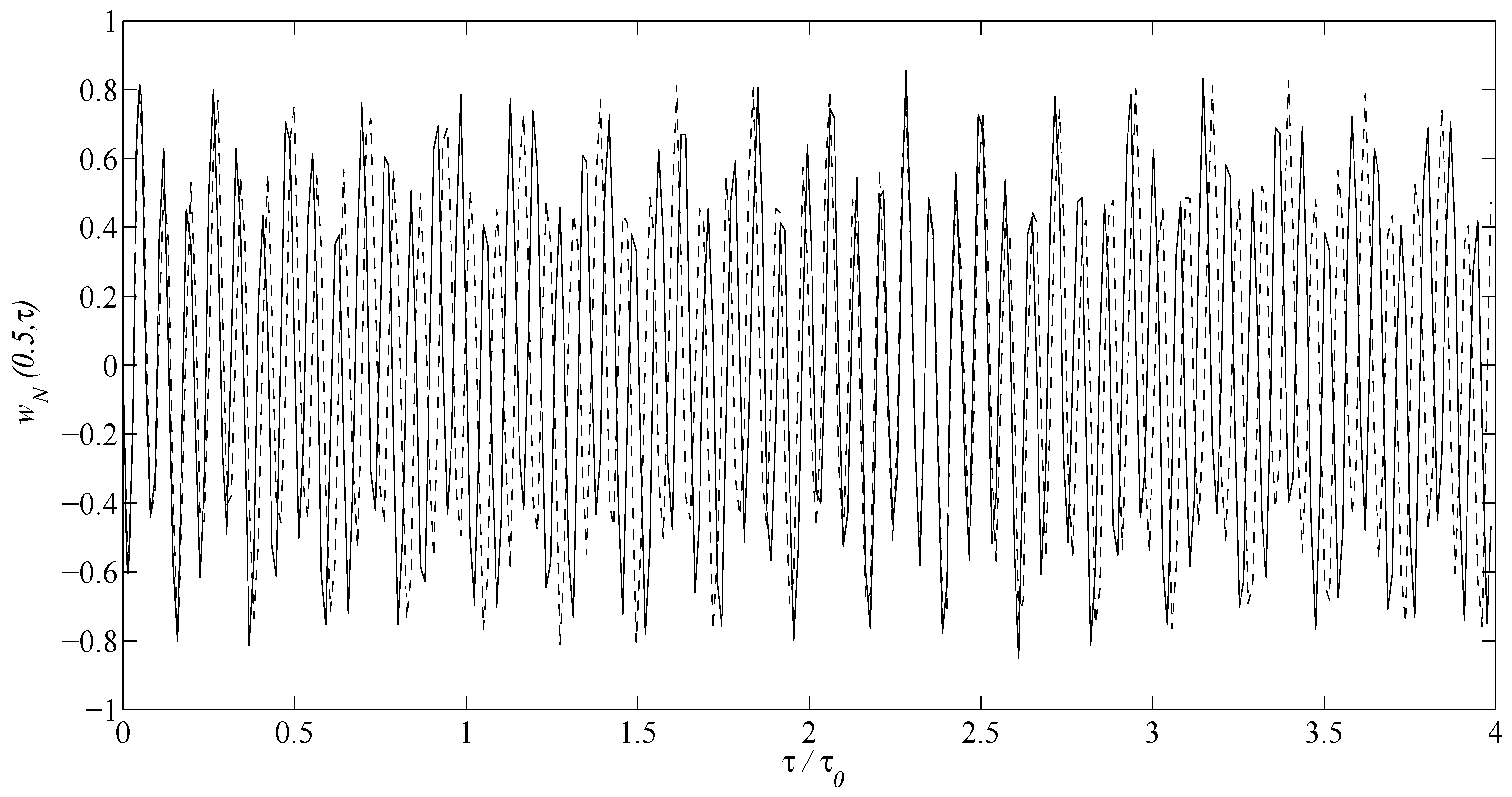
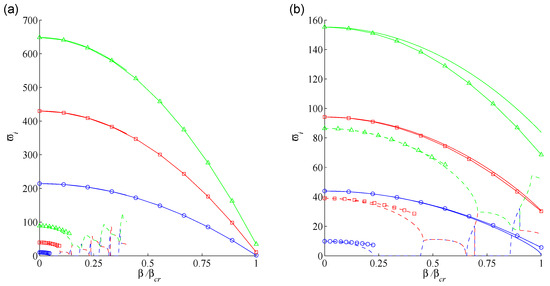
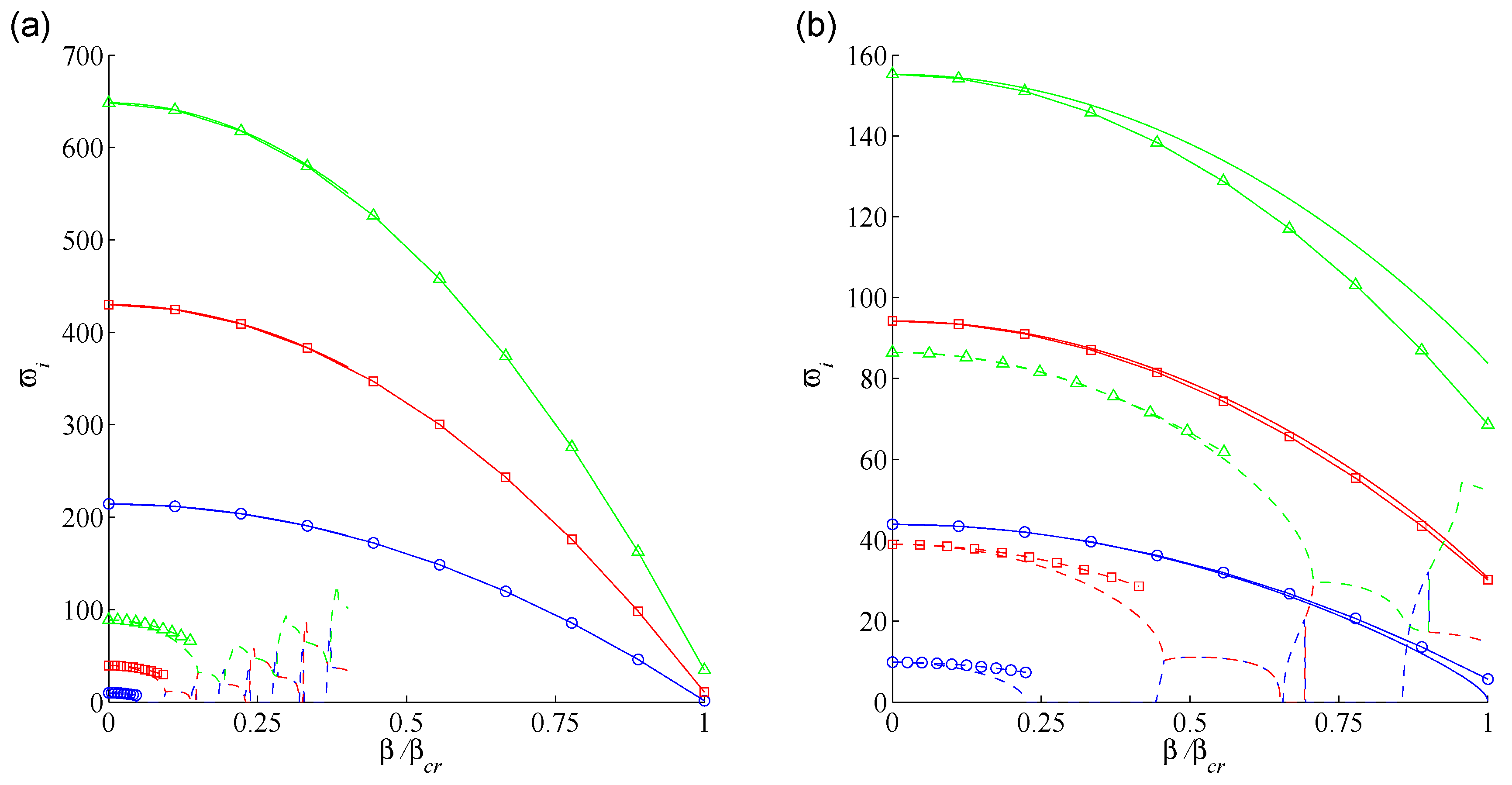
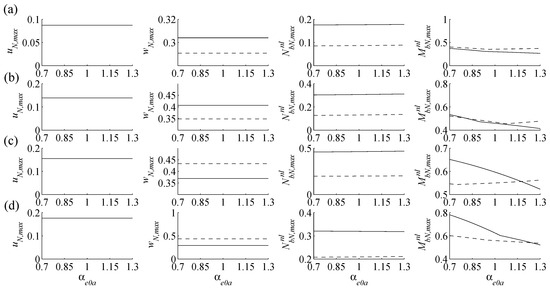
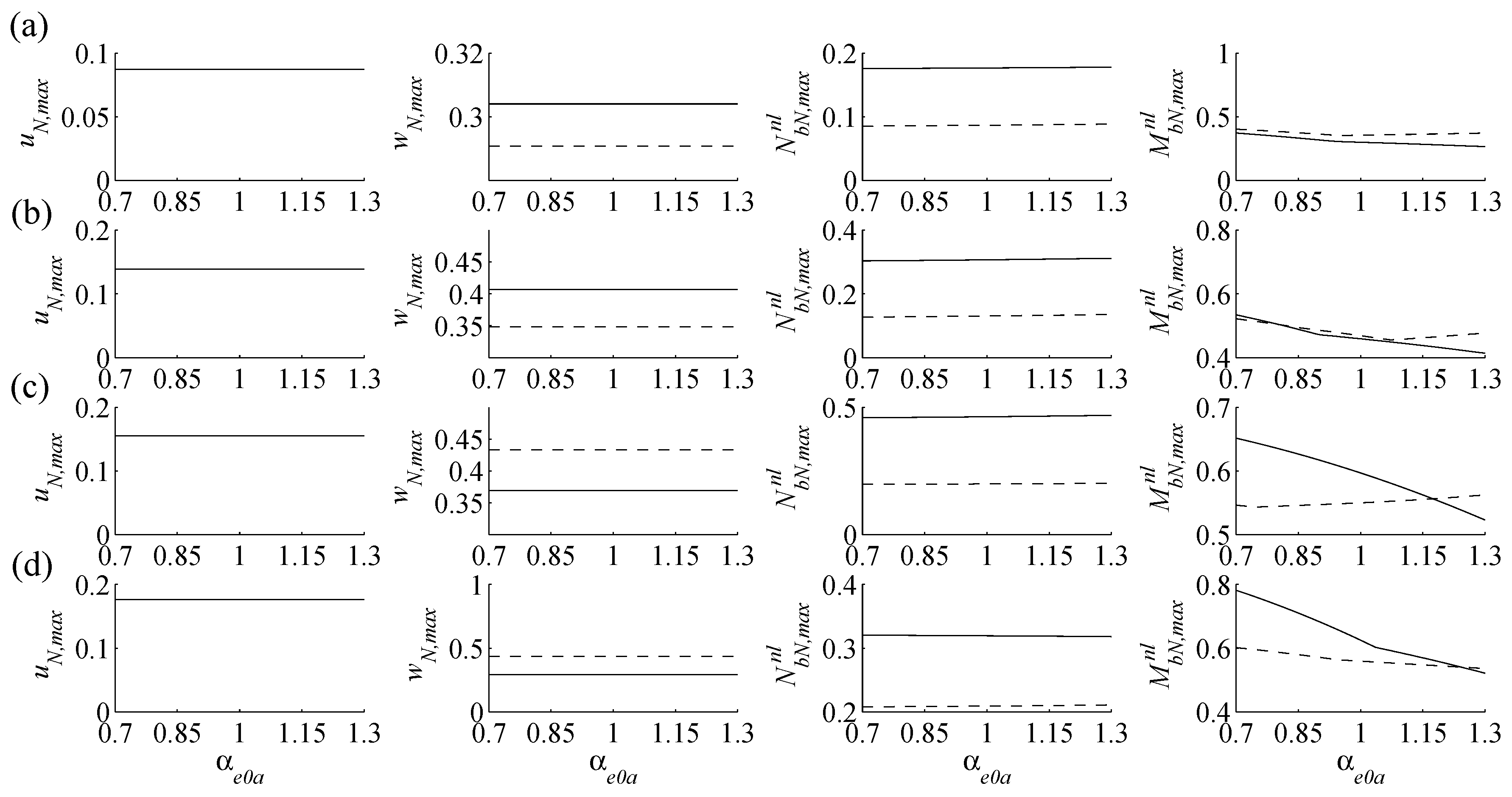
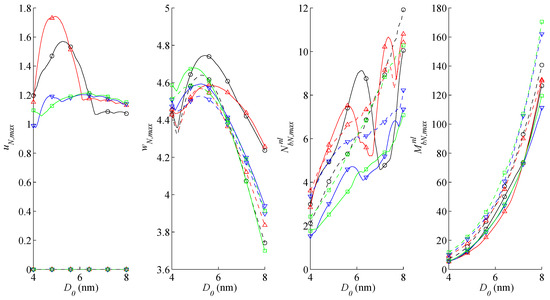
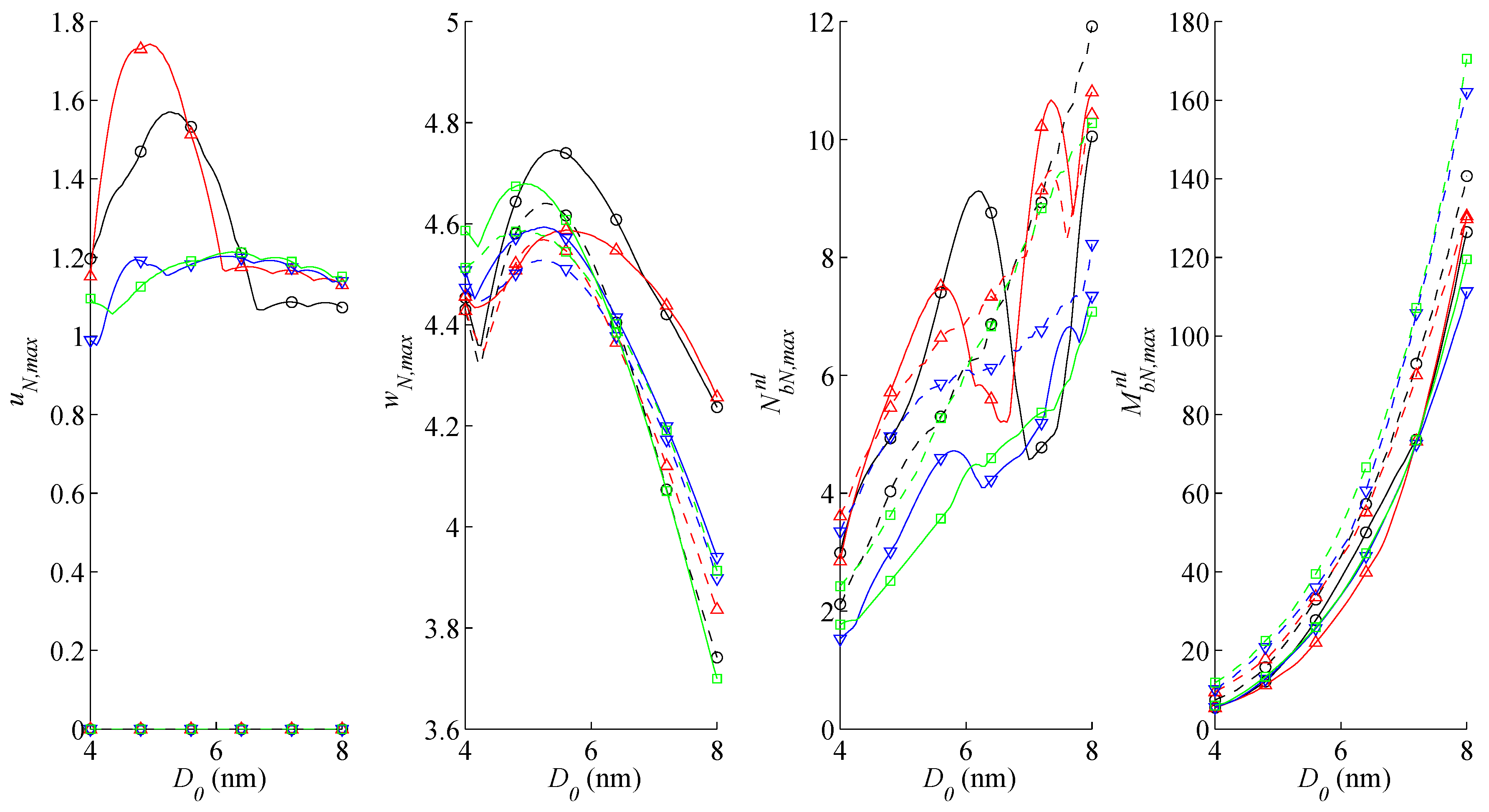
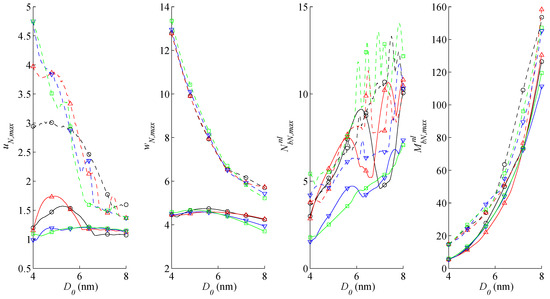
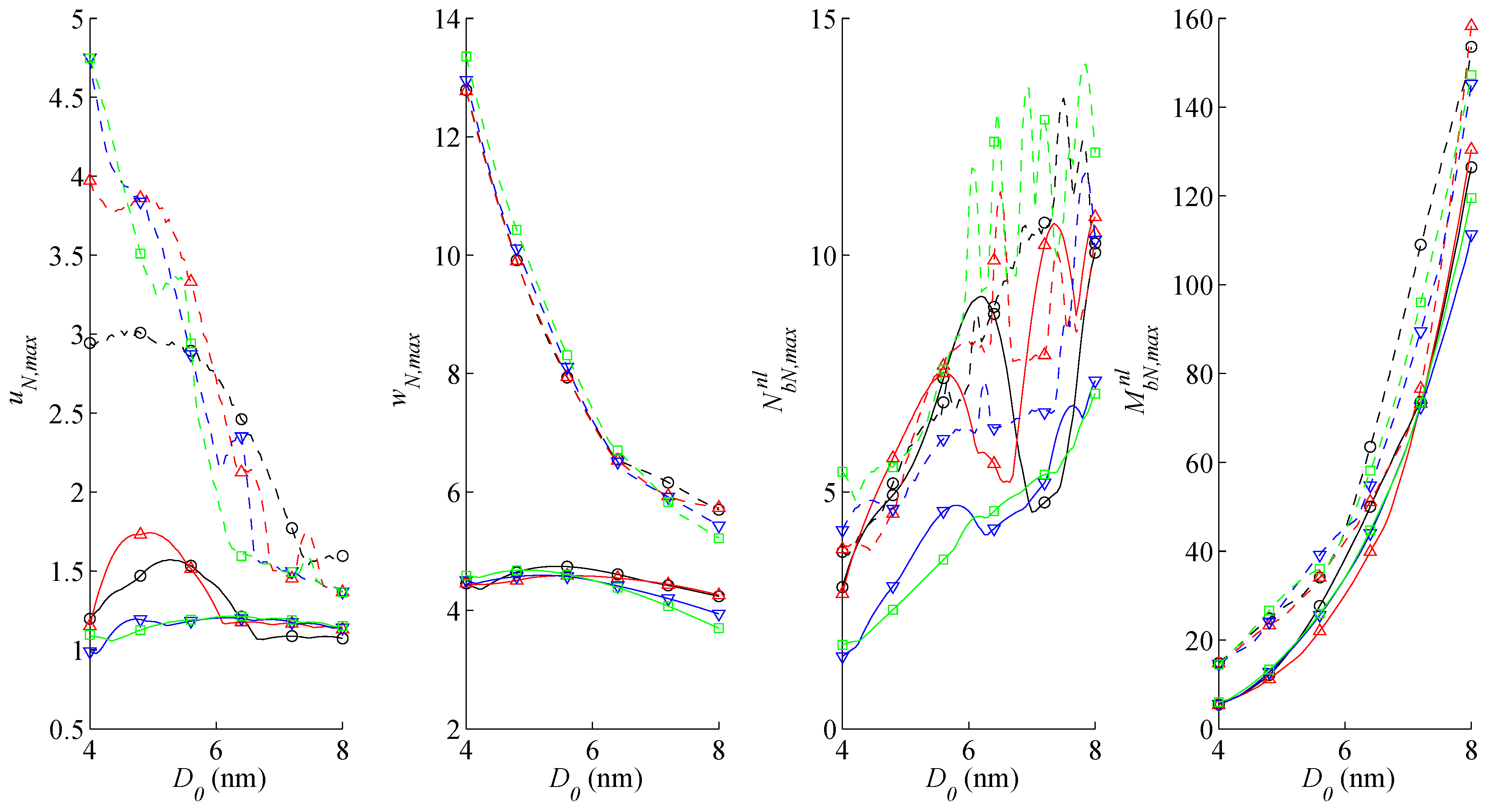
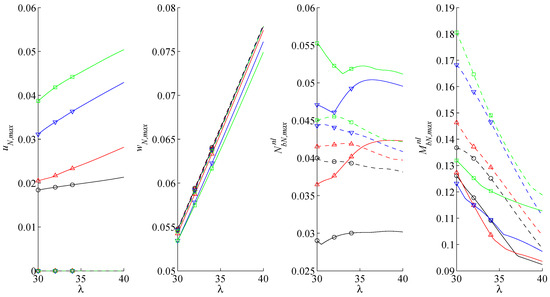
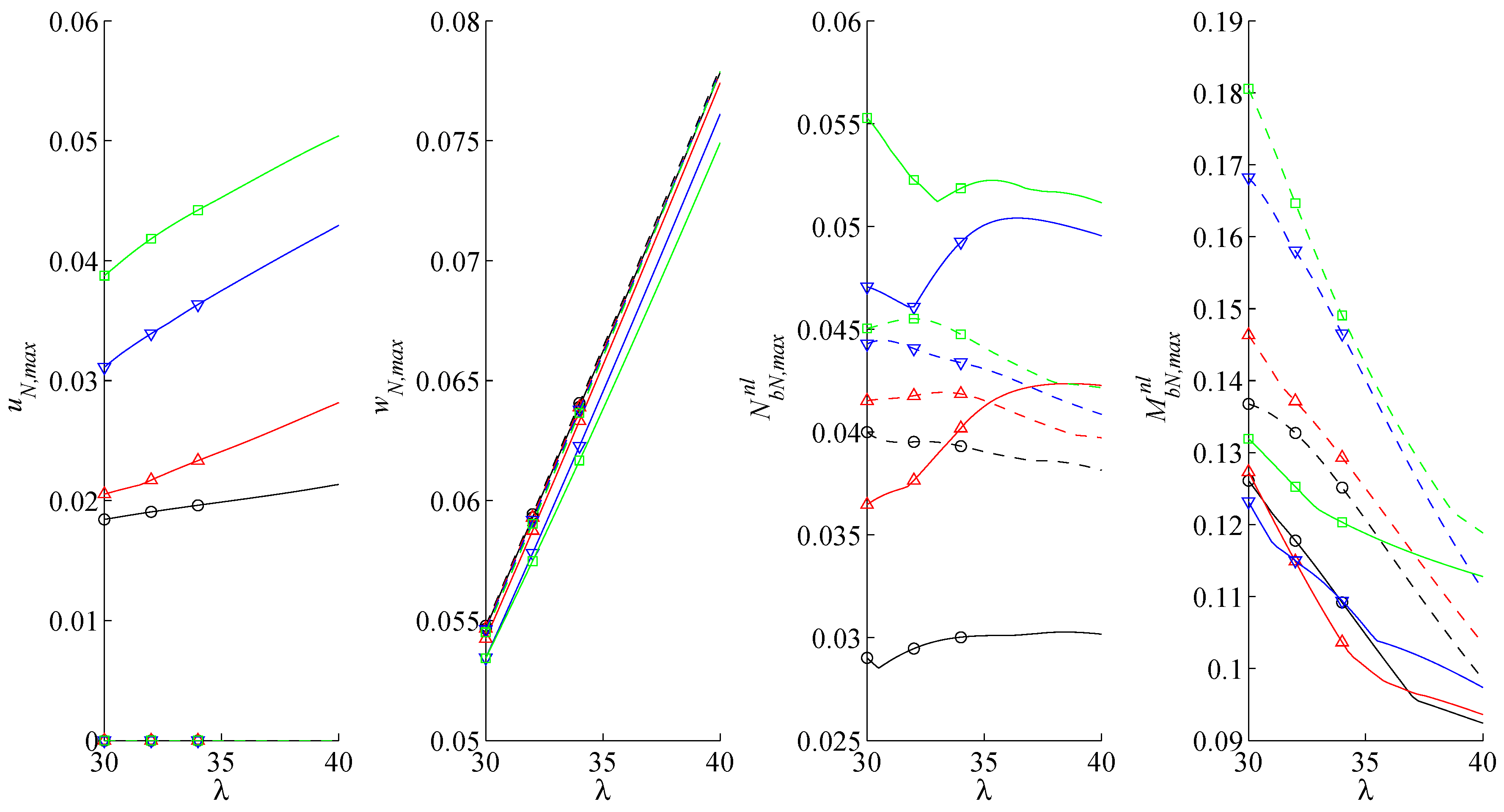
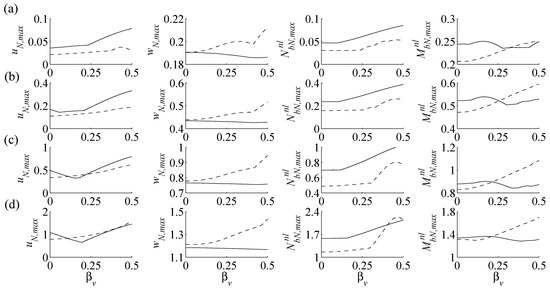
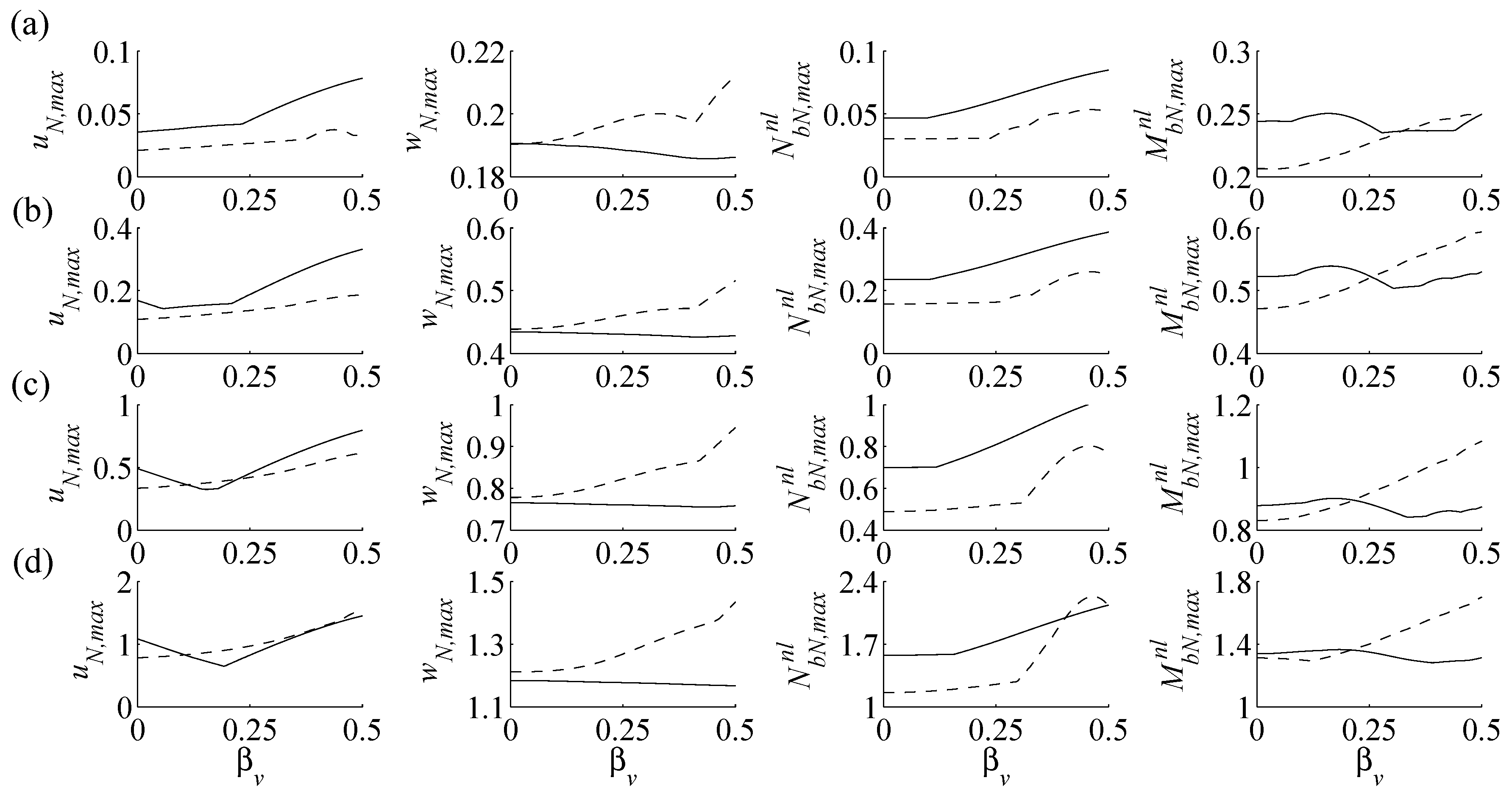
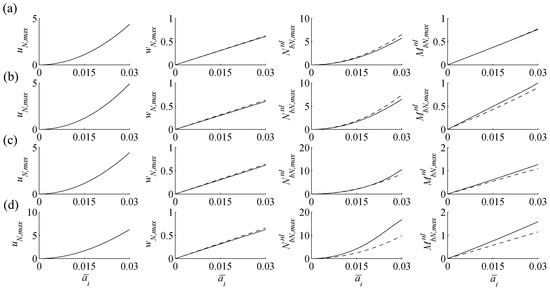
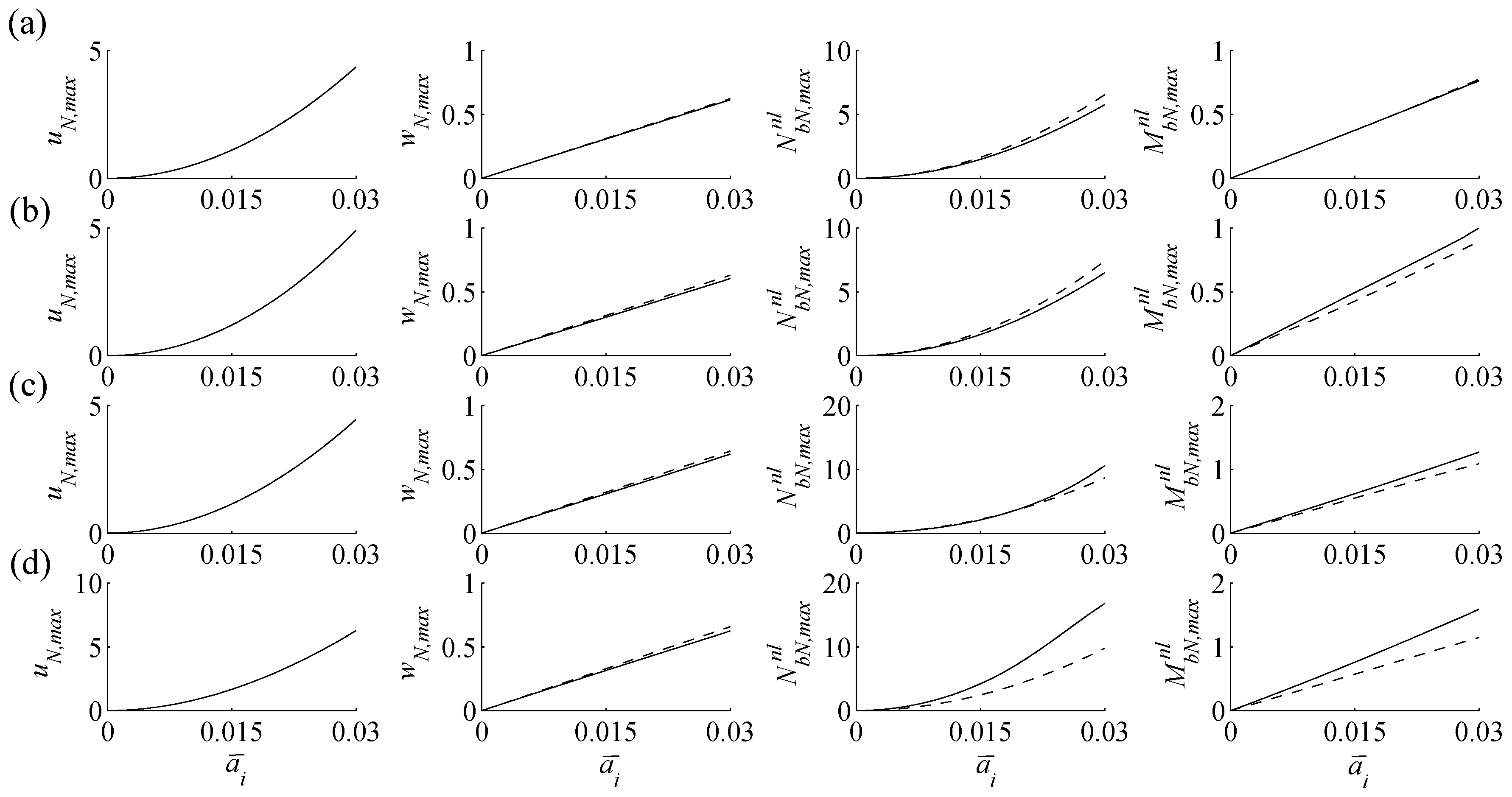
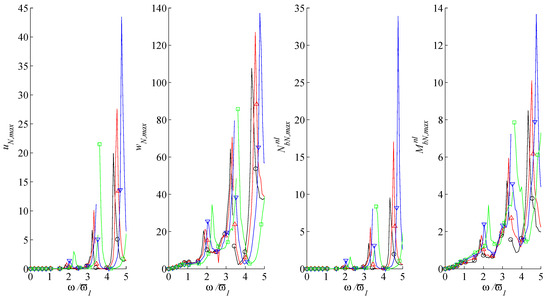
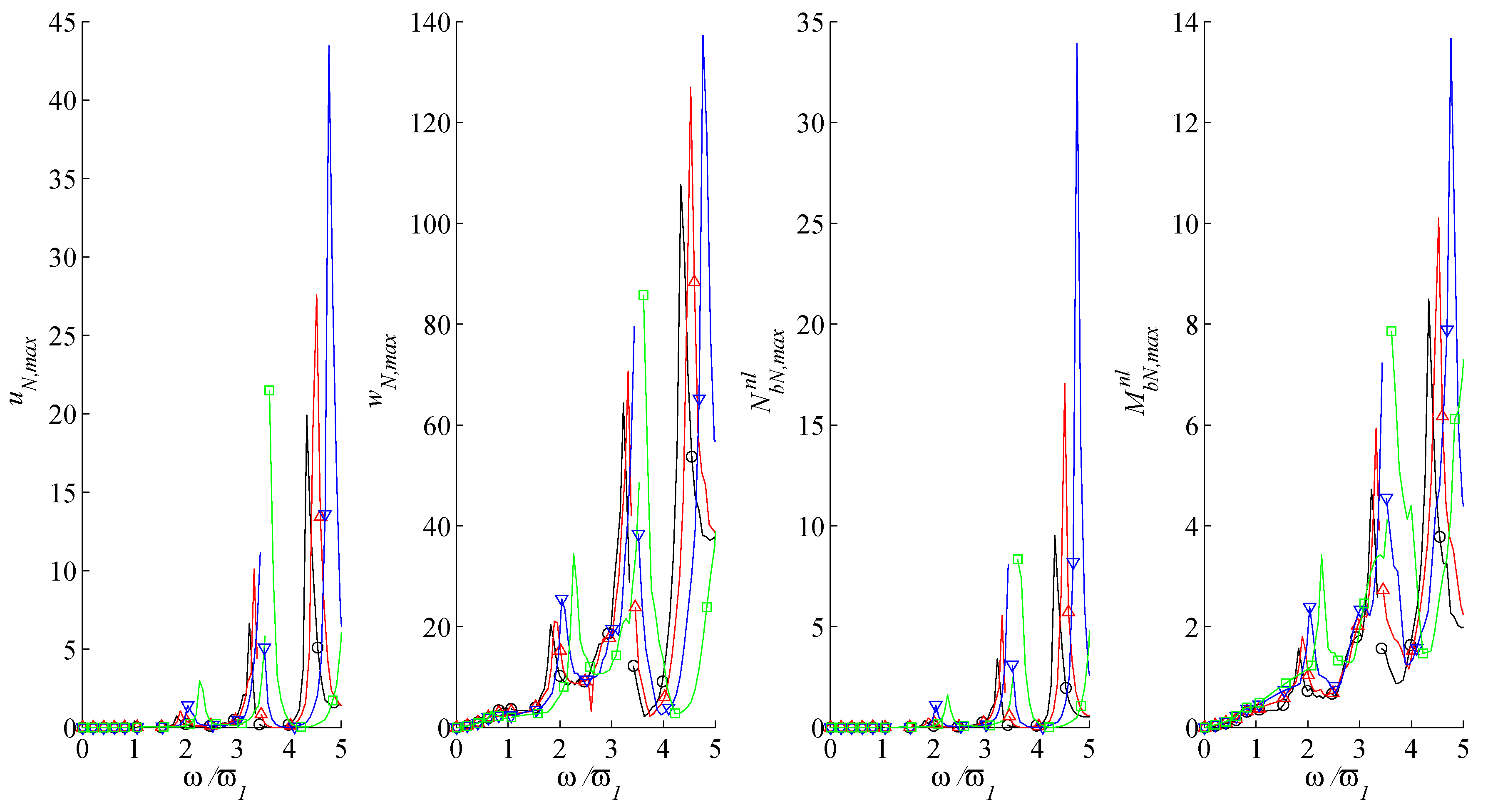
Disclaimer/Publisher’s Note: The statements, opinions and data contained in all publications are solely those of the individual author(s) and contributor(s) and not of MDPI and/or the editor(s). MDPI and/or the editor(s) disclaim responsibility for any injury to people or property resulting from any ideas, methods, instructions or products referred to in the content. |
© 2026 by the authors. Licensee MDPI, Basel, Switzerland. This article is an open access article distributed under the terms and conditions of the Creative Commons Attribution (CC BY) license.