Article

Low-Friction and Corrosion-Resistant Orthodontic Stainless Steel Archwires with Functional Carbon Films


Institute of Nanosurface Science and Engineering (INSE), State Key Laboratory of Radio Frequency Heterogeneous Integration, College of Mechatronics and Control Engineering, Shenzhen University, Shenzhen 518060, China
*
Author to whom correspondence should be addressed.
Nanomaterials 2025, 15(21), 1615; https://doi.org/10.3390/nano15211615
Submission received: 26 September 2025 / Revised: 19 October 2025 / Accepted: 21 October 2025 / Published: 23 October 2025

Abstract

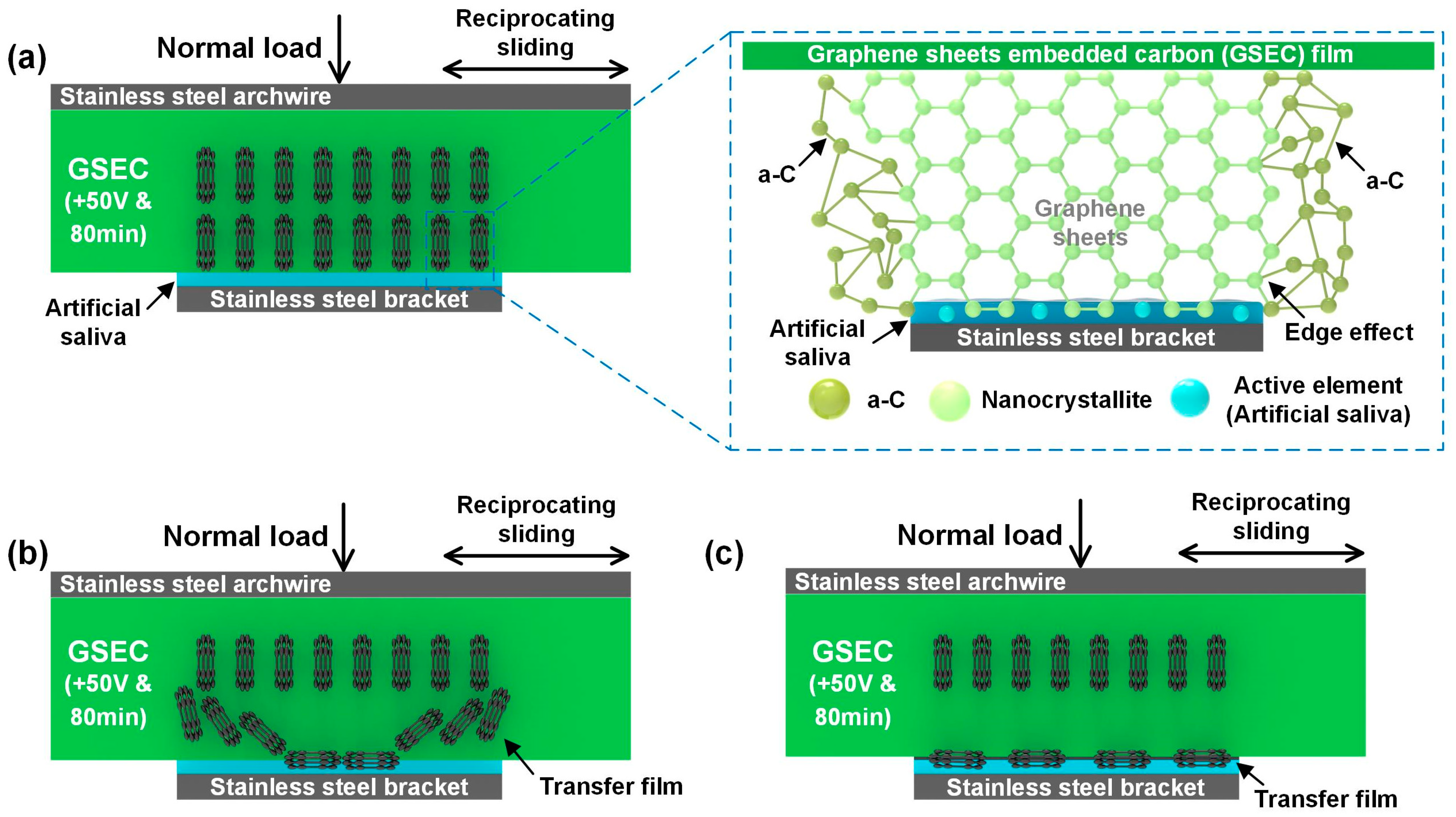
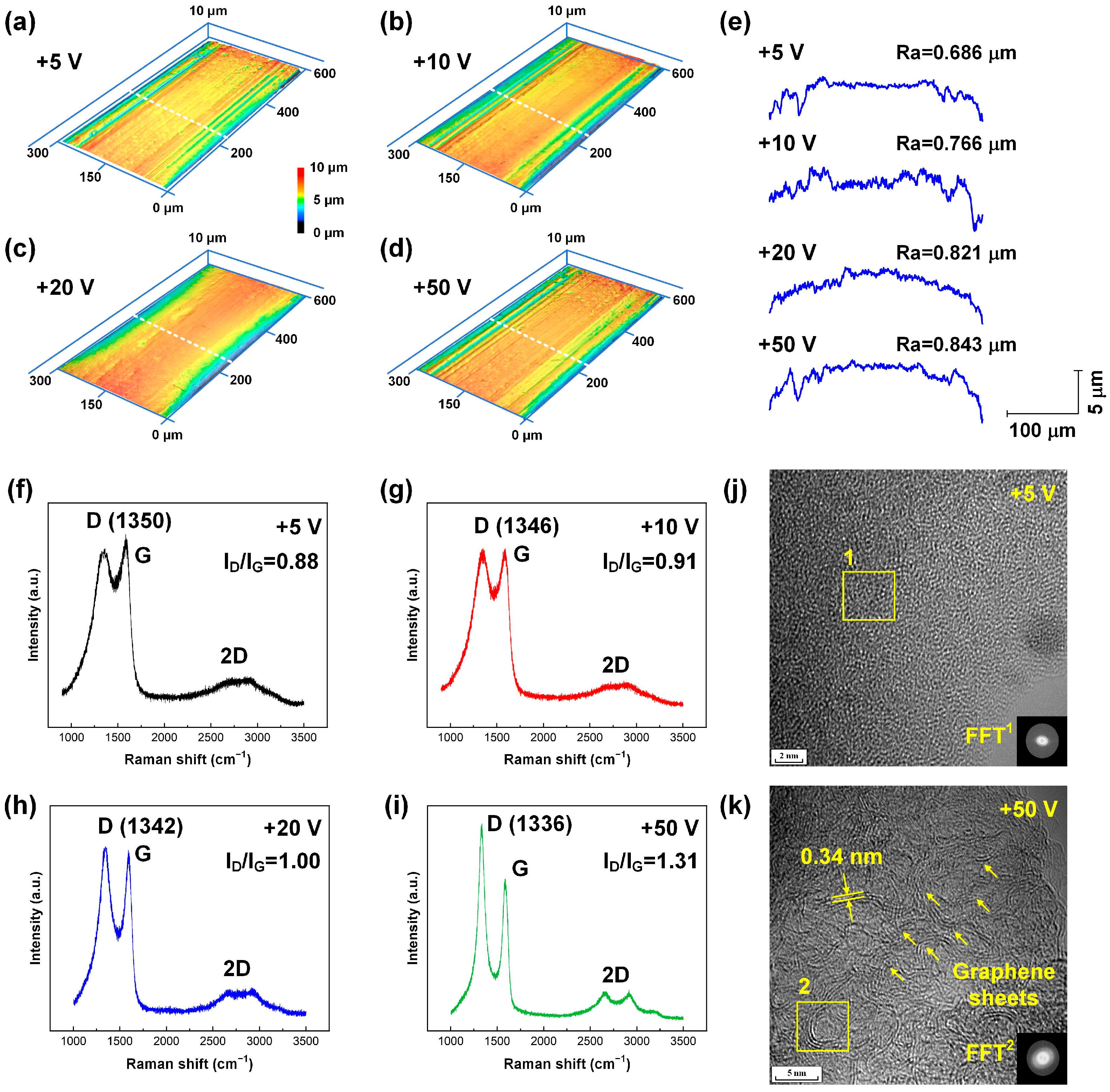
To mitigate the adverse effects of immersion in fluoride-containing solutions on the surface corrosion of orthodontic stainless steel archwires, carbon films were fabricated on these archwires under various deposition times and substrate bias voltages using a self-designed plasma sputtering system. Structural analysis revealed that the carbon films deposited at lower substrate bias voltages were classified as amorphous carbon films, whereas those fabricated at higher substrate bias voltages were identified as graphene nanocrystalline carbon films. Particularly, immersion tests and electrochemical experiments demonstrated that carbon film prepared at a substrate bias voltage of +50 V for 80 min exhibited exceptional corrosion resistance. Furthermore, a low friction coefficient and low wear rate were obtained even after soaking in a fluoride toothpaste mixed solution. The mechanisms underlying the corrosion resistance and friction properties of these superior carbon films were thoroughly investigated. This study provides valuable insights into the application of carbon film for reducing friction and wear while enhancing corrosion resistance, thus promoting their practical clinical applications in coated orthodontic stainless steel archwires.
Keywords: orthodontic archwire and bracket; carbon film; graphene sheets; fluoride toothpaste; corrosion; peeling; friction and wear orthodontic archwire and bracket; carbon film; graphene sheets; fluoride toothpaste; corrosion; peeling; friction and wear