Article

Development of Novel Antimicrobial and Antiviral Green Synthesized Silver Nanocomposites for the Visual Detection of Fe3+ Ions
1
Department of Material and Textile Engineering, Technical University of Liberec, 46117 Liberec, Czech Republic
2
Institute of Advanced Materials, Bahauddin Zakariya University, Multan 60000, Pakistan
3
Institute of Biotechnology and Genetic Engineering, The University of Agriculture Peshawar, Peshawar 25130, Pakistan
4
Department of Physics, The Government Sadiq College Women University, Bahawalpur 63100, Pakistan
5
Cholistan Institute of Desert Studies, Bagdad ul Jadeed Campus, The Islamia University of Bahawalpur, Bahawalpur 63100, Pakistan
*
Authors to whom correspondence should be addressed.
Both authors contributed equally as first author.
Nanomaterials 2021, 11(8), 2076; https://doi.org/10.3390/nano11082076
Submission received: 18 July 2021 / Revised: 9 August 2021 / Accepted: 11 August 2021 / Published: 16 August 2021
(This article belongs to the Section Nanocomposite Materials)

Abstract

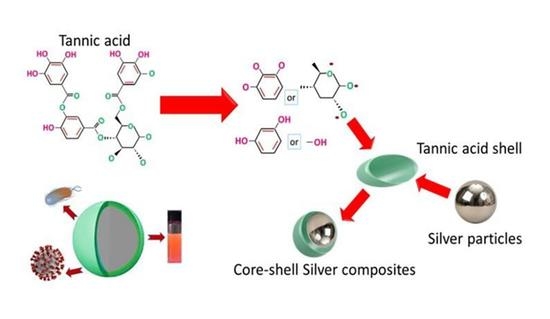
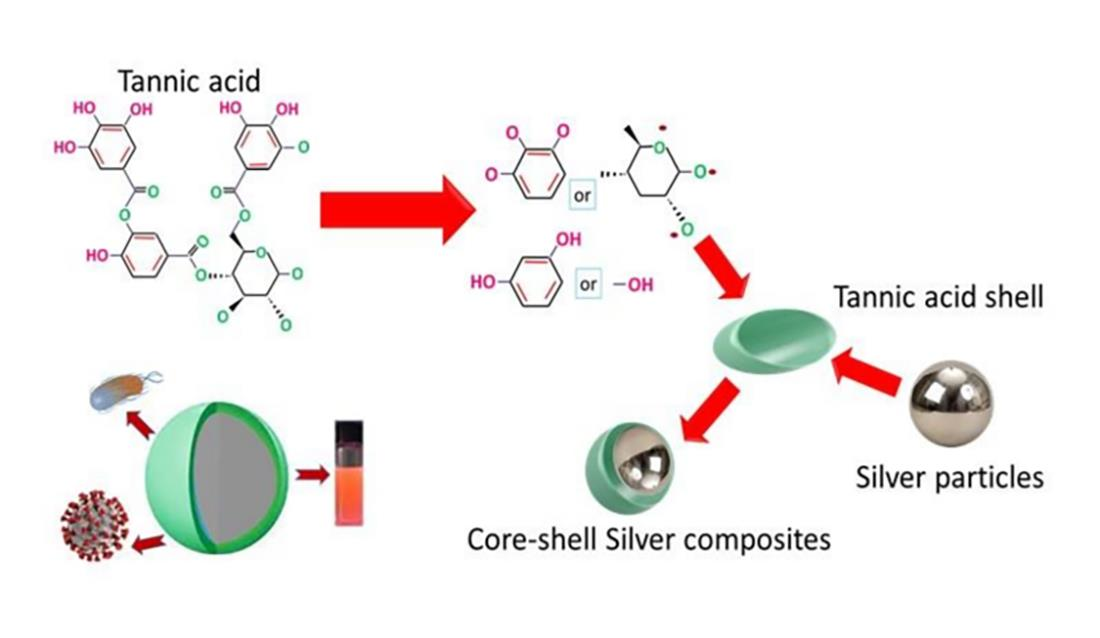
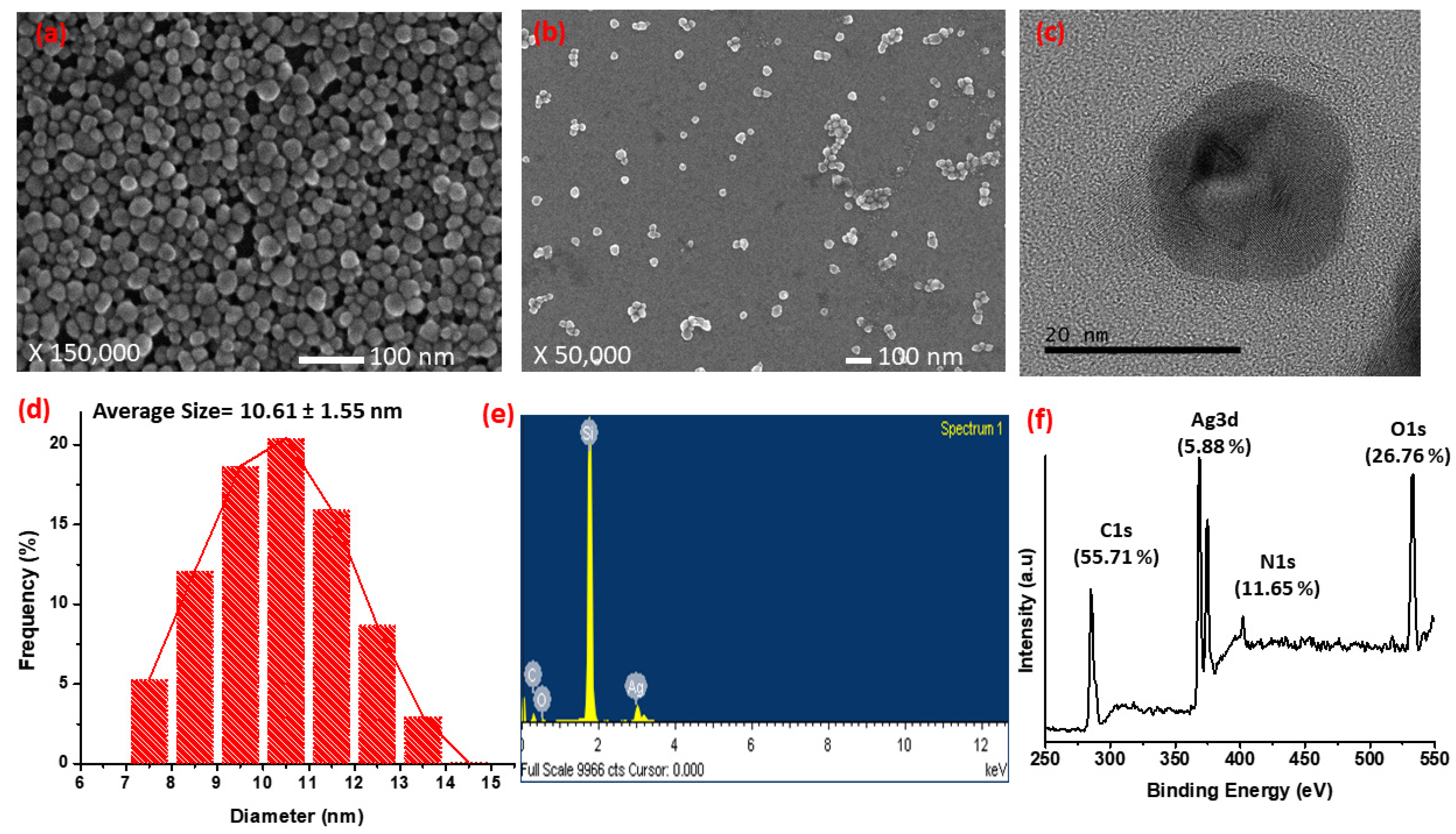
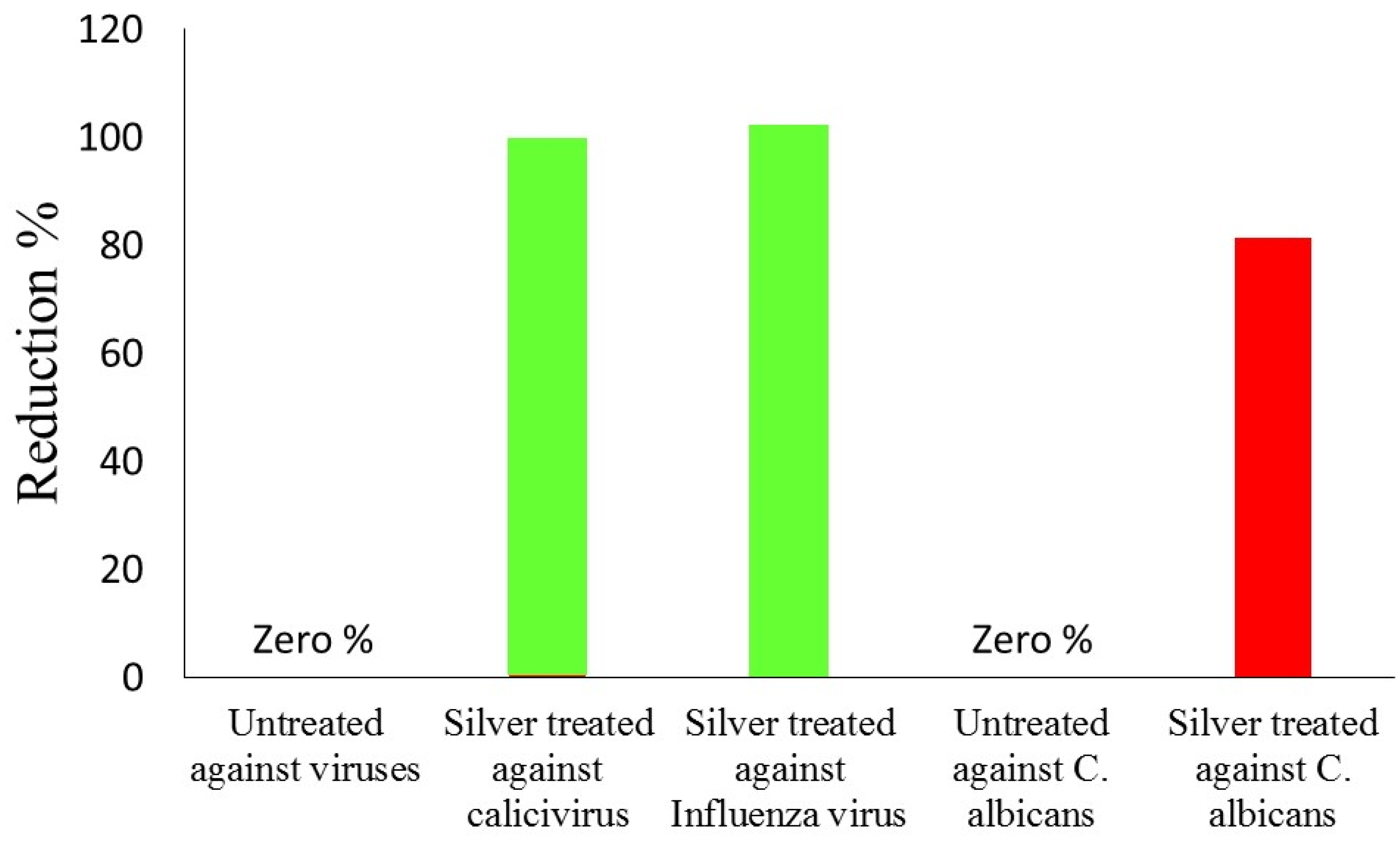
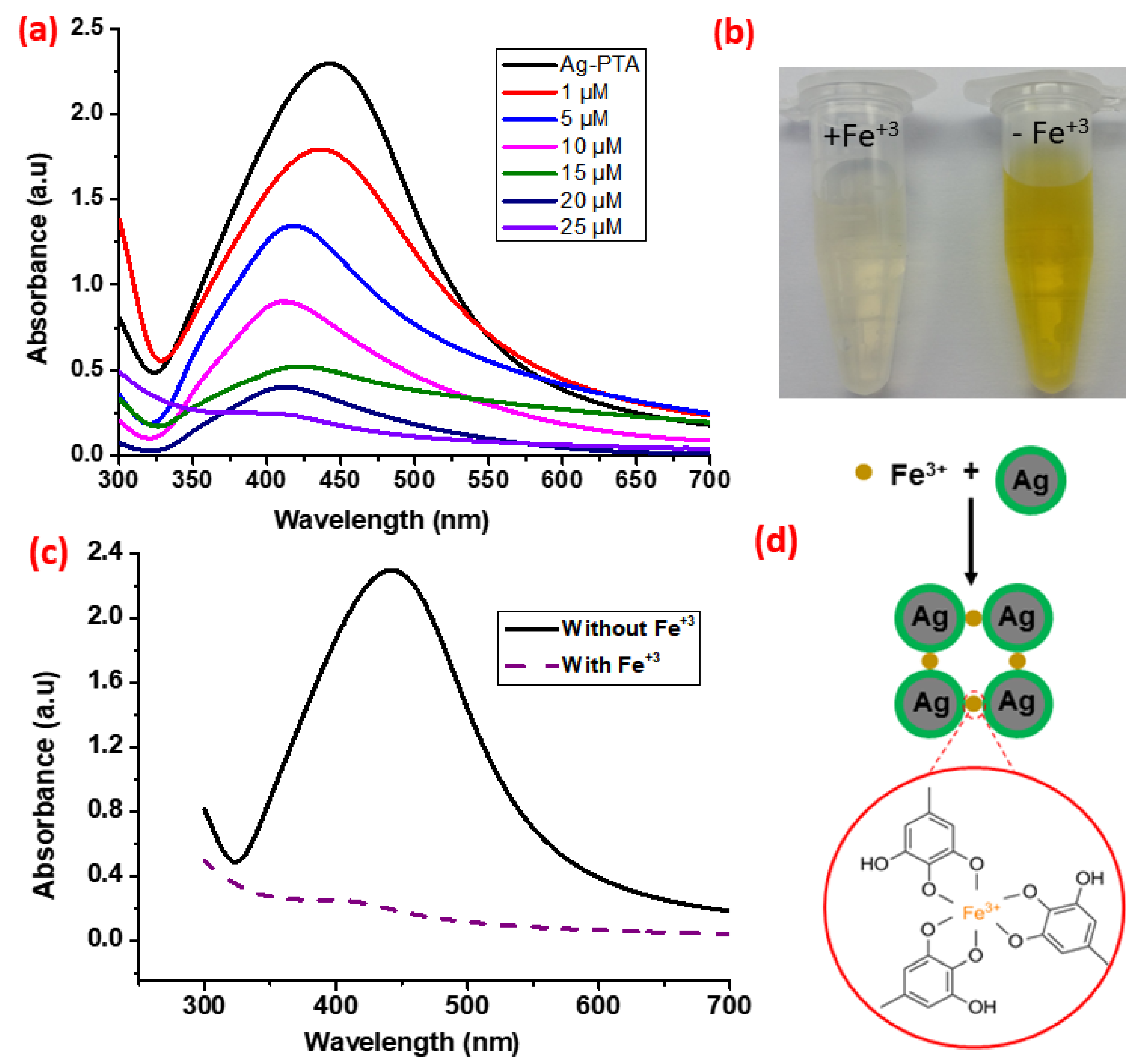
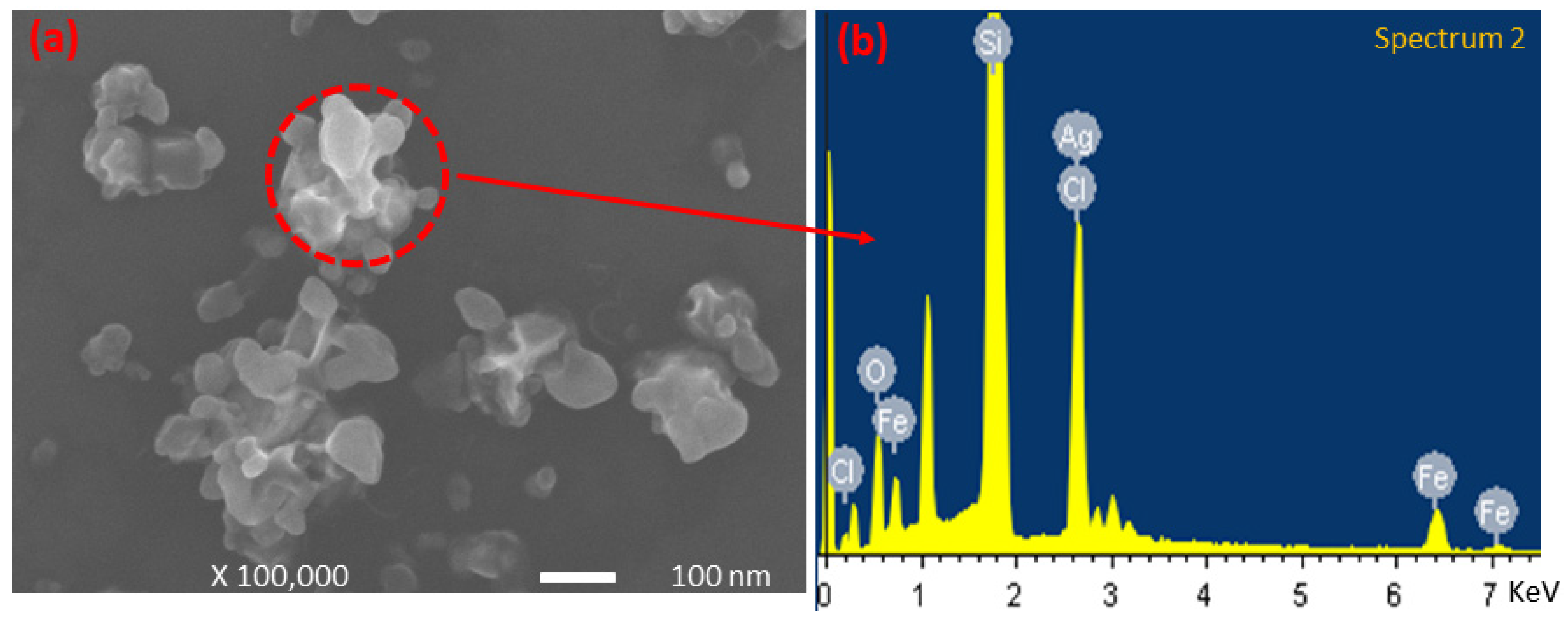
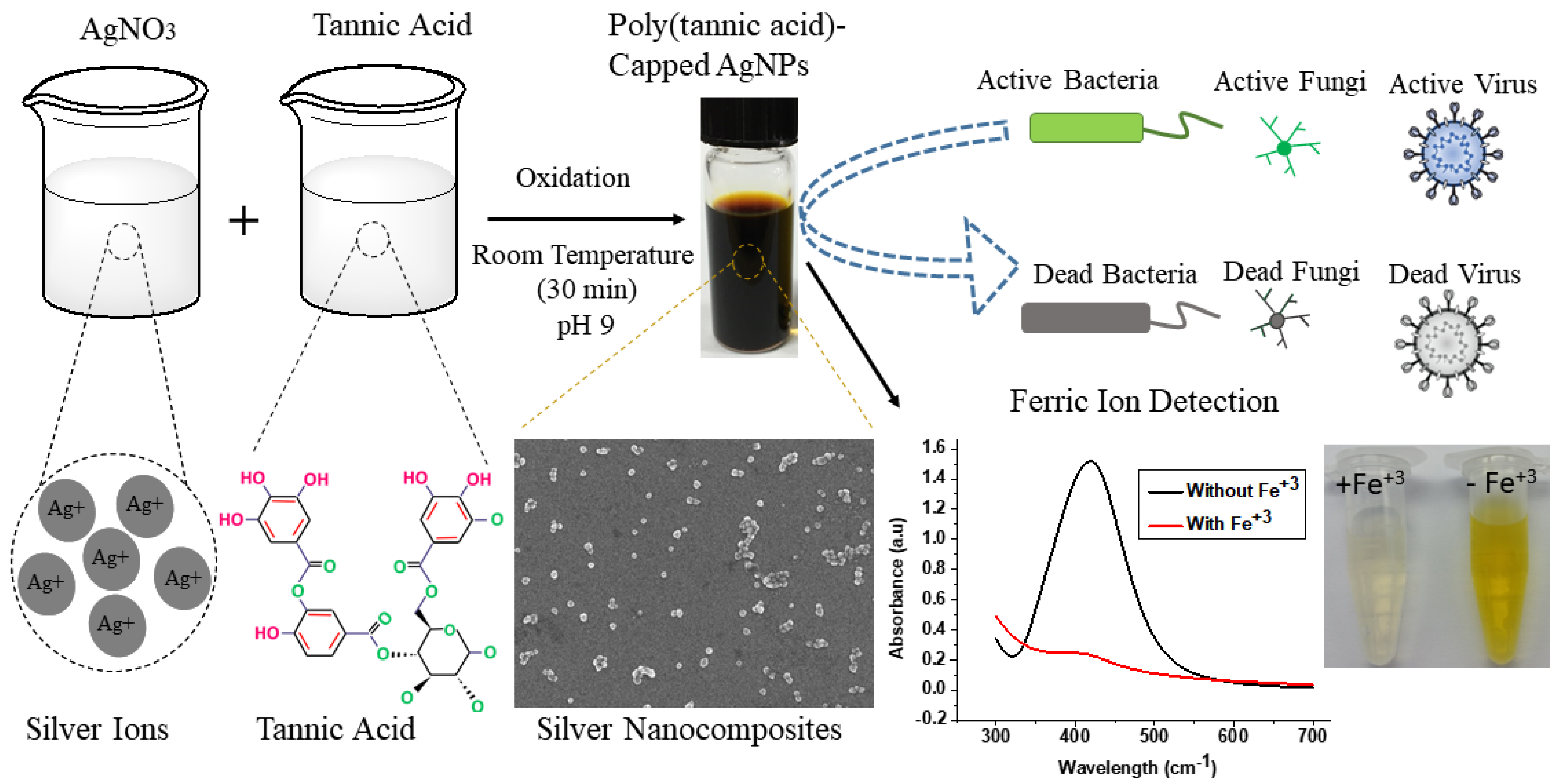
In the current research, we present a single-step, one-pot, room temperature green synthesis approach for the development of functional poly(tannic acid)-based silver nanocomposites. Silver nanocomposites were synthesized using only tannic acid (plant polyphenol) as a reducing and capping agent. At room temperature and under mildly alkaline conditions, tannic acid reduces the silver salt into nanoparticles. Tannic acid undergoes oxidation and self-polymerization before the encapsulating of the synthesized silver nanoparticle and forms silver nanocomposites with a thick capping layer of poly(tannic acid). No organic solvents, special instruments, or toxic chemicals were used during the synthesis process. The results for the silver nanocomposites prepared under optimum conditions confirmed the successful synthesis of nearly spherical and fine nanocomposites (10.61 ± 1.55 nm) with a thick capping layer of poly(tannic acid) (~3 nm). With these nanocomposites, iron could be detected without any special instrument or technique. It was also demonstrated that, in the presence of Fe3+ ions (visual detection limit ~20 μM), nanocomposites aggregated using the coordination chemistry and exhibited visible color change. Ultraviolet-visible (UV–vis) and scanning electron microscopy (SEM) analysis also confirmed the formation of aggregate after the addition of the analyte in the detection system (colored nanocomposites). The unique analytic performance, simplicity, and ease of synthesis of the developed functional nanocomposites make them suitable for large-scale applications, especially in the fields of medical, sensing, and environmental monitoring. For the medical application, it is shown that synthesized nanocomposites can strongly inhibit the growth of Escherichia coli and Staphylococcus aureus. Furthermore, the particles also exhibit very good antifungal and antiviral activity.
Keywords: green synthesis; poly(tannic acid); silver nanocomposites; antibacterial; visual detection of ferric; antiviral activity; antifungal green synthesis; poly(tannic acid); silver nanocomposites; antibacterial; visual detection of ferric; antiviral activity; antifungal
Graphical Abstract