


Abstract
Plastic bottles are generally recycled by remolding them into numerous products. In this study, waste from plastic bottles was used to fabricate recycled polyethylene terephthalate (r-PET) nanofibers via the electrospinning technique, and high-performance conductive polyethylene terephthalate nanofibers (r-PET nanofibers) were prepared followed by copper deposition using the electroless deposition (ELD) method. Firstly, the electrospun r-PET nanofibers were chemically modified with silane molecules and polymerized with 2-(methacryloyloxy) ethyl trimethylammonium chloride (METAC) solution. Finally, the copper deposition was achieved on the surface of chemically modified r-PET nanofibers by simple chemical/ion attraction. The water contact angle of r-PET nanofibers, chemically modified r-PET nanofibers, and copper deposited nanofibers were 140°, 80°, and 138°, respectively. The r-PET nanofibers retained their fibrous morphology after copper deposition, and EDX results confirmed the presence of copper on the surface of r-PET nanofibers. XPS was performed to analyze chemical changes before and after copper deposition on r-PET nanofibers. The successful deposition of copper one r-PET nanofibers showed an excellent electrical resistance of 0.1 ohms/cm and good mechanical strength according to ASTM D-638.
1. Introduction
Flexible electrically conductive materials have gained significant demand for electronics and telecommunication systems because of their capability to convey electrical properties in this century [1]. The increasing demand of materials for smart electronics that can work under mechanical deformation with high efficiency and the required conductivity has become a high stream/demanding field of research [2]. The polymer and metal composites have been extensively explored [3] with a variety of new applications including flexible displays, wearable electronics, energy devices, biological actuators, and smart electronic skin [4,5,6,7,8]. The parameters of these smart materials can work under mechanical deformation and interconnect with great mechanical flexibility (i.e., bending, stretching, twisting, and compressing) [1].
Wearable electronics rely heavily on metal-coated textiles to produce textile materials with special functional properties. In the previous research studies, textile based conductive materials were widely fabricated via various deposition methods [9,10]. Currently, some advanced techniques have been introduced to fabricate smart conductive textile materials such as atomic layer deposition [11], galvanic deposition, and electroless deposition (ELD) of metals [12,13]. Among the above techniques, ELD is the most utilized technique because of its low cost and easy process of fabrication at room temperature [14,15]. The ELD technique has been extensively explored in many advanced applications including electrically conductive textiles [16], EMI shielding [17,18], telecommunication frequencies, and electrostatic discharge [19]. Generally, the ELD method is carried out in three steps: the functional polymer anchoring layer by surface modification, the filling of catalyst on the polymer anchoring layer with ion exchange, and the deposition of site selective metals. Previously, ELD with different textile fabrics such as polyester, cotton, nylon, and Kevlar showed electrical properties with low cost at room temperature [20,21,22,23].
The previous textile based conductive fabrics contain a low surface area and high porous structure, which can limit the metal deposition rate. Electrospun nanofibers have gained much attraction in wide applications due to their high surface area and can create a high metal deposition rate [2]. Recently, polyester nanofibers have been achieved from waste drinking bottles having good mechanical strength and flexibility [24]. This is an alternate method to produce products from waste material and minimize solid waste in the environment. In 2019, the global market of recycled polyethylene terephthalate (r-PET) was valued at USD 7.34 billion, with a growth projection of 7.9% until 2027. These data show the importance of the r-PET market with consumers being more conscious about environmental sustainability [25].
Nanotechnology has deep roots in every field of life and in helping the research community to solve a wide a range of challenges [26]. Electrospinning is a simple technique to produce fibers with diameters in the range of a few tens to hundreds of nanometers. Electrospun nanofibers have a range of applications such as food packaging, wound dressings, tissue engineering, water filtration [27,28,29,30], air filtration, facemasks, flexible electronics, and sensors [31]. Keeping in the broad scope of electrospun nanofibers, the aim of this study is to investigate the ELD performance on electrospun nanofiber to fabricate flexible and conductive materials. The r-PET nanofibers were fabricated via the electrospinning technique, and copper metal was deposited by following the ELD method. The deposition of copper metal on r-PET nanofibers was characterized using scanning electron microscopy (SEM), energy dispersive X-ray spectroscopy (EDX), X-ray photoelectron spectroscopy (XPS), water contact angle, and tensile strength. Finally, the surface conductivity of metal deposited r-PET nanofibers was assessed using a four-point probe meter.
2. Experimental Section
2.1. Materials
Recycled polyethylene terephthalate (r-PET) was obtained from water bottles at a convenience store in Japan and were utilized directly without further purification. Trifluoracetic acid, chloroform, vinyltrimethoxysilane (98%), (2-(methacryloyloxy) ethyl) tri-methyl-ammonium chloride solution (METAC), ammonium tetra-chloro-palladate (II), and copper (II) sulfate pentahydrate were purchased from Sigma Aldrich USA (St. Louis, MI, USA). Chemical reagents, potassium sodium tartrate tetrahydrate, formaldehyde, potassium persulfate, and sodium hydroxide were purchased from Sinopharm Chemical Reagent Co., Ltd. (Huangpu, Shanghai, China).
2.2. Fabrication of r-PET Nanofibers
The r-PET nanofibers were fabricated by following the previous protocol [24]. Briefly, r-PET bottles were cut into small pieces (approximately 1 × 1 cm2) and dissolved in the TFA/chloroform with a ratio of 1:3 in order to make a 15% w/w polymer composition. Electrospinning was performed using a high-voltage power supply (Har − 100 × 12, Matsusada Co.; Tokyo, Japan) at room temperature. The prepared solution was poured into a syringe with a capillary tip attached having an internal diameter of 0.6 mm and keeping a 0.5 mL/h flow rate with a supplied voltage of 15 kV. The as-prepared r-PET nanofibers were collected on aluminum foil wrapped over a rotary collector system, and the capillary tip to collector distance was set as 15 cm. After electrospinning, the r-PET nanofibers were peeled off and dried overnight before further use.
2.3. Fabrication of Conductive r-PET Nanofibers
Graphical abstract represents the complete fabrication process to prepare conductive r-PET nanofibers and characterized by 4 steps (plasma treatment, silanization, polymerization, and electroless deposition). Each step is explained below.
2.3.1. Plasma Treatment
The obtained r-PET nanofibers were hydrophobic, and to create hydroxyl groups before the silanization process, plasma treatment was needed. Previously, plasma treatment was used to create hydroxyl groups on textile substrates [2]. The r-PET nanofibers were treated with air plasma using Harrick Plasma cleaner PDC-002, and the parameters for plasma treatment are listed below in Table 1.
Table 1.
Plasma treatment parameters.
2.3.2. Silanization
The plasma treated r-PET nanofibers were placed in an ethanol solution having 10% (v/v) vinyl-tri-methoxy-silane (VTMS) for 20 min. The VTMS-treated r-PET nanofibers were rinsed with DI water and immediately vacuum dried at 50 °C. The successful VTMS treatment provided the hydrophobic surface of r-PET nanofibers due to the presence of dense vinyl groups.
2.3.3. Polymerization
The silanized-treated r-PET nanofibers were immersed into a polymerization solution, which contained a mixture of 20% (v/v) METAC aqueous solution (100 mL) and 60 mg of potassium persulfate (KPS) for 60 min to carry out the polymerization of METAC (PMETAC) brushes while stirring at 60 °C. Finally, the polymerized r-PET nanofibers were washed with DI water and vacuum dried at 50 °C for 2 h.
2.3.4. Electroless Deposition
The electroless deposition (ELD) of copper was carried out on PMETAC r-PET nanofibers by following previous protocols [20,22,23,24]. Briefly, the PMETAC r-PET nanofibers were immersed in a 5 mM aqueous solution of ammonium tetra-chloro-palladate (II) (NH4)2PdCl4) for 20 min for the ion-exchange reaction. During the ion-exchange, [PdCl4]2- catalytic ions were immobilized onto the quaternary ammonium groups of PMETAC polymer chains, and the samples were gently washed with DI water. Further, an ELD bath was prepared to contain Solutions A and B (Table 2) with a ratio of 1:1, where Solution A consisted of 13 g/L copper sulfate pentahydrate, 12 g/L sodium hydroxide, and 29 g/L potassium sodium tartrate tetrahydrate, while Solution B contained formaldehyde 9.5 mL/L in DI water. A detailed summary of the chemicals used during the fabrication of the conductive r-PET nanofibers is given in Table 2 and Table 3.
Table 2.
Chemicals used for functionalization. VTMS, vinyl-tri-methoxy-silane; METAC, (2-(methacryloyloxy) ethyl) tri-methyl-ammonium chloride solution.
Table 3.
Chemicals used for functionalization.
2.4. SEM Morphology
Scanning electron microscopy (S-3000N; Hitachi, Tokyo, Japan) with an acceleration voltage of 30 kV was used to observe the surface morphology of the neat r-PET nanofibers and copper-coated r-PET nanofibers. The EDX images and spectrum were obtained using an S-3000 N, Hitachi Ltd. X-ray spectroscopy, Japan. All samples of SEM and EDX were sputter coated with gold before analysis.
2.5. XPS Analysis
The X-ray spectroscopy (XPS) (S-3000 N, Hitachi, Tokyo, Japan) was performed to analyze the chemical composition of the neat r-PET nanofibers and copper-coated r-PET nanofibers.
2.6. Water Contact Angle
An OCA-40 contact angle instrument (Data physics Filderstadt Germany) was applied to determine the water contact angle of neat r-PET nanofibers and each process involved to fabricate the conductive r-PET nanofibers.
2.7. Tensile Strength Properties
The mechanical properties of neat r-PET nanofibers and copper-coated r-PET nanofibers after the ELD process were tested by a Titan Universal Tester 3-910, Titan Company Ltd., Hessen, Germany. The tensile strength was measured according to the ASTM D-638 standard. During the test, the speed was set at 5.0 mm/min. The values of the stress-strain curves and Young’s modulus were calculated by using the following Equations (1)–(3), respectively [32].
where ε, σ, and E represents the stress, strain, and Young’s modulus, respectively. represent the change in length, and l shows the original length of the specimen. F is the applied force on the specimen, and A is the area of the specimen.
2.8. Shrinkage Test
The shrinkage test was performed by taking 5 × 5 cm2 r-PET nanofibers with an average thickness of 120 µm. The shrinkage of r-PET nanofibers after the ELD process was calculated by using Equation (4) for lengthwise shrinkage and Equation (5) for widthwise shrinkage, respectively.
In Equation (4), Ls is lengthwise shrinkage, L is the original length of the samples, and ∆L is the change in the original length after the ELD process. In Equation (5), Ws is widthwise shrinkage. W is the original width of the samples. ∆w is the change in the original width after the ELD process. In Equation (6), Rs is the residual shrinkage after the ELD process.
3. Results and Discussion
3.1. Scanning Electron Microscopy
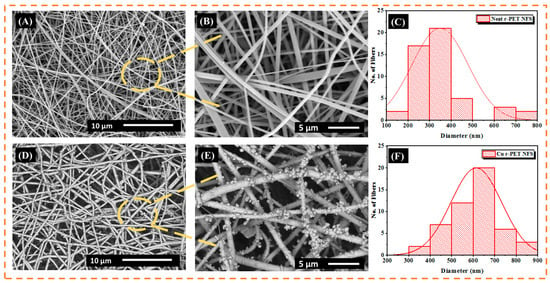
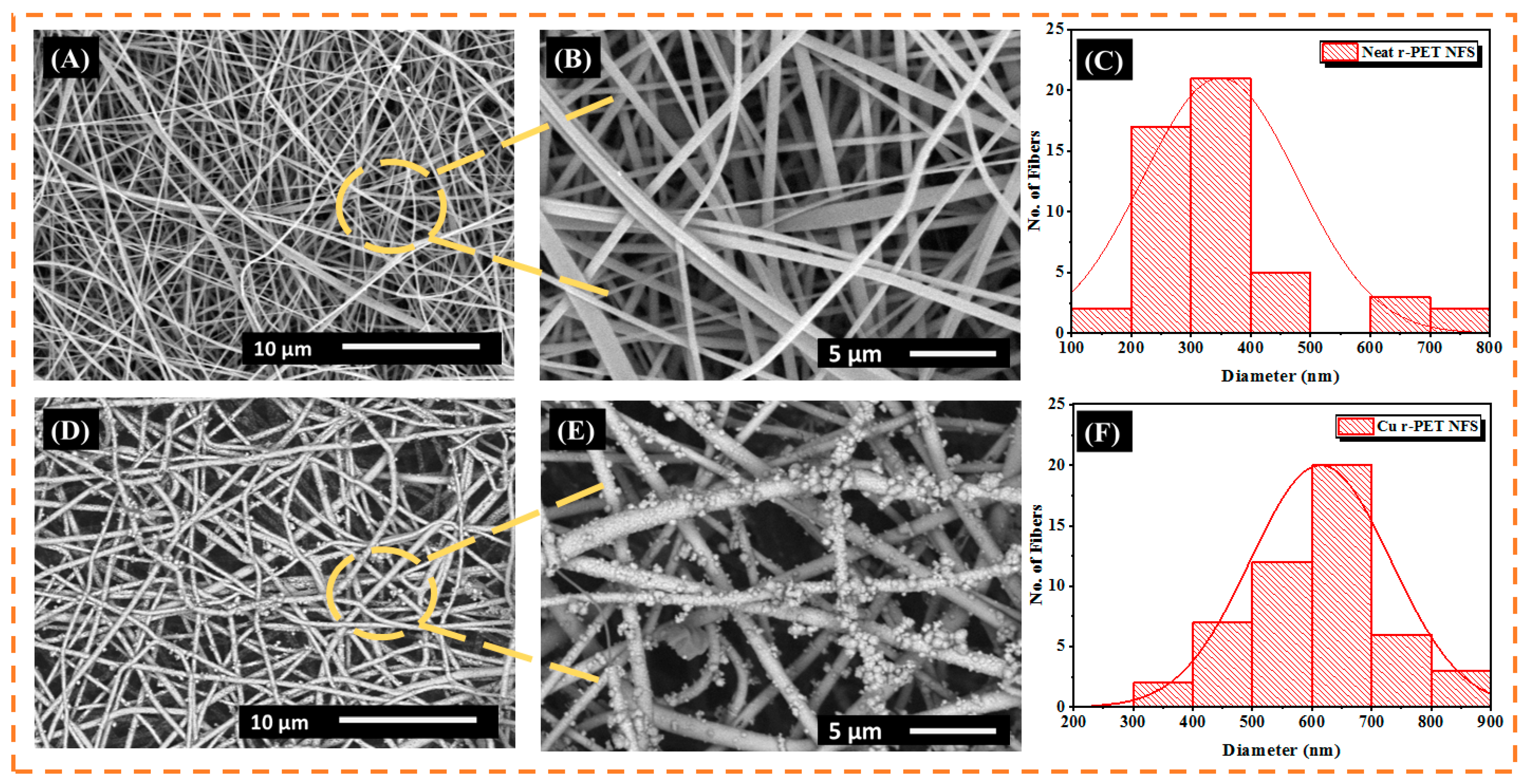
In this study, neat r-PET nanofiber samples were assessed by SEM (scanning electron microscopy) and analyzed to identify the surface morphology before and after the copper ELD process. The SEM images are shown in Figure 1A, which indicate that neat r-PET nanofibers have a smooth surface area and good morphology with an average diameter of 350 nm, whereas after electroless deposition of the copper, a conformal layer on the r-PET nanofibers was produced while retaining the smooth nanofiber surface texture, as shown in Figure 1C, with an average diameter of 700 nm. The copper-coated r-PET nanofibers had a diameter around 700 nm, which is slightly higher than the pristine r-PET nanofibers due to copper deposition on the nanofibers [24].
Figure 1.
(A) SEM image of neat recycled polyethylene terephthalate (r-PET) nanofibers; (B) magnified SEM image of neat r-PET nanofibers; (C) diameter distribution of neat r-PET nanofibers; (D) SEM images of copper-coated r-PET nanofibers; (E) magnified SEM image of r-PET nanofibers; and (F) diameter distribution of copper-coated r-PET nanofibers.
3.2. EDX Analysis
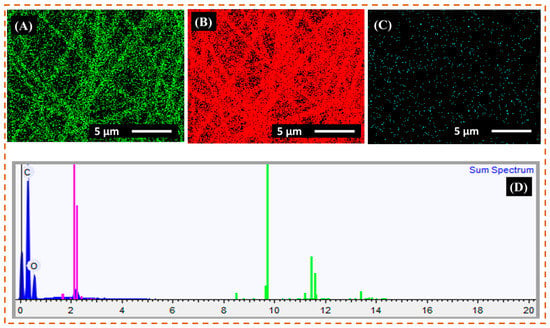
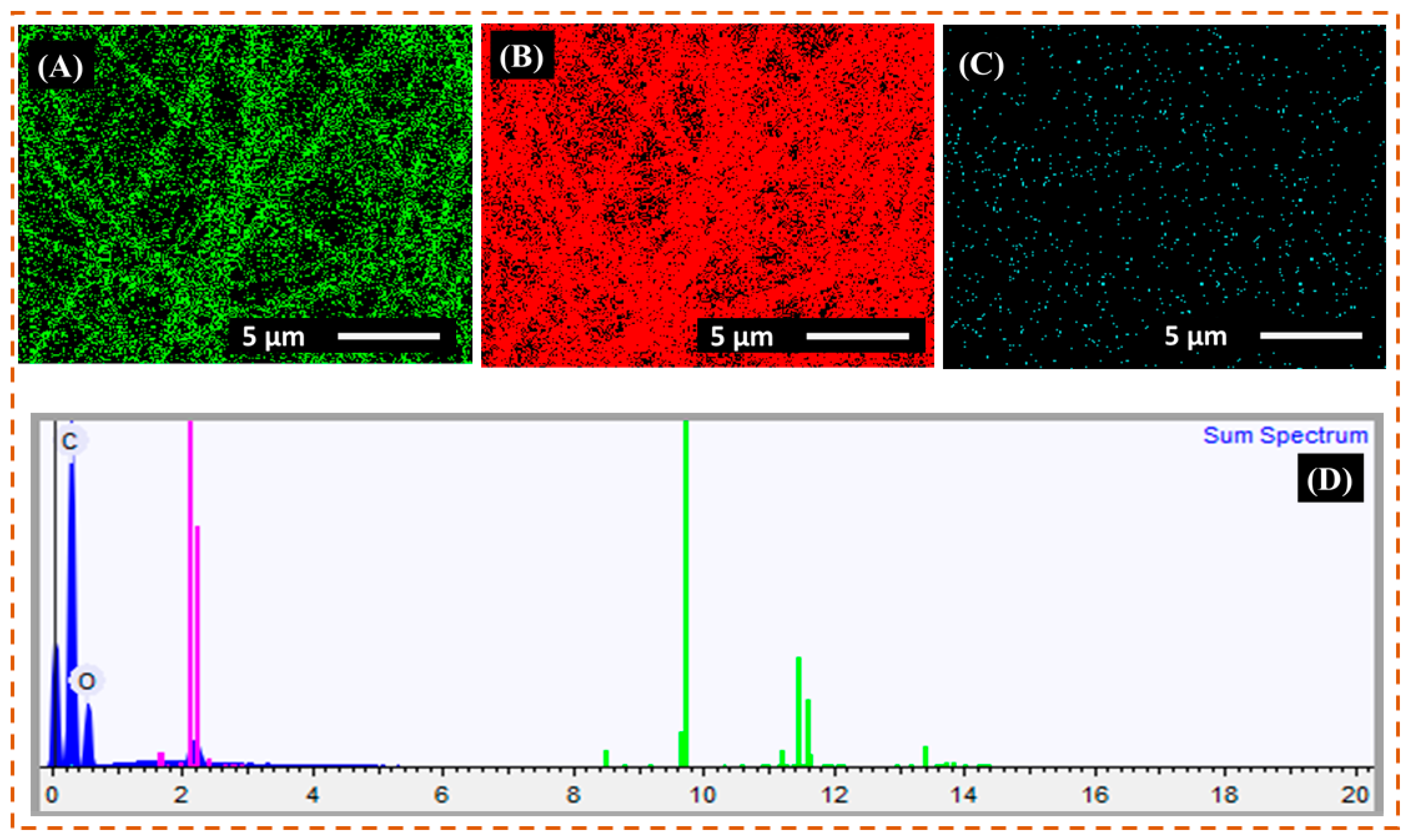
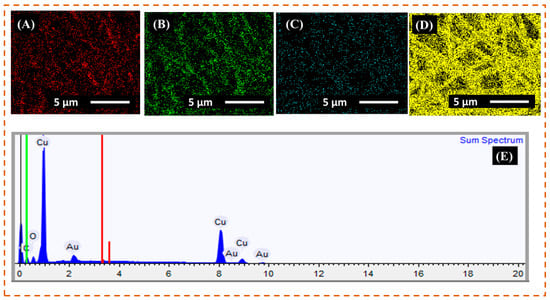
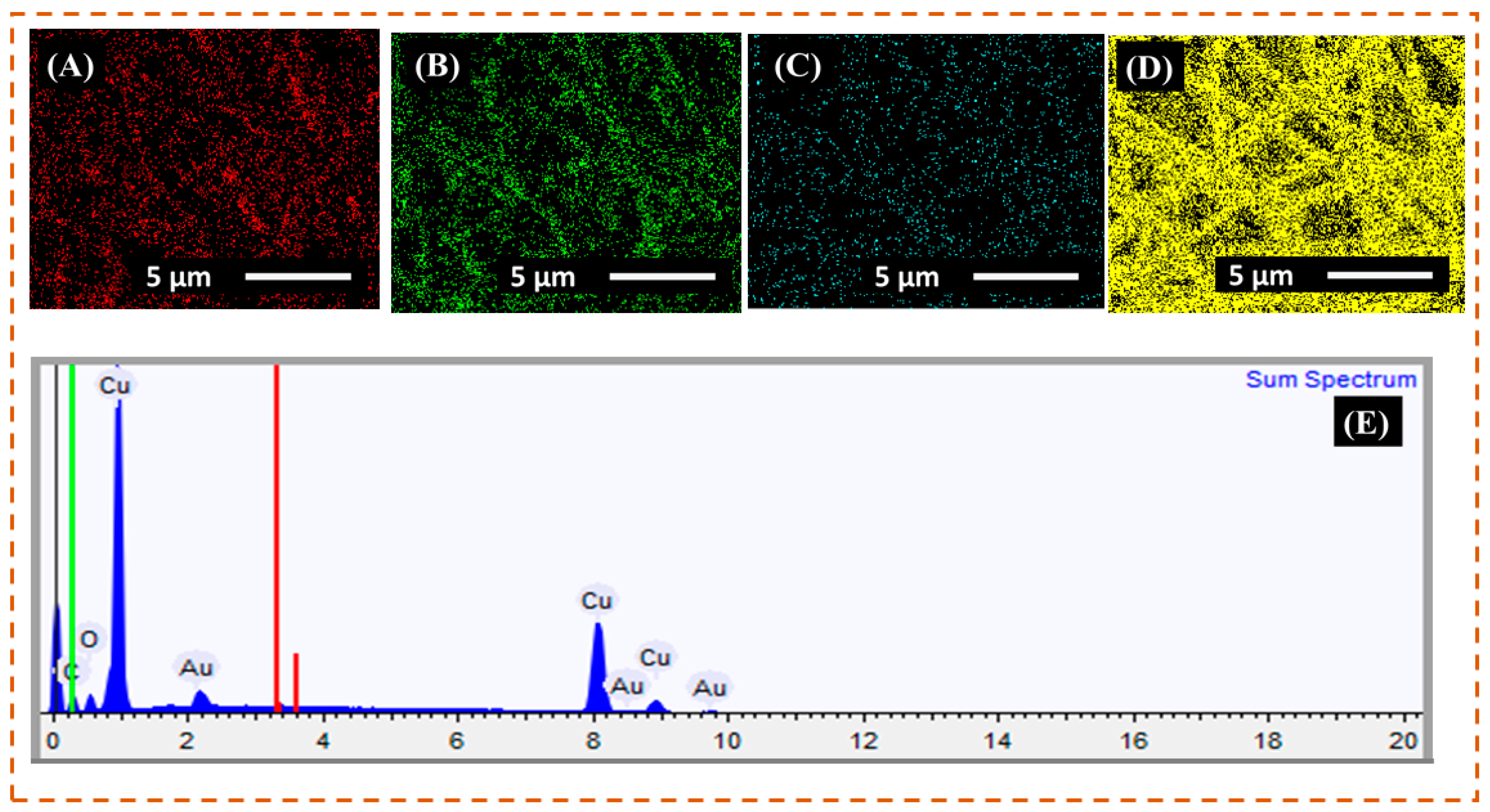
The EDX elemental mapping was applied to verify the presence of copper metal in r-PET nanofibers as shown in Figure 2 and Figure 3, respectively. Based on the characterization of the results, the r-PET nanofibers were composed of carbon and oxygen with no other impurities, as shown in Table 4. On the other hand, in Figure 3, the copper-coated r-PET nanofibers were composed of copper, carbon, and oxygen. As presented in Table 5, copper particles were uniformly distributed on the surface of r-PET nanofibers and contained 71% of copper by weight. r-PET nanofibers had a high surface area [33]; therefore, the deposition rate of copper nanoparticles was higher on the copper-coated r-PET nanofibers than the deposition on conventional textile [34].
Figure 2.
EDX elemental mapping and spectrum of neat r-PET nanofibers. (A–C) show the oxygen, carbon, and gold elemental mapping, respectively. (D) EDX full spectrum of neat r-PET nanofibers.
Figure 3.
EDX elemental mapping and spectrum of copper-coated r-PET nanofibers. (A–D) show the oxygen, carbon, gold, and copper elemental mapping, respectively. And (E) EDX full spectrum of copper-coated r-PET nanofibers.
Table 4.
Summary if the results of elemental mapping.
Table 5.
Summary of the results of elemental mapping.
3.3. XPS Analysis
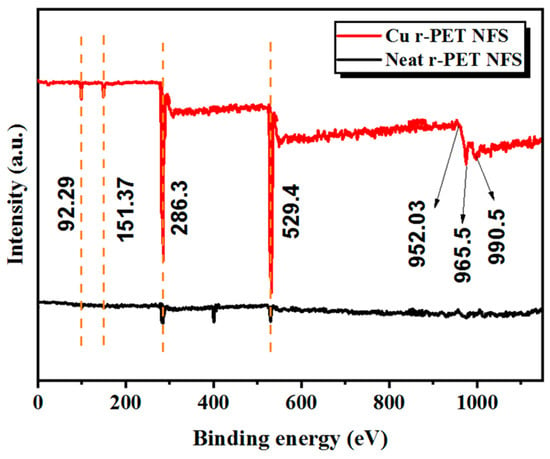
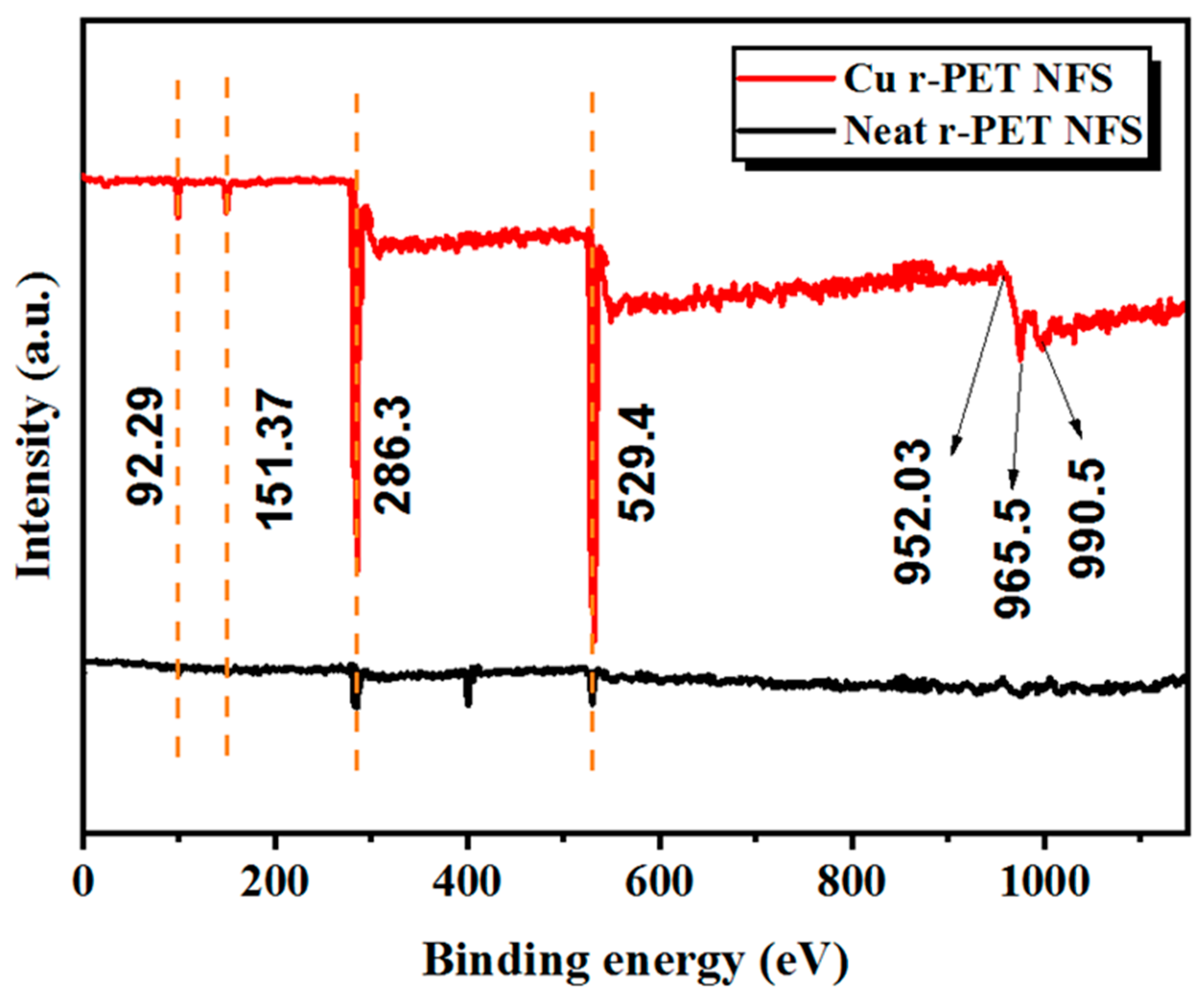
To investigate the specific elements and the presence of the chemical bonds, the XPS analysis was performed on neat r-PET nanofibers and copper-coated r-PET nanofibers to ensure the presence of copper elements after the ELD process, which was also confirmed by the EDX process. Figure 4 shows the spectrum peaks with a wide range for all samples of neat r-PET nanofibers and copper-coated r-PET. The XPS spectrum of copper-coated r-PET nanofibers revealed some additional peaks at a binding energy of (990.5–952 eV), which could not be seen in the neat r-PET nanofibers. Furthermore, to ensure the presence of oxygen, nitrogen, sulfur, and carbon groups, along with their bond types, samples were investigated under XPS spectroscopy separately with the respective region and range of the spectrum of the specific elements. Figure 4 shows that the spectrum peaks at a binding energy of (529.4–286.3) in the region O1s, which revealed the same groups of C−O and C = O/O−C = O bonds for neat r-PET nanofibers and copper-coated r-PET nanofibers. As shown in Figure 4, copper-coated r-PET nanofibers revealed additional peaks at a binding energy of (990.5–952 eV) in the region of 2p Cu 2p3/2 Cu 2p1/2, which led to the overlap of copper particles on the surface of nanofibers, which may show the presence of C−C double metallic bonds.
Figure 4.
XPS analysis of neat r-PET nanofibers and copper-coated r-PET nanofibers.
3.4. Water Contact Angle Analysis
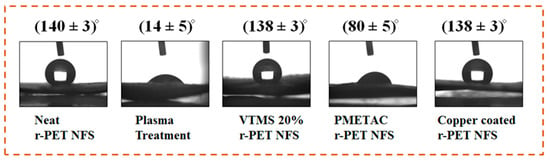
The water contact angle was used to examine each successful step required for the ELD process. Figure 5 indicates the water contact angle measurement for each step in the ELD process. The obtained r-PET nanofibers had a hydrophobic nature, and we needed to create hydroxyl groups before the silanization process. Plasma treatment was used to create the hydroxyl groups on the textile substrates, and the water contact angle of r-PET nanofibers changed from (140° ± 5)° to (14 ± 3)° [35]. This change showed that hydroxyl groups were created on the surface of the nanofibers, which were helpful for the VTMS process. r-PET nanofibers were impregnated in a 20% solution of the VTMS in ethanol, which reacted with the silane molecules and hydroxyl groups on the surface of the nanofibers, and the VTMS-treated r-PET nanofibers showed a hydrophobic property, yielding (138 ± 3)° due to the presence of dense vinyl groups, as shown in Figure 5 [36]. Furthermore, the solution was prepared containing the METAC monomer and potassium persulfate (KPS) initiator for polymerization. In the polymerization process, the VTMS based r-PET nanofibers were impregnated for a certain time, and the chemical reaction happened in the meantime. After the polymerization, the water contact angle reached (80 ± 5)°, which might have happened due to the presence of some hydroxyl groups in METAC [37]. In the final process, PMETAC based r-PET nanofibers were impregnated in an ELD bath. After the ELD process, the r-PET nanofibers were fully covered with copper particles, and the water contact angle was (138 ± 5)°, which may be attributed mainly to the presence of copper nanoparticles on the surface of the r-PET nanofibers [20].
Figure 5.
Water contact angle analysis of neat r-PET nanofibers and copper-coated r-PET nanofibers.
3.5. Optimum Temperature and Time Study
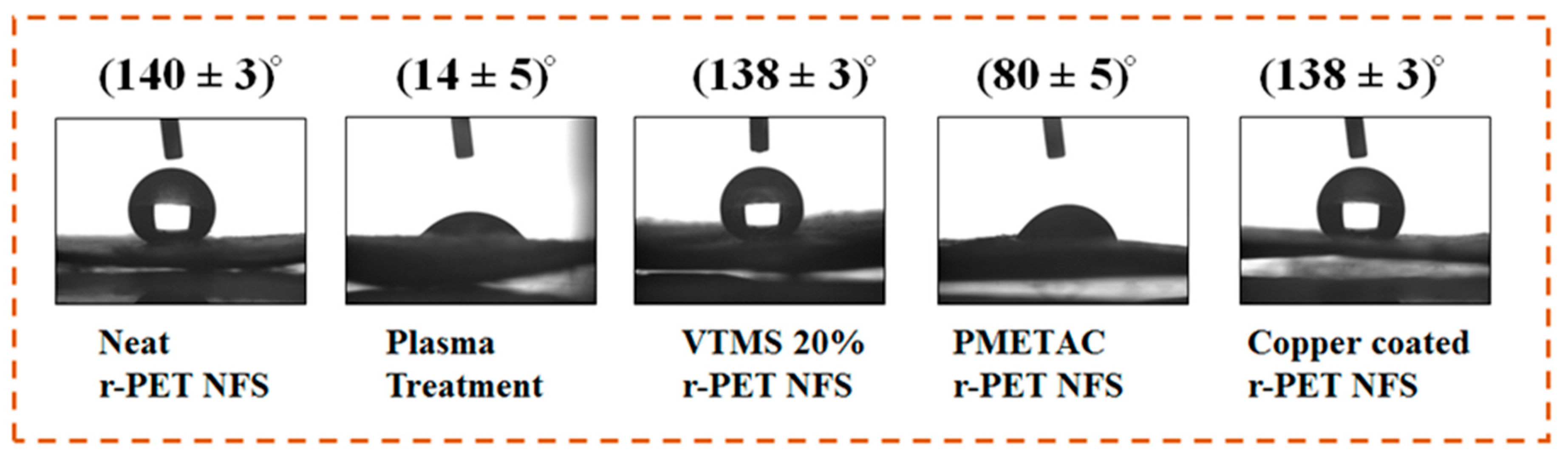
In the electroless deposition, temperature and time had significant effects on the deposition of copper on r-PET nanofibers. Figure 6 shows the results of the samples obtained with different deposition temperatures and times. The temperature for copper deposition on r-PET nanofibers was studied by keeping the time interval constant at 15 min. The effect on the masses at different temperatures in the ELD process is shown in Figure 6A. As the temperature increased, the mass of the r-PET nanofibers also increased and reached a maximum level of rapid increase at 40 °C. Further, with the increase of the temperature, the mass of the r-PET nanofibers was decreased, as shown in Figure 6A. Additionally, the change in the resistance at different temperatures in the ELD process is also shown in Figure 6B. It shows that as temperature increases, resistance decreases and reaches a minimum value at a temperature of 40 °C. By further increasing the temperature, the resistance of the r-PET nanofibers increased, and this might be due to the instability of the solution caused by the higher temperature, which resulted in the poor deposition of the copper [38].
Figure 6.
(A) The effect of the weight of the r-PET nanofibers as a function of temperature; (B) the effect of the resistance of the r-PET nanofibers as a function of temperature; (C) the effect of the weight of the r-PET nanofibers as a function of electroless deposition time; (D) the effect of the resistance of the r-PET nanofibers as a function of electroless deposition time.
After the optimization of the temperature, for the deposition of copper on the r-PET nanofibers, time optimization was also equally important, as shown in Figure 6C,D. Figure 6C shows a notably higher increase in the deposition of copper from 3 min to 15 min with the deposition rate on the surface of the r-PET nanofibers, which gradually increased up to 30 min. As the deposition time was extended to 30 min, almost all of the surface of the r-PET nanofibers was covered with copper. Hence, in this study, fifteen minutes was the optimum time for the deposition of copper on the r-PET nanofibers. In addition, the mass of the r-PET nanofibers increased as the deposition time was prolonged, while the mass of the r-PET nanofibers remained constant. This might be due to there being no more available sites for copper deposition after 30 min. The plot of the resistance of the copper-coated r-PET nanofibers with different deposition times is shown in Figure 6D. As the deposition time increased, a uniform coating of the metal on the surface of the r-PET nanofibers was formed, which created a conducting path on the surface, and as a result, the resistance decreased. The sample obtained with a deposition time of 15 min showed minimum resistance.
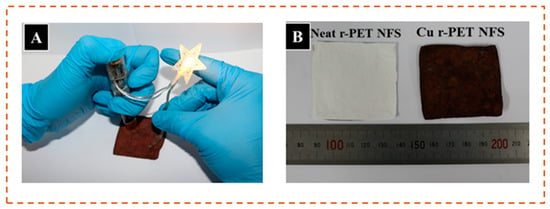
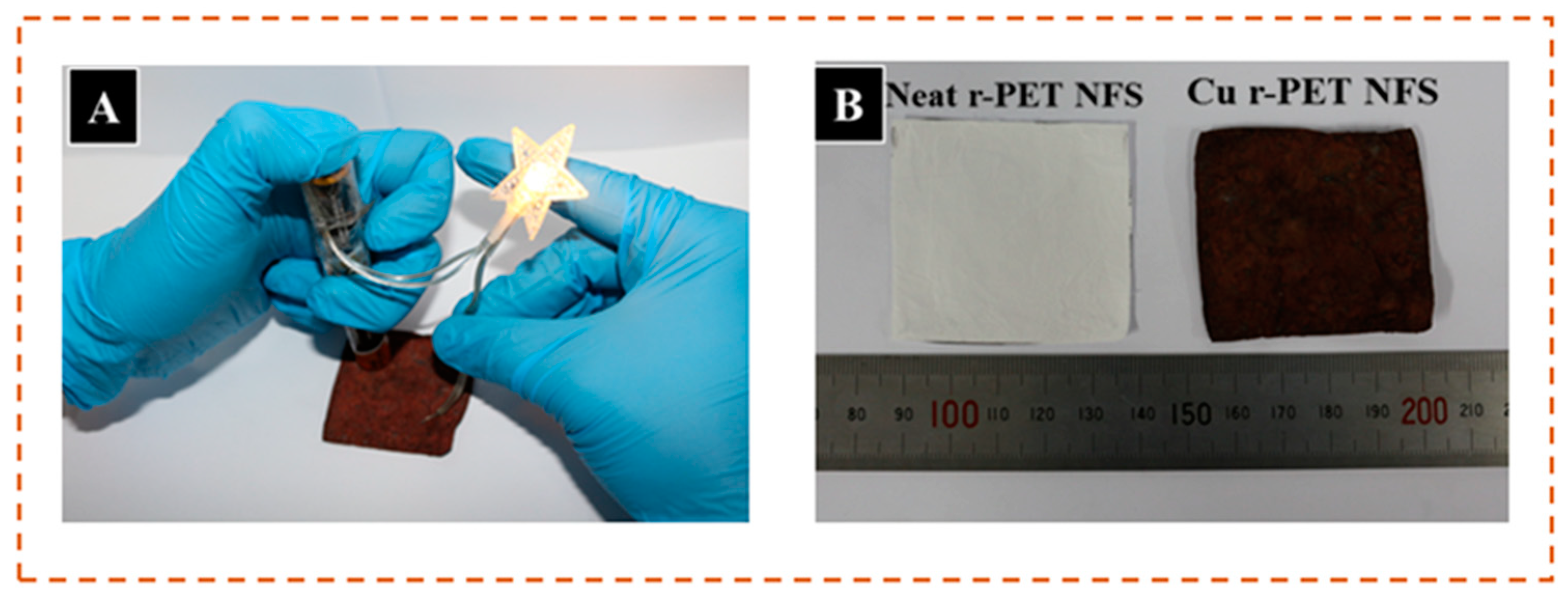
According to the experimental results, continuous copper deposition could be obtained as the deposition time was extended up to 30 min, but the optimal time was observed as 15 min for the deposition of copper on the r-PET nanofibers at a temperature of 40 °C. In the optimum condition, the deposition of copper was good, showing the lowest resistance. Figure 7A,B displays the original photographs of an LED light on the surface of the prepared conductive r-PET nanofibers and the comparison of the r-PET nanofibers after the copper deposition, respectively. These results confirm that the copper was well deposited on the r-PET nanofibers and is highly recommended for use in wearable and flexible electronics applications.
Figure 7.
(A) Conductivity of r-PET NFS (B) results of copper-coated r-PET NFS after the ELD process.
3.6. Tensile Strength
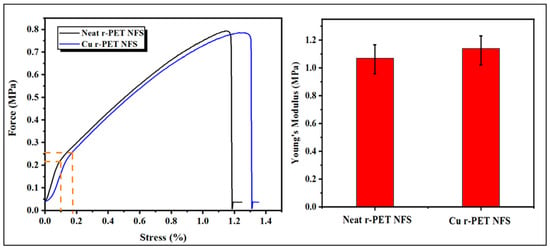
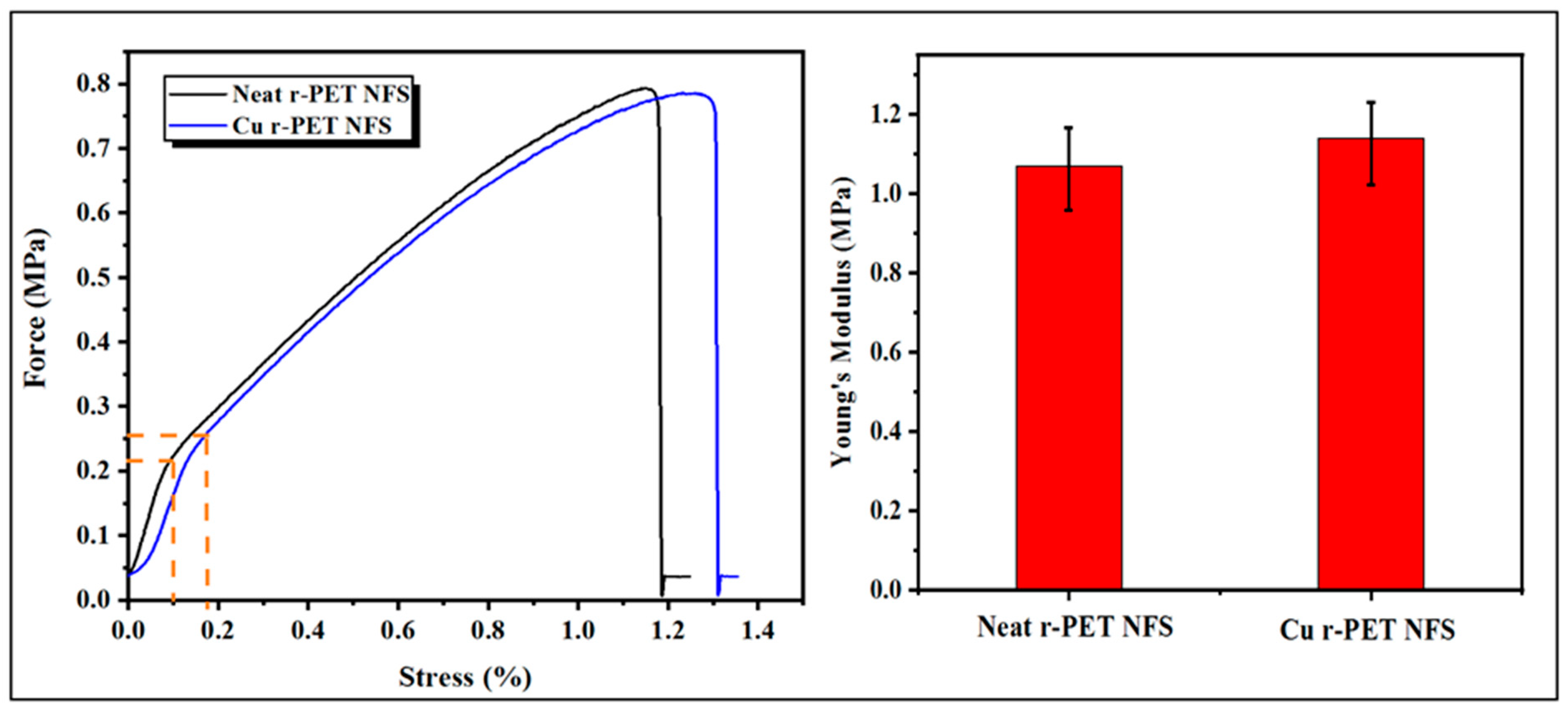
The mechanical properties of the pristine r-PET nanofibers and copper-coated r-PET nanofibers were investigated. As shown in Figure 8, the tensile strength of pristine r-PET nanofibers was around 1.04 MPa with a deformation of about 1.2%. On the other hand, the tensile strength of copper-coated r-PET nanofibers was around 1.4 MPa with a deformation of about 1.3%. These results depict that there was stronger bonding between the copper particles and r-PET nanofibers. Young’s modulus (elastic modulus) was calculated considering elastic regions of both types of nanofibrous mats. It was observed that the elastic modulus of Cu r-PET nanofibers was slightly increased. This may be because of the presence of metallic nanoparticles (Cu NPs).
Figure 8.
Stress–strain curve and Young’s modulus values of neat r-PET nanofibers and copper-coated r-PET nanofibers after the ELD process.
3.7. Shrinkage Study
The r-PET nanofibers after being exposed to the salinization and the ELD process substantially shrunk, so it was necessary to analyze the shrinkage behavior in the r-PET nanofibers after the ELD process; there was exaggeration in documenting the finding. Table 6 shows the shrinkage results, which show that the shrinkage behavior was also dependent on the medium used irrespective of the ELD process. In copper-coated r-PET nanofibers, the shrinkage percentage was higher than in the neat r-PET nanofibers. Salinization and temperature caused a maximum shrinkage within the copper-coated r-PET nanofibers after the ELD process. Ultimately, shrinkage was also the reason for the greater strength and attachment of the copper particles on the substrate compared to the neat r-PET nanofibers.
Table 6.
Shrinkage of the r-PET nanofibers after the ELD process.
4. Conclusions
In this research study, copper-coated r-PET nanofibers were successfully fabricated by the process of electroless deposition. The optimized temperature was observed as 40 °C, and the optimized time of 15 min was set for proper copper deposition on the r-PET nanofibers. The SEM images evidently showed the fibrous morphology of the r-PET nanofibers with an average diameter of 350 nm, and the copper-coated r-PET nanofibers retained the fibrous morphology with a slight increase in the average diameter of 700 nm. The optimized copper-coated r-PET nanofibers were composed of 71.6% copper and showed a low electrical resistance of 0.1 Ω. Moreover, the r-PET nanofibers were flexible and showed good mechanical strength. As-prepared, conductive r-PET nanofibers have good potential and could be used in many applications such as wearable electronics, flexible sensors, and energy storage.
Author Contributions
Conceptualization, N.H.; methodology, N.H.; software, N.H.; validation, I.S.K.; formal analysis, M.M., N.H., S.U. and M.Y.; investigation, N.H.; resources, I.S.K. and T.H.; data curation, N.H.; and M.M.; writing—original draft preparation, N.H. and M.M.; writing—review and editing, N.H.; A.A.; and M.Y.; visualization, N.H.; and S.H.S.; supervision, I.S.K.; All authors have read and agreed to the published version of the manuscript.
Funding
This research received no external funding. APC were funded by Shinshu University, Ueda Campus, Japan.
Institutional Review Board Statement
Not Applicable.
Informed Consent Statement
Not Applicable.
Data Availability Statement
The data can be requested from the corresponding author of the article.
Conflicts of Interest
The authors declare no conflict of interest.
References
- Wang, X.; Yan, C.; Hu, H.; Zhou, X.; Guo, R.; Liu, X.; Xie, Z.; Huang, Z.; Zheng, Z. Aqueous and air-compatible fabrication of high-performance conductive textiles. Chem. Asian J. 2014, 9, 2170–2177. [Google Scholar] [CrossRef] [Scilit]
- Hussain, N.; Yousif, M.; Ali, A.; Mehdi, M.; Ullah, S.; Ullah, A.; Mahar, F.K.; Kim, I.S. A facile approach to synthesize highly conductive electrospun aramid nanofibers via electroless deposition. Mater. Chem. Phys. 2020, 255, 123614. [Google Scholar] [CrossRef] [Scilit]
- White, M.S.; Kaltenbrunner, M.; Głowacki, E.D.; Gutnichenko, K.; Kettlgruber, G.; Graz, I.; Aazou, S.; Ulbricht, C.; Egbe, D.A.M.; Miron, M.C.; et al. Ultrathin, highly flexible and stretchable PLEDs. Nat. Photonics 2013, 7, 811–816. [Google Scholar] [CrossRef] [Scilit]
- Verpoorten, E.; Massaglia, G.; Ciardelli, G.; Pirri, C.F.; Quaglio, M. Design and optimization of piezoresistive peo/pedot:Pss electrospun nanofibers for wearable flex sensors. Nanomaterials 2020, 10, 2166. [Google Scholar] [CrossRef] [Scilit]
- Cui, J.; Zhou, Z.; Jia, M.; Chen, X.; Shi, C.; Zhao, N.; Guo, X. Solid polymer electrolytes with flexible framework of SiO2 nanofibers for highly safe solid lithium batteries. Polymers 2020, 12, 1324. [Google Scholar] [CrossRef] [Scilit]
- Benight, S.J.; Wang, C.; Tok, J.B.H.; Bao, Z. Stretchable and self-healing polymers and devices for electronic skin. Prog. Polym. Sci. 2013, 38, 1961–1977. [Google Scholar] [CrossRef] [Scilit]
- Mokhtari, F.; Shamshirsaz, M.; Latifi, M.; Foroughi, J. Nanofibers-based piezoelectric energy harvester for self-powered wearable technologies. Polymers 2020, 12, 2697. [Google Scholar] [CrossRef] [Scilit] [PubMed]
- Hu, L.; Pasta, M.; La Mantia, F.; Cui, L.; Jeong, S.; Deshazer, H.D.; Choi, J.W.; Han, S.M.; Cui, Y. Stretchable, porous, and conductive energy textiles. Nano Lett. 2010, 10, 708–714. [Google Scholar] [CrossRef] [Scilit]
- Pandey, P.A.; Bell, G.R.; Rourke, J.P.; Sanchez, A.M.; Elkin, M.D.; Hickey, B.J.; Wilson, N.R. Physical vapor deposition of metal nanoparticles on chemically modified graphene: Observations on metal-graphene interactions. Small 2011, 7, 3202–3210. [Google Scholar] [CrossRef] [Scilit] [PubMed]
- Grodzicki, A.; Łakomska, I.; Piszczek, P.; Szymańska, I.; Szłyk, E. Copper(I), silver(I) and gold(I) carboxylate complexes as precursors in chemical vapour deposition of thin metallic films. Coord. Chem. Rev. 2005, 249, 2232–2258. [Google Scholar] [CrossRef] [Scilit]
- Myndrul, V.; Vysloužilová, L.; Klápšt’Ová, A.; Coy, E.; Jancelewicz, M.; Iatsunskyi, I. Formation and photoluminescence properties of ZnO nanoparticles on electrospun nanofibers produced by atomic layer deposition. Coatings 2020, 10, 1199. [Google Scholar] [CrossRef] [Scilit]
- Leary, J.D.; Hamouda, F.; Mazé, B.; Pourdeyhimi, B. Preparation of pseudocapacitor electrodes via electrodeposition of polyaniline on nonwoven carbon fiber fabrics. J. Appl. Polym. Sci. 2016, 133, 1–8. [Google Scholar] [CrossRef] [Scilit]
- Azzaroni, O.; Zheng, Z.; Yang, Z.; Huck, W.T.S. Polyelectrolyte brushes as efficient ultrathin platforms for site-selective copper electroless deposition. Langmuir 2006, 22, 6730–6733. [Google Scholar] [CrossRef] [Scilit]
- Yu, Y.; Yan, C.; Zheng, Z. Polymer-assisted metal deposition (PAMD): A full-solution strategy for flexible, stretchable, compressible, and wearable metal conductors. Adv. Mater. 2014, 26, 5508–5516. [Google Scholar] [CrossRef] [Scilit] [PubMed]
- Garcia, A.; Polesel-Maris, J.; Viel, P.; Palacin, S.; Berthelot, T. Localized ligand induced electroless plating (LIEP) process for the fabrication of copper patterns onto flexible polymer substrates. Adv. Funct. Mater. 2011, 21, 2096–2102. [Google Scholar] [CrossRef] [Scilit]
- Liu, X.; Chang, H.; Li, Y.; Huck, W.T.S.; Zheng, Z. Polyelectrolyte-bridged metal/cotton hierarchical structures for highly durable conductive yarns. ACS Appl. Mater. Interfaces 2010, 2, 529–535. [Google Scholar] [CrossRef] [Scilit] [PubMed]
- Irfan, M.S.; Gill, Y.Q.; Hashmi, M.; Ullah, S.; Saeed, F.; Qaiser, A.A. Long-term stress relaxation behavior of Polyaniline-EPDM blends using the time-temperature-strain superposition method. Mater. Res. Express 2018, 6, 025318. [Google Scholar] [CrossRef] [Scilit]
- Irfan, M.S.; Gill, Y.Q.; Ullah, S.; Naeem, M.T.; Saeed, F.; Hashmi, M. Polyaniline-NBR blends by in situ polymerization: Application as stretchable strain sensors. Smart Mater. Struct. 2019, 28, 095024. [Google Scholar] [CrossRef] [Scilit]
- Huang, X.; Dai, B.; Ren, Y.; Xu, J.; Zhu, P. Preparation and study of electromagnetic interference shielding materials comprised of Ni-Co coated on web-like biocarbon nanofibers via electroless deposition. J. Nanomater. 2015. [Google Scholar] [CrossRef] [Scilit]
- Liu, S.; Hu, M.; Yang, J. A facile way of fabricating a flexible and conductive cotton fabric. J. Mater. Chem. C 2016, 4, 1320–1325. [Google Scholar] [CrossRef] [Scilit]
- Mu, S.; Xie, H.; Wang, W.; Yu, D. Electroless silver plating on PET fabric initiated by in situ reduction of polyaniline. Appl. Surf. Sci. 2015, 353, 608–614. [Google Scholar] [CrossRef] [Scilit]
- Yu, D.; Mu, S.; Liu, L.; Wang, W. Preparation of electroless silver plating on aramid fiber with good conductivity and adhesion strength. Colloids Surf. Physicochem. Eng. Asp. 2015, 483, 53–59. [Google Scholar] [CrossRef] [Scilit]
- Pang, H.; Bai, R.; Shao, Q.; Gao, Y.; Li, A.; Tang, Z. A novel Ag catalyzation process using swelling impregnation method for electroless Ni deposition on Kevlar ® fiber. Appl. Surf. Sci. 2015, 359, 280–287. [Google Scholar] [CrossRef] [Scilit]
- Mahar, F.K.; Mehdi, M.; Qureshi, U.A.; Brohi, K.M.; Zahid, B.; Ahmed, F.; Khatri, Z. Dyeability of recycled electrospun polyethylene terephthalate (PET) nanofibers: Kinetics and thermodynamic study. J. Mol. Liq. 2017, 248, 911–919. [Google Scholar] [CrossRef] [Scilit]
- Bohaczuk Venturelli, R.; Serafini Immich, A.P.; MA Guelli U de Souza, S.; U de Souza, A.A. Recycled polyester nanofiber as a reservoir for essential oil release. J. Appl. Polym. Sci. 2020, 50258. [Google Scholar] [CrossRef] [Scilit]
- Hashmi, M.; Ullah, S.; Ullah, A.; Akmal, M.; Saito, Y.; Hussain, N.; Ren, X.; Kim, I.S. Optimized Loading of Carboxymethyl Cellulose (CMC) in Tri-component Electrospun Nanofibers Having Uniform Morphology. Polymer 2020, 12, 2524. [Google Scholar] [CrossRef] [Scilit]
- Nadir, H.; Sana, U.; Muhammad, N.S.; Motahira, H.; Muzamil, K.; Takumi, Y.; Zeeshan, K.; Ick, S.K. Fabrication and Characterization of Novel Antibacterial Ultrafine Nylon-6 Nanofibers Impregnated by Garlic Sour. Fibers Polym. 2020, 21, 2780–2787. [Google Scholar] [CrossRef] [Scilit]
- Ullah, S.; Hashmi, M.; Hussain, N.; Ullah, A.; Sarwar, M.N.; Saito, Y.; Kim, S.H.; Kim, I.S. Stabilized nanofibers of polyvinyl alcohol (PVA) crosslinked by unique method for efficient removal of heavy metal ions. J. Water Process. Eng. 2020, 33, 101111. [Google Scholar] [CrossRef] [Scilit]
- Mehdi, M.; Mahar, F.K.; Qureshi, U.A.; Khatri, M.; Khatri, Z.; Ahmed, F.; Kim, I.S. Preparation of colored recycled polyethylene terephthalate nanofibers from waste bottles: Physicochemical studies. Adv. Polymer Technol. 2018, 37, 2820–2827. [Google Scholar] [CrossRef] [Scilit]
- Wang, B.; Zhao, M.; Mehdi, M.; Wang, G.; Gao, P.; Zhang, K.Q. Biomolecule-assisted synthesis and functionality of metal nanoclusters for biological sensing: A review. Mater. Chem. Front. 2019, 3, 1722–1735. [Google Scholar] [CrossRef] [Scilit]
- Hashmi, M.; Ullah, S.; Ullah, A.; Khan, M.Q.; Hussain, N.; Khatri, M.; Bie, X.; Lee, J.; Kim, I.S. An optimistic approach “from hydrophobic to super hydrophilic nanofibers” for enhanced absorption properties. Polym. Test. 2020, 90, 106683. [Google Scholar] [CrossRef] [Scilit]
- Hashmi, M.; Ullah, S.; Kim, I.S. Electrospun Momordica Charantia Incorporated Polyvinyl Alcohol (PVA) Nanofibers for Antibacterial Applications. Mater. Today Commun. 2020, 101161. [Google Scholar] [CrossRef] [Scilit]
- Sereshti, H.; Amini, F.; Najarzadekan, H. Electrospun polyethylene terephthalate (PET) nanofibers as a new adsorbent for micro-solid phase extraction of chromium(VI) in enVIronmental water samples. RSC Adv. 2015, 5, 89195–89203. [Google Scholar] [CrossRef] [Scilit]
- Guo, R.H.; Jiang, S.X.; Yuen, C.W.M.; Ng, M.C.F.; Lan, J.W. Optimization of electroless nickel plating on polyester fabric. Fibers Polym. 2013, 14, 459–464. [Google Scholar] [CrossRef] [Scilit]
- Demir, A.; Bozaci, E.; Gülümser, T.; Sarikanat, M. An ecological approach for the surface modification of aramid fibers. Tekst. Konfeksiyon 2016, 26, 256–261. [Google Scholar]
- Wang, C.; Yang, H.; Chen, F.; Peng, L.; Gao, H.-F.; Zhao, L.-P. Influences of VTMS/SiO2 ratios on the contact angle and morphology of modified super-hydrophobic silicon dioxide material by vinyl trimethoxy silane. Results Phys. 2018, 10, 891–902. [Google Scholar] [CrossRef] [Scilit]
- Politakos, N.; Azinas, S.; Moya, S.E. Responsive Copolymer Brushes of Poly[(2-(Methacryloyloxy)Ethyl) Trimethylammonium Chloride] (PMETAC) and Poly(1H,1H,2H,2H-Perfluorodecyl acrylate) (PPFDA) to Modulate Surface Wetting Properties. Macromol. Rapid Commun. 2016, 37, 662–667. [Google Scholar] [CrossRef] [Scilit]
- Tai, Y.; Xu, C.; Chen, H. Silver-coated glass fabric composites prepared by electroless plating. Mater. Lett. 2016, 180, 144–147. [Google Scholar] [CrossRef] [Scilit]

Publisher’s Note: MDPI stays neutral with regard to jurisdictional claims in published maps and institutional affiliations. |
© 2021 by the authors. Licensee MDPI, Basel, Switzerland. This article is an open access article distributed under the terms and conditions of the Creative Commons Attribution (CC BY) license (http://creativecommons.org/licenses/by/4.0/).