
Design and Performance Evaluation of TPMS-Based Dual-Layer Gradient Porous Structures for Bone Scaffolds

 ,
,
Abstract
1. Introduction
2. Methods
2.1. Cell Structure
2.2. Gradient Structure
2.2.1. Axial Single-Layer Gradient Structure Design
2.2.2. Axial Dual-Layer Gradient Structure Design
2.2.3. Radial Single-Layer Gradient Structure Design
2.2.4. Radial Dual-Layer Gradient Structure Design
2.3. Design Cases
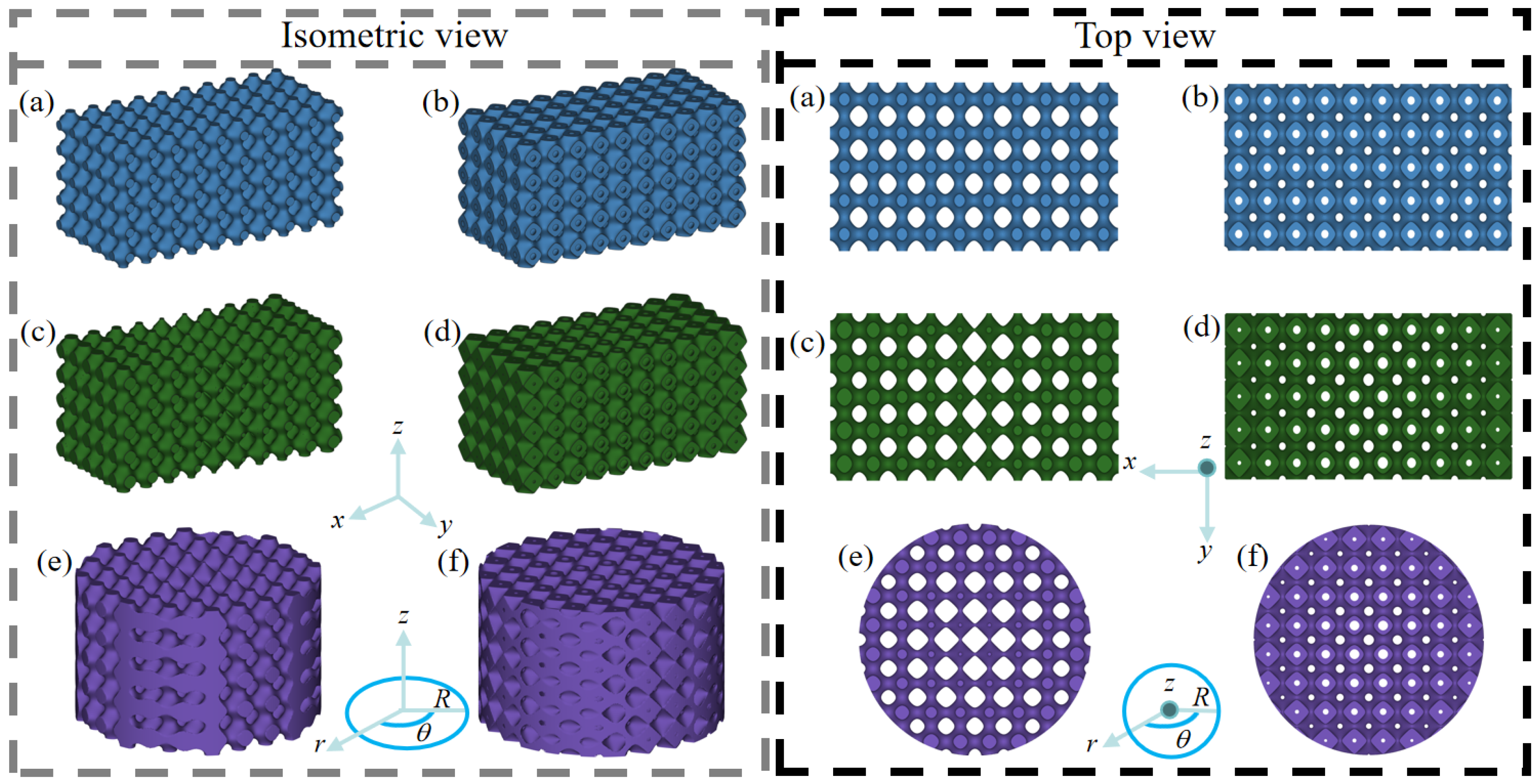
2.3.1. Six Structure Design Cases
2.3.2. Ten Structure Design Cases
2.4. Finite Element Model
2.4.1. Mechanical Property Finite Element Model
2.4.2. Permeability Property Finite Element Model
2.5. Declarations of Use of Generative AI for Figure Preparation
3. Results and Discussion
3.1. Mechanical Property Analysis of Six Design Cases
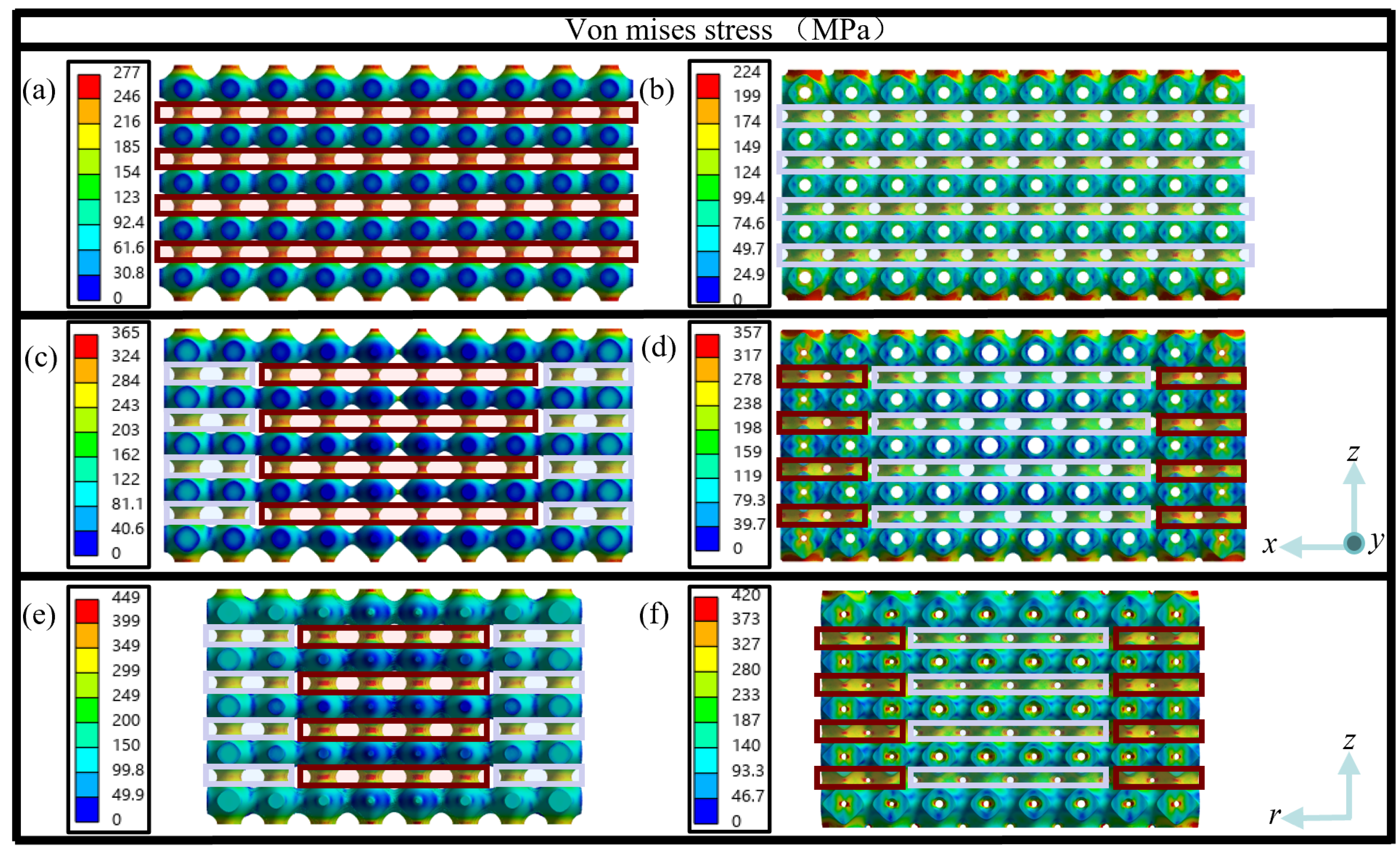
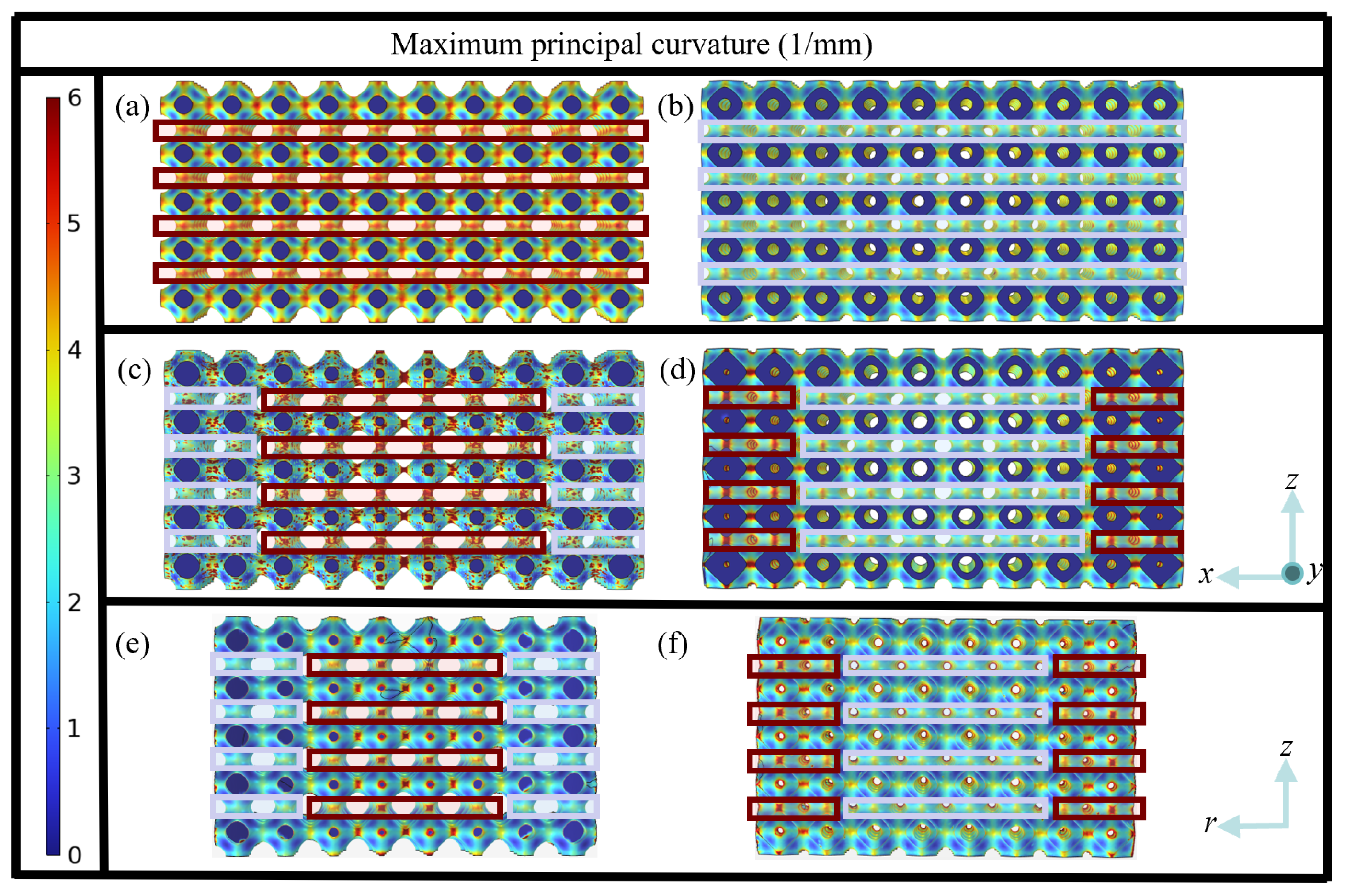
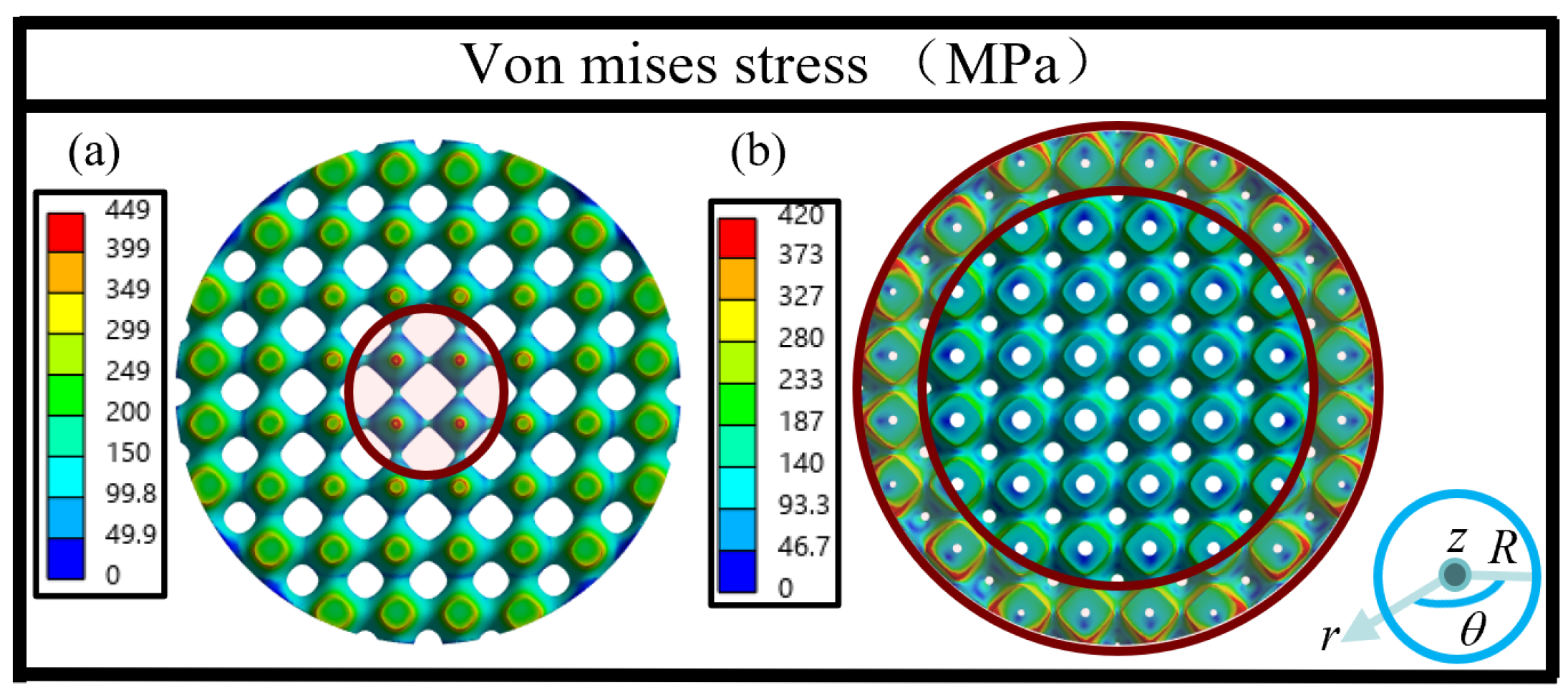
3.1.1. Stress Field Analysis of Six Design Cases
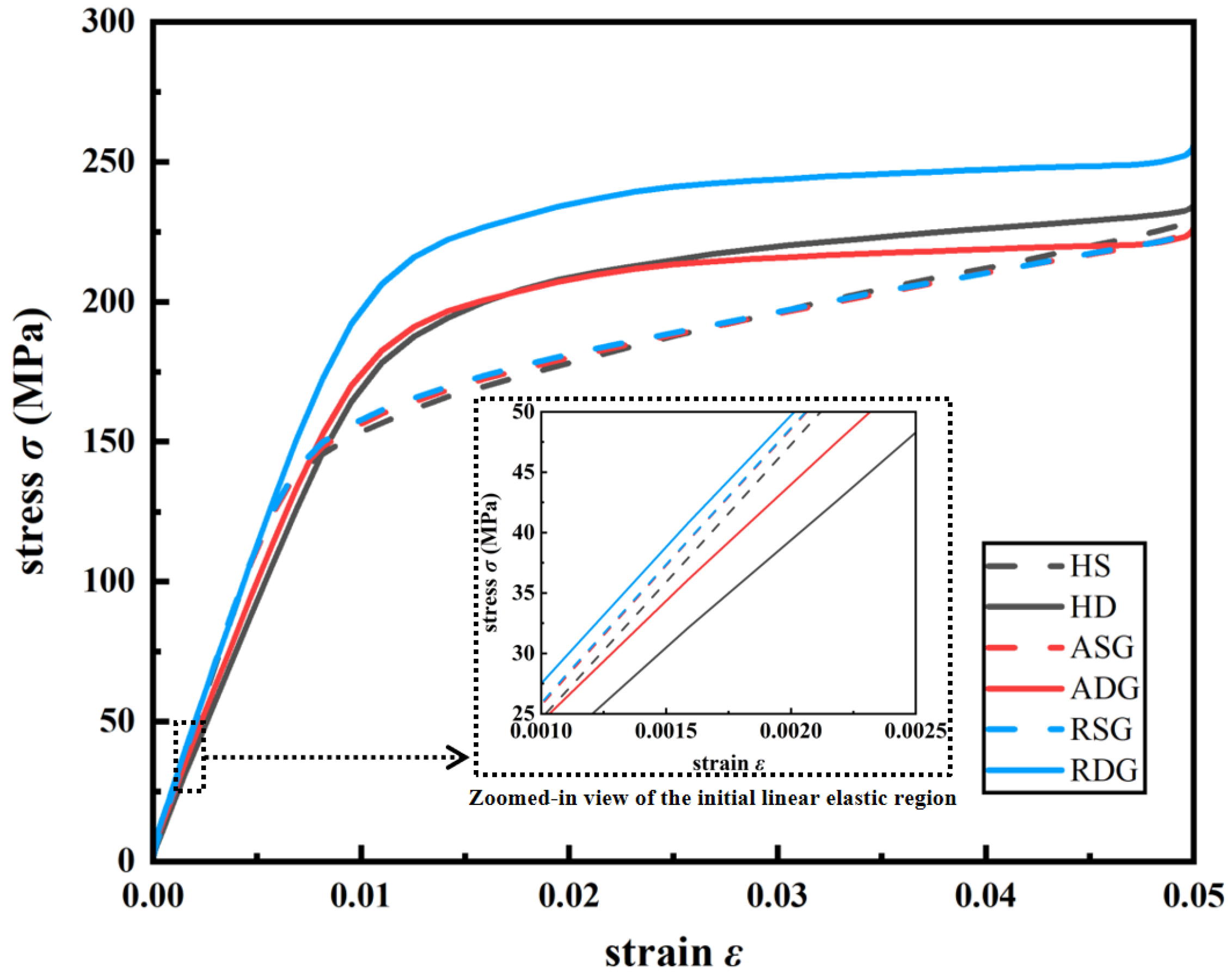
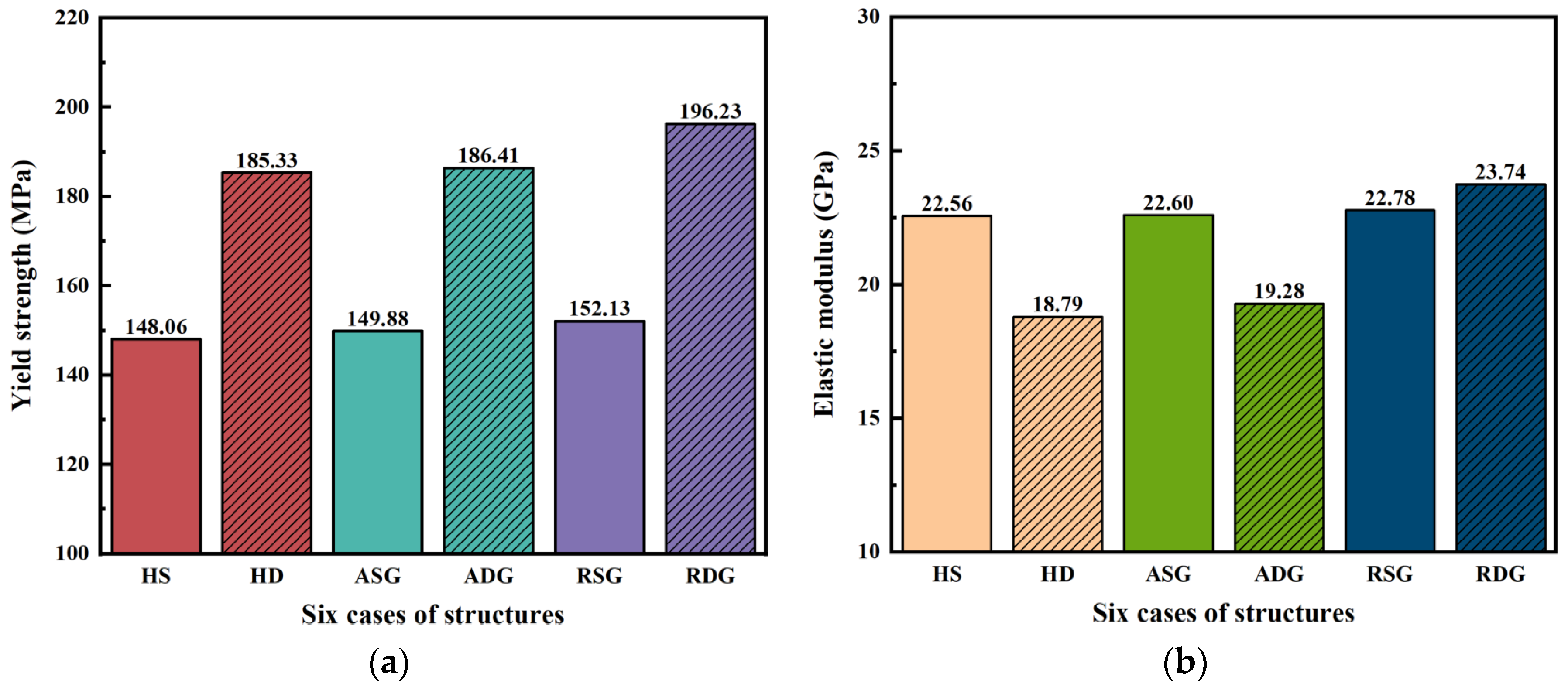
3.1.2. Yield Strength and Elastic Modulus Analysis of Six Design Cases
3.2. Mechanical Property Analysis of Ten Design Cases
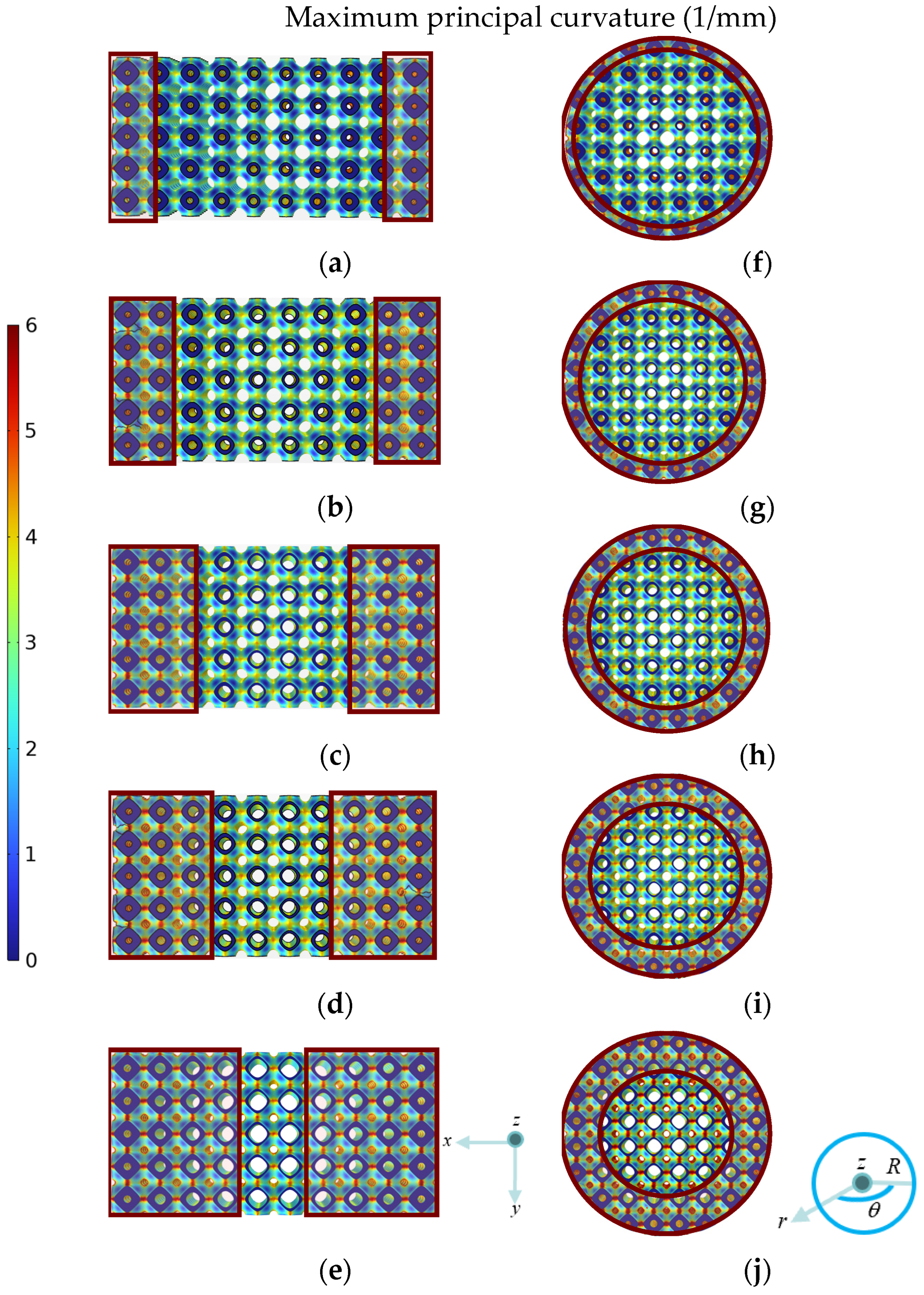
3.2.1. Stress Field Analysis of Ten Design Cases
3.2.2. Yield Strength and Elastic Modulus Analysis of Ten Design Cases
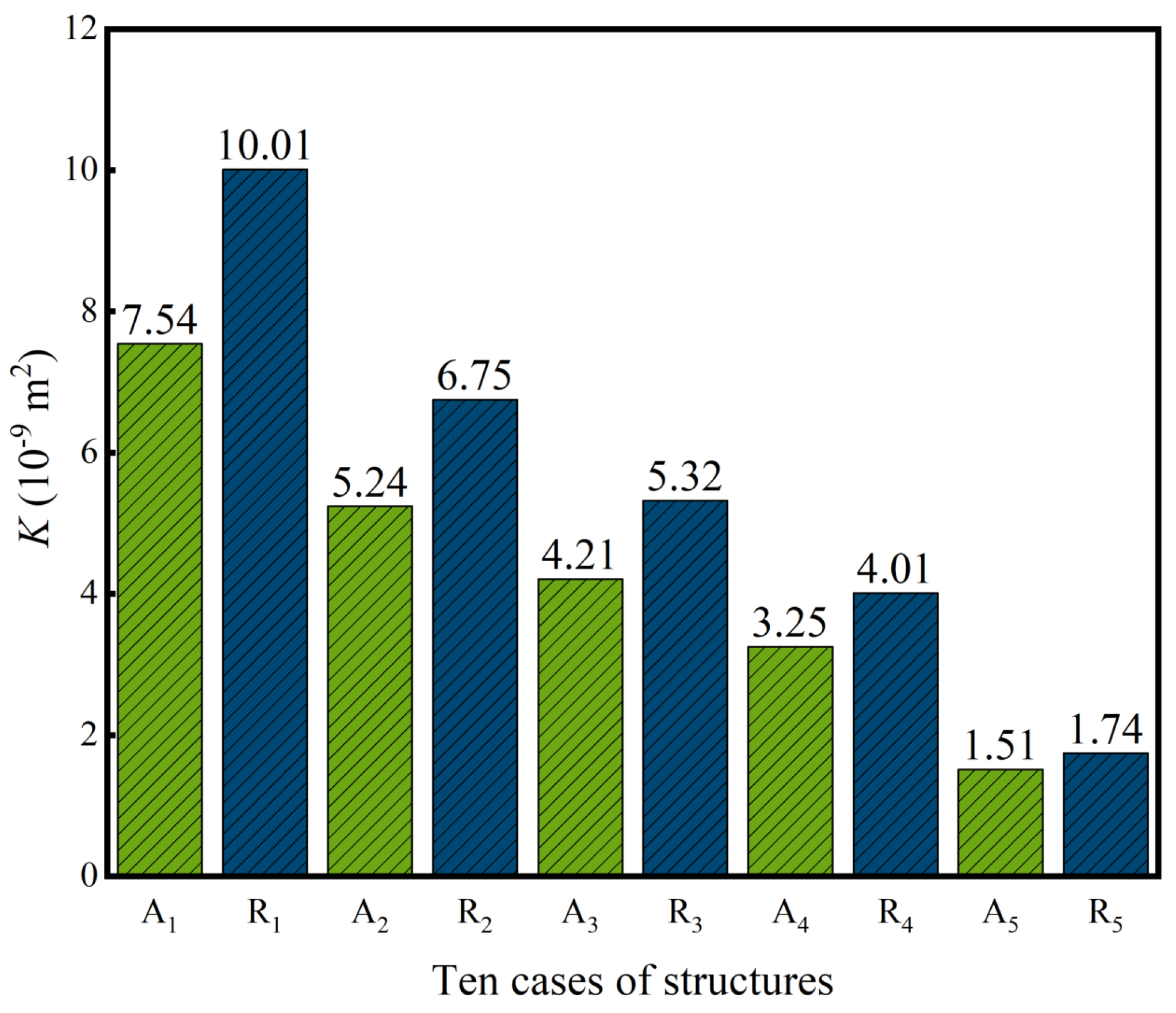
3.3. Permeability Property Analysis of Ten Design Cases
3.4. Comparisons with Other TPMS Gradient Structures
3.5. Limitations and Future Work
4. Conclusions
- (1)
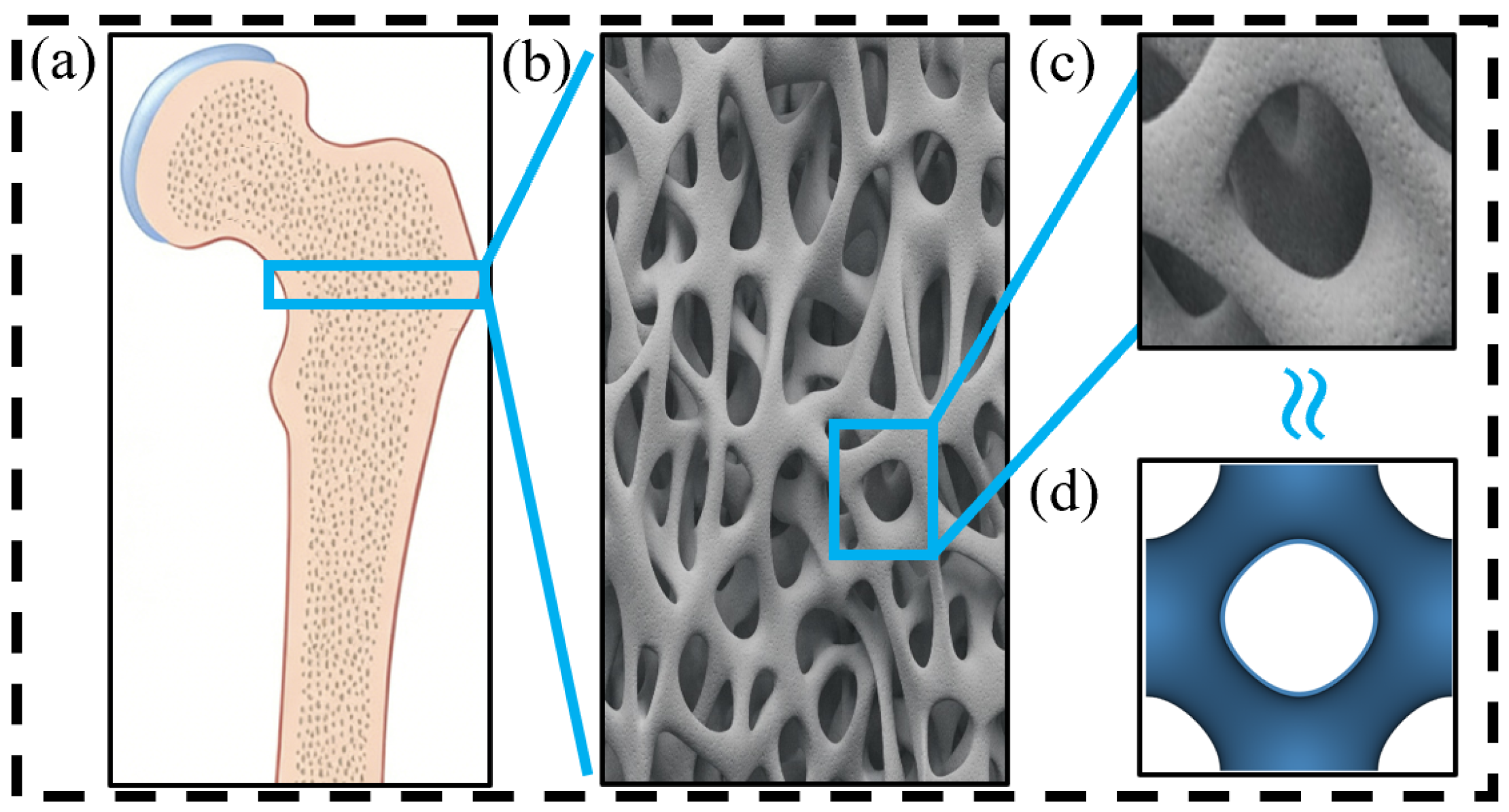
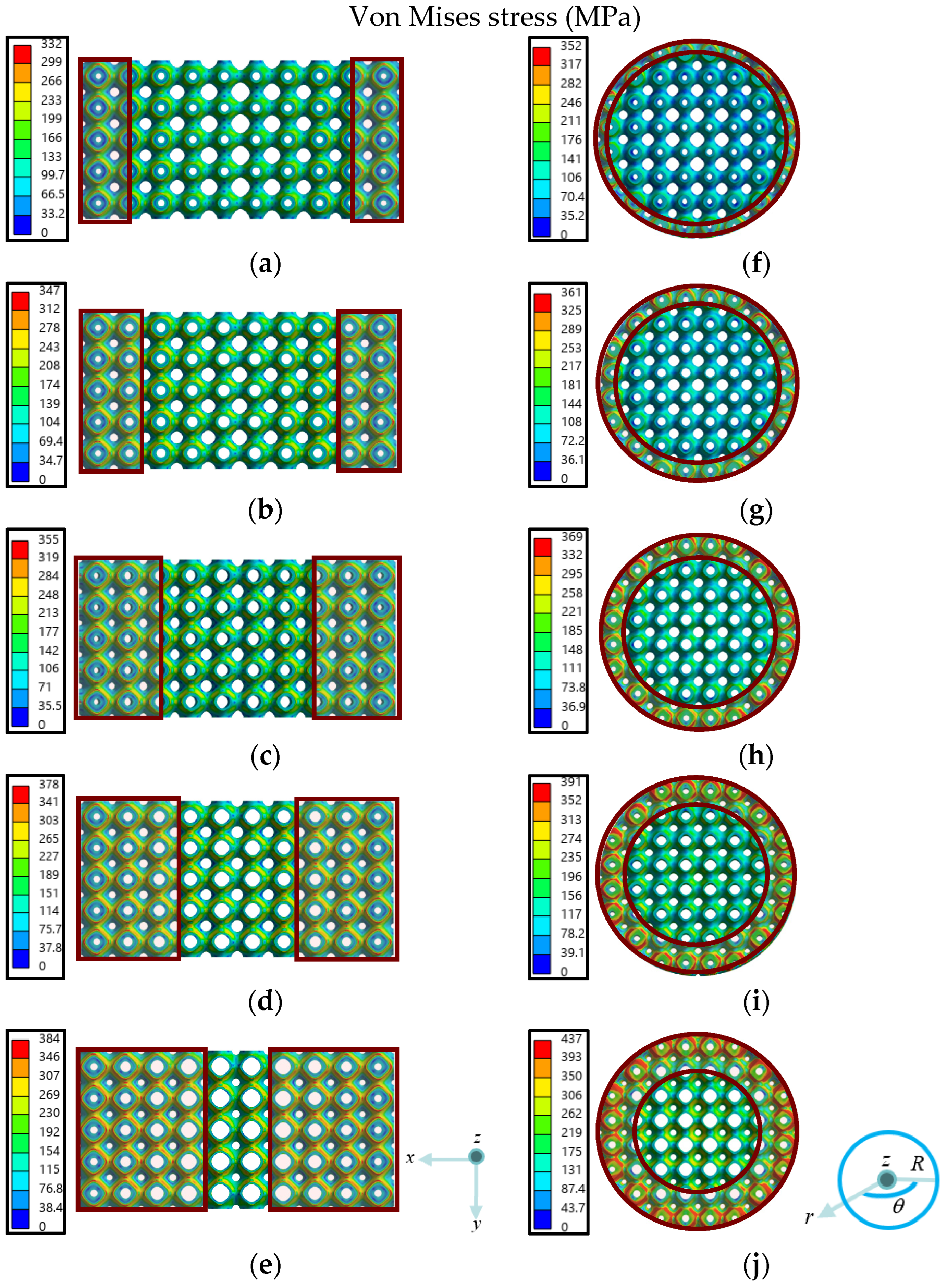
- Among six homogeneous single/dual-layer, axial and radial single/dual-layer gradient structures, dual-layer structures possess reduced maximum stress, higher yield strength and greater variations in yield strength and elastic modulus E. Dual-layer gradient structures also present more similar pore and stress distributions compared to human bones, and therefore dual-layer gradient structures are chosen for further design and analysis.
- (2)
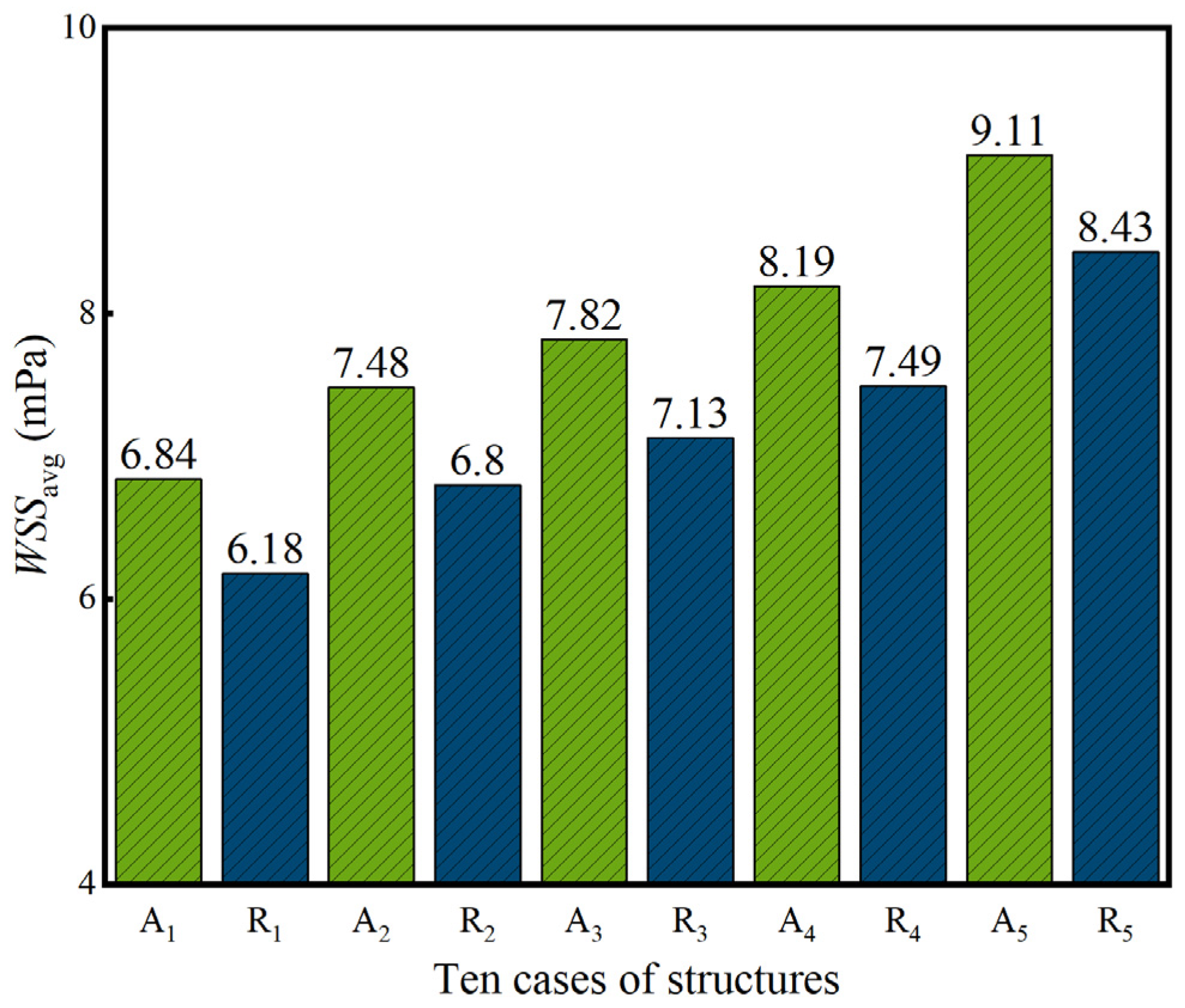
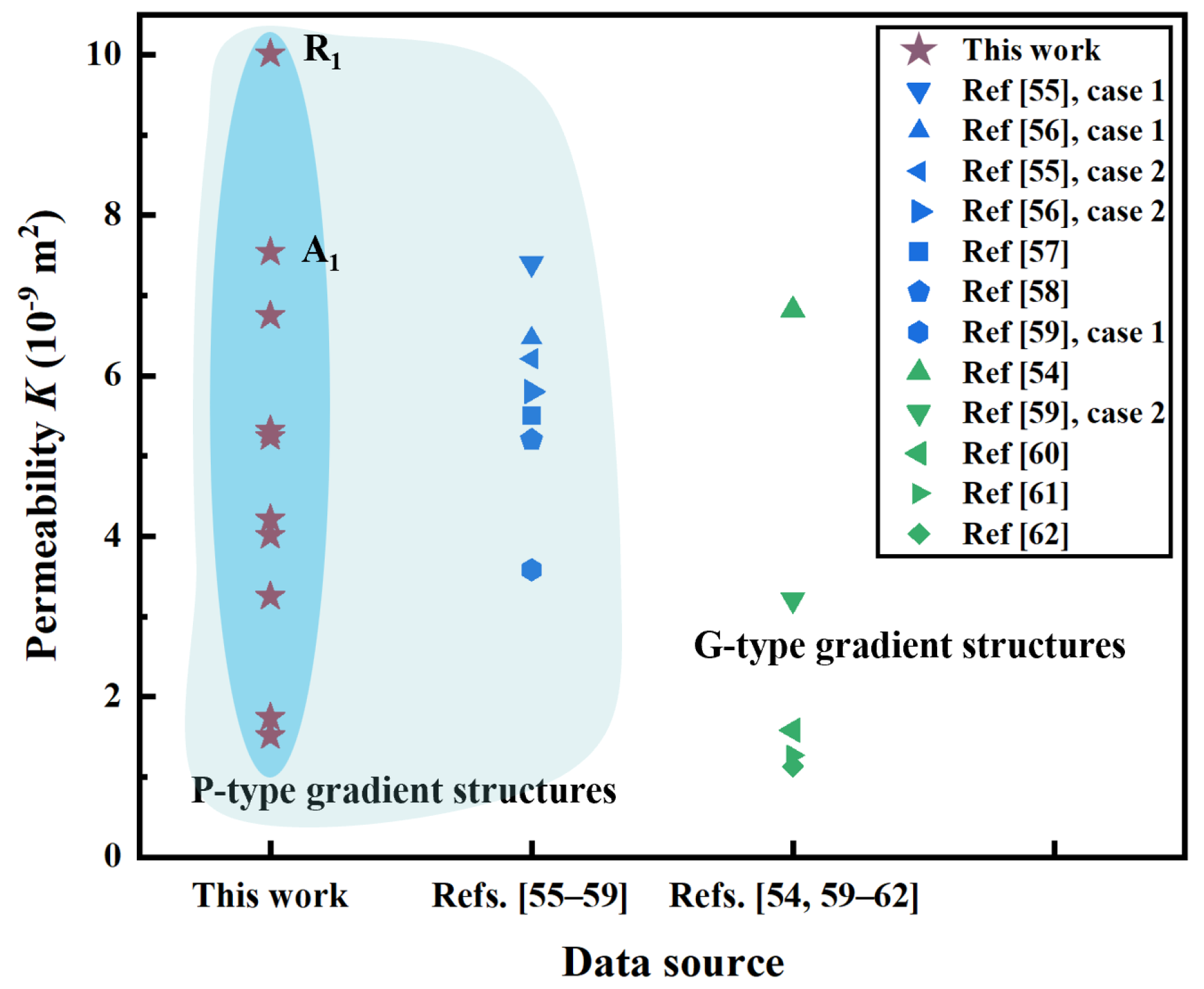
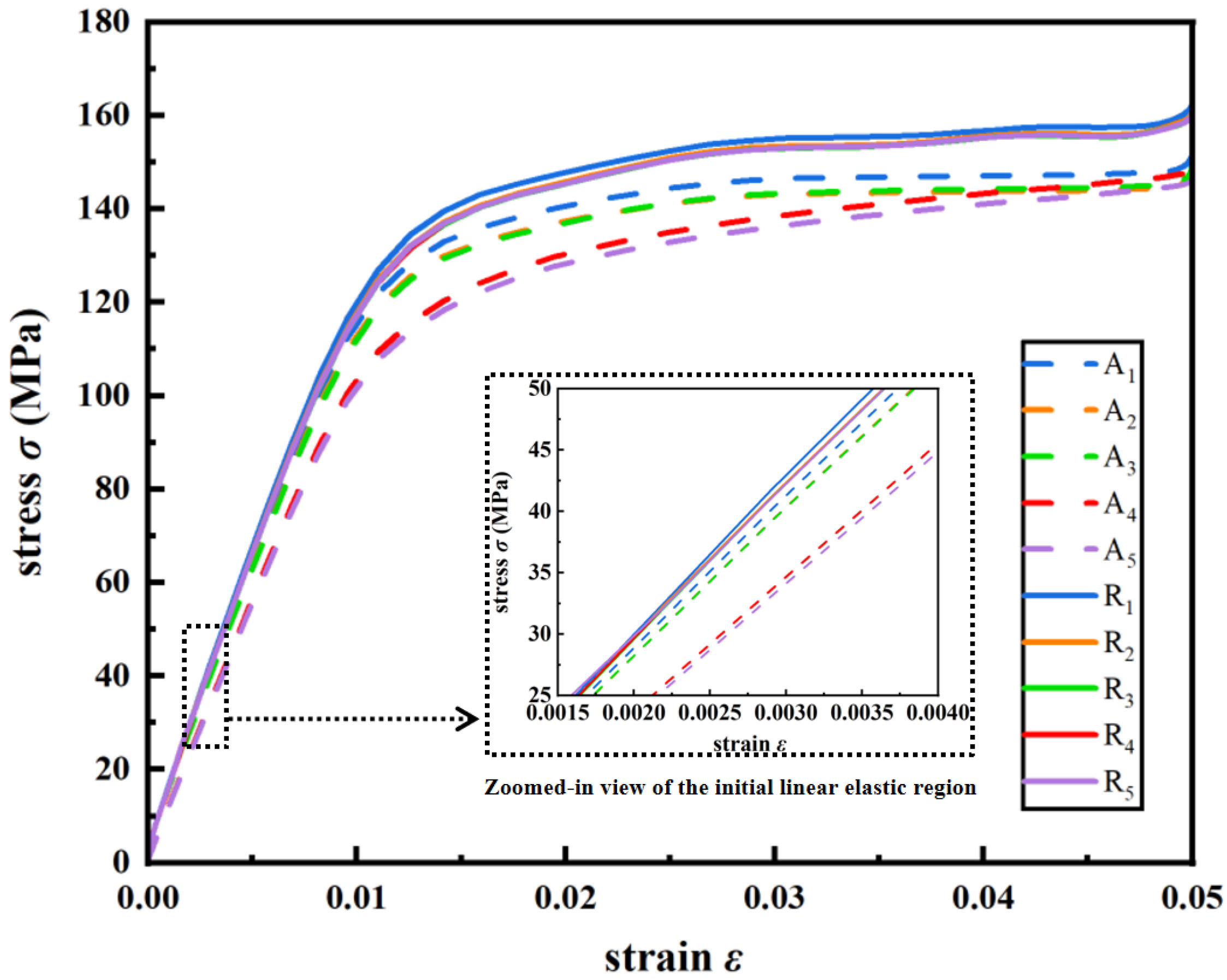
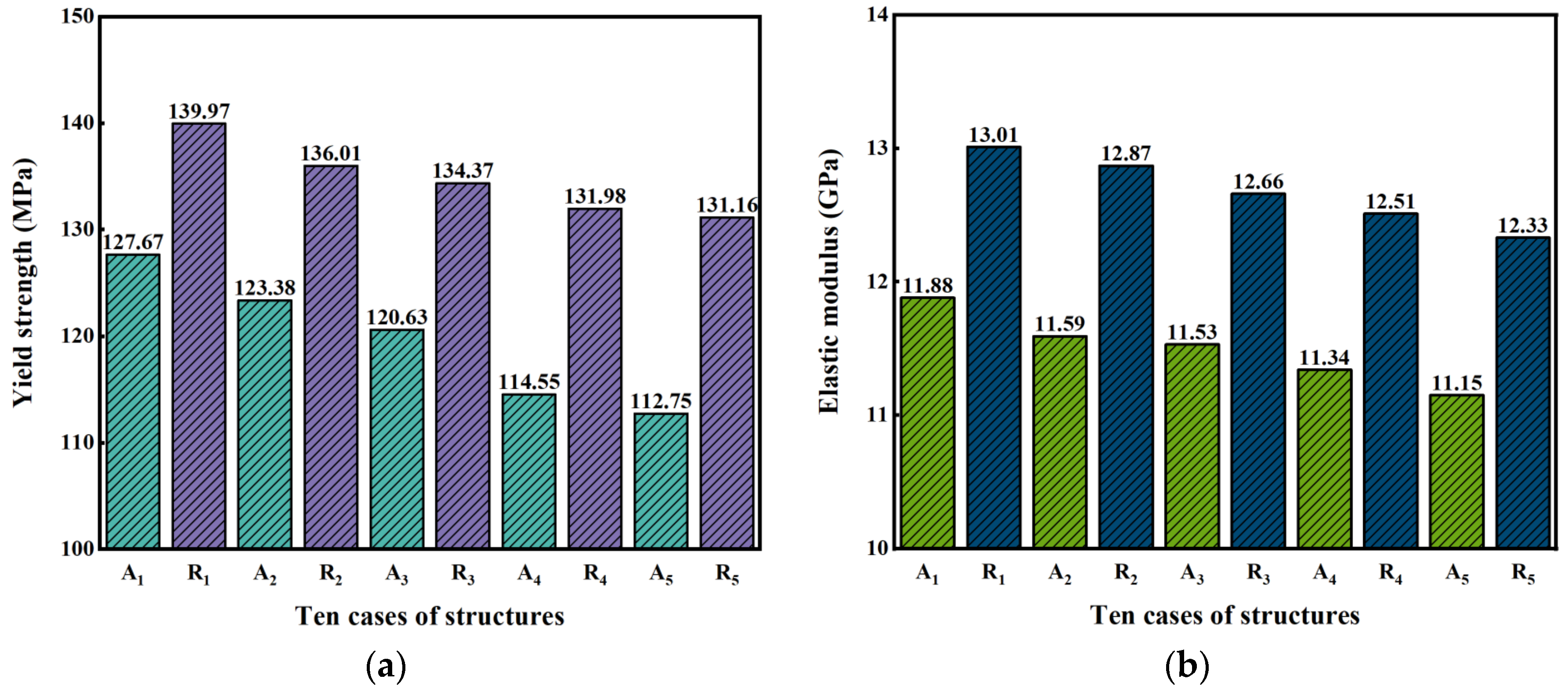
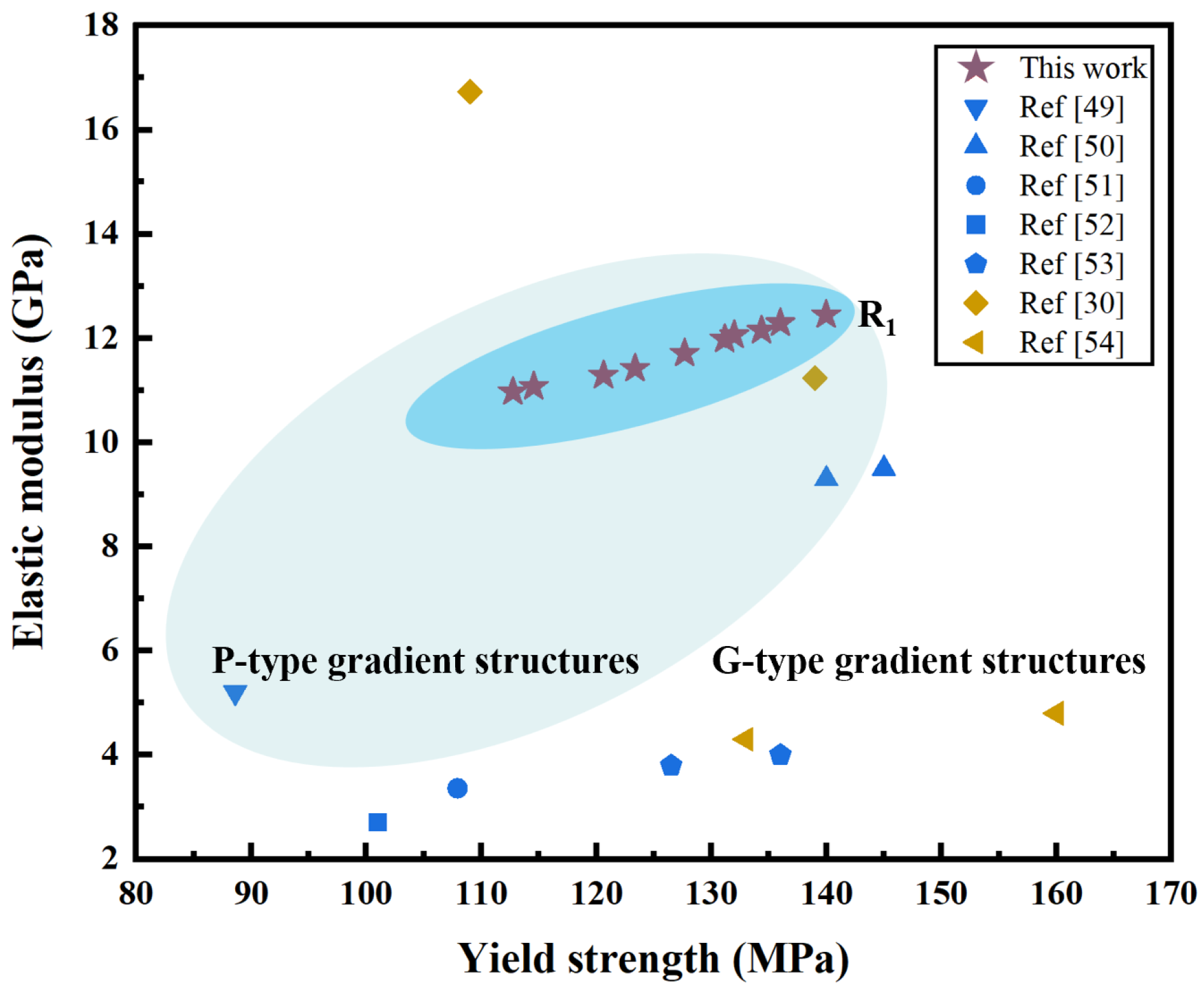
- The mechanical and permeability properties of ten axial and radial dual-layer gradient structures meet the requirements of bone scaffold: yield strength reaches 112.75–139.97 MPa, E ranges from 11.15 to 13.01 GPa, permeability K is within 1.51–10.01 × 10⁻⁹ m2, and the average wall shear stress WSSavg varies between 6.18 and 9.11 mPa. The mechanical and permeability properties of the dual-layer gradient structures in this study are superior when compared with other TPMS gradient structures from the literature.
- (3)
- For ten axial and radial dual-layer gradient structures, the yield strength and E of radial dual-layer gradient structures are higher than those of axial dual-layer gradient structures, and axial dual-layer gradient structures are more sensitive to those mechanical properties. Moreover, with increase in inner and decrease in outer , the yield strength and E gradually decrease for both types of structures due to the increased maximum stress accompanied by the expanded area of higher stress and a more bending-dominated deformation mode, respectively.
- (4)
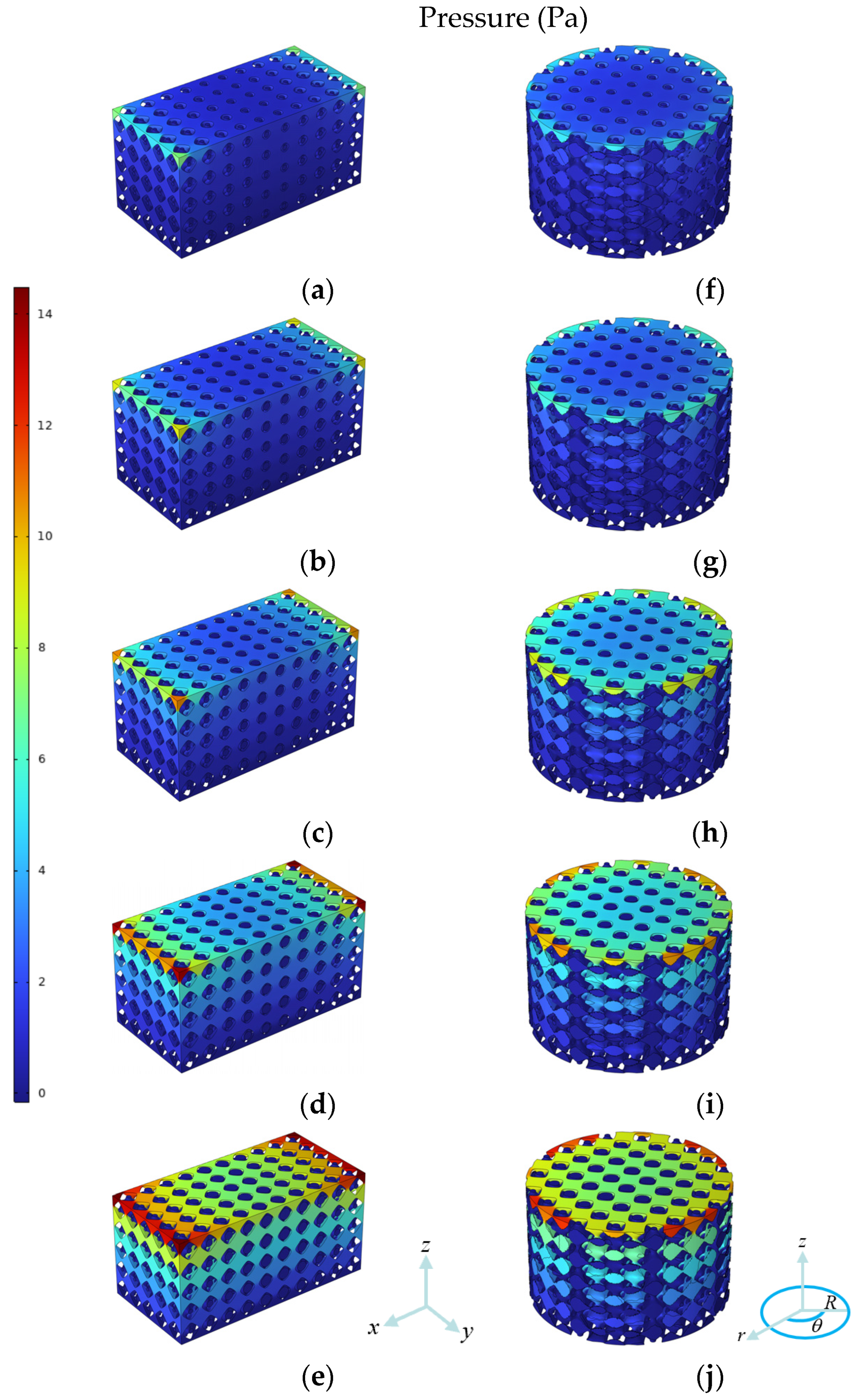
- Comparing five radial dual-layer gradient structures to the axial dual-layer gradient structure counterparts, permeability K is higher and average wall shear stress WSSavg is lower. Moreover, K gradually decreases and WSSavg progressively increases as of the inner layer increases and of the outer layer decreases. Increasing porosity of the inner layer and decreasing porosity of the outer layer raises more pressure gradients along the flow, which leads to decrease in K.
- (5)
- Among all dual-layer gradient designs, the radial dual-layer structure with the lowest porosity of 27.5% in the inner layer and the highest porosity of 42.5% in the outer layer exhibits the highest yield strength of 139.97 MPa, E of 13.01 GPa and K of 10.01 × 10⁻⁹ m2 but the lowest WSSavg of 6.18 mPa. Radial dual-layer gradient structure presents superior mechanical and permeability properties to axial dual-layer gradient structure, and thus has high potential in the bone scaffold application.
- (6)
- The change of inner and outer structures and the corresponding monotonic change results of yield strength, E, K and WSSavg provide design flexibility and insights to match structure and performance for tailored applications.
Supplementary Materials
Author Contributions
Funding
Institutional Review Board Statement
Informed Consent Statement
Data Availability Statement
Acknowledgments
Conflicts of Interest
References
- Gallardo-Calero, I.; Barrera-Ochoa, S.; Manzanares, M.C.; Sallent, A.; Vicente, M.; López-Fernández, A.M.; De Albert, M.; Aguirre, M.; Soldado, F.; Vélez, R. Vascularized periosteal flaps accelerate osteointegration and revascularization of allografts in rats. Clin. Orthop. Relat. Res. 2019, 477, 741–755. [Google Scholar] [CrossRef] [Scilit]
- Chen, H.; Han, Q.; Wang, C.; Liu, Y.; Chen, B.; Wang, J. Porous scaffold design for additive manufacturing in orthopedics: A review. Front. Bioeng. Biotechnol. 2020, 8, 609. [Google Scholar] [CrossRef] [Scilit] [PubMed]
- Guo, W.; Yang, Y.; Liu, C.; Bu, W.; Guo, F.; Li, J.; Wang, E.; Peng, Z.; Mai, H.; You, H.; et al. 3D printed TPMS structural PLA/GO scaffold: Process parameter optimization, porous structure, mechanical and biological properties. J. Mech. Behav. Biomed. Mater. 2023, 142, 105848. [Google Scholar] [CrossRef] [Scilit]
- Abbasi, N.; Hamlet, S.; Love, R.M.; Nguyen, N.T. Porous scaffolds for bone regeneration. J. Sci. Adv. Mater. Devices 2020, 5, 1–9. [Google Scholar] [CrossRef] [Scilit]
- Zhang, X.Y.; Fang, G.; Leeflang, S.; Zadpoor, A.A.; Zhou, J. Topological design, permeability and mechanical behavior of additively manufactured functionally graded porous metallic biomaterials. Acta Biomater. 2019, 84, 437–452. [Google Scholar] [CrossRef] [Scilit]
- Fan, S.; Li, S.; Wu, Y.; Lei, H.; Qin, Y.; Fan, H.; Lin, Y.; Zhou, C. Customized 3D-printed heterogeneous porous titanium scaffolds for bone tissue engineering. MedComm—Biomater. Appl. 2024, 3, e80. [Google Scholar] [CrossRef] [Scilit]
- Huo, H.; Wen, P.; Cao, L.; Li, J.; Yang, J.; Cao, S.; Yang, Y.; Pan, R.; Lin, H.; Wang, Q.; et al. Design and preparation of biomimetic” hard-soft” functional scaffold with gradient irregular pore structure for bone repair. J. Mater. Res. Technol. 2024, 33, 6363–6373. [Google Scholar] [CrossRef] [Scilit]
- Chao, L.; He, Y.; Gu, J.; Xie, D.; Yang, Y.; Shen, L.; Wu, G.; Wang, L.; Tian, Z. Evaluation of compressive and permeability behaviors of trabecular-like porous structure with mixed porosity based on mechanical topology. J. Funct. Biomater. 2023, 14, 28. [Google Scholar] [CrossRef] [Scilit]
- He, S.; Zhu, J.; Jing, Y.; Long, S.; Tang, L.; Cheng, L.; Shi, Z. Effect of 3D-printed porous titanium alloy pore structure on bone regeneration: A review. Coatings 2024, 14, 253. [Google Scholar] [CrossRef] [Scilit]
- Wang, C.; Wu, J.; Liu, L.; Xu, D.; Liu, Y.; Li, S.; Hou, W.; Wang, J.; Chen, X.; Sheng, L.; et al. Improving osteoinduction and osteogenesis of Ti6Al4V alloy porous scaffold by regulating the pore structure. Front. Chem. 2023, 11, 1190630. [Google Scholar] [CrossRef] [Scilit]
- Yan, C.; Hao, L.; Hussein, A.; Young, P. Ti–6Al–4V triply periodic minimal surface structures for bone implants fabricated via selective laser melting. J. Mech. Behav. Biomed. Mater. 2015, 51, 61–73. [Google Scholar] [CrossRef] [Scilit] [PubMed]
- Ataee, A.; Li, Y.; Brandt, M.; Wen, C. Ultrahigh-strength titanium gyroid scaffolds manufactured by selective laser melting (SLM) for bone implant applications. Acta Mater. 2018, 158, 354–368. [Google Scholar] [CrossRef] [Scilit]
- Gepreel, M.A.H.; Niinomi, M. Biocompatibility of Ti-alloys for long-term implantation. J. Mech. Behav. Biomed. Mater. 2013, 20, 407–415. [Google Scholar] [CrossRef] [Scilit]
- Liu, M.; Wang, Y.; Wei, Q.; Ma, X.; Zhang, K.; Li, X.; Bao, C.; Du, B. Topology optimization for reducing stress shielding in cancellous bone scaffold. Comput. Struct. 2023, 288, 107132. [Google Scholar] [CrossRef] [Scilit]
- Safavi, S.; Yu, Y.; Robinson, D.L.; Gray, H.A.; Ackland, D.C.; Lee, P.V. Additively manufactured controlled porous orthopedic joint replacement designs to reduce bone stress shielding: A systematic review. J. Orthop. Surg. Res. 2023, 18, 42. [Google Scholar] [CrossRef] [Scilit]
- Sun, J.; Chen, C.; Zhang, B.; Yao, C.; Zhang, Y. Advances in 3D-printed scaffold technologies for bone defect repair: Materials, biomechanics, and clinical prospects. Biomed. Eng. OnLine 2025, 24, 51. [Google Scholar] [CrossRef] [Scilit]
- Truscello, S.; Kerckhofs, G.; Van Bael, S.; Pyka, G.; Schrooten, J.; Van Oosterwyck, H. Prediction of permeability of regular scaffolds for skeletal tissue engineering: A combined computational and experimental study. Acta Biomater. 2012, 8, 1648–1658. [Google Scholar] [CrossRef] [Scilit]
- Wang, Y.; Tomlins, P.E.; Coombes, A.G.; Rides, M. On the determination of Darcy permeability coefficients for a microporous tissue scaffold. Tissue Eng. Part C Methods 2010, 16, 281–289. [Google Scholar] [CrossRef] [Scilit] [PubMed]
- Ali, D.; Ozalp, M.; Blanquer, S.B.; Onel, S. Permeability and fluid flow-induced wall shear stress in bone scaffolds with TPMS and lattice architectures: A CFD analysis. Eur. J. Mech. B/Fluids 2020, 79, 376–385. [Google Scholar] [CrossRef] [Scilit]
- Jiang, J.; Huo, Y.; Peng, X.; Wu, C.; Zhu, H.; Lyu, Y. Design of novel triply periodic minimal surface (TPMS) bone scaffold with multi-functional pores: Lower stress shielding and higher mass transport capacity. Front. Bioeng. Biotechnol. 2024, 12, 1401899. [Google Scholar] [CrossRef] [Scilit]
- Samuel, S.P. Fluid/Solid Interactions in Cancellous Bone; Cleveland State University: Cleveland, OH, USA, 2004. [Google Scholar]
- Grimm, M.J.; Williams, J.L. Measurements of permeability in human calcaneal trabecular bone. J. Biomech. 1997, 30, 743–745. [Google Scholar] [CrossRef] [Scilit] [PubMed]
- Nauman, E.A.; Fong, K.E.; Keaveny, T.M. Dependence of intertrabecular permeability on flow direction and anatomic site. Ann. Biomed. Eng. 1999, 27, 517–524. [Google Scholar] [CrossRef] [Scilit] [PubMed]
- Kohles, S.S.; Roberts, J.B.; Upton, M.L.; Wilson, C.G.; Bonassar, L.J.; Schlichting, A.L. Direct perfusion measurements of cancellous bone anisotropic permeability. J. Biomech. 2001, 34, 1197–1202. [Google Scholar] [CrossRef] [Scilit] [PubMed]
- Baroud, G.; Falk, R.; Crookshank, M.; Sponagel, S.; Steffen, T. Experimental and theoretical investigation of directional permeability of human vertebral cancellous bone for cement infiltration. J. Biomech. 2004, 37, 189–196. [Google Scholar] [CrossRef] [Scilit] [PubMed]
- Ochia, R.S.; Ching, R.P. Hydraulic resistance and permeability in human lumbar vertebral bodies. J. Biomech. Eng. 2002, 124, 533–537. [Google Scholar] [CrossRef] [Scilit] [PubMed]
- Syahrom, A.; Kadir, M.R.A.; Abdullah, J.; Öchsner, A. Permeability studies of artificial and natural cancellous bone structures. Med. Eng. Phys. 2013, 35, 792–799. [Google Scholar] [CrossRef] [Scilit]
- Bobbert, F.S.L.; Lietaert, K.; Eftekhari, A.A.; Pouran, B.; Ahmadi, S.M.; Weinans, H.; Zadpoor, A.A. Additively manufactured metallic porous biomaterials based on minimal surfaces: A unique combination of topological, mechanical, and mass transport properties. Acta Biomater. 2017, 53, 572–584. [Google Scholar] [CrossRef] [Scilit]
- Liu, Z.; Gong, H.; Gao, J.; Liu, L. Topological design, mechanical responses and mass transport characteristics of high strength-high permeability TPMS-based scaffolds. Int. J. Mech. Sci. 2022, 217, 107023. [Google Scholar] [CrossRef] [Scilit]
- Verma, R.; Kumar, J.; Singh, N.K.; Rai, S.K.; Saxena, K.K.; Xu, J. Design and analysis of biomedical scaffolds using TPMS-based porous structures inspired from additive manufacturing. Coatings 2022, 12, 839. [Google Scholar] [CrossRef] [Scilit]
- Han, G.; Xu, Y.; Huang, G.; Yang, Z.; Ren, C. Compression, permeability and grinding properties of selective laser melted porous metal-bonded diamond grinding tools. J. Manuf. Process. 2025, 136, 177–191. [Google Scholar] [CrossRef] [Scilit]
- Ravichander, B.B.; Jagdale, S.H.; Theeda, S.; Kumar, G. Evaluation of Functionally Graded Lattice Properties of Laser Powder Bed Fused Stainless Steel 316L; University of Texas at Dallas: Richardson, TX, USA, 2022. [Google Scholar]
- Ahmed, N.; Barsoum, I.; Abu Al-Rub, R.K. Numerical investigation on the effect of residual stresses on the effective mechanical properties of 3D-printed TPMS lattices. Metals 2022, 12, 1344. [Google Scholar] [CrossRef] [Scilit]
- Bose, S.; Roy, M.; Bandyopadhyay, A. Recent advances in bone tissue engineering scaffolds. Trends Biotechnol. 2012, 30, 546–554. [Google Scholar] [CrossRef] [Scilit]
- Yin, F.; Ye, X.; Yao, H.; Wei, P.; Wang, X.; Cong, J.; Tong, Y. Surface forming criteria of Ti-6AL-4V titanium alloy under laser loading. Appl. Sci. 2021, 11, 5406. [Google Scholar] [CrossRef] [Scilit]
- Yang, L.; Yan, C.; Fan, H.; Li, Z.; Cai, C.; Chen, P.; Shi, Y.; Yang, S. Investigation on the orientation dependence of elastic response in Gyroid cellular structures. J. Mech. Behav. Biomed. Mater. 2019, 90, 73–85. [Google Scholar] [CrossRef] [Scilit] [PubMed]
- De Rosa, C.A.; Wright, C.J.; Xiong, Y.; Del Giudice, F.; Zhao, F. Graded porous scaffold mediates internal fluidic environment for 3D in vitro mechanobiology. Comput. Biol. Med. 2025, 186, 109674. [Google Scholar] [CrossRef] [Scilit] [PubMed]
- Zhao, F.; van Rietbergen, B.; Ito, K.; Hofmann, S. Flow rates in perfusion bioreactors to maximise mineralisation in bone tissue engineering in vitro. J. Biomech. 2018, 79, 232–237. [Google Scholar] [CrossRef] [Scilit] [PubMed]
- Amendola, A.; Carpentieri, G.; Feo, L.; Fraternali, F. Bending dominated response of layered mechanical metamaterials alternating pentamode lattices and confinement plates. Compos. Struct. 2016, 157, 71–77. [Google Scholar] [CrossRef] [Scilit]
- Ashby, M.F.; Gibson, L.J. Cellular Solids: Structure and Properties; Press Syndicate of the University of Cambridge: Cambridge, UK, 1997; pp. 175–231. [Google Scholar]
- Toosi, S.; Javid-Naderi, M.J.; Tamayol, A.; Ebrahimzadeh, M.H.; Yaghoubian, S.; Mousavi Shaegh, S.A. Additively manufactured porous scaffolds by design for treatment of bone defects. Front. Bioeng. Biotechnol. 2024, 11, 1252636. [Google Scholar] [CrossRef] [Scilit]
- Chen, S.; Liao, K.; Yang, Y.; Chen, H.; Huang, R. Influence of Porosity Gradient Distribution on Mechanical and Biological Properties of Gyroid-Based Zn-2Mg Scaffolds for Bone Tissue Engineering. Materials 2025, 18, 4399. [Google Scholar] [CrossRef] [Scilit]
- Monares, J.A.R.; Soto, L.G. Stress concentration reduction in an axially loaded rectangular bar with an elliptical hole. CULCyT Cult. Científica Tecnológica 2023, 20, 14–21. [Google Scholar] [CrossRef] [Scilit]
- Liu, C.; Ni, R.; Ji, K.; Zhao, A.; Sun, X.; Wu, H. Improving mechanical properties of lattice structures using nonuniform hollow struts. Int. J. Mech. Sci. 2024, 283, 109674. [Google Scholar] [CrossRef] [Scilit]
- Omar, A.M.; Hassan, M.H.; Daskalakis, E.; Ates, G.; Bright, C.J.; Xu, Z.; Powell, E.J.; Mirihanage, W.; Bartolo, P.J.D.S. Geometry-based computational fluid dynamic model for predicting the biological behavior of bone tissue engineering scaffolds. J. Funct. Biomater. 2022, 13, 104. [Google Scholar] [CrossRef] [Scilit]
- Egger, D.; Fischer, M.; Clementi, A.; Ribitsch, V.; Hansmann, J.; Kasper, C. Development and characterization of a parallelizable perfusion bioreactor for 3D cell culture. Bioengineering 2017, 4, 51. [Google Scholar] [CrossRef] [Scilit] [PubMed]
- Zhao, F.; Vaughan, T.J.; McNamara, L.M. Quantification of fluid shear stress in bone tissue engineering scaffolds with spherical and cubical pore architectures. Biomech. Model. Mechanobiol. 2016, 15, 561–577. [Google Scholar] [CrossRef] [Scilit] [PubMed]
- Ali, D.; Sen, S. Finite element analysis of mechanical behavior, permeability and fluid induced wall shear stress of high porosity scaffolds with gyroid and lattice-based architectures. J. Mech. Behav. Biomed. Mater. 2017, 75, 262–270. [Google Scholar] [CrossRef] [Scilit]
- Hou, C.; Liu, Y.; Xu, W.; Lu, X.; Guo, L.; Liu, Y.; Tian, S.; Liu, B.; Zhang, J.; Wen, C. Additive manufacturing of functionally graded porous titanium scaffolds for dental applications. Biomater. Adv. 2022, 139, 213018. [Google Scholar] [CrossRef] [Scilit]
- Gandhi, R.; Salmi, M.; Roy, B.; Pauli, L.; Pagliari, L.; Concli, F. Mechanical and fatigue performance of multidirectional functionally graded Ti6Al4V scaffolds produced via laser powder bed fusion for orthopedic implants. Mater. Des. 2025, 251, 113725. [Google Scholar]
- Xu, W.; Yu, A.; Jiang, Y.; Li, Y.; Zhang, C.; Singh, H.-P.; Liu, B.; Hou, C.; Zhang, Y.; Tian, S.; et al. Gyroid-based functionally graded porous titanium scaffolds for dental application: Design, simulation and characterizations. Mater. Des. 2022, 224, 111300. [Google Scholar] [CrossRef] [Scilit]
- Liao, B.; Xia, R.F.; Li, W.; Lu, D.; Jin, Z.M. 3D-printed Ti6Al4V scaffolds with graded triply periodic minimal surface structure for bone tissue engineering. J. Mater. Eng. Perform. 2021, 30, 4993–5004. [Google Scholar] [CrossRef] [Scilit]
- Liu, F.; Mao, Z.; Zhang, P.; Zhang, D.Z.; Jiang, J.; Ma, Z. Functionally graded porous scaffolds in multiple patterns: New design method, physical and mechanical properties. Mater. Des. 2018, 160, 849–860. [Google Scholar] [CrossRef] [Scilit]
- Timercan, A.; Sheremetyev, V.; Brailovski, V. Mechanical properties and fluid permeability of gyroid and diamond lattice structures for intervertebral devices: Functional requirements and comparative analysis. Sci. Technol. Adv. Mater. 2021, 22, 285–300. [Google Scholar] [CrossRef] [Scilit]
- Wang, S.; Shi, Z.A.; Liu, L.; Zhou, X.; Zhu, L.; Hao, Y. The design of Ti6Al4V Primitive surface structure with symmetrical gradient of pore size in biomimetic bone scaffold. Mater. Des. 2020, 193, 108830. [Google Scholar] [CrossRef] [Scilit]
- Xiao, F.; Ren, G.H.; Pan, C.Y.; Xu, X.; Cheng, K.J.; You, J.; Liu, Y.F. Design and in vitro evaluation of gradient Schwarz Primitive scaffolds with thin-board integration for bone implants. Biomater. Adv. 2025, 214412. [Google Scholar] [CrossRef] [Scilit]
- Yu, A.; Zhang, C.; Xu, W.; Zhang, Y.; Tian, S.; Liu, B.; Zhang, J.; He, A.; Su, B.; Lu, X. Additive manufacturing of multi-morphology graded titanium scaffolds for bone implant applications. J. Mater. Sci. Technol. 2023, 139, 47–58. [Google Scholar] [CrossRef] [Scilit]
- Liu, S.; Feng, J.; Zhang, F.; Jiang, W.; Vasilieva, T.M.; Lu, P.; Lu, S. Parametric design and performance study of continuous gradient triply periodic minimal surface bone scaffold. Int. J. Bioprint. 2024, 10, 2306. [Google Scholar] [CrossRef] [Scilit]
- Santos, J.; Pires, T.; Gouveia, B.P.; Castro, A.P.; Fernandes, P.R. On the permeability of TPMS scaffolds. J. Mech. Behav. Biomed. Mater. 2020, 110, 103932. [Google Scholar] [CrossRef] [Scilit] [PubMed]
- Shen, H.; Song, C.; Yang, L.; Gan, Y. Influence of Cell Size and Porosity on Permeability in Bone Scaffold TPMS Structures. 2024. Available online: https://www.researchsquare.com/article/rs-5174277/v1 (accessed on 24 January 2026).
- Baumer, V.; Isaacson, N.; Kanakamedala, S.; McGee, D.; Kaze, I.; Prawel, D. Comparing ceramic Fischer-Koch-S and gyroid TPMS scaffolds for potential in bone tissue engineering. Front. Bioeng. Biotechnol. 2024, 12, 1410837. [Google Scholar] [CrossRef] [Scilit]
- Lv, Y.; Liu, G.; Wang, B.; Tang, Y.; Lin, Z.; Liu, J.; Wei, G.; Wang, L. Pore strategy design of a novel NiTi-Nb biomedical porous scaffold based on a triply periodic minimal surface. Front. Bioeng. Biotechnol. 2022, 10, 910475. [Google Scholar] [CrossRef] [Scilit]








| Design Case | Inner Structure | Outer Structure | Dual-Layer Structure | |||
|---|---|---|---|---|---|---|
| P Range (%) | (%) | P Range (%) | (%) | P Range (%) | (%) | |
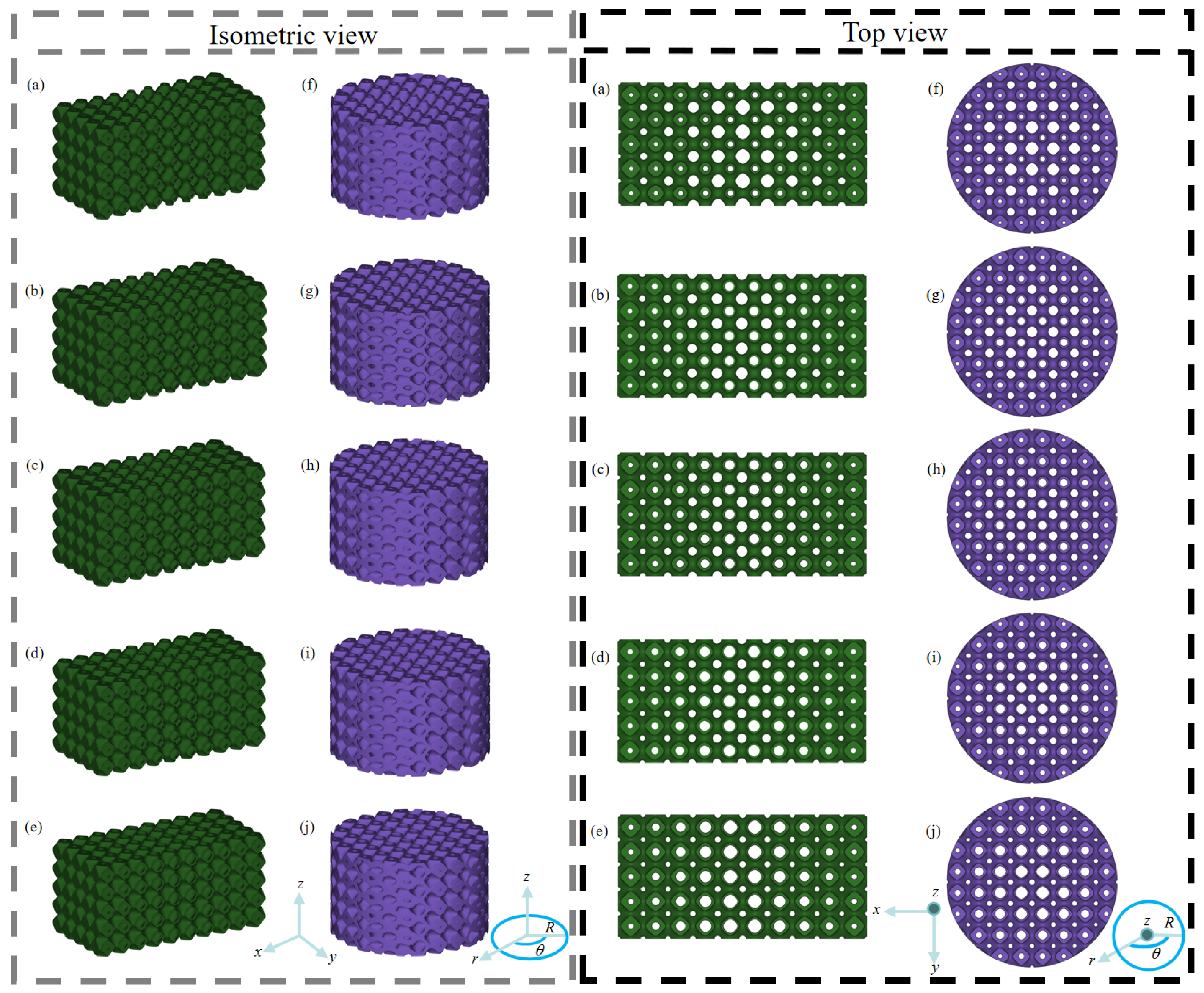
| A1 & R1 | 25–30 | 27.5 | 25–60 | 42.5 | 50–90 | 70 |
| A2 & R2 | 25–40 | 32.5 | 25–50 | 37.5 | 50–90 | 70 |
| A3 & R3 | 25–45 | 35.0 | 25–45 | 35.0 | 50–90 | 70 |
| A4 & R4 | 25–50 | 37.5 | 25–40 | 32.5 | 50–90 | 70 |
| A5 & R5 | 25–60 | 42.5 | 25–30 | 27.5 | 50–90 | 70 |
| Design Case | HS | HD | ASG | ADG | RSG | RDG |
|---|---|---|---|---|---|---|
| E (GPa) | 22.56 | 18.79 | 22.60 | 19.28 | 22.78 | 23.74 |
| Yield strength (MPa) | 148.06 | 185.33 | 149.88 | 186.41 | 152.13 | 196.23 |
| Design Case | A1 | A2 | A3 | A4 | A5 | R1 | R2 | R3 | R4 | R5 |
|---|---|---|---|---|---|---|---|---|---|---|
| E (GPa) | 11.88 | 11.59 | 11.53 | 11.34 | 11.15 | 13.01 | 12.87 | 12.66 | 12.51 | 12.33 |
| Yield strength (MPa) | 127.67 | 123.38 | 120.63 | 114.55 | 112.75 | 139.97 | 136.01 | 134.37 | 131.98 | 131.16 |
Disclaimer/Publisher’s Note: The statements, opinions and data contained in all publications are solely those of the individual author(s) and contributor(s) and not of MDPI and/or the editor(s). MDPI and/or the editor(s) disclaim responsibility for any injury to people or property resulting from any ideas, methods, instructions or products referred to in the content. |
© 2026 by the authors. Licensee MDPI, Basel, Switzerland. This article is an open access article distributed under the terms and conditions of the Creative Commons Attribution (CC BY) license.
Share and Cite
Li, X.; Zhou, D.; Lu, C.; Zhong, M.; Xie, X.; Zhou, L.; Fu, Y. Design and Performance Evaluation of TPMS-Based Dual-Layer Gradient Porous Structures for Bone Scaffolds. J. Funct. Biomater. 2026, 17, 144. https://doi.org/10.3390/jfb17030144
Li X, Zhou D, Lu C, Zhong M, Xie X, Zhou L, Fu Y. Design and Performance Evaluation of TPMS-Based Dual-Layer Gradient Porous Structures for Bone Scaffolds. Journal of Functional Biomaterials. 2026; 17(3):144. https://doi.org/10.3390/jfb17030144
Chicago/Turabian StyleLi, Xiaobing, Donglai Zhou, Cuiyuan Lu, Min Zhong, Xianda Xie, Linyu Zhou, and Yanghan Fu. 2026. "Design and Performance Evaluation of TPMS-Based Dual-Layer Gradient Porous Structures for Bone Scaffolds" Journal of Functional Biomaterials 17, no. 3: 144. https://doi.org/10.3390/jfb17030144
APA StyleLi, X., Zhou, D., Lu, C., Zhong, M., Xie, X., Zhou, L., & Fu, Y. (2026). Design and Performance Evaluation of TPMS-Based Dual-Layer Gradient Porous Structures for Bone Scaffolds. Journal of Functional Biomaterials, 17(3), 144. https://doi.org/10.3390/jfb17030144