Explicit and Implicit Emotion Processing: The Role of Spatial Frequencies in a Case Study of Right Capsulo–Thalamic Damage

 ,
,  , ,
, ,
Abstract
1. Introduction
1.1. Spatial Frequencies and Emotion Processing
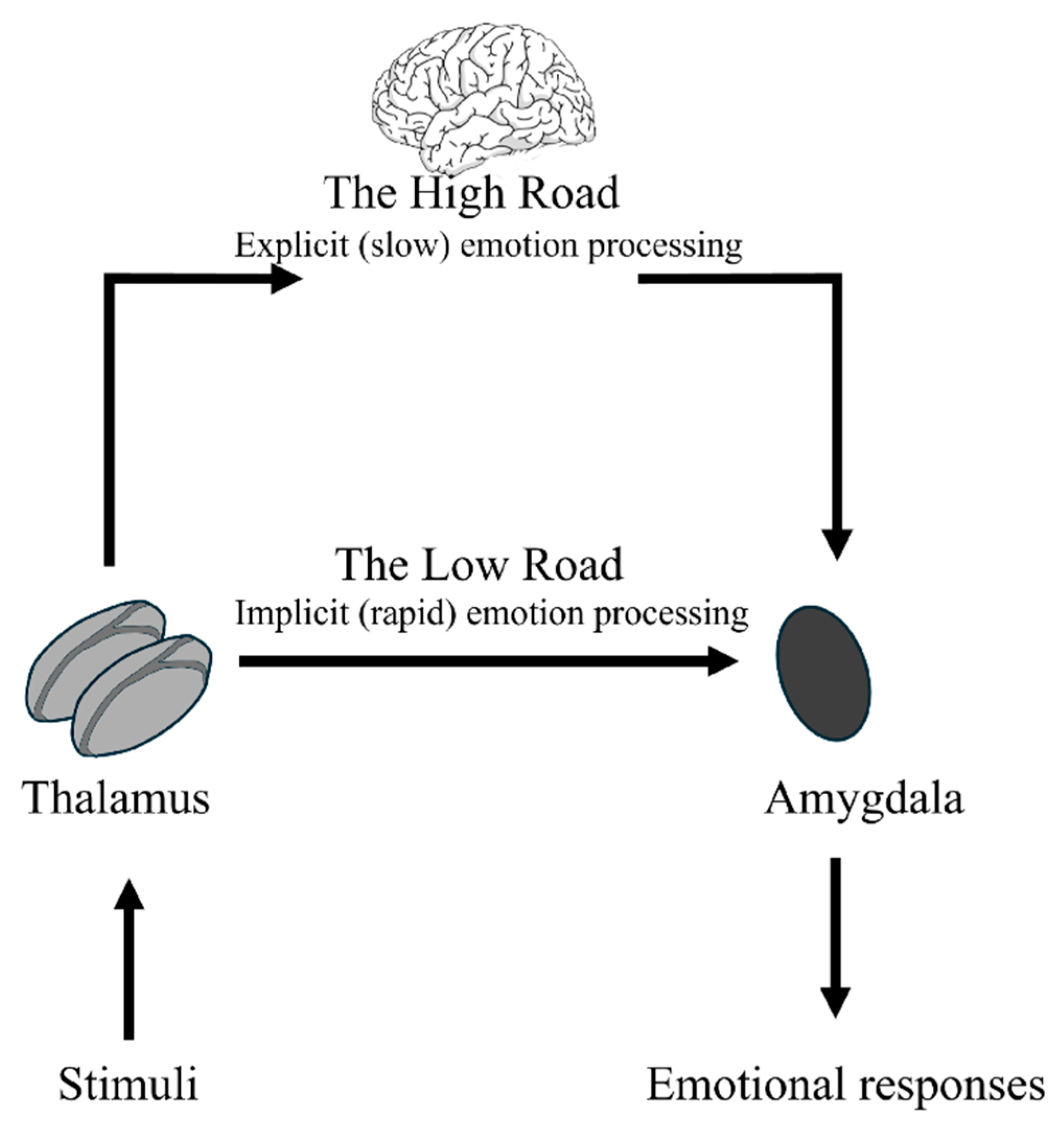
1.2. The Dual-Route Model and Modern Perspectives
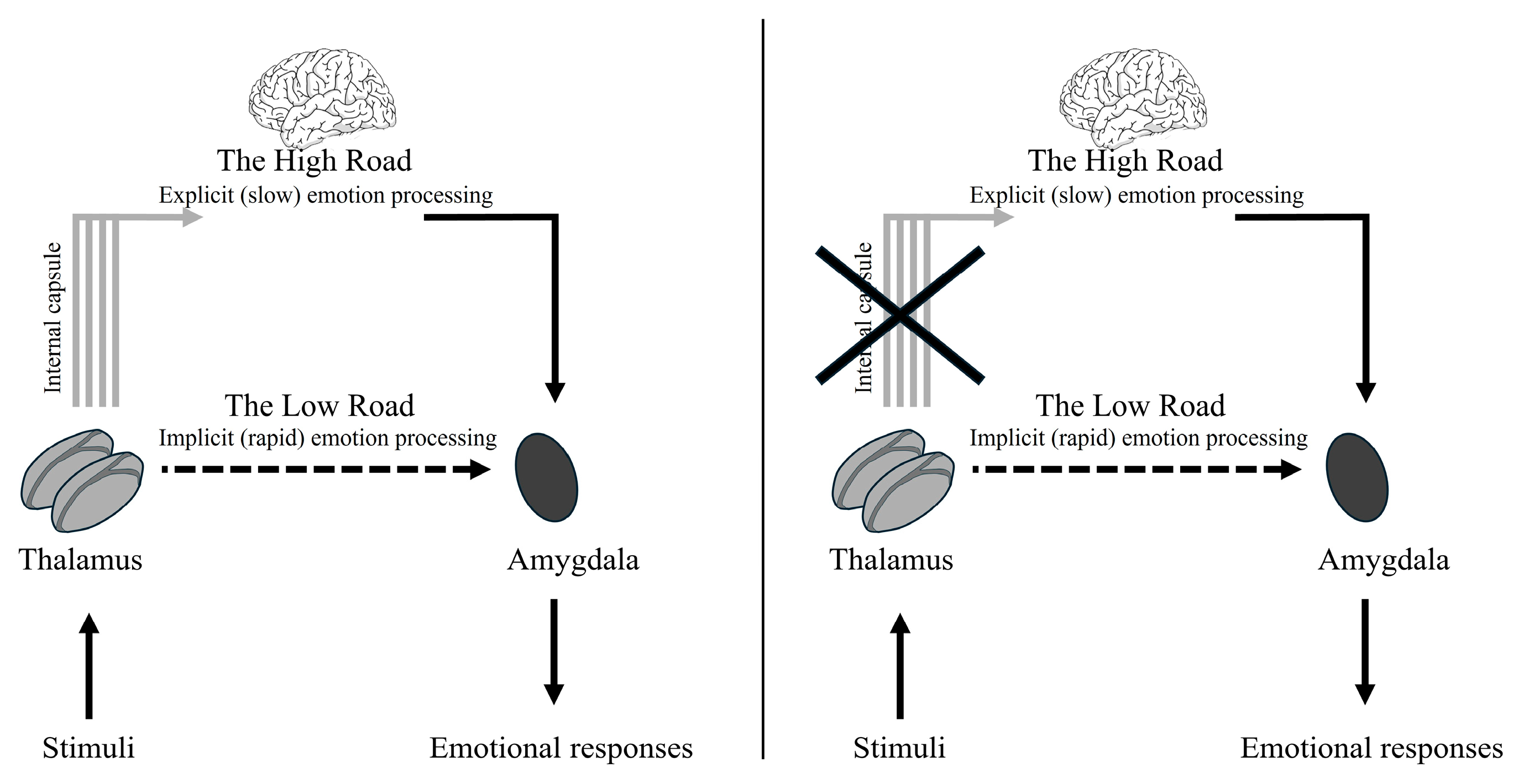
1.3. A Neuroanatomical Focus: The Internal Capsule of the Thalamus
1.4. Hemispheric Specialization of Emotion Processing
1.5. The Present Study
- To assess the involvement of the thalamic internal capsule in emotion processing at different levels of awareness. We utilized the patient’s lesion as a natural model for the disruption of thalamo–cortical connectivity to complete this objective.
- To verify hemispheric specialization for processing spatial frequencies, with a focus on local (HSFs) versus global (LSFs) information. Specifically, to verify how a right-sided subcortical disconnection affects hemispheric specialization for spatial frequencies.
- To investigate hemispheric specialization for emotion processing. This was accomplished by comparing the patient’s performance across visual fields against the baseline of the control group.
2. Materials and Methods
2.1. Participants
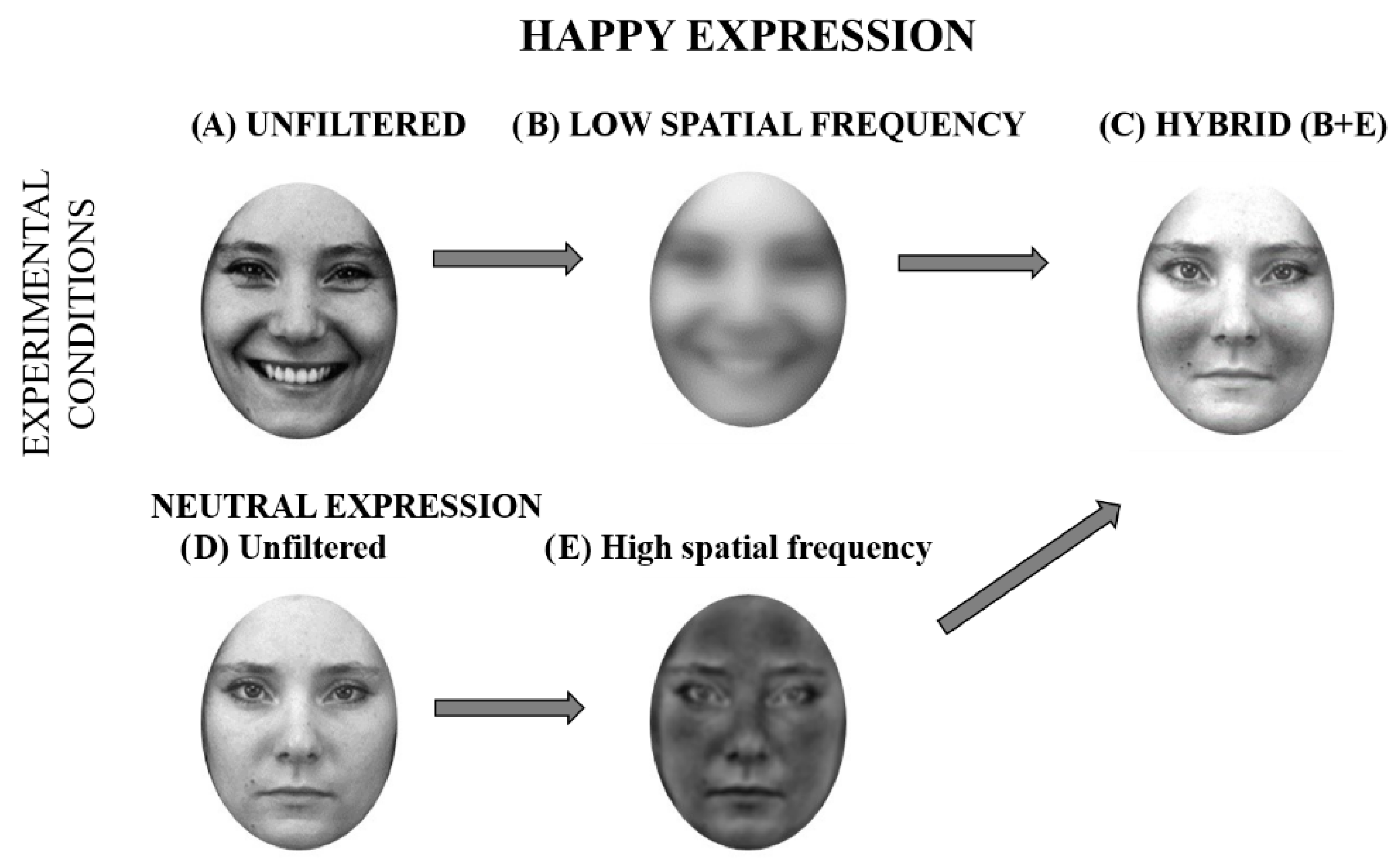
2.2. Stimuli
2.3. Procedure
3. Results
3.1. Control Group
3.2. Case Study Patient
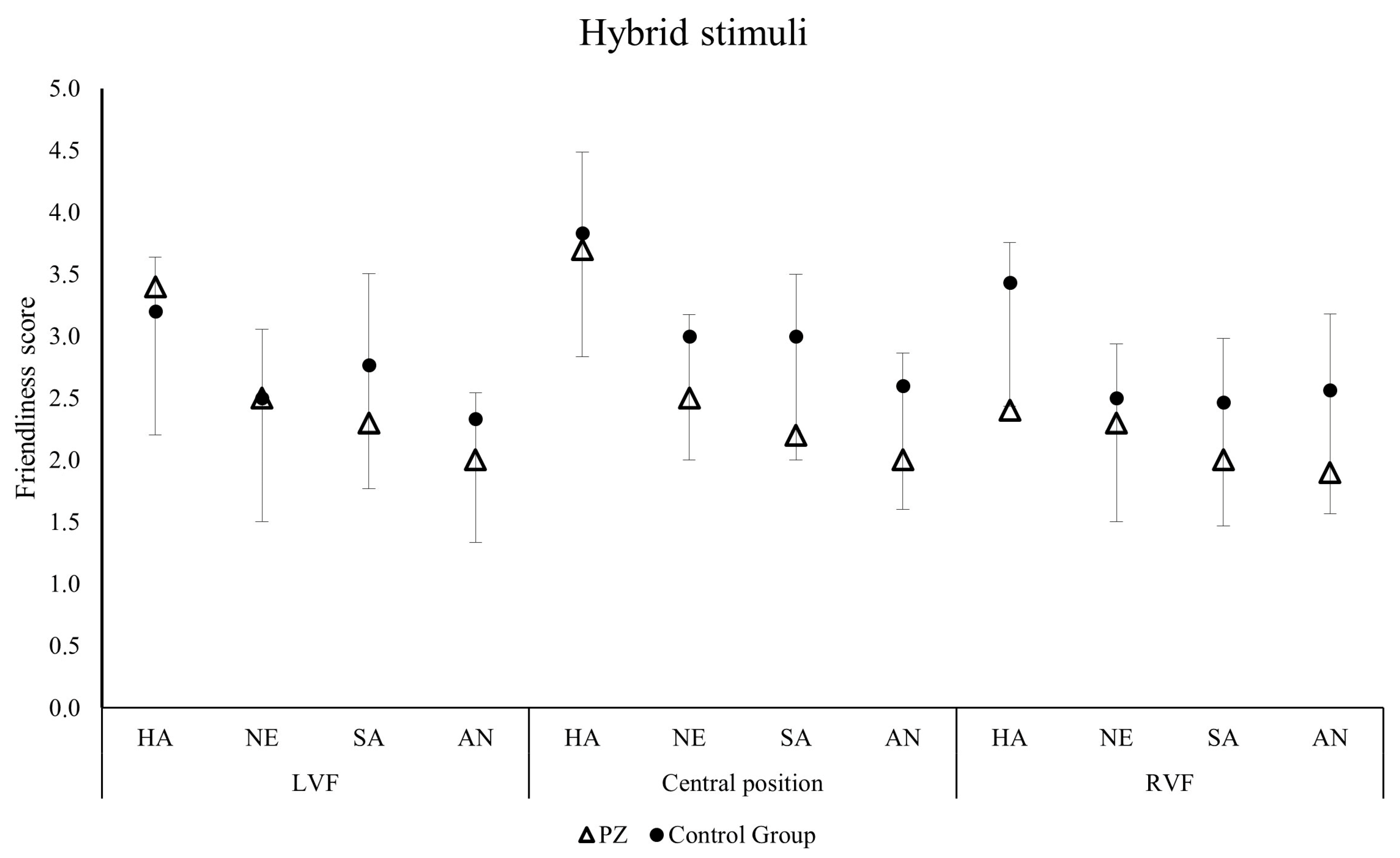
3.3. Case Study Patient Versus the Control Group
4. Discussion
4.1. Direct Comparison and Clinical Evidence
4.2. Hemispheric Specialization and Aging
5. Limitations and Future Directions
6. Conclusions
Author Contributions
Funding

Institutional Review Board Statement
Informed Consent Statement
Data Availability Statement
Conflicts of Interest
Abbreviations
| LSF | Low Spatial Frequency |
| HSF | High spatial frequency |
| LVF | Left visual field |
| RVF | Right visual field |
| Ha | Happy faces |
| Ne | Neutral faces |
| Sa | Sad faces |
| An | Angry faces |
References
- Adolphs, R., Tranel, D., Damasio, H., & Damasio, A. (1994). Impaired recognition of emotion in facial expressions following bilateral damage to the human amygdala. Nature, 372(6507), 669. [Google Scholar] [CrossRef] [PubMed]
- Axelrod, V., Bar, M., & Rees, G. (2015). Exploring the unconscious using faces. Trends in Cognitive Sciences, 19(1), 35–45. [Google Scholar] [CrossRef] [PubMed]
- Bar, M., & Neta, M. (2006). Humans prefer curved visual objects. Psychological Science, 17(8), 645–648. [Google Scholar] [CrossRef] [PubMed]
- Beck, A. T., Steer, R. A., Ball, R., & Ranieri, W. F. (1996). Comparison of beck depression inventories-IA and-II in psychiatric outpatients. Journal of Personality Assessment, 67(3), 588–597. [Google Scholar] [CrossRef] [PubMed]
- Benowitz, L. I., Bear, D. M., Rosenthal, R., Mesulam, M. M., Zaidel, E., & Sperry, R. W. (1983). Hemispheric specialization in nonverbal communication. Cortex, 19(1), 5–11. [Google Scholar] [CrossRef]
- Bradshaw, J. L., & Nettleton, N. C. (1981). The nature of hemispheric specialization in man. Behavioral and Brain Sciences, 4(1), 51–63. [Google Scholar] [CrossRef]
- Brooks, S. J., Savov, V., Allzén, E., Benedict, C., Fredriksson, R., & Schiöth, H. B. (2012). Exposure to subliminal arousing stimuli induces robust activation in the amygdala, hippocampus, anterior cingulate, insular cortex and primary visual cortex: A systematic meta-analysis of fMRI studies. NeuroImage, 59(3), 2962–2973. [Google Scholar] [CrossRef]
- Cabeza, R. (2002). Hemispheric asymmetry reduction in older adults: The HAROLD model. Psychology and Aging, 17(1), 85. [Google Scholar] [CrossRef]
- Campbell, F. W., & Robson, J. G. (1968). Application of Fourier analysis to the visibility of gratings. The Journal of Physiology, 197(3), 551. [Google Scholar] [CrossRef]
- Celeghin, A., Mazzoni, N., & Mattavelli, G. (2020). Explicit and implicit emotion processing: Neural basis, perceptual and cognitive mechanisms. Frontiers in Psychology, 11, 584469. [Google Scholar] [CrossRef]
- Cheung, C. C., Lee, T. M., Yip, J. T., King, K. E., & Li, L. S. (2006). The differential effects of thalamus and basal ganglia on facial emotion recognition. Brain and Cognition, 61(3), 262–268. [Google Scholar] [CrossRef]
- Christmas, D., Eljamel, M. S., Butler, S., Hazari, H., MacVicar, R., Steele, J. D., Livingstone, A., & Matthews, K. (2011). Long term outcome of thermal anterior capsulotomy for chronic, treatment refractory depression. Journal of Neurology, Neurosurgery & Psychiatry, 82(6), 594–600. [Google Scholar] [CrossRef]
- Coenen, V. A., Panksepp, J., Hurwitz, T. A., Urbach, H., & Mädler, B. (2012). Human medial forebrain bundle (MFB) and anterior thalamic radiation (ATR): Imaging of two major subcortical pathways and the dynamic balance of opposite affects in understanding depression. The Journal of Neuropsychiatry and Clinical Neurosciences, 24(2), 223–236. [Google Scholar] [CrossRef]
- Crawford, J. R., & Garthwaite, P. H. (2002). Investigation of the single case in neuropsychology: Confidence limits on the abnormality of test scores and test score differences. Neuropsychologia, 40(8), 1196–1208. [Google Scholar] [CrossRef] [PubMed]
- Cunningham, W. A., Johnson, M. K., Raye, C. L., Gatenby, J. C., Gore, J. C., & Banaji, M. R. (2004). Separable neural components in the processing of black and white faces. Psychological Science, 15(12), 806–813. [Google Scholar] [CrossRef]
- Darwin, C. (1872). The expression of emotions in man and animals. Philosophical Library. [Google Scholar]
- Davidson, R. J., Mednick, D., Moss, E., Saron, C., & Schaffer, C. E. (1987). Ratings of emotion in faces are influenced by the visual field to which stimuli are presented. Brain and Cognition, 6(4), 403–411. [Google Scholar] [CrossRef]
- de Gelder, B., van Honk, J., & Tamietto, M. (2011). Emotion in the brain: Of low roads, high roads and roads less travelled. Nature Reviews Neuroscience, 12(7), 425. [Google Scholar] [CrossRef]
- Diano, M., Celeghin, A., Bagnis, A., & Tamietto, M. (2017). Amygdala response to emotional stimuli without awareness: Facts and interpretations. Frontiers in Psychology, 7, 234677. [Google Scholar] [CrossRef] [PubMed]
- Ehrlichman, H. (1987). Hemispheric asymmetry and positive-negative affect. In Duality and unity of the brain (pp. 194–206). Palgrave Macmillan. [Google Scholar] [CrossRef]
- Emos, M. C., & Agarwal, S. (2019). Neuroanatomy, internal capsule. In StatPearls [Internet]. StatPearls Publishing. [Google Scholar]
- Fimm, B., Zahn, R., Mull, M., Kemeny, S., Buchwald, F., Block, F., & Schwarz, M. (2001). Asymmetries of visual attention after circumscribed subcortical vascular lesions. Journal of Neurology, Neurosurgery and Psychiatry, 71(5), 652–657. [Google Scholar] [CrossRef]
- Gable, P. A., Poole, B. D., & Cook, M. S. (2013). Asymmetrical hemisphere activation enhances global–local processing. Brain and Cognition, 83(3), 337–341. [Google Scholar] [CrossRef]
- Gainotti, G. (1972). Emotional behavior and hemispheric side of the lesion. Cortex, 8(1), 41–55. [Google Scholar] [CrossRef]
- Gainotti, G. (2005). Emotions, unconscious processes, and the right hemisphere. Neuropsychoanalysis, 7(1), 71–81. [Google Scholar] [CrossRef]
- Gainotti, G. (2012). Unconscious processing of emotions and the right hemisphere. Neuropsychologia, 50(2), 205–218. [Google Scholar] [CrossRef]
- Garvert, M. M., Friston, K. J., Dolan, R. J., & Garrido, M. I. (2014). Subcortical amygdala pathways enable rapid face processing. NeuroImage, 102, 309–316. [Google Scholar] [CrossRef] [PubMed]
- Goffaux, V., Hault, B., Michel, C., Vuong, Q. C., & Rossion, B. (2005). The respective role of low and high spatial frequencies in supporting configural and featural processing of faces. Perception, 34(1), 77–86. [Google Scholar] [CrossRef]
- Hrybouski, S., Aghamohammadi-Sereshki, A., Madan, C. R., Shafer, A. T., Baron, C. A., Seres, P., Beaulieu, C., Olsen, F., & Malykhin, N. V. (2016). Amygdala subnuclei response and connectivity during emotional processing. Neuroimage, 133, 98–110. [Google Scholar] [CrossRef]
- Johnson, M. H. (2005). Subcortical face processing. Nature Reviews Neuroscience, 6(10), 766. [Google Scholar] [CrossRef]
- Juruena, M. F., Giampietro, V. P., Smith, S. D., Surguladze, S. A., Dalton, J. A., Benson, P. J., Cleare, A. J., & Fu, C. H. (2010). Amygdala activation to masked happy facial expressions. Journal of the International Neuropsychological Society, 16(2), 383–387. [Google Scholar] [CrossRef]
- Laeng, B., Profeti, I., Saether, L., Adolfsdottir, S., Lundervold, A. J., Vangberg, T., Øvervoll, M., Johnse, S. H., & Waterloo, K. (2010). Invisible expressions evoke core impressions. Emotion, 10(4), 573. [Google Scholar] [CrossRef] [PubMed]
- Laeng, B., Sæther, L., Holmlund, T., Wang, C. E. A., Waterloo, K., Eisemann, M., & Halvorsen, M. (2013). Invisible emotional expressions influence social judgments and pupillary responses of both depressed and non-depressed individuals. Frontiers in Psychology, 4, 291. [Google Scholar] [CrossRef]
- Landis, T., Assal, G., & Perret, E. (1979). Opposite cerebral hemispheric superiorities for visual associative processing of emotional facial expressions and objects. Nature, 278(5706), 739. [Google Scholar] [CrossRef]
- LeDoux, J. (1996). The emotional brain: The mysterious underpinnings of emotional life. Touchstone Press. [Google Scholar]
- LeDoux, J. (2003). The emotional brain, fear, and the amygdala. Cellular and Molecular Neurobiology, 23(4–5), 727–738. [Google Scholar] [CrossRef]
- LeDoux, J. (2012). Rethinking the emotional brain. Neuron, 73(4), 653–676. [Google Scholar] [CrossRef]
- Le Grand, R. L., Mondloch, C. J., Maurer, D., & Brent, H. P. (2004). Impairment in holistic face processing following early visual deprivation. Psychological Science, 15(11), 762–768. [Google Scholar] [CrossRef]
- Levy, J., Heller, W., Banich, M. T., & Burton, L. A. (1983). Asymmetry of perception in free viewing of chimeric faces. Brain and Cognition, 2(4), 404–419. [Google Scholar] [CrossRef]
- Ley, R. G., & Bryden, M. P. (1979). Hemispheric differences in processing emotions and faces. Brain and Language, 7(1), 127–138. [Google Scholar] [CrossRef]
- Loughead, J., Gur, R. C., Elliott, M., & Gur, R. E. (2008). Neural circuitry for accurate identification of facial emotions. Brain Research, 1194, 37–44. [Google Scholar] [CrossRef] [PubMed]
- Lundqvist, D., Flykt, A., & Öhman, A. (1998). The Karolinska directed emotional faces (KDEF). CD ROM from Department of Clinical Neuroscience, Psychology Section, Karolinska Institutet, 91, 630. [Google Scholar] [CrossRef]
- Machado, A., Haber, S., Sears, N., Greenberg, B., Malone, D., & Rezai, A. (2009). Functional topography of the ventral striatum and anterior limb of the internal capsule determined by electrical stimulation of awake patients. Clinical Neurophysiology, 120(11), 1941–1948. [Google Scholar] [CrossRef] [PubMed]
- McFadyen, J., Mattingley, J. B., & Garrido, M. I. (2019). An afferent white matter pathway from the pulvinar to the amygdala facilitates fear recognition. Elife, 8, e40766. [Google Scholar] [CrossRef]
- Mermillod, M., Droit-Volet, S., Devaux, D., Schaefer, A., & Vermeulen, N. (2010). Are coarse scales sufficient for fast detection of visual threat? Psychological Science, 21(10), 1429–1437. [Google Scholar] [CrossRef]
- Méndez-Bértolo, C., Moratti, S., Toledano, R., Lopez-Sosa, F., Martínez-Alvarez, R., Mah, Y. H., Vuilleumier, P., Gil-Nagel, A., & Strange, B. A. (2016). A fast pathway for fear in human amygdala. Nature Neuroscience, 19(8), 1041–1049. [Google Scholar] [CrossRef]
- Mithani, K., Davison, B., Meng, Y., & Lipsman, N. (2020). The anterior limb of the internal capsule: Anatomy, function, and dysfunction. Behavioural Brain Research, 387, 112588. [Google Scholar] [CrossRef]
- Narumoto, J., Yamada, H., Iidaka, T., Sadato, N., Fukui, K., Itoh, H., & Yonekura, Y. (2000). Brain regions involved in verbal or non-verbal aspects of facial emotion recognition. Neuroreport, 11(11), 2571–2574. [Google Scholar] [CrossRef] [PubMed]
- Niogi, S. N., Mukherjee, P., Ghajar, J., & McCandliss, B. D. (2010). Individual differences in distinct components of attention are linked to anatomical variations in distinct white matter tracts. Frontiers in Neuroanatomy, 4, 2. [Google Scholar] [CrossRef] [PubMed]
- Okun, M. S., Mann, G., Foote, K. D., Shapira, N. A., Bowers, D., Springer, U., Knight, W., Martin, P., & Goodman, W. K. (2007). Deep brain stimulation in the internal capsule and nucleus accumbens region: Responses observed during active and sham programming. Journal of Neurology, Neurosurgery & Psychiatry, 78(3), 310–314. [Google Scholar] [CrossRef]
- Oldfield, R. C. (1971). Edinburgh handedness inventory. Journal of Abnormal Psychology. [Google Scholar] [CrossRef]
- Öhman, A., & Mineka, S. (2001). Fears, phobias, and preparedness: Toward an evolved module of fear and fear learning. Psychological Review, 108(3), 483. [Google Scholar] [CrossRef]
- Papez, J. W. (1937). A proposed mechanism of emotion. Archives of Neurology & Psychiatry, 38(4), 725–743. [Google Scholar]
- Pauli, W. M., O’Reilly, R. C., Yarkoni, T., & Wager, T. D. (2016). Regional specialization within the human striatum for diverse psychological functions. Proceedings of the National Academy of Sciences, 113(7), 1907–1912. [Google Scholar] [CrossRef]
- Pessoa, L., & Adolphs, R. (2010). Emotion processing and the amygdala: From a ‘low road’ to ‘many roads’ of evaluating biological significance. Nature Reviews Neuroscience, 11(11), 773–782. [Google Scholar] [CrossRef]
- Pessoa, L., McKenna, M., Gutierrez, E., & Ungerleider, L. G. (2002). Neural processing of emotional faces requires attention. Proceedings of the National Academy of Sciences, 99(17), 11458–11463. [Google Scholar] [CrossRef] [PubMed]
- Peyrin, C., Chauvin, A., Chokron, S., & Marendaz, C. (2003). Hemispheric specialization for spatial frequency processing in the analysis of natural scenes. Brain and Cognition, 53(2), 278–282. [Google Scholar] [CrossRef]
- Prete, G., Capotosto, P., Zappasodi, F., Laeng, L., & Tommasi, L. (2015a). The cerebral correlates of subliminal emotions: An electroencephalographic study with emotional hybrid faces. European Journal of Neuroscience, 42, 2952–2962. [Google Scholar] [CrossRef]
- Prete, G., Ceccato, I., Bartolini, E., Di Crosta, A., La Malva, P., Palumbo, R., Laeng, B., Tommasi, L., Mammarella, N., & Di Domenico, A. (2024). Detecting implicit and explicit facial emotions at different ages. European Journal of Ageing, 21(1), 8. [Google Scholar] [CrossRef]
- Prete, G., D’Ascenzo, S., Laeng, B., Fabri, M., Foschi, N., & Tommasi, L. (2015b). Conscious and unconscious processing of facial expressions: Evidence from two split-brain patients. Journal of Neuropsychology, 9(1), 45–63. [Google Scholar] [CrossRef]
- Prete, G., Laeng, B., & Tommasi, L. (2014). Lateralized hybrid faces: Evidence of a valence-specific bias in the processing of implicit emotions. Laterality: Asymmetries of Body, Brain and Cognition, 19(4), 439–454. [Google Scholar] [CrossRef]
- Prete, G., Laeng, B., & Tommasi, L. (2018). Modulating adaptation to emotional faces by spatial frequency filtering. Psychological Research, 82, 310–323. [Google Scholar] [CrossRef]
- Prete, G., & Tommasi, L. (2018). Split-brain patients: Visual biases for faces. Progress in Brain Research, 238, 271–291. [Google Scholar] [CrossRef] [PubMed]
- Proverbio, A. M., & Zani, A. (2021). Hemispheric asymmetry in visual processing: An ERP study on spatial frequency gratings. Symmetry, 13(2), 180. [Google Scholar] [CrossRef]
- Proverbio, A. M., Zani, A., & Avella, C. (1997). Hemispheric asymmetries for spatial frequency discrimination in a selective attention task. Brain and Cognition, 34(2), 311–320. [Google Scholar] [CrossRef]
- Raz, N. (2000). Aging of the brain and its impact on cognitive performance: Integration of structural and functional findings. In F. I. M. Craik, & T. A. Salthouse (Eds.), The handbook of aging and cognition (2nd ed., pp. 1–90). Lawrence Erlbaum Associates Publishers. [Google Scholar]
- Safadi, Z., Grisot, G., Jbabdi, S., Behrens, T. E., Heilbronner, S. R., McLaughlin, N. C., Mandeville, J., Versace, A., Phillips, M. L., Lehman, J. F., Yendiki, A., & Yendiki, A. (2018). Functional segmentation of the anterior limb of the internal capsule: Linking white matter abnormalities to specific connections. Journal of Neuroscience, 38(8), 2106–2117. [Google Scholar] [CrossRef]
- Schyns, P. G., & Oliva, A. (1999). Dr. Angry and Mr. Smile: When categorization flexibly modifies the perception of faces in rapid visual presentations. Cognition, 69(3), 243–265. [Google Scholar] [CrossRef]
- Seligman, M. E. (1971). Phobias and preparedness. Behavior Therapy, 2(3), 307–320. [Google Scholar] [CrossRef]
- Sergent, J. (1982). The cerebral balance of power: Confrontation or cooperation? Journal of Experimental Psychology: Human Perception and Performance, 8(2), 253. [Google Scholar] [CrossRef]
- Sergent, J. (1985). Influence of task and input factors on hemispheric involvement in face processing. Journal of Experimental Psychology: Human Perception and Performance, 11(6), 846. [Google Scholar] [CrossRef]
- Smith, F. W., & Schyns, P. G. (2009). Smile through your fear and sadness: Transmitting and identifying facial expression signals over a range of viewing distances. Psychological Science, 20(10), 1202–1208. [Google Scholar] [CrossRef] [PubMed]
- Sprengelmeyer, R., Young, A. W., Calder, A. J., Karnat, A., Lange, H., Hömberg, V., Perrett, D. I., & Rowland, D. (1996). Loss of disgust: Perception of faces and emotions in Huntington’s disease. Brain, 119(5), 1647–1665. [Google Scholar] [CrossRef]
- Sullivan, E. V., Zahr, N. M., Rohlfing, T., & Pfefferbaum, A. (2010). Fiber tracking functionally distinct components of the internal capsule. Neuropsychologia, 48(14), 4155–4163. [Google Scholar] [CrossRef] [PubMed]
- Tamietto, M., & De Gelder, B. (2010). Neural bases of the non-conscious perception of emotional signals. Nature Reviews Neuroscience, 11(10), 697–709. [Google Scholar] [CrossRef] [PubMed]
- Tippett, D. C., Godin, B. R., Oishi, K., Oishi, K., Davis, C., Gomez, Y., Trupe, L. A., Kim, E. H., & Hillis, A. E. (2018, February). Impaired recognition of emotional faces after stroke involving right amygdala or insula. In Seminars in speech and language (Vol. 39, pp. 87–100). Thieme Medical Publishers. [Google Scholar] [CrossRef]
- Tommasi, V., Prete, G., & Tommasi, L. (2021). The role of low spatial frequencies in facial emotion processing: A study on anorthoscopic perception. Visual Cognition, 29(8), 519–536. [Google Scholar] [CrossRef]
- Vuilleumier, P., Armony, J. L., Driver, J., & Dolan, R. J. (2003). Distinct spatial frequency sensitivities for processing faces and emotional expressions. Nature Neuroscience, 6(6), 624. [Google Scholar] [CrossRef] [PubMed]
- Wang, Y., Luo, L., Chen, G., Luan, G., Wang, X., Wang, Q., & Fang, F. (2023). Rapid processing of invisible fearful faces in the human amygdala. Journal of Neuroscience, 43(8), 1405–1413. [Google Scholar] [CrossRef]
- Wang, Y., Xu, Q., Luo, J., Hu, M., & Zuo, C. (2019). Effects of age and sex on subcortical volumes. Frontiers in Aging Neuroscience, 11, 259. [Google Scholar] [CrossRef]
- Willenbockel, V., Lepore, F., Nguyen, D. K., Bouthillier, A., & Gosselin, F. (2012). Spatial frequency tuning during the conscious and non-conscious perception of emotional facial expressions–an intracranial ERP study. Frontiers in Psychology, 3, 237. [Google Scholar] [CrossRef]
- Yip, J. T., Leung, K. K., Li, L. S., & Lee, T. M. (2004). The role of sub-cortical brain structures in emotion recognition. Brain Injury, 18(12), 1209–1217. [Google Scholar] [CrossRef]
- Zald, D. H. (2003). The human amygdala and the emotional evaluation of sensory stimuli. Brain Research Reviews, 41(1), 88–123. [Google Scholar] [CrossRef] [PubMed]




| 1_HA | 1_NE | 1_SA | 1_AN | 2_HA | 2_NE | 2_SA | 2_AN | 3_HA | 3_NE | 3_SA | 3_AN | ||
|---|---|---|---|---|---|---|---|---|---|---|---|---|---|
| pp_1 | HY | 2.9 | 2.6 | 2.5 | 2.1 | 3.2 | 3.1 | 3.00 | 2.4 | 3.3 | 2.8 | 2.6 | 3.1 |
| pp_2 | Hy | 3.7 | 300 | 3.6 | 2.4 | 3.8 | 3.1 | 3.5 | 2.9 | 3.8 | 2.7 | 2.9 | 2.7 |
| pp_3 | Hy | 3.00 | 1.9 | 2.2 | 2.5 | 4.5 | 2.8 | 2.5 | 2.5 | 3.2 | 2.00 | 1.9 | 1.9 |
| pp_1 | Nf | 3.9 | 2.2 | 1.4 | 1.5 | 4.2 | 3.00 | 1.8 | 1.2 | 3.6 | 2.7 | 1.7 | 1.5 |
| pp_2 | Nf | 5.00 | 2.8 | 1.9 | 1.4 | 4.5 | 2.9 | 2.1 | 1.2 | 4.5 | 2.3 | 1.8 | 1.6 |
| pp_3 | Nf | 5.00 | 1.8 | 2.00 | 1.8 | 5.00 | 2.6 | 2.1 | 1.1 | 5.00 | 2.1 | 1.9 | 1.2 |
| Hy | Mean | 3.2 | 2.5 | 2.77 | 2.33 | 3.83 | 3.00 | 3.00 | 2.6 | 3.43 | 2.5 | 2.47 | 2.57 |
| Hy | S.D. | 0.44 | 0.56 | 0.74 | 0.21 | 0.65 | 0.17 | 0.5 | 0.26 | 0.32 | 0.44 | 0.51 | 0.61 |
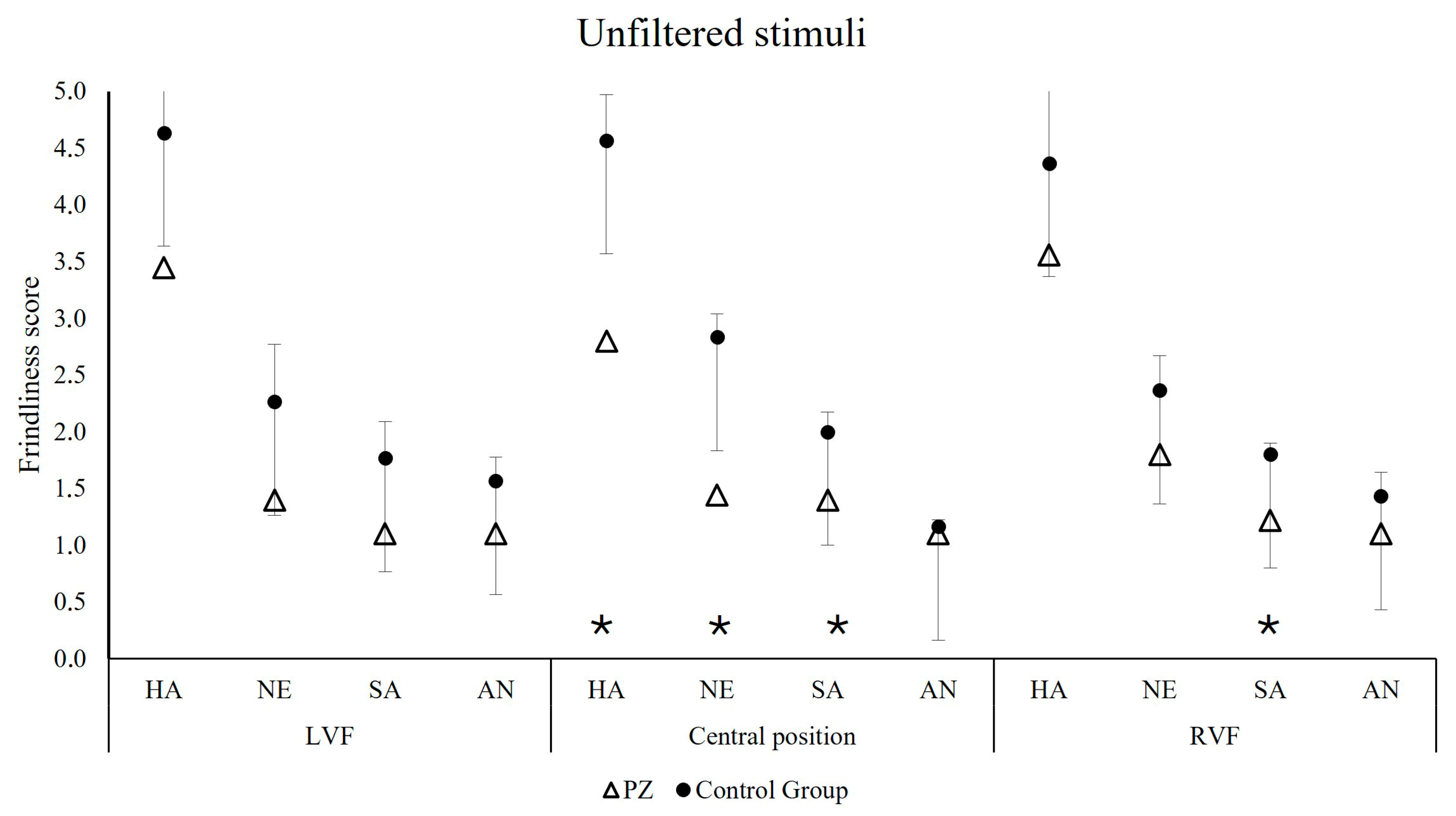
| Nf | Mean | 4.63 | 2.27 | 1.77 | 1.57 | 4.57 | 2.83 | 2.00 | 1.17 | 4.37 | 2.37 | 1.8 | 1.43 |
| Nf | S.D. | 0.64 | 0.5 | 0.32 | 0.21 | 0.4 | 0.21 | 0.17 | 0.06 | 0.71 | 0.31 | 0.1 | 0.21 |
| Filtering | Position | Emotion | t Value | One-Tailed Probability | 95% Lower | 95% Upper | Effect Size (Z-cc) | From | To |
|---|---|---|---|---|---|---|---|---|---|
| Hybrid | LVF | HA | 0.394 | 0.366 | 21.35% | 94.68% | 0.455 | −0.794 | 1.615 |
| NE | 0.000 | 0.500 | 12.89% | 87.10% | 0.000 | −1.132 | 1.132 | ||
| SA | −0.550 | 0.319 | 3.21% | 75.46% | −0.635 | −1.851 | 0.689 | ||
| AN | −1.361 | 0.153 | 0.04% | 61.14% | −1.571 | −3.346 | 0.283 | ||
| Central position | HA | −0.173 | 0.439 | 9.27% | 83.35% | −0.200 | −1.324 | 0.968 | |
| NE | −2.547 | 0.062 | 0.00% | 45.18% | −2.941 | −5.833 | −0.121 | ||
| SA | −1.386 | 0.150 | 0.03% | 60.76% | −1.600 | −3.395 | 0.273 | ||
| AN | −1.925 | 0.097 | 0.00% | 52.97% | −2.308 | −4.664 | 0.050 | ||
| RVF | HA | −2.788 | 0.054 | 0.00% | 42.46% | −3.219 | −6.351 | −0.190 | |
| NE | −0.394 | 0.366 | 5.32% | 78.65% | −0.455 | −1.615 | 0.794 | ||
| SA | −0.798 | 0.254 | 1.16% | 70.70% | −0.922 | −2.270 | 0.545 | ||
| AN | −0.951 | 0.221 | 0.54% | 67.94% | −1.098 | −2.549 | 0.466 | ||
| Unfiltered | LVF | HA | −1.610 | 0.124 | 0.01% | 57.38% | −1.859 | −3.853 | 0.186 |
| NE | −1.507 | 0.135 | 0.014% | 58.91% | −1.740 | −3.641 | 0.225 | ||
| SA | −1.813 | 0.106 | 0.00% | 54.49% | −2.094 | −4.275 | 0.113 | ||
| AN | −1.938 | 0.096 | 0.00% | 52.79% | −2.238 | −4.537 | 0.070 | ||
| Central position | HA | −3.832 | 0.031 | 0.00% | 32.19% | −4.425 | −8.623 | −0.426 | |
| NE | −5.732 | 0.014 | 0.00% | 18.60% | −6.619 | −12.769 | −0.893 | ||
| SA | −3.057 | 0.046 | 0.00% | 39.59% | −3.529 | −6.933 | −0.264 | ||
| AN | −1.010 | 0.209 | 0.39% | 66.91% | −1.167 | −2.660 | 0.437 | ||
| RVF | HA | −0.988 | 0.214 | 0.44% | 67.29% | −1.141 | −2.618 | 0.448 | |
| NE | −1.592 | 0.126 | 0.01% | 57.64% | −1.839 | −3.817 | 0.193 | ||
| SA | −5.023 | 0.019 | 0.00% | 23.00% | −5.800 | −11.235 | −0.739 | ||
| AN | −1.429 | 0.145 | 0.025% | 60.09% | −1.571 | −3.346 | 0.283 |
Disclaimer/Publisher’s Note: The statements, opinions and data contained in all publications are solely those of the individual author(s) and contributor(s) and not of MDPI and/or the editor(s). MDPI and/or the editor(s) disclaim responsibility for any injury to people or property resulting from any ideas, methods, instructions or products referred to in the content. |
© 2026 by the authors. Licensee MDPI, Basel, Switzerland. This article is an open access article distributed under the terms and conditions of the Creative Commons Attribution (CC BY) license.
Share and Cite
Tommasi, V.; Padulo, C.; Prete, G.; Leo, A.; Franco, A.; De Francesco, T.; Viva, M.R.; Tommasi, L.; Lucci, G.; Marinelli, C.V. Explicit and Implicit Emotion Processing: The Role of Spatial Frequencies in a Case Study of Right Capsulo–Thalamic Damage. J. Intell. 2026, 14, 60. https://doi.org/10.3390/jintelligence14040060
Tommasi V, Padulo C, Prete G, Leo A, Franco A, De Francesco T, Viva MR, Tommasi L, Lucci G, Marinelli CV. Explicit and Implicit Emotion Processing: The Role of Spatial Frequencies in a Case Study of Right Capsulo–Thalamic Damage. Journal of Intelligence. 2026; 14(4):60. https://doi.org/10.3390/jintelligence14040060
Chicago/Turabian StyleTommasi, Vincenza, Caterina Padulo, Giulia Prete, Antonio Leo, Alessandra Franco, Tatiana De Francesco, Maria Rosaria Viva, Luca Tommasi, Giuliana Lucci, and Chiara Valeria Marinelli. 2026. "Explicit and Implicit Emotion Processing: The Role of Spatial Frequencies in a Case Study of Right Capsulo–Thalamic Damage" Journal of Intelligence 14, no. 4: 60. https://doi.org/10.3390/jintelligence14040060
APA StyleTommasi, V., Padulo, C., Prete, G., Leo, A., Franco, A., De Francesco, T., Viva, M. R., Tommasi, L., Lucci, G., & Marinelli, C. V. (2026). Explicit and Implicit Emotion Processing: The Role of Spatial Frequencies in a Case Study of Right Capsulo–Thalamic Damage. Journal of Intelligence, 14(4), 60. https://doi.org/10.3390/jintelligence14040060