


Abstract
This study explores the SENSE pedagogical model, which integrates learning diaries (internal “sensors”) and adaptive teacher responses (external “sensors”). The model uses a detection–interpretation–response (DIR) process to support metacognitive awareness during open inquiry-based learning (IBL) in high-school biology. This quasi-experimental mixed-methods study included 373 students from 54 public schools, divided into an experimental intervention group (n = 179) that used the SENSE model and a control group (n = 194) that engaged in open IBL without structured support. Quantitative metacognitive awareness inventories and qualitative diary analyses were utilized. Qualitative data indicated that the integrated SENSE intervention (comprising repeated diary reflections and adaptive teacher responses) was associated with strategic planning, autonomous learning, and effective scaffold fading. The findings underscore the SENSE model’s effectiveness in enhancing metacognitive regulation. Integrating dynamic internal reflections with context-sensitive external scaffolding establishes a vital bidirectional feedback loop, demonstrating how adaptive support mechanisms can successfully sustain learners in demanding open inquiry environments.
1. Introduction
A central goal of contemporary education systems is to prepare students for an era of rapid technological change by equipping them with 21st-century competencies, including critical thinking, problem-solving, and the capacity for self-directed learning (Hilton & Pellegrino, 2012; OECD & CCR, 2024; Reimers, 2020). Inquiry-based learning (IBL), and specifically open IBL, is widely regarded as a pedagogical approach that is perfectly aligned with these demands (Banchi & Bell, 2008; Zion & Mendelovici, 2012). However, while open IBL fosters active knowledge construction, it also imposes considerable cognitive and regulatory demands on students, requiring them to navigate sustained uncertainty and high decision loads. Success in these environments depends heavily on self-regulated learning (SRL) and, crucially, on metacognitive regulation (Dah et al., 2024; Engudar et al., 2020; Şen et al., 2015).
Despite consensus on the importance of metacognitive scaffolding, a significant research and practical gap remains: First, operational specifications for how teachers can systematically identify and respond to learners’ evolving metacognitive needs across different inquiry phases remain limited. Second, a persistent disconnect exists between learner-generated process data (such as learning diaries or reflections) and ongoing instructional decision-making, leaving valuable data underutilized.
Taken together, these gaps point to the pressing need for pedagogical frameworks that move beyond static or one-time interventions. To address this, the current study introduces the SENSE model—a continuous, adaptive, and data-informed pedagogical framework. By conceptualizing learning diaries as “internal sensors” and adaptive teacher responses as “external sensors,” this study explores how a systematic detection–interpretation–response (DIR) process can enhance students’ metacognitive awareness and sustain learners in demanding open inquiry environments.
2. Literature Review
2.1. Teaching and Learning in the 21st Century: The Importance of Open Inquiry-Based Learning
A central goal of contemporary education systems is to prepare students for adult life by equipping them with the knowledge, skills, and competencies required to function as responsible and productive members of society (Hilton & Pellegrino, 2012; OECD & CCR, 2024; Reimers, 2020). In the context of rapid technological change and ubiquitous access to information, this goal increasingly emphasizes the development of autonomous learners capable of adapting to evolving demands (Carretero et al., 2017; Dede, 2010). Accordingly, there is a broad consensus that students should develop 21st-century competencies, including critical thinking, problem-solving, creativity, communication, and collaboration, alongside capacities for lifelong, self-directed learning (OECD, 2018, 2019). However, a persistent challenge lies not only in fostering these competencies but in supporting learners as they navigate complex and uncertain learning environments.
Inquiry-based learning (IBL) is widely regarded as a pedagogical approach aligned with these demands. Grounded in constructivist principles, IBL engages learners in active knowledge construction through interaction with scientific phenomena and has been associated with gains in engagement, achievement, and scientific reasoning (Huang, 2022; Kesner Baruch et al., 2026). Within this framework, open IBL represents the most demanding form of IBL, as learners assume substantial epistemic and procedural responsibility: formulating questions, designing inquiry processes, generating and analyzing data, and interpreting findings (Banchi & Bell, 2008; Zion & Mendelovici, 2012). While this structure supports core aims of 21st-century education, it also imposes considerable cognitive and regulatory demands, including sustained uncertainty, high decision load, and prolonged coordination of inquiry processes over time (Dah et al., 2024; Engudar et al., 2020; Hmelo-Silver et al., 2007; Kirschner et al., 2006; Sadeh & Zion, 2009).
These demands point to a key implication: success in open IBL depends not only on domain knowledge and inquiry skills but also on learners’ capacity to regulate their learning over time. In this context, self-regulated learning (SRL) has been increasingly recognized as a central mechanism for managing complexity, uncertainty, and adaptive demands within inquiry settings (Şen et al., 2015).
2.2. Self-Regulated Learning and Metacognition in Open Inquiry Contexts
Because SRL is a central theoretical framework for understanding how learners actively manage their learning, it is typically conceptualized as a dynamic, cyclical process in which cognitive, metacognitive, and motivational components interact through planning, monitoring, and evaluation over time (Pintrich, 2000; Zimmerman, 2000). Recent scholarship further emphasizes that SRL is situated and context-dependent, unfolding in response to changing environmental conditions rather than operating solely as an internal process (Azevedo, 2014; Järvenoja et al., 2015).
Within this framework, metacognition constitutes a core regulatory mechanism. In open IBL, where learners are required to define goals, plan procedures, manage resources, and respond to uncertainty, the effective enactment of metacognitive regulation is especially critical (Brenner, 2022; Dignath & Büttner, 2008).
Although cognitive, metacognitive, and motivational components may operate in an integrated manner, many learners struggle to enact these regulatory processes consistently in open-ended settings (El-Adl & Alkharusi, 2020; Hadwin et al., 2017; Van Uum et al., 2017).
Metacognition refers to awareness and control of one’s thinking processes. According to Schraw and Dennison (1994), it includes knowledge of cognition (declarative, procedural, and conditional knowledge) and regulation of cognition (e.g., planning, monitoring, and evaluation). These processes are dynamic and shaped through ongoing interaction with the learning environment and with others (Järvelä et al., 2016). Importantly, metacognitive regulation does not reliably emerge spontaneously, particularly in complex open IBL contexts (Dignath & Veenman, 2021; Zion & Sadeh, 2010).
Reflective tools used at defined checkpoints (e.g., learning diaries) can support learners in externalizing their thinking, creating cognitive distance, and reorganizing their strategies; at the same time, such externalizations can provide teachers with actionable evidence for instructional adaptation.
2.3. Pedagogical Support for the Development of Metacognition
To address students’ difficulties in spontaneously activating metacognitive strategies, educators typically employ direct or indirect instructional approaches. Direct instruction involves the explicit teaching of strategies such as planning, monitoring, and evaluation, alongside modeling their use. In contrast, indirect approaches focus on designing complex learning environments that inherently encourage the activation of these processes (Moradoff et al., 2021). The literature suggests that integrating both approaches is essential: while direct instruction provides the necessary cognitive tools, meaningful enactment requires authentic contexts (Ortube et al., 2024). Despite this consensus, a critical gap remains in practice: support is often general and static, failing to adapt to learners’ evolving metacognitive needs at different stages of the inquiry process (Dignath & Büttner, 2008).
2.4. Adaptive Metacognitive Support: Existing Approaches and Their Limitations in Open Inquiry Environments
Recognition that learning and regulatory processes are dynamic has led to the development of adaptive metacognitive scaffolding models (Azevedo & Hadwin, 2005). These approaches are generally designed to align pedagogical support with learners’ evolving needs and can be grouped into two broad categories: computer-based support systems, and teacher-led support (Belland et al., 2017). Although both have demonstrated value, their implementation in open IBL contexts involves notable operational challenges.
The first approach relies on computerized learning environments that use learner trace data and algorithmic models to provide prompts or scaffolds (Winne, 2022). Such systems are often effective in structured or semi-structured settings; however, their applicability in open IBL may be constrained by nonlinearity, shifting goals, and high variability in learner trajectories. Under these conditions, strong algorithmic structuring may reduce learner autonomy (Roll et al., 2012).
The second approach emphasizes the teacher as a central mediator of adaptive support (Ruiz-Primo, 2011). This approach preserves the flexibility needed for open IBL, but it also places substantial cognitive and managerial demands on teachers. A key challenge is that metacognitive processes are largely covert: learners’ planning, monitoring, and evaluation are not directly observable in ongoing activity. In complex classroom settings, this creates a diagnostic bottleneck, making it difficult to identify evolving learner needs and deliver timely, targeted support. Without systematic access to interpretable process data, instructional responses may remain broad or reactive rather than context-sensitive (Munshi et al., 2023).
Taken together, these limitations indicate the need for an operational framework that can systematically capture learner-generated metacognitive signals and translate them into phase-appropriate instructional action.
2.5. Research Rationale: Toward an Adaptive and Operational Framework for Supporting Metacognition
First, despite growing attention to teachers’ metacognitive support practices (Zepeda et al., 2019), there remains a limited operational specification about how teachers identify and respond to learners’ evolving metacognitive needs across inquiry phases, rather than at isolated points in time.
Second, a persistent disconnect remains between learner-generated process data (e.g., learning diaries and reflections) and instructional decision-making, with such data often underutilized as actionable evidence for ongoing pedagogy (Heaysman & Kramarski, 2022).
Third, research provides limited process-oriented accounts of how instructional support develops and adapts, and how these adaptations relate to changes in learners’ metacognitive regulation.
Taken together, these gaps point to the need for pedagogical frameworks that move beyond static or one-time interventions. Such frameworks should conceptualize support as a continuous, adaptive, and data-informed process that enables the systematic elicitation of learners’ metacognitive signals, their pedagogical interpretation, and the delivery of context-sensitive and timely instructional responses.
2.6. The Sense Model: A System of Pedagogical Sensors
The SENSE model introduces the concept of pedagogical “sensors”, a metaphorical framework describing a system of tools and practices designed to detect and interpret students’ metacognitive states throughout the inquiry process, enabling adaptive support. These sensors operate on two complementary levels, internal and external, forming a dynamic support system driven by the DIR process.
The SENSE model is theoretically grounded in established frameworks of metacognition and self-regulated learning, yet it distinctly extends them from descriptive models into an operational pedagogical system. While Schraw and Dennison (1994) comprehensively classify metacognitive components (knowledge and regulation), their framework remains largely structural. Similarly, foundational SRL models (Pintrich, 2000; Winne, 2017) conceptualize regulation primarily as a cyclical, internal cognitive process. Furthermore, prominent models of feedback (Butler & Winne, 1995; Nicol & Macfarlane-Dick, 2006) emphasize the learner’s internal processing of external information but offer less concrete guidance on how teachers systematically capture and respond to these processes during complex, open-ended tasks.
The SENSE model’s unique contribution is integrating these theoretical foundations into a concrete, bidirectional pedagogical mechanism that bridges internal cognition and instructional action. It addresses what prior models often missed: the “diagnostic bottleneck” in real-time classroom settings. Through the DIR loop, the SENSE model operationalizes covert metacognitive components (Schraw & Dennison, 1994) into observable signals via the internal sensor (diaries). These signals explicitly trigger context-sensitive scaffolding (the external sensor). Thus, the SENSE model supplements and deepens prior SRL frameworks by transforming generalized adaptive support into a highly specific, continuous feedback loop driven by learner-generated evidence.
2.6.1. The Internal Sensor (Learning Diaries)
The learning diary functions as an active internal sensor, prompting students to externalize planning, monitoring, debugging, process management, and self-evaluation processes as observable signals. Through consistent use, the diary enables the students to systematically monitor and direct their inquiry trajectory.
2.6.2. The External Sensor (Adaptive Teacher Response)
The adaptive teacher response serves as the external sensor. Teachers continually detect the signals generated in the diaries, interpret them, and provide context-sensitive pedagogical responses, ranging from targeted scaffolding to support fading.
2.6.3. The Feedback Loop
The interaction between these sensors creates a continuous feedback loop and a bidirectional flow: students’ signals inform instructional decisions, while the teachers’ adaptive responses shape the evolution of students’ metacognition. Ultimately, this model positions metacognitive regulation as a shared pedagogical responsibility, bridging theory and classroom practice to promote metacognitive insight within complex learning environments.
Figure 1 presents the SENSE model as a dynamic system of “pedagogical sensors,” operating through the continuous interaction between two core components: the internal sensor (students’ learning diaries) and the external sensor (adaptive teacher response).
Figure 1.
The SENSE Model: A dynamic system of pedagogical sensors.
On the left-hand side of the figure, the internal sensor is represented by learning diaries. This component reflects students’ metacognitive processes, including planning, monitoring, debugging, process management, and self-evaluation. These processes are externalized through the diaries and become observable “signals”.
These signals are directed toward the external sensor, which is represented on the right-hand side of the figure as the adaptive teacher response. This component operates through the DIR process, whereby the teacher identifies the signals, interprets them, and provides context-sensitive pedagogical responses, ranging from targeted scaffolding to gradual fading of support.
The bidirectional arrows between the two components represent a continuous feedback loop, in which information flows from students to the teacher (via signals) and back to students (via instructional responses). This loop highlights that teaching and learning are not linear processes but, rather, dynamic and interactive.
At the bottom of the figure, the outcome of this process is emphasized: the advancement of learning and the development of metacognitive thinking. The model thus positions metacognitive regulation as a shared pedagogical responsibility that emerges through ongoing interaction between learners and teachers in open inquiry environments.
2.7. Research Questions and Hypothesis
- Confirmatory Research Question and Hypothesis
Q1. How does the SENSE-model-based pedagogical support facilitate the development of students’ metacognitive awareness during open IBL?
We hypothesize that the support provided by the SENSE model will contribute to higher gains in students’ metacognitive awareness within the intervention group, as it fosters an empowering learning environment that encourages the development of higher levels of metacognitive skills.
- Exploratory Research Questions
Q2. How do learning diaries externalize students’ metacognitive regulation of cognition by sensors (planning, process management, monitoring, debugging, and evaluation)?
Q3. What forms of the DIR process are observed, and how are these associated with subsequent changes in students’ metacognitive regulation?
3. Methodology
3.1. Participants
The sample consisted of 373 biology students from heterogeneous classes in 54 public schools. All participants shared a similar socioeconomic background and had been majoring in biology for two years (11th and 12th grades). To examine differences between the intervention and control groups during open IBL, the students were divided into two research groups: a SENSE group (N = 179) and a control group (CG) (N = 194). The study was approved by the Institutional Ethics Committee (Approval No. 22) and the Chief Scientist’s Office of the Israeli Ministry of Education (Approval No. 13359). Active parental consent and student assent were obtained for all participants. Confidentiality was strictly maintained, and students were assured that their participation or withdrawal would not affect their academic grades. The study was approved by the Chief Scientist’s Office of the country.
3.2. Research Design
This study employed an explanatory sequential quasi-experimental mixed-methods design integrating quantitative and qualitative data (Creswell & Clark, 2017). The primary quantitative phase assessed overall effectiveness, while the supportive qualitative phase was designed to explain, illustrate, and corroborate the quantitative outcomes. Group allocation occurred at the teacher level within the framework of mandatory national professional development (PD). All participating teachers are required by the educational system to attend annual PD courses. Teachers enrolled in these courses without prior knowledge of the specific pedagogical frameworks that would be introduced. Those who participated in the PD track covering the adaptive metacognitive support framework formed the intervention group, alongside their students. Teachers completing standard biology PD formed the control group. While the teachers were blind to the specific model, minimizing direct self-selection bias, the non-random assignment inherent in field settings required us to assess baseline comparability strictly and control for initial differences statistically. An intervention group implemented the SENSE sensors model during the inquiry process; the control group completed the same open inquiry-based learning project without the structured support. Quantitative measures assessed changes in metacognitive awareness, while qualitative tools examined students’ and teachers’ perceptions of the learning process and the contribution of the pedagogical sensors.
3.3. Educational Context: The Open Inquiry-Based Learning Project Framework
The open inquiry-based learning project engages students in autonomous scientific investigation as part of their biology curriculum and is grounded in the principles of open IBL. Biology majors are required to complete a final examination that includes this IBL component. This open inquiry-based learning project accounts for 30% of the final grade. Its primary goal is to provide students with the opportunity to experience the full cycle of the scientific inquiry process and to deepen their knowledge in a biological topic of personal interest. Participants are expected to apply a wide range of skills acquired during their studies, including inquiry-based methodologies, technical laboratory techniques, database research, and scientific reporting and writing. Emphasizing autonomy, the project encourages students to take full responsibility for their learning and to function as autonomous learners, while also fostering teamwork that enables them to explore the benefits and challenges of collaborative inquiry.
The central outcome of the open inquiry-based learning project is a written inquiry report that presents the inquiry question, methodology, findings, and discussion. A distinctive feature of the project is that students are further required to formulate an additional inquiry question based on the results of their initial investigation, and to design a follow-up study accordingly. This requirement underscores the iterative and evolving nature of scientific inquiry, while promoting critical thinking, deepening students’ understanding of biology-based open inquiry processes, and cultivating essential metacognitive skills. In the present study, all students—both in the intervention and control groups—completed the open inquiry-based learning project as part of the official biology curriculum.
The students’ teachers participating in the study had experience in preparing students for the biology matriculation exam and had participated at least once in preparing students for the open inquiry-based learning project.
3.4. The Intervention Program: The Sense Model
The intervention was designed to support students’ metacognitive regulation of cognition during open IBL by integrating two complementary pedagogical sensors: an internal sensor (learning diaries) and an external sensor (teacher adaptive support).
3.4.1. Learning Diaries as Internal Pedagogical Sensors for Supporting Metacognition
Learning diaries served as the primary internal sensors within the SENSE model. By encouraging structured self-reflection, the diaries helped students cope with challenges, recognize personal strengths, and develop a broader perspective on their own learning journey. These prompts guided students in goal-setting, task management, progress reflection, and evaluation of personal development and collaboration. Table 1 presents the metacognitive regulation prompts that were embedded in the learning diary, organized according to the following five components: planning, process management, monitoring, debugging, and evaluation.
Table 1.
Metacognitive regulation of cognition prompts in the learning diary.
Students in the intervention group were asked to complete the learning diary three times at different stages of the inquiry process, as an integral component of their learning experience: after the main experimental planning phase, after conducting the experiment and organizing the results, and after writing the experimental report. In contrast, students in the control group completed the diary only once, at the end of the process, for comparative purposes. In comparison, both groups engaged in some form of reflection, while the structured, repeated use of diaries in the intervention group aimed to support the continuous development of metacognitive skills throughout the learning cycle. Students in the intervention group completed the diary three times, to align with the SENSE model’s core principle of continuous, real-time scaffolding across the shifting phases of inquiry. In contrast, the control group completed the diary only once, at the end of the process, strictly for comparative measurement purposes, establishing a baseline of retrospective reflection without exposure to the continuous intervention. For teachers, the diaries functioned as internal pedagogical sensors, offering valuable insights into students’ thinking processes, learning progress, and emerging challenges. This made it possible to monitor and adapt instruction in ways that aligned with learners’ evolving needs and levels of regulation.
3.4.2. Teacher Training for Adaptive Metacognitive Support
To prepare teachers for this role, educators in the intervention group participated in a comprehensive 30 h training program. A central component of the training involved a simulation-based workshop using structured scenarios with professional actors. These scenarios were designed to authentically represent common pedagogical challenges in inquiry environments, such as difficulties in planning, unexpected experimental outcomes, and challenges in constructing research frameworks. Each scenario followed a systematic process that included the presentation of a case study outlining a realistic educational dilemma, a role-playing simulation in which a volunteer teacher interacted with a professional actor portraying a student while being observed by peers, and a video-assisted debriefing and analysis session. During this debriefing, participants critically examined the strategies employed in order to identify alternative approaches and refine their pedagogical support practices.
This rigorous, standardized training program was specifically designed to establish high implementation fidelity, ensuring that the participating teachers consistently detected and interpreted metacognitive signals across different classrooms.
3.4.3. Classroom Implementation: The Detection–Interpretation–Response Process
The simulation-based training program equipped teachers with the skills necessary to implement the DIR process in the classroom, grounded in evidence derived from students’ learning diaries. Teachers systematically reviewed the diaries to identify evidence of difficulties in planning, limited monitoring, or challenges in debugging. Drawing on diagnostic skills developed during training, they interpreted the metacognitive needs reflected in these entries and provided context-sensitive mediation. These responses ranged from targeted scaffolding, such as guiding questions and metacognitive prompts, to the gradual fading of support as students demonstrated greater metacognitive regulation. This interaction created an iterative feedback process in which learner-generated evidence informed instructional adaptation, and instructional responses, in turn, were associated with developments in students’ metacognitive regulation.
The intervention integrated two complementary components: structured elicitation of student-generated metacognitive signals (via learning diaries), and teacher capacity to interpret and respond to these signals (via professional development). Given this integrated design, the findings should be understood as reflecting the functioning of the system as a whole, rather than the isolated effect of a single component.
3.5. Data Collection and Analysis
This study adopted a mixed-methods design, integrating quantitative and qualitative analyses to examine how the SENSE model during open IBL was associated with changes in students’ metacognitive awareness.
The Metacognitive Awareness Inventory (MAI), developed by Schraw and Dennison (1994), is a widely used self-report instrument that assesses individuals’ metacognitive awareness. For the purposes of this study, the original MAI was translated into Hebrew and adapted specifically for high-school biology students. To ensure linguistic accuracy and conceptual equivalence, the translation process included consultations with translation experts and science educators. The MAI evaluates two key components of metacognition: knowledge of cognition, and regulation of cognition. Knowledge of cognition includes declarative knowledge (understanding facts and information), procedural knowledge (knowing how to perform tasks), and conditional knowledge (understanding when and why to apply certain strategies). For example, a declarative knowledge item might state “I am aware of the different learning strategies that I can use”. In contrast, a procedural knowledge item could ask “I know how to apply different strategies when studying.” Regulation of cognition refers to skills such as planning (organizing and preparing for learning tasks), monitoring (tracking one’s cognitive processes during learning), and evaluation (assessing the effectiveness of one’s strategies and adjusting them). An example of a monitoring item might be “I check my understanding as I learn new information,” and a planning item might state “I plan how to approach a task before starting it.” Each item on the MAI is scored on a 5-point Likert scale, ranging from 1 (never) to 5 (always), allowing individuals to assess the frequency with which they engage in these metacognitive activities.
The Diary Learning Meta Index (DLMI) is an assessment tool designed to evaluate students’ metacognitive awareness during the open IBL process. This tool specifically analyzes learning diaries to gain insight into the students’ ability to regulate their cognition effectively. The analysis focuses on five key components integral to metacognitive awareness: planning, process management, monitoring, debugging, and evaluation. Each of these components reflects a critical aspect of how students approach, manage, and reflect on their learning experiences. Table 2 and Table 3 presents the DLMI, which was used to code students’ learning diaries across five components of regulation of cognition at three performance levels: low (1), moderate (2), and high (3).
Table 2.
The Diary Learning Meta Index (DLMI).
Table 3.
Examples of levels of metacognitive awareness during open IBL as reflected in students’ learning diaries (using the Diary Learning Meta Index).
Each component in the Diary Learning Meta Index is rated on a scale from 1 (not at all) to 3 (high), enabling educators to gauge students’ varying levels of metacognitive awareness. The DLMI was developed as a mixed instrument that utilizes a structured qualitative coding framework designed to capture observable manifestations of metacognitive regulation of cognition in authentic inquiry contexts. The coding scheme is theoretically grounded in established models of metacognition, particularly the framework proposed by Schraw and Dennison (1994), ensuring alignment between the coded categories (planning, process management, monitoring, debugging, and evaluation) and core components of metacognitive regulation of cognition. Importantly, the DLMI is conceptualized as a mixed-methods process-oriented measure, rather than a strict psychometric self-report instrument that yields both rich qualitative insights and categorical quantitative data. This approach enables the analysis of learners’ metacognitive activity as it emerges in context through their reflective writing, addressing limitations associated with retrospective measures (Panadero et al., 2016).
To support the interpretive validity of the DLMI, its components conceptually correspond to those assessed by the Metacognitive Awareness Inventory (MAI), allowing triangulation between self-reported awareness and process-based evidence derived from students’ learning diaries. The reliability of the coding process was supported by high inter-rater agreement across all components, as indicated by Kendall’s W values (ranging from 0.93 to 0.99, p < .001), reflecting strong consistency among independent coders. The tool not only supports an in-depth understanding of individual and group learning processes but also informs instructional strategies for fostering higher levels of metacognitive skill development. Learning diaries were analyzed using this mixed instrument to identify qualitative metacognitive processes and simultaneously generate ordinal scores representing levels of metacognitive regulation across the five components for statistical analysis.
Qualitative Mixed-Methods Coding and Scoring Coding Procedure: The qualitative coding process for this mixed instrument followed a multi-step procedure to ensure consistency and interpretive validity. In the first stage, a codebook was developed deductively, based on the DLMI dimensions (planning, process management, monitoring, debugging, and evaluation), and included operational definitions, inclusion and exclusion criteria, and anchor examples for each coding level.
In the second stage, three expert coders independently coded a pilot sample of 30 learning diaries as part of a calibration phase. This was followed by a joint discussion to refine and revise the coding scheme, with systematic attention to borderline cases and instances of interpretive ambiguity to ensure consistency across coders. Disagreements were resolved through structured adjudication meetings, based on the updated codebook guidelines, until consensus was reached.
In the third stage, the full corpus was segmented into units of analysis (sentences or meaning units) and coded independently by the trained coders. To assess inter-rater reliability, a subset of the data was double-coded, and agreement was calculated using Kendall’s W for each DLMI dimension. Following consensus coding, each learner was assigned a phase-specific DLMI profile by dimension, which was quantified into ordinal scores (1 = low, 2 = moderate, 3 = high). We used these profiles and scores for both quantitative comparisons and qualitative process tracing across the stages of inquiry. Coding decisions, revisions to the codebook, and adjudication outcomes were systematically documented in an audit trail to support methodological transparency and replicability.
Table 3 provides illustrative examples from students’ learning diaries that demonstrate low, moderate, and high levels of metacognitive awareness across the five DLMI components. These examples were used to guide the qualitative coding process.
Reflection Analysis: Teachers in the intervention group wrote reflections on fostering students’ sensor use and on the contribution of the learning diaries to this development within the inquiry process. To capture teachers’ pedagogical perspectives systematically, educators in the intervention group submitted structured written reflections at the end of the inquiry process. These written reflections focused on fostering students’ sensor use and on the contribution of the learning diaries to this development within the inquiry process. These reflective practices provided deep insights into the effectiveness of the support model. The reflections highlighted how these tools enhanced students’ metacognitive awareness and offered teachers a valuable framework for guiding and supporting their students throughout the open IBL process.
Interviews: As part of the qualitative data collection, semi-structured interviews were conducted with a purposeful sample of 15 students selected from the intervention group to represent a range of academic achievements. The interviews explored their perspectives on the use of learning diaries and the contribution of the sensors. Students were asked to describe how the diaries influenced their ability to plan, monitor, and reflect on their learning processes during inquiry activities. The open-ended nature of the interviews enabled students to share detailed accounts of their experiences, highlighting how sensors supported their goal-setting, strategic thinking, and self-monitoring. These interviews lasted approximately 20–30 min and were not audio-recorded; instead, they were documented through detailed written notes taken during the sessions and subsequently analyzed using qualitative thematic analysis.
Data was analyzed using SPSS Version 29. Descriptive statistics were computed for the study variables by group and time. A multivariate analysis of variance (MANOVA) was conducted to assess group differences in the initial questionnaire scores. Group-by-time effects were examined using 2 × 2 repeated-measures ANOVAs. In cases of significant initial group differences, adjusted residual gain scores were calculated while controlling for the initial scores, and group-by-time interactions were subsequently examined using these adjusted scores. Learning diary data was analyzed using chi-squared tests.
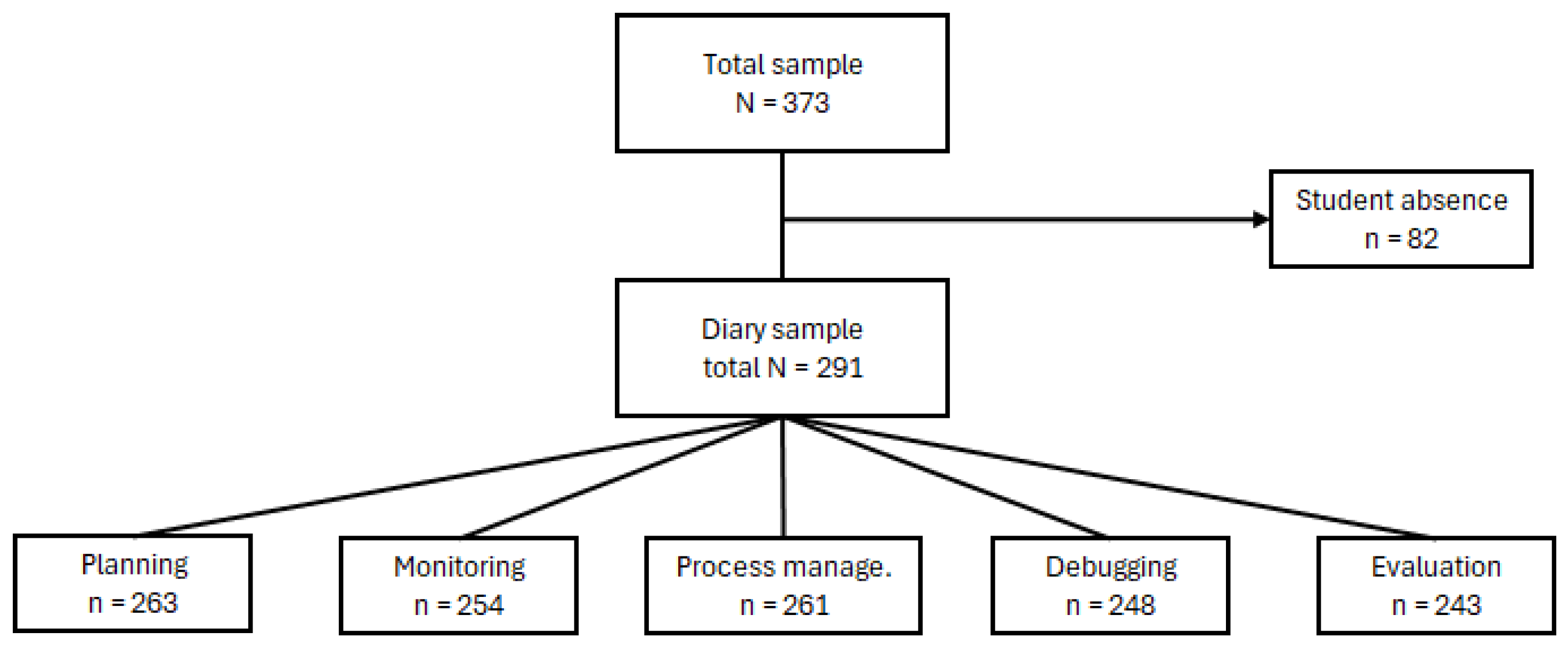
Given the nested structure of the data (students nested within classes, teachers, and schools), a multilevel modeling approach would have been methodologically appropriate. However, a multilevel model was not estimated because complete class- and teacher-level identifiers were not consistently available across all data sources, precluding reliable specification of random effects. Therefore, analyses were conducted at the student level, and the findings should be interpreted with caution regarding potential clustering effects. The learning diary sample size is smaller (n = 291) due to missing data, reflecting an attrition rate of approximately 22% (Figure 2). This missingness was due to student absences on the specific days that the diaries were completed in class.
Flow Chart:
Figure 2.
Flowchart illustrating participant inclusion and the availability of learning diary data.
4. Results
This study adopted a mixed-methods design to investigate the potential influence of the SENSE model on students’ metacognitive awareness during open IBL. To provide a comprehensive and structured account, the findings are presented below in direct alignment with the three research questions: the quantitative results are presented first (Q1), followed by the qualitative findings examining the learner’s process (Q2) and the process of pedagogical interaction (Q3).
4.1. The Contribution of the Sense Model to Metacognitive Awareness (Q1)
Table 4 presents the distribution of metacognitive awareness (based on responses to the MAI self-reporting questionnaire) by group and time (there were no missing data). Initial group differences were examined using a multivariate ANOVA with a Bonferroni correction for multiple comparisons. Baseline differences were significant for conditional knowledge, planning, and process management strategies, with small effect sizes.
Table 4.
Means, standard deviations, and F values for the metacognitive variables (questionnaire data) by group and time (N = 373).
Thus, these variables required different kinds of analyses than those where the initial group differences were not significant. Group-by-time differences for these variables were examined using adjusted residual gains, controlling for the initial scores, with the Bonferroni correction for multiple comparisons. In all other cases, repeated-measures analysis of variance was calculated by group and time (2 × 2), with the Bonferroni correction for multiple comparisons. Variables did not deviate from normal distributions (skewness = −1.19 to −0.31, SE = 0.13), and an examination of the Mahalanobis distance showed multivariate normality. The results show significant group-by-time interactions for all variables, with mainly medium levels of effect sizes, except for conditional knowledge.
The significant interactions were interpreted with estimated marginal means, as shown in Table 5. Results show a statistically significant increase in declarative knowledge in the intervention group, with a small effect size, alongside a significant decline in the control group, with a large effect size. Thus, the significant interaction for this component reflects the modest gain in the intervention group and the prevention of the decline that occurs in the control group. A significant increase was noted in procedural knowledge in both groups, to a greater extent in the experimental intervention group, with a large effect size in the intervention group and a moderate effect size in the control group. Similarly, significant increases were observed in ‘planning’ and ‘process management strategies’ in both groups, with greater increases in the intervention group (moderate-to-large effect sizes in the intervention group, and small effect sizes in the control group). A significant increase was found in ‘monitoring’ in the experimental group, compared with a significant decrease in the control group, with small-to-moderate effect sizes. Finally, the use of debugging strategies and evaluation significantly increased in the experimental intervention group, with rather small effect sizes, and no change was observed in the control group.
Table 5.
F values for pairwise time comparisons, within group (N = 373).
It should be noted that two types of sensitivity analyses were calculated: First, an ANCOVA model predicting post-test scores from group and baseline scores, with bootstrapping of 1000 samples, was calculated for each variable. Second, the analyses were calculated excluding 5% of the highest and lowest extreme cases in each variable. Similar results were found, involving group differences in all variables (the significant interaction) except for conditional knowledge.
Table 6 presents the distribution of DLMI metacognitive awareness by group using a chi-squared analysis, with Cramer’s V for effect sizes. Inter-rater agreement, measured with Kendall’s W (n = 29, three judges for the independent reliability subset), was found to be high: planning W = 0.96, weighted kappa = 0.87 to 0.96 (p < .001); process management strategies W = 0.99, weighted kappa = 0.95 to 1.0 (p < .001); monitoring W = 0.93, weighted kappa = 0.87 to 0.96 (p < .001); debugging strategies W = 0.96, weighted kappa = 0.86 to 0.95 (p < .001); evaluation W = 0.96, weighted kappa = 0.87 to 0.96 (p < .001).
Table 6.
Frequencies, percentages, and χ2/Cramer’s V values for the metacognitive variables (diary data) by group (N = 291).
The results show significant differences in all domains, with medium-level effect sizes. Planning, monitoring, process management, debugging, and evaluation were found to be at the ‘high’ level in 64% to 77% of cases in the experimental intervention group, compared with 37% to 44% in the control group.
4.2. How Learning Diaries Externalize Metacognitive Signals: Intervention–Control Comparison (Q2)
To provide a more comprehensive understanding of the findings, a qualitative analysis was conducted alongside the quantitative results, focusing on students’ reflective entries in their learning diaries. To address the systematic distribution of these metacognitive signals, Table 6 previously detailed the descriptive statistics and frequencies of the DLMI coding, demonstrating that the intervention group consistently produced greater proportions of high-level metacognitive signals. Building on these systematic coding frequencies, Table 7 presents selected examples from the learning diaries that illustrate differences in metacognitive aspects between the intervention group and the control group. The qualitative examples and developmental sequences presented in this section, including those in Table 8, are intended as illustrative and exploratory evidence of the DIR process, rather than as proof of a universal or causal trajectory for all students.
Table 7.
Examples from learning diaries of the intervention and control groups, categorized by metacognitive components.
Table 8.
Dynamics of metacognitive regulation of cognition change following adaptive responses.
4.3. Externalization of Metacognitive Regulation of Cognition in Learning Diaries (q2)
To provide a comprehensive understanding of the findings, a qualitative analysis focused on the interaction between students’ metacognitive signals in their diaries. The findings were organized around the five metacognitive sensors of the SENSE model:
- Planning Sensor
Students’ Signals: Students emphasized that the learning diaries played a central role in goal-setting and systematic planning. Over time, signals evolved from general intentions into concrete task allocations. One student (S11) noted that “the diaries led to effective planning and adherence to the required steps throughout the process.” Two additional students (S2, S3) described the diaries as becoming “an essential and indispensable part” of organizing the open inquiry-based learning project. Another student (S4) emphasized that “writing in the diary-maintained clarity regarding what was required at each stage,” which helped reduce ambiguity and maintain focus.
- Process Management Sensor
Students’ Signals: One student (S5) described how the diaries helped them “break down and allocate tasks,” enabling a structured and systematic workflow.
- Monitoring Sensor
Students’ Signals: The diaries promoted continuous monitoring of progress and understanding. Students (S6–S8) reported that the diaries helped them “track progress,” examine the effectiveness of their strategies, and identify moments when adjustments were needed.
- Debugging Sensor
Students’ Signals: Diaries played a central role in identifying challenges and errors. One student (S9) said “We needed to replan, refine the experiments, and adjust our approach.”
- Evaluation Sensor
Students’ Signals: Students recognized the diaries’ importance in evaluating both the process and its outcomes. Through continuous use, one student (S10) developed greater self-awareness of cognitive processes.
4.4. Educational Contribution of Internal and External Metacognitive Sensors Within the Sense Model
Within the SENSE model framework, the synergistic integration of learning diaries (as internal sensors) and adaptive teacher responses (as external sensors) functioned as a robust scaffolding system. While the diaries empowered students to actively plan, monitor, and evaluate their learning, teacher responses enabled the continuous detection and decoding of metacognitive signals. Three overarching themes emerged: First, the model established a continuous feedback loop that fostered goal-setting, self-monitoring, and deep reflection. Second, it cultivated autonomous learners supported by targeted “scaffold fading” as metacognition increased. Third, the findings suggest that the model may have enhanced the quality of students’ engagement in open inquiry within the context of this study.
Together, these contributions highlight how sensor interactions within the DIR process strengthen bidirectional information flow, fostering reflective and autonomous learning.
4.5. The Sense Mechanism: Interaction Between Sensors (Q3)
This section demonstrates the operational core of the SENSE model: how the metacognitive “signal” generated by the internal sensor (the student’s diary) is detected by the external sensor (the teacher) and translated into an adaptive pedagogical response.
Rather than treating them as isolated events, teachers utilized the diaries as a systematic vantage point to continuously detect, interpret, and respond to students’ metacognitive states. By actively decoding signals indicating confusion, planning obstacles, or evaluative reflections, teachers were able to balance students’ self-management with responsive mediation.
For instance, one teacher (T2) described using the diaries to “provide ongoing feedback” to students and to herself, maintaining alignment with the inquiry goals. This continuous monitoring enabled teachers to provide targeted interventions precisely when needed. As teacher T1 reported, the diaries “supported students’ self-management and enabled them to direct their learning according to their preferences,” allowing teachers to adjust learning pathways in complex situations.
To concretize how this mechanism operated in practice, one teacher documented a complete DIR cycle in her reflections: ‘When I noticed in Group B’s diary that their planning was superficial (Detection), I realized they didn’t fully understand how to isolate the independent variables (Interpretation). I provided targeted guiding questions in the next lesson rather than direct answers (Response), and their subsequent diary entry showed a detailed, strategic plan.’ This excerpt shifts from a static reflection tool to an actionable pedagogical signal.
Through this process, teachers guided students independently (T3), thereby strengthening their proactive problem-solving capabilities. Furthermore, the teachers’ adaptive responses fostered an external perspective on the inquiry process, encouraging students to critically reflect on their work, evaluate the quality of their products, and assess their capacity for improvement (T4).
The data point to the possibility that the observed development in students’ metacognitive regulation was not merely incidental but, rather, associated with a continuous and dynamic feedback loop. To illustrate this process, Table 8 outlines the chronological dynamics of metacognitive change. It maps specific student signals to the teacher’s corresponding diagnosis, the subsequent pedagogical intervention, and the resulting shift in the student’s metacognitive regulation of cognition level (measured by the DLMI).
As demonstrated in Table 8, the DIR process enabled teachers to apply precise scaffolding tailored to the learner’s immediate metacognitive state. For example, when students exhibited an initial planning failure (Level 1), targeted guiding questions facilitated a significant developmental leap, with a notable shift (+2) toward strategic planning. Conversely, when students transmitted signals of high metacognitive awareness (Level 3), the teacher enacted “scaffold fading,” gradually withdrawing support to foster full student autonomy. This adaptive responsiveness underscores the essential role of the teacher as a calibrating external sensor in open IBL environments.
5. Discussion
5.1. The Contribution of the Sense Model to Metacognitive Awareness (Q1)
The current findings suggest that the SENSE model may have enhanced students’ metacognitive awareness within the context of open IBL among high-school biology students. The quantitative results demonstrated a significant improvement across various metacognitive components. Declarative knowledge rose significantly in the experimental group. For declarative knowledge, the model prevented a decline observed in the control group and yielded modest improvements in the intervention group. Procedural knowledge, planning, and process management strategies improved in both groups; however, the improvement was significantly greater in the experimental intervention group. These baseline improvements observed in both groups likely reflect the inherent cognitive demands and the shared experience of participating in a complex open inquiry project. Furthermore, monitoring skills, debugging strategies, and evaluation significantly improved only in the experimental intervention group. This control-group decline should be interpreted cautiously; rather than actual cognitive deterioration, it may reflect a response-shift effect. As students confronted the complex, unstructured demands of open IBL without adaptive scaffolding, they may have recalibrated their self-assessments downward, realizing that they knew less than they had initially assumed. While some of these statistically significant interaction effects are modest in magnitude (e.g., partial eta-squared values ranging between 0.01 and 0.08), they represent meaningful incremental shifts in regulatory capacity that are highly relevant in short-term educational interventions.
This pattern is consistent with recent studies emphasizing that regulatory processes do not develop optimally in complex environments without adaptive external scaffolding (Azevedo & Hadwin, 2005). More importantly, as Veenman (2005, 2011) has extensively argued, there is a fundamental gap between acquiring “metacognitive knowledge” and successfully applying “metacognitive skills.” Our findings are consistent with prior research suggesting that, in the absence of adaptive external support, learners may struggle to sustain effective metacognitive regulation over time (Azevedo et al., 2004; Bannert et al., 2009). By conceptualizing pedagogical support as a dynamic feedback loop rather than a static intervention, this study extends our understanding of how to prevent such stagnation (Butler & Winne, 1995; Nicol & Macfarlane-Dick, 2006). However, the lack of significant improvement in conditional knowledge underscores the complex, developmental nature of this component and confirms that its development requires more prolonged interventions and practice across shifting contexts (Zohar & Ben David, 2009).
The lack of significant improvement in conditional knowledge aligns with the developmental trajectory of metacognitive skills (Zohar & Barzilai, 2013). Conditional knowledge—understanding when and why to apply specific strategies—is highly complex and context-dependent. Its development likely requires prolonged interventions across diverse learning contexts, whereas the current intervention was constrained to a single (albeit intensive) inquiry project. Furthermore, the learning diary prompts predominantly targeted planning, monitoring, and evaluation, potentially providing insufficient explicit scaffolding for conditional reasoning.
5.2. The Development of Metacognitive Signals (Q2)
The qualitative findings from the learning diaries provide deeper insight into how these metacognitive signals develop in practice (Schmitz & Wiese, 2006). While control group students tended to present vague planning and retrospective reflection, students in the intervention group displayed a proactive developmental trajectory, progressing from declarative planning to strategic planning that was increasingly grounded in evidence and informed decision-making (Nückles et al., 2009). This development reflects the active application of metacognitive skills, in which learners define not only what to do but also when and how to do it (Veenman et al., 2006).
Furthermore, while many studies have focused on diaries as a summarizing tool used after learning, the current study contributes to the literature by demonstrating the diary’s power as an active “internal sensor.” The externalization of doubts, difficulties, and dilemmas during the inquiry process directly captures what Efklides (2011) terms “metacognitive experiences.” By capturing these feelings of difficulty and confidence throughout the inquiry process, the diary encourages ongoing metacognitive monitoring and prevents a disconnect between planning and execution.
5.3. The Detection–Interpretation–Response and Scaffold Fading (Q3)
The central finding pertains to the operational process of pedagogical support. The results demonstrate that learning diaries served as a systematic source of signals, enabling teachers to diagnose metacognitive states based on structured diary entries (detection and interpretation) and provide adaptive support (response). The exploratory qualitative findings suggest that learning diaries can serve as a systematic source of signals. These signals, derived from structured diary entries, may help teachers diagnose students’ metacognitive states (detection and interpretation) and provide adaptive support (response). While our qualitative data provide initial illustrative examples of scaffold fading, we acknowledge that the DIR process remains a proposed theoretical framework that requires more systematic empirical validation. Furthermore, when students demonstrated higher levels of metacognition, teachers gradually reduced the level of intervention through scaffold fading.
This process offers insights into addressing a major challenge discussed in the inquiry-learning literature. Researchers such as Reiser (2018) have warned that excessive metacognitive scaffolding may compromise learner autonomy and act as a “funneling” mechanism. Concurrently, while dynamic scaffolding is widely discussed as important for self-regulated learning (Azevedo & Aleven, 2013; Han et al., 2026), its practical application in crowded classrooms remains challenging (Puntambekar, 2022).
The DIR model illustrates how scaffold fading can be applied in practice. By dynamically matching the teacher’s response to the learner’s functioning level as reflected in the diary, the model preserves the constructive ambiguity required for open IBL while preventing debilitating frustration.
5.4. Teacher–Student Interaction as a Feedback Loop for Development
The findings indicate that monitoring processes do not occur in a vacuum at the student level alone but are intricately tied to the teaching level. This interaction facilitated a continuous, asynchronous flow of information that refined the precision of pedagogical support (Hadwin et al., 2017; Hattie & Timperley, 2007). This observation reinforces recent theoretical shifts that view learning regulation not solely as an internal process but as one supported and co-regulated through interaction with the environment and the teacher (Allal, 2020). The current study suggests that teacher–student interaction operates as a reciprocal core mechanism: the student’s signals guide instruction, and adaptive instruction, in turn, is associated with the student’s metacognition. By showing how external instructional responses directly shape internal regulation, this study advances the theoretical understanding of metacognition not merely as an isolated cognitive process but as a shared, interactional responsibility co-regulated within the learning environment.
5.5. Theoretical and Methodological Contributions
Despite extensive research into metacognition, a persistent gap remains between the theoretical understanding of metacognitive processes and their pedagogical enactment in practice (Efklides, 2006; White & Frederiksen, 2005). In particular, the literature highlights ongoing challenges in translating learners’ metacognitive processes into concrete instructional actions, integrating learner-generated process data into instructional decision-making, and accounting for how adaptive support unfolds over time in complex learning environments (Winne, 2017). The present study addresses these gaps by proposing an operational, data-informed, and process-oriented framework for metacognitive support.
First, this study addresses the lack of an operational process to identify and respond to learners’ evolving metacognitive needs. While prior research has emphasized the importance of metacognitive scaffolding, it has largely focused on general strategies, without specifying how teachers systematically detect and interpret learners’ metacognitive states during learning (Zohar & Barzilai, 2013). Building on Veenman’s (2011) argument regarding the discrepancy between metacognitive knowledge and its application, the DIR process defines a structured process through which observable traces of metacognitive activity are translated into contingent pedagogical action. In doing so, this study operationalizes metacognitive support as evidence-based instructional responsiveness.
Second, this study addresses the gap between learner-generated process data and instructional decision-making. Although reflective tools such as learning diaries have been shown to support metacognitive awareness, they often remain disconnected from instructional practice and are rarely used as a systematic basis for adapting teaching (Dignath-van Ewijk & van der Werf, 2012; Yan et al., 2020). The present study conceptualizes learning diaries as structured sources of metacognitive evidence and specifies how such evidence is interpreted and translated into adaptive instructional responses. In this way, the present study proposes a concrete theoretical mechanism for integrating learner-generated data into pedagogical decision-making (Ruiz-Primo, 2011), which our exploratory observations suggest is a promising framework for future empirical investigation.
Third, this study addresses the lack of a process-oriented temporal perspective in the study of metacognitive support. Existing approaches to adaptive scaffolding emphasize the importance of responsiveness to learners’ needs, yet they often rely on theoretical or computer-based models that do not fully capture sustained pedagogical implementation in complex classroom contexts (Dillenbourg, 2013). The combined quantitative and qualitative findings introduce a process-based account centered on short-cycle adaptive feedback loops, demonstrating how metacognitive regulation develops through iterative cycles of externalization, interpretation, and response across phases of inquiry. This perspective provides an empirically grounded account of how adaptive support is enacted and refined over time.
Finally, these findings align with perspectives that conceptualize regulation as a distributed and interactional process while extending them by specifying the mechanism linking learner-generated data to instructional action. Accordingly, this study repositions metacognitive support as a continuous, data-informed, and interaction-driven process, in which learner-generated evidence and teacher interpretation jointly shape the development of metacognitive regulation. The core practical message of this study is that metacognitive support in complex inquiry environments cannot rely on static tools alone. By systematically integrating learner-generated reflections (internal sensors) with adaptive teacher responses (external sensors), educators can transform covert metacognitive struggles into actionable pedagogical opportunities, ultimately sustaining learners in demanding open-ended tasks.
5.6. Pedagogical Implications, Limitations, and Future Directions
A key design limitation concerns differential diary exposure: students in the intervention group completed the learning diaries three times, whereas control-group students completed the diary once at the end of the project. Consequently, part of the observed between-group difference may reflect the greater number of opportunities for structured reflection provided to students in the intervention group, in addition to the adaptive support delivered through the DIR process. Therefore, effects should be interpreted as attributable to the integrated SENSE package rather than to a single component.
Pedagogically, the findings demonstrate that effective metacognitive support relies heavily on the ability to decode covert thought processes, highlighting the critical importance of “teacher noticing” (Sherin & Van Es, 2009). Without appropriate training to develop educators’ capacity to identify signals in diaries and translate them into context-sensitive interventions, the instructional potential may be missed. Alongside its contributions, this study presents several limitations: First, the focus on high-school biology students in an open IBL setting necessitates further research to examine the model’s transferability across diverse populations and within more guided contexts. Second, the model’s focus on components such as planning and monitoring limited a profound examination of conditional knowledge, indicating that longitudinal studies are required to track the development of this knowledge across varied contexts. Additionally, the scope of the intervention was limited to a single, intensive inquiry project. Therefore, a graduated implementation incorporating shorter tasks may help initially consolidate regulatory processes before exposing learners to fully open-ended tasks. Additionally, because the analyses were performed at the student level without multilevel modeling, observations may be non-independent due to clustering within classes. This unmodeled nested structure may inflate Type I error rates and overestimate effect sizes. Future research must prioritize multilevel modeling with complete hierarchical data collection to properly account for these clustering effects. Ultimately, future research exploring the transferability of the dual-sensor model across disciplines could help establish precise, adaptive, and data-informed instructional frameworks for 21st-century education systems. Furthermore, this study lacks systematic data on teacher-level implementation fidelity. Although the intervention teachers completed the required training, the study did not quantitatively track variations in dosage or the specific nature of their adaptive responses. Combined with the non-randomized allocation, unmeasured variables such as pre-existing teacher quality and school culture may confound the results.
In light of the current study’s limitations, we propose four main directions for future research: First, factorial designs could be used to disentangle the effects of diary-writing frequency and DIR feedback. Second, process-tracing methods, such as think-aloud or stimulated-recall interviews, could examine teachers’ real-time decision-making during the DIR cycle. Third, targeted interventions could test whether tailored diary prompts and teacher feedback strengthen conditional knowledge, including when and why specific strategies should be applied. Finally, multilevel modeling with hierarchical data could account more accurately for clustering effects within the sample. Specifically, to address the limitation of differential diary exposure, future research should employ a factorial design (frequency of diaries presence/absence of DIR feedback). Such a design would help disentangle the independent and interactive effects of repeated structural reflection versus adaptive teacher scaffolding.
Author Contributions
Conceptualization, M.L. and M.Z.; Methodology, M.L., P.-T.W., S.H., E.L., and M.Z.; Software, M.L. and M.Z.; Validation, M.L., P.-T.W., S.H., E.L., and M.Z.; Formal Analysis, M.L. and M.Z.; Investigation, M.L., P.-T.W., S.H., E.L., and M.Z.; Resources, M.L. and M.Z.; Data Curation, M.L.; Writing—Original Draft, M.L. and M.Z.; Writing—Review and Editing, M.L. and M.Z.; Visualization, M.L. and M.Z.; Supervision, M.Z.; Project Administration, M.L. and M.Z.; Funding Acquisition, S.H. and M.Z. All authors have read and agreed to the published version of the manuscript.
Funding
This research received no external funding.
Institutional Review Board Statement
The study was conducted in accordance with the Declaration of Helsinki, and approved by the Institutional Review Board of Faculty of Education, Bar Ilan University (protocol code 22 and 29 May 2024 of approval).
Informed Consent Statement
Informed consent was obtained from all subjects involved in the study.
Data Availability Statement
The original contributions presented in this study are included in the article. Further inquiries can be directed to the corresponding author.
Conflicts of Interest
The authors declare no conflict of interest.
Note
| 1 | S stands for student. The number is the researchers’ serial number. T stands for teacher. The number is the researchers’ serial number. |
References
- Allal, L. (2020). Assessment and the co-regulation of learning in the classroom. Assessment in Education: Principles, Policy & Practice, 27(4), 332–349. [Google Scholar] [CrossRef] [Scilit]
- Azevedo, R. (2014). Issues in dealing with sequential and temporal characteristics of self-and socially regulated learning. Metacognition and Learning, 9(2), 217–228. [Google Scholar] [CrossRef] [Scilit]
- Azevedo, R., & Aleven, V. (Eds.). (2013). International handbook of metacognition and learning technologies (Vol. 26). Springer. [Google Scholar]
- Azevedo, R., Cromley, J. G., & Seibert, D. (2004). Does adaptive scaffolding facilitate students’ ability to regulate their learning with hypermedia? Contemporary Educational Psychology, 29(3), 344–370. [Google Scholar] [CrossRef] [Scilit]
- Azevedo, R., & Hadwin, A. F. (2005). Scaffolding self-regulated learning and metacognition–Implications for the design of computer-based scaffolds. Instructional Science, 33(5/6), 367–379. [Google Scholar] [CrossRef] [Scilit]
- Banchi, H., & Bell, R. (2008). The many levels of inquiry. Science and Children, 46(2), 26–29. [Google Scholar]
- Bannert, M., Hildebrand, M., & Mengelkamp, C. (2009). Effects of a metacognitive support device in learning environments. Computers in Human Behavior, 25(4), 829–835. [Google Scholar] [CrossRef] [Scilit]
- Belland, B. R., Walker, A. E., Kim, N. J., & Lefler, M. (2017). Synthesizing results from empirical research on computer-based scaffolding in STEM education: A meta-analysis. Review of Educational Research, 87(2), 309–344. [Google Scholar] [CrossRef] [Scilit] [PubMed]
- Brenner, C. A. (2022). Self-regulated learning, self-determination theory and teacher candidates’ development of competency-based teaching practices. Smart Learning Environments, 9(1), 3. [Google Scholar] [CrossRef] [Scilit]
- Butler, D. L., & Winne, P. H. (1995). Feedback and self-regulated learning: A theoretical synthesis. Review of Educational Research, 65(3), 245–281. [Google Scholar] [CrossRef] [Scilit]
- Carretero, S., Vuorikari, R., & Punie, Y. (2017). DigComp 2.1: The digital competence framework for citizens with eight proficiency levels and examples of use. Publications Office of the European Union. [Google Scholar]
- Creswell, J. W., & Clark, V. L. P. (2017). Designing and conducting mixed methods research. Sage Publications. [Google Scholar]
- Dah, N. M., Noor, M. S. A. M., Kamarudin, M. Z., & Azziz, S. S. S. A. (2024). The impacts of open inquiry on students’ learning in science: A systematic literature review. Educational Research Review, 43, 100601. [Google Scholar] [CrossRef] [Scilit]
- Dede, C. (2010). Comparing frameworks for 21st century skills. In J. Bellanca, & R. Brandt (Eds.), 21st century skills (pp. 51–76). Solution Tree Press. [Google Scholar]
- Dignath, C., & Büttner, G. (2008). Components of fostering self-regulated learning among students. A meta-analysis on intervention studies at primary and secondary school level. Metacognition and Learning, 3(3), 231–264. [Google Scholar] [CrossRef] [Scilit]
- Dignath, C., & Veenman, M. V. (2021). The role of direct strategy instruction and indirect activation of self-regulated learning—Evidence from classroom observation studies. Educational Psychology Review, 33(2), 489–533. [Google Scholar] [CrossRef] [Scilit]
- Dignath-van Ewijk, C., & van der Werf, G. (2012). What teachers think about self-regulated learning: Investigating teacher beliefs and teacher behavior of enhancing students’ self-regulation. Education Research International, 2012(1), 741713. [Google Scholar] [CrossRef] [Scilit]
- Dillenbourg, P. (2013). Design for classroom orchestration. Computers & Education, 69, 485–492. [Google Scholar] [CrossRef] [Scilit]
- Efklides, A. (2006). Metacognition and affect: What can metacognitive experiences tell us about the learning process? Educational Research Review, 1(1), 3–14. [Google Scholar] [CrossRef] [Scilit]
- Efklides, A. (2011). Interactions of metacognition with motivation and affect in self-regulated learning: The MASRL model. Educational Psychologist, 46(1), 6–25. [Google Scholar] [CrossRef] [Scilit]
- El-Adl, A., & Alkharusi, H. (2020). Relationships between self-regulated learning strategies, learning motivation and mathematics achievement. Cypriot Journal of Educational Sciences, 15(1), 104–111. [Google Scholar] [CrossRef] [Scilit]
- Engudar, N. A., Sarioğlan, A. B., & Dolu, G. (2020). The effect of open inquiry learning on gifted students’ conceptual understanding. New Trends and Issues Proceedings on Humanities and Social Sciences, 7(1), 75–83. [Google Scholar] [CrossRef] [Scilit]
- Hadwin, A., Järvelä, S., & Miller, M. (2017). Self-regulation, co-regulation, and shared regulation in collaborative learning environments. In Handbook of self-regulation of learning and performance (pp. 83–106). Routledge. [Google Scholar]
- Han, I., Ji, H., & Jin, S. (2026). Mobile-based artificial intelligence chatbot for self-regulated learning in a hybrid flipped classroom. Computing in Higher Education, 38(1), 285–309. [Google Scholar] [CrossRef] [Scilit]
- Hattie, J., & Timperley, H. (2007). The power of feedback. Review of Educational Research, 77(1), 81–112. [Google Scholar] [CrossRef] [Scilit]
- Heaysman, O., & Kramarski, B. (2022). Enhancing students’ metacognition, achievement and transfer between domains: Effects of the simulative “SRL-AIDE” parallel teacher–student program. International Journal of Educational Research, 116, 102074. [Google Scholar] [CrossRef] [Scilit]
- Hilton, M. L., & Pellegrino, J. W. (Eds.). (2012). Education for life and work: Developing transferable knowledge and skills in the 21st century. National Academies Press. [Google Scholar]
- Hmelo-Silver, C. E., Duncan, R. G., & Chinn, C. A. (2007). Scaffolding and achievement in problem-based and inquiry learning: A response to Kirschner, Sweller, and Clark (2006). Educational Psychologist, 42(2), 99–107. [Google Scholar] [CrossRef] [Scilit]
- Huang, Y. (2022). Effectiveness of inquiry-based science laboratories for improving teamwork and problem-solving skills and attitudes. Journal of Research in Science Teaching, 59(3), 329–357. [Google Scholar] [CrossRef] [Scilit]
- Järvelä, S., Järvenoja, H., Malmberg, J., Isohätälä, J., & Sobocinski, M. (2016). How do types of interaction and phases of self-regulated learning set a stage for collaborative engagement? Learning and Instruction, 43, 39–51. [Google Scholar] [CrossRef] [Scilit]
- Järvenoja, H., Järvelä, S., & Malmberg, J. (2015). Understanding regulated learning in situative and contextual frameworks. Educational Psychologist, 50(3), 204–219. [Google Scholar] [CrossRef] [Scilit]
- Kesner Baruch, Y., Mevarech, Z., & Spektor-Levy, O. (2026). Preschoolers’ scientific curiosity and inquiry capabilities: An ecological research approach. Journal of Research in Science Teaching, 63(1), 40–61. [Google Scholar] [CrossRef] [Scilit]
- Kirschner, P., Sweller, J., & Clark, R. E. (2006). Why unguided learning does not work: An analysis of the failure of discovery learning, problem-based learning, experiential learning and inquiry-based learning. Educational Psychologist, 41(2), 75–86. [Google Scholar]
- Moradoff, Y., Kramarski, B., & Heaysman, O. (2021). Leveraging student-centred teaching practices by authentic simulations environment and self-regulated learning. Teachers and Teaching, 27(1–4), 316–334. [Google Scholar] [CrossRef] [Scilit]
- Munshi, A., Biswas, G., Baker, R., Ocumpaugh, J., Hutt, S., & Paquette, L. (2023). Analysing adaptive scaffolds that help students develop self-regulated learning behaviours. Journal of Computer Assisted Learning, 39(2), 351–368. [Google Scholar] [CrossRef] [Scilit]
- Nicol, D. J., & Macfarlane-Dick, D. (2006). Formative assessment and self-regulated learning: A model and seven principles of good feedback practice. Studies in Higher Education, 31(2), 199–218. [Google Scholar] [CrossRef] [Scilit]
- Nückles, M., Hübner, S., & Renkl, A. (2009). Enhancing self-regulated learning by writing learning protocols. Learning and Instruction, 19(3), 259–271. [Google Scholar] [CrossRef] [Scilit]
- OECD. (2018). The future of education and skills: Education 2030. OECD Publishing. [Google Scholar]
- OECD. (2019). OECD future of education and skills 2030: OECD learning compass 2030. OECD Publishing. [Google Scholar]
- OECD & Center for Curriculum Redesign (CCR). (2024). Skills for the 21st century: Measuring progress and learning outcomes. OECD Publishing. [Google Scholar]
- Ortube, A. F., Panadero, E., & Dignath, C. (2024). Self-regulated learning interventions for pre-service teachers: A systematic review. Educational Psychology Review, 36(4), 113. [Google Scholar] [CrossRef] [Scilit]
- Panadero, E., Klug, J., & Järvelä, S. (2016). Third wave of measurement in the self-regulated learning field: When measurement and intervention come hand in hand. Scandinavian Journal of Educational Research, 60(6), 723–735. [Google Scholar] [CrossRef] [Scilit]
- Pintrich, P. R. (2000). The role of goal orientation in self-regulated learning. In Handbook of self-regulation (pp. 451–502). Academic Press. [Google Scholar]
- Puntambekar, S. (2022). Distributed scaffolding: Scaffolding students in classroom environments. Educational Psychology Review, 34(1), 451–472. [Google Scholar] [CrossRef] [Scilit]
- Reimers, F. M. (2020). Transforming education to prepare students to invent the future. PSU Research Review, 4(2), 81–91. [Google Scholar] [CrossRef] [Scilit]
- Reiser, B. J. (2018). Scaffolding complex learning: The mechanisms of structuring and problematizing student work. In Scaffolding (pp. 273–304). Psychology Press. [Google Scholar]
- Roll, I., Holmes, N. G., Day, J., & Bonn, D. (2012). Evaluating metacognitive scaffolding in guided invention activities. Instructional Science, 40(4), 691–710. [Google Scholar] [CrossRef] [Scilit]
- Ruiz-Primo, M. A. (2011). Informal formative assessment: The role of instructional dialogues in assessing students’ learning. Studies in Educational Evaluation, 37(1), 15–24. [Google Scholar] [CrossRef] [Scilit]
- Sadeh, I., & Zion, M. (2009). The development of dynamic inquiry performances within an open inquiry setting: A comparison to guided inquiry setting. Journal of Research in Science Teaching: The Official Journal of the National Association for Research in Science Teaching, 46(10), 1137–1160. [Google Scholar] [CrossRef] [Scilit]
- Schmitz, B., & Wiese, B. S. (2006). New perspectives for the evaluation of training sessions in self-regulated learning: Time-series analyses of diary data. Contemporary Educational Psychology, 31(1), 64–96. [Google Scholar] [CrossRef] [Scilit]
- Schraw, G., & Dennison, R. S. (1994). Assessing metacognitive awareness. Contemporary Educational Psychology, 19(4), 460–475. [Google Scholar] [CrossRef] [Scilit]
- Sherin, M. G., & Van Es, E. A. (2009). Effects of video club participation on teachers’ professional vision. Journal of Teacher Education, 60(1), 20–37. [Google Scholar] [CrossRef] [Scilit]
- Şen, Ş., Yılmaz, A., & Geban, Ö. (2015). The effects of process oriented guided inquiry learning environment on students’ self-regulated learning skills. Problems of Education in the 21st Century, 66, 54. [Google Scholar] [CrossRef] [Scilit]
- Van Uum, M. S., Verhoeff, R. P., & Peeters, M. (2017). Inquiry-based science education: Scaffolding pupils’ self-directed learning in open inquiry. International Journal of Science Education, 39(18), 2461–2481. [Google Scholar] [CrossRef] [Scilit]
- Veenman, M. V. J. (2005). The assessment of metacognitive skills: What can be learned from multi-method designs? In C. Artelt, & B. Moschner (Eds.), Lernstrategien und metakognition: Implikationen für forschung und praxis (pp. 75–97). Waxmann. [Google Scholar]
- Veenman, M. V. J. (2011). Alternative assessment of strategy use with self-report instruments: A discussion. Metacognition and Learning, 6(2), 205–211. [Google Scholar] [CrossRef] [Scilit]
- Veenman, M. V. J., Van Hout-Wolters, B. H., & Afflerbach, P. (2006). Metacognition and learning: Conceptual and methodological considerations. Metacognition and Learning, 1(1), 3–14. [Google Scholar] [CrossRef] [Scilit]
- White, B., & Frederiksen, J. (2005). A theoretical framework and approach for fostering metacognitive development. Educational Psychologist, 40(4), 211–223. [Google Scholar] [CrossRef] [Scilit] [PubMed]
- Winne, P. H. (2017). Cognition and metacognition within self-regulated learning. In Handbook of self-regulation of learning and performance (pp. 36–48). Routledge. [Google Scholar]
- Winne, P. H. (2022). Modeling self-regulated learning as learners doing learning science: How trace data and learning analytics help develop skills for self-regulated learning. Metacognition and Learning, 17(3), 773–791. [Google Scholar] [CrossRef] [Scilit]
- Yan, Z., Brown, G. T., Lee, J. C. K., & Qiu, X. L. (2020). Student self-assessment: Why do they do it? Educational Psychology, 40(4), 509–532. [Google Scholar] [CrossRef] [Scilit]
- Zepeda, C. D., Hlutkowsky, C. O., Partika, A. C., & Nokes-Malach, T. J. (2019). Identifying teachers’ supports of metacognition through classroom talk and its relation to growth in conceptual learning. Journal of Educational Psychology, 111(3), 522–541. [Google Scholar] [CrossRef] [Scilit]
- Zimmerman, B. J. (2000). Attaining self-regulation: A social cognitive perspective. In Handbook of self-regulation (pp. 13–39). Academic Press. [Google Scholar]
- Zion, M., & Mendelovici, R. (2012). Moving from structured to open inquiry: Challenges and limits. Science Education International, 23(4), 383–399. [Google Scholar]
- Zion, M., & Sadeh, I. (2010). Dynamic open inquiry performances of high-school biology students. Eurasia Journal of Mathematics, Science and Technology Education, 6(3), 199–214. [Google Scholar] [CrossRef] [Scilit] [PubMed]
- Zohar, A., & Barzilai, S. (2013). A review of research on metacognition in science education: Current and future directions. Studies in Science Education, 49(2), 121–169. [Google Scholar] [CrossRef] [Scilit]
- Zohar, A., & Ben David, A. (2009). Paving a clear path in a thick forest: A conceptual analysis of a metacognitive component. Metacognition and Learning, 4(3), 177–195. [Google Scholar] [CrossRef] [Scilit]
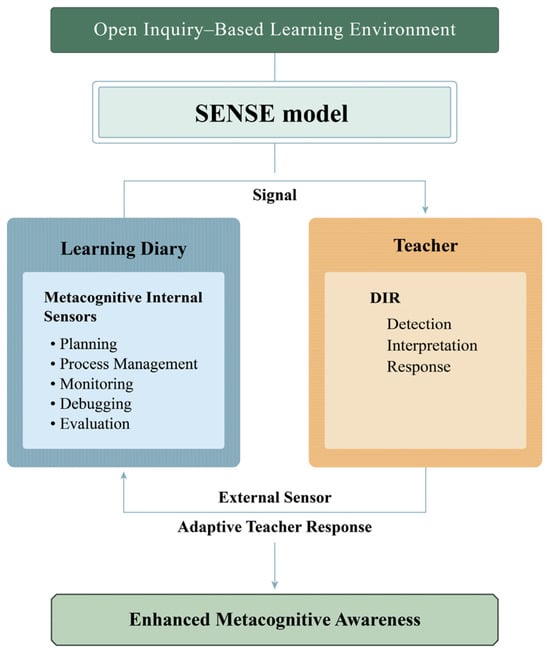
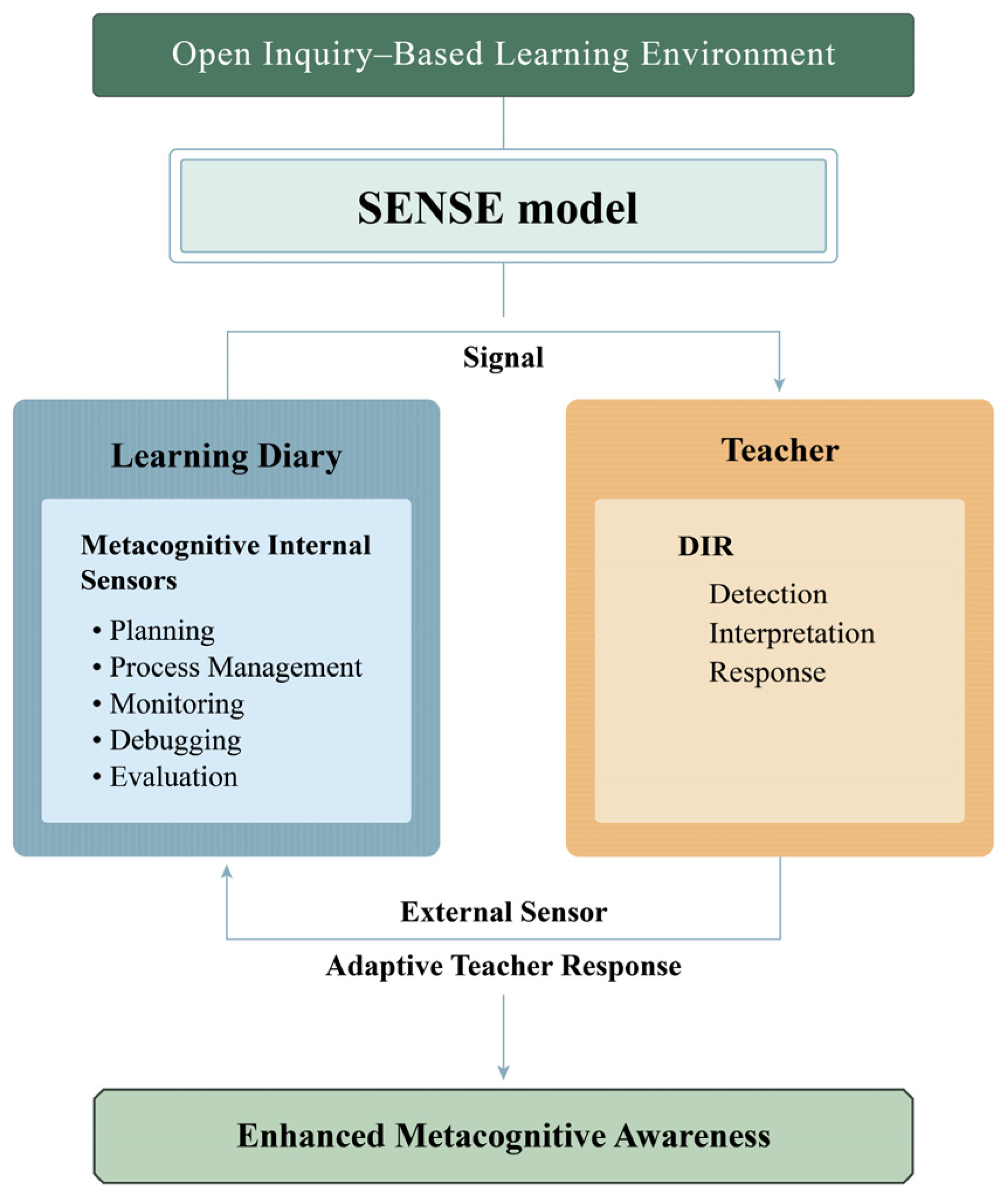

Disclaimer/Publisher’s Note: The statements, opinions and data contained in all publications are solely those of the individual author(s) and contributor(s) and not of MDPI and/or the editor(s). MDPI and/or the editor(s) disclaim responsibility for any injury to people or property resulting from any ideas, methods, instructions or products referred to in the content. |
© 2026 by the authors. Licensee MDPI, Basel, Switzerland. This article is an open access article distributed under the terms and conditions of the Creative Commons Attribution (CC BY) license.