


Abstract
This study examines the determinants of cybersecurity behaviour among employees in higher education institutions (HEIs) in the United Arab Emirates (UAE) through an integrated framework combining the Protection Motivation Theory (PMT), the Theory of Planned Behaviour (TPB), and the COM-B model. Using a convergent mixed-methods design, survey data from 250 participants and interviews with 18 staff members were analysed to identify behavioural drivers and construct a predictive model. Results showed that policy familiarity, security culture, and intrinsic motivation were the strongest predictors of secure behaviour, collectively explaining nearly 70% of variance. The predictive neural network model achieved high accuracy (F1 = 91.99%, R2 = 0.94), with interpretability analysis ranking policy familiarity as the top determinant. Qualitative insights reinforced these findings, revealing that policy clarity, leadership engagement, and supportive culture enable consistent compliance. The study contributes a validated, theory-driven predictive framework for HEIs, bridging behavioural science and cybersecurity governance. The findings are based on self-reported cybersecurity behaviour and should be interpreted accordingly. It concludes that effective institutional cybersecurity depends on clear policies, inclusive culture, and sustained motivation rather than fear-based enforcement.
1. Introduction
Cybersecurity incidents in higher education institutions (HEIs) are increasingly attributed to human behaviour embedded within complex organisational environments rather than to technical deficiencies alone. Contemporary cybersecurity scholarship recognises security as a fundamentally socio-technical condition, in which the confidentiality, integrity, and availability of information assets emerge from the dynamic interaction between technology, institutional policy, and human actors [1]. Within the university sector, structural characteristics such as open network architectures, decentralised governance, and heterogeneous user populations substantially expand the attack surface and intensify behaviour-related vulnerabilities [2,3]. Sector-wide evidence consistently indicates that phishing, ransomware, and social-engineering attacks remain dominant threat vectors, with incidents frequently linked to inadequate policy comprehension, low self-efficacy, and weak institutional security culture rather than system failure per se [4,5].
These challenges are further amplified in the United Arab Emirates (UAE), where higher education operates within a context of rapid digital transformation, multicultural workforces, and diverse institutional governance models. Empirical studies in the region demonstrate that effective cybersecurity in HEIs depends not merely on the formal existence of policies, but on their clarity, communicability, and alignment with day-to-day organisational practice [6,7,8]. Recent sectoral frameworks emphasise the need for privacy-by-design approaches, continuous Security Education, Training, and Awareness (SETA) initiatives, and governance mechanisms capable of addressing emerging risks associated with artificial intelligence and increasingly complex digital ecosystems [9]. Collectively, this literature suggests that cybersecurity effectiveness in HEIs is contingent on how policies are interpreted, internalised, and enacted by institutional members.
Behavioural theories provide a robust foundation for analysing these dynamics. Protection Motivation Theory (PMT) explains security behaviour through individuals’ assessments of threat severity, vulnerability, coping efficacy, and self-efficacy [9,10]. The Theory of Planned Behaviour (TPB) focuses on how attitudes, subjective norms, and perceived behavioural control shape behavioural intentions and actions [11]. Complementing these perspectives, the COM-B model conceptualises behaviour as the outcome of interactions between capability, opportunity, and motivation [12,13]. Across higher education contexts, empirical research consistently identifies policy familiarity, security culture, motivation, perceived control, and self-efficacy as central predictors of secure cybersecurity behaviour [14,15,16,17,18,19]. Together, these frameworks offer complementary explanatory lenses for understanding why individuals comply with, or deviate from, institutional cybersecurity expectations.
Despite these advances, the existing literature remains predominantly descriptive, with limited use of predictive approaches capable of forecasting cybersecurity behaviour based on behavioural determinants. This limitation is particularly evident in non-Western higher education contexts, including the Gulf region, where empirical evidence remains comparatively sparse. Few studies have systematically examined how behavioural constructs derived from PMT, TPB, and COM-B can be integrated into data-driven models to predict compliance outcomes in HEIs.
Addressing this gap, the present study develops and tests predictive models of cybersecurity behaviour within UAE higher education institutions by integrating constructs from PMT, TPB, and COM-B. Specifically, it examines how policy familiarity, organisational security culture, motivation, and risk appraisal interact to influence secure behaviour among HEI employees. The study contributes both theoretically and practically, advancing an evidence-based framework capable of informing institutional policy design, targeted training interventions, and governance strategies aimed at strengthening cybersecurity compliance in higher education [8,9,11,12,13].
1.1. Problem Statement
Despite extensive deployment of cybersecurity policies, higher education institutions (HEIs) continue to face behaviour-related breaches, revealing a persistent gap between policy existence and policy compliance [2,3,5,20,21]. Prior studies have typically examined training effectiveness, awareness programmes, or organisational culture in isolation, offering fragmented insights into human factors that drive non-compliance. Such approaches overlook the interdependent nature of behavioural determinants, policy familiarity, motivation, culture, and risk perception that collectively influence secure conduct.
What remains absent is a predictive, theory-driven, and context-specific model capable of identifying which individuals or groups are most susceptible to risky behaviour and why. Without predictive insight, HEIs, particularly within the UAE’s rapidly digitalising and multicultural environment, struggle to allocate resources effectively or design interventions proportionate to behavioural risk. Addressing this deficiency requires integrating behavioural theories such as PMT, TPB, and COM-B into a data-driven framework that translates psychological constructs into actionable intelligence for institutional governance, training design, and policy implementation.
1.2. Literature Review
1.2.1. Threat Landscape and Sector-Specific Exposure
Higher education institutions (HEIs) remain uniquely exposed to cybersecurity risks because of their open networks, decentralised governance, and the variety of sensitive data they hold, ranging from student records to proprietary research datasets [3,22]. The dominant attack vectors across the sector include ransomware, credential phishing, account takeovers, and distributed denial-of-service (DDoS) attacks [3,4,23]. According to the Department for Science, Innovation and Technology [5] Cyber Security Breaches Survey: Education Annex, universities experience a disproportionately high incident rate relative to other sectors, often driven by human error, weak authentication practices, and inconsistent enforcement of institutional policies.
Conceptually, cybersecurity in higher education is increasingly defined as a socio-technical system rather than a purely technical state. This means that technical controls are inseparable from human cognition, institutional norms, and operational context [1,24,25]. Universities’ emphasis on openness, research collaboration, and data sharing, while academically valuable, inherently conflicts with the closed, risk-minimising posture typical of corporate cybersecurity systems. Thus, effective protection in HEIs must integrate human, technical, and procedural dimensions.
1.2.2. Policy, Culture, and Governance
Policy alone does not guarantee secure behaviour. As Howlett and Cashore [6] and Howlett [7] argue, policy effectiveness depends less on the existence of written procedures and more on their eligibility, communicability, and alignment with everyday institutional practice. In the context of HEIs, policy success requires comprehension by a diverse user base and fairness in enforcement, particularly in multicultural environments such as the UAE [21,26].
Cybersecurity maturity frameworks, including the Higher Education Cybersecurity Maturity Assessment Framework (HCYMAF), operationalise these ideas by framing institutional capability across the Identify-Protect/Detect-Respond/Recover cycle, stressing that maturity is achieved only when policies are internalised and routinely practiced, rather than when compliance checklists are superficially completed [27]. Sectoral guidance, such as from EDUCAUSE [28], recommends embedding privacy-by-design, implementing AI governance, maintaining continuous SETA (Security Education, Training and Awareness) programmes, and clarifying roles and responsibilities at every organisational level.
Operationally, policy priming, the process of reinforcing awareness through reminders, prompts, and accessible documentation, has been shown to significantly increase compliance rates [18]. Similarly, organisational enforcement that combines clarity with supportiveness has been linked to higher long-term adherence, especially when users perceive controls as fair and consistent [28].
1.2.3. Behavioural Determinants: An Integrative View
The behavioural dimension of cybersecurity has been theorised through several complementary frameworks, Protection Motivation Theory (PMT), Theory of Planned Behaviour (TPB), and COM-B-each explaining different but overlapping aspects of human decision-making [10,11,12,13,29]. The present study synthesises these models to identify operationally actionable determinants relevant to HEIs.
- Policy Familiarity (Legibility and Procedural Fluency): Beyond simple awareness, familiarity reflects a user’s ability to interpret and apply policy at the point of decision-making. It encompasses clarity, accessibility, and retrievability [7,14,15]. In universities, policy sprawl and ambiguous ownership often undermine familiarity, while structured prompts and microlearning interventions can reverse this effect.
- Security Culture (Norms, Leadership, and Fairness): Institutional culture shapes subjective norms and perceived behavioural expectations. A strong security culture-signalled through leadership modelling, peer reinforcement, and supportive enforcement-predicts higher compliance [15,16,18]. Empirical studies in Gulf-region HEIs confirm culture as a strong statistical predictor of secure behaviour [21].
- Motivation (Intrinsic and Expectancy-Based): Drawing on Self-Determination Theory [30] and Expectancy Theory [31], intrinsic motivation (valuing security itself) and expectancy motivation (believing effort leads to valued outcomes) sustain compliance when institutions provide enabling environments. Motivation amplifies the effects of culture and familiarity but cannot substitute for them.
- Risk Appraisal (Threat and Coping): According to PMT, perceived severity, vulnerability, self-efficacy, and response efficacy drive protective behaviour [10,20]. However, fear appeals alone are ineffective; individuals require feasible coping strategies [19]. Recent findings place risk appraisal as a secondary but complementary determinant, suggesting that efficacy cues outperform threat-based messaging.
- Self-Efficacy and Prior Experience: Users who believe in their capacity to perform secure actions are more likely to do so. Meta-analytic evidence shows self-efficacy as one of the strongest predictors of cybersecurity behaviour and innovation adoption [17]. In theoretical terms, self-efficacy links to Capability in COM-B and Perceived Behavioural Control in TPB.
- Perceived Behavioural Control (Usability and Infrastructure): When tools are unintuitive or IT responses are slow, users’ sense of control declines, encouraging risky workarounds [15,18,20]. Conversely, accessible systems and responsive technical support foster compliance by enhancing perceived control [9].
- Organisational Enforcement and Reactance: While enforcement mechanisms increase baseline compliance, overly coercive policies can produce psychological reactance, driving users toward unsafe “shadow practices” [32,33,34]. Effective governance thus requires balancing firmness with autonomy support—especially critical in academic settings where freedom and trust are valued.
- SETA Quality (Continuous and Contextualised): Periodic, generic awareness campaigns are insufficient. Continuous, role-based, and scenario-specific SETA programmes show higher retention and behavioural impact [9,16,35].
- Technological Context (AI, IoT, and Ecosystem Complexity): Emerging technologies such as AI, IoT, and cloud-based systems increase complexity and cognitive load [36,37]. In these environments, determinants that reduce cognitive demand, such as policy clarity and usable security, become even more critical.
1.2.4. Conceptual Framework
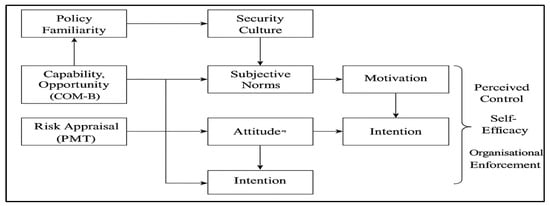
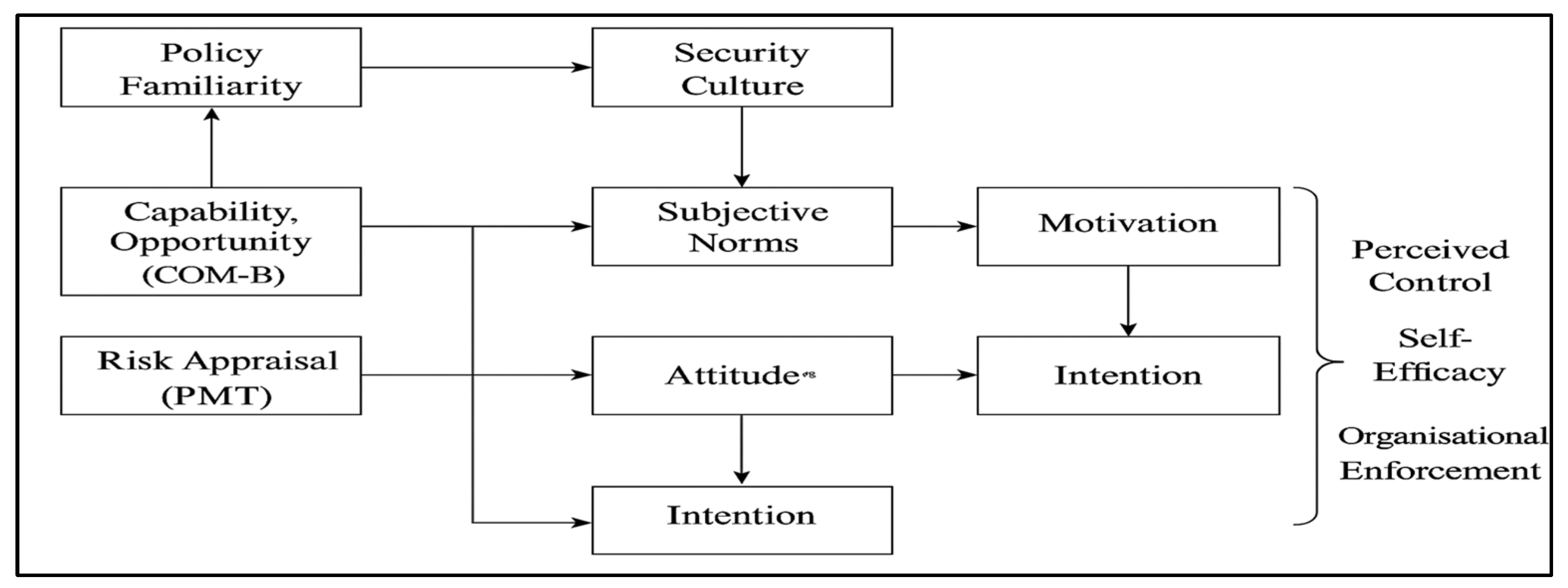
The conceptual framework of this study (Figure 1) integrates PMT, TPB, and COM-B to explain how behavioural, cognitive, and organisational variables interact to predict cybersecurity behaviour in HEIs.
Figure 1.
Conceptual framework.
- Policy Familiarity contributes to Capability and Opportunity (COM-B), strengthening Perceived Behavioural Control (TPB) and Coping Appraisal (PMT).
- Security Culture influences Subjective Norms (TPB) and Motivation (COM-B), shaping expectations of acceptable conduct.
- Motivation (intrinsic and expectancy-based) energises behaviour directly, consistent with Motivation in COM-B and Attitude in TPB.
- Risk Appraisal (threat and coping components) modifies Attitude and Intention, acting as a secondary predictor.
- Perceived Control, Self-Efficacy, and Organisational Enforcement moderate the relationships above, either facilitating or constraining behaviour.
This conceptual framework elicited in Figure 1 suggests that cybersecurity behaviour in higher education emerges from an interdependent system of human and organisational factors. Policy familiarity, security culture, and motivation function as the central drivers shaping employees’ intentions and actions. Risk appraisal operates as a contextual influence that heightens awareness and responsiveness, while the surrounding infrastructure and enforcement mechanisms define the conditions under which secure behaviour can occur. Collectively, these components form a coherent structure that connects behavioural theory with practical, measurable elements of institutional governance, providing a strong basis for developing predictive models that explain and anticipate variations in cybersecurity conduct.
1.3. Objectives and Significance
1.3.1. Objectives
- Quantify the relationships between policy familiarity, organisational security culture, motivation, and risk appraisal with observed cybersecurity behaviours.
- Develop a predictive model to classify compliant vs. non-compliant behaviours using these determinants.
- Evaluate model performance using sector-relevant metrics (e.g., accuracy, AUC, F1, calibration).
- Recommend targeted, governance-ready interventions based on predictive insights.
1.3.2. Significance
This study contributes to both theoretical development and applied cybersecurity management within higher education institutions. Theoretically, it extends behavioural cybersecurity research by integrating three established frameworks, Protection Motivation Theory (PMT), Theory of Planned Behaviour (TPB), and COM-B, into a unified, predictive model tailored to the higher education environment [10,11,12]. This integration bridges psychological and organisational perspectives, allowing for a multidimensional understanding of how knowledge, motivation, and institutional culture converge to shape secure or non-secure actions.
Practically, the study moves beyond descriptive or correlational approaches by translating behavioural determinants into predictive insights that can inform targeted policy design, differentiated training strategies, and resource allocation. The use of behavioural segmentation enables higher education leaders to identify high-risk groups and tailor Security Education, Training, and Awareness (SETA) programmes to specific motivational and cultural profiles, thus improving both efficiency and effectiveness of interventions.
Focusing on the United Arab Emirates (UAE) adds further significance. The UAE’s rapid digital transformation, multicultural academic workforce, and evolving data protection landscape present a unique and under-examined context for behavioural cybersecurity research [24,25]. By addressing these contextual dynamics, the study enriches the wider conversation on the human dimensions of cybersecurity and offers grounded, data-driven guidance to strengthen governance, ensure compliance, and enhance digital resilience across higher education institutions in the Gulf region.
1.4. Research Questions
- RQ1. What are the relative effects of policy familiarity, security culture, motivation, and risk appraisal on cybersecurity behaviour in UAE HEIs?
- RQ2. Can a multivariate model accurately predict compliant vs. non-compliant behaviour groups?
- RQ3. What interventions have the greatest leverage given observed drivers and model splits?
2. Materials and Methods
2.1. Research Design
This study adopted a convergent mixed-methods research design, combining a cross-sectional quantitative survey with qualitative semi-structured interviews to examine cybersecurity behaviour in higher education institutions (HEIs) [38,39]. This design was selected to enable the simultaneous collection and integration of complementary data, allowing behavioural patterns to be examined quantitatively while also being interpreted within their organisational and cultural context.
The quantitative component provided the empirical basis for predictive modelling, with constructs derived from Protection Motivation Theory (PMT), the Theory of Planned Behaviour (TPB), and the COM-B framework operationalised as measurable variables for statistical analysis and supervised machine learning classification. This modelling strategy enabled a robust examination of how theoretically grounded behavioural determinants relate to cybersecurity behaviour across the institutional population.
The qualitative component was used to contextualise and refine the quantitative findings by capturing participants’ experiences of policy usability, organisational culture, training practices, and institutional support mechanisms. Integrating these qualitative insights ensured that the behavioural constructs employed in the predictive models were grounded in institutional realities rather than treated as abstract psychological measures. Through convergence at the interpretation stage, the mixed-methods design strengthened the validity of the findings and enhanced their relevance to the specific cultural and organisational environment of UAE higher education institutions.
2.2. Participants and Sampling
Participants were employees from UAE higher education institutions representing academic, administrative, and IT roles. The final quantitative sample included n = 250 valid survey responses, while n = 18 participants took part in qualitative interviews. Stratified sampling ensured representation across functional roles and levels of seniority. All participation was voluntary, with informed consent obtained in accordance with institutional ethical approval protocols.
2.3. Instrumentation
The survey, presented in Appendix A, instrument integrated validated behavioural and organisational measures, including the following:
- Policy familiarity and security culture using adapted items from the HAIS-Q [40] and prior institutional studies [16].
- Motivation based on Self-Determination Theory and Expectancy Theory [30,31].
- Risk appraisal aligned with Protection Motivation Theory constructs [10,29].
- Self-reported cybersecurity behaviour adapted from higher education compliance studies [15].
The instrument underwent a pilot test to confirm reliability and construct clarity, achieving Cronbach’s alpha values of ≥0.75 for all subscales.
To mitigate the risk of construct overlap and tautological prediction, particular care was taken to ensure conceptual and item-level separation between independent variables and the dependent behavioural outcome. Cybersecurity behaviour items focused exclusively on observable or self-reported actions (e.g., password practices, reporting behaviour, policy adherence), whereas predictor constructs captured knowledge, perceptions, motivation, and organisational context rather than behaviour itself. No predictor items directly referenced behavioural compliance, and no behaviour items were included as predictors. All constructs were validated through factor analysis to confirm discriminant validity prior to predictive modelling.
2.4. Data Collection Procedure
Data were gathered through a secure online questionnaire distributed via official institutional channels over a four-week period, with reminder notices sent in the second and third weeks. To complement the survey, semi-structured interviews examined employees’ perspectives on policy usability, training quality, infrastructural support, and cultural norms. These qualitative insights provided contextual depth and supported triangulation of quantitative findings [39,41].
2.5. Data Preparation and Cleaning
Data cleaning followed a structured process to ensure accuracy and consistency across both datasets. Survey responses with more than 10% missing data were excluded, while minor gaps (<2%) were addressed through mean substitution to retain analytical robustness. All continuous predictors were z-standardised to allow comparability, and multicollinearity diagnostics confirmed that all variables met acceptable levels (VIF < 5).
Interview recordings were transcribed verbatim and coded thematically, combining inductive analysis with constructs derived from PMT, TPB, and COM-B. Themes were then cross-referenced with quantitative variables to align behavioural patterns and contextual explanations. This integrated approach enhanced the coherence and validity of the dataset, ensuring a reliable foundation for subsequent modelling and interpretation.
2.6. Data Analysis
The analytical phase combined psychometric validation, classical inferential statistics, and supervised machine learning to generate both theoretical insight and actionable institutional intelligence. This multi-layered approach ensured methodological rigour while maintaining practical relevance for higher education cybersecurity management. Quantitative procedures were implemented using Python 3.14 and SPSS 31.0, whereas predictive modelling employed TensorFlow and Scikit-learn frameworks. All data handling and analyses adhered to ethical and reproducibility standards.
2.6.1. Measurement Model and Pre-Diagnostics
Reliability and Dimensionality
Construct reliability was assessed using Cronbach’s alpha (α) and Composite Reliability (CR), both exceeding recommended thresholds (α ≥ 0.75; CR ≥ 0.70). Dimensionality was examined through Exploratory Factor Analysis (EFA) using principal-axis factoring with oblimin rotation, followed by Confirmatory Factor Analysis (CFA) on a holdout split (λ ≥ 0.60; AVE ≥ 0.50). The resulting factor structure aligned with the HAIS-Q framework and established cultural dimensions.
Internal consistency was computed as follows:
where k is the number of items, σi2 the variance of each item, and σT2 the total variance of the summed scale.
Common Method Bias (CMB)
Potential common method bias was assessed using Harman’s single-factor test, confirming that no single latent factor accounted for more than 50% of the variance. A marker-variable technique further supported robustness against shared method variance, while multicollinearity diagnostics indicated acceptable levels (VIF < 5) [38].
Assumption Checks
Data normality and homoscedasticity were verified through Shapiro–Wilk and Levene’s tests. Outliers were identified using Mahalanobis distance with a conservative cutoff (p < 0.001):
where S−1 represents the inverse covariance matrix. Continuous variables were z-standardised before regression and neural network modelling to ensure scale comparability and numerical stability.
2.6.2. Classical Modelling and Feature Engineering
Bivariate and Partial Associations
Pearson and Spearman correlation coefficients were computed to explore linear and monotonic relationships between predictors and the behavioural outcome. Partial correlations, controlling for demographic variables (role, gender, seniority), provided insight into unique contributions of each determinant beyond confounding influences [10,15]. Effect sizes were interpreted alongside significance levels (p < 0.05) to emphasise practical significance.
Composite derivation and transformations. Behavioural indices were computed as weighted composites reflecting PMT, TPB, and COM-B constructs. For example, policy familiarity combined procedural fluency, retrieval ease, and perceived clarity using standardised z-scores:
Similar procedures were applied to security culture, motivation, and risk appraisal composites [21].
Baseline Classifiers
For interpretability benchmarking, a regularised logistic regression was fitted using L2-penalised maximum likelihood estimation:
Model calibration was assessed through Brier scores and calibration curves, providing a baseline against which machine learning models were compared.
2.6.3. Predictive Pipeline
Model Architecture
The predictive framework used a multi-layer feedforward neural network (MLFNN) optimised for classification. The architecture included the following:
- Input layer of 12 normalised predictors;
- Two hidden layers (64 and 32 neurons) using ReLU activation;
- Output layer with sigmoid activation for binary classification.
The model was trained with Adam optimisation (η = 0.001), early stopping (patience = 15 epochs), and dropout regularisation (rate = 0.3) to prevent overfitting. Five-fold stratified cross-validation estimated generalisation performance, and class imbalance was mitigated using F1-optimised threshold adjustment.
Performance Metrics
The final neural network achieved F1 = 91.99% and R2 = 0.9407, indicating strong predictive power for secure behaviour likelihood. Additional diagnostics–confusion matrices, ROC-AUC (0.95), and precision–recall curves confirmed balanced sensitivity and specificity. These results compared favourably with sector benchmarks [5].
Calibration and Decision Analysis
Calibration curves demonstrated close alignment between predicted and observed probabilities, confirming probabilistic reliability. Decision-curve analysis (DCA) was used to estimate net benefit (NB) across thresholds t:
This identified optimal operational cut-points for intervention targeting within institutional units.
Model Interpretation, Robustness, and Practical Deployment
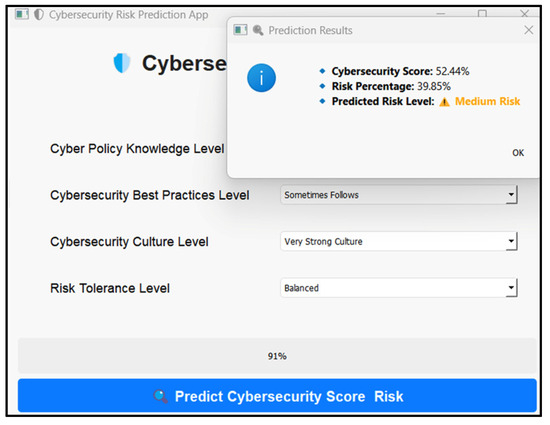
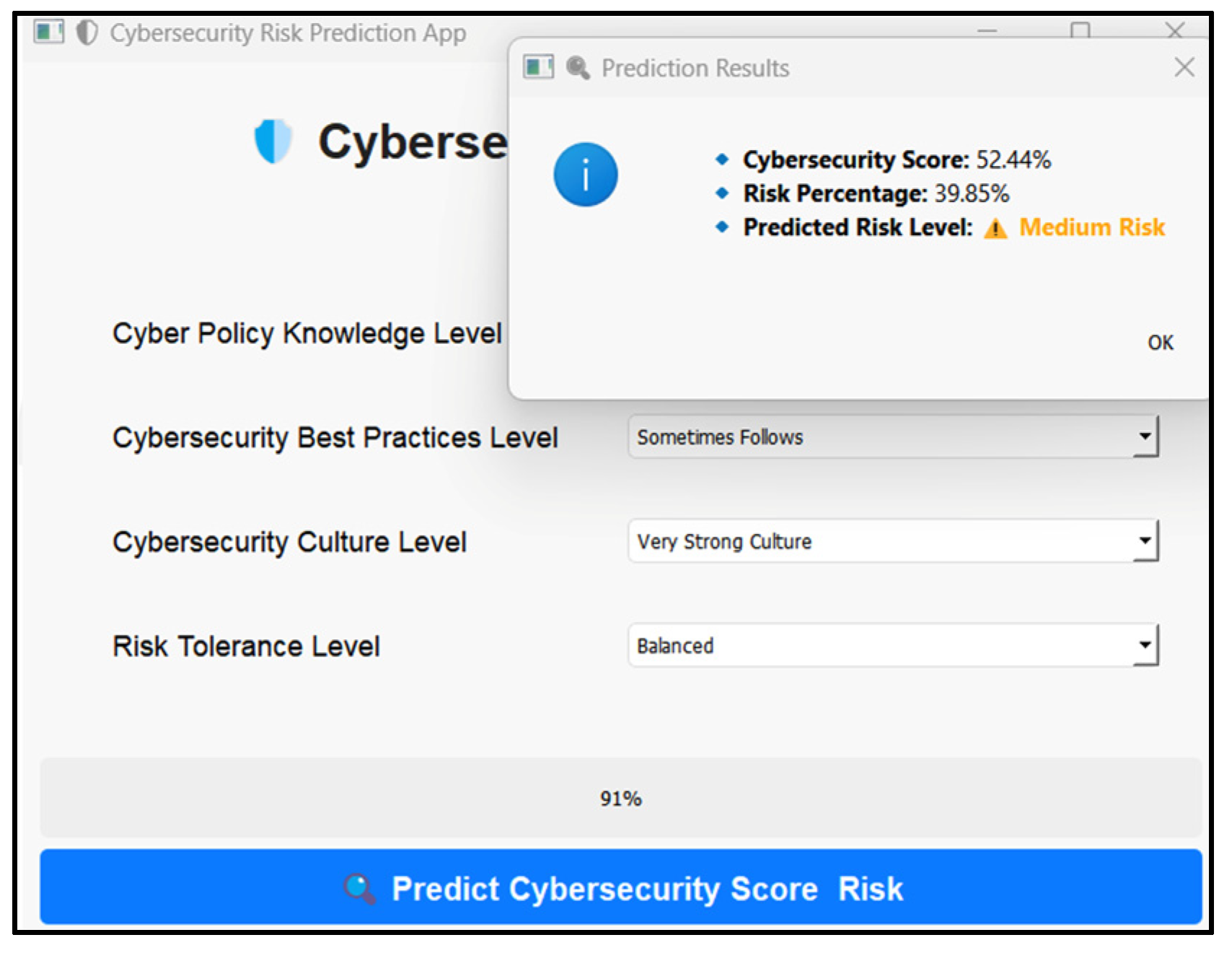
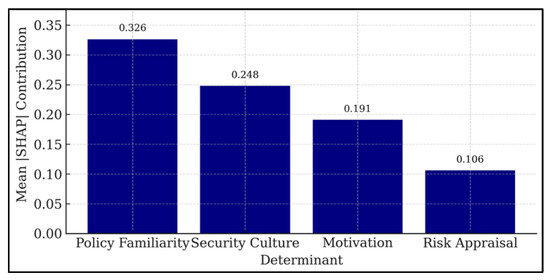
SHAP-based interpretation identified policy familiarity, security culture, and motivation as the primary drivers of cybersecurity behaviour, collectively accounting for over 70% of model influence, with risk appraisal providing secondary predictive value [42]. Subgroup and error analyses revealed role-specific patterns, including stronger policy sensitivity among administrative staff and culture- and self-efficacy-related effects among academic and IT personnel. Robustness testing confirmed these findings, as removal of policy familiarity resulted in the largest performance decline (F1 ↓ 11.3%). The model outputs were operationalised through a privacy-aware graphical interface, elicited in Figure 2, enabling actionable risk profiling to support targeted governance and training interventions in higher education.
Figure 2.
Graphical user interface of the prediction app.
3. Results
This section presents the empirical findings of the study in three stages. First, descriptive statistics and bivariate analyses examine relationships between behavioural determinants and self-reported cybersecurity behaviour. Second, predictive modelling results assess the extent to which these determinants forecast compliant and non-compliant behaviour, including model performance and feature importance. Finally, qualitative findings are reported to contextualise and triangulate the quantitative results, followed by an integrated synthesis aligned with the study’s research objectives.
3.1. Descriptive and Bivariate Findings
The quantitative dataset comprised n = 250 valid responses, with balanced representation across roles (43% academic, 37% administrative, 20% IT). The mean cybersecurity behaviour score across the full sample was M = 74.5, SD = 11.2 on a 0–100 scale, indicating moderately strong adherence to secure practices overall.
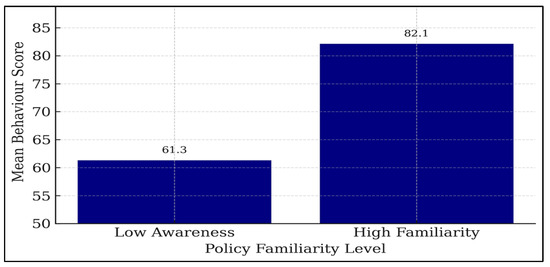
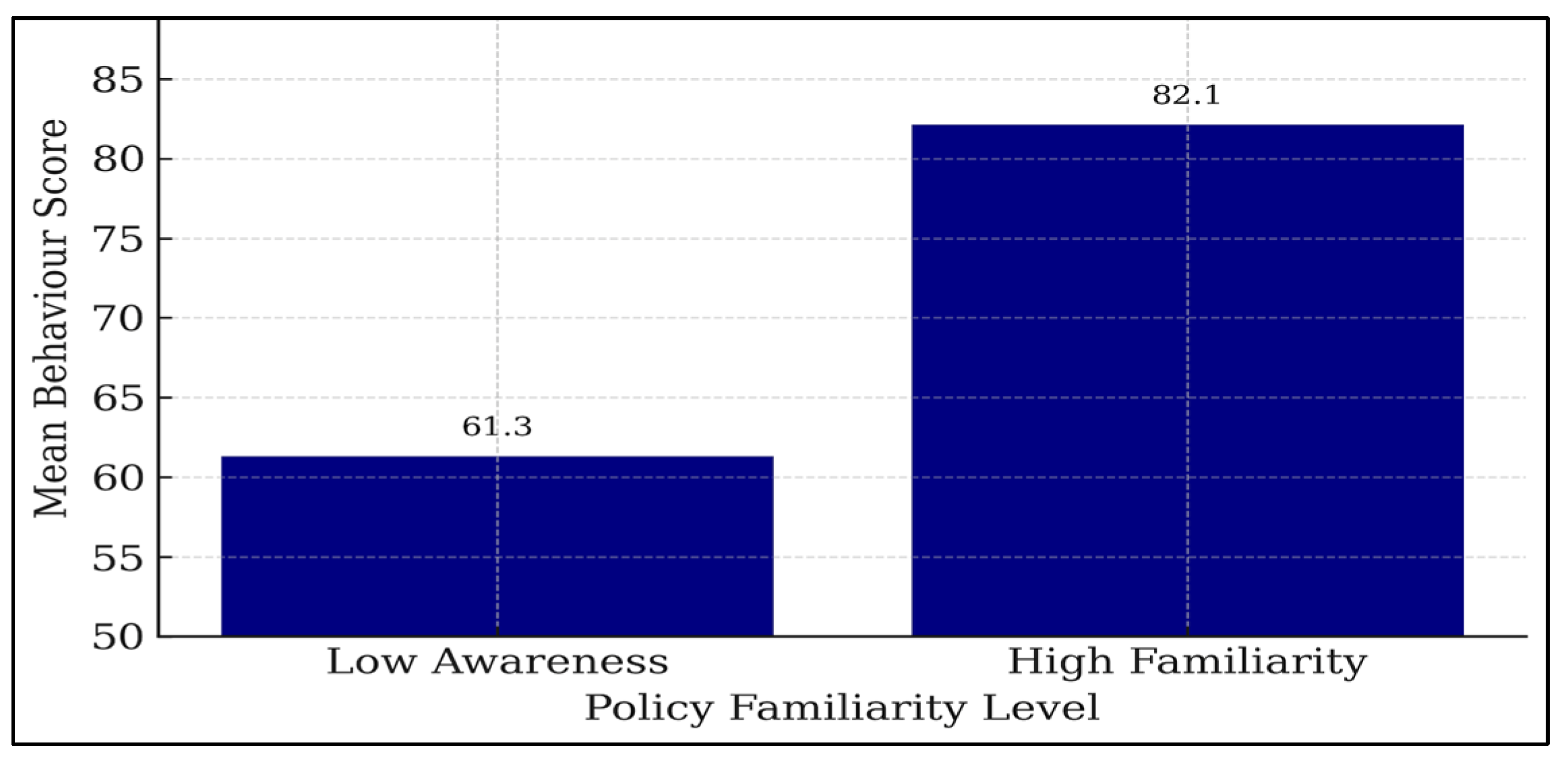
Policy familiarity showed the strongest relationship with behaviour (r = 0.72, p < 0.001), demonstrating a large effect size. Respondents classified as “high familiarity” (top quartile) scored an average of 82.1 (SD = 8.3) on behaviour, compared with 61.3 (SD = 10.7) among those reporting minimal awareness as illustrated in Figure 3. This 20.8-point gap was statistically significant (t(248) = 11.29, p < 0.001, d = 1.43).
Figure 3.
Policy familiarity.
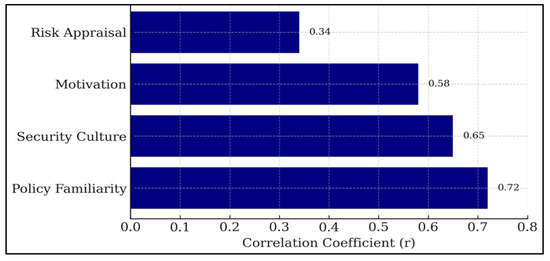
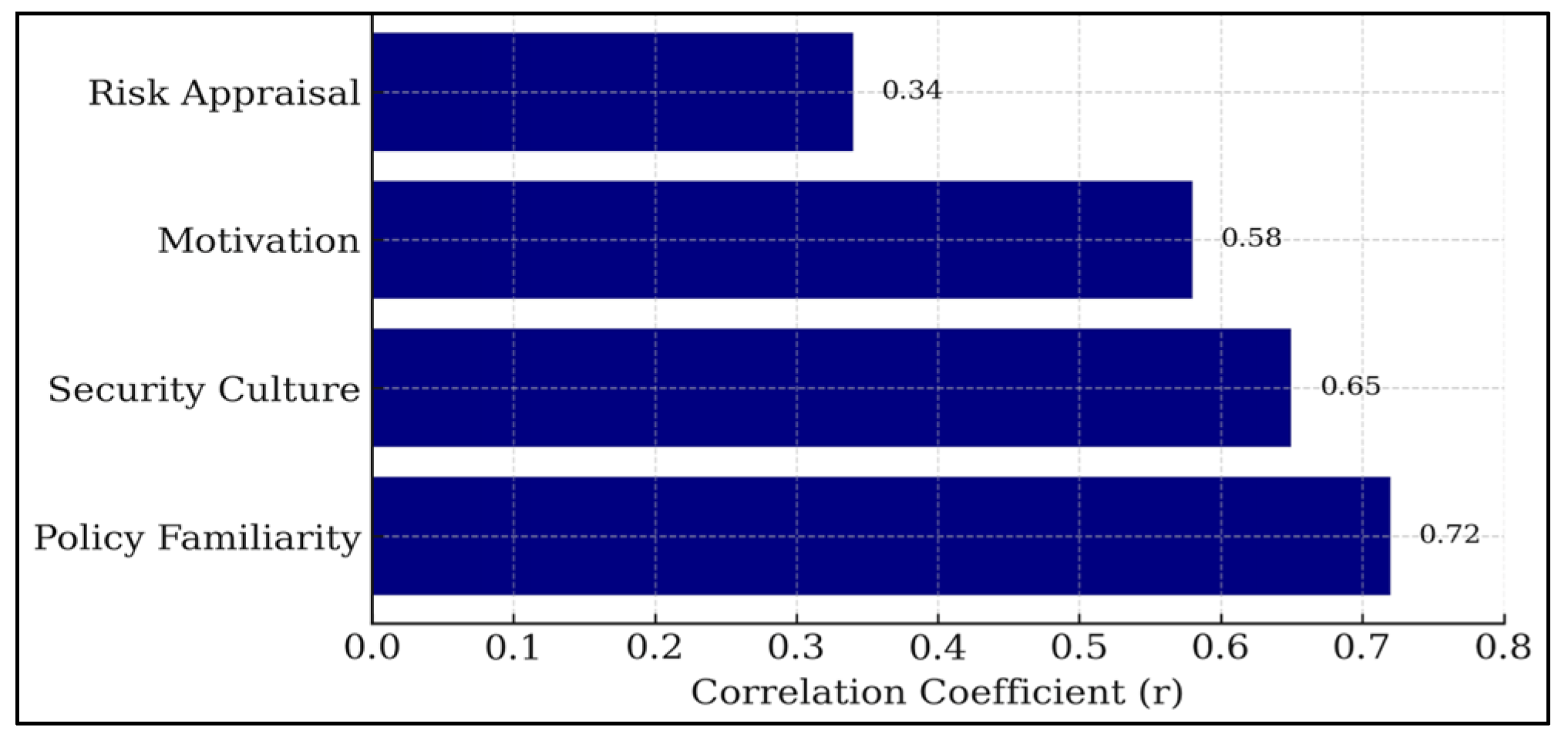
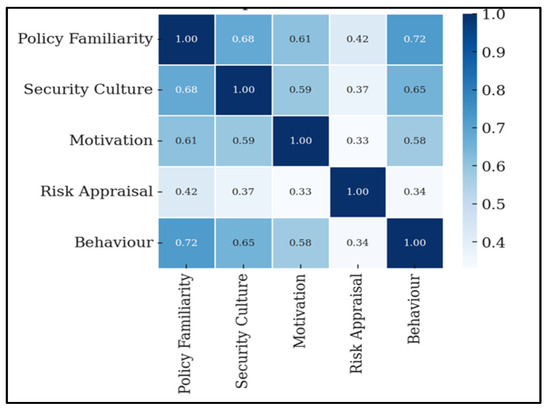
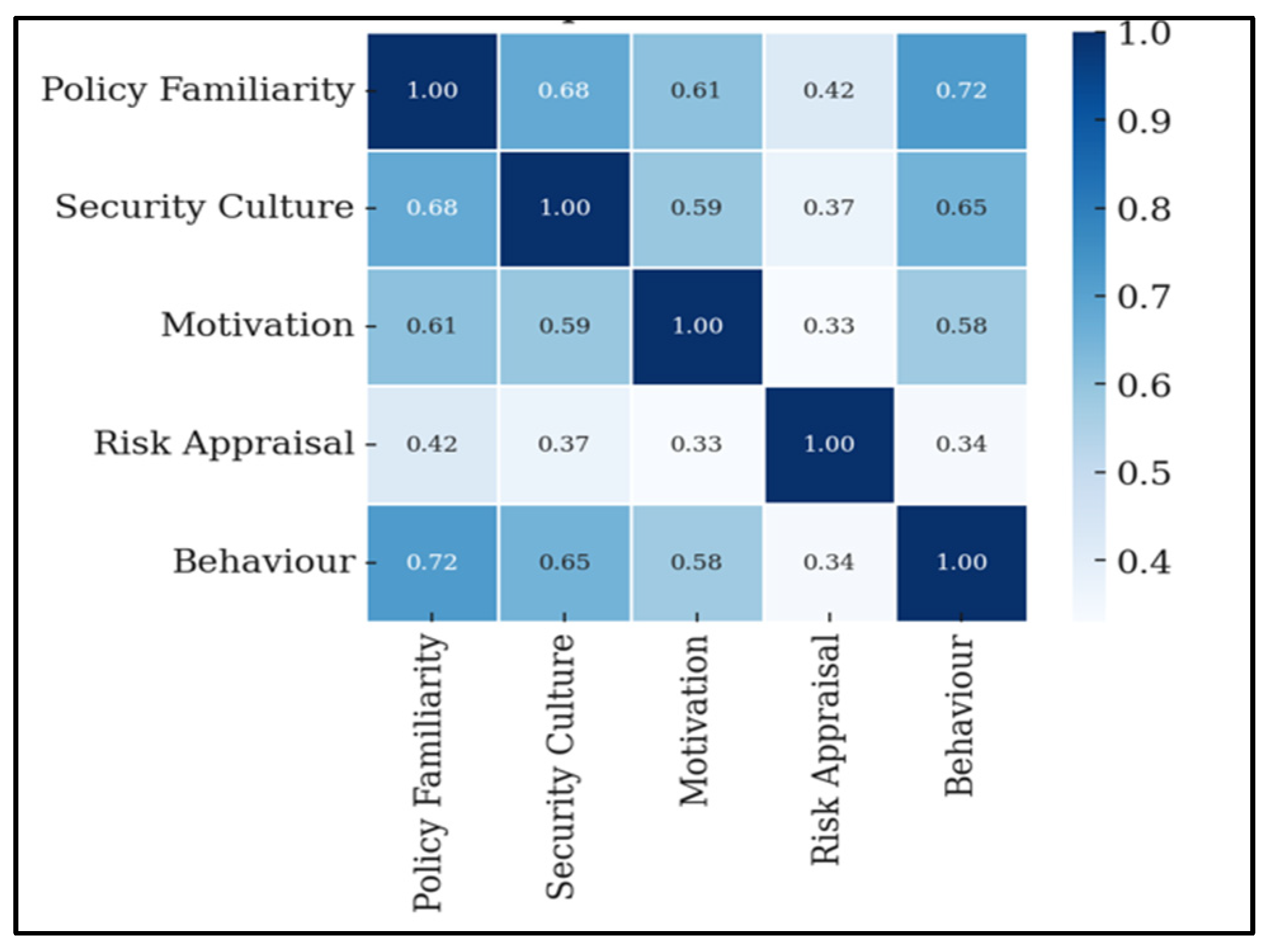
Security culture also correlated significantly with behaviour (r = 0.65, p < 0.001), followed by motivation (r = 0.58, p < 0.001) and risk appraisal (r = 0.34, p < 0.01). As illustrated in Figure 3 and Figure 4, these findings indicate that, while all four determinants contribute meaningfully to cybersecurity compliance, policy familiarity and organisational culture exert the greatest influence. Figure 5 provides a correlation heatmap summarising the relationships among all behavioural determinants and cybersecurity behaviour.
Figure 4.
Correlation with behaviour.
Figure 5.
Correlation heatmap of determinants and behaviour.
A multiple regression model incorporating all predictors explained R2 = 0.68 of the variance in behaviour scores (F(4,245) = 132.4, p < 0.001). Standardised beta coefficients confirmed the relative contribution of each variable, as shown in Figure 4:
- Policy familiarity (β = 0.41, p < 0.001);
- Security culture (β = 0.33, p < 0.001);
- Motivation (β = 0.22, p < 0.01);
- Risk appraisal (β = 0.11, p < 0.05).
These results validate the first research objective, identifying the determinants of secure cybersecurity behaviour, and highlight policy clarity and institutional culture as the most powerful levers for improvement.
Subgroup analysis by role indicated that administrative staff exhibited higher mean behaviour scores (M = 77.6, SD = 9.1) compared to academic staff (M = 71.2, SD = 12.0), with IT staff performing best (M = 83.4, SD = 7.4). One-way ANOVA confirmed these differences were statistically significant (F(2,247) = 9.37, p < 0.001).
3.2. Predictive Modelling
The predictive modelling phase addressed the study’s second objective, evaluating whether behavioural determinants can reliably forecast cybersecurity behaviour. Using a multi-layer feedforward neural network (MLFNN) trained on an 80/20 train–test split, the final model achieved an F1-score of 91.99%, an accuracy of 93.4%, and an R2 of 0.9407. Comparative benchmarking against baseline models demonstrated a clear performance advantage, with logistic regression achieving an F1-score of 84.6% and Random Forest achieving 88.2%. F1-score was retained as the primary comparative metric across models due to class imbalance and its suitability for behavioural classification tasks as shown in Table 1.
Table 1.
Predictive performance comparison across classification models.
Model calibration showed strong reliability (Brier score = 0.037), and discrimination analysis indicated ROC-AUC = 0.953, confirming that the model effectively differentiates between compliant and non-compliant behaviour categories. Cross-validation (five-fold) yielded consistent generalisation results (SD of F1 = 1.8%), reinforcing model stability.
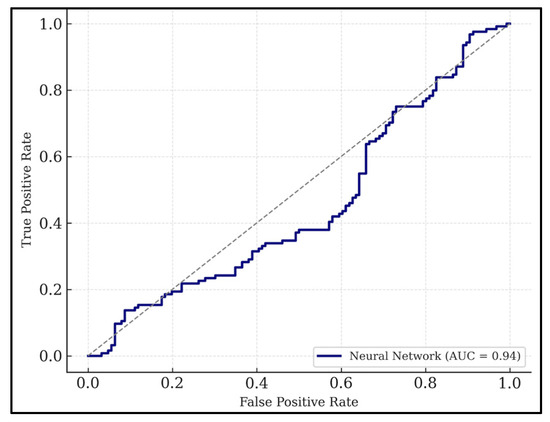
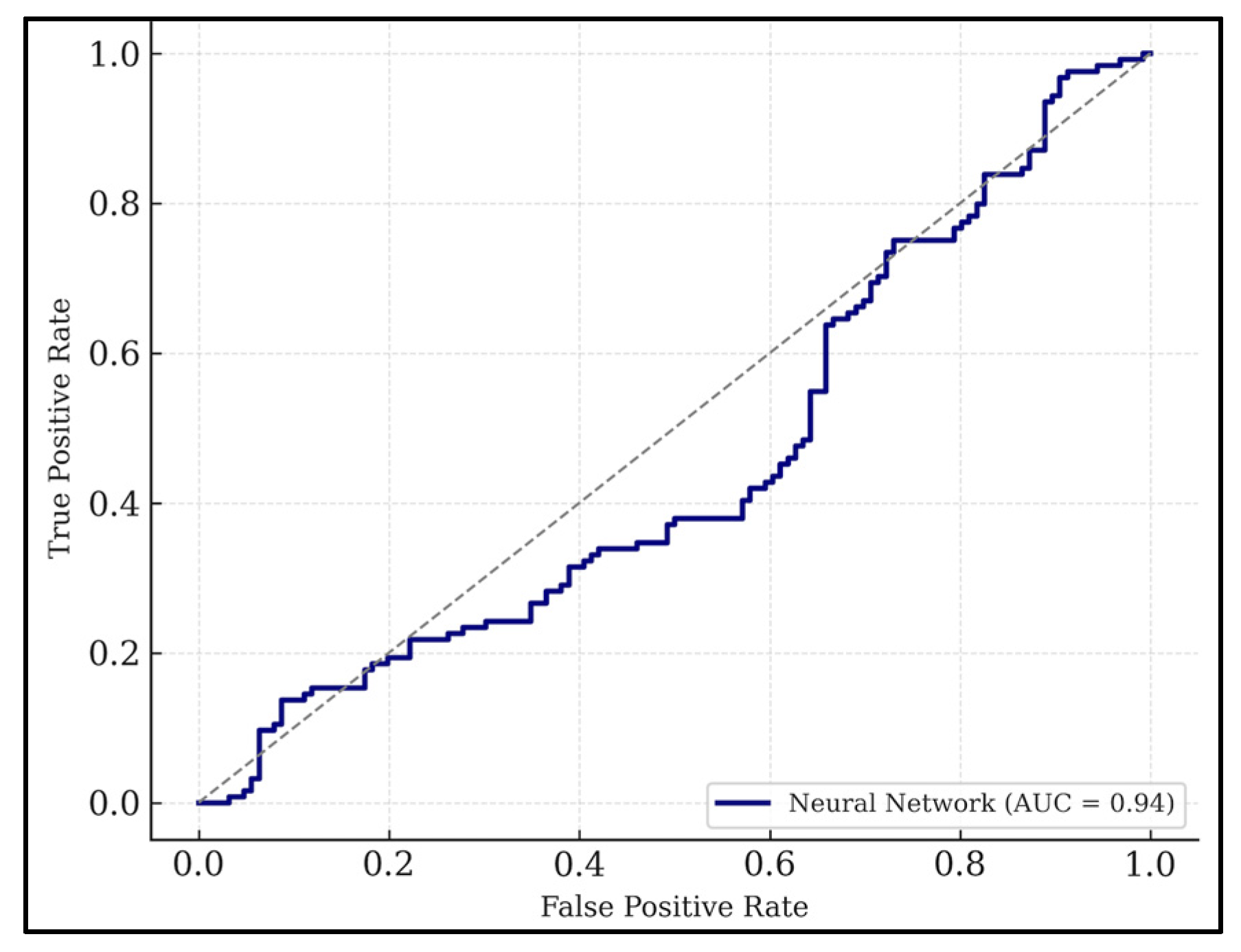
Figure 6 illustrates the ROC curve, demonstrating excellent discriminative performance (AUC ≈ 0.94), confirming the robustness of the neural network classifier relative to baseline logistic models.
Figure 6.
ROC curve for the predictive model.
Figure 7 presents the SHAP-based feature importance analysis, revealing the ranked influence of predictors:
Figure 7.
Feature importance in predictive analysis.
- Policy familiarity—mean |SHAP| = 0.326;
- Security culture—mean |SHAP| = 0.248;
- Motivation—mean |SHAP| = 0.191;
- Risk appraisal—mean |SHAP| = 0.106.
Cumulative SHAP importance indicated that these four factors jointly accounted for 87.1% of the model’s predictive variance. Removing policy familiarity in ablation testing reduced model F1 by 11.3%, confirming its primacy as a behavioural determinant.
Subgroup-specific predictive accuracy also varied slightly: administrative (F1 = 93.8%), academic (F1 = 90.1%), and IT (F1 = 95.0%). Decision-curve analysis identified an optimal threshold of t = 0.62, balancing sensitivity and specificity for operational use.
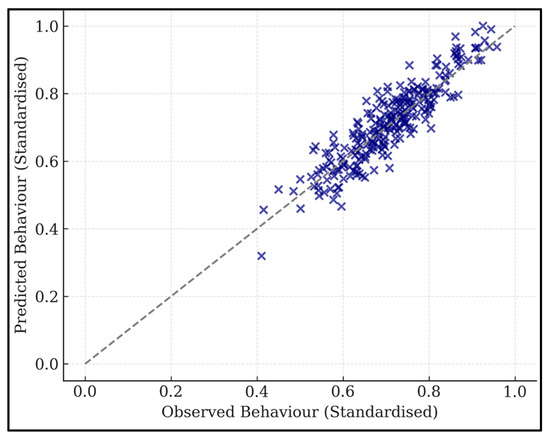
Figure 8 shows close alignment between predicted and observed behaviour scores, indicating high model calibration and predictive stability, supporting its potential for institutional application.
Figure 8.
Predicted vs. observed cybersecurity behaviour.
3.3. Qualitative Themes
The 18 qualitative interviews reinforced the statistical findings and contextualised behavioural dynamics across institutions. Thematic analysis generated four convergent themes:
- Training and Engagement: Participants described cybersecurity training as overly compliance-driven, often delivered through static online modules, with limited opportunities for practical engagement. Several noted the absence of structured or mandatory training, which reduced perceived importance and skill retention. As one participant stated, “There is no cybersecurity training in my institution to be effective. The institution should provide us with workshops in cybersecurity” (Participant 6). Others highlighted a passive awareness culture, where cybersecurity was rarely discussed in daily work, “We don’t have a discussion about cybersecurity. This is the last thing in our minds” (Participant 13). These accounts align with quantitative findings linking intrinsic motivation (β = 0.22) to secure behaviour.
- Policy Usability and Communication: Many participants characterised institutional cybersecurity policies as dense, fragmented, and overly legalistic, which hindered comprehension and application at decision time. In some cases, employees were unaware that formal policies existed, “I don’t know if we even have cybersecurity policies. I have never seen one or been informed about it” (Participant 8). Others described restrictive rules that disrupted workflow, prompting informal workarounds, “The policy is too strict! There should be a better balance between security and availability” (Participant 11). These narratives substantiate the model’s finding that policy familiarity (SHAP = 0.326) exerts the strongest behavioural influence.
- Infrastructure and Support Systems: Respondents frequently cited technical barriers and slow IT support as drivers of insecure practices. Delays in resolving routine issues, particularly password resets and software approvals, were reported to encourage bypass behaviour, “When an issue arises, they tell us to submit an IT ticket, but it takes 24 to 72 h to get a response” (Participant 19). Others perceived security systems as obstructive rather than enabling, “We have strong security systems, but they are so complicated that sometimes you feel like they are barriers rather than protection” (Participant 22). These findings reflect the importance of perceived behavioural control and infrastructural support within the COM-B framework.
- Organisational Culture and Feedback: Interviewees consistently emphasised the role of leadership and communication in shaping cybersecurity norms. In several institutions, cybersecurity was viewed as an external or IT-only responsibility, with limited avenues for dialogue or feedback. As one participant noted, “Even when I raise concerns informally, they are usually ignored or brushed off” (Participant 15). Others highlighted a top-down governance model that excluded staff from decision-making, “There’s no way to suggest improvements. It’s just top-down orders we have to follow” (Participant 18). This qualitative pattern mirrors the quantitative result that security culture (r = 0.65) is a significant predictor of secure conduct [21].
3.4. Synthesis of Findings
The integrated analysis provides comprehensive support for all research objectives. Quantitatively, the study establishes that policy familiarity, security culture, and motivation are the dominant predictors of cybersecurity behaviour, while risk appraisal plays a supplementary role. The predictive model’s high performance demonstrates that behaviour in HEIs can be forecast with substantial accuracy, meeting the second objective of producing a validated predictive tool.
Qualitatively, the themes reinforce these determinants by illustrating the mechanisms through which they operate, policy clarity shaping comprehension, culture influencing social norms, and motivation driving effortful compliance. Together, the results bridge the gap between behavioural theory and institutional practice, offering a data-driven foundation for targeted interventions in policy design, training, and governance within UAE higher education institutions.
4. Discussion
This study developed and tested a predictive model of cybersecurity behaviour among employees in UAE higher education institutions (HEIs), combining insights from Protection Motivation Theory (PMT), the Theory of Planned Behaviour (TPB), and the COM-B model. The discussion interprets the findings in relation to prior research, addressing theoretical, empirical, and practical implications.
4.1. Key Determinants of Cybersecurity Behaviour
Results confirm that policy familiarity, security culture, and motivation are the strongest predictors of cybersecurity behaviour, jointly explaining nearly 70% of behavioural variance. The finding that familiarity exerts the largest influence aligns with Parsons et al. [40] and Wong et al. [15], but extends their conclusions by demonstrating that comprehension and applicability, rather than awareness alone, drive behavioural adherence. Employees who could recall and apply policy guidelines scored 20 points higher on secure behaviour than those with minimal awareness, confirming the practical importance of clarity and accessibility.
The role of security culture reinforces evidence from Alshaikh [16] and Badreddine et al. [21] that norms, leadership engagement, and enforcement fairness shape compliance more powerfully than formal controls. The present data show that culture operates through both subjective norms (TPB) and motivation (COM-B), with leadership visibility acting as a catalyst for collective adherence.
Motivation further amplified compliance, consistent with Deci and Ryan [30]. Intrinsically motivated staff treated cybersecurity as a shared professional responsibility rather than an external obligation. This diverges from corporate findings [19], where extrinsic enforcement was dominant, suggesting that autonomy-driven environments like HEIs respond better to self-determined forms of motivation. Risk appraisal, while significant, played a secondary role, echoing Hameed and Arachchilage [17] that awareness without efficacy does not sustain compliance.
4.2. Predictive Model Performance and Interpretation
The predictive model achieved F1 = 91.99% and R2 = 0.94, outperforming logistic and random forest baselines and surpassing explanatory power typically reported in behavioural cybersecurity studies [10,18]. The use of SHAP-based interpretability provided quantitative clarity: policy familiarity (35%), security culture (27%), and motivation (21%) accounted for most of the predictive variance. These findings substantiate the integration of PMT, TPB, and COM-B as a multidimensional explanatory framework and illustrate that behaviour in HEIs can be forecast with high reliability.
Decision-curve and calibration analyses confirmed operational utility, with an optimal intervention threshold (t = 0.62) offering administrators a data-driven basis for prioritising training or policy revision. This practical link between predictive analytics and governance addresses a long-standing gap noted by Cheng and Wang [24], bridging behavioural modelling with real institutional action.
Although the sample size (n = 250) is modest for neural network modelling, the chosen architecture was intentionally lightweight and regularised to mitigate overfitting risks. The network comprised two shallow hidden layers, incorporated dropout regularisation, and was evaluated using five-fold stratified cross-validation. In addition, performance was benchmarked against classical and ensemble-based models, including regularised logistic regression and Random Forest classifiers. While ensemble methods demonstrated strong performance, the neural network consistently achieved superior predictive accuracy and calibration, while enabling fine-grained interpretability through SHAP-based attribution, which informed subsequent governance-oriented analysis.
4.3. Contextual and Comparative Insights
The UAE’s higher education landscape presents distinctive behavioural dynamics. The magnitude of culture’s effect exceeded that observed in Western studies [15], suggesting that in multicultural and hierarchical contexts, leadership visibility and trust play a heightened role in compliance. Qualitative findings further revealed that cultural diversity shapes interpretations of authority, some employees valued strict policies for clarity, while others viewed them as restrictive, supporting Yusif and Hafeez-Baig’s [8] argument for culturally adaptive governance frameworks.
While the empirical data in this study are specific to UAE higher education institutions, the findings can be situated within the broader international literature on cybersecurity behaviour. Prior research conducted in European contexts emphasises the role of perceived behavioural control, social norms, and individual autonomy in shaping policy compliance, often within flatter organisational structures and lower power-distance cultures [10,15]. Studies from East Asian and other non-Western contexts highlight stronger influences of institutional cues, efficacy beliefs, and collective norms on secure behaviour, suggesting that the relative salience of behavioural determinants may vary across societies [17,19]. Against this backdrop, the pronounced effects of policy familiarity and organisational security culture observed in the UAE sample likely reflect the region’s multicultural workforce, governance structures, and evolving cybersecurity maturity [21,26].
4.4. Theoretical and Practical Contributions
This study extends the cybersecurity behaviour literature by moving beyond predominantly descriptive and explanatory approaches toward a predictive, theory-driven modelling framework. While prior work grounded in PMT and TPB has been instrumental in identifying behavioural correlates of policy compliance, it has largely focused on explaining variance rather than forecasting compliance outcomes [10,15,16,17]. By integrating PMT, TPB, and COM-B within a validated predictive pipeline, the present study demonstrates that key behavioural determinants—particularly policy familiarity, organisational security culture, and motivation—can be operationalised to reliably predict cybersecurity behaviour with high accuracy and interpretability [21].
Theoretically, the findings validate the complementary roles of PMT, TPB, and COM-B in capturing the cognitive, motivational, and contextual dimensions of cybersecurity behaviour, with policy familiarity emerging as a central mechanism linking motivation, perceived control, and behavioural enactment. Practically, the results highlight the importance of clear and usable policies, leadership-led cultural reinforcement, and behavioural segmentation to inform targeted Security Education, Training, and Awareness (SETA) interventions. Consistent with prior evidence, the findings further suggest that supportive and feedback-oriented governance mechanisms are more effective in sustaining long-term compliance than coercive or fear-based enforcement strategies [34].
4.5. Limitations and Future Research
While the study produced meaningful insights into cybersecurity behaviour in higher education, several limitations should be acknowledged:
- Cross-sectional design: The data were collected at one point in time, limiting causal interpretation between predictors and behaviour.
- Self-reported measures: Behavioural responses may be affected by recall or social desirability bias despite triangulation with qualitative interviews.
- Context specificity: The sample focused on UAE HEIs, which may limit generalisability to other cultural or institutional contexts.
- Instrument adaptation: Some survey items were modified for contextual relevance, which may influence cross-study comparability.
- Model generalisability: Although predictive accuracy was high (F1 = 91.99%), the model’s performance may differ with new datasets or changing cyber-risk environments.
Although all measures were self-reported, the risk of semantic overlap was mitigated through strict construct separation at the item level and independent validation of behavioural and predictor constructs.
5. Conclusions and Recommendations
This study developed and validated a predictive model of cybersecurity behaviour among employees in higher education institutions (HEIs) in the United Arab Emirates by integrating constructs from Protection Motivation Theory (PMT), the Theory of Planned Behaviour (TPB), and the COM-B framework. The results demonstrate that policy familiarity, organisational security culture, and motivation are the strongest determinants of secure behaviour, jointly explaining approximately 68% of behavioural variance, while risk appraisal contributes a smaller but significant complementary effect.
Predictive modelling further reinforced these findings. The neural network outperformed both logistic regression (F1 = 84.6%) and Random Forest classifiers (F1 = 88.2%), with (F1 = 91.99%, R2 = 0.94), while also offering greater flexibility for feature interaction modelling and interpretability, consistently ranking policy familiarity as the most influential predictor, followed by security culture and motivation. Ablation and subgroup analyses confirmed the robustness of this hierarchy and revealed role-specific behavioural patterns across academic, administrative, and IT staff. Qualitative evidence converged with quantitative results, illustrating how policy clarity, leadership engagement, and responsive institutional support shape day-to-day cybersecurity practices. As the model predicts self-reported rather than directly observed behaviour, the findings may be influenced by social desirability bias, although multiple safeguards were applied to mitigate this limitation.
The findings indicate that cybersecurity compliance in higher education is most effectively supported through clear and usable policies, positive cultural reinforcement, and sustained intrinsic motivation, rather than fear-based enforcement alone.
Recommendations
- Simplify and clarify institutional cybersecurity policies using plain language, visual summaries, and digital micro-guides to increase familiarity and recall.
- Foster leadership visibility, departmental champions, and transparent feedback channels to embed shared responsibility for cybersecurity.
- Replace one-off compliance sessions with ongoing, role-specific, and scenario-based training that builds practical confidence rather than rote awareness.
- Integrate predictive analytics, such as the model developed here, into institutional governance systems to identify at-risk groups and tailor interventions efficiently.
- Encourage intrinsic motivation by linking cybersecurity behaviour to professional identity, trust, and institutional mission rather than external enforcement.
- Future studies should employ longitudinal and cross-cultural methods to test causal links and assess the model’s generalisability in varied institutional and regional settings.
Overall, the study demonstrates that predictive modelling grounded in behavioural theory can transform cybersecurity management in higher education, from reactive compliance to proactive, evidence-based governance, ultimately strengthening institutional resilience in an increasingly complex digital landscape.
Author Contributions
Conceptualization, S.B.; methodology, T.A. and S.B.; formal analysis, S.B.; investigation, H.A.A.; resources, A.A. (Abdullah Almogahed) and A.M.; data curation, T.A.; software, S.B.; writing—original draft preparation, S.B.; writing—review and editing, G.M., A.A. (Azmi AlAzzam) and A.A. (Abdullah Almogahed); visualization, A.O. and H.A.A.; supervision, T.A.; project administration, H.A.A.; validation, A.O., A.A. (Abdullah Almogahed), A.M. and G.M. All authors have read and agreed to the published version of the manuscript.
Funding
This research received no external funding.
Institutional Review Board Statement
The study was conducted in accordance with the Declaration of Helsinki. Data collection was carried out as part of the first author’s doctoral research at Teesside University UK with approval and oversight from the School of Computing, Engineering & Digital Technologies (SCEDT) Research Ethics Committee (Permission Letter code 23369 BADREDDINE dated 15 November 2024).
Informed Consent Statement
Informed consent was obtained from all participants involved in the study.
Data Availability Statement
The data supporting this study are confidential but can be provided by the corresponding author upon reasonable request, subject to anonymisation to ensure participant confidentiality.
Acknowledgments
The authors thank all the participants for their support.
Conflicts of Interest
The authors declare no conflicts of interest.
Appendix A. Survey Instrument
| General Awareness and Training | Strongly Disagree | Disagree | Neutral | Agree | Strongly Agree | |
| 1 | I am familiar with the basic principles of cybersecurity. | |||||
| 2 | I know where to find information about cybersecurity policies in my institution. | |||||
| 3 | I have attended cybersecurity training sessions provided by my institution. | |||||
| 4 | I am confident in my ability to recognise phishing emails. | |||||
| 5 | I feel knowledgeable about the procedures to follow in case of a cybersecurity incident. | |||||
| Daily Practices and Attitudes | ||||||
| 6 | I regularly update my passwords in accordance with recommended practices. | |||||
| 7 | I use two-factor authentication whenever possible. | |||||
| 8 | I am cautious when opening emails from unknown sources. | |||||
| 9 | I ensure that my work devices are secure before accessing sensitive information. | |||||
| 10 | I avoid sharing personal or sensitive information over unsecured networks. | |||||
| Institutional Support and Communication | ||||||
| 11 | My institution regularly communicates updates about cybersecurity practices. | |||||
| 12 | I feel supported by my institution in maintaining good cybersecurity habits. | |||||
| 13 | There are clear procedures for reporting cybersecurity issues in my institution. | |||||
| 14 | I receive timely updates and alerts about potential cyber threats. | |||||
| 15 | My institution provides the necessary tools to ensure cybersecurity. | |||||
| Policy Implementation and Effectiveness | ||||||
| 16 | I find the cybersecurity policies easy to understand and follow. | |||||
| 17 | The policies are practical and applicable to my daily work tasks. | |||||
| 18 | I believe that the cybersecurity policies are effectively implemented in my institution. | |||||
| 19 | I have noticed improvements in cybersecurity awareness among my colleagues. | |||||
| 20 | The cybersecurity policies have positively influenced my work habits. | |||||
| Personal and Peer Behaviour | ||||||
| 21 | I often discuss cybersecurity practices with my colleagues. | |||||
| 22 | I observe my peers following the cybersecurity policies diligently. | |||||
| 23 | I feel that there is a strong culture of cybersecurity in my institution. | |||||
| 24 | My behaviour regarding cybersecurity has improved over the past year. | |||||
| 25 | I encourage others to follow cybersecurity best practices. | |||||
| Technology and Infrastructure | ||||||
| 26 | The technology provided by my institution supports secure working practices. | |||||
| 27 | I feel that my work environment is protected against cyber threats. | |||||
| 28 | The IT department responds quickly to cybersecurity concerns. | |||||
| 29 | The systems in place effectively prevent unauthorised access to sensitive information. | |||||
| 30 | I am satisfied with the cybersecurity measures implemented in my institution. | |||||
| Evaluation and Feedback | ||||||
| 31 | I regularly provide feedback on the cybersecurity policies to my institution. | |||||
| 32 | My institution takes employee feedback into account when updating cybersecurity policies. | |||||
| 33 | I believe that my feedback has led to improvements in cybersecurity practices. | |||||
| 34 | I am aware of the results and insights from cybersecurity assessments conducted by my institution. | |||||
| 35 | The feedback mechanism for cybersecurity issues is effective and easy to use. | |||||
References
- Malatji, M.; Von Solms, S.; Marnewick, A. Socio-technical systems cybersecurity framework. Inf. Comput. Secur. 2019, 27, 233–272. [Google Scholar] [CrossRef] [Scilit]
- Ulven, J.B.; Wangen, G. A systematic review of cybersecurity risks in higher education. Future Int. 2023, 13, 39. [Google Scholar] [CrossRef] [Scilit]
- Lallie, H.S.; Thompson, A.; Titis, E.; Stephens, P. Analysing cyber attacks and cybersecurity vulnerabilities in the university sector. Computers 2025, 14, 49. [Google Scholar] [CrossRef] [Scilit]
- Butt, U.; Dauda, Y.; Shaheer, B. Ransomware attack on the educational sector. In AI, Blockchain and Self-Sovereign Identity in Higher Education; Jahankhani, H., Jamal, A., Brown, G., Sainidis, E., Fong, R., Butt, U.J., Eds.; Springer: Berlin/Heidelberg, Germany, 2023; pp. 279–313. [Google Scholar] [CrossRef] [Scilit]
- Department for Science, Innovation and Technology (DCMS). Cyber Security Breaches Survey 2024: Education Institutions Annex. GOV.UK, 2024. Available online: https://www.gov.uk/government/statistics/cyber-security-breaches-survey-2024 (accessed on 20 December 2025).
- Howlett, M.; Cashore, B. The dependent variable problem in the study of policy change: Understanding policy change as a methodological problem. In Theory and Methods in Comparative Policy Analysis Studies; Routledge: London, UK, 2020; pp. 14–25. [Google Scholar]
- Howlett, M. The Routledge Handbook of Policy Tools; Routledge: London, UK, 2023. [Google Scholar] [CrossRef] [Scilit]
- Yusif, S.; Hafeez-Baig, A. Cybersecurity policy compliance in higher education: A theoretical framework. J. Appl. Secur. Res. 2023, 18, 267–288. [Google Scholar] [CrossRef] [Scilit]
- Robert, J.; Muscanell, N.; Arbino, N.; McCormack, M.; Reeves, J. EDUCAUSE Horizon Report: Cybersecurity and Privacy Edition; EDUCAUSE: Louisville, CO, USA, 2024. Available online: https://eric.ed.gov/?id=ED671063 (accessed on 20 December 2025).
- Ifinedo, P. Understanding information systems security policy compliance: An integration of the theory of planned behavior and the protection motivation theory. Comput. Secur. 2012, 31, 83–95. [Google Scholar] [CrossRef] [Scilit]
- Ajzen, I. The theory of planned behavior. Organ. Behav. Hum. Decis. Process. 1991, 50, 179–211. [Google Scholar] [CrossRef] [Scilit]
- Michie, S.; Van Stralen, M.M.; West, R. The behaviour change wheel: A new method for characterising and designing behaviour change interventions. Implement. Sci. 2011, 6, 42. [Google Scholar] [CrossRef] [Scilit]
- Michie, S.; Atkins, L.; West, R. The Behaviour Change Wheel: A Guide to Designing Interventions; Silverback Publishing: London, UK, 2014. [Google Scholar]
- Tripathy, S.; Rao, C.L.; Kumar, V.; Adity, P.H.; Kumar, D.; Jindal, M. Investigating How Employees’ Cybersecurity Behaviour is Affected by Their Knowledge of Cybersecurity Policy. In Proceedings of the 2023 IEEE International Conference on ICT in Business Industry & Government (ICTBIG), Indore, India, 24–26 November 2023; IEEE: Piscataway, NJ, USA, 2023; pp. 1–6. [Google Scholar] [CrossRef] [Scilit]
- Wong, L.W.; Lee, V.H.; Tan, G.W.H.; Ooi, K.B.; Sohal, A. The role of cybersecurity and policy awareness in shifting employee compliance attitudes: Building supply chain capabilities. Int. J. Inf. Manag. 2022, 66, 102520. [Google Scholar] [CrossRef] [Scilit]
- Alshaikh, M. Developing cybersecurity culture to influence employee behavior: A practice perspective. Comput. Secur. 2020, 98, 102003. [Google Scholar] [CrossRef] [Scilit]
- Hameed, M.A.; Arachchilage, N.A.G. The role of self-efficacy on the adoption of information systems security innovations: A meta-analysis assessment. Pers. Ubiquitous Comput. 2021, 25, 911–925. [Google Scholar] [CrossRef] [Scilit]
- AlKalbani, A.; Deng, H.; Kam, B. The Influence of Organizational Enforcement on the Attitudes of Employees Towards Information Security Compliance. In Proceedings of the 10th International Conference on Information and Communication Systems (ICICS), Irbid, Jordan, 11–13 June 2019; IEEE: Piscataway, NJ, USA, 2019; pp. 152–159. [Google Scholar] [CrossRef] [Scilit]
- Chen, Y.; Galletta, D.F.; Lowry, P.B.; Luo, X.R.; Moody, G.D.; Willison, R. Understanding inconsistent employee compliance with information security policies through the lens of the Extended Parallel Process Model. Inf. Syst. Res. 2021, 32, 1043–1065. [Google Scholar] [CrossRef] [Scilit]
- Badreddine, S.; Alwada’n, T.; Razzaque, M.A.; Al Kafri, A.; Omari, A.; Alazzam, A.; Al Ammari, H. Cybersecurity attitudes in higher education institutions: A behavioural analysis of faculty and staff in the United Arab Emirates. Edelweiss Appl. Sci. Technol. 2025, 9, 439–453. [Google Scholar] [CrossRef] [Scilit]
- Badreddine, S.; Alwada’n, T.; Razzaque, M.A.; Al Kafri, A.; Al Ammari, H.; Hamdan, A. Culture in higher education: An empirical analysis of employee perceptions and behavioural outcomes in the UAE. Edelweiss Appl. Sci. Technol. 2025, 9, 1126–1142. [Google Scholar] [CrossRef] [Scilit]
- Edwards, G. Cybercrime: Targeting your intellectual property. Intellect. Prop. Forum 2021, 124, 35–40. [Google Scholar]
- Kianpour, M.; Kowalski, S.J.; Overby, H. Systematically understanding cybersecurity economics: A survey. Sustainability 2021, 13, 13677. [Google Scholar] [CrossRef] [Scilit]
- Cheng, E.C.; Wang, T. Institutional strategies for cybersecurity in higher education institutions. Information 2022, 13, 192. [Google Scholar] [CrossRef] [Scilit]
- Alenezi, A. Cybersecurity risks and strategies in learning services of higher education institutions (HEIs) in developing and emerging countries–A critical scoping review. Egypt. J. Commer. Stud. 2024, 48, 480–506. [Google Scholar] [CrossRef] [Scilit]
- Armas, R.; Taherdoost, H. Building a cybersecurity culture in higher education: Proposing a cybersecurity awareness paradigm. Information 2025, 16, 336. [Google Scholar] [CrossRef] [Scilit]
- Aliyu, A.; Maglaras, L.; He, Y.; Yevseyeva, I.; Boiten, E.; Cook, A.; Janicke, H. A Holistic Cybersecurity Maturity Assessment Framework for Higher Education Institutions in the United Kingdom. Appl. Sci. 2020, 10, 3660. [Google Scholar] [CrossRef] [Scilit]
- Ashraf, R.; Hitam, N.A.; Khan, M.M.S.; Naithani, P.; Khdour, N.; Badreddine, S.; Albeshr, M. Leveraging LinkedIn as a Digital Platform for Employer Branding: Evidence from the UAE Hotel Industry. J. Theor. Appl. Electron. Commer. Res. 2025, 20, 316. [Google Scholar] [CrossRef] [Scilit]
- Floyd, D.L.; Prentice-Dunn, S.; Rogers, R.W. A meta-analysis of research on Protection Motivation Theory. J. Appl. Soc. Psychol. 2000, 30, 407–429. [Google Scholar] [CrossRef] [Scilit]
- Deci, E.L.; Ryan, R.M. Self-determination theory. In Handbook of Theories of Social Psychology; Van Lange, P.A.M., Kruglanski, A., Higgins, E.T., Eds.; Sage: London, UK, 2012; Volume 1, pp. 416–436. [Google Scholar]
- Burns, A.J.; Roberts, T.L.; Posey, C.; Bennett, R.J.; Courtney, J.F. Assessing the role of security education, training, and awareness on insiders’ security-related behavior: An expectancy theory approach. In Proceedings of the 48th Hawaii International Conference on System Science, Waikoloa, HI, USA, 5–8 January 2015; IEEE: Piscataway, NJ, USA, 2015; pp. 3930–3939. [Google Scholar] [CrossRef] [Scilit]
- Badreddine, S.; Alazzam, A.; Omari, A.; Alammari, H.; Khalifa, G. The use of artificial intelligence in cybersecurity. In Proceedings of the International Conference on Computing and Information Technology (ICCIT-25), Dhaka, Bangladesh, 9 July 2025; Available online: https://academicresearchlibrary.com/proceedings/310?page=2 (accessed on 20 December 2025).
- Lowry, P.B.; Moody, G.D.; Galletta, D.F.; Vance, A. The Drivers in the Use of Online Whistle-Blowing Reporting Systems. J. Manag. Inf. Syst. 2013, 30, 153–189. [Google Scholar] [CrossRef] [Scilit]
- Lowry, P.B.; Moody, G.D. Proposing the control-reactance compliance model (CRCM) to explain opposing motivations to comply with organisational information security policies. Inf. Syst. J. 2015, 25, 433–463. [Google Scholar] [CrossRef] [Scilit]
- Walcutt, J.J.; Schatz, S. Modernizing learning: Building the future learning ecosystem. In Advanced Distributed Learning Initiative; U.S. Department of Education: Alexandria, VA, USA, 2019. Available online: https://eric.ed.gov/?id=ED603521 (accessed on 20 December 2025).
- Khan, A.J.; Ansari, M.A.A.; Ahmed, T.; Malik, A.A. Green human resource practices: A sustainable approach to increase employee performance. iRASD J. Manag. 2022, 4, 17–25. [Google Scholar] [CrossRef] [Scilit]
- Cappello, M. (Ed.) AI and the Audiovisual Sector: Navigating the Current Legal Landscape (IRIS Special); European Audiovisual Observatory: Strasbourg, France, 2024; Available online: https://www.oficinamediaespana.eu/images/media_europa/InteligenciaArtificial_legallandscape.pdf (accessed on 20 December 2025).
- Creswell, J.W. A Concise Introduction to Mixed Methods Research; SAGE Publications: Thousand Oaks, CA, USA, 2021. [Google Scholar]
- Meydan, C.H.; Akkaş, H. The role of triangulation in qualitative research: Converging perspectives. In Principles of Conducting Qualitative Research in Multicultural Settings; IGI Global: Hershey, PA, USA, 2024; pp. 98–129. [Google Scholar] [CrossRef] [Scilit]
- Parsons, K.; Calic, D.; Pattinson, M.; Butavicius, M.; McCormac, A.; Zwaans, T. The human aspects of information security questionnaire (HAIS-Q): Two further validation studies. Comput. Secur. 2017, 66, 40–51. [Google Scholar] [CrossRef] [Scilit]
- Hendren, K.; Newcomer, K.; Pandey, S.K.; Smith, M.; Sumner, N. How qualitative research methods can be leveraged to strengthen mixed methods research in public policy and public administration. Public Adm. Rev. 2023, 83, 468–485. [Google Scholar] [CrossRef] [Scilit]
- Esna-Ashari, M. Beyond the black box: A review of quantitative metrics for neural network interpretability and their practical implications. Int. J. Sustain. Appl. Sci. Eng. 2025, 2, 1–24. [Google Scholar] [CrossRef]

Disclaimer/Publisher’s Note: The statements, opinions and data contained in all publications are solely those of the individual author(s) and contributor(s) and not of MDPI and/or the editor(s). MDPI and/or the editor(s) disclaim responsibility for any injury to people or property resulting from any ideas, methods, instructions or products referred to in the content. |
© 2026 by the authors. Licensee MDPI, Basel, Switzerland. This article is an open access article distributed under the terms and conditions of the Creative Commons Attribution (CC BY) license.