


Abstract
The historical institution of the female diaconate represents a critical, yet frequently marginalized, paradigm of gender inclusion and ecclesiastical leadership within early and Byzantine Christianity. This study offers a critical, interdisciplinary synthesis of biblical, canonical, liturgical, and epigraphical testimonies from the first to the twelfth century to reconstruct the sacramental status and pastoral agency of ordained women. Utilizing an interdisciplinary methodology, we integrate text-critical analysis of early Byzantine Euchologia such as Codex Barberini gr. 336, with social history and epigraphical data from Jerusalem and Delphi. The research demonstrates that the setting apart of these women constituted a full sacramental ordination (cheirotonia) into the major orders, rather than a minor administrative blessing (cheirothesia). The findings illustrate that deaconesses wielded distinct administrative, instructional, and philanthropic authority, operating as essential pastoral mediators. Furthermore, we argue that the historical waning (atonia) of this parish-oriented office was driven by pragmatic liturgical mutations, specifically the rise of infant baptism and geopolitical shifts, rather than dogmatic prohibitions. Recovering this institutional memory provides a historically and spiritually validated framework for contemporary dialogues aimed at reviving the female diaconate to foster equitable, participatory, and socially engaged community practices today.
1. Introduction
The study of women’s institutional presence and cultural contributions to the early Church stands as one of the most complex and rapidly evolving fields in contemporary ecclesiastical historiography. The historical institution of deaconesses serves as a tangible paradigm of the charismatic and structural integration of women within the Christian ecclesial body (Koukoura 2006). Yet, despite the explicit documentation of this ministry across biblical, patristic, canonical, and liturgical texts, it has long remained confined to the margins of systematic research. While contemporary Orthodox theology broadly acknowledges the historical presence of deaconesses, discussions around their revival often involve complex ecclesial questions. This study intentionally focuses on the order of the diaconate because its historical and canonical evidence is well attested in early and Byzantine Christianity (Theodorou 1954; Karras 2004). This distinguishes the female diaconate from broader questions concerning the ordination of women to the presbyterate or episcopate, which lie outside the scope of the present study. The hesitation found in some contemporary discussions reflects pastoral caution and differing ecclesial contexts rather than a single theological position. Furthermore, the contemporary discussion of the female diaconate can be considered in relation to current pastoral needs, including missionary work, social ministry, and woman-to-woman pastoral care within the life of the Church. Such needs naturally vary according to local ecclesial circumstances.
To dismantle these historical anachronisms, this study offers a critical synthesis of the historical testimonies concerning deaconesses from the first to the twelfth century. At the dawn of the Christian movement, the radical ontological shift proclaimed in Pauline theology, that “there is no male and female” (Gal. 3:28), challenged the socio-cultural stratifications of the Greco-Roman world, carving out an active space for women in both missionary expansion and liturgical life. Primary evidence demonstrates that ancient deaconesses were never merely peripheral or auxiliary figures; they were institutionally integrated, ordained (cheirotonia) members of the clergy, specifically entrusted with the internal pastoral care, catechesis, and liturgical initiation of the female population.
Consequently, this article aligns directly with the core imperatives of this Special Issue regarding social engagement, gender justice, and inclusion. By tracking the lineage of the female diaconate from its scriptural roots with Phoebe (Rom. 16:1) to its institutional zenith with figures like Olympias, we argue that the subsequent decline and systematic silencing of the office were not rooted in dogmatic or theological necessities. Rather, the historical waning (atonia) of the institution was the direct byproduct of shifting socio-political realities and evolving patriarchal structures in the middle and late Byzantine periods (Karras 2004). Excavating this history is not an exercise in antiquarian nostalgia; it provides a vital, historically grounded framework for contemporary feminist and Orthodox Christian dialogues aimed at fostering equitable, inclusive, and participatory modern community practices. The originality of this paper lies in its interdisciplinary methodology, which weaves together the liturgical analysis of ancient Euchologia, such as Codex Barberini gr. 336, with the socio-legal legislation of the Justinian Novellae. By avoiding polarizing polemics, we reconstruct the institutional reality of these women within the context of their own eras, demonstrating how the recovery of the ordained female diaconate can structurally inform contemporary ecclesiastical and social justice frameworks.
2. Materials and Methods
To execute a rigorous, objective evaluation of the female diaconate from the first to the twelfth century, this study adopts an interdisciplinary methodology. We integrate historical critical analysis, liturgical textual criticism, and the frameworks of social history (Theodorou 1954; Karras 2004). Rather than relying on secondary interpretations, the architecture of this research is constructed upon a systematic analysis of primary source materials, categorized into four empirical groups:
- Canonical and Conciliar Sources: We examine the legal frameworks established by the Ecumenical Councils, with a primary focus on the 15th Canon of the Council of Chalcedon (451 AD). This text codifies the age requirements and institutional prerequisites for the ordination of deaconesses (Mansi VII, 363). Additionally, regional synodical decrees and the medieval canonical commentaries of Theodore Balsamon (12th century) are analyzed to track the institutional evolution and gradual decline of the office.
- Liturgical and Euchological Texts: The sacramental identity of the office is investigated through a comparative analysis of ancient Euchologia (prayer books). Central to this analysis is the Codex Barberini gr. 336, late 8th century, alongside the Bessarion manuscript (Parenti and Velkovska 2000). These sources preserve the structural rubrics and prayers used during the ordination (cheirotonia) of female deacons, allowing for a direct structural comparison with the male diaconal rites (Vagaggini 2013).
- Patristic Literature and Christian Epigraphy: The pastoral, educational, and social dimensions of the ministry are reconstructed through the writings of the Cappadocian Fathers and John Chrysostom. We focus specifically on the correspondence regarding prominent deaconesses such as Olympias and Pentadia (Madigan and Osiek 2005). This literary evidence is cross-referenced with surviving early Christian and Byzantine epigraphical data and funerary inscriptions, which provide material proof of women holding the title of “deacon” in local communities (Eisen 2000).
- Imperial Roman and Byzantine Legislation: To evaluate the socio-political integration of the institution, this study reviews late Roman and Byzantine civil laws, specifically the Novellae (New Constitutions) of Emperor Justinian I (Karras 2004). These legal statutes regulated the civil status, property rights, and administrative responsibilities of deaconesses within the broader framework of the empire.
By synthesizing these diverse material and textual remnants, this study maps the trajectory of the female diaconate. The analysis moves beyond static assertions to evaluate how changing ecclesiastical structures, the rise of infant baptism, and shifting patriarchal dynamics in Byzantine society collectively contributed to the historical atonia (waning) of this ordained office, while preserving its theological memory within the tradition of the Church (Chryssavgis 2009; Vassiliadis et al. 2016).
3. Results
3.1. The Historical and Institutional Framework of Female Diaconia
3.1.1. The Evolving Concept of “Diakonia” in Pauline Ecclesiology: From Charisma to Institution
The concept of diakonia (ministry/service) forms a foundational axis of Pauline ecclesiology (Chryssavgis 2009). Rather than being a later, bureaucratic construct, diakonia in the earliest Christian communities represented a charismatic movement, signifying a believer’s organic participation in the community. Within the Pauline corpus, this ministry was defined by the immediate pastoral and missiological practicalities of the local community, operating as a calling that transcended the strict social, economic, and gender-based stratifications of the Greco-Roman world (Witherington 1988). This structural breakdown of ancient hierarchies is explicitly proclaimed in Galatians 3:28: “There is neither Jew nor Greek, there is neither slave nor free, there is no male and female, for you are all one in Christ Jesus.”
Paul applies the masculine noun diakonos (deacon/minister) indiscriminately to himself and to his co-workers, regardless of biological sex (Whelan 1993). A grammatical analysis of his Epistles uncovers a dynamic and technical terminology, specifically the descriptors diakonos (deacon), synergos (co-worker), and kopiosa (she who labors). All of which carried functional leadership connotations (Drosia 2017).
The title synergos, for instance, is bestowed upon Priscilla: “Greet Prisca and Aquila, my co-workers in Christ Jesus” (Rom. 16:3). Paul positions Priscilla within the same authoritative missionary circle as his male network, including Timothy and Titus (Osiek and MacDonald 2006). The historical reality that Priscilla, alongside her husband Aquila, assumed the responsibility of providing advanced theological catechesis to Apollos, an exceptionally learned Jewish–Christian scholar of the era, demonstrates that early female diakonia encompassed instructional authority over mixed audiences (Witherington 1988).
Similarly, the participle kopiosa (“laborer”) is deliberately attributed to women such as Mary, Tryphaena, Tryphosa, and Persis (Rom. 16:6, 12). In Pauline theology, the verb kopio (to labor/toil) is intimately bound to the physical, intellectual, and spiritual exertion associated with public preaching, communal oversight, and cross-border evangelism (Drosia 2017). Therefore, this linguistic choice indicates women’s active participation in the public expansion of the early Church.
While Phoebe is explicitly designated as a diakonos with a localized, institutional anchor to a specific church, other women are characterized dynamically by their practical, apostolic actions (Whelan 1993). This fluid linguistic landscape provided the essential historical overture for the eventual crystallization of the ordained order (tagma) of deaconesses in subsequent centuries (Theodorou 1954). Viewed through this evolutionary lens, the transition from the fluid roles of the first century to the fully institutionalized, consecrated deaconesses of the Byzantine era represents the structural development of primitive apostolic practice (Karras 2004).
3.1.2. Female Presence in the New Testament: From Phoebe to the “Co-Workers” of Paul
The New Testament functions as a primary historical witness to the diverse modalities of women’s leadership (Madigan and Osiek 2005). The sixteenth chapter of the Epistle to the Romans stands as a paramount text in this regard, preserving a concrete roster of female leaders who shouldered immense institutional and pastoral responsibilities (Jewett 2007). Within this catalog, Paul highlights the missionary couple Andronicus and Junia, noting that they are “prominent among the apostles, and they were in Christ before I was” (Rom. 16:7). Despite historical textual variations, such as in Papyrus P46, which preserves the name as Julia, patristic interpretative tradition and liturgical hagiography universally recognize Junia as a prominent female figure integrated directly into the wider apostolic circle (Eisen 2000). This historical consensus is captured by John Chrysostom, who noted her spiritual stature: “Oh, how great is the devotion of this woman, that she should be counted worthy of the appellation of apostle!” (PG 60, 667).
The cornerstone for the historical institutionalization of the female diaconate, however, is the explicit commendation of Phoebe in Romans 16:1–2:
“I commend to you our sister Phoebe, a deacon (ousan diakonon) of the church at Cenchreae, so that you may welcome her in the Lord as is fitting for the saints, and help her in whatever she may require from you, for she has been a benefactor (prostatis) of many and of myself as well.”
The syntactic choices made by Paul in this passage carry profound ecclesiological implications (Jewett 2007). First, by linking Phoebe directly to a specific geographic community, the port city of Cenchreae, the text establishes that she held a recognized, permanent administrative position within the local church structure, rather than an ad-hoc, itinerant role (Whelan 1993). Second, Paul consciously avoids using an exclusively gendered or diminutive title, selecting instead the formal masculine noun diakonos (ousan kai diakonon). This linguistic choice indicates that at Cenchreae, diakonia had already solidified into a technical term for an established ecclesiastical office, where eligibility was determined by spiritual charisma and communal recognition rather than biological sex (Jewett 2007). Phoebe was recognized not as a mere helper to a male deacon, but as the deacon possessing full institutional authority within her community (Vassiliadis et al. 2016).
Furthermore, Paul’s characterization of Phoebe as a prostatis (benefactor/patron) firmly elevates her socio-legal status (Whelan 1993). In the context of the Greco-Roman world, a prostatis (the female equivalent of the Latin patronus) denoted a person of significant financial independence, legal autonomy, and social influence, capable of providing legal protection, financial backing, and diplomatic mediation for vulnerable groups and foreign travelers (Kraemer 2004). As a patron of Paul himself, Phoebe possessed the socio-economic mobility required to travel independently from Cenchreae to Rome as the trusted bearer of Paul’s most complex theological treatise (Jewett 2007).
According to ancient epistolary practices, the bearer of a letter acted as the author’s official, authorized proxy. Consequently, Phoebe was entrusted with the critical tasks of reading the Epistle aloud to the Roman house churches and interpreting its dense soteriological arguments, answering the inevitable theological inquiries of the faithful (Witherington 1988). This level of trust demonstrates that Phoebe possessed advanced theological and intellectual acumen, functionally cementing her status as the first authorized, public expositor of Pauline theology. Thus, the scriptural portrait of Phoebe provides an ancient precedent for a female ministry characterized by deep spiritual, instructional, and administrative authority.
The Pauline texts suggest that forms of diaconal ministry were not yet fully uniform across the early Christian communities. In Romans 16:1, Phoebe is described as a diakonos of the church at Cenchreae. The term is also used for male ministers elsewhere in the Pauline letters. In 1 Timothy 3:8–13, the reference to women (gunaikas, v. 11) appears within the discussion of the qualifications and responsibilities associated with deacons. Although the precise interpretation of this verse remains debated, the close connection between the two passages provides evidence for a developing understanding of diaconal ministry in which moral character, service and care for the community were central.
3.1.3. The Emergence of the Formally Organized Diaconate (2nd–3rd c.): The Witness of the Didascalia Apostolorum
The transition from the apostolic to the post-apostolic era, spanning the second and third centuries, witnessed a profound structural shift within ecclesial life (Bradshaw 2002). The fluid, spontaneous charisma characteristic of the early Pauline house churches underwent a gradual process of institutional crystallization. During this formative window, the Didascalia Apostolorum (The Teaching of the Apostles) emerged as the earliest systematic canonical witness to delineate, regulate, and justify the specific liturgical and pastoral functions of women within the ecclesiastical hierarchy (Theodorou 1954).
The emergence of the female diaconate in the third century also reflects regional diversity within the early Church. The Syrian Didascalia Apostolorum describes a significant liturgical and pastoral role for deaconesses, particularly in the anointing of female baptismal candidates and in visiting women in their homes. The Apostolic Tradition, traditionally associated with Hippolytus of Rome, provides a different perspective. It refers to widows and virgins enrolled for prayer without cheirotonia (laying on of hands). These differences suggest that women’s ecclesial ministry developed in different ways according to local pastoral and ecclesial circumstances, with formal diaconal ordination becoming more clearly attested in some Eastern contexts.
Composed in Syria around 230 AD, the Didascalia provides an invaluable window into the communal organization of early Eastern Christian communities. Crucially, the text marks a decisive evolution by formally separating the ordained office of the deaconess from the older, more passive “Order of Widows” (Thurston 1989). Addressing the local bishop as the central administrative authority, the author explicitly commands the institutional integration of women into the active diaconal ministry: “Wherefore, O Bishop, appoint thee workers of righteousness, helpers who may cooperate with thee unto life… choose and establish a woman for the ministry of women” (Connolly 1929).
Within the Didascalia, this structural innovation is endowed with an extraordinary trinitarian typology that underscores its dogmatic and ecclesiological weight. The author maps the mystical reality of the Holy Trinity directly onto the tangible body of the local church: the bishop represents the type of God the Father, the male deacon stands as the type of Jesus Christ, and the deaconess is recognized as the living icon of the Holy Spirit (Theodorou 1954). This pneumatological association serves as an unassailable theological validation of her status. It indicates that the deaconess was perceived not as a menial auxiliary, but as a spiritual leader fully embedded within the sacramental framework of the Church, possessing an ecclesiastical authority and dignity that operated in direct structural symmetry with her male peers (Karidoyanes-FitzGerald 1998).
The typology found in the Didascalia and later in the Apostolic Constitutions, which compares the bishop with God the Father, the deacon with Christ, and the deaconess with the Holy Spirit (eis typon tou Hagiou Pneumatos), should be understood as a liturgical and pastoral analogy rather than as a statement about the gender of the divine Persons. The analogy reflects the way these texts relate different forms of ecclesial ministry to the work of the Trinity. As Sarah Coakley has shown in her discussion of gender and Trinitarian theology, such language should not be taken to imply that the divine Persons possess human gender (Coakley 2002). In this context, the comparison serves to describe the particular role of the deaconess within the liturgical and pastoral life of the Church.
According to the text, the practical and social responsibilities entrusted to the deaconess were organized around three functional axes (Connolly 1929):
- The Sacramental Rite of Baptism: Because early Christian initiation required full bodily immersion and the subsequent anointing of the entire naked body with holy oil, the physical presence of a woman minister was functionally indispensable for reasons of modesty and pastoral propriety (Bradshaw 2002). The Didascalia establishes that while the bishop anointed the candidate’s head, the deaconess performed the complete anointing of the female body, ensuring the proper transmission of the baptismal seal (Vassiliadis et al. 2016).
- Instruction and Mystagogical Catechesis: Immediately following the performance of the baptismal rite, the deaconess assumed the responsibility of providing advanced spiritual and ethical instruction to the newly enlightened (neophytes) women (Theodorou 1954). In doing so, she maintained and exercised a distinct teaching authority that directly mirrored the primitive apostolic prototype established by Phoebe (Kateusz 2019).
- Social Welfare and Private Pastoral Care: The deaconess acted as the exclusive pastoral agent permitted to enter private domestic spaces, specifically the gynaeconites (women’s quarters), to care for the sick, the impoverished, and the housebound (Thurston 1989). In a segregated patriarchal society, the physical entry of male clergy into these private domains would violate strict Greco-Roman social mores and invite intense secular hostility (Kraemer 2004).
By navigating and transcending these cultural boundaries, the deaconess transformed private hospitality into a sophisticated mechanism of ecclesiastical outreach and social care. Her institutional presence effectively bridged the gap between the public governance of the bishop and the private lived realities of the female flock, establishing the tagma of deaconesses as a permanent, legally and spiritually recognized pillar of the ancient Church (Karras 2004).
3.1.4. Institutional Consolidation (4th–5th c.): The Apostolic Constitutions and the 15th Canon of the Council of Chalcedon
The fourth and fifth centuries marked a decisive watershed in ecclesiastical history regarding the female diaconate (Karras 2004). This period saw the formal transition of the office from a fluid ministry into a highly structured, legally codified, and liturgically defined institution. This ultimate stabilization is permanently recorded in the major pseudo-apostolic church orders of the era, most notably the Apostolic Constitutions, and received its definitive ecumenical and canonical seal through the legislative decrees of the Fourth Ecumenical Council of Chalcedon (451 AD).
The canonical evidence for the female diaconate is found in a number of conciliar canons rather than in a single decree. Canon 19 of the First Ecumenical Council (Nicaea I, 325) refers to deaconesses in the context of the reception of Paulianists and distinguishes those who had received no laying on of hands from the clergy. More explicit evidence appears in Canon 15 of the Council of Chalcedon (451), which regulates the laying on of hands for deaconesses and sets the minimum age at forty (Rhalles and Potles 1852; Theodorou 1954). The Quinisext Council in Trullo (691/692) also refers to deaconesses in Canons 14 and 40, showing that the institution remained part of the canonical vocabulary of the Byzantine Church (Rhalles and Potles 1852). The commentaries of Zonaras and Balsamon are particularly significant for the later history of the order. While their interpretations of earlier canons confirm awareness of the distinction between ordained and non-ordained deaconesses, Balsamon’s commentary on Canon 15 indicates that by his time the ordination of deaconesses had largely fallen out of use (Theodorou 1954; Karras 2004). The canonical evidence therefore points not only to the recognition of the order in earlier centuries, but also to its gradual decline and changing function in the Byzantine period.
The Apostolic Constitutions (composed in Syria around 380 AD) stand as one of the most significant resources for reconstructing the sacramental identity of the office (Bradshaw 2013). Embedded within Book VIII, the text preserves the oldest complete liturgical rubric and ordaining prayer for female deacons. The text specifies an explicit ritual layout that positions the candidate squarely within the higher ranks of the clergy: “O Bishop, thou shalt lay thy hands upon her in the presence of the presbytery and of the deacons and the deaconesses” (Const. Apost. VIII, 19.2). According to ancient canon law, the performance of the rite inside the sanctuary (bema), directly before the Holy Table, and in the presence of the entire presbyterial college, served as an unassailable legislative guarantee of cheirotonia (sacramental ordination to the major orders) (Theodorou 1954). This spatial positioning definitively segregated the deaconess from the lower, non-ordained orders of widows or virgins, who received simple blessings (cheirothesia) outside the sanctuary gates (Bradshaw 2013).
An examination of the consecrating prayer itself reveals a deep christological and pneumatological framing:
“O Eternal God, the Father of our Lord Jesus Christ… look down now upon this Thy servant, who is being advanced (procheirizomenen) into the ministry (diakonian), and grant unto her the Holy Spirit…”(Const. Apost. VIII, 20.1–2).
The deliberate use of the verb procheirizomai (to advance/ordain), a technical Byzantine liturgical term applied uniformly to bishops, priests, and male deacons—coupled with the explicit petition for the descent of the Paraclete (“grant unto her the Holy Spirit”), confirms that this act was understood as a full mystery of ordination rather than a mere administrative blessing (Karidoyanes-FitzGerald 1998). The text connects the female diaconate ontologically to the Mystery of the Incarnation by reminding the community that Christ did not disdain to be born of a woman, thereby validating the structural and spiritual capacity of the female body to receive and manifest sacramental grace (Vassiliadis et al. 2016).
The ecumenical culmination of this institutional trajectory occurred at the Council of Chalcedon in 451 AD. The 15th Canon of the Council formally ratified the office within the universal body of canon law:
“A woman shall not receive ordination (cheirotonia) as a deaconess before she is forty years of age, and then only after a searching examination. And if, after she has received ordination (cheirothesia) and has continued for some time to minister, she should marry, despising the grace of God, such a person shall be anathematized together with the one who wedded her”(Mansi VII, 363).
Historical critical analysis of this canon yields three paramount realizations:
- Linguistic Fluidity and Sacramental Parity: The Council utilizes the verb cheirotoneisthai and the noun cheirothesia interchangeably within the exact same canonical sentence to describe the identical act of the bishop’s laying on of hands. This syntactic fluidity confirms that during the early Byzantine period, these terms had not yet acquired the strict hierarchical division that later developed in medieval canon law, solidifying the view that the primitive Church recognized the deaconess as a member of the major clergy (Theodorou 1954).
- The Maturation and Reduction of the Age Limit: The Council intentionally dropped the minimum age requirement from the sixty-year limit originally set in the pastoral epistles (cf. 1 Tim. 5:9) for widows to forty years for deaconesses (Thurston 1989). This alteration responded to a vital pastoral necessity: the exponential growth of adult female converts across the empire required deaconesses who were spiritually mature and dogmatically tested, yet physically robust enough to manage the demanding catechetical, liturgical, and philanthropic labors across rural and urban terrains (Elm 1994).
- Canonical Examination and Compulsory Celibacy: The phrase “after a searching examination” points to a strict canonical, ethical, and theological screening process administered by the bishop. Furthermore, the explicit prohibition of marriage after ordination, enforced under the severe penalty of anathema, mirrors the identical canonical regulations applied exclusively to male bishops, priests, and deacons (Madigan and Osiek 2005). This disciplinary symmetry demonstrates that the ordained woman was understood to possess an indelible spiritual and clerical character.
Collectively, the testimonies of the Apostolic Constitutions and the 15th Canon of Chalcedon reveal an institution that beautifully balanced its original charismatic vigor with organized structural stability, fully integrating the ministry of women into the sacramental framework of the historical Church (Karidoyanes-FitzGerald 1998; Karras 2004).
3.2. Epigraphical Evidence as Undeniable Historical Proof
While literary, patristic, and canonical sources provide the theoretical and legislative architecture of the female diaconate, epigraphical data offers a primary window into the lived, historical reality of these ordained women within their local communities. Unlike literary texts, which were frequently subjected to centuries of scribal transmission, theological editing, and historical filtering, surviving stone inscriptions and mosaic pavements represent direct, unaltered socio-historical remnants of late antiquity (Eisen 2000). To date, modern scholarship has recorded and classified over one hundred and twenty epigraphical testimonies mentioning female deacons across a vast geographic expanse, ranging from the eastern core of Cappadocia, Syria, and Palestine to the Greek mainland and parts of the Latin West (Madigan and Osiek 2005). Rather than presenting an exhaustive catalog, this section critically analyzes two highly representative and textually rich inscriptions that demonstrate the spiritual prestige, institutional legitimacy, and localized authority of ordained women.
3.2.1. The Tombstone of the Deacon Sophia (Jerusalem, Late 4th c.)
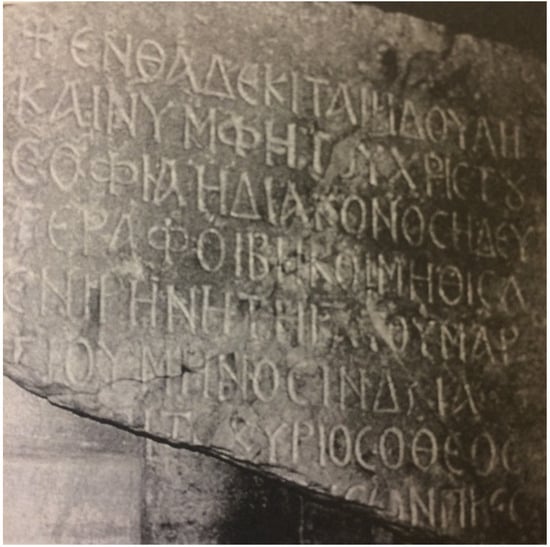
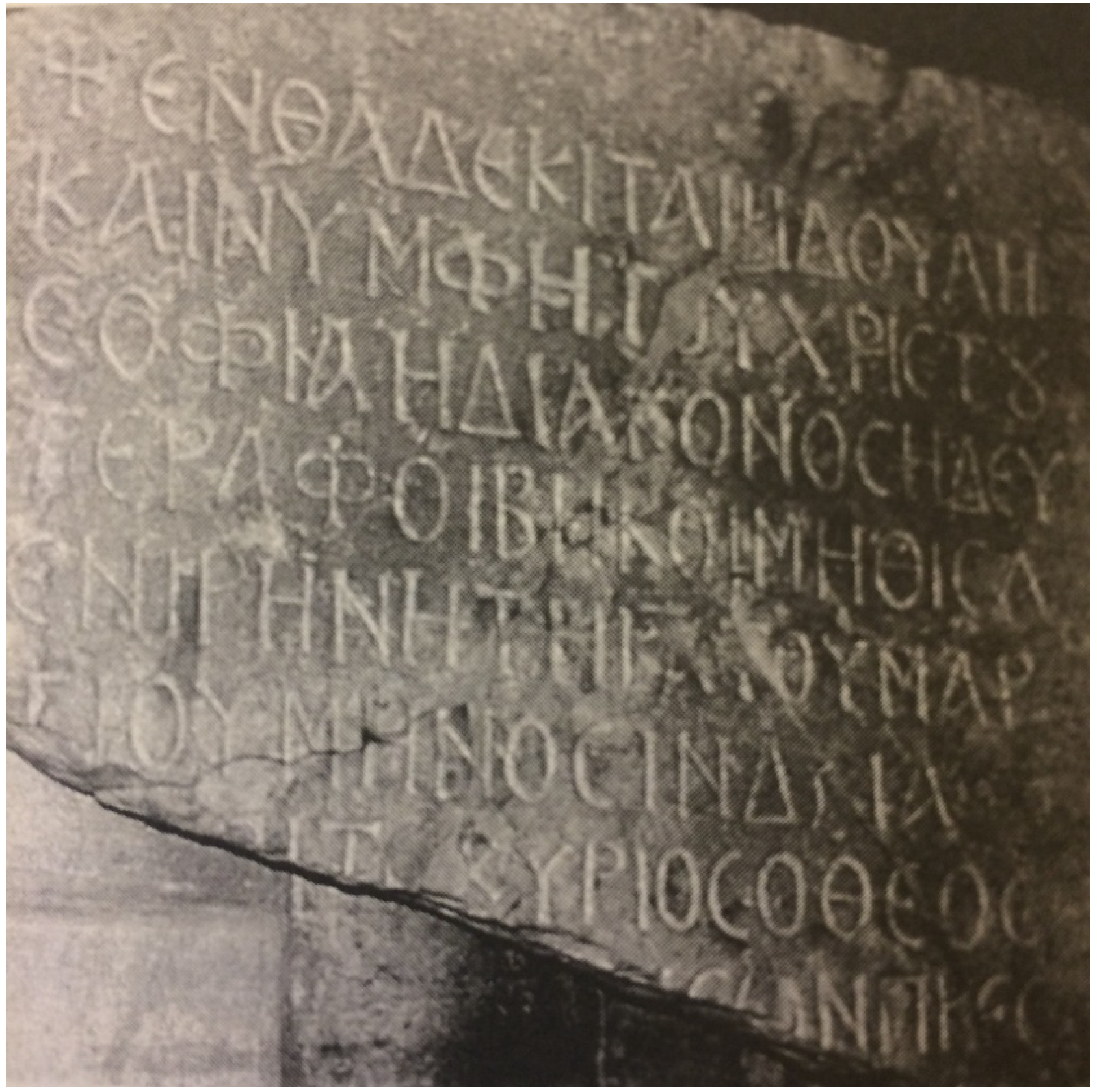
Discovered on the Mount of Olives in Jerusalem, a site of paramount spiritual and ascetic gravity for early Christianity, the funerary inscription of Sophia serves as a foundational monument for tracking early diaconal nomenclature and its structural continuity with the apostolic era (Eisen 2000). Engraved upon a marble slab (see Figure 1), the Greek inscription reads:
Figure 1.
Funerary inscription of the deacon Sophia, Mount of Olives, Jerusalem (late 4th century).
“Here lies the servant and bride of Christ, Sophia, the deacon (he diakonos), the second Phoebe, who fell asleep in peace…”
The textual composition of Sophia’s epitaph yields profound ecclesiological insights (Madigan and Osiek 2005). First, the explicit deployment of the ancient, ungendered masculine noun he diakonos (the deacon) in the late 4th century indicates a deliberate linguistic anchoring to the primitive Pauline vocabulary found in Romans 16:1 (Whelan 1993). Second, by pairing the structural title of “deacon” with the ascetic descriptors “servant and bride of Christ” (doule kai nymphe tou Christou), the inscription documents the organic, early amalgamation of the active diaconate with the dedicated ascetic life and the emerging structures of female monasticism (Elm 1994)
In late antique asceticism, the title “bride of Christ” formally designated membership within the consecrated Order of Virgins (Thurston 1989). This intersection supports the thesis that the functional lineage of the female diaconate maintained deep, early connections to monastic autonomy, foreshadowing the eventual absorption of the office into female convents during the medieval period (Karras 2004).
The most historically significant component of the inscription, however, is the community’s declaration of Sophia as “the second Phoebe” (he deutera Phoibe). Far from a generic rhetorical compliment, this biblical typological linkage explicitly tethers Sophia’s local authority directly to the apostolic prestige of Cenchreae (Jewett 2007). By invoking Phoebe’s memory, the church of Jerusalem publicly asserted that the contemporary female diaconate possessed an uninterrupted historical legitimacy and a solid scriptural foundation, acting as a potent theological counterweight against regional tendencies, particularly in the Western Latin Church, that sought to marginalize or downplay the validity of female ordination (Madigan and Osiek 2005; Kateusz 2019).
3.2.2. The Inscription of Athanasia (Delphi, 5th c.)
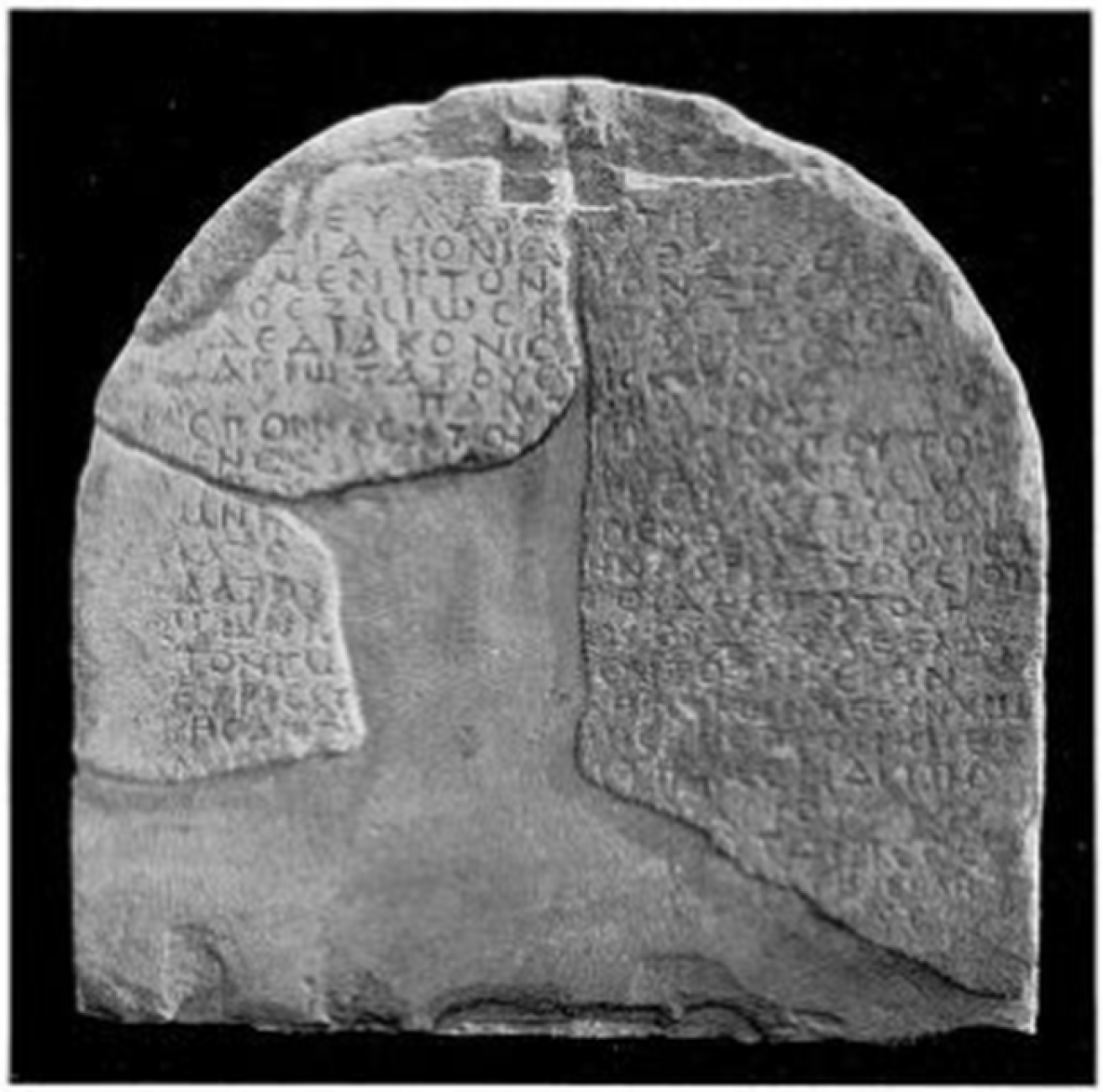
Moving westward to the Greek mainland, the funerary monument of Athanasia from Delphi (5th century AD) (see Figure 2) provides crucial material proof regarding the maturation, linguistic specialization, and episcopal regulation of the office within the Hellenic landscape (Eisen 2000). Cataloged in the authoritative collections of the École Française d’Athènes (Jacquemin et al. 2012, Inscription No. 299), the epitaph reads:
“Here lies the most devout deaconess Athanasia, who established her life blamelessly, having been appointed by the most holy bishop Pantamianos…”
The professional ecclesiastical lexicon preserved on Athanasia’s stele carries massive structural weight (Eisen 2000). The honorific adjective “most devout” (eulabestate) was not informal moral praise of personal piety, but a highly technical, regulated clerical title applied exclusively to members of the major clergy. Furthermore, in contrast to the late 4th-century inscription of Sophia, which utilized the archaic he diakonos, the Delphi monument explicitly adopts the distinct feminine neologism diakonissa (deaconess) (Karras 2004). This linguistic transition demonstrates the rigid institutionalization, bureaucratic systematization, and formal codification of female church offices as the empire entered the 5th century.
The text explicitly notes that Athanasia was formally established (katastatheisa) by her local ordinary, Bishop Pantamianos. The deliberate carving of the ordaining prelate’s name onto the funerary stele confirms the absolute canonical, administrative, and legal integration of the deaconess into the formal diocesan hierarchy (Eisen 2000). Athanasia does not operate as an ad-hoc parochial volunteer or an autonomous charismatic figure; she wields a legally and spiritually validated office derived directly from the bishop’s oversight.
Finally, the geographic positioning of this artifact within Delphi carries intense socio-cultural resonance (Petrides 2006). As archaeological analyses of late antique Christianization illustrate, the transition from classical paganism to Christianity frequently operated through a process of symbolic inversion (Trombley 2001). In a sacred landscape that had been dominated for over a millennium by the female prophetic authority of the Pythia, the Christian Church dynamically juxtaposed the institutional, structured, and legally codified figure of the ordained diakonissa. The female religious impulse was thus structurally rechanneled from pagan mediumship into a legally recognized pillar of Christian liturgical order and community practice (Petrides 2006).
Figure 2.
Funerary monument of the deaconess Athanasia, Delphi (5th century).
3.3. Liturgical Identity and Sacramental Status
3.3.1. Ritual Architecture and Sacramental Synthesis in Codex Barberini gr. 336
The nature of the liturgical rite through which women entered the diaconate constitutes one of the most critical battlegrounds in historical and liturgical theology, directly impacting the ontological and canonical status of the female ministry. The foundational question is whether the setting apart of these women amounted to a full sacramental ordination (cheirotonia) into the major orders of the clergy, or a minor administrative blessing (cheirothesia) with strictly circumscribed duties (Bradshaw 2013). While subsequent medieval canonists, writing long after the active decline of the office, attempted to separate the terms rigidly, a rigorous text-critical analysis of the earliest surviving liturgical manuscripts—most notably the Euchologion Barberini gr. 336 (late 8th century)—demonstrates an undeniable structural, spatial, and ritual symmetry between the ordination of male and female deacons (Parenti and Velkovska 2000).
The Barberini gr. 336 manuscript, representing the pure liturgical practice of the Great Church of Constantinople, outlines the exact rubrics (taxeos) for the making of a female deacon. The spatial framework of the rite provides the first definitive evidence of its major-order status. Unlike readers, subdeacons, or deaconesses in the post-Byzantine Western tradition who received their blessings outside the sanctuary gates, the Byzantine ordination of the female deacon was performed entirely within the sanctuary (bema), directly in front of the Holy Table (Theodorou 1954).
Furthermore, the timing of the ceremony within the flow of the divine liturgy carries immense dogmatic weight. The rubric specifies that the rite takes place immediately after the completion of the Anaphora (the Eucharistic consecration): “Meta to genesthai ten hagian anaphoran…” (Vagaggini 2013). In Byzantine liturgical law, this specific eucharistic placement was reserved exclusively for the major orders of the priesthood—bishops, priests, and deacons—whose ministries were liturgically associated with the altar through the canonical rite of cheirotonia (Taft 1992). Minor orders were invariably ordained before the liturgy began or outside the eucharistic synaxis.
The core of the sacrament is defined by a distinct tripartite liturgical syntax: the bishop’s laying on of hands (epitheseos ton cheiron), the proclamation of the divine formula (He Theia Charis/”Divine Grace”), and the twin consecrating prayers petitioning for the descent of the Holy Spirit (Parenti and Velkovska 2000). The bishop prays:
“O God, Holy and Almighty, who through the birth of Your Only-Begotten Son from a Virgin according to the flesh did sanctify the female sex… grant the grace of Your Holy Spirit also to this Your servant who desires to be advanced (procheirizestai) to the ministry (diakonian) of Your altar…”(Parenti and Velkovska 2000).
The explicit request for the Holy Spirit to sanctify the female candidate, mirroring the pneumatological invocation used for male clergy, demonstrates an ontological equality at the level of sacramental grace (Karras 2005). To characterize this highly structured sanctuary ritual as a superficial cheirothesia is to commit a historical and methodological anachronism, superimposing late medieval categories onto the fluid but distinct sacramental reality of the first millennium (Vagaggini 2013).
3.3.2. Comparative Symmetry and Pastoral Differentiation with the Male Diaconate
A comparative analysis of the ordination paths for male and female deacons reveals a carefully balanced tension between dogmatic symmetry and pastoral specialization (Theodorou 1954; Karras 2005). The Byzantine Church perceived the diaconate as a single ministry manifested in two distinct expressions according to sex, tailored precisely to navigate the stringent cultural and social mores of the Mediterranean world (Taft 1998).
On a purely ritual level, the symmetry is complete (Vagaggini 2013). Both the male and female candidates stood before the altar; both received the episcopal laying on of hands; both were explicitly invested with the diaconal stole (orarion), which the female deacon wore beneath her veil (maphorion); and both were handed the Holy Chalice by the bishop immediately following the communion of the clergy inside the sanctuary (Parenti and Velkovska 2000). The handing of the Chalice—which the female deacon did not use to communicate the laity, but rather returned to the Holy Table—signified her formal liturgical inclusion as a trusted guardian of the eucharistic elements, a privilege strictly forbidden to any layperson or minor cleric (Taft 1998).
However, this dogmatic equality was intentionally bounded by a strict differentiation regarding public liturgical visibility and administrative outreach. This differentiation was not rooted in an ontological unworthiness of the female body, but in a pragmatic effort to preserve ecclesiastical order (eutaxia) and societal propriety (Karras 2005):
- Liturgical Voice: While the male deacon acted as the public voice of the assembly—standing on the elevated ambo to chant the litanies (eirenika) and read the Holy Gospel before a mixed congregation—the female deacon’s voice was interior and category-specific. She did not lead public intercessions or read the Gospel to mixed audiences, as her authoritative voice was liturgically directed toward the female section of the church (gynaeconites) and the private catechetical rooms (Taft 1998).
- Altar Service: The male deacon served as the regular, visible minister of the altar during the sacrificial offering. The female deacon, by contrast, had her liturgical activity restricted inside the sanctuary during the public liturgy to minimize secular distraction, concentrating her visible leadership on the pastoral administration of women (Karras 2005).
- Hierarchical Ranking: The hierarchical integration of the female deacon is illustrated by the sequence of Holy Communion recorded in Book VIII of the Apostolic Constitutions (VIII, 13.14). The order of reception follows a rigorous clerical sequence: the bishop, the presbyters, the male deacons, and immediately thereafter, the deaconesses, preceding the subdeacons, readers, and the general laity (Madigan and Osiek 2005).
This meticulous positioning demonstrates that the primitive and Byzantine Church did not view the male and female diaconate through a binary lens of superior and inferior clerical validity. Rather, it structured their roles with immense pastoral realism, ensuring that the fullness of the Church’s liturgical, catechetical, and sacramental life could be dynamically communicated to all its members without violating the boundaries of societal modesty (Chryssavgis 2009).
3.4. Shifting Patriarchal Structures, Monasticization, and Decline (6th–12th c.)
The historical trajectory of the female diaconate from the late 6th century onward represents a complex evolutionary curve characterized by institutional contraction, shifting societal paradigms, and eventual structural internalization. Rather than viewing the decline of the female diaconate primarily as the result of a later doctrinal rejection (e.g., Martimort 1986), the evidence considered here suggests a gradual process shaped by changes in ecclesial structures, pastoral practice, and social context. The gradual waning of the active female diaconate cannot be attributed simply to dogmatic considerations, but should be understood in relation to geopolitical changes, developments in liturgical practice, and broader institutional transformations in the Middle and Late Byzantine periods (Karras 2004).
3.4.1. Geopolitical Cataclysms and Liturgical Metamorphosis
The Arab conquests of the seventh century brought significant changes to the political and ecclesiastical landscape of the eastern Mediterranean. The separation of Syria, Palestine, and Egypt from Byzantine imperial administration affected patterns of communication, ecclesiastical organization, and the relationship between local Christian communities and the wider Byzantine Church. These changes formed part of a broader transformation in the circumstances under which the female diaconate continued to function. In Byzantine territories, the office remained attested in liturgical and canonical sources, while in the regions that came under Muslim rule its development took place within new political and social conditions. The Arab conquests should therefore be understood as one factor in the changing historical circumstances of the female diaconate, rather than as a single cause of its decline (Karras 2004; Vassiliadis et al. 2016).
From the sixth century onward, the female diaconate appears to have undergone a gradual change in function as its presence became increasingly associated with monastic communities. In Byzantine convents, deaconesses could have a role in the liturgical and pastoral life of the community, while the ordination rite continued to be transmitted in Byzantine Euchologia and other liturgical sources. This development may have helped preserve the memory and liturgical form of the order, while also contributing to a shift away from some of the wider public and social functions associated with deaconesses in earlier periods. Their presence therefore became less visible in broader diocesan life, although the liturgical tradition of their ordination was not entirely lost (Theodorou 1954; Karras 2004).
The wider adoption of infant baptism reduced one of the practical contexts in which deaconesses had been involved, particularly in relation to the baptism and anointing of adult women. This development, however, preceded the later decline of the institution by several centuries. In the Middle and Late Byzantine periods, changing attitudes toward bodily purity and access to the sanctuary also appear to have influenced the public liturgical role of deaconesses. Canonical and monastic sources reflect growing concern with questions of ritual purity, which may have contributed to the gradual reduction in women’s public liturgical functions. These changes formed part of a broader transformation of the office, whose presence became increasingly associated with private and monastic settings (Theodorou 1954; Karras 2004; Karidoyanes-FitzGerald 1998).
3.4.2. The “Monasticization” of the Order and the Witness of Theodore Balsamon
Despite the reduction in new epigraphical traces within metropolitan parish churches, the sacrament itself was never legally or liturgically deleted from the Orthodox tradition. The structural survival of the complete ordination rubric within late 8th-century manuscripts, such as the Euchologion Barberini gr. 336, demonstrates that the Patriarchate of Constantinople maintained the legal reality of the office (Parenti and Velkovska 2000). However, the institution underwent an institutional introversion, migrating almost exclusively from the secular parish into the autonomous domain of female monasticism—a process identified in contemporary historiography as the “monasticization” of the order (Zagano 2020).
Within the walls of late Byzantine convents, the clerical grade of the deaconess was preserved as a mechanism of monastic self-governance and spiritual autonomy. The ordination (cheirotonia) was frequently restricted to the Abbess (hegoumenissa), empowering her with the liturgical authority required to enter the conventual sanctuary (bema), perform censing, read the scriptures to her community, and distribute the pre-sanctified eucharistic elements to her sisterhood in the absence of a male priest (Theodorou 1954).
This institutional reality is explicitly documented as late as the 12th century by the preeminent Byzantine canonist, Theodore Balsamon, Patriarch of Antioch. Commenting on the legislative legacy of the office, Balsamon notes that while the active order of parish deaconesses had largely ceased to function in the secular world due to strict rules concerning ritual purity, the title and its specific liturgical permissions remained alive within the monastic enclosure (Karras 2004). This late medieval witness confirms that the institution was never theologically canceled; rather, its functions were safely absorbed and preserved within the “theological memory” and liturgical practice of female monasticism, remaining dormant but intact for future ecclesiological revitalization (Karidoyanes-FitzGerald 1998).
4. Discussion
The systematic examination of biblical, canonical, and epigraphical sources covering the first millennium demonstrates that the ordained female diaconate was not a marginal or temporary anomaly, but a structurally integrated, sacramentally validated reality within the life of the early Church. This historical and theological legacy provides a vital foundation for current ecumenical dialogues concerning gender justice and inclusion within contemporary ecclesial frameworks. Moving beyond antiquarian curiosity, the retrieval of this “theological memory” challenges modern patriarchal structures and offers a direct precedent for reimagining women’s public leadership and pastoral agency in a globalized society.
The debate surrounding the revitalization of the female diaconate gained significant institutional traction in the late 20th century. A critical milestone occurred during the Inter-Orthodox Theological Consultation in Rhodes (1988), where international scholars and hierarchs explicitly concluded that the order of deaconesses should be revived, noting that its reintroduction would not constitute an innovation but the restoration of an authentic, canonical apostolic practice. This scholarly consensus has been systematically reinforced by contemporary theologians who argue that the exclusion of women from ordained pastoral roles leaves a profound gap in the Church’s dynamic engagement with modern social challenges (Karidoyanes-FitzGerald 1998; Vassiliadis et al. 2016).
Furthermore, this historical precedent aligns seamlessly with the central imperatives of contemporary feminist theologies, which seek to deconstruct post-Byzantine cultural distortions that have historically obscured the sacramental equivalence of female ministries. As shown by recent liturgical scholarship, recovering the structural reality of cheirotonia as preserved in Codex Barberini gr. 336 provides an unassailable theological shield for women seeking institutional parity within religious institutions (Zagano 2020). By illustrating that the historical decline (atonia) of the office was caused by pragmatic social mutations—such as the rise of infant baptism—rather than dogmatic vetoes, contemporary research reframes the discussion from a controversial dogmatic debate to a matter of administrative and pastoral justice (Athanasopoulou-Kypriou et al. 2022).
The practical implications of this historical model have already begun to manifest within the global ecclesiastical landscape. The most notable contemporary institutional development occurred within the Greek Orthodox Patriarchate of Alexandria and All Africa, which formally resolved to reinstate the female diaconate to meet urgent missionary, catechetical, and healthcare needs within African communities. Similarly, the Holy Synod of the Church of Greece has historically explored the restoration of the office within monastic enclosures to safeguard monastic self-governance. These contemporary steps demonstrate that the female diaconate is inherently adaptable, capable of serving as a powerful mechanism for social engagement and communal healing across diverse cultural terrains.
Ultimately considering the historical ministry of deaconesses in relation to contemporary ecclesial life suggests that female diaconal service has a well-attested place within Orthodox historical, liturgical, and canonical tradition. The examples of Phoebe, Athanasia, and Olympias illustrate the diverse forms of service, leadership, and philanthropy associated with women’s ministry in the life of the Church. In this sense, the historical experience of the female diaconate provides a canonical and pastoral point of reference for contemporary discussions of diakonia.
A significant contemporary example is found in the ordination of Angelic Molen by Metropolitan Serafim of Zimbabwe, under the Patriarchate of Alexandria and All Africa, on 2 May 2024. Following the decision of the Patriarchate’s Holy Synod in 2016 to revive the institution of the female diaconate, this ordination illustrates how the order may be connected with pastoral and missionary needs in a local Orthodox context. Angelic Molen was entrusted with responsibilities including catechesis, youth ministry and charitable service.
From a pastoral perspective the historical memory of the female diaconate may contribute to contemporary discussions concerning pastoral care for women, missionary outreach, and organized charitable ministry. Re-engaging this tradition offers one possible way of relating liturgical life to social witness within the diverse realities of contemporary Orthodox communities (Theodorou 1954; Karras 2004; Chryssavgis 2009).
5. Conclusions
This study has offered a comprehensive and critical synthesis of the historical, canonical, and epigraphical testimonies concerning the female diaconate from the 1st to the 12th century, positioning this ancient ministry within the contemporary discourse on social engagement and ecclesial justice. By deconstructing medieval anachronisms and modern patriarchal projections, the research has validated three core conclusions that structurally inform current dialogues on gender inclusion.
First, text-critical and morphological analysis of early Byzantine Euchologia, specifically Codex Barberini gr. 336, firmly establishes the sacramental parity of the female diaconate. The execution of the rite within the sanctuary, its strategic placement after the Eucharistic Anaphora, and the explicit invocation of the Holy Spirit confirm that the setting apart of these women constituted a full mystery of ordination (cheirotonia) into the major orders, rather than a minor administrative blessing (cheirothesia).
Second, epigraphical and legal records prove that the early office was endowed with significant administrative, financial, and instructional authority. The material evidence from Jerusalem and Delphi, alongside the socio-legal framework of the Justinian Novellae, demonstrates that ordained women operated as public icons of leadership and pastoral mediation. Within the segregated spaces of late antiquity, the deaconess functioned as a crucial institutional patron (patrona), breaking patriarchal constraints to manage church properties and direct specialized catechesis.
Third, the historical decline (atonia) of the parish-oriented female diaconate was not caused by a dogmatic veto, but by pragmatic societal and liturgical shifts, most notably the universal triumph of infant baptism and geopolitical cataclysms in the 7th century. The structural survival of the order within female monastic enclosures up to the 12th century, as recorded by Theodore Balsamon, proves that the institution remained alive within the internal theological memory of the Church.
In conclusion, the revitalization of the ordained female diaconate—as demonstrated by contemporary institutional steps in Africa and ongoing theological consultations—is not an artificial innovation or an imposition of secular ideology. Rather, it represents an authentic return to the radical, inclusive ecclesiology of the apostolic era. Recovering this ordained ministry provides a legally, historically, and spiritually validated template for fostering equitable and participatory modern community practices, ensuring that the church can dynamically respond to contemporary challenges of social justice and gender equity.
From a pastoral perspective, recovering the historical memory of the ordained female diaconate has practical implications for contemporary ecclesial life. Rather than being simply a historical curiosity, the experience of deaconesses can offer useful perspectives for addressing current pastoral needs in different Orthodox contexts. In particular, it may support the Church’s social ministry (diakonia), strengthen pastoral care for women in vulnerable situations, and contribute to missionary work in regions where the Church is expanding, including parts of Africa. The recovery of this canonical tradition can also help connect liturgical life with practical forms of social engagement, while recognizing women’s role in the Church’s pastoral and diaconal ministry.
Funding
This research received no external funding.
Institutional Review Board Statement
Not applicable.
Informed Consent Statement
Not applicable.
Data Availability Statement
No new data were created or analyzed in this study. Data sharing is not applicable to this article.
Conflicts of Interest
The author declares no conflicts of interest.
References
- Athanasopoulou-Kypriou, Spyridoula, Aikaterini Drosia, and Antonia Kyriatzi, eds. 2022. Christian Women at the Altar: Studies on the Revitalization of the Institution of Deaconesses. Athens: Armos. (In Greek) [Google Scholar]
- Bradshaw, Paul F. 2002. The Search for the Origins of Christian Worship. Oxford: Oxford University Press. [Google Scholar]
- Bradshaw, Paul F. 2013. Rites of Ordination: Their History and Theology. Collegeville: Liturgical Press. [Google Scholar]
- Chryssavgis, John. 2009. Remembering and Reclaiming Diakonia. Brookline: Holy Cross Orthodox Press. [Google Scholar]
- Coakley, Sarah. 2002. Powers and Submissions: Spirituality, Philosophy and Gender. Oxford: Blackwell Publishing. [Google Scholar]
- Connolly, Richard Hugh, ed. 1929. Didascalia Apostolorum. Oxford: Clarendon Press. [Google Scholar]
- Drosia, Aikaterini. 2017. Mary Magdalene and the Deaconesses. In Deaconesses, the Ordination of Women and Orthodox Theology. Edited by Petros Vassiliadis, Niki Papageorgiou and Eleni Kasselouri-Hatzivassiliadi. Newcastle upon Tyne: Cambridge Scholars Publishing, pp. 137–48. [Google Scholar]
- Eisen, Ute E. 2000. Women Officeholders in Early Christianity. Translated by Linda M. Maloney. Collegeville: Liturgical Press. [Google Scholar]
- Elm, Susanna. 1994. Virgins of God. Oxford: Clarendon Press. [Google Scholar]
- Jacquemin, Anne, Dominique Mulliez, and Georges Rougemont. 2012. Choix d’Inscriptions de Delphes. Paris: De Boccard. [Google Scholar]
- Jewett, Robert. 2007. Romans: A Commentary. Minneapolis: Fortress Press. [Google Scholar]
- Karidoyanes-FitzGerald, Kyriaki. 1998. Women Deacons in the Orthodox Church. Brookline: Holy Cross Orthodox Press. [Google Scholar]
- Karras, Valerie A. 2004. Female Deacons in the Byzantine Church. Church History 73: 272–316. [Google Scholar] [CrossRef] [Scilit]
- Karras, Valerie A. 2005. The Liturgical Functions of Consecrated Women. Theological Studies 66: 98–116. [Google Scholar] [CrossRef] [Scilit]
- Kateusz, Ally. 2019. Mary and Early Christian Women. London: Palgrave Macmillan. [Google Scholar]
- Koukoura, Dimitra. 2006. The Diaconate in the Orthodox Church. Reseptio 1: 12–19. [Google Scholar]
- Kraemer, Ross Shepard. 2004. Women’s Religions in the Greco-Roman World. Oxford: Oxford University Press. [Google Scholar]
- Madigan, Kevin, and Carolyn Osiek, eds. 2005. Ordained Women in the Early Church. Baltimore: Johns Hopkins University Press. [Google Scholar]
- Martimort, Aime G. 1986. Deaconesses: An Historical Study. San Francisco: Ignatius Press. [Google Scholar]
- Osiek, Carolyn, and Margaret Y. MacDonald. 2006. A Woman’s Place. Minneapolis: Fortress Press. [Google Scholar]
- Parenti, Stefano, and Elena Velkovska, eds. 2000. L’Euchologio Barberini gr. 336. Rome: Edizioni Liturgiche. [Google Scholar]
- Petrides, Platon. 2006. Archaeological Traces of Early Christianization. Balkan Studies 45: 201–15. [Google Scholar]
- Rhalles, Georgios Alexandrou, and Michael Potles. 1852. Syntagma ton Theion kai Hieron Kanonon. Athens: G. Chartophylax. [Google Scholar]
- Taft, Robert F. 1992. The Byzantine Rite: A Short History. Collegeville: Liturgical Press. [Google Scholar]
- Taft, Robert F. 1998. Women at Church in Byzantium. Dumbarton Oaks Papers 52: 27–87. [Google Scholar] [CrossRef] [Scilit]
- Theodorou, Evangelos. 1954. Die Weihe, Die Segnung der Diakoninnen. Theologia 25: 430–69. [Google Scholar]
- Thurston, Bonnie Bowman. 1989. The Widows: A Woman’s Ministry. Minneapolis: Fortress Press. [Google Scholar]
- Trombley, Frank. R. 2001. Hellenic Religion and Christianization. Leiden: Brill. [Google Scholar]
- Vagaggini, Cipriano. 2013. The Ordination of Women to the Diaconate. In Ordination of Women to the Diaconate in the Eastern Churches. Edited by Phyllis Zagano. Collegeville: Liturgical Press. [Google Scholar]
- Vassiliadis, Petros, Niki Papageorgiou, and Eleni Kasselouri-Hatzivassiliadi, eds. 2016. Deaconesses, the Ordination of Women and Orthodox Theology. Newcastle upon Tyne: Cambridge Scholars Publishing. [Google Scholar]
- Whelan, Caroline F. 1993. Amica Pauli: The Role of Phoebe. Journal for the Study of the New Testament 15: 67–85. [Google Scholar] [CrossRef] [Scilit]
- Witherington, Ben, III. 1988. Women in the Earliest Churches. Cambridge: Cambridge University Press. [Google Scholar]
- Zagano, Phyllis. 2020. Women Deacons: Past, Present, Future. New York: Paulist Press. [Google Scholar]
Disclaimer/Publisher’s Note: The statements, opinions and data contained in all publications are solely those of the individual author(s) and contributor(s) and not of MDPI and/or the editor(s). MDPI and/or the editor(s) disclaim responsibility for any injury to people or property resulting from any ideas, methods, instructions or products referred to in the content. |
© 2026 by the author. Licensee MDPI, Basel, Switzerland. This article is an open access article distributed under the terms and conditions of the Creative Commons Attribution (CC BY) license.