Article

Ignition and Combustion Characteristics of Pilot Fuel for Dual-Fuel Marine Engines Under Constant-Volume Combustion Chamber Conditions


1
Department of Power System Engineering, Chonnam National University, 50 Daehak-ro, Yeosu-si 59626, Jeollanam-do, Republic of Korea
2
Division of Marine System Engineering, Korea Maritime and Ocean University, 727 Taejong-ro, Yeongdo-gu, Busan 49112, Republic of Korea
3
Department of Marine Engineering, College of Ocean & Biosience, Kunsan National University, 558 Daehak-ro, Gunsan-si 54150, Jeollabuk-do, Republic of Korea
*
Authors to whom correspondence should be addressed.
J. Mar. Sci. Eng. 2026, 14(5), 480; https://doi.org/10.3390/jmse14050480
Submission received: 1 February 2026 / Revised: 26 February 2026 / Accepted: 27 February 2026 / Published: 2 March 2026

Abstract

This study experimentally investigated the ignition and combustion characteristics of marine gas oil as a pilot fuel in dual-fuel marine engines using a constant-volume combustion chamber. In-cylinder temperature, pressure, and injection duration were the primary experimental variables. Results showed that temperature is the dominant factor governing ignition delay: increasing temperature from 520 °C to 580 °C reduced ID by 46.7% and its standard deviation by 62.8%. Increasing pressure shortened ID by 24.5% and reduced variability by 28.8%. In contrast, injection duration minimally affected ignition timing but increased accumulated heat release and maximum heat release rate by 37% and 20%, respectively. The time interval between ID and main combustion delay remained constant at approximately 0.30 ms across all conditions, indicating simultaneous advancement of ignition and combustion development. These findings demonstrate that ignition timing control (via temperature management) and combustion intensity control (via injection quantity) can be independently optimized, providing fundamental experimental data for the development of robust combustion-control strategies in dual-fuel marine engines.

1. Introduction

Driven by the International Maritime Organization (IMO) target to achieve net-zero emissions by around 2050, the maritime industry is rapidly transitioning from conventional fuels toward low-carbon alternatives [1,2]. Consequently, dual-fuel (DF) engines have emerged as a key transitional technology, allowing for the immediate utilization of alternative fuels like LNG or methanol while maintaining compatibility with existing diesel engine infrastructure [3,4]. LNG and methanol, which are low-carbon fuels, are already used in commercially operated dual-fuel (DF) engines, and many next-generation propulsion systems based on various alternative fuels are also being developed on the basis of the DF concept. In DF marine engines, a small amount of pilot fuel, typically about 3–5% of the total fuel energy, is generally used to ignite the low-flashpoint main fuel that cannot stably auto-ignite by compression alone [5]. The combustion environment inside the cylinder of marine engines continuously varies with ambient and sea conditions, operating mode, cooling water state, and other factors. Therefore, a quantitative understanding of pilot-fuel ignition and combustion dynamics under diverse in-cylinder conditions is essential for reliable engine operation and for developing robust combustion-control strategies, because although the direct environmental impact of the pilot fuel itself is limited, it strongly influences the combustion state and power output of the main fuel [6]. By operating the solenoid using the Electronic Control Unit (ECU), the system separates the injection system from the mechanical linkage, such as the cam, allowing constant injection at the desired timing throughout the various engine strokes. This level of control can eliminate pressure fluctuations that are common in mechanical systems and is effective in improving engine efficiency when the correct ignition delay time (ID) and heat release (ROHR) are understood under various in-cylinder conditions.
In recent years, research using a constant-volume combustion chamber (CVCC) has gained importance in the field of alternative fuels, as this approach allows fuel reactivity to be evaluated under controlled conditions while separating out the influences of flow dynamics and mechanical factors inherent to engine environments [7,8]. Nevertheless, a substantial portion of existing marine fuel studies has focused on engine-based investigations over limited operating ranges, and systematic analyses of MGO—the standard marine fuel—under temperature and pressure conditions representative of actual marine engine operation remain relatively scarce. In particular, quantitative evaluations of how injection parameters, such as injection duration and fuel temperature, affect ignition initiation and main combustion development, as well as the interaction effects among these parameters, have not been sufficiently conducted [9,10]. The present study serves as a fundamental investigation aimed at elucidating the combustion characteristics of MGO as a pilot fuel in DF engines. By analyzing experimental data obtained from a CVCC, this work seeks to identify (i) the relative dominance of in-cylinder temperature, pressure, and injection conditions on ignition delay (ID) and main combustion delay (MCD); (ii) the independence between ignition timing control and combustion intensity regulation; and (iii) the feasibility of decoupling control variables in DF engine operation. In-cylinder temperature, in-cylinder pressure, and injection duration were selected as the primary experimental variables, and repeatability was ensured through multiple trials under each condition. The results of this study provide quantitative baseline data on the ignition and combustion behavior of marine MGO under various in-cylinder conditions and are expected to serve as fundamental information for evaluating combustion stability and developing pilot-fuel control strategies in DF engines, thereby contributing to improvements in both the environmental and economic efficiency of the maritime industry.

2. Experimental Methods

2.1. Experimental Apparatus and Fuel

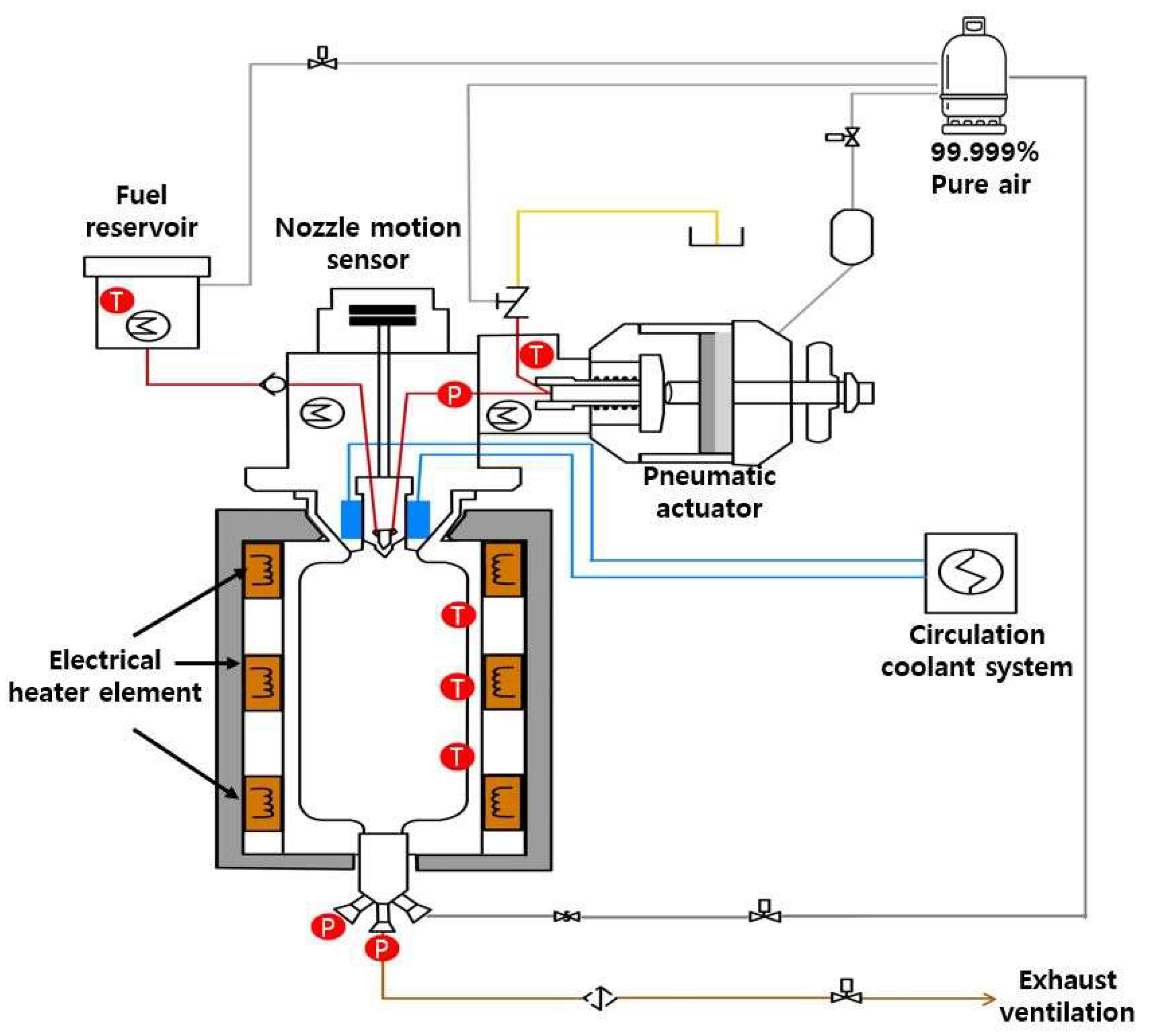
In this study, a Fueltech FIA-100 CVCC (Fueltech Solutions AS, Trondheim, Norway) was employed to evaluate the ignition and combustion characteristics of MGO. As illustrated in Figure 1, the apparatus enables independent control of in-cylinder pressure and temperature and is equipped with instrumentation for measuring pressure evolution following fuel injection. Unlike actual engine environments, this device eliminates the influences of piston motion, valve actuation, and turbulence intensity variations, thereby providing a well-suited platform for quantitative analysis of intrinsic fuel reactivity and early-stage combustion behavior [7,8].
The combustion chamber consists of a sealed vessel designed for stable operation under high-pressure and high-temperature conditions. The in-cylinder temperature was elevated to the prescribed set point using electric heaters and maintained constant throughout each experiment. Temperature and pressure measurements were conducted via thermocouples and pressure sensors installed inside the chamber, with sufficient stabilization time allowed after reaching the target conditions prior to each test.
Fuel injection was performed in a single-injection mode, and the fuel injection system was configured to precisely control the injection trigger signal and injection duration. The injection command was delivered via electronic actuation, and the injection duration was maintained at predetermined values corresponding to each experimental condition.
The start of injection (SOI) was defined based on the nozzle position signal from the injector, with the instant of initial signal deflection designated as the SOI reference time.
In-cylinder pressure was measured using a high-response pressure transducer, and the pressure variation as a function of time before and after fuel injection was recorded. All signals were acquired through a synchronized data acquisition system with a common time base, enabling quantitative analysis of pressure rise characteristics following the start of injection.
Prior to the main experiment, system calibration and validation were performed in accordance with the IP 541/06 standard procedure [11]. Methylcyclohexane (MCH), a reference fuel specified in the standard, was used to verify the proper operation of the injection system, pressure transducer response, and data acquisition system. The measured PMR and AR values were confirmed to fall within the acceptable tolerance range specified by the standard, thereby ensuring the reliability and repeatability of the experimental setup before conducting tests [11].
The test fuel employed in this study was MGO, which is widely used as both primary and pilot fuel in marine applications. The fundamental properties of the MGO used in the experiments are summarized in Table 1. The result of the fuel test was analyzed by a reliable professional analysis institute. The fuel was verified to conform to the ISO 8217 DMA specification, the international standard for marine fuel quality.

2.2. Experimental Variables and Conditions

The experimental conditions for this study were designed to quantitatively assess the ignition and main combustion development behavior of MGO as a pilot fuel in DF engines. As shown in Table 2, in-cylinder temperature, in-cylinder pressure, and injection duration were selected as the primary experimental variables. The selected ranges of in-cylinder temperature and pressure correspond to typical conditions near the end of compression in marine engines, where in-cylinder state variables change relatively slowly compared with high-speed automotive engines. They can be independently adjusted in the CVCC environment with minimal mutual interference.
In-cylinder temperature is a key factor governing ignition delay and early-stage combustion reactions of liquid fuels, directly influencing the chemical kinetics of ignition processes such as low-temperature oxidation and radical accumulation. By varying the in-cylinder temperature under otherwise identical fuel and injection conditions, this study aimed to isolate and observe how the timing of ID and MCD shift with temperature changes following SOI, thereby quantifying their temperature sensitivity [12]. In-cylinder pressure is another principal determinant of ignition delay. At a given temperature, pressure alters the collision frequency of reactive species and the viability of reaction pathways, thereby affecting ignition initiation timing and combustion growth rate. In DF engine operation, boost pressure and effective in-cylinder compression pressure vary with load, turbocharger matching, and intake conditions. Therefore, quantitative characterization of pilot fuel ignition behavior as a function of pressure is of practical significance [13]. The injection period is one of the most directly controllable pilot injection parameters in actual engines and can be interpreted as a surrogate for injection quantity (fuel mass delivered) in the CVCC environment. The purpose of varying injection duration in this study was to distinguish whether changes in fuel mass input, under constant temperature and pressure conditions, directly induce shifts in ID, or primarily influence post-ignition combustion growth and the magnitude of pressure rise [14].
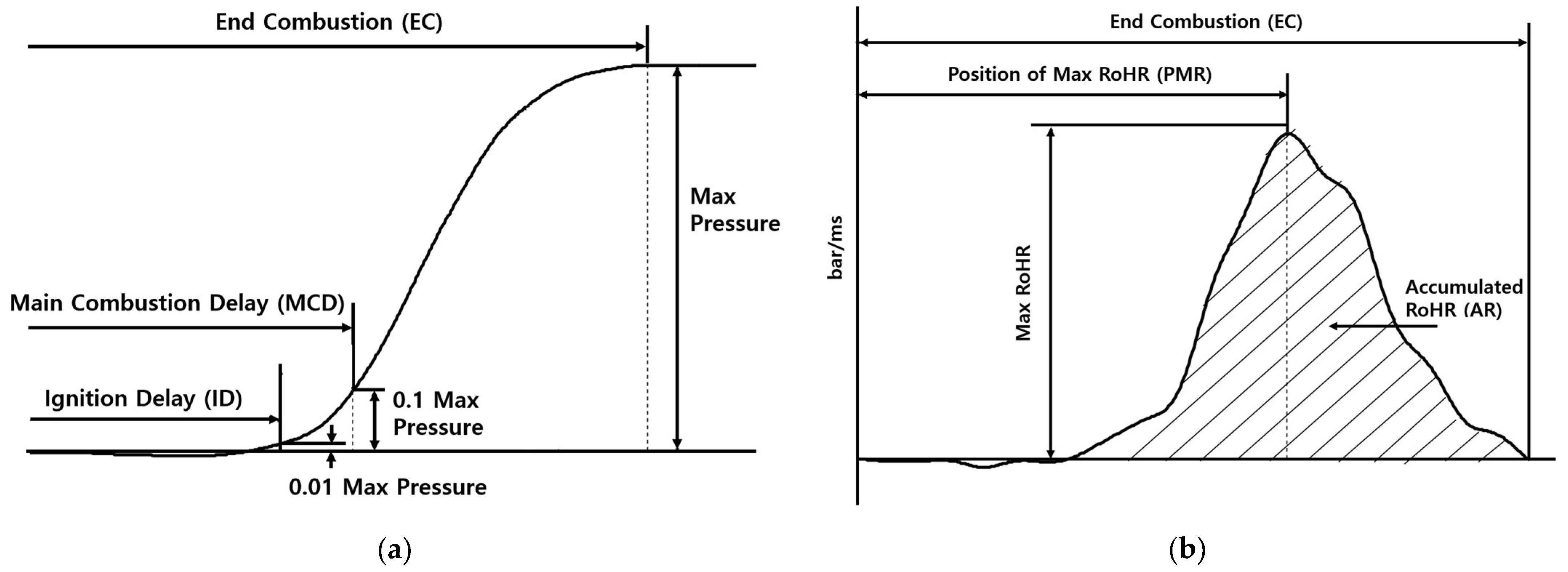
Figure 2 presents a schematic representation of the data acquired in this study. To differentiate ignition initiation from main combustion development, ID was defined as the time from SOI to the instant when the in-cylinder pressure rise reached 1% of the maximum pressure rise, while MCD was defined as the time to reach 10% of the maximum pressure rise [15,16].
The acquired data were processed individually for each experimental condition and replicate trial. The start of injection was established based on the nozzle position signal, and the initial pressure was defined as the mean value over the pre-injection interval. The instants corresponding to 1% and 10% pressure rise thresholds were determined using linear interpolation on the pressure history curve at the first point exceeding each criterion.
Under constant-volume conditions, the first-law heat release formulation simplifies because no boundary work is performed. Accordingly, the apparent rate of heat release (RoHR) was evaluated based on the pressure rise rate (dP/dt) and expressed in units of bar/ms. While this approach does not account for detailed thermodynamic corrections such as temperature-dependent specific heat or heat transfer losses, it provides a consistent comparative metric for evaluating combustion intensity under identical chamber conditions [17].
To ensure stable data acquisition, the target in-cylinder temperature and pressure conditions were controlled such that the experimental system operated only when the measured values reached within ±1 °C of the preset temperature and ±2 bar of the preset pressure. After every set of 20 consecutive tests, the resulting data were considered valid only when the mean values satisfied the following stability criteria: pressure variation within ±0.5 bar, temperature variation within ±0.3 °C, and injection duration deviation within ±0.05 ms [18]. For each condition, 40 replicate experiments were performed to ensure data reproducibility, and the results were summarized in terms of mean values and standard deviations for comparative analysis across conditions. This approach minimized the influence of random fluctuations inherent to individual trials and enabled robust evaluation of trends associated with changes in experimental conditions.

3. Results

3.1. Ignition Delay Characteristics

The ID of pilot fuel is a critical parameter governing combustion phasing control and main fuel ignition stability in DF engines. In this study, to quantitatively compare the effects of in-cylinder temperature, in-cylinder pressure, and injection duration on ID, both the magnitude of mean value changes and the standard deviation across condition levels were examined. The bar chart represents the mean value for the test of each operating condition, and the error bar represents the standard deviation. This approach enabled a relative assessment of the dominance of each condition on ID, beyond merely presenting general trends.
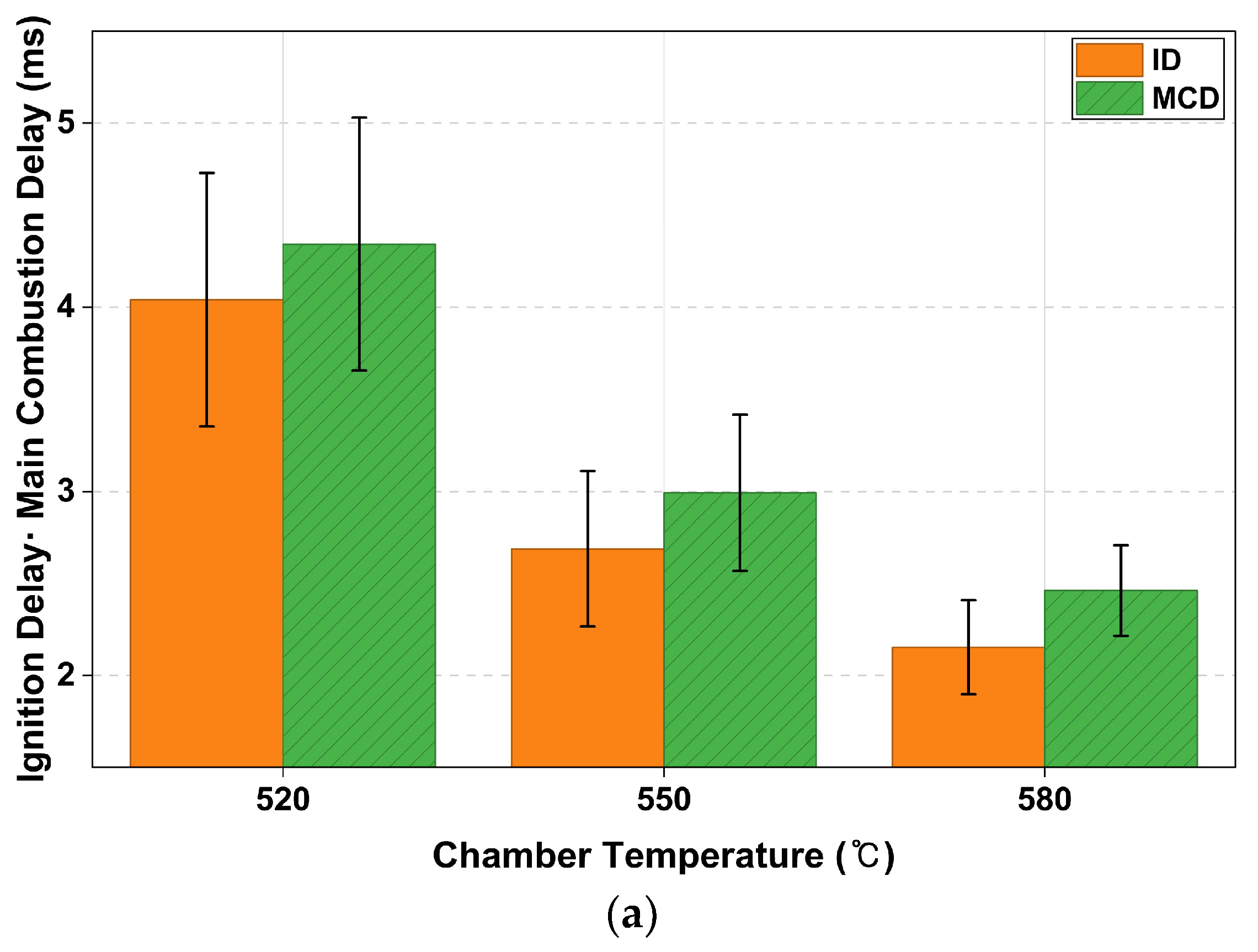
As shown in Figure 3, in-cylinder temperature was identified as the most dominant variable governing ID. As temperature increased from 520 °C to 580 °C, the mean ID decreased from 4.04 ms to 2.15 ms, corresponding to an approximately 46.7% reduction. Concurrently, the standard deviation of ID decreased from 0.69 ms to 0.26 ms, indicating improved repeatability of ignition delay under high-temperature conditions. This suggests that enhanced reactivity at elevated temperatures leads to more stable ignition progression, potentially reducing sensitivity to mixing, spray formation, and other secondary processes [19]. Furthermore, this pronounced temperature sensitivity can be explained by Arrhenius reaction kinetics: temperature elevation exponentially accelerates reaction rates, advancing the ignition timing [20,21]. This observation is qualitatively consistent with previous findings indicating that cool flame chemistry and low-temperature reactions in the 500–600 °C range significantly shorten ignition delay [22]. Thus, under the present experimental conditions, ID is strongly governed by chemical kinetics controlled by temperature, underscoring the critical importance of temperature control for ensuring ignition stability in low-load operation of DF engines.
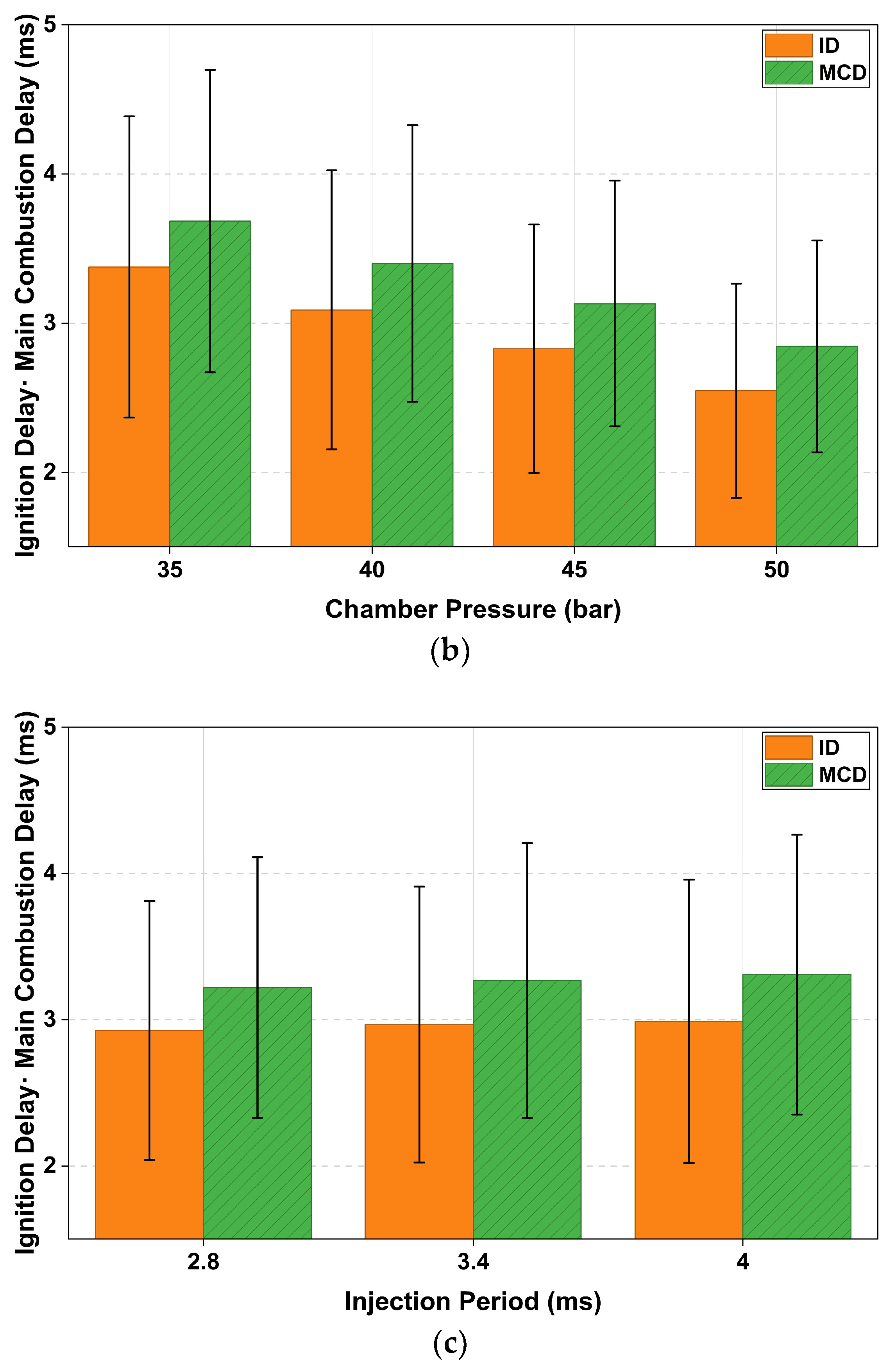
Increasing in-cylinder pressure also resulted in a reduction of ID, although the effect was more moderate compared to temperature. As pressure increased from 35 bar to 50 bar, the mean ID decreased from 3.378 ms to 2.549 ms, corresponding to an approximately 24.5% reduction. Notably, the standard deviation of ID decreased from 1.01 ms to 0.72 ms—a reduction of approximately 28.8%—demonstrating that high-pressure conditions not only reduce ignition delay but also improve cycle-to-cycle repeatability. This suggests that pressure elevation promotes ignition reactions through increased reactant density and molecular collision frequency while also potentially mitigating uncertainties in spray evaporation and mixture formation processes, thereby reducing cyclic variability [23,24]. However, the magnitude of ID reduction induced by temperature variation over the tested range exceeded that induced by pressure variation, confirming that pressure effects are relatively limited compared to temperature effects under the present conditions.
In contrast, variation in injection duration exhibited no significant effect on ID. As injection duration increased from 2.8 ms to 4.0 ms, the mean ID increased slightly from 2.92 ms to 2.99 ms (approximately 2.1% increase); however, this change remained within the standard deviation range of each condition (approximately 0.89–0.97 ms). This indicates that, within the present experimental range, pilot injection duration does not act as a governing factor for ignition initiation timing; rather, ignition is predominantly determined by thermochemical conditions such as temperature and pressure.

3.2. Combustion Intensity and Total Energy Release Characteristics

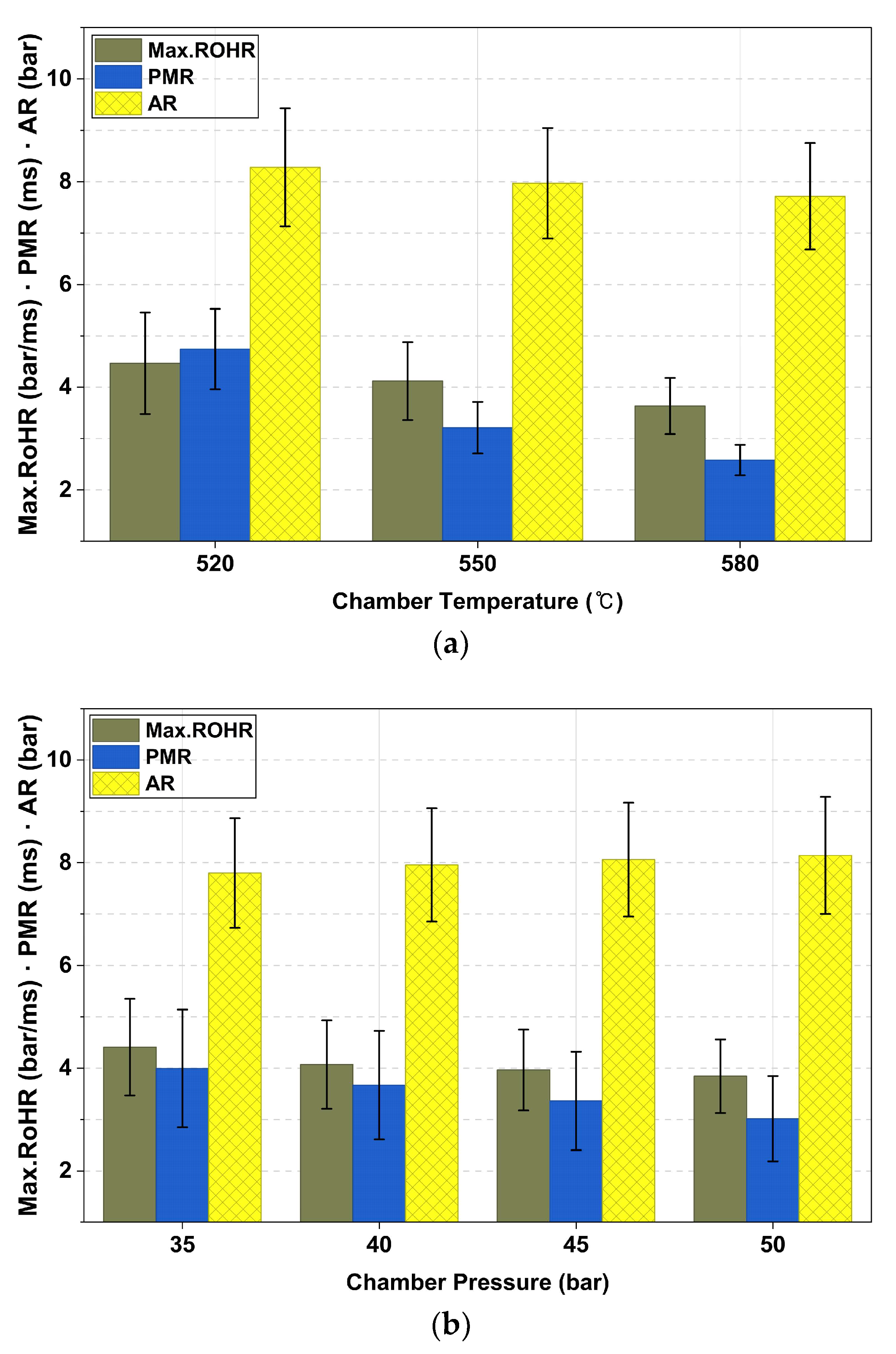
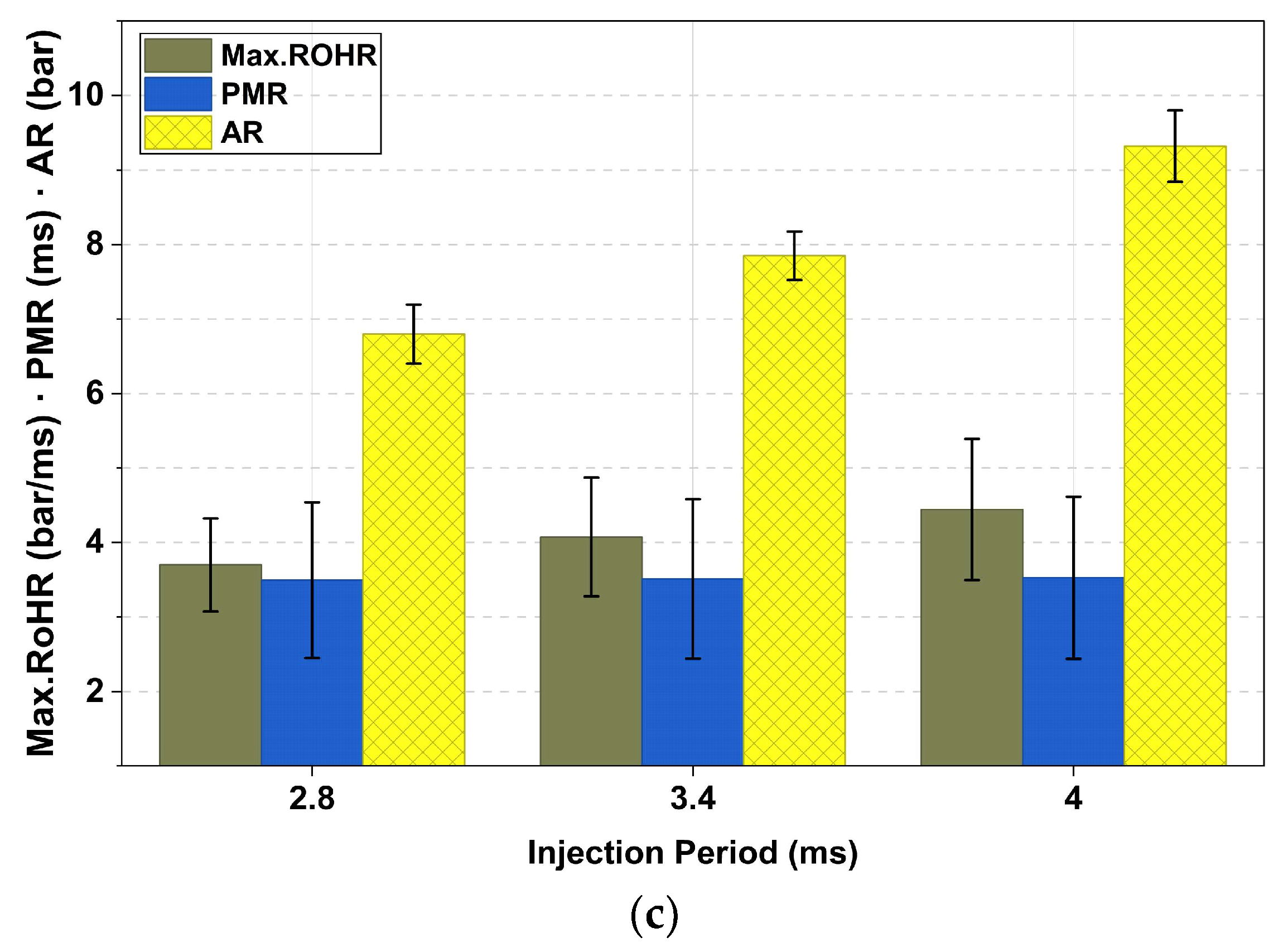
To assess whether the pilot fuel provides sufficient thermal and pressure contributions necessary for main fuel ignition, the maximum rate of heat release (Max.RoHR), accumulated heat release (AR), and peak pressure timing (PMR) were analyzed. Figure 4 presents the analysis results. The bar chart represents the mean value for the test of each operating condition, and the error bar represents the standard deviation.
Elevated in-cylinder temperature and pressure advance PMR, analogous to their effects on shortening ID and MCD, thereby shifting the timing of the main combustion phase forward. In contrast, AR remained relatively insensitive to temperature and pressure variations, with mean value changes remaining within approximately –7% for temperature variation and +4% for pressure variation, indicating that the total chemical energy is nearly conserved under conditions with similar fuel quantities. Unlike the ID–MCD interval, which remained nearly constant at approximately 0.30 ms across all conditions, the PMR–ID interval varied with operating conditions. With increasing temperature (520 to 580 °C) and pressure (35 to 50 bar), PMR–ID decreased from approximately 0.70 to 0.43 ms and from 0.62 to 0.47 ms, respectively, indicating compression of the transition time from ignition to peak pressure formation. This suggests that under high-T/P conditions, heat release becomes more concentrated in the early phase, or the relative contribution of late-stage heat release decreases, thereby advancing the formation of peak pressure [25,26]. In contrast, variation in injection duration maintained PMR–ID at approximately 0.55 ms, supporting the notion that injection duration acts more directly on the magnitude (AR) and intensity (Max.RoHR) of heat release rather than on the in-cylinder maximum pressure position [26].
From the perspective of heat release morphology, Max.RoHR decreased by approximately 19% with increasing temperature (520 to 580 °C) and by approximately 13% with increasing pressure (35 to 50 bar), demonstrating a tendency toward attenuation of the premixed peak and transition to a more gradual heat release profile. This is consistent with classical diesel combustion behavior: as ignition delay shortens with elevated temperature and pressure, the fuel–air mixing time prior to ignition becomes limited, reducing the fraction of premixed combustion that dominates under low-temperature and low-pressure conditions [21,27]. At low T/P, the extended ID allows sufficient mixture formation, resulting in a pronounced premixed peak at the instant of ignition. Conversely, at high T/P, reactions rapidly commence after injection, increasing the relative contribution of diffusion-controlled combustion, thereby lowering the instantaneous peak and temporally dispersing heat release. During this process, PMR is also advanced in conjunction with ID/MCD, and the standard deviation of PMR decreases, mitigating cycle-to-cycle variability in in-cylinder maximum pressure position and thereby enhancing combustion phasing stability.
Injection duration emerged as the variable directly controlling combustion intensity and total energy magnitude within a given operating condition. Increasing injection duration from 2.8 ms to 4.0 ms resulted in an approximately 37% increase in AR (from approximately 6.8 to 9.3 bar) and an approximately 20% increase in Max.RoHR (from approximately 3.70 to 4.44 bar/ms), demonstrating that additional injected fuel mass directly translates into increased total releasable energy and instantaneous heat release intensity. However, the mean value and standard deviation of PMR remained nearly unchanged, indicating that increased injection duration acts not by altering the in-cylinder maximum pressure position but rather by increasing flame volume and reaction density in the vicinity of the already established phase [28,29]. This implies that pilot injection quantity plays a greater role in determining combustion intensity and associated effects such as combustion noise and mechanical loading at a given phasing, rather than finely controlling the main fuel ignition timing.
The clear separation between the variable governing ignition timing and the variable controlling combustion intensity suggests that the transition from past cam engines to electronic engines facilitates detailed control and can synergize to achieve both high efficiency and low emissions in DF marine engines with basic information that can further optimize advanced engine control technologies such as variable compression ratio (VCR), variable valve timing (VVT), and multi-step pilot injection [30,31].

4. Conclusions

This study systematically analyzed the ignition and early-stage combustion characteristics of MGO as a pilot fuel using a CVCC across operating conditions representative of DF engine operation. Reproducible data were secured through 40 replicate experiments for each condition.
The principal conclusions of this study are as follows:
First, in-cylinder temperature is the dominant factor governing ID. As temperature increased from 520 °C to 580 °C, ID decreased by 46.7% (from 4.041 to 2.154 ms), while the standard deviation decreased by 62.8%, demonstrating improved ignition repeatability under high-temperature conditions. This behavior is explained by Arrhenius kinetics and cool flame phenomena, underscoring the critical importance of temperature control in low-load operation of DF engines.
Second, pressure increase exerted a limited yet practically significant effect compared to temperature. As pressure increased from 35 to 50 bar, ID decreased by 24.5% (from 3.378 to 2.549 ms), and the standard deviation decreased by 28.8%, mitigating cycle-to-cycle variability. This indicates increased reactant density and stabilization of mixing processes under high-pressure conditions.
Third, injection duration controls combustion intensity without affecting ignition timing. As injection duration increased from 2.8 to 4.0 ms, ID exhibited minimal change (2.1%, within the standard deviation range), whereas AR increased by 37% (from 6.8 to 9.3 bar) and maximum rate of heat release increased by 20% (from 3.70 to 4.44 bar/ms). Therefore, injection duration serves as a means of regulating combustion intensity rather than controlling ignition phasing.
Fourth, ignition initiation and main combustion development maintain an independent time interval. The time difference between ID and MCD remained constant at approximately 0.30 ms across all conditions, indicating that temperature and pressure variations advance both phenomena uniformly.
Fifth, combustion phasing and intensity are governed by distinct variables. Elevated temperature and pressure advance PMR and reduce maximum heat release rate by 19–13%, thereby attenuating the premixed peak, while injection duration increases the magnitude of energy release without altering PMR. This reflects a reduction in the premixed combustion fraction and a predominance of diffusion-controlled combustion at high T/P conditions.
This study confirms that temperature primarily influences ignition timing while injection quantity predominantly affects heat release magnitude, demonstrating that these two control variables govern distinct combustion characteristics. Unlike previous engine-based studies that inherently couple mechanical, aerodynamic, and chemical effects, the present work isolates thermodynamic and injection variables within a controlled CVCC environment, enabling clear identification of independent control factors governing ignition timing and combustion intensity. This decoupling provides new insight into how electronically controlled marine engines can separately optimize ignition stability and heat release magnitude under varying environmental conditions. These findings can serve as a scientific basis for the optimal design of future DF engines and the development of engine management systems. Furthermore, this work is expected to contribute to ensuring the reliability of dual-fuel engines in achieving the IMO’s 2050 net-zero emissions target.
While this study focused on the intrinsic characteristics of pilot fuel under single-injection conditions, actual DF engine operation involves complex interactions, including (1) variations in mixture homogeneity due to multiple injections, (2) interactions with the main fuel–air mixture, and (3) influences of boost conditions and residual gas composition. Future research should expand the generalizability of these findings through interaction analyses incorporating multiple injection strategies, excess air ratio effects, and main fuel mixing interactions, as well as through coupling with computational fluid dynamics simulations. Additionally, investigations into synergistic reactions with low-carbon and zero-carbon fuels remain necessary. Furthermore, from a practical application perspective, future studies should focus on integrating these fundamental ignition delay maps into the development of Electronic Control Unit (ECU) strategies for VCR and VVT systems. This integration will be essential for optimizing thermal efficiency and minimizing methane slip, thereby contributing to the sustainability of the maritime industry.

Author Contributions

Conceptualization, J.-S.K. and J.-H.C.; methodology, J.-S.K. and H.L.; formal analysis, S.-G.C.; investigation, H.L. and H.J.; data curation, H.J.; writing—original draft preparation, H.L. and J.-S.K.; writing—review and editing, J.-H.C.; visualization, S.-G.C.; funding acquisition, J.-S.K. All authors have read and agreed to the published version of the manuscript.

Funding

This work was supported by the Technology Innovation Program (RS-2024-00459855, Development of shipboard methanol to DME reformer for green methanol-fueled ship) funded by the Ministry of Trade Industry & Energy (MOTIE, Korea).

Data Availability Statement

The datasets presented in this article are not readily available because the data are part of an ongoing study. Requests to access the datasets should be directed to corresponding author’s e-mail.

Conflicts of Interest

The authors declare no conflicts of interest.

Abbreviations

ARAccumulated heat release
DFDual-fuel
GHGGreenhouse gas
HFOHeavy fuel oil
IDIgnition delay
IMOInternational Maritime Organization
LNGLiquefied natural gas
Max RoHRMaximum rate of heat release
MCDMain combustion delay
MGOMarine gas oil
PmaxMaximum pressure
PMRIn-cylinder maximum pressure position
SOIStart of injection

References

  1. Hwang, D.J.; Oh, C. Simulation study on regulatory compliance costs of alternative marine fuels under IMO GHG mid-term measures. J. Adv. Mar. Eng. Technol. 2025, 49, 215–223. [Google Scholar] [CrossRef] [Scilit]
  2. MEPC, Resolution. 2023 IMO Strategy on Reduction of GHG Emissions from Ships; International Maritime Organization: London, UK, 2023. [Google Scholar]
  3. Chu Van, T.; Ramirez, J.; Rainey, T.; Ristovski, Z.; Brown, R.J. Global impacts of recent IMO regulations on marine fuel oil refining processes and ship emissions. Transp. Res. Part D Transp. Environ. 2019, 70, 123–134. [Google Scholar] [CrossRef] [Scilit]
  4. Kim, J.-S.; Choi, J.-H. Feasibility study on bio-heavy fuel as an alternative for marine fuel. Renew. Energy 2023, 219, 119543. [Google Scholar] [CrossRef] [Scilit]
  5. Zhang, Q.; Li, M.; Shao, S. Combustion process and emissions of a heavy-duty engine fueled with directly injected natural gas and pilot diesel. Appl. Energy 2015, 157, 217–228. [Google Scholar] [CrossRef] [Scilit]
  6. Ahmed, N.I.; Kim, J.K.; Chun, K.W.; Choi, J.-H.; Lee, W.-J. Optimizing fuel injection timing: Investigating the effects of injection timing on combustion performance and emission characteristics of high and low sulfur fuels in a diesel engine. J. Adv. Mar. Eng. Technol. 2024, 48, 287–295. [Google Scholar] [CrossRef] [Scilit]
  7. Das, S.K.; Jo, H.; Jwa, K.H.; Lim, O.; Woo, Y. Combustion characteristics of biodiesel blended gasoline fuel in engine like condition using constant volume combustion (CVCC). Energy Procedia 2018, 145, 187–192. [Google Scholar] [CrossRef] [Scilit]
  8. Nghia, N.T.; Truong, N.P.; Khoa, N.X.; Tuan, L.A.; Tuan, N.V. A comparison in combustion characteristics in a CVCC with biodiesel blends. Energies 2022, 15, 1017. [Google Scholar] [CrossRef] [Scilit]
  9. Niki, Y.; Rajasegar, R.; Li, Z.; Musculus, M.P.; Garcia Oliver, J.M.; Takasaki, K. Verification of diesel spray ignition phenomenon in dual-fuel diesel-piloted premixed natural gas engine. Int. J. Engine Res. 2022, 23, 180–197. [Google Scholar] [CrossRef] [Scilit]
  10. Xu, L.; Treacy, M.; Zhang, Y.; Aziz, A.; Tuner, M.; Bai, X.-S. Comparison of efficiency and emission characteristics in a direct-injection compression ignition engine fuelled with iso-octane and methanol under low temperature combustion conditions. Appl. Energy 2022, 312, 118714. [Google Scholar] [CrossRef] [Scilit]
  11. Institute, E. IP 541: Determination of Ignition and Combustion Characteristics of Residual Fuels—Constant Volume Combustion Chamber Method; Energy Institute: London, UK, 2006. [Google Scholar]
  12. Golden, D.M.; Barker, J.R. Pressure-and temperature-dependent combustion reactions. Combust. Flame 2011, 158, 602–617. [Google Scholar] [CrossRef] [Scilit]
  13. Belov, G.V. Thermodynamic analysis of combustion products at high temperature and pressure. Propellants Explos. Pyrotech. 1998, 23, 86–89. [Google Scholar] [CrossRef] [Scilit]
  14. Korkmaz, M.; Ritter, D.; Jochim, B.; Beeckmann, J.; Abel, D.; Pitsch, H. Effects of injection strategy on performance and emissions metrics in a diesel/methane dual-fuel single-cylinder compression ignition engine. Int. J. Engine Res. 2019, 20, 1059–1072. [Google Scholar]
  15. CIMAC. Guideline_Fuel_Quality_Ignition_Combustion; CIMAC: Frankfurt, Germany, 2011. [Google Scholar]
  16. Atsushi Takeda, H.N.; Adachi, K.; Adachi, K.; Nagayuki Iijima, S.U.; Miyano, H.; Tajima, H. Recent Trend of Combustion Property of Marine Residual Fuel Oil and Analysis by FCA, Constant Volume Combustion Chamber Method. J. JIME 2010, 45, 1017–1022. [Google Scholar]
  17. Rehman, S.; Alam, S.S. Rate of heat release characteristics of supercritical sprays of dieseline blend in constant volume combustion chamber. Results Eng. 2020, 6, 100121. [Google Scholar] [CrossRef] [Scilit]
  18. Fueltech Solutions. FIA–100/FCA Fuel Combustion Analyzer Operating Manual; Fueltech Solutions: Trondheim, Norway, 2009. [Google Scholar]
  19. Mustayen, A.; Wang, X.; Rasul, M.; Hamilton, J.; Negnevitsky, M. Thermodynamic analysis of diesel engine ignition delay under low load conditions. Energy Rep. 2022, 8, 495–501. [Google Scholar] [CrossRef] [Scilit]
  20. Sakane, Y.; Kanno, R.; Yurui, Y.; Kobashi, Y.; Shibata, G.; Ogawa, H. Arrhenius type empirical ignition delay equations based on the phenomenology of in-cylinder conditions for wide operating ranges in modern diesel engines. Int. J. Engine Res. 2023, 24, 3720–3733. [Google Scholar] [CrossRef] [Scilit]
  21. Heywood, J.B. Internal Combustion Engine Fundamentals; McGraw-Hill Education: Columbus, OH, USA, 2018. [Google Scholar]
  22. Curran, H.J.; Gaffuri, P.; Pitz, W.J.; Westbrook, C.K. A comprehensive modeling study of n-heptane oxidation. Combust. Flame 1998, 114, 149–177. [Google Scholar] [CrossRef] [Scilit]
  23. Liang, X.; Ju, D.; Han, D. Numerical study on the physical and chemical processes in n-decane spray ignition. Chem. Eng. Sci. 2021, 241, 116716. [Google Scholar] [CrossRef] [Scilit]
  24. Seidenspinner, P.; Härtl, M.; Wilharm, T.; Wachtmeister, G. Cetane Number Determination by Advanced Fuel Ignition Delay Analysis in a New Constant Volume Combustion Chamber; Technical Paper; SAE: Warrendale, PA, USA, 2015. [Google Scholar]
  25. Liu, Z.; Karim, G.A. The Ignition Delay Period in Dual Fuel Engines. SAE Trans. 1995, 104, 354–362. [Google Scholar]
  26. Liu, Z.; Karim, G. An Examination of the Ignition Delay Period in Gas-Fueled Diesel Engines; SAE: Warrendale, PA, USA, 1998. [Google Scholar]
  27. Hashizume, T.; Miyamoto, T.; Akagawa, H.; Tsujimura, K. Combustion and emission characteristics of multiple stage diesel combustion. SAE Trans. 1998, 107, 548–557. [Google Scholar]
  28. Soloiu, V.; Weaver, A.; Parker, L.; Brant, A.; Smith, R., III; Ilie, M.; Molina, G.; Carapia, C. Constant volume combustion chamber (CVCC) investigations of aerospace F-24 and Jet-A in low-temperature heat release and negative temperature coefficient regions. Energy Convers. Manag. 2022, 263, 115687. [Google Scholar] [CrossRef] [Scilit]
  29. Parsa, S.; Verhelst, S. Numerical Investigation of the Ignition Delay and Laminar Flame Speed for Pilot-Ignited Dual Fuel Engine Operation with Hydrogen or Methanol; Technical Paper; SAE: Warrendale, PA, USA, 2023. [Google Scholar]
  30. Milojević, S.; Stopka, O.; Kontrec, N.; Orynycz, O.; Hlatká, M.; Radojković, M.; Stojanović, B. Analytical Characterization of Thermal Efficiency and Emissions from a Diesel Engine Using Diesel and Biodiesel and Its Significance for Logistics Management. Processes 2025, 13, 2124. [Google Scholar] [CrossRef] [Scilit]
  31. Pesic, R.; Milojevic, S. Efficiency and ecological characteristics of a VCR diesel engine. Int. J. Automot. Technol. 2013, 14, 675–681. [Google Scholar] [CrossRef] [Scilit]
Figure 1. Experiment setup [11].
Jmse 14 00480 g001
Figure 2. Definition of combustion metrics derived from thermodynamic analysis. (a) Pressure-based combustion characteristics extracted from the in-cylinder pressure trace. (b) Heat release–based combustion characteristics obtained from the calculated rate of heat release profile [11,15].
Jmse 14 00480 g002
Figure 3. Effects of in-cylinder combustion temperature, pressure, and injection period on ignition delay and main combustion delay of marine gas oil: (a) temperature effect; (b) pressure effect; (c) injection duration effect.
Jmse 14 00480 g003aJmse 14 00480 g003b
Figure 4. Combustion intensity characteristics as functions of operating conditions: (a) effects of temperature and pressure on peak pressure timing and heat release rate; (b) accumulated heat release versus operating conditions; (c) effects of injection duration on heat release and in-cylinder maximum pressure position.
Jmse 14 00480 g004aJmse 14 00480 g004b
Table 1. Fuel properties of marine gas oil.
ItemUnitStandard (ISO-8217)ResultTest Method
Density at 15 °Ckg/m3Max 890842.4KS M ISO 3675
Kinematic viscosity at 40 °Cmm2/sMax 6
Min 2
3.42KS M ISO 3104
Cetane number-Min 4053.7KS M ISO 5165
Sulfur% m/mStatutory requirements
Max 0.05
0.034ASTM D5453
Flash point°CMin 6072.5KS M ISO 2719
Pour point°CMax (winter) −6
Max (summer) 0
−8ASTM D6749
Ash% m/mMax 0.010.001KS M ISO 6245
Water and sediment% V/V-0.005KS M 2115
Carbon residue% m/mMax 0.30.1KS M ISO 10370
Table 2. Experimental parameters for pilot fuel combustion in the CVCC.
In-Cylinder Temperature
°C
In-Cylinder Pressure
Bar (MPa)
Injection Period
ms
Injection Pressure
Bar (MPa)
52035 (3.5)2.8400 (40)
55040 (4.0)3.4
58045 (4.5)4.0
50 (5.0)
Disclaimer/Publisher’s Note: The statements, opinions and data contained in all publications are solely those of the individual author(s) and contributor(s) and not of MDPI and/or the editor(s). MDPI and/or the editor(s) disclaim responsibility for any injury to people or property resulting from any ideas, methods, instructions or products referred to in the content.