


Abstract
To combat climate change, farmers want to develop sustainable agriculture that enhances food production while strengthening their capacity to cope with extreme weather events and pest and disease pressures. Promoting agroecological farming practices is a promising approach in enhancing sustainability and strengthening the climate-resilient farming systems. Recent research often overlooks to what extent the agroecological farming practices (AFP) provide a measurable advantage over non-AFP methods under increasing environmental challenges. In this regard, this study compares the extent of climate resilience between AFP mango-based farming systems and non-AFP mango-based farming systems in southern Ethiopia. AFP adopters applied ecological principles like intercropping, integrated pest management, agroforestry, canopy management, varietal diversity, and water and soil preservation to enhance biodiversity and soil health, and boost productivity and ecosystem services. The study employed a mixed-method design, drawing on the data from 395 selected households. The resilience of AFP and non-AFP farming systems was assessed by computing the 13 agroecosystem indicators of climate resilience using the Self-evaluation and Holistic Assessment of Climate Resilience of Farmers and Pastoralists (SHARP+) tool. Households in AFP mango-based farming system demonstrated greater diversification in agricultural production system compared to those in non-AFP mango farming system. The analysis of climate resilience indicators showed that the mango production systems under the AFP were more climate-robust than their conventional systems. Both the compound resilience score and the household resilience index showed that the mango farming systems under AFP substantially enhanced climate resilience. Hence, coordinated supports from the extension services, NGOs, and researchers are needed to scale up these benefits of AFP. Strengthening the AFP mango farming requires addressing the key barriers such as market access, input availability, and crop diversification strategies. This paper identifies important avenues for further AFP research in Sub-Saharan African countries.
1. Introduction
The global food system is facing increasingly complex environmental and health issues that are aggravated by the growing population and increasing consumption demands [1]. Ensuring environmental sustainability and maintaining the supply of foods require the adoptions of consequences of climate change problems, including growing challenges of pest and diseases, and loss of biodiversity are paramount important to balance the economic stability worldwide [2,3]. Climate change poses biotic and abiotic problems on the farming systems of Sub-Saharan Africa (SSA) [4]. Increasing temperatures, changing of weather patterns, increased pest outbreaks, and the development of invasive alien pests contribute to the decline of crop yields especially that of mango fruit [5]. White mango scale [Aulacaspis tubercularis (Newstead: Hemiptera: Diaspididae)] and fruit fly (Bactrocera dorsalis) (Hendel) are the major alien insect pests that cause severe production bottlenecks of mangoes in SSA [5,6,7,8]. Furthermore, the high prevalence of diseases, like powdery mildew and anthracnose exacerbated by climate change, reduced the production and productivity of mangoes and thus negatively impacts the local and global trade of fresh mango fruits [5,9]. The influence of abiotic factors like drought and land degradation has also increased [10]. Furthermore, weak pesticide regulation systems existed in developing countries facilitate the spread of insect pests and diseases. All the above-mentioned problems, highlighting the urgent need for sustainable food system approach [2,7,11] in the production of mangoes, where fostering the resilient agricultural systems reduces the vulnerability of millions of mango-growers in SSA [10,12].
Resilience is commonly defined as the ability of a production system to recover, reorganize, and adapt external disturbances and shocks [10,13,14,15]. In farming systems, increasing productivity alone does not necessarily enhance the resilience of farmers, as resilience requires the capacity to withstand the diverse shocks over multiple timescales [10,13]. One-sided intervention with the focus on the improvement of productivity in agriculture may contradict the objective of fostering resilience [10,16]. For instance, extensive use of agrochemicals negatively affects the agroecosystem and soil health by exacerbating biodiversity loss and climate change that ultimately reduce the crop yields [7]. Therefore, resilience necessitates the buildup of the balance between productivity improvement and sustainable management of resources in the farming systems [10,13,17].
Agroecological farming practices (AFPs) are a comprehensive farming approaches that apply ecological the principles and local knowledge in producing foods in environmentally sustainable, socially fair, and economically viable ways [1,18,19,20,21]. AFPs indicate the extent of crop diversification, varietal diversity, soil health, and water conservation; and implementation of optimum agronomic practices including tree management, integrated pest management, and agroforestry practices, which are often considered as important criteria to evaluate the resilience of the given agricultural systems [8,10,16,18,19,22,23,24,25].
Studies of different scholars suggest the importance of farming practices that boost crop productivity, reduce dependency on external inputs, conserve natural resources, and enhance climate resilience in the farming systems. Mango, which is the most widely cultivated tropical and subtropical fruit crop, is prone to severe climate factors, insect pests, and diseases in SSA countries including in Ethiopia [5,6,7,26]. In this regard, various scholars demonstrated that farmers that implement the AFPs are able to manage pests, boost crop yield, improve biodiversity, promote soil fertility, and decrease climate vulnerability of the food production system [18,22,27,28]. However, there is a serious limitation in comparing the outcomes of specific climate resilience of agroecological practices versus conventional practices within the high-value perennial crops like mango. Our study defines climate resilience as a function of social and ecological integrative processes and outcomes that enhance farmers adaptive capacity, strengthen mitigation potential, and reduce the vulnerability of mango farming system to climate-related shocks. Most of the studies in Ethiopia focused on cereal-based systems, leaving the adaptive capacity of diverse fruit-based agroecosystems largely unquantified.
The Southern Rift Valley, Abaya–Chamo catchment, is the major mango-producing area in Ethiopia, accounting for about 47% of total mango fruit production [8]. In Gamo Zone Arba Minch Zuria and Mirab Abaya districts are the main mango-producing areas [8]. Mango farming is traditionally relied on the conventional practices, mainly monocropping with limited adoption of agroecological farming practices. Recently, climate change has intensified production challenges by contributing to the emergence of pests and diseases, including fruit flies and white scale insects, leading to significant fruit losses [5,8]. Despite the major production areas, farmers could not generate as many benefits from the production of mangoes. Furthermore, no previous study has documented the AFPs related to climate resilience. The objective of this study is to assess the level of climate resilience between AFP and non-AFP mango-based farming systems in response to various shocks and challenges in southern Ethiopia. This study contributes to the literature on the application of a new methodology to assess the climate resilience of farming systems. Using the Self-Evaluation and Holistic Assessment to Climate Resilience of Farmers and Pastoralists approach (SHARP+) tool, this study compared the resilience capacity of AFP mango-based farming systems with conventional mango farming systems and to explore the linkages between smallholder farmer practices and AFP principles in adapting mango production to climate change. The SHARP+ approach enabled a comprehensive assessment of climate resilience in AFP and non-AFP mango-based systems in southern Ethiopia.
2. Materials and Methods
2.1. Study Area
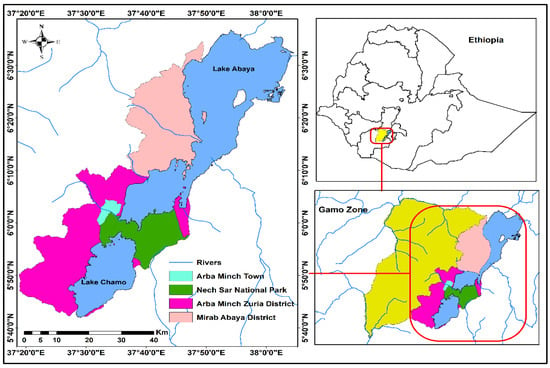
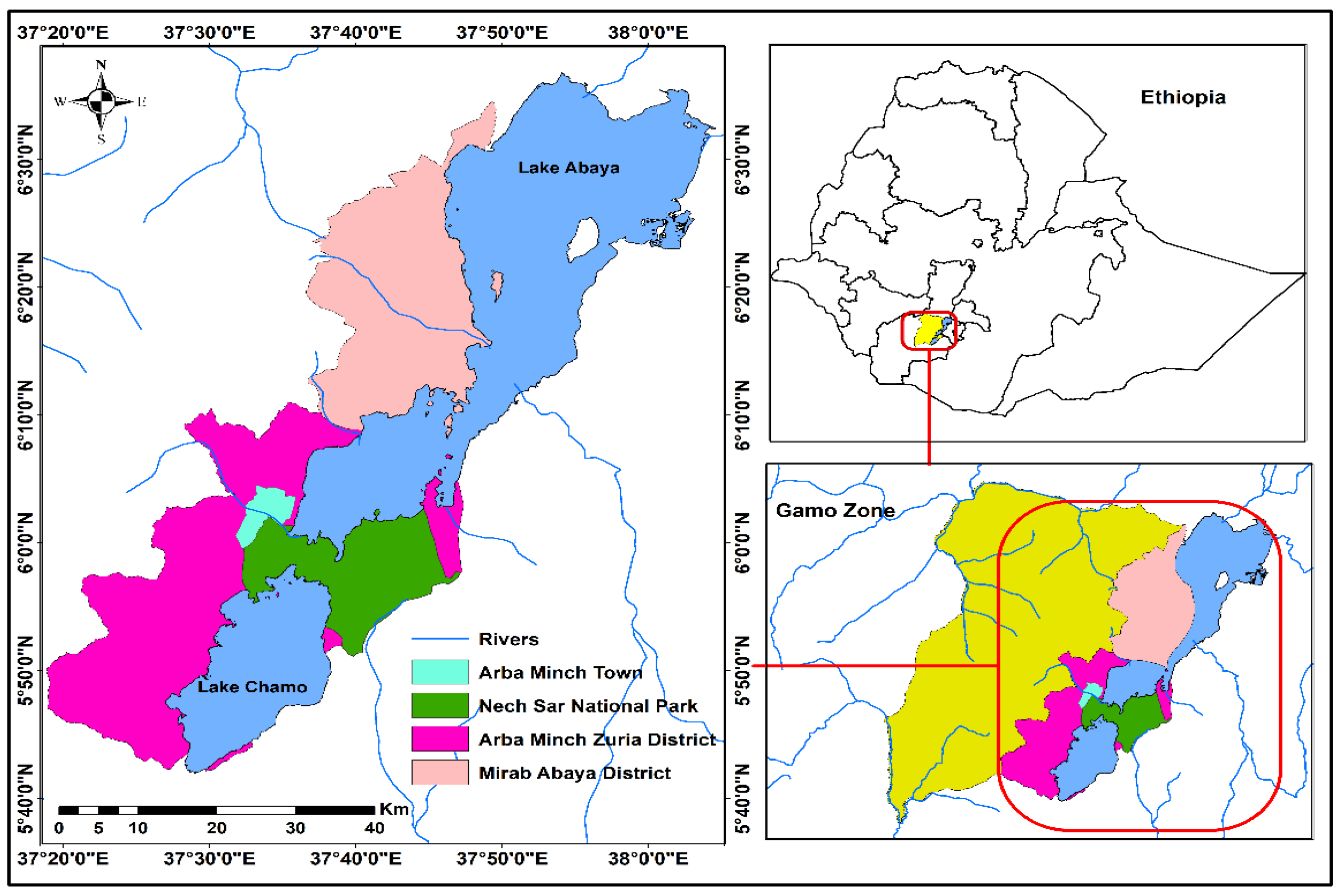
The research was conducted in Arba Minch and Mirab Abaya districts located in the Rift Valley area of southern Ethiopia [29]. The study area situated Abaya–Chamo catchment, which contains Lake Abaya and Lake Chamo (Figure 1). The geographical location of Arba Minch Zuria district is between 5.65° and 6.32° N and 37.34° and 37.68° E longitude, with an altitude between 1100 and 2500 m.a.s.l., while the Mirab Abaya district is located between 5.24° and 6.12° N latitude and 36.74° and 37.12° E longitude. The altitude of the district ranges from 1150 to 2600 m.a.s.l. The Abaya–Chamo watersheds have tropical, hot, and semiarid weather conditions [29], suitable for lowland crop production including mangoes.
Figure 1.
Map of the research sites.
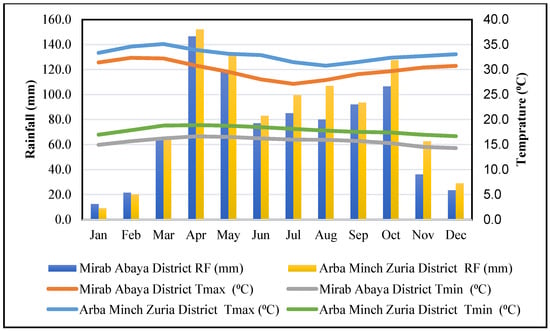
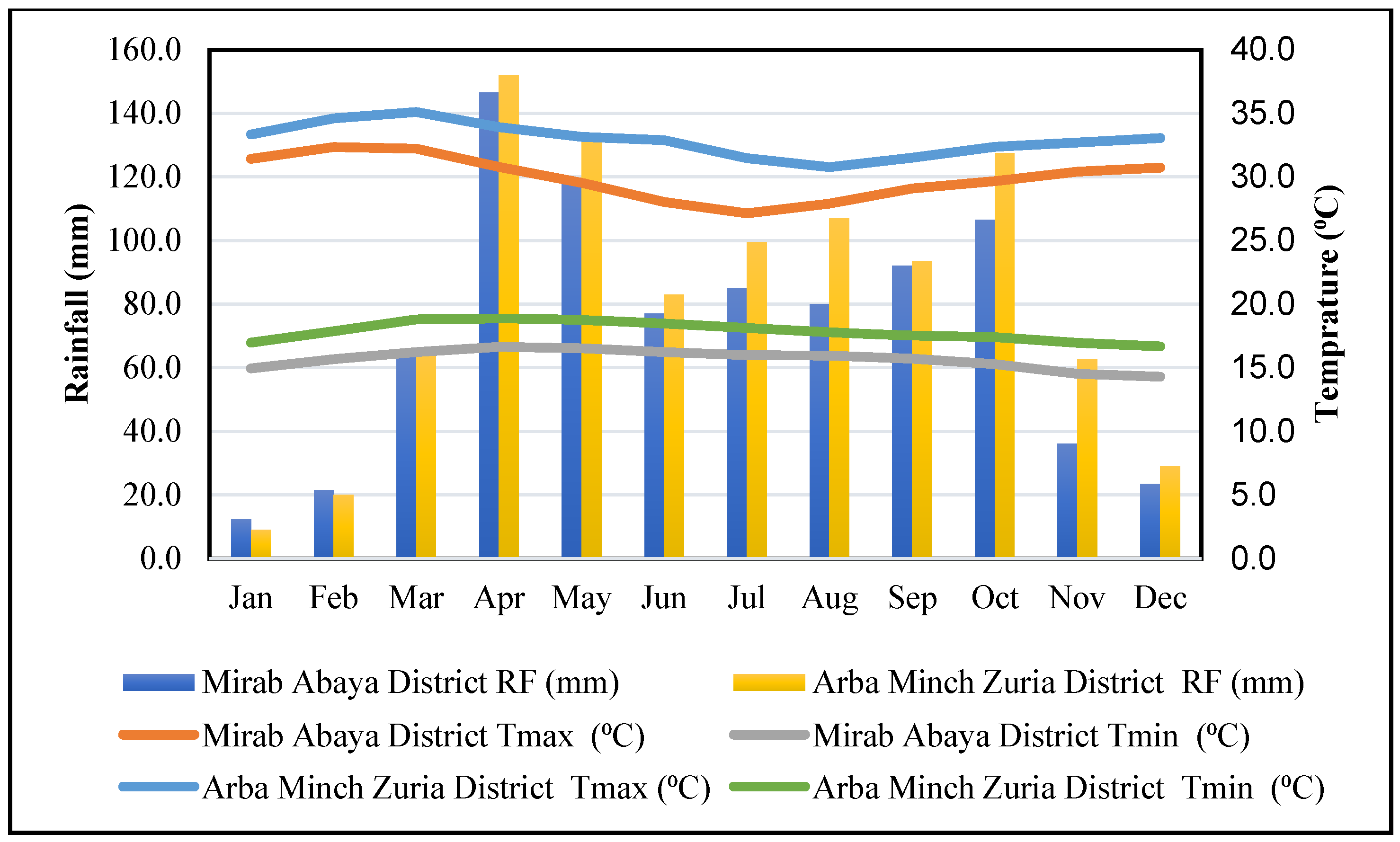
Most of the research locations have a bimodal pattern of rainfall where the first short rainy season occurs between March and June, while the long rainy season is in summer from August to November [30,31]. Based on the last four decades of metrological data, the Arba Minch Zuria and Miraba Abaya districts received 500 to 800 mm of average rainfall [30] annually. According to the Ethiopian Metrological Station (Figure 2), the average minimum and maximum temperatures of both districts are 17.8 °C and 30.5 °C, respectively. Fruit-based farming is the main agricultural production system in the two districts where banana and mangoes are being the most widely cultivated fruit crops. Other crops like papayas, maize, cotton, sweet potatoes, tomatoes, onions, cassava, pepper, and common beans are also grown in the study areas [8,29,32,33].
Figure 2.
Average annual climate data in the districts of Mirab Abaya and Arba Minch (1983–2024) (source: Ethiopian Meteorology Station).
2.2. Sample Size Determination and Sampling Procedure
The study employed a mixed-method approach, integrating the SHARP+ tool to assess resilience. The design of concurrent triangulation overcomes the limitations from both quantitative and qualitative methods while maximizing the benefits of each [34]. Cross-sectional household surveys are widely applied in research that compares resilience across various groups, including farming systems, communities, and institutions [10,35]. The multistage sampling technique was used to select districts, kebeles, and farming households. The districts of Arba Minch Zuria and Mirab Abaya from Gamo zone were purposively selected for the first stage based on their mango production practices. The two districts were selected for research because mango was the dominant crop grown in the area. Based on the area covered by mangoes and the number of farmers involved in agroecological mango production, twelve kebeles were purposefully chosen from the two districts in the second phase. The International Centre of Insect Physiology and Ecology (ICIPE), in collaboration with local governments, stakeholders, and academic institutions, demonstrates different agroecological practices aimed at managing and preventing major insect pests, particularly fruit flies and the white mango scale insect, to strengthen mango production in the two districts. The two districts are intervention sites where ICIPE demonstrated AFP to manage key mango pests in an effort to boost mango productivity. However, there are still many other farmers who have not yet adopted the AFPs. Therefore, comparing farmers who are using AFPs with those who are not using AFPs is possible. From these kebeles, both adopters and non-adopters of agroecological practices were selected in collaboration with extension agents using simple random and systematic sampling methods, based on roster data obtained from the District Agricultural Office (Table 1). To compile the data, a structured questionnaire based on the Self-Evaluation and Holistic Assessment to Climate Resilience of Farmers and Pastoralists (SHARP+) tool was used. Validation and review of the questionaries for household survey and checklists for KIIs and FGDs were conducted through reconnaissance survey, which was conducted in September 2024. The result of reconnaissance survey also provided comprehensive information on agroecological farming practices (AFPs) and agricultural system implemented by farmers in the study area. In both districts, for instance, farmers use AFPs to enhance mango productivity through cropping systems, soil fertility management practices, and agroecological pest management practices [8,32,36].
Table 1.
Sample size for individual household survey.
Sample size was determined using Kothari [37] at the 95% confidence level (Equation (1)), where the sample size was subdivided into adopter and non-adopter of AFPs (Table 1). AFP adopters are households that are implementing agroecological farming practices in the 2024 production period, whereas “non-adopters” are households that do not engage in agroecological mango production rather in conventional farming system during the same time period [8]. The sample size of each district as well as the number of kebeles was then determined proportionally based on the mango growing population.
where n = required sample size, N = total population of mango growers under study, and Z represents the standard normal value equivalent to the desirable confidence level (for a 95% confidence level, Z = 1.96, which leaves α = 0.05 in the tails). The parameter p represents the projected population proportion, while q = 1 − p. Finally, e signifies the allowable margins of error, set at 5% (Equation (1)).
The initially determined sample size was adjusted upward by 10% by considering the potential non-responses or participants who could not be reached, following the recommendation of Israel [38]. As a result, the final number of sampled participants was approximately 395 (359 + 10% ≈ 395).
From 395 sampled respondents, 204 were adopters of AFPs, while 191 were non-adopters. “Adopters” are defined as those who are involved in AFPs of mango production during the 2024 production year. “Non-adopters” are defined as households that do not adopt AFPs of mango-based farming systems within the same period.
2.3. Data Collection and Sources
In this study, cross-sectional data was collected to generate representative samples in the study areas. Given that resilience is a multidimensional concept, it must be considered as a function of several dimensions that focus on the performance of a household. Studies that compared resilience across groups of participants such as farming systems, communities, and institutions often rely on a cross-sectional household survey [10,15,35]. Due to methodological uncertainties in measuring resilience, the survey should be complemented by participatory approaches such as focus group discussions, key informants interview (KIIs), and field observations, which help to capture qualitative insights [10,35]. A total of 395 individual households participated in the survey, where 204 households were AFP adopters, while 191 were non-AFP adopters in the Arba Minch Zuria and Mirab Abaya districts. Households were categorized based on their engagement in managing, applying, and benefiting from agroecological farming practices (AFPs) within the mango-based farming system. The FGD participants included development agents, elders, model farmers, and youths selected for their knowledge and experience in mango production. Five KIIs were also conducted with community leaders and experts from local government and NGOs involved in fruit farming. Document review and observation were also employed to strengthen the research information.
The resilience of AFP and non-AFP farming systems was assessed and compared by computing the 13 agroecosystem indicators of climate resilience using the Self-evaluation and Holistic Assessment of Climate Resilience of Farmers and Pastoralists (SHARP+) tool. Before the actual data collection, a reconnaissance survey was conducted to validate and restructure the questionnaires, which was conducted in September 2024. The results of the reconnaissance survey provided comprehensive information on agroecological farming practices and agricultural systems implemented by farmers in the area.
2.4. Self-Evaluation and Holistic Assessment to Climate Resilience of Farmers and Pastoralists (SHARP+) Tool
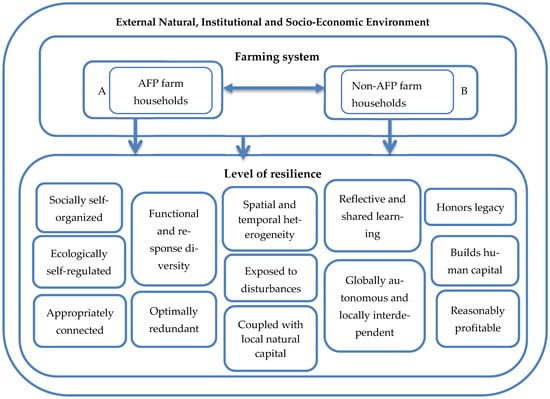
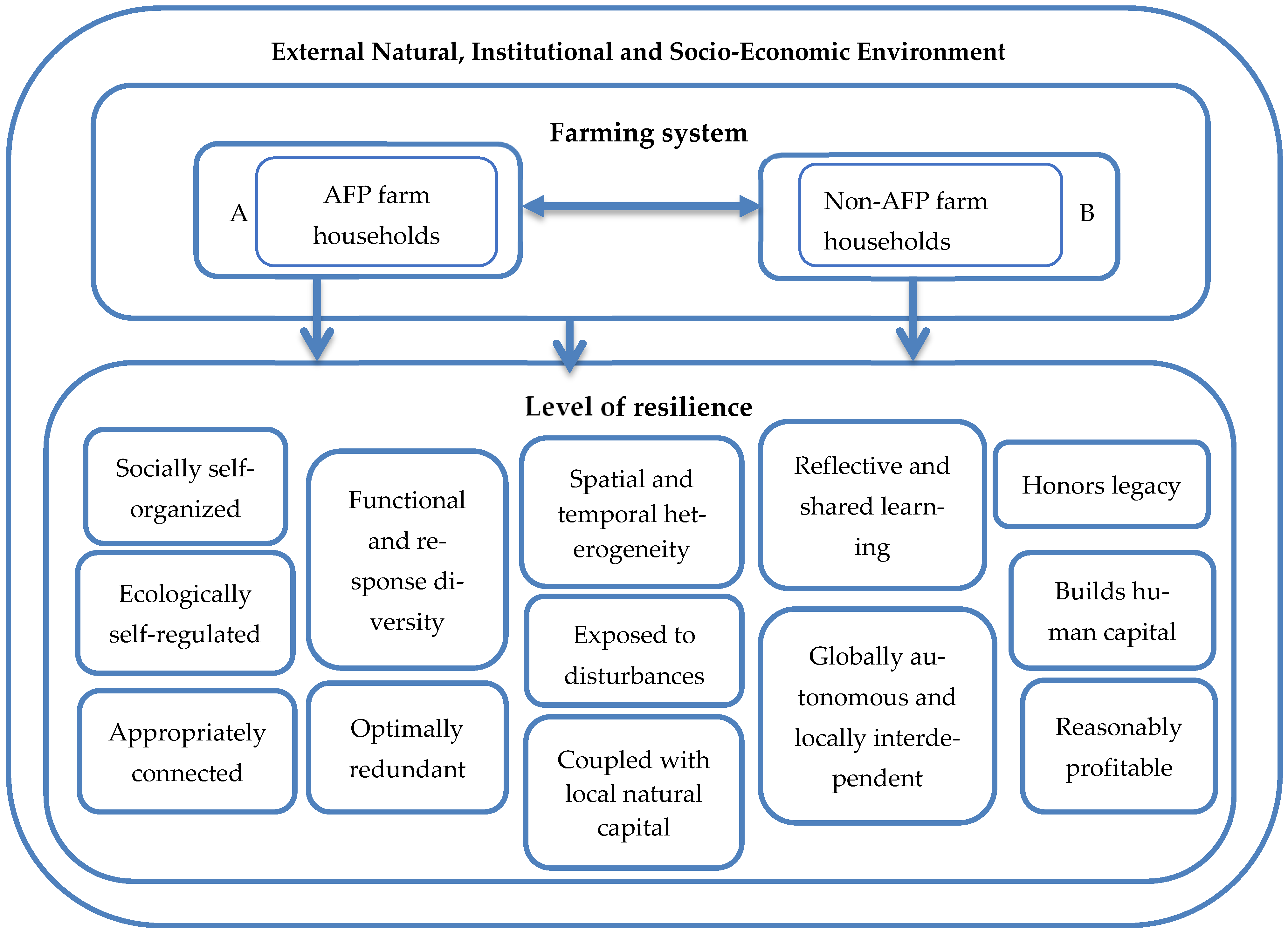
This study hypothesizes that agroecological practices in southern Ethiopia create more climate-resilient mango farming systems than conventional methods. The Self-evaluation Holistic Assessment of climate Resilience for farmers and Pastoralists (SHARP+) tool used to measure the adaptive capacity, mitigation potential, and vulnerability of AFP and non-AFP farming systems. The SHARP+ is a participatory climate resilience assessment tool that was developed by the Food and Agriculture Organization (FAO). SHARP+ helps farmers identify, measure, and prioritize actions to improve resilience to climate change [13,14]. The approach assesses climate resilience based on the knowledge and priorities of farmers (https://www.fao.org/sharp/en, accessed on 1 December 2025). The SHARP+ considers farmers’ traditional knowledge, skills, and practices, as well as governance systems, as a key for building and strengthening the resilience of farmers [39]. In the SHARP+ approach, the respondents state the adequacy and the level of importance to the different aspects of their livelihood. This information allows an assessment of farmers’ perceptions, behaviors, and priorities in enhancing their resilience to climate change. The SHARP+ approach allows us to compare and draw inferences about the impact of adopting different agroecological farming systems on the resilience of farming households. The similar methodology was also applied in earlier research on the climate resilience of farm systems [10,14,15,35]. The present study utilized the SHARP+ tool to assess the level of climate resilience between AFP adopters (Figure 3, (A)) and non-AFP adopters (Figure 3, (B)) in the mango-based farming system. In comparison to other tools, like International’s multi-dimensional index approach (TANGO) and the Resilience Indicators for Measurement and Analysis (RIMA), the SHARP+ tool offers thorough evaluation procedures as it measures resilience by assembling both quantitative and qualitative data [10].
Figure 3.
Conceptual framework of the study using a socio-ecological system approach, adapted from [13].
According to SHARP+ tool, resilience is a system’s capacity to bounce back, recover, and change in response to external pressures and disruptions [40,41]. A farming system is a complex, multidimensional, and multi-scalar framework (Figure 3) comprising the household unit, the farm operations, and wider ecological, institutional, and socio-economic settings that shape agricultural practices, as indicated by Darnhofer et al. [42] and Heckelman et al. [15]. Accordingly, the SHARP+ method considers resilience as an umbrella encompassing the complex connections between agricultural practices and governmental, social, economic, and environmental factors in farming systems. As indicated in Table 2, the SHARP+ tool builds on 13 agroecosystem indicators for the evaluation of resilience for the given farming system [41,43]. The SHARP+ approach converts farmers’ self-assessed priority areas and the quantitative and qualitative answers into numerical scores that represent the 13 behavioral-based indicators of resilience. For the purpose of this study, the phases “farming system” and “mango system” were used interchangeably, where the latter emphasizes that the farming system includes mango as the dominant agricultural activity under investigation.
Table 2.
Thirteen behavior-based indicators of resilience for agroecosystems developed by Cabell and Oelofse [41].
According to Moreno and Lagana [14], it is necessary to comprehend and take into account the problems and interests of farmers. In this regard, the SHARP+ version 2020 comprises 33 modules, of which 17 modules are compulsory to be collected, while the remaining 16 are optional depending on the objectives of the specific study. Accordingly, seven modules of the 16 non-mandatory modules were selected for the mango-based farming system of the present study. The selected seven modules were farm inputs, soil land degradation and soil quality, landscape characteristics, availability of climate change adaptation information, information and communication technologies, main productive assets, and financial services. In addition, one new module, which captured the information of farming knowledge, techniques of production, crop varieties, access to market, and other key aspects related to mango cultivation was also added. For the purpose of maintaining the alignment with the SHARP approach, the questions in this new module address the agronomic, social, and environmental dimensions of mango. They also assess both the technical resilience and the self-assessed adequacy components of the SHARP+ tool. Accordingly, a total of 25 modules (17 mandatory and 8 optional) were used for measuring the 13 behavior-based resilience agroecological indicators (Table 2).
In every module, a ten-point SHARP+ rating system was used, where the scores were modified for better reflection of the study’s setting and practicability, which was identified during the scoping research before the beginning of the actual research. Tablet-based data collection method was conducted using the SHARP+ tool. Questionnaires were pretested and slight modifications were made before the actual survey.
In this study, the farming system focused on mango production and was divided into two categories as follows: AFP mango farming systems (A) and non-AFP mango farming systems (B) (Figure 3). The AFP mango-based farming system produces a higher degree of climate resilience than the conventional mango-based farming system. AFP farming systems include households that adopt agroecological farming practices to enhancing soil fertility, improve pest management, conserve biodiversity, strengthen climate resilience, and boosting productivity. In contrast, conventional farming systems consist of households with no experience using AFPs.
2.5. Statistical Analysis
Data was processed using Stata Ver. 17 and interpreted following the SHARP+ methodology for the resilience analysis. A t-test was used to assess statistical differences between AFPs and conventional SHARP survey scores at the individual sub-component, agroecosystem indicator, and at the whole farming system levels (Figure 3; Table S1 in the Supplementary Material). Following Lagana et al. [39] and Moreno and Lagana [14], three different resilience scores were calculated, including compound resilience, self-assessed resilience, and technical resilience. Scores for compound resilience, calculated by the module level, made up the initial resilience score. Each module has two score components, namely the self-assessment component called “self-assessed adequacy” and the objective and scientific component called “technical resilience” [14,39]. The compound resilience score ranges from 0 to 20, which is the sum of the technical score (maximum 10 points) and the adequacy score of self-assessment (maximum 10 points) [39]. The compound resilience with a score of lower than 7.00 is classified as low. If it is between 7.01 and 12.00, it is classified as medium, while scores between 12.01 and 20.00 are classified as high [14,39].
The 13 behavior-based indicators’ score, unlike the compound resilience scores, was in the range of 10 points [39]. Continuous raw data scores were used in the analysis of all 52 sub-components. Sub-component scores were then aggregated by 13 agroecosystem indicators and farming system to determine differences at each level. Factor analysis was conducted to compute a farm household resilience index based on the 13 climate resilience indicators [10]. The thirteen behavioral-based indicators’ score was calculated by the average of sub components scores of each 13 indicators. Factor analysis (FA) and multiple linear regression were analyzed in a sequence. Using the weight obtained from the factor analysis, we computed the household resilience capacity index. The method aids in supplementing the household-level analysis with that at the farming-system level. Following computing the three indices, the AFP mango-based farming system and non-AFP mango-based farming systems were compared against the indicators of climate resilience using a two-way t-test.
The effect of an AFP mango system on the household resilience index was estimated by the multiple linear regression model indicated below (Equation (2)).
where Y is the household resilience capacity index; AFP is a categorical variable that demonstrates the AFP mango systems where AFP = 1 or 0 if a non-AFP mango system; and X1, X2… Xn are household characteristics, including the farmer age, family size, gender, educational status, land access, and annual income. Age, family size, land access, and annual income were recorded as continuous variables, while the farmer gender and educational attainment were measured as categorical variables. A standard error term, coefficients of household characteristics, and constant term are denoted by β0, β1–β3, and ε, respectively. The effect of farmers’ climate change resilience was measured by the coefficient of interest β1. The regression model complements the farming system analysis by providing insights at the household-level analysis.
3. Results and Discussion
3.1. Demographic and Socio-Economic Attributes of Households
The results of demographic and socio-economic attributes of the sample household heads are presented in Table 3. The AFP adopters were mostly male-headed households (87.3%). Female-headed AFP adopters were only 12.8% (Table 3). The household heads implementing the AFP farming system were relatively younger (44.0 years old) compared to their counterparts who did not implement the AFP farming system (52.0 years old) in mango production. Similarly, household heads implementing the AFP farming system had a relatively smaller family size (6.5) compared to their counterparts who did not practicing the AFP farming system (7.3). Additionally, households in AFP farming systems possessed comparatively more cultivated land than their counterparts. The present results are similar to the findings of Kiani et al. [44] also found that the adoption of agricultural diversification is significantly influenced by sociodemographic factors compared to non-adopters. Similarly, Gudina and Alemu [45] who stated that younger and male farmers are better willing to adopt the advanced production practices like AFPs than the elder and female farmers.
Table 3.
Demographic and socio-economic attributes of the participants.
The education level of the household heads was strongly and positively associated with the implementation of agroecological farming practices. While 91.7% of the AFP mango growers had the educational levels ranged from primary to tertiary education, only 51.8% of the non-AFP household heads exhibited these similar educational levels, indicating the importance of education in the implementation of AFPs. Similar to the present study, Gugissa et al. [10] also observed push–pull technology (PPT) farming system for maize-based farming exhibited higher education levels than their counterparts.
Households implementing AFP farming systems have been demonstrated greater diversifications in the agricultural activities compared to the non-AFP mango farming systems (Table 3). Diversification in the agricultural activities was reflected by the cultivation of higher number of seasonal crops (5.97 species), rearing of livestock species (2.52 species), and provision of productive assets (6.82 assets per household). Additionally, AFP adopter farmers had more diverse income sources other than agriculture (64.7%) compared to non-AFP adopter farmers, including trading, remittances, and services. Fruit crop productions contributed the largest share of the household income of both AFP adopter and non-AFP adopter farmers compared to the share of cereal crops, vegetables, and mixed farming systems. However, the AFP adopter generated a relatively higher share of income from fruits (56.37%) compared to their counterpart (48.69%). Diversification of agricultural activities and income sources contribute to farmers for being resilient against climate changes and environmental shocks [10,12,20,28,44,46].
The size of the private land significantly differed between AFP and non-AFP mango farming, where on average households in AFP adopter relatively larger area of private land than their counterparts. Crop diversification, post-harvest techniques implemented, and soil fertility management implemented were better in the AFP farming households compared to their counterparts, which was positively influenced by the size of the farmland [47]. Similar results were also reported where the soil fertility management strategies were significantly and favorably impacted by the size of the farmland [18,45]. Generally, the results obtained from the household survey were confirmed by the KIIs and FGDs respondents where adoption of AFPs boosts the income, maintains biodiversity, prevents the occurrence of pests, enhances soil fertility, reduces soil erosion, and helps demonstrating crop–animal-integrated farming system. These findings clearly demonstrate that AFPs are an important approach to sustain the productivity of agriculture, including mango farming systems.
3.2. Farming System Characteristics
AFP adopter and non-AFP adopter farmers perceived differently on the trend of mango production in the study area (Table 4). As 55.0% of the non-AFP adopter farmers perceived a decreasing trend, about 46.1% of the AFP adopter farmers reported a decrease in the mango yield in the last three years. On the other hand, about 21.1% of AFP adopter recognized an increase in mango yield, while only 8.9% of non-AFP adopter anticipated an increase in mango yield in the last three years. Generally, most farmers (50.4%) across the two production systems sensed a decrease in mango yield, while 34.4% of the households reported a stable mango yield in the last three years.
Table 4.
Perception of AFP and non-AFP adopters in mango farming systems in southern Ethiopia.
The perceived variations among the respondents towards the trends of mango yield could be attributed primarily to damages caused by the pests, including fruit flies and white mango scale, where AFP adopter households reported less damage of mango trees by these invasive pests. This suggests that the agroecological farming system could be an effective option for the management of insect pests, including fruit flies and white scale, in the production of mangoes. The present results are consistent with the findings of Bakengesa et al. [48], who demonstrated that agroecological practices are the best approaches for the management of insect pests like fruit flies. According to the authors, the agroecological practices include the spot bait stations, bio-fences, bio-pesticides, weeding, and orchard sanitation. Similarly, Owili et al. [7] stated that agroecological pest management practices provide an economical and nature-based solution to problems associated with pests like mango fruit fly invasion.
Significant variations were also observed among the two farming systems regarding the number of agroecological practices implemented and species diversity of agroforestry and hedge species. The AFP adopter farmers implemented about 13 agroecological practices, while the non-AFP adopter farmers executed only 8.2 practices (Table 4). Crop rotation with different species (e.g., common bean, maize, and vegetables), intercropping with leguminous crops (common bean, cowpea, and pigeon pea), root and tuber crops (e.g., sweet potato and taro), spice crops (e.g., ginger and chili pepper), and other annual crops cultivated in the understory of mango orchards were some of the activities performed as AFPs in mango-based farming systems. The species diversity of agroforestry and hedge plants grown in mango-based farming system in the study area were, among others, Moringa spp., Acacia spp., Cordia africana, Kurkura (Ziziphus mauritiana Lam.), and various edible fruit species such as banana, papaya, and citrus. Similar to the results of the household survey, the farmers participated in the FGDs reported that the AFP adopter incorporated considerable agroecological practices on their mango-based farming system compared to the non-AFP adopter farmers.
As indicated in Table 4, most of the AFP adopters (98.5%) implemented integrated pest management (IPM) practices including bait traps and field sanitation for the management of fruit fly as well as pruning and canopy management for the reduction in white mango scale infestations in their mango-based farming systems. Generally, household heads practicing AFPs demonstrated greater activity diversification in their farms compared to those that did not adapt AFPs. These findings are in line with the results of other scholars, where AFP adopter households practiced agroforestry, grew diverse crop species, practiced soil fertility, and integrated pest management more compared to non-adopters [47,49].
3.3. Compound Resilience Scores
The results of the compound resilience scores indicated that AFP mango systems performed better than conventional systems in many aspects of climate resilience. Across all 25 modules of the SHARP+, the average scores for compound resilience ranged from 5.65 for the financial services indicator to 18.31 for the tree-related resilience indicator. Although the two mango systems did not differ significantly in shocks and decision-making indicators, the AFP systems demonstrated higher resilience in 23 indicators out of 25 indicators, showing a significantly greater overall level of resilience to climate change (Table 5). Previous studies also reported that agroecological farming practices, including the divergence of agroecosystems through polycultures, agroforestry, crop–livestock mixed systems, maintaining soil health with the use of organic fertilizer, and water conservation, increased the resilience of rural communities and farmers [16,23,43,50]. The findings of the present study are also in line with the reports of Milheiras et al. [12] and Bakengesa et al. [25], where agricultural practices at the farm level favor farmers’ resilience and well-being.
Table 5.
Compound resilience scores of the AFP and non-AFP mango-based farming systems.
During the FGDs, farmers have reported that AFP farming practices helped prevent infestations of mango by various insect pests. According to the respondents, the occurrence of white scale and fruit flies was reduced after the adoption of AFP farming practices in mango orchards. These findings highlight AFP’s role in managing the impacts, consequences, and effects of these pests within AFP farming systems. Overall, the results related to the compound resilience score indicate that AFP practices offer broad benefits, including enhanced agricultural diversification, increased crop and livestock farming, improved water access, effective pest management, and better land management that, in turn, help improve the livelihoods of the mango-producing farmers. Therefore, it advised to implement the AFP mango-based farming system to enhance resilience towards climate change as well as environmental and production-related disturbances.
3.4. Thirteen Behavioral-Based Indicators
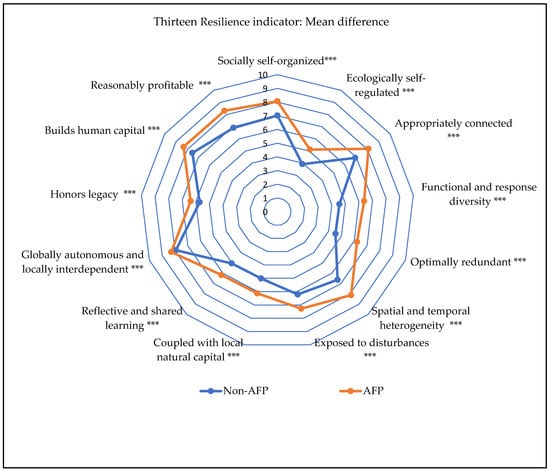
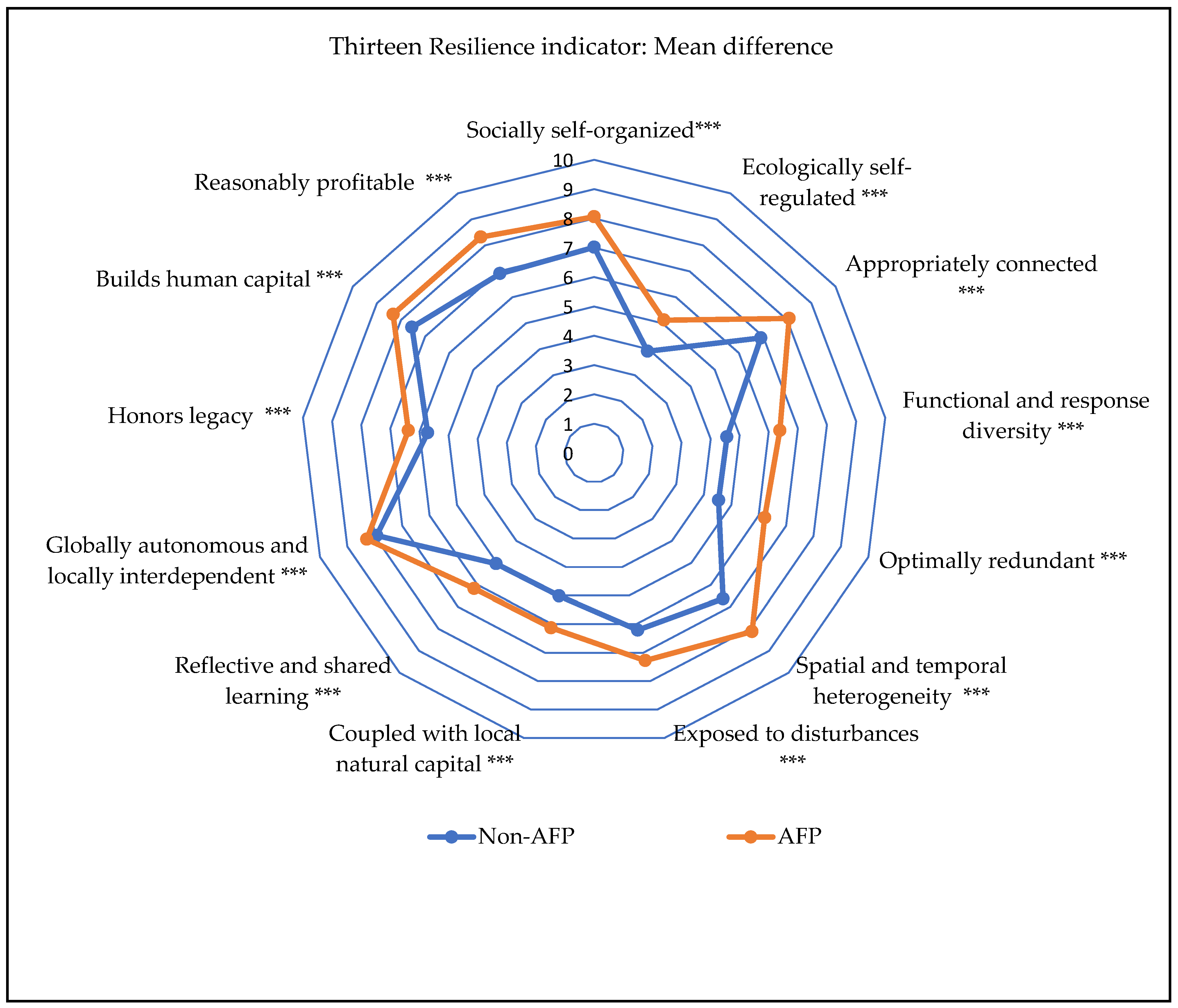
The analysis of the study offers additional empirical evidence highlighting the relative advantages of AFP mango systems over non-AFP mango systems using the 13 indicators of climate resilience (Table S1 in the Supplementary Material). As shown in Figure 4, the average scores of all 13 indicators were larger in the AFP mango system compared to the non-AFP mango system, demonstrating the superior climate resilience of the AFP mango-based farming system. The results of the individual indicators are presented as follows:
Figure 4.
Average scores on the 13 indicators of agroecosystem for assessing climate resilience in AFP and non-AFP mango-based farming systems. Note: p < 0.001 ***.
Socially self-organized: As indicated in Figure 4, the AFP farming system exhibited a greater capacity for social self-organization than the non-AFP farming system, implying that the AFP farming system ensures the active participation of farmers in the groups, enables farmers to access local markets and common assets, and enables to use the intrinsic coping strategies. AFP mango systems have a stronger inherent ability for adaptation and management of stresses and shocks with minimal reliance on external inputs due to the social self-organization [41]. The present findings align with the results of Gugissa et al. [10], who reported that a push–pull technology (PPT) on maize farming systems enable farmers to use internal coping strategies, participate in local associations, and use local markets and resources more than their counterparts. In contrast, Heckelman et al. [15] stated that comparing conventional and organic rice production systems observed no distinct change among the two farming systems. The technical supports offered by NGOs, research centers, universities, and their associates for the implementation of AFP mango systems can help the adaptive capacity of farmers, which is observed in the present study. These supports may help the households to interact more successfully with agricultural extension workers and other social organizations. NGOs such as the International Centre of Insect Physiology and Ecology (icipe) support agroecological mango production by helping farmers manage and suppress major mango pests. They provide essential inputs and resources, including bait traps, improved mango varieties, and pruning equipment. However, throughout the FGDs, farmers in both groups expressed a lack of access to necessary inputs, especially better mango saplings from local nurseries and bait traps for controlling fruit flies.
Ecologically self-regulated: Based on the results of the present study, the AFP farming system was ecologically more self-regulated compared to the non-AFP farming system (Figure 4). The AFP growers commonly implemented activities that enhance the soil fertility such as application of compost/organic matter, planting of legumes, and green manure crops. In this regard, Cabel and Oelofse [41] reported that the use of perennial and nitrogen-fixing crops/plants, the availability of buffer zones, the implementation of agroforestry, the use of sustainable energy sources, and low level of dependency of the system on the external inputs make the AFP farming system ecologically self-regulated, which is in agreement with the findings of the present study. The findings of the current study are also consistent with those stated by Heckelman et al. [15] and Gugissa et al. [10], who reported on organic and conventional rice farming systems and PPT and non-PPT maize farming systems, respectively. The present study provides further empirical evidence that AFP farming systems enhance the capacity of the farms to sustain themselves with the minimal external intervention, particularly in the pest control and maintenance of biodiversity and soil health.
Appropriately connected: The results of this indicator show that the AFP mango-based farming system was considerably connected with the greater resilience compared to the non-AFP farming system (Figure 4). This suggests that AFP systems enhance the accessibility of saplings/seedlings, weather and financial information, as well as veterinary care, together with a stronger adoption of mixed crop approaches [41]. The results of the present investigation are in line with those of Gugissa et al. [10], who found that PPT maize cultivation systems utilize intercropping more than their counterparts. On the contrary, Heckelman et al. [15] found no discernible variations in this indicator between conventional and organic rice farming systems.
Functional and response diversity: Based on the results of the current study (Figure 4), the AFP mango-based farming system exhibited significantly higher functional and response diversity compared to the non-AFP system, which could be associated with greater species diversity, a wider range of farming activities, diverse income sources, and varied strategies for pest management [41]. These results are consistent with the findings of scholars who highlighted the benefits of the AFP farming system towards the output of diversity, income streams, and varied methods of pest management [10,15]. Compared to the non-AFP farming systems, the AFP approaches have been consistently shown enhanced on-farm biodiversity, as indicated in the present and other similar studies [12,16,23,50].
Greater functional and response variety strengthens the farm’s ability to withstand climate change and reduce the impact of disruptions in agricultural systems. In this regard, farmers that participated in FGD also confirmed that AFP farming systems are more capable of recuperating from pest infestations through the use of improved crop varieties; implementation of an integrated pest management practices, including bait traps and tree-pruning; and the use of harvesting technologies. They emphasized that enhancing the availability of farm inputs is their highest priority for the improvement of their livelihoods in mango-based farming systems.
Optimally redundant: This indicator is quantified by using varietal diversity, water access, techniques of land administration, nutrition for humans and livestock, and availability of agricultural products. Redundancy provides the system with several backups that facilitate the mitigation and restoration procedures after an interruption [41]. In this regard, the AFP mango-based farming system was optimally redundant compared to non-AFP mango-based farming. These findings indicate that the AFP farming system was resilient due to the built-in redundancies in terms of utilization of diverse crop varieties, possession of equipment suitable for the production of multiple crops, and availability of plant nutrients and water from various sources. This scenario was also confirmed by the focus group discussions, where the respondents reported that AFP adopter farmers were more capable of recovering from pest infestations through the use of improved crop varieties, integration of livestock, and soil fertility management practices. The findings of the current study are in contrast with those of Heckelman et al. [15], who stated no visible differences were observed in the redundancy indicators among conventional and organic rice production systems in the Philippines. Similarly, Gugissa et al. [10] found no discernible difference in the optimal redundancy indicator between PPT and conventional maze systems.
Special and temporal heterogeneity: The AFP farming system exhibited substantially more temporal and spatial heterogeneity, which was quantified in the forms of agricultural strategies, cultivated land and ecosystem, tree density (including perennial), and soil types of the agricultural land. Heterogeneity enhances the system’s capacity for recuperation and nutrient replenishment following disturbances [41], making the AFP farming system more resilient than the non-AFP farming system. The current findings are in line with that of Gugissa et al. [10], who described that the scenery, agricultural approaches, diversity of perennial trees, invasive species, and types of soil of the cultivated land are more heterogeneous in PPT maize production systems than their counterparts. Similarly, Heckelman et al. [15] stated that organic rice cultivation exhibits higher temporal and spatial heterogeneity than conventional systems.
Exposed disturbances: The AFP mango-based farming system showed significant differences compared to non-AFP systems regarding the exposure of the system to various disturbances, including invasive species, temperature and rainfall variability, outbreaks of unusual pests and diseases (e.g., fruit flies and white scale insects), theft, conflict, and livestock raiding (Figure 4). The exposure to such disturbances can enhance the resilience by enabling the system to develop adaptive coping and recovery mechanisms [41]. In this regard, the AFP mango-based system incorporates a greater diversity of mixed crop varieties, which have been adapted to the regional environmental changes through time. To further strengthen the resilience, the respondent AFP growers showed the interest of using climate-resilient crop types, especially those varieties tolerant to pests, and adjusting the planting of crops in response to the shifted weather patterns caused by climate change. The respondents also highlighted the importance of integrated pest management strategies and stated their needs for lowering the risk of disaster through trainings. In the research conducted by Heckelman et al. [15], no discernible changes were observed in the exposure response of farmers to the given disturbances in organic and conventional rice production systems. Similarly, Gugissa et al. [10] found no distinct difference in the optimal redundancy indicator between PPT and non-PPT strategies for growing maize.
Coupling with natural and local capital: As indicated in Figure 4, the AFP farming system demonstrated a higher level of natural and local capital combination compared to the non-AFP farming systems. This suggests that the AFP mango-based farming system uses more local and natural resources through the recycling of waste and adaptation of ecologically friendly methods for managing soil and water. As a result, AFP mango-based farms are more likely operating within the ecological limits and display greater sustainability through reducing pesticide use, planting legumes that fix nitrogen to enhance soil fertility, and employing cover crops to conserve water. Similarly, respondents of FGDs noted that the AFP mango-based farming is better able to recover from disturbances through practices like cover cropping, mulching, organic fertilizer application, and mixed farming (crop and livestock production). The results of the present findings are consistent with the results of Gugissa et al. [10], who stated that PPT maize farming systems, which rely on environmentally sound soil and water management techniques, responsibly use local resources by reusing their residues. Similarly, Heckelman et al. [15] found that organic rice farming systems have better soil quality than conventional systems. This is due to practices such as using natural inputs, planting nitrogen-fixing legumes, recycling resources, applying bio-pesticides, integrating trees, and improving animal health management.
Reflective and shared learning: The AFP mango-based farming system demonstrated distinguish variation between the AFP and non-AFP mango farming system systems in reflective and shared learning indicators. The AFP farmers had comparable high levels of knowledge exchange, which was measured through the group participation, responses towards climate change, and the use of extension services and resources. Knowledge exchanges help individuals and institutes to teach each other using past experiences and thus enhance the local understanding and the building of resilience [41]. The findings of the current research are in contrast with those of Gugissa et al. [10], who observed no discernible variations between the PPT maize system and their counterparts. Similarly, Heckelman et al. [15] reported no discernible difference between conventional and organic rice production systems.
Globally autonomous and locally interdependent: The AFP mango system had a higher resilience level for the locally interdependent and globally autonomous indicator related to the non-AFP mango system. In this regard, Cabell and Oelofse [41] reported that the indicator considered the involvement of farmers in a variety of activities, including direct selling of products to customers, trading or buying with growers, breeding of animals at the regional level, and control of animal diseases. The indicator also considered the reliance of farmers on locally available farm inputs and local markets; the use of local plant species, energy sources, and chemical inputs; and the cooperation of farmers for a given work. Similar perceptions were also reported by the respondents during the FGD, where the AFP mango-based farming system has greater market opportunities compared to their non-AFP counterparts. The current outcomes are in line with the findings of Gugissa et al. [10], who found that PPT maize farming systems are comparatively superior for access to local input and output markets, local crop and animal species, and collaborative actions. On the other hand, Heckelman et al. [15] observed no visible difference between organic and conventional rice farming systems.
Honors legacy: This indicator was assessed through factors like the participation of elder farmers, farm knowledge sources, the use of local practices, the conservation of indigenous knowledge, and familiarity with tree-derived products used for home and farm-related activities like medicinal therapies and biopesticides for the protection of crops. Accordingly, the AFP mango-based farming systems scored significantly higher values than the non-AFP systems on the “honors legacy” indicator. For instance, FGD participants from Kolla Shelle kebele reported that the AFP mango-based farming system was more effective in preserving the traditional knowledge and local remedies towards reducing thefts and pest prevention than the non-AFP mango-based farming system. According to Cabell and Oelofse [41], a farming system that honors legacy preserves natural and cultural memories and shapes development based on historical conditions and experiences. The current results are in line with the findings of Heckelman et al. [15], who described that the organic farmers are involved in more traditional methods and showed understanding of more conventional climate change information. However, the preset study results are contrary to Gugissa et al. [10], who reported that there was no discernible difference between PPT and non-PPT maize systems.
Builds human capital: Farmers in the AFP mango-based farming system demonstrated significantly greater attention in terms of human capacity building than the non-AFP farming system. This highlights that the AFP mango-based farming system enables the farmers to invest more in the development of infrastructure and educational institution, support social events, and preserve local knowledge [41]. The present results are similar to the findings of Gugissa et al. [10], who stated that farmers in the PPT maize system obtained higher revenue associated with increased maize yield fodder production, which can support adults and teach children. Similarly, Heckelman et al. [15] stated that organic rice cultivation systems develop more human capital than their conventional counterparts.
Reasonably profitable: As indicated in Figure 4, the AFP mango-based farming system was highly profitable as compared to its counterparts, indicating its highest resilience. Enhanced profitability in turn enables farmers to invest in their future opportunities that enhance their capacity to buffer disturbances, provide flexibility, and build wealth [41]. Participants in the FGDs also reported that adopting the AFP mango-based farming system boosted their income through mixed farming practices, intercropping, and other AFP strategies. The current results are in line with the previous findings of Gugissa et al. [10], who reported that PPT maize farming systems are reasonably more profitable than their conventional counterparts. However, this result contrasts with the present results of Heckelman et al. [15], who stated that there is no discernible difference between organic and conventional rice production.
3.5. Household Resilience Capacity Index
The AFP and non-AFP mango-based farming system were compared using the aggregated household resilience capacity index, which was produced by the factor analysis of the 13 behavioral-based indicators. On a 10-point scale, the average household resilience capacity index was 8.65 for the AFP farming system and 7.49 for the non-AFP farming system. The t-test result showed that the AFP mango-based farming system resilience capacity index level was substantially higher than the non-AFP mango-based farming systems (p < 0.001) (Table S1 in the Supplementary Material). Similarly to the present study, Gugissa et al. [10] reported that the PPT maize production system exhibited higher climatic resilience index than the non-PPT maize farming system.
Table 6 displays the multiple regression model results. The household resilience capacity index of AFP mango farming systems was higher than that of the non-AFP mango farming systems (p < 0.001). The AFP mango farming system significantly improved the farmers’ resilience capacity (β = 0.848, p < 0.001). The household age in the AFP mango system had a slightly negative effect on the household resilience capacity index compared to the non-AFP farming system, suggesting that older household heads may have lower resilience than younger household heads (Table 6).
Table 6.
The effect of AFP mango systems on the household climate resilience index.
Gender positively influenced the household resilience capacity index (β = 0.18, p < 0.05), where male-headed households were expected to have a higher household resilience capacity index than female-headed households. Similarly, resilience was positively impacted by the family size of the households (β = 0.051, p < 0.001), indicating that families with a larger number of members could be more resilient than those with fewer family members.
Household resilience capacity index was also influenced by the educational status of the household heads, where the resilience index increased with the increase in educational status. For instance, household heads with the tertiary or vocational educational level showed the highest positive coefficients (β = 0.474, p < 0.001). In line with this, Gugissa et al. [10] also reported that the highest resilience index was associated with the highest educational level in PPT maize farming system compared to their counterparts.
Annual income displayed a positive relationship with resilience, indicating that the increment in income contributed for enhancing the resilience capacity index. Overall, the findings suggest that, while farming systems significantly influenced the resilience capacity, factors like education, gender, age, income, and family size also played an essential role in resilience capacity, highlighting the complex interplay of social and economic variables in enhancing resilience among farmers. In the household-level analysis, the AFP mango-based farming system was found to be associated with a higher capacity index.
4. Conclusions and Remarks
4.1. Conclusions
The results of this study revealed a clear difference between the climate resilience of agroecological farming practice (AFP) and non-AFP (conventional) mango-based farming systems. Using the SHARP+ approach, the AFP mango-based farming system exhibited significantly higher climate resilience than its counterparts in terms of socio-economic factors, farming characteristics, aggregated resilience indicators, and the thirteen behavioral-based measures of climate resilience. The results of the compound resilience scores derived from the 25 SHARP+ modules show that AFP mango farming systems performed better than conventional systems, exhibiting higher resilience in 23 of 25 indicators and reflecting a significantly greater overall level of resilience to climate change. The farming system-level analysis demonstrates that AFP mango-based farming systems are associated with higher impact across all the thirteen agroecological indicators compared to those in non-AFP mango farming systems. These findings indicate that the AFP farming system alone cannot lead to a higher resilience level for all agroecological resilience indicators. However, AFP farming systems are a higher household resilience capacity index than non-AFP farming systems. The results at the household-level analysis also suggest that households that apply the AFP mango farming system are associated with higher climate resilience compared to their counterparts. Generally, based on the present findings, the AFP farming system has the potential to help to achieve a climate-change-resilient farming system.
4.2. Implications for Policy and Future Research
The study identifies a viable pathway for building a climate-resilient farming system in SSA countries. The findings indicate that promoting the AFP mango-based farming systems enhances the climate resilience of mango-producing smallholders. To date, such interventions have been largely focused on improving agricultural productivity through high external inputs and low ecofriendly, monocropping, and resource-intensive practices; this study demonstrates the potential of agroecological approaches to support both resilience and sustainability. These results provide actionable insights for policy-makers, non-governmental organizations, and researchers to integrate AFP mango-based farming systems as a pathway for building the climate resilience of smallholder farmers. Based on farmer insights and recommendations from our survey, interventions that require external support and services from researchers, government organizations, and NGOs are needed to enhance adaptive capacity, augment mitigation potential, and reduce the vulnerability of mango farming systems in the southern Ethiopia.
Further insights could be achieved by engaging in a longitudinal study and incorporating supplemental analyses that measure additional biophysical and socio-economic conditions, while policies should support local input production, diversification of crop portfolios, the production and use of bio-fertilizers and bio-pesticides, integration of agroforestry, and climate-resilient varieties. Considering these factors would offer a more holistic understanding of the complex interactions among climate change, pest management strategies, agroecological practices, and crop productivity. Moreover, because this research relied on cross-sectional data, future research should incorporate alternative data sources, including panel data, climate data, and cost-effectiveness assessments, to capture trends and variations over time more effectively.
Supplementary Materials
The following supporting information can be downloaded at: https://www.mdpi.com/article/10.3390/agriculture16080908/s1, Table S1: Agroecosystem indicators and component results showing mean values (), standard deviation (Std. Dev.) and percent differences between AFP and non-AFP mango-based farming systems. Significant differences (p-value < 0.05 *, <0.01 ** and <0.001 ***) determined by t-test are indicated in the following table.
Author Contributions
Conceptualization, F.B.M. and T.T.; methodology, F.B.M., M.A., M.M., Y.B., B.E. and T.T.; software, F.B.M.; validation, F.B.M., M.A., M.M., Y.B. and T.T.; formal analysis, F.B.M. and M.M.; Investigation, F.B.M. and B.E.; data collection, F.B.M. and B.E.; resources, F.B.M. and T.T.; data curation, M.A., M.M., Y.B., B.E. and T.T.; writing—original data preparation draft, F.B.M.; writing—review and editing, F.B.M., M.A., M.M., Y.B., B.E. and T.T.; visualization, M.A., M.M. and T.T.; supervision, M.A., M.M., Y.B. and T.T.; project administration, M.A. and T.T.; funding acquisition, T.T. All authors have read and agreed to the published version of the manuscript.
Funding
The Biovision Foundation for Ecological Development (Grant No. EP0108) provided funding for this research work through the International Center of Insect Physiology and Ecology (icipe).
Institutional Review Board Statement
The study was conducted in accordance with the Declaration of Helsinki, and approved by the Research Ethics Review Committee (RERC) of College of Agriculture and Environmental Sciences, Bahir Dar University (protocol code 06/012/BDU.1500154; date of approval: 10 June 2024). All participants were fully informed about the nature of the study and provided their written informed consent to participate.
Informed Consent Statement
Informed consent for participation was obtained from all subjects involved in the study.
Data Availability Statement
The original contributions presented in this study are included in the Supplementary Material. Further inquiries can be directed to the corresponding author.
Acknowledgments
The first author gratefully acknowledges the International Centre of Insect Physiology and Ecology (icipe) for providing the resources required to undertake his PhD research, and Bahir Dar University, for granting study leave. Sincere appreciation is also extended to the farmers who provided their consent to use their farms and actively engaged in the survey, and icipe’s dedicated field assistants for their contributions. The authors appreciatively acknowledge the Swedish International Development Cooperation Agency (Sida), the Swiss Agency for Development and Cooperation (SDC), the Australian Centre for International Agricultural Research (ACIAR), the Norwegian government, the German Federal Ministry for Economic Cooperation and Development (BMZ), and the government of the Republic of Kenya. The views expressed in this paper do not necessarily reflect the official opinion of the donors.
Conflicts of Interest
The authors declare no conflicts of interest. The funders had no role in the design of the study; in the collection, analyses, or interpretation of data; in the writing of the manuscript; or the decision to publish the results.
References
- Antonio, M.E.R.; Faye, A.; Betancur-Corredor, B.; Baumüller, H.; Braun, J.V. Productivity effects of agroecological practices in Africa: Insights from a systematic review and meta-analysis. Food Secur. 2024, 17, 207–229. [Google Scholar] [CrossRef] [Scilit]
- Angon, P.B.; Mondal, S.; Jahan, I.; Datto, M.; Antu, U.B.; Ayshi, F.J.; Islam, M.S.; Xiao, X. Integrated Pest Management (IPM) in Agriculture and Its Role in Maintaining Ecological Balance and Biodiversity. Adv. Agric. 2023, 2023, 5546373. [Google Scholar] [CrossRef] [Scilit]
- Mihrete, T.B.; Mihretu, F.B. Crop Diversification for Ensuring Sustainable Agriculture, Risk Management and Food Security. Glob. Chall. 2025, 9, 2400267. [Google Scholar] [CrossRef] [Scilit] [PubMed]
- Amede, T.; Konde, A.A.; Muhinda, J.J.; Bigirwa, G. Sustainable Farming in Practice: Building Resilient and Profitable Smallholder Agricultural Systems in Sub-Saharan Africa. Sustainability 2023, 15, 5731. [Google Scholar] [CrossRef] [Scilit]
- Alemu, K.; Tsedaley, B.; Ejeta, D. Current status of white mango scale (Aulacaspis Tubercularis Newstead) and associated factors in Assosa district western Ethiopia. Discov. Appl. Sci. 2024, 6, 485. [Google Scholar] [CrossRef] [Scilit]
- Ndlela, S.; Niassy, S.; Mohamed, S.A. Important alien and potential native invasive insect pests of key fruit trees in Sub-Saharan Africa: Advances in sustainable pre- and post-harvest management approaches. CABI Agric. Biosci. 2022, 3, 7. [Google Scholar] [CrossRef] [Scilit]
- Owili, S.O.; Otieno, D.J.; Chimoita, E.L.; Baijukya Frederick, P. Factors influencing adoption of agro-ecological pest management options for mango fruit fly under information constraints: A two-part fractional regression approach. Int. J. Pest Manag. 2024, 1–19. [Google Scholar] [CrossRef] [Scilit]
- Mihretu, F.B.; Alemayehu, M.; Mossie, M.; Bitew, Y.; Tefera, T. Determinants of agroecological practices adoption in mango-based farming systems: Evidence from southern Ethiopia. Environ. Chall. 2026, 22, 101382. [Google Scholar] [CrossRef] [Scilit]
- Subedi, B.; Poudel, A.; Aryal, S. The impact of climate change on insect pest biology and ecology: Implications for pest management strategies, crop production, and food security. J. Agric. Food Res. 2023, 14, 100733. [Google Scholar] [CrossRef] [Scilit]
- Gugissa, D.A.; Abro, Z.; Tefera, T. Achieving a Climate-Change Resilient Farming System through Push–Pull Technology: Evidence from Maize Farming Systems in Ethiopia. Sustainability 2022, 14, 2648. [Google Scholar] [CrossRef] [Scilit]
- FAO. Climate Change Impacts and Responses in Small-Scale Irrigation Systems in West Africa, Case Studies in Côte d’Ivoire, the Gambia, Mali and the Niger; FAO: Rome, Italy, 2019. [Google Scholar]
- Milheiras, S.G.; Sallu, S.M.; Loveridge, R.; Nnyiti, P.; Mwanga, L.; Baraka, E.; Lala, M.; Moore, E.; Shirima, D.D.; Kioko, E.N.; et al. Agroecological practices increase farmers’ well-being in an agricultural growth corridor in Tanzania. Agron. Sustain. Dev. 2022, 42, 56. [Google Scholar] [CrossRef] [Scilit] [PubMed]
- Choptiany, J.M.H.; Phillips, S.; Graeub, B.E.; Colozza, D.; Settle, W.; Herren, B.; Batello, C. SHARP: Integrating a traditional survey with participatory self-evaluation and learning for climate change resilience assessment. Clim. Dev. 2016, 9, 505–517. [Google Scholar] [CrossRef] [Scilit]
- Moreno, P.M.; Lagana, M.H. Climate Resilience Assessment of Smallholder Farmers in the Gambia; Food and Agriculture Organization of the United Nations: Rome, Italy, 2019; p. 48. [Google Scholar]
- Heckelman, A.; Smukler, S.; Wittman, H. Cultivating climate resilience: A participatory assessment of organic and conventional rice systems in the Philippines. Renew. Agric. Food Syst. 2018, 33, 225–237. [Google Scholar] [CrossRef] [Scilit]
- Altieri, M.A.; Nicholls, C.I.; Henao, A.; Lana, M.A. Agroecology and the design of climate change-resilient farming systems. Agron. Sustain. Dev. 2015, 35, 869–890. [Google Scholar] [CrossRef] [Scilit]
- Huss, C.P.; Holmes, K.D.; Blubaugh, C.K. Benefits and Risks of Intercropping for Crop Resilience and Pest Management. J. Econ. Entomol. 2022, 115, 1350–1362. [Google Scholar] [CrossRef] [Scilit]
- Selelo, O.T.; Danso-Abbeam, G.; Ogundeji, A.A. Impact of agroecological practices on farm performance in Botswana. Renew. Agric. Food Syst. 2024, 39, e13. [Google Scholar] [CrossRef] [Scilit]
- Wezel, A.; Casagrande, M.; Celette, F.; Vian, J.-F.; Ferrer, A.; Peigné, J. Agroecological practices for sustainable agriculture. A review. Agron. Sustain. Dev. 2013, 34, 1–20. [Google Scholar] [CrossRef] [Scilit]
- Waha, K.; van Wijk, M.T.; Fritz, S.; See, L.; Thornton, P.K.; Wichern, J.; Herrero, M. Agricultural diversification as an important strategy for achieving food security in Africa. Glob. Chang. Biol. 2018, 24, 3390–3400. [Google Scholar] [CrossRef] [Scilit]
- Ewert, F.; Baatz, R.; Finger, R. Agroecology for a Sustainable Agriculture and Food System: From Local Solutions to Large-Scale Adoption. Annu. Rev. Resour. Econ. 2023, 15, 351–381. [Google Scholar] [CrossRef] [Scilit]
- Vikas; Ranjan, R. Agroecological approaches to sustainable development. Front. Sustain. Food Syst. 2024, 8, 1405409. [Google Scholar] [CrossRef] [Scilit]
- Debray, V.; Wezel, A.; Lambert-Derkimba, A.; Roesch, K.; Lieblein, G.; Francis, C.A. Agroecological practices for climate change adaptation in semiarid and subhumid Africa. Agroecol. Sustain. Food Syst. 2018, 43, 429–456. [Google Scholar] [CrossRef] [Scilit]
- Wezel, A.; Herren, B.G.; Kerr, R.B.; Barrios, E.; Gonçalves, A.L.R.; Sinclair, F. Agroecological principles and elements and their implications for transitioning to sustainable food systems. A review. Agron. Sustain. Dev. 2020, 40, 40. [Google Scholar] [CrossRef] [Scilit]
- Bakengesa, J.A.; De Meyer, M.; Kudra, A.B.; Virgilio, M.; Mwatawala, M.W.; Majubwa, R.O. Socioeconomic sustainability of agroecological farming: A quantitative analysis of cucurbit crop production in Eastern Central Tanzania. Agroecol. Sustain. Food Syst. 2024, 48, 1139–1162. [Google Scholar] [CrossRef] [Scilit]
- Assèdé, E.S.P.; Othoo, C.O.; Ly, A.; Bayisa, G.; Tarkegn, T.G.; Zohoun, M.; N’goran, A.-J. Research progress on climate change adaptation strategies to control invasive crop pest in sub-Saharan Africa: A bibliometric and systematic review. Front. Clim. 2025, 7, 1478721. [Google Scholar] [CrossRef] [Scilit]
- Dagunga, G.; Ayamga, M.; Laube, W.; Ansah, I.G.K.; Kornher, L.; Kotu, B.H. Agroecology and resilience of smallholder food security: A systematic review. Front. Sustain. Food Syst. 2023, 7, 1267630. [Google Scholar] [CrossRef] [Scilit]
- D’Annolfo, R.; Gemmill-Herren, B.; Amudavi, D.; Shiraku, H.W.; Piva, M.; Garibaldi, L.A. The effects of agroecological farming systems on smallholder livelihoods: A case study on push–pull system from Western Kenya. Int. J. Agric. Sustain. 2020, 19, 56–70. [Google Scholar] [CrossRef] [Scilit]
- Walche, A.; Haile, W.; Kiflu, A.; Tsegaye, D. Spatial analysis and mapping of intensity and types of agricultural salt-affected soils around Abaya and Chamo Lakes, South Ethiopia Rift Valley. Heliyon 2024, 10, e33410. [Google Scholar] [CrossRef] [Scilit] [PubMed]
- Gelu, G.; Komai, K.; Dane, C.; Ayza, A.; Ayele, T. Investigating the salinity distribution using field measurements in the semi-arid region of southern Ethiopia. Environ. Monit. Assess. 2025, 197, 159. [Google Scholar] [CrossRef] [Scilit]
- Walche, A.; Haile, W.; Kiflu, A.; Tsegaye, D.; Cocozza, C. Assessment and Characterization of Agricultural Salt-Affected Soils around Abaya and Chamo Lakes, South Ethiopia Rift Valley. Appl. Environ. Soil Sci. 2023, 2023, 3946508. [Google Scholar] [CrossRef] [Scilit]
- Gochera, A.; Worku, H. Mangifera indica (L.) tree as agroforestry component: Environmental and socio-economic roles in Abaya-Chamo catchments of the Southern Rift Valley of Ethiopia. Cogent Food Agric. 2022, 8, 2098587. [Google Scholar] [CrossRef] [Scilit]
- Feyso, A.; Mensa, A.; Tejada Moral, M. Smallholder banana-based farming system dynamics of Arba Minch Zuria District, the case of Gamo Zone, Ethiopia: Qualitative exploration. Cogent Food Agric. 2021, 7, 1930425. [Google Scholar] [CrossRef] [Scilit]
- Creswell, J.W. Research Design: Qualitative, Quantitative, and Mixed Methods Approaches, 3rd ed.; SAGE Publications Asia-Pacific Pte. Ltd.: Singapore, 2009. [Google Scholar]
- Diserens, F.; Choptiany, J.; Barjolle, D.; Graeub, B.; Durand, C.; Six, J. Resilience Assessment of Swiss Farming Systems: Piloting the SHARP-Tool in Vaud. Sustainability 2018, 10, 4435. [Google Scholar] [CrossRef] [Scilit]
- Muriithi, B.W.; Gathogo, N.G.; Diiro, G.M.; Mohamed, S.A.; Ekesi, S. Potential Adoption of Integrated Pest Management Strategy for Suppression of Mango Fruit Flies in East Africa: An Ex Ante and Ex Post Analysis in Ethiopia and Kenya. Agriculture 2020, 10, 278. [Google Scholar] [CrossRef] [Scilit]
- Kothari, C.R. Research Methodology: Methods and Techniques; New Age International Publisher: New Delhi, India, 2004. [Google Scholar]
- Israel, G.D. Determining Sample Size. Gainesville: Agricultural Education and Communication Department; University of Florida: Gainesville, FL, USA, 1992. [Google Scholar]
- Lagana, M.H.; Phillips, S.; Poisot, A. Self-Evaluation and Holistic Assessment of Climate Resilience of Farmers and Pastoralists (SHARP+)—A New Guidance Document for Practitioners; FAO: Rome, Italy, 2022. [Google Scholar]
- Choptiany, J.; Graub, B.; Phillips, S.; Colozza, D.; Dixon, J. Self-Evaluation and Holistic Assessment of Climate Resilience of Farmers and Pastoralists; FAO: Rome, Italy, 2015; Volume 155, pp. 1–142. [Google Scholar]
- Cabell, J.F.; Oelofse, M. An Indicator Framework for Assessing Agroecosystem Resilience. Ecol. Soc. 2012, 17, 18. [Google Scholar] [CrossRef] [Scilit]
- Darnhofer, I.; Gibbon, D.; Dedieu, B. Farming Systems Research: An approach to inquiry. In Farming Systems Research into the 21st Century: The New Dynamic; Springer: Berlin/Heidelberg, Germany, 2012; pp. 3–31. [Google Scholar]
- Leippert, F.; Darmaun, M.; Bernoux, M.; Mpheshea, M. The Potential of Agroecology to Build Climate-Resilient Livelihoods and Food Systems; FAO and Biovision: Rome, Italy, 2020. [Google Scholar]
- Kiani, A.K.; Sardar, A.; Khan, W.U.; He, Y.; Bilgic, A.; Kuslu, Y.; Raja, M.A.Z. Role of Agricultural Diversification in Improving Resilience to Climate Change: An Empirical Analysis with Gaussian Paradigm. Sustainability 2021, 13, 9539. [Google Scholar] [CrossRef] [Scilit]
- Gudina, M.H.; Alemu, E.A. Factors influencing small holder farmers adoption of climate SMART agriculture practices in Welmera Woreda, Central Ethiopia. Front. Clim. 2024, 6, 1322550. [Google Scholar] [CrossRef] [Scilit]
- Mulwa, C.K.; Visser, M. Farm diversification as an adaptation strategy to climatic shocks and implications for food security in northern Namibia. World Dev. 2020, 129, 104906. [Google Scholar] [CrossRef] [Scilit]
- Sisay, T.; Tesfaye, K.; Ketema, M.; Dechassa, N.; Getnet, M. Climate-Smart Agriculture Technologies and Determinants of Farmers’ Adoption Decisions in the Great Rift Valley of Ethiopia. Sustainability 2023, 15, 3471. [Google Scholar] [CrossRef] [Scilit]
- Bakengesa, J.A.; Kudra, A.B.; De Meyer, M.; Virgilio, M.; Mwatawala, M.W.; Majubwa, R.O. Agroecological farming practices against fruit flies in Central Eastern Tanzania. Fruits 2023, 78, 1–12. [Google Scholar] [CrossRef] [Scilit]
- Lin, B.B. Resilience in Agriculture through Crop Diversification: Adaptive Management for Environmental Change. BioScience 2011, 61, 183–193. [Google Scholar] [CrossRef] [Scilit]
- Kagimbi, N.; Turoop, L.; Majiwa, E.; Obiero, C.; Uckert, G.; Sieber, S.; Muriungi, M. Adoption of SIPs among small-scale mango growers in Kitui County, Kenya. J. Agric. Sci. Technol. 2024, 23, 144–165. [Google Scholar] [CrossRef] [Scilit]

Disclaimer/Publisher’s Note: The statements, opinions and data contained in all publications are solely those of the individual author(s) and contributor(s) and not of MDPI and/or the editor(s). MDPI and/or the editor(s) disclaim responsibility for any injury to people or property resulting from any ideas, methods, instructions or products referred to in the content. |
© 2026 by the authors. Licensee MDPI, Basel, Switzerland. This article is an open access article distributed under the terms and conditions of the Creative Commons Attribution (CC BY) license.