


Abstract
The date palm (Phoenix dactylifera L.) is a significant perennial crop in arid and semi-arid regions. Understanding the evolution of research on this crop is vital for identifying major research trends, current challenges, and emerging areas for future agricultural innovation and sustainable crop management strategies. This study conducts a comprehensive scientometric analysis of 9062 scientific publications indexed in the Scopus database between 1837 and 2025, spanning nearly two centuries of research on date palm. Using bibliometric tools such as Bibliometrix and ScientoPy, the study examines patterns of scientific production, collaboration networks, institutional participation, thematic evolution, and emerging research trends. The results indicate a marked increase in scientific publications, especially after 2007, with Saudi Arabia, Egypt, and Iran among the most productive countries. The thematic structure of the literature shows a shift from early studies on diseases and oasis cultivation to recent research focusing on biomass valorization, activated carbon production, antioxidant properties, pest management with special emphasis on the red palm weevil (Rhynchophorus ferrugineus), mechanical properties of date palm fibers, and plant biotechnology on methods like micropropagation and somatic embryogenesis. Geographically, research activity is concentrated in the Middle East and North Africa, the primary palm-producing region, with Saudi Arabia leading in institutions, researchers, funding, and international collaborations in date palm research. Emerging trends indicate a rising interest in digital tools, particularly artificial intelligence and advanced analytical tools, which are increasingly being explored to improve crop management. Overall, these findings provide a structured overview of the historical development of date palm research and contribute to a deeper understanding of the evolution and organization of scientific knowledge in this field. Additionally, the identification of key research pathways and emerging trends offers valuable insights for guiding future agronomic innovation, supporting evidence-based crop management strategies, and promoting the sustainable development of date palm production systems.
1. Introduction
Date palm (Phoenix dactylifera L.) is one of the oldest cultivated crops and holds a significant cultural, social, historical, religious, and economic importance in countries from the Middle East and North Africa (MENA) [1]. The primary objective of its cultivation is to obtain high-quality fruit, capable of providing significant benefits to human health [2,3]. Additionally, the date palm is considered a multipurpose species, providing biomass resources such as the trunk, leaves, pollen, sap, thorns, and seeds, which are used for diverse applications beyond food [4,5,6].
The fruit has historically contributed to food security in arid regions since ancient civilizations, such as the Sumerians, Babylonians, and Egyptians. Its pulp contains almost 70% carbohydrates in the form of sugars and contributes considerable amounts of dietary fiber, minerals, vitamins, proteins, and antioxidant compounds, while remaining low in fat [7].
Date palm is cultivated on all five continents, with more than 3000 date cultivars estimated to exist. According to FAO data, 10,092,038 tons of dates were cultivated in 2024, with Saudi Arabia, Egypt, Algeria, and Iran, each producing more than one million tons of dates, collectively accounting for 61.4% of global production [8]. The economic relevance of this crop, especially the high-value cultivars, lies in the sale and high local consumption of dates, which contributes substantially to rural economies in major producing countries [9].
Agricultural management techniques for this crop have been evolving for millennia, and scientific studies addressing its physiology, pathology, propagation, pest management, and postharvest attributes have been documented for nearly two centuries. With the exponential increase in the indexed literature in databases such as Scopus, PubMed, and WoS, data science has recently become a field of interest for many researchers, gaining relevance for understanding the evolution of scientific publications [10]. Scientometric analysis enables the identification of research growth patterns, collaboration networks, influential contributors, and topic trends [11,12]. Recent studies using this analytical technique in date palm research have been limited by significant scope constraints. Some analyses have focused on relatively short time periods, restricting their ability to capture long-term historical trends in the development of this crop. Other studies have examined narrow timeframes, such as specific decades or short publication intervals, providing only partial snapshots of research activity. Furthermore, several contributions are restricted to specific research themes, such as phytopathology or the health-related properties of date palm, rather than addressing the full multidisciplinary scope of the crop. As a result, existing studies offer fragmented perspectives that do not fully reflect the long-term evolution or structural complexity of date palm research [10,11,13,14,15]. In this context, a more comprehensive scientometric approach is required to overcome these limitations.
While date palm research has expanded rapidly in recent decades, long-term assessments that integrate performance indicators with scientific mapping remain limited, highlighting the need for more comprehensive evaluations of the field’s structural evolution and thematic development. Such an approach would enable the analysis of thematic transitions and collaborative structures, providing deeper insights into evolving research priorities and supporting more coordinated research planning in crop management and sustainable production systems [16,17]. Therefore, the aim of this study is to conduct a comprehensive scientometric evaluation of global date palm research over nearly two centuries, using literature indexed in the Scopus database. Specifically, this study addresses the following research questions:
RQ-1.
What has been the annual distribution of publications?
RQ-2.
What types of documents and thematic areas predominate?
RQ-3.
Which journals contribute most to date palm research?
RQ-4.
Which countries and institutions lead in scientific publications?
RQ-5.
Who are the most productive and cited authors?
RQ-6.
What are the most influential publications?
RQ-7.
How are international collaborations structured?
RQ-8.
What research topics are the most prominent?
RQ-9.
How have thematic trends evolved over time?
2. Materials and Methods
2.1. Methodological Framework
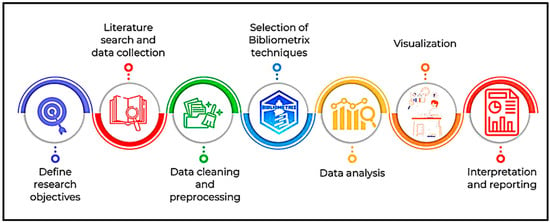
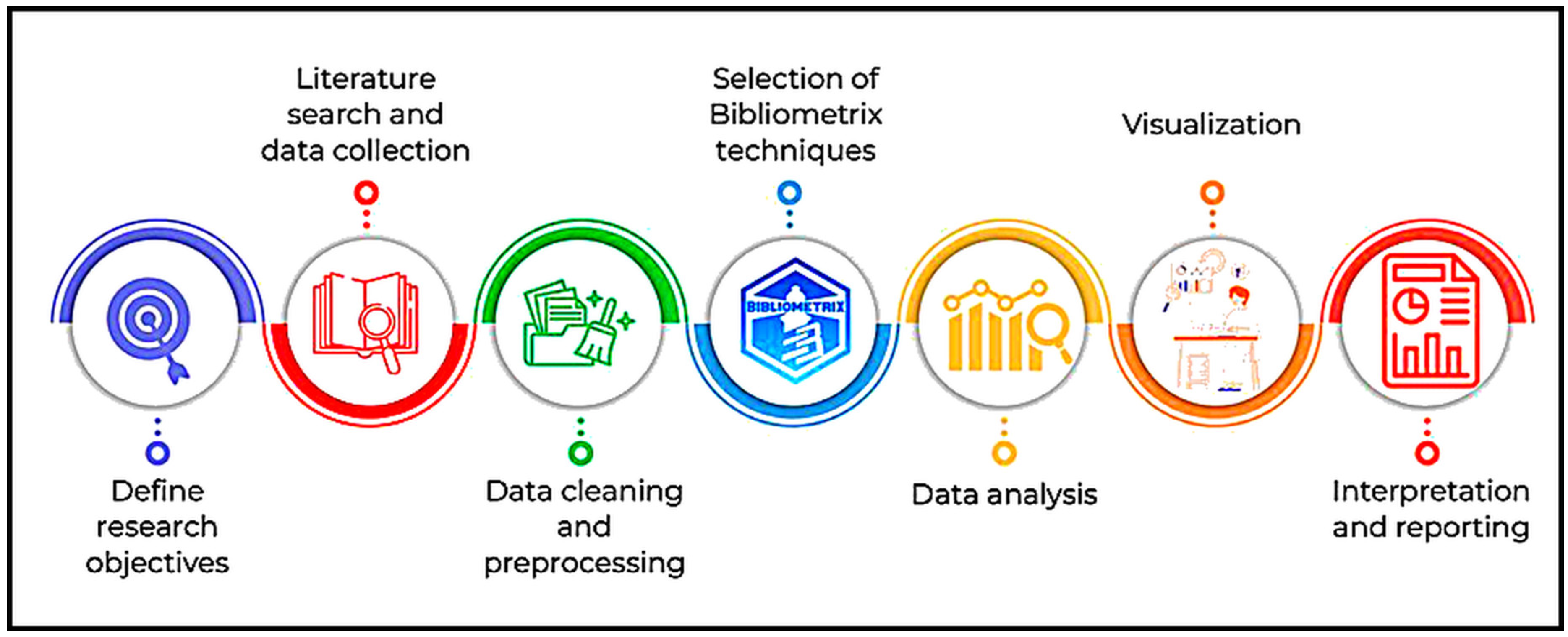
The analysis was conducted following established guidelines for the design and preparation of bibliometric research reports [16,18]. The workflow consisted of seven sequential stages (Figure 1), beginning with the definition of the research objectives and questions to delimit the scope of the study and guide subsequent stages, as presented in the previous section. The remaining stages are described below.
Figure 1.
Methodological workflow of the scientometric analysis, illustrating the seven sequential stages of the study.
2.2. Literature Search and Data Collection
The Scopus database was chosen for its extensive disciplinary coverage and the high-quality metadata curated through a rigorous content selection process [19]. This database has broad global and regional coverage of scientific journals, conference proceedings, and books, and it also reports abstracts and citations, making it suitable for performance and network analyses [16,19,20].
The search was conducted in March 2026 using the query:
TITLE-ABS-KEY (“Date Palm” OR “Phoenix dactylifera” OR “Date tree” OR “Date fruit tree” OR “Date palm tree” OR “Edible date palm” OR “date seed”) AND PUBYEAR > 1836 AND PUBYEAR < 2026.
This query aimed to capture the scientific literature on date palm using commonly employed terminology.
No restrictions were placed on document type, language, or subject area. The analysis covered publications from 1837 to 2025, resulting in 9062 records exported in CSV format, with complete bibliographic information, author keywords, affiliations, number of citations, and funding details.
The same query was adapted to the Web of Science (WoS) format and applied to assess its suitability as a complementary data source. WoS retrieved approximately 30% fewer records than Scopus, with more than 95% of the WoS records already included in the Scopus dataset. WoS metadata differed in structure and completeness compared to Scopus, hindering data harmonization and affecting subsequent analyses in Bibliometrix.
Despite the limitation of using a single database, Scopus was selected as the primary data source to ensure consistency, completeness, and analytical robustness of the dataset.
2.3. Data Cleaning and Preprocessing
Data preprocessing was performed to improve the consistency and analytical accuracy of the dataset. Once the records were exported from Scopus, a preprocessing workflow based on a Python algorithm was implemented to standardize, validate, and clean the data. This process included the normalization of author names, institutional affiliations, and country names to reduce duplication caused by spelling variations, abbreviations, and inconsistencies in indexing. The algorithm also facilitated the identification and removal of duplicate records, the detection of potential inconsistencies in the dataset structure, and the verification of the thematic relevance of the retrieved records by identifying and excluding clearly unrelated publications that may have resulted from the breadth of the search query.
In addition to the automated preprocessing, a manual validation step was performed to verify the consistency of selected records, particularly in cases of ambiguous author names and institutional affiliations. This step was conducted as a quality control measure to confirm the accuracy of the automated procedure.
To improve thematic detection, high-frequency generic terms that directly refer to the crop (date palm, Phoenix dactylifera, date fruit, etc.) were incorporated as stop words in the keyword co-occurrence analysis. This approach reduces semantic bias and facilitates the identification of emerging and context-specific research topics.
2.4. Selection of Bibliometrics Techniques
Two complementary analytical approaches were applied, specifically, the bibliometric techniques associated with Performance Analysis and Science Mapping [16]. Performance analysis integrates a set of metrics that allow a quantitative examination of the contributions of research participants to a given field (e.g., authors, institutions, countries, and journals). Science mapping focuses on the analysis of relationships between research components, using techniques such as citation analysis and bibliographic coupling to identify the most influential publications and the periodic or current development of topics in the research field. Citation analysis and bibliographic coupling were used to detect influential publications and intellectual linkages. Collaboration networks among authors and countries were analyzed using co-authorship data [16].
2.5. Data Analysis
All analyses were performed using the Bibliometrix package in R (version 4.5.2), which allows the development of quantitative analyses in scientometrics and bibliometrics [17,21]. In addition, trend detection and thematic evolution analyses were conducted using ScientoPy (version 2.1.3), which is an open-source bibliometric analysis tool based on Python (version 3.0) [22]. Network visualizations and thematic maps were generated based on keyword co-occurrence matrices and clustering algorithms implemented within these tools.
2.6. Visualization
Results were visualized by determining parameters and presenting them to the reader through figures, graphs, diagrams, and maps that show the trends and results of the analysis. Different visualization techniques from the Bibliometrix and ScientoPy programs [17,22] were used to report the information corresponding to the research questions. Visualization techniques included the following: Thematic Map, Wordcloud, Author Collaboration Network, Country Collaboration World Map, and Trend Topics. Bubble plots were used to illustrate temporal frequency and duration of key research topics.
3. Results and Discussion
The following subsections are structured according to the predefined research questions and present the results derived from the performance analysis and longitudinal thematic evaluation, using quantitative performance indicators and scientific mapping analysis.
3.1. Annual Growth of Scientific Publications (RQ-1)
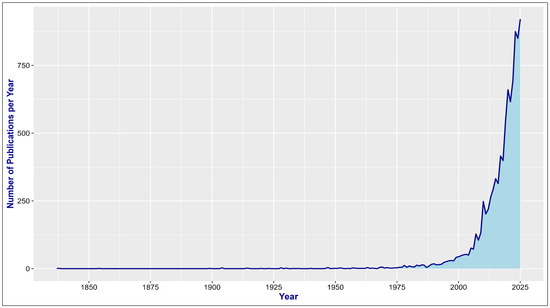
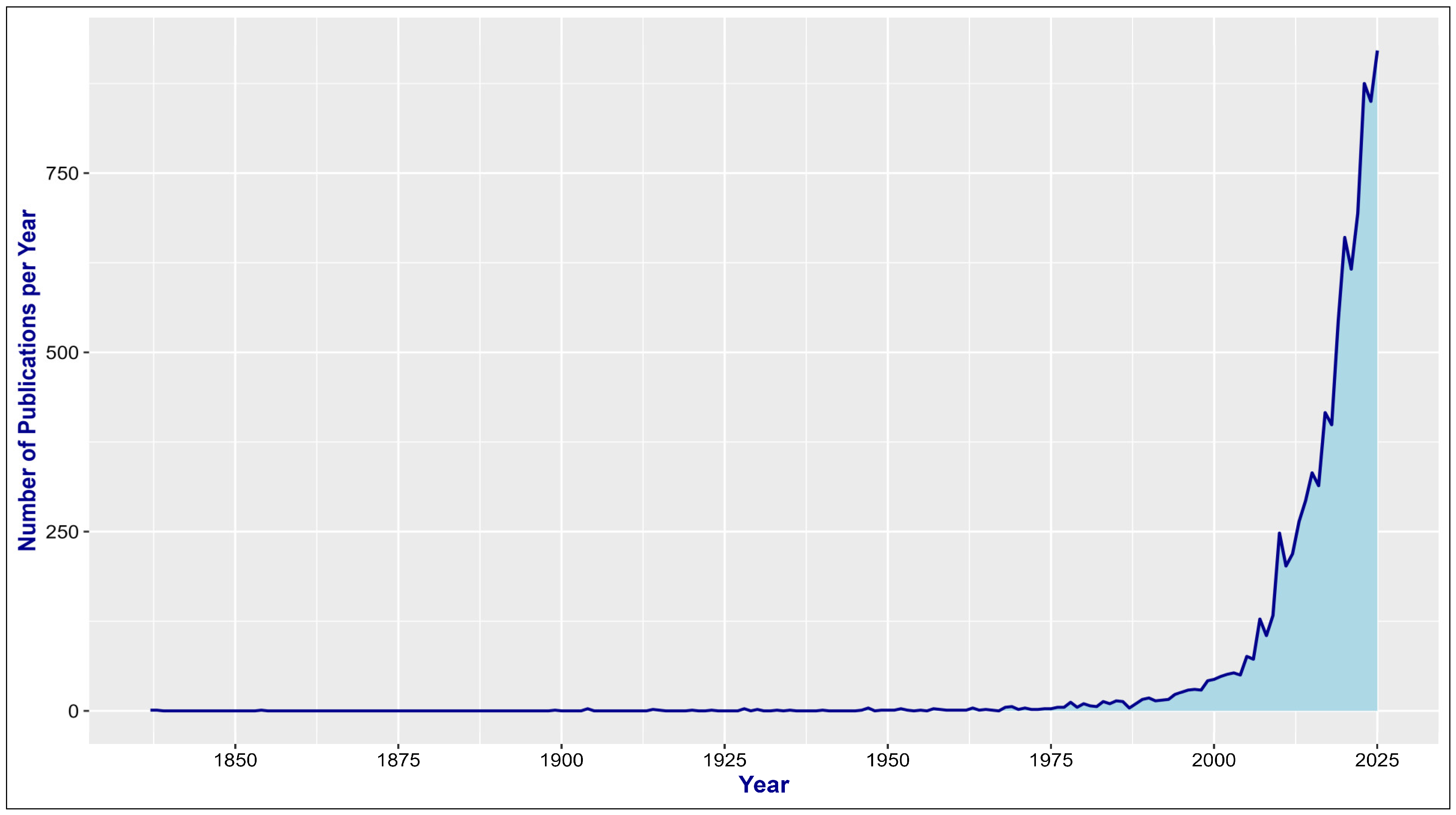
Figure 2 illustrates the annual distribution of 9062 Scopus-indexed publications on date palm research between 1837 and 2025. The timeline reveals three clearly differentiated phases of scientific development.
Figure 2.
Annual number of Scopus-indexed publications on date palm research from 1837 to 2025. The figure shows a long period of low and irregular scientific production, followed by gradual growth and a marked acceleration in publication output after 2007, with a pronounced increase in recent years.
The first phase (1837–1967) is characterized by sporadic and discontinuous production. During this 130-year period, 99 years had no indexed publications, and 31 years had fewer than five publications annually. This pattern reflects the limited research on date palms during the 19th and early 20th centuries, as evidenced by the scarcity of scientific evidence.
The second phase (1968–2006) shows a gradual consolidation. The production of publications on date palm began to stabilize in the late 1970s, exceeding 10 publications annually in 1978 and 50 in 2002. This growth coincided with the expansion of formal agricultural research systems in the main date-producing countries and increased attention to crop improvement, pest management, and tissue culture technologies [23].
The third phase (2007–2025) represents a period of accelerated expansion. From 2007 onward, annual scientific production consistently exceeded 100 publications, marking a structural shift in research intensity. This accelerated growth may be associated with increased governmental investment in agricultural research in major date-producing countries, as well as the rising economic importance of date palm cultivation in arid and semi-arid regions.
A sharp increase is observed starting in 2019, with more than 500 publications per year and a peak of 921 publications in 2025. It is noteworthy that publications produced during the 2023–2025 period alone represent more than 29% of all historical date palm research indexed in Scopus, indicating a recent surge in research activity.
The average annual number of publications over the last decade (2015–2025) reached 601, highlighting the consolidation of date palm research as a mature and continuously expanding scientific field.
The first indexed publication dates back to 1837, written in German by Ritter (1838) [24], addressing the introduction and geographic limitations of the species in India. This early record underscores the scientific interest in date palms from that time, but a consolidated scientific community and a formal system of agricultural research did not yet exist.
3.2. Document Types and Subject Areas (RQ-2)
Table 1 summarizes the distribution of publication types within the 9062 retrieved records. Journal research articles clearly dominate the scientific publications, with 7328 publications (80.86%), indicating that peer-reviewed primary research constitutes the main avenue for disseminating knowledge in date palm studies. Conference articles represent 9.12% of the total, while book chapters (4.16%) and review articles (3.89%) represent smaller proportions. The predominance of full-length research articles reflects a consolidated and growing field of research [25].
Table 1.
Distribution of document types in date palm research indexed in Scopus (1837–2025), showing the number of publications and their percentage contribution to the total dataset.
Approximately 41.4% of the publications (3750 out of 9062) were classified as open access according to Scopus, indicating a substantial level of accessibility and dissemination within date palm research. English was the predominant language of publication (97.08%), followed by French (1.18%), Persian (0.49%), Arabic (0.40%), and Chinese (0.36%). The remaining languages, combined, represented less than 1% of total scientific production. This predominance of English indicates the integration of date palm research into the global scientific communication system, despite the geographic concentration of the crop in predominantly non-English-speaking regions.
Regarding subject area classification, it is important to note that Scopus assigns multiple subject categories to a single publication, therefore the reported percentages are not mutually exclusive and their sum exceeds 100%, since this overlap was explicitly considered in the analysis. In this context, publications were predominantly associated with Agricultural and Biological Sciences (49.56%), confirming the agricultural core of date palm research. However, substantial contributions were also observed in Environmental Sciences (18.85%), Biochemistry, Genetics, and Molecular Biology (15.82%), and Engineering (12.94%), reflecting the multidisciplinary expansion of the field. Additional representation in areas such as Materials Science, Chemistry, Medicine, Chemical Engineering, Energy, and Pharmacology further highlights the diversification of research beyond traditional crop management, including bioresource utilization, health-related properties, and industrial applications.
3.3. Leading Journals (RQ-3)
Table 2 presents the top ten journals with the highest number of publications on date palm research. To ensure comparability and methodological consistency, conference proceedings, book series, and journals discontinued in Scopus were excluded, retaining only currently indexed journals.
Table 2.
Top ten journals publishing research on date palm (1837–2025), including the number of articles, Journal Impact Factor (JCR), h-index, and quartile ranking. Only currently indexed journals in Scopus database were considered. The distribution reflects contributions from both specialized agricultural journals and multidisciplinary outlets.
The results reveal a dual publication pattern. On the one hand, specialized journals in agriculture, crop science, and plant biology contribute substantially to the field [26], confirming the strong agricultural and crop production core of date palm research. On the other hand, multidisciplinary journals are also among the most productive, reflecting the expansion of research topics into broader areas such as environmental science, biomaterials, and applied biotechnology.
Although Scientific Reports is the most productive journal in terms of number of publications, specialized journals such as Emirates Journal of Food and Agriculture and Scientia Horticulturae also contribute substantially to the field. In addition, several high-impact journals, including Industrial Crops and Products, PLOS One, and International Journal of Biological Macromolecules, are positioned in the first quartile (Q1) and exhibit greater citation influence based on their impact metrics. Notably, six of the top ten journals belong to the first quartile, indicating that date palm research is increasingly disseminated through high-impact international platforms.
Overall, the distribution of publication outlets suggests a clear thematic specialization in agricultural sciences, alongside a progressive integration into broader multidisciplinary and applied research themes.
3.4. Geographic and Institutional Distribution (RQ-4)
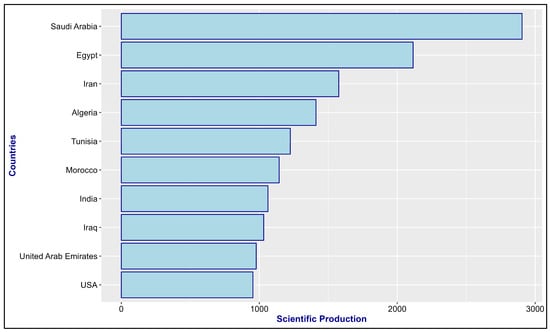
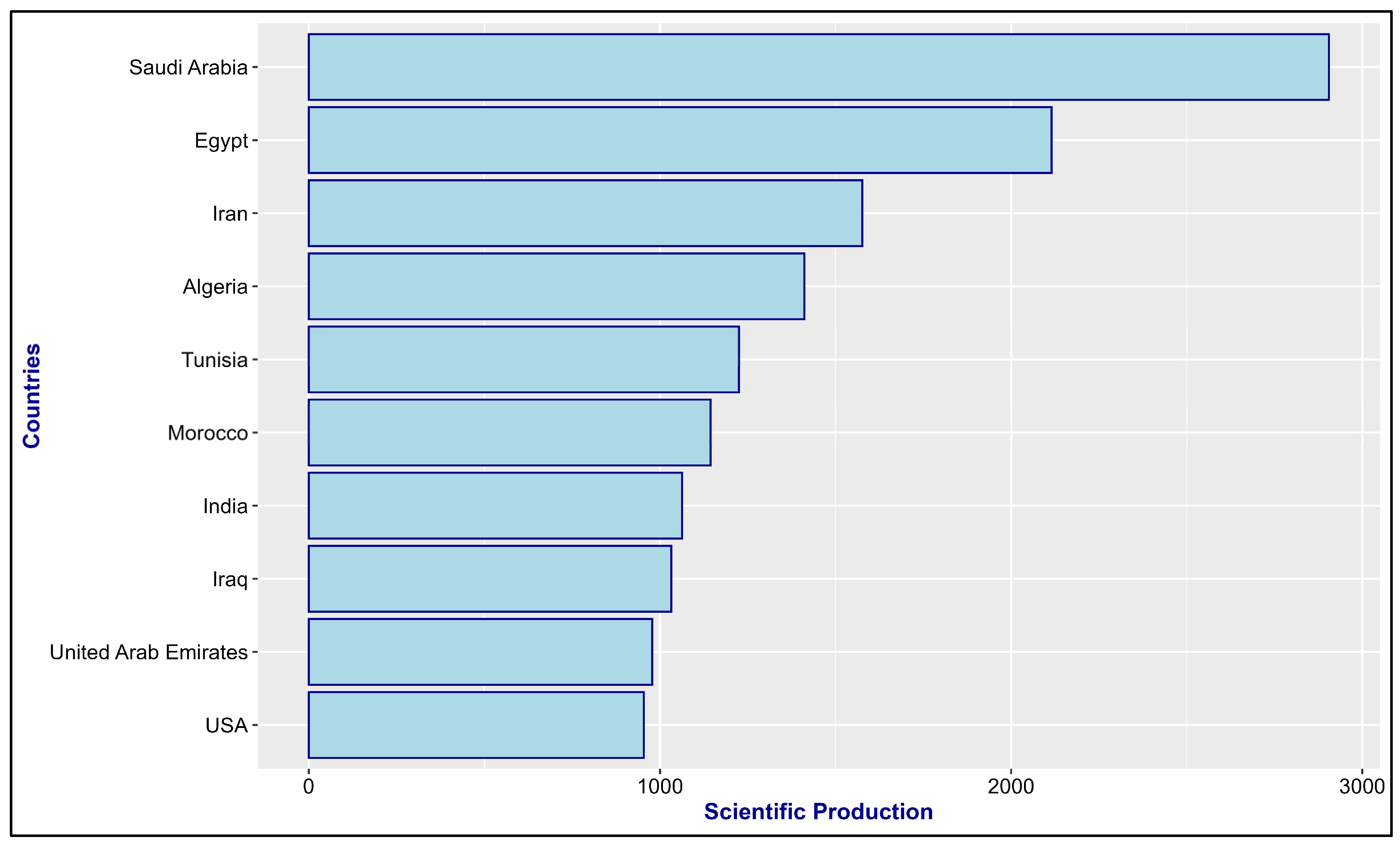
Scientific publications on the date palm originate from 116 countries, indicating broad global participation. However, scientific production is notably concentrated in a limited group of nations [21] (Figure 3). Saudi Arabia (2905) leads by a considerable margin, followed by Egypt (2115), Iran (1576), and Algeria (1411). Together, these countries account for a significant proportion of all indexed publications, reflecting a strong geographic concentration of scientific publications. This pattern likely reflects the economic and cultural importance of date palm in these regions, as well as sustained national research funding and strategic agricultural development programs.
Figure 3.
Top ten countries by cumulative scientific production in date palm research (1837–2025), based on the total number of Scopus-indexed publications per country.
This distribution broadly reflects the global scientific production patterns of date palm. Except for India, Morocco, and the USA, the countries with the highest research output on date palm are also among the world’s leading date producers, according to FAO statistics for 2024 [8]. The overlap between agricultural and scientific production suggests that investment in research is closely linked to national economic and strategic priorities associated with date palm cultivation. The predominance of countries in the MENA region further reinforces the regional specialization of date palm cultivation, although the inclusion of South Asian countries reflects the growing agroecological footprint of the crop.
At the institutional level, 6006 organizations contributed to date palm research, with universities being the main drivers of scientific publications (Table 3). King Saud University ranks first in total publications, far surpassing the institution in second place. Notably, Saudi Arabia is represented by three universities among the top ten institutions, underscoring the country’s institutional consolidation in this field of research. The other leading institutions are distributed among the United Arab Emirates, Oman, Tunisia, Iran, Pakistan, Iraq, and Malaysia, indicating a network of regional academic centers supporting date palm research.
Table 3.
Leading institutions contributing to date palm research (1837–2025), ranked by the total number of Scopus-indexed scientific publications attributed to each institution.
Funding patterns further illustrate this concentration. A total of 160 funding sponsors were identified, supporting 2955 research projects related to the date palm that resulted in publications indexed in the Scopus database. Several Saudi institutions emerge as the main contributors, particularly King Saud University (330 projects, 11.2%), King Faisal University (152 projects, 5.1%), and King Abdul Aziz City for Science and Technology (123 projects, 4.2%), highlighting the strong national investment in this research field. Among the top five sponsors, the UAE University (130 projects, 4.4%) represents a major contributing institution from the Gulf region, while the European Commission (67 projects, 2.3%) reflects the participation of international funding bodies.
Overall, the geographical and institutional landscape of date palm research reveals a strong regional concentration anchored in the main producing countries, combined with strong institutional leadership from universities with intensive research activity and increasing participation in international funding mechanisms.
3.5. Author Productivity and Impact (RQ-5)
A total of 23,459 authors who contributed to date palm research were identified, reflecting the considerable expansion of the scientific community dedicated to this field. Table 4 presents the ten most productive authors ranked by number of scientific publications.
Table 4.
Top ten authors in date palm research (1837–2025), ranked by the number of scientific publications. The table includes institutional affiliation and bibliometric indicators based on Scopus-indexed records analyzed in this study.
Jameel M. Al-Khayri ranks first in total publications, with a research profile strongly oriented toward plant biotechnology, particularly tissue culture and genetic transformation. His affiliation with King Faisal University (Saudi Arabia) further reinforces the institutional leadership of this country previously identified in the analysis.
While publication volume reflects scientific productivity, citation-based indicators reveal complementary dimensions of scientific impact. Among the leading authors, Fawzi Banat (Khalifa University of Science and Technology, The United Arab Emirates) exhibits the highest h-index (26), whereas Hamadi Attia (University of Sfax, Tunisia) records the highest cumulative number of citations (2533). These differences suggest heterogeneous impact patterns within the field, where productivity, citation influence, and authorship leadership do not necessarily align [27].
The analysis of first-author contributions further distinguishes leadership roles. For instance, Al-Khayri shows a high number of first-author publications (26), indicating a strong leadership position in research output, whereas several highly productive authors, such as Attia, Banat, and Blecker, have limited or no first-author contributions, suggesting a greater involvement in collaborative or senior authorship roles.
It is noteworthy that four of the ten most productive authors are affiliated with institutions in Tunisia, while another four are based in the United Arab Emirates. The concentration of leading authors within a limited number of countries suggests the existence of strong regional research communities contributing significantly to the global scientific output.
These patterns may also reflect the distribution of research funding and institutional capacity in specific countries, particularly those where date palm represents a strategic crop.
3.6. High-Influence Publications (RQ-6)
Table 5 presents the ten most cited scientific publications related to date palm research. The most cited publication, with 731 citations as of 2025 [28], evaluates the feasibility of using date palm fibers as reinforcement in polymer composites for sustainable automotive applications. This illustrates the growing interest in biomass valorization and the industrial uses of date palm waste [23]. The high citation level of this work reflects the relevance of the date palm as a renewable resource for the development of sustainable materials and highlights the increasing integration of agricultural biomass into industrial innovation.
A considerable proportion of the most cited publications are concentrated in food science and nutritional biochemistry. Studies examining the antioxidant activity, phenolic compounds, dietary fiber extraction, and nutritional properties of dates and their seeds [29,30,31,32,33] demonstrate significant scientific interest in the functional and nutraceutical properties of date palm products. The number of citations to these studies suggests that research on the nutritional and health attributes of dates is one of the most influential areas within the broader field of date palm research.
Table 5.
Top ten most cited scientific publications in date palm research (1837–2025), including reference details, DOI, and total citation counts based on Scopus-indexed records.
The review by Chao and Krueger (2007) [37] is also among the most cited publications, reflecting the continued relevance of integrative syntheses that address the biology, uses, and cultivation of this crop.
It is important to note that some highly cited publications included in this list do not focus exclusively on date palm research, but rather address this crop within broader scientific contexts. For example, the study by Siebert and Döll (2010) [34] examines global water use in agricultural production, while the ethnopharmacological study by Tahraoui et al. (2007) [36] includes Phoenix dactylifera among multiple medicinal plant species used in traditional medicine. Similarly, the pathogen profile update by Michielse and Rep (2009) [35] focuses on Fusarium oxysporum, a major phytopathogen affecting a wide range of crops, including date palm. Their presence among the most cited publications reflects the inclusion of the date palm in broader, multidisciplinary research fields.
Overall, the thematic distribution of the most cited publications suggests that the international scientific visibility of date palm research has been boosted not only by agronomic studies, but also by research related to food chemistry, nutritional properties, and industrial applications of plant biomass. This pattern indicates that value-added and interdisciplinary research areas have achieved a greater impact on citations than studies focused exclusively on primary crop production.
3.7. Patterns of International Collaboration (RQ-7)
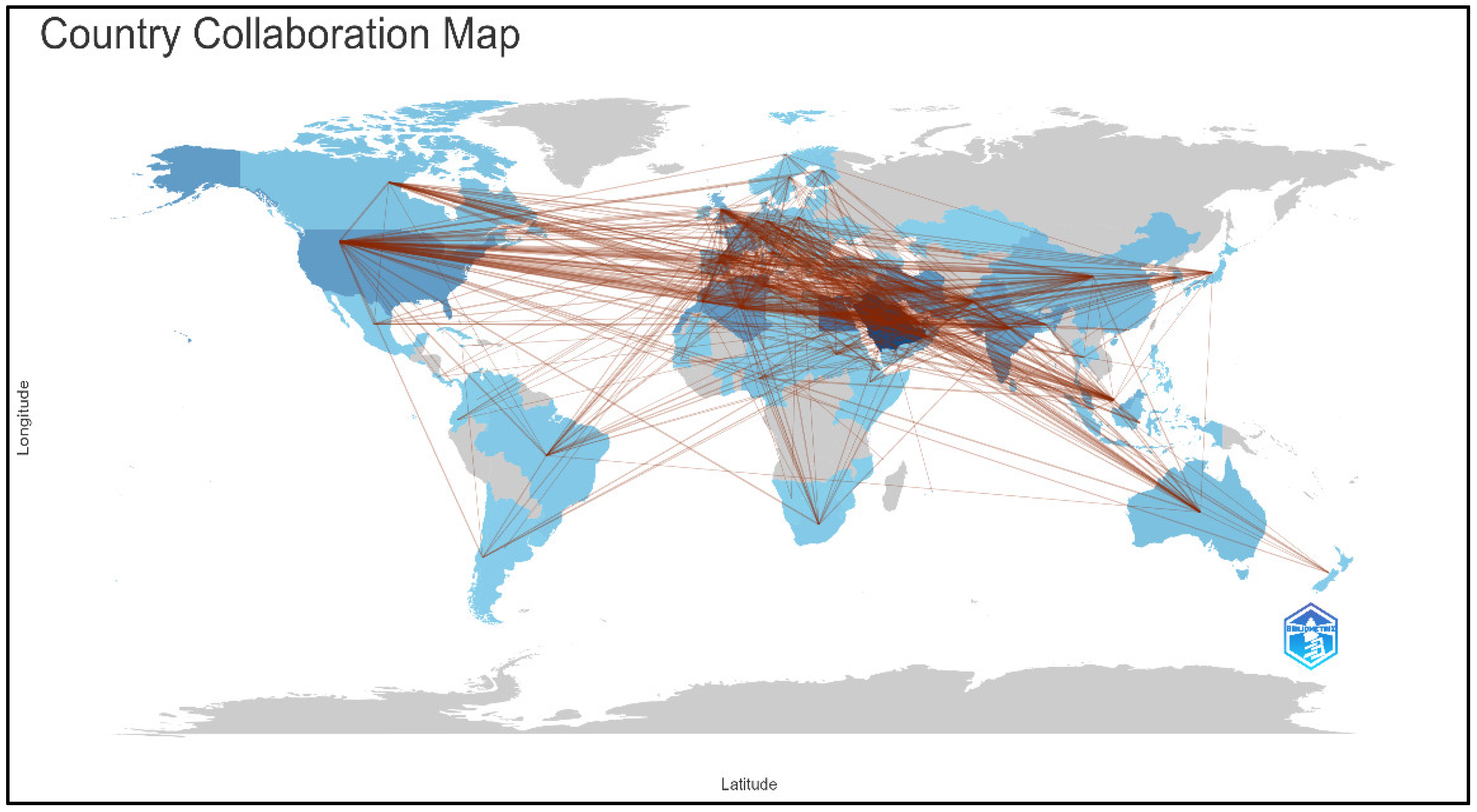
International collaboration in date palm research is illustrated in Figure 4, which presents the global network of co-authorship links among countries. The map reveals an extensive international collaboration structure involving researchers and research institutions from multiple regions [39].
Figure 4.
Global network of international collaborations in date palm research (1837–2025), where nodes represent countries and links represent co-authorship relationships based on Scopus-indexed publications.
Saudi Arabia is positioned as the central hub of international collaboration, maintaining scientific collaborations with 76 countries. It is followed by the United States and Egypt, with collaborations involving 61 and 59 countries, respectively. These patterns indicate that countries with high scientific productivity also tend to occupy key positions within the global collaboration network.
The collaboration network shows strong connections among countries in the MENA region and countries in North America, Europe, and Asia. This pattern suggests that international collaboration plays a significant role in the development of date palm research, facilitating knowledge exchange between major producing countries and broader global research communities.
3.8. Dominant Research Topics (RQ-8)
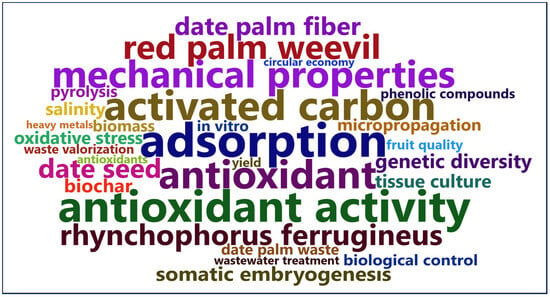
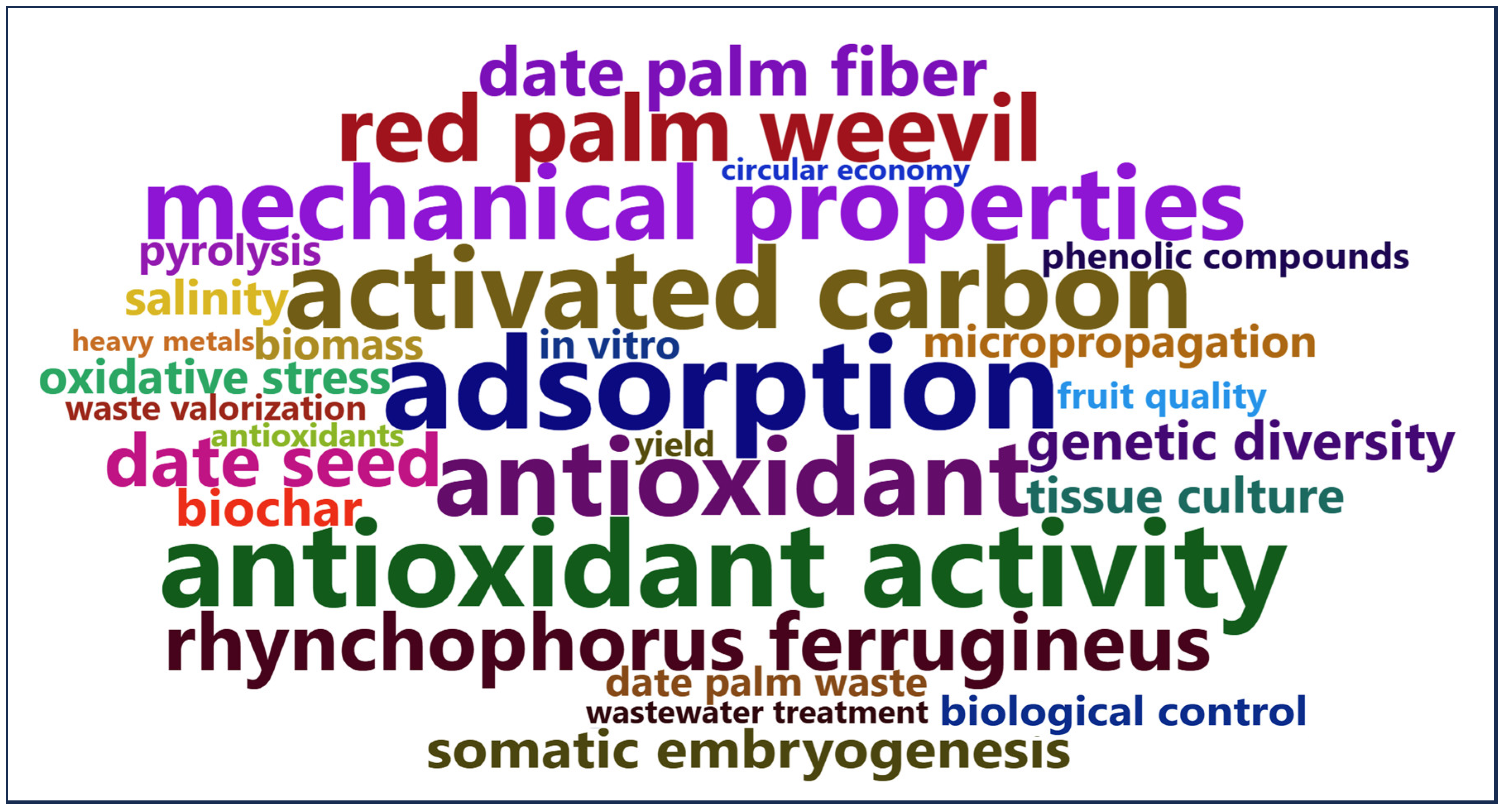
The word cloud (Figure 5) provides an overview of the most frequent keywords in date palm research and reveals the main thematic directions based on term prominence and co-occurrence. The visualization highlights a clear dominance of terms such as adsorption, antioxidant activity, activated carbon, and Rhynchophorus ferrugineus, indicating that research is strongly concentrated in a limited number of dominant themes.
Figure 5.
Word cloud of the most frequent keywords in date palm research publications (1837–2025), where term size is proportional to keyword frequency based on Scopus-indexed records.
Based on the relative size and clustering of terms, five major thematic groups can be identified. The first and most prominent group includes the terms such as adsorption and activated carbon, closely associated with biochar, biomass, and date seed, reflecting extensive research on the valorization of date palm residues for environmental applications. These materials have been extensively researched for applications such as water purification, wastewater treatment, heavy metal adsorption, and other environmental remediation processes, demonstrating the potential of date palm biomass as a sustainable and low-cost raw material [40,41,42].
The second group relates to food chemistry and nutritional properties, including terms such as antioxidant, oxidative stress, phenolic compounds, and fruit quality. Numerous studies have investigated the antioxidant capacity and phenolic composition of dates and their seeds, highlighting their potential benefits for human health and their relevance in food preservation and the development of functional foods [7,30,43,44,45].
The third group corresponds to plant protection, specifically studies on the red palm weevil, one of the most destructive pests affecting date palm plantations. Research in this area focuses on detection, monitoring, and control strategies to reduce the economic impact of this pest in date-producing regions [46,47,48].
The fourth thematic group includes terms such as mechanical properties, date palm fiber, and date palm waste. These terms reflect the growing interest in utilizing agricultural waste from date palm cultivation for the development of biofuels, composite materials, and other value-added industrial applications [49,50,51].
Finally, the fifth group is associated with plant biotechnology, including micropropagation, tissue culture, in vitro, and somatic embryogenesis. These approaches have become important tools for the large-scale propagation and genetic improvement of date palm cultivars [52,53,54].
The thematic groups in date palm research showcase a multidisciplinary approach, focusing on environmental technologies, bioactive compounds, pest management, biomass valorization, biotechnological innovation, and food science.
3.9. Thematic Evolution and Emerging Trends (RQ-9)
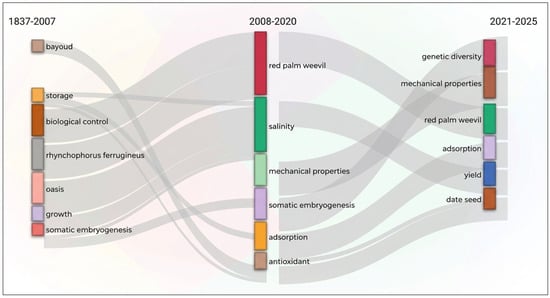
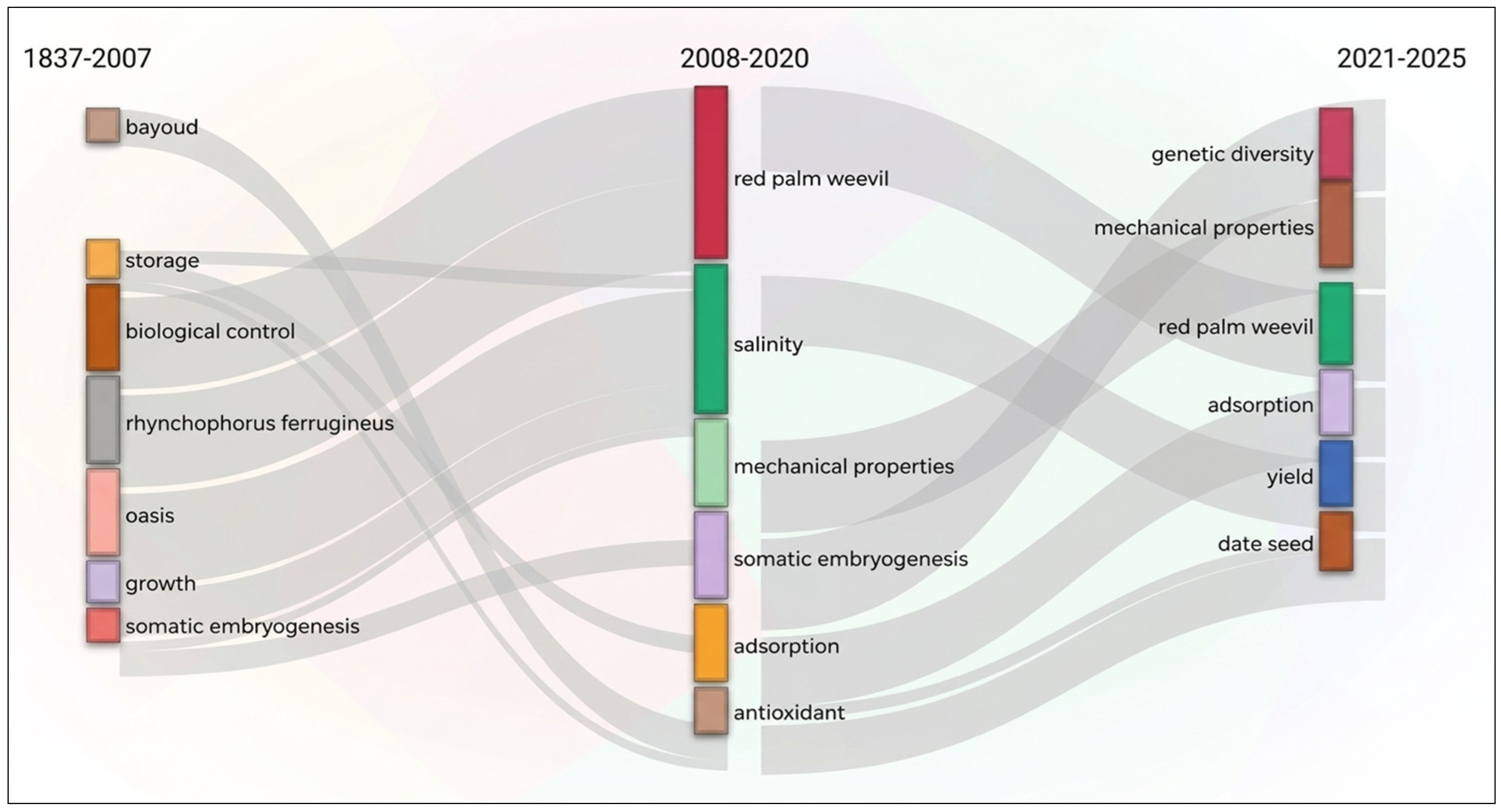
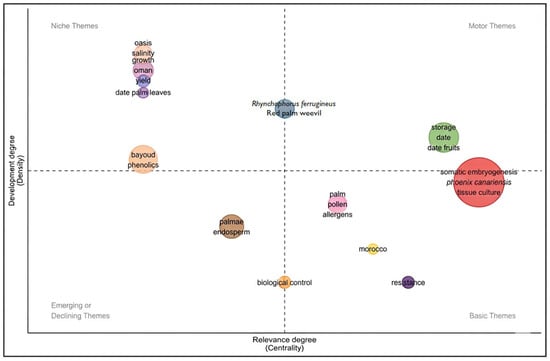
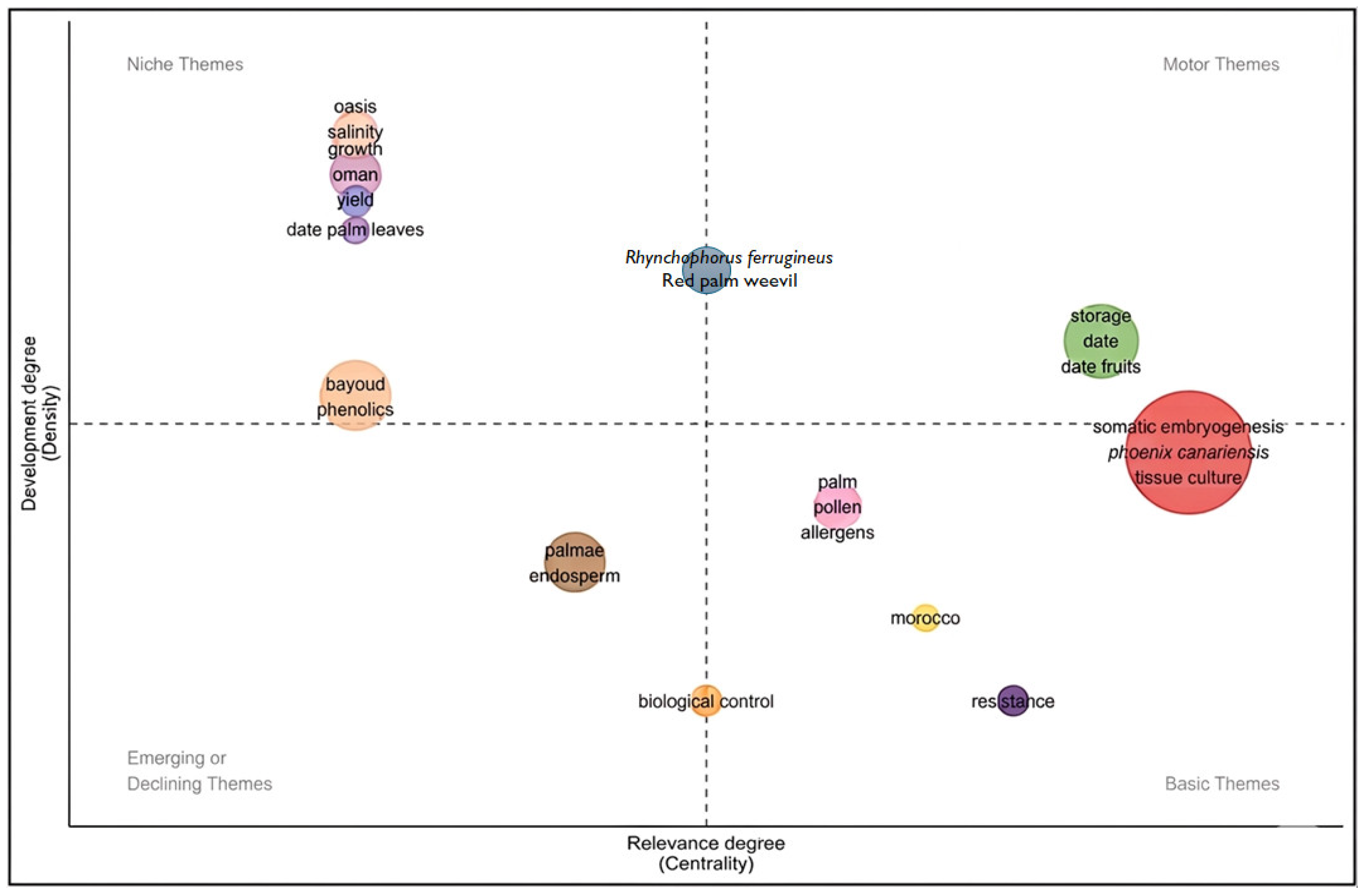
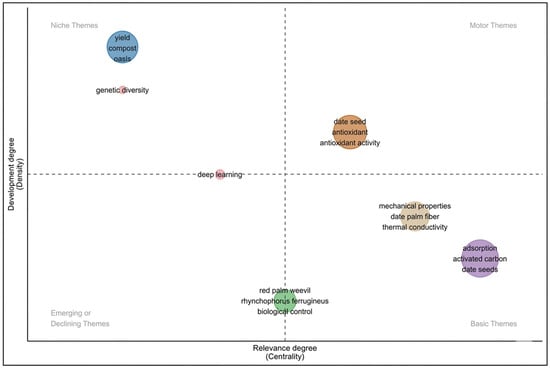
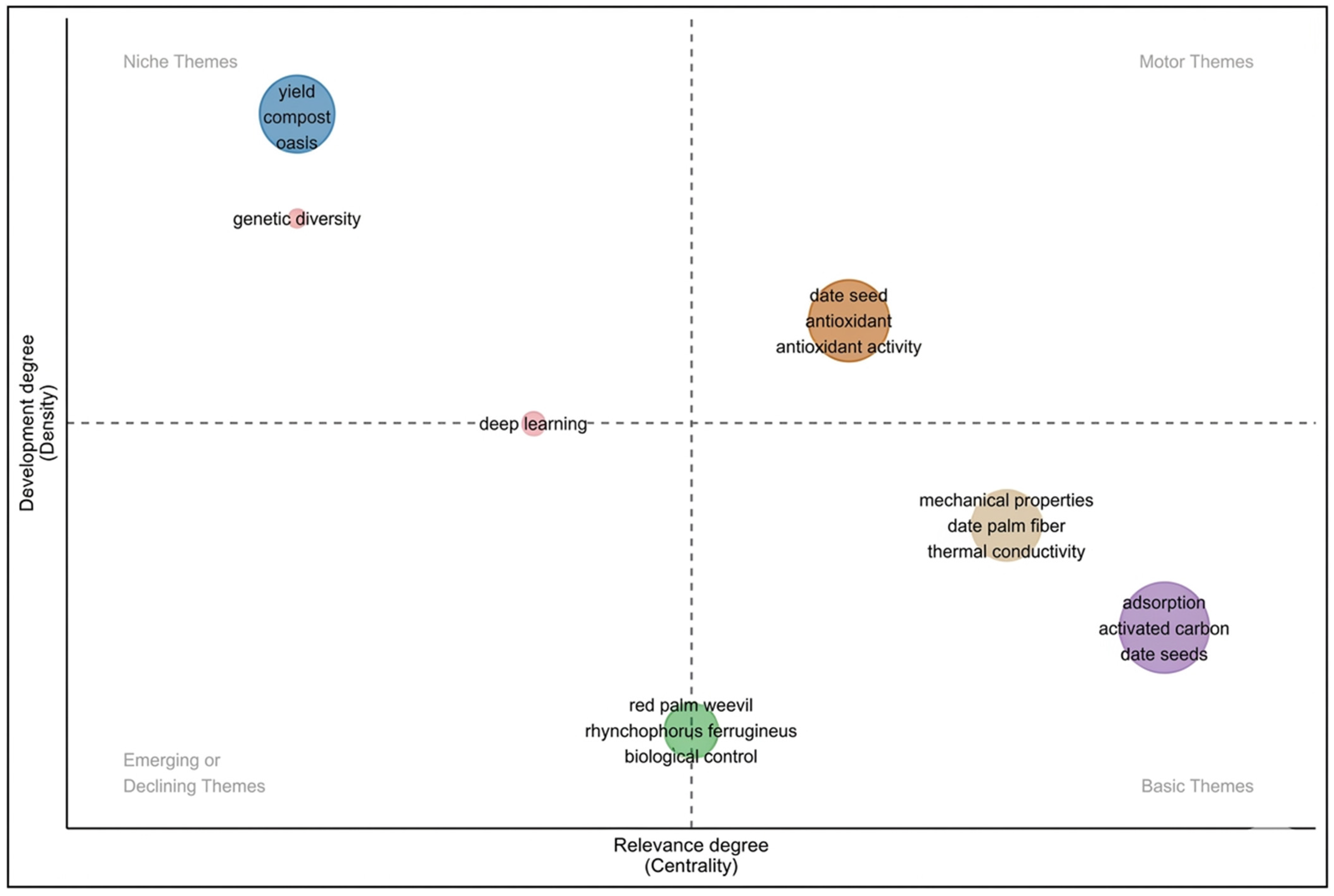
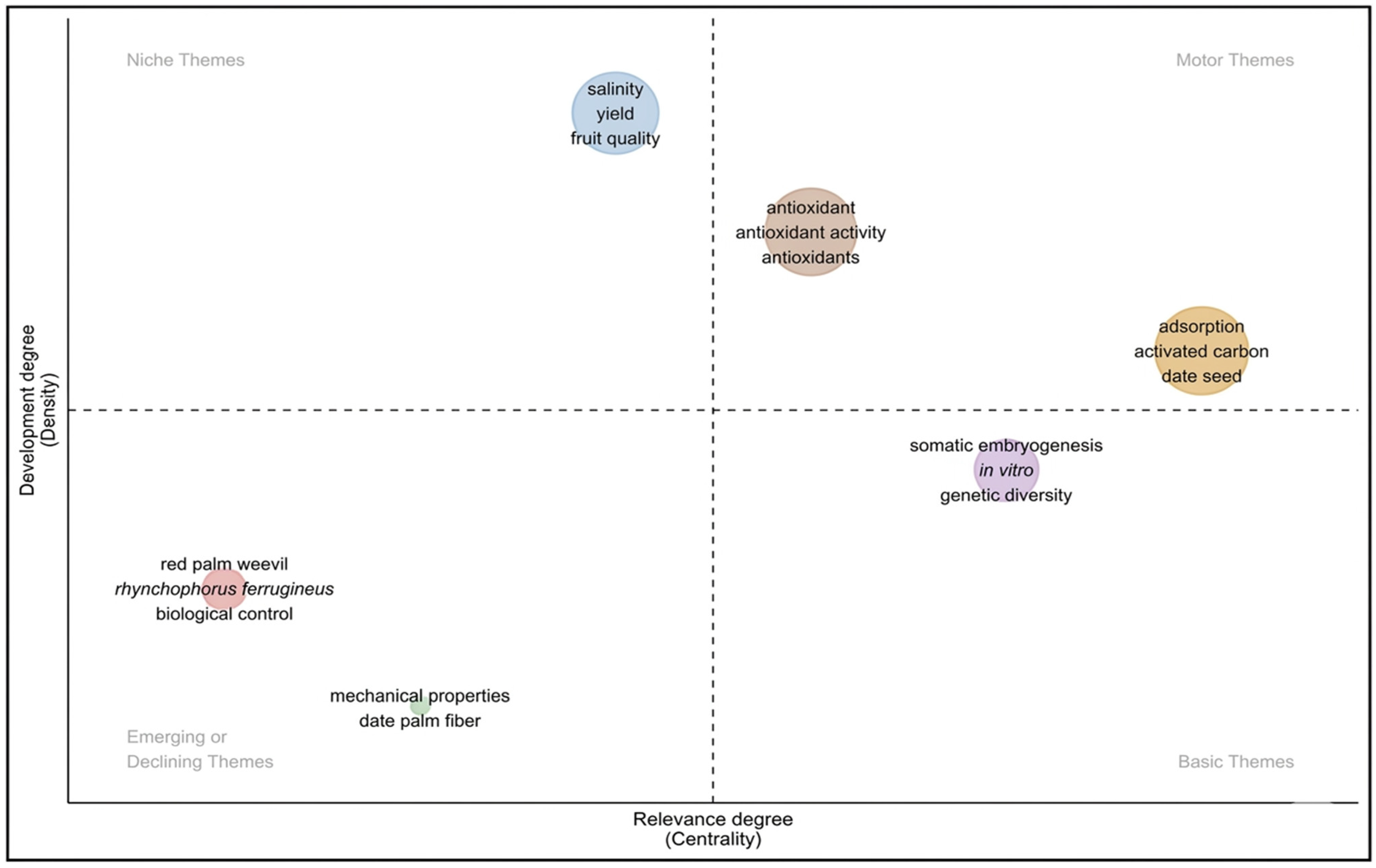
To better understand the evolution of research topics in date palm, the publication period (1837–2025) was divided into three intervals: 1837–2007, 2008–2020, and 2021–2025. Figure 6, Figure 7, Figure 8 and Figure 9 illustrate the thematic evolution and structural changes in the scientific literature throughout these periods.
Figure 6.
Thematic evolution of date palm research across three periods (1837–2007, 2008–2020, and 2021–2025), based on keyword co-occurrence analysis. The diagram shows the continuity and transition of research topics over time, where nodes represent keywords and links indicate their connections across consecutive periods.
Figure 7.
Thematic map of date palm research topics for the period 1837–2007, based on keyword co-occurrence analysis. Themes are plotted according to their centrality (relevance to the overall research field) and density (degree of internal development), as implemented in Bibliometrix.
Figure 8.
Thematic map of date palm research topics for the period 2008–2020, based on keyword co-occurrence analysis. Themes are positioned according to their centrality (relevance) and density (development), as derived from Bibliometrix analysis.
Figure 9.
Thematic map of date palm research topics for the period 2021–2025, based on keyword co-occurrence analysis. Themes are distributed according to centrality and density, representing their relevance and degree of development within the research field.
The analysis of thematic evolution reveals a clear transition in research priorities over time [55]. The earliest studies (1837–2007) focused primarily on the agronomic and phytopathological aspects of date palm cultivation, including Bayoud disease, plant growth, fruit storage, and cultivation in traditional oases [56]. Research during this period also initiated investigations into plant propagation techniques, particularly tissue culture and somatic embryogenesis.
During the second period (2008–2020), the thematic landscape expanded considerably. Research attention focused on emerging challenges in date production, particularly the red palm weevil, which became a major research focus due to its devastating impact on palm plantations. At the same time, new research areas emerged related to environmental stress, salinity, fruit quality, and plant biotechnology. Studies exploring the physicochemical properties of date biomass were also initiated, including adsorption processes, antioxidant activity, and the mechanical properties of its residues.
This expansion reflects a broadening of research priorities beyond traditional production constraints, incorporating new lines of inquiry related to stress physiology, product quality, and the early exploration of value-added uses of date palm biomass.
In the most recent period (2021–2025), several themes have been consolidated and diversified. Topics related to antioxidants, date seeds, and their bioactive compounds remain prominent areas of research, reflecting the continued interest in the nutritional and functional properties of date products. Simultaneously, research on adsorption, activated carbon, and other applications of date byproducts has gained increasing importance, indicating a greater emphasis on valorizing agricultural waste for environmental and industrial applications.
This thematic shift is likely driven by the increasing demand for sustainable materials, environmental solutions, and value-added products derived from agricultural residues, positioning date palm as a multifunctional resource beyond traditional agriculture.
Thematic maps generated with Bibliometrix (Figure 7, Figure 8 and Figure 9) illustrate the structural organization of research topics in greater detail. These maps classify topics according to their centrality (relevance to the overall research field) and density (degree of internal development). In earlier periods, research focused primarily on fruit production, storage, and propagation techniques, while in recent years there has been an expansion toward interdisciplinary topics encompassing materials science, biotechnology, and environmental applications.
The analysis reveals a shift toward an increasingly diverse range of research topics. While issues like the red palm weevil continue to be important for date palm production, other areas like plant biotechnology and fruit quality are becoming more specialized. Additionally, new technologies like deep learning are starting to be used in recent studies, indicating a move towards incorporating advanced analytical tools in date palm research.
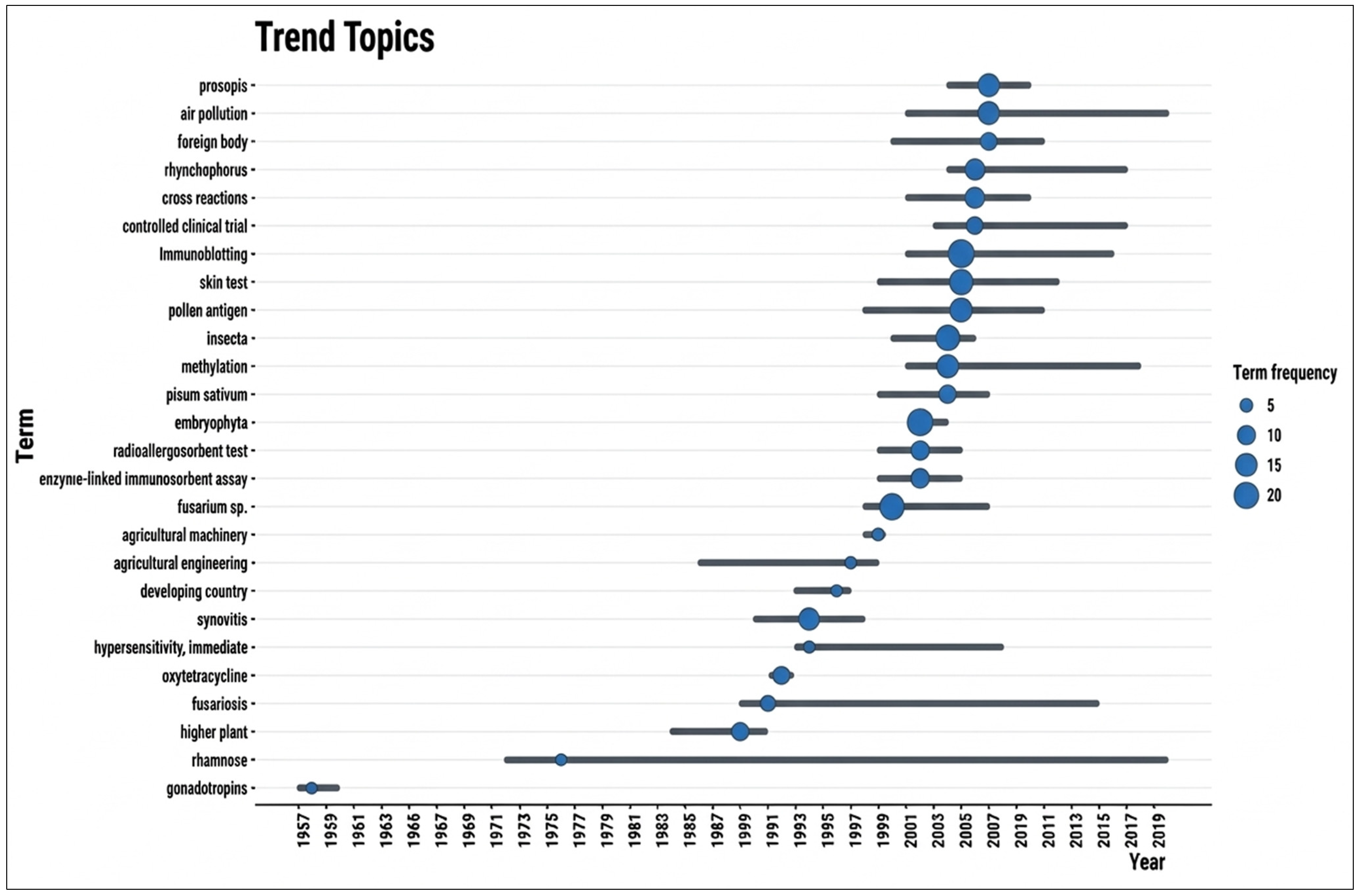
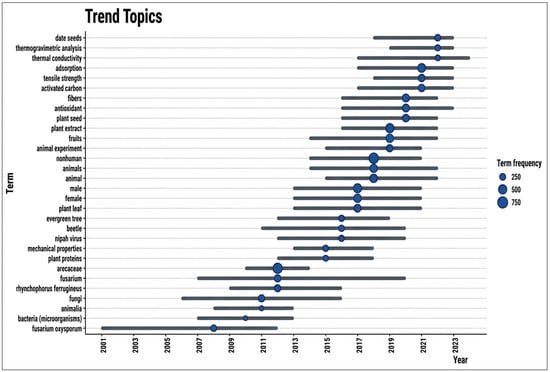
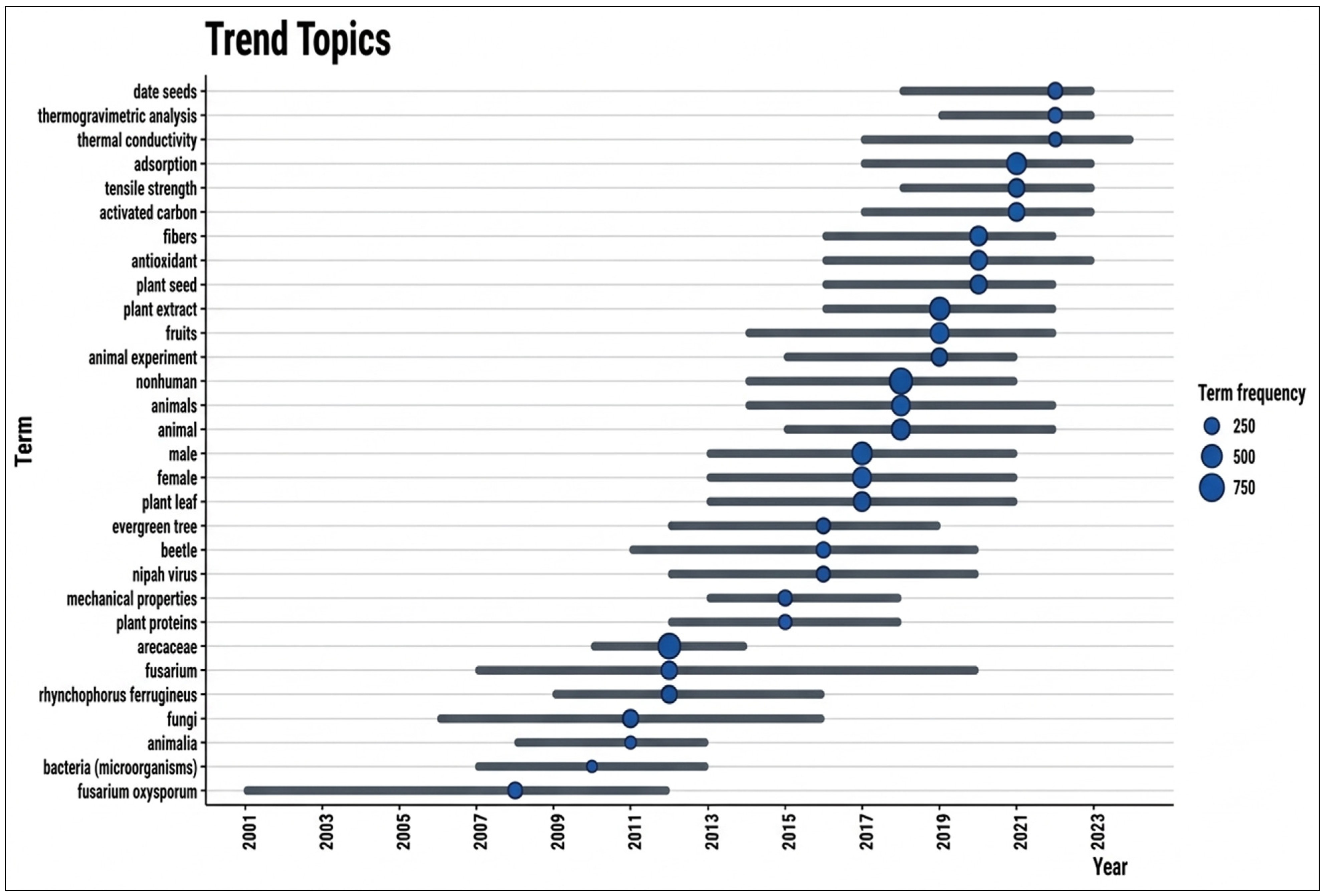
The trend analysis (Figure 10 and Figure 11) confirms this transition. Previous literature was dominated by topics related to phytopathology and basic biological studies, whereas more recent publications increasingly focus on materials science, environmental applications, and the functional properties of date palm products. Terms such as activated carbon, adsorption, thermal conductivity, and antioxidant activity have gained prominence in recent years, reflecting the growing industrial and technological relevance of date palm biomass.
Figure 10.
Temporal trends of research topics in date palm literature (1957–2020), based on keyword frequency analysis. Terms are displayed along the y-axis, and their occurrence over time is represented by horizontal lines, while bubble size indicates term frequency.
Figure 11.
Temporal trends of research topics in date palm literature (1990–2025), based on keyword frequency analysis. Terms are plotted against time, where horizontal lines indicate the period of occurrence and bubble size reflects term frequency.
This trend also indicates a shift toward more application-driven research, where experimental and analytical approaches are increasingly oriented toward solving practical industrial and environmental challenges.
The evolution of date palm research has shifted from traditional agronomic and phytopathological studies to a more diverse and interdisciplinary landscape. This includes biotechnology, materials science, environmental sustainability, and food science.
The analysis of thematic trends, productivity indicators, and international collaboration patterns shows a structured global research landscape in date palm studies. Research output is concentrated in MENA countries, with Saudi Arabia as a key player in international collaborations. This suggests a center-periphery structure, where major research institutions lead extensive partnerships while other regions contribute through collaborations.
Thematic trends indicate a transition towards diverse research priorities, including biotechnology, materials science, environmental applications, and the utilization of date palm byproducts. This transformation highlights date palm research as a multidisciplinary field with increasing global integration. This evolution suggests that future research will likely continue to converge toward integrated solutions that combine agricultural production with environmental sustainability and industrial innovation.
3.10. Implications for Agricultural Research and Sustainable Date Palm Production
The scientometric patterns identified in this study suggest several implications for future agricultural research and crop management strategies in date palm production systems, while also reflecting underlying drivers related to agricultural priorities, economic relevance, and research funding strategies in major date-producing regions. It is important to note that these implications are inferred from scientometric patterns and should be interpreted as indicative trends rather than direct agronomic evidence.
The high frequency and persistence of red palm weevil–related topics identified in the scientometric analysis suggest that pest management remains one of the most critical challenges, affecting date palm cultivation worldwide [46,47]. Therefore, future research may prioritize integrated management strategies that combine biological control, improved monitoring systems, and emerging precision agriculture technologies to enhance early detection and reduce economic losses in commercial plantations [47].
The widespread presence of studies on micropropagation and somatic embryogenesis also reflects the increasing reliance of commercial plantations on the clonal propagation of elite cultivars. These propagation techniques have supported the large-scale multiplication of date palm genotypes with desirable agronomic and fruit quality characteristics [52,53]. While these technologies facilitate the rapid expansion of high-value cultivars, they also suggest the need for rigorous verification of genetic fidelity and high-quality phytosanitary control to prevent somaclonal variation and the spread of pathogens in large-scale propagation systems [54].
Another important implication relates to the growing scientific interest in the valorization of date palm biomass. Research on adsorption processes, activated carbon, and the use of date palm waste, such as fibers and seeds, for biomaterials may reflect the growing focus on circular bioeconomy approaches in agricultural systems [28,32,49]. These advances suggest potential opportunities to improve sustainability and resource efficiency in date palm production. However, further research incorporating life cycle assessment and economic feasibility analysis will be required to determine the agronomic and industrial viability of these applications at a commercial scale [42,49].
The emergence of artificial intelligence and advanced analytical tools within recent thematic trends may indicate the potential integration of digital agriculture technologies into date palm production systems. Applications such as automated pest detection, irrigation optimization, and yield prediction are increasingly being explored in modern crop management systems and may contribute to improving productivity and water-use efficiency under arid conditions [12]. These technological approaches are especially relevant for date palm cultivation, which is predominantly practiced in regions affected by water scarcity and climate variability.
Scientometric patterns suggest the presence of key challenges facing date palm cultivation in arid and semi-arid regions, such as resource constraints, pest control, and the adoption of new technologies. These challenges may be interconnected and can potentially hinder productivity. To address them, integrated and multidisciplinary approaches may be needed to enhance efficiency, resilience, and technological uptake. By addressing these issues, productivity and sustainability in date palm production may be improved.
Finally, these implications indicate that future advances in date palm agronomy are likely to depend on integrating traditional crop management practices with emerging technologies, sustainable biomass utilization, and digital agriculture tools.
4. Conclusions
This study offers a comprehensive scientometric analysis of global research on the date palm over nearly two centuries, based on 9062 publications indexed in the Scopus database between 1837 and 2025. The results reveal sustained and accelerated growth in scientific publications, especially since 2007, reflecting the increasing global interest in this crop. The thematic evolution of the literature shows a progressive transformation of date palm research, moving from traditional agronomic and pathological studies toward biotechnology and crop protection and more recently toward interdisciplinary approaches. Currently, the main research areas focus on biomass valorization in activated carbon and adsorption, antioxidant compounds in fruits and seeds, pest management, especially the red palm weevil, the mechanical properties of date palm fibers, and plant biotechnology approaches such as micropropagation and somatic embryogenesis. These topics confirm the multidisciplinary nature of date palm research.
The geographical distribution of scientific production indicates a strong concentration of research activity in the MENA region, which corresponds to the main date palm-producing regions. Within this global research structure, Saudi Arabia emerges as a central scientific hub in terms of number of scientific publications, institutions, funding, and international collaboration. Furthermore, recent thematic trends suggest a growing interest in emerging technologies, particularly artificial intelligence and advanced analytical tools, which can contribute to improved crop management and sustainability in date palm production systems. In addition, the absence of a Scopus-indexed journal dedicated exclusively to date palm research highlights a clear opportunity for the development of specialized publishing platforms in this field.
This study has certain limitations inherent to scientometric analyses. The dataset was limited to publications indexed in the Scopus database, which may exclude relevant literature available in other scientific databases. Moreover, citation-based indicators may favor older publications that have had more time to accumulate citations. Despite these limitations, the large dataset analyzed provides a solid overview of the historical development, thematic structure, and global dynamics of date palm research.
Overall, this study provides a long-term and integrated perspective on the evolution of date palm research, highlighting structural patterns, research gaps, and emerging directions. These insights offer practical value for researchers by helping to prioritize future research agendas and promote interdisciplinary collaboration. In addition, the findings can inform policymakers and stakeholders in designing more effective strategies to enhance sustainability, productivity, and value chain development in date palm cultivation systems, as well as to optimize the strategic allocation of research funding. Furthermore, the identification of key regions and collaboration networks may support the strengthening of international partnerships and knowledge exchange.
Author Contributions
Conceptualization, R.S.-T. and J.P.G.-V.; methodology, R.S.-T. and F.N.-R.; software, L.S.-S., L.E.V.-C. and Y.R.-O.; validation, F.N.-R. and Y.R.-O.; formal analysis, J.P.G.-V. and L.E.V.-C.; investigation, F.N.-R. and Y.R.-O.; data curation, L.E.V.-C., L.S.-S. and M.A.E.; writing—original draft preparation, R.S.-T., A.A.Z., J.P.G.-V. and M.A.E.; writing—review and editing, R.S.-T., M.A.E., F.N.-R. and A.A.Z.; visualization, J.P.G.-V., M.A.E. and L.S.-S.; supervision, A.A.Z. All authors have read and agreed to the published version of the manuscript.
Funding
This research received no external funding.
Data Availability Statement
The original contributions presented in this study are included in the article. Further inquiries can be directed at the corresponding authors.
Conflicts of Interest
The authors declare no conflicts of interest.
References
- Salomón-Torres, R.; Ortiz-Uribe, N.; Sol-Uribe, J.A.; Villa-Angulo, C.; Villa-Angulo, R.; Valdez-Salas, B.; García-González, C.; Monroy, C.G.I.; Norzagaray-Plasencia, S. Influence of Different Sources of Pollen on the Chemical Composition of Date (Phoenix dactylifera L.) Cultivar Medjool in México. Aust. J. Crop Sci. 2018, 12, 1835–2707. [Google Scholar] [CrossRef] [Scilit]
- Al-Habsi, N. Date Palm (Phoenix dactylifera L.) Fruit: Strategic Crop for Food Security, Nutritional Benefits, Postharcest Quality, and Valorization into Emerging Functional Products. Sustainability 2025, 17, 7491. [Google Scholar] [CrossRef] [Scilit]
- Awan, K.A.; Yaqoob, S.; Ul-Haq, I.; Naveed, H.; Imtiaz, A.; Shaukat, A.; Sultan, W.; Qian, J.Y.; Alum, E.U.; Shen, Q. Therapeutic Power of Date Fruit (Phoenix dactylifera L.): A Nutrient-Rich Superfood for Holistic Health and Disease Prevention. Food Sci. Nutr. 2025, 13, e70896. [Google Scholar] [CrossRef] [Scilit] [PubMed]
- Hamouda, T.; Aly, N.M. Date Palm Fiber Composites for Automotive Applications. In Date Palm Fiber Composites; Springer: New York, NY, USA, 2020; pp. 387–405. [Google Scholar] [CrossRef] [Scilit]
- Abdelaal, A.; Ahmed, A.; Wang, H.; Dalahmeh, S.S.; Chehimi, M.M.; Abdullah, A.M.; Jlassi, K. Date Palm Waste Biochar for the Adsorptive Removal of Pharmaceuticals: A Review. Environ. Sci. Eur. 2026, 38, 59. [Google Scholar] [CrossRef] [Scilit]
- Liu, Q.; Larrañaga, A.S.; Salim, M.H.; AbuZaid, M.; Dali, M.H.A.; Banat, F.; Beaumont, M.; Lizundia, E.; Tardy, B.L. Mechanochemical processing of date fronds and seeds: Chemistry-dependent nano-fibrillation and dispersion properties. Sustain. Mater. Technol. 2026, 47, e01903. [Google Scholar] [CrossRef] [Scilit]
- Salomón-Torres, R.; Ortiz-Uribe, N.; Valdez-Salas, B.; Rosas-González, N.; García-González, C.; Chávez, D.; Córdova-Guerrero, I.; Díaz-Rubio, L.; Del Pilar Haro-Vázquez, M.; Mijangos-Montiel, J.L.; et al. Nutritional Assessment, Phytochemical Composition and Antioxidant Analysis of the Pulp and Seed of Medjool Date Grown in Mexico. PeerJ 2019, 7, e6821. [Google Scholar] [CrossRef] [Scilit] [PubMed]
- FAOSTAT. Food and Agriculture Organization of the United Nations. Available online: https://www.fao.org/faostat/en/#home (accessed on 30 March 2026).
- Abd Rabou, A.F.N.; Radwan, E.S. The Current Status of the Date Palm (Phoenix dactylifera) and Its Uses in the Gaza Strip, Palestine. Biodiversitas 2017, 18, 1047–1061. [Google Scholar] [CrossRef] [Scilit]
- Singh, P.; Vaishnav, A.; Pratap Singh, S.; Sahu, J. A Scientometric Analysis on WoS Reports to Evaluate the Research on Fusarium oxysporum since 2009. Arch. Phytopathol. Plant Prot. 2019, 52, 795–812. [Google Scholar] [CrossRef] [Scilit]
- Anwar, M.A. Phoenix dactylifera L.: A Bibliometric Study of The Literature on Date Palm. Malays. J. Libr. Inf. Sci. 2006, 11, 41–60. [Google Scholar]
- Garcia Vazquez, J.P.; Salomón-Torres, R.; Perez Perez, D.B. Scientometric Analysis of the Application of Artificial Intelligence in Agriculture. J. Scientometr. Res. 2021, 10, 55–62. [Google Scholar] [CrossRef] [Scilit]
- Syed Hassan, S.N.; Izzah, N.; Mohd Said, W.; Zakaria, N.; Huda Mohamad Zainuzi, N.I.; Halim, A.A. Bibliometric on Date Palm (Phoenix dactylifera L.) In Journal Article From 2017 Until 2021. Int. J. Acad. Res. Bus. Soc. Sci. 2023, 13, 860–884. [Google Scholar] [CrossRef] [Scilit]
- Alhaider, I.; Ahmed, M.K.K.; Gupta, B.M. Global Research Output on Date Palm (Phoenix dactylifera): A 12 Years Scientometric Perspective. Scientometrics 2014, 98, 157–171. [Google Scholar] [CrossRef] [Scilit]
- Shahrumi Abdul Rahman, T.; Bin Anuar, K.; Dzulkhairi Bin Mohd Rani, M.; Binti Syaiful, A.; Binti Ithnin, M.; Khairul Nizam Bin Zainan Nasri, M.; Abdul Rahman, A.; Radzniwan Rashid, M.A.; Helmi Addnan, F.; Nain Bin Nor Aripin, K. A Scientometric Analysis of Studies on the Effects of the Date Palm (Phoenix dactylifera) Fruit on Human Health. Malays. J. Sci. Health Technol. 2019, 3, 2601–2604. [Google Scholar] [CrossRef] [Scilit]
- Donthu, N.; Kumar, S.; Mukherjee, D.; Pandey, N.; Lim, W.M. How to Conduct a Bibliometric Analysis: An Overview and Guidelines. J. Bus. Res. 2021, 133, 285–296. [Google Scholar] [CrossRef] [Scilit]
- Aria, M.; Cuccurullo, C. Bibliometrix: An R-Tool for Comprehensive Science Mapping Analysis. J. Informetr. 2017, 11, 959–975. [Google Scholar] [CrossRef] [Scilit]
- Passas, I. Bibliometric Analysis: The Main Steps. Encyclopedia 2024, 4, 1014–1025. [Google Scholar] [CrossRef] [Scilit]
- Baas, J.; Schotten, M.; Plume, A.; Côté, G.; Karimi, R. Scopus as a Curated, High-Quality Bibliometric Data Source for Academic Research in Quantitative Science Studies. Quant. Sci. Stud. 2020, 1, 377–386. [Google Scholar] [CrossRef] [Scilit]
- AlRyalat, S.A.S.; Malkawi, L.W.; Momani, S.M. Comparing Bibliometric Analysis Using PubMed, Scopus, and Web of Science Databases. J. Vis. Exp. 2019, 24, e58494. [Google Scholar] [CrossRef] [Scilit] [PubMed]
- Zhang, B.; Rahmatullah, B.; Wang, S.L.; Zhang, G.; Wang, H.; Ebrahim, N.A. A Bibliometric of Publication Trends in Medical Image Segmentation: Quantitative and Qualitative Analysis. J. Appl. Clin. Med. Phys. 2021, 22, 45–65. [Google Scholar] [CrossRef] [Scilit]
- Ruiz-Rosero, J.; Ramirez-Gonzalez, G.; Viveros-Delgado, J. Software Survey: ScientoPy, a Scientometric Tool for Topics Trend Analysis in Scientific Publications. Scientometrics 2019, 121, 1165–1188. [Google Scholar] [CrossRef] [Scilit]
- Zaid, A.; Arias-Jiménez, E. Date Palm Cultivation; FAO Plant Production and Protection Paper 156; FAO: Rome, Italy, 2024. [Google Scholar]
- Ritter, C. Der Dattelbaum (Phoenix dactylifera) Nach Seiner Einführung Und Der Limitation Seines Vorkommens in Indien. Arch. Pharm. Pharm. Med. Chem. 1838, 64, 211–215. [Google Scholar] [CrossRef] [Scilit]
- Garfield, E. The History and Meaning of the Journal Impact Factor. JAMA 2006, 295, 90–93. [Google Scholar] [CrossRef] [Scilit]
- Bradford, S.C. Sources of Information on Specific Subjects 1934. J. Inf. Sci. 1985, 10, 176–180. [Google Scholar] [CrossRef] [Scilit]
- Lotka, A.J. The Frequency Distribution of Scientific Productivity. J. Wash. Acad. Sci. 1926, 16, 317–323. [Google Scholar]
- Al-Oqla, F.M.; Sapuan, S.M. Natural Fiber Reinforced Polymer Composites in Industrial Applications: Feasibility of Date Palm Fibers for Sustainable Automotive Industry. J. Clean. Prod. 2014, 66, 347–354. [Google Scholar] [CrossRef] [Scilit]
- Al-Shahib, W.; Marshall, R.J. The Fruit of the Date Palm: Its Possible Use as the Best Food for the Future? Int. J. Food Sci. Nutr. 2003, 54, 247–259. [Google Scholar] [CrossRef] [Scilit]
- Mansouri, A.; Embarek, G.; Kokkalou, E.; Kefalas, P. Phenolic Profile and Antioxidant Activity of the Algerian Ripe Date Palm Fruit (Phoenix dactylifera). Food Chem. 2005, 89, 411–420. [Google Scholar] [CrossRef] [Scilit]
- Al-Farsi, M.; Alasalvar, C.; Morris, A.; Baron, M.; Shahidi, F. Comparison of Antioxidant Activity, Anthocyanins, Carotenoids, and Phenolics of Three Native Fresh and Sun-Dried Date (Phoenix dactylifera L.) Varieties Grown in Oman. J. Agric. Food Chem. 2005, 53, 7592–7599. [Google Scholar] [CrossRef] [Scilit] [PubMed]
- Biglari, F.; AlKarkhi, A.F.M.; Easa, A.M. Antioxidant Activity and Phenolic Content of Various Date Palm (Phoenix dactylifera) Fruits from Iran. Food Chem. 2008, 107, 1636–1641. [Google Scholar] [CrossRef] [Scilit]
- Al-Farsi, M.A.; Lee, C.Y. Nutritional and Functional Properties of Dates: A Review. Crit. Rev. Food Sci. Nutr. 2008, 48, 877–887. [Google Scholar] [CrossRef] [Scilit]
- Siebert, S.; Döll, P. Quantifying Blue and Green Virtual Water Contents in Global Crop Production as Well as Potential Production Losses without Irrigation. J. Hydrol. 2010, 384, 198–217. [Google Scholar] [CrossRef] [Scilit]
- Michielse, C.B.; Rep, M. Pathogen profile update: Fusarium oxysporum. Mol. Plant Pathol. 2009, 10, 311–324. [Google Scholar] [CrossRef] [Scilit]
- Tahraoui, A.; El-Hilaly, J.; Israili, Z.H.; Lyoussi, B. Ethnopharmacological Survey of Plants Used in the Traditional Treatment of Hypertension and Diabetes in South-Eastern Morocco (Errachidia Province). J. Ethnopharmacol. 2007, 110, 105–117. [Google Scholar] [CrossRef] [Scilit] [PubMed]
- Chao, C.C.T.; Krueger, R.R. The Date Palm (Phoenix dactylifera L.): Overview of Biology, Uses, and Cultivation. HortScience 2007, 42, 1077–1082. [Google Scholar] [CrossRef] [Scilit]
- Al-Farsi, M.A.; Lee, C.Y. Optimization of Phenolics and Dietary Fibre Extraction from Date Seeds. Food Chem. 2008, 108, 977–985. [Google Scholar] [CrossRef] [Scilit]
- Glänzel, W.; Schubert, A. Analysing Scientific Networks through Co-Authorship. In Handbook of Quantitative Science and Technology Research; Springer: Dordrecht, The Netherlands, 2004; pp. 257–276. [Google Scholar] [CrossRef] [Scilit]
- Al Malki, M.; Yaser, A.Z.; Hamzah, M.A.A.M.; Zaini, M.A.A.; Latif, N.A.; Hasmoni, S.H.; Zakaria, Z.A. Date Palm Biochar and Date Palm Activated Carbon as Green Adsorbent—Synthesis and Application. Curr. Pollut. Rep. 2023, 9, 374–390. [Google Scholar] [CrossRef] [Scilit]
- Fadhil, A.B.; Kareem, B.A. Co-Pyrolysis of Mixed Date Pits and Olive Stones: Identification of Bio-Oil and the Production of Activated Carbon from Bio-Char. J. Anal. Appl. Pyrolysis 2021, 158, 374–390. [Google Scholar] [CrossRef] [Scilit]
- Salem, I.B.; Saleh, M.B.; Iqbal, J.; El Gamal, M.; Hameed, S. Date Palm Waste Pyrolysis into Biochar for Carbon Dioxide Adsorption. Energy Rep. 2021, 7, 152–159. [Google Scholar] [CrossRef] [Scilit]
- Bijami, A.; Rezanejad, F.; Oloumi, H.; Mozafari, H. Minerals, Antioxidant Compounds and Phenolic Profile Regarding Date Palm (Phoenix dactylifera L.) Seed Development. Sci. Hortic. 2020, 262, 109017. [Google Scholar] [CrossRef] [Scilit]
- Hinkaew, J.; Aursalung, A.; Sahasakul, Y.; Tangsuphoom, N.; Suttisansanee, U. A Comparison of the Nutritional and Biochemical Quality of Date Palm Fruits Obtained Using Different Planting Techniques. Molecules 2021, 26, 2245. [Google Scholar] [CrossRef] [Scilit]
- Ouamnina, A.; Alahyane, A.; Elateri, I.; Boutasknit, A.; Abderrazik, M. Relationship between Phenolic Compounds and Antioxidant Activity of Some Moroccan Date Palm Fruit Varieties (Phoenix dactylifera L.): A Two-Year Study. Plants 2024, 13, 1119. [Google Scholar] [CrossRef] [Scilit]
- Alnafisah, Y.; El-Shahed, M. Optimal Control of Red Palm Weevil Model Incorporating Sterile Insect Technique, Mechanical Injection, and Pheromone Traps. Alex. Eng. J. 2024, 93, 382–391. [Google Scholar] [CrossRef] [Scilit]
- Dembilio, Ó.; Jaques, J.A. Biology and Management of Red Palm Weevil. In Sustainable Pest Management in Date Palm: Current Status and Emerging Challenges; Springer: New York, NY, USA, 2015; pp. 13–36. [Google Scholar] [CrossRef] [Scilit]
- Nasraoui, B.; Jaddou, M.; Musallam, Z.; Al-Shareedi, A.; Al-Fahid, Y.; Chebbi, H.; Asiri, M.; Al-Ghamdi, A. Control of the Apical and Trunk Infestations of Date Palm by Red Palm Weevil, Rhynchophorus ferrugineus, Using a Simple and Inexpensive Injection Technique. Arab. J. Plant Prot. 2024, 42, 82–87. [Google Scholar] [CrossRef] [Scilit]
- Dhakal, H.; Bourmaud, A.; Berzin, F.; Almansour, F.; Zhang, Z.; Shah, D.U.; Beaugrand, J. Mechanical Properties of Leaf Sheath Date Palm Fibre Waste Biomass Reinforced Polycaprolactone (PCL) Biocomposites. Ind. Crops Prod. 2018, 126, 394–402. [Google Scholar] [CrossRef] [Scilit]
- Refaai, M.R.A.; Reddy, R.M.; Reddy, M.I.; Khan, B.S.H.; Nagaraju, V.; Kumar, S.P. Investigation on Physical and Mechanical Characteristics of Date Palm Fiber Reinforced Aliphatic Epoxy Hybrid Composites. Adv. Polym. Technol. 2022, 2022, 4916499. [Google Scholar] [CrossRef] [Scilit]
- Siva Kumar, N.; Asif, M.; Poulose, A.M.; Al-Ghurabi, E.H.; Alhamedi, S.S.; Koduru, J.R. Preparation, Characterization, and Chemically Modified Date Palm Fiber Waste Biomass for Enhanced Phenol Removal from an Aqueous Environment. Materials 2023, 16, 4057. [Google Scholar] [CrossRef] [Scilit] [PubMed]
- Al-Khayri, J.M.; Al-Bahrany, A.M. Silver Nitrate and 2-Isopentyladenine Promote Somatic Embryogenesis in Date Palm (Phoenix dactylifera L.). Sci. Hortic. 2001, 89, 291–298. [Google Scholar] [CrossRef] [Scilit]
- Al-Khayri, J.M.; Naik, P.M. Date Palm Micropropagation: Advances and Applications. Ciênc. Agrotecnol. 2017, 41, 347–358. [Google Scholar] [CrossRef] [Scilit]
- Fki, L.; Masmoudi, R.; Kriaâ, W.; Mahjoub, A.; Sghaier, B.; Mzid, R.; Mliki, A.; Rival, A.; Drira, N. Date Palm Micropropagation via Somatic Embryogenesis. In Date Palm Biotechnology; Springer: Berlin/Heidelberg, Germany, 2011; pp. 47–68. [Google Scholar] [CrossRef] [Scilit]
- Cobo, M.J.; López-Herrera, A.G.; Herrera-Viedma, E.; Herrera, F. SciMAT: A New Science Mapping Analysis Software Tool. J. Am. Soc. Inf. Sci. Technol. 2011, 62, 1382–1402. [Google Scholar] [CrossRef] [Scilit]
- Salomón-Torres, R.; Krueger, R.; García-Vázquez, J.P.; Villa-Angulo, R.; Villa-Angulo, C.; Ortiz-Uribe, N.; Sol-Uribe, J.A.; Samaniego-Sandoval, L. Date Palm Pollen: Features, Production, Extraction and Pollination Methods. Agronomy 2021, 11, 504. [Google Scholar] [CrossRef] [Scilit]

Disclaimer/Publisher’s Note: The statements, opinions and data contained in all publications are solely those of the individual author(s) and contributor(s) and not of MDPI and/or the editor(s). MDPI and/or the editor(s) disclaim responsibility for any injury to people or property resulting from any ideas, methods, instructions or products referred to in the content. |
© 2026 by the authors. Licensee MDPI, Basel, Switzerland. This article is an open access article distributed under the terms and conditions of the Creative Commons Attribution (CC BY) license.