


Abstract
The study examines the adoption of drought-tolerant maize (DTM) as a climate adaptation measure among smallholder farmers in northern Ghana, using data from 500 households and probit model analysis to determine key adoption drivers. The findings reveal that only 28% of the sampled farmers have adopted DTM, with maize yield, awareness of DTM, access to extension services, and geographical location being significant influencing factors. Among these, maize yield and awareness of DTM have the strongest association with adoption decisions. Additionally, 29% of smallholder farmers employ early planting as a climate adaptation measure. Seed sourcing patterns show that 66% rely on saved seeds, while 33% obtain seeds from input dealers. Encouragingly, 96% of farmers expressed willingness to adopt improved maize varieties. Despite the relatively low adoption rate, targeted policy interventions, such as strengthening agricultural extension services, promoting climate-smart practices, and ensuring continuous research on DTM varieties, can enhance adoption and improve farmers’ resilience to climate change. These findings provide crucial insights for policymakers and agricultural stakeholders aiming to promote sustainable maize production in northern Ghana.
1. Introduction
Cereal crops are at the center of global food security. Maize (Zea mays) is Africa’s most widely grown cereal [1]. Aside from its growth for consumption by humans and livestock, basic raw materials such as oil, starch, food sweeteners, protein, alcoholic beverages, glucose, dextrose, and fuel are also obtained from maize [2]. Maize was introduced to South America approximately 4000 years ago by the indigenes [3] and dispersed globally and has hence become one of the crops with leading production, export, and consumption globally [4]. Maize is consumed directly; it is a source of food and nutrition, and it is mostly regarded as breakfast cereal. It’s a significant crop in many countries, and it is being consumed by most Africans and by other parts of the world. 40% to 50% of proteins and calories are obtained from maize consumption [5,6].
In Ghana, maize is the most widely consumed staple and a vital source of livelihood, with per capita consumption exceeding 100 kg for millions of households. Smallholder farmers dominate production, contributing about 80% of domestic supply, which has steadily increased since 1965 [7]. Approximately 85% of maize produced in the country is consumed locally, either as boiled or roasted fresh cobs or as various fermented meals commonly prepared in households. 15% is used for poultry and livestock feeds [8]. With increased output since 1965, it is now Ghana’s most consumed cereal crop, of which 90% of the production is by smallholder farmers [9,10], while also serving as a cash crop [11].
In Sub-Saharan Africa (SSA), the increasing risk of drought linked to climate change has driven governments, research institutions, and development organizations to prioritize the design and promotion of climate-smart agricultural innovations. These efforts aim to offer sustainable solutions that enhance the productivity and livelihoods of smallholder farmers while minimizing adverse climate impacts and strengthening resilience to weather-related shocks [7,12,13,14]. One notable innovation emerging from these initiatives is the development of drought-tolerant maize varieties (DTMVs). Introduced through the Drought-Tolerant Maize for Africa (DTMA) project in 200 an initiative led by the International Maize and Wheat Improvement Centre (CIMMYT) and its partners—these varieties were specifically designed to improve maize yields and resilience in drought-affected regions across SSA.
To decrease susceptibility and enhance food security, the DTMA project has released 160 DTM varieties to help tackle drought in 13 countries in Africa [15]. The project focus is to determine the best variety of maize that is adaptable to drought conditions, overcoming water stress to give the best yield despite drought conditions. Agriculture in Ghana is largely rain-fed, rendering the sector highly susceptible to the adverse effects of climate change. This vulnerability is particularly evident in the Northern Region, which depends on a single rainy season that is often followed by periods of drought [16]. Smallholder farmers dominate Ghana’s agricultural sector, which frequently faces several issues such as restricted access to improved inputs, appropriate financing, contemporary technology, and extension services. These factors contribute to low agricultural production and hamper productivity.
Ghana is among the sub-Saharan African countries where DTMVs have been developed. In the northern part of the country, agriculture is predominantly practiced by smallholder farmers, with approximately 80% engaged in subsistence production. The Guinea and Sudan savanna zones of Ghana exhibit considerable potential for increasing maize production and productivity due to favorable agro-climatic conditions, including high levels of solar radiation, cooler nighttime temperatures, and relatively low disease pressure [17]. Despite this potential, farmers in these zones experience recurrent drought events that significantly constrain yields and undermine productivity [17].
The farming system in northern Ghana is characterized by low productivity and limited farm incomes, largely attributable to low adoption of improved seed varieties, inadequate soil fertility management, poor crop management practices, insufficient extension services, weak research–extension linkages, and limited access to credit [17]. Although the Government of Ghana and its development partners have implemented several interventions to address these constraints, the region continues to experience high poverty levels [18], as agriculture remains predominantly rain-fed and highly vulnerable to climate variability and change [17]. These challenges underscore northern Ghana as a priority region for the dissemination of climate-smart technologies, such as drought-tolerant maize varieties, given its heightened vulnerability and frequent exposure to extreme weather conditions relative to other parts of the country [18,19].
Several studies [20,21,22,23,24,25] have shown that improving crop drought tolerance can mitigate yield losses and sustain maize productivity in vulnerable regions, even under climate change pressures. Additionally, Buah et al. [26] conducted participatory varietal selection research with farmers in Ghana using six drought-tolerant maize varieties. The study found that farmers considered grain yield, cob size, and grain size as the most important traits when selecting maize varieties. Characteristics such as drought tolerance, early maturity, and market value were moderately valued, while grain color, plant height, and pest or disease resistance were of lesser concern. Comparable findings from other SSA studies indicate that farmers often prioritize grain yield, drought tolerance, and early maturity, although in Zambia, emphasis was placed on grain yield, grain size, and early maturity. Between 97–99% of farmers were willing to adopt drought-tolerant maize varieties [27]. Martey et al. [23] found that the adoption of climate-smart agriculture (CSA) practices increases maize yields and the intensity of maize commercialization but reduces own consumption per adult-equivalent unit (AEU).
In meeting Sustainable Development Goal (SDG) 2, which is to achieve zero hunger by the year 2030, and Goal 1, which is to end poverty, an increase in maize production has huge potential. Therefore, studies such as the current one are needed to generate the necessary data required to improve maize productivity in farmers’ fields under a changing climate. This study primary objective aims to assess the DTMVs released to farmers for production on climate change adaptation in Northern Ghana. The focus was to determine the adoption rate of drought-tolerant maize varieties, determinates of adoption of DTMVs, producers’ usage and preference. Additionally, the choice of maize varieties and whether farmers know most of the DTMVs released by research institutions in Ghana and distributed by MOFA, level of awareness of DTM, trait and adaptive strategy they used because of climate change.
The rest of the paper is structured as follows: the background of the DTM project in Ghana is presented in Section 2. Section 3 presents the methodology, followed by a description of the results. In Section 4, the results and discussion are presented, and Section 5 presents the conclusion and policy implications of the findings of the study.
2. DTM in Ghana
The DTMA project was carried out in Ghana alongside 12 other African countries. In Ghana, the initiative was implemented nationwide, given that maize is cultivated and consumed across all regions, leaving no strong justification for focusing on specific agroecological zones [17]. Although these varieties were primarily developed to withstand drought, they also perform well under favorable conditions, making them suitable for diverse environments. To achieve broad coverage, partners were carefully selected. The Ministry of Food and Agriculture (MoFA) acted as the main public body for promoting drought-tolerant maize, drawing on its nationwide presence, district-level offices, and network of agricultural extension agents. The Council for Scientific and Industrial Research (CSIR), mandated to develop agricultural commodities for the country, also played a central role. Within CSIR, the Savanna Agricultural Research Institute (SARI) managed multi-location trials in northern Ghana, while the Crops Research Institute (CRI) focused on the southern zones. Additional partners, including private seed companies and agro-input dealers, were engaged to extend outreach and ensure national representation of the project. A core strategy to foster adoption involved the distribution of over 33,000 MT of seeds across participating SSA countries [15]. In Ghana, CSIR produced foundation seed, which was further multiplied into certified seed by private growers. Dissemination relied on a mix of approaches such as on-farm demonstrations, farmer field schools, mass media, and radio campaigns, with extension officers supporting scaling efforts at the district level. The allocation of interventions was not randomized, as target areas were deliberately chosen. However, within these intervention zones, seed distribution to farmers was conducted randomly to stimulate adoption, and extension agents monitored the appropriate use of drought-tolerant maize. For more detailed accounts of the development and dissemination of DTM in Ghana and across Africa, see [24,27,28,29,30,31,32]
3. Materials and Methods
3.1. Study Area
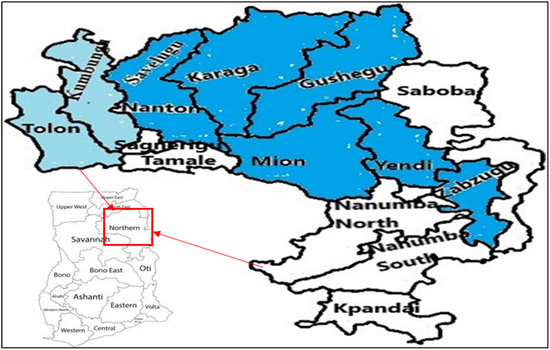
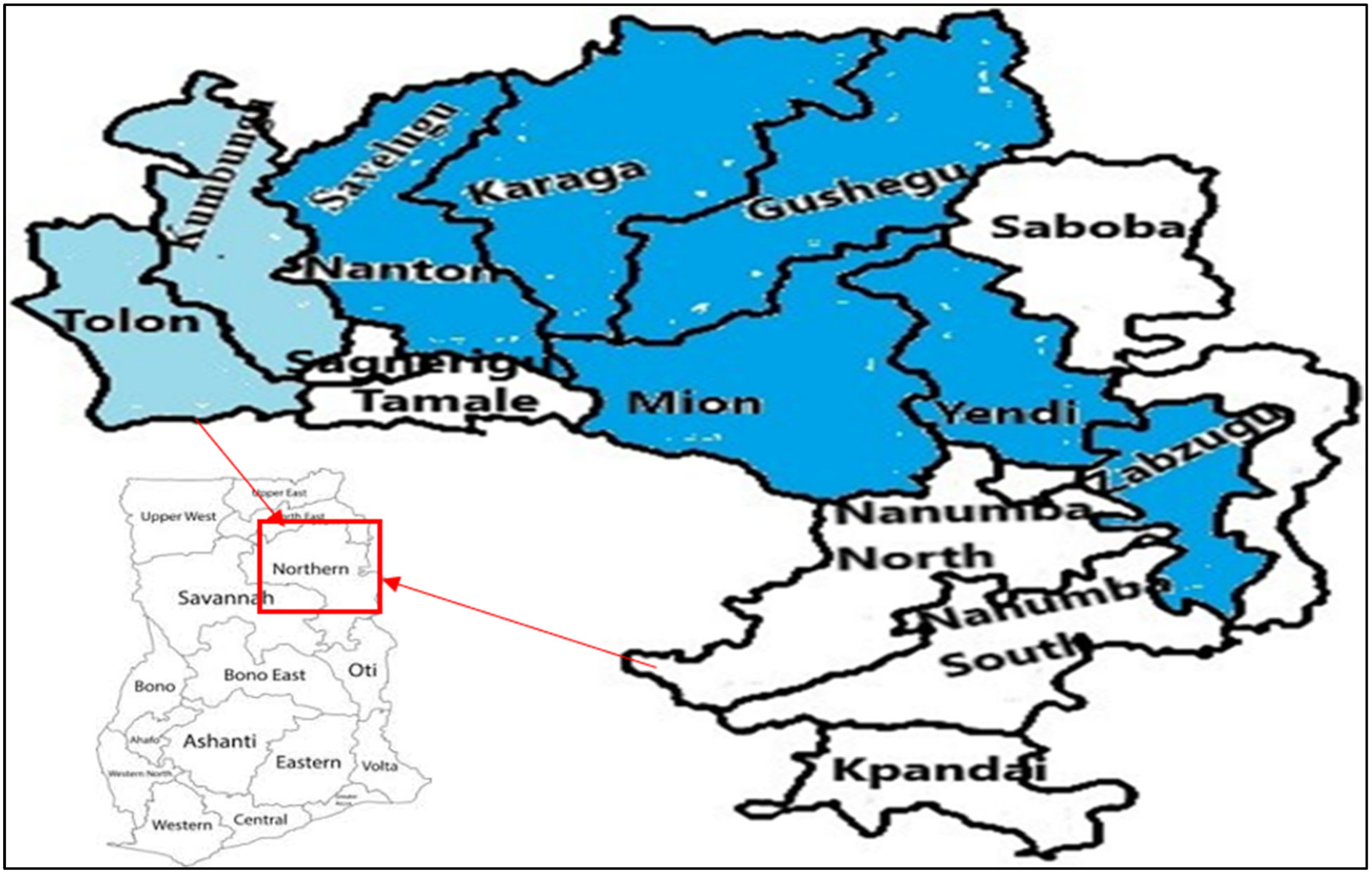
The Northern Region is one of the five regions in Northern Ghana with a landmass, covering approximately 70,384 square kilometers of predominantly low-elevation terrain. It shares boundaries with the North East and the Savanna regions to the north, the Savanna and Oti regions to the south, and Togo to the east. The location falls within the tropical savanna zone, marked by a unimodal rainy season from May to October and an extended dry season. Rainfall patterns are erratic, and limited moisture availability significantly constrains agricultural activities. Agriculture is the primary livelihood for most households, with staple crops including maize, yam, millet, sorghum, rice, groundnuts, soybeans, and cowpea. The region’s dependence on rain-fed agriculture makes it particularly vulnerable to climate variability. Figure 1 displays the study area, illustrating the geographical scope and spatial distribution of the surveyed districts.
Figure 1.
Map of the study area. Source: Regional Agriculture Department (2022).
3.2. Data
The data for this study was collected in January–February 2024 from the Savelugu Municipality, Yendi Municipality, Gushegu Municipality, Mion District, and Karaga District. These specific municipalities and districts were chosen from among seven options due to maize being the predominant crop cultivated in these areas. According to the Regional Agriculture Department (2022), over 80% of the farming population in these municipalities and districts prioritize maize cultivation as their primary crop. This research incorporated both primary and secondary data sources, utilizing questionnaires and fieldwork. Random sampling techniques were employed to select respondents from each study location. Semi-structured questionnaires were administered to 100 respondents in each location, with a gender distribution of 80 males and 20 females, or more females per district. A total of 500 questionnaires were administered across all study locations, probing farmers’ perspectives on climate change and the strategies they employ to mitigate its effects on maize production, including their choice of maize varieties.
3.3. Estimation Strategies
Following Ali and Abdulai [33] and Martey et al. [24], the technology adoption decision is modeled within the random utility framework. Let denote the difference between the utility from DTM adoption () and non-adoption (). A utility-maximizing farmer will adopt DTM if the utility derived from adoption is greater than the utility from non-adoption such that . Given that utility is unobservable, it can be expressed as a function of an observable element in the latent variable as follows:
where It is a binary indicator variable that equals 1 if a farmer adopts DTM and zero otherwise is a vector of parameters to be estimated, is a vector of explanatory variables associated with adoption, and is the random error term. Equation (1) is the well-known probit model.
The probability of adopting DTM is expected to be influenced by household, farm-level, social network, and institutional factors. These factors are informed by Negatu and Parikh [34] and Martey et al. [24] for a detailed discussion of agricultural technology adoption and the justification for the choice of the explanatory variables influencing adoption. Education is hypothesized to increase the probability of technology adoption. We expect adoption to be more associated with males than females. Access to extension services and information from the Ghana Meteorological Service is also expected to positively influence adoption. Also, awareness of DTM plays a crucial role in its adoption, as informed farmers are more likely to recognize its benefits, such as improved yield stability under water-stressed conditions. Awareness enhances knowledge of DTM’s resilience, economic advantages, and suitability for local conditions, thereby increasing farmers’ willingness to adopt it. Regarding type of farmer, the study hypothesis is that in contrast, commercial farmers, who manage larger farms and focus on profitability, are more likely to adopt DTM if they perceive it as economically viable and capable of improving yield stability. Their greater access to resources, markets, and agricultural technologies may facilitate faster adoption compared to smallholders. Farmers who have experienced natural disasters, such as droughts or floods, are more likely to adopt DTM as a risk-mitigation strategy. Regarding yield, farmers with higher yields may be more inclined to adopt DTM if they see it to maintain or further improve productivity under changing climatic conditions. Experiencing crop losses due to extreme weather increases their awareness of climate vulnerability and the need for resilient farming practices. These farmers may be more willing to adopt DTM to enhance yield stability and food security. The location of farm households reflects agroecological variations such as rainfall, altitude, infrastructure, resource endowments, and farming conditions that can shape investment decisions and, in turn, affect yields and welfare outcomes [35].
3.4. Descriptive Statistics
Table 1 shows the summary statistics of the variables used in the analysis for the sampled farmers. On average, 28.4% of farmers adopted DTM. The sample consists predominantly of male farmers (67.5%), and 59.1% are household heads. A significant portion of the respondents (66.5%) have received formal education, and 95.4% are married. Regarding farm characteristics, 87.5% of farmers are smallholders, with an average maize farm size of 4.45 acres. The average maize yield is 6.11 bags per farmer. About 53% of farmers are aware of DTM, and 61.3% have access to agricultural extension services. However, only 10.9% receive meteorological information. Additionally, 83.9% of farmers reported their yield was affected by a natural disaster. Regarding the location of the sampled farmers, the study revealed a nearly equal distribution across the districts, with Yendi (19.8%), Savelugu (20.2%), Mion (20.2%), Karaga (19.8%), and Gushegu (20.2%), respectively.
Table 1.
Summary statistics of variables.
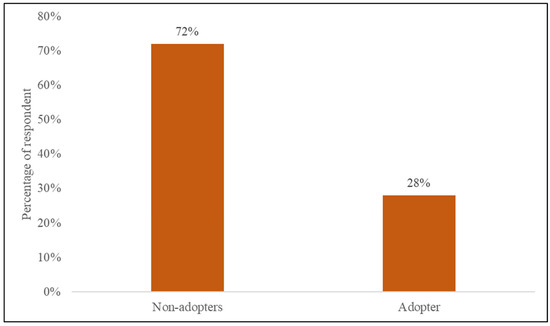
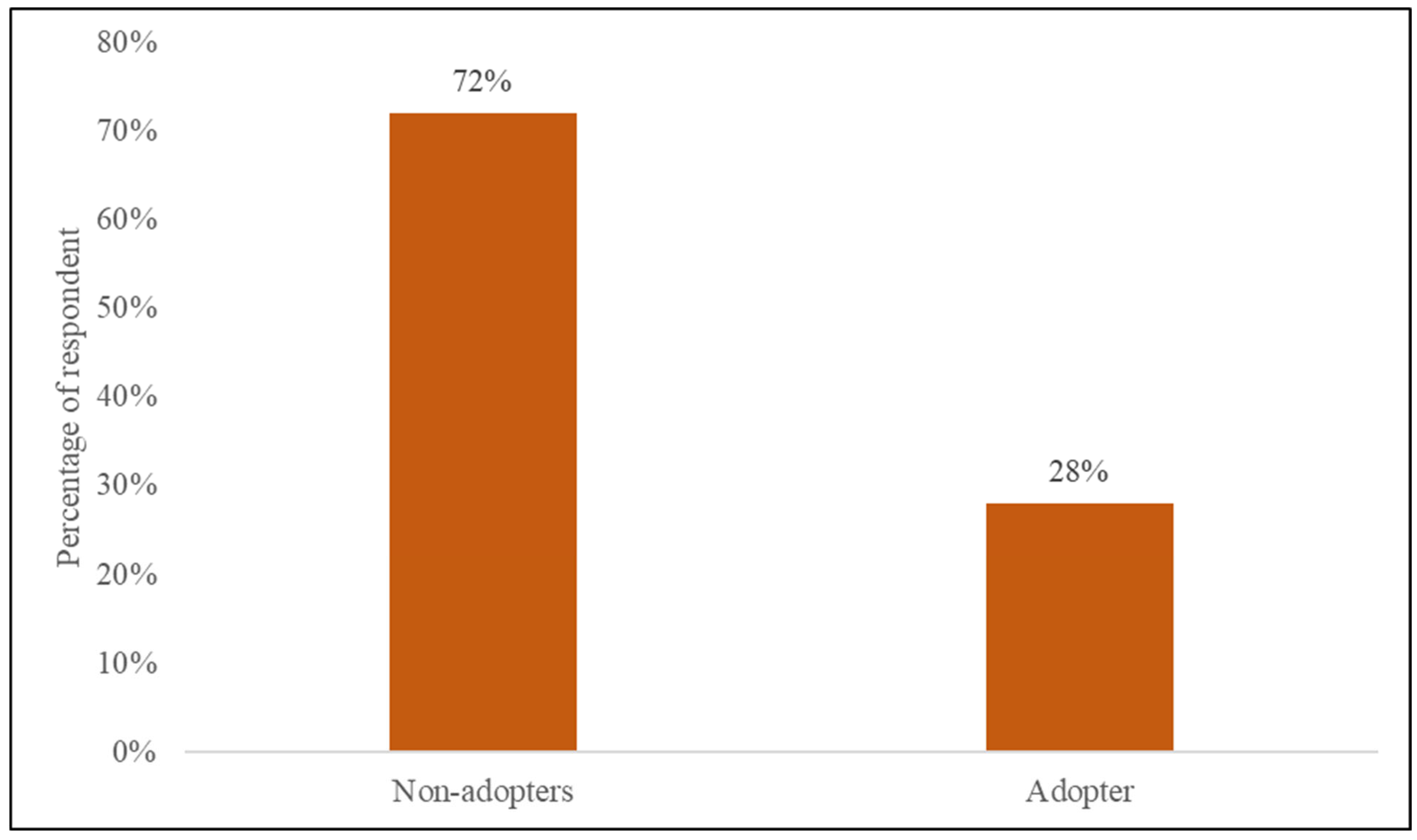
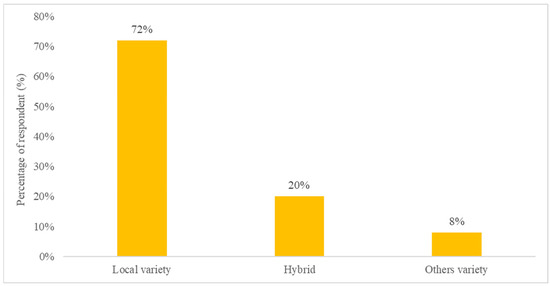
Figure 2 presents the adoption of DTM among sampled farmers. The data indicate that 28% of farmers have adopted DTM, including both genetically modified (GMO) whereby “some farmers stated sourcing the GMO seeds from their colleague farmers and border countries” and hybrid varieties, while the majority (72%) continue to cultivate local maize varieties. The low adoption rate of DTM suggests the need for targeted interventions to promote its uptake. Policymakers should focus on awareness campaigns, capacity-building programs, and extension services to educate farmers on the benefits of DTM. Additionally, improving access to DTM seeds through subsidies, credit schemes, and efficient seed distribution systems can enhance adoption. Support for climate-resilient agriculture, including investment in research, farmer training, and market incentives, is essential to drive widespread adoption and improve food security in drought-prone areas.
Figure 2.
Adoption of DTM.
4. Results and Discussion
4.1. Determinants of Drought-Tolerant Maize Adoption
Table 2 shows the maximum likelihood estimates of the probit model, which was used to estimate the conditional probability of adopting drought-tolerant maize (DTM) based on observed household characteristics. Both coefficients and marginal effects are reported but the discussion is on the marginal effect. The results indicate that DTM adoption is significantly and positively influenced by maize yield, awareness of DTM, access to extension services, and location (Yendi district). Farmers with higher maize yields are 15% more likely to adopt DTM than non-adopters. This is likely because high-yield farmers tend to have greater financial resources, enabling them to invest in improved seed varieties and complementary inputs such as fertilizers and irrigation. Additionally, higher maize yield is positively associated with DTM adoption, suggesting that more productive farmers are more willing or able to adopt technologies that enhance yield stability. Consistent with findings of this study, Martey et al. [23] found that DTM adoption had a significant positive impact on both yield and commercialization intensity. The magnitude of this impact was substantial; for instance, farm household yields increased by more than 150% (approximately 936 kg/ha). Makate et al. [36] found that DTM enhances overall maize productivity and consequently the quantities set aside for sale and personal household consumption. Awareness plays a crucial role in helping farmers understand the advantages of DTM, including higher yield stability, drought resilience, and improved income potential. Well-informed farmers can also make better comparisons between DTM and local varieties, leading to more rational and confident adoption decisions. These findings highlight the importance of effective information dissemination in promoting adoption. Similarly, access to extension services significantly increases the likelihood of adopting DTM. Farmers who receive extension support are about 12.7% more likely to adopt drought-tolerant maize compared to those without such access. This underscores the role of public extension systems in Ghana and across SSA, where, despite challenges such as limited personnel and logistical constraints [23,37,38], extension services remain a primary vehicle for disseminating agricultural innovations. Additionally, farmers in Yendi are 19.6% more likely to adopt DTM compared to those in other districts. This suggests location-specific factors, such as better access to inputs, stronger extension networks, or more favorable institutional support, which may facilitate higher adoption rates in this region. Aligning with the findings of this study, Martey et al. [23] found that farmers residing in the West Gonja District are 22% more likely to adopt DTM compared to those in the Mion District.
Table 2.
Probit model estimates of adoption of DTM varieties.
4.2. Type of Maize Seed Cultivated
Figure 3 shows the types of maize seed varieties farmers use for their cultivation. A significant majority, 72% of the sampled farmers, reported sourcing their seeds from local varieties. This indicates a strong preference for traditional or indigenous seed varieties among the farming community, likely due to factors such as adaptation to local growing conditions, familiarity, and perceived reliability. Approximately 20% of the sampled farmers indicated the use of hybrid seeds, which are developed through the crossbreeding of genetically distinct parent plants to produce offspring with desirable traits. In contrast, about 8% of the farmers reported using other maize varieties. Some respondents suggested that these seeds might be genetically modified, while others were unable to identify the specific variety, as the seeds were obtained through informal channels, including exchanges with fellow farmers and, in some cases, from across the border in Togo. The result is consistent with Danso-Abbeam et al. [39] who found that low adoption of improved maize variety has limited the revenues of farmers and subsequently lead to poverty and food insecurity. Also, farmers largely rely on farmer-saved seeds or acquire seed varieties through the traditional practice of seed exchanges [40,41]. This suggests limited adoption of GMO technology among the surveyed farmers, possibly influenced by concerns about safety, environmental impact, regulatory restrictions, or limited availability in the local market. The study by Onumah et al. [42] in Ghana reveals that 79% of the farmers are aware of GM maize, and 60% express willingness to adopt the technology.
Figure 3.
Types of maize seed variety cultivated.
4.3. Factors Influencing Farmers’ Choice of Maize Variety
Table 3 provides a comprehensive overview of the factors influencing farmers’ choices of variety, highlighting the diverse considerations that shape their decision-making. The results indicate that high yield is the most frequently cited reason, with 14% of the sampled farmers prioritizing this trait, as it directly impacts productivity and profitability. Additionally, approximately 8% of respondents value early-maturing varieties, likely due to their ability to shorten the growing cycle, reduce exposure to unpredictable weather conditions, and lower the risk of pest infestations. Good taste is another notable factor, with 7.8% of farmers emphasizing its importance, which could be driven by consumer preferences and market demand. Furthermore, 6.2% of farmers indicated a preference for drought-tolerant variety, highlighting the growing demand for resilience amid climate change and water scarcity. Pest and disease resistance, though mentioned by only 3% of respondents, remains a crucial factor for minimizing losses and reducing reliance on chemical pesticides. Larger grain size, cited by approximately 2% of respondents, is often associated with better marketability and food processing qualities. Other factors, such as adaptability to specific soil conditions, storage longevity, and compatibility with traditional farming practices, may also influence variety selection. Farmers’ preferences are multifaceted, shaped collectively by agronomic, economic, and consumer-driven factors. These findings are consistent with Ndeko et al. [43], who reported that farmers preferred varieties with high yield potential, early maturity, good taste, and resistance to pests and diseases, though preferences varied significantly across market segments. Additionally, Makokha et al. [44] revealed that factors influencing the use of a variety are early maturity, pest and disease resistance and drought resistance which is consistent with the study findings.
Table 3.
Factors influencing farmers’ choice of maize variety.
4.4. Main Sources of Farmers’ Maize Seed
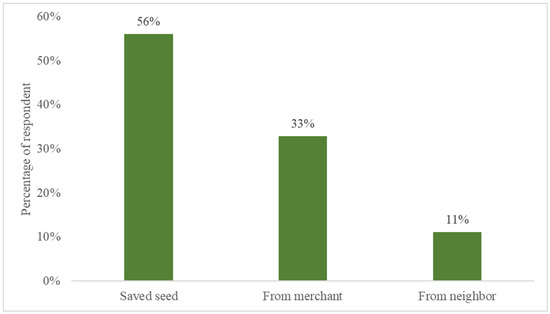
Figure 4 illustrates the various sources from which farmers obtain seeds for production. The results reveal that 56% of the sampled farmers source their seeds from their own saved seed stock. This suggests that a significant proportion of farmers engage in seed saving or seed recycling, a practice in which they collect, store, and reuse seeds from their previous harvests for future planting seasons. Seed saving is often preferred due to its cost-effectiveness, as it reduces the need for annual seed purchases, making farming more economically sustainable for smallholder farmers. Additionally, this practice allows farmers to select and preserve seeds from varieties/plants that have demonstrated desirable traits, such as high yield, pest resistance, or adaptability to local climatic and soil conditions, thereby contributing to improved crop performance over time. Furthermore, 33% of the farmers reported obtaining their seeds through commercial channels, such as agricultural suppliers, seed merchants, or local agro-dealers. This indicates a significant reliance on purchased seeds, which may be driven by factors such as access to a broader variety of seed options, improved seed quality, and the availability of certified or hybrid seeds that offer higher productivity and disease resistance. Farmers who opt for this source may prioritize convenience, consistency in seed quality, or the potential for increased yields associated with improved seed varieties. Lastly, 11% of the farmers acquire their seeds from their neighbors through informal seed-sharing networks. This practice highlights the importance of social connections and traditional farming communities in ensuring seed accessibility. Farmers may choose this method due to its cost-effectiveness, trust in the quality of seeds obtained from familiar sources, or the availability of locally adapted seed varieties that have been tested and proven successful in similar growing conditions. Consistent with these findings, Tione et al. [45] noted that farmers’ seed systems—commonly described as informal seed systems—are predominantly sustained through farm-saved seeds, exchanges within social networks, and purchases from local markets. Similarly, Koomson et al. [46] noted that despite the release and registration of several improved groundnut varieties in Ghana, adoption remains low. The continued reliance on farmer-saved seeds as the primary source of planting material has contributed to the low productivity of the crop.
Figure 4.
Sources of farmers’ seed.
4.5. The Effect of Drought on Maize Production
This subsection shows how producers perceive the effects of drought on maize production. The results show that a significant majority (70%) of the sampled farmers perceive drought as having an adverse impact on their maize farms. This finding suggests a widespread acknowledgement among farmers of the negative consequences of drought on maize yields, likely due to reduced soil moisture, stunted crop growth, and lower productivity. Conversely, 30% of the farmers reported that drought did not affect their maize farms, suggesting that they do not perceive drought as a significant threat to maize production. This may reflect variations in local climatic conditions, soil characteristics, or adaptive farming practices. Some farmers may have implemented drought resilience strategies such as improved irrigation systems, DTM varieties, conservation agriculture, or soil moisture retention techniques, which could mitigate the adverse effects of drought. Additionally, their experiences may be shaped by shorter or less severe drought periods in their specific locations, leading to a perception that maize production remains unaffected. The study by Liu et al. [47] shows that agricultural drought affects crop yields more directly, which is consistent with the research findings. Other studies based on controlled experiments have shown that drought stress affects maize differently across growth stages, with the grain-filling stage being particularly vulnerable [48].
4.6. Adaptation Measures Farmers Use Against the Effects of Climate Change
This section outlines the adaptation strategies employed by farmers to cope with the impacts of climate change in Table 4. The results show that 29.4% of respondents practiced early planting, while only 3% used early-maturing crop varieties as an adaptation to changing climatic conditions. These strategies help farmers avoid periods of extreme weather, such as drought or excessive heat, by ensuring crops mature before adverse conditions intensify. Additionally, 6.8% of farmers reported adopting pest and disease control measures, recognizing the increased prevalence of pests and crop diseases due to climate variability. Similarly, 8% of farmers implemented zero tillage, a conservation practice that helps maintain soil moisture and structure, thereby enhancing resilience to erratic rainfall. The use of DTM varieties was reported by 6.4% of the farmers, indicating a shift toward crop varieties specifically bred to withstand dry conditions and water scarcity. Other adaptation strategies, such as mixed cropping (5%), conservation agriculture (2%), high-yielding crop varieties (2%), crop rotation (8.4%), and minimum tillage (5.6%), were also employed, though to a lesser extent. These methods contribute to improved soil fertility, enhanced biodiversity, and reduced vulnerability to climate-induced stresses. Notably, a significant proportion (21%) of the farmers reported not implementing any specific adaptation measures. This could be due to a lack of awareness, limited access to resources, financial constraints, or the perception that climate change has not significantly impacted their farming operations. Understanding the barriers to adaptation is crucial for designing targeted interventions that promote the adoption of climate-resilient farming practices. The result is consistent with several studies, which show that farmers adopt diverse climate change adaptation strategies, including drought-tolerant crops, early planting, crop diversification, rainwater harvesting, income diversification, credit schemes, improved weather forecasting, and enhanced agricultural markets and information systems [49,50,51,52,53,54,55].
Table 4.
Adaptation measures by farmers to cope with the impact of climate change.
4.7. Willingness to Adopt New Varieties or Techniques in Climate Change
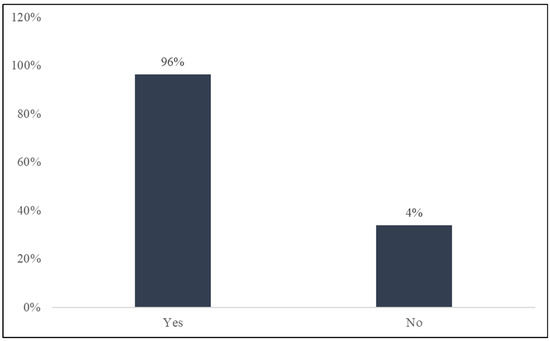
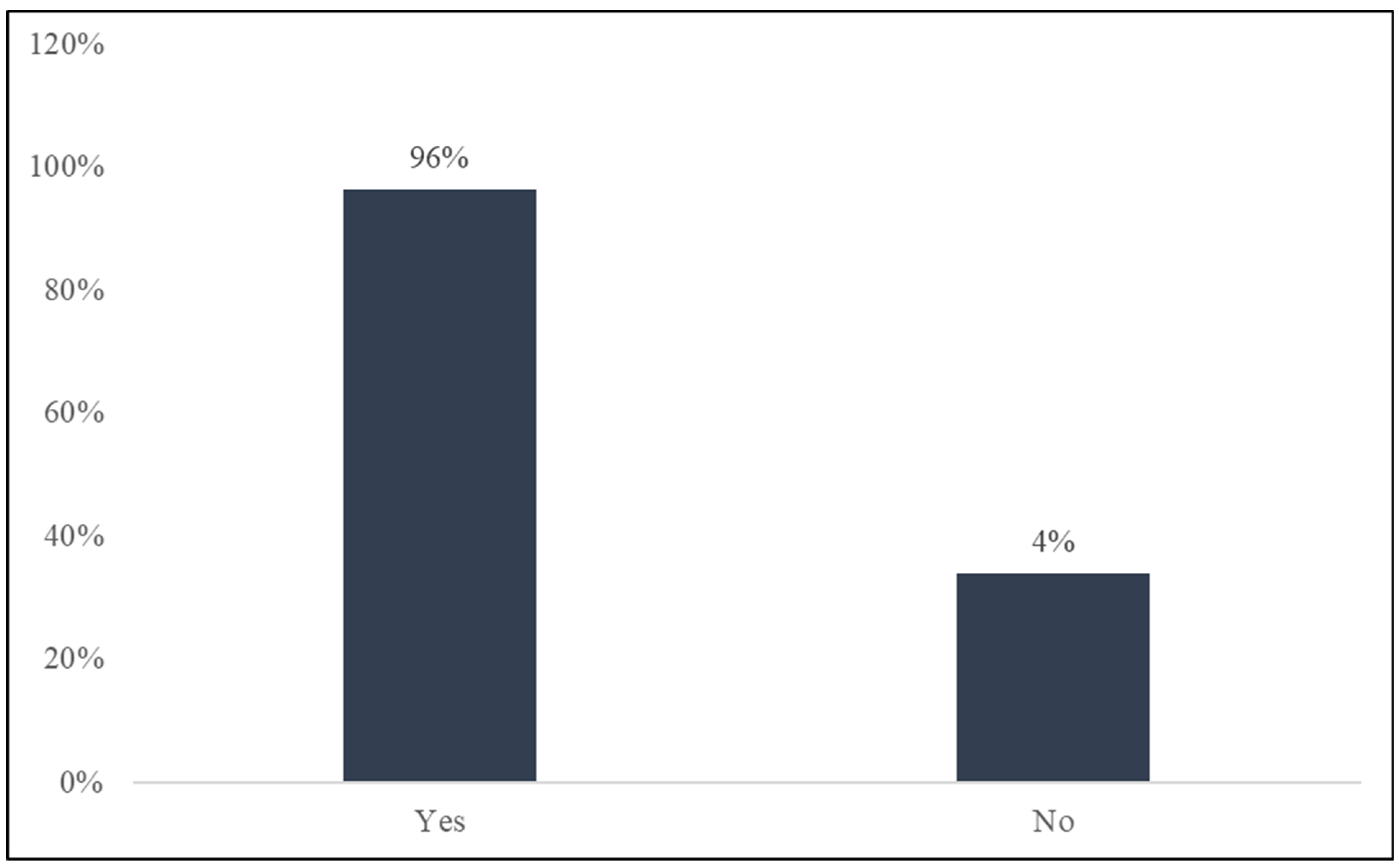
Figure 5 presents farmers’ responses regarding the adoption of new crop varieties or techniques to address climate change. The findings reveal that most farmers (96%) are willing to adopt innovative agricultural practices, reflecting a strong awareness of the need to adapt to climate change to sustain and enhance productivity. Farmers’ openness to innovation may be driven by firsthand experiences with climate-related challenges, increased awareness of sustainable farming practices, or access to information on the benefits of adopting climate-smart technologies. Conversely, a small minority (4%) exhibited reluctance or skepticism toward adopting new varieties or techniques. This hesitation may reflect a combination of demand- and supply-side constraints, including limited knowledge of available innovations and inadequate access to reliable extension services, which may hinder farmers’ understanding of the potential benefits of improved practices. Financial constraints, such as liquidity limitations and the high upfront cost of improved seeds and complementary inputs, further discourage adoption, particularly among resource-constrained smallholders. In addition, concerns about the effectiveness and riskiness of new technologies under local agro-ecological conditions, coupled with a strong preference for traditional farming practices that have been relied upon for generations, contribute to resistance to change. On the supply side, limited availability of improved seeds, weak input distribution networks, and reliance on informal and cross-border seed sourcing further constrain farmers’ ability to adopt new technologies even when interest exists. Despite this small fraction of resistance, the overwhelmingly positive response highlights a prevailing openness among farmers to implement strategies that enhance climate resilience in agriculture. This finding underscores the importance of continued efforts in research, extension services, and policy support to facilitate the adoption of climate-smart agricultural practices, ensuring farmers have the necessary resources and knowledge to successfully integrate these innovations into their farming systems. Consistent with these findings, Machete et al. [56], using a multipurpose research design and multistage random sampling of 209 farmers, reported that the majority were willing to adopt CSA.
Figure 5.
Willingness to adopt new varieties.
5. Conclusions and Policy Implications
The study assesses the adoption of drought-tolerant maize genotypes as a climate adaptation measure in northern Ghana. The findings reveal important interactions between information access, productivity outcomes, and institutional support that shape farmers’ adoption decisions. Although agro-ecological conditions in northern Ghana make the region suitable for maize production, only 28% of sampled households have adopted DTM varieties, highlighting a persistent gap between technological availability and effective uptake. The probit results demonstrate a strong positive association between expected maize yield and DTM adoption, suggesting that farmers’ adoption decisions are primarily driven by perceived productivity gains rather than climate risk considerations alone. Also, awareness of DTM exhibits a substantial influence, underscoring the complementary role of information and knowledge in translating yield potential into adoption behavior. Access to extension services further emphasizes this relationship by facilitating information dissemination and reducing uncertainty surrounding new technologies. In addition, geographical location captures spatial differences in exposure to climate stress, institutional access, and market connectivity, indicating that adoption is not uniform across regions and is shaped by local contexts. The coexistence of high willingness to adopt improved varieties (96%) with low actual adoption reflects structural and institutional constraints rather than farmer resistance to innovation. Heavy reliance on recycled seeds (66%) and the prominence of early planting as a dominant adaptation strategy indicate that farmers continue to depend on low-cost, self-managed responses to climate risk, even when improved technologies are available. This implies that adoption barriers extend beyond awareness to include seed accessibility, affordability, and delivery systems. The study’s main findings suggest key policy implications. First, efforts to scale up DTM adoption should move beyond generic promotion to more targeted interventions. Second, strengthening extension services remains critical, particularly through demonstration plots, farmer field schools, and localized advisory services that emphasize yield performance under drought conditions. Improving seed system functionality—by enhancing the availability, affordability, and timely distribution of certified DTM seeds through both public and private channels—is equally essential. Given the significant role of location, region-specific strategies that account for agro-ecological and institutional heterogeneity are likely to be more effective than uniform national approaches. For future research, there is a need to examine supply-side constraints within maize seed value chains, including the role of private seed companies and cross-border seed flows, to better understand adoption bottlenecks. Longitudinal studies that track adoption dynamics and yield outcomes over time would also provide deeper insights into the sustainability of DTM use under increasing climate variability. Additionally, evaluating the combined effects of DTM adoption and complementary agronomic practices could inform more integrated climate-smart agricultural strategies. Generally, the study underscores that enhancing food security under climate change requires coordinated policies that align productivity incentives, information dissemination, and seed system development, rather than isolated technological interventions.
Author Contributions
D.A.-R.S.: Conceptualization, Methodology, Validation, Formal Analysis, Investigation, Data Curation, Writing—Original Draft Preparation, Writing—Review & Editing, Visualization and Validation. J.S.-A.: Conceptualization, Validation, Writing—Review & Editing, and Supervision. I.K.-B.: Conceptualization, Validation, Writing—Review & Editing, and Supervision. G.B.A.: Validation, Writing—Review & Editing, and Supervision. T.A.-G.: Validation, Writing—Review & Editing, and Supervision. All authors have read and agreed to the published version of the manuscript.
Funding
This research received no external funding.
Data Availability Statement
The datasets presented in this article are not readily available because of confidentiality agreements with participants and institutional data protection policies. Requests to access the datasets should be directed to the corresponding author.
Acknowledgments
This study is made possible through the Regional and District Department of Agriculture of Northern Region, Department of Crop Science, Kwame Nkrumah University of Science and Technology. and CSIR-Savanna Agricultural Research Institute, Nyankpala, Tamale, Ghana. The authors express their appreciation for the administrative support offered by the CSIR-Savanna Agricultural Research Institute and the farmers who participated in the field data collection. Finally, we wish to express our profound gratitude to the anonymous reviewers whose contribution has led to a major improvement of this manuscript.
Conflicts of Interest
The authors declare that they have no competing interests both financial and non-financial.
References
- Langner, J.A.; Zanon, A.J.; Streck, N.A.; Reiniger, L.R.; Kaufmann, M.P.; Alves, A.F. Maize: Key agricultural crop in food security and sovereignty in a future with water scarcity. Rev. Bras. Eng. Agrícola Ambient. 2019, 23, 648–654. [Google Scholar] [CrossRef] [Scilit]
- Swati, P.; Rasane, P.; Kaur, J.; Kaur, S.; Ercisli, S.; Assouguem, A.; Singh, J. The nutritional, phytochemical composition, and utilisation of different parts of maize: A comparative analysis. Open Agric. 2024, 9, 20220358. [Google Scholar] [CrossRef] [Scilit]
- Perry, L.; Sandweiss, D.H.; Piperno, D.R.; Rademaker, K.; Malpass, M.A.; Umire, A.; De la Vera, P. Early maize agriculture and interzonal interaction in southern Peru. Nature 2006, 440, 76–79. [Google Scholar] [CrossRef] [Scilit]
- FAO-ESS. Crops Statistics-Concepts, Definitions and Classifications; FAO Statistic Division (ESS): Rome, Italy, 2021. Available online: https://openknowledge.fao.org/server/api/core/bitstreams/f828ddf0-df62-4540-b4cb-1db8db8ced0a/content (accessed on 1 December 2025).
- Cairns, J.E.; Hellin, J.; Sonder, K.; Araus, J.L.; MacRobert, J.F.; Thierfelder, C.; Prasanna, B.M. Adapting maize production to climate change in sub-Saharan Africa. Food Secur. 2013, 5, 345–360. [Google Scholar] [CrossRef] [Scilit]
- Edmeades, G.O.; Bolaños, J.; Bänziger, M.; Chapman, S.C.; Ortega, A.; Lafitte, H.R.; Pandey, S. Recurrent selection under managed drought stress improves grain yields in tropical maize. In Developing Drought-and Low-N Tolerant Maize: Proceedings of a Symposium; CIMMYT—International Maize and Wheat Improvement Center: El Batán, Mexico, 1996; pp. 415–425. [Google Scholar]
- FAO. Climate-Smart Agriculture Sourcebook: Technical Report; Food and Agriculture Organization of the United Nations: Rome, Italy, 2013. [Google Scholar]
- Dei, G.J. The dietary habits of a Ghanaian farming community. Ecol. Food Nutr. 1991, 25, 29–49. [Google Scholar] [CrossRef] [Scilit]
- Nin-Pratt, A.; McBride, L. Agricultural intensification in Ghana: Evaluating the optimist’s case for a Green Revolution. Food Policy 2014, 48, 153–167. [Google Scholar] [CrossRef] [Scilit]
- Wiemers, A. A “time of agric”: Rethinking the “failure” of agricultural programs in 1970s Ghana. World Dev. 2015, 66, 104–117. [Google Scholar] [CrossRef] [Scilit]
- Klutse, N.A.B.; Owusu, K.; Adukpo, D.C.; Nkrumah, F.; Quagraine, K. Farmer’s observation on climate change impacts on maize (Zea mays) production in a selected agro ecological zone in Ghana. Res. J. Agric. Environ. Manag. 2013, 2, 394–402. [Google Scholar]
- Wossen, T.; Abdoulaye, T.; Alene, A.; Feleke, S.; Menkir, A.; Manyong, V. Measuring the impacts of adaptation strategies to drought stress: The case of drought tolerant maize varieties. J. Environ. Manag. 2017, 203, 106–113. [Google Scholar] [CrossRef] [Scilit] [PubMed]
- Michler, J.D.; Baylis, K.; Arends-Kuenning, M.; Mazvimavi, K. Conservation agriculture and climate resilience. J. Environ. Econ. Manag. 2019, 93, 148–169. [Google Scholar] [CrossRef] [Scilit]
- Martey, E.; Etwire, P.M.; Kuwornu, J.K.; Suraj, M.M. Micro-level welfare effects of integrated soil fertility management in Northern Ghana. J. Clean. Prod. 2024, 482, 144224. [Google Scholar] [CrossRef] [Scilit]
- CIMMYT. The Drought Tolerant Maize for Africa Project. DTMA Brief, September 2013. Available online: https://dtma.cimmyt.org/about-background/ (accessed on 10 December 2025).
- Klutse, N.A.B.; Owusu, K.; Boafo, Y.A. Projected temperature increases over northern Ghana. SN Appl. Sci. 2020, 2, 1339. [Google Scholar] [CrossRef] [Scilit]
- MoFA Ministry of Food and Agriculture. Agriculture in Ghana. Facts and Figures 2016 Statistics; Research and Information Directorate: Accra, Ghana, 2017.
- Ghana Statistical Service. Ghana Living Standards Survey 6th Round: Poverty Profile in Ghana (2005–2013); Ghana Statistical Service (GSS): Accra, Ghana, 2014.
- Ministry of Environment, Science, Technology and Innovation. Ghana National Climate Change Policy; Ministry of Environment, Science, Technology and Innovation (MESTI): Accra, Ghana, 2013.
- Cooper, M.; Messina, C.D.; Podlich, D.; Totir, L.R.; Baumgarten, A.; Hausmann, N.J.; Graham, G. Predicting the future of plant breeding: Complementing empirical evaluation with genetic prediction. Crop Pasture Sci. 2014, 65, 311–336. [Google Scholar] [CrossRef] [Scilit]
- Tesfaye, K.; Gbegbelegbe, S.; Cairns, J.E.; Shiferaw, B.; Prasanna, B.M.; Sonder, K.; Boote, K.; Makumbi, D.; Robertson, R. Maize systems under climate change in sub-Saharan Africa: Potential impacts on production and food security. Int. J. Clim. Change Strateg. Manag. 2015, 7, 247–271. [Google Scholar] [CrossRef] [Scilit]
- Simtowe, F.; Amondo, E.; Marenya, P.; Sonder, K.; Erenstein, O. Impacts of drought-tolerant maize varieties on productivity, risk, and resource use: Evidence from Uganda. Land Use Policy 2019, 88, 104091. [Google Scholar] [CrossRef] [Scilit]
- Martey, E.; Etwire, P.M.; Abdoulaye, T. Welfare impacts of climate-smart agriculture in Ghana: Does row planting and drought-tolerant maize varieties matter? Land Use Policy 2020, 95, 104622. [Google Scholar] [CrossRef] [Scilit]
- Martey, E.; Etwire, P.M.; Kuwornu, J.K. Economic impacts of smallholder farmers’ adoption of drought-tolerant maize varieties. Land Use Policy 2020, 94, 104524. [Google Scholar] [CrossRef] [Scilit]
- Zhao, J.; Marek, T.H.; Liu, K.; Harrison, M.T.; Xue, Q. Drought tolerant maize hybrids have higher yields and lower water use under drought conditions at a regional scale. Agric. Water Manag. 2022, 274, 107978. [Google Scholar] [CrossRef] [Scilit]
- Buah, S.S.J.; Kombiok, J.M.; Kanton, R.A.L.; Denwar, N.N.; Haruna, A.; Wiredu, A.N.; Abdulai, M.S. Participatory evaluation of drought tolerant maize varieties in the Guinea Savanna of Ghana using mother and baby trial design. J. Sci. Technol. 2013, 33, 12–23. [Google Scholar] [CrossRef] [Scilit]
- Fisher, M.; Abate, T.; Lunduka, R.W.; Asnake, W.; Alemayehu, Y.; Madulu, R.B. Drought tolerant maize for farmer adaptation to drought in sub-Saharan Africa: Determinants of adoption in eastern and southern Africa. Clim. Change 2015, 133, 283–299. [Google Scholar] [CrossRef] [Scilit]
- Badu-Apraku, B.; Akinwale, R.O.; Obeng-Antwi, K.; Haruna, A.; Kanton, R.; Usman, I.; Oyekunle, M. Assessing the representativeness and repeatability of testing sites for drought-tolerant maize in West Africa. Can. J. Plant Sci. 2013, 93, 699–714. [Google Scholar] [CrossRef] [Scilit]
- CIMMYT DTM. A Quarterly Bulletin of the Drought Tolerant Maize for Africa Project; CIMMYT—International Maize and Wheat Improvement Center: El Batán, Mexico, 2014; Volume 3. [Google Scholar]
- Etwire, P.M.; Abdoulaye, T.; Obeng-Antwi, K.; Buah, S.S.; Kanton, R.A.; Asumadu, H.; Etwire, J.C. On-farm evaluation of maize varieties in the transitional and savannah zones of Ghana: Determinants of farmer preferences. J. Dev. Agric. Econ. 2013, 5, 255–262. [Google Scholar] [CrossRef] [Scilit]
- La Rovere, R.; Abdoulaye, T.; Kostandini, G.; Guo, Z.; Mwangi, W.; MacRobert, J.; Dixon, J. Economic, production, and poverty impacts of investing in maize tolerant to drought in Africa: An ex-ante assessment. J. Dev. Areas 2014, 48, 199–225. [Google Scholar] [CrossRef] [Scilit]
- Tambo, J.A.; Abdoulaye, T. Climate change and agricultural technology adoption: The case of drought tolerant maize in rural Nigeria. Mitig. Adapt. Strateg. Glob. Change 2012, 17, 277–292. [Google Scholar] [CrossRef] [Scilit]
- Ali, A.; Abdulai, A. The adoption of genetically modified cotton and poverty reduction in Pakistan. J. Agric. Econ. 2010, 61, 175–192. [Google Scholar] [CrossRef] [Scilit]
- Negatu, W.; Parikh, A. The impact of perception and other factors on the adoption of agricultural technology in the Moret and Jiru Woreda (district) of Ethiopia. Agric. Econ. 1999, 21, 205–216. [Google Scholar] [CrossRef] [Scilit]
- Asfaw, A. Breeding for Drought Tolerance by Integrative Design: The Case of Common Bean (Phaseolus vulgaris L.) in Ethiopia; Wageningen University and Research: Wageningen, The Netherlands, 2011. Available online: https://www.proquest.com/openview/7478676cfb0d7422d525cd1766d6507d/1?pq-origsite=gscholar&cbl=2026366&diss=y (accessed on 11 November 2025).
- Makate, C.; Wang, R.; Makate, M.; Mango, N. Impact of drought tolerant maize adoption on maize productivity, sales and consumption in rural Zimbabwe. Agrekon 2017, 56, 67–81. [Google Scholar] [CrossRef] [Scilit]
- Lamontagne-Godwin, J.; Williams, F.; Bandara, W.M.P.T.; Appiah-Kubi, Z. Quality of extension advice: A gendered case study from Ghana and Sri Lanka. J. Agric. Educ. Ext. 2017, 23, 7–22. [Google Scholar] [CrossRef] [Scilit]
- Amengor, N.E.; Awunyo-Vitor, D.; Owusu Asante, B.; Wongnaa, C.A. Awareness and adoption of drought tolerant Maize in Guinea Savanna and Forest-Savanna Transition zone in Ghana. Cogent Food Agric. 2022, 8, 2147476. [Google Scholar] [CrossRef] [Scilit]
- Danso-Abbeam, G.; Bosiako, J.A.; Ehiakpor, D.S.; Mabe, F.N. Adoption of improved maize variety among farm households in the northern region of Ghana. Cogent Econ. Financ. 2017, 5, 1416896. [Google Scholar] [CrossRef] [Scilit]
- Beyene, F. The role of NGO in informal seed production and dissemination: The case of eastern Ethiopia. J. Agric. Rural Dev. Trop. Subtrop. (JARTS) 2010, 111, 79–88. [Google Scholar]
- Poku, A.G.; Birner, R.; Gupta, S. Why do maize farmers in Ghana have a limited choice of improved seed varieties? An assessment of the governance challenges in seed supply. Food Secur. 2018, 10, 27–46. [Google Scholar] [CrossRef] [Scilit]
- Onumah, E.E.; Dey, A.E.; Kodua, T.T.; Odame, D.C.A.; Nyagsi, M.H.; Otokunor, P.B. Adoption of Genetically Modified Maize Technology in Ghana. Res. World Agric. Econ. 2025, 6, 926–940. [Google Scholar] [CrossRef]
- Ndeko, A.B.; Chuma, G.B.; Mondo, J.M.; Kazamwali, L.M.; Civava, R.; Bisimwa, E.B.; Mushagalusa, G.N. Farmers’ preferred traits, production constraints, and adoption factors of improved maize varieties under South-Kivu rainfed agro-ecologies, eastern DR Congo: Implications for maize breeding. Int. J. Agric. Sustain. 2025, 23, 2464524. [Google Scholar] [CrossRef] [Scilit]
- Makokha, S.N.; Emongor, R.; Wanjira, J.K.; Nzuve, F.; Taracha, C.O.; Gitonga, E.T. Effect of Socio-economic Factors on Level of use of Improved Maize Varieties in Bungoma County, Kenya. Asian J. Agric. Ext. Econ. Sociol. 2024, 42, 49–61. [Google Scholar] [CrossRef] [Scilit]
- Tione, G.; Westengen, O.T.; Holden, S.T.; Katengeza, S.P.; Makate, C. Contribution of Community Seed Banks to farmer seed systems and food security in Northern and Central Malawi. Food Policy 2025, 132, 102860. [Google Scholar] [CrossRef] [Scilit]
- Koomson, I.A.A.; Dzidzienyo, D.K.; Puozaa, D.K. Determinants of improved groundnut variety adoption among farmers in Northern Ghana: A seed system analysis. Agric. Food Secur. 2024, 13, 64. [Google Scholar] [CrossRef] [Scilit]
- Liu, X.; Cao, K.; Li, M. Assessing the impact of meteorological and agricultural drought on maize yields to optimize irrigation in Heilongjiang Province, China. J. Clean. Prod. 2024, 434, 139897. [Google Scholar] [CrossRef] [Scilit]
- Hussain, H.A.; Men, S.; Hussain, S.; Chen, Y.; Ali, S.; Zhang, S.; Wang, L. Interactive effects of drought and heat stresses on morpho-physiological attributes, yield, nutrient uptake and oxidative status in maize hybrids. Sci. Rep. 2019, 9, 3890. [Google Scholar] [CrossRef] [Scilit] [PubMed]
- Aryal, J.P.; Sapkota, T.B.; Rahut, D.B.; Krupnik, T.J.; Shahrin, S.; Jat, M.L.; Stirling, C.M. Major climate risks and adaptation strategies of smallholder farmers in coastal Bangladesh. Environ. Manag. 2020, 66, 105–120. [Google Scholar] [CrossRef] [Scilit] [PubMed]
- Bairagi, S.; Mishra, A.K.; Durand-Morat, A. Climate risk management strategies and food security: Evidence from Cambodian rice farmers. Food Policy 2020, 95, 101935. [Google Scholar] [CrossRef] [Scilit]
- Kogo, B.K.; Kumar, L.; Koech, R. Climate change and variability in Kenya: A review of impacts on agriculture and food security. Environ. Dev. Sustain. 2021, 23, 23–43. [Google Scholar] [CrossRef] [Scilit]
- Marie, M.; Yirga, F.; Haile, M.; Tquabo, F. Farmers’ choices and factors affecting adoption of climate change adaptation strategies: Evidence from northwestern Ethiopia. Heliyon 2020, 6, e03867. [Google Scholar] [CrossRef] [Scilit] [PubMed]
- Aryal, J.P.; Sapkota, T.B.; Rahut, D.B.; Marenya, P.; Stirling, C.M. Climate risks and adaptation strategies of farmers in East Africa and South Asia. Sci. Rep. 2021, 11, 10489. [Google Scholar] [CrossRef] [Scilit] [PubMed]
- Atube, F.; Malinga, G.M.; Nyeko, M.; Okello, D.M.; Alarakol, S.P.; Okello-Uma, I. Determinants of smallholder farmers’ adaptation strategies to the effects of climate change: Evidence from northern Uganda. Agric. Food Secur. 2021, 10, 6. [Google Scholar] [CrossRef] [Scilit]
- Gebre, G.G. Prevalence of household food insecurity in East Africa: Linking food access with climate vulnerability. Clim. Risk Manag. 2021, 33, 100333. [Google Scholar] [CrossRef] [Scilit]
- Machete, K.C.; Senyolo, M.P.; Gidi, L.S. Adaptation through climate-smart agriculture: Examining the socioeconomic factors influencing the willingness to adopt climate-smart agriculture among smallholder maize farmers in the Limpopo Province, South Africa. Climate 2024, 12, 74. [Google Scholar] [CrossRef] [Scilit]

Disclaimer/Publisher’s Note: The statements, opinions and data contained in all publications are solely those of the individual author(s) and contributor(s) and not of MDPI and/or the editor(s). MDPI and/or the editor(s) disclaim responsibility for any injury to people or property resulting from any ideas, methods, instructions or products referred to in the content. |
© 2026 by the authors. Licensee MDPI, Basel, Switzerland. This article is an open access article distributed under the terms and conditions of the Creative Commons Attribution (CC BY) license.