


Abstract
Electrokinetic remediation (EKR) was evaluated in naturally contaminated vineyard soils to assess copper redistribution, treatment redistribution efficiency, and changes in copper fractions across contrasting soil pH conditions. Ten vineyard soils (five acidic, five alkaline) were subjected to a 30-day ex situ EKR experiment under a constant electric field. Total copper content was measured in the anode, cathode, and inter-electrode zones, while copper fractions were quantified only in electrode zones exhibiting the most pronounced post-remediation decrease in total copper. The findings demonstrate that the EKR process generated distinct, soil-type-dependent gradients in copper mobility. In acidic soils, copper exhibited pronounced central-zone accumulation with notable depletion toward the anode, whereas in alkaline soils, the lowest concentrations consistently occurred near the cathode and increased toward the anode. Notably, one slightly alkaline soil displayed the highest redistribution efficiency (43.0%), underscoring the strong influence of soil chemistry on EKR performance. Redistribution efficiencies averaged 29.5% in acidic soils and 12.8% in alkaline soils, although localized acidification enabled notably higher redistribution in highly contaminated samples. These trends reflected on copper fractions: acidic soils showed enhanced release from Fe/Mn oxides and carbonates, while alkaline soils experienced stronger short-term mobilization driven by cation competition and dissolution of less stable oxide phases. Fractionation results indicated that the Fe/Mn oxide-bound fraction was the most susceptible to electromigration, while both acidic and alkaline soils ultimately shifted copper toward less extractable operational fractions.
1. Introduction
Soil contamination by heavy metals represents a significant global challenge [1,2,3]. Approximately five million sites covering over 20 million ha worldwide are affected by heavy metal and metalloid contamination, with the majority located in developed regions such as the USA, Australia, the European Union, and China [4,5]. Heavy metals enter soils through both natural (geogenic) processes and anthropogenic activities, including mining, smelting, fossil fuel combustion, industrial effluents, waste disposal, and agricultural practices, all of which can markedly elevate soil metal concentrations [1]. Among all heavy metals and metalloid contaminants, chromium, copper, zinc, cadmium, lead, mercury, and arsenic are considered the most toxic [4].
Agricultural practices are a key source of soil contamination [2], with copper (Cu) being among the most prevalent metal contaminants recorded [6]. Notable findings reveal that copper is non-biodegradable, accumulates over time due to extensive fungicide use, and persists in soils for decades to centuries [1,3,7,8,9,10]. In Europe, Cu-based fungicides dominate both conventional and organic viticulture [11], and over 90% of the applied copper ends up in the soil [12], resulting in vineyard soils often exceeding 500 mg kg−1 of copper [13,14,15,16], and occasionally exceed 1000 mg kg−1 [17,18,19,20], which is considerably higher than the natural background levels (5 to 109 mg kg−1) [21,22,23] and established regulatory thresholds. These high copper concentrations can harm soil health, be taken up by crops, and enter the food chain [1,7], underscoring the need for remediation [1].
A range of in situ and ex situ remediation methods has been developed to contain, remove, or restore soils contaminated with heavy metals [5,8]. In situ soil remediation tends to be more cost-effective than ex situ approaches, and contaminant removal or extraction is often preferred over immobilization or containment [5]. Selection of an appropriate remediation strategy requires matching the pollutant and site conditions (e.g., geology, hydrogeology, and depth distribution of contamination) with remedial objectives (e.g., target endpoints, implementation timeframe, cost, and intended land use), informed by an assessment of contaminant type and concentration; associated risk; applicable regulatory cleanup criteria; and implementation constraints, including budget, logistics, and public acceptability [5,24]. Therefore, treatability studies should be conducted to provide site-specific evidence that a remediation method can effectively and safely achieve the required cleanup targets while clarifying design parameters, costs, and operational feasibility before full-scale implementation [5,24]. In many cases, a single remediation method cannot meet the objectives of a remediation process, and two or more different remediation techniques must be combined [5].
Electrokinetic extraction is a remediation technique that has been in use since the 1980s and is still in the development phase [5,24,25,26]. Electrokinetic remediation (EKR) is a physicochemical remediation technique in which a controlled direct-current electric field is applied across a targeted contaminated soil zone between strategically placed inert electrodes, generating a potential gradient that mobilizes and transports heavy metals via electromigration, electro-osmosis, electrophoresis, and electrolysis [2,4,25,27]. Under the applied electric field, cations in the soil pore solution migrate toward the cathode, while anions move toward the anode. Metals that accumulate near the polarized electrodes can then be removed by solution pumping, electroplating, (co-)precipitation, or ion-exchange resin complexation [5]. Electrokinetic remediation can be implemented both in situ and ex situ and remains effective in low-permeability soils because the imposed electric field can penetrate the subsurface and mobilize contaminants at depth that many other technologies cannot readily access [25]. Additional advantages of EKR include its relatively low environmental footprint and favorable efficiency and cost profile, the ability to be implemented in situ with minimal surface disturbance, shorter remediation timeframes, and applicability in both saturated and unsaturated soils across a wide range of soil types and conditions (including pH, structure, organic matter content, and contaminant concentrations) [1,8,28,29]. On the other hand, there are some EKR process limitations, including insufficient metal dissolution/desorption; the development of strong pH gradients that can trigger precipitation; and a focusing effect that impedes ion migration, electrode polarization, and potentially high energy consumption [30,31,32]. Apart from the above, the effectiveness of EKR can be reduced by the presence of insulating and conductive materials in soil (including ore deposits, gravels, and metallic objects) [5,33]. Some of these limitations can be reduced or eliminated through enhancements by optimizing components within the EKR apparatus (electrodes, electrolytes, membranes, and power supply) [30]. For example, incorporating different barriers (e.g., filter paper, ion-exchange membranes, or ion-exchange fibers) to separate the soil matrix from the electrolyte within the EKR apparatus can lead to different metal removal efficiencies [1]. EKR primarily removes heavy metals present as dissolved ions or adsorbed to colloids; therefore, to enhance EKR performance, specialized approaches, such as adding suitable reagents that react with pollutants and convert them into more mobile species, are often used [30,34]. To lower energy consumption, EKR could use alternative power sources, such as solar energy or microbial fuel cells, instead of conventional direct current (DC), thereby reducing the process footprint and facilitating translation from laboratory studies to field-scale applications [1,30]. This technique is most effective for removing heavy metals from fine-textured, low-permeability soils with low electrical conductivity that are saturated or partially saturated (e.g., 15–25% moisture content) [1,5]. The effectiveness of EKR for copper removal is lower than that for other metals, mainly due to stronger retention/poorer mobility [2,35,36]. Most electrokinetic studies have been conducted under laboratory conditions using artificially spiked soils, with comparatively few in situ applications reported [37,38]. For copper specifically, most studies focus on industrial, mining, or synthetic-spiked soils, whereas research on agricultural soil collected from genuinely contaminated field sites remains scarce [2].
Although EKR has been widely investigated, most studies have been conducted on spiked soils under controlled conditions, leaving a significant knowledge gap about its behavior and consequences in naturally contaminated field soils, particularly regarding how direct electrode insertion affects copper mobility and key soil chemical properties. The aim of this study was to evaluate how EKR influences copper redistribution and soil pH in naturally contaminated vineyard soils, to determine the overall efficiency of the treatment, and to identify the copper fractions most affected in zones exhibiting the greatest post-remediation decreases in total copper.
2. Materials and Methods
2.1. Soil Samples—Selected Vineyards
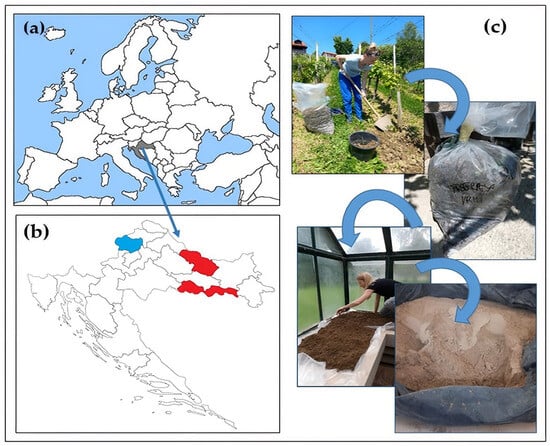
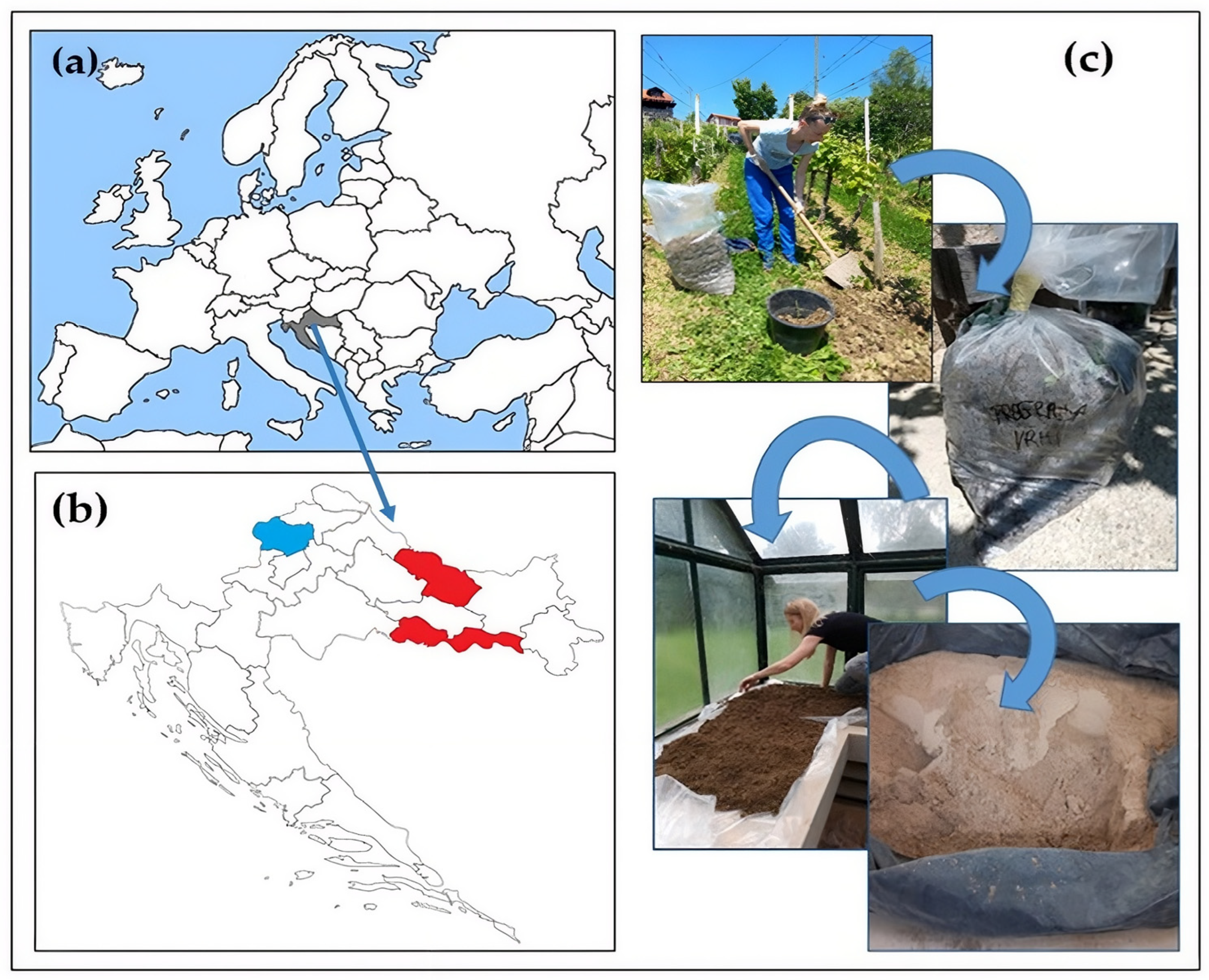
This ex situ soil remediation research was based on 10 soil samples collected from 10 vineyards located in the Pannonia part of Croatia (Europe, Figure 1a). All five alkaline vineyards were collected in Krapina-Zagorje county, located in the northwestern part of Croatia (blue zone), while three acid vineyards were situated in Virovitica-Podravina county and two in Brod-Posavina county, both counties located in the eastern part of Croatia (red zones) (Figure 1b). At the base of each vineyard, a representative 12 kg soil sample was collected from a depth of 0–5 cm. The soil was subsequently air-dried, ground, homogenized, and sieved (soil fraction < 2 mm) (Figure 1c).
Figure 1.
Study area and soil sampling: location of Croatia in European comparison (a); location of the study area (b); soil sampling and preparation (c).
The vineyards varied with respect to age, surface area, slope, and aspect (Table 1). The acidic vineyards vary considerably in surface area (ranging from 832 to 19,270 m2), slope (5.23–40.2%), and age (24–>100 years). Their aspects predominantly face southern to southeastern directions. The alkaline vineyards were generally smaller in size (300–900 m2) but included some of the oldest vineyards in the dataset, with ages reaching 100 years. Slopes ranged from 19.9% to 30.9%, and aspects vary widely, reflecting the heterogeneous terrain characteristic of this region.
Table 1.
Site-specific parameters of sampled vineyards.
Croatian legislation defines copper contamination as copper concentrations above 60 mg kg−1 in soils with pHKCl < 5, above 90 mg kg−1 at pHKCl 5–6, and above 120 mg kg−1 in soils with pHKCl > 6 [39]. The principal physicochemical properties of soils from the selected acidic (ACV) and alkaline (ALV) vineyards are summarized in Table 2. The soils exhibited substantial variability in pH (4.42–7.51), copper concentrations (70.3–758.5 mg kg−1), organic matter content, and particle size distribution, with acidic soils generally displaying slightly coarser textures and alkaline soils containing higher proportions of fine and clay fractions.
Table 2.
Initial status—chemical and physical soil properties.
2.2. Remediation Experiment
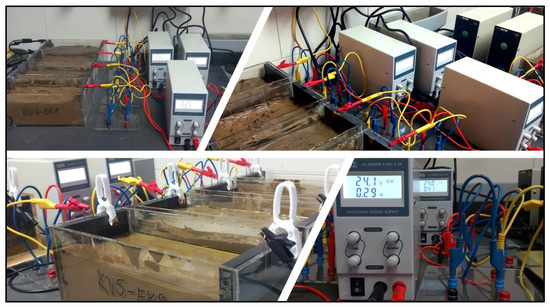
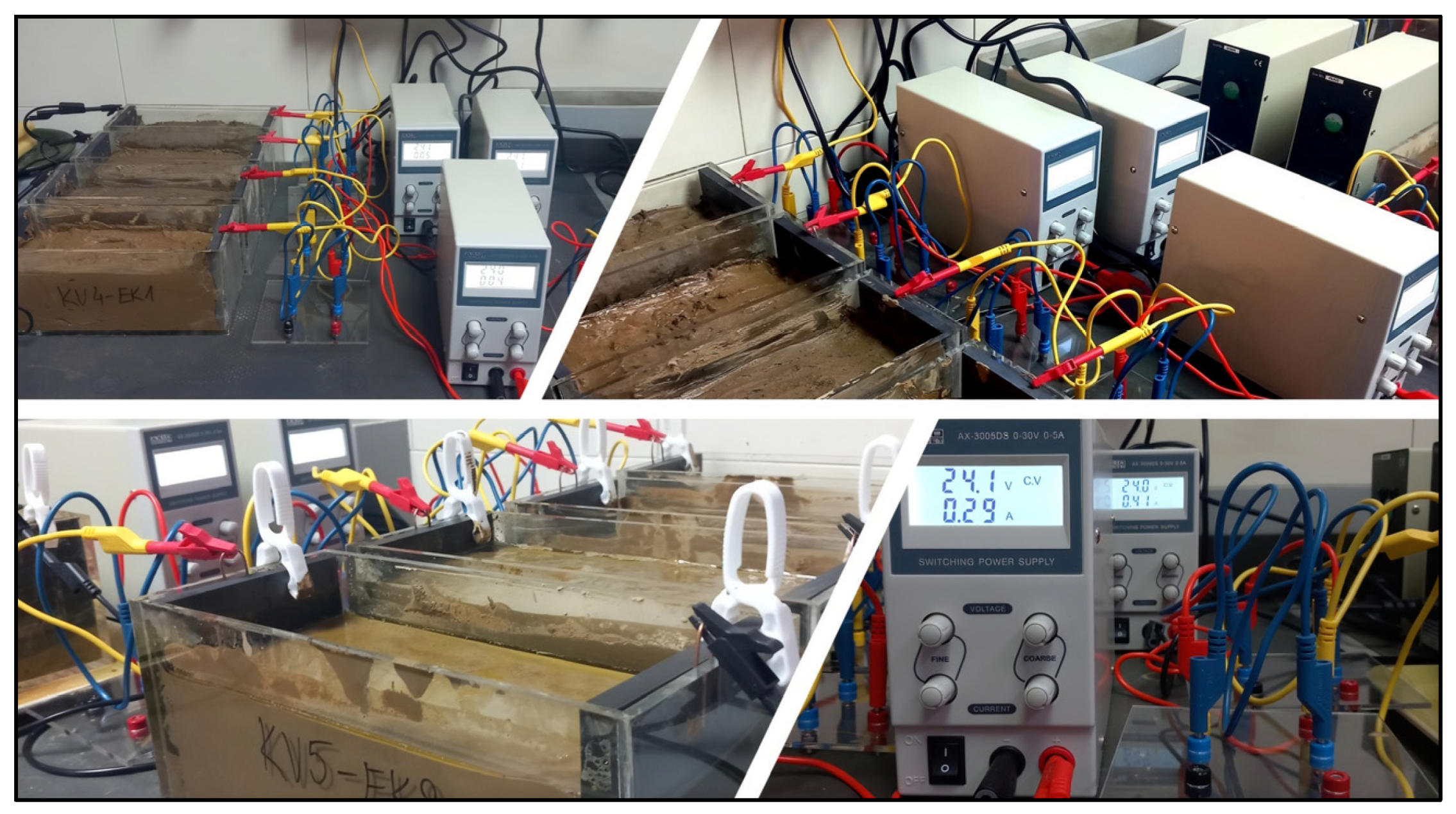
Remediation was tested on soils from ten vineyards, with one EKR cell per soil. Each cell represented a single experimental unit, as no parallel replicates were included in this phase of the study. Immediately before installing the two-electrode system, the soil samples were thoroughly mixed by hand with distilled water for several minutes to ensure homogeneity, using a ratio of 1 g/0.4 mL (1800 g of soil/720 mL of distilled water). The homogenized mixture was then transferred into custom-designed acrylic test cells (internal dimensions: 0.26 m × 0.10 m × 0.10 m) (Figure 2). The soil was placed in direct contact with graphite electrodes serving as the anode and cathode, between which a constant voltage of 24 V (1 V/0.1 m) was applied using a direct current (DC) supply. Standard laboratory power supply was used for this purpose with the following specifications: 0–30 V, 0–5 A, and voltage stabilization ≤ 1% + 10 mV (AX3005 DA, Axiomet, Transfer Multisort Elektronik, Łódź, Poland). The electrodes measured 0.10 m × 0.10 m × 0.01 m and had the following technical properties: flexural strength ≥ 41 MPa; compressive strength ≥ 85 MPa; carbon content ≥ 99.5%; density ≥ 1.76 g/cm3; and specific electrical resistance of 12–14 µΩ·m (ProGraphite GmbH, Untergriesbach, Germany). The experiment was conducted over a period of 30 days (from 3 November 2025 to 2 December 2025). No electrolyte solution was circulated or collected, and no external removal mechanism (e.g., flushing, ion-exchange, or precipitation in a separate compartment) was applied. Consequently, the system was designed to study copper migration and redistribution within the soil matrix rather than net removal from the system. Throughout the experiment, soil moisture was maintained at 40% by periodically spraying distilled water on the soil surface, usually daily as needed. A moisture content of 40% was selected because earlier studies reported that electrokinetic remediation performance reaches its highest efficiency at this level [44].
Figure 2.
Experimental setup for ex situ electroremediation.
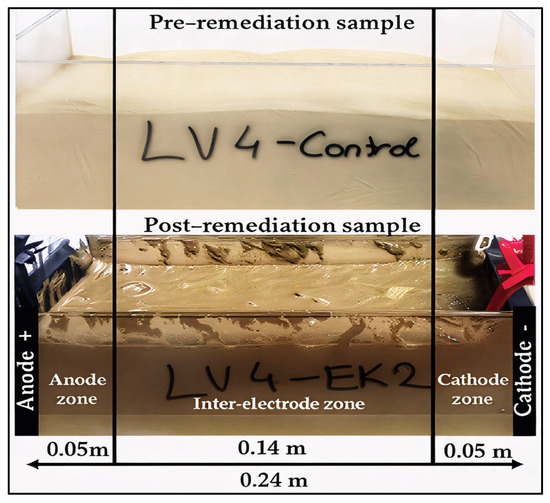
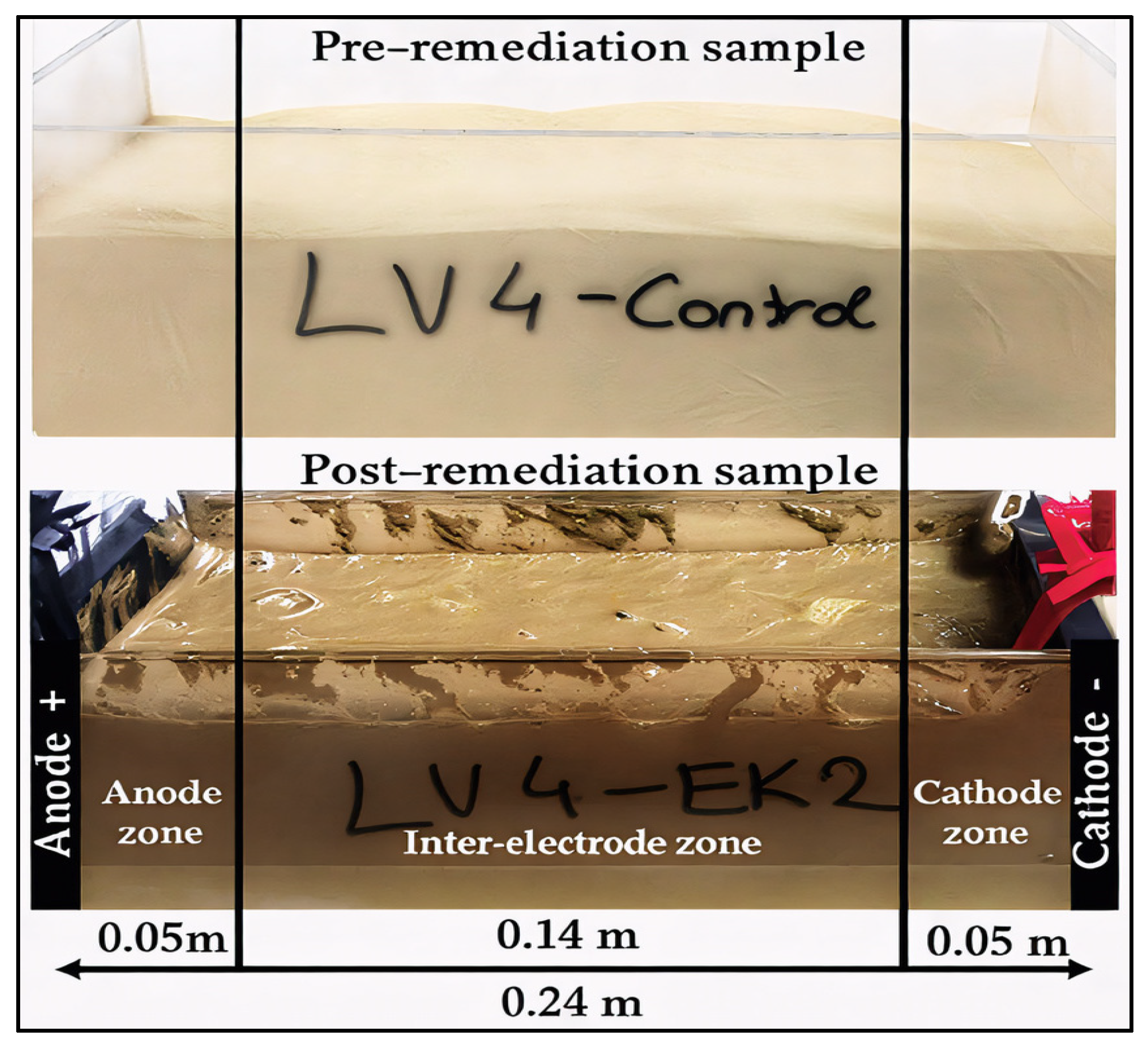
After the experiment, soil samples were collected from three sections of the test cell (Figure 3). Due to the presence of 0.1 m electrodes extending 1 cm into the container on both sides, the operational cell length considered in the experiment was reduced from 0.26 m to 0.24 m. This effective length was subsequently divided into three defined electrode zones: the anode zone, the inter-electrode zone, and the cathode zone. Along the entire height of the cell, soil located 0.05 m from the anode and 0.05 m from the cathode was collected in full, while the remaining central soil constituted the inter-electrode sample. The thickness of these zones was selected to allow for a clearer assessment of the processes occurring near each electrode, where changes in soil chemical conditions and ion migration are most pronounced compared with the more stable conditions in the central region. In total, 30 post-remediation samples were collected in this manner. Additionally, 1800 g of each soil sample from the initially 12 kg collected mass were placed into separate test cells as control samples (without electrodes) (Figure 3). Using the same sampling approach, 0.05 m from each edge of the cell and from the central section, 30 composite pre-remediation soil samples were collected.
Figure 3.
Sampling scheme for experimental and control test cells.
2.3. Chemical Analyses of Soil Samples
A total of 60 soil samples were analyzed to determine total copper content and soil pH. Soil pH was measured potentiometrically in a soil suspension with 1 mol/L KCl (w/v 1:5), following the ISO protocol [40]. Prior to detection and quantification by ICP-MS (Agilent 7900 ICP-MS; Agilent, Santa Clara, CA, USA; LOD 0.001299 mg/L), total copper was digested in aqua regia (0.5000 g soil with 6 mL aqua regia) using an open-vessel digestion procedure (1 h at 65 °C followed by 3 h at 150 °C). All analyses were carried out in triplicate, using three independent weighings and extractions from the same homogenized sample. Accordingly, the triplicates represent analytical rather than experimental replicates.
After quantification of total copper and evaluation of the influence of EKR on its migration within the defined electrode zones, soil samples from zones exhibiting the most pronounced post-remediation decrease in copper concentration were selected for further fractionation analysis. In ten soil samples (five acidic soils adjacent to the cathode, four alkaline soils adjacent to the anode, and one alkaline soil near the cathode), copper fractionation was determined in duplicate following a standard sequential extraction procedure [45], with operational details adapted from previously published methodologies [46] (Table 3). Detection and quantification of copper fractions were also performed by ICP-MS (Agilent 7900 ICP-MS; Agilent, Santa Clara, CA, USA; LOD 0.001299 mg/L).
Table 3.
Procedure for the extraction of copper fractions.
2.4. Statistical Analysis
Descriptive statistical analysis was performed, including the calculation of basic statistical indicators (minimum, maximum, standard deviation and means) for each sampling zone pre- and post-remediation treatment. Statistical analysis was conducted using the SAS 9.1.3 software (SAS Institute Inc., Cary, NC, USA). In this study, remediation efficiency refers to the decrease in copper content in a specific soil electrode zone relative to the initial content and does not imply net removal from the system. Remediation efficiency or redistribution efficiency was calculated as
where η stands for remediation efficiency or redistribution efficiency (%), and Cu1 and Cu2 denote copper content (mg kg−1) determined before (pre-) and after (post-) EKR respectively. Remediation efficiency or redistribution efficiency was calculated solely for the zones showing the highest post-remediation decreases in total copper concentrations.
3. Results
3.1. Changes in Copper Distribution Across Electrode Zones
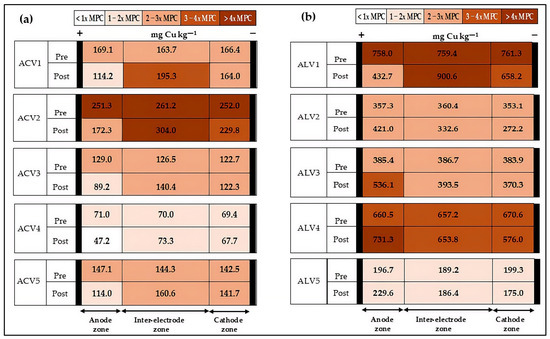
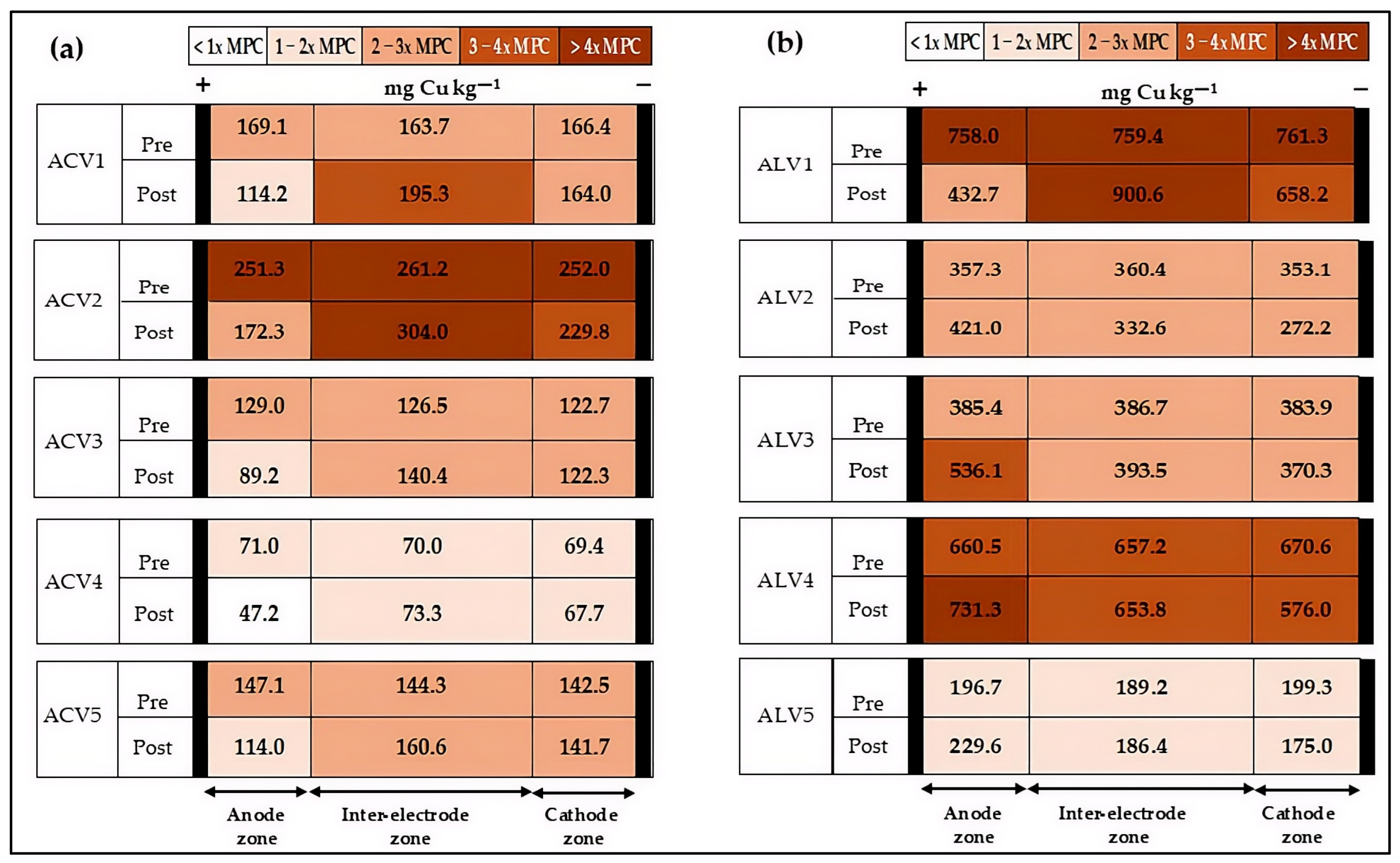
Table 4 and Table 5 present descriptive statistics for the acidic and alkaline vineyards pre- and post-remediation across three electrode zones: anode, inter-electrode, and cathode. Individual quantified values of total copper before remediation in acidic vineyards ranged from 64.2 mg kg−1 to 266.2 mg kg−1, with standard deviations between 1.15 mg kg−1 and 6.65 mg kg−1, while post-remediation values ranged from 41.7 mg kg−1 to 317.6 mg kg−1 with standard deviations between 2.52 mg kg−1 and 13.5 mg kg−1 (Table 4). Mean total copper content in acidic vineyards across electrode zones pre- and post-remediation is presented in Figure 4a.
Table 4.
Descriptive statistics for total copper content in acidic (ACV) vineyards across electrode zones.
Table 5.
Descriptive statistics for total copper content in alkaline (ALV) vineyards across electrode zones.
Figure 4.
Copper concentrations (mg kg−1) pre- and post-electrokinetic remediation (EKR) in acidic (a) and alkaline (b) vineyard soils presented by electrode position.
In the alkaline soils (Table 5), pre-remediation copper concentrations covered a range from 185.2 mg kg−1 to 880.4 mg kg−1, with variability reflected in standard deviations from 2.08 mg kg−1 to 10.7 mg kg−1. Following remediation, values shifted to a broader interval of (170.2–916.1 mg kg−1), accompanied by standard deviations from 4.81 mg kg−1 to 18.4 mg kg−1. Mean total copper content in alkaline vineyards across electrode zones pre- and post-remediation is presented in Figure 4b.
In the acidic vineyard soils, EKR induced pronounced changes in the spatial distribution of copper across the anode, inter-electrode, and cathode zones. In all acid vineyard soils (ACV1–ACV5), a substantial decrease in copper concentration was observed in the anode zone following treatment; the most pronounced reductions were recorded in the ACV1, ACV3, and ACV4 vineyards, decreasing from 169.1 to 114.2 mg kg−1, from 129.0 to 89.2 mg kg−1, and from 71.0 to 47.2 mg kg−1, respectively (Figure 4a). These results partly support the expected electromigration of cations toward the cathode, although the copper content in the cathode zone showed no clear change after EKR. While migration was directed toward the cathode, a considerable accumulation relative to initial values was detected in the inter-electrode zone, rather than at the cathode itself. An increase in copper concentration in the inter-electrode zone was recorded, with the magnitude of accumulation ranging from 10.9% in vineyard ACV3 (from 126.5 mg kg−1 to 140.4 mg kg−1) to 19.3% in vineyard ACV1 (from 163.7 mg kg−1 to 195.8 mg kg−1). These findings suggest that soil acidity facilitates more efficient transport and redistribution of copper, accompanied by pronounced accumulation along the migration path toward the cathode.
In the alkaline vineyard soils (Figure 4b), the initial copper concentrations were notably higher than those in the acidic soils, frequently exceeding fourfold to sixfold the maximum permissible concentration (MPC) and even surpassing sixfold the MPC in vineyard ALV1. Following EKR, a consistent decrease in copper concentration was observed in the cathode zone across all vineyards (ALV1–ALV5), indicating partial mobilization of the metal despite its inherently limited solubility at elevated pH (pH 8.45–9.13, Figure 5b). Conversely, a systematic increase in copper concentration was recorded in the anode zone in four vineyards (ALV2–ALV5), partially reflecting a clear directional migration pattern consistent with anionic transport under alkaline soil conditions. The magnitude of copper increase near the anode ranged from 10.6% in vineyard ALV4 to 39.2% in vineyard ALV3. In contrast to the acidic vineyard soils, the inter-electrode zone in the alkaline samples generally did not act as a major site of copper accumulation. An exception was observed in the most contaminated vineyard (ALV1), where substantial post-treatment accumulation in the central section of the cell (900.6 mg kg−1) was accompanied by the highest recorded decrease in copper concentration near the anode (from 758.0 mg kg−1 to 432.7 mg kg−1). This result is likely attributable to pronounced soil acidification in that zone (pH 2.82, Figure 5b) after EKR. Furthermore, the observed increase in copper concentrations near the anode in alkaline soils is likely the result of the accumulation of poorly mobile copper species within the localized lower-pH microenvironment surrounding the anode (pH 6.37–6.84, Figure 5b).
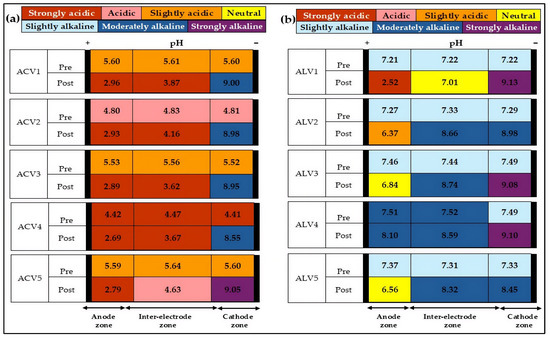
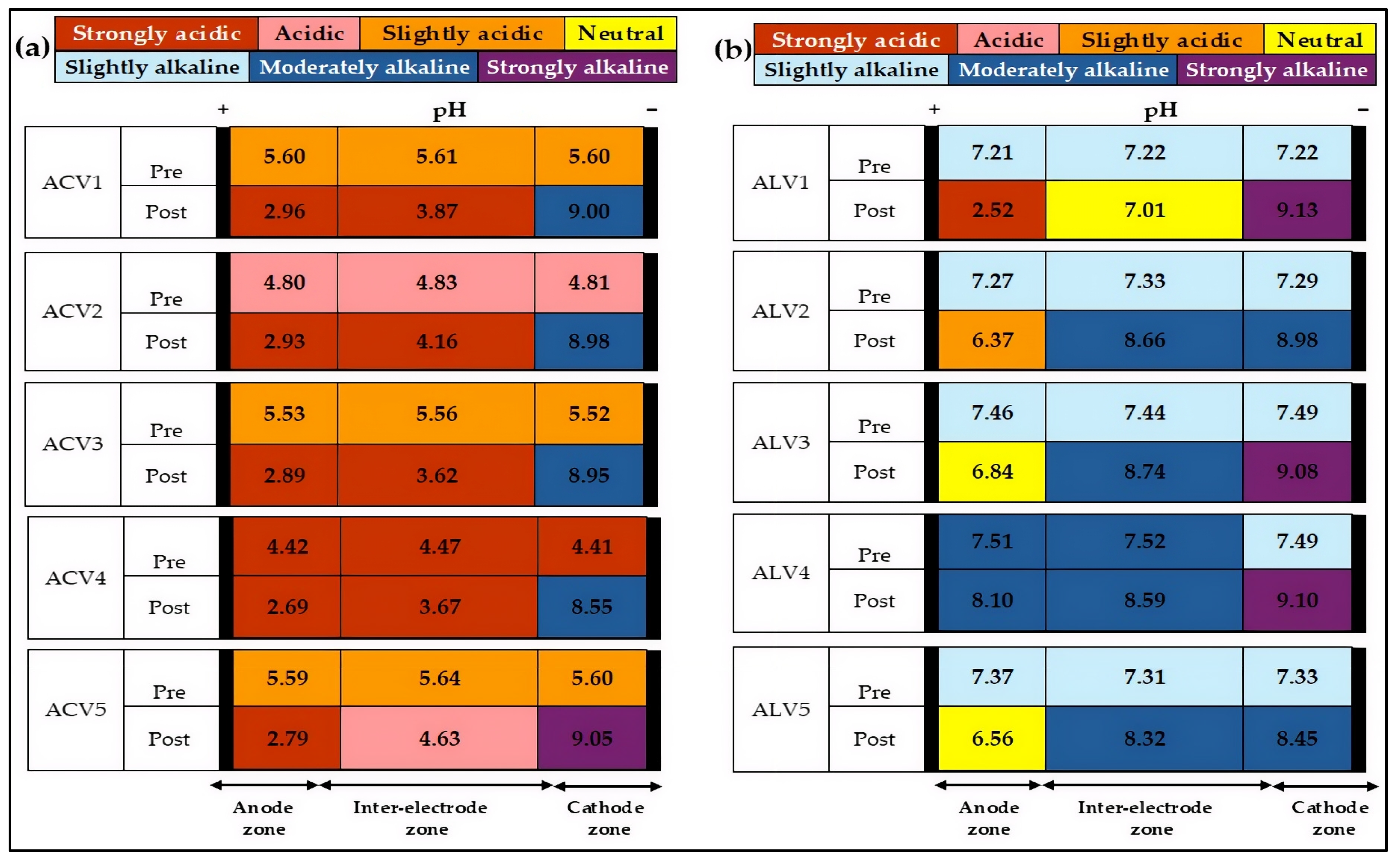
Figure 5.
Soil reaction (pH values) pre- and post-electrokinetic remediation (EKR) in acidic (a) and alkaline (b) vineyard soils presented by electrode position.
3.2. Effects of Electrokinetic Remediation on Soil pH
In the acidic soils (Figure 5a), EKR caused pronounced shifts in pH across all electrode-defined zones, with the most substantial changes occurring near both electrodes. Following remediation treatment, the anode zone exhibited a marked decrease in pH, shifting from slightly to strongly acidic conditions in all vineyard soils (e.g., from 5.60 to 2.96 in ACV1, from 5.53 to 2.89 in ACV3, from 5.59 to 2.79 in ACV5). In the inter-electrode zone, pH values also decreased, following the same trend observed in the anode zone. The results in both zones are most likely a consequence of water electrolysis at the anode and the associated production of protons, which led to soil acidification, not only in the anode zone (pH 2.96 ACV1; pH 2.93 ACV2; pH 2.89 ACV3; pH 2.69 ACV4; pH 2.79 ACV5) but also away from the anode, to a lesser extent (pH 3.87 ACV1; pH 4.16 ACV2; pH 3.62 ACV3; pH 3.67 ACV4; pH 4.63 ACV5). In contrast, the cathode zones underwent substantial increases in pH, shifting from slightly acidic to moderately alkaline conditions (e.g., ACV1 from 5.60 to 9.00 and ACV3 from 5.52 to 8.95) and strongly alkaline conditions (ACV3 from 5.60 to 9.03) (Figure 5a). These changes were partly caused by a reduction in water at the cathode and the production of hydroxylamine ions.
In the alkaline soils, post-treatment pH values in the anode zone decreased markedly, indicating strong local acidification (e.g., from 7.21 to 2.52 in ALV1; from 7.37 to 6.56 in ALV5) (Figure 5b). The inter-electrode zone in alkaline soils exhibited moderate decreases in pH only in the ALV1 vineyard, where the highest pH reduction was recorded, but to a lesser extent than in the anode zone (e.g., ALV1 decreased from 7.22 to 7.01). This pattern not only indicates partial movement of the proton front away from the anode but also demonstrates the strong buffering capacity of these soils, which prevents pronounced pH shifts. In the other four vineyards (ALV2, ALV3, ALV4, and ALV5), soil alkalization was observed in the inter-electrode zone after remediation compared with the initial soil conditions, mirroring the trend of more pronounced alkalization in the cathode zone. As expected, the cathode zone showed marked alkalinization, with pH increasing to strongly alkaline levels (up to 9.13 in ALV1, 9.08 in ALV3 and 9.10 in ALV4). Hydroxide ions generated at the cathode accumulated despite the high initial alkalinity, illustrating that electrochemical water reduction can override carbonate buffering when the local flux of OH− is sufficiently high.
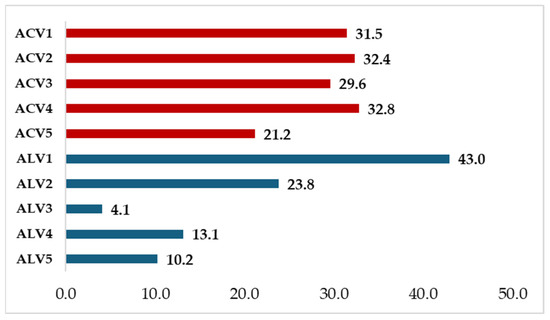
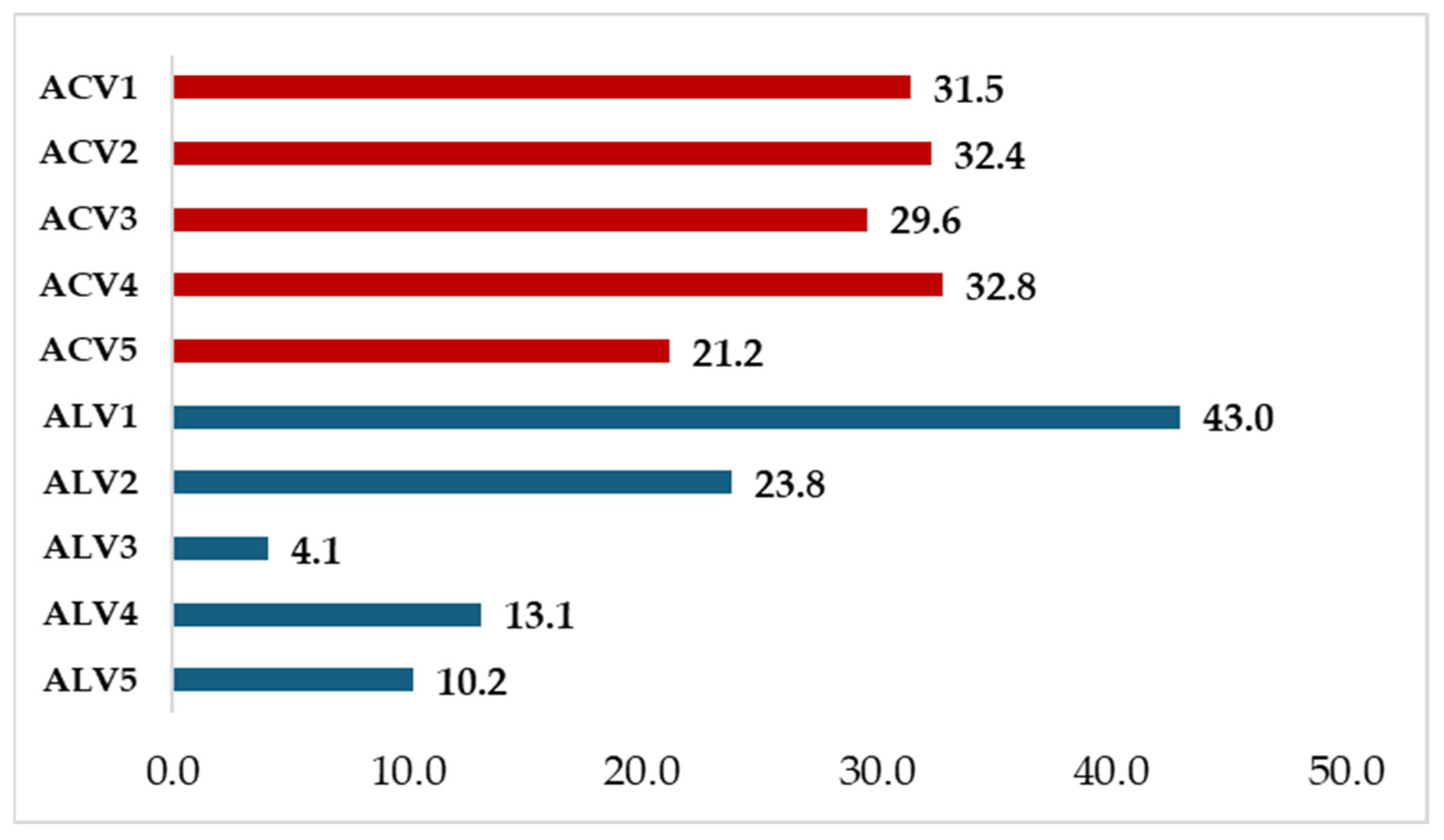
Following the results for copper migration within the all electrode define zones, remediation efficiency (e.g., redistribution efficiency) (Figure 6) was calculated by comparing the average initial (pre remediation) copper content across all zones (anode, inter-electrode and cathode) with the copper content measured after the remediation, specifically in the anode zone for acidic soils and in the cathode zone for alkaline soils, with the exception of alkaline vineyard ALV1, where efficiency was evaluated based on post-remediation copper levels in the anode zone. As previously shown, the results indicate pronounced acidification of acidic soils (pH < 2.96), accompanied by a substantial decline in total copper concentrations within the anode zone. Redistribution efficiencies averaged 29.5% (range: 21.2–32.8%) (Figure 6), underscoring the strong influence of electrochemically induced proton migration on copper mobilization. In contrast, alkaline vineyard soils exhibited markedly lower efficiencies, predominantly in the cathode zone of four vineyards (ALV2, ALV3, ALV4 and ALV5), with a mean redistribution efficiency of 12.8% (range: 4.1–23.8%) and pronounced alkalinization (pH > 8.45), suggesting that elevated baseline pH considerably constrains copper solubility and electromigration. The highest redistribution efficiency was observed in the highest contaminated vineyard (ALV1), an alkaline soil with a 90-year cultivation history, where initial total copper concentrations exceeded the MPC sixfold. Here, copper redistribution reached 43.0% in the anode zone, coinciding with a substantial pH decrease of 4.61 units (from 7.13 to 2.52), indicating that localized acidification can override the inherent buffering capacity of alkaline soils and markedly enhance copper mobility and higher redistribution efficiency.
Figure 6.
Remediation (redistribution) efficiency (%) across acidic (ACV, red bars) and alkaline (ALV, blue bars) vineyards.
3.3. Changes in Copper Fractionation in Soils with the Highest Remediation Response
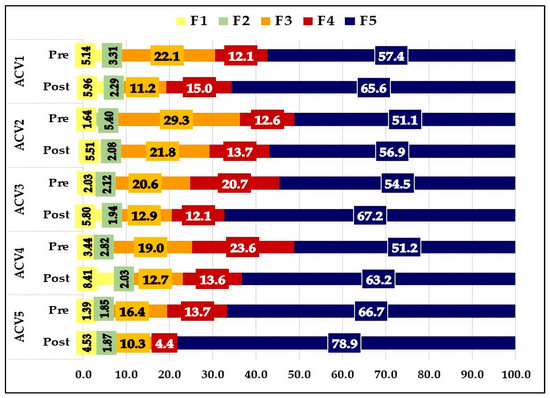
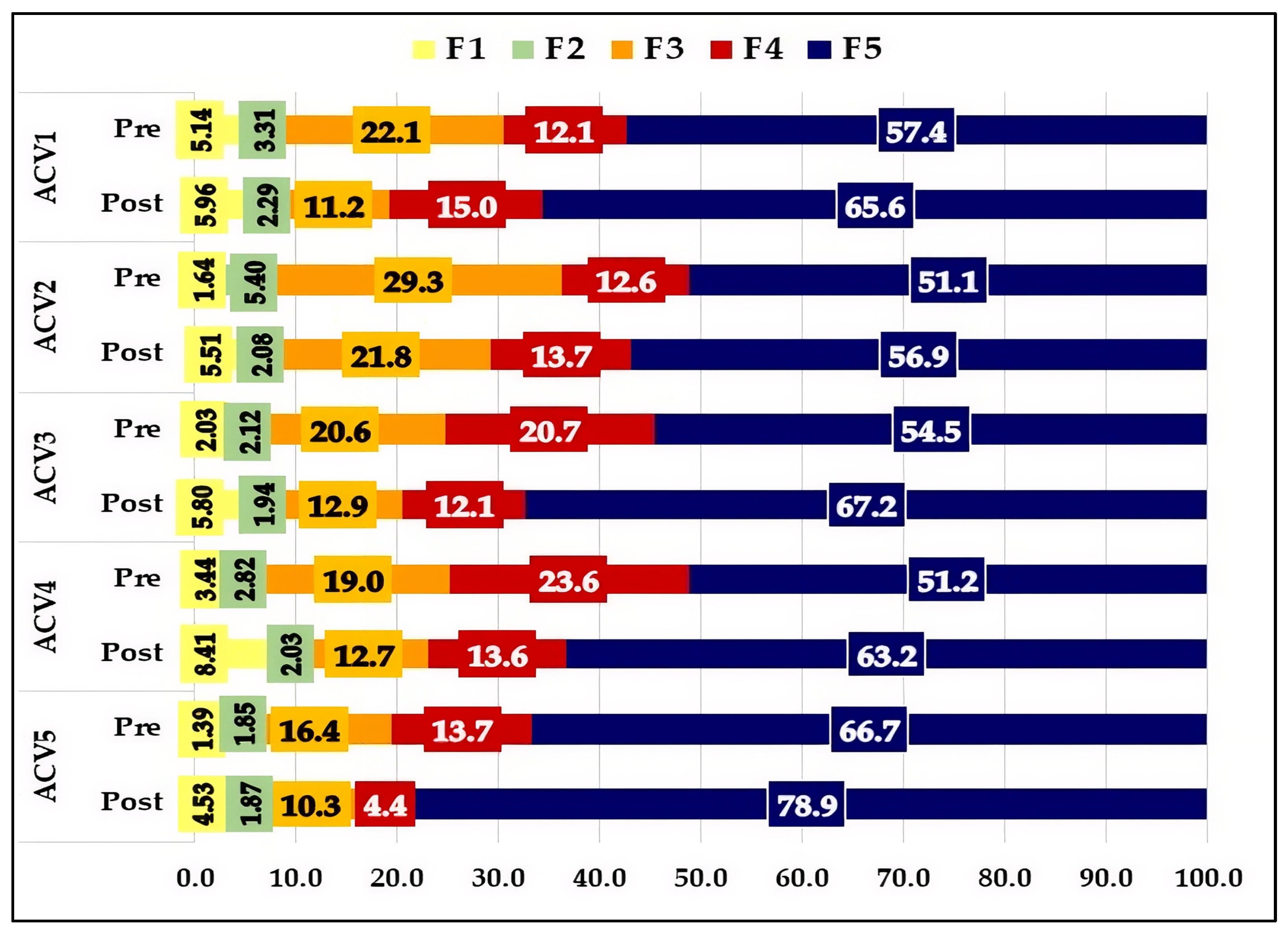
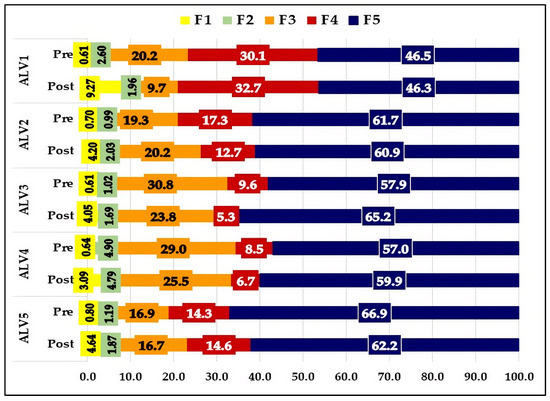
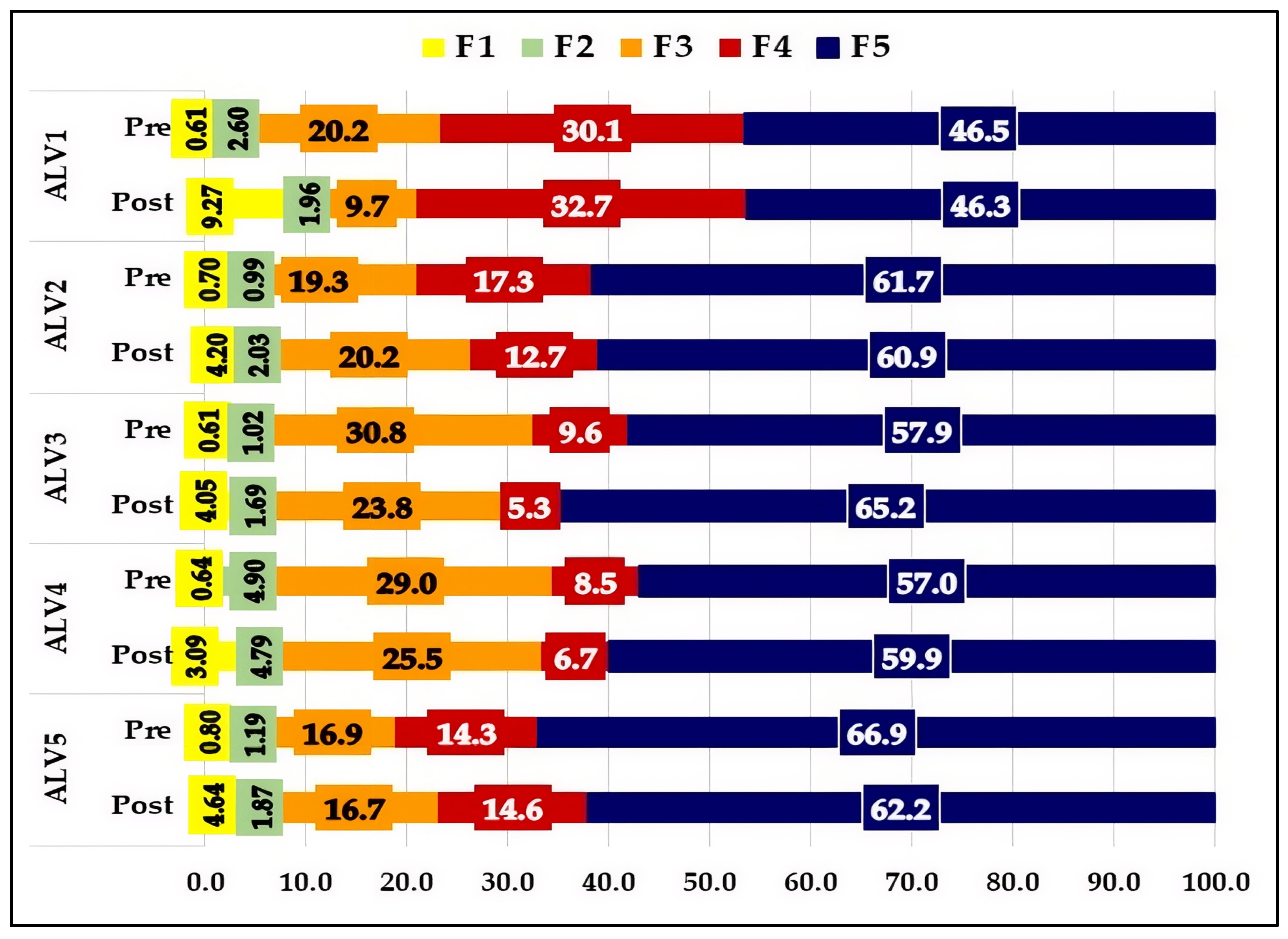
Furthermore, an analysis of copper fraction distribution was conducted to identify which fractions were most susceptible to electromigration in the electrode zones with the highest redistribution efficiency. Figure 7 and Figure 8 present the distribution of copper fractions (F1—exchangeable, F2—carbonate-bound, F3—Fe/Mn oxide-bound, F4—organic matter-bound, and F5—residual), expressed as percentages of total copper, pre- and post-EKR in both acidic and alkaline vineyard soils. Pre-remediation results refer to the composite soil sample across all electrode-defined zones, while post-remediation results relate to soil samples in the anode zone for acidic soils and in the cathode zone for alkaline soils, apart from alkaline vineyard ALV1, to which the results pertain to the anode zone.
Figure 7.
Distribution of the copper fractions (%) pre- and post-electrokinetic remediation (EKR) in acidic vineyards.
Figure 8.
Distribution of the copper fractions (%) pre- and post-electrokinetic remediation (EKR) in alkaline vineyards.
Analysis of copper fractionation across acidic vineyard soils (ACV1–ACV5) indicates considerable redistribution of copper among geochemical pools after the EKR. The exchangeable copper fraction (F1) increased markedly after the treatment, especially in ACV2 (a 2.4-fold rise, from 1.64% to 5.51%—Figure 7—corresponding to an increase from 4.19 mg kg−1 to 9.50 mg kg−1—Table A1) and ACV5 (a 2.3-fold rise, from 1.39% to 4.53%—Figure 7—corresponding to an increase from 2.00 mg kg−1 to 5.62 mg kg−1—Table A1). Although F1 remains a minor proportion of the total copper, its consistent increase indicates a shift toward greater short-term bioavailability, probably partly caused by local soil acidification. The carbonate-bound fraction (F2) decreased systematically in all acid soils, particularly in ACV1 (from 5.40% to 2,08%—Figure 7—corresponding to a decrease from 13.8 mg kg−1 to 3.59 mg kg−1—Table A1). This decline suggests that remediation dissolved or transformed carbonate minerals, reducing their role as a binding phase. Along with the decline of the F2 fraction, acidic soils also exhibited reductions in both the F3 (Fe/Mn oxide-bound) and F4 (organic matter-bound) fractions. The decline in F3 is one of the most consistent and substantial. Before EKR, total copper in acidic soils contained an average 21.5% of the Fe/Mn oxide-bound fraction, whereas after the remediation, this proportion decreased to an average of 13.8%. Ultimately, the results for the F5 fraction confirm that the residual form of copper remained the dominant and least affected fraction. Its proportion in total copper increased after remediation in all acidic vineyard soils, suggesting that the treatment promoted the redistribution of copper toward less extractable operational fractions. The increase in F5 is the dominant trend, reflecting a redistribution of copper toward the fraction operationally defined as residual, without implying long-term geochemical stability.
Analysis of copper fractionation across alkaline vineyard soils (ALV1–ALV5) shows broadly similar trends to those observed in acidic vineyard soils, again suggesting initial mobilization of copper (increase F1 fraction) and gradual redistribution of copper into less extractable operational fractions (F3, F4 and F5). The exchangeable copper fraction increased markedly after remediation, particularly in ALV1 (a 14.2-fold rise, from 0.61% to 9.27%—Figure 8—corresponding to an increase from 4.66 mg kg−1 to 40.1 mg kg−1—Table A2), in the anode zone, where the highest pH decrease was observed in the alkaline soils (Figure 5b). The carbonate-bound fraction (F2) exhibited only minor and inconsistent changes. Slight decreases, such as in ALV1 from 2.60% to 1.96%, contrast with increases in ALV2 from 0.99% to 2.03%. These small variations indicate that carbonate phases remained largely stable under remediation conditions and played a secondary role in copper redistribution compared to other binding phases. The Fe/Mn oxide-bound fraction (F3) decreased in all soils, though to varying degrees. For instance, in ALV1, it decreased from 20.2% to 9.7% (corresponding to a decrease from 153.1 mg kg−1 to 42.1 mg kg−1—Table A2), while in ALV4, it decreased from 29.0% to 25.5% (corresponding to a decrease from 191.8 mg kg−1 to 146.9 mg kg−1—Table A2). This decline suggests that remediation affected oxide surfaces, which could partly contribute to copper mobilization. The organic fraction (F4) showed mixed responses. In the ALV1 vineyard, copper increased from 30.1% to 32.7%, whereas in the ALV3 vineyard, it decreased from 9.6% to 5.3%. These divergent trends likely reflect the differences in organic matter composition. For example, the highest organic matter in alkaline soils was observed in the ALV1 vineyard (OM = 7.85%, Table 2), while the lowest organic matter content was recorded in the ALV3 vineyard (OM = 3.90%, Table 2). The residual fraction (F5), which is operationally defined as the least extractable pool, remained relatively constant or showed a slight increase. Again, this indicates that despite increased mobilization into F1, remediation promoted a redistribution of copper toward less extractable operational fractions, particularly in soil zones where the highest remediation efficiency was observed. However, this shift cannot be interpreted as evidence of long-term geochemical stability.
4. Discussion
4.1. Electrokinetic Remediation and Soil pH
EKR created a strong pH gradient in acidic soils, with strong acidification near the anode, moderate acidification in the inter-electrode zone, and pronounced alkalinization near the cathode. These changes reflect the characteristic electrochemical processes of water electrolysis and the relatively high ionic mobility in acidic soils, which favors clear separation of acidic and alkaline fronts [47]. The decrease in pH in acidic soils in the anode zone is consistent with the electrolysis of water at the anode, where oxidation produces protons, leading to strong acidification of the soil surrounding the anode [30]. In the inter-electrode zone, pH values also decreased partly due to the partial migration of protons from the anode zone toward the centre, combined with the limited buffering capacity of the already acidic soils. Alkalinization in the cathode zone arises from water reduction at the cathode, which generates hydroxide ions [33]. The generated OH− ions accumulate due to restricted mobility in compact or finely textured acidic soil matrices. This was especially expressed in acid soils with a higher proportion of clay and silt (Table 2). In alkaline soils, the direction and magnitude of pH changes followed the same electrochemical principles, but the absolute shifts were more constrained by the high buffering capacity and carbonate-rich composition typical of calcareous soils. Despite the initially alkaline conditions, the production and accumulation of H+ ions near the anode lowered the pH by up to 5 units (from 7.21 to 2.52) in the ALV1 vineyard. This pH decline occurred in slightly alkaline soil, where buffering capacity was limited. Different magnitudes of pH gradient post-remediation treatment in acidic and alkaline soils were partly conditional on: soil buffering capacity (higher in alkaline soils, lower in acidic soils), texture, organic matter, ionic strength and mobility, and the presence of carbonates and exchangeable bases (particularly in alkaline soils). Thus, acidic soils develop sharper and more extreme pH gradients, while alkaline soils display attenuated but still well-defined shifts in pH. pH gradient developed within electrode zones during the soil remediation can reduce EKR efficiency because cathodic alkalinization promotes the precipitation of dissolved metals as hydroxide phases, thereby decreasing metal solubility and electrokinetic mobility [48]. However, comparable electrode-dependent pH gradients after EKR have been reported in the literature. For example, some authors [29] observed that, in soil with an initial pH of 4.4, the pH decreased to approximately 2 in the anode zone by the end of treatment and then increased progressively toward the cathode, where values exceeded pH 12. Recent investigations similarly reported the development of a pronounced pH gradient across the soil specimen, with acidification in the anode region and increasing alkalinity toward the cathode [47]. Several authors conducted EKR of an alkaline soil (initial pH 8.6) collected near a mine tailing and observed distinct electrode-driven pH profiles [49]. Following conventional treatment, the anode zone pH decreased to approximately 6.2 and increased progressively toward the cathode, reaching about pH 10; in the improved configuration employing approaching anodes, the anode zone pH decreased further to roughly 3.4 and then increased toward the cathode, where pH values around 7 were measured [49]. Earlier research investigated electrokinetic remediation in four alkaline soils (initial pH 7.61) and observed pronounced electrode-controlled pH gradients in all specimens: pH decreased to 2.2–2.47 in the anode zone and then increased progressively toward the cathode, where values of 8.63–8.95 were recorded [50]. Several studies have investigated approaches to regulate soil pH and improve metal removal efficiency. Reported strategies to mitigate pH gradients include enhanced electrokinetic configurations, such as the addition of mobilizing reagents that increase metal solubilization and sustain favorable transport conditions, as well as the use of complexing agents [2,8,29].
Although EKR can perform well under laboratory conditions, in situ application in vineyards may adversely affect vine performance and soil fertility by inducing strong pH and ionic gradients, redistributing nutrients and disrupting soil biological function. Strong pH gradients in the root zone (acidification near the anode and alkalinization near the cathode) can push parts of the soil outside the optimal pH range for viticulture, disrupting nutrient availability and potentially stressing or damaging roots [51,52]. EKR will affect not only contaminants but also nutrient ions, contributing to nutrient depletion/redistribution and reduced soil fertility unless nutrients are rebalanced post-treatment. Application of EKR to agricultural land can result in pronounced acidification and depletion of organic nutrients, effects that may compromise soil fertility and limit subsequent cultivation [53].
Because pH alterations during EKR reshape the soil’s geochemical conditions, they can consequently affect overall soil nutrient availability, including key elements that underpin soil fertility and microbial functioning. For example, a decrease in available phosphorus from 20.05 to 10.39 mg kg−1 and in available potassium from 61.31 to 51.58 mg kg−1 has been reported after EKR, indicating that the process can significantly affect soil fertility [54]. Similarly, in greenhouse soil, an electrokinetic treatment removed more than 90% of the nitrate, while K+ was also removed, reducing electrical conductivity by up to 87% [55]. Although such effects may be beneficial in over-fertilized saline systems, in conventionally managed agricultural soils, they may necessitate post-treatment nutrient rebalancing. On the other hand, some studies have demonstrated increased nutrient bioavailability, showing that, after 60 h of electrokinetic treatment, plant-available nitrogen, phosphorus, and potassium increased by an average of 0.44-, 3.31-, and 1.25-fold, respectively, compared with the control soil [56]. Similar trends were observed in an experiment integrating phytoremediation with EKR, in which the direct current field induced both nutrient redistribution and a general increase in nutrient availability. Specifically, the average concentrations of soil NO3−-N, NH4+-N, available P, and available K reached 0.90–3.49, 0.98–1.08, 1.08–1.55, and 1.07–1.11 times their initial values, respectively. The resulting spatial pattern was non-uniform, with nitrate and available phosphorus accumulating mainly near the anode and available potassium near the cathode [57]. This pattern supports the interpretation that the imposed electric field was the dominant driver of nutrient migration and further suggests that EKR may substantially alter post-treatment soil fertility and nutrient availability alongside its remediation effects. Acidic fronts can also increase the solubility/bioavailability of metals locally, while alkaline fronts can drive hydroxide precipitation and immobilize ions in cathodic zones [58]. In addition, microorganisms may be affected during EKR both by their transport through the soil via electroosmosis and electrophoresis and by the electro-halo-thermal conditions within the cell [59]. Heavy-metal mobilization and the pronounced pH shifts generated during EKR can impose toxic stress on soil microorganisms, thereby reducing microbial abundance and activity [57,60]. Several studies have shown that EKR can substantially alter, and often reduce, soil microbial abundance and activity [59] while also exerting an inhibitory effect on soil enzymatic activity [57]. Overall, the possible agronomic consequences of EKR include reduced phytotoxicity and improved crop performance where contaminants or salts are successfully removed, as well as soil acidification or alkalization, nutrient redistribution or loss, altered microbial and enzymatic activity, and localized increases in metal bioavailability. These effects suggest that, even when EKR is effective in promoting copper mobilization and redistribution, the post-treatment soil may still require agronomic conditioning, particularly pH correction, nutrient rebalancing, and recovery of biological activity, before it can be considered fully suitable for sustainable agricultural use.
Copper concentrations in vineyard soils are usually higher in the surface horizon and decline with depth; therefore, implementing EKR as a shallow, depth-delimited treatment focused on the copper-enriched topsoil may reduce perturbation of the deeper vine rooting zone. When integrated with phytoremediation, mobilization of the water-soluble and exchangeable copper fractions induced by anodic acidification could be followed by uptake into plant biomass (and subsequent harvesting), thereby reducing the labile pool and mitigating rebound. The principal limitation of conventional EKR is the development of steep pH gradients (acidic near the anode and alkaline near the cathode) and the concomitant alteration of soil properties; accordingly, it has been suggested that post-treatment amendments may be required to restore the soil as close as possible to its initial condition [61]. In acidified anode zones, liming materials are an established approach for raising soil pH toward agronomically suitable conditions [62]. For alkalinized cathode zones, acidic organic amendments may be considered: for example, peat moss has been shown to decrease soil pH while increasing organic matter, supporting its potential role as a reconditioning material (where locally appropriate and sustainable) [63]. Because electrokinetic treatment can also mobilize/redistribute native soil constituents, including nutrients and modify plant-available pools, soil nutrient status should be reassessed post-treatment and replenished as needed to re-establish soil fertility [63]. Although the feasibility of applying EKR directly in active vineyards remains uncertain and requires further in situ evaluation, its use is more feasible in soils from cleared vineyards contaminated with copper, where the interval after treatment would provide sufficient time for post-treatment rehabilitation and soil preparation prior to replanting or the establishment of a subsequent crop.
4.2. Copper Redistribution and Remediation Efficiency
The results of the present study show a redistribution of copper between the anode and cathode within the test cell. However, because the experimental setup was a system without an external sink, the total copper mass in the soil cell was essentially conserved. Within experimental uncertainty, no net removal of copper from the system was observed. Instead, copper was relocated to more concentrated zones. This behavior is consistent with electrokinetic transport in the absence of a removal step (e.g., electrolyte circulation, electrode rinsing, or coupling with a treatment unit). These findings indicate that the present configuration is suitable for studying copper mobility and accumulation patterns, but additional process steps would be required in a practical remediation scenario to achieve actual mass removal (e.g., extraction of electrolyte, washing of electrodes, or integration with a reactive barrier) [1,30]. All results indicate that, in this study, EKR or redistribution efficiency was more effective in acidic soils, where more pronounced changes and increased copper mobility were observed, resulting in clearer gradients between the anodic and cathodic zones. In alkaline soils, despite initially higher copper concentrations, mobilization remained limited, leading to more moderate post-treatment changes. The results revealed an accumulation of copper in the inter-electrode, which can be considered the meeting point of acidic and natural fronts across four acidic vineyard soils. A comparable phenomenon was reported by other authors [29]; however, the copper was removed at both ends of the soil specimen (the anode and cathode zones), whereas in this experiment, such a pattern was evident only for ACV2, while in the other three vineyard soils, copper concentrations in the cathode zone showed no clear change after EKR. A previous study applied EKR to three acidic soils using tap water as the electrolyte and, following treatment, observed reduced copper concentrations in the anode zone, accompanied by migration and accumulation in the cathode zone [64]. However, in that study, overall copper removal was low (6–8%), which was attributed to elevated pH near the cathode that promoted copper precipitation and constrained further transport and extraction from the soil cell. During electrode electrolysis, the anode generates hydrogen ions (H+) and oxygen gas, whereas the cathode generates hydroxide ions (OH−) and hydrogen gas, forming acid and base fronts. The resulting ionic fronts then migrate through the soil under the applied electric field, with H+ moving toward the cathode and OH− moving toward the anode [24]. Acidic fronts exhibit higher mobility than base fronts generated at the cathode and, therefore, advance farther via electromigration. In addition, H+ is transported toward the cathode via electroosmosis. Consequently, two fronts tend to meet closer to the cathode [47]. This ionic migration induces pH variations in the soil, thereby influencing the physicochemical processes governing contaminant partitioning and speciation [24].
In contrast to the acidic vineyard soil, using EKR on alkaline vineyard soils resulted in a consistent decrease in copper concentrations in the cathode zone across all vineyards, accompanied by an increase in the anode zone in four of the five investigated vineyards. Similarly, some authors have reported significantly higher copper accumulation in the anode compartment (2.84 mg) than in the cathode compartment (0.13 mg), corresponding to an approximately 20-fold difference [2]. However, their system used an enhanced EKR configuration with EDTA as the flushing solution at both electrodes, which likely influenced copper speciation and transport behavior. In contrast, earlier research reported a different copper migration behavior in alkaline soil [50]. They conducted electrokinetic remediation in four alkaline soils (initial pH 7.61), comprising three heterogeneous clay–sand mixtures and one homogeneous clay. Across all specimens, they reported substantial copper removal in the anode zone (57–87%) and observed copper accumulation/precipitation predominantly within the inter-electrode region toward the cathode; however, in one heterogeneous specimen, the highest copper precipitation occurred directly in the cathode zone. Several authors applied EKR to an alkaline soil (initial pH 7.85) and reported reduced copper concentrations in both the anode and cathode zones, with copper accumulation in the inter-electrode zone [8].
4.3. Electrokinetic Remediation and Copper Fractionation
Following EKR, an increase in the labile copper fraction (F1) in both acidic and alkaline soils was observed, indicating a partial redistribution of copper into more readily mobilizable forms. This shift is plausibly driven by EKR-induced changes in soil geochemistry, such as particularly pH gradients, altered ionic strength, and competitive sorption/desorption processes, which can increase the water-soluble and exchangeable pools through dissolution and desorption along the acidic front, followed by re-partitioning during transport [2,5,31]. In the ALV soils, the pronounced post-EKR increase in F1, accompanied by relatively small shifts in the operationally defined fractions, F3–F5, is consistent with partial electrochemical mobilization of copper into labile forms; however, cathodic alkalinization can limit net extraction by promoting precipitation and retention (e.g., hydroxide formation and cathode-side accumulation), a behavior widely reported for unenhanced systems where high-pH zones suppress metal solubility and electrokinetic mobility [29]. In the acidic vineyard soils, the carbonate-bound fraction (F2) was minor and generally declined after treatment, consistent with reduced association of copper with carbonate/acid-soluble phases under acidic conditions and redistribution into other pools. The carbonate-bound metal pool is pH-sensitive, and lower pH promotes carbonate dissolution and release/redistribution of associated metals, so acidic soils typically show a small and/or declining carbonate-associated copper fraction [45,65]. A decreased Fe/Mn oxide-bound fraction (F3) in acid soils indicates the partial reductive dissolution or structural alteration of Fe/Mn oxides during remediation, leading to the release of previously immobilized copper. Responses of the organic matter-bound fraction (F4) were heterogeneous among the vineyards, suggesting soil-specific differences in organic matter binding capacity and the extent to which EKR altered complexation and redistribution processes along the pH gradient. It is important to note that, because sequential extraction is operationally defined and the residual fraction is calculated by difference, these changes do not necessarily indicate long-term mineral incorporation or permanent stabilization. Rather, they reflect pH-driven changes in copper speciation and short-term redistribution among extractable pools. Also, it should be noted that in the continuation of this research, copper fractions will also be determined in the areas near the electrode, where the highest copper content was found, to examine the redistribution and impact of EKR and migration in other parts of the test cell.
4.4. Implications for Practical Remediation and Integration with Complementary Methods
Although the remediation experiment did not remove copper from the soil, the observed relocation demonstrates that EKR can modify the spatial distribution of copper, which may be relevant for targeted soil management strategies. Even though the results indicate that EKR can effectively mobilize and redistribute copper under controlled laboratory conditions, its direct application in vineyard soils requires careful evaluation. Vineyard terrains are often sloped, heterogeneous and characterized by long-term copper accumulation in the upper soil horizons [66], which may limit the uniform propagation of electric fields. In addition, the installation of electrodes in established vineyards would require temporary disturbance of the soil surface and root zone, raising questions about operational feasibility during the growing season. The energy demand of EKR is strongly dependent on soil electrical conductivity, moisture and pH gradients [37,53]. Vineyard soils with high carbonate content or low moisture may require higher voltages to achieve comparable ion mobility, increasing operational costs [67,68]. Without an electrolyte flushing system or external copper capture mechanism, the process does not result in net copper removal, which further reduces cost-effectiveness. For field-scale implementation, EKR would likely need to be combined with electrolyte circulation, an ion exchange media approach, to justify energy inputs [69]. Soil moisture represents an additional constraint for field-scale EKR in vineyards. It is one of the most influential parameters controlling electrical conductivity, electroosmotic flow and overall energy efficiency [33]. Very low moisture levels (e.g., common in Mediterranean vineyard soils during the growing season) can increase soil resistance and limit contaminant transport, whereas moderate moisture (40–55%) has been shown to enhance metal removal efficiency [44,70]. This indicates that maintaining adequate moisture would be essential for any practical implementation of EKR in vineyard settings. In addition to moisture, the intrinsic properties of vineyard soils strongly influenced copper distribution during EKR in this study. The highest remediation efficiency was observed in ALV1, which had the highest organic matter content and finer texture (higher percentage of silt and clay). These characteristics are consistent with conditions that favor copper mobility under an applied electric field. Organic matter can enhance copper mobilization by forming soluble organometal complexes [71], thereby facilitating electro-migration. Soil texture also plays an important role: finer soils with higher clay and silt content generally exhibit higher cation exchange capacity and better moisture retention [72], which together support higher electrical conductivity and more stable electroosmotic flow.
Given that the present ex situ experiment did not include a removal pathway, the observed copper redistribution should be viewed as a preliminary step rather than a complete remediation strategy. In practical applications, long-term restoration of vineyard soils would require coupling EKR with complementary measures such as organic amendments [73], phytoremediation [74], or soil washing [75], which together can facilitate both copper extraction and the recovery of soil functionality. These combined approaches may offer more realistic pathways for managing legacy copper contamination in viticultural systems. In line with this, parallel experiments involving soil washing and phytoremediation have already been initiated on the same vineyard soils examined in this study, with the aim of evaluating how EKR can be integrated into multi-step remediation strategies.
5. Conclusions
By examining real field-derived contamination, this study provides a more realistic understanding of how direct electrode insertion influences copper mobility, soil chemical properties, and the shift toward less extractable operational fractions. The remediation redistribution efficiencies confirmed that EKR can significantly reduce total copper concentrations in naturally contaminated soils, although the magnitude of removal (redistribution) depends strongly on local pH gradients and soil geochemistry. The observed shift toward less extractable operational fractions reflects a redistribution of copper during EKR, although this cannot be interpreted as evidence of long-term immobilization. This pattern appears more pronounced when treatment conditions are tailored to the soil’s acidity or alkalinity. These insights are essential for evaluating the practical applicability, benefits, and limitations of EKR as a remediation strategy in agricultural landscapes. Expanding this work to field-scale systems and evaluating plant–soil–electrode interactions would further support the development of practical remediation strategies for vineyard soils affected by historical copper accumulation.
Author Contributions
Conceptualization, A.P.; methodology, A.P., D.B., M.K.R., I.K. and M.M.; validation, A.P. and M.B.K.; formal analysis, M.P., M.G. and I.Z.; investigation, M.P. and A.P.; resources, A.P.; data curation, M.P. and M.B.K.; writing—original draft preparation, M.P. and A.P.; writing—review and editing, I.K., M.K.R., H.H., M.A., M.M., D.R. and M.B.K.; visualization, A.P. and M.B.K.; All authors have read and agreed to the published version of the manuscript.
Funding
This research received no external funding.
Data Availability Statement
The original contributions presented in this study are included in the article. Further inquiries can be directed to the corresponding author.
Conflicts of Interest
The authors declare that they have no commercial or financial relationships that could be construed as a potential conflict of interest. Although two authors (Manuel Matišić and Danijel Brezak) are affiliated with private companies (Agromais d.o.o. (LLC) and Končar−Electrical Engineering Institute Inc.), these affiliations did not influence the research design, data collection, analysis, or interpretation. The remaining authors declare that the research was conducted in the absence of any commercial or financial relationships that could be construed as potential conflicts of interest.
Appendix A
Table A1.
Average content of copper fractions ± standard deviation (mg kg−1) pre- and post-remediation in acidic vineyards.
Table A2.
Average content of copper fractions ± standard deviation (mg kg−1) pre- and post-remediation in alkaline vineyards.
References
- Wang, Y.; Li, A.; Cui, C. Remediation of heavy metal-contaminated soils by electrokinetic technology: Mechanisms and applicability. Chemosphere 2021, 265, 129071. [Google Scholar] [CrossRef] [Scilit] [PubMed]
- Navas-Higuero, C.; Tiban-Anrango, B.A.; Lacasa, E.; Rodrigo, M.A.; Saez, C. Electrokinetic remediation of copper-contaminated agricultural soils: A case study. Electrochim. Acta 2025, 535, 146602. [Google Scholar] [CrossRef] [Scilit]
- Zamulina, I.V.; Gorovtsov, A.V.; Minkina, T.M.; Mandzhieva, S.S.; Burachevskaya, M.V.; Bauer, T.V. Soil organic matter and biological activity under long-term contamination with copper. Environ. Geochem. Health 2022, 44, 387–398. [Google Scholar] [CrossRef] [Scilit] [PubMed]
- Raffa, C.M.; Chiampo, F.; Shanthakumar, S. Remediation of metal/metalloid-polluted soils: A short review. Appl. Sci. 2021, 11, 4134. [Google Scholar] [CrossRef] [Scilit]
- Liu, L.; Li, W.; Song, W.; Guo, M. Remediation techniques for heavy metal-contaminated soils: Principles and applicability. Sci. Total Environ. 2018, 633, 206–219. [Google Scholar] [CrossRef] [Scilit]
- Lv, Z.; Rønn, R.; Liao, H.; Rensing, C.; Chen, W.; Huang, Q.; Hao, X. Soil aggregates affect the legacy effect of copper pollution on the microbial communities. Soil Biol. Biochem. 2023, 182, 109048. [Google Scholar] [CrossRef] [Scilit]
- Rehman, M.; Liu, L.; Wang, Q.; Saleem, M.H.; Bashir, S.; Ullah, S.; Peng, D. Copper environmental toxicology, recent advances, and future outlook: A review. Environ. Sci. Pollut. Res. 2019, 26, 18003–18016. [Google Scholar] [CrossRef] [Scilit]
- Baskaran, V.; Dhivakar, M.R.; Gunasegaran, V. Electrokinetic remediation of copper polluted soil concatenated with an adsorption zone. Environ. Nanotechnol. Monit. Manag. 2020, 14, 100395. [Google Scholar] [CrossRef] [Scilit]
- Mir, A.R.; Pichtel, J.; Hayat, S. Copper: Uptake, toxicity and tolerance in plants and management of Cu-contaminated soil. BioMetals 2021, 34, 737–759. [Google Scholar] [CrossRef] [Scilit]
- Barmettler, E.; van der Heijden, M.G.A.; Rösch, A.; Egli-Künzler, L.; Dubuis, P.H.; Mackie-Haas, K.A.; Lutz, S.; Bucheli, T.D. Double the trouble: High levels of both synthetic pesticides and copper in vineyard soils. Environ. Pollut. 2025, 375, 126356. [Google Scholar] [CrossRef] [Scilit]
- Peña, N.; Antón, A.; Kamilaris, A.; Fantke, P. Modeling ecotoxicity impacts in vineyard production: Addressing spatial differentiation for copper fungicides. Sci. Total Environ. 2018, 616, 796–804. [Google Scholar] [CrossRef] [Scilit] [PubMed]
- Roviello, V.; Caruso, U.; Dal Poggetto, G.; Naviglio, D. Assessment of copper and heavy metals in family-run vineyard soils and wines of campania region, south italy. Int. J. Environ. Res. Public Health 2021, 18, 8465. [Google Scholar] [CrossRef] [Scilit] [PubMed]
- Keiblinger, K.M.; Schneider, M.; Gorfer, M.; Paumann, M.; Deltedesco, E.; Berger, H.; Jöchlinger, L.; Mentler, A.; Zechmeister-Boltenstern, S.; Soja, G.; et al. Assessment of Cu applications in two contrasting soils—Effects on soil microbial activity and the fungal community structure. Ecotoxicology 2018, 27, 217–233. [Google Scholar] [CrossRef] [Scilit] [PubMed]
- Romić, M.; Matijević, L.; Bakić, H.; Romić, D. Copper Accumulation in Vineyard Soils: Distribution, Fractionation and Bioavailability Assessment. In Environmental Risk Assessment of Soil Contamination; Hernández-Soriano, M.C., Ed.; IntechOpen: Rijeka, Croatia, 2014; pp. 799–825. [Google Scholar] [CrossRef] [Scilit]
- Komárek, M.; Čadková, E.; Chrastný, V.; Bordas, F.; Bollinger, J.C. Contamination of vineyard soils with fungicides: A review of environmental and toxicological aspects. Environ. Int. 2010, 36, 138–151. [Google Scholar] [CrossRef] [Scilit]
- Donici, A.; Bunea, C.I.; Călugăr, A.; Harsan, E.; Bora, F.D. Investigation of the Copper Content in Vineyard Soil, Grape, Must and Wine in the Main Vineyards of Romania: A Preliminary Study. Bull. UASVM Hortic. 2019, 76, 1843–5394. [Google Scholar] [CrossRef] [Scilit]
- Flores Velez, L.; Ducaroir, J.; Jaunet, A.M.; Mutua, R. Study of the distribution of copper in an acid sandy vineyard soil by three different methods. Eur. J. Soil Sci. 1996, 47, 523–532. [Google Scholar] [CrossRef] [Scilit]
- Hummes, A.P.; Bortoluzzi, E.C.; Tonini, V.; da Silva, L.P.; Petry, C. Transfer of Copper and Zinc from Soil to Grapevine-Derived Products in Young and Centenarian Vineyards. Water Air Soil Pollut. 2019, 230, 150. [Google Scholar] [CrossRef] [Scilit]
- Korchagin, J.; Moterle, D.F.; Escosteguy, P.A.V.; Bortoluzzi, E.C. Distribution of copper and zinc fractions in a Regosol profile under centenary vineyard. Environ. Earth Sci. 2020, 79, 439. [Google Scholar] [CrossRef] [Scilit]
- Mirlean, N.; Roisenberg, A.; Chies, J.O. Metal contamination of vineyard soils in wet subtropics (southern Brazil). Environ. Pollut. 2007, 149, 10–17. [Google Scholar] [CrossRef] [Scilit]
- Brunetto, G.; Wellington Bastos de Melo, G.; Terzano, R.; Del Buono, D.; Astolfi, S.; Tomasi, N.; Pii, Y.; Mimmo, T.; Cesco, S. Copper accumulation in vineyard soils: Rhizosphere processes and agronomic practices to limit its toxicity. Chemosphere 2016, 162, 293–307. [Google Scholar] [CrossRef] [Scilit]
- Wyszkowska, J.; Boros-Lajszner, E.; Lajszner, W.; Kucharski, J. Reaction of soil enzymes and spring barley to copper chloride and copper sulphate. Environ. Earth Sci. 2017, 76, 403. [Google Scholar] [CrossRef] [Scilit]
- Shabbir, Z.; Sardar, A.; Shabbir, A.; Abbas, G.; Shamshad, S.; Khalid, S.; Natasha; Murtaza, G.; Dumat, C.; Shahid, M. Copper uptake, essentiality, toxicity, detoxification and risk assessment in soil-plant environment. Chemosphere 2020, 259, 127436. [Google Scholar] [CrossRef] [Scilit] [PubMed]
- Santos, M.; Rebola, S.; Evtuguin, D.V. Soil Remediation: Current Approaches and Emerging Bio-Based Trends. Soil Syst. 2025, 9, 35. [Google Scholar] [CrossRef] [Scilit]
- Vocciante, M.; Dovì, V.G.; Ferro, S. Sustainability in electrokinetic remediation processes: A critical analysis. Sustainability 2021, 13, 770. [Google Scholar] [CrossRef] [Scilit]
- Fardin, A.B.; Jamshidi-Zanjani, A. A critical review on soil remediation using electrokinetic-enhanced permeable reactive barriers: Challenges and enhancements. Chem. Eng. J. Adv. 2025, 23, 100774. [Google Scholar] [CrossRef] [Scilit]
- Hansen, H.K.; Lamas, V.; Gutierrez, C.; Nuñez, P.; Rojo, A.; Cameselle, C.; Ottosen, L.M. Electro-remediation of copper mine tailings. Comparing copper removal efficiencies for two tailings of different age. Miner. Eng. 2013, 41, 1–8. [Google Scholar] [CrossRef] [Scilit]
- Sun, X.; Ma, T.; Yu, J.; Huang, W.; Fang, Y.; Zhan, J. Investigation of the copper contents in vineyard soil, grape must and wine and the relationship among them in the Huaizhuo Basin Region, China: A preliminary study. Food Chem. 2018, 241, 40–50. [Google Scholar] [CrossRef] [Scilit]
- Cameselle, C.; Gouveia, S.; Cabo, A. Enhanced electrokinetic remediation for the removal of heavy metals from contaminated soils. Appl. Sci. 2021, 11, 1799. [Google Scholar] [CrossRef] [Scilit]
- Zheng, X.; Li, Q.; Wang, Z.; Chen, M. Remediation of heavy metals contaminated soil by enhanced electrokinetic technology: A review. Arab. J. Chem. 2024, 17, 105773. [Google Scholar] [CrossRef] [Scilit]
- Sun, Z.; Zhao, M.; Chen, L.; Gong, Z.; Hu, J.; Ma, D. Electrokinetic remediation for the removal of heavy metals in soil: Limitations, solutions and prospection. Sci. Total Environ. 2023, 903, 165970. [Google Scholar] [CrossRef] [Scilit]
- Ghobadi, R.; Altaee, A.; Zhou, J.L.; McLean, P.; Yadav, S. Copper removal from contaminated soil through electrokinetic process with reactive filter media. Chemosphere 2020, 252, 126607. [Google Scholar] [CrossRef] [Scilit] [PubMed]
- Virkutyte, J.; Sillanpää, M.; Latostenmaa, P. Electrokinetic soil remediation—Critical overview. Sci. Total Environ. 2002, 289, 97–121. [Google Scholar] [CrossRef] [Scilit] [PubMed]
- Vocciante, M.; Caretta, A.; Bua, L.; Bagatin, R.; Ferro, S. Enhancements in ElectroKinetic Remediation Technology: Environmental assessment in comparison with other configurations and consolidated solutions. Chem. Eng. J. 2016, 289, 123–134. [Google Scholar] [CrossRef] [Scilit]
- Sun, Z.; Geng, J.; Zhang, C.; Du, Q. Electrokinetic Remediation of Cu- and Zn-Contaminated Soft Clay with Electrolytes Situated above Soil Surfaces. Toxics 2024, 12, 563. [Google Scholar] [CrossRef] [Scilit]
- Pazos, M.; Gouveia, S.; Sanromán, M.A.; Cameselle, C. Electromigration of Mn, Fe, Cu and Zn with citric acid in contaminated clay. J. Environ. Sci. Health Part A Toxic/Hazard. Subst. Environ. Eng. 2008, 43, 823–831. [Google Scholar] [CrossRef] [Scilit]
- Han, D.; Wu, X.; Li, R.; Tang, X.; Xiao, S.; Scholz, M. Critical Review of Electro-kinetic Remediation of Contaminated Soils and Sediments: Mechanisms, Performances and Technologies. Water Air Soil Pollut. 2021, 232, 335. [Google Scholar] [CrossRef] [Scilit]
- Fdez-Sanromán, A.; Pazos, M.; Rosales, E.; Sanromán, M.Á. Prospects on integrated electrokinetic systems for decontamination of soil polluted with organic contaminants. Curr. Opin. Electrochem. 2021, 27, 100692. [Google Scholar] [CrossRef] [Scilit]
- Ministry of Agriculture. Regulation on the Protection of Agricultural Land from Pollution; Official Gazette 70/2019; Ministry of Agriculture: Zagreb, Croatia, 2019. Available online: https://narodne-novine.nn.hr/clanci/sluzbeni/2019_07_71_1507.html (accessed on 15 January 2026). (In Croatian)
- ISO 10390; Soil, Treated Biowaste and Sludge—Determination of pH. Technical Committee ISO/TC 190/SC 3. International Organization for Standardization: Geneva, Switzerland, 2021.
- ISO 14235; Soil Quality—Determination of Organic Carbon by Sulfochromic Oxidation. International Organization for Standardization: Geneva, Switzerland, 1998.
- ISO 13878; Soil Quality—Determination of Total Nitrogen Content by Dry Combustion (Elemental Analysis). International Organization for Standardization: Geneva, Switzerland, 1998.
- ISO 11277; Determination of Particle Size Distribution in Mineral Soil Material—Method by Sieving and Sedimentation. International Organization for Standardization: Geneva, Switzerland, 2020.
- Xu, Y.; Xu, X.; Hou, H.; Zhang, J.; Zhang, D.; Qian, G. Moisture Content-Affected Electrokinetic Remediation of Cr(VI)-Contaminated Clay by a Hydrocalumite Barrier. Environ. Sci. Pollut. Res. 2016, 23, 6517–6523. [Google Scholar] [CrossRef] [Scilit]
- Tessier, A.; Campbell, P.G.C.; Bisson, M. Sequential Extraction Procedure for the Speciation of Particulate Trace Metals. Anal. Chem. 1979, 51, 844–851. [Google Scholar] [CrossRef] [Scilit]
- Abollino, O.; Aceto, M.; Malandrino, M.; Mentasti, E.; Sarzanini, C.; Petrella, F. Heavy metals in agricultural soils from Pie mont, Italy. Distribution, speciation and chemometric data treatment. Chemosphere 2002, 49, 545–557. [Google Scholar] [CrossRef] [Scilit]
- Hassan, I.; Mohamedelhassan, E.; Yanful, E.K. Solar powered electrokinetic remediation of Cu polluted soil using a novel anode configuration. Electrochim. Acta 2015, 181, 58–67. [Google Scholar] [CrossRef] [Scilit]
- Abou-Shady, A.; Yu, W. Recent advances in electrokinetic methods for soil remediation. A critical review of selected data for the period 2021–2022. Int. J. Electrochem. Sci. 2023, 18, 100234. [Google Scholar] [CrossRef] [Scilit]
- Cai, Z.P.; Chen, D.R.; Fang, Z.Q.; Xu, M.Q.; Li, W.S. Enhanced Electrokinetic Remediation of Copper-Contaminated Soils near a Mine Tailing Using the Approaching-Anode Technique. J. Environ. Eng. 2016, 142, 04015079. [Google Scholar] [CrossRef] [Scilit]
- Hassan, I.; Mohamedelhassan, E. Restoration of Heterogeneous Soils Contaminated with Copper Using Electrokinetic Remediation. Int. J. Environ. Pollut. 2023, 11, 1–9. [Google Scholar] [CrossRef] [Scilit]
- Vršič, S.; Kocsis, L.; Pulko, B. Influence of Substrate pH on Root Growth, Biomass and Leaf Mineral Contents of Grapevine Rootstocks Grown in Pots. J. Agric. Sci. Technol. 2016, 18, 483–490. [Google Scholar]
- Olego, M.A.; Quiroga, M.J.; Sánchez-García, M.; Cuesta, M.; Cara-Jiménez, J.; Garzón-Jimeno, J.E. Effects of overliming on the nutritional status of grapevines with special reference to micronutrient content. OENO One 2021, 1, 57–73. [Google Scholar] [CrossRef] [Scilit]
- Abou-Shady, A.; El-Araby, H. Controlling the pH of Soil, Catholyte, and Anolyte for Sustainable Soil Electrokinetics Remediation: A Descriptive Review. Water Air Soil Pollut. 2026, 237, 64. [Google Scholar] [CrossRef] [Scilit]
- Zhou, M.; Wang, H.; Zhu, S.; Liu, Y.; Xu, J. Electrokinetic remediation of fluorine-contaminated soil and its impact on soil fertility. Environ. Sci. Pollut. Res. 2015, 22, 16907–16913. [Google Scholar] [CrossRef] [Scilit]
- Lee, Y.J.; Choi, J.H.; Lee, H.G.; Ha, T.H.; Bae, J.H. Pilot-scale study on in situ electrokinetic removal of nitrate from greenhouse soil. Sep. Purif. Technol. 2011, 79, 254–263. [Google Scholar] [CrossRef] [Scilit]
- Chen, X.; Shen, Z.; Lei, Y.; Zheng, S.; Ju, B.; Wang, W. Effects of electrokinetics on bioavailability of soil nutrients. Soil Sci. 2006, 171, 638–647. [Google Scholar] [CrossRef] [Scilit]
- Cang, L.; Zhou, D.M.; Wang, Q.Y.; Fan, G.P. Impact of electrokinetic-assisted phytoremediation of heavy metal contaminated soil on its physicochemical properties, enzymatic and microbial activities. Electrochim. Acta 2012, 86, 41–48. [Google Scholar] [CrossRef] [Scilit]
- Hamdi, F.M.; Altaee, A.; Aedan, Y.; Zhou, J.; AL-Ejji, M.; Hawari, A.H.; Zaidi, S.J.; Mohsen, M.; Kardani, R. Decontamination of Heavy Metals from Soil by Electrokinetic Combined with Reactive Filter Media from Industrial Wastes. Water Air Soil Pollut. 2025, 236, 565. [Google Scholar] [CrossRef] [Scilit]
- Gidudu, B.; Chirwa, E.M.N. The role of pH, electrodes, surfactants, and electrolytes in electrokinetic remediation of contaminated soil. Molecules 2022, 27, 7381. [Google Scholar] [CrossRef] [Scilit] [PubMed]
- Tahmasbian, I.; Safari Sinegani, A.A.; Nguyen, T.T.N.; Che, R.; Phan, T.D.; Hosseini Bai, S. Application of manures to mitigate the harmful effects of electrokinetic remediation of heavy metals on soil microbial properties in polluted soils. Environ. Sci. Pollut. Res. Int. 2017, 24, 26485–26496. [Google Scholar] [CrossRef] [Scilit] [PubMed]
- Pazos, M.; Plaza, A.; Martín, M.; Lobo, M.C. The impact of electrokinetic treatment on a loamy-sand soil properties. Chem. Eng. J. 2012, 183, 231–237. [Google Scholar] [CrossRef] [Scilit]
- Enesi, R.O.; Dyck, M.; Chang, S.; Thilakarathna, M.S.; Fan, X.; Strelkov, S.; Gorim, L.Y. Liming remediates soil acidity and improves crop yield and profitability—A meta-analysis. Front. Agron. 2023, 5, 1194896. [Google Scholar] [CrossRef] [Scilit]
- Lee, S.Y.; Dyck, M.; Chang, S.; Thilakarathna, M.S.; Fan, X.; Strelkov, S.; Gorim, L.Y. Effect on chemical and physical properties of soil each peat moss, elemental sulfur, and sulfur-oxidizing bacteria. Plants 2021, 10, 1901. [Google Scholar] [CrossRef] [Scilit]
- Zhou, D.M.; Deng, C.F.; Cang, L.; Alshawabkeh, A.N. Electrokinetic remediation of a Cu-Zn contaminated red soil by controlling the voltage and conditioning catholyte pH. Chemosphere 2005, 61, 519–527. [Google Scholar] [CrossRef] [Scilit]
- Zimmerman, A.J.; Weindorf, D.C. Heavy Metal and Trace Metal Analysis in Soil by Sequential Extraction: A Review of Procedures. Int. J. Anal. Chem. 2010, 2010, 387803. [Google Scholar] [CrossRef] [Scilit]
- Kelepertzis, E.; Massas, I.; Fligos, G.; Panagiotou, M.; Argyraki, A. Copper accumulation in vineyard soils from Nemea, Greece. Bull. Geol. Soc. Greece 2017, 50, 2192. [Google Scholar] [CrossRef] [Scilit]
- Bendada, K.; Boulakradeche, O.M.; Merdoud, O. Rehabilitation of Calcareous Saline Soil through Electrokinetic Remediation: Optimizing pH and Carbonate Ion Management. Water Air Soil Pollut. 2026, 237, 412. [Google Scholar] [CrossRef] [Scilit]
- Essa, M.H.; Mu’azu, N.D.; Lukman, S.; Bukhari, A. Integrated Electrokinetics-Adsorption Remediation of Saline-Sodic Soils: Effects of Voltage Gradient and Contaminant Concentration on Soil Electrical Conductivity. Sci. World J. 2013, 2013, 618495. [Google Scholar] [CrossRef] [Scilit] [PubMed]
- Chen, R.; Zhou, L.; Wang, W.; Cui, D.; Hao, D.; Guo, J. Enhanced Electrokinetic Remediation of Copper-Contaminated Soil by Combining Steel Slag and a Permeable Reactive Barrier. Appl. Sci. 2022, 12, 7981. [Google Scholar] [CrossRef] [Scilit]
- Shin, S.Y.; Park, S.M.; Baek, K. Soil moisture could enhance electrokinetic remediation of arsenic-contaminated soil. Environ. Sci. Pollut. Res. 2017, 24, 9820–9825. [Google Scholar] [CrossRef] [Scilit]
- Minkina, T.; Mandzhieva, S.; Fedorov, Y.; Bauer, T.; Nevidomskaya, D.; Chapligin, V. Influence of Organic Matter on the Mobility of Copper, Lead and Zinc in Soil. World Appl. Sci. J. 2013, 26, 406–409. [Google Scholar]
- Amlal, F.; Drissi, S.; Makroum, K.; Dhassia, K.; Er-rezzac, H.; Houssad, A.A. Influence of soil characteristics and leaching rate on copper migration: Column test. Heliyon 2020, 6, e03375. [Google Scholar] [CrossRef] [Scilit]
- Sheng, Z.; Luo, T.; Wang, L.; Chen, M.; Ma, B.; Liu, L.; Wang, B.; Kuai, J.; Wang, J.; Zhao, J.; et al. Biochar addition enhances remediation efficiency and rapeseed yield in copper-contaminated soil. Front. Plant Sci. 2024, 15, 1481732. [Google Scholar] [CrossRef] [Scilit]
- Widmer, J.; Norgrove, L. Identifying Candidates for the Phytoremediation of Copper in Viticultural Soils: A Systematic Review. Environ. Res. 2023, 216, 114518. [Google Scholar] [CrossRef] [Scilit]
- Wang, L.; Wei, J.; Yang, L.; Chen, Y.; Wang, M.; Xiao, L.; Yuan, G. Enhancing Soil Remediation of Copper-Contaminated Soil through Washing with a Soluble Humic Substance and Chemical Reductant. Agronomy 2023, 13, 1754. [Google Scholar] [CrossRef] [Scilit]

Disclaimer/Publisher’s Note: The statements, opinions and data contained in all publications are solely those of the individual author(s) and contributor(s) and not of MDPI and/or the editor(s). MDPI and/or the editor(s) disclaim responsibility for any injury to people or property resulting from any ideas, methods, instructions or products referred to in the content. |
© 2026 by the authors. Licensee MDPI, Basel, Switzerland. This article is an open access article distributed under the terms and conditions of the Creative Commons Attribution (CC BY) license.