


Abstract
In the current work, a novel heat pump drying system with precise control of temperature and humidity of drying medium was developed and the impacts of drying temperature and humidity on the drying characteristics of apple slices and energy consumption of drying system were investigated. Experimental results indicated that the temperature and relative humidity (RH) of drying medium have a significant impact on drying efficiency and operating performance. During the first hour of the drying process, the heat pump drying of apple slices exhibited the highest drying rate throughout the entire process at a temperature of 40~50 °C and a relative humidity of 30~60%. And then the apple slices drying was in a falling-rate drying stage. When the relative humidity of the drying medium exceeded 50%, the final moisture content of the material increased significantly and exceeded 20% (dry basis, d.b.). Increased air medium temperature and humidity enhance the dehumidification rate of the evaporator. When the drying temperature was maintained at 40–60 °C, the condensation rate at 60% RH was 3.5–10 times that at 30% RH. The increased dehumidification rate significantly promoted the energy efficiency. The specific moisture extraction rate (SMER) was 2.53 kg/(kW·h) at 60 °C and 60% RH, which is 3.4 times that at 30% RH. It was appropriate to adopt high-temperature and high-humidity conditions in the early drying stage to improve drying energy efficiency. Meanwhile, the relative humidity should be reduced to promote moisture removal from the material in the late drying stage. The obtained results provided theoretical methods for the energy-saving control of heat pump drying for fruits.
1. Introduction
Drying is one of the main methods in the post-harvest processing of agricultural products, as it serves to effectively prolong the shelf life, mitigate post-harvest losses, and augment the commercial worth of the processed products [1]. Given that the drying process necessitates the removal of moisture from high-moisture agricultural products (e.g., fruits and vegetables), drying technology applications are frequently associated with high energy consumption and considerable heat loss [2]. As an energy-intensive unit operation in agricultural product processing, energy conservation and consumption reduction in drying processes hold significant implications for the sustainable development of the global drying industry. The electric heating drying technologies are being progressively phased out owing to their inherent high energy consumption, and have been gradually replaced by green energy technologies such as solar energy drying and heat pump drying [3]. In contrast, heat pump drying (HPD) systems can deliver more thermal energy during operation than the electrical energy they input, thereby exhibiting remarkable energy-saving merits [4]. Specifically, closed-loop heat pump drying (CLHPD) has garnered extensive research attention and been widely applied in the drying of agricultural products, including fruits [5], vegetables [6], edible fungi [7], and medical materials [8].
As the drying process of fruits and vegetables inherently exhibits nonlinear heat and mass transfer characteristics, dynamic adjustment of the drying medium’s temperature and humidity during the drying cycle is essential to realize efficient, energy-saving, and high-quality product drying [9]. To optimize the temperature and humidity control strategies for the drying medium, numerous researchers have conducted extensive investigations into the effects of temperature–humidity regimes on the drying characteristics and quality attributes of agricultural materials. In convective drying processes, the appropriate increase in the drying medium temperature could enhance the drying rate, shorten the drying cycle, and contribute to the preservation of product quality attributes [10]. Nevertheless, excessively elevated drying temperatures can cause severe damage to the microstructural organization of agricultural materials and result in considerable degradation of bioactive nutrients [11]. The relative humidity (RH) of the drying medium also has a notable influence on the drying efficiency and product quality of agricultural materials. In general, an excessively high relative humidity of the drying medium could hinder moisture removal from the material [12]. While a drying medium with low RH can facilitate moisture evaporation from the material surface, it may also induce tissue shrinkage and crust formation, thereby hindering internal moisture diffusion within the material [13]. Therefore, staged temperature and humidity control of drying medium could reduce the drying duration and enhance the drying quality [14].
In heat pump drying processes, the drying medium acts as the medium for heat and mass transfer between the heat pump unit and materials. Its temperature and relative humidity not only regulate the drying performance and final quality of the materials but also exert a notable influence on the operational performances of the heat pump unit. Sezen and Gungor (2022), who performed the air-source heat pump performance analysis via mathematical modeling based on outdoor temperature and relative humidity, found the COP value exhibited an increasing trend with the increase in both temperature and relative humidity [15]. The temperature and relative humidity of the drying medium have a significant influence on the total energy consumption of heat pump drying systems. Aktas et al. (2025) analyzed the drying characteristic and performance of the air-source heat pump system using the ANN model and found that relative humidity control resulted in energy consumption changes and moisture content variations [16]. The current findings focused on the analysis of the effects of temperature parameters of drying medium on heat pump drying performance, with a lack of systematic investigations into the coupled effects of temperature and relative humidity. In particular, the relative humidity of the air medium undergoes dynamic changes throughout the drying process, resulting from the synergistic effects of the heat pump system’s operating parameters and the material’s moisture content variation.
In this study, a closed-loop heat pump drying system was developed for the purpose of achieving precision temperature and humidity control. Drying rate, dehumidification rate, power consumption, and specific moisture extraction rate (SMER) were used as performance indicators to explore the influence of temperature and relative humidity of drying medium on heat pump drying. Apple slices were selected as the raw material and subjected to drying treatments under varying temperature and humidity conditions of the air medium. The effects of temperature and humidity of air medium on drying characteristics and energy utilization of the drying system were studied to obtain the basic theory of temperature and humidity process control in drying processing. Furthermore, a reference model for dehumidification rate was established based on the temperature and relative humidity of the drying medium.
2. Materials and Methods
2.1. Raw Material
The experiment was conducted on Fuji apples, all of which were purchased from the market and stored in a refrigerator at 4 ± 0.5 °C prior to the start of the experiment. The diameter of the apples was about 8 cm. The apples were peeled and cored, and cut into half circular slices with a thickness of 5 mm. The dry matter mass (md) of apples was measured by hot air drying at 105 °C for 24 h. And the initial moisture content of the drying base (M0) of the apple slices was determined according to Equation (1).
where m0 indicated the initial mass of apple slices, g.
2.2. Heat Pump Drying System and Principle
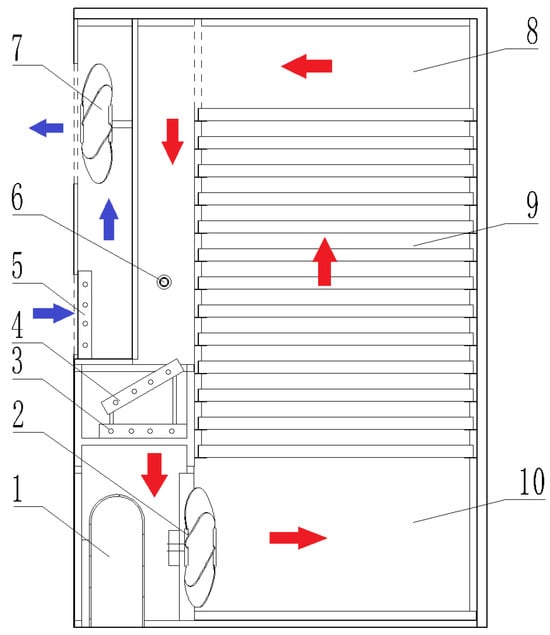
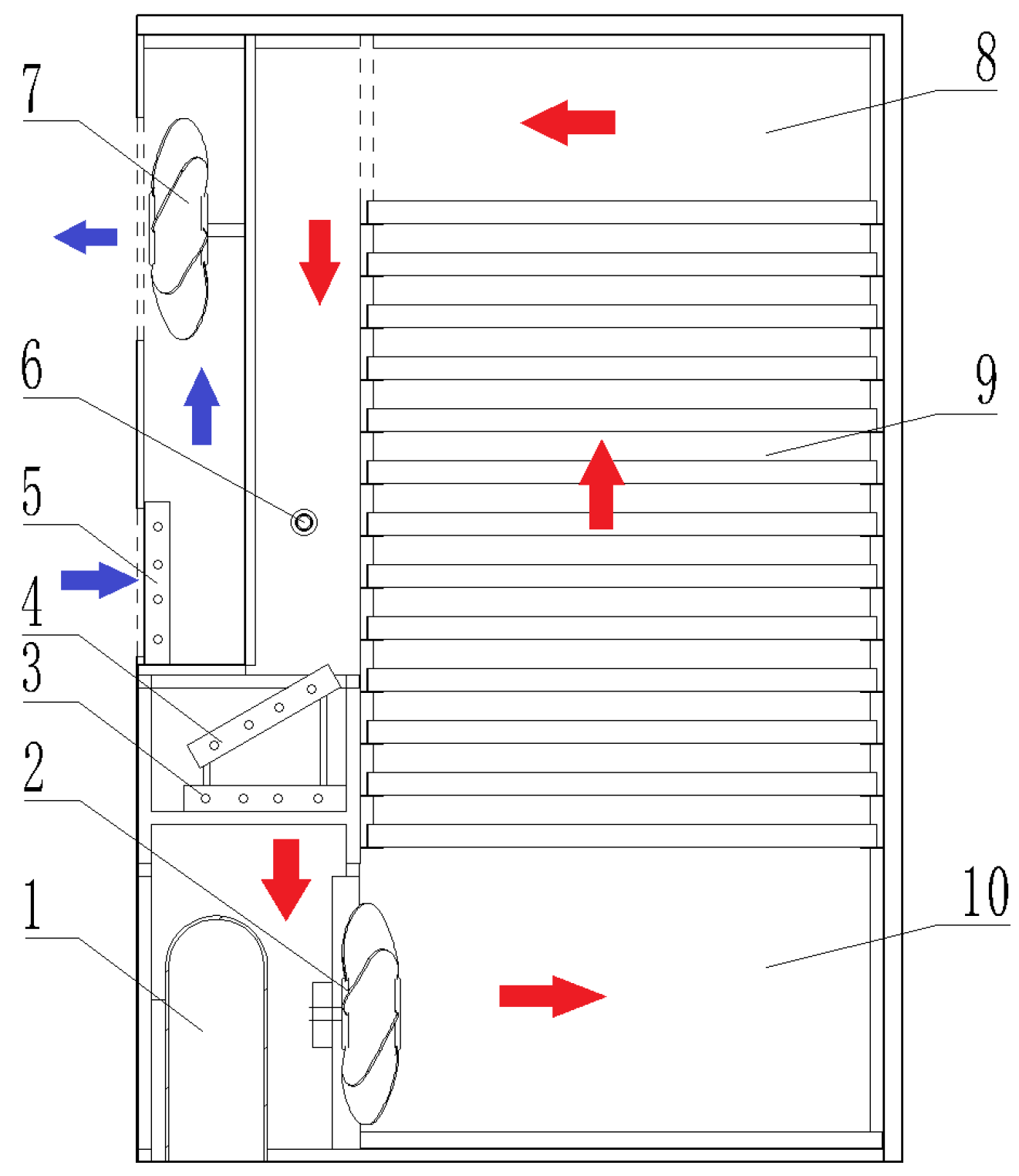
In this study, a closed heat pump drying oven (L3.5TB1, Shandong Fubo Education Technology Co., Ltd., Jinan, China) was used to dry apple slices. Figure 1 showed the two-dimensional diagrams of the heat pump dryer. The heat pump dryer consisted of a heat pump unit, a drying chamber, a circulating fan, external fan and other auxiliary components. A multi-layer tray rack was installed along the vertical axis of the drying chamber, where the drying medium flows upward through the trays to achieve material drying.
Figure 1.
The two-dimensional diagram of closed heat pump dryer. 1. Compressor; 2. circulation fan; 3. condenser 1; 4. evaporator; 5. condenser 2; 6. auxiliary heating pipe; 7. external fan; 8. air outlet; 9. drying chamber; 10. air inlet.
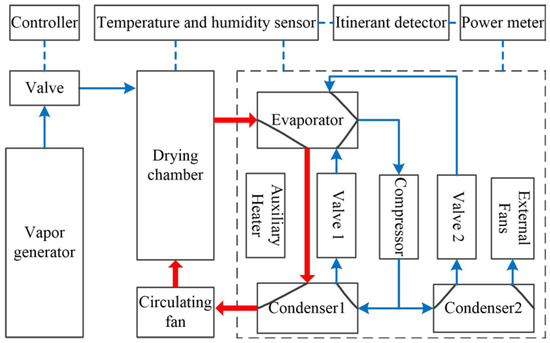
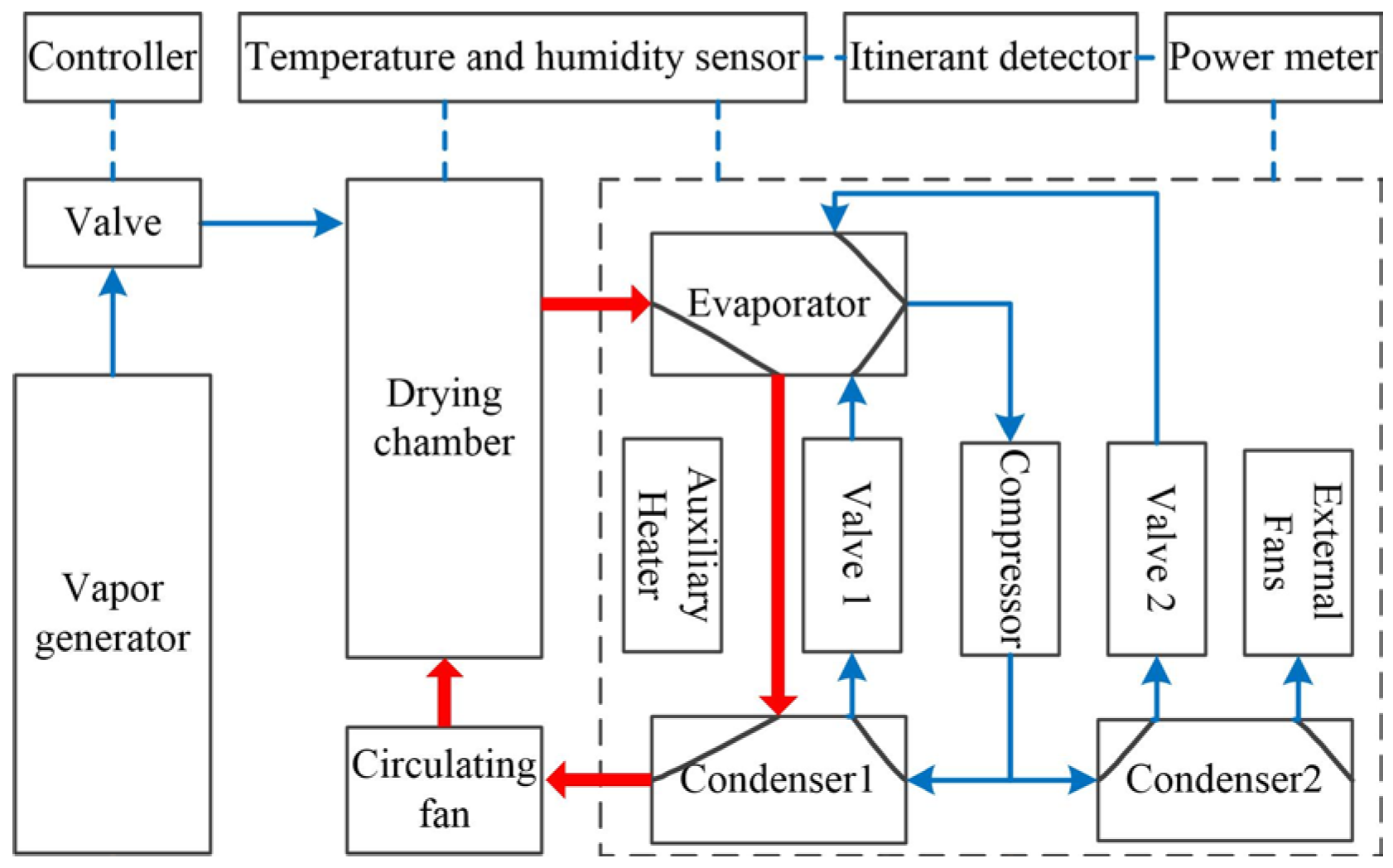
As shown in Figure 1, there are two independent circulating airflows in the drying system, namely the internal circulating airflow and the external circulating airflow. Driven by the circulation fan, the internal circulating air flows through the drying chamber, where the drying air transfers heat to the material and removes the evaporated moisture, causing its temperature to drop and humidity to rise. The air then passes through the auxiliary heater, evaporator, and condenser 1 for dehumidification and reheating, before re-entering the drying chamber to continue the drying process. The auxiliary heating pipe was used to rapidly increase the temperature of the internal circulating air. The evaporator and condenser 1 were responsible for the dehumidification and reheating of internal circulating airflow. The external circulating air flowed through condenser 2 driven by the external fan. As shown in Figure 2, condenser 1 and condenser 2 were connected in parallel to the compressor outlet, and valves were employed to regulate the on/off state of refrigerant cycles to achieve controllable heat transfer of the internal circulating airflow and the external circulating airflow. When the drying medium temperature surpassed the target value, the condenser 2 discharged excess heat from the drying chamber to the outside.
Figure 2.
The schematic diagram of test device.
As shown in Figure 2, to ensure the compliance of the actual and the target values, the heat pump drying equipment was integrated with a temperature and humidity control system and equipped with multiple sets of temperature–humidity sensors and power sensors. The drying chamber was equipped with a temperature sensor (PT100, TD Sensors Technology Co., Ltd., Beijing, China) and a relative humidity sensor (HSTL106WS, Huakong Xingye Technology Co., Ltd., Beijing, China) in air inlet for real-time parameter monitoring. The out power of the auxiliary heating pipe and heat pump unit were controlled according to air temperature change in the drying chamber. And the relative humidity of the drying medium within the drying chamber is regulated through steam injection from the vapor generator and the dehumidification by evaporator. When the relative humidity of the drying medium drops below the preset lower limit of the target humidity, the steam valve is activated; when it reaches or exceeds the target humidity, the valve is shut down. The temperature sensors (PT100, TD Sensors Technology Co., Ltd., China) were fitted to the surfaces of the evaporator and condenser separately. In order to obtain the dynamic energy consumption of each component in the drying system, the power meter (DTSU666, Chint Group Co., Ltd., Yueqing, China) was employed to collect real-time energy consumption data of key components in the drying system, including the compressor, auxiliary heater, and fan.
2.3. Experimental Procedure
Heat pump drying of apple slices was analyzed for the drying characteristics and energy utilization of the drying system in June 2025 in the agricultural product drying laboratory of the Shandong Academy of Agricultural Machinery Sciences. Before the experiments, the heat pump drying system was heated up for about 20 min to stabilize temperature and relative humidity conditions. The drying experiments were performed under precisely controlled temperature and relative humidity conditions. The temperature parameter was set within the range of 40~60 °C and the relative humidity parameter was adjusted within the range of 30~60%. The experimental design and operating parameters are summarized in Table 1.
Table 1.
The levels of experimental factors.
A thin layer of apple slices was uniformly placed on the stainless-steel wire mesh tray, with a net weight of 100 ± 10 g per tray. The mass of the sample was measured using an electronic balance (TD2002, Beijing Kang Sen technology Co., Ltd., Beijing, China) with an accuracy of ±0.01 g. The sample mass was recorded every hour during heat pump drying. After removing or placing the material trays, the drying chamber hatch was closed promptly to minimize fluctuations in the temperature and relative humidity parameters of the drying medium during the material handling process. The drying process was deemed complete when the mass change in the material within a 1 h interval was less than 0.2 g.
The condensate discharged by the evaporator was continuously collected during the drying process. And the mass of condensate was measured using an electronic balance (TD2002, Beijing Kang Sen technology Co., Ltd., Beijing, China) with accuracy of ±0.01 g. The condensate mass was recorded every ten minutes. To mitigate the impact of moisture evaporation during the weighing process, the condensate collector was designed as a closed-type chamber, which was connected to the condensate drain of the heat pump unit via a dedicated water pipe.
The temperature of the medium in the drying chamber, and the surface temperature of the evaporator and condenser were monitored by a temperature sensor (PT100, TD Sensors Technology Co., Ltd., Beijing, China) with ±0.3 °C accuracy. The RH in the drying chamber was monitored using the RH sensor (HSTL106WS, Huakong Xingye Technology Co., Ltd., Beijing, China) with an accuracy of ±2%.
2.4. Drying Kinetics
Drying kinetics characterizes the moisture migration behavior and evaporation rate of materials in the drying process. The moisture content of the drying base (M) of the apple slices during heat pump drying was determined according to Equation (2).
where mai indicated the mass of apple slices at time t, g.
The drying rate of apple slices was calculated according to Equation (3) [17].
where t1 and t2 indicated the drying time (in hours) at different time points during the drying process, respectively; and Mt1 and Mt2 indicated the moisture contents of drying basis of apple slices at time t1 and t2, g/g, respectively.
2.5. Dehumidification Kinetics
The dehumidification rate reflected the dehumidification performance of the evaporator and was calculated according to Equation (4) [18].
where mc1 and mc2 indicated the mass of condensate water at time t1 and t2, g, respectively.
2.6. Energy Analysis
The energy-consuming components of heat pump drying included the control system, circulating fan, heat pump unit and auxiliary heating unit. Due to its low power consumption, the energy consumption of the control system was neglected in this study. The power consumption (W) was calculated from the following formulas:
where Pa indicates the power of the auxiliary heating unit (kW); Pf indicates the power of the circulating fan (kW); Ph indicates the power of heat pump unit (kW); and t indicates the drying time (h).
The specific moisture extraction rate (SMER) was calculated from the following [19]:
where mwi indicates the condensation weight of water vapor on the evaporator surface (kg) and Wi indicates the power consumption of heat pump drying system (kW).
2.7. Model Validation
The mean relative error (E) for the experimental and predicted data was determined by the following equation [20]:
where n indicates the data quantity.
3. Results and Discussions
3.1. Drying Characteristics
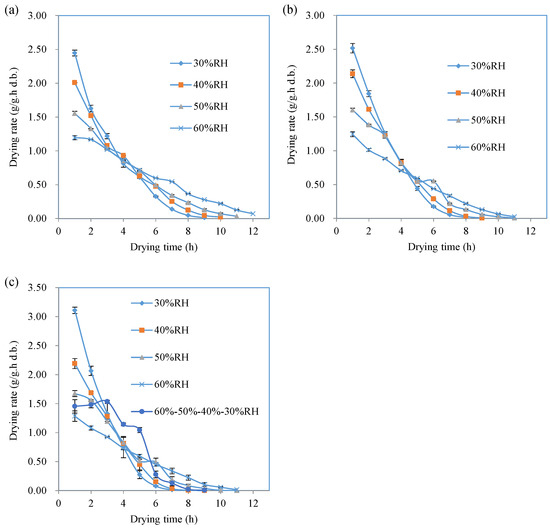
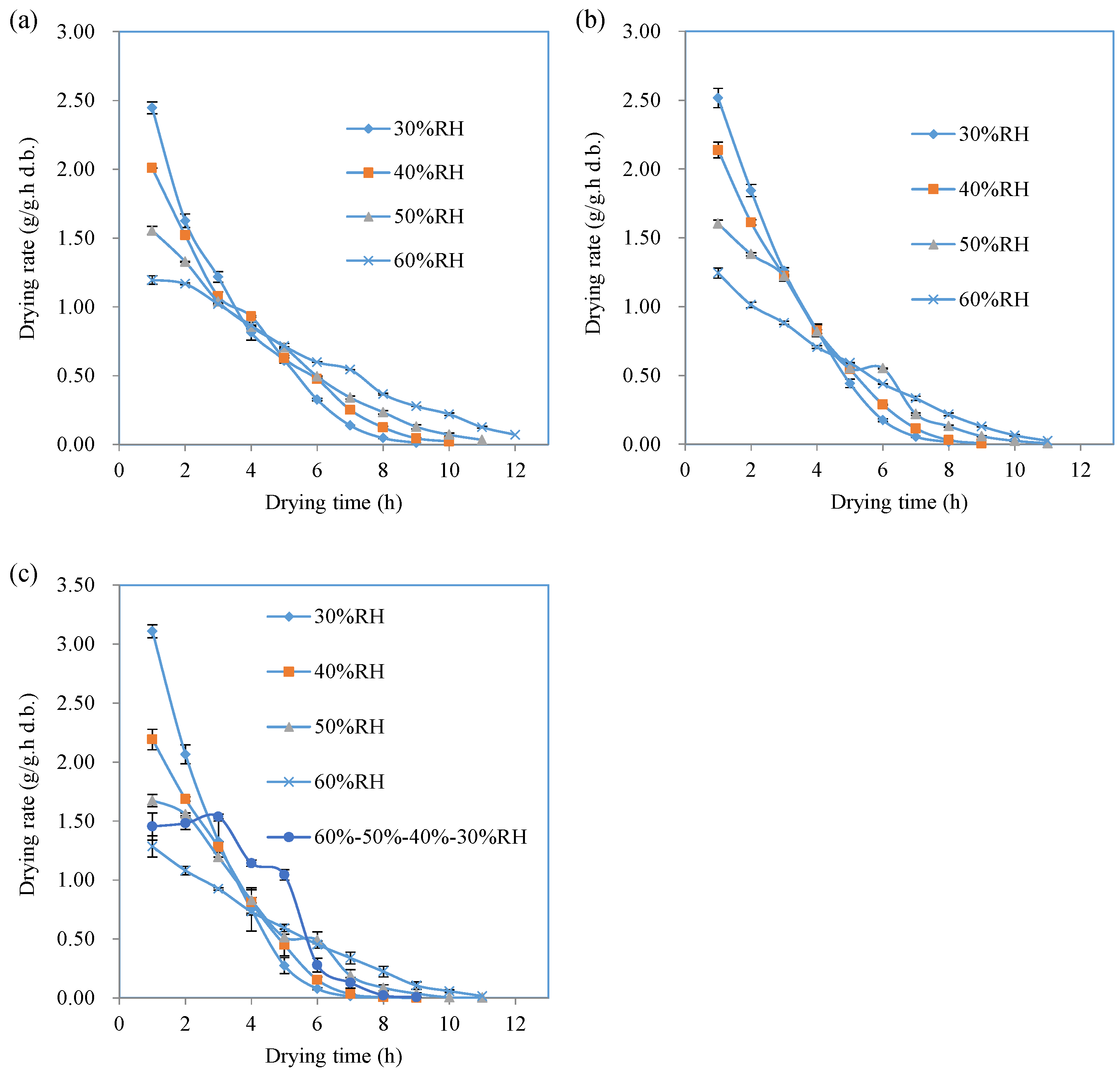
As shown in Figure 3, the drying rate of apple slices was initially high under different temperatures and RH conditions of the drying medium. As the drying proceeded, the drying rate was affected by the diffusion of moisture inside the material, leading to a rapid decline in the drying rate. This phenomenon is attributed to the fact that the high surface moisture content of the material results in rapid evaporation of material moisture at the initial stage of drying, but the drying process is dominated by internal moisture diffusion in the middle and late stages of drying, which leads to a progressive decline in the drying rate as the drying occurs [21]. The temperature and relative humidity of drying medium exerted a significant influence on the drying process of apple slices. The initial drying rate of apple slices increased with a decrease in the relative humidity of the drying medium. Under the temperatures of 40, 50 and 60 °C, the drying rate of the material under the relative humidity of 60% drying medium was reduced by 51%, 51% and 53% at the initial stage of drying, compared with 30% relative humidity. This observation can be attributed to the water vapor partial pressure gradient between the material surface and the drying medium. According to Newton’s law of cooling, the driving force for moisture evaporation is directly governed by the moisture concentration gradient [22]. The air medium has a high water vapor concentration under high relative humidity conditions, which reduces the moisture concentration gradient between the air medium and the material surface. The lower the relative humidity of drying medium is, the faster the material drying rate decreases.
Figure 3.
Drying rate curves of apple slices under different relative humidities of drying medium: (a) 40 °C temperature; (b) 50 °C temperature; (c) 60 °C temperature.
Although high relative humidity conditions reduced the drying rate, a relatively high drying rate of the material was sustained during the early drying stage. The drying rate maintained a value exceeding 1.0 g/(g·h) at 60% RH conditions. As shown in Figure 3c, there was a significant difference in the variation in drying rate between staged humidity reduction conditions and the constant humidity conditions. During the 2~3 h drying stage, the drying rate under the staged humidity reduction strategy was significantly higher than that under the constant 60% RH condition, exhibiting distinct characteristics of a constant-rate drying period. Notably, the drying process also exhibited distinct characteristics of a constant-rate drying period during the 4~5 h and 6~7 h intervals. Therefore, the drying rate could be improved by reducing the relative humidity of the drying medium in stages during the drying process. The drying process with stage-controlled humidity was also conducive to maintaining the quality of the product [23].
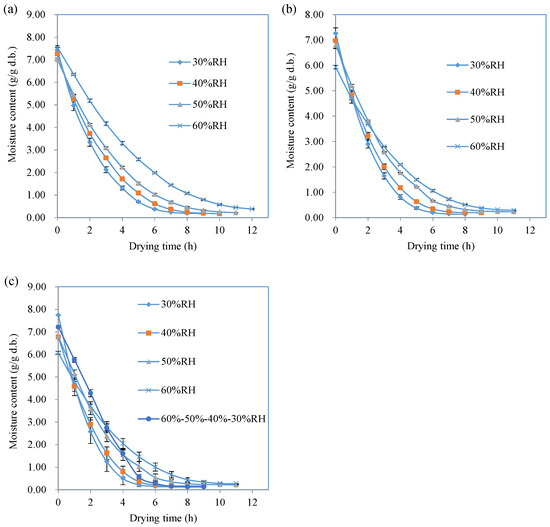
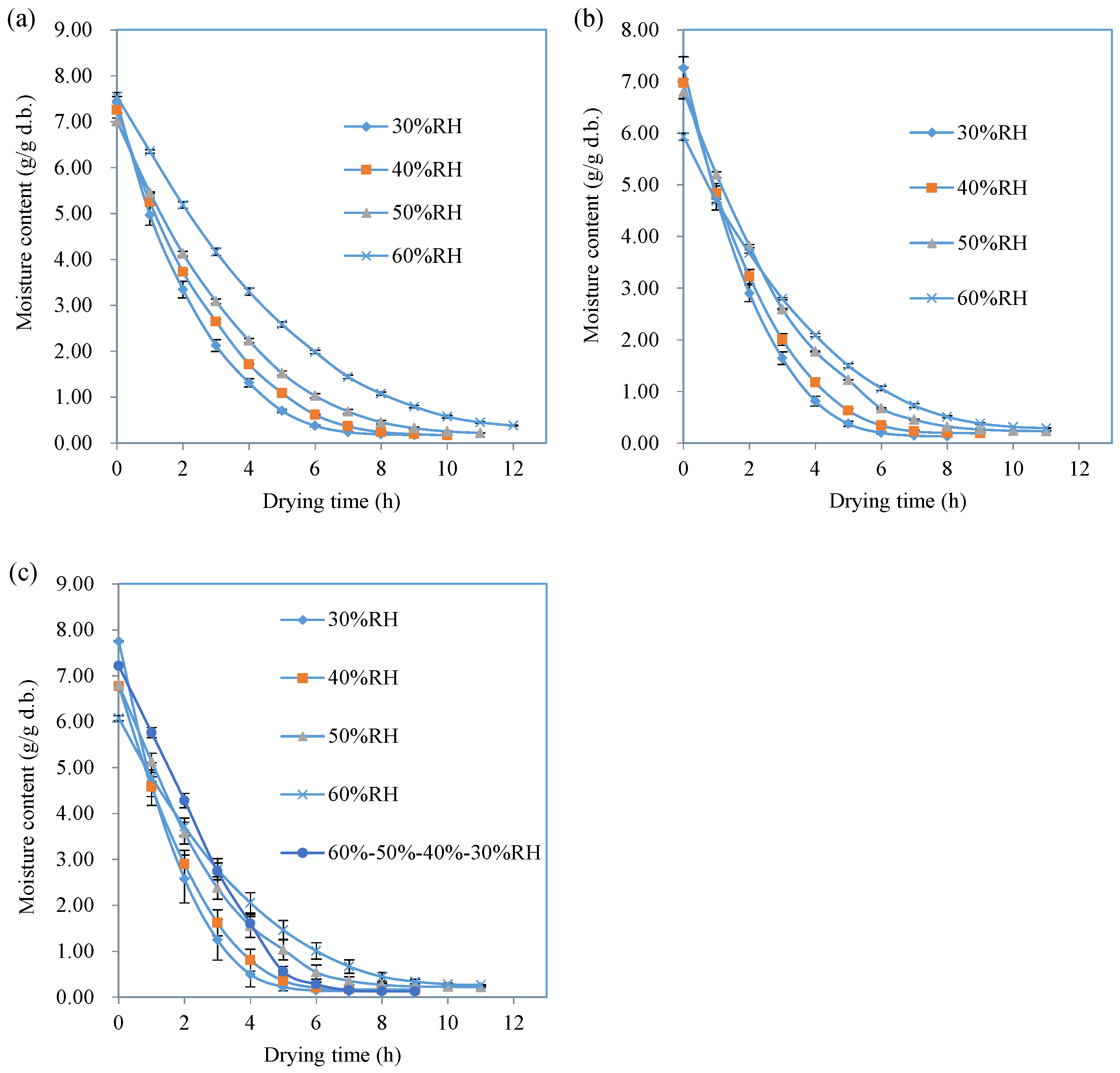
As illustrated in Figure 4, decreasing the drying temperature or increasing the relative humidity (RH) prolonged the drying time of apple slices. It should be noted that changing the temperature and relative humidity of the drying medium significantly changed the moisture content of the drying end point. Reducing the drying temperature had little effect on the final moisture content. Under the 30% relative humidity conditions, the final moisture content of the material at a drying medium temperature of 60 °C was 29.4%, lower than that at 40 °C. While decreasing the relative humidity could significantly decrease the final moisture content, under the 30% relative humidity condition, the final moisture content of the material at a 30% RH of drying medium was 52.5% lower than that at 60% RH. As shown in Figure 4c, at a drying medium temperature of 60 °C, the final moisture content of the material under the staged humidity reduction strategy exhibited no significant difference compared with that under the constant 30% relative humidity (RH) condition, whereas the drying time was prolonged by only 12.5%. High RH contributed to preserving the pore structure formation, which was conducive to moisture diffusion during hot air drying [24]. A reduction in RH led to an increased convective mass transfer coefficient, causing rapid diffusion of the material’s internal moisture at high temperatures. Therefore, constant high humidity conditions were not suitable for efficient heat pump drying of apple slices. The staged humidity reduction process was helpful to promote the drying process of apple slices, which could significantly accelerate the drying rate in the later stage of drying and reduce the final moisture content.
Figure 4.
Moisture content curves of apple slices under different relative humidities of drying medium: (a) 40 °C temperature; (b) 50 °C temperature; (c) 60 °C temperature.
3.2. Dehumidification Characteristics
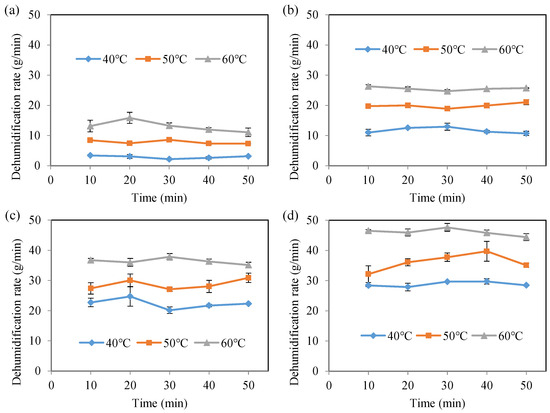
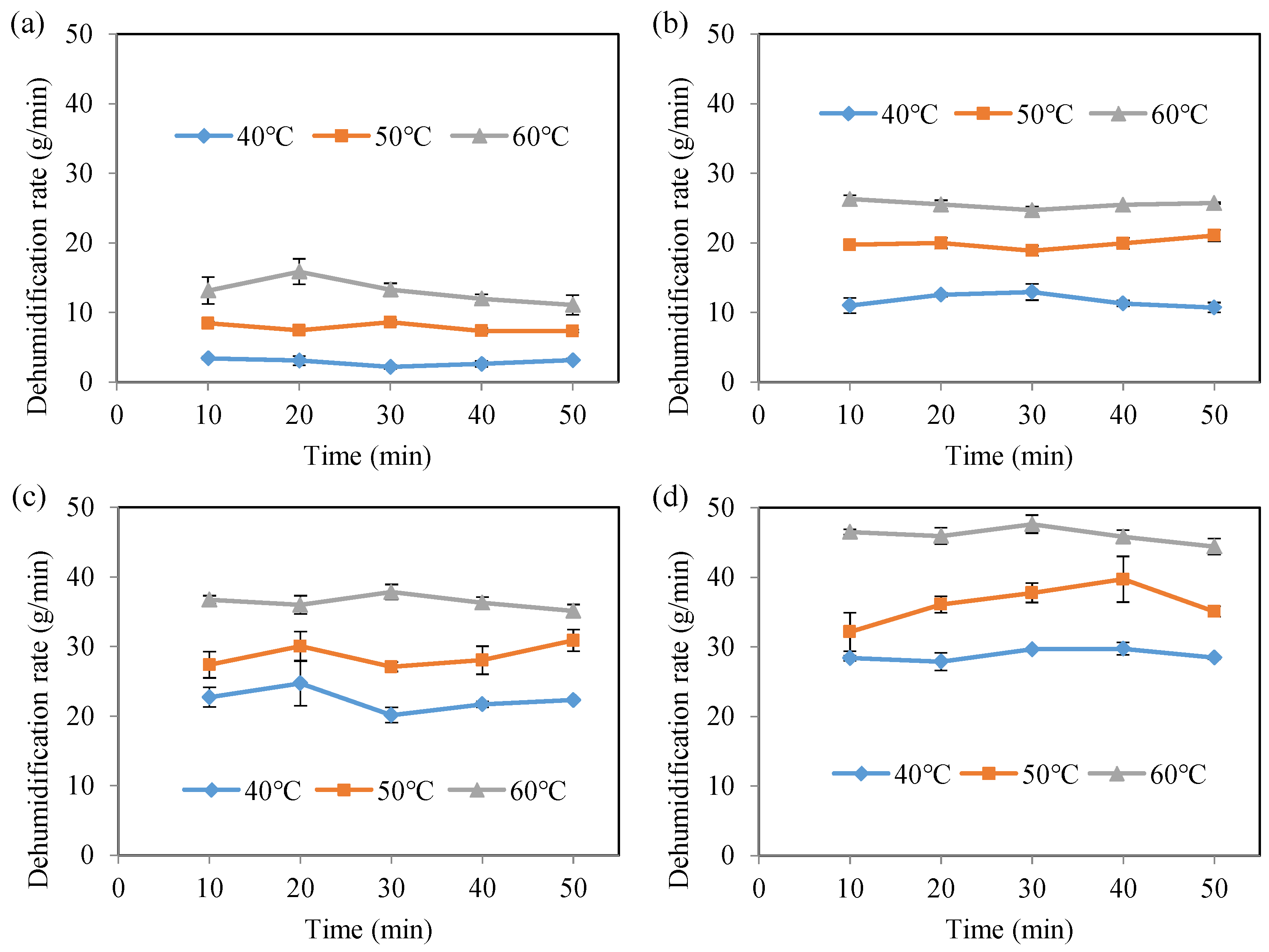
As shown in Figure 5, the dehumidification rate of the heat pump drying system remained essentially constant with the drying time during the drying process. Within the parameter range investigated in this study, the coefficient of variation in the dehumidification rate was less than 20% under constant temperature and relative humidity conditions. The temperature and relative humidity parameters exerted significant influence on the dehumidification rate of the heat pump drying system. The dehumidification rate of the heat pump drying system increased with the temperature of the drying medium under the same relative humidity conditions. Similarly, the dehumidification rate of the heat pump drying system increased with the relative humidity of the drying medium under the same temperature conditions. An increase in the water vapor concentration of the drying medium raised the equilibrium saturation temperature, thereby facilitating the attainment of the dew point temperature and subsequent liquefaction of water vapor upon contact with the evaporator surface [25]. Within the parameter range investigated in this study, when the temperature of drying medium was raised from 40 °C to 60 °C, the dehumidification rate increased by 1.3~4.5 times. When the relative humidity of drying medium is raised from 30% to 60%, the dehumidification rate increased by 3.5~10 times. Therefore, under the experimental conditions of this study, compared with temperature, the relative humidity of the drying medium is a more suitable factor to regulate for enhancing the dehumidification performance of the drying system.
Figure 5.
Dehumidification rate curves during heat pump drying under different temperatures of drying medium: (a) 30% RH; (b) 40% RH; (c) 50% RH; (d) 60% RH.
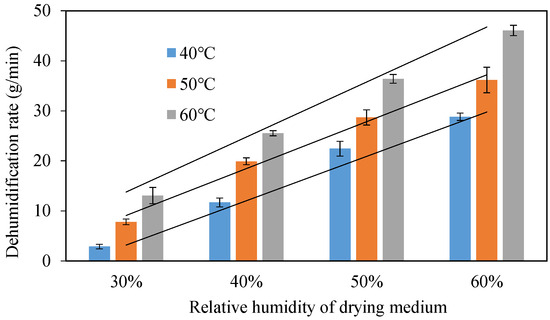
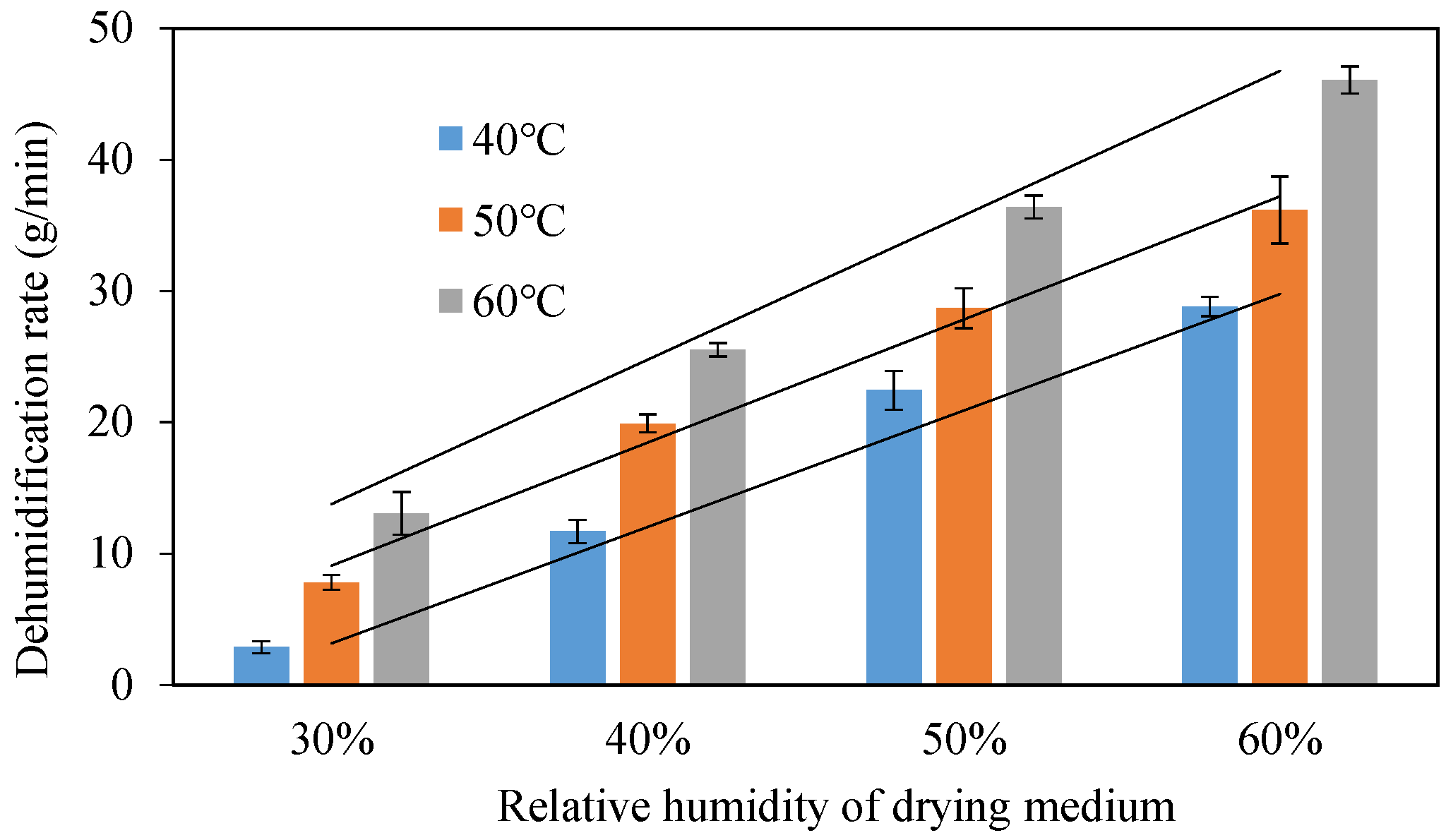
Since the dehumidification rate of the heat pump drying system was maintained at a constant value under constant temperature and relative humidity parameters, a correlation model between the temperature–humidity parameters and dehumidification rate could be established to predict the dehumidification rate during the drying process. As shown in Figure 6, a highly linear correlation existed between the combined temperature–humidity parameters and the dehumidification rate within the parameter range investigated in this study. Multiple linear regressions could quantitatively characterize the correlation between independent variables and the dependent variables through a regression function. The regression equation derived from the sample data was presented as follows:
where T indicates temperature of the drying medium (°C) and RH indicates relative humidity of the drying medium.
Figure 6.
Dehumidification rate under different temperatures and relative humidity of drying medium.
The mean relative error between the experiment values and the predicted values was 8.7%. The results showed a good agreement between predicted dehumidification rates with the experimental data from heat pump drying of apple slices.
3.3. Power Consumption
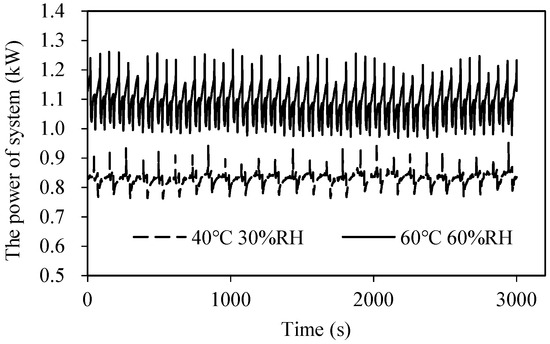
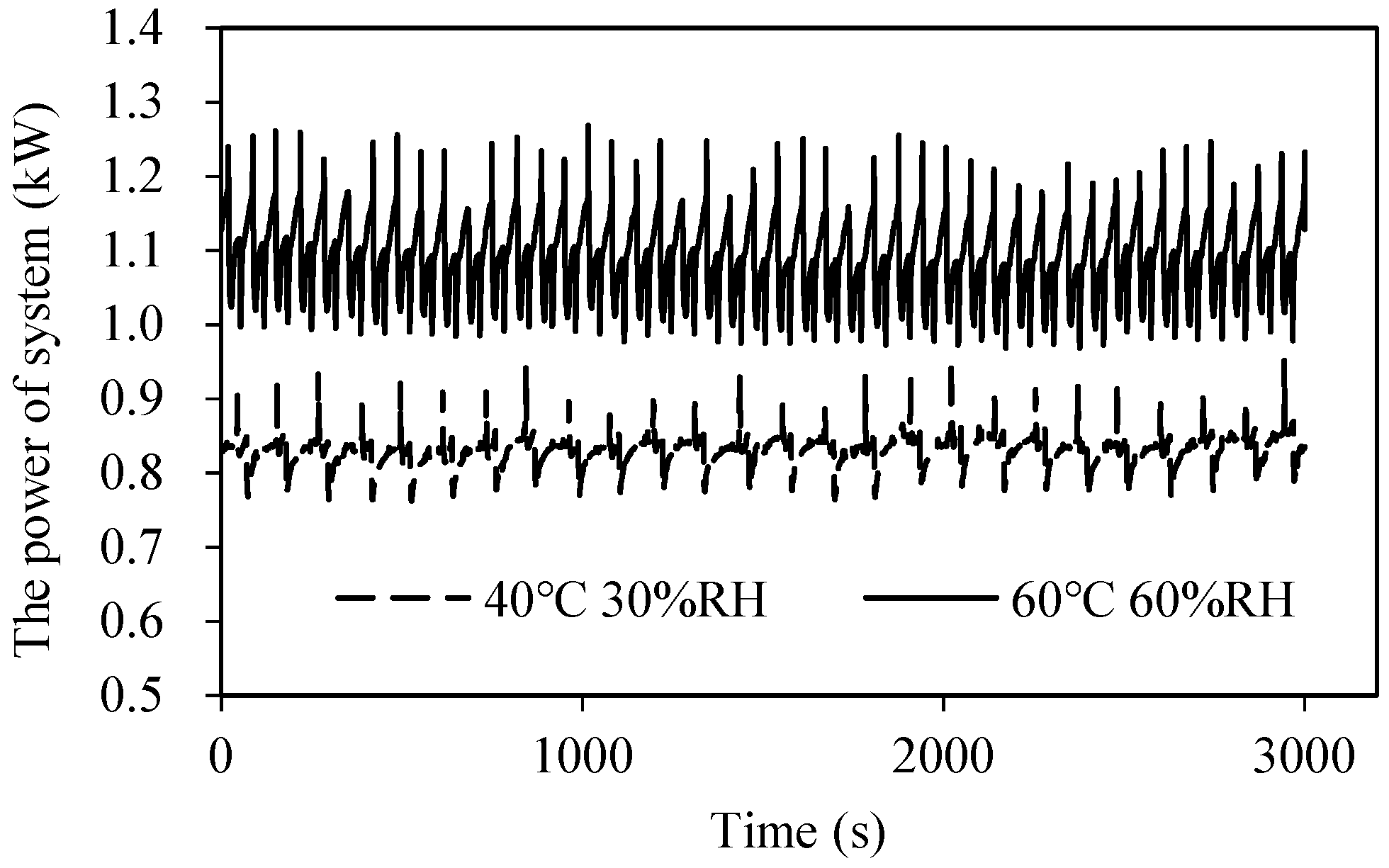
Figure 7 showed the variation curves of the power consumption during the heat pump drying process of apple slices under conditions of 30% relative humidity at 40 °C and 60% relative humidity at 60 °C. It could be observed that the power consumption of the drying system exhibited periodic fluctuations while maintaining a stable overall level. And adjusting the control set-points of temperature and relative humidity parameters for the drying medium could significantly alter the operational energy consumption of the heat pump drying system.
Figure 7.
The power variation curves of drying system during the heat pump drying.
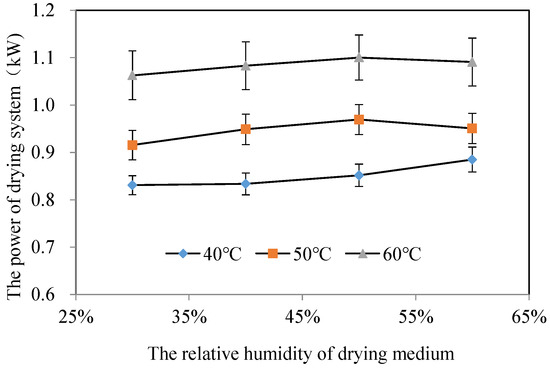
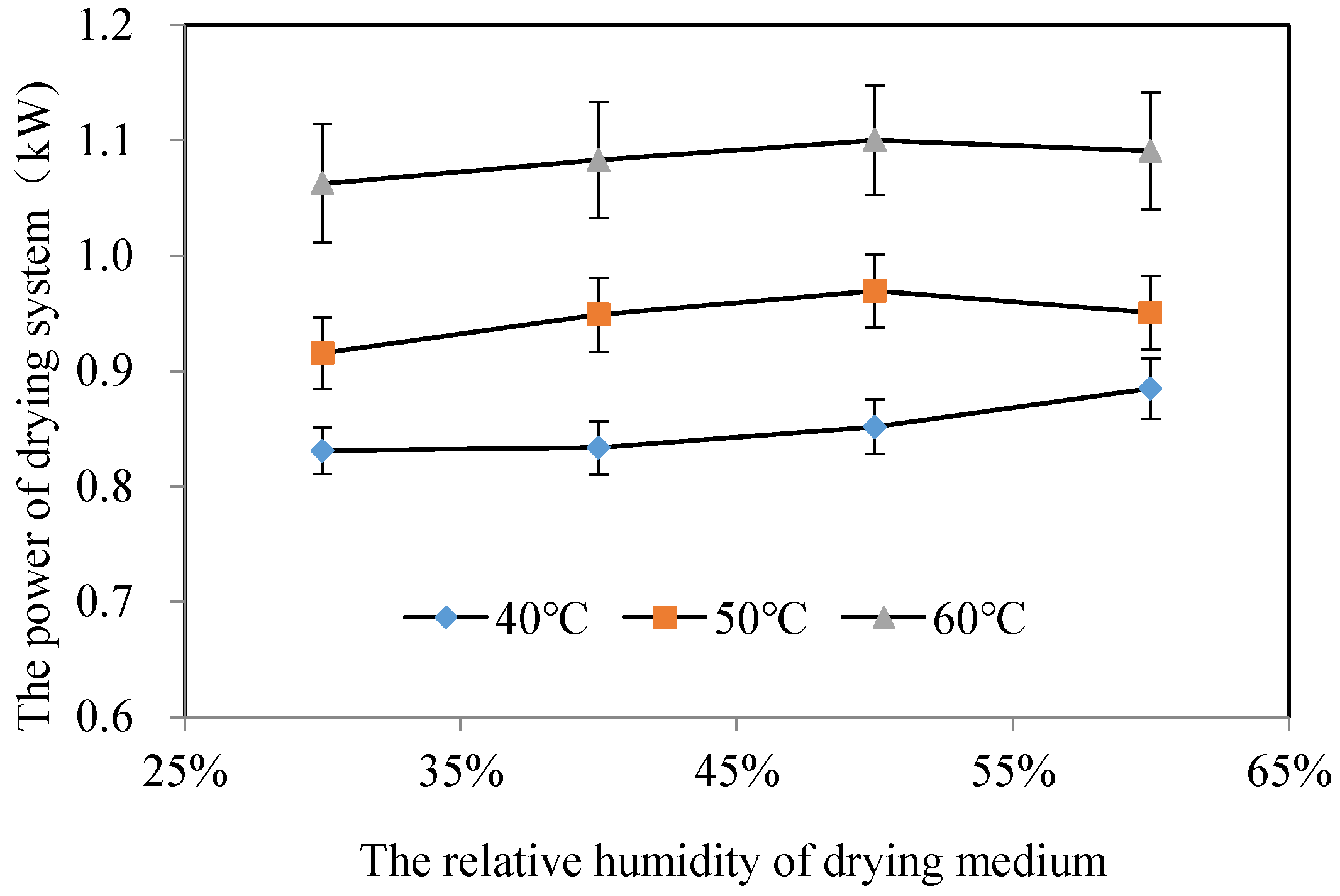
Figure 8 illustrated the average power consumption of the heat pump drying system under different temperature and relative humidity conditions. In comparison with the system power consumption recorded at a drying medium temperature of 40 °C, the power consumption increased by 23% to 30% under 30~60% relative humidity when the temperature was elevated to 60 °C. The temperature of the drying medium exerted a significant influence on the power consumption of the drying system, whereas the relative humidity of the drying medium had a relatively minor impact on this parameter under the experimental conditions investigated [26].
Figure 8.
The power of drying system under different temperatures and relative humidities of drying medium.
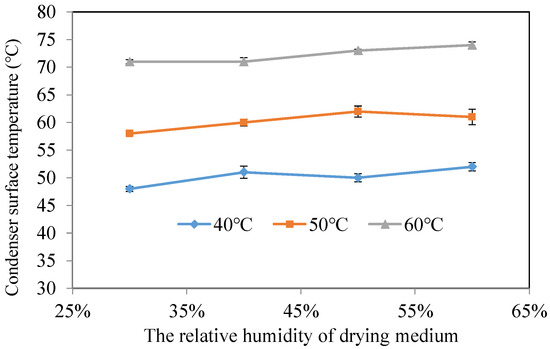
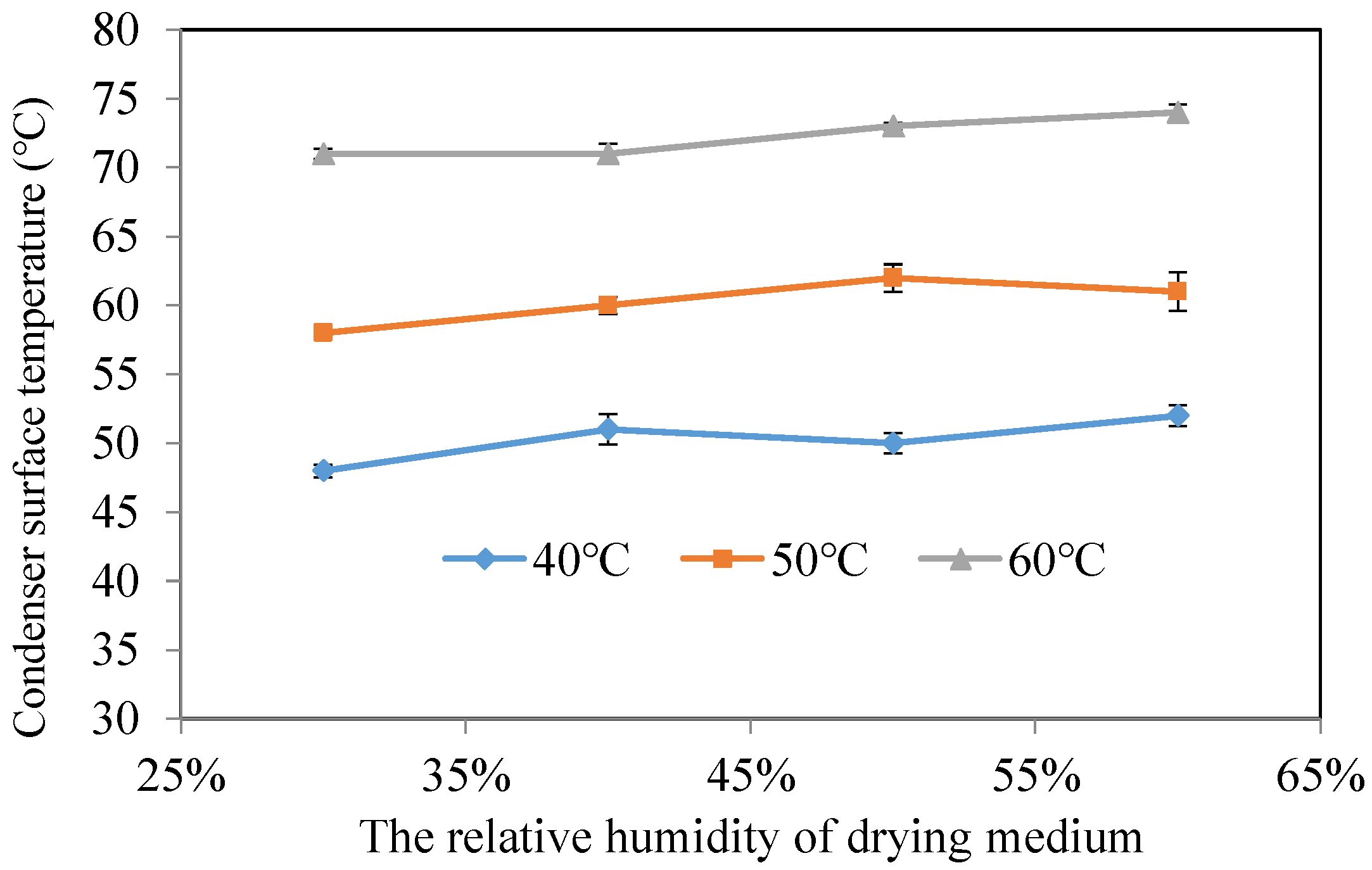
As shown in Figure 9, a higher temperature of the drying medium necessitates an elevated surface temperature of the condenser. To achieve this increased condenser surface temperature, the compressor is required to operate at a higher power input, as it needs to generate a higher discharge pressure to meet the thermal demand of the system. The surface temperature of the condenser at a drying medium temperature of 60 °C was approximately 20 °C higher than that at 40 °C. Excessively high power input to the compressor is not conducive to maintaining the stable operation of the equipment, as it may induce issues such as frequent load fluctuations or component overheating. Additionally, this elevated power input tends to result in a reduction in the coefficient of performance (COP) of the drying system. Related research showed that, with the rise in the drying temperature of the system, the heating capacity was increased, whereas the coefficient of performance (COP) was reduced [27].
Figure 9.
Surface temperature of the condenser under different temperatures and relative humidity of drying medium.
3.4. Energy Efficiency
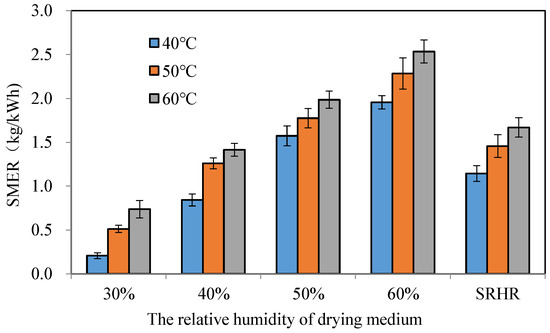
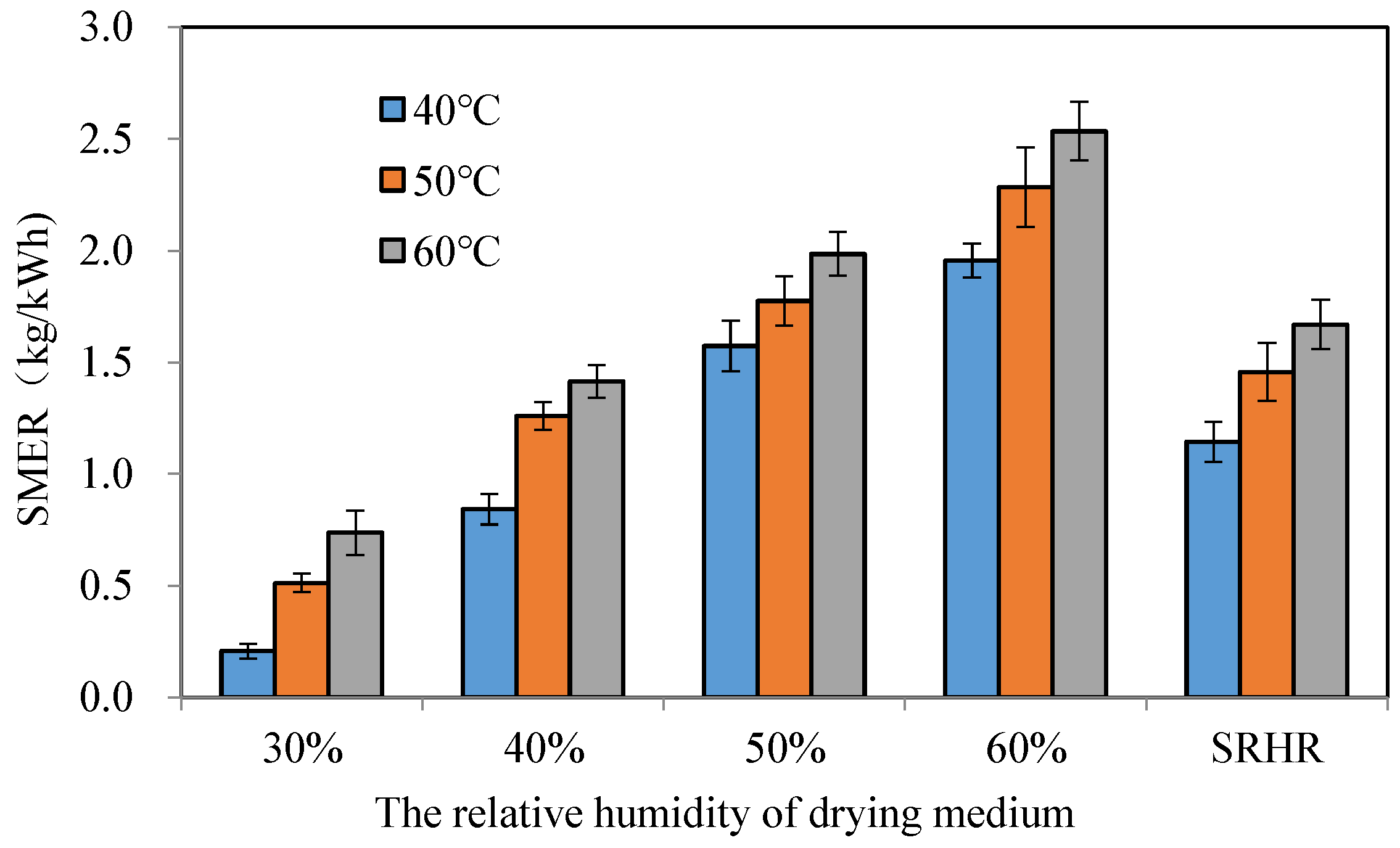
As illustrated in Figure 10, under constant relative humidity conditions, an elevation in temperature resulted in an increase in the system’s SMER. The promotion of dehumidification rate by temperature elevation under constant relative humidity conditions was a major cause of the improvement of SMER. However, increasing drying temperature lowered SMER without considering the relative humidity conditions [28]. Under the condition of maintaining constant temperature, an increase in relative humidity significantly enhanced the system’s SMER. At a drying medium temperature of 60 °C and relative humidity (RH) of 60%, the SMER reached 2.53 kg/(kW·h), which was 3.4 times the value recorded at the same temperature with 30% RH. The SMER of the drying system exceeded 2.0 kg/(kW·h) in the temperature range from 40 °C to 60 °C of the drying medium at 60% relative humidity. Under the drying processes of staged humidity reduction (SRHR), the SMER of the drying system achieved 1.46 and 1.67 kg/(kW·h) at drying temperatures of 50 and 60 °C, respectively. SMER values were higher than the values reported to be between 0.8 and 1.2 kg/(kW·h), thus demonstrating the superior moisture removal efficiency of the proposed drying process [29]. Given the slow drying rate of materials under constant high relative humidity (RH) conditions, staged humidity reduction was more applicable to the heat pump drying systems for apple slices. It not only guarantees high drying efficiency but also delivers remarkable energy-saving benefits.
Figure 10.
Specific moisture extraction rate under different temperatures and relative humidity of drying medium.
4. Conclusions
In this study, apple slices were dried by a heat pump drying system under various temperature and relative humidity conditions. The result showed that the temperature and humidity parameters of the drying medium had a significant impact on the drying characteristics of the material, as well as the dehumidification rate and energy consumption of the heat pump drying system. When the relative humidity of the drying medium exceeded 50%, the final moisture content of the material increased significantly and exceeded 20% (dry basis, d.b.). Increasing the humidity of the drying medium could enhance the dehumidification rate of the evaporator. High-temperature and high-humidity conditions in the early drying stage could improve drying energy efficiency. The staged humidity reduction process could accelerate the drying rate in the later stage of drying and reduce the final moisture content. Under the drying processes of staged humidity reduction (SRHR), the SMER of the drying system achieved 1.46 and 1.67 kg/(kW·h) at drying temperatures of 50 and 60 °C. A correlation model between the temperature–humidity parameters and dehumidification rate was established to predict the dehumidification rate during the drying process. The model showed a good agreement between predicted dehumidification rates with the experimental data and could be used to judge the drying process and control the temperature and humidity of the drying medium.
Author Contributions
Methodology, X.Y.; validation, B.C.; formal analysis, X.Y. and Z.J.; investigation, S.M. and W.W.; data curation, X.Y.; writing—original draft preparation, X.Y.; writing—review and editing, Z.L. and L.S.; visualization, X.Y.; supervision, L.S.; project administration, X.Y.; funding acquisition, X.Y. All authors have read and agreed to the published version of the manuscript.
Funding
This research was funded by the National Natural Science Foundation of China (No. 32201691).
Institutional Review Board Statement
Not applicable.
Data Availability Statement
The original contributions presented in this study are included in the article. Further inquiries can be directed to the corresponding authors.
Conflicts of Interest
The authors declare no conflicts of interest.
References
- Richter Reis, F.; De Oliveira, A.C.; Gadelha, G.G.P.; De Abreu, M.B.; Soares, H.I. Vacuum drying for extending litchi shelf-life: Vitamin c, total phenolics, texture and shelf-life assessment. Plant Foods Hum. Nutr. 2017, 72, 120–125. [Google Scholar] [CrossRef] [Scilit]
- Zhu, L.C.; Ji, X.Y.; Yang, H.; Cao, X.Z.; Wang, W.C.; Liang, M.K.; Li, J.P.; Zhang, Q.; Yang, X.H.; Geng, Z.H. Heat pump technology in the field of fruit and vegetable drying: A review. Foods 2025, 14, 2569. [Google Scholar] [CrossRef] [Scilit] [PubMed]
- Valencia Ceballos, L.A.; López-Vidaña, E.; López-Vidaña, C.K.; Escobedo-Bretado, J.; García-Valladares, O.; Martín Domínguez, I.R. Techno-economic and environmental assessment of a photovoltaic-thermal (PV-T) solar dryer for habanero chili (Capsicum chinense): 4E (energy, economic, embodied and environmental) analysis. Renew. Energy 2025, 245, 122758. [Google Scholar] [CrossRef] [Scilit]
- Tikhomirov, D.; Khimenko, A.; Kuzmichev, A.; Budnikov, D.; Bolshev, V. Raising the Drying Unit for Fruits and Vegetables Energy Efficiency by Application of Thermoelectric Heat Pump. Agriculture 2024, 14, 922. [Google Scholar] [CrossRef] [Scilit]
- Tunkal, C.; Yüksel, A.; Cokun, S. Exergy analysis of banana drying process via a closed-loop air source heat pump system. Energy Sources Part A Recovery Util. Environ. Eff. 2022, 44, 6777–6792. [Google Scholar] [CrossRef] [Scilit]
- Liu, H.L.; Yousaf, K.; Yu, Z.W.; Riaz, A.; Nyalala, I.; Chattha, M.W.A.; Chen, K.J. Drying process optimization of garlic slices in closed-loop heat pump drying system by box-behnken design. J. Food Process. Preserv. 2022, 46, e16190. [Google Scholar] [CrossRef] [Scilit]
- Yu, X.Y.; Wu, W.D.; Wang, J.; Jin, Y.F.; Li, Z.B. Experimental study on effect of drying air supply temperature on performance of a quasi-two-stage closed loop heat pump drying system for Lentinus edodes. Renew. Energy 2022, 201, 1038–1049. [Google Scholar] [CrossRef] [Scilit]
- Luo, L.; Yang, B.; Zhu, W.X.; Ren, G.Y.; Duan, X.; Kang, X.Y. Degradation kinetics of functional components of honeysuckle flowers during controlled-atmosphere heat pump drying. Int. J. Agric. Biol. Eng. 2016, 9, 159–168. [Google Scholar] [CrossRef]
- Dai, J.W.; Rao, J.Q.; Wang, D.; Xie, L.; Xiao, H.W.; Liu, Y.H.; Gao, Z.J. Process-based drying temperature and humidity integration control enhances drying kinetics of apricot halves. Dry. Technol. 2015, 33, 365–376. [Google Scholar] [CrossRef] [Scilit]
- Zhang, L.Z.; Jiang, L.; Adnouni, M.; Li, S.; Zhang, X.J. Numerical study on the variable-temperature drying and rehydration of shiitake. Foods 2024, 13, 3356. [Google Scholar] [CrossRef] [Scilit]
- Dumitru Veleșcu, I.; Nicoleta Rațu, R.; Arsenoaia, V.-N.; Roșca, R.; Marian Cârlescu, P.; Țenu, I. Research on the Process of Convective Drying of Apples and Apricots Using an Original Drying Installation. Agriculture 2023, 13, 820. [Google Scholar] [CrossRef] [Scilit]
- Xing, T.Y.; Luo, X.; Li, M.; Wang, Y.F.; Deng, Z.H.; Yao, M.C.; Zhang, W.X.; Zhang, Z.D.; Gao, M. Study on drying characteristics of Gentiana macrophylla under the interaction of temperature and relative humidity. Energy 2023, 273, 127261. [Google Scholar] [CrossRef] [Scilit]
- Jiang, D.L.; Li, C.C.; Lin, Z.F.; Wu, Y.T.; Pei, H.J.; Zielinska, M.; Xiao, H.W. Experimental and numerical study on the shrinkage-deformation of carrot slices during hot air drying. Int. J. Agric. Biol. Eng. 2023, 16, 260–272. [Google Scholar] [CrossRef] [Scilit]
- Zhu, L.; Ji, X.; Gu, J.; Zhang, X.; Li, M.; Zhang, Q.; Yang, X.; Geng, Z. Staged Temperature- and Humidity-Controlled Combined Infrared Hot-Air Drying (TH-IRHAD) of Sea Buckthorn Reduces Drying Time, Energy Consumption, and Browning. Agriculture 2024, 14, 743. [Google Scholar] [CrossRef] [Scilit]
- Sezen, K.; Gungor, A. Performance analysis of air source heat pump according to outside temperature and relative humidity with mathematical modeling. Energy Convers. Manag. 2022, 263, 115702. [Google Scholar] [CrossRef] [Scilit]
- Aktas, M.; Sevik, S.; Özdemir, M.B.; Gönen, E. Performance analysis and modeling of a closed-loop heat pump dryer for bay leaves using artificial neural network. Appl. Therm. Eng. 2015, 87, 714–723. [Google Scholar] [CrossRef] [Scilit]
- Wang, L.X.; Wang, J.; Wang, K.H.; Qin, Y.L.; Chang, Z.S.; Wang, J. Effects of corona discharge plasma pretreatment on the drying kinetics and quality attributes of lily (Lilium lancifolium thunb.) bulbs. Food Sci. Technol. 2024, 200, 116192. [Google Scholar] [CrossRef] [Scilit]
- Wang, J.L.; Song, W.D.; Jin, C.Q.; Ding, T.H.; Wang, M.Y.; Wu, J.J. Research on energy-saving experimental of critical dehumidification of combined drying by dehumidification wheel and heat pump. J. Food Qual. 2021, 2021, 6635517. [Google Scholar] [CrossRef] [Scilit]
- Dincer, I.; Bicer, Y. Chapter 1-Energy, environment and sustainable development. In Integrated Energy Systems Revisited: Multigeneration; Elsevier: Amsterdam, The Netherlands, 2020; pp. 1–31. [Google Scholar] [CrossRef] [Scilit]
- Castell-Palou, A.; Rosselló, A.; Femenia, A.; Bon, J.; Simal, S. Moisture profiles in cheese drying determined by TD-NMR: Mathematical modeling of mass transfer. J. Food Eng. 2011, 104, 525–531. [Google Scholar] [CrossRef] [Scilit]
- Yu, X.L.; Zielińska, M.; Ju, H.Y.; Mujumdar, A.S.; Xiao, H.W. Multistage relative humidity control strategy enhances energy and exergy efficiency of convective drying of carrot cubes. Int. J. Heat Mass Transf. 2019, 149, 119231. [Google Scholar] [CrossRef] [Scilit]
- Onwude, D.I.; Hashim, N.; Abdan, K.; Janius, R.; Chen, G. Numerical modeling of radiative heat and mass transfer for sweet potato during drying. J. Food Process. Preserv. 2018, 42, 13741. [Google Scholar] [CrossRef] [Scilit]
- Zheng, X.; Cui, C.; Wang, X.; Hao, J.; Zhao, D. Effects of temperature and humidity on drying kinetics, final quality and cell wall pectin content of wolfberry (Lycium barbarum). Dry. Technol. 2025, 43, 726–737. [Google Scholar] [CrossRef] [Scilit]
- Ju, H.Y.; Vidyarthi, S.K.; Karim, M.A.; Yu, X.L.; Zhang, W.P.; Xiao, H.W. Drying quality and energy consumption efficient improvements in hot air drying of papaya slices by step-down relative humidity based on heat and mass transfer characteristics and 3d simulation. Dry. Technol. 2023, 41, 460–476. [Google Scholar] [CrossRef] [Scilit]
- Yu, X.L.; Ju, H.Y.; Mujumdar, A.S.; Zheng, Z.A.; Wang, J.; Deng, L.Z.; Gao, Z.J.; Xiao, H.W. Experimental and simulation studies of heat transfer in high-humidity hot air impingement blanching (HHAIB) of carrot. Food Bioprod. Process. 2019, 114, 196–204. [Google Scholar] [CrossRef] [Scilit]
- Wang, D.; Cao, X.; Li, X.; Li, Y.; Wang, X. Experimental investigation of a part air dehumidification cascade-like heat pump drying system. Int. J. Refrig. 2021, 131, 235–243. [Google Scholar] [CrossRef] [Scilit]
- Meng, Z.; Zhang, F.; Liu, Y.; Zhang, Y.; Zhou, D.; Huo, Z.; Ding, C. Experimental study on thermal performance of a closed heat pump drying system. Case Stud. Therm. Eng. 2023, 51, 103590. [Google Scholar] [CrossRef] [Scilit]
- Zhou, Y.C.; Liu, H.; Xin, S.C.; Luo, J.H.; Zhang, C.J.; Lv, X.Y.; Bai, Y.B.; Zhang, X. Study on the performance of closed-loop heat recovery heat pump drying systems under different operating conditions. Case Stud. Therm. Eng. 2025, 74, 106718. [Google Scholar] [CrossRef] [Scilit]
- Deymi-Dashtebayaz, M.; Mostafa, A.; Asadi, M.; Hosseinzadeh, D.; Khutornaya, J.; Sergienko, O. Recent developments in heat pump dryers focusing on methods of supplying and reducing their energy consumption. J. Therm. Anal. Calorim. 2024, 149, 9751–9775. [Google Scholar] [CrossRef] [Scilit]

Disclaimer/Publisher’s Note: The statements, opinions and data contained in all publications are solely those of the individual author(s) and contributor(s) and not of MDPI and/or the editor(s). MDPI and/or the editor(s) disclaim responsibility for any injury to people or property resulting from any ideas, methods, instructions or products referred to in the content. |
© 2026 by the authors. Licensee MDPI, Basel, Switzerland. This article is an open access article distributed under the terms and conditions of the Creative Commons Attribution (CC BY) license.