Article

A Grower Perspective on the Modern Integrated Pest Management Paradigm

1
Horticulture Development Department, Teagasc Ashtown Research Centre, D15 DY05 Dublin, Ireland
2
School of Life Sciences, University of Warwick, Coventry CV4 7AL, UK
3
Agronomy and Agriculture Institute, University of the Highlands and Islands, East Road, Kirkwall KW15 1LX, UK
4
Rural Economy & Development Centre, Ashtown, D15 KN3K Dublin, Ireland
*
Author to whom correspondence should be addressed.
Agriculture 2026, 16(6), 634; https://doi.org/10.3390/agriculture16060634
Submission received: 6 February 2026 / Revised: 6 March 2026 / Accepted: 8 March 2026 / Published: 10 March 2026
(This article belongs to the Section Crop Protection, Diseases, Pests and Weeds)

Abstract

Integrated Pest Management (IPM) is a well-established framework for agricultural crop protection. IPM has typically been represented as a pyramid of practices, beginning at the base with agronomic and cultural approaches and gravitating upwards towards chemical plant protection products. However, this representation is an insufficient description of IPM adoption at the farm level as it cannot incorporate the many challenges faced by farmers and growers. This paper presents an alternative approach to contextualize horticultural IPM based on a sample of commercial vegetable and fruit growers from the Republic of Ireland (N = 45), based on an existing model. This model incorporates the management, business, and sustainability aspects influencing IPM adoption. Utilization of the model on data collected from growers through a series of semi-structured interviews contributed to a. a comprehensive exploration of the type of IPM tools being used and b. contextualized analysis of the data with the intention of capturing grower perspectives. The findings highlight a crop and production system effect on the type of IPM tools used by the growers and suggest influence from a range of internal and external motivating and limiting factors. Excerpts from the grower interviews underline the complexity of IPM and draw attention to the lack of grower-centricity captured by IPM paradigms heretofore.

1. Introduction

Integrated Pest Management (IPM) is a well-established framework for managing crop health. It incorporates a range of strategic and tactical practices in managing pests (invertebrates, weeds, diseases), optimally integrating physical, mechanical, cultural, biological, and chemical controls [1]. At the farm level, different coalescing forces impact the way in which IPM strategies are applied. These forces may be (i) physical or biological in nature, referring to, for instance, shifting pest or disease pressures, production systems, crop type, climate, soil conditions [2,3,4,5,6,7,8], (ii) behavior of the grower, determined by knowledge, education, experience, personality, attitude and perception [9,10,11,12,13,14,15,16,17,18,19] and (iii) economic and legislative forces such as business models, subsidies, market requirements and public policy [20,21,22,23,24,25,26,27,28,29,30,31,32]. These forces underpin the complexity of practical IPM and impact on the way it is understood, implemented, measured and reported by growers.

1.1. A Modern IPM Paradigm

Over the course of almost seven decades, IPM has navigated a trajectory from the predominantly ecological (IPM 1.0) [33] through numerous iterations, inclusive of innovations and technologies (IPM 2.0) [34] to a much broader conceptual framework (IPM 3.0) [35]. These developmental iterations have been crucial in extending the boundaries of IPM as a crop protection approach but have not been sufficiently far-reaching in placing the grower at the epicenter of the paradigm. A criticism of the IPM measurement literature, for instance, is that researchers, rather than growers, identify practices to be measured [36,37], effectively imposing a bias on the practices that constitute IPM at the farm level.
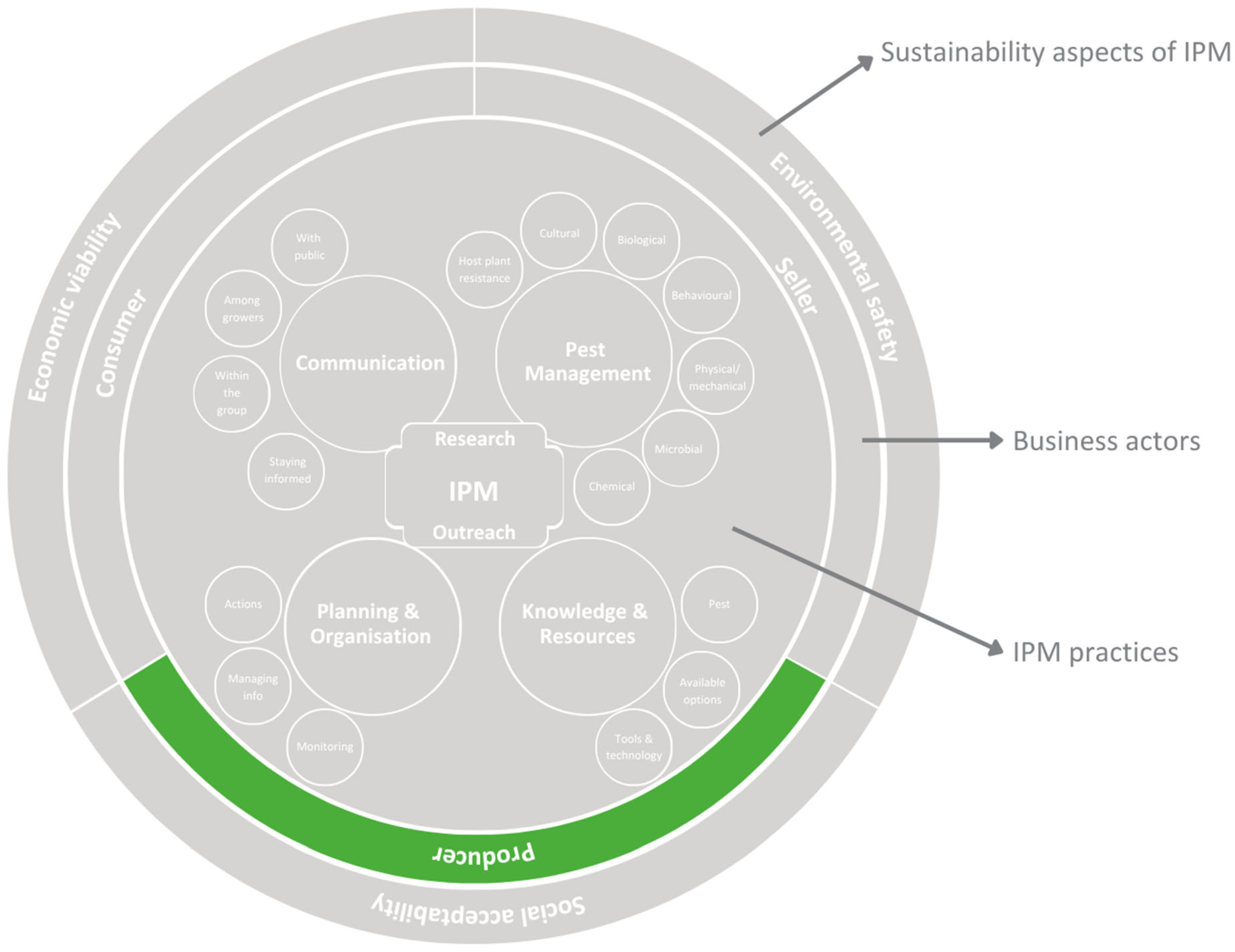
Traditionally, IPM has been represented as a pyramid [38,39,40]. The pyramid concept stacks or juxtaposes the main tactics of IPM, largely overlooking the holistic and integrative approach required for optimal synergy of strategies and tactics [34]. Dara [41] captures some of the forces impacting IPM adoption in an interpretative shift from the pyramidal representation. Dara’s model (replicated in Figure 1) conceptually integrates IPM into a systemic landscape by incorporating some of the key externalities that impact the way in which IPM is understood and practiced at the farm level [42,43]. The model emanates outwards, starting with the crop health management components; that is, the primary IPM practices available to a grower. Immediately encircling these are the business actors involved in IPM. The outermost circle incorporates the sustainability aspects likely impacting adoption. The model thus encapsulates the multiplicity of externalities influencing horticultural food production, constituting a generic framework against which specific contexts of IPM practice can be investigated and documented. Within the Dara framework, equal weighting is attributed to all components and aspects. For instance, of the four IPM practice components, communication is depicted as being as important as knowledge and resources or direct pest management. Likewise, the outer aspects relating to business and sustainability are weighted equally, as are the three components within each. It is the proposition of this paper that, when applied to a specific agricultural context, the relative weightings of the aspects and components contained in the framework will differ according to the particular features of that context. It is further proposed that the aspects and components may assume qualities of positivity and negativity based on whether their perceived influence is motivating or limiting.
According to the literature, IPM is nuanced and sensitive to context-specific externalities [44]. Indeed, Dara [41] acknowledges a lack of uniformity of IPM at the farm level and its model does not attempt to represent grower-level IPM. Thus, while the model successfully proposes a high-level sketch of IPM and the factors influencing food production, it necessitates interpretation through a localized lens to be more meaningfully substantive. In other words, the top-down view of IPM needs to be tested from the growers’ perspective for proportionality and accurate representation of influences, grounded in the proposition that applying the model to a specific situation will elicit a more graded portrayal of IPM. In horticulture, IPM is an important framework for pest management. It is mandatory in the European Union (EU) [45] not only as a sustainable approach to the management of crop pests, weeds and diseases but as a key protocol in the reduction of pesticides.

1.2. The Practice/Theory Divide

Growers are the gatekeepers of horticultural IPM. It is they who apply IPM at the field and farm level [46,47], ultimately dictating the success or otherwise of IPM policies and regulations. Farm level IPM is inclusive of a complex hierarchy of practical considerations, motivations and limitations. Building grower perception and feedback into IPM discourse is therefore a critical component of its evolution and essential in the facilitation of the shift in focus from IPM for farmers (top down) to IPM by farmers (bottom up) [48]. The literature offers insight as to the nature of the divide. Morse and Buhler [49] express concern about the paradigmatic approach to field science, whereby the approach to crop health is most commonly framed through IPM as opposed to the farmer as practitioner. The proliferation of the pyramidal or step-wise characterization of IPM has failed to provide growers with adequate guidance on crop health matters by diluting the synergistic potential for success of a truly integrative approach [42,50,51]. While policy is, by its very nature, broad and common in scope, research has tended to focus on the niche. Ideally, the full suite of influencing factors within any one context would be established and considered to develop an understanding of the grower-level complexity around the suitability of IPM tactics and IPM decision making. Without this fundamental appreciation for the multiplicity of considerations and pressures influencing practitioners, research and policy will maintain their distance from the scene of IPM practice; that is, the farm.

1.3. The Purpose of This Research

It is the overall purpose of this paper to extend the discourse around paradigmatic IPM to actively incorporate the practitioner, based on the view that growers are the farm-level applicators of IPM [47] and the end-users of IPM research [52]. This research uses an existing model as a point of departure. In an effort to add to the discussion around the reframing of IPM as a synergistic and not merely juxtapositional concept [34], the Dara [41] framework is utilized as a qualitative, generic prototype for portraying IPM.
A series of semi-structured interviews was conducted with commercial horticulture growers from a range of crop types and production systems in the Republic of Ireland. The key objectives of the research were twofold. First, the authors set out to identify the IPM practices employed by the sample. This ostensibly straightforward objective has not been heretofore conducted for the Irish context, reflecting a significant data gap in Irish IPM adoption literature [53]. Second, in the course of answering a core research question relating to which contextual factors modify the relative importance of the Dara model components, the analysis of grower response data was conducted. The intention of this objective was to situate farm-level IPM within the wider systemic landscape, incorporating influencing, motivating and limiting factors, which may or may not be similar to those posited by Dara or experienced by growers in other contexts. In short, the overarching aim was to develop a context-specific adaptation of the existing model informed by empirical grower data, with conceptual advancement of this framework based on the focus on the grower (producer) perspective. The research represents the first qualitative investigation into IPM in Irish food horticulture.

2. Methods

2.1. The Interview Sample

Purposive sampling [54,55,56] was used to identify current commercial growers of fresh vegetables and fruit in Ireland. A ‘typical case’ approach [57,58] delimited growers based on their expected knowledge and experience of the sector [59]. The majority of the growers were identified through the Bord Bia Sustainable Horticulture Assurance Scheme database [60], a public domain resource. Membership of this assurance scheme, the predominant one of its kind in Ireland, is required for access to the major retailer sales route [61], although this was not a criterion in defining suitable participants. Others were identified through the interview process, suggested by their peers in an organic snowball or chain approach [57].
Justification around appropriate sample size in qualitative research is inconclusive [62] and there is a lack of clarity around the population size of the Irish food horticulture sector. It is also the case that a select number of large growers produce the majority of horticultural output [63]. Estimates suggest that the number of field vegetable growers is in the region of 60 [64]; however, consolidation in numbers is ongoing [65]. Appropriate sample size was based, therefore, on the estimated land areas and attainment of saturation [66,67]. There remains little concrete direction towards a confident declaration of saturation in the literature. In this case, interviews were conducted beyond the point at which no new IPM practices were elicited from the growers [68] and the process was displaying diminishing returns [62], confirming already identified codes and themes. This occurred at approximately interview transcript 37, from which point the remaining interviews began to display patterns of ‘data replication’ [69].

2.2. The Collection of Data

Semi-structured interviews with 45 growers were held in-person (on farm) or via telephone, with a duration varying from 45 to 90 min. Interviews were conducted in the first half of 2023. Prior ethics approval was granted by the Biomedical and Scientific Research Ethics Committee of the University of Warwick (approval date 17 January 2023). The lead researcher critically reflected on how their professional background and experiences within the horticulture industry shaped the study, using extensive memo-writing to interpret participants’ perspectives transparently and maintain methodological rigor. This researcher held sole responsibility for the interviewing, processing of data and subsequent analysis. To ensure data consistency, an interview guide was utilized (Table A1). This incorporated questions around the aspects of IPM typical to the literature but was also intended to stimulate extended reflections and perspectives on IPM with a view to informing the contextualized framework. Table A1 has been retrospectively designed to incorporate the aspects of the Dara model; these were not considered in the design of the guide. It became evident early in the interview phase that IPM in practice differs by crop type and system and that not all practices are applicable to all crops. Crops were therefore segregated into three subsectors based on their production system; ‘field crops’ are any grown in an external field environment; ‘protected crops’ are semi- or permanent-protected fruit or vegetable crops; ‘top fruit crops’ in this context refers specifically to apples. This did not impact the interview guide, although responses varied according to subsector.

2.3. Data Analysis

Transcripts were uploaded to the software program NVivo12 Pro (Lumivero; Denver, CO, USA), preparation for which was in line with established best practice [70,71]. The first step of the analysis was to identify recurring IPM practices and other influencing features of note and to assign a label or code to each of these. Reyes et al. [72] define coding as the systematic process of examining data to reveal any patterns. An inductive, data-driven method [73,74] was used to establish the codes; this required an iterative, back-and-forth approach [75] between transcripts, identifying notable features in a methodical, step-wise manner and cross-relating content during a gradual refinement process. Once the codes (known as nodes in NVivo12) emerged and were assigned descriptions, they were allocated to a theme. Themes, described by Braun and Clarke [76] as “patterns of shared meaning”, are also inductive in origin, emerging organically from the coding process.
From here, a codebook was developed, comprising the codes, themes and associated descriptions found in the dataset (Section 3.2 provides further detail). The codebook served as an index [71] or dictionary [77] of findings. This process was conducted in keeping with the Reflexive Thematic Analysis (RTA) method presented by Braun and Clarke [76,78]. Beyond summarizing the dataset, RTA allows for the reliable identification and subsequent interpretation of key features of the data. It is not a theory-driven approach and was therefore found to be applicable in this instance, which sought to straightforwardly identify and communicate the specifics of a concept (IPM).

3. Results

3.1. The Interview Participants

Table 1 provides a breakdown of the number of growers by subsector and their land areas, as well as justification for the sample size based on estimated population-wide total land areas. Justification is substantiated by the literature [79,80,81]. The effect of the subsector on the type of IPM being practiced is the first finding of this research. The number of growers per individual crop has been purposefully withheld in order to maximize anonymity for the interviewees, who operate within a very small population.

3.2. Results of the Coding Process

The data coding process resulted in an indexed codebook of IPM practices and other recurring factors influencing the growers.

3.2.1. IPM Practices Employed by the Interview Sample

While the coding process was fully inductive, the resulting IPM practices were recognizable and relatable to the typical strategies and tactics found in the literature [1]. Labels were assigned to the themes (the general strategies) and codes (hereafter to be called ‘nodes’) found in the data. In total, five themes were identified. These were:
  • Preventative agronomic practices, defined as techniques based on best agronomic practice. These practices were often indirect or longitudinal in nature, strategic as well as directly tactical;
  • Monitoring and informed decision-making, which comprises the techniques and tools used by the growers to make optimum decisions on their pest management protocols;
  • Physical/biological/cultural practices. These were direct tactics applied by the grower as a means towards the avoidance or minimization of chemical intervention;
  • Chemical applications or interventions, both scheduled and as necessary, as well as specific practices relating to the judicious and precise application of chemicals;
  • Documentation and evaluation, the practice of notating, assessing, reviewing and reflecting upon strategies and tactics of an IPM plan as part of ongoing development and progression. Examples included regulatory, assurance or quality scheme documentation as well as a range of farm-level documents such as nutrient plans or crop records.
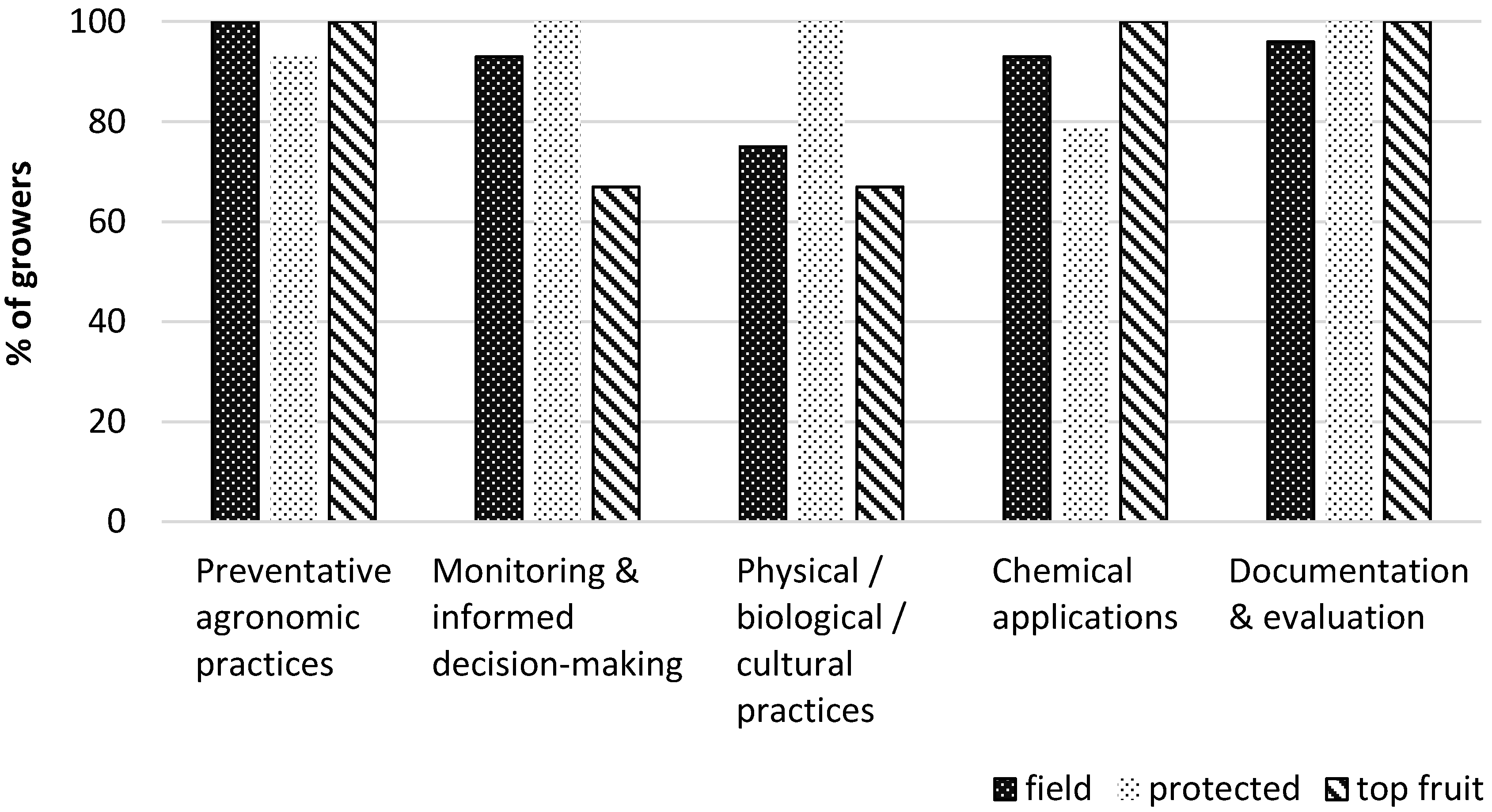
A total of 60 nodes relating specifically to IPM practices were coded within the data and assigned to one of these themes. Figure 2 illustrates the percentages of application of these five IPM themes by subsector.

3.2.2. Situating Farm-Level IPM Within the Wider Systemic Landscape: Motivating and Limiting Factors

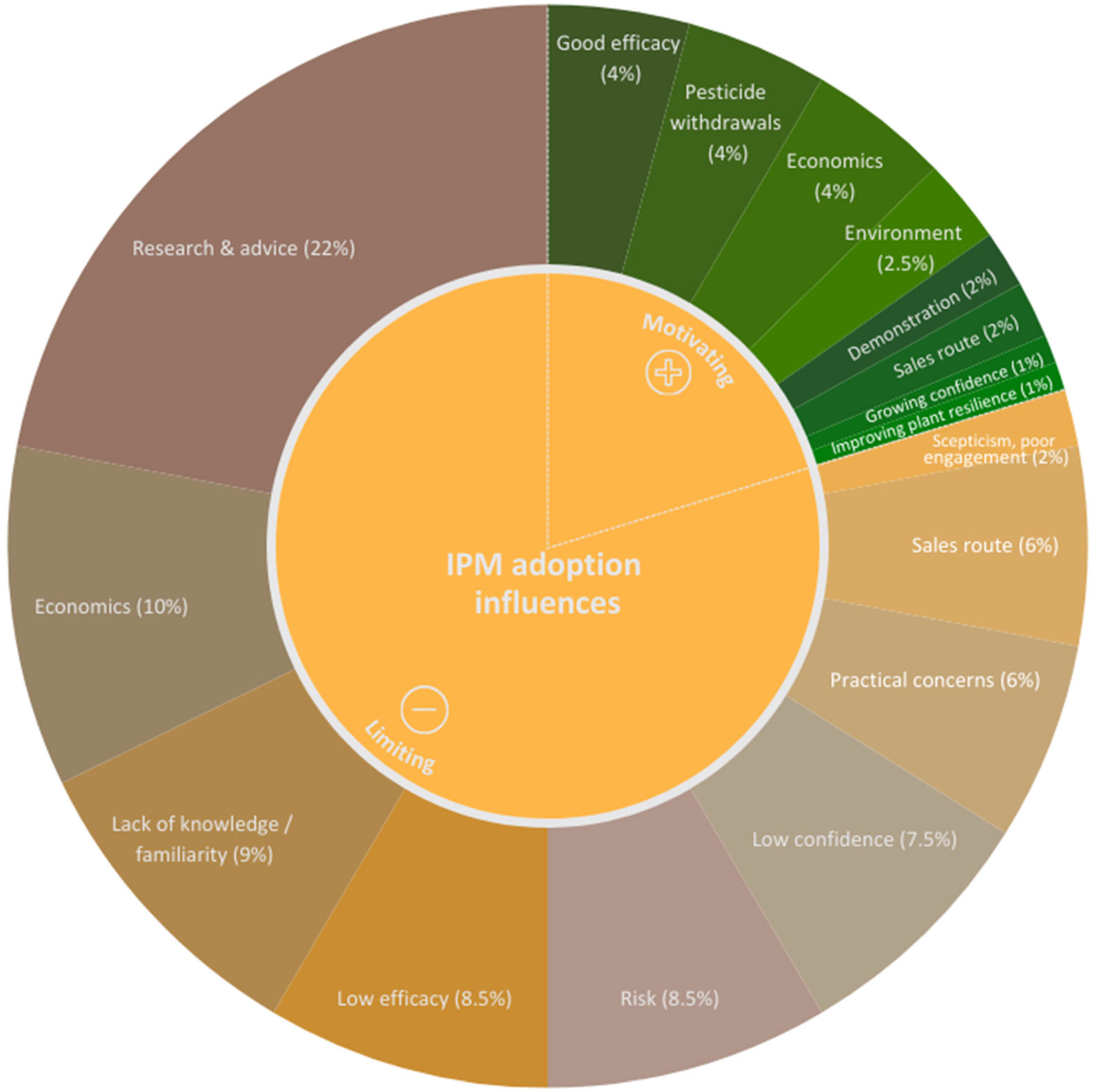
The second research objective was to situate the context-specific IPM practices within the broader systemic landscape, through the identification of factors influencing IPM from the perspective of the growers. These factors varied in effect, being positive (motivating) and negative (limiting) in their influence on adoption. Figure 3 includes all motivating and limiting factors cited by the interviewees (118 in total). There were more limiting (‘−’) factors identified than motivating (‘+’); there were also higher numbers of references by the growers to the limiting factors than the motivating. In several instances, key nodes were identified as both motivating and limiting; the efficacy of IPM, for example, or confidence (growing or low) and the influence of the market or sales route. Likewise, nodes were not always explicitly distinguishable. ‘Demonstration’, for example, was identified as a motivating factor with similar traits to the limiting ‘research and advice’, both of which incorporated facets of ‘cost’-related considerations. As such, quotations gathered during the interview process were insightful in providing a holistic view of the respondents’ perceived motivations and limitations and should be interpreted as part of a whole-context reflection on IPM. Quotations also provide insight into the importance and intensity of themes, which the authors recognize as not being fully reflected through a count-based quantification of references. A selection of relevant quotations is included in Table 2.
The degree of perceived efficacy of a chemical product, as well as policy driving pesticide withdrawals, emerged as motivational nodes within the data. In relation to pesticide withdrawals, the growers expressed a sense of force as much as motivation. Availability of and access to appropriate advice and corresponding research arose as the key limiting factor on the ability to adopt IPM. As suggested by the highly critical quotations, there is a strong sense that the type and extent of advice and, less so, research required is not available in the Irish context and that advice from merchants is to be interpreted with a degree of caution. Economics appeared both as a motivating and limiting factor. As a positive, IPM was seen to have economic value, while the economic viability of IPM was clearly identified as incentivization. As a negative, economics incorporated elements of the costs associated with implementing IPM tactics. Biological controls were referenced specifically. Themes of risk (as outcome due to crop damage or yield impact) are entwined in this commentary around biological control and extend to the ultimate profitability of IPM-based production systems. Finally, the sales route or route to market appeared predominantly as a limiting factor. In discussing the sales route, it was clear that it represented a strong barrier (“force”) as much as a motivator to the growers. The commentary suggests that esthetic standards set by the retailer limit IPM adoption by the growers and that the risk or outcome associated with a failure to meet specifications is one too large to take.

3.3. A Context-Specific Adaptation of the Existing Model

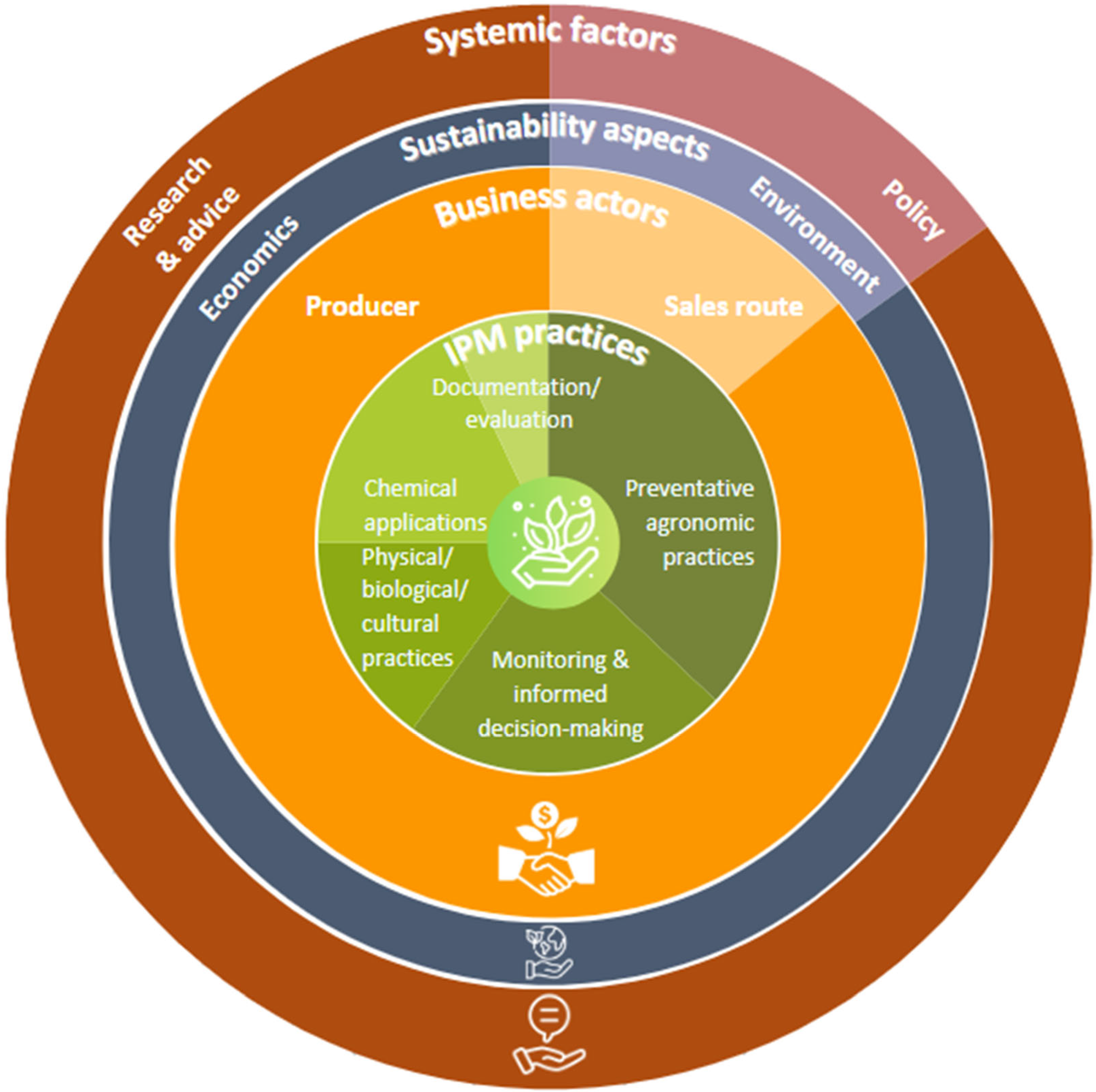
The interviews yielded evidence of the type of IPM being practiced as well as insight into the factors influencing this practice. The results provided for the visualization of a context-specific horticultural IPM paradigm for the modern age, the fundamental construction feature being grower input. Figure 4 reframed the Dara [41] model from the point of view of Irish growers. The current research did not find validation for equality between the three original aspects of sustainability, business and management, as depicted by the width of the circles. The research also did not, in some instances, find verification for the components within these three original aspects, or found evidence of alternative components or aspects. The contextualized paradigm incorporates the terminology utilized by the respondents, which is not always directly reflective of the original model. Full details of the percentages of references ascribed to each aspect and element within the contextualized paradigm are provided as Appendix A (Table A2).

4. Discussion

It is only in anchoring IPM to the experience of the individuals responsible for applying it that the complexity surrounding adoption can be understood and addressed by research, policy and technology. The Dara model [41] served as a suitable template for situating IPM in a specific context, being the only known framework to portray IPM adoption within a wider systemic landscape, sensitive to a range of externalities and thus exposed to influence. To effectively depict Irish horticultural IPM from the producers’ perspective within the existing model, however, modification was required. The growers’ narrative of their IPM practice elicited three main points: 1. They have adopted a comprehensive range of practices from the IPM toolbox; 2. IPM practices vary according to crop- and production system-specific considerations; and 3. The growers operate under a range of intrinsic and extrinsic influencing factors, both motivating and limiting, with availability and access to advice and research being the most significant limitation to IPM uptake, followed by associated economic factors.

4.1. IPM Practices

The growers utilize many of the key practices available to them, including a diverse chemical program. These field-level practices form the core of the contextualized recreation of the Dara model. The terminology elicited through the data analysis process is used in the contextualized version, with elements of the original subsumed into the findings where relevant. For example, ‘knowledge and resources’ and ‘communication’ from the original model are combined into ‘monitoring and informed decision making’. In some cases, elements of the original model were not found to be present in the data, for example, ‘communication with public’.
There was evidence of subsectoral differences in pest management practices. The top fruit growers displayed a lower uptake in the areas of monitoring and informed decision-making and physical/biological/cultural practices. The latter can be attributed to the limitation of suitable options for the crop type, which is of high value and subject to rigorous cosmetic specifications on the part of the sales route. The former, however, flags a shortage in the availability of decision-making supports relevant to the crop type, which is reinforced through the commentary and evidenced in the limiting factors. The results also belie the reality to some extent, for instance, in relation to the level of monitoring and informed decision-making reported by the protected growers. What is not evidenced in the percentages of uptake but is clear through the commentary is that this cohort has access to robust decision-making supports. This is not because protected crop research and advice in Ireland is better serviced, but because this subsector invests a considerable amount of money and effort in sourcing appropriate agronomic advice from overseas. As a group, they import expertise throughout the growing season, at considerable cost to themselves. Finally, the uptake of physical/biological/cultural practices by field crop growers highlights a weakness. There are a number of context-specific factors at play here. Biological controls are not optimized in field crop settings in Ireland and other comparative locations [82,83,84]. A pesticide usage survey of 2015 estimates that field crop growers applied biological controls on less than 1% of the entire pesticide-treated area of 4635 ha [85]. There is no evidence yet towards the efficacy of biological control for the Irish field context; the same is true of Scotland, which operates under similar climate conditions [86,87]. Impediments to efficacy will naturally have an influence on risk perception [88]; the growers cite weather, specifically temperature, as a key barrier, while open field application raises containment and associated efficacy concerns [89]. Rental of land is an extrinsic consideration for the field crop subsector, also representing an inhibitor to long-term investment in physical and cultural inputs. Over half of the field crop growers rely on rented land to meet their commitments. Leases in Ireland are usually on a short-term (often annual or bi-annual) basis, and this is effective in terms of meeting rotational requirements. However, diachronic field histories do not accompany land, and therefore, crops are susceptible to a multitude of unforeseen issues.

4.2. The Broader Systemic Landscape

A number of points of difference arose in relation to the outer influencing factors between the Dara model and the research participants. Of the three sustainability aspects, social acceptability did not appear as an impactor while economics and, to a lesser extent, environment, did. This is of note to policy, given that the sustainability pillars underpin much of the regulation through which growers function [45,90]. Economics as a limiting factor was notable, which is in line with research elsewhere [91]. Grower quotations suggest that there are two angles to the economic limitation of IPM. The first is the cost of IPM practices, for example, the cost of biological controls or the cost of trialing new IPM tactics. The second relates to the economic losses associated with IPM, should it fail. Potatoes are an example of a crop currently reliant on regular chemical inputs in the case study context. Figures show [92] that one hectare of potato production costs approximately €11,367; to break even at a net price of €375 per ton would require 30.3 tons of quality yield. Of the overall cost of production, chemical inputs amount to an estimated €911, just 8% of total inputs [92]. As evidenced through the quotations, the potential risk associated with making such a small saving is not a worthwhile trade-off, particularly in the Irish context where Phythophtora infestans is a major financial threat [93]. The same economic argument applies to many other horticultural crops [94]; future research in the Irish context will be required to develop detailed economic modeling around this issue [53].
The interviews did not reflect the business actors included in this aspect of the original model, nor, in the opinion of the authors, was it justifiable that consumer, seller and producer received equal representation therein. In the Irish context, the producer emerged as the primary actor. Consumers were not referenced in the dataset. The seller—renamed as sales route—was referenced, signaling that this is an area for further engagement, particularly in light of the fact that 90% of Irish food sales occur through the major retailer stream [95]. The bearing of the sales route on farm-level IPM practices is repeatedly cited, for instance, in relation to the choice of variety. Esthetic product specifications are quoted impediment, which alludes to the central role that the major retailers hold in molding consumer demand [23,96]. The literature recognizes the imbalance of power between the major retailers and growers [97] and the effect this inequity can have on innovation and sustainability in production [96,98,99,100]. The Irish Farmers’ Association has accused the Irish supply chain of being unfairly biased against growers and not equitable in terms of the economic distribution of consumer spending [101]. Strides have been taken towards redressing the inequity through the establishment of an Agri-Food Regulator, although a lack of transparency around pricing and market trends from the marketplace has been reported [102]. The influence of the sales route, therefore, remains intact through the continuance of demand for high cosmetic standards of produce, leaving little margin for error in terms of crop protection innovation. This relates directly to the earlier point about risk and costs of chemical inputs in potato production.
Based on the proportion of comments around IPM policy, research and advice, it was concluded that these influences on the growers’ operational realm merited a new aspect within the model, entitled systemic factors. In particular, the grower commentary on research and advice portrays an inadequate supply of support for horticultural IPM in Ireland. It is generally acknowledged that state resources are preferentially directed to other agricultural sectors, and the growers displayed awareness of this. Future research will allow for the identification of correlations between IPM advice (type and extent) and the level of IPM adoption among the growers. The literature is clear, however, that agronomic advice is a driver (or barrier, as the case may be) to IPM uptake. Creissen et al. [103] found that the type of agronomic advisor was significant in terms of low and high arable IPM adoption, with higher performing practitioners placing a higher value on independent agronomists as opposed to their lower performing counterparts, who relied more on merchant agronomists. The troubling issue of the motivation of merchant agronomists comes up here and elsewhere [5]; its equivalent is found in the duality between private and publicly funded extension services [104]. It would appear that severing the connection between chemical manufacturer and grower [105] via the invested merchant agronomist or sales representative could provide an incentive for growers to consider alternative IPM options. However, currently, the agronomic advice pool is not sufficient in breadth or depth, and the Irish Agriculture Knowledge and Information System (AKIS) is not satisfactorily horticulturally focused. In addition to research and advice, growers operate in a policy landscape embroiled in uncertainty. The withdrawal of the Sustainable Use Regulation [106], the proposed formalization of the Sustainable Use Directive effectively means that Irish growers operate to IPM standards and guidelines issued under a 2019 National Action Plan [107], which is not reflective of or adequately resourced towards the achievement of updated pesticide reduction targets. In the absence of evolving state-level incentivization, the likelihood of IPM receiving additional institutional attention towards improving or facilitating adoption remains low.

5. Conclusions

This study offers insight into the perspective of commercial growers as the end-users of IPM and ultimate decision makers on the adoption of IPM practices and policies. The authors acknowledge that the exclusive focus on grower perceptions may somewhat limit the comprehensiveness of the systemic analysis. Given the heavily contextualized nature of the findings reported herein, transferability of results to other settings is expected to be limited. While this study contributes to the conceptual development of the original model by incorporating a context-specific focus, contextualization with samples from other locations will provide additional scope to the conceptual advancement of the Dara paradigm.
An existing paradigmatic model for modern IPM [41] was applied in this study as a prototype for contextualizing IPM in one location and timeframe. The functionality of the model as a generic framework was confirmed through the interview findings, although substantial alterations were required to accurately visually represent the experiences of the research participants. The findings suggest that IPM is generally adopted among growers of vegetable and fruit crops in Ireland and that practices largely align with those in the literature. However, there is a crop and production system effect on the type of IPM practices adopted, as narrated in the commentary, and grower adoption is susceptible to influence by a range of motivating and limiting factors. The IPM practices and the influencing factors evidenced in the data constitute the contextualized re-working of the Dara model, some of which is common to the original, some of which is unique to the study area. The commentary highlights the complexity of IPM, drawing attention to the lack of grower-centricity captured by IPM paradigms past and present. The growers have narrated the personal, nuanced externalities at play in their IPM decision-making, which is inclusive of multiple considerations and stakeholders.

Author Contributions

J.B.: Conceptualization, Data curation, Formal analysis, Investigation, Methodology, Validation, Visualization, Writing—original draft. H.C.: Supervision, Writing—review and editing. R.L.: Supervision, Writing—review and editing. F.T.: Supervision, Writing—review and editing. L.W.: Conceptualization, Funding acquisition, Project administration, Resources, Supervision, Visualization, Writing—original draft, Writing—review and editing. All authors have read and agreed to the published version of the manuscript.

Funding

This research was funded by the Teagasc Walsh Scholarship Programme (number 2021047).

Institutional Review Board Statement

The study was approved by the Biomedical and Scientific Research Ethics Committee of the University of Warwick, reference number BSREC 51/22-23. Approval date 17 January 2023.

Informed Consent Statement

Informed consent for participation was obtained from all subjects involved in the study.

Data Availability Statement

The data presented in this study are available on request from the corresponding author due to reasons of participant anonymity.

Acknowledgments

The authors thank the staff of the Horticulture Development Department at Teagasc Ashtown. We especially thank those who participated in the interview series. This work was undertaken as part of a PhD thesis by Jennifer Byrne, University of Warwick.

Conflicts of Interest

The authors declare no conflicts of interest.

Abbreviations

The following abbreviations are used in this manuscript:
IPMIntegrated Pest Management
EUEuropean Union
UKUnited Kingdom

Appendix A

Table A1. The guide used during the semi-structured interviews to ensure consistency across the interviewees. The majority of the questions were aligned to at least one aspect included in Dara (2019) [41].
Aspects of Dara ModelFocus of QuestionGuiding Questions
Business actorsFarm backgroundFarm history.
Farm size, location.
Geographical features.
IPM practicesGeneral cropping dataCrop types.
Area under production.
Varieties used and why.
Growing process, from preparation to harvestAll agronomic considerations of grower.
Pest (invertebrate)/weed/disease management processTechniques used to manage specific pest/weed/disease issues as relevant to the predominant crop.
Business actors
Sustainability aspects
Sales route (seller)Main sales routes.
Crop/product specifications.
Do sales routes influence production methods?
Do sales routes influence the level/type of IPM practices being used?
Membership of assurance scheme(s) and implications of this.
IPM practicesIPM adviceSources of advice.
Sources most trusted.
On what are final decisions based?
Decision support systems are relevant and available.
Is the available advice current and adequate?
What would improve the current situation?
OtherAny additional comments?
Does anything prevent or support an increase in the uptake of IPM?
Table A2. Grower references to influencing factors, motivating (‘+’) and limiting (‘−‘), and the percentage of contribution to the total (100%) of each aspect of the contextualized paradigm.
Aspect of ModelInfluencing Factor+/−% of ReferencesIncludes References to
Business
actors
Producer+9Agriculture 16 00634 i001
Producer77Agriculture 16 00634 i002
Sales route+3
Sales route11
Systemic
factors
Policy+15Pesticide withdrawals
Research and advice+9Agriculture 16 00634 i003
Research and advice76
Sustainability aspectsEnvironment+15
Economics+25
Economics60Agriculture 16 00634 i004

References

  1. Barzman, M.; Bàrberi, P.; Birch, A.N.E.; Boonekamp, P.; Dachbrodt-Saaydeh, S.; Graf, B.; Hommel, B.; Jensen, J.E.; Kiss, J.; Kudsk, P.; et al. Eight principles of integrated pest management. Agron. Sustain. Dev. 2015, 35, 1199–1215. [Google Scholar] [CrossRef]
  2. Möhring, N.; Wuepper, D.; Musa, T.; Finger, R. Why farmers deviate from recommended pesticide timing: The role of uncertainty and information. Pest Manag. Sci. 2020, 76, 2787–2798. [Google Scholar] [CrossRef] [PubMed]
  3. Sharifzadeh, M.S.; Damalas, C.A.; Abdollahzadeh, G.; Ahmadi-Gorgi, H. Predicting adoption of biological control among Iranian rice farmers: An application of the extended technology acceptance model (TAM2). Crop Prot. 2017, 96, 88–96. [Google Scholar] [CrossRef]
  4. Bueno, A.d.F.; Panizzi, A.R.; Hunt, T.E.; Dourado, P.; Pitta, R.; Gonçalves, J. Challenges for adoption of integrated pest management (IPM): The soybean example. Neotrop. Entomol. 2021, 50, 5–20. [Google Scholar] [CrossRef]
  5. Ilbery, B.; Maye, D.; Little, R. Plant disease risk and grower–agronomist perceptions and relationships: An analysis of the UK potato and wheat sectors. Appl. Geogr. 2012, 34, 306–315. [Google Scholar] [CrossRef]
  6. Kudsk, P. Challenges for the Adoption of Integrated Weed Management in the Future-A European Perspective. Available online: https://nomato.wordpress.com/wp-content/uploads/2014/09/challenges-for-iwm.pdf (accessed on 1 March 2022).
  7. Lamichhane, J.R.; Arendse, W.; Dachbrodt-Saaydeh, S.; Kudsk, P.; Roman, J.C.; van Bijsterveldt-Gels, J.E.; Wick, M.; Messéan, A. Challenges and opportunities for integrated pest management in Europe: A telling example of minor uses. Crop Prot. 2015, 74, 42–47. [Google Scholar] [CrossRef]
  8. Li, J.; Gómez, M.I.; Rickard, B.J.; Skinner, M. Factors influencing adoption of integrated pest management in Northeast greenhouse and nursery production. Agric. Resour. Econ. Rev. 2013, 42, 310–324. [Google Scholar] [CrossRef]
  9. Bakker, L.; Sok, J.; Van Der Werf, W.; Bianchi, F. Kicking the Habit: What Makes and Breaks Farmers’ Intentions to Reduce Pesticide Use? Ecol. Econ. 2021, 180, 106868. [Google Scholar] [CrossRef]
  10. Barton, K.; Grieshop, J.I.; Miyao, G.; Zalom, F.G. Farmers’ Personality Related to Implementation of Integrated Pest Management. Knowledge 1990, 12, 3–13. [Google Scholar] [CrossRef]
  11. Breukers, A.; van Asseldonk, M.; Bremmer, J.; Beekman, V. Understanding Growers’ Decisions to Manage Invasive Pathogens at the Farm Level. Phytopathology 2012, 102, 609–619. [Google Scholar] [CrossRef]
  12. Chèze, B.; David, M.; Martinet, V. Understanding farmers’ reluctance to reduce pesticide use: A choice experiment. Ecol. Econ. 2020, 167, 106349. [Google Scholar] [CrossRef]
  13. Damalas, C.A.; Koutroubas, S.D. Farmers’ behaviour in pesticide use: A key concept for improving environmental safety. Curr. Opin. Environ. Sci. Health 2018, 4, 27–30. [Google Scholar] [CrossRef]
  14. Khan, F.Z.A.; Manzoor, S.A.; Gul, H.T.; Ali, M.; Bashir, M.A.; Akmal, M.; Haseeb, M.; Imran, M.U.; Taqi, M.; Manzoor, S.A.; et al. Drivers of farmers’ intention to adopt integrated pest management: A case study of vegetable farmers in Pakistan. Ecosphere 2021, 12, 1–16. [Google Scholar] [CrossRef]
  15. Rezaei, R.; Safa, L.; Damalas, C.A.; Ganjkhanloo, M.M. Drivers of farmers’ intention to use integrated pest management: Integrating theory of planned behavior and norm activation model. J. Environ. Manag. 2019, 236, 328–339. [Google Scholar] [CrossRef] [PubMed]
  16. Rezaei, R.; Safa, L.; Ganjkhanloo, M.M. Understanding farmers’ ecological conservation behavior regarding the use of integrated pest management- an application of the technology acceptance model. Glob. Ecol. Conserv. 2020, 22, e00941. [Google Scholar] [CrossRef]
  17. Sharifzadeh, M.S.; Abdollahzadeh, G.; Damalas, C.A. Farmers’ behaviour in the use of integrated pest management (IPM) practices: Perspectives through the social practice theory. Int. J. Pest Manag. 2023, 71, 406–419. [Google Scholar] [CrossRef]
  18. Talukder, A.; Sakib, M.; Islam, M. Determination of influencing factors for integrated pest management adoption: A logistic regression analysis. Agrotechnology 2017, 6, 2. [Google Scholar]
  19. Wang, J.H.; Chu, M.; Deng, Y.Y.; Lam, H.M.; Tang, J.J. Determinants of pesticide application: An empirical analysis with theory of planned behaviour. China Agric. Econ. Rev. 2018, 10, 608–625. [Google Scholar] [CrossRef]
  20. Beckmann, V.; Wesseler, J. How labour organization may affect technology adoption: An analytical framework analysing the case of integrated pest management. Environ. Dev. Econ. 2003, 8, 437–450. [Google Scholar] [CrossRef][Green Version]
  21. Brewer, M.J.; Goodell, P.B. Approaches and incentives to implement integrated pest management that addresses regional and environmental issues. Annu. Rev. Entomol. 2012, 57, 41–59. [Google Scholar] [CrossRef]
  22. Buurma, J.S.; van der Velden, N.J.A. New approach to Integrated Pest Management research with and for horticulture. A vision from and beyond economics. Crop. Prot. 2017, 97, 94–100. [Google Scholar] [CrossRef]
  23. ENDURE. The Potential Role of Supermarket Procurement Strategies as Drivers of IPM; ENDURE: Paris, France, 2010. [Google Scholar]
  24. Helepciuc, F.-E.; Todor, A. Evaluating the effectiveness of the EU’s approach to the sustainable use of pesticides. PLoS ONE 2021, 16, e0256719. [Google Scholar] [CrossRef] [PubMed]
  25. Hu, Z. What socio-economic and political factors lead to global pesticide dependence? a critical review from a social science perspective. Int. J. Environ. Res. Public Health 2020, 17, 8119. [Google Scholar] [CrossRef]
  26. Kvakkestad, V.; Steiro, A.L.; Vatn, A. Pesticide Policies and Farm Behavior: The Introduction of Regulations for Integrated Pest Management. Agriculture 2021, 11, 828. [Google Scholar] [CrossRef]
  27. Lamichhane, J.R.; Aubertot, J.-N.; Begg, G.; Birch, A.N.E.; Boonekamp, P.; Dachbrodt-Saaydeh, S.; Hansen, J.G.; Hovmøller, M.S.; Jensen, J.E.; Jørgensen, L.N. Networking of integrated pest management: A powerful approach to address common challenges in agriculture. Crop. Prot. 2016, 89, 139–151. [Google Scholar] [CrossRef]
  28. Matyjaszczyk, E. Problems of implementing compulsory integrated pest management. Pest Manag. Sci. 2019, 75, 2063–2067. [Google Scholar] [CrossRef]
  29. Nielsen, H.Ø.; Konrad, M.T.H.; Pedersen, A.B.; Gyldenkærne, S. Ex-post evaluation of the Danish pesticide tax: A novel and effective tax design. Land Use Policy 2023, 126, 106549. [Google Scholar] [CrossRef]
  30. Pan, Y.X.; Ren, Y.X.; Luning, P.A. Factors influencing Chinese farmers’ proper pesticide application in agricultural products-A review. Food Control 2021, 122, 107788. [Google Scholar] [CrossRef]
  31. Skevas, T.; Stefanou, S.E.; Lansink, A.O. Can economic incentives encourage actual reductions in pesticide use and environmental spillovers? Agric. Econ. 2012, 43, 267–276. [Google Scholar] [CrossRef]
  32. Walters, K.F.; Parry, G.; Burnstone, J.; Grenz, K.; Collier, R.; Bruce, T. Constraints and solutions for development and uptake of integrated pest management in the UK. Ann. Appl. Biol. 2024, 185, 146–152. [Google Scholar] [CrossRef]
  33. Stern, V.M.; Smith, R.F.; Bosch, R.v.d.; Hagen, K.S. The Integration of Chemical and Biological Control of the Spotted Alfalfa Aphid. Hilgardia 1959, 29, 81–101. [Google Scholar] [CrossRef]
  34. Stenberg, J.A. A Conceptual Framework for Integrated Pest Management. Trends Plant Sci. 2017, 22, 759–769. [Google Scholar] [CrossRef] [PubMed]
  35. Tamò, M.; Glitho, I.; Tepa-Yotto, G.; Muniappan, R. How does IPM 3.0 look like (and why do we need it in Africa)? Curr. Opin. Insect Sci. 2022, 53, 100961. [Google Scholar] [CrossRef] [PubMed]
  36. McDonald, D.G.; Glynn, C.J. Difficulties in measuring adoption of apple IPM: A case study. Agric. Ecosyst. Environ. 1994, 48, 219–230. [Google Scholar] [CrossRef]
  37. Byrne, J.; Lillywhite, R.; Creissen, H.; Thorne, F.; Walsh, L. Quantifying integrated pest management adoption in food horticulture. Crop. Prot. 2025, 191, 107165. [Google Scholar] [CrossRef]
  38. SmartProtect. What Is IPM? Available online: https://www.smartprotect-h2020.eu/what-is-ipm/ (accessed on 16 August 2022).
  39. Naranjo, S.E. Impacts of Bt Transgenic Cotton on Integrated Pest Management. J. Agric. Food Chem. 2011, 59, 5842–5851. [Google Scholar] [CrossRef]
  40. Singh, J.; Yadav, K.; Kumar, V. Integrated pest management: Conservation practices for agriculture and environment. Int. J. Environ. Rehabil. Conserv. 2017, VIII, 17–28. [Google Scholar]
  41. Dara, S.K. The New Integrated Pest Management Paradigm for the Modern Age. J. Integr. Pest Manag. 2019, 10, 1–9. [Google Scholar] [CrossRef]
  42. Deguine, J.-P.; Aubertot, J.-N.; Flor, R.J.; Lescourret, F.; Wyckhuys, K.A.; Ratnadass, A. Integrated pest management: Good intentions, hard realities. A review. Agron. Sustain. Dev. 2021, 41, 38. [Google Scholar] [CrossRef]
  43. Gott, R.C.; Coyle, D.R. Educated and engaged communicators are critical to successful integrated pest management adoption. J. Integr. Pest Manag. 2019, 10, 35. [Google Scholar] [CrossRef]
  44. Parsa, S.; Morse, S.; Bonifacio, A.; Chancellor, T.C.B.; Condori, B.; Crespo-Pérez, V.; Hobbs, S.L.A.; Kroschel, J.; Ba, M.N.; Rebaudo, F.; et al. Obstacles to integrated pest management adoption in developing countries. Proc. Natl. Acad. Sci. USA 2014, 111, 3889–3894. [Google Scholar] [CrossRef] [PubMed]
  45. EU. Directive 2009/128/EC of the European Parliament and of the Council of 21 October 2009 Establishing a Framework for Community Action to Achieve the Sustainable Use of Pesticides; EU: Strasbourg, France, 2009. [Google Scholar]
  46. Levins, R. From simple IPM to the management of agroecosystems. In Perspectives in Ecological Theory and Integrated Pest Management; Kogan, M., Jepson, P., Eds.; Cambridge University Press: Cambridge, UK, 2007; pp. 45–64. [Google Scholar]
  47. Zalucki, M.P.; Adamson, D.; Furlong, M.J. The future of IPM: Whither or wither? Aust. J. Entomol. 2009, 48, 85–96. [Google Scholar] [CrossRef]
  48. Ooi, P.A. Science and Farmers: IPM by Farmers; FAO: Rome, Italy, 1999; pp. 57–60. [Google Scholar]
  49. Morse, S.; Buhler, W. Integrated Pest Management: Ideals and Realities in Developing Countries; Lynne Rienner Publishers: Boulder, CO, USA, 2023. [Google Scholar]
  50. Ehler, L.E. Integrated pest management (IPM): Definition, historical development and implementation, and the other IPM. Pest Manag. Sci. 2006, 62, 787–789. [Google Scholar] [CrossRef]
  51. Ehler, L.E.; Bottrell, D.G. The illusion of integrated pest management. Issues Sci. Technol. 2000, 16, 61–64. [Google Scholar]
  52. Ramsden, M.; O’Driscoll, A. Advances in decision support systems (DSSs) for integrated pest management in horticultural crops. In Improving Integrated Pest Management in Horticulture; Collier, R., Ed.; Burleigh Dodds Science Publishing: Cambridge, UK, 2022; pp. 217–243. [Google Scholar]
  53. DAFM. National Strategy for Horticulture 2023-2027; Department of Agriculture, Food and the Marine: Dublin, Ireland, 2023. [Google Scholar]
  54. Tongco, M.D.C. Purposive sampling as a tool for informant selection. Ethnobot. Res. Appl. 2007, 5, 147–158. [Google Scholar] [CrossRef]
  55. Gill, S.L. Qualitative Sampling Methods. J. Hum. Lact. 2020, 36, 579–581. [Google Scholar] [CrossRef]
  56. Rapley, T. Sampling strategies in qualitative research. In The SAGE Handbook of Qualitative Data Analysis; Flick, U., Ed.; SAGE Publications Limited: London, UK, 2014; pp. 49–63. [Google Scholar]
  57. Patton, M.Q. Qualitative Research & Evaluation Methods: Integrating Theory and Practice, 4th ed.; SAGE Publishing: Thousand Oaks, CA, USA, 2015; 832p. [Google Scholar]
  58. Huberman, M.; Miles, M.B. The Qualitative Researcher’s Companion; SAGE Publishing: Thousand Oaks, CA, USA, 2002. [Google Scholar]
  59. Palys, T. Purposive Sampling. In The SAGE Encyclopedia of Qualitative Research Methods; Given, L., Ed.; SAGE Publications: Thousand Oaks, CA, USA, 2008; Volume 1, pp. 697–698. [Google Scholar]
  60. Bord Bia. Horticulture Member List; Bord Bia: Dublin, Ireland, 2022. [Google Scholar]
  61. Teagasc. Field Vegetable Production; Teagasc: Carlow, Ireland, 2020. [Google Scholar]
  62. Marshall, B.; Cardon, P.; Poddar, A.; Fontenot, R. Does Sample Size Matter in Qualitative Research?: A Review of Qualitative Interviews in is Research. J. Comput. Inf. Syst. 2013, 54, 11–22. [Google Scholar] [CrossRef]
  63. Bord Bia. National Field Vegetable Census 2015; Bord Bia: Dublin, Ireland, 2015. [Google Scholar]
  64. Joint Committee on Agriculture. Challenges Facing the Fruit and Vegetable Industry: Discussion; Houses of the Oireachtas: Dublin, Ireland, 2023. [Google Scholar]
  65. Callaghan, D. Innovation Drivers in Horticulture; Teagasc Ashtown: Dublin, Ireland, 2023. [Google Scholar]
  66. Boddy, C.R. Sample size for qualitative research. Qual. Mark. Res. Int. J. 2016, 19, 426–432. [Google Scholar] [CrossRef]
  67. Lakens, D. Sample size justification. Collabra Psychol. 2022, 8, 33267. [Google Scholar] [CrossRef]
  68. Glaser, B.G.; Strauss, A.L. The Discovery of Grounded Theory: Strategies for Qualitative Research; Routledge: London, UK; New York, NY, USA, 2017. [Google Scholar]
  69. Bowen, G. Naturalistic Inquiry and the Saturation Concept: A Research Note. Qual. Res.-QUAL RES 2008, 8, 137–152. [Google Scholar] [CrossRef]
  70. Adu, P. A Step-by-Step Guide to Qualitative Data Coding; Routledge: New York, NY, USA, 2019. [Google Scholar]
  71. Jackson, K.; Bazeley, P. Qualitative Data Analysis with NVivo; SAGE Publishing: Thousand Oaks, CA, USA, 2019. [Google Scholar]
  72. Reyes, V.; Bogumil, E.; Welch, L.E. The living codebook: Documenting the process of qualitative data analysis. Sociol. Methods Res. 2021, 53, 89–120. [Google Scholar] [CrossRef]
  73. DeCuir-Gunby, J.T.; Marshall, P.L.; McCulloch, A.W. Developing and using a codebook for the analysis of interview data: An example from a professional development research project. Field Methods 2011, 23, 136–155. [Google Scholar] [CrossRef]
  74. Chandra, Y.; Shang, L. Inductive Coding. In Qualitative Research Using R: A Systematic Approach; Chandra, Y., Shang, L., Eds.; Springer Nature Singapore: Singapore, 2019; pp. 91–106. [Google Scholar]
  75. Yin, R.K. Qualitative Research from Start to Finish, 2nd ed.; Guilford Publications: New York, NY, USA, 2015. [Google Scholar]
  76. Braun, V.; Clarke, V. Reflecting on reflexive thematic analysis. Qual. Res. Sport Exerc. Health 2019, 11, 589–597. [Google Scholar] [CrossRef]
  77. Cropley, A.J. Qualitative Research Methods: A Practice-Oriented Introduction for Students of Psychology and Education; Editura Intaglio, University of Hamburg: Hamburg, Germany, 2019. [Google Scholar]
  78. Braun, V.; Clarke, V. Using thematic analysis in psychology. Qual. Res. Psychol. 2006, 3, 77–101. [Google Scholar] [CrossRef]
  79. Boerboom, C.M.; Hammond, C.M.; Luschei, E.C.; Nowak, P.J. Adoption of Integrated Pest Management Tactics by Wisconsin Farmers. Weed Technol. 2006, 20, 756–767. [Google Scholar] [CrossRef]
  80. Malone, S.; Herbert, D.A., Jr.; Pheasant, S. Determining adoption of integrated pest management practices by grains farmers in Virginia. J. Ext. 2004, 42, 16. [Google Scholar]
  81. Puente, M.; Darnall, N.; Forkner, R.E. Assessing integrated pest management adoption: Measurement problems and policy implications. Environ. Manag. 2011, 48, 1013–1023. [Google Scholar] [CrossRef]
  82. Alabouvette, C.; Olivain, C.; Steinberg, C. Biological control of plant diseases: The European situation. Eur. J. Plant Pathol. 2006, 114, 329–341. [Google Scholar] [CrossRef]
  83. Blake, J.; Cook, S.; Godfrey, K.; Tatnell, L.; White, S.; Pickering, F.; Ritchie, F.; Smallwood, I.-L.; Young, C.; Ellis, S.; et al. Enabling the Uptake of Integrated Pest Management (IPM) in UK Arable Rotations. A Review of the Evidence; ADAS: Boxworth, UK, 2021. [Google Scholar]
  84. Doonan, H. Uptake of Integrated Pest Management in the UK Arable Sector. Outlooks Pest Manag. 2017, 28, 29–32. [Google Scholar] [CrossRef]
  85. DAFM. Pesticide Usage in Ireland: Outdoor & Protected Vegetable Crops Survey Report 2015; DAFM: Dublin, Ireland, 2015. [Google Scholar]
  86. MacLeod, C.; Wardlaw, J.; Davis, C.; Robertson, A.; Reay, G. Pesticide Usage in Scotland: Outdoor Vegetable Crops 2021; The Scottish Government: Edinburgh, UK, 2022. [Google Scholar]
  87. Rees, H.J.; Elliot, M.; Maloney, K.; Degiovanni, H.; Creissen, H. Potential of Biocontrol for the Sustainable Management of Plant Diseases in Scotland: Opportunities and Barriers; Plant Health Centre: Scotland, UK, 2024. [Google Scholar]
  88. Chandler, D.; Bailey, A.S.; Tatchell, G.M.; Davidson, G.; Greaves, J.; Grant, W.P. The development, regulation and use of biopesticides for integrated pest management. Philos. Trans. R. Soc. B Biol. Sci. 2011, 366, 1987–1998. [Google Scholar] [CrossRef] [PubMed]
  89. Birch, A.N.E.; Begg, G.S.; Squire, G.R. How agro-ecological research helps to address food security issues under new IPM and pesticide reduction policies for global crop production systems. J. Exp. Bot. 2011, 62, 3251–3261. [Google Scholar] [CrossRef] [PubMed]
  90. EU. Farm to Fork Strategy; European Union: Strasbourg, Fance, 2019. [Google Scholar]
  91. Walker, P.; Creissen, H.E.; Gadsby, J.; Behrendt, K.; Hartfield, C.; Calatayud, A.; Cooney, B.; Bartel, E.; Tricklebank, H.; Alonso, N.; et al. Environmental Land Management Test and Trial-Integrated Pest Management Extension Final Report-Defra Project 253a; DEFRA: London, UK, 2023; p. 142. [Google Scholar]
  92. Teagasc. Crops Costs and Returns 2024; Teagasc: Carlow, Ireland, 2024. [Google Scholar]
  93. Cucak, M. Revision of Potato Late Blight Forecasting in the Republic of Ireland; National University of Ireland: Maynooth, Ireland, 2020. [Google Scholar]
  94. Burnett, F.; Bowsher-Gibbs, M.; Dunbar, D. Economic Impact of Pesticide Withdrawals to Scotland, with Case Studies: Project Summary Report PHC2020/09; Plant Health Centre: Edinburgh, UK, 2021. [Google Scholar]
  95. McCarthy, M.; O’Neill, C.; Hashem, S. Ireland’s Food Distribution and Consumption–The Current State; University College Cork & Cork University Business School: Cork, Ireland, 2019. [Google Scholar]
  96. Nicholson, C.; Young, B. The relationship between supermarkets and suppliers: What are the implications for consumers. Consum. Int. 2012, 1, 7–8. [Google Scholar]
  97. Hingley, M.K. Power imbalanced relationships: Cases from UK fresh food supply. Int. J. Retail. Distrib. Manag. 2005, 33, 551–569. [Google Scholar] [CrossRef]
  98. Lefèvre, A.; Perrin, B.; Lesur-Dumoulin, C.; Salembier, C.; Navarrete, M. Challenges of complying with both food value chain specifications and agroecology principles in vegetable crop protection. Agric. Syst. 2020, 185, 102953. [Google Scholar] [CrossRef]
  99. Commission of the European Communities. A Better Functioning Food Supply Chain in Europe; EC: Brussels, Belgium, 2009. [Google Scholar]
  100. Revoredo-Giha, C.; Leat, P.M.; Renwick, A.W.; Lamprinopoulou-Kranis, C. Innovatiosn and Power in Food Supply Chains: The Case of the Potato Sector in the UK; EAEE: Prague, Czech Republic, 2012. [Google Scholar]
  101. O’Sullivan, K. New office must rebalance Ireland’s ‘completely lopsided’ food supply chain. The Irish Examiner, 23 March 2022. [Google Scholar]
  102. Wall, M. Agri-Food Regulator board frustrated at delays in granting new powers. The Irish Times, 1 March 2025. [Google Scholar]
  103. Creissen, H.E.; Jones, P.J.; Tranter, R.B.; Girling, R.D.; Jess, S.; Burnett, F.J.; Gaffney, M.; Thorne, F.S.; Kildea, S. Identifying the drivers and constraints to adoption of IPM among arable farmers in the UK and Ireland. Pest Manag. Sci. 2021, 77, 4148–4158. [Google Scholar] [CrossRef]
  104. Wuepper, D.; Roleff, N.; Finger, R. Does it matter who advises farmers? Pest management choices with public and private extension. Food Policy 2021, 99, 101995. [Google Scholar] [CrossRef]
  105. Lundgren, P. Cutting Pesticide Use & Promoting Integrated Pest Management in UK Agriculture-A Farmer’s Perspective; Friends of the Earth: Brussels, Belgium, 2018. [Google Scholar]
  106. EU. Withdrawal of Commission Proposals; European Commission: Brussels, Belgium, 2024. [Google Scholar]
  107. DAFM. Irish National Action Plan for the Sustainable Use of Pesticides; DAFM: Dublin, Ireland, 2019. [Google Scholar]
Figure 1. A replication of the Dara model [41] for a modern IPM paradigm. At the center are the pest management practices of IPM surrounded by the business actors and sustainability aspects of IPM, respectively. All aspects within the generic model are attributed with equal weighting, depicting equivalence in their influence on or importance to IPM. The producer is highlighted to draw attention to the focus of this study.
Agriculture 16 00634 g001
Figure 2. The percentage of growers applying the IPM theme or general strategy, by subsector.
Agriculture 16 00634 g002
Figure 3. The motivating (‘+’, represented by shades of green) and limiting (‘−’, represented by shades of orange) factors were identified through the interviews. The percentages relate to the number of references made by the respondents out of the total 118 references. Further details on the number of references are provided in Table A2.
Agriculture 16 00634 g003
Figure 4. The contextualized paradigm for modern IPM [41]. The size and width of the aspects and components are weighted according to their influencing value, as described by the interviewees and detailed in Table A2. Shading is used to denote separate components within a single aspect (e.g., Producer and Sales Route within Business Actors).
Agriculture 16 00634 g004
Table 1. Details of the interview sample, including (a) subsector, (b) number of growers interviewed, (c) land areas covered in interviews (in hectares) and percentages of total land area (TLA) as represented by the sample.
SubsectorNo. of IntervieweesLand Area (ha)
Field crops282391 (20%)
Protected crops14135 (63%)
Top fruit337 (28%)
Table 2. A selection of quotations evidencing the motivating (‘+’) and limiting (‘−’) factors provided by the respondents and the influencing aspect to which the factors have been attributed.
Selected Grower Quotations+/−Influencing Aspect
Perceived efficacy
We have been using bio-controls for 20 plus years now. We attribute no effectiveness to sprays. I used one fungicide in 2021… but I find it too worrying regarding MRLs.+Business actors: Producer
IPM is practical, efficient, economical and environmentally better.+Business actors: Producer
There are no morals involved in our IPM practices. It is more efficient and has less waste.+Business actors: Producer
Pesticide withdrawals
The disappearance of calypso and pyrethrums changed everything—there was suddenly a greater need for alternative options like IPM.+Systemic factors: Policy
The reducing range of chemistry is a force as well as a driver…they are removing our chemicals before there is a proper solution.+Systemic factors: Policy
Research and advice
If we lose more pesticides, we will need a competent advisor to offer replacement guidance.Systemic factors: Advice
There are no DSS relevant to our crop. We don’t think the sources of advice available in Ireland are adequate at all.Systemic factors: Advice
Realistically, I don’t think the advice available to us is enough. There’s all the advice in the world if it comes to dairy.Systemic factors: Advice
We might be able to reduce our chemistry with better advice, or if there were trials done where we could see things happening. It’s left up to the grower to find things out and lose out in cost if things go wrong. You’d be cautious.Systemic factors: Advice
There is not a great support service for horticultural producers here. A lot of the bigger farms or distributors bring in agronomists from the UK.Systemic factors: Advice
In horticulture, IPM is knowledge intensive. It requires a system change and a move from the ‘silver bullet’. There is a tendency to over-simplify.Systemic factors: Advice
Regarding DSS, we have a critical mass problem and lack of resources. We’re talking about very specialised crops.Systemic factors: Advice and research
Sales agronomists—some of them are very good but they have a mandate to sell as much product as they possibly can. So you would see a nice bit of ill-advised use of chemistry…Systemic factors: Advice and research
Most of the advice day-to-day is from embedded merchants… It’s in their interest to sell product. I would regard that as being a very weak point in the industry.Systemic factors: Advice
Take twenty of the biggest growers—they talk to each other, they go to the Potato Conference, they go to the UK. They are not lacking advice. They’re looking for it, seeking it out. But have they support to interpret this advice? Also the smaller growers are not being catered for… Any research investment is benefitting the merchants rather than the growers.Systemic factors: Advice and research
Economics
They’re (biological controls) too expensive and weather is a factor—they probably work better in the UK or in warmer climates.Sustainability aspects: Economics
The risk of IPM is huge, with the associated costs of lost. It’s easier in the European climate with stable heat. I would put in more biological controls if they were cheaper.Sustainability aspects: Economics
We’re delighted to do more, run trials, be forward thinking. The reality is that all of that costs money—if I don’t have time to do something I have to pay someone else to do it. Everyone wants more for less.Sustainability aspects: Economics
The reasoning for biologicals is circular. It helps the environment, which benefits the plant, which benefits my economics.+Sustainability aspects: Economics
Cutting back on chemicals will have to be economically viable for farmers. If the numbers add up, they will follow.+Sustainability aspects: Economics
I see economics, withdrawals and environment as drivers, in that order.+Sustainability aspects: Economics
Sales route
The supermarkets force it upon us. Regarding cosmetics, there are ever-increasingly high standards and zero tolerance for damage or imperfection.Business actors:
Sales route
The supermarket sales route encourages us to use chemistry…if the product is wonky or off-shape in any way, if there’s any pest damage you’ll be bringing it home to dump… The standards are gone out of control.Business actors:
Sales route
Potatoes are a risk-based business…The chemical costs are a very small part of the overall. To involve risk to save on one of your smallest costs doesn’t balance out. And we especially can’t take the risk with large acreage. It’s a risk vs. reward situation. Saving €100 per acre but putting at risk €5000 per acre. The biggest fear is the phone call coming from the buyer…They’ll just go elsewhere and you won’t get that call again next year.Business actors:
Sales route
Supermarkets are reducing the pesticide list. This is Ireland, we have different growing conditions. They’re strict. If they go over the top they won’t have an Irish crop.+Business actors:
Sales route
Disclaimer/Publisher’s Note: The statements, opinions and data contained in all publications are solely those of the individual author(s) and contributor(s) and not of MDPI and/or the editor(s). MDPI and/or the editor(s) disclaim responsibility for any injury to people or property resulting from any ideas, methods, instructions or products referred to in the content.